


Abstract
Snakebite envenoming is the world’s deadliest neglected tropical disease, predominantly affecting the most resource-limited regions. This scoping review aimed to map the global landscape of studies investigating the epidemiology of snakebite envenoming. Of the 1700 studies included in this review, nearly half were from authors based in high-income countries. While trends in authorship have changed over time, authors from low-income countries were consistently underrepresented in the body of literature. This underscores a critical gap between where the burden of snakebite lies and where the literature is coming from (which may, in part, reflect general geographic inequities in the literature databases). Further, there were variables that were well-reported across the body of literature, like age and sex of the person affected by snakebite envenoming. However, there were gaps related to the reporting of outcomes such as reproductive complications, qualitative outcomes, and costs associated with snakebite care.
Key Contribution:
This scoping review illustrates a critical gap in the global literature landscape of snakebite envenoming: regions most burdened by snakebite are among the least represented in the body of literature, considering database limitations with unequal geographic inclusion. It also enumerates key variables reported across the body of snakebite envenoming literature which can be used to shape future research in this domain.
1. Introduction
Globally, around five million people are bitten by snakes every year, among whom about half are bitten by venomous snakes, and around 274,000 individuals die; higher estimates suggest up to 7 million venomous snakebites, resulting in more than 500,000 annual deaths [1,2]. This makes snakebite envenoming the deadliest neglected tropical disease (NTD) [3]. The World Health Organization (WHO) has underscored the importance of improving both quality and resolution of currently available data on snakebite envenoming [4]. This is essential to measure progress against the WHO’s strategy published in 2019, which sets ambitious targets to halve global snakebite deaths and cases of disability by 2030 [5].
While the WHO established a Snakebite Information and Data Platform in 2021 as part of its 2030 strategy, many countries that are known to be greatly impacted by snakebite envenoming have neither contributed national nor sub-national data on snakebite cases and deaths [6]. For example, Nigeria, Ethiopia, and the Democratic Republic of Congo are estimated to account for over 38% of the total burden of snakebite envenoming in Sub-Saharan Africa, in terms of disability-adjusted life years [7]. Of these three countries, only Ethiopia contributes national data to the WHO’s Snakebite Information and Data Platform—but the latest data are five years old. Further, routine data capture systems like the District Health Information Software 2 (DHIS2) and the Early Warning, Alert and Response System (EWARS) often do not differentiate between snakebites that are venomous and non-venomous and fail to capture key characteristics of people affected [4].
While some countries, like Eswatini, have included snakebite envenoming among their notifiable diseases, surveillance efforts are consistently impacted by underreporting [8]. This is because snakebite envenoming typically occurs in the most rural, remote areas, meaning national statistics often underestimate its true burden [9]. In Zambia, for example, the DHIS2 estimate of regional snakebite cases is only a fraction of the number of cases reported in community clinics [10]. Nonetheless, there are 79 countries where country-level, regional-level, hospital-level, or community-level data is publicly available on people bitten by venomous snakes [2]. But there remain critical gaps in information: in Nigeria, there is an information gap in publicly available snakebite data, despite this country accounting for the second-highest snakebite mortality rate in the world [2].
In the absence of high-quality data captured by routine health information systems or international reporting platforms, studies conducted in primary care settings can paint a better picture of the burden of snakebite envenoming in regions most impacted by it. Some examples are a community and hospital snakebite incidence survey conducted in Bihar, India, a cross-sectional household survey conducted in rural Gabon, and a community-based audit in Cameroon [11,12,13]. Isolated studies characterize the burden of snakebite envenoming in some of the most resource-limited settings. In fact, many studies leveraged the availability of routinely collected medical data in hospital settings: one study from Thailand used two military hospital databases, one study from rural India used data from a secondary health facility, and one study from Nepal used medical records from a district hospital, for example [14,15,16]. Studies like these have been included in systematic reviews and meta-analyses aiming to characterize global snakebite burden beyond just cases and deaths. One such review meta-analyzed data from 65 epidemiological snakebite studies and noted that snakebites frequently occurred in the summer season, during the day, and on the lower limb [17]. Other reviews have focused on specific impacts of snakebite on cardiac health and neurological and hematological functions [18,19].
In addition to reviews of the literature that have either focused on describing the impacts of snakebite envenoming or interventions to curb it [20], there have been two reviews that have presented bibliometric analyses of existing snakebite literature [21,22]. However, these two reviews were limited to a single database and did not compare information reported across the body of included literature. Therefore, while these reviews illustrated geographic gaps in snakebite literature, they did not simultaneously illustrate knowledge gaps. There is merit in documenting where the literature is originating, under the assumption that most health research is led by wealthy nations, whereas resource-limited settings bear the greatest burden of disease [23,24]. Further, it is of interest to identify research gaps based on what information is well-reported across the body of snakebite literature compared to what information is scarcely reported.
This scoping review’s primary aim was to illustrate the gaps in the current literature on snakebite envenoming among humans, both in terms of bibliometrics and in terms of data being reported across the body of literature. Specific questions were: how many studies have been published over time? Where are studies coming from (vis-à-vis first and last authors’ institutions) compared to where they are set? What variables describing snakebite envenoming are studies reporting, related to exposures, demographics, circumstances of snakebite, symptoms, treatment, and outcomes?
2. Materials and Methods
Due to the breadth of the topic and the nature of this review’s objectives, we opted for a scoping review (which typically maps a broader body of literature) in lieu of a systematic review (which typically maps evidence to a specific, narrower question [25]). Conducting a scoping review allowed us to include a wide range of study designs and map knowledge gaps in the literature. Nonetheless, our review was based on a protocol that we developed in January 2025 as part of a PhD project. While the protocol was officially registered on the Open Science Framework in August 2026, it was unchanged from January 2025 [26]. Our review was conducted in accordance with the Preferred Reporting Items for Systematic Reviews and Meta-Analyses (PRISMA) guidelines for scoping reviews (Appendix A) [27].
2.1. Search Strategy and Selection Criteria
The following databases were searched, from database inception until 16 January 2026: OVID Medline, OVID Embase, OVID Global Health, CINAHL, Cochrane, and Scopus [28,29,30,31]. A detailed search strategy was created with search term variations for each database (Appendix B). In sum, medical subject heading terms used were: “snake bites”, “snake venoms”, “death”, “mortality”, “epidemiolog*”, “diagnosis”, “treatment outcome”, “prognosis”, “economics”, “costs and cost analysis”, “cost benefit analysis”, “quality of life”, and “incidence”. In addition, the following terms were searched for in titles, abstracts, and key words: “snake*”, “envenom*”, “viper*”, “cases”, “incidence”, “death*”, “morbidity”, “mortality”, “symptom*”, “outcome*”, “prognosis”, “antivenom”, “anti-venom”, “anti venom”, “treatment”, “cost*”, “quality adjusted life years”, “QALY”, “disability adjusted life years”, “DALY”, “quality of life”, “QoL”, “epidemiolog*”, and “economic*”.
Table 1 lists the inclusion and exclusion criteria for studies in this review. Observational, experimental, or modelling studies for which full texts were available and the sample size was ten or more people were included. We imposed a restriction on sample size so that we could exclude individual case reports or small case series. Further, we included studies with human participants of all ages affected by snakebite envenoming but excluded studies where the unit of observation was non-human or studies that only reported envenoming due to creatures other than snakes. Notably, we included studies that reported envenoming or poisoning from a variety of creatures, as long as the study also included snakebites. However, data was only extracted if disaggregated snakebite information was reported. Finally, there were no exclusion criteria based on language of publication. DeepL was used to translate any non-English full texts [32].
Table 1.
Inclusion and exclusion criteria for studies.
2.2. Study Selection, Data Extraction, and Data Analysis
One reviewer (AU) performed the database search. Search strategy results were downloaded separately from each database and uploaded to Covidence [33], which was subsequently used for study selection and data extraction. Three independent reviewers (AU, HB, PA) screened titles, abstracts, and full texts. All titles and abstracts were screened for relevance by two double-blinded reviewers and conflicts were resolved through discussion. At the full-text screening stage, 5% of randomly sampled studies underwent double-blinded screening to ensure alignment. Any disagreements were resolved through discussion or with a third reviewer. Given the volume of included full texts, the remaining 95% were screened by individual reviewers. Inclusion and exclusion criteria were applied at the full-text screening stage.
Following study selection, a custom data extraction sheet was created on Covidence. This extraction sheet was piloted for the first five studies to ensure it adequately captured necessary information. Two independent reviewers (AU, HB) undertook this step to ensure alignment in data extraction. Once again, any conflicts were resolved through discussion or a third reviewer. Fields were adjusted as required and clarifying text was added where needed. Once alignment was ensured, all other data extraction was undertaken by single reviewers.
The following information was extracted from each study: study metadata (title, journal, publication year, first and last authors’ names, institutions, and countries, study objective, setting, design, language, sample size, and whether the sample only included certain population groups like children), a checklist of which demographic, exposure, and snakebite circumstance variables were reported in the study (person’s age, sex or gender, education, ethnicity, income level, comorbidities, use of traditional medicine or first aid, snake species, activity during the bite, place of bite occurrence, anatomical site of bite, season or time of year that the bite occurred, time of day that the bite occurred, distance or time to a healthcare facility, and time to antivenom administration), and a checklist of which symptom, treatment, and outcome variables were reported in the study (healthcare facility admission, toxicity of envenoming, general complications, local tissue damage, infection following snakebite, severity grade, renal or urinary complications, laboratory abnormalities, hematological or coagulopathic complications, whether antivenom was administered (including repeat antivenom), adverse events associated with antivenom use, concentration of venom or antivenom over time, whether other supportive treatments were used, costs associated with snakebite care, quality-of-life measures, healthcare facility length of stay, mortality, downstream health impacts following a healthcare facility stay, and economic impacts aside from cost (e.g., loss of ability to work)).
A free-text field was available under the checklist for demographic, exposure, and snakebite circumstance variables as well as the checklist for symptom, treatment, and outcome variables. This field was intended to capture additional variables that were missed in the checklist, which would be used to group additional checklist items during analysis by theme. Of note, coding free-text items into logical groups was done by an individual reviewer, based on existing literature on common features of snakebite envenoming and core outcome measurements [34,35,36]. As well, the country or countries where first and last authors’ affiliations were located were used as a proxy for included studies’ country of origin. Studies could have more than one country of origin if first and last authors had multiple affiliations. For group authorship, the institutional affiliations of the corresponding author were used. Further, all countries were standardized to M49 country names and sub-regions [37].
The completed data extraction sheet was then downloaded from Covidence as an Excel workbook and imported into R Version 4.5.2. Study metadata were summarized descriptively, using medians and interquartile ranges (IQRs) for continuous variables (e.g., study publication year) and frequencies and percentages for categorical variables (e.g., study language). Metadata was also summarized visually. Namely, we illustrated the geography of study authorship and setting through maps and bar charts, considering country-level summaries (most granular), 2025 M49 sub-region-level summaries, and 2025 World Bank income classification-level summaries (least granular) [37,38]. We also contextualized authorship geography by comparing the estimated number of country-level snakebite deaths (calculated from the Global Burden of Disease estimates of mortality from venomous animal contact and the proportion of venomous animal contact deaths due to only snakebites [2,39]) to where first or last authors of included studies were based. Finally, the checklists of reported items related to demographic, exposure, and snakebite circumstance variables as well as symptom, treatment, and outcome variables were summarized in bar graphs to illustrate which variables were more frequently reported across studies.
3. Results
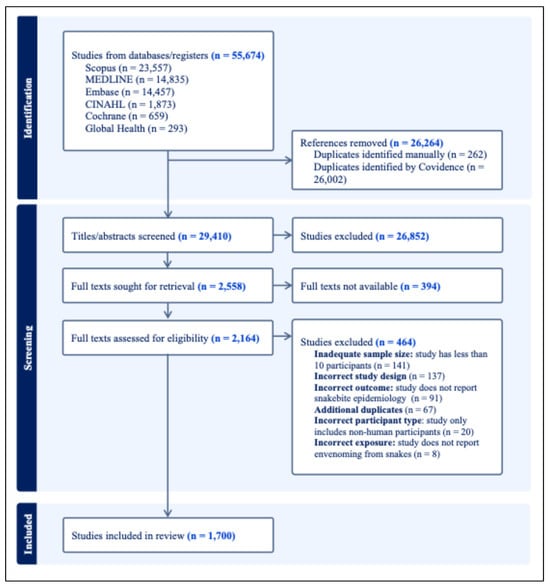
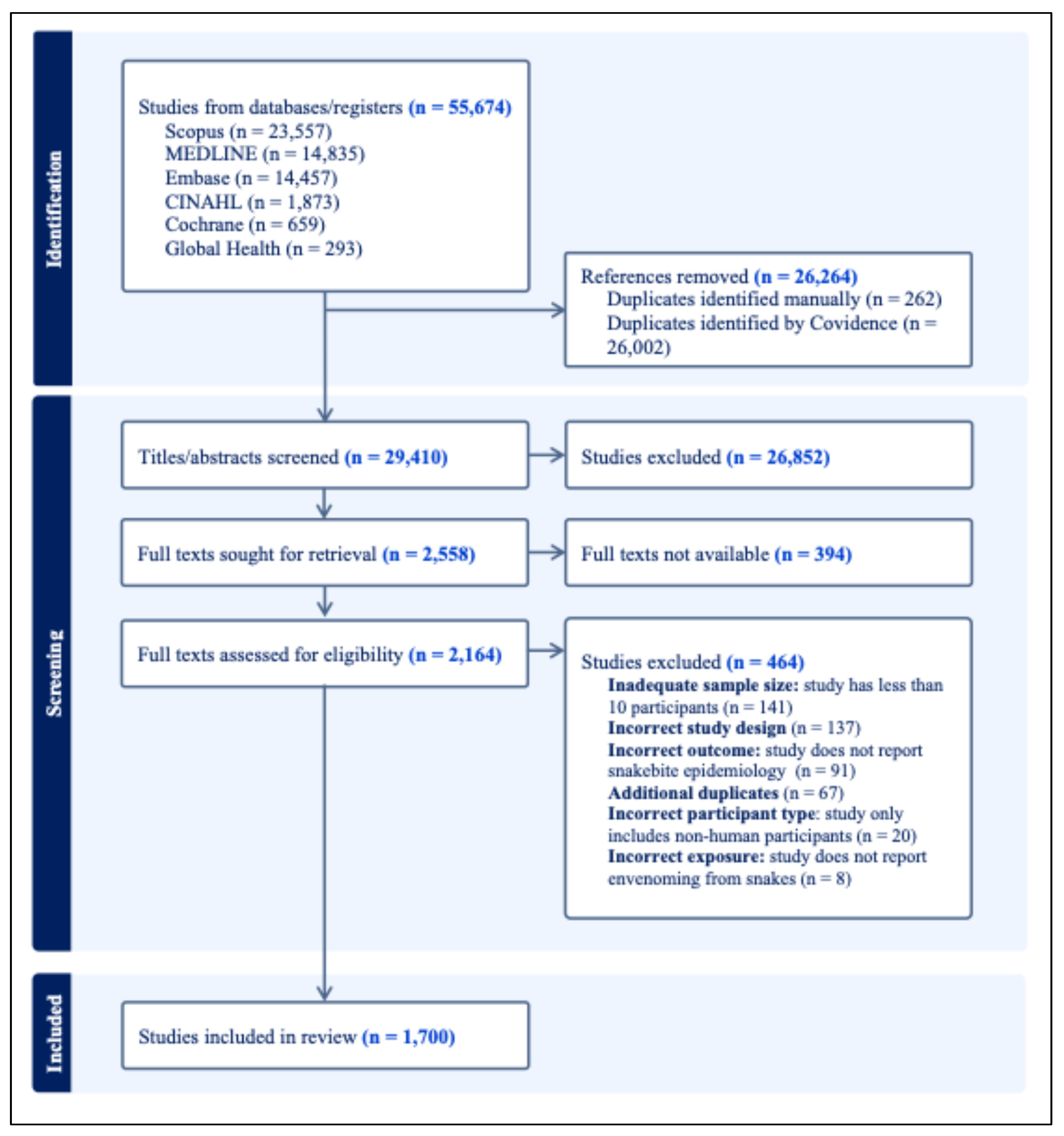
The search strategy yielded 55,674 studies across six databases. After removing 26,264 duplicates, 29,410 titles and abstracts were screened. After excluding 26,852 titles and abstracts that were not relevant to the research question, 2558 full texts were sought for retrieval. Of these, 394 studies did not have full texts available. Consequently, 2164 full texts were assessed for eligibility, from which 464 were excluded because they did not meet inclusion criteria. The most common reasons for exclusion were inadequate sample size (n = 141), incorrect study design (n = 137), and incorrect outcome (n = 91). After excluding full texts, 1700 studies were included in the review. A PRISMA diagram—which visually depicts how the number of included studies was arrived at—is shown in Figure 1.
Figure 1.
Scoping review PRISMA flow diagram.
3.1. Characteristics of Included Studies
Characteristics of the 1700 included studies are summarized in Table 2. A detailed line list of each study is provided in a public dataset [40]. The median publication year was 2018 (IQR 2009 to 2022). The most frequently represented country among first and last authors was India (n = 349, 21% and n = 338, 20%, respectively), followed by the United States of America (n = 227, 13% and n = 217, 13%, respectively). Nearly all studies were published in English (n = 1582, 93%), had observational study designs (n = 1583, 93%), and were focused only on snakebites (n = 1570, 92%). Most studies included between 100 and 499 people (n = 620, 36%) or between 10 and 49 people (n = 350, 21%). The most common study settings were India (n = 358, 21%) and the United States of America (n = 205, 12%). There were 126 studies (7%) where the sample included only pediatric cases of snakebite envenoming.
Table 2.
Characteristics of included studies.
3.2. Study Metadata: Where Is Snakebite Literature Originating Compared to Where It Is Set?
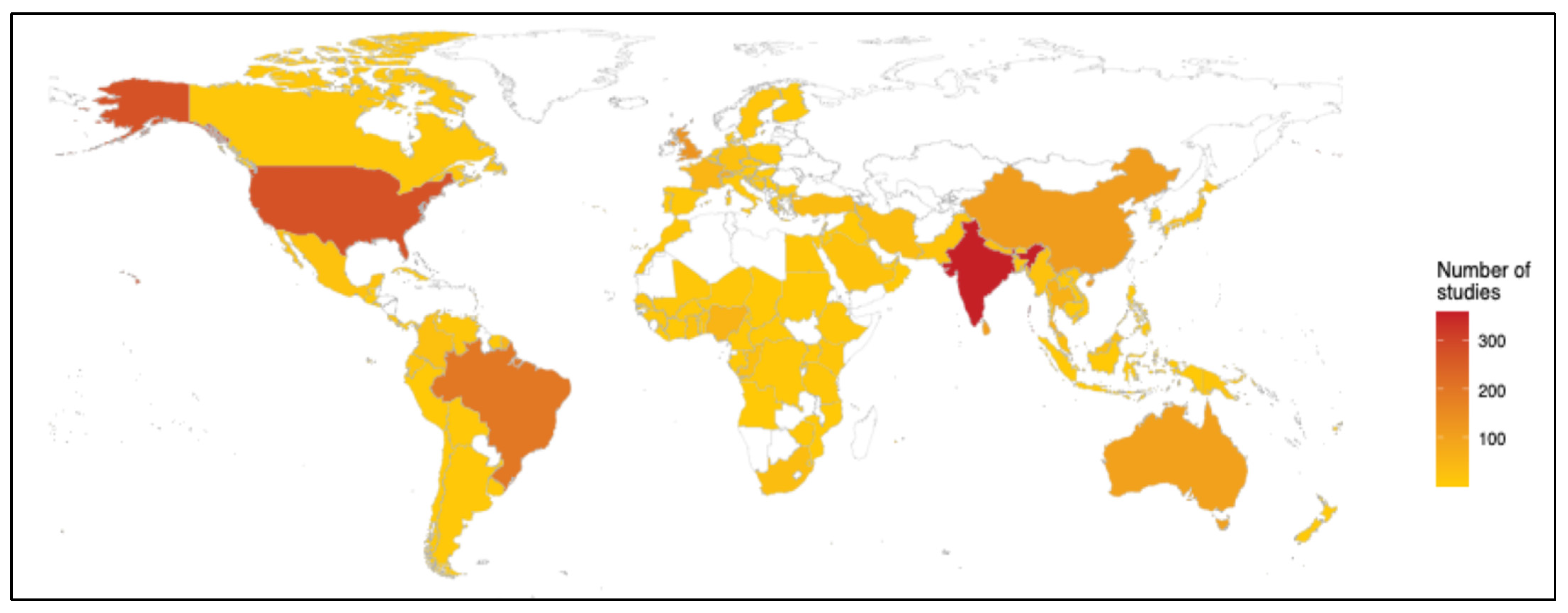
There were 108 unique countries represented among included studies’ first and last authors (Appendix C).
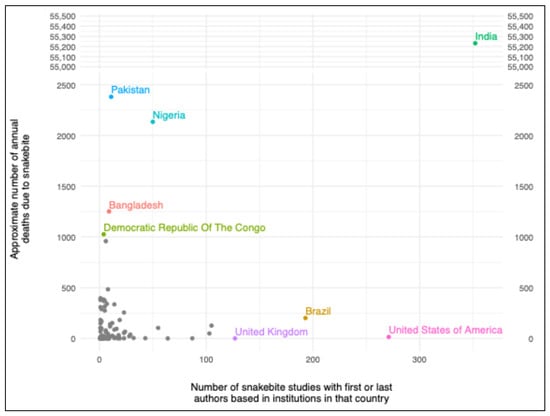
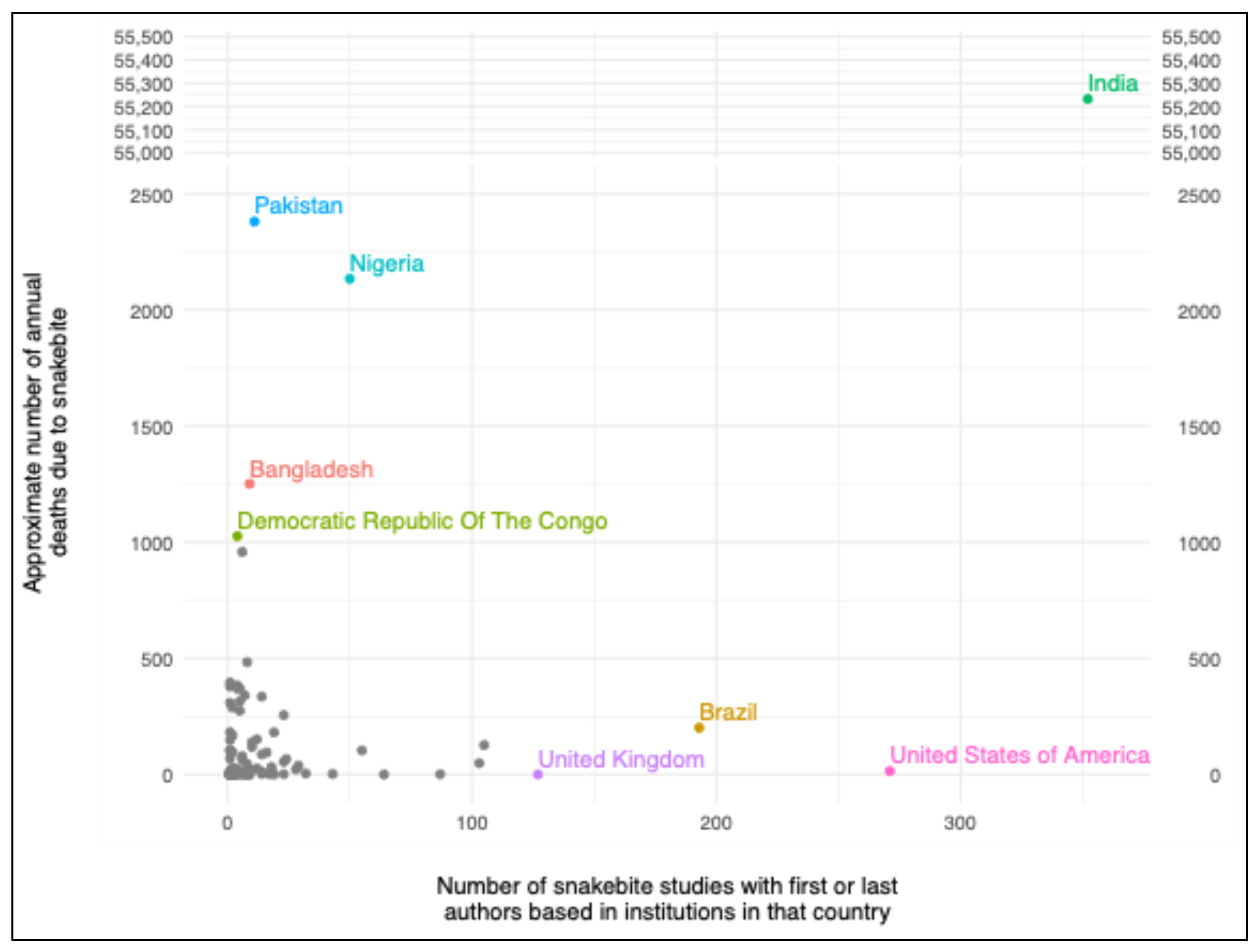
Contextualizing study authorship against country-level snakebite mortality (from a recent study [2]) highlights India as the country with the highest burden of snakebite mortality and greatest amount of representation among first and last authors of included studies (Figure 2). Countries that were well-represented among first or last authors of included studies but did not bear a great burden of snakebite mortality were the United States of America, Brazil, and the United Kingdom. Countries that bore a great burden of snakebite mortality but were not well-represented among first or last authors of included studies were Pakistan, Nigeria, Bangladesh, and the Democratic Republic of Congo.
Figure 2.
Comparing study authorship to country-level snakebite mortality. Estimated annual deaths due to snakebite from [2].
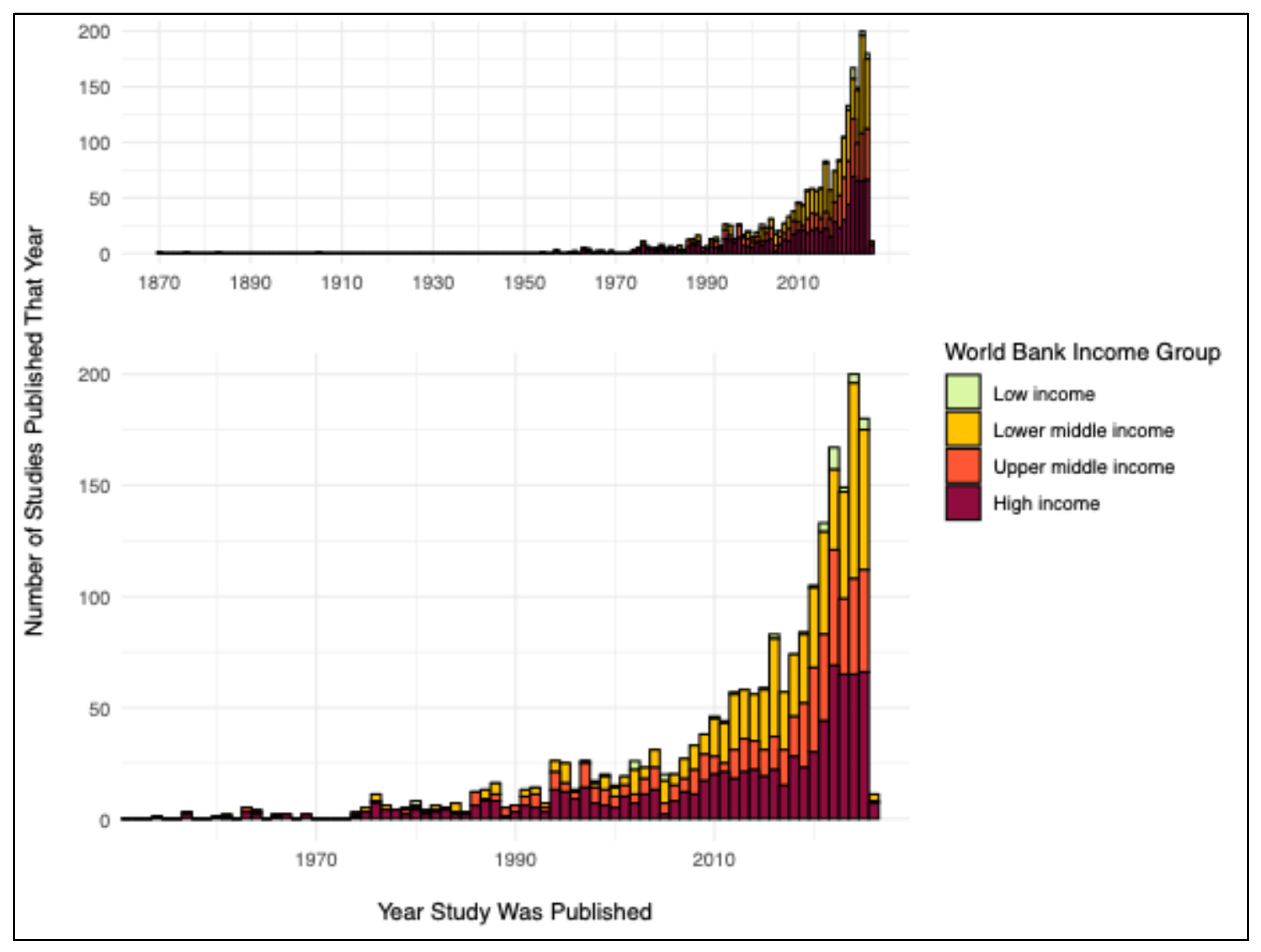
Trends in authorship have changed over time (Figure 3). The first study led by an author from a high-income country was published in 1870. In comparison, the first study led by an author from an upper-middle-income country was published in 1957, from a lower-middle-income country in 1961, and from a low-income country in 1980. In 2025 (the latest complete year), 36% of studies were published by authors from high-income countries (n = 66), 25% from upper-middle-income countries (n = 46), 35% from lower-middle-income countries (n = 63), and 3% from low-income countries (n = 5).
Figure 3.
Trends in authorship over time by country-level income classification. Income groups defined as per 2025 World Bank classifications [38]. Bottom panel is a zoomed-in version of the top panel.
Comparing income groups of study authors versus study settings demonstrated that study authorship was predominantly from high-income countries (n = 808 studies), whereas lower-middle-income countries were most commonly represented among study settings (n = 950) (Table 3). Of the 808 studies originating in a high-income country, 428 (53%) were set in a high-income country, 85 (11%) were set in an upper-middle-income country, 241 (30%) were set in a lower-middle-income country, and 44 (6%) were set in a low-income country (ten study settings did not have income classifications). Indeed, low-income countries were consistently at the bottom of the list for first or last author’s country income group (n = 45) and study setting income group (n = 109).
Table 3.
Income groups of study authors versus settings.
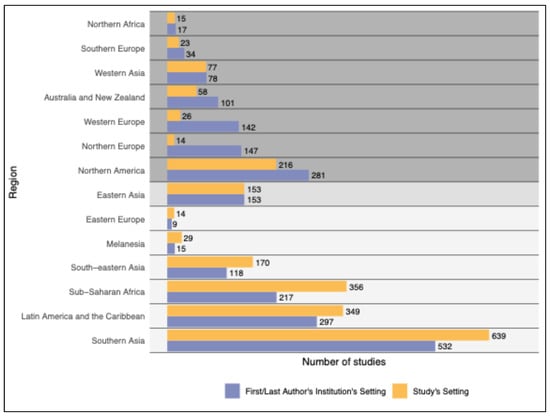
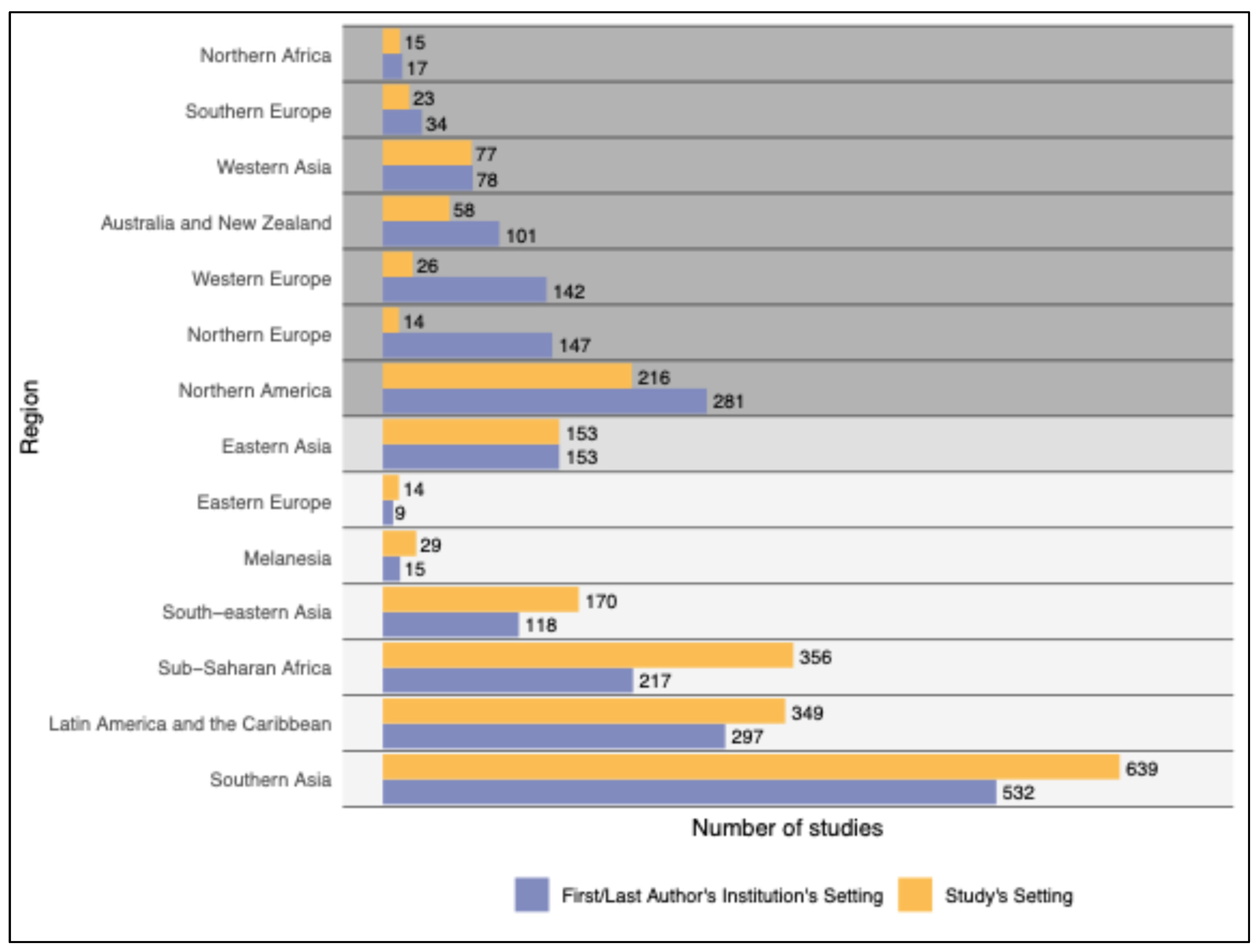
There were seven regions that were overrepresented in study authorship compared to study setting (meaning the number of studies with first or last authors based in these regions outnumbered the number of studies set there): Northern Africa, Southern Europe, Western Asia, Australia and New Zealand, Western Europe, Northern Europe, and Northern America (Figure 4). The biggest difference was observed in Northern Europe; 147 studies were led by first or last authors based in Northern Europe but only 14 studies were set there (greater than a 10-fold difference). There were as many first or last authors based in Eastern Asia as there were studies set there (n = 153). Finally, there were six regions where more studies were set than authors were based in: Eastern Europe, Melanesia, South-eastern Asia, Sub-Saharan Africa, Latin America and the Caribbean, and Southern Asia. The largest difference was observed in Sub-Saharan Africa, where 356 studies were set, but only 217 authors had institutional affiliations in (a 1.6-fold difference).
Figure 4.
Subregions of study authors versus settings. Subregions defined as per 2025 M49 sub-region classifications [37]. Regions shaded in dark grey highlight those that had higher representation among study authors than study settings. In contrast, regions shaded in light grey highlight those that had lower representation among study authors than study settings.
3.3. Study Metadata: What Is Being Reported Across Studies, in Terms of Patient Demographics, Circumstances of Snakebite, Treatment and Outcomes?
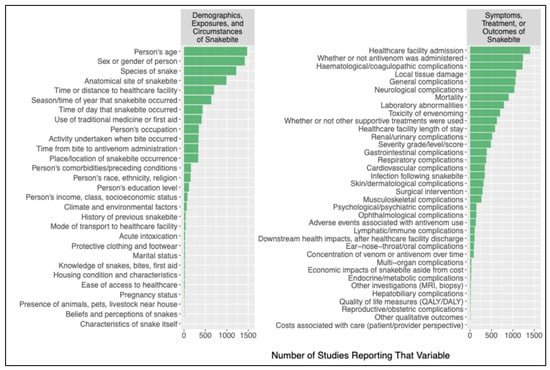
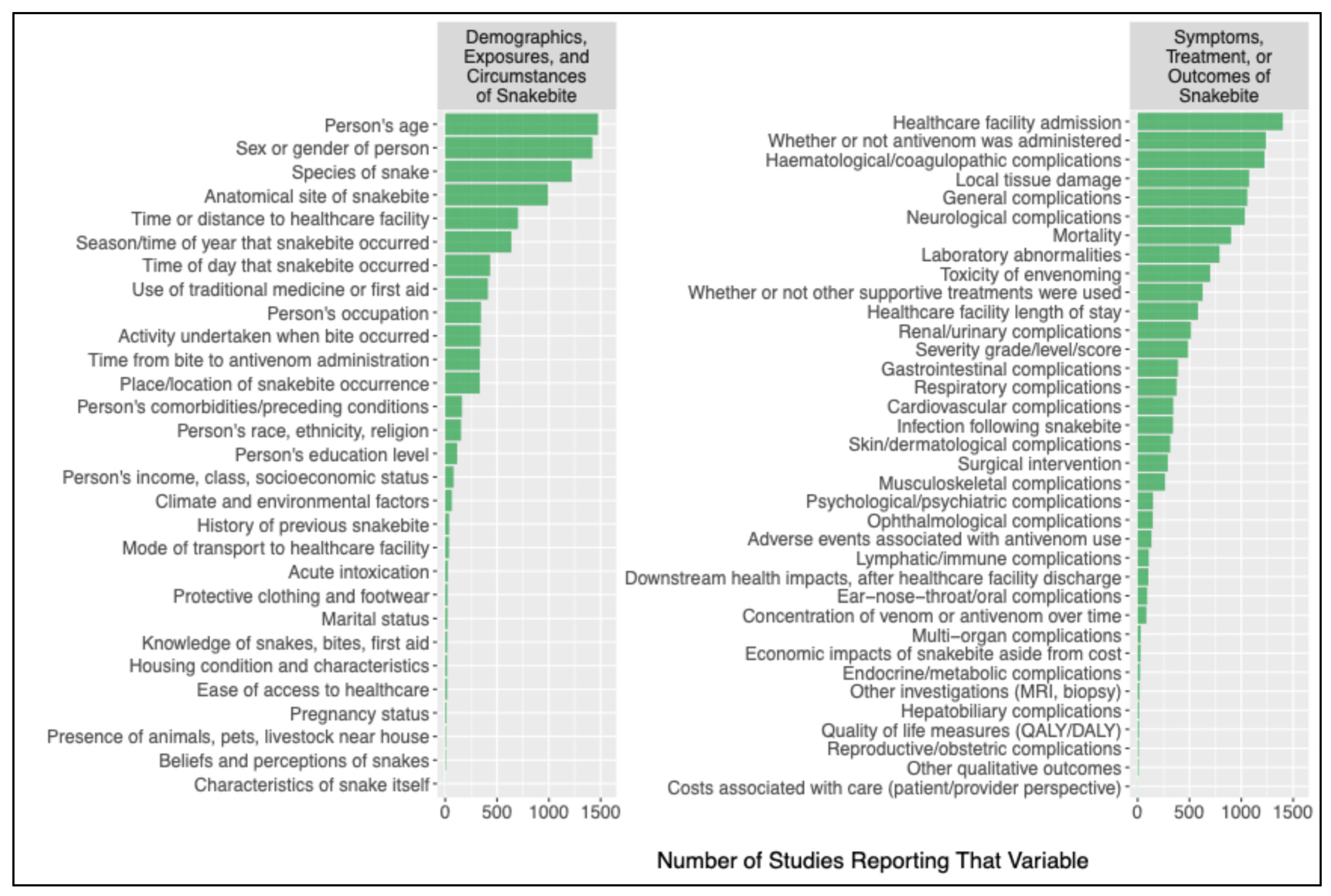
There were several variables related to demographics, exposures, and circumstances of snakebite reported across studies (Figure 5). In addition to variables already on the reporting checklist in the data extraction sheet, several categories were created from free-text fields: knowledge of snakes, snakebites, and first aid, beliefs and perceptions of snakes, mode of transport to a healthcare facility, ease of access to healthcare, acute intoxication, characteristics of the snake itself, protective clothing and footwear, housing condition and characteristics, presence of animals, pets and livestock around the house, climate and environmental factors, history of previous snakebite, pregnancy status and marital status. The most commonly reported variables were age (n = 1473 studies, 87%), sex or gender (n = 1418, 83%), and species of snake (n = 1220, 72%). In comparison, the least commonly reported variables were presence of animals, pets and livestock around the house (n = 6, <1%), beliefs and perceptions of snakes (n = 5, <1%), and characteristics of the snake itself (n = 1, <1%).
Figure 5.
Variables reported across studies.
Similarly, there were several symptom, treatment, and outcome variables reported across studies. The breadth of the free-text field was far wider than it was for variables related to demographics, exposures, and circumstances of snakebite. In addition to variables already included in the data extraction checklist, several variable categories were added based on free-text entries: ear–nose–throat/oral complications (e.g., difficulty swallowing, dry mouth, hypersalivation), cardiovascular complications (e.g., blood pressure abnormalities, arrhythmia, tachycardia), endocrine/metabolic complications (e.g., metabolic acidosis, hypopituitarism), gastrointestinal complications (e.g., abdominal pain, vomiting, nausea, diarrhea), hepatobiliary complications (e.g., abnormal liver function, hepatic failure), lymphatic/immune complications (e.g., lymphadenopathy, regional adenitis, myolitic complications), reproductive/obstetric complications (e.g., neonatal death, low birth weight, pre-term birth), multi-organ complications (e.g., multi-organ dysfunction), musculoskeletal complications (e.g., anatomical deformities, functional impairment, muscular fasciculations), neurological complications (e.g., altered consciousness, facial paralysis, difficulty speaking), ophthalmological complications (e.g., ptosis, blurred vision, ophthalmoplegia), other investigations (e.g., MRI, ultrasound, biopsy), psychological/psychiatric complications (e.g., anxiety, fear, PTSD), other qualitative outcomes (e.g., patient satisfaction, social support, treatment challenges), respiratory complications (e.g., acute respiratory distress, dyspnoea, mechanical ventilation), skin/dermatological complications (e.g., dermatitis, rash, skin discolouration), and surgical intervention (e.g., debridement, amputation, fasciotomy). The most commonly reported variables were healthcare facility admission (n = 1400, 82%), whether antivenom was administered (n = 1237, 73%), and hematological/coagulopathic complications (n = 1223, 72%).
4. Discussion
This scoping review provided an overview of 1700 studies on the epidemiology of snakebite envenoming among humans globally. One-fifth of all studies were from authors in India and were set there as well. In addition, nearly half of all studies were from authors based in high-income countries, while one-quarter were set there. While trends in authorship have changed over time, authors from low-income countries were consistently underrepresented in the body of literature. Further, included studies tended to consistently report pieces of information like age and sex of the person affected by snakebite envenoming, species of snake, healthcare facility admission, antivenom use, and hematological complications. However, there were gaps related to the reporting of factors that may increase the risk of snakebite, such as the presence of animals around the house, beliefs and perceptions of snakes, and characteristics of the snake itself, as well as outcomes such as reproductive complications, qualitative outcomes, and costs associated with snakebite care.
In the absence of robust national surveillance of snakebite envenoming in many regions, a more accurate picture is often painted through community- or facility-based studies. Still, there were several countries with a high burden of snakebite mortality that were underrepresented among the included body of literature’s authorship. Another lens we can use to contextualize authorship is through regional vulnerability to snakebites. Longbottom et al. defined vulnerability to snakebites as the “count of people living within the range of one or more medically important venomous snake species, for which no effective therapy exists, and with a travel time of more than 3 h from urban centres with a population of 50,000 people or more” [41]. Contextualizing study authorship in vulnerability to snakebites revealed a pattern similar to snakebite mortality: 9% of the population in low-income countries is vulnerable to snakebites, but only 45 (3%) studies were led by authors from low-income countries, and only 109 (6%) studies were set there. This is in contrast to high-income countries, where less than 1% of the population is vulnerable to snakebites, but nearly half of all studies were led by authors from there, and one-quarter of all studies were set there. This underscores a critical gap between where the burden of snakebite lies and where the literature is coming from. Similarly, there was a gap observed between study authorship and study setting, where the largest differences were observed in Sub-Saharan Africa (a 1.6-fold higher number of studies set there compared to authors from there) and Northern Europe (a more than 10-fold higher number of authors from there compared to studies set there). This imbalance may reflect the historically colonial nature of global health research [42].
Nonetheless, the literature can help fill gaps in international reporting systems, like the Snakebite Information and Data Platform. It was previously noted that neither Nigeria nor the Democratic Republic of Congo contributes data to this platform; there were 40 studies set in Nigeria and three set in the Democratic Republic of Congo which could help characterize snakebite envenoming in the absence of national data. Similarly, there were six studies set in Ethiopia in the last five years which could provide more up-to-date information compared to the outdated information available in the Snakebite Information and Data Platform.
In addition to trends in authorship and study setting, it is important to contextualize other trends observed in the body of included literature. First, nearly all studies being published in English reflects a larger bias observed in the academic literature. While there were no language restrictions in this review, the literature databases tend to preferentially index English-language publications [43]. It is entirely possible that the map of authorship in our review would look different if databases indexed non-English-language publications as consistently as they index English publications. For instance, of 560 active African biomedical journals, less than 20% are included in Web of Science, Scopus, Embase, and MEDLINE—four of the six international literature databases included in this review [44]. Scholars have previously highlighted the dangers of excluding non-English publications in perpetuating colonial norms in the domain of global health research [45]. One of these dangers is the perception of non-indexed studies being of lower quality, which is often untrue, as not being indexed may instead reflect financial or resource limitations [46].
Financial and resource limitations may also be drivers of the fact that nearly all studies are observational and over 75% of studies have less than 500 participants. Experimental study designs like clinical trials are expensive [47], as are very large studies. Scholars have noted that experimental studies, albeit growing in popularity, are generally less common in low- and middle-income countries, and those set in low- and middle-income countries are often led by academics from high-income countries [48]. An illustrative example is the number of HIV/AIDS, malaria, and tuberculosis trials in Africa; although the absolute number of randomized controlled trials has grown, the proportion of local authorship has decreased over time [49]. For HIV/AIDS and malaria, this gap persists despite annual research and development investment that matches or exceeds annual deaths, whereas for snakebite envenoming, there is a large imbalance with annual mortality far exceeding annual global funding [50].
Despite the lack of funding, a vast body of studies has managed to characterize the burden of snakebites. Of these studies, 7% focus specifically on pediatric snakebites. While the WHO reports that children bear a disproportionate burden of snakebite envenoming, exact estimates are unknown [51]. It is hypothesized that children are uniquely vulnerable to the impacts of snakebite envenoming due to their small size (which increases the concentration of snake venom), potentially worse bleeding complications, and tendency to be outside in rural and agricultural settings [52,53]. Given this unique vulnerability, it is remarkable that 126 studies focused on snakebites in children.
Age was the most reported variable across all studies. Other demographic variables that are known to be strongly associated with snakebite, such as occupation and climate or environmental factors, were not reported nearly as often. This may reflect the nature of medical records, given the large number of studies that reported healthcare facility admission. It could also explain why snakebite symptoms and antivenom use were well reported, but variables like the economic impacts of snakebite, quality-of-life measures, qualitative outcomes, and costs were not well reported, as these do not tend to be captured in clinical settings. This illustrates a gap in the body of literature that future snakebite research can address.
In addition, information on variables reported across studies may further develop existing data standards and core outcome definitions in snakebite envenoming research [36,54]. In fact, given the breadth of the literature included in this review, information on reported variables has already been used to come up with a standardized data collection form for snakebite research in clinical settings globally [55]. Despite these developments, it is important to acknowledge some limitations of our approach. We did not assess the quality of included studies, which could be a useful dimension to compare across geographies. Further, we did not extract any outcome values, which limited our analytic approach. We also assumed that studies reporting rates per 100,000 had a sample size of more than 10 people—which, in rare instances, may not have been the case. As well, full-text screening and data extraction were predominantly done by independent reviewers, which increases the risk of error. In addition, our search was limited to six databases, which may not have captured local evidence in some regions, and our inclusion criteria were limited to studies with ten or more people, which did not include additional evidence through case reports or small case series. We also applied contemporary 2025 World Bank classifications for income level and region to countries for publications dating back to 1870—this was done to make results more comparable. Finally, first and last authors were used as a proxy for study leadership—other co-authors may have made significant contributions to the study, but were not considered.
Nonetheless, our study was able to map a large body of literature on the epidemiology of snakebite envenoming. Our results illustrated an imbalance in where literature originated, where it was set, and where the snakebite burden was highest. India was an exception to this imbalance. In light of the WHO’s roadmap to snakebite elimination, it is important that research capacity is built in regions where snakebite envenoming poses the greatest risk. Characterizing local snakebite epidemiology through the literature and monitoring the impact of programmes that curb its burden can help achieve the WHO’s ambitious goal of halving global snakebite deaths and cases of disability by 2030 [3]. As well, communities of practice like REDPEVA, the Global Snakebite Initiative, Iniciativa Centroamericana sobre Serpientes, African Snakebite Alliance, the Global Snakebite Research Hub, and the Snakebite Community Engagement Network offer a bridge for disconnected information systems to ensure that progress against the WHO roadmap does not occur in siloes [56,57,58,59,60,61].
Author Contributions
Conceptualization, A.U. and T.L.; methodology, A.U., H.B. and P.A.; software, A.U., H.B. and P.A.; validation, A.U., H.B., P.A. and P.K. formal analysis, A.U., H.B. and P.A.; investigation, T.L.; resources, T.L.; data curation, A.U., H.B. and P.A.; writing—original draft preparation, A.U.; writing—review and editing, A.U., H.B., P.A., P.K. and T.L.; visualization, A.U., H.B. and P.A.; supervision, T.L.; project administration, T.L.; funding acquisition, A.U. All authors have read and agreed to the published version of the manuscript.
Funding
Aashna Uppal acknowledges the receipt of studentship awards from the Health Data Research UK—The Alan Turing Institute Wellcome PhD Programme in Health Data Science (Grant Ref: 218529/Z/19/Z). The funders played no role in this review. No author received funding for this work. Funding sources for included studies were not extracted.
Institutional Review Board Statement
Not applicable.
Informed Consent Statement
Not applicable.
Data Availability Statement
Data is available at [40].
Conflicts of Interest
The authors declare no conflicts of interest.
Abbreviations
The following abbreviations are used in this manuscript:
| WHO | World Health Organization |
| IQR | Interquartile Range |
| PRISMA | Preferred Reporting Items for Systematic Reviews and Meta-Analyses |
| DHIS2 | District Health Information Software 2 |
| EWARS | Early Warning, Alert and Response System |
Appendix A. PRISMA-ScR Checklist
Table A1.
Preferred Reporting Items for Systematic reviews and Meta-Analyses extension for Scoping Reviews (PRISMA-ScR) checklist.
Appendix B. Search Strategy
For the three OVID databases, the following search strategy was used:
- (1)
- snakebite/
- (2)
- exp snake venom/
- (3)
- (snake* or envenom* or viper*).ti,ab,kf.
- (4)
- 1 or 2 or 3
- (5)
- death/
- (6)
- exp mortality/
- (7)
- exp epidemiological data/or exp epidemiology/
- (8)
- symptom/
- (9)
- clinical outcome/or treatment outcome/
- (10)
- prognosis/
- (11)
- snake venom antiserum/
- (12)
- economics/
- (13)
- exp “cost”/
- (14)
- economic evaluation/
- (15)
- exp “quality of life”/
- (16)
- incidence/
- (17)
- (cases or incidence or death* or morbidity or mortality or symptom* or outcome* or prognosis or antivenom or anti-venom or “anti venom” or treatment or cost* or “quality adjusted life years” or QALY or “disability adjusted life years” or DALY or “quality of life” or QoL or epidemiolog* or economic*).ti,ab,kf.
- (18)
- 5 or 6 or 7 or 8 or 9 or 10 or 11 or 12 or 13 or 14 or 15 or 16 or 17
- (19)
- 4 and 18
- (20)
- 19 and (“Conference Abstract” or “Conference Paper” or “Review” or “Editorial” or “Letter”).sa_pubt.
- (21)
- 19 not 20
This was adapted accordingly for CINAHL:
- (S1)
- (MH “Snake Bites”)
- (S2)
- (MH “Snake Venoms”)
- (S3)
- snake OR envenom* OR viper*
- (S4)
- S1 OR S2 OR S3
- (S5)
- (MH “Death”)
- (S6)
- (MH “Mortality+”)
- (S7)
- (MH “Epidemiological Research+”)
- (S8)
- (MH “Epidemiology+”)
- (S9)
- S7 OR S8
- (S10)
- (MH “Symptoms”)
- (S11)
- (MH “Outcomes (Health Care)”)
- (S12)
- (MH “Prognosis”)
- (S13)
- (MH “Economics”)
- (S14)
- (MH “Costs and Cost Analysis+”)
- (S15)
- (MH “Quality of Life+”)
- (S16)
- (MH “Incidence”)
- (S17)
- cases OR incidence OR death* OR morbidity OR mortality OR symptom* OR outcome* OR prognosis OR antivenom OR anti-venom OR anti venom OR treatment
- (S18)
- cost* OR quality adjusted life years OR QALY OR disability adjusted life years OR quality of life OR QoL OR epidemiolog* OR economic*
- (S19)
- S5 OR S6 OR S7 OR S8 OR S9 OR S10 OR S11 OR S12 OR S13 OR S14 OR S15 OR S16 OR S17 OR S18
- (S20)
- S4 AND S19
As well, for Cochrane Centre for Registered Controlled Trials:
- #1
- MeSH descriptor: [Snake Bites] this term only
- #2
- MeSH descriptor: [Snake Venoms] explode all trees
- #3
- (snake* or envenom* or viper*):ti,ab,kw
- #4
- #1 OR #2 OR #3
- #5
- MeSH descriptor: [Death] this term only
- #6
- MeSH descriptor: [Mortality] explode all trees
- #7
- MeSH descriptor: [Epidemiologic Studies] explode all trees
- #8
- MeSH descriptor: [Epidemiology] explode all trees
- #9
- MeSH descriptor: [Signs and Symptoms] this term only
- #10
- MeSH descriptor: [Treatment Outcome] this term only
- #11
- MeSH descriptor: [Prognosis] this term only
- #12
- MeSH descriptor: [Antivenins] this term only
- #13
- MeSH descriptor: [Economics] this term only
- #14
- MeSH descriptor: [Costs and Cost Analysis] explode all trees
- #15
- MeSH descriptor: [Cost-Benefit Analysis] this term only
- #16
- MeSH descriptor: [Quality of Life] explode all trees
- #17
- MeSH descriptor: [Incidence] this term only
- #18
- (cases or incidence or death* or morbidity or mortality or symptom* or outcome* or prognosis or antivenom or anti-venom or “anti venom” or treatment or cost* or “quality adjusted life years” or QALY or “disability adjusted life years” or DALY or “quality of life” or QoL or epidemiolog* or economic*):ti,ab,kw
- #19
- #5 OR #6 OR #7 OR #8 OR #9 OR #10 OR #11 OR #12 OR #13 OR #14 OR #15 OR #16 OR #17 OR #18
- #20
- #4 AND #19
Then, select “Limit to Trials”.
And for Scopus:
( TITLE-ABS-KEY ( snake* OR envenom* OR viper* ) AND TITLE-ABS-KEY ( cases OR incidence OR death* OR morbidity OR mortality OR symptom* OR outcome* OR prognosis OR antivenom OR anti-venom OR “anti venom” OR treatment OR cost* OR “quality adjusted life years” OR qaly OR “disability adjusted life years” OR daly OR “quality of life” OR qol OR epidemiolog* OR economic* ) ) AND ( EXCLUDE ( DOCTYPE , “re” ) OR EXCLUDE ( DOCTYPE , “cp” ) OR EXCLUDE ( DOCTYPE , “le” ) OR EXCLUDE ( DOCTYPE , “ed” ) OR EXCLUDE ( DOCTYPE , “cr” ) OR EXCLUDE ( DOCTYPE , “tb” ) )
Appendix C. Authorship Geography
Figure A1.
Map of included studies’ first and last authors.
References
- de Silva, H.J.; Kasturiratne, A.; Pathmeswaran, A.; Lalloo, D.G. Snakebite: The true disease burden has yet to be determined. Ceylon Med. J. 2013, 58, 93–95. [Google Scholar] [CrossRef] [Scilit] [PubMed]
- Ediriweera, D.S.; Kasturiratne, A.; Pathmeswaran, A.; Stienstra, Y.; Martín, G.; Iwamura, T.; Murray, K.A.; de Silva, H.J.; Diggle, P.J.; Lalloo, D.G. Estimates of global burden of snakebite: A literature review and geostatistical modelling study. PLoS Med. 2026, 23, e1005201. Available online: https://journals.plos.org/plosmedicine/article?id=10.1371/journal.pmed.1005201 (accessed on 22 September 2026). [CrossRef] [Scilit] [PubMed]
- Snakebite Envenoming—A Strategy for Prevention and Control. Available online: https://www.who.int/publications/i/item/9789241515641 (accessed on 21 September 2026).
- World Health Organization. Data Collection: Differentiating Snakebite Envenoming; WHO: Geneva, Switzerland, 2025; Available online: https://cdn.who.int/media/docs/default-source/searo/ntd/9---malick-gai-sbe-webinar-17-july-2025.pdf?sfvrsn (accessed on 12 August 2026).
- Munshi, H.; Gajbhiye, R.K. Strengthening global snakebite data for WHO’s goal for 2030. Lancet 2024, 403, 907–908. Available online: https://www.thelancet.com/journals/lancet/article/PIIS0140-6736(23)01698-7/fulltext# (accessed on 14 August 2026). [CrossRef] [Scilit] [PubMed]
- World Health Organization. Snakebite Data Information Portal; WHO: Geneva, Switzerland, 2019; Available online: https://snbdatainfo.who.int/ (accessed on 12 August 2026).
- Halilu, S.; Iliyasu, G.; Hamza, M.; Kuznik, J.-P.C.; Habib, A. Snakebite burden in Sub-Saharan Africa: Estimates from 41 countries. Toxicon 2019, 159, 1–4. Available online: https://www.elsevier.com/locate/toxicon (accessed on 21 August 2026). [CrossRef] [Scilit] [PubMed]
- Interim Report on Snakebite Incidence and Case Fatality Rates in Sub-Saharan Africa. Available online: https://www.who.int/publications/i/item/who-wer9818-185-194 (accessed on 21 September 2026).
- Giant Snake Statues in Geneva Had a Noble Mission: Goats and Soda: NPR. Available online: https://www.npr.org/sections/goats-and-soda/2025/05/29/g-s1-68259/snakes-snakebite-geneva-world-health-organization-venom (accessed on 21 September 2026).
- International Snakebite Awareness Day—YouTube. Available online: https://www.youtube.com/watch?v=HAZ19sqhwC0&t=1257s (accessed on 22 September 2026).
- Aglanun, L.M.; Amuasi, J.H.; Prokesh, E.; Beyuo, A.; Dari, C.D.; Ravensbergen, S.J.; Agbogbatey, M.K.; Adobasom-Anane, A.G.; Abass, K.M.; Lalloo, D.G.; et al. Community members and healthcare workers’ priorities for the control and prevention of snakebite envenoming in Ghana. PLoS Negl. Trop. Dis. 2023, 17, e0011504. Available online: https://journals.plos.org/plosntds/article/file?id=10.1371/journal.pntd.0011504&type=printable (accessed on 24 March 2026). [CrossRef] [Scilit] [PubMed]
- Tianyi, F.L.; Agbor, V.N.; Tochie, J.N.; Kadia, B.M.; Nkwescheu, A.S. Community-based audits of snake envenomations in a resource-challenged setting of Cameroon: Case series. BMC Res. Notes 2018, 11, 317. [Google Scholar] [CrossRef] [Scilit] [PubMed][Green Version]
- Armstrong, L.J.; Cynthia, S.; George, M.; Zachariah, A. Comparing community and hospital data of snakebite in North Bihar: A community incidence survey and a parallel hospital-based clinical study. Trop. Doct. 2019, 49, 285–292. Available online: http://www.uk.sagepub.com/journals/Journal202201 (accessed on 7 February 2026). [CrossRef] [Scilit] [PubMed]
- Pandey, D.P.; Vohra, R.; Stalcup, P.; Shrestha, B.R. A season of snakebite envenomation: Presentation patterns, timing of care, anti-venom use, and case fatality rates from a hospital of southcentral Nepal. J. Venom. Res. 2016, 7, 1–9. [Google Scholar] [PubMed]
- Kakati, H.; Giri, S.; Patra, A.; Taye, S.J.; Agarwalla, D.; Boruah, H.; Choudhary, G.; Kalita, B.; Mukherjee, A.K. A retrospective analysis of epidemiology, clinical features of envenomation, and in-patient management of snakebites in a model secondary hospital of Assam, North-east India. Toxicon 2023, 230, 107175. Available online: https://www.sciencedirect.com/science/article/abs/pii/S0041010123001617 (accessed on 20 August 2026). [CrossRef] [Scilit] [PubMed]
- Lertsakulbunlue, S.; Suebtuam, R.; Eamchotchawalit, T.; Chantkran, W.; Chaisakul, J. Clinical Profile and Pharmacological Management of Snakebites in Community Care Units: A Retrospective Study Using Two Military Hospital Databases in South Thailand. Trop. Med. Infect. Dis. 2023, 8, 346. Available online: https://www.mdpi.com/journal/tropicalmed (accessed on 8 August 2026). [CrossRef] [Scilit] [PubMed]
- Afroz, A.; Siddiquea, B.N.; Chowdhury, H.A.; Jackson, T.N.; Watt, A.D. Snakebite envenoming: A systematic review and meta-analysis of global morbidity and mortality. PLoS Negl. Trop. Dis. 2024, 18, e0012080. [Google Scholar] [CrossRef] [Scilit] [PubMed]
- Liblik, K.; Byun, J.; Saldarriaga, C.; Perez, G.E.; Lopez-Santi, R.; Wyss, F.Q.; Liprandi, A.S.; Martinez-Sellés, M.; Farina, J.M.; Mendoza, I.; et al. Snakebite Envenomation and Heart: Systematic Review. Curr. Probl. Cardiol. 2022, 47, 100861. [Google Scholar] [CrossRef] [Scilit] [PubMed]
- Suhita, R.; Begum, I.; Rashid, M.; Chandran, V.P.; Shastri, S.A.; Kantamneni, R.; Rajan, A.K.; Thunga, G. Systematic review and meta-analysis of global prevalence of neurotoxic and hemotoxic snakebite envenomation. East. Mediterr. Health J. 2022, 28, 909–916. [Google Scholar] [CrossRef] [Scilit] [PubMed]
- Bhaumik, S.; Beri, D.; Lassi, Z.S.; Jagnoor, J. Interventions for the management of snakebite envenoming: An overview of systematic reviews. PLoS Negl. Trop. Dis. 2020, 14, 1–26. Available online: https://journals.plos.org/plosntds/article/file?id=10.1371/journal.pntd.0008727&type=printable (accessed on 8 August 2026). [CrossRef] [Scilit] [PubMed]
- Groneberg, D.A.; Geier, V.; Klingelhöfer, D.; Gerber, A.; Kuch, U.; Kloft, B. Snakebite Envenoming—A Combined Density Equalizing Mapping and Scientometric Analysis of the Publication History. PLoS Negl. Trop. Dis. 2016, 10, e0005046. Available online: https://journals.plos.org/plosntds/article?id=10.1371/journal.pntd.0005046 (accessed on 5 October 2026). [CrossRef] [Scilit] [PubMed]
- Lv, C.; Lei, Z.; Hu, Y.; Song, X.; Wang, J.; Hao, W.; He, L.; Chen, Y.; Han, X.; Gan, Y.; et al. A Bibliometric Study on Global Snakebite Research Indexed in Web of Science. Int. J. Public Health 2023, 68, 1606311. Available online: https://pmc.ncbi.nlm.nih.gov/articles/PMC10641039/ (accessed on 5 October 2026). [CrossRef] [Scilit] [PubMed]
- Bloomfield, G.S.; Xavier, D.; Belis, D.; Alam, D.; Davis, P.; Prabhakaran, D.; Ghannem, H.; Gilman, R.H.; Kamath, D.; Kimaiyo, S.; et al. Training and Capacity Building in LMIC for Research in Heart and Lung Diseases: The NHLBI—UnitedHealth Global Health Centers of Excellence Program. Glob. Heart 2016, 11, 17. [Google Scholar] [CrossRef] [Scilit] [PubMed]
- Boum, I.I.Y.; Burns, B.F.; Siedner, M.; Mburu, Y.; Bukusi, E.; Haberer, J.E. Advancing equitable global health research partnerships in Africa. BMJ Glob. Health 2018, 3, e000868. [Google Scholar] [CrossRef] [Scilit] [PubMed]
- Munn, Z.; Peters, M.D.J.; Stern, C.; Tufanaru, C.; McArthur, A.; Aromataris, E. Systematic review or scoping review? Guidance for authors when choosing between a systematic or scoping review approach. BMC Med. Res. Methodol. 2018, 18, 143. Available online: https://pmc.ncbi.nlm.nih.gov/articles/PMC6245623/ (accessed on 13 October 2026). [PubMed]
- Uppal, A. Open Science Framework Scoping Review Protocol: Mapping Global Snakebite Envenoming Outcomes Research. 2026. Available online: https://osf.io/an3rt (accessed on 12 August 2026).
- Tricco, A.C.; Lillie, E.; Zarin, W.; O’Brien, K.K.; Colquhoun, H.; Levac, D.; Moher, D.; Peters, M.D.J.; Horsley, T.; Weeks, L.; et al. PRISMA Extension for Scoping Reviews (PRISMA-ScR): Checklist and Explanation. Ann. Intern. Med. 2018, 169, 467–473. Available online: https://eprints.whiterose.ac.uk/136633/1/PRISMA_ScR_Manuscript_July6th_clean_1_.pdf (accessed on 4 August 2026). [CrossRef] [Scilit] [PubMed]
- Scopus|Abstract and Citation Database|Elsevier. Available online: https://www.elsevier.com/products/scopus (accessed on 13 October 2026).
- Cochrane Reviews|Cochrane Library. Available online: https://www.cochranelibrary.com/ (accessed on 13 October 2026).
- CINAHL Database|EBSCO. Available online: https://about.ebsco.com/products/research-databases/cinahl-database (accessed on 13 October 2026).
- Ovid. Available online: https://www.ovid.com/ (accessed on 13 October 2026).
- DeepL. Available online: https://www.deepl.com/en (accessed on 12 August 2026).
- Hupe, M. Covidence. J. Electron. Resour. Med. Libr. 2025, 22, 139–147. [Google Scholar]
- Warrell, D.A.; Williams, D.J. Clinical aspects of snakebite envenoming and its treatment in low-resource settings. Lancet 2023, 401, 1382–1398. Available online: https://www.thelancet.com/action/showFullText?pii=S0140673623000028 (accessed on 13 October 2026). [CrossRef] [Scilit] [PubMed]
- Mehta, S.R.; Sashindran, V.K. Clinical Features And Management Of Snake Bite. Med. J. Armed Forces India 2011, 58, 247. Available online: https://pmc.ncbi.nlm.nih.gov/articles/PMC4925324/ (accessed on 13 October 2026).
- Abouyannis, M.; Esmail, H.; Hamaluba, M.; Ngama, M.; Mwangudzah, H.; Mumba, N.; Yeri, B.K.; Mwalukore, S.; Alphan, H.J.; Aggarwal, D.; et al. A global core outcome measurement set for snakebite clinical trials. Lancet Glob. Health 2023, 11, e296–300. [Google Scholar] [CrossRef] [Scilit] [PubMed]
- UNSD—Methodology. Available online: https://unstats.un.org/unsd/methodology/m49/ (accessed on 13 October 2026).
- The World Bank. The World by Income and Region. 2025. Available online: https://datatopics.worldbank.org/world-development-indicators/the-world-by-income-and-region.html (accessed on 12 August 2026).
- Collaborators, G.S.E.; Roberts, N.L.S.; Johnson, E.K.; Zeng, S.M.; Hamilton, E.B.; Abdoli, A.; Alahdab, F.; Alipour, V.; Ancuceanu, R.; Andrei, C.L.; et al. Global mortality of snakebite envenoming between 1990 and 2019. Nat. Commun. 2022, 13, 6160. Available online: https://www.nature.com/ncomms/ (accessed on 20 August 2026). [CrossRef] [Scilit] [PubMed]
- Uppal, A. Mendeley Data Dataset for Global Epidemiology of Snakebite Envenoming: A Scoping Review. 2026. Available online: https://data.mendeley.com/datasets/nvpr3hwxs6/1 (accessed on 25 August 2026).
- Longbottom, J.; Shearer, F.M.; Devine, M.; Alcoba, G.; Chappuis, F.; Weiss, D.J.; Ray, S.; Ray, N.; Warrell, D.A.; de Castañeda, R.R.; et al. Vulnerability to snakebite envenoming: A global mapping of hotspots. Lancet 2018, 392, 673–684. Available online: https://pubmed.ncbi.nlm.nih.gov/30017551/ (accessed on 20 October 2026). [CrossRef] [Scilit] [PubMed]
- Bhakuni, H.; Abimbola, S. Epistemic injustice in academic global health. Lancet Glob. Health 2021, 9, e1465–e1470. Available online: https://www.thelancet.com/action/showFullText?pii=S2214109X21003016 (accessed on 13 October 2026). [CrossRef] [Scilit] [PubMed]
- Bahji, A.; Acion, L.; Laslett, A.M.; Adinoff, B. Exclusion of the non-English-speaking world from the scientific literature: Recommendations for change for addiction journals and publishers. Nord. Stud. Alcohol Drugs 2023, 40, 6–13. [Google Scholar] [CrossRef] [Scilit] [PubMed]
- Asubiaro, T.V. Sub-Saharan Africa’s biomedical journal coverage in scholarly databases: A comparison of Web of Science, Scopus, EMBASE, MEDLINE, African Index Medicus, and African Journals Online. J. Med. Libr. Assoc. 2023, 111, 696–702. [Google Scholar] [CrossRef] [Scilit] [PubMed]
- Adebisi, Y.A.; Jimoh, N.D.; Ogunkola, I.O.; Ilesanmi, E.A.; Elhadi, Y.A.M.; Lucero-Prisno, D.E. Addressing language inequities in global health science scholarly publishing. J. Med. Surg. Public Health 2024, 2, 100038. [Google Scholar] [CrossRef] [Scilit]
- Ndong, A. Language and geographical bias limits global health research. BMJ 2026, 392, s436. [Google Scholar] [CrossRef] [Scilit] [PubMed]
- Martin, L.; Hutchens, M.; Hawkins, C.; Radnov, A. How much do clinical trials cost? Nat. Rev. Drug Discov. 2017, 16, 381–382. [Google Scholar] [CrossRef] [Scilit] [PubMed]
- Graham, C.A.; Simon, E.L.; Knott, J. Study design: A research primer for low- and middle-income countries. Afr. J. Emerg. Med. 2020, 10, S115–S119. [Google Scholar] [CrossRef] [Scilit] [PubMed]
- Kelaher, M.; Ng, L.; Knight, K.; Rahadi, A. Equity in global health research in the new millennium: Trends in first-authorship for randomized controlled trials among low- and middle-income country researchers 1990–2013. Int. J. Epidemiol. 2016, 45, 2174–2183. [Google Scholar] [CrossRef] [Scilit] [PubMed]
- Berg, P.; Theart, F.; van Driel, M.; Saaiman, E.L.; Mavoungou, L.B. Snakebite envenoming in Africa remains widely neglected and demands multidisciplinary attention. Nat. Commun. 2024, 15, 9598. [Google Scholar] [CrossRef] [Scilit] [PubMed]
- World Health Organization. Snakebite Envenoming; WHO: Genova, Switzerland, 2023; Available online: https://www.who.int/news-room/fact-sheets/detail/snakebite-envenoming (accessed on 12 August 2026).
- Muniyapillai, T.; Maniprabhu, S.; Abinaya, R.; Kulothungan, K.; Thirunavukkarasu, S.; George, N. Clinical Profile and Outcomes of Pediatric Snakebite Envenomation: A Three-Year Retrospective Study From a Rural Tertiary Care Center in South India. Cureus 2024, 16, e73976. [Google Scholar] [CrossRef] [Scilit] [PubMed]
- Zdenek, C.N.; Rodrigues, C.F.B.; Bourke, L.A.; Tanaka-Azevedo, A.M.; Monagle, P.; Fry, B.G. Children and snakebite: Snake venom effects on adult and paediatric plasma. Toxins 2023, 15, 158. [Google Scholar] [CrossRef] [Scilit] [PubMed]
- Bhaumik, S.; Beri, D.; Santra, V.; Gopalakrishnan, M.; Faiz, M.A.; Williamson, P.R.; Clarke, M.; Sharma, S.K.; Jagnoor, J. Core outcome set for intervention research on snakebite envenomation in South Asia. Inj. Prev. 2026, 32, 112–120. [Google Scholar] [CrossRef] [Scilit] [PubMed]
- Global Snakebite Research. The Global Health Network Snakebite Data Collection Forms. 2025. Available online: https://globalsnakebiteresearch.tghn.org/working-group/data-collection-forms/ (accessed on 12 August 2026).
- SCEN—The Snakebite Community Engagement Network. Available online: https://snakebitecommunityengagement.net/ (accessed on 13 October 2026).
- Iniciativa Centroamericana Sobre Serpientes: Coloquio Sobre Serpientes de Paraguay, 30 de Julio de 2026 • The Global Health Network LAC. Available online: https://lac.tghn.org/actividades-y-eventos/otras-actividades-lac/iniciativa-centroamericana-sobre-serpientes-coloquio-sobre-serpientes-de-paraguay-30-de-julio-de-2026/ (accessed on 13 October 2026).
- REDPEVA—Regional Meeting of National Programs for Venomous Animals Accidents in Latin American and the Caribbean—PAHO/WHO|Pan American Health Organization. Available online: https://www.paho.org/en/topics/envenoming-venomous-animal-bites/redpeva-regional-meeting-national-programs-venomous-0 (accessed on 13 October 2026).
- Oluoch, G.O.; Stienstra, Y.; Schurer, J.M.; Mijumbi, R.; Mbonigaba, J.B.; Thomas, B.; Padidar, S.; Amuasi, J.; Lalloo, D.G. Correspondence: The African snakebite Alliance. Toxicon 2024, 237, 107535. [Google Scholar] [CrossRef] [Scilit] [PubMed]
- Home • Global Snakebite Research. Available online: https://globalsnakebiteresearch.tghn.org/ (accessed on 21 September 2026).
- Global Snakebite Initiative USA Foundation. Available online: https://www.globalsnakebite.org/ (accessed on 21 September 2026).

Disclaimer/Publisher’s Note: The statements, opinions and data contained in all publications are solely those of the individual author(s) and contributor(s) and not of MDPI and/or the editor(s). MDPI and/or the editor(s) disclaim responsibility for any injury to people or property resulting from any ideas, methods, instructions or products referred to in the content. |
© 2026 by the authors. Licensee MDPI, Basel, Switzerland. This article is an open access article distributed under the terms and conditions of the Creative Commons Attribution (CC BY) license.