


Abstract
Pseudomonas plecoglossicida is a Gram-negative opportunistic pathogen in aquaculture that infects several economically important fish species, including large yellow croaker, orange-spotted grouper and yellow drum. Due to its high incidence and mortality rates, visceral white spot disease (VWND) caused by P. plecoglossicida has become a major bacterial disease threatening the sustainable development of aquaculture and has caused huge economic losses worldwide. Owing to tremendous technological advances, such as dual RNA-seq, our understanding of P. plecoglossicida pathogenesis and associated host defense mechanisms has been greatly enhanced. Nevertheless, many pathogenecity-related mechanisms of P. plecoglossicida remain uncovered, including the functions of various unannotated bacterial virulence factors. Therefore, there is an urgent need to develop new theoretical and practical approaches to address the challenges of P. plecoglossicida. In this review, we summarize the current research advances in the virulence factors, prevention and control strategies, and host–pathogen interactions of this microbial pathogen. This review will contribute to a more comprehensive understanding of the pathogenesis of P. plecoglossicida and provide new insights and strategies for its prevention and control.
Keywords:
Pseudomonas plecoglossicida; pathogenesis; virulence factors; prevention and control strategy Key Contribution:
1. This study systematically summarizes the research progress on Pseudomonas plecoglossicida for the first time from the perspectives of virulence factors, control methods and the interaction of this pathogen with its hosts. 2. This study systematically analyzes the drug resistance of Pseudomonas plecoglossicida using ABRicate software for the first time.
1. Introduction
Pseudomonas plecoglossicida is a typical rod-shaped Gram-negative bacterium with polar flagella. It was first isolated from Japanese freshwater-cultured ayu (Plecoglossus altivelis) exhibiting bacterial hemorrhagic ascites (BHAs) [1]. Over the past few decades, P. plecoglossicida has been isolated from various cultured fish species, including freshwater species such as rainbow trout (Oncorhynchus mykiss) and pejerrey (Odontesthes bonariensis), as well as marine species such as large yellow croaker (Larimichthys crocea, LYC), orange-spotted grouper (Epinephelus coioides) and yellow drum (Nibea albiflora). The phenotypic and biochemical characteristics of P. plecoglossicida-infected fish are similar to those caused by Pseudomonas putida. Therefore, P. plecoglossicida is classified within the same group as P. putida. However, the two species can be distinguished by comparing the sequences of their housekeeping genes or whole genome sequences [1,2]. To identify the pathogens responsible for infections in the fish industry, researchers screened the aptamers against P. plecoglossicida by using a systematic evolution of ligands through exponential enrichment (SELEX) and developed a new label-free surface-enhanced Raman scattering (SERS) method, which laid a foundation for the rapid detection of P. plecoglossicida [3,4]. However, the relatively high cost of Raman spectrometers and the need for specialized personnel to operate them have limited their widespread application to some extent. Therefore, the development of a simple, sensitive, efficient, and cost-effective detection method is more in line with the needs of practical aquaculture production.
Since P. plecoglossicida is sensitive to temperature, infection mainly occurs in winter and spring when the water temperature is below 20℃. A typical symptom of P. plecoglossicida infection is the formation of white granulomas in the spleen, kidney and liver, which is known as visceral white spot disease (VWSD), and mainly is found in LYC [5]. In addition, signs of ascites and sepsis of the whole body have also been observed in marine fish and freshwater fish, such as ayu and rainbow trout infected by P. plecoglossicida. What complicates the problem is that no obvious symptoms were found in the early stage of infection, and the mortality rate of infected fish usually increases gradually a few days after infection. P. plecoglossicida poses a serious threat to the aquaculture industry, yet no commercial vaccine against this pathogen has been developed to date. The early detection and pathogenesis of the pathogen are still in the initial stages of research.
Therefore, it is necessary to screen and identify the virulence targets of P. plecoglossicida and develop new effective prevention and control strategies to ensure the health development of aquatic industry. To better address the challenges posed by this pathogen to the aquaculture industry, this article broadly reviews recent research progress on P. plecoglossicida, including the regulatory mechanisms of virulence factors, gene expression regulation, prevention and control strategies, and host–pathogen interactions.
2. Virulence Factors and Virulence Regulatory Systems
The process by which pathogenic bacteria infect their hosts is generally divided into several stages, including adhesion, invasion, in vivo/intracellular survival, immune escape, in vivo proliferation, toxin production and disease development. During this process, the flagellum is an important locomotor organelle that helps bacteria move to the most favorable environments and facilitates colonization [6]. Outer membrane proteins (OMPs) of pathogenic bacteria contribute to the following invasion process, including adhesion, nutrient acquisition and antibiotic resistance [7]. In addition, adhesins such as flagella and pili are also closely associated with drug resistance caused by biofilm formation [8]. Different types of secretion systems play important roles in host colonization, adhesion, and swimming motility, and contribute to disease development [9]. Metal transport systems are also important for maintaining metal ion homeostasis within pathogenic bacteria [10]. In terms of virulence regulatory systems, two-component systems (TCSs) are complex systems that regulate bacterial physiological activities through signaling cascades to enable bacteria to adapt to external environments, particularly by modulating bacterial virulence and antimicrobial resistance [11]. Furthermore, the response of the ECF σ factor to temperature helps the bacteria to regulate virulence under different temperature conditions [12]. Therefore, a deeper study on virulence factors and virulence regulatory systems of pathogenic microbes will provide a series of potential novel potential targets for the effective inhibition and prevention of pathogenic bacteria. However, studies on the virulence factors of P. plecoglossicida, as shown in Table 1, are currently quite limited, and its specific pathogenesis remains unclear, warranting further investigation.
Table 1.
The main virulence factors of Gram-negative bacteria and their research status in P. plecoglossicida.
2.1. Flagella
The flagellum is a widely distributed locomotor organelle on the surface of bacteria. With a highly complex and ordered structure, the flagellum is composed of filaments, a hook and basal body, and rotates under the drive of a flagellar motor located at the basal body, thereby propelling the bacteria through their surrounding environment [27]. In recent years, the research on flagellar structure and function has revealed that flagella serve additional significant biological roles beyond facilitating movement. First, its role in mediating bacterial adhesion and colonization has been demonstrated in a variety of animal and plant infection models [28]. Secondly, the motility of flagella also enhances bacteria’s adhesion ability and further promotes the formation of a resistant biofilm [29]. Flagella can also function as macromolecular protein transporters, like T3SS, to transport flagellar-associated proteins and aid flagellar assembly [30,31].
Notably, studies have shown that the flagellum is an indispensable virulence factor in the process of bacterial infection [32]. Some researchers knocked out or knocked down the flagellar gene of P. plecoglossicida and found that the resulting mutants showed significant reductions in bacterial motility, adhesion and biofilm formation abilities, and showed reduced virulence to their hosts [14,33,34,35]. Because of their unique immunological properties, flagella have also been increasingly used in the development of novel immune adjuvants [36]. These findings revealed that the flagellar proteins may serve as important target candidates for the detection of and immunity against P. plecoglossicida infection.
2.2. Outer Membrane Proteins
Most pathogenic bacteria in aquaculture are Gram-negative and possess complex membrane systems that enhance their adaptation to the changing external environment [37]. Outer membrane proteins (OMPs) are unique components of the outer membrane of Gram-negative bacteria, accounting for 50% of their total composition. OMPs are involved in maintaining the bacterial structure and can directly regulate the permeability of the outer membrane by sensing the external environment [38]. In addition, OMPs, together with bacterial flagella, lipopolysaccharides (LPS), capsular polysaccharides and fimbriae, constitute bacterial surface antigens, which play an important role in the processes of bacterial adhesion and invasion, the destruction of host cells and assisting cells to evade host immunity, thus leading to host morbidity or death [39]. ABC transporters (ATP binding cassette transporters) are a superfamily of membrane proteins comprising numerous members. Knockdown of the ABC transporter gene in P. plecoglossicida significantly altered the host transcriptome, including the chemokine signaling pathway, the coagulation and complement system, and the hematopoietic cell lineage pathway [15]. Notably, OMPs have gradually become the focus of fish vaccine research because of their strong immunogenicity [40]. Compared to inactivated vaccines, a recombinant outer membrane protein A (OmpA) subunit vaccine significantly enhanced the survival rate of juvenile Megalobrama amblycephala infected with Aeromonas hydrophila [41]. Zhao et al. demonstrated that recombinant Lactobacillus casei expressing Aha1, an OMP of A. hydrophila, exhibited a greater ability to survive in the intestines of immunized fish, and more importantly, the recombinant L. casei strains used through oral vaccination were effective in preventing A. hydrophila infections in common carps [42]. Recombinant outer membrane porin F (rOprF) from P. plecoglossicida can induce a robust immune response and provide effective immune protection against LYC, showing potential as a candidate vaccine [16].
2.3. Secretion System
Pathogens promote the purpose of the infection of specific hosts by releasing effector proteins into the extracellular environment or injecting them directly into the host cells. Because Gram-negative bacteria possess a complex structure of double-layer membrane and periplasmic space, secreted proteins must cross both the inner membrane (IM) and outer membrane (OM). Protein secretion is more difficult in Gram-negative bacteria than in Gram-positive bacteria; therefore, Gram-negative bacteria have evolved a variety of protein secretion systems (SSs) [43]. To date, eight types of SS (T1SS~T7SS and T9SS) have been found in bacteria, which play an important role in bacterial virulence and in the practice of heterologous protein secretion, as well as vaccine development [44,45,46,47].
At present, research on the SS of P. plecoglossicida mainly focuses on T6SS and T3SS. As an important virulence secretory system, T3SS is widely found in Gram-negative bacteria and is involved in modulating host immune response, vesicular transport, signal transduction and other cellular processes [48]. The predicted T3SS PP_ExoU from P. plecoglossicida NB2011 participates in the damage of the plasma membrane of Hela, indicating that T3SS is an important component of the virulence system of this pathogen [49]. In addition, the knock-out of T3SS translocators popB and popD also affects the morphology and assembly of the flagella, suggesting a cross-talk between the T3SS and flagella [19]. Recently, T6SS has received increasing attention in the pathogenesis of pathogenic bacteria because of its important role in most bacteria [50]. So far, three T6SS clusters, namely T6SS-1, T6SS-2 and T6SS-3, have been identified in P. plecoglossicida [20]. At the same time, the T6SS mutant of P. plecoglossicida showed a significant decrease in virulence to L. crocea, suggesting that T6SS is a key virulence factor [21]. In subsequent studies, the Tao’research group also identified an antibacterial effect of T6SS with nuclease activity, in which Txe1 is the predominant T6SS toxin from P. plecoglossicida in mediating the interspecific killing against Escherichia coli [51]. Collectively, virulence-associated secretory systems appear to play important roles during host infection by P. plecoglossicida, and they can also serve as effective targets for developing attenuated live vaccines for the preparation of P. plecoglossicida infection.
2.4. Biofilm
Biofilm (BF) is a microbial community formed by bacteria adhering to a solid surface, and it is filled with an extracellular polymeric substance (EPS) made up of proteins, polysaccharides, DNA and RNA [52]. One fact is that most bacteria exist in the form of BF, which does not only enhance the viability of bacteria encapsulated in EPS, but also supports the flora’s resistance to antibiotics, environmental stressors and the host immune system [53,54,55]. Therefore, the pathogenesis and survival of bacterial pathogens in vitro and in vivo are closely related to the formation and maintenance of biofilms. In recent years, many studies have shown that BF is not only one of the major causes of chronic inflammation and even mortality following host infection, but can also contaminate human-related facilities and trigger outbreaks of infectious diseases that could possibly become pandemic [56,57]. Furthermore, the formation of BF results in a notable rise in bacterial resistance towards antimicrobial drugs, hence posing a serious threat to medication safety [58]. Hence, BF has always been one of the main hotspots in the field of pathogenic microbiology treatment.
Qi et al. found that the cspA1 knock-down in P. plecoglossiida caused a significant reduction in the ability to form biofilm, while the relative survival value of E. coioides vaccinated with cspA1 mutant was significantly improved, and an effective and durable immune response was recognized [22]. The formation of biofilm is not only affected by genes related to biofilm, but also through external factors such as pH [59], temperature [60], salinity [61] and metal ion concentration [62]. In recent years, in response to the constant use of various traditional strategies to resist biofilms, through the application of different coatings on the surface of objects [63,64] or the combined use of antibiotics [65,66] to prevent BF formation, scientists have been working tirelessly on the development of novel biofilm inhibitors with different mechanisms [67,68]. Studies investigating the processes and regulatory mechanisms of bacterial biofilm formation would screen out a series of targets for inhibiting biofilm formation, which could offer potential strategies for the future preparation of live attenuated vaccines.
2.5. Metal Transport Systems
Metal ions play a crucial role in the processes of bacterial growth and metabolism, such as photosynthesis, respiration, and gene regulation [69,70,71]. Excessive metal can lead to a series of toxic reactions; however, the lack of metal limits the growth of microorganisms. Therefore, the regulations of bioavailability and transportation of metal ions play a major role in maintaining the homeostasis of bacteria in a constantly changing environment [72]. In pathogenic bacteria, the concentration of metal ions directly available in the environment is usually very low. For example, in the process of bacterial infection of the host, the host usually resists bacterial infection by limiting the bacterial intake of key metal ions through the secretion of metal binding proteins [73,74,75]. To overcome the above limitations regarding metal ions, bacteria have evolved complex metal uptake and output systems [76,77,78]. These mechanisms help the bacteria to survive in the host and further strengthen their disease-causing role.
The iron uptake system is well studied in P. plecoglossicida. Iron, as one of the essential trace elements required for bacterial growth and reproduction, is a resource for which pathogens and hosts compete during host–pathogen interactions, resulting in an iron “tug of war” between them [79,80,81]. In their long-term coevolution, pathogens have evolved a variety of complex pathways to absorb iron from the environment and host [82]. The most important means is to capture iron ions is by self-secreted siderophore (an iron carrier capable of chelating iron), even competing with other siderophores secreting bacteria, and then transporting the iron–siderophore complex into the cell via specific outer membrane receptors [83]. Studies have shown that pyoverdine (PVD), as an important siderophore in P. plecoglossicida, affected iron acquisition, biofilm formation, distribution of bacteria in host organs, and so on [17]. Meanwhile, Sun et al. found that the loss of ferritin in the spleen may be the main reason for the death of grouper after infection with P. plecoglossicida, which also confirms the important role of iron in the pathogen–host interaction [84].
Most Gram-negative bacteria compete for iron by producing transferrin-binding proteins (or lactoferrin-binding proteins) that directly bind to the host’s transferrin (or lactoferrin) under iron stress. The entire process is powered by the TonB system (TonB-ExbB-ExbD) [85]. It was reported that the TonB system plays a crucial role in the transport of nutrients such as iron and other metal elements. Hu et al. found that upon tonB gene knockdown, the motility and biofilm-formation capacity of P. plecoglossicida were significantly impaired, and the survival rate of E. coioides infected with the tonB-RNAi strain increased by 20% compared with those infected with the wild P. plecoglossicida strains [18]. In addition, knockout of P. plecoglossicida fusA, a member of the TonB-dependent receptor family, significantly affected its physiological processes such as growth and adhesion [86]. These findings indicated that the iron uptake system plays a major role in the pathogenesis of P. plecoglossicida. Thus, the development of anti-virulence strategies that specifically inhibit the siderophores of P. plecoglossicida will inevitably emerge as a promising treatment option to contain its infection, and will even make up for the dilemma of increasing bacterial resistance caused by excessive use of antibiotics [87].
2.6. Ferric-Uptake Regulator
Metal transport systems help bacteria compete for essential metal ions within host environments and thus dominate their niche. However, excessive concentrations of metal ions can seriously impair bacterial survival. Therefore, the regulation of metal transport systems plays a key role in the metal homeostasis of prokaryotes, including bacterial pathogens. Interestingly, in recent years, scientists have harnessed the antibacterial properties of metal ions to develop a range of “metalloantibiotics”, which they are now poised to actively introduce into clinical practice to combat antibiotic resistance [88]. The main function of some transcriptional regulators is to regulate the homeostasis of metal ions by inhibiting the expression of the metal transport system when the concentration of metal ions in the cell is too high. Fur (ferric uptake regulator) and Zur (zinc uptake regulator) are relatively common transcriptional regulators in most prokaryotes [89,90]. Huang et al. performed analyses using EMSA and other experiments and found that Fur senses the change in iron concentration in P. plecoglossicida to regulate the ZnuCBA Zn uptake system [91]. Although numerous investigations have previously examined the hypothesis that Fur influences bacterial virulence, this regulator has rarely been identified in P. plecoglossicida. Therefore, further exploration of the basic function of Fur in the pathophysiology of VWSD is required, and this work would aid in the development of much-needed drugs to treat VWSD.
2.7. Two-Component Regulatory Systems
Two-component systems (TCSs) are among the signal transduction and communication systems widely distributed in bacteria. The classical TCS mainly consists of a membrane-embedded histidine kinase (HK) and a response regulator (RR). TCS uses HK to sense external stimulus signals (environmental osmotic pressure, antibiotic concentration, etc.) and then regulates RR through phosphorylation and dephosphorylation; the activated RR subsequently binds to specific gene promoters and modulates their expression, so that bacteria can respond to physical, chemical and biological pressures from the environment and make adaptive adjustments [92,93].
At present, many bacteria have been confirmed to be equipped with TCSs, and usually carry multiple TCSs [94,95]. As a powerful tool for bacteria to survive in different environments, a TCS is crucial for bacterial growth, reproduction, metabolism and virulence. Zhou et al. found that the GacS/GacA two-component system of P. plecoglossicida was mainly involved in flagellar assembly, metabolism, bacterial chemotaxis, and biofilm formation [25]. PvgAS, a new TCS found in P. plecoglossicida, was essential for intracellular survival and tissue colonization of the pathogen in hosts because it modulates T6SS and T3SS [26]. In-depth investigation into the types, structure, and biological functions of the TCS in P. plecoglossicida may uncover potential targets for the prevention and control of infections caused by this pathogen.
2.8. ECF σ Factor-Mediated Temperature Gauge
In recent years, more attention has been drawn specifically to the study of the temperature-related bacterial-induced disease process, which regulates bacterial virulence [12,96]. However, the exact regulatory mechanism remains to be elucidated. Researchers have found that the VWSD of LYC caused by P. plecoglossicida continued to show obvious temperature-dependence [97,98]. The disease caused by P. plecoglossicida only occurs in the range of 16–20 °C; once the temperature rises over 20 °C, the disease gradually goes away [5,49,99]. Therefore, a better understanding of the mechanism underlying the temperature-induced virulence of P. plecoglossicida is the key to preventing and controlling VWSD.
The extracytoplasmic function (ECF) σ factors are the third pillar of the bacterial signal transduction mechanism. They receive various external stimuli and regulate the bacteria to produce various adaptive behaviors accordingly [100]. SigX, as an ECF σ factor, contributes to bacterial iron uptake, biofilm formation and motility [101]. In previous studies, Huang et al. found that SigX was significantly induced at temperature-induced virulence and confirmed that SigX could regulate the immune network-related pathways of E. coioides largely, which indicated that SigX is a temperature-related indispensable virulence factor for P. plecoglossicida [17,102]. A follow-up study also revealed that CspA1 (cold-shock protein) promotes the virulence of P. plecoglossicida in a temperature-specific manner by regulating the expression of SigX [103]. In addition, they also found that the expression of HtpG, a member of the heat-shock proteins (HSPs) family, is closely related to temperature stimulation and affects bacterial virulence and host immune response intensity [104]. RpoE is an important and highly conserved ECF σ factor in Gram-negative bacteria. The regulated intramembrane proteolysis (RIP) signaling pathway with RpoE as its core mediates transmembrane signal transduction and temperature sensing in pathogenic bacteria [12,105]. The biofilm formation and adhesion ability of the P. plecoglossicida RpoE knockdown strain were significantly changed, and its virulence to grouper was markedly reduced [106]. Meanwhile, later research has discovered that RpoE regulates T6SS, invasion and interspecific competition through thermal sensing, and it is crucial for both in vitro and in vivo niche adaptation [23].
Taken together, the RpoE-centered RIP cascade in P. plecoglossicida appears to be crucial in regulating the expression of genes associated with environmental temperature adaptation in vivo and in vitro via thermal sensing. These findings contribute to elucidating the pathogenic mechanisms underlying fish diseases caused by P. plecoglossicida and offer novel insights for controlling bacterial infections.
3. It Is Urgently Necessary to Establish New Effective Prevention and Control Measures Against P. plecoglossicida
Aquaculture is one of the fastest growing areas of food research in the world and has made great contributions to food security [107]. However, aquaculture is also hindered by many diseases, such as white spot syndrome virus, aeromonas and cryptosporidium, which cause huge economic losses to intensive aquaculture [108,109]. Therefore, the transmission of associated diseases must be strictly limited or prevented to guarantee high yield and quality in aquaculture and safeguard the interests of aquaculture practitioners. As a major pathogen infecting a variety of economically important fish, P. plecoglossicida has attracted increasing attention. The primary technical strategies for the prevention and control of P. plecoglossicida, including antibiotics, vaccines, and phage therapy, are summarized in Figure 1. Furthermore, quorum quenching can disrupt bacterial cell-to-cell communication and attenuate virulence [110,111]. As a result, it has also attracted growing interest as a potential alternative prevention and control strategy for this pathogen.
Figure 1.
Therapeutics against P. plecoglossicida. The multidrug resistance of P. plecoglossicida poses a substantial challenge to conventional antibiotic therapies, as it gradually reduces antibiotic efficacy, while its adverse side effects become increasingly evident. Therefore, vaccines, phage therapy, AMPs, and probiotic treatments have emerged as the most promising strategies and are highly anticipated. As the virulence regulatory network of P. plecoglossicida is gradually unraveled, it will provide a solid theoretical basis for developing more effective antimicrobial strategies.
3.1. The Emergence of Antibiotic Resistance Is Unavoidable
At present, the treatment of economically significant fish such as LYC is still dominated by the use of antibiotics. However, the many disadvantages of antibiotic therapy should not be underestimated, such as bacterial resistance and reduced host immunity [112,113]. As a member of the Pseudomonas, P. plecoglossicida is likely to have a strong ability to develop natural and acquired drug resistance through a variety of mechanisms, including modifying antibiotic binding sites [114], changing cell membrane permeability [38], producing a variety of antibiotic hydrolases [115], forming biofilms [116], horizontal transfer of mobile genetic elements [117], and so on. Meanwhile, excessive use of antibiotics, such as ciprofloxacin (CIP), can seriously damage the intestinal homeostasis of ayu and lead to a decrease in the survival rate of ayu after subsequent infection with P. plecoglossicida [118]. However, there are no relevant reports on in-depth investigation into the drug resistance mechanism of P. plecoglossicida.
ABRicate software (version 1.0.1) (https://github.com/tseemann/abricate, accessed on 8 August 2022) was used to search and screen antibiotic resistance genes (ARGs) from the genomes of 24 P. plecoglossicida strains isolated from diseased fish. The genome sequences of the 24 P. plecoglossicida strains used for Figure 2 were obtained from the NCBI Genome database (https://www.ncbi.nlm.nih.gov/datasets/genome/?taxon=70775, accessed on 8 August 2022), and the corresponding strain information and accession numbers are listed in Supplementary Table S1. TBtools (version 2.042) were used to draw the ARG distribution heat map (Figure 2) [119].
Figure 2.
Statistical display of the ARG detection results of P. plecoglossicida in the CARD database. Color intensity represents the completeness of drug resistance gene detection. The darker the red, the more resistance genes are detected. Dark blue indicates that no resistance genes were detected.
From the CARD database, a total of 6 ARGs were detected from the 24 genomes [120]. Among the 24 P. plecoglossicida strains, 16 strains were found to all carry six ARGs, and only 8 of the 24 strains lacked the mexL gene simultaneously. Of these genes, mexK, mexF, mexB, mexW, and mexL encode inner membrane transporters of efflux pumps belonging to the resistance-nodulation-division (RND) superfamily. The substrate profiles of the RND family are very broad, making it the most clinically relevant efflux transporter in Gram-negative bacteria associated with drug resistance levels [121], including Escherichia coli [122], Pseudomonas aeruginosa [123], Salmonella enterica [124], and Acinetobacter baumannii [125], among others. Overexpression of efflux pumps can lead to multidrug resistance (MDR) in pathogens [126]. The cpxR gene encodes a new cytoplasmic response regulator, which as an important component of the CpxA/CpxR two-component system helps bacteria respond to different stimuli, such as alkaline pH stress tolerance [127], oxidative stress, osmotic stresses [128] and heavy metals stress [129], and it can also activate the expression of genes related to biofilm formation [130]. At the same time, studies have shown that the CpxA/CpxR two-component regulatory system can also bind to and activate the promoter of drug resistance genes such as the mexAB-oprM operon, which will greatly contribute to novel bacterial multidrug resistance [131,132]. In summary, these six ARGs are all involved in coding proteins associated with multidrug efflux pump complexes, which also explains the mechanism underlying the multidrug resistance of P. plecoglossicida to some extent.
3.2. The Development of Vaccines and Adjuvants Urgently Requires Acceleration
With the development of intensive aquaculture, the outbreak of infectious diseases from bacteria, viruses and fungi seriously restricts the development of the industry [133,134,135]. The development of appropriate and cost-effective pathogen prevention and control measures has always been an important research topic in the field of aquaculture. Due to the growing awareness of the concept of environmentally friendly aquaculture and the increasing threat to global health posed by antimicrobial resistance (AMR) [136], vaccines have become the primary alternative to antibiotics, as they protect aquaculture animals from diverse pathogens.
Aquatic vaccines can be divided into inactivated vaccines, attenuated live vaccines and genetic engineering vaccines according to the preparation method [137,138,139]. There are also more practical autologous vaccinations for low- and middle-income countries [140]. As shown in Table 2, each vaccine type has its own advantages and disadvantages.
Table 2.
The types and characteristics of aquatic vaccines, and their application in the prevention and control of P. plecoglossicida.
To date, vaccines against P. plecoglossicida, including inactivated vaccines, subunit vaccines and live attenuated vaccines, are still in the laboratory testing stage. Researchers have found that although the serum antibody titer was markedly higher than that of the control group, inoculation of large yellow croaker with inactivated P. plecoglossicida yielded poor immune protection efficacy [142]. Some studies have shown that the inactivated vaccine prepared by P. plecoglossicida LQJ06 can enhance the immunity of zebrafish, and compared with oral administration, injection immunization can induce higher levels of cellular immune factors [143]. The subunit vaccine made by extracting the special protein of the pathogen to screen the immunoactive fragment also has good application and development prospects because of its high safety [154]. Mao et al. prepared the main surface antigens of P. putida—a species sharing the highest 16S rRNA gene similarity (99.6%) with P. plecoglossicida among the examined Pseudomonas species and to which P. plecoglossicida is phylogenetically most closely related [1]—including lipopolysaccharide (LPS), outer membrane proteins (OMPs), and extracellular biofilm polysaccharide (EPS), to vaccinate fish [142]. The results showed that although all vaccination groups elicited robust humoral and innate immune responses, the relative percent survival (RPS) was lower than expected, ranging from 0~40%. Chen et al. prepared a subunit vaccine with the outer membrane porin F (OprF) of P. plecoglossicida and found that the recombinant OprF protein (rOprF) could significantly improve the RPS of fish (reach 70.6%) [16]. In view of the fact that plants such as microalgae are not only natural feed and nutritional additives for aquatic animals but also ideal systems for the oral administration of aquatic subunit vaccines [155,156], it is worth noting that plant-made oral subunit vaccines possess considerable application potential in aquaculture.
On the basis of developing an understanding of virulence-related genes of pathogenic bacteria, the preparation of live attenuated vaccines (LAVs) via genetic engineering technology has become a research focus for the prevention and control of bacterial diseases in fish. Epidemical survey data show that the incidence of VWSD is closely associated with temperature. Researchers have found that key virulence-related component proteins of the T6SS were significantly upregulated at the pathogenic temperature (20℃), and further studies showed that T6SS-1 represents an important virulence-regulating system of P. plecoglossicida [20]. Based on the above studies, the researchers tried to develop highly attenuated P. plecoglossicida mutants through the deletion of the key virulence gene T6SS-1, and the results showed that a significantly higher level of P. plecoglossicida-specific serum IgM and other cellular immune factors were induced after LYC were vaccinated with the mutant strain ΔtssD-1 by intraperitoneal injections, and the RPS was up to 86.3% in the laboratory trials [99,144]. In another study, researchers identified the virulence factors that play an important role in P. plecoglossicida during infection and found that the expression level of T6SS-related genes was significantly higher in vivo than that of in vitro culture [17]. After silencing the above T6SS-related genes by RNAi, the virulence of this pathogen was significantly reduced, and the clpV-RNAi strain had the highest safety and could be used as an LAV [145]. In addition to the T6SS iron uptake system, flagellin and transcription factors of P. plecoglossicida exert transcriptional regulatory functions and represent potential targets for the preparation of LAVs [14,17,106].
Adjuvants themselves do not have immunogenicity but can non-specifically enhance the body’s immune response to antigens or change the type of immune response and can reduce the amount of antigens when used in vaccines, thus reducing the production cost of vaccines [157]. Wang et al. found that vaccines formulated with polyactin (PA), CpG-rich plasmid (pCpG), and aluminum adjuvant (Al) preferentially induce cellular rather than humoral immune responses in large yellow croaker, thereby significantly increasing the relative survival percentage of the fish against P. plecoglossicida infection [158,159]. As an emerging immunopotentiator, plant extracts have also attracted the attention of researchers [160]. Studies have shown that adjuvant complexes containing different plant extracts such as Pistacia atlantica extract, Laminarin (LAM) and ginseng stem and leaf saponins (GSLSs) enhance the potency of P. plecoglossicida vaccine in LYC to varying degrees [161,162].
The immune system of fish and its immune response mechanism are still at the basic research level, and there are few vaccines available on the market, among which there are no effective vaccines against P. plecoglossicida yet. Currently, numerous aquaculture vaccines are undergoing clinical trials, and many potential adjuvant systems are also being developed. It is anticipated that more commercial vaccines will become available in the coming years, thereby greatly advancing aquaculture development.
3.3. Phage Therapy Is a New Idea for the Prevention and Control of Aquatic Bacterial Diseases
Phage therapy is a method for treating bacterial infections using bacteriophages. Bacteriophages are small viruses that can target and eliminate specific bacterial strains without harming other microbial species in the host [163,164]. A large number of clinical trials have reported the effectiveness of phage therapy, involving various bacteria including Staphylococcus [165], Pseudomonas [166], Vibrio [167], etc. As a therapeutic agent, phage has its unique advantages compared with antibiotics, including simple preparation, host specificity, immunity to bacterial resistance and strong bactericidal ability. It is worth noting that phage can also destroy bacterial biofilms by producing depolymerases and through other processes [168,169]. In short, phages have become “virus mercenaries” for people to fight against drug-resistant bacteria [170].
Phage treatment is still relatively new to aquaculture [171]. At present, several phages specific to various pathogenic bacteria, including Aeromonas hydrophila, Vibrio harveyi and Vibrio parahaemolyticus, have been isolated, and their potential as therapeutic agents has been studied [172,173]. Park et al. isolated two phages, PPpW-3 and PPpW-4, in the laboratory and applied the phage cocktail to P. plecoglossicida-infected ayu. The results showed that the protection rate reached 78%, indicating the great potential of phage therapy [174]. Subsequently, the Japanese research team carried out genomic sequence analysis on these two lytic phages and confirmed their potential as therapeutic agents [175]. Additionally, researchers designed a combined strategy of antibiotics and evolved phages, which was more effective against P. plecoglossicida than antibiotics or phages alone [176].
Although phage therapy has attracted substantial research interest, it still faces several challenges in practical applications. Phages intended for clinical treatment must satisfy strict screening criteria and meet the following requirements: they possess high lytic activity and well-defined host ranges; their genomes carry no risk of horizontal transfer of bacterial DNA fragments; they do not encode toxins, virulence factors or antibiotic resistance genes; and they do not trigger an adverse immune response in the host. In order to solve such problems, corresponding strategies such as use of a “Bacteriophage Cocktail” [177,178] and an in vivo gene editing platform based on the CRISPR-Cas system [179] have also been developed internationally. It is believed that the commercialization of phage therapy in aquaculture will be further accelerated with technological breakthroughs.
3.4. Probiotics Are Becoming More and More Popular in Aquaculture
With the rapid development of the global aquaculture industry, antibacterial drugs have always played an indispensable role. However, antibiotic abuse has also caused a series of environmental and health concerns. Accordingly, probiotics have attracted growing attention. In general, probiotics derived from the host itself are more secure in terms of safety and effectiveness than probiotics isolated from heterogeneous and other environments [180]. As a kind of feed additive, probiotics are favored by most aquaculture farmers because of their advantages of leaving no drug residue, not causing pollution, and promoting growth [181,182].
In recent years, the aquatic industry has strengthened research on probiotics, and various probiotics with different effects have been successively screened against aquatic animal pathogens. At present, the probiotics used in aquatic products are mainly Bacillus, Lactobacillus, Saccharomyces, Enterococcus, Bifidobacterium and Pediococcus [183]. These probiotics exert their beneficial effects mainly by producing digestive enzymes (e.g., protease and amylase), competing with pathogens for colonization, modulating the host immune system, and inhibiting pathogenic bacteria [184,185,186]. For instance, Leuconostoc mesenteroides improved the survival of Salmo trutta against Aeromonas salmonicida infection [187], and Pediococcus pentosaceus enhanced feed utilization and digestive enzyme activity in Litopenaeus vannamei [188]. Similarly, Liu et al. isolated a Lactiplantibacillus plantarum strain E2 from the intestine of LYC, and the results showed that E2 significantly increased the survival rates of LYC after P. plecoglossicida challenge and effectively improved the intestinal immune environment [189,190].
Aquatic probiotics have gained increasing recognition, yet several challenges including unstable biocontrol efficacy and limited species diversity have emerged under practical conditions. These drawbacks restrict their broad application, and further exploration is required to promote the application of aquatic probiotics.
3.5. Antimicrobial Peptides “The Natural Antibiotic”
Antimicrobial peptides (AMPs), as proteins with broad-spectrum antimicrobial activity, are widely found in prokaryotes and eukaryotes [191]. They have become a hot topic for research and development both domestically and internationally due to their unique mechanisms of action and lower propensity to induce resistance [192,193].
At present, studies have demonstrated that supplementation of AMPs in aquafeed can not only enhance the immune capacity of aquatic animals but also significantly improve the quality of aquatic products [194]. Studies have reported that NK-lysin, an AMP secreted by Nibea albiflora, exhibits broad-spectrum antibacterial activity against Vibrio harveyii, P. plecoglossicida and other pathogenic bacteria by disrupting the cell membranes of these pathogens [195]; an AMP named SKL17-2, synthesized based on the protein sequence of large yellow croaker interferon-γ related gene (IFNG1R), has a significant inhibitory effect on VWND caused by P. plecoglossicida, and it may become a potential feed additive because it may not kill probiotics in the intestine [196].
In summary, a set of non-specific immune factors represented by AMPs feature broad-spectrum antibacterial activity and low risk of inducing drug resistance. These factors can significantly reduce antibiotic dosages, decrease antibiotic-related toxic side effects, and inhibit the emergence of drug-resistant strains, either by fully replacing antibiotics or synergizing with them [197,198]. This offers a new strategy to mitigate antibiotic resistance.
4. Offensive and Defensive Interplay Between Host and P. plecoglossicida
The interaction between the host and the pathogen is a complex process, involving the invasion of the pathogen [199], the host’s defense response [200], and the metabolic and immune interactions between them [201]. This interaction is the basis of disease development as well [202]. Therefore, comprehending the dynamic interactions between these pathogens and their respective fish hosts is essential for formulating effective prevention and treatment strategies (Figure 3).
Figure 3.
An overview of the immune response of fish, such as large yellow croaker (LYC), to invading P. plecoglossicida.
As revealed by RNA sequencing and metabolomic analysis, infection with P. plecoglossicida profoundly affects the activity of multiple metabolism-related and immune-related pathways of the host. Numerous prior studies have revealed that the virulence genes of P. plecoglossicida (including SigX, SecY) can effectively promote the expression of host defense systems, and these systems encompass the complement and coagulation cascades, the cytokine–cytokine receptor interaction pathway, the C-type lectin receptor signaling pathway, the NK cell-mediated cytotoxicity pathway, and the NOD-like receptor (NLR) signaling pathway [33,98,203,204,205]. In addition, the most significant changes in the host are also related to glycolysis/gluconeogenesis and the metabolism of amino acids and unsaturated fatty acids, indicating that P. plecoglossicida is also involved in the utilization of various energy sources and nutrients in the host [34,206,207,208]. Beyond these, P. plecoglossicida infection can also affect the host’s native microbiota [209]. Infection with P. plecoglossicida has been reported to induce notable dysbiosis of the gut microbiota in the large yellow croaker, with the composition of the intestinal bacterial community shifting during the disease. For instance, the probiotic strain Ligilactobacillus murinus S27 was shown to alleviate P. plecoglossicida infection by improving intestinal structure, upregulating antimicrobial-peptide genes, and reducing the bacterial load and host mortality [210].
Traditional transcriptomics studies are technically limited in their ability to analyze mRNA changes in pathogens or host cells. Advances in the sensitivity of high-throughput RNA sequencing have enabled the emergence of “dual RNA-seq” [211]. Since Westermann et al. first proposed that dual RNA-seq technology can simultaneously analyze gene expression changes in pathogens and hosts, dual RNA-seq technology has been successfully applied in multiple in vitro cell infection models to achieve real-time monitoring of the transcriptome of the interaction between pathogens and host cells [212,213,214].
Owing to the advantages of dual RNA-seq, this technology has been gradually adopted to investigate the interaction between aquatic animals and pathogens. Using LYC as the model, Bai et al. used dual RNA-seq to identify numerous differentially expressed genes enriched in the immune regulatory pathways, revealing the dynamic expression model of the host upon infection with Cryptocaryon irritans [215]. Researchers used dual RNA-seq and proteomics techniques to find that the NOD-like signaling pathway serves a crucial function in the spleen of tilapia after infection with Streptococcus agalactiae [216]. Meanwhile, Huang et al. investigated the interaction between the pathogen and host during P. plecoglossicida infection in both LYC and E. coioides by dual RNA-seq, through which they constructed a pathogen–host integration network, predicted and verified key virulence genes of the pathogen, revealed changes in the host’s immune response post-infection by the pathogen, and provided new insights for preventing and treating diseases caused by pathogenic bacteria in aquatic animals [98,104,217]. It is anticipated that the regulatory mechanism underlying the interaction between the host and P. plecoglossicida will be further elucidated as an increasing number of biotechnologies are applied to explore this host–pathogen relationship.
5. Future Prospects
P. plecoglossicida is a relatively newly identified species within the genus Pseudomonas. Although researchers have made some progress regarding its pathogenesis, host defense mechanisms, and prevention and control strategies over the past several decades, our understanding of this bacterium remains limited. This knowledge gap seriously hinders the development of novel and effective therapeutics against this pathogen for practical aquaculture production. Multiple critical questions remain to be addressed in future research: (1) In the context of global antimicrobial resistance, what effective measures can be implemented to mitigate the emergence of antibiotic-resistant bacteria, especially P. plecoglossicida, in aquaculture? (2) What additional virulence factors critical to the pathogenicity of this bacterium remain undiscovered? Can these findings guide the development of vaccine-targeting P. plecoglossicida? (3) What mechanisms do bacteria, especially P. plecoglossicida, employ to evade activation, phagocytosis and clearance by the fish immune system? (4) How can we overcome the obstacles to deploying antibiotic alternatives for aquatic pathogens such as P. plecoglossicida? Special attention should be paid to the limited host specificity of P. plecoglossicida, the lack of standardized industrial guidelines for the production of antibiotic alternatives, and immature regulatory frameworks for the industry. (5) How can we enhance fish immunity against P. plecoglossicida via selective aquaculture breeding?
6. Summary
As a common Gram-negative-conditioned pathogen in aquatic products, P. plecoglossicida seriously disrupts the healthy development of the global aquatic products industry. Despite the considerable progress that has been made in understanding the pathogenic mechanism of P. plecoglossicida over years of exploration, there remain several critical limitations. The precise mechanisms by which individual virulence factors contribute to the distinct stages of infection (adhesion, invasion, intracellular survival, immune evasion, and toxin production) are still incompletely understood, and the infection process of P. plecoglossicida has not yet been systematically evaluated. Moreover, many pathogenesis-related genes remain unannotated, limiting the prediction of novel virulence determinants, and novel therapeutic avenues such as nanotechnology-based delivery systems remain largely unexplored for this pathogen. Consequently, despite notable achievements, there is still a long way to go from basic research to practical application in the prevention and control of P. plecoglossicida. Future work should focus on unraveling the regulatory networks that govern pathogenicity and on translating these findings into effective, targeted control measures, which will ultimately support the sustainable development of aquaculture.
Supplementary Materials
The following supporting information can be downloaded at https://www.mdpi.com/article/10.3390/toxins18110463/s1, Table S1: Genome information of the 24 Pseudomonas plecoglossicida strains used for antibiotic resistance gene (ARG) analysis in Figure 2.
Author Contributions
Writing—original draft preparation, L.C., Z.Z., J.W. and X.M.; review and editing, Y.Y., W.L. and H.Q.; supervision, Z.Z.; project administration, Z.Z.; funding acquisition, Z.Z. All authors have read and agreed to the published version of the manuscript.
Funding
This work was funded by the Programs of the grant of the Science and Technology Innovation Special Fund Project of Fujian Agriculture and Forestry University (KFB25068A).
Institutional Review Board Statement
Not applicable.
Informed Consent Statement
Not applicable.
Data Availability Statement
No new data were created or analyzed in this study. Data sharing is not applicable to this article.
Acknowledgments
We thank Fujian Fuyuhui Marine Technology Co., Ltd. for providing on-site and case support. We are also grateful to James Archebe Yekeh for assistance in polishing the English language of this manuscript, and to Zeshuo Zhou for technical support in the bioinformatics analysis.
Conflicts of Interest
The author Hongyun Qian was employed by the company Fujian Baimeng Medical Technology Co., Ltd. (Fuzhou). The remaining authors declare that the research was conducted in the absence of any commercial or financial relationships that could be construed as a potential conflict of interest.
References
- Nishimori, E.; Kita-Tsukamoto, K.; Wakabayashi, H. Pseudomonas plecoglossicida sp. nov., the causative agent of bacterial haemorrhagic ascites of ayu, Plecoglossus altivelis. Int. J. Syst. Evol. Microbiol. 2000, 50, 83–89. [Google Scholar] [CrossRef] [Scilit]
- Izumi, S.; Yamamoto, M.; Suzuki, K.; Shimizu, A.; Aranishi, F. Identification and detection of Pseudomonas plecoglossicida isolates with PCR primers targeting the gyrB region. J. Fish Dis. 2007, 30, 391–397. [Google Scholar] [CrossRef] [Scilit]
- Jia, N.; Xiong, Y.R.; Wang, Y.; Lu, S.Q.; Zhang, R.Q.; Kang, Y.; Du, Y.P. A novel surface-enhanced Raman scattering method for detecting fish pathogenic bacteria with Fe3O4@PEI nanocomposite and concentrated Au@Ag. J. Raman Spectrosc. 2022, 53, 211–221. [Google Scholar] [CrossRef] [Scilit]
- Fan, Y.T.; Xu, J.; Lin, X.J.; Zheng, J.; Huang, L.X.; Yan, Q.P.; Huang, J.Y.; Tan, Y. Identification and characteristics of temperature-sensitive sites of Pseudomonas plecoglossicida based on aptamers. Aquacult. Rep. 2023, 33, 10. [Google Scholar] [CrossRef] [Scilit]
- Li, C.W.; Wang, S.L.; Ren, Q.L.; He, T.L.; Chen, X.H. An outbreak of visceral white nodules disease caused by Pseudomonas plecoglossicida at a water temperature of 12 °C in cultured large yellow croaker (Larimichthys crocea) in China. J. Fish Dis. 2020, 43, 1353–1361. [Google Scholar] [CrossRef] [Scilit]
- Kühn, M.J.; Schmidt, F.K.; Farthing, N.E.; Rossmann, F.M.; Helm, B.; Wilson, L.G.; Eckhardt, B.; Thormann, K.M. Spatial arrangement of several flagellins within bacterial flagella improves motility in different environments. Nat. Commun. 2018, 9, 12. [Google Scholar] [CrossRef] [Scilit]
- Nie, D.; Hu, Y.; Chen, Z.; Li, M.K.; Hou, Z.; Luo, X.X.; Mao, X.G.; Xue, X.Y. Outer membrane protein A (OmpA) as a potential therapeutic target for Acinetobacter baumannii infection. J. Biomed. Sci. 2020, 27, 8. [Google Scholar] [CrossRef] [Scilit]
- Taouai, M.; Chakroun, K.; Sommer, R.; Michaud, G.; Giacalone, D.; Ben Maaouia, M.A.; Vallin-Butruille, A.; Mathiron, D.; Abidi, R.; Darbre, T.; et al. Glycocluster Tetrahydroxamic Acids Exhibiting Unprecedented Inhibition of Pseudomonas aeruginosa Biofilms. J. Med. Chem. 2019, 62, 7722–7738. [Google Scholar] [CrossRef] [Scilit]
- Meir, A.; Macé, K.; Vegunta, Y.; Williams, S.M.; Waksman, G. Substrate recruitment mechanism by gram-negative type III, IV, and VI bacterial injectisomes. Trends Microbiol. 2023, 31, 916–932. [Google Scholar] [CrossRef] [Scilit]
- Porcheron, G.; Garenaux, A.; Proulx, J.; Sabri, M.; Dozois, C.M. Iron, copper, zinc, and manganese transport and regulation in pathogenic Enterobacteria: Correlations between strains, site of infection and the relative importance of the different metal transport systems for virulence. Front. Cell. Infect. Microbiol. 2013, 3, 90. [Google Scholar] [CrossRef] [Scilit]
- Shaw, C.; Hess, M.; Weimer, B.C. Two-component systems regulate bacterial virulence in response to the host gastrointestinal environment and metabolic cues. Virulence 2022, 13, 1666–1680. [Google Scholar] [CrossRef] [Scilit]
- Gu, D.; Guo, M.; Yang, M.J.; Zhang, Y.X.; Zhou, X.H.; Wang, Q.Y. A σE-Mediated Temperature Gauge Controls a Switch from LuxR-Mediated Virulence Gene Expression to Thermal Stress Adaptation in Vibrio alginolyticus. PLoS Pathog. 2016, 12, 31. [Google Scholar] [CrossRef] [Scilit]
- Sun, Y.; Nie, P.; Zhao, L.M.; Huang, L.X.; Qin, Y.X.; Xu, X.J.; Zhang, J.N.; Yan, Q.P. Dual RNA-Seq Unveils the Role of the Pseudomonas plecoglossicida fliA Gene in Pathogen-Host Interaction with Larimichthys crocea. Microorganisms 2019, 7, 443. [Google Scholar] [CrossRef] [Scilit]
- Sun, Y.J.; Zhuang, Z.X.; Wang, X.R.; Huang, H.B.; Fu, Q.; Yan, Q.P. Dual RNA-seq reveals the effect of the flgM gene of Pseudomonas plecoglossicida on the immune response of Epinephelus coioides. Fish Shellfish Immunol. 2019, 87, 515–523. [Google Scholar] [CrossRef] [Scilit]
- Tang, R.Q.; Zhao, L.M.; Xu, X.J.; Huang, L.X.; Qin, Y.X.; Su, Y.Q.; Yan, Q.P. Dual RNA-Seq uncovers the function of an ABC transporter gene in the host pathogen interaction between Epinephelus coioides and Pseudomonas plecoglossicida. Fish Shellfish Immunol. 2019, 92, 45–53. [Google Scholar] [CrossRef] [Scilit]
- He, L.Y.; Kang, J.L.; Chen, X.F.; Qin, P.; Chen, X.H. Evaluation of immunogenicity and protective efficacy of the outer membrane porin F (OprF) against Pseudomonas plecoglossicida in large yellow croaker (Larimichthys crocea). Fish Shellfish Immunol. 2024, 146, 109427. [Google Scholar] [CrossRef] [Scilit]
- Huang, L.X.; Liu, W.J.; Jiang, Q.L.; Zuo, Y.F.; Su, Y.Q.; Zhao, L.Q.; Qin, Y.M.; Yan, Q.P. Integration of Transcriptomic and Proteomic Approaches Reveals the Temperature-Dependent Virulence of Pseudomonas plecoglossicida. Front. Cell. Infect. Microbiol. 2018, 8, 13. [Google Scholar] [CrossRef] [Scilit]
- Hu, L.F.; Zhao, L.M.; Zhuang, Z.X.; Wang, X.R.; Fu, Q.; Huang, H.B.; Lin, L.L.; Huang, L.X.; Qin, Y.X.; Zhang, J.N.; et al. The Effect of tonB Gene on the Virulence of Pseudomonas plecoglossicida and the Immune Response of Epinephelus coioides. Front. Microbiol. 2021, 12, 13. [Google Scholar] [CrossRef] [Scilit]
- Qin, P.; Luan, Y.J.; Yang, J.M.; Chen, X.F.; Wu, T.; Li, Y.S.; Munang’andu, H.M.; Shao, G.M.; Chen, X.H. Comparative secretome analysis reveals cross-talk between type III secretion system and flagella assembly in Pseudomonas plecoglossicida. Heliyon 2023, 9, 17. [Google Scholar] [CrossRef] [Scilit]
- Tao, Z.; Xu, Y.; Zhou, S.M.; Qian, D.; Liu, M.H.; Li, W.Y.; Xu, W.J.; Yan, X.J. Acquisition of a type VI secretion system is critical for Pseudomonas plecoglossicida induced granulomas in fish internal organs. Aquaculture 2020, 516, 10. [Google Scholar] [CrossRef] [Scilit]
- Li, Y.Y.; Chi, Y.; Li, S.S.; Jia, T.T.; Mao, Z.J. Characterization of 4 deletion mutants of Pseudomonas plecoglossicida and their potential for live attenuated vaccines in large yellow croaker (Larimichthys crocea). Fish Shellfish Immunol. 2022, 127, 264–270. [Google Scholar] [CrossRef] [Scilit]
- Qi, W.L.; Xu, W.; Zhao, L.M.; Xu, X.J.; Luo, Z.H.; Huang, L.X.; Yan, Q.P. Protection against Pseudomonas plecoglossicida in Epinephelus coioides immunized with a cspA1-knock-down live attenuated vaccine. Fish Shellfish Immunol. 2019, 89, 498–504. [Google Scholar] [CrossRef] [Scilit]
- Zhang, Y.B.; Huang, Y.P.; Ding, H.Y.; Ma, J.B.; Tong, X.Y.; Zhang, Y.X.; Tao, Z.; Wang, Q.Y. A ρE-mediated temperature gauge orchestrates type VI secretion system, biofilm formation and cell invasion in pathogen Pseudomonas plecoglossicida. Microbiol. Res. 2023, 266, 13. [Google Scholar] [CrossRef] [Scilit]
- Li, S.S.; Jia, T.T.; Chi, Y.; Chen, J.G.; Mao, Z.J. Identification and characterization of LuxR solo homolog PplR in pathogenic Pseudomonas plecoglossicida NB2011. Front. Cell. Infect. Microbiol. 2024, 14, 1458976. [Google Scholar] [CrossRef] [Scilit]
- Zhou, S.M.; Wang, Y.; Shu, F.L.; Tao, Z.; Xie, X.; Xie, J.S.; Ma, R.R.; Yin, F. Functional insights of a two-component system sensor kinase GacS in a fish pathogen, Pseudomonas plecoglossicida. Aquaculture 2023, 562, 10. [Google Scholar] [CrossRef] [Scilit]
- Tao, Z.; Ye, H.D.; Zhang, C.Z.; Zhou, S.M.; Wang, K.Q.; Zhang, M.M.; Xie, J.J.; Munang’andu, H.M.; Xu, C.; Wang, P.C.; et al. PvgAS: A novel two-component system that controls type III and type VI secretion systems and virulence in the fish pathogen Pseudomonas plecoglossicida. Aquaculture 2024, 578, 11. [Google Scholar] [CrossRef] [Scilit]
- Tan, J.X.; Zhang, X.; Wang, X.F.; Xu, C.H.; Chang, S.H.; Wu, H.J.; Wang, T.; Liang, H.H.; Gao, H.C.; Zhou, Y.; et al. Structural basis of assembly and torque transmission of the bacterial flagellar motor. Cell 2021, 184, 2665–2679. [Google Scholar] [CrossRef] [Scilit]
- Cheng, K.D.; She, Y.M.; Chui, H.X.; Domish, L.; Sloan, A.; Hernandez, D.; McCorrister, S.; Ma, J.; Xu, B.L.; Reimer, A.; et al. Mass Spectrometry-Based Escherichia coli H Antigen/Flagella Typing: Validation and Comparison with Traditional Serotyping. Clin. Chem. 2016, 62, 839–847. [Google Scholar] [CrossRef] [Scilit]
- Ozer, E.; Yaniv, K.; Chetrit, E.; Boyarski, A.; Meijler, M.M.; Berkovich, R.; Kushmaro, A.; Alfonta, L. An inside look at a biofilm: Pseudomonas aeruginosa flagella biotracking. Sci. Adv. 2021, 7, 15. [Google Scholar] [CrossRef] [Scilit]
- Halte, M.; Erhardt, M. Protein Export via the Type III Secretion System of the Bacterial Flagellum. Biomolecules 2021, 11, 186. [Google Scholar] [CrossRef] [Scilit]
- Nedeljkovic, M.; Sastre, D.E.; Sundberg, E.J. Bacterial Flagellar Filament: A Supramolecular Multifunctional Nanostructure. Int. J. Mol. Sci. 2021, 22, 7521. [Google Scholar] [CrossRef] [Scilit]
- Li, Y.; Yao, H.Q.; Liu, S.S.; Song, D.W.; Wu, C.F.; Zhang, S.Y.; Gao, Q.X.; Zhang, L.Q. The role of flagellin F in Vibrio Parahaemolyticus-induced intestinal immunity and functional domain identification. Int. J. Biol. Macromol. 2023, 244, 9. [Google Scholar] [CrossRef] [Scilit]
- Jiao, J.P.; Zhao, L.M.; Huang, L.X.; Qin, Y.X.; Su, Y.Q.; Zheng, W.Q.; Zhang, J.N.; Yan, Q.P. The contributions of fliG gene to the pathogenicity of Pseudomonas plecoglossicida and pathogen-host interactions with Epinephelus coioides. Fish Shellfish Immunol. 2021, 119, 238–248. [Google Scholar] [CrossRef] [Scilit]
- Yang, D.; Zhao, L.M.; Li, Q.; Huang, L.X.; Qin, Y.X.; Wang, P.; Zhu, C.Z.; Yan, Q.P. flgC gene is involved in the virulence regulation of Pseudomonas plecoglossicida and affects the immune response of Epinephelus coioides. Fish Shellfish Immunol. 2023, 132, 11. [Google Scholar] [CrossRef] [Scilit]
- He, L.; Zhao, L.M.; Li, Q.; Huang, L.X.; Qin, Y.X.; Zhuang, Z.X.; Wang, X.R.; Huang, H.B.; Zhang, J.A.; Zhang, J.L.; et al. Pseudomonas plecoglossicida fliP gene affects the immune response of Epinephelus fuscoguttatus 9xEpinephelus lanceolatus d to infection. Fish Shellfish Immunol. 2023, 140, 10. [Google Scholar] [CrossRef] [Scilit]
- Wangkahart, E.; Secombes, C.J.; Wang, T.H. Studies on the Use of Flagellin as an Immunostimulant and Vaccine Adjuvant in Fish Aquaculture. Front. Immunol. 2019, 9, 22. [Google Scholar] [CrossRef] [Scilit]
- Rojas, E.R.; Billings, G.; Odermatt, P.D.; Auer, G.K.; Zhu, L.; Miguel, A.; Chang, F.; Weibel, D.B.; Theriot, J.A.; Huang, K.C. The outer membrane is an essential load-bearing element in Gram-negative bacteria. Nature 2018, 559, 617–621. [Google Scholar] [CrossRef] [Scilit]
- Chen, T.; Zhao, M.X.; Tang, X.Y.; Wei, W.X.; Wen, X.; Zhou, S.Z.; Ma, B.H.; Zou, Y.D.; Zhang, N.; Mi, J.D.; et al. The tigecycline resistance gene tetX has an expensive fitness cost based on increased outer membrane permeability and metabolic burden in Escherichia coli. J. Hazard. Mater. 2023, 458, 131889. [Google Scholar] [CrossRef] [Scilit]
- Sperandeo, P.; Martorana, A.M.; Polissi, A. The lipopolysaccharide transport (Lpt) machinery: A nonconventional transporter for lipopolysaccharide assembly at the outer membrane of Gram-negative bacteria. J. Biol. Chem. 2017, 292, 17981–17990. [Google Scholar] [CrossRef] [Scilit]
- Maiti, B.; Dubey, S.; Munang’andu, H.M.; Karunasagar, I.; Karunasagar, I.; Evensen, O. Application of Outer Membrane Protein-Based Vaccines Against Major Bacterial Fish Pathogens in India. Front. Immunol. 2020, 11, 12. [Google Scholar] [CrossRef] [Scilit]
- Zhang, M.Y.; Zhang, T.; He, Y.; Cui, H.J.; Li, H.; Xu, Z.H.; Wang, X.; Liu, Y.L.; Li, H.P.; Zhao, X.H.; et al. Immunogenicity and protective efficacy of OmpA subunit vaccine against Aeromonas hydrophila infection in Megalobrama amblycephala: An effective alternative to the inactivated vaccine. Front. Immunol. 2023, 14, 15. [Google Scholar] [CrossRef] [Scilit]
- Zhao, Z.L.; Hong, W.; Zhang, D.X.; Guan, Y.C.; Siddiqui, S.A.; Xiao, F.S.; Bo, C. Oral vaccination with recombinant Lactobacillus casei expressing Aeromonas hydrophila Aha1 against A. hydrophila infections in common carps. Virulence 2022, 13, 794–807. [Google Scholar] [CrossRef] [Scilit]
- Costa, T.R.D.; Felisberto-Rodrigues, C.; Meir, A.; Prevost, M.S.; Redzej, A.; Trokter, M.; Waksman, G. Secretion systems in Gram-negative bacteria: Structural and mechanistic insights. Nat. Rev. Microbiol. 2015, 13, 343–359. [Google Scholar] [CrossRef] [Scilit]
- Wang, G.L.; Fan, C.; Wang, H.; Jia, C.Y.; Li, X.T.; Yang, J.R.; Zhang, T.; Gao, S.; Min, X.; Huang, J. Type VI secretion system-associated FHA domain protein TagH regulates the hemolytic activity and virulence of Vibrio cholerae. Gut Microbes 2022, 14, 18. [Google Scholar] [CrossRef] [Scilit]
- Bai, F.; Li, Z.P.; Umezawa, A.; Terada, N.; Jin, S.G. Bacterial type III secretion system as a protein delivery tool for a broad range of biomedical applications. Biotechnol. Adv. 2018, 36, 482–493. [Google Scholar] [CrossRef] [Scilit]
- Pourhassan, N.Z.; Smits, S.H.J.; Ahn, J.H.; Schmitt, L. Biotechnological applications of type 1 secretion systems. Biotechnol. Adv. 2021, 53, 13. [Google Scholar] [CrossRef] [Scilit]
- Watanabe, Y.; Haneda, T.; Kimishima, A.; Kuwae, A.; Suga, T.; Suzuki, T.; Iwabuchi, Y.; Honsho, M.; Honma, S.; Iwatsuki, M.; et al. PurA is the main target of aurodox, a type III secretion system inhibitor. Proc. Natl. Acad. Sci. USA 2024, 121, 8. [Google Scholar] [CrossRef] [Scilit]
- Manisha, Y.; Srinivasan, M.; Jobichen, C.; Rosenshine, I.; Sivaraman, J. Sensing for survival: Specialised regulatory mechanisms of Type III secretion systems in Gram-negative pathogens. Biol. Rev. 2024, 99, 837–863. [Google Scholar] [CrossRef] [Scilit]
- Zhang, J.; Wang, Y.; Guo, H.; Mao, Z.; Ge, C. Identification and characterization of a phospholipase A1 activity type three secreted protein, PP_ExoU from Pseudomonas plecoglossicida NB2011, the causative agent of visceral granulomas disease in large yellow croaker (Larimichthys crocea). J. Fish Dis. 2017, 40, 831–840. [Google Scholar] [CrossRef] [Scilit]
- Jurènas, D.; Cascales, E. T6SS: Killing two bugs with one stone. Trends Microbiol. 2022, 30, 1–2. [Google Scholar] [CrossRef] [Scilit]
- Li, Y.Y.; Yan, X.J.; Tao, Z. Two Type VI Secretion DNase Effectors are Utilized for Interbacterial Competition in the Fish Pathogen Pseudomonas plecoglossicida. Front. Microbiol. 2022, 13, 12. [Google Scholar] [CrossRef] [Scilit]
- York, A. Shocking biofilms. Nat. Rev. Microbiol. 2017, 15, 133. [Google Scholar] [CrossRef] [Scilit]
- Trubenová, B.; Roizman, D.; Moter, A.; Rolff, J.; Regoes, R.R. Population genetics, biofilm recalcitrance, and antibiotic resistance evolution. Trends Microbiol. 2022, 30, 841–852. [Google Scholar] [CrossRef] [Scilit]
- Yan, P.; Zhuang, S.; Li, M.; Zhang, J.; Wu, S.; Xie, H.; Wu, H. Combined environmental pressure induces unique assembly patterns of micro-plastisphere biofilm microbial communities in constructed wetlands. Water Res. 2024, 260, 121958. [Google Scholar] [CrossRef] [Scilit]
- Papayannopoulos, V. Neutrophils Facing Biofilms: The Battle of the Barriers. Cell Host Microbe 2019, 25, 477–479. [Google Scholar] [CrossRef] [Scilit]
- Luo, X.R.; Zhang, B.P.; Lu, Y.H.; Mei, Y.; Shen, L. Advances in application of ultraviolet irradiation for biofilm control in water and wastewater infrastructure. J. Hazard. Mater. 2022, 421, 12. [Google Scholar] [CrossRef] [Scilit]
- Huelsboemer, L.; Knoedler, L.; Kochen, A.; Yu, C.T.; Hosseini, H.; Hollmann, K.S.; Choi, A.E.; Stögner, V.A.; Knoedler, S.; Hsia, H.C.; et al. Cellular therapeutics and immunotherapies in wound healing—On the pulse of time? Mil. Med. Res. 2024, 11, 23. [Google Scholar] [CrossRef] [Scilit]
- Aleksandrowicz, A.; Carolak, E.; Dutkiewicz, A.; Blachut, A.; Waszczuk, W.; Grzymajlo, K. Better together-Salmonella biofilm-associated antibiotic resistance. Gut Microbes 2023, 15, 22. [Google Scholar] [CrossRef] [Scilit]
- Jia, T.P.; Zhang, L.; Zhao, Q.; Peng, Y.Z. The effect of biofilm growth on the sulfur oxidation pathway and the synergy of microorganisms in desulfurization reactors under different pH conditions. J. Hazard. Mater. 2022, 432, 10. [Google Scholar] [CrossRef] [Scilit]
- Clements, E.; Nahum, Y.; Perez-Calleja, P.; Kim, B.; Nerenberg, R. Effects of temperature on nitrifying membrane-aerated biofilms: An experimental and modeling study. Water Res. 2024, 253, 12. [Google Scholar] [CrossRef] [Scilit]
- Navada, S.; Vadstein, O.; Tveten, A.K.; Verstege, G.C.; Terjesen, B.F.; Mota, V.C.; Venkataraman, V.; Gaumet, F.; Mikkelsen, O.; Kamstra, A. Influence of rate of salinity increase on nitrifying biofilms. J. Clean. Prod. 2019, 238, 117835. [Google Scholar] [CrossRef] [Scilit]
- Laderriere, V.; Le Faucheur, S.; Fortin, C. Exploring the role of water chemistry on metal accumulation in biofilms from streams in mining areas. Sci. Total Environ. 2021, 784, 146986. [Google Scholar] [CrossRef] [Scilit]
- Won, D.S.; Lee, H.; Park, Y.; Chae, M.; Kim, Y.C.; Lim, B.; Kang, M.H.; Ok, M.R.; Jung, H.D.; Park, J.H. Dual-Layer Nanoengineered Urinary Catheters for Enhanced Antimicrobial Efficacy and Reduced Cytotoxicity. Adv. Healthc. Mater. 2024, 13, e2401700. [Google Scholar] [CrossRef] [Scilit]
- Lin, Y.C.; Zhang, H.X.; Zou, Y.; Lu, K.Y.; Li, L.H.Z.; Wu, Y.; Cheng, J.J.; Zhang, Y.X.; Chen, H.; Yu, Q. Superhydrophobic photothermal coatings based on candle soot for prevention of biofilm formation. J. Mater. Sci. Technol. 2023, 132, 18–26. [Google Scholar] [CrossRef] [Scilit]
- Muslim, S.N.; Kadmy, I.M.S.A.L.; Ali, A.N.M.; Salman, B.K.; Ahmad, M.; Khazaal, S.S.; Hussein, N.H.; Muslim, S.N. Chitosan extracted from Aspergillus flavus shows synergistic effect, eases quorum sensing mediated virulence factors and biofilm against nosocomial pathogen Pseudomonas aeruginosa. Int. J. Biol. Macromol. 2018, 107, 52–58. [Google Scholar] [CrossRef] [Scilit]
- Shukla, A.; Parmar, P.; Patel, B.; Goswami, D.; Saraf, M. Breaking bad: Better call gingerol for improving antibiotic susceptibility of Pseudomonas aeruginosa by inhibiting multiple quorum sensing pathways. Microbiol. Res. 2021, 252, 126863. [Google Scholar] [CrossRef] [Scilit]
- Huang, C.H.; Sun, P.P.; Won, J.; Wang, Y.; Boppart, S.A.; Nguyen, T.H. Effect of Nonphosphorus Corrosion Inhibitors on Biofilm Pore Structure and Mechanical Properties. Environ. Sci. Technol. 2020, 54, 14716–14724. [Google Scholar] [CrossRef] [Scilit]
- Park, S.R.; Tripathi, A.; Wu, J.F.; Schultz, P.J.; Yim, I.; McQuade, T.J.; Yu, F.A.; Arevang, C.J.; Mensah, A.Y.; Tamayo-Castillo, G.; et al. Discovery of cahuitamycins as biofilm inhibitors derived from a convergent biosynthetic pathway. Nat. Commun. 2016, 7, 10710. [Google Scholar] [CrossRef] [Scilit]
- Ma, Y.X.; Qu, Y.; Yao, X.W.; Xia, C.J.; Lv, M.J.; Lin, X.; Zhang, L.L.; Zhang, M.; Hu, B.L. Unveiling the unique role of iron in the metabolism of methanogens: A review. Environ. Res. 2024, 250, 10. [Google Scholar] [CrossRef] [Scilit]
- Bosma, E.F.; Rau, M.H.; van Gijtenbeek, L.A.; Siedler, S. Regulation and distinct physiological roles of manganese in bacteria. Fems Microbiol. Rev. 2021, 45, 16. [Google Scholar] [CrossRef] [Scilit]
- Cheng, J.; Kolba, N.; Tako, E. The effect of dietary zinc and zinc physiological status on the composition of the gut microbiome in vivo. Crit. Rev. Food Sci. Nutr. 2024, 64, 6432–6451. [Google Scholar] [CrossRef] [Scilit]
- Chandrangsu, P.; Rensing, C.; Helmann, J.D. Metal homeostasis and resistance in bacteria. Nat. Rev. Microbiol. 2017, 15, 338–350, Correction in Nat. Rev. Microbiol. 2017, 15, 379. https://doi.org/10.1038/nrmicro.2017.53. [Google Scholar] [CrossRef] [Scilit]
- Weiss, G. Macrophage vesicles starve bacteria of iron. Nat. Metab. 2023, 5, 10–12. [Google Scholar] [CrossRef] [Scilit]
- Das Gupta, K.; Curson, J.E.B.; Tarique, A.A.; Kapetanovic, R.; Schembri, M.A.; Fantino, E.; Sly, P.D.; Sweet, M.J. CFTR is required for zinc- mediated antibacterial defense in human macrophages. Proc. Natl. Acad. Sci. USA 2024, 121, 11. [Google Scholar] [CrossRef] [Scilit]
- Lu, J.; Liu, X.; Li, X.H.; Li, H.Y.; Shi, L.W.; Xia, X.; He, B.L.; Meyer, T.F.; Li, X.F.; Sun, H.Z.; et al. Copper regulates the host innate immune response against bacterial infection via activation of ALPK1 kinase. Proc. Natl. Acad. Sci. USA 2024, 121, 10. [Google Scholar] [CrossRef] [Scilit]
- Maurakis, S.; Keller, K.; Maxwell, C.N.; Pereira, K.; Chazin, W.J.; Criss, A.K.; Cornelissen, C.N. The novel interaction between Neisseria gonorrhoeae TdfJ and human S100A7 allows gonococci to subvert host zinc restriction. PLoS Pathog. 2019, 15, 29. [Google Scholar] [CrossRef] [Scilit]
- Contaldo, U.; Savant-Aira, D.; Vergnes, A.; Becam, J.; Biaso, F.; Ilbert, M.; Aussel, L.; Ezraty, B.; Lojou, E.; Mazurenko, I. Methionine-rich domains emerge as facilitators of copper recruitment in detoxification systems. Proc. Natl. Acad. Sci. USA 2024, 121, e2402862121. [Google Scholar] [CrossRef] [Scilit]
- Hohle, T.H.; Franck, W.L.; Stacey, G.; O’Brian, M.R. Bacterial outer membrane channel for divalent metal ion acquisition. Proc. Natl. Acad. Sci. USA 2011, 108, 15390–15395. [Google Scholar] [CrossRef] [Scilit]
- Braun, V.; Hantke, K. Recent insights into iron import by bacteria. Curr. Opin. Chem. Biol. 2011, 15, 328–334. [Google Scholar] [CrossRef] [Scilit]
- Xing, Y.Y.; Xu, N.; Bhandari, D.D.; Lapin, D.; Sun, X.H.; Luo, X.M.; Wang, Y.Q.; Cao, J.D.; Wang, H.B.; Coaker, G.; et al. Bacterial effector targeting of a plant iron sensor facilitates iron acquisition and pathogen colonization. Plant Cell 2021, 33, 2015–2031. [Google Scholar] [CrossRef] [Scilit]
- Murdoch, C.C.; Skaar, E.P. Nutritional immunity: The battle for nutrient metals at the host-pathogen interface. Nat. Rev. Microbiol. 2022, 20, 657–670. [Google Scholar] [CrossRef] [Scilit]
- Kim, D.H. Bacterial Siderophores Promote Animal Host Iron Acquisition and Growth. Cell 2018, 175, 311–312. [Google Scholar] [CrossRef] [Scilit]
- Contreras-Moreno, F.J.; Moraleda-Munoz, A.; Marcos-Torres, F.J.; Cuellar, V.; Soto, M.J.; Perez, J.; Munoz-Dorado, J. Siderophores and competition for iron govern myxobacterial predation dynamics. ISME J. 2024, 18, wrae077. [Google Scholar] [CrossRef] [Scilit]
- Sun, Y.J.; Weng, S.P.; Xu, B.F.; Dong, C.F.; He, J.G. Iron loss and hypoxia are involved in lethal Pseudomonas plecoglossicida infections in the orange-spotted grouper Epinephelus coioides. Aquaculture 2023, 563, 9. [Google Scholar] [CrossRef] [Scilit]
- Klebba, P.E.; Newton, S.M.C.; Six, D.A.; Kumar, A.; Yang, T.H.; Nairn, B.L.; Munger, C.; Chakravorty, S. Iron Acquisition Systems of Gram-negative Bacterial Pathogens Define TonB-Dependent Pathways to Novel Antibiotics. Chem. Rev. 2021, 121, 5193–5239. [Google Scholar] [CrossRef] [Scilit]
- He, R.C.; Wang, J.J.; Lin, M.Z.; Tian, J.; Wu, B.; Tan, X.H.; Zhou, J.C.; Zhang, J.C.; Yan, Q.P.; Huang, L.X. Effect of Ferredoxin Receptor FusA on the Virulence Mechanism of Pseudomonas plecoglossicida. Front. Cell. Infect. Microbiol. 2022, 12, 12. [Google Scholar] [CrossRef] [Scilit]
- Ribeiro, M.; Simoes, M. Advances in the antimicrobial and therapeutic potential of siderophores. Environ. Chem. Lett. 2019, 17, 1485–1494. [Google Scholar] [CrossRef] [Scilit]
- Frei, A.; Verderosa, A.D.; Elliott, A.G.; Zuegg, J.; Blaskovich, M.A.T. Metals to combat antimicrobial resistance. Nat. Rev. Chem. 2023, 7, 202–224. [Google Scholar] [CrossRef] [Scilit]
- Song, Y.J.; Zhang, S.P.; Ye, Z.R.; Song, Y.Y.; Chen, L.; Tong, A.P.; He, Y.X.; Bao, R. The novel type II toxin-antitoxin PacTA modulates Pseudomonas aeruginosa iron homeostasis by obstructing the DNA-binding activity of Fur. Nucleic Acids Res. 2022, 50, 10586–10600. [Google Scholar] [CrossRef] [Scilit]
- Choi, S.H.; Lee, K.L.; Shin, J.H.; Cho, Y.B.; Cha, S.S.; Roe, J.H. Zinc-dependent regulation of zinc import and export genes by Zur. Nat. Commun. 2017, 8, 11. [Google Scholar] [CrossRef] [Scilit]
- Huang, L.X.; Zuo, Y.F.; Qin, Y.X.; Zhao, L.M.; Lin, M.; Yan, Q.P. The Zinc Nutritional Immunity of Epinephelus coioides Contributes to the Importance of znuC During Pseudomonas plecoglossicida Infection. Front. Immunol. 2021, 12, 17. [Google Scholar] [CrossRef] [Scilit]
- Bourret, R.B.; Silversmith, R.E. Two-component signal transduction. Curr. Opin. Microbiol. 2010, 13, 113–115. [Google Scholar] [CrossRef] [Scilit]
- Hoch, J.A. Two-component and phosphorelay signal transduction. Curr. Opin. Microbiol. 2000, 3, 165–170. [Google Scholar] [CrossRef] [Scilit]
- Claverie, C.; Coppolino, F.; Mazzuoli, M.-V.; Guyonnet, C.; Jacquemet, E.; Legendre, R.; Sismeiro, O.; De Gaetano, G.V.; Teti, G.; Trieu-Cuot, P.; et al. Constitutive activation of two-component systems reveals regulatory network interactions in Streptococcus agalactiae. Nat. Commun. 2024, 15, 9175. [Google Scholar] [CrossRef] [Scilit]
- Xie, Y.P.; Li, J.W.; Ding, Y.Q.; Shao, X.L.; Sun, Y.; Xie, F.Z.; Liu, S.Y.; Tang, S.J.; Deng, X. An atlas of bacterial two-component systems reveals function and plasticity in signal transduction. Cell Rep. 2022, 41, 26. [Google Scholar] [CrossRef] [Scilit]
- Cai, J.X.; Hao, Y.; Xu, R.J.; Zhang, Y.X.; Ma, Y.; Zhang, Y.B.; Wang, Q.Y. Differential binding of LuxR in response to temperature gauges switches virulence gene expression in Vibrio alginolyticus. Microbiol. Res. 2022, 263, 12. [Google Scholar] [CrossRef] [Scilit]
- Huang, L.X.; Zuo, Y.F.; Jiang, Q.L.; Su, Y.Q.; Qin, Y.X.; Xu, X.J.; Zhao, L.M.; Yan, Q.P. A metabolomic investigation into the temperature-dependent virulence of Pseudomonas plecoglossicida from large yellow croaker (Pseudosciaena crocea). J. Fish Dis. 2019, 42, 431–446. [Google Scholar] [CrossRef] [Scilit]
- Zhang, B.B.; Luo, G.; Zhao, L.M.; Huang, L.X.; Qin, Y.X.; Su, Y.Q.; Yan, Q.P. Integration of RNAi and RNA-seq uncovers the immune responses of Epinephelus coioides to L321_RS19110 gene of Pseudomonas plecoglossicida. Fish Shellfish Immunol. 2018, 81, 121–129. [Google Scholar] [CrossRef] [Scilit]
- Tao, Z.; Zhou, T.; Zhou, S.M.; Wang, G.L. Temperature-regulated expression of type VI secretion systems in fish pathogen Pseudomonas plecoglossicida revealed by comparative secretome analysis. FEMS Microbiol. Lett. 2016, 363, 6. [Google Scholar] [CrossRef] [Scilit]
- Marcos-Torres, F.J.; Pérez, J.; Gómez-Santos, N.; Moraleda-Muñoz, A.; Muñoz-Dorado, J. In depth analysis of the mechanism of action of metal-dependent sigma factors: Characterization of CorE2 from Myxococcus xanthus. Nucleic Acids Res. 2016, 44, 5571–5584. [Google Scholar] [CrossRef] [Scilit]
- Potvin, E.; Sanschagrin, F.; Levesque, R.C. Sigma factors in Pseudomonas aeruginosa. Fems Microbiol. Rev. 2008, 32, 38–55. [Google Scholar] [CrossRef] [Scilit]
- Sun, Y.J.; Luo, G.; Zhao, L.M.; Huang, L.X.; Qin, Y.X.; Su, Y.Q.; Yan, Q.P. Integration of RNAi and RNA-seq Reveals the Immune Responses of Epinephelus coioides to sigX Gene of Pseudomona plecoglossicida. Front. Immunol. 2018, 9, 11. [Google Scholar] [CrossRef] [Scilit]
- Huang, L.X.; Zhao, L.M.; Qi, W.L.; Xu, X.J.; Zhang, J.N.; Zhang, J.L.; Yan, Q.P. Temperature-specific expression of cspA1 contributes to activation of sigX during pathogenesis and intracellular survival in Pseudomonas plecoglossicida. Aquaculture 2020, 518, 7. [Google Scholar] [CrossRef] [Scilit]
- Huang, L.X.; Zhao, L.M.; Liu, W.J.; Xu, X.J.; Su, Y.Q.; Qin, Y.X.; Yan, Q.P. Dual RNA-Seq Unveils Pseudomonas plecoglossicida htpG Gene Functions During Host-Pathogen Interactions With Epinephelus coioides. Front. Immunol. 2019, 10, 18. [Google Scholar] [CrossRef] [Scilit]
- Wettstadt, S.; Llamas, M.A. Role of Regulated Proteolysis in the Communication of Bacteria With the Environment. Front. Mol. Biosci. 2020, 7, 13. [Google Scholar] [CrossRef] [Scilit]
- Huang, L.X.; Zhang, Y.Y.; He, R.C.; Zuo, Z.H.; Luo, Z.H.; Xu, W.; Yan, Q.P. Phenotypic characterization, virulence, and immunogenicity of Pseudomonas plecoglossicida rpoE knock-down strain. Fish Shellfish Immunol. 2019, 87, 772–777. [Google Scholar] [CrossRef] [Scilit]
- FAO. In Brief to The State of World Fisheries and Aquaculture 2024. Blue Transformation in Action; FAO: Rome, Italy, 2024. [Google Scholar] [CrossRef] [Scilit]
- Datta, A.; Hossain, S.N.; Mohapatra, C.; Vasudevan, D. Structural insights into proteins from white spot syndrome virus: Perspectives on structure-based anti-viral strategies. Rev. Aquac. 2022, 14, 1745–1756. [Google Scholar] [CrossRef] [Scilit]
- Roh, H.; Kannimuthu, D. Comparative resistome analysis of Aeromonas species in aquaculture reveals antibiotic resistance patterns and phylogeographic distribution. Environ. Res. 2023, 239, 10. [Google Scholar] [CrossRef] [Scilit]
- Chan, K.G.; Liu, Y.C.; Chang, C.Y. Inhibiting N-acyl-homoserine lactone synthesis and quenching Pseudomonas quinolone quorum sensing to attenuate virulence. Front. Microbiol. 2015, 6, 1173. [Google Scholar] [CrossRef] [Scilit]
- Rémy, B.; Plener, L.; Decloquement, P.; Armstrong, N.; Elias, M.; Daudé, D.; Chabrière, É. Lactonase Specificity Is Key to Quorum Quenching in Pseudomonas aeruginosa. Front. Microbiol. 2020, 11, 762. [Google Scholar] [CrossRef] [Scilit]
- Golomazou, E.; Malandrakis, E.E.; Panagiotaki, P.; Karanis, P. Cryptosporidium in fish: Implications for aquaculture and beyond. Water Res. 2021, 201, 19. [Google Scholar] [CrossRef] [Scilit]
- Liu, J.F.; Gefen, O.; Ronin, I.; Bar-Meir, M.; Balaban, N.Q. Effect of tolerance on the evolution of antibiotic resistance under drug combinations. Science 2020, 367, 200–204. [Google Scholar] [CrossRef] [Scilit]
- Belousoff, M.J.; Eyal, Z.; Radjainia, M.; Ahmed, T.; Bamert, R.S.; Matzov, D.; Bashan, A.; Zimmerman, E.; Mishra, S.; Cameron, D.; et al. Structural Basis for Linezolid Binding Site Rearrangement in the Staphylococcus aureus Ribosome. mBio 2017, 8, e00395-17. [Google Scholar] [CrossRef] [Scilit]
- Razvi, E.; Whitfield, G.B.; Reichhardt, C.; Dreifus, J.E.; Willis, A.R.; Gluscencova, O.B.; Gloag, E.S.; Awad, T.S.; Rich, J.D.; da Silva, D.P.; et al. Glycoside hydrolase processing of the Pel polysaccharide alters biofilm biomechanics and Pseudomonas aeruginosa virulence. npj Biofilms Microbiomes 2023, 9, 7. [Google Scholar] [CrossRef] [Scilit]
- Metzger, G.A.; Ridenhour, B.J.; France, M.; Gliniewicz, K.; Millstein, J.; Settles, M.L.; Forney, L.J.; Stalder, T.; Top, E.M. Biofilms preserve the transmissibility of a multi-drug resistance plasmid. npj Biofilms Microbiomes 2022, 8, 95. [Google Scholar] [CrossRef] [Scilit]
- Li, W.Y.; Zhang, G.S. Detection and various environmental factors of antibiotic resistance gene horizontal transfer. Environ. Res. 2022, 212, 113267. [Google Scholar] [CrossRef] [Scilit]
- Wu, X.Y.; Xiong, J.B.; Fei, C.J.; Dai, T.; Zhu, T.F.; Zhao, Z.Y.; Pan, J.; Nie, L.; Chen, J. Prior exposure to ciprofloxacin disrupts intestinal homeostasis and predisposes ayu (Plecoglossus altivelis) to subsequent Pseudomonas plecoglossicida-induced infection. Zool. Res. 2022, 43, 648–665. [Google Scholar] [CrossRef] [Scilit]
- Chen, C.J.; Chen, H.; Zhang, Y.; Thomas, H.R.; Frank, M.H.; He, Y.H.; Xia, R. TBtools: An Integrative Toolkit Developed for Interactive Analyses of Big Biological Data. Mol. Plant. 2020, 13, 1194–1202. [Google Scholar] [CrossRef] [Scilit]
- Alcock, B.P.; Raphenya, A.R.; Lau, T.T.Y.; Tsang, K.K.; Bouchard, M.; Edalatmand, A.; Huynh, W.; Nguyen, A.L.V.; Cheng, A.A.; Liu, S.H.; et al. CARD 2020: Antibiotic resistome surveillance with the comprehensive antibiotic resistance database. Nucleic Acids Res. 2020, 48, D517–D525. [Google Scholar] [CrossRef] [Scilit]
- Zwama, M.; Nishino, K. Ever-Adapting RND Efflux Pumps in Gram-Negative Multidrug-Resistant Pathogens: A Race against Time. Antibiotics 2021, 10, 774. [Google Scholar] [CrossRef] [Scilit]
- Pan, X.C.; Cen, Y.Y.; Kuang, M.; Li, B.; Qin, R.X.; Zhou, H. Artesunate interrupts the self-transcriptional activation of MarA to inhibit RND family pumps of Escherichia coli. Int. J. Med. Microbiol. 2020, 310, 151465. [Google Scholar] [CrossRef] [Scilit]
- Murugan, N.; Malathi, J.; Umashankar, V.; Madhavan, H.N. Unraveling genomic and phenotypic nature of multidrug-resistant (MDR) Pseudomonas aeruginosa VRFPA04 isolated from keratitis patient. Microbiol. Res. 2016, 193, 140–149. [Google Scholar] [CrossRef] [Scilit]
- McNeil, H.E.; Alav, I.; Torres, R.C.; Rossiter, A.E.; Laycock, E.; Legood, S.; Kaur, I.; Davies, M.; Wand, M.; Webber, M.A.; et al. Identification of binding residues between periplasmic adapter protein (PAP) and RND efflux pumps explains PAP-pump promiscuity and roles in antimicrobial resistance. PLoS Pathog. 2019, 15, e1008101. [Google Scholar] [CrossRef] [Scilit]
- Yoon, E.J.; Balloy, V.; Fiette, L.; Chignard, M.; Courvalin, P.; Grillot-Courvalin, C. Contribution of the Ade Resistance-Nodulation-Cell Division-Type Efflux Pumps to Fitness and Pathogenesis of Acinetobacter baumannii. mBio 2016, 7, e00697-16. [Google Scholar] [CrossRef] [Scilit]
- Sjuts, H.; Vargiu, A.V.; Kwasny, S.M.; Nguyen, S.T.; Kim, H.S.; Ding, X.Y.; Ornik, A.R.; Ruggerone, P.; Bowlin, T.L.; Nikaido, H.; et al. Molecular basis for inhibition of AcrB multidrug efflux pump by novel and powerful pyranopyridine derivatives. Proc. Natl. Acad. Sci. USA 2016, 113, 3509–3514. [Google Scholar] [CrossRef] [Scilit]
- Alvarez-Ordóñez, A.; Cummins, C.; Deasy, T.; Clifford, T.; Begley, M.; Hill, C. Acid stress management by Cronobacter sakazakii. Int. J. Food Microbiol. 2014, 178, 21–28. [Google Scholar] [CrossRef] [Scilit]
- Cao, Q.; Feng, F.F.; Wang, H.; Xu, X.J.; Chen, H.C.; Cai, X.W.; Wang, X.R. Haemophilus parasuis CpxRA two-component system confers bacterial tolerance to environmental stresses and macrolide resistance. Microbiol. Res. 2018, 206, 177–185. [Google Scholar] [CrossRef] [Scilit]
- Cerminati, S.; Giri, G.F.; Mendoza, J.I.; Soncini, F.C.; Checa, S.K. The CpxR/CpxA system contributes to Salmonella gold-resistance by controlling the GolS-dependent gesABC transcription. Environ. Microbiol. 2017, 19, 4035–4044. [Google Scholar] [CrossRef] [Scilit]
- Gahlot, D.K.; Wai, S.N.; Erickson, D.L.; Francis, M.S. Cpx-signalling facilitates Hms-dependent biofilm formation by Yersinia pseudotuberculosis. npj Biofilms Microbiomes 2022, 8, 13. [Google Scholar] [CrossRef] [Scilit]
- Liu, Z.Y.; Guan, J.H.; Chen, Z.Y.; Tai, C.; Deng, Z.X.; Chao, Y.J.; Ou, H.Y. CpxR promotes the carbapenem antibiotic resistance of Klebsiella pneumoniae by directly regulating the expression and the dissemination of bla KPC on the IncFII conjugative plasmid. Emerg. Microbes Infect. 2023, 12, 13. [Google Scholar] [CrossRef] [Scilit]
- Tian, Z.X.; Yi, X.X.; Cho, A.; O’Gara, F.; Wang, Y.P. CpxR Activates MexAB-OprM Efflux Pump Expression and Enhances Antibiotic Resistance in Both Laboratory and Clinical nalB-Type Isolates of Pseudomonas aeruginosa. PLoS Pathog. 2016, 12, e1005932. [Google Scholar] [CrossRef] [Scilit]
- Tedesco, P.; Saraiva, M.; Sandoval-Sierra, J.V.; Alves, M.T.; Galuppi, R.; Dieguez-Uribeondo, J.; Van West, P.; Cook, A.; Posen, P.; Oidtmann, B.; et al. Impact of abiotic factors and husbandry on saprolegniosis in salmonid farms. Aquaculture 2022, 561, 10. [Google Scholar] [CrossRef] [Scilit]
- Moretro, T.; Moen, B.; Heir, E.; Hansen, A.; Langsrud, S. Contamination of salmon fillets and processing plants with spoilage bacteria. Int. J. Food Microbiol. 2016, 237, 98–108. [Google Scholar] [CrossRef] [Scilit]
- Mordecai, G.J.; Miller, K.M.; Bass, A.L.; Bateman, A.W.; Teffer, A.K.; Caleta, J.M.; Di Cicco, E.; Schulze, A.D.; Kaukinen, K.H.; Li, S.R.; et al. Aquaculture mediates global transmission of a viral pathogen to wild salmon. Sci. Adv. 2021, 7, 10. [Google Scholar] [CrossRef] [Scilit]
- Henriksson, P.J.G.; Rico, A.; Troell, M.; Klinger, D.H.; Buschmann, A.H.; Saksida, S.; Chadag, M.V.; Zhang, W.B. Unpacking factors influencing antimicrobial use in global aquaculture and their implication for management: A review from a systems perspective. Sustain. Sci. 2018, 13, 1105–1120. [Google Scholar] [CrossRef] [Scilit]
- Xu, C.; Mutoloki, S.; Evensen, O. Superior protection conferred by inactivated whole virus vaccine over subunit and DNA vaccines against salmonid alphavirus infection in Atlantic salmon (Salmo salar L.). Vaccine 2012, 30, 3918–3928. [Google Scholar] [CrossRef] [Scilit]
- Zeng, R.Y.; Pan, W.Q.; Lin, Y.F.; He, J.; Luo, Z.Y.; Li, Z.M.; Weng, S.P.; He, J.G.; Guo, C.J. Development of a gene-deleted live attenuated candidate vaccine against fish virus (ISKNV) with low pathogenicity and high protection. iScience 2021, 24, 17. [Google Scholar] [CrossRef] [Scilit]
- Chen, Y.Y.; Cai, S.H.; Jian, J.C. Protection against Vibrio alginolyticus in pearl gentian grouper (♀Epinephelus fuscoguttatus × ♂Epinephelus lanceolatu) immunized with an acfA-deletion live attenuated vaccine. Fish Shellfish Immunol. 2019, 86, 875–881. [Google Scholar] [CrossRef] [Scilit]
- Barnes, A.C.; Silayeva, O.; Landos, M.; Dong, H.T.; Lusiastuti, A.; Phuoc, L.H.; Delamare-Deboutteville, J. Autogenous vaccination in aquaculture: A locally enabled solution towards reduction of the global antimicrobial resistance problem. Rev. Aquac. 2022, 14, 907–918. [Google Scholar] [CrossRef] [Scilit]
- Wang, Q.C.; Ji, W.; Xu, Z. Current use and development of fish vaccines in China. Fish Shellfish Immunol. 2020, 96, 223–234. [Google Scholar] [CrossRef] [Scilit]
- Mao, Z.J.; Ye, J.; Li, M.F.; Xu, H.Y.; Chen, J.G. Vaccination efficiency of surface antigens and killed whole cell of Pseudomonas putida in large yellow croaker (Pseudosciaena crocea). Fish Shellfish Immunol. 2013, 35, 375–381. [Google Scholar] [CrossRef] [Scilit]
- Yan, L.; Jin, D.; Yang, S.J.; Li, X.M.; Li, H.; Hu, S.B.; Sun, Y.J.; Yi, G.F.; Wang, P.; Rang, J.; et al. Pathogenicity of fish pathogen Pseudomonas plecoglossicida and preparation of its inactivated vaccine. Microb. Pathog. 2022, 166, 12. [Google Scholar] [CrossRef] [Scilit]
- Ye, H.D.; Xu, Z.J.; Tao, Z.; Li, W.Y.; Li, Y.Y.; Yang, A.M.; Wang, W.; Yin, X.L.; Yan, X.J. Efficacy and safety of Pseudomonas plecoglossicida mutant ΔtssD-1 as a live attenuated vaccine for the large yellow croaker (Larimichthys crocea). Aquaculture 2021, 531, 7. [Google Scholar] [CrossRef] [Scilit]
- Luo, G.; Xu, X.J.; Zhao, L.M.; Qin, Y.X.; Huang, L.X.; Su, Y.Q.; Yan, Q.P. clpV is a key virulence gene during in vivo Pseudomonas plecoglossicida infection. J. Fish Dis. 2019, 42, 991–1000. [Google Scholar] [CrossRef] [Scilit]
- Reed, S.G.; Orr, M.T.; Fox, C.B. Key roles of adjuvants in modern vaccines. Nat. Med. 2013, 19, 1597–1608. [Google Scholar] [CrossRef] [Scilit]
- Hou, Y.Y.; Chen, M.; Bian, Y.; Zheng, X.; Tong, R.S.; Sun, X. Advanced subunit vaccine delivery technologies: From vaccine cascade obstacles to design strategies. Acta Pharm. Sin. B 2023, 13, 3321–3338. [Google Scholar] [CrossRef] [Scilit]
- Bashiri, S.; Koirala, P.; Toth, I.; Skwarczynski, M. Carbohydrate Immune Adjuvants in Subunit Vaccines. Pharmaceutics 2020, 12, 965. [Google Scholar] [CrossRef] [Scilit]
- Lu, B.W.; Lim, J.M.; Yu, B.Y.; Song, S.Y.; Neeli, P.; Sobhani, N.; Pavithra, K.; Bonam, S.R.; Kurapati, R.; Zheng, J.N.; et al. The next-generation DNA vaccine platforms and delivery systems: Advances, challenges and prospects. Front. Immunol. 2024, 15, 1332939. [Google Scholar] [CrossRef] [Scilit]
- Wolff, J.A.; Malone, R.W.; Williams, P.; Chong, W.; Acsadi, G.; Jani, A.; Felgner, P.L. Direct gene transfer into mouse muscle in vivo. Science 1990, 247, 1465–1468. [Google Scholar] [CrossRef] [Scilit]
- Oliveira, P.H.; Prather, K.J.; Prazeres, D.M.F.; Monteiro, G.A. Structural instability of plasmid biopharmaceuticals: Challenges and implications. Trends Biotechnol. 2009, 27, 503–511. [Google Scholar] [CrossRef] [Scilit]
- Ebensen, T.; Paukner, S.; Link, C.; Kudela, P.; de Domenico, C.; Lubitz, W.; Guzmán, C.A. Bacterial ghosts are an efficient delivery system for DNA vaccines. J. Immunol. 2004, 172, 6858–6865. [Google Scholar] [CrossRef] [Scilit]
- Sheweita, S.A.; Batah, A.M.; Ghazy, A.A.; Hussein, A.; Amara, A.A. A new strain of Acinetobacter baumannii and characterization of its ghost as a candidate vaccine. J. Infect. Public Health 2019, 12, 831–842. [Google Scholar] [CrossRef] [Scilit]
- Chavda, V.P.; Ghali, E.; Balar, P.C.; Chauhan, S.C.; Tiwari, N.; Shukla, S.; Athalye, M.; Patravale, V.; Apostolopoulos, V.; Yallapu, M.M. Protein subunit vaccines: Promising frontiers against COVID-19. J. Control. Release 2024, 366, 761–782. [Google Scholar] [CrossRef] [Scilit]
- Barbosa, M.J.; Janssen, M.; Südfeld, C.; D’Adamo, S.; Wijffels, R.H. Hypes, hopes, and the way forward for microalgal biotechnology. Trends Biotechnol. 2023, 41, 452–471. [Google Scholar] [CrossRef] [Scilit]
- Nagarajan, D.; Varjani, S.; Lee, D.J.; Chang, J.S. Sustainable aquaculture and animal feed from microalgae-Nutritive value and techno-functional components. Renew. Sust. Energ. Rev. 2021, 150, 21. [Google Scholar] [CrossRef] [Scilit]
- Jin, P.; Sun, F.; Liu, Q.; Wang, Q.Y.; Zhang, Y.X.; Liu, X.H. An oral vaccine based on chitosan/aluminum adjuvant induces both local and systemic immune responses in turbot (Scophthalmus maximus). Vaccine 2021, 39, 7477–7484. [Google Scholar] [CrossRef] [Scilit]
- Jia, H.X.; Lin, J.; Wang, D.Y.; Lv, X.; Wang, Q.; Wang, Z.Y.; Liu, J.J.; Yang, L.J.; Liu, J.F. A Mn2+-Assisted Nanofiber-Hydrogel Adjuvant for Simultaneous Enhancement of Humoral and Cellular Immune Responses. Adv. Funct. Mater. 2024, 34, 2315442. [Google Scholar] [CrossRef] [Scilit]
- Wang, W.W.; Wang, W.; Xu, W.J.; Liu, Q.; Zhang, Y.X.; Liu, X.H. Polyactin A and CpG enhance inactivated Pseudomonas plecoglossicida vaccine potency in large yellow croaker (Larimichthys crocea). Fish Shellfish Immunol. 2022, 120, 133–138. [Google Scholar] [CrossRef] [Scilit]
- Soltani, M.; Lymbery, A.; Song, S.K.; Shekarabi, P.H. Adjuvant effects of medicinal herbs and probiotics for fish vaccines. Rev. Aquac. 2019, 11, 1325–1341. [Google Scholar] [CrossRef] [Scilit]
- Al-Ouqaili, M.T.S.; Saleh, R.O.; Amin, H.I.M.; Jawhar, Z.H.; Akbarizadeh, M.R.; Naderifar, M.; Issa, K.D.; Gavilán, J.C.O.; Nobre, M.A.L.; Jalil, A.T.; et al. Synthesize of pluronic-based nanovesicular formulation loaded with Pistacia atlantica extract for improved antimicrobial efficiency. Arab. J. Chem. 2023, 16, 10. [Google Scholar] [CrossRef] [Scilit]
- Wu, Z.L.; Zhao, J.P.; An, H.M.; Wang, Y.Y.; Shao, J.C.; Weng, H.S.; Chen, X.H.; Zhang, W.N. Effects of laminarin on growth performance and resistance against Pseudomonas plecoglossicida of large yellow croaker (Larimichthys crocea). Fish Shellfish Immunol. 2024, 144, 10. [Google Scholar] [CrossRef] [Scilit]
- Dedrick, R.M.; Smith, B.E.; Cristinziano, M.; Freeman, K.G.; Jacobs-Sera, D.; Belessis, Y.; Brown, A.W.; Cohen, K.A.; Davidson, R.M.; van Duin, D.; et al. Phage Therapy of Mycobacterium Infections: Compassionate Use of Phages in 20 Patients With Drug-Resistant Mycobacterial Disease. Clin. Infect. Dis. 2023, 76, 103–112. [Google Scholar] [CrossRef] [Scilit]
- Roach, D.R.; Leung, C.Y.; Henry, M.; Morello, E.; Singh, D.; Di Santo, J.P.; Weitz, J.S.; Debarbieux, L. Synergy between the Host Immune System and Bacteriophage Is Essential for Successful Phage Therapy against an Acute Respiratory Pathogen. Cell Host Microbe 2017, 22, 38–47. [Google Scholar] [CrossRef] [Scilit]
- Hatoum-Aslan, A. The phages of staphylococci: Critical catalysts in health and disease. Trends Microbiol. 2021, 29, 1117–1129. [Google Scholar] [CrossRef] [Scilit]
- De Smet, J.; Hendrix, H.; Blasdel, B.G.; Danis-Wlodarczyk, K.; Lavigne, R. Pseudomonas predators: Understanding and exploiting phage-host interactions. Nat. Rev. Microbiol. 2017, 15, 517–530. [Google Scholar] [CrossRef] [Scilit]
- Yen, M.M.; Cairns, L.S.; Camilli, A. A cocktail of three virulent bacteriophages prevents Vibrio cholerae infection in animal models. Nat. Commun. 2017, 8, 14187. [Google Scholar] [CrossRef] [Scilit]
- Hansen, M.F.; Lo Svenningsen, S.; Roder, H.L.; Middelboe, M.; Burmolle, M. Big Impact of the Tiny: Bacteriophage-Bacteria Interactions in Biofilms. Trends Microbiol. 2019, 27, 739–752. [Google Scholar] [CrossRef] [Scilit]
- Cui, X.H.; Du, B.; Feng, J.X.; Feng, Y.L.; Fan, Z.; Chen, J.F.; Cui, J.H.; Gan, L.; Fu, T.T.; Tian, Z.Y.; et al. A novel phage carrying capsule depolymerase effectively relieves pneumonia caused by multidrug-resistant Klebsiella aerogenes. J. Biomed. Sci. 2023, 30, 75. [Google Scholar] [CrossRef] [Scilit]
- Advocating for phage therapy. Nat. Microbiol. 2024, 9, 1397–1398. [Google Scholar] [CrossRef] [Scilit]
- Choudhury, T.G.; Nagaraju, V.T.; Gita, S.; Paria, A.; Parhi, J. Advances in Bacteriophage Research for Bacterial Disease Control in Aquaculture. Rev. Fish. Sci. Aquac. 2017, 25, 113–125. [Google Scholar] [CrossRef] [Scilit]
- Angulo, C.; Loera-Muro, A.; Trujillo, E.; Luna-González, A. Control of AHPND by phages: A promising biotechnological approach. Rev. Aquac. 2019, 11, 989–1004. [Google Scholar] [CrossRef] [Scilit]
- Rai, S.; Tyagi, A.; Kumar, B.T.N.; Reddy, S.V.K. Isolation and characterization of Aeromonas hydrophila lytic phage, and evaluation of a phage cocktail against A. hydrophila contamination in fish fillet. Food Control 2023, 145, 9. [Google Scholar] [CrossRef] [Scilit]
- Park, S.C.; Shimamura, I.; Fukunaga, M.; Mori, K.I.; Nakai, T. Isolation of bacteriophages specific to a fish pathogen, Pseudomonas plecoglossicida, as a candidate for disease control. Appl. Environ. Microbiol. 2000, 66, 1416–1422. [Google Scholar] [CrossRef] [Scilit]
- Kawato, Y.; Yasuike, M.; Nakamura, Y.; Shigenobu, Y.; Fujiwara, A.; Sano, M.; Nakai, T. Complete Genome Sequence Analysis of Two Pseudomonas plecoglossicida Phages, Potential Therapeutic Agents. Appl. Environ. Microbiol. 2015, 81, 874–881. [Google Scholar] [CrossRef] [Scilit]
- Xu, Z.H.; Ding, Z.H.; Shi, L.J.; Xie, Y.Z.; Zhang, Y.X.; Sao, S.; Wang, Q.Y.; Liu, Q. Design combinations of evolved phage and antibiotic for antibacterial guided by analyzing the phage resistance of poorly antimicrobial phage. Microbiol. Spectr. 2023, 11, 18. [Google Scholar] [CrossRef] [Scilit]
- Liu, N.; Lewis, C.; Zheng, W.M.; Fu, Z.Q. Phage Cocktail Therapy: Multiple Ways to Suppress Pathogenicity. Trends Plant Sci. 2020, 25, 315–317. [Google Scholar] [CrossRef] [Scilit]
- Chen, L.; Yuan, S.J.; Liu, Q.; Mai, G.Q.; Yang, J.F.; Deng, D.; Zhang, B.Z.; Liu, C.L.; Ma, Y.F. In Vitro Design and Evaluation of Phage Cocktails Against Aeromonas salmonicida. Front. Microbiol. 2018, 9, 1476. [Google Scholar] [CrossRef] [Scilit]
- Guan, J.; Oromi-Bosch, A.; Mendoza, S.D.; Karambelkar, S.; Berry, J.D.; Bondy-Denomy, J. Bacteriophage genome engineering with CRISPR-Cas13a. Nat. Microbiol. 2022, 7, 1956–1966. [Google Scholar] [CrossRef] [Scilit]
- Jang, W.J.; Lee, K.B.; Jeon, M.H.; Lee, S.J.; Hur, S.W.; Lee, S.H.; Lee, B.J.; Lee, J.M.; Kim, K.W.; Lee, E.W. Characteristics and biological control functions of Bacillus sp. PM8313 as a host-associated probiotic in red sea bream (Pagrus major) aquaculture. Anim. Nutr. 2023, 12, 20–31. [Google Scholar] [CrossRef] [Scilit]
- Langlois, L.; Akhtar, N.; Tam, K.C.; Dixon, B.; Reid, G. Fishing for the right probiotic: Host-microbe interactions at the interface of effective aquaculture strategies. Fems Microbiol. Rev. 2021, 45, 19. [Google Scholar] [CrossRef] [Scilit]
- Nayak, A.; Karunasagar, I.; Chakraborty, A.; Maiti, B. Potential application of bacteriocins for sustainable aquaculture. Rev. Aquac. 2022, 14, 1234–1248. [Google Scholar] [CrossRef] [Scilit]
- Doan, H.V.; Hoseinifar, S.H.; Ringo, E.; Esteban, M.A.; Dadar, M.; Dawood, M.A.O.; Faggio, C. Host-Associated Probiotics: A Key Factor in Sustainable Aquaculture. Rev. Fish. Sci. Aquac. 2020, 28, 16–42. [Google Scholar] [CrossRef] [Scilit]
- Xia, Y.; Wang, M.; Gao, F.Y.; Lu, M.X.; Chen, G. Effects of dietary probiotic supplementation on the growth, gut health and disease resistance of juvenile Nile tilapia (Oreochromis niloticus). Anim. Nutr. 2020, 6, 69–79. [Google Scholar] [CrossRef] [Scilit]
- Qi, X.Z.; Zhang, Y.; Zhang, Y.L.; Luo, F.; Song, K.G.; Wang, G.X.; Ling, F. Vitamin B12 produced by Cetobacterium somerae improves host resistance against pathogen infection through strengthening the interactions within gut microbiota. Microbiome 2023, 11, 25. [Google Scholar] [CrossRef] [Scilit]
- Restrepo, L.; Domínguez-Borbor, C.; Bajaña, L.; Betancourt, I.; Rodríguez, J.; Bayot, B.; Reyes, A. Microbial community characterization of shrimp survivors to AHPND challenge test treated with an effective shrimp probiotic (Vibrio diabolicus). Microbiome 2021, 9, 20. [Google Scholar] [CrossRef] [Scilit]
- Maqbool, N.; Shah, I.M.; Khurshid, I.; Mehraj, S.; Ahmad, F. Evaluation of antimicrobial activity of gut bacteria from Brown trout (Salmo trutta fario) against fish pathogens, with emphasis on the emerging aquatic pathogen, Stenotrophomonas maltophilia. Fish Shellfish Immunol. 2026, 168, 110986. [Google Scholar] [CrossRef] [Scilit]
- Kumar, V.; Roy, S.; Meena, D.K.; Sarkar, U.K. Application of Probiotics in Shrimp Aquaculture: Importance, Mechanisms of Action, and Methods of Administration. Rev. Fish. Sci. Aquac. 2016, 24, 342–368. [Google Scholar] [CrossRef] [Scilit]
- Liu, R.Z.; Huang, Y.L.; Chen, Y.; Huang, D.L.; Zhao, Z.X.; He, T.L.; Shi, Y.; Chen, X.H. Lactobacillus plantarum E2 regulates intestinal microbiota and alleviates Pseudomonas plecoglossicida induced inflammation and apoptosis in zebrafish (Danio rerio). Fish Shellfish Immunol. 2023, 142, 11. [Google Scholar] [CrossRef] [Scilit]
- Liu, R.Z.; Wang, S.; Huang, D.L.; Huang, Y.L.; He, T.L.; Chen, X.H. The probiotic roles of Lactiplantibacillus plantarum E2 as a dietary supplement in growth promotion and disease resistance of juvenile large yellow croaker (Larimichthys crocea). Aquaculture 2024, 578, 10. [Google Scholar] [CrossRef] [Scilit]
- Magana, M.; Pushpanathan, M.; Santos, A.L.; Leanse, L.; Fernandez, M.; Ioannidis, A.; Giulianotti, M.A.; Apidianakis, Y.; Bradfute, S.; Ferguson, A.L.; et al. The value of antimicrobial peptides in the age of resistance. Lancet Infect. Dis. 2020, 20, E216–E230. [Google Scholar] [CrossRef] [Scilit]
- Zhang, Q.Y.; Yan, Z.B.; Meng, Y.M.; Hong, X.Y.; Shao, G.; Ma, J.J.; Cheng, X.R.; Liu, J.; Kang, J.; Fu, C.Y. Antimicrobial peptides: Mechanism of action, activity and clinical potential. Mil. Med. Res. 2021, 8, 25. [Google Scholar] [CrossRef] [Scilit]
- Zhou, M.; Qian, Y.X.; Xie, J.Y.; Zhang, W.J.; Jiang, W.N.; Xiao, X.M.; Chen, S.; Dai, C.Z.; Cong, Z.H.; Ji, Z.M.; et al. Poly(2-Oxazoline)-Based Functional Peptide Mimics: Eradicating MRSA Infections and Persisters while Alleviating Antimicrobial Resistance. Angew. Chem.-Int. Edit. 2020, 59, 6412–6419, Correction in Angew. Chem.-Int. Edit. 2026, 65, e2444098. https://doi.org/10.1002/anie.2444098. [Google Scholar] [CrossRef] [Scilit]
- Chaturvedi, P.; Bhat, R.A.H.; Pande, A. Antimicrobial peptides of fish: Innocuous alternatives to antibiotics. Rev. Aquac. 2020, 12, 85–106. [Google Scholar] [CrossRef] [Scilit]
- Huang, Y.; Wu, B.L.; Yang, Y.; Li, W.B.; Han, F. Cloning, subcellular localization and antibacterial functional analysis of NK-lysin in yellow drum (Nibea albiflora). Fish Shellfish Immunol. 2023, 141, 11. [Google Scholar] [CrossRef] [Scilit]
- Lin, Y.J.; Yang, S.Z.; Wang, X.H.; Xie, R.Y.; Cheng, J.; He, T.L.; Chen, X.H.; Zhang, X.Y. A synthetic peptide based on large yellow croaker (Larimichthys crocea) IFNG1R protein sequence has potential antimicrobial activity against Pseudomonas plecoglossicida. Front. Mar. Sci. 2022, 9, 12. [Google Scholar] [CrossRef] [Scilit]
- Kalsy, M.; Tonk, M.; Hardt, M.; Dobrindt, U.; Zdybicka-Barabas, A.; Cytrynska, M.; Vilcinskas, A.; Mukherjee, K. The insect antimicrobial peptide cecropin A disrupts uropathogenic Escherichia coli biofilms. npj Biofilms Microbiomes 2020, 6, 8. [Google Scholar] [CrossRef] [Scilit]
- Lu, J.; Zhang, Y.X.; Wu, J.; Wang, J.H. Intervention of antimicrobial peptide usage on antimicrobial resistance in aquaculture. J. Hazard. Mater. 2022, 427, 9. [Google Scholar] [CrossRef] [Scilit]
- Wilson, J.W.; Schurr, M.J.; LeBlanc, C.L.; Ramamurthy, R.; Buchanan, K.L.; Nickerson, C.A. Mechanisms of bacterial pathogenicity. Postgrad. Med. J. 2002, 78, 216–224. [Google Scholar] [CrossRef] [Scilit]
- Metzger, D.C.; Elliott, D.G.; Wargo, A.; Park, L.K.; Purcell, M.K. Pathological and immunological responses associated with differential survival of Chinook salmon following Renibacterium salmoninarum challenge. Dis. Aquat. Org. 2010, 90, 31–41. [Google Scholar] [CrossRef] [Scilit]
- Bethke, J.; Arias-Munoz, E.; Yanez, A.; Avendano-Herrera, R. Renibacterium salmoninarum iron-acquisition mechanisms and ASK cell line infection: Virulence and immune response. J. Fish Dis. 2019, 42, 1283–1291. [Google Scholar] [CrossRef] [Scilit]
- Caruso, R.; Lo, B.C.; Chen, G.Y.; Núñez, G. Host-pathobiont interactions in Crohn’s disease. Nat. Rev. Gastroenterol. Hepatol. 2024, 20, 395–414. [Google Scholar] [CrossRef] [Scilit]
- Xin, G.; Zhao, L.M.; Zhuang, Z.X.; Wang, X.R.; Fu, Q.; Huang, H.B.; Huang, L.X.; Qin, Y.X.; Zhang, J.A.; Zhang, J.L.; et al. Function of the rpoD gene in Pseudomonas plecoglossicida pathogenicity and Epinephelus coioides immune response. Fish Shellfish Immunol. 2022, 127, 427–436. [Google Scholar] [CrossRef] [Scilit]
- Liu, Z.X.; Yuan, B.; Zhao, L.M.; Huang, L.X.; Qin, Y.X.; Zhang, J.A.; Zhang, J.L.; Hu, B.; Yan, Q.P. Function of the fliK Gene in Pseudomonas plecoglossicida Pathogenicity and Epinephelus coioides Immune Response. Front. Mar. Sci. 2022, 9, 14. [Google Scholar] [CrossRef] [Scilit]
- Zhao, L.M.; Huang, L.X.; Qin, Y.X.; Yang, D.; Zhang, J.A.; Zhang, J.L.; Yan, Q.P. How the luxR Gene Affects the Pathogenicity of Pseudomonas plecoglossicida and the Immune Response of Epinephelus coioides. Fishes 2023, 8, 507. [Google Scholar] [CrossRef] [Scilit]
- Zeng, J.; Yang, Z.Q.; Zhong, Y.; Zheng, Y.L.; Hao, J.W.; Luo, G.; Yan, Q.P. Metabolomics insights into the interaction between Pseudomonas plecoglossicida and Epinephelus coioides. Sci. Rep. 2022, 12, 11. [Google Scholar] [CrossRef] [Scilit]
- Yuan, B.; Zhao, L.M.; Zhuang, Z.X.; Wang, X.R.; Fu, Q.; Huang, H.B.; Huang, L.X.; Qin, Y.X.; Yan, Q.P. Transcriptomic and metabolomic insights into the role of the flgK gene in the pathogenicity of Pseudomonas plecoglossicida to orange-spotted grouper (Epinephelus coioides). Zool. Res. 2022, 43, 952–965. [Google Scholar] [CrossRef] [Scilit]
- Wu, W.S.; Zhao, L.M.; Huang, L.X.; Qin, Y.X.; Zhang, J.A.; Zhang, J.L.; Yan, Q.P. Transcriptomic and metabolomic insights into the role of fliS in the pathogenicity of Pseudomonas plecoglossicida against Epinephelus coioides. Front. Mar. Sci. 2022, 9, 15. [Google Scholar] [CrossRef] [Scilit]
- Wang, J.A.; Hu, C.H.; Tong, X.J.; Gao, Y.; Liang, R.J.; Liu, C.B.; Zhao, K. Microbial communities associated with the skin, gill, and gut of large yellow croaker (Larimichthys crocea). BMC Microbiol. 2025, 25, 16. [Google Scholar] [CrossRef] [Scilit]
- Lin, Z.X.; Zeng, J.P.; Zhai, Y.; Shi, Y.; Chen, X.H. Multiple probiotic effects of Ligilactobacillus murinus strain S27 on large yellow croaker (Larimichthys crocea): Promoting growth, improving intestinal health, and enhancing resistance against Pseudomonas plecoglossicida. Aquaculture 2025, 607, 742657. [Google Scholar] [CrossRef] [Scilit]
- Westermann, A.J.; Förstner, K.U.; Amman, F.; Barquist, L.; Chao, Y.J.; Schulte, L.N.; Müller, L.; Reinhardt, R.; Stadler, P.F.; Vogel, J. Dual RNA-seq unveils noncoding RNA functions in host-pathogen interactions. Nature 2016, 529, 496–501. [Google Scholar] [CrossRef] [Scilit]
- Westermann, A.J.; Gorski, S.A.; Vogel, J. Dual RNA-seq of pathogen and host. Nat. Rev. Microbiol. 2012, 10, 618–630. [Google Scholar] [CrossRef] [Scilit]
- Aprianto, R.; Slager, J.; Holsappel, S.; Veening, J.W. Time-resolved dual RNA-seq reveals extensive rewiring of lung epithelial and pneumococcal transcriptomes during early infection. Genome Biol. 2016, 17, 16. [Google Scholar] [CrossRef] [Scilit]
- Sanchez-Villamil, J.I.; Tapia, D.; Khakhum, N.; Widen, S.G.; Torres, A.G. Dual RNA-seq reveals a type 6 secretion system-dependent blockage of TNF-α signaling and BicA as a Burkholderia pseudomallei virulence factor important during gastrointestinal infection. Gut Microbes 2022, 14, 17. [Google Scholar] [CrossRef] [Scilit]
- Bai, Y.L.; Liu, Y.; Qu, A.; Wang, J.Y.; Zhao, J.; Ke, Q.Z.; Chen, X.T.; Pu, F.; Wu, L.N.; Xu, P.; et al. Dual RNA-seq reveals a host-pathogen interaction transcriptional regulation pattern between Cryptocaryon irritans and large yellow croaker (Larimichthys crocea). Aquaculture 2023, 565, 10. [Google Scholar] [CrossRef] [Scilit]
- Wu, W.D.; Li, L.P.; Liu, Y.; Huang, T.; Liang, W.W.; Chen, M. Multiomics analyses reveal that NOD-like signaling pathway plays an important role against Streptococcus agalactiae in the spleen of tilapia. Fish Shellfish Immunol. 2019, 95, 336–348. [Google Scholar] [CrossRef] [Scilit]
- Tang, Y.; Jiao, J.P.; Zhao, L.M.; Zhuang, Z.X.; Wang, X.R.; Fu, Q.; Huang, H.B.; Huang, L.X.; Qin, Y.X.; Zhang, J.N.; et al. The contribution of exbB gene to pathogenicity of Pseudomonas plecoglossicida and its interactions with Epinephelus coioides. Fish Shellfish Immunol. 2022, 120, 610–619. [Google Scholar] [CrossRef] [Scilit]
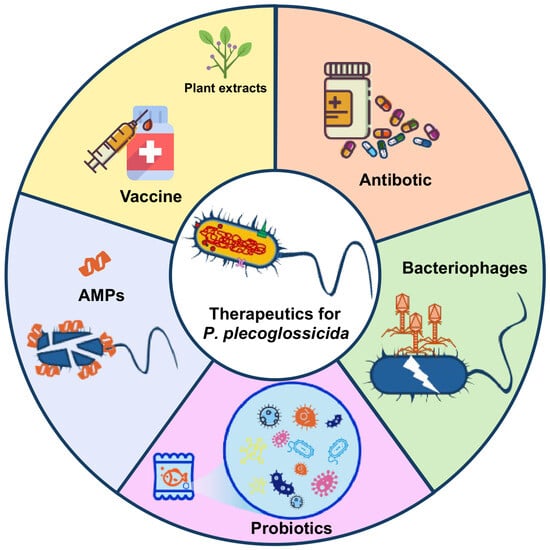
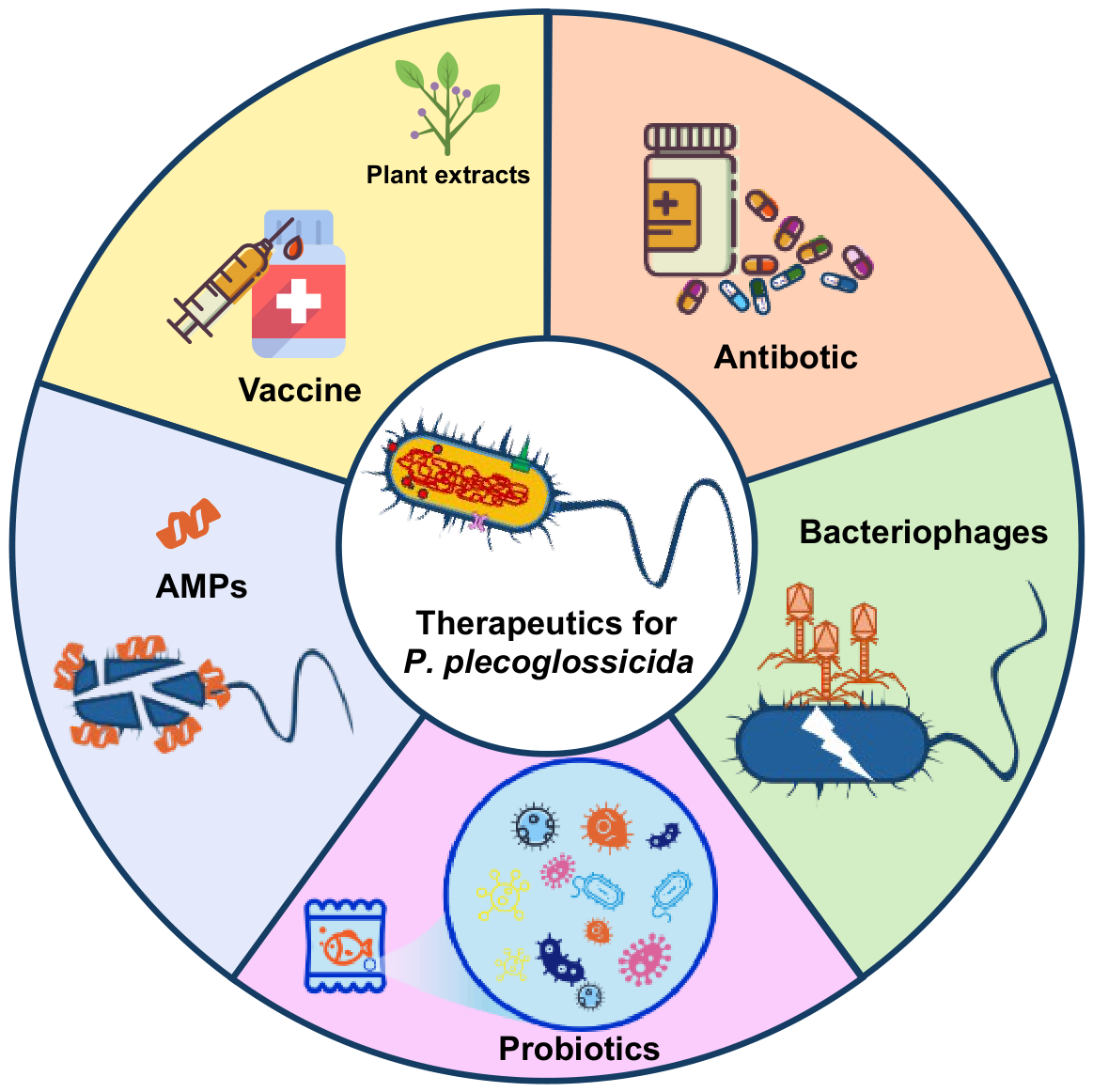
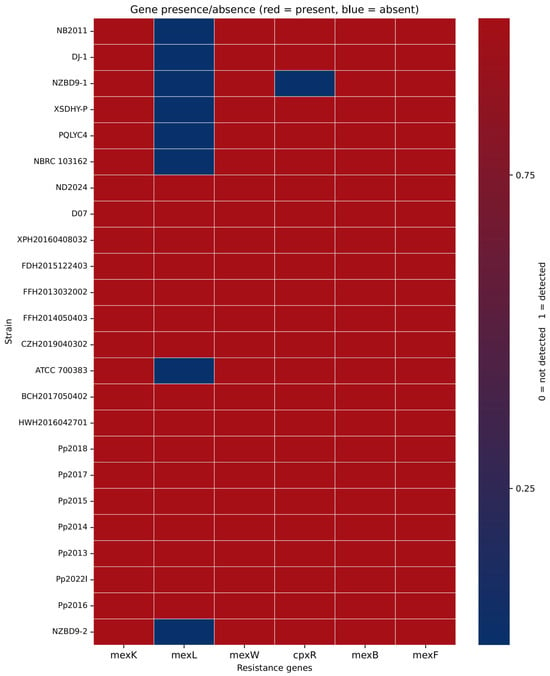
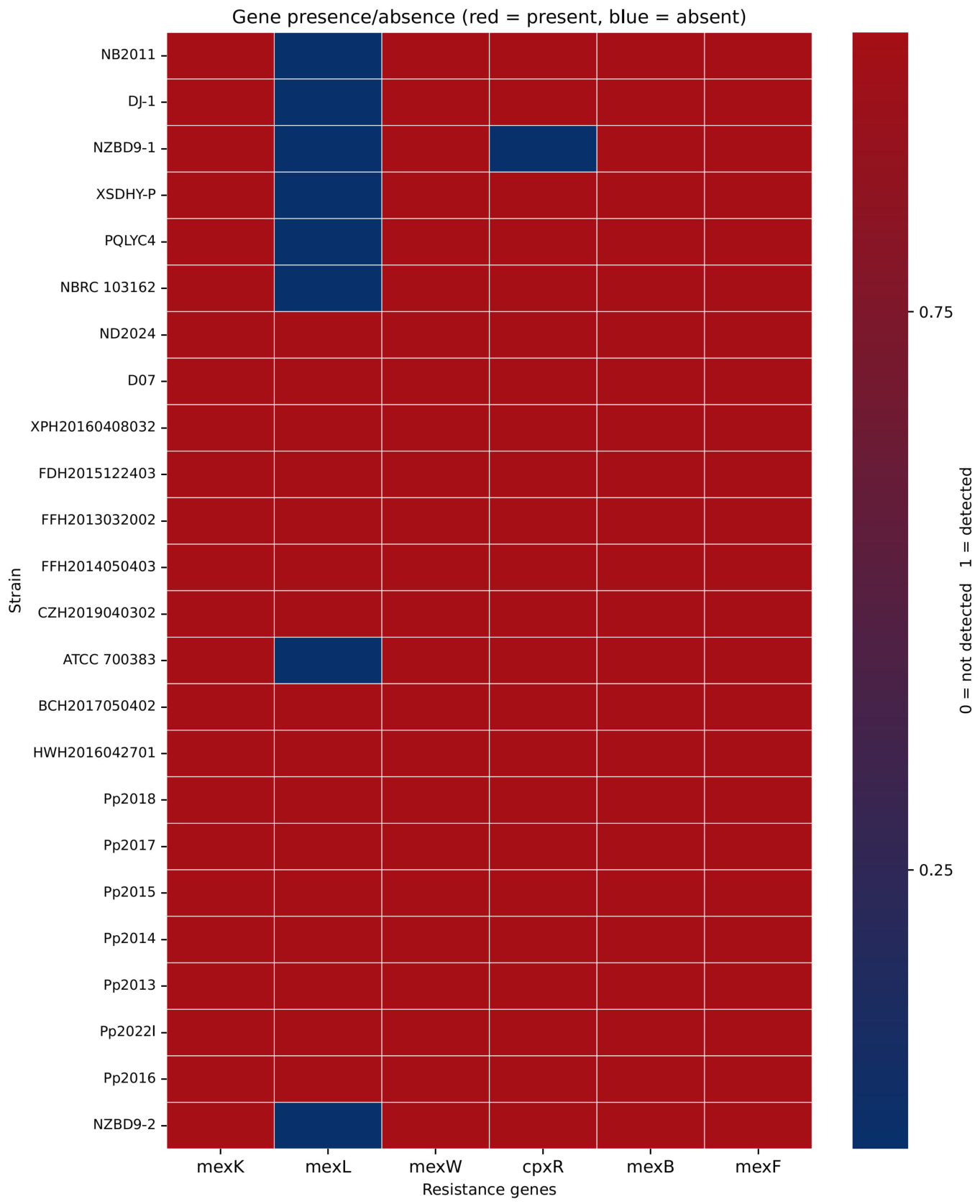
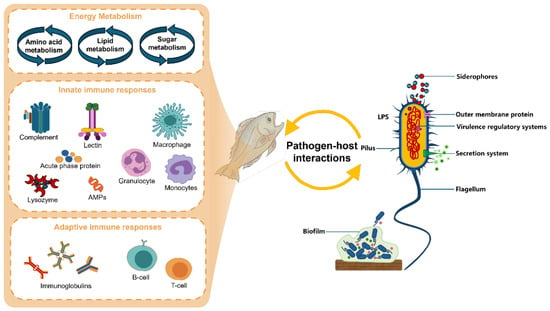
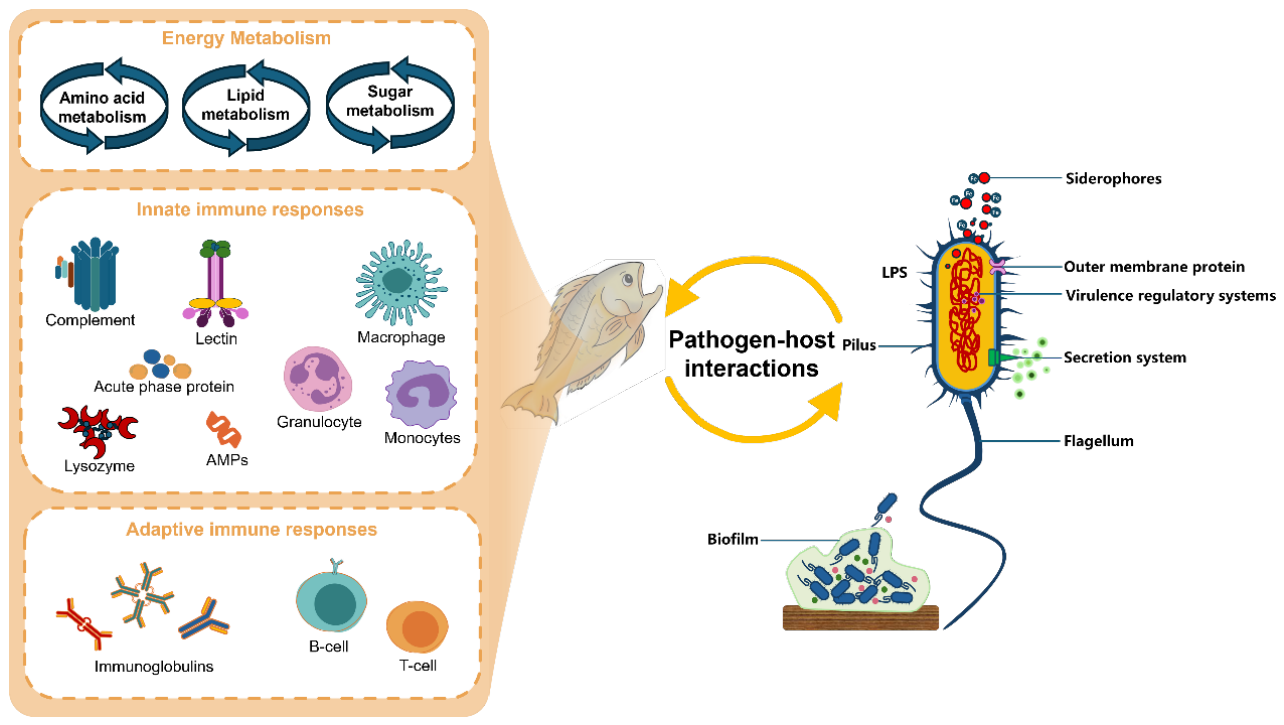

Disclaimer/Publisher’s Note: The statements, opinions and data contained in all publications are solely those of the individual author(s) and contributor(s) and not of MDPI and/or the editor(s). MDPI and/or the editor(s) disclaim responsibility for any injury to people or property resulting from any ideas, methods, instructions or products referred to in the content. |
© 2026 by the authors. Licensee MDPI, Basel, Switzerland. This article is an open access article distributed under the terms and conditions of the Creative Commons Attribution (CC BY) license.