


Abstract
Background/Objectives: Autism spectrum disorder (ASD) is a neurodevelopmental disorder with a childhood onset. It manifests by delayed communication, stereotyping, and limited interests in activities. Genetic factors are known to be implicated in the ASD development. Nutrition-related features, including selective eating, nutrient insufficiency, and gut–brain axis (GBA) alterations, are increasingly studied as modifiable correlates. This narrative review summarizes previous studies on dietary deficiencies and/or nutrient-based interventions in ASD (gluten-free/casein-free and ketogenic diets, vitamins, minerals, omega-3 fatty acids, and antioxidants). Methods: The literature search was initiated on the 1 September 2025. A literature search was conducted across the Web of Science, PubMed, and Scopus. The search covered publication dates from 2000 to 2026. Our search utilized combined search terms such as “autism spectrum disorder,” “micronutrients,” “brain–gut-microbiota axis,” “ketogenic diet, KD”, “gluten-free/casein-free (GFCF)”, “vitamins”, and “antioxidants”. This narrative review reported previous research following the criteria of the Scale for the Assessment of Narrative Review Articles (SANRA). Records were screened by title and abstract, approximately 160 studies were included, and the findings were synthesized narratively. Results: The significance of nutrients as vitamins, minerals, GFCF diet, and KD is shown in ASD cases and trials. Conclusions: Nutritional assessment and correction of deficiencies are integral parts of care. However, the efficacy of dietary or supplement strategies for in alleviating ASD features has not been established, and the link between nutrition and ASD remains largely associative. Additional studies are needed to build up evidence on the correlation between nutrient deficiencies and ASD across a range of doses and populations. For enhancing our understanding of these nutrition interactions, upcoming investigations should focus on longitudinal studies performed in large scales.
1. Introduction
Autism spectrum disorder (ASD) is a genetically complex condition that disturbs the neurodevelopment. ASD is characterized by permanent social deficits, together with limited interests, stereotyped, and repetitive behavior sequences [1,2].
Early diagnosis, parental awareness among parents, and timely intervention are essential for reducing long term developmental difficulties. Recognizing the increasing prevalence of ASD is also critical for developing effective public policies and intervention strategies [3]. The phenotypic heterogeneity of ASD is influenced by multiple genetic, environmental, epigenetic, and hormonal factors [4].
Molecular genetic investigations have exposed that the genetic architecture of ASDs is extraordinarily varied. ASD has distinct types of genetic defects located on practically every chromosome with varying levels of penetrance [5,6]. Genetic factors may account for about 25% of cases, with chromosomal rearrangements contributing approximately 10–20% and coding-sequence mutations 5–10% [7,8]. Evidence from twin studies further supports a strong genetic contribution to ASD. A meta-analysis of seven twin studies demonstrated high heritability, underlining the substantial role of genetic factors in ASD susceptibility [9].
Beyond genetic susceptibility, one meta-analysis established ASD environmental risk factors comprise older paternal age [10], pregnancy-related complications [11], and the exposure of the parents to psychotropic medications, such as valproic acid [12]. Many ASD-associated genes are involved in essential cellular processes such as metabolism, chromatin remodeling, and may disrupt neuronal development and function [13]. ASD is typically diagnosed before three years of age, during a critical period of rapid synapse formation and maturation [14]. Multiple studies indicate that gene mutations such as NRXN, NLGN, SHANK, TSC1/2, FMR1, and MECP2 affect shared cellular pathways that are ultimately shared with the synapses [15,16].
Moreover, adequate nutrition is crucial for normal neurodevelopment and cognitive function through the life span [17]. ASD children are commonly picky eaters and show feeding troubles, including sensory aversions to specific tastes and textures and swallowing difficulties. Some studies reported these behaviors in approximately 70–90% of the affected children [18,19]. Dietary preferences often favor high-calorie, nutrient-poor foods while restricting the consumption of vegetables, fruits, and whole grains [20,21,22]. Hence, ASD children are potentially at larger risk of insufficient levels of several essential micronutrients like magnesium, iron, iodine, calcium, selenium, folic acid, vitamins D, E, B12, and biotin [23]. Also, these dietary patterns may also contribute to disturbance in metabolism such as hyperglycemia and hyperlipidemia thereby increasing the risk of overweight and obesity [24,25]. Therefore, food selectivity in ASD patients should be regarded as a clinically important nutritional concern rather than a merely behavioral characteristic.
The intricate relationship linking nutrition and neurodevelopment is mostly elucidated via the gut–brain axis (GBA) which is a signaling network that facilitates the interaction of the GIT with the CNS. Dietary factors profoundly impact the gut microbiota composition which then regulates immune homeostasis, metabolic process, and neurotransmitter synthesis that are closely associated with brain function and may affect the behavior and neurodevelopment [26]. Also, recent evidence reported that intervening diets according to the gut microbiota and GBA theory may help re-establish gut microbial balance and regulate immune responses. This potentially provides a unique therapeutic approach for autism patients [27]. Increasing evidence also proposes that changes in the gut microbiome and gastrointestinal dysfunction are common in ASD cases and relate with the severity of the symptom through immune, metabolic, and neuroendocrine pathways.
Indeed, the etiology of ASD as a neurodevelopment disorder is still incompletely understood. It is broadly recognized to result from multifaceted interacting factors, mainly the genetic susceptibility and environmental influences. Among these environmental factors, nutrition has emerged as a promising and potentially modifiable determinant of neurodevelopment and clinical outcomes [28]. Nutritional interventions have therefore attracted increasing interest as complementary strategies for alleviating gastrointestinal dysfunction, improving the gut microbial composition, correcting nutrient deficiencies, and potentially reducing behavioral symptoms in children with ASD [28].
This study overviewed the published studies on the relation between ASD and nutrition. We focused on dietary intervention, probiotics, restrictive diets (gluten-free/casein-free (GFCF) and ketogenic), vitamins, minerals, omega-3 fatty acids, and antioxidants. Furthermore, a structured summary about nutrients was provided to afford comparative references to the readers. This review discusses current limitations in the literature and highlights future research directions aimed at improving nutritional strategies and advancing personalized approaches to ASD management.
2. Materials and Methods
2.1. The Search Strategy and Study Design
The literature search was conducted by the authors from the 1 September 2025 till the 25 December 2025 and then updated in another period; from the 1 till 5 November 2026. A literature search was conducted across three major scientific databases: Web of Science, PubMed, and Scopus. Approximately 160 studies were selected to be used in this narrative review. The search covered publication dates from 2000 to 2026, with a focus on recent advancements in nutrition and autism spectrum disorder to confirm the inclusion of the most current therapeutic developments. We used individual free search keywords: “autism spectrum disorder,” “micronutrients,” “brain–gut-microbiota axis”, “ketogenic diet”, “gluten-free/casein-free diet”, “vitamins”, and “antioxidants”. We did not use Boolean operators or connectors to maximize the retrieval of relevant studies. The search was conducted without highlighting any data specific fields such as title, abstract, and key words. No language or article type restrictions were applied. It is important to note that this is a narrative literature review rather than a formal systematic screening process.
2.2. The Inclusion and Exclusion Criteria
We applied some inclusion criteria including the following: selecting peer-reviewed research papers, narrative reviews, or any other studies. Throughout the search procedure, we included the papers relevant to this review’s aim. Any conference proceedings, or editorials without full-text availability, were excluded (Figure 1).
Figure 1.
A scheme showing the methodology of the review article. Figure was created using Canva (www.canva.com) and adapted by the authors.
2.3. Quality Assessment and Data Synthesis
Experienced seven coauthors selected the relevant studies based on the initial screening of abstracts. Also, the authors did not conduct a formal statistical meta-analysis; instead, they focused on research published in peer-reviewed publications to assess potential bias and guarantee the quality of outcome measures. We followed the principles of Scale for the Assessment of Narrative Review Articles (SANRA). The SANRA principles were applied through following the SANRA checklist and every scientific publication was assessed for (1) rationalization for the importance of the article for the readers, (2) statement of concrete aims, (3) description of the literature search, (4) reference citation, (5) scientific reasoning, and (6) appropriate data presentation [29,30].
2.4. Limitations
This narrative review is subject to certain limitations. Firstly, the quality of the reviewed studies is variable and the non-systematic approach may lead to selection bias by overlooking non-English or unpublished research, and lacks quantitative meta-analysis for evaluating effect magnitudes. Secondly, the synthesized studies vary widely, drawing largely from limited-duration, small-sample human trials, preclinical models, and inconsistent measures (such as Autism Treatment Evaluation Checklist (ATEC) scores and Childhood Autism Rating Scale (CARS)), which hampers broader applicability and direct comparisons. Thirdly, issues like co-interventions, potential publication bias, and non-standardized biomarkers received limited attention, alongside insufficient data on the extended safety of dietary and supplemental strategies.
3. The Interplay Between Gut Microbiota and Gut–Brain Axis
The GBA may regulate the CNS function and the gastrointestinal tract through bidirectional communication [31]. It is a complicated communication system that involves the vagus nerve, microbial metabolites, gut hormones, and the endocrine and immune signaling pathways [32].
Brain function is directly affected by microbial metabolites produced in the gut, comprising short-chain fatty acids (SCFAs) and chemical neurotransmitter agents such as dopamine, glutamate, serotonin, as well as gamma-aminobutyric acid (GABA). Importantly, glutamate serves as a precursor for GABA through the action of glutamic acid decarboxylase [33].
The gut microbiota is primarily composed of the bacterial lineage as Firmicutes, Proteobacteria, Bacteroidetes, Actinobacteria, and Fusobacteria, which are distributed across different regions of the GIT including the colon and small intestine (Figure 2). This complex microbial ecosystem is essential in regulation of nutrient absorption, metabolic processes, and modulation of immune function [34].
Figure 2.
A diagram showing the role of the gut microbiome and the gut–brain axis (GBA) in neuroinflammation. Figure was created using Canva (www.canva.com) and adapted by the authors.
Some studies explored the contribution of the gut microbiota in ASD pathogenesis, as initial evidence support its potential role in modulating neurodevelopment processes and affecting neurological outcomes [35,36]. Moreover, emerging evidence suggests that dietary patterns may alter microbial profiles associated with ASD. These alterations may contribute to GBA modification and the pathological mechanisms underlying ASD [37].
Across recent studies, consistent microbial patterns in children with ASD were observed. For example, abundant genera such as Clostridium, Parabacteroides, and Faecalibacterium, are accompanied by a marked decrease in Bifidobacterium, Prevotella, and Bacteroides [38,39,40,41]. These alterations indicate variances in the composition of gut microbiota between normal children and ASD children. Gut dysbiosis may be produced by alteration in microbial-derived metabolites; defined as an imbalanced gut microbial ecosystem. Dysbiosis is associated with gastrointestinal and autoimmune disturbances and is progressively known as a contributing factor in several neurodevelopmental disorders. Additionally, some studies documented that the cognitive and behavioral health of ASD children is critically affected by the gut-microbiome–brain axis [42,43].
In cases of impaired intestinal barrier, microbial components can go through the blood stream, and stimulate immune cell toll-like receptor 4 (TLR4). The later promotes the production of pro-inflammatory cytokine and the potential affection of the brain function [44]. The gut microbiome composition during the early childhood, particularly from around 3 years of age, is important for the neurodevelopmental process through several mechanisms. During this period, gut microorganisms can yield neurotransmitters like GABA and serotonin. These two neurotransmitters contribute to the transmission of chemical signals between neurons and their target cells and are responsible for regulating mood and cognition [45]. Thus, the gut microbiome, by diminishing neuroinflammation, can contribute in the regulation of immune responses, preserving brain health. Moreover, modulation of the composition of the gut microbiota has been shown to alleviate behavioral symptoms related to ASD [46]. Appreciating the gut-microbiome–brain axis’ potential requires understanding how it promotes ASD progression to be further considered as a therapeutic target. On a daily basis, the brain needs sufficient supply of macro- and micronutrients to support its normal development and physiological function [47].
Furthermore, dietary pattern is a major modulator of the gut microbiome, thereby influencing cognitive and emotional health through its effects on GBA [48]. A variety of essential nutrients and minerals are required to support normal brain function and maintain the integrity of the GBA. These nutrients include omega-3 and omega-6 polyunsaturated fatty acids, vitamin D, B-complex vitamins, iron, and magnesium [49].
It is important to mention that the gut microbiome in ASD individuals shows individual variability and no single signature is consistently present in all individuals [50]. Several factors control the gut microbiome like the age, dietary pattern, medication exposure, and geographical origin. In addition, methodological approaches such as sample collection, DNA extraction method, the sequencing method, and the bioinformatic pipelines [51,52]. Therefore, any observed metabolic alterations should be interpreted with caution. Similarly, the proposed relationship between the gut dysbiosis, neuroinflammation, and ASD behavioral symptoms remain associative. Adequately powered and well-controlled studies are required to test the potential causal relationships.
Impact of Probiotics on ASD
Probiotics have health benefits like immune modulation, improving the integrity of the intestinal barrier, upregulating mucin expression, and synthesizing vitamins and antioxidants [53]. Different formulations containing multi-strain probiotics were reported to ameliorate GI symptoms in ASD children 54. Another study showed that a mono-therapeutic regimen with Lactobacillus reuteri was able to diminish LPS-induced enteritis [55]. The same species was also reported to improve pituitary oxytocin secretion with a positive impact on the social behavior [56].
Another example comes from studying the ameliorative effects of oral doses of commensal Bacteroides fragilis on intestinal permeability, dysbiosis, and ASD behaviors. Further, treatment reduced colonic interleukin-6 and normalized colonic expression of claudi-8 and claudin-15 [57].
4. Dietary Intervention Strategies in Management of ASD
Different strategies of dietary interventions are designed to alleviate symptoms in ASD children through dietary modification, exclusion of potential allergens, or supplementation with essential nutrients. These interventions may influence ASD through numerous mechanistic ways. These mechanisms include the regulation of gut microbiota, enhancement of metabolic processes, and modulation of immune responses, thereby providing a potential new therapeutic approach for improving ASD symptoms [58].
4.1. Gluten-Free/Casein-Free (GFCF) Diet
The GFCF diet is a frequently used complementary diet in ASD. The composition of a GFCF diet excludes two dietary proteins, gluten and casein. Gluten is present in wheat, barley, and rye while casein is present in milk and dairy products. The GFCF diet helps to relieve the GI symptoms in ASD [59]. It is known that celiac disease, which is a gluten-triggered immune-mediated intestinal disease, is common in ASD children more than the general population [60]. Furthermore, immune reactions to dietary proteins have been described in some ASD children [61].
Based on the previous circumstances, the exclusion of such proteins in diet is a rationalized treatment for the ASD symptoms. Some promises have been shown for GFCF in alleviation of ASD symptom [62].
There are two proposed mechanisms for the demonstrated effects of GFCF diets. One of them is “the opioid excess hypothesis” in which the incomplete digestion of gluten and casein results in formation of opioid-like peptide which increases intestinal permeability [63]. These peptides also can reach the CNS and activate the opioid receptors affecting neurotransmission and pain sensitivity. Importantly, one study claimed that the GFCF diet diminishes the synthesis of these opioid peptides [64].
The second proposed mechanism is that gluten and casein may initiate an inflammatory burden and the release of inflammatory cytokines, leading to disruption of the intestinal barrier. The GFCF diet lowers the intestinal discomfort and the level of urinary peptides in addition to improvement in the ASD symptoms in a randomized clinical trial in children [65].
Clinical findings are mixed. Several small studies and some randomized, reported improvements after 6 to 12 months or more on this diet. These included improved behavior, communication or social scores, and reduced GI discomfort [66,67]. A previous study evaluated the effectiveness of GFCF in fifteen ASD children over six months. This investigation found that receiving the GFCF diet improved the symptoms relative to the baseline value as well as the control group. Children on a GFCF diet demonstrate lower CARS scores than the baseline score and the score registered in the control group. This was accompanied by improved speech and behavioral subscales of the ATEC [62].
For CARS, it is a scale used by the clinician for assessment of the severity of ASD symptoms while ATEC is a checklist provided by the parents for tracking the over-time changes in ASD symptoms. ATEC is never a diagnostic tool due to its high vulnerability to placebo effects [68].
The GFCF diet was especially successful in enhancing social behaviors in children with autism compared to other ASD children, ASD patients with food allergies and GI symptoms [69]. Nonetheless, other researches have revealed inconsistent results and declared no obvious alterations between the ASD groups who received the GFCF diet and those that did not receive it [70,71]. Importantly, the GFCF diet in these studies was followed for a relatively brief period, typically less than three months.
The use of a casein-free diet may carry some limitations including the reduction in the intake of calcium, vitamin D, protein, iron, and vitamin B group as well as lowering the bone mineral density [72]. In addition, the use of gluten-free diets involves reduction in the amount of beneficial bacteria and suppression of immunity [73]. Due to the limited data about the previous points, the trial of a GFCF diet should be supervised by a clinical dietitian with caution regarding the growth rates and nutrition adequacy.
4.2. Ketogenic Diet (KD)
This type of diet is described as high in fat but very low in carbohydrate content. This limited carbohydrate availability leads to ketone bodies formation; these bodies assist as alternate sources for the brain energy [74]. It is important to note that epilepsy is recognized as a co-morbidity of ASD [75,76] and KD is proven useful for drug-resistant epilepsy [77]. Hence, KD has been hypothesized to influence some ASD symptoms but this required further clinical investigation.
Growing interest has been directed toward the KD as a promising intervention for improving both the primary and secondary manifestations of ASD. By inducing a metabolic switch from glucose-based energy production to ketone body metabolism, the diet is assumed to improve mitochondrial performance and mitigate oxidation. Further, the KD was reported to restore a balanced situation between the inhibitory and excitatory neurotransmitter systems. In addition, ketone bodies modulate neurotransmitter activity, enhance GABA levels, and suppress the stimulation of mammalian target of rapamycin (mTOR) signaling. These mechanisms are closely linked to the biological processes connected with ASD pathophysiology [78,79,80,81].
Previous studies utilizing the KD in ASD children and adolescents define the improvements in the behavioral symptoms and ameliorated scores in CARS [82,83,84]. KD’s impact on 30 children with ASD was assessed in this investigation; for six months, the John Radcliffe diet which is a medium-chain triglyceride diet that has been modified to include 30% from fresh cream, 30% calories from medium-chain triglyceride oil, 11% as saturated fat, 10% as proteins, and 19% as carbohydrates, was followed at 4-week intervals interspersed with two weeks off from the diet [85]. However, this study has some limitations, including the small sample size and lacking sufficient controls to be used as a sufficient evidence or recommendation of KD for ASD children.
Furthermore, another diet which was a GFCF-modified KD was administered to a 12-year-old ASD child (n = 1, Case report) diagnosed with epilepsy for 14 months who had significant medical comorbidities linked to a family history of immunological and metabolic disorders. Further, the child remained free from the occurrence of seizures and the electroencephalogram displayed few spike-wave activities for 1–1.5 s with no associated manifestations. Following this diet, the child’s CARS score improved from 49 to reach 17. In addition, there was augmentation of intelligence measure by 70 points [86]. With this clinical evidence from a case report, it is challenging to evaluate the diet’s exclusive role.
In animal studies, KD-fed rats displayed elevated expression of neuronal glucose transporter 3 (GLUT3) and insulin-like growth factor receptor (IGFR) in the brain. Because both have been linked to ASD [87], it has been speculated that the KD may influence ASD-related features through these pathways. This remains a hypothesis, and whether the KD affects IGFR or GLUT3 expression in humans with ASD has not been established.
Altered mTOR signaling has been associated with several neurological conditions [88,89] and impairment in the mTOR pathway has been linked to autism [90]. Further, the Akt/mTOR pathway plays a role in synaptic plasticity, learning, and memory [91,92].
4.3. Micronutrients and Supplements
4.3.1. Vitamins
Vitamin D
Vitamin D is a crucial nutrient necessary for maintenance of human health and it is known as a fat-soluble vitamin. It is a group of steroid-like compounds, comprising cholecalciferol and ergocalciferol [93]. Vitamin D exerts diverse biological effects beyond its established role in calcium and phosphorus homeostasis, including a vital role in regulating neuroimmune processes [94].
In ASD children, low vitamin D levels were observed [95,96] and have been associated with altered cytokine inflammatory burden, immune dysregulation, and increased oxidative stress [97]. Further, one study provided evidence about a genetic overlap between ASD-behaviors and vitamin D metabolism pathways [98]. Javadar et al. found significant improvements in CARS scores after a 15-week supplementation regimen with high doses of vitamin D (300 IU/kg/day, up to 6000 IU/day) in their randomized clinical trial [99].
Findings from experimental studies showed the following results: in a rat study, deficieny in vitamin D produces ASD symptoms and alteration in gut health [100].
Moreover, previous evidence recommends supplementation with vitamin D for reduction of serum concentrations of pro-inflammatory cytokines, thereby attenuating neuroinflammatory processes and contributing to improving the language and social communication in ASD children as shown in Table 1 [101].
Table 1.
Vitamin D role in ASD.
Importantly, supplementation with vitamin D in ASD children should be individualized according to the age of the child, the baseline serum concentration of 25(OH)D, medical history, and clinical indication. Although the most recommended dietary allowance for children aged 1–18 is 600 IU/day or below, higher doses may be required in some cases if confirmed deficiency [95,99]. Supplementation with high doses of vitamin D (e.g., 2500–4000 IU/day) should not be interpreted as therapeutically effective or safe without appropriate monitoring to minimize the risk of toxicity [104].
Vitamins (B6, B12, Folate)
Vitamin B6 is a cofactor in many biological processes, including neurotransmitter synthesis, trans-sulfuration, and tryptophan metabolism, where it is needed to convert xanthurenic acid to nicotinic acid. It exists in three inactive forms (pyridoxal, pyridoxamine, and pyridoxine), which are converted to the active form, pyridoxal 5′-phosphate (P5P) [105]. Reduced P5P levels have been reported in children with ASD [106]. Also, vitamin B6 is considered as an essential factor in the biosynthesis of crucial neurotransmitter chemicals such as GABA and dopamine. Inadequate vitamin B6 level may aggravate the disruption in excitatory/inhibitory balance that had been observed in ASD patients [107].
Vitamin B12 (cobalamin) exists in several forms. Adenosylcobalamin and methylcobalamin (MeCbl) serve as cofactors for methylmalonyl-CoA mutase and methionine synthase, respectively. MeCbl is considered the active form of cobalamin and it is crucial for the methionine synthase enzyme to function and catalyze the homocysteine transformation to methionine [77]. Methionine is essential for producing S-adenosylmethionine (SAM), the main donor of methyl groups in methylation reactions.
A large amount of MeCbl is required to repair neurons and the spinal cord myelin sheath, which helps alleviate autism symptoms [108]. Several studies report lower B12 and folate in ASD children.
One study was carried out on ASD children and showed that they had significantly lower vitamin B12 levels in comparison to the healthy controls [109]. Consistently, Li et al. reported that ASD children had lower vitamin B12 levels and got greater CARS scores compared to the controls [110].
- Effects of Vitamin B12 and vitamin B6 Supplementation in ASD
One study tested the impact of methyl-B12 on 57 ASD children (3–7 years) with an IQ value above 50, for 8 weeks. The randomized placebo-controlled trial involved the use of methyl-B12 (75 µg/kg body weight) which produced significant clinical improvements [111]. However, another study carried out by Bertoglio et al. did not report an improvement in ASD symptoms in children receiving methylcobalamin. The authors reported that roughly 30% of the children showed clinically observed behavioral improvements [112]. Despite the difference in the settings of each study, both of them points to a potential benefit for the methylcobalamine.
Folic Acid
Folate is essential for key physiological processes, including DNA methylation and replication. It is a water-soluble B vitamin and functions as a cofactor in one-carbon transfer reactions, promoting biosynthesis, epigenetic regulation, amino acid balance, and antioxidant defense [113,114]. Reduced folate levels have been associated with several medical conditions such as cardiovascular and neurological disorders, as well as a heightened possibility of neural tube defects [115,116]. Folate contributing in purine synthesis and the synthesis of nucleic acids [117]. Purines are an essential component required for DNA synthesis, repair, and replication. The deficiency in purines can disrupt DNA processes, contributing to genetic abnormalities associated with ASD [118].
- Maternal folate and ASD risk
Folate levels during pregnancy seem to show a crucial role in the ASD development risk. One large-scale study was carried out in the United States and reported low folic acid intake during gestation in mothers having an ASD child. An intake of more than 600 mcg of folate per day showed an association with a 38% decrease in the risk of their children developing ASD, with even greater intake associated with further risk reduction [119]. An earlier study concerning Norwegian children showed that taking folic acid supplements during pregnancy was associated with a 39% reduction in the ASD development risk in children [120]. The last study aligns with previous findings showing that ASD children whose mothers have folate receptor alpha autoantibodies exhibit overwhelming symptoms, according to the CARS scale [121].
- Effects of folinic acid Supplementation in ASD
Folinic acid was suggested by some randomized controlled clinical trials for improving verbal communication and social interaction in ASD children [122,123,124]. However, larger trials are required for establishing it role in ASD treatment.
4.3.2. Omega-3 Fatty Acids
Humans have no ability to synthesize these polyunsaturated fatty acids (PUFAs) on their own and must necessarily be obtained from the diet. PUFAs contain omega-3 and omega-6 fatty acids. The omega-3 PUFAs as eicosapentaenoic acid (EPA), docosahexaenoic acid (DHA), and alpha-linolenic acid (ALA), as well as the omega-6 PUFAs like arachidonic acid (AA) and linoleic acid (LA), represent key components of phospholipids. They have a pivotal role in maintenance of the structural and functional features of the cell membranes [125]. DHA is highly concentrated in the nervous system, particularly within the phospholipids of neuronal and glial cell membranes. The progression of certain neurodegenerative disorders is associated with a significant decline in the brain DHA content [126].
Effects of Omega-3 Fatty Acids Supplementation in ASD
One previous 6-week study examined ASD and hyperactive children who were given a 1.3 g daily dose of omega-3 PUFAs, in comparison to a placebo group. In an Internet-based randomized controlled trial, the omega-3 group showed non-significant improvements in hyperactivity scores. However, the stereotypy and lethargy subscales showed statistically significant improvements [127]. A previous double-blinded placebo-controlled randomized trial used high doses of AA and DHA to seven children with ASD over a 16-week period and compared the results to six children given a placebo. The results showed significantly improved social withdrawal subscale, as well as in stereotyped/repetitive behaviors and communication skills [128]. Similarly, one meta-analysis declared that the combined use of omega-3 and omega-6 PUFAs could potentially enhance language development in children with ASD [129]. The cited evidence suggests that PUFA supplementation had a positive impact on general social communication.
Supplementation with omega-3 fatty acids has been reported to improve ASD symptoms such as stereotypy, intelligence, communication, and development in pediatric ASD populations [130,131,132].
4.3.3. Minerals
Mineral deficits, especially in iron, magnesium, zinc, and selenium, are more common in ASD children than in neurotypical peers. They are often detected in hair, nails, urine, and blood samples and may contribute to neurodevelopmental issues such as impaired cognition, irritability, and repetitive behaviors via oxidative stress, epigenetic changes, and disrupted metabolic pathways [133,134].
A high prevalence of iron deficiency was found in ASD children [135,136]; this seems consistent with the results of previous studies on ASD cohorts in low- and middle-income countries [137]. Zinc and magnesium deficiencies are particularly common, perhaps creating “infantile window” vulnerabilities in brain development; iron deficiency is linked to anemia, tiredness, and learning difficulties; and selenium deficiency exacerbates antioxidant imbalances already linked to ASD, see Table 2 for details.
In contrast, supplementation may alleviate symptoms of imbalances caused by picky eating, gut dysbiosis, genetic factors, or toxic metal overloads (e.g., cadmium, lead). However, excessive intake may lead to further disruptions, such as copper/magnesium interference [138].
Table 2.
Examples of studies investigating mineral deficiencies in ASD.
- Minerals supplement for ASD
ASD children are in greater demand for vitamins and minerals than the normal children due to the presence of several metabolic problems such as elevated oxidative stress [143] and mitochondrial disorders [144]. Vitamins and minerals often act as enzyme co-factors and hence, genetic differences in the enzyme function can elevate the need of some people for these elements [145].
For example, zinc supplementation has been suggested as a potential protective strategy for reducing ASD symptoms and comorbidities [146]. In some experimental models of ASD, zinc supplementation successfully ameliorated the ASD behavioral abnormalities [147,148,149].
4.3.4. Antioxidants as Therapeutic Strategies for ASD
Antioxidants hold promise in addressing oxidative stress implicated in ASD, where depleted glutathione, elevated reactive oxygen species (ROS), and neuroinflammation contribute to symptoms such as irritability, social deficits, and repetitive behaviors as shown in Table 3.
Previous studies suggest that inflammation and oxidative stress may participate in the ASD development. However, whether these factors initiate ASD or contribute to its pathogenesis and symptomatology remains unclear. ASD may be associated with an imbalance between pro- and anti-inflammatory pathways, marked by increased pro-inflammatory and decreased anti-inflammatory mediators [150,151].
N-acetylcysteine (NAC), a glutathione precursor, shows the strongest evidence from a randomized controlled pilot trial, reducing aberrant behavior checklist scores for irritability (by ~4 points) and hyperactivity after 8–12 weeks at 400–900 mg/day. However, improving social responsiveness was observed via modulation of the glutamatergic pathways [152]. Sulforaphane, from the cruciferous vegetables, was reported to stimulate nuclear factor erythroid 2-related factor-2, thereby boosting the antioxidant defenses, and has demonstrated preliminary reductions in ASD symptoms in small trials [153].
Another example comes for vitamin E, which may affect ASD by acting through several pathways, including antioxidant mechanisms and its influence on the immune responses [154]. Melatonin is another antioxidant that is known to enhance free radical scavenging and sleep regulation, potentially aiding ASD neuroprotection [155].
Table 3.
The potential role of antioxidants in ASD.
5. Conclusions and Future Direction
The significant increase in ASD prevalence over the past five decades, together with modifications in dietary patterns and other lifestyle-related factors, has intensified more research interest. The potential contribution of nutrition alongside with genetic, environmental, and social influences may contribute to the development of ASD.
In the present review, we have provided a summary on the potential effects of dietary factors and nutrition-related interventions in ASD. Although the available findings are promising, many aspects of this area require further investigation for establishing definitive conclusions.
The review supports biological plausibility and potential association between the gut microbiome as well as the GBA in autism. However, a direct causal relationship or a preventive effect has not been established. This emphasizes the need for a multidisciplinary approach integrating gut health, immune function, and neurodevelopment. Future research should investigate the molecular interactions among diet, the gut microbiome, and development. Long-term, well-designed clinical trials are also required to establish the effectiveness and utility of microbiome-targeted and nutritional interventions in individuals with ASD.
The review clarified that the GFCF diet and KD were considered among the most widely accepted and commonly used dietary interventions for alleviating ASD-related symptoms. This review highlights the need for future studies for elucidating the mechanisms contributing to altered micronutrient, mineral levels, and vitamin deficiency in children with ASD and assess their potential therapeutic relevance. Careful consideration of confounding factors, including dietary intake and supplementation, is essential to ensure valid and reproducible findings.
One strength point in this narrative review is the explicit report of non-significant results alongside significant results in the literature rather than ignoring the null results.
Importantly, both human and animal research are needed to improve our understanding of the functional mechanism involved in ASD and support in discovering interventions that may reduce the severity of the disorder and improve the clinical outcomes. Finally, further investigations are also essential for clarifying the underlying causes of micronutrient deficiencies in children with ASD and for determining the long-term profits and optimal use of nutrient supplements.
Further large-scale, well-designed clinical trials with adequate follow-up are required to clarify the possible actions of the KD and GFCF diet on the functional outcomes and overall performance in ASD children and adolescents.
Collectively, these efforts will strengthen the research findings for personalized nutritional strategies and contribute to more effective prevention and management of ASD (Figure 3).
Figure 3.
A figure showing a summary of the review findings. Figure was created using Canva (www.canva.com) and adapted by the authors.
Author Contributions
Conceptualization, S.A.Z. and R.M.E.-S.; methodology, J.M.A., R.O.A., R.F.A., L.F.A., and S.A.A.; software, S.A.A. and S.A.Z.; validation, L.A.A. and A.H.E.; investigation, S.A.Z., J.M.A., R.O.A., R.F.A., L.F.A., S.A.A., L.A.A., A.H.E., and R.M.E.-S.; writing—original draft preparation, J.M.A., R.O.A., R.F.A., L.F.A., S.A.A., and R.M.E.-S.; writing—review and editing S.A.Z., L.A.A., and A.H.E.; All authors have read and agreed to the published version of the manuscript.
Funding
This research received no external funding.
Institutional Review Board Statement
Not applicable.
Informed Consent Statement
Not applicable.
Data Availability Statement
No new data were created or analyzed in this study. Data sharing is not applicable to this article.
Acknowledgments
During the preparation of this manuscript, the authors used [Claude, Sonnet 5] for the purposes of grammar correction and proofreading. The authors have reviewed and edited the output and take full responsibility for the content of this publication.
Conflicts of Interest
The authors declare no conflicts of interest.
Abbreviations
The following abbreviations are used in this manuscript:
| ALA | Alpha-linolenic acid |
| AA | Arachidonic acid |
| ASD | Autism Spectrum Disorder |
| ATEC | Autism Treatment Evaluation Checklist |
| CARS | Childhood Autism Rating Scale |
| DHA | Docosahexaenoic acid |
| DNA | Deoxyribonucleic acid |
| EPA | Eicosapentaenoic acid |
| GABA | Gamma aminobutyric acid |
| GBA | Gut–brain axis |
| GFCF | Gluten-Free/Casein-Free Diet |
| KD | Ketogenic Diet |
| LA | Linoleic acid |
| MeCbl | Methylcobalamin |
| PUFAs | Polyunsaturated Fatty Acids |
| ROS | Reactive oxygen species |
| TLR4 | Toll-like receptor 4 |
References
- Zhang, Y.; Liu, X.; Guo, R.; Xu, W.; Guo, Q.; Hao, C.; Ni, X.; Li, W. Biological Implications of Genetic Variations in Autism Spectrum Disorders from Genomics Studies. Biosci. Rep. 2021, 41, BSR20210593. [Google Scholar] [CrossRef] [Scilit] [PubMed]
- Tian, J.; Gao, X.; Yang, L. Repetitive Restricted Behaviors in Autism Spectrum Disorder: From Mechanism to Development of Therapeutics. Front. Neurosci. 2022, 16, 780407. [Google Scholar] [CrossRef] [Scilit] [PubMed]
- Issac, A.; Halemani, K.; Shetty, A.; Thimmappa, L.; Vijay, V.R.; Koni, K.; Mishra, P.; Kapoor, V. The Global Prevalence of Autism Spectrum Disorder in Children: A Systematic Review and Meta-Analysis. Osong Public Health Res. Perspect. 2025, 16, 3. [Google Scholar] [CrossRef] [Scilit] [PubMed]
- Lai, M.C.; Lombardo, M.V.; Ruigrok, A.N.V.; Chakrabarti, B.; Auyeung, B.; Szatmari, P.; Happé, F.; Baron-Cohen, S. Quantifying and Exploring Camouflaging in Men and Women with Autism. Autism 2017, 21, 690–702. [Google Scholar] [CrossRef] [Scilit] [PubMed]
- Abrahams, B.S.; Geschwind, D.H. Advances in Autism Genetics: On the Threshold of a New Neurobiology. Nat. Rev. Genet. 2008, 9, 341–355. [Google Scholar] [CrossRef] [Scilit] [PubMed]
- Freitag, C.M. The Genetics of Autistic Disorders and Its Clinical Relevance: A Review of the Literature. Mol. Psychiatry 2007, 12, 2–22. [Google Scholar] [CrossRef] [Scilit] [PubMed]
- Huguet, G.; Ey, E.; Bourgeron, T. The Genetic Landscapes of Autism Spectrum Disorders. Annu. Rev. Genom. Hum. Genet. 2013, 14, 191–213. [Google Scholar] [CrossRef] [Scilit] [PubMed]
- Ziats, M.N.; Rennert, O.M. The Evolving Diagnostic and Genetic Landscapes of Autism Spectrum Disorder. Front. Genet. 2016, 7. [Google Scholar] [CrossRef] [Scilit] [PubMed]
- Tick, B.; Bolton, P.; Happé, F.; Rutter, M.; Rijsdijk, F. Heritability of Autism Spectrum Disorders: A Meta-Analysis of Twin Studies. J. Child Psychol. Psychiatry 2016, 57, 585–595. [Google Scholar] [CrossRef] [Scilit] [PubMed]
- Sandin, S.; Hultman, C.M.; Kolevzon, A.; Gross, R.; MacCabe, J.H.; Reichenberg, A. Advancing Maternal Age Is Associated with Increasing Risk for Autism: A Review and Meta-Analysis. J. Am. Acad. Child Adolesc. Psychiatry 2012, 51, 477–486.e1. [Google Scholar] [CrossRef] [Scilit] [PubMed]
- Brown, A.S.; Sourander, A.; Hinkka-Yli-Salomäki, S.; McKeague, I.W.; Sundvall, J.; Surcel, H.M. Elevated Maternal C-Reactive Protein and Autism in a National Birth Cohort. Mol. Psychiatry 2014, 19, 259–264. [Google Scholar] [CrossRef] [Scilit] [PubMed]
- Boukhris, T.; Sheehy, O.; Mottron, L.; Berard, A. Antidepressant Use During Pregnancy and the Risk of Autism Spectrum Disorder in Children. JAMA Pediatr. 2016, 170, 117–124. [Google Scholar] [CrossRef] [Scilit] [PubMed]
- Gilbert, J.; Man, H.Y. Fundamental Elements in Autism: From Neurogenesis and Neurite Growth to Synaptic Plasticity. Front. Cell. Neurosci. 2017, 11, 359. [Google Scholar] [CrossRef] [Scilit] [PubMed]
- Guang, S.; Pang, N.; Deng, X.; Yang, L.; He, F.; Wu, L.; Chen, C.; Yin, F.; Peng, J. Synaptopathology Involved in Autism Spectrum Disorder. Front. Cell. Neurosci. 2018, 12, 415409. [Google Scholar] [CrossRef] [Scilit] [PubMed]
- Wang, T.; Guo, H.; Xiong, B.; Stessman, H.A.F.; Wu, H.; Coe, B.P.; Turner, T.N.; Liu, Y.; Zhao, W.; Hoekzema, K.; et al. De Novo Genic Mutations among a Chinese Autism Spectrum Disorder Cohort. Nat. Commun. 2016, 7, 13316. [Google Scholar] [CrossRef] [Scilit] [PubMed]
- Stessman, H.A.F.; Xiong, B.; Coe, B.P.; Wang, T.; Hoekzema, K.; Fenckova, M.; Kvarnung, M.; Gerdts, J.; Trinh, S.; Cosemans, N.; et al. Targeted Sequencing Identifies 91 Neurodevelopmental-Disorder Risk Genes with Autism and Developmental-Disability Biases. Nat. Genet. 2017, 49, 515–526. [Google Scholar] [CrossRef] [Scilit] [PubMed]
- Cernigliaro, F.; Santangelo, A.; Nardello, R.; Lo Cascio, S.; D’Agostino, S.; Correnti, E.; Marchese, F.; Pitino, R.; Valdese, S.; Rizzo, C.; et al. Prenatal Nutritional Factors and Neurodevelopmental Disorders: A Narrative Review. Life 2024, 14, 1084. [Google Scholar] [CrossRef] [Scilit] [PubMed]
- Twachtman-Reilly, J.; Amaral, S.C.; Zebrowski, P.P. Addressing Feeding Disorders in Children on the Autism Spectrum in School-Based Settings: Physiological and Behavioral Issues. Lang. Speech Hear. Serv. Sch. 2008, 39, 261–272. [Google Scholar] [CrossRef] [Scilit] [PubMed]
- Kodak, T.; Piazza, C.C. Assessment and Behavioral Treatment of Feeding and Sleeping Disorders in Children with Autism Spectrum Disorders. Child Adolesc. Psychiatr. Clin. N. Am. 2008, 17, 887–905. [Google Scholar] [CrossRef] [Scilit] [PubMed]
- Sharp, W.G.; Berry, R.C.; McCracken, C.; Nuhu, N.N.; Marvel, E.; Saulnier, C.A.; Klin, A.; Jones, W.; Jaquess, D.L. Feeding Problems and Nutrient Intake in Children with Autism Spectrum Disorders: A Meta-Analysis and Comprehensive Review of the Literature. J. Autism Dev. Disord. 2013, 43, 2159–2173. [Google Scholar] [CrossRef] [Scilit] [PubMed]
- Schreck, K.A.; Williams, K.; Smith, A.F. A Comparison of Eating Behaviors between Children with and without Autism. J. Autism Dev. Disord. 2004, 34, 433–438. [Google Scholar] [CrossRef] [Scilit] [PubMed]
- Williams, K.E.; Gibbons, B.G.; Schreck, K.A. Comparing Selective Eaters with and Without Developmental Disabilities. J. Dev. Phys. Disabil. 2005, 17, 299–309. [Google Scholar] [CrossRef] [Scilit]
- Ranjan, S.; Nasser, J.A. Nutritional Status of Individuals with Autism Spectrum Disorders: Do We Know Enough? Adv. Nutr. 2015, 6, 397–407. [Google Scholar] [CrossRef] [Scilit] [PubMed]
- Egan, A.M.; Dreyer, M.L.; Odar, C.C.; Beckwith, M.; Garrison, C.B. Obesity in Young Children with Autism Spectrum Disorders: Prevalence and Associated Factors. Child. Obes. 2013, 9, 125–131. [Google Scholar] [CrossRef] [Scilit] [PubMed]
- Tromans, S.; Yao, G.; Alexander, R.; Mukaetova-Ladinska, E.; Kiani, R.; Al-Uzri, M.; Chester, V.; Carr, R.; Morgan, Z.; Vounzoulaki, E.; et al. The Prevalence of Diabetes in Autistic Persons: A Systematic Review. Clin. Pract. Epidemiol. Ment. Health 2020, 16, 212–225. [Google Scholar] [CrossRef] [Scilit] [PubMed]
- Park, J.C.; Chang, L.; Kwon, H.K.; Im, S.H. Beyond the Gut: Decoding the Gut-Immune-Brain Axis in Health and Disease. Cell. Mol. Immunol. 2025, 22, 1287–1312. [Google Scholar] [CrossRef] [Scilit] [PubMed]
- Fang, Z.; Zhou, Y.; Chen, K.; Wang, J.; Liu, X.; Jia, P. Gut Microbiota and Autism Spectrum Disorder: Advances in Dietary Intervention Strategies Based on the Microbiota-Gut-Brain Axis Mechanism. Front. Neurosci. 2025, 19, 1587818. [Google Scholar] [CrossRef] [Scilit] [PubMed]
- Chatzinikolaou, R.; Rouskas, K.; Argiriou, A. Exploring the Links between Nutrition, Gut Microbiome, and Neurodevelopmental Disorders. Nutrition 2026, 148, 113030. [Google Scholar] [CrossRef] [Scilit] [PubMed]
- Baethge, C.; Goldbeck-Wood, S.; Mertens, S. SANRA—a Scale for the Quality Assessment of Narrative Review Articles. Res. Integr. Peer Rev. 2019, 4, 5. [Google Scholar] [CrossRef] [Scilit] [PubMed]
- Kidwell-Chandler, A.; Jackson, J.; Jeng, B.; Silveira, S.L.; Pilutti, L.A.; Hibbing, P.R.; Motl, R.W. Body Composition and Its Outcomes and Management in Multiple Sclerosis: Narrative Review. Nutrients 2025, 17, 1021. [Google Scholar] [CrossRef] [Scilit] [PubMed]
- Zheng, Y.; Bonfili, L.; Wei, T.; Eleuteri, A.M. Understanding the Gut-Brain Axis and Its Therapeutic Implications for Neurodegenerative Disorders. Nutrients 2023, 15, 4631. [Google Scholar] [CrossRef] [Scilit] [PubMed]
- Lee, G.A.; Lin, Y.K.; Lai, J.H.; Lo, Y.C.; Yang, Y.C.S.H.; Ye, S.Y.; Lee, C.J.; Wang, C.C.; Chiang, Y.H.; Tseng, S.H. Maternal Immune Activation Causes Social Behavior Deficits and Hypomyelination in Male Rat Offspring with an Autism-Like Microbiota Profile. Brain Sci. 2021, 11, 1085. [Google Scholar] [CrossRef] [Scilit] [PubMed]
- Mhanna, A.; Martini, N.; Hmaydoosh, G.; Hamwi, G.; Jarjanazi, M.; Zaifah, G.; Kazzazo, R.; Haji Mohamad, A.; Alshehabi, Z. The Correlation between Gut Microbiota and Both Neurotransmitters and Mental Disorders: A Narrative Review. Medicine 2024, 103, E37114. [Google Scholar] [CrossRef] [Scilit] [PubMed]
- Jyoti; Dey, P. Mechanisms and Implications of the Gut Microbial Modulation of Intestinal Metabolic Processes. npj Metab. Health Dis. 2025, 3, 24. [Google Scholar] [CrossRef] [Scilit] [PubMed]
- De Sales-Millán, A.; Aguirre-Garrido, J.F.; González-Cervantes, R.M.; Velázquez-Aragón, J.A. Microbiome-Gut-Mucosal-Immune-Brain Axis and Autism Spectrum Disorder (ASD): A Novel Proposal of the Role of the Gut Microbiome in ASD Aetiology. Behav. Sci. 2023, 13, 548. [Google Scholar] [CrossRef] [Scilit] [PubMed]
- Hetta, H.F.; Alanazi, F.E.; Alqifari, S.F.; Ali, M.A.S.; Albalwi, M.A.; Albalawi, A.A.; Ramadan, Y.N. The Gut-Brain Axis in Autism: Inflammatory Mechanisms, Molecular Insights, and Emerging Microbiome-Based Therapies. Mol. Neurobiol. 2025, 63, 211. [Google Scholar] [CrossRef] [Scilit] [PubMed]
- Morton, J.T.; Jin, D.M.; Mills, R.H.; Shao, Y.; Rahman, G.; McDonald, D.; Zhu, Q.; Balaban, M.; Jiang, Y.; Cantrell, K.; et al. Multi-Level Analysis of the Gut-Brain Axis Shows Autism Spectrum Disorder-Associated Molecular and Microbial Profiles. Nat. Neurosci. 2023, 26, 1208–1217. [Google Scholar] [CrossRef] [Scilit] [PubMed]
- Zuffa, S.; Schimmel, P.; Gonzalez-Santana, A.; Belzer, C.; Knol, J.; Bölte, S.; Falck-Ytter, T.; Forssberg, H.; Swann, J.; Diaz Heijtz, R. Early-Life Differences in the Gut Microbiota Composition and Functionality of Infants at Elevated Likelihood of Developing Autism Spectrum Disorder. Transl. Psychiatry 2023, 13, 257. [Google Scholar] [CrossRef] [Scilit] [PubMed]
- Peralta-Marzal, L.N.; Rojas-Velazquez, D.; Rigters, D.; Prince, N.; Garssen, J.; Kraneveld, A.D.; Perez-Pardo, P.; Lopez-Rincon, A. A Robust Microbiome Signature for Autism Spectrum Disorder across Different Studies Using Machine Learning. Sci. Rep. 2024, 14, 814. [Google Scholar] [CrossRef] [Scilit] [PubMed]
- Plaza-Díaz, J.; Gómez-Fernández, A.; Chueca, N.; de la Torre-Aguilar, M.J.; Gil, Á.; Perez-Navero, J.L.; Flores-Rojas, K.; Martín-Borreguero, P.; Solis-Urra, P.; Ruiz-Ojeda, F.J.; et al. Autism Spectrum Disorder (ASD) with and without Mental Regression Is Associated with Changes in the Fecal Microbiota. Nutrients 2019, 11, 337. [Google Scholar] [CrossRef] [Scilit] [PubMed]
- Dan, Z.; Mao, X.; Liu, Q.; Guo, M.; Zhuang, Y.; Liu, Z.; Chen, K.; Chen, J.; Xu, R.; Tang, J.; et al. Altered Gut Microbial Profile Is Associated with Abnormal Metabolism Activity of Autism Spectrum Disorder. Gut Microbes 2020, 11, 1246–1267. [Google Scholar] [CrossRef] [Scilit] [PubMed]
- Eshraghi, R.S.; Davies, C.; Iyengar, R.; Perez, L.; Mittal, R.; Eshraghi, A.A. Gut-Induced Inflammation during Development May Compromise the Blood-Brain Barrier and Predispose to Autism Spectrum Disorder. J. Clin. Med. 2020, 10, 27. [Google Scholar] [CrossRef] [Scilit] [PubMed]
- Jaini, R.; Wolf, M.R.; Yu, Q.; King, A.T.; Frazier, T.W.; Eng, C. Maternal Genetics Influences Fetal Neurodevelopment and Postnatal Autism Spectrum Disorder-like Phenotype by Modulating in-Utero Immunosuppression. Transl. Psychiatry 2021, 11, 348. [Google Scholar] [CrossRef] [Scilit] [PubMed]
- De Angelis, M.; Piccolo, M.; Vannini, L.; Siragusa, S.; De Giacomo, A.; Serrazzanetti, D.I.; Cristofori, F.; Guerzoni, M.E.; Gobbetti, M.; Francavilla, R. Fecal Microbiota and Metabolome of Children with Autism and Pervasive Developmental Disorder Not Otherwise Specified. PLoS ONE 2013, 8, e76993. [Google Scholar] [CrossRef] [Scilit] [PubMed]
- Chen, Y.; Xu, J.; Chen, Y. Regulation of Neurotransmitters by the Gut Microbiota and Effects on Cognition in Neurological Disorders. Nutrients 2021, 13, 2099. [Google Scholar] [CrossRef] [Scilit] [PubMed]
- Abuaish, S.; Al-Otaibi, N.M.; Abujamel, T.S.; Alzahrani, S.A.; Alotaibi, S.M.; Alshawakir, Y.A.; Aabed, K.; El-Ansary, A. Fecal Transplant and Bifidobacterium Treatments Modulate Gut Clostridium Bacteria and Rescue Social Impairment and Hippocampal BDNF Expression in a Rodent Model of Autism. Brain Sci. 2021, 11, 1038. [Google Scholar] [CrossRef] [Scilit] [PubMed]
- Mattei, D.; Pietrobelli, A. Micronutrients and Brain Development. Curr. Nutr. Rep. 2019, 8, 99–107. [Google Scholar] [CrossRef] [Scilit] [PubMed]
- Almahal, Z.H.; Hasan, A.; Razzak, S.A.; Nzila, A.; Uddin, S. Molecular Perspective of Dietary Influences on the Gut Microbiome alongside Neurological Health: Exploring the Gut-Brain Axis. ACS Chem. Neurosci. 2025, 16, 1996–2012. [Google Scholar] [CrossRef] [Scilit] [PubMed]
- Szukiewicz, D.; Almeida-de-Souza, J.; Gryka-Marton, M.; Wątroba, M.; Grabowska, A.D. Relationships Between High Dietary Inflammatory Index Scores and Intestinal and Blood-Brain Barrier Integrity in the Context of Neurodegenerative Diseases. Nutrients 2026, 18, 2106. [Google Scholar] [CrossRef] [Scilit] [PubMed]
- Krajmalnik-Brown, R.; Lozupone, C.; Kang, D.-W.; Adams, J.B. Gut Bacteria in Children with Autism Spectrum Disorders: Challenges and Promise of Studying How a Complex Community Influences a Complex Disease. Microb. Ecol. Health Dis. 2015, 26, 26914. [Google Scholar] [CrossRef] [Scilit] [PubMed]
- Bezawada, N.; Phang, T.H.; Hold, G.L.; Hansen, R. Autism Spectrum Disorder and the Gut Microbiota in Children: A Systematic Review. Ann. Nutr. Metab. 2020, 76, 16–29. [Google Scholar] [CrossRef] [Scilit] [PubMed]
- Korteniemi, J.; Karlsson, L.; Aatsinki, A. Systematic Review: Autism Spectrum Disorder and the Gut Microbiota. Acta Psychiatr. Scand. 2023, 148, 242–254. [Google Scholar] [CrossRef] [Scilit] [PubMed]
- Santocchi, E.; Guiducci, L.; Fulceri, F.; Billeci, L.; Buzzigoli, E.; Apicella, F.; Calderoni, S.; Grossi, E.; Morales, M.A.; Muratori, F. Gut to Brain Interaction in Autism Spectrum Disorders: A Randomized Controlled Trial on the Role of Probiotics on Clinical, Biochemical and Neurophysiological Parameters. BMC Psychiatry 2016, 16, 183. [Google Scholar] [CrossRef] [Scilit] [PubMed]
- de Angelis, M.; Francavilla, R.; Piccolo, M.; De Giacomo, A.; Gobbetti, M. Autism Spectrum Disorders and Intestinal Microbiota. Gut Microbes 2015, 6, 207–213. [Google Scholar] [CrossRef] [Scilit] [PubMed]
- Navarro, F.; Liu, Y.; Rhoads, J.M. Can Probiotics Benefit Children with Autism Spectrum Disorders? World J. Gastroenterol. 2016, 22, 10093–10102. [Google Scholar] [CrossRef] [Scilit] [PubMed]
- Dinan, T.G.; Cryan, J.F. Gut Instincts: Microbiota as a Key Regulator of Brain Development, Ageing and Neurodegeneration. J. Physiol. 2017, 595, 489–503. [Google Scholar] [CrossRef] [Scilit] [PubMed]
- Hsiao, E.Y.; McBride, S.W.; Hsien, S.; Sharon, G.; Hyde, E.R.; McCue, T.; Codelli, J.A.; Chow, J.; Reisman, S.E.; Petrosino, J.F.; et al. Microbiota Modulate Behavioral and Physiological Abnormalities Associated with Neurodevelopmental Disorders. Cell 2013, 155, 1451–1463. [Google Scholar] [CrossRef] [Scilit] [PubMed]
- Amadi, C.N.; Orish, C.N.; Frazzoli, C.; Orisakwe, O.E. Dietary Interventions for Autism Spectrum Disorder: An Updated Systematic Review of Human Studies. Psychiatriki 2022, 33, 228–242. [Google Scholar] [CrossRef] [Scilit] [PubMed]
- Hyman, S.L.; Stewart, P.A.; Foley, J.; Cain, U.; Peck, R.; Morris, D.D.; Wang, H.; Smith, T. The Gluten-Free/Casein-Free Diet: A Double-Blind Challenge Trial in Children with Autism. J. Autism Dev. Disord. 2016, 46, 205–220. [Google Scholar] [CrossRef] [Scilit] [PubMed]
- Barcia, G.; Posar, A.; Santucci, M.; Parmeggiani, A. Autism and Coeliac Disease. J. Autism Dev. Disord. 2008, 38, 407–408. [Google Scholar] [CrossRef] [Scilit] [PubMed]
- De Magistris, L.; Picardi, A.; Siniscalco, D.; Riccio, M.P.; Sapone, A.; Cariello, R.; Abbadessa, S.; Medici, N.; Lammers, K.M.; Schiraldi, C.; et al. Antibodies against Food Antigens in Patients with Autistic Spectrum Disorders. BioMed Res. Int. 2013, 2013, 729349. [Google Scholar] [CrossRef] [Scilit] [PubMed]
- El-Rashidy, O.; El-Baz, F.; El-Gendy, Y.; Khalaf, R.; Reda, D.; Saad, K. Ketogenic Diet versus Gluten Free Casein Free Diet in Autistic Children: A Case-Control Study. Metab. Brain Dis. 2017, 32, 1935–1941. [Google Scholar] [CrossRef] [Scilit] [PubMed]
- Baspinar, B.; Yardimci, H. Gluten-Free Casein-Free Diet for Autism Spectrum Disorders: Can It Be Effective in Solving Behavioural and Gastrointestinal Problems? Eurasian J. Med. 2020, 52, 292–297. [Google Scholar] [CrossRef] [Scilit] [PubMed]
- Láázaro, C.P.; Pondé, M.P.; Rodrigues, L.E.A. Opioid Peptides and Gastrointestinal Symptoms in Autism Spectrum Disorders. Braz. J. Psychiatry 2016, 38, 243–246. [Google Scholar] [CrossRef] [Scilit] [PubMed]
- Ghalichi, F.; Ghaemmaghami, J.; Malek, A.; Ostadrahimi, A. Effect of Gluten Free Diet on Gastrointestinal and Behavioral Indices for Children with Autism Spectrum Disorders: A Randomized Clinical Trial. World J. Pediatr. 2016, 12, 436–442. [Google Scholar] [CrossRef] [Scilit] [PubMed]
- Saad, K.; Shabaan, I.; Hassan, A.E.M.M.; Ezzat, M.; Abouzed, M.A.; Hamed, Y.; Ibrahim, M.F.M.; Gad, E.F. Gluten-Free, Casein-Free Diet for Children with Autism Spectrum Disorder: A Case-Controlled Study. J. Pharm. Bioallied Sci. 2024, 16, S908–S911. [Google Scholar] [CrossRef] [Scilit] [PubMed]
- Shoaran, M.; Golshaniniya, P.; Dadashzadeh Asl, A.; Sadeghvand, S.; Valizadeh, M.; Akbari, A. The Effect of Gluten-Free Diet on Gastrointestinal Symptoms and Disease Severity of Autistic Children: A Randomized Controlled Trial. Iran. J. Child Neurol. 2026, 20, 29–38. [Google Scholar] [CrossRef] [Scilit] [PubMed]
- Geier, D.A.; Kern, J.K.; Geier, M.R. A Comparison of the Autism Treatment Evaluation Checklist (ATEC) and the Childhood Autism Rating Scale (CARS) for the Quantitative Evaluation of Autism. J. Ment. Health Res. Intellect. Disabil. 2013, 6, 255–267. [Google Scholar] [CrossRef] [Scilit] [PubMed]
- Pennesi, C.M.; Klein, L.C. Effectiveness of the Gluten-Free, Casein-Free Diet for Children Diagnosed with Autism Spectrum Disorder: Based on Parental Report. Nutr. Neurosci. 2012, 15, 85–91. [Google Scholar] [CrossRef] [Scilit] [PubMed]
- Johnson, C.R.; Handen, B.L.; Zimmer, M.; Sacco, K.; Turner, K. Effects of Gluten Free/Casein Free Diet in Young Children with Autism: A Pilot Study. J. Dev. Phys. Disabil. 2011, 23, 213–225. [Google Scholar] [CrossRef] [Scilit]
- Pusponegoro, H.D.; Ismael, S.; Firmansyah, A.; Sastroasmoro, S.; Vandenplas, Y. Gluten and Casein Supplementation Does Not Increase Symptoms in Children with Autism Spectrum Disorder. Acta Paediatr. 2015, 104, e500–e505. [Google Scholar] [CrossRef] [Scilit] [PubMed]
- Hediger, M.L.; England, L.J.; Molloy, C.A.; Yu, K.F.; Manning-Courtney, P.; Mills, J.L. Reduced Bone Cortical Thickness in Boys with Autism or Autism Spectrum Disorder. J. Autism Dev. Disord. 2008, 38, 848–856. [Google Scholar] [CrossRef] [Scilit] [PubMed]
- Uy, N.; Graf, L.; Lemley, K.V.; Kaskel, F. Effects of Gluten-Free, Dairy-Free Diet on Childhood Nephrotic Syndrome and Gut Microbiota. Pediatr. Res. 2015, 77, 252–255. [Google Scholar] [CrossRef] [Scilit] [PubMed]
- Kossoff, E.H.; Zupec-Kania, B.A.; Amark, P.E.; Ballaban-Gil, K.R.; Christina Bergqvist, A.G.; Blackford, R.; Buchhalter, J.R.; Caraballo, R.H.; Helen Cross, J.; Dahlin, M.G.; et al. Optimal Clinical Management of Children Receiving the Ketogenic Diet: Recommendations of the International Ketogenic Diet Study Group. Epilepsia 2009, 50, 304–317. [Google Scholar] [CrossRef] [Scilit] [PubMed]
- Zecavati, N.; Spence, S.J. Neurometabolic Disorders and Dysfunction in Autism Spectrum Disorders. Curr. Neurol. Neurosci. Rep. 2009, 9, 129–136. [Google Scholar] [CrossRef] [Scilit] [PubMed]
- Bolton, P.F.; Carcani-Rathwell, I.; Hutton, J.; Goode, S.; Howlin, P.; Rutter, M. Epilepsy in Autism: Features and Correlates. Br. J. Psychiatry 2011, 198, 289–294. [Google Scholar] [CrossRef] [Scilit] [PubMed]
- Banerjee, R.; Ragsdale, S.W. The Many Faces of Vitamin B12: Catalysis by Cobalamin-Dependent Enzymes. Annu. Rev. Biochem. 2003, 72, 209–247. [Google Scholar] [CrossRef] [Scilit] [PubMed]
- Grabowska, K.; Grabowski, M.; Przybyła, M.; Pondel, N.; Barski, J.J.; Nowacka-Chmielewska, M.; Liśkiewicz, D. Ketogenic Diet and Behavior: Insights from Experimental Studies. Front. Nutr. 2024, 11, 1322509. [Google Scholar] [CrossRef] [Scilit] [PubMed]
- Zhang, Y.; Zhang, S.; Marin-Valencia, I.; Puchowicz, M.A. Decreased Carbon Shunting from Glucose toward Oxidative Metabolism in Diet-Induced Ketotic Rat Brain. J. Neurochem. 2015, 132, 301–312. [Google Scholar] [CrossRef] [Scilit] [PubMed]
- Calderón, N.; Betancourt, L.; Hernández, L.; Rada, P. A Ketogenic Diet Modifies Glutamate, Gamma-Aminobutyric Acid and Agmatine Levels in the Hippocampus of Rats: A Microdialysis Study. Neurosci. Lett. 2017, 642, 158–162. [Google Scholar] [CrossRef] [Scilit] [PubMed]
- McDaniel, S.S.; Rensing, N.R.; Thio, L.L.; Yamada, K.A.; Wong, M. The Ketogenic Diet Inhibits the Mammalian Target of Rapamycin (mTOR) Pathway. Epilepsia 2011, 52, e7–e11. [Google Scholar] [CrossRef] [Scilit] [PubMed]
- Castro, K.; Faccioli, L.S.; Baronio, D.; Gottfried, C.; Perry, I.S.; Dos Santos Riesgo, R. Effect of a Ketogenic Diet on Autism Spectrum Disorder: A Systematic Review. Res. Autism Spectr. Disord. 2015, 20, 31–38. [Google Scholar] [CrossRef] [Scilit]
- Lee, R.W.Y.; Corley, M.J.; Pang, A.; Arakaki, G.; Abbott, L.; Nishimoto, M.; Miyamoto, R.; Lee, E.; Yamamoto, S.; Maunakea, A.K.; et al. A Modified Ketogenic Gluten-Free Diet with MCT Improves Behavior in Children with Autism Spectrum Disorder. Physiol. Behav. 2018, 188, 205. [Google Scholar] [CrossRef] [Scilit] [PubMed]
- Napoli, E.; Dueñas, N.; Giulivi, C. Potential Therapeutic Use of the Ketogenic Diet in Autism Spectrum Disorders. Front. Pediatr. 2014, 2, 69. [Google Scholar] [CrossRef] [Scilit] [PubMed]
- Evangeliou, A.; Vlachonikolis, I.; Mihailidou, H.; Spilioti, M.; Skarpalezou, A.; Makaronas, N.; Prokopiou, A.; Christodoulou, P.; Liapi-Adamidou, G.; Helidonis, E.; et al. Application of a Ketogenic Diet in Children with Autistic Behavior: Pilot Study. J. Child Neurol. 2003, 18, 113–118. [Google Scholar] [CrossRef] [Scilit] [PubMed]
- Herbert, M.R.; Buckley, J.A. Autism and Dietary Therapy: Case Report and Review of the Literature. J. Child Neurol. 2013, 28, 975–982. [Google Scholar] [CrossRef] [Scilit] [PubMed]
- Al-Bishri, W.M. Glucose Transporter 1 Deficiency, AMP-Activated Protein Kinase Activation and Immune Dysregulation in Autism Spectrum Disorder: Novel Biomarker Sources for Clinical Diagnosis. Saudi J. Biol. Sci. 2023, 30, 103849. [Google Scholar] [CrossRef] [Scilit] [PubMed]
- Crino, P.B. The mTOR Signalling Cascade: Paving New Roads to Cure Neurological Disease. Nat. Rev. Neurol. 2016, 12, 379–392. [Google Scholar] [CrossRef] [Scilit] [PubMed]
- El-Sayed, R.M.; Abdelaziz, A.M.; Zaki, H.F.; Abdel Rasheed, N.O. Cilostazol Novel Neuroprotective Mechanism against Rotenone-Induced Parkinson’s Disease in Rats: Correlation between Nrf2 and HMGB1/TLR4/PI3K/Akt/mTOR Signaling. Int. Immunopharmacol. 2023, 117, 109986. [Google Scholar] [CrossRef] [Scilit] [PubMed]
- Thomas, S.D.; Jha, N.K.; Ojha, S.; Sadek, B. mTOR Signaling Disruption and Its Association with the Development of Autism Spectrum Disorder. Molecules 2023, 28, 1889. [Google Scholar] [CrossRef] [Scilit] [PubMed]
- Opazo, P.; Watabe, A.M.; Grant, S.G.N.; O’Dell, T.J. Phosphatidylinositol 3-Kinase Regulates the Induction of Long-Term Potentiation through Extracellular Signal-Related Kinase-Independent Mechanisms. J. Neurosci. 2003, 23, 3679–3688. [Google Scholar] [CrossRef] [Scilit] [PubMed]
- Rosina, E.; Battan, B.; Siracusano, M.; Di Criscio, L.; Hollis, F.; Pacini, L.; Curatolo, P.; Bagni, C. Disruption of mTOR and MAPK Pathways Correlates with Severity in Idiopathic Autism. Transl. Psychiatry 2019, 9, 50. [Google Scholar] [CrossRef] [Scilit] [PubMed]
- Grant, W.B. The Role of Geographical Ecological Studies in Identifying Diseases Linked to UVB Exposure and/or Vitamin D. Dermatoendocrinology 2016, 8, e1137400. [Google Scholar] [CrossRef] [Scilit] [PubMed]
- Cui, X.; Eyles, D.W. Vitamin D and the Central Nervous System: Causative and Preventative Mechanisms in Brain Disorders. Nutrients 2022, 14, 4353. [Google Scholar] [CrossRef] [Scilit] [PubMed]
- Petruzzelli, M.G.; Marzulli, L.; Margari, F.; De Giacomo, A.; Gabellone, A.; Giannico, O.V.; Margari, L. Vitamin D Deficiency in Autism Spectrum Disorder: A Cross-Sectional Study. Dis. Markers 2020, 2020, 9292560. [Google Scholar] [CrossRef] [Scilit] [PubMed]
- Gallardo-Carrasco, M.C.; Jiménez-Barbero, J.A.; Bravo-Pastor, M.d.M.; Martin-Castillo, D.; Sánchez-Muñoz, M. Serum Vitamin D, Folate and Fatty Acid Levels in Children with Autism Spectrum Disorders: A Systematic Review and Meta-Analysis. J. Autism Dev. Disord. 2022, 52, 4708–4721. [Google Scholar] [CrossRef] [Scilit] [PubMed]
- Daryabor, G.; Gholijani, N.; Kahmini, F.R. A Review of the Critical Role of Vitamin D Axis on the Immune System. Exp. Mol. Pathol. 2023, 132–133, 104866. [Google Scholar] [CrossRef] [Scilit] [PubMed]
- Yu, G.S.; Xu, M.Z.; Chen, Y.; Ke, H.Y. 25(OH)Vitamin D and Autism Spectrum Disorder: Genetic Overlap and Causality. Genes Nutr. 2023, 18, 8. [Google Scholar] [CrossRef] [Scilit] [PubMed]
- Javadfar, Z.; Abdollahzad, H.; Moludi, J.; Rezaeian, S.; Amirian, H.; Foroughi, A.A.; Nachvak, S.M.; Goharmehr, N.; Mostafai, R. Effects of Vitamin D Supplementation on Core Symptoms, Serum Serotonin, and Interleukin-6 in Children with Autism Spectrum Disorders: A Randomized Clinical Trial. Nutrition 2020, 79–80, 110986. [Google Scholar] [CrossRef] [Scilit] [PubMed]
- Tamang, M.K.; Ali, A.; Pertile, R.N.; Cui, X.; Alexander, S.; Nitert, M.D.; Palmieri, C.; Eyles, D. Developmental Vitamin D-Deficiency Produces Autism-Relevant Behaviours and Gut-Health Associated Alterations in a Rat Model. Transl. Psychiatry 2023, 13, 204. [Google Scholar] [CrossRef] [Scilit] [PubMed]
- Cui, J.; Zhai, Z.; Wang, S.; Song, X.; Qiu, T.; Yu, L.; Zhai, Q.; Zhang, H. The Role and Impact of Abnormal Vitamin Levels in Autism Spectrum Disorders. Food Funct. 2024, 15, 1099–1115. [Google Scholar] [CrossRef] [Scilit] [PubMed]
- Ozler, E.; Sanlier, N. Nutritional Approaches in Autism Spectrum Disorder: A Scoping Review. Curr. Nutr. Rep. 2025, 14, 61. [Google Scholar] [CrossRef] [Scilit] [PubMed]
- Martínez Suárez, V.; Moreno Villares, J.M.; Dalmau Serra, J. Recomendaciones de Ingesta de Calcio y Vitamina D: Posicionamiento Del Comité de Nutrición de La Asociación Española de Pediatría. Asoc. Esp. DE Pediatría 2012, 77, 57.e1–57.e8. [Google Scholar] [CrossRef] [Scilit] [PubMed]
- Holick, M.F.; Binkley, N.C.; Bischoff-Ferrari, H.A.; Gordon, C.M.; Hanley, D.A.; Heaney, R.P.; Murad, M.H.; Weaver, C.M. Evaluation, Treatment, and Prevention of Vitamin D Deficiency: An Endocrine Society Clinical Practice Guideline. J. Clin. Endocrinol. Metab. 2011, 96, 1911–1930. [Google Scholar] [CrossRef] [Scilit] [PubMed]
- Parra, M.; Stahl, S.; Hellmann, H. Vitamin B6 and Its Role in Cell Metabolism and Physiology. Cells 2018, 7, 84. [Google Scholar] [CrossRef] [Scilit] [PubMed]
- Indika, N.L.R.; Frye, R.E.; Rossignol, D.A.; Owens, S.C.; Senarathne, U.D.; Grabrucker, A.M.; Perera, R.; Engelen, M.P.K.J.; Deutz, N.E.P. The Rationale for Vitamin, Mineral, and Cofactor Treatment in the Precision Medical Care of Autism Spectrum Disorder. J. Pers. Med. 2023, 13, 252. [Google Scholar] [CrossRef] [Scilit] [PubMed]
- Wilson, H.A.; Creighton, C.; Scharfman, H.; Choleris, E.; MacLusky, N.J. Endocrine Insights into the Pathophysiology of Autism Spectrum Disorder. Neuroscientist 2021, 27, 650–667. [Google Scholar] [CrossRef] [Scilit] [PubMed]
- Rossignol, D.A.; Frye, R.E. The Effectiveness of Cobalamin (B12) Treatment for Autism Spectrum Disorder: A Systematic Review and Meta-Analysis. J. Pers. Med. 2021, 11, 784. [Google Scholar] [CrossRef] [Scilit] [PubMed]
- Zou, M.; Sun, C.; Liang, S.; Sun, Y.; Li, D.; Li, L.; Fan, L.; Wu, L.; Xia, W. Fisher Discriminant Analysis for Classification of Autism Spectrum Disorders Based on Folate-Related Metabolism Markers. J. Nutr. Biochem. 2019, 64, 25–31. [Google Scholar] [CrossRef] [Scilit] [PubMed]
- Li, H.; Dang, Y.; Yan, Y. Serum Interleukin-17 A and Homocysteine Levels in Children with Autism. BMC Neurosci. 2024, 25, 17. [Google Scholar] [CrossRef] [Scilit] [PubMed]
- Hendren, R.L.; James, S.J.; Widjaja, F.; Lawton, B.; Rosenblatt, A.; Bent, S. Randomized, Placebo-Controlled Trial of Methyl B12 for Children with Autism. J. Child Adolesc. Psychopharmacol. 2016, 26, 774–783. [Google Scholar] [CrossRef] [Scilit] [PubMed]
- Bertoglio, K.; Jill James, S.; Deprey, L.; Brule, N.; Hendren, R.L. Pilot Study of the Effect of Methyl B12 Treatment on Behavioral and Biomarker Measures in Children with Autism. J. Altern. Complement. Med. 2010, 16, 555–560. [Google Scholar] [CrossRef] [Scilit] [PubMed]
- Ducker, G.S.; Rabinowitz, J.D. One-Carbon Metabolism in Health and Disease. Cell Metab. 2017, 25, 27–42. [Google Scholar] [CrossRef] [Scilit] [PubMed]
- Tisato, V.; Silva, J.A.; Longo, G.; Gallo, I.; Singh, A.V.; Milani, D.; Gemmati, D. Genetics and Epigenetics of One-Carbon Metabolism Pathway in Autism Spectrum Disorder: A Sex-Specific Brain Epigenome? Genes 2021, 12, 782. [Google Scholar] [CrossRef] [Scilit] [PubMed]
- Djukic, A. Folate-Responsive Neurologic Diseases. Pediatr. Neurol. 2007, 37, 387–397. [Google Scholar] [CrossRef] [Scilit] [PubMed]
- Moat, S.J.; Lang, D.; McDowell, I.F.W.; Clarke, Z.L.; Madhavan, A.K.; Lewis, M.J.; Goodfellow, J. Folate, Homocysteine, Endothelial Function and Cardiovascular Disease. J. Nutr. Biochem. 2004, 15, 64–79. [Google Scholar] [CrossRef] [Scilit] [PubMed]
- Zheng, Y.; Cantley, L.C. Toward a Better Understanding of Folate Metabolism in Health and Disease. J. Exp. Med. 2019, 216, 253–266. [Google Scholar] [CrossRef] [Scilit] [PubMed]
- Devlin, B.; Scherer, S.W. Genetic Architecture in Autism Spectrum Disorder. Curr. Opin. Genet. Dev. 2012, 22, 229–237. [Google Scholar] [CrossRef] [Scilit] [PubMed]
- Schmidt, R.J.; Tancredi, D.J.; Ozonoff, S.; Hansen, R.L.; Hartiala, J.; Allayee, H.; Schmidt, L.C.; Tassone, F.; Hertz-Picciotto, I. Maternal Periconceptional Folic Acid Intake and Risk of Autism Spectrum Disorders and Developmental Delay in the CHARGE (CHildhood Autism Risks from Genetics and Environment) Case-Control Study. Am. J. Clin. Nutr. 2012, 96, 80–89. [Google Scholar] [CrossRef] [Scilit] [PubMed]
- Surén, P.; Roth, C.; Bresnahan, M.; Haugen, M.; Hornig, M.; Hirtz, D.; Lie, K.K.; Lipkin, W.I.; Magnus, P.; Reichborn-Kjennerud, T.; et al. Association between Maternal Use of Folic Acid Supplements and Risk of Autism Spectrum Disorders in Children. JAMA 2013, 309, 570–577. [Google Scholar] [CrossRef] [Scilit] [PubMed]
- Ramaekers, V.T.; Sequeira, J.M.; DiDuca, M.; Vrancken, G.; Thomas, A.; Philippe, C.; Peters, M.; Jadot, A.; Quadros, E.V. Improving Outcome in Infantile Autism with Folate Receptor Autoimmunity and Nutritional Derangements: A Self-Controlled Trial. Autism Res. Treat. 2019, 2019, 7486431. [Google Scholar] [CrossRef] [Scilit] [PubMed]
- Frye, R.E.; Slattery, J.; Delhey, L.; Furgerson, B.; Strickland, T.; Tippett, M.; Sailey, A.; Wynne, R.; Rose, S.; Melnyk, S.; et al. Folinic Acid Improves Verbal Communication in Children with Autism and Language Impairment: A Randomized Double-Blind Placebo-Controlled Trial. Mol. Psychiatry 2018, 23, 247–256. [Google Scholar] [CrossRef] [Scilit] [PubMed]
- Renard, E.; Leheup, B.; Guéant-Rodriguez, R.M.; Oussalah, A.; Quadros, E.V.; Guéant, J.L. Folinic Acid Improves the Score of Autism in the EFFET Placebo-Controlled Randomized Trial. Biochimie 2020, 173, 57–61. [Google Scholar] [CrossRef] [Scilit] [PubMed]
- Batebi, N.; Moghaddam, H.S.; Hasanzadeh, A.; Fakour, Y.; Mohammadi, M.R.; Akhondzadeh, S. Folinic Acid as Adjunctive Therapy in Treatment of Inappropriate Speech in Children with Autism: A Double-Blind and Placebo-Controlled Randomized Trial. Child Psychiatry Hum. Dev. 2021, 52, 928–938. [Google Scholar] [CrossRef] [Scilit] [PubMed]
- Chiang, N.; Serha, C.N. Specialized Pro-Resolving Mediator Network: An Update on Production and Actions. Essays Biochem. 2020, 64, 443–462. [Google Scholar] [CrossRef] [Scilit] [PubMed]
- Tully, A.M.; Roche, H.M.; Doyle, R.; Fallon, C.; Bruce, I.; Lawlor, B.; Coakley, D.; Gibney, M.J. Low Serum Cholesteryl Ester-Docosahexaenoic Acid Levels in Alzheimer’s Disease: A Case-Control Study. Br. J. Nutr. 2003, 89, 483–489. [Google Scholar] [CrossRef] [Scilit] [PubMed]
- Bent, S.; Hendren, R.L.; Zandi, T.; Law, K.; Choi, J.-E.; Widjaja, F.; Kalb, L.; Nestle, J.; Law, P. Internet-Based, Randomized, Controlled Trial of Omega-3 Fatty Acids for Hyperactivity in Autism. J. Am. Acad. Child Adolesc. Psychiatry 2014, 53, 658–666. [Google Scholar] [CrossRef] [Scilit] [PubMed]
- Yui, K.; Koshiba, M.; Nakamura, S.; Kobayashi, Y. Effects of Large Doses of Arachidonic Acid Added to Docosahexaenoic Acid on Social Impairment in Individuals with Autism Spectrum Disorders: A Double-Blind, Placebo-Controlled, Randomized Trial. J. Clin. Psychopharmacol. 2012, 32, 200–206. [Google Scholar] [CrossRef] [Scilit] [PubMed]
- Mazahery, H.; Stonehouse, W.; Delshad, M.; Kruger, M.C.; Conlon, C.A.; Beck, K.L.; von Hurst, P.R. Relationship between Long Chain N-3 Polyunsaturated Fatty Acids and Autism Spectrum Disorder: Systematic Review and Meta-Analysis of Case-Control and Randomised Controlled Trials. Nutrients 2017, 9, 155. [Google Scholar] [CrossRef] [Scilit] [PubMed]
- Keim, S.A.; Gracious, B.; Boone, K.M.; Klebanoff, M.A.; Rogers, L.K.; Rausch, J.; Coury, D.L.; Sheppard, K.W.; Husk, J.; Rhoda, D.A. ω-3 and ω-6 Fatty Acid Supplementation May Reduce Autism Symptoms Based on Parent Report in Preterm Toddlers. J. Nutr. 2018, 148, 227–235. [Google Scholar] [CrossRef] [Scilit] [PubMed]
- Mazahery, H.; Conlon, C.A.; Beck, K.L.; Mugridge, O.; Kruger, M.C.; Stonehouse, W.; Camargo, C.A.; Meyer, B.J.; Jones, B.; von Hurst, P.R. A Randomised Controlled Trial of Vitamin D and Omega-3 Long Chain Polyunsaturated Fatty Acids in the Treatment of Irritability and Hyperactivity among Children with Autism Spectrum Disorder. J. Steroid Biochem. Mol. Biol. 2019, 187, 9–16. [Google Scholar] [CrossRef] [Scilit] [PubMed]
- Doaei, S.; Bourbour, F.; Teymoori, Z.; Jafari, F.; Kalantari, N.; Torki, S.A.; Ashoori, N.; Gorgani, S.N.; Gholamalizadeh, M. The Effect of Omega-3 Fatty Acids Supplementation on Social and Behavioral Disorders of Children with Autism: A Randomized Clinical Trial. Pediatr. Endocrinol. Diabetes Metab. 2021, 27, 12–18. [Google Scholar] [CrossRef] [Scilit] [PubMed]
- Marinov, D.; Chamova, R.; Pancheva, R. Micronutrient Deficiencies in Children with Autism Spectrum Disorders Compared to Typically Developing Children—A Scoping Review. Res. Autism Spectr. Disord. 2024, 114, 102396. [Google Scholar] [CrossRef] [Scilit]
- Tseng, P.T.; Cheng, Y.S.; Chen, Y.W.; Stubbs, B.; Whiteley, P.; Carvalho, A.F.; Li, D.J.; Chen, T.Y.; Yang, W.C.; Tang, C.H.; et al. Peripheral Iron Levels in Children with Autism Spectrum Disorders vs Controls: A Systematic Review and Meta-Analysis. Nutr. Res. 2018, 50, 44–52. [Google Scholar] [CrossRef] [Scilit] [PubMed]
- Merwana, J.U.; Kalrao, V.R.; Chaudhry, R.; Srivastava, L. Association of Iron Deficiency and Iron-Deficiency Anemia with Behavioral Problems in Children with Autism: A Cross-Sectional Study. Front. Psychiatry 2026, 17, 1900958. [Google Scholar] [CrossRef] [Scilit] [PubMed]
- Habib, N.R.; Al-Mousawi, M.; Al-Allawi, N. Evaluation of Hematological Parameters Among Children with Autism in Duhok City. Adv. Med. J. 2025, 10, 126–133. [Google Scholar] [CrossRef] [Scilit]
- Gunes, S.; Ekinci, O.; Celik, T. Iron Deficiency Parameters in Autism Spectrum Disorder: Clinical Correlates and Associated Factors. Ital. J. Pediatr. 2017, 43, 86. [Google Scholar] [CrossRef] [Scilit] [PubMed]
- Kaczmarek, K.A.; Dobrzyńska, M.; Drzymała-Czyż, S. Iron, Magnesium, Zinc and Selenium - The Most Common Elemental Deficiencies in Children with Autism Spectrum Disorder. Res. Autism Spectr. Disord. 2024, 110, 102288. [Google Scholar] [CrossRef] [Scilit]
- Yasuda, H.; Yoshida, K.; Yasuda, Y.; Tsutsui, T. Infantile Zinc Deficiency: Association with Autism Spectrum Disorders. Sci. Rep. 2011, 1, 129. [Google Scholar] [CrossRef] [Scilit] [PubMed]
- Behl, S.; Mehta, S.; Pandey, M.K. Abnormal Levels of Metal Micronutrients and Autism Spectrum Disorder: A Perspective Review. Front. Mol. Neurosci. 2020, 13, 586209. [Google Scholar] [CrossRef] [Scilit] [PubMed]
- Pourtavakoli, A.; Ghafouri-Fard, S. Calcium Signaling in Neurodevelopment and Pathophysiology of Autism Spectrum Disorders. Mol. Biol. Rep. 2022, 49, 10811–10823. [Google Scholar] [CrossRef] [Scilit] [PubMed]
- Ertürk, E.; Işık, Ü.; Aktepe, E. Analysis of Blood Sodium Level in Autism Spectrum Disorder. Int. J. Dev. Disabil. 2023, 70, 1520–1523. [Google Scholar] [CrossRef] [Scilit] [PubMed]
- Chen, L.; Shi, X.J.; Liu, H.; Mao, X.; Gui, L.N.; Wang, H.; Cheng, Y. Oxidative Stress Marker Aberrations in Children with Autism Spectrum Disorder: A Systematic Review and Meta-Analysis of 87 Studies (N = 9109). Transl. Psychiatry 2021, 11, 15. [Google Scholar] [CrossRef] [Scilit] [PubMed]
- Rose, S.; Niyazov, D.M.; Rossignol, D.A.; Goldenthal, M.; Kahler, S.G.; Frye, R.E. Clinical and Molecular Characteristics of Mitochondrial Dysfunction in Autism Spectrum Disorder. Mol. Diagn. Ther. 2018, 22, 571–593. [Google Scholar] [CrossRef] [Scilit] [PubMed]
- Ames, B.N.; Elson-Schwab, I.; Silver, E.A. High-Dose Vitamin Therapy Stimulates Variant Enzymes with Decreased Coenzyme Binding Affinity (Increased Km): Relevance to Genetic Disease and Polymorphisms. Am. J. Clin. Nutr. 2002, 75, 616–658. [Google Scholar] [CrossRef] [Scilit] [PubMed]
- Hagmeyer, S.; Sauer, A.K.; Grabrucker, A.M. Prospects of Zinc Supplementation in Autism Spectrum Disorders and Shankopathies Such as Phelan McDermid Syndrome. Front. Synaptic Neurosci. 2018, 10, 11. [Google Scholar] [CrossRef] [Scilit] [PubMed]
- Fourie, C.; Vyas, Y.; Lee, K.; Jung, Y.; Garner, C.C.; Montgomery, J.M. Dietary Zinc Supplementation Prevents Autism Related Behaviors and Striatal Synaptic Dysfunction in Shank3 Exon 13-16 Mutant Mice. Front. Cell. Neurosci. 2018, 12, 374. [Google Scholar] [CrossRef] [Scilit] [PubMed]
- Vyas, Y.; Lee, K.; Jung, Y.; Montgomery, J.M. Influence of Maternal Zinc Supplementation on the Development of Autism-Associated Behavioural and Synaptic Deficits in Offspring Shank3-Knockout Mice. Mol. Brain 2020, 13, 110. [Google Scholar] [CrossRef] [Scilit] [PubMed]
- Lee, E.J.; Lee, H.; Huang, T.N.; Chung, C.; Shin, W.; Kim, K.; Koh, J.Y.; Hsueh, Y.P.; Kim, E. Trans-Synaptic Zinc Mobilization Improves Social Interaction in Two Mouse Models of Autism through NMDAR Activation. Nat. Commun. 2015, 6, 7168. [Google Scholar] [CrossRef] [Scilit] [PubMed]
- Rossignol, D.A.; Frye, R.E. A Review of Research Trends in Physiological Abnormalities in Autism Spectrum Disorders: Immune Dysregulation, Inflammation, Oxidative Stress, Mitochondrial Dysfunction and Environmental Toxicant Exposures. Mol. Psychiatry 2012, 17, 389–401. [Google Scholar] [CrossRef] [Scilit] [PubMed]
- Pangrazzi, L.; Balasco, L.; Bozzi, Y. Oxidative Stress and Immune System Dysfunction in Autism Spectrum Disorders. Int. J. Mol. Sci. 2020, 21, 3293. [Google Scholar] [CrossRef] [Scilit] [PubMed]
- Hardan, A.Y.; Fung, L.K.; Libove, R.A.; Obukhanych, T.V.; Nair, S.; Herzenberg, L.A.; Frazier, T.W.; Tirouvanziam, R. A Randomized Controlled Pilot Trial of Oral N-Acetylcysteine in Children with Autism. Biol. Psychiatry 2012, 71, 956–961. [Google Scholar] [CrossRef] [Scilit] [PubMed]
- Shah, A.; Varma, M.; Bhandari, R. Exploring Sulforaphane as Neurotherapeutic: Targeting Nrf2-Keap & Nf-Kb Pathway Crosstalk in ASD. Metab. Brain Dis. 2024, 39, 373–385. [Google Scholar] [CrossRef] [Scilit] [PubMed]
- Pangrazzi, L.; Balasco, L.; Bozzi, Y. Natural Antioxidants: A Novel Therapeutic Approach to Autism Spectrum Disorders? Antioxidants 2020, 9, 1186. [Google Scholar] [CrossRef] [Scilit] [PubMed]
- Bjørklund, G.; Oleshchuk, O.; Ivankiv, Y.; Venger, O.; Liuta, O.; Mocherniuk, K.; Lukanyuk, M.; Shanaida, M. Melatonin Interventions in Autism Spectrum Disorder: Sleep Regulation, Behavioral Outcomes, and Challenges Across the Lifespan. Mol. Neurobiol. 2025, 62, 9710–9732. [Google Scholar] [CrossRef] [Scilit] [PubMed]
- Lee, T.M.; Lee, K.M.; Lee, C.Y.; Lee, H.C.; Tam, K.W.; Loh, E.W. Effectiveness of N-Acetylcysteine in Autism Spectrum Disorders: A Meta-Analysis of Randomized Controlled Trials. Aust. N. Z. J. Psychiatry 2021, 55, 196–206. [Google Scholar] [CrossRef] [Scilit] [PubMed]
- Momtazmanesh, S.; Amirimoghaddam-Yazdi, Z.; Moghaddam, H.S.; Mohammadi, M.R.; Akhondzadeh, S. Sulforaphane as an Adjunctive Treatment for Irritability in Children with Autism Spectrum Disorder: A Randomized, Double-Blind, Placebo-Controlled Clinical Trial. Psychiatry Clin. Neurosci. 2020, 74, 398–405. [Google Scholar] [CrossRef] [Scilit] [PubMed]
- Mobarakeh, K.A.; Mahmoudi, Z.; Mousavi, Z.; Ataei Kachooei, M.; Adabi, S.B.; Bahoo Sele Nabi, S.; Moradi, M.; Saeedirad, Z.; Mohammadi, S.; Yazdi, S.A.N.; et al. Autism Spectrum Disorder and Dietary Intake of Vitamin E. Neuropsychopharmacol. Rep. 2025, 45, e70011. [Google Scholar] [CrossRef] [Scilit] [PubMed]
- Nogueira, H.A.; de Castro, C.T.; da Silva, D.C.G.; Pereira, M. Melatonin for Sleep Disorders in People with Autism: Systematic Review and Meta-Analysis. Prog. Neuropsychopharmacol. Biol. Psychiatry 2023, 123, 110695. [Google Scholar] [CrossRef] [Scilit] [PubMed]
- Geier, D.A.; Kern, J.K.; Davis, G.; King, P.G.; Adams, J.B.; Young, J.L.; Geier, M.R. A Prospective Double-Blind, Randomized Clinical Trial of Levocarnitine to Treat Autism Spectrum Disorders. Med. Sci. Monit. 2011, 17, PI15–PI23. [Google Scholar] [CrossRef] [Scilit] [PubMed]
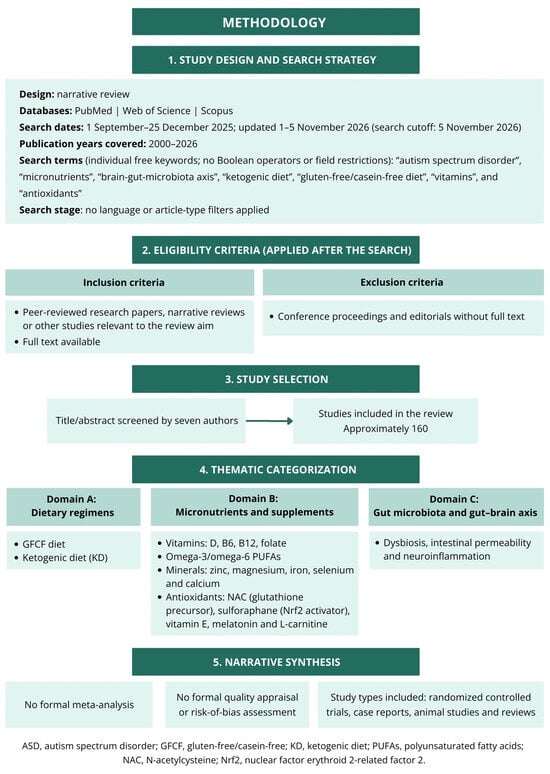
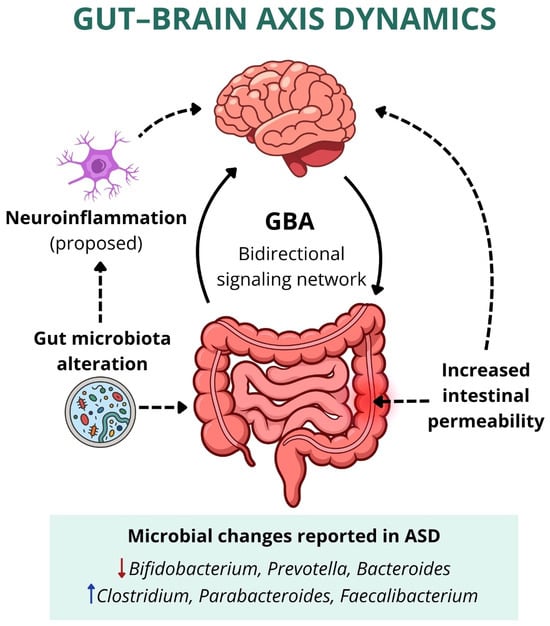
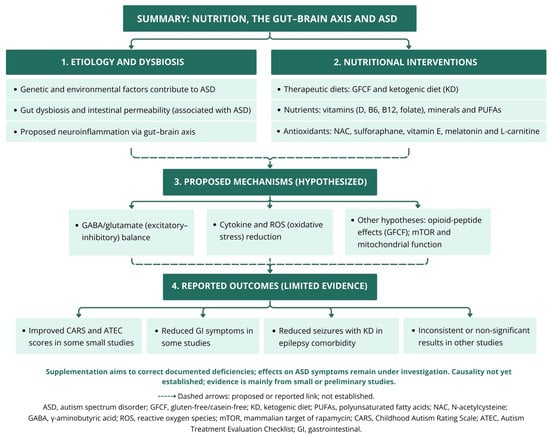
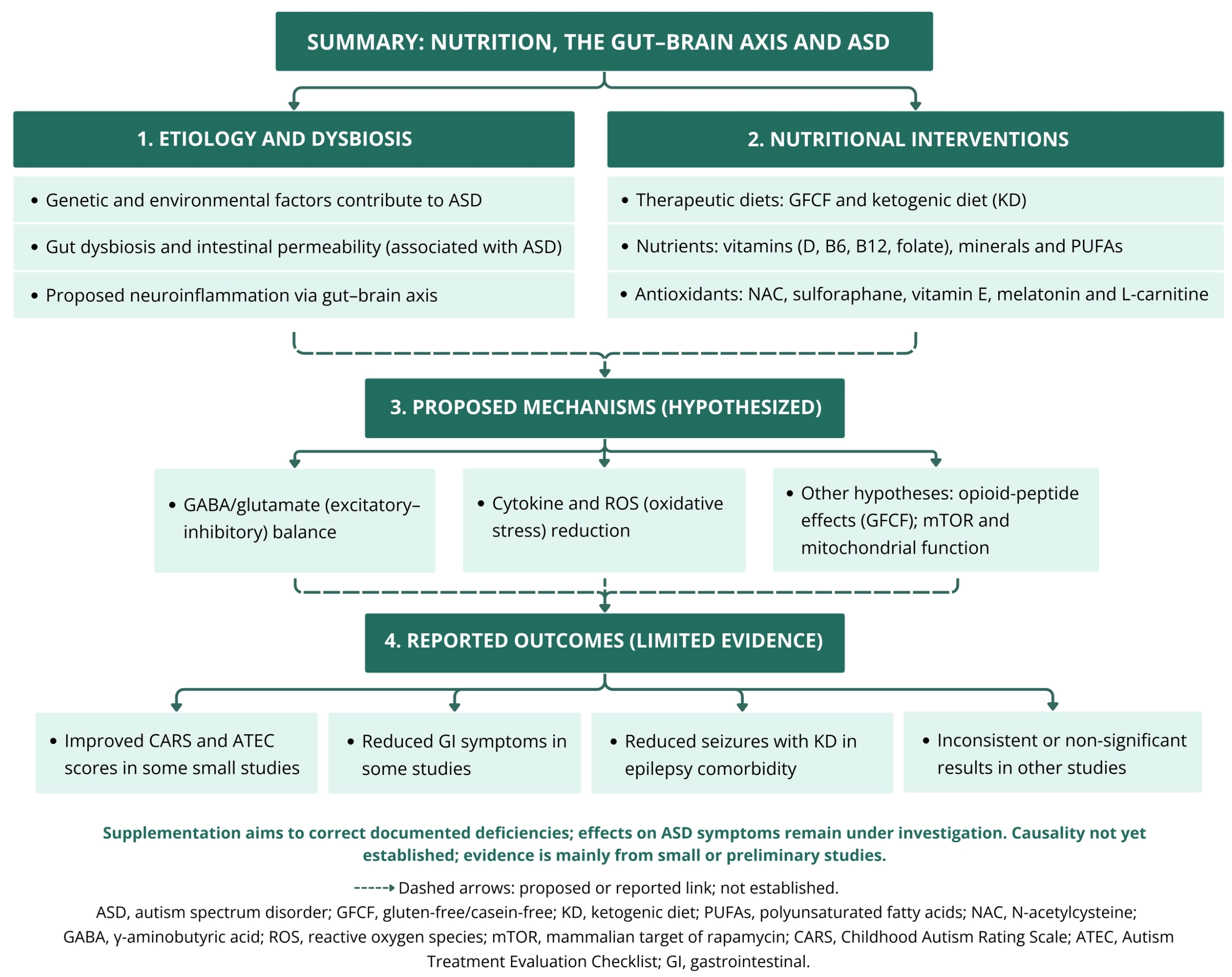
Disclaimer/Publisher’s Note: The statements, opinions and data contained in all publications are solely those of the individual author(s) and contributor(s) and not of MDPI and/or the editor(s). MDPI and/or the editor(s) disclaim responsibility for any injury to people or property resulting from any ideas, methods, instructions or products referred to in the content. |
© 2026 by the authors. Licensee MDPI, Basel, Switzerland. This article is an open access article distributed under the terms and conditions of the Creative Commons Attribution (CC BY) license.