


Abstract
Background/Objectives: Diet recommendations for individuals with chronic kidney disease (CKD) are complex and can be challenging to integrate into daily routines. Mobile health (mHealth) interventions may support dietary education, self-monitoring, and disease management; however, their effects on nutrition-related and clinical outcomes in CKD remain unclear. This systematic review and meta-analysis evaluated the effectiveness of mHealth interventions on nutrition-related and clinical outcomes among adults with CKD. Methods: The review was conducted according to the Preferred Reporting Items for Systematic Review and Meta-analysis (PRISMA) guidelines. Five databases were searched from inception through February 2026. Controlled trials, quasi-experimental designs and pre–post studies evaluating mHealth interventions and reporting nutrition-related and/or clinical outcomes were eligible for inclusion. Randomized controlled trials and controlled quasi-experimental studies with comparable outcomes and sufficient data were included in the quantitative synthesis. Pre–post studies were synthesized narratively because changes from baseline could not be distinguished from temporal effects in the absence of a concurrent comparator. Risk of bias was assessed using the Cochrane Risk of Bias tool and ROBINS-I. Results: Twenty-three studies were included in the review, with eight meeting the inclusion criteria for a meta-analysis. Among the quantitative synthesis of adults on dialysis, no significant effects were shown with biochemical outcomes or interdialytic weight gain. Several pre–post studies reported within-study improvements in dietary intake, including sodium intake, and blood pressure outcomes. These findings should be interpreted cautiously because the absence of a concurrent control group precludes attributing observed changes specifically to the mHealth intervention. Conclusions: mHealth interventions may support improvements in selected dietary and clinical outcomes among adults with CKD; however, evidence from randomized controlled trials remains limited. Improvements reported in pre/post studies should be interpreted cautiously and additional well-designed randomized controlled trials are needed to determine their effectiveness across CKD populations.
1. Introduction
Chronic kidney disease (CKD) is a progressive disease that has emerged as a major global public health issue, with the prevalence more than doubling between 1990 and 2023 [1,2]. As kidney function declines, the kidney’s ability to eliminate metabolic waste products and regulate fluid and electrolyte balance diminishes. Although nonmodifiable factors such as genetics and age contribute to CKD progression, modifiable lifestyle factors such as diet are an important component for CKD management.
Healthcare providers routinely counsel individuals with CKD on dietary modifications tailored to their individual health conditions [3,4]. This process typically begins with providers and registered dietitian nutritionists (RDNs) identifying dietary goals based on the individual’s medical condition, followed by translating these recommendations into practical food choices, meal planning strategies, and educational resources. These individuals are then encouraged to incorporate these recommendations into their daily routines with support from an interdisciplinary healthcare team, including physicians, nurses, RDNs, and other allied health professionals [3,4]. However, translating nutrition recommendations into sustained dietary behaviors remains challenging [5]. Individuals must navigate competing dietary recommendations for multiple chronic conditions, financial constraints, limited access to healthy foods, cultural food preferences, time required for meal preparation, and varying levels of food and nutrition literacy [5,6,7]. This gap between evidence-based recommendations and real-world adherence complicates effective dietary management of CKD, highlighting the need for innovative strategies to support self-management. Thus, digital health interventions may offer new and enhanced strategies for dietary monitoring and adherence in this population.
Among digital health interventions, mobile health (mHealth) has gained increasing attention as a tool to facilitate self-management and improve chronic disease outcomes. Various definitions of mHealth have been proposed; however, the rapid evolution of mobile technology has made establishing a universal definition challenging [8]. The World Health Organization (WHO), for example, broadly defines the term as a medical and public health practice supported by mobile and wireless devices. These devices include examples such as smartphones, sensors, personal digital assistants (PDAs), and wireless monitoring devices, among others [9]. However, modern interventions often push past these traditional boundaries. Earlier mHealth interventions frequently relied on technologies such as PDAs and short message service (SMS), but advances in mobile technology have expanded the capabilities of these interventions. Contemporary mHealth approaches may incorporate real-time monitoring, wearable device integration, personalized feedback, remote communication with healthcare providers, and, more recently, artificial intelligence (AI)-supported features [10,11]. These advances have expanded the potential for mHealth to provide increasingly individualized support for self-management without requiring continuous interaction with a healthcare provider.
Recent attention in mHealth interventions has largely focused on non-communicable diseases, particularly type 2 diabetes. Recent data from a 2025 systematic review that focused on individuals with type 2 diabetes demonstrated that SMS-based mHealth interventions improved glycemic control, with most of the studies reporting significant reductions in hemoglobin A1c (HbA1c) compared with standard care [12]. Another recent study on individuals with uncontrolled type 2 diabetes and high cardiovascular risk showed significant improvements in both HbA1c levels and systolic blood pressure (SBP) using a message-based mHealth intervention [13]. While these findings suggest that mHealth technologies can effectively support chronic disease self-management and improve clinical outcomes, the evidence supporting the use of these mHealth interventions within the CKD population remains limited. Additionally, mHealth is frequently incorporated as one component of multicomponent interventions that also include counseling or education, making it difficult to isolate the effects attributable specifically to mHealth. A prior systematic review published in 2015 evaluated dietary mobile apps in individuals with CKD and suggested potential clinical benefits; however, there were few included studies and they varied in design, length, intervention, and nutritional outcome assessments [14]. Despite these advancements, recent systematic reviews and meta-analyses evaluating the effectiveness of mHealth interventions within the CKD population remain limited. While meta-analyses regarding mHealth in other chronic diseases suggest considerable improvements in clinical and dietary outcomes with mHealth interventions, it remains unclear whether similar benefits extend to the CKD population. Therefore, the purpose of this systematic review and meta-analysis is to determine the effectiveness of mHealth interventions on nutrition-related and clinical outcomes among adults with CKD.
2. Materials and Methods
2.1. Selection of the Studies
This systematic review and meta-analysis were conducted in accordance with the Preferred Reporting Items for Systematic Reviews and Meta-Analyses (PRISMA) [15]. The study protocol was registered in the prospective register of systematic reviews database (registration code: CRD420251126284). Potentially relevant published peer-reviewed journal articles were initially identified based on nested keyword searches. This was then followed by reviewing the title and abstracts of the articles based on determined inclusion/exclusion criteria. Finally, an assessment of the relevant articles that were closely associated with the original intent of the search was performed. Five electronic databases, Pubmed/Medline, Embase, Cochrane Library, Scielo, and Scopus, were searched from inception through September 2025. The searches were updated in February 2026 using the same search strategy across all databases to identify any additional eligible studies published since the initial search.
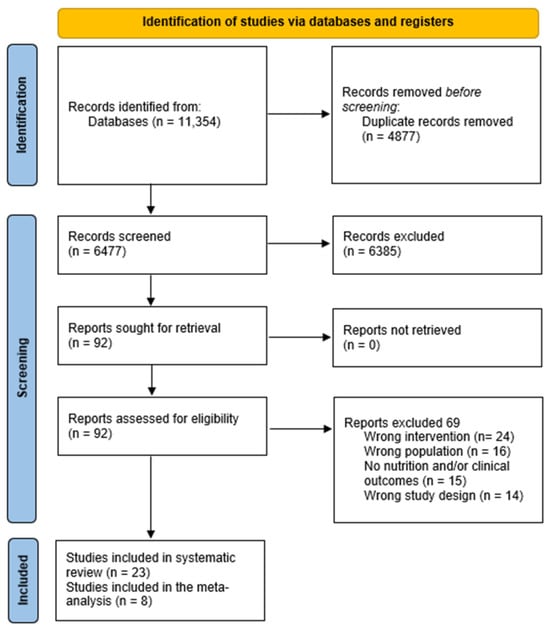
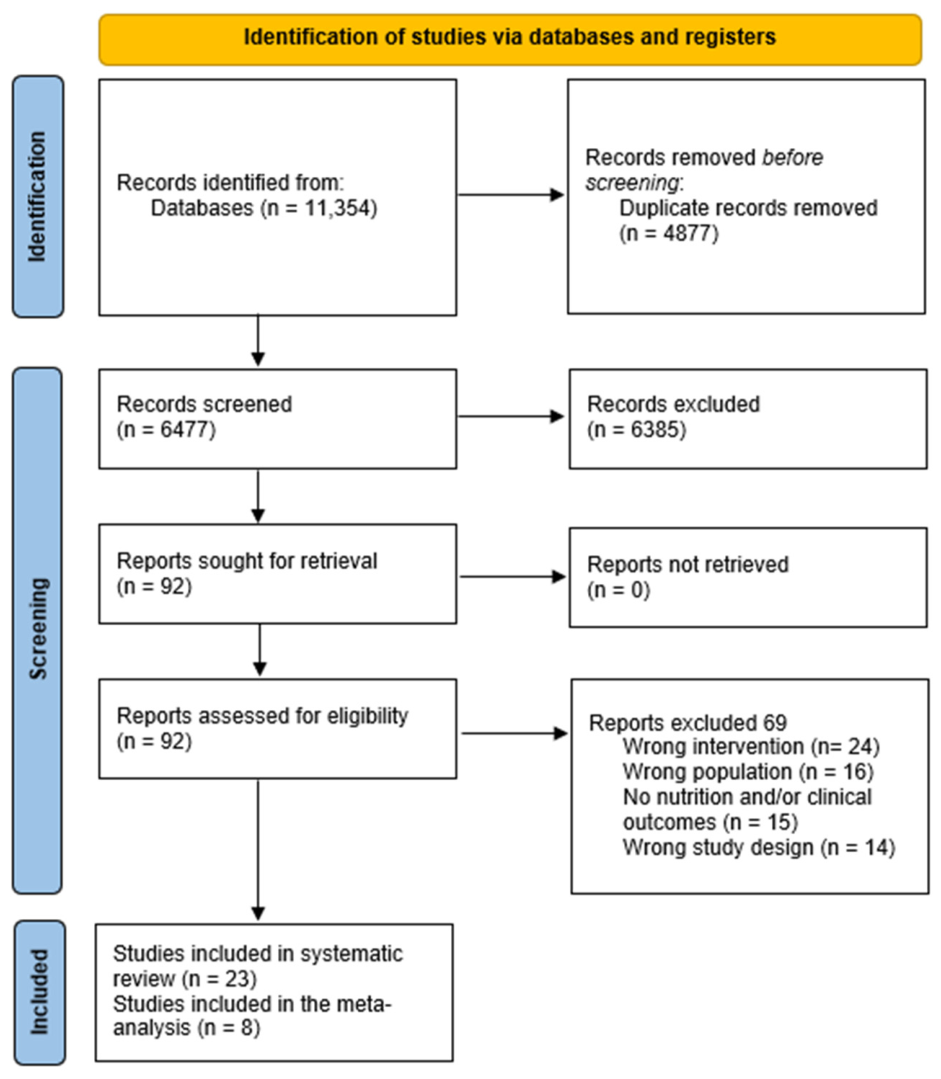
Two researchers (AL and SWC) conducted a comprehensive literature search that incorporated terms related to kidney disease, mHealth technologies, and nutrition-related outcomes. Kidney-related terms included chronic kidney disease, kidney or renal disease, failure, insufficiency, function, and dysfunction. mHealth- and technology-related terms included mobile health (mHealth), applications/apps, smartphones, wearable devices, monitoring platforms, and other wireless technologies. Some included interventions incorporated text messaging or SMS as a communication or support component within a broader mHealth intervention rather than as the primary intervention modality. Nutrition-related search terms included phosphorus, potassium, sodium, albumin, total protein, and dietary intake or habits. Search terms were adapted as appropriate for each database. The complete search strategy is provided in Supplemental Table S1. Given that no human or animal subjects were involved, institutional review board (IRB) approval was not required. The search was completed for peer-reviewed articles written in English to encompass the vast literature available. Search results were imported into Covidence (Veritas Health Innovation, Melbourne, Australia) for duplicate removal and study screening. Initially, 11,354 articles were identified for a total of 23 articles included in the review and eight for the meta-analysis. Any discrepancies were discussed with the research team. See Figure 1 for a flow diagram of the article selection process.
Figure 1.
PRISMA flow diagram.
Table 1.
mHealth studies (n = 23).
2.2. Eligibility Criteria
Studies were included if they met the following criteria: (1) study design was considered randomized controlled trial (RCT), quasi-experimental, or pre/post; (2) included participants aged 18 years or older with CKD of all stages (1–5, including dialysis); (3) interventions involved mobile health (mHealth) technologies (e.g., apps, smartphones, wearables, other wireless devices); and (4) reported nutritional outcomes (e.g., electrolytes, albumin, total protein, and/or dietary intake). Studies were excluded if they did not include the above criteria and involved specific kidney conditions such as autoimmune disease (e.g., lupus, IgA nephropathy), polycystic kidney disease, Mesoamerican nephropathy, urinary tract problems, or acute renal failure; included pregnant women or children; evaluated telehealth or online counseling services without an mHealth component; did not include nutritional outcomes; focused on the development or design of mHealth; and/or were not full-text articles published in non-scientific journals (e.g., conference abstracts, books, ongoing studies).
2.3. Data Extraction
All titles and abstracts were screened independently by three reviewers (JMA, AL, and SWC), and full-text studies that were considered relevant were included for further review. The reviewers independently reviewed all full-text articles, and any discrepancies were resolved with consensus. Data from the studies that fulfilled the eligibility criterion were collected in Covidence: (1) title, (2) author’s last name, (3) year of publication, (4) location of study, (5) study design, (6) population type and number, (7) length of intervention, (8) intervention and control, (9) outcomes, and (10) results.
2.4. Quality and Risk of Bias Assessment
Risk of bias for randomized controlled trials was assessed using the original Cochrane Risk of Bias tool (RoB 1), which evaluates seven domains [39]. Seven total domains were used to identify risk of bias. The domains assessed were sequence generation, allocation of concealment, blinding of participants and personnel, blinding of outcome assessors, incomplete outcome data, selective outcome reporting, and other sources of bias. These domains were assessed by indicating either a high, low, or unclear bias; with an “unclear” bias indicating that insufficient information was available to determine whether the domain was addressed.
Assessment of non-RCTs was done by using the ROBINS-I tool [40]. There are seven domains that were assessed: bias due to confounding, selection of participants, classification of the intervention, deviations from intended interventions, missing outcome data, measurement of outcomes, and selection of the reported result. Domain-level judgments were categorized as low, moderate, serious, critical risk of bias, or no information. An overall risk-of-bias judgment was determined according to the ROBINS-I framework based on the domain-level assessments. Risk-of-bias visualizations were generated using the robvis package [41].
2.5. Assessment of Heterogeneity
Heterogeneity was assessed using the I2 statistic. Publication bias was explored through visual inspection of funnel plots; however, because of the small number of studies available for most outcomes, funnel plots were interpreted cautiously. Statistical heterogeneity was determined at a chi-square (p < 0.01) and an I2 value of at least 50%.
2.6. Data Synthesis
Studies were grouped according to treatment modality (dialysis or not), intervention and comparator characteristics, and nutrition-related or clinical outcomes. Randomized controlled trials and controlled quasi-experimental studies were eligible for quantitative synthesis when they evaluated comparable populations and outcomes and provided sufficient data to estimate an intervention effect. Uncontrolled pre–post studies were excluded from the quantitative synthesis and were summarized narratively. For each outcome, quantitative synthesis was limited to studies reporting comparable intervention and control group data with sufficient information to calculate an effect estimate and its variance; studies not meeting these criteria were summarized narratively. For the studies that involved hemo- and peritoneal dialysis populations, they were grouped together when the intervention, comparator, and outcome measures were considered clinically comparable. Modality-specific outcomes were analyzed separately. Data from each included trial were analyzed using Review Manager (RevMan, Version 7.2; The Cochrane Collaboration, Copenhagen, Denmark). Treatment effects were expressed as between-group mean differences in final follow-up values with corresponding 95% confidence intervals (CIs). When standard deviations were not directly reported, they were estimated from available summary statistics, including 95% confidence intervals, using methods described in the Cochrane Handbook. For one study, standard deviations were approximated from rounded, model-based confidence intervals; therefore, these estimates were considered subject to additional uncertainty. A random-effect model was applied to determine differences. Statistical significance was defined as p < 0.05.
3. Results
3.1. Study Characteristics
Twenty-three studies met the inclusion criteria and were conducted in Australia (n = 1) [20], Brazil (n = 1) [31], Canada (n = 3) [23,24,30], China (n = 4) [16,25,26,34], Iran (n = 1) [36], Ireland (n = 1) [21], Japan (n = 1) [37], South Korea (n = 4) [17,27,28,29], Taiwan (n = 1) [19], United Arab Emirates (n = 1) [22], and the United States (n = 5) [18,32,33,35,38,42]. Study designs included randomized controlled trials (RCTs; n = 9) [16,17,20,23,28,35,36,37,38], quasi-experimental studies (n = 3) [19,29,33], a retrospective cohort study (n = 1) [34], and non-randomized pre–post studies (n = 10) [18,21,22,24,25,26,27,30,31,32].
A total of 14,887 participants were included, of whom 94.2% were non-dialysis participants. Intervention duration ranged from 0.5 to 36 months. Across the included studies, mHealth interventions primarily focused on dietary self-monitoring that included nutrient tracking (e.g., phosphorus, potassium, sodium, protein, and fluid intake), nutrition education tailored to individuals receiving dialysis or those with non-dialysis CKD, medication management, and behavioral support strategies designed to improve dietary adherence and self-management.
Sixteen studies (69.6%) utilized mHealth applications specifically developed by the research team [17,19,20,21,22,23,24,28,29,30,31,34,36,37,38,42]. Twelve studies integrated a theory, model, and/or framework to assess the effectiveness of the intervention. These included social cognitive theory (n = 4) [17,35,38,42], theory of planned behavior (n = 1) [37], models for app development (n = 4) [22,28,29,34], or a combination of multiple theories (n = 3) [18,20,32]. Eighteen studies (78.3%) incorporated a dietary self-monitoring or tracking component, including food or nutrient logging, meal-photo analysis, nutrient calculation, or monitoring of diet and/or fluid intake. Fifteen studies (65.2%) incorporated educational components, including renal-friendly recipes, medication and dialysis education, and healthy lifestyle guidance. Additionally, 11 studies (47.8%) included behavioral support features such as motivational messaging, reminders, videoconferencing, or direct communication with healthcare providers (Table 1).
Six studies evaluated dietary intake outcomes, including three studies among adults receiving dialysis (n = 178) and three among adults with non-dialysis CKD (n = 87). For the studies of adults receiving dialysis, protein intake was assessed in three studies, phosphorus intake in three studies, sodium intake in two studies, and overall diet quality in one study. Two of the three studies assessing protein intake reported significant changes (p < 0.01), while one of three studies assessing phosphorus intake reported a significant reduction (p = 0.003) and one of two studies assessing sodium intake reported a significant reduction (p = 0.02) of those in the intervention compared to the control. No significant changes were reported for the remaining dietary outcomes among adults receiving dialysis.
Of the studies of adults with non-dialysis CKD, sodium intake was assessed in three studies, diet quality in two studies, and potassium and protein intake in one study each. Because of variability in the dietary outcomes and statistical metrics reported, most dietary outcomes could not be quantitatively synthesized. The three studies assessing dietary sodium intake reported reductions in sodium intake; however, because these studies used uncontrolled pre–post designs, they were summarized narratively rather than included in the meta-analysis. Among adults with non-dialysis CKD, blood pressure was assessed in four studies [18,30,32,37]. Three pre–post studies [18,30,32] reported limited or no improvements in systolic and/or diastolic blood pressure, whereas the RCT [37] reported no significant between-group differences in blood pressure. Three studies reported serum calcium outcomes [16,23,31]; however, only two provided sufficient data for quantitative synthesis. Given the limited number of eligible studies and the uncertainty associated with estimating between-study heterogeneity, calcium outcomes were summarized narratively rather than pooled.
Sixteen studies assessed at least one self-reported outcome related to dietary self-management, app use, nutrition knowledge, or quality of life. The most frequently assessed outcomes were dietary self-monitoring or self-efficacy (n = 6), app satisfaction or acceptability (n = 5), nutrition knowledge (n = 3), technology readiness (n = 3), and quality of life (n = 3). Because of variability in the measures used, these outcomes were not quantitatively synthesized. Improvements were reported for nutrition knowledge, dietary self-efficacy, and quality of life. Nutrition knowledge improved significantly in the intervention group compared with the control group in one study (p < 0.001), and dietary self-efficacy improved in one study. Two studies reported significant improvements in overall or domain-specific quality of life (p < 0.05). Among studies reporting satisfaction with app use, satisfaction was generally high. No significant changes were reported for the remaining self-reported outcomes (Table 1).
3.2. Quality and Risk of Bias Results
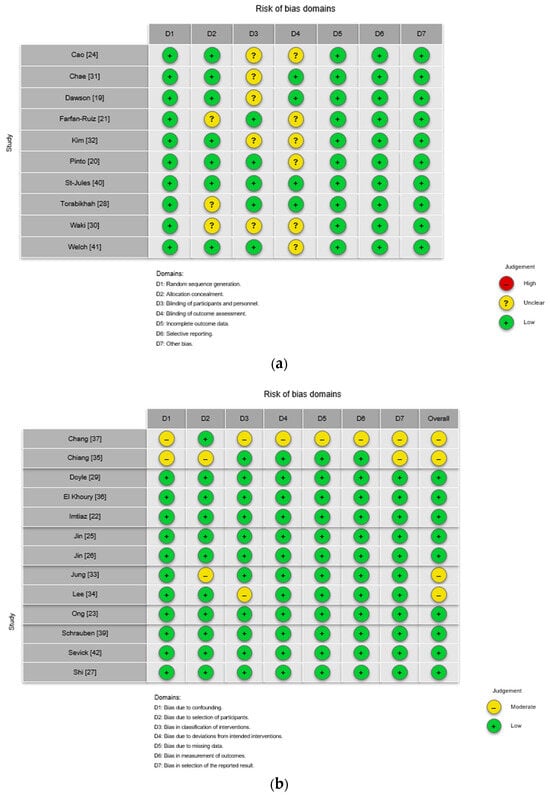
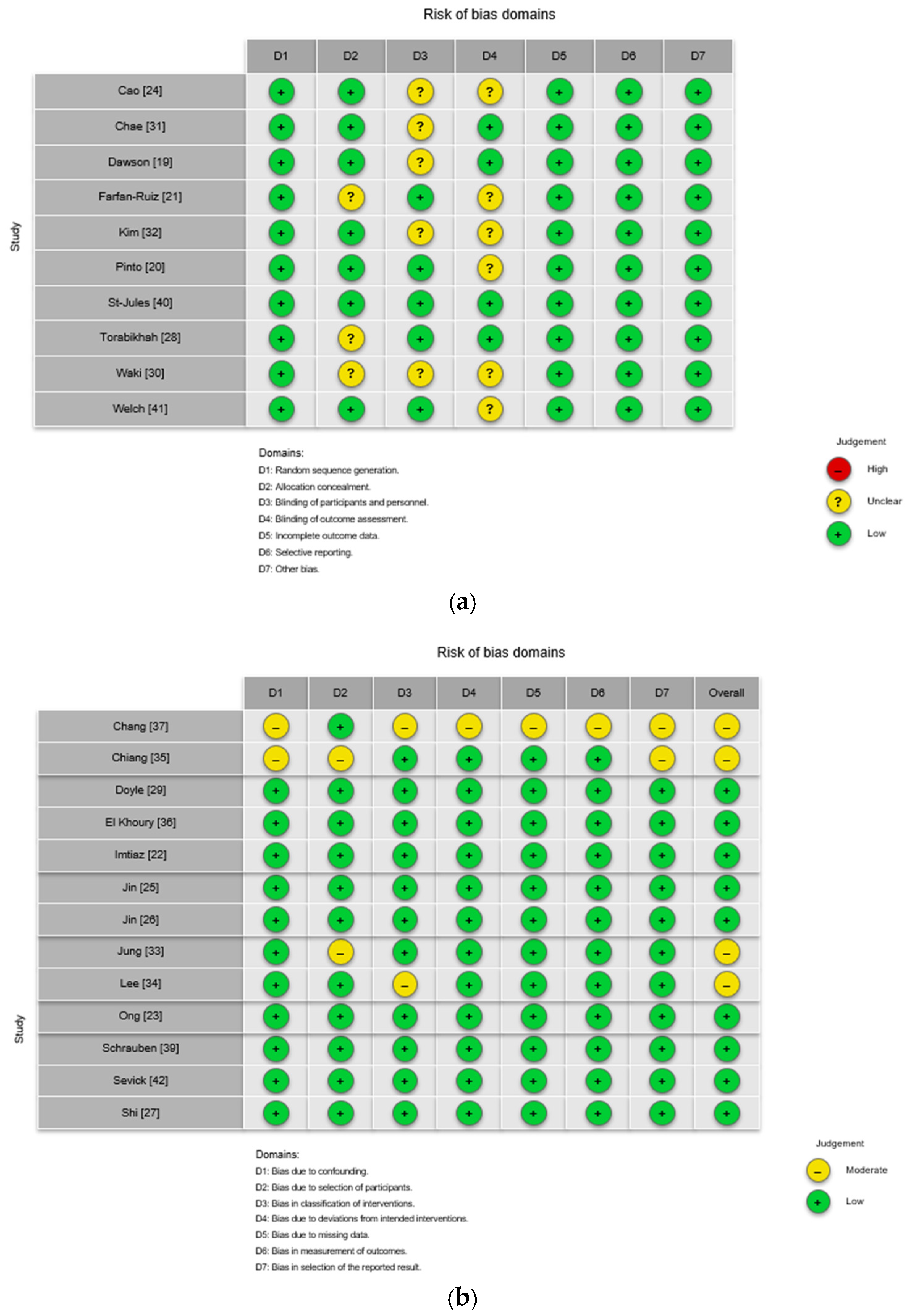
Risk of bias was assessed using Covidence’s quality assessment templates. Overall, the included studies demonstrated low to moderate risk of bias. Among the randomized controlled trials (RCTs), all studies were judged to have a low risk of bias for incomplete outcome data, selective reporting, and other sources of bias. Four studies were judged to have an unclear risk of bias for blinding of participants and personnel, five for blinding of outcome assessment, and three for allocation concealment due to insufficient reporting of these methodological procedures.
Non-randomized studies were assessed using the ROBINS-I tool. Ten studies were judged to have a low overall risk of bias, while four studies were rated as having a moderate risk of bias. Moderate ratings were attributable to concerns across domains including confounding, selection of participants, classification of interventions, deviations from intended interventions, outcome measurement, and selection of the reported result. No studies were judged to have a serious or critical risk of bias (Figure 2).
Figure 2.
(a) Risk-of-bias assessments of included studies. (a) Randomized controlled trials assessed using the Cochrane Risk of Bias (RoB) tool [39]. (b) Non-randomized studies assessed using the Risk of Bias in Non-randomized Studies of Interventions (ROBINS-I) tool [40]. Visualizations were generated using the robvis package [41].
3.3. Heterogeneity
Publication bias could not be reliably assessed for most outcomes because of the small number of studies included in each meta-analysis. Heterogeneity varied across outcomes, with substantial heterogeneity observed for several biochemical outcomes. Serum albumin demonstrated particularly high heterogeneity (I2 = 8%). Heterogeneity statistics for individual outcomes are presented in the corresponding forest plots.
3.4. Meta-Analysis Results
3.4.1. Biochemical Outcomes
No significant differences were observed between intervention and control groups for serum albumin, phosphorus, or potassium concentrations. No significant difference was observed for serum albumin (6 studies, n = 476; MD = 0.04 g/dL, 95% CI: −0.21 to 0.28, p = 0.72; I2 = 85%). Serum phosphorus also showed no significant difference between groups despite substantial heterogeneity across studies (8 studies, n = 579; MD = −0.16, 95% CI: −0.33 to 0.00, p = 0.06; I2 = 78%). Serum potassium concentrations did not significantly differ between groups (5 studies, n = 321; MD = −0.35 mmol/L, 95% CI: −1.09 to 0.38, p = 0.25; I2 = 92%) (Figure S1).
3.4.2. Weight Outcomes
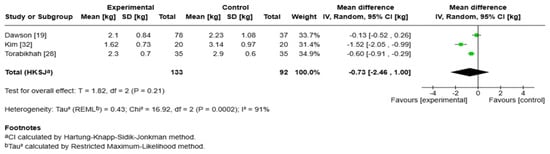
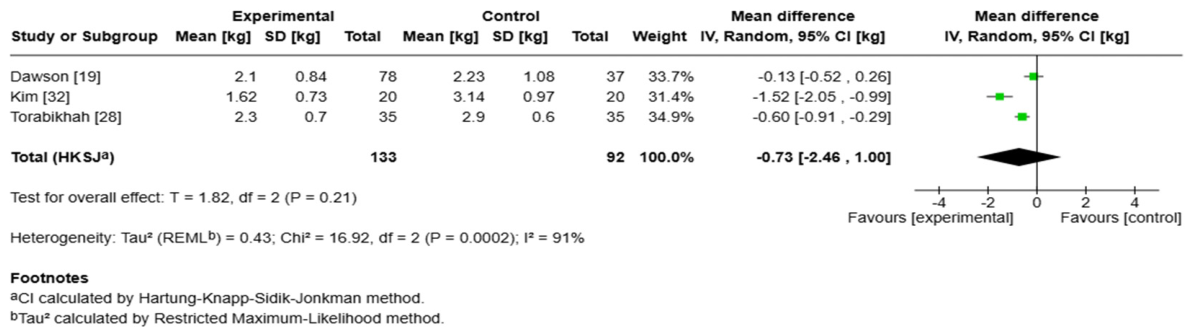
Three studies involving adults receiving dialysis (n = 225) evaluated IDWG. Other studies reporting IDWG were not included in the quantitative synthesis because they lacked a concurrent comparison group or sufficient data to calculate a comparable effect estimate and its variance. The pooled analysis demonstrated no significant differences among the mHealth intervention and the control groups (MD = −0.73 kg, 95% CI −2.46 to 1.00, p = 0.21) with substantial heterogeneity across studies (I2 = 91%) (Figure 3).
Figure 3.
Forest plot of interdialytic weight gain. Effect estimates were pooled using a random-effects model of the interventions among adults undergoing dialysis. Squares represent study-specific effect estimates and horizontal lines represent 95% confidence intervals. Diamonds represent pooled effect estimates. Green squares represent the effect estimates of individual studies, with square size proportional to study weight; horizontal lines indicate 95% confidence intervals. The black diamond represents the pooled effect estimate, with its width indicating the 95% confidence interval.
4. Discussion
This systematic review and meta-analysis suggest that mHealth-delivered interventions may support selected nutrition and clinical outcomes among adults with CKD; however, effects were not consistent across outcomes or populations. Among adults receiving dialysis, no statistically significant between-group differences were observed in IDWG or the biochemical outcomes evaluated. Among adults with non-dialysis CKD, pre–post studies reported improvements in dietary sodium intake and mixed results in blood pressure. Improvements in nutrition knowledge, dietary self-efficacy, and quality of life were also reported in individual studies. Collectively, these findings suggest that mHealth may be more effective for supporting behaviors directly targeted by the intervention than for producing short-term changes in biochemical outcomes.
Modifying diets for any disease, especially CKD, is a challenge, as multiple factors may compete with adherence, such as culture, preferences, finances, and other co-morbidities [5,6,7]. From this review, there was an overall reduction in dietary sodium intake among individuals with non-dialysis CKD. The reduction in sodium intake observed in these studies may reflect the emphasis placed on sodium reduction within those interventions. For these interventions, not only did participants need to log their dietary intake, but they also incorporated education on reducing sodium intake, encouraged consumption of healthier foods such as fruits and vegetables, and provided dietary tracking with immediate feedback. Jung et al. (2023) [27] illustrated that among 46 participants with non-dialysis CKD (eGFR average 86.5 ±26.5 mL/min/1.73m2), average dietary sodium intake reduced from 2020.9 ± 835.2 mg at baseline to 1456.0 ± 687.3 mg after 6 months. For this intervention, beyond logging meals in an app for 6 months, they were able to correspond with a human coach through the application. The human coaches not only provided feedback but also motivation for daily logging. Even though the other studies included within this systematic review and meta-analysis incorporated some form of counseling with app tracking, there were inconsistencies in diet-related outcomes. This may have been attributed to the type of counseling provided along with the diet app tracking. For example, El Khoury et al.’s study (2021) [22] demonstrated that dietary protein intake and self-knowledge about phosphorus among dialysis participants (n = 23) improved, whereas there was no improvement in dietary phosphate consumption, even though the focus of the intervention was on dietary phosphate. For that study, it is not known how the information was communicated and if the focus was specifically on phosphorus or diet information in general. Although sodium and macronutrient information are routinely displayed on Nutrition Facts labels, phosphorus and potassium content may not always be provided. Consequently, individuals with CKD may have difficulty identifying foods containing substantial amounts of these nutrients, which may complicate dietary self-management [27,43,44]. Furthermore, individuals may have limited knowledge regarding the nutrient composition of foods, making it more difficult to identify foods high in nutrients such as sodium, phosphorus, or potassium and to understand how excessive intake may contribute to CKD progression and related complications [45,46,47].
Blood pressure reduction within some studies further supports the potential clinical relevance of sodium reduction achieved through mHealth interventions. Among the studies that evaluated blood pressure, Ong et al. (2016) [30] demonstrated a reduction among the studies included from at home results. The intervention in this study incorporated additional self-management components besides just an app, such as home blood pressure monitoring, symptom assessments, and lab results tracking. Additionally, the intervention integrated developing a personalized feedback loop for patients, and a tiered clinical alert system. This combination of continuous feedback and patient monitoring may explain the blood pressure improvements observed. Schrauben et al. (2022) [32] showed the most consistent improvement across both SBP and DBP and reduction in dietary sodium intake throughout their 12-month intervention among 44 individuals with CKD stages 1–3 compared to the other studies that focused on blood pressure as the outcome. This may have been attributed to the intervention not only including an app that was developed based on two theories—situated learning and control systems—but also integrating tele-counseling, personalized feedback, and motivational interviewing. The dynamic integration of professional dietary support, such as dietitians, along with mHealth technology, may explain the blood pressure and dietary improvements.
Despite improvements in self-management behaviors reported in several studies, these changes did not consistently translate into improvements in biochemical outcomes. Serum phosphorus, potassium, albumin, and calcium are influenced by numerous factors beyond dietary intake, including medication adherence, residual kidney function, dialysis adequacy, inflammation, comorbid conditions, and individual metabolic variability. Consequently, modest dietary improvements achieved through mHealth interventions may not be sufficient to produce measurable changes in laboratory parameters, particularly during short intervention periods. Furthermore, many applications relied on self-reported dietary intake, which may introduce reporting bias and limit the precision of nutrient estimates [48,49]. As a result, improvements in dietary awareness and self-monitoring may occur before detectable changes in biochemical markers become apparent. Furthermore, substantial heterogeneity was observed for some pooled outcomes, which may reflect differences in intervention content and duration, participant characteristics, dialysis modality, and approaches to outcome assessment across studies. Given the limited number of studies available for individual outcomes, additional subgroup or sensitivity analyses to explore potential sources of heterogeneity were not feasible. Therefore, pooled estimates with substantial heterogeneity should be interpreted cautiously.
From a clinical perspective, mHealth may be most useful as a tool to support ongoing nutrition self-management rather than as a standalone intervention. Dietary tracking and self-monitoring were common components of the included interventions, but many studies also incorporated nutrition education, personalized feedback, behavioral support, or communication with healthcare professionals. These findings suggest that mHealth may provide an opportunity to reinforce nutrition recommendations between clinical encounters and facilitate continued engagement with dietary self-management. However, the optimal combination and intensity of technology-based and healthcare professional support remains unclear.
Limitations
This review has several limitations. Considerable heterogeneity existed across studies in study design, intervention duration, mHealth components, and outcomes assessed, which limited comparisons across interventions. The inclusion of randomized, quasi-experimental, and pre–post studies, along with reliance on self-reported measures for several dietary and behavioral outcomes, may also affect the strength of the findings. Additionally, the distribution of participants across CKD populations was uneven, and several outcomes were specific to either non-dialysis or dialysis populations, limiting generalizability across the CKD continuum. Furthermore, standard deviations for one study were approximated from rounded, model-based confidence intervals, introducing uncertainty into the corresponding pooled estimates.
5. Conclusions
mHealth-delivered nutrition interventions show potential for supporting dietary self-management and selected clinical outcomes among adults with CKD, particularly when technology is combined with dietary self-monitoring, personalized feedback, education, or healthcare professional support. However, effects on biochemical outcomes were inconsistent, and substantial heterogeneity in intervention design, study methodology, and outcome assessment limits definitive conclusions. Future adequately powered randomized trials should evaluate standardized behavioral, dietary, and clinical outcomes and determine which components of multicomponent mHealth interventions contribute most to effectiveness.
Supplementary Materials
The following supporting information can be downloaded at: https://www.mdpi.com/article/10.3390/nu18203357/s1, Table S1: Database Search Strategies; Figure S1. Forest plots of biochemical outcomes among adults receiving dialysis. (A) Forest plot of serum albumin concentrations; (B) Forest plot of serum phosphorus concentrations; (C) Forest plot of serum potassium concentrations. Effect estimates were pooled using a random-effects model of the interventions that had individuals on dialysis. Green squares represent study-specific effect estimates and horizontal lines represent 95% confidence intervals. Black diamonds represent pooled effect estimates
Author Contributions
Conceptualization, J.M.A.; methodology, S.W.-C., A.L. and J.M.A.; software, J.M.A.; validation, S.W.-C., A.L. and J.M.A.; formal analysis, J.M.A.; investigation, S.W.-C., A.L. and J.M.A.; resources, S.W.-C., A.L. and J.M.A.; data curation, J.M.A.; writing—original draft preparation, S.W.-C. and A.L.; writing—review and editing, S.W.-C., A.L. and J.M.A.; visualization, S.W.-C., A.L. and J.M.A.; supervision, J.M.A.; project administration, J.M.A.; funding acquisition, J.M.A. All authors have read and agreed to the published version of the manuscript.
Funding
This research was funded by the United States Department of Agriculture National Institute of Food and Agriculture (USDA-NIFA), grant number 2022-67037-36614.
Institutional Review Board Statement
Institutional review board approval was not required because this systematic review analyzed previously published studies and did not involve the recruitment of human participants.
Informed Consent Statement
Not applicable.
Data Availability Statement
The original contributions presented in this study are included in the article/Supplementary Material. Further inquiries can be directed to the corresponding author.
Conflicts of Interest
The authors declare no conflicts of interest.
Abbreviations
The following abbreviations are used in this manuscript:
| AI | artificial intelligence |
| CI | confidence interval |
| CKD | chronic kidney disease |
| DBP | diastolic blood pressure |
| eGFR | estimated glomerular filtration rate |
| MD | mean difference |
| mHealth | mobile health |
| PDA | personal digital assistant |
| PRISMA | Preferred Reporting Items for Systematic Reviews and Meta-Analyses |
| RCT | randomized controlled trial |
| RDN | registered dietitian nutritionist |
| RevMan | Review Manager |
| RoB | Risk of Bias |
| ROBINS-I | Risk Of Bias In Non-randomized Studies of Interventions |
| SBP | systolic blood pressure |
| SMS | short message service |
| WHO | World Health Organization |
References
- Mark, P.B.; Stafford, L.K.; Grams, M.E.; Aalruz, H.; Abd ElHafeez, S.; Abdelgalil, A.A.; Abdulkader, R.S.; Abeywickrama, H.M.; Abiodun, O.O.; Abramov, D.; et al. Global, Regional, and National Burden of Chronic Kidney Disease in Adults, 1990–2023, and Its Attributable Risk Factors: A Systematic Analysis for the Global Burden of Disease Study 2023. Lancet 2025, 406, 2461–2482. [Google Scholar] [CrossRef] [Scilit] [PubMed]
- Vaidya, S.; Aeddula, N. Chronic Kidney Disease. In StatePearls; StatPearls Publishing: Treasure Island, FL, USA, 2024. [Google Scholar]
- Stevens, P.E.; Ahmed, S.B.; Carrero, J.J.; Foster, B.; Francis, A.; Hall, R.K.; Herrington, W.G.; Hill, G.; Inker, L.A.; Kazancıoğlu, R.; et al. KDIGO 2024 Clinical Practice Guideline for the Evaluation and Management of Chronic Kidney Disease. Kidney Int. 2024, 105, S117–S314. [Google Scholar] [CrossRef] [Scilit] [PubMed]
- Ikizler, T.A.; Burrowes, J.D.; Byham-Gray, L.D.; Campbell, K.L.; Carrero, J.J.; Chan, W.; Fouque, D.; Friedman, A.N.; Ghaddar, S.; Goldstein-Fuchs, D.J.; et al. KDOQI Clinical Practice Guideline for Nutrition in CKD: 2020 Update. Am. J. Kidney Dis. 2020, 76, S1–S107. [Google Scholar] [CrossRef] [Scilit] [PubMed]
- Morris, A.; Patel, R.; Papadopoulos, K.; Mahoney, B.; Stack, R.; Bradley, E.; Neary, A.; Lycett, D.; Awan, F.; Foster, A.; et al. Nutritional Self-Management of Chronic Kidney Disease: A Systematic Review and Co-Created Qualitative Synthesis. J. Ren. Nutr. 2026, 36, 261–276. [Google Scholar] [CrossRef] [Scilit] [PubMed]
- Trigueros-Flores, X.B.; Luna-Hernández, G.; Santos-Lopez, M.F.; Pérez-Galván, L.; Flores-Camacho, K.J.; Díaz-Canchola, L.M.; Cueto-Manzano, A.M.; Chávez-Chávez, H.E.; Cerrillos-Gutiérrez, J.I.; Rojas-Campos, E.; et al. Barriers and Facilitators to Adherence to a Healthy Diet Across the Spectrum of Chronic Kidney Disease. Patient Prefer. Adherence 2025, 19, 123–137. [Google Scholar] [CrossRef] [Scilit] [PubMed]
- Hunter, E.G.; Shukla, A.; Andrade, J.M. Barriers to and Strategies for Dietary Adherence: A Qualitative Study among HD/PD Patients and Health Care Providers. J. Ren. Nutr. 2023, 33, 682–690. [Google Scholar] [CrossRef] [Scilit] [PubMed]
- Istepanian, R.S.H. Mobile Health (m-Health) in Retrospect: The Known Unknowns. Int. J. Environ. Res. Public Health 2022, 19, 3747. [Google Scholar] [CrossRef] [Scilit] [PubMed]
- Maaß, L.; Freye, M.; Pan, C.C.; Dassow, H.H.; Niess, J.; Jahnel, T. The Definitions of Health Apps and Medical Apps From the Perspective of Public Health and Law: Qualitative Analysis of an Interdisciplinary Literature Overview. JMIR Mhealth Uhealth 2022, 10, e37980. [Google Scholar] [CrossRef] [Scilit] [PubMed]
- Bhavnani, S.P.; Narula, J.; Sengupta, P.P. Mobile Technology and the Digitization of Healthcare. Eur. Heart J. 2016, 37, 1428–1438. [Google Scholar] [CrossRef] [Scilit] [PubMed]
- Spinean, A.; Carniciu, S.; Mladin, O.A.; Serafinceanu, C. The Transformative Power of MHealth Apps: Empowering Patients with Obesity and Diabetes—A Narrative Review. J. Med. Life 2024, 17, 1030–1035. [Google Scholar] [CrossRef] [Scilit] [PubMed]
- Gu, L.; Jimma, B.L.; Belsty Mihretie, T. The Effects of Mobile Health on Self-Management of Patients with Diabetes: A Systematic Review. Digit. Health 2025, 11, 20552076251382049. [Google Scholar] [CrossRef] [Scilit] [PubMed]
- Zhang, P.Z.; Guo, D.; Liu, C.Q.; Chen, N.; Liu, J.F.; Lei, X.Z.; Yang, L.J.; Liu, Y.T.; Li, X.; Huang, J.F.; et al. Mobile App-Based Intervention and Cardiovascular Risk Factors in Patients with Uncontrolled Type 2 Diabetes: A Randomized Clinical Trial. JAMA Netw. Open 2025, 8, e2529762. [Google Scholar] [CrossRef] [Scilit] [PubMed]
- Campbell, J.; Porter, J. Dietary Mobile Apps and Their Effect on Nutritional Indicators in Chronic Renal Disease: A Systematic Review. Nephrology 2015, 20, 744–751. [Google Scholar] [CrossRef] [Scilit] [PubMed]
- Moher, D.; Liberati, A.; Tetzlaff, J.; Altman, D. Preferred Reporting Items for Systematic Reviews and Meta-Analyses: The PRISMA Statement. PLoS Med. 2009, 6, e1000097. [Google Scholar] [CrossRef] [Scilit] [PubMed]
- Cao, F.; Li, L.; Lin, M.; Lin, Q.; Ruan, Y.; Hong, F. Application of Instant Messaging Software in the Follow-up of Patients Using Peritoneal Dialysis, a Randomised Controlled Trial. J. Clin. Nurs. 2018, 27, 3001–3007. [Google Scholar] [CrossRef] [Scilit] [PubMed]
- Chae, Y.J.; Kim, H.S. Effects of a Mobile Application on Improving Self-Management of Adult Patients Receiving Peritoneal Dialysis: A Randomized Controlled Trial. Jpn. J. Nurs. Sci. 2024, 21, e12555. [Google Scholar] [CrossRef] [Scilit] [PubMed]
- Chang, A.R.; Bailey-Davis, L.; Hetherington, V.; Ziegler, A.; Yule, C.; Kwiecen, S.; Graboski, E.; Melough, M.M.; Collins, C.; Anderson, C. Remote Dietary Counseling Using Smartphone Applications in Patients With Stages 1-3a Chronic Kidney Disease: A Mixed Methods Feasibility Study. J. Ren. Nutr. 2020, 30, 53–60. [Google Scholar] [CrossRef] [Scilit] [PubMed]
- Chiang, Y.C.; Chang, Y.P.; Lin, S.C.; Lin, C.; Hsu, P.H.; Hsu, Y.J.; Wu, T.J. Effects of Individualized Dietary Phosphate Control Program With a Smartphone Application in Hemodialysis Patients in Taiwan. Biol. Res. Nurs. 2021, 23, 375–381. [Google Scholar] [CrossRef] [Scilit] [PubMed]
- Dawson, J.; Campbell, K.L.; Craig, J.C.; Tong, A.; Teixeira-Pinto, A.; Brown, M.A.; Howard, K.; Howell, M.; Khalid, R.; Sud, K.; et al. A Text Messaging Intervention for Dietary Behaviors for People Receiving Maintenance Hemodialysis: A Feasibility Study of KIDNEYTEXT. Am. J. Kidney Dis. 2021, 78, 85–95.e1. [Google Scholar] [CrossRef] [Scilit] [PubMed]
- Doyle, N.; Murphy, M.; Brennan, L.; Waugh, A.; McCann, M.; Mellotte, G. The “Mikidney” Smartphone App Pilot Study: Empowering Patients with Chronic Kidney Disease. J. Ren. Care 2019, 45, 133–140. [Google Scholar] [CrossRef] [Scilit] [PubMed]
- El Khoury, C.F.; Crutzen, R.; Schols, J.M.; Halfens, R.J.G.; Karavetian, M. Adequate Management of Phosphorus in Patients Undergoing Hemodialysis Using a Dietary Smartphone App: Prospective Pilot Study. JMIR Form. Res. 2021, 5, e17858. [Google Scholar] [CrossRef] [Scilit] [PubMed]
- Farfan-Ruiz, A.C.; Czikk, D.; Leidecker, J.; Ramsay, T.; Mccormick, B.; Wilson, K.; Zimmerman, D. Multidisciplinary Team versus a “Phosphate-Counting”App for Serum Phosphate Control: A Randomized Controlled Trial. Kidney360 2021, 2, 290–297. [Google Scholar] [CrossRef] [Scilit] [PubMed]
- Imtiaz, R.; Atkinson, K.; Guerinet, J.; Wilson, K.; Leidecker, J.; Zimmerman, D. A Pilot Study of Okkidney, a Phosphate Counting Application in Patients on Peritoneal Dialysis. Perit. Dial. Int. 2017, 37, 613–618. [Google Scholar] [CrossRef] [Scilit] [PubMed]
- Jin, H.; Lin, Q.; Lu, J.; Hu, C.; Lu, B.; Jiang, N.; Wu, S.; Li, X. Evaluating the Effectiveness of a Generative Pretrained Transformer-Based Dietary Recommendation System in Managing Potassium Intake for Hemodialysis Patients. J. Ren. Nutr. 2024, 34, 539–545. [Google Scholar] [CrossRef] [Scilit] [PubMed]
- Jin, H.; Huang, L.; Ye, J.; Wang, J.; Lin, X.; Wu, S.; Hu, W.; Lin, Q.; Li, X. Enhancing Nutritional Management in Peritoneal Dialysis Patients through a Generative Pre-Trained Transformers-Based Recipe Generation Tool: A Pilot Study. Front. Med. 2024, 11, 1469227. [Google Scholar] [CrossRef] [Scilit] [PubMed]
- Jung, C.Y.; Kim, Y.; Kim, H.W.; Han, S.H.; Yoo, T.H.; Kang, S.W.; Park, J.T. Effectiveness of a Smartphone Application for Dietary Sodium Intake Measurement. Nutrients 2023, 15, 3590. [Google Scholar] [CrossRef] [Scilit] [PubMed]
- Kim, H.; Cho, M.K. Development and Effectiveness of Dietary Self-Care Promotion Program Using Online Community for Hemodialysis Patients: A Pilot Randomized Controlled Trial. Asian Nurs. Res. (Korean. Soc. Nurs. Sci.) 2025, 19, 126–135. [Google Scholar] [CrossRef] [Scilit] [PubMed]
- Lee, H.J.; Kang, H.Y. Effects of a Customized Diet Education Program Using a Mobile Instant Messenger for People Undergoing Peritoneal Dialysis: A Feasibility Test. Asian Nurs. Res. (Korean. Soc. Nurs. Sci.) 2024, 18, 367–376. [Google Scholar] [CrossRef] [Scilit] [PubMed]
- Ong, S.W.; Jassal, S.V.; Miller, J.A.; Porter, E.C.; Cafazzo, J.A.; Seto, E.; Thorpe, K.E.; Logan, A.G. Integrating a Smartphone–Based Self–Management System into Usual Care of Advanced CKD. Clin. J. Am. Soc. Nephrol. 2016, 11, 1054–1062. [Google Scholar] [CrossRef] [Scilit] [PubMed]
- Pinto, L.C.S.; Andrade, M.C.; Chaves, R.O.; Lopes, L.L.B.; Maués, K.G.; Monteiro, A.M.; Nascimento, M.B.; Barros, C.A.V. Development and Validation of an Application for Follow-up of Patients Undergoing Dialysis: NefroPortátil. J. Ren. Nutr. 2020, 30, e51–e57. [Google Scholar] [CrossRef] [Scilit] [PubMed]
- Schrauben, S.J.; Inamdar, A.; Yule, C.; Kwiecien, S.; Krekel, C.; Collins, C.; Anderson, C.; Bailey-Davis, L.; Chang, A.R. Effects of Dietary App-Supported Tele-Counseling on Sodium Intake, Diet Quality, and Blood Pressure in Patients With Diabetes and Kidney Disease. J. Ren. Nutr. 2022, 32, 39–50. [Google Scholar] [CrossRef] [Scilit] [PubMed]
- Sevick, M.A.; Piraino, B.; Sereika, S.; Starrett, T.; Bender, C.; Bernardini, J.; Stark, S.; Burke, L.E. A Preliminary Study of PDA-Based Dietary Self-Monitoring in Hemodialysis Patients. J. Ren. Nutr. 2005, 15, 304–311. [Google Scholar] [CrossRef] [Scilit] [PubMed]
- Shi, Y.; Pu, S.; Peng, H.; Zhang, J.; Li, Y.; Huang, X.; Song, C.; Luo, Y. Impact of Mobile Application and Outpatient Follow-up on Renal Endpoints and Physiological Indices in Patients with Chronic Kidney Disease: A Retrospective Cohort Study in Southwest China. BMC Med. Inform. Decis. Mak. 2024, 24, 163. [Google Scholar] [CrossRef] [Scilit] [PubMed]
- St-Jules, D.E.; Hu, L.; Woolf, K.; Wang, C.; Goldfarb, D.S.; Katz, S.D.; Popp, C.; Williams, S.K.; Li, H.; Jagannathan, R.; et al. An Evaluation of Alternative Technology-Supported Counseling Approaches to Promote Multiple Lifestyle Behavior Changes in Patients with Type 2 Diabetes and Chronic Kidney Disease. J. Ren. Nutr. 2023, 33, 35–44. [Google Scholar] [CrossRef] [Scilit] [PubMed]
- Torabikhah, M.; Farsi, Z.; Sajadi, S.A. Comparing the Effects of MHealth App Use and Face-to-Face Training on the Clinical and Laboratory Parameters of Dietary and Fluid Intake Adherence in Hemodialysis Patients: A Randomized Clinical Trial. BMC Nephrol. 2023, 24, 194. [Google Scholar] [CrossRef] [Scilit] [PubMed]
- Waki, K.; Nara, M.; Enomoto, S.; Mieno, M.; Kanda, E.; Sankoda, A.; Kawai, Y.; Miyake, K.; Wakui, H.; Tsurutani, Y.; et al. Effectiveness of DialBetesPlus, a Self-Management Support System for Diabetic Kidney Disease: Randomized Controlled Trial. NPJ Digit. Med. 2024, 7, 104. [Google Scholar] [CrossRef] [Scilit] [PubMed]
- Welch, J.L.; Astroth, K.; Perkins, S.M.; Johnson, C.S.; Connelly, K.; Siek, K.A.; Jones, J.; LaRue Scott, L. Using a Mobile Application to Self-Monitor Diet and Fluid Intake among Adults Receiving Hemodialysis. Res. Nurs. Health 2013, 36, 284–298. [Google Scholar] [CrossRef] [Scilit] [PubMed]
- Higgins, J.P.T.; Altman, D.G.; Gøtzsche, P.C.; Jüni, P.; Moher, D.; Oxman, A.D.; Savović, J.; Schulz, K.F.; Weeks, L.; Sterne, J.A.C.; et al. The Cochrane Collaboration’s tool for assessing risk of bias in randomised trials. BMJ 2011, 343, d5928. [Google Scholar] [CrossRef] [Scilit] [PubMed]
- Sterne, J.A.C.; Hernán, M.A.; Reeves, B.C.; Savović, J.; Berkman, N.D.; Viswanathan, M.; Henry, D.; Altman, D.G.; Ansari, M.T.; Boutron, I.; et al. ROBINS-I: A tool for assessing risk of bias in non-randomised studies of interventions. BMJ 2016, 355, i4919. [Google Scholar] [CrossRef] [Scilit] [PubMed]
- McGuinness, L.A.; Higgins, J.P.T. Risk-of-bias VISualization (robvis): An R package and Shiny web app for visualizing risk-of-bias assessments. Res. Synth. Methods 2020, 11, 55–61. [Google Scholar] [CrossRef] [Scilit] [PubMed]
- Sevick, M.A.; Stone, R.A.; Novak, M.; Piraino, B.; Snetselaar, L.; Marsh, R.M.; Hall, B.; Lash, H.; Bernardini, J.; Burke, L.E. A PDA-Based Dietary Self-Monitoring Intervention to Reduce Sodium Intake in an in-Center Hemodialysis Patient. Patient Prefer. Adherence 2008, 2, 177–184. [Google Scholar] [PubMed]
- El Khoury, C.; Karavetian, M.; Halfens, R.J.G.; Crutzen, R.; Khoja, L.; Schols, J.M.G.A. The Effects of Dietary Mobile Apps on Nutritional Outcomes in Adults with Chronic Diseases: A Systematic Review and Meta-Analysis. J. Acad. Nutr. Diet. 2019, 119, 626–651. [Google Scholar] [CrossRef] [Scilit] [PubMed]
- Hoekstra, T.; Dam, M.; Klaassen, G.; Bos, W.J.W.; van der Boog, P.J.M.; Vogt, L.; van Jaarsveld, B.; van Dijk, S.; Navis, G.; Meuleman, Y.; et al. Self-Monitoring and Self-Efficacy in Patients with Chronic Kidney Disease During Low-Sodium Diet Self-Management Interventions: Secondary Analysis of the ESMO and SUBLIME Trials. Int. J. Behav. Med. 2025, 32, 34–44. [Google Scholar] [CrossRef] [Scilit] [PubMed]
- Betz, M.; Steenes, A.; Peterson, L.; Saunders, M. Knowledge Does Not Correspond to Adherence of Renal Diet Restrictions in Patients With Chronic Kidney Disease Stage 3–5. J. Ren. Nutr. 2021, 31, 351–360. [Google Scholar] [CrossRef] [Scilit] [PubMed]
- Siódmiak, F.; Małgorzewicz, S. Nutritional Knowledge, Dietary Habits, and Nutritional Status of Patients with Chronic Kidney Disease According to Disease Stage. Nutrients 2026, 18, 1109. [Google Scholar] [CrossRef] [Scilit] [PubMed]
- Pollock, J.B.; Jaffery, J.B. Knowledge of Phosphorus Compared with Other Nutrients in Maintenance Dialysis Patients. J. Ren. Nutr. 2017, 17, 323–328. [Google Scholar]
- Russell, C.R.; Zigan, C.; Wozniak, K.; Soni, K.; Hill Gallant, K.M.; Friedman, A.N. A Systematic Review and Qualitative Analysis of Existing Dietary Mobile Applications for People With Chronic Kidney Disease. J. Ren. Nutr. 2022, 32, 382–388. [Google Scholar] [CrossRef] [Scilit] [PubMed]
- Kosa, S.D.; Monize, J.; D’Souza, M.; Joshi, A.; Philip, K.; Reza, S.; Samra, S.; Serrago, B.; Thabane, L.; Gafni, A.; et al. Nutritional Mobile Applications for CKD Patients: Systematic Review. Kidney Int. Rep. 2019, 4, 399–407. [Google Scholar] [CrossRef] [Scilit] [PubMed]
Disclaimer/Publisher’s Note: The statements, opinions and data contained in all publications are solely those of the individual author(s) and contributor(s) and not of MDPI and/or the editor(s). MDPI and/or the editor(s) disclaim responsibility for any injury to people or property resulting from any ideas, methods, instructions or products referred to in the content. |
© 2026 by the authors. Licensee MDPI, Basel, Switzerland. This article is an open access article distributed under the terms and conditions of the Creative Commons Attribution (CC BY) license.