


Abstract
Background/Objectives: Dementia is not a single disease but an umbrella term that encompasses a range of symptoms, such as memory loss and cognitive impairments, which are severe enough to disrupt daily life. One of the most common forms of dementia is Alzheimer’s Disease (AD), a complex neurodegenerative condition influenced by both genetic and environmental factors. Recent research has highlighted diet as a potential modifiable risk factor for AD. Decades of research have explored the role of dietary patterns, including the Mediterranean Diet (MD) and its components, in neuroprotection and cognitive health. Systematic review examines studies investigating the impact of the Mediterranean Diet, Mediterranean-like diets, the Nordic Diet (ND), dietary intake patterns, and specific components such as extra virgin olive oil and rapeseed oil on cognitive function, disease onset, and progression in AD and dementia. Methods: A comprehensive search of PubMed, the Directory of Open Access Journals, and the Social Science Research Network was conducted independently by two reviewers using predefined search terms. The search period included studies from 2006 to 2024. Eligible studies meeting the inclusion criteria were systematically reviewed, yielding 88 studies: 85 focused on the MD and its relationship to AD and dementia, while only 3 investigated the ND. Results: The findings suggest that adherence to the Mediterranean and Nordic diets is generally associated with improved cognitive function and delayed cognitive decline and that adherence to both these diets can improve cognitive function. Some studies identified that higher legume consumption decreased dementia incidence, while fruits and vegetables, carbohydrates, and eggs lowered dementia prevalence. Most studies demonstrated that high MD or ND adherence was associated with better cognitive function and a lower risk of poor cognition in comparison to individuals with lower MD or ND adherence. However, some studies reported no significant benefits of the MD on cognitive outcomes, while two studies indicated that higher red meat consumption was linked to better cognitive function. Conclusion: Despite promising trends, the evidence remains varying across studies, underscoring the need for further research to establish definitive associations between diet and cognitive function. These findings highlight the essential role of dietary interventions in the prevention and management of dementia and AD, therefore offering critical insights into the underlying mechanisms by which the diet may impact brain health.
1. Introduction
1.1. Alzheimer’s Disease and AD Genetics
Alzheimer’s Disease (AD) is the predominant form of dementia, comprising 60% to 70% of reported cases. AD is a progressive disease where symptoms gradually develop over many years and, after some time, become more severe [1,2]. Initial neuronal loss in AD originates within the medial temporal lobes during the early stages of cognitive decline (CI) and subsequently progresses to the cortical areas [3]. Clinical symptoms include subtle memory lapses and difficulties with concentration and problem-solving at the early disease stages [1,2]. In the symptomatic stage, symptoms become more definite, with noticeable impairments in language, spatial orientation, and executive function, leading to challenges in daily activities and increased dependence on caregivers [4,5]. In late-stage AD, there is severe cognitive decline, with individuals losing the capacity to communicate efficiently, recognize loved ones, and perform basic daily tasks, resulting in profound functional impairment and requiring extensive support and supervision [1,2]. Dementia refers to a group of symptoms that are severe enough to significantly impact an individual’s quality of life (QoL) (https://www.alz.org). It can be categorized into several types, including AD, vascular dementia (VaD), Lewy body dementia (LBD), Parkinson’s Disease dementia (PDD), and Frontotemporal dementia (FTD). Table 1 outlines the key differences between these common forms of dementia. Numerous neuropsychological examinations, such as the mini-mental state examination (MMSE), Montreal Cognitive Assessment (MoCA), and several other tests, are used to evaluate cognitive function [6].
Table 1.
The differentiation between common forms of dementia.
AD is characterized by the accumulation of amyloid-beta (Aβ) plaques and neurofibrillary tangles (NFTs) [7]. Aβ plaques are primarily composed of aggregated Aβ peptides and are hallmark neuropathological features of AD [8]. These plaques disrupt neuronal function and contribute to synaptic dysfunction and eventual neurodegeneration [7]. The build-up of hyper-phosphorylated tau leads to neurofibrillary tangle formation [9]. The deposition of NFTs is closely associated with neuronal loss in AD patients [7,9]. AD is a complex disease with both environmental and genetic predispositions involved in the disease. Familial AD (fAD) often exhibits autosomal dominant inheritance. The genes primarily involved in AD are Amyloid Precursor Protein (APP), Presenilin 1 (PSEN1), and Presenilin 2 (PSEN2), which are associated with early-onset familial AD (fAD), variations in apolipoprotein E (APOE) gene increase the risk of late-onset sporadic AD (sAD) [10]. These genetic factors contribute to the dysregulation of amyloid-beta (Aβ) metabolism, tau protein phosphorylation, and synaptic dysfunction, ultimately leading to neuronal degeneration and cognitive decline.
1.2. Mediterranean Diet and Its Role in AD and Dementia
The Mediterranean Diet (MD) is a prominent modifiable factor influencing the susceptibility to dementia and presents an avenue for targeted intervention in disease prevention. The promotion of healthier dietary patterns, notably the MD, has been posited as a potential strategy to attenuate dementia risk [11]. The MD is characterized by elevated consumption of vegetables, fruits, nuts, seeds, and whole grains, supplemented with a regular intake of fish and other seafood at least twice a week. Conversely, red meat and confectionery products are infrequently consumed within this dietary regimen [12]. Olive oil assumes a pivotal role as the primary cooking fat, while the intake of saturated or solid fats remains low [13].
Long-chain omega-3 polyunsaturated fatty acids, found in fatty fish such as salmon and mackerel, have been implicated in preserving cognitive function and mitigating neurodegeneration [14]. These fatty acids exert anti-inflammatory effects and support neuronal membrane integrity, potentially delaying the onset or progression of neurodegenerative diseases [14]. Additionally, moderate consumption of red wine accompanies meals. Multiple prospective cohort studies have consistently indicated a correlation between higher adherence to the MD and reduced brain atrophy, enhanced cognitive function, and a decreased risk of dementia, including AD [15]. Despite recent systematic and umbrella reviews suggesting a potential mitigating effect of strong adherence to the MD on cognitive decline [16,17], the evidence supporting its protective role against the onset of dementia remains inconclusive [18]. Additionally, the impact of a wholesome diet in potentially ameliorating an individual’s genetic predisposition toward dementia warrants attention. Previous investigations into gene–diet interactions have been limited, yielding inconsistent results, often concentrating solely on the APOE genotype [19]. However, the utilization of polygenic risk scores (PRS), consolidating information from multiple risk alleles associated with dementia and weighting them based on their respective strengths of association, has emerged as a promising avenue for predicting incident all-cause dementia [20]. This innovative approach facilitates a more comprehensive exploration of potential gene–diet interactions influencing the risk of dementia.
1.3. Nordic Diet and Its Role in AD and Dementia
The traditional Nordic Diet (ND) is rooted in customary Scandinavian culinary practices. It is characterized by a focus on increased consumption of vegetables, fruits, berries, fish, and whole-grain products prevalent in Nordic countries, alongside moderated intake of meat and alcohol [21,22]. A notable feature of this dietary pattern is the utilization of rapeseed oil, which contains notably higher levels of essential fatty acids, particularly linoleic acid and α-linolenic acid, compared to olive oil—a staple in the MD [23]. Berries, rich in diverse polyphenols, antioxidants, and other bioactive compounds, constitute a significant component of this diet. Primary grains such as rye, oat, and barley, commonly consumed in the form of bread and porridge, contribute substantially to dietary fiber intake.
Polyphenol-rich foods, including berries, nuts, and green tea, possess antioxidant and anti-inflammatory properties that may confer neuroprotection [24]. Polyphenols can modulate signaling pathways involved in neuronal survival and synaptic plasticity, thereby attenuating neurodegenerative processes [25,26].
While previous research has established a link between adherence to the ND and reduced cardiovascular risk factors [21,22], its potential impact on cognitive function remains largely unexplored. Given the established association between improved cardiovascular health and a decreased risk of vascular dementia [26], a hypothesis emerges suggesting that adherence to the Nordic Diet may attenuate the rate of cognitive decline in aging individuals. Furthermore, many constituents of the ND have previously exhibited associations with the preservation of cognitive abilities [27].
Similarities and Differences Between the Mediterranean and Nordic Diets
The MD and ND are quite similar in more ways than one, as previously mentioned, due to the high consumption of fruits and vegetables, whole grains, legumes, fatty fish, and minimally processed foods [28]. The principal difference between the two diets is the fatty acid source, where EVOO is the main dietary fatty acid in the MD, while for the ND, this is rapeseed oil [28]. MD adherence and its role in preventing chronic non-communicable diseases has been extensively studied and validated for its cognitive benefits, via longitudinal epidemiological studies and randomized controlled trials to explore its unique impact and beneficial effects [28]. Furthermore, the ND provides a culturally relevant alternative for populations in Northern Europe, where traditional MD components such as EVOO and certain fruits and vegetables may not be readily available. This, however, underscores the importance of dietary personalization in promoting adherence and achieving neuroprotective effects. The health weapon for both diets is the high consumption of fruits, vegetables, nuts, and legumes. However, the type of fruit or vegetable for each diet varies, as the MD features warm-weather fruits and vegetables such as greens, tomatoes, eggplants, figs, dates, and pomegranates, whereas the ND features starchier fruits and vegetables such as carrots, turnips, beets, apples, plums, and pears [28]. In addition, the MD includes grains such as whole wheat bread and pasta, whereas the ND includes barley, oats, and rye [28]. Nevertheless, there are limited studies investigating the potential benefits of ND adherence, including the role of phytochemicals and essential fatty acids in slowing cognitive decline. Nevertheless, the lack of robust, longitudinal studies limits the ability to draw firm conclusions in the context of AD and dementia [28,29,30,31]. In addition, both diets interplay with genetic factors, particularly the APOE genotype, which remains an underexplored avenue. Incorporating PRS in future research could enhance our understanding of gene–diet interactions [1,7]. Lastly, methodological standardization in dietary assessments and cognitive measurements could improve cross-study comparability.
Despite the wealth of studies demonstrating the protective role of the MD in neurodegenerative diseases such as AD, the effects of the ND on AD and dementia have not been extensively investigated. The state of the art of this systematic review relies on the comprehensive investigation of the MD and ND and their beneficial effects on dementia and AD. Moreover, based on our research, there is a lack of studies that include an overview of studies on the health benefits of the MD and ND in dementia and AD.
Nevertheless, this investigation needs to be preceded by a review of all the relevant studies published to date to streamline any existing results, therefore highlighting research significance. The aim of this review is to summarize studies evaluating the effects of MD and ND adherence, dietary intake, and extra virgin olive oil (EVOO) in AD and dementia populations.
2. Materials and Methods
2.1. Search Strategy and Study Selection
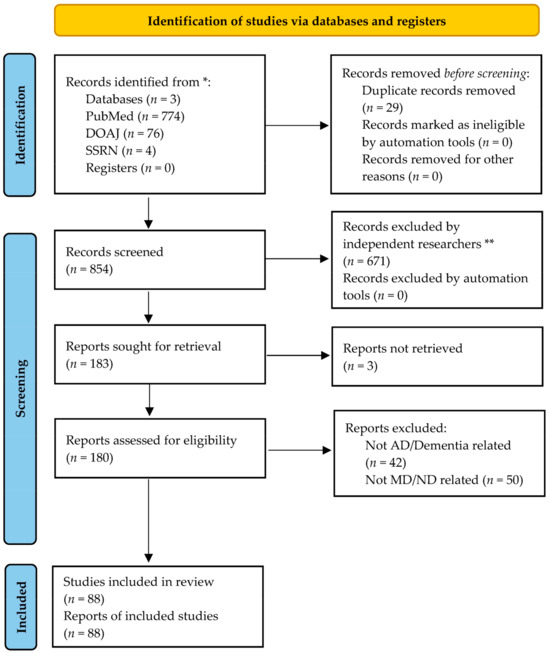
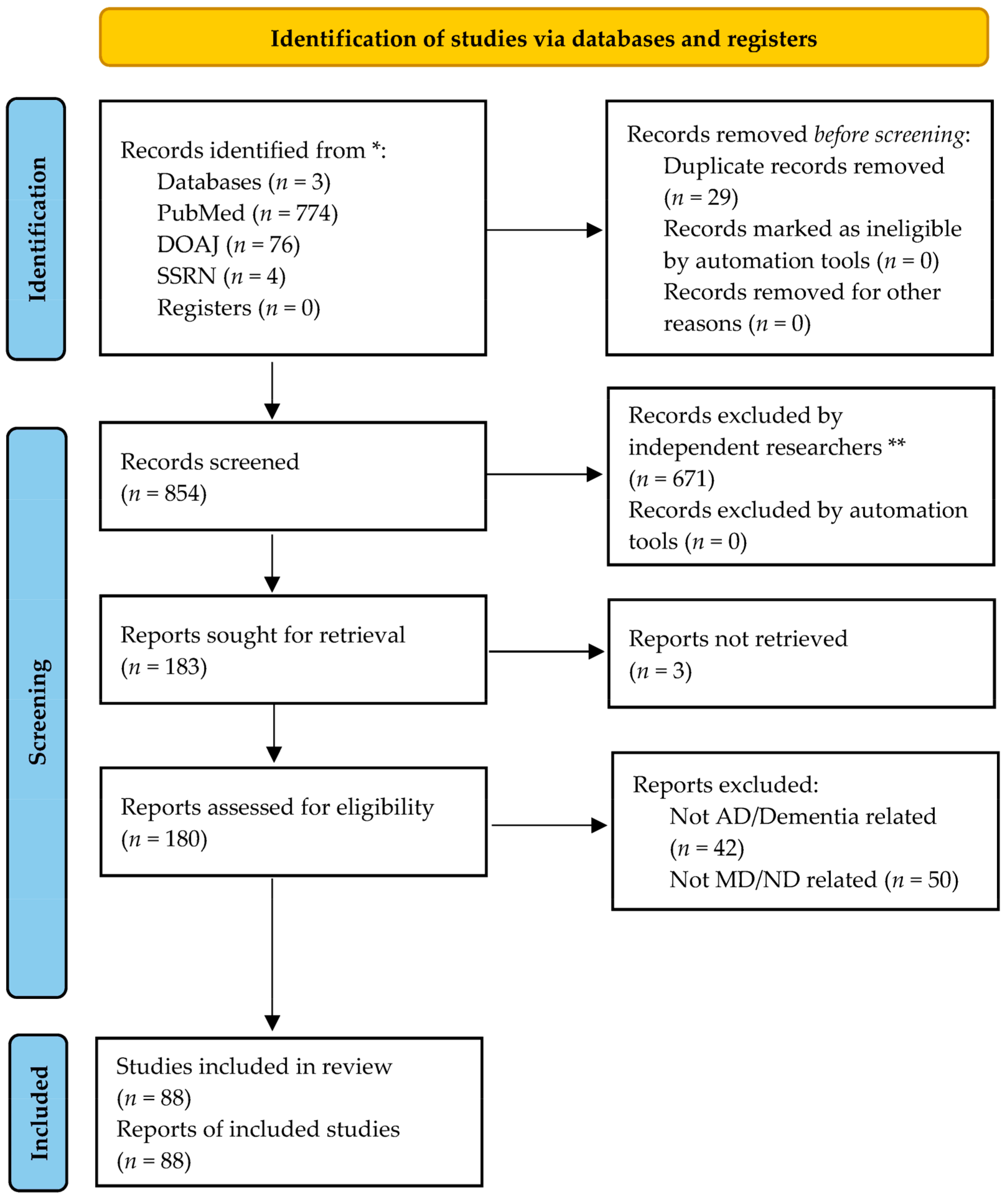
To examine the potential correlation between AD, dementia, and dietary variables, specifically regarding MD adherence and the ND in human subjects, a literature review was conducted utilizing electronic databases such as PUBMED, Directory of Open Access Journals (DOAJ), and SSRN. The search spanned studies published from 2006 to 2024. The following search terms were employed: “Dementia AND Mediterranean Diet”, “Dementia AND Nordic Diet”, “Alzheimer’s Disease AND Mediterranean Diet”, and “Alzheimer’s Disease AND Nordic Diet”. Studies that were related to the other forms of dementia, such as VaD, LBD, PDD, and FTD, were excluded from this review, as we were only interested in the AD dementia subtype. In addition, studies that included both sporadic AD and familial AD were included in this systematic review. A total of 854 articles were retrieved from the search, 29 of which were duplicates. The abstracts were screened independently by two investigators; if the studies were relevant, full articles were then reviewed. Data were then extracted from the identified studies. The cited references of the included studies were further searched for any additional relevant publications. The article selection process is outlined in (Figure 1). The PRISMA checklist is in the Supplementary Materials (Table S1). The following systematic review follows the PRISMA guidelines, and no registration information is applicable. The Population, Intervention, Comparison, and Outcome (PICO) of this review is defined as the AD and dementia or healthy elderly population (P) to observe what is the effect of the MD and ND (I) in improving cognitive function and delaying dementia or AD onset (O) in comparison to individuals with lower adherence to the MD and ND (C).
Figure 1.
PRISMA 2020 flow diagram for new systematic reviews indicating the identification, screening, eligibility, and studies included, as well as the number of excluded studies from the review. * If feasible, report the number of records identified from each database or register searched. ** If automation tools were used, indicate how many records were excluded by a human and how many were excluded by automation tools.
2.2. Assessment of Risk of Bias in Included Studies
Quality assessment tools are used to assist researchers and reviewers in focusing on concepts vital for the study’s validity. This is performed in order to avoid risk bias and obtain a deeper understanding of the limitations of the selected studies. The quality of eligible studies was critically assessed using the NIH study quality assessment tools https://www.nhlbi.nih.gov/health-topics/study-quality-assessment-tools (accessed on 8 November 2024) for (i) case–control studies, (ii) observational cohort, (iii) longitudinal, and (iv) cross-sectional studies. The Cochrane quality assessment of risk bias https://methods.cochrane.org/risk-bias-2 (accessed on 4 December 2024) was used for randomized controlled trials (RCTs).
3. Results
3.1. Search Results
The ensuing study types were included in the review: (i) cross-sectional studies, (ii) RCTs, (iii) longitudinal, prospective, and retrospective studies, (iv) cohort studies, (v) case–control studies, and (vi) population-based studies. In the process of refining the selection of studies, several stringent exclusion criteria were rigorously applied to ensure study relevance, quality, and applicability of the data. These include studies (i) involving non-human participants, specifically animal models, (ii) non-English publications, (iii) studies that did not explicitly investigate the relationship between the MD or ND and AD or dementia were classified as irrelevant for the purpose of this review, (iv) systematic reviews, meta-analyses, narrative reviews and conference proceedings, and (v) studies were other forms of dementia such as VaD, LBD, PDD, and FTD. The exclusion of these articles was intended to prevent duplication of findings and to ensure that the review focused solely on original research studies.
3.2. Study Characteristics of Included Studies
An overview of the studies included in the review is illustrated in Supplementary Materials (Table S2). This includes (i) types, (ii) study references, (iii) study country, (iv) study participants, (v) age range, and (vi) study type. A total of 88 unique and relevant studies were included in the review. Eighty-five (Table 2) original articles were included for the association of MD adherence in AD and dementia. Three studies (Table 3) were included for the association of ND adherence in AD and dementia. As outlined below, most studies support the hypothesis that specific dietary intake can delay disease progression and improve cognitive function. Alternatively, some studies [32,33] indicated that the MD has no beneficial effect on AD, dementia, or MCI participants in terms of their cognitive function. While one study [34] identified that daily consumption of cheese and red wine and weekly consumption of lamb may improve long-term cognition, the following study contradicts previous studies that dairy, red wine, and meat consumption should be of moderate consumption, a summary of all the study results can be seen in Supplementary Data S1. Lastly, a study by [35] found inconsistent findings that MD adherence improved cognitive function and decreased cognitive decline.
Table 2.
Characteristics of studies investigating the association of the Mediterranean Diet, dietary patterns, and intake in Alzheimer’s Disease, dementia, and at-risk individuals.
Table 3.
Characteristics of studies investigating the association of the Nordic Diet, dietary patterns, and intake in Alzheimer’s Disease, dementia, and at-risk individuals.
3.3. Quality Assessment of Risk Bias of Studies
To assess the quality of the studies included, a quality assessment of risk bias was performed, and studies were categorized based on the study type (case–control, cohort studies, and RCTs). Quality assessment of risk bias using Cochranes was performed for RCT studies, Supplementary Materials (Table S3). The NIH quality assessment of risk bias was used for the case–control (Table S4), observational cohort, longitudinal, and cross-sectional studies (Table S5).
4. Discussion
Over the past decade, there have been various studies illustrating the importance of maintaining a healthy lifestyle through physical activity, cognitive-related activities, and healthy eating that includes MD or ND adherence. These factors have been shown to delay cognitive decline, MCI, and dementia or provide protection against the occurrence of chronic diseases such as AD. Numerous studies have evaluated the associations between the Mediterranean [6,26,27,36,37,38,39,40,41,44,46,47,48,49,50,54,56,57,59,60,61,62,63,65,66,67,68,69,70,72,73,74,75,76,78,79,80,81,82,83,84,85,86,87,88,89,90,91,92,93,94,95,97,98,99,100,102,103,104,105,107,108,109,110,111,112,113,114,115], Nordic [29,31,116,117], and Western diets [52,79,118,119,120] and diseases. There is a consensus on how dietary intake and patterns can explain the etiology of common diseases such as cardiovascular, metabolic, and neurodegenerative diseases. Moreover, there is growing evidence indicating the benefits of the MD and ND in AD and dementia.
The findings presented in this systematic review highlight the nuanced and complex relationships between dietary patterns, specifically that of the MD and ND diets, on cognitive function, dementia onset, progression, and management. The extensive body of evidence accumulated from the 88 studies strongly supports the neuroprotective benefits of these dietary patterns, suggesting their potential to reduce the risk of cognitive decline and delay the onset of dementia and AD. These findings emphasize the pivotal role of dietary interventions in the prevention and management of dementia and AD, therefore providing critical insights into the underlying mechanisms by which the diet may impact brain health.
4.1. Mediterranean Diet, Alzheimer’s Disease, and Cognitive Health
The findings corroborate the probable neuroprotective role of the MD in AD and dementia-related diseases. Key aspects of the MD include the high intake of fruits, vegetables, nuts, seeds, whole grains, and olive oil consumption, in combination with moderate fish and red wine consumption, which contribute to the beneficial outcomes of MD adherence [121,122]. The MD’s effectiveness is accredited to quite a few mechanisms, such as anti-inflammatory effects, were components like omega-3 fatty acids obtained from fatty fish and polyphenols from olive oil exhibit anti-inflammatory properties that may reduce neuronal cell death [122,123]. The MD is rich in antioxidants such as vitamin E, known to combat reactive oxidative species (ROS), which contribute to DNA damage, distribution of the lipid bilayer, and neuronal cell death and degeneration [122]. Moreover, ROS are known contributors to AD pathology. Lastly, improved cardiovascular health associated with the MD indirectly supports brain health as vascular contributions such as uncontrolled blood pressure and cholesterol are known risk factors for dementia [122,123,124]. Countless studies have reported significant associations between higher MD adherence and improved cognitive outcomes, delayed cognitive decline, and a decreased risk of developing AD and dementia, as reported in this study due to the high consumption of fruits, vegetables, legumes, and EVOO. Furthermore, a combination of high MD adherence, along with physical activity [45], was associated with better cognitive performance. This suggests that a healthy lifestyle could reduce cognitive decline [45]. Notable findings include cognitive improvements and improved executive function and global cognition in individuals when MD adherence is supplemented with EVOO and nuts. Moreover, in long-term interventions involving a combination of MD + EVOO, study participants showed improved cognitive test scores in both global and specific domains such as memory. In addition, longitudinal cohort studies highlighted between 24 and 48% decrease in AD risk among participants in the higher MD adherence tertiles. It is noteworthy to mention that these effects were independent of vascular comorbidities, thus suggesting direct neuroprotective roles of the MD.
In addition, a study by Zhang et al. [125] investigated meat consumption and the risk of dementia incidence in 493,888 U.K. biobank participants [125]. Over the years, meat consumption has been correlated with dementia risk; however, the serving amount and meat type related to dementia risk have been poorly understood [125]. Overall, the study identified that an additional 25 g/day intake of processed meat consumption was associated with an increased risk of dementia and AD, while a 50 g/day increment in unprocessed red meat consumption was correlated with a decreased risk of dementia and AD [125]. It is noteworthy to mention that although processed meat consumption was associated with an increased risk, the APOE ε4 allele increased dementia risk between three and six times without modifying dietary associations significantly [125].
High sugar intake is another dietary component associated with an increased risk of dementia and AD development [113]. A study by Agarwal [79] investigated whether high sugar intake is correlated with an increased risk of dementia in older adults [79]. It was observed that 118 participants developed dementia during follow-up [79]. In comparison to participants with the lowest total sugar intake, those with the highest intake developed AD, on average, 7.1 years earlier. Therefore, a higher percentage of calories from sugar intake was correlated with an increased risk of AD [79].
4.2. Nordic Diet, Alzheimer’s Disease, and Cognitive Health
The ND shares similarities with the MD, where it emphasizes whole, minimally processed foods native to the Nordic countries of Sweden, Denmark, Norway, Finland, Iceland, and Greenland. The ND includes the consumption of berries, vegetables, whole grains, and fatty fish legumes [28]. Berries, vegetables, and legumes are rich in micro- and macronutrients, antioxidants, and phytochemicals. Whole grains offer a low glycemic index that assists in reducing oxidative stress and inflammation, while fatty fish (salmon, bluefin tuna, anchovies, herring sardines, and mackerel) are high in omega-3 fatty acids [28]. The main MUFA consumed is rapeseed oil. It is an excellent source of vitamin E and consists of alpha-linolenic acid (ALA), which has been shown to have health benefits correlated with lowering blood pressure and reducing the likelihood of a heart attack. However, the role of ALA in cognition is still in the early research stages, but it displays promising evidence for hindering cognitive impairment and promoting cognitive health [126,127]. Erucic acid is the main phenolic compound in rapeseed oil; it is an omega-9 MUFA [128]. The ND’s reliance on rapeseed oil, as opposed to EVOO, raises questions regarding differences in the neuroprotective effects of specific lipid profiles [28,29,30]. Moreover, while berries and whole grains offer unique phytochemicals, their specific contribution to brain health in the ND context warrants further investigation.
Despite the potential antioxidant, anti-inflammatory, neuroprotective, and cardiovascular benefits, the evidence linking the ND to cognitive outcomes remains sparse, with only three studies in the review examining this relationship. The potential of the ND in terms of cognitive function has been demonstrated through studies that have observed that high ND adherence is associated with at least 4 years longer life without dementia [31]. Moreover, an active lifestyle that involves physical activity and a healthy dietary intake has been shown to significantly enhance the protective effect of these factors on cognitive function and reduce the risk of cognitive decline [30]. These studies provided some indications of the cognitive benefits of the ND in AD and dementia; however, the limited sample size and diversity hinder definitive conclusions.
4.3. Micronutrients and Macronutrients and Their Role in Alzheimer’s Disease and Dementia
Nutrients, by definition, are vital molecules necessary for the proper functioning of the human body. Most of these cannot be produced within the body and must be acquired through dietary intake [114]. The brain, being an organ with elevated metabolic activity and rapid nutrient turnover, is particularly reliant on a consistent supply of essential nutrients [114]. The relationship between vitamins and cognitive function is a topic of considerable interest in both clinical and research domains due to the profound implications of vitamin deficiencies on cognitive health [129]. A plethora of vitamins, encompassing the B complex group, vitamin D, and vitamin E, have emerged as pivotal players in modulating cognitive processes and ameliorating cognitive decline (Morris et al., 2007). Notably, vitamin B12, essential for methylation reactions and myelin sheath formation, has been intricately linked to cognitive impairment when its levels are inadequate [129]. Similarly, vitamin D, renowned for its regulatory roles in calcium homeostasis and neuronal growth, has garnered attention for its potential impact on cognitive function. Observational studies have suggested an inverse relationship between vitamin D status and cognitive decline, indicating that this vitamin may play a protective role against cognitive impairment [101]. Moreover, vitamin E, recognized for its potent antioxidant properties, has demonstrated promise in shielding against age-related cognitive decline and neurodegenerative disorders [130]. Through its ability to scavenge free radicals and mitigate oxidative stress in the brain, vitamin E emerges as a potential therapeutic agent for preserving cognitive function with advancing age [130]. A comprehensive understanding of the intricate interplay between vitamins and cognitive function holds substantial implications for the formulation of interventions aimed at sustaining cognitive health throughout the lifespan.
Calcium serves as a critical signaling molecule in neuronal communication and synaptic plasticity, fundamental processes underlying learning and memory [131]. Calcium ions regulate neurotransmitter release, intracellular signaling cascades, and gene expression within the brain, thereby influencing cognitive processes such as memory formation and information processing [132,133]. Maintaining calcium homeostasis is paramount for preserving neuronal viability and mitigating the risk of neurodegenerative diseases associated with cognitive decline [132,133]. Dysregulation of calcium levels has been implicated in the pathogenesis of AD and other neurodegenerative diseases [24]. Studies have underscored the critical role of calcium signaling in neuronal function and survival, emphasizing its significance in the context of neuroprotection and disease prevention [24]. Deficiencies in calcium intake or dysregulation of calcium signaling have been implicated in cognitive impairment and neurodegenerative disorders, highlighting the importance of adequate calcium levels for cognitive health [24].
4.4. Implications for Public Health and Interventions
Encouraging adherence to these dietary patterns may assist as a feasible and non-invasive strategy for delaying and preventing cognitive decline. Tailored interventions, such as community-based programs and dietary counseling, may promote the implementation of these diets in populations at risk of AD, with the hope of this applying to other NDs. However, personalization based on genetic predispositions, dietary accessibility, and cultural dietary preferences is essential and could enhance adoption and effectiveness globally. Promoting MD adherence and investigating the ND’s efficacy could lead to personalized nutritional strategies to mitigate dementia risk. The following points to the need for further longitudinal and randomized controlled studies to refine our understanding of the neuroprotective benefits of these diets. Moreover, integrating dietary-based research with genetic, -omics, biochemical, and lifestyle factors will further provide a holistic approach to combating AD and dementia.
4.5. Strengths, Limitations, and Future Directions
This systematic review is strengthened by the inclusion of (i) a diverse range of study designs, from RCTs to longitudinal cohort and cross-sectional studies, which collectively provide a robust investigation of the effects of the MD and ND on cognitive health across various populations of cognitively healthy older individuals, elderly men, and post-menopausal women at risk of dementia, AD, SCD, MCI, and CI study participants; (ii) the use of a wide array of neuropsychological assessment tools, such as the MMSE, RAVLT, MoCA, AF, CASI, and several cognitive tools. Additionally, advanced neuro-imaging techniques such as MRI and PET, to further enhance the validity and reliability of the findings to monitor brain changes; (iii) focus on nutrient-rich foods such as EVOO, nuts, and fatty fish, this underscores modifiable dietary factors that may be integrated into preventive strategies; and (iv) the consistent observation of improved cognitive outcomes with higher MD adherence across multiple studies bolsters the argument for its neuroprotective effects. An additional strength of the study lies in (iii) the large sample sizes included for each study, allowing for the identification of significant statistical results and associations between the MD and ND, as well as preventive outcomes of cognitive decline in individuals. Lastly, numerous studies included (iv) follow-up of study participants, allowing for more confidence in inferring whether diet affects the clinical phenotype.
However, several limitations must be acknowledged within our study. A significant limitation is the (i) reliance on self-reported dietary data, and recall bias may not reflect participants’ dietary intake. This limitation can affect the precision of the associations between diet and cognitive outcomes. Additionally, the variability in dietary assessment methods, such as FFQs and dietary recalls, across different studies poses challenges in comparing and synthesizing results. The (ii) heterogeneity in study populations, including differences in age, sex, genetic background, and baseline cognitive function, presents another limitation. These variations may impact the observed effects of diet on cognitive health and limit the generalizability of the findings. Although many studies adjust for potential confounders such as age, education, and physical activity, residual confounding factors, such as socioeconomic status, which can impact both dietary choices and access to healthcare, are not always adequately addressed, (iii) potential interaction between diet and genetic factors, particularly the APOE genotype, is an area that requires further exploration, and (iv) the exclusion of other dementia subtypes such as VaD, LBD, PDD, and FTD as the focus of the review was the dementia subtype of AD. The inconsistency in findings regarding gene–diet interactions highlight the need for more research to clarify how genetic predispositions impact the effectiveness of dietary interventions in preventing cognitive decline.
Future directions include (i) cross-cultural studies to validate findings across diverse populations, (ii) integration of genetic and dietary data for personalized nutritional approaches, and (iii) comprehensive assessments of the ND to evaluate its beneficial effects and role in delaying disease onset and disease management.
5. Conclusions
This systematic review consolidates robust evidence, supporting the significant role of dietary patterns, specifically the MD and ND, in mitigating the risk of cognitive decline and delaying dementia and AD onset. Study findings consistently highlight the neuroprotective effects of the MD, which is rich in antioxidants, MUFAs, and phenolic compounds, which are recognized for their anti-inflammatory, antioxidant, and neuroprotective properties, which collectively contribute to the reduction in pathological processes such as oxidative stress, inflammation, and Aβ accumulation, central to AD pathogenesis. While the MD demonstrates robust associations with cognitive benefits, the ND embodies a promising yet unexplored avenue.
Despite variability in findings across different studies and populations, the overall evidence underscores the potential of these dietary interventions in promoting cognitive health and reducing the risk of neurodegenerative diseases, including AD and dementia.
The observed interactions between diet, genetic predispositions, and lifestyle factors further emphasize the need for personalized dietary recommendations to optimize cognitive outcomes. As the global population ages and the burden of AD and dementia continues to rise, the identification and implementation of effective, accessible, and sustainable preventive strategies are of paramount importance. The integration of the MD and ND into public health recommendations could play a critical role in combating cognitive decline, improving the quality of life for aging populations, and reducing the global burden of neurodegenerative diseases. Further research and interdisciplinary collaborations are essential to advancing our understanding of these dietary patterns and their role in the prevention and management of cognitive decline and neurodegenerative diseases.
Supplementary Materials
The following supporting information can be downloaded at www.mdpi.com/article/10.3390/nu17020336/s1, Table S1: PRISMA checklist for systematic reviews; Table S2: Overview of included studies; Table S3: Quality assessment of risk bias for controlled intervention studies; Table S4: Quality assessment of risk bias for case–control studies; Table S5: Quality assessment of risk bias for observational cohort, longitudinal and cross-sectional studies; Supplementary Data S1: Summarized study results. Reference [134] is cited in the supplementary materials.
Author Contributions
Conceptualization, C.C.C.; methodology, C.C.C. and M.P.; validation, C.C.C. and M.P.; formal analysis, M.P.; investigation, M.P.; resources, M.P.; data curation, M.P.; writing—original draft preparation, C.C.C. and M.P.; writing—review and editing, C.C.C. and A.H.; supervision, C.C.C. and E.Z.-P.; project administration, C.C.C. All authors have read and agreed to the published version of the manuscript.
Funding
This research received no external funding.
Conflicts of Interest
The authors declare no conflicts of interest.
References
- McKhann, G.M.; Knopman, D.S.; Chertkow, H.; Hyman, B.T.; Jack, C.R.; Kawas, C.H.; Klunk, W.E.; Koroshetz, W.J.; Manly, J.J.; Mayeux, R.; et al. The Diagnosis of Dementia Due to Alzheimer’s Disease: Recommendations from the National Institute on Aging-Alzheimer’s Association Workgroups on Diagnostic Guidelines for Alzheimer’s Disease. Alzheimer’s Dement. 2011, 7, 263–269. [Google Scholar] [CrossRef] [Scilit] [PubMed]
- Albert, M.S.; DeKosky, S.T.; Dickson, D.; Dubois, B.; Feldman, H.H.; Fox, N.C.; Gamst, A.; Holtzman, D.M.; Jagust, W.J.; Petersen, R.C.; et al. The Diagnosis of Mild Cognitive Impairment Due to Alzheimer’s Disease: Recommendations from the National Institute on Aging-Alzheimer’s Association Workgroups on Diagnostic Guidelines for Alzheimer’s Disease. Alzheimer’s Dement. 2011, 7, 270–279. [Google Scholar] [CrossRef] [Scilit] [PubMed]
- Mosconi, L.; Walters, M.; Sterling, J.; Quinn, C.; McHugh, P.; Andrews, R.E.; Matthews, D.C.; Ganzer, C.; Osorio, R.S.; Isaacson, R.S.; et al. Lifestyle and Vascular Risk Effects on MRI-Based Biomarkers of Alzheimer’s Disease: A Cross-Sectional Study of Middle-Aged Adults from the Broader New York City Area. BMJ Open 2018, 8, e019362. [Google Scholar] [CrossRef] [Scilit] [PubMed]
- Johnson, K.A.; Fox, N.C.; Sperling, R.A.; Klunk, W.E. Brain Imaging in Alzheimer Disease. Cold Spring Harb. Perspect. Med. 2012, 2, a006213. [Google Scholar] [CrossRef] [Scilit]
- Jack, C.R.; Bennett, D.A.; Blennow, K.; Carrillo, M.C.; Dunn, B.; Haeberlein, S.B.; Holtzman, D.M.; Jagust, W.; Jessen, F.; Karlawish, J.; et al. NIA-AA Research Framework: Toward a Biological Definition of Alzheimer’s Disease. Alzheimer’s Dement. 2018, 14, 535–562. [Google Scholar] [CrossRef] [Scilit]
- Wang, G.; Estrella, A.; Hakim, O.; Milazzo, P.; Patel, S.; Pintagro, C.; Li, D.; Zhao, R.; Vance, D.E.; Li, W. Mini-Mental State Examination and Montreal Cognitive Assessment as Tools for Following Cognitive Changes in Alzheimer’s Disease Neuroimaging Initiative Participants. J. Alzheimer’s Dis. 2022, 90, 263–270. [Google Scholar] [CrossRef] [Scilit]
- Selkoe, D.J. Alzheimer’s Disease: Genes, Proteins, and Therapy. Physiol. Rev. 2001, 81, 741–766. [Google Scholar] [CrossRef] [Scilit]
- Hardy, J.A.; Higgins, A.G. Alzheimer’s Disease: The Amyloid Cascade Hypothesis. Science 1992, 2, 184–185. [Google Scholar] [CrossRef] [Scilit]
- Grundke-Iqbal, I.; Iqbal, K.; Tung, Y.-C.; Quinlan, M.; Wisniewski, H.M.; Bindert, L.I. Abnormal Phosphorylation of the Microtubule-Associated Protein X (Tau) in Alzheimer Cytoskeletal Pathology (Alzheimer Disease/Neurofibrillary Tangles/Paired-Helical Filaments/Microtubules). Proc. Natl. Acad. Sci. USA 1986, 83, 4913–4917. [Google Scholar] [CrossRef] [Scilit]
- Tanzi, R.E. The Genetics of Alzheimer Disease. Cold Spring Harb. Perspect. Med. 2012, 2, a006296. [Google Scholar] [CrossRef] [Scilit]
- Shannon, O.M.; Ranson, J.M.; Gregory, S.; Macpherson, H.; Milte, C.; Lentjes, M.; Mulligan, A.; McEvoy, C.; Griffiths, A.; Matu, J.; et al. Mediterranean Diet Adherence Is Associated with Lower Dementia Risk, Independent of Genetic Predisposition: Findings from the UK Biobank Prospective Cohort Study. BMC Med. 2023, 21, 81. [Google Scholar] [CrossRef] [Scilit] [PubMed]
- Shannon, O.M.; Lee, V.; Bundy, R.; Gillings, R.; Jennings, A.; Stephan, B.; Hornberger, M.; Balanos, G.; Paddick, S.M.; Hanson, S.; et al. Feasibility and Acceptability of a Multi-Domain Intervention to Increase Mediterranean Diet Adherence and Physical Activity in Older UK Adults at Risk of Dementia: Protocol for the MedEx-UK Randomised Controlled Trial. BMJ Open 2021, 11, e042823. [Google Scholar] [CrossRef] [Scilit] [PubMed]
- Selkoe, D.J.; Hardy, J. The Amyloid Hypothesis of Alzheimer’s Disease at 25 Years. EMBO Mol. Med. 2016, 8, 595–608. [Google Scholar] [CrossRef] [Scilit] [PubMed]
- Dyall, S.C. Long-Chain Omega-3 Fatty Acids and the Brain: A Review of the Independent and Shared Effects of EPA, DPA and DHA. Front. Aging Neurosci. 2015, 7, 2. [Google Scholar] [CrossRef] [Scilit]
- Stefaniak, O.; Dobrzyńska, M.; Drzymała-Czyż, S.; Przysławski, J. Diet in the Prevention of Alzheimer’s Disease: Current Knowledge and Future Research Requirements. Nutrients 2022, 14, 4564. [Google Scholar] [CrossRef] [Scilit]
- Smith, P.J.; Blumenthal, J.A.; Hoffman, B.M.; Cooper, H.; Strauman, T.A.; Welsh-Bohmer, K.; Browndyke, J.N.; Sherwood, A. Aerobic Exercise and Neurocognitive Performance: A Meta-Analytic Review of Randomized Controlled Trials. Psychosom. Med. 2010, 72, 239–252. [Google Scholar] [CrossRef] [Scilit]
- Martínez-González, M.A.; Salas-Salvadó, J.; Estruch, R.; Corella, D.; Fitó, M.; Ros, E. Benefits of the Mediterranean Diet: Insights from the PREDIMED Study. Prog. Cardiovasc. Dis. 2015, 58, 50–60. [Google Scholar] [CrossRef] [Scilit]
- Beydoun, M.A.; Beydoun, H.A.; Gamaldo, A.A.; Teel, A.; Zonderman, A.B.; Wang, Y. Epidemiologic Studies of Modifiable Factors Associated with Cognition and Dementia: Systematic Review and Meta-Analysis. BMC Public Health 2014, 14, 643. [Google Scholar] [CrossRef] [Scilit]
- Gorelick, P.B.; Scuteri, A.; Black, S.E.; Decarli, C.; Greenberg, S.M.; Iadecola, C.; Launer, L.J.; Laurent, S.; Lopez, O.L.; Nyenhuis, D.; et al. Vascular Contributions to Cognitive Impairment and Dementia: A Statement for Healthcare Professionals from the American Heart Association/American Stroke Association. Stroke 2011, 42, 2672–2713. [Google Scholar] [CrossRef] [Scilit]
- Escott-Price, V.; Myers, A.J.; Huentelman, M.; Hardy, J. Polygenic Risk Score Analysis of Pathologically Confirmed Alzheimer Disease. Ann. Neurol. 2017, 82, 311–314. [Google Scholar] [CrossRef] [Scilit]
- Poulsen, S.K.; Due, A.; Jordy, A.B.; Kiens, B.; Stark, K.D.; Stender, S.; Holst, C.; Astrup, A.; Larsen, T.M. Health Effect of the New Nordic Diet in Adults with Increased Waist Circumference: A 6-Mo Randomized Controlled Trial. Am. J. Clin. Nutr. 2014, 99, 35–45. [Google Scholar] [CrossRef] [Scilit] [PubMed]
- Adamsson, V.; Reumark, A.; Fredriksson, I.B.; Hammarström, E.; Vessby, B.; Johansson, G.; Risérus, U. Effects of a Healthy Nordic Diet on Cardiovascular Risk Factors in Hypercholesterolaemic Subjects: A Randomized Controlled Trial (NORDIET). J. Intern. Med. 2011, 269, 150–159. [Google Scholar] [CrossRef] [Scilit] [PubMed]
- Uusitupa, M.; Hermansen, K.; Savolainen, M.J.; Schwab, U.; Kolehmainen, M.; Brader, L.; Mortensen, L.S.; Cloetens, L.; Johansson-Persson, A.; Önning, G.; et al. Effects of an Isocaloric Healthy Nordic Diet on Insulin Sensitivity, Lipid Profile and Inflammation Markers in Metabolic Syndrome—A Randomized Study (SYSDIET). J. Intern. Med. 2013, 274, 52–66. [Google Scholar] [CrossRef] [Scilit] [PubMed]
- Calvo-Rodriguez, M.; Hou, S.S.; Snyder, A.C.; Kharitonova, E.K.; Russ, A.N.; Das, S.; Fan, Z.; Muzikansky, A.; Garcia-Alloza, M.; Serrano-Pozo, A.; et al. Increased Mitochondrial Calcium Levels Associated with Neuronal Death in a Mouse Model of Alzheimer’s Disease. Nat. Commun. 2020, 11, 2146. [Google Scholar] [CrossRef] [Scilit] [PubMed]
- Spencer, J.P.E. The Impact of Fruit Flavonoids on Memory and Cognition. Br. J. Nutr. 2010, 104, S40–S47. [Google Scholar] [CrossRef] [Scilit]
- Morris, M.C.; Tangney, C.C.; Wang, Y.; Sacks, F.M.; Bennett, D.A.; Aggarwal, N.T. MIND Diet Associated with Reduced Incidence of Alzheimer’s Disease. Alzheimer’s Dement. 2015, 11, 1007–1014. [Google Scholar] [CrossRef] [Scilit]
- Berendsen, A.M.; Kang, J.H.; Feskens, E.J.M.; de Groot, C.P.G.M.; Grodstein, F.; van de Rest, O. Association of Long-Term Adherence to the Mind Diet with Cognitive Function and Cognitive Decline in American Women. J. Nutr. Health Aging 2018, 22, 222–229. [Google Scholar] [CrossRef] [Scilit]
- Krznarić, Ž.; Karas, I.; Ljubas Kelečić, D.; Vranešić Bender, D. The Mediterranean and Nordic Diet: A Review of Differences and Similarities of Two Sustainable, Health-Promoting Dietary Patterns. Front. Nutr. 2021, 8, 683678. [Google Scholar] [CrossRef] [Scilit]
- Shakersain, B.; Rizzuto, D.; Larsson, S.C.; Faxén-Irving, G.; Fratiglioni, L.; Xu, W.L. The Nordic Prudent Diet Reduces Risk of Cognitive Decline in the Swedish Older Adults: A Population- Based Cohort Study. Nutrients 2018, 10, 229. [Google Scholar] [CrossRef] [Scilit]
- Shakersain, B.; Rizzuto, D.; Wang, H.X.; Faxén-Irving, G.; Prinelli, F.; Fratiglioni, L.; Xu, W. An Active Lifestyle Reinforces the Effect of a Healthy Diet on Cognitive Function: A Population-Based Longitudinal Study. Nutrients 2018, 10, 1297. [Google Scholar] [CrossRef] [Scilit]
- Wu, W.; Shang, Y.; Dove, A.; Guo, J.; Calderón-Larrañaga, A.; Rizzuto, D.; Xu, W. The Nordic Prudent Diet Prolongs Survival with Good Mental and Physical Functioning among Older Adults: The Role of Healthy Lifestyle. Clin. Nutr. 2021, 40, 4838–4844. [Google Scholar] [CrossRef] [Scilit] [PubMed]
- Haring, B.; Wu, C.; Mossavar-Rahmani, Y.; Snetselaar, L.; Brunner, R.; Wallace, R.B.; Neuhouser, M.L.; Wassertheil-Smoller, S. No Association between Dietary Patterns and Risk for Cognitive Decline in Older Women with 9-Year Follow-Up: Data from the Women’s Health Initiative Memory Study. J. Acad. Nutr. Diet. 2016, 116, 921–930.e1. [Google Scholar] [CrossRef] [Scilit] [PubMed]
- Margara-Escudero, H.J.; Zamora-Ros, R.; de Villasante, I.; Crous-Bou, M.; Chirlaque, M.D.; Amiano, P.; Mar, J.; Barricarte, A.; Ardanaz, E.; Huerta, J.M. Association Between Egg Consumption and Dementia Risk in the EPIC-Spain Dementia Cohort. Front. Nutr. 2022, 9, 827307. [Google Scholar] [CrossRef] [Scilit] [PubMed]
- Klinedinst, B.S.; Le, S.T.; Larsen, B.; Pappas, C.; Hoth, N.J.; Pollpeter, A.; Wang, Q.; Wang, Y.; Yu, S.; Wang, L.; et al. Genetic Factors of Alzheimer’s Disease Modulate How Diet Is Associated with Long-Term Cognitive Trajectories: A UK Biobank Study. J. Alzheimer’s Dis. 2020, 78, 1245–1257. [Google Scholar] [CrossRef] [Scilit]
- Takeuchi, H.; Kawashima, R. Diet and Dementia: A Prospective Study. Nutrients 2021, 13, 4500. [Google Scholar] [CrossRef] [Scilit]
- Chan, R.; Chan, D.; Woo, J. A Cross Sectional Study to Examine the Association between Dietary Patterns and Cognitive Impairment in Older Chinese People in Hong Kong. J. Nutr. Health Aging 2013, 17, 757–765. [Google Scholar] [CrossRef] [Scilit]
- Charisis, S.; Ntanasi, E.; Yannakoulia, M.; Anastasiou, C.A.; Kosmidis, M.H.; Dardiotis, E.; Hadjigeorgiou, G.; Sakka, P.; Scarmeas, N. Mediterranean Diet and Risk for Dementia and Cognitive Decline in a Mediterranean Population. J. Am. Geriatr. Soc. 2021, 69, 1548–1559. [Google Scholar] [CrossRef] [Scilit]
- Valls-Pedret, C.; Sala-Vila, A.; Serra-Mir, M.; Corella, D.; De La Torre, R.; Martínez-González, M.Á.; Martínez-Lapiscina, E.H.; Fitó, M.; Pérez-Heras, A.; Salas-Salvadó, J.; et al. Mediterranean Diet and Age-Related Cognitive Decline: A Randomized Clinical Trial. JAMA Intern. Med. 2015, 175, 1094–1103. [Google Scholar] [CrossRef] [Scilit]
- Kühn, L.; MacIntyre, U.E.; Kotzé, C.; Becker, P.J.; Wenhold, F.A.M. Twelve Weeks of Additional Fish Intake Improves the Cognition of Cognitively Intact, Resource-Limited Elderly People: A Randomized Control Trial. J. Nutr. Health Aging 2022, 26, 119–126. [Google Scholar] [CrossRef] [Scilit]
- Zupo, R.; Griseta, C.; Battista, P.; Donghia, R.; Guerra, V.; Castellana, F.; Lampignano, L.; Bortone, I.; Lozupone, M.; Giannelli, G.; et al. Role of Plant-Based Diet in Late-Life Cognitive Decline: Results from the Salus in Apulia Study. Nutr. Neurosci. 2022, 25, 1300–1309. [Google Scholar] [CrossRef] [Scilit]
- Martínez-Lapíscína, E.H.; Clavero, P.; Toldeo, E.; San Julian, B.; Sanchez-Taínta, A.; Corella, D.; Lamuela-Raventos, R.M.; Martinez, J.A.; Martunez-Gonzalez, M.A. Virgin Olive Oil Supplementation and Long Term Cognition: The Predimed-Navarra Randomized Trial. J. Nutr. Health Aging 2013, 17, 544–552. [Google Scholar] [CrossRef] [Scilit] [PubMed]
- Muñoz-García, M.I.; Martínez-González, M.A.; Razquin, C.; Fernández-Matarrubia, M.; Guillén-Grima, F.; Toledo, E. Exploratory Dietary Patterns and Cognitive Function in the “Seguimiento Universidad de Navarra” (SUN) Prospective Cohort. Eur. J. Clin. Nutr. 2022, 76, 48–55. [Google Scholar] [CrossRef] [Scilit] [PubMed]
- Tzekaki, E.E.; Tsolaki, M.; Pantazaki, A.A.; Geromichalos, G.; Lazarou, E.; Kozori, M.; Sinakos, Z. Administration of the Extra Virgin Olive Oil (EVOO) in Mild Cognitive Impairment (MCI)Patients as a Therapy for Preventing the Progress to AD. Hell. J. Nucl. Med. 2019, 22, 3–6. [Google Scholar]
- Walters, M.J.; Sterling, J.; Quinn, C.; Ganzer, C.; Osorio, R.S.; Andrews, R.D.; Matthews, D.C.; Vallabhajosula, S.; De Leon, M.J.; Isaacson, R.S.; et al. Associations of Lifestyle and Vascular Risk Factors with Alzheimer’s Brain Biomarker Changes during Middle Age: A 3-Year Longitudinal Study in the Broader New York City Area. BMJ Open 2018, 8, e023664. [Google Scholar] [CrossRef] [Scilit] [PubMed]
- Blumenthal, J.A.; Smith, P.J.; Mabe, S.; Hinderliter, A.; Welsh-Bohmer, K.; Browndyke, J.N.; Lin, P.H.; Kraus, W.; Doraiswamy, P.M.; Burke, J.; et al. Lifestyle and Neurocognition in Older Adults with Cardiovascular Risk Factors and Cognitive Impairment. Psychosom. Med. 2017, 79, 719–727. [Google Scholar] [CrossRef] [Scilit]
- Chen, C.; Hayden, K.M.; Kaufman, J.D.; Espeland, M.A.; Whitsel, E.A.; Serre, M.L.; Vizuete, W.; Orchard, T.S.; Wang, X.; Chui, H.C.; et al. Adherence to a MIND-Like Dietary Pattern, Long-Term Exposure to Fine Particulate Matter Air Pollution, and MRI-Based Measures of Brain Volume: The Women’s Health Initiative Memory Study-MRI. Environ. Health Perspect. 2021, 129, 127008. [Google Scholar] [CrossRef] [Scilit]
- Olsson, E.; Karlström, B.; Kilander, L.; Byberg, L.; Cederholm, T.; Sjögren, P. Dietary Patterns and Cognitive Dysfunction in a 12-Year Follow-up Study of 70 Year Old Men. J. Alzheimer’s Dis. 2014, 43, 109–119. [Google Scholar] [CrossRef] [Scilit]
- Franzon, K.; Byberg, L.; Sjögren, P.; Zethelius, B.; Cederholm, T.; Kilander, L. Predictors of Independent Aging and Survival: A 16-Year Follow-Up Report in Octogenarian Men. J. Am. Geriatr. Soc. 2017, 65, 1953–1960. [Google Scholar] [CrossRef] [Scilit]
- Zhao, C.; Tsapanou, A.; Manly, J.; Schupf, N.; Brickman, A.M.; Gu, Y. Vitamin D Intake Is Associated with Dementia Risk in the Washington Heights-Inwood Columbia Aging Project (WHICAP). Alzheimer’s Dement. 2020, 16, 1393–1401. [Google Scholar] [CrossRef] [Scilit]
- Corley, J.; Deary, I.J. Dietary Patterns and Trajectories of Global- And Domain-Specific Cognitive Decline in the Lothian Birth Cohort 1936. Br. J. Nutr. 2021, 126, 1237–1246. [Google Scholar] [CrossRef] [Scilit]
- Martín, I.S.M.; Barato, V.P.; Oliva, S.L.; Rodríguez, M.; Yurrita, L.C.; Cabañas, M.J.C.; Rojo, S.S.; de la Calle, L.; Díaz, E.Á.; Santos, Y.Q.; et al. Body Composition, Dietary, and Gustatory Function Assessment in People with Alzheimer’s Disease. Am. J. Alzheimers Dis. Other Demen 2018, 33, 508–515. [Google Scholar] [CrossRef] [Scilit] [PubMed]
- Samuelsson, J.; Kern, S.; Zetterberg, H.; Blennow, K.; Rothenberg, E.; Wallengren, O.; Skoog, I.; Zettergren, A. A Western-Style Dietary Pattern Is Associated with Cerebrospinal Fluid Biomarker Levels for Preclinical Alzheimer’s Disease—A Population-Based Cross-Sectional Study among 70-Year-Olds. Alzheimer’s Dement. Transl. Res. Clin. Interv. 2021, 7, e12183. [Google Scholar] [CrossRef] [Scilit] [PubMed]
- Chen, X.; Liu, Z.; Sachdev, P.S.; Kochan, N.A.; O’Leary, F.; Brodaty, H. Dietary Patterns and Cognitive Health in Older Adults: Findings from the Sydney Memory and Ageing Study. J. Nutr. Health Aging 2021, 25, 255–262. [Google Scholar] [CrossRef] [Scilit] [PubMed]
- Munoz-Garcia, M.I.; Toledo, E.; Razquin, C.; Dominguez, L.J.; Maragarone, D.; Martinez-Gonzalez, J.; Martinez-Gonzalez, M.A. “a Priori” Dietary Patterns and Cognitive Function in the SUN Project. Neuroepidemiology 2020, 54, 45–57. [Google Scholar] [CrossRef] [Scilit] [PubMed]
- Corley, J.; Cox, S.R.; Taylor, A.M.; Hernandez, M.V.; Maniega, S.M.; Ballerini, L.; Wiseman, S.; Meijboom, R.; Backhouse, E.V.; Bastin, M.E.; et al. Dietary Patterns, Cognitive Function, and Structural Neuroimaging Measures of Brain Aging. Exp. Gerontol. 2020, 142, 111117. [Google Scholar] [CrossRef] [Scilit]
- Wesselman, L.M.P.; van Lent, D.M.; Schröder, A.; van de Rest, O.; Peters, O.; Menne, F.; Fuentes, M.; Priller, J.; Spruth, E.J.; Altenstein, S.; et al. Dietary Patterns Are Related to Cognitive Functioning in Elderly Enriched with Individuals at Increased Risk for Alzheimer’s Disease. Eur. J. Nutr. 2021, 60, 849–860. [Google Scholar] [CrossRef] [Scilit]
- Moustafa, B.; Trifan, G.; Isasi, C.R.; Lipton, R.B.; Sotres-Alvarez, D.; Cai, J.; Tarraf, W.; Stickel, A.; Mattei, J.; Talavera, G.A.; et al. Association of Mediterranean Diet with Cognitive Decline Among Diverse Hispanic or Latino Adults From the Hispanic Community Health Study/Study of Latinos. JAMA Netw. Open 2022, 5, E2221982. [Google Scholar] [CrossRef] [Scilit]
- Hassan, S.; Aguirre, E.; Betz, A.; Robertson, S.; Sankhla, D.; Cooper, C. Evaluating the Effect of Brainfood Groups for People with Mild Cognitive Impairment and Mild Dementia: Preliminary Mixed-Methodology Study. BJPsych Open 2018, 4, 208–214. [Google Scholar] [CrossRef] [Scilit]
- Mamalaki, E.; Charisis, S.; Anastasiou, C.A.; Ntanasi, E.; Georgiadi, K.; Balomenos, V.; Kosmidis, M.H.; Dardiotis, E.; Hadjigeorgiou, G.; Sakka, P.; et al. The Longitudinal Association of Lifestyle with Cognitive Health and Dementia Risk: Findings from the HELIAD Study. Nutrients 2022, 14, 2818. [Google Scholar] [CrossRef] [Scilit]
- Ahn, S.; Lingerfelt, N.C.; Eun Lee, C.; Lee, J.-A.; Raynor, H.A.; Anderson, G.J. Association of Adherence to High-Intensity Physical Activity and the Mediterranean-Dietary Approaches to Stop Hypertension Intervention for Neurodegenerative Delay Diet with Cognition: A Cross-Sectional Study. Int. J. Nurs. Stud. 2022, 131, 104243. [Google Scholar] [CrossRef] [Scilit]
- Wengreen, H.; Munger, R.G.; Cutler, A.; Quach, A.; Bowles, A.; Corcoran, C.; Tschanz, J.A.T.; Norton, M.C.; Welsh-Bohmer, K.A. Prospective Study of Dietary Approaches to Stop Hypertension-and Mediterranean-Style Dietary Patterns and Age-Related Cognitive Change: The Cache County Study on Memory, Health and Aging. Am. J. Clin. Nutr. 2013, 98, 1263–1271. [Google Scholar] [CrossRef] [Scilit] [PubMed]
- Talegawkar, S.A.; Bandinelli, S.; Bandeen-Roche, K.; Chen, P.; Milaneschi, Y.; Tanaka, T.; Semba, R.D.; Guralnik, J.M.; Ferrucci, L. A Higher Adherence to a Mediterranean-Style Diet Is Inversely Associated with the Development of Frailty in Community-Dwelling Elderly Men and Women. J. Nutr. 2012, 142, 2161–2166. [Google Scholar] [CrossRef] [Scilit] [PubMed]
- Tangney, C.C.; Li, H.; Wang, Y.; Barnes, L.; Schneider, J.A.; Bennett, D.A.; Morris, M.C. Relation of DASH-and Mediterranean-like Dietary Patterns to Cognitive Decline in Older Persons. Neurology 2014, 83, 1410–1416. [Google Scholar] [CrossRef] [Scilit] [PubMed]
- Scarmeas, N.; Luchsinger, J.A.; Schupf, N.; Brickman, A.M.; Cosentino, S.; Tang, M.X.; Stern, Y. Physical Activity, Diet, and Risk of Alzheimer Disease. JAMA 2009, 302, 627–637. [Google Scholar] [CrossRef] [Scilit]
- Calil, S.R.B.; Brucki, S.M.D.; Nitrini, R.; Yassuda, M.S. Adherence to the Mediterranean and MIND Diets Is Associated with Better Cognition in Healthy Seniors but Not in MCI or AD. Clin. Nutr. ESPEN 2018, 28, 201–207. [Google Scholar] [CrossRef] [Scilit]
- Féart, C.; Torrès, M.J.M.; Samieri, C.; Jutand, M.A.; Peuchant, E.; Simopoulos, A.P.; Barberger-Gateau, P. Adherence to a Mediterranean Diet and Plasma Fatty Acids: Data from the Bordeaux Sample of the Three-City Study. Br. J. Nutr. 2011, 106, 149–158. [Google Scholar] [CrossRef] [Scilit]
- Larsson, S.C.; Wolk, A. The Role of Lifestyle Factors and Sleep Duration for Late-Onset Dementia: A Cohort Study. J. Alzheimer’s Dis. 2018, 66, 579–586. [Google Scholar] [CrossRef] [Scilit]
- Vrijsen, J.; Abu-Hanna, A.; Maeckelberghe, E.L.M.; De Deyn, P.P.; De Winter, A.F.; Reesink, F.E.; Oude Voshaar, R.C.; Buskens, E.; De Rooij, S.E.; Smidt, N. Uptake and Effectiveness of a Tailor-Made Online Lifestyle Programme Targeting Modifiable Risk Factors for Dementia among Middle-Aged Descendants of People with Recently Diagnosed Dementia: Study Protocol of a Cluster Randomised Controlled Trial (Demin Study). BMJ Open 2020, 10, e039439. [Google Scholar] [CrossRef] [Scilit]
- Scarmeas, N.; Stern, Y.; Mayeux, R.; Luchsinger, J.A. Mediterranean Diet, Alzheimer Disease, and Vascular Mediation. Arch. Neurol. 2006, 63, 1709–1717. [Google Scholar] [CrossRef] [Scilit]
- Gardener, S.; Gu, Y.; Rainey-Smith, S.R.; Keogh, J.B.; Clifton, P.M.; Mathieson, S.L.; Taddei, K.; Mondal, A.; Ward, V.K.; Scarmeas, N.; et al. Adherence to a Mediterranean Diet and Alzheimer’s Disease Risk in an Australian Population. Transl. Psychiatry 2012, 2, e164. [Google Scholar] [CrossRef] [Scilit]
- Vlachos, G.; Kosmidis, M.; Yannakoulia, M.; Efthimios, D.; Hadjigeorgiou, G.; Tzoulaki, I.; Georgiou, A.; Sakka, P.; Anastasiou, C.A.; Stefanis, L.; et al. Dementia Incidence in the Elderly Population of Greece Results from the HELIAD Study. Alzheimer Dis. Assoc. Disord. Int. J. 2021, 35, 48–54. [Google Scholar] [CrossRef] [Scilit] [PubMed]
- Rocaspana-García, M.; Blanco-Blanco, J.; Arias-Pastor, A.; Gea-Sánchez, M.; Piñol-Ripoll, G. Study of Community-Living Alzheimer’s Patients’ Adherence to the Mediterranean Diet and Risks of Malnutrition at Different Disease Stages. PeerJ 2018, 6, e5150. [Google Scholar] [CrossRef] [Scilit] [PubMed]
- Gu, Y.; Luchsinger, J.A.; Stern, Y.; Scarmeas, N. Mediterranean Diet, Inflammatory and Metabolic Biomarkers, and Risk of Alzheimer’s Disease. J. Alzheimer’s Dis. 2010, 22, 483–492. [Google Scholar] [CrossRef] [Scilit]
- Hu, E.A.; Wu, A.; Dearborn, J.L.; Gottesman, R.F.; Sharrett, A.R.; Steffen, L.M.; Coresh, J.; Rebholz, C.M. Adherence to Dietary Patterns and Risk of Incident Dementia: Findings from the Atherosclerosis Risk in Communities Study. J. Alzheimer’s Dis. 2020, 78, 827–835. [Google Scholar] [CrossRef] [Scilit] [PubMed]
- Tanaka, T.; Talegawkar, S.A.; Jin, Y.; Colpo, M.; Ferrucci, L.; Bandinelli, S. Adherence to a Mediterranean Diet Protects from Cognitive Decline in the Invecchiare in Chianti Study of Aging. Nutrients 2018, 10, 2007. [Google Scholar] [CrossRef] [Scilit] [PubMed]
- Scarmeas, N.; Luchsinger, J.A.; Mayeux, R.; Stern, Y. Mediterranean Diet and Alzheimer Disease Mortality. Neurology 2007, 69, 1084–1093. [Google Scholar] [CrossRef] [Scilit] [PubMed]
- Vu, T.H.T.; Beck, T.; Bennett, D.A.; Schneider, J.A.; Hayden, K.M.; Shadyab, A.H.; Rajan, K.B.; Cornelis, M.C.; Morris, M.C. Adherence to MIND Diet, Genetic Susceptibility, and Incident Dementia in Three US Cohorts. Nutrients 2022, 14, 2759. [Google Scholar] [CrossRef] [Scilit]
- Titova, O.E.; Ax, E.; Brooks, S.J.; Sjögren, P.; Cederholm, T.; Kilander, L.; Kullberg, J.; Larsson, E.M.; Johansson, L.; Åhlström, H.; et al. Mediterranean Diet Habits in Older Individuals: Associations with Cognitive Functioning and Brain Volumes. Exp. Gerontol. 2013, 48, 1443–1448. [Google Scholar] [CrossRef] [Scilit]
- Hoscheidt, S.; Sanderlin, A.H.; Baker, L.D.; Jung, Y.; Lockhart, S.; Kellar, D.; Whitlow, C.T.; Hanson, A.J.; Friedman, S.; Register, T.; et al. Mediterranean and Western Diet Effects on Alzheimer’s Disease Biomarkers, Cerebral Perfusion, and Cognition in Mid-Life: A Randomized Trial. Alzheimer’s Dement. 2022, 18, 457–468. [Google Scholar] [CrossRef] [Scilit]
- Ye, X.; Scott, T.; Gao, X.; Maras, J.E.; Bakun, P.J.; Tucker, K.L. Mediterranean Diet, Healthy Eating Index 2005, and Cognitive Function in Middle-Aged and Older Puerto Rican Adults. J. Acad. Nutr. Diet. 2013, 113, 276–281.e3. [Google Scholar] [CrossRef] [Scilit]
- Roberts, R.O.; Geda, Y.E.; Cerhan, J.R.; Knopman, D.S.; Cha, R.H.; Christianson, T.J.H.; Pankratz, V.S.; Ivnik, R.J.; Boeve, B.F.; O’Connor, H.M.; et al. Vegetables, Unsaturated Fats, Moderate Alcohol Intake, and Mild Cognitive Impairment. Dement. Geriatr. Cogn. Disord. 2010, 29, 413–423. [Google Scholar] [CrossRef] [Scilit] [PubMed]
- Scarmeas, N.; Stern, Y.; Mayeux, R.; Manly, J.J.; Schupf, N.; Luchsinger, J.A. Mediterranean Diet and Mild Cognitive Impairment. Arch. Neurol. 2009, 66, 216–225. [Google Scholar] [CrossRef] [Scilit] [PubMed]
- Trichopoulou, A.; Kyrozis, A.; Rossi, M.; Katsoulis, M.; Trichopoulos, D.; La Vecchia, C.; Lagiou, P. Mediterranean Diet and Cognitive Decline over Time in an Elderly Mediterranean Population. Eur. J. Nutr. 2015, 54, 1311–1321. [Google Scholar] [CrossRef] [Scilit] [PubMed]
- Dobreva, I.; Marston, L.; Mukadam, N. Which Components of the Mediterranean Diet Are Associated with Dementia? A UK Biobank Cohort Study. Geroscience 2022, 44, 2541–2554. [Google Scholar] [CrossRef] [Scilit]
- Soldevila-Domenech, N.; Fagundo, B.; Cuenca-Royo, A.; Forcano, L.; Gomis-González, M.; Boronat, A.; Pastor, A.; Castañer, O.; Zomeño, M.D.; Goday, A.; et al. Relationship between Sex, APOE Genotype, Endocannabinoids and Cognitive Change in Older Adults with Metabolic Syndrome during a 3-Year Mediterranean Diet Intervention. Nutr. J. 2024, 23, 61. [Google Scholar] [CrossRef] [Scilit]
- McGrattan, A.M.; McEvoy, C.T.; Vijayakumar, A.; Moore, S.E.; Neville, C.E.; McGuinness, B.; McKinley, M.C.; Woodside, J.V. A Mixed Methods Pilot Randomised Controlled Trial to Develop and Evaluate the Feasibility of a Mediterranean Diet and Lifestyle Education Intervention ‘THINK-MED’ among People with Cognitive Impairment. Pilot. Feasibility Stud. 2021, 7, 3. [Google Scholar] [CrossRef] [Scilit]
- Shannon, O.M.; Stephan, B.C.M.; Granic, A.; Lentjes, M.; Hayat, S.; Mulligan, A.; Brayne, C.; Khaw, K.T.; Bundy, R.; Aldred, S.; et al. Mediterranean Diet Adherence and Cognitive Function in Older UK Adults: The European Prospective Investigation into Cancer and Nutrition-Norfolk (EPIC-Norfolk) Study. Am. J. Clin. Nutr. 2019, 110, 938–948. [Google Scholar] [CrossRef] [Scilit]
- Anastasiou, C.A.; Yannakoulia, M.; Kosmidis, M.H.; Dardiotis, E.; Hadjigeorgiou, G.M.; Sakka, P.; Arampatzi, X.; Bougea, A.; Labropoulos, I.; Scarmeas, N. Mediterranean Diet and Cognitive Health: Initial Results from the Hellenic Longitudinal Investigation of Ageing and Diet. PLoS ONE 2017, 12, e0182048. [Google Scholar] [CrossRef] [Scilit]
- Gu, Y.; Brickman, M.A.; Stern, Y.; Habeck, G.C.; Razlighi, R.Q.; Luchsinger, A.J.; Manly, J.J.; Schupf, N.; Mayeux, R.; Scarmeas, N. Mediterranean Diet and Brain Structure in a Multiethnic Elderly Cohort. Am. Acad. Neurol. 2015, 8, 1744–1751. [Google Scholar] [CrossRef] [Scilit]
- Nicoli, C.; Galbussera, A.A.; Bosetti, C.; Franchi, C.; Gallus, S.; Mandelli, S.; Marcon, G.; Quadri, P.; Riso, P.; Riva, E.; et al. The Role of Diet on the Risk of Dementia in the Oldest Old: The Monzino 80-plus Population-Based Study. Clin. Nutr. 2021, 40, 4783–4791. [Google Scholar] [CrossRef] [Scilit]
- Filippini, T.; Adani, G.; Malavolti, M.; Garuti, C.; Cilloni, S.; Vinceti, G.; Zamboni, G.; Tondelli, M.; Galli, C.; Costa, M.; et al. Dietary Habits and Risk of Early-Onset Dementia in an Italian Case-Control Study. Nutrients 2020, 12, 3682. [Google Scholar] [CrossRef] [Scilit] [PubMed]
- de Crom, T.O.E.; Mooldijk, S.S.; Ikram, M.K.; Ikram, M.A.; Voortman, T. MIND Diet and the Risk of Dementia: A Population-Based Study. Alzheimers Res. Ther. 2022, 14, 8. [Google Scholar] [CrossRef] [Scilit] [PubMed]
- Vassilaki, M.; Aakre, J.A.; Syrjanen, J.A.; Mielke, M.M.; Geda, Y.E.; Kremers, W.K.; Machulda, M.M.; Alhurani, R.E.; Staubo, S.C.; Knopman, D.S.; et al. Mediterranean Diet, Its Components, and Amyloid Imaging Biomarkers. J. Alzheimer’s Dis. 2018, 64, 281–290. [Google Scholar] [CrossRef] [Scilit] [PubMed]
- Féart, C.; Samieri, C.; Rondeau, V.; Amieva, H.; Portet, F.; Dartigues, J.-F.; Scarmeas, N.; Barberger-Gateau, P. Adherence to a Mediterranean Diet, Cognitive Decline, and Risk of Dementia. JAMA 2009, 302, 638–648. [Google Scholar] [CrossRef] [Scilit] [PubMed]
- Bhushan, A.; Fondell, E.; Ascherio, A.; Yuan, C.; Grodstein, F.; Willett, W. Adherence to Mediterranean Diet and Subjective Cognitive Function in Men. Eur. J. Epidemiol. 2018, 33, 223–234. [Google Scholar] [CrossRef] [Scilit]
- McMaster, M.; Kim, S.; Clare, L.; Torres, S.J.; D’este, C.; Anstey, K.J. Body, Brain, Life for Cognitive Decline (BBL-CD): Protocol for a Multidomain Dementia Risk Reduction Randomized Controlled Trial for Subjective Cognitive Decline and Mild Cognitive Impairment. Clin. Interv. Aging 2018, 13, 2397–2406. [Google Scholar] [CrossRef] [Scilit]
- Dhana, K.; Franco, O.H.; Ritz, E.M.; Ford, C.N.; Desai, P.; Krueger, K.R.; Holland, T.M.; Dhana, A.; Liu, X.; Aggarwal, N.T.; et al. Healthy Lifestyle and Life Expectancy with and without Alzheimer’s Dementia: Population Based Cohort Study. BMJ 2022, 377, e068390. [Google Scholar] [CrossRef] [Scilit]
- Puente-González, A.S.; Sánchez-González, F.; Hernández-Xumet, J.E.; Sánchez-Sánchez, M.C.; Barbero-Iglesias, F.J.; Méndez-Sánchez, R. Short and Medium-Term Effects of a Multicomponent Physical Exercise Program with a Mediterranean Diet on Bone Mineral Density, Gait, Balance, and Fall Risk for Patients with Alzheimer Disease: Randomized Controlled Clinical Trial Study Protocol. Medicine 2020, 99, E22385. [Google Scholar] [CrossRef] [Scilit]
- Ntanasi, E.; Yannakoulia, M.; Kosmidis, M.H.; Anastasiou, C.A.; Dardiotis, E.; Hadjigeorgiou, G.; Sakka, P.; Scarmeas, N. Adherence to Mediterranean Diet and Frailty. J. Am. Med. Dir. Assoc. 2018, 19, 315–322.e2. [Google Scholar] [CrossRef] [Scilit]
- Karstens, A.J.; Tussing-Humphreys, L.; Zhan, L.; Rajendran, N.; Cohen, J.; Dion, C.; Zhou, X.J.; Lamar, M. Associations of the Mediterranean Diet with Cognitive and Neuroimaging Phenotypes of Dementia in Healthy Older Adults. Am. J. Clin. Nutr. 2019, 109, 361–368. [Google Scholar] [CrossRef] [Scilit]
- de la Rubia Ortí, J.E.; García-Pardo, M.P.; Drehmer, E.; Cantus, D.S.; Rochina, M.J.; Aguilar Calpe, M.A.; Yang, I.H. Improvement of Main Cognitive Functions in Patients with Alzheimer’s Disease after Treatment with Coconut Oil Enriched Mediterranean Diet: A Pilot Study. J. Alzheimer’s Dis. 2018, 65, 577–587. [Google Scholar] [CrossRef] [Scilit] [PubMed]
- Gu, Y.; Guo, J.; Moshfegh, A.J. Race/Ethnicity and Gender Modify the Association between Diet and Cognition in U.S. Older Adults: National Health and Nutrition Examination Survey 2011–2014. Alzheimer’s Dement. Transl. Res. Clin. Interv. 2021, 7, e12128. [Google Scholar] [CrossRef] [Scilit] [PubMed]
- Dhana, K.; Evans, D.A.; Rajan, K.B.; Bennett, D.A.; Morris, M.C. Healthy Lifestyle and the Risk of Alzheimer Dementia: Findings from 2 Longitudinal Studies. Neurology 2020, 95, E374–E383. [Google Scholar] [CrossRef] [Scilit] [PubMed]
- Liu, X.; Morris, M.C.; Dhana, K.; Ventrelle, J.; Johnson, K.; Bishop, L.; Hollings, C.S.; Boulin, A.; Laranjo, N.; Stubbs, B.J.; et al. Mediterranean-DASH Intervention for Neurodegenerative Delay (MIND) Study: Rationale, Design and Baseline Characteristics of a Randomized Control Trial of the MIND Diet on Cognitive Decline. Contemp. Clin. Trials 2021, 102, 106270. [Google Scholar] [CrossRef] [Scilit]
- Ballarini, T.; van Lent, D.M.; Brunner, J.; Schröder, A.; Wolfsgruber, S.; Altenstein, S.; Brosseron, F.; Buerger, K.; Dechent, P.; Dobisch, L.; et al. Mediterranean Diet, Alzheimer Disease Biomarkers, and Brain Atrophy in Old Age. Neurology 2021, 96, E2920–E2932. [Google Scholar] [CrossRef] [Scilit]
- Scarmeas, N.; Stern, Y.; Tang, M.X.; Mayeux, R.; Luchsinger, J.A. Mediterranean Diet and Risk for Alzheimer’s Disease. Ann. Neurol. 2006, 59, 912–921. [Google Scholar] [CrossRef] [Scilit]
- Berti, V.; Walters, M.; Sterling, J.; Quinn, C.G.; Logue, M.; Andrews, R.; Matthews, D.C.; Osorio, R.S.; Pupi, A.; Vallabhajosula, S.; et al. Mediterranean Diet and 3-Year Alzheimer Brain Biomarker Changes in Middle-Aged Adults. Neurology 2018, 90, E1789–E1798. [Google Scholar] [CrossRef] [Scilit]
- Andreu-Reinón, M.E.; Chirlaque, M.D.; Gavrila, D.; Amiano, P.; Mar, J.; Tainta, M.; Ardanaz, E.; Larumbe, R.; Colorado-Yohar, S.M.; Navarro-Mateu, F.; et al. Mediterranean Diet and Risk of Dementia and Alzheimer’s Disease in the Epic-Spain Dementia Cohort Study. Nutrients 2021, 13, 700. [Google Scholar] [CrossRef] [Scilit]
- Dhana, K.; James, B.D.; Agarwal, P.; Aggarwal, N.T.; Cherian, L.J.; Leurgans, S.E.; Barnes, L.L.; Bennett, D.A.; Schneider, J.A.; Gardener, H. MIND Diet, Common Brain Pathologies, and Cognition in Community-Dwelling Older Adults. J. Alzheimer’s Dis. 2021, 83, 683–692. [Google Scholar] [CrossRef] [Scilit]
- Nagpal, R.; Neth, B.J.; Wang, S.; Craft, S.; Yadav, H. Modified Mediterranean-Ketogenic Diet Modulates Gut Microbiome and Short-Chain Fatty Acids in Association with Alzheimer’s Disease Markers in Subjects with Mild Cognitive Impairment. EBioMedicine 2019, 47, 529–542. [Google Scholar] [CrossRef] [Scilit]
- Mamalaki, E.; Poulimeneas, D.; Kosmidis, M.H.; Yannakoulia, M. Mediterranean Lifestyle Patterns Are Associated with Cognition in Older Adults. Lifestyle Med. 2021, 2, e30. [Google Scholar] [CrossRef] [Scilit]
- Chan, R.; Leung, J.; Woo, J. Dietary Patterns and Risk of Frailty in Chinese Community-Dwelling Older People in Hong Kong: A Prospective Cohort Study. Nutrients 2015, 7, 7070–7084. [Google Scholar] [CrossRef] [Scilit] [PubMed]
- Agarwal, P.; Ford, C.N.; Leurgans, S.E.; Beck, T.; Desai, P.; Dhana, K.; Evans, D.A.; Halloway, S.; Holland, T.M.; Krueger, K.R.; et al. Dietary Sugar Intake Associated with a Higher Risk of Dementia in Community-Dwelling Older Adults. J. Alzheimer’s Dis. 2023, 95, 1417–1425. [Google Scholar] [CrossRef] [Scilit] [PubMed]
- Morris, M.C. Nutritional Determinants of Cognitive Aging and Dementia. Proc. Nutr. Soc. 2012, 71, 1–13. [Google Scholar] [CrossRef] [Scilit]
- Chen, Y.C.; Jung, C.C.; Chen, J.H.; Chiou, J.M.; Chen, T.F.; Chen, Y.F.; Tang, S.C.; Yeh, S.J.; Lee, M.S. Association of Dietary Patterns with Global and Domain-Specific Cognitive Decline in Chinese Elderly. J. Am. Geriatr. Soc. 2017, 65, 1159–1167. [Google Scholar] [CrossRef] [Scilit]
- Jafari, R.S.; Behrouz, V. Nordic Diet and Its Benefits in Neurological Function: A Systematic Review of Observational and Intervention Studies. Front. Nutr. 2023, 10, 1215358. [Google Scholar] [CrossRef] [Scilit]
- Männikkö, R.; Komulainen, P.; Schwab, U.; Heikkilä, H.M.; Savonen, K.; Hassinen, M.; Hänninen, T.; Kivipelto, M.; Rauramaa, R. The Nordic Diet and Cognition—The DR’s EXTRA Study. Br. J. Nutr. 2015, 114, 231–239. [Google Scholar] [CrossRef] [Scilit]
- Więckowska-Gacek, A.; Mietelska-Porowska, A.; Wydrych, M.; Wojda, U. Western Diet as a Trigger of Alzheimer’s Disease: From Metabolic Syndrome and Systemic Inflammation to Neuroinflammation and Neurodegeneration. Ageing Res. Rev. 2021, 70, 101397. [Google Scholar] [CrossRef] [Scilit]
- Kanoski, S.E.; Davidson, T.L. Western Diet Consumption and Cognitive Impairment: Links to Hippocampal Dysfunction and Obesity. Physiol. Behav. 2011, 103, 59–68. [Google Scholar] [CrossRef] [Scilit]
- Graham, L.C.; Harder, J.M.; Soto, I.; De Vries, W.N.; John, S.W.M.; Howell, G.R. Chronic Consumption of a Western Diet Induces Robust Glial Activation in Aging Mice and in a Mouse Model of Alzheimer’s Disease. Sci. Rep. 2016, 6, 21568. [Google Scholar] [CrossRef] [Scilit]
- Abate, G.; Marziano, M.; Rungratanawanich, W.; Memo, M.; Uberti, D.; Zhu, C.; Sawrey-Kubicek, L.; Beals, E.; Rhodes, C.H.; Houts, H.E.; et al. Olive Oil and the Mediterranean Diet: Beyond the Rhetoric. Nutrients 2019, 14, 129–133. [Google Scholar] [CrossRef] [Scilit]
- Sofi, F.; Macchi, C.; Abbate, R.; Gensini, G.F.; Casini, A. Mediterranean Diet and Health. BioFactors 2013, 39, 335–342. [Google Scholar] [CrossRef] [Scilit] [PubMed]
- Farooqui, A.A.; Farooqui, T. Effects of Mediterranean Diet Components on Neurodegenerative Diseases. In Role of the Mediterranean Diet in the Brain and Neurodegenerative Diseases; Elsevier: Amsterdam, The Netherlands, 2018; pp. 1–16. [Google Scholar]
- Russell, R.D.; Black, L.J.; Begley, A. Nutrition Education Programs for Adults with Neurological Diseases Are Lacking: A Scoping Review. Nutrients 2022, 14, 1577. [Google Scholar] [CrossRef] [Scilit] [PubMed]
- Zhang, H.; Greenwood, D.C.; Risch, H.A.; Bunce, D.; Hardie, L.J.; Cade, J.E. Meat Consumption and Risk of Incident Dementia: Cohort Study of 493,888 UK Biobank Participants. Am. J. Clin. Nutr. 2021, 114, 175–184. [Google Scholar] [CrossRef] [Scilit]
- Yang, J.-M.; Long, Y.; Ye, H.; Wu, Y.-L.; Zhu, Q.; Zhang, J.-H.; Huang, H.; Zhong, Y.-B.; Luo, Y.; Wang, M.-Y. Effects of Rapeseed Oil on Body Composition and Glucolipid Metabolism in People with Obesity and Overweight: A Systematic Review and Meta-Analysis. Eur. J. Clin. Nutr. 2024, 78, 6–18. [Google Scholar] [CrossRef] [Scilit]
- Sala-Vila, A.; Fleming, J.; Kris-Etherton, P.; Ros, E. Impact of α-Linolenic Acid, the Vegetable ω-3 Fatty Acid, on Cardiovascular Disease and Cognition. Adv. Nutr. 2022, 13, 1584–1602. [Google Scholar] [CrossRef] [Scilit]
- Galanty, A.; Grudzińska, M.; Paździora, W.; Paśko, P. Erucic Acid—Both Sides of the Story: A Concise Review on Its Beneficial and Toxic Properties. Molecules 2023, 28, 1924. [Google Scholar] [CrossRef] [Scilit]
- Morris, M.S.; Jacques, P.F.; Rosenberg, I.H.; Selhub, J. Folate and Vitamin B-12 Status in Relation to Anemia, Macrocytosis, and Cognitive Impairment in Older Americans in the Age of Folic Acid Fortification. Am. J. Clin. Nutr. 2007, 1, 193–200. [Google Scholar] [CrossRef] [Scilit]
- Miller Iii, E.R.; Pastor-Barriuso, R.; Dalal, D.; Riemersma, R.A.; Appel, L.J.; Guallar, E. Meta-Analysis: High-Dosage Vitamin E Supplementation May Increase All-Cause Mortality Background: Experimental Models and Observational Studies. Ann. Intern. Med. 2005, 142, 37–47. [Google Scholar] [CrossRef] [Scilit]
- Krebs, J.; Agellon, L.B.; Michalak, M. Ca2+ Homeostasis and Endoplasmic Reticulum (ER) Stress: An Integrated View of Calcium Signaling. Biochem. Biophys. Res. Commun. 2015, 460, 114–121. [Google Scholar] [CrossRef] [Scilit]
- Mattson, M.R. Calcium and Neurodegeneration. Aging Cell 2007, 6, 337–350. [Google Scholar] [CrossRef] [Scilit] [PubMed]
- Berridge, M.J. Calcium Hypothesis of Alzheimer’s Disease. Pflugers Arch. 2010, 459, 441–449. [Google Scholar] [CrossRef] [Scilit] [PubMed]
- Page, M.J.; McKenzie, J.E.; Bossuyt, P.M.; Boutron, I.; Hoffmann, T.C.; Mulrow, C.D.; Shamseer, L.; Tetzlaff, J.M.; Akl, E.A.; Brennan, S.E.; et al. The PRISMA 2020 statement: An updated guideline for reporting systematic reviews. BMJ 2021, 372, n71. [Google Scholar] [CrossRef] [Scilit] [PubMed]

Disclaimer/Publisher’s Note: The statements, opinions and data contained in all publications are solely those of the individual author(s) and contributor(s) and not of MDPI and/or the editor(s). MDPI and/or the editor(s) disclaim responsibility for any injury to people or property resulting from any ideas, methods, instructions or products referred to in the content. |
© 2025 by the authors. Licensee MDPI, Basel, Switzerland. This article is an open access article distributed under the terms and conditions of the Creative Commons Attribution (CC BY) license (https://creativecommons.org/licenses/by/4.0/).