


Highlights
What are the main findings?
- A physics-driven multi-modal fusion framework is proposed to systematically address complex motion defocusing effects (including spatial blurring, discrete ghosting, and severe smearing) in SAR ship detection, specifically targeting the diverse defocusing characteristics induced by varying synthetic aperture times and complex six-degree-of-freedom (6-DOF) motions.
- A cascade architecture is developed that integrates a signal backtracking mechanism to extract time-frequency domain (TFD) and range-instantaneous-Doppler (RID) features, which are then fused with spatial intensity using an improved YOLOv8-CBAM network.
What are the implications of the main findings?
- Integrating physical motion features (TFD and RID) with deep learning effectively compensates for spatial information loss, achieving a mean average precision (mAP) exceeding 95% across all orbital scenarios and outperforming representative baseline detectors.
- This study establishes a theoretical link between motion parameters and imaging artifacts, validating that time-frequency joint analysis provides a robust and unified solution for maritime surveillance under complex imaging conditions where traditional spatial-only detectors fail.
Abstract
Synthetic aperture radar (SAR) ship detection is severely limited by the artifacts caused by motion. Due to the complex six-degree-of-freedom (6-DOF) motion of ships, the ship imaging exhibits aberration phenomena including spatial blurring, discrete ghosting, and Lorentz linear blurring. Traditional detectors rely on the identification of static spatial features. When the phase coherence is disrupted, they tend to fail. To overcome this problem, we propose a multimodal fusion framework based on physical principles. This framework establishes a theoretical connection between the ship hydrodynamic response and imaging degradation through short, long, and ultra-long coherence processing intervals (CPI). The framework adopts a cascaded architecture: first, a lightweight YOLOv8 performs rapid global screening, followed by a signal backtracking mechanism that extracts high-fidelity time-frequency domain (TFD) and range instantaneous Doppler (RID) features from the original distance compressed data. In the second-level detection, these physical features are adaptively fused with spatial intensity through a YOLOv8 network integrated with the convolutional block attention module (CBAM) to reduce the false detection rate. The validation on high-fidelity simulations and real GF-3 datasets shows that this method consistently achieves an average precision (mAP) of over 95%, outperforming several widely used detectors, and demonstrates strong generalization ability in extreme imaging conditions, suitable for maritime detection scenarios.
1. Introduction
Synthetic aperture radar (SAR) has become an indispensable tool for maritime surveillance and ocean monitoring due to its ability to provide high-resolution, all-weather, and all-time imaging [1,2]. Among various applications of SAR, ship detection is crucial for maritime traffic control, fishery management, and naval defense [3,4]. To achieve these critical objectives, various advanced SAR sensors have been widely deployed and utilized in recent years. High-resolution platforms such as TerraSAR-X, COSMO-SkyMed, and the Chinese Gaofen-3 (GF-3) provide abundant, high-quality imagery that significantly enhances the capabilities of maritime target monitoring. Specifically, researchers have extensively explored ship detectability using TerraSAR-X under different metocean parameters [5], conducted traffic monitoring in critical areas like the Suez Canal using COSMO-SkyMed [6], and developed advanced deep learning algorithms for target classification and small ship detection based on massive GF-3 datasets [7,8]. In early studies, ship detection mainly relied on the constant false alarm rate (CFAR) algorithm, which detects targets based on the statistical distribution differences between ships and the sea clutter background [9,10]. It works well in simple scenarios, but often performs poorly in complex sea conditions.
In actual maritime scenarios, ships are usually in a moving state. The complex six-degree-of-freedom (6-DOF) vibrations of the ships caused by ocean waves are coupled with the movements of the search and rescue platforms, resulting in significant phase errors in the echo signals [11]. This disrupts the coherence of the phase, which is manifested in the imaging results as a clear spatial defocusing phenomenon, rather than simple optical blurring [12,13]. To solve this defocusing problem caused by motion, automatic focusing techniques, such as phase gradient automatic focusing and methods based on micro-Doppler, have been widely studied [14,15,16]. However, these algorithms often fail to function properly in complex scenarios, such as those with multiple ships with various motion parameters. Therefore, before performing precise automatic focusing on a specific target, there is a crucial prerequisite: first, the defocused ships must be accurately detected and defined, allowing them to be separated from the complex background, so that their specific data can be isolated for processing.
In recent years, deep learning has made significant progress in ship detection. Early researchers used two-stage detectors, such as Faster R-CNN, which significantly improved accuracy and later combined them with deformable convolutions for application to ship structures [17,18,19,20]. To meet the requirements of real-time processing, single-stage detectors like the YOLO series have also been widely used [21,22,23]. Additionally, attention mechanisms and multi-scale feature fusion have been widely integrated into networks such as RetinaNet and SSD to enhance their robustness to complex backgrounds [24,25,26,27,28]. Recent advancements include directional object detectors and architectures based on Transformer [29,30,31]. Despite these achievements, traditional CNNs still heavily rely on static spatial features. When targets become blurry or split into multiple phantom targets, they often fail [32,33]. Therefore, blurry ships may be regarded as background noise (missed detection), while high-energy phantom artifacts may be wrongly classified as multiple real ships (false alarms) [34].
To detect these blurry targets, some recent studies have explored complex-valued neural networks (CV-CNNs), which directly utilize the phase information of the echo signal for detection [35,36]. Although incorporating phase data into the consideration enables the network to learn more information, these models usually require a large amount of computing resources. Moreover, they lack a specific physical model and cannot uniformly explain the unique artifacts caused by different synthetic aperture times, resulting in poor generalization ability under various motion conditions.
Other advanced methods attempt to utilize frequency domain features and apply time-frequency analysis to radar imaging or utilize micro-Doppler features [37,38,39]. Similarly, in the polarimetric domain, extracting physically meaningful scattering parameters—such as polarimetric roll-invariant features—has proven highly effective for robust ship characterization and detection under varying observation geometries and grazing angles [40,41]. However, these techniques are mainly used for target classification rather than detection, which means there is still a lack of a unified detection framework that can robustly handle various imaging artifacts. Additionally, if an attempt is made to simply directly concatenate these highly heterogeneous spatial and physical features to construct a multimodal detector, it will lead to severe semantic conflicts and channel interference [42]. Due to the significant misalignment in the feature space, the network has difficulty coordinating the matching between the blurry spatial textures and the highly concentrated time-frequency signal peaks.
To address these issues, this paper proposes a multimodal fusion framework based on physical principles, which enables the detection of moving ships. We introduce a mechanism for reverting from the image domain to the range compression domain, extracting time-frequency domain (TFD) and range instantaneous Doppler (RID) features. Then, these physical features are combined with spatial intensity and processed by a YOLOv8 network utilizing the standard convolutional block attention module (CBAM). This method not only successfully identifies moving and stationary targets but also resolves the feature conflicts between different domains without incurring a significant computational burden.
The main contributions of this paper are as follows.
First, we systematically analyze the imaging mechanisms of ship 6-DOF motion under varying synthetic aperture integration durations, categorizing them into short, long, and ultra-long coherent processing interval (CPI) regimes. This establishes a theoretical link between hydrodynamic motion parameters and the progressive evolution of imaging artifacts, namely defocusing, discrete ghosting, and severe Lorentzian smearing.
Second, we propose a multimodal cascaded detection architecture based on physical principles. By combining the rough global space screening with the original signal backtracking mechanism, this framework can extract the TFD and RID features of suspicious targets. These features are combined with the original image to form a multimodal tensor. These features are combined with the original image to form a novel multi-modal physics tensor. To process this highly heterogeneous input, we adopt a YOLOv8-based architecture embedded with a multi-scale CBAM. By leveraging this well-established attention mechanism, the network can dynamically resolve the semantic conflicts between spatial degradation and motion physical features.
Finally, we conducted a comprehensive validation of the proposed method on multiple track simulation datasets as well as real GF-3 synthetic aperture radar images. The experimental results show that our framework outperforms several representative spatial and multimodal detectors. It demonstrates robust generalization ability in complex real marine environments.
The remainder of this paper is organized as follows. Section 2 mathematically models the SAR signals of moving ships and analyzes the evolution of phase errors and imaging characteristics under short, long, and ultra-long CPIs. Section 3 details the proposed multi-modal cascade detection framework, encompassing the signal backtracking mechanism, the physics-informed YOLOv8-CBAM network, as well as the experimental dataset construction and training setup. Section 4 presents the experimental results, including data consistency validation, comprehensive comparative analyses, and quantitative evaluation on real-world GF-3 SAR imagery. Section 5 provides an in-depth discussion, featuring ablation studies, computational cost analysis, and an overview of current limitations and future work. Finally, Section 6 concludes the paper.
2. Physical Modeling
This section aims to establish a SAR echo signal model for mobile vessels on the sea surface. Based on this, the focus is on analyzing how the ship movement caused by ocean waves affects the phase error of the signal during SAR imaging. Considering that the CPI of satellites at different orbital altitudes varies significantly, this section employs the Taylor series expansion and Jacobi–Engel expansion methods to quantitatively describe the mapping relationship between the motion parameters and various aberration phenomena.
2.1. Ship Geometric Model
To accurately characterize the instantaneous geometry between the satellite platform and the moving target, we propose an observation model as shown in Figure 1.
Figure 1.
6-DOF Motion of the Ship. The red arrows indicate the three translational motions (surge, sway, and heave) along the body-fixed axes and the three rotational motions (roll, pitch, and yaw) around them.
The SAR imaging coordinate system is defined as a ground-fixed, right-handed Cartesian reference frame, where the -axis follows the flight direction of the radar platform (moving at a constant velocity and altitude), the -axis represents the range direction, and the -axis is perpendicular to the horizontal plane. Furthermore, to capture the attitude evolution of the ship, a body-fixed coordinate system is introduced with its origin at the ship’s center of mass. Within this frame, the -axis is longitudinal pointing towards the bow, the -axis points to starboard, and the -axis is orthogonal to the deck plane.
By integrating these two coordinate systems, the complex 6-DOF motion of the ship under wave excitation can be translated into the time-dependent translation and rotation of the body frame relative to the imaging frame.
Under the excitation of ocean waves, the ship’s motion can be decomposed into three translational components along the coordinate axes: Surge, Sway, and Heave, as well as three rotational components around the axes: Roll, Pitch, and Yaw [11]. Based on linear wave theory and the small-angle approximation assumption, the aforementioned motion components can all be modeled as a linear superposition of a series of simple harmonic waves. Specifically, the translational displacement vector varying with azimuth time can be expressed as:
where , , and correspond to the amplitude, vibration frequency, and initial phase of each component, respectively. In single-frequency harmonic analysis, is usually taken to simplify the model.
The instantaneous rotation angle vector, which characterizes the temporal evolution of the hull’s attitude, is defined as . Due to the influence of ocean waves on the ship, the components of this vector usually follow the resonant motion pattern, which can be expressed in the form of sine functions with specific amplitudes and phases: .
Among the three rotational DOF, roll is the primary driver of severe range cell migration due to its high amplitude and angular velocity. Pitch induces significant Doppler modulation by generating vertical displacement between the bow and stern, while yaw primarily fluctuates the target’s aspect angle and scattering center visibility. Mathematically, the trajectory of an arbitrary scattering point at azimuth time is governed by 6-DOF rigid body motion:
where and denote the time-varying rotation matrix and translational displacement vector, respectively.
2.2. Moving Ship SAR Echo Signal and Slant Range Model
The instantaneous slant range is defined as the Euclidean distance between the SAR antenna phase center and the scattering point of the ship. At slow time , the instantaneous position vector of this scattering point in the radar imaging coordinate system can be expressed as:
where is the reference position of the ship’s center of mass in the imaging coordinate system. Let the instantaneous position vector of the radar platform be , then the instantaneous slant range is:
Under the far-field assumption, can be approximately decomposed into two parts: the ideal slant range of a stationary target and the slant range error introduced by motion:
Since the SAR system is extremely sensitive to slant range changes, and the phase of the echo signal is proportional to the slant range, the above error will translate into an additional phase error of the echo:
This additional phase error introduces complex modulation to the ideal echo signal, disrupting the phase consistency of the Doppler history. Due to the fact that the matched filter relies on the phase change of fixed parameters, this interference prevents the imaging processor from correctly focusing the signal energy during the azimuth compression process, resulting in pronounced spatial defocusing, unexpected geometric displacement, or multiple superimposed phenomena in the generated image.
2.3. Analysis of Phase Error and Defocusing Effects Under Varying CPIs
When choosing the mathematical method for analyzing the additional phase error , it is necessary to consider the relative size between the working cycle of the synthetic aperture radar system and the main vibration cycle of the ship . This relationship determines whether the motion process observed by the SAR system during target illumination is complete periodicity or partial, thereby leading to different imaging problems. This paper defines to discuss the impact of motion on imaging under different synthetic aperture times. The typical azimuth compression results corresponding to these three scenarios are illustrated in Figure 2.
Figure 2.
Azimuth compression results of moving ships under different CPIs: (a) Short CPI scenario showing mainlobe defocusing due to linear acceleration; (b) Long CPI scenario showing discrete ghosting induced by periodic motion; (c) Ultra-long CPI scenario showing Lorentzian energy smearing caused by stochastic phase decorrelation.
2.3.1. Imaging and Time-Frequency Features Under Short Aperture
Under the condition of a short CPI, where , the observation window is generally on the order of seconds. This duration is significantly shorter than the typical period of ocean waves (8–15 s). Consequently, the complex micro-motion of a ship can be approximated as a low-order smooth motion rather than a complete periodic cycle. By applying a second-order Taylor series expansion to the slant range error model, the variation in the line-of-sight (LOS) distance can be effectively described as follows:
where denotes the instantaneous radial velocity, which primarily induces a linear phase shift resulting in an azimuthal displacement of the imaging position. More critically, represents the instantaneous radial acceleration, which serves as the core factor leading to significant image quality degradation. When the echo signal passes through a standard matched filter designed based on a stationary target reference function, the linear term results only in a geometric translation. However, the quadratic phase term induced by acceleration remains uncompensated, resulting in a substantial residual quadratic phase error (RQPE) in the phase history:
By differentiating this residual phase with respect to slow time, we can derive the instantaneous Doppler frequency shift of the moving target during the synthetic aperture integration time.
The resulting relationship demonstrates that the radial acceleration modulates the single-frequency echo of a point target into a linear frequency modulated (LFM) signal. This phenomenon is distinct in the TFD: unlike the blurred smear in the spatial domain, the signal manifests as a bright, concentrated line with a constant slope. This slope directly reflects the magnitude of the ship’s acceleration, indicating that the signal maintains high energy coherence in the TFD despite spatial degradation.
To quantitatively evaluate the spatial impact of this phase error, it is necessary to analyze the projection of the ship’s 6-DOF acceleration vectors. Under standard side-looking SAR geometry, the analysis primarily focuses on the heave acceleration and the linear acceleration component induced by angular sway [43]. Ignoring higher-order infinitesimal terms, the total LOS acceleration at an arbitrary scattering point on the ship can be approximated as:
In this formulation, and denote the sensitivity coefficients corresponding to the roll and pitch rotational accelerations, respectively. These equations quantify how the angular motion of the ship is projected onto the line of sight direction of the radar. Since the ship is a rigid body, the linear acceleration experienced by a specific scattering point depends on its distance from the rotation center. Because this acceleration varies significantly at different scattering points, the resulting defocusing effect is spatially varying (non-uniform) rather than constant throughout the ship’s structure.
During the synthetic aperture integration time, the phase errors induced by these accelerations manifest as a residual chirp signal. The spectral width of this signal is defined as the swept Doppler bandwidth. By applying the SAR system’s azimuthal frequency modulation rate (chirp rate), denoted as , this frequency bandwidth is mapped into the spatial domain. This transformation establishes the azimuthal defocus length model, which quantifies the physical extent of the smearing.
where is a system constant. This model indicates that the target energy is stretched in the time domain into a blurred streak of length . This severe non-uniform defocusing destroys the geometric features of the ship, such as the aspect ratio and contour, rendering traditional morphology-based detection algorithms highly unreliable. However, the preserved focus and linear characteristics in the TFD provide a more robust feature basis for moving target detection.
2.3.2. Imaging and Micro-Doppler Features Under Long Aperture
In scenarios with extended synthetic aperture times, becomes comparable to . Consequently, the traditional short-time Taylor series expansion becomes invalid due to the observation of complete periodic motion. Instead, a frequency-domain analysis is adopted. Neglecting linear offsets and minor defocusing terms, the ship’s micro-motion is modeled as a deterministic periodic function, and the resulting phase error is approximated as a sinusoidal modulation:
where denotes the angular frequency of the motion, and represents the position-dependent modulation index, which is determined by the scatterer’s height and motion amplitude. Applying the Jacobi–Anger expansion identity, the echo signal decomposes into an infinite series of discrete harmonics in the Doppler domain:
This decomposition indicates that the original single-frequency signal splits into sub-signals with Doppler shifts of . When mapped to the SAR spatial domain, these harmonics manifest as ghost images distributed at equal intervals along the azimuth direction, defined by:
The amplitude of the -th order ghost is governed by the Bessel function of the first kind, . Since is proportional to the scatterer’s height, energy from superstructure components (e.g., masts) tends to leak into high-order ghosts. This leakage causes significant attenuation of the main lobe, rendering the discrimination between the true target and spurious ghosts challenging in the image domain.
However, in contrast to the discrete multi-target interference observed in the image domain, the signal exhibits distinct regularity in the TFD. Deriving the periodic phase error yields the instantaneous Doppler frequency:
While the periodic modulation manifests as stationary, discrete ghosts in the spatial domain, it produces a characteristic sinusoidal micro-Doppler signature in the time-frequency plane.
2.3.3. Imaging and Time-Frequency Statistical Features Under Ultra-Long Aperture
In scenarios characterized by ultra-long synthetic aperture times, where the integration duration significantly exceeds the ship’s motion period, the observation spans multiple motion cycles. Under these conditions, the incoherent accumulation of wave randomness and non-linear hull responses degrades the long-term motion correlation. Consequently, the deterministic periodic model becomes invalid, and the motion-induced phase error is modeled as a stationary Gaussian random process.
In this regime, the analysis shifts from deterministic waveforms to statistical properties. The phase variance , representing the intensity of fluctuations, is defined assuming statistically independent degrees of freedom:
where and denote the motion amplitude and the geometric projection coefficient of the -th component, respectively. Additionally, the correlation time is determined by the effective bandwidth of the sea state spectrum and the ship’s response amplitude operator.
To bridge the gap between macroscopic ocean conditions and the microscopic motion parameters used in our model, we implement a physics-driven mapping based on the ship’s hydrodynamic response. The energy distribution of the sea surface under a specific wind speed is first characterized by the Pierson–Moskowitz (PM) spectrum . By coupling this with the category-specific response amplitude operator (RAO) —which accounts for the vessel’s unique structural dimensions and stability—the specific motion spectrum for each of the six degrees of freedom is obtained. The core statistical parameter, phase variance , is then rigorously calculated by integrating this filtered spectrum:
In this framework, the correlation time is no longer an empirical guess; it is dictated by the dominant frequency (the peak of ), ensuring that the simulated defocusing effect remains physically consistent with the target’s real-world dynamic behavior.
Treating the azimuth baseband signal as a complex random process, its autocorrelation function is derived from the phase properties using the characteristic function of Gaussian processes:
By adopting an exponential decay model for phase correlation and applying the Fourier transform, the azimuth power spectral density of the target is approximated as a Lorentzian function:
where represents the spectral width parameter.
This theoretical derivation reveals that under ultra-long synthetic aperture times, imaging artifacts transition from discrete ghosting to severe azimuth smearing, characterized by a continuous, bell-shaped energy distribution. The extent of this smearing, quantified by the full width at half maximum (FWHM), broadens significantly with higher target motion intensity or shorter phase error correlation times. Consequently, the ship’s geometric contour is submerged in background noise, rendering traditional shape-based geometric detection algorithms ineffective.
Given this severe loss of spatial features, reliable target discrimination must shift towards exploiting TFD statistical characteristics. While the spatial image merely presents a low signal-to-noise ratio (SNR), blurred trail that is difficult to visually distinguish from strong sea spikes, the TFD analysis reveals distinct physical constraints inherent to the target. Due to the rigid-body nature of the ship, its echo energy remains concentrated within a finite bandwidth near zero Doppler (corresponding to ), manifesting as a bounded, high-energy strip in the time-frequency plane. This structured feature contrasts significantly with the diffuse, wide-band background clutter caused by the random Bragg scattering of the dynamic sea surface, providing a robust basis for detection.
2.4. Summary
This section establishes a unified imaging framework based on the number of observation cycles (), revealing how the to the fundamentally governs the SAR imaging mechanism. By defining the coupling relationship between the varying integration times and the ship’s 6-DOF hydrodynamic response, we delineate the evolution of imaging characteristics. As the observation parameter increases from fractional to multiple cycles, the imaging characteristics of ship targets undergo a distinct and progressive evolution across three specific physical regimes:
- Deterministic Linear Regime (): Motion is modeled as uniform acceleration, resulting in spatial defocusing and blurring, while the TFD exhibits a clear LFM slope.
- Deterministic Periodic Regime (): Motion manifests as highly coherent periodic modulation, causing the spatial image to split into discrete ghosts. In contrast, the TFD reveals a regular sinusoidal micro-Doppler signature.
- Random Process Regime (): Motion decorrelates into a stochastic process, leading to Lorentzian smearing in the spatial image; however, the TFD retains characteristic statistical Doppler bandwidth features.
The analysis reveals that motion-induced effects (e.g., blurring, interference, dispersion) cause traditional static-contour detection algorithms to fail. However, theoretical derivation confirms that even with severe spatial degradation, targets maintain robust features in the motion-governed TFD, as illustrated in Figure 3.
Figure 3.
Comparison of TFDs under different CPIs: (a) TFD under short CPI displaying a deterministic linear chirp slope; (b) TFD under long CPI displaying a periodic micro-Doppler sinusoidal curve; (c) TFD under ultra-long CPI displaying statistical Doppler bandwidth characteristics. The different colors represent the normalized signal intensity, ranging from dark blue (lowest) to dark red (highest).
This conclusion highlights the limitations of a single spatial feature and the necessity of time-frequency joint analysis, providing a physical motivation and theoretical basis for the physics-informed YOLO-based detection network that is proposed in Section 3 of this paper, which integrates time-frequency features.
3. Proposed Network Architecture
This section proposes a robust cascaded network integrating multi-modal physical features to mitigate severe SAR imaging artifacts (defocusing, displacement, ghosting) of moving ships under complex sea states. By leveraging highly coherent TFD and RID features, the design strategically compensates for inherent spatial domain degradation. The architecture comprises three key stages: (1) Global Coarse Screening, utilizing chirp scaling algorithm (CSA) images to efficiently identify candidate Regions of Interest (RoIs) from large-scale scenes; (2) Physical Feature Backtracking, extracting raw complex echoes via coordinate inverse mapping to circumvent azimuth processing losses; and (3) Multi-modal Fusion Detection, where a YOLOv8 network integrated with CBAM processes the aligned three-channel features (SAR, TFD, RID) for target discrimination. The complete workflow is illustrated in Figure 4. Furthermore, to ensure rigorous validation and experimental reproducibility, this section also details the construction of a high-fidelity simulation dataset across varying integration regimes, alongside the standardized evaluation metrics and the two-stage training setup.
Figure 4.
Ship detection network. In the final detection result, the green boxes represent identified static ships, while the orange boxes denote identified moving ships.
3.1. Implementation of the Cascade Detection Process
3.1.1. Global Fast Screening
Addressing the characteristics of spaceborne SAR images, which feature huge swath widths, extremely high pixel scales, and sparse maritime ships, this study adopts a rapid scanning strategy based on spatial domain intensity. This is achieved through a multi-level linkage process to lock onto target areas.
First, for the full-scene single-channel intensity image after CSA imaging, slicing is performed using a fixed-size sliding window with a 15% step overlap rate. This redundancy coverage mechanism ensures the geometric integrity of targets across window edges.
Subsequently, the sliced data is input into a pre-trained lightweight YOLOv8 backbone network. This leverages its deep feature extraction capabilities to identify the contrast and geometric saliency of maritime targets, thereby rapidly rejecting sea clutter and random noise from the massive background.
Finally, considering that moving ships often appear as blurred streaks with energy smearing or discrete ghosts due to Doppler frequency modulation in the imaging domain, this stage adopts a high-recall priority principle. The confidence threshold is set to a low level of 0.25 to maximize the capture of all potential targets and lock them as Candidate Bounding Boxes, while outputting their center coordinates and coverage to provide reliable candidate regions for subsequent fine-grained processing. It is worth noting that the overall system mAP is not highly sensitive to this specific low threshold value. Because the cascade architecture decouples the recall and precision tasks, Stage 1 only needs to prioritize maximum recall for severely defocused targets. The potential false alarms (e.g., strong sea clutter) introduced by this low threshold are subsequently evaluated by the multi-modal fine-grained detection stage. By incorporating highly coherent TFD and RID features, the YOLOv8 network combined with CBAM provides the discriminative capabilities necessary to effectively filter out these spatial false alarms, thereby ensuring that a low initial threshold does not degrade the final detection precision.
3.1.2. Range-Compressed Domain Feature Backtracking
Upon acquiring the RoI, the algorithm does not perform identification directly on the degraded spatial domain image. Instead, it acquires complete phase history information through a signal backtracking mechanism to mine deeper motion features.
For an already focused spatial SAR image, the signal backtracking mechanism recovers the range-compressed complex data through an inverse azimuth compression process. To achieve this, the spatial pixel coordinates of the candidate RoI are first mapped to the azimuth slow-time and range fast-time . This mathematical inversion strictly relies on four specific imaging geometry parameters: the effective radar velocity , the radar wavelength (derived from the center frequency), the pulse repetition frequency (PRF), and the target’s reference slant range .
First, the azimuth frequency modulation rate (chirp rate) at the target’s position is calculated as:
Based on this, the inverse azimuth matched filter in the Doppler frequency domain is formulated to compensate for the original focusing phase:
Finally, let denote the cropped spatial complex image patch. The raw range-compressed signal is rigorously reconstructed by applying an azimuth Fourier transform , multiplying by the inverse matched filter, and performing an inverse Fourier transform :
This explicit formulation ensures that the subsequent time-frequency transformation operates directly on the lossless phase history, fully preserving the additional phase errors introduced by the ship’s kinematic motions.
3.1.3. Multi-Modal Tensor Construction
To enable the deep learning network to simultaneously perceive the geometric form and motion modulation laws of the target, this stage constructs a parallel processing link. This converts the cropped local complex signal sequence into three feature channels with complementary physical meanings, ultimately synthesizing a standardized input tensor.
First, the SAR Intensity Channel establishes the fundamental spatial context by extracting the 2D geometric features of the target through matched filtering and CSA processing on the raw complex phase history. Within this domain, stationary targets manifest as ideal point spread functions with high energy concentration and distinct contours. In contrast, moving targets appear as severely defocused smears or discrete periodic ghosting artifacts. While vulnerable to these motion-induced degradations, this channel provides the network with a critical preliminary basis for spatial localization and global scene context.
Second, the TFD channel serves as the core physical branch for identifying intricate and non-stationary motion characteristics inherent to moving ships. Because raw azimuth echo signals are essentially one-dimensional complex sequences modulated by time-varying phase errors, directly feeding them into a spatial convolutional network is highly inefficient. To overcome this limitation, the TFD channel maps these non-stationary signals onto a joint two-dimensional time-frequency plane via the short-time Fourier transform (STFT). The specific parameters of the STFT fundamentally govern the inherent trade-off between time and frequency resolution, a balance which is critical for accurately capturing the transient motion artifacts of ships across varying observation windows. In our implementation, we utilized a Hamming window with a length of 128 samples. The selection of the Hamming window is intentional, as it effectively suppresses spectral leakage and side-lobe interference caused by strong background sea clutter. Furthermore, to ensure highly smooth temporal transitions and strictly prevent the loss of brief kinematic signatures, a uniquely extensive window overlap of 120 samples (approximately 93.75%) was applied, alongside a zero-padded FFT size of 256 points. This specific configuration is meticulously designed to match the physical kinematic properties and vibration frequencies of maritime targets. On the one hand, it provides sufficient frequency resolution to accurately delineate macroscopic LFM slopes and micro-Doppler bandwidths. On the other hand, extremely high temporal sampling density perfectly tracks the instantaneous, non-linear attitude variations in the targets across the entire synthetic aperture. Through this fine-grained windowed temporal segmentation, the transient and abstract physical traits of moving targets are dynamically transformed into distinct, observable geometric morphologies. For instance, uniformly accelerating targets explicitly appear as oblique straight lines with a constant frequency slope, while periodically swaying targets subjected to wave excitation exhibit continuous, high-energy sinusoidal curves. This crucial transformation effectively translates mathematically abstract phase error histories into intuitive visual features. Consequently, it significantly reduces the representational learning difficulty for the convolutional network, allowing the model to extract complex kinematic parameters through explicit shape recognition rather than struggling to implicitly decode phase modulations from degraded spatial images.
Subsequently, the RID Channel further granularizes the analysis by characterizing the micro-motion variances among different scattering centers of the target. By constructing Doppler profiles across the slant-range dimension using instantaneous frequency estimation, this branch effectively isolates and captures the micro-Doppler broadening features of high-standing superstructures (e.g., masts and antennas) induced by complex 6-DOF motions, a mechanism similarly validated in recent space-target micromotion estimation studies [44]. Even in extreme cases where the spatial SAR image suffers from severe azimuth defocusing that obliterates the hull’s outline, this channel provides robust, independent physical evidence for target existence based on the statistical distribution and bandwidth of the Doppler energy.
Finally, to satisfy the tensor input specifications of the detection network and ensure a deep, pixel-level coupling of these heterogeneous features, a rigorous stacking and normalization preprocessing pipeline is executed. The three distinct feature maps are strictly aligned and resampled to a uniform spatial resolution using bilinear interpolation. Because these three modalities have fundamentally different physical units and dynamic ranges (e.g., spatial microwave backscatter intensity vs. spectral density energy), a specific normalization method is applied. We first utilize logarithmic compression on the TFD and RID channels to compress their extreme energy peaks. This is followed by a global Min-Max normalization independently applied to each channel, standardizing their diverse dynamic ranges into a consistent [0, 1] scale. Ultimately, the SAR, TFD, and RID feature maps are concatenated along the channel depth dimension to form a cohesive multi-modal input tensor. This meticulously designed workflow achieves an effective, complementary fusion of spatial geometric features and time-frequency physical laws, establishing a comprehensive data foundation that maximizes the efficacy of the subsequent CBAM attention mechanisms in feature selection.
3.2. Physics-Informed Multi-Modal YOLOv8 Detection Model
The fine-grained detection network designed in this section builds upon the foundational architecture of YOLOv8, adapting the input structure to accommodate the network perception for the unique physical attributes of SAR, TFD, and RID inputs. In conventional computer vision tasks, the input layer typically receives a feature tensor with dimensions , where the three channels represent the standard red, green, and blue (RGB) color space. However, because SAR images are intrinsically single-channel arrays reflecting microwave backscattering intensity, redundantly feeding spatial intensity data into a network optimized for RGB correlation severely limits the efficiency of the model’s feature extraction capacity and limits its physical interpretability. To circumvent this structural bottleneck, the input tensor of the proposed model is explicitly re-engineered. The channels are physically decoupled to represent distinct, mutually complementary signal domains: the target’s 2D geometric contours (extracted from the SAR spatial domain), the time-frequency evolution slopes (derived from the TFD), and the Doppler expansion signatures (captured from the RID). By constructing this multi-modal physics tensor, the initial convolutional layers are structurally forced to cross-correlate spatial morphology with kinematic motion signatures right from the initial low-level mapping phase. This multi-modal input strategy projects physical parameters into the network’s latent space, facilitating the extraction of cross-domain features.
Within the backbone design, the network employs a deep hierarchical structure driven by C2f modules to extract multi-scale representations. To address the critical challenge of capturing highly variable motion features across different receptive fields, a targeted deep fusion strategy is implemented at key structural nodes of the feature pyramid network (FPN). Specifically, CBAM are strategically embedded immediately following the P3 layer (responsible for small target feature extraction), the P4 layer (medium targets), and the P5 layer (deep semantic features). Rather than passively aggregating features, this design actively guides the network to precisely focus on saliency regions induced by phase errors. By deploying dual channel and spatial attention mechanisms, the architecture aligns complex physical scattering mechanisms with deep learning feature spaces. The detailed integration of the CBAM components across different feature levels, alongside the overall multi-modal fusion workflow, is illustrated in Figure 5.
Figure 5.
Architecture of the physics-informed YOLOv8 detection network. The model features a physically decoupled multi-modal input tensor (SAR, TFD, RID) and integrates multi-scale CBAM at key Feature Pyramid Network nodes to adaptively fuse cross-domain representations. In the input data cube, the grayscale layer represents the spatial intensity of the SAR channel, while the pseudocolors in the TFD and RID channels represent the normalized signal energy, ranging from dark blue (lowest energy/background) to yellow/red (highest energy peak).
3.2.1. Multi-Scale CBAM Deep Fusion Mechanism
To adaptively fuse the heterogeneous spatial and kinematic features, we integrate the well-established CBAM at key FPN nodes. By sequentially applying channel and spatial attention, CBAM effectively acts as an adaptive filter for complex radar signals based on the target’s instantaneous motion state.
Specifically, the channel attention module functions as a dynamic switch for cross-domain feature selection. For stationary ships, CAM assigns higher weights to the SAR channel to leverage clear structural boundaries. Conversely, for moving targets experiencing severe spatial degradation, it adaptively suppresses the corrupted spatial channels and emphasizes the TFD and RID channels to exploit highly coherent kinematic signatures.
Subsequently, the spatial attention module is employed to suppress artifact noise, such as multi-path ghosts and sea clutter. By spatially refining the feature maps, SAM prevents the network from focusing on the severely diffused energy caused by phase errors, allowing the detector to accurately lock onto the true centroid of the moving ship.
3.2.2. Detection Head and Loss Function Design
At the terminus of the network, the multi-scale feature maps extracted and refined by the CBAM-enhanced backbone are routed into a decoupled detection head, realizing parallel, non-interfering inference for target localization and attribute classification. To handle the extreme scale variations inherent to SAR imaging, the network executes a multi-scale prediction strategy across the P3, P4, and P5 feature levels. Importantly, the adopted YOLOv8 framework employs an anchor-free detection paradigm. Unlike traditional detectors that rely on default anchor box generation strategies, this anchor-free mechanism avoids the necessity of designing customized anchor dimensions, making it inherently more adaptable to the extreme aspect ratio distortions and severe Lorentzian energy smearing exhibited by moving targets under ultra-long CPIs. The shallow, high-resolution P3 feature map is specifically optimized to capture minute targets in distant sea clutter, whereas the deep P5 feature map exploits its expansive receptive field to effectively encapsulate large-scale Lorentzian smears, which exhibit massive defocusing footprints under ultra-long synthetic aperture conditions. Driven by deterministic labels generated from the simulation dataset, the detection head synchronously outputs the target’s center offset, bounding box dimensions, and category probability. This allows the model to definitively classify the target as either a stationary or moving ship, realizing a truly end-to-end intelligent recognition pipeline from initial target discovery to kinematic state discrimination.
During the model optimization phase, the proposed architecture retains the compound loss function strategy of YOLOv8 to facilitate training convergence and detection accuracy. However, this standard loss strategy is uniquely challenged by the characteristics of moving ship targets in SAR images, which undergo drastic aspect ratio distortions and are frequently embedded in complex clutter. To address this, distributed focal loss (DFL) and complete Intersection over union (CIoU) loss are jointly employed to guide bounding box regression, which sharply enhances localization robustness against spatially smeared targets. Simultaneously, binary cross entropy (BCE) loss is utilized to optimize the discrete classification branch. When coupled with the multi-modal input modifications, this loss combination provides stable gradient guidance. It encourages the network to penalize localization errors caused by ghosting, thereby enabling the architecture to master the deep, non-linear correlations between spatial geometry and the time-frequency domain for accurate target discrimination in severely low signal-to-noise ratio environments.
3.3. Experimental Dataset Construction and Parameter Settings
To validate the proposed framework across the distinct physical regimes described in Section 2, we constructed a large-scale, high-fidelity simulation dataset. The inherent scarcity of labeled SAR samples that provide both high-resolution imagery and raw range-compressed complex signals necessitates a mathematically rigorous approach to echo generation. Our simulation encompasses 9000 independent maritime scenes, strategically partitioned into three equal subsets of 3000 to represent Short, Long, and Ultra-long CPI regimes. Each scene contains a dense distribution of 2 to 4 static ships and 2 to 4 moving targets, spanning four representative vessel categories: carrier, destroyer, cargo, and patrol vessels.
Realistic kinematic profiles govern these vessels to mirror actual maritime operations. While Carriers maintain steady courses at 10 to 15 m/s, lighter Patrol vessels maneuver at higher speeds of up to 20 m/s. Beyond simple translation, we coupled these targets with wave-induced 6-DOF micro-motions driven by wind speeds ranging from 3 to 16 m/s. It should be noted that the physical heights of the high-standing superstructures (e.g., masts and antennas), which are critical for the micro-Doppler extraction in the RID channel, were modeled based on generic statistical approximations derived from typical dimensions of each vessel class, rather than using specific real-world ship blueprints. This ensures a representative distribution of signatures while maintaining simulation feasibility. As derived in Section 2.3.3, these macroscopic wind conditions dictate the Pierson–Moskowitz wave spectrum, which then interacts with category-specific RAO. This physics-driven mapping ensures that the simulated phase variance and correlation time are not arbitrary; they are the direct product of the vessel’s displacement and hydrodynamic stability. A massive aircraft carrier, for instance, remains relatively stable under high winds due to its heavy damping, whereas a Patrol vessel exhibits severe, high-amplitude oscillations. Such diversity in motion-induced defocusing provides a robust testbed for our multi-modal fusion architecture.
The specific orbital altitudes and SAR system parameters utilized to generate these CPI-dependent signal characteristics are detailed in Table 1.
Table 1.
Detailed SAR system parameters for short, long, and ultra-long CPI regimes.
To provide full reproduction details and ensure the physical reliability of the custom simulated dataset, the data generation pipeline rigorously follows a four-step simulation procedure:
1. Target Scattering Modeling: The ships are modeled using a discrete point scattering model to capture their complex microwave reflection properties. The geometric layout and relative radar cross-section of the individual scattering centers (including the main hull and high-standing superstructures) are systematically configured. This configuration is mapped according to the typical physical dimensions and structural distributions of the four distinct vessel categories (carrier, destroyer, cargo, and patrol).
2. Sea Clutter Generation: To ensure high background fidelity and realistic heterogeneous ocean surfaces, the spatially correlated K-distributed sea clutter is initialized based on the compound Gaussian framework. Crucially, its shape and scale parameters are dynamically aligned to the empirical statistical distributions extracted from the real GF-3 FAIR-CSAR dataset, as detailed in Section 4.1.
3. Motion-Coupled Echo Generation: The realistic 6-DOF micro-motions are derived from the Pierson–Moskowitz wave spectrum, which is driven by macroscopic specified wind speeds ranging from 3 to 16 m/s. These instantaneous, time-varying motion parameters are continuously coupled into the slant-range equations (Equations (3)–(6)) over the slow-time domain. This generates the raw uncompressed radar echo sequences via the coherent summation of responses from all moving scattering points.
4. SAR Imaging: Finally, the synthetic raw complex echoes are processed using the standard CSA to perform precise range and azimuth compression. This step yields the final spatial intensity images alongside the corresponding lossless raw phase history, which is strictly retained for subsequent TFD and RID feature extraction.
Following the imaging process, the ground truth bounding boxes for both static and moving targets are systematically generated by extracting the energy centroid of the isolated target’s focused image and applying a physical bounding box padding. This automated and deterministic process ensures that the labels tightly and consistently enclose the scattered energy boundaries, providing an accurate localization benchmark regardless of the severity of the motion-induced smearing.
3.4. Evaluation Metrics and Training Setup
To strictly ensure experimental reproducibility and provide a comprehensive quantitative assessment of the proposed physics-driven multi-modal fusion framework, this section elaborates on the complete experimental setup. Specifically, we first detail the hardware configuration and software environment utilized to process the large-scale simulated SAR dataset. Subsequently, we introduce the customized two-stage training paradigm, which is carefully designed to effectively align and jointly optimize the spatial intensity and phase history features. Finally, we define the standardized evaluation metrics used to rigorously benchmark the framework’s detection accuracy and robustness across the different integration regimes.
3.4.1. Training Environment and Hyperparameters
The experiments were conducted within the PyTorch deep learning framework (version 2.4.0) on a high-performance workstation equipped with an Intel Core Ultra 9 processor and an NVIDIA RTX 5060 GPU. To align with the proposed cascade detection architecture, the training process was inherently structured into a continuous two-stage paradigm. The first stage, serving as a global coarse screening, involved training the lightweight YOLOv8 backbone on full-scene single-channel SAR intensity images to extract candidate RoIs. This initial phase utilized a learning rate of 0.01 and prioritized high recall to capture all potential targets, including those exhibiting severe defocused smearing. Subsequently, the second stage executed fine-grained multi-modal detection by training the improved YOLOv8-CBAM network on the constructed three-channel tensor, which incorporated SAR, TFD, and RID features. The network weights were optimized over 100 epochs until convergence. To ensure stable gradient descent, a cosine annealing learning rate scheduler was employed with an initial learning rate of 0.001 and a weight decay factor of 0.0005. During this fine-tuning phase, the multi-scale CBAMs adaptively adjusted channel weights, actively resolving inter-domain feature conflicts between the spatial and kinematic representations.
3.4.2. Evaluation Metrics
To objectively assess detection performance and the model’s robustness against motion-induced artifacts, Precision (), Recall (), the -score, and mAP were selected as the core quantitative metrics. These indicators are derived from the statistical distribution of true positives (TP), false positives (FP), and false negatives (FN) across the test dataset. Precision measures classification accuracy by representing the proportion of correctly identified real targets among all predicted bounding boxes:
Complementarily, Recall evaluates the model’s capability to capture true targets, defined as the proportion of actual targets successfully detected:
To capture the overall balance between the model’s accuracy and its ability to minimize missed detections, the -score serves as the harmonic mean of Precision and Recall:
Furthermore, the study primarily utilizes —measured by calculating the area under the precision-recall (PR) curve at an intersection over union (IoU) threshold of 0.5—as the core evaluation metric to quantify the global performance of the detection algorithm.
4. Results
To comprehensively evaluate the proposed multi-modal cascade network, this section first performs a data consistency analysis to confirm the morphological fidelity of the simulated targets against real-world SAR observations. Following this validation, the experiments quantitatively assess the algorithm’s robustness against complex motion-induced artifacts—including defocusing, discrete ghosting, and severe energy smearing—through comprehensive comparisons with mainstream deep learning detectors. Finally, the framework’s practical applicability and sim-to-real cross-domain generalization capabilities are rigorously verified using real-world GF-3 SAR imagery (China National Space Administration, Beijing, China).
4.1. Data Consistency Validation
To ensure the robustness of the proposed method in real-world scenarios, the FAIR-CSAR dataset was utilized as a ground truth reference. To accurately mimic the scattering characteristics of realistic marine conditions, a spatially correlated K-distributed sea clutter model based on the compound Gaussian framework was implemented. Physically, the simulated complex clutter field is generated as the product of two independent components: a slowly varying Gamma-distributed texture component (representing the macroscopic modulation of ocean waves) and a fast-varying complex Gaussian speckle component (representing the microscopic random scatterers). Furthermore, to reflect the realistic spatial dynamics of the sea surface, a 2D asymmetric Gaussian correlation kernel was applied to the texture component, explicitly modeling the distinct correlation lengths along the azimuth and range directions (). The shape parameter () and the expected power scale of the K-distribution were dynamically configured according to the simulated sea states, ensuring that the signal-to-clutter ratios (SCR) strictly match the statistical distributions observed in the real GF-3 dataset. To visually demonstrate this high degree of fidelity, Figure 6 presents a direct morphological comparison between our simulated dynamic samples and real moving ship targets extracted from the FAIR-CSAR dataset.
Figure 6.
Validation of simulation fidelity through morphological comparison with real SAR data. (a) Simulated moving ship signatures generated by the proposed method (a composite of four samples), clearly exhibiting the “butterfly-shaped” micro-motion characteristics and a strong-center, weak-edge intensity distribution. (b) Real SAR images of moving ships extracted from the FAIR-CSAR dataset [45]. The real targets display highly similar defocusing effects and butterfly-like patterns caused by oceanic motion. The high degree of morphological consistency between the simulated and real data confirms that the simulation effectively captures the key physical properties of actual marine targets. (c) Statistical alignment and probability density comparison of the SCR distributions; (d) Statistical alignment and probability density comparison of the azimuth smearing lengths.
As illustrated, the simulated targets exhibit scattering characteristics that are highly consistent with real data in the spatial domain, accurately replicating the morphological distortions characteristic of actual marine targets. Driven by complex wave-induced micro-motions (e.g., roll, pitch, and yaw), the micro-Doppler signatures of both datasets display a distinct “butterfly-shaped” envelope, which results from the periodic variation in Doppler frequency shifts across the ship’s structure. Furthermore, both real and simulated data demonstrate a spatial pattern where signal intensity is concentrated centrally—dominated by strong scattering centers such as masts and superstructures—and gradually attenuates towards the periphery, corresponding to weaker scattering from hull edges and wakes. This high consistency in geometric morphology and intensity distribution confirms that the proposed simulation strategy effectively captures the key physical properties of ship targets in SAR imagery, thereby validating the reliability of the subsequent detection experiments. Furthermore, to ensure statistical realism, the SCR and the dynamic range of the defocusing spread in the simulated dataset were statistically aligned with the distributions observed in the 50 real-world GF-3 images from the FAIR-CSAR dataset. This rigorous morphological and statistical validation guarantees that the synthetic targets faithfully replicate the core physical degradation encountered by actual maritime targets.
4.2. Comparative Experimental Analysis
To comprehensively evaluate the proposed physics-driven multi-modal fusion framework, a hierarchical comparative baseline was established, encompassing mainstream spatial detectors (YOLOv8 and Faster R-CNN), a high-precision SAR-specific detector (HR-SDNet), a Transformer-based model for capturing global spatial context (Trans-SAR), a CV-CNN for implicitly learning raw complex phase data, and a recent spatial-frequency multi-modal detector (DWTF-DETR). Additionally, while traditional pure micro-Doppler methods are excluded from direct mAP comparisons due to their inherent lack of bounding-box regression capabilities for large-scale maritime scenes, our framework conceptually integrates and upgrades their logic. By extracting the RID channel, we directly embed micro-Doppler bandwidth signatures into a unified, end-to-end spatial detection pipeline, bypassing the need for standalone post-processing classifiers.
Furthermore, because severe motion-induced energy smearing drastically blurs the geometric boundaries of targets, evaluating solely on a loose IoU threshold (mAP@0.5) is insufficient to reflect precise localization accuracy. Therefore, we additionally introduced strictly bounded metrics, namely mAP@0.75 and mAP@[0.5:0.95], into our quantitative analysis. Table 2 details the quantitative evaluation results of these algorithms across Short, Long, and Ultra-long CPI scenarios.
Table 2.
Quantitative comparison of different detection methods.
A quantitative analysis of Table 2 demonstrates that purely spatial methods (e.g., YOLOv8, Faster R-CNN, HR-SDNet) suffer precipitous mAP declines and severe statistical instability as integration time extends. Under ultra-long CPIs, severe Lorentzian smearing fundamentally obliterates geometric contours, causing visual-only networks to fluctuate wildly and drop to mAP scores as low as 71.5%. More advanced models also struggle with this severe degradation: while Trans-SAR mitigates ghosting in shorter CPIs via self-attention, it collapses under continuous noise-like smearing without frequency-domain guidance. Similarly, although CV-CNN implicitly learns from phase history, its “black-box” nature lacks explicit physical alignment. Consequently, both methods fail under strict localization metrics (mAP@0.75 plummeting below 60%), demonstrating an inability to consistently and precisely frame the true energy centroid of blurred targets.
In stark contrast, our proposed framework consistently maintains an mAP@0.5 above 96% across all synthetic aperture scenarios. More importantly, it retains exceptional bounding-box regression accuracy, achieving an mAP@0.75 of over 84% even under extreme Lorentzian smearing, while precisely constraining the standard deviation to a minimal range of to across all metrics. This statistical consistency indicates that explicitly incorporating target kinematics effectively mitigates the randomness of motion defocusing. By utilizing physical feature backtracking to extract highly coherent TFD and RID features, the network leverages deterministic physical constraints (e.g., LFM slopes and micro-Doppler bandwidths) to suppress side-lobe interference. This effectively reduces modal conflicts and demonstrates improved performance in both target classification and stable spatial localization.
To intuitively illustrate these quantitative findings and the actual detection performance under complex conditions, visual comparisons across different degrees of defocusing (from short to ultra-long CPIs) are presented in Figure 7, Figure 8 and Figure 9.
Figure 7.
Ship detection results under the short CPI scene. (a) Ground truth; (b) Faster R-CNN; (c) YOLOv8; (d) HR-SDNet; (e) Trans-SAR; (f) CV-CNN; (g) DWTF-DETR; (h) Proposed method. Orange and green boxes represent correctly classified moving and static ships, respectively; red boxes denote missed detections; yellow boxes indicate classification errors.
Figure 8.
Ship detection results under the long CPI scene. (a) Ground truth; (b) Faster R-CNN; (c) YOLOv8; (d) HR-SDNet; (e) Trans-SAR; (f) CV-CNN; (g) DWTF-DETR; (h) Proposed method. Orange and green boxes represent correctly classified moving and static ships, respectively; red and blue boxes denote missed detections and false alarms; yellow boxes indicate classification errors.
Figure 9.
Ship detection results under the ultra-long CPI scene. (a) Ground truth; (b) Faster R-CNN; (c) YOLOv8; (d) HR-SDNet; (e) Trans-SAR; (f) CV-CNN; (g) DWTF-DETR; (h) Proposed method. Orange and green boxes represent correctly classified moving and static ships, respectively; red and blue boxes denote missed detections and false alarms; yellow boxes indicate classification errors.
In the short CPI scenario (Figure 7), although motion-induced energy smearing is relatively limited, accurately determining the kinematic state of targets remains challenging for conventional architectures. As depicted in Figure 7b–g, comparative methods such as Faster R-CNN, YOLOv8, and DWTF-DETR frequently exhibit classification errors (yellow boxes) even under mild defocusing conditions. This highlights the inadequate robustness of purely spatial or generic multi-modal representations in capturing subtle motion attributes. Conversely, the proposed method (Figure 7h) demonstrates high consistency with the ground truth, effectively enhancing the discrimination accuracy of fine kinematic characteristics through physics-guided feature modeling.
In the long CPI scenario (Figure 8), increased motion-induced defocusing and energy leakage lead to a significant performance degradation in the baseline models. As observed in Figure 8b–g, conventional spatial detectors and several advanced variants exhibit more pronounced missed detections (red boxes), false alarms (blue boxes), and classification errors (yellow boxes) compared to the short CPI case. These failures demonstrate that as target structural integrity deteriorates, traditional feature extraction paradigms struggle to distinguish between ship energy streaks and background clutter. In contrast, the proposed method (Figure 8h) maintains a high detection rate and state identification accuracy, effectively suppressing artifacts and proving its superior adaptability to complex signal modulations.
In the ultra-long CPI scenario (Figure 9), the targets suffer from extreme defocusing, where coherent motion artifacts transform ship signatures into low-contrast, extended energy streaks. As illustrated in subfigures Figure 9b–g, baseline models encounter near-total failure in several instances, characterized by a proliferation of missed detections (red boxes) and severe classification ambiguities. These results reveal that purely data-driven spatial networks are fundamentally unable to distinguish between heavily smeared targets and background non-stationarity without a physical prior. Conversely, the proposed method (Figure 9h) demonstrates remarkable resilience, successfully localized the targets and correctly identifying their kinematic states. This performance highlights the critical importance of integrating physics-driven signal backtracking and adaptive attention mechanisms to resolve targets under extreme signal degradation.
As observed in Figure 7, Figure 8 and Figure 9, the size of the predicted bounding boxes varies significantly across different methods. Conventional spatial-domain detectors often struggle to distinguish the true physical hull of the ship from the severe motion-induced smearing and discrete ghosting artifacts. Consequently, these baseline methods tend to generate enlarged bounding boxes that incorrectly encapsulate the defocused energy. In contrast, our proposed multi-modal fusion framework leverages TFD and RID features to isolate structural signatures from defocusing artifacts, yielding tighter bounding boxes around the actual ship.
4.3. Quantitative Evaluation on Real-World SAR Imagery
A primary challenge in applying deep learning to SAR moving ship detection—particularly for targets exhibiting severe motion-induced “butterfly-shaped” defocusing—is the limited availability of large-scale, annotated empirical datasets with fine-grained motion states. To address this, we adopt a sim-to-real cross-domain strategy: training the model entirely on the high-fidelity synthetic dataset to learn physical mappings, and subsequently evaluating its performance directly on unseen real-world data.
4.3.1. Real-World Test Dataset Construction
To rigorously evaluate the quantitative performance of the proposed method in real-world scenarios, we constructed a dedicated test dataset using empirical L1A-level Single-Look Complex (SLC) imagery from the publicly available FAIR-CSAR-V1.0 dataset (acquired by the GaoFen-3 satellite in Spotlight mode).
While established benchmarks (such as SSDD, HRSID, and LS-SSDD-v1.0) provide valuable resources for general SAR ship detection, they primarily offer category-level annotations (ship) without distinguishing between static and moving states. Furthermore, the severe butterfly-shaped defocusing and azimuth shifts—which are the primary physical phenomena addressed in this work—are relatively scarce and unannotated in these general datasets.
Therefore, we manually selected and annotated 50 real SAR scenes that capture varying sea states, different signal-to-clutter ratios, and distinct instances of motion-induced defocusing. Ground truth bounding boxes were manually delineated, and each target was classified into “static” or “moving” categories based on visual physical artifacts. Due to the limited quantity of such specific real-world instances, this subset is reserved exclusively for testing, preventing the severe overfitting that would occur if used for training multi-modal networks from scratch.
4.3.2. Real Data Backtracking and Feature Extraction
To execute the detection pipeline on this real GF-3 test set, we employ the cascade architecture detailed in Section 3. The sliding-window screening first identifies candidate RoIs. Subsequently, the Signal Backtracking mechanism is applied to recover the phase history. Since the provided GF-3 data is already focused in the spatial domain, we reconstruct the azimuth inverse matched filter, denoted as , utilizing the specific physical parameters of the satellite (e.g., center frequency , effective radar velocity , and PRF).
By applying an azimuth Fourier transform, multiplying the signal by , and performing an inverse Fourier transform, the selected spatial patches are mapped back to the range-compressed domain. Operating on this complex signal, the STFT is applied to generate TFD features, and Doppler profiles are constructed to extract RID masks. Finally, these features are spatially aligned to a standardized pixel window.
4.3.3. Quantitative Results and Discussion
The aligned SAR intensity, TFD, and RID features are concatenated and fed into the pre-trained improved YOLOv8-CBAM network. To comprehensively assess the localization accuracy and classification performance, we evaluate the method using standard COCO metrics, including mAP@0.5, mAP@0.75, and mAP@[0.5:0.95], alongside the baseline methods (YOLOv8, Faster R-CNN, Transformer-based detectors, and Complex-valued CNNs). The quantitative results of this comparative evaluation are summarized in Table 3.
Table 3.
Quantitative detection performance on the 50 real-world GF-3 SAR scenes (Test Set).
Table 3 demonstrates that traditional spatial-domain detectors struggle with defocused moving targets. While models like Faster R-CNN and YOLOv8 exceed 85% AP on static targets, their moving-target AP drops significantly (to 56.9% and 63.5%, respectively) with expanded variance, particularly under stricter metrics like mAP@0.75. This instability reveals that purely data-driven spatial models are highly sensitive to random motion-induced artifacts. In contrast, the proposed multi-modal framework improves the moving-target AP to 79.1% and tightly constrains the standard deviation across all metrics. By integrating kinematic signatures from the TFD and RID channels, the framework introduces explicit physical constraints that effectively mitigate motion defocusing randomness, ensuring accurate and stable target localization.
Furthermore, to qualitatively illustrate the detection capabilities under varying environmental conditions, Figure 10 provides visual detection results across representative real-world scenes with different signal-to-clutter ratios.
Figure 10.
Validation of the proposed physics-driven multi-modal fusion framework on real GF-3 SAR imagery [44]. The figure displays four typical maritime scenes featuring complex sea clutter and motion artifacts. Green bounding boxes indicate identified static ships, while orange bounding boxes denote identified moving ships exhibiting motion-induced defocusing.
As shown in Figure 10, the model successfully discriminates between static and moving targets amidst real sea spikes and multi-path interference, despite being trained solely on synthetic data. These quantitative and qualitative results suggest that integrating time-frequency representations with spatial features offers a viable solution for practical maritime surveillance under complex imaging conditions.
5. Discussion
The experimental results presented in Section 4 demonstrate that the proposed physics-driven multi-modal fusion framework outperforms the evaluated baseline spatial and multi-modal detectors across all synthetic aperture integration regimes. By effectively suppressing severe defocusing and ghosting artifacts, the framework consistently maintains a mean Average Precision (mAP) above 95% under diverse imaging conditions. In this section, we deeply analyze the underlying mechanisms driving this robust performance. First, through detailed ablation studies, we evaluate the independent physical contributions of extracting TFD and RID features via the signal backtracking strategy, as well as the necessity of the multi-scale CBAM adaptive feature selection mechanism. Subsequently, we evaluate the computational cost to confirm the practical deployment feasibility of the proposed method for real-world maritime surveillance. Finally, we acknowledge the limitations of our current modeling approach and outline pathways for future research.
5.1. Ablation Study
To further validate the independent contributions and the individual effectiveness of the core components—namely, the proposed physical feature backtracking mechanism and the multi-scale CBAM fusion module—in detecting moving ships under complex motion and sea state conditions, two comprehensive sets of ablation studies were carefully conducted on the mixed-orbit scenario dataset. To ensure a fair and rigorous baseline comparison, the experimental setup strictly maintained the identical training parameters and configurations as described in Section 3.4.1. Adopting as the primary evaluation metric, this section aims to quantitatively analyze and isolate the specific impact of integrating different physical modality inputs, as well as the efficacy of various feature fusion strategies, on the network’s final detection accuracy and robustness.
5.1.1. Effectiveness Analysis of Multi-Modal Input Features
The core innovation of this study is the signal backtracking mechanism, which extracts TFD and RID features to preserve essential raw phase information typically lost during standard SAR image formation. To validate the independent and synergistic effectiveness of these modalities in suppressing motion-induced artifacts, four ablation experiments were designed. Maintaining a constant backbone network for fairness, we established the following configurations: a single-channel spatial intensity baseline (Baseline); a dual-channel model adding TFD features (Model A); a dual-channel variant adding RID features (Model B); and the proposed three-channel fusion model integrating all spatial and phase modalities (Proposed). Table 4 quantitatively compares the detection performance across these combinations, illustrating the incremental gains achieved by each physical feature.
Table 4.
The ablation experiment results of different input modal combinations.
Table 4 summarizes the distinct and complementary contributions of each physical modality across varying CPI lengths. The single-channel baseline (SAR Only) exhibits low accuracy and high statistical variance under strict localization metrics. For instance, its mAP@0.75 drops to 63.5% ± 2.1% and 52.4% ± 2.3% in Short and Long CPI scenarios, respectively. This confirms that pure spatial networks struggle to establish stable bounding boxes when confronted with complex motion defocusing.
The integration of specific physical features addresses these limitations under different conditions. Model A (SAR + TFD) significantly improves performance in Short CPI scenarios, increasing mAP@0.75 to 74.8% ± 1.4%. This indicates that the TFD effectively captures transient translational dynamics, such as LFM slopes. Conversely, Model B (SAR + RID) provides optimal gains in Long CPI scenarios, raising mAP@0.75 to 78.5% ± 1.2%. This validates that the micro-Doppler statistics within the RID channel are better suited for characterizing long-term trajectory deviations and discrete ghosting.
Ultimately, the proposed multi-modal framework (SAR + TFD + RID) achieves higher mean accuracy and lower variance compared to the single- and dual-channel configurations across all CPI scenarios. By fusing both temporal and spectral features, the method maintains mAP@0.75 above 84.5% and strictly constrains the standard deviation to a minimal range of ±0.5% to ±0.6%. This data demonstrates that combining TFD and RID provides mutually complementary physical constraints, resulting in a highly stable and precise detection process regardless of the synthetic aperture duration.
5.1.2. Analysis of Attention Mechanism and Fusion Strategies
In the multimodal feature fusion stage, this paper adopted the CBAM instead of the simple channel concatenation to achieve adaptive feature selection. To verify the rationality of this design, this section compared three different fusion strategies: direct channel concatenation (Direct Concatenation), using only the channel attention mechanism (Squeeze-and-Excitation, SE-Block) [46], and the CBAM mechanism adopted in this paper, which simultaneously incorporates channel and spatial attention. Table 5 shows the comparison of detection performance under different fusion strategies.
Table 5.
The ablation experiment results of different fusion strategies.
As quantitatively demonstrated in Table 5, the feature fusion strategy is pivotal to detection performance, with the integration of the standard CBAM achieving better accuracy than direct concatenation across all synthetic aperture scenarios. Notably, the direct concatenation baseline performed the worst, especially showing a significant decline in performance under extremely long CPI conditions, indicating that simply stacking heterogeneous modes will introduce semantic conflicts and channel interference. The SE-Block, through adaptive weighting of channel attention, did show improvement but lacked spatial perception. In contrast, combining channel and spatial attention via CBAM yields more stable performance, maintaining robustness even under extreme conditions. From a physical mechanism perspective, the spatial attention module of CBAM can effectively suppress Lorenz smearing and false side lobes, guiding the network to precisely focus on the geometric center of the moving ship.
5.2. Computational Cost Analysis
To evaluate the practical deployment feasibility of the proposed method for maritime surveillance, we compare its computational efficiency with the baseline models. The model parameters, floating-point operations (FLOPs), and inference times are summarized in Table 6. Inference latency is evaluated on a single NVIDIA RTX 5060 GPU (NVIDIA Corporation, Santa Clara, CA, USA) using a standardized input size of pixels. For the proposed pipeline, the reported time includes the entire process: sliding-window screening, signal backtracking (including coordinate inverse mapping and complex signal cropping), STFT, and the final multi-modal inference.
Table 6.
Computational cost and inference speed comparison of different detection methods.
As shown in Table 6, while the proposed multi-modal framework introduces additional computational overhead during the signal backtracking and STFT phases compared to the lightweight YOLOv8 baseline, it maintains an acceptable inference speed of approximately 23 FPS. Given the substantial performance improvement in detecting severely defocused moving targets, this trade-off between computational cost and detection accuracy is reasonable for complex maritime environments.
Furthermore, compared to the direct raw data processing pipeline typically required by CV-CNN, our proposed signal backtracking mechanism offers significantly higher data preparation efficiency. Instead of feeding massive, full-scene raw complex matrices directly into the network—which demands huge computing resources—our method selectively applies backtracking and time-frequency transformations only to the sparse candidate RoIs identified during the global screening stage.
5.3. Limitations and Future Work
While the proposed framework shows high accuracy and robust cross-domain generalization, it faces certain modeling limitations. To maintain computational efficiency, our current simulation focuses on dominant phase errors from macroscopic 6-DOF rigid-body motions, leaving several secondary physical effects—such as complex ship wakes, highly nonlinear hydrodynamic wave-ship interactions, and minor system-level azimuth ambiguities—unmodeled. In real extreme maritime conditions, these phenomena can introduce wideband clutter, intricate micro-Doppler modulations, and periodic artifacts, which may obscure target boundaries, challenge current time-frequency and radar image feature resolution, and affect the network’s discrimination thresholds.
Future work will aim to incorporate these higher-order electromagnetic and hydrodynamic coupled models into the simulation pipeline [47]. Enriching the multimodal training foundation with such secondary effects is expected to further bridge the simulation-to-real gap and enhance the network’s feature robustness for complex maritime surveillance. Additionally, although promising cross-domain generalization has been visually observed on real SAR data, the current lack of real-world SAR datasets with synchronized 6-DOF motion ground truth limits rigorous quantitative validation. To address this, we plan to conduct controlled sea trials using cooperative vessels equipped with high-precision GPS and IMU, thereby acquiring synchronized kinematic data and SAR echoes for a strict quantitative cross-domain assessment of the proposed physical models.
6. Conclusions
This paper proposes a physics-driven multi-modal fusion framework to address the challenge of detecting moving ships in SAR imagery under complex motion defocusing. By systematically analyzing the imaging mechanisms under varying CPIs, we introduce a signal backtracking strategy to extract highly coherent TFD and RID features. These physical features are then adaptively fused with spatial intensity images via an improved YOLOv8-CBAM network, actively resolving inter-domain conflicts.
Experimental results on a high-fidelity simulation dataset demonstrate that the proposed method improves upon the performance of several representative detectors (including Faster R-CNN, YOLOv8, HR-SDNet, and DWTF-DETR). It effectively suppresses defocusing and ghosting artifacts while maintaining a mAP above 95% across diverse CPI conditions. Furthermore, by adopting a sim-to-real cross-domain generalization strategy, the framework successfully demonstrates stable generalization on real-world GF-3 SAR imagery, accurately discriminating targets amidst complex ocean clutter without prior training on real multi-modal data. Ultimately, this validates that integrating physical motion parameters with deep learning architectures provides a viable and effective solution for maritime surveillance under complex imaging conditions.
Author Contributions
Conceptualization, X.Q. and D.L.; methodology, X.Q.; validation, X.Q., N.P. and D.L.; formal analysis, X.Q.; investigation, R.D.; data curation, S.Z.; writing—original draft preparation, X.Q.; writing—review and editing, Z.Y. and X.Y.; visualization, X.Q. and D.L.; supervision, Z.Y. and X.Y.; project administration, Z.Y. and X.Y.; funding acquisition, Z.Y. All authors have read and agreed to the published version of the manuscript.
Funding
This work was supported in part by the National Natural Science Foundation of China (Grant No. 62271031).
Data Availability Statement
The custom simulated SAR dataset supporting the findings of this study was generated entirely based on the physical models, parameters, and algorithms explicitly detailed in Section 2 and Section 3.3 of this manuscript. Full reproduction details, including system parameters, hydrodynamic motion coupling equations, and the complete data generation pipeline, have been provided in the text to enable independent reproduction.
Acknowledgments
The authors would like to express our sincere gratitude to the predecessors and researchers who developed and maintained the ship datasets, as their foundational work provided essential support for this study.
Conflicts of Interest
The authors declare no conflicts of interest.
References
- Li, J.; Xu, C.; Su, H.; Gao, L.; Wang, T. Deep Learning for SAR Ship Detection: Past, Present and Future. Remote Sens. 2022, 14, 2712. [Google Scholar] [CrossRef] [Scilit]
- Lei, S.; Lu, D.; Qiu, X.; Ding, C. SRSDD-v1.0: A High-Resolution SAR Rotation Ship Detection Dataset. Remote Sens. 2021, 13, 5104. [Google Scholar] [CrossRef] [Scilit]
- Dong, T.; Wang, T.; Li, X.; Hong, J.; Jing, M.; Wei, T. A Large Ship Detection Method Based on Component Model in SAR Images. IEEE J. Sel. Top. Appl. Earth Obs. Remote Sens. 2025, 18, 4108–4123. [Google Scholar] [CrossRef] [Scilit]
- Zhao, S.; Li, W.; Shen, F.; You, M. LN-SCNet: A Lightweight Convolutional Neural Network for SAR Ship Classification. IEEE Access 2025, 13, 39394–39404. [Google Scholar] [CrossRef] [Scilit]
- Ma, M.; Chen, J.; Liu, W.; Yang, W. Ship Classification and Detection Based on CNN Using GF-3 SAR Images. Remote Sens. 2018, 10, 2043. [Google Scholar] [CrossRef] [Scilit]
- Tings, B.; Bentes, C.; Velotto, D.; Voinov, S. Modelling Ship Detectability Depending on TerraSAR-X-Derived Metocean Parameters. CEAS Space J. 2019, 11, 81–94. [Google Scholar] [CrossRef] [Scilit]
- Saleh, T.; Holail, S.; Weng, X.; Xiao, X.; Xia, G.-S. Ship Detection in COSMO-SkyMed SAR Imagery Using a Novel CNN-Based Detector: A Case Study from the Suez Canal. ISPRS Ann. Photogramm. Remote Sens. Spat. Inf. Sci. 2023, 10, 715–722. [Google Scholar] [CrossRef] [Scilit]
- Guan, T.; Chang, S.; Wang, C.; Jia, X. SAR Small Ship Detection Based on Enhanced YOLO Network. Remote Sens. 2025, 17, 839. [Google Scholar] [CrossRef] [Scilit]
- Avolio, C.; Zavagli, M.; Paterino, G.; Paola, N.; Costantini, M. A Near Real Time CFAR Approach for Ship Detection on Sar Data Based on a Generalised-K Distributed Clutter Estimation. In Proceedings of the 2021 IEEE International Geoscience and Remote Sensing Symposium IGARSS, Brussels, Belgium, 11–16 July 2021; pp. 224–227. [Google Scholar]
- Cai, J.; Zhou, H.; Huang, W.; Wen, B. Ship Detection and Direction Finding Based on Time-Frequency Analysis for Compact HF Radar. IEEE Geosci. Remote Sens. Lett. 2021, 18, 72–76. [Google Scholar] [CrossRef] [Scilit]
- Zhou, B.; Qi, X.; Zhang, J.; Zhang, H. Effect of 6-DOF Oscillation of Ship Target on SAR Imaging. Remote Sens. 2021, 13, 1821. [Google Scholar] [CrossRef] [Scilit]
- Jaiswal, A.K.; G, S.; Warrior, H.V. Detection of ships moving in a straight line and turning with implications for wide area surveillance. Int. J. Nav. Archit. Ocean Eng. 2022, 14, 100452. [Google Scholar] [CrossRef] [Scilit]
- Wang, J.; Leng, X.; Sun, Z.; Zhang, X.; Ji, K. Fast and Accurate Refocusing for Moving Ships in SAR Imagery Based on FrFT. Remote Sens. 2023, 15, 3656. [Google Scholar] [CrossRef] [Scilit]
- Wahl, D.E.; Eichel, P.H.; Ghiglia, D.C.; Jakowatz, C.V. Phase gradient autofocus-a robust tool for high resolution SAR phase correction. IEEE Trans. Aerosp. Electron. Syst. 1994, 30, 827–835. [Google Scholar] [CrossRef] [Scilit]
- Zhou, P.; Wu, J.; Cao, C.; Zhang, X.; Zhang, Z.; Liu, G.; Zhang, J. A Novel Approach for 3-D Imaging of Ships with SAR Systems Based on 3-DOF Micro-Doppler Frequencies. IEEE J. Sel. Top. Appl. Earth Obs. Remote Sens. 2024, 17, 12433–12450. [Google Scholar] [CrossRef] [Scilit]
- Focsa, A.; Anghel, A.; Nico, G.; Patruno, J.; Datcu, M. Large Scene Micro-Doppler Analysis on SAR Images. In Proceedings of the IGARSS 2024 IEEE International Geoscience and Remote Sensing Symposium, Athens, Greece, 7–12 July 2024; pp. 11343–11346. [Google Scholar]
- Ren, S.; He, K.; Girshick, R.; Sun, J. Faster R-CNN: Towards Real-Time Object Detection with Region Proposal Networks. IEEE Trans. Pattern Anal. Mach. Intell. 2017, 39, 1137–1149. [Google Scholar] [CrossRef] [Scilit] [PubMed]
- Hanbay, K.; Özçelik, S.T.A.; Altın, M.; Üzen, H. Channel-boosted multi-scale R-CNN for accurate and real-time ship and land detection in complex SAR scenes. Measurement 2026, 264, 120264. [Google Scholar] [CrossRef] [Scilit]
- Loran, T.; da Silva, A.B.C.; Joshi, S.K.; Baumgartner, S.V.; Krieger, G. Ship Detection Based on Faster R-CNN Using Range-Compressed Airborne Radar Data. IEEE Geosci. Remote Sens. Lett. 2023, 20, 3500205. [Google Scholar] [CrossRef] [Scilit]
- Ke, X.; Zhang, X.; Zhang, T.; Shi, J.; Wei, S. SAR Ship Detection Based on an Improved Faster R-CNN Using Deformable Convolution. In Proceedings of the 2021 IEEE International Geoscience and Remote Sensing Symposium (IGARSS), Brussels, Belgium, 11–16 July 2021; pp. 3565–3568. [Google Scholar]
- Varghese, R.; M., S. YOLOv8: A Novel Object Detection Algorithm with Enhanced Performance and Robustness. In Proceedings of the 2024 International Conference on Advances in Data Engineering and Intelligent Computing Systems ADICS, Chennai, India, 18–19 April 2024; pp. 1–6. [Google Scholar]
- Jiang, J.; Fu, X.; Qin, R.; Wang, X.; Ma, Z. High-Speed Lightweight Ship Detection Algorithm Based on YOLO-V4 for Three-Channels RGB SAR Image. Remote Sens. 2021, 13, 1909. [Google Scholar] [CrossRef] [Scilit]
- Li, S.; Fu, X.; Dong, J. Improved Ship Detection Algorithm Based on YOLOX for SAR Outline Enhancement Image. Remote Sens. 2022, 14, 4070. [Google Scholar] [CrossRef] [Scilit]
- Liu, W.; Anguelov, D.; Erhan, D.; Szegedy, C.; Reed, S.; Fu, C.Y.; Berg, A.C. SSD: Single Shot MultiBox Detector. In Proceedings of the European Conference on Computer Vision (ECCV), Amsterdam, The Netherlands, 11–14 October 2016; pp. 21–37. [Google Scholar]
- Miao, T.; Zeng, H.; Yang, W.; Chu, B.; Zou, F.; Ren, W.; Chen, J. An Improved Lightweight RetinaNet for Ship Detection in SAR Images. IEEE J. Sel. Top. Appl. Earth Obs. Remote Sens. 2022, 15, 4667–4679. [Google Scholar] [CrossRef] [Scilit]
- Sun, Z.; Dai, M.; Leng, X.; Lei, Y.; Xiong, B.; Ji, K.; Kuang, G. An Anchor-Free Detection Method for Ship Targets in High-Resolution SAR Images. IEEE J. Sel. Top. Appl. Earth Obs. Remote Sens. 2021, 14, 7799–7816. [Google Scholar] [CrossRef] [Scilit]
- Yang, X.; Zhang, X.; Wang, N.; Gao, X. A Robust One-Stage Detector for Multiscale Ship Detection with Complex Background in Massive SAR Images. IEEE Trans. Geosci. Remote Sens. 2022, 60, 5217712. [Google Scholar] [CrossRef] [Scilit]
- Wei, S.; Su, H.; Ming, J.; Wang, C.; Yan, M.; Kumar, D.; Shi, J.; Zhang, X. Precise and Robust Ship Detection for High-Resolution SAR Imagery Based on HR-SDNet. Remote Sens. 2020, 12, 167. [Google Scholar] [CrossRef] [Scilit]
- Gu, Y.; Fang, M.; Peng, D. TIAR-SAR: An Oriented SAR Ship Detector Combining a Task Interaction Head Architecture with Composite Angle Regression. Remote Sens. 2025, 17, 2049. [Google Scholar] [CrossRef] [Scilit]
- Feng, Y.; Zhang, Y.; Zhang, X.; Wang, Y.; Mei, S. Large Convolution Kernel Network with Edge Self-Attention for Oriented SAR Ship Detection. IEEE J. Sel. Top. Appl. Earth Obs. Remote Sens. 2025, 18, 2867–2879. [Google Scholar] [CrossRef] [Scilit]
- Bai, L.; Yao, C.; Ye, Z.; Xue, D.; Lin, X.; Hui, M. A Novel Anchor-Free Detector Using Global Context-Guide Feature Balance Pyramid and United Attention for SAR Ship Detection. IEEE Geosci. Remote Sens. Lett. 2023, 20, 4003005. [Google Scholar] [CrossRef] [Scilit]
- Choi, K.; Song, T.; Kim, S.; Jang, H.; Ha, N.; Sohn, K. Deep Cascade Network for Noise-Robust SAR Ship Detection with Label Augmentation. IEEE Geosci. Remote Sens. Lett. 2022, 19, 4514005. [Google Scholar] [CrossRef] [Scilit]
- Song, T.; Kim, S.; Sohn, K. Shape-Robust SAR Ship Detection via Context-Preserving Augmentation and Deep Contrastive RoI Learning. IEEE Geosci. Remote Sens. Lett. 2022, 19, 4511205. [Google Scholar] [CrossRef] [Scilit]
- Del Prete, R.; Mazzeo, A.; Sciarra, M.; Renga, A.; Cristofano, A.C.; Graziano, M.D. Bright Shadow Detection in Cross-Polarized SAR Analysis for Moving Ships Discrimination. In Proceedings of the 2025 IEEE 12th International Workshop on Metrology for AeroSpace MetroAeroSpace, Naples, Italy, 18–20 June 2025; pp. 745–749. [Google Scholar]
- Zhang, Y.; Hua, Q.; Jiang, Y.; Li, H.; Xu, D. CV-MotionNet: Complex-Valued Convolutional Neural Network for SAR Moving Ship Targets Classification. In Proceedings of the 2021 IEEE International Geoscience and Remote Sensing Symposium (IGARSS), Brussels, Belgium, 11–16 July 2021; pp. 4280–4283. [Google Scholar]
- Tello, M.; Lopez-Martinez, C.; Mallorqui, J.J. A Novel Algorithm for Ship Detection in SAR Imagery Based on the Wavelet Transform. IEEE Geosci. Remote Sens. Lett. 2005, 2, 201–205. [Google Scholar] [CrossRef] [Scilit]
- Fu, J.; Xing, M.; Sun, G. Time-Frequency Reversion-Based Spectrum Analysis Method and Its Applications in Radar Imaging. Remote Sens. 2021, 13, 600. [Google Scholar] [CrossRef] [Scilit]
- Gomez, S.; Johnson, A.; P, R.B. Classification of Radar Targets Based on Micro-Doppler Features Using High Frequency High Resolution Radar Signatures. In Proceedings of the 2023 International Conference on Network, Multimedia and Information Technology NMITCON, Bengaluru, India, 1–2 September 2023; pp. 1–5. [Google Scholar]
- Li, H.; Chen, S. General Polarimetric Correlation Pattern: A Visualization and Characterization Tool for Target Joint-Domain Scattering Mechanisms Investigation. IEEE Trans. Geosci. Remote Sens. 2026, 64, 5200417. [Google Scholar] [CrossRef] [Scilit]
- Li, H.; Liu, S.; Chen, S.-W. PolSAR Ship Characterization and Robust Detection at Different Grazing Angles with Polarimetric Roll-Invariant Features. IEEE Trans. Geosci. Remote Sens. 2024, 62, 5225818. [Google Scholar] [CrossRef] [Scilit]
- Li, H.; Chen, S. Polyhedral Corner Reflectors Multidomain Joint Characterization with Fully Polarimetric Radar. IEEE Trans. Antennas Propag. 2025, 73, 10679–10693. [Google Scholar] [CrossRef] [Scilit]
- Dong, T.; Wang, T.; Han, Y.; Li, D.; Zhang, G.; Peng, Y. DWTF-DETR: A DETR-Based Model for Inshore Ship Detection in SAR Imagery via Dynamically Weighted Joint Time–Frequency Feature Fusion. Remote Sens. 2025, 17, 3301. [Google Scholar] [CrossRef] [Scilit]
- Yu, J.; Huang, D.; Shi, X.; Li, W.; Wang, X. Real-Time Moving Ship Detection from Low-Resolution Large-Scale Remote Sensing Image Sequence. Appl. Sci. 2023, 13, 2584. [Google Scholar] [CrossRef] [Scilit]
- Xu, Z.; Wu, Q.; Ai, X.; Liu, X.; Wu, J.; Zhao, F. Micromotion Frequency Estimation of Multiple Space Targets Based on RCD Spectrum. IEEE Trans. Aerosp. Electron. Syst. 2025, 61, 14019–14030. [Google Scholar] [CrossRef] [Scilit]
- Wu, Y.; Suo, Y.; Meng, Q.; Dai, W.; Miao, T.; Zhao, W.; Yan, Z.; Diao, W.; Xie, G.; Ke, Q.; et al. FAIR-CSAR: A Benchmark Dataset for Fine-Grained Object Detection and Recognition Based on Single-Look Complex SAR Images. IEEE Trans. Geosci. Remote Sens. 2025, 63, 5201022. [Google Scholar] [CrossRef] [Scilit]
- Hu, J.; Shen, L.; Sun, G. Squeeze-and-Excitation Networks. In Proceedings of the IEEE Conference on Computer Vision and Pattern Recognition (CVPR), Salt Lake City, UT, USA, 18–23 June 2018; pp. 7132–7141. [Google Scholar]
- Xu, Z.; Zheng, Y.; Zeng, Y.; Yang, Z.; Zhang, Y.; Wu, Q.; Ai, X. Measurement and Calibration Methods for Full-Polarization Characteristics of Radar Targets at Sub-Terahertz Frequencies. IEEE Trans. Antennas Propag. 2026, 74, 3471–3479. [Google Scholar] [CrossRef] [Scilit]
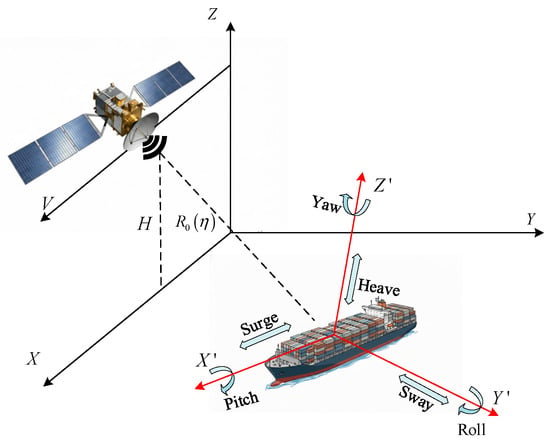
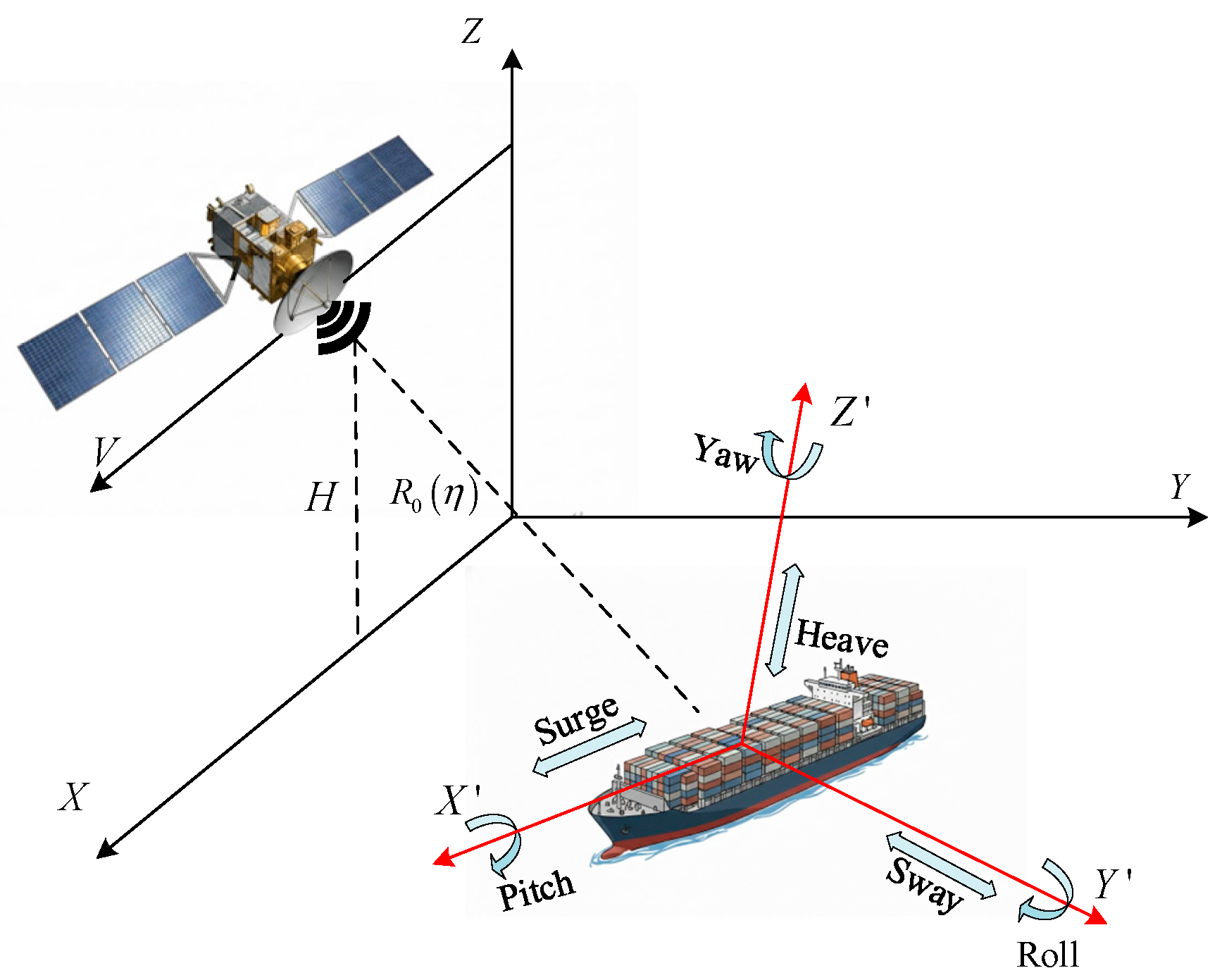
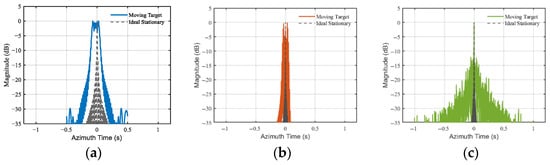
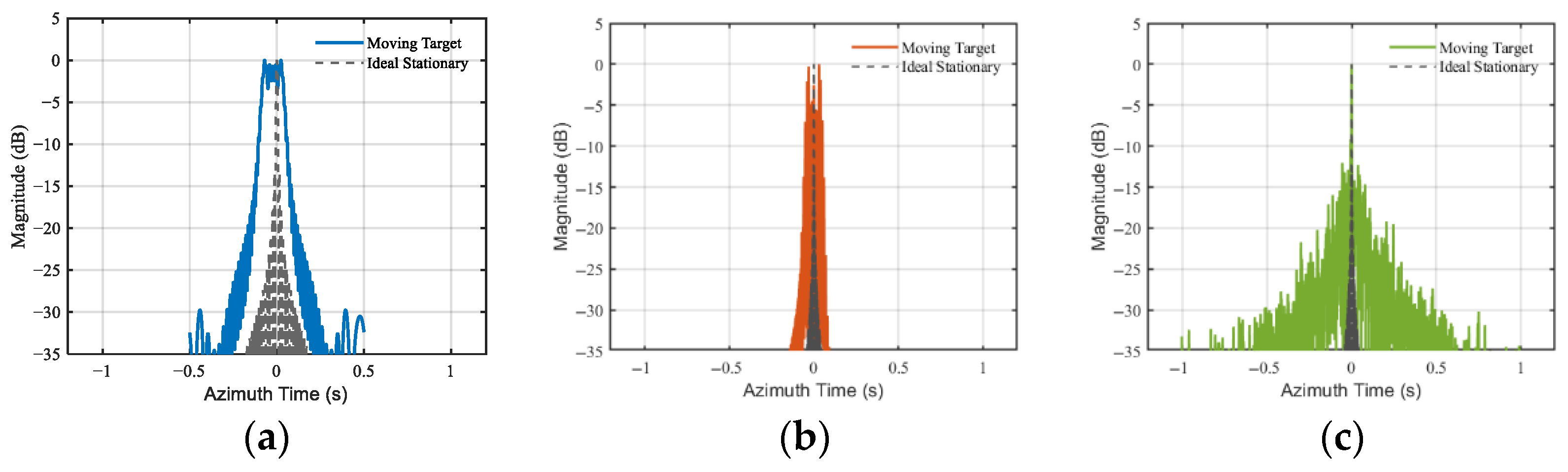
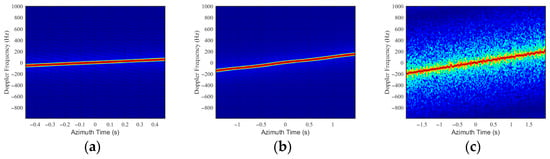
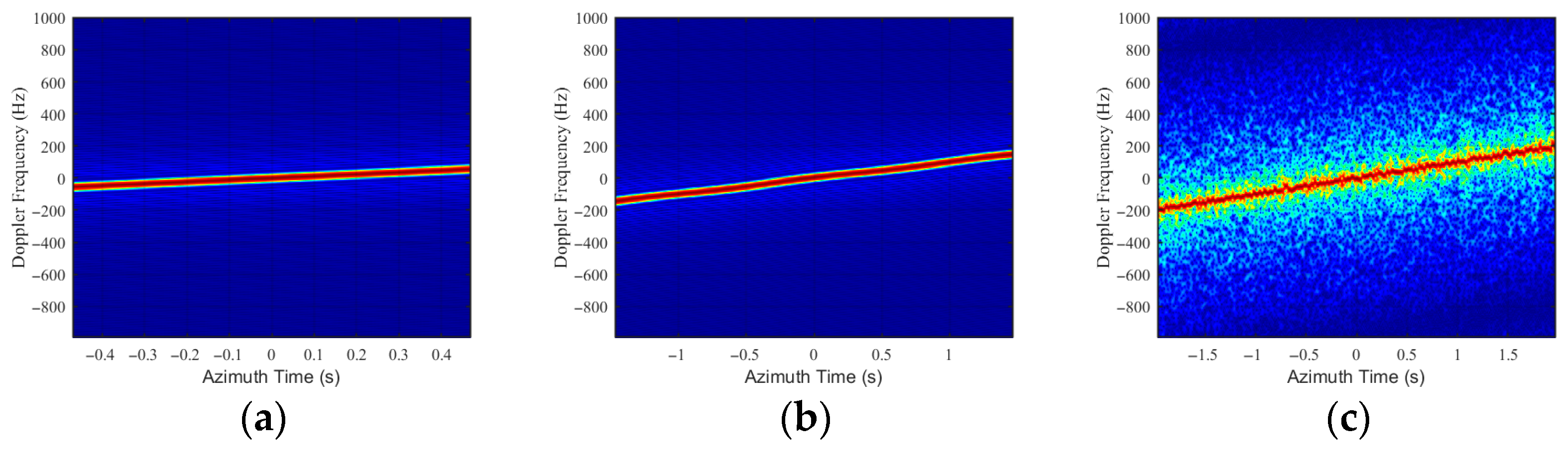
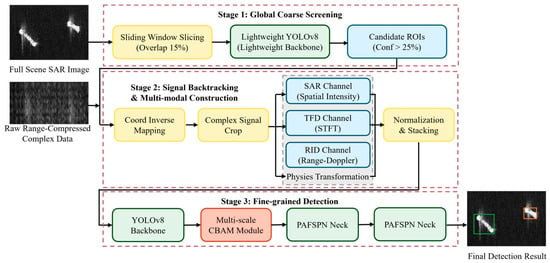
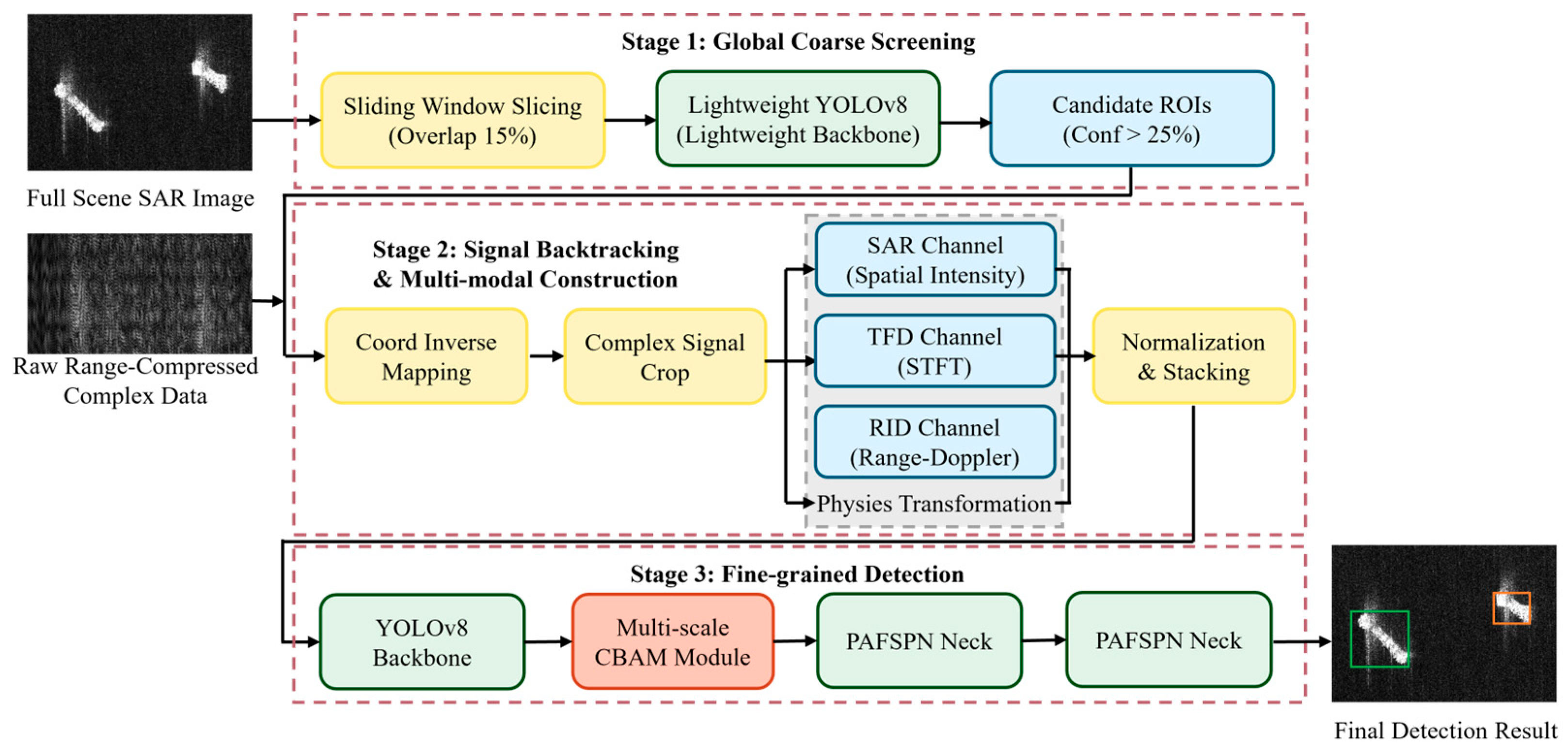
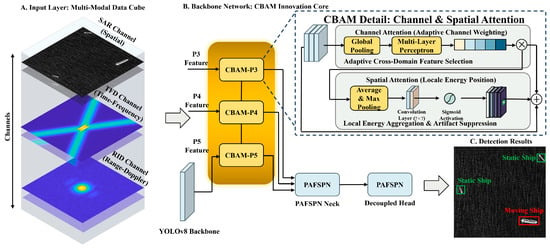
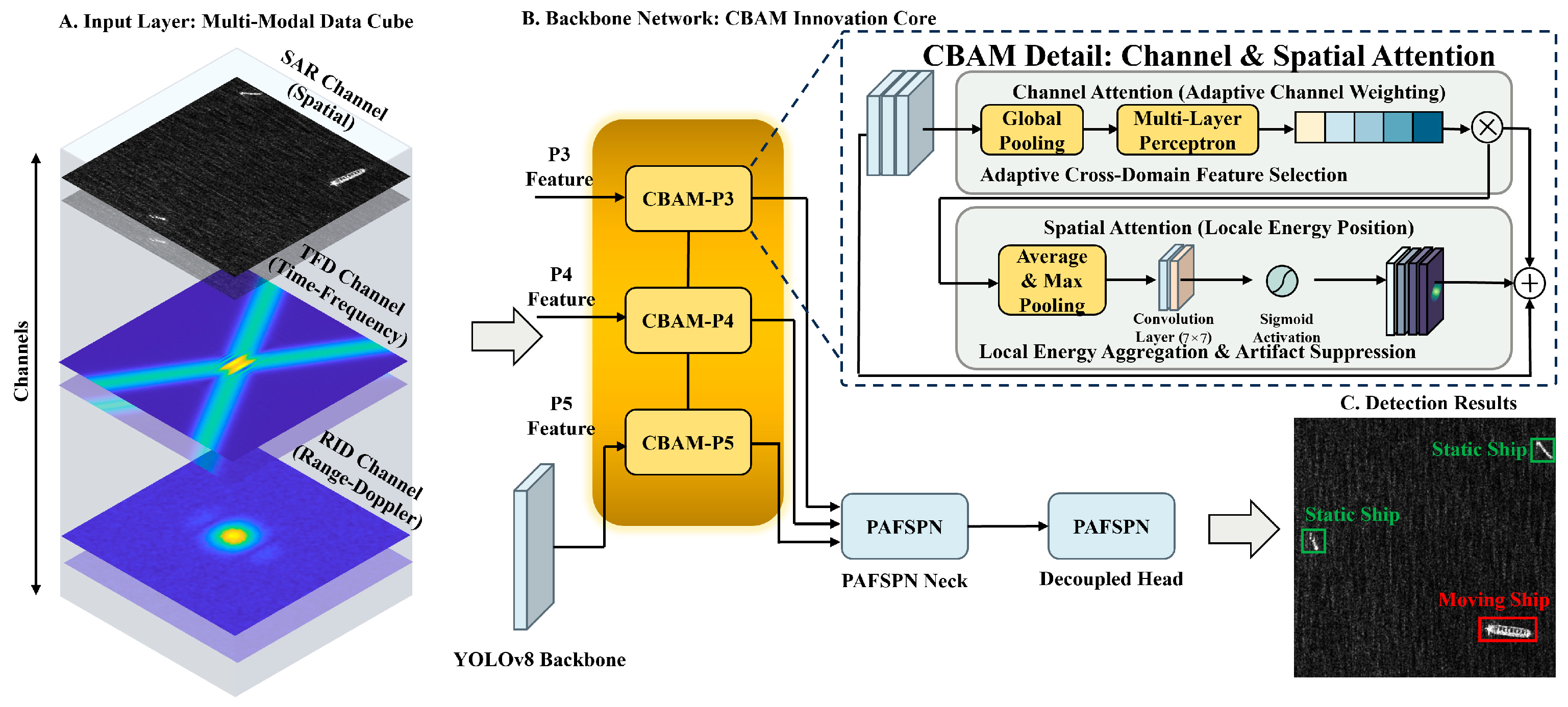
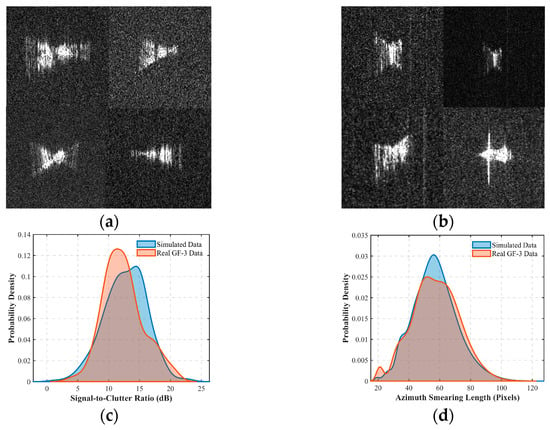
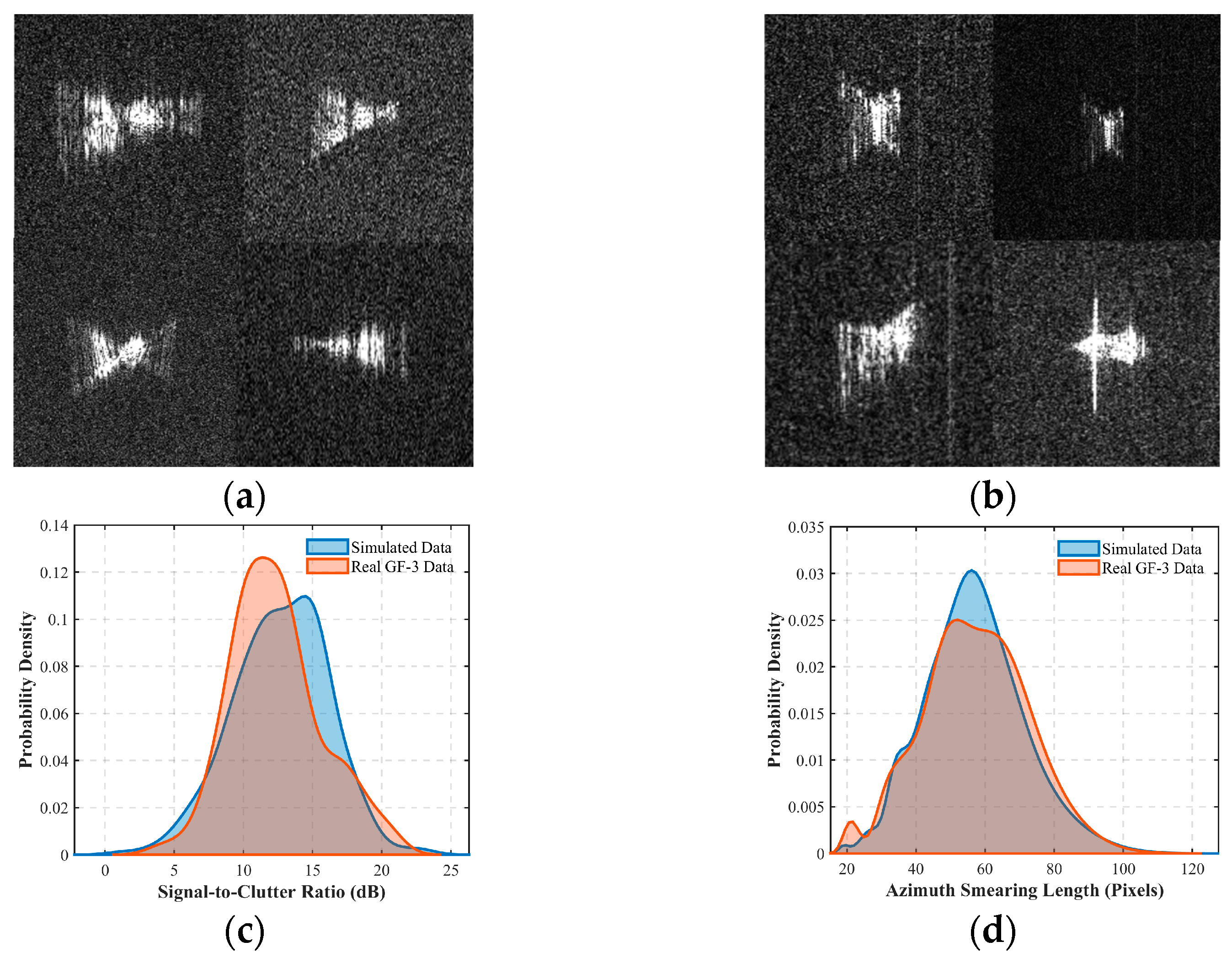
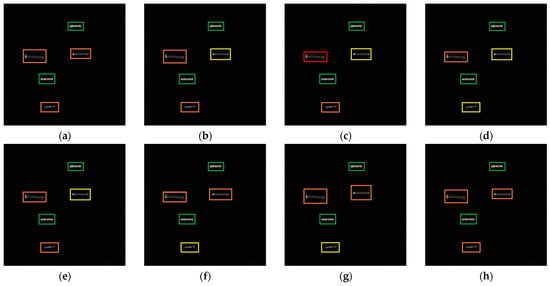
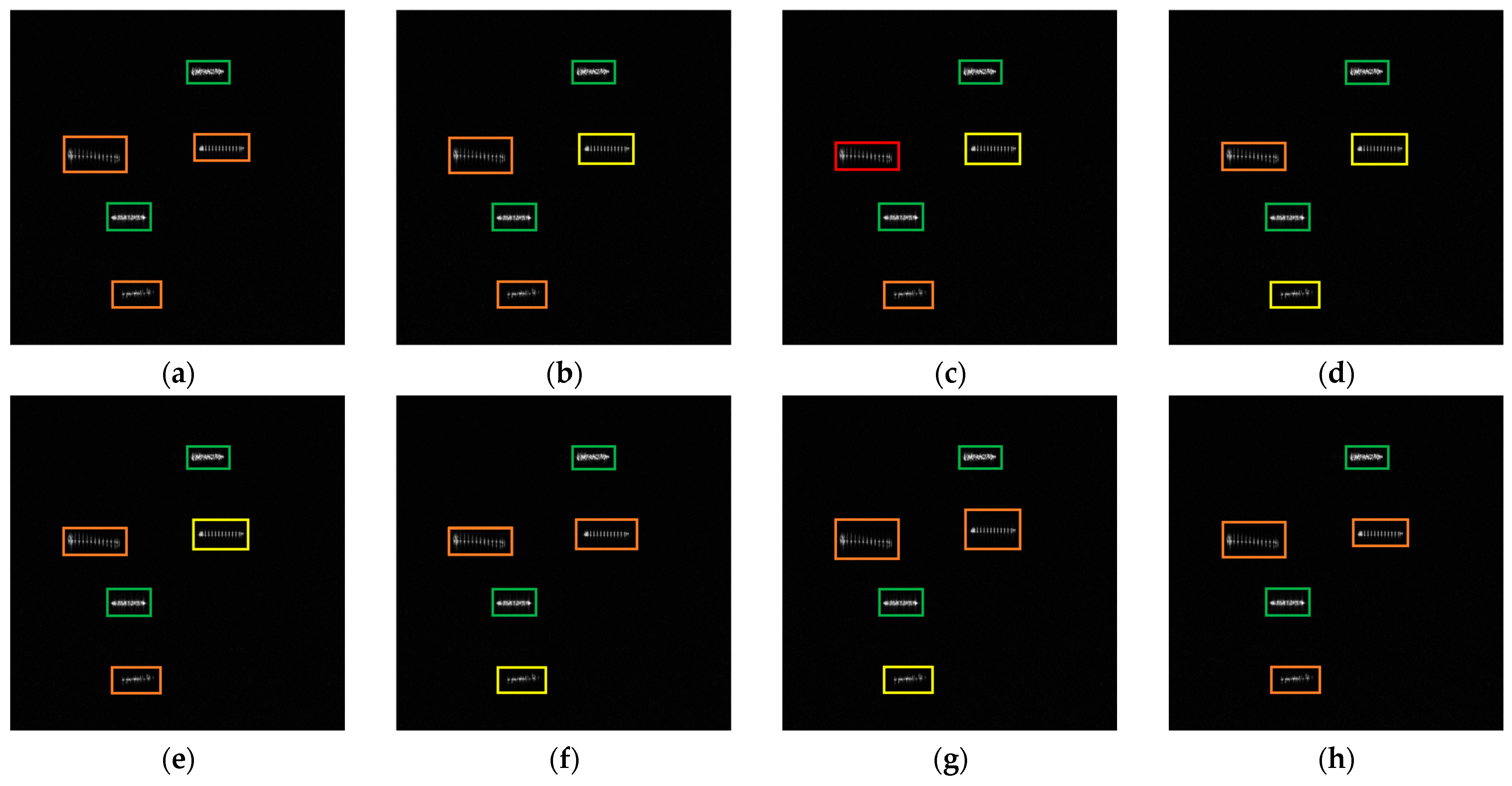
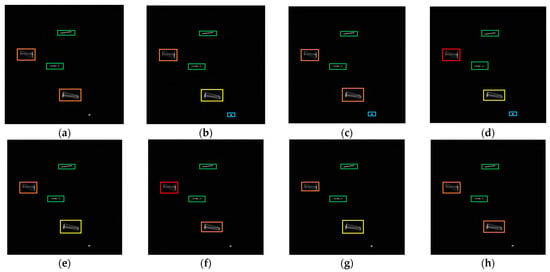
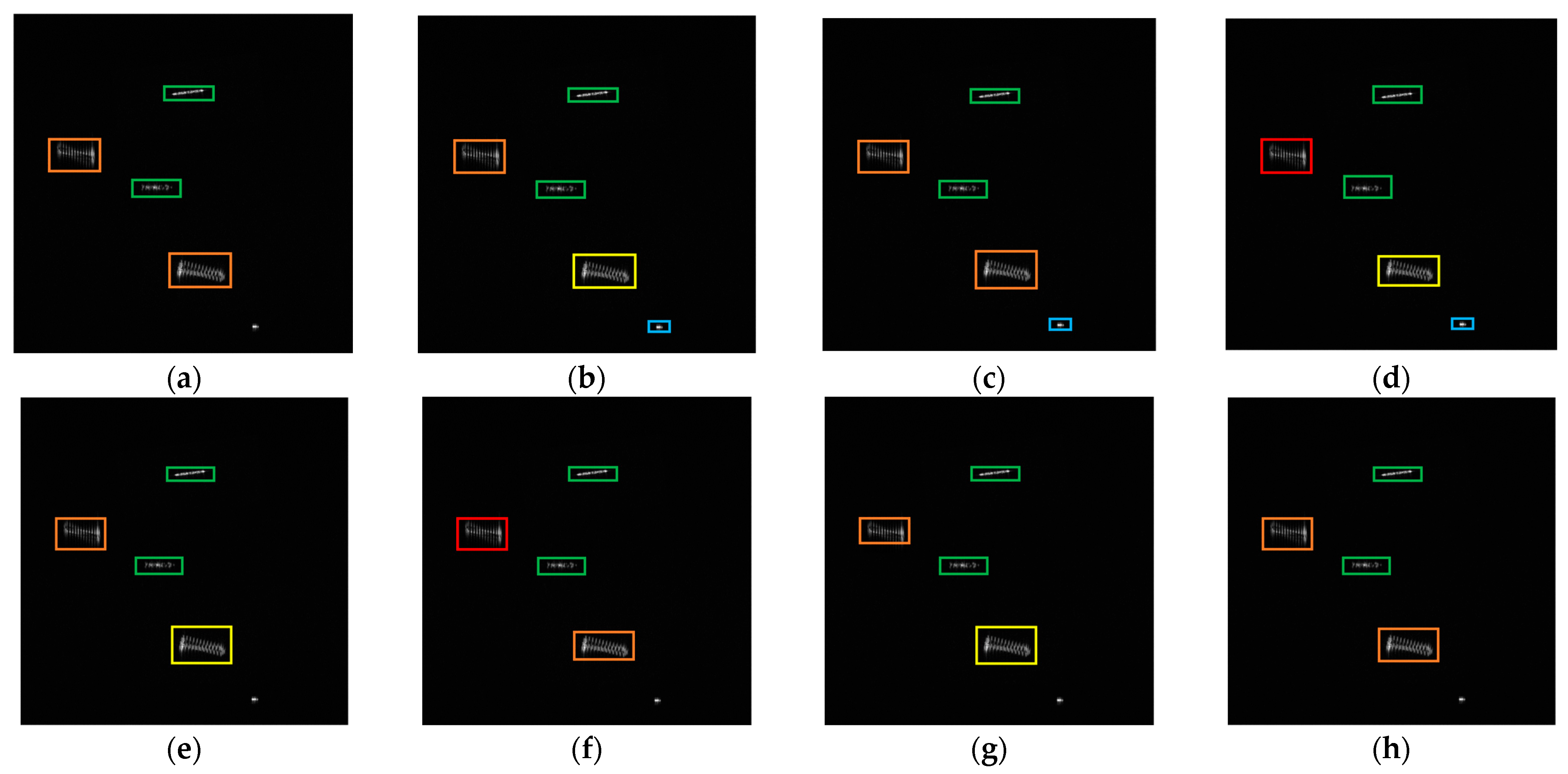
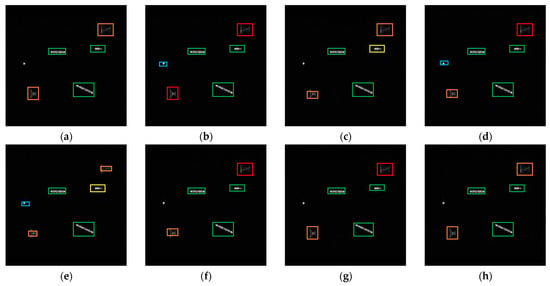
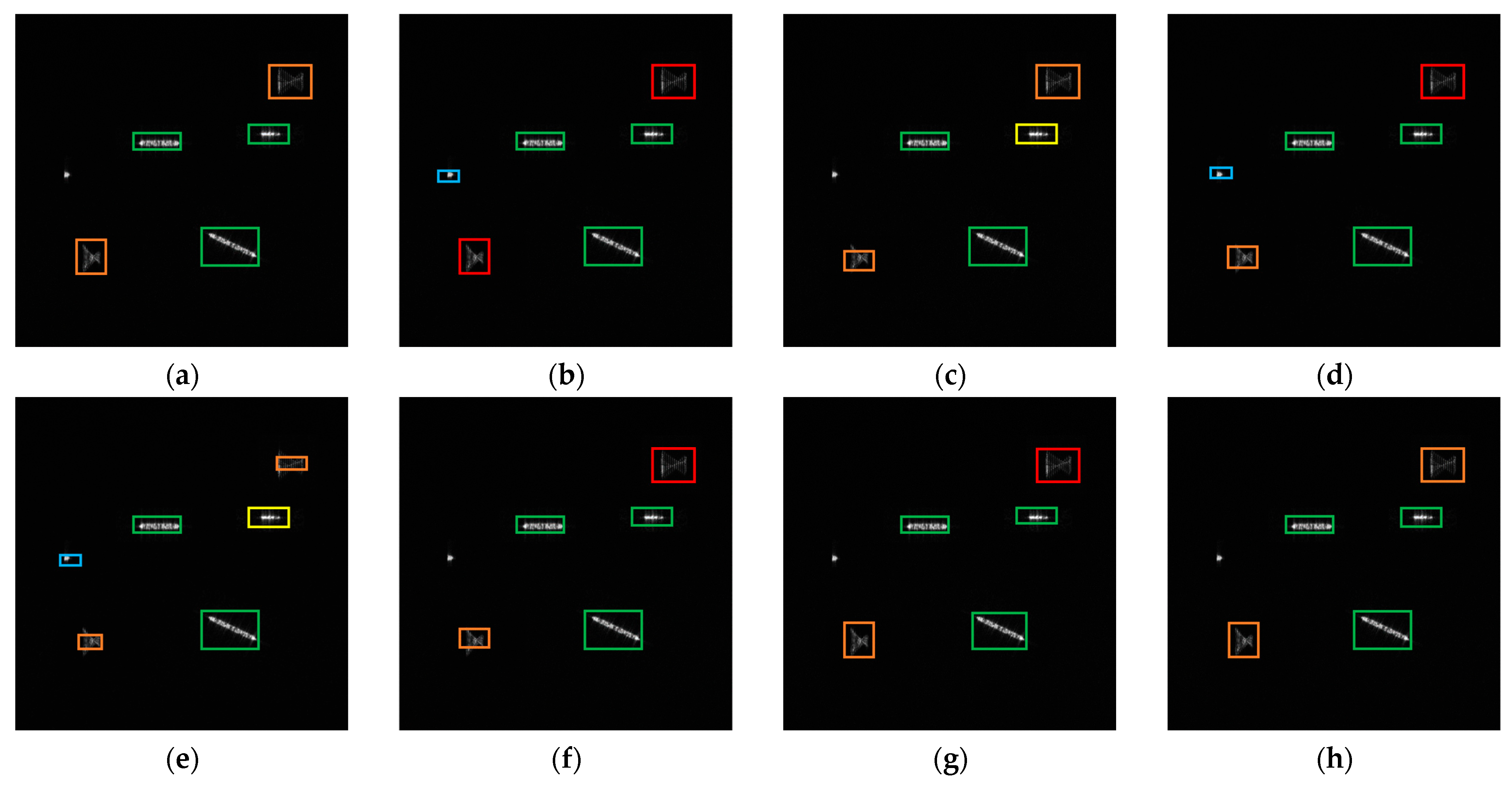
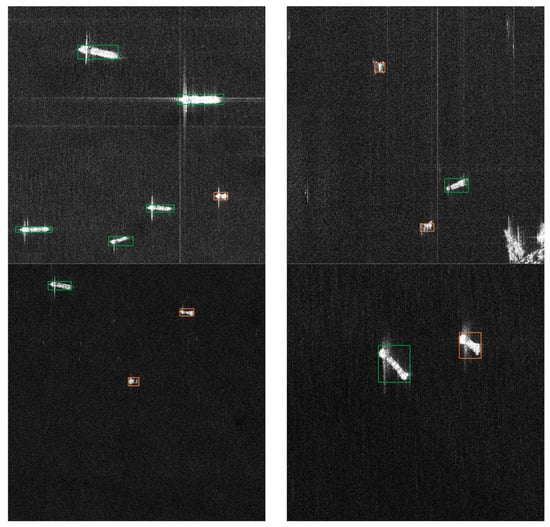
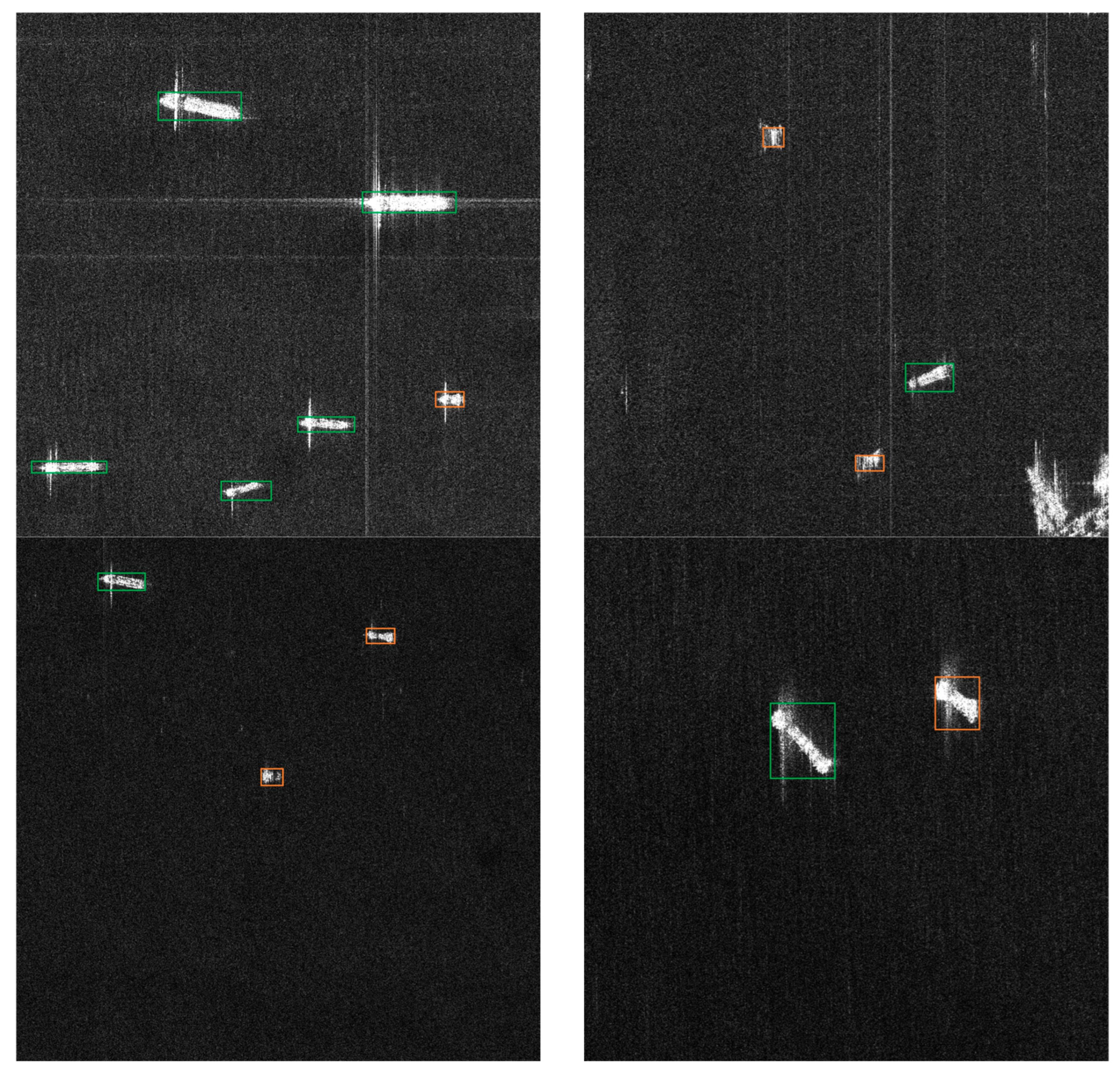

Disclaimer/Publisher’s Note: The statements, opinions and data contained in all publications are solely those of the individual author(s) and contributor(s) and not of MDPI and/or the editor(s). MDPI and/or the editor(s) disclaim responsibility for any injury to people or property resulting from any ideas, methods, instructions or products referred to in the content. |
© 2026 by the authors. Licensee MDPI, Basel, Switzerland. This article is an open access article distributed under the terms and conditions of the Creative Commons Attribution (CC BY) license.