1. Introduction
Measurements of ionospheric total electron content (TEC) have been made since the late 1950s [
1]. The earliest measurement methods included rocket soundings, radio echoes from the Moon [
2], and radio beacons on satellites [
3]. With the advent of GPS satellites and low-cost ground receivers, TEC measurements are now made at thousands of geographic locations, allowing the production of high spatial resolution global TEC maps [
4].
TEC measurements are typically made using ground-based dual frequency reception of Global Navigation Satellite System (GNSS) satellite signal transmissions [
5] and represent the integrated electron density from the ground to the altitude of the GNSS satellites. This altitude range incorporates the ionosphere (≈50 to 1000 km) and the lower plasmasphere (1000 to 20,000 km). The electron density peaks in the ionosphere at altitudes between 250 and 450 km, depending on latitude, month, and year within the solar cycle. The ionospheric regions below and above the peak height are known as the ionospheric “bottom-side” and “top-side”, respectively. Slant TEC is defined as the electron column density along an (oblique) line of sight. The TEC measurement that characterizes the ionosphere and plasmasphere for a particular location is obtained when the satellite is exactly overhead and is known as the vertical TEC (vTEC). In the conversion of slant TEC to vTEC, it is often assumed that the ionosphere and plasmasphere are horizontally stratified and spatially uniform. Further, the ionosphere is typically simplified to be a thin layer at a fixed altitude of 350–400 km above the Earth’s surface [
1]. The thin shell approximation is justified as the 350–400 km altitude range accommodates the highest concentration of ionospheric free electrons. GNSS TEC measurements are also subject to biases due to differential code biases and cycle slips. Despite these assumptions and biases, the multitude of existing ground-based GNSS allows the estimation of high-precision global ionospheric TEC maps (GIMs), such as those produced by the International GNSS Service (IGS) [
4]. However, the lack of availability of TEC data from oceanic and polar regions remains a challenge for estimating TEC in these regions [
6].
The TEC measured by ground-based GNSS receivers is the total electron content of the ionosphere and the plasmasphere. However, for applications such as high-frequency (HF) over-the-horizon radar [
7] and HF communications [
8], the ionospheric contribution to TEC (ITEC), and more specifically the bottom-side contribution, is a more important measurement. ITEC can be determined using ionosonde or incoherent scatter radar (ISR), but this requires extrapolation above the ionospheric peak height using the Chapman function [
9]. The ITEC can then be subtracted from the TEC to yield the plasmaspheric TEC (PTEC). Altimeter satellites allow vTEC measurements between the ground and the satellite altitude, which is typically around 1340 km [
10]. This represents the TEC contribution from the bottom-side and top-side ionosphere and the lower plasmasphere. The use of LEO satellite-based GNSS receivers allows the application of radio occultation (RO) techniques [
11] to obtain vertical ionospheric electron density profiles for altitudes up to the satellite altitude, which range from 500 to 800 km. However, due to the limited number of altimeters and RO satellites in orbit, they are unable to provide the same spatial and temporal coverage for a specific location as TEC measured using ground-based GNSS receivers.
A relevant recent TEC-related development is the measurement of Total square-Root Electron Content (TREC) [
12] between the ground and the “Alpha” and “Bravo” satellites of the European Space Agency Swarm Earth Explorer mission, which orbit at altitudes of 450 km and 510 km, respectively. TREC makes use of “whistlers” produced by extremely low frequency (ELF) signals generated by powerful lightning strikes. Like GNSS TEC measurements, TREC measurements assume the electron density has spherical symmetry. The TREC results were successfully validated against the International Reference Ionosphere (IRI) model [
13] as well as models constrained by ionogram observations and Swarm in situ Langmuir probe electron density data.
Recent developments in satellite constellations promise to improve the spatial and temporal coverage of ITEC measurements [
14]. For example, in December 2022, four experimental CENTISPACE satellites transmitting navigation augmentation signals at L1D and L5D frequencies were launched [
15]. Using a regional ground network in China, the augmentation signals from two CENTISPACE LEO satellites were collected to investigate the vertical bottom-side electron content (VBEC) and generate a bottom-side ionospheric map. The VBEC achieved fitting residuals with root-mean-square (RMS) values of between 0.7 and 1.2 TECU (1 TECU = 10
16 electrons per m
3). When fully established, the CENTISPACE constellation will consist of 160 LEO satellites.
The benefits of satellite constellations for ionospheric observations have been further demonstrated through the Starlink satellite mega-constellation. The use of commercial off-the-shelf (COTS) complementary metal–oxide–semiconductor (CMOS) image sensors and simple total ionizing dose (TID) circuits on Starlink satellites has allowed the measurement of ionizing radiation effects in a LEO environment with high spatial and temporal resolution [
16], while the electrical arc discharge event detectors have allowed maps of the Appleton anomaly to be generated [
17].
This paper describes a new method of estimating ITEC using very high frequency (VHF) radar observations of Starlink satellites. These measurements do not require assumptions inherent in estimating TEC from GNSS measurements but require precision satellite ephemerides. The paper is structured as follows.
Section 2 describes the Buckland Park Stratospheric–Tropospheric (BPST) VHF radar and the detection of resident space objects (RSOs) used in this study.
Section 3 describes the methodology used in estimating TEC using RSO detections, while
Section 4 discusses the RSO ephemerides used.
Section 5 presents sample results and compares these results with relevant alternative measurements.
Section 6 presents a discussion of the results and plans for future work, while
Section 7 presents the conclusions. For brevity, the paper focuses on the measurement technique rather than the interpretation of the results, which will be discussed in more detail in future publications.
2. The Buckland Park Stratospheric–Tropospheric Radar
The BPST VHF radar (−34°37′36.03″, 138°28′3.91″) is located 35 km north of Adelaide. The radar is a pulsed monostatic system operating at 55 MHz, with a peak transmit power of 48 kW at the transmitter. The radar was designed and manufactured by ATRAD and is operated by Adelaide University and ATRAD. The radar is designed primarily for the measurement of tropospheric and stratospheric winds (0.5–20 km). The maximum duty cycle is 10%. Similar systems (albeit with peak transmit power 96 kW at the transmitter) are deployed throughout Australia by the Bureau of Meteorology [
18]. The radar is also designed to operate as a meteor radar [
19].
The BPST radar has recently been used for space domain awareness (SDA) observations [
20] and can detect over 2000 LEO RSOs per day. These SDA observations have shown the potential for measurements of ionospheric propagation phenomena as a by-product. Measurements of the group retardation (i.e., the range difference between the estimated and predicted RSO ranges) of LEO RSOs allow TEC measurements to be made between the ground and the satellite altitude [
20]. Further, spectrograms produced using RSO observations occasionally exhibit random Doppler variations. These variations have been investigated using the BPST radar and the Australian Defence Science and Technology group (DSTG) HF line-of-sight radar [
21] and attributed to two likely sources. The first source is ionospheric plasma instabilities in the DC to 0.46 Hz frequency range. The second source was identified as electromagnetic ion cyclotron (EMIC) plasma waves in the 0.1–0.5 Hz frequency range, propagating parallel to the Earth’s surface in a waveguide centered at an altitude of 250 km.
The BPST radar supports a wide range of operating parameters [
18]. The operating parameters used for the data presented in this paper are shown in
Table 1. The pulse repetition frequency (PRF) of 2 kHz has a range ambiguity of ≈75 km, resulting in all RSO’s being range aliased. This is not problematic as the ephemeris ranges can be appropriately range aliased so they can be matched to observations. No coherent averages are applied to avoid signal-to-noise ratio (SNR) loss due to RSO motion. Barker codes [
22] were used for early observations (“Mode 1”: 10 May 2024 to 21 June 2025) as RSO motion between transmission of complementary code pairs results in deterioration of pulse-compressed data. The use of Barker coding results in range sidelobes, but this is not problematic, as there are typically only three or so RSOs in the field of view at any time, and the sidelobes from one RSO are extremely unlikely to obscure other RSOs. However, given the interest in reducing TEC measurement uncertainty through increased range resolution, complementary codes with reduced pulse widths (or baud lengths) were used for latter observations: this was achieved using a 16-bit complementary code [
22] (“Mode 2”, 21 June 2025 to 3 August 2025), and subsequently a 32-bit complementary code (“Mode 3”, 3 August 2025 to 21 September 2025). The use of complementary codes reduces the radial velocity resolution by a factor of two but requires two sets of decoding (one for RSOs with an even number of range-aliases and another for RSOs with an odd number of range-aliases), thereby doubling the computational complexity of the analysis.
The BPST radar array consists of a 12 × 12 array (hereafter referred to as the “main array”) of 144 gamma-matched linearly polarized Yagi antennas. The inter-antenna spacing is 0.644λ, giving an aperture size of 38.6 × 38.6 m. The array allows five beam directions to be used: vertical, and 15° off zenith in the cardinal directions (North, East, South, West). However, only vertical beams were used for the data presented in this paper. The main array was previously connected to a single receiver (e.g., [
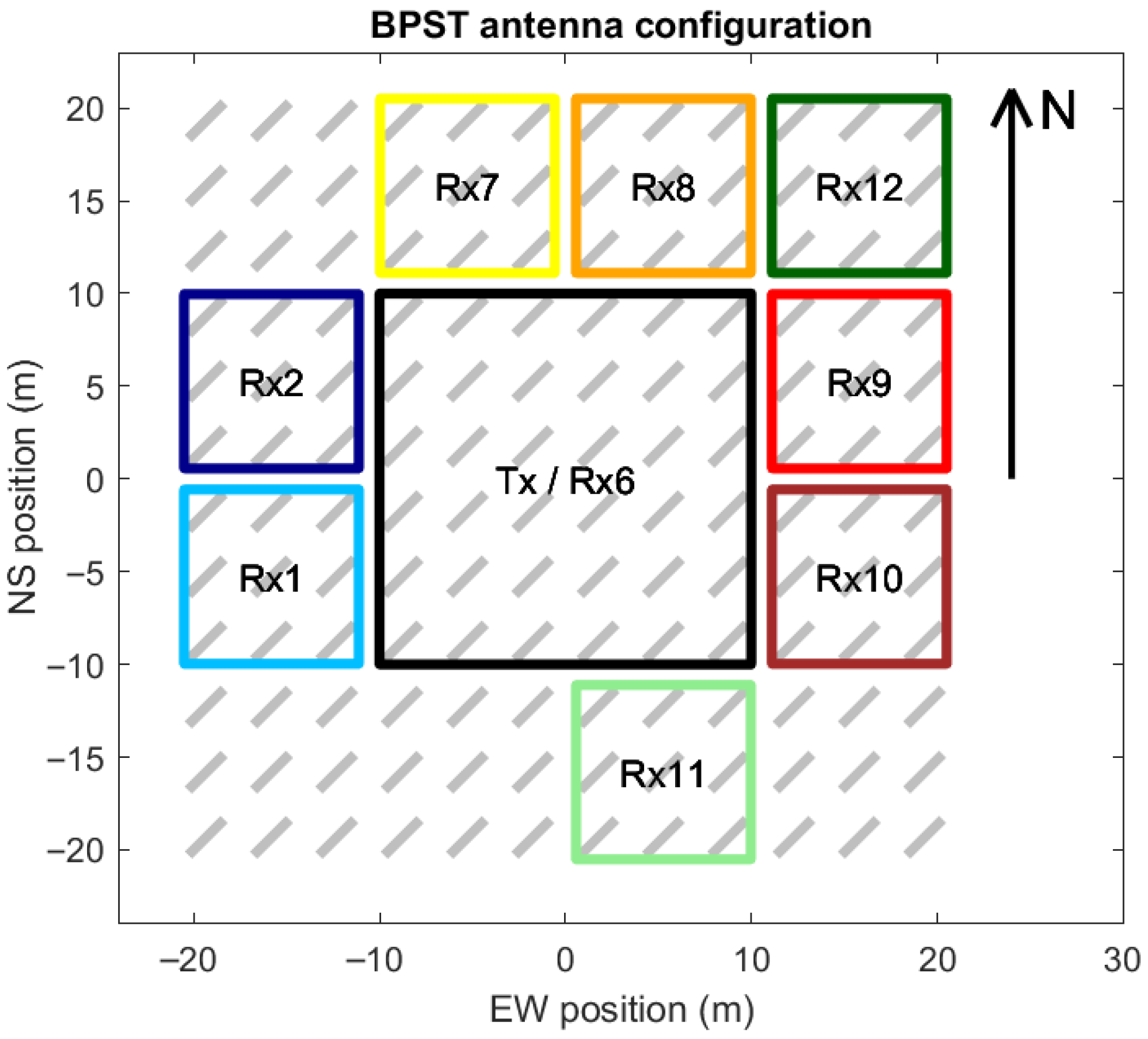
20]), resulting in a combined transmit/receive beam width (half-power full width) of 7°. The main array has recently been reconfigured to support interferometric observations, as illustrated in
Figure 1. The “center” 6 × 6 array is now used for transmission and reception. Eight additional groups of 3 × 3 antennas around the center array are also used for reception, resulting in a combined transmit/receive beam width of 11°.
The results presented in this paper were produced using the “Catalogue Maintenance Mode” (CMM) processing described in [
20], with one significant modification: the new interferometric capability allows a receive beam to be formed in the processing, which follows the RSO, thereby increasing the receive beam energy focused on the RSO. CMM simplifies the processing by using the satellite ephemeris data to effectively remove the effects of satellite motion from the radar data. However, it does require precise ephemerides and does not allow detection of RSOs that are not included in publicly available catalogs. One of the outputs of the CMM processing estimates the range difference between the satellite and ephemeris range, which is a direct measure of the group retardation of the transmitted and RSO reflected signal resulting from propagation through the ionosphere.
3. BPST Radar TEC Measurements
The measurement of RSO group retardation allows the TEC between the ground and the RSO to be estimated using the quasi-longitudinal (QL) approximation [
23] using
where
is the group retardation (m),
is the radar operating frequency (Hz), and TEC is measured in TECU. This equation assumes
, where
is the ionospheric gyrofrequency. This condition is easily satisfied for the BPST radar, which operates at
= 55 MHz at a location where
≈ 1.5 MHz. The vertical group retardation
is calculated using
where
is the radius of the Earth, and
and
θ are the RSO ephemeris range, height, and zenith angle, respectively. The vertical group retardation allows vTEC to be calculated using
The BPST radar RSO group’s retardation measurements avoid the assumptions and biases inherent in GNSS TEC measurements. However, accurate measurements are reliant on both accurate group retardation measurements and precise ephemerides.
The results of [
20] suggested that BPST radar RSO ionospheric group retardation measurements may provide a means to perform accurate TEC measurements between the ground and each RSO. However, the increased range resolution required was achieved at the expense of a significant radar sensitivity reduction. Although the number of RSO observations was sparse, the group retardation measurements clearly followed the expected diurnal and altitudinal behavior. Although the potential use of the TEC measurements to estimate electron density profiles was proposed, this would require either a significantly higher number of RSOs than were in orbit at the time of the measurements described in [
20] or the use of a significantly higher power-aperture product than that currently available to the BPST radar to increase the number of RSOs detected. This led to reconsideration of how the TEC estimates could be used to provide useful ionospheric information.
As of 24 February 2026, there are 11,072 Starlink satellites in orbit [
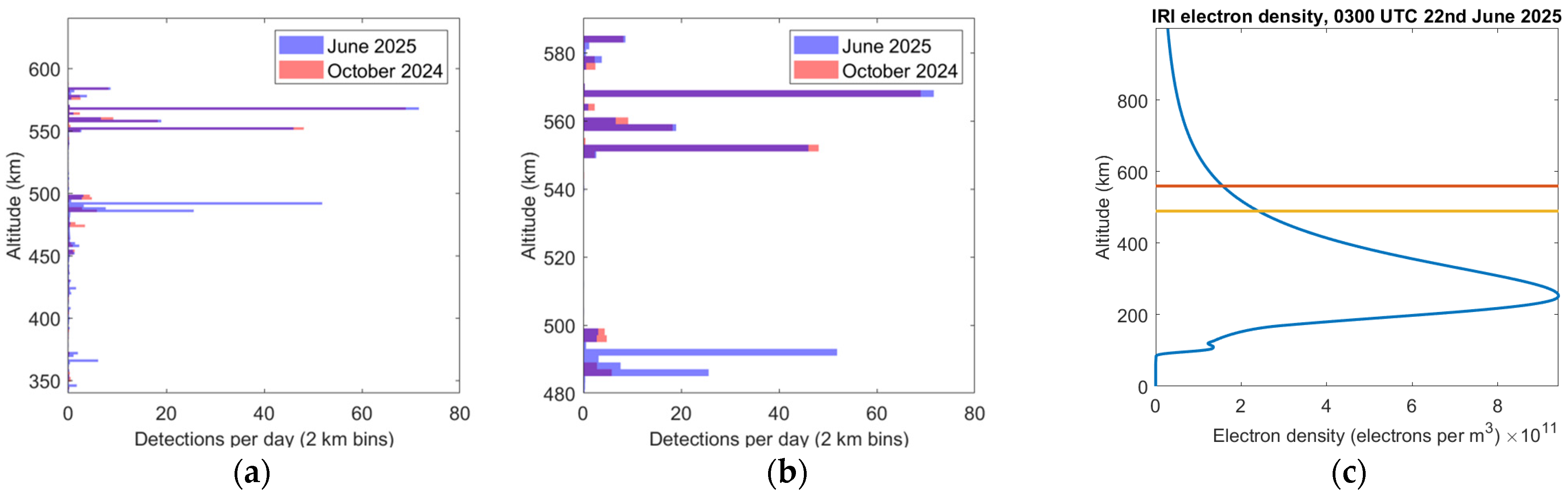
24]. The altitude distribution of Starlink satellites above the BPST radar in October 2024 and June 2025 is shown in
Figure 2. The October 2024 distribution reveals three altitude “shells” at 551.5, 558.75 and 568.25 km. These shells are hereafter referred to as “regime 1”. The June 2025 distribution reveals the same three shells and two additional shells at 486.9 and 492.1 km. These lower shells are hereafter referred to as “regime 2”.
Figure 2c shows the electron density profile estimated using the 2020 International Reference Ionosphere (IRI) [
13] at 3 UT on 22 June 2025 with Starlink altitude regimes indicated. This figure clearly indicates that the Starlink altitude regimes lie in the ionospheric top-side.
The expected TEC uncertainty based on the range resolution of the different operating modes is shown in
Table 1. However, in increasing the range resolution, it is important to recognize that the linearly polarized signal transmitted by the BPST radar is decomposed into ordinary (O) and extraordinary (E) modes upon entering through the ionosphere, and that these modes have different group ranges (e.g., [
22]). As the estimated group retardation
is effectively the centroid of the O- and E-mode group retardation values, the range difference between O- and E-mode returns can therefore dictate the maximum range resolution achievable, and therefore the accuracy of the TEC estimates. The maximum expected O- and E-mode group range difference calculated using IRI 2000 for daytime at solar maximum is 210 m (corresponding to a TEC uncertainty of 1.6 TECU), which is comparable to the range resolution of the Mode 3 parameters shown in
Table 1. This indicates that in some cases, TEC accuracy may be limited by the O- and E-mode group range difference rather than the radar range resolution. Having said this, we note that the results presented in
Section 5 suggest that the actual TEC accuracy achieved exceeds that indicated in
Table 1.
The maximum IRI estimated TEC differences (solar max, April, noon) over the altitude extent of shell regimes 1 (i.e., 551.5 to 568.25 km) and 2 (486.9 to 492.1 km) are 0.28 and 0.14 TECU, respectively. These values are considerably smaller than the expected TEC uncertainties shown in
Table 1. For this reason, we elect to combine all vTEC estimates in altitude regime 1 to allow the measurement of vTEC at ≈559.5 km, and combine all vTEC estimates in altitude regime 2 to allow the measurement of vTEC at ≈489.4 km. The maximum IRI estimated TEC difference between shell regimes 1 and 2 is 1.7 TECU. This is of the same order as the expected TEC uncertainties shown in
Table 1, suggesting that the mean TEC measurements made for altitude regimes 1 and 2 should be distinguishable from each other.
4. Starlink Satellite Ephemerides
The most common approach for estimating RSO position uses two-line elements (TLEs), which encode the orbital elements of an Earth-orbiting object at a given point in time [
25]. The RSO state vector (i.e., position and velocity) can then be estimated at any time in the past or future using the simplified generalized perturbations (SGP4) propagator. The accuracy of TLE/SGP4 predicted position drops very quickly with time, with the 1-day position prediction error of the order of kilometers to dozens of kilometers [
26]. This prediction error is exacerbated for Starlink satellites by the frequent maneuvers made to maintain the constellation, which result in the TLE/SGP4 propagation estimates becoming “stale” soon after issue. The typical positional accuracy of TLE/SGP4 is 7.54 km [
26]. As this positional accuracy is comparable to the maximum BPST radar group retardation estimates (≈10 km), the Starlink TLEs are unsuitable for making accurate group retardation and TEC estimates.
SpaceX provides Starlink ephemerides via the Starlink website [
27] with the aim of “enabling effective, open conjunction coordination with Starlink as well as other satellite owner/operators”. The Starlink ephemerides are published in the Modified ITC data file format, including position and velocity covariance and are updated three times daily. They include 72 h of prediction, including the future 2-day maneuver orbit of the Starlink satellites. Only the orbit data from the first 8 h in each ephemeris file is used in the analysis presented in this paper since they are more accurate than the ephemerides issued in the previous ephemeris files [
15]. The Starlink ephemerides offer higher accuracy than historical Starlink TLEs and therefore represent the optimal means for investigating the use of Starlink ephemerides for estimating ionospheric TEC. The typical positional accuracy of the short-term position errors of the Starlink ephemeris varies based on several factors; they typically fall within a range of a few meters to a few kilometers [
28].
An additional source of Starlink state vectors is the Starlink supplemental general perturbations TLEs issued by Celestrak [
29]. These TLEs are calculated using publicly available orbital data and are propagated using SGP4. The typical positional accuracy of the supplemental general perturbations TLEs is 870 m [
29].
Table 2 presents a comparison of the results obtained for altitude regime 1 using the three ephemeris types between 11 and 26 July 2025, when parameter mode 2 was used. These results include the total number of Starlink satellites detected, the RMS uncertainty of the radial velocity estimates compared to the ephemerides, and the TEC uncertainty. The first two metrics estimate the quality of the ephemerides. The TEC uncertainty is determined by estimating the RMS of the residual obtained by subtracting a 15th-order polynomial from the TEC time-series for each day and taking the mean of the daily RMS uncertainty estimates. The number of detections for TLE/SGP4 is much lower than for the other ephemerides, as TLEs do not incorporate Starlink RSO maneuvers, which reduces the ability to correlate satellite detections with the ephemerides. The Starlink ephemerides yield the largest number of detections and the smallest radial velocity and TEC uncertainties. Based on these results, we use Starlink ephemerides to estimate BPST radar vTEC throughout this paper. The vTEC uncertainty obtained using Starlink ephemerides is 0.41 TECU. This is considerably smaller than the estimate shown in
Table 1 (i.e., 1.7 for mode 2). This occurs as there are typically TEC measurements from multiple Starlink RSOs available for calculating each 10 min TEC estimate, thereby reducing the uncertainty in comparison to the individual TEC measurements.
The BPST radar vTEC uncertainty obtained using Starlink ephemerides with mode 3 parameters (3 August 2025 to 21 September 2025) is 0.42 TECU. This is comparable to the mode 2 vTEC uncertainty of 0.41 TECU, despite the increased range resolution provided by the mode 3 parameters. This suggests that a vTEC uncertainty of 0.41 TECU likely represents the uncertainty attainable using the BPST radar vTEC estimation technique. This may confirm that TEC accuracy is limited by the O- and E-mode group range difference rather than the radar range resolution. Alternatively, TEC accuracy may also be limited by Starlink ephemerides precision. As the Starlink ephemerides precision is typically quoted as an absolute value (e.g., [
28]) rather than as individual 3-dimensional values, it is impossible to verify whether the O- and E-mode group range differences or the Starlink ephemerides are the limiting factors in BPST radar vTEC uncertainty. Regardless, the BPST radar vTEC uncertainty of 0.41 compares favorably with the typical vTEC uncertainty of ≈2 TECU measured by GNSS receivers (e.g., [
30]).
5. Results
The Starlink RSO detection data used in this study were collected every ten minutes between 1 September 2024 and 21 September 2025. Unless otherwise indicated, all results presented in this section are obtained using Starlink ephemerides and altitude regime 1.
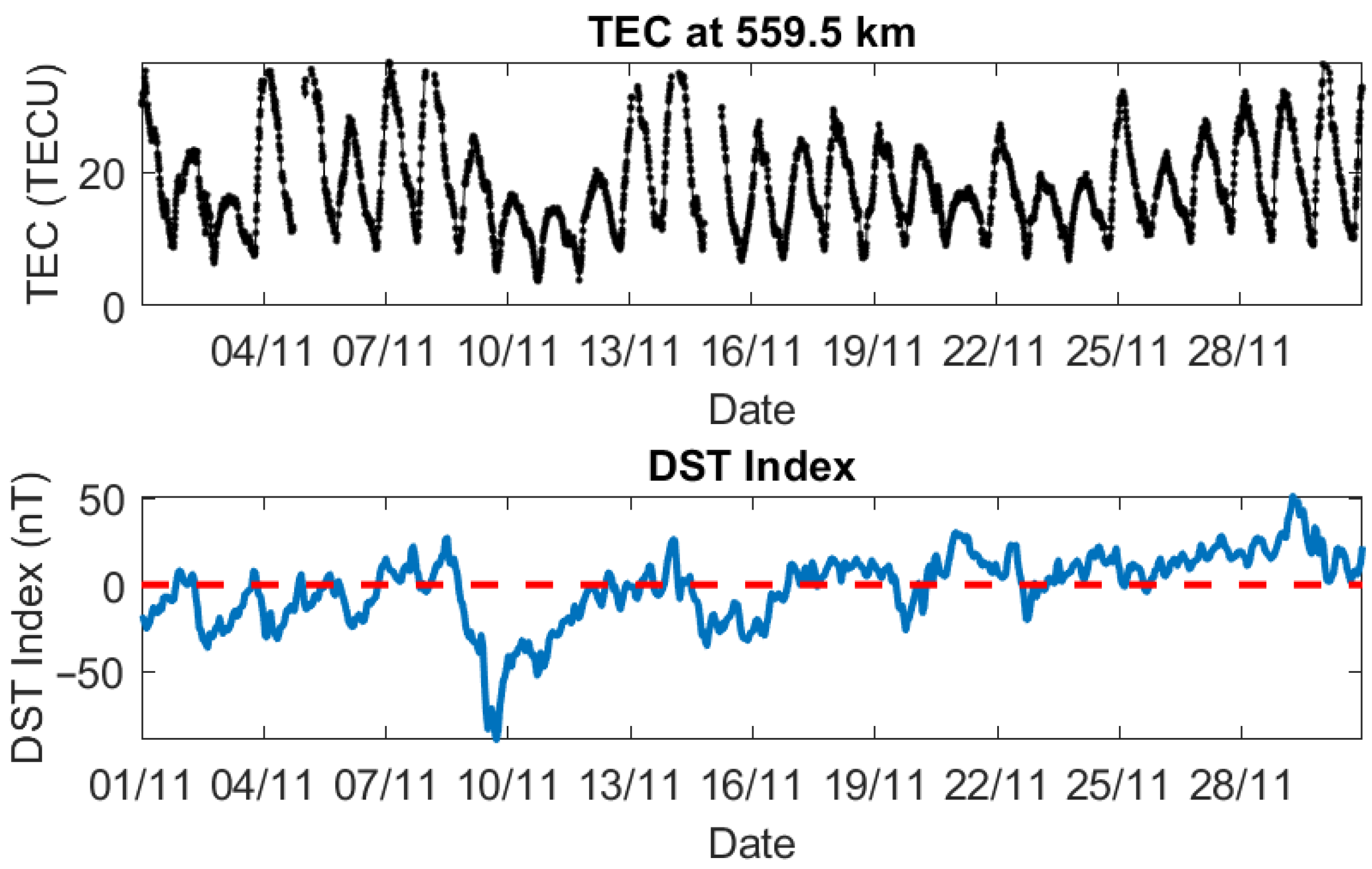
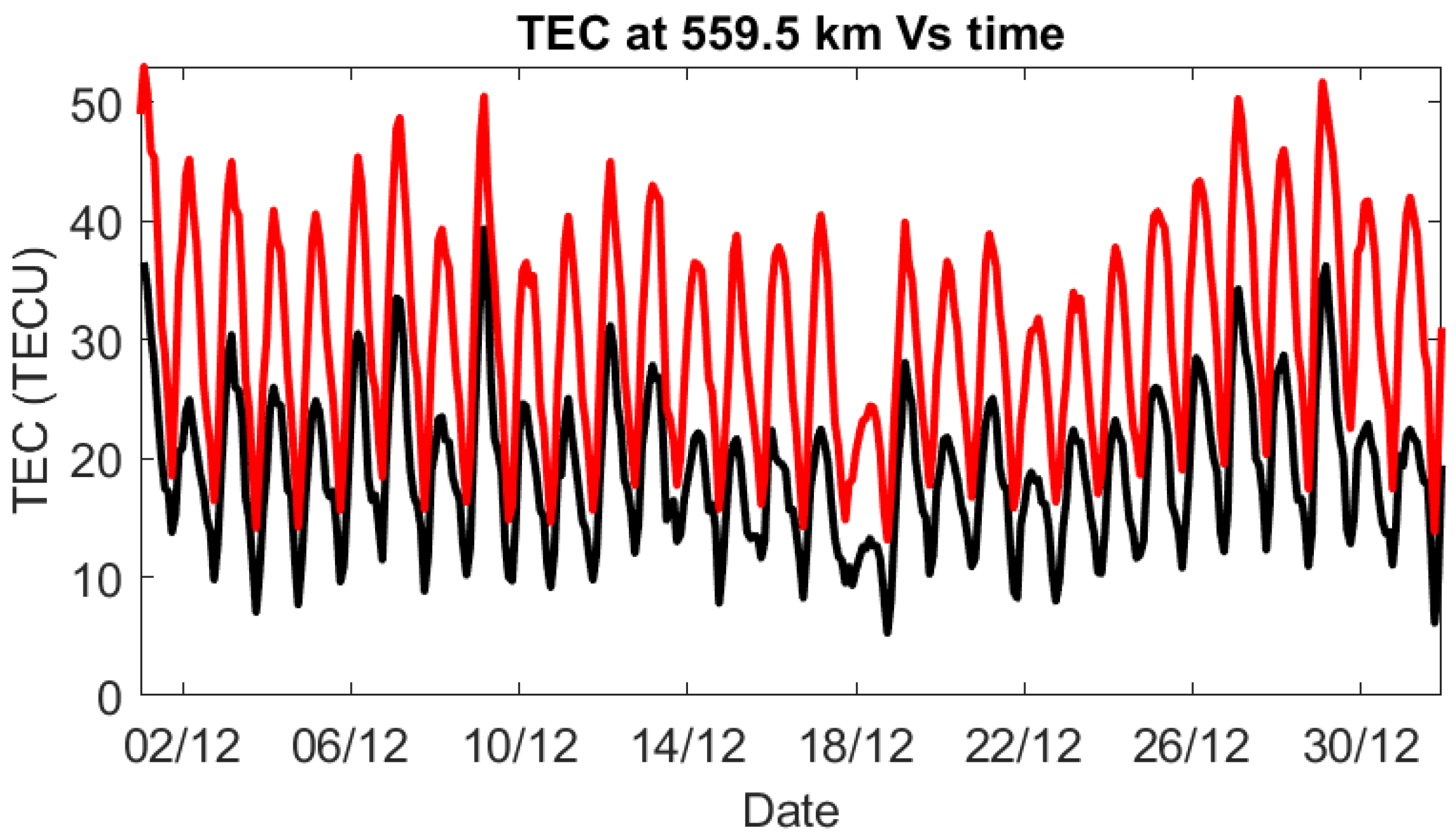
An example of the results obtained during November 2025 is shown in
Figure 3, together with the corresponding disturbance storm time (DST) index. The DST index measures the intensity of the Earth’s magnetosphere ring current via a 4-station average measurement of the decrease in the surface magnetic field strength near the equator, acting as a primary indicator for the severity of geomagnetic storms [
31]. The BPST radar results show the expected diurnal variation, with a sharp rise at dawn and a sharp decline at dusk, noting local BP solar time leads universal time by 10 h. The BPST radar vTEC values are reduced between the 10th and 12th, as can be expected for a moderate geomagnetic storm (DST ≈ −80 nT).
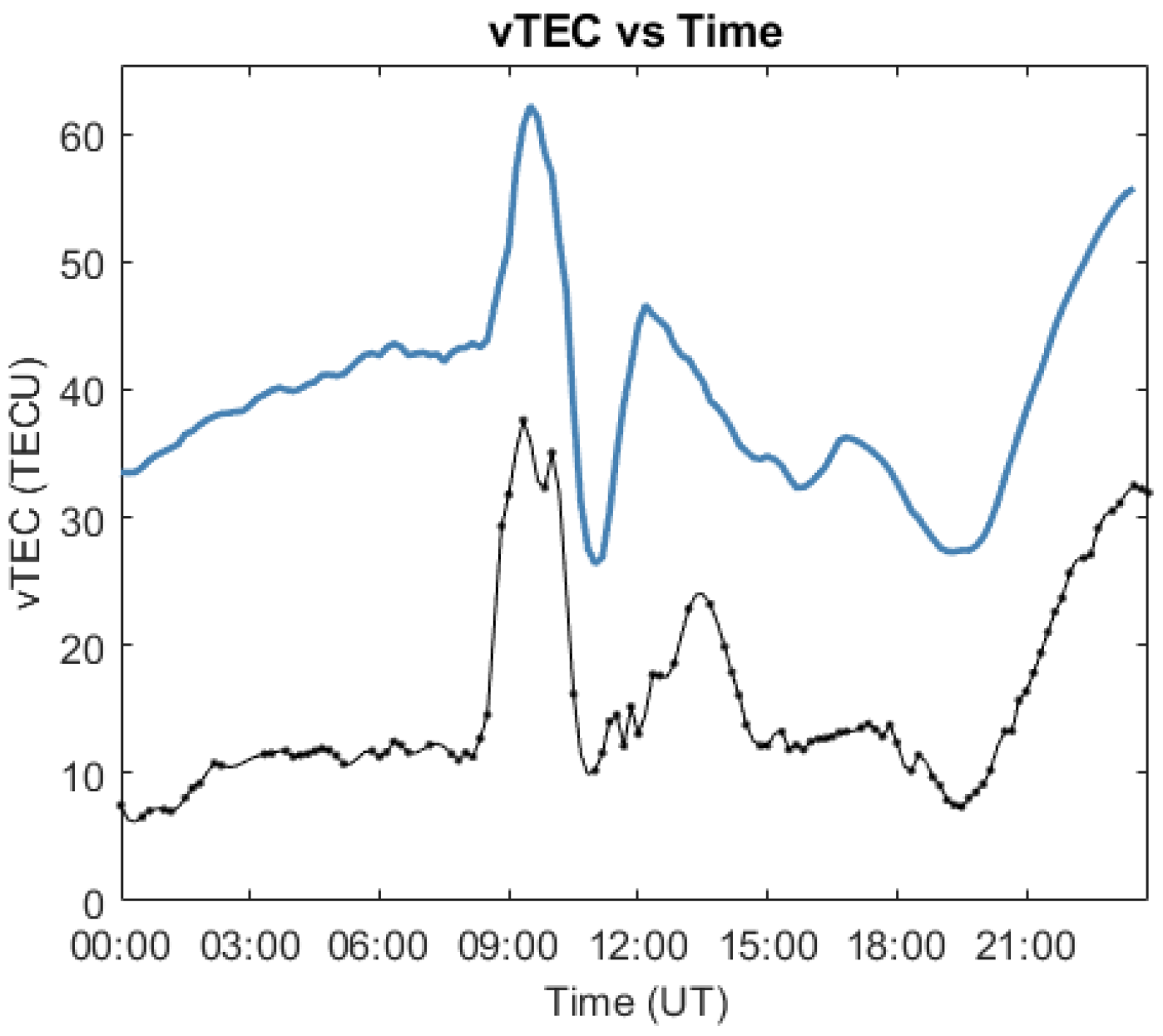
An example of BPST radar results obtained on 11 October 2024, following an extreme (G5-Level) geomagnetic storm (e.g., [
32]) are shown in
Figure 4. To verify these results,
Figure 4 also shows the vTEC estimates obtained from the Port Adelaide GNSS receiver (34.77°S, 138.48°E), which contributes to the Geosciences Australia GNSS network. This receiver is located approximately 18 km from Buckland Park. The BPST radar and GNSS TEC estimates show qualitative agreement, exhibiting a rapid vTEC increase at ≈9 UT, a subsequent rapid decrease at ≈11 UT, and a smaller maximum between ≈13 and 14 UT.
A comparison of the BPST radar vTEC results with those obtained using the IGS GIM [
4] during the geomagnetically quiet period between 1 and 31 December 2024 (DST > −37 nT) is shown in
Figure 5. The GIM has a resolution of 5 deg (longitude) by 2.5 deg (latitude) and two hours in time. The GIM maps are interpolated to the geographic location of the BPST radar, and the BPST radar results are averaged to the same temporal resolution as the GIM data. The results reveal that the BPST radar results largely follow the same qualitative behavior as the GIM data.
The BPST radar results provide the ability to estimate the ionospheric and plasmaspheric contributions of TEC when combined with GNSS TEC data. We quantify this estimation in a similar manner to [
15] by defining a LEO to GPS TEC ratio
where
and
are the BPST radar estimated vTEC at 560 km and GNSS estimates vTEC at 20,200 km (i.e., GPS satellite altitude), respectively.
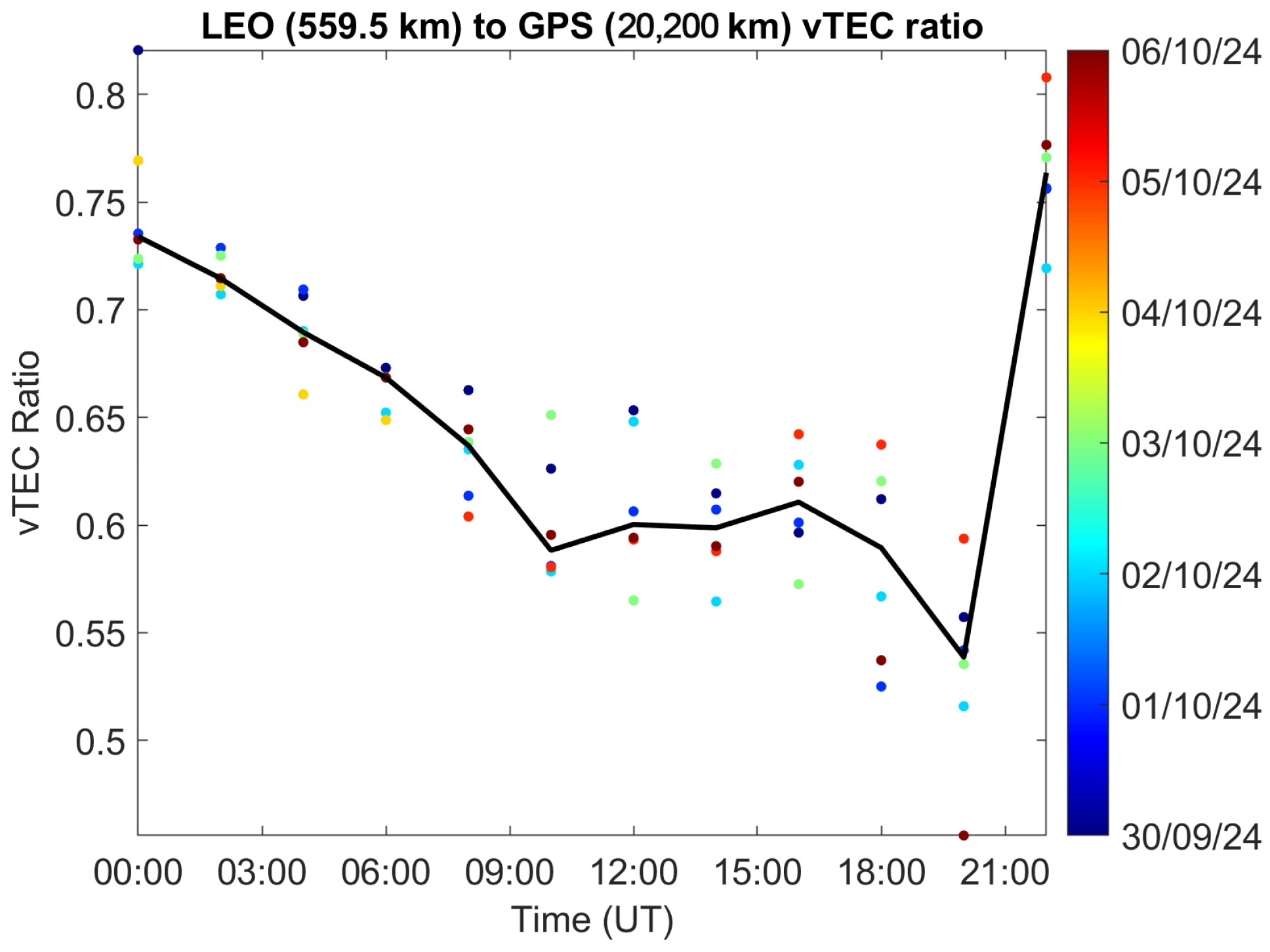
Figure 6 shows a superposed epoch plot of the diurnal variation in
R for 30 September to 6 October 2024, revealing the ratio peaks during the day and minima at night, with the minimum value reached prior to dawn.
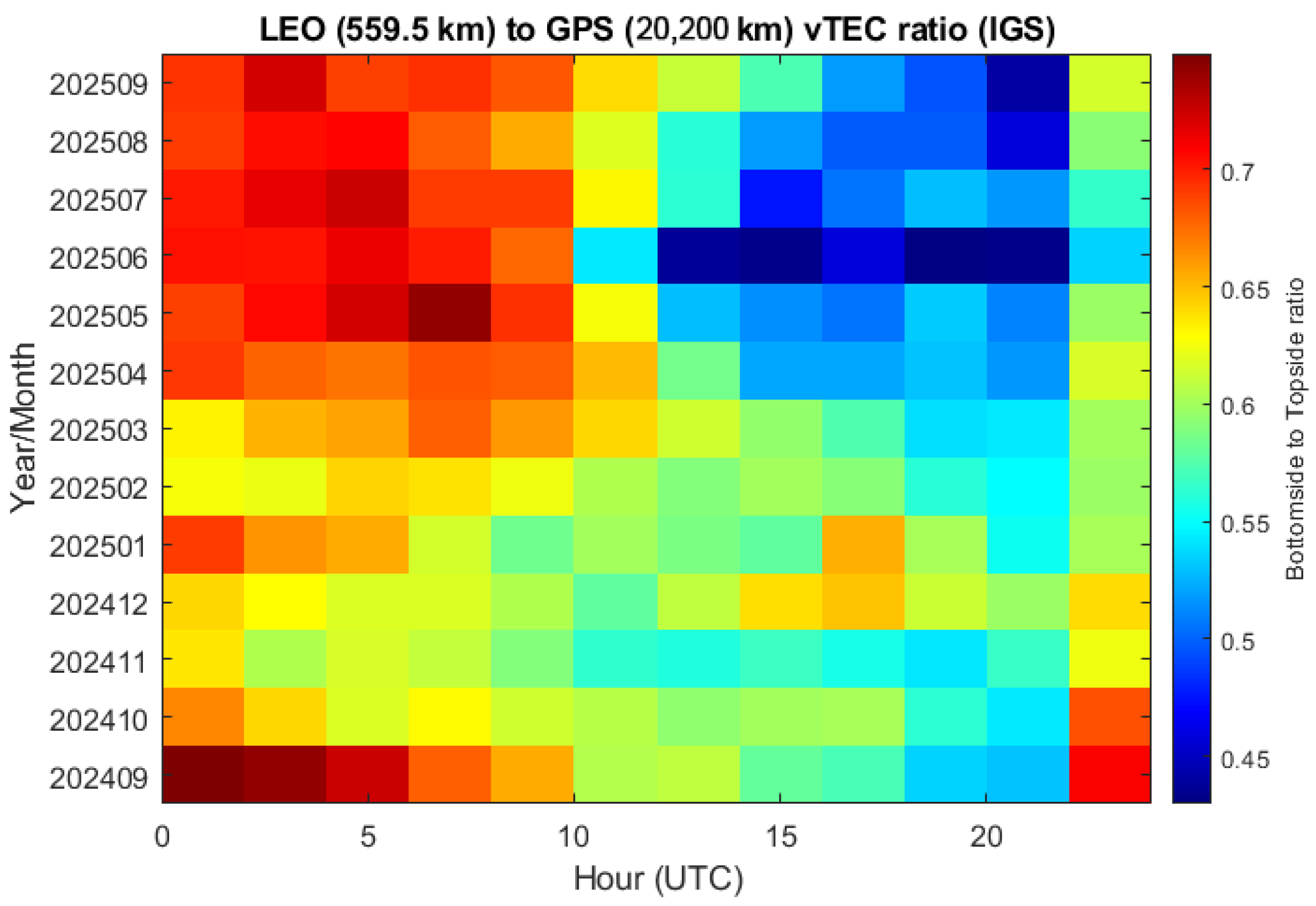
Figure 7 shows the variation in
R as a function of month and UT hour over the course of the observations, revealing
R ranges from 0.44 (July 2025 night-time) to 0.75 (September 0 UT).
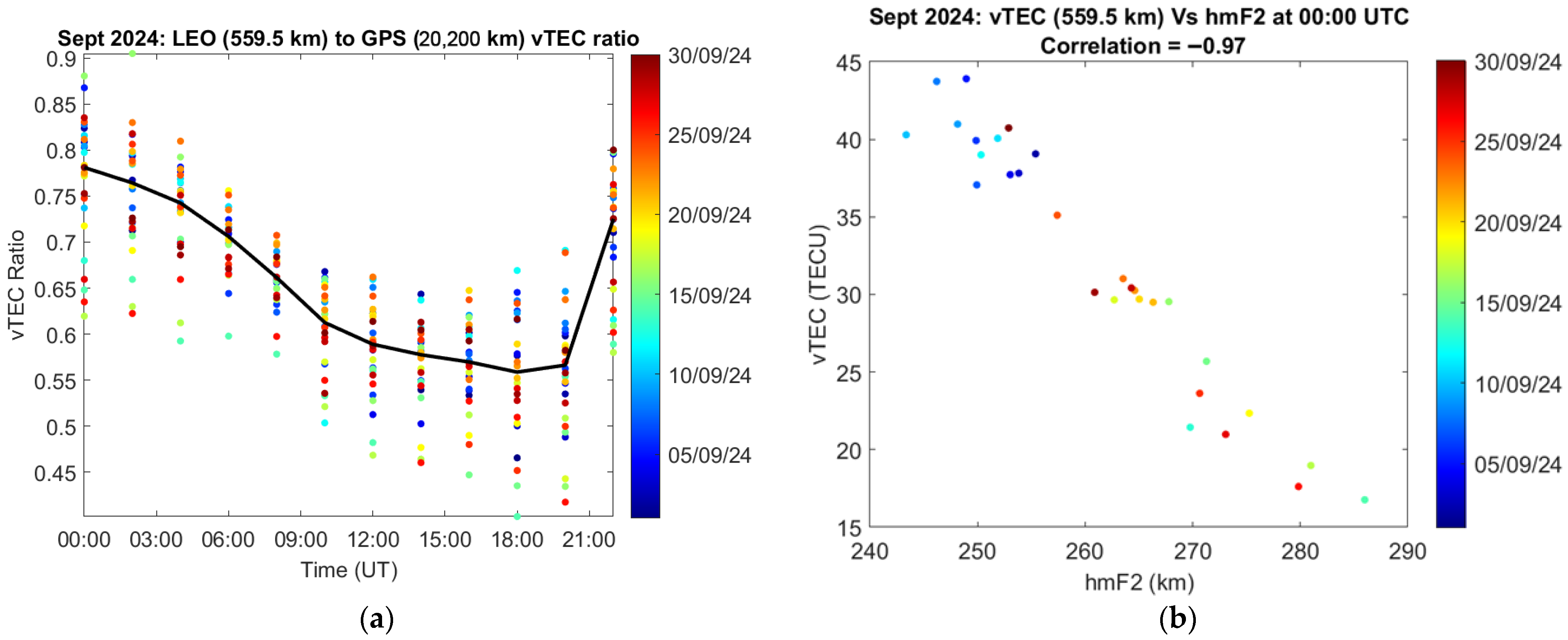
In order to better understand the diurnal variation in
R,
Figure 8 shows the diurnal variation during September 2024, together with a scatter plot of
R versus the ionospheric peak height (hmF2) obtained using the IRI-Plas model [
33]. This month was selected as it represented the geomagnetically quietest period during the observations presented in this paper. The IRI-Plas hmF2 values are used due to the lack of any publicly accessible ionosonde data in the vicinity of the BPST radar. These results suggest that the variation in
R may result primarily from diurnal variation in hmF2.
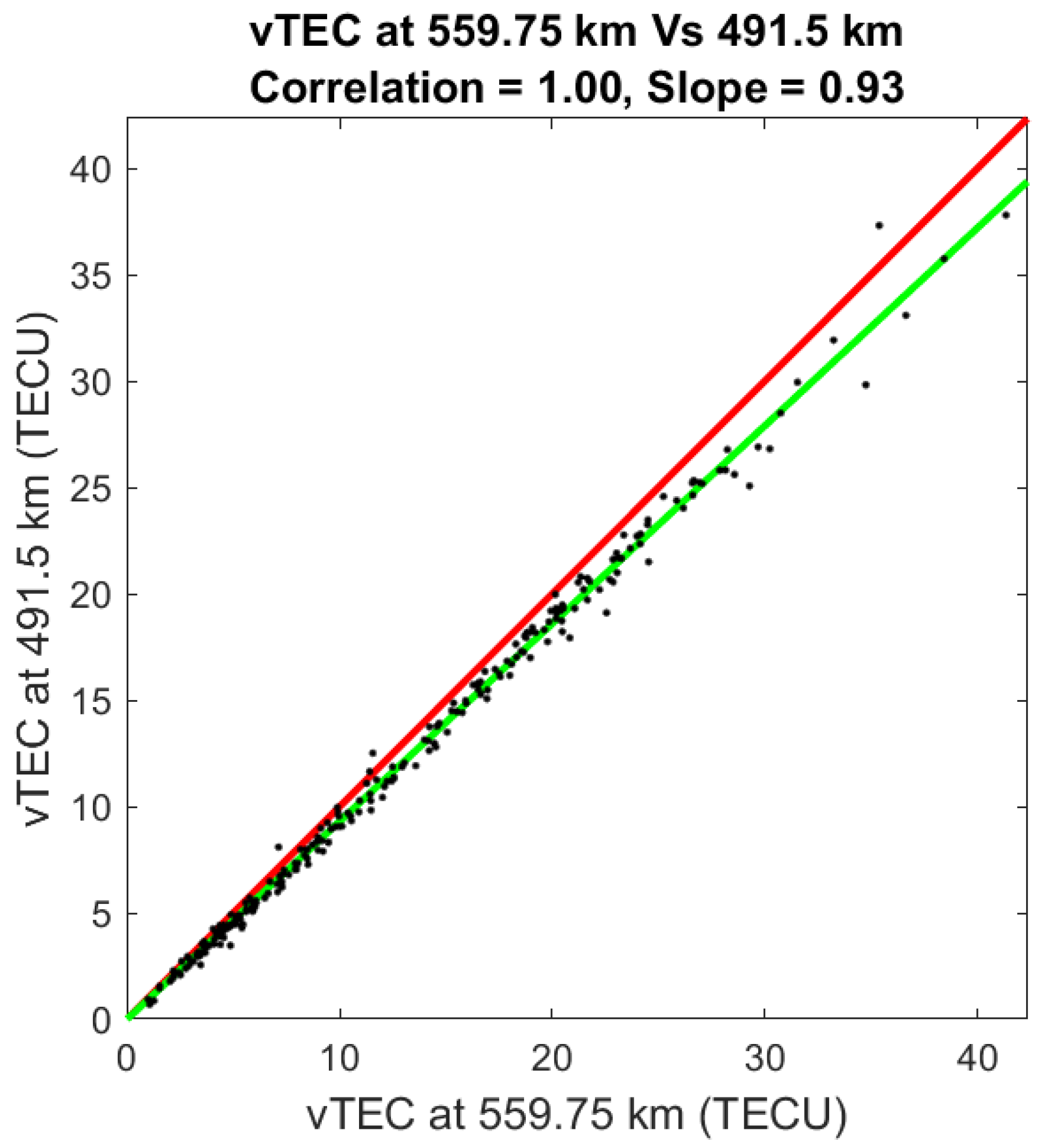
Figure 9 presents a scatter plot of hourly BPST radar vTEC measurements at 559.5 km and 491.5 km from 1 to 21 September 2025. The slope of the line of best fit is 0.93, which is in good agreement with the IRI estimate of 0.92. Although the Pearson correlation coefficient is unity, it is apparent that a small percentage of the 491.5 km estimates (≈1.4%) lie above the line of equality. As the integrated TEC to a lower altitude should not exceed that of a higher altitude, we believe this is an artifact of the 0.41 TECU vTEC uncertainty.
6. Discussion
Figure 3 shows the BPST radar vTEC estimates for November 2024, together with the corresponding DST Index. The BPST radar vTEC values are reduced between 10 and 12 November, as may be expected for a moderate geomagnetic storm (DST ≈ −80 nT). However, it is worth noting that a similar reduction in the BPST radar vTEC is observed on 3 and 4 November despite the fact that DST and other geomagnetic indices (e.g., Kp) indicate a lack of significant geomagnetic activity during this period. The reduction in the BPST radar vTEC observed on the 3 and 4 November can therefore be considered as natural quiescent day-to-day behavior.
Figure 4 shows the BPST radar and Port Adelaide GNSS vTEC results measured on 11 October 2024 following an extreme (G5-Level) geomagnetic storm. The BPST radar results show a rapid vTEC increase from 12 to 38 TECU at ≈9 UT (a factor of 3.2) and a subsequent rapid decrease at ≈11 UT. There is also a smaller maximum between ≈13 and 14 UT. The GNSS TEC results also exhibit a rapid vTEC increase from 27 to 57 (a factor of 2.1) at ≈9 UT, and a second maximum between ≈13 and 14 UT. The reduced increase factor of the 9 UT maximum for the Port Adelaide GNSS results compared to the BPST radar vTEC results (i.e., 2.1 compared to 3.2) suggests that the geomagnetic storm had a larger impact upon the ionosphere than the plasmasphere.
Figure 5 shows a comparison of the BPST radar vTEC results with those obtained using IGS GIM during the geomagnetically quiet period between 1 and 31 December 2024 (−37 nT DST < 40 nT). This reveals that the BPST radar vTEC estimates largely follow GIM data. Both sets of results show a significant minimum on 18 December, and a steady increase in both the diurnal maxima and minima between the 22nd and 27th. Together with
Figure 2 and
Figure 3, these results provide confidence that the BPST radar vTEC results are qualitatively sensible.
Figure 6 illustrates the ratio
R of LEO to GPS vertical TEC estimated between 30 September and 6 October 2024. These dates were selected as the corresponding Southern Hemisphere dates to those used in Figure 15 of [
15] (1 to 7 April), albeit for different latitudes (ranging from 20°N to 40°N), altitude (700 km) and year (2023). The BPST radar
R values range from around 0.6 at night to 0.7 during the day. Using the IRI 2020 model to calculate the corresponding BPST radar
R values at the higher operating altitude of the CENTISPACE satellites (700 km) yields values of 0.67 at night and 0.76 during the day, whereas those estimated by [
15] ranged from 0.56 at night to 0.85 during the day. The corresponding BPST radar
R values are therefore 11% smaller during the day and 12% larger at night. We note that the CENTISPACE
R values were estimated from a small sample size (12 daytime, 11 night-time estimates), with considerable variation in the night-time estimates (0.4 to 0.8). In contrast, 1184 measurements were used to calculate the BPST estimates. It is unclear whether the 11–12% difference in daytime/nighttime values is the result of limitations in the IRI 2020 model or if regional ionospheric differences (i.e., China vs. Australia) are responsible. However, as discussed below, one contributing factor may be differences in the ionospheric peak height (hmF2) between the BPST radar and CENTISPACE results.
Figure 7 illustrates the variation in
R as a function of month and UT hour over the course of the BPST radar vTEC observations. It is worth noting that there is a noticeable difference between the ratios measured in September 2024 and 2025, noting that the September 2025 measurements do not span the full month. We speculate that this difference may be associated with September 2024 being close to solar maximum (smoothed sunspot number
R12 = 159.4 [
34] and average F10.7 cm radio emission of 213.9 solar flux units (sfu) [
35]), whereas September 2025 is on the decline from solar maximum (
R12 = 115.3, F10.7 = 186.4 sfu).
Comparing the ratios shown in
Figure 7 with previous investigations using radio occultation (RO) measurements, it is found that the ratio of LEO to GPS vertical TEC at mid-latitudes during 2007 (solar minimum) maximizes around midday and minimizes around 0500 LT for both summer and winter [
36]. Given that local solar time at the location of the BPST radar occurs around 3 UT, the maximum
R observed by [
36] occurs about two hours earlier than the BPST radar estimates. The midday maximum ratio observed by [
36] was around 0.7 for both summer and winter.
Figure 7 indicates that the midday ratio varies between 0.65 (summer) and 0.7 (winter). Using the IRI 2020 model [
13] to calculate the corresponding midday
R values at the higher operating altitude of the Constellation Observing System for Meteorology, Ionosphere, and Climate (COSMIC) satellites (800 km) used in [
36] yields values of 0.67 (summer) and 0.71 (winter). These values are only 2% smaller (summer) and 4% (winter) smaller than those quoted in [
36] and therefore represent good agreement between the two sets of results.
Comparing the ratios shown in
Figure 7 with previous investigations using ionosonde measurements to calculate ITEC up to 1000 km, Refs. [
37,
38] present the hourly average percentage variation in the ratio of PTEC/TEC, which can be converted to
R by dividing these percentages by 100 and subtracting this value from unity. Figure 6 of [
37] presents results using a GNSS receiver and an ionosonde co-located at Grahamstown (33.3°S, 26.5°E), South Africa, located at a similar mid-latitude to BP. These results include three to four months during autumn (March to May) and winter (June) in 2005 (approaching solar minimum). The autumn results reveal a maximum of 0.9 around 1300 LT and a minimum of 0.35 around 0 LT. Figure 5 of [
38] presents annual results from two sites, including Hermanus (34.4°S, 19.2°E), South Africa, during the low solar activity period of 2009–2010. Although the Hermanus results show significantly more variation than those of [
37], the autumn results reveal a maximum ratio of 0.9 around 1300 LT and a minimum of 0.6 around 0 LT. As is the case for the RO ratios observed by [
36], the maximum ratio observed by [
37,
38] occurs about two hours earlier than the BPST radar vTEC estimates.
Figure 7 indicates that the BPST radar 1300 LT and 0 LT ratios during the autumn months are around 0.7 and 0.53, respectively. Using the IRI 2020 model to calculate the corresponding midday
R values at the altitude (1000 km) used in [
37] yields values of 0.8 (1300 LT) and 0.66 (0 LT). These values are 12% smaller (1300 LT) and 210% larger (0 LT) than the values obtained in [
37], and 12% smaller (1300 LT) and 13% smaller (0 LT) than the values obtained in [
38]. These values represent reasonable agreement between the three sets of results, except for the 0 LT values from [
37], which show poor agreement. The BPST ratios observed in winter, summer and spring are in general agreement with those observed at Hermanus [
38].
Despite the maximum ratios obtained from RO and ionosonde observations occurring about two hours earlier than the BPST radar estimates and the poor agreement between the BPST radar and 0 LT ionosonde ratio maxima of [
37], the comparisons between the BPST radar and the CENTISPACE, RO and ionosonde ratios indicate the BPST radar is yielding sensible LEO to GPS ratios. The timing of the BPST radar maximum ratios may be influenced by the relatively coarse time resolution (two hours) of the GIM data used to determine PTEC.
Figure 8 shows the diurnal variation in
R during September 2024, a month selected as it represents the geomagnetically quietest period during the observations presented in this paper. The corresponding scatter plot for 0 UTC suggests that the diurnal variation in TEC is correlated with hmF2. This may indicate that the diurnal variation in hmF2 is a significant contribution to the diurnal variation in
R. This is an important consideration in interpreting the diurnal variation in
R, such as the comparisons between the results of
Figure 6 and the CENTISPACE results [
15].
Figure 9 presents a scatter plot of hourly BPST radar vTEC estimates at 559.5 km and 491.5 km from 1 to 21 September 2025. Although it is apparent that a small number of the 491.5 km vTEC estimates lie above the line of equality, the results confirm that the BPST radar mode 3 operating parameters allow the 491.5 and 559.5 km vTEC measurements to be distinguished.
As described in
Section 3, the BPST radar vTEC estimation technique uses the QL approximation [
22]. While this approximation simplifies calculations by assuming wave propagation is nearly parallel to the magnetic field, it introduces significant errors when that assumption does not hold. In this case, it is necessary to use the Appleton–Hartree equations [
22], which are applicable across all propagation angles and plasma conditions. However, given the frequency, location, and vertical transmission characteristics of the BPST radar, the QL approximation conditions are strongly met and are considered appropriate for BPST radar vTEC estimation. Even in extreme storm conditions, the fundamental physics governing the signal propagation at 55 MHz remains firmly in the QL regime for vertical paths at mid-latitudes.
Of relevance to the work presented in this paper, on 1 January 2026, SpaceX announced the lowering of the orbit altitudes of 4400 Starlink satellites from 550 km to 480 km throughout 2026 [
39]. This decision is motivated by an estimated reduction in ballistic decay time by 80%, thereby reducing long-term orbital contamination and preventing orbital debris accumulation risks. The lower altitude also decreases collision risk in the increasingly crowded LEO environment. Furthermore, the Starlink version 3 satellites, expected to launch in 2026, will allow the orbital altitude to be lowered to about 350 km [
40]. In each case, the lower Starlink altitude will provide TEC measurements closer to the peak height of the F2 layer, which may increase the utility of the Starlink TEC measurements for bottom-side ionospheric parameterisation. The altitude reduction will also lead to an SNR improvement (≈2.3 dB) and a small reduction in the range difference in the O- and X-mode signal returns. These effects should lead to a small increase in the accuracy of the BPST radar vTEC estimates.
The Starlink TEC measurement technique is also applicable to radars operating outside the lower VHF band. The key factor in the applicability of the technique in other frequency bands is the relative TEC uncertainty (. According to Equation (2), the relative TEC uncertainty is equal to the relative group retardation uncertainty (. The group retardation uncertainty can be approximated by the radar range resolution , which is equivalent to the pulse width for a pulsed monostatic radar such as the BPST radar. The relative TEC uncertainty can therefore be approximated as (.
Considering the high frequency (HF) band (3 to 30 MHz) immediately below VHF, we note that most HF radars operate at low-elevation angles, utilizing ionospheric refraction to enable over-the-horizon propagation (e.g., [
7]). To reach the altitude of the Starlink RSOs, the transmission frequency must exceed the maximum usable frequency (MUF) supporting ionospheric refraction [
22]. The MUF can frequently exceed the radar maximum operating frequency during daytime, thereby prohibiting the detection of Starlink RSOs at these times. Another limitation of using low-elevation HF radars for vTEC measurements is the assumption of spherical symmetry, as used in GNSS vTEC measurements. One notable exception to the use of low-elevation angles for HF radar operation is the Australian Defence Science and Technology Group (DSTG) space surveillance radar [
41], which uses vertically directed transmit and receive arrays. This radar typically operates at a range resolution of 5 km, which is 10 times larger than the lowest BPST radar range resolution used in this study (0.5 km for Mode 1). Using the IRI 2020 model, the group retardation for an HF radar operating at 20 MHz is expected to be ≈8 times larger than at 55 MHz. It therefore follows that the relative TEC uncertainty measured by the DSTG space surveillance radar operating at 20 MHz is only 1.25 times larger than the BPST radar operating with Mode 1 parameters. This suggests that HF radars with similar characteristics to the DSTG space surveillance radar can make Starlink TEC measurements with accuracies comparable to those obtained in the current study. However, we also note that a further limitation of using HF radars is that the signal is more likely to suffer range bending due to ionospheric refraction. This requires ray tracing techniques to accurately estimate group retardation (e.g., [
42]), therefore complicating the measurement technique.
Considering frequency bands immediately above the lower VHF band, there are ionospheric radars operating in the mid to high VHF band (60 to 300 MHz), including the European Incoherent Scatter Scientific Association (EISCAT) radars (e.g., [
43]). These radars operate at 224 MHz with 300 m range resolution. Using the IRI 2020 model, group retardation at 224 MHz is expected to be ≈17 times smaller than at 55 MHz. The relative TEC uncertainty measured by the EISCAT radar is therefore ≈5 times larger than the BPST radar operating with Mode 1 parameters. Considering even higher frequencies, C-band radars operate between 4 and 8 GHz with range resolutions as high as 30 cm [
44]. Using the IRI 2020 model, group retardation at 6 GHz is expected to be ≈12,000 times smaller than at 55 MHz. The relative TEC uncertainty measured by a C-band radar operating at 6 GHz is therefore ≈375 times larger than the BPST radar operating with Mode 1 parameters. This is a consequence of the very small group retardation occurring at GHz frequencies, which makes these frequencies ideal for GPS applications.
The above analysis emphasizes that the Starlink TEC measurement technique is best suited to radars operating in the VHF and HF bands. Given the inclination of most Starlink satellites is currently 53°, it is hoped that the results presented in this paper will encourage researchers to consider applying the Starlink TEC measurement technique for HF and VHF radars located at latitudes between ±53°, and therefore yield accurate vTEC measurements within these latitudes that will assist in understanding the relative contributions of ITEC and PTEC.





 ,
,