


Highlights
What are the main findings?
- PTBD-Net progressively suppresses large-scale background interference and refines confusing local responses, achieving improved target–background discrimination across three infrared small target datasets.
- BGHEC uses cross-level compatibility evidence to control hierarchical feature fusion, while RAH-MoE employs local response statistics to combine heterogeneous experts for differentiated processing of target and clutter responses.
What are the implications of the main findings?
- Cross-level feature fusion benefits from position-dependent gating that selectively introduces complementary information and limits the propagation of background clutter.
- Decoder features with different response states benefit from adaptive transformations guided by response saliency and spatial structure, providing an effective approach to reducing false alarms in complex infrared scenes.
Abstract
Infrared small target detection remains challenging because small targets have weak representations and are easily confused with bright noise, cloud boundaries, and structured thermal clutter. Existing networks often fuse cross-level features without explicit control and apply the same transformation to all decoder positions. These designs may propagate clutter and limit adaptation to different local response states, weakening target–background discrimination. To address these issues, we propose PTBD-Net, a progressive target–background discrimination network. A Bidirectional Gated Hierarchical Evidence Calibration module (BGHEC) extracts compatibility evidence from cross-level feature relations and discrepancies, from which spatially adaptive gates are generated to regulate top-down and bottom-up information injection. This process preserves useful target cues and limits background propagation during hierarchical fusion. A Response-Aware Heterogeneous Mixture of Experts module (RAH-MoE) further computes local response statistics that summarize response saliency and spatial structure. These statistics guide the soft routing of four heterogeneous experts. This expert combination enables differentiated refinement of target and clutter responses and further reduces false alarms. Experiments on NUAA-SIRST, NUDT-SIRST, and IRSTD-1K demonstrate the effectiveness of PTBD-Net, which achieves IoU scores of 78.61%, 94.85%, and 68.60%, respectively. On NUDT-SIRST, it further obtains a detection probability of 98.84% and a false-alarm rate of , with 3.76 M parameters and 8.94 G FLOPs.
1. Introduction
Infrared small target detection aims to accurately localize small and dim targets in complex infrared scenes. It is an important component of infrared search and track systems and supports applications such as early warning, remote sensing observation, maritime surveillance, and security monitoring [1,2]. Due to long imaging distances and limited spatial resolution, infrared small targets usually occupy only a few pixels and contain limited texture, shape, and structural information. Sensor noise, atmospheric disturbance, and variations in background thermal radiation further weaken the differences between targets and their surroundings. Meanwhile, cloud boundaries, heated buildings, sea-surface reflections, and isolated bright clutter may produce responses similar to genuine targets, resulting in missed detections and background false alarms [3,4,5]. Effective infrared small target detection therefore requires the preservation of weak target cues and continuous discrimination between targets and confusing background responses.
Traditional infrared small target detection methods mainly employ filtering, local contrast, saliency, random-walk modeling, and low-rank sparse decomposition [6,7,8,9,10]. These methods provide clear physical interpretations, but their performance depends strongly on predefined assumptions and manually selected parameters. Deep learning methods improve detection performance through learned target representations. Target representation methods introduce local contrast, structural, scale, or high-frequency information to strengthen weak target features [3,5,11,12]. Hierarchical aggregation methods preserve target information through dense multi-level interaction, multi-scale feature fusion, or cross-level context modeling [4,13,14,15,16]. Recent studies further explore multi-scale perception and cross-attention fusion in MPCNet [17], native-resolution feature preservation and selection in Na-IRSTD [18], background-noise suppression in NS-FPN [19], and frequency-adaptive expert routing in FAME-Net [20]. These developments improve feature preservation, background suppression, and adaptive representation under complex infrared scenes.
These methods have substantially improved weak-target representation, contextual modeling, and background suppression under complex infrared backgrounds. However, two limitations remain in hierarchical feature fusion and decoder processing, which still restrict accurate target–background discrimination in challenging scenes. First, multi-level features are commonly fused through addition, concatenation, or attention, with limited control over how information from another level modifies the current representation [4,13,16]. Such uncontrolled fusion may allow large-scale background semantics to weaken shallow target responses or propagate shallow clutter into deeper features [3,11]. Cross-level calibration therefore requires selectively using source information to correct the current representation based on the local relation between the current and source features. Second, many decoders apply a shared feature transformation across all spatial positions, although decoder features contain diverse local response states, including weak target responses, isolated bright clutter, and spatially extended background structures. Uniform processing provides limited adaptation to these response differences, leading to insufficient discrimination between targets and clutter. Existing expert-based infrared methods have explored adaptive routing, particularly from the frequency perspective, but explicit response-aware routing for spatially diverse local response states remains insufficiently explored [20].
To address these issues, we propose a Progressive Target–Background Discrimination Network, termed PTBD-Net, which organizes target–background discrimination into three progressive stages according to the characteristics of confusing infrared responses. First, the DHiF operator [12] improves local high-frequency discrimination for weak targets and locally salient interference such as isolated bright noise and edges. BGHEC then addresses background structures that remain stable across hierarchical levels. It uses top-down contextual verification and bottom-up detail compensation, while compatibility gates regulate cross-level information injection to limit the propagation of cloud boundaries and extended structural clutter while preserving weak target cues. Finally, RAH-MoE handles the spatial diversity of residual decoder responses. Local saliency and structural statistics guide the combination of complementary expert transformations, enabling response-dependent refinement of compact target-like clutter and structured background responses. PTBD-Net therefore progresses from local response discrimination to hierarchical evidence verification and response-aware refinement, providing a coordinated solution to different forms of target–background ambiguity.
Extensive experiments on the NUAA-SIRST, NUDT-SIRST, and IRSTD-1K datasets demonstrate the effectiveness and computational efficiency of the proposed method. The main contributions of this work are summarized as follows:
- We propose a progressive target–background discrimination network (PTBD-Net), which suppresses large-scale background interference through selective hierarchical fusion and refines target and clutter features according to their local response states.
- We develop a Bidirectional Gated Hierarchical Evidence Calibration module (BGHEC), which extracts compatibility evidence from cross-level feature relations and discrepancies and generates spatially adaptive gates to regulate bidirectional information fusion and limit background propagation.
- We develop a Response-Aware Heterogeneous Mixture of Experts module (RAH-MoE), which routes local responses according to their saliency and structural properties and softly combines four heterogeneous experts for differentiated target and clutter processing.
The remainder of this paper is organized as follows. Section 2 reviews infrared small target detection, hierarchical feature fusion, and Mixture of Experts methods for visual representation. Section 3 presents the overall PTBD-Net architecture and details the proposed BGHEC and RAH-MoE modules. Section 4 describes the experimental settings and reports the quantitative comparisons, qualitative evaluations, complexity analysis, and ablation studies. Section 5 discusses the implications and limitations of the proposed method. Finally, Section 6 concludes the paper.
2. Related Work
2.1. Infrared Small Target Detection
Early infrared small target detection methods mainly construct handcrafted priors from target saliency and background continuity. Local contrast methods highlight potential targets according to their intensity differences from surrounding regions [6], while low-rank models separate sparse targets from structurally correlated backgrounds [8,10]. These methods provide clear physical interpretations, but their performance depends strongly on predefined assumptions and manually selected parameters.
Deep-learning-based methods formulate infrared small target detection as end-to-end pixel-level prediction. ALCNet and LPNet incorporate local contrast or patch-level priors to enhance weak target responses [21,22]. CCRANet employs a two-stage local attention design for low-resolution infrared targets, while MFEU-Net combines multi-scale feature extraction with spatial and channel attention to preserve weak target information [15,23]. ISNet strengthens shape and edge representation [5], while MSHNet and SeRankDet improve scale-sensitive and salient target representation [11,24]. MDvsFA-cGAN and CourtNet further address the balance between missed detections and false alarms [25,26]. These methods improve target representation from different perspectives, although complex backgrounds can still produce responses similar to small targets.
Recent studies introduce model-driven priors, high-frequency modeling, multi-scale fusion, and adaptive representation into infrared small target detection. RPCANet unfolds robust principal component analysis into a trainable network [27], while DHiF dynamically models local high-frequency components [12]. Among recent 2026 methods, MPCNet combines multi-scale perception with cross-attention feature fusion [17], Na-IRSTD preserves native-resolution target cues through efficient feature selection and fusion [18], and NS-FPN improves target representation through background-noise suppression [19]. FAME-Net further introduces frequency-adaptive expert routing for heterogeneous frequency components [20]. These methods provide effective feature preservation and background modeling, while controlled hierarchical information injection and response-dependent decoder processing remain important for complex target–background discrimination.
2.2. Hierarchical Feature Fusion for Infrared Small Target Detection
Hierarchical feature interaction is widely used to compensate for the attenuation of small target responses during downsampling. ACM transfers information between high-level semantics and low-level details through asymmetric contextual modulation [3]. DNA-Net and UIU-Net employ densely nested or embedded U-shaped structures to preserve multi-level target representations [4,13]. Multi-stage multi-scale local feature fusion integrates deep and shallow features across multiple encoder stages [14], while MFEU-Net extracts complementary multi-scale information through U-shaped encoding and decoding [15]. MFFN further combines small target features with multi-scale contextual information through a skip-connected feature pyramid [28]. AGPCNet and SCTransNet improve cross-level interaction through context pyramids and spatial–channel modeling [16,29].
Most existing methods fuse aligned cross-level features through addition, concatenation, or attention, providing limited control over how source information modifies the current representation. Deep background semantics may weaken shallow target responses, while shallow clutter may be propagated into deeper features. Hierarchical calibration therefore requires selective correction of the current representation using information from other levels. BGHEC extracts compatibility evidence from cross-level feature relations and discrepancies and uses this evidence to generate spatially adaptive gates. The gates regulate top-down and bottom-up information injection, allowing useful target information to contribute to feature correction while limiting background propagation.
2.3. Mixture of Experts for Visual Representation
Mixture of Experts models use a routing network to adaptively combine multiple expert transformations. Sparsely gated MoE models activate a subset of experts to expand model capacity with controlled computation [30,31]. In visual representation learning, V-MoE applies sparse expert layers to visual tokens [32], while Soft MoE improves routing stability through differentiable soft assignment [33]. Spatial MoE further performs position-dependent routing for visual features [34].
Recent visual MoE methods increasingly employ experts with complementary structures. MLoRE combines a shared convolutional path with low-rank expert branches for dense prediction [35], while AdaptIR uses heterogeneous experts to model local spatial, global spatial, and channel information [36]. In infrared small target detection, FAME-Net combines frequency-specific experts through frequency-adaptive routing [20], demonstrating the potential of expert-based adaptive processing.
Existing routing mechanisms are mainly driven by semantic information or frequency representations. Local response statistics that describe response saliency and spatial structure receive less attention in decoder-stage routing. RAH-MoE computes these response statistics and uses them to generate dense soft weights for four heterogeneous experts. A shared expert provides a common feature transformation. This design enables adaptive processing of different target response states and clutter patterns at each spatial position.
3. Methods
3.1. Method Overview
As shown in Figure 1, PTBD-Net follows a three-stage progressive target–background discrimination process. Stage I uses DHiF to distinguish weak target responses from confusing local high-frequency patterns such as bright noise and edges. Stage II employs BGHEC to verify cross-level evidence and restrict the propagation of extended background structures, including cloud and structural boundaries. Stage III introduces RAH-MoE to adaptively refine the remaining spatially diverse response patterns according to their local saliency and structural characteristics. The three stages progressively address local response ambiguity, hierarchical background interference, and response-dependent refinement.
Figure 1.
Overall architecture of the proposed PTBD-Net. The network progressively suppresses large-scale background interference through gated hierarchical fusion and refines target and clutter responses through response-aware expert processing.
Given a single-channel infrared image , where B denotes the batch size and H and W denote the input height and width, respectively, the encoder produces five hierarchical features:
where denotes the channel dimension of the i-th encoder feature. A standard residual block first extracts . DHiF [12] is incorporated into the intermediate encoder stages that produce , , and to improve local high-frequency representation, while is obtained by a standard residual block after further downsampling.
The first four encoder features are processed by BGHEC. The module extracts compatibility evidence from cross-level feature relations and discrepancies and generates spatially adaptive gates to control top-down and bottom-up information injection. In this way, useful target cues are selectively introduced to correct each hierarchical representation, producing the calibrated skip features while limiting the propagation of background interference.
The decoder is initialized with . Each decoder stage first upsamples the feature from the preceding deeper stage. The upsampled feature guides channel-wise cross-attention (CCA) [37] to recalibrate the corresponding skip feature . The two features are concatenated and refined by two CBR blocks to produce , where each CBR block consists of a convolution, batch normalization, and ReLU activation. RAH-MoE is inserted after and to compute local response statistics and softly combine heterogeneous experts. The corrected features and are passed to the following decoder stages for differentiated refinement of target and clutter responses. Finally, a convolution maps to the single-channel prediction map . During training, predictions from the bottleneck and intermediate decoder stages are used for deep supervision.
3.2. Bidirectional Gated Hierarchical Evidence Calibration
Hierarchical encoder features provide complementary yet asymmetric representations for infrared small targets and complex backgrounds. Shallow features preserve accurate locations, local contrast, and localized target structures, but their limited receptive fields make it difficult to distinguish true targets from locally salient background patterns. Deep features contain richer contextual and structural information, whereas repeated downsampling may weaken the local peaks and precise locations of extremely small targets. Direct addition or concatenation may therefore propagate target cues and background responses together, allowing deep background semantics to weaken shallow target responses or shallow clutter to enter deeper representations.
BGHEC performs controlled cross-level interaction through Top-Down Context Verification (TDCV) and Bottom-Up Detail Compensation (BUDC), as illustrated in Figure 2. In this module, the current-level feature, the aligned source feature, and their discrepancy jointly form cross-level compatibility evidence. These cues describe the existing representation, complementary information from another level, and their local consistency. Spatially adaptive gates are generated from this evidence to control the contribution of the source feature. The resulting selective correction of the current-level representation is referred to as hierarchical evidence calibration.
Figure 2.
Detailed structures of the Top-Down Context Verification (TDCV) and Bottom-Up Detail Compensation (BUDC) units in BGHEC. TDCV introduces deep contextual evidence to verify shallow local responses, whereas BUDC propagates fine-grained information toward deeper levels to compensate for attenuated target details.
Given the first four encoder features defined above, independent convolutions project them into a common channel space:
where denotes the input projection and is the common channel dimension. This projection aligns channel representations without changing the spatial resolution of each level.
3.2.1. Top-Down Context Verification
Shallow encoder features preserve accurate spatial locations and local target structures, but their limited contextual ranges make it difficult to distinguish spatially localized targets from locally salient background patterns. TDCV therefore progressively introduces deep contextual information to verify shallow responses.
The deepest aligned feature is used as the starting point . For each shallower level , the feature from the next deeper level is first upsampled and locally aligned:
where denotes bilinear upsampling, and consists of a depth-wise convolution followed by a channel projection.
The current-level feature , the aligned deep feature , and their absolute difference are concatenated as top-down compatibility evidence. A spatial compatibility gate is then generated from this evidence:
where denotes channel-wise concatenation, is the Sigmoid function, and is the gate-generation network. The current feature provides a reference for the representation to be corrected, the aligned deep feature supplies contextual evidence, and their absolute difference reflects their local discrepancy and provides a cue for estimating cross-level compatibility. The gate-generation network consists of a channel-reduction convolution, a depth-wise convolution, and a final projection that generates a single-channel gate logit. Thus, , with its values constrained to .
The gate estimates how strongly the aligned deep evidence should contribute to the correction of the current-level representation at each spatial position. The top-down feature is updated as follows:
where ⊙ denotes element-wise multiplication, is the convolutional fusion function, and is a learnable scaling coefficient. The fusion function consists of a convolution, a depth-wise convolution, and a final projection, with normalization and GELU applied to the intermediate transformations. A small gate value limits the contribution of poorly matched deep evidence, whereas a large value allows more contextual information to participate in the current-level correction.
3.2.2. Bottom-Up Detail Compensation
Although TDCV enriches shallow representations with scene context, small target peaks and precise locations weakened in deeper features have not yet been directly compensated. BUDC therefore propagates the fine-grained evidence retained at shallower levels toward deeper representations.
The highest-resolution top-down feature is used as the starting point . For each deeper level , the preceding bottom-up feature is downsampled using PixelUnshuffle [38]:
where rearranges each spatial neighborhood into the channel dimension, and is a projection that compresses the rearranged channels to . Compared with average pooling, this operation avoids directly averaging weak local peaks with surrounding background responses.
The top-down feature , the aligned shallow feature , and their absolute difference form bottom-up compatibility evidence. The corresponding gate is generated as follows:
where follows the same lightweight structure as but uses independent parameters. Here, provides the deeper representation to be corrected, supplies fine-grained evidence from the preceding shallow level, and their difference provides a cue for estimating local cross-level consistency. The bottom-up feature is then updated as follows:
where is the bottom-up fusion function and is a learnable scaling coefficient. The compatibility gate controls the contribution of shallow evidence to each deeper representation. It preserves useful local contrast and fine-grained target cues while limiting the injection of redundant or weakly matched clutter responses.
3.2.3. Calibration Residual and Output Projection
After bidirectional propagation, contains the aligned current-level feature together with the corrections introduced by gated top-down and bottom-up evidence. These corrections represent the changes supported by cross-level compatibility evidence. To isolate them from the original aligned representation, we define the propagation-induced calibration residual as follows:
The calibration residual is then projected back to the original channel dimension:
where is a output projection and is a learnable scaling coefficient. Finally, the calibrated skip feature is obtained through a residual update:
This residual formulation retains the original encoder feature as the reference representation and adds only the correction induced by gated cross-level evidence. The resulting features are subsequently used as calibrated skip features in the decoder.
3.3. Response-Aware Heterogeneous Mixture of Experts
After hierarchical evidence calibration, deep semantics and shallow spatial details are progressively integrated in the decoder, producing spatially diverse response patterns. Weak targets may retain low-amplitude but locally contrasted responses, while reliable target candidates usually form spatially localized activations. In contrast, clouds, building edges, and other structured backgrounds may generate strong or spatially extended false responses. Applying an identical feature transformation to all positions is therefore insufficient for simultaneously preserving weak targets, refining localized target responses, and suppressing complex background interference.
To address this issue, we introduce a Response-Aware Heterogeneous Mixture of Experts (RAH-MoE) after decoder stages and , whose spatial resolutions are and , respectively. At these stages, semantic information and skip-connected details have been sufficiently integrated while relatively high spatial resolutions are retained, making the resulting features suitable for position-dependent response correction.
Let the input feature at decoder stage j be
where denotes the channel dimension of the current decoder stage. As shown in Figure 3, RAH-MoE contains an always-active shared expert and heterogeneous routed experts . Their position-dependent combination is defined as
where denotes the spatial routing weight of the e-th expert and is broadcast along the channel dimension during multiplication. The module output is formulated as
where is the routed-branch output projection, while and are learnable scaling coefficients. The corrected feature is used as the input to the next decoder stage, and it replaces in the subsequent decoding process. The shared expert is independent of the routing Softmax and supplies a common transformation to every spatial position. Unlike Top-k sparse routing, all four heterogeneous experts participate in the forward pass and are dynamically combined according to local response states.
Figure 3.
Pipeline of the proposed Response-Aware Heterogeneous Mixture of Experts (RAH-MoE). The shared expert provides a stable common transformation, while the response-aware router generates dense position-dependent weights to combine four structurally heterogeneous experts.
3.3.1. Response-Aware Dense Routing
The router computes local response statistics that summarize response saliency and spatial structure, together with a compressed semantic feature extracted from . A single-channel response-strength map is first obtained by averaging the absolute activations over the channel dimension:
where c denotes the channel index. Multi-range response distributions are then computed using average pooling with stride 1 and the same padding:
The signed local contrast feature is defined using the widest local reference:
Here, and characterize response distributions over small and intermediate neighborhoods, whereas provides a broader local background reference. To describe horizontal and vertical response variations, two axis-dependent features are further constructed:
Meanwhile, the original decoder feature is compressed using a projection:
where denotes the semantic projection and is the compressed channel dimension. The semantic and response features are concatenated to form the router input:
The routing network first employs a convolution to model local relations among these features and then uses a projection to generate the routing logits:
where denotes the routing network and is the unnormalized routing score of the e-th expert. The dense routing weights are obtained through a temperature-controlled Softmax:
where b denotes the sample index, p denotes a spatial position, e denotes the current expert index, q is the summation index over all experts, and is the routing temperature. A larger produces smoother expert combinations, whereas a smaller value increases routing selectivity. The router learns position-dependent combinations of heterogeneous transformations from local semantic features and response statistics, without assigning fixed target or background labels to spatial positions.
3.3.2. Shared and Heterogeneous Experts
The shared expert is activated at every spatial position and provides a stable general-purpose decoding transformation. It consists of a input projection, a depth-wise convolution, Layer Normalization, GELU activation, and a output projection:
This shared pathway maintains a consistent common transformation, allowing the routed experts to focus on complementary response-dependent corrections. All four routed experts preserve the spatial resolution and channel dimension of but employ different spatial operators and modulation mechanisms.
- (1)
- Local Contrast Expert
Weak targets may have low absolute activation values while remaining locally prominent relative to their neighborhoods. This expert reuses the local contrast feature generated by the router and projects it to the channel dimension of :
A lightweight local transformation , implemented using a projection, a depth-wise convolution, normalization, GELU, and an output projection, is modulated in a residual manner:
This formulation provides moderate enhancement to locally contrasted responses while retaining the original decoder representation.
- (2)
- Localized-Response Expert
Spatially localized target responses are better characterized by complementary local receptive fields than by a single convolution kernel. This expert therefore employs parallel and depth-wise convolutions:
The two local features are concatenated and fused through a projection:
Efficient channel attention is subsequently applied to recalibrate the fused response [39]:
The parallel local branches introduce different neighborhood ranges and strengthen spatially localized activations without explicitly imposing a fixed target morphology.
- (3)
- Context-Recalibration Expert
Strong activations may arise from either true targets or bright background structures. This expert introduces two complementary contextual transformations:
where contains a depth-wise convolution and contains a depth-wise convolution with dilation rate 2; both are followed by normalization, GELU, and a projection. Their average provides a multi-range contextual reference:
A position- and channel-dependent recalibration gate is generated from the two contextual features:
where denotes a convolution that projects the concatenated contextual features into channels, producing a recalibration gate that varies across spatial locations and channels. The expert output is obtained by adaptively interpolating between the original decoder feature and the contextual reference:
This expert adjusts strong responses according to their consistency with the surrounding context. A larger value of preserves more of the original decoder feature, whereas a smaller value introduces a greater contribution from the contextual reference .
- (4)
- Axis-Aligned Structure Expert
Horizons, building contours, and cloud boundaries often exhibit local continuity along the horizontal or vertical axis. This expert models these structures using asymmetric depth-wise convolutions:
Here, captures horizontally continuous responses using a receptive field, whereas models vertically continuous responses using a receptive field. The two axis-dependent features are concatenated and projected into a fused structural representation:
A modulation map is then generated from the fused feature:
where denotes a convolution that projects the fused axis-aligned feature into channels to generate a modulation map. The expert output is formulated as follows:
This design provides explicit horizontal and vertical continuity cues without assuming that arbitrary structural orientations are exhaustively modeled.
3.3.3. MoE Auxiliary Regularization
The response-aware router is optimized end to end under the detection objective without manually assigned expert labels or routing pseudo-labels. However, detection supervision alone does not explicitly constrain the routing distribution or the functional differentiation among experts. During training, the router may repeatedly favor a small subset of experts, while excessively large routing logits may lead to overconfident and unstable assignments. Conversely, nearly uniform routing and highly correlated expert outputs may reduce RAH-MoE to a simple average of similar branches. We therefore introduce expert-usage balancing, Router Z-loss, routing-entropy regularization, and expert-diversity regularization at each RAH-MoE stage.
To prevent routing collapse, we first introduce an expert-usage balancing constraint following the load-balancing principle of Switch Transformer [31]. The average routing weight assigned to expert e at decoder stage j is defined as
The corresponding balancing loss penalizes the deviation of each expert’s average routing weight from the uniform distribution :
Unlike sparse MoE models, RAH-MoE adopts dense routing and evaluates all routed experts during the forward pass. The uniform reference serves as a weak symmetric anti-collapse prior that prevents certain experts from receiving persistently negligible routing weights. Importantly, this constraint is imposed only on the expert usage averaged over the batch and spatial positions, rather than on the routing distribution at each individual position. It therefore does not require every position to activate the experts uniformly. Moreover, the routed experts represent complementary response transformations rather than explicit target or clutter categories. Consequently, the strong spatial imbalance between target and background pixels does not imply that expert utilization should follow the same imbalance. In the absence of a predefined expert-frequency prior, provides a neutral reference that allows all heterogeneous branches to receive sufficient optimization while preserving response-dependent local routing.
We further employ the Router Z-loss introduced in ST-MoE [40] to control the magnitude of the routing scores before Softmax:
By keeping the routing scores within a reasonable range, avoids an excessively sharp expert-weight distribution and improves the training stability of the router.
Expert-usage balancing alone cannot guarantee an appropriate degree of routing selectivity. An overly concentrated distribution may cause premature dependence on a single expert, whereas a nearly uniform distribution may degenerate into indiscriminate expert averaging. We therefore define the average routing entropy as
where is a small constant for numerical stability. The routing entropy is constrained toward a predefined target value:
This constraint complements the global expert-usage regularization by controlling routing selectivity at individual spatial positions. For the four routed experts, fully uniform local routing corresponds to the maximum entropy , whereas we set the target entropy to . Therefore, the router is not encouraged to average the four experts uniformly at each position. Instead, it retains a moderate position-dependent preference, while the expert-usage balancing term prevents persistent expert starvation at the global level.
Although the routed experts employ different spatial operators and modulation mechanisms, they may still produce similar representations under the same detection supervision. To encourage complementary expert functions, the output of expert e is first converted into a normalized global representation:
where denotes global average pooling and . The expert-diversity loss is then defined as
This loss minimizes the squared cosine correlation between different expert outputs. Unlike parameter-level orthogonality constraints, it directly regularizes the input-dependent expert representations and therefore discourages output homogenization.
The auxiliary loss at decoder stage j is formulated as follows:
where , , , and are the weighting coefficients of the four auxiliary terms, respectively. With six deep-supervision outputs, the detection loss is defined as follows:
where denotes the m-th prediction upsampled to the input resolution and Y is the ground-truth mask. Finally, the auxiliary losses from the two RAH-MoE stages are averaged and jointly optimized with the detection loss:
4. Experiments
4.1. Datasets and Evaluation Metrics
4.1.1. Datasets
We evaluate the performance of the proposed method on three public infrared small target detection datasets, namely, NUDT-SIRST [4], NUAA-SIRST [3], and IRSTD-1K [5]. To ensure fair and reproducible comparisons, we followed the standard training/testing splits provided by the corresponding benchmarks and widely adopted in previous studies.
NUDT-SIRST contains 1327 infrared images with a fixed resolution of . It is constructed using diverse infrared backgrounds and synthetic small targets with varying scales, shapes, and intensities. The background scenes include clouds, urban areas, sea surfaces, and natural environments. Following the standard split, 663 images were used for training and 664 images were used for testing.
NUAA-SIRST consists of 427 real infrared images with varying spatial resolutions, generally around 200 × 300. The dataset contains small targets captured under diverse imaging conditions and complex background interference, with substantial variations in target size, intensity, and local contrast. We followed the commonly adopted split, using 213 images for training and 214 images for testing.
IRSTD-1K contains 1001 real infrared images with pixel-level target annotations, and all images have a resolution of . The dataset covers diverse scenes and imaging conditions, with substantial variations in target scale, morphology, and background type. Following its standard split, 800 images were used for training and the remaining 201 images were used for testing.
4.1.2. Evaluation Metrics
To comprehensively evaluate segmentation accuracy, target-detection capability, and false-alarm suppression, we report four quantitative metrics, including Intersection over Union (IoU), F1-score, probability of detection (), and false-alarm rate (), together with receiver operating characteristic (ROC) curves [4,41]. IoU and F1-score measure pixel-level segmentation quality, while and evaluate target-level detection and false-alarm suppression. The ROC curve characterizes the trade-off between the pixel-level true-positive rate and false-positive rate under different decision thresholds.
IoU measures the pixel-level overlap between the predicted and ground-truth masks [42]. It is defined as
where N is the number of test images, and , , and denote the numbers of ground-truth target pixels, predicted target pixels, and correctly predicted target pixels in the i-th image, respectively. Accordingly, and are the accumulated intersection and union areas over the test set. A higher IoU indicates more accurate target localization.
The F1-score is the harmonic mean of pixel-level precision and recall [43]:
where
Precision represents the proportion of correctly predicted target pixels among all predicted target pixels, while recall represents the proportion of correctly detected target pixels among all ground-truth target pixels. A higher F1-score indicates a better balance between missed target pixels and false-positive pixels.
Following the target-level evaluation protocol commonly used in infrared small target detection [4], the probability of detection is defined as
where is the number of correctly detected targets and is the total number of ground-truth targets. A predicted connected component is considered correctly detected when the Euclidean distance between its centroid and that of a ground-truth target is smaller than . Following the standard setting, is set to 3 pixels. A higher indicates that more real targets are successfully detected.
The false-alarm rate is defined as follows:
where denotes the number of pixels belonging to unmatched predicted components and denotes the total number of image pixels in the test set. is reported in units of , and a lower value indicates stronger suppression of background false alarms.
The ROC curve describes the trade-off between the true-positive rate (TPR) and false-positive rate (FPR) under different decision thresholds [41]. They are defined as
where , , , and denote the numbers of true-positive, false-negative, false-positive, and true-negative pixels, respectively. The horizontal and vertical axes of the ROC curve represent FPR and TPR, respectively. A curve closer to the upper-left corner indicates that a method achieves a higher true-positive rate while maintaining a lower false-positive rate. The area under the ROC curve (AUC) provides an overall measure of pixel-level discrimination performance, with a higher AUC indicating better performance.
4.2. Implementation Details
All experiments were implemented in PyTorch 2.5 and conducted on a single NVIDIA RTX 4090 GPU with 24 GB of memory. During training, each image is normalized using the dataset-specific mean and standard deviation, and all training samples are processed at . NUDT-SIRST images are natively and are therefore used directly. IRSTD-1K images are randomly cropped from their original resolution to . NUAA-SIRST images are kept at their original resolution without resizing; if either dimension is smaller than 256 pixels, the image and its corresponding mask are zero-padded along the bottom and right boundaries until both dimensions are at least 256 pixels, after which a patch is randomly cropped. Random horizontal flipping, vertical flipping, and transposition are jointly applied to the image–mask pairs for data augmentation. During evaluation, images from all three datasets are kept at their original resolutions and padded only to the nearest size divisible by 32 to satisfy the network downsampling requirement. After inference, each prediction is cropped back to the corresponding original image size before metric computation, so padded regions are excluded from evaluation.
The channel dimensions of the five encoder stages were set to 32, 64, 128, 256, and 256, respectively. DHiF was embedded only in the intermediate encoder stages producing , , and , where it replaced the first convolution of the corresponding residual block. The local window size of DHiF was set to . In BGHEC, the first four encoder features were projected into a common aligned channel dimension of , and the bidirectional calibration process was performed once. The output-layer biases of the compatibility-gate generators were initialized to , corresponding to an initial gate value of . The top-down, bottom-up, and output residual scaling coefficients, denoted by , , and , respectively, were all initialized to 0.1.
RAH-MoE was inserted after decoder stages and . The residual scaling coefficients of the shared and routed branches, denoted by and for , were both initialized to 0.1. Dense spatial Softmax routing was applied to generate the position-dependent expert weights . The routing temperature was decreased from 1.5 to 0.8 according to a piecewise-linear annealing schedule during training.
The network was trained for 1000 epochs using the Adam optimizer with a batch size of 16 and an initial learning rate of . Linear warm-up was applied during the first 10 epochs, followed by cosine annealing that reduced the learning rate to . Deep supervision was applied to prediction maps, including the bottleneck prediction, the side predictions associated with decoder stages , , and , the fused prediction, and the final prediction. The five auxiliary predictions were bilinearly upsampled to the training input resolution of , and all six predictions were jointly supervised using binary cross-entropy loss. Accordingly, the deep-supervised detection loss is denoted by .
At each RAH-MoE stage , the auxiliary objective consisted of the expert-usage balancing loss , routing-entropy loss , expert-diversity loss , and Router Z-loss . Their weighting coefficients were selected through a logarithmic one-factor-at-a-time sensitivity study on NUDT-SIRST. Each coefficient was varied by one order of magnitude around the final setting while the other three were fixed. Based on the detection performance, we set , , , and . These coefficients were selected based on the sensitivity analysis presented later. During inference, the prediction map was binarized using a threshold of 0.5.
4.3. Quantitative Analysis
Traditional infrared small target detection methods generally rely on handcrafted filtering, local contrast priors, or low-rank decomposition [6,8,9]. As shown in Table 1, these methods exhibit relatively limited segmentation accuracy across the three datasets. Filter-based methods and local-contrast-based methods, such as Top-Hat [44], Max-Median [45], WSLCM [46], and TLLCM [47], are sensitive to edges, bright clutter, and nonuniform backgrounds, resulting in limited segmentation accuracy and relatively high false-alarm rates. Model-based methods, including IPI [8], PSTNN [9], and MSLSTIPT [48], improve target extraction by exploiting background structure and target sparsity, but their performance remains constrained when the underlying assumptions are violated. In contrast, deep-learning-based methods achieve substantially better results by learning hierarchical target representations and contextual information from data [3,4,13,16]. Nevertheless, preserving weak target cues while suppressing structurally similar background interference remains challenging.
Table 1.
Quantitative comparison with representative methods on the NUAA-SIRST, NUDT-SIRST, and IRSTD-1K datasets. ↑ and ↓ indicate that higher and lower values are better, respectively. The best and second-best results are shown in bold and underlined, respectively.
Among the compared methods, PTBD-Net achieves the highest IoU, F1-score, and on all three datasets. It also obtains the lowest on NUAA-SIRST and NUDT-SIRST. These results show that the proposed progressive target–background discrimination framework provides consistent improvements in segmentation accuracy and target detection, while the false-alarm performance varies across datasets.
On NUAA-SIRST [3], PTBD-Net achieves an IoU of 78.61%, an F1-score of 88.02%, and a of 96.78%, outperforming the corresponding second-best results by 1.14, 0.72, and 0.20 percentage points, respectively. It also reduces to 12.34, compared with the second-best value of 13.72. These improvements indicate that PTBD-Net more accurately delineates target regions, preserves weak target responses, and suppresses false alarms in complex real infrared scenes. On NUDT-SIRST [4], PTBD-Net achieves the best performance across all four metrics. It obtains an IoU of 94.85% and an F1-score of 97.36%, exceeding DNA-Net [4] by 0.97 and 0.52 percentage points, respectively. Meanwhile, reaches 98.84%, and is reduced to 2.92, compared with the second-best value of 3.19. The simultaneous improvements in segmentation accuracy, detection probability, and false-alarm suppression demonstrate that PTBD-Net can effectively distinguish small targets from diverse and confusing background structures.
On the more challenging IRSTD-1K dataset [5], PTBD-Net achieves the highest IoU of 68.60% and F1-score of 81.38%, outperforming NS-FPN [19] by 0.57 and 0.41 percentage points, respectively. It also obtains the highest of 94.90%, exceeding the second-best result of 93.94% by 0.96 percentage points. IRSTD-1K consists of real infrared scenes with diverse target scales and complex backgrounds, including challenging urban structures. In such scenes, building edges, compact high-intensity regions, and irregular man-made structures may produce local responses similar to small targets, increasing the difficulty of false-alarm suppression. Accordingly, PTBD-Net obtains an of 15.16, which is higher than those of NS-FPN, SCTransNet, DNA-Net, and MSHNet. This behavior is also related to the design of PTBD-Net. DHiF strengthens locally salient high-frequency responses to preserve weak targets, while BGHEC selectively introduces cross-level evidence and RAH-MoE further refines spatially diverse responses according to local saliency and structural statistics. These mechanisms favor the retention of weak and ambiguous target cues, which contributes to the high on IRSTD-1K. However, some urban clutter can exhibit strong local contrast and stable responses across feature levels, making it difficult to fully distinguish such structures from genuine targets. In addition, the current Axis-Aligned Structure Expert mainly models horizontal and vertical continuity, which provides limited coverage for irregular or oblique background structures. As a result, several target-like background responses may remain at the fixed decision threshold. Therefore, the advantage of PTBD-Net on IRSTD-1K is mainly reflected in target recovery and segmentation accuracy, while false-alarm suppression in highly complex real scenes still has room for improvement.
Overall, the results verify the complementary effects of local high-frequency preprocessing, gated hierarchical calibration, and response-aware expert refinement. PTBD-Net achieves consistently strong segmentation and detection performance across datasets containing both synthetic and real infrared targets.
Figure 4 further compares the ROC curves of representative deep-learning-based methods on NUDT-SIRST. PTBD-Net maintains a higher TPR over most of the evaluated FPR range, with its curve remaining closer to the upper-left corner. In the low-FPR region, PTBD-Net rapidly reaches a high true-positive rate, whereas DNA-Net requires a higher false-positive rate to achieve comparable performance. UIU-Net, HDNet, MSHNet, and NS-FPN exhibit a more gradual increase in TPR. These results demonstrate that PTBD-Net provides stronger pixel-level target–background discrimination across different decision thresholds. This observation is also consistent with the fixed-threshold results in Table 1, where PTBD-Net achieves the best IoU, F1-score, , and on NUDT-SIRST.
Figure 4.
ROC curves of representative methods on the NUDT-SIRST dataset.
4.4. Qualitative Evaluation
Figure 5 presents visual comparisons of different methods in several representative infrared scenes. Overall, PTBD-Net produces cleaner prediction maps and more accurate target localization under challenging backgrounds, which is consistent with the quantitative results.
Figure 5.
Qualitative comparison of different methods under representative challenging infrared scenes. Green boxes indicate correctly detected targets, red boxes indicate missed targets, and orange boxes indicate false alarms. The enlarged regions in the upper-left corner of each result provide detailed comparisons of target shape and localization.
In the first example, most competing methods confuse the target with the surrounding bright region and produce large false-positive responses. In contrast, PTBD-Net accurately separates the target while suppressing interference from the bright background. This result demonstrates its ability to distinguish true small targets from confusing high-response regions.
In the second example, methods such as DNA-Net and UIU-Net incorrectly identify bright clutter near the building edge as the target. By progressively refining target–background representations, PTBD-Net suppresses the high-intensity structures around the building boundary while preserving the real target response.
In the third example, background clutter with extremely high local contrast causes false alarms in several competing methods. PTBD-Net suppresses these locally salient clutter responses while retaining the true target, demonstrating stronger robustness to confusing local responses. This result is consistent with the intended response-dependent refinement of RAH-MoE.
In the fourth example, some methods mistake bright responses generated by tree-branch edges for small targets. PTBD-Net more accurately identifies the real target while suppressing distracting edge responses, which is consistent with the selective hierarchical fusion performed by BGHEC.
In the fifth example, almost all competing methods miss the target located near the cloud boundary. Through progressive target–background discrimination, PTBD-Net successfully detects the target and separates it from the cloud-edge interference.
These examples also reflect the progressive discrimination process of PTBD-Net. The bright regions and high-contrast clutter in the first and third scenes mainly challenge local response discrimination, while the building, tree-branch, and cloud boundaries in the remaining scenes introduce spatially extended structural interference. The improved results show that hierarchical evidence calibration and response-aware refinement complement local high-frequency discrimination when handling these different background patterns.
To further analyze the response distributions of different methods, Figure 6 presents three-dimensional visualizations of their response maps. PTBD-Net produces sharper and more spatially localized peaks at the true target locations while maintaining a cleaner and flatter background response. In contrast, several competing methods generate broader target peaks, multiple false peaks, or elevated background surfaces, indicating weaker clutter suppression and less accurate localization. In scenes with strong background interference, PTBD-Net preserves prominent target responses while substantially reducing responses from bright regions and structural clutter. These visualizations further demonstrate its ability to balance target enhancement and background suppression.
Figure 6.
Three-dimensional visualization of the detection responses produced by different methods. Compared with competing approaches, PTBD-Net generates sharper and more spatially localized response peaks at the true target locations while maintaining lower and flatter background responses. The color map represents the detection-response magnitude, with warmer colors indicating higher responses and cooler colors indicating lower responses.
4.5. Complexity Analysis
To evaluate the trade-off between computational complexity and detection performance, we compare the number of parameters, floating-point operations (FLOPs), , and of representative methods on NUDT-SIRST. The parameter count and FLOPs are measured using an input image of . As shown in Figure 7, the horizontal axis denotes FLOPs, the vertical axis represents , the bubble size corresponds to the number of parameters, and the bubble color encodes . Therefore, a method located closer to the upper-left region with a smaller bubble indicates a more favorable balance between detection probability and computational complexity, while a lower indicates stronger false-alarm suppression.
Figure 7.
Comparison of computational complexity and detection performance on the NUDT-SIRST dataset. The horizontal axis denotes FLOPs, the vertical axis denotes , the bubble size represents the number of parameters, and the bubble color indicates .
The proposed method has 3.76 M parameters and requires 8.94 G FLOPs, while achieving the highest of 98.84% and the lowest of 2.92. Compared with SCTransNet, our method reduces the parameter count and FLOPs by approximately 38.6% and 57.7%, respectively, while reducing from 5.15 to 2.92. Compared with DNA-Net, the proposed method uses 20.0% fewer parameters and 68.3% fewer FLOPs, while obtaining a 0.22 percentage-point improvement in and a reduction of 5.34 in .
UIU-Net obtains a relatively low false-alarm rate but requires 50.54 M parameters and 108.95 G FLOPs. In comparison, our method reduces its parameter count and FLOPs by approximately 92.6% and 91.8%, respectively, while also achieving a higher and a lower . Compared with HDNet and MSHNet, PTBD-Net requires fewer FLOPs while achieving a higher and a lower . Although ACM has a lower computational cost, its is 2.44 percentage points lower and its is substantially higher than those of our method.
As illustrated by the bubble distribution, the proposed method is located near the upper-left region with a relatively small bubble, indicating that it achieves high detection probability and strong false-alarm suppression without introducing excessive model complexity. These results demonstrate that the proposed progressive target–background discrimination framework provides a favorable balance between computational efficiency and overall detection performance.
4.6. Ablation Study
4.6.1. Ablation of Progressive Discrimination Components
To evaluate the contribution of the three discrimination components, we test all combinations of DHiF, BGHEC, and RAH-MoE on NUAA-SIRST, NUDT-SIRST, and IRSTD-1K. The baseline retains the same encoder–decoder architecture as the full model, while DHiF is replaced by standard convolutions and both BGHEC and RAH-MoE are removed. As reported in Table 2, each component consistently improves the baseline IoU on all three datasets. Since DHiF replaces rather than appends the corresponding standard convolutions, it does not increase the parameter count and reduces the computational cost in the adopted implementation.
Table 2.
Ablation study of different component combinations in PTBD-Net. ✓ indicates that the corresponding component is included, whereas “–” indicates that it is not included.
Combining any two components further improves the IoU performance over their individual configurations. In particular, the combination of BGHEC and RAH-MoE achieves IoU values of 76.08%, 91.72%, and 66.11%, making it the strongest two-component configuration. This result suggests that hierarchical evidence calibration provides more reliable features for subsequent response-aware expert refinement. Similarly, combining DHiF with either BGHEC or RAH-MoE produces clear improvements, demonstrating that local high-frequency discrimination is complementary to both hierarchical evidence calibration and decoder-stage expert correction.
The complete model achieves the highest IoU on all three datasets, reaching 78.61%, 94.85%, and 68.60% on NUAA-SIRST, NUDT-SIRST, and IRSTD-1K, respectively. Compared with the strongest two-component configuration, the complete model improves IoU by 2.53, 3.13, and 2.49 percentage points. These results support the complementary roles of the three components at different processing levels. DHiF strengthens local high-frequency representation, BGHEC regulates cross-level evidence propagation, and RAH-MoE refines spatially varying responses during decoding.
Figure 8 further visualizes the effect of the two proposed modules on ambiguous background responses. Removing either BGHEC or RAH-MoE introduces additional responses in background regions and leads to false-positive predictions, whereas the complete PTBD-Net produces a more concentrated target response with fewer background activations. This observation is consistent with the quantitative component ablation in Table 2 and shows that both modules contribute to reducing confusing responses from complex backgrounds. BGHEC regulates the propagation of cross-level evidence, while RAH-MoE further adapts the decoder representation to spatially varying response patterns. Their complementary effects support the progressive target–background discrimination process of PTBD-Net.
Figure 8.
Feature-response and prediction visualization under different module configurations. The first column shows the input image and ground truth. The remaining columns compare PTBD-Net without BGHEC, without RAH-MoE, and the complete model. Green boxes indicate true targets and orange boxes indicate false-positive responses.
4.6.2. Ablation of BGHEC
- (1)
- Effect of Bidirectional Evidence Propagation
To investigate the contribution of the two propagation directions in BGHEC, we separately retain the top-down context-verification path and the bottom-up detail-compensation path while keeping the remaining network components unchanged. As shown in Table 3, removing BGHEC yields an IoU of 87.58%, a of 94.26%, and an of 10.55 on NUDT-SIRST.
Table 3.
Ablation study of the top-down and bottom-up propagation paths in BGHEC on NUDT-SIRST.
The top-down path progressively introduces deep scene information into shallower representations, providing broader contextual evidence for verifying locally salient responses. Compared with the variant without BGHEC, the top-down-only configuration improves IoU and by 4.36 and 2.80 percentage points, respectively, while reducing from 10.55 to 6.02. These improvements indicate that deep contextual information helps distinguish true small targets from locally salient background structures.
The bottom-up path progressively propagates the local contrast and localized target cues preserved in shallow features toward deeper levels. This configuration increases IoU and by 5.05 and 3.26 percentage points, respectively, while reducing by 5.24. These results indicate that supplementing deeper representations with fine-grained spatial information is important for preserving extremely small targets during hierarchical encoding.
Combining the two propagation paths achieves the best performance. These results demonstrate that top-down context verification and bottom-up detail compensation are complementary: the former introduces deeper contextual information to verify shallow responses, whereas the latter supplements deeper representations with fine-grained target cues. Their joint use enables more reliable hierarchical evidence calibration across encoder levels.
- (2)
- Effect of the Compatibility Gate
After validating the complementary effects of the top-down and bottom-up propagation paths, we further examine the contribution of the compatibility evidence used for gate generation. Both propagation paths are retained in all variants, and only the cross-level fusion strategy is changed. In addition to direct addition and concatenation, we introduce a feature-only gated variant, in which the gate is generated from the current feature and the aligned source feature, denoted as . Its intermediate channel width is adjusted to approximately match the parameter count and computational cost of the proposed gate. The complete compatibility gate additionally incorporates the absolute discrepancy , resulting in .
As shown in Table 4, direct addition and concatenation achieve IoU values of 92.71% and 93.62%, respectively. Introducing the parameter-matched feature-only gate further improves the IoU to 94.23%, with a of 98.43% and an of 3.51, demonstrating the benefit of selectively controlling cross-level information injection. When the absolute discrepancy term is further incorporated, the IoU increases from 94.23% to 94.85%, while increases from 98.43% to 98.84% and decreases from 3.51 to 2.92. Since the two gated variants have approximately matched model capacity and differ primarily in the discrepancy cue, these results provide more direct evidence that the explicit cross-level discrepancy contributes useful compatibility information beyond learned gating alone.
Table 4.
Ablation study of compatibility evidence and cross-level fusion strategies in BGHEC.
4.6.3. Ablation of RAH-MoE
To investigate the contribution of each design choice in RAH-MoE, we compare a standard convolutional block, homogeneous experts, heterogeneous experts with average fusion, response-aware dense routing, and the shared expert while keeping the remaining network components unchanged. The results are reported in Table 5.
Table 5.
Ablation study of the overall RAH-MoE design on NUDT-SIRST.
In the Conv Blockvariant, RAH-MoE is replaced by a residual convolutional block consisting of a convolution, a depth-wise convolution, LayerNorm, GELU, and a final convolution. This variant provides only a limited improvement over removing RAH-MoE, indicating that an additional fixed transformation is insufficient to handle diverse decoder responses.
In the Homogeneous MoE variant, four independently learned experts employ the same convolutional structure and are combined using the same response-aware dense routing strategy as the routed heterogeneous variant. Therefore, comparing Homogeneous MoE with Routed Heterogeneous MoE isolates the effect of expert heterogeneity while keeping the routing strategy unchanged. Replacing the homogeneous experts with heterogeneous experts increases IoU from 92.41% to 94.08%, corresponding to a gain of 1.67 percentage points. Conversely, when the heterogeneous expert set is fixed, replacing average fusion with response-aware routing improves IoU from 92.48% to 94.08%, yielding a gain of 1.60 percentage points. These comparable improvements indicate that expert heterogeneity and response-aware routing provide complementary contributions. The small difference between Homogeneous MoE and Heterogeneous Experts with average fusion does not independently reflect the contribution of heterogeneity because their expert fusion strategies are different.
Finally, introducing the shared expert yields the highest IoU and the lowest , while producing only a negligible change in . The shared expert is independent of the routing Softmax and provides a stable common transformation for all spatial positions, complementing the response-dependent corrections produced by the routed experts.
Overall, the full RAH-MoE improves IoU and by 5.49 and 3.10 percentage points, respectively, over the variant without RAH-MoE, while reducing by 5.55. More importantly, the controlled comparisons in Table 5 show that heterogeneous expert design and response-aware routing contribute 1.67 and 1.60 percentage points in IoU, respectively, when the other factor is kept unchanged. This demonstrates that the performance gain cannot be attributed to routing alone. The heterogeneous experts provide complementary transformations for different response patterns, while the router determines how these transformations should be combined at each spatial position.
To more strictly isolate the functional contribution of each routed expert from the influence of model capacity, we replace each specialized expert with a parameter-matched generic convolutional expert rather than directly removing the corresponding branch. During each replacement, all four routed branches, the response-aware router, the shared expert, and the remaining network components are kept unchanged. The hidden dimension of the generic expert is adjusted to approximately match the parameters and FLOPs of the specialized expert being replaced. Therefore, these variants maintain nearly identical model capacity and computational cost, allowing the performance difference to more directly reflect the contribution of each expert-specific transformation.
As shown in Table 6, replacing any specialized expert with a parameter-matched generic expert consistently degrades detection performance, although the number of branches, model parameters, and computational cost remain approximately unchanged. Replacing the Local Contrast Expert reduces from 98.84% to 97.66%, representing the largest degradation in detection probability among the four variants. This result supports its role in preserving weak target responses that remain locally distinguishable from their surroundings. Replacing the Localized-Response Expert produces the largest IoU decrease, from 94.85% to 93.97%, indicating the importance of complementary local receptive fields for accurately refining spatially localized responses.
Table 6.
Parameter-matched replacement study of the individual routed experts in RAH-MoE on NUDT-SIRST.
The Context-Recalibration replacement retains relatively high IoU and , but it increases from 2.92 to 4.89, which is the largest false-alarm increase among the four variants. This result is consistent with its role in suppressing bright or spatially extended interference according to surrounding context. Replacing the Axis-Aligned Structure Expert causes a smaller decrease in IoU and , while increasing from 2.92 to 3.70, showing that horizontal and vertical continuity cues remain useful for suppressing structured background responses. Overall, these parameter-matched comparisons demonstrate that the four experts provide functionally complementary transformations, and that their contributions cannot be explained simply by differences in branch number, model capacity, or computational cost.
Effect of Auxiliary Regularization
We further investigate the four auxiliary regularization terms in RAH-MoE by removing each term individually while keeping the remaining settings unchanged. Besides IoU, , and , we report the routing entropy and inter-expert similarity . A lower routing entropy indicates a more concentrated expert preference, while corresponds to uniform routing. is measured by the mean squared cosine similarity between normalized expert representations, where a larger value indicates stronger redundancy among experts.
As shown in Table 7, removing any auxiliary term leads to a performance decrease. Without , IoU decreases from 94.85% to 94.19% and increases from 2.92 to 3.74, showing that maintaining sufficient participation of different experts benefits the final detection. Removing all auxiliary losses results in the largest degradation, with IoU decreasing to 93.47% and increasing to 4.61.
Table 7.
Ablation study of the auxiliary regularization terms in RAH-MoE on NUDT-SIRST.
The routing statistics further show the roles of the remaining regularizers. Removing Router Z-loss decreases from 1.06 to 0.89, indicating a more concentrated routing distribution. Removing increases the entropy to 1.27, approaching the uniform-routing value and reducing routing selectivity. Removing increases from 0.28 to 0.58, indicating stronger redundancy among expert representations. These results support the complementary roles of the auxiliary losses in stabilizing routing, maintaining suitable routing selectivity, and preserving expert diversity.
Sensitivity to Auxiliary-Loss Weights
We further examine the sensitivity to the four weighting coefficients in Equation (45). Each coefficient is varied independently by one order of magnitude around its final value, while the remaining coefficients are fixed. All experiments are conducted on NUDT-SIRST under the same training settings.
As shown in Table 8, the selected coefficients provide the best overall balance among the tested settings. Some neighboring values achieve a slightly higher or lower , but they are accompanied by reduced IoU or deterioration in other metrics. When the auxiliary weights are too small, the corresponding regularization becomes insufficient, whereas overly large weights impose stronger constraints on routing and can interfere with the primary detection objective. Based on the joint consideration of IoU, , and , we set , , , and .
Table 8.
Sensitivity analysis of the auxiliary-loss weighting coefficients on NUDT-SIRST.
5. Discussion
The experimental results indicate that controlling hierarchical information propagation and adapting decoder transformations to local response states are both important for infrared small target detection. BGHEC improves cross-level fusion by using compatibility evidence to regulate the contribution of source features, which helps preserve weak target cues while reducing the propagation of background interference. RAH-MoE further applies different expert combinations to spatially diverse responses, improving target localization and false-alarm suppression without assigning fixed target or clutter labels to individual experts. The consistent IoU and improvements across NUAA-SIRST, NUDT-SIRST, and IRSTD-1K demonstrate the general effectiveness of this progressive discrimination strategy. However, PTBD-Net does not achieve the lowest on IRSTD-1K, suggesting that highly irregular clutter and extremely low-contrast targets remain difficult to separate. In addition, the current router relies on predefined response statistics, and the axis-aligned expert mainly models horizontal and vertical structures. Future work will investigate more flexible response modeling, orientation-adaptive experts, and efficient routing strategies, and it will evaluate the framework on broader infrared scenes and resource-constrained platforms.
6. Conclusions
In this work, we propose PTBD-Net, a progressive target–background discrimination network for infrared small target detection. The encoder first incorporates DHiF to improve local high-frequency representation. BGHEC then receives the DHiF-enhanced hierarchical features and extracts cross-level compatibility evidence. Based on this evidence, it generates spatially adaptive gates to regulate bidirectional information fusion, preserving useful target cues while limiting background propagation. Finally, RAH-MoE computes local response statistics to guide the soft combination of four heterogeneous experts, while a shared expert provides a common feature transformation. This design enables differentiated refinement of target and clutter responses during decoding.
Experiments on NUAA-SIRST, NUDT-SIRST, and IRSTD-1K demonstrate the effectiveness of PTBD-Net, which achieves IoU scores of 78.61%, 94.85%, and 68.60%, respectively. On NUDT-SIRST, PTBD-Net obtains a of 98.84% and an of with 3.76 M parameters and 8.94 G FLOPs. Ablation studies and qualitative results further verify the effectiveness of gated hierarchical fusion and response-aware expert processing. Future work will explore more efficient routing strategies and improve the detection of extremely weak targets in complex real-world scenes.
Author Contributions
Conceptualization, Y.G. and T.S.; methodology, Y.G., J.G. and S.F.; software, Y.G., J.G. and S.F.; validation, Y.G., J.G., S.F. and Z.Z.; formal analysis, Y.G., J.G. and Z.Z.; investigation, Y.G., J.G. and S.F.; resources, J.H. and T.S.; data curation, Y.G., J.G. and Z.Z.; writing—original draft preparation, Y.G.; writing—review and editing, J.G., S.F., Z.Z., J.H. and T.S.; visualization, Y.G. and Z.Z.; supervision, J.H. and T.S.; project administration, T.S.; funding acquisition, T.S. All authors have read and agreed to the published version of the manuscript.
Funding
This research was funded by the China Academy of Space Technology, under grant number JZJJZ20240003.
Data Availability Statement
Publicly available datasets were analyzed in this study. The NUAA-SIRST, NUDT-SIRST, and IRSTD-1K datasets are available from their original public repositories, as cited in the manuscript. The source code is publicly available at https://github.com/Gong-Yi/PTBD-Net (accessed on 20 September 2026).
Conflicts of Interest
The authors declare no conflicts of interest.
References
- Kou, R.; Wang, C.; Luo, Y.; Zhang, Y.; Xu, Z.; Peng, Z.; Wu, C.; Fu, Q. Multiscale Small-Target Detection Techniques in Single-Frame Infrared Images: A Review. J. Image Graph. 2024, 29, 2625–2649. [Google Scholar] [CrossRef] [Scilit]
- Cheng, Y.; Lai, X.; Xia, Y.; Zhou, J. Infrared Dim Small Target Detection Networks: A Review. Sensors 2024, 24, 3885. [Google Scholar] [CrossRef] [Scilit] [PubMed]
- Dai, Y.; Wu, Y.; Zhou, F.; Barnard, K. Asymmetric Contextual Modulation for Infrared Small Target Detection. In Proceedings of the IEEE/CVF Winter Conference on Applications of Computer Vision, Waikoloa, HI, USA, 3–8 January 2021; pp. 950–959. [Google Scholar] [CrossRef] [Scilit]
- Li, B.; Xiao, C.; Wang, L.; Wang, Y.; Lin, Z.; Li, M.; An, W.; Guo, Y. Dense Nested Attention Network for Infrared Small Target Detection. IEEE Trans. Image Process. 2023, 32, 1745–1758. [Google Scholar] [CrossRef] [Scilit] [PubMed]
- Zhang, M.; Zhang, R.; Yang, Y.; Bai, H.; Zhang, J.; Guo, J. ISNet: Shape Matters for Infrared Small Target Detection. In Proceedings of the IEEE/CVF Conference on Computer Vision and Pattern Recognition, New Orleans, LA, USA, 18–24 June 2022; pp. 877–886. [Google Scholar]
- Chen, C.L.P.; Li, H.; Wei, Y.; Xia, T.; Tang, Y.Y. A Local Contrast Method for Small Infrared Target Detection. IEEE Trans. Geosci. Remote Sens. 2014, 52, 574–581. [Google Scholar] [CrossRef] [Scilit]
- Xia, C.; Li, X.; Zhao, L. Infrared Small Target Detection via Modified Random Walks. Remote Sens. 2018, 10, 2004. [Google Scholar] [CrossRef] [Scilit]
- Gao, C.; Meng, D.; Yang, Y.; Wang, Y.; Zhou, X.; Hauptmann, A.G. Infrared Patch-Image Model for Small Target Detection in a Single Image. IEEE Trans. Image Process. 2013, 22, 4996–5009. [Google Scholar] [CrossRef] [Scilit] [PubMed]
- Zhang, L.; Peng, Z. Infrared Small Target Detection Based on Partial Sum of the Tensor Nuclear Norm. Remote Sens. 2019, 11, 382. [Google Scholar] [CrossRef] [Scilit]
- Liu, T.; Yang, J.; Li, B.; Xiao, C.; Sun, Y.; Wang, Y.; An, W. Nonconvex Tensor Low-Rank Approximation for Infrared Small Target Detection. IEEE Trans. Geosci. Remote Sens. 2022, 60, 5614718. [Google Scholar] [CrossRef] [Scilit]
- Liu, Q.; Liu, R.; Zheng, B.; Wang, H.; Fu, Y. Infrared Small Target Detection with Scale and Location Sensitivity. In Proceedings of the IEEE/CVF Conference on Computer Vision and Pattern Recognition, Seattle, WA, USA, 16–22 June 2024; pp. 17490–17499. [Google Scholar] [CrossRef] [Scilit]
- Li, R.; Xiao, C.; Yin, Q.; An, W.; Chen, N.; Ying, X.; Li, M.; Wang, Y. Dynamic High-Frequency Convolution for Infrared Small Target Detection. IEEE Trans. Circuits Syst. Video Technol. 2026, 36, 7676–7680. [Google Scholar] [CrossRef] [Scilit]
- Wu, X.; Hong, D.; Chanussot, J. UIU-Net: U-Net in U-Net for Infrared Small Object Detection. IEEE Trans. Image Process. 2023, 32, 364–376. [Google Scholar] [CrossRef] [Scilit] [PubMed]
- Wang, Y.; Tian, Y.; Liu, J.; Xu, Y. Multi-Stage Multi-Scale Local Feature Fusion for Infrared Small Target Detection. Remote Sens. 2023, 15, 4506. [Google Scholar] [CrossRef] [Scilit]
- Wang, X.; Han, C.; Li, J.; Nie, T.; Li, M.; Wang, X.; Huang, L. Multiscale Feature Extraction U-Net for Infrared Dim- and Small-Target Detection. Remote Sens. 2024, 16, 643. [Google Scholar] [CrossRef] [Scilit]
- Yuan, S.; Qin, H.; Yan, X.; Akhtar, N.; Mian, A. SCTransNet: Spatial-Channel Cross Transformer Network for Infrared Small Target Detection. IEEE Trans. Geosci. Remote Sens. 2024, 62, 5002615. [Google Scholar] [CrossRef] [Scilit]
- Zhang, Y.; Bao, W.; Yang, Y.; Wan, W.; Xiao, Q.; Zou, X. MPCNet: Multiscale Perception and Cross-Attention Feature Fusion Network for Infrared Small Target Detection. IEEE Trans. Geosci. Remote Sens. 2026, 64, 5000915. [Google Scholar] [CrossRef] [Scilit]
- Xu, Q.; Zhang, C.; Zhang, Q.; Li, X.; Yuan, H.; Zhang, M. Na-IRSTD: Enhancing Infrared Small Target Detection via Native-Resolution Feature Selection and Fusion. IEEE Trans. Geosci. Remote Sens. 2026, 64, 5005712. [Google Scholar] [CrossRef] [Scilit]
- Yuan, M.; Meng, D.; Xi, Z.; Zhao, T.; Zhao, S.; Dai, Y.; Wei, X. Seeing Through the Noise: Improving Infrared Small Target Detection and Segmentation from Noise Suppression Perspective. In Proceedings of the IEEE/CVF Conference on Computer Vision and Pattern Recognition, Denver, CO, USA, 2–6 June 2026; pp. 27783–27792. [Google Scholar]
- Du, N.; Wei, S.; Tong, Y.; Du, S.; Liu, Y. FAME-Net: Frequency-Adaptive Mixture-of-Experts Network for Robust Infrared Small Target Detection. IEEE Trans. Geosci. Remote Sens. 2026, 64, 5005813. [Google Scholar] [CrossRef] [Scilit]
- Dai, Y.; Wu, Y.; Zhou, F.; Barnard, K. Attentional Local Contrast Networks for Infrared Small Target Detection. IEEE Trans. Geosci. Remote Sens. 2021, 59, 9813–9824. [Google Scholar] [CrossRef] [Scilit]
- Chen, F.; Gao, C.; Liu, F.; Zhao, Y.; Zhou, Y.; Meng, D.; Zuo, W. Local Patch Network with Global Attention for Infrared Small Target Detection. IEEE Trans. Aerosp. Electron. Syst. 2022, 58, 3979–3991. [Google Scholar] [CrossRef] [Scilit]
- Wang, W.; Xiao, C.; Dou, H.; Liang, R.; Yuan, H.; Zhao, G.; Chen, Z.; Huang, Y. CCRANet: A Two-Stage Local Attention Network for Single-Frame Low-Resolution Infrared Small Target Detection. Remote Sens. 2023, 15, 5539. [Google Scholar] [CrossRef] [Scilit]
- Dai, Y.; Pan, P.; Qian, Y.; Li, Y.; Li, X.; Yang, J.; Wang, H. Pick of the Bunch: Detecting Infrared Small Targets Beyond Hit-Miss Trade-Offs via Selective Rank-Aware Attention. IEEE Trans. Geosci. Remote Sens. 2024, 62, 5006215. [Google Scholar] [CrossRef] [Scilit]
- Wang, H.; Zhou, L.; Wang, L. Miss Detection vs. False Alarm: Adversarial Learning for Small Object Segmentation in Infrared Images. In Proceedings of the IEEE/CVF International Conference on Computer Vision, Seoul, Republic of Korea, 27–28 October 2019; pp. 8509–8518. [Google Scholar] [CrossRef] [Scilit]
- Peng, J.; Zhao, H.; Zhao, K.; Wang, Z.; Yao, L. CourtNet: Dynamically Balance the Precision and Recall Rates in Infrared Small Target Detection. Expert Syst. Appl. 2023, 233, 120996. [Google Scholar] [CrossRef] [Scilit]
- Wu, F.; Zhang, T.; Li, L.; Huang, Y.; Peng, Z. RPCANet: Deep Unfolding RPCA Based Infrared Small Target Detection. In Proceedings of the IEEE/CVF Winter Conference on Applications of Computer Vision, Waikoloa, HI, USA, 3–8 January 2024; pp. 4809–4818. [Google Scholar] [CrossRef] [Scilit]
- Wu, D.; Cao, L.; Zhou, P.; Li, N.; Li, Y.; Wang, D. Infrared Small-Target Detection Based on Radiation Characteristics with a Multimodal Feature Fusion Network. Remote Sens. 2022, 14, 3570. [Google Scholar] [CrossRef] [Scilit]
- Zhang, T.; Li, L.; Cao, S.; Pu, T.; Peng, Z. Attention-Guided Pyramid Context Networks for Detecting Infrared Small Target Under Complex Background. IEEE Trans. Aerosp. Electron. Syst. 2023, 59, 4250–4261. [Google Scholar] [CrossRef] [Scilit]
- Shazeer, N.; Mirhoseini, A.; Maziarz, K.; Davis, A.; Le, Q.V.; Hinton, G.E.; Dean, J. Outrageously Large Neural Networks: The Sparsely-Gated Mixture-of-Experts Layer. In Proceedings of the International Conference on Learning Representations, Toulon, France, 24–26 April 2017. [Google Scholar]
- Fedus, W.; Zoph, B.; Shazeer, N. Switch Transformers: Scaling to Trillion Parameter Models with Simple and Efficient Sparsity. J. Mach. Learn. Res. 2022, 23, 5232–5270. [Google Scholar]
- Riquelme, C.; Puigcerver, J.; Mustafa, B.; Neumann, M.; Jenatton, R.; Pinto, A.S.; Keysers, D.; Houlsby, N. Scaling Vision with Sparse Mixture of Experts. In Proceedings of the Advances in Neural Information Processing Systems, Virtual, 6–14 December 2021; Volume 34, pp. 8583–8595. [Google Scholar]
- Puigcerver, J.; Riquelme, C.; Mustafa, B.; Houlsby, N. From Sparse to Soft Mixtures of Experts. In Proceedings of the International Conference on Learning Representations, Vienna, Austria, 7–11 May 2024. [Google Scholar]
- Dryden, N.; Hoefler, T. Spatial Mixture-of-Experts. In Proceedings of the Advances in Neural Information Processing Systems, New Orleans, LA, USA, 28 November–9 December 2022; Volume 35. [Google Scholar] [CrossRef] [Scilit]
- Yang, Y.; Jiang, P.T.; Hou, Q.; Zhang, H.; Chen, J.; Li, B. Multi-Task Dense Prediction via Mixture of Low-Rank Experts. In Proceedings of the IEEE/CVF Conference on Computer Vision and Pattern Recognition, Seattle, WA, USA, 16–22 June 2024; pp. 27927–27937. [Google Scholar]
- Guo, H.; Dai, T.; Bai, Y.; Chen, B.; Ren, X.; Zhu, Z.; Xia, S.T. Parameter Efficient Adaptation for Image Restoration with Heterogeneous Mixture-of-Experts. In Proceedings of the Advances in Neural Information Processing Systems, Vancouver, BC, Canada, 10–15 December 2024; Volume 37. [Google Scholar] [CrossRef] [Scilit]
- Wang, H.; Cao, P.; Wang, J.; Zaiane, O.R. UCTransNet: Rethinking the Skip Connections in U-Net from a Channel-Wise Perspective with Transformer. Proc. AAAI Conf. Artif. Intell. 2022, 36, 2441–2449. [Google Scholar] [CrossRef] [Scilit]
- Shi, W.; Caballero, J.; Huszár, F.; Totz, J.; Aitken, A.P.; Bishop, R.; Rueckert, D.; Wang, Z. Real-Time Single Image and Video Super-Resolution Using an Efficient Sub-Pixel Convolutional Neural Network. In Proceedings of the IEEE Conference on Computer Vision and Pattern Recognition, Las Vegas, NV, USA, 27–30 June 2016; pp. 1874–1883. [Google Scholar] [CrossRef] [Scilit]
- Wang, Q.; Wu, B.; Zhu, P.; Li, P.; Zuo, W.; Hu, Q. ECA-Net: Efficient Channel Attention for Deep Convolutional Neural Networks. In Proceedings of the IEEE/CVF Conference on Computer Vision and Pattern Recognition, Seattle, WA, USA, 14–19 June 2020; pp. 11534–11542. [Google Scholar]
- Zoph, B.; Bello, I.; Kumar, S.; Du, N.; Huang, Y.; Dean, J.; Shazeer, N.; Fedus, W. ST-MoE: Designing Stable and Transferable Sparse Expert Models. arXiv 2022, arXiv:2202.08906. [Google Scholar] [CrossRef] [Scilit]
- Fawcett, T. An Introduction to ROC Analysis. Pattern Recognit. Lett. 2006, 27, 861–874. [Google Scholar] [CrossRef] [Scilit]
- Jaccard, P. The Distribution of the Flora in the Alpine Zone. New Phytol. 1912, 11, 37–50. [Google Scholar] [CrossRef] [Scilit]
- Sokolova, M.; Lapalme, G. A Systematic Analysis of Performance Measures for Classification Tasks. Inf. Process. Manag. 2009, 45, 427–437. [Google Scholar] [CrossRef] [Scilit]
- Rivest, J.F.; Fortin, R. Detection of Dim Targets in Digital Infrared Imagery by Morphological Image Processing. Opt. Eng. 1996, 35, 1886–1893. [Google Scholar] [CrossRef] [Scilit]
- Deshpande, S.D.; Er, M.H.; Venkateswarlu, R.; Chan, P. Max-Mean and Max-Median Filters for Detection of Small Targets. In Proceedings of the Signal and Data Processing of Small Targets 1999, Denver, CO, USA, 20–22 July 1999; Volume 3809, pp. 74–83. [Google Scholar] [CrossRef] [Scilit]
- Han, J.; Moradi, S.; Faramarzi, I.; Zhang, H.; Zhao, Q.; Zhang, X.; Li, N. Infrared Small Target Detection Based on the Weighted Strengthened Local Contrast Measure. IEEE Geosci. Remote Sens. Lett. 2021, 18, 1670–1674. [Google Scholar] [CrossRef] [Scilit]
- Han, J.; Moradi, S.; Faramarzi, I.; Liu, C.; Zhang, H.; Zhao, Q. A Local Contrast Method for Infrared Small-Target Detection Utilizing a Tri-Layer Window. IEEE Geosci. Remote Sens. Lett. 2020, 17, 1822–1826. [Google Scholar] [CrossRef] [Scilit]
- Sun, Y.; Yang, J.; An, W. Infrared Dim and Small Target Detection via Multiple Subspace Learning and Spatial–Temporal Patch-Tensor Model. IEEE Trans. Geosci. Remote Sens. 2021, 59, 3737–3752. [Google Scholar] [CrossRef] [Scilit]
- Sun, H.; Bai, J.; Yang, F.; Bai, X. Receptive-Field and Direction Induced Attention Network for Infrared Dim Small Target Detection with a Large-Scale Dataset IRDST. IEEE Trans. Geosci. Remote Sens. 2023, 61, 5000513. [Google Scholar] [CrossRef] [Scilit]
- Hou, Q.; Zhang, L.; Tan, F.; Xi, Y.; Zheng, H.; Li, N. ISTDU-Net: Infrared Small-Target Detection U-Net. IEEE Geosci. Remote Sens. Lett. 2022, 19, 7506205. [Google Scholar] [CrossRef] [Scilit]
- Wu, T.; Li, B.; Luo, Y.; Wang, Y.; Xiao, C.; Liu, T.; Yang, J.; An, W.; Guo, Y. MTU-Net: Multilevel TransUNet for Space-Based Infrared Tiny Ship Detection. IEEE Trans. Geosci. Remote Sens. 2023, 61, 5601015. [Google Scholar] [CrossRef] [Scilit]
- Wang, K.; Du, S.; Liu, C.; Cao, Z. Interior Attention-Aware Network for Infrared Small Target Detection. IEEE Trans. Geosci. Remote Sens. 2022, 60, 5002013. [Google Scholar] [CrossRef] [Scilit]
- Xu, M.; Yu, C.; Li, Z.; Tang, H.; Hu, Y.; Nie, L. HDNet: A Hybrid Domain Network with Multiscale High-Frequency Information Enhancement for Infrared Small-Target Detection. IEEE Trans. Geosci. Remote Sens. 2025, 63, 5004115. [Google Scholar] [CrossRef] [Scilit]
- Lu, P.; Luo, Y.; Zhang, X.; Jia, H.; Xia, S.; Liu, Y. A Wide and Shallow Network Tailored for Infrared Small Target Detection. Remote Sens. 2026, 18, 307. [Google Scholar] [CrossRef] [Scilit]
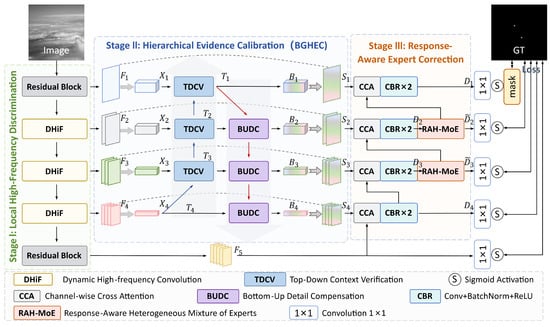
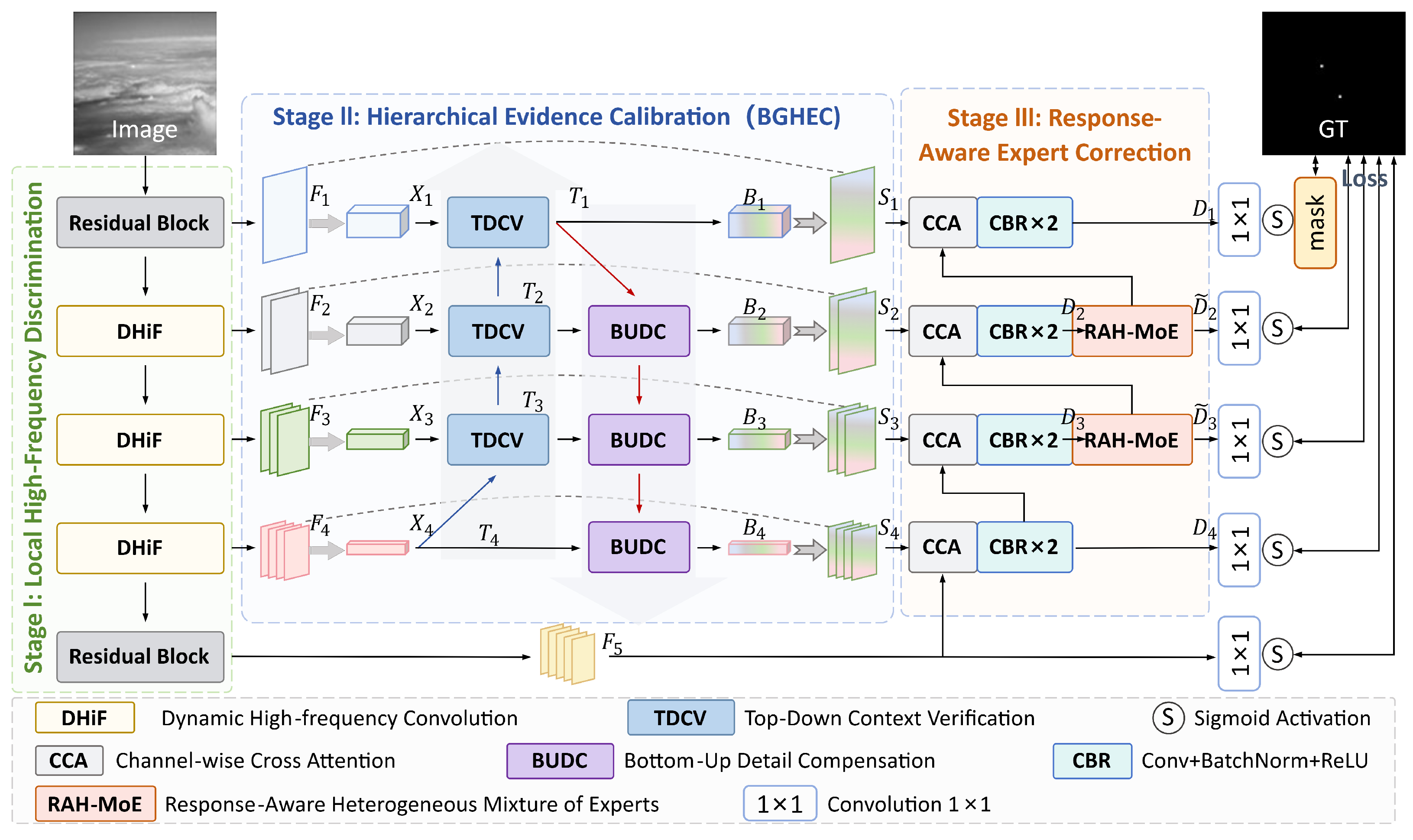
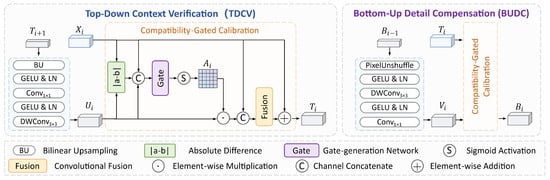
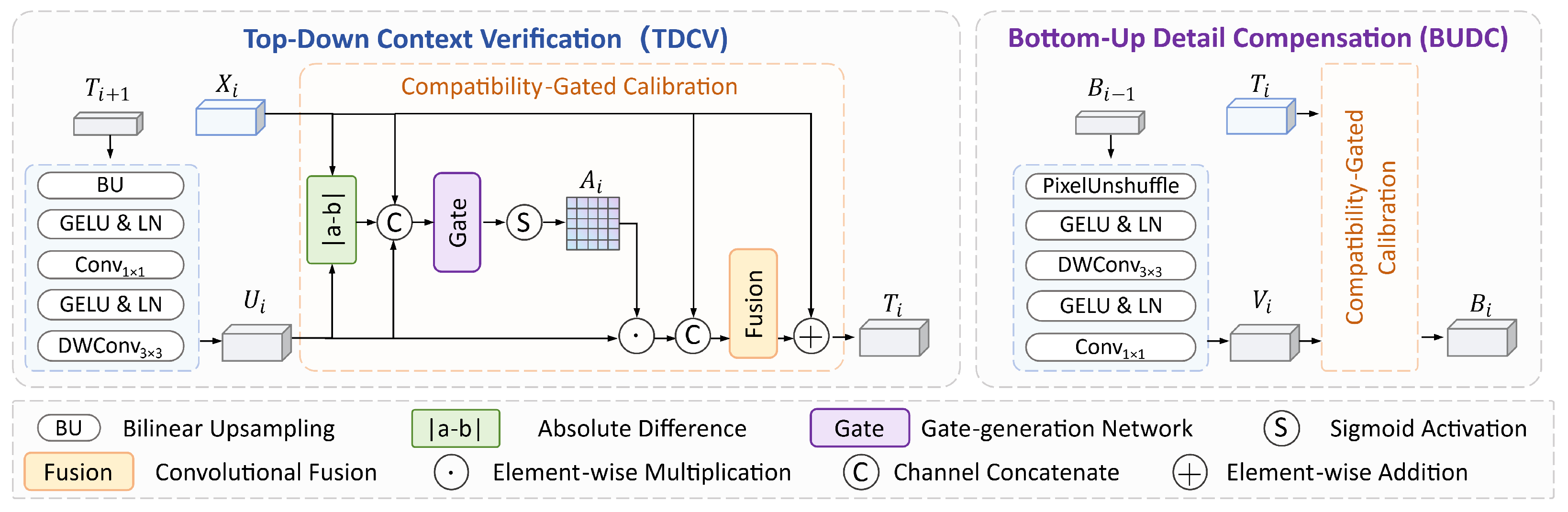
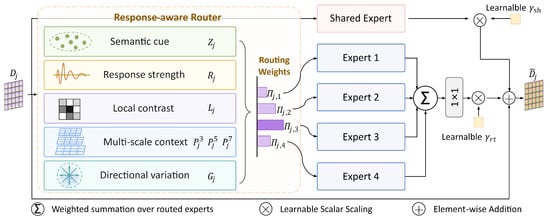
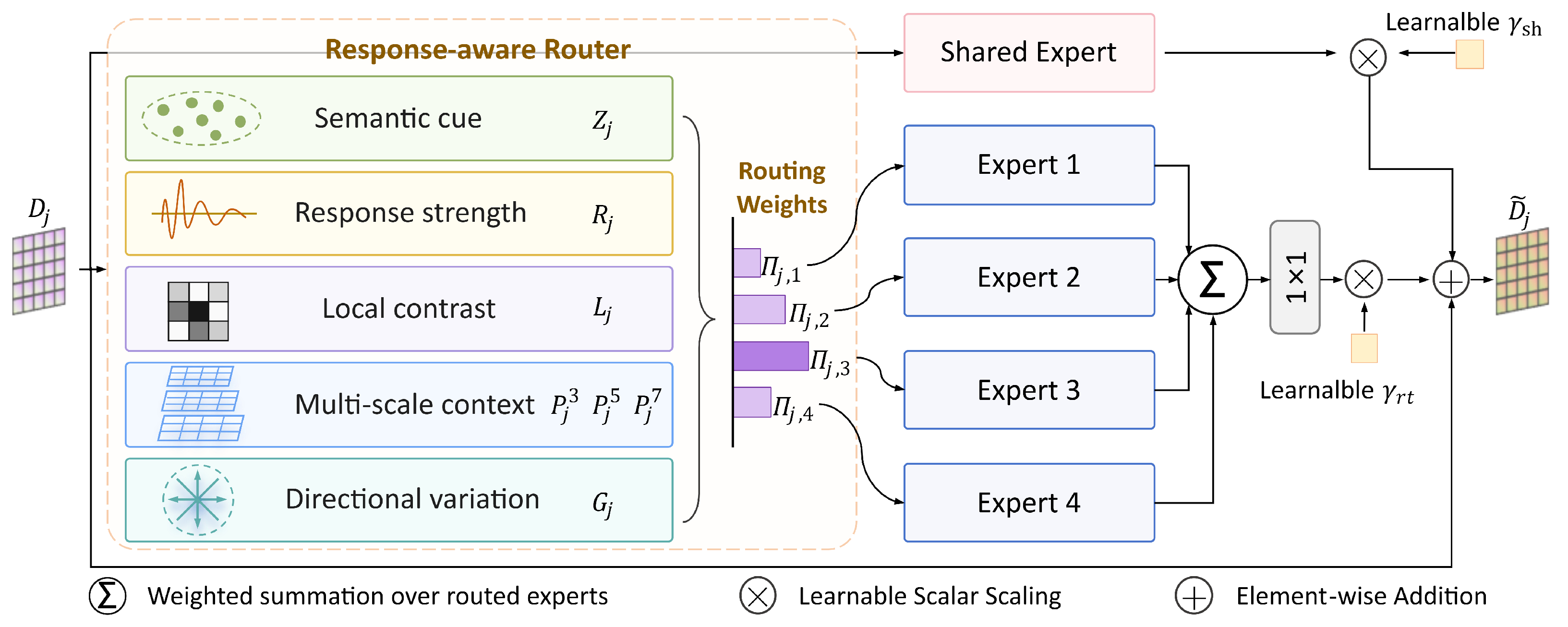
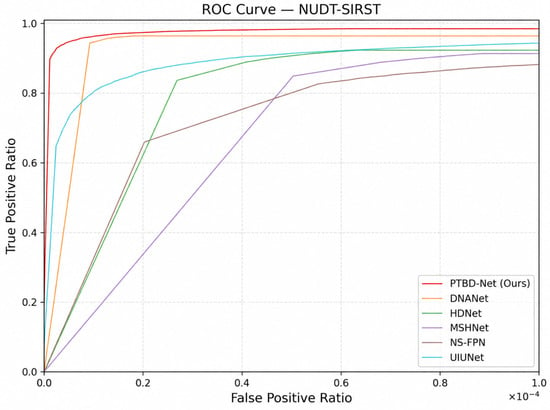
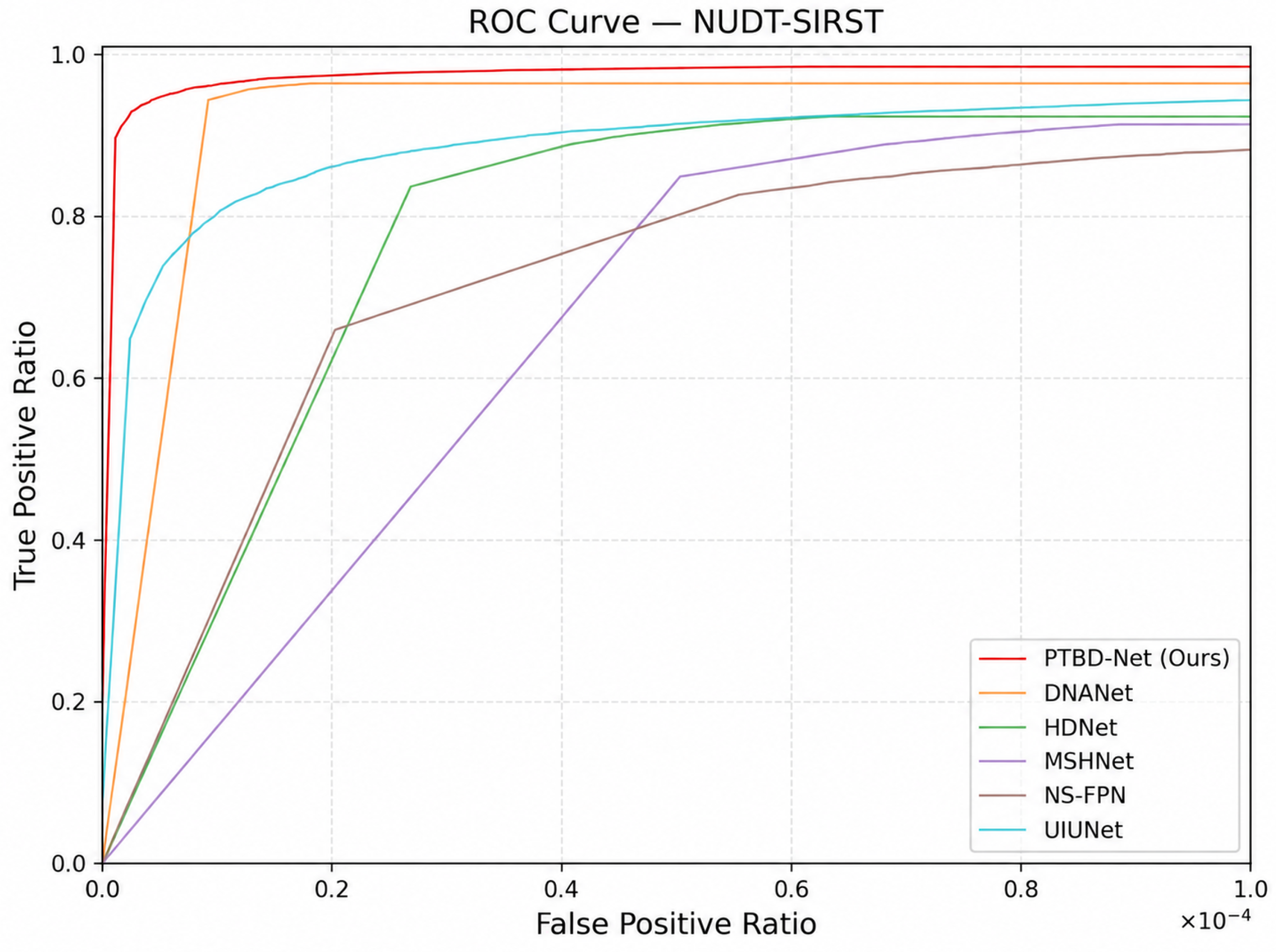
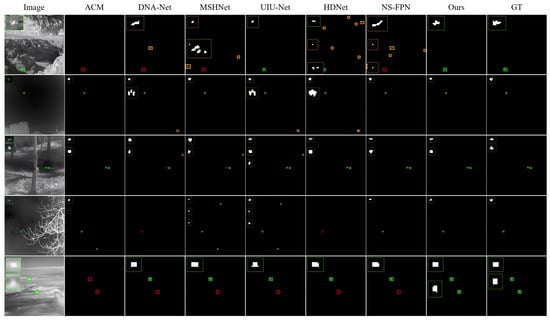
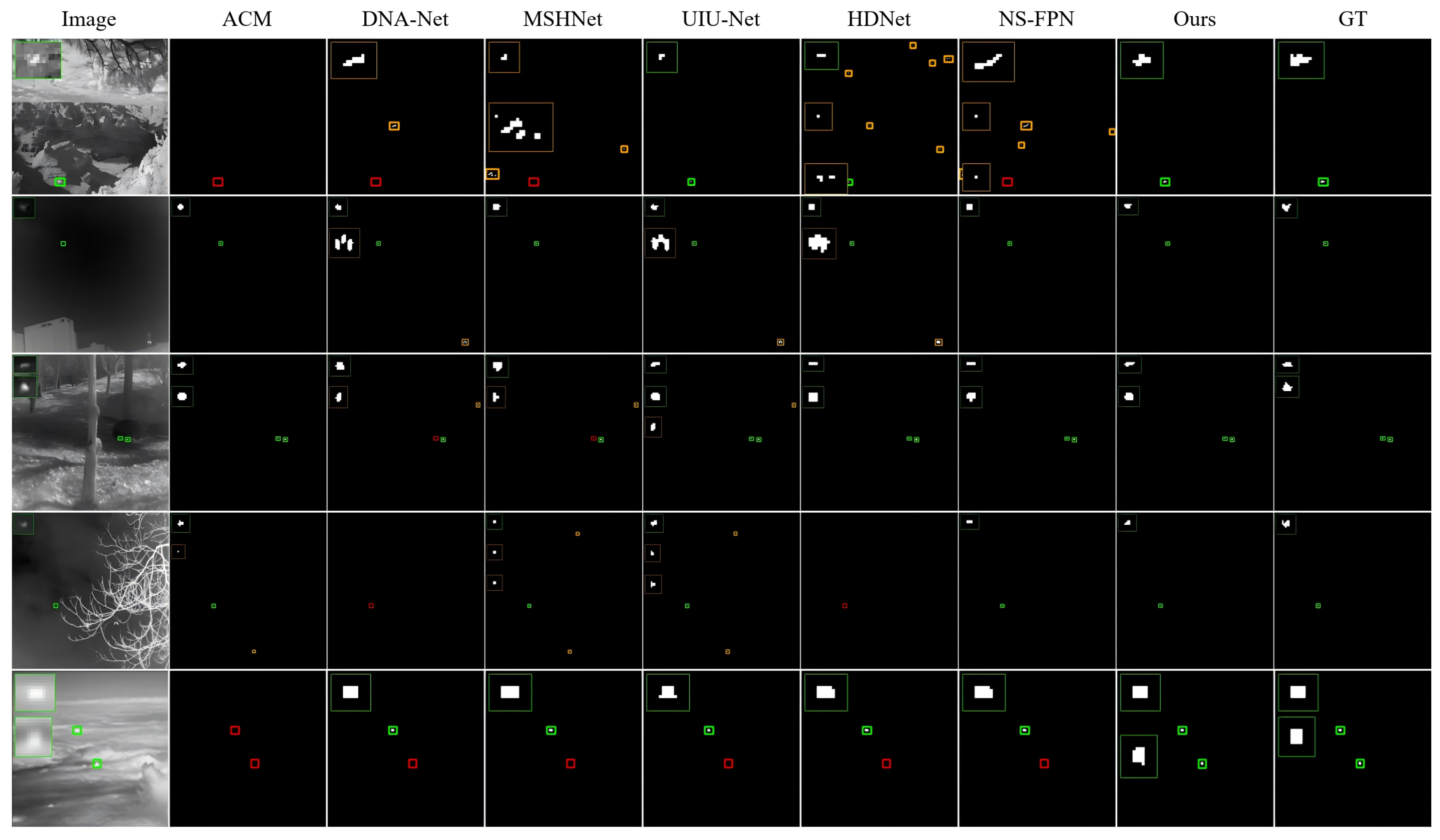
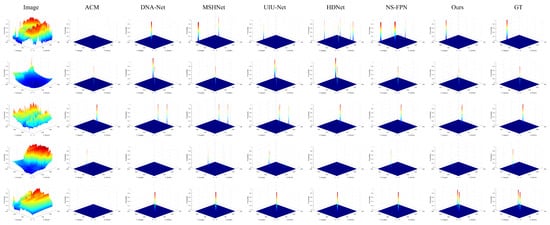
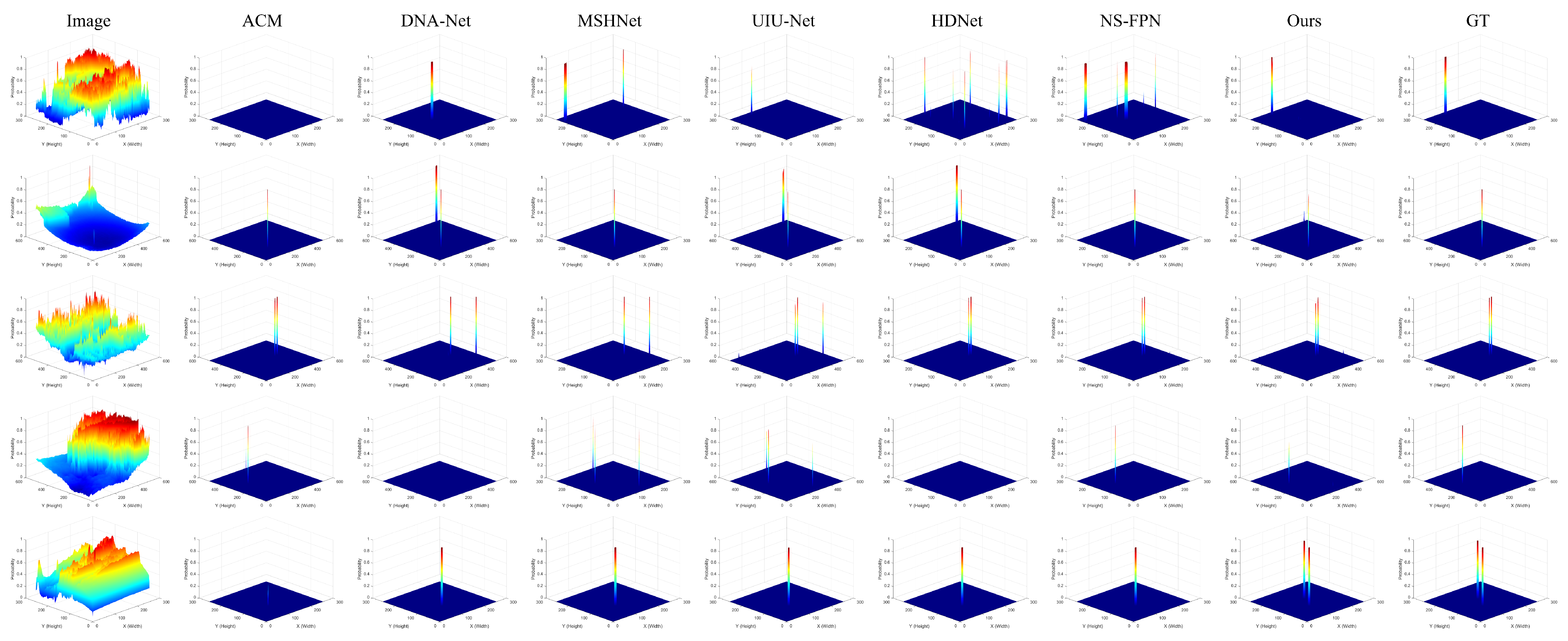
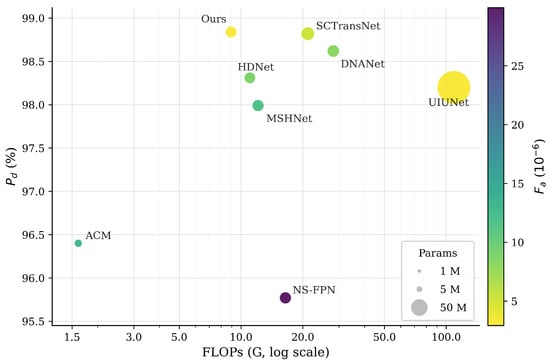
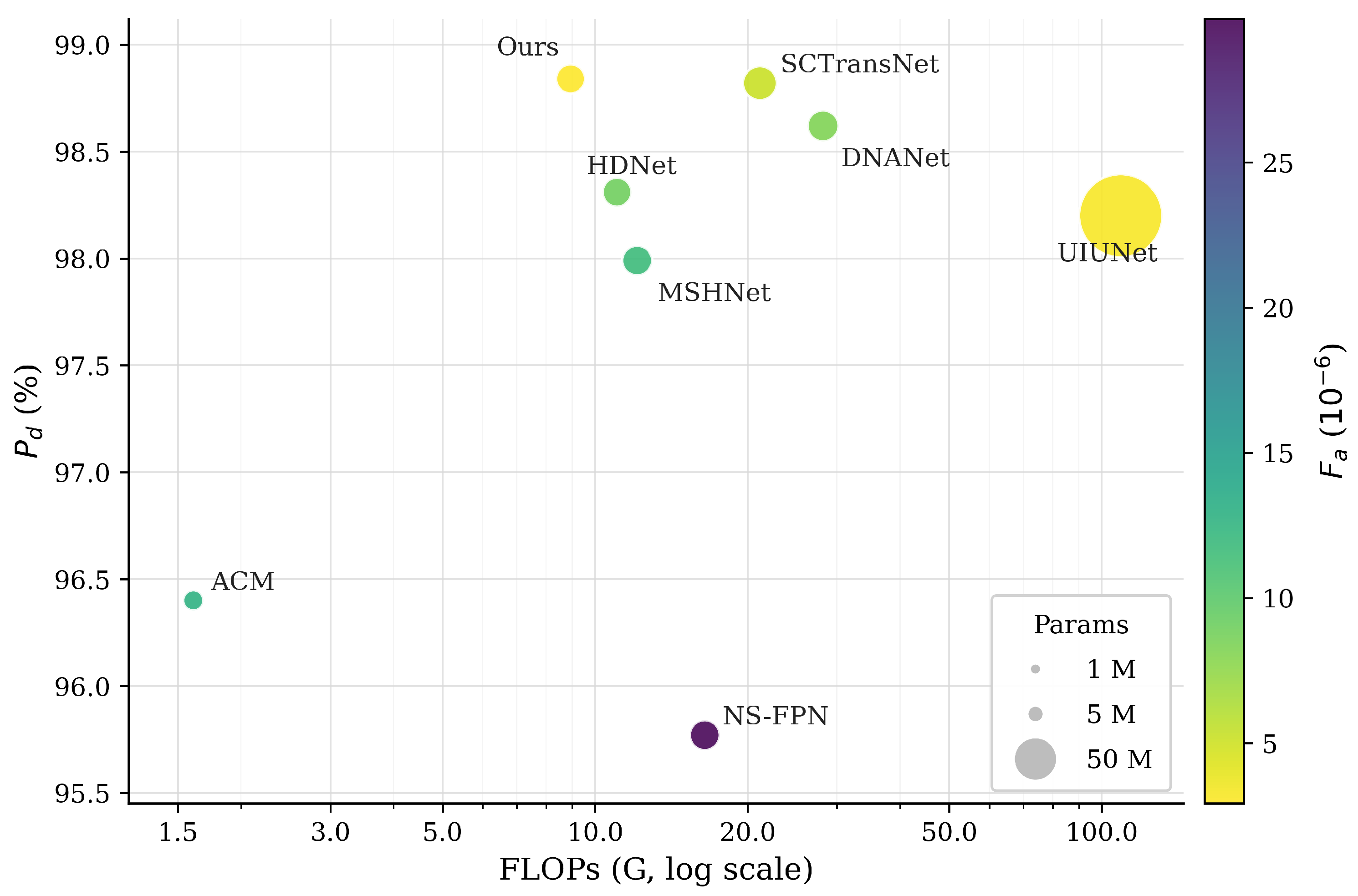
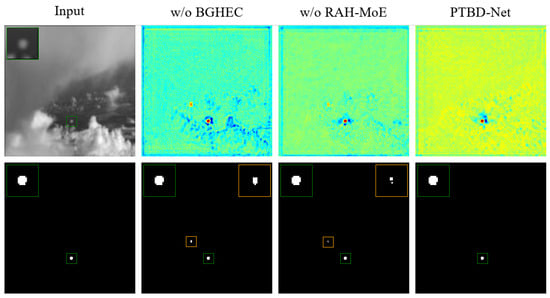
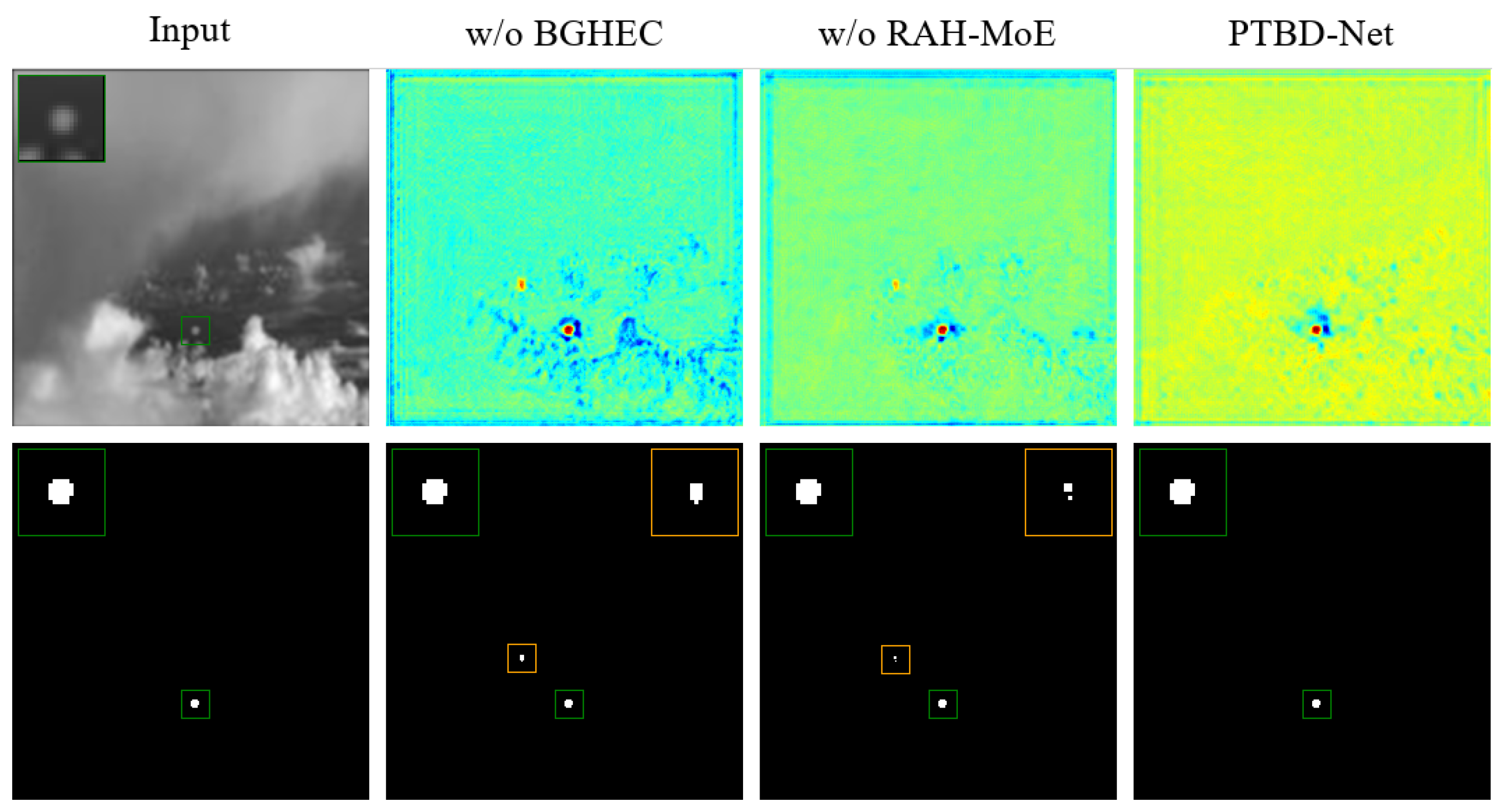

Disclaimer/Publisher’s Note: The statements, opinions and data contained in all publications are solely those of the individual author(s) and contributor(s) and not of MDPI and/or the editor(s). MDPI and/or the editor(s) disclaim responsibility for any injury to people or property resulting from any ideas, methods, instructions or products referred to in the content. |
© 2026 by the authors. Licensee MDPI, Basel, Switzerland. This article is an open access article distributed under the terms and conditions of the Creative Commons Attribution (CC BY) license.