


Highlights
What are the main findings?
- Curvature-Aware Sampling.
- Inverse-Density Weighting.
What is the implication of the main finding?
- Providing an interpretable geometry-driven alternative to distance-based sampling by preserving high-curvature structures.
- Improving sampling balance by reducing redundancy in dense regions and retaining sparse but geometrically significant structures.
Abstract
Point cloud classification and part segmentation require effective downsampling methods that reduce computational cost while preserving object boundaries, thin structures, and other informative geometric regions. However, raw point clouds are often large, irregular, and non-uniformly distributed, making efficient downsampling essential. This paper proposes the Curvature-Aware Sampling Network (CASNet), a feature-preserving framework that combines curvature-aware sampling, inverse-density weighting, attention pooling, and residual blocks. CASNet estimates local curvature from neighborhood covariance and converts curvature scores into sampling probabilities, increasing the likelihood of retaining geometrically informative points. Inverse-density weighting further reduces redundant selection in dense regions and improves the representation of sparse but structurally important areas. Although motivated by point-wise semantic prediction, the proposed sampling and aggregation modules are task-independent. Accordingly, ModelNet40 classification evaluates global geometric discrimination, ShapeNet Part provides direct point-wise segmentation evaluation, and Semantic3D and S3DIS examine sampling behavior in complex scenes. Under the controlled hierarchical abstraction backbone, the CAS + IDW sampling configuration achieves 92.26% instance accuracy on ModelNet40 and 85.41% instance-average mIoU on ShapeNet Part. In the architecture-level evaluation, the complete CASNet obtains 94.30% overall accuracy and 91.70% mean class accuracy on ModelNet40, together with 85.29% class-average mIoU and 87.61% instance-average mIoU on ShapeNet Part. With only 64 retained points, CAS + IDW achieves 53.86% classification accuracy, compared with 53.65% for curvature-informed FPS, 53.37% for SAMBLE, 51.92% for FPS, and 32.64% for random sampling. In the controlled sampling experiment, CAS + IDW requires 90 s per training epoch and 49 ms per sample for inference, compared with 103 s and 59 ms for the FPS-based counterpart, respectively. These results demonstrate that CASNet maintains competitive predictive performance while providing favorable computational efficiency.
1. Introduction
With the rapid development of 3D perception and computer vision technologies, point clouds have become an essential representation in a wide range of applications, including robotics, autonomous driving, virtual reality, digital twins, and 3D scene understanding. Despite their flexibility and expressive power, raw point clouds acquired from real-world sensors often contain a very large number of points, which imposes considerable burdens on data storage, transmission, and subsequent computation. Therefore, point cloud downsampling is a crucial preprocessing step in many tasks, such as classification, segmentation, registration, and reconstruction.
A variety of point cloud downsampling methods have been developed. Random sampling is simple and computationally efficient, but it often causes severe information loss and uneven spatial distribution [1]. Uniform sampling aims to maintain a more even point distribution, but it is generally insensitive to local geometric details [2]. Grid-based or voxel-based sampling reduces data by partitioning the space into voxels and selecting representative points, which is efficient but may discard fine-grained structural information because of limited spatial resolution [3]. Among existing methods, Farthest-Point Sampling (FPS) [4] is one of the most widely adopted strategies and has been extensively used in deep learning frameworks such as PointNet++ [5], which was proposed to address the uneven-density issue of PointNet [6]. By iteratively selecting points that are farthest from the already selected subset, FPS achieves relatively good global coverage and improves the stability of downstream learning models.
However, FPS still has important limitations. First, it primarily relies on Euclidean distance and does not explicitly consider the intrinsic geometric properties of points, such as local curvature or structural saliency. As a result, points located on sharp edges, corners, or highly informative local regions may not be sufficiently preserved. Second, FPS is inherently sequential, requiring points to be selected one by one, which leads to relatively high computational overhead and limits its efficiency on large-scale point clouds.
These limitations reveal a key challenge in point cloud downsampling: how to significantly reduce the number of points while preserving critical geometric structures and maintaining computational efficiency. To address this problem, we propose a curvature-aware sampling method for 3D point clouds. Unlike distance-based methods, the proposed approach evaluates the importance of each point according to its local curvature. Points with high curvature, which typically correspond to salient geometric structures such as edges, corners, or detailed local surfaces, are assigned higher sampling probabilities and are therefore more likely to be retained during downsampling. It should be noted that the focus of this work is not to design a scene-specific segmentation decoder, but to improve the preservation of geometrically informative points before and during hierarchical feature learning. This problem is fundamental to semantic segmentation because point-wise prediction relies on both local boundary information and sufficiently complete global context. At the same time, the proposed sampling strategy is not restricted to segmentation and can also be evaluated through object classification, where the retention of discriminative geometric structures affects global shape recognition. Accordingly, classification and segmentation are used as complementary tasks to evaluate different aspects of the proposed feature-preserving framework.
The main contributions of this work are summarized as follows:
- A novel curvature-aware sampling method is proposed for 3D point cloud downsampling, which preserves important geometric structures by explicitly leveraging local curvature information.
- An efficient curvature-guided probabilistic sampling mechanism is developed for integration into hierarchical point cloud networks.
- Extensive experiments on public datasets demonstrate that the proposed method achieves competitive predictive performance compared with both conventional and geometry-aware sampling strategies, while providing effective geometric preservation and favorable computational efficiency, particularly under limited sampling budgets.
The remainder of this paper is organized as follows. Section 2 reviews related work on point cloud downsampling. Section 3 presents the proposed curvature-aware sampling method in detail. Section 4 reports the experimental setup and results. Section 5 discusses the main findings and limitations. Finally, Section 6 concludes the paper.
2. Related Work
2.1. Point Cloud Learning Networks
PointNet is one of the earliest networks to process unordered point sets directly. It uses shared multi-layer perceptrons (MLPs) and symmetric max pooling to achieve permutation invariance, but does not explicitly model local geometric structures. PointNet++ addresses this limitation through hierarchical set abstraction, progressively grouping local neighborhoods and extracting multi-level features. This design has become a common backbone for point cloud classification and segmentation.
Subsequent networks improve local geometric representation from different perspectives. DGCNN [7] constructs dynamic graphs in feature space and uses EdgeConv to capture relations between neighboring points. PointCNN [8], PointConv [9], RS-CNN [10], and KPConv [11] extend convolutional or relation-based aggregation to irregular point sets. Attention-based architectures such as PCT [12] and Point Transformer [13] model long-range dependencies, while CurveNet [14] learns curve-based structures. PointNeXt [15] revisits PointNet++ through improved training and scaling strategies, and PointMLP [16] demonstrates the effectiveness of residual MLP designs.
Although these methods substantially strengthen feature extraction, their performance still depends on the point subset retained after sampling. Most hierarchical networks use conventional FPS, which emphasizes spatial coverage but does not explicitly consider local geometric saliency or density imbalance. Important edges, corners, or thin structures discarded during early abstraction cannot be fully recovered by a stronger feature extractor. CASNet therefore considers both sampling and feature aggregation by combining curvature-aware sampling, inverse-density weighting, attention pooling, and residual propagation. This joint perspective is important because a network cannot recover geometric evidence that has already been removed, while an informative sampled subset still requires effective neighborhood aggregation to support downstream prediction.
2.2. Traditional and Geometric Downsampling Methods
The growth of 3D sensing has increased the scale of point cloud data, making downsampling essential for practical processing [17,18]. Downsampling affects not only computational cost, but also neighborhood construction, feature propagation, and downstream prediction. This influence is particularly important in hierarchical networks such as PointNet++ [5], where sampling and grouping are repeated across several stages. Information removed at an early stage may propagate as an irreversible loss through the network.
FPS is widely used in PointNet++ [19], PointCNN, PointConv, and RS-CNN. It iteratively selects the point farthest from the current subset, producing a relatively uniform spatial distribution and broad global coverage. However, its distance-driven criterion does not distinguish a geometrically salient point from a point on a smooth redundant surface when both satisfy the same distance rule. Consequently, edges, curvature variations, and fine structures may be under-represented, especially under limited sampling budgets [20,21]. The sequential point-by-point procedure also introduces considerable time and memory costs for large point sets [22,23]. Recent curvature-informed FPS variants show that geometric priors can improve structural preservation beyond distance-only selection [24].
Random sampling is computationally efficient but can produce unstable and uneven subsets, whereas uniform sampling improves spatial regularity without explicitly preserving salient structures. Voxel/grid methods partition space and select representative points within regular cells [25]. They are efficient for large scenes, but finite voxel resolution may remove boundaries or fine-scale details [26]. Adaptive methods such as AVS-Net reduce this limitation through variable voxel sizes [27]. Self-adaptive grid methods further improve geometric preservation through adaptive spatial partitioning [28]. Overall, traditional methods provide useful trade-offs between simplicity, coverage, and speed, but most rely on spatial dispersion or partitioning rather than explicitly evaluating the geometric importance of individual points [29]. This limitation becomes more pronounced under aggressive downsampling, where each retained point must represent both global shape and local structural variation.
2.3. Learning-Based Downsampling Methods
Learning-based methods adapt point selection to data distributions or downstream objectives. Voxel-based networks such as VoxNet [30], SECOND [31], and PointPillars [32] convert irregular point sets into regular grids for efficient processing. However, fixed-resolution voxelization can introduce discretization artifacts and weaken fine local geometry when the voxel size is inappropriate. RandLA-Net combines random sampling with strong local feature aggregation to process large scenes efficiently, showing that simple sampling can remain effective when subsequent aggregation is sufficiently powerful. Nevertheless, random selection does not directly address how to retain geometrically informative points.
SampleNet and IndexSample learn point saliency scores or sampling indices, while related approaches optimize sampling patterns directly through training [33]. Their common objective is to make selection data-driven so that the sampled subset better serves the target task. More recent methods introduce additional structural priors. Skeleton-aware sampling preserves geometric topology [34]; attention discriminant sampling models point-wise relationships [35]; and LTA-PCS learns task-agnostic sampling without depending on specific downstream labels. These approaches demonstrate the adaptability of learned sampling, but often require additional parameters, heavier training, and more complex optimization, which may reduce efficiency and interpretability [36].
Generalization is another concern. A sampler optimized for a particular dataset, task, or training objective may not remain optimal after the scene distribution changes. In contrast, geometry-based heuristics are less flexible but usually easier to interpret, transfer, and integrate into existing networks. Therefore, despite the progress of learned sampling, lightweight geometry-aware approaches remain valuable when transparency, efficiency, and cross-task applicability are required. They also avoid retraining a dedicated sampler for every new dataset and allow the selection rule to be inspected independently of the downstream network.
2.4. Feature-Driven Sampling Methods
Feature-driven methods guide selection using intrinsic point properties rather than spatial distance alone. Common descriptors include normals, covariance eigenvalues, eigenvalue-based shape features, and principal curvatures [37,38,39,40]. Their central assumption is that points contribute unequally to shape representation. Points near edges, corners, thin structures, or high-curvature surfaces generally carry more discriminative geometric information than points on broad smooth regions. Prioritizing these points may better preserve structural details for classification, segmentation, and registration. However, the effectiveness of such methods depends on the reliability of local feature estimation.
Recent geometry-aware methods explicitly consider the balance between global shape and local detail. Sugimoto et al. preserve global and local structures for object classification. SAMBLE [41] balances local detail retention and global uniformity through shape-specific sampling. Curvature-informed FPS incorporates curvature cues into the iterative FPS procedure, confirming that local geometric saliency is useful for point selection.
Although CAS is related to these methods, its mechanism is different. Curvature-informed FPS retains the sequential distance-based coverage rule and uses curvature to modify the selection priority. SAMBLE focuses on a shape-specific balance between local details and global uniformity. In contrast, CAS directly constructs a sampling probability distribution from covariance-based curvature scores and does not require iterative farthest-point selection. It further applies inverse-density weighting before probability normalization to reduce repeated selection in dense high-curvature regions. Thus, the contribution of CASNet is not a new covariance-based curvature estimator, but the integration of curvature-guided probabilistic sampling, explicit density compensation, and hierarchical feature learning.
Feature-driven sampling also faces several challenges. Curvature and normal estimates depend strongly on neighborhood scale: small neighborhoods may be unstable under noise, while large neighborhoods can oversmooth local details. Noise, outliers, and irregular density may distort saliency scores, and excessive emphasis on high-curvature regions may reduce global structural coverage. An effective method should therefore preserve salient geometry while controlling local redundancy and maintaining sufficient diversity in the sampled subset. Density compensation is especially relevant because a dense boundary region may otherwise consume a disproportionate sampling budget, even when neighboring points provide similar geometric evidence.
2.5. Research Gap and Motivation
Existing downsampling methods face a persistent trade-off among data reduction, geometric fidelity, and computational efficiency. FPS provides broad coverage but ignores local saliency. Voxel methods are efficient but may remove fine structures. Learning-based samplers improve adaptability, but often introduce greater model complexity, training cost, and reduced interpretability. Recent studies improve geometric preservation or adaptive sampling quality [41], yet a simple and interpretable strategy that jointly considers geometric significance and density imbalance remains desirable.
Three limitations are particularly relevant. First, many classical methods prioritize spatial coverage without explicitly retaining geometrically significant points. Second, geometry-aware methods may become biased when high-curvature points are concentrated in dense regions, while noise and outliers can further affect local estimates. Third, highly adaptive learned samplers are less convenient for direct integration into standard point cloud backbones because of their additional optimization requirements.
These limitations motivate a lightweight strategy that balances local geometric saliency with sampling diversity. CAS uses local covariance-based curvature to assign higher probabilities to informative points, while inverse-density weighting reduces excessive concentration in densely populated regions. Attention pooling and residual blocks are then used to improve local aggregation and multi-level feature propagation. The resulting CASNet provides an interpretable alternative that preserves important structures without introducing a heavily learned sampling module. This design targets a practical balance among geometric fidelity, integration simplicity, and downstream effectiveness.
3. Materials and Methods
This section presents the proposed CASNet, a feature-preserving framework for point cloud downsampling and hierarchical feature learning. Existing point cloud downsampling methods usually suffer from several limitations. Conventional sampling strategies, such as random sampling, uniform sampling, and FPS, mainly rely on randomness, spatial uniformity, or Euclidean-distance-based coverage, and therefore fail to explicitly preserve local geometric structures such as edges, corners, and high-curvature regions. Moreover, geometry-driven sampling methods may still be biased toward densely populated regions when the input point cloud has non-uniform density. In addition, simple local feature aggregation and repeated hierarchical abstraction may weaken fine-grained geometric information during feature learning. To address these issues, CASNet jointly incorporates Curvature-Aware Sampling (CAS), Inverse-Density Weighting (IDW), Attention Pooling, and Residual Blocks into a unified network framework. CAS preserves geometrically informative points by assigning higher sampling probabilities to high-curvature regions, IDW alleviates redundant sampling in dense regions, Attention Pooling enhances adaptive local feature aggregation, and Residual Blocks improve feature propagation across hierarchical abstraction layers.
3.1. Overall Framework
The overall architecture of CASNet is illustrated in Figure 1. Given an input point cloud, CASNet first constructs local neighborhoods for all points and estimates their local geometric saliency through curvature analysis. Specifically, the Curvature-Aware Sampling module computes point-wise curvature from the covariance structure of neighboring points and converts the curvature scores into sampling probabilities. In this way, points located on edges, corners, and detailed surface variations are more likely to be retained during downsampling. After curvature estimation, the Inverse-Density Weighting module further adjusts the sampling scores according to local point density. This module suppresses redundant sampling in densely populated regions and improves the representation of sparse but geometrically important areas. The reweighted sampling probabilities are then used to select a feature-preserving subset of points without replacement. The sampled points are subsequently fed into a hierarchical CASNet backbone. Each abstraction stage consists of CAS-based sampling, local grouping, shared multi-layer perceptrons (MLPs), Attention Pooling, and Residual Blocks. Attention Pooling adaptively aggregates local neighborhood features by assigning higher weights to more discriminative points, while Residual Blocks enhance gradient flow and preserve geometric information across multiple abstraction layers. As the network goes deeper, the number of points is gradually reduced, whereas the feature dimension is increased, enabling CASNet to learn both local geometric details and global shape representations. Finally, the extracted features are used for downstream classification or part segmentation tasks.
Figure 1.
Overall architecture and high-level data flow of CASNet. The input point cloud is progressively processed through hierarchical abstraction stages integrating curvature-aware and density-compensated sampling with local feature learning.
Table 1 reports the default hierarchical configuration used by the complete CASNet backbone. Specifically, the main network progressively reduces the input point set following 4096 → 1024 → 256 → 64 → 16. The neighborhood size is fixed as at all stages, while the density radius and feature dimension are increased with the abstraction level.
Table 1.
Hierarchical parameter settings of CASNet.
It should be noted that several controlled diagnostic experiments use different point budgets for specific evaluation purposes. For example, the point-budget comparison evaluates the robustness of different sampling strategies under retained point numbers of 1024, 512, 256, 128, and 64, while a dedicated runtime profiling experiment uses a batch-size-one sampling process of 1024 → 512 → 128 → 32. These settings are used only for controlled comparison or profiling and should be distinguished from the default CASNet hierarchical configuration in Table 1.
3.2. Curvature-Aware Sampling
The CAS module is designed to preserve geometrically informative points during downsampling. Conventional sampling strategies, such as random sampling and FPS, mainly focus on randomness or spatial coverage. However, they do not explicitly distinguish points located in flat and redundant regions from those located on edges, corners, or highly curved surfaces. As a result, important local structures may be discarded when the sampling budget is limited. To address this issue, CAS estimates the local curvature of each point and uses it as a geometric saliency measure for probability-guided sampling. As specifically shown in the CAS block of the overall framework in Figure 1, the proposed CAS module first constructs local neighborhoods, estimates point-wise curvature from the neighborhood covariance structure, and then converts the curvature scores into sampling probabilities to retain geometrically informative points.
Given an input point cloud , CAS first constructs a local neighborhood for each point using k-nearest neighbors. Based on the local neighborhood, we construct a query-point-centered local scatter matrix as
Unlike the conventional neighborhood-centroid covariance formulation, this matrix uses the query point itself as the local reference. Therefore, the resulting geometric variation is directly associated with the candidate sampling point.
After eigenvalue decomposition of , the local curvature score is computed as
The curvature score is then normalized and converted into a curvature-aware sampling probability through a temperature-controlled Softmax function:
3.3. Inverse-Density Weighting
Although curvature is effective for measuring local geometric saliency, directly using curvature alone may lead to biased sampling when the input point cloud has non-uniform density. To reduce redundant sampling in dense regions, the CAS probability is reweighted by inverse-density compensation:
where denotes the bounded normalized local density, and controls the strength of density compensation. The final density-compensated sampling probability is obtained by normalizing over all points. The overall computational procedure of the proposed CAS and IDW modules is summarized in Algorithm 1.
| Algorithm 1 Curvature-Aware Sampling with Inverse-Density Weighting |
|
|
In summary, CAS increases the sampling preference for geometrically informative points, while IDW reduces excessive concentration in dense regions and improves the representation of relatively sparse regions. The detailed workflow of the IDW module is illustrated in Figure 2.
Figure 2.
Illustration of the proposed IDW module, which reweights the CAS sampling probabilities according to normalized local density to reduce redundant selection in dense regions.
3.4. Attention Pooling and Residual Blocks
After obtaining the feature-preserving sampled points, CASNet further enhances hierarchical feature learning through Attention Pooling and Residual Blocks. These two modules are introduced to address the limitations of simple local feature aggregation and information degradation across multiple abstraction layers. In many point cloud networks, local neighborhood features are aggregated using max pooling. Although max pooling is simple and effective, it only retains the maximum response in each feature channel and may discard complementary information from other neighboring points. This limitation is particularly critical after downsampling, because each retained point may carry important geometric information. To improve local feature aggregation, CASNet adopts Attention Pooling to adaptively emphasize more discriminative local features. Let denote the feature set of the local neighborhood associated with point , where is the feature vector of the j-th neighboring point and C is the feature dimension. The attention score of each neighboring point is computed by a learnable mapping function as
The attention weight is then obtained through a softmax operation as
The aggregated local feature is calculated as the weighted sum of neighboring features as
Through this mechanism, CASNet can adaptively assign larger weights to more informative neighboring points, rather than relying only on the maximum feature response.
Therefore, Attention Pooling complements the CAS module: CAS emphasizes important points during sampling, while Attention Pooling further enhances discriminative local features during feature aggregation. The detailed workflow of the Attention Pooling module is shown in Figure 3, where local feature embedding, attention weight generation, and weighted neighborhood aggregation are illustrated. In hierarchical point cloud networks, repeated sampling, grouping, and feature abstraction may gradually weaken fine-grained geometric information. Moreover, deeper networks may suffer from degraded gradient propagation. To address these issues, CASNet introduces Residual Blocks into the set abstraction stages. Given the input feature , the transformation branch consists of local grouping, shared MLPs, and Attention Pooling, which can be formulated as
where denotes local grouping and denotes Attention Pooling. The output feature of the residual block is then computed as
where is an identity mapping when the input and output dimensions are the same and a linear projection when their dimensions are different. The residual connection provides a direct information path from shallow features to deeper representations. This design improves gradient flow, stabilizes training, and reduces the loss of geometric details during successive abstraction stages. By combining Residual Blocks with Attention Pooling, CASNet can better preserve local discriminative structures while progressively learning high-level semantic features. The structure of the Residual Block is illustrated in Figure 4, showing how the skip connection provides a direct feature propagation path across abstraction layers. Therefore, the proposed backbone effectively integrates geometry-aware sampling with robust hierarchical feature learning.
Figure 3.
Illustration of the Attention Pooling module, which generates attention weights for neighboring features and aggregates them through a weighted sum to obtain a more discriminative local representation.
Figure 4.
Illustration of the Residual Block, where a skip connection is introduced to stabilize feature propagation and preserve geometric information during hierarchical feature learning. The ellipsis indicates intermediate feature-processing layers omitted for visual simplicity.
To evaluate the practical effectiveness of the proposed sampling strategy, we construct a unified hierarchical abstraction backbone that repeatedly performs point sampling, local neighborhood grouping, feature transformation, and neighborhood aggregation. The quality of the retained point subsets directly affects the geometric information available to subsequent feature learning.
In the controlled sampling comparison, all sampling strategies are evaluated using the same hierarchical architecture, local grouping configuration, feature transformation, aggregation mechanism, and training protocol, with only the sampling strategy changed. This setting isolates the effect of different sampling mechanisms. The complete CASNet further combines CAS, IDW, Attention Pooling, and Residual Blocks to form a feature-preserving hierarchical learning framework for classification and part segmentation.
4. Experimental Setup and Results
4.1. Datasets, Implementation, and Evaluation Metrics
The evaluation is organized at three complementary levels. ModelNet40 is used for object-level classification to examine whether the sampled point set preserves globally discriminative geometric information. Although it does not provide point-wise semantic labels, it offers a controlled setting for assessing the general representation-preserving ability of different sampling strategies. ShapeNet Part serves as the primary quantitative point-wise segmentation benchmark because it contains object-level point clouds with part annotations and is sensitive to boundaries, thin components, and fine-grained geometric variations. It therefore directly evaluates whether CASNet preserves the local geometric information required for point-wise semantic prediction. Semantic3D and S3DIS are further used as supplementary scene-level evidence. Semantic3D represents large-scale outdoor scenes, while S3DIS provides structured indoor environments; together, they help visualize the sampling behavior of CAS under irregular density distributions and complex geometric structures, such as building corners, poles, road boundaries, and indoor edges. To ensure fair comparison, CASNet adopts a unified hierarchical abstraction backbone consisting of point sampling, local grouping, shared feature transformation, and neighborhood aggregation. All compared sampling methods use the same backbone and training protocol, with only the sampling strategy changed. The compared methods include random sampling, uniform sampling, voxel-based sampling, FPS, and representative geometry-aware or learning-based sampling approaches.
CAS estimates point-wise curvature from the covariance matrix of the k-nearest-neighbor set and converts the curvature scores into sampling probabilities. IDW adjusts the CAS sampling probabilities according to normalized local density within a predefined radius, thereby reducing redundant selection in dense regions. Attention Pooling adaptively aggregates local neighborhood features, while Residual Blocks improve feature propagation across hierarchical abstraction layers. Unless otherwise specified, we use , , , , , and . The density radius is set to for the standalone sampling analysis. For the controlled ModelNet40 experiments, all models are trained for 200 epochs using the Adam optimizer with an initial learning rate of and a weight decay of . A cosine annealing schedule is used to gradually reduce the learning rate to . The batch size is set to 16, and the random seed is set to 42. Each input point cloud is centered and normalized to a unit sphere. During training, random scaling within and random translation within along each coordinate axis are applied. The same training configuration is used for all controlled sampling comparisons.
To evaluate robustness under different sampling budgets, the input point clouds are downsampled to 1024, 512, 256, 128, and 64 points. All sampling methods use the same point budgets, backbone architecture, data preprocessing, and training protocol. Unless otherwise specified, all experiments follow the unified hierarchical configuration and training protocol described above.
For ModelNet40 classification, Instance Accuracy (Ins. Acc.) and Category Accuracy (Cat. Acc.) are reported. Instance Accuracy is defined as
where and denote the numbers of correctly classified and total test instances, respectively. Category Accuracy is calculated as
where C is the number of object categories.
For ShapeNet Part segmentation, Overall Accuracy (OA), Class-Average Accuracy, Class-Average mIoU, and Instance-Average mIoU are reported. Overall Accuracy is defined as
where and denote the numbers of correctly predicted and total points, respectively. Class-Average Accuracy is calculated as
where K denotes the number of part classes.
The intersection-over-union of class k is defined as
Accordingly, Class-Average mIoU is
and Instance-Average mIoU is
where S is the number of test instances.
Training time and inference time are additionally reported to evaluate computational efficiency. Classification accuracy under different retained point numbers is used to assess the ability of each sampling strategy to preserve discriminative geometric information under aggressive downsampling.
4.2. Qualitative Visualization on Scene-Level Point Clouds
To complement the quantitative experiments on ModelNet40 and ShapeNet Part, Figure 5 provides a qualitative visualization of the sampling behavior of CAS on a representative scene-level point cloud. Figure 5a,b compare the original point distribution with the curvature-aware sampled subset and illustrate the tendency of CAS to retain points around locally non-planar structures, including corners, edges, and geometric transition regions.
Figure 5.
Qualitative visualization and auxiliary analysis of CAS. Colored points are used only for visual distinction. In panel (a), all displayed points are selected by CAS; red points highlight the retained high-curvature points, while dark points denote the other points retained by CAS. In panel (b), dark-green points denote the original point cloud, while red points indicate high-curvature points before downsampling. Panels (c,d) are auxiliary summaries, while formal quantitative conclusions are based on the controlled experiments in the tables.
Figure 5c,d provide illustrative summaries of the sampling-level and downstream evaluation procedures. They are included only to explain the evaluation workflow and are not treated as formal benchmark results. All quantitative conclusions of this study are derived from the controlled experiments and quantitative analyses reported in the corresponding tables. To complement the qualitative scene-level visualization, we further conduct a compact quantitative experiment on S3DIS Area 5. The purpose of this experiment is not to establish a comprehensive scene-level benchmark, but to examine whether the proposed sampling mechanism can be transferred to a point-wise semantic segmentation setting.
To minimize architectural confounding, the same S3DIS segmentation backbone, data split, optimization configuration, and training protocol are used for all variants. The original hierarchical sampling procedure is used as the baseline. For the CAS and CAS + IDW variants, only the first three hierarchical sampling stages are replaced, corresponding to the three abstraction stages used in CASNet, while the remaining network operations are kept unchanged. The experiment reports overall accuracy (OA), mean class accuracy (mAcc), and mean intersection-over-union (mIoU).
As shown in Table 2, replacing the original hierarchical sampling procedure with CAS produces an observed change in scene-level semantic segmentation performance on S3DIS Area 5. Introducing bounded density compensation through CAS + IDW further examines whether the curvature-driven sampling preference can be balanced under the strongly non-uniform point distributions of indoor scenes. These results provide supplementary quantitative evidence that the proposed sampling mechanism can be integrated into a scene-level semantic segmentation pipeline. Since this experiment is intentionally limited to the standard Area 5 split and a single controlled backbone, it should be interpreted as a transferability check rather than a comprehensive comparison with dedicated scene-segmentation networks.
Table 2.
Supplementary scene-level semantic segmentation results on S3DIS Area 5 under an identical segmentation backbone. CAS and CAS + IDW are applied to the first three hierarchical sampling stages, while all other network and training settings remain unchanged.
4.3. Comparative Experiments and Analysis
To comprehensively evaluate the effectiveness of the proposed CASNet, we first conduct controlled comparisons by replacing existing sampling strategies with CAS under the same hierarchical abstraction backbone, where all methods share the same input point number, network setting, feature aggregation strategy, and training protocol, and only the sampling strategy is changed. The results on ModelNet40 and ShapeNet Part demonstrate that CAS can better preserve geometrically informative points and improve the discriminative representation of point clouds. We further analyze the influence of different sampling budgets, curvature-to-probability formulations, sampling distributions, boundary retention, parameter sensitivity, and robustness under Gaussian coordinate jitter and injected outliers, as reported in Table 3, Table 4, Table 5, Table 6, Table 7, Table 8, Table 9 and Table 10. These results show that CAS consistently improves the retention of high-curvature and boundary points, while the IDW-based density compensation alleviates over-concentration in locally dense regions and reduces the risk of outlier amplification. After validating the effectiveness of CAS as a sampling module, we further compare the complete CASNet with representative point cloud learning networks on ModelNet40 and ShapeNet Part, as summarized in Table 11. Different from the controlled sampling comparison, this architecture-level comparison evaluates the full framework integrating CAS, IDW, attention pooling, and residual blocks. The results indicate that CASNet achieves competitive performance in both object classification and part segmentation, suggesting that the proposed curvature-aware sampling strategy can be effectively incorporated into a complete point cloud learning architecture. Finally, the runtime and model complexity results show that CASNet introduces only moderate computational overhead while maintaining practical efficiency.
Table 3.
Experimental results of point cloud classification on ModelNet40 using different sampling strategies under the same controlled hierarchical abstraction backbone. The best and second-best results are shown in bold and underlined, respectively.
In this experiment, we evaluate the effectiveness of CAS by comparing different sampling strategies under the same controlled hierarchical abstraction backbone. For a fair comparison, all methods use the same input point number, backbone architecture, feature aggregation setting, and training protocol, with only the sampling strategy changed. The compared methods include random sampling, uniform sampling, voxel-based sampling, FPS, normal-guided sampling, Poisson disk sampling, several representative geometry-aware sampling methods, and learning-based sampling methods. We also evaluate two variants of the proposed method: CAS without inverse-density weighting and CAS with inverse-density weighting.
Table 3 reports the classification results on ModelNet40 under the controlled hierarchical abstraction backbone. CAS + IDW obtains the highest numerical values in the current comparison, with 92.26% instance accuracy and 89.87% category accuracy. Among the closely related geometry-aware sampling methods, curvature-informed FPS achieves 92.25% instance accuracy and 89.58% category accuracy, while SAMBLE achieves 92.25% and 89.55%, respectively. Conventional FPS obtains 92.24% instance accuracy and 89.51% category accuracy. These results show that CAS + IDW achieves competitive predictive performance compared with both conventional and stronger geometry-aware sampling strategies. The numerical differences among the top-performing sampling methods are relatively small; therefore, the practical value of CAS + IDW is further evaluated from the perspectives of geometric preservation and computational efficiency.
Table 4.
Controlled comparison of sampling strategies on ShapeNet Part under an identical hierarchical backbone. The CAS + IDW row evaluates the sampling configuration only and does not represent the complete CASNet architecture.
The observed performance is consistent with the explicit modeling of local geometric saliency in CAS. Random sampling lacks geometric constraints, while FPS mainly emphasizes spatial coverage through Euclidean distance. More closely related methods, such as curvature-informed FPS and SAMBLE, also incorporate geometric or shape-aware information and therefore achieve strong predictive performance. CAS differs from these approaches by directly constructing a curvature-guided sampling probability distribution and subsequently applying inverse-density compensation. This design increases the retention probability of geometrically informative points while reducing redundant concentration in dense regions.
Table 4 reports the controlled sampling comparison on ShapeNet Part. All methods use the same hierarchical backbone, feature aggregation modules, and training protocol, with only the sampling strategy changed. Therefore, the CAS + IDW result in this table evaluates the sampling configuration rather than the complete CASNet architecture. Under this controlled protocol, CAS + IDW obtains an overall accuracy of 94.38%, a class-average accuracy of 87.23%, a class-average mIoU of 82.29%, and an instance-average mIoU of 85.41%. The complete CASNet, which additionally integrates Attention Pooling and Residual Blocks, is evaluated separately in Table 12.
To further evaluate the robustness of different sampling methods under varying point budgets, we downsample the ModelNet40 point clouds to 1024, 512, 256, 128, and 64 points, respectively. The results are reported in Table 5. When the sampling budget is relatively large, different sampling methods achieve similar performance because sufficient structural information is preserved. As the number of retained points decreases, the differences among sampling strategies become more visible. Under the most aggressive setting with only 64 retained points, CAS + IDW achieves the highest numerical classification accuracy of 53.86%. Curvature-informed FPS and SAMBLE achieve 53.65% and 53.37%, respectively, while conventional FPS and random sampling achieve 51.92% and 32.64%. These results indicate that CAS + IDW remains competitive with stronger geometry-aware sampling methods and maintains a clearer advantage over conventional FPS and random sampling under severe point reduction.
Table 5.
Comparison of classification accuracy on ModelNet40 under different point cloud downsampling methods and sampling budgets (%).
Figure 6 provides qualitative visualization results under different sampling budgets. As the number of sampled points decreases, CAS still preserves points along object contours, boundaries, corners, and other high-curvature regions. These visual results are consistent with the quantitative results in Table 5. They show that CAS can maintain the main shape and discriminative local structures even under severe point reduction. Therefore, CAS can be regarded as an effective replacement for FPS, especially in real-time or resource-constrained point cloud processing scenarios.
Figure 6.
Visualization of curvature-aware sampling results on representative ModelNet40 categories under different sampling budgets.
The visualization further confirms the quantitative results in Table 5. When the number of sampled points is large, most methods can retain sufficient shape information. However, under aggressive downsampling, the ability to preserve discriminative local structures becomes more important. CAS explicitly assigns higher sampling probabilities to high-curvature regions, allowing the sampled subset to maintain object contours, corners, and thin structures even when only a small number of points are retained. In contrast, conventional random or distance-driven sampling strategies are more likely to discard such local details, resulting in fragmented or over-smoothed point clouds. Therefore, the visual results further illustrate the behavior of CAS under low-budget sampling settings.
To examine the influence of the curvature-to-probability mapping, we compare the additive baseline formulation, normalized linear weighting, and the temperature-controlled Softmax formulation. The experiment uses 200 randomly selected ModelNet40 test shapes, with 1024 input points and a sampling budget of 256 points.
Table 6.
Comparison of curvature-based sampling probability formulations on ModelNet40. High-Prob. Mass denotes the probability assigned to the top-20% high-curvature points.
As shown in Table 6, the additive baseline formulation produces an entropy of 0.9979 and therefore behaves nearly like uniform sampling. Normalized linear weighting provides the strongest curvature preference but exhibits larger variation across point clouds. The Softmax formulation increases high-curvature recall from 30.35% to 41.40% while maintaining a smoother and controllable distribution. It is therefore adopted as a compromise between curvature preference and sampling diversity.
We further examine whether CAS increases the preference for high-curvature points and whether IDW reduces excessive sampling concentration in dense regions. The sampling-distribution analysis is conducted on 200 ModelNet40 test shapes using 256 retained points.
Table 7 shows that CAS increases high-curvature recall from 24.13% with FPS to 41.13%, confirming its stronger geometric preference. Pure CAS selects 37.65% of its points from dense regions. After introducing IDW, this proportion decreases to 30.63%, while the sparse-region proportion increases from 29.99% to 36.91%. Meanwhile, high-curvature recall remains 39.13%, indicating that IDW improves density balance without eliminating the curvature preference.
Table 7.
Sampling-distribution analysis on ModelNet40. Sparse, medium, and dense regions are defined according to density tertiles.
To directly evaluate semantic boundary preservation, we use the ground-truth part labels of ShapeNet Part to define boundary points and report their recall and precision under different sampling budgets.
For each test shape, we use 2048 input points and define a point as a semantic boundary point if at least one of its 16 nearest neighbors has a ground-truth part label different from that of the center point. Let denote the detected boundary-point set and denote the subset of M points retained by a sampling method. Boundary Recall and Boundary Precision are defined as
and
respectively. We evaluate FPS, CAS, and CAS + IDW under . The experiment is conducted on 200 randomly selected ShapeNet Part test shapes, and each probabilistic sampling procedure is repeated three times, resulting in 600 shape-trial evaluations for each sampling configuration. The results are reported as mean ± standard deviation.
CAS achieves the highest mean boundary recall and precision under every tested budget. IDW moderately reduces this boundary preference because part of the sampling probability is redistributed toward relatively sparse regions. Nevertheless, CAS + IDW maintains higher mean boundary recall and precision than FPS. These results demonstrate a trade-off between boundary preservation and density-balanced sampling.
Table 8.
Boundary retention on ShapeNet Part. Results are reported as mean ± standard deviation over 600 shape-trial evaluations.
We analyze the curvature neighborhood size k, density radius r, Softmax temperature , and density-compensation strength using a one-factor-at-a-time protocol. The default settings are , , , and .
Table 9.
Sampling-level parameter sensitivity on ModelNet40.
The results in Table 9 show that the method is relatively stable for and . In contrast, controls the strength of the curvature preference, while controls the trade-off between high-curvature retention and density balance. The default values and provide moderate operating settings.
Robustness is further evaluated under Gaussian coordinate jitter and injected outliers.
Let denote the proportion of injected outliers in the input point cloud and denote the proportion of outliers in the sampled subset. The outlier amplification factor is defined as
A value below one indicates that the sampling method suppresses outlier selection, whereas a value above one indicates that outliers are over-represented in the sampled subset.
Although the high-curvature recall of CAS and CAS + IDW decreases as the jitter magnitude increases, both remain above FPS under every tested noise level. The bounded density compensation also avoids severe outlier amplification. At 5% corruption, CAS + IDW selects 6.51% outliers, compared with 19.68% for FPS, while maintaining a high-curvature recall of 37.09%.
After verifying the effectiveness of CAS as a sampling module, we further compare the complete CASNet framework with representative point cloud learning methods on ModelNet40 and ShapeNet Part. Different from the previous section, where different sampling strategies are evaluated under the same controlled hierarchical abstraction backbone, this section focuses on the overall performance of complete network architectures. Specifically, ModelNet40 is used to evaluate object-level classification performance, while ShapeNet Part is used to evaluate point-wise semantic part-segmentation performance. Therefore, different evaluation metrics are adopted for the two datasets. For ModelNet40, we report overall accuracy (OA), also referred to as instance accuracy, and mean class accuracy (mAcc), also referred to as category accuracy. For ShapeNet Part, we report class-average mIoU and instance-average mIoU. To ensure a fair efficiency comparison, all runtime results are measured under the same hardware, software environment, batch size, input resolution, and number of input points. For CAS and CAS + IDW, the reported runtime includes the complete sampling pipeline, including neighborhood search, covariance matrix construction, eigenvalue decomposition, curvature-score computation, density estimation, and index selection. For FPS and Random Sampling, the corresponding sampling operations are measured under the same implementation framework. All methods are evaluated after GPU warm-up, and the reported values are averaged over multiple forward passes.
Table 10.
Robustness analysis under Gaussian coordinate jitter and injected outliers on ModelNet40.
Table 11 reports the architecture-level comparison on ModelNet40. CASNet obtains an overall accuracy of 94.30% and a mean class accuracy of 91.70%. These are the highest numerical values among the methods included in this comparison. Compared with PointMLP, the differences are 0.20 percentage points for both overall accuracy and mean class accuracy. However, the compared methods use different implementations, training strategies, data-augmentation settings, and experimental environments. Therefore, the small differences among the top-performing methods should not be interpreted as statistically significant superiority. The results instead show that CASNet achieves competitive object-level classification performance. Although CAS involves local geometric analysis, its main operations are performed on small local neighborhoods and can be efficiently batched. In contrast, FPS requires iterative farthest-point updates over the point set, which introduces stronger sequential dependency and repeated distance computations. Therefore, under the same implementation and hardware settings, CAS can achieve lower sampling time while preserving curvature-sensitive points more effectively. This observation indicates that the efficiency gain does not come from omitting intermediate computations, but from the more parallelizable structure of the proposed sampling strategy.
Table 11.
Overall comparison of CASNet with representative point cloud classification networks on ModelNet40.
Unlike Table 4, which isolates different sampling strategies under an identical controlled backbone, Table 12 reports the separately trained complete CASNet architecture integrating CAS, IDW, Attention Pooling, and Residual Blocks. The complete CASNet obtains a class-average mIoU of 85.29% and an instance-average mIoU of 87.61% on ShapeNet Part. These values are different from the 85.41% instance-average mIoU reported for the controlled CAS + IDW sampling configuration in Table 4, because the two tables evaluate different experimental configurations.
Table 12.
Architecture-level comparison of the complete CASNet with representative point cloud part-segmentation networks on ShapeNet Part.
The architecture-level comparison shows that CASNet achieves competitive part-segmentation performance. However, the compared methods are reported under different implementations, training strategies, and evaluation settings. Therefore, the numerical differences among the top-performing methods should be interpreted as architecture-level reference results rather than statistically significant superiority.
Here, “–” indicates that the corresponding metric is not explicitly reported in the original paper or official benchmark under a consistent evaluation protocol. To avoid unfair or inconsistent comparisons, we only report metrics that are clearly available from the corresponding sources. For methods with available protocol information, results without voting are preferred to avoid test-time ensemble enhancement. Overall, the results on ModelNet40 and ShapeNet Part show that CASNet is not merely a sampling replacement module, but a complete feature-preserving point cloud learning framework that achieves strong performance in both classification and semantic part segmentation tasks.
The practical efficiency of CASNet is evaluated on a single NVIDIA Tesla T4 (NVIDIA Corporation, Santa Clara, CA, USA) GPU using PyTorch 2.0.0 and CUDA 11.7. The batch size is one, and the results are averaged over 200 measured runs after 20 warm-up iterations.
The timing results in Table 13 complement those reported in Table 3 and are obtained under a different measurement protocol. Table 3 reports the runtime recorded during the controlled training experiments, whereas Table 13 provides a dedicated batch-size-one GPU benchmark after 20 warm-up iterations and over 200 measured runs. Therefore, the absolute inference times in the two tables should not be directly compared across protocols.
Table 13.
Runtime and model complexity under the current PyTorch GPU implementation. The sampling time is measured using a dedicated profiling setting with the hierarchical process 1024 → 512 → 128 → 32, which is used for runtime comparison and is different from the default CASNet backbone configuration in Table 1.
As shown in Table 13, CAS substantially reduces the sampling time compared with the FPS-based hierarchical baseline, from ms to ms. After introducing IDW-based density compensation, the sampling time increases moderately to ms, while the inference time remains low. The complete CASNet only increases the parameter size from 1.9974 M to 2.2955 M and the peak memory from 44.55 MB to 45.69 MB, indicating that the proposed modules introduce limited additional computational overhead under the current PyTorch GPU implementation.
4.4. Ablation Experiment
To separate the contributions of the individual components in CASNet, we conduct a unified ablation study on ModelNet40 under an identical experimental protocol. All configurations use the same data split, input point number, hierarchical abstraction backbone, data augmentation, optimization settings, and training schedule. The only differences are the sampling strategy and the inclusion of IDW, Attention Pooling, and Residual Blocks.
To reduce the influence of random initialization and data shuffling, we further repeat the progressive ablation experiments on ModelNet40 using three random seeds, i.e., 42, 123, and 2026. For each setting, the checkpoint with the best validation performance is selected, and the final results are reported on the test set as mean ± standard deviation of OA and mAcc. This multi-seed setting provides a more reliable evaluation of the stability of each component than a single-run comparison.
As shown in Table 14, the standard deviations of most settings are relatively small, indicating that the reported results are not dominated by a particular random seed. Compared with CAS alone, introducing IDW produces comparable OA and mAcc, while its main benefit lies in improving the density balance of the sampled subset, as demonstrated by the sampling-distribution analysis. Although the attention-enhanced variant does not monotonically improve OA, the complete integration of CAS, IDW, Attention Pooling, and Residual Blocks achieves the best overall performance, with 91.33% OA and 88.54% mAcc. This result suggests that the proposed modules are most effective when used as a complete architecture rather than as isolated additions.
Table 14.
Multi-seed progressive ablation results on ModelNet40. Results are reported as mean ± standard deviation over three random seeds, i.e., 42, 123, and 2026. The best results are shown in bold.
5. Discussion
This study investigates CASNet, a geometry-aware framework for point cloud classification and part segmentation. The main objective is to reduce the number of input points while preserving informative geometric structures. CASNet consists of four main components: Curvature-Aware Sampling, Inverse-Density Weighting, Attention Pooling, and Residual Blocks. Curvature-Aware Sampling estimates local curvature from the covariance matrix of neighboring points and assigns higher sampling probabilities to edges, corners, and regions with strong geometric variation. Inverse-Density Weighting further adjusts these probabilities according to local point density, reducing redundant sampling in dense high-curvature regions and improving the balance of the sampled subset. Attention Pooling and Residual Blocks are then used to enhance local feature aggregation and stabilize hierarchical feature propagation.
The experimental results show that CASNet provides a practical balance between predictive performance, geometric preservation, and computational efficiency. Under the controlled sampling protocol, CAS + IDW achieves competitive results on ModelNet40 and ShapeNet Part while using the same hierarchical backbone and training protocol as other sampling strategies. The advantage of curvature-guided sampling becomes more evident under limited sampling budgets, where preserving discriminative local structures is more important. The sampling-distribution and boundary-retention analyses further show that CAS increases the retention of high-curvature and boundary points, while IDW alleviates excessive concentration in dense regions. The Gaussian jitter and injected outlier experiments also indicate that bounded density compensation can reduce severe outlier amplification.
The architecture-level comparison further demonstrates that the complete CASNet can be effectively integrated into a point cloud learning network. On ModelNet40, the complete CASNet achieves 94.30% OA and 91.70% mAcc. On ShapeNet Part, it achieves 85.29% class-average mIoU and 87.61% instance-average mIoU. These results should be interpreted as architecture-level reference results rather than direct controlled sampling comparisons, because the compared methods may use different implementations, training strategies, and evaluation settings. The multi-seed ablation study provides an additional stability check under a unified protocol. Although individual modules do not always produce monotonic improvements when added separately, the full combination of CAS, IDW, Attention Pooling, and Residual Blocks achieves the best overall result in the multi-seed setting. This suggests that the proposed components are complementary when integrated as a complete framework.
The runtime analysis shows that CASNet also has favorable computational characteristics under the current PyTorch GPU implementation. Compared with the FPS-based hierarchical baseline, CAS substantially reduces the sampling time, and CAS + IDW introduces only moderate additional cost for density compensation. The complete CASNet slightly increases the number of parameters and peak memory usage, but the overhead remains limited. Therefore, the practical value of CASNet is reflected not only in downstream accuracy, but also in its ability to preserve informative geometric structures with an efficient and interpretable sampling mechanism. Nevertheless, the reported runtime advantage is implementation- and hardware-dependent, and should be further validated under different deployment environments.
6. Conclusions
In this paper, we proposed CASNet, a feature-preserving hierarchical learning framework for point cloud understanding. Different from conventional sampling strategies that mainly rely on randomness, spatial uniformity, or Euclidean-distance-based coverage, CASNet improves point cloud representation from both geometry-aware sampling and hierarchical feature learning perspectives. The proposed Curvature-Aware Sampling module estimates point-wise curvature through local neighborhood covariance analysis and uses it as a geometric saliency measure, allowing edges, corners, and high-curvature regions to have higher retention probabilities during downsampling. To further reduce density bias in non-uniform point clouds, Inverse-Density Weighting reweights the curvature-based sampling probabilities and alleviates redundant sampling in dense regions. Attention Pooling and Residual Blocks are then incorporated to enhance local feature aggregation and stabilize multi-layer feature propagation.
Experiments on ModelNet40 and ShapeNet Part demonstrate the effectiveness of the proposed framework for point cloud classification and part segmentation. Under controlled sampling comparisons, CAS + IDW achieves competitive performance against random sampling, FPS, curvature-informed FPS, SAMBLE, and other representative sampling methods. Additional analyses on sampling budgets, curvature-to-probability mappings, sampling distributions, boundary retention, parameter sensitivity, Gaussian jitter, and injected outliers further verify that CASNet can preserve informative geometric structures while maintaining sampling balance. The architecture-level comparison shows that the complete CASNet achieves strong performance on both object classification and semantic part segmentation. The multi-seed ablation study further confirms that the complete integration of CAS, IDW, Attention Pooling, and Residual Blocks provides the best overall result under the unified ablation protocol.
Although CASNet achieves promising results, its curvature estimation and density modeling still depend on local neighborhood construction. When point clouds contain severe noise, extremely sparse regions, or complex scale variations, local geometric estimation may become less stable. In future work, we will investigate adaptive neighborhood selection, multi-scale curvature modeling, and more robust density estimation strategies. We also plan to extend CASNet to large-scale outdoor scene understanding, real-time 3D perception, and resource-constrained point cloud processing, where efficient and feature-preserving point cloud learning is particularly important.
Author Contributions
Conceptualization, Z.C.; methodology, H.L.; software, M.X.; validation, H.L.; formal analysis, M.X.; investigation, H.L.; resources, H.L.; data curation, H.L.; writing—original draft preparation, H.L.; writing—review and editing, D.X.; visualization, H.L.; supervision, Z.C.; project administration, Z.C. and M.X.; funding acquisition, Z.C. All authors have read and agreed to the published version of the manuscript.
Funding
This work was supported in part by the Guangdong Key Discipline Research Capacity Building Project under Grant 2024ZDJS055, in part by Tertiary Education Scientific Research Project of Guangzhou Municipal Education Bureau under Grant 2024312146, in part by Dongguan Wisnet Intelligent Equipment Co., Ltd. under Grants 2024ky121 and 2025ky002, and in part by Guangzhou Xunanchiyun Technology Co., Ltd. under Grant 2025KY074.
Data Availability Statement
The datasets used in this study are publicly available from their original sources. ModelNet40 is available from the Princeton ModelNet project at https://modelnet.cs.princeton.edu/download.html. The ShapeNet Part segmentation benchmark is available at https://web.stanford.edu/~ericyi/project_page/part_annotation/index.html, and the preprocessed version containing point coordinates, normal vectors, and part labels used in this study is provided through the PointNet++ repository at https://github.com/charlesq34/pointnet2. Semantic3D is available from the official benchmark data page at https://semantic3d.ethz.ch/view_dbase4fdf.html?chl=1. The Stanford Large-Scale 3D Indoor Spaces dataset (S3DIS) is available at https://cvg-data.inf.ethz.ch/s3dis/. No new dataset was created in this study. The processed sampling indices and evaluation outputs generated during the experiments are available from the corresponding author upon reasonable request. All websites were accessed on 31 July 2026.
Conflicts of Interest
The authors declare no conflicts of interest. The funders had no role in the design of the study; in the collection, analyses, or interpretation of data; in the writing of the manuscript; or in the decision to publish the results.
Abbreviations
The following abbreviations are used in this manuscript:
| CAS | Curvature-Aware Sampling |
| CASNet | Curvature-Aware Sampling Network |
| IDW | Inverse-Density Weighting |
| FPS | Farthest-Point Sampling |
| kNN | k-Nearest Neighbors |
| MLP | Multi-Layer Perceptron |
| CNN | Convolutional Neural Network |
| Att | Attention Pooling |
| Res | Residual Blocks |
| OA | Overall Accuracy |
| Ins. Acc. | Instance Accuracy |
| Cat. Acc. | Category Accuracy |
| mAcc | Mean Class Accuracy |
| IoU | Intersection over Union |
| mIoU | Mean Intersection over Union |
| SWR | Sampling Without Replacement |
| CAD | Computer-Aided Design |
| S3DIS | Stanford 3D Indoor Spaces Dataset |
References
- Hu, Q.; Yang, B.; Xie, L.; Rosa, S.; Guo, Y.; Wang, Z.; Trigoni, N.; Markham, A. RandLA-Net: Efficient Semantic Segmentation of Large-Scale Point Clouds. In Proceedings of the IEEE/CVF Conference on Computer Vision and Pattern Recognition (CVPR), Seattle, WA, USA, 13–19 June 2020; pp. 11105–11114. [Google Scholar]
- Ou, W.; Zheng, M.; Zheng, H. MDU-sampling: Multi-domain uniform sampling method for large-scale outdoor LiDAR point cloud registration. Electron. Lett. 2024, 60, e13129. [Google Scholar] [CrossRef] [Scilit]
- Sugimoto, R.; Kanai, K.; Maki, S.; Katto, J. A Point Cloud Downsampling Method Balancing Global and Local Shapes for 3D Object Classification. In Proceedings of the 2025 IEEE International Conference on Consumer Electronics (ICCE), Las Vegas, NV, USA, 11–14 January 2025; pp. 1–6. [Google Scholar]
- Eldar, Y.; Lindenbaum, M.; Porat, M.; Zeevi, Y.Y. The farthest point strategy for progressive image sampling. IEEE Trans. Image Process. 1997, 6, 1305–1315. [Google Scholar] [CrossRef] [Scilit]
- Qi, C.R.; Yi, L.; Su, H.; Guibas, L.J. PointNet++: Deep Hierarchical Feature Learning on Point Sets in a Metric Space. In Proceedings of the Advances in Neural Information Processing Systems 30 (NeurIPS 2017), Long Beach, CA, USA, 4–9 December 2017; pp. 5099–5108. [Google Scholar]
- Qi, C.R.; Su, H.; Mo, K.; Guibas, L.J. PointNet: Deep Learning on Point Sets for 3D Classification and Segmentation. In Proceedings of the IEEE Conference on Computer Vision and Pattern Recognition (CVPR), Honolulu, HI, USA, 21–26 July 2017; pp. 652–660. [Google Scholar]
- Wang, Y.; Sun, Y.; Liu, Z.; Sarma, S.E.; Bronstein, M.M.; Solomon, J.M. Dynamic Graph CNN for Learning on Point Clouds. ACM Trans. Graph. 2019, 38, 1–12. [Google Scholar] [CrossRef] [Scilit]
- Li, Y.; Bu, R.; Sun, M.; Wu, W.; Di, X.; Chen, B. PointCNN: Convolution on X-Transformed Points. In Proceedings of the Advances in Neural Information Processing Systems 31 (NeurIPS 2018), Montreal, QC, Canada, 3–8 December 2018; pp. 820–830. [Google Scholar]
- Wu, W.; Qi, Z.; Li, F. PointConv: Deep Convolutional Networks on 3D Point Clouds. In Proceedings of the IEEE/CVF Conference on Computer Vision and Pattern Recognition (CVPR), Long Beach, CA, USA, 15–20 June 2019; pp. 9621–9630. [Google Scholar]
- Liu, Y.; Fan, B.; Xiang, S.; Pan, C. Relation-Shape Convolutional Neural Network for Point Cloud Analysis. In Proceedings of the IEEE/CVF Conference on Computer Vision and Pattern Recognition (CVPR), Long Beach, CA, USA, 15–20 June 2019; pp. 8895–8904. [Google Scholar]
- Thomas, H.; Qi, C.R.; Deschaud, J.E.; Marcotegui, B.; Goulette, F.; Guibas, L.J. KPConv: Flexible and Deformable Convolution for Point Clouds. In Proceedings of the IEEE/CVF International Conference on Computer Vision (ICCV), Seoul, Republic of Korea, 27 October–2 November 2019; pp. 6411–6420. [Google Scholar]
- Guo, M.H.; Cai, J.X.; Liu, Z.N.; Mu, T.J.; Martin, R.R.; Hu, S.M. PCT: Point Cloud Transformer. Comput. Vis. Media 2021, 7, 187–199. [Google Scholar] [CrossRef] [Scilit]
- Zhao, H.; Jiang, L.; Jia, J.; Torr, P.H.S.; Koltun, V. Point Transformer. In Proceedings of the IEEE/CVF International Conference on Computer Vision (ICCV), Montreal, QC, Canada, 11–17 October 2021; pp. 16259–16268. [Google Scholar]
- Xiang, T.; Zhang, C.; Song, Y.; Yu, J.; Cai, W. Walk in the Cloud: Learning Curves for Point Clouds Shape Analysis. In Proceedings of the IEEE/CVF International Conference on Computer Vision (ICCV), Montreal, QC, Canada, 11–17 October 2021; pp. 915–924. [Google Scholar]
- Qian, G.; Li, Y.; Peng, H.; Mai, J.; Hammoud, H.A.; Elhoseiny, M.; Ghanem, B. PointNeXt: Revisiting PointNet++ with Improved Training and Scaling Strategies. In Proceedings of the Advances in Neural Information Processing Systems (NeurIPS), New Orleans, LA, USA, 28 November–9 December 2022. [Google Scholar]
- Ma, X.; Qin, C.; You, H.; Ran, H.; Fu, Y. Rethinking Network Design and Local Geometry in Point Cloud: A Simple Residual MLP Framework. In Proceedings of the International Conference on Learning Representations (ICLR), Virtual, 25–29 April 2022. [Google Scholar]
- Wu, Z.; Li, K.; Wu, Y.; Zhang, X.; Li, S. IndexSample: A Learnable Sampling Network for Point Cloud Classification. In Proceedings of the 2021 International Conference on 3D Vision (3DV), London, UK, 1–3 December 2021; pp. 577–582. [Google Scholar]
- Chmelar, P.; Rejfek, L.; Nguyen, T.N.; Ha, D.H. Advanced methods for point cloud processing and simplification. Appl. Sci. 2020, 10, 3340. [Google Scholar] [CrossRef] [Scilit]
- He, X.; Ding, H.; Xi, R.; Dong, J.; Jin, J.; Wang, Q.; Shao, C.; Dong, X.; Zhang, Y. Target Recognition Based on Millimeter-Wave-Sensed Point Cloud Using PointNet++ Model. Sensors 2025, 25, 5694. [Google Scholar] [CrossRef] [Scilit]
- Lang, I.; Manor, A.; Avidan, S. SampleNet: Differentiable Point Cloud Sampling. In Proceedings of the IEEE/CVF Conference on Computer Vision and Pattern Recognition (CVPR), Seattle, WA, USA, 13–19 June 2020; pp. 7578–7588. [Google Scholar]
- Sun, S.; Huang, J.; Zhao, S.; Huang, T. PcBD: A Novel Point Cloud Processing Flow for Boundary Detecting and De-Noising. Appl. Sci. 2025, 15, 7073. [Google Scholar] [CrossRef] [Scilit]
- Sun, S.; Yan, H. Mitigating Geometric Degradation in Fast DownSampling via FastAdapter for Point Cloud Segmentation. In Proceedings of the IEEE/CVF International Conference on Computer Vision, Honolulu, HI, USA, 19–25 October 2025; pp. 25983–25992. [Google Scholar]
- Lee, D.; Lee, Y.; Lee, J.W.; Yoon, H. Frugal 3D point cloud model training via progressive near point filtering and fused aggregation. In Proceedings of the European Conference on Computer Vision; Springer: Berlin/Heidelberg, Germany, 2024; pp. 19–35. [Google Scholar]
- Bhardwaj, S.; Vinod, A.; Bhattacharya, S.; Koganti, A.; Ellendula, A.S.; Reddy, B. Curvature informed furthest point sampling. arXiv 2024, arXiv:2411.16995. [Google Scholar]
- Lyu, W.; Ke, W.; Sheng, H.; Ma, X.; Zhang, H. Dynamic downsampling algorithm for 3D point cloud map based on voxel filtering. Appl. Sci. 2024, 14, 3160. [Google Scholar] [CrossRef] [Scilit]
- Xi, S.; Liu, Z.; Chang, J.; Wu, H.; Wang, X.; Hao, A. 3D dental model segmentation with geometrical boundary preserving. In Proceedings of the IEEE/CVF Conference on Computer Vision and Pattern Recognition, Nashville, TN, USA, 11–15 June 2025; pp. 10476–10485. [Google Scholar]
- Yang, H.; Liang, D.; Zhang, D.; Liu, Z.; Zou, Z.; Jiang, X.; Zhu, Y. AVS-Net: Point sampling with adaptive voxel size for 3D scene understanding. Neurocomputing 2025, 647, 130533. [Google Scholar] [CrossRef] [Scilit]
- Zu, H.; Zhu, J.; Wang, X.; Zhang, X.; Chen, N.; Guo, G.; Chen, Z. Research on self-adaptive grid point cloud down-sampling method based on plane fitting and Mahalanobis distance Gaussian weighting. Neurocomputing 2025, 634, 129746. [Google Scholar] [CrossRef] [Scilit]
- Cao, L.; Zhuang, S.; Tian, S.; Zhao, Z.; Fu, C.; Guo, Y.; Wang, D. A global structure and adaptive weight aware ICP algorithm for image registration. Remote Sens. 2023, 15, 3185. [Google Scholar] [CrossRef] [Scilit]
- Maturana, D.; Scherer, S. VoxNet: A 3D Convolutional Neural Network for Real-Time Object Recognition. In Proceedings of the IEEE/RSJ International Conference on Intelligent Robots and Systems (IROS), Hamburg, Germany, 28 September–2 October 2015; pp. 922–928. [Google Scholar]
- Yan, Y.; Mao, Y.; Li, B. Second: Sparsely embedded convolutional detection. Sensors 2018, 18, 3337. [Google Scholar] [CrossRef] [Scilit]
- Lang, A.H.; Vora, S.; Caesar, H.; Zhou, L.; Yang, J.; Beijbom, O. Pointpillars: Fast encoders for object detection from point clouds. In Proceedings of the IEEE/CVF Conference on Computer Vision and Pattern Recognition, Long Beach, CA, USA, 15–20 June 2019; pp. 12697–12705. [Google Scholar]
- Liu, J.; Li, J.; Wang, K.; Guo, H.; Yang, J.; Peng, J.; Xu, K.; Liu, X.; Guo, J. LTA-PCS: Learnable task-agnostic point cloud sampling. In Proceedings of the IEEE/CVF Conference on Computer Vision and Pattern Recognition, Seattle, WA, USA, 16–22 June 2024; pp. 28035–28045. [Google Scholar]
- Wen, C.; Yu, B.; Tao, D. Learnable skeleton-aware 3d point cloud sampling. In Proceedings of the IEEE/CVF Conference on Computer Vision and Pattern Recognition, Vancouver, BC, Canada, 17–24 June 2023; pp. 17671–17681. [Google Scholar]
- Hong, C.Y.; Chou, Y.Y.; Liu, T.L. Attention discriminant sampling for point clouds. In Proceedings of the IEEE/CVF International Conference on Computer Vision, Paris, France, 1–6 October 2023; pp. 14429–14440. [Google Scholar]
- Zhu, X.; Zhang, Z.; Ruan, J.; Liu, H.; Sun, H. ResSANet: Learning geometric information for point cloud processing. Sensors 2021, 21, 3227. [Google Scholar] [CrossRef] [Scilit]
- Xu, H.; Jiao, D.; Li, W. The Point Cloud Reduction Algorithm Based on the Feature Extraction of a Neighborhood Normal Vector and Fuzzy-c Means Clustering. Proceedings 2024, 110, 13. [Google Scholar] [CrossRef] [Scilit]
- Gong, M.; Zhang, Z.; Zeng, D. A new simplification algorithm for scattered point clouds with feature preservation. Symmetry 2021, 13, 399. [Google Scholar] [CrossRef] [Scilit]
- Lachaud, J.O.; Coeurjolly, D.; Labart, C.; Romon, P.; Thibert, B. Lightweight curvature estimation on point clouds with randomized corrected curvature measures. In Proceedings of the Computer Graphics Forum; Wiley Online Library: Hoboken, NJ, USA, 2023; Volume 42, p. e14910. [Google Scholar]
- Pauly, M.; Keiser, R.; Gross, M. Multi-scale Feature Extraction on Point-Sampled Surfaces. Comput. Graph. Forum 2003, 22, 281–289. [Google Scholar] [CrossRef] [Scilit]
- Wu, C.; Wan, Y.; Fu, H.; Pfrommer, J.; Zhong, Z.; Zheng, J.; Zhang, J.; Beyerer, J. SAMBLE: Shape-specific point cloud sampling for an optimal trade-off between local detail and global uniformity. In Proceedings of the Computer Vision and Pattern Recognition Conference, Nashville, TN, USA, 11–15 June 2025; pp. 1342–1352. [Google Scholar]
- Hua, B.S.; Tran, M.K.; Yeung, S.K. Pointwise Convolutional Neural Networks. In Proceedings of the IEEE Conference on Computer Vision and Pattern Recognition (CVPR), Salt Lake City, UT, USA, 18–22 June 2018; pp. 984–993. [Google Scholar]
- Xu, Y.; Fan, T.; Xu, M.; Zeng, L.; Qiao, Y. SpiderCNN: Deep Learning on Point Sets with Parameterized Convolutional Filters. In Proceedings of the European Conference on Computer Vision (ECCV), Munich, Germany, 8–14 September 2018; pp. 87–102. [Google Scholar]
- Su, H.; Jampani, V.; Sun, D.; Maji, S.; Kalogerakis, E.; Yang, M.H.; Kautz, J. SPLATNet: Sparse Lattice Networks for Point Cloud Processing. In Proceedings of the IEEE Conference on Computer Vision and Pattern Recognition (CVPR), Salt Lake City, UT, USA, 18–22 June 2018; pp. 2530–2539. [Google Scholar]
- Xu, M.; Ding, R.; Zhao, H.; Qi, X. PAConv: Position Adaptive Convolution with Dynamic Kernel Assembling on Point Clouds. In Proceedings of the IEEE/CVF Conference on Computer Vision and Pattern Recognition (CVPR), Nashville, TN, USA, 20–25 June 2021; pp. 3173–3182. [Google Scholar]
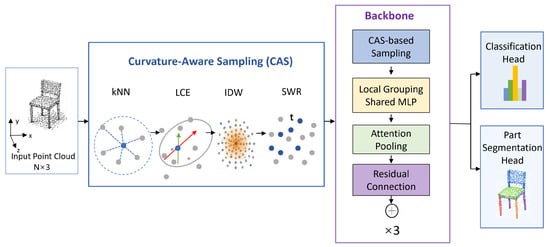
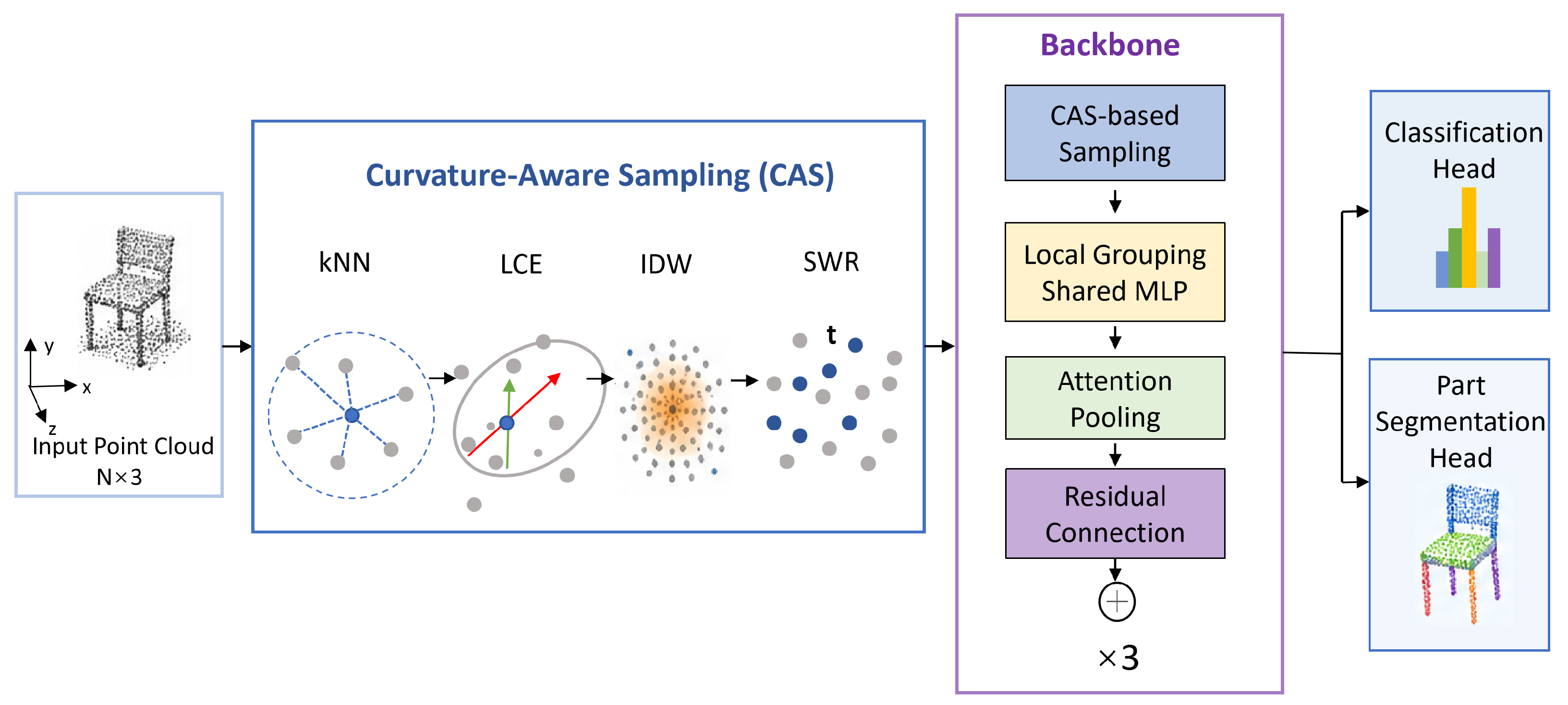
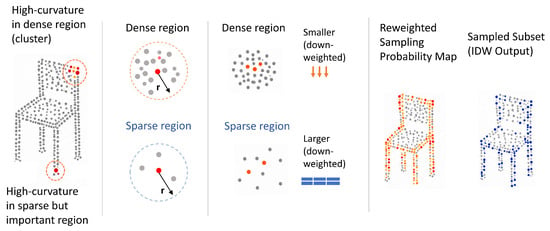
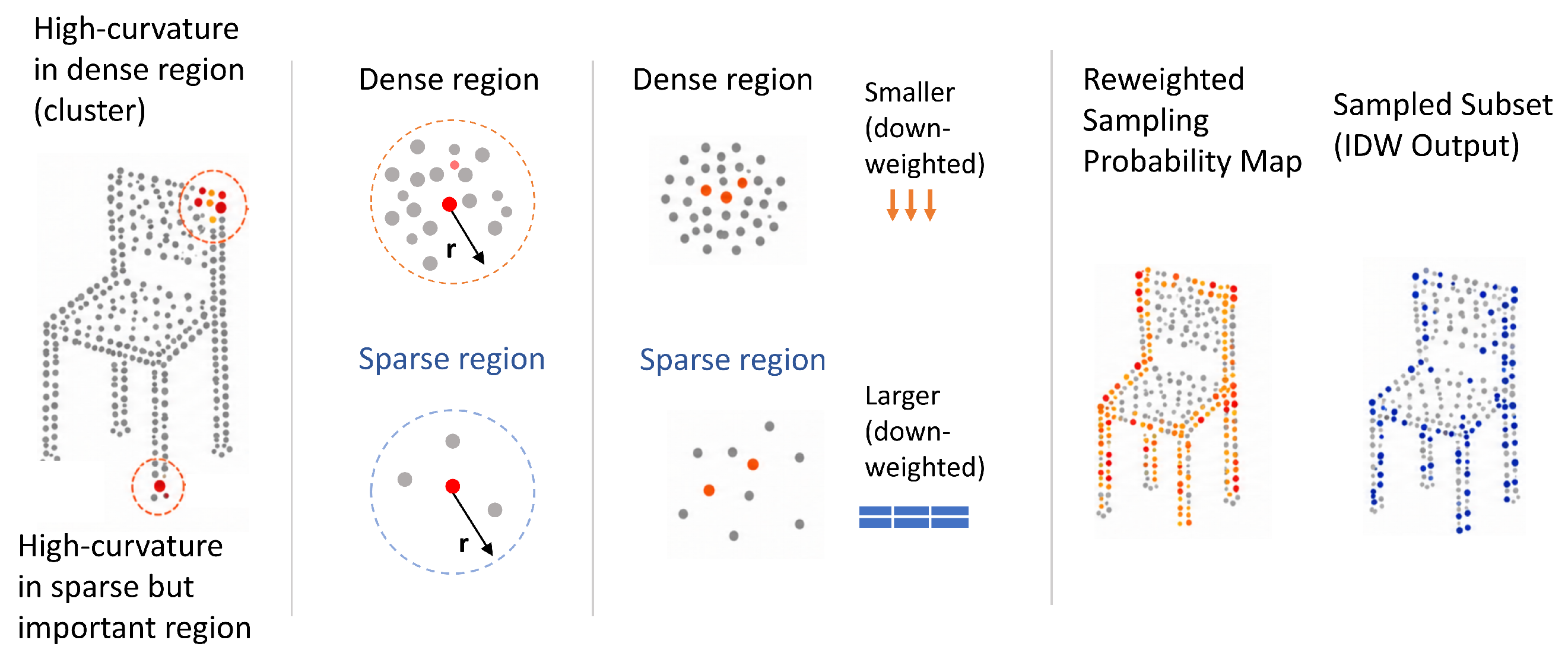
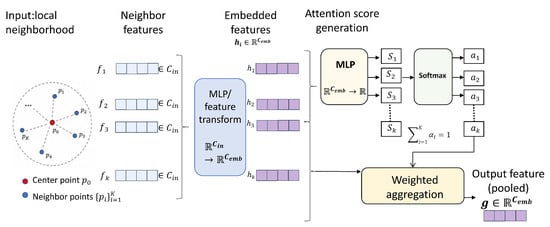
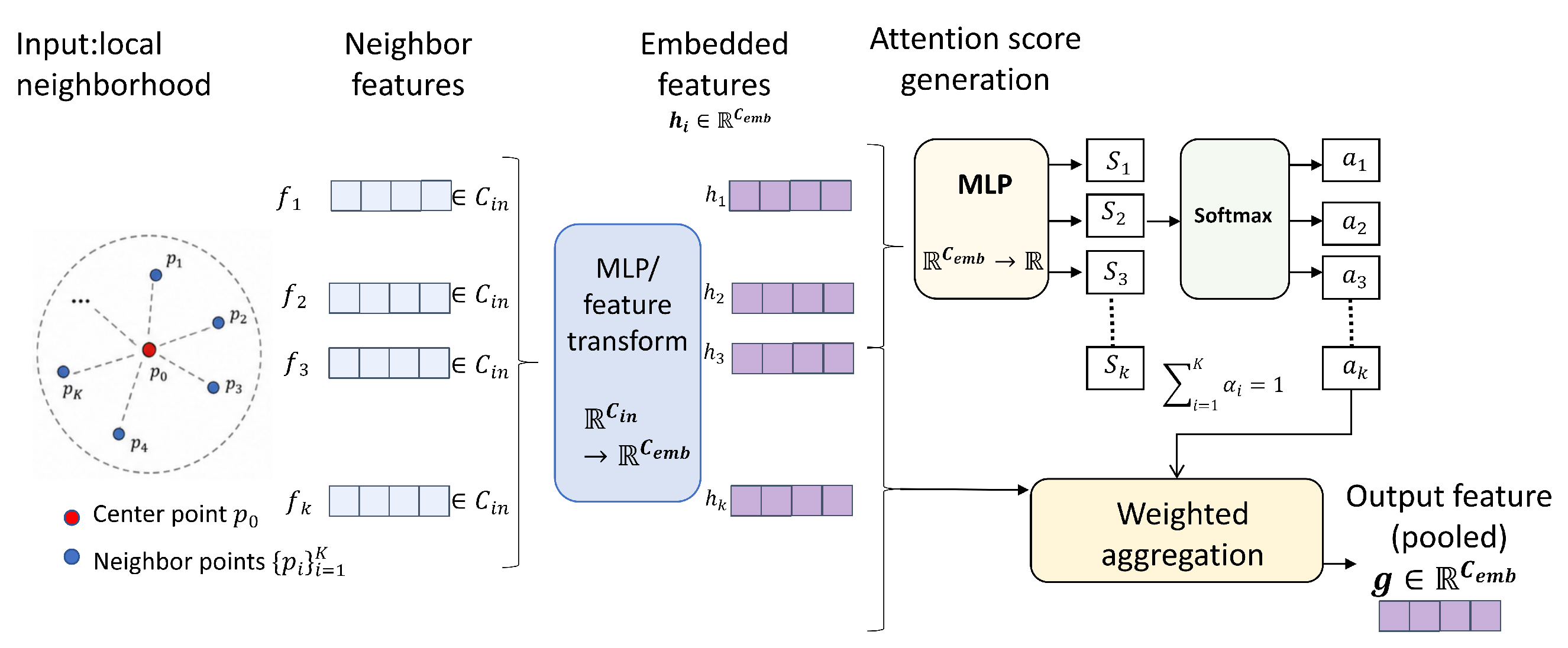
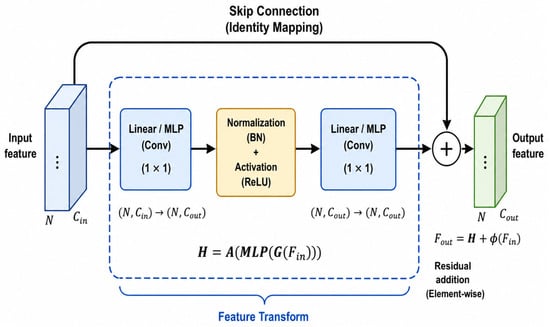
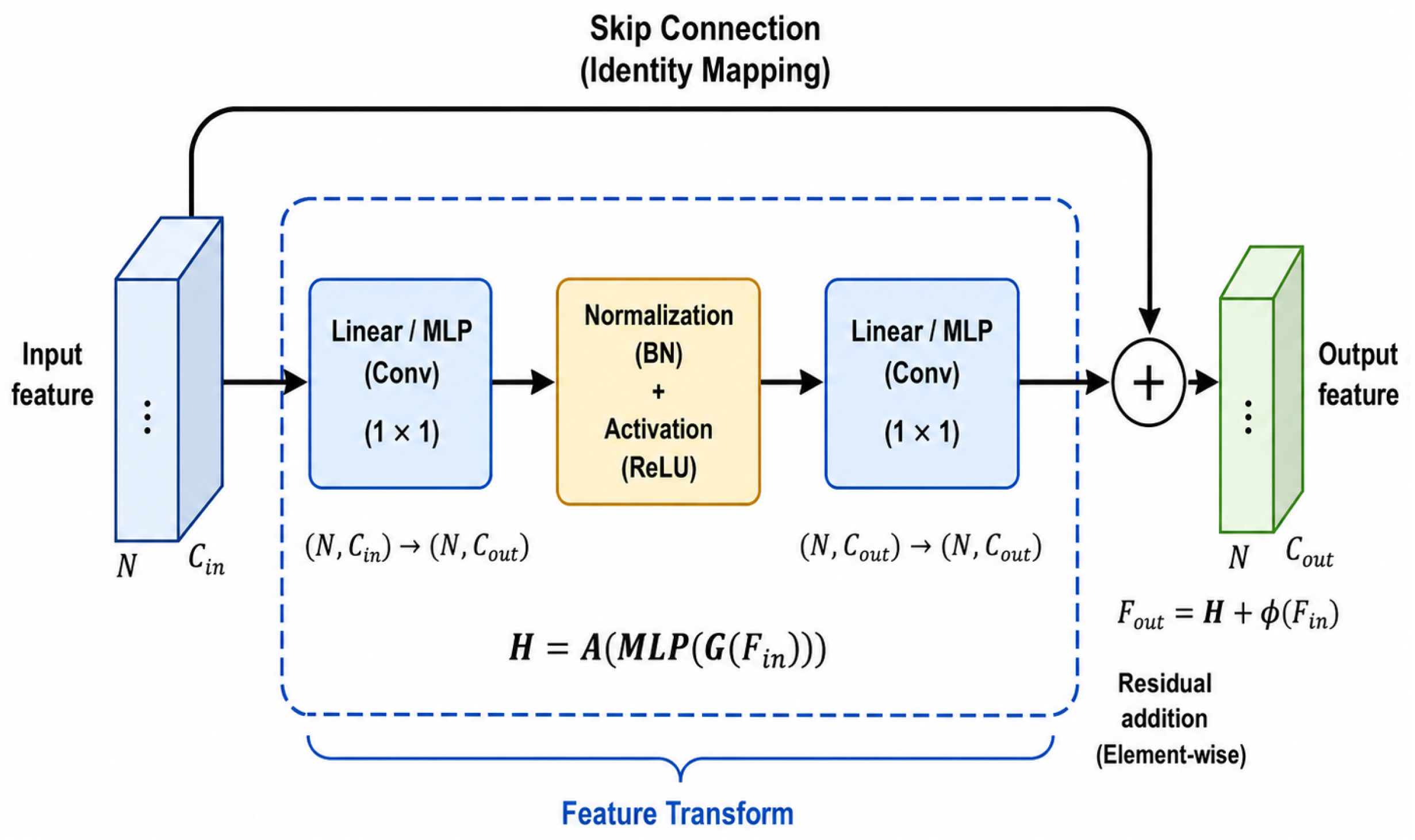
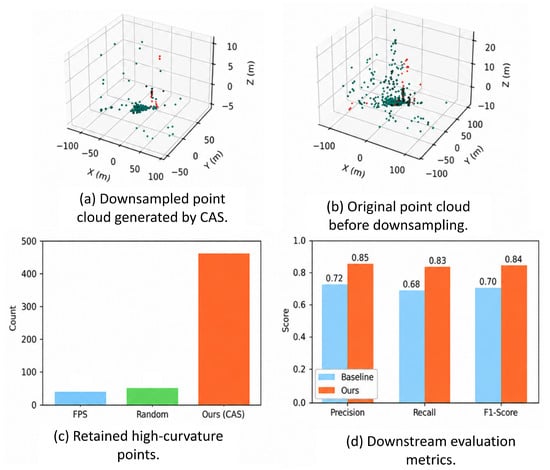
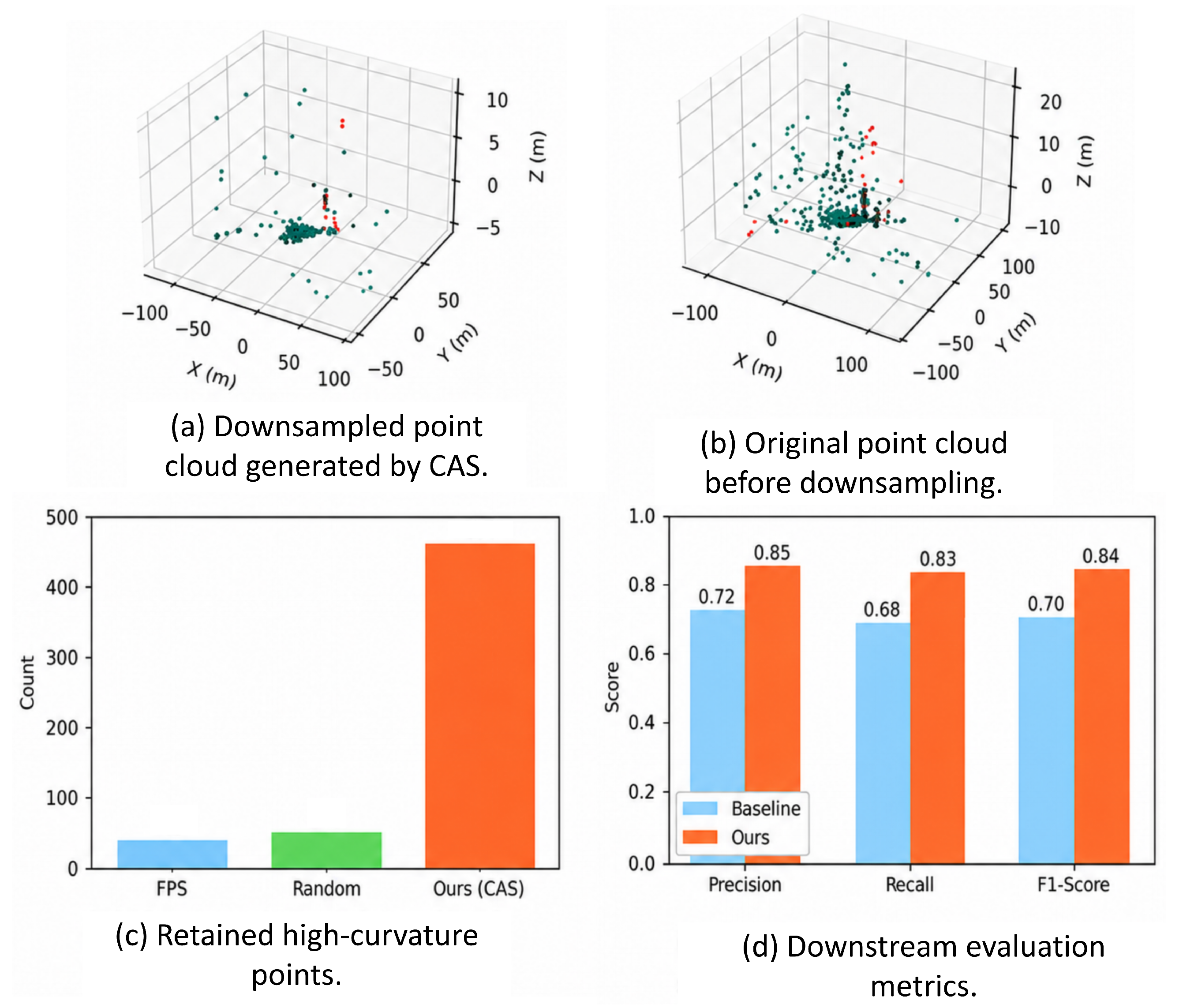
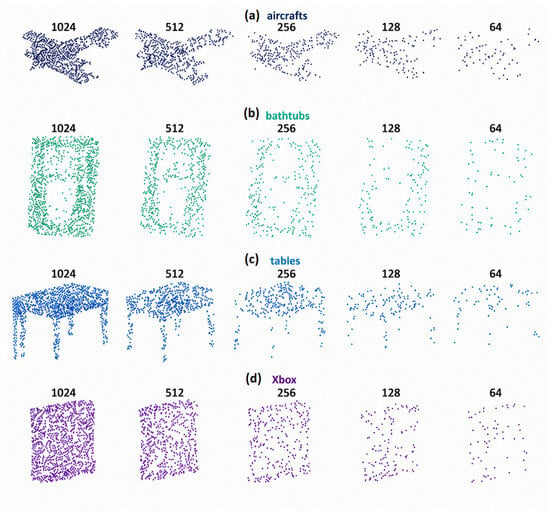
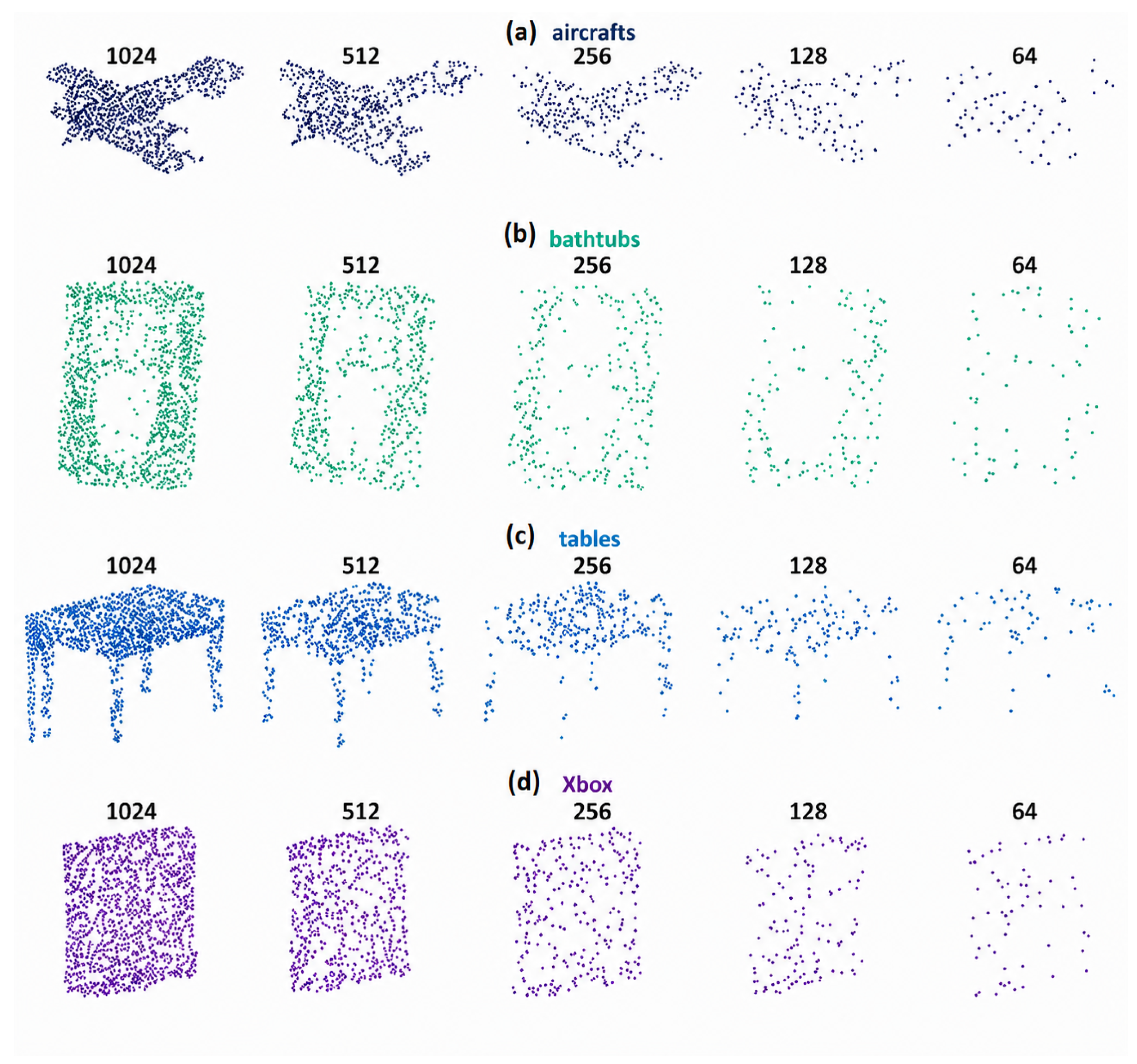

Disclaimer/Publisher’s Note: The statements, opinions and data contained in all publications are solely those of the individual author(s) and contributor(s) and not of MDPI and/or the editor(s). MDPI and/or the editor(s) disclaim responsibility for any injury to people or property resulting from any ideas, methods, instructions or products referred to in the content. |
© 2026 by the authors. Licensee MDPI, Basel, Switzerland. This article is an open access article distributed under the terms and conditions of the Creative Commons Attribution (CC BY) license.