


Highlights
What are the main findings?
- An end-to-end framework is developed for cross-modal offshore oil and gas platform detection, enabling registration-free inference across different modalities while effectively mitigating the domain shift problem. In addition, we incorporate a multi-scale feature aggregation module to improve the detection accuracy of objects at multiple scales.
- Without using target domain data, the full proposed method improves the average detection accuracy by 8 percentage points over the baseline model in cross-domain experiments across NL, IR, and SAR, while achieving better stability than existing methods.
What are the implications of the main findings?
- The results validate the effectiveness of integrating meta-learning with a domain discriminator for learning semantically meaningful, domain-invariant features in cross-modal scenarios.
- The proposed method eliminates the dependency on strictly registered multimodal data, significantly enhancing the real-time performance and practical applicability of multimodal remote sensing-based object detection in real-world scenarios.
Abstract
Multimodal remote sensing data provide important data support for large-scale, all-weather monitoring of offshore oil and gas platforms. However, differences in imaging modalities and acquisition conditions introduce significant domain shift, which limits the generalization capability of object detection models in unseen target domains. Furthermore, most existing multimodal detection methods typically rely on paired and strictly registered data, thereby restricting their applicability in practical scenarios. To overcome these challenges, an end-to-end method, termed OG-MLDD, is proposed for cross-modal offshore oil and gas platform detection. Without requiring multimodal image registration, the proposed method integrates meta-learning with domain discriminator (DD) to encourage the extraction of semantically discriminative representations that remain invariant across different domains. Specifically, a dual-gradient-descent-based meta-learning strategy is first introduced to jointly optimize the meta-train and meta-test objectives, encouraging the model to learn generalized and discriminative feature representations across different imaging modalities. Subsequently, a dynamic-weighted gradient reversal layer (DWGRL) is embedded into DD to guide adversarial feature learning between different domains, thereby promoting the acquisition of domain-robust representations and supplying global supervisory cues throughout the training process. Finally, a multi-scale feature aggregation (MFA) module is proposed to effectively integrate fine-grained local details with multiple receptive fields and high-level contextual information, thereby refining the fused feature representations and enhancing the representation capability of multi-scale offshore platform objects. Experimental results on a real-world dataset demonstrate that, even without using target domain data during training, the proposed method achieves superior detection performance and robust cross-domain generalization. Compared with existing methods, the full method improves detection accuracy by approximately 8 percentage points with a standard deviation of only 0.6, highlighting its superior detection performance and generalization ability.
1. Introduction
With the continuous expansion of marine resource exploitation and the growing demand for offshore safety supervision, offshore oil and gas platforms have become critical targets for maritime monitoring. Automatic detection and continuous monitoring of these platforms are therefore of considerable practical importance [1,2]. In recent years, rapid advances in remote sensing technology have enabled satellite sensors to acquire large-scale, high-resolution ocean observation data, providing valuable data support for offshore oil and gas platform detection. As a result, satellite remote sensing imagery has become an important and effective means for the automatic detection of offshore oil and gas platforms [3,4,5].
Most existing studies on offshore oil and gas platform detection are based on remote sensing data acquired from a single satellite payload. For example, some approaches rely solely on nighttime light (NL), infrared (IR), or synthetic aperture radar (SAR) imagery to detect oil and gas platforms [6,7]. Early approaches based on single-modal remote sensing data typically employed a combination of constant false alarm rate (CFAR) detection and threshold segmentation to extract high-intensity scattering objects, followed by geometric or texture feature analysis for target screening and identification [8,9,10,11,12,13,14,15,16]. These methods can achieve satisfactory detection accuracy in relatively noise-free scenarios. However, because they rely heavily on manually designed features, their robustness is limited in complex marine environments, and their detection performance degrades significantly under the influence of sea clutter and complex backgrounds. Driven by the remarkable progress of deep learning, CNN-based maritime object detection methods have achieved substantial advances in recent years [17,18,19,20,21,22]. Compared with traditional handcrafted feature-based methods, CNNs are capable of automatically learning discriminative feature representations from data, thereby significantly improving model robustness. Consequently, CNN-based methods have been widely adopted for offshore platform detection. For instance, Selvam et al. [23] proposed an attention-enhanced feature pyramid network (FPN) to strengthen the representation of small-scale offshore platforms in SAR imagery. Qin et al. [24] developed a real-time object detection model with a channel attention mechanism, which effectively suppresses background noise and improves detection performance. Although these CNN-based single-modal detection methods have substantially improved the detection accuracy of offshore oil and gas platforms and enabled effective target classification and localization, single-modal remote sensing imagery provides only limited information regarding both target characteristics and the surrounding scene. For example, NL imagery can effectively capture platform illumination at night but is highly sensitive to illumination conditions, with image quality degrading significantly under cloudy or foggy conditions. IR sensors support day-and-night observation; however, they provide limited texture information and are susceptible to temperature variations in both the target and the sea surface. SAR sensors offer all-weather, all-day imaging capability and strong penetration ability, but the acquired images are often severely contaminated by speckle noise. Consequently, models trained on single-modal remote sensing imagery struggle to learn robust and discriminative feature representations, resulting in satisfactory performance only under specific imaging conditions while exhibiting significant performance degradation in complex and dynamic observation environments.
In recent years, with the development of spaceborne remote sensing technology, a wide range of satellite data can be acquired from various sensors, leading to the emergence of multimodal remote sensing datasets. Different modalities provide complementary information, such as variations in spatial coverage and imaging conditions. Their integration can improve the robustness and accuracy of detection [25,26]. Motivated by this, some studies have explored the integration of complementary information from optical, SAR, and infrared imagery for offshore platform object detection [12,27,28,29,30,31]. These methods generally adopt traditional image fusion algorithms or CNN-based fusion strategies to combine heterogeneous visual cues acquired from multiple imaging modalities, followed by decoding the fused features using an object detection network to identify offshore oil and gas platforms. Traditional fusion methods mainly rely on manually designed domain-specific prior features and relatively simple fusion strategies, which inevitably limit their fusion performance. In contrast, CNN-based fusion methods can generally be categorized into feature-level fusion and decision-level fusion [25]. Feature-level fusion methods learn modality-specific feature representations through multiple parallel feature extraction branches and subsequently generate a unified feature representation containing complementary multimodal information according to predefined fusion rules [32,33,34,35]. For example, Zhang et al. [36] proposed a dual-branch pseudo-Siamese network to extract complementary features from registered optical and SAR images, effectively alleviating the limitations of single-modal feature representation. Yong et al. [37] employed a frequency-domain attention module and a deep convolutional self-attention module to extract complementary information from hyperspectral and LiDAR/SAR images, respectively. A dual-branch fusion attention structure was then introduced to facilitate feature interaction and integration across both the channel and spatial dimensions. By contrast, decision-level fusion methods construct independent offshore oil and gas platform detection models for different remote sensing modalities and subsequently determine the final predictions by applying a predefined decision strategy to the outputs of the modality-specific detectors [38,39,40,41]. These multimodal fusion methods alleviate the limitations of single-modal imagery in representing both target characteristics and scene information, thereby effectively improving object detection accuracy.
However, CNN-based image fusion and detection methods heavily depend on the limited data distributions available during training, which restricts their generalization to unseen scenarios. These methods usually assume that the training data and the data encountered in real applications satisfy the independent and identically distributed (IID) condition in a statistical sense [42,43,44]. In practice, this assumption is often not valid. Variations in viewing angles, illumination conditions, and complex weather environments can lead to distribution discrepancies in remote sensing data, even when acquired by the same satellite payload or imaging mode under different conditions. This discrepancy between the training data distribution and the target application data distribution, caused by changes in imaging conditions, is commonly referred to as domain shift. Domain shift makes it difficult for models trained under traditional supervised learning frameworks to maintain stable detection performance in unseen domains, resulting in a significant performance drop [45,46,47,48]. Furthermore, these methods heavily rely on accurate spatial registration and geometric alignment between data acquired from different sensors. This requirement not only incurs considerable computational overhead but also makes it difficult to ensure both the accuracy and stability of image registration in complex marine environments. Consequently, when data from corresponding modalities are unavailable or image registration fails, the detection performance of the model degrades significantly [45,46], thereby greatly limiting its feasibility for real-time applications.
To mitigate the adverse effects of domain shift on model performance, cross-domain learning approaches, including domain adaptation (DA) and domain generalization (DG), have been proposed [49,50,51,52,53]. Specifically, the core idea of DA is to alleviate domain shift through cross-domain distribution alignment. Existing DA methods mainly address domain shift by employing adversarial learning [54], statistical distribution alignment [55], and discriminative feature constraints [56,57,58,59]. These methods enhance cross-domain classification and fine-grained recognition by learning domain-invariant feature representations while incorporating class-discriminative information, local structure preservation, and class-consistent alignment. However, most DA methods require target-domain data for model training or fine-tuning, which is often unavailable in practical applications. To overcome this limitation, DG has attracted increasing attention. Unlike DA, DG focuses on learning models with strong cross-domain generalization capability by exploiting multiple source domains during training, eliminating the need for target-domain samples or subsequent adaptation. This is achieved by learning domain-invariant feature representations [60,61,62]. MLDG [50] was the first to introduce meta-learning into DG. It partitions the source domains into meta-training and meta-testing domains and explicitly simulates domain shift during training, thereby encouraging the model to learn domain-invariant features with stronger generalization capability. Building upon MLDG, MetaReg [63] further introduced a learnable regularizer into the meta-learning framework, leading to improved generalization performance on unseen target domains.
Although meta-learning-based DG methods improve cross-domain generalization by explicitly simulating domain shift during training, their performance still depends heavily on the diversity of the source domains. When the diversity of the source domains is insufficient, the simulated domain shift cannot adequately approximate real-world distribution variations, causing the learned feature representations to remain strongly domain-invariant. Moreover, as discussed above, existing multimodal image fusion methods generally rely on accurate image registration, which greatly limits their applicability in practical cross-modal scenarios.
To overcome these issues, this study proposes an end-to-end cross-modal offshore oil and gas platform detection method based on meta-learning (ML) and a domain discriminator (DD), termed OG-MLDD, to reduce the distribution discrepancy introduced by inconsistent imaging conditions across source and target domains. Specifically, a dual-gradient-descent-based meta-learning strategy is first introduced to jointly optimize the objectives of the meta-training and meta-testing stages. Throughout the meta-learning procedure, the model is encouraged to learn generalized and discriminative feature representations of offshore oil and gas platforms across different imaging modalities, thereby improving its performance on both the source and target domains. Furthermore, DD equipped with a dynamic-weighted gradient reversal layer (DWGRL) is incorporated after the neck of the detection network to guide adversarial optimization with global supervisory guidance, thereby suppressing domain-specific characteristics and improving cross-domain generalization. In addition, a multi-scale feature aggregation (MFA) module is designed to exploit complementary information across multiple receptive fields together with global contextual dependencies. The resulting feature representations become more discriminative and robust, facilitating the detection of offshore platforms over a wide range of object scales.
This work makes the following contributions:
(1) OG-MLDD is proposed as an end-to-end method for cross-modal offshore oil and gas platform detection. The proposed framework eliminates the need for pixel-level or geographic registration between remote sensing images of different modalities and achieves accurate detection in unseen target domains using only source-domain data for training, thereby improving the model’s adaptability to challenging cross-modal scenarios.
(2) A novel optimization strategy integrating dual-gradient-descent-based meta-learning with DD is developed. By jointly exploiting the principles of DG and DA, the proposed strategy learns more robust domain-invariant feature representations, effectively mitigating domain shift in cross-modal remote sensing scenarios and further enhancing the generalization capability of the model.
(3) MFA module is introduced to exploit complementary information across different feature levels, thereby generating richer semantic representations for object detection.
(4) A new dataset is constructed for cross-modal oil and gas platform detection and domain generalization. It includes NL, IR, and SAR images collected by different satellites under various imaging conditions, simulating domain shift in real scenarios. Experimental results show that the proposed method outperforms existing detection methods in both accuracy and generalization. It provides strong technical support for offshore oil and gas development safety and platform monitoring.
The organization of this paper is summarized as follows. Section 2 describes the proposed OG-MLDD, including its training strategy and network design. Section 3 details the dataset, experimental setup, implementation settings, and performance evaluation, followed by an in-depth discussion of the results. Section 4 analyzes the limitations of OG-MLDD and outlines possible directions for future work. The conclusions are presented in Section 5.
2. Materials and Methods
This paper proposes OG-MLDD, an end-to-end cross-modal offshore oil and gas platform detection method for multimodal remote sensing imagery. To address the challenges of domain shift caused by different imaging conditions, as well as the reliance on image registration in existing multimodal detection methods, OG-MLDD consists of three main components: (1) a dual-gradient-descent-based meta-learning strategy for learning generalized feature representations across domains, (2) DD equipped with a DWGRL to facilitate adversarial domain alignment, and (3) MFA module for enhancing feature representation by aggregating local and global contextual features.
2.1. Training Strategy of OG-MLDD
The training strategy of OG-MLDD is illustrated in Figure 1a. Before introducing the proposed method, it is important to clarify that remote sensing images from different modalities are treated as different domains, while images from the same modality belong to the same domain.
Figure 1.
Detailed workflows of the OG-MLDD training strategy and testing stage. (a) Detailed workflow of the OG-MLDD training strategy. (b) Detailed workflow of the OG-MLDD testing stage.
The goal of OG-MLDD is to enhance the detector’s ability to cope with unseen domains by learning transferable representations exclusively from source-domain data. Following the meta-learning paradigm of MLDG [50], we employ an episodic optimization strategy based on dual-gradient descent to improve cross-domain generalization. Specifically, assume that there are domains, and all domains share the same object categories, while their data distributions differ in feature space. Let the initial model be denoted as . In the meta-learning strategy, domains are selected as source domains and randomly divided into a meta-train set (pseudo source domain) and a meta-test set (pseudo target domain), denoted as and , respectively. The remaining one domain from the domains is treated as the target domain. This domain is not involved in the training process of OG-MLDD and is only used during inference to evaluate the generalization ability and detection performance of the model, as illustrated in Figure 1b. In addition, before feeding the data into the model, a domain label is assigned to each domain for supervising the training of the DD. The training process of OG-MLDD consists of three stages in each iteration: the meta-train stage, the meta-test stage, and the overall loss backpropagation stage, as shown in Figure 1a. In Figure 1a, the solid black lines denote forward propagation process, the blue dashed lines represent the backpropagation path of the meta-train loss, the orange dashed line represent the backpropagation path of the meta-test loss, and the orange arrows indicate the parameter update in the inner loop. During the meta-train stage, the domain classification loss and object detection loss are first computed on the meta-train set, and the inner-loop parameters are then updated based on these two losses, as indicated by the orange arrows. During the meta-test stage, the updated model obtained from the inner-loop optimization is used to compute object detection loss on the meta-test set. In the overall loss backpropagation stage, the meta-train and meta-test losses are jointly backpropagated with respect to the initial model parameters, as illustrated by the blue and orange dashed lines. The detailed process is described as follows:
(1) Meta-train stage: Initially, a batch of input data with size is randomly sampled from the meta-train set . The data are then fed into the backbone and neck for feature extraction, yielding the feature representation . Subsequently, the extracted features are jointly processed by the detection head and the DD. These are used for the domain classification task and the object detection task, respectively, producing the domain prediction label and the detection result. Next, the domain classification loss and the detection loss are calculated from the corresponding predictions. Finally, the meta-training objective is formulated by integrating and . The resulting objective is subsequently used to perform the inner-loop optimization, producing an updated source model, denoted as .
(2) Meta-test stage: In this stage, the images from the meta-test set are first fed into the updated model obtained from the inner-loop gradient descent to perform object classification and localization. The prediction results on the meta-test set are used to compute the corresponding detection objective, denoted by . The meta-test set is used to simulate the distribution shift between the source and target domains in real-world scenarios, thereby evaluating the model’s cross-domain performance on the target domain.
(3) Overall loss backpropagation stage: After completing the meta-train and meta-test stages, the overall objective is obtained by integrating the domain classification loss , the detection loss on the meta-train set , and the detection loss on the meta-test set . The resulting objective is then used for back-propagation, followed by an outer-loop update to jointly optimize the parameters of the DD and the detection network based on initial source model .
To facilitate understanding of the parameter update process in OG-MLDD, the schematic presented in Figure 1a can be simplified. As illustrated in Figure 2, denotes the joint optimization objective associated with the meta-training stage, combining the object detection loss and the domain classification loss computed from the meta-train set. represents the total loss during the meta-test stage, which consists solely of the object detection loss calculated on the meta-test set. denotes the initial parameter set of the source model, whereas represents the parameters obtained after the inner-loop update. The symbol indicates the gradient evaluated with respect to , and refers to the parameters produced after the outer-loop optimization. Blue lines indicate the inner-loop gradient descent path. Orange lines represent the outer-loop gradient descent path.
Figure 2.
Parameter update process of OG-MLDD.
During the meta-training stage, the optimization objective , formed by the object detection loss and the domain classification loss, is first evaluated. The resulting objective is then used to perform the inner-loop parameter update. It is worth noting that the inner-loop gradient descent only ensures that the backbone and neck of the detector achieve good performance on the meta-train set, while the performance on the meta-test set remains uncertain. If the data distributions of the meta-train and meta-test sets are inconsistent, the performance of the model on the meta-test set may degrade significantly. Therefore, in the meta-test stage, the detection loss is computed using the updated model obtained from the inner-loop gradient descent. Finally, the losses from both the meta-train and meta-test stages are jointly backpropagated. The gradients are calculated with respect to the initial parameters , and the second update (outer-loop gradient descent) is performed. This update process minimizes the meta-train loss while ensuring good detection performance on the meta-test set.
2.2. Overall Framework
The overview of the proposed OG-MLDD is shown in Figure 3a. Similar to the baseline YOLOv13, OG-MLDD includes three essential modules: backbone, neck, and detection head. The backbone and neck jointly constitute the feature extractor of YOLOv13. To facilitate domain alignment, DD is connected to the output of the neck, where high-level semantic features still preserve the distribution gap across different domains. Through adversarial learning between DD and the feature extractor, the backbone and neck are encouraged to capture more domain-invariant latent features under the guidance of the proposed meta-learning strategy. This process effectively alleviates overfitting to the source domain while preserving semantic consistency, thereby providing the detection head with more generalized feature representations for cross-modal object detection. Since the DD is only involved during training, it introduces no additional computational cost during inference. In addition, to improve the representation of offshore oil and gas platforms with different scales, MFA module is embedded between the backbone and neck at the three effective output stages (B1, B2, and B3), as shown in Figure 3a. By aggregating multi-scale contextual information before cross-scale feature fusion in the neck, the proposed module enhances discriminative feature representations for offshore platforms. Specifically, MFA employs parallel dilated convolution branches with different dilation rates, together with global contextual information and channel-response weighting module (CRWM), to adaptively emphasize discriminative features in the channel dimension. Consequently, the representation of offshore oil and gas platforms, particularly small-scale targets, is significantly enhanced.
Figure 3.
Detailed architecture of OG-MLDD. (a) Architecture of OG-MLDD. (b) Structure of key components in OG-MLDD.
2.2.1. Dynamic-Weighted Gradient Reversal Layer
Relying solely on the inner-loop and outer-loop gradient descent is insufficient to ensure that the features learned by the backbone and neck are both discriminative and domain-invariant. In addition, due to the lack of global supervision during training, the model tends to overfit to the source domain, which further limits its cross-domain generalization ability. Therefore, we introduce DD after the neck in OG-MLDD to further encourage the extraction of domain-invariant features on top of the dual-gradient meta-learning strategy, as shown in Figure 3a. As illustrated in Figure 4, DD is composed of DWGRL and a domain classifier (DC). The DC comprises two 3 × 3 convolutional layers, followed by average pooling and two fully connected (FC) layers, which jointly predict the domain labels from the neck features. By confusing the domain classifier through adversarial learning, the gradient reversal mechanism encourages the model to learn more robust and domain-invariant features, thereby improving cross-domain generalization and detection performance.
Figure 4.
The structure of DD.
The GRL functions as an identity operator in the forward stage, passing the input features directly to the subsequent layer without modification. This process can be formulated as
where represents the feature map generated by the neck module and denotes the output feature of the GRL during forward propagation. During backpropagation, the GRL inverses the direction of the gradient from the DC branch by scaling it with a negative coefficient. As a result, the parameters of the backbone and neck are updated to minimize the detection loss while simultaneously maximizing the DC loss, thereby confusing the DC. The above procedure can be formulated as follows:
where denotes the gradient from the DC and the weighting coefficient controls the strength of gradient reversal.
In the original gradient reversal layer (GRL) paradigm, the weighting coefficient can be set to a fixed value. However, object detection and domain alignment emphasize different optimization objectives during training. At the early stage of training, the feature representations extracted by the backbone and neck are still insufficiently discriminative. Applying strong adversarial supervision at this stage may interfere with the learning of discriminative semantic features, thereby degrading the optimization of the detection task. To address this issue, subsequent studies on domain-adversarial learning have further introduced progressive training strategies that gradually increase the strength of domain alignment constraints during training [64,65]. Inspired by these progressive training strategies, we adopt a similar progressive weighting scheme and integrate it into the proposed meta-learning- and domain-discriminator-based cross-modal detection framework, with the aim of promoting stable optimization throughout the training process. Specifically, a dynamic coefficient is introduced to progressively increase the strength of adversarial learning as training proceeds, enabling the model to gradually shift its optimization focus from discriminative feature learning to domain-invariant feature alignment. At the initial stage, DWGRL sets the weighting coefficient to a small value, so that the backbone and neck focus on learning discriminative features for offshore platform detection, thereby reducing the interference from the domain classification task. As training progresses, is gradually increased, enabling the backbone and neck to learn more domain-invariant features. The dynamic weighting strategy can be formulated as follows:
where corresponds to the normalized training iteration, and is a hyperparameter used to regulate the variation in the weighting coefficient during optimization.
To better illustrate the dynamic weighting strategy, the weighting coefficient defined in Equation (4) is plotted in Figure 5. As can be observed, is formulated as a smooth monotonically increasing function, whose value gradually increases from 0 to 1 throughout the training process. Compared with a fixed weighting coefficient, this design allows the detector to prioritize discriminative feature learning during the early stages of training. As the feature representations become progressively more stable, the strength of domain alignment is gradually increased. Moreover, Equation (4) is formulated based on a hyperbolic tangent function, which is continuously differentiable and provides a smooth transition throughout the optimization process. Consequently, abrupt changes in adversarial gradients and optimization instability can be effectively alleviated. As the training converges, the weighting coefficient asymptotically approaches 1, enabling the proposed DWGRL to achieve a domain alignment capability comparable to that of the traditional GRL while maintaining a more stable optimization process.
Figure 5.
Visualization of the dynamic weighting coefficient .
DWGRL establishes an adversarial learning paradigm between the feature extraction module (i.e., the backbone and neck) and the DD. Under this domain-adversarial constraint, the model suppresses domain-related information interference while preserving discriminative capability, thereby learning more robust domain-invariant representations. Such features not only support object detection tasks but also remain independent of specific data distributions, effectively improving detection accuracy and generalization performance in cross-modal scenarios.
2.2.2. Multi-Scale Feature Aggregation Module
Offshore oil and gas platforms are typically small in remote sensing images, and they are often surrounded by sea surfaces with strong scattering properties. As a result, their features are easily overwhelmed by sea clutter, wave patterns, and bright spot noise in the feature space. In addition, after multiple convolutional layers in the object detection model, the feature information of small-scale platforms tends to attenuate and may even be lost. To address these issues, MFA is introduced between the backbone and the neck. MFA extracts multi-scale contextual representations through parallel dilated convolutions and subsequently refines them using CRWM. In this way, discriminative features of offshore platforms are adaptively enhanced, improving the feature representation of the model for objects at different scales.
The detailed structure of MFA is shown in Figure 6. It first employs multiple 3 × 3 atrous convolution branches with different dilation rates (1, 2, 3, and 5) to construct receptive fields at multiple spatial scales without reducing the feature resolution. This design enables the model to effectively capture local features of offshore platforms as well as the surrounding contextual information of the sea surface. Meanwhile, a global average pooling (GAP) branch is introduced to model global context information from the entire feature map. The resulting global representations are subsequently projected back to the feature-map resolution and integrated with local feature maps, allowing richer contextual cues to complement the representation of small-scale offshore platform targets. To reduce the computational cost, a 1 × 1 convolution is applied before the atrous convolutions to decrease the channel dimension. After that, multi-scale features are concatenated along the channel dimension. A channel response weighting module (CRWM) is then applied to compute channel-wise weights, as illustrated on the right side of Figure 6. Specifically, this module uses GAP, FC, and a Sigmoid to generate channel attention coefficients. Channels with stronger responses are assigned higher weights. This mechanism enables the model to focus on more discriminative feature channels for offshore platform detection while suppressing redundant noise features. Finally, the concatenated features are multiplied by the channel response weights to obtain refined feature representations. A 1 × 1 convolution is then applied to adjust the channel dimension before producing the final output. According to Figure 7, offshore oil and gas platform targets are mainly characterized by widths and heights of 25–35 pixels, and the largest proportion of samples is found in the 35–40 pixel interval. This demonstrates that most offshore platforms in the dataset belong to the small-object category. Since objects larger than 50 pixels account for only a small proportion of the dataset, employing excessively large dilation rates would inevitably introduce more surrounding sea clutter and background interference. Moreover, large dilation rates tend to produce sparse feature sampling and gridding artifacts, which are detrimental to preserving the structural integrity of small offshore platform objects. Therefore, atrous convolutions with dilation rates of 1, 2, 3, and 5 are adopted to capture contextual information at multiple receptive fields. Specifically, a dilation rate of 1 focuses on preserving fine structural details, while dilation rates of 2 and 3 progressively enlarge the receptive field to capture medium-range contextual information. A dilation rate of 5 further aggregates broader contextual cues, thereby enhancing the feature representation of relatively larger objects and their surrounding semantic context.
Figure 6.
Architecture of the MFA.
Figure 7.
Distribution of the width and height of platform objects.
2.3. Loss Function
According to the training strategy introduced in Section 2.1, OG-MLDD is optimized through three sequential stages: meta-training, meta-testing, and overall loss backpropagation.
In the meta-train stage, the model performs both domain classification and object detection tasks. For the domain classification task, the cross-entropy loss is used to optimize the DD. Specifically, three DDs are independently attached to the three effective feature outputs of the Neck, and their parameters are not shared. The loss of each DD is defined as Equation (5):
where denotes the number of domain categories, represents the predicted probability of the i-th domain by the domain classifier, and is the ground-truth label. denotes the index of the effective feature output, with . The losses from the three DDs are then summed to obtain the overall domain classification loss:
For the object detection task in the meta-train stage, the same object detection loss function as YOLOv13 [66] is adopted, as defined in Equation (7):
here, the contributions of the classification, CIoU, and DFL losses are regulated by the coefficients , , and , respectively. The definitions of , and in the formula can be found in Reference [66].
The optimization objective for the meta-training stage is obtained by the weighted sum of and , as expressed in Equation (8):
where denotes the weighting factor for the domain classification loss.
In the meta-test stage, the model is evaluated on the pseudo target domain (i.e., the meta-test set) in terms of object detection performance. Therefore, the loss in the meta-test stage can be represented by the detection loss , as defined in Equation (9):
In the overall loss backpropagation stage, the losses from the meta-train and meta-test stages are summed and backpropagated. Therefore, the overall loss of OG-MLDD as shown in Equation (10):
3. Result
3.1. Datasets and Experimental Settings
The proposed OG-MLDD model is trained and evaluated on a cross-modal offshore oil and gas platform dataset composed of three remote sensing imaging modalities: nighttime light (NL), infrared (IR), and synthetic aperture radar (SAR). The detailed information of the dataset is summarized in Table 1. Specifically, the SAR images were acquired by the Gaofen-3 satellite, the IR images were collected by the Thermal Infrared Sensor (TIS) onboard the Sustainable Development Science Satellite-1 (SDGSAT-1), and the NL images were obtained by the Glimmer Imager (GLI) onboard SDGSAT-1. The spatial resolutions of the SAR, NL, and IR images are 5–10 m, 10 m, and 30 m, respectively. The dataset covers the period from 2021 to 2025 and spans the South China Sea and its adjacent offshore waters.
Table 1.
Detailed information of the proposed cross-modal offshore platform dataset.
To ensure semantic consistency across different imaging modalities, all offshore platform instances are annotated as a single object category, namely “oil_gas”. To simulate cross-modal domain shift under realistic remote sensing conditions, the dataset is divided into 3 independent domains according to the imaging modality, where the NL, IR, and SAR datasets are treated as separate domains with domain labels domain_id = {0, 1, 2}, respectively. It should be noted that the proposed method is registration-free; therefore, images from different modalities are sampled independently and do not require pixel-level or geographic-coordinate-level correspondence.
To perform cross-modal object detection and investigate the cross-domain robustness of OG-MLDD, two domains are selected as the source domains, while the remaining domain is treated as the target domain (i.e., AB → C, AC → B, and BC → A). Since only two source domains are involved during training, the domain classifier is configured as a binary classifier to distinguish between the two source domains. During each training iteration, the two source domains are dynamically and alternately partitioned into the meta-training domain and the meta-testing domain to simulate domain shift and facilitate the learning of domain-invariant representations.
As shown in Figure 8a, the t-distributed stochastic neighbor embedding (t-SNE) algorithm is employed to visualize the feature distributions of different modalities in a low-dimensional space. Three distinct feature clusters corresponding to the NL, IR, and SAR modalities can be clearly observed, indicating significant distribution discrepancies among different imaging modalities. Furthermore, even within the same modality, the feature distributions exhibit noticeable variations due to differences in imaging conditions, sensor parameters, and environmental factors. These observations demonstrate the existence of severe cross-modal domain shift, which degrades the transferability of the learned feature representations and consequently leads to a decline in cross-domain detection performance.
Figure 8.
Visualization of domain distributions. (a) Distribution of the three modalities. (b) Distribution after feature alignment. Blue, bright green, and light green points denote the SAR, NL, and IR modalities, respectively.
To ensure objective and fair comparisons, all experiments are conducted under the same parameter settings. Specifically, the training process runs for 200 epochs, during which the network parameters are updated using the Adam optimizer. The batch size is set to 8. The initial learning rate is set to and gradually decays to during training. In the DWGRL, the hyperparameter is set to 8, and the weighting coefficients , , , and are set to 0.5, 0.5, 7.5, and 1.5, respectively. The proposed method is developed with PyTorch 2.10.0 and evaluated on a computing platform equipped with a single NVIDIA T1000 GPU. We adopt Average Precision (AP) with an IoU threshold of 0.5 as the evaluation metric to assess the cross-domain detection and generalization performance of OG-MLDD for offshore platform detection. Furthermore, qualitative comparisons of detection results are provided to better illustrate the performance differences among the compared methods.
3.2. Evaluation Metrics
Average Precision (AP) is commonly used to evaluate the accuracy of object detection. It is computed based on Precision and Recall. The formulas for Precision and Recall are given as follows:
where TP denotes the number of correctly detected objects, FP denotes the number of falsely detected objects, and FN denotes the number of missed objects.
Using only Precision or Recall is insufficient to fully evaluate the detection performance of a model. A high Precision may be accompanied by many missed detections, while a high Recall may lead to many false positives. Therefore, Average AP is generally adopted as a comprehensive metric for evaluating object detection performance, and its calculation is defined as follows:
where denotes Precision and denotes Recall.
3.3. Comparative Experiments
3.3.1. Evaluation of Offshore Platform Object Detection Performance and Generalization Ability of OG-MLDD
To assess the effectiveness of OG-MLDD in cross-domain object detection, several state-of-the-art (SOTA) models, including Faster R-CNN [67], SSD [68], YOLOv12 [69], and the baseline YOLOv13 [66], are selected for comparison. It is worth noting that AP@0.5 is adopted as the evaluation metric for object detection.
The detailed results are presented in Table 2. For simplicity, the three domains are denoted as A, B, and C, corresponding to the NL, IR, and SAR modalities (i.e., domain_id = 0, 1, and 2), respectively. “BC → A” indicates that the model is trained on source domains B and C and evaluated on target domain A, while the definitions of other columns are analogous. “AVG” and “SD” denote the mean and sample standard deviation of detection accuracy across different unseen domains, respectively. To investigate the cross-domain robustness of the compared methods, the AVG and SD values are computed over the three cross-domain settings (BC → A, AC → B, and AB → C). “Time” represents the inference time required to process a single image.
Table 2.
Cross-domain detection performance of different object detection methods.
As shown in Table 2, OG-MLDD achieves significantly higher detection accuracy than other conventional methods across domains A, B, and C. Its average detection accuracy (AVG) surpasses all comparison methods. Specifically, in domains A, B, and C, OG-MLDD outperforms the baseline YOLOv13 by 7.2%, 8.5%, and 6.6%, respectively. It also exceeds Faster R-CNN by 18.4%, 19.5%, and 16.1%, SSD by 28.8%, 32.3%, and 32.2%, and YOLOv12 by 10.5%, 11.8%, and 8.7%. Although OG-MLDD achieves the best detection accuracy, the variation in performance across domains is more important for evaluating cross-domain generalization. Therefore, the SD is adopted to measure the stability of detection performance. Compared with other object detection methods, OG-MLDD achieves the lowest SD value of 0.7 across the three domains, indicating minimal performance fluctuation and stronger generalization ability in target domains. In addition, since the DD is not involved during inference, the detection efficiency of the model remains unaffected.
To better demonstrate the effectiveness of the proposed method in cross-modal detection, we visualize the detection results of the compared object detection models and OG-MLDD, as shown in Figure 9. It can be observed that the compared methods exhibit varying degrees of false positives and missed detections across the three modalities, accompanied by noticeable performance fluctuations. In contrast, OG-MLDD consistently achieves superior detection performance across different modalities, demonstrating enhanced robustness and stability. These results suggest that the proposed training strategy, which integrates meta-learning with DD, effectively promotes the learning of semantically discriminative and domain-invariant feature representations, thereby mitigating the domain shift induced by heterogeneous imaging mechanisms. Furthermore, even without requiring multimodal data registration, the proposed method maintains high detection accuracy, highlighting its strong potential for practical deployment in complex real-world scenarios.
Figure 9.
Qualitative comparison of different object detection models for cross-modal offshore platform detection. While existing detectors show fluctuating performance under different imaging conditions, the proposed method achieves more reliable detection with higher confidence.
To further demonstrate the capability of OG-MLDD to mitigate domain shift, several domain adaptive object detection (DAOD) methods are selected for comparison, including DAF [70], SWDA [71], DATR [72], and MLDG combined with YOLOv13 [50]. It should be noted that DAF and SWDA are built upon Faster R-CNN, DATR adopts the DETR detector, and both MLDG + YOLOv13 and OG-MLDD employ YOLOv13 as the underlying detection architecture.
For a fair comparison, all competing methods are implemented following the hyperparameter configurations and training protocols specified in their original publications. Since DAOD methods require partial target-domain data during training, the target-domain data were partitioned into an unlabeled training subset and a testing subset, containing 80% and 20% of the samples, respectively. The corresponding experimental results are reported in Table 3. To ensure a like-for-like comparison with the DAOD methods, MLDG + YOLOv13 and OG-MLDD (w/o MFA) are additionally evaluated on the same 20% target-domain testing subset. Meanwhile, since both methods are domain generalization methods and do not access any target-domain data during training, their performance on the full target domain is also reported in Table 3. As shown in Table 3, under the 20% target-domain testing setting, OG-MLDD (w/o MFA) achieves the highest mean average precision (mAP) of 94.0%. In addition, OG-MLDD (w/o MFA) obtains the lowest standard deviation (SD) of 0.7, indicating that the model can learn more domain-invariant feature representations and consequently achieve more stable performance across different cross-domain transfer tasks. When evaluated on the full target domain, OG-MLDD (w/o MFA) consistently outperforms MLDG + YOLOv13, further demonstrating its more stable generalization capability across target domains. These results indicate that combining the proposed domain discriminator with meta-learning can further enhance the domain generalization capability of meta-learning, enabling the model to learn more robust domain-invariant features. Notably, the training process of OG-MLDD does not require any target-domain data. Even when there are significant distribution differences in the target scenario, OG-MLDD can directly generalize to the new domain by leveraging its strong capability to learn domain-invariant features. This enables a zero-shot learning paradigm and avoids the need for extensive manual annotation and large-scale data-driven training.
Table 3.
Detection results of different DAOD methods.
As shown in Figure 10, different DAOD methods exhibit noticeable instability in detection performance under cross-modal conditions, with prevalent false positives and missed detections, particularly in the IR and SAR modalities. In contrast, OG-MLDD maintains consistently high detection performance and robust cross-modal generalization across all modalities. This further demonstrates that the collaborative constraint of meta-learning and DD can effectively reduce the model’s reliance on specific data domains, thereby improving cross-modal detection performance and generalization capability.
Figure 10.
Qualitative detection results of OG-MLDD and representative DAOD detectors in cross-modal offshore platform scenarios. Existing methods exhibit performance degradation or instability under cross-modal domain shifts, especially in IR and SAR images. In contrast, the proposed method maintains consistently high confidence and accurate detection, demonstrating stronger generalization and robustness.
3.3.2. Evaluation of the Effectiveness of the MFA
In remote sensing imagery, offshore platforms usually appear as small targets whose visual characteristics can be easily obscured by environmental interference, placing higher demands on the model’s ability to represent objects across different scales. To validate the effectiveness of the proposed MFA, all domain datasets are merged into a single dataset, which is then split into training and testing sets with an 8:2 ratio. The MFA module is inserted after the three effective layers of the baseline YOLOv13. Table 4 presents the detection results of different methods for multi-scale targets. Specifically, in this subsection, the detection performance is evaluated using AP@0.5 and AP@0.5:0.95. Moreover, , , and are adopted to assess the detection accuracy of small-, medium-, and large-scale objects, respectively.
Table 4.
Multi-scale detection results of different object detection methods.
As shown in Table 4, compared with other methods, the introduction of MFA improves the detection performance of YOLOv13 across all object scales, even without using meta-learning or DD. Compared with the baseline YOLOv13, the proposed MFA increases the overall detection accuracy by 1.1% and improves the detection accuracy for small-scale objects by 3.6%. Furthermore, the proposed MFA improves the AP@0.5:0.95 from 68.2% to 71.5%, indicating that the module can enhance the localization accuracy and robustness under stricter IoU thresholds. Moreover, the detection time shows no significant increase, which meets real-time requirements.
Figure 11 reveals that small-scale objects often exhibit weak feature representations and are highly susceptible to background interference, making it difficult for Faster R-CNN, SSD, YOLOv12, and the baseline YOLOv13 to extract discriminative representations. This limitation leads to degraded detection performance, manifested by increased incorrect target predictions and missed objects. In contrast, after augmenting the baseline YOLOv13 with the MFA module, the detection performance is consistently improved across multiple scales. These results further demonstrate that MFA effectively enhances object feature responses, emphasizes salient regions, and suppresses background interference.
Figure 11.
Qualitative comparison of multi-scale detection results across different object detection methods. With the integration of MFA, the baseline model YOLOv13 exhibits increased confidence scores and more accurate localization across multiple scales, highlighting its effectiveness in strengthening multi-scale feature representation.
3.3.3. Ablation Study
To further evaluate the contribution of each component of OG-MLDD to the cross-modal offshore platform object detection task, we conduct ablation experiments, and the results are presented in Table 5. In the table, “Params” denotes the number of model parameters. To distinguish different ablation configurations, the baseline enhanced with meta-learning is labeled as “+ML”. Adding the domain discriminator produces the “+ML+DD” variant, whereas incorporating the MFA module leads to the final “+ML+DD+MFA” configuration. It is worth noting that the domain discriminator is designed to further optimize the learning of domain-invariant features within the meta-learning.
Table 5.
The ablation study results of OG-MLDD. “Params” refers to the number of parameters during the inference stage.
According to the ablation results reported in Table 5, the progressive introduction of different modules leads to consistent improvements in detection accuracy. Specifically, the meta-learning training strategy increases the AVG of OG-MLDD by 2.4% across different target domains. Based on this, the introduction of the DD further reduces the distribution gap between domains, leading to an additional improvement of 5% in AVG, while the standard deviation (SD) decreases to 0.7. Finally, the MFA module enhances the feature responses of objects across different channels, thereby improving the feature representation capability of the detector. As a result, the AVG is further increased by 0.6%. In addition, after incorporating MFA, the SD is further reduced to 0.6. These results indicate that the combination of meta-learning, the DD, and MFA effectively extracts domain-invariant features for multi-scale offshore platform objects, thus improving the model’s ability to handle scale variations in offshore platforms.
In Table 5, the baseline YOLOv13 has 30.4 M parameters, while the number increases to 32.3 M after incorporating the MFA module. It should be emphasized that the meta-learning module and DD serve as auxiliary components during training and are discarded during inference, ensuring no additional computational burden at test time. Therefore, compared with the baseline YOLOv13, OG-MLDD does not exhibit a noticeable decrease in detection efficiency. The inference time per image is only 0.021 s.
To further demonstrate that the proposed method can effectively extract discriminative domain-invariant features while suppressing domain-specific interference caused by background clutter and sea clutter, Grad-CAM is employed to visualize the attention regions of the baseline YOLOv13 and the proposed OG-MLDD. The visualization results are shown in Figure 12. For all three imaging modalities (NL, IR, and SAR), the activation maps generated by the baseline YOLOv13 are relatively scattered and are easily affected by background interference, resulting in inaccurate localization of offshore platforms and incomplete activation of the target regions. In contrast, the activation maps produced by OG-MLDD are more compact and concentrated, with the high-response regions accurately covering the offshore platform targets while effectively suppressing spurious activations in the surrounding background. Moreover, OG-MLDD is still able to accurately localize and highlight small-scale targets, demonstrating its superior capability for extracting discriminative target features across different object scales. These observations indicate that the proposed method effectively learns domain-invariant feature representations while preserving, and even enhancing, the discriminative characteristics of target features and suppressing domain-specific feature responses, thereby reducing the risk of feature overfitting. In addition, the MFA module further improves the robustness of the model to target scale variations, resulting in enhanced multi-scale feature representation capability.
Figure 12.
Qualitative Grad-CAM attention maps of YOLOv13 and OG-MLDD across NL, IR, and SAR modalities. Compared with YOLOv13, OG-MLDD generates more compact and target-centered activation regions while effectively suppressing irrelevant background responses.
To intuitively demonstrate the effectiveness of the proposed OG-MLDD in mitigating domain shift, t-SNE is employed to visualize the feature representations extracted from the neck of the detection network, as shown in Figure 8b. Compared with the original feature distributions in Figure 8a, the aligned features from different modalities exhibit substantially reduced distribution discrepancies and a significantly higher degree of overlap after feature alignment. As highlighted by the dashed ellipse, most feature representations are clustered within a domain-invariant feature space, indicating that the proposed optimization strategy effectively suppresses modality-specific characteristics while preserving discriminative semantic information. Consequently, features from different modalities are mapped into a more consistent latent feature space, thereby reducing the distribution discrepancy across domains and improving the robustness and generalization capability of the model in cross-modal remote sensing scenarios. These observations are consistent with the superior quantitative detection results, further demonstrating the effectiveness of the proposed OG-MLDD.
Furthermore, a sensitivity analysis of the growth rate parameter controlling the variation of is conducted under the AB → C cross-domain experimental setting. Specifically, all other experimental configurations are kept unchanged, and is varied among [2,4,8,12,16]. The corresponding variation curves of are presented in Figure 13. As shown in Table 6, OG-MLDD achieves the best performance of 94.9% when = 8. Moreover, the model exhibits relatively small performance variations across different values of , indicating that the proposed method is robust to moderate perturbations of α and does not require fine-grained hyperparameter tuning. However, when is relatively small (e.g., = 2), the domain-adversarial constraint is insufficiently strengthened during training, resulting in slightly degraded cross-domain generalization performance. When is increased to 16, the model performance slightly decreases, which may be attributed to the excessively strong supervision from the domain discriminator during the early optimization stage, thereby limiting the model’s ability to learn discriminative target features.
Figure 13.
Variation of with different values of .
Table 6.
Sensitivity analysis of the growth rate parameter under the AB → C cross-domain setting.
4. Discussion
Although the proposed OG-MLDD achieves promising cross-modal detection performance by learning domain-invariant visual representations, the current framework still treats heterogeneous remote sensing images as generic image tensors and mainly reduces domain discrepancy at the level of high-level semantic feature distributions. This design paradigm is consistent with most data-driven computer vision approaches, which primarily learn transferable representations from visual appearance, texture, and semantic patterns without explicitly incorporating the underlying physical imaging mechanisms of remote sensing data. Consequently, modality-specific physical characteristics, such as optical reflectance, infrared thermal radiation, electromagnetic scattering properties, and sensor-specific noise distributions, are not fully exploited during feature learning. This limitation arises because computer vision models, particularly convolutional neural networks (CNNs), although highly effective at extracting local spatial textures and semantic representations, generally lack an explicit understanding of the physical principles underlying heterogeneous sensor imaging. As a result, the learned domain-invariant representations are primarily established through statistical feature alignment rather than physical consistency across different imaging modalities.
Therefore, our future work will focus on physics-informed multimodal domain generalization by incorporating modality-specific physical priors into the feature learning process, thereby achieving a better balance between data-driven representation learning and physical interpretability. Rather than treating physical characteristics merely as auxiliary information, future models should explicitly embed modality-specific imaging priors into the feature extraction process through dedicated physics-guided network architectures. For example, modality-aware feature encoding and physics-guided attention mechanisms can be designed to jointly model SAR scattering characteristics, infrared thermal responses, optical reflectance properties, sensor-specific noise distributions, and visual semantic features. Such an integrated learning paradigm is expected to simultaneously capture statistical consistency and physical imaging consistency across different modalities, leading to more discriminative, physically interpretable, and generalized feature representations. By incorporating modality-specific physical priors, future multimodal remote sensing object detection methods are expected to achieve improved robustness, reliability, and generalization capability in practical applications.
5. Conclusions
In this paper, we address the domain shift problem in cross-modal remote sensing scenarios and the reliance of conventional multimodal detection methods on image registration. To this end, an end-to-end, registration-free cross-modal offshore oil and gas platform detection method, termed OG-MLDD, is proposed. The proposed method improves both cross-modal detection performance and cross-domain generalization through three key components: a collaborative optimization strategy, domain adversarial learning, and multi-scale feature aggregation. Specifically, a dual-gradient-descent-based meta-learning strategy is first introduced to jointly optimize the meta-training and meta-testing objectives, enabling the model to learn generalized and domain-invariant feature representations while mitigating performance degradation caused by cross-domain distribution discrepancies. Furthermore, DD equipped with DWGRL is incorporated to provide global supervision during training. Through adversarial domain alignment, it suppresses domain-specific redundant information, alleviates overfitting to the source domain, and preserves the semantic discriminability of the learned features. Finally, a MFA module is incorporated to enhance multi-scale target detection capability and improve the robustness of OG-MLDD. Experimental results demonstrate that the proposed method achieves superior performance in cross-modal offshore oil and gas platform detection while exhibiting strong cross-domain generalization capability. By effectively mitigating domain shift across heterogeneous remote sensing modalities, OG-MLDD provides a practical and reliable solution for offshore platform monitoring and maritime target perception under complex environmental and extreme weather conditions. In future work, we will investigate physics-informed multimodal domain generalization by jointly modeling visual semantics and modality-specific physical imaging mechanisms to further improve the robustness, reliability, and physical interpretability of cross-modal remote sensing object detection.
Author Contributions
Conceptualization, W.T. and X.-M.L.; methodology, W.T.; software, W.T.; validation, W.T., W.Z. and X.L.; data curation, W.T. and Z.L.; writing—original draft preparation, W.T.; writing—review and editing, W.T. and X.-M.L.; visualization, W.T. All authors have read and agreed to the published version of the manuscript.
Funding
This research was funded by Hainan Provincial Science and Technology Talent Innovation Project under Grant KJRC2023B12.
Data Availability Statement
Data are contained within the article. The data presented in this study can be requested from the authors.
Conflicts of Interest
The authors declare no conflicts of interest.
References
- Ellers, F.S. Advanced Offshore Oil Platforms. Sci. Am. 1982, 246, 38–49. [Google Scholar] [CrossRef] [Scilit]
- Liu, Y.; Hu, C.; Sun, C.; Zhan, W.; Sun, S.; Xu, B.; Dong, Y. Assessment of Offshore Oil/Gas Platform Status in the Northern Gulf of Mexico Using Multi-Source Satellite Time-Series Images. Remote Sens. Environ. 2018, 208, 63–81. [Google Scholar] [CrossRef] [Scilit]
- Aghaei, N.; Akbarizadeh, G.; Kosarian, A. GreyWolfLSM: An Accurate Oil Spill Detection Method Based on Level Set Method from Synthetic Aperture Radar Imagery. Eur. J. Remote Sens. 2022, 55, 181–198. [Google Scholar] [CrossRef] [Scilit]
- Mahmoudi Ghara, F.; Shokouhi, S.B.; Akbarizadeh, G. A New Technique for Segmentation of the Oil Spills From Synthetic-Aperture Radar Images Using Convolutional Neural Network. IEEE J. Sel. Top. Appl. Earth Obs. Remote Sens. 2022, 15, 8834–8844. [Google Scholar] [CrossRef] [Scilit]
- Qiu, Y.; Li, X.-M.; Yan, L.; Chen, Z. Synergic Sensing of Light and Heat Emitted by Offshore Oil and Gas Platforms in the South China Sea. Int. J. Digit. Earth 2024, 17, 2441932. [Google Scholar] [CrossRef] [Scilit]
- Liu, C.; Yang, J.; Ou, J.; Fan, D. Offshore Oil Platform Detection in Polarimetric SAR Images Using Level Set Segmentation of Limited Initial Region and Convolutional Neural Network. Remote Sens. 2022, 14, 1729. [Google Scholar] [CrossRef] [Scilit]
- Spanier, R.; Hoeser, T.; Kuenzer, C. Deep Learning-Based Object Detection of Offshore Platforms on Sentinel-1 Imagery and the Impact of Synthetic Training Data. Int. J. Remote Sens. 2026, 47, 2120–2144. [Google Scholar] [CrossRef] [Scilit]
- Novak, L.M.; Hesse, S.R. On the Performance of Order-Statistics CFAR Detectors. In Proceedings of the [1991] Conference Record of the Twenty-Fifth Asilomar Conference on Signals, Systems & Computers, Pacific Grove, CA, USA, 4–6 November 1991; IEEE: New York, NY, USA, 1991; Volume 2, pp. 835–840. [Google Scholar]
- Gao, G.; Liu, L.; Zhao, L.; Shi, G.; Kuang, G. An Adaptive and Fast CFAR Algorithm Based on Automatic Censoring for Target Detection in High-Resolution SAR Images. IEEE Trans. Geosci. Remote Sens. 2009, 47, 1685–1697. [Google Scholar] [CrossRef] [Scilit]
- Xing, X.W.; Chen, Z.L.; Zou, H.X.; Zhou, S.L. A Fast Algorithm Based on Two-Stage CFAR for Detecting Ships in SAR Images. In Proceedings of the 2009 2nd Asian-Pacific Conference on Synthetic Aperture Radar, Xi’an, China, 26–30 October 2009; IEEE: New York, NY, USA, 2009; pp. 506–509. [Google Scholar]
- Leng, X.; Ji, K.; Yang, K.; Zou, H. A Bilateral CFAR Algorithm for Ship Detection in SAR Images. IEEE Geosci. Remote Sens. Lett. 2015, 12, 1536–1540. [Google Scholar] [CrossRef] [Scilit]
- Liu, Y.; Sun, C.; Yang, Y.; Zhou, M.; Zhan, W.; Cheng, W. Automatic Extraction of Offshore Platforms Using Time-Series Landsat-8 Operational Land Imager Data. Remote Sens. Environ. 2016, 175, 73–91. [Google Scholar] [CrossRef] [Scilit]
- Dai, H.; Du, L.; Wang, Y.; Wang, Z. A Modified CFAR Algorithm Based on Object Proposals for Ship Target Detection in SAR Images. IEEE Geosci. Remote Sens. Lett. 2016, 13, 1925–1929. [Google Scholar] [CrossRef] [Scilit]
- Marino, A.; Velotto, D.; Nunziata, F. Offshore Metallic Platforms Observation Using Dual-Polarimetric TS-X/TD-X Satellite Imagery: A Case Study in the Gulf of Mexico. IEEE J. Sel. Top. Appl. Earth Obs. Remote Sens. 2017, 10, 4376–4386. [Google Scholar] [CrossRef] [Scilit]
- Zhang, J.; Wang, Q.; Su, F. Automatic Extraction of Offshore Platforms in Single SAR Images Based on a Dual-Step-Modified Model. Sensors 2019, 19, 231. [Google Scholar] [CrossRef] [Scilit] [PubMed]
- Chen, X.; Liu, K.; Zhang, Z. A PointNet-Based CFAR Detection Method for Radar Target Detection in Sea Clutter. IEEE Geosci. Remote Sens. Lett. 2024, 21, 1–5. [Google Scholar] [CrossRef] [Scilit]
- Li, Y.; Zhang, S.; Wang, W.-Q. A Lightweight Faster R-CNN for Ship Detection in SAR Images. IEEE Geosci. Remote Sens. Lett. 2022, 19, 1–5. [Google Scholar] [CrossRef] [Scilit]
- Zhang, L.; Tan, Z.; Zhang, G.; Zhang, W.; Li, Z. Learn More and Learn Usefully: Truncation Compensation Network for Semantic Segmentation of High-Resolution Remote Sensing Images. IEEE Trans. Geosci. Remote Sens. 2024, 62, 1–14. [Google Scholar] [CrossRef] [Scilit]
- Magalhães, R.; Falcão, A.P.; Barbosa, A. Vessel Detection Leveraging Satellite Imagery and YOLO in Maritime Surveillance. Remote Sens. Appl. Soc. Environ. 2025, 40, 101730. [Google Scholar] [CrossRef] [Scilit]
- Song, R.; Li, T.; Yan, W.; Li, T. Sparse Ship Wake Detection in RSI Using Data Augmentation-Based Deep Learning Architecture. Arab. Econ. Bus. J. 2025. [Google Scholar] [CrossRef] [Scilit]
- Zhang, L.; Tan, Z.; Zheng, Y.; Zhang, G.; Zhang, W.; Li, Z. A Bias Correction Semi-Supervised Semantic Segmentation Framework for Remote Sensing Images. IEEE Trans. Geosci. Remote Sens. 2025, 63, 1–14. [Google Scholar] [CrossRef] [Scilit]
- Sha, Y.; Tan, Z.; Huo, X.; Liu, R.; Luo, Z.; Chen, X. S2AM: Dynamic Center–Surround Mechanism for Remote Sensing Salient Object Detection. Remote Sens. 2026, 18, 1490. [Google Scholar] [CrossRef] [Scilit]
- Selvam, P.; Shanmuga Sundari, P.; Tamilselvi, M.; Suresh, T.; Murugappan, M.; Chowdhury, M.E.H. YOLO-SAIL: Attention-Enhanced YOLOv5 With Optimized Bi-FPN for Ship Target Detection in SAR Images. IEEE Access 2025, 13, 29523–29540. [Google Scholar] [CrossRef] [Scilit]
- Qin, Y.; Dong, J.; Li, W.; Zhang, L.; Feng, K.; Wang, Z. PSD-YOLO: An Enhanced Real-Time Framework for Robust Worker Detection in Complex Offshore Oil Platform Environments. Sensors 2025, 25, 6264. [Google Scholar] [CrossRef] [Scilit] [PubMed]
- Li, J.; Hong, D.; Gao, L.; Yao, J.; Zheng, K.; Zhang, B.; Chanussot, J. Deep Learning in Multimodal Remote Sensing Data Fusion: A Comprehensive Review. Int. J. Appl. Earth Obs. Geoinf. 2022, 112, 102926. [Google Scholar] [CrossRef] [Scilit]
- Ma, P.; Macdonald, M.; Rouse, S.; Ren, J. Automatic Geolocation and Measuring of Offshore Energy Infrastructure with Multimodal Satellite Data. IEEE J. Ocean. Eng. 2024, 49, 66–79. [Google Scholar] [CrossRef] [Scilit]
- Sun, C. Dynamic Monitoring of Oil/Gas Development in the South China Sea Based on Long-Period Time-Series and Multi-Source Remote Sensing Images. Ph.D. Thesis, Nanjing University, Nanjing, China, 2018. [Google Scholar]
- Li, X.; Du, Z.; Huang, Y.; Tan, Z. A Deep Translation (GAN) Based Change Detection Network for Optical and SAR Remote Sensing Images. ISPRS J. Photogramm. Remote Sens. 2021, 179, 14–34. [Google Scholar] [CrossRef] [Scilit]
- Lu, A.; Li, P.; Zhu, H.; Chen, P.; Zhao, Y. Identification of Offshore Oil and Gas Platform in the Bohai Sea Based on Mul-ti-Source Satellite Remote Sensing. J. Mar. Sci. 2022, 40, 82–89. [Google Scholar]
- Dong, J.; Feng, J.; Tang, X. OptiSAR-Net: A Cross-Domain Ship Detection Method for Multisource Remote Sensing Data. IEEE Trans. Geosci. Remote Sens. 2024, 62, 1–11. [Google Scholar] [CrossRef] [Scilit]
- Wang, F.; Zhang, S.; Hou, Y.; Wang, J. Extraction of Offshore Wind Turbines in China by Combining Multispectral and SAR Image Data. IEEE J. Sel. Top. Appl. Earth Obs. Remote Sens. 2024, 17, 9266–9281. [Google Scholar] [CrossRef] [Scilit]
- Liu, J.; Fan, X.; Huang, Z.; Wu, G.; Liu, R.; Zhong, W.; Luo, Z. Target-Aware Dual Adversarial Learning and a Multi-Scenario Multi-Modality Benchmark to Fuse Infrared and Visible for Object Detection. In Proceedings of the 2022 IEEE/CVF Conference on Computer Vision and Pattern Recognition (CVPR), New Orleans, LA, USA, 18–24 June 2022; IEEE: New York, NY, USA, 2022; pp. 5792–5801. [Google Scholar]
- Tang, L.; Yuan, J.; Zhang, H.; Jiang, X.; Ma, J. PIAFusion: A Progressive Infrared and Visible Image Fusion Network Based on Illumination Aware. Inf. Fusion 2022, 83–84, 79–92. [Google Scholar] [CrossRef] [Scilit]
- Yue, C.; Zhang, Y.; Yan, J.; Luo, Z.; Liu, Y.; Guo, P. Diffusion Mechanism and Knowledge Distillation Object Detection in Multimodal Remote Sensing Imagery. IEEE Trans. Geosci. Remote Sens. 2025, 63, 1–14. [Google Scholar] [CrossRef] [Scilit]
- Zhao, W.; Zhao, Z.; Xu, M.; Ding, Y.; Gong, J. Differential Multimodal Fusion Algorithm for Remote Sensing Object Detection through Multi-Branch Feature Extraction. Expert Syst. Appl. 2025, 265, 125826. [Google Scholar] [CrossRef] [Scilit]
- Zhang, X.; Qiu, M.; Tao, S.; Ge, X.; Wang, M. OPDNet: An Offshore Platform Detection Network Based on Bitemporal Bimodal Remote-Sensing Images and a Pseudo-Siamese Structure. IEEE J. Sel. Top. Appl. Earth Obs. Remote Sens. 2025, 18, 6409–6421. [Google Scholar] [CrossRef] [Scilit]
- Mei, Y.; Fan, X.; Fan, J. DuFANet: A Multi-Source Remote Sensing Image Classification Method Integrating Frequency-Domain Attention and Cross-Modal Transformers. IEEE J. Sel. Top. Appl. Earth Obs. Remote Sens. 2026, 19, 11108–11130. [Google Scholar] [CrossRef] [Scilit]
- Li, Z.; Li, D.; Yan, Y.; Zhang, Y.; Wu, J. MFFD: Multilayer Feature Fusion and Decision Network for Remote Sensing Image Classification. IEEE J. Sel. Top. Appl. Earth Obs. Remote Sens. 2025, 18, 22927–22937. [Google Scholar] [CrossRef] [Scilit]
- Samadzadegan, F.; Toosi, A.; Dadrass Javan, F. A Critical Review on Multi-Sensor and Multi-Platform Remote Sensing Data Fusion Approaches: Current Status and Prospects. Int. J. Remote Sens. 2025, 46, 1327–1402. [Google Scholar]
- Shao, Y.; Zhang, X.; Zhang, S.; Chen, J.; Huang, Y.; Zhu, Z. A Multilevel Optical-SAR Imagery Fusion Network for Land Cover Classification. In Proceedings of the Second International Conference on Remote Sensing and Global Positioning Algorithm (RSGPA 2025), Leshan, China, 29 September 2025; SPIE: Bellingham, WA, USA, 2025; Volume 13818, pp. 258–264. [Google Scholar]
- Zhang, X.; Zhu, H.; Li, X.; Hou, B.; Zhao, W.; Yi, X.; Ma, W.; Jiao, L. Recurrent Progressive Fusion-Based Learning for Multi-Source Remote Sensing Image Classification. Pattern Recognit. 2026, 171, 112284. [Google Scholar] [CrossRef] [Scilit]
- Gong, R.; Li, W.; Chen, Y.; Van Gool, L. DLOW: Domain Flow for Adaptation and Generalization. In Proceedings of the IEEE/CVF Conference on Computer Vision and Pattern Recognition (CVPR), Long Beach, CA, USA, 15–20 June 2019; IEEE: New York, NY, USA, 2019; pp. 2477–2486. [Google Scholar]
- Li, W.; Liu, X.; Yuan, Y. SIGMA: Semantic-Complete Graph Matching for Domain Adaptive Object Detection. In Proceedings of the IEEE/CVF Conference on Computer Vision and Pattern Recognition (CVPR), New Orleans, LA, USA, 18–24 June 2022; IEEE: New York, NY, USA, 2022; pp. 5291–5300. [Google Scholar]
- Li, J.; Zhou, H.; Lv, G.; Chen, J. A2MADA-YOLO: Attention Alignment Multiscale Adversarial Domain Adaptation YOLO for Insulator Defect Detection in Generalized Foggy Scenario. IEEE Trans. Instrum. Meas. 2025, 74, 1–19. [Google Scholar] [CrossRef] [Scilit]
- Zhang, B.; Tan, Y.; Wang, H.; Zhang, Z.; Zhou, X.; Wu, J.; Mi, Y.; Huang, H.; Wang, W. LSRML: A Latent Space Regularization Based Meta-Learning Framework for MR Image Segmentation. Pattern Recognit. 2022, 130, 108821. [Google Scholar] [CrossRef] [Scilit]
- Feng, H.; Tang, W.; Xu, H.; Jiang, C.; Ge, S.S.; He, J. Meta-Learning Based Infrared Ship Object Detection Model for Generalization to Unknown Domains. Appl. Soft Comput. 2024, 159, 111633. [Google Scholar] [CrossRef] [Scilit]
- Wang, R.; Guo, J.; Zhang, J.; Qi, L.; Yu, Q.; Shi, Y. A Hybrid Dual-Augmentation Constraint Framework for Single-Source Domain Generalization in Medical Image Segmentation. Pattern Recognit. 2026, 170, 112082. [Google Scholar] [CrossRef] [Scilit]
- Zhang, L.; Tan, Z.; Zhang, W.; Li, Z.; Zhang, G.; Chen, Z.; Li, Z. More Unlabeled Data Does Matter: A Full-Cycle Framework for Semi-Supervised Semantic Segmentation of Remote Sensing Images. IEEE Trans. Geosci. Remote Sens. 2025, 63, 1–17. [Google Scholar] [CrossRef] [Scilit]
- Long, M.; Zhu, H.; Wang, J.; Jordan, M.I. Unsupervised Domain Adaptation with Residual Transfer Networks. In Proceedings of the Advances in Neural Information Processing Systems (NeurIPS), Barcelona, Spain, 5–10 December 2016; Curran Associates, Inc.: Red Hook, NY, USA, 2016; Volume 29. [Google Scholar]
- Li, D.; Yang, Y.; Song, Y.-Z.; Hospedales, T. Learning to Generalize: Meta-Learning for Domain Generalization. In Proceedings of the AAAI Conference on Artificial Intelligence, New Orleans, LA, USA, 2–7 February 2018; AAAI: Palo Alto, CA, USA, 2018; Volume 32. [Google Scholar]
- Zhou, S.; Feng, Y.; Li, S.; Zheng, D.; Fang, F.; Liu, Y.; Wan, B. DSM-Assisted Unsupervised Domain Adaptive Network for Semantic Segmentation of Remote Sensing Imagery. IEEE Trans. Geosci. Remote Sens. 2023, 61, 1–16. [Google Scholar] [CrossRef] [Scilit]
- Zhao, Q.; Lyu, S.; Zhao, H.; Liu, B.; Chen, L.; Cheng, G. Self-Training Guided Disentangled Adaptation for Cross-Domain Remote Sensing Image Semantic Segmentation. Int. J. Appl. Earth Obs. Geoinf. 2024, 127, 103646. [Google Scholar] [CrossRef] [Scilit]
- Niu, L.; Liu, X.; Zhu, E.; Zhang, Y.; Shi, H.; Li, X.; Wang, H.; Jia, J.; Wang, L. Depth-Aware Adversarial Domain Adaptation for Cross-Domain Remote Sensing Segmentation. Remote Sens. 2026, 18, 1099. [Google Scholar] [CrossRef] [Scilit]
- Xia, H.; Zhao, H.; Ding, Z. Adaptive Adversarial Network for Source-Free Domain Adaptation. In Proceedings of the IEEE/CVF International Conference on Computer Vision (ICCV), Montreal, QC, Canada, 11–17 October 2021; IEEE: New York, NY, USA, 2021; pp. 9010–9019. [Google Scholar]
- Sun, B.; Saenko, K. Deep CORAL: Correlation Alignment for Deep Domain Adaptation. In Proceedings of the Computer Vision—ECCV 2016 Workshops; Hua, G., Jégou, H., Eds.; Lecture Notes in Computer Science; Springer International Publishing: Cham, Switzerland, 2016; pp. 443–450. [Google Scholar]
- Lu, Y.; Zhu, Q.; Zhang, B.; Lai, Z.; Li, X. Weighted Correlation Embedding Learning for Domain Adaptation. IEEE Trans. Image Process. 2022, 31, 5303–5316. [Google Scholar] [CrossRef] [Scilit] [PubMed]
- Lu, Y.; Li, D.; Wang, W.; Lai, Z.; Zhou, J.; Li, X. Discriminative Invariant Alignment for Unsupervised Domain Adaptation. IEEE Trans. Multimed. 2022, 24, 1871–1882. [Google Scholar] [CrossRef] [Scilit]
- Lu, Y.; Wong, W.K.; Zeng, B.; Lai, Z.; Li, X. Guided Discrimination and Correlation Subspace Learning for Domain Adaptation. IEEE Trans. Image Process. 2023, 32, 2017–2032. [Google Scholar] [CrossRef] [Scilit] [PubMed]
- Wei, J.; Li, E.; Zhang, C. Cross-Layer Feature Fusion and Attention-Based Class Feature Alignment Network for Unsupervised Cross-Domain Remote Sensing Scene Classification. Remote Sens. 2026, 18, 859. [Google Scholar] [CrossRef] [Scilit]
- Jin, X.; Lan, C.; Zeng, W.; Chen, Z. Feature Alignment and Restoration for Domain Generalization and Adaptation. arXiv 2026. [Google Scholar] [CrossRef] [Scilit]
- Pandey, P.; Raman, M.; Varambally, S.; Ap, P. Generalization on Unseen Domains via Inference-Time Label-Preserving Target Projections. In Proceedings of the IEEE/CVF Conference on Computer Vision and Pattern Recognition (CVPR), Nashville, TN, USA, 19–25 June 2021; IEEE: New York, NY, USA, 2021; pp. 12924–12933. [Google Scholar]
- Jiang, B.; Zhang, S.; Chen, Y.; Li, X.; Wang, Y. Analysis of Generalization Performance of Tornado Detection Models: A Cross-Domain Evaluation from U.S. to Chinese Weather Radar Observations. Remote Sens. 2026, 18, 948. [Google Scholar] [CrossRef] [Scilit]
- Balaji, Y.; Sankaranarayanan, S.; Chellappa, R. MetaReg: Towards Domain Generalization Using Meta-Regularization. In Proceedings of the Advances in Neural Information Processing Systems, Montreal, QC, Canada, 3–8 December 2018; Curran Associates, Inc.: Red Hook, NY, USA, 2018; Volume 31. [Google Scholar]
- Ganin, Y.; Lempitsky, V. Unsupervised Domain Adaptation by Backpropagation. In Proceedings of the 32nd International Conference on Machine Learning (ICML), Lille, France, 6–11 July 2015; Bach, F., Blei, D., Eds.; PMLR: Lille, France, 2015; Volume 37, pp. 1180–1189. [Google Scholar]
- Ganin, Y.; Ustinova, E.; Ajakan, H.; Germain, P.; Larochelle, H.; Laviolette, F.; March, M.; Lempitsky, V. Domain-Adversarial Training of Neural Networks. J. Mach. Learn. Res. 2016, 17, 1–35. [Google Scholar]
- Lei, M.; Li, S.; Wu, Y.; Hu, H.; Zhou, Y.; Zheng, X.; Ding, G.; Du, S.; Wu, Z.; Gao, Y. YOLOv13: Real-Time Object Detection with Hypergraph-Enhanced Adaptive Visual Perception. arXiv 2025, arXiv:2506.17733. [Google Scholar]
- Ren, S.; He, K.; Girshick, R.; Sun, J. Faster R-CNN: Towards Real-Time Object Detection with Region Proposal Networks. IEEE Trans. Pattern Anal. Mach. Intell. 2017, 39, 1137–1149. [Google Scholar] [CrossRef] [Scilit] [PubMed]
- Liu, W.; Anguelov, D.; Erhan, D.; Szegedy, C.; Reed, S.; Fu, C.-Y.; Berg, A.C. SSD: Single Shot MultiBox Detector. In Proceedings of the Computer Vision—ECCV 2016, Amsterdam, The Netherlands, 11–14 October 2016; Leibe, B., Matas, J., Sebe, N., Welling, M., Eds.; Springer International Publishing: Cham, Switzerland, 2016; pp. 21–37. [Google Scholar]
- Tian, Y.; Ye, Q.; Doermann, D. YOLOv12: Attention-Centric Real-Time Object Detectors. In Proceedings of the 39th Annual Conference on Neural Information Processing Systems (NeurIPS 2025), San Diego, CA, USA, 2–7 December 2025; Curran Associates, Inc.: Red Hook, NY, USA, 2025; Volume 38. [Google Scholar]
- Chen, Y.; Li, W.; Sakaridis, C.; Dai, D.; Van Gool, L. Domain Adaptive Faster R-CNN for Object Detection in the Wild. In Proceedings of the IEEE/CVF Conference on Computer Vision and Pattern Recognition (CVPR), Salt Lake City, UT, USA, 18–22 June 2018; IEEE: New York, NY, USA, 2018; pp. 3339–3348. [Google Scholar]
- Saito, K.; Ushiku, Y.; Harada, T.; Saenko, K. Strong-Weak Distribution Alignment for Adaptive Object Detection. In Proceedings of the 2019 IEEE/CVF Conference on Computer Vision and Pattern Recognition (CVPR), Long Beach, CA, USA, 15–20 June 2019; IEEE: New York, NY, USA, 2019; pp. 6949–6958. [Google Scholar]
- Chen, L.; Han, J.; Wang, Y. DATR: Unsupervised Domain Adaptive Detection Transformer With Dataset-Level Adaptation and Prototypical Alignment. IEEE Trans. Image Process. 2025, 34, 982–994. [Google Scholar] [CrossRef] [Scilit]
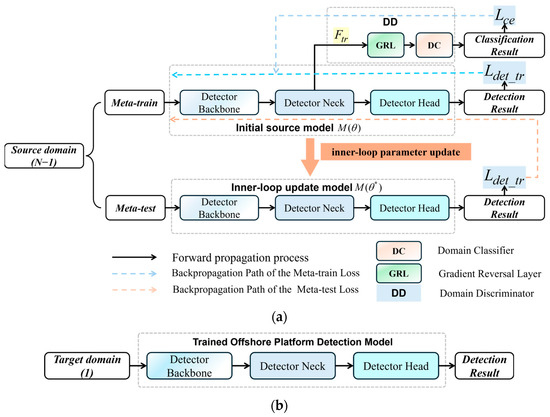
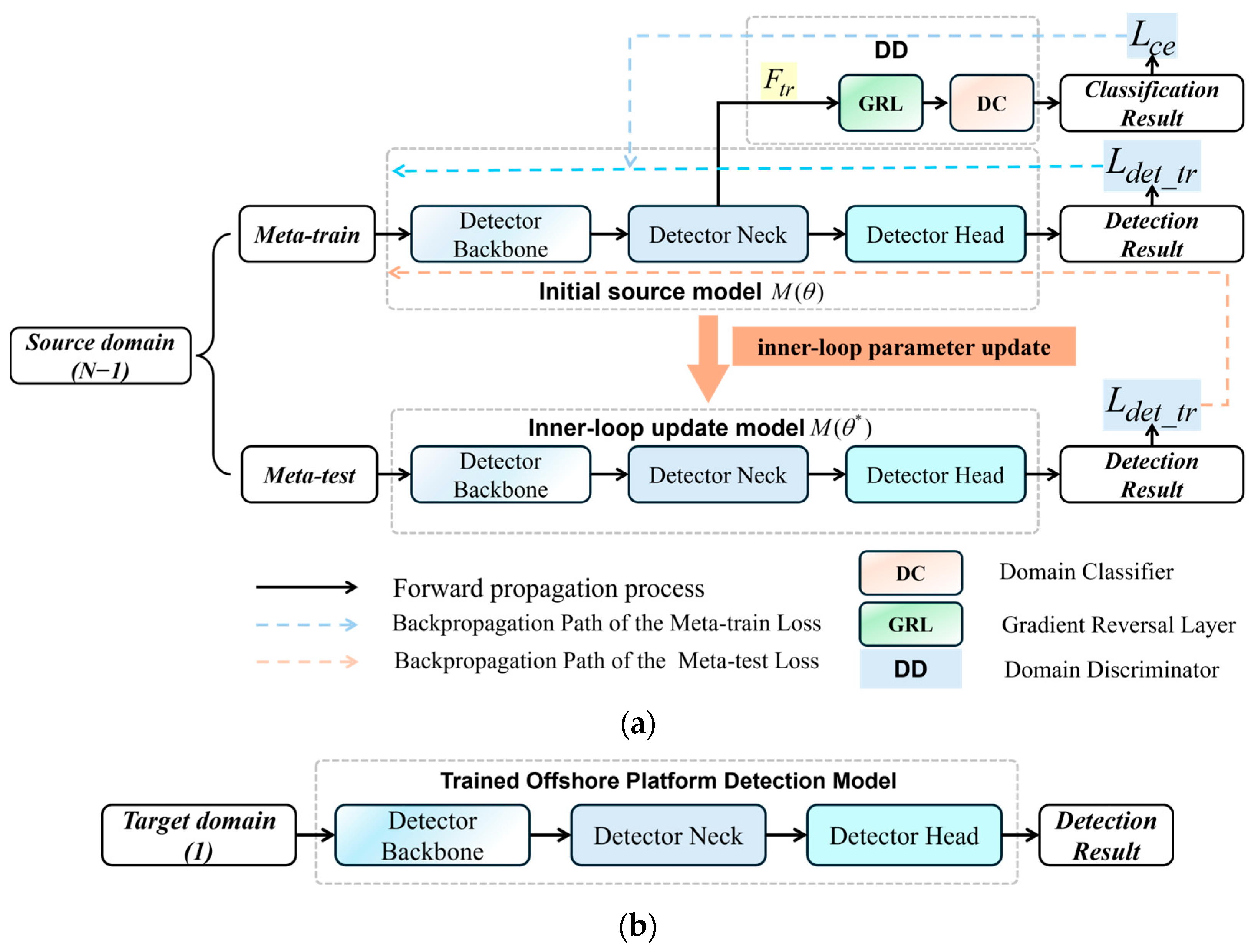
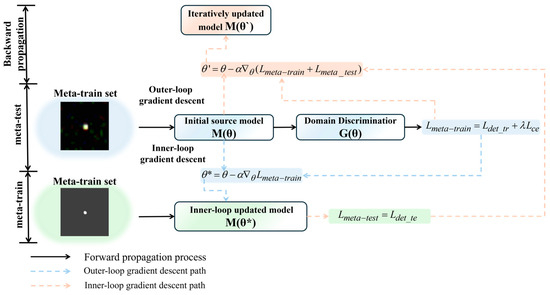
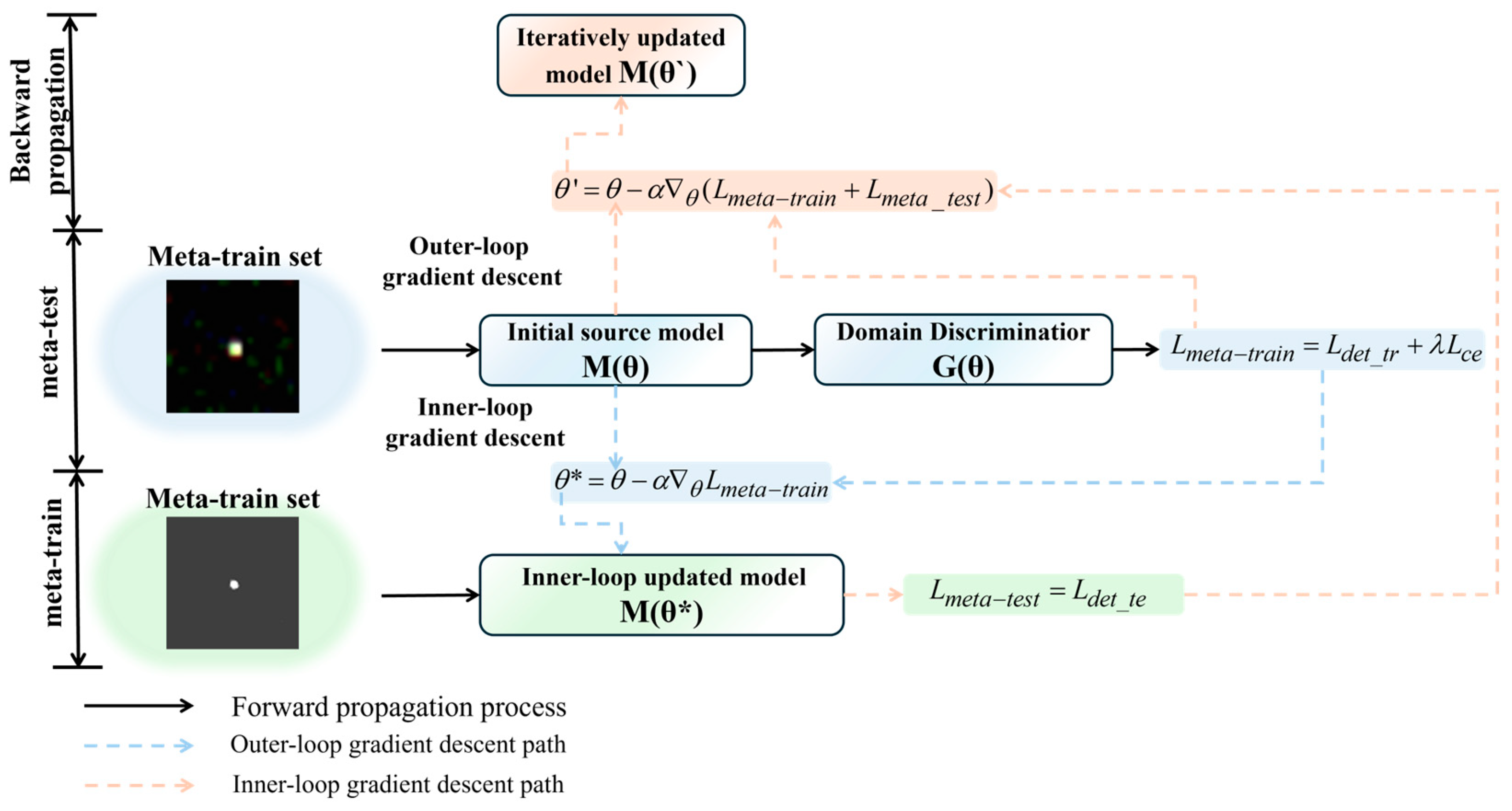
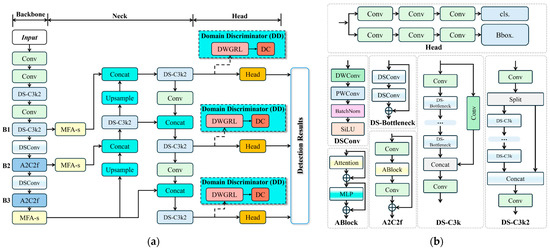
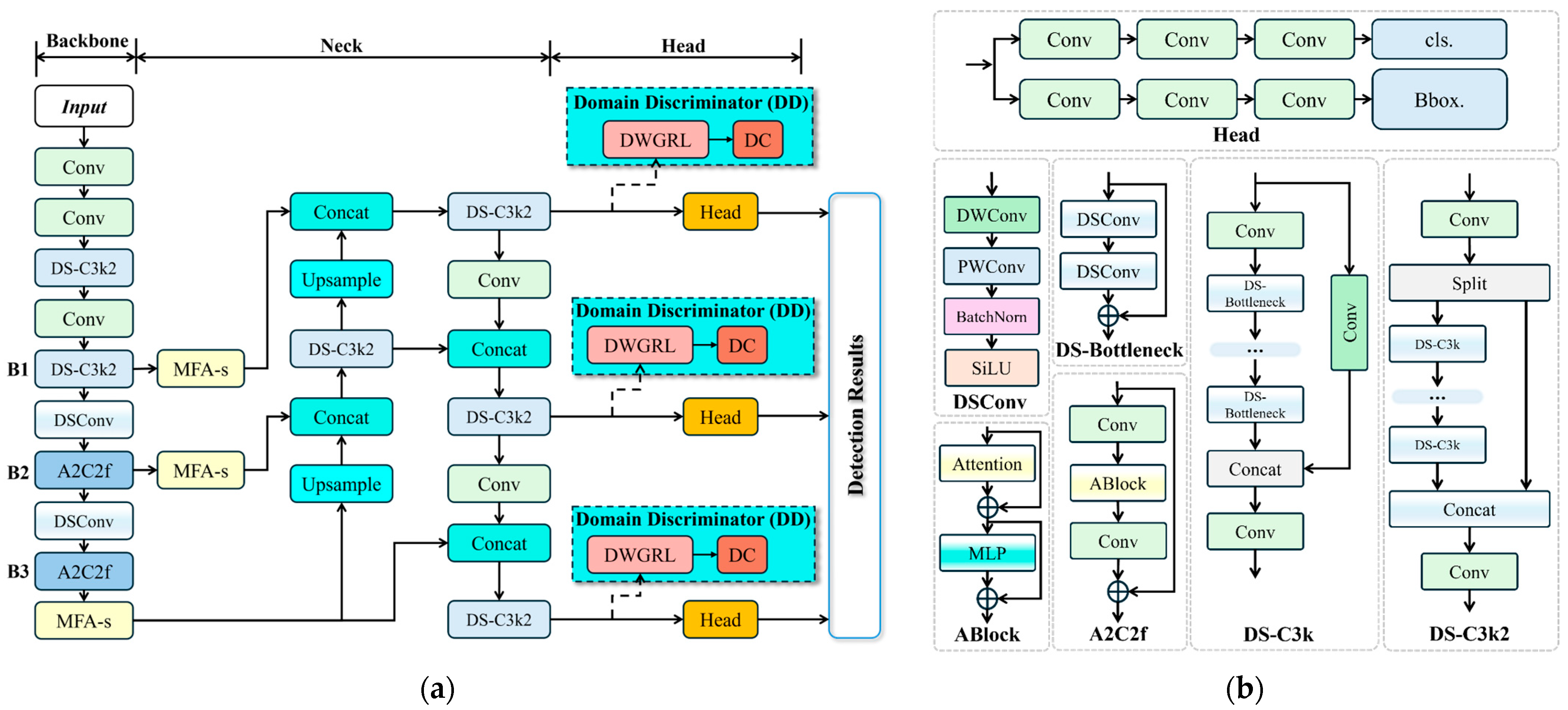
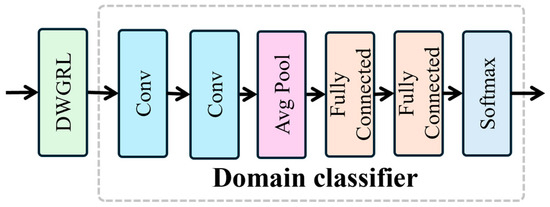
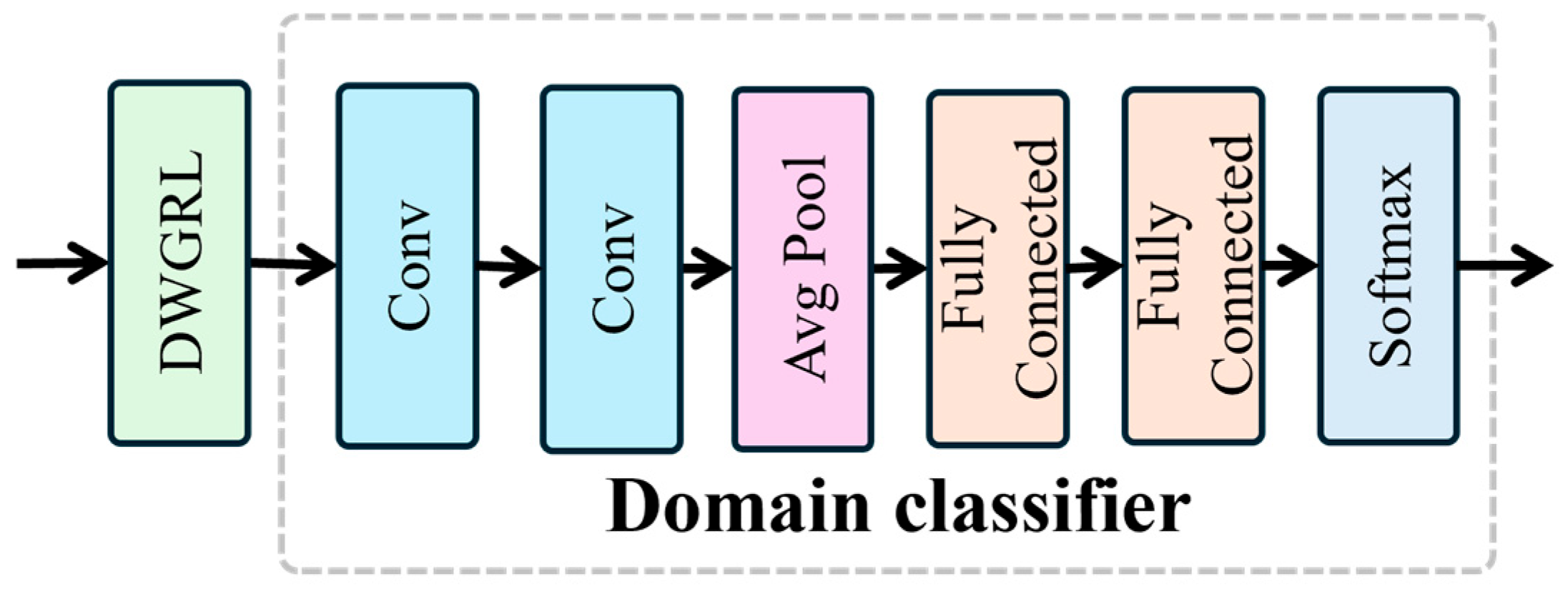
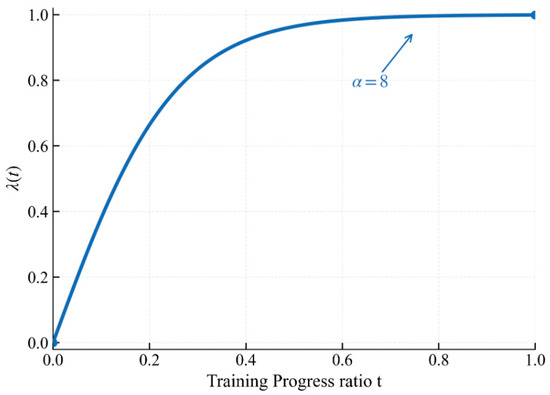
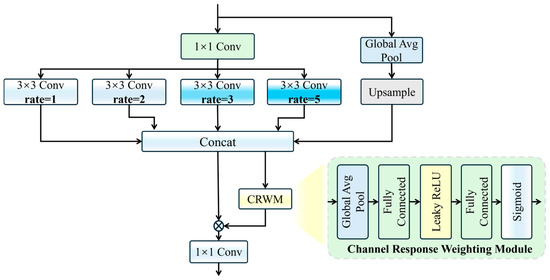
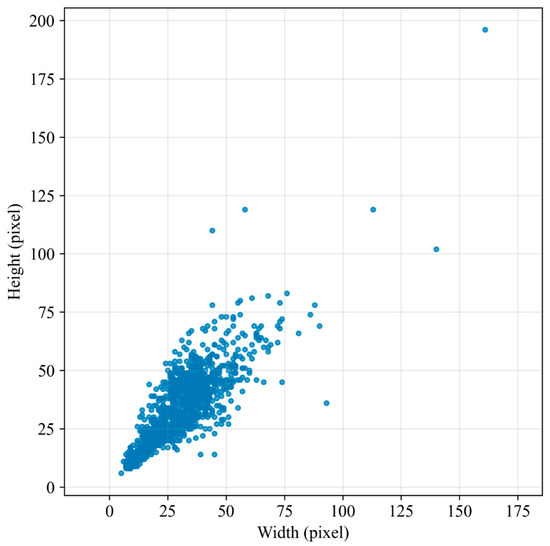
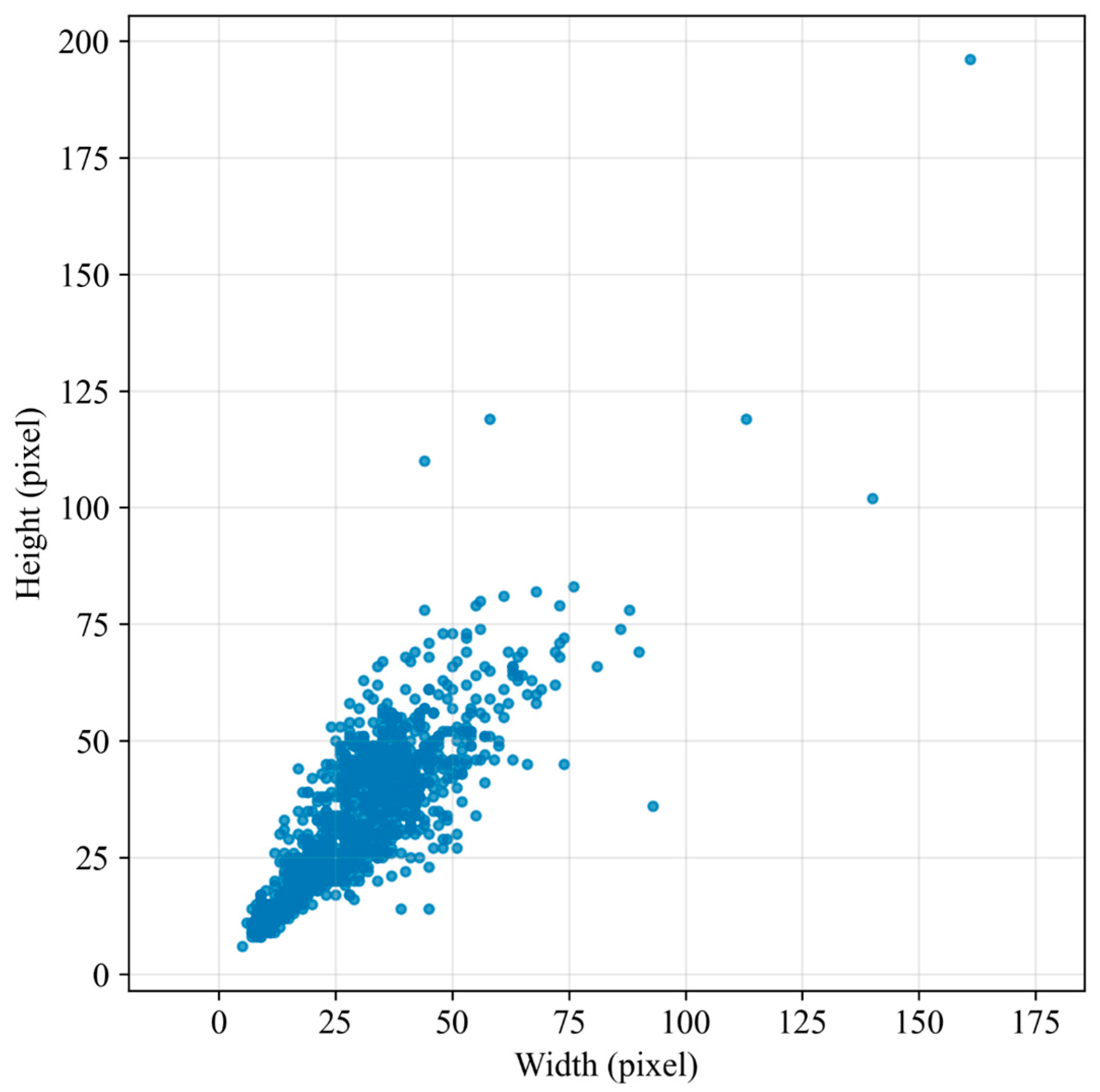
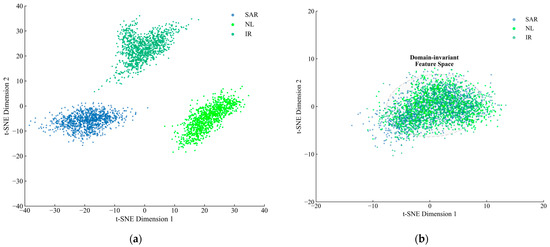
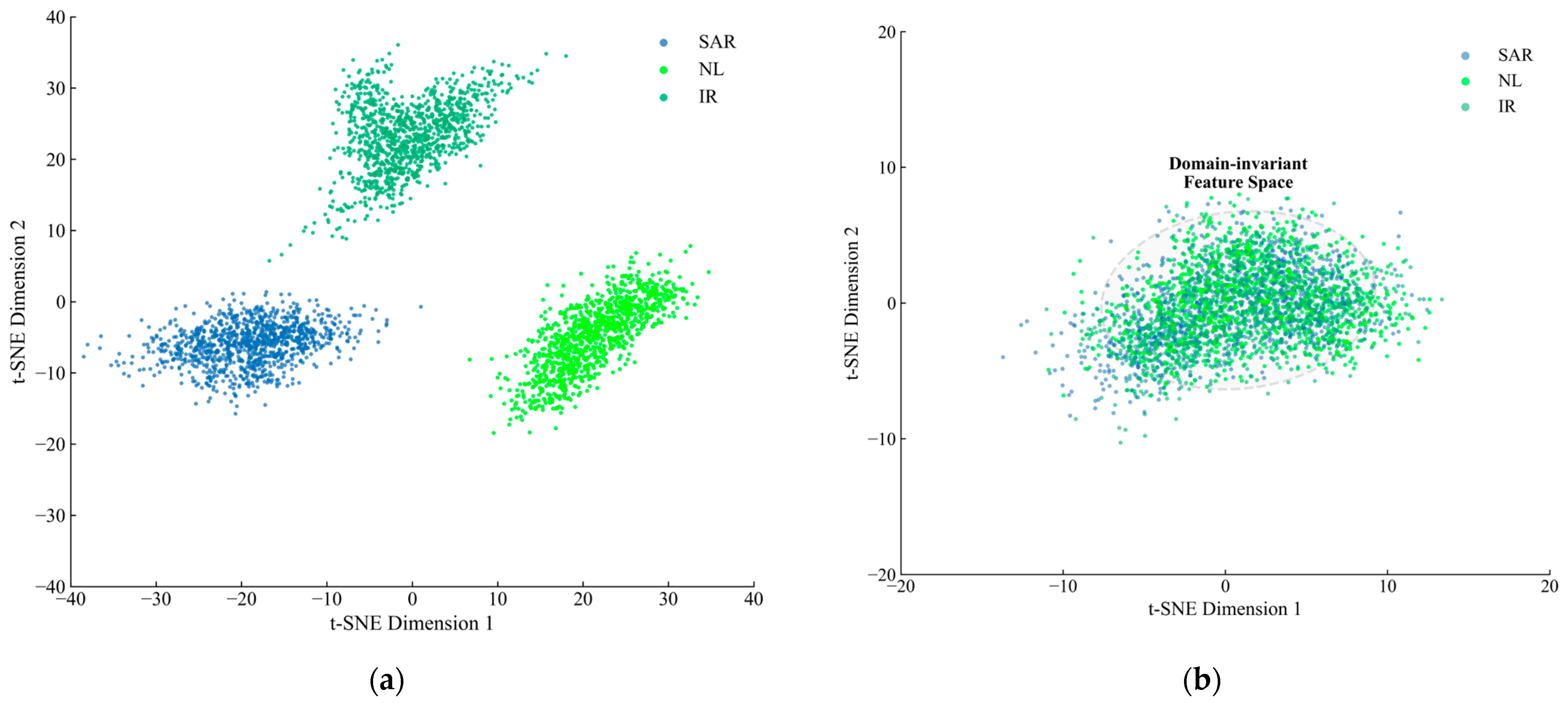
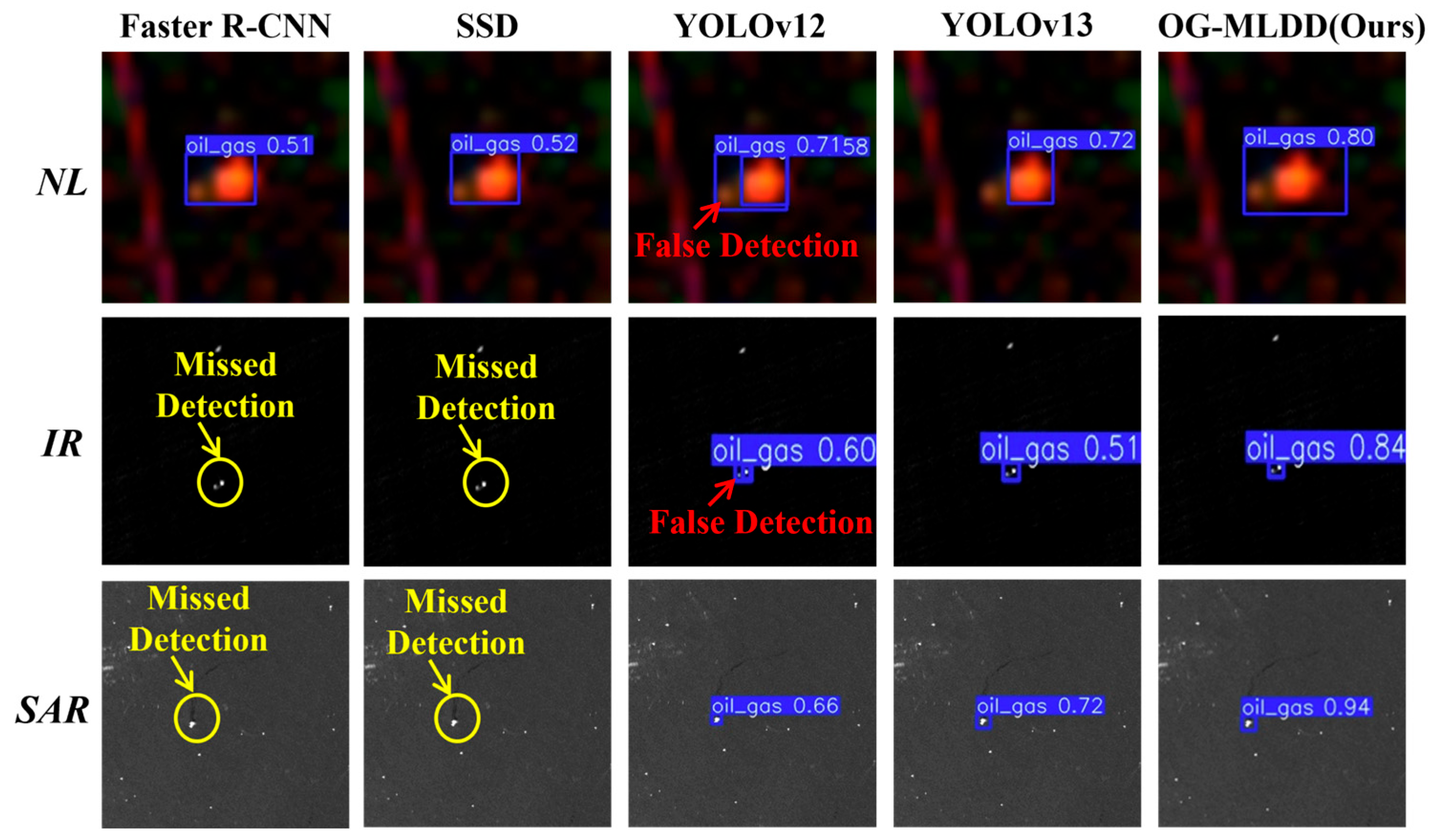
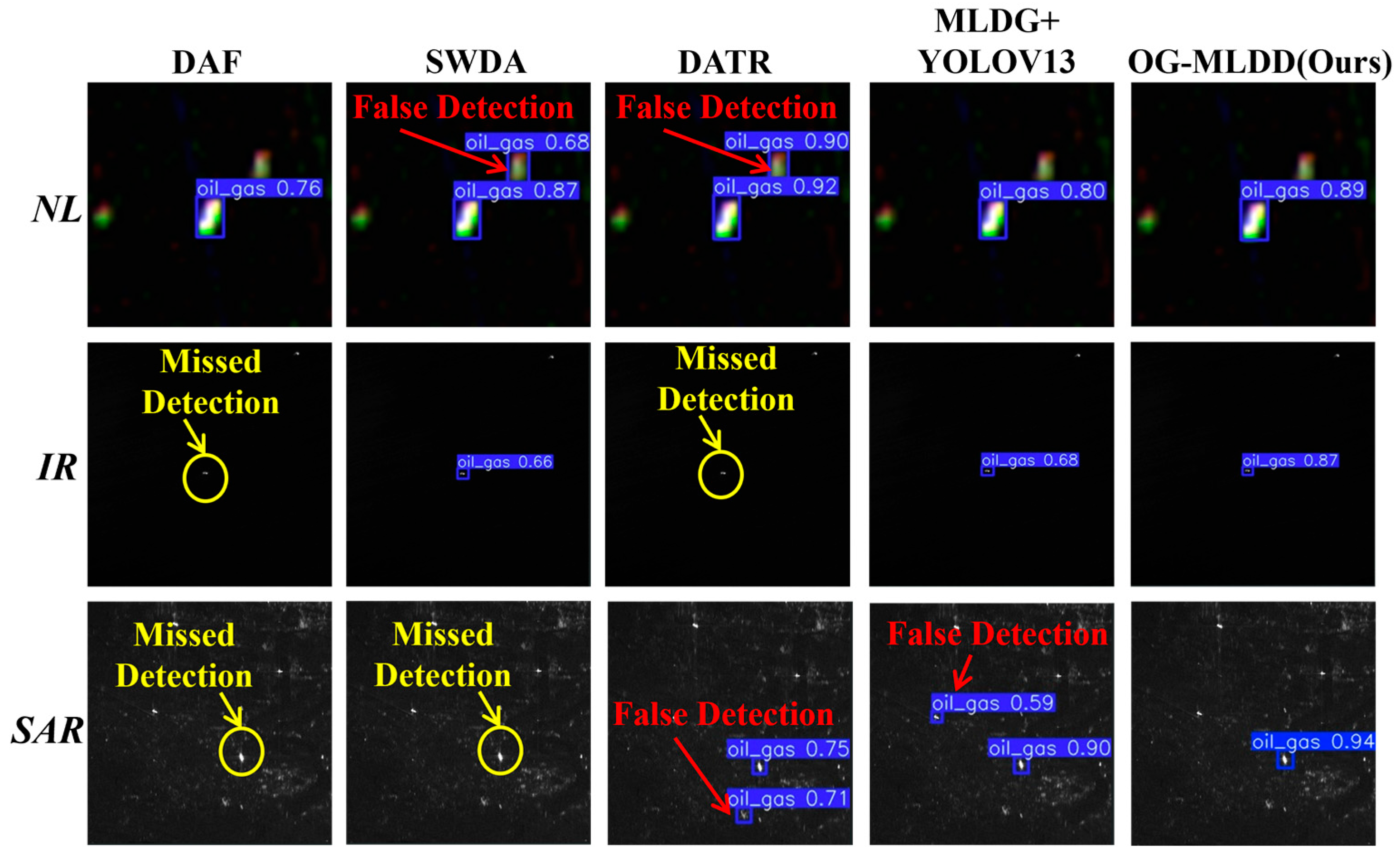
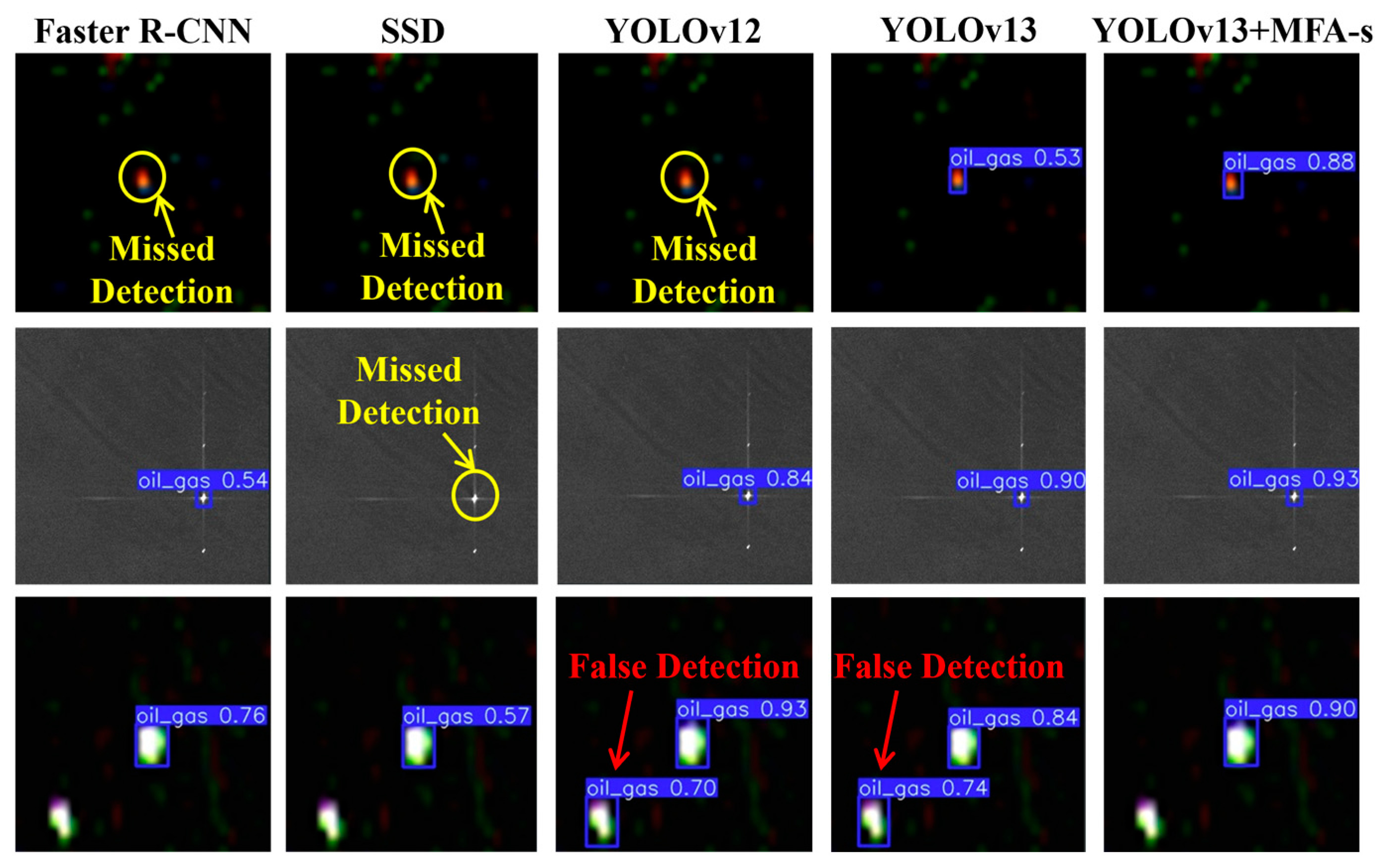
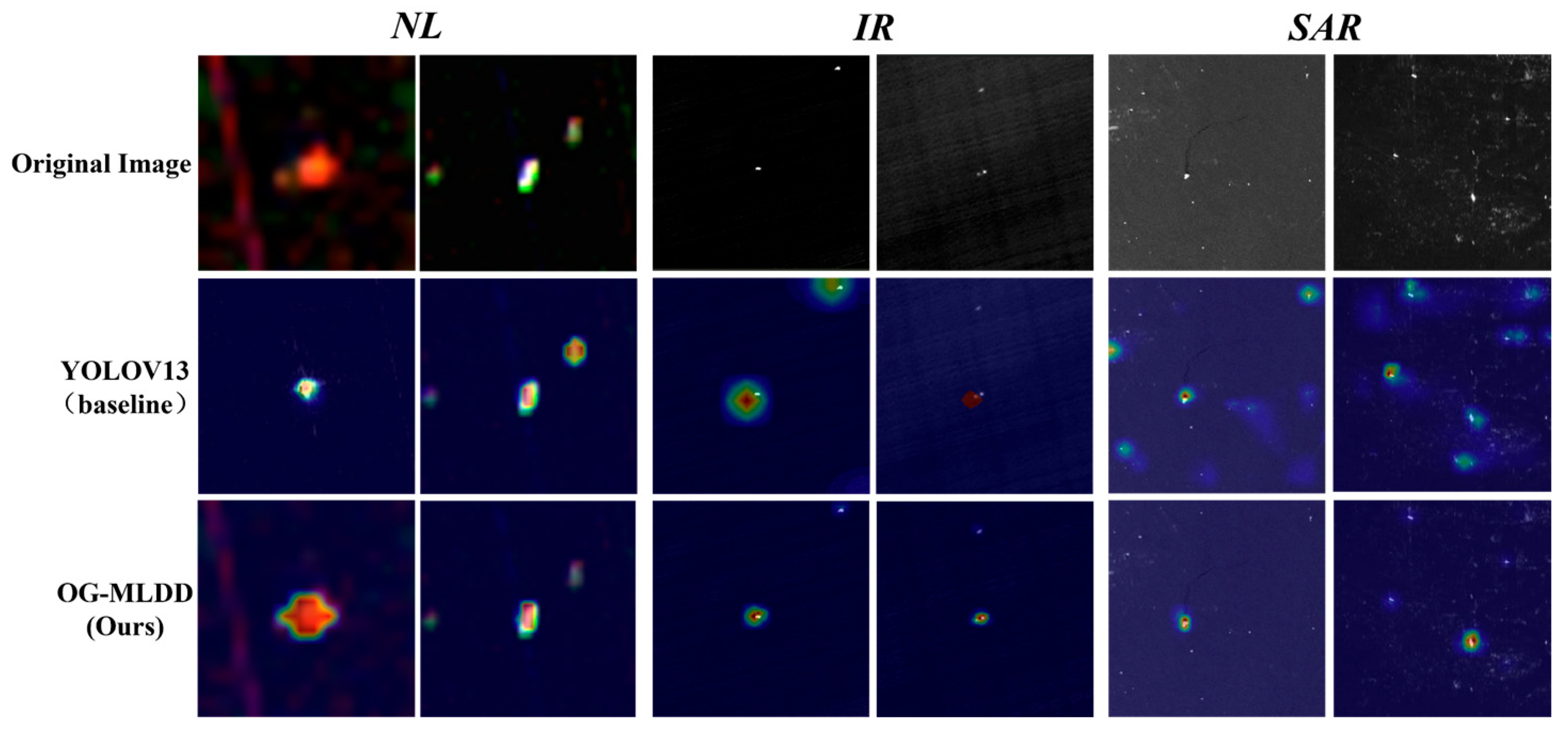
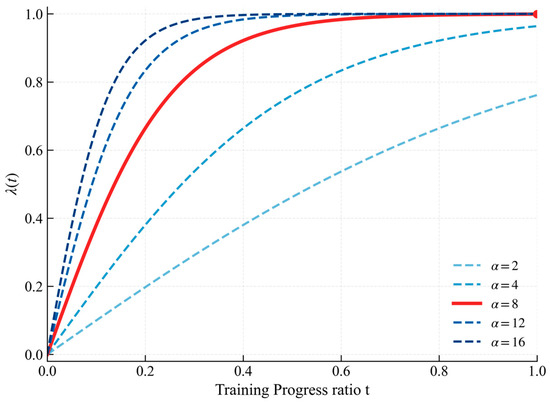
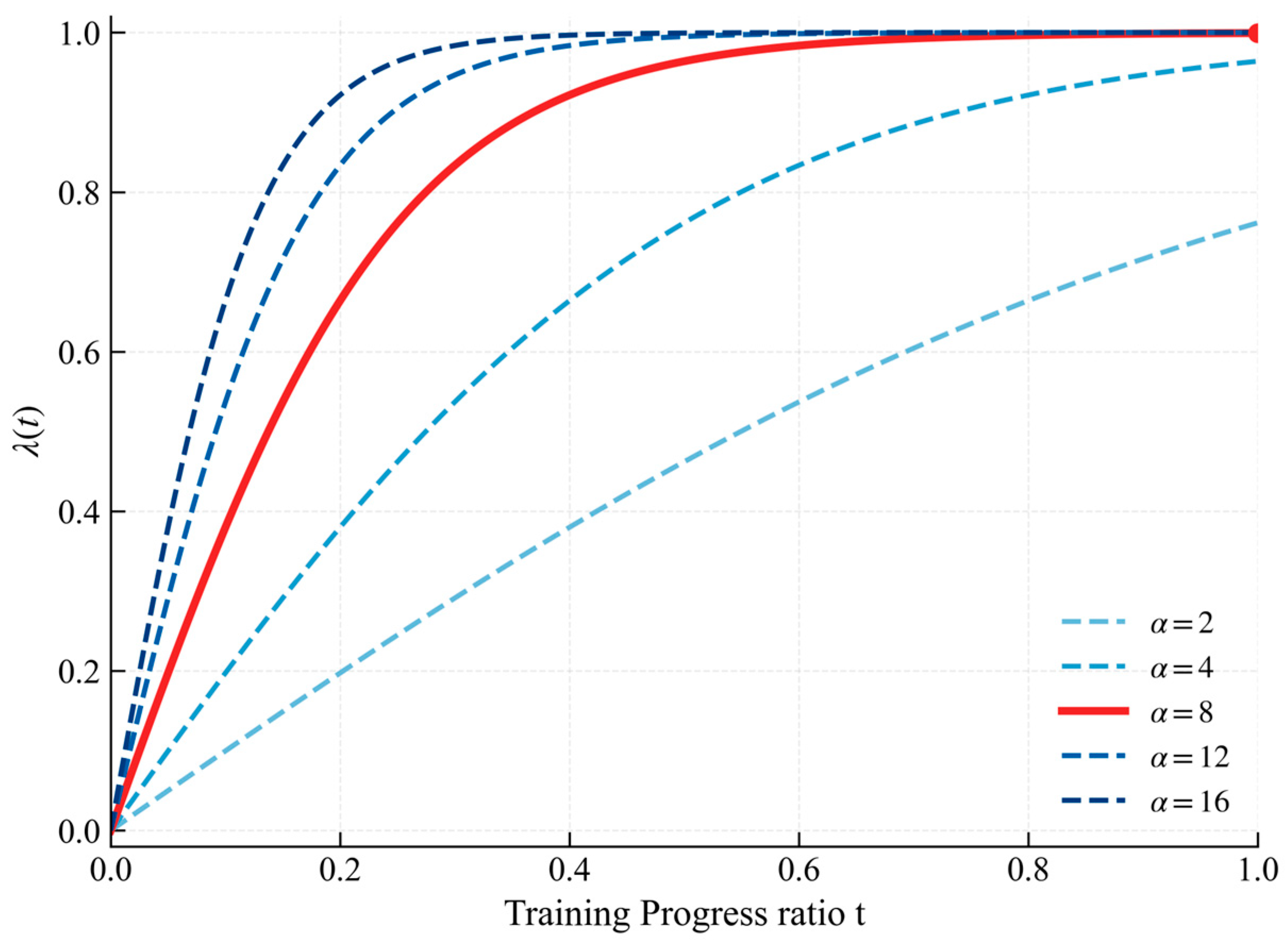

Disclaimer/Publisher’s Note: The statements, opinions and data contained in all publications are solely those of the individual author(s) and contributor(s) and not of MDPI and/or the editor(s). MDPI and/or the editor(s) disclaim responsibility for any injury to people or property resulting from any ideas, methods, instructions or products referred to in the content. |
© 2026 by the authors. Licensee MDPI, Basel, Switzerland. This article is an open access article distributed under the terms and conditions of the Creative Commons Attribution (CC BY) license.