


Abstract
Thermospheric mass densities are investigated to explore their responses to solar irradiance and geomagnetic activity during the period from 31 October to 7 November 2021. Utilizing data from the Global Navigation Satellite System (GNSS) payload and an ionization gauge mounted on the Orbital Neutral Atmospheric Detector (OAD) payload onboard the QQ-Satellite, thermospheric mass densities are derived through two independent means: precise orbit determination (POD) and pressure measurements. For the first time, observations of these two techniques are compared and analyzed in this study to demonstrate similarities and differences. Both techniques exhibit similar spatial–temporal variations, with clear dependences on local solar time (LT). However, the hemispheric asymmetry is almost absent in simulations from the NRLMSISE-00 and DTM94 models compared with observations. At high latitudes, density enhancements of observations and simulations are shown, characterized by periodic bulge structures. In contrast, only the OAD-derived densities exhibit wave-like disturbances that propagate from two poles to lower latitudes during geomagnetic storm periods, suggesting a connection to traveling atmospheric disturbances (TADs). Over the long term, thermospheric mass densities derived from the two means of POD and the OAD show good agreements, yet prominent discrepancies emerge during specific periods and under different space-weather conditions. We propose possible interpretations as well as suggestions for utilizing these two means. Significantly, neutral winds should be considered in both methods, particularly at high latitudes and under storm conditions.
1. Introduction
Thermospheric mass density is a critical parameter of the thermosphere, strongly associated with orbital drag. The estimation error of thermospheric mass density is a major source of bias in orbital predictions, significantly affecting attitude control, orientation, and the on-orbit lifetime of near-space vehicles and Low Earth Orbit (LEO) spacecraft [1,2,3]. Solar radiation, including ultraviolet irradiance (UV) and extreme ultraviolet (EUV) irradiances, and geomagnetic storms driven by the interaction of solar wind and the magnetosphere, are primary sources of disturbances in the thermosphere. During storm events, disturbances of densities can propagate from the polar regions to lower latitudes in the form of TADs, but the underlying mechanisms responsible for them remain poorly understood [4,5]. Furthermore, variations in thermospheric mass density exhibit dependences on LT, latitude, season, and neutral winds [6,7,8]. However, the spareness of the observations of thermospheric mass density restricts the accuracy of current empirical models. Previous research has demonstrated that simulations from empirical models can either underestimate or overestimate, with deviations of 15–30% during quiet geomagnetic periods, and even up to 300% during severe geomagnetic storms [1,9,10].
Empirical models of thermospheric mass density mainly contain the Jacchia series, DTM series, and MSIS series, among others. The Jacchia series, including Jacchia65, Jacchia70, and later JB2006, JB2008, and so forth, primarily rely on total mass densities derived from satellite drag data [11,12,13,14]. The DTM series includes DTM94, DTM2000, DTM2013, and so forth. The DTM94 model integrates satellite drag data, component data, and total mass densities from sources like the CACTUS accelerometer, DE-2 satellite, and neutral mass spectrometer, including data under extreme solar conditions, which can provide accurate estimations under moderate solar and geomagnetic conditions [15]. DTM2000 further integrates data from incoherent scatter radar and interferometer sources for the lower thermosphere, and introduced the Mg II index to represent solar radiation [16]. DTM2013 utilizes high-precision data derived from the CHAMP, GRACE, and GOCE satellites and replaces the F10.7 index with F30 [17]. The MSIS series, including MSIS-86, NRLMSISE-00, NRLMSIS 2.0, and so on, use density and temperature data derived from incoherent scatter radar and in situ observations of satellites [18,19,20]. NRLMSISE-00 incorporates Jacchia orbital datasets and the number density of molecular oxygen from the Solar Maximum Mission (SMM), which effectively combines the advances of both the MSISE-90 and Jacchia70 models and has been widely utilized in the community [19].
Ionization gauges (or pressure gauges), accelerometers, and neutral mass spectrometers are primary in situ instruments onboard satellites to measure thermospheric mass density [21]. Among these, ionization gauges to derive density based on pressure measurements and accelerometers to derive density based on drag measurements are two main means [13]. In addition to accelerometers, high-quality object trajectory data, such as two-line orbital elements (TLEs) and POD, can also be used to retrieve thermospheric mass density based on drag measurements [22,23,24]. Particularly, GNSS observations of the pseudo-range and carrier phase can provide high-precision orbital ephemerides and nongravitational accelerations, estimating average density variations [25,26]. Originally, ionization gauges were manifested on early rocket missions and on primitive AE and DE series of satellites [21]. In 2005, ionization gauges were further advanced through the U.S. STREAK project, enhancing their ability to measure thermospheric density at 123–325 km and to observe perturbations caused by atmospheric gravity waves (AGWs) and TADs [3]. High-precision accelerometers and high-performance Global Positioning System (GPS) receivers were deployed on CHAMP and GRACE, which were instrumental in determining the mass density using multiple methods [27,28,29,30]. Similarly, the ESA’s SWARM mission launched in 2013, and utilized a constellation of three satellites equipped with high-precision accelerometers and GPS receivers, allowing atmospheric density measurements by multiple methods at 470–520 km [31,32,33]. Neutral mass spectrometers were mounted on satellites to measure thermospheric mass density and compositions as part of relevant NASA and European Union missions [34,35]. Ionization gauges and neutral mass spectrometers are also utilized onboard Chinese missions such as the SZ-4 and APOD satellites to investigate thermospheric mass density.
Despite extensive observations of thermospheric mass density, evaluating the measurements remains challenging as no definitive reference value exists. As a result, comparing observations derived from multiple methods is essential for enhancing our understanding of the techniques and improving their accuracy and quality, and is also helpful for deepening our knowledge of thermospheric behaviors, refining models, and promoting predictive capabilities. Li and Lei [33] studied the responses of thermospheric density to storms by comparing measurements of POD and accelerometers from the GRACE and SWARM-A/B satellites, revealing dependences of hemispheric asymmetries on altitude and LT and suggesting that POD-derived densities can effectively capture the variations. However, comparisons of thermospheric densities derived from multiple methods that are based on distinct theoretical frameworks are scarce. To address this gap, Li et al. calibrated pressure-based densities by POD-derived densities from the same satellite, APOD, revealing a strong correlation of 94% between the densities derived from the two methods, despite the higher densities derived from pressure measurements [36].
The QQ-Satellite, a spherical experimental satellite that was launched into a polar orbit at 520 km in 2021, provides the unique opportunity to compare thermospheric mass densities derived from two different methods. It carries both a GNSS-POD payload and an ionization gauge embedded in an OAD payload, enabling the retrieval of thermospheric mass densities through two means: the dynamical inversion of POD information and atmospheric pressure measurements [37,38,39]. In this paper, we investigate the spatial–temporal evolution of thermospheric mass densities derived from two means, as well as simulations from the NRLMSISE-00 and DTM94 models, during quiet and storm periods. Significantly, we analyze features of difference between the densities derived from the two means in detail and explore potential reasons for these discrepancies. Finally, we provide recommendations for the future utilizations and enhancements of these methods, and propose requirements and expectations for further research.
2. Materials and Methods
2.1. QQ-Satellite
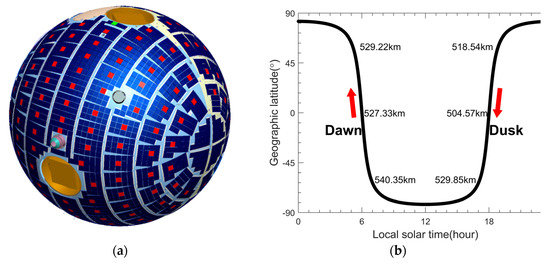
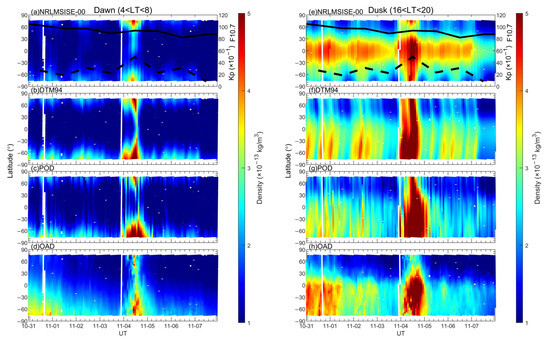
In 2003, SZ-4 carried an ionization gauge and neutral mass spectrometer mounted on the detector of atmospheric mass density that were developed by the National Space Science Center (NSSC) of the Chinese Academy of Sciences, observing thermospheric mass density at 330–362 km [40]. The APOD satellite, launched in 2015, carried a dual-frequency GNSS receiver and an ionization gauge mounted on the detector of atmospheric mass density to contribute to calibrating thermospheric mass densities derived from multiple methods [21]. The QQ-Satellite, shown in Figure 1a, with a weight of 73.8 kg and spherical shell diameter of 800 mm, was launched into an orbit with a 520 km altitude and 97.46° inclination on 14 October 2021. As demonstrated in Figure 1b, the motion trajectories and motion directions of the QQ-Satellite are represented by the black line and the red arrows, respectively. Furthermore, altitudes of polar and equatorial regions are also marked in the picture. Among these, the orbital trajectories of the QQ-Satellite cover almost all latitudes at the 6:00 LT/dawn side and at the 18:00 LT/dusk side, while it flies mainly in polar regions at other LTs [37,38,39]. The orbital altitudes vary, ranging approximately from 500 km to 545 km nearly a month after launching. The QQ-Satellite flies in a three-axis directional attitude to the ground, with the OAD instrument installed at the front of the satellite to ensure that the neutral atmosphere entered into the instrument is a free flow of molecules. The payloads mainly consist of the GNSS antenna, integrated atmospheric sensor and digital signal processing, and control unit, the performance indicators of which are shown in Table 1. The discoidal GNSS antenna of the GNSS-POD payload is coplanar with the satellite, integrating dual-systems observations of POD from the Beidou System (BDS) and GPS to derive thermospheric density by dynamical inversion. The integrated atmospheric sensor and ionization gauge, including the ion source, mass analyzer, and particle detector, contribute to deriving the thermospheric density based on pressure measurements.
Figure 1.
(a) The QQ-Satellite, and (b) the projections of the QQ-Satellite orbits in a local solar time–latitude frame.
Table 1.
Performance indicators of GNSS-POD and ionization gauge–OAD.
It should be noted that all densities mentioned in this study represent the total mass density of the thermosphere if no additional declarations are made. In order to distinguish and describe them, we term the POD densities derived by the method of dynamical inversion as POD densities or POD and the OAD-derived densities derived by the method of pressure measurements as OAD densities or OAD in this paper.
2.2. Theory of Orbital Neutral Atmospheric Density Detection
The processes of deriving mass densities using the dynamical inversion method mainly comprise the determination of nongravitational accelerations and the resolving of the equation of atmospheric drag. The pressure measurements method of deriving mass densities relies on the Maxwell distribution law of velocity and measurements of the pressure and temperature of the sampling chamber.
2.2.1. The Dynamical Inversion Method
Accelerations to retrieve thermospheric mass density comprise the acceleration of the atmospheric model derived from empirical model DTM94 and the acceleration of empirical drag derived from high-precision POD observations [38]. Importantly, the final acceleration (m/s2) is also modified dynamically to accord with high-precision observations derived from accelerometers. We can retrieve atmospheric mass density (kg/m3) according to the equation of atmospheric drag, with determined parameters such as the drag coefficient , the area-to-mass ratio of frontal region (m2/kg), and the satellite relative velocity (m/s), shown in Formula (1). Due to the particularly spherical configuration of the satellite, the drag coefficient and area-to-mass ratio in formula (1) can be assumed to be constants in this study [38,41].
2.2.2. The Pressure Measurements Method
The neutral atmospheric airflows from the front of the satellite are ionized into electrons and ions when they fly into the atmospheric sensor. The ions, with their charge-to-mass ratio modulated by the mass analyzer, are collected by the particle detector. After the processing of digital signal processing and control unit, we can observe the atmospheric pressure (Pa) and temperature (K).
Assume that the number of molecules entering and leaving the atmospheric sensor per unit time and per unit volume is equal. By integrating the Maxwell velocity distribution function, we can obtain the expression of the number density of free atmospheric molecules (m-3), shown as Formula (2). With determination of the average molecular mass of atmosphere in the sampling chamber (kg), the average molecular mass of free atmosphere (kg), velocity (m/s), and attack angle , we can calculate total mass density (kg/m3) according to Formula (3) [21].
3. Results
3.1. Spatial–Temporal Evolution of Observations and Simulations
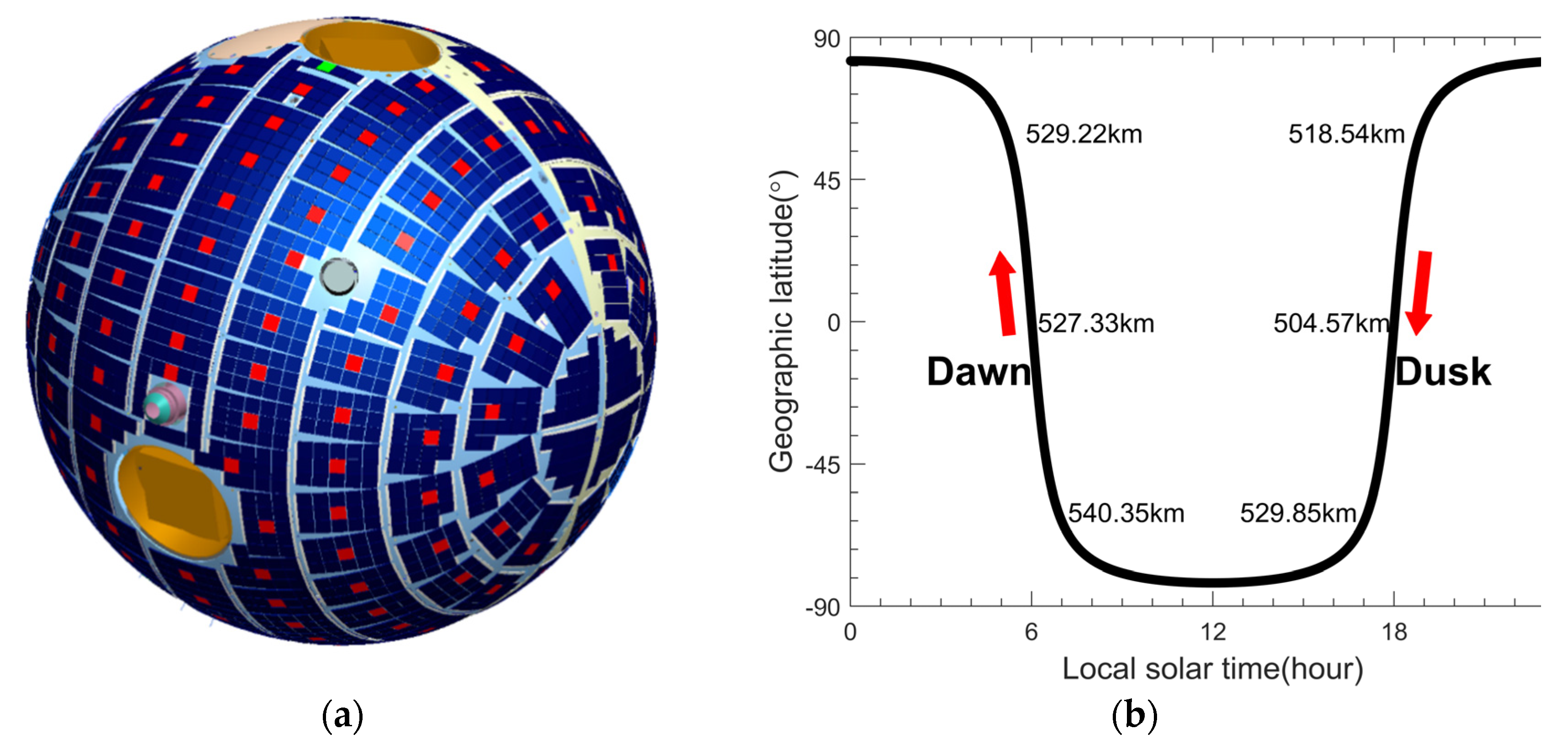
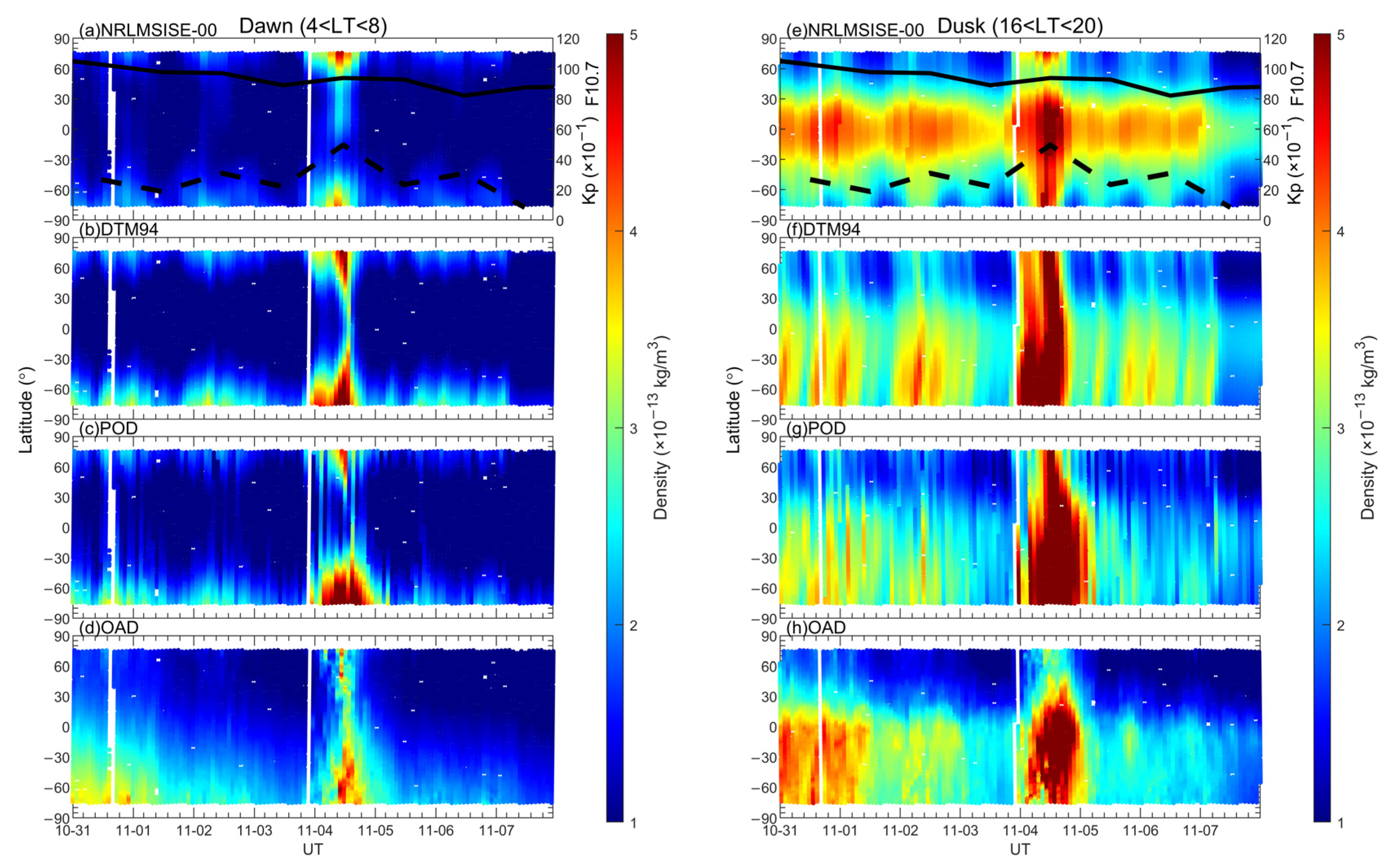
Observations of POD and OAD derived from the QQ-Satellite and simulations derived from empirical atmospheric models of NRLMSISE-00 and DTM94 are investigated to explore variations in thermospheric mass density under different conditions of solar radiation and geomagnetic activity. Benefitting from dawn–dusk orbits of the QQ-Satellite, variations in density at the dawn side (4–8 LT) and at the dusk side (16–20 LT) can be demonstrated here. As shown in Figure 2, during quiet periods, enhancements of all densities are closely relevant to solar radiation, represented by the F10.7 index here, illustrating a crucial source of the heating of the thermosphere. For storm periods, prominent and violent disturbances of densities appear when the Kp index gradually reaches a peak. Furthermore, densities of the southern/summer hemisphere are larger than that of the northern/winter hemisphere, exhibiting hemispheric asymmetry. And densities of the dusk side are larger than that of the dawn side, which indicates that density variations are also dependent on LT.
Figure 2.
Thermospheric mass densities at (a–d) dawn and (e–h) dusk derived from (a,e) NRLMSISE-00, (b,f) DTM94, (c,g) POD, and (d,h) OAD. The (a,e) black solid line is the daily F10.7 index, and the (a,e) black dashed line is ten times of the daily Kp index.
However, there exist obvious differences between observations and simulations. At dawn, NRLMSISE-00 and DTM94 enhance almost simultaneously in two polar regions (70–90°N/S) and then disturb in equatorial regions (0–20°N/S). However, POD and OAD both enhance firstly in the south pole and then disturb in the north pole and equatorial regions. Further, NRLMSISE-00 densities enhance at 70–90°N/S 8 h/6.5 h earlier than at 0–20°N/S, respectively. DTM94 densities enhance at 70–90°N/S 7.5 h/5 h earlier than at 0–20°N/S. POD densities of 70–90°N/S enhance 7.5 h/6 h earlier than those of 0–20°N/S, and OAD densities of 70–90°N/S enhance 6 h/5 h earlier than those of 0–20°N/S. As for peaks of densities, NRLMSISE-00 peaks almost simultaneously in polar and equatorial regions. For DTM94, POD, and OAD, however, densities in polar regions peak 1.5–3 h earlier than those in equatorial regions. At dusk, enhancements of all densities propagate quicker from polar regions to equatorial regions. Among these, NRLMSISE-00 densities of 70–90°N/S enhance 1.5 h/4.5 h earlier than those of 0–20°N/S, and the circumstances of which advance 3 h/5 h for DTM94, respectively. Enhancements of POD and OAD at 70–90°N/S both advance 3 h/4.5 h earlier than that at 0–20°N/S. Furthermore, enhancements of NRLMSISE-00 mainly concentrate in the equatorial region at dusk, which differs from the other densities. Moreover, variations in the two observations of POD and OAD are also different. During quiet periods, OAD enhancements caused by solar radiation are more prominent compared with POD, which is more similar to DTM94 in variation on the whole. In the following sections, we will pay attention to exploring and analyzing differences in densities derived from POD and OAD.
3.2. Evolution of Differences of Two Measurements
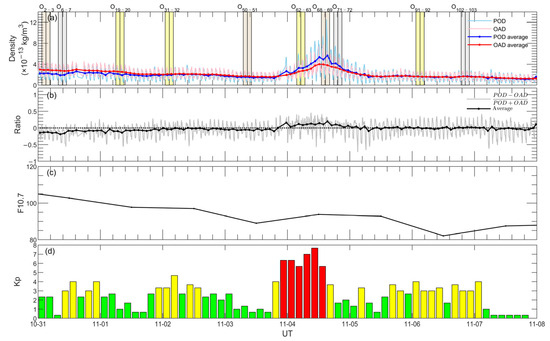
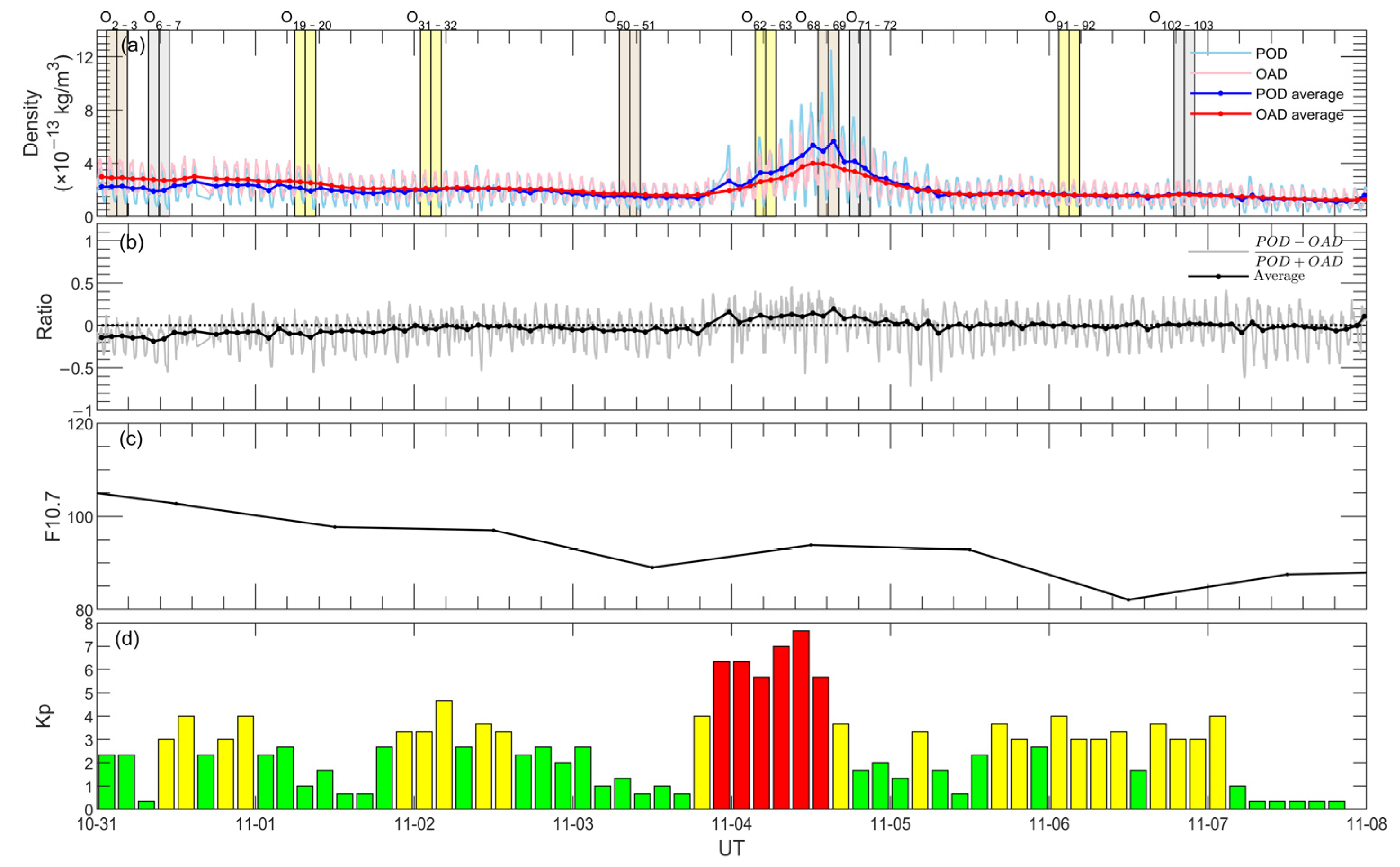
Variations in densities derived from POD and OAD and differences in under which space-environment conditions are investigated as illustrated in Figure 3. The typical numbered orbits, marked in brown, gray, and yellow in Figure 3, will be analyzed in detail in the next section. Here, we calculate the ratios of densities derived from POD and OAD as to represent the relative differences in the two measurements. In the long run, the variation tendencies of the two measurements align well except for conditions of a larger F10.7 and larger Kp, as shown in Figure 3a. However, in terms of details, variations in differences are various, as shown in Figure 3b. It is not hard to find that differences in the two measurements are discrepant during different periods of variations in density. To be specific, POD agrees with OAD relatively well during periods of increasing densities, according to smaller ratios of differences. For periods of decreasing densities, however, POD densities are almost always smaller than OAD densities, according to the negative values of the ratios. And, according to the positive values of the ratio, POD is almost always larger than OAD during some special periods. Therefore, we distinguish periods of orbits as ascending and descending orbits because densities generally decline for ascending orbits and rise for descending orbits. Furthermore, we isolate all the special regions of 50–90°N from periods of ascending and descending orbits, corresponding to the transition and connection of two sequential orbits. Notably, to highlight variations in density, we name ascending orbit periods as decreasing (density) periods and term descending orbit periods as increasing (density) periods. As a result, we can obtain three orbital periods, namely increasing periods, decreasing periods, and transition periods.
Figure 3.
The evolutions of (a) thermospheric mass densities derived from two means and (b) their ratios, along with the evolutions of (c) F10.7 and (d) Kp indices.
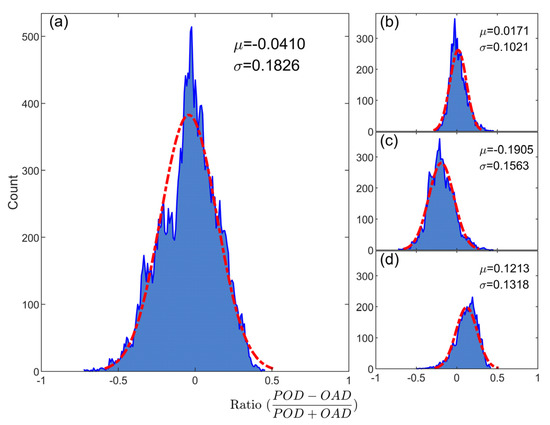
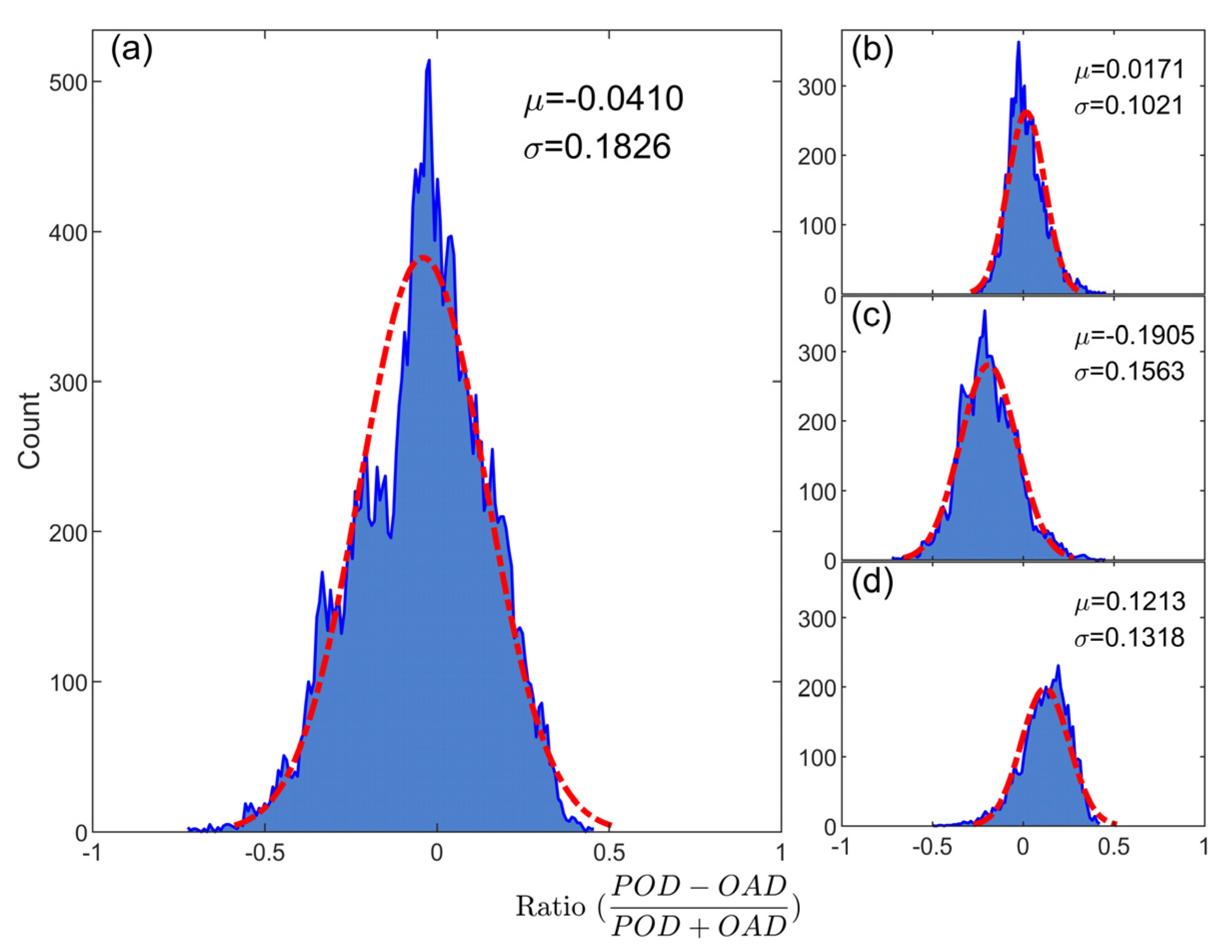
As demonstrated in Figure 4, we analyze the ratios of the two measurements statistically during the different periods defined above. For whatever periods, ratios that represent differences in POD and OAD always fit normal distributions. The distribution of all the data (Figure 4a) can be regarded as the synthesis of the other three distributions for different periods (Figure 4b–d). Among these, the ratios of all density data fit the distribution with a mean value of −0.0410 and a standard deviation of 0.1826. For distributions of increasing/decreasing/transition periods, mean values are 0.0171/−0.1905/0.1213 and standard deviations are 0.1021/0.1563/0.1318. By contrast, it is proven again that consistencies of the two measurements are best during increasing periods, according to the smallest μ and σ. And differences are larger for decreasing and transition periods, which exhibit a larger μ and σ. Moreover, POD densities are almost always much smaller than OAD densities for decreasing periods but are always larger for transition periods. To figure it out, we will investigate and explore the differences in the two observations in detail for different periods in the next section.
Figure 4.
Normal distributions of ratios displayed in Figure 3b for (a) all data, and for three periods defined in Section 3.2: (b) increasing period, (c) decreasing period, and (d) transition period.
4. Discussion
4.1. Characteristics of Differences During Increasing Periods
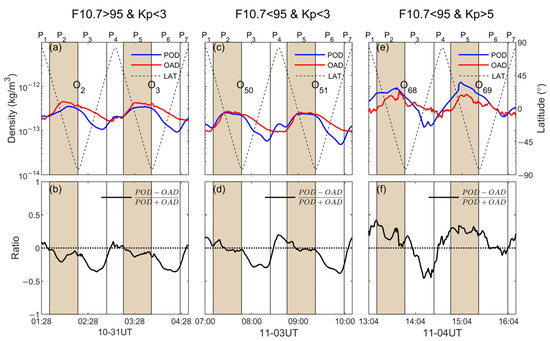
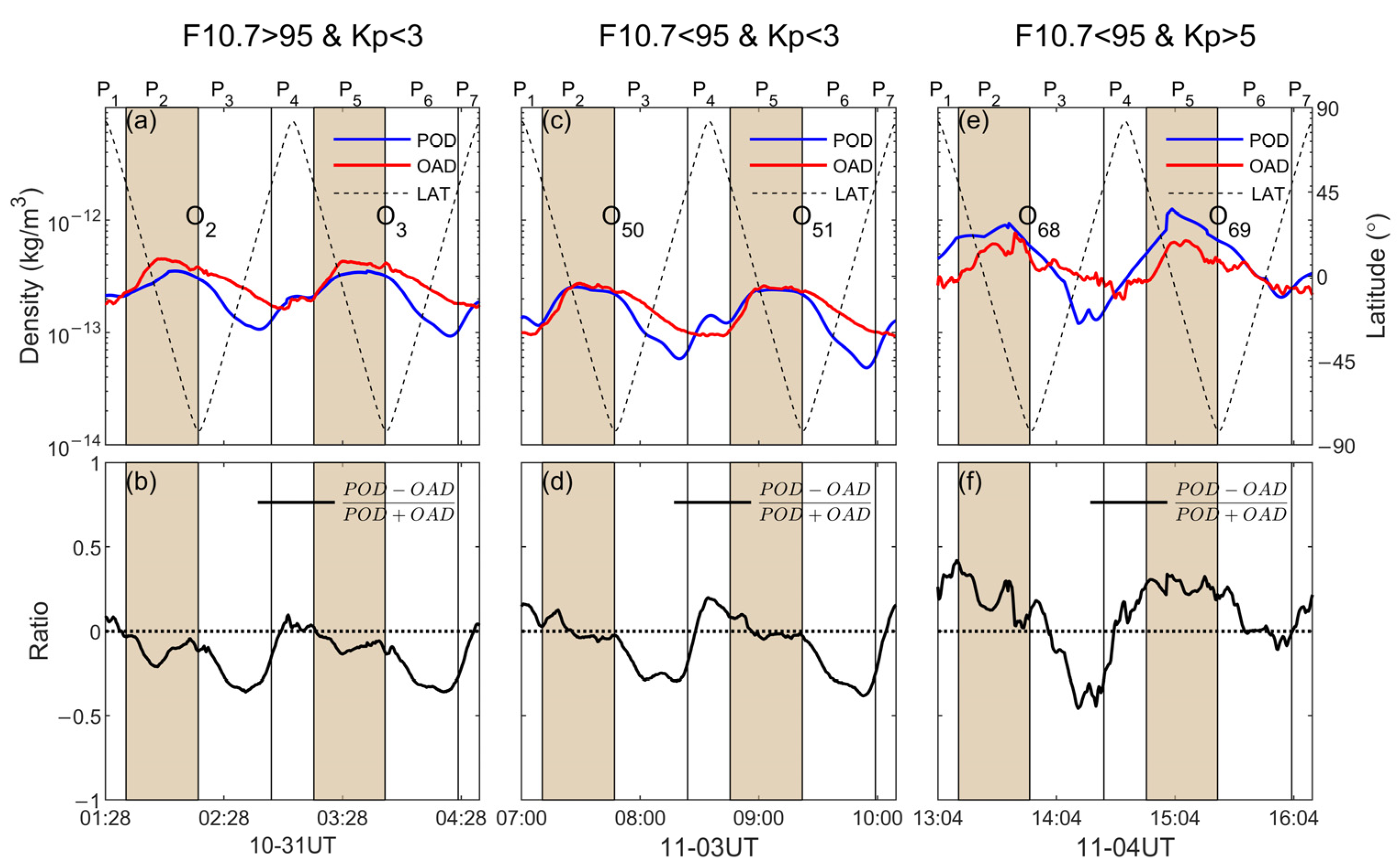
During increasing periods, differences in POD and OAD on typical orbits, corresponding to different space-weather conditions, are mainly characterized by three patterns, as shown in Figure 5. The increasing/decreasing/transition periods are distinguished as intervals P1,4,7/P2,5/P3,6, and the increasing periods are highlighted in brown, discussed only here. In Figure 5a,b, for high solar activity and low geomagnetic activity, POD densities are smaller than OAD densities, as mentioned in Section 3.1. OAD obviously elevates overall for increasing F10.7, which is almost not seen in POD. On the contrary, POD densities are larger than OAD densities for severe geomagnetic storms, also accompanied by more prominent fluctuation features in OAD, as shown in Figure 5e,f.
Figure 5.
(a,c,e) Thermospheric mass densities derived from POD and OAD, and (b,d,f) their ratios. The O2, O3, O50, O51, O68, and O69 indicate the accumulated numbers of the QQ-Satellite’s orbits since 31 October 2021. And the shadows represent the increasing periods.
During the process of determining POD-derived densities, atmospheric density models are used to estimate accelerations, a significant portion of which are used to obtain drag accelerations to derive densities, to compensate for errors of dynamics models and orbit predictions based on GPS data [42,43,44]. Therefore, both measurement errors and model uncertainties can contribute to deviations in densities derived from drag accelerations [45]. In this paper, the empirical model DTM94, utilized to obtain empirical densities as the initial inputs, therefore could impact POD densities. And in our study results, POD resembles DTM94 in variations under some circumstances. Given that, differences illustrated in Figure 5a,b,e,f might arise from the impacts of DTM94 on POD densities, namely underestimation for high F10.7 and overestimation for high Kp. For increasing periods, except for the differences mentioned above, POD is in agreement with OAD generally under other conditions, as demonstrated in Figure 5c,d.
4.2. Characteristics of Differences During Decreasing Periods
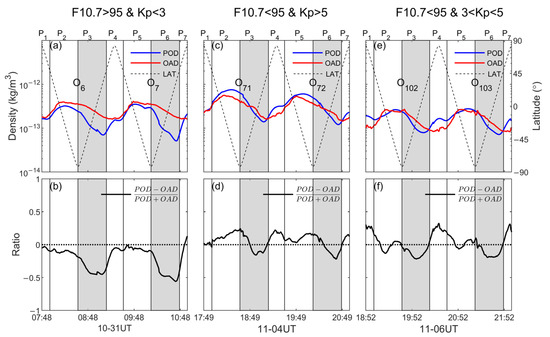
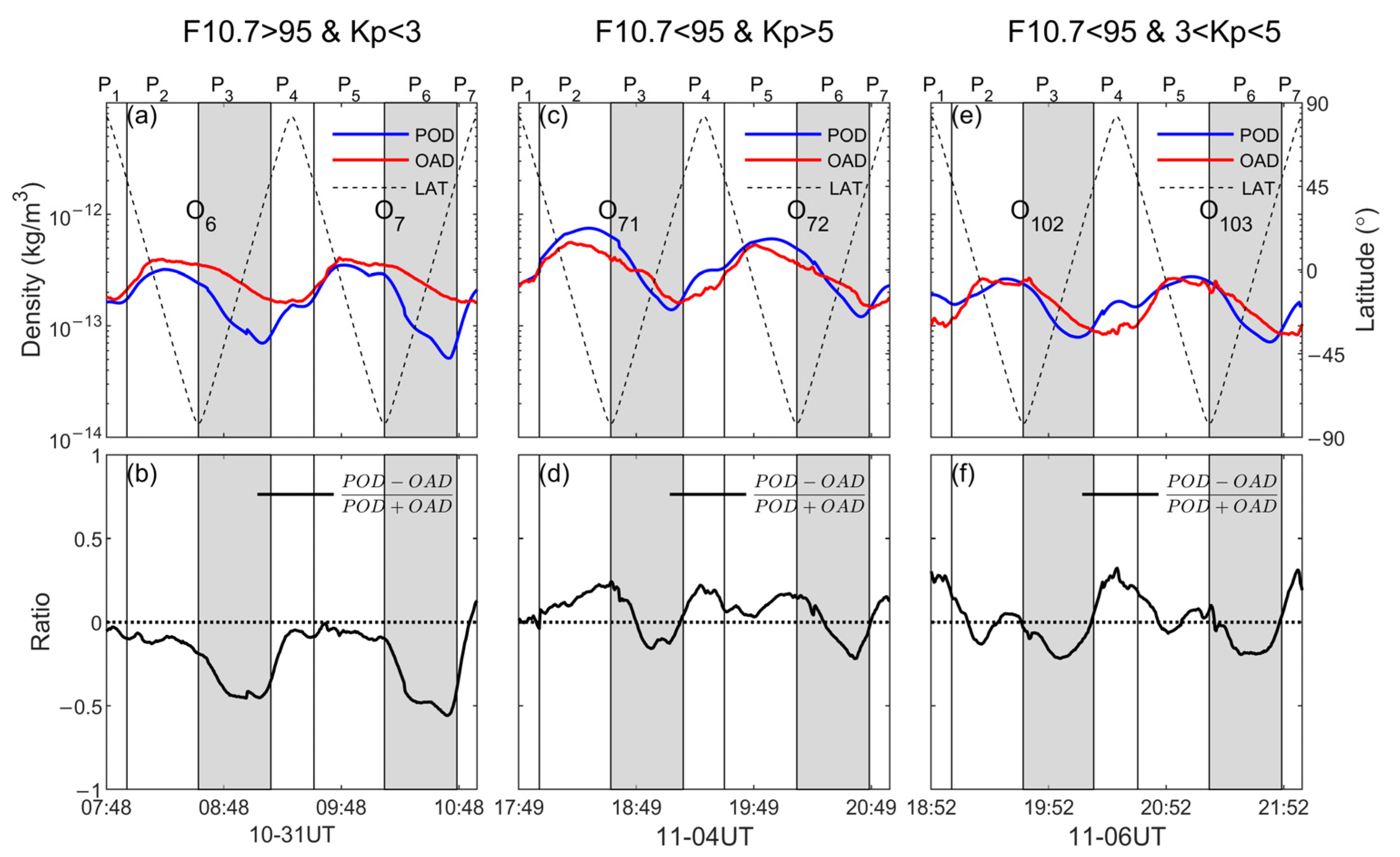
Similarly, we select typical orbits to analyze the characteristics of differences under various conditions, as shown in Figure 6. The decreasing periods, the objectives to be discussed, are exhibited by P3 and P6 intervals highlighted in gray. For decreasing periods, we find an unexpected phenomenon that OAD densities are almost always larger than POD, appearing periodically as delays in the time phase. In Figure 6a,b, under conditions of a large F10.7 and small Kp, OAD greatly deviates from POD, and the same circumstances apply for conditions of a small F10.7 and Kp. For a low-level F10.7, shown in Figure 6c–f, differences in the two measurements reduce with active geomagnetic activities. On the one hand, POD could be influenced by the empirical model DTM94. On the other hand, it could be attributed to the uncertainty of measurements derived from the OAD instrument. Observations derived from the Neutral Gas and Ion Mass Spectrometer (NGIMS) onboard the Mars Atmosphere and Volatile Evolution (MAVEN) satellite on the elliptic orbit suggested a problem that the desorption of gas from the inner surface of the instrument could introduce errors, especially during the outbound portion [46]. Although similar to the NGIMS in operating principle, the OAD instrument onboard the QQ-Satellite, being in a circular orbit, may not be impacted by the desorption of gas from the inner surface of the instrument. Further, there are few relevant references about the issue, which should be certified further through simulation experiments and comparisons with other isochronous observations.
Figure 6.
Similar plot to Figure 5, except for different satellite orbits. (a,c,e) Thermospheric mass densities derived from POD and OAD, and (b,d,f) their ratios. And the shadows represent the decreasing periods.
4.3. Characteristics of Differences During Transition Periods
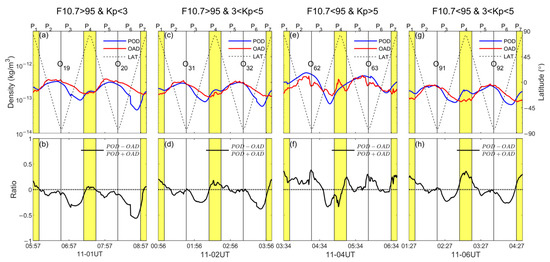
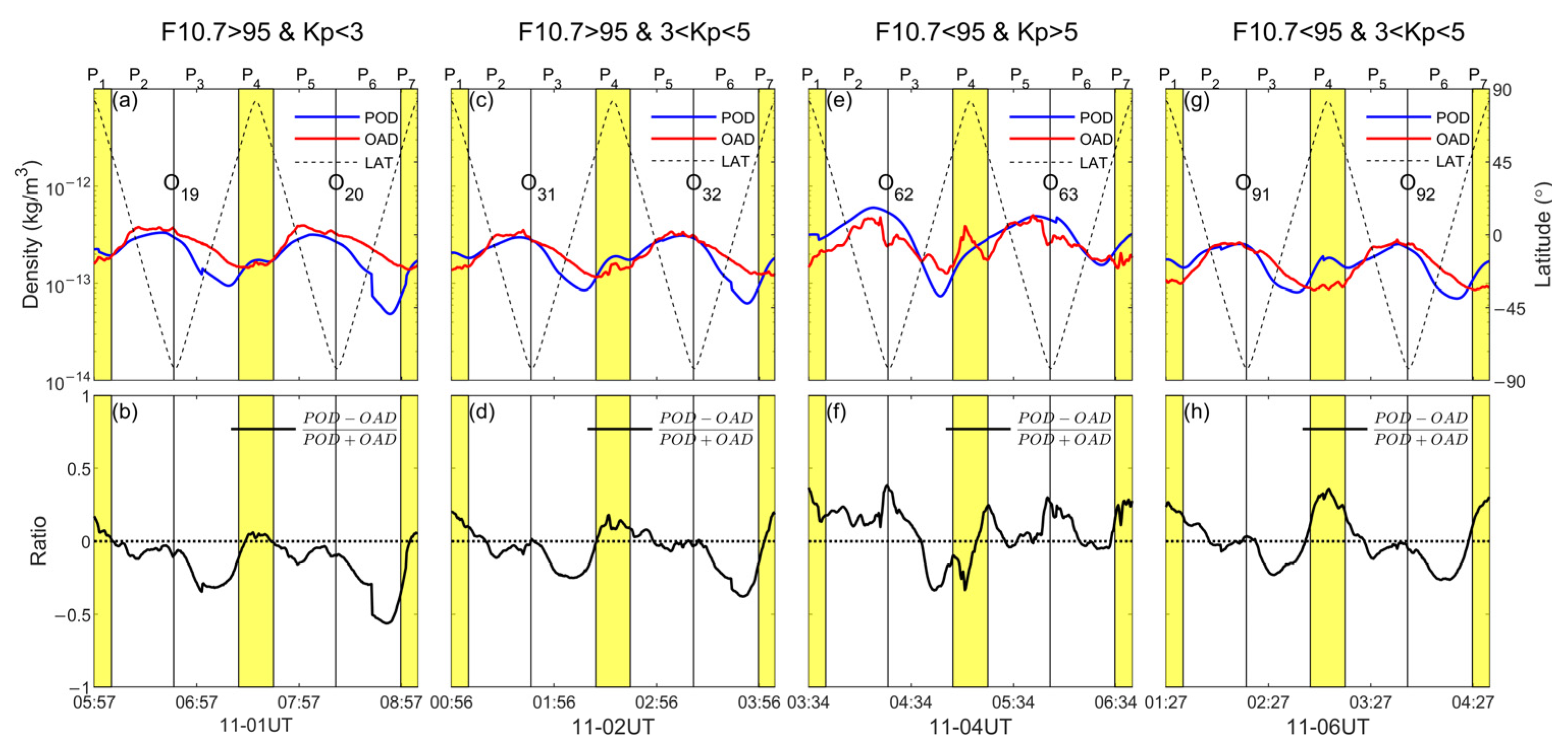
Similarly, we investigate primary discrepancy characteristics for transition periods under different conditions according to representative orbits, as shown in Figure 7. The transition periods are highlighted in yellow, marked as P1, P4, and P7. Owing to incomplete orbits in P1 and P7 intervals, we only analyze differences shown in the P4 interval here. For transition periods, in the northern polar regions, density variations, as well as differences in POD and OAD, are complicated and various. Enhancements of density in polar regions exist in both POD and OAD, appearing as obvious bulge structures of density under some circumstances. In Figure 7a,b, under conditions of a large F10.7 and small Kp, POD aligns relatively well with OAD, demonstrating smaller ratios of difference. Among these, POD increases quickly at first and then decreases slowly, exhibiting a smooth bulge structure of density in the north pole. In contrast, OAD varies stably on the whole and a little sharp peak appears at about 82°N. In Figure 7c,d, by contrast, differences in POD and OAD rise accompanied by increasing Kp. Similarly, both POD and OAD demonstrate peaks of density, shaped in bulge structures, at about 82°N, but there is a sharper bulge structure for OAD. In Figure 7e,f, for a small F10.7 and the largest Kp, differences in the two measurements further worsen. By contrast, OAD varies more violently than POD, with a large and sharp bulge structure emerging at about 82°N. Particularly in Figure 7g,h, for a small F10.7 and consecutively large Kp, the differences are the worst. POD continues to exhibit a large but smooth bulge structure of density peaking at about 82°N; however, OAD exhibits multiple little wave-like structures.
Figure 7.
Similar plot to Figure 5, except for different satellite orbits. (a,c,e,g) Thermospheric mass densities derived from POD and OAD, and (b,d,f,h) their ratios. And the shadows represent the transition periods.
During transition periods, the differences in POD and OAD mentioned above seem to depend more on geomagnetic activity. Meanwhile, the north pole is in the polar night in winter for the period of November. As a result, we could basically exclude the effect of solar radiation on the arising of bulge features of density at 50–90°N. Moreover, the region of 50–90°N, covering the auroral zone and other special regions, is important for enhancements of density due to the dissipation of energy and precipitating of particles. Based on accelerations derived from CHAMP during storm period 8–9 June 2001, Bruinsma and Tamagnan [45] derived thermospheric mass density and saw similar enhancements of density in the north pole, even more disturbed than those in the south pole. During storm periods, structures of density enhancement at high latitudes emerge owing to air up-welling, related to enhancements of Joule Heating [47].
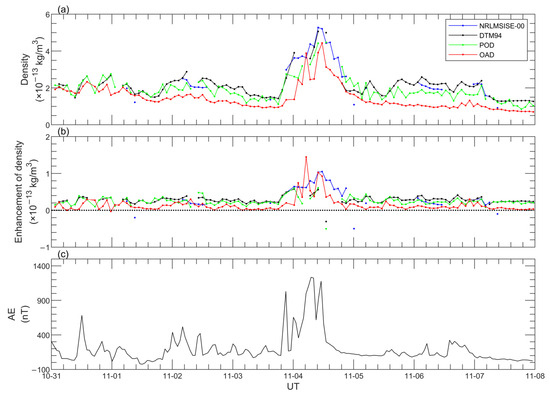
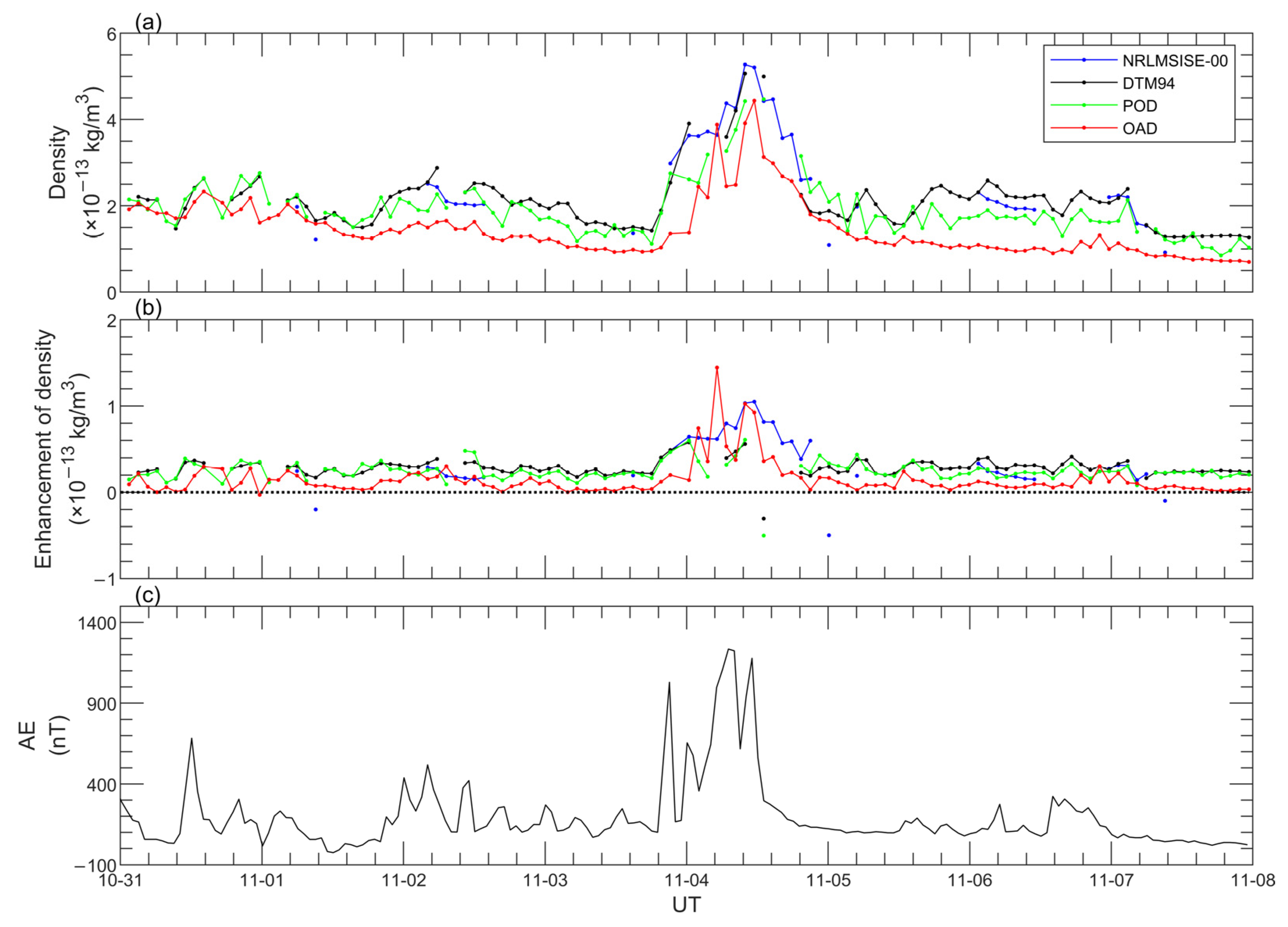
Based on the above analysis, density peaks of bulge structures from simulations and observations are determined and examined. Variations in the peaks of bulges and their relative enhancements for all orbits, along with variations in the auroral electrojet (AE) index, are demonstrated in Figure 8. The lacking dots in Figure 8 represent the absence of bulge structures on corresponding orbits. The peaks of bulges minus the averages of density on the corresponding orbit are enhancements of density, as shown in Figure 8b. By contrast, bulges of density from the models are fewer, especially for NRLMSISE-00, yet OAD appears bulge for almost all orbits. For all 120 orbits investigated, the numbers of orbits appearing with bulge features for NRLMSISE-00, DTM94, POD, and OAD are 40, 104, 110, and 119, respectively. Moreover, notably, the magnitudes of POD peaks are almost always larger than those of OAD peaks, as mentioned above, which could be related to neutral winds. Bruinsma et al. [45,48] suggested that the speed of neutral winds could reach on the order of 500–1000 m/s during geomagnetic storm periods as well as at high latitudes, which is non-ignorable for estimations of atmospheric density. Due to the neglect of neutral winds in data processing, the speed of the satellite is actually exaggerated, finally leading to overestimations of POD densities () but underestimations of OAD densities (). Further, enhancements of peaks from all densities, especially for OAD densities, exhibit relatively great agreements with the AE index, indicating strong associations with energy injection and particle precipitation in polar regions during geomagnetic storms.
Figure 8.
The evolutions of (a) peak densities in the orbital bulge structures from simulations and observations and their (b) enhancements, along with the evolution of (c) the AE index.
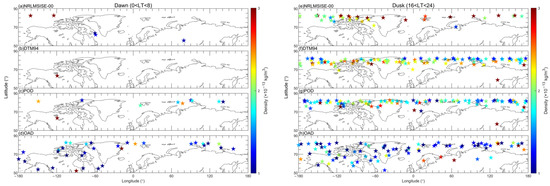
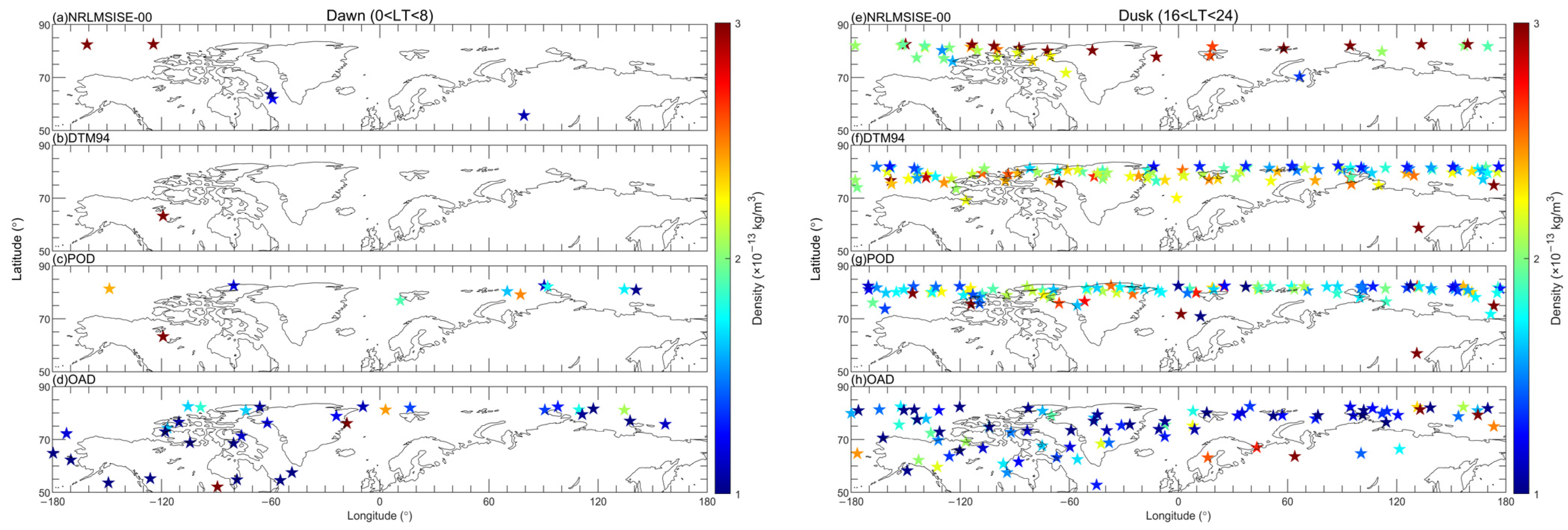
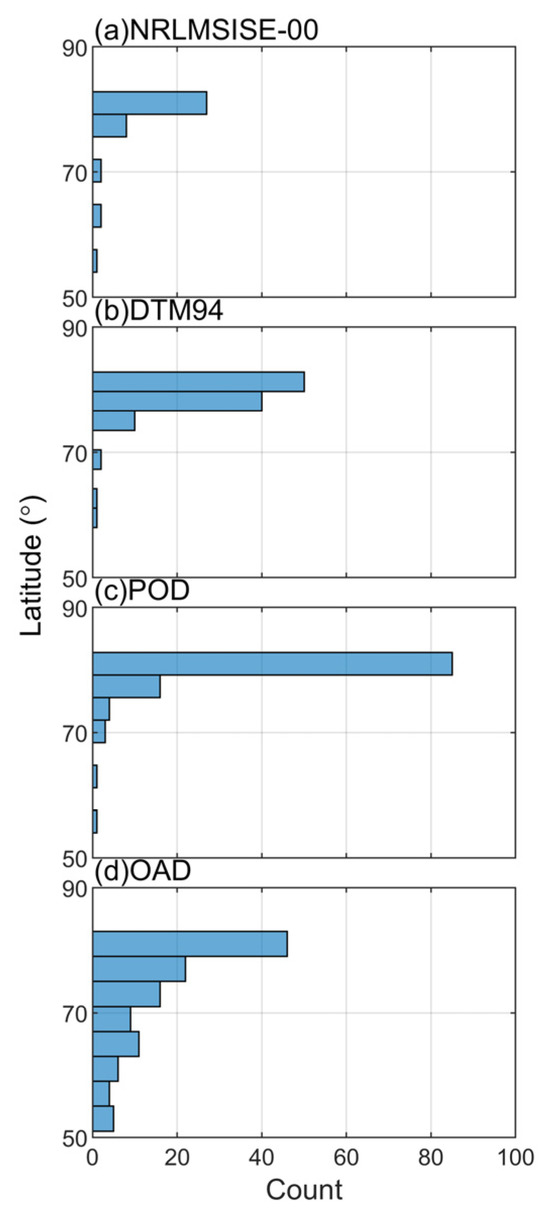
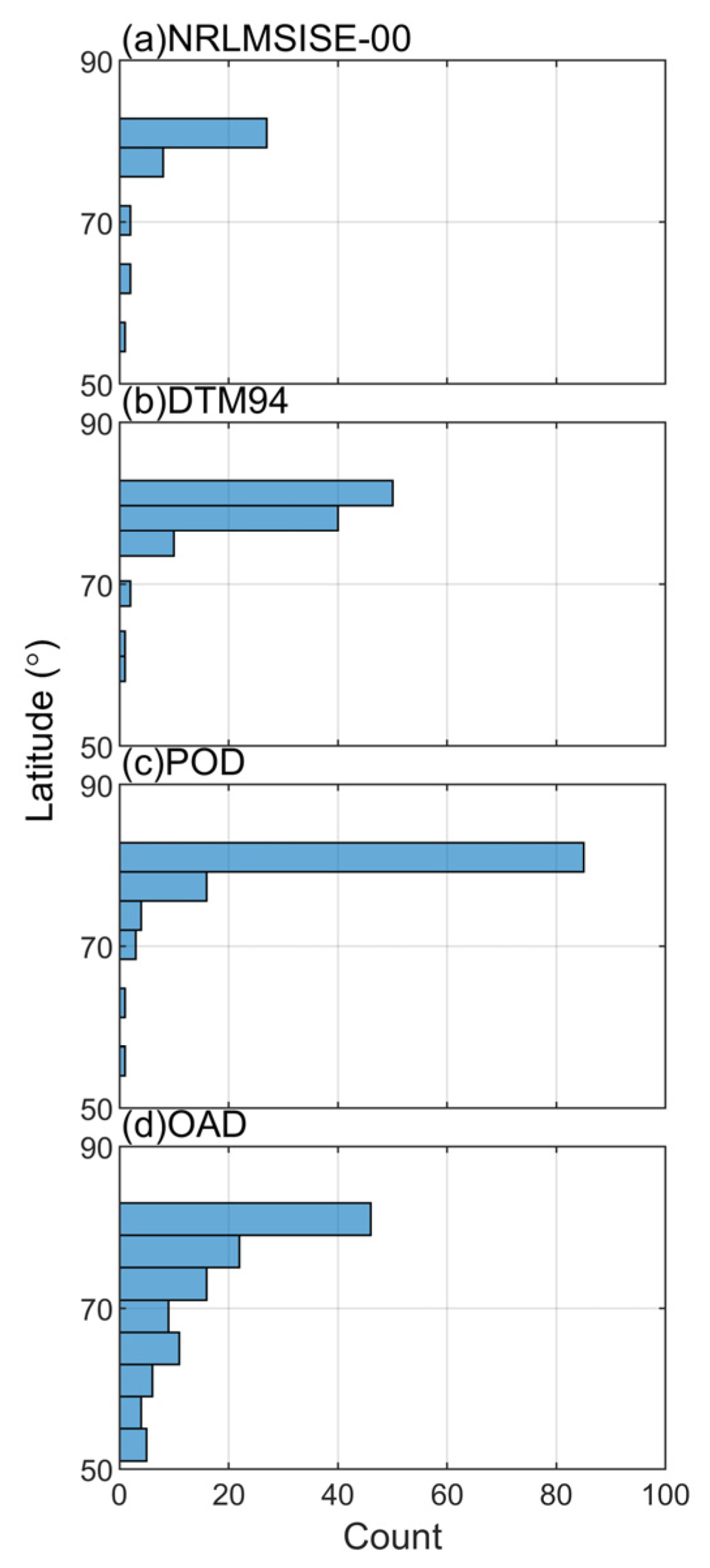
For transition periods, there is little variation in altitude concentrated at 520–530 km. Therefore, we primarily investigate distributions of bulge-feature peaks in longitude, latitude, and LT, demonstrated in Figure 9. Whether for simulations or observations, there is little dependence on longitude, but strong dependences on latitude and LT. Among these, most peaks appear at high latitudes, spreading into low latitudes occasionally. As shown in Figure 10, the percentages of peaks appearing at above 82°N for NRLMSISE-00, DTM94, POD, and OAD are 22.50%, 4.81%, 26.36%, and 10.08%, along with 92.50%, 97.12%, 98.18%, and 71.43% at above 70°N. By comparison, more peaks emerge at below 70°N and even spread into 50°N for OAD. Notably, the propagations of peaks in latitude appearing in OAD could relate to the effects of some atmospheric waves like the gravity wave during active geomagnetic activities. As for LT, the majority of peaks for all densities appear at dusk (16–24 LT).
Figure 9.
Spatial distributions of peak density in bulge structures at (a–d) dawn (0–8 LT) and at (e–h) dusk (16–24 LT), derived from (a,e) NRLMSISE-00, (b,f) DTM94, (c,g) POD, and (d,h) OAD.
Figure 10.
Statistical distributions in latitudes for bulge peaks derived from (a) NRLMSISE-00, (b) DTM94, (c) POD, and (d) OAD.
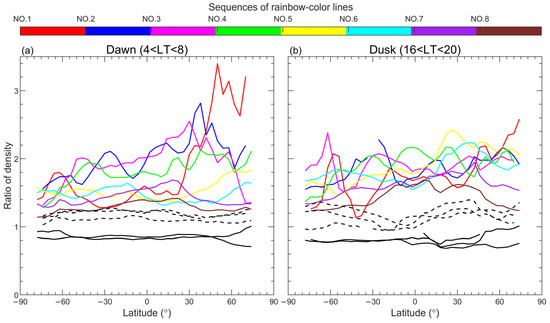
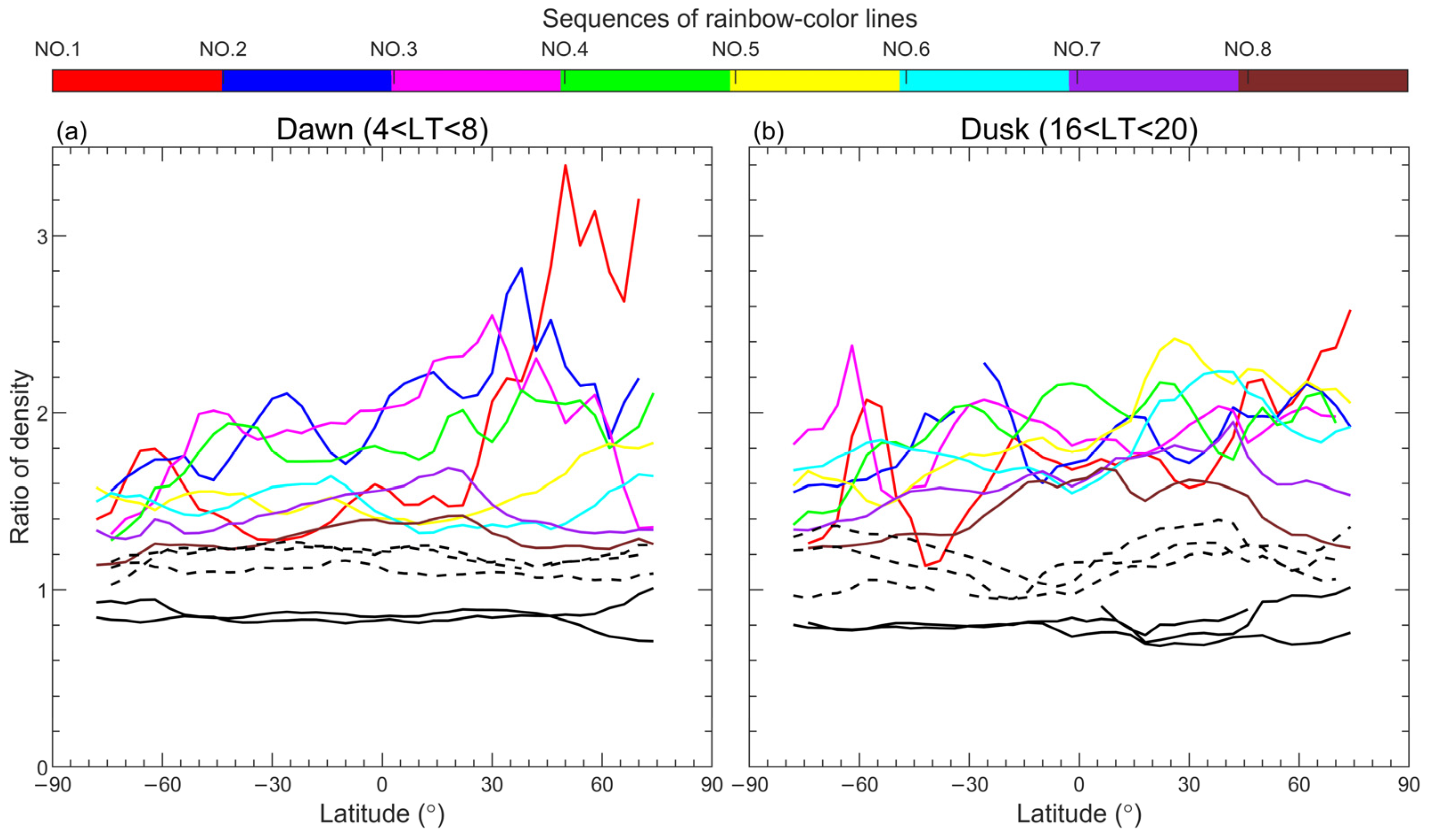
As shown in Figure 11, latitudinal enhancements of OAD, represented by ratios of densities during storm periods relative to quiet periods, are investigated. The black solid lines and dashed lines represent quiet and recovery periods, respectively. The rainbow-colored lines represent the main phases of a geomagnetic storm, and the time sequences are shown at the top of Figure 11. During quiet periods, whether for dawn or dusk, densities hardly enhance, except for polar regions. However, for the main phase of the storm, distinct dawn–dusk differences emerge. At dawn, densities enhance firstly in the two poles, more prominently in the north pole, then propagate into middle and low latitudes, and finally concentrate on equatorial regions. At dusk, similarly, densities enhance firstly in the polar regions, yet there are no obvious hemispheric differences. Furthermore, at dusk, disturbed density mainly focuses on the middle and low latitudes, appearing as densely wave-like features. For recovery periods, densities decrease gradually to initial levels whether at dawn or dusk, but are more disturbed at dusk.
Figure 11.
Ratios of OAD densities during storm periods on 3 November to 5 November relative to a quiet period on 2 November at (a) dawn, 4–8 LT and at (b) dusk, 16–20 LT.
The special perturbations of density, only seen in OAD, generating from the polar regions and then propagating into low latitudes in wave features, could relate to large-scale fluctuations in atmosphere TADs. According to densities derived from CHAMP during storm periods, Forbes and Lu [49] saw large-scale structural TADs at night, which enhanced firstly from the two poles, then propagated toward the equator, and finally dissipated into opposite hemispheres. Based on observations derived from CHAMP and GRACE, Bruinsma et al. found similar bulge structures of density, which appeared at both dayside and nightside but were more disturbed in daytime [48]. Furthermore, in 2007, Bruinsma and Forbes [50] found that TADs featured differently for day and night and for the two hemispheres according to CHAMP observations, which could relate to atmospheric circulation and ion drag. In 2022, according to densities derived from CHAMP and GRACE, Pham and Zhang [51] saw TADs that originated from high latitudes and propagated into low latitudes, and suggested associations between TADs and Joule Heating.
5. Conclusions
In this study, we investigate thermospheric mass densities by the two means of POD and OAD, derived from the QQ-Satellite, during the period of 31 October to 7 November 2021. Simulations derived from empirical atmospheric models of NRLMSISE-00 and DTM94 were also determined for reference. Responses of densities to solar radiation and geomagnetic activity were analyzed according to F10.7 and Kp indices. Importantly, we divide orbital periods, named by variations of densities: increasing, decreasing, and transition periods, to exhibit differences in POD and OAD.
In conclusion, POD and OAD are two crucial space-based means to derive thermospheric densities. Based on analyses of physical phenomena and data differences in this paper, we can cognize more profoundly these two means, and suggest issues to pay attention to and recommendations for future utilizations. Meanwhile, we can provide research foundations for the incorporation of densities derived from multiple methods and for the empirical modeling of thermospheric mass density. Significant and critical conclusions are summarized in the following three points.
- In general, POD accords relatively well with OAD, reflecting similar density variations under space-environment conditions. During quiet periods, density enhancements depend primarily on solar radiation, as indicated by the F10.7 index here. During geomagnetic storms, densities enhance severely in a global sense. By contrast, POD and OAD elevate first in the southern/summer hemisphere, then extend into the middle and low latitudes, but simulations from models enhance almost simultaneously in the two hemispheres. Furthermore, variations in density show great dependences on LT, demonstrating higher densities at dusk. However, the hemispheric asymmetry is hardly seen in NRLMSISE-00 and DTM94 compared with observations.
- During different periods, POD differs variously from OAD, relying on space-weather conditions as well. For increasing periods, corresponding to generally increasing density, POD aligns well with OAD except for conditions of a large F10.7 and large Kp. Among these, OAD is slightly larger than POD for a large F10.7; however, it is smaller than POD for a large Kp. For decreasing periods, namely generally decreasing density, there exist relatively large differences between POD and OAD. OAD densities always emerge with delays in the time phase, gradually diminishing with the enhancement of Kp. Significantly, for transition periods, the regions of 50–90°N, differences in POD and OAD are complicated and changeable. Only for a large F10.7 and low Kp, POD accords with OAD comparatively. In other circumstances, POD is larger than OAD generally, with the difference possibly produced by neutral winds. In particular, for active geomagnetic activity, enhancements from simulations and observations emerge in the north pole, characterized by bulge structures. The vast majority of the peaks of these bulge structures distribute at above 70°N and at the dusk side, showing great correlations with the AE index. Differently, bulge structures in OAD appear as irregular wave-like features, spreading more into lower latitudes, whereas they are smoother in POD and simulations. Further, during storm periods, TADs in OAD are demonstrated at dawn and dusk, propagating in wave characteristics from the two poles to low latitudes, and more perturbed at dawn.
- Here, we put forward some recognitions of potential utilizations and suggestions for investigations of POD and OAD densities for upcoming studies. We suggest that POD could be affected by dynamical models like DTM94 used in the process of derivation; therefore, they should be further calibrated and corrected according to uncertainty analysis. Further, in spite of reflecting only average variations in density, the means of POD are favorable for massive modeling of the thermosphere, as it is convenient and unrestricted by spatial–temporal coverages of instruments. By contrast, high-resolution OAD can exhibit elaborate and multi-scale variations in density, and it promises to be an alternative to the accelerometer, and consequently beneficial for scientific research on physical evolution and coupled mechanisms in the thermosphere. Notably, delays in OAD relative to POD during outgas periods should be further verified and ascertained in future studies. In addition, neutral winds should be taken into account in POD and OAD, particularly for storm periods and for high latitudes. Eventually, we propose an incorporation of POD and OAD in upcoming studies, to provide high-quality densities for high-precision modeling, predictions of satellite orbits, and debris forewarning.
Author Contributions
Conceptualization, Y.J. and X.Z.; methodology, Y.J. and X.Z.; software, Y.J.; validation, Y.J., M.H., Y.L. and X.M.; formal analysis, X.M., J.A., B.W. and X.W.; investigation, Y.J.; resources, X.Z., M.H., Y.L. and Y.S.; data curation, Y.J., J.A. and B.W.; writing—original draft preparation, Y.J. and X.Z.; writing—review and editing, Y.J., X.Z., M.H., Y.L. and X.M.; visualization, Y.J.; supervision, X.Z. and Y.S.; project administration, J.A.; funding acquisition, M.H. and Y.L. All authors have read and agreed to the published version of the manuscript.
Funding
This research was funded by the Project of Stable Support for Youth Teams in Basic Research Fields, CAS (YSBR-018), the National Key R&D program of China (2021YFE0110200), the China Manned Space Program (Y59003AC40), and the TianMu Atmospheric Density Detector Development Project, (E3C1162110).
Data Availability Statement
The data derived from the QQ-Satellite are not publicly available. The QQ-Satellite datasets of ephemerides can be obtained from the repository provided by the National Space Science Center. The NRLMSISE-00 empirical model is available on the CCMC website (https://ccmc.gsfc.nasa.gov/, accessed on 14 September 2021). The space weather index of F10.7 is available at http://celestrak.org/SpaceData/ (accessed on 10 November 2021). The space weather indices of Dst and Kp are available at the NASA OMNI website (http://omniweb.gsfc.nasa.gov/, accessed on 11 January 2022). The source code of empirical model DTM94 is not available now due to it being an extremely old version. The AE space weather index is simulated because there are no available data for the periods studied in this paper. All data that are not available can be requested from the corresponding author.
Acknowledgments
We acknowledge the contribution of materials and data from the National Space Science Center, the Chinese Academy of Sciences as well as the Beijing Key Laboratory of Space Environment Exploration, the National Space Science Center.
Conflicts of Interest
The authors declare no conflicts of interest.
References
- Chen, H.; Qin, G.; Li, Y.; He, Y.; Zhu, G. Comparison and analysis between simulations and observations derived from the atmospheric density detector onboard TianGong-1. China Manned Space 2013, 19, 34–38. [Google Scholar] [CrossRef]
- Ren, Z. Modelling of upper atmosphere: From the earth to the planets. Chin. Sci. Bull. 2020, 65, 1320–1335. Available online: https://kns.cnki.net/kcms/detail/11.1784.N.20200408.1024.006.html (accessed on 29 January 2022). [CrossRef] [Scilit]
- Clemmons, J.H.; Friesen, L.M.; Katz, N.; Ben-Ami, M.; Dotan, Y.; Bishop, R.L. The ionization gauge investigation for the streak mission. Space Sci. Rev. 2009, 145, 263–283. [Google Scholar] [CrossRef] [Scilit]
- Li, Y.; Sun, Y.; Zhang, X.; Ai, J.; Zheng, X.; Li, J.; Wang, Y.; Guo, B.; Yan, F.; Wei, S.; et al. Thermosphere joint observations by TM-1 constellations and swarm-b during the April 2023 geomagnetic storm. Earth Planet. Phys. 2024, 8, 307–316. [Google Scholar] [CrossRef] [Scilit]
- Li, R. The Research on Retrieval and Utilization of Thermospheric Mass Density. Ph.D. Thesis, University of Science and Technology of China, Hefei, China, 2022. [Google Scholar] [CrossRef]
- Lei, J.; Matsuo, T.; Dou, X.; Sutton, E.; Luan, X. Annual and semiannual variations of thermospheric density: EOF analysis of CHAMP and GRACE data. J. Geophys. Res. Space Phys. 2012, 117, A01310. [Google Scholar] [CrossRef] [Scilit]
- Wang, X.; Miao, J.; Lu, X.; Aa, E.; Liu, J.; Wang, Y.; Liu, S. Latitudinal impacts of joule heating on the high-latitude thermospheric density enhancement during geomagnetic storms. J. Geophys. Res. Space Phys. 2021, 126, 7. [Google Scholar] [CrossRef] [Scilit]
- Sutton, E.K.; Forbes, J.M.; Nerem, R.S. Global thermospheric neutral density and wind response to the severe 2003 geomagnetic storms from champ accelerometer data. J. Geophys. Res. Space Phys. 2005, 110, A09S40. [Google Scholar] [CrossRef] [Scilit]
- Lei, J.; Thayer, J.P.; Lu, G.; Burns, A.G.; Wang, W.; Sutton, E.K.; Emery, B.A. Rapid recovery of thermosphere density during the October 2003 geomagnetic storms. J. Geophys. Res. Space Phys. 2011, 116, A03306. [Google Scholar] [CrossRef] [Scilit]
- Wang, X.; Miao, J.; Lu, X.; Aa, E.; Luo, B.; Liu, J.; Hong, Y.; Wang, Y.; Ren, T.; Zeng, R.; et al. Using temporal relationship of thermospheric density with geomagnetic activity indices and Joule Heating as calibration for NRLMSISE-00 during geomagnetic storms. Space Weather 2022, 20, e2021SW003017. [Google Scholar] [CrossRef] [Scilit]
- Jacchia, L.G. Static diffusion models of the upper atmosphere with empirical temperature profiles. Smithson. Contrib. Astrophys. 1965, 8, 213–257. [Google Scholar] [CrossRef] [Scilit]
- Jacchia, L.G. Speical Report 1970: New Static Models of the Thermosphere and Exosphere with Empirical Temperature Profiles; Smithsonian Astrophysical Observatory: Cambridge, MA, USA, 1970. [Google Scholar]
- Emmert, J.T. Thermospheric mass density: A review. Adv. Space Res. 2015, 56, 773–824. [Google Scholar] [CrossRef] [Scilit]
- Bowman, B.R.; Kent Tobiska, W.; Marcos, F.A.; Valladares, C. The JB2006 empirical thermospheric density model. J. Atmos. Sol.-Terr. Phys. 2008, 70, 774–793. [Google Scholar] [CrossRef] [Scilit]
- Berger, C.; Biancale, R.; Ill, M.; Barlier, F. Improvement of the empirical thermospheric model DTM: DTM94—A comparative review of various temporal variations and prospects in space geodesy applications. J. Geod. 1998, 72, 161–178. [Google Scholar] [CrossRef] [Scilit]
- Bruinsma, S.; Thuillier, G.; Barlier, F. The DTM-2000 empirical thermosphere model with new data assimilation and constraints at lower boundary: Accuracy and properties. J. Atmos. Sol.-Terr. Phys. 2003, 65, 1053–1070. [Google Scholar] [CrossRef] [Scilit]
- Bruinsma, S. The DTM-2013 thermosphere model. J. Space Weather Space Clim. 2015, 5, A1. [Google Scholar] [CrossRef] [Scilit]
- Hedin, A.E. MSIS-86 thermospheric model. J. Geophys. Res. Space Phys. 1987, 92, 4649–4662. [Google Scholar] [CrossRef] [Scilit]
- Picone, J.M.; Hedin, A.E.; Drob, D.P.; Aikin, A.C. NRLMSISE-00 empirical model of the atmosphere: Statistical comparisons and scientific issues. J. Geophys. Res. Space Phys. 2002, 107, 1468. [Google Scholar] [CrossRef] [Scilit]
- Emmert, J.T.; Drob, D.P.; Picone, J.M.; Siskind, D.E.; Jones, M., Jr.; Mlynczak, M.G.; Bernath, P.F.; Chu, X.; Doornbos, E.; Funke, B.; et al. NRLMSIS 2.0: A whole-atmosphere empirical model of temperature and neutral species densities. Earth Space Sci. 2021, 8, e2020EA001321. [Google Scholar] [CrossRef] [Scilit]
- Li, X.; Xu, J.; Tang, G.; Chen, G.; Man, H.; Liu, S.; Li, Y. Data processing and calibration of atmospheric density derived from APOD satellite. Chin. J. Geophys. 2018, 61, 3567–3576. (In Chinese) [Google Scholar] [CrossRef]
- Emmert, J.T.; Picone, J.M.; Lean, J.L.; Knowles, S.H. Global change in the thermosphere: Compelling evidence of a secular decrease in density. J. Geophys. Res. Space Phys. 2004, 109, A02301. [Google Scholar] [CrossRef] [Scilit]
- Weng, L. Study on Variations and Modelling of Thermospheric Mass Density. Ph.D. Thesis, University of Science and Technology of China, Hefei, China, 2019. [Google Scholar]
- Sang, J.; Smith, C.; Zhang, K. Towards accurate atmospheric mass density determination using precise positional information of space objects. Adv. Space Res. 2012, 49, 1088–1096. [Google Scholar] [CrossRef] [Scilit]
- Van den Ijssel, J.; Doornbos, E.; Iorfida, E.; March, G.; Siemes, C.; Montenbruck, O. Thermosphere densities derived from Swarm GPS observations. Adv. Space Res. 2020, 65, 1758–1771. [Google Scholar] [CrossRef] [Scilit]
- Jäggi, A.; Hugentobler, U.; Bock, H.; Beutler, G. Precise orbit determination for GRACE using undifferenced or doubly differenced GPS data. Adv. Space Res. 2007, 39, 1612–1619. [Google Scholar] [CrossRef] [Scilit]
- Reigber, C.; Lühr, H.; Schwintzer, P. CHAMP mission status. Adv. Space Res. 2002, 30, 129–134. [Google Scholar] [CrossRef] [Scilit]
- Tapley, B.D.; Bettadpur, S.; Watkins, M.; Reigber, C. The gravity recovery and climate experiment: Mission overview and early results. Geophys. Res. Lett. 2004, 31, L09607. [Google Scholar] [CrossRef] [Scilit]
- Lei, J.; Li, R.; Ren, D.; Weng, L.; Ruan, H. Research advances on retrieval and modelling of thermospheric density. Rev. Geophys. Planet. Phys. 2023, 54, 434–454. [Google Scholar] [CrossRef]
- Li, J.; Zhang, S.; Zou, X.; Jiang, W. Precise orbit determination for GRACE with zero-difference kinematic method. Chin. Sci. Bull. 2010, 55, 600–606. [Google Scholar] [CrossRef] [Scilit]
- Zhao, Z. Research on Responses of Orbital Variations of SWARM Satellite to Geomagnetic Storm. Master’s Thesis, Harbin Institute of Technology, Harbin, China, 2018. [Google Scholar] [CrossRef]
- Kodikara, T.; Carter, B.; Zhang, K. The first comparison between SWARM-C accelerometer-derived thermospheric densities and physical and empirical model estimates. J. Geophys. Res. Space Phys. 2018, 123, 5068–5086. [Google Scholar] [CrossRef] [Scilit]
- Li, R.; Lei, J. Responses of thermospheric mass densities to the October 2016 and September 2017 geomagnetic storms revealed from multiple satellite observations. J. Geophys. Res. Space Phys. 2021, 126, e2020JA028534. [Google Scholar] [CrossRef] [Scilit]
- Jun, Z.; Yingying, L.; Guanghui, L.; Bo, B.; Weijian, P.; Peijie, Z.; Xiaozhou, Y. QB50 project and the development of cube sat technology in China. Aerosp. China 2018, 19, 30–39. [Google Scholar]
- Gill, E.; Sundaramoorthy, P.; Bouwmeester, J.; Zandbergen, B.; Reinhard, R. Formation flying within a constellation of nano-satellites: The QB50 mission. Acta Astronaut. 2013, 82, 110–117. [Google Scholar] [CrossRef] [Scilit]
- Li, X. Data Processing of In-Situ Thermospheric Density Data Derived from Satellites and Calibration of Empirical Models. Ph.D. Thesis, University of Chinese Academy of Sciences, Beijing, China, 2020. [Google Scholar] [CrossRef]
- Wang, X.; Jin, Y.; Meng, X.; Du, D.; Zhang, A.; Tang, X.; Yan, F.; Sun, Y.; Zhang, X.; Wang, B.; et al. Atmospheric density response to a severe magnetic storm detected by the 520 km altitude spherical satellite. Atmosphere 2022, 13, 1891. [Google Scholar] [CrossRef] [Scilit]
- Sun, Y.; Wang, B.; Meng, X.; Tang, X.; Yan, F.; Zhang, X.; Bai, W.; Du, Q.; Wang, X.; Cai, Y.; et al. Analysis of orbital atmospheric density from QQ-satellite precision orbits based on GNSS observations. Remote Sens. 2022, 14, 3873. [Google Scholar] [CrossRef] [Scilit]
- Li, Y.; Sun, Y.; Zhang, X.; Du, Q.; Tang, X.; Zheng, X.; Ai, J.; Meng, X.; Li, J.; Zhu, G.; et al. Initial observations derived from the orbital atmosphere detector onboard the spherical satellite. Sci. China Technol. Sci. 2023, 53, 615–621. [Google Scholar] [CrossRef] [Scilit]
- Ye, H.; Qiu, S.; He, A.; Lin, X.; Sun, L.; Li, H.; Zhu, Y.; Xu, X.; Qin, G. Observations of the atmospheric density detector onboard the SZ-4: Variations of thermospheric density during medial and low geomagnetic activities. In Proceedings of the 16th Academic Conference of the Space Exploration Committee of the Chinese Society of Space Science, Guangxi, China, 1 October 2003. [Google Scholar]
- Moe, K.; Mildred, M.M. Gas–surface interactions and satellite drag coefficients. Planet. Space Sci. 2005, 53, 793–801. [Google Scholar] [CrossRef] [Scilit]
- Calabia, A.; Jin, S. Thermospheric density estimation and responses to the March 2013 geomagnetic storm from GRACE GPS-determined precise orbits. J. Atmos. Sol.-Terr. Phys. 2017, 154, 167–179. [Google Scholar] [CrossRef] [Scilit]
- Kuang, D.; Desai, S.; Sibthorpe, A.; Pi, X. Measuring atmospheric density using GPS–LEO tracking data. Adv. Space Res. 2014, 53, 243–256. [Google Scholar] [CrossRef] [Scilit]
- Siemes, C.; de Teixeira da Encarnação, J.; Doornbos, E.; van den Ijssel, J.; Kraus, J.; Pereštý, R.; Grunwaldt, L.; Apelbaum, G.; Flury, J.; Holmdahl Olsen, P.E. SWARM accelerometer data processing from raw accelerations to thermospheric neutral densities. Earth Planets Space 2016, 68, 92. [Google Scholar] [CrossRef] [Scilit]
- Bruinsma, S.; Tamagnan, D.; Biancale, R. Atmospheric densities derived from CHAMP/STAR accelerometer observations. Planet. Space Sci. 2004, 52, 297–312. [Google Scholar] [CrossRef] [Scilit]
- Stone, S.W.; Yelle, R.V.; Benna, M.; Elrod, M.K.; Mahaffy, P.R. Thermal structure of the Martian upper atmosphere from MAVEN NGIMS. J. Geophys. Res. Planets 2018, 123, 2842–2867. [Google Scholar] [CrossRef] [Scilit]
- Lühr, H.; Rother, M.; Köhler, W.; Ritter, P.; Grunwaldt, L. Thermospheric up-welling in the cusp region: Evidence from CHAMP observations. Geophys. Res. Lett. 2004, 31, L06805. [Google Scholar] [CrossRef] [Scilit]
- Bruinsma, S.; Forbes, J.M.; Nerem, R.S.; Zhang, X. Thermosphere density response to the 20–21 November 2003 solar and geomagnetic storm from CHAMP and GRACE accelerometer data. J. Geophys. Res. Space Phys. 2006, 111, A06303. [Google Scholar] [CrossRef] [Scilit]
- Forbes, J.M.; Lu, G.; Bruinsma, S.; Nerem, S.; Zhang, X. Thermosphere density variations due to the 15–24 April 2002 solar events from CHAMP/STAR accelerometer measurements. J. Geophys. Res. Space Phys. 2005, 110, A12S27. [Google Scholar] [CrossRef] [Scilit]
- Bruinsma, S.L.; Forbes, J.M. Global observation of traveling atmospheric disturbances (TADs) in the thermosphere. Geophys. Res. Lett. 2007, 34, L14103. [Google Scholar] [CrossRef] [Scilit]
- Pham, K.H.; Zhang, B.; Sorathia, K.; Dang, T.; Wang, W.; Merkin, V.; Liu, H.; Lin, D.; Wiltberger, M.; Lei, J.; et al. Thermospheric density perturbations produced by traveling atmospheric disturbances during August 2005 storm. J. Geophys. Res. Space Phys. 2022, 127, e2021JA030071. [Google Scholar] [CrossRef] [Scilit]

Disclaimer/Publisher’s Note: The statements, opinions and data contained in all publications are solely those of the individual author(s) and contributor(s) and not of MDPI and/or the editor(s). MDPI and/or the editor(s) disclaim responsibility for any injury to people or property resulting from any ideas, methods, instructions or products referred to in the content. |
© 2024 by the authors. Licensee MDPI, Basel, Switzerland. This article is an open access article distributed under the terms and conditions of the Creative Commons Attribution (CC BY) license (https://creativecommons.org/licenses/by/4.0/).