


Abstract
The growing emphasis on sustainable tourism has increased the importance of environmentally responsible practices in the hospitality industry. Green hotels have emerged as an important strategy for reducing environmental impacts while meeting the expectations of environmentally conscious travelers. However, limited research has examined the psychological mechanisms influencing international tourists’ decisions to choose green hotels in emerging tourism destinations. This study investigates the factors influencing international tourists’ motivation and intention to select green hotels in Chiang Mai Province, Thailand. A quantitative research design was employed using a structured questionnaire survey of 350 international tourists. The data were analyzed using Partial Least Squares Structural Equation Modeling (PLS-SEM) to examine the relationships among sustainability image, perceived Environmental, Social, and Governance (ESG), environmental awareness, perceived value for money, trust in green hotels, motivation to choose green hotels, and Green Hotel Selection Intention. The results indicate that sustainability image, perceived ESG, and trust in green hotels significantly influence tourists’ motivation to choose green hotels, with trust demonstrating the strongest effect. In contrast, environmental awareness and perceived value for money do not show significant effects on motivation. Furthermore, motivation to choose green hotels has a strong positive influence on Green Hotel Selection Intention. These findings highlight the critical role of motivation as a psychological mechanism linking sustainability perceptions to tourists’ accommodation choices. The study contributes to the literature on sustainable tourism and green consumer behavior by integrating sustainability image and ESG perceptions into a comprehensive framework explaining Green Hotel Selection Intention. From a practical perspective, the findings suggest that hotel managers should strengthen trust through transparent sustainability communication, obtain recognized green certifications, and promote ESG initiatives through digital marketing channels. Destination policymakers in Chiang Mai may also support standardized green hotel accreditation programs to enhance tourists’ confidence in sustainable accommodation choices. These strategies can support the development of sustainable hospitality practices and enhance the competitiveness of green hotels in Chiang Mai and other tourism destinations.
1. Introduction
Sustainability has become a central concern in the global tourism and hospitality industry due to increasing environmental challenges, including climate change, resource depletion, and environmental degradation. Tourism activities, while contributing significantly to economic development, are also associated with substantial environmental impacts such as carbon emissions, excessive resource consumption, and waste generation [1]. Consequently, the concept of sustainable tourism has gained considerable attention among researchers, policymakers, and industry practitioners seeking to balance economic growth with environmental protection and social responsibility [2].
Within this context, green hotels have emerged as an important strategy for promoting sustainability in the hospitality sector [3]. Green hotels adopt environmentally responsible practices such as energy efficiency, waste reduction, water conservation, and sustainable procurement in order to minimize environmental impacts while maintaining service quality and operational efficiency [4]. These practices not only contribute to environmental protection but also respond to the growing demand from environmentally conscious travelers who prefer accommodation providers that demonstrate sustainability commitments [5,6]. In parallel with the growing emphasis on environmental sustainability, the concept of Environmental, Social, and Governance (ESG) has become increasingly influential in evaluating corporate responsibility and long-term business sustainability [7,8]. ESG frameworks encourage organizations to integrate environmental stewardship, social responsibility, and transparent governance into their strategic and operational decisions [9]. In the hospitality industry, ESG initiatives may include environmentally responsible operations, employee welfare and community engagement, as well as ethical management and transparent governance practices. These initiatives can strengthen corporate reputation and influence consumers’ perceptions and behavioral intentions toward hospitality services [10,11].
At the same time, tourists are becoming increasingly aware of environmental issues and the importance of sustainable consumption [12]. Environmentally conscious travelers are more likely to consider sustainability attributes when selecting tourism products and services, including accommodation. Previous research suggests that tourists’ environmentally responsible behavior is influenced by several psychological and perceptual factors, such as sustainability image, environmental awareness, perceived value, trust, attitudes, and perceived behavioral control. These factors shape tourists’ motivations and intentions toward environmentally responsible consumption in tourism [13,14]. However, prior studies have often examined these determinants separately, with limited integration of sustainability image and ESG perception within a unified behavioral framework.
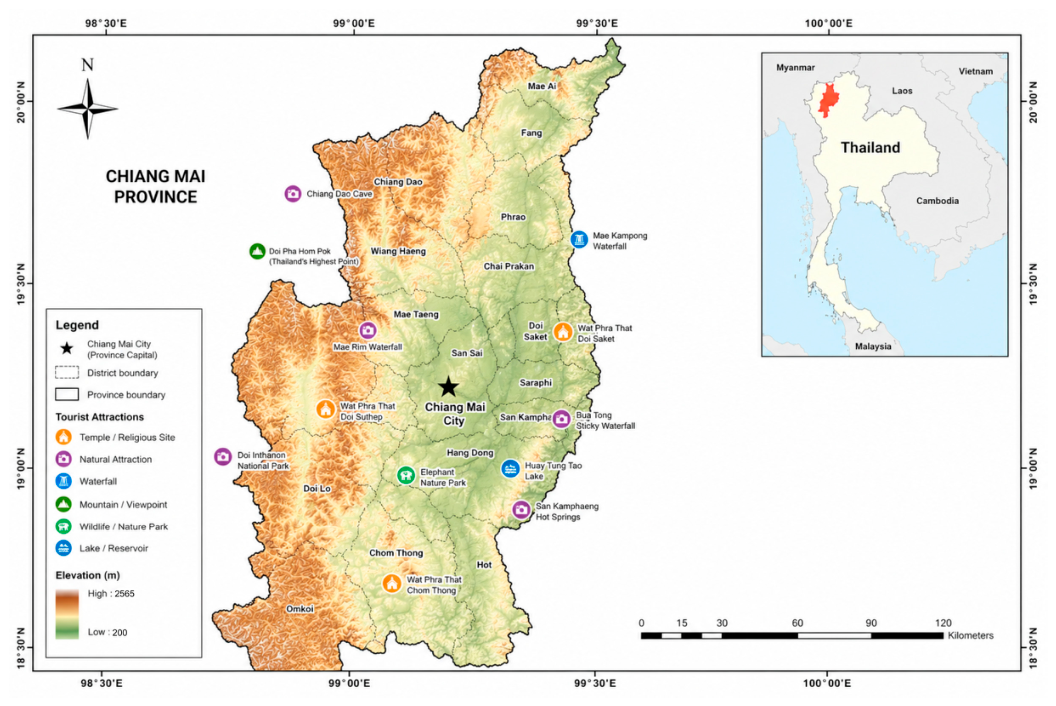
Despite the increasing adoption of green practices in the hospitality industry, empirical understanding of tourists’ decision-making processes regarding green hotel selection remains limited, particularly in the context of emerging sustainable tourism destinations [15]. In Thailand, Chiang Mai Province is one of the country’s most prominent tourism destinations, attracting a large number of international tourists due to its rich cultural heritage, natural attractions, and distinctive local experiences [16]. Recent sustainable tourism initiatives in Chiang Mai include low-carbon tourism programs, environmentally responsible destination management, and increasing adoption of green practices by hotels and tourism businesses [17]. For contextual clarity, Figure 1 presents the geographic location of Chiang Mai Province and the spatial distribution of major tourist attractions across the province.
Figure 1.
Geographic Location of Chiang Mai Province and Major Tourist Attractions, Thailand.
However, limited research has examined the underlying psychological mechanisms influencing international tourists’ motivations and accommodation choices in this destination. In particular, the roles of sustainability image and ESG perceptions in shaping tourists’ motivation to choose green hotels remain underexplored [18,19]. Understanding how tourists perceive sustainability-related attributes and how these perceptions influence their accommodation choices is crucial for promoting sustainable hospitality practices [20]. Moreover, tourists’ motivation may serve as a key psychological mechanism that translates sustainability perceptions into behavioral intention and actual selection decisions [21].
To address this gap, the present study draws upon sustainable tourism theory, consumer behavior theory, and the Theory of Planned Behavior (TPB). These perspectives suggest that favorable perceptions of sustainability and trust may strengthen attitudes and motivational readiness toward green hotels, which in turn influence selection behavior. While traditional TPB variables such as subjective norms and perceived behavioral control are important, this study focuses specifically on sustainability-related antecedents that are particularly relevant in the green hotel context.
Therefore, this study aims to investigate the behaviors and motivations of international tourists in selecting green hotels in Chiang Mai Province, with particular emphasis on the roles of sustainability image, perceived ESG, environmental awareness, perceived value for money, and trust in green hotels. Specifically, this research examines how these factors influence tourists’ motivation to choose green hotels, which subsequently affects their Green Hotel Selection Intention [22,23,24,25].
By examining these relationships, this study contributes to the literature on sustainable tourism and green consumer behavior in several ways. First, it extends existing research by integrating sustainability image and ESG perception into a comprehensive framework explaining tourists’ Green Hotel Selection Intention. Second, it highlights the mediating role of motivation in linking sustainability-related perceptions to behavioral outcomes. Third, it provides empirical evidence from an emerging Asian tourism destination where sustainable hospitality development is gaining momentum. Finally, the findings offer practical implications for hotel operators and tourism policymakers seeking to promote sustainable hospitality practices, strengthen destination competitiveness, and support long-term green tourism development in Chiang Mai and similar destinations.
2. Theoretical Framework and Hypotheses
The tourism and hospitality industry has increasingly incorporated sustainability into its operational and strategic frameworks in response to global environmental challenges [25]. Tourism activities contribute significantly to environmental impacts such as carbon emissions, waste generation, and resource consumption, making sustainability an important concern for both businesses and travelers. Consequently, hotels around the world are adopting environmentally responsible practices, commonly referred to as green hotel practices, to reduce environmental impacts while maintaining service quality and competitiveness [26]. In parallel, tourists have become more environmentally conscious and increasingly consider sustainability-related attributes when selecting travel services. Sustainable consumption behavior in tourism reflects travelers’ willingness to choose services that minimize environmental damage and support social responsibility. Green consumer behavior in tourism therefore involves choosing environmentally friendly accommodation, supporting responsible businesses, and participating in sustainability-oriented tourism activities [27].
To explain tourists’ decision-making processes, this study integrates perspectives from sustainable tourism theory, consumer behavior theory, and the Theory of Planned Behavior (TPB). These frameworks suggest that individuals’ behavioral decisions are influenced by attitudes, perceived values, trust, and environmental awareness. In the context of green hotels, these factors shape tourists’ motivation to select environmentally responsible accommodation [28].
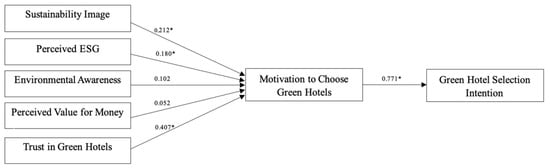
Based on this theoretical foundation, the present study proposes that sustainability image, perceived ESG, environmental awareness, perceived value for money, and trust in green hotels influence tourists’ motivation to choose green hotels, which subsequently affects Green Hotel Selection Intention among international tourists visiting Chiang Mai Province.
2.1. Sustainability Image
Sustainability image refers to tourists’ perceptions regarding a hotel’s commitment to environmental protection, social responsibility, and sustainable development practices. In the hospitality industry, sustainability image is often shaped by visible environmental initiatives such as energy-saving systems, waste reduction programs, use of renewable resources, and community engagement activities [29].
A positive sustainability image can significantly enhance tourists’ perceptions of a hotel’s credibility and environmental responsibility. Hotels that effectively communicate their sustainability initiatives can build stronger brand images and attract environmentally conscious consumers. Research in sustainable tourism indicates that corporate sustainability image can influence customer attitudes, perceived value, and behavioral intentions toward environmentally responsible services.
Recent studies emphasize that sustainability-oriented corporate image plays an important role in shaping consumer perceptions in the hospitality sector. Hotels that promote environmental responsibility and sustainable management practices are more likely to attract tourists who prioritize sustainability in their travel decisions [30].
Furthermore, the growing awareness of climate change and environmental protection has increased tourists’ expectations regarding sustainable business practices in tourism destinations [31]. As a result, sustainability image has become a key factor influencing tourists’ motivation to support environmentally responsible accommodation providers [32]. Therefore, when tourists perceive that hotels in Chiang Mai maintain a strong sustainability image, they are more likely to develop motivation to choose green hotels [33].
H1.
Sustainability image positively influences tourists’ motivation to choose green hotels.
2.2. Perceived ESG
Environmental, Social, and Governance (ESG) has become an important framework for evaluating corporate sustainability and responsible business practices. ESG emphasizes three key dimensions: environmental protection, social responsibility toward stakeholders, and transparent governance practices [34]. In the tourism and hospitality industry, ESG practices include environmental initiatives such as energy conservation and waste management, social initiatives such as employee welfare and community development, and governance mechanisms ensuring transparency and ethical management. Hotels that successfully integrate ESG principles into their operations may gain stronger trust and reputation among consumers.
Recent research highlights the growing role of ESG in influencing consumer perceptions and decision-making processes in the hospitality sector. ESG initiatives not only improve organizational sustainability performance but also enhance customer confidence and satisfaction with environmentally responsible hotels [26].
Additionally, ESG practices contribute to the broader goals of sustainable development and align with global initiatives such as the United Nations Sustainable Development Goals (SDGs) [35]. As travelers increasingly value ethical consumption and corporate responsibility, ESG perception has become a critical determinant of consumer behavior in tourism [36].
Thus, when tourists perceive that hotels actively implement ESG principles, they are more likely to feel motivated to support such businesses through their accommodation choices.
H2.
Perceived ESG positively influences tourists’ motivation to choose green hotels.
2.3. Environmental Awareness
Environmental awareness refers to individuals’ understanding of environmental issues and their concern for environmental protection [37]. Individuals with high environmental awareness are more likely to engage in pro-environmental behaviors, including sustainable consumption and responsible tourism practices [38]. In tourism research, environmental awareness has been widely recognized as an important predictor of environmentally responsible behavior [39]. Tourists who are aware of environmental challenges such as climate change, resource depletion, and pollution are more likely to prefer sustainable tourism options, including eco-friendly accommodation [40]. Studies have shown that environmental awareness influences tourists’ attitudes and intentions toward environmentally responsible services [41]. Travelers who are highly aware of environmental issues tend to support hotels that adopt sustainable practices and reduce environmental impacts [42].
Moreover, environmentally conscious tourists often perceive their travel choices as part of a broader commitment to sustainability and environmental stewardship. As a result, environmental awareness can serve as an important psychological factor that motivates tourists to choose green hotels.
Therefore, tourists with higher environmental awareness are expected to demonstrate stronger motivation to choose environmentally responsible accommodation [43].
H3.
Environmental awareness positively influences tourists’ motivation to choose green hotels.
2.4. Perceived Value for Money
Perceived value for money refers to tourists’ evaluation of whether the benefits received from a product or service justify the price paid. In the hospitality industry, perceived value plays a critical role in influencing consumer satisfaction and purchase decisions. Although green hotels may involve additional costs associated with sustainable technologies and environmentally responsible operations, tourists may still perceive them as offering greater value due to improved experiences and ethical satisfaction. Sustainable services can create additional emotional and psychological value for consumers who care about environmental protection [44].
Research in tourism marketing indicates that perceived value significantly affects tourists’ decision-making processes and behavioral intentions [45]. When tourists perceive that environmentally responsible hotels offer quality services and meaningful experiences relative to their price, they are more likely to choose such accommodation options. Additionally, the perceived benefits of staying in green hotels may extend beyond functional value to include environmental benefits and personal satisfaction from supporting sustainable businesses.
Therefore, perceived value for money can enhance tourists’ motivation to select green hotels [46].
H4.
Perceived value for money positively influences tourists’ motivation to choose green hotels.
2.5. Trust in Green Hotels
Trust refers to tourists’ confidence that a hotel genuinely implements environmentally responsible practices and fulfills its sustainability commitments. Trust plays an essential role in green marketing because consumers may be skeptical about exaggerated environmental claims, a phenomenon often referred to as greenwashing [47]. In the hospitality industry, trust is particularly important because tourists rely on information provided by hotels regarding their sustainability initiatives [48]. If tourists believe that a hotel truly follows environmentally responsible practices, they are more likely to develop positive attitudes toward the hotel [49].
Recent studies highlight that transparency and authenticity in sustainability communication can strengthen customer trust and influence their behavioral intentions toward green hotels. Hotels that demonstrate genuine environmental commitment are more likely to gain tourists’ trust and loyalty [50]. Trust can also reduce uncertainty in the decision-making process, making tourists more confident in choosing environmentally responsible accommodation providers. Therefore, higher levels of trust in green hotels are expected to increase tourists’ motivation to select environmentally responsible hotels.
H5.
Trust in green hotels positively influences tourists’ motivation to choose green hotels.
2.6. Motivation to Choose Green Hotels and Green Hotel Selection Intention
Motivation refers to the internal psychological force that drives individuals to perform certain behaviors. In tourism research, motivation is considered a key factor influencing travelers’ choices and behavioral intentions [51]. Tourists who are motivated to support sustainable tourism practices are more likely to actively seek environmentally responsible accommodation options [52]. Such motivation may arise from environmental concerns, personal values, ethical considerations, or the desire to contribute to sustainable development [53].
Research in sustainable tourism indicates that motivational factors significantly influence tourists’ behavioral intentions, including the intention to choose green hotels, revisit them in the future, and recommend them to others [54]. Furthermore, motivational drivers play an important mediating role in translating sustainability perceptions into favorable decision outcomes [55]. When tourists feel motivated to support environmentally responsible businesses, they are more likely to develop stronger intentions to select green hotels during their travel planning process [56]. Therefore, motivation to choose green hotels is expected to positively influence tourists’ green hotel selection intention [57].
H6.
Motivation to choose green hotels positively influences green hotel selection intention.
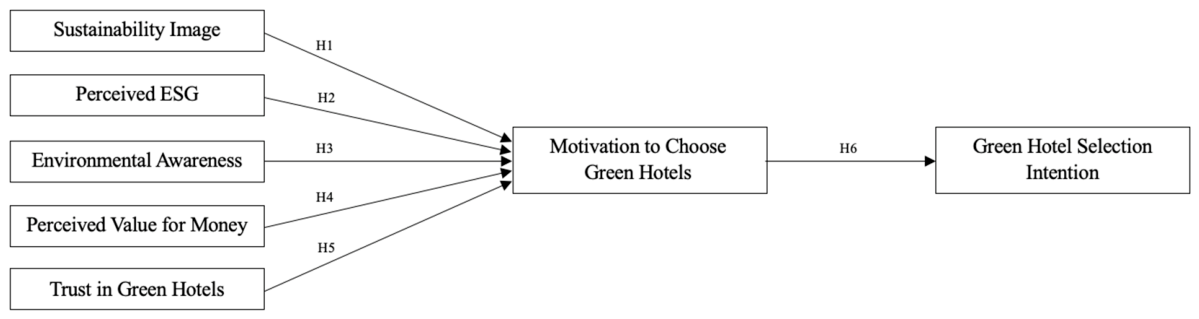
The proposed conceptual framework of this study is illustrated in Figure 2.
Figure 2.
Conceptual framework.
3. Methodology
This study adopted a quantitative research approach to examine the factors influencing international tourists’ motivation and intention to select green hotels in Chiang Mai Province. A structured questionnaire was used as the primary instrument for data collection because it is appropriate for measuring perceptions, motivations, and behavioral tendencies across a relatively large sample of tourists. The questionnaire consisted of three main sections comprising 35 measurement items designed to capture the key constructs in the conceptual framework.
The first section collected demographic and travel-profile information, including gender, age, marital status, education level, occupation, monthly income, travel purpose, and prior accommodation experience in Chiang Mai. These variables were used to describe the characteristics and travel patterns of the respondents.
The second section measured the principal constructs related to Green Hotel Selection Intention. Specifically, the questionnaire included items measuring Sustainability Image (5 items), Perceived ESG (5 items), Environmental Awareness (5 items), Perceived Value for Money (5 items), Trust in Green Hotels (5 items), Motivation to Choose Green Hotels (5 items), and Green Hotel Selection Intention (5 items). The third section included an open-ended question allowing respondents to provide additional comments or suggestions regarding sustainable tourism and green hotels in Chiang Mai Province.
All measurement items were adapted from previously validated studies in sustainable tourism, green consumer behavior, trust, and ESG-related hospitality research. A construct operationalization table was added to the revised manuscript to identify the original sources, number of items retained for each construct, and representative measurement statements. Minor wording adjustments were made to ensure contextual suitability for international tourists staying in hotels in Chiang Mai. As the questionnaire was administered in English, no translation or back-translation procedure was required.
All construct items were evaluated using a five-point Likert scale ranging from 1 (strongly disagree) to 5 (strongly agree). This scale is widely used in tourism and behavioral research to measure attitudes, perceptions, and motivational responses while maintaining respondent convenience.
To establish content validity, the questionnaire was reviewed by three specialists in tourism and sustainability research. Their comments focused on wording clarity, construct relevance, and contextual appropriateness. A pilot study with 30 respondents was subsequently conducted to assess questionnaire clarity and preliminary reliability. Based on pilot feedback, several statements were simplified and minor wording refinements were introduced. The pilot results indicated satisfactory internal consistency, with Cronbach’s alpha values for all constructs exceeding the recommended threshold of 0.70.
Several procedural remedies were employed to reduce the risk of common method bias. Respondents were assured anonymity and confidentiality, scale items were organized by construct, and question wording was kept simple and neutral. Statistical assessment of common method variance was also conducted during data analysis.
The collected data were analyzed using descriptive statistics and Partial Least Squares Structural Equation Modeling (PLS-SEM). Descriptive statistics were used to summarize respondents’ demographic characteristics and general perceptions regarding green hotels. PLS-SEM was selected because it is suitable for prediction-oriented research, complex latent-variable models, and exploratory extensions of established behavioral theory.
The measurement model was evaluated using reliability and validity criteria, including indicator loadings, Cronbach’s alpha, composite reliability, average variance extracted (AVE), and discriminant validity assessed through the Fornell–Larcker criterion and the Heterotrait–Monotrait ratio (HTMT). The structural model was subsequently evaluated using bootstrapping procedures to test the significance of path coefficients, alongside additional diagnostics including multicollinearity (VIF), effect sizes (f2), predictive relevance (Q2), and explanatory power (R2).
3.1. Sampling and Data Collection Procedure
The target population of this study consisted of international tourists who had experience staying in hotels in Chiang Mai Province. To ensure respondent relevance to the research objectives, a screening question was used to confirm whether participants had previously stayed in a hotel in Chiang Mai. Although prior experience in a green hotel was not mandatory, all respondents had hotel accommodation experience in the destination, enabling them to evaluate hotel selection factors within the Chiang Mai context. This criterion is acknowledged as a study limitation because some respondents may not have directly experienced certified green hotels.
Data were collected using a non-probability convenience sampling method, which is commonly applied in tourism field research when a complete sampling frame of international tourists is not practically available. Surveys were administered in major tourism zones with high concentrations of foreign visitors, including the Old City area, Nimmanhaemin district, Night Bazaar area, selected hotels, cultural attractions, and nearby commercial districts frequently visited by international tourists. While this approach improved access to eligible respondents, caution should be exercised when generalizing findings beyond the sampled population.
According to the “10-times rule” commonly applied in PLS-SEM, the minimum sample size should be at least ten times the maximum number of structural paths pointing at an endogenous construct [58]. In this study, the construct “motivation to choose green hotels” receives five structural paths, suggesting a minimum sample size of 50. Therefore, the final sample of 350 respondents was considered adequate for statistical analysis. In addition, a post hoc statistical power analysis using G*Power 3.1 confirmed that a sample size of 350 was sufficient to detect medium effect sizes with high statistical power.
Data collection was conducted between 2 and 31 March 2026. March is considered a regular international tourism period in Chiang Mai, situated between major peak holiday seasons. To reduce potential temporal bias and seasonality-related distortion, surveys were administered across different days of the week, including weekdays and weekends, and across multiple time periods (morning, afternoon, and evening). This procedure helped capture a more diverse mix of international tourists, travel purposes, and visitation patterns during the study period.
A total of 372 tourists were approached during the fieldwork process. Of these, 350 complete and usable questionnaires were retained for final analysis, while 22 responses were excluded due to incomplete answers or failure to satisfy the screening criteria. This yielded a high usable response rate and reduced concerns regarding missing data.
3.2. Ethical Considerations
This study adhered to ethical standards for research involving human participants. Prior to participating in the survey, respondents were informed about the purpose of the research, the voluntary nature of participation, and their right to withdraw from the study at any time without any negative consequences. Participants were assured that all responses would remain confidential and would be used solely for academic research purposes. No personally identifiable information was collected during the survey process.
The research protocol was reviewed and approved by the Human Research Ethics Committee of the University of the Thai Chamber of Commerce (UTCC) (Approval No. UTCCEC/Exemp030/2026, approved on 2 March 2026). All participants provided informed consent before completing the questionnaire.
4. Results
4.1. Preliminary Assessment of Common Method Bias
Because all variables were collected using a self-reported questionnaire at a single point in time, common method bias was assessed using Harman’s single-factor test and full collinearity VIF values. The first unrotated factor explained 38.4% of the total variance, which is below the commonly suggested threshold of 50%. In addition, all full collinearity VIF values were below 3.3. These results indicate that common method bias was unlikely to be a serious concern in this study.
4.2. Demographic Characteristics of the Respondents
A total of 350 valid responses from international tourists were included in the final analysis. The demographic characteristics of the respondents are presented in Table 1. The sample consisted of 193 males (55.1%) and 157 females (44.9%). In terms of age distribution, the largest group of respondents was aged 40–49 years (147 respondents; 42.0%), followed by 30–39 years (91; 26.0%), 50–59 years (63; 18.0%), and 20–29 years (49; 14.0%). Regarding marital status, married respondents accounted for 217 (62.0%), while single respondents represented 126 (36.0%), and other marital statuses (e.g., divorced or widowed) accounted for 7 respondents (2.0%).
Table 1.
The demographic characteristics of respondents.
In terms of educational attainment, the majority of respondents held an undergraduate degree (203; 58.0%), followed by below undergraduate level (77; 22.0%) and graduate degrees (70; 20.0%). With respect to occupation, the largest group consisted of self-employed individuals or small business owners (109; 31.0%), followed by government or public sector employees (88; 25.0%), private company employees (67; 19.0%), community leaders or cultural practitioners (53; 15.0%), and others or unemployed individuals (33; 10.0%). Regarding monthly income, the largest group reported income between 15,001 and 25,000 baht (98 respondents; 28.0%), followed by 25,001–35,000 baht (81; 23.0%), ≤15,000 baht (74; 21.0%), 35,001–45,000 baht (53; 15.0%), and more than 45,000 baht (44; 13.0%).
4.3. Measurement Model
The model fit was assessed using several indices generated by SmartPLS. As presented in Table 2, the SRMR value for the estimated model is 0.075, which is below the commonly suggested threshold of 0.08, indicating an acceptable level of approximate fit. The NFI value of 0.768 suggests a moderate level of comparative fit, which is considered reasonable in PLS-SEM applications. The discrepancy measures (d_ULS and d_G) are reported as supplementary indicators and should be interpreted together with other model evaluation criteria. Overall, the results provide acceptable support for the adequacy of the proposed structural model, although they should not be interpreted as evidence of excellent fit.
Table 2.
Model Fit Indices of the PLS-SEM Model.
Table 3 presents the results of the measurement model assessment. All indicator loadings exceeded the recommended threshold of 0.70, ranging from 0.798 to 0.924, indicating satisfactory indicator reliability. The corresponding t-values ranged from 31.210 to 97.815, demonstrating that all measurement items significantly loaded on their respective constructs (p < 0.001).
Table 3.
Measurement model results.
Internal consistency reliability was supported, as the Cronbach’s alpha values ranged from 0.906 to 0.942, exceeding the recommended threshold of 0.70. Similarly, the composite reliability (CR) values ranged from 0.930 to 0.956, indicating strong internal consistency among the measurement items.
Convergent validity was also confirmed because the average variance extracted (AVE) values ranged from 0.728 to 0.811, which are well above the recommended threshold of 0.50 [59]. These results indicate that the measurement model demonstrates adequate reliability and convergent validity.
Table 4 presents the discriminant validity assessment using the Fornell–Larcker criterion. The square roots of the Average Variance Extracted (AVE), shown on the diagonal, are greater than the correlations between each construct and the other constructs. This result indicates that each construct shares more variance with its own indicators than with other constructs, thereby confirming adequate discriminant validity.
Table 4.
Discriminant Validity (Fornell–Larcker Criterion).
Table 5 reports the Heterotrait–Monotrait ratio (HTMT) as an additional assessment of discriminant validity. All HTMT values are below the recommended threshold of 0.90, indicating acceptable discriminant validity among the constructs. Collectively, the results from both the Fornell–Larcker criterion and HTMT confirm that the measurement model demonstrates satisfactory construct distinctiveness.
Table 5.
Discriminant Validity (HTMT).
Mediation Analysis (Processual Effects).
To examine the mediating role of motivation to choose green hotels, indirect effects were tested using a bias-corrected bootstrapping procedure with 5000 resamples in SmartPLS 4.0. The mediation analysis focused on the indirect relationships between sustainability-related perceptions, including sustainability image, perceived ESG, environmental awareness, perceived value for money, and trust in green hotels, and Green Hotel Selection Intention through motivation.
The results indicate that motivation to choose green hotels acts as a mediating mechanism that transmits the effects of certain sustainability-related perceptions on tourists’ Green Hotel Selection Intention. In particular, the indirect effects of perceived ESG, sustainability image, and trust in green hotels on Green Hotel Selection Intention were found to be statistically significant. These findings highlight the important role of motivation in linking sustainability perceptions to tourists’ behavioral decisions when selecting green hotels.
A post hoc power analysis was conducted using G*Power 3.1 for the most complex regression in the structural model. The results are presented in Table 6. The maximum number of predictors for an endogenous construct was five. Assuming a medium effect size (f2 = 0.15), a significance level (α = 0.05), and a sample size of 350, the achieved statistical power (1–β) was 0.99, indicating that the study had sufficient power to detect medium-sized effects. [60].
Table 6.
Post hoc Power Analysis (G*Power 3.1).
4.4. Structural Model and Hypothesis Testing
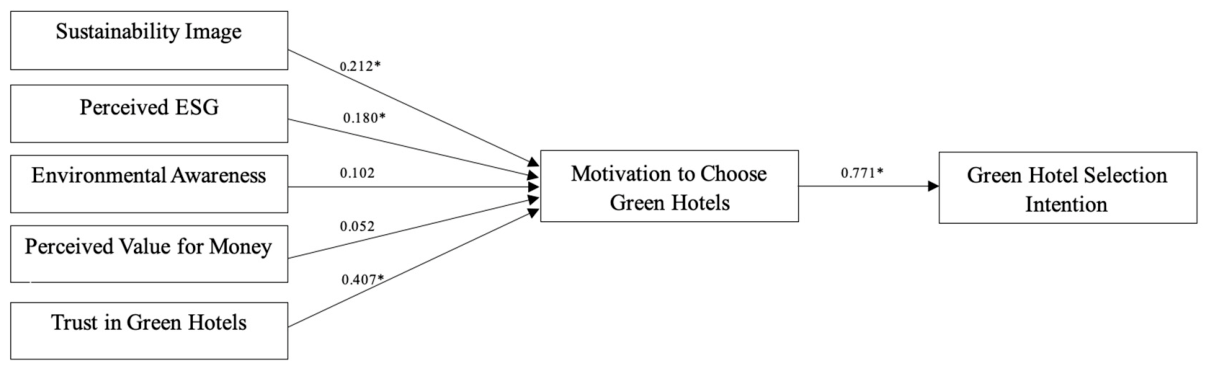
As presented in Table 7, the structural model results indicate that sustainability image (β = 0.212, p < 0.001), perceived ESG (β = 0.180, p = 0.010), and trust in green hotels (β = 0.407, p < 0.001) significantly influence tourists’ motivation to choose green hotels. Among these factors, trust in green hotels demonstrates the strongest effect on motivation, followed by sustainability image and perceived ESG. However, environmental awareness (β = 0.102, p = 0.071) and perceived value for money (β = 0.052, p = 0.309) do not significantly influence motivation. Furthermore, motivation has a strong and significant effect on green hotel selection intention (β = 0.771, p < 0.001), indicating that motivation plays a critical role in shaping tourists’ intention to choose green hotels.
Table 7.
Hypothesis Testing (PLS-SEM).
4.5. Mediation Analysis
As shown in Table 8, the mediation analysis results indicate that motivation significantly mediates the relationships between sustainability image, perceived ESG, and trust in green hotels and green hotel selection intention. In contrast, the indirect effects of environmental awareness and perceived value for money on green hotel selection intention through motivation were not significant, as their confidence intervals included zero.
Table 8.
Indirect Effects and Mediation Results.
Figure 3 presents the structural model results of the PLS-SEM analysis. Sustainability image, perceived ESG, and trust in green hotels significantly influence motivation, whereas environmental awareness and perceived value for money are not significant predictors. Trust in green hotels demonstrates the strongest influence on motivation, followed by sustainability image and perceived ESG. Furthermore, motivation to choose green hotels strongly influences green hotel selection intention, indicating that tourists’ motivation plays a crucial role in shaping their intention to select environmentally friendly accommodation.
Figure 3.
Structural Model Results of Green Hotel Selection Intention. * p < 0.05.
The R2 value for motivation to choose green hotels is 0.859, indicating that the predictor variables jointly explain a substantial proportion of the variance in motivation. In addition, the R2 value for green hotel selection intention is 0.878, suggesting that motivation explains a high proportion of the variance in tourists’ intention to choose green hotels. Although high explanatory power was observed, the conceptual proximity between motivation and intention should be taken into consideration when interpreting the magnitude of this relationship.
5. Discussion and Implications
The findings of this study provide important insights into the factors influencing international tourists’ motivation and intention to select green hotels in Chiang Mai Province. The results reveal that sustainability image, perceived ESG, and trust in green hotels significantly influence tourists’ motivation to choose green hotels, whereas environmental awareness and perceived value for money do not show significant effects [61]. In addition, motivation demonstrates a strong positive effect on Green Hotel Selection Intention, highlighting its critical role in shaping tourists’ accommodation selection intentions [62,63].
First, the results indicate that trust in green hotels is the strongest predictor of motivation to choose green hotels. This finding suggests that tourists are more likely to prefer environmentally responsible accommodation when they believe that hotels genuinely implement sustainability practices and provide reliable environmental information [64]. The importance of trust reflects tourists’ concerns about potential greenwashing in the hospitality industry. When hotels communicate sustainability initiatives transparently and demonstrate authentic environmental commitment, tourists are more motivated to support these establishments. This finding is consistent with previous studies emphasizing the importance of trust in influencing environmentally responsible consumer intentions [65].
Second, perceived ESG and sustainability image significantly influence tourists’ motivation to choose green hotels. These findings highlight the growing importance of sustainability-related perceptions in tourism decision-making. Hotels that actively implement ESG principles and effectively communicate their sustainability initiatives can enhance their corporate image and attract environmentally conscious travelers [66]. Sustainability image functions as a signal that hotels are committed to responsible environmental and social practices, which positively influences tourists’ motivation to support such businesses.
Interestingly, the results show that environmental awareness does not significantly influence motivation to choose green hotels. Although tourists may recognize the importance of environmental protection, this awareness does not necessarily translate into stronger motivation to select green accommodation. One possible explanation is that tourists’ accommodation intentions may be influenced more strongly by practical considerations such as trust and perceived corporate responsibility rather than general environmental concern [67].
Similarly, perceived value for money does not significantly influence motivation in this study. This finding suggests that international tourists may not prioritize price considerations when deciding whether to stay in green hotels. Instead, tourists may view green hotel experiences as providing intangible benefits, such as environmental satisfaction or ethical consumption, which may not be directly associated with monetary value [68,69].
Finally, the results confirm that motivation to choose green hotels strongly influences Green Hotel Selection Intention. This finding supports the theoretical assumption that motivation functions as an important psychological mechanism translating sustainability perceptions into behavioral intentions. When tourists feel motivated to support environmentally responsible businesses, they are more likely to develop stronger intentions to choose green hotels during their travel planning process.
Practical Implications
The findings of this study provide several practical implications for hotel managers, destination management organizations, and tourism policymakers. First, hotel operators should prioritize building trust in their sustainability practices through transparent, verifiable, and consistent communication. Clear disclosure of environmental initiatives, measurable sustainability outcomes (e.g., energy savings, waste reduction, water conservation), and recognized eco-certifications can reduce tourist skepticism and strengthen confidence in green hotel claims. Hotels should also ensure that sustainability messages presented on booking platforms, official websites, and social media are consistent and evidence-based.
Second, hotels should actively strengthen their ESG initiatives and sustainability image through targeted marketing strategies. Practical actions may include showcasing community engagement projects, employee welfare practices, ethical sourcing, and responsible governance standards. Because the study focuses on international tourists, multilingual communication campaigns, digital storytelling, and sustainability-focused branding on global travel platforms may be particularly effective. Managers may also segment environmentally conscious travelers and tailor promotions toward tourists who value responsible consumption experiences.
Third, operational strategies within hotels should translate sustainability positioning into visible guest experiences. Examples include in-room recycling systems, refillable amenities, energy-efficient room technologies, locally sourced food options, carbon-reduction programs, and opportunities for guests to participate in environmental activities. Tangible sustainability practices can strengthen perceived authenticity and reinforce trust.
Fourth, tourism policymakers and destination management organizations in Chiang Mai should support the development of standardized green hotel accreditation systems, destination-wide sustainability guidelines, and training programs for hospitality operators. Public agencies may also collaborate with private stakeholders to promote Chiang Mai as a sustainable tourism destination through international campaigns, green destination branding, and partnerships with online travel intermediaries.
Fifth, given the non-significant role of perceived value for money in this study, hotels may compete less on price alone and instead emphasize experiential, ethical, and environmental value. Communicating how green stays contribute to local communities and environmental protection may be more persuasive than discount-based strategies.
Overall, strengthening sustainability image, ESG communication, trust-building mechanisms, and destination-level certification systems can significantly enhance tourists’ motivation to select environmentally responsible accommodation while improving the long-term competitiveness of Chiang Mai as a sustainable tourism destination.
6. Conclusions
This study investigated the factors influencing international tourists’ motivation and intention to select green hotels in Chiang Mai Province. By integrating sustainability image, perceived ESG, environmental awareness, perceived value for money, and trust in green hotels within a PLS-SEM framework, this study provides a comprehensive understanding of tourists’ Green Hotel Selection Intention.
The results reveal that trust in green hotels, perceived ESG, and sustainability image significantly influence tourists’ motivation to choose green hotels, while environmental awareness and perceived value for money do not demonstrate significant effects. Furthermore, motivation to choose green hotels strongly influences Green Hotel Selection Intention, indicating that motivation plays a key role in translating sustainability perceptions into behavioral decisions.
These findings contribute to the literature on sustainable tourism and green consumer behavior by highlighting the importance of sustainability-related perceptions and trust in shaping tourists’ accommodation choices. The study also emphasizes the mediating role of motivation in linking sustainability perceptions to tourists’ behavioral intentions.
From a practical perspective, the results suggest that strengthening trust, improving ESG communication, and enhancing sustainability image can help promote green hotel adoption among international tourists. These strategies may support the broader development of sustainable tourism in Chiang Mai and other emerging tourism destinations.
7. Research Limitations and Future Research Directions
Despite its contributions, this study has several limitations that should be acknowledged.
First, the study focused on international tourists visiting Chiang Mai Province, which may limit the generalizability of the findings to other tourism destinations. Future research could replicate the model in different tourism contexts or countries to examine whether the observed relationships remain consistent across cultural and geographic settings.
Second, the study employed a cross-sectional survey design, capturing tourists’ perceptions at a single point in time. Longitudinal studies could provide deeper insights into how tourists’ perceptions and motivations toward green hotels evolve over time as sustainability awareness continues to grow.
Third, the research relied on self-reported survey data, which may introduce potential response bias or common method variance. Future studies could combine survey data with behavioral data, such as booking records or hotel selection patterns, to provide more robust evidence of tourists’ Green Hotel Selection Intention.
Finally, this study focused primarily on psychological and perceptual motivation and intention to select green hotels. Future research could extend the model by incorporating additional variables such as environmental attitudes, social influence, destination image, and sustainability certification awareness to provide a more comprehensive understanding of Green Hotel Selection Intention.
Overall, future studies should continue to explore the complex mechanisms underlying sustainable tourism behavior in order to support the long-term development of environmentally responsible hospitality practices.
Author Contributions
Conceptualization, W.K., D.T. and J.L.; methodology, W.K. and D.T.; software, J.L.; validation, W.K., D.T. and J.L.; formal analysis, J.L.; investigation, D.T. and J.L.; resources, J.L.; data curation, D.T.; writing—original draft preparation, D.T. and J.L.; writing—review and editing, D.T. and K.K.; visualization, D.T.; supervision, J.L.; project administration, W.K. and J.L.; funding acquisition, D.T. All authors have read and agreed to the published version of the manuscript.
Funding
This research project was financially supported by Mahasarakham University.
Institutional Review Board Statement
The study was conducted in accordance with the Declaration of Helsinki and approved by the Human Research Ethics Committee of the University of the Thai Chamber of Commerce (Approval No. UTCCEC/Exemp030/2026; date of approval: 2 March 2026).
Informed Consent Statement
Informed consent was obtained from all subjects involved in the study.
Data Availability Statement
The data presented in this study are available from the corresponding author upon reasonable request.
Conflicts of Interest
The authors declare no conflicts of interest.
References
- Chen, J.; Lehto, X.; Lehto, M.; Day, J. Can Colored Sidewalks Nudge City Tourists to Walk? An Experimental Study of the Effect of Nudges. Tour. Manag. 2023, 95, 104683. [Google Scholar] [CrossRef] [Scilit]
- Baena, V.; Cerviño, J. Tourism in the Era of Social Responsibility and Sustainability: Understanding International Tourists’ Destination Choices. Sustainability 2024, 16, 8509. [Google Scholar] [CrossRef] [Scilit]
- Nguyen, D.T.; Kuo, K.-C.; Lu, W.-M.; Nhan, D.T. How Sustainable Are Tourist Destinations Worldwide? An Environmental, Economic, and Social Analysis. J. Hosp. Tour. Res. 2024, 48, 698–711. [Google Scholar] [CrossRef] [Scilit]
- Kement, U.; Dogan, S.; Baydeniz, E.; Bayar, S.B.; Erkol Bayram, G.; Basar, B. Effect of Environmental Attitude on Environmentally Responsible Behavior: A Comparative Analysis among Green and Non-Green Hotel Guests in Turkiye. J. Hosp. Tour. Insights 2025, 8, 2995–3019. [Google Scholar] [CrossRef] [Scilit]
- Prakash, S.; Sharma, V.P.; Singh, R.; Vijayvargy, L.; Nilaish. Adopting Green and Sustainable Practices in the Hotel Industry Operations: An Analysis of Critical Performance Indicators for Improved Environmental Quality. Manag. Environ. Qual. Int. J. 2023, 34, 1057–1076. [Google Scholar] [CrossRef] [Scilit]
- Zhao, Y.; Wu, S.; Xu, N. Beyond Expectations: How Perceived Quality Shapes Satisfaction in Eco-Friendly Accommodations. J. Educ. Humanit. Soc. Res. 2025, 2, 92–104. [Google Scholar] [CrossRef] [Scilit]
- Alkaraan, F.; Elmarzouky, M.; Venkatesh, V.G.; Hussainey, K.; Shi, Y.; Zhang, M. Artificial intelligence-powered innovation strategies for ESG impact and sustainable ecosystems: A natural-resource-based and environmental-legitimacy perspective. Bus. Strategy Environ. 2026; early view. [CrossRef] [Scilit]
- Dubcová, G.; Velinov, E.; Kosikova, M. Evaluating ESG practices and financial impacts: A comprehensive analysis of leading European enterprises under CSR Europe’s framework. Financ. Internet Q. 2025, 21, 89–104. [Google Scholar] [CrossRef] [Scilit]
- Joshi, N.V.; Selvakumar, P.; Maheshwari, K.M.; Padhye, P.S.; Gorde, S.; Aradhya, S.G.B. Corporate social responsibilities. In Prioritizing Environmental Sustainability in Local Industrial Systems; IGI Global Scientific Publishing: Hershey, PA, USA, 2026; pp. 383–410. [Google Scholar] [CrossRef] [Scilit]
- López, S.M.C.; Guerra, I.R.; Pernas, J.B. Sustainable Leadership as a Governance Mechanism in the ESG Era: A Systematic Review of Organizational Transformation in the Hospitality Sector. Merits 2025, 5, 22. [Google Scholar] [CrossRef] [Scilit]
- Lin, M.S.; Zhang, H.; Luo, Y.; Li, Y. Environmental, social, and governance (ESG) measurement in the tourism and hospitality industry: Views from a developing country. J. Travel Tour. Mark. 2024, 41, 154–168. [Google Scholar] [CrossRef] [Scilit]
- Sharpley, R. On the need for sustainable tourism consumption. Tour. Stud. 2021, 21, 96–107. [Google Scholar] [CrossRef] [Scilit]
- Özdemir Uçgun, G.; Narcı, M.T. The role of demographic factors in tourists’ sustainability consciousness, sustainable tourism awareness and purchasing behavior. J. Tour. 2022, 8, 215–237. [Google Scholar] [CrossRef] [Scilit]
- Zheng, S.; Han, J.; Gandolfi, F.; Alturise, F.; Alkhalaf, S. Fostering eco-conscious tourists: How sustainable marketing drives green consumption behaviors. Acta Psychol. 2025, 255, 104900. [Google Scholar] [CrossRef] [Scilit] [PubMed]
- Pushpakumara, T.D.C.; Ahsan, F.J.; Silva, D.S. Artificial intelligence (AI) adoption for ecotourism development: A multi-stakeholder analysis in Sri Lanka. J. Intell. Learn. Syst. Appl. 2026, 18, 45–76. [Google Scholar] [CrossRef]
- Pongruengkiat, W.; Tippayawong, K.Y.; Aggarangsi, P.; Pichayapan, P.; Katongtung, T.; Tippayawong, N. Assessing sustainability of Chiang Mai urban development. Discov. Sustain. 2023, 4, 54. [Google Scholar] [CrossRef] [Scilit]
- Khiaolek, K.; Damrongsak, D.; Wongsapai, W.; Sangkakorn, K.; Kumpiw, W.; Jaitiang, T.; Karapan, R.; Wongwilai, W.; Srinurak, N.; Sukwai, J.; et al. Gap analysis and development of low-carbon tourism in Chiang Mai Province towards sustainable tourism goals. Sustainability 2025, 17, 8889. [Google Scholar] [CrossRef] [Scilit]
- Shin, H.; Jo, Y.; Lee, S.; Park, J.; Cho, J.; Kim, H. ESG for sustainability in hospitality and tourism: A theoretical and practical review with a future research agenda. J. Travel Res. 2026, 65, 3–36. [Google Scholar] [CrossRef] [Scilit]
- Vilkaite-Vaitone, N. How Do Individual Cultural Orientations Shape Tourists’ Perceptions of Sustainable Accommodation Value? Tour. Hosp. 2025, 6, 27. [Google Scholar] [CrossRef] [Scilit]
- Islam, T.; Hameed, Z.; Troise, C.; Bresciani, S. Luxury meets sustainability: Exploring sustainable strategies in environmental management. Bus. Strategy Environ. 2026; early view. [CrossRef] [Scilit]
- Fuchs, K.; Prideaux, B.; Konar, R. An exploratory study on tourist perception of green hotels: Empirical evidence from Thailand. J. Vacat. Mark. 2025, 31, 683–697. [Google Scholar] [CrossRef] [Scilit]
- Gishen, Y.T.; Yin, P. More than a stay: Examining the dual pathways between perceived employee ESG behavior and consumer meaningfulness in the hotel industry. World 2026, 7, 15. [Google Scholar] [CrossRef] [Scilit]
- Bordian, M.; Gil-Saura, I.; Fuentes-Blasco, M.; Ruíz-Molina, M.E.; Berenguer-Contrí, G. Sustainability-oriented service innovation and customer satisfaction in hospitality: Assessing the impact of value co-creation, ecological knowledge and gender. J. Vacat. Mark. 2026, 32, 35–51. [Google Scholar] [CrossRef] [Scilit]
- Fernandes, C.; Pinheiro, E.M. Exploring the corporate social responsibility of small and medium enterprises in the hospitality sector. In Reshaping Socially Responsible Business Practices in Small and Medium Enterprises; IGI Global Scientific Publishing: Hershey, PA, USA, 2026; pp. 35–76. [Google Scholar] [CrossRef] [Scilit]
- Pongruengkiat, W.; Tippayawong, K.Y.; Katongtung, T.; Tippayawong, N. Identifying Suitable Indicators to Assess Chiang Mai as a Sustainable City Using Delphi Method. J. Bus. Innov. Sustain. 2024, 19, 101–113. [Google Scholar]
- Alghamdi, A. Leveraging Spectral Clustering and Long Short-Term Memory Techniques for Green Hotel Recommendations in Saudi Arabia. Sustainability 2025, 17, 2328. [Google Scholar] [CrossRef] [Scilit]
- Atshan, N.A.; Jamaludin, H.; Seng Tong, C.; Abrrow, H.A.; Abbas, S. Does environmental, social and governance have an impact on how green hotels are? Purchase intention as a moderator variable: Opinions of a sample of hotel customers in Iraq. Geoj. Tour. Geosites 2024, 56, 1762–1772. [Google Scholar] [CrossRef] [Scilit]
- Taamneh, A.; Taamnh, M.; Haija, A.A.; Almutairi, O. The impact of corporate social responsibility on environmental sustainability in the hospitality sector through green human resource management and organizational climate. Discov. Sustain. 2026. [Google Scholar] [CrossRef] [Scilit]
- Shrivastava, P.; Gautam, V. Examining patronage intentions of customers: A case of green hotels. Front. Sustain. Tour. 2024, 3, 1429472. [Google Scholar] [CrossRef] [Scilit]
- Maniktala, J.; Sharma, A. Demand for green practices: Inception of sustainable tourism. In International Handbook of Skill, Education, Learning, and Research Development in Tourism and Hospitality; Springer Nature: Singapore, 2023; pp. 1–10. [Google Scholar] [CrossRef] [Scilit]
- Khalil, N.; Che Abdullah, S.N.; Haron, S.N.; Hamid, M.Y. A review of green practices and initiatives from stakeholders’ perspectives towards sustainable hotel operations and performance impact. J. Facil. Manag. 2024, 22, 653–682. [Google Scholar] [CrossRef] [Scilit]
- Taecharungroj, V. Strategic City Branding: Insights from Asian Cities; Routledge: London, UK, 2025. [Google Scholar] [CrossRef] [Scilit]
- Suradinkura, S.; Amornbuth, C.; Fang, Y.; Suradinkura, V.; Suradinkura, N. Digital transformation and environmental governance: A synthesis of ESG integration. In Green Governance of Digital Organizations; IGI Global Scientific Publishing: Hershey, PA, USA, 2026; pp. 125–156. [Google Scholar] [CrossRef] [Scilit]
- Gruodė, G.; Variakojienė, J.; Miniotienė, N. Aligning ESG, SDGs, and firm performance: Lessons from practice. Vadyba 2025, 41, 35–41. [Google Scholar] [CrossRef] [Scilit]
- Ghosh, A.; Kumar, A.; Das, A. Assessing the comparison of environmental and social governance (ESG) performance of tourism companies worldwide. In Digital Twins and ESG; Wiley: Hoboken, NJ, USA, 2026; pp. 379–397. [Google Scholar] [CrossRef] [Scilit]
- Hrei, V.; Otych, D.; Krivokulska, N.; Bohach, Y.; Homlia, L. The role of communication in developing environmental awareness and concern for environmental issues. Grassroots J. Nat. Resour. 2024, 7, 270–289. [Google Scholar] [CrossRef] [Scilit]
- Wang, J.; Dai, J.; Gao, W.; Yao, X.; Dewancker, B.J.; Gao, J.; Zeng, J. Achieving sustainable tourism: Analysis of the impact of environmental education on tourists’ responsible behavior. Sustainability 2024, 16, 552. [Google Scholar] [CrossRef] [Scilit]
- Abdullah, S.I.N.W.; Samdin, Z.; Teng, P.; Heng, B. The impact of knowledge, attitude, consumption values and destination image on tourists’ responsible environmental behaviour intention. Manag. Sci. Lett. 2019, 9, 1461–1476. [Google Scholar] [CrossRef] [Scilit]
- Shekhar, C.; Kumawat, H.; Kothari, A. Ecotourism: A double-edged sword for local communities and environment. In Navigating Mass Tourism to Island Destinations: Preservation and Cultural Heritage Challenges; IGI Global Scientific Publishing: Hershey, PA, USA, 2025; pp. 65–84. [Google Scholar] [CrossRef] [Scilit]
- Firdaus, F. Green product purchase decision: The role of environmental consciousness and willingness to pay. J. Apl. Manaj. 2023, 21, 1045–1060. [Google Scholar] [CrossRef] [Scilit]
- Rassiah, P.; Nasir, N.M.; Subramaniam, R.K.; Saleeth, H.M. Sustainable environmental management practices: Evidence from hotels in Malaysia. Glob. Sustain. 2024, 7, e29. [Google Scholar] [CrossRef] [Scilit]
- Bibi, G.; Hashmi, H.B.A.; Bhutta, Z.M.; Abbass, K.; Song, H. Promoting sustainable practices in hospitality via green HRM and increased sustainability awareness. Sustain. Dev. 2026, 34, 1251–1266. [Google Scholar] [CrossRef] [Scilit]
- Lavuri, R.; Roubaud, D.; Grebinevych, O. Sustainable consumption behaviour: Mediating role of pro-environment self-identity, attitude, and moderation role of environmental protection emotion. J. Environ. Manag. 2023, 347, 119106. [Google Scholar] [CrossRef] [Scilit]
- Fook, T.N.; Peng, L.M.; Mun, Y.W. Hospital brand image and trust leading towards patient satisfaction: Medical tourists’ behavioural intention in Malaysia. Healthc. Low Resour. Settings 2024, 12, 12276. [Google Scholar] [CrossRef] [Scilit]
- Bovsh, L.; Mouloudj, K.; Hopkalo, L.; Rasulova, A. Integration of design thinking in the green hotel business. In Sustainable Approaches in Spatial Design; IGI Global Scientific Publishing: Hershey, PA, USA, 2026; pp. 341–386. [Google Scholar] [CrossRef] [Scilit]
- Zhu, H.; Yang, M.X.; Chen, J.; Duan, Y. Organizational greenwashing and work engagement: Evidence from the hospitality industry. Bus. Strategy Environ. 2026, 35, 374–388. [Google Scholar] [CrossRef] [Scilit]
- Alyahia, M.; Azazz, A.M.S.; Fayyad, S.; Elshaer, I.A.; Mohammad, A.A.A. Greenwashing Behavior in Hotels Industry: The Role of Green Transparency and Green Authenticity. Sustainability 2024, 16, 1050. [Google Scholar] [CrossRef] [Scilit]
- Patwary, A.K.; Rasoolimanesh, S.M.; Rabiul, M.K.; Aziz, R.C.; Hanafiah, M.H. Linking environmental knowledge, environmental responsibility, altruism, and intention toward green hotels through ecocentric and anthropocentric attitudes. Int. J. Contemp. Hosp. Manag. 2022, 34, 4653–4673. [Google Scholar] [CrossRef] [Scilit]
- Preziosi, M.; Tourais, P.; Acampora, A.; Videira, N.; Merli, R. The role of environmental practices and communication on guest loyalty: Examining EU-Ecolabel in Portuguese hotels. J. Clean. Prod. 2019, 237, 117659. [Google Scholar] [CrossRef] [Scilit]
- Pan, H. Research on the influence mechanism of elderly learning experience in micro tourism activities. In Proceedings of the 9th International Conference on Modern Management, Education and Social Sciences (MMET 2024), December 2024; Atlantis Press: Paris, France, 2024; pp. 865–884. [Google Scholar] [CrossRef] [Scilit]
- Ivasciuc, I.-S.; Ispas, A. Exploring the Motivations, Abilities and Opportunities of Young Entrepreneurs to Engage in Sustainable Tourism Business in the Mountain Area. Sustainability 2023, 15, 1956. [Google Scholar] [CrossRef] [Scilit]
- Baxter, D.; Pelletier, L.G. The roles of motivation and goals on sustainable behaviour in a resource dilemma: A self-determination theory perspective. J. Environ. Psychol. 2020, 69, 101437. [Google Scholar] [CrossRef] [Scilit]
- Yaghi, A.; Yaghi, H.A.; Bayrak, M. Sustainable Tourism: Factors Influencing Arab Tourists’ Intention to Revisit Turkish Destinations. Sustainability 2025, 17, 5194. [Google Scholar] [CrossRef] [Scilit]
- Mehmood, S.; Khan, S. Autonomous vehicles adoption motivations and tourist pro-environmental behavior: The mediating role of tourists’ green self-image. Tour. Rev. 2025, 80, 664–680. [Google Scholar] [CrossRef] [Scilit]
- Chi, X.; Meng, B.; Lee, H.; Chua, B.L.; Han, H. Pro-environmental employees and sustainable hospitality and tourism businesses: Exploring strategic reasons and global motives for green behaviors. Bus. Strategy Environ. 2023, 32, 4167–4182. [Google Scholar] [CrossRef] [Scilit]
- Ferreira, S.; Pereira, O.; Simões, C. Determinants of consumers’ intention to visit green hotels: Combining psychological and contextual factors. J. Vacat. Mark. 2025, 31, 535–548. [Google Scholar] [CrossRef] [Scilit]
- Hair, J.F.; Hollingsworth, C.L.; Randolph, A.B.; Chong, A.Y.L. An updated and expanded assessment of PLS-SEM in information systems research. Ind. Manag. Data Syst. 2017, 117, 442–458. [Google Scholar] [CrossRef] [Scilit]
- Henseler, J.; Ringle, C.M.; Sarstedt, M. A new criterion for assessing discriminant validity in variance-based structural equation modeling. J. Acad. Mark. Sci. 2015, 43, 115–135. [Google Scholar] [CrossRef] [Scilit]
- Fornell, C.; Larcker, D.F. Evaluating structural equation models with unobservable variables and measurement error. J. Mark. Res. 1981, 18, 39–50. [Google Scholar] [CrossRef] [Scilit]
- Faul, F.; Erdfelder, E.; Buchner, A.; Lang, A.-G. Statistical power analyses using G*Power 3.1: Tests for correlation and regression analyses. Behav. Res. Methods 2009, 41, 1149–1160. [Google Scholar] [CrossRef] [Scilit] [PubMed]
- Lee, C.-Y.; Fan, W.-S.; Tsai, M.-C. The mediating role of employee perceived value in the ESG–sustainability link: Evidence from Taiwan’s green hotel industry. Tour. Hosp. 2025, 6, 153. [Google Scholar] [CrossRef] [Scilit]
- Sibian, A.-R.; Ispas, A. An approach to applying the ability–motivation–opportunity theory to identify the driving factors of green employee behavior in the hotel industry. Sustainability 2021, 13, 4659. [Google Scholar] [CrossRef] [Scilit]
- Meng, Z.; Bhatti, S.M.; Naveed, R.T.; Kanwal, S.; Adnan, M. Green sustainability in the hotel sector: The role of CSR, intrinsic green motivation, and personal environmental norms. PLoS ONE 2024, 19, e0295850. [Google Scholar] [CrossRef] [Scilit] [PubMed]
- Van Huy, L.; Nguyen, H.T.; Hoang Long, P.; Quyen Phu Thi, P.; Pham, N.T. Going green: Predicting tourists’ intentions to stay at eco-friendly hotels—The roles of green attitude and environmental concern. J. Hosp. Tour. Insights 2024, 7, 2723–2741. [Google Scholar] [CrossRef] [Scilit]
- Alam, F.; Bai, Y.; Khokhar, M.; Bhutto, M.Y. The nexus between CSR and sustainability performance in hospitality: A moderated-mediation analysis. Corp. Soc. Responsib. Environ. Manag. 2026, 1–21. [Google Scholar] [CrossRef] [Scilit]
- Minazzi, R.; Gazzola, P.; Grechi, D.; Vitareti, A. Sustainability in Italian dining: A comparative study of perceptions in full-service restaurants and agritourism. Bus. Strategy Environ. 2026, 1–16. [Google Scholar] [CrossRef] [Scilit]
- Huang, Y.; Liu, C.; Horng, J.; Chou, S.; Yu, T.; Fang, Y.; Lapuz, M.C.B. Integrating environmental, social, and governance perspectives with the theory of planned behavior to predict destination image formation. J. Hosp. Tour. Insights 2026. ahead-of-print. [Google Scholar] [CrossRef] [Scilit]
- Ibnou-Laaroussi, S.; Rjoub, H.; Wong, W.-K. Sustainability of Green Tourism among International Tourists and Its Influence on the Achievement of Green Environment: Evidence from North Cyprus. Sustainability 2020, 12, 5698. [Google Scholar] [CrossRef] [Scilit]
- Guo, Y.; Cao, Y.; Zhao, Y. The influence of goal priming on hotel consumers’ pro-environmental behavior: Moderating effects of temporal and social discounting. J. Hosp. Tour. Manag. 2025, 63, 129–139. [Google Scholar] [CrossRef] [Scilit]

Disclaimer/Publisher’s Note: The statements, opinions and data contained in all publications are solely those of the individual author(s) and contributor(s) and not of MDPI and/or the editor(s). MDPI and/or the editor(s) disclaim responsibility for any injury to people or property resulting from any ideas, methods, instructions or products referred to in the content. |
© 2026 by the authors. Licensee MDPI, Basel, Switzerland. This article is an open access article distributed under the terms and conditions of the Creative Commons Attribution (CC BY) license.