


Abstract
The European “Twin Transition” paradigm assumes a synergy between digital transformation and environmental sustainability, yet empirical evidence remains mixed, particularly in transition economies. This study examines the relationship between digital human capital and circular economy performance in Southeastern Europe (Slovenia, Croatia, Bulgaria, Romania, and Serbia). The study applies a multilevel quantitative research design combining correlation analysis, linear regression, and spatial assessment to examine the relationship between digital human capital and circular economy performance. The results indicate a moderate relationship between digital competencies and recycling performance. At the same time, regional analysis reveals that higher digital capacity does not consistently correspond to higher circular outcomes. The findings also show that national-level indicators may mask substantial territorial disparities, suggesting that aggregate indicators may not fully capture regional variation. The effectiveness of the digital–circular relationship appears to depend on broader structural conditions, including institutional capacity and infrastructure. The study highlights the importance of spatial context in understanding the twin transition in Southeastern Europe.
1. Introduction
The contemporary European economic paradigm is undergoing one of the most profound transformations in its history, defined through the concept of the twin transition. This framework treats digital transformation and environmental sustainability not as separate processes, but as interconnected and mutually reinforcing dimensions of development [1]. Beyond responding to environmental pressures, this dual transition is essential for maintaining Europe’s long-term competitiveness. The European Commission targets climate neutrality by 2050, with the circular economy as a core pillar of this transition [2,3,4]. Digital transformation entails substantial resource and energy use, which reinforces the need to align it with sustainability objectives through circular models that extend material lifecycles and reduce waste [5]. At the same time, recent studies question the assumption of an automatic synergy between digitalization and sustainability, emphasizing that this relationship depends on specific technological and institutional conditions [6,7,8]. Hofmann Trevisan et al. [9] further emphasize that the twin transition is largely shaped at the regional level and influenced by public policy strategies.
Southeast Europe (SEE) provides a relevant empirical context due to pronounced structural heterogeneity and uneven institutional development. The region includes both European Union (EU) member states and candidate countries, operating under different levels of policy alignment [10]. As a result, the transition toward a digitally advanced and circular economy unfolds unevenly, constrained by internal disparities and structural limitations. A key question emerges regarding the role of digital human capital, particularly digital literacy, in bridging the gap between sustainability objectives and practical implementation [11]. Existing research suggests that digital transformation can enhance green productivity through technological innovation and improved industrial processes [12]. However, this relationship is not linear. While digital technologies enable cleaner and more efficient systems, they also require significant resources, potentially generating rebound effects [5]. In regions with weaker institutional capacity, this relationship becomes more complex, often resulting in situations where digital potential remains underutilized due to insufficient infrastructure and operational systems [13,14]. Although progress is visible in digital literacy and environmental awareness, barriers persist in areas such as the integration of secondary materials and the adaptation of regulatory and cultural frameworks.
The theoretical foundation of the twin transition is based on the convergence between advanced digital technologies, such as artificial intelligence (AI), the Internet of Things (IoT), big data, and blockchain technologies, and environmental goals related to decarbonization and circularity [15]. This convergence, often described as “greening by IT,” positions digitalization as a systemic driver of sustainability rather than merely a technological tool [16,17]. In contrast to the dominant linear economic model, based on production, consumption, and disposal, circular systems aim to extend the use of materials and minimize waste [18,19]. Within the EU, however, the degree of integration of recycling, reuse, and reduction varies significantly. Previous studies show that technologies such as AI can improve waste and resource management efficiency and accelerate the transition toward CE [20,21]. Disparities in digital infrastructure and innovation capacity remain evident between northern and southern parts of Europe [22]. Ecological Modernization Theory (EMT) provides a relevant framework for understanding how environmental challenges can be addressed through technological innovation and institutional adaptation, within existing economic systems [23,24]. In this perspective, institutions play a central role in integrating environmental objectives into economic decision-making processes. In this framework, digital skills are interpreted as a proxy for technological capacity, while recycling performance reflects the effectiveness of institutional and infrastructural systems, consistent with the core assumptions of Ecological Modernization Theory. Boas et al. [25] claim the need for supranational institutions in addressing environmental issues that transcend national boundaries, such as pollution and biodiversity loss. EMT also encourages the development of hybrid governance arrangements, where public institutions, markets and civil society interact in shaping sustainability outcomes [26]. In transition economies such as those in SEE, these processes are often constrained. As noted by Andersen [27], the expected shift toward less polluting models may be slowed by structural priorities favoring economic growth, leading to persistent environmental pressures. In this context, digital literacy plays an important enabling role by facilitating access to information and supporting more active participation in sustainable practices [24].
The concept of human capital traditionally emphasizes skills and education as drivers of productivity, but in the digital era it evolves into digital human capital [28]. Digital literacy, as measured through the Digital Economy and Society Index (DESI), encompasses a wide range of competencies, from basic internet use to advanced analytical and programming skills [29]. According to Tislenko [30], supranational digital transformation policies can improve DESI performance, but only to a limited extent, thereby further underscoring the importance of developing digital human capital as a key driver of long-term convergence. Higher levels of digital human capital improve the ability of regions to absorb and implement technological innovations associated with CE [31]. The widespread adoption of digital technologies has fundamentally transformed the structure and execution of work tasks [32], thereby increasing the demand for continuous upgrading of digital skills. Digital competencies enable individuals and firms to participate in digital markets, access information, and engage in circular consumption and production models, including sharing platforms and reuse systems [13,33,34,35,36]. At the firm level, workforce capabilities are essential for implementing Smart Circular Economy strategies, where digital tools such as sensors and digital twins optimize product lifecycles and resource use [37].
SEE represents a distinctive setting for examining the twin transition due to its historical legacy of centrally planned economies, subsequent deindustrialization processes, and ongoing efforts toward EU integration [38]. Despite strong policy support through the European Green Deal and the Digital Decade, the integration of digital and environmental objectives remains uneven across SEE. While regulatory frameworks set common targets, implementation outcomes depend on national conditions and institutional quality [39]. The Circular Economy Action Plan (CEAP) defines concrete measures for reducing resource pressure and promoting sustainable growth, while the Digital Decade aims to ensure that 80% of the population possesses basic digital skills [12]. For SEE countries, these policy documents function as regulatory benchmarks, establishing binding targets for recycling, waste reduction, and increasing the Circular Material Use rate [40]. In practice, these processes are often institutionally disconnected, leading to mismatches between digital readiness and environmental performance [41]. For Serbia, the key strategic framework is the Green Agenda for the Western Balkans (GAWB), adopted in Sofia in 2020 [42], which reflects the European Green Deal at the regional level and targets five priority areas: climate action, circular economy, pollution prevention, sustainable agriculture, and biodiversity protection. While the twin transition framework is widely applied at the national level, its empirical analysis at subnational scales remains limited, particularly in SEE. As emphasized in the sustainability transitions literature, transformation processes are uneven across space, and national indicators often obscure significant regional differences [43].
Despite the growing prominence of the twin transition framework, there is still limited empirical evidence on how digital skills relate to measurable circular economy outcomes across regions with different structural conditions. Existing analyses rarely examine whether similar levels of digital capacity lead to comparable recycling performance, or whether this relationship varies depending on territorial context. This limitation is particularly relevant in Southeast Europe, where regional disparities in infrastructure, governance, and economic structure may alter the expected link between digitalization and sustainability. To address this, the present study investigates whether higher levels of digital human capital are systematically associated with higher recycling rates, and whether this relationship differs across NUTS2 regions, with particular attention to potential deviations in metropolitan areas. To address this gap, the study integrates insights from Ecological Modernization Theory and the concept of digital human capital, linking them to the empirical analysis of regional variation. Within this framework, digital skills are conceptualized as an enabling capacity that supports the adoption of circular practices, while institutional structures determine the extent to which this potential is translated into measurable outcomes. The analysis distinguishes between regions with higher digital performance, operationalized through composite indicators of digital behavior, and their corresponding recycling outcomes, allowing for the identification of alignment or deviation patterns. Based on this approach, two hypotheses are formulated: (H1) there is a positive association between digital skills and circular economy performance, measured by recycling rates and circular material use, at the national level, and (H2) at the regional (NUTS2) level, the relationship between digital skills (measured by the Digital Skills Index) and recycling performance is non-uniform, with metropolitan regions deviating from the expected positive pattern due to differences in infrastructural capacity and waste management systems.
2. Materials and Methods
This study applies a multi-level analytical framework consistent with structured empirical approaches used in sustainability transition research [44], to examine the twin transition in SEE. At the national level, digital and circular transition performance is evaluated using harmonized indicators. At the regional (NUTS2) level, the focus shifts to spatial heterogeneity, using available indicators to explore intra-country disparities where comprehensive twin transition metrics are not accessible. The research is based on a comparative analysis of the relationship between digital human capital and indicators of circular sustainability in the SEE region.
The initial research design included seven countries, comprising both EU member states and candidate countries. Following a detailed assessment of data quality and methodological consistency, Montenegro and North Macedonia were excluded due to systemic limitations in municipal waste data collection methodologies [45]. According to Eurostat quality reports and methodological documentation, in these countries municipal waste statistics cover only waste collected through formal public utility systems, while substantial quantities disposed of in informal landfills or treated outside official channels remain statistically unrecorded. This partial coverage leads to structural underestimation of recycling rates and introduces systematic measurement bias. For example, estimates from the European Environment Agency indicate that in North Macedonia public municipal waste collection services covered approximately 78% of the population in 2019, with significantly higher coverage in urban than rural areas. The remaining population falls outside the formal collection system, implying that a considerable share of waste is not included in official treatment and recycling statistics [46].
The final sample includes five countries: Slovenia, Croatia, Romania, Bulgaria, and Serbia. The dual level analysis enables simultaneous examination of the macro-institutional framework of transition processes and internal territorial disparities. Regional analysis includes only those NUTS2 regions for which mutually comparable statistical data are available. The analysis draws on multiple datasets with partially differing reference years due to constraints in data availability and harmonization across statistical sources. While this introduces a degree of temporal mismatch between indicators, the impact on comparability is considered limited. The selected indicators (digital skills, recycling rates, and circular material use) generally exhibit gradual structural change over time rather than abrupt annual fluctuations, particularly at national and regional levels. The objective of the study is not to capture short-term dynamics, but to identify medium-term structural relationships between digital human capital and circular economy performance. From this perspective, using the most recent available data for each indicator ensures maximum spatial coverage while preserving analytical consistency. Finally, all indicators are derived from harmonized statistical frameworks (Eurostat and DESI), which maintain stable definitions over time, further reducing potential measurement inconsistency. The results should be interpreted as a structural snapshot of twin transition patterns rather than strictly synchronous annual observations.
At the national level, three core indicators are used to capture the digital and circular dimensions of sustainable development. Digital human capital is operationalized through the Digital Skills indicator (percentage of individuals with basic or above basic overall digital skills) [47]. This indicator reflects functional digital competencies of the population, including the ability to use digital platforms, process information, and participate in contemporary economic and social practices. In the literature, it is recognized as a key precondition for the adoption of digital green innovations [31]. Circular sustainability is measured through two complementary indicators. The Recycling Rate (percentage of municipal waste recycled) represents an output indicator of waste management system performance and reflects the interaction between citizen behavior and institutional infrastructure for waste collection and treatment [48]. The Circular Material Use (CMU) rate measures the share of secondary raw materials in total material consumption and represents an input indicator of circularity, capturing structural transformation within production and consumption systems [49]. The dataset for all three indicators refers to 2023, as this is the most recent year for which Recycling Rate of municipal waste data is available. Due to the absence of 2023 data for Serbia in the primary database, the analysis for this specific spatial unit utilizes 2021 data from an alternative source [50]. The selection of indicators follows the logic of conceptual alignment between human capital theory and measurable behavioral outcomes. Digital Skills capture operational competencies rather than mere infrastructure access, making the indicator more suitable for assessing agency-driven sustainability effects.
Due to limited availability of harmonized CE indicators at the NUTS2 level, regional analysis focuses on digital competencies and waste related indicators as measures of spatial heterogeneity in sustainability performance. Digital Skills Index (DSI) used in this study is constructed from three indicators of digital behavior: internet use (2023), online interaction with public authorities (2023), and online purchasing (2025) [51,52,53]. These indicators were selected as they capture a progressive structure of digital capability, ranging from foundational literacy to more complex and functionally applicable skills. The selection is aligned with the Digital Economy and Society Index (DESI) framework, which operationalizes digital human capital through population level competencies, such as internet use interaction with public authorities, and e-commerce activity. By combining these indicators, the index captures not only access to digital tools but also the ability to use them effectively in economic and social contexts. The composite index is calculated using an arithmetic mean, as all indicators are expressed as comparable percentage shares and are therefore weighted equally in order to ensure methodological consistency. In this sense, the index is used as a proxy for applied digital human capital, capturing the functional ability of individuals to use digital technologies in everyday economic and institutional contexts. Given the lack of harmonized regional data on formal digital skills, this approach captures the functional dimension of digital competencies rather than formal skill attainment. At the regional level, CE performance is assessed through the municipal waste recycling rate, obtained from Eurostat regional waste statistics for 2022 [54]. The indicator represents the share of municipal waste directed to material recovery processes. At both national and regional levels, the recycling rate follows Eurostat’s municipal waste treatment framework and includes material recycling, composting, and anaerobic digestion as a proportion of total municipal waste generated. Energy recovery and landfill disposal are excluded. Applying the same definitional scope across territorial levels ensures methodological consistency and comparability. Additional indicators, including landfill disposal and energy recovery rates, are incorporated as complementary descriptive variables that provide broader insight into regional waste treatment structures.
The analytical framework combines descriptive statistics, correlation analysis, and cartographic methods. At the national level, Pearson correlation is applied to examine the relationship between digital skills and circularity indicators, acknowledging the limitations associated with a small sample size. Given the limited number of national observations, correlation results are interpreted cautiously and primarily as exploratory patterns rather than definitive statistical relationships. At the NUTS2 level, the dataset includes 24 regions in total, but correlation analysis is conducted only on a subsample of 17 regions for which both the DSI and recycling rate data are available. Regions were excluded from the statistical analysis due to missing values in one of the variables, specifically all regions of Serbia (due to lack of regional recycling data) and three out of four regions in Croatia (due to missing DSI data). This selection ensures consistency and comparability of the variables included in the correlation analysis. Scatter plots are used to visualize the relationship between digital human capital and sustainability indicators, allowing identification of trends, deviations, and structural patterns, particularly in metropolitan regions. As noted by Muench et al. [4], such visual tools are effective for detecting potential synergies or divergences within the twin transition framework. The spatial dimension of the analysis is further strengthened through the application of bivariate choropleth mapping, which enables the simultaneous visualization of digital human capital and circular performance at the regional level. This approach facilitates the identification of spatial clusters, divergence patterns, and potential regional transition regimes that would remain obscured in purely statistical models. Recycling performance is represented through color classification using the Natural Breaks (Jenks) method [55]. This classification technique groups regions according to inherent similarities in waste management performance, minimizing within-class variance while maximizing differences between classes. The result is actual performance structures rather than arbitrary threshold divisions, thereby increasing analytical validity. Digital human capital, measured through the DSI, is displayed using proportional symbols. Circles are scaled linearly by diameter, enabling direct visual comparison of regional digital skill levels relative to the overall average. The combined use of Jenks classification and proportional symbol scaling enhances the robustness of spatial interpretation by aligning visual representation with underlying statistical distribution. Spatial visualization complements correlation analysis by revealing geographically patterned configurations that national aggregates may conceal. Analysis at the lower territorial level is particularly relevant given that national indicators often conceal substantial internal territorial disparities in transition processes [9]. Statistical processing was conducted using Microsoft Excel, while cartographic analysis was performed in QGIS software 3.44.6. The results are interpreted within a correlational rather than causal framework, with the objective of identifying patterns and structural relationships between digital human capital and sustainability indicators, while acknowledging the influence of institutional and infrastructural factors.
3. Results
The analysis begins with a comparative overview of digital skills and circular sustainability indicators across the five examined SEE countries, four of which are full members of the EU, while Serbia holds candidate status. This approach enables assessment of the role of the EU institutional framework in relation to human capital as a potential driver of transition processes. The national level serves as a macro-developmental framework for understanding general transition patterns, which are subsequently examined in greater detail at the regional level.
Table 1 reveals a clear hierarchy among the analyzed countries. Slovenia occupies a leading position in CE indicators. Croatia also demonstrates relatively strong performance in digital skills. The remaining countries exhibit considerably lower values, particularly in the CE dimension.
Table 1.
National level indicators of digital and circular performance in selected SEE countries (2023).
Slovenia is the only country in the sample whose recycling rate (59.8%) exceeds the EU average (47.7%), while simultaneously maintaining a comparatively high level of digital competence. In contrast, Serbia performs below the EU average across all indicators, especially in circularity, where the CMU rate is nearly six times lower than the EU average. These findings indicate that the process of closing material loops in transition economies has not yet reached a structurally stable stage, even where a certain level of digital potential exists. A notable developmental convergence is observed among Serbia, Bulgaria, and Romania. These countries record similar levels of digital skills and circular performance, reflecting shared structural challenges characteristic of the region. Conversely, Croatia and particularly Slovenia achieve stronger circular outcomes, with Slovenia representing a clear positive outlier.
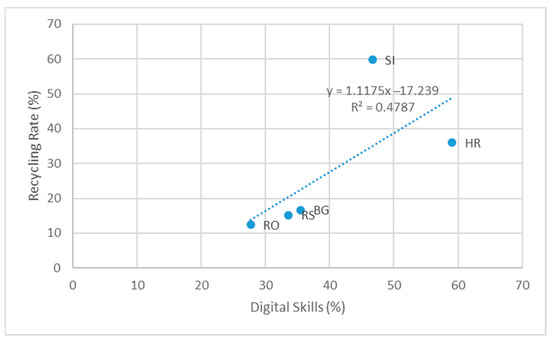
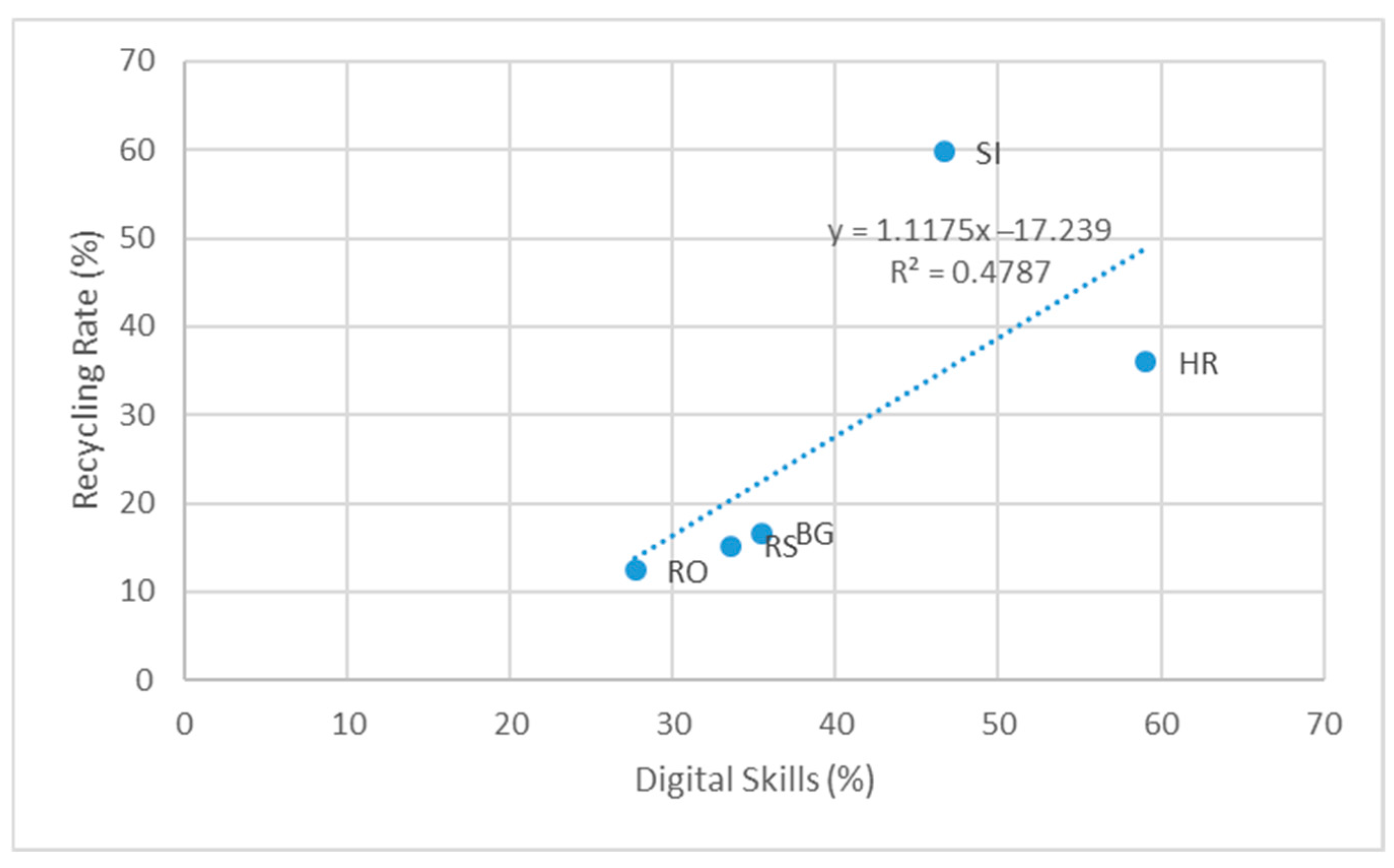
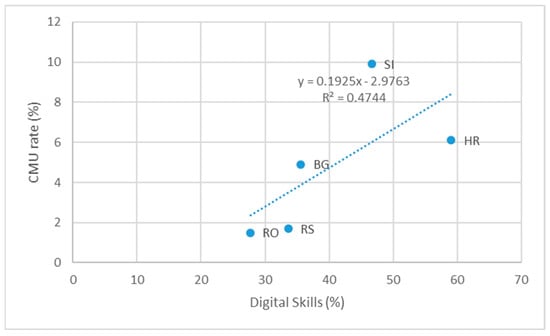
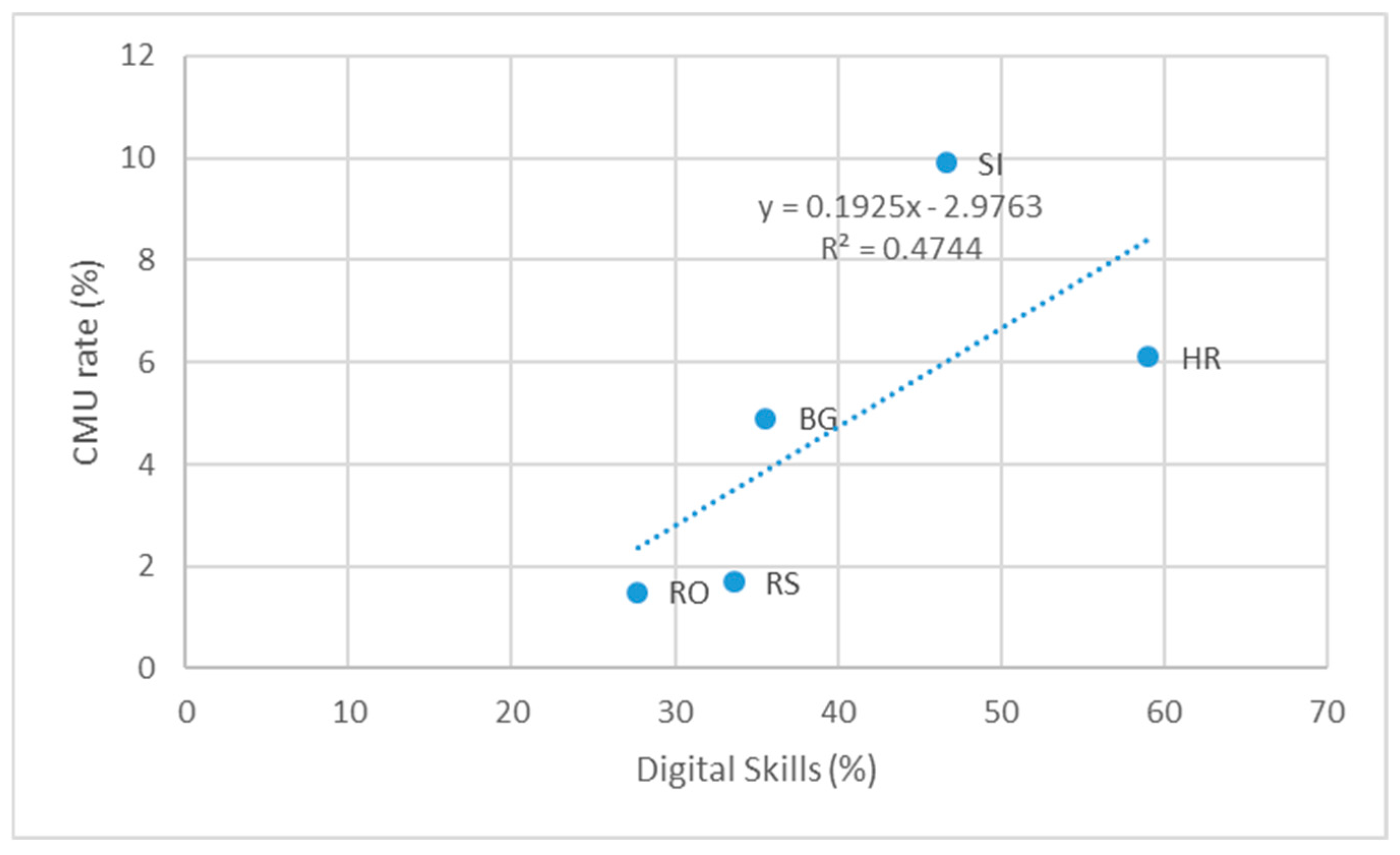
Scatter plots (Figure 1 and Figure 2) reveal a structured but heterogeneous distribution of SEE counties across the digital skills and CE outcomes. Rather than a uniform linear pattern, the data show clear clustering and distinct specific position of the countries. In both figures Slovenia appears as consistent positive outlier, combining the high level of digital skills with the strongest circular economy performance, particularly in recycling rates. This positions Slovenia in the upper-right quadrant of the distribution and distinguishes it from all other observed countries. A second identifiable pattern is the cluster formed by Bulgaria, Romania, and Serbia, which occupy the lower-left segment of the scatter space. This cluster reflects simultaneously lower digital skill levels and weaker circular outcomes, indicating a shared structural constraint across these transition economies. Within this cluster, Serbia and Romania are positioned closest to the lower bound of circular performance, particularly in CMU indicators, while Bulgaria shows slightly higher dispersion but remains within the same low-performance grouping. Bulgaria displays an internal inconsistency across the two figures, while remaining part of the lower digital cluster in Figure 1, it shows comparatively stronger performance in CMU-related circular outcomes in Figure 2, indicating that recycling and advanced material use may diverge within the same national context. Croatia occupies an intermediate position, characterized by relatively stronger digital skills but only moderate circular outcomes, placing it above the Bulgaria–Romania–Serbia cluster but below Slovenia. The results also indicate that digital literacy alone is insufficient to achieve the highest levels of circular efficiency.
Figure 1.
Correlation between digital skills and municipal waste recycling rates at the national level.
Figure 2.
Correlation between digital skills and the Circular Material Use (CMU) rate at the national level.
Statistical analysis at the national level reveals a moderately strong correlation between digital skills and recycling rates (r = 0.69), with a coefficient of determination (R2 = 0.48) indicating that approximately half of the variation in recycling performance may be associated with differences in population digital competencies. The relationship between digital skills and the CMU indicator is almost identical (r = 0.69; R2 = 0.47), indicating a consistent link between digitalization and circular economy performance. The calculated p-value (p = 0.02) is below the conventional significance thresholds, indicating that the observed correlations are statistically significant. Given the limited number of spatial units at the national level, these findings should be interpreted with caution. To address this limitation and provide a more robust assessment of spatial patterns and internal territorial disparities, the analysis is extended to the NUTS 2 level.
A more granular spatial examination of the twin transition is conducted at the NUTS2 regional level (Table 2), allowing internal differences that remain concealed at the national scale to be identified. Regional CE indicators are not available for Serbia due to statistical reporting constraints; therefore, this level of analysis includes only EU member states, while Serbia remains part of the national comparison.
Table 2.
Regional-level (NUTS 2) dataset for digital skills and waste management indicators (2022–2023).
Regional data reveal pronounced territorial heterogeneity within the analyzed countries. Metropolitan regions stand out with relatively high DSI values. The București-Ilfov region, along with several more developed regions in Croatia and Slovenia, emerges as a digitally advanced center, confirming the concentration of digital human capital in urban and administrative hubs. However, high digital capacity does not always correspond to proportionally high recycling performance. In certain urban regions, a mismatch is observed between digital advancement and circular outcomes, implying that institutional infrastructure, technological equipment, and the organization of waste management systems play a decisive role in achieving circular performance.
Conversely, some regions in Bulgaria and Romania record relatively high recycling rates despite moderate or lower digital skill levels. The highest recycling rate is observed in BG33 Severoiztochen (81.6%), while substantially lower values are recorded in RO21 Nord-Est (28.8%). This pattern underscores the importance of institutional and infrastructural arrangements in stimulating circular material flows independently of individual digital competencies. At the same time, peripheral and predominantly rural regions, particularly in eastern Romania and Bulgaria, display lower DSI values, often accompanied by weaker waste management outcomes. These findings confirm the existence of multi-layered regional development patterns in which socio-economic and infrastructural factors jointly shape transition results. Slovenian regions demonstrate a relatively high degree of territorial cohesion. Although differences between eastern and western parts of the country are evident in digital performance, waste management systems exhibit consistently stable outcomes. Differences between national and regional values are observed across all countries, showing variation in the spatial distribution of digital skills and recycling rates.
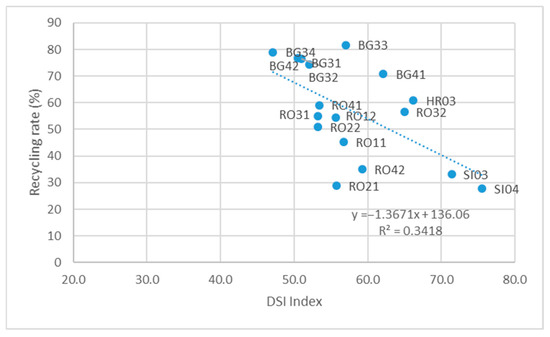
The scatter plot (Figure 3) shows a clear clustering structure, allowing regions to be grouped into distinct spatial patterns of digital and circular performance:
Figure 3.
Linear regression analysis of the relationship between digital competencies and recycling performance at the NUTS 2 level.
- Bulgarian regions: high recycling/moderate digital (efficiency-driven cluster);
- Romanian regions: high internal variance (polarized cluster with strong outliers);
- Slovenian/Croatian regions: digitally advanced but structurally moderate circular outcomes;
- Urban metropolitan cores (e.g., București–Ilfov, Belgrade region): digital outliers with weaker-than-expected circular translation.
This pattern demonstrates that a limited number of structurally distinct regional configurations rather than a homogeneous relationship drive the regression line in Figure 3 across space. Statistical analysis at the NUTS2 level includes regions with complete data for both the DSI and recycling rate indicators. The results reveal a statistically significant relationship between digital competencies and circular waste management performance (Figure 3). The correlation coefficient indicates a moderate association (r = −0.58), while the coefficient of determination (R2 = 0.34) shows that approximately one-third of the variation in recycling performance across regions can be linked to differences in digital skills. The calculated p-value (p = 0.0002) confirms statistical significance, indicating a robust regional-level relationship. However, the regression trend displayed in Figure 3 reveals an inverse functional form between digital skills and recycling rates. Regions with higher levels of digital competence do not necessarily achieve higher recycling performance. The results indicate that regions with similar levels of digital skills may exhibit different circular economy outcomes.
The scatter plot further illustrates spatial clustering of regions according to their digital and circular performance. Several Bulgarian regions form a cluster characterized by relatively high recycling rates despite moderate digital skill levels, while certain Slovenian and Croatian regions display higher digital performance combined with moderate recycling outcomes. These spatial patterns make the importance of institutional and infrastructural factors necessary in shaping circular economy performance.
In order to provide a broader interpretation of regional circular economy performance, additional waste treatment indicators were analysed, including landfill disposal rates (D1, D5, D12) and energy recovery rates (R1). These indicators provide insight into structural differences in waste management systems across SEE region. The results reveal substantial variation in landfill dependency across analysed regions. Several Romanian regions exhibit relatively high landfill disposal shares, exceeding 10% in multiple cases, indicating continued reliance on linear waste management practices. Similarly, certain Croatian and Romanian regions demonstrate moderate landfill dependency, reflecting transitional waste management systems that have not yet fully adopted circular treatment approaches. In contrast, Slovenian regions display consistently low landfill disposal rates, with the presence of advanced waste diversion systems and more integrated waste management infrastructure. Bulgarian regions also demonstrate relatively low landfill shares, accompanied by high recycling rates, indicating effective material recovery systems despite moderate levels of digital development. Energy recovery indicators further highlight structural differences in waste treatment strategies. Several Romanian regions show comparatively high R1 values, implying a greater reliance on waste-to-energy technologies as an alternative to landfill disposal.
The spatial distribution of digital skills across NUTS2 regions reveals a clear pattern of territorial concentration of digital human capital (Figure 4). Higher values of the DSI are predominantly observed in metropolitan and economically developed regions, including western Slovenia, the Bucharest metropolitan region, and the Belgrade region. These areas represent major administrative and economic centers characterized by higher access to digital infrastructure and advanced labor market structures. In contrast, peripheral and predominantly rural regions, such as some parts of Bulgaria, display lower levels of digital competence. This spatial gradient indicates the presence of a core–periphery structure in digital transformation across SEE, where digital capacities tend to cluster around urban development poles.
Figure 4.
Spatial distribution of digital human capital across NUTS 2 regions in Southeastern Europe.
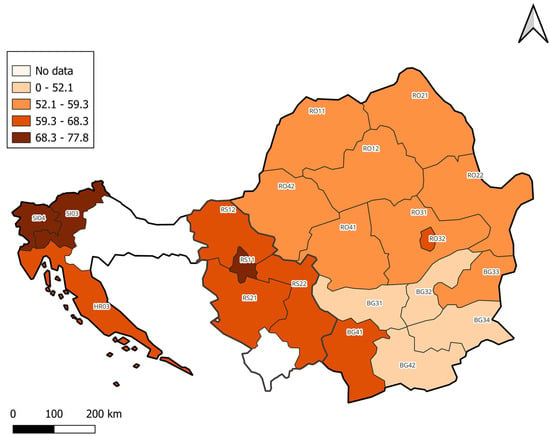
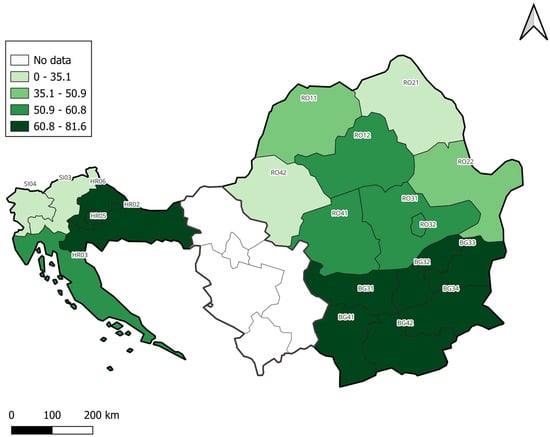
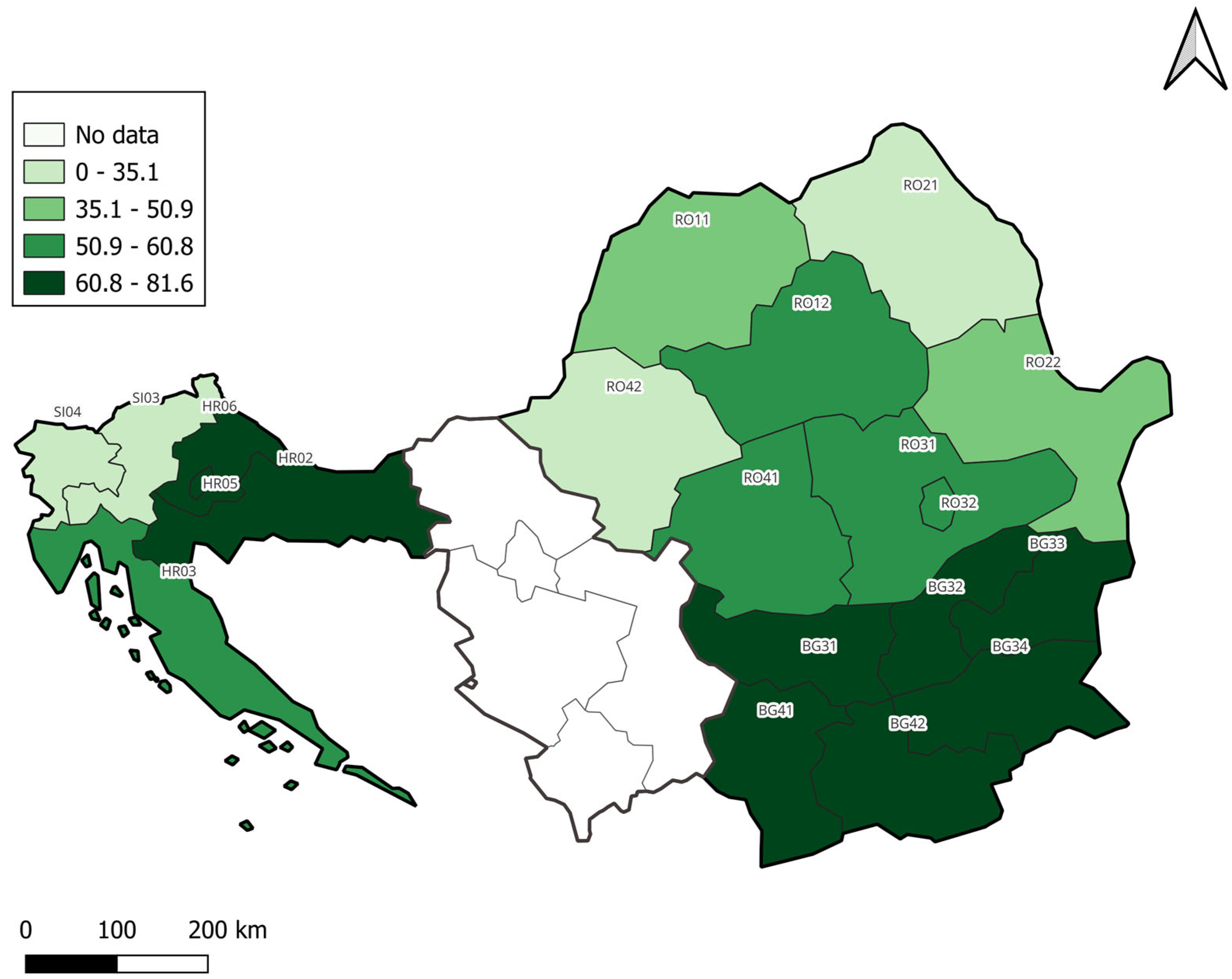
The spatial distribution of region waste recycling rates demonstrates a substantially different regional pattern (Figure 5). Several Bulgarian regions form a cluster characterized by consistently high recycling performance, exceeding 60% in multiple cases. These regions illustrate strong material recovery systems supported by structured waste collection and processing infrastructure. Romanian regions show a more heterogeneous pattern, with moderate recycling performance and significant variation. Slovenian regions display relatively stable but moderate recycling levels, while Croatian regions illustrate transitional waste management structures, where relatively high recycling performance coexists with notable landfill dependency.
Figure 5.
Regional disparities of municipal waste recycling rates.
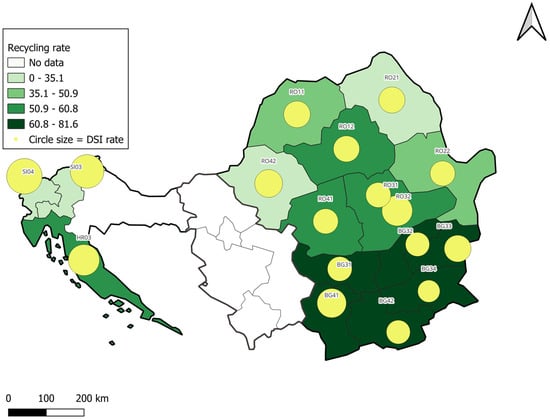
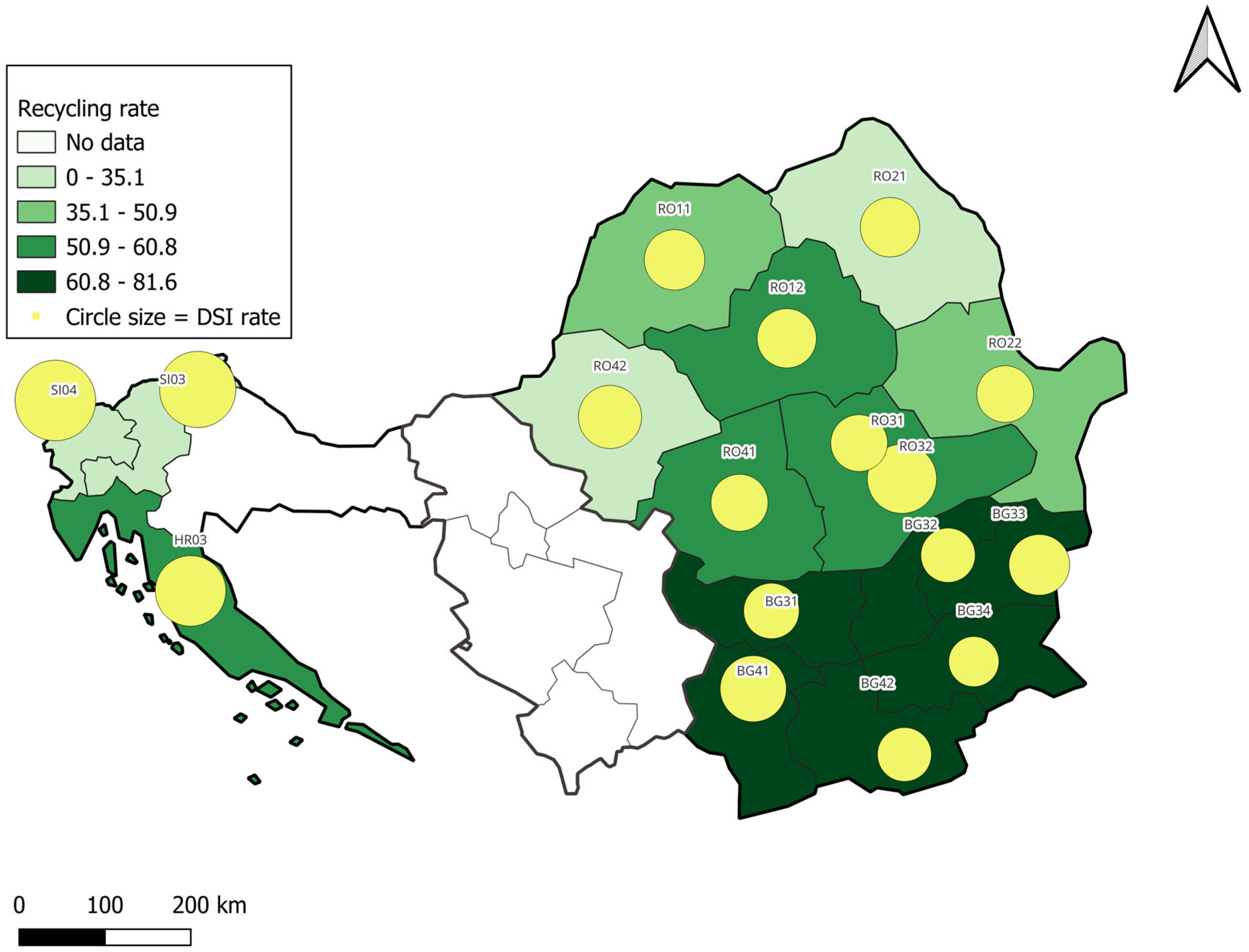
The combined spatial visualization of digital skills and recycling performance provides additional insight into the territorial interaction between digital transformation and circular economy outcomes (Figure 6). Regions characterized by high recycling performance do not consistently overlap with regions with the highest levels of digital skills. Bulgarian regions illustrate a pattern of strong recycling performance combined with moderate digital development, indicating that targeted waste management policies and institutional capacity can compensate for lower levels of individual digital competence. Conversely, several metropolitan regions with advanced digital performance display only moderate recycling outcomes, indicating that urban waste complexity and reliance on alternative treatment technologies may influence circular performance. The overlay analysis further confirms the absence of a uniform spatial model of the twin transition across SEE. Instead, regions appear to follow distinct development pathways shaped by varying combinations of digital capacity, institutional effectiveness, and technological infrastructure.
Figure 6.
Bivariate map of the Twin Transition: Interplay between digital maturity and circular economy efficiency.
4. Discussion
The twin transition does not represent a linear developmental trajectory but is shaped by spatial and institutional asymmetries. The findings of this study challenge the dominant assumption in the twin transition literature that digitalization and circular economy processes are inherently mutually reinforcing [1]. While this perspective is widely present in existing research, more recent contributions suggest that the relationship between digital transformation and sustainability outcomes is not automatic but depends on specific technological and institutional conditions [6,7]. In line with Ben Youssef [5], the results of this study further indicate that digital transformation does not directly translate into circular economy performance, but instead operates as an enabling condition whose effectiveness is contingent on institutional embedding and infrastructural readiness. From this perspective, the observed heterogeneity across SEE regions reflects differentiated capacities to translate digital skills into circular outcomes. Rather than a uniform or linear effect, the relationship between digital human capital and recycling performance appears context-dependent and structurally mediated. This supports the interpretation that digital skills alone are insufficient to generate circular economy outcomes without complementary institutional and infrastructural systems. Consequently, the effectiveness of the twin transition is not determined by digital capacity per se, but by the extent to which it is integrated into coherent governance and material systems at the regional level.
4.1. Digital–Circular Relationship
At the regional level, distinct configurations of digital capacity and circular performance emerge, which remain obscured in national aggregates. Rather than indicating a single development trajectory, the results point to multiple structural patterns. Four broad regional types can be identified. The first includes regions where digital competencies and circular outcomes are aligned, reflecting synergy between human capital, institutional support, and infrastructure. The second group comprises regions achieving relatively high recycling rates despite moderate digital capacity, suggesting that effective waste management systems and regulatory frameworks can compensate for weaker digital endowments. The third group consists of digitally advanced regions with comparatively weaker circular outcomes, indicating the presence of unrealized potential, often associated with complex urban waste systems or technological choices such as energy recovery. The fourth group reflects regions characterized by simultaneous deficits in both digital capacity and circular performance, pointing to cumulative structural constraints.
While the national level results indicate a positive association between digital skills and circular indicators, the regional analysis reveals a more differentiated relationship. Much of the existing literature assumes strong complementarity between digitalization and the CE outcomes [56,57,58] emphasizing efficiency gains and technological optimization. The observed inverse relationship at the regional level suggests that digital competencies do not automatically translate into improved CE outcomes. This indicates that circular performance is more strongly shaped by institutional arrangements, infrastructure, and waste management system than by digital capacity alone. As shown by Barbero et al. [59], territorially disparities in investment allocation shape development opportunities, while Ben Youssef [5] highlights the role of organizational and regional constraints in limiting effective integration. Building of these insights, the present analysis demonstrates that even where digital capacities are present, circular outcomes depend on the ability of regional systems to operationalize these capacities through coordinated infrastructure and governance.
4.2. Regional Differentiation and Structural Configurations
The subnational perspective highlights the analytical limitations of relying on national averages in assessing the twin transition. Digital skills emerge as an enabling condition, but their effects vary across territorial contexts. The observed heterogeneity across NUTS2 regions indicates that uniform policy approaches are unlikely to generate consistent outcomes. Instead, regional trajectories depend on the alignment between digital capacity, institutional coordination, and waste management systems. Where such alignment is weak, cumulative disadvantages may emerge, as observed in several Bulgarian regions, where lower digital skills coincide with reliance on landfill or energy recovery and comparatively modest recycling performance. On the other hand, statistically significant relationship between digital skills and recycling performance confirms that digital capacity remains relevant, although it explains only part of the observed variation. This points to differentiated regional pathways rather than a uniform development model.
The Slovenian case illustrates that strong national-level performance can coexist with internally moderate regional variation, indicating systemic rather than localized drivers of circular outcomes. According to de Sousa Jabbour et al. [58], digital skills constitute a necessary foundation for the twin transition but require organizational and institutional alignment in order to generate sustainability outcomes. These findings refine the understanding of “dual deficit” dynamics. Rather than a binary absence of both digital and circular capacities, the regional evidence shows gradations of structural alignment. Persistent lag is less the result of low digital skills alone and more the outcome of fragmented governance structures, uneven infrastructure provision, and limited integration between digital and environmental policy domains. These findings can be interpreted through the lens of regional sustainability transition and evolutionary economic geography, which view transformation as a territorially embedded processes shaped by historically accumulated capacities [60]. Path dependency implies that regions tend to reproduce established institutional and infrastructural configurations, which may either support or constrain the alignment between digital and circular outcomes [61]. From a multi-level governance perspective, the effectiveness of digital capacities depends on coordination across policy levels [62]. Where such coordination is fragmented, digital potential remains underutilized, but where it is aligned, even moderate capacities can generate measurable sustainability gains. The evidence therefore supports an interpretation of the twin transition as an institutionally mediated process rather than a linear relationship between capacities and outcomes.
The study advances the twin transition literature in three important respects. First, by operationalizing the relationship between digital skills and circular performance at the NUTS2 level, it moves beyond national aggregates and captures subnational variation in transition dynamics. Second, it challenges the assumption of proportional alignment between digital capacity and circular outcomes, showing that their relationship is conditional rather than structurally uniform. Third, it introduces a spatially disaggregated perspective to sustainability assessment in SEE, highlighting the limitations of relying exclusively on country-level indicators. In doing so, the study provides a more precise understanding of how digital competences translate into sustainability outcomes under specific regional conditions.
Analyses of sustainability transitions increasingly document a functional urban–rural divide, in which urban areas typically concentrate infrastructure, human capital and administrative resources, while rural regions face structural constraints in accessing key enabling assets. Comparative assessments of CE performance at the municipal level show that urban municipalities often score higher on circular practice adoption due to denser infrastructure and stronger governance capacity, whereas rural municipalities tend to underperform because of demographic decline, lower population density and weaker socioeconomic conditions [63]. Such spatial differentiation implies that the twin transition is shaped not only by digital and environmental potentials but also by the territorial distribution of operational systems. At the same time, metropolitan regions may display high levels of digital skills without proportionate circular outcomes, reflecting coordination gaps instead of capacity shortages. The urban context introduces further complexity, as metropolitan regions often rely on more advanced waste treatment systems, including energy recovery processes, which may partly explain why high digital performance does not always translate into high recycling rates. Even where national strategies exist, their effectiveness depends on socio-demographic structures and local implementation contexts. In Serbia, for instance, rural ageing and outmigration [64,65,66] limit the practical uptake of digitally mediated environmental solutions, while broader sustainability monitoring indicates that educational attainment alone does not guarantee durable transformation trajectories [67]. These patterns reinforce the interpretation of the twin transition as a territorially and socially conditioned process rather than a purely technological shift.
5. Conclusions
This study contributes to the literature on the twin transition in Southeast Europe in three key ways. First, by applying a subnational (NUTS2-level) perspective, it demonstrates that national averages conceal significant territorial disparities, which are crucial for understanding transition dynamics. Second, the findings show that the relationship between digital skills and circular economy outcomes is conditional rather than linear, indicating that digital capacity alone does not guarantee improved sustainability performance. Third, the results highlight the importance of territorially sensitive policy approaches, showing that different regional configurations require differentiated strategies rather than uniform policy frameworks. Together, these contributions provide a more nuanced and spatially grounded understanding of how digital transformation interacts with circular economy processes in transition contexts.
5.1. Policy Implications
The results have several implications for regional and national policy design. Uniform national strategies based on average indicators are insufficient in contexts characterized by strong internal territorial disparities. Instead, policy approaches should explicitly account for regional heterogeneity. A differentiated governance model is required, in which regions are grouped according to their combined levels of digital capacity and circular economy performance. Such clustering enables more targeted interventions. Regions with strong digital capacity but weaker circular outcomes require investments in waste management infrastructure and improved coordination between digital and environmental policy domains. Regions with high recycling performance but moderate digital skills would benefit from digital training programs and the digitalization of waste management systems. Regions where both dimensions are aligned should focus on scaling existing practices and strengthening innovation ecosystems. Regions facing a dual deficit require comprehensive structural support, including institutional capacity building and long-term infrastructure investment. Policy should focus not only on increasing digital skills, but also on improving the institutional and infrastructural conditions that enable these skills to translate into measurable circular outcomes. This includes coordination across governance levels and integration between digital and environmental strategies.
5.2. Limitations and Future Research
This study has several limitations. First, it relies on cross-sectional, which prevents causal inference and limits the ability to capture dynamic transition processes over time. Second, data availability at the regional level constrained the inclusion of additional circular economy and governance indicators. Future research should extend the analysis to a broader European sample and incorporate longitudinal data in order to capture temporal dynamics of the twin transition. Models that are more comprehensive should integrate institutional quality, investment flows, and governance capacity to better explain how digital human capital is translated into circular economy outcomes across different territorial contexts.
Author Contributions
Conceptualization, S.M.; methodology, S.M.; software, S.L.O.; validation, D.D.B. and S.L.O.; formal analysis, I.Đ.; investigation, S.M.; resources, S.L.O.; data curation, D.D.B.; writing—original draft preparation, S.M.; writing—review and editing, S.L.O.; visualization, I.Đ.; supervision, D.D.B.; project administration, S.M.; funding acquisition, S.L.O. and D.D.B. All authors have read and agreed to the published version of the manuscript.
Funding
This research received no external funding.
Institutional Review Board Statement
Not applicable.
Informed Consent Statement
Not applicable.
Data Availability Statement
Publicly available datasets were analyzed in this study. These data can be found in the Eurostat database and the Digital Economy and Society Index (DESI) database, as cited in the manuscript.
Acknowledgments
The research was supported by the Ministry of Science, Technological Development and Innovation of the Republic of Serbia (Contract no. 451-03-33/2026-03/200172).
Conflicts of Interest
The authors declare no conflicts of interest.
Abbreviations
The following abbreviations are used in this manuscript:
| SEE | Southeast European |
| EU | European Union |
| AI | Artificial intelligence |
| CE | Circular Economy |
| CMU | Circular Material Use |
| DSI | Digital Skills Index |
References
- Aiello, F.; Cozzucoli, P.C.; Mannarino, L.; Pupo, V. Bayesian insights on digitalization and environmental sustainability practices: Towards the twin transition in the EU. Bus. Strategy Environ. 2024, 34, 417–432. [Google Scholar] [CrossRef] [Scilit]
- Cattani, L.; Montresor, S.; Vezzani, A. Firms’ eco-innovation and industry 4.0 Technologies in Urban and Rural Areas. Reg. Stud. 2025, 59, 2243984. [Google Scholar] [CrossRef] [Scilit]
- Gao, X. The EU’s twin transitions towards sustainability and digital leadership: A coherent or fragmented policy field? Reg. Stud. 2025, 59, 2360053. [Google Scholar] [CrossRef] [Scilit]
- EUR 31075 EN; Towards a Green and Digital Future: Key Requirements for Successful Twin Transitions in the European Union. Publications Office of the European Union: Luxembourg, 2022.
- Ben Youssef, A. Twin Transition: Digital Transformation Pathways for Sustainable Innovation. Sustainability 2025, 17, 9491. [Google Scholar] [CrossRef] [Scilit]
- Benedetti, I.; Guarini, G.; Laureti, T. Digitalization in Europe: A potential driver of energy efficiency for the twin transition policy strategy. Socio-Econ. Plan. Sci. 2023, 89, 101701. [Google Scholar] [CrossRef] [Scilit]
- Bianchini, S.; Damioli, G.; Ghisetti, C. The environmental effects of the “twin” green and digital transition in European regions. Environ. Resour. Econ. 2023, 84, 877–918. [Google Scholar] [CrossRef] [Scilit] [PubMed]
- Zhang, Y.; Bilawal Khaskheli, M. The Role of Digital Technologies in Advancing Sustainable Economic Development into Intersections of Policy, Law, Environmental Economics, and a Comparative Study of China, the EU, and the USA. Sustainability 2025, 17, 8666. [Google Scholar] [CrossRef] [Scilit]
- Hofmann Trevisan, A.; Acerbi, F.; Dukovska-Popovska, I.; Terzi, S.; Sassanelli, C. Skills for the twin transition in manufacturing: A systematic literature review. J. Clean. Prod. 2024, 474, 143603. [Google Scholar] [CrossRef] [Scilit]
- Gheorghe, C.; Panazan, O. Regional Patterns of Digitalization in South-East Europe: Evidence from Principal Component Analysis and Clustering. Recent 2025, 77, 212–221. [Google Scholar] [CrossRef] [Scilit]
- Latif, M.N.; Đukić, M.I.; Talić, M.; Stefanović, S. Financial effects of the circular economy: How circular economy practices boost performance of small and medium enterprises in selected European Southeast countries. Econ. Sustain. Dev. 2025, 9, 75–85. [Google Scholar] [CrossRef] [Scilit]
- Rodríguez Pita, M.D.P. Digital or Sustainable: A Comparative Analysis of Digitalization Levels and Sustainable Development in European Regions. In Proceedings of the ITS 33rd European Conference 2025: “Digital Innovation and Transformation in Uncertain Times”, Edinburgh, UK, 29 June–1 July 2025; Available online: https://www.econstor.eu/handle/10419/331300 (accessed on 17 February 2026).
- Nham, N.T.H. Making the circular economy digital or the digital economy circular? Empirical evidence from the European region. Technol. Soc. 2022, 70, 102023. [Google Scholar] [CrossRef] [Scilit]
- Stoenoiu, C.E.; Jäntschi, L. Circular Economy Similarities in a Group of Eastern European Countries: Orienting towards Sustainable Development. Sustainability 2024, 16, 1593. [Google Scholar] [CrossRef] [Scilit]
- Bühler, L.; Schuster, T.; Pflaum, A. Twin Transformation—The Case of Smart Circular Economy in Manufacturing Industries: Insights from an Umbrella Review. Int. J. Innov. Manag. 2025, 29, 2540007. [Google Scholar] [CrossRef] [Scilit]
- Tsui, T.H.; van Loosdrecht, M.C.; Dai, Y.; Tong, Y.W. Machine learning and circular bioeconomy: Building new resource efficiency from diverse waste streams. Bioresour. Technol. 2022, 369, 128445. [Google Scholar] [CrossRef] [Scilit]
- Vărzaru, A.A. Rethinking Resource Usage in the Age of AI: Insights from Europe’s Circular Transition. Systems 2025, 13, 1127. [Google Scholar] [CrossRef] [Scilit]
- Brody, H. Building a circular economy. Nature 2022, 611, S1. [Google Scholar] [CrossRef] [Scilit]
- Gunter, S. Circular economy: Illusion or first step towards a sustainable economy: A physico-economic perspective. Sustainability 2022, 14, 4778. [Google Scholar] [CrossRef] [Scilit]
- Kabirifar, K.; Mojtahedi, M.; Wang, C.; Tam, V.W. Construction and demolition waste management contributing factors coupled with reduce, reuse, and recycle strategies for effective waste management: A review. J. Clean. Prod. 2020, 263, 121265. [Google Scholar] [CrossRef] [Scilit]
- Massaro, M.; Secinaro, S.; Dal Mas, F.; Brescia, V.; Calandra, D. Industry 4.0 and circular economy: An exploratory analysis of academic and practitioners’ perspectives. Bus. Strateg. Environ. 2021, 30, 1213–1231. [Google Scholar] [CrossRef] [Scilit]
- Marino, A.; Pariso, P. Comparing European countries’ performances in the transition towards the Circular Economy. Sci. Total Environ. 2020, 729, 138142. [Google Scholar] [CrossRef] [Scilit]
- Julkovski, D.J.; Sehnem, S.; Bennet, D.; Leseure, M. Ecological modernization theory (EMT): Antecedents and successors. Indones. J. Sustain. Account. Manag. 2021, 5, 324–338. [Google Scholar] [CrossRef] [Scilit]
- Bush, S.R.; Spaargaren, G. Ecological modernization theory. In Elgar Encyclopedia of Environmental Sociology; Edward Elgar Publishing: Cheltenham, UK, 2024; pp. 183–188. [Google Scholar] [CrossRef] [Scilit]
- Boas, I.; Kloppenburg, S.; van Leeuwen, J.; Lamers, M. Environmental mobilities: An alternative lens to global environmental governance. Glob. Environ. Politics 2018, 18, 107–126. [Google Scholar] [CrossRef] [Scilit]
- Boström, M.; Micheletti, M.; Oosterveer, P. Studying political consumerism. In The Oxford Handbook of Political Consumerism; Oxford University Press: Oxford, UK, 2019; pp. 1–24. [Google Scholar]
- Andersen, M.S. Ecological modernization or subversion? The effect of Europeanization on Eastern Europe. Am. Behav. Sci. 2002, 45, 1394–1416. [Google Scholar] [CrossRef] [Scilit]
- Bănică, A.; Ţigănaşu, R.; Nijkamp, P.; Kourtit, K. Institutional quality in green and digital transition of EU regions—A recovery and resilience analysis. Glob. Chall. 2024, 8, 2400031. [Google Scholar] [CrossRef] [Scilit]
- Feurich, M.; Kourilova, J.; Pelucha, M.; Kasabov, E. Bridging the urban-rural digital divide: Taxonomy of the best practice and critical reflection of the EU countries’ approach. Eur. Plan. Stud. 2024, 32, 483–505. [Google Scholar] [CrossRef] [Scilit]
- Tislenko, M.I. Digital divide in the European Union: Assessing spatial disparities and neighborhood effects. J. Geogr. Inst. “Jovan Cvijić” SASA 2024, 74, 181–194. [Google Scholar] [CrossRef] [Scilit]
- Gong, S.; Jiang, L.; Yu, Z. Can Digital Human Capital Promote Farmers’ Willingness to Engage in Green Production? Exploring the Role of Online Learning and Social Networks. Behav. Sci. 2025, 15, 227. [Google Scholar] [CrossRef] [Scilit]
- Demirović Bajrami, D.; Borota, D.; Martinov, D.; Marković, B.; Šuput, S.; Milić, M.; Miljković, O. Managing digital workloads in hospitality: Insights from Serbia on employee retention and performance. J. Geogr. Inst. “Jovan Cvijić” SASA 2026, 76, 89–103. [Google Scholar] [CrossRef] [Scilit]
- Li, F.; Zang, D.; Chandio, A.A.; Yang, D.; Jiang, Y. Farmers’ adoption of digital technology and agricultural entrepreneurial willingness: Evidence from China. Technol. Soc. 2023, 73, 102253. [Google Scholar] [CrossRef] [Scilit]
- Magesa, M.M.; Michael, K.; Ko, J. Access and use of agricultural market information by smallholder farmers: Measuring informational capabilities. Electron. J. Inf. Syst. Dev. Ctries. 2020, 86, e12134. [Google Scholar] [CrossRef] [Scilit]
- Wang, B.; Dong, H. Research on the farmers’ agricultural digital service use behavior under the rural revitalization strategy—Based on the extended technology acceptance model. Front. Environ. Sci. 2023, 11, 1180072. [Google Scholar] [CrossRef] [Scilit]
- Ranjbari, M.; Morales-Alonso, G.; Carrasco-Gallego, R. Conceptualizing the sharing economy through presenting a comprehensive framework. Sustainability 2018, 10, 2336. [Google Scholar] [CrossRef] [Scilit]
- Uhrenholt, J.N.; Kristensen, J.H.; Adamsen, S.; Jensen, S.F.; Colli, M.; Waehrens, B.V. Twin transition: Synergies between circular economy and internet of things—A study of Danish manufacturers. J. Circ. Econ. 2023, 1, 1–19. [Google Scholar] [CrossRef] [Scilit]
- Kanó, I.S.; Vas, Z.; Lengyel, I.; Sávai, M.; Vida, G. Spatial Disparities in Economic Structural Change in Central and Eastern Europe During Integration. Intereconomics 2025, 2, 126. [Google Scholar] [CrossRef] [Scilit]
- Kant, C. EU Accession, Institutional Change, Growth, and Human Capital. Economies 2025, 13, 177. [Google Scholar] [CrossRef] [Scilit]
- European Commission. Circular Economy Strategy. Available online: https://environment.ec.europa.eu/strategy/circular-economy_en (accessed on 17 February 2026).
- Pirvu, R.V.; Pirvu, C.A.L.; Bratu, R.Ș.; Ciobanu, R.M.; Opran, E.R.; Lupșoiu, I.D. How ICT Human Capital Shapes Sustainable Employment Outcomes in European Higher Education: EU-27 Panel Evidence (2013–2023). Sustainability 2025, 17, 11342. [Google Scholar] [CrossRef] [Scilit]
- Regional Cooperation Council. 2024 Report on the Implementation of the Green Agenda for the Western Balkans Action Plan (GARI). Available online: https://www.rcc.int/pubs/218/2024-report-on-the-implementation-of-the-green-agenda-for-the-western-balkans-action-plan-gari (accessed on 17 February 2026).
- Rogge, N.; De Jaeger, S.; Lavigne, C. Waste performance of NUTS 2-regions in the EU: A conditional directional distance benefit-of-the-doubt model. Ecol. Econ. 2017, 139, 19–32. [Google Scholar] [CrossRef] [Scilit]
- Wu, X.; Khaskheli, M.B. Systems Thinking of Marine Policies in Promoting Environmental Law, Sustainability, and Digital Technologies: Social Challenges in Belt and Road Initiative Countries. Systems 2024, 12, 400. [Google Scholar] [CrossRef] [Scilit]
- Eurostat. Municipal Waste by Waste Management Operations. Available online: https://ec.europa.eu/eurostat/cache/metadata/en/env_wasmun_esms.htm (accessed on 9 January 2026).
- European Environment Agency (EEA). Municipal Waste Management Country Fact Sheet—North Macedonia; EEA: Copenhagen, Denmark, 2021; Available online: https://www.eea.europa.eu/themes/waste/waste-management/municipal-waste-management-country/north-macedonia-municipal-waste-factsheet-2021 (accessed on 9 January 2026).
- Eurostat. Individuals’ Level of Digital Skills. Available online: https://ec.europa.eu/eurostat/databrowser/view/isoc_sk_dskl_i21/default/table?lang=en (accessed on 20 January 2026).
- Eurostat. Recycling Rate of Municipal Waste. Available online: https://ec.europa.eu/eurostat/databrowser/view/sdg_11_60/default/table (accessed on 20 January 2026).
- Eurostat. Circular Material Use Rate. Available online: https://ec.europa.eu/eurostat/databrowser/view/env_ac_cur__custom_13728797/bookmark/table?lang=en&bookmarkId=ccb1c8a9-7eb7-459a-b39d-195ade62b8ce&c=1731427450080 (accessed on 20 January 2026).
- European Environment Agency. Circular Material Use Rate. Available online: https://www.eea.europa.eu/en/europe-environment-2025/countries/serbia/circular-material-use-rate#:~:text=Aims%20of%20the%20roadmap%20include,Waste%20and%20recycling (accessed on 20 January 2026).
- Eurostat. Individuals Who Used the Internet, Frequency of Use and Activities. Available online: https://ec.europa.eu/eurostat/databrowser/view/isoc_r_iuse_i/default/table?lang=en (accessed on 20 January 2026).
- Eurostat. Individuals Who Used the Internet for Interaction with Public Authorities. Available online: https://ec.europa.eu/eurostat/databrowser/view/isoc_r_gov_i/default/table?lang=en&category=reg.reg_isoc.reg_isoc_i (accessed on 20 January 2026).
- Eurostat. Individuals Who Ordered Goods or Services over the Internet for Private Use. Available online: https://ec.europa.eu/eurostat/databrowser/view/isoc_r_blt12_i/default/table?lang=en&category=reg.reg_isoc.reg_isoc_i (accessed on 20 January 2026).
- Eurostat. Number and Capacity of Recovery and Disposal Facilities by NUTS 2 Region. Available online: https://ec.europa.eu/eurostat/databrowser/view/env_wasfac__custom_19990484/default/table (accessed on 20 January 2026).
- Jenks, G.F. The Data Model Concept in Statistical Mapping. Int. Yearb. Cartogr. 1967, 7, 186–190. [Google Scholar]
- Agrawal, R.; Wankhede, V.A.; Kumar, A.; Luthra, S.; Huisingh, D. Progress and trends in integrating Industry 4.0 within Circular Economy: A comprehensive literature review and future research propositions. Bus. Strategy Environ. 2022, 31, 559–579. [Google Scholar] [CrossRef] [Scilit]
- Ertz, M.; Sun, S.; Boily, E.; Kubiat, P.; Quenum, G.G.Y. How transitioning to Industry 4.0 promotes circular product lifetimes. Ind. Mark. Manag. 2022, 101, 125–140. [Google Scholar] [CrossRef] [Scilit]
- de Sousa Jabbour, A.B.L.; Jabbour, C.J.C.; Choi, T.M.; Latan, H. ‘Better together’: Evidence on the joint adoption of circular economy and industry 4.0 technologies. Int. J. Prod. Econ. 2022, 252, 108581. [Google Scholar] [CrossRef] [Scilit]
- Barbero, J.; Collado, L.A.; Rodríguez-Crespo, E.; Santos, A.M. The twin transition in the European Union: Assessing regional patterns of EU-funded investments. Eur. Plan. Stud. 2025, 33, 1801–1821. [Google Scholar] [CrossRef] [Scilit]
- Hansen, T.; Coenen, L. The geography of sustainability transitions: Review, synthesis and reflections on an emergent research field. Environ. Innov. Soc. Transit. 2015, 17, 92–109. [Google Scholar] [CrossRef] [Scilit]
- Boschma, R. Towards an evolutionary perspective on regional resilience. Reg. Stud. 2015, 49, 733–751. [Google Scholar] [CrossRef] [Scilit]
- Kern, F.; Howlett, M. Implementing transition management as policy reforms: A case study of the Dutch energy sector. Policy Sci. 2009, 42, 391–408. [Google Scholar] [CrossRef] [Scilit]
- Čišić, D.; Drezgić, S.; Čegar, S. Waste and the Urban Economy: A Semantic Network Analysis of Smart, Circular, and Digital Transitions. Urban Sci. 2025, 9, 410. [Google Scholar] [CrossRef] [Scilit]
- Babović, S.; Lović-Obradović, S.; Prigunova, I. Depopulation of villages in southeastern Serbia as hindrance to economic development. J. Geogr. Inst. “Jovan Cvijic” SASA 2016, 66, 61–74. [Google Scholar] [CrossRef] [Scilit]
- Lović Obradović, S.; Babović, S.; Shpak, N. Serbia and Russia on the demographic map of Europe two decades after the fall of communism. TRAMES A J. Humanit. Soc. Sci. 2016, 20, 59–73. [Google Scholar] [CrossRef] [Scilit]
- Matović, S.; Lović Obradović, S.; Denda, S. Economic structure of the Serbian population as an obstacle to sustainable development. In Proceedings of the International Scientific Conference “Environmental Transformation and Sustainable Development in the Asian Region”; Sochava Institute of Geography, Siberian Branch of Russian Academy of Sciences: Irkutsk, Russia, 2020; p. 56. Available online: https://dais.sanu.ac.rs/handle/123456789/9238 (accessed on 17 February 2026).
- Matović, S.; Demirović Bajrami, D.; Gajić, T.; Lakić, M.; Martinov, D.; Šuput, S.; Radosavac, A.; Đervida, R. Beyond numbers: Challenges in measuring SDG4 targets—Serbia’s perspective. Sustainability 2024, 16, 10006. [Google Scholar] [CrossRef] [Scilit]

Disclaimer/Publisher’s Note: The statements, opinions and data contained in all publications are solely those of the individual author(s) and contributor(s) and not of MDPI and/or the editor(s). MDPI and/or the editor(s) disclaim responsibility for any injury to people or property resulting from any ideas, methods, instructions or products referred to in the content. |
© 2026 by the authors. Licensee MDPI, Basel, Switzerland. This article is an open access article distributed under the terms and conditions of the Creative Commons Attribution (CC BY) license.