


Abstract
The high demand for fossil fuels in human activities and industrial production has intensified environmental pollution, global warming, and energy shortages, making the development of alternative energy and energy-storage technologies imperative. Among these approaches, photocatalytic conversion of solar energy into hydrogen is regarded as a sustainable solution to the energy and environmental crises. However, the rapid recombination of photogenerated charge carriers and the lack of effective active sites severely limit photocatalytic performance. To address these challenges, heterojunction engineering is often employed to suppress electron-hole recombination and enhance photocatalytic H2 evolution efficiency. A MoS2/ZnIn2S4 heterojunction was constructed via the in situ growth of MoS2 nanorods on the surface of ZnIn2S4. The introduction of MoS2 not only broadens the light-absorption range of ZnIn2S4, but also suppresses the recombination of photogenerated charge carriers, thereby significantly enhancing the photocatalytic H2 evolution performance of ZnIn2S4. The optimal MoS2 loading was 30 wt%, at which the photocatalytic H2 evolution rate reached 11.52 mmol·g−1·h−1, nearly 2.5 times that of pure MoS2. In addition, the catalyst maintained nearly unchanged activity after five consecutive cycles, indicating good stability and that photocorrosion was effectively suppressed in the presence of sacrificial reagents. The heterojunction formed between MoS2 and ZnIn2S4 shortens the charge-transfer pathway and improves the separation efficiency of photogenerated electrons and holes, thereby suppressing charge-carrier recombination and accelerating the photocatalytic H2 evolution re photocorrosion action.
1. Introduction
Photocatalytic hydrogen technology, a green and sustainable energy solution, has garnered significant attention from researchers in recent years [1,2]. Among these, various semiconductor materials, such as metal oxides [3,4], metal nitrides [5], and metal sulfides [6], have been extensively applied in photocatalytic H2 research. Particularly, metal sulfide-based semiconductors, owing to their broad light absorption range and ease of synthesis, have emerged as promising photocatalytic materials, driving significant advancements in sulfide photocatalytic systems [7]. However, sulfide-based semiconductors still face challenges in photocatalysis, including rapid recombination of photo-generated electrons and holes, as well as photocorrosion, which severely limit further performance enhancement [8].
To effectively overcome these issues, developing novel semiconductor materials that ensure efficient separation and transport of photogenerated charges while maintaining excellent light absorption and photocatalytic activity has become a current research focus [9]. Recent studies suggest that incorporating heteroatoms or secondary components into single-metal sulfides can significantly enhance the stability, optoelectronic properties, and photocatalytic efficiency of multimetallic sulfides. Among numerous multimetallic sulfides, the ternary metal sulfide ZnIn2S4 has emerged as a key material in photocatalytic research due to its favorable bandgap, attractive photocatalytic hydrogen evolution activity, ease of synthesis, and good physicochemical stability [10,11]. Nevertheless, ZnIn2S4 still suffers from excessively rapid recombination of photogenerated carriers during photocatalytic reactions, significantly limiting its performance in hydrogen generation.
To further enhance the photocatalytic performance of ZnIn2S4, researchers have employed various strategies, including doping with additional elements [12,13], heterostructure loading [14], and introducing cocatalysts [15,16]. Among these, constructing heterostructures composed of two or more semiconductor materials has proven to be a key approach for enhancing photocatalytic activity. By adjusting the band structure of the materials, enhancing light absorption, and accelerating the separation and transfer of photogenerated charges, heterojunction photocatalysts have significantly improved their photocatalytic hydrogen evolution performance [17,18]. For instance, S-type heterostructures based on ZnIn2S4 have been demonstrated to achieve hydrogen production rates 15.2 times higher than those of pure ZnIn2S4 [19,20]. This enhancement results from the optimization of the heterojunction’s effective band structure, which enhances light absorption and facilitates charge separation and transport.
In addition to ZnIn2S4, numerous other heterostructures have been extensively developed, including MoO2, NiCo2O4/ZnIn2S4, and FeS2@ZnIn2S4 [20,21]. These materials enhance photocatalytic activity by improving the separation efficiency of photogenerated carriers through close interface contact [22]. Notably, MoS2, a transition metal chalcogenide with a unique layered structure, has demonstrated significant potential in photocatalytic hydrogen production research. The interlayer structure of MoS2 enables it to form tightly bonded two-dimensional heterostructures with ZnIn2S4, thereby optimizing the combination of their band structures and facilitating the separation and transport of photogenerated carriers [23].
Additionally, due to its excellent chemical stability, low cost, and effective electron extraction capability, MoS2 is also considered a strong alternative to precious metal cocatalysts (such as Rh and Pt) [24]. In summary, the rational design and construction of heterostructures, particularly those integrating materials such as MoS2 and ZnIn2S4, can significantly enhance photocatalytic hydrogen production performance. This approach offers novel insights and promising examples for developing highly efficient photocatalytic hydrogen production catalysts.
The MoS2/ZnIn2S4 heterojunction material was synthesized via a hydrothermal method. By integrating the outstanding properties of MoS2 and ZnIn2S4, this work provides an effective strategy for enhancing photocatalytic efficiency. ZnIn2S4 and MoS2 serve as the primary photocatalyst and co-catalyst, respectively. Notably, the rational construction of their heterojunction optimizes the band structure and promotes the separation and transport of photogenerated charge carriers. Characterization results indicate that MoS2 and ZnIn2S4 form a 3D/3D heterojunction through van der Waals interactions within the composite, which represents an important structural feature of this work. TEM and XPS analyses confirm the successful synthesis and uniform distribution of the components, while XRD and SEM patterns further reveal the composite’s well-defined crystalline structure and microstructure, both of which are favorable for enhanced photocatalytic performance. In photocatalytic hydrogen evolution tests, the 22% MoS2/ZnIn2S4 composite exhibited a remarkable hydrogen production rate of 11.52 mmol·g−1·h−1, representing approximately a 2.5-fold increase compared to pure ZnIn2S4. This enhancement is attributed to the synergistic effect between MoS2 and ZnIn2S4, which improves charge separation efficiency and suppresses charge recombination. XPS and UV-vis spectroscopy analyses further reveal the electronic structure and band positions of the composite, confirming that the band alignment facilitates efficient migration of photogenerated carriers and drives hydrogen evolution reaction. In summary, the MoS2/ZnIn2S4 heterojunction composite exhibits outstanding photocatalytic hydrogen evolution performance, offering a novel material design approach for efficient and sustainable hydrogen production.
2. Experimental Section
2.1. Synthesis of ZnIn2S4 Catalyst
Firstly, 1.5 mmol of Zn(CH3COO)2·2H2O, 3 mmol of InCl3, and 8 mmol of thioacetamide were added to 30 mL of deionized water. After stirring, the mixed precursor solution was transferred into a 50 mL Teflon-lined stainless-steel autoclave (TEFIC BIOTECH, Xi’an, Shaanxi, China) and subjected to hydrothermal treatment at 180 °C for 24 h. The resulting orange suspension was washed with deionized water and ethanol, collected, and vacuum-dried at 60 °C overnight. The obtained product was denoted as ZIS for subsequent use.
2.2. Synthesis of MoS2
Na2MoO4·2H2O (22.8 mg) and thioacetamide (41.1 mg) were added to 35 mL of deionized water. Pristine MoS2 nanomaterials were synthesized following the above procedure in the absence of ZnIn2S4. After mixing, the precursor solution was transferred into a 50 mL Teflon-lined stainless-steel autoclave and subjected to hydrothermal reaction at 210 °C for 12 h. The resulting black suspension was washed with ethanol and deionized water, collected, and vacuum-dried at 60 °C overnight. The final product was denoted as MS.
2.3. Synthesis of MoS2/ZnIn2S4 Composites
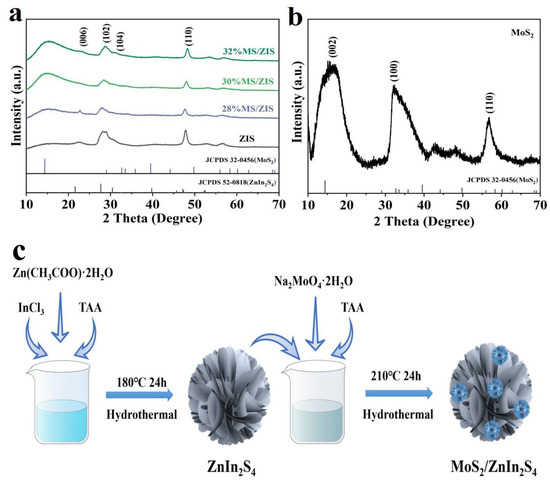
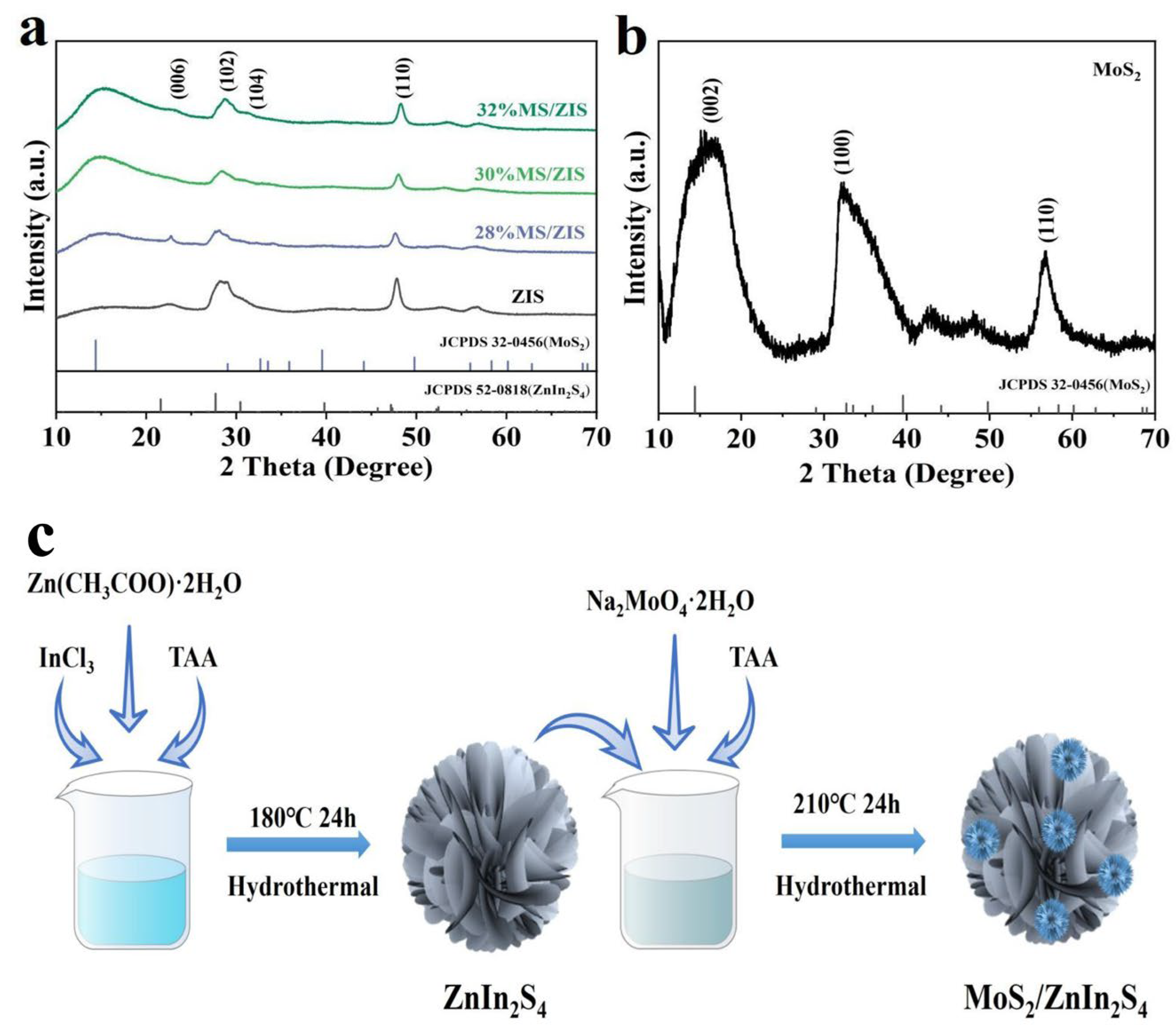
MoS2/ZnIn2S4 heterojunctions were prepared via a direct hydrothermal method. A typical procedure for the preparation of the 30 wt% MoS2/ZnIn2S4 composite is described as follows. ZnIn2S4 (0.1 g) was dispersed in 35 mL of deionized water under ultrasonication. Subsequently, 45.6 mg of Na2MoO4·2H2O and 82.2 mg of thioacetamide were added to the above suspension. After stirring for 1 h, the reaction mixture was transferred into a 50 mL Teflon-lined stainless-steel autoclave and maintained at 210 °C for 24 h. The obtained MoS2/ZnIn2S4 composite containing 30 wt% MoS2 was washed repeatedly with deionized water and ethanol, and then dried at 60 °C for 12 h. By adjusting the amounts of Na2MoO4·2H2O and thioacetamide, samples with different MoS2 mass fractions (28–32 wt%) were prepared and denoted as MS/ZIS (Figure 1c).
Figure 1.
(a) XRD plots for ZIS, 28% MS/ZIS, 30% MS/ZIS, 32% MS/ZIS; (b) XRD spectra for MS; (c) Schematic representation of the synthesis process of spherical MS/ZIS.
3. Results and Discussion
To investigate the crystal structures of MoS2, ZnIn2S4, and their ZIS/MS composite materials, this study conducted a detailed analysis of their crystalline phase compositions using X-Ray diffraction (XRD) techniques. Figure 1a presents the XRD pattern of pure ZIS, which displays three prominent diffraction peaks at 21.5°, 27.6°, and 47.1°. These peaks closely match the (006), (102), and (110) crystal planes of the hexagonal ZIS phase (JCPDS No. 52-0818), indicating excellent crystallinity and a predominant hexagonal crystal structure [25]. These ZIS diffraction peaks also serve as a reference for subsequent structural analysis of the composites. The XRD pattern of MS in Figure 1b reveals diffraction peaks at approximately 14.4°, 32.6°, and 56° 2θ. These peaks correspond to the (002), (100), and (110) crystal planes of the hexagonal phase of MoS2 (JCPDS No. 32-0456) [26]. The presence of these characteristic peaks indicates that MoS2 exhibits a distinct hexagonal crystal structure. The diffraction peaks displayed in the MS pattern not only demonstrate strong crystallinity but also reflect its well-defined layered structure to a certain extent. Upon introducing ZIS/MS composites with varying molar ratios (e.g., 28%, 30%, 32% ZIS/MS), the XRD patterns retain the primary diffraction peaks of ZIS. This indicates that the incorporation of MoS2 does not significantly alter the crystal structure of ZnIn2S4. Consequently, the introduction of MoS2 primarily influences composite properties through surface modification rather than substantial changes to the crystal structure. Notably, distinct MoS2 diffraction peaks appear in the XRD patterns of these composites. This likely stems from the successful loading of MoS2 within the ZIS/MS matrix, enabling its identification in the patterns.
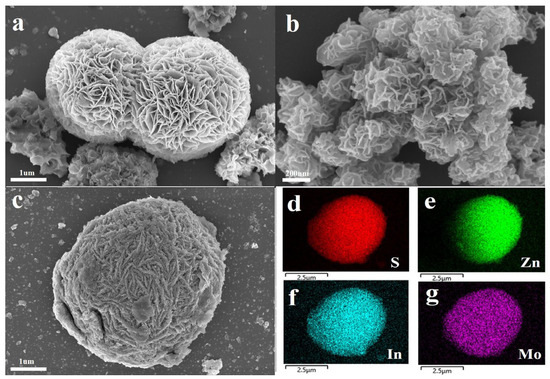
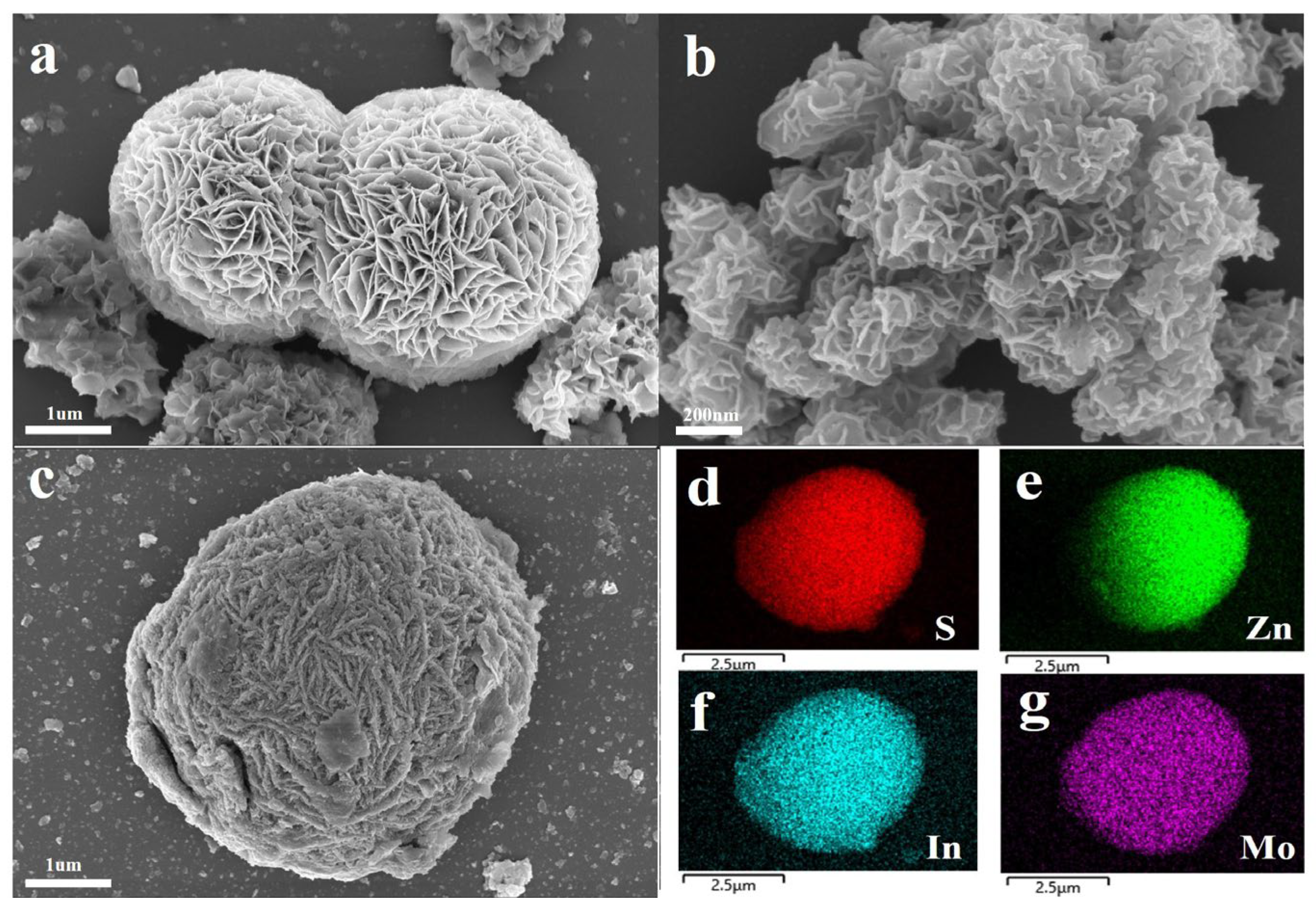
Figure 2 displays SEM images of pure ZIS (Figure 2a), pure MS (Figure 2b), and a 30% MS/ZIS composite (Figure 2c), allowing for direct analysis of their microstructural features and compositional differences. Figure 2a reveals that pure ZIS exhibits an overall spherical morphology, composed of numerous interlaced and stacked two-dimensional nanosheets. These spherical particles are distributed relatively uniformly with an average diameter of approximately three μm. Their surfaces display distinct textures, and the interlayer regions contain a certain degree of porosity, which is beneficial for exposing active sites in subsequent catalytic or adsorption applications. Figure 2b presents a high-magnification image of pure MS. Its structure primarily consists of numerous micron-scale lamellar units stacked in layers, exhibiting a relatively loose morphology with some agglomeration tendency. Due to the inherent layered structure of MS, its lamellar units display pronounced folding and curling phenomena. This structural characteristic may lead to agglomeration when used alone, thereby affecting its dispersibility and catalytic activity. Figure 2c displays the surface morphology of the 30% MS/ZIS composite. Compared to pure MS, the agglomeration of MS particles was significantly suppressed in this composite. It can be observed that portions of MS are uniformly distributed as nanosheets on the surface of ZIS spherical particles. These small-sized, aggregated sheets exhibit good dispersion, contributing to an enhanced specific surface area and active site exposure. Furthermore, comparative images reveal that the secondary hydrothermal synthesis process did not significantly alter the morphology or size structure of the ZIS spheres. Their original layered structure and spherical appearance were preserved, indicating excellent morphology retention capability of this method. Introducing a small amount of MS effectively improves its dispersion within the composite while maintaining the overall structure of ZIS, providing a solid structural foundation for achieving synergistic enhancement effects and improving composite performance. Furthermore, EDS surface scanning of the MS/ZIS material confirmed the presence of S, Zn, In, and Mo elements in the 30% MS/ZIS EDS spectrum (Figure 2d–g). Structural element mapping analysis of the 30% MS/ZIS material revealed a uniform distribution of S, Zn, In, and Mo elements across the spherical surface.
Figure 2.
(a) ZIS SEM plots; (b) MS SEM plots; (c) 30% MS/ZIS SEM plots; EDS energy spectral surface sweeps for elements S (d), Zn (e), In (f), Mo (g).
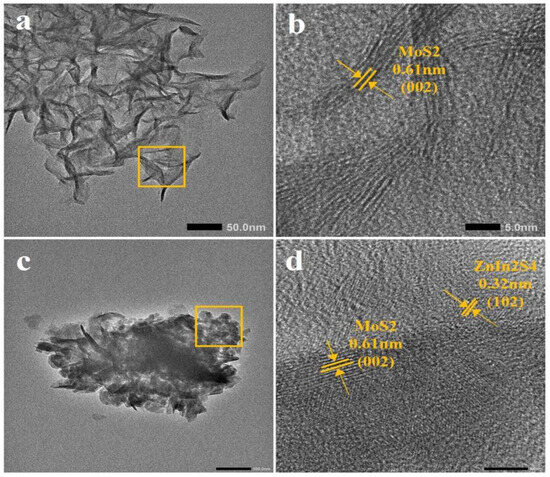
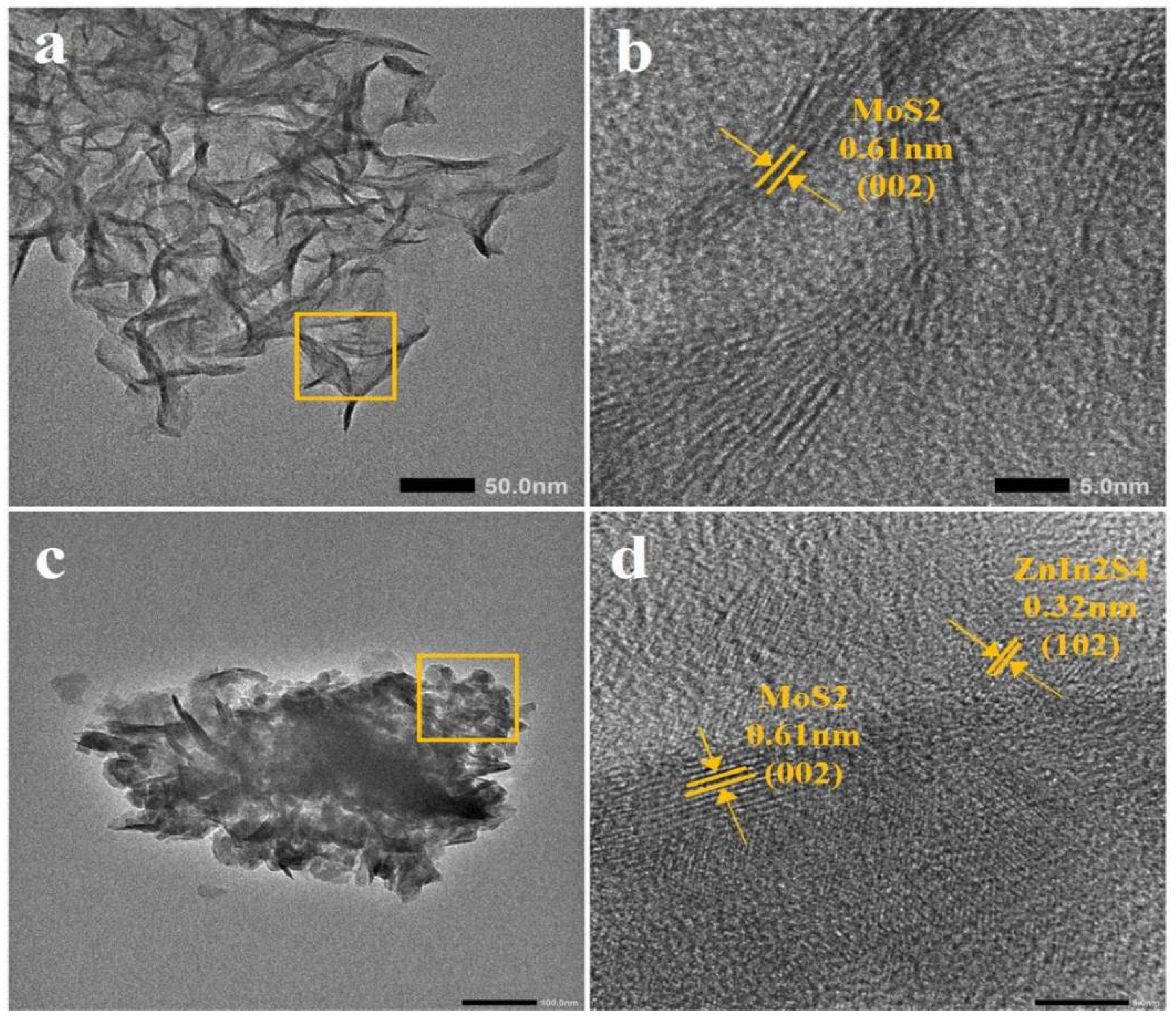
To investigate the microstructure and crystal morphology of the optimized MS/ZIS nanocomposite in depth, this study employed transmission electron microscopy (TEM) and high-resolution transmission electron microscopy (HRTEM) for detailed characterization of the samples. The corresponding results are shown in Figure 3a displays the TEM image of pure MS material, revealing a nano-flower-like structure with relatively uniform distribution between layers, exhibiting excellent two-dimensional nanostructure characteristics. Figure 3b presents the high-resolution TEM image of the marked region, clearly revealing lattice fringes within the magnified area. Measurements indicate a fringe spacing of approximately 0.323 nm, consistent with the characteristic (002) plane of MS materials reported in the literature. This further confirms the well-defined crystalline structure of the synthesized MS material. Figure 3c presents the TEM image of the optimized MS/ZIS nanocomposite, revealing a distinct heterogeneous interface structure. MS nanosheets are tightly bound to the ZIS surface, a feature that facilitates efficient charge carrier separation and transport, thereby enhancing the material’s catalytic performance. Figure 3d shows the HRTEM image of the enlarged region (yellow box) in Figure 3c. This image clearly reveals lattice stripes corresponding to the distinct crystal structures of MS and ZIS phases. The lattice stripes with a spacing of approximately 0.61 nm correspond to the (002) plane of the MS material.
Figure 3.
TEM images of MS (a) and 30% MS/ZIS (c); HRTEM images corresponding to MS (b) and 30% MS/ZIS (d).
In comparison, those with a spacing of approximately 0.32 nm are unambiguously attributed to the (102) plane of the ZIS material. These results provide conclusive confirmation of the presence of a heterointerface structure within the composite material. HRTEM analysis clearly reveals a tightly bound interface between the MS and ZIS phases within the composite. This interface structure provides an efficient interfacial pathway that facilitates the rapid migration of photogenerated carriers while effectively suppressing carrier recombination, thereby enhancing photocatalytic performance.
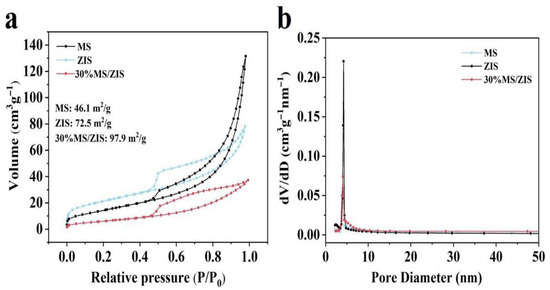
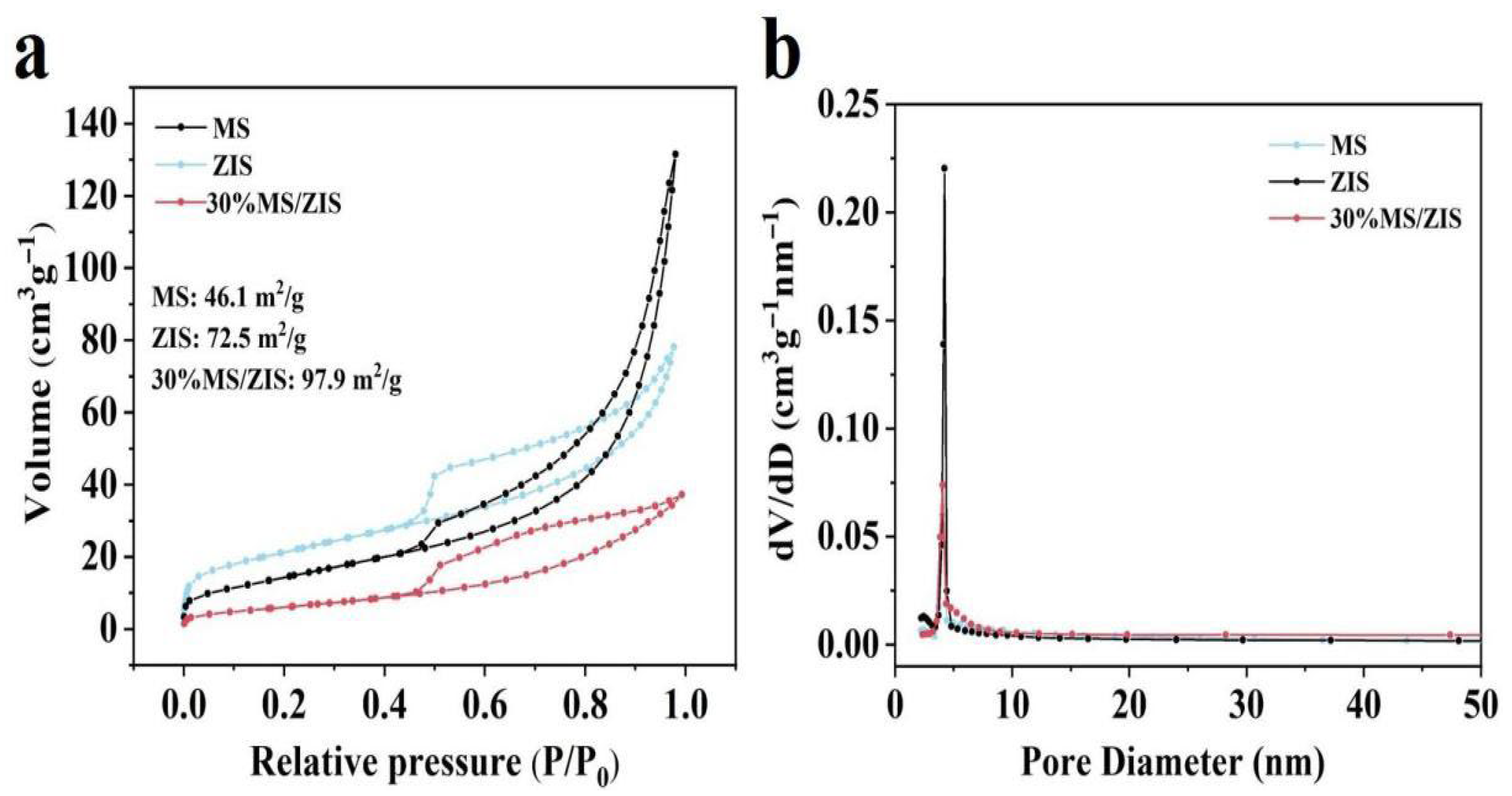
Figure 4 displays the nitrogen adsorption–desorption isotherms Figure 4a and pore size distribution curves Figure 4b of MS, ZIS, and the 30% MS/ZIS composite, which were used to characterize their specific surface area and pore structure. As shown in Figure 4a, all samples exhibit typical type-IV isotherms, indicating the presence of mesoporous structures. The specific surface areas of MS and ZIS are 46.1 and 72.5 m2/g, respectively, whereas that of 30% MS/ZIS increases significantly to 97.9 m2/g, suggesting that the integration of MS and ZIS improves the textural properties and exposes more surface active sites. As shown in Figure 4b, the pore sizes of all samples are mainly distributed in the range of 2–10 nm, further confirming their mesoporous characteristics. Such mesoporous channels are favorable for mass transfer because they facilitate the diffusion of reactants to the active sites and the removal of products from the catalyst surface during photocatalysis. Notably, the 30% MS/ZIS composite exhibits a higher pore volume in the smaller mesopore region, which may provide more accessible transport pathways and shorten the diffusion distance of reactants and intermediates. Therefore, besides its larger specific surface area, the optimized pore-size distribution of 30% MS/ZIS is also expected to reduce mass-transfer resistance and improve the utilization efficiency of active sites. These structural features jointly contribute to the enhanced photocatalytic activity and stability of the composite.
Figure 4.
(a) N2 adsorption-desorption isotherms and (b) pore size distribution for MS, ZIS and 30% MS/ZIS.
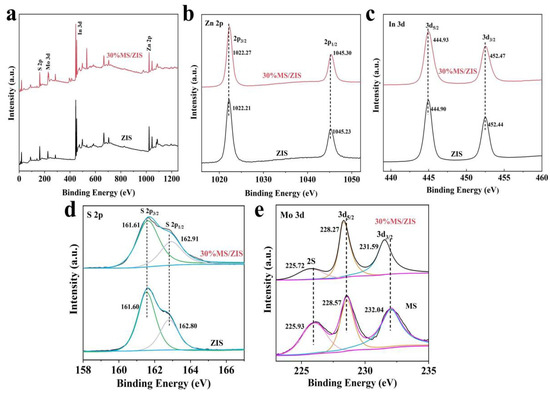
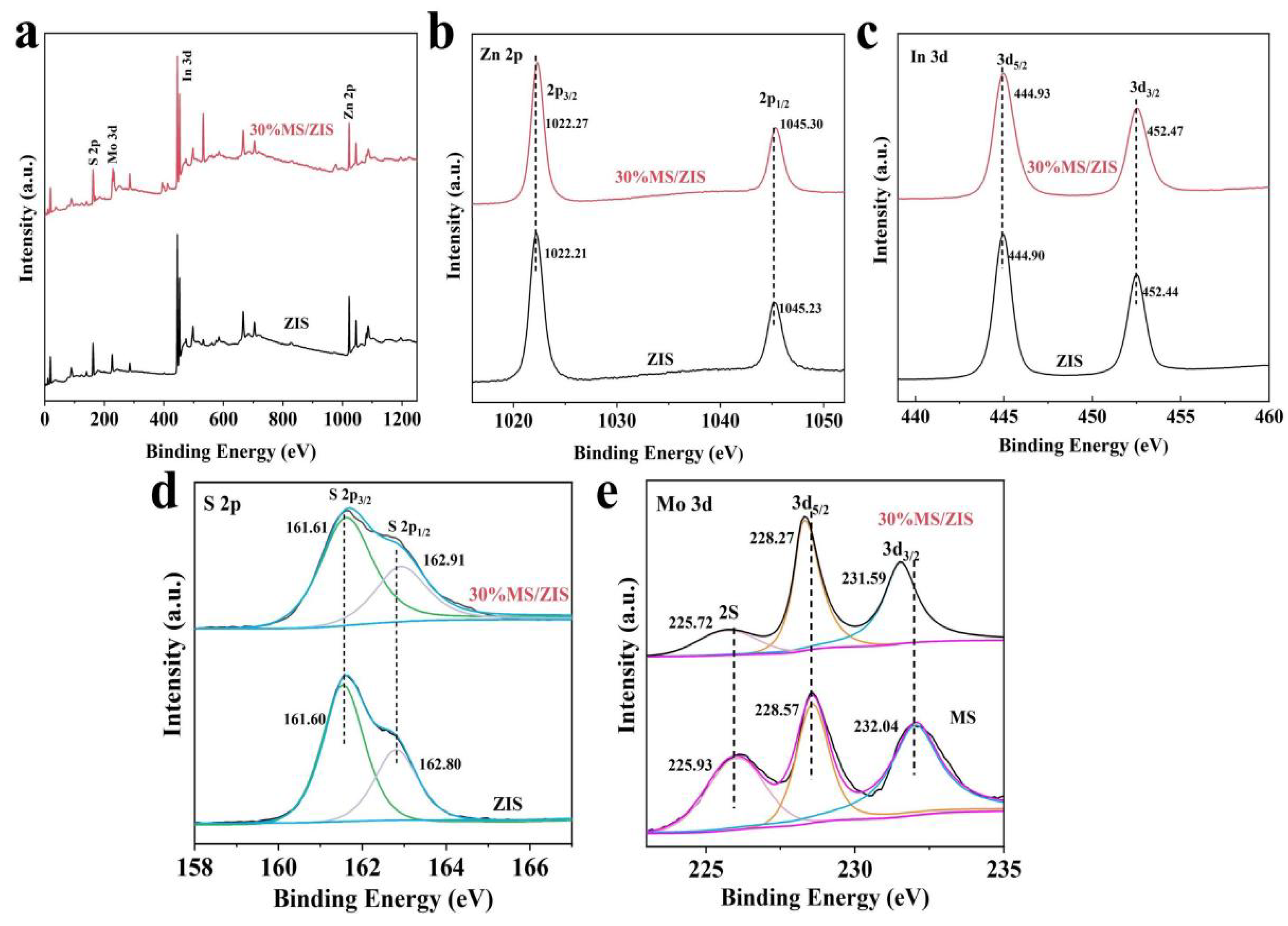
Figure 5 presents the X-Ray photoelectron spectroscopy (XPS) analysis results for the material, which aim to investigate the chemical states and interactions of surface elements. Figure 5a shows the full spectrum scan, clearly revealing characteristic peaks from elements such as S 2p, Zn 2p, In 3d, and Mo 3d, confirming the presence of Zn, In, S, and Mo elements on the material surface. These results are consistent with the previously reported X-Ray diffraction (XRD), scanning electron microscopy (SEM), transmission electron microscopy (TEM), and energy-dispersive X-Ray spectroscopy (EDS) analyses, further validating the successful synthesis of the material.
Figure 5.
(a) XPS survey spectra of ZIS and 30% MS/ZIS; (b) Zn 2p spectra of ZIS and 30% MS/ZIS; (c) In 3d spectra of ZIS and 30% MS/ZIS; (d) S 2P spectra of ZIS and 30% MS/ZIS; (e) Mo 3d spectra of MS and 30% MS/ZIS.
Detailed XPS spectra in Figure 5b–d reveal that the Zn 2p peaks in pure ZIS material appear at 1022.21 eV and 1045.23 eV, corresponding to the 2p3/2 and 2p1/2 electronic states of Zn2+, respectively. The In 3d peaks appear at 444.90 eV and 452.44 eV, corresponding to the 3d5/2 and 3d3/2 electronic transitions of In3+, respectively. The S 2p peaks are located at 161.60 eV and 162.80 eV, attributed to the 2p3/2 and 2p1/2 electronic transitions of S2-. The positions and shapes of all these characteristic peaks align with the elemental valence states of ZIS, confirming its successful synthesis [27,28]. Following the ZIS-MS composite formation, the XPS peaks for Zn 2p, In 3d, and S 2p shifted to the right, indicating increased binding energies. This indicates a reduction in electron density at the ZIS surface, suggesting electron transfer from ZIS to MS. This electron transfer process constitutes a core feature of the heterojunction structure, establishing ZIS as an electron donor and MS as an electron acceptor, thereby forming an efficient electron transfer pathway. This not only suppresses the recombination of photogenerated electrons and holes but also facilitates electron migration during photocatalytic reactions, thereby enhancing the efficiency of photocatalytic water splitting and hydrogen production.
Further analysis of the Mo 3d spectrum in Figure 5e shows that the Mo 3d5/2 and Mo 3d3/2 peaks of pristine MS are located at 228.57 and 232.04 eV, respectively, corresponding to Mo4+. In the MS/ZIS composite, these peaks shift to 228.27 and 231.59 eV, respectively. In addition, the S 2s peak shifts slightly from 225.93 to 225.72 eV. The negative shift of the Mo 3d peaks indicates an increase in electron density around the Mo centers, suggesting that the local chemical environment of Mo is altered after composite formation. This result supports the existence of strong interfacial interaction between ZIS and MS. From the viewpoint of catalysis, the electron-enriched Mo sites are favorable for accepting photogenerated electrons, which may facilitate the proton reduction process and thus contribute to the enhanced photocatalytic hydrogen evolution activity.
In summary, the positive shifts of Zn 2p, In 3d, and S 2p, along with the negative shift of Mo 3d, enable the transfer of conduction band electrons from ZIS to MS through band alignment in the ZIS/MS heterojunction structure. This configuration enhances electron separation efficiency. This effect not only reduces the recombination of photogenerated electrons and holes but also enhances the photocatalytic performance of the material. The close integration of ZIS and MS facilitates rapid migration of photogenerated electrons while suppressing their recombination, thereby enhancing the efficiency of photocatalytic reactions. This electron transfer and interaction mechanism provides a theoretical basis for the outstanding performance of MoS/ZIS composites in photocatalytic hydrogen production.
3.1. Photoelectrochemical Characterization
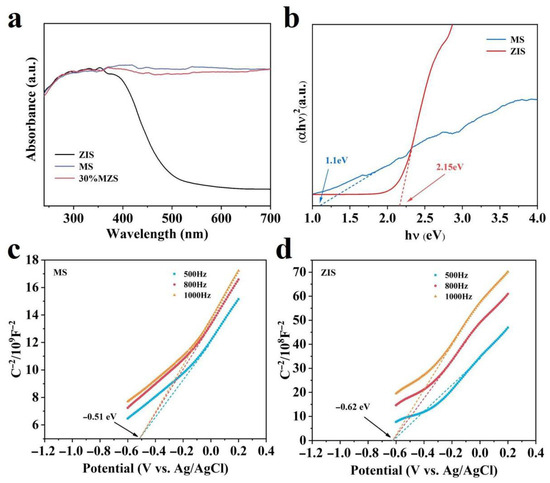
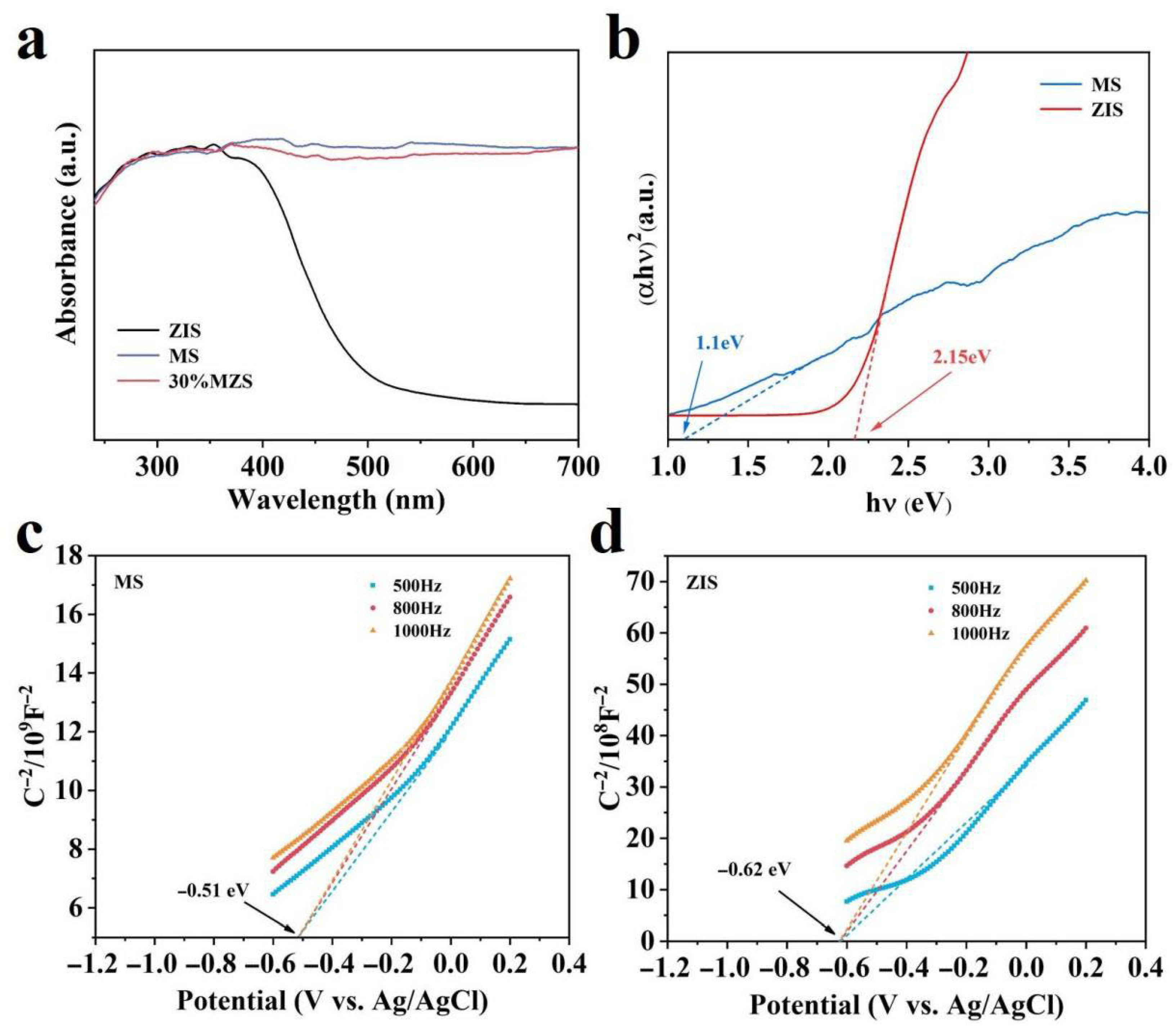
Figure 6a displays the diffuse reflectance spectra of ZIS, MS/ZIS composites, and MS in the UV–vis region. The pristine ZIS sample exhibits strong visible-light absorption mainly in the wavelength range below 500 nm. After the introduction of MS, the composites largely retain the characteristic absorption behavior of ZIS, while showing enhanced absorption in the longer-wavelength region (λ > 500 nm). This enhanced optical response cannot be attributed solely to the light-scattering effect of MS. On the one hand, MoS2 itself possesses strong visible-light absorption, which directly contributes to the increased absorption intensity of the composite in the long-wavelength region. On the other hand, the intimate interfacial contact between MS and ZIS may further improve the light-harvesting ability of the composite system and broaden its optical response range. Therefore, the incorporation of MS is beneficial for enhancing visible-light utilization, which provides more favorable conditions for subsequent photocatalytic hydrogen evolution.
Figure 6.
(a) UV–vis diffuse reflectance spectra of ZIS, MS and 30% MS/ZIS; (b) Tauc plots corresponding to MS and ZIS; (c) Mott-Schottky spectra of MS; (d) Mott–Schottky spectra of ZIS. Test conditions: 0.3 M Na2SO4 electrolyte, under visible light irradiation.
Figure 6b presents the bandgap information for MS and ZIS composites calculated using the Kubelka-Munk equation (αhν = α(hν − Eg)n/2), where α represents the light absorption coefficient, hν denotes the photon energy, Eg is the material’s bandgap, and n = 4. Since ZIS is an n-type semiconductor, the calculated bandgap energies (Eg) for ZIS and MS are 2.15 eV and 1.1 eV, respectively. This indicates that ZIS possesses a larger bandgap, limiting its ability to absorb light in the longer-wavelength visible spectrum. Conversely, MS exhibits a smaller bandgap, enabling it to absorb more light, particularly in the longer-wavelength visible region. This bandgap difference is particularly pronounced in the composite material, meaning that the MS/ZIS composite can enhance catalytic reaction efficiency by effectively separating photo-generated electrons and holes. The narrowing of the bandgap, especially with the introduction of MS, allows the composite to absorb more energy within the visible spectrum, thereby contributing to the enhanced photocatalytic activity of the MS/ZIS composite.
Figure 6c,d display the slopes of ZIS and MS in Mott-Schottky measurements, both of which point upward, indicating that both materials belong to the n-type semiconductor category. Mott-Schottky analysis is commonly employed to determine the electronic structure of semiconductors, particularly the flat-band potential and the relative positions of the Fermi level and the conduction band level. By linearly extrapolating the Mott-Schottky plots in the figure, we can determine the flat-band potentials for ZIS and MS. The results indicate that the flat-band potential for ZIS is −0.62 V (vs. Ag/AgCl reference electrode), while that for RS is −0.51 V. The flat-band potential typically approaches the Fermi level of n-type semiconductors. Since the conduction band level of n-type semiconductors is generally about 0.20 eV lower than the Fermi level, the conduction band potentials of both materials can be inferred. Specifically, the conduction band potential of VIS is approximately −0.82 V, and that of RS is approximately −0.71 V, both relative to the Ag/AgCl electrode. Further considering the potential conversion relationship between the standard hydrogen electrode (NHE) and the Ag/AgCl electrode (ENHE = EAg/AgCl + 0.20 V), the conduction band potentials of VIS and RS relative to NHE can be calculated as −0.62 V and −0.51 V, respectively. To further infer the position of the valence band (VB), we incorporated the bandgap (Eg) data of the materials. Using the formula Eg = EVB − ECB, the band gaps for ZIS and MS are determined to be 2.15 eV and 1.10 eV, respectively. Consequently, the valence band (VB) energy level for ZIS is calculated to be 1.53 V (relative to NHE), while that for MS is 0.59 V (relative to NHE), Supplementary Table S1 displays energy band positions of MS and ZIS (relative to the standard hydrogen electrode).
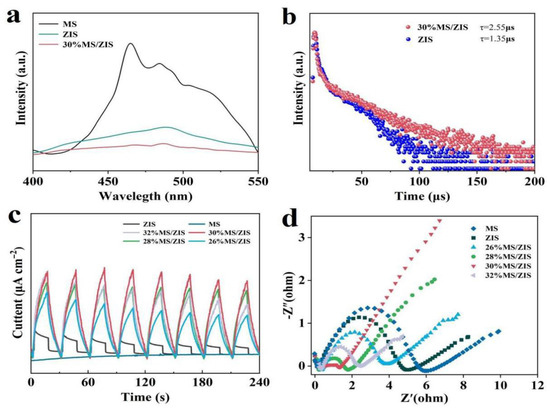
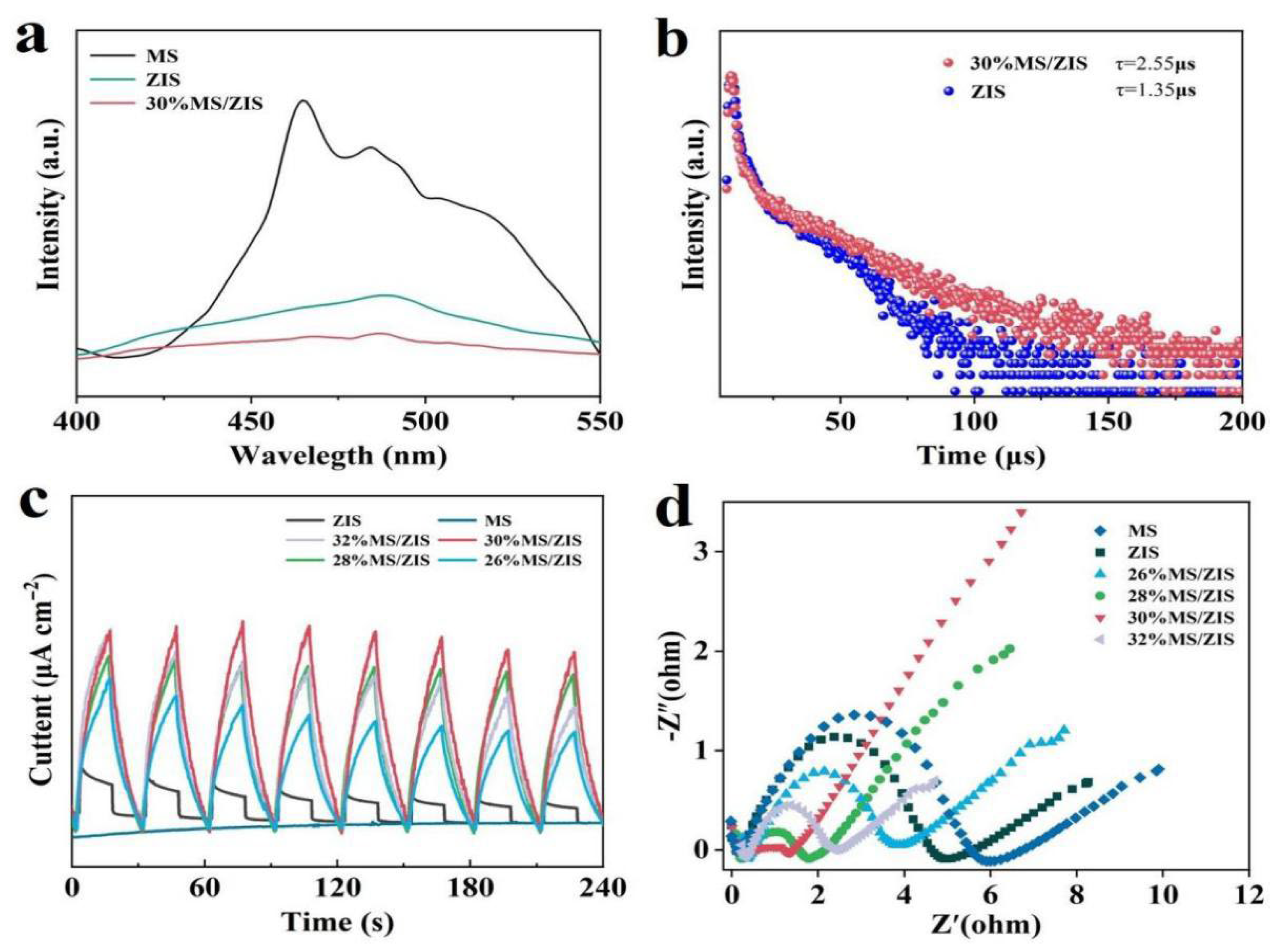
Figure 7a displays the photoluminescence (PL) spectra of ZIS, MS, and 30% MS/ZIS samples. These spectra reveal the electronic transitions occurring in the materials under illumination. The peak intensity in the PL spectra provides an indirect measure of the recombination efficiency between photogenerated electrons and holes within the material. Specifically, photogenerated electrons transition to the conduction band upon absorbing light energy, leaving behind holes. When these carriers recombine, they release energy, which is manifested as a fluorescence signal. Analysis of the PL peak intensities reveals that MS exhibits the highest peak intensity, followed by ZIS, and finally the 30% MS/ZIS composite. This indicates that photogenerated electron–hole recombination is more intense in the MS material. The introduction of a heterojunction formed by combining MS and ZIS significantly slows this recombination process. This result demonstrates the advantage of the heterojunction structure, which more effectively promotes the separation of photogenerated electrons and holes, thereby enhancing photocatalytic efficiency. This observation aligns closely with the photocatalytic hydrogen production performance of these materials, where 30% MS/ZIS exhibited the optimal photocatalytic hydrogen production capability.
Figure 7.
(a) PL spectra of MS, ZIS, and 30% MS/ZIS; (b) TR-PL spectra of ZIS and 30% MS/ZIS; (c) transient photocurrent maps of ZIS, MS, 26% MS/ZIS, 28% MS/ZIS, 30% MS/ZIS, and 32% MS/ZIS; (d) Impedance maps of MS, ZIS, C-R-5, 30% MS/ZIS, and 32% MS/ZIS. (d) Impedance maps of MS, ZIS, C-R-5, 30% MS/ZIS, and 32% MS/ZIS. Test conditions: electrolyte containing 0.1 M K3[Fe(CN)6], 0.1 M K4[Fe(CN)6], and 0.1 M KCl, measured at open-circuit potential.
Figure 7b displays the time-resolved photoluminescence (TR-PL) spectra of ZIS and 30% MS/ZIS. The TR-PL spectrum reflects the lifetime of photogenerated carriers, i.e., the time from excitation to recombination. By comparing the photogenerated carrier lifetimes across different materials, their electron/hole separation efficiency can be evaluated. Compared to pristine ZIS (lifetime of 1.35 µs), the photogenerated carrier lifetime in 30% MS/ZIS significantly increases to 2.55 µs. This indicates that the heterojunction formed by the MS/ZIS composite significantly accelerates the separation of photogenerated electrons and holes, suppressing recombination and enabling more photogenerated electrons to participate in the hydrogen evolution reaction, thereby enhancing photocatalytic efficiency.
Figure 7c displays the transient photocurrent responses of the samples under visible-light irradiation. The measurements were carried out using an electrochemical workstation (Zahner-Elektrik GmbH & Co. KG, Kronach, Germany) over eight on/off cycles with 15 s illumination intervals. The transient photocurrent response is an effective indicator of the separation and transport efficiency of photogenerated charge carriers. Pure ZIS and MS exhibit relatively weak photocurrent responses, indicating limited charge separation efficiency. After coupling MS with ZIS, the photocurrent response of the MS/ZIS composites is significantly enhanced, demonstrating that the introduction of MS promotes the separation and migration of photogenerated electrons and holes.
More importantly, the photocurrent response varies with the MS loading amount. At low MS content, the amount of MS is insufficient to form enough effective interfacial contact with ZIS, so the promotion of charge separation remains limited. When the MS loading reaches 30%, the heterojunction interface becomes more optimal, which facilitates interfacial electron transfer and suppresses electron–hole recombination, resulting in the strongest photocurrent response. However, further increasing the MS content may lead to excessive surface coverage of ZIS and possible aggregation of MS, which can hinder light harvesting and charge migration. Therefore, the 30% MS/ZIS composite exhibits the best photoelectrochemical performance, which is consistent with its superior photocatalytic hydrogen evolution activity.
Figure 7d shows the electrochemical impedance spectroscopy (EIS) results of ZIS, MS, and MS/ZIS composites with different MoS2 loading ratios. The diameter of the semicircular arc in the Nyquist plot reflects the interfacial charge-transfer resistance. Among all samples, pure MS exhibits the largest arc radius, indicating the highest resistance for photogenerated charge transfer. In contrast, the 30% MS/ZIS composite exhibits the smallest arc radius, suggesting the lowest charge-transfer resistance and the fastest interfacial electron transport [29,30].
The EIS trend is closely related to the MoS2 loading amount. At relatively low MoS2 content, the heterojunction interface between MoS2 and ZIS is not sufficiently developed, so the improvement in interfacial charge transfer is limited. With increasing MoS2 loading, the interfacial contact becomes more effective, which reduces the charge-transfer resistance. However, excessive MoS2 loading may partially cover the active surface of ZIS and introduce additional transfer barriers due to stacking or aggregation, thereby increasing the charge-transfer resistance again. Therefore, the 30% MS/ZIS composite achieves the optimal balance between heterojunction formation and surface coverage, leading to the most favorable electron transport behavior. These EIS results are in good agreement with the photocurrent response and photocatalytic hydrogen evolution performance.
3.2. Performance Analysis of Photocatalytic Water Splitting for Hydrogen Production
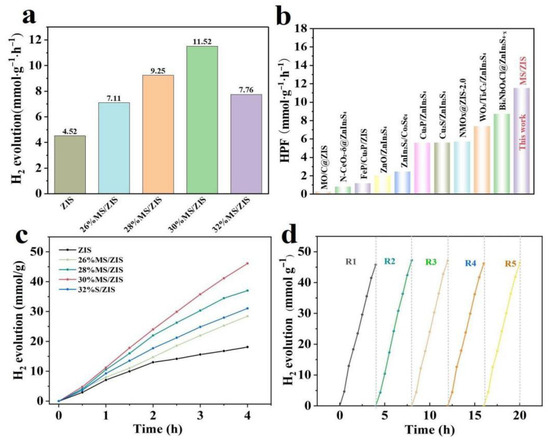
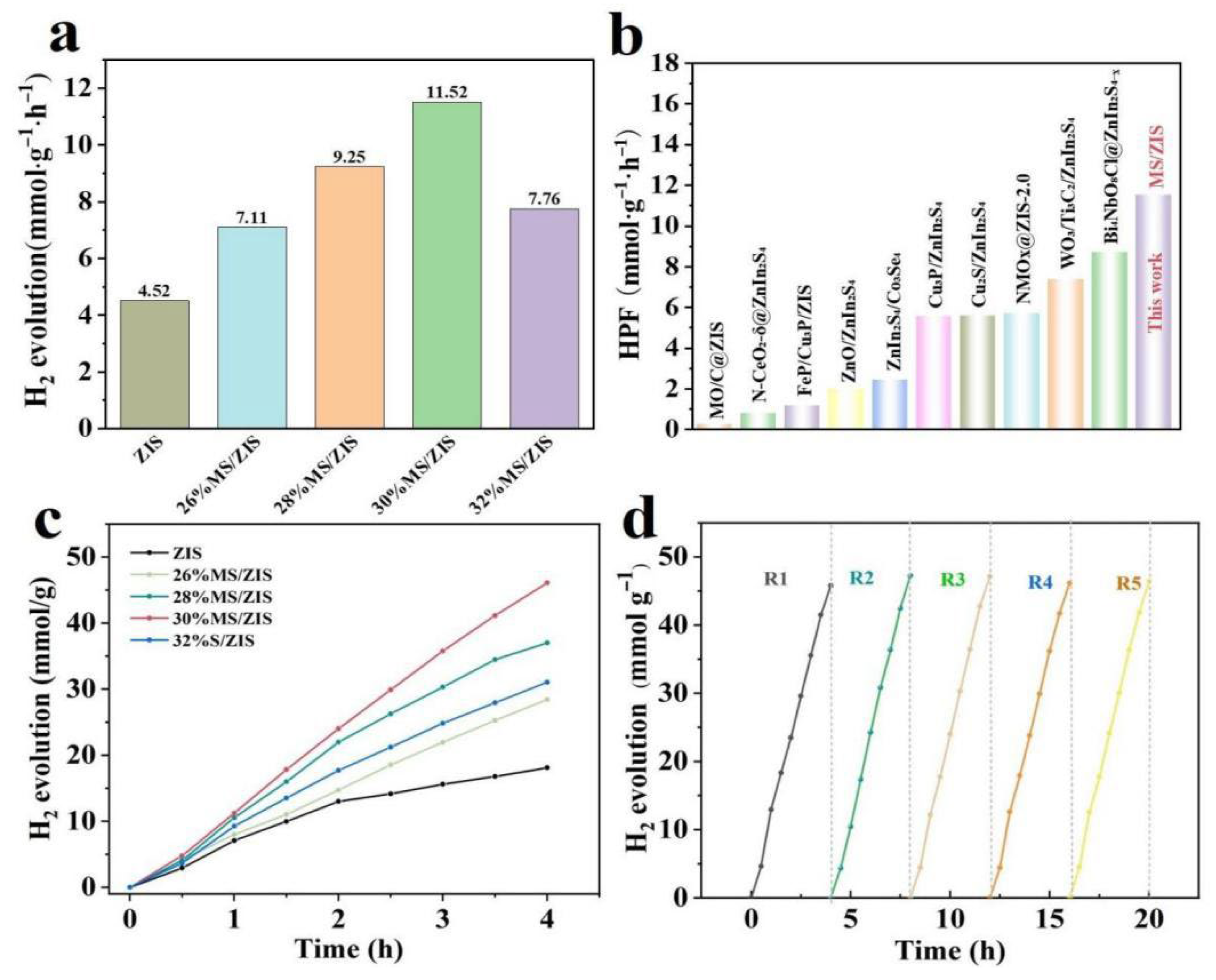
Figure 8a shows the photocatalytic H2 evolution performance of different materials under simulated solar irradiation. The tests were carried out using 10 mg of catalyst dispersed in 50 mL aqueous solution containing 0.35 mol·L−1 Na2S and 0.25 mol·L−1 Na2SO3, irradiated by a 300 W Xe lamp (CEL-HXF300-T3, Beijing China Education Au-light Co., Ltd., Beijing, China) with an AM 1.5 filter at about 6 °C, and the H2 evolution rate was calculated from the average value over 4 h.
Figure 8.
(a) Hydrogen production performance plots of ZIS, 26% MS/ZIS, 28% MS/ZIS, 30% MS/ZIS, and 32% MS/ZIS; (b) Comparison of hydrogen production performance of 30% MS/ZIS with the existing photocatalysts; (c) Hydrogen production rate plots of ZIS, 26% MS/ZIS, 28% MS/ZIS, 30% MS/ZIS, and 32% MS/ZIS; (d) Cycling performance of 30% MS/ZIS. MS/ZIS; (c) graph of hydrogen production rate of ZIS, 28% MS/ZIS, 30% MS/ZIS and 32% MS/ZIS; and (d) graph of cycling performance of 30% MS/ZIS.
Among all samples, pristine ZIS shows the lowest hydrogen generation rate of 4.52 mmol·g−1·h−1, which may be due to its limited light absorption and poor charge transfer ability. With the introduction of MS, the hydrogen evolution activity is markedly enhanced. In particular, 30% MS/ZIS exhibits the highest H2 evolution rate of 11.52 mmol·g−1·h−1, about 2.5 times that of pure ZIS, indicating the significant promoting effect of MS on the photocatalytic performance of ZIS.
The difference in photocatalytic performance among the composites is closely related to the loading amount of MS. At an appropriate loading level, MS can form intimate interfacial contact with ZIS, which is beneficial for constructing an efficient heterojunction structure. This not only facilitates the separation and transfer of photogenerated charge carriers, but also provides more accessible active sites for the hydrogen evolution reaction. When the MS loading is relatively low, however, the number of heterojunction interfaces and catalytic active sites is still limited, so the promoting effect on charge separation and surface reaction kinetics cannot be fully realized. In contrast, when the MS content is further increased to 32%, the H2 evolution rate decreases to 7.76 mmol·g−1·h−1. This decline may be attributed to the excessive coverage of the ZIS surface by MS, reduced light utilization, and possible aggregation of excess MS, which may hinder interfacial charge transfer and accelerate charge recombination. Therefore, an optimum MS loading amount exists, at which the beneficial effects of heterojunction formation, charge separation, and active-site exposure are maximized, while the adverse effects caused by excessive loading are minimized.
Figure 8b and Supplementary Table S2 present a comparison of the hydrogen evolution rates between the current work and other photocatalytic materials reported in the literature. It can be observed that the hydrogen production rate of 30% MS/ZIS (11.52 mmol·g−1·h−1) outperforms most existing ZIS-based composites and approaches the levels of some high-performance photocatalysts. This indicates that MS doping significantly enhances the photocatalytic performance of ZIS, particularly in terms of hydrogen generation efficiency under visible light. Figure 8c further illustrates the time-dependent hydrogen evolution rates of different samples over a 4-h period. All composites exhibit relatively linear hydrogen evolution rates throughout testing, indicating good photocatalytic stability under visible light irradiation. Notably, the 30% MS/ZIS material maintains a stable hydrogen evolution curve over extended periods, demonstrating sustained high hydrogen production efficiency during continuous reactions. In contrast, the pure ZIS exhibits a relatively low hydrogen evolution rate, with an initial rate that is significantly lower than that of the composite materials. Figure 8d evaluates the cycling stability of the 30% MS/ZIS composite. The figure shows that after five cycles, the catalyst retains its initial hydrogen generation rate, indicating minimal degradation in performance during repeated use. This signifies excellent reusability and strong stability. The 30% MS/ZIS composite not only exhibits high hydrogen production efficiency but also demonstrates outstanding cyclic stability and long-term stability.
Experimental results demonstrate that the MS/ZIS composite (30% MS/ZIS) significantly outperforms pure ZIS in photocatalytic water splitting, primarily attributed to the heterojunction structure formed between them. The incorporation of MS not only enhances ZIS’s light absorption capacity but also improves electron separation efficiency. Within the heterojunction structure, the interfacial contact between MS and ZIS facilitates the efficient transfer of photo-generated electrons and holes, suppresses electron–hole pair recombination, and enhances photocatalytic reaction efficiency. Consequently, the 30% MS/ZIS composite material exhibits outstanding performance in hydrogen production rate, cycling stability, and long-term stability, demonstrating its broad application prospects as a photocatalyst.
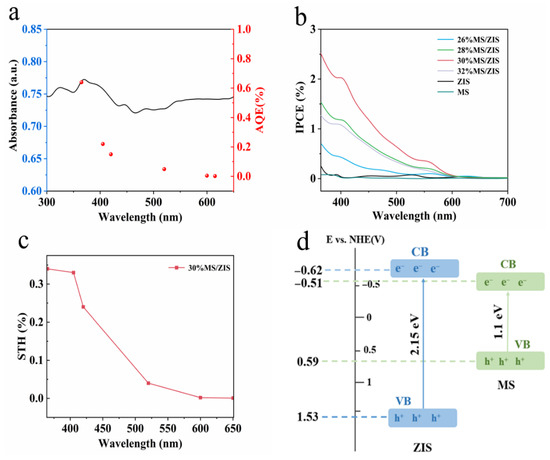
Figure 9a presents the apparent quantum efficiency (AQE) of 30% MS/ZIS at different wavelengths (365, 405, 420, 520, 600, and 650 nm). The AQE reaches the maximum value of 0.64% at 365 nm and decreases significantly with increasing wavelength, dropping to 0.049% at 520 nm, 0.004% at 600 nm, and 0.0016% at 650 nm. This wavelength-dependent trend is generally consistent with the UV-Vis absorption behavior shown in Figure 6a. The relatively high AQE at 365 nm can be attributed to stronger photoexcitation under short-wavelength irradiation and the higher photon energy. By contrast, although the catalyst still exhibits some absorption in the long-wavelength visible region, the lower photon energy and weaker effective excitation near the absorption edge greatly reduce the photon utilization efficiency, leading to a sharp decline in AQE.
Figure 9.
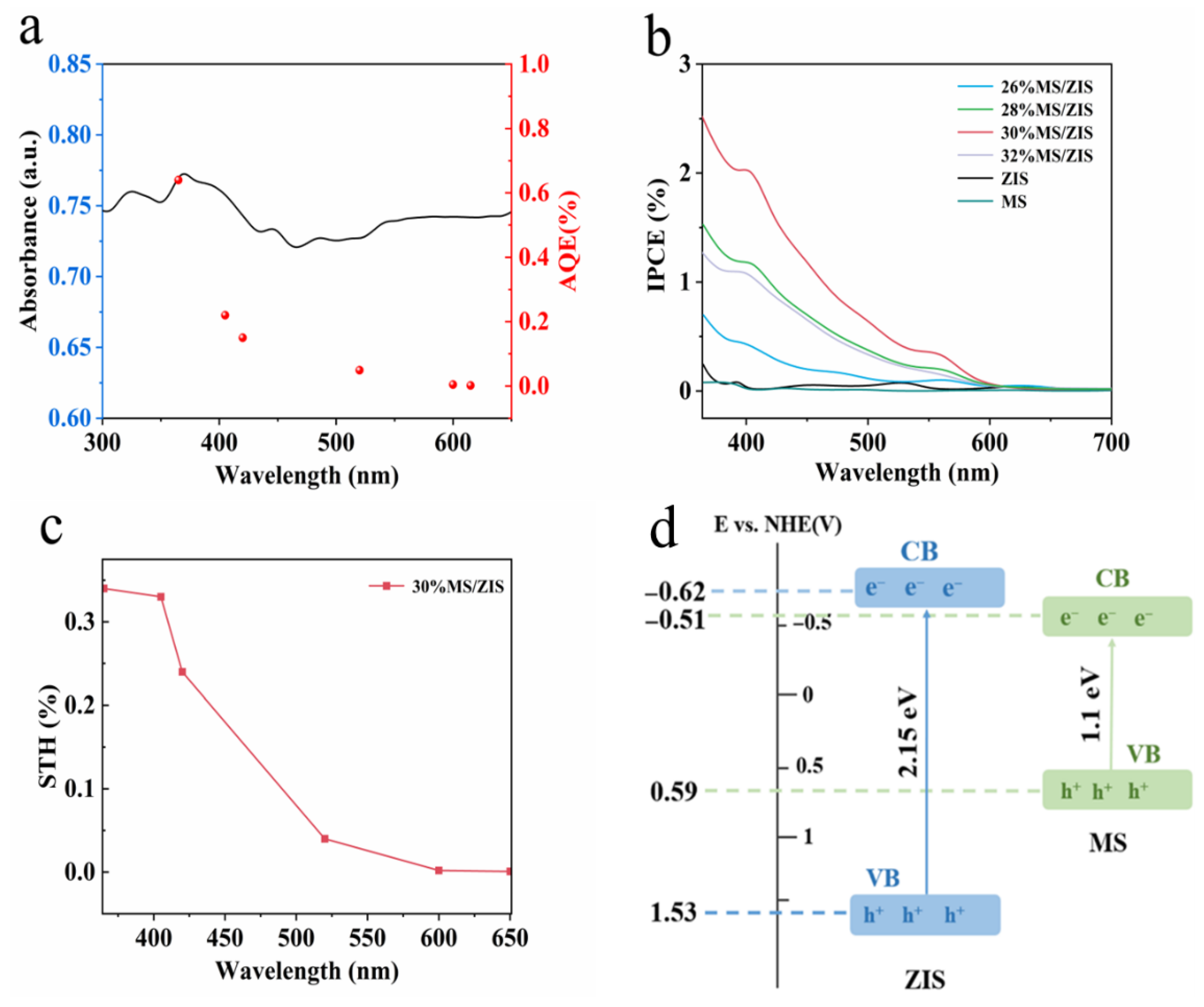
(a) Apparent quantum efficiency versus UV-Vis diffuse reflectance spectra of 30% MS/ZIS at different wavelengths; (b) Photovoltaic conversion efficiencies of MS, ZIS, 26% MS/ZIS, 28% MS/ZIS, 30% MS/ZIS, and 32% MS/ZIS; and (c) Efficiency of solar hydrogen production at different wavelengths for 30% MS/ZIS. (d) Energy band positions of MS and ZIS.
This indicates that the photocatalytic performance of MS/ZIS exhibits a strong wavelength dependence across the UV–visible spectrum, with the strongest absorption and conversion capabilities at 365 nm. Figure 9b displays the intrinsic photoelectric conversion efficiency (IPCE) of 30% MS/ZIS.
The results indicate that the 30% MS/ZIS material exhibits a high IPCE value in the ultraviolet region, which is highly correlated with its light absorption characteristics. The IPCE value of this material exhibits distinct peaks at shorter wavelengths (e.g., 365 nm and 420 nm), further validating its ability to efficiently convert light energy into electrical energy at these wavelengths.
Figure 9c illustrates the variation in solar-to-hydrogen (STH) efficiency. Notably, at 365 nm, MS/ZIS achieves the highest STH of 0.34%, indicating outstanding photocatalytic hydrogen generation capability at this wavelength. STH values at other wavelengths are lower, with STH at 520 nm, 600 nm, and 650 nm being 0.037%, 0.002%, and 0.0007%, respectively. This trend suggests that the photocatalytic activity of MS/ZIS decreases significantly at longer wavelengths, likely due to insufficient light energy at these wavelengths to excite MS/ZIS for photocatalytic reactions effectively.
Figure 9d illustrates the band structures of ZIS and MS. Based on the measured band positions, the MS/ZIS composite is confirmed to form a type-II heterojunction. The conduction band potential of ZIS is −0.62 V vs. NHE, whereas that of MS is −0.51 V vs. NHE. Since the conduction band of ZIS is more negative, photogenerated electrons preferentially transfer from the CB of ZIS to the CB of MS. Meanwhile, the valence band potential of ZIS is 1.53 V vs. NHE, which is more positive than that of MS (1.10 V vs. NHE), indicating that photogenerated holes transfer from the VB of MS to the VB of ZIS. Such a band alignment enables efficient spatial separation of electrons and holes, which is characteristic of a type-II heterojunction. As a result, electrons accumulate on MS and participate in the hydrogen evolution reaction, while holes accumulate on ZIS and are consumed in the oxidation process. Therefore, the type-II heterojunction formed between ZIS and MS effectively suppresses charge recombination and enhances the photocatalytic reaction efficiency.
Collectively, the photocatalytic performance of MS is closely correlated with its light absorption characteristics. Particularly at 420 nm, the material exhibits the highest quantum efficiency and solar-to-hydrogen conversion efficiency, providing strong support for its photocatalytic applications within the visible spectrum. IPCE data further substantiates the material’s robust charge separation capability and high photoelectric conversion efficiency in the UV–visible spectrum. Moreover, the MS/ZIS composite forms a heterojunction structure, which plays a crucial role in enhancing photocatalytic performance. This heterojunction effectively promotes the separation of photo-generated electrons and holes, reducing electron recombination probability and thereby improving photocatalytic reaction efficiency. Particularly at the 365 nm wavelength, the MS/ZIS composite exhibits a pronounced enhancement effect, further demonstrating the positive influence of the heterojunction structure on photocatalytic performance (Supplementary Table S3). These results reveal the high-efficiency performance of MS/ZIS and its heterojunction form as photocatalysts within the visible light range, providing valuable guidance for developing materials with higher photocatalytic efficiency.
3.3. Analysis of the Mechanism of Photocatalytic Water Splitting for Hydrogen Production
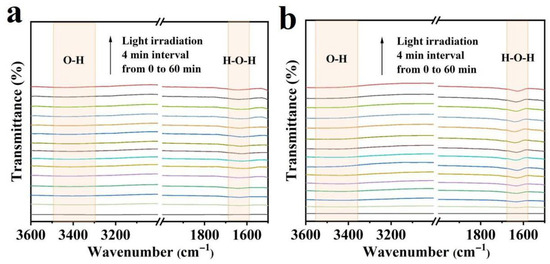
Figure 10 presents in situ FT-IR spectral data obtained during photocatalytic water splitting reactions on ZIS and 30% MS/ZIS materials. In these spectra, the peak at approximately 1650 cm−1 corresponds to the H-O-H bending vibration mode (δH-O-H) of the water molecule, while the peak at 3400 cm−1 relates to the O-H stretching vibration mode (νO-H) of the water molecule. The enhancement of the O-H stretching mode (νO-H) is typically associated with the dissociation of the water molecule, which may release additional protons and contribute to photocatalytic hydrogen evolution. Conversely, the H-O-H bending mode (δH-O-H) relates to the adsorption state of water molecules on the catalyst surface. As observed in the figure, both materials exhibit gradually increasing intensities of νO-H and δH-O-H peaks in their FT-IR spectra with prolonged illumination, indicating progressive consumption of water molecules and their incorporation into photocatalytic reactions. Notably, the MS/ZIS material in Figure 10b demonstrates pronounced peak shifts immediately upon illumination initiation, suggesting higher activity in photocatalytic hydrogen evolution reactions. In contrast, the ZIS material exhibits no significant peak changes until after illumination, indicating that the composite material possesses superior capabilities for water molecule adsorption and reaction participation, further validating its excellent photocatalytic hydrogen evolution performance.
Figure 10.
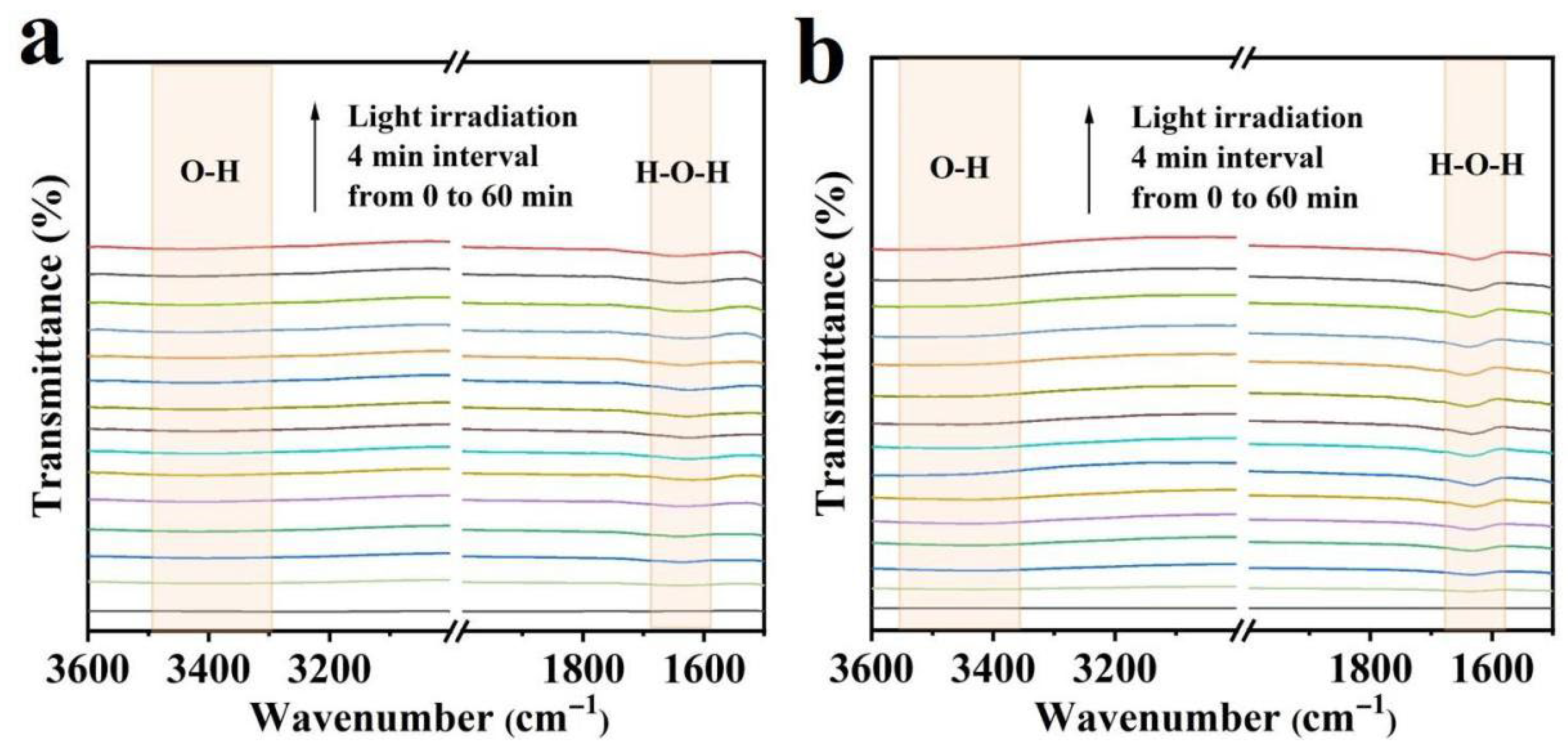
In situ IR maps of photocatalytic water decomposition reactions for ZIS (a) and 30% MS/ZIS (b).
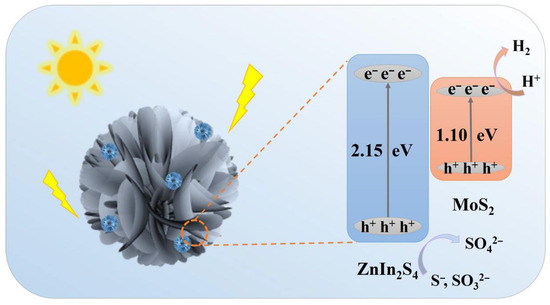
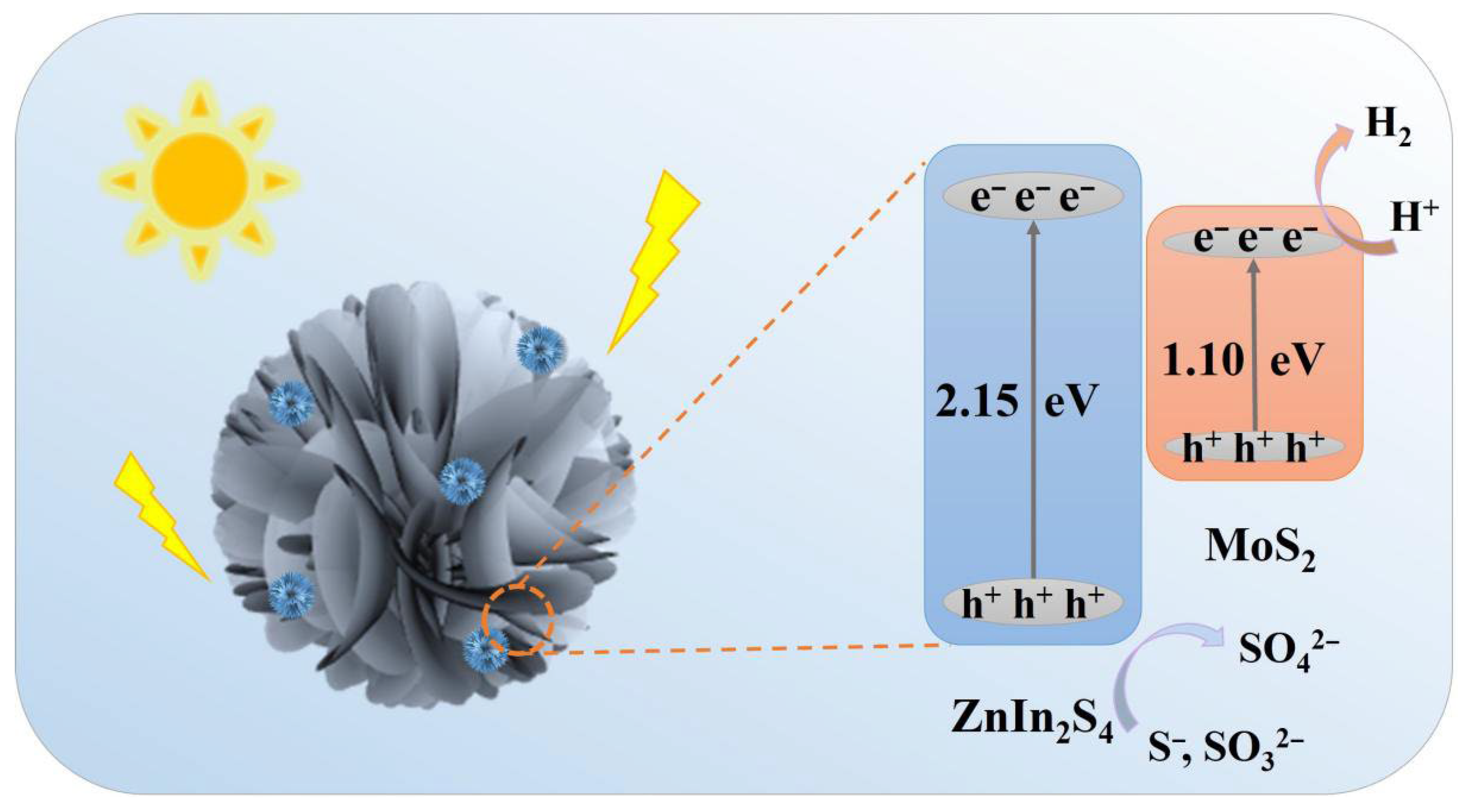
Figure 11 illustrates a schematic diagram of the proposed mechanism for photocatalytic water splitting over 30% MS/ZIS. Under visible-light irradiation, electrons in the valence band (VB) of ZnIn2S4 (ZIS) are excited to the conduction band (CB), generating photogenerated electrons and holes. In pristine ZIS, these photogenerated carriers readily recombine, which limits the photocatalytic efficiency. However, the introduction of MoS2 into ZIS forms a type-II heterojunction, which effectively promotes charge separation and transfer. At the interface between ZIS and MS, photogenerated electrons from the CB of ZIS can efficiently transfer to the CB of MS, where they participate in the hydrogen evolution reaction and suppress the recombination of photogenerated electron-hole pairs within ZIS. Meanwhile, photogenerated holes are retained in the VB of ZnIn2S4 and are consumed by the Na2S/Na2SO3 sacrificial agent. In addition, the 30% MS/ZIS composite exhibits enhanced visible-light absorption over a broader wavelength range, thereby generating more photogenerated carriers and further improving photocatalytic efficiency. In summary, the type-II heterojunction structure of ZIS and MS not only improves electron separation and transfer capabilities but also effectively suppresses the recombination of photogenerated carriers, thereby enhancing photocatalytic hydrogen production efficiency.
Figure 11.
Schematic diagram of the mechanism of photocatalytic water decomposition reaction.
4. Conclusions
In summary, this study successfully constructed a MoS2/ZnIn2S4 heterojunction photocatalyst for hydrogen production by growing MoS2 nanospheres on three-dimensional nanoflower-like ZnIn2S4. The surface of ZIS nanoflowers provides abundant peak active sites. This structure effectively prevents self-aggregation, offering a larger contact surface area for MS and thereby enhancing catalytic activity. This architecture endows the MS/ZIS composite with superior photocatalytic efficiency. The heterojunction formed between MS and ZIS significantly shortens electron transport pathways and enhances electron–hole separation efficiency, thereby reducing the recombination of photogenerated carriers. This mechanism markedly enhances hydrogen production performance during photocatalytic water splitting. Experimental results indicate that the MS/ZIS catalyst exhibits optimal photocatalytic activity at a mass fraction of 30 wt% MS, achieving a hydrogen production rate of 11.52 mmol g−1 h−1. This performance substantially exceeds that of pure ZIS (4.52 mmol·g−1·h−1) and most reported ZIS-based photocatalysts. This result validates the synergistic effect between MS and ZIS via heterojunction formation, enhancing the photocatalytic efficiency of the material. Consequently, this study provides new insights for developing highly efficient ZIS-based photocatalysts, particularly through the design of heterojunction structures, which can significantly enhance catalyst performance. This not only helps address the energy crisis but also plays a positive role in environmental protection. By rationally optimizing the material’s structure and electronic properties, we have opened new avenues for photocatalytic hydrogen production research. This approach holds significant potential for application, particularly in addressing the increasingly severe energy and environmental challenges.
Supplementary Materials
The following supporting information can be downloaded at: https://www.mdpi.com/article/10.3390/su18094363/s1, Table S1: Energy band positions of MS and ZIS (relative to the standard hydrogen electrode); Table S2: Comparison of 30% MS/ZIS with other photocatalytic materials available in the literature; Table S3: AQY and STH for 30% MS/ZIS. References [22,31,32,33,34,35,36,37,38,39] are cited in Supplementary Materials.
Author Contributions
Formal analysis, W.L. and Y.W.; Investigation, J.Y. and J.D.; Supervision, Y.Z. All authors have read and agreed to the published version of the manuscript.
Funding
This work was financially supported by National Natural Science Foundation of China (22302119), Shanghai Youth Science and Technology Qiming Star (23YF1412300), and the Innovative research team of a high-level local university in Shanghai for their financial support.
Institutional Review Board Statement
Not applicable.
Informed Consent Statement
Not applicable.
Data Availability Statement
The original contributions presented in this study are included in the article/Supplementary Materials. Further inquiries can be directed to the corresponding author.
Conflicts of Interest
The authors declare no conflicts of interest.
References
- Xiao, Q.; Yang, X.; Guo, X.; Jin, Z. Strong interface coupling of H-substituted graphdiyne-based promotes photocatalytic hydrogen production. Appl. Catal. B Environ. Energy 2024, 359, 124502. [Google Scholar] [CrossRef] [Scilit]
- Haider, Z.; Imran, M.; Muhmood, T. Photoelectrochemical Production of Peroxydisulfate (PDS), a Clean Oxidant: Recent Development and Challenges. Int. J. Mol. Sci. 2026, 27, 3066. [Google Scholar] [CrossRef] [Scilit]
- Rahman, M.Z.; Raziq, F.; Zhang, H.; Gascon, J. Key strategies for enhancing H2 production in transition metal oxide based photocatalysts. Angew. Chem. Int. Ed. 2023, 62, e202305385. [Google Scholar] [CrossRef] [Scilit]
- Liu, J.; Yang, X.; Guo, X.; Jin, Z. Flowered molybdenum base trimetallic oxide decorated by CdS nanorod construct S-scheme heterojunctions for efficient photocatalytic hydrogen evolution. J. Mater. Sci. Technol. 2024, 196, 112–124. [Google Scholar] [CrossRef] [Scilit]
- Chen, Q.; Gao, G.; Guo, H.; Wang, S.-A.; Wang, Q.; Fang, Y.; Hu, X.; Duan, R. Boron-doped polymeric carbon nitride co-modified with carbon-ring and carboxyl for efficient photocatalytic overall water-splitting. Chem. Eng. J. 2023, 470, 144199. [Google Scholar] [CrossRef] [Scilit]
- Wang, A.; Zhang, L.; Li, X.; Gao, Y.; Li, N.; Lu, G.; Ge, L. Synthesis of ternary Ni2P@UiO-66-NH2/Zn0.5Cd0.5S composite materials with significantly improved photocatalytic H2 production performance. Chin. J. Catal. 2022, 43, 1295–1305. [Google Scholar] [CrossRef] [Scilit]
- Song, L.; Zhang, T.; Zhang, X.; Tian, J.; Wang, J.; Yang, J.; Wang, W.; Lin, K.; Feng, D.; Ma, B. Enhanced hydrogen production performance via noble-metal-free amorphous NiZnSX-CS co-catalyst with novel gradient coating structure. Appl. Catal. B Environ. Energy 2024, 359, 124458. [Google Scholar] [CrossRef] [Scilit]
- Zhang, L.; Jiang, X.; Jin, Z.; Tsubaki, N. Spatially separated catalytic sites supplied with the CdS-MoS2-In2O3 ternary dumbbell S-scheme heterojunction for enhanced photocatalytic hydrogen production. J. Mater. Chem. A 2022, 10, 10715–10728. [Google Scholar] [CrossRef] [Scilit]
- Yang, R.; Fan, Y.; Zhang, Y.; Mei, L.; Zhu, R.; Qin, J.; Hu, J.; Chen, Z.; Ng, Y.H.; Voiry, D.; et al. 2D transition metal dichalcogenides for photocatalysis. Angew. Chem. 2023, 135, e202218016. [Google Scholar] [CrossRef] [Scilit]
- Che, Y.; Wang, K.; Wang, C.; Weng, B.; Chen, S.; Meng, S. Lattice Match-Enabled Zn3In2S6@CdS S-Scheme Heterojunction with S Covalent Bond Bridge for Simultaneous H2O2 Photosynthesis and H2 Production. J. Mater. Sci. Technol. 2025, 243, 228–236. [Google Scholar] [CrossRef] [Scilit]
- Li, S.; Meng, S.; Zhang, H.; Puente-Santiago, A.R.; Wang, Z.; Chen, S.; Muñoz-Batista, M.J.; Zheng, Y.; Weng, B. Tailoring Redox Active Sites with Dual-Interfacial Electric Fields for Concurrent Photocatalytic Biomass Valorization and H2 Production. Adv. Funct. Mater. 2026, 36, e13682. [Google Scholar] [CrossRef] [Scilit]
- Bhavani, P.; Kamalakannan, S.; Kumar, D.P.; Ham, H.C.; Park, Y.-K.; Kim, W. Preferential heteroatom substitution into ZnIn2S4 nanosheets boosts photocatalytic hydrogen production. Appl. Catal. B Environ. 2024, 356, 124154. [Google Scholar] [CrossRef] [Scilit]
- Wang, T.; Pan, X.; He, M.; Kang, L.; Ma, W. In situ construction of hollow coral-like porous S-doped g-C3N4/ZnIn2S4 S-scheme heterojunction for efficient photocatalytic hydrogen evolution. Adv. Sci. 2024, 11, 2403771. [Google Scholar] [CrossRef] [Scilit]
- Song, Y.; Zheng, X.; Yang, Y.; Liu, Y.; Li, J.; Wu, D.; Liu, W.; Shen, Y.; Tian, X. Heterojunction engineering of multinary metal sulfide-based photocatalysts for efficient photocatalytic hydrogen evolution. Adv. Mater. 2024, 36, 2305835. [Google Scholar] [CrossRef] [Scilit] [PubMed]
- Zhang, Z.; Huang, C.; Liu, Z.; Li, C.; Zeng, D.; Guan, R.; Zhou, C. Vacancy-Engineered S-Scheme MoS2/ZnIn2S4 Heterojunction for Bifunctional Photocatalytic H2 Evolution and H2O2 Production. Appl. Surf. Sci. 2026, 718, 164966. [Google Scholar] [CrossRef] [Scilit]
- Peng, Z.; Feng, Z.; Cao, X.; Wang, Y.; Wang, S.; Wang, L. Shining Light on ZnIn2S4 Photocatalysts: From Structural Tailoring to Energy Conversion Applications. Adv. Sustain. Syst. 2025, 9, e00453. [Google Scholar] [CrossRef] [Scilit]
- Zhuang, C.; Zhang, C.; Zhang, D.; Zhang, Y.; Liu, Z.; Shan, P.; Zhang, W.; Xu, P.; Li, S. Role of transmission electron microscopy in heterogeneous structural nanomaterials for photocatalytic applications. J. Mater. Sci. Technol. 2025, 239, 195–233. [Google Scholar] [CrossRef] [Scilit]
- Li, S.; Li, R.; Dong, K.; Liu, Y.; Yu, X.; Li, W.; Liu, T.; Zhao, Z.; Zhang, M.; Zhang, B.; et al. Self-floating Bi4O5Br2/P-doped C3N4/carbon fiber cloth with S-scheme heterostructure for boosted photocatalytic removal of emerging organic contaminants. Chin. J. Catal. 2025, 76, 37–49. [Google Scholar] [CrossRef] [Scilit]
- Jing, Z.; Wang, Q.; Fan, C.-M.; Yang, X.-F.; Tang, P.-Y.; Li, B. ZnIn2S4-Based Heterostructure Photocatalysts for Solar Energy Conversion: A Comprehensive Review. J. Mater. Chem. A 2025, 13, 18253–18282. [Google Scholar] [CrossRef] [Scilit]
- Wang, S.; Zhang, D.; Pu, X.; Zhang, L.; Zhang, D.; Jiang, J. Photothermal-enhanced S-scheme heterojunction of hollow core-shell FeNi2S4@ ZnIn2S4 toward photocatalytic hydrogen evolution. Small 2024, 20, 2311504. [Google Scholar] [CrossRef] [Scilit]
- Li, W.; Zuo, G.; Ma, S.; Xi, L.; Ouyang, C.; He, M.; Wang, Y.; Ji, Q.; Yang, S.; Zhu, W.; et al. Localized photothermal effect mediated hollow S-scheme NiCo2O4@ZnIn2S4 for enhanced photocatalytic hydrogen evolution. Appl. Catal. B Environ. Energy 2025, 365, 124971. [Google Scholar] [CrossRef] [Scilit]
- Zhang, X.; Ye, H.; Zeng, Z.; Sa, K.; Jia, J.; Yang, Z.; Xu, S.; Han, C.; Liang, Y. Bridging the gap between metallic MoO2 and ZnIn2S4 for enhanced photocatalytic H2 production. Sep. Purif. Technol. 2024, 347, 127624. [Google Scholar] [CrossRef] [Scilit]
- Li, Y.; Huang, Y.; Zhang, H.; Wang, X.; Gao, L.; Zhang, Y.; Liao, Y.; Meng, J.; Cui, Y.; Dai, W.-L. In-situ construction of 3D/2D ZnIn2S4/Ni-MOLs: Highly efficient visible-light-driven photocatalytic heterojunction in hydrogen evolution. Appl. Catal. B Environ. Energy 2025, 361, 124657. [Google Scholar] [CrossRef] [Scilit]
- Peng, Y.; Guo, X.; Xu, S.; Guo, Y.; Zhang, D.; Wang, M.; Wei, G.; Yang, X.; Li, Z.; Zhang, Y.; et al. Surface modulation of MoS2/O-ZnIn2S4 to boost photocatalytic H2 evolution. J. Energy Chem. 2022, 75, 276–284. [Google Scholar] [CrossRef] [Scilit]
- JCPDS No. 52-0818; ZnIn2S4 (Zinc Indium Sulfide) Hexagonal Phase. International Centre for Diffraction Data (ICDD): Newtown Square, PA, USA, 2000.
- JCPDS No. 32-0456; MoS2 (Molybdenum Disulfide) Hexagonal Phase. International Centre for Diffraction Data (ICDD): Newtown Square, PA, USA, 2000.
- Li, S.; You, C.; Yang, F.; Liang, G.; Zhuang, C.; Li, X. Interfacial Mo-S bond modulated S-scheme Mn0.5Cd0.5S/Bi2MoO6 heterojunction for boosted photocatalytic removal of emerging organic contaminants. Chin. J. Catal. 2025, 68, 259–271. [Google Scholar] [CrossRef] [Scilit]
- Ma, D.; Liang, F.; Xue, Q.; Liu, Y.; Zhuang, C.; Li, S. Interfacial engineering of Cd0.5Zn0.5S/BiOBr S-scheme heterojunction with oxygen vacancies for effective photocatalytic antibiotic removal. Acta Phys.-Chim. Sin. 2025, 41, 100190. [Google Scholar] [CrossRef] [Scilit]
- Li, S.; Zhao, Y.; Zhang, X.; Liu, Y.; Liu, T.; Li, W.; Hou, Y.; Jiang, W.; Zhang, B. Floatable S-scheme Bi4O5Br2/C3N4/carbon fiber cloth with robust internal electric field for efficient photocatalytic antibiotic decontamination. Adv. Fiber Mater. 2025, 7, 2032–2047. [Google Scholar] [CrossRef] [Scilit]
- Zhang, J.; Yu, G.; Yang, C.; Zhao, W.; Duan, Z.; Liu, H.; Li, S. Reinforced ROS generation and anti-photocorrosion for boosted photo-oxidation disinfection by IEF-enhanced type II charge carrier dynamics. SusMat 2025, 5, e70002. [Google Scholar] [CrossRef] [Scilit]
- Qian, H.; Lu, X.; Wu, J.; Fan, X.; Xie, S.; Xiong, X.; Zou, J. Boosted photogenerated carriers separation in FeP/Cu3P/ZnIn2S4 photocatalyst for highly efficient H2 evolution under visible light. Int. J. Hydrog. Energy 2024, 93, 1–12. [Google Scholar] [CrossRef] [Scilit]
- Yang, Z.; Ren, J.; You, J.; Luo, X.; Wang, X.; Xue, Y.; Qin, Y.; Tian, J.; Zhang, H.; Han, S. Self-assembly of snowflake-like Cu2S with ultrathin ZnIn2S4 nanosheets to form S-scheme heterojunctions for photocatalytic hydrogen production. J. Colloid Interface Sci. 2025, 680, 124–136. [Google Scholar] [CrossRef] [Scilit]
- Wu, H.; Lou, Z.; Kang, K.; Zhang, C.; Ji, X.; Chu, H.; Wei, S.; Xu, W.; Wang, G.; Pan, J.; et al. Constructed 2D sandwich-like layer WO3/Ti3C2/ZnIn2S4 Z-scheme heterojunction by chemical bond for effective photocatalytic hydrogen production. J. Colloid Interface Sci. 2025, 682, 403–412. [Google Scholar] [CrossRef] [Scilit]
- Xiong, R.; Li, J.; Liu, F.; Wu, Y.; Xiao, Y.; Cheng, B.; Lei, S. Interfacial Bi-S chemical bond-coupled sulfur vacancy in Bi4NbO8Cl@ZnIn2S4-X S-scheme heterojunction for superior photocatalytic hydrogen generation. J. Colloid Interface Sci. 2025, 682, 690–702. [Google Scholar] [CrossRef] [Scilit]
- Zhou, L.; Fang, Q.; Liu, M.; Farhan, S.; Yang, S.; Wu, Y. Strong built-in electric field-assisted ZnO/ZnIn2S4 S-Scheme heterostructure to promote photocatalytic hydrogen production. Inorg. Chem. 2024, 63, 21202–21211. [Google Scholar] [CrossRef] [Scilit]
- Farhan, S.; Raza, A.H.; Yang, S.; Yu, Z.; Wu, Y. Boosted photocatalytic hydrogen evolution of S-scheme N-doped CeO2-delta@ZnIn2S4 heterostructure photocatalyst. J. Colloid Interface Sci. 2024, 669, 430–443. [Google Scholar] [CrossRef] [Scilit]
- Zhang, D.; Zhang, D.; Zhao, Y.; Zhao, F.; Pu, X.; Li, H.; Liu, J.; Ji, X.-Y. Rational construction of ZnIn2S4/Co3Se4 with boosted photocatalytic hydrogen production through cooperate with S-scheme heterojunction and photothermal effect. J. Alloys Compd. 2024, 1008, 176736. [Google Scholar] [CrossRef] [Scilit]
- Liu, M.; Xiong, J.; Kong, D.; Liu, Y.; Wu, H.; Li, F.; Hu, H.; Wang, D.; Guo, X.; Jiao, Y.; et al. Anchoring ZnIn2S4 nanosheets on oxygen-vacancy NiMoOX nanorods for efficient photocatalytic hydrogen evolution. Sep. Purif. Technol. 2025, 359, 176736. [Google Scholar] [CrossRef] [Scilit]
- Chen, R.; Zhou, H.; Han, C.; Wang, P.; Wang, R.; Liu, Z.; Ma, X.; Huang, Y. Facile construction of Cu3P/ZnIn2S4 heterojunctions for efficient photocatalytic hydrogen evolution. ACS Appl. Energy Mater. 2022, 5, 12897–12906. [Google Scholar] [CrossRef] [Scilit]
Disclaimer/Publisher’s Note: The statements, opinions and data contained in all publications are solely those of the individual author(s) and contributor(s) and not of MDPI and/or the editor(s). MDPI and/or the editor(s) disclaim responsibility for any injury to people or property resulting from any ideas, methods, instructions or products referred to in the content. |
© 2026 by the authors. Licensee MDPI, Basel, Switzerland. This article is an open access article distributed under the terms and conditions of the Creative Commons Attribution (CC BY) license.