


Abstract
Morocco is a leading African nation in renewable energy, with growing interest in expanding offshore wind energy. As offshore wind projects have gained momentum worldwide, public acceptance, particularly regarding their environmental and visual impacts, has become a critical consideration. This exploratory study examines the social acceptance of offshore wind farms (OWFs) in Morocco by integrating social acceptance analysis with a visual impact assessment based on three-dimensional (3D) image modeling in an emerging offshore wind context. Social perceptions were first assessed through a small-scale survey, with findings interpreted descriptively and considered alongside results from a public perception survey conducted in Japan, which served as a contextual reference. A hypothetical offshore wind installation along the Moroccan coast was then simulated, followed by a small-scale exploratory perception survey to examine initial reactions to different visual configurations. Given the limited sample size, the findings are indicative rather than generalizable. Nevertheless, they provide preliminary insights into the prominent role of environmental considerations, particularly ecological protection and visual integration, in shaping attitudes toward OWFs. This study highlights the relevance of careful site selection, transparent communication, and early stakeholder engagement as context-sensitive considerations for offshore wind development in Morocco.
1. Introduction
Since 2014, Morocco has made considerable progress in its energy strategy, with government reforms aimed at diversifying energy supply, boosting growth in the renewable energy and energy efficiency sectors, prioritizing national energy efficiency, and integrating regional and international markets. The country hosted the United Nations Conference of the Parties summit in Marrakesh in 2016 to demonstrate its commitment to establishing new climate policies aligned with the Paris Agreement and reducing its emissions by 45% by 2023 [1].
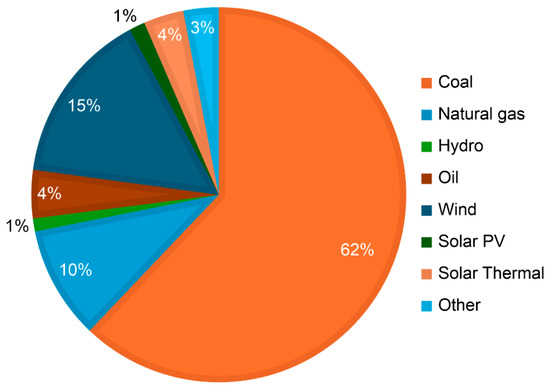
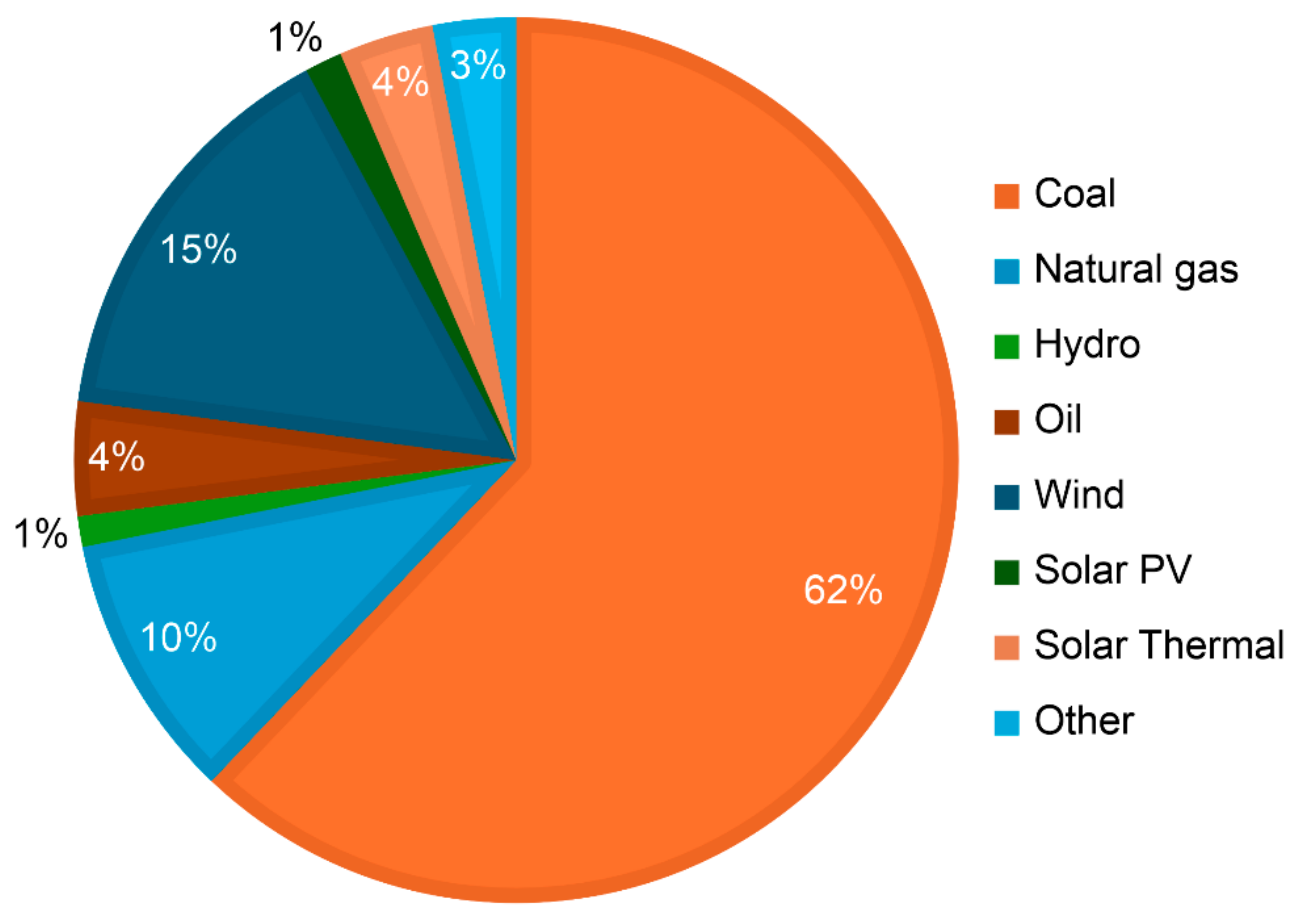
Morocco relies heavily on imported fossil fuels to meet its energy needs and support its economy. Currently, the energy mix in the country consists of coal (62%), followed by oil (4.2%), and natural gas (9.7%) (Figure 1) [2]. The primary energy supply accounts for 90%, and electricity for 80%. However, the country aims to achieve a renewable energy share of 52% by 2030, primarily in the residential and transport sectors, to promote reduced fossil fuel usage throughout the economy, aligned with Sustainable Development Goal 7 [2].
Figure 1.
Total energy supply by source, Morocco 2023 ([2] IEA, 2025).
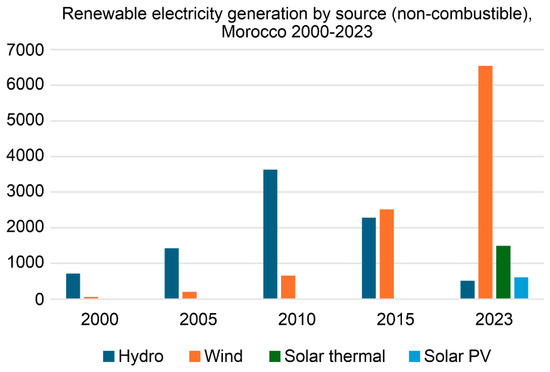
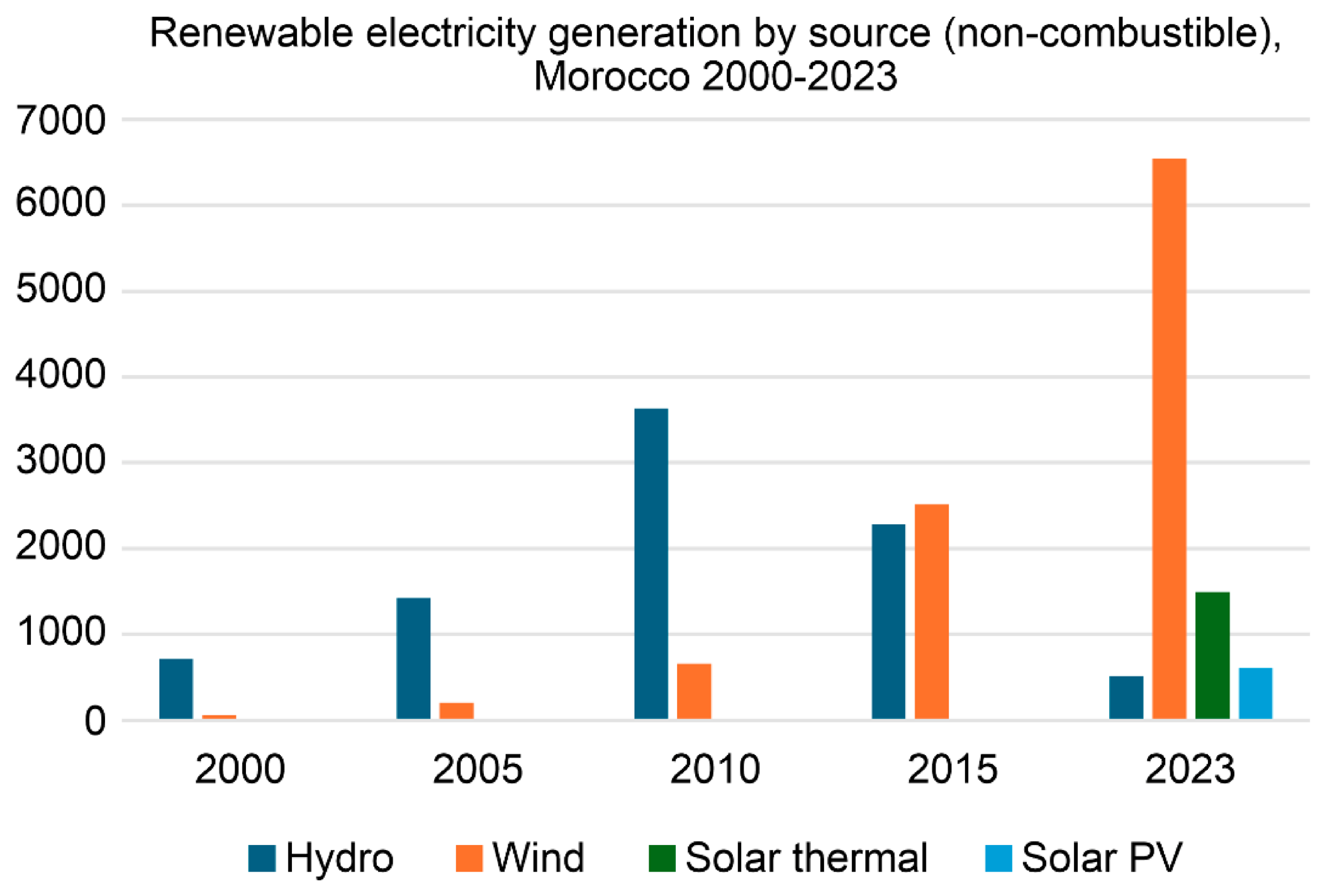
Renewable energy in Morocco is mainly sourced from wind, hydropower, and solar power (Figure 2). The share of installed wind capacity reached 1788 MW in 2022 and is expected to reach 5 GW by 2035 [3]. However, the potential for wind energy in Morocco extends beyond onshore projects. In 2020, the World Bank Group highlighted the estimated technical potential for developing offshore wind farms (OWFs) within 200 km of shorelines [4]. This study estimated a potential capacity of 200 GW, of which 22 and 178 GW correspond to fixed and floating foundations, respectively. This is consistent with other studies and indicates the potential for future OWF development [5,6,7,8].
Figure 2.
Renewable energy generation by source, Morocco 2000–2023 ([2] IEA, 2025).
Morocco’s regulatory framework for renewable energy is primarily governed by national energy strategies and environmental legislation, including Law No. 13–09 on renewable energy and Law No. 12–03 on Environmental Impact Assessment (EIA) [9,10]. While these frameworks support the development of onshore renewable energy projects, a dedicated regulatory structure for offshore wind energy is still under development.
This study aims to explore the social acceptance of OWFs in Morocco by identifying the key environmental and visual factors that shape public perception. Japan was included in this study to serve as a contextual reference case to situate Moroccan perceptions within a broader offshore wind planning context, as it represents a country where offshore project has recently emerged and public perception remains in a formative stage, rather than as a basis for direct statistical comparison.
Morocco and Japan were selected for this tentative study owing to their current trajectories of offshore wind energy development. Morocco plans to establish its first OWF along the Atlantic Coast. The project is currently undergoing a feasibility study and an environmental and social impact assessment, signaling a growing national interest in this renewable energy source [11,12]. Japan is also in the early stages of offshore wind development, with its first commercial projects launched in 2022 off the coast of Akita and Noshiro ports [13,14]. In both contexts, offshore wind development remains relatively recent, meaning that public perception is still forming and may influence future planning decisions. Although Morocco and Japan differ in cultural, economic, and energy policy contexts, investigating social acceptance at this stage can provide early insight that may help guide sustainable offshore wind deployment strategies, without implying direct comparability or generalization across the two contexts.
The remainder of this paper is structured as follows: Section 2 presents a literature review, and Section 3 outlines the research methodology, including the survey design, development of 3D visual simulations, and a preliminary discussion of the results of social acceptance and visibility surveys. Finally, Section 4 concludes the paper with a summary of key insights and directions for future research.
2. Literature Review
2.1. Social Acceptance of the OWF Project
Technological advances have shaped people’s lives and work, playing a key role in addressing major challenges by enabling the use of new renewable energy sources for everyday applications. Although some individuals recognize the benefits of technological advancement for societal progress, others oppose it, particularly in large-scale projects, such as energy production or mining. The nature and intensity of this opposition vary; however, failing to address all forms of opposition can jeopardize the continuation of a project, especially in the energy sector.
The opposition to renewable energy, particularly wind energy, is linked to several factors, including noise [15,16], landscape deterioration [17,18,19], flickering shadows [20,21], and vibrations [22,23]. Community engagement and information delivery regarding OWF can affect acceptance rates, as studies indicate that residents often oppose such projects owing to insufficient information and limited participation in decision-making before construction [24,25,26,27].
Several policies have been implemented in Japan and Morocco to enhance decision-making. One example is the Environmental Impact Assessment (EIA) Law, which has been enacted in several countries (Japan, Act No. 81 in 1997; Morocco, Act No. 12-03). However, these laws have limitations. In Japan, the process allows public input only for specific documents, such as the primary environmental impact summary, draft assessment methodology, and environmental impact statement [28], restricting public involvement in project decisions and leaving local concerns unaddressed. However, the EIA is primarily used as a decision-making tool, and no formal requirement exists to engage residents beyond the mandates of the EIA process or relevant municipal ordinances [29].
In Morocco, public participation in the development of renewable energy projects is limited. Rignall’s analysis of the Noor solar plant in Ouarzazate illustrates the exclusion of local communities from both planning and implementation phases [30]. This lack of engagement has resulted in adverse consequences for affected populations, including significant water shortages and expropriation of private land [30]. The country introduced participatory practices for renewable energy to engage local stakeholders, particularly in marginalized rural and urban areas, aiming to foster more frequent interactions between community actors and state officials. However, these reforms are limited or rarely used, and a longstanding imbalance between state and local communities remains [31,32,33]. Haddad examined public participation in the construction of two solar power plants in the province of Tata [33]. The author investigated how local actors negotiated with state representatives regarding the energy transition and its implications for communities. It was noted that the state engaged with the local association only after the final plans for solar power plants were completed, and the range of topics discussed was limited. However, the interaction between local civil society organizations and state representatives is increasing, with local NGOs serving as platforms to channel local political demands [33].
Public participation in OWF projects may appear less important than other factors, such as environmental and economic considerations. Some observers argue that, because OWFs are typically located far offshore, their impact on the community is limited. However, OWF components, such as substations, cables, and onshore factories, affect local infrastructure, businesses, and harbors, as well as fields, including shipping, shipbuilding, fishing, and tourism [34].
Local community engagement is a critical component in realizing the full potential of OWFs. The offshore wind industry has increasingly recognized the importance of engaging local communities throughout the project lifecycle to positively influence both projects and communities, particularly in terms of public support and economic benefits, as observed at the Baltic 1 wind farm in Germany [35]. However, in certain cases, inconsistencies in the delivery or sharing of information with stakeholders, or biased or delayed information, can cause confusion. Therefore, it is important to collaborate with local governments to establish coordination between the stakeholders and project developers [36].
2.2. OWF Stakeholders
Wind energy is a growing industry in Morocco and Japan. Morocco is investing more in onshore wind farms, with a total installed capacity of 2433 MW [37], while Japan is expanding into the sea [38]. Although these technologies are increasingly deployed in construction, their local socioeconomic impacts have received less attention than their biophysical impacts [39]. In Japan, research on the social acceptance of wind farm projects has focused on residents’ reactions to wind turbines and strategies to mitigate NIMBY (Not in my backyard) opposition [40,41]. Conversely, studies in Morocco have tended to explore the general acceptance of renewable energy, with results showing that while acceptance is high, knowledge regarding the technologies is low, indicating that social advantage bias may distort community compliance [42].
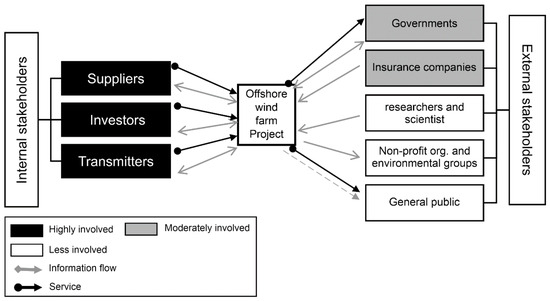
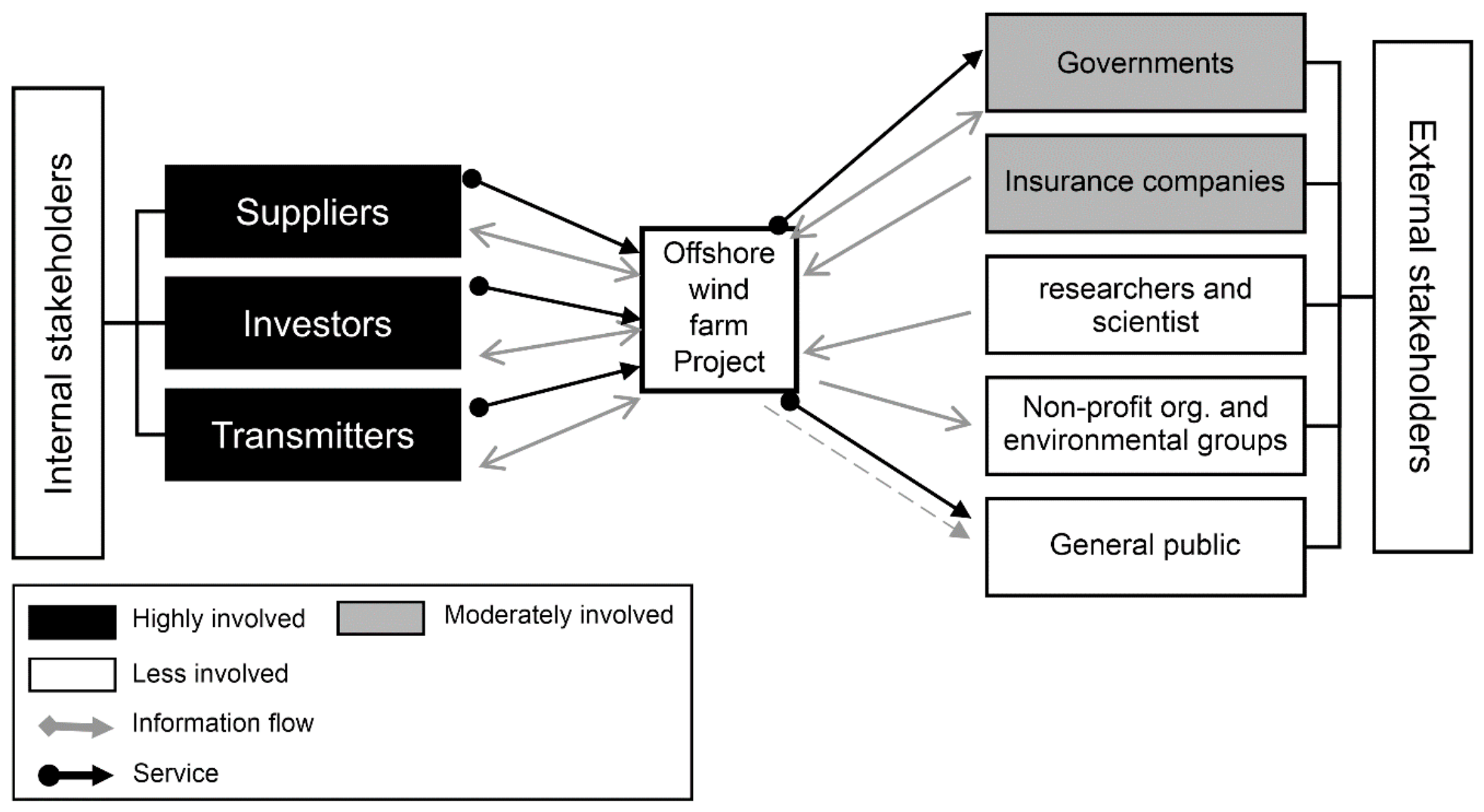
Public engagement is crucial to the acceptance of renewable energy, and promoting community participation involves identifying stakeholders at every stage of a project [43,44,45]. Stakeholders can be either internal (key stakeholders) or external (secondary stakeholders), depending on their level of involvement, and it is crucial to distinguish the relationship between renewable energy projects and stakeholders. One way to do this is to create a diagram or chart that can help diagnose and analyze the target audience that benefits from or is affected by such projects [46,47].
Illustrating the stakeholder subsystems can help elucidate the relationships between major and minor parties affected by wind farm projects. Figure 3 shows a simplified diagram illustrating the stakeholders involved in wind farm energy derived from a previously published chart [46]. The figure depicts the degree of involvement of each party, both direct and indirect, as well as the flow of information, services, and revenue among them within a wind energy project. The stakeholders involved in a project vary depending on their size, location, and circumstances. The diagram indicates that the general public is less involved in the circulation of information, often due to inconsistent, biased, or delayed communication between developers and stakeholders, which may hinder local consensus-building [36].
Figure 3.
Diagram of wind energy stakeholders (based on a diagram from Aslani et al. 2014 [46]). The dotted arrow denotes the flow of information toward the public, indicating communication that may be limited.
Based on Figure 3 and previous studies on the social acceptance of OWFs, stakeholders relevant to potential offshore wind development in the Moroccan context can be categorized into four sub-groups within the general public: (1) coastal communities, including residents living near the coast as well as those residing farther inland within the same municipality; (2) the fishing industry, which includes local or general fishermen; (3) harbor and port communities; and (4) local businesses related to coastal and regional tourism [36,48,49].
For the first and second groups, concerns regarding OWFs primarily relate to visual and environmental impacts, as well as economic benefits. In emerging offshore wind contexts, opposition has been most pronounced among fishermen and local businesses in the tourism sector. The fishing industry, in particular, is concerned about the effects of wind farms on business activities and potential disruptions to fishing and shipping areas [36]. Local businesses are more concerned with how changes in a site’s visual impact and attractiveness affect the number of visitors and the property’s aesthetics. Additionally, residents tend to oppose such projects because of the potential impact that OWFs may have on the value of their land, although research indicates minimal to no adverse impacts [50,51].
2.3. Visual Impact of OWFs
OWFs have a notable impact on the surrounding landscape, and the term “visual disturbance” refers to the discomfort or annoyance individuals experience when near a wind farm or when such facilities are within their field of vision [52]. “Visual disturbance” is frequently referenced in discussions on renewable energy infrastructure and particularly significant in the context of wind energy, given the substantial size, dynamic motion of rotating blades, and visibility of turbines from considerable distances, all of which can alter the landscape and character of a coastal environment [53,54].
Comprehensive environmental assessment studies are required before the construction of OWFs. Such assessments are crucial for understanding the various factors that affect both ecosystem and community perceptions. The key components of these studies include the analysis of local wind conditions, determination of the optimal distance from the coastline, evaluation of turbine design options, arrangement of turbine layouts, and selection of the most appropriate locations for installation [55]. The presence of large structures in the marine environment, combined with the rotational movement of turbine blades and synchronized nighttime lighting, presents significant challenges in mitigating their visual and aesthetic impacts on the surrounding landscapes [17,56,57].
This complexity raises crucial questions regarding the adequacy of current visibility methods in addressing the challenges posed by newer, larger projects. In response, several studies have developed strategies to mitigate the visibility impact of OWFs and explored methodologies: using induction fields to analyze turbine arrays [58]; quantifying the visual impact of wind turbine light at night [59]; using time-lapse imagery to capture changes over time [60]; assessing the influence of distance, contrast, and weather conditions on the visibility of OWFs [61,62]; and using simulation and modeling techniques to predict visual impact [17,52,63]. Additionally, tools such as photomontages, virtual reality (VR), stakeholder surveys, and interviews are commonly used to gain insight into public perception and assess the visual impact of such installations [57,64,65,66]
Perspectives on visual disturbances can vary significantly among stakeholders, with those closely involved in OWFs, such as operators and developers, typically perceiving minimal or no negative impact on the surrounding landscape. Conversely, local populations and visitors to coastal areas may express strong concerns that wind farms negatively affect their enjoyment and appreciation of the natural landscape. The visual presence of OWFs may discourage tourism in these regions, as large wind turbines on the horizon can detract from the aesthetic appeal of the landscape [67,68,69].
Nonetheless, research indicates that these negative impacts can be mitigated by several factors, including the distance from the wind farm to the coast and prevailing perceptions of wind energy. Studies have shown that OWFs can attract visitors interested in sustainable tourism and the associated benefits of renewable energy projects [70,71,72]. Ultimately, although the visual impact of OWFs is significant, individual perception plays a crucial role in shaping these views. Notably, differences in the acceptance of, and views on, new technologies and renewable energy initiatives typically emerge between residents and visitors [73,74,75]. Understanding these varied perceptions is critical for balancing the development of renewable energy projects with local community interests and the preservation of the natural landscape.
3. Social and Visual Acceptance of Offshore Wind Energy in Morocco
This study explored perceptions of OWFs in Morocco to identify the key social factors influencing their acceptance in coastal settings. This research was conducted in two sequential stages.
First, a social assessment survey was conducted in Morocco to collect perceptions of wind energy and offshore wind development. The Moroccan survey results were interpreted descriptively and contrasted with data from a public perception survey conducted in Japan, which served as a contextual reference to provide broader insights, rather than a basis for direct statistical comparisons.
Second, a visual impact assessment was conducted using a series of 3D visualizations depicting a conceptual OWF along the Moroccan coast. These visual representations were subsequently used in a small-scale exploratory follow-up survey to assess the initial reactions to different layouts and distance configurations. This component was designed to generate qualitative and indicative insights, rather than statistically generalized conclusions.
Given the exploratory nature of the study and the differences in sample sizes between the datasets, all findings were interpreted descriptively.
3.1. Social Assessment Survey
3.1.1. Approach
Several studies have investigated the social acceptance of OWFs worldwide [40,76,77]. However, as no OWF projects are available for study in Morocco, existing studies have mainly focused on the potential establishment of future projects along the Moroccan coast [5,6,7,78].
To explore public perceptions in this emerging offshore wind context, a small-scale web-based survey focusing on the social acceptance of offshore wind farms (OWFs) was conducted in Morocco. Due to the exploratory nature of the study, the survey was distributed via social media platforms, with voluntary participation and anonymous responses, to capture initial attitudes toward offshore wind development. To provide additional context for interpreting the Moroccan responses, data from a comparable public perception survey conducted in Japan were used. The Japanese survey was administered through a third-party survey provider and was used solely for the purposes of this research.
Although Morocco and Japan differ in their stages of offshore wind development and survey conditions, Japan was selected because its offshore wind sector is relatively recent compared with long-established European markets, while still representing a transitional stage between emerging and more established offshore wind contexts. This makes it a suitable reference for Morocco’s early-stage development. In addition, both countries have extensive coastal areas where offshore wind development is a significant spatial and social issue. The use of an identical questionnaire in both surveys enabled a structured descriptive source of attitudes and perceived priorities while acknowledging contextual and sample-size differences.
The surveys were conducted over a month and were designed to assess three core sustainability pillars: social, economic, and environmental. It should be noted that the survey did not collect respondents’ geographic location. This choice reflects the nature of the study, which aimed to capture an initial attitude toward offshore wind development among a small group of participants, regardless of their place of residence.
The questionnaire included four main sections and a feedback section covering the general knowledge of wind energy and public opinion on the three sustainability aspects. Table 1 summarizes these themes and presents sample survey questions with their associated response types.
Table 1.
Category and keynote questions used for the social assessment survey in both Morocco and Japan.
The social aspect variable included items related to community participation, transparency of information, and consideration of local opinions. The economic aspect variable included perceptions of job creation, economic development, and government investment. The environmental aspect variable reflected concerns regarding marine ecosystems, visual impact, and climate-related benefits. The knowledge variable was based on respondents’ self-reported familiarity with wind energy technologies.
3.1.2. Results
- (a)
- Analysis of data from Morocco
Table 2 presents the backgrounds of the survey participants in Morocco. A total of 51 individuals, aged 16 to 56 years, participated in the survey. Among the respondents, 27 were female, and 24 were male. Additionally, 51% were employees and 33% were students. The survey was administered in English and French. Since the study was intended as an exploratory investigation, the goal was not to achieve statistical representativeness but rather to gather initial perceptions and attitudes toward offshore wind development.
Table 2.
Background of the respondents from Morocco.
- Multiple-Choice Questions
This section presents the results of multiple-choice questions from the Moroccan survey, which aimed to document respondents’ attitudes toward the potential development of OWFs. The responses reflected perceived priorities and concerns across economic, social, and environmental dimensions. The results of the multiple-choice questions are presented in Table 3.
Table 3.
Multiple-choice questions included in the social acceptance survey in Morocco.
The survey results indicated that the majority of the respondents (74.5%) preferred that revenue generated from OWFs be allocated to reducing household energy costs. Regarding information provision, 80.4% of participants preferred clear, accessible information about OWF projects. When asked about their preferred communication channels, respondents most frequently selected online and social media platforms. Regarding responsibility for compensation, 51% of respondents indicated that either government authorities or OWF developers should bear the associated costs. Environmental concerns were also reported, with 55% of respondents identifying marine wildlife disturbances, oil leakage, and visual impacts as key issues. Among these, 11.8% specifically identified visual impact as a concern.
- Correlation analysis of scaling questions
An exploratory correlation analysis was conducted to examine the associations between the social acceptance of OWFs and other sustainability-related dimensions. Four composite variables were derived from the scaling questions: social, economic, environmental, and wind energy.
Pearson’s correlation coefficients were calculated to examine the direction and strength of the linear relationships between these variables. The Likert-scale responses were treated as interval data. Correlation analyses were conducted separately for each country to minimize the bias resulting from unequal sample sizes. All the correlation results were interpreted descriptively and reflected associative patterns rather than causal relationships. In addition, the correlation analyses were conducted separately for each country and interpreted within-case only; no direct comparison of correlation strength or statistical equivalence between Morocco and Japan was intended or performed.
As shown in Table 4, a strong positive association (r = 0.900) is observed between the social and environmental aspects of the Moroccan dataset. A weak negative association (r = −0.312) was identified between social and economic aspects. Additionally, a weak positive association (r = 0.161) was identified between knowledge of wind energy and social aspects.
Table 4.
Social acceptance of OWFs in Morocco.
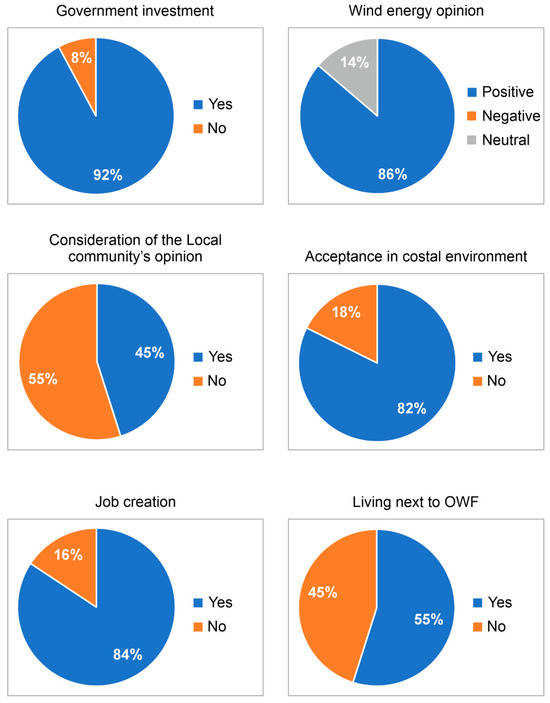
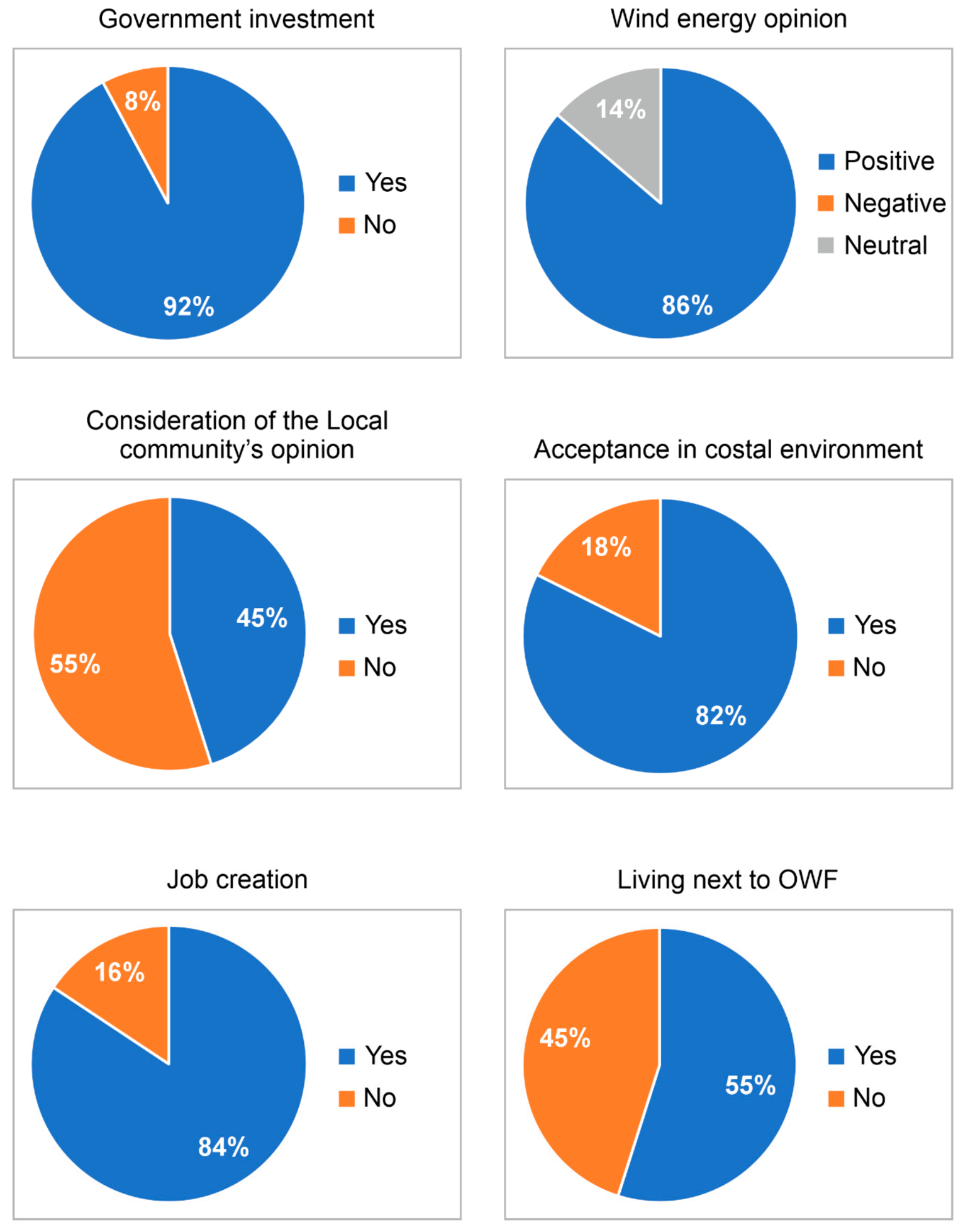
The results of the descriptive analysis of the acceptance-related questions from the Moroccan survey are presented in Figure 4. Overall, the respondents generally reported positive attitudes toward the development of offshore wind energy projects. High levels of support were reported for government investment (92%) and for potential job creation associated with OWF development (84%). Positive responses were also reported regarding the integration of OWFs into the coastal environments (84%).
Figure 4.
Analysis of survey data from Morocco.
Responses were more divided when respondents were asked about living near OWFs; 55% reported positive views, and 45% reported negative views. Similarly, responses regarding the consideration of public opinion during OWF development showed a near-even split; 45% expressed positive views, and 55% expressed negative views.
- (b)
- Analysis of data from Japan
Data from Japan were included as a contextual reference for Morocco’s exploratory offshore wind analysis. Rather than functioning as a directly comparable empirical dataset, they provide insights into the perception trends related to these technologies in Japan and offer lessons from Japan’s evolving experience in OWF development.
Table 5 presents background information on the Japanese survey participants. In total, 365 individuals participated in the survey, of whom 49% identified as female, 50% as male, and 1% did not specify their sex. Participants were aged 16 to 56 years. Most respondents were employed (85%), followed by individuals reporting other occupations (12%) and students (3%).
Table 5.
Backgrounds of the respondents from Japan.
- Multiple-choice Questions
The results of the multiple-choice questions from the Japanese survey are summarized in Table 6 and reflect the respondents’ attitudes toward OWF development across economic, social, and environmental dimensions. Approximately 70% of respondents preferred allocating OWF-generated revenue to reduce household energy costs. Regarding community engagement, the respondents most frequently identified clear and accessible information and early involvement in project planning as important considerations. Information is commonly disseminated through online platforms, social media, and public meetings. Environmental concerns were also reported, with 67% of respondents identifying potential disturbances to marine wildlife and risks of oil leakage.
Table 6.
Multiple-choice questions of the social acceptance survey in Japan.
- Scaling Questions
Similar to the Moroccan survey, an exploratory correlation analysis was conducted on the Japanese dataset to examine the associations among the social, economic, environmental, and knowledge-related aspects of OWFs. The results are presented in Table 7.
Table 7.
Social acceptance of OWF in Japan.
A positive association (r = 0.808) was observed between the social and environmental aspects. The association between economic and social aspects was weak (r = −0.110). In addition, a strong negative association (r = −0.725) was identified between social acceptance and knowledge-related aspects.
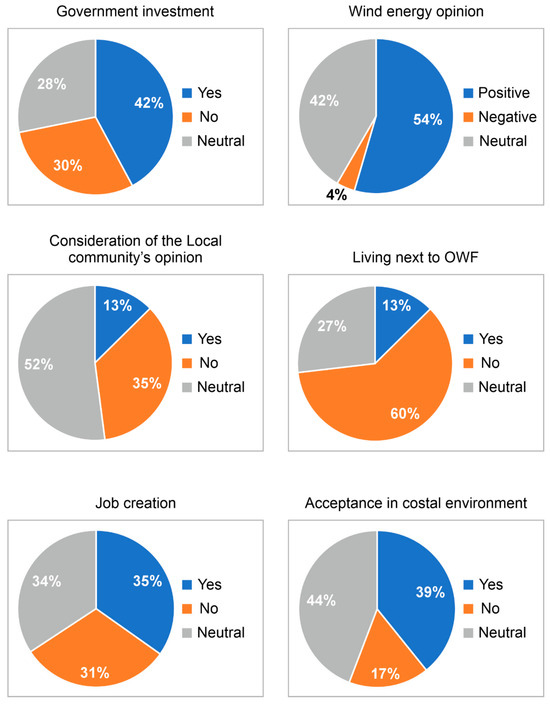
Figure 5 provides a descriptive overview of the respondents’ attitudes toward OWFs in Japan. Overall, the sentiment was slightly positive (54%), while a substantial proportion of the respondents reported negative views (42%). Support for government investment was reported by 42% of the respondents. When asked about the presence of OWFs in their local area, 13% of respondents expressed support, while 60% expressed opposition. Responses related to economic benefits, such as job creation, received limited support, and a considerable proportion of respondents expressed uncertainty about the future impacts of OWFs.
Figure 5.
Analysis of survey data from Japan.
3.1.3. Discussion
An analysis of the Moroccan survey, complemented by the Japanese dataset, provides exploratory insights into the factors associated with public acceptance of OWFs. In both survey contexts, environmental considerations emerged as a prominent dimension of social acceptance, particularly regarding marine ecosystems, wildlife protection, and visual impacts on the landscape.
The study involved substantially different sample sizes for Morocco (n = 51) and Japan (n = 365), which limited the scope of a direct statistical comparison between the two datasets. The Japanese data serve as a reference for early-stage expansion of the offshore wind planning environment, while Morocco represents an emerging context. Although both datasets include correlation analyses, these results are used descriptively to support within-country interpretation and contextual contrast, rather than to facilitate direct statistical comparison between Morocco and Japan.
In the Moroccan survey, which served as the primary empirical focus of this study, respondents generally expressed supportive attitudes toward OWFs when environmental aspects were perceived as adequately addressed. This is reinforced by the strong positive association between social acceptance and environmental aspects (r = 0.900), indicating that, within the surveyed group, the perceived environmental identity of offshore wind projects constitutes a central source of social value. Acceptance appears to be associated with perceptions of environmental protection. However, given the relatively small sample size, this strong correlation should be interpreted with caution, as correlation coefficients may be sensitive to sample size and respondent composition.
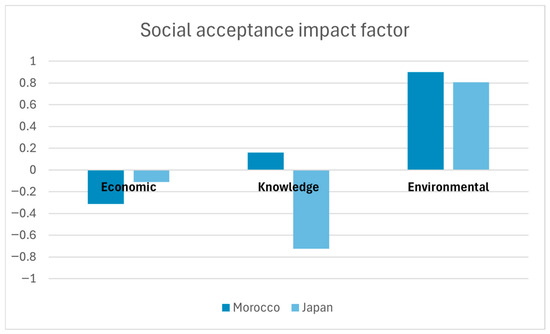
Comparable patterns were observed in the Japanese dataset, although differences emerged in the relative emphasis on economic and knowledge-related aspects (Figure 6). In Morocco, a weak negative association between economic factors and social acceptance (r = −0.312) was observed, with the Japanese dataset showing a relatively similar tendency. This finding indicates a potential decoupling between the anticipated financial benefits and public support within the survey group. Such associations can be linked, as suggested in previous studies [27,28,31,38], to perceptions that large-scale renewable energy infrastructure primarily benefits national-level stakeholders rather than improving the immediate socio-economic conditions of local coastal communities. Collectively, these findings suggest that concerns related to environmental integrity and perceived fairness in decision-making may be influential factors in shaping social acceptance than economic incentives within the survey group, which is consistent with discussions of trust and procedural justice in the social acceptance literature [23,27,33,34].
Figure 6.
Diagrams showing the main factors impacting the social acceptance of OWFs in Japan and Morocco.
The findings also point to shared priorities and context-specific differences in public perceptions across the two survey contexts. In both Morocco and Japan, respondents expressed interest in allocating OWF-generated revenue to reduce household energy costs and expected institutional responsibility for compensation mechanisms. Differences emerged in the preferred modes of engagement. Japanese respondents placed greater emphasis on early involvement in project planning, whereas Moroccan respondents highlighted the importance of clear, accessible information. Digital communication channels were favored in both contexts, although traditional public meetings appeared to remain more relevant among some respondents in Japan. Sensitivity to visual impacts was more pronounced among the Moroccan respondents, reinforcing the importance of location-specific planning considerations.
The responses to the open-ended questions further emphasized the importance of transparency and public participation. Although many respondents expressed interest in the development of OWFs, they raised concerns about environmental risks and the limited opportunities for meaningful community involvement. These findings align with established concepts in social acceptance literature, including trust, procedural justice, and the importance of early and inclusive stakeholder engagement [35,79,80].
Overall, the results indicate a cautiously supportive attitude toward OWFs in both survey contexts, alongside notable concerns regarding environmental impacts and local sitting. Given the exploratory nature of the study, the findings should be regarded as indicative rather than conclusive. Nevertheless, they highlighted the importance of integrating environmental safeguards, transparent communication, and participatory planning processes to foster public trust and support for offshore wind development, particularly in emerging contexts, such as Morocco.
3.2. Visual Impact Assessment Survey
3.2.1. Approach
Following a social acceptance survey in Morocco, a visual impact assessment was conducted to explore the perceptions of OWF visibility in a coastal context. This component was designed as a preliminary exploratory study that focused on the potential visual implications of OWFs rather than on a comprehensive environmental impact evaluation.
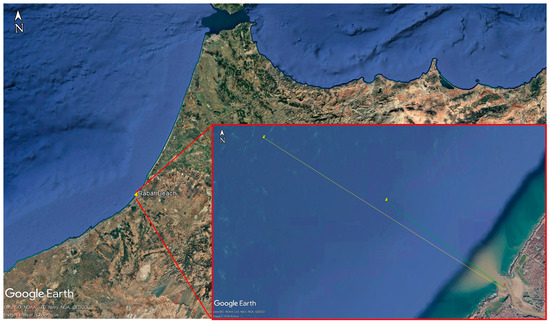
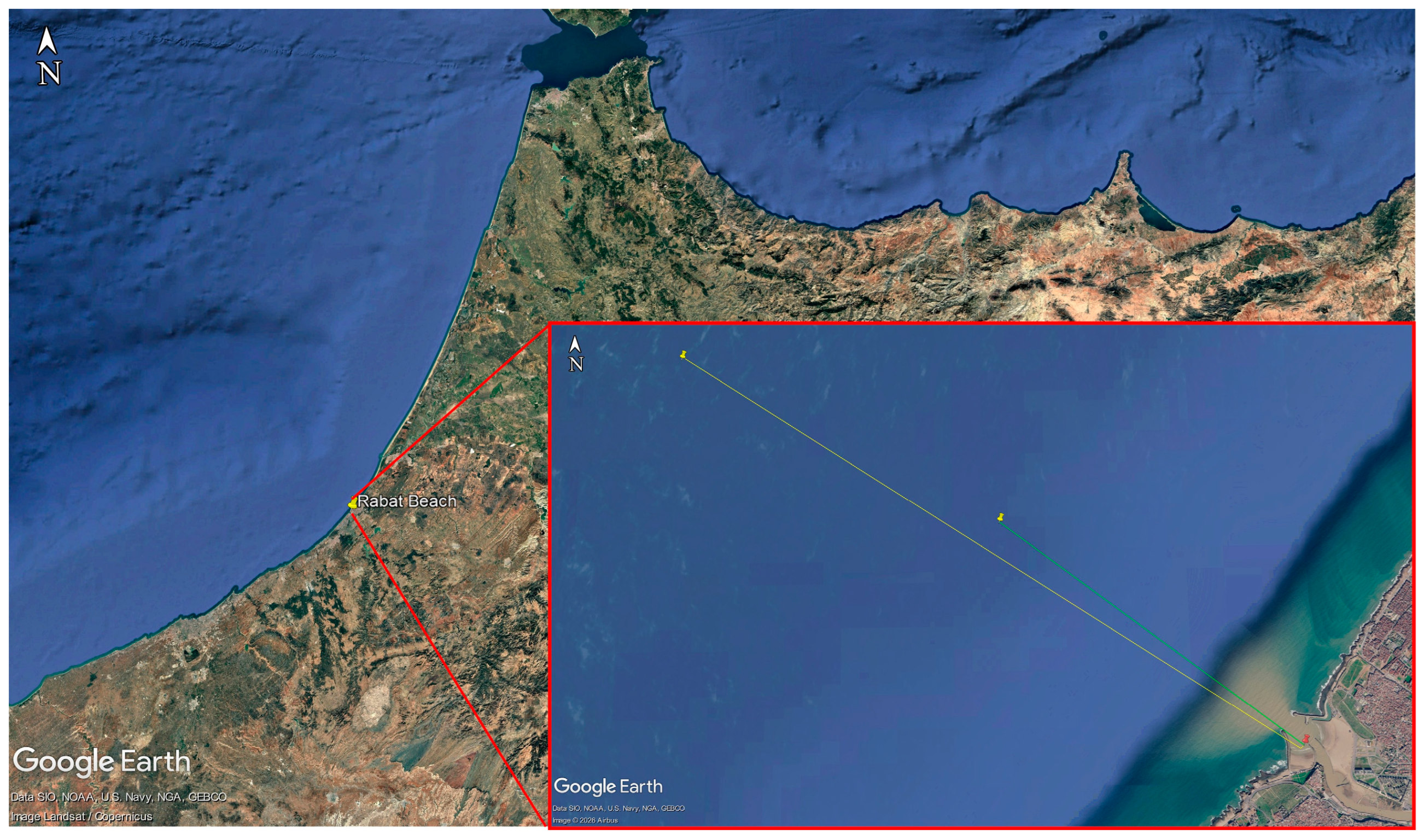
To support this assessment, a series of three-dimensional (3D) visualizations depicting a hypothetical offshore wind installation along the Rabat coast was developed. Figure 7 presents the selected area with the two chosen distances (5 km & 20 km) to evaluate the initial perception attitude. The conceptual OWF configuration was based on existing offshore projects, specifically the Akita Port offshore wind project in Japan, which comprises 13 turbines with a rated capacity of 4.2 MW each. This project was selected as a reference case because it represents the first large-scale offshore wind development project in Japan and is located approximately 4 km from the urban coastline. This proximity provides a relevant contextual example for examining the potential visual implications of wind turbines in coastal settings [58]. No site-specific technical parameters (e.g., bathymetry, seabed conditions, or foundation types) were adopted from the Akita case, and the reference is used solely for visual and configurational purposes.
Figure 7.
Location of the proposed offshore wind farm for this study. The inset map shows Rabat Beach, including the two distances used for evaluation (green = 5 km; yellow = 20 km). (Google Earth).
- Digital model
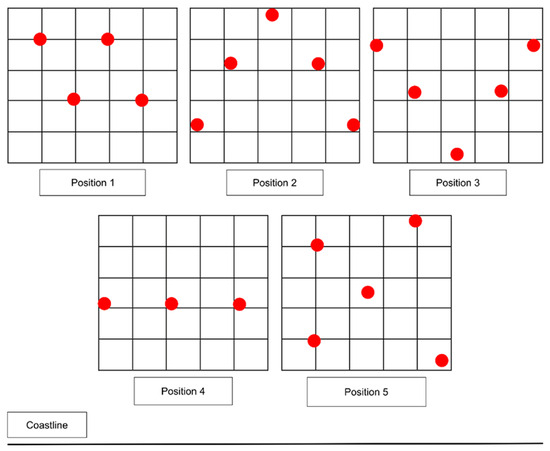
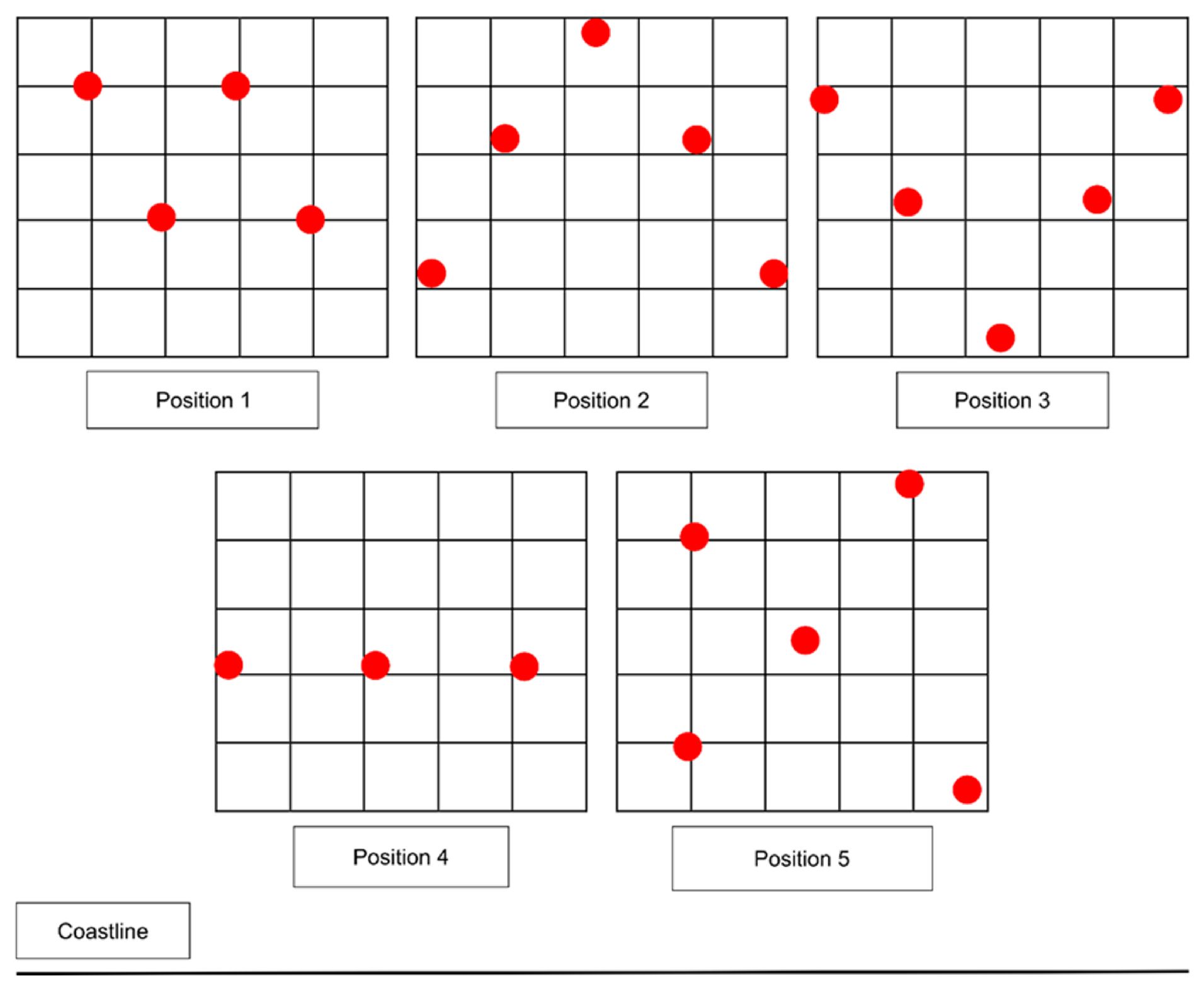
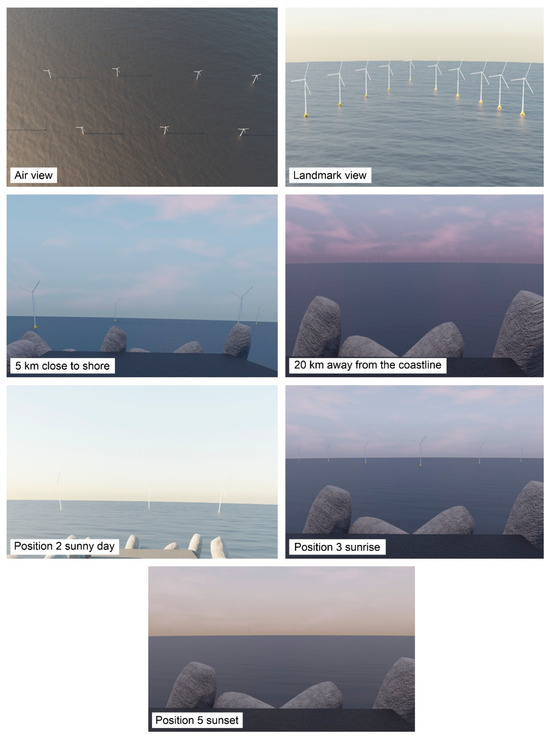
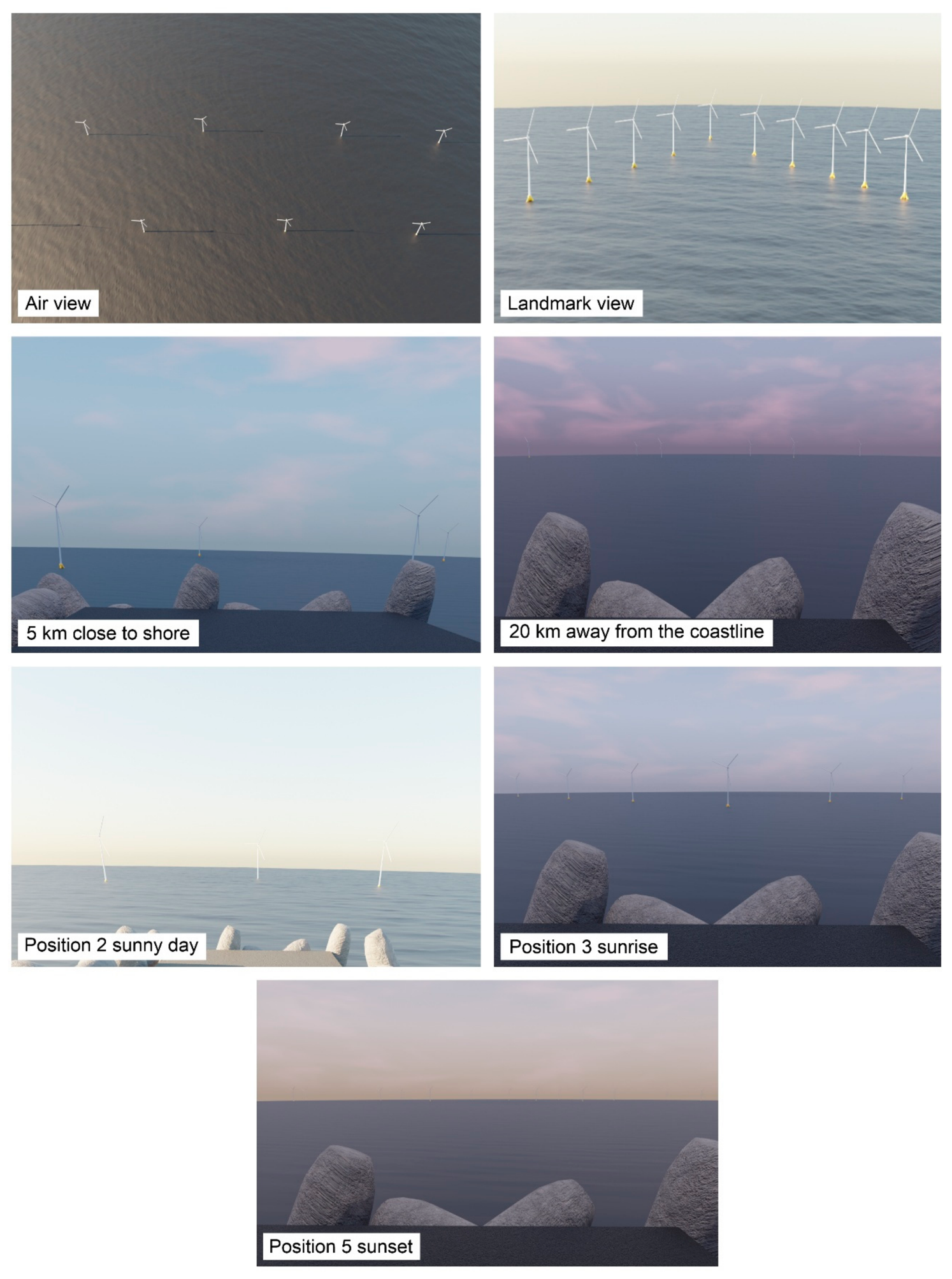
Visualizations were produced using Blender 3.6, an open-source 3D computer graphics software widely used for visual simulations and rendering. A 3D model of wind turbines was created and positioned in five distinct spatial configurations, as illustrated in Figure 8, with four representing organized layouts and one representing a disorganized arrangement. Turbines were placed at two distances from the shoreline (5 and 20 km) to assess the influence of distance on visual perception. The final rendered images were generated from both landmark-level and aerial viewpoints under different daytime lighting conditions, excluding nighttime scenarios (Figure 9). The number of visible turbines varies across the visualizations due to differences in viewing distance and perspective. Close-range and aerial views display only turbines within the frame, while long-distance views show a larger portion of the wind farm layout.
Figure 8.
Illustrative representation of the proposed turbine layouts, with positions 1 to 4 organized and 5 disorganized.
Figure 9.
3D models of five turbine layouts from two perspectives and two distances (5 km and 20 km). The number of visible turbines varies with perspective and framing, as only turbines within the field of view are included, without affecting interpretation.
Technical parameters, such as cable installation, cable length, grid connection, and wind direction, were not included in the visual simulations because this preliminary assessment focused on visual perception rather than engineering feasibility.
- Follow-up visual perception survey
A follow-up survey was conducted using the generated 3D visualizations to collect exploratory feedback on the perceived visual impact. The survey targeted individuals residing near the Rabat coastline or who had previously visited the area. The visual perception survey was conducted using a voluntary web-based questionnaire distributed via social media platforms, particularly within groups related to the city of Rabat. This approach was adopted to reach individuals familiar with the coastal context represented in the visualizations. Participation was open and anonymous.
The survey received responses from 30 participants, primarily students and employed individuals aged 16–50 years. Information regarding participants’ educational background or actual location was not collected, as the study was designed to capture exploratory insights rather than achieve statistical representativeness.
The survey comprised two sections. The first section assessed perceptions of turbine layout and spatial arrangement, while the second examined perceived acceptability relative to distance from the shoreline (5 km and 20 km). Responses were collected using a five-point Likert scale ranging from “Bad” (1) to “Good” (5). An open-ended question was included to allow the participants to indicate their preferred locations and provide qualitative feedback. Given the limited sample size, the survey results are interpreted as indicative and exploratory. The selected qualitative responses that provide insight into the participants’ perceptions are presented in Table 8. The respondents’ statements were lightly rephrased for clarity while preserving their original meaning.
Table 8.
Selected feedback/comments from the survey.
3.2.2. Results
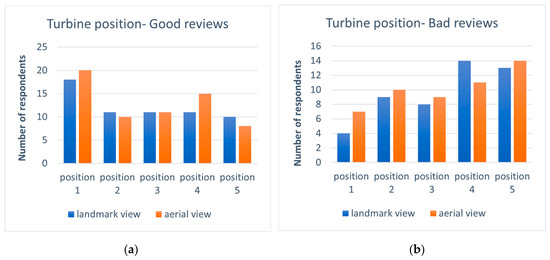
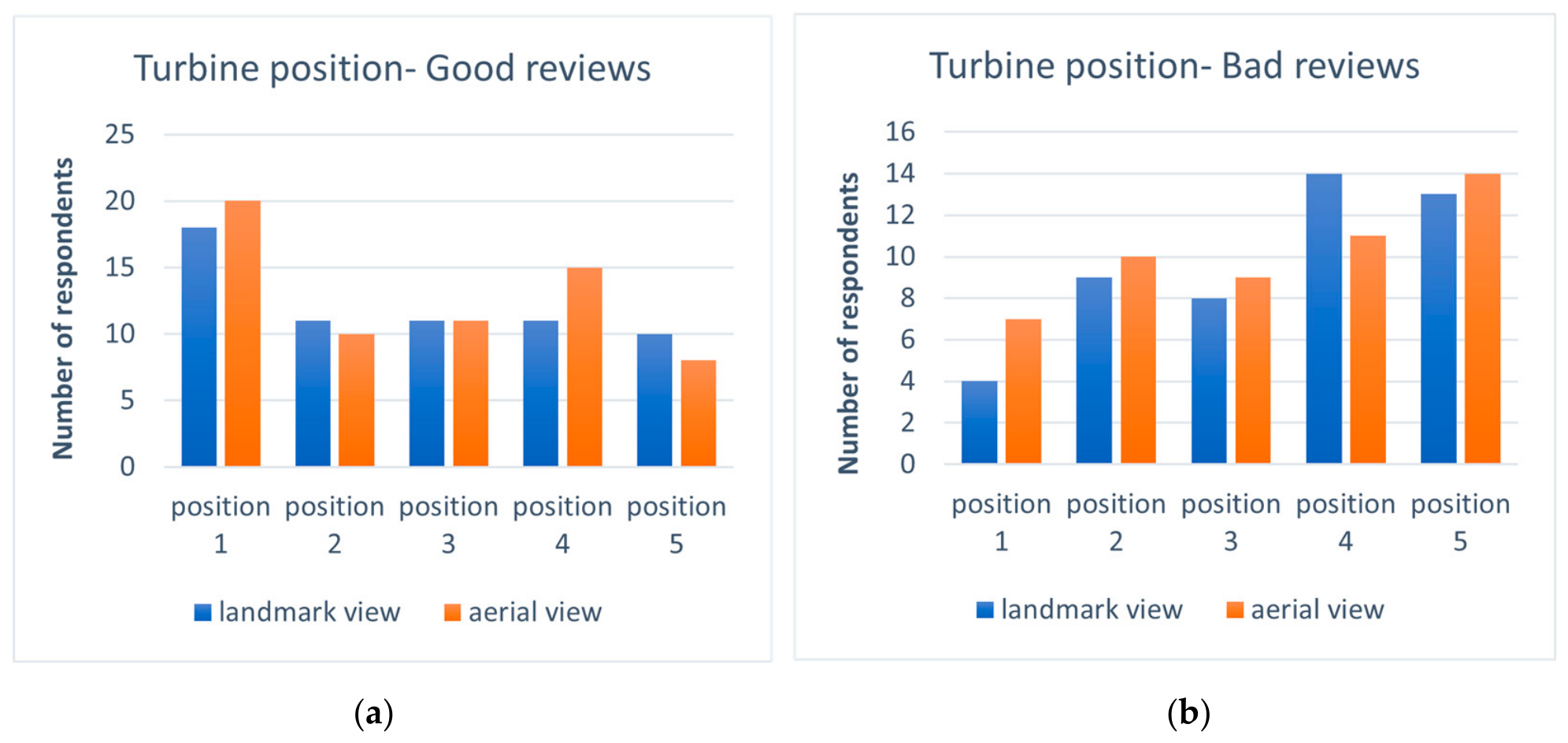
The results of the visual perception survey indicated variations in the participants’ responses across different turbine layouts and viewpoints. Among the proposed configurations, Layout 1 received the highest average rating, while Layouts 4 and 5 received the lowest. Aerial views were rated more positively than landmark-level views across layouts. Configurations characterized by more regular, shore-aligned arrangements received higher ratings than those characterized by less organized layouts (Figure 10).
Figure 10.
Graphs showing the overall opinions on five different turbine positions. (a) Good evaluations (b) Bad evaluations.
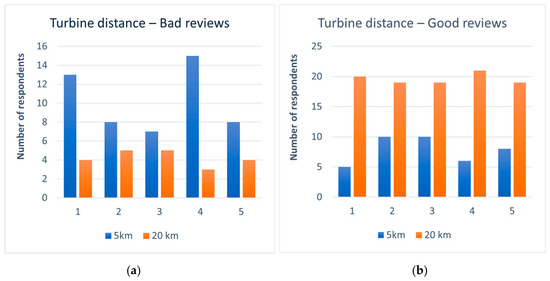
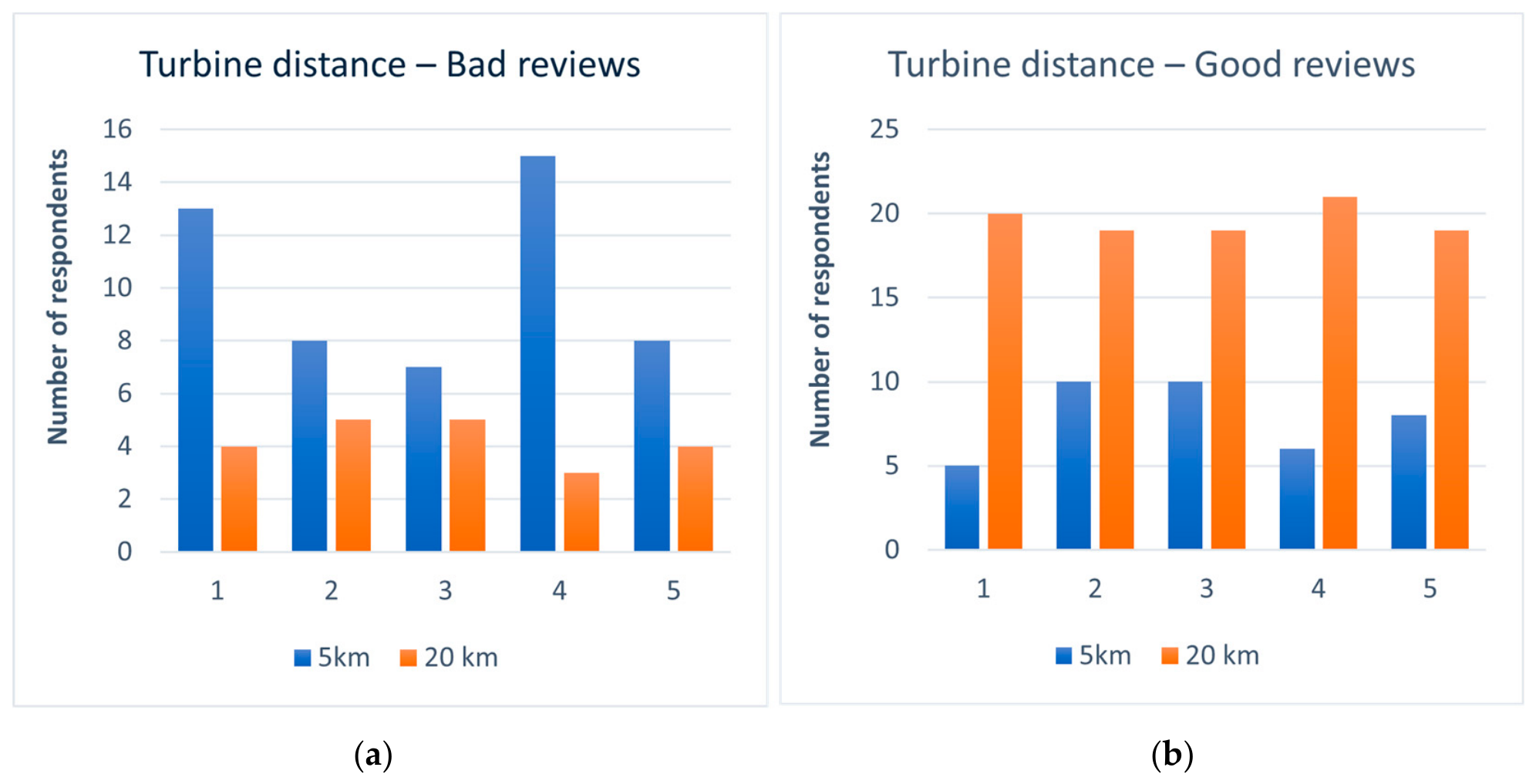
Responses also varied according to the simulated distance between the turbines and the shoreline. Overall, layouts located 20 km apart received higher ratings than those located 5 km apart (Figure 11). Although certain layouts (Positions 1 and 4) received relatively positive ratings at greater distances, their ratings decreased when the same configurations were presented at 5 km. These results indicate a consistent pattern of lower ratings for offshore wind farm visualizations located closer to the shoreline.
Figure 11.
Graphs showing the overall opinion on the distance from the shore. (a) Good evaluations (b) Bad evaluations.
3.2.3. Discussion
The results of the visual perception assessment indicate that both turbine location and spatial configuration play a significant role in shaping public perceptions of offshore wind farms (OWFs). Layouts that are aligned with the shoreline and exhibit a regular spatial arrangement were generally evaluated more favorably, suggesting that visual coherence with the surrounding coastal landscape contributes to more positive perceptions.
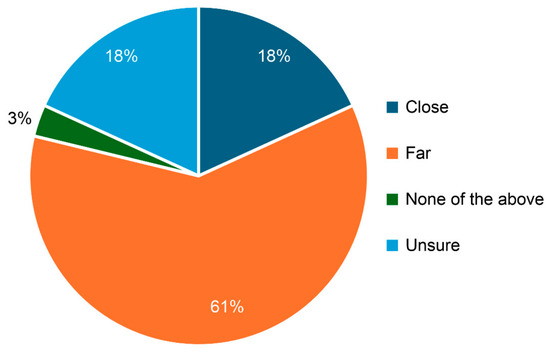
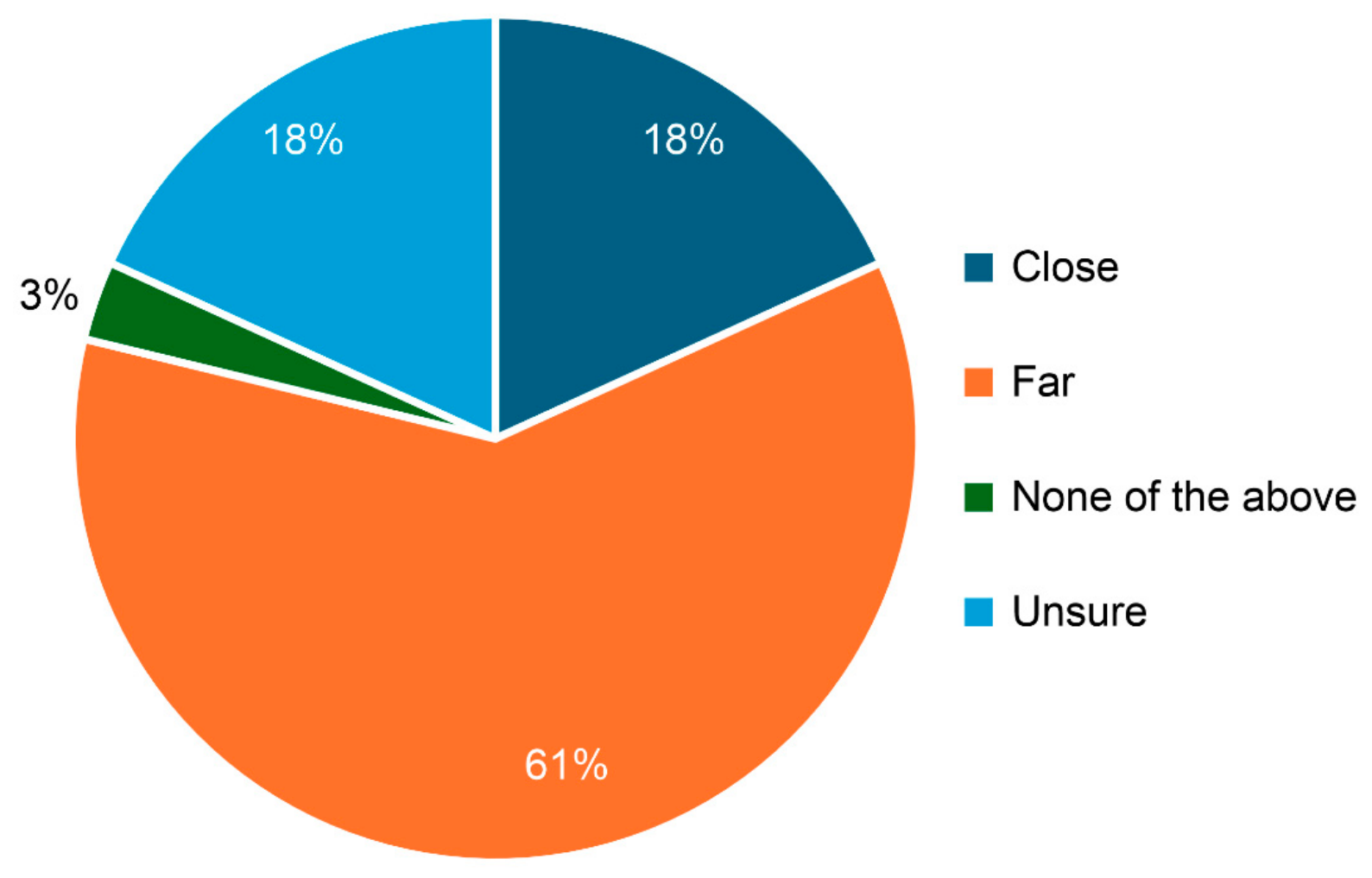
Distance from the shoreline emerged as a particularly influential factor. Across all scenarios, turbines located farther offshore received more favorable evaluations compared to those positioned closer to the coast. Even when the spatial organization of the layout was positively perceived, near-shore configurations were consistently rated less favorably. Qualitative responses further revealed that turbines located near the shoreline were often perceived as visually intrusive and potentially incompatible with recreational and marine activities, including swimming and water-based tourism (Figure 12 and Table 8).
Figure 12.
Overall opinions concerning the optimal distance of offshore wind turbines in Morocco according to the survey.
These findings highlight the importance of considering visual impact in coastal zone management and offshore wind planning, particularly in regions such as Rabat, where coastal landscapes hold significant recreational and economic value. The perceived visual intrusion associated with nearshore installations may influence how coastal spaces are used and valued, especially in relation to tourism. This is consistent with previous research indicating that the visibility of OWFs can affect landscape perception and beach visitation preferences, particularly when turbines are located closer to shore [34,61,75].
From a planning perspective, integrating visual impact assessments into early-stage decision-making processes may support a more balanced approach to offshore wind development. This is especially relevant in emerging contexts such as Morocco, where offshore wind projects are still in the feasibility stage and public familiarity with such infrastructure remains limited.
Overall, the findings suggest that both the spatial arrangement and placement of turbines influence perceived visual impact and, consequently, social acceptance. While the results are based on an exploratory assessment with a limited sample size and should therefore be interpreted as indicative rather than generalizable, they provide initial evidence supporting the integration of visual and contextual considerations into offshore wind planning strategies in Morocco.
4. Policy and Planning Implications
The findings of this study provide preliminary insights with direct relevance to offshore wind planning within the Moroccan policy and regulatory context. Morocco’s national energy strategy, which aims to achieve 52% renewable energy in installed capacity by 2030, has thus far focused primarily on onshore wind, solar, and hydropower development. While legal frameworks such as Law No. 13-09 on renewable energy and Law No. 12-03 on Environmental Impact Assessment (EIA) provide a foundation for renewable energy deployment, a dedicated and operational regulatory framework for offshore wind development remains under development.
Within this emerging policy environment, the present findings indicates that social acceptance considerations, particularly environmental protection and visual integration, should be incorporated at an early stage of offshore wind planning in Morocco. Survey results showed that environmental concerns and visual impacts play a significant role in shaping public attitudes, especially in contexts where public familiarity with offshore wind remains limited. Integrating social and visual assessments alongside technical feasibility studies could therefore support more context-sensitive decision-making and reduce potential opposition [22,56,61].
From a spatial planning perspective, the visual perception assessment indicated that turbine location, layout organization, and distance from the shoreline may influence perceived acceptability. In particular, nearshore turbines were consistently evaluated less favorably, while more regular and coherent layouts received more positive evaluations. These findings underscore the need to incorporate visual impact assessments into coastal zone management and marine spatial planning frameworks. particularly in regions where offshore wind development may intersect with tourism, fisheries, and recreational coastal uses [32,34,66].
A contextual comparison with Japan further suggests that, as offshore wind sectors develop, public concerns may shift from general awareness and information needs to procedural participation and distribution considerations. For example, the expansion of the Noor Solar Plant in southern Morocco and the social challenges resulting from developing the project without involving local communities underscore the need for a governance framework that evolves alongside sectoral development and ensures early stakeholder engagement, benefit-sharing mechanisms, and inclusive decision-making processes [28,31].
Overall, these insights highlight that the transition to offshore wind energy involves more than just technological and economic considerations. It is a socio-technical change that requires coordination between infrastructure development, environmental care, and societal values. Incorporating social acceptance and visual planning early in policymaking and project design can help foster more sustainable and publicly accepted offshore wind development in Morocco.
5. Conclusions and Future Approaches
This study examines the social acceptance of OWFs in Morocco and explores the potential visual implications of future offshore wind development along the Moroccan Atlantic coast. The findings underscore the potential role of environmental considerations, particularly ecological protection and visual integration, in shaping public attitudes toward OWFs, and highlight the importance of careful site selection in fostering social acceptance.
The contribution of this study lies in its exploratory examination of social acceptance and visual perception through a combined approach integrating three-dimensional (3D) simulations of hypothetical OWF layouts with a web-based survey. While social acceptance and visual impacts of offshore wind have been widely examined in established European markets, empirical evidence from North African contexts remains scarce. This study offers early, indicative empirical insights that help inform initial discussions on social and visual considerations associated with offshore wind development in an emerging planning context.
From a policy perspective, the findings indicate that future offshore wind development in Morocco could benefit from early and transparent engagement with coastal communities, emphasizing environmental protection and visual integration rather than focusing solely on economic benefits. Clear communication strategies, including the use of digital platforms, may help address the information gaps identified in the survey, while participatory planning processes could support trust-building and procedural fairness. In addition, visually sensitive site selection strategies, such as a greater distance from the shoreline and coherent turbine layouts, should be considered during the early planning stages to mitigate the perceived visual impacts.
Survey data from Japan were used as a contextual reference to situate Moroccan findings within a broader offshore wind planning landscape. While this comparative perspective provides valuable insights, the findings should be interpreted with caution due to methodological limitations, including the exploratory nature of the study, the small and non-representative sample, and differences in survey context. The use of social media for survey distribution may also introduce bias toward younger or more digitally active populations, while limited geographic and language coverage may further affect the representativeness of the results. Therefore, the findings should be considered indicative rather than generalizable.
Despite these limitations, this study contributes to the ongoing discussions on offshore wind development in emerging contexts by identifying key factors associated with public acceptance and demonstrating the relevance of visual perception in coastal planning. The findings indicate that the successful development of OWFs in Morocco depends not only on technical and economic feasibility but also on alignment with public values, environmental safeguards, and transparent planning processes.
Future research should build on these preliminary insights through larger-scale, more representative surveys, potentially incorporating longitudinal designs to capture changes in public perception over time. Additionally, further research could explore regional and cultural differences within Morocco, integrate more detailed visual impact assessments, and examine stakeholder engagement mechanisms in greater depth. Such efforts would facilitate the development of offshore wind projects that are both socially acceptable and environmentally responsible, thereby contributing to the sustainable development of Morocco’s offshore wind potential.
Author Contributions
K.H.: Conceptualization, methodology, validation, investigation, and writing of the original draft. M.N.: Resources, writing, review, editing, and supervision. All authors have read and agreed to the published version of the manuscript.
Funding
This work was supported by JSPS KAKENHI Grant Number JP23K11527.
Institutional Review Board Statement
Ethical review and approval were waived by Akita University in accordance with Chapter 6 and Section 14-4 of the Akita University Research Ethics Guidelines, as the study did not involve the collection of personally identifiable information.
Informed Consent Statement
Informed consent was obtained from all subjects involved in the study.
Data Availability Statement
The raw data supporting the conclusions of this study will be made available by the authors upon request.
Conflicts of Interest
The authors declare no conflicts of interest.
Abbreviations
The following abbreviations are used in this manuscript:
| OWF | Offshore wind farm |
| EIA | Environmental Impact Assessment |
| NIMBY | Not in my backyard |
| 3D | three-dimensional |
References
- The United Nations. COP 22-UNFCCC. 2016. Available online: https://unfccc.int/event/cop-22?utm_source=chatgpt.com (accessed on 1 August 2024).
- IEA. Retrived from Morocco; IEA: Hamburg, Germany, 2022. [Google Scholar]
- GWEC. Capturing Economic Opportunities from Wind Power in Developing Economies; GWEC: Brussels, Belgium, 2023. [Google Scholar]
- Dutton, A.S.P.; Sullivan, C.C.; Minchew, E.O.; Knight, O.; Whittaker, S. Going Global: Expanding Offshore Wind to Emerging Markets; Energy Sector Management Assistance Program: Washington, DC, USA, 2019. [Google Scholar]
- Charouif, Y.; Lehnert, M.R. The offshore wind energy potential of Morocco: Optimal locations, cost analysis, and socioenvironmental examination. Integr. Environ. Assess. Manag. 2023, 20, 201–210. [Google Scholar] [CrossRef] [Scilit]
- Taoufik, M.; Fekri, A. GIS-based multi-criteria analysis of offshore wind farm development in Morocco. Energy Convers. Manag. X 2021, 11, 100103. [Google Scholar] [CrossRef] [Scilit]
- Benazzouz, A.; Mabchour, H.; El Had, K.; Zourarah, B.; Mordane, S. Offshore Wind Energy Resource in the Kingdom of Morocco: Assessment of the Seasonal Potential Variability Based on Satellite Data. J. Mar. Sci. Eng. 2021, 9, 31. [Google Scholar] [CrossRef] [Scilit]
- Slizhe, M.; Semerhei-Chumachenko, A.; El Hadri, Y. Current distribution of wind in Morocco. Ukr. Hydrometeorol. J. 2017, 61–69. [Google Scholar] [CrossRef] [Scilit]
- Ministry of Energy Transition and Sustainable Development. Law n 12-03 Related to Environmental Impact Assessment; Ministry of Energy Transition and Sustainable Development: Rabat, Morocco, 2003.
- Ministry of Energy Transition and Sustainable Development. Law N 13-09 Related to Renewable Energies; Ministry of Energy Transition and Sustainable Development: Rabat, Morocco, 2010.
- Payton, B. Le Maroc Relance la Piste de L’éolien en Mer. 2024. Available online: https://magazinedelafrique.com/african-business/le-maroc-relance-la-piste-de-leolien-en-mer/ (accessed on 1 November 2024).
- Fernández, E. Le Maroc Promeut Son Premier Parc Éolien en Mer. 2024. Available online: https://www.atalayar.com/fr/articulo/economie-et-entreprises/maroc-promeut-son-premier-parc-eolien-mer/20240921080000205244.html (accessed on 1 August 2024).
- Akita Offshore Wind Corporation. 2023. Available online: https://aow.co.jp/jp/ (accessed on 20 December 2024).
- Marubeni Corporation. ITOCHU Announces Commercial Operation of Offshore Wind Power Projects in Akita Port and Noshiro Port, Akita Prefecture. Available online: https://www.marubeni.com/jp/news/2022/release/00096.html (accessed on 24 April 2024).
- Pedersen, E.; Larsman, P. The impact of visual factors on noise annoyance among people living in the vicinity of wind turbines. J. Environ. Psychol. 2008, 28, 379–389. [Google Scholar] [CrossRef] [Scilit]
- Pierpont, N. Wind Turbine Syndrome: A Report on a Natural Experiment; K-Selected Books: Santa Fe, NM, USA, 2009. [Google Scholar]
- Alphan, H. Modelling potential visibility of wind turbines: A geospatial approach for planning and impact mitigation. Renew. Sustain. Energy Rev. 2021, 152, 111675. [Google Scholar] [CrossRef] [Scilit]
- Sullivan, R.; Kirchler, L.; Cothren, J.; Winters, S. Offshore Wind Turbine Visibility and Visual Impact Threshold Distances. Environ. Pract. 2013, 15, 33–49. [Google Scholar] [CrossRef] [Scilit]
- Brittan, G.G., Jr. Wind, energy, landscape: Reconciling nature and technology. Philos. Geogr. 2001, 4, 169–184. [Google Scholar] [CrossRef] [Scilit]
- Hussain, W.; Khan, S.; Mumtaz, M.; Cochran, A.; Memon, S.; Ahmed, M.; Kumar, R.; Iqbal, S. Assessing The Impacts of Wind Turbine Noise And Shadow Flicker: A Systematic Approach For Evaluation of Shadow Flicker and Noise of Onshore Wind Turbines. Kurd. Stud. 2024, 12, 1361–1384. [Google Scholar]
- Haac, R.; Darlow, R.; Kaliski, K.; Rand, J.; Hoen, B. In the shadow of wind energy: Predicting community exposure and annoyance to wind turbine shadow flicker in the United States. Energy Res. Soc. Sci. 2022, 87, 102471. [Google Scholar] [CrossRef] [Scilit]
- Gaßner, L.; Blumendeller, E.; Müller, F.J.Y.; Wigger, M.; Rettenmeier, A.; Cheng, P.W.; Hübner, G.; Ritter, J.; Pohl, J. Joint analysis of resident complaints, meteorological, acoustic, and ground motion data to establish a robust annoyance evaluation of wind turbine emissions. Renew. Energy 2022, 188, 1072–1093. [Google Scholar] [CrossRef] [Scilit]
- Michaud, D.S.; Feder, K.; Keith, S.E.; Voicescu, S.A.; Marro, L.; Than, J.; Guay, M.; Denning, A.; McGuire, D.A.; Bower, T.; et al. Exposure to wind turbine noise: Perceptual responses and reported health effects. J. Acoust. Soc. Am. 2016, 139, 1443–1454. [Google Scholar] [CrossRef] [Scilit]
- Janhunen, S.; Maija, H.; Pätäri, S. The acceptability of wind farms: The impact of public participation. J. Environ. Policy Plan. 2018, 20, 214–235. [Google Scholar] [CrossRef] [Scilit]
- Haggett, C. Understanding public responses to offshore wind power. Energy Policy 2011, 39, 503–510. [Google Scholar] [CrossRef] [Scilit]
- Gonyo, S.B.; Fleming, C.S.; Freitag, A.; Goedeke, T.L. Resident perceptions of local offshore wind energy development: Modeling efforts to improve participatory processes. Energy Policy 2021, 149, 112068. [Google Scholar] [CrossRef] [Scilit]
- Rand, J.; Hoen, B. Thirty years of North American wind energy acceptance research: What have we learned? Energy Res. Soc. Sci. 2017, 29, 135–148. [Google Scholar] [CrossRef] [Scilit]
- Ministry of the Environment Japan. Environmental Impact Assessment in Japan. 2012. Available online: http://assess.env.go.jp/5_global/OutlineofEnvironmentalImpact_inJapan/index.html (accessed on 5 September 2025).
- Motosu, M.; Maruyama, Y. Local acceptance by people with unvoiced opinions living close to a wind farm: A case study from Japan. Energy Policy 2016, 91, 362–370. [Google Scholar] [CrossRef] [Scilit]
- Rignall, K.E. Solar power, state power, and the politics of energy transition in pre-Saharan Morocco. Environ. Plan. A Econ. Space 2016, 48, 540–557. [Google Scholar] [CrossRef] [Scilit]
- Berriane, Y. The Complexities of Inclusive Participatory Governance: The case of Moroccan associational life in the context of the INDH. J. Econ. Soc. Res. 2010, 12, 89–111. [Google Scholar]
- Bergh, S.I. ‘Inclusive’ Neoliberalism, Local Governance Reforms and the Redeployment of State Power: The Case of the National Initiative for Human Development (INDH) in Morocco. Mediterr. Politics 2012, 17, 410–426. [Google Scholar] [CrossRef] [Scilit]
- Haddad, C.; Günay, C.; Gharib, S.; Komendantova, N. Imagined inclusions into a ‘green modernisation’: Local politics and global visions of Morocco’s renewable energy transition. Third World Q. 2022, 43, 393–413. [Google Scholar] [CrossRef] [Scilit]
- Glasson, J.; Durning, B.; Welch, K. The Impacts of Offshore Wind Farms (OWFs) on Local Tourism and Recreation—Evolving Lessons from Practice. J. Energy Power Technol. 2022, 4, 037. [Google Scholar] [CrossRef] [Scilit]
- Pia, K.; Roman, E.S.; Jana, N.; Jakob, E.; Lucy, O. Germany’s Policy Practices for Improving Community Acceptance of Wind Farms; Adelphi Consult GmbH: Berlin, Germany, 2020; p. 77. [Google Scholar]
- Akihiro, S.; Mika, K.; Mika, O. Proposals for the Coexistence of Offshore Wind with Local Communities and the Fishing Industry; Renewable Energy Institute: Tokyo, Japan, 2022; p. 22. [Google Scholar]
- Ministry of Energy Transition and Sustainable Development. Renewable Energy. 2024. Available online: https://www.mem.gov.ma/Pages/secteur6659.html?e=2 (accessed on 1 April 2026).
- JWPA. Japan’s Cumulative Installed Capacity of Wind Power Generation. 2024. Available online: https://jwpa.jp/information/9782/ (accessed on 5 September 2025).
- Chen, C.-H.; Su, N.-J. Global Trends and Characteristics of Offshore Wind Farm Research over the Past Three Decades: A Bibliometric Analysis. J. Mar. Sci. Eng. 2022, 10, 1339. [Google Scholar] [CrossRef] [Scilit]
- Mishima, N.; Abe, K.; Saito, T. Residents’ Reactions Against Renewable Energy Facilities and Influence of Willingness of Investment; Springer: Singapore, 2019; pp. 51–62. [Google Scholar]
- Abe, K.; Saito, T.; Taguchi, M.; Mishima, N. A Study on Reaction of Residents to Wind Turbines to Promote Local Economy. Procedia CIRP 2016, 40, 463–468. [Google Scholar] [CrossRef] [Scilit]
- Hanger, S.; Komendantova, N.; Schinke, B.; Zejli, D.; Ihlal, A.; Patt, A. Community acceptance of large-scale solar energy installations in developing countries: Evidence from Morocco. Energy Res. Soc. Sci. 2016, 14, 80–89. [Google Scholar] [CrossRef] [Scilit]
- Maqbool, R.; Deng, X.; Rashid, Y. Stakeholders’ satisfaction as a key determinant of critical success factors in renewable energy projects. Energy Sustain. Soc. 2020, 10, 28. [Google Scholar] [CrossRef] [Scilit]
- Ruggiero, S.; Onkila, T.; Kuittinen, V. Realizing the social acceptance of community renewable energy: A process-outcome analysis of stakeholder influence. Energy Res. Soc. Sci. 2014, 4, 53–63. [Google Scholar] [CrossRef] [Scilit]
- Ishola, A.; Odunaiya, O.; Soyombo, O. Stakeholder communication framework for successful implementation of community-based renewable energy projects. Int. J. Front. Sci. Technol. Res. 2024, 07, 25–043. [Google Scholar]
- Aslani, A.; Naaranoja, M.; Mohaghar, A. Renewable Energy Industry: Business Aspects. In Encyclopedia of Energy Engineering and Technology; Taylor & Francis: London, UK, 2014; pp. 1567–1575. [Google Scholar]
- Chen, X.-Q.; Musango, J.K. A Conceptual Approach to the Stakeholder Mapping of Energy Lab in Poor Urban Settings. Sustainability 2022, 14, 6233. [Google Scholar] [CrossRef] [Scilit]
- Nie, X.; Ma, H.; Chen, S.; Li, K.; Yu, Z.; Wang, H.; Wei, Z. Offshore Wind Farms and Tourism Development Relationship to Energy Distribution Justice for the Beibu Gulf, China. Land 2024, 13, 678. [Google Scholar] [CrossRef] [Scilit]
- Schupp, M.F.; Kafas, A.; Buck, B.H.; Krause, G.; Onyango, V.; Stelzenmüller, V.; Davies, I.; Scott, B.E. Fishing within offshore wind farms in the North Sea: Stakeholder perspectives for multi-use from Scotland and Germany. J. Environ. Manag. 2021, 279, 111762. [Google Scholar] [CrossRef] [Scilit]
- Jensen, C.U.; Panduro, T.E.; Lundhede, T.H.; Nielsen, A.S.E.; Dalsgaard, M.; Thorsen, B.J. The impact of on-shore and off-shore wind turbine farms on property prices. Energy Policy 2018, 116, 50–59. [Google Scholar] [CrossRef] [Scilit]
- Dong, L.; Lang, C. Do views of offshore wind energy detract? A hedonic price analysis of the Block Island wind farm in Rhode Island. Energy Policy 2022, 167, 113060. [Google Scholar] [CrossRef] [Scilit]
- Gkeka-Serpetsidaki, P.; Papadopoulos, S.; Tsoutsos, T. Assessment of the visual impact of offshore wind farms. Renew. Energy 2022, 190, 358–370. [Google Scholar] [CrossRef] [Scilit]
- Klæboe, R.; Sundfør, H.B. Windmill Noise Annoyance, Visual Aesthetics, and Attitudes towards Renewable Energy Sources. Int. J. Environ. Res. Public Health 2016, 13, 746. [Google Scholar] [CrossRef] [Scilit]
- Maffei, L.; Iachini, T.; Masullo, M.; Aletta, F.; Sorrentino, F.; Senese, V.P.; Ruotolo, F. The Effects of Vision-Related Aspects on Noise Perception of Wind Turbines in Quiet Areas. Int. J. Environ. Res. Public Health 2013, 10, 1681–1697. [Google Scholar] [CrossRef] [Scilit]
- Iberdrola. The Visual Impact of Offshore Wind: How to Integrate Wind Turbines into the Coastal Landscape. 2023. Available online: https://www.iberdrola.com/about-us/what-we-do/offshore-wind-energy/visual-impact (accessed on 20 October 2025).
- Cranmer, A.; Broughel, A.E.; Ericson, J.; Goldberg, M.; Dharni, K. Getting to 30 GW by 2030: Visual preferences of coastal residents for offshore wind farms on the US East Coast. Energy Policy 2023, 173, 113366. [Google Scholar] [CrossRef] [Scilit]
- Bishop, I.D. The implications for visual simulation and analysis of temporal variation in the visibility of wind turbines. Landsc. Urban Plan. 2019, 184, 59–68. [Google Scholar] [CrossRef] [Scilit]
- Mishima, K.; Mishima, N. A Study on Visual Impacts of Wind Turbine Arrays in Offshore Wind Farms; IOS Press: Amsterdam, The Netherlands, 2023. [Google Scholar]
- Bará, S.; Lima, R.C. Quantifying the visual impact of wind farm lights on the nocturnal landscape. J. Quant. Spectrosc. Radiat. Transf. 2024, 329, 109203. [Google Scholar] [CrossRef] [Scilit]
- Bishop, I.D. Analysis and visualization of temporal variation in visual impacts. Landsc. Urban Plan. 2021, 210, 104068. [Google Scholar] [CrossRef] [Scilit]
- Bishop, I.D.; Miller, D.R. Visual assessment of off-shore wind turbines: The influence of distance, contrast, movement and social variables. Renew. Energy 2007, 32, 814–831. [Google Scholar] [CrossRef] [Scilit]
- López-Martínez, F. Are wind turbines integrated into landscape? an analysis of its social perception in a spanish mediterranean area. Landsc. Ecol. 2023, 38, 3499–3515. [Google Scholar] [CrossRef] [Scilit]
- Maslov, N.; Claramunt, C.; Wang, T.; Tang, T. Evaluating the Visual Impact of an Offshore Wind Farm. Energy Procedia 2017, 105, 3095–3100. [Google Scholar] [CrossRef] [Scilit]
- Palmer, J.F. A Diversity of Approaches to Visual Impact Assessment. Land 2022, 11, 1006. [Google Scholar] [CrossRef] [Scilit]
- Caporale, D.; Sangiorgio, V.; De Lucia, C. Extended reality-based choice experiment to assess the impact of offshore wind turbines in historic center: The case of Manfredonia. J. Environ. Manag. 2024, 349, 119454. [Google Scholar] [CrossRef] [Scilit]
- Hübner, G.; Leschinger, V.; Müller, F.J.Y.; Pohl, J. Broadening the social acceptance of wind energy–An Integrated Acceptance Model. Energy Policy 2023, 173, 113360. [Google Scholar] [CrossRef] [Scilit]
- Broekel, T.; Alfken, C. Gone with the wind? The impact of wind turbines on tourism demand. Energy Policy 2015, 86, 506–519. [Google Scholar] [CrossRef] [Scilit]
- Lutzeyer, S.; Phaneuf, D.J.; Taylor, L.O. The amenity costs of offshore wind farms: Evidence from a choice experiment. Energy Econ. 2018, 72, 621–639. [Google Scholar] [CrossRef] [Scilit]
- Voltaire, L.; Loureiro, M.L.; Knudsen, C.; Nunes, P.A.L.D. The impact of offshore wind farms on beach recreation demand: Policy intake from an economic study on the Catalan coast. Mar. Policy 2017, 81, 116–123. [Google Scholar] [CrossRef] [Scilit]
- Glasson, J.; Durning, B.; Welch, K.; Olorundami, T. The local socio-economic impacts of offshore wind farms. Environ. Impact Assess. Rev. 2022, 95, 106783. [Google Scholar] [CrossRef] [Scilit]
- Carr-Harris, A.; Lang, C. Sustainability and tourism: The effect of the United States’ first offshore wind farm on the vacation rental market. Resour. Energy Econ. 2019, 57, 51–67. [Google Scholar] [CrossRef] [Scilit]
- Trandafir, S.; Gaur, V.; Behanan, P.; Uchida, E.; Lang, C.; Miao, H. How Are Tourists Affected By Offshore Wind Turbines? A Case Study Of The First U.S. Offshore Wind Farm. J. Ocean Coast. Econ. 2020, 7, 1. [Google Scholar] [CrossRef] [Scilit]
- Molnarova, K.; Sklenicka, P.; Stiborek, J.; Svobodova, K.; Salek, M.; Brabec, E. Visual preferences for wind turbines: Location, numbers and respondent characteristics. Appl. Energy 2012, 92, 269–278. [Google Scholar] [CrossRef] [Scilit]
- Tverijonaite, E.; Sæþórsdóttir, A.D.; Kövi, Z. New Winds: Tourist Attitudes Toward Wind Energy Projects in Iceland. Sustainability 2025, 17, 4257. [Google Scholar] [CrossRef] [Scilit]
- Parsons, G.; Firestone, J.; Yan, L.; Toussaint, J. The effect of offshore wind power projects on recreational beach use on the east coast of the United States: Evidence from contingent-behavior data. Energy Policy 2020, 144, 111659. [Google Scholar] [CrossRef] [Scilit]
- Nytte, S.; Navrud, S.; Alfnes, F. Social acceptance of new floating offshore wind power: Do attitudes towards existing offshore industries matter? Renew. Energy 2024, 230, 120855. [Google Scholar] [CrossRef] [Scilit]
- Iwata, K.; Kyoi, S.; Ushifusa, Y. Public attitudes of offshore wind energy in Japan: An empirical study using choice experiments. Clean. Energy Syst. 2023, 4, 100052. [Google Scholar] [CrossRef] [Scilit]
- Zekeik, Y.; OrtizBevia, M.J.; Alvarez-Garcia, F.J.; Haddi, A.; El Mourabit, Y.; RuizdeElvira, A. Long-Term Assessment of Morocco’s Offshore Wind Energy Potential Using ERA5 and IFREMER Wind Data. J. Mar. Sci. Eng. 2024, 12, 460. [Google Scholar] [CrossRef] [Scilit]
- Wüstenhagen, R.; Wolsink, M.; Bürer, M.J. Social acceptance of renewable energy innovation: An introduction to the concept. Energy Policy 2007, 35, 2683–2691. [Google Scholar] [CrossRef] [Scilit]
- Ruddat, M. Public acceptance of wind energy–concepts, empirical drivers and some open questions. Wind Energ. Sci. 2022, 7, 1679–1691. [Google Scholar] [CrossRef] [Scilit]

Disclaimer/Publisher’s Note: The statements, opinions and data contained in all publications are solely those of the individual author(s) and contributor(s) and not of MDPI and/or the editor(s). MDPI and/or the editor(s) disclaim responsibility for any injury to people or property resulting from any ideas, methods, instructions or products referred to in the content. |
© 2026 by the authors. Licensee MDPI, Basel, Switzerland. This article is an open access article distributed under the terms and conditions of the Creative Commons Attribution (CC BY) license.