


Abstract
Financial exclusion remains a critical barrier to sustainable economic development in emerging economies, particularly among microentrepreneurs who depend on informal financial credit (IFC) to sustain their livelihoods. This study aims to examine the determinants and consequences of IFC utilization and their relationship with distinct delinquency patterns among microentrepreneurs in the Peruvian Amazon. A cross-sectional survey was administered to 310 microentrepreneurs from the central market of Yurimaguas during the first quarter of 2024 using partial least squares structural equation modeling (PLS-SEM). Four determinants of IFC—motivation, lender choice, loan conditions, and financial stress—were tested alongside their influence on three delinquency types: accidental, intentional, and negligent. The results indicate that psychological motivation and social lender choice are the primary and statistically significant drivers of IFC utilization, whereas loan conditions showed no significant association. Regarding delinquency outcomes, IFC is significantly and positively associated with accidental and intentional delinquency, yet paradoxically shows a significant negative association with negligent delinquency, suggesting that trust-based social enforcement mechanisms embedded in informal lending relationships may constrain negligent default behavior. These differentiated effects underscore the dual nature of informal credit as both a livelihood-sustaining mechanism and a source of financial vulnerability. The findings contribute to the understanding of financial sustainability in excluded populations by providing empirical evidence that effective interventions must address the psychological and relational dimensions of credit behavior, rather than focusing solely on structural loan characteristics. Key limitations include the cross-sectional design, which precludes causal inference, and the geographic focus on a single market in the Peruvian Amazon, which restricts generalizability. This study offers actionable insights for policymakers and microfinance institutions seeking to design inclusive financial strategies aligned with Sustainable Development Goals 1 (No Poverty), 8 (Decent Work and Economic Growth), and 10 (Reduced Inequalities).
1. Introduction
Informal financing constitutes a structural phenomenon that threatens the economic sustainability of emerging economies where microretailers operate under conditions of systematic financial exclusion. In Bogotá, Colombia, informal microenterprises resort to unregulated lenders because of their inability to meet traditional banking requirements, resulting in cycles of indebtedness with interest rates exceeding those of the formal credit market [1], thereby undermining the long-term viability of their livelihoods and perpetuating poverty traps incompatible with sustainable development. Recent evidence from West Africa documents analogous dynamics, where community-based savings products such as the Adogbè in Benin operate as decentralized financing mechanisms for microenterprises that are systematically excluded from formal credit markets, simultaneously functioning as effective sustainability strategies and sources of financial risk [2]. Similarly, Ref. [3] demonstrated that South African informal firms using blended formal–informal finance experience significant profitability gains, with smaller firms benefiting most, underscoring the persistent relevance of informal credit in contexts of structural financial exclusion. The configuration of these alternative credit markets responds to specific social capital dynamics, as evidenced by [4], who documented that in Nigeria, network capacity and gender function as primary determinants of access to informal financing, whereas [5] confirmed that rural Nigerian women entrepreneurs favor informal schemes owing to preexisting trust-based relationships and the absence of collateral requirements—dynamics that, while enabling short-term survival, raise critical questions about the sustainability of credit practices built on social rather than institutional foundations. However, the literature presents contrasting perspectives regarding the effects of informal credit on repayment behavior and, consequently, on the financial resilience of vulnerable populations. While [6] argued that informal loans can be structured with appropriate incentives that promote timely repayment through social reputation mechanisms, Ref. [7] found that prolonged credit relationships between microfinance institutions and borrowers initially reduce risk but paradoxically increase delinquency in later stages due to a relaxation of evaluation standards, revealing a temporal sustainability paradox in informal lending. This contradiction becomes more pronounced in the presence of additional vulnerability factors, particularly economic violence, as documented by [8] among Peruvian women entrepreneurs, where coercion to obtain credit for nonbusiness-related needs significantly increases the probability of default, eroding both individual financial sustainability and household well-being.
The theoretical and empirical understanding of the determinants of informal credit utilization and its relationship with delinquency presents substantial limitations that hinder the design of effective policies for sustainable financial inclusion. The authors of [9] found that delinquency studies in microfinance lack integrative frameworks that simultaneously articulate institutional internal factors, macroeconomic variables, and borrowers’ sociodemographic characteristics, resulting in fragmented explanations of the phenomenon that impede progress toward Sustainable Development Goal 8 (Decent Work and Economic Growth) and Goal 10 (Reduced Inequalities). While existing research has examined isolated aspects of informal credit—such as gender dynamics [10,11], financial literacy effects [12,13], and institutional weaknesses [14,15]—a critical gap exists in understanding what drives microentrepreneurs to seek informal credit and how these determinants interact to shape subsequent delinquency outcomes, ultimately compromising the sustainability of their economic activities. Panel evidence from ASEAN countries confirms that the informal economy can positively contribute to sustainable development by providing employment and economic opportunities, yet its interaction with formal financial mechanisms tends to exacerbate sustainability challenges [16]. Meanwhile, FinTech-enabled microfinance models and digital financial inclusion initiatives have been proposed as pathways toward SDG 1 and SDG 8 for last-mile communities [17,18], yet these interventions remain largely disconnected from the psychological and relational determinants of informal credit demand in deeply excluded markets. Specifically, the literature lacks comprehensive models examining the psychological motivations that lead microentrepreneurs to prefer informal credit over formal credit beyond simple access constraints. While Ref. [19] applied the theory of planned behavior to informal entrepreneurship, systematic research examining how attitudes, social norms, and perceived behavioral control specifically influence informal credit utilization—and thereby affect the financial sustainability of microenterprises—remains limited. Furthermore, although network capacity and social capital have been identified as important factors [4,5], the specific mechanisms through which lender choice—the selection among family, friends, private lenders, or community groups—determines informal credit characteristics and subsequent repayment behaviors have not been adequately theorized or empirically tested within frameworks that account for livelihood sustainability. Additionally, while loan characteristics such as high interest rates have been linked to elevated default rates [20] and flexibility has been associated with lax repayment behavior [21], research has not systematically examined whether and how loan conditions themselves influence the decision to utilize informal credit in ways that either support or undermine sustainable enterprise development. The role of financial stress as a driver of informal credit demand, while acknowledged in studies of vulnerable populations [22,23], has not been integrated into comprehensive models alongside psychological and social determinants that capture the multidimensional nature of sustainable livelihood strategies. Moreover, the literature lacks longitudinal studies that trace informal debt trajectories and their cumulative consequences for business sustainability. Liu et al. [24] provided evidence on how financial knowledge alters credit preferences toward formal channels—a shift with significant implications for long-term financial sustainability—whereas Ref. [25] documented heterogeneity in the effectiveness of informal credit in alleviating credit constraints depending on business size, mainly benefiting medium-sized microenterprises, while the smallest remain excluded from sustainable growth pathways. However, these studies do not specify the pathways through which financial informality leads to specific types of delinquency. This study addresses these gaps through an empirical analysis of the determinants of informal credit utilization and their associations with different types of delinquency among microretailers, incorporating psychological, social, structural, and economic variables into a comprehensive model applied to an economic context characterized by high informality and persistent barriers to sustainable development.
The research is structured around seven interrelated conceptual constructs organized in a sequential model where four antecedents influence informal financial credit (IFC), which subsequently affects three types of delinquency with differentiated implications for livelihood sustainability. Motivation (MT) is conceptualized as the set of intrinsic and extrinsic psychological factors that drive microentrepreneurs to seek informal financing rather than formal alternatives, encompassing urgency of need, perceived ease of access, flexibility preferences, and attitudes toward informal practices shaped by social norms and perceived behavioral control, as theorized by [19]. Lender choice (LC) refers to microentrepreneurs’ preferences and decisions regarding specific sources of informal financing, including family members, friends, private lenders, merchants, and community savings groups, recognizing that lender selection determines credit relationship characteristics, terms, and relational dynamics operating through principles of reciprocity and trust without requiring collateral [26], influenced by social network capacity [4,27]. Loan conditions (LOCs) encompass the specific terms and characteristics of informal credit arrangements, including loan amounts, repayment schedules, interest rates, collateral requirements, and enforcement mechanisms, which determine both the accessibility and long-term sustainability of informal financing [20,21], with the dynamic model suggesting that conditions differentially impact borrowers on the basis of their economic position [28]. Financial stress (FS) is conceptualized as the economic pressures and vulnerabilities experienced by microentrepreneurs that compel them to seek credit, including insufficient working capital, cash flow disruptions, emergency expenses, and accumulated debt burdens, which directly motivate informal credit access as a coping mechanism in contexts of precarious livelihoods and structural inequalities that undermine sustainable economic participation [22,23,29]. Informal financial credit (IFC) is defined as the set of credit operations conducted outside the scope of regulated financial institutions, encompassing loans provided by family members, friends, private lenders, merchants, and community savings groups, characterized by the absence of legally enforceable contracts, no standardized credit evaluation procedures, and repayment terms based on verbal agreements grounded in interpersonal trust or social capital. The model examines the IFC’s influence on three delinquency types, each representing a distinct threat to financial sustainability: accidental delinquency (AD), comprising involuntary defaults from exogenous shocks such as illness, family emergencies, or macroeconomic adversities that compromise repayment ability without formal protection mechanisms [30,31]; intentional delinquency (ID), encompassing deliberate strategic defaults wherein borrowers opportunistically choose not to repay despite having capacity, enabled by weak enforcement mechanisms and limited legal consequences [6,27,32]; and negligent delinquency (ND), referring to defaults from inadequate financial management, low financial literacy, and organizational deficiencies [12,21], mediated by borrower dimensions such as education and financial knowledge [13,33,34].
In the Peruvian economic system, the determinants and consequences of informal financing acquire distinctive characteristics when examined through a sustainability lens in Amazonian territories such as Yurimaguas in the Department of Loreto, where fragile institutional structures, limited banking presence, and high concentrations of microretailers operating in highly informal markets converge to create persistent obstacles to sustainable economic development. The authors of [35] reported that during post-pandemic economic recovery, Peruvian microentrepreneurs faced greater constraints in accessing formal credit because of tighter credit policies, increased collateral requirements, and reduced financing lines for high-risk segments—conditions that further compromised the sustainability of microenterprise livelihoods. In Yurimaguas, these issues are exacerbated by limited financial infrastructure and historical reliance on informal lending mechanisms, creating conditions where motivation to seek informal credit intensifies owing to both push factors (formal sector exclusion) and pull factors (flexibility and relational trust), reinforcing a financial ecosystem that sustains economic activity in the short term but generates systemic vulnerabilities incompatible with long-term sustainable development. The exclusion operates through structural channels, including severe information asymmetries between formal lenders and borrowers without credit history, high transaction costs for small loans, and geographic disconnects between financial institutions in larger cities and microretailers in the central market and peri-urban zones, strengthening the role of lender choice, as microentrepreneurs rely on family, friends, community savings groups, and local merchants who understand their business cycles and accept social collateral. The authors of [36] reported that in rural and Amazonian areas, the lack of suitable risk assessment methodologies leads to delinquency rates exceeding 30% [37], attributed to the absence of predictive models capturing income seasonality, reliance on informal commercial networks, and vulnerability to climate shocks—factors particularly relevant in Yurimaguas owing to riverine seasonality and local trade variability that directly threaten the environmental and economic sustainability of the region. Financial stress operates as a persistent driver compounded by systemic macroeconomic factors, with Quispe [30] showing that variations in GDP, unemployment, and inflation account for 42% of the variability in national delinquency rates—effects amplified in Yurimaguas by a productive structure dependent on microcommercial activities vulnerable to seasonal fluctuations that challenge the resilience of sustainable livelihood strategies. Furthermore, Ref. [38] found that access to formal microcredit does not lead to greater labor formalization, suggesting that in Amazonian contexts, tax burdens, regulatory complexity, and the absence of tangible benefits keep microentrepreneurs in the informal sector despite having financing access, perpetuating reliance on informal credit systems and obstructing pathways toward sustainable economic formalization aligned with SDG 8. The situation of female microretailers mirrors patterns documented by [8], who reported that 23% of female microentrepreneurs in Lima experience economic violence linked to coercion in assuming debt, increasing the probability of delinquency by 68%—a phenomenon critical in Loreto, where social and familial networks form the foundation of informal credit systems and where gender-based economic vulnerability constitutes a significant barrier to achieving SDG 5 (Gender Equality) and SDG 1 (No Poverty).
This study aims to examine both the determinants and consequences of informal financial credit among microretailers in Yurimaguas through three interconnected objectives framed within the broader challenge of promoting sustainable financial inclusion: first, to identify and characterize the sociodemographic and economic profiles of microentrepreneurs who use informal credit; second, to statistically model the influence of motivation (MT), lender choice (LC), loan conditions (LOC), and financial stress (FS) on informal financial credit (IFC) utilization; and third, to determine how the IFC is associated with accidental delinquency (AD), intentional delinquency (ID), and negligent delinquency (ND), thereby elucidating the pathways through which informal credit either sustains or undermines the economic resilience of microentrepreneurs.
This research is significant because it addresses the lack of empirical evidence on the mechanisms through which psychological, social, and economic factors drive informal credit utilization and subsequently shape payment behaviors among microretailers in Yurimaguas, with direct implications for designing sustainable financial inclusion strategies. Practically, the findings help microretailers to understand the motivational and contextual factors driving them toward informal financing—including urgency of need, trust-based relationships with lenders, and financial stress conditions—enabling more informed credit-seeking decisions that support the sustainability of their economic activities. The analysis reveals that motivation and lender choice are the primary determinants of IFC access, suggesting that interventions aimed at fostering sustainable livelihoods should focus on addressing push factors from formal sector exclusion rather than merely modifying loan terms. Understanding that the IFC increases vulnerability to accidental and intentional delinquency while potentially reducing negligent delinquency through social enforcement mechanisms will help microretailers to develop appropriate risk mitigation strategies that strengthen the long-term sustainability of their enterprises.
For microfinance institutions, the evidence demonstrates that effective interventions aligned with sustainable development principles require integrating credit offerings with nonfinancial services, particularly mandatory financial training, and developing credit information systems adapted to informal contexts to strengthen repayment discipline and discourage strategic defaults. For higher education institutions, the evidence will inform financial education curricula addressing not only the technical competencies but also the psychological and social dimensions of credit decision-making, including recognizing motivational biases, evaluating lender trustworthiness, and understanding community-based enforcement mechanisms—competencies essential for building financially sustainable communities.
Theoretically, this research contributes to the debate on sustainable financial inclusion by revealing that psychological motivation and social lender choice play more decisive roles than structural loan conditions or financial stress in shaping informal credit access—a finding that challenges conventional policy approaches centered on credit terms and calls for sustainability-oriented interventions grounded in behavioral and relational dynamics. This study enriches theories of credit behavior and moral hazard by demonstrating that the IFC creates conditions conducive to intentional delinquency through weak enforcement mechanisms while simultaneously potentially reducing negligent delinquency through community-based social monitoring, revealing the complex and paradoxical role of informal credit in the sustainability of microenterprise ecosystems. It strengthens social capital theories by analyzing how familial, community, and commercial ties influence credit access through lender choice and repayment behavior through informal enforcement mechanisms in highly informal markets, providing a comprehensive framework for understanding the social foundations of financial sustainability among excluded populations.
2. Literature Review
2.1. Theories Underpinning the Study Constructs
The analysis of the determinants and consequences of informal financial credit (IFC) among Peruvian microentrepreneurs is grounded in various theoretical frameworks that help to elucidate the dynamics of credit behavior within contexts of economic informality and their implications for the sustainability of microenterprise livelihoods. The Theory of Planned Behavior serves as the first theoretical pillar of the study, explaining how entrepreneurs’ intentions to engage in informal practices are shaped by attitudes, social norms, and perceived behavioral control [19]. This framework is particularly relevant for understanding the motivational factors that drive Peruvian microentrepreneurs’ decisions to access and use IFC, as their credit-seeking behaviors are mediated by psychosocial factors, including perceived urgency of need, ease of access relative to formal alternatives, and normative beliefs about informal borrowing within their communities. The theory explains motivation as a primary determinant of IFC utilization, recognizing that credit decisions are not purely economic but fundamentally shaped by psychological and social considerations that ultimately influence whether microentrepreneurs adopt financially sustainable practices or become trapped in cycles of informal indebtedness that undermine their long-term economic viability.
Social capital theory provides the theoretical foundation for understanding lender choice as a critical determinant of IFC access and a key factor in the sustainability of informal credit relationships. The studies [4,27] demonstrated that network capacity and the value of social relationships function as primary determinants of access to informal financing, with microentrepreneurs’ embeddedness in familial, community, and commercial networks determining their available lender options and preferred credit sources. This theoretical perspective recognizes that lender choice is both constrained by existing social capital and actively constructed through relationship management, with the selection among family members, friends, private lenders, merchants, and community savings groups fundamentally shaping the characteristics, terms, and enforcement mechanisms of resulting credit arrangements—dynamics that carry significant implications for the social sustainability of community-based financial systems. The authors of [5] demonstrated that trust-based relationships and the absence of collateral requirements create credit dynamics distinct from those of formal lending, whereas Ref. [26] showed that informal cooperative systems operate on principles of reciprocity and trust that fundamentally alter the nature of credit relationships, embedding financial transactions within social structures whose resilience is essential for sustaining livelihoods in excluded communities.
The dynamic model of informal lending offers a structural perspective on how loan conditions can generate differential impacts on borrowers and, consequently, on the sustainability of their economic activities. The authors of [28] argued that informal lenders may constrain the business growth of poorer borrowers through restrictive loan conditions, whereas those with greater resources derive more substantial benefits from informal credit, revealing an inequality-reproducing mechanism that undermines the inclusive and equitable dimensions of sustainable development. The authors of [20] demonstrated that high interest rates typical of informal credit can lead to elevated default rates, whereas Ref. [21] showed that the flexibility of terms may paradoxically encourage lax repayment behavior. This theoretical framework is essential for understanding whether and how structural features of credit arrangements—including amounts, repayment schedules, interest rates, collateral requirements, and enforcement mechanisms—determine microentrepreneurs’ decisions to access the IFC and subsequently influence their repayment behaviors in ways that either support or erode the financial sustainability of their enterprises.
Financial stress theory, grounded in coping and vulnerability frameworks, explains how economic pressures drive credit-seeking behavior among financially excluded populations and compromise the sustainability of their livelihood strategies. The authors of [22] demonstrated that street vendors utilize informal credit to cope with stress in contexts characterized by precarious livelihoods and financial insecurities, illustrating how economic vulnerability channels microentrepreneurs toward financing mechanisms that, while providing immediate relief, may generate unsustainable debt burdens. The authors of [29] provided empirical evidence that credit constraints substantially affect entrepreneurial performance, with credit-constrained households showing significant profit increases when gaining access to additional credit, suggesting that sustainable pathways out of financial exclusion require addressing both credit availability and the conditions under which credit is accessed. The author of [23] demonstrated that informal credit plays a critical role in enabling self-employment and protecting from income loss in times of stress, confirming that financial stress operates as a primary driver of informal credit access as a coping mechanism—a dynamic that, without adequate institutional support, perpetuates cycles of vulnerability incompatible with sustainable economic development.
The theory of credit risk management applied to microfinance institutions offers a framework for understanding how macroeconomic and microeconomic variables affect various types of delinquency, with direct consequences for the sustainability of both lending systems and borrower livelihoods. The authors of [30] established that factors such as GDP growth, unemployment rates, and liquidity influence the repayment capacity of microentrepreneurs accessing the IFC, thereby determining their propensity toward accidental delinquency when external economic shocks occur—shocks whose frequency and severity are intensified by the environmental and climatic vulnerabilities characteristic of regions such as the Peruvian Amazon. The authors of [31] complemented this framework by demonstrating that informal borrowers are more vulnerable to exogenous shocks such as illness or family emergencies, which, in the absence of formal protection mechanisms, lead to involuntary defaults that compromise business continuity and erode the foundations of sustainable livelihoods. The authors of [37] showed that hybrid models significantly improve delinquency prediction by considering both economic and behavioral variables, offering tools that could enhance the sustainability of credit risk assessment in informal contexts.
The theory of contractual constraints explains how the structural characteristics of IFCs can generate perverse incentives that foster opportunistic default behaviors, thereby threatening the social sustainability of community-based lending systems. The authors of [6] argued that informal loans lacking effective institutional sanction mechanisms create conditions allowing borrowers to strategically assess the costs and benefits of default, leading to intentional delinquency. The author of [32] demonstrated that joint liability in informal microfinance can lead to strategic defaults, where borrowers deliberately default, anticipating that other group members will cover their share—a behavior that, when widespread, erodes the trust-based foundations upon which sustainable informal financial systems depend. The authors of [14] established that environments with weak contract enforcement foster strategic default behaviors, particularly when borrowers perceive limited consequences of nonpayment, undermining the institutional conditions necessary for building sustainable financial inclusion pathways.
Financial Constraint Theory and Efficiency Theory complement the preceding frameworks by elucidating supply-side mechanisms that channel microentrepreneurs toward informal credit. Financial Constraint Theory holds that agents excluded from formal credit markets due to insufficient collateral, lack of credit history, or high transaction costs are structurally compelled to seek alternative financing, making informality a rational response to institutional barriers rather than a voluntary preference [28,29]. Machine learning-based credit scoring approaches have been proposed to bridge this gap by enabling lenders to assess the creditworthiness of informal merchants without requiring traditional collateral or credit histories [39], while evidence from artisanal mining contexts shows that membership in cooperative societies—a form of social collateral—significantly improves access to formal financing for excluded operators [40]. In the Yurimaguas context, where geographic isolation and precarious asset bases prevent most market traders from qualifying for formal loans, this theory explains why informal credit persists as the dominant financing mechanism despite its associated risks. Efficiency Theory emphasizes the operational advantages of informal credit over formal banking: informal lenders offer faster disbursement, minimal documentation, and flexible repayment schedules calibrated to borrowers’ income cycles, relying on community-based trust rather than standardized risk assessment [21,26]. Together, these perspectives demonstrate that IFC utilization responds not only to psychological motivations and social networks, but also to structural credit rationing and the practical adaptability of informal mechanisms in excluded contexts.
Finally, financial literacy and capability theory explains how deficiencies in financial management knowledge and skills influence delinquency patterns and, by extension, the capacity of microentrepreneurs to manage credit in a financially sustainable manner. The authors of [12] established that poor financial literacy is a critical predictor of delinquency, as it leads to the inefficient use of borrowed resources, compromising the productive sustainability of microenterprises. Complementing this perspective, Ref. [41] showed that financial record-keeping practices significantly enhance smallholder farmers’ productivity and income, with determinants including education, credit availability, and financial training—factors equally applicable to microentrepreneurs in informal credit markets. The authors of [42] demonstrated that financial literacy significantly mediates the relationship between educational attainment and entrepreneurs’ formalization intentions, suggesting that limited financial knowledge results in inadequate credit management and represents a structural barrier to achieving sustainable transitions from informality to formal economic participation aligned with SDG 8 (Decent Work and Economic Growth). The authors of [10] showed that nonfinancial information on microenterprise management practices can identify patterns of financial distress linked to administrative deficiencies, providing early warning indicators that could inform sustainability-oriented interventions targeting the most vulnerable microentrepreneurs.
2.2. Conceptual Definition of the Study
Informal financial credit (IFC) encompasses lending practices that operate outside the formal banking system and are sustained by personal relationships, trust, and the absence of contractual documentation—characteristics that, while enabling credit access for excluded populations, simultaneously create conditions that challenge the long-term sustainability of both borrower livelihoods and community financial ecosystems. In the Peruvian context, IFC is described as a set of mechanisms based on reciprocity, mutual support, and flexibility, expressed in savings groups, rotating funds, or loans among individual lenders, family members, or community networks. Compared with formal credit, its distinguishing features include the immediacy of disbursement, adaptable terms, and the personalized nature of credit interactions. The determinants of IFC utilization include motivation (MT), conceptualized as the set of intrinsic and extrinsic psychological factors that drive microentrepreneurs to seek informal financing, encompassing urgency of need, perceived ease of access, and attitudes shaped by social norms; lender choice (LC), referring to microentrepreneurs’ preferences regarding specific sources of informal financing, including family members, friends, private lenders, merchants, and community savings groups; loan conditions (LOC), encompassing the specific terms and characteristics of informal credit arrangements, including loan amounts, repayment schedules, interest rates, and enforcement mechanisms; and financial stress (FS), conceptualized as the economic pressures and vulnerabilities that compel microentrepreneurs to seek credit, including insufficient working capital, cash flow disruptions, and emergency expenses.
The consequences of IFC manifest in three distinct forms of delinquency, each representing a differentiated threat to the financial sustainability of microenterprise livelihoods and the resilience of community-based credit systems. Accidental delinquency (AD) results from external and unpredictable events that impact repayment capacity, such as economic crises, macroeconomic fluctuations, illness, or family emergencies, that jeopardize business continuity in the absence of formal protection mechanisms [30,31], revealing the acute vulnerability of informal borrowers to sustainability-threatening exogenous shocks. Intentional delinquency (ID) entails willful noncompliance despite the availability of resources and is linked to opportunistic behaviors in contexts where legal enforceability mechanisms are weak and credit information systems are absent [6,27,32], constituting a behavior that erodes the social trust upon which sustainable informal financial systems are built. Negligent delinquency (ND) stems from deficiencies in financial management, low financial literacy, and organizational failure and is mediated by education level and financial knowledge, which determine borrowers’ ability to understand credit terms and establish organized repayment strategies [12,21,42], highlighting the critical role of human capital development in achieving sustainable credit management among microentrepreneurs.
2.3. Proposed Research Model and Research Hypotheses
Figure 1 presents the proposed model, from which the following hypotheses are derived. The model is grounded in the premise that understanding the determinants and delinquency consequences of IFC is essential for designing sustainable financial inclusion strategies that address the multidimensional vulnerabilities of microentrepreneurs in excluded contexts, as detailed below.
Figure 1.
Proposed research model. Source: Own elaboration.
Motivation significantly influences IFC because informal borrowers are driven by the urgency of need, ease of access, and flexibility in requirements—factors that, in the absence of sustainable formal alternatives, channel microentrepreneurs toward financing mechanisms with uncertain long-term consequences for their livelihood sustainability. The theory of planned behavior explains how entrepreneurs’ intentions to engage in informal practices are shaped by attitudes, social norms, and perceived behavioral control [19]. Informal microenterprises resort to unregulated lenders because they are unable to meet traditional banking requirements [1]. Network capacity and gender function as primary determinants of access to informal financing [4], whereas rural women entrepreneurs favor informal schemes owing to their trust-based relationships and absence of collateral requirements [5]. In Yurimaguas, limited financial infrastructure creates conditions where microentrepreneurs are motivated to seek IFC, which is reinforced by structural barriers, including information asymmetries, high transaction costs, and geographic disconnects [35,36], perpetuating a financial ecosystem that sustains economic activity in the short term but generates systemic vulnerabilities incompatible with sustainable development.
Hypothesis 1.
Motivation (MT) significantly influences informal financial credit (IFC) among informal traders.
Lender choice significantly influences IFC because the selection of particular informal lenders determines the characteristics, terms, and relational dynamics of credit relationships, with direct implications for the sustainability of both the credit arrangement and the social networks that underpin it. In Peru, modern savings groups operate on the principles of reciprocity and trust without requiring collateral [26]. The value of social networks and the potential social costs of severing ties influence entrepreneurs’ decisions regarding informal loan sources [27], whereas network capacity functions as a primary determinant of access [4]. Rural women’s preference for informal schemes on the basis of trust-based relationships [5] demonstrates that lender choice reflects availability and relational quality. In Bogotá, microenterprises resort to unregulated lenders as alternative markets [1]. The diversity of informal lending sources offers different risk–return profiles, with heterogeneity in effectiveness depending on business size [25], suggesting that the sustainability outcomes of informal credit are mediated by the type of lender relationship established.
Hypothesis 2.
Lender choice (LC) significantly influences informal financial credit (IFC) among informal traders.
Loan conditions significantly influence IFC because these structural features determine both the accessibility and the sustainability of informal financing arrangements. The dynamic model argues that informal lenders may constrain poorer borrowers’ business growth, whereas those with greater resources derive more benefits [28], reproducing inequalities that undermine the inclusive dimension of sustainable development. High interest rates typical of informal credit can lead to elevated default rates [20], whereas flexibility may encourage lax repayment behavior [21]. In Peru, a lack of suitable risk assessment methodologies leads to delinquency rates exceeding 30% [37]. Post-pandemic constraints pushed microentrepreneurs toward informal alternatives [35]. Loan conditions in the IFC are characterized by the absence of legally enforceable contracts and repayment terms on the basis of verbal agreements, with short-term payment requirements reducing the ability to absorb income fluctuations [36], creating conditions that compromise the financial sustainability of microenterprise operations.
Hypothesis 3.
Loan conditions (LOCs) significantly influence informal financial credit (IFC) among informal traders.
Financial stress significantly influences the IFC because economic distress drives urgent credit needs to be met most readily through informal channels, reflecting the fragility of livelihood sustainability among financially excluded populations. Street vendors utilize informal credit and collective strategies for coping with stress, characterized by precarious livelihoods and financial insecurities [22]. Premigration debt creates cycles of dependency through exploitative lending practices and a lack of legal recourse [43]. Credit constraints substantially affect entrepreneurial performance, with constrained households showing a 1.2% increase in profit with additional credit access [29]. Informal credit enables self-employment and protects against income loss in times of stress [23]. Administrative barriers and exclusion from formal services perpetuate informality [44]. In Yurimaguas, financial stress related to riverine seasonality creates urgent liquidity needs which are met primarily through informal channels, operating as both push and pull factors influencing IFC utilization and reinforcing a cycle of economic vulnerability that obstructs pathways toward sustainable livelihoods.
Hypothesis 4.
Financial stress (FS) significantly influences informal financial credit (IFC) among informal traders.
The IFC is associated with AD because informal borrowers face exogenous shocks such as crop failure, illness, or emergencies, which, in the absence of formal protection mechanisms, lead to involuntary defaults that directly threaten the continuity and sustainability of microenterprise livelihoods [31]. Macroeconomic variables such as GDP growth, unemployment rates, and liquidity conditions significantly affect microentrepreneurs’ repayment capacity [30], whereas during crises, defaults cluster within lending communities [45], generating cascading effects that compromise the sustainability of entire informal financial networks. Informal credit’s short-term payment requirements reduce the ability to absorb unforeseen income fluctuations [36]. In rural Peru, default rates exceed 30% because of the absence of appropriate risk assessment methodologies that consider income seasonality and vulnerability to climate shocks [37]—environmental factors with increasing relevance in the context of climate change and its disproportionate impact on Amazonian livelihoods. Post-pandemic restrictions pushed microentrepreneurs toward informal markets lacking grace periods or restructuring options [35], whereas weak regulatory environments exacerbate dependence and negatively impact repayment capacity during crises [15].
Hypothesis 5.
Informal financial credit (IFC) significantly influences accidental defaulters (FDs) among informal traders.
IFC influences ID because joint liability can lead to strategic defaults, wherein borrowers deliberately default, anticipating that other group members will cover their shares [32], eroding the trust-based social capital that constitutes the foundation of sustainable community financial systems. While social networks’ value may deter some entrepreneurs, others may engage in opportunistic behavior [27]. In Peru’s savings groups operating on reciprocity and trust without collateral [26], intentional default represents financial failure and community ties breakdown, yet weak legal enforcement enables such behavior. Informal loans lacking effective sanction mechanisms create perverse incentives allowing strategic cost–benefit assessments [6]. Long-term credit relationships paradoxically increase delinquency due to relaxed evaluation standards [7]. Weak contract enforcement fosters strategic defaults when borrowers perceive limited consequences [14]. The absence of formal credit reporting reduces incentives for positive repayment [27,46], creating an institutional void that undermines the sustainability of informal lending ecosystems and perpetuates conditions incompatible with SDG 16 (Peace, Justice and Strong Institutions).
Hypothesis 6.
Informal financial credit (IFC) significantly influences intentional defaulters (ID) among informal traders.
The IFC influences NDs because the informal sector serves borrowers with low financial literacy, leading to negligent defaults from poor financial management [21]—a dynamic that reveals the critical importance of human capital development for achieving sustainable credit practices among microentrepreneurs. Financial literacy and inclusion significantly mediate the relationship between educational attainment and formalization intentions [42]. Models incorporating nonfinancial data identify financial distress patterns linked to administrative deficiencies [10]. Informal credit’s expedited approval and absence of structured advice provide access to microentrepreneurs with limited management capacity without guidance on payment planning [24]. Poor financial literacy is a critical predictor of delinquency, leading to inefficient resource use [12]. The education level of borrowers affects their ability to understand credit terms and establish repayment strategies [13,33,34]. Sociodemographic factors significantly affect default risk, with female and lower-income borrowers being more prone to default [47], highlighting the intersectional vulnerabilities that must be addressed to achieve financially sustainable and equitable outcomes aligned with SDG 4 (Quality Education), SDG 5 (Gender Equality), and SDG 10 (Reduced Inequalities).
Hypothesis 7.
Informal financial credit (IFC) significantly influences negligent defaulters (ND) among informal traders.
3. Method
This study employs a quantitative approach, using a nonexperimental, cross-sectional, basic research design aimed at analyzing the influence of informal financial credit on various delinquency factors among microentrepreneurs in Yurimaguas. The research integrates the model’s constructs within an analytical strategy based on structural equation modeling (SEM) and uses the partial least squares (PLS) technique, which allows for rigorous estimation of direct relationships among the variables.
3.1. Design and Participants
The study population consisted of 1825 microentrepreneurs from the Central Market of Yurimaguas, located in the province of Alto Amazonas, Loreto region, Peru. A simple random probability sampling method was implemented to ensure rigor in the selection process and provide adequate representativeness of the target population. The final sample comprised 310 microentrepreneurs who voluntarily participated in the study after signing the appropriate informed consent forms (Table 1).
Table 1.
Sociodemographic Characteristics of the Participants (N = 310).
A standardized data collection protocol was used to ensure consistency in the administration of the instrument. This methodology included a synchronized data collection period, uniform instructions for all participants, and standardized training for the interviewers. The fieldwork phase spanned ten consecutive days, during which direct contact was made with microentrepreneurs at their workplaces, during which the study’s objectives and procedures were thoroughly explained. Prior to the main data collection, a pilot test was conducted with 10% of the selected sample (31 participants), allowing for minor adjustments in the wording of some items to improve clarity.
3.2. Measurement Instruments
A structured survey was employed as the data collection technique, implemented through a five-point Likert scale (1 = Strongly disagree; 5 = Strongly agree). Data were collected via the Kobocollect application (https://www.kobotoolbox.org/).
The instrument was specifically designed to measure the study’s constructs: four determinants of informal financial credit—motivation (MT), lender choice (LC), loan conditions (LOC), and financial stress (FS)—the mediating variable informal financial credit (IFC) and three delinquency factors (AD, ID, and ND).
The MT scale initially comprised 6 items assessing intrinsic and extrinsic motivational factors that drive microentrepreneurs to seek informal financing rather than formal alternatives, grounded in the theory of planned behavior, which explains how attitudes, social norms, and perceived behavioral control shape entrepreneurs’ intentions to engage in informal practices [19]. Example items include “I prefer informal loans because they are faster to obtain” and “I resort to informal credit because formal banks reject my applications.”
The LC scale initially comprised 4 items measuring microentrepreneurs’ preferences and decisions regarding specific sources of informal financing, informed by research demonstrating that network capacity and trust-based relationships function as primary determinants of access to informal financing [4,5,27] and that informal cooperative systems operate on principles of reciprocity and trust without requiring collateral [26]. Example items include “I choose my informal lenders on the basis of trust and personal relationships” and “I prefer borrowing from family or friends rather than commercial lenders.”
The LOC scale initially comprised 8 items assessing the specific terms and characteristics of informal credit arrangements, including loan amounts, repayment schedules, interest rates, and enforcement mechanisms, on the basis of the dynamic model of informal lending, which argues that loan conditions differentially impact borrowers on the basis of their economic position [28] and evidence that high interest rates and flexibility of terms can lead to elevated default rates [20,21]. Example items include “The interest rates on informal loans are reasonable” and “Informal lenders offer flexible repayment schedules that adapt to my business cycles.”
The FS scale initially comprised 4 items evaluating the economic pressures and vulnerabilities experienced by microentrepreneurs that compel them to seek credit, informed by research demonstrating that precarious livelihoods and financial insecurities drive the utilization of informal credit as coping strategies [22], that credit constraints substantially affect entrepreneurial performance [29], and that informal credit enables self-employment and protects against income loss in times of stress [23]. Example items include “I resort to informal credit when I face cash flow problems” and “I need informal loans to cover emergency expenses.”
The IFC scale initially comprised 8 items assessing the access, frequency, terms, and characteristics of the informal financing used by microentrepreneurs, which were based on conceptualizations of the IFC as mechanisms based on reciprocity, mutual support, and flexibility expressed in savings groups; rotating funds; or loans among individual lenders, family members, or community networks, characterized by the immediacy of disbursements; adaptable terms; and personalized credit interactions resulting from the inability to meet traditional banking requirements [1].
Delinquency factors were operationalized through three independent subscales: Accidental delinquency (AD), initially 4 items assessing default caused by unforeseen circumstances beyond the borrower’s control [30,31,45]; Intentional delinquency (ID), initially 5 items measuring deliberate strategic default despite the ability to pay [6,14,27,32]; and Negligent delinquency (ND), initially seven items evaluating default due to poor financial management, low financial literacy, and organizational deficiencies [10,12,21,42].
3.3. Data Analysis
Data analysis followed a systematic five-step process. First, Microsoft Excel was used for data cleaning and preprocessing, including the removal of missing values and incomplete surveys. Of the 317 surveys initially administered, 310 were deemed valid for analysis, yielding an effective response rate of 97.8%.
Second, the SmartPLS 4.0 software was utilized for the implementation of the structural equation model with the partial least squares approach (PLS-SEM), consistent with the methodology recommended by [48] for explanatory studies with latent variables measured through reflective indicators. Third, convergent validity was assessed through confirmatory factor analysis (CFA), examining outer loadings and the average variance extracted (AVE). Items with factor loadings below 0.50 were eliminated in an iterative process, and AVE values above 0.50 were required to confirm that constructs explain more than half of the variance of their indicators [49]. Fourth, composite reliability (CR) was evaluated using a threshold of 0.70, while discriminant validity was assessed via the heterotrait–monotrait ratio of correlations (HTMT), applying the 0.85 criterion recommended by [50,51]. Fifth, the structural model was evaluated through path coefficients (β), statistical significance levels (p values), effect sizes (f2), coefficients of determination (R2), and predictive relevance (Q2).
3.4. Ethical Considerations
This research was conducted in strict accordance with institutional and national ethical guidelines for studies involving human participants. Ethical approval was obtained from the Research Ethics Committee of the sponsoring institution prior to data collection. Written informed consent was obtained from all participants, who were assured of confidentiality and informed that their participation was voluntary. Participant anonymity was ensured through the assignment of numerical codes to each questionnaire. All data were stored in encrypted digital format with restricted access limited exclusively to the research team. The quantitative data were analyzed solely for academic and scientific purposes, with full respect for participants’ autonomy and dignity.
4. Results
4.1. Measurement Model Results
In this study, the structural equation model using partial least squares (PLS-SEM) was used, which allowed a confirmatory factor analysis (CFA) to be performed to ensure the convergent validity of the measurement model (See Appendix A). Table 2 shows the factor loads of the retained items, indicating that, after the debugging process, most of the indicators reach values equal to or greater than 0.70, a criterion recommended by [49] to consider an adequate contribution of the items to their respective constructs. Similarly, all the items present statistically significant values, which supports their stability within the model.
Table 2.
Confirmatory Factor Analysis (CFA) Results.
During the AFC, a systematic process of item elimination was carried out with the aim of improving the psychometric quality of the instrument. In the informal financial credit (IFC) construct, the items IFC1, IFC2, IFC4 and IFC5 were eliminated; in motivation (MT), MT3, MT4 and MT6 were excluded; and in lender choice (LC), LC1, LC2, LC3 and LC4 were discarded. Similarly, in the Loan Conditions (LOC) category, the items LOC1, LOC2, LOC3, LOC5, LOC6 and LOC8 were eliminated, and in the Financial Stress (FS) category, FS3 and FS4 were excluded. Among the constructs associated with noncompliance behavior, AD2 and AD4 were eliminated in accidental delinquency (AD); ID2, ID3, and ID5 were eliminated in intentional delinquency (ID); ND1, ND2, ND3, ND6 and ND7 were eliminated in negligent delinquency (ND); and all the items corresponding to other defaulters (OD) and careless defaulters (CD) did not meet the established statistical criteria.
Finally, the values of the mean variance extracted (AVE) obtained for all retained constructs exceed the minimum threshold of 0.50, with values ranging from 0.514 to 0.674, indicating that each construct explains more than 50% of the variance of its indicators. Taken together, these results confirm the adequate convergent validity of the measurement model and support the consistency of the instrument used, in line with the methodological recommendations proposed by [48].
4.2. Reliability and Discriminant Validity
Table 3 presents the results of the evaluation of the reliability, discriminant validity and explanatory power of the model. First, the composite reliability (CR) values of all the constructs exceed the threshold of 0.70, which reflects the adequate internal consistency of the scales used, in accordance with the criteria established by [48,52].
Table 3.
Reliability, discriminant validity, and coefficients of determination.
The coefficients of determination (R2) clearly indicate that the IFC explains 39.4% of the FD, whereas the IFC explains 45% of the variation in the DI. The IFC also explained 64.5% of the ND. On the other hand, MT, LC, LOC and FS explain 77.1% of the explained variance in IFC.
The predictive relevance values (Q2) are positive in all the cases (FD = 0.342; ID = 0.387; IFC = 0.652; ND = 0.562), confirming an adequate predictive capacity. Finally, discriminant validity was evaluated via the HTMT criterion, which revealed that all the relationships between the constructs presented values below the threshold of 0.85, as recommended by [51]. Taken together, these results support the reliability, validity, and robustness of the proposed measurement model and structural model.
Table 4 presents the collinearity indices evaluated by the variance inflation factor (VIF) for the structural relationships of the model. The results show that all VIF values are well below the critical threshold of 5.0 and even the most conservative criterion of 3.3 recommended in PLS-SEM studies, indicating the absence of collinearity problems between predictive constructs.
Table 4.
Collinearity indices.
4.3. Model Fit Indices
Table 5 displays the values corresponding to the fit indices for the evaluated measurement model. The standardized root mean square residual (SRMR) yielded a value of 0.071, meeting the criterion proposed by [53], who recommends values below 0.085 as indicative of acceptable model fit. The chi-square to degrees of freedom ratio (χ2/df) was 2.145, falling within the recommended range of 1–3, as suggested by [54], thereby indicating a good fit between the model and the observed data.
Table 5.
Measurement Model Fit Indices.
Additionally, the d_ULS (2.847) and d_G (1.156) indices yielded significance levels greater than 0.05 [55], confirming that there were no significant discrepancies between the observed and predicted correlation matrices. Finally, the normed fit index (NFI) reached 0.971, which is well above the 0.90 threshold proposed by [54], further supporting a strong model fit.
4.4. Contrasting Research Hypotheses
Table 6 and Figure 2 show the results of the trajectory analysis of the structural model estimated via PLS-SEM. In relation to the determinants of IFC, the results indicate that MT exerts a positive and statistically significant effect on IFC (β = 0.372, p < 0.001), confirming H1. The size of the associated effect (f2 = 0.163) is moderate, according to Cohen’s criteria, which suggests that MT is a relevant predictor in the explanation of the use of IFC.
Table 6.
Path Coefficients, p values, Confidence Intervals, Standard Deviation, and Hypothesis Decision.
Figure 2.
Structural model results.
Similarly, LC has a positive and significant influence on IFC (β = 0.298, p < 0.001), supporting H2. However, the observed effect size (f2 = 0.097) corresponds to a small to near-moderate effect, indicating that although LC contributes significantly to the model, its impact is lower than that of MT.
In contrast, LOC does not have a statistically significant effect on IFC (β = 0.059, p = 0.226), leading to H3 rejection. This result is reinforced by the size of the practically null effect (f2 = 0.004), indicating that the conditions of the loan do not provide substantive explanatory capacity to the model in this context.
With respect to FS, a positive and significant effect on IFC (β = 0.110, p < 0.05) was identified, confirming H4. However, the effect size is small (f2 = 0.017), suggesting that although FS influences the use of IFC, its contribution is limited in practical terms.
Regarding the effects of IFC on noncompliance factors, the results show that IFC positively and significantly influences FD (β = 0.307, p < 0.001), supporting H5. The size of the associated effect (f2 = 0.104) corresponds to a small to moderate effect, indicating that the IFC plays a relevant role in the explanation of this type of noncompliance.
Similarly, IFC has a positive and significant effect on DI (β = 0.224, p < 0.001), which allows us to accept H6. The effect size (f2 = 0.053) is classified as small, suggesting that the impact of IFC on DI, while statistically robust, is of limited magnitude.
Finally, the results reveal that IFC has a negative and statistically significant effect on ND (β = −0.213, p < 0.001), confirming H7. The size of the associated effect (f2 = 0.048) is also considered small, indicating that the IFC contributes modestly, but consistently, to the variation in this construct.
5. Discussion
The results of this study reveal important patterns regarding the determinants and consequences of informal financial credit (IFC) among microentrepreneurs in Yurimaguas, with significant implications for understanding the sustainability of livelihoods in financially excluded contexts. The discussion of each hypothesis is organized systematically, beginning with the determinants of IFC and concluding with the analysis of delinquency consequences, emphasizing throughout how these dynamics either support or undermine the economic, social, and institutional foundations of sustainable development.
The first hypothesis analyzed pertains to the association between motivation and IFC, where a positive and statistically significant relationship was confirmed. The results indicate that motivational factors—urgency of need, perceived ease of access, and attitudes toward informal practices—are the primary predictor of IFC utilization, revealing that the sustainability of microentrepreneurs’ financial decisions is fundamentally shaped by psychological and behavioral dimensions rather than purely structural conditions. This finding aligns with the theory of planned behavior [19], which holds that credit-seeking behaviors are shaped by attitudes, social norms, and perceived behavioral control. These results are consistent with [1], who documented those informal microenterprises resort to unregulated lenders because of formal banking exclusion, and with [5], who showed that trust-based relationships strengthen preferences for informal credit. In Yurimaguas, limited financial infrastructure intensifies motivational factors among microentrepreneurs facing structural barriers, including information asymmetries, high transaction costs, and geographic disconnects [36], creating a self-reinforcing cycle wherein the absence of sustainable formal alternatives channels credit-seeking behavior toward informal mechanisms that provide immediate relief but generate long-term vulnerabilities incompatible with livelihood sustainability. From a sustainability perspective, this finding underscores that achieving SDG 8 (Decent Work and Economic Growth) and SDG 10 (Reduced Inequalities) in Amazonian contexts requires interventions that address not only structural credit access barriers but also the motivational dynamics that perpetuate dependence on informal financing systems.
The second hypothesis concerns the association between lender choice and IFC, where a positive and statistically significant relationship was confirmed with a small-to-moderate effect size. The results show that microentrepreneurs’ preferences regarding specific sources of informal financing significantly predict IFC characteristics and relational dynamics, highlighting the central role of social capital in sustaining informal credit ecosystems. This finding is supported by [26], who documented that modern savings groups in Peru operate on principles of reciprocity and trust without requiring collateral. The author of [27] demonstrated the influence of social networks and potential social costs on entrepreneurs’ lending source decisions. The diversity of informal lending sources offers different risk–return profiles, whereas heterogeneity in effectiveness depends on business size [25]. In Yurimaguas, lender choice reflects both availability constraints imposed by formal sector exclusion [1] and active selection among informal alternatives on the basis of relational quality and trust [5]. The significance of lender choice as a predictor of IFC reveals a dual sustainability dynamic: while trust-based lending networks sustain credit access for excluded populations and contribute to community resilience, the concentration of financial intermediation within informal social structures creates dependency patterns that limit microentrepreneurs’ capacity to transition toward more sustainable and diversified financial practices.
The third hypothesis regarding the association between loan conditions and IFC revealed no statistically significant relationship, leading to hypothesis rejection. This finding suggests that, in Yurimaguas’ highly constrained credit environment, microentrepreneurs have limited bargaining power over loan conditions, a finding with profound implications for the sustainability of informal financial arrangements. While the dynamic model argues that loan conditions differentially impact borrowers on the basis of economic position [28] and that high interest rates can lead to elevated default rates [20], the absence of significant influence indicates that loan conditions may operate more as consequences of lender choice and motivation than as independent determinants. In contexts where formal credit access remains severely restricted [35], microentrepreneurs may accept available loan conditions regardless of their harshness, revealing a dimension of financial vulnerability that undermines the sustainability of their economic activities. This finding challenges conventional policy approaches that focus on regulating loan terms as a primary mechanism for promoting sustainable financial inclusion, suggesting instead that interventions must address the upstream determinants—motivation and lender choice—that shape credit-seeking behavior before loan conditions become relevant. The non-significance of loan conditions as a determinant, paradoxically, constitutes a critical sustainability concern: it indicates that microentrepreneurs in severely excluded contexts operate under conditions of such constrained agency that they cannot exercise the informed decision-making essential for financially sustainable credit utilization.
The fourth hypothesis analyzed pertains to the association between financial stress and IFC, where the results confirmed a positive and statistically significant relationship with a small effect size. Economic pressures—including insufficient working capital, cash flow disruptions, and emergency expenses—are significantly associated with informal credit uptake, confirming that financial vulnerability operates as a persistent threat to livelihood sustainability that channels excluded populations toward informal credit mechanisms. This result aligns with evidence from [22], who documented that street vendors utilize informal credit to cope with stress in contexts characterized by precarious livelihoods and financial insecurities. The authors of [29] showed that credit-constrained entrepreneurial households demonstrate significant profit increases with additional credit access, suggesting that sustainable interventions must address both credit availability and the structural conditions that generate financial stress. The author of [23] provided evidence that informal credit enables self-employment and protects against income loss in times of stress. In Yurimaguas, microentrepreneurs face financial stress related to riverine seasonality and local trade variability, with regulatory barriers perpetuating business informality and increasing exposure to financial shocks [44]. The relatively modest direct effect of financial stress on IFC (compared with motivation and lender choice) carries an important sustainability implication; in particular, while economic pressures contribute to informal credit demand, the primary predictors are psychological and relational, suggesting that building sustainable financial ecosystems requires interventions that go beyond poverty alleviation to address the behavioral and social dimensions of credit decision-making—a holistic approach consistent with the multidimensional framework of sustainable development.
The fifth hypothesis analyzed pertains to the association between IFC and accidental delinquency (AD), where the results confirmed a positive and statistically significant relationship with small-to-moderate effect size, explaining 39.4% of AD variance. This finding indicates that IFC access is significantly associated with microentrepreneurs’ increased vulnerability to unforeseen events that compromise repayment ability, revealing a critical pathway through which informal credit undermines the resilience and sustainability of microenterprise livelihoods. This result aligns with empirical evidence from [31], who showed that informal borrowers face exogenous shocks such as illness or family emergencies, which, in the absence of formal protection mechanisms, lead to involuntary defaults. The authors of [30] demonstrated that macroeconomic variables such as unemployment rates and GDP fluctuations significantly predict delinquency in the Peruvian banking system, suggesting that external shocks more severely affect informal borrowers who lack the institutional buffers available to formal sector participants. In rural Peru, default rates in the informal sector exceed 30%, which is attributed to the absence of appropriate risk assessment methodologies that consider income seasonality and vulnerability to shocks [37]. The positive relationship between IFC and accidental delinquency underscores a fundamental sustainability paradox: informal credit enables livelihood continuity in the short term but simultaneously amplifies vulnerability to the very shocks—climatic, economic, and health-related—that increasingly threaten Amazonian communities in the context of climate change and socioeconomic instability. Addressing this paradox requires integrating informal credit access with complementary sustainability mechanisms, including microinsurance products, emergency funds, and community-based resilience strategies aligned with SDG 1 (No Poverty) and SDG 13 (Climate Action).
The sixth hypothesis concerns the association between IFC and intentional delinquency (ID), where the results confirmed a positive and statistically significant relationship with a small effect size, explaining 45.0% of ID variance. Access to informal financing is significantly associated with the development of deliberate default behaviors, revealing a moral hazard dynamic that threatens the social sustainability of community-based lending systems. This finding is supported by [32], who demonstrated that joint liability in informal microfinance can lead to strategic defaults. The authors of [6] argued that informal loans lacking effective institutional sanction mechanisms create perverse incentives allowing opportunistic borrowers to strategically assess the costs and benefits of default. The authors of [7] empirically demonstrated that long-standing credit relationships initially reduce risk but paradoxically increase delinquency at later stages due to relaxed evaluation standards. The positive association between IFC and intentional delinquency constitutes a significant threat to the sustainability of informal financial ecosystems: as opportunistic default behaviors erode the trust-based social capital upon which these systems depend, they undermine the very foundations that enable credit access for excluded populations. This erosion of social trust carries cascading consequences for community sustainability, as the breakdown of reciprocity norms in lending relationships can extend to broader social cooperation mechanisms essential for collective resilience. Building sustainable informal financial systems therefore requires strengthening institutional governance mechanisms—including community-based credit information systems and graduated enforcement protocols—that deter opportunistic behavior while preserving the relational flexibility that makes informal credit accessible, contributing to SDG 16 (Peace, Justice and Strong Institutions).
The seventh hypothesis analyzed relates to the association between IFC and negligent delinquency (ND), where the results confirmed a negative and statistically significant relationship with a small effect size, explaining 64.5% of the variance in ND. Contrary to theoretical expectations, IFC access is negatively associated with negligent delinquency, a finding that reveals an unexpected sustainability-enhancing dimension of informal credit systems. While the literature suggests that the informal financial sector serves borrowers with low financial literacy, potentially leading to negligent defaults from poor financial management [21], the present results indicate a different dynamic. One plausible interpretation is that microentrepreneurs who successfully access IFC may represent a self-selected group with relatively stronger organizational capabilities. The negative relationship observed may reflect that IFC access itself imposes discipline through social enforcement mechanisms embedded in community networks—what could be described as “social monitoring” or “fear of social sanction”—mechanisms that, by fostering accountability and financial discipline, contribute to the sustainability of credit relationships and, by extension, to the economic resilience of borrowers. This finding is inconsistent with the broader literature showing that informal credit expedites approval processes and that the absence of structured financial advice provides access to microentrepreneurs with limited credit management capacity [12,24]. This divergence warrants further investigation to understand the specific mechanisms through which the IFC in Yurimaguas differs from the patterns observed in other contexts. From a sustainability perspective, the negative relationship between IFC and negligent delinquency suggests that informal credit systems possess endogenous governance mechanisms—rooted in social monitoring, community accountability, and reputational incentives—that promote responsible financial behavior among borrowers, offering valuable insights for designing sustainable financial inclusion models that harness these organic regulatory functions rather than replacing them with purely institutional approaches.
5.1. Theoretical and Practical Contributions
This research contributes to the literature on informal financing, delinquency, and sustainable financial inclusion by proposing and validating a comprehensive model that simultaneously examines both the determinants and consequences of the IFC within a framework that illuminates the sustainability implications of credit behavior in excluded contexts. Theoretically, this study advances understanding in three key areas with direct relevance to the sustainability discourse. First, it identifies and validates four critical antecedents of IFC utilization—motivation, lender choice, loan conditions, and financial stress—explaining 77.1% of IFC variance and demonstrating that access to informal financing results from a complex interplay of psychological, social, structural, and economic factors rather than simple credit supply constraints, thereby revealing the multidimensional nature of the barriers that impede sustainable financial inclusion. Second, it disaggregates delinquency into distinct dimensions and finds that the impact of the IFC differs across default types, with significant positive effects on accidental and intentional delinquency but unexpected negative effects on negligent delinquency—a differentiated pattern that challenges unitary conceptions of credit risk and reveals the complex, context-dependent ways in which informal credit simultaneously sustains and undermines livelihood sustainability. Third, the model demonstrates that financial stress, while statistically significant, exerts relatively limited direct influence on IFC, suggesting that motivational factors and lender choice play more decisive roles in determining IFC access, a finding that reorients the sustainability policy discourse from purely economic interventions toward behavioral and relational approaches.
From an applied perspective oriented toward sustainable development, the findings suggest that policy interventions aimed at expanding credit access may inadvertently cause harm if they do not sufficiently mitigate the risks of over-indebtedness and opportunistic default behaviors—risks that compromise both individual livelihood sustainability and the resilience of community-based financial systems. Microfinance institutions committed to sustainable financial inclusion should integrate credit offerings with nonfinancial services, particularly mandatory financial training on payment management that strengthens borrowers’ capacity for long-term financial sustainability. Products must be tailored to the needs of microretailers with fluctuating incomes, incorporating flexible repayment schedules aligned with business cycles while maintaining sufficient structure to discourage strategic defaults that erode social trust. The development of clearinghouse-style credit information systems adapted to informal contexts could strengthen repayment discipline and contribute to building the institutional infrastructure necessary for sustainable financial ecosystems. Given that motivation and lender choice emerged as the strongest IFC determinants, interventions should focus on addressing push factors that drive microentrepreneurs toward informal credit—particularly formal sector exclusion resulting from information asymmetries and excessive collateral requirements—as preconditions for achieving sustainable and inclusive financial systems aligned with SDG 8 and SDG 10.
Local governments should foster robust business ecosystems that support enterprise development and financial management capacity as foundational components of sustainable local economic development. Since the study revealed no significant relationship between loan conditions and IFC utilization, regulatory frameworks should establish minimum standards for informal lending terms to prevent exploitative practices without eliminating informal credit flexibility, balancing borrower protection with the preservation of accessible credit systems that sustain livelihoods in excluded communities. Preventing accidental delinquency requires enhancing microenterprises’ capacity to build operational resilience through accessible microinsurance products and emergency loan facilities with grace periods—instruments that strengthen livelihood sustainability in the face of climatic and economic shocks increasingly prevalent in Amazonian territories. At the national level in Peru, policy reforms are necessary to reduce barriers to financial formalization and improve business access to formal credit through transparent, fair, and nondiscriminatory lending practices, creating sustainable pathways from informality to formal economic participation that contribute to reducing poverty (SDG 1), promoting decent work (SDG 8), and building more inclusive economies (SDG 10).
5.2. Limitations and Future Research
This study is subject to methodological and context-specific limitations that should inform future research agendas on the sustainability of informal financial systems. First, the cross-sectional design precludes causal inferences regarding the directionality of relationships. Future research should employ longitudinal designs that trace the credit histories of microentrepreneurs and examine transitions between different stages of IFC utilization and delinquency over time, enabling a more nuanced understanding of the temporal dynamics through which informal credit affects livelihood sustainability. Second, generalizability is limited by geographic and sectoral focus on microretailers in Yurimaguas’ Central Market. The framework should be replicated in other regions and across different informal sectors to identify generalizable patterns versus context-specific constraints and to assess whether the sustainability dynamics identified in this study hold across diverse socioeconomic and environmental contexts. Third, reliance on self-reported data introduces potential social desirability bias. This concern is particularly acute for intentional delinquency, as respondents may have systematically underreported deliberate non-repayment due to its socially sensitive nature within community networks where reputational consequences are significant. The observed magnitude of the IFC–intentional delinquency association may therefore represent a conservative estimate of the actual relationship. Future research should triangulate survey data with objective lender records or administrative datasets to validate the findings and provide more robust evidence for sustainability-oriented policy design.
Fourth, the model does not incorporate moderating variables that may condition relationships between constructs and shape sustainability outcomes. Gender, age, education level, and business experience could significantly moderate the effects of IFC determinants and consequences, with particular relevance for understanding how intersectional vulnerabilities influence the sustainability of financial practices among different subgroups of microentrepreneurs—a dimension critical for achieving SDG 5 (Gender Equality) and SDG 10 (Reduced Inequalities). Fifth, IFC was treated as a unidimensional construct without differentiating between sources (family loans, community lending groups, commercial informal moneylenders). Subsequent research should disaggregate the IFC into subtypes to understand how different informal credit arrangements produce distinct sustainability patterns, recognizing that the social and economic consequences of borrowing from family networks differ fundamentally from those of engaging with commercial moneylenders. Sixth, the model excluded macroeconomic variables potentially influencing both IFC utilization and delinquency. Future studies should develop multilevel models that integrate individual, institutional, and macroeconomic factors, including environmental variables such as climate variability and seasonal flooding patterns that directly affect the sustainability of economic activities in Amazonian territories.
Finally, future research should move beyond descriptive analysis to evaluate the effectiveness of interventions aimed at preventing or reducing delinquency within a sustainability framework. Experimental or quasiexperimental designs could assess the impact of financial literacy training, credit information sharing systems, or hybrid formal-informal lending models on both delinquency outcomes and broader livelihood sustainability indicators, providing evidence-based guidance for designing financial inclusion strategies that promote long-term economic resilience, social cohesion, and institutional strengthening in alignment with the multidimensional goals of sustainable development.
6. Conclusions
This study provides empirical evidence on the paradoxical role of informal financial credit (IFC) in sustaining and simultaneously undermining the economic resilience of microentrepreneurs in the Peruvian Amazon. By integrating psychological, social, structural, and economic variables into a comprehensive model, the research offers a multidimensional perspective on the sustainability challenges of informal financial systems serving populations excluded from formal banking.
Motivation and lender choice emerged as the strongest IFC determinants, confirming that financial decisions among microentrepreneurs are shaped primarily by behavioral attitudes and trust-based social networks rather than credit structure characteristics. Loan conditions showed no significant influence, indicating that in highly constrained environments, microentrepreneurs accept available terms regardless of their features—a pattern aligned with evidence that borrowers shift toward formal channels only when structural access barriers are systematically reduced [56]—a finding that exposes a critical vulnerability wherein absent choice compromises the informed decision-making essential for sustainable credit utilization. Financial stress, though significant, exerts limited direct influence, suggesting that sustainable financial inclusion must address psychological and relational dynamics beyond poverty alleviation alone. These four antecedents collectively explain a substantial proportion of IFC variance, providing an evidence base for interventions aligned with SDG 8 (Decent Work and Economic Growth) and SDG 10 (Reduced Inequalities).
IFC generates differentiated delinquency effects with distinct sustainability implications. Its positive influence on accidental delinquency confirms that rigid short-term payment structures amplify vulnerability to climatic, economic, and health-related shocks affecting Amazonian communities without formal protection mechanisms—a sustainability paradox wherein the credit system enabling short-term livelihood continuity erodes long-term economic resilience (SDG 13, Climate Action). The positive effect on intentional delinquency reveals that weak enforcement and absent credit information systems foster opportunistic defaults, threatening the social sustainability of community lending by eroding trust and reciprocity norms (SDG 16, Peace, Justice and Strong Institutions). The unexpected negative relationship with negligent delinquency suggests that IFC incorporates endogenous governance mechanisms—social monitoring, community accountability, and reputational incentives—that promote responsible financial behavior, offering insights for designing inclusion models that harness rather than replace organic community-based regulation.
These findings call for multilevel sustainability-oriented interventions: expanding formal sector access and addressing motivational drivers of informal credit demand; strengthening institutional governance to discourage opportunistic defaults while preserving relational flexibility; enhancing financial literacy as a foundation for sustainable credit management (SDG 4); building shock-absorption mechanisms—microinsurance, emergency funds, and climate-resilient strategies—against accidental defaults; and addressing gender-based economic vulnerability as a barrier to SDG 1 (No Poverty) and SDG 5 (Gender Equality). By revealing informal credit’s dual nature as both livelihood-sustaining and vulnerability-generating, this research provides actionable evidence for designing inclusive financial strategies that promote economic resilience, social cohesion, and institutional strengthening within the framework of the 2030 Agenda for Sustainable Development.
Author Contributions
Conceptualization, D.D.S.-C. and H.V.H.-R.; methodology, H.V.H.-R. and R.A.V.-C.; software, H.V.H.-R. and A.A.J.-R.; validation, H.V.H.-R. and C.E.R.-C.; formal analysis, H.V.H.-R. and D.D.S.-C.; investigation, D.D.S.-C., A.S.-C. and A.A.J.-R.; resources, A.S.-C. and T.V.C.-R.; data curation, A.S.-C. and A.A.J.-R.; writing—original draft preparation, D.D.S.-C. and H.V.H.-R.; writing—review and editing, C.E.R.-C. and R.A.V.-C.; visualization, A.A.J.-R. and T.V.C.-R.; supervision, C.E.R.-C. and T.V.C.-R.; project administration, D.D.S.-C. and A.S.-C.; funding acquisition, not applicable. All authors have read and agreed to the published version of the manuscript.
Funding
This research received no external funding.
Institutional Review Board Statement
The study was conducted in accordance with the Declaration of Helsinki, and the protocol was approved by the Ethics Committee of Universidad Nacional Autónoma de Alto Amazonas (324-2025-UNAAA/CO) on 14 August 2025.
Informed Consent Statement
Informed consent was obtained from all subjects involved in the study.
Data Availability Statement
The raw data supporting the conclusions of this article will be made available by the authors on request.
Conflicts of Interest
The authors declare no conflicts of interest.
Appendix A. Complete AFC Results: Outer Loadings for All Initial and Retained Items
Table A1 presents the complete confirmatory factor analysis (CFA) results for all initial items across the eight constructs. Items with outer loadings below 0.50 were eliminated in an iterative process to improve the psychometric quality of the measurement model, consistent with the criteria recommended by [49]. The “Retained” column indicates whether each item was included in the final structural model.
Table A1.
Complete AFC Results: Initial and Final Items by Construct.
References
- Salcedo-Pérez, C.; Patiño, O. Microfinancing and informal lending in Bogota, Colombia: A study on informal microbusinesses. Econ. Ann.-XXI 2017, 168, 57–62. [Google Scholar] [CrossRef] [Scilit]
- Aderomou, B.R. A theoretical risk analysis of the ‘Adogbè’ savings product as an alternative and decentralized microenterprise financing source. J. Credit Risk 2026, 22, 43–73. [Google Scholar] [CrossRef] [Scilit]
- Simatele, M.; Bolarinwa, S.T. The effect of blending formal and informal finance on firm performance. Afr. J. Econ. Manag. Stud. 2025, 1–19. [Google Scholar] [CrossRef] [Scilit]
- Adeosun, O.T.; Shittu, A.I.; Ugbede, D. Disruptive financial innovations: The case of Nigerian micro-entrepreneurs. J. Bus. Socio-Econ. Dev. 2023, 3, 17–35. [Google Scholar] [CrossRef] [Scilit]
- Peter, W.; Orser, B. Women entrepreneurs in rural Nigeria: Formal versus informal credit schemes. Int. J. Gend. Entrep. 2024, 16, 602–623. [Google Scholar] [CrossRef] [Scilit]
- Karaivanov, A.; Kessler, A. (Dis)advantages of informal loans–Theory and evidence. Eur. Econ. Rev. 2018, 102, 100–128. [Google Scholar] [CrossRef] [Scilit]
- Shahriar, A.Z.M.; Garg, M. Lender–entrepreneur relationships and credit risk: A global analysis of microfinance institutions. Int. Small Bus. J. Res. Entrep. 2017, 35, 829–854. [Google Scholar] [CrossRef] [Scilit]
- Asencios-Gonzalez, Z.; Vara-Horna, A.; McBride, J.B.; Santi-Huaranca, I.; Chafloque-Céspedes, R.; Rosillo, A.D. Factors associated with intimate partner economic violence against female micro-entrepreneurs in Peru. Int. J. Emerg. Mark. 2018, 13, 1597–1614. [Google Scholar] [CrossRef] [Scilit]
- Naz, F.; Lutfullah, T.; Pervaiz, S.; Ahmad, M.I. Factors Influencing Loan Delinquency in Microfinance Institutions: A Literature Review. In Microfinance: Interventions in Challenging Contexts; Accounting, Finance, Sustainability, Governance & Fraud: Theory and Application; Springer Nature: Berlin/Heidelberg, Germany, 2024; pp. 75–90. [Google Scholar] [CrossRef] [Scilit]
- Blanco-Oliver, A.; Pino-Mejías, R.; Lara-Rubio, J. Modeling the financial distress of microenterprise start- ups using support vector machines: A case study. Innovar 2014, 24, 153–166. [Google Scholar] [CrossRef] [Scilit]
- Chamboko, R.; Guvuriro, S. On the predictors of loan utilization and delinquency among microfinance borrowers in Zimbabwe: A Poisson regression approach. Cogent Econ. Financ. 2022, 10, 2111799. [Google Scholar] [CrossRef] [Scilit]
- Dingankar, S.; Dixit, R.; Jadha, K.D.; Bathla, G.; Rane, M.E.; Raina, A. Synthesizing Best Practice Frameworks for Enhancing Financial Literacy Support in Microenterprise Lending. Enterp. Dev. Microfinance 2025, 35, 263–282. [Google Scholar] [CrossRef] [Scilit]
- Seijas-Giménez, M.N.; Vivel-Búa, M.; Lado-Sestayo, R.; Fernández-López, S. Measuring Microcredit Delinquency Among Uruguayan Entrepreneurs: A Study of a Non-profit Microfinance Institution. In Microfinance: Interventions in Challenging Contexts; Accounting, Finance, Sustainability, Governance & Fraud: Theory and Application; Springer Nature: Berlin/Heidelberg, Germany, 2024; pp. 375–394. [Google Scholar] [CrossRef] [Scilit]
- Distinguin, I.; Rugemintwari, C.; Tacneng, R. Can Informal Firms Hurt Registered SMEs’ Access to Credit? World Dev. 2016, 84, 18–40. [Google Scholar] [CrossRef] [Scilit]
- Tsai, K.S. Imperfect substitutes: The local political economy of informal finance and microfinance in rural China, India. World Dev. 2004, 32, 1487–1507. [Google Scholar] [CrossRef] [Scilit]
- Muhammed, I.A.; Musa, S. The impact of financial development and the informal economy on sustainable development in ASEAN. J. Cent. Bank. Law Inst. 2025, 4, 227–258. [Google Scholar] [CrossRef] [Scilit]
- Gudipati, K.; Kaur, G.; Ji, C.; Mokashi, M.K.; Bhoite, S.P.; Ingole, P.K. FinTech-enabled microfinance for last-mile communities: A pathway toward SDG 1 and SDG 8. Enterp. Dev. Microfinance 2025, 35, 113–125. [Google Scholar] [CrossRef] [Scilit]
- Kattan-Rodríguez, G.E.; Galindo-Manrique, A.F. From access to impact: How digital financial inclusion drives sustainable development. Sustainability 2025, 17, 10799. [Google Scholar] [CrossRef] [Scilit]
- Cubillas, F.A.; Morales, O.; Rees, G.H. Understanding the intentions of informal entrepreneurs in Peru. J. Entrep. Emerg. Econ. 2018, 10, 489–510. [Google Scholar] [CrossRef] [Scilit]
- Bhattacharjee, M.; Rajeev, M. Modeling loan repayment behavior in developing countries. Appl. Econ. Perspect. Policy 2013, 35, 270–295. [Google Scholar] [CrossRef] [Scilit]
- Mpofu, O.; Sibindi, A.B. Informal Finance: A Boon or Bane for African SMEs? J. Risk Financ. Manag. 2022, 15, 270. [Google Scholar] [CrossRef] [Scilit]
- Bhattacharjee, A.; Jahanshahi, A.A.; Chakraborty, S. Unlocking the link between low emission supply chains, blockchain adoption, and financial success: The payoff of socially responsible practices in supply chains. Bus. Strategy Dev. 2024, 7, e341. [Google Scholar] [CrossRef] [Scilit]
- Kongolo, M. Women and informal credit: Lessons from Moretele, South Africa. J. Int. Women’s Stud. 2007, 8, 121–132. [Google Scholar]
- Liu, J.Y.W.; Sorwar, G.; Rahman, M.S.; Hoque, M.R. The role of trust and habit in the adoption of mHealth by older adults in Hong Kong: A healthcare technology service acceptance (HTSA) model. BMC Geriatr. 2023, 23, 73. [Google Scholar] [CrossRef] [Scilit] [PubMed]
- Mushinski, D.W.; Pickering, K.A. Heterogeneity in informal sector mitigation of micro-enterprise credit rationing. J. Int. Dev. 2007, 19, 567–581. [Google Scholar] [CrossRef] [Scilit]
- Romanova, T.E.; Karpova, S.S.; Doshchannikova, O.A. Experience in implementing a mentorship program in the Nizhny Novgorod Oblast. Cardiovasc. Ther. Prev. Russ. Fed. 2024, 23, 4031. [Google Scholar] [CrossRef] [Scilit]
- Malkova, A. The impact of formal and informal credit institutions on entrepreneurship. J. Financ. Econ. Policy 2025, 17, 297–349. [Google Scholar] [CrossRef] [Scilit]
- Liu, E.; Roth, B.N. Contractual Restrictions and Debt Traps. Rev. Financ. Stud. 2022, 35, 1141–1182. [Google Scholar] [CrossRef] [Scilit]
- Weng, X.; Jong, M.S.Y.; Chiu, T.K.F. STEM Making: Fostering Secondary Students’ Collaborative Skills with Mentor-scaffolded Authentic Problem Solving. In Proceedings of the 2021 International Symposium on Educational Technology (ISET); Lee, L.-K., Wang, F.L., Kato, Y., Hui, Y.K., Sato, S., Eds.; Institute of Electrical, Electronics Engineers Inc.: Piscataway, NJ, USA, 2021; pp. 3–5. [Google Scholar] [CrossRef] [Scilit]
- Quispe Mamani, J.C.; Hancco Gomez, M.S.; Yapuchura Saico, C.R.; Palomino, J.I.G.; Aguilar Pinto, S.L.; Vargas Espinoza, J.L.; Chalco Vargas, F.T.; Maraza, A.C.; Álvarez, D.A.C.; Quenta, R.C. Determinants of delinquency in the Peruvian banking and microfinance system 2015–2020. Front. Sociol. 2022, 7, 934724. [Google Scholar] [CrossRef] [Scilit]
- Takashino, N.; Maharjan, K.L.; Fukui, S. Impacts of caste; risk, and time preference on borrowing behaviour: A case study in West Bengal, India. In Microfinance, Risk-Taking Behaviour and Rural Livelihood; Springer: Maharashtra, India, 2014; pp. 35–47. [Google Scholar] [CrossRef] [Scilit]
- Kono, H. Microcredit games with noisy signals: Contagion and free-riding. J. Jpn. Int. Econ. 2014, 33, 96–113. [Google Scholar] [CrossRef] [Scilit]
- Dorfleitner, G.; Oswald, E.-M. Repayment behavior in peer-to-peer microfinancing: Empirical evidence from Kiva. Rev. Financ. Econ. 2016, 30, 45–59. [Google Scholar] [CrossRef] [Scilit]
- Nwachukwu, J. Default in a government-sponsored agricultural loan programme in South-Eastern Nigeria. Int. J. Soc. Econ. 2013, 40, 898–922. [Google Scholar] [CrossRef] [Scilit]
- Ramirez-Asis, E.; Huaranga-Toledo, H.; Bulĺon-Miguel, Y.; Rodriguez-Nomura, H.; Rodŕiguez-Orellana, H.M. Digital competencies and attitude toward the use of information technologies in secondary school teachers in a peruvian public educational institution. In Technological Innovations for Business, Education and Sustainability; Emerald Publishing: Leeds, UK, 2024; pp. 153–167. [Google Scholar] [CrossRef] [Scilit]
- Alzamora, G.S.; Aceituno-Rojo, M.R.; Condori-Alejo, H.I. An Assertive Machine Learning Model for Rural Micro Credit Assessment in Peru. Procedia Comput. Sci. 2022, 202, 301–306. [Google Scholar] [CrossRef] [Scilit]
- Kraenau, N.; Silva, M.; Castaneda, P. Hybrid Model Based on Machine Learning for the Prediction of Consumer Credit Delinquency in the Banking Sector of Peru. In Proceedings of the 2024 International Symposium on Intelligent Robotics and Systems (ISoIRS); Institute of Electrical, Electronics Engineers Inc.: Piscataway, NJ, USA, 2024; pp. 305–308. [Google Scholar] [CrossRef] [Scilit]
- Blanco, L.F.L. Effect of microcredit on the informality of employment in Peru. Cuad. Econ. Colomb. 2025, 44, 625–646. [Google Scholar] [CrossRef] [Scilit]
- Kazimoto, D.; Baadel, S. Empowering Africa’s disfranchised SMEs: Machine learning-based credit scoring for informal African merchants. Hum.-Centric Intell. Syst. 2025, 5, 376–384. [Google Scholar] [CrossRef] [Scilit]
- Eniowo, O.D.; Onifade, M.; Grobler, H.; Mulaba-Bafubiandi, A.F.; Otuogbai, O.S. Evaluating the creditworthiness of a viable artisanal and small-scale mining operation. J. S. Afr. Inst. Min. Metall. 2025, 125, 385–392. [Google Scholar] [CrossRef] [Scilit]
- Mdoda, L.; Nontu, Y. Assessing the determinants and impact of financial record-keeping among smallholder vegetable farmers in the Eastern Cape Province: An empirical study. Front. Sustain. Food Syst. 2026, 10, 1644827. [Google Scholar] [CrossRef] [Scilit]
- García, L.D.G.; Aranda, G.M.Z.; Concha, E.J.T. Beyond the counter: Unveiling the financial informality dynamics of female entrepreneurs in Lima’s Bodega sector. J. Small Bus. Enterp. Dev. 2024, 33, 428–450. [Google Scholar] [CrossRef] [Scilit]
- Suleman, A.-R.; Amponsah-Tawiah, K.; Ametorwo, A.M. The role of employee environmental commitment in the green HRM practices, turnover intentions and environmental sustainability nexus. Benchmarking Int. J. 2023. ahead of print. [Google Scholar] [CrossRef] [Scilit]
- Reyes, M.E.; Garzón, L.G.; Velasquez, O.J. Potencialidades educativas de la historia en la Educación Matemática|Semantic Scholar. Didáct. Educ. 2020, 11, 24–33. [Google Scholar]
- Adbi, A.; Lee, M.; Singh, J. Community influence on microfinance loan defaults under crisis conditions: Evidence from Indian demonetization. Strateg. Manag. J. 2024, 45, 535–563. [Google Scholar] [CrossRef] [Scilit]
- Camargo, J.L.; Soto, L.S.; Camargo, Z.R.L.; Camargo, L.L.; Guerra, J.V.M. Proposal, Implementation of a Model for Organizational Redesign, Its Influence on Digital Transformation in the Public Sector. In Advanced Research in Technologies, Information, Innovation and Sustainability; Guarda, T., Portela, F., Augusto, M.F., Eds.; Communications in Computer and Information Science; Springer Science: Berlin/Heidelberg, Germany, 2022; pp. 308–319. [Google Scholar] [CrossRef] [Scilit]
- Bhandari, A.K. Predicting the Likelihood of Loan Default Among Marginalised Population: A Case Study on Rural Bengal. In Microfinance to Combat Global Recession and Social Exclusion: An Empirical Investigation; Springer Nature: Berlin/Heidelberg, Germany, 2022; pp. 277–294. [Google Scholar] [CrossRef] [Scilit]
- Hair, J.; Sarstedt, M.; Ringle, C.; Gudergan, S. Advanced Issues in Partial Least Squares Structural Equation Modeling; Sage Publications: Thousand Oaks, CA, USA, 2017. [Google Scholar]
- Hair, J. Multivariate Data Analysis. 2009. Available online: https://digitalcommons.kennesaw.edu/facpubs/2925 (accessed on 12 October 2025).
- Ringle, C.M.; Assessment, D.V. Heterotrait-Monotrait Ratio of Correlations (HTMT)-SmartPLS. 2024. Available online: https://www.smartpls.com/documentation/algorithms-and-techniques/discriminant-validity-assessment (accessed on 29 February 2024).
- Rasoolimanesh, S.M.; Seyfi, S.; Hall, C.M.; Hatamifar, P. Understanding memorable tourism experiences and behavioural intentions of heritage tourists. J. Destin. Mark. Manag. 2021, 21, 100621. [Google Scholar] [CrossRef] [Scilit]
- Nunnally, J.C.; Bernstein, I.H. Psychometric Theory; McGraw-Hill Companies, Incorporated: Columbus, OH, USA, 1994; Available online: https://books.google.com.pe/books/about/Psychometric_Theory.html?hl=es&id=r0fuAAAAMAAJ&redir_esc=y (accessed on 12 October 2025).
- Sun, J. Assessing goodness of fit in confirmatory factor analysis. Meas. Eval. Couns. Dev. 2005, 37, 240–256. [Google Scholar] [CrossRef] [Scilit]
- Portillo, M.T.E.; Gómez, J.A.H.; Ortega, V.E.; Moreno, G.M. Modelos de ecuaciones estructurales: Características, fases, construcción, aplicación y resultados. Cienc. Trab. 2016, 18, 16–22. [Google Scholar] [CrossRef] [Scilit]
- Ringle, C.M.; Sarstedt, M.; Sinkovics, N.; Sinkovics, R.R. A perspective on using partial least squares structural equation modelling in data articles. Data Brief 2023, 48, 109074. [Google Scholar] [CrossRef] [Scilit]
- Wang, J.; Song, C.; Jiang, J.; Wang, Y.; Zhou, X. Digital payment and the formalization of rural household finance: Evidence from landholding households in China. Front. Sustain. Food Syst. 2026, 9, 1759687. [Google Scholar] [CrossRef] [Scilit]
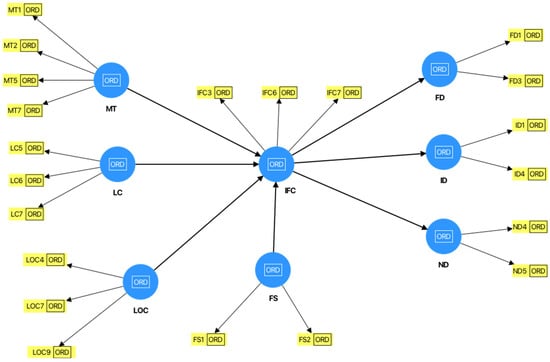
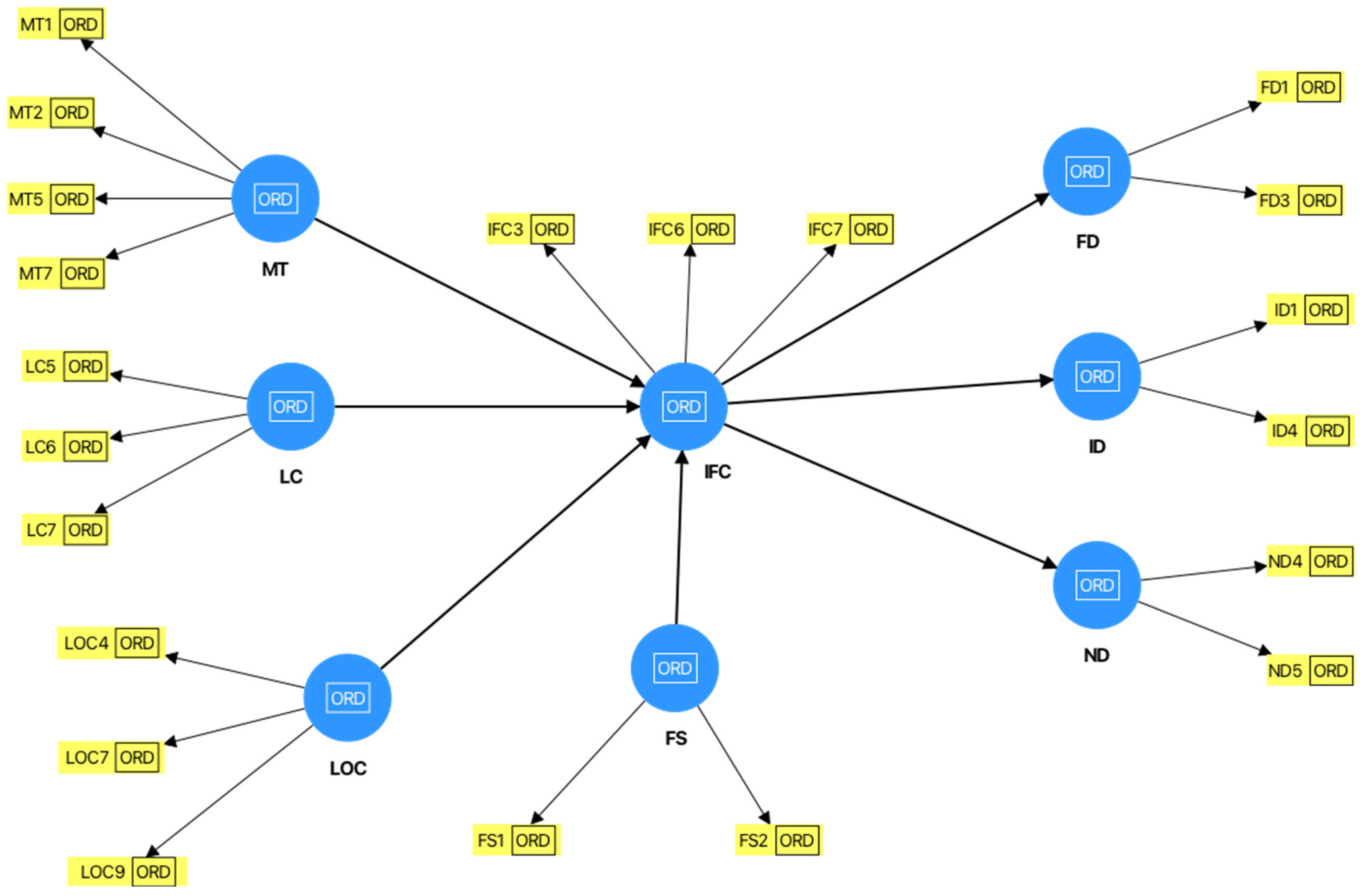
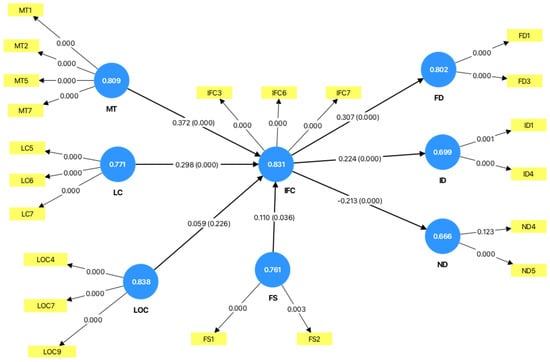
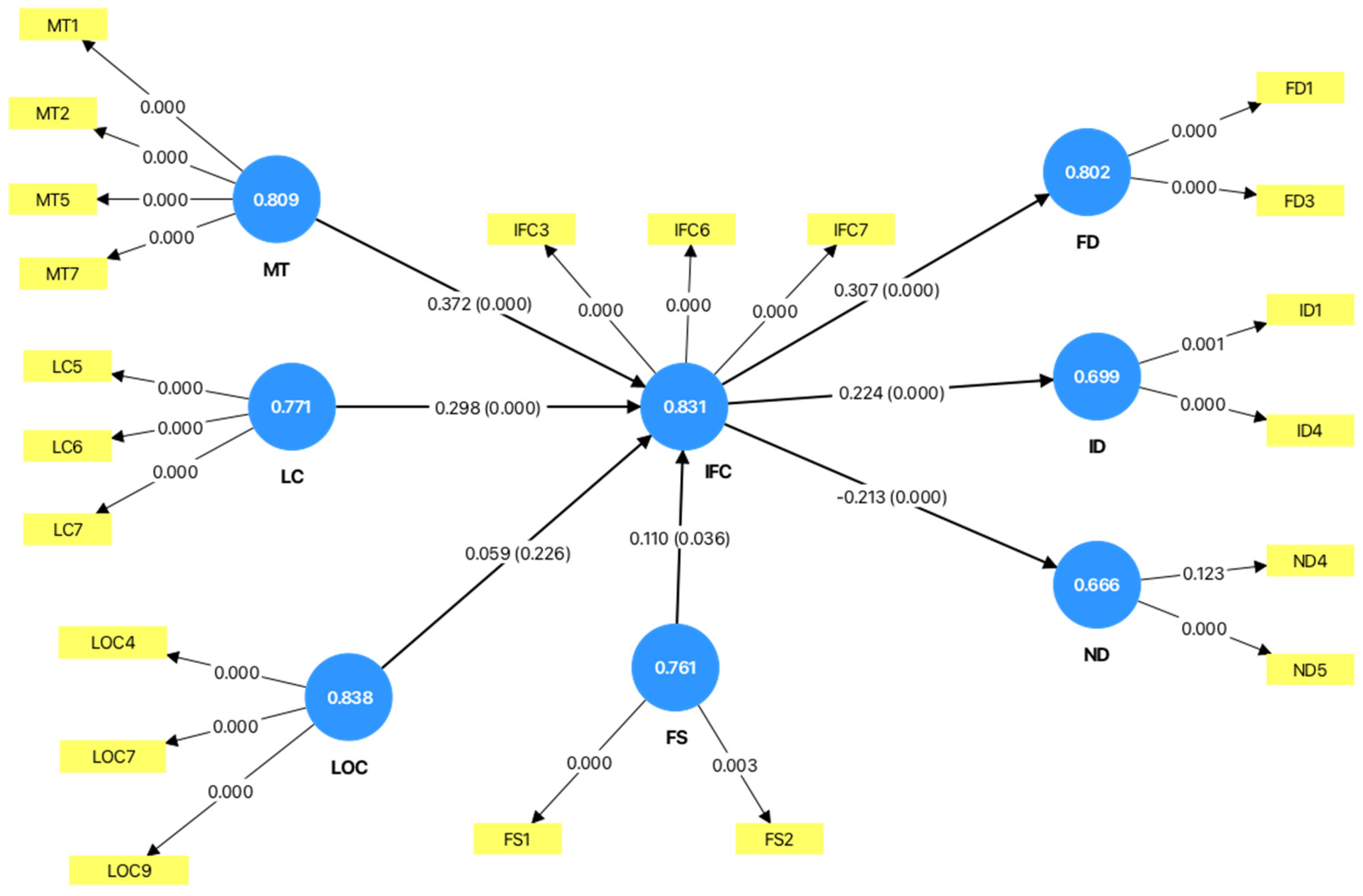

Disclaimer/Publisher’s Note: The statements, opinions and data contained in all publications are solely those of the individual author(s) and contributor(s) and not of MDPI and/or the editor(s). MDPI and/or the editor(s) disclaim responsibility for any injury to people or property resulting from any ideas, methods, instructions or products referred to in the content. |
© 2026 by the authors. Licensee MDPI, Basel, Switzerland. This article is an open access article distributed under the terms and conditions of the Creative Commons Attribution (CC BY) license.