


Abstract
This paper examines whether Open Government Data (OGD) can improve urban air quality in China. Using the staggered rollout of city-level OGD platforms as a quasi-natural experiment, it estimates the effect of platform launches on annual average PM2.5 concentration at the prefecture-city level. The results show that OGD significantly reduces PM2.5 concentration. This finding remains robust after replacing the dependent variable, conducting event-study tests, applying the Goodman–Bacon decomposition, using a heterogeneity-robust estimator, and carrying out a placebo test. The analysis also shows that controlling for the prior influence of provincial platforms is important, because ignoring this factor may lead to an underestimation of the city-level policy effect. Further analysis suggests that OGD may improve air quality by promoting green innovation, strengthening the government’s orientation toward high-quality development, and increasing public environmental attention. The effect is stronger in cities with better digital infrastructure and stronger government governance capacity, and is generally more pronounced in major urban agglomerations. Overall, the findings suggest that OGD is not only a tool for information disclosure, but also a policy instrument with broader value for environmental governance.
1. Introduction
In the global process of digital governance, China’s Open Government Data (OGD) policy has developed distinctive institutional features. Public data generally refers to data resources with a public nature that are generated, collected, or held by governments and their authorized agencies in the course of public administration. These data often cover the economy, society, the environment, population, and natural resources. They are public, shareable, authoritative, and manageable. In recent years, with the continued push for Digital China, digital government, and the basic data system, OGD has moved beyond the traditional framework of government information disclosure. It has gradually become an important policy tool for improving governance capacity, promoting high-quality development, and supporting social innovation. Against this background, local governments have continued to build OGD platforms. The policy focus has also shifted from whether data should be opened and how much data should be opened to whether data openness can generate substantive improvements in governance performance.
Unlike conventional environmental information disclosure, which mainly serves transparency and compliance purposes through the release of selected regulatory or monitoring information, OGD provides standardized, machine-readable, and reusable datasets that can be repeatedly accessed, combined, and recombined by governments, firms, researchers, media, and citizens. As a result, OGD has a broader governance logic: it can function not only as a transparency tool, but also as a coordination infrastructure and an enabling resource for external actors. This distinction is especially important in the environmental field, because effective pollution control depends not only on information disclosure itself, but also on intergovernmental coordination, market responses, media attention, and public participation.
This broader governance logic is especially relevant to air pollution control, which remains a central issue in China’s high-quality development. Global climate change, environmental constraints, and public health risks have made better urban air quality a key task for local governments [1,2]. As the world’s largest carbon emitter, China faces a major challenge in balancing economic growth and environmental protection. This requires new governance tools to advance ecological progress and the dual-carbon goals together [3]. In some areas, the effects of traditional command-and-control and market-based environmental policies have started to weaken at the margin [4]. By contrast, digital, platform-based, and data-driven governance offers new ways to improve pollution monitoring, cross-department coordination, public oversight, and policy enforcement [5]. Existing studies show that digital development can improve green performance and pollution control by promoting green innovation, improving resource allocation, strengthening regulation, and increasing transparency. In this context, more and more studies have begun to examine the environmental effects of OGD as a specific digital policy tool. At the firm level, data openness can reduce information asymmetry and environmental uncertainty, and can promote cleaner production and higher energy efficiency [6]. At the city and regional levels, OGD can improve policy transparency and the information structure, which helps improve resource allocation and environmental performance [7]. OGD is becoming an important digital governance strategy. This raises an important question with both theoretical and practical value: can OGD bring measurable gains in air pollution control?
In recent years, scholars have paid growing attention to the economic and governance effects of OGD. However, most empirical studies identify its effects by treating the launch of a city-level OGD platform as the main policy shock. They pay less attention to the fact that in China, provincial and city platforms were rolled out in an overlapping way. In fact, provincial platforms often provide the basic functions of data standards, catalog systems, interface rules, and cross-department sharing. Their launch may, therefore, affect cities within the province even before city-level platforms are established. If provincial platforms have already improved the local data environment through institutional transmission, capacity support, or sharing mechanisms, then city-year observations without a city-level platform may not be a clean untreated control group. In that case, treating the launch of a city-level platform as a single exogenous shock may narrow the gap between the treatment and control groups and lead to an underestimation of the marginal governance effect of city-level platforms.
Against this background, this paper examines the effect of OGD on urban air pollution control and brings the staggered rollout of provincial and city platforms into the identification strategy. More specifically, this paper treats the launch of city-level OGD platforms as a quasi-natural experiment and tests its effect on urban air quality. At the same time, it explicitly controls for the possible prior influence of provincial platforms in order to improve the credibility of the estimated effect of city-level platforms. On this basis, the paper further examines the channels through which OGD may work from two broad perspectives: technological progress and supervisory constraints. It focuses on whether OGD improves air quality by promoting green innovation, strengthening the government’s orientation toward high-quality development, and enhancing public environmental attention. It also discusses whether the policy effect depends on digital foundations, governance capacity, and regional coordination conditions.
2. Literature Review
2.1. OGD as a Governance Tool
OGD is an important part of digital government and the basic data system. Early studies mainly focused on its concept, institutional logic, rights basis, and operating mechanisms.
As data has become a factor of production, the focus of research has shifted from openness itself to how openness works. OGD is not the same as traditional information disclosure. Its key features are machine readability, reusability, and collaborative development. This gives it a stronger role as a governance tool. In addition, openness is not a single act of disclosure. Its governance value also depends on whether there are channels that can turn data into understandable issues, participatory processes, and collaborative action [8].
The policy goal of OGD has also moved from disclosure to service and ecosystem building. The value of openness lies not only in releasing data, but also in whether it can build collaborative structures across actors, stages, and levels of government, and turn data supply into long-term governance capacity and social value [9]. Some studies also point out that digital tools do not automatically lead to more inclusive participation. Their effects still depend on technology, organizational capacity, and social support [10]. OGD is no longer only a conceptual issue. It has become a policy tool with clear governance functions, but its effects are still shaped by institutional capacity.
2.2. Performance Effects of OGD
Research on the effects of OGD has also expanded. Early work focused on public values such as transparency, accountability, and citizen participation. More recent studies test its actual effects on economic growth, firm development, financial allocation, and green transition. Overall, existing studies show that OGD can improve regional development and the behavior of micro-level actors by improving the information environment, optimizing resource allocation, lowering transaction costs, and strengthening innovation coordination.
In terms of economic and industrial effects, OGD first shows up in regional growth and industrial development. Existing studies find that the construction of OGD platforms can significantly promote regional economic development, mainly by boosting firm innovation and improving the business environment [11]. This effect also extends to specific sectors. It appears in higher agricultural total factor productivity and stronger green and sustainable development in tourism. However, these effects depend on conditions such as digital infrastructure, marketization, and governance capacity [12,13].
At the firm level, OGD can support the growth of private firms, expand firms’ innovation boundaries, and improve innovation efficiency [14,15]. At the same time, it can promote firms’ digital transformation and reshape internal capabilities by improving the decision environment and the competitive environment [16]. At the supply chain level, OGD helps improve supply chain efficiency and trade credit provision. It improves firms’ financing conditions and upstream-downstream coordination, and in turn promotes sales growth, productivity gains, and supply chain optimization [17,18].
In financial allocation and risk governance, OGD can reduce corporate default risk and bond credit spreads, and it can also improve the stability of bank operations. The main channels are lower information asymmetry, better credit allocation, and stronger external monitoring [19,20,21]. OGD can also help curb corporate violations and improve firm governance quality [22]. In addition, it can promote cross-regional capital flows and attract outside investment. It can also help narrow the urban-rural income gap. This suggests that its effects go beyond a single firm or a single region and extend to wider market integration and inclusive development [23,24,25].
Overall, existing studies show a fairly consistent result: OGD has significant positive economic effects. It can influence regional growth, firm development, innovation performance, financing conditions, and factor flows at the same time. The main mechanisms include a better information environment, more efficient resource allocation, lower institutional transaction costs, and stronger digital transformation and innovation coordination. Still, most studies are based on the rollout of local data openness platforms in China. More work is needed on how differences in data quality, openness structure, and governance capacity shape these effects.
Besides economic and industrial effects, the green effects of OGD have also received growing attention. At the firm level, OGD can improve ESG performance, promote green transformation, and reduce ESG greenwashing. These effects mainly work through lower financing constraints, lower operating costs, stronger green innovation, and stronger external oversight [26,27,28]. At the same time, OGD can significantly reduce firms’ emissions of waste gas, wastewater, solid waste, and carbon dioxide, and can generate joint reductions in pollutants and carbon emissions [6].
At the city and regional levels, OGD can improve green economic efficiency and green economic growth. It works through green innovation, industrial upgrading, and better government environmental governance, and it also shows some spatial spillover effects [7,29]. In addition, OGD can promote green innovation cooperation across cities and strengthen the spread of green knowledge and regional green transition [30]. In cross-regional environmental governance, OGD can significantly reduce boundary pollution by promoting market integration and strengthening environmental constraints [31]. Overall, existing studies provide a solid basis for understanding the broad effects of OGD. However, city-level evidence directly related to air pollution control is still limited.
2.3. Policy Diffusion and Multi-Level Governance of OGD
Although research on the effects of OGD has become richer, most empirical studies still treat the launch of city-level platforms as the main policy shock and assume that city-year observations without a city-level platform form the control group. However, research on policy diffusion shows that local policy adoption is not fully independent. It is shaped by the prior choices of other jurisdictions and by policy signals from higher-level governments, often through mechanisms such as learning, competition, imitation, and coercion [32]. In the field of OGD, existing studies further show that the spread of OGD platforms in China is influenced not only by adoption in nearby places, but also by intergovernmental policy signal transmission from higher levels. Provincial governments play an important intermediate role between the central government and city governments, which means that provincial platforms or provincial policy signals may affect city platform construction even before city-level platforms are formally launched [33].
This pattern can be better understood within the broader framework of multi-level governance. Piattoni [34] argues that multi-level governance is characterized by blurred boundaries between center and periphery, between state and society, and between different arenas of governance, so that policy processes often unfold across interconnected levels rather than within a single hierarchical center [35]. Similarly, Bache, Bartle, and Flinders [36] emphasize that contemporary governance often involves overlapping, interconnected, and blurred arrangements across levels, which makes it difficult to treat different layers of governance as institutionally separate. Applied to the development of OGD in China, this implies that provincial and city platforms should not be viewed as two fully independent policy shocks. Instead, provincial rollout may already reshape the local institutional and data environment through standard setting, catalog design, interface rules, organizational templates, and cross-department coordination arrangements before a municipal platform is officially launched.
Therefore, when estimating the effects of city-level platform construction, it is necessary to account for the prior role of provincial deployment. Otherwise, city-year observations without city-level platforms may not constitute a true untreated control group, and the marginal governance effect of city-level OGD platforms may be underestimated.
3. Theoretical Analysis and Research Design
3.1. Theoretical Analysis
Against the background of ongoing digital government reform and continued improvement in the basic data system, OGD is moving beyond the traditional model of information disclosure and becoming an institutional tool for better governance and high-quality development. Data is non-rival in nature. For example, one person’s location history, medical records, or driving data can be used by several firms at the same time. This non-rival nature can generate increasing returns, and even when privacy concerns exist, broader data use across organizations may still produce substantial social benefits [37]. Because public data has a public nature, it is subject to fewer constraints from individual privacy concerns than many forms of private data. Compared with ordinary government information disclosure, OGD places greater emphasis on machine readability, reusability, and cross-departmental coordination. Its value lies not only in providing more information, but also in improving the way information circulates, reducing information frictions, and strengthening governance interaction. In this way, data can become more deeply embedded in economic and social processes.
In the field of air pollution control, information on pollution monitoring, emission permits, law enforcement penalties, traffic flows, energy use, and weather conditions has clear public, external, and cross-departmental characteristics. The effectiveness of governance depends to a large extent on whether such information can be obtained in a timely way, whether departments can coordinate smoothly, and whether public oversight can operate effectively. Therefore, OGD may provide new institutional support for improving urban air quality by enhancing the information environment and governance conditions.
From the perspective of governance logic, OGD can improve both transparency and coordination in air pollution control. When environmental monitoring data, emission data, and enforcement information are released to the public in a more standardized, continuous, and verifiable form, citizens, the media, and social organizations can observe pollution conditions and policy performance more directly. This can lead to more targeted external oversight [38]. As oversight pressure and accountability constraints become stronger, local governments face higher costs of information manipulation and selective disclosure, and, therefore, have stronger incentives to enforce environmental regulation more strictly and more consistently [39]. At the same time, OGD can reduce information asymmetry and departmental fragmentation in air pollution control. Because pollution governance typically involves multiple departments, including ecology and environment, housing and urban development, transport, emergency management, and meteorology, OGD and data sharing can reduce information delays and governance blind spots and support more accurate policymaking, pollution monitoring, and joint enforcement [40]. Data integration can also reduce monitoring bias and fragmented governance caused by departmental barriers, thereby shifting pollution control from local and reactive responses toward a more systematic and forward-looking model [41,42].
More broadly, OGD may also affect how local governments identify development priorities and allocate policy attention. By improving information disclosure, reducing information frictions, and making policy-relevant data easier to access and use, OGD can strengthen the government’s ability to detect development bottlenecks, technological opportunities, and governance risks. This may encourage local governments to place greater emphasis on innovation, digital transformation, advanced technologies, and green development in agenda setting. As these issues move higher on the policy agenda, governments may become more likely to support technological upgrading, industrial restructuring, and cleaner development paths. Taken together, OGD may improve the information environment for firms, governments, and the public, and may improve air pollution control through three main channels: green innovation, the government’s orientation toward high-quality development, and public environmental attention. These channels are discussed below.
(1) Promoting green innovation. Green innovation is widely seen as an important micro-level basis for pollution reduction and green transition. It includes not only breakthroughs in energy-saving and emission-reduction technologies, but also greener production processes, resource use, and management practices [43,44]. Existing studies show that green innovation can bring both environmental and economic benefits and is an important path toward better environmental performance [45,46]. OGD may promote green innovation by improving information supply, strengthening knowledge sharing, and supporting technology diffusion. On the one hand, opening data on environmental monitoring, emission permits, energy use, and industrial activity can reduce information constraints in green research and development. It can transform scattered information on environmental externalities into clearer decision signals, thereby improving the information basis of firm decisions, raising the efficiency of resource allocation, and improving the match between research direction and actual needs [47]. On the other hand, OGD can improve the flow of knowledge and reduce the cost of obtaining technical, market, and policy information, giving firms better conditions for green research and technological upgrading [48,49,50]. In addition, greater transparency in environmental information can strengthen external oversight and reputation pressure from the media, the public, and capital markets. This may encourage firms to adopt green technologies and greener production methods in order to maintain competitiveness and public image, thereby supporting the spread of green innovation [51]. As green innovation improves, pollution control technology, cleaner production capacity, and energy-saving efficiency are also likely to improve, which can in turn help improve air quality.
(2) Strengthening the government’s orientation toward high-quality development. Unlike traditional productivity growth driven mainly by labor and capital, China’s concept of “new quality productive forces” emphasizes innovation, digital empowerment, and green production as the core drivers of high-quality development [52,53,54]. In this context, OGD may affect not only how firms and the public access information, but also how governments identify development priorities and allocate policy attention. By improving information disclosure, reducing information frictions, and making policy-relevant data easier to access and use, OGD can strengthen governments’ ability to detect development bottlenecks, technological opportunities, and governance risks. This may encourage local governments to place greater emphasis on innovation, digital transformation, advanced technologies, and green development in agenda setting [55]. As these issues receive greater policy attention, governments may increase support for technological upgrading, industrial restructuring, and cleaner modes of production. Such changes can help cities move away from extensive growth patterns and toward more efficient and greener development paths. As a result, OGD may improve air quality indirectly by strengthening the government’s orientation toward high-quality development and by creating stronger policy conditions for green transition [56,57].
(3) Enhancing public environmental attention. Environmental governance is not only an internal government process; it is also shaped by public attention, social participation, and external oversight. OGD lowers the threshold for the public to access environmental information by making information on pollution monitoring, emission permits, enforcement penalties, and governance outcomes more transparent and verifiable. This can improve the public’s ability to understand pollution problems and strengthen its willingness to participate [38,40]. Under conditions of limited information, the public often finds it difficult to judge pollution conditions and governance outcomes accurately, so public concern may remain vague and diffuse. Under data openness, however, citizens can form a more concrete understanding of pollution sources, governance processes, and policy performance, and can then participate in oversight and feedback through search, discussion, complaints, and public expression. With the further amplification of online platforms and social media, public concern about environmental issues may turn into sustained external pressure, pushing governments and firms to raise governance intensity and compliance levels [39]. In addition, stronger public oversight may improve the feedback mechanism between government and society and increase the speed of governance response and policy correction. In this sense, OGD not only improves public awareness, but may also strengthen public oversight capacity, thereby helping move environmental governance from a closed administrative model toward a more interactive and responsive one.
At the same time, these channels should not be understood as operating automatically or uniformly. The opening of public data does not necessarily translate into effective data use, stronger supervision, or better policy coordination. In practice, the environmental effects of OGD may be constrained by uneven digital infrastructure, limited administrative capacity, fragmented data quality, weak data utilization, and poor interdepartmental collaboration. OGD may fail to stimulate green innovation when firms lack absorptive capacity or when open datasets are difficult to integrate and reuse. It may also have limited effects on government attention if data openness mainly leads to symbolic responsiveness or performance signaling rather than substantive regulatory action. Likewise, greater public access to environmental data does not necessarily generate effective participation when citizens face barriers of data literacy, access, or sustained engagement. Therefore, although OGD is expected, on balance, to improve air quality through technological and supervisory channels, its actual effects may be conditional, uneven, and dependent on local institutional and digital conditions.
It should also be noted that, under the institutional background of the staggered rollout of provincial- and city-level OGD platforms in China, provincial platforms usually provide basic functions such as unified standards, catalog systems, sharing interfaces, and coordination mechanisms. Their launch may, therefore, affect cities within the province even before city-level platforms are established. This institutional setting does not change the basic logic through which OGD may improve air pollution control through the three channels discussed above, but it does affect the construction of the control group in empirical analysis. If provincial platforms have already improved the data environment and governance conditions of cities within the province, then city-year observations without a city-level platform may not represent a truly untreated state. Therefore, the empirical analysis in this paper further considers the possible prior effect of provincial platforms in order to identify more accurately the marginal effect of city-level OGD platforms on air quality.
Overall, OGD is expected, on balance, to improve air pollution control through three channels: green innovation, the government’s orientation toward high-quality development, and public environmental attention. Through these channels, OGD may contribute to better urban air quality, although the strength of this effect may vary across institutional and regional contexts. Based on the above analysis, this paper proposes the following hypothesis:
Hypothesis 1.
The launch of OGD platforms is expected to significantly improve urban air quality.
3.2. Research Design
The discussion above suggests that OGD may affect air pollution control through several plausible channels. Whether these mechanisms translate into measurable improvements in urban air quality, however, remains an empirical question. This subsection, therefore, presents the research design, including the sample, variables, model specification, and identification strategy used to estimate the effect of OGD platforms.
3.2.1. Sample and Data
This paper studies prefecture-level cities in China from 2007 to 2023 and examines the effect of OGD platforms on urban air quality. During the sample period, some regions experienced administrative boundary changes, and some city-year observations have missing values in key variables. We, therefore, process the original sample in two steps. First, we drop city-year observations with serious missing values in the main variables. Second, we check and standardize municipalities and a few observations with clearly inconsistent statistical definitions. After these steps, we obtain an unbalanced city-level panel.
The core policy variable in this paper is the launch year of OGD platforms. The launch years of provincial and city-level platforms are collected and cross-checked by hand from government websites, platform archive pages, official news reports, and other public documents. Although the panel begins in 2007, the rollout of OGD platforms in China mainly started in 2014 and expanded gradually thereafter. Therefore, the earlier years of the panel mainly serve as the pre-treatment period for identifying changes in air quality before and after platform adoption. To address the concern that the relatively long pre-treatment window may capture structural changes unrelated to OGD adoption, we further conduct robustness checks using shorter sample windows in Section 4.3.1.
Annual average PM2.5 concentration at the city level comes from the ChinaHighPM2.5 dataset released by the National Tibetan Plateau/Third Pole Environment Data Center [58]. Because the original dataset is provided in raster format, we first spatially match the raster grids with the prefecture-level administrative boundary shapefile of China. After overlaying and merging the grid cells with city polygons, we aggregate the matched grid-cell values within each prefecture-level city and convert the results into a city-year panel dataset. The dependent variable and control variables mainly come from the China City Statistical Yearbook, the China Regional Economic Statistical Yearbook, the database of the National Bureau of Statistics, and related research databases. Alternative indicators, such as industrial SO2 emissions, mainly come from city statistical yearbooks and environmental statistical materials. In the mechanism analysis, variables such as green innovation, government orientation toward high-quality development, and public environmental attention are constructed from the China Research Data Service Platform (CNRDS), local government work reports, and the Baidu Index.
3.2.2. Baseline Model
To identify the effect of the launch of OGD platforms on urban air quality, this paper treats the launch of a city-level platform as a quasi-natural experiment and estimates a staggered difference-in-differences model. The baseline model is:
where i denotes city and t denotes year. is the dependent variable and measures urban air quality. In this paper, it is measured by the annual average PM2.5 concentration of a city. The key explanatory variable, , indicates whether city i has launched a city-level OGD platform by year t. It equals 1 in the launch year and all following years, and 0 otherwise. is a vector of city-level control variables. and are city fixed effects and year fixed effects, respectively. is the error term. Standard errors are clustered at the city level to address heteroskedasticity and serial correlation.
In Equation (1), the coefficient captures the average effect of the launch of a city-level OGD platform on urban air quality after controlling for time-invariant city characteristics, common yearly shocks, and other observable city-level factors. Since the dependent variable is PM2.5 concentration, a significantly negative would suggest that the launch of a city-level platform helps reduce pollution and improve air quality.
3.2.3. Event-Study Model
To test the parallel-trend assumption behind the DID design and to trace the dynamic effects before and after the launch of city-level platforms, this paper further estimates an event-study model:
where is a set of event-time dummies indicating the k-th period relative to the launch year of the city-level OGD platform. The year before the launch is used as the reference period, that is, . Therefore, measures the change in air quality relative to one year before the launch. If the coefficients in the pre-treatment periods are jointly insignificant, this suggests that there is no systematic difference in trends between treated and untreated cities before treatment, which supports the parallel-trend assumption. If the coefficients in the post-treatment periods are significantly negative, this suggests that air quality improves after the launch of city-level platforms. It also allows us to see whether the policy effect is delayed, persistent, or cumulative. To avoid unstable estimates caused by very few observations in distant periods, the tails of the event-time window are grouped together.
3.2.4. Controlling for the Prior Influence of Provincial Platforms
In China, provincial OGD platforms were often launched before some city-level platforms. Provincial platforms may affect cities within the province in advance through unified standards, shared interfaces, and institutional coordination. If this prior influence is ignored, city-year observations without city-level platforms may not be truly untreated. This may narrow the gap between the treatment and control groups and lead to an underestimation of the city-level platform effect.
To address this issue, this paper further compares three specifications. First, Equation (1) reports the standard staggered DID without controlling for the prior influence of provincial platforms.
Second, we include a coarse provincial exposure variable, :
where if the province in which city i is located has already launched a provincial OGD platform, while city i itself has not yet launched a city-level platform. Otherwise, it equals 0. This variable does not distinguish how many years have passed since the provincial launch. It only captures whether the city is already exposed to the provincial platform.
Third, we use a more detailed set of staged provincial exposure variables:
where , , , and indicate, respectively, that before the city-level platform is launched, the province is in the launch year of its provincial platform, one year after launch, two years after launch, and three or more years after launch. These variables are active only in years when the city has not yet entered the treatment state of the city-level platform. They are used to capture the prior effect of provincial platforms on the potential control group.
Compared with the coarse exposure variable, the staged variables can better describe how the provincial effect changes over time. They, therefore, provide a finer way to control for the early influence of provincial platforms. By comparing the coefficient on across Equations (1), (3) and (4), this paper examines whether the estimated city-level platform effect changes systematically under different ways of controlling for the prior provincial effect. If the absolute value of the coefficient on becomes clearly larger after controlling for the prior provincial effect, this would suggest that ignoring provincial exposure compresses the difference between the treatment and control groups and leads to an underestimation of the air-quality effect of city-level platforms.
3.2.5. Variables
Dependent variable. The dependent variable is urban air quality. Since PM2.5 concentration can reflect both the level of urban air pollution and the outcome of pollution control, this paper uses annual average PM2.5 concentration as the main indicator. PM2.5 has many sources, including coal burning, industrial emissions, traffic emissions, and secondary aerosol formation. It, therefore, provides a broad measure of urban air pollution and governance performance. A lower value means better air quality and better air pollution control performance. As a robustness check, this paper further uses industrial SO2 emissions (in logarithm) as an alternative dependent variable. This alternative indicator is more closely related to industrial pollution sources, although it is not fully equivalent to PM2.5.
Key explanatory variable. The key explanatory variable is the launch of a city-level OGD platform (). Specifically, if city i has launched a city-level OGD platform in year t or earlier, then ; otherwise, . The launch year of city-level platforms is collected by hand from government portals, platform pages, news reports, and public administrative documents, and is then cross-checked. This variable captures the timing at which a city enters the policy state of OGD.
Controls for the prior influence of provincial platforms. To capture the prior influence of provincial platforms, this paper constructs two types of variables. The first is the coarse provincial exposure variable , which equals 1 if the province has launched a provincial platform but the city has not yet launched a city-level platform, and 0 otherwise. The second is a set of staged variables, , , , and , which indicate the launch year of the provincial platform, the first year after launch, the second year after launch, and the third year and beyond. These variables are active only before the city enters city-level treatment.
Control variables. To reduce omitted-variable bias as much as possible, this paper controls for a set of city-level variables that may affect both air quality and the rollout of OGD. These include urbanization rate (), measured by the share of urban population in total population; industrial structure (), measured by the share of secondary industry in GDP; science and technology expenditure intensity (), measured by the share of science and technology expenditure in local fiscal budget expenditure; GDP per capita (), measured as the natural logarithm of GDP per capita; and population density (), measured as the natural logarithm of resident population per unit area. These variables reflect the city’s development level, industrial structure, technical conditions, economic base, and population concentration. Table 1 reports the definitions and measurements of the main variables, and Table 2 presents the descriptive statistics of the sample.
Table 1.
List of Variables.
Table 2.
Descriptive Statistics.
3.2.6. Identification Strategy and Further Tests
The core identification strategy of this paper is to use differences in the timing of city-level platform launches across cities. It compares changes in air quality before and after the launch within a city and contrasts them with changes in cities that have not yet launched a platform in the same period. This strategy relies on the parallel-trend assumption. In other words, in the absence of city-level platform launches, the trends in air quality should be the same for treated and untreated cities. To test this assumption, the paper uses the event-study design in Equation (2) and examines the dynamic effects in different periods before and after the platform launch. If the coefficients before the launch are jointly insignificant, this suggests that there is no systematic pre-trend and, thus, supports the parallel-trend assumption.
Since staggered DID may produce biased estimates when treatment timing is heterogeneous, this paper further uses the Goodman–Bacon decomposition [59] and a heterogeneity-robust estimator to supplement the baseline results [60]. In addition, the paper tests the robustness of the findings by replacing the dependent variable, conducting placebo tests, and comparing different ways of controlling for the prior influence of provincial platforms.
4. Empirical Analysis
4.1. Baseline Results
Table 3 reports the baseline regression results on the effect of OGD on urban air quality. Since provincial and city-level OGD platforms were rolled out in a staggered way in China, this paper reports three specifications step by step. Columns (1)–(2) present the baseline model without controlling for the prior influence of provincial platforms. Columns (3)–(4) add the coarse provincial exposure variable, . Columns (5)–(6) further include the staged provincial exposure variables, –, in order to capture more carefully the timing of the provincial-platform effect and to reduce the risk that the control group is affected in advance.
Table 3.
OGD and PM2.5 Concentration.
Looking first at the key explanatory variable, the coefficient on is negative and statistically significant in all columns. This shows that the launch of city-level OGD platforms is significantly associated with lower PM2.5 concentration. In the full specification with control variables and staged provincial-platform controls, shown in column (6), the coefficient on is and is significant at the 1% level. This means that, holding other factors constant, the launch of a city-level platform lowers annual average PM2.5 concentration by about 3.321 μg/m3 on average. Given that the sample mean of PM2.5 is 45.232, this decline accounts for about 7.3% of the sample mean. The effect is, therefore, not only statistically significant, but also meaningful in practical terms. This result supports the main hypothesis of this paper that OGD helps improve urban air quality.
More importantly, the estimated coefficient on changes across different ways of controlling for provincial influence. Compared with columns (1)–(2), which do not control for the prior influence of provincial platforms, the absolute value of the coefficient becomes clearly larger in columns (3)–(6), where provincial exposure variables are included. At the same time, the coefficients on both and – are all significantly negative. This suggests that the launch of provincial platforms may already improve air quality within the province through institutional transmission, sharing mechanisms, and better conditions for coordinated governance. As a result, city-year observations without city-level platforms are not fully untreated in a strict sense. If this prior influence is ignored, the difference between treated and untreated cities will be compressed, and the estimated air-quality effect of city-level platforms will be biased downward. In other words, the results in Table 3 suggest that, under the staggered rollout of provincial and city-level platforms in China, explicitly controlling for the prior influence of provincial platforms helps improve the credibility of the estimated marginal effect of city-level platforms.
The estimated coefficients on the control variables are also broadly in line with expectations. The coefficient on is significantly negative, suggesting that improvements in infrastructure and public services during urbanization may help improve air quality. The coefficient on is significantly positive, indicating that cities with a larger share of secondary industry tend to face stronger industrial pollution pressure. The coefficient on is significantly negative, which suggests that science and technology spending helps reduce pollution. The coefficient on is not statistically significant, which implies that, after controlling for city fixed effects and common yearly shocks, the net correlation between income level and PM2.5 is not stable. The coefficient on is significantly positive, indicating that larger cities tend to face greater pressure from energy use and traffic emissions.
Overall, the results in Table 3 show that the launch of OGD platforms is significantly associated with better urban air quality. They also show that controlling for the prior influence of provincial platforms changes the estimated size of the city-level effect in a meaningful way. This suggests that any assessment of the air-quality effect of OGD should take the early role of provincial platforms seriously. Otherwise, the marginal effect of city-level platform launches may be underestimated.
4.2. Dynamic Effects and Parallel Trend Test
To test the parallel-trend assumption behind the staggered DID design and to examine the dynamic path of the policy effect, this paper further estimates an event-study model. Since provincial platforms may affect cities within the province before the launch of city-level platforms, the event-study results reported here are based on the specification that controls for the staged provincial-platform variables, –. In this way, the analysis tries to separate the prior influence of provincial platforms from the dynamic effect of city-level platform launches.
Figure 1 presents the event-study results. Before the policy is implemented, that is, from to , the coefficients are jointly close to zero and are not statistically significant. There is also no clear upward or downward pattern before treatment. This suggests that the treated and control cities follow similar PM2.5 trends before the launch of city-level platforms, which supports the parallel-trend assumption.
Figure 1.
Parallel Trend Test (PM2.5).
After the policy is implemented, the coefficients turn negative as a whole. Their absolute values also become larger over time, and most of them are statistically significant. This result suggests that the effect of city-level OGD platforms on air quality is not a one-time shock. Instead, it appears to be a gradual and cumulative governance gain. As platform operation improves, data supply becomes richer, coordination across departments becomes stronger, and social oversight becomes more effective, the effect of OGD on air quality becomes more visible in the medium and long run.
Overall, the event-study results support the identification strategy used in the baseline regression. They also suggest that the effect of OGD on urban air quality is persistent and cumulative. This is consistent with the general feature of digital governance policies, whose effects usually take time to appear as platform building, data integration, and policy use continue to deepen.
4.3. Robustness Checks
4.3.1. Shorter Sample Windows
A potential concern is that the full sample begins in 2007, whereas OGD platforms in China were mainly launched from 2014 onward and expanded gradually thereafter. As a result, the relatively long pre-treatment period may capture structural changes unrelated to OGD adoption. To address this concern, we re-estimate the baseline specification using shorter sample windows. Specifically, we first restrict the sample to 2010–2023 and then further restrict it to 2013–2023. As reported in Table 4, columns (1) and (2) correspond to these two subsamples, respectively. The coefficient on DID remains negative and statistically significant in both cases. In the 2010–2023 sample, the estimated coefficient on DID is −2.761 and is significant at the 1% level. In the 2013–2023 sample, the coefficient is −2.303 and also remains significant at the 1% level. The coefficients on the provincial rollout controls are likewise stable in sign and significance. These results suggest that the main findings are not driven by structural shifts in the early years of the sample and remain robust after excluding a substantial part of the long pre-treatment period.
Table 4.
Robustness Checks: Shorter Sample Windows.
4.3.2. Alternative Clustering of Standard Errors
A potential concern is that the baseline regressions cluster standard errors at the city level, while the empirical design explicitly models provincial platform spillovers. In this setting, cities within the same province may be exposed to common shocks and policy environments. To address this concern, Table 5 re-estimates the baseline specification using province-level clustering. The coefficient on DID remains negative and statistically significant at the 10% level, and its magnitude is unchanged from the baseline result. This suggests that the main finding is robust in direction and economic size, although inference becomes more conservative once within-province correlation is taken into account.
Table 5.
Robustness Check: Alternative Clustering of Standard Errors.
4.3.3. Replacing the Dependent Variable
To test whether the baseline results depend on PM2.5 as a single pollution indicator, this paper further replaces PM2.5 with industrial SO2 emissions (in logarithm) and re-estimates both the baseline model and the event-study model. Table 6 reports the main regression results. The coefficient on remains significantly negative at the 1% level, which suggests that OGD also helps reduce industrial SO2 emissions. At the same time, the coefficients on the staged provincial-platform variables, –, are also negative, and most of them are statistically significant. This suggests that provincial platforms may also improve pollution control outcomes through early institutional support and sharing mechanisms.
Table 6.
OGD and Industrial SO2 Emissions (Log).
Figure 2 reports the corresponding event-study results. The pattern is similar to that for PM2.5. The coefficients before treatment are small and insignificant, while the coefficients after treatment gradually become negative and stronger over time. This suggests that the positive effect of OGD on air pollution control is not limited to one specific pollution measure. It also appears under an alternative indicator and shows a similar dynamic pattern.
Figure 2.
Parallel Trend Test (SO2).
Overall, the results based on the alternative dependent variable are consistent with the baseline results. This suggests that the main conclusion of this paper is not driven by the choice of PM2.5 alone and is, therefore, robust.
4.3.4. Goodman–Bacon Decomposition
Since staggered DID may suffer from bias when treatment timing is heterogeneous, this paper further uses the Goodman–Bacon decomposition to examine the source of the overall DID estimate [59]. This method breaks the DID estimate into a weighted average of different two-by-two comparisons and shows which comparisons contribute most to the overall result.
Table 7 reports the Goodman–Bacon decomposition results. The overall DID estimate is negative, which is consistent with the baseline regression. The largest weight comes from the comparison between treated cities and never-treated cities. Its weight is 0.649, and the estimate for this part is also negative. The comparison between earlier-treated and later-treated cities has a weight of 0.275, and its estimate is also negative. The comparison between later-treated and earlier-treated cities carries only a small weight of 0.076. These results suggest that the overall estimate mainly comes from the standard comparison between treated and untreated units, while the potential bias caused by treatment-timing heterogeneity is relatively limited. Therefore, the conclusion that OGD improves air quality is unlikely to be driven mainly by problematic comparisons within the staggered DID design.
Table 7.
Goodman–Bacon Decomposition Results.
4.3.5. Treatment Effect Heterogeneity
To further address the possible bias caused by treatment effect heterogeneity in staggered DID, this paper uses the heterogeneity-robust estimator developed by Sun and Abraham and implements it with eventstudyinteract [60]. Figure 3 presents the dynamic treatment effects based on this method. The coefficients before treatment are generally insignificant, while the coefficients after treatment turn negative and become larger in absolute value over time. This pattern is consistent with the earlier event-study results. It suggests that OGD still has a significant and persistent effect on air quality after accounting for treatment effect heterogeneity.
Figure 3.
Heterogeneity-Robust Event Study (Sun & Abraham).
Table 8 further reports the average treatment effect on the treated (ATT). The estimated ATT is negative and statistically significant. This means that even under a heterogeneity-robust method, the launch of city-level OGD platforms still significantly reduces urban PM2.5 concentration. This suggests that the core finding of this paper does not rely on the specific weighting structure of the traditional DID estimator under staggered treatment timing and is, therefore, robust.
Table 8.
Average Treatment Effect on the Treated.
4.3.6. Placebo Test
Holding the identification structure unchanged, this paper further conducts a permutation-based placebo test to examine whether the baseline result may be driven by random assignment or unobserved common shocks. In each iteration, the paper randomly assigns false launch years to the same number of cities as in the actual data and keeps the time distribution of treatment the same as in the real sample. It then reconstructs the placebo variable and re-estimates the main equation. This process is repeated 1000 times in order to obtain the empirical distribution of placebo estimates.
Figure 4 reports the distribution of the 1000 placebo coefficients and their corresponding p-values. The kernel density of the placebo coefficients is centered around zero and is broadly symmetric. There is no clear systematic shift. Most p-values are above conventional significance levels, which suggests that the estimates under random assignment mainly reflect noise. By contrast, the actual estimate lies in the extreme tail of the placebo distribution. This suggests that the air-quality effect identified in this paper is unlikely to be driven by random treatment assignment. The placebo test, therefore, further supports the credibility of the baseline findings.
Figure 4.
Placebo Test.
4.4. Section Summary
Using the staggered launch of prefecture-level OGD platforms as a quasi-natural experiment, this section evaluates the effect of OGD on urban air quality. The baseline regressions show that the launch of city-level platforms significantly reduces PM2.5 concentration. After controlling for the spillover effect of provincial platforms, the absolute value of the city-level platform coefficient becomes clearly larger, while the coefficients on the provincial spillover variables are also negative as a whole. This suggests that provincial platforms may affect cities within the province before city-level platforms are launched. Ignoring this prior influence may compress the difference between the treatment and control groups and, thus, underestimate the marginal governance effect of city-level platforms.
The event-study results show that the coefficients before treatment are not significant, which supports the parallel-trend assumption. After treatment, the policy effect becomes stronger over time, which suggests persistence and accumulation. The robustness checks further support these findings. The results remain consistent when the dependent variable is replaced. The Goodman–Bacon decomposition shows that the overall estimate mainly comes from comparisons between treated and never-treated units. The heterogeneity-robust estimation also yields a significantly negative average treatment effect. The placebo test suggests that the baseline result is unlikely to be driven by random factors.
Overall, this section provides relatively credible quasi-causal evidence that OGD improves urban air quality. It also lays the empirical foundation for the mechanism and heterogeneity analysis in the next section.
5. Further Analysis
5.1. Mechanism Analysis
To better understand how OGD may improve urban air quality, this section examines three possible channels from two broad dimensions: technological progress and supervisory constraints. As discussed above, OGD may promote green innovation by improving the availability of environmental and industrial information and by reducing information frictions and uncertainty. It may also improve air pollution control by strengthening the government’s orientation toward high-quality development and by lowering the cost for the public to obtain information and participate in oversight.
The following analysis is intended to provide evidence consistent with the proposed channels rather than strict causal identification of mediation effects. To reduce concerns about contemporaneous reverse causality, column (2) uses the one-period-lagged mechanism variable in the PM2.5 regression. To make the coefficients more comparable across columns, the first-stage regression in column (1) and the baseline regression in column (3) are re-estimated using the same comparable sample defined by the corresponding lagged mechanism variable.
5.1.1. Green Innovation
Green innovation is widely regarded as an important micro-level foundation for pollution reduction and green transition. OGD may promote green innovation by improving the supply of environmental and industrial information, helping firms identify green technology opportunities, and supporting knowledge diffusion. To test this channel, this paper measures urban green innovation by first adding 1 to the annual number of granted green patents at the prefecture-city level and then taking the logarithm. The original patent data are obtained from the China Research Data Service Platform (CNRDS).
Table 9 reports the results. In column (1), the dependent variable is green innovation, and the coefficient on is significantly positive. This suggests that the launch of city-level OGD platforms significantly increases urban green innovation. In column (2), the lagged green innovation variable is included in the PM2.5 regression. Its coefficient is significantly negative, indicating that stronger green innovation in the previous period is associated with lower current PM2.5 concentration. At the same time, the coefficient on is , which is smaller in absolute value than the comparable-sample baseline estimate of in column (3). This pattern suggests that part of the air-quality effect of OGD may work through green innovation.
Table 9.
Mechanism Analysis: Green Innovation.
This finding is consistent with the theoretical argument. By improving the availability of environmental and industrial data, OGD can reduce information frictions in green research and development, improve the identification of pollution-control needs and green technology opportunities, and support innovation output [47]. Table 9, therefore, provides supporting evidence for a pathway from OGD to green innovation and then to better air quality.
5.1.2. Government Orientation Toward High-Quality Development
OGD may also affect how local governments identify development priorities, allocate resources, and shape policy agendas. Based on the text of local government work reports, this paper uses keywords related to high-quality development, new energy, artificial intelligence, high efficiency, digital transformation, and frontier technologies to capture the government’s orientation toward high-quality development. A higher value indicates that local governments place greater emphasis on innovation-driven growth, structural upgrading, and new development priorities.
Table 10 reports the results. In column (1), the coefficient on is significantly positive, suggesting that OGD strengthens the government’s orientation toward high-quality development. This means that data openness may improve the government’s ability to identify new development tasks and policy priorities and may move innovation, transformation, and upgrading higher on the local policy agenda. In column (2), after the lagged variable for government orientation toward high-quality development is added to the PM2.5 regression, its coefficient is significantly negative. At the same time, the coefficient on remains significantly negative, but its absolute value becomes smaller than in the comparable-sample baseline regression. This pattern is consistent with the view that OGD may improve air quality partly by strengthening the government’s orientation toward high-quality development, which may then support technological upgrading, structural adjustment, and greener development paths.
Table 10.
Mechanism Analysis: Government Orientation toward High-Quality Development.
It should be noted that this text-based measure may partly reflect rhetorical shifts in local government reports rather than substantive policy action. Because the baseline indicator is constructed from keyword frequency and does not assign different weights to action-oriented and descriptive terms, changes in the measure may capture issue emphasis, agenda framing, or symbolic signaling in addition to actual policy commitment. For this reason, the corresponding mechanism results should be interpreted as supporting evidence consistent with the proposed channel, rather than as direct evidence of implementation intensity.
5.1.3. Public Environmental Attention
Environmental governance is not only an internal government process. It is also shaped by public attention, social participation, and external oversight. To capture this channel, this paper uses the Baidu Search Index for the term “environmental pollution” to measure public environmental attention. Although public attention is not the same as actual supervisory behavior, a higher level of attention usually reflects a stronger potential to obtain information, express concern, and take part in environmental oversight.
Compared with the previous two mechanisms, the public-attention analysis is based on a smaller sample, mainly because of limits in the availability of Baidu Index data. In addition, column (2) uses the lagged public-attention variable, while columns (1) and (3) are estimated on the corresponding comparable sample. Because the current public-attention variable is unavailable for a few city-year observations, the number of observations in column (1) is slightly smaller than that in columns (2) and (3).
Table 11 reports the results. Column (1) shows that OGD significantly increases public environmental attention. This suggests that greater transparency in environmental monitoring, emission permits, and enforcement records lowers the cost of obtaining environmental information and raises public concern about environmental issues. Column (2) shows that lagged public environmental attention is significantly negatively associated with current PM2.5. This means that stronger public attention in the previous period is associated with lower pollution levels, and social oversight may, therefore, place pressure on governments and firms to improve pollution control. Column (3) reports the baseline PM2.5 regression using the comparable sample. After public attention is added, the absolute value of the coefficient becomes smaller but remains significant. This pattern suggests that public attention may be one of the channels through which OGD improves air quality.
Table 11.
Mechanism Analysis: Public Environmental Attention.
Overall, the table provides supporting evidence for a pathway from OGD to stronger public attention and then to better air quality.
5.1.4. Bootstrap Indirect Effects
As a formal complement to the stepwise regressions above, this paper further reports bootstrap-based indirect effects for the three main channels. For each channel, the indirect effect is defined as the product of the coefficient on in the first-stage regression and the coefficient on the one-period-lagged mechanism variable in the second-stage PM2.5 regression. The bootstrap indirect effects are obtained using 1000 replications with cluster resampling at the city level, which preserves the panel structure of the data. The corresponding first-stage and baseline regressions are estimated on the comparable sample defined by the lagged mechanism variable. Since the distribution of an indirect effect may deviate from normality, statistical inference is based primarily on percentile and bias-corrected bootstrap confidence intervals.
Table 12 reports the results. The estimated indirect effects are all negative. For green innovation and government orientation toward high-quality development, both the percentile and bias-corrected confidence intervals exclude zero. For public environmental attention, the percentile and bias-corrected confidence intervals also remain below zero, although the estimated indirect effect is smaller in magnitude and should, therefore, be interpreted more cautiously. Overall, the bootstrap results provide further support for the proposed mechanism channels, with relatively stronger evidence for green innovation and government orientation toward high-quality development.
Table 12.
Bootstrap Indirect Effects.
5.1.5. Discussion of the Mechanism Results
Taken together, the results in Table 9, Table 10, Table 11 and Table 12 suggest that the air-quality effect of OGD is likely to reflect the joint role of two broad channels: technological progress and supervisory constraints. On the one hand, the results on green innovation suggest that OGD may create a more lasting force for pollution reduction by improving data availability, supporting research and development, and promoting technology diffusion. On the other hand, the results on government orientation toward high-quality development and public environmental attention suggest that OGD may also improve air quality by strengthening innovation and transformation incentives, changing local policy priorities, and reinforcing social oversight. The first channel works mainly through technological progress and structural upgrading, while the second works more through policy orientation and external pressure. Together, they help turn the institutional supply of OGD into observable gains in air quality.
These results should still be interpreted with caution. Although the stepwise regressions and the bootstrap indirect effects provide mutually reinforcing support for the proposed channels, they do not amount to strict causal identification of mediation effects. In particular, the mechanism analysis relies on proxy variables, and the bootstrap results should be understood as formal supporting evidence rather than definitive proof of causal mediation. Other channels, such as financial intermediation and capital-market constraints, may also matter, but they are not tested directly here.
5.2. Heterogeneity Analysis
5.2.1. Digital Infrastructure and Government Governance Capacity
The effect of OGD may depend on local development conditions. This section, therefore, examines heterogeneity from two dimensions: digital infrastructure and government governance capacity. Table 13 reports the results.
Table 13.
Heterogeneity Analysis: Digital Infrastructure and Government Governance Capacity.
Digital infrastructure is measured by the logarithm of telecommunications business revenue. This reflects a city’s information and communication service capacity and the intensity of digital infrastructure use, and is, therefore, used as a proxy for the local digital foundation. Government governance capacity is measured by the logarithm of fiscal budget expenditure. This mainly reflects the local government’s ability to provide governance resources and carry out public affairs. Both variables are mean-centered. The regressions include two interaction terms, digital infrastructure and government governance capacity. Since the interacting variables are centered, the coefficient on can be interpreted as the average treatment effect at the mean level of the moderating variable, while the interaction term captures how this effect changes with local conditions.
The interaction between digital infrastructure and is significantly negative (, ). This means that the better the digital infrastructure, the larger the reduction in pollution brought by OGD. In cities with a stronger digital base, the costs of collecting, transmitting, sharing, and using environmental data are lower, and OGD can more easily be translated into transparency, regulatory coordination, and governance improvement. Likewise, the interaction between government governance capacity and is also significantly negative (, ), which suggests that the effect of OGD on air quality is stronger in places with greater governance capacity. These places are more likely to sustain investment in data-governance systems, monitoring operations, and environmental enforcement, and are better able to embed data openness into governance processes.
Overall, the results in Table 13 show that the air-quality effect of OGD depends clearly on local conditions. Digital infrastructure provides the technical basis for data openness to work, while governance capacity provides the institutional and resource basis for turning open data into actual governance action.
5.2.2. Urban Agglomerations
To examine whether the effect of OGD differs across regional governance settings, this paper conducts a heterogeneity analysis from the perspective of urban agglomerations. The five major urban agglomerations in this paper include the Yangtze River Delta, the Pearl River Delta, Beijing–Tianjin–Hebei, the middle reaches of the Yangtze River, and the Chengdu–Chongqing urban agglomeration. This classification follows the policy framework in the 2025 Opinions of the CPC Central Committee and the State Council on Promoting High-Quality Urban Development. This classification is used only as a regional grouping device for heterogeneity analysis and does not imply that the 2025 policy document itself is treated as the policy shock or explanatory variable in the empirical analysis. Table 14 reports the interaction results, where cities outside major urban agglomerations are used as the reference group. The interaction terms capture the additional effect of city-level OGD platforms within a given urban agglomeration relative to this reference group.
Table 14.
Heterogeneity Analysis: Urban Agglomerations.
The interaction terms for the Beijing–Tianjin–Hebei region, the Yangtze River Delta, the Middle Reaches of the Yangtze River urban agglomeration, and the Chengdu–Chongqing economic circle are all significantly negative. This means that in these areas, the launch of city-level OGD platforms leads to a larger improvement in PM2.5 than in non-agglomeration cities. The result suggests that in regions with a higher degree of integration, closer industrial links, and more mature cross-regional coordination mechanisms, the information sharing and governance coordination brought by OGD are more likely to translate into actual improvements in air pollution control.
One result deserves special attention. The interaction term for the Pearl River Delta is significantly positive, which differs from the pattern observed in the other major urban agglomerations. To examine whether this pattern is merely an artifact of the original reference group, this paper further re-estimates the heterogeneity model using several alternative reference groups. As reported in Table 15, the PRD differential remains positive and statistically significant when the reference group is the Yangtze River Delta, Beijing–Tianjin–Hebei, the Middle Reaches of the Yangtze River, or Chengdu–Chongqing. Together with the baseline result in Table 14, this suggests that the positive PRD interaction is unlikely to be driven by the choice of reference group. Rather, it is more plausibly related to PRD-specific institutional and timing characteristics.
Table 15.
Robustness Check: Alternative Reference Groups for the PRD Differential.
Reassuringly, when Pearl River Delta (PRD) cities are excluded from the sample, the coefficient on DID remains negative and statistically significant, as reported in Table 16. This result holds under both city-level and province-level clustering, indicating that the main conclusion of the paper continues to hold in the non-PRD sample. Taken together, these results suggest that the PRD pattern should be viewed as a special regional case rather than as evidence overturning the overall finding.
Table 16.
Robustness Check: Excluding the Pearl River Delta.
As shown in Table 17, the Pearl River Delta exhibits a more synchronized pattern of provincial and city-level rollout. Several PRD cities launched their city-level platforms in the same year as, or even earlier than, the Guangdong provincial platform, while most of the remaining cities launched within the following one to two years. Under this timing structure, the prior influence of the provincial platform and the additional effect of the city-level platform are more likely to overlap in time, making it more difficult to separate the two effects empirically. In addition, before the launch of OGD platforms, the Pearl River Delta had already developed a relatively mature regional coordination system and cross-jurisdiction joint prevention and control mechanism [61]. A higher pre-existing governance baseline may, therefore, imply less room for marginal improvement after the launch of city-level platforms.
Table 17.
Comparison of Launch Timing between Provincial and Municipal Platforms.
Future research could examine this issue further by using more detailed platform-side data, more information on overlapping policies, and identification strategies better suited to this setting.
Overall, except for the Pearl River Delta, the results for the main urban agglomerations support the view that OGD is more likely to generate stronger gains in air pollution control in integrated areas with stronger foundations for regional coordination. The additional reference-group robustness check further suggests that the PRD result is unlikely to be a simple artifact of comparison-group choice. Instead, when provincial and city-level rollout is highly synchronized and the effects of different levels may overlap, both the identifiability and the marginal size of the policy effect may change. This further highlights the importance of taking regional institutional structures and rollout timing into account.
5.3. Section Summary
This section further examines the possible channels and conditional patterns through which OGD may improve urban air quality. The mechanism analysis suggests that OGD may work through both technological progress and supervisory constraints. On the one hand, the launch of city-level OGD platforms significantly increases green innovation, and green innovation is significantly associated with lower PM2.5 concentration. This suggests that green innovation may be an important technology-based channel through which OGD improves air quality. On the other hand, OGD significantly strengthens the government’s orientation toward high-quality development and also increases public environmental attention. Both variables are significantly associated with lower pollution levels, which suggests that OGD may improve air pollution control not only through technological progress, but also through policy reorientation and stronger social oversight. These results should be understood as mechanism-consistent evidence rather than strict causal identification of mediation effects. Other possible channels, such as financial constraints and capital-market discipline, may also matter, but they are not tested directly in this paper.
The heterogeneity analysis further shows that the air-quality effect of OGD depends strongly on local conditions. The higher the level of digital infrastructure and the stronger the government governance capacity, the larger the reduction in pollution brought by OGD. This suggests that technical conditions and governance resources are complementary and help turn platform launch into more stable gains in air pollution control. In terms of regional governance settings, except for the Pearl River Delta, the effect of city-level platform launches is generally stronger in major urban agglomerations than in cities outside such regions. This suggests that in integrated areas with stronger foundations for coordinated governance, OGD is more likely to generate a joint governance effect across jurisdictions. The result for the Pearl River Delta should be treated as a boundary case that requires further explanation, and the current evidence is not sufficient to make a firm claim about its mechanism.
6. Conclusions
This paper examines whether OGD can improve urban air quality in China. Using the staggered rollout of city-level OGD platforms as a quasi-natural experiment, the empirical results show that the launch of OGD platforms significantly reduces PM2.5 concentration at the prefecture-city level. This result remains robust across a series of tests, including alternative dependent variables, dynamic-effect tests, heterogeneity-robust estimation, placebo tests, and alternative clustering of standard errors. The findings also show that controlling for the prior influence of provincial platforms is important, since ignoring this factor may underestimate the air-quality effect of city-level platforms.
Further analysis suggests that OGD may improve air quality through green innovation, the government’s orientation toward high-quality development, and public environmental attention. The heterogeneity analysis further shows that the policy effect is stronger in cities with better digital infrastructure and stronger government governance capacity, and is generally more pronounced in major urban agglomerations. The Pearl River Delta differs from this broader pattern and should be interpreted as a special regional case.
Overall, the results suggest that OGD is not only a tool for data disclosure, but also a policy instrument with broader environmental-governance value. These findings provide empirical support for further improving OGD, especially by prioritizing machine-readable and standardized environmental datasets on OGD platforms and strengthening cross-provincial data interoperability in urban agglomerations.
This paper also has several limitations. The core OGD variable is defined by platform launch and, therefore, captures the timing of adoption rather than the quality or actual use of open data. In addition, the mechanism variables are proxy measures and cannot fully capture the underlying channels. Future research may use richer platform data and more direct behavioral evidence to further examine how OGD affects environmental governance.
Author Contributions
Conceptualization, Y.S.; methodology, Y.S. and X.D.; formal analysis, X.D. and S.P.; data curation, X.D. and S.P.; writing—original draft preparation, X.D.; writing—review and editing, Y.S. and S.P.; supervision, Y.S. and S.P. All authors have read and agreed to the published version of the manuscript.
Funding
This research was funded by the Key Project of the National Natural Science Foundation of China, grant number 72231010.
Institutional Review Board Statement
Not applicable.
Informed Consent Statement
Not applicable.
Data Availability Statement
The data are not publicly available due to privacy or ethical restrictions.
Conflicts of Interest
The authors declare no conflicts of interest.
References
- Zandalinas, S.I.; Fritschi, F.B.; Mittler, R. Global warming, climate change, and environmental pollution: Recipe for a multifactorial stress combination disaster. Trends Plant Sci. 2021, 26, 588–599. [Google Scholar] [CrossRef] [Scilit] [PubMed]
- Awewomom, J.; Dzeble, F.; Takyi, Y.D.; Ashie, W.B.; Ettey, E.N.Y.O.; Afua, P.E.; Sackey, L.N.; Opoku, F.; Akoto, O. Addressing global environmental pollution using environmental control techniques: A focus on environmental policy and preventive environmental management. Discov. Environ. 2024, 2, 8. [Google Scholar] [CrossRef] [Scilit]
- Tambo, E.; Duo-Quan, W.; Zhou, X.N. Tackling air pollution and extreme climate changes in China: Implementing the Paris climate change agreement. Environ. Int. 2016, 95, 152–156. [Google Scholar] [CrossRef] [Scilit]
- McCollum, D.L.; Krey, V.; Riahi, K.; Kolp, P.; Grubler, A.; Makowski, M.; Nakicenovic, N. Climate policies can help resolve energy security and air pollution challenges. Clim. Change 2013, 119, 479–494. [Google Scholar] [CrossRef] [Scilit]
- Santarius, T.; Dencik, L.; Diez, T.; Ferreboeuf, H.; Jankowski, P.; Hankey, S.; Hilbeck, A.; Hilty, L.M.; Höjer, M.; Kleine, D.; et al. Digitalization and sustainability: A call for a digital green deal. Environ. Sci. Policy 2023, 147, 11–14. [Google Scholar] [CrossRef] [Scilit]
- Wu, D.; Xie, Y. Unveiling the impact of public data access on collaborative reduction of pollutants and carbon emissions: Evidence from open government data policy. Energy Econ. 2024, 138, 107822. [Google Scholar] [CrossRef] [Scilit]
- Lv, L.; Zhang, P. Unlocking green potential: How open government data enhances green economic efficiency in China? J. Environ. Manag. 2025, 380, 125043. [Google Scholar] [CrossRef] [Scilit]
- Ruijer, E.; Dymanus, C.; van Kesteren, E.J.; Boeschoten, L.; Meijer, A. Open data work for empowered deliberative democracy: Findings from a living lab study. Gov. Inf. Q. 2024, 41, 101902. [Google Scholar] [CrossRef] [Scilit]
- Fang, J.; Zhao, L.; Li, S. Exploring open government data ecosystems across data, information, and business. Gov. Inf. Q. 2024, 41, 101934. [Google Scholar] [CrossRef] [Scilit]
- Townley, C.; Koop, C. Exploring the potential and limits of digital tools for inclusive regulatory engagement with citizens. Gov. Inf. Q. 2024, 41, 101901. [Google Scholar] [CrossRef] [Scilit]
- Peng, X.; Li, M. Public data openness and regional economic development. Finance Res. Lett. 2025, 86, 108496. [Google Scholar] [CrossRef] [Scilit]
- Li, J.; Yu, Y. Impact of government public data openness on agricultural total factor productivity. Int. Rev. Econ. Finance 2025, 104, 104561. [Google Scholar] [CrossRef] [Scilit]
- Jiang, Y.; Lu, Y.; Tian, X.; Wei, D. Public data openness as an economic policy lever for sustainable tourism: Evidence on mechanisms, spillovers and heterogeneity from Chinese cities. Econ. Anal. Policy 2026, 89, 860–881. [Google Scholar] [CrossRef] [Scilit]
- Liu, L.; Dang, Y.; Ju, Z. Public data openness and private enterprise growth: The roles of local resource allocation and cross-regional collaborative innovation. Econ. Model. 2026, 157, 107519. [Google Scholar] [CrossRef] [Scilit]
- Tan, Z.; Li, F.; Liu, F.; Zhao, J. Public data openness and enterprise innovation efficiency. Int. Rev. Financ. Anal. 2026, 109, 104752. [Google Scholar] [CrossRef] [Scilit]
- Chen, K.; Zhang, S. How does open public data impact enterprise digital transformation? Econ. Anal. Policy 2024, 83, 178–190. [Google Scholar] [CrossRef] [Scilit]
- Liao, W.; Zhuo, L. The impact of public data openness on corporate supply chain efficiency: A quasi-natural experiment based on a local government data openness platform. Econ. Anal. Policy 2025, 87, 1557–1574. [Google Scholar] [CrossRef] [Scilit]
- Li, X.; Li, Y.; Yu, X.; Yuan, C. Public data openness and trade credit: Evidence from China. J. Empir. Finance 2025, 83, 101636. [Google Scholar] [CrossRef] [Scilit]
- Wei, Z.; Li, S.; Huang, Y. Public data openness and corporate default risk: Firm-Level evidence from an emerging market. Finance Res. Lett. 2026, 91, 109491. [Google Scholar] [CrossRef] [Scilit]
- Wen, W.; Dong, J.; Niu, Y. Public data availability and bond credit spreads: Evidence from China. Econ. Model. 2026, 154, 107342. [Google Scholar] [CrossRef] [Scilit]
- Ren, M.; Zhao, J.; She, K. Does public data openness help reduce bank risk?—A quasi-natural experiment from China. Econ. Model. 2026, 158, 107543. [Google Scholar] [CrossRef] [Scilit]
- Liu, G.; Hu, E.; Jian, W.; Kong, L. Public data openness and corporate violations: Evidence from China. Econ. Anal. Policy 2025, 88, 437–451. [Google Scholar] [CrossRef] [Scilit]
- Long, Y.; Zhang, X.; Wang, L. How does government data openness affect cross-regional capital flow? Evidence from Chinese-listed firms’ off-site investment. Econ. Model. 2025, 152, 107289. [Google Scholar] [CrossRef] [Scilit]
- Jiang, W.; Qi, C. Can government data openness promote firms’ inter-regional investment? Int. Rev. Econ. Finance 2025, 104, 104742. [Google Scholar] [CrossRef] [Scilit]
- Zou, G.; Fan, C.; Yang, C. Research on the impact of public data openness on urban-rural income inequality. Finance Res. Lett. 2025, 79, 107193. [Google Scholar] [CrossRef] [Scilit]
- Nie, S.; Wang, S.; Ji, Q. Break down data silos: Does public data openness improve corporate ESG performance? Int. Rev. Financ. Anal. 2025, 106, 104480. [Google Scholar] [CrossRef] [Scilit]
- Ling, L.; Hu, L.; Li, S.; Zhao, X.; Ye, X. How does open public data affect enterprise green transformation? Socio-Econ. Plan. Sci. 2025, 102, 102342. [Google Scholar] [CrossRef] [Scilit]
- Qiang, G.; Ruan, J. Can government public data openness help enterprises achieve sustainable development? Empirical evidence based on corporate ESG greenwashing. Finance Res. Lett. 2025, 86, 108875. [Google Scholar] [CrossRef] [Scilit]
- Jing, L.; Tianshu, Q.; Qing, H. Open government data and green economic growth. Econ. Anal. Policy 2025, 85, 2207–2218. [Google Scholar] [CrossRef] [Scilit]
- Wang, M.; Wu, Y.; Su, X. Does public data openness promote urban green innovation cooperation? Evidence from China. J. Clean. Prod. 2026, 544, 147697. [Google Scholar] [CrossRef] [Scilit]
- Li, P.; Zhou, H.; Liu, X.; Li, L. Does public data openness reduce boundary pollution? Evidence from interprovincial neighboring cities in China. Econ. Model. 2026, 155, 107405. [Google Scholar] [CrossRef] [Scilit]
- Shipan, C.R.; Volden, C. The mechanisms of policy diffusion. Am. J. Political Sci. 2008, 52, 840–857. [Google Scholar] [CrossRef] [Scilit]
- Ye, M.; Hao, W.; Meng, X. Intergovernmental policy signal transmission and open government data platform pilot diffusion in China. Asian Surv. 2024, 64, 79–115. [Google Scholar] [CrossRef] [Scilit]
- Piattoni, S. Multi-level Governance: A Historical and Conceptual Analysis. Eur. Integr. 2009, 31, 163–180. [Google Scholar] [CrossRef] [Scilit]
- Hooghe, L.; Marks, G. Types of multi-level governance. In Handbook on Multi-Level Governance; Edward Elgar Publishing: Cheltenham, UK, 2010. [Google Scholar]
- Bache, I.; Bartle, I.; Flinders, M. Multi-level Governance. In Handbook on Theories of Governance; Edward Elgar Publishing: Cheltenham, UK, 2016; pp. 486–498. [Google Scholar]
- Jones, C.I.; Tonetti, C. Nonrivalry and the Economics of Data. Am. Econ. Rev. 2020, 110, 2819–2858. [Google Scholar] [CrossRef] [Scilit]
- Janssen, M.; Charalabidis, Y.; Zuiderwijk, A. Benefits, adoption barriers and myths of open data and open government. Inf. Syst. Manag. 2012, 29, 258–268. [Google Scholar] [CrossRef] [Scilit]
- Buntaine, M.T.; Greenstone, M.; He, G.; Liu, M.; Wang, S.; Zhang, B. Does the squeaky wheel get more grease? The direct and indirect effects of citizen participation on environmental governance in China. Am. Econ. Rev. 2024, 114, 815–850. [Google Scholar] [CrossRef] [Scilit]
- Fusi, F.; Zhang, F.; Liang, J. Unveiling environmental justice through open government data: Work in progress for most US states. Public Adm. 2023, 101, 1088–1114. [Google Scholar] [CrossRef] [Scilit]
- He, G.; Wang, S.; Zhang, B. Watering down environmental regulation in China. Q. J. Econ. 2020, 135, 2135–2185. [Google Scholar] [CrossRef] [Scilit]
- Jetzek, T.; Avital, M.; Bjørn-Andersen, N. Generating Value from Open Government Data. In Proceedings of the ICIS, Milano, Italy, 15–18 December 2013. [Google Scholar]
- Fussler, C.; James, P. Driving Eco-Innovation: A Breakthrough Discipline for Innovation and Sustainability; Pitman Publishing: London, UK, 1996. [Google Scholar]
- Franceschini, S.; Faria, L.G.; Jurowetzki, R. Unveiling scientific communities about sustainability and innovation. A bibliometric journey around sustainable terms. J. Clean. Prod. 2016, 127, 72–83. [Google Scholar] [CrossRef] [Scilit]
- Pan, W.; Cao, H.; Liu, Y. “Green” innovation, privacy regulation and environmental policy. Renew. Energy 2023, 203, 245–254. [Google Scholar] [CrossRef] [Scilit]
- Zhao, X.; Nakonieczny, J.; Jabeen, F.; Shahzad, U.; Jia, W. Does green innovation induce green total factor productivity? Novel findings from Chinese city level data. Technol. Forecast. Soc. Change 2022, 185, 122021. [Google Scholar] [CrossRef] [Scilit]
- Luo, S.; Yimamu, N.; Li, Y.; Wu, H.; Irfan, M.; Hao, Y. Digitalization and sustainable development: How could digital economy development improve green innovation in China? Bus. Strategy Environ. 2023, 32, 1847–1871. [Google Scholar] [CrossRef] [Scilit]
- Zhou, K.Z.; Li, C.B. How knowledge affects radical innovation: Knowledge base, market knowledge acquisition, and internal knowledge sharing. Strateg. Manag. J. 2012, 33, 1090–1102. [Google Scholar] [CrossRef] [Scilit]
- Kong, T.; Sun, R.; Sun, G.; Song, Y. Effects of digital finance on green innovation considering information asymmetry: An empirical study based on Chinese listed firms. Emerg. Mark. Finance Trade 2022, 58, 4399–4411. [Google Scholar] [CrossRef] [Scilit]
- Liu, X.; Liu, F.; Ren, X. Firms’ digitalization in manufacturing and the structure and direction of green innovation. J. Environ. Manag. 2023, 335, 117525. [Google Scholar] [CrossRef] [Scilit]
- Zhong, C.; Cai, H.; Liu, L.; Xue, R.; Shan, Y. Unveiling the green path: How urban openness reduces pollution and paves the way to sustainability. J. Environ. Manag. 2024, 370, 122378. [Google Scholar] [CrossRef] [Scilit]
- Färe, R.; Grosskopf, S.; Pasurka, C.A., Jr. Pollution abatement activities and traditional productivity. Ecol. Econ. 2007, 62, 673–682. [Google Scholar] [CrossRef] [Scilit]
- Park, S. China’s New Quality Productive Forces Policy: Key Takeaways and Implications. Korea Inst. Ind. Econ. Trade Res. 2024, 29, 45–56. [Google Scholar] [CrossRef] [Scilit]
- Lin, Y. Accelerating the Development of New Quality Productive Forces: A Perspective from New Structural Economics. J. Mod. Stud. 2025, 4, 32–40. [Google Scholar]
- Zhong, Y.; Lai, H.; Zhang, L.; Guo, L.; Lai, X. Does public data openness accelerate new quality productive forces? Evidence from China. Econ. Anal. Policy 2025, 85, 1409–1427. [Google Scholar] [CrossRef] [Scilit]
- McCombs, M.E.; Shaw, D.L. The evolution of agenda-setting research: Twenty-five years in the marketplace of ideas. J. Commun. 1993, 43, 58–67. [Google Scholar] [CrossRef] [Scilit]
- Tu, M.; Zhang, B.; Xu, J.; Lu, F. Mass media, information and demand for environmental quality: Evidence from the “Under the Dome”. J. Dev. Econ. 2020, 143, 102402. [Google Scholar] [CrossRef] [Scilit]
- Wei, J.; Li, Z. ChinaHighPM2.5: High-Resolution and High-Quality Ground-Level PM2.5 Dataset for China (2000–2023); National Tibetan Plateau/Third Pole Environment Data Center: Beijing, China, 2023. [Google Scholar]
- Goodman-Bacon, A. Difference-in-differences with variation in treatment timing. J. Econom. 2021, 225, 254–277. [Google Scholar] [CrossRef] [Scilit]
- Sun, L.; Abraham, S. Estimating dynamic treatment effects in event studies with heterogeneous treatment effects. J. Econom. 2021, 225, 175–199. [Google Scholar] [CrossRef] [Scilit]
- Zhong, L.; Louie, P.K.; Zheng, J.; Wai, K.; Ho, J.W.; Yuan, Z.; Lau, A.K.; Yue, D.; Zhou, Y. The Pearl River Delta regional air quality monitoring network—Regional collaborative efforts on joint air quality management. Aerosol Air Qual. Res. 2013, 13, 1582–1597. [Google Scholar] [CrossRef] [Scilit]
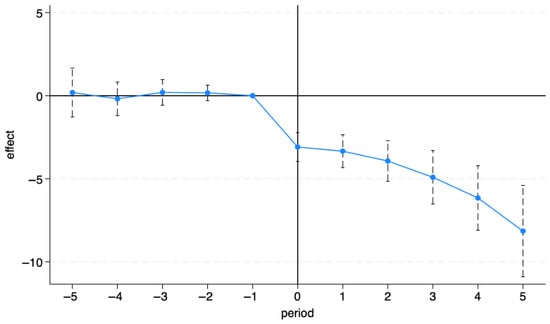
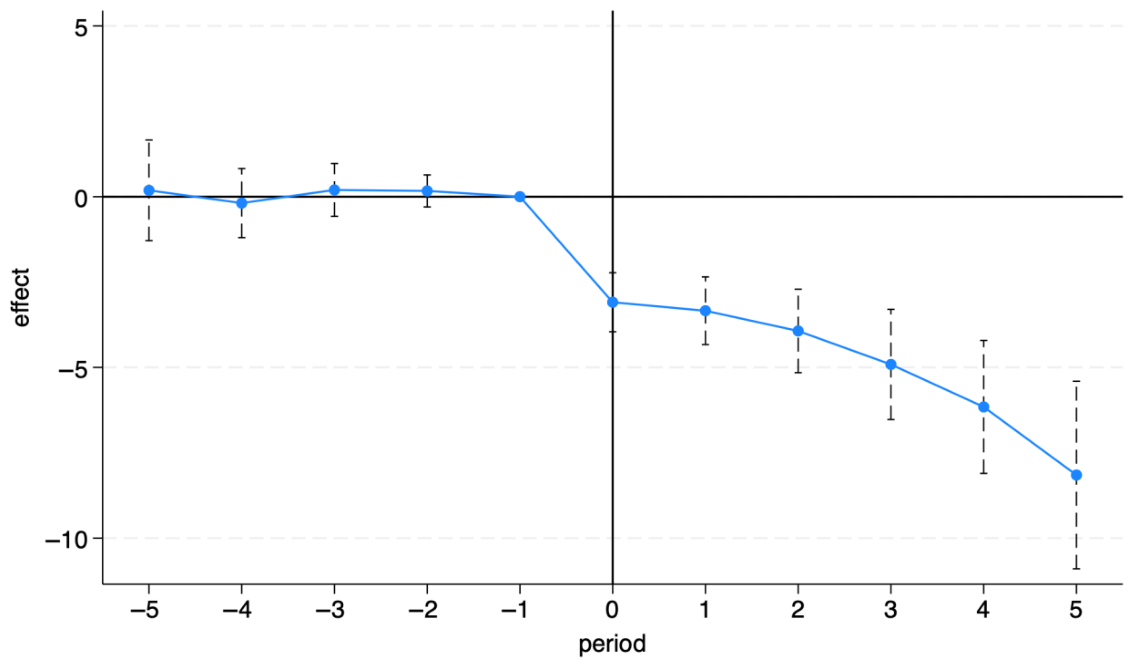
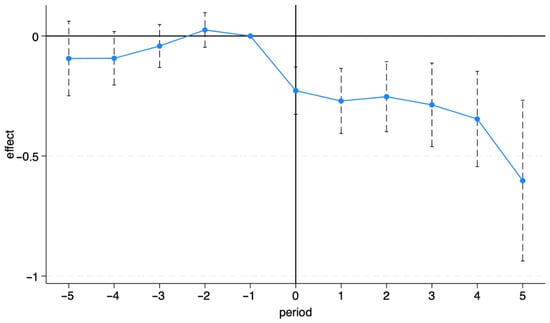
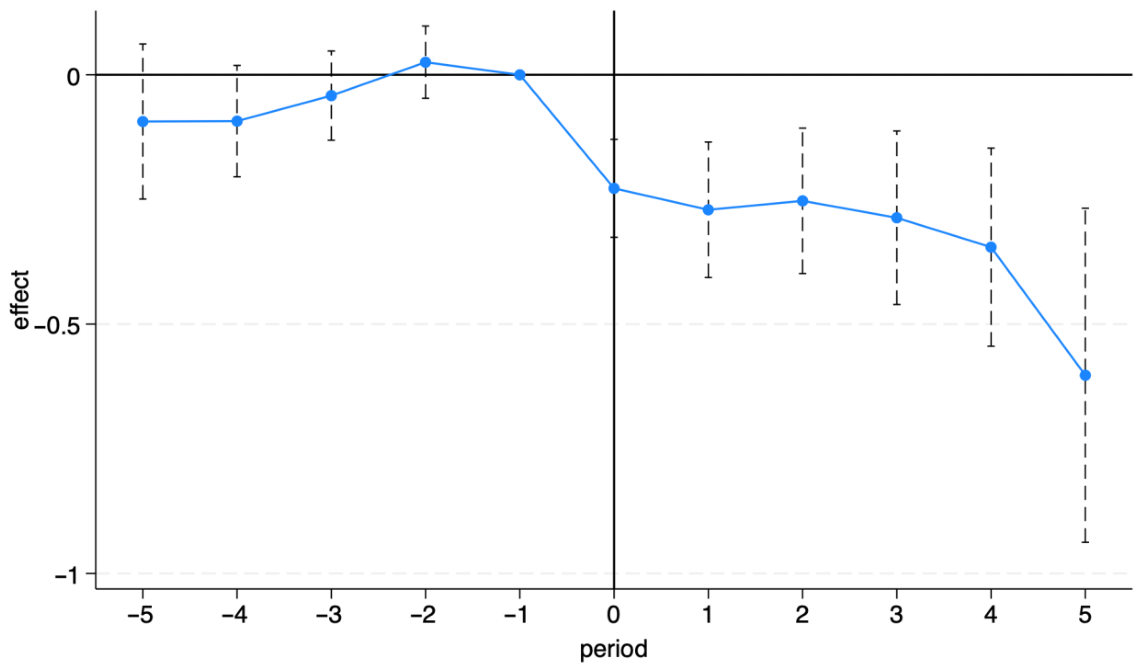
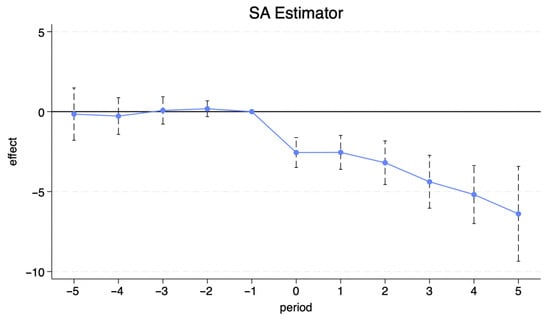
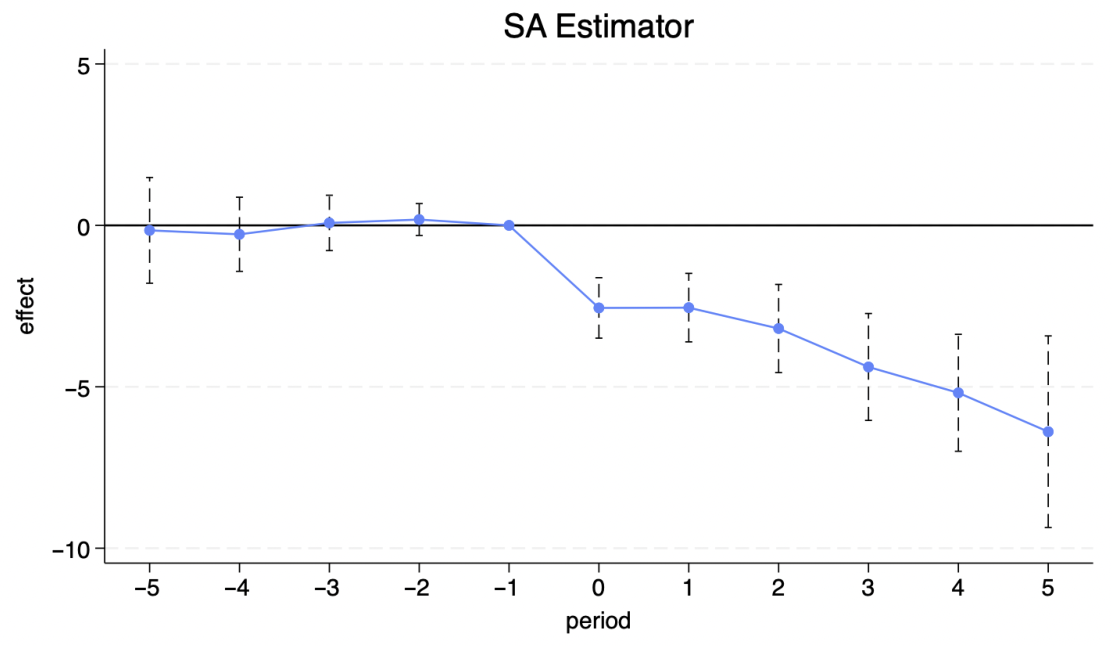
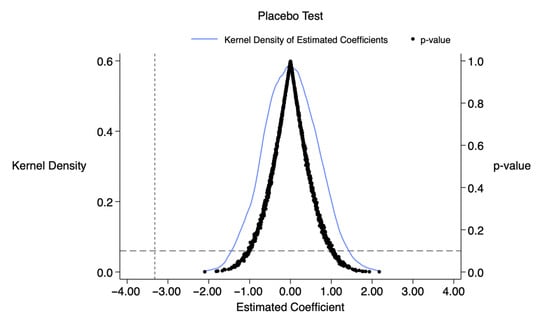
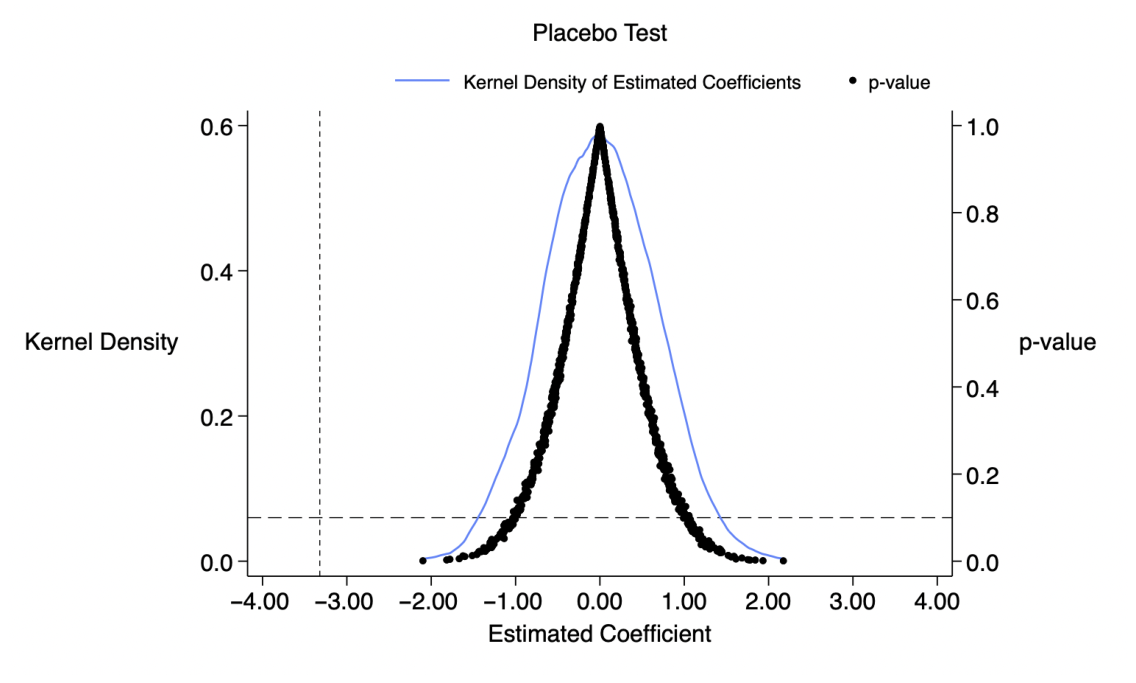

Disclaimer/Publisher’s Note: The statements, opinions and data contained in all publications are solely those of the individual author(s) and contributor(s) and not of MDPI and/or the editor(s). MDPI and/or the editor(s) disclaim responsibility for any injury to people or property resulting from any ideas, methods, instructions or products referred to in the content. |
© 2026 by the authors. Licensee MDPI, Basel, Switzerland. This article is an open access article distributed under the terms and conditions of the Creative Commons Attribution (CC BY) license.