


Abstract
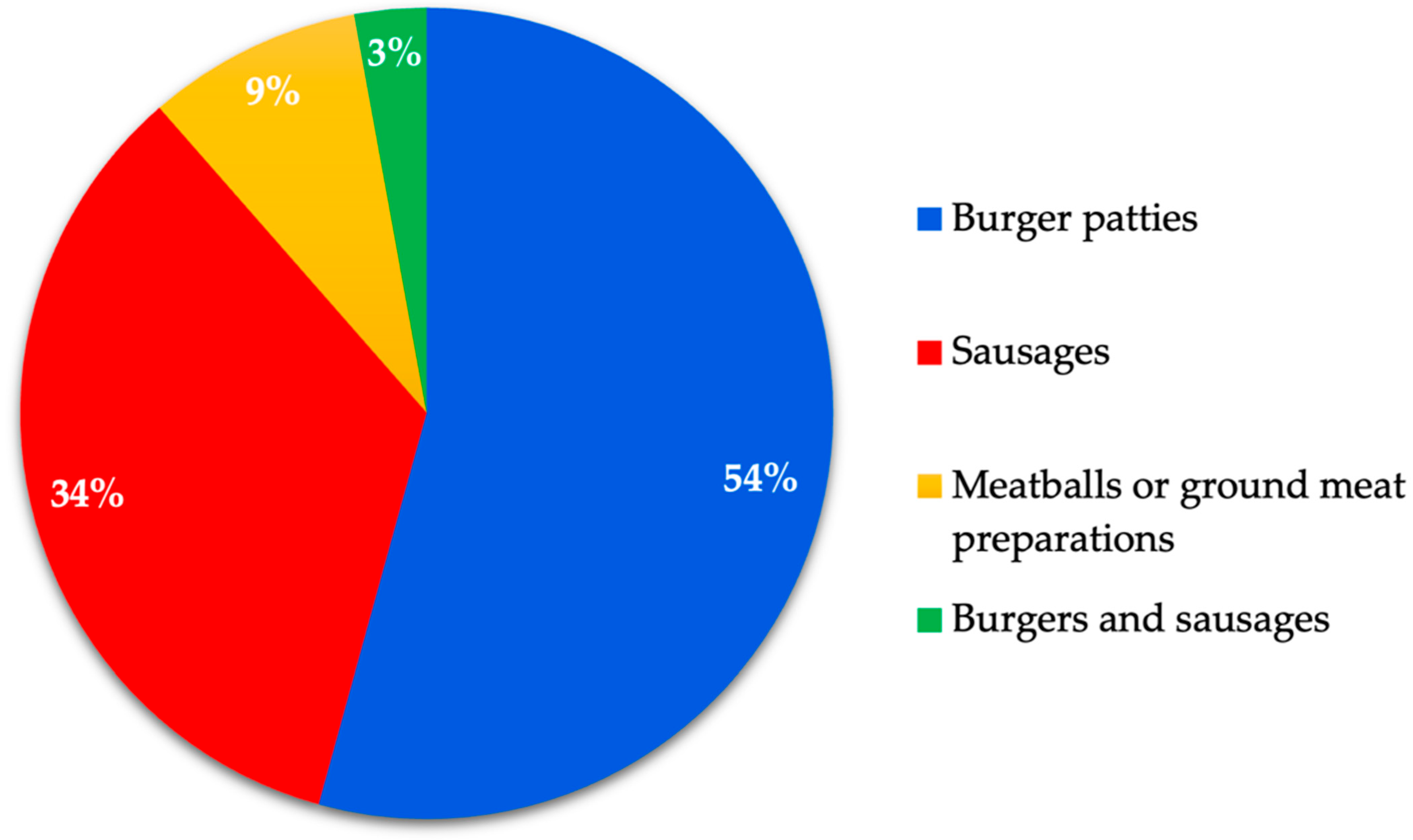
This study aimed to identify the main food processing by-products used in the development of new meat products. An integrative review was conducted based on original scientific articles available in the Lilacs, Medline, Web of Science, Scopus, and Scielo databases published between 2014 and 2024. After applying predefined inclusion and exclusion criteria based on publication period, document type, and relevance to the study objectives, 35 studies were selected from the 2182 records initially identified. Among these, 16 (45.7%) investigated ingredient substitution in meat products, with 9 (25.7%) specifically addressing fat replacement using vegetable agro-industrial by-products. Burger patties were the most frequently evaluated product (54.3%; n = 19), followed by sausages (34.3%; n = 12) and meatballs or ground meat preparations (8.6%; n = 3), while one study evaluated both burgers and sausages (2.9%; n = 1). Studies have demonstrated the effectiveness of by-products from fruit and vegetable processing in meat products, particularly in reducing fat and enriching fiber. Their incorporation can improve the nutritional, sensory, and technological properties of meat products, reducing the need for synthetic additives. Therefore, their use represents a sustainable and promising strategy, contributing to circular economy practices, product innovation, and reduced environmental impact.
1. Introduction
Currently, approximately 1.3 billion tons of food produced worldwide for human consumption are wasted, with fruits and vegetables accounting for 50% [1]. The food industry carries out processing and needs to reduce waste and extend the shelf life of products. However, processing steps could generate significant quantities of by-products (25–30%) [2].
According to Decree No. 12,709 of 31 October 2025, from the Ministry of Agriculture, Livestock and Supply (MAPA), by-products are defined as the result of the processing, industrialization, or economic enhancement of a plant product [3]. These include peels, leaves, seeds, pits, stalks, unusable pulp, and bagasse [4,5,6,7]. Thus, the industry has begun to consider agri-food by-products as valuable resources with untapped potential, previously viewed only as waste [4].
Although the food industry generates a large amount of unused by-products, their disposal represents a high cost for industries. Therefore, by-products are often disposed of improperly, used as fertilizers, added to animal feed, or incinerated [2,8,9,10,11,12]. However, incorrect disposal contributes to the release of greenhouse gases (due to decomposition), in addition to the loss of high value-added compounds. As a result, this process causes environmental and economic damage and ultimately compromises sustainability and food security [5].
Currently, several studies have demonstrated that agro-industrial by-products can be considered suitable raw materials for recovering bioactive compounds, macro, and micronutrients [7,11,13]. In this way, by-products can be used to manufacture new products, such as meat products.
Meat products are widely consumed both in Brazil and worldwide. These products are made from fresh meat that has undergone procedures involving cooking, smoking, salting, or the addition of seasonings and spices [14]. According to legislation, processed/industrialized meat products are products made from meat and/or edible meat by-products, incorporating other ingredients or not [15]. Processing fresh meat allows for the creation of new products, reduces perishability, facilitates logistics and storage, and extends shelf life [14]. However, a high consumption can negatively impact health due to the high amounts of saturated fats, sodium, cholesterol, and chemical additives [16].
Due to their intrinsic characteristics, meat products such as strips, meatballs, and burger patties are vulnerable to microbial contamination [17,18,19]. Therefore, by-products are valuable sources of bioactive compounds with antimicrobial and antioxidant activity, in addition to adding nutritional and sensory characteristics to products and acting as alternatives to the use of synthetic additives [20,21]. Thus, fruits and vegetables and their by-products are considered a viable alternative to add favorable characteristics to new meat products [22,23,24].
In this context, the valorization of fruit and vegetable by-products as ingredients in meat products emerges as a promising strategy within the principles of the circular economy as it allows for the recovery of bioactive compounds, dietary fiber, and antioxidants with potential technological and nutritional applications. Thus, considering the generation of by-products from food processing and the interest in developing healthier meat products, a literature review on the subject is necessary. Thus, the aim was to conduct an integrative literature review to identify the main by-products of food processing used in the development of meat products.
2. Materials and Methods
We conducted an integrative review study being conducted according to the six-step process proposed by de Souza et al. (2010) [25]: identification of the research question, establishment of eligibility criteria and search descriptors, selection and analysis of relevant studies, synthesis and interpretation of the collected data, and presentation of the resulting evidence.
First, the guiding question for this study was defined: ‘What types of by-products from fruit and vegetable processing are used in meat products, and what are the impacts of adding them on the characteristics of the final product?’. The data collection process was initiated using the following question.
The selection of articles was carried out through electronic searches in the following databases: Lilacs, Medline, Web of Science, Scopus, and Scielo, available in the Virtual Health Library. The search strategy used the Health Sciences Descriptors (DeCS) and Medical Subject Headings (MeSH). The literature search was conducted using combinations of predefined keywords related to agro-industrial by-products and meat products. Boolean operators (“AND” and “OR”) were applied to combine the descriptors and broaden the scope of the search. The main terms included “food by-products”, “food byproducts”, “by-products”, “food by-product”, “food byproduct”, “byproduct”, “by-product”, “meat product”, and “meat products”. These descriptors were combined in different arrangements to ensure the identification of studies that addressed the application of agro-industrial by-products in meat formulations.
The search strategy was structured using the following query pattern: (“Food byproducts” OR “food by-products” OR “by-products” OR “byproducts” OR “Food byproduct” OR “food by-product” OR “by-product” OR “byproduct”) AND (“meat products” OR “meat product”).
The search process followed the general recommendations for integrative literature reviews, including the systematic identification, screening, eligibility assessment, and inclusion of studies.
The bibliographic search included studies published between 2014 and 2024. The ten-year time frame was adopted to synthesize the most recent and relevant scientific evidence on the topic, a strategy commonly used in integrative review studies. This period allowed for the identification of current research trends, methodological advances, and technological developments in the field while maintaining an up-to-date and manageable body of literature. Furthermore, the selected interval corresponds to the most recent decade of publications available at the time the search was conducted (2024).
For inclusion in the review, studies had to be original research papers written in English and published between 2014 and 2024 that addressed the types of food processing by-products used in meat products and their impact on the characteristics of a new product. The exclusion criteria comprised non-original publications, including review articles, book chapters, conference proceedings, editorials, and letters to the editor. Furthermore, studies not directly addressing the research topic and those published outside the established period (2014–2024) were excluded. Publications present in more than one database were considered only once.
The study selection process was conducted using the online platform Rayyan®, which supports integrative research through blind screening and collaborative decision-making. A comprehensive search using the predefined keywords and descriptors identified 2182 potentially relevant studies. Three independent reviewers selected the articles to be included using the Rayyan® platform. The platform facilitated the organization of references, allowed for comparison between reviewers, and enabled the resolution of conflicts during the eligibility assessment stage.
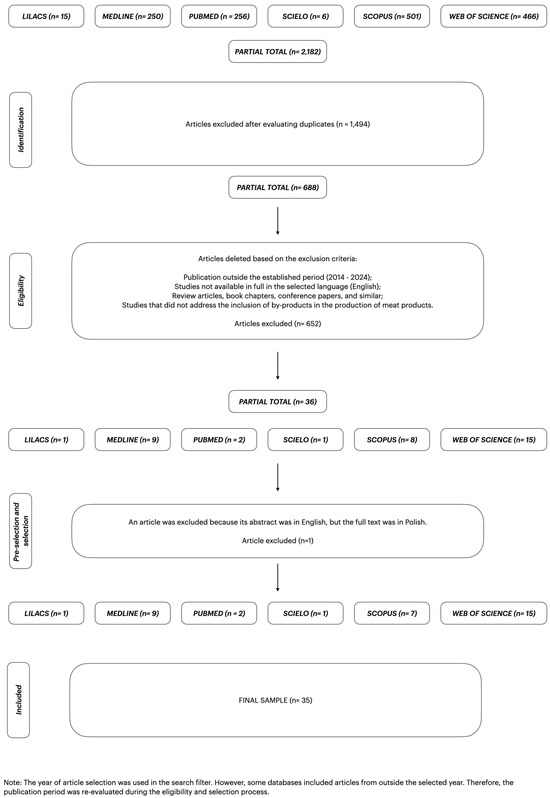
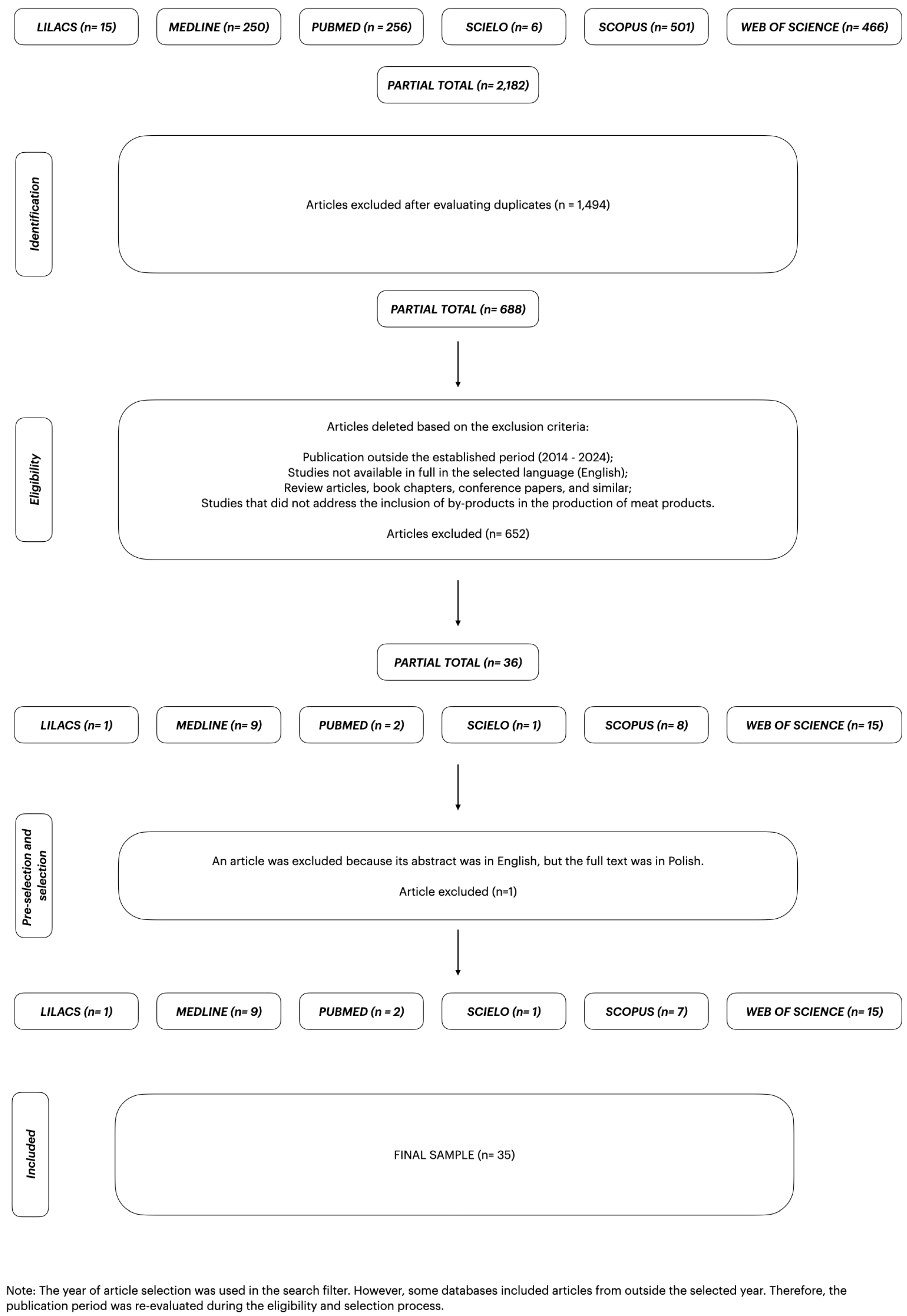
In the identification stage, the removal of duplicates resulted in a partial total of 688 articles. For better research and analysis of the results, only studies that used by-products from fruit and vegetable processing were classified. In the eligibility stage, the articles were evaluated according to predefined inclusion and exclusion criteria, resulting in a partial total of 36 articles. However, in the pre-selection stage, one article was excluded because its abstract was in English, but the full text was in Polish. Thus, 35 were selected and included for evaluation.
Due to the heterogeneity of the experimental designs, by-product sources, and meat products evaluated in the literature, the studies included in this integrative review were organized to facilitate comparison. Specifically, the studies were grouped according to the type of plant-based agro-industrial by-product used, the type of meat product evaluated, the technological function investigated, and the main results found. This categorization allowed for the identification of trends and similarities among the studies despite methodological differences. Furthermore, predefined inclusion and exclusion criteria were applied to ensure that only studies directly related to the research objective were considered.
Thus, the articles were organized according to the category of information collected (title, author, year, DOI, journal, type of by-product used, method of product addition, meat product developed, main analyses performed on the developed meat product, and main results related to the impacts on the technological, physicochemical, nutritional, functional, and sensory characteristics of the new meat product developed). From the selected studies, the data of interest were obtained, grouped into a table, and evaluated and interpreted based on the literature. The flowchart describing the steps for collecting and analyzing the obtained articles is shown in Figure 1.
Figure 1.
Flowchart regarding the collection and analysis of the obtained articles.
3. Results and Discussion
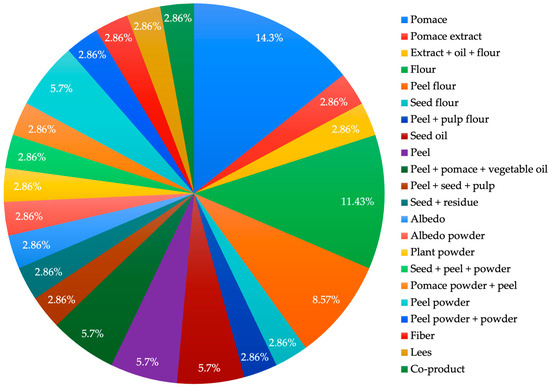
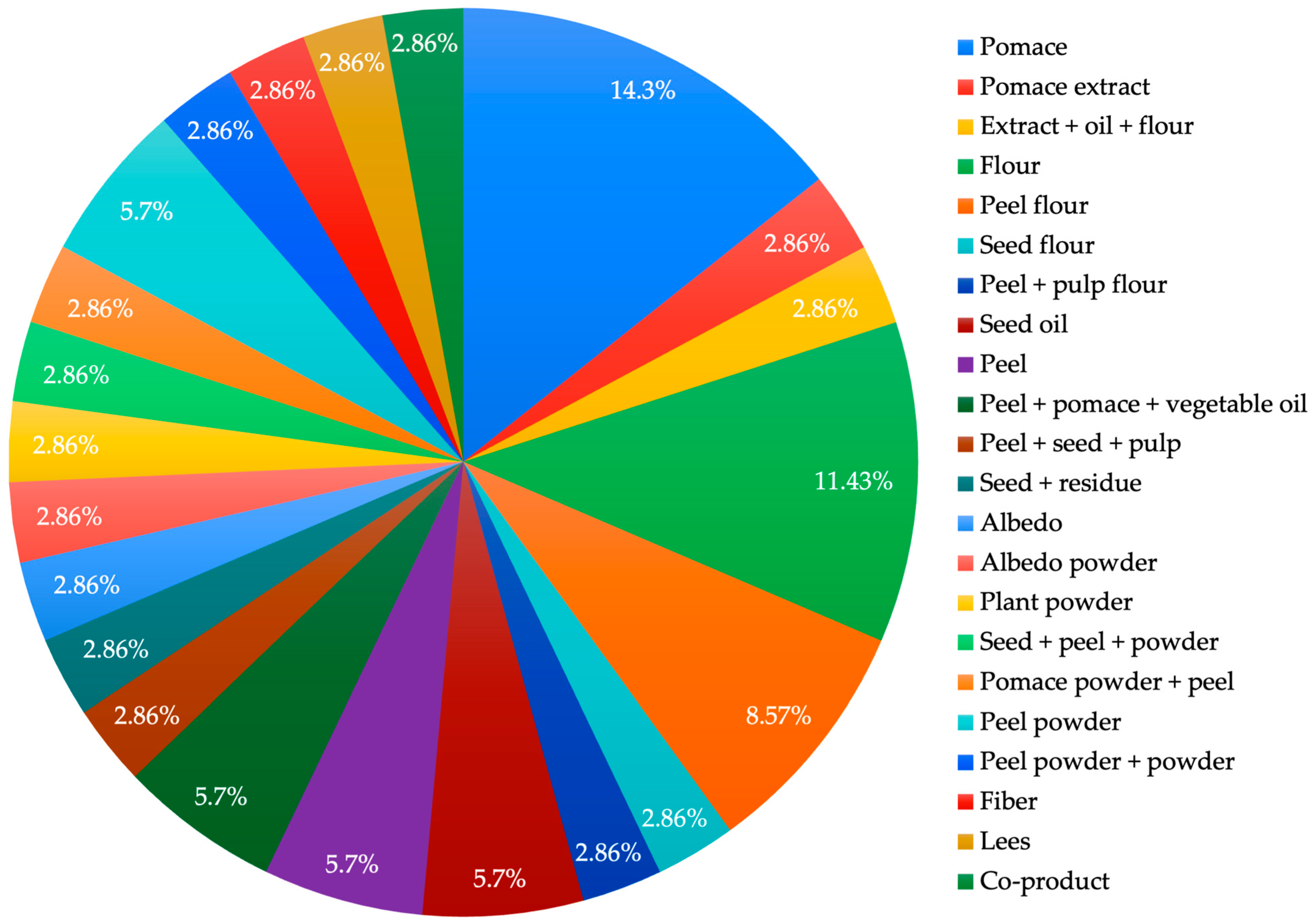
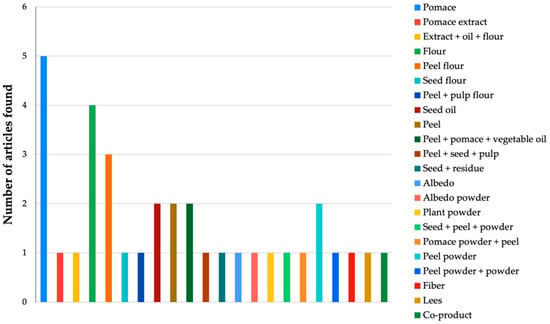
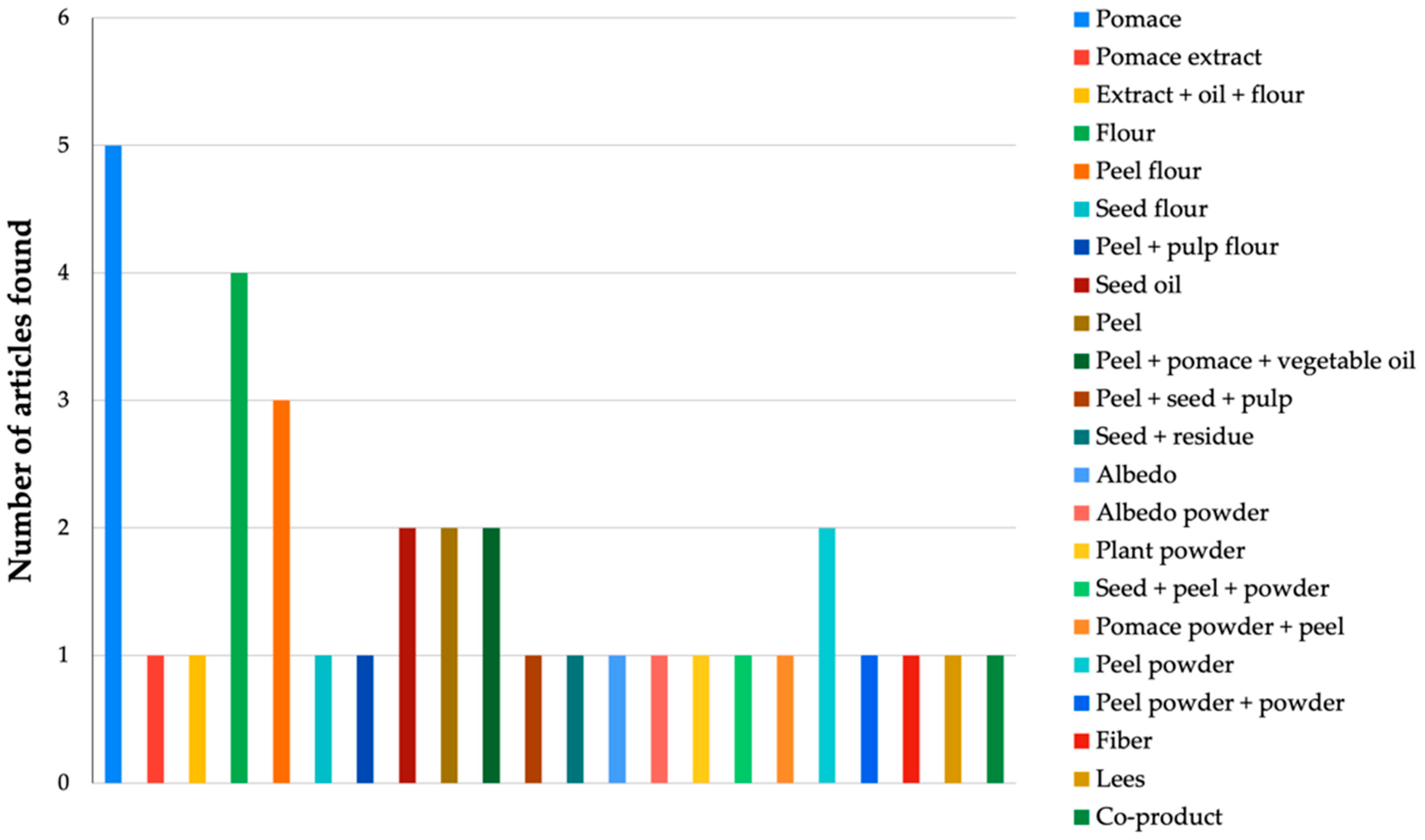
This review included 35 articles selected according to the previously established inclusion criteria. Of the studies included, one (2.86%) of them was indexed in the Lilacs database; eight (25.71%) in Medline; two (5.71%) in PubMed; one (2.86%) in Scielo; seven (20.0%) in Scopus; and fifteen (42.86%) in Web of Science (Figure 1). Of the articles analyzed, the most abundant by-products were found—bagasse, with five articles (14%); flours with four articles (11%); husk flours, with three articles (9%), and peels, peel powder, and seed oils, with two articles each (6%), from fruits and vegetables (Figure 2 and Figure 3).
Figure 2.
Percentages of the by-products used in the analysis.
Figure 3.
Number of publications reporting each by-product fraction.
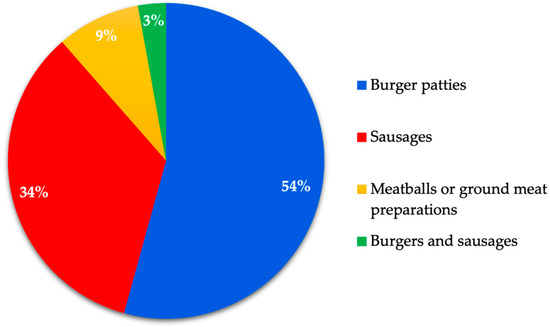
The analysis of the selected studies revealed a predominance of research focused on specific types of meat products. Among the 35 studies included in this review, burger patties were the most frequently investigated product (54.3%), followed by sausages (34.3%). A smaller proportion of studies evaluated meatballs or ground meat products (8.6%), while one study (2.9%) investigated the application of by-products in both burger patties and sausages (Figure 4).
Figure 4.
Distribution of meat product types evaluated in the reviewed studies.
Regarding the technological application of agro-industrial vegetable by-products, 45.7% of the studies investigated the replacement of conventional ingredients in meat formulations. Among these, fat substitution was the most frequently explored strategy, representing 56.3% of the studies that evaluated ingredient replacement and 25.7% of the total studies analyzed.
Table 1 presents the by-products, meat products, whether any component was substituted, the objectives, and finally the results of the selected articles.
Table 1.
Summary of studies on the use of by-products in meat products.
3.1. Analysis of Improvements in Meat Products with Added By-Products
3.1.1. Improvement in Nutritional Profile
Studies show that agro-industrial by-products can improve the nutritional and technological profile of meat products. Taraseviciene et al. [34], Cadariu et al. [41], Salazar et al. [58], and Zhao et al. [26] reported an increase in fiber content after incorporating by-products. Marconato et al. [28] and Younis et al. [43] highlighted improvements in water retention capacity and emulsion stability by adding sweet potato peel flour and red dragon fruit peels, respectively. These studies indicate that the integration of plant by-products into meat products is significant not only for enhancing dietary fiber content, but also for its substantial effect in reducing fat levels.
Tarjuelo et al. [40], in a study evaluating burger patties formulated with emulsified pumpkin seed and melon seed oils, reported that increasing the proportion of these by-products led to a reduction in fat content. Furthermore, the authors observed higher protein levels in formulations where animal fat was completely replaced by the by-product. This effect is attributed to the enhanced emulsification capacity of the system, which promotes greater water retention and reduces the relative proportion of fat in the product.
Consequently, when compared to conventional formulations containing animal fat, these reformulated products exhibited a significantly higher protein percentage, representing an additional nutritional advantage that aligns with current consumer demands. These results show that by-products contribute to the development of nutritionally enriched formulations through technological ingredients.
3.1.2. Fat Replacement and Technological Functionality
Chappalwar et al. [44,56] observed that fiber-rich by-products (such as lemon albedo and mango peel powder) are capable of maintaining acceptable product texture and yield when the lipid content is reduced. Zhao et al. [26] also observed that replacing fat with kiwi fruit insoluble dietary fiber superfine powder improved the texture properties of pork meatballs. Similarly, Corimayhua-Silva et al. [30], who demonstrated that lipid replacement with red dragon fruit peel powder promoted positive changes in the textural properties of alpaca-based sausages, with a significant reduction in hardness and chewiness parameters, indicating the formation of a softer matrix that was less resistant to mechanical deformation. Furthermore, Selani et al. [37,38] showed improvement in water retention and structural stability in reformulated meat products using pineapple by-products and canola oil. Soncu et al. [49], Shan et al. [53], and Thangavelu et al. [47] reported that when used in moderate levels, agro-industrial by-products contribute to energy reduction without significantly affecting technological characteristics, while higher levels of inclusion influence consumer acceptance.
Thus, incorporating fiber-rich agro-industrial by-products into reduced-fat meat products is a promising approach for enriching nutritional profiles and preserving technological properties, provided that they are used at appropriate levels to avoid negative impacts on sensory acceptance. The partial or complete substitution of animal fat with by-products could influence the sensory aspects of meat products. Changes in texture, juiciness, flavor, and overall acceptability may occur, reflecting the balance between functional benefits and consumer perception. These effects highlight the importance of considering sensory quality when implementing fat substitutes [61].
3.1.3. Antioxidant Effect and Replacement of Synthetic Additives
Corimayhua-Silva et al. [30] and Llatas et al. [51] observed that the increase in antioxidant capacity occurred due to the phenolic compounds naturally present in these materials. In addition, De Alencar et al. [32]; Martín-Mateos et al. [31], and Tarasevičienė et al. [34] reported significant reductions in lipid peroxidation, evidenced by lower TBARS values during refrigerated storage. Similar results were described by Demir [52], who attributed the improvements in oxidative stability to the levels of bioactive compounds present.
Sausages formulated with by-products from dried tomatoes (peels, seeds and residual pulp) [41] and from red and yellow peppers (seeds and processing residues) [42] demonstrated effective antioxidant activity. In addition to this role, incorporating pepper by-products enhanced the nutritional composition of the sausages, leading to increased ash content and decreased fat levels.
Furthermore, D’Ambra et al. [39] observed greater stability for packaged meats, thus highlighting the potential of these compounds as natural antioxidants. However, several studies have evaluated only oxidative stability, without simultaneously considering microbiological behavior, which limits a complete assessment of the shelf life of products.
3.1.4. Microbiological Effects and Food Safety
In addition, agro-industrial by-products can contribute to microbial control due to their phenolic composition and influence on water activity. Koskar et al. [45] observed antimicrobial effects associated with plant-derived compounds, while Velasco-Arango et al. [36] reported reductions in microbial growth in certain formulations. These findings indicate that by-products may offer complementary preservation effects along with antioxidant activity. However, antimicrobial responses varied according to the composition of the meat matrix.
3.1.5. Product Development and Sensory Acceptance
When incorporated at moderate levels, by-products demonstrated favorable acceptance. Studies conducted by Karslioğlu et al. [50], Martín-Sánchez et al. [60], and Tarjuelo et al. [33,40] reported satisfactory sensory acceptance and increased consumer interest in products perceived as healthier and more sustainable. In addition, Chappalwar et al. [56] found that in beef burger patties with added mango peel powder, aspects related to texture and color had a significant effect.
However, Pereira et al. [57] observed that in beef patties with added grape pomace, the results found in relation to the same aspects were negative. These findings suggest promising opportunities for market innovation through reformulated meat products enriched with agro-industrial by-products. However, high levels of addition can compromise sensory attributes, as above-mentioned. Thus, the addition should be made with caution in order to preserve these attributes.
In summary, in meat products where animal fat was partially or totally replaced by vegetable oils or flours, a reduction in lipid content, an increase in fiber content, and an increase in fatty acid content were observed. Positive effects were also observed in technological and nutritional characteristics, such as better water and fat retention, increased moisture, higher cooking yield, reduced pH, better emulsion stability, and good consumer acceptance. However, when the level of substitution was increased, some sensory aspects were negatively affected, such as hardness and chewiness. In products where synthetic additives were replaced by by-products such as peels, seeds, pulps, and residues, the by-products were able to significantly reduce the levels of synthetic phosphates and sodium nitrites and could therefore be used as natural antioxidants.
In meat products where by-products were used in a complementary way—that is, their inclusion did not replace any ingredient, but rather served to nutritionally enrich the product—it was observed that the use of bagasse, fruit and vegetable peels, and vegetable powders also showed positive effects on technological characteristics, such as emulsion stability, cooking yield, and moisture retention; on physicochemical and centesimal characteristics, such as pH reduction, increased moisture and fiber content; and color modification (which varied according to the type of by-product used), demonstrating, once again, that agro-industrial by-products can be used as a substitute for synthetic additives. Furthermore, an increase in the content of phenolic compounds and flavonoids was observed, thus contributing to greater antioxidant activity.
However, some studies report sensory limitations when high levels of agro-industrial by-products were incorporated into meat products. Increased firmness, darker color, and the presence of vegetal flavors are commonly identified as factors contributing to lower consumer acceptance or rejection. For example, incorporating high concentrations of fruit pulp or fiber can alter the typical appearance and texture of products such as sausages or burger patties. These findings highlight the importance of optimizing formulation strategies and inclusion levels to ensure that technological benefits do not compromise product quality or market acceptance.
Thus, the by-products that showed the greatest potential for commercial application, when analyzing aspects related to sensory acceptance and technological stability, were peach palm flour, cocoa husks, pitaya peels and grape seeds; powdered lemon albedo; and, finally, lemon and carrot fiber. In the products to which these by-products were added, in addition to improving sensory aspects such as flavor and texture, the technological aspects of these products, when analyzed, also proved to be efficient. Improvements in structure, moisture retention, antimicrobial activity and, finally, emulsion stability were observed. In meat products with the addition of red and white grape pomace by-products, negative results were observed in terms of color, texture, product yield, and antimicrobial capacity, being accepted only in small quantities.
Therefore, the most promising by-products for use are fibers and flours from fruit and vegetable peels, especially those containing polyphenols, to ensure efficient antimicrobial activity, improvements in technological characteristics, and an enhanced nutritional profile. However, it is worth noting that acceptable levels of by-products for the consumer may not always maximize antimicrobial, antioxidant, or other functional effects, reflecting a trade-off between consumer acceptance and technological performance.
3.2. By-Products: Sustainability and Circular Economy
Although several agro-industrial by-products have significant nutritional and technological potential, their underutilization often leads them to environmentally unfavorable destinations as a consequence of the predominant linear model of production and consumption based on the logic of “extract–produce–consume–dispose” [62]. Commonly sent for incineration or disposal in landfills, this waste contributes to greenhouse gas emissions, intensifies the waste of natural resources used throughout the food production chain that does not reach consumption, and increases risks to public health, especially due to the possible proliferation of microorganisms [63].
In this context, the recovery of this waste is an important strategy for promoting economic, social, and environmental sustainability, in line with the principles of the circular economy. This model proposes reducing the entry of new raw materials into the production system, reusing and recycling existing resources, and preventing environmental impacts throughout the product life cycle [7,62,64].
In light of this approach, from an economic perspective, restructuring agri-food waste management by incorporating it into new products makes it possible to reduce the costs associated with management and final disposal, in addition to enabling the development of items with greater added value from low-cost raw materials that are continuously available. In the social sphere, this approach contributes to expanding the food supply by optimizing the use of resources already employed in the production chain, an aspect that is particularly relevant in light of population growth and the need for more efficient food systems [64].
Additionally, from an environmental perspective, the conversion of waste materials into renewable resources for new production processes reduces the volume of waste sent to final disposal and decreases pressure on primary resources, promoting direct positive impacts on environmental sustainability [65].
Therefore, incorporating agro-industrial by-products into new production processes represents a concrete strategy for mitigating environmental impacts and optimizing the use of resources throughout the food chain. By promoting the reintegration of waste materials into the production cycle, this approach contributes to the consolidation of models based on circularity, efficiency, and waste reduction. In this way, waste recovery goes beyond the technical dimension of reuse, assuming a structural role in the transition to more sustainable and resilient food systems. However, the effective advancement of this agenda requires greater coordination between the productive sector, academia, and legislative authorities in order to enable the integration of sustainability as a guiding principle of agri-food chains [66].
3.3. Safety Aspects of By-Product Utilization
Despite their technological potential, the industrial use of vegetable agro-industrial by-products in meat products faces several regulatory challenges. It is extremely important that agro-industrial by-products, when incorporated into new foods, are described and comply with food labeling standards, in order to guarantee transparency. In addition, international standards, such as the General Standard for the labeling of pre-packaged foods (CXS 1-1985) described by the Codex Alimentarius, require that all ingredients used in the production of a food be declared using standardized names. This allows the consumer to identify the composition and origin of the product [67]. Moreover, Regulation (EU) No. 1169/2011 establishes that foodstuffs must present a list of ingredients, except in some cases. This ensures transparency and consumer protection [68].
Regulatory authorities may require standardized processing protocols and quality specifications due to the variability of by-products, which are influenced by factors such as plant source, part used, cultivation method, and processing conditions. Thus, by-products incorporated into food products must be described as ingredients, and their name must indicate the plant origin and part used. Therefore, they are treated as ingredients rather than being identified solely as industrial waste. This ensures transparency, traceability, the consumer’s right to information, as well as the safe and regulated use of these ingredients.
Furthermore, plant tissues can accumulate pesticide residues and heavy metals as a consequence of agricultural inputs and environmental contamination, which can remain during processing and enter food systems through consumption [69]. These often accumulate in a large part of conventional vegetables, reflecting the rampant use of agrochemicals and the growing concern about long-term exposure (even at lower levels) as it causes health problems [69,70,71].
Therefore, to ensure safety, proper pre-processing is necessary, as well as verification of microbiological stability before incorporation into meat products. Furthermore, they must comply with national and international food safety standards, including contaminant limits and microbiological criteria. Proper handling, processing, labeling requirements, and nutritional claims are therefore essential to ensure compliance and safety. Meeting these criteria prevents any adverse health effects while allowing for the safe valorization of these by-products.
3.4. Limitations Found in Studies and Challenges for Industrial Application
The studies analyzed have some limitations, with important gaps that must be considered when interpreting the results found. Among them, we can highlight the lack of standardization in the characterization of agro-industrial by-products. Many studies describe raw materials only in a comprehensive manner, without detailed information on their centesimal and chemical composition. This variability ultimately limits the comparison between studies and hinders the association between the composition of by-products and the technological and nutritional effects observed in meat products.
Another limitation is related to differences in processing conditions and the way in which by-products are incorporated. This can directly influence water retention capacity, texture, and the availability of bioactive compounds. Thus, the lack of standardization results in variability in the results, in addition to compromising their reproducibility.
Moreover, many studies report increased levels of fiber and bioactive compounds when agro-industrial by-products are added to meat products. However, studies with in vivo evaluation to investigate gastrointestinal behavior and biological activity are limited. Thus, the real functional benefits for consumers are not yet fully understood.
From an industrial perspective, the large-scale use of fruit and vegetable by-products is associated with several practical and economic challenges. Although interest in the valorization of plant-based by-products in the food industry has grown in recent years, there is still a notable gap in the literature regarding the economic evaluation of reinserting these materials into food supply chains. Most available studies focus primarily on the technological and functional properties of bioactive compounds, while aspects related to logistics, processing requirements, and economic feasibility remain relatively underexplored. This limitation makes it difficult to conduct a comprehensive quantitative assessment of the economic implications of these strategies. Therefore, further studies are needed to evaluate not only the technological performance of these ingredients in food systems, but also factors such as production costs, sensory acceptance, and market demands [72].
Based on the current literature, it can be inferred that although agro-industrial by-products are often regarded as low-value raw materials, their transformation into safe, stable, and technologically functional ingredients may require additional processing steps. Processes such as drying, grinding, or the extraction of bioactive compounds are frequently necessary, which can increase the overall production costs. Consequently, incorporating these materials into existing industrial systems may also require technological adjustments or the development of new processing strategies.
Another important challenge concerns the management and recovery of these materials along the production chain. In many sectors, systems for the separation, collection, and valorization of agro-industrial by-products are still in the early stages of development. The absence of efficient infrastructure for sorting, transporting, processing, and storing these materials can make their recovery economically demanding and technologically complex, particularly for small and medium-sized industries. As a result, in some situations, disposal in landfills remains the most economically viable alternative when compared to investing in strategies aimed at recovering these materials or reducing waste throughout food supply chains [73].
Finally, regulatory and sensory challenges associated with incorporating these ingredients into food products also come into play. In the regulatory sphere, the use of agro-industrial by-products may be subject to different legal requirements between countries, since regulations demand proof of safety, traceability, and compliance with quality standards, which can result in delays or limitations for their application in the industrial sector. In addition, sensory aspects must also be considered, since the inclusion of these ingredients can modify the organoleptic characteristics of foods, such as color, flavor, aroma, and texture, which may result in rejection or lower acceptance by consumers. Thus, overcoming these challenges is essential to enable the effective integration of plant by-products into more sustainable and circular food systems.
In order to provide a better perspective on the challenges inherent in the practical implementation of these ingredients, the opportunities, key challenges and industrial limitations, and research needs identified are summarized in Table 2.
Table 2.
Summary of opportunities for inclusion, industrial challenges, and research needs for the application of agro-industrial by-products in meat products.
Thus, replacing synthetic fats or additives with plant-based by-products in meat products can represent an attractive cost–benefit for the food industry. Economically, by-products commonly represent a low-cost raw material, and their valorization can reduce costs associated with conventional and/or functional ingredients, as well as minimize disposal costs [72].
Furthermore, from a nutritional and technological standpoint, developing new products with plant-based ingredients can increase the fiber content, bioactive compounds, and technological characteristics of the products, meeting market demands for healthier and more sustainable products with “clean labels” [73,74]. However, the final cost–benefit depends on factors such as the availability of raw materials, standardization of processing and compound extraction steps, as well as the sensory impact on the final product.
3.5. Future Trends
Future research should focus on filling gaps in the practical application of agro-industrial by-products in meat products. Thus, it is important to conduct clinical, in vitro, and in vivo studies to confirm the health benefits associated with the consumption of products enriched with these ingredients, despite the evidence obtained in laboratory studies. Furthermore, studies evaluating shelf life are necessary, as they enable more reliable estimates of shelf life in terms of physical-chemical, oxidative, and microbiological changes during storage, whether frozen or refrigerated.
From a technological point of view, it is important to optimize processing and formulation, extraction methods, and the form and levels of inclusion of these by-products, which allow for better reproducibility and comparisons between the existing literature. With this, techniques such as the encapsulation of compounds present in by-products emerge as an alternative to increase functionality, bioaccessibility, and stability, preserving the structure of these components.
Finally, the use of by-products in plant-based products and hybrid formulations is becoming a trend. Their incorporation is promising, as it promotes sustainability, the nutritional enrichment of preparations, and the valorization of agro-industrial waste, in line with the demands for food sustainability.
4. Conclusions
The introduction of vegetable by-products and flours with specific functions in meat products has favorable impacts on technological, physicochemical, nutritional, and sensory characteristics. When used as substitutes, mainly for fat, they help reduce lipid content and increase fiber content. If added as a supplement, they enrich foods nutritionally. However, when used in large quantities, they can negatively affect the product’s flavor.
By-products also retain moisture better, aid in stability against oxidation, and increase concentrations of bioactive compounds such as flavonoids and polyphenols. Thus, by-products demonstrate themselves to be sustainable functional ingredients that should be used cautiously regarding quantity and type to maintain a balance between functionality, quality, and market acceptance of meat products. Fibers and flours derived from fruit and vegetable peels stand out as the most suitable by-products for application in meat products, as they are notable for their technological, nutritional, and sustainable potential.
In general, the valorization of plant-based agro-industrial by-products as technological ingredients in meat products represents a promising strategy to improve nutritional quality, reduce the use of synthetic additives, and promote more sustainable food systems. Studies indicate that these materials can be effectively used as fat substitutes, sources of dietary fiber, and bioactive compounds, particularly in products such as burger patties and sausages.
However, the transition from experimental laboratory scale to implementation in the food sector requires further advancements, such as industrial-scale processing trials, standardized processing protocols, and sensory and shelf-life evaluations of these products. Furthermore, future studies should investigate the nutritional and health effects of these reformulated products through in vivo and clinical studies to confirm the potential benefits associated with increased fiber and bioactive compound intake. From a public policy perspective, regulations that support the safe valorization of food by-products and encourage circular economy practices can facilitate their wider adoption by the food industry.
These approaches are essential for transforming current research findings into practical innovations that contribute to sustainable food production and waste reduction, promoting the valorization of agro-industrial waste and the technological improvement of products, making them more nutritious.
Author Contributions
Conceptualization, R.M.P.L. and J.F.B.d.S.J.; methodology, R.M.P.L., L.A.S. and J.F.B.d.S.J.; literature collection and analysis, R.M.P.L., L.A.S., L.A.P.d.C., A.P.R.d.A. and M.A.P.; writing—original draft preparation, R.M.P.L. and L.A.S.; writing—review and editing, R.M.P.L., L.A.S., L.A.P.d.C., M.M.D., D.S.U., M.R.S. and J.F.B.d.S.J.; supervision J.F.B.d.S.J.; project administration, J.F.B.d.S.J. All authors have read and agreed to the published version of the manuscript.
Funding
This work was supported by the National Council for Scientific and Technological Development (Conselho Nacional de Desenvolvimento Científico e Tecnológico/CNPq) [grant # 132367/2024-6] through a scholarship awarded to the first author. Additionally, the Espírito Santo Research and Innovation Support Foundation (FAPES) supported the payment of publication fees by Process Edital Fapes—Publicação de artigos técnico-científicos and for the research grant (Bolsa Pesquisador Capixaba 559/2023) of the coordinator of this research (Jackline Freitas Brilhante de São José).
Institutional Review Board Statement
Not applicable.
Informed Consent Statement
Not applicable.
Data Availability Statement
The original contributions presented in this study are included in the article. Further inquiries can be directed to the corresponding author.
Acknowledgments
We thank the National Council for Scientific and Technological Development (Conselho Nacional de Desenvolvimento Científico e Tecnológico/CNPq), Espírito Santo Research and Innovation Support Foundation (FAPES), and Postgraduate Program in Nutrition and Health and Research and Graduate Studies of the Federal University of Espírito Santo (PRPPG-UFES) for their support in the development of research and publication of scientific papers.
Conflicts of Interest
The authors declare that they have no conflicts of interest. The funders had no role in the design of the study; in the collection, analyses, or interpretation of data; in the writing of the manuscript; or in the decision to publish the results.
References
- Food and Agriculture Organization of the United Nations. The state of food and agriculture. In Moving Forward on Food Loss and Waste Reduction; FAO, Ed.; Food and Agriculture Organization of the United Nations: Rome, Italy, 2019. [Google Scholar]
- Sarker, A.; Ahmmed, R.; Ahsan, S.M.; Rana, J.; Ghosh, M.K.; Nandi, R. A Comprehensive Review of Food Waste Valorization for the Sustainable Management of Global Food Waste. Sustain. Food Technol. 2024, 2, 48–69. [Google Scholar] [CrossRef] [Scilit]
- Brasil DECRETO No 12.709, DE 31 DE OUTUBRO DE 2025. Available online: https://www.planalto.gov.br/ccivil_03/_ato2023-2026/2025/decreto/D12709.htm#:~:text=DECRETO%20Nº%2012.709%2C%20DE%2031%20DE%20OUTUBRO%20DE%202025&text=Regulamento%20a%20fiscalização%20de%20produtos,29%20de%20dezembro%20de%202022 (accessed on 13 February 2026).
- Rațu, R.N.; Veleșcu, I.D.; Stoica, F.; Usturoi, A.; Arsenoaia, V.N.; Crivei, I.C.; Postolache, A.N.; Lipșa, F.D.; Filipov, F.; Florea, A.M.; et al. Application of Agri-Food By-Products in the Food Industry. Agriculture 2023, 13, 1559. [Google Scholar] [CrossRef] [Scilit]
- Leal, R.M.P.; Uliana, D.S.; Cruz, L.A.P.D.; Amaral, A.P.R.D.; São José, J.F.B.D. Utilização de Subprodutos Do Processamento de Frutas e Hortaliças Na Elaboração de Novos Produtos: Inovação e Sustentabilidade. Segurança Aliment. Nutr. 2025, 32, e025004. [Google Scholar] [CrossRef] [Scilit]
- Montenegro-Landívar, M.F.; Tapia-Quirós, P.; Vecino, X.; Reig, M.; Valderrama, C.; Granados, M.; Cortina, J.L.; Saurina, J. Fruit and Vegetable Processing Wastes as Natural Sources of Antioxidant-Rich Extracts: Evaluation of Advanced Extraction Technologies by Surface Response Methodology. J. Environ. Chem. Eng. 2021, 9, 105330. [Google Scholar] [CrossRef] [Scilit]
- Ueda, J.M.; Pedrosa, M.C.; Heleno, S.A.; Carocho, M.; Ferreira, I.C.F.R.; Barros, L. Food Additives from Fruit and Vegetable By-Products and Bio-Residues: A Comprehensive Review Focused on Sustainability. Sustainability 2022, 14, 5212. [Google Scholar] [CrossRef] [Scilit]
- Amaral, S.M.B.; Bessa, M.J.; Cavalcante, M.R.F.; Freitas, F.N.F.D.; Maia, M.B.V.; Costa Júnior, R.A.D.; Damaceno, M.N. Resíduos Da Laranja Na Elaboração de Produtos Alimentícios: Uma Revisão. Res. Soc. Dev. 2021, 10, e0910615373. [Google Scholar] [CrossRef] [Scilit]
- Castro, L.A.D.; Lizi, J.M.; Chagas, E.G.L.D.; Carvalho, R.A.D.; Vanin, F.M. From Orange Juice By-Product in the Food Industry to a Functional Ingredient: Application in the Circular Economy. Foods 2020, 9, 593. [Google Scholar] [CrossRef] [Scilit] [PubMed]
- Soares Mateus, A.R.; Pena, A.; Sanches-Silva, A. Unveiling the Potential of Bioactive Compounds in Vegetable and Fruit By-Products: Exploring Phytochemical Properties, Health Benefits, and Industrial Opportunities. Curr. Opin. Green Sustain. Chem. 2024, 48, 100938. [Google Scholar] [CrossRef] [Scilit]
- Comunian, T.A.; Silva, M.P.; Souza, C.J.F. The Use of Food By-Products as a Novel for Functional Foods: Their Use as Ingredients and for the Encapsulation Process. Trends Food Sci. Technol. 2021, 108, 269–280. [Google Scholar] [CrossRef] [Scilit]
- Araújo, I.C.d.S.; Santos, Ê.R.d.M. Aproveitamento de Subprodutos Do Processamento de Frutas e Hortaliças. Rev. Bras. Agrotecnologia 2022, 12, 9–16. [Google Scholar]
- Aqilah, N.M.N.; Rovina, K.; Felicia, W.X.L.; Vonnie, J.M. A Review on the Potential Bioactive Components in Fruits and Vegetable Wastes as Value-Added Products in the Food Industry. Molecules 2023, 28, 2631. [Google Scholar] [CrossRef] [Scilit] [PubMed]
- Selene Daiha, B.; Renata Tieko, N. Produtos Cárneos (Portal Embrapa). Available online: https://www.embrapa.br/en/agencia-de-informacao-tecnologica/criacoes/ovinos-de-corte/pos-producao/produtos/produtos-carneos (accessed on 13 February 2026).
- Brasil RESOLUÇÃO DA DIRETORIA COLEGIADA—RDC No 272, DE 14 DE MARÇO DE 2019. 2019. Available online: https://bvsms.saude.gov.br/bvs/saudelegis/anvisa/2019/rdc0272_14_03_2019.pdf (accessed on 13 February 2026).
- Miao, X.; Hastie, M.; Ha, M.; Warner, R. Consumer Response to Blended Beef Burgers and Chicken Nuggets Is Influenced by Ingredient and Nutrition Claims—Qualitative Assessment. Future Foods 2023, 8, 100247. [Google Scholar] [CrossRef] [Scilit]
- Kyriakopoulou, K.; Keppler, J.K.; Van Der Goot, A.J. Functionality of Ingredients and Additives in Plant-Based Meat Analogues. Foods 2021, 10, 600. [Google Scholar] [CrossRef] [Scilit]
- Gómez-Estaca, J.; López-de-Dicastillo, C.; Hernández-Muñoz, P.; Catalá, R.; Gavara, R. Advances in Antioxidant Active Food Packaging. Trends Food Sci. Technol. 2014, 35, 42–51. [Google Scholar] [CrossRef] [Scilit]
- Echegaray, N.; Gómez, B.; Barba, F.; Franco, D.; Estévez, M.; Carballo, J.; Marszalek, K.; Lorenzo, J. Chestnuts and By-Products as Source of Natural Antioxidants in Meat and Meat Products: A Review. Trends Food Sci. Technol. 2018, 82, 110–121. [Google Scholar] [CrossRef] [Scilit]
- Lima, S.K.R.; Durazzo, A.; Lucarini, M.; De Oliveira, J.J.A.; Da Silva, R.A.; Arcanjo, D.D.R. Valorization of Fruit Co-Product Flours for Human Nutrition: Challenges, Applications, and Perspectives. Sustainability 2023, 15, 13665. [Google Scholar] [CrossRef] [Scilit]
- Aziz, M.; Karboune, S. Natural Antimicrobial/Antioxidant Agents in Meat and Poultry Products as Well as Fruits and Vegetables: A Review. Crit. Rev. Food Sci. Nutr. 2016, 58, 486–511. [Google Scholar] [CrossRef] [Scilit]
- Shah, M.A.; Bosco, S.J.D.; Mir, S.A. Effect of Moringa Oleifera Leaf Extract on the Physicochemical Properties of Modified Atmosphere Packaged Raw Beef. Food Packag. Shelf Life 2015, 3, 31–38. [Google Scholar] [CrossRef] [Scilit]
- Calderón-Oliver, M.; López-Hernandez, L. Food Vegetable and Fruit Waste Used in Meat Products. Food Rev. Int. 2022, 38, 628–654. [Google Scholar] [CrossRef] [Scilit]
- Gonçalves, L.; Lorenzo, J.; Trindade, M. Fruit and Agro-Industrial Waste Extracts as Potential Antimicrobials in Meat Products: A Brief Review. Foods 2021, 10, 1469. [Google Scholar] [CrossRef] [Scilit] [PubMed]
- de Souza, M.T.; da Silva, M.D.; de Carvalho, R. Integrative Review: What Is It? How to Do It? Einstein 2010, 8, 102–106. [Google Scholar] [CrossRef] [Scilit]
- Zhao, D.; Guo, C.; Liu, X.; Xiao, C. Effects of Insoluble Dietary Fiber from Kiwi Fruit Pomace on the Physicochemical Properties and Sensory Characteristics of Low-Fat Pork Meatballs. J. Food Sci. Technol. 2021, 58, 1524–1537. [Google Scholar] [CrossRef] [Scilit] [PubMed]
- Özvural, E.; Vural, H. Which Is the Best Grape Seed Additive for Frankfurters: Extract, Oil or Flour? J. Sci. Food Agric. 2014, 94, 792–797. [Google Scholar] [CrossRef] [Scilit]
- Marconato, A.M.; Hartmann, G.L.; Santos, M.M.R.; Amaral, L.A.d.; Souza, G.H.O.d.; Santos, E.F.d.; Novello, D. Sweet Potato Peel Flour in Hamburger: Effect on Physicochemical, Technological and Sensorial Characteristics. Braz. J. Food Technol. 2020, 23, e2019115. [Google Scholar] [CrossRef] [Scilit]
- Echeverria, L.; Rigoto, J.d.M.; Martinez, A.C.; Porciuncula, B.D.A.; Scanavacca, J.; Barros, B.C.B. Characterization of Lamb Burgers with Addition of Flour from Peach Palm By-Product. Biosci. J. 2020, 36, 280–289. [Google Scholar] [CrossRef] [Scilit]
- Corimayhua-Silva, A.; Elías-Peñafiel, C.; Rojas-Ayerve, T.; Guevara-Pérez, A.; Farfán-Rodríguez, L.; Encina-Zelada, C. Red Dragon Fruit Peels: Effect of Two Species Ratio and Particle Size on Fibre Quality and Its Application in Reduced-Fat Alpaca-Based Sausages. Foods 2024, 13, 386. [Google Scholar] [CrossRef] [Scilit]
- Martín-Mateos, M.; Delgado-Adámez, J.; Moreno-Cardona, D.; Valdés-Sánchez, M.; Ramírez-Bernabé, M. Application of White-Wine-Pomace-Derived Ingredients in Extending Storage Stability of Fresh Pork Burgers. Foods 2023, 12, 4468. [Google Scholar] [CrossRef] [Scilit]
- de Alencar, M.; de Quadros, C.; Luna, A.; Neto, A.; da Costa, M.; Queiroz, M.; de Carvalho, F.; Araújo, D.; Gois, G.; Santos, V.; et al. Grape Skin Flour Obtained from Wine Processing as an Antioxidant in Beef Burgers. Meat Sci. 2022, 194, 108963. [Google Scholar] [CrossRef] [Scilit]
- Tarjuelo, L.; Pardo, J.; Alvarez-Ortí, M.; Pardo-Giménez, A.; Millán, C.; Rabadán, A. Development of Seed-Oil Based Dried Sausages, Considering Physicochemical and Nutritional Quality and the Role of Food Neophobia. Nutrients 2022, 14, 3106. [Google Scholar] [CrossRef] [Scilit] [PubMed]
- Taraseviciene, Z.; Cechoviciene, I.; Paulauskiene, A.; Gumbyte, M.; Blinstrubiene, A.; Burbulis, N. The Effect of Berry Pomace on Quality Changes of Beef Patties during Refrigerated Storage. Foods 2022, 11, 2180. [Google Scholar] [CrossRef] [Scilit] [PubMed]
- Delgado-Ospina, J.; Martuscelli, M.; Grande-Tovar, C.; Lucas-González, R.; Molina-Hernandez, J.; Viuda-Martos, M.; Fernández-López, J.; Pérez-Alvarez, J.; Chaves-López, C. Cacao Pod Husk Flour as an Ingredient for Reformulating Frankfurters: Effects on Quality Properties. Foods 2021, 10, 1243. [Google Scholar] [CrossRef] [Scilit]
- Velasco-Arango, V.; Hleap-Zapata, J.; Ordóñez-Santos, L. Nitrite Reduction in Beef Burger Using Papaya (Carica papaya L.) Epicarp. Food Sci. Technol. Int. 2021, 27, 344–352. [Google Scholar] [CrossRef] [Scilit]
- Selani, M.M.; Shirado, G.A.N.; Margiotta, G.B.; Rasera, M.L.; Marabesi, A.C.; Piedade, S.M.S.; Contreras-Castillo, C.J.; Canniatti-Brazaca, S.G. Pineapple By-Product and Canola Oil as Partial Fat Replacers in Low-Fat Beef Burger: Effects on Oxidative Stability, Cholesterol Content and Fatty Acid Profile. Meat Sci. 2016, 115, 9–15. [Google Scholar] [CrossRef] [Scilit] [PubMed]
- Selani, M.M.; Shirado, G.A.N.; Margiotta, G.B.; Saldaña, E.; Spada, F.P.; Piedade, S.M.S.; Contreras-Castillo, C.J.; Canniatti-Brazaca, S.G. Effects of Pineapple Byproduct and Canola Oil as Fat Replacers on Physicochemical and Sensory Qualities of Low-Fat Beef Burger. Meat Sci. 2016, 112, 69–76. [Google Scholar] [CrossRef] [Scilit] [PubMed]
- D’Ambra, K.; Minelli, G.; Lo Fiego, D. Effect of Hazelnut Skin and Dry Tomato Peel on the Oxidative Stability, Chemical and Sensory Properties of Pork Burgers during Refrigerated Storage. Food Packag. Shelf Life 2023, 38, 101107. [Google Scholar] [CrossRef] [Scilit]
- Tarjuelo, L.; Rabadán, A.; Alvarez-Ortí, M.; Pardo-Giménez, A.; Pardo, I.; Pardo, J. Nutritional Characteristics and Consumer Attitudes towards Burgers Produced by Replacing Animal Fat with Oils Obtained from Food By-Products. J. Funct. Foods 2023, 104, 105500. [Google Scholar] [CrossRef] [Scilit]
- Cadariu, A.; Cocan, I.; Negrea, M.; Alexa, E.; Obistioiu, D.; Hotea, I.; Radulov, I.; Poiana, M. Exploring the Potential of Tomato Processing Byproduct as a Natural Antioxidant in Reformulated Nitrite-Free Sausages. Sustainability 2022, 14, 11802. [Google Scholar] [CrossRef] [Scilit]
- Cocan, I.; Cadariu, A.; Negrea, M.; Alexa, E.; Obistioiu, D.; Radulov, I.; Poiana, M. Investigating the Antioxidant Potential of Bell Pepper Processing By-Products for the Development of Value-Added Sausage Formulations. Appl. Sci. 2022, 12, 12421. [Google Scholar] [CrossRef] [Scilit]
- Younis, K.; Ahmad, S.; Malik, M. Mosambi Peel Powder Incorporation in Meat Products: Effect on Physicochemical Properties and Shelf Life Stability. Appl. Food Res. 2021, 1, 100015. [Google Scholar] [CrossRef] [Scilit]
- Chappalwar, A.; Pathak, V.; Goswami, M.; Verma, A.; Rajkumar, V. Efficacy of Lemon Albedo as Fat Replacer for Development of Ultra-Low-Fat Chicken Patties. J. Food Process. Preserv. 2021, 45, e15587. [Google Scholar] [CrossRef] [Scilit]
- Koskar, J.; Meremäe, K.; Püssa, T.; Anton, D.; Elias, T.; Rätsep, R.; Mäesaar, M.; Kapp, K.; Roasto, M. Microbial Growth Dynamics in Minced Meat Enriched with Plant Powders. Appl. Sci. 2022, 12, 11292. [Google Scholar] [CrossRef] [Scilit]
- Ramachandraiah, K.; Chin, K. Effect of Particle Size of Persimmon By-Product Powders on Their Physicochemical Properties and Antioxidant Activities in Porcine Patties. J. Food Process Eng. 2018, 41, e12610. [Google Scholar] [CrossRef] [Scilit]
- Thangavelu, K.; Tiwari, B.; Kerry, J.; McDonnell, C.; Alvarez, C. Phosphate Replacing Potential of Apple Pomace and Coffee Silver Skin in Irish Breakfast Sausage Using a Mixture Design Approach. Meat Sci. 2022, 185, 108722. [Google Scholar] [CrossRef] [Scilit]
- Delgado-Ospina, J.; Lucas-González, R.; Viuda-Martos, M.; Fernández-López, J.; Pérez-Alvarez, J.; Martuscelli, M.; Chaves-López, C. Potential of the Cocoa Shell to Improve the Quality Properties of a Burger-like Meat Product. J. Food Process. Preserv. 2022, 46, e16752. [Google Scholar] [CrossRef] [Scilit]
- Soncu, E.; Kolsarici, N.; Çiçek, N.; Öztürk, G.; Akoglu, I.; Arici, Y. The Comparative Effect of Carrot and Lemon Fiber as a Fat Replacer on Physico-Chemical, Textural, and Organoleptic Quality of Low-Fat Beef Hamburger. Korean J. Food Sci. Anim. Resour. 2015, 35, 370–381. [Google Scholar] [CrossRef] [Scilit]
- Karslıoğlu, B.; Soncu, E.D.; Nekoyu, B.; Karakuş, E.; Bekdemir, G.; Şahin, B. From Waste to Consumption: Tomato Peel Flour in Hamburger Patty Production. Foods 2024, 13, 2218. [Google Scholar] [CrossRef] [Scilit]
- Llatas, A.; Guzmán, H.; Tello, F.; Ruiz, R.; Vásquez, J.; Chiroque, G.; Mayta-Hancco, J.; Cruzado-Bravo, M.; Arteaga, H.; Saldaña, E.; et al. Exploring Pijuayo (Bactris gasipaes) Pulp and Peel Flours as Fat Replacers in Burgers: A Multivariate Study on Physicochemical and Sensory Traits. Foods 2024, 13, 1619. [Google Scholar] [CrossRef] [Scilit] [PubMed]
- Demir, T. Effects of Green Tea Powder, Pomegranate Peel Powder, Epicatechin and Punicalagin Additives on Antimicrobial, Antioxidant Potential and Quality Properties of Raw Meatballs. Molecules 2021, 26, 4052. [Google Scholar] [CrossRef] [Scilit]
- Shan, B.; Li, X.; Pan, T.; Zheng, L.; Zhang, H.; Guo, H.; Jiang, L.; Zhen, S.; Ren, F. Effect of Shaddock Albedo Addition on the Properties of Frankfurters. J. Food Sci. Technol. 2015, 52, 4572–4578. [Google Scholar] [CrossRef] [Scilit]
- Kurt, S. The Effects of Grape Seed Flour on the Quality of Turkish Dry Fermented Sausage (Sucuk) during Ripening and Refrigerated Storage. Korean J. Food Sci. Anim. Resour. 2016, 36, 300–308. [Google Scholar] [CrossRef] [Scilit]
- D’Arrigo, M.; Petrón, M.; Delgado-Adámez, J.; García-Parra, J.; Martín-Mateos, M.; Ramírez-Bernabé, M. Dry-Cured Sausages “Salchichón” Manufactured with a Valorized Ingredient from Red Grape Pomace (Var. Tempranillo). Foods 2024, 13, 3133. [Google Scholar] [CrossRef] [Scilit]
- Chappalwar, A.M.; Pathak, V.; Goswami, M.; Verma, A.K. Development of Functional Chicken Patties with Incorporation of Mango Peel Powder as Fat Replacer. Nutr. Food Sci. 2020, 50, 1063–1073. [Google Scholar] [CrossRef] [Scilit]
- Pereira, A.; Lee, H.; Lammert, R.; Wolberg, C.; Ma, D.; Immoos, C.; Casassa, F.; Kang, I. Effects of Red-Wine Grape Pomace on the Quality and Sensory Attributes of Beef Hamburger Patty. Int. J. Food Sci. Technol. 2022, 57, 1814–1823. [Google Scholar] [CrossRef] [Scilit]
- Salazar, D.; Arancibia, M.; Calderón, L.; López-Caballero, M.; Montero, M. Underutilized Green Banana (Musa Acuminata AAA) Flours to Develop Fiber Enriched Frankfurter-Type Sausages. Foods 2021, 10, 1142. [Google Scholar] [CrossRef] [Scilit]
- Alarcón, M.; López-Viñas, M.; Pérez-Coello, M.; Díaz-Maroto, M.; Alañón, M.; Soriano, A. Effect of Wine Lees as Alternative Antioxidants on Physicochemical and Sensorial Composition of Deer Burgers Stored during Chilled Storage. Antioxidants 2020, 9, 687. [Google Scholar] [CrossRef] [Scilit]
- Martín-Sánchez, A.; Ciro-Gómez, G.; Vilella-Esplá, J.; Ben-Abda, J.; Pérez-Alvarez, J.; Sayas-Barberá, E. Influence of Fresh Date Palm Co-Products on the Ripening of a Paprika Added Dry-Cured Sausage Model System. Meat Sci. 2014, 97, 130–136. [Google Scholar] [CrossRef] [Scilit]
- De Souza, L.R.; Da Silva Honorato, D.R.; Carvalho, E.E.N.; Barros Vilas Boas, E.V.D.; Neto, O.C. Additives Used as Fat Substitutes in Meat Products: Sensory and Technological Impacts, Nutritional Aspects and Health Benefits. Eur. Food Res. Technol. 2025, 251, 1983–2005. [Google Scholar] [CrossRef] [Scilit]
- Barros, M.V.; De Jesus, R.H.G.; Ribeiro, B.S.; Piekarski, C.M. Going in Circles: Key Aspects for Circular Economy Contributions to Agro-Industrial Cooperatives. Circ. Econ. Sustain. 2023, 3, 861–880. [Google Scholar] [CrossRef] [Scilit]
- Socas-Rodríguez, B.; Álvarez-Rivera, G.; Valdés, A.; Ibáñez, E.; Cifuentes, A. Food By-Products and Food Wastes: Are They Safe Enough for Their Valorization? Trends Food Sci. Technol. 2021, 114, 133–147. [Google Scholar] [CrossRef] [Scilit]
- Ahmad, T.; Esposito, F.; Cirillo, T. Valorization of Agro-Food by-Products: Advancing Sustainability and Sustainable Development Goals 2030 through Functional Compounds Recovery. Food Biosci. 2024, 62, 105194. [Google Scholar] [CrossRef] [Scilit]
- Plazzotta, S.; Manzocco, L. Food Waste Valorization. In Saving Food; Elsevier: Amsterdam, The Netherlands, 2019; pp. 279–313. [Google Scholar]
- Maqsood, S.; Khalid, W.; Kumar, P.; Benmebarek, I.E.; Rasool, I.F.U.; Trif, M.; Moreno, A.; Esatbeyoglu, T. Valorization of Plant-Based Agro-Industrial Waste and by-Products for the Production of Polysaccharides: Towards a More Circular Economy. Appl. Food Res. 2025, 5, 100954. [Google Scholar] [CrossRef] [Scilit]
- CXS 1-1985; FAO/WHO General Standard for the Labelling of Prepackaged Foods. FAO/WHO Codex Alimentarius Commission: Rome, Italy, 1985.
- Parlamento Europeu. Conselho da União Europeia REGULAMENTO (UE) N.o 1169/2011 DO PARLAMENTO EUROPEU E DO CONSELHO de 25 de Outubro de 2011 Relativo à Prestação de Informação Aos Consumidores Sobre Os Géneros Alimentícios; Parlamento Europeu: Strasbourg, France, 2011.
- Ali, S.; Ahirwar, R. Accumulation of Toxic Metals in Vegetable Crops and Associated Dietary Exposure Risks to Human Health. Discov. Environ. 2025, 3, 210. [Google Scholar] [CrossRef] [Scilit]
- Chen, S.; Yao, C.; Zhou, J.; Ma, H.; Jin, J.; Song, W.; Kai, Z. Occurrence and Risk Assessment of Pesticides, Phthalates, and Heavy Metal Residues in Vegetables from Hydroponic and Conventional Cultivation. Foods 2024, 13, 1151. [Google Scholar] [CrossRef] [Scilit]
- Brazil Ministério da Agricultura e Pecuária (MAPA). Identificação de Perigos Biológicos, Químicos e Físicos em Alimentos de Origem Vegetal: Riscos Associados, Rotas de Contaminação e Medidas de Controle; Pecuária, M.d.A.e., Ed.; Ministério da Agricultura, Pecuária e Abastecimento: Brasília, DF, Brazil, 2025.
- Danciu, C.-A.; Mag, A.-G.; Stanciu, C.; Vidu, L.; Stanciu, M. Valorization of Plant-Based Food By-Products Through Green Extraction of Bioactive Compounds for Functional Food. Molecules 2026, 31, 646. [Google Scholar] [CrossRef] [Scilit]
- Yadav, S.; Malik, K.; Moore, J.M.; Kamboj, B.R.; Malik, S.; Malik, V.K.; Arya, S.; Singh, K.; Mahanta, S.; Bishnoi, D.K. Valorisation of Agri-Food Waste for Bioactive Compounds: Recent Trends and Future Sustainable Challenges. Molecules 2024, 29, 2055. [Google Scholar] [CrossRef] [Scilit]
- Grasso, S.; Estévez, M.; Lorenzo, J.; Pateiro, M.; Ponnampalam, E. The Utilisation of Agricultural By-Products in Processed Meat Products: Effects on Physicochemical, Nutritional and Sensory Quality—Invited Review. Meat Sci. 2024, 211, 109451. [Google Scholar] [CrossRef] [Scilit] [PubMed]

Disclaimer/Publisher’s Note: The statements, opinions and data contained in all publications are solely those of the individual author(s) and contributor(s) and not of MDPI and/or the editor(s). MDPI and/or the editor(s) disclaim responsibility for any injury to people or property resulting from any ideas, methods, instructions or products referred to in the content. |
© 2026 by the authors. Licensee MDPI, Basel, Switzerland. This article is an open access article distributed under the terms and conditions of the Creative Commons Attribution (CC BY) license.