


Abstract
This article compares selected fire safety regulatory systems in Japan, China, the United States, and the EU/UK, interpreted through the lens of responsive architecture and the implementation of digital technologies—building information modelling (BIM), digital twins (DTs), artificial intelligence (AI), and the Internet of Things (IoT). The study adopts a qualitative approach based on a structured review of legal acts, technical standards, public-sector reports, and the scientific and professional literature, organised using a common analytical framework. First, the analysis identifies shared foundations across regimes: the primacy of life safety, mandatory detection and alarm functions, fire compartmentation, requirements for protected means of exit, and the increasing importance of documenting the operational status of protection measures. Then, it contrasts key differences, including the permissibility of performance-based design (PBD), the degree to which digital documentation is formally recognised, organisational enforcement models, and cybersecurity approaches for integrated fire alarm/voice alarm/building management/IoT ecosystems. Japan and selected Chinese cities combine stringent requirements with openness to dynamic solutions and urban-scale data platforms. The USA relies on a decentralised code-based ecosystem with a strong role for professional and industry bodies, while the EU/UK continues to strengthen harmonised standards and digital building registers, reinforced by lessons after the Grenfell Tower fire. Against this background, Poland is discussed as broadly aligned in goals and baseline technical requirements yet lagging behind in implementing PBD pathways, digital registers, formal BIM/DT integration, and minimum cybersecurity requirements. The proposed directions for change aim to create a more predictable regulatory and technical framework for the development of responsive architecture and dynamic fire safety systems in Poland. The study contributes to the sustainability literature by framing regulatory readiness for digital fire safety as a lifecycle resilience strategy, directly relevant to safe, resource-efficient, and inclusive built environments.
1. Introduction
Fire safety is increasingly intertwined with sustainability objectives because building safety performance affects resilience, social well-being, and lifecycle resource efficiency. Severe fire events generate direct human impacts, as well as substantial environmental and economic externalities, including material loss, waste streams, disruption of critical services, and long-term costs for reconstruction and compliance remediation. As a result, contemporary fire safety governance can be interpreted as part of broader sustainability-orientated risk management—particularly when moving towards lifecycle documentation, auditable maintenance, and data-driven prevention [1,2,3].
In this context, responsive architecture supported by BIM/DT/AI/IoT contributes to sustainability both by improving evacuation outcomes and by enabling more reliable lifecycle stewardship of safety-critical assets. Digitally verifiable inspection records, predictive maintenance workflows, and interoperable safety information reduce “compliance decay” over time and support the resilient operation of complex buildings and urban systems [4,5,6]. Consequently, the present comparative review frames regulatory readiness for digital and responsive fire safety as a sustainability-relevant capability, integral to safe, inclusive, and resilient built environments.
In recent decades, fire safety has gained prominence in policy, law, and engineering practice in highly developed countries. The United States, Japan, China, the Member States of the European Union, and the United Kingdom have each established extensive regulatory systems that evolve in response to technological progress, rapid urbanisation, and increasing expectations for the protection of life and property. A common feature across these regimes is the importance of life safety and the reduction of losses caused by fire. All systems place a strong emphasis on integrated early detection and warning (e.g., smoke detection and alarm systems), fire compartmentation, and clearly marked means of escape [7]. A further shared requirement is the formalised maintenance, periodic verification, and documentation of the performance of the fire protection system, together with user training and regular evacuation drills [7].
A particularly prominent trend in the recent literature is the digitalisation of fire safety through the deployment of innovative technologies—including AI, IoT, DT, and BIM—with the aim of improving situational awareness, supporting decision-making, and improving evacuation results [8,9,10]. These solutions both increase the effectiveness of prevention and emergency response and open up new operational possibilities for responsive architecture—understood in this study as building behaviour that adapts in real time to changing risk conditions through data, automation, and dynamic control logic.
At the same time, international convergence is advancing—particularly in Europe, where harmonised standards and EU regulatory instruments promote the alignment of requirements for the classification, verification, and traceability of product performance [1,11]. Nevertheless, pronounced differences persist in organisational models and enforcement approaches, shaped by local legislative traditions, varying levels of technology maturity, and responses to major fire incidents, such as the Grenfell Tower fire in the United Kingdom [4,5].
The purpose of this review is to synthesise the core regulatory assumptions, solutions, and development trajectories of fire safety systems in selected jurisdictions and to identify the principal trends and challenges relevant to responsive architecture and BIM/DT/AI/IoT readiness. Against this background, the present review pursues three interrelated research questions, addressed through a structured comparative framework described in Section 3. For transparency, each jurisdiction is reviewed using a unified six-part thematic structure: (1) current regulations; (2) technology development; (3) urban planning development; (4) organisational development; (5) engineering development; and (6) legislative evolution and synthesis.
1.1. Theoretical Framework and Research Questions
This study is grounded in a theoretical framework that integrates three interconnected concepts: responsive architecture, regulatory readiness, and digital fire safety governance.
Responsive architecture is understood here as an operational building paradigm in which spatial configurations, safety functions, and building system behaviours adapt in real time to changing risk conditions—enabled by sensor networks, data analytics, automation, and dynamic control logic [8,9,10]. In the fire safety context, responsiveness implies that detection, alarm routing, exit guidance, and compartmentation decisions are no longer static but are mediated by live data and algorithmic decision support, as increasingly enabled by BIM, digital twin, AI, and IoT infrastructures.
Regulatory readiness refers to the degree to which a jurisdiction’s legal framework, standards ecosystem, and enforcement infrastructure explicitly recognise, enable, and govern performance-based and digitally integrated fire safety solutions. A high degree of regulatory readiness implies the existence of formal PBD pathways, digital documentation requirements, lifecycle traceability mechanisms, and cybersecurity obligations for integrated safety systems—not just the technological capability to implement them.
Digital fire safety governance is the overarching concept linking the two: it describes the institutional and procedural layer through which BIM/DT/AI/IoT are integrated into the compliance and accountability cycle of building safety management, thereby transforming responsive architecture from a technical possibility into a legally recognisable and auditable practice.
Together, these three concepts constitute the analytical lens through which the regulatory regimes of Japan, China, the United States, and the EU/UK are examined and the current regulatory position of Poland is assessed.
Building on this framework, the study addresses the following research questions.
RQ1: What are the dominant governance patterns—including the admissibility of performance-based design, the formal recognition of digital tools, and the structure of enforcement—across selected fire safety regulatory regimes in Japan, China, the USA, and the EU/UK?
RQ2: To what extent do existing regulatory frameworks explicitly enable the implementation of responsive architecture and BIM/DT/AI/IoT-integrated fire safety systems, and where do structural gaps or tensions in the current literature and practice remain?
RQ3: Which transferable regulatory and technical practices identified in the leading jurisdictions are most applicable to the current legislative and institutional context of Poland, and what are the main barriers to their adoption?
1.2. Critical Engagement with the Existing Literature: Tensions, Contradictions, and Gaps
A structured review of the literature identified ten tensions, contradictions, and gaps, organised into four thematic groups. Together, they justify the comparative design of this study and its focus on regulatory readiness for digital and responsive fire safety governance.
Cluster I: Prescriptive codes versus performance-based design (PBD)
T1—Tension: Flexibility of PBD versus legal certainty of prescriptive codes. The literature consistently demonstrates that prescriptive codes are inadequate for complex buildings [12,13,14,15], yet PBD does not provide unambiguous and verifiable safety thresholds—designers gain flexibility at the cost of regulatory predictability [16,17,18,19]. Wegrzynski and Sulik [20] describe this as a self-reinforcing constraint: legal requirements impede the diffusion of knowledge that could, in turn, improve those very requirements.
T2—Contradiction: Compliance with the fire standard as a safety criterion—sufficient or illusory? Martinez and Jeffers [14] demonstrate that prescriptive insulation specifications do not provide adequate safety in travel fires, a finding that directly contradicts the premise of the code that regulatory compliance guarantees safety. Torero [21] identifies this as a fundamental error—“compliant” does not mean “safe”—a finding echoed by Zhang et al. [15] for timber structures assessed against standard fire curves rather than realistic fire scenarios.
L1—Gap: Absence of harmonised reliability thresholds for PBD. Hopkin et al. [18] show that, while prescriptive codes embed implicit safety targets invisible to the designer, PBD requires their explicit definition—a task that the literature has not accomplished through universally accepted validated values. This gap remains unresolved and is directly relevant to the cross-jurisdictional regulatory analysis conducted in this study.
Cluster II: Professionalisation, expertise asymmetry, andregulative oversight
T3—Tension: Professional self-regulation versus state oversight. Spinardi [16,19] and Lange et al. [22] identify a structural tension: PBD requires regulators to evaluate complex mathematical models that they are not equipped to verify (expertise asymmetry). The logical resolution—professional self-regulation—is blocked by two barriers identified in the literature, namely the insufficient maturity of fire safety engineering as a profession and the probabilistic nature of fire risk, which complicates the formulation of clear professional and ethical standards.
T4—Contradiction: response to disasters—professionalisation or tighter regulation? Lange et al. [22] identify a systemic contradiction: while other engineering disciplines respond to failures by formalising professional duty of care, fire safety engineering responds by tightening prescriptive regulation. These two mechanisms pull in opposite directions: tighter prescriptive regulation broadens access to non-specialists, thereby further undermining the professional authority of fire safety engineering.
Cluster III: Architectural heritage, sustainability, and new materials
T5—Tension: Heritage preservation versus fire safety requirements. Bernardini et al. [23], Tozo Neto and Ferreira [24], and Naziris et al. [25] document a structural conflict: regulations mandate interventions that are irreversible and destroy the heritage value of historic buildings. Dynamic systems such as intelligent evacuation guidance systems can deliver equivalent safety without architectural alteration [23], yet their formal regulatory recognition remains an open question in jurisdictions.
T6—Tension: Sustainability objectives versus fire safety logic. Brzezinska et al. [26,27] and Rahardjo and Prihanton [28] document a systematic mismatch between sustainability logic (resource optimisation) and fire safety logic (redundant protection as safety margin). No integrated method for reconciling these objectives has yet emerged in the literature beyond ad hoc strategic frameworks—a gap that is directly relevant to the sustainability framework of this study.
T7—Contradiction: UHPC as a next-generation material with inferior fire resistance. Bolina et al. [29] identify a direct technological contradiction: ultra-high-performance concrete (UHPC), increasingly adopted in high-rise construction for its mechanical superiority, exhibits lower fire resistance than normal-strength concrete in some configurations due to slender cross-sections and unfavourable thermal properties. The authors describe this as an “unprecedented contradiction” absent from current design standards.
Cluster IV: Uncertainty,modelling,and methodological gaps
L2—Gap: Absence of a validated model of human behaviour in evacuation. Kuligowski et al. [30] document a fundamental gap: accurate RSET modelling under PBD requires the representation of evacuee behaviour for which no comprehensive conceptual model of decision-making exists yet. Therefore, one of the key PBD parameters—evacuation time—is therefore estimated on the basis of incomplete theory.
L3—Gap: Unresolved uncertainty in the quantitative assessment of fire risk. Cadena et al. [17] and Bal [31] converge on the finding that the heat release rate—the most important parameter in fire safety engineering—is simultaneously the parameter with the highest measurement uncertainty. This unresolved uncertainty has delayed the transition from compliance-based to risk-based approaches in FSE [17] and prevents the establishment of validated PBD thresholds, directly linking L3 to L1. Both gaps suggest a role for continuous monitoring enabled by BIM, digital twins, and IoT as tools for reducing this uncertainty—a direction further explored in the present study.
2. Background and Legal Frameworks for Fire Safety Regulation in Japan, China, the United States, and the EU/UK
2.1. Japan
2.1.1. Current Fire Safety Regulations
Japan’s fire protection system is distinctive within Asia due to its high level of detail and, crucially, strong enforcement in practice. Two laws play a central role, the Fire Service Act and the Building Standards Act, which together define the regulatory framework for new buildings, the modernisation of existing facilities, and emergency response operations [32]. The fundamental premise is prevention: reducing the probability of ignition and maximising occupant safety in the event of an incident.
Public buildings and multi-family residential buildings are generally subject to the mandatory installation of automatic fire detection systems. In contemporary applications, these systems extend beyond smoke detectors to include temperature and gas sensors and increasingly advanced environmental sensing solutions enabled by IoT and computer vision [33]. Fire signalling and warning infrastructure extends beyond acoustic alarms to encompass voice communication and visual egress guidance, addressing the needs of diverse user groups in major metropolitan and transport environments [33].
Japan places a strong emphasis on continuous improvement. After serious incidents, expert investigations are conducted and their findings regularly inform regulatory updates and new guidelines [32]. Particular attention is paid to transport infrastructure (metro systems, tunnels, airports), where fire resistance requirements are complemented by smoke control and the integration of alarms with systems managing occupant flow during evacuation [34].
Mandatory training and regular evacuation drills are institutionalised. Regulations require drills in public institutions, enterprises, and schools at least twice a year, involving building users [32]. In general, Japan’s regime reflects a long-term legislative and adaptive process that prioritises life safety and operational readiness—supported by rigorous requirements, strong enforcement, and openness to digital technologies [32,33].
2.1.2. Development Directions: Technological Aspects
Technological development is a cornerstone of the transformation of Japan’s fire safety systems. Contemporary practice increasingly relies on IoT-enabled multi-layer sensor networks that combine smoke, gas, and temperature detection with optical/thermal inputs, streaming to central platforms for analysis and decision support [33]. Research and practice increasingly explore AI-assisted detection and anomaly recognition to improve early warning and reduce false alarms [33,35].
A key trend is the digitalisation of building management and safety governance through BIM-informed processes and integrated management systems. These enable real-time monitoring and control from unified interfaces, particularly in complex public and infrastructure assets [33]. Complementary work on evacuation algorithms indicates how decision support can improve route routing and wayfinding under constrained conditions [36,37].
Integration with smart city systems is becoming increasingly visible: digital hazard maps, distributed sensing, and analytics support the forecasting and rapid identification of ignition points on a district scale [6]. Interoperability—ensuring seamless exchange between alarms, building management, and emergency services—is also becoming more central as multi-vendor ecosystems expand [6].
2.1.3. Development Directions: Urban Planning Aspects
Urban densification and the growth of high-rise and mixed-use developments create complex fire safety challenges. Japan’s urban planning has long incorporated fire prevention through building separation, buffers, and “firebreak” discontinuities in dense fabrics [32]. Programmes for modernising older districts—often with vulnerable timber structures—aim to reduce the risk of conflagration on a metropolitan scale [32].
Digital risk mapping and smart city governance on a city scale increasingly support dynamic routing and response planning [6]. Agent-based and computational models are used to predict crowd behaviour during evacuation, especially in transport hubs and tunnels [34,36]. Urban fire safety is also increasingly framed within multi-hazard resilience strategies (earthquakes, floods), including plans for temporary shelters and safety zones [38].
2.1.4. Development Directions: Organisational Aspects
Japan combines strong state oversight with advanced training and public education. Professional fire services rely on frequent exercises, inter-agency coordination, and increasingly data-supported crisis management [6]. Public education includes campaigns and school programmes that support the prevention culture [32].
Building owners and facility managers have explicit duties to maintain systems, organise training, and keep records. Inspection and certification—through public agencies and accredited entities—support compliance and transparency [6]. Major incidents are investigated and translated into updated procedures, reinforcing a learning-orientated system [32].
2.1.5. Development Directions: Engineering Aspects—AI and IoT
IoT sensor networks are deployed across building types and infrastructure, monitoring smoke, temperature, gases, and other anomalies; data are transmitted to central systems for continuous monitoring [33]. AI systems process sensor and camera streams to improve detection and support decision-making in smoke control operations and evacuation guidance [34,36]. Robotics and drones are emerging for reconnaissance and hazard location in high-risk zones, aligned with broader regional disaster information management directions [6].
2.1.6. Development Directions: Legislative Aspects
Japan’s legislative framework is dynamic and is consistently implemented. A key trend is the move towards adaptive models shaped by digital monitoring, integrated systems, interoperability, and emerging cybersecurity concerns for connected safety ecosystems [6]. Expert committees translate scientific and operational recommendations into updates; major incidents often drive new requirements [32]. Japan also participates in regional cooperation that influences the harmonisation of standards and the alignment of practice [38].
2.2. China
2.2.1. Current Fire Safety Regulations
China’s fire safety system is based on a multi-layered structure of national law, technical codes, and enforcement procedures that span the building lifecycle. The core legal instrument is the Fire Protection Law of the People’s Republic of China (amended 2021), which establishes duties for prevention, maintenance of the system, inspections, and training and sets enforcement measures and penalties for non-compliance [39].
A central technical reference is GB 50016 (Code for Building Fire Protection Design; 2018 edition of GB 50016-2014), widely considered a national baseline for compartmentation, exit, fire resistance requirements, access to firefighting and building services, and safety measures [40]. A defining characteristic is the rigorous commissioning and acceptance process: buildings may not be occupied without formal acceptance verification; periodic inspections and documentation are required, with enforcement ranging from fines to suspension of use for deficiencies [39].
2.2.2. Development Directions: Technological Aspects
China’s technology-driven transformation includes AI, IoT sensor networks, BIM-based information management, digital twins, and robotics/drones that support prevention and response [8,41,42]. IoT architectures integrate detectors, gas sensors, and cameras; data are streamed to central platforms, where AI models support anomaly detection and the reduction of false alarms [9,42].
Digital twins are increasingly framed as operational decision support systems: sensor-fed models capable of tracking evolving incident conditions, evaluating evacuation scenarios, and supporting the dynamic control of smoke management and signalling under real-time constraints [8]. Drones and robotics expand situational awareness in situations where conditions are unsafe for responders [43].
2.2.3. Development Directions: Urban Planning Aspects
Rapid urbanisation and high-rise growth introduce challenges at the city scale. Research emphasises spatial analysis for risk mapping, hotspot identification, and response time optimisation, especially for high-rise clusters [34,44]. Planning approaches include fire station location and route optimisation through multi-criteria spatial models [44]. District-scale platforms and, in more advanced cases, digital twins support the simulation of evacuation and resource deployment under time pressure [8,44].
2.2.4. Development Directions: Organisational Aspects
Fire safety performance depends on professional education, continuous training, and public awareness. Scenario-based and simulation-supported exercises improve coordination and enable the evaluation of procedures under realistic constraints [43]. A critical challenge is integrating rapidly evolving technologies into daily facility management routines—ensuring that systems are maintained, auditable, and operationally meaningful rather than “formal” installations [41].
2.2.5. Development Directions: Engineering Aspects—AI, IoT, BIM, and Digital Twins
China increasingly adopts PBD in complex buildings and venues, based on numerical simulation and evidence-based justification of tenability and exit performance [8,45]. AI/IoT systems function as a “cognitive layer”, interpreting sensor streams and supporting dynamic decisions such as evacuation sequencing and smoke control logic [42]. Digital twins and analytics support both pre-occupancy testing and operational control, including anomaly detection and the identification of critical points [8,41].
2.2.6. Development Directions: Legislative Aspects
Legislation is anchored in national law and supported by technical codes such as GB 50016. Policy and practice increasingly emphasise digital oversight: digitised inspection records, central platforms for traceability, and the expectation that integrated systems remain testable and auditable throughout the building lifecycle [39,40,41].
2.3. United States
2.3.1. Current Fire Safety Regulations
The US operates a complex regulatory ecosystem because there is no single federal building and fire code nationwide. Requirements become enforceable through the state and local adoption of model codes and referenced standards, resulting in jurisdictional variability while maintaining shared baselines [46]. Dominant producers include the International Code Council (ICC) (e.g., IBC, IFC) and the National Fire Protection Association (NFPA) (e.g., NFPA 1, NFPA 101) [47,48].
Across jurisdictions, rules typically cover fire resistance performance and compartmentation; egress, detection, alarm, and suppression systems; and inspection, testing, and maintenance regimes, but thresholds and enforcement depend on local adoption and capacity [46]. The risk of wildfires, especially in the wildland–urban interface, increasingly shapes the directions of policy and technology [49,50].
2.3.2. Development Directions: Technological Aspects
US trends emphasise AI-enabled decision support and multi-source data fusion for commanders and responders [51]. Policy discussions highlight cyber-physical risks: fail-safe modes, separation of IT/OT networks, access control, and continuous monitoring are emphasised because compromised systems may degrade life safety performance [52]. In wildfire contexts, satellite and airborne imagery, cameras, drones, and sensing combined with predictive models can improve detection and response, although constraints persist in terms of coverage, latency, and data management [49,50].
2.3.3. Development Directions: Urban Planning Aspects
The expansion of urban areas into WUI areas links land use planning to evacuation feasibility, emergency access, and infrastructure robustness [49,50]. Planning approaches emphasise defensible space, road network redundancy, evacuation capacity, critical infrastructure location, and integrated GIS-based risk mapping in resilience planning [52,53].
2.3.4. Development Directions: Organisational Aspects
The system is multi-layered: federal guidance, state/local authorities, professional associations, academia, and private-sector actors. This supports experimentation but also creates barriers to the uniform deployment of advanced technologies, as procurement and workforce capabilities vary between jurisdictions [46,51]. AI adoption raises governance questions about validation, accountability, and acceptable failure modes in safety-critical contexts [51].
2.3.5. Development Directions: Engineering Aspects—AI and IoT
The adoption of IoT supports expanded sensing, integration with building management systems, and improved situational awareness. Engineering trajectories include sensor fusion, edge computing for local functionality under connectivity loss, interoperability, and the integration of geospatial and building data [49,52]. Wildfire technology assessments highlight promise but underscore a dependence on implementation choices and coordination [50].
2.3.6. Development Directions: Legislative Aspects
Regulatory evolution occurs through state/local adoption of model codes and standards; a strength is structured revision infrastructure. The ICC documents a government consensus model and an ongoing development cycle [47]. The NFPA similarly documents consensus-based revision cycles [48]. Legislative attention increasingly focuses on the integration of wildfire risk and technology and on cyber risk governance for municipal/infrastructure IoT deployments relevant to life safety systems [49,52].
2.4. European Union and United Kingdom
2.4.1. Legal and Normative Systems
Fire safety governance in the EU and the UK reflects long-term regulatory maturation, reinforced by harmonising technical standards at the EU level, stronger accountability mechanisms, and the progressive digitalisation of document and inspection workflows [54]. A key EU driver is the Construction Products Regulation (CPR), which supports a common technical language for performance assessment and comparison [1]. Fire performance is commonly expressed through standardised European classification frameworks (e.g., EN 13501 series) [11].
The revised Energy Performance of Buildings Directive (EPBD recast) has accelerated building data infrastructure and digital management, indirectly affecting compliance ecosystems by strengthening requirements around building performance information. The directive entered into force on 28 May 2024 and is to be transposed on 29 May 2026 [1,55].
National regulations remain important (e.g., Germany’s model building code as a reference, the Netherlands’ Bbl, France’s IGH/ERP frameworks) [56,57,58]. In the UK, post-Grenfell reforms strengthened duties, documentation, and inspection. The Fire Safety Act 2021 clarified the scope (including external walls), while the Fire Safety (England) Regulations 2022 operationalised information and management obligations [4,5,59].
Cyber risk and data protection are cross-cutting issues as systems connect to digital platforms. GDPR and the EU Cybersecurity Act provide governance constraints and a certification context relevant to smart building safety systems [2,3].
2.4.2. Development Directions: Technological Aspects
Three groups dominate: BIM-enabled compliance and lifecycle documentation; distributed sensing and smart building platforms; and AI-supported risk analytics [9,10]. BIM increasingly functions as a backbone for coordinated design, verification, and auditable updates during operation, aligning with broader digitalisation expectations [1]. IoT deployments support continuous monitoring and predictive maintenance; AI reduces false alarms and supports early warning and scenario testing [9,10].
2.4.3. Development Directions: Urban Planning Aspects
Urban fire safety planning is increasingly linked to smart city infrastructure, including sensor networks, geospatial platforms, and scenario-based risk modelling. Advanced use cases combine real-time data, GIS dashboards, and simulation layers for smoke evacuation and spread [10]. Post-Grenfell policy emphasised vulnerability management in high-rise housing and the need for up-to-date building information and demonstrable inspection regimes [4,5].
2.4.4. Development Directions: Organisational Aspects
A clear trend is strengthening duty holder responsibility combined with digitalised inspection evidence and information exchange with fire and rescue services. In England, the framework of the “Responsible Person” is reinforced through post-Grenfell reforms and supporting guidance [4,5,59]. Across EU states, inspection regimes vary but show a move towards digital protocols: registries of inspection results, standardised reporting, and faster escalation for non-compliance, constrained by cybersecurity and lawful data processing [2,3].
2.4.5. Development Directions: Engineering, AI, and IoT
The technical centre of gravity shifts from isolated subsystems to integrated data-driven architectures that support continuous monitoring, automated diagnostics, and context-sensitive responses [9,10]. Cybersecurity and privacy become engineering requirements; secure architectures and resilient fallbacks are treated as baseline conditions [2,3].
2.5. Similarities Between Fire Safety Regulations in Asia, the United States, Europe, and the United Kingdom
A shared cornerstone between regions is the primacy of life safety and the reduction of losses due to fire. Most systems require integrated early warning and alarm solutions as prerequisites for permitting, commissioning, and operation, especially in public, commercial, and high-rise residential buildings [7]. Compartmentation, protected exit means with emergency lighting and signage, and smoke control measures are broadly convergent principles [7]. Automatic suppression is commonly required above height/area/occupancy thresholds, reflecting a comparable scalable risk logic [7]. Maintenance, testing, and documentary traceability are emphasised in all systems [7]. Finally, risk-informed and performance-based approaches are increasingly accepted in principle to enable innovative and complex buildings, provided that equivalence can be demonstrated through engineering analysis and modelling [7].
2.6. Differences Among Fire Safety Regulations in Asia, the US, Europe, and the UK
Europe is characterised by strong harmonisation and conformity pathways, relying on standardised performance classification and the extensive use of EN/ISO, fostering comparability while placing high demands on documentation and conformity workflows [1,7]. The UK operationalises a risk-based governance logic with strengthened duty holder accountability and traceability after Grenfell [4,5].
The United States is distinctive for the decentralised adoption of model codes, producing variability across jurisdictions. The approach is often granular with respect to exit dimensions, sprinkler triggers, and material classifications; innovation is possible, but acceptance varies locally [46,47]. Asia is heterogeneous: Japan combines rigour with structured alternative solution pathways [32,60], while China’s multi-layered system is strongly enforced but can be uneven in effectiveness depending on local capacity [7,39]. A key differentiation between regions is how alternative solutions are admitted and evaluated: jurisdictions with mature fire safety engineering cultures institutionalise PBD through accepted methods and structured review pathways, while more prescriptive contexts provide fewer formal mechanisms [7,60].
2.7. Global Development Directions in Fire Safety
Five interconnected trajectories dominate: (1) international harmonisation and standardisation to support the comparability of products and verification methods [1,11]; (2) digitally enabled lifecycle safety management with auditable digital records and compliance dashboards [10]; (3) the expansion of performance-based engineering using modelling and simulation for complex buildings [7,45]; (4) the inclusive evacuation and protection of vulnerable users through clearer communication and adaptive strategies [6]; and (5) professionalisation and a safety culture through routine drills, competence development, and simulation-based training [6,32].
3. Methodology
3.1. General Assumptions and Methodological Objective
The methodological design is orientated towards a central objective: to compare fire safety regulatory regimes in Japan, China, the US, and selected EU/UK jurisdictions with respect to their readiness to accommodate BIM/DT/AI/IoT and responsive architecture approaches and to derive transferable recommendations for Poland. The study is qualitative and comparative in design, combining a targeted review of legal and regulatory documents and the scientific literature; a cross-system comparison of organisational and enforcement arrangements; a structured content analysis using a unified coding template; and interpretive synthesis across jurisdictions.
The selection of the jurisdictions was objective: Japan was selected as a highly rigorous regime with established PBD pathways and advanced digital practice [32,33]; China as a rapidly modernising system with strong digitalisation and the growing use of PBD [8,39]; the USA as a decentralised code-based ecosystem with active debate on AI/IoT integration and strong standards infrastructure [46,49]; and the EU/UK as a harmonised regime with expanding digital building documentation requirements and strengthened post-Grenfell accountability [1,4].
Sources were collected in four groups: (1) legal acts and codes/standards (e.g., ICC/NFPA; EN/ISO; GB 50016; Japanese acts); (2) government and international documents [6,49]; (3) scientific and professional literature (Fire, Sensors, Applied Sciences, etc.); and (4) case studies and implementation evidence (smart city platforms, digital twins, robotics/drones, digital registers). The temporal scope focused on 2018–2025, reflecting the accelerated diffusion of digitalisation, BIM, and AI into fire safety engineering and governance.
3.2. Analytical Framework and Content Categorisation
For each jurisdiction (Japan, China, USA, EU/UK), material was coded into six categories: binding regulations; technological development; urban planning development; organisational development; engineering developments (AI/IoT/BIM/robotics and PBD); and legislative evolution. Additional indicators tracked the presence of formal alternative solutions (PBD), the formal recognition of digital registers/BIM in documentation, and explicit cybersecurity requirements for connected safety ecosystems. The comparative scoring presented in Table 1 was operationalised using an explicit five-level rubric applied independently to each dimension and trend. Scores were assigned as follows: 1 = the feature is absent from law, standards, and documented practice; 2–3 = the feature appears in policy documents, strategies, or pilot initiatives but lacks binding legal status or systematic implementation; 4–6 = the feature is present in at least one formal instrument (law, binding standard, or enforceable guidance) but implementation is partial, uneven across the jurisdiction, or lacking supporting infrastructure; 7–8 = the feature is clearly embedded in binding regulations and/or widespread practice with documented enforcement; 9–10 = the feature constitutes a mature, systematically implemented element of the regulatory framework with evidence of enforcement, audit, and periodic update. For the three-label interpretive scale used in this comparison, the ranges correspond to the following: A (largely absent) = scores 1–3; B (present mainly in strategies/literature) = scores 4–6; C (clearly present in regulations and/or practice) = scores 7–10. Operational definitions for the five dimensions (D1–D5) in Table 1 are as follows: D1 (PBD pathway maturity) assesses whether a jurisdiction provides a formally defined, legally recognised route for demonstrating fire safety equivalence through engineering analysis rather than prescriptive compliance, including accepted methods, documented review procedures, and institutional capacity; D2 (legal status of BIM/DT) assesses whether BIM or digital twin outputs are explicitly referenced in legislation, binding standards, or formal approval procedures as valid compliance evidence or operational documentation; D3 (AI/IoT in practice) assesses the extent to which AI-assisted detection, IoT sensor integration, or related technologies are deployed in operational fire safety systems and referenced in technical guidance or standards; D4 (digital registers and lifecycle documentation) assesses whether centralised, auditable repositories of building fire safety information are mandated or systematically implemented across the building lifecycle; D5 (cybersecurity requirements) assesses whether minimum cybersecurity controls for integrated safety systems (SSP/DSO/BMS/IoT) are specified in binding law, enforceable standards, or sector-specific guidance.
Table 1.
Comparative maturity assessment of selected regulatory and implementation dimensions (D1–D5) in Japan, China, the United States, the EU/UK, and Poland (reference). Values reflect qualitative content analysis and represent an expert comparison.
Figure 1 presents the methodological workflow of the comparative study, including six sequential steps from research design and data collection to comparative synthesis, expert evaluation, and policy implications, with alignment to RQ1–RQ3.
Figure 1.
Methodological workflow of the comparative study. Steps 1 to 6 show the sequence of (1) research objective and jurisdiction selection; (2) structured source collection (2018–2025); (3) content coding using a six-category template with three additional indicators per jurisdiction; (4) three-step comparative synthesis (similarities, differences, global trends); (5) expert evaluation and extraction of good practices; and (6) implications for Poland and policy recommendations. The annotations on the right show alignment with RQ1–RQ3. Source: own elaboration.
3.3. Comparative Synthesis and Implications for Poland
The findings were consolidated into three steps: similarities (Section 2.5), differences/gaps (Section 2.6), and development directions (Section 2.7), related to potential reforms for Poland. The criteria included the presence of solutions in law/practice, the degree of legal anchoring, the scale of implementation, and the feasibility of transfer to Poland without compromising existing legal structures.
3.4. Methodological Limitations
Language and source coverage bias. The review relies primarily on sources in English, which introduces a possible bias in coverage—particularly for Japan, China, and Poland, where there is a significant body of regulatory guidance, technical standards, and professional literature exclusively in national languages. Relevant provisions, implementation experience, and local debates may not be fully reflected. Where possible, English translations of key legislative acts (e.g., GB 50016; PRC Fire Protection Law) and internationally accessible summaries were used to mitigate this constraint, but primary-language sources may contain additional nuance and detail that this review does not capture.
Rapid regulatory evolution. Fire safety regulation in the jurisdictions studied is evolving rapidly, driven by ongoing post-Grenfell reforms in the UK, accelerating digitalisation mandates in the EU (e.g., EPBD recast, CPR revision), and expanding AI/IoT governance frameworks in Japan, China, and the USA. The temporal scope of this review (2018–2025) reflects a snapshot of an actively changing regulatory landscape. Some provisions cited may have been updated or superseded after the data collection period, and cross-jurisdictional comparisons may therefore not fully reflect the most current state of each regime. Future work should therefore incorporate systematic monitoring of regulatory updates to extend the comparative validity of these findings.
Subjectivity of comparative expert assessment. The comparative maturity scores presented in Table 1 and Table 7 are based on structured qualitative content analysis and represent expert analytical judgement rather than statistical measurement. The results should therefore be interpreted as an analytical heuristic rather than a precise measurement. The assessment framework applied five analytical dimensions (D1–D5) and a ten-trend readiness scale (Table 7), with scores reflecting the presence of specific regulatory provisions, their degree of legal anchoring, and the scale of implementation across the jurisdictions analysed. Although the analytical framework was applied consistently to each jurisdiction and grounded in documented sources, the assessment reflects a single-expert perspective and has not been subject to formal inter-rater reliability testing. Future studies could strengthen the methodological rigour by engaging multiple independent assessors with jurisdiction-specific expertise, applying structured consensus procedures such as the Delphi method, and testing score stability between raters.
The comparative assessment presented in Table 1 and Table 7 was conducted by the authors of this study, who served as the expert panel. The authors are researchers and practitioners in the fields of architecture, fire safety engineering, and digital technologies in the built environment, with academic and professional experience related to building regulations, performance-based design (PBD), and the integration of BIM, digital twins, and intelligent building systems. The evaluation relied on the domain expertise of the authors, combined with a structured review of the scientific literature, international standards, and regulatory frameworks in the countries analysed. The assessment therefore represents an expert-informed analytical synthesis rather than a formal Delphi study or a statistically representative expert survey. In cases where preliminary assessments differed between the evaluators, discrepancies were resolved through iterative discussion and consensus building based on evidence from the reviewed literature and regulatory documents. The final scores presented in the tables reflect the consensus evaluation agreed upon. Because the evaluation was conducted by the author team using a qualitative expert assessment procedure, formal statistical measures of inter-rater reliability were not calculated. Instead, reliability was ensured through transparent criteria, independent initial assessments, and consensus verification during the synthesis stage.
Selective geographic coverage. The study covers four representative jurisdictions (Japan, China, USA, EU/UK), selected purposively to represent distinct regulatory models and levels of digital readiness. This selection does not capture the full diversity of fire safety governance globally, and the findings should not be generalised beyond the studied contexts without further validation. In particular, regulatory systems in Southeast Asia, the Middle East, Latin America, and sub-Saharan Africa—which are undergoing rapid urbanisation and digitalisation—fall outside the scope of this review. Similarly, within the EU, significant variation in implementation intensity across Member States means that the EU/UK analysis reflects leading-edge practices rather than the full distribution of national realities.
Despite these limitations, the structured analytical framework, the consistent six-category coding template, and the explicit scoring rubric applied across all jurisdictions support the reproducibility of the comparative approach. The identified patterns of regulatory readiness, governance gaps, and transferable practices are based on publicly accessible and verifiable sources, and the findings retain their relevance as a reference baseline for a policy-orientated comparative analysis of fire safety digitalisation.
4. Results
The results are organised into four subsections, each aligned with the research questions defined in Section 1.1. Section 4.1, Section 4.3 and Section 4.4 address RQ1 (dominant governance patterns across jurisdictions). Section 4.2 addresses RQ2 (to the extent to which frameworks enable responsive architecture and BIM/DT/AI/IoT integration and where structural gaps remain). Section 4.5 addresses RQ3 (transferable practices and barriers relevant to Poland). The comparative analysis of regulations and implementation practices in Japan, China, the USA, and the EU/UK allowed the identification of consistent result clusters. First, across all systems, life safety and operational continuity are dominant priorities. This is reflected in mandatory detection, alarm, and evacuation provisions and in the increasingly explicit assignment of responsibility to owners and managers to maintain fire protection performance throughout the building lifecycle [7]. Second, despite shared goals, regimes diverge in their degrees of centralisation, in the admissibility and maturity of PBD pathways, and in the pace and legal form through which BIM/DT/AI/IoT are incorporated into compliance and operations [4,8,47]. Third, the convergence of long-term development trajectories is visible: all regions transition from static prescriptive fire safety to data-driven governance, continuous monitoring, and digital lifecycle documentation [6,10].
To represent the qualitative synthesis, an expert comparative assessment was developed in five dimensions (D1–D5), with Poland included as a reference baseline.
As shown in Table 1, Japan and China exhibit the highest maturity levels in PBD and digital integration, while Poland consistently scores the lowest in all dimensions.
4.1. Key Governance Patterns: Centralisation, PBD, and Digital Readiness
Japan represents a rigorous yet operationally flexible regime supported by established pathways for alternative solutions validated through engineering analysis and simulation [32,36]. China combines strict catalogue-type requirements with a rapidly growing role of PBD, particularly in complex and high-rise facilities [39,45]. The USA relies on the decentralised adoption of ICC/NFPA model codes, resulting in the heterogeneous acceptance of new editions and uneven readiness for the integration of BIM/AI between jurisdictions [46,47]. The EU/UK demonstrate strong harmonisation and place explicit emphasis on accountability, traceability, and audit-ready digital documentation, reinforced by post-Grenfell reforms [4,5].
4.2. Transferable Good Practices and Adaptation Potential in Poland
A set of good practices was extracted and the adaptation potential was assessed, along with key barriers (Table 2). Each practice is discussed in the following from the perspective of both regulatory transfer and sustainability relevance. In particular, lifecycle documentation mechanisms such as digital building registers (Table 3) and the UK’s “Golden Thread” (Table 4) are noteworthy from a sustainability point of view: by maintaining continuously updated auditable records of the state of the fire safety system throughout the building lifecycle, these practices directly support resource efficiency (avoiding redundant inspections and undetected compliance decay), long-term resilience (enabling evidence-based maintenance and repair decisions), and accountability (ensuring that safety information is available to all duty holders throughout ownership and use cycles). In this sense, the “Golden Thread” functions not only as a fire safety mechanism but as a sustainability infrastructure for the built environment—one that reduces lifecycle risks and supports conditions for safe, inclusive, and resilient buildings over decades of operation.
Table 2.
Good practice: formal PBD pathway for complex buildings—characteristics, leading regions, adaptation potential in Poland, and main implementation barriers. The assessment reflects qualitative content analysis and represents expert analytical judgement.
Table 3.
Good practice: digital register of buildings and fire protection systems—characteristics, leading regions, adaptation potential in Poland, and main implementation barriers. The assessment reflects qualitative content analysis and represents expert analytical judgement.
Table 4.
Good practice: “Golden Thread” lifecycle documentation (UK example)—characteristics, adaptation potential in Poland, and main implementation barriers. The assessment reflects qualitative content analysis and represents expert analytical judgement.
4.3. Regional Readiness for Responsive Architecture and Digital Fire Safety
Addressing RQ2—the extent to which existing frameworks enable responsive architecture and BIM/DT/AI/IoT integration—the good practices (Table 2, Table 3, Table 4, Table 5 and Table 6) reveal that all leading jurisdictions have developed at least one formal mechanism for doing so, but each presents a different configuration of enablers and barriers. The structural gap identified in all cases is the absence of an integrated, legally recognised pathway that simultaneously covers PBD verification, digital documentation, and cybersecurity requirements as a coherent compliance package—rather than as isolated provisions. Section 4.3 examines this gap from the perspective of regional readiness for responsive architecture specifically.
Table 5.
Good practice: BIM requirements in approvals and commissioning—characteristics, leading EU examples, adaptation potential in Poland, and main implementation barriers. The assessment reflects qualitative content analysis and represents expert analytical judgement.
Table 6.
Good practice: minimum cybersecurity requirements for SSP/DSO/BMS/IoT systems—characteristics, leading regions, adaptation potential in Poland, and main implementation barriers. The assessment reflects qualitative content analysis and represents expert analytical judgement.
Japan and leading Chinese cities stand out as leaders in city-scale approaches in which building-level safety is integrated with municipal data platforms, risk mapping, and crisis management coordination—making dynamic evacuation steering a plausible “next step” rather than an exception [6,8]. In the USA, advanced detection and modelling are prominent in wildfire contexts, but the integration of BIM/IoT/AI into conventional building fire safety remains uneven and jurisdiction-dependent [46,49]. In the EU/UK, the regulatory emphasis is often on traceable digital documentation, registers, and enforceable accountability, creating procedural foundations for digital twins and more dynamic safety management [4,10]. From a sustainability perspective, jurisdictions that combine strong regulatory readiness for responsive architecture with robust digital governance mechanisms—particularly Japan and the EU/UK—also demonstrate the most mature approaches to lifecycle risk reduction, which align directly with the sustainability framework of this study: regulatory readiness for BIM/DT/AI/IoT is not only a technical capability but a resilience strategy that reduces the environmental, economic, and social costs of fire events in the long term.
4.4. Trend Readiness Mapping (Ten Global Trends)
Ten trends were assessed on a 0–10 scale with three interpretive labels: A—trend largely absent; B—present primarily in strategies or literature; C—clearly embedded in regulations and/or practice. The detailed scoring results are presented in Table 7. From a sustainability perspective, trends 2–4 (BIM integration, digital registers, data quality requirements) and trend 9 (digital documentation linked to audits) are especially significant: their presence in law and practice is a pre-condition for the lifecycle accountability and resource-efficient maintenance that underpin sustainable building operation. Trends 1 (formal PBD) and 7 (cybersecurity) are cross-cutting enablers that reduce the likelihood of systemic safety failures–events whose environmental, economic, and social costs are substantial and largely avoidable through governance investment.
Table 7.
Comparative readiness assessment (0–10) for ten global trends in fire safety governance across Japan, China, the USA, the EU/UK, and Poland (reference). Values reflect qualitative content analysis and represent an expert comparison rather than a statistical measurement. Scale label interpretation: A—trend largely absent; B—present mainly in strategies/literature; C—clearly present in regulations and/or implementation practice. The letter codes (A–C) are interpretive labels corresponding to the numerical score ranges used in the comparative assessment.
4.5. Implications for Poland: Transferable Practices Versus Structural Gaps
4.5.1. Overview of Poland’s Current Fire Safety Regulatory Framework
For readers unfamiliar with Polish building regulations, a brief introduction is provided before discussing the identified gaps. The Poland fire safety framework is based on three interlocking legislative instruments. The Act on Fire Protection (Ustawa o ochronie przeciwpo żarowej, 1991, consolidated 2021) establishes the general duty of fire safety for building owners and occupants, defines the role of the State Fire Service (Państwowa Straż Pożarna, PSP) as the primary enforcement authority, and requires buildings above defined thresholds to undergo fire protection inspections. The Construction Law (Prawo budowlane, 1994, as amended) governs the design, approval, and commissioning of new buildings and major alterations, within which fire safety requirements must be demonstrated as part of the building permit procedure. The core technical requirements are specified in the Regulation on Technical Conditions for Buildings and Their Location (Rozporz ą dzenie w sprawie warunków technicznych, jakim powinny odpowiada ć budynki i ich usytuowanie, 2002, with subsequent amendments), which prescribes rules for fire resistance ratings, compartmentation, escape routes, suppression systems, and detection requirements, differentiated by building category and height class.
Enforcement is centralised through the PSP, which inspects completed buildings and issues compliance notices. The review of the building permit is conducted by the district building authority (starostwo) and, for selected categories, includes a mandatory opinion of the PSP or the relevant district fire commander. Poland’s framework is strongly prescriptive: compliance is demonstrated by showing that a building meets the technical rules of the Regulation, without a nationally standardised pathway for alternative solutions based on performance.
Although the Construction Law does not explicitly prohibit performance-based justifications, no accepted methodology, formal review procedure, or institutional guidance exists for such submissions—leaving PBD dependent on individual negotiations with authorities and informal expert opinions. This contrasts sharply with the structured PBD pathways observed in Japan, China, the USA, and the EU/UK (see Table 2 and Section 4.1). Digital tools such as BIM, digital twins, and IoT-based monitoring are not referenced in any of the three core legislative instruments as compliance evidence, approval formats, or operational documentation requirements, constituting the primary digital governance gap discussed in Section 4.5.2.
In terms of baseline technical requirements—fire compartmentation, mandatory detection in public and high-rise residential buildings, automatic suppression above defined height and area thresholds, and protected means of exit—Poland’s framework is broadly aligned with the shared foundations identified across all jurisdictions studied (Section 2.5). The country consistently scores at the lower end of the readiness assessment in all ten main trends dimensions in Table 7, reflecting not a deficit in basic protection requirements but the structural underdevelopment of the procedural, informational, and digital governance layer that the leading jurisdictions have built on top of equivalent baseline requirements. This distinction between “baseline compliance” and “government readiness” is central to understanding where transferable reforms would have the highest leverage.
4.5.2. Transferable Practices and Structural Gaps
Addressing RQ3—which transferable practices are most applicable to Poland and which barriers limit their adoption—the following synthesis draws on the comparative evidence from Section 4.1, Section 4.2, Section 4.3 and Section 4.4 and Table 1, Table 2, Table 3, Table 4, Table 5, Table 6 and Table 7. The results provide a structured map of transferable practices and regulatory gaps relevant to Poland. Transferable building blocks include (i) clearly defined PBD pathways supported by simulation evidence; (ii) enforceable digital documentation and registers (BIM/as-built/fire safety registers); (iii) stronger coupling of building-scale fire safety with metropolitan risk governance; and (iv) baseline cybersecurity controls for SSP/DSO/BMS/IoT systems (see Table 1, Table 2, Table 3, Table 4, Table 5, Table 6 and Table 7). Key gaps include a lack of coherent national digital registers, the absence of formal frameworks for responsive/dynamic evacuation, limited data quality governance, and the weak formal acknowledgement of cyber resilience in compliance with safety. In general, global fire safety regulation is moving towards a new “regulatory language” that includes control logic, interoperability, cyber resilience, and formal roles for BIM/DT as official compliance evidence—areas where Poland currently lags most visibly. The synthesis of transferable practices, regulatory gaps, and key barriers relevant to Poland is presented in Figure 2.
Figure 2.
Comparative readiness assessment for ten global fire safety governance trends across Japan, China, the USA, the EU/UK, and Poland (reference). Scale 0–10. A = largely absent; B = present mainly in strategies/literature; C = present in regulations and/or practice. Source: own elaboration based on comparative content analysis (Table 7).
5. Discussion
This comparative review confirms the clear convergence in the long-term direction: fire safety is moving beyond static prescriptive logic to data-driven governance, scenario-based engineering verification, and the integration of digital technologies that enable continuous monitoring and adaptive responses [7,10]. However, the pace and specific pathways differ considerably between jurisdictions, reflecting differences in regulatory culture, enforcement models, and institutional capacity. Three analytically significant patterns emerge from the cross-regime comparison. First, the jurisdictions with the highest readiness scores are precisely those that have resolved the tension between prescriptive certainty and performance-based flexibility through institutionalised, repeatable verification procedures—suggesting that the decisive variable is not the existence of PBD provisions in law per se but the depth of supporting infrastructure: guidance documents, trained reviewers, and accepted analytical methods. Second, the sustainability-relevant mechanisms identified in this study—lifecycle documentation, digital registers, and cybersecurity obligations—appear to function as systemic resilience measures rather than add-ons to base compliance: jurisdictions that have invested in these layers show stronger evidence of “compliance continuity” across the building lifecycle and across ownership transitions. Third, the digital governance gap identified for Poland is structurally distinct from a technology readiness gap: the barrier is not the absence of BIM, IoT, or AI tools in the market but the absence of legal and procedural infrastructure that would render their outputs formally admissible and auditable within the compliance cycle.
Sustainability and Lifecycle Governance Implications
The comparison indicates that the regulatory advances that are most relevant to sustainability are those that reduce systemic risk throughout the building lifecycle: (i) formal PBD pathways that enable verifiable equivalence under novel configurations; (ii) auditable digital documentation that is kept current throughout operation; and (iii) governance of cyber-physical dependencies in integrated safety systems [4,47,48,52]. Together, these elements support resilient building operation and reduce the likelihood that latent defects go undetected until a serious incident occurs.
The EU/UK trajectory illustrates how accountability and “information continuity” can become core safety mechanisms, with digital documentation serving as a resilience infrastructure that underpins inspections, maintenance planning, refurbishment decisions, and reliable data access for emergency response [1,4,5]. Japan and the leading metropolitan areas of China illustrate a complementary sustainability pathway: city-scale data platforms and smart risk mapping that link building-level safety to district-level preparedness and crisis governance [6]. In the US context, decentralised innovation can accelerate technological experimentation, but sustainability outcomes depend on consistent adoption and adequate governance capacity across jurisdictions, particularly given the increasing challenges of wildfire exposure and evacuation at the urban–wildland interface [49,50].
For Poland, the sustainability implication is that closing the “digital governance gap” is not only a technological upgrade but a long-term resilience strategy: establishing predictable PBD procedures, minimum requirements for digital fire safety asset information, and baseline cyber-resilience controls would increase the reliability of protection measures over decades of operation and throughout refurbishment cycles [7].
Japan combines stringent requirements with operational flexibility, enabled by the mature acceptance of PBD with simulation-based justification, allowing innovation without compromising accountability [32,36]. A similar trajectory is evident in the EU and the UK, shaped decisively by post-incident reforms—most notably the Grenfell Tower fire—which reinforced documentation governance, the allocation of responsibility, and inspection traceability [4,5]. Approaches such as the “Golden Thread” indicate a move towards lifecycle safety information management as a regulatory expectation rather than a best-effort practice (see Table 3 and Table 4).
China and the United States both demonstrate strong innovation capacity but operate within more heterogeneous regulatory environments. In China, national standards remain central while smart city platforms, digital twins, and AI-enabled surveillance accelerate in major urban centres [8,39]. The decentralised adoption of model codes in the USA creates a dynamic environment but uneven maturity between jurisdictions [46,47]. Consequently, AI/IoT solutions may be well advanced in certain municipalities and projects, while remaining marginal elsewhere.
From the responsive architecture perspective—real-time coupling between systems, occupants, and operational data—Japan, leading Chinese cities, and several EU/UK pathways provide the most coherent conditions for dynamic functionality (adaptive signalling, variable smoke control logic, stronger integration with emergency governance) because they combine technology adoption with formal verification pathways and documentation governance (see Table 2, Table 3 and Table 4). Digitalisation also introduces a systemic vulnerability—namely, cybersecurity risks and data trust. As SSP/DSO, BMS, IoT networks, and AI analytics are integrated, failures or attacks may propagate throughout the safety ecosystem. European governance increasingly treats cybersecurity controls (segmentation, logarithm, update policies) as safety-relevant requirements aligned with broader cybersecurity frameworks [3,52], while the Polish framework remains largely focused on static requirements, with limited formal recognition of cyber resilience as a concern for fire safety (see Table 6).
In summary, the principal barrier for Poland is not technological feasibility but the absence of repeatable legal pathways and verification routines that would make responsive solutions scalable and institutionally accepted. Without such pathways, advanced solutions remain ad hoc and negotiation-dependent rather than systematically embedded in governance.
6. Recommendations
6.1. Establish a Clear National Pathway for Performance-Based Design (PBD)
Poland should establish a formal alternative compliance route for complex buildings through PBD, designed to complement rather than replace existing prescriptive requirements. National guidance should specify eligible building typologies, accepted analytical methods (CFD, evacuation simulation, RSET/ASET reasoning), scenario requirements, documentation standards, and the expectations that approval authorities apply when reviewing PBD submissions (see Table 2) [7,45]. In terms of implementation mechanisms, this recommendation is feasible within existing legislative structures: the Construction Law already permits technical conditions to be set by ministerial regulation, and an amendment to the Regulation on Technical Conditions (Rozporządzenie w sprawie warunków technicznych) could introduce a dedicated PBD annex without requiring parliamentary legislation. The principal institutional constraint is the limited capacity of district building authorities (starostwa) and the PSP to evaluate complex engineering submissions; this should be addressed through a phased approach in which initial PBD applications are routed to a designated national or regional technical review body, supported by a library of pre-approved analytical methods and worked examples. International frameworks—including the UK’s BS 7974 [61] series and Japan’s performance-based provisions under the Building Standards Act—provide directly transferable templates. The estimated lead time for a minimum viable framework is 24–36 months from policy decision to published guidance, subject to coordination between the Ministry of Development and Technology and the Ministry of Interior.
6.2. Formalise BIM and Digital Twins (DT) as Compliance and Operational Evidence
Regulations should specify a minimum scope of digital data for fire safety, covering fire compartments, means of egress, critical installations, and links to asset documentation. Over time, this can evolve into a digital register for selected building categories, even before national roll-out (see Table 3, Table 4 and Table 5) [1,10]. The implementation pathway for this recommendation is distinct from PBD reform: it does not require changes to substantive safety requirements but rather the definition of a standardised information schema and a designated custodian authority. A feasible first step is to define a minimum BIM deliverable for fire safety-relevant attributes as part of the existing building permit documentation set—initially on a voluntary basis for pilot building categories (e.g., hospitals, transport hubs), with a defined transition to mandatory status. The EU’s evolving digital building logbook framework under the EPBD recast (transposition deadline: May 2026) provides both a legislative hook and a technical reference for data schema alignment [1,55]. Key institutional constraints include uneven BIM market readiness among smaller design practices and the absence of a designated national body responsible for digital building data governance; both require targeted policy action alongside the regulatory change.
6.3. Introduce a Regulatory Definition and Verification Logic for Responsive Fire Safety Systems
Poland should recognise responsive architecture as fire safety-relevant and define its functional requirements—including response times, fail-safe principles, manual override provisions, and testing protocols—rather than enumerating specific technologies. Pilot programmes conducted under enhanced regulatory supervision could support structured learning and reduce disputes over interpretation.
6.4. Implement Minimum Cybersecurity Requirements for Integrated Safety Systems
Baseline controls for high-importance buildings should include segmentation, update policies, log-controlled access, and periodic resilience tests. A minimum catalogue aligned with the evolving practices of the EU and the principles of critical infrastructure provides a feasible starting point (see Table 6) [3,52].
6.5. Build Human Capacity and Interdisciplinary Competence
Training programmes should bridge classical fire engineering with BIM/DT workflows, data literacy, AI-supported decision tools, and IT/OT risk awareness. Practical guidance documents with work-outs would support implementation across the profession.
6.6. Strengthen Coordination Across Regulatory and Institutional Domains
Given that these issues span building law, fire regulation, digitalisation policy, emergency management, and data protection, Poland should establish—or substantially strengthen—an inter-institutional coordination mechanism focused on the fire safety–data–digital technology nexus, with a mandate to ensure coherent legislative reform and the prioritisation of pilot projects.
6.7. Policy and Practice Roadmap
To translate the recommendations into practice, a staged implementation roadmap is proposed. In the short term, Poland should (i) issue national PBD guidance for defined complex building categories; (ii) define a minimum digital fire safety information set linked to BIM deliverables for approvals and as-built updates; and (iii) introduce a minimum cybersecurity baseline for safety-critical building systems in high-importance facilities [4,52]. In the medium term, a national or sectoral digital register model can be piloted for hospitals, transport hubs, and large public buildings, aligned with interoperable data standards and inspection protocols [1,5]. In the long term, responsive fire safety should be formalised through performance-orientated verification routines and lifecycle accountability mechanisms, ensuring that dynamic systems remain testable, auditable, and resilient under both technical failure and cyber-physical stress [2,3].
7. Conclusions
This paper compares the fire safety regulatory frameworks and implementation practices of Japan, China, the USA, and selected EU/UK systems, focusing on readiness to accommodate BIM, DT, AI, and IoT as enablers of responsive fire safety architecture. Despite divergent legal traditions, the analysis indicates convergence towards a common strategic goal: moving beyond static compliance towards data-driven, scenario-based, and lifecycle-orientated fire safety.
Japan has one of the most mature regulatory environments for PBD, supported by established alternative solution pathways [32]. China shows rapid modernisation and the strong integration of AI/IoT and city-scale platforms in major metropolitan contexts [8,39]. The USA remains innovative but decentralised, with uneven adoption of new code editions and digital tools across jurisdictions [46]. The EU/UK pathway is shaped by harmonisation and governance reforms, with an advanced focus on digital documentation, traceability, and accountability after major incidents such as Grenfell [4,5].
In some regions, fire safety is increasingly treated as an operational and informational infrastructure that integrates design, inspection, maintenance, and emergency response. As demonstrated in Section 4.1, Section 4.3 and Section 4.4, the jurisdictions with the highest readiness scores combine technology adoption with formal verification pathways and lifecycle documentation governance—conditions under which dynamic evacuation guidance, sensor-based risk monitoring, and continuous compliance evidence are becoming institutionally accepted rather than project-specific exceptions [9,10] (see Table 7). For Poland, the national environment remains relatively mature in prescriptive requirements but is underprepared for the systematic implementation of digital and responsive approaches—particularly PBD pathways, BIM/DT as compliance evidence, digital registers, and cybersecurity requirements for integrated SSP/DSO/BMS/IoT systems. As demonstrated by the gap analysis in Section 4.5 and the readiness scores in Table 7 (where Poland scores 1 to 2 on all ten dimensions of the trend), closing this gap requires, specifically, a national PBD guidance framework, a minimum digital fire safety information standard linked to BIM deliverables, a pilot digital register model for selected building categories, and baseline cybersecurity controls for SSP/DSO/BMS/IoT systems—as detailed in the staged roadmap presented in Section 6.7.
This study contributes a structured cross-regime comparison focused on regulatory readiness for data-driven, responsive fire safety—highlighting that the decisive factor is not technology availability but the existence of repeatable legal pathways, verification routines, and lifecycle information governance. In answering RQ1, the study identifies four different governance models with different configurations regarding PBD maturity, digital recognition, and enforcement structure (Table 1). In answering RQ2, it demonstrates that all leading jurisdictions have developed partial enabling mechanisms, but none has yet integrated PBD verification, digital documentation, and cybersecurity into a coherent compliance package—constituting an open structural gap in the literature (Section 1.2, L1–L3). In answering RQ3, it maps six transferable practices to the specific institutional context of Poland and identifies the barriers that limit their adoption (Table 2, Table 3, Table 4, Table 5 and Table 6, Section 4.5). From a sustainability perspective, these mechanisms function as resilience infrastructure for the built environment by reducing lifecycle risks and enabling auditable safety performance in digitally integrated buildings and cities [4,6,52].
Author Contributions
Conceptualisation, methodology, formal analysis, writing—original draft, writing—review and editing: all authors. All authors have read and agreed to the published version of the manuscript.
Funding
This research received no external funding.
Institutional Review Board Statement
Not applicable.
Informed Consent Statement
Not applicable.
Data Availability Statement
This study did not generate or analyze new datasets.
Acknowledgments
The Acknowledgments section does not include any individually named persons. It refers only to institutions and authors of publicly available open-access sources.
Conflicts of Interest
The authors declare no conflicts of interest.
Abbreviations
| AI | Artificial Intelligence |
| AHJ | Authority Having Jurisdiction |
| ASET | Available Safe Egress Time |
| BIM | Building Information Modelling |
| BMS | Building Management System |
| BEMS | Building Energy Management System |
| CFD | Computational Fluid Dynamics |
| CPR | Construction Products Regulation |
| DT | Digital Twin |
| DSO | Voice Alarm System |
| EN | European Standard |
| EPBD | Energy Performance of Buildings Directive |
| EU | European Union |
| GAO | U.S. Government Accountability Office |
| ICC | International Code Council |
| IFC | International Fire Code |
| IBC | International Building Code |
| IoT | Internet of Things |
| ISO | International Organization for Standardization |
| NIS/NIS2 | Network and Information Security Directive |
| NFPA | National Fire Protection Association |
| PBD | Performance-Based Design |
| REI | Load-Bearing Capacity (R), Integrity (E), Insulation (I) |
| RSET | Required Safe Egress Time |
| SSP | Fire Detection and Alarm System |
References
- European Commission. Construction Products Regulation (CPR). 2024. Available online: https://single-market-economy.ec.europa.eu/sectors/construction/construction-products-regulation-cpr_en (accessed on 22 January 2026).
- EUR-Lex. Regulation (EU) 2016/679 (General Data Protection Regulation)—Summary. 2016. Available online: https://eur-lex.europa.eu/EN/legal-content/summary/general-data-protection-regulation-gdpr.html (accessed on 22 January 2026).
- EUR-Lex. Regulation (EU) 2019/881 (EU Cybersecurity Act)—Summary. 2019. Available online: https://eur-lex.europa.eu/EN/legal-content/summary/the-eu-cybersecurity-act.html (accessed on 22 January 2026).
- Home Office. Fire Safety Act 2021: Fact Sheet. 2022. Available online: https://www.gov.uk/government/publications/fire-safety-act-2021/fire-safety-act-2021-factscheet-information-on-commencement-of-sections-1-and-3-of-the-fire-safety-act (accessed on 22 January 2026).
- UK Government. The Fire Safety (England) Regulations 2022 (S.I. 2022/547). 2022. Available online: https://www.legislation.gov.uk/uksi/2022/547/contents/made (accessed on 22 January 2026).
- UN ESCAP. Independent Comprehensive Review of the Establishment of the Asian and Pacific Centre for the Development of Disaster Information Management (APDIM); United Nations Economic and Social Commission for Asia and the Pacific: Bangkok, Thailand, 2025; Available online: https://repository.unescap.org/items/fcb00f09-ab5c-4d49-a958-85f394a8fd20 (accessed on 22 January 2026).
- Östman, B.; Barber, D.; Dagenais, C.; Dunn, A.; Kagiya, K.; Mikkola, E.; Qiu, P.; Serkov, B.; Wade, C. Fire Safety Requirements in Different Regions. In Fire Safe Use of Wood in Buildings: Global Design Guide; CRC Press: Boca Raton, FL, USA, 2022; pp. 117–148. [Google Scholar] [CrossRef] [Scilit]
- Su, L.-C.; Wu, X.; Zhang, X.; Huang, X. Smart Performance-Based Design for Building Fire Safety: Prediction of Smoke Motion via AI. J. Build. Eng. 2021, 43, 102529. [Google Scholar] [CrossRef] [Scilit]
- Maraveas, C.; Loukatos, D.; Bartzanas, T.; Arvanitis, K.G. Applications of Artificial Intelligence in Fire Safety of Agricultural Structures. Appl. Sci. 2021, 11, 7716. [Google Scholar] [CrossRef] [Scilit]
- Negi, P.; Pathani, A.; Bhatt, B.C.; Swami, S.; Singh, R.; Gehlot, A.; Thakur, A.K.; Gupta, L.R.; Priyadarshi, N.; Twala, B.; et al. Integration of Industry 4.0 Technologies in Fire and Safety Management. Fire 2024, 7, 335. [Google Scholar] [CrossRef] [Scilit]
- RISE (Research Institutes of Sweden). European Fire Classification of Construction Products—EN 13501. Available online: https://www.ri.se/en/fire-safety/expertise/en-13501-european-fire-classification-of-construction-products (accessed on 22 January 2026).
- LaMalva, K.J. Structural Fire Engineering; ASCE Manual MOP 138; American Society of Civil Engineers: Reston, VA, USA, 2018; pp. 1–242. [Google Scholar] [CrossRef] [Scilit]
- Zhang, C.; Yu, H.-X.; Choe, L.; Gross, J.; Li, G.-H. Simulating the fire-thermal-structural behavior in a localized fire test on a bare steel beam. Eng. Struct. 2018, 163, 61–70. [Google Scholar] [CrossRef] [Scilit]
- Martinez, J.; Jeffers, A.E. Structural response of steel-concrete composite floor systems under traveling fires. J. Constr. Steel Res. 2021, 186, 106926. [Google Scholar] [CrossRef] [Scilit]
- Zhang, Y.; Wang, L.; Chen, L. Energy-based time equivalent approach for evaluating the fire resistance of timber components exposed to realistic design fire curves. Struct. Des. Tall Spec. Build. 2021, 30, e1861. [Google Scholar] [CrossRef] [Scilit]
- Spinardi, G. Fire safety regulation: Prescription, performance, and professionalism. Fire Saf. J. 2016, 80, 83–88. [Google Scholar] [CrossRef] [Scilit]
- Cadena, J.E.; Osorio, A.F.; Torero, J.L.; Reniers, G.; Lange, D. Uncertainty-based decision-making in fire safety: Analyzing the alternatives. J. Loss Prev. Process Ind. 2020, 68, 104288. [Google Scholar] [CrossRef] [Scilit]
- Hopkin, D.; Fu, I.; Van Coile, R. Adequate fire safety for structural steel elements based upon life-time cost optimization. Fire Saf. J. 2021, 120, 103095. [Google Scholar] [CrossRef] [Scilit]
- Spinardi, G. Performance-based design, expertise asymmetry, and professionalism: Fire safety regulation in the neoliberal era. Regul. Gov. 2019, 13, 520–539. [Google Scholar] [CrossRef] [Scilit]
- Wegrzynski, W.; Sulik, P. The philosophy of fire safety engineering in the shaping of civil engineering development. Bull. Pol. Acad. Sci. Tech. Sci. 2016, 64, 719–730. [Google Scholar] [CrossRef] [Scilit]
- Torero, J.L. Fire safety of historical buildings: Principles and methodological approach. Int. J. Archit. Herit. 2019, 13, 926–940. [Google Scholar] [CrossRef] [Scilit]
- Lange, D.; Torero, J.L.; Osorio, A.; Lobel, N.; Maluk, C.; Hidalgo, J.P.; Johnson, P.; Foley, M.; Brinson, A. Identifying the attributes of a profession in the practice and regulation of fire safety engineering. Fire Saf. J. 2021, 121, 103274. [Google Scholar] [CrossRef] [Scilit]
- Bernardini, G.; Azzolini, M.; D’Orazio, M.; Quagliarini, E. Intelligent evacuation guidance systems for improving fire safety of Italian-style historical theatres without altering their architectural characteristics. J. Cult. Herit. 2016, 22, 1006–1018. [Google Scholar] [CrossRef] [Scilit]
- Tozo Neto, J.; Ferreira, T.M. Assessing and mitigating vulnerability and fire risk in historic centres: A cost-benefit analysis. J. Cult. Herit. 2020, 45, 279–290. [Google Scholar] [CrossRef] [Scilit]
- Naziris, I.A.; Lagaros, N.D.; Papaioannou, K. Optimized fire protection of cultural heritage structures based on the analytic hierarchy process. J. Build. Eng. 2016, 8, 292–304. [Google Scholar] [CrossRef] [Scilit]
- Brzezinska, D.; Bryant, P.; Markowski, A.S. An alternative evaluation and indicating methodology for sustainable fire safety in the process industry. Sustainability 2019, 11, 4693. [Google Scholar] [CrossRef] [Scilit]
- Brzezinska, D.; Bryant, P. Risk index method—A tool for sustainable, holistic building fire strategies. Sustainability 2020, 12, 4469. [Google Scholar] [CrossRef] [Scilit]
- Rahardjo, H.A.; Prihanton, M. The most critical issues and challenges of fire safety for building sustainability in Jakarta. J. Build. Eng. 2020, 29, 101133. [Google Scholar] [CrossRef] [Scilit]
- Bolina, F.L.; München, R.M.; Lago, B.D.; Kodur, V. A comparative study between ultra-high-performance concrete structures and normal strength concrete structures exposed to fire. Structures 2024, 68, 107197. [Google Scholar] [CrossRef] [Scilit]
- Kuligowski, E.D.; Gwynne, S.M.V.; Kinsey, M.J.; Hulse, L. Guidance for the model user on representing human behavior in egress models. Fire Technol. 2017, 53, 649–672. [Google Scholar] [CrossRef] [Scilit]
- Bal, N. Forty years of material flammability: An appraisal of its role, its experimental determination and its modelling. Fire Saf. J. 2018, 96, 46–58. [Google Scholar] [CrossRef] [Scilit]
- Sekizawa, A. Study on Potential Alternative Approach for Fire Deaths Reduction. Fire Saf. Sci. 2000, 6, 171–181. [Google Scholar] [CrossRef] [Scilit]
- Khan, F.; Xu, Z.; Sun, J.; Khan, F.M.; Ahmed, A.; Zhao, Y. Recent advances in sensors for fire detection. Sensors 2022, 22, 3310. [Google Scholar] [CrossRef] [Scilit] [PubMed]
- Zhang, S.; Zhu, Z.; Zhang, H.; Zhang, H. Research on the Evacuation of People from a Road Tunnel Fire Based on a Mathematical Model. Heliyon 2024, 10, e23016. [Google Scholar] [CrossRef] [Scilit]
- He, L.; Zhou, Y.; Liu, L.; Zhang, Y.; Ma, J. Research and Application of Deep Learning Object Detection Methods for Forest Fire Smoke Recognition. Sci. Rep. 2025, 15, 16328. [Google Scholar] [CrossRef] [Scilit] [PubMed]
- Bi, H.; Gelenbe, E. A Survey of Algorithms and Systems for Evacuating People in Confined Spaces. Electronics 2019, 8, 711. [Google Scholar] [CrossRef] [Scilit]
- Yang, Y.; Du, H.; Yao, G. A Scientometric Research on Applications and Advances of Fire Safety Evacuation in Buildings. Fire 2023, 6, 83. [Google Scholar] [CrossRef] [Scilit]
- UN ESCAP. Asia-Pacific Report on Population and Development; United Nations Economic and Social Commission for Asia and the Pacific: Bangkok, Thailand, 2023. [Google Scholar]
- Fire Protection Law of the People’s Republic of China (Amended in 2021) (English Translation). 2021. Available online: https://lawinfochina.com/display.aspx?id=35522&lib=law (accessed on 22 January 2026).
- GB 50016-2014; Code for Fire Protection Design of Buildings. 2018 Edition. Standardization Administration of China: Beijing, China, 2018.
- Xu, W.; Chan, S.C.; Leong, W.Y. Effectiveness Study of Artificial Intelligent Facility System in Maintaining Building Fire Safety. Discret. Dyn. Nat. Soc. 2023, 2023, 2592322. [Google Scholar] [CrossRef] [Scilit]
- Alazbah, A.A.; Rabie, O.; Al-Barakati, A. Crowd Evacuation in Stadiums Using Fire Alarm Prediction. Sensors 2025, 25, 2810. [Google Scholar] [CrossRef] [Scilit]
- Zhang, C. Review of Structural Fire Hazards, Challenges, and Prevention Strategies. Fire 2023, 6, 137. [Google Scholar] [CrossRef] [Scilit]
- Bai, M.; Liu, Q. Evaluating Urban Fire Risk Based on Entropy-Cloud Model Method Considering Urban Safety Resilience. Fire 2023, 6, 62. [Google Scholar] [CrossRef] [Scilit]
- Jia, X.; Wang, Y.; Chen, J.; Fang, Z.; Xia, K.; Wang, H. Performance-Based Fire-Protection Design of Public Amenities with Restrained Personnel Activities. Fire 2023, 6, 256. [Google Scholar] [CrossRef] [Scilit]
- Rowan, L.R. Building Codes, Standards, and Regulations: Frequently Asked Questions; Congressional Research Service Report R47665; CRS: Washington, DC, USA, 2025. Available online: https://crsreports.congress.gov/product/pdf/R/R47665 (accessed on 22 January 2026).
- ICC (International Code Council). Code Development Process. 2024. Available online: https://www.iccsafe.org/products-and-services/i-codes/code-development (accessed on 22 January 2026).
- NFPA; National Fire Protection Association. Standards Development Process. 2025. Available online: https://www.nfpa.org/codes-and-standards/standards-development-process (accessed on 22 January 2026).
- GAO-25-108161; GAO (U.S. Government Accountability Office). Science & Tech Spotlight: Wildfire Detection Technologies. GAO: Washington, DC, USA, 2025.
- GAO-25-108589; GAO (U.S. Government Accountability Office). Wildfire Management: Technologies for Forecasting, Detection, Mitigation, and Response. GAO: Washington, DC, USA, 2025.
- Chandler, S. The Potential for Artificial Intelligence and Machine Learning; U.S. Fire Administration (USFA)/FEMA: Emmitsburg, MD, USA, 2024. [Google Scholar]
- NIST (National Institute of Standards and Technology). Internet of Things (IoT) Advisory Board (IoTAB) Report; NIST: Gaithersburg, MD, USA, 2024. [Google Scholar]
- Ingram Micro; US Ignite. Primer IoT: Putting the “Smart” into Smart Cities; US Ignite: Washington, DC, USA, 2020. [Google Scholar]
- Sheridan, L.; Visscher, H.J.; Meijer, F.M. Building Regulations in Europe. Part II: A Comparison of Technical Requirements in Eight European Countries; Delft University of Technology: Delft, The Netherlands, 2003. [Google Scholar]
- EUR-Lex. Directive (EU) 2024/1275 of the European Parliament and of the Council of 24 April 2024 on the Energy Performance of Buildings (Recast). Off. J. Eur. Union 2024. Available online: https://eur-lex.europa.eu/eli/dir/2024/1275/oj/eng (accessed on 22 January 2026).
- Rules for Construction in the Netherlands (Besluit Bouwwerken Leefomgeving, Bbl). Available online: https://business.gov.nl/regulations/rules-for-construction (accessed on 22 January 2026).
- Règlement de Sécurité Pour la Construction des Immeubles de Grande Hauteur (IGH)—Selected Provisions. 2025. Available online: https://www.legifrance.gouv.fr/loda/id/JORFTEXT000025167121/ (accessed on 22 January 2026).
- Préfecture de Police (France). Sécurité Incendie des ERP Dont Hébergement et Des IGH. 2024. Available online: https://www.prefecturedepolice.interieur.gouv.fr/demarches/securite-incendie-des-erp-dont-hebergement-et-des-igh (accessed on 22 January 2026).
- Home Office. Fire Safety (England) Regulations 2022: Fire Door Guidance. 2023. Available online: https://www.gov.uk/government/publications/fire-safety-england-regulations-2022-fire-door-guidance (accessed on 22 January 2026).
- Nakahara, Y. Comparison of Fire Protection Laws between Japan and East Asian Countries. 2011. Available online: https://gcoe.tus-fire.com/eng/ffsa/pdf/K110614abstract.pdf (accessed on 22 January 2026).
- BS 7974; Application of Fire Safety Engineering Principles to the Design of Buildings. British Standards Institution (BSI): London, UK, 2019. Available online: https://knowledge.bsigroup.com/products/application-of-fire-safety-engineering-principles-to-the-design-of-buildings-code-of-practice (accessed on 22 January 2026).
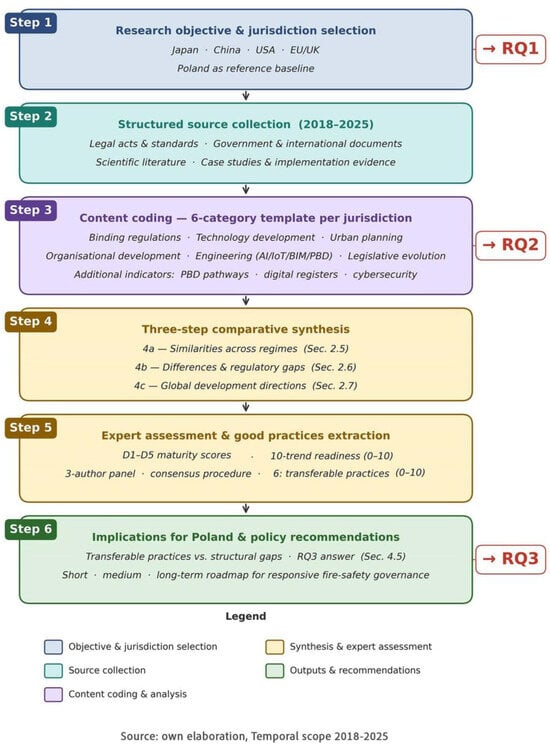
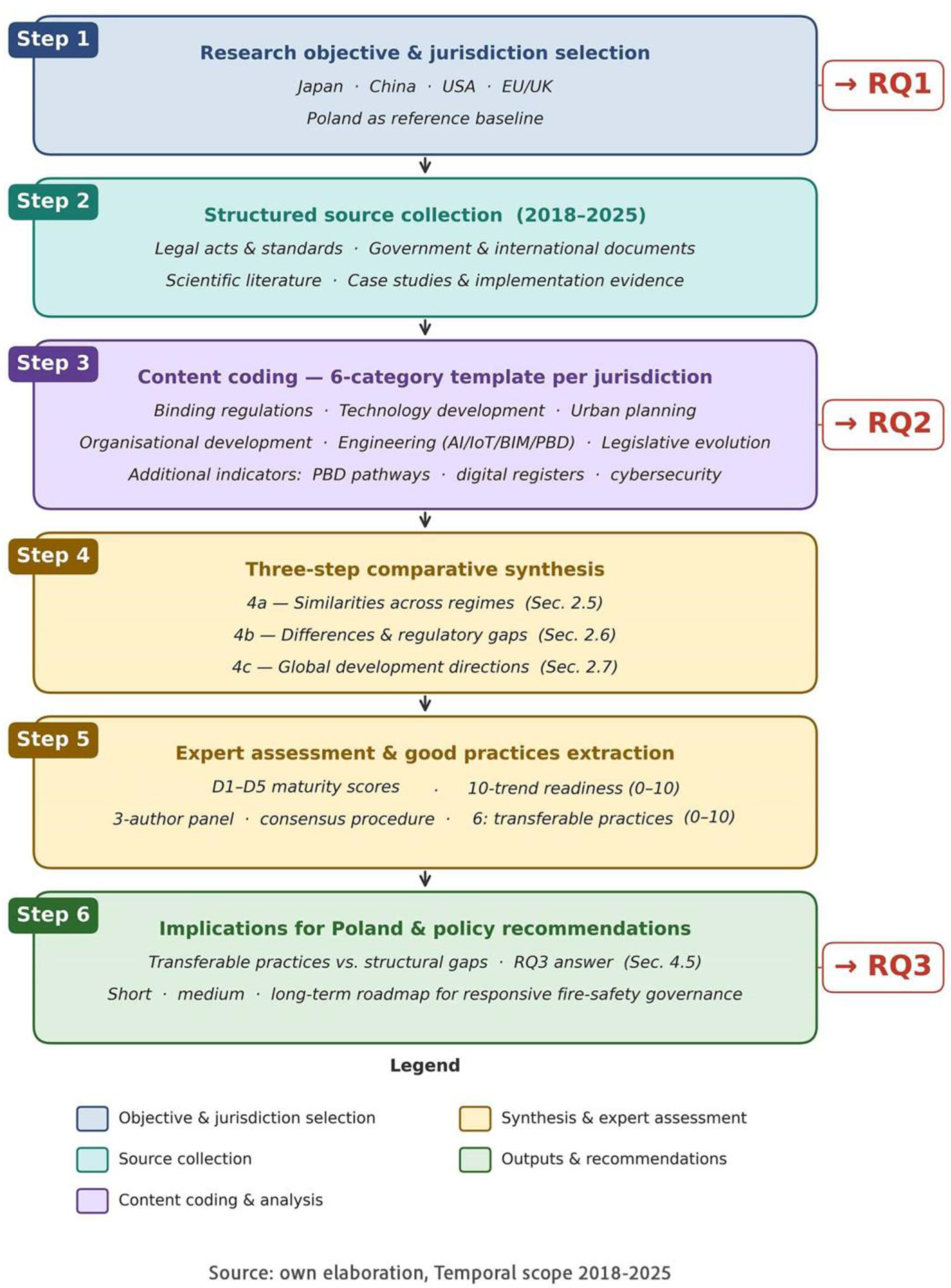
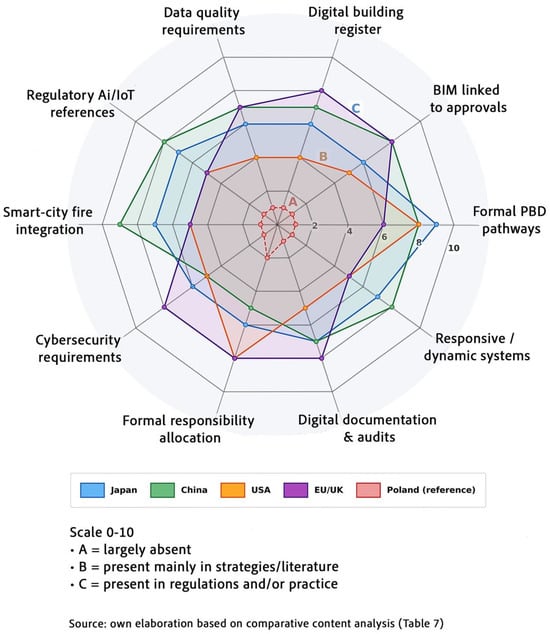
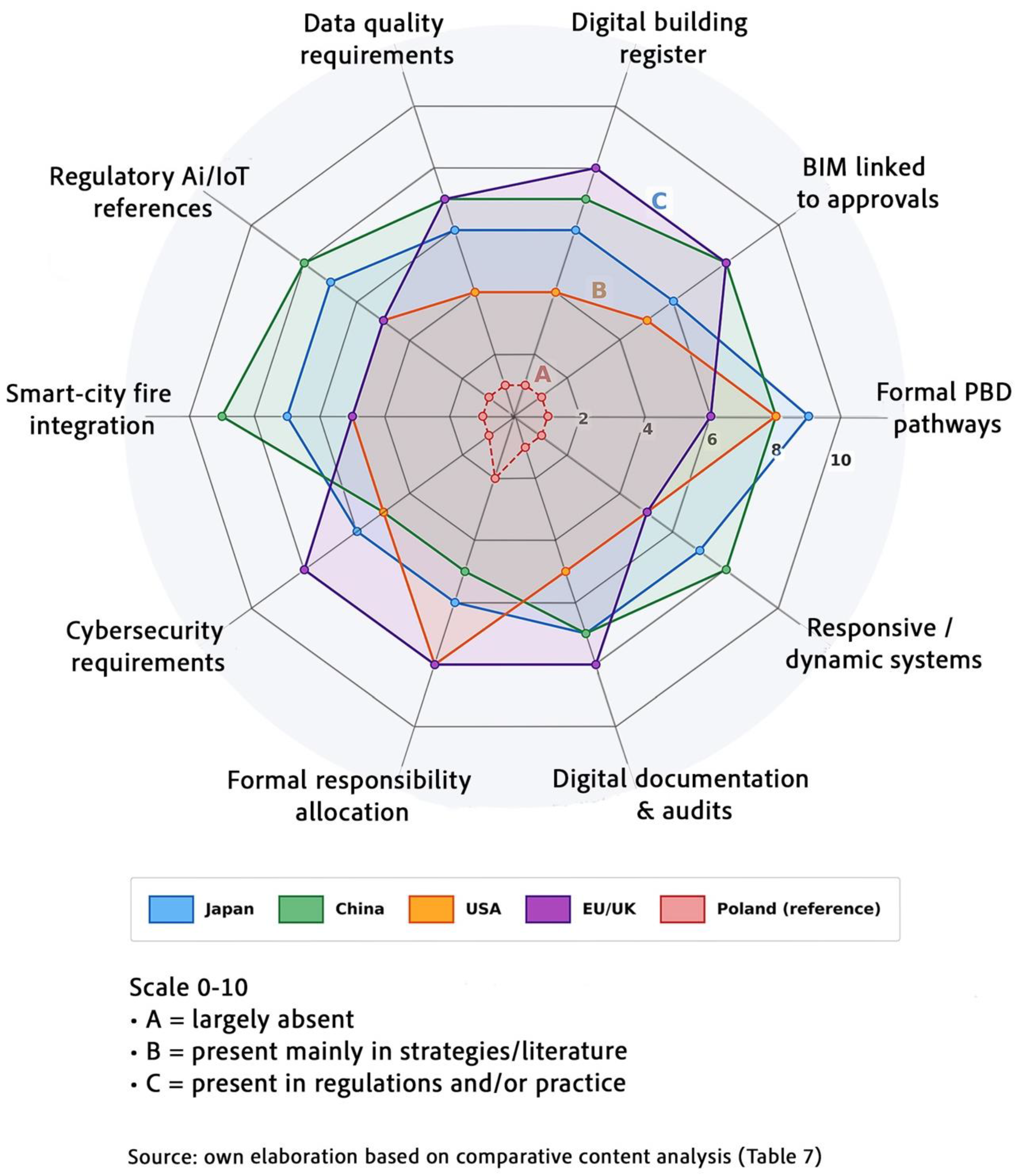

Disclaimer/Publisher’s Note: The statements, opinions and data contained in all publications are solely those of the individual author(s) and contributor(s) and not of MDPI and/or the editor(s). MDPI and/or the editor(s) disclaim responsibility for any injury to people or property resulting from any ideas, methods, instructions or products referred to in the content. |
© 2026 by the authors. Licensee MDPI, Basel, Switzerland. This article is an open access article distributed under the terms and conditions of the Creative Commons Attribution (CC BY) license.