


Abstract
In line with Saudi Arabia’s Vision 2030, this study reviews the green operations and environmental responsibility revolution in Saudi companies. The study also contributes new cross-sector empirical evidence from Saudi firms, a context that has received limited attention in previous green operations research. This study assesses sustainability advancements in 38 Saudi companies, employing a mixed-research approach. It examines the impact of (i) environmentally friendly technologies, (ii) employee training, (iii) assessing and reporting, (iv) transparent reports, and (v) adherence to recognized standards on sustainability practices through a detailed statistical and correlation analysis. To ensure thoroughness, the selected companies operate across various sectors, differ in sizes, and possess varying levels of experience. The analysis reveals how internal capabilities and governance mechanisms jointly support the operational adoption of sustainability practices in Saudi firms during the Vision 2030 transition. The findings presented have valuable insights for managers and policymakers seeking to promote sustainable practices within their organisations.
1. Introduction
Sustainability is no longer a voluntary corporate effort; it has become a strategic expectation, forcing companies to minimize environmental impacts and remain competitive. This shift is becoming more closely aligned with Vision 2030, which encourages the diversification of the economy, the efficient use of resources, and improved environmental management in Saudi Arabia, which has historically been linked to hydrocarbons. Although national initiatives are very noticeable and encouraging, some parts of the industrial sector may still have room for improvement [1].
This study explores the present situation of sustainability and green operations in the Saudi companies, specifically how industrial firms implement environmentally friendly practices in their operations, and what facilitates their implementation. The theoretical foundation of the research is (i) the Stakeholder Theory, according to which the firms react to the expectations of various stakeholders to gain legitimacy and long-term performance [2,3] and (ii) the Resource-Based View (RBV), according to which green capabilities (e.g., training, technologies, and reporting) are considered as the strategic resources that can be utilized to achieve competitive advantage [4,5]. Expanding on these views, the paper also takes into account contextual factors like culture of innovation [6] and company-related variations (like size and industry type) that can influence the sustainability results [7].
The study follows a mixed-research design, as key dimensions of green operations and sustainability performance are operationalized and assessed using the developed conceptual model. The analysis is narrowed down to directly practicable organisational enablers, i.e., the implementation of green technologies, training employees on the sustainable practices, utilization of reporting standards, assessment/reporting routines, and reporting transparency in order to have the results to inform the managerial decision-making.
Although the concept of sustainability and green operations is of increasing importance, the existing literature has not fully revealed how Saudi industrial companies can implement their sustainability pledges into a stable operational experience in 2030 as part of Vision 2030. Most of what exists is about SMEs, product- or process-level green innovation, or entrepreneurial contexts beyond Saudi Arabia, which limits the scope for generalisation to a resource-rich economy undergoing rapid change. This generates an opportunity to find empirical data to determine an association between implementation, internal capabilities, and governance mechanisms. The research question is accordingly the following: How can the environmentally friendly technologies, training of the employees, transparent reporting, and compliance with the recognized standards shape the implementation of the sustainability practices by Saudi firms? The hypotheses are to (1) examine the correlation between these enablers and sustainability implementation, (2) identify those factors with the best statistical correlation with implementation, and (3) draw evidence-based conclusions in order to guide managers and policymakers to hasten the adoption of green operations in Saudi industries in accordance with Vision 2030.
2. Literature Review
2.1. Theoretical Foundations
Stakeholder Theory suggests that firms should meet the needs and demands of various stakeholder groups (e.g., customers, employees, communities, regulators) to remain legitimate and successful in the long term [2,3]. Increasing regulatory requirements and social expectations have strengthened these pressures in the sustainability domain.
The RBV highlights the importance of internal capabilities. Environmental competencies, green technologies, workforce skills, and reporting systems can become valuable organisational resources that enhance competitiveness and performance [4,5].
Together, Stakeholder Theory and RBV provide complementary perspectives: external pressures explain why firms pursue sustainability, while internal capabilities determine how effectively green operations can be implemented and sustained.
2.2. Sustainability in the Saudi Context and Vision 2030
Sustainability in business refers to balancing economic performance, environmental protection, and societal expectations. In business, green operations may involve waste reduction, efficient energy use, pollution prevention, responsible sourcing, and sustainability-based process improvement. Growing environmental degradation and resource scarcity worldwide have increased pressure on organisations to adopt such practices [8].
The sustainability agenda of Saudi Arabia is closely linked to Vision 2030, which encourages industries to reduce their environmental impact while supporting economic transformation. However, indicators such as emissions intensity and the adoption of sustainable waste management in some parts of the industrial sector suggest opportunities for further development [1,9]. This creates an important context for analysing how firms translate sustainability commitments into operational practices.
3. Previous Studies Analysis
3.1. Evidence from International and Regional Studies
According to previous studies, sustainability outcomes are usually determined by investment in resource efficiency and in organisational structures that facilitate green practices. In this case, ref. [10] emphasize the significance of investment in resource efficiency and green jobs for the formation of sustainable practices, particularly among European SMEs.
In the energy transition literature, ref. [11,12] highlight the role of renewable energy technologies (in particular, solar) in reducing dependence on hydrocarbons and supporting national sustainability objectives. These developments align with Saudi Arabia’s diversification strategy under Vision 2030. Industrial examples such as ACWA Power illustrate how firms are expanding renewable capacity while aligning with national sustainability goals.
3.2. Organisational Enablers
Research also emphasizes that sustainability implementation is more likely when it is embedded in organisational culture and governance structures. Ref. [13] demonstrates how organisational culture may influence the richness and the uniformity of sustainability integration. One example of sustainability initiatives being formalized in Saudi Arabia is Saudi Aramco. Another common determinant of sustainability advancement is transparent reporting. According to [14,15], the reporting systems facilitate evaluation, responsibility, and trust among the stakeholders. Ref. [16] also highlights improved reporting in accordance with international standards, and SABIC is frequently cited as a good practice example in sustainability disclosure.
Technology adoption and innovation are frequently identified as key enablers [17], along with government initiatives that shape how firms align with national sustainability priorities [18,19]. Large-scale initiatives such as NEOM further reinforce the national sustainability agenda. Similarly, ref. [20] demonstrates that environmental management practices and leadership can support sustainability implementation. However, much of this research focuses on SMEs or entrepreneurial contexts in countries like Pakistan or Jordan, which are not similar to Saudi Arabia’s industrial structure, or have reforms associated with Vision 2030. The literature also identifies barriers to sustainability implementation, including regulatory uncertainty and sector-specific challenges. Ref. [21] highlights compliance and regulatory difficulties that may slow sustainability adoption. Sectoral studies also show that firms often face challenges in interpreting and operationalizing environmental requirements [22,23].
3.3. Research Gap
Despite these contributions, there is limited empirical evidence on how Saudi industrial firms translate sustainability intentions into operational practices. In particular, the interaction between stakeholder pressures and internal capabilities under Vision 2030 remains underexplored. This study addresses this gap by examining how organisational enablers influence the implementation of sustainability and green operations in Saudi firms, in a cross-sector data set. The objective of the study is then exploratory and analytical rather than statistical generalisation. The contribution lies in providing empirical evidence from firms operating in different sectors in Saudi Arabia during the Vision 2030 transition. The combination of survey data and semi-structured interviews allows the complement of statistical analysis with qualitative insights.
4. Methodology
4.1. Research Design
The methodology uses a mixed-method approach to explore sustainability and green operations across sectors in Saudi Arabia. The data consist of a structured questionnaire survey administered to companies across various industries and semi-structured interviews with the key managerial staff. The use of both quantitative and qualitative data enabled a deeper understanding of sustainability practices and contextual factors that had affected the implementation of sustainability practices.
4.1.1. Primary Data Collection
- (A)
- Questionnaire survey (quantitative component)
A structured questionnaire, as shown in Appendix A, was used to measure organisational drivers of sustainability implementation, as well as the dependent variable: implementation of sustainability practices. The instrument was informed by prior work in the sustainability and corporate social responsibility measurement area (including [24]) and refined using established survey design guidance to ensure construct coverage and clarity [25,26,27], consistent with recent survey-based sustainability research [28].
The survey was conducted between September 2023–January 2024. The items were measured using a 5-point Likert scale (1 = Strongly Disagree to 5 = Strongly Agree). The survey was directed to individuals in roles with decision-making responsibility related to sustainability practices (e.g., owners, general managers, operations or quality leads). The detailed demographic profiling of respondents (e.g., age, gender, exact tenure) was not systematically captured; therefore, the study reports participant eligibility mainly based on respondents’ roles and organisational responsibilities, consistent with organisational survey research where access and disclosure constraints apply [29].
- (B)
- Semi-structured interviews (qualitative component)
In order to enhance the knowledge regarding the conditions of implementation, semi-structured interviews were used with managers or owners of Saudi-based firms (N = 38). The barriers and enablers, as well as the interpretations of the sustainability requirements, were captured through interviews and could be compared across participants. In the study, purposive sampling with maximum variation was used, and it was designed to cover the variation in the size of firms and industries [27].
A preliminary list of 50 companies was identified through directories and professional networks and contacted between September 2023–January 2024. Firms were included in the study if they were based in Saudi Arabia and operated in one of the business sectors (manufacturing, services, finance, technology, construction, healthcare, etc.). We also aimed to include firms of different sizes (micro, SME, and large) to capture variation across organisational contexts. Companies were excluded if their operations did not involve activities where sustainability practices could reasonably be discussed, or if they were unable to provide an appropriate respondent. Interview participants were selected based on their role within the organisation, ensuring that they held positions with decision-making authority and direct knowledge of sustainability practices. The recruitment process aimed to ensure representation across sectors and firm sizes. Table 1 and Table 2 report the final distribution of participating firms by sector and size.
Table 1.
Sector grouping participating firms.
Table 2.
Sizes of participating firms.
The survey and the interviews were conducted with the same group of participating firms (n = 38). The qualitative interviews provided additional insights into the quantitative responses collected through the questionnaire. The sample (n = 38) was adequate to contribute to conducting a cross-case comparison [29]. The sample of the survey (n = 38) allowed testing the correlation of the proposed relationships under consideration based on the number of predictors in the model [24]. Thematic analysis was used in analysing the interview data [30].
Because sustainability practices can vary by sector and firm characteristics, the company profile of participating organisations is reported in Table 3 to support transparency and interpretation of results.
Table 3.
Profiles of participating firms.
4.1.2. Quantitative and Qualitative Analysis
Survey responses were coded and analysed in IBM SPSS Statistics V29, using descriptive statistics and hypothesis testing (correlation and regression) aligned with the conceptual model [27]. Visual summaries were developed using Tableau Desktop 2023.3. Reliability checks (e.g., Cronbach’s alpha) were applied where constructs were measured using multiple items [25]. Interview themes were developed iteratively following recognized thematic analysis procedures [30]. Triangulation across methods strengthened credibility by comparing patterns across datasets [31].
4.2. Conceptual Model and Hypotheses Development
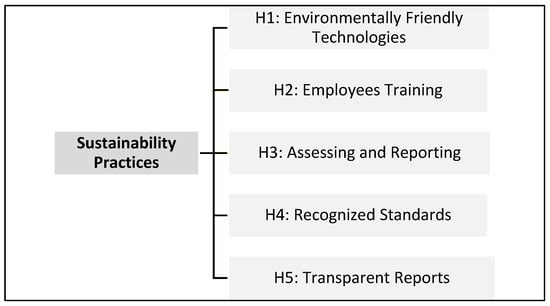
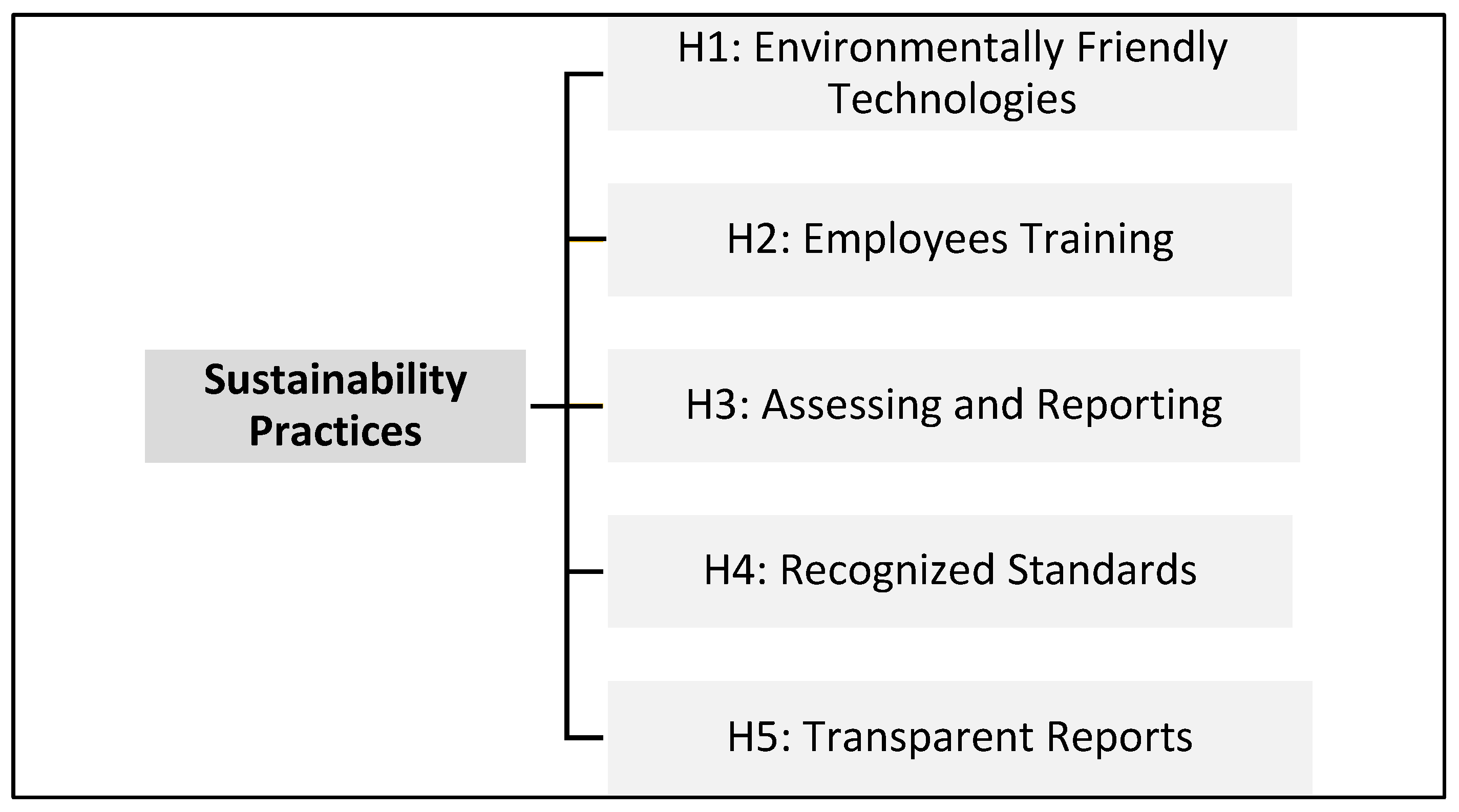
Based on the literature review and theoretical frames applied in the study, Figure 1 shows a model whereby five organisational enabling factors, including green technologies, employee training, assessment and reporting routines, adoption of recognized standards, and reporting transparency, are most likely to promote the active use of the sustainability practices in Saudi firms. The logic is a combination of (i) RBV which considers environmental capabilities as strategic resources enhancing operational performance and long-term competitiveness [4,5] and (ii) Stakeholder Theory, which interprets the adoption of sustainability as a reaction to the legitimacy pressures of the regulators, customers, investors, and communities [2,3].
Figure 1.
Conceptual model.
4.2.1. Environmentally Friendly Technologies
Beyond waste minimization and pollution control, cleaner production equipment, energy efficiency, and digitized monitoring are environmentally friendly technologies that enhance the capacity of a firm to maximize process efficiency. According to the RBV perspective, these technologies can be regarded as an internal asset that improves operational performance and sustainability [4,5]. Within the framework of Vision 2030, with the focus on diversification and resource efficiency, companies have additional reasons to invest in the modernisation of their operations, which contributes to greener performance. Therefore, the following applies:
H1.
The use of environmentally friendly technologies is positively associated with the active implementation of sustainability practices in the company.
4.2.2. Employee Training
Implementation of sustainability is not based on equipment and policies only; skills and routines of employees (e.g., waste segregation, efficient energy use, compliance procedures, and process improvement) can also be discussed. Within the RBV, training builds human capital and the internal capabilities needed to implement sustainability [4,5]. Training in Saudi Arabia where companies are adjusting to changing sustainability demands and reporting needs becomes a convenient process of converting strategy into operational behaviour. Therefore, the following applies:
H2.
Employee training on sustainable practices is positively associated with the active implementation of sustainability practices in the company.
4.2.3. Assessing and Reporting
Periodic evaluation and reporting of sustainability performance is a key measurement infrastructure to have the right measure of what the firm wishes to improve. Monitoring systems according to the RBV terms are organisational capabilities that facilitate coordination and process control [32]. Stakeholder wise, performance measurement and disclosure can help improve accountability and decrease information asymmetry which improves stakeholder trust [3,33]. The more Saudi companies conform to the expectations of Vision 2030 and the more they are scanned externally, the more systematic assessment/reporting gains significance in achieving institutional alignment and successful execution.
H3.
Regular assessment and reporting of sustainability performance is positively associated with the active implementation of sustainability practices in the company.
4.2.4. Recognized Standards
Implementation of established standards is considered here as a formal system of governance and measurement that institutionalizes the concept of sustainability as routines, roles, documentation, targets, audits, and improvement. Under Stakeholder Theory, recognized standards signal that a firm is addressing environmental impacts and is improving compliance [2,3,33]. Recent studies also show that structured governance frameworks support the implementation of sustainability practices [34,35]. The adoption of standards will reinforce the implementation in the context of the Saudi Vision 2030 where the institutional demands of environmental management and performance monitoring are also increasing, turning the intent of sustainability into the institutionalized system of operations.
H4.
The use of recognized standards for sustainability reporting is positively associated with the active implementation of sustainability practices in the company.
4.2.5. Transparent Reports
Transparency is considered to be different to the standards: it is the quality of disclosure, i.e., clarity, completeness, balance (reporting both the progress and the limitations), consistency of metrics over time, and the credibility of the claim. In the framework of the Stakeholder Theory, transparency fosters trust and legitimacy by minimizing asymmetry of information and facilitating verification of performance and intents on the part of the stakeholders. Recent research shows that the credibility of disclosure depends on governance structures and policy requirements, and that poor transparency contributes to the belief in greenwashing [36]. In the case of Saudi companies where Vision 2030 requires the company to increasingly meet the demands of its stakeholders (investors, regulators, customers, and global partners), a high-quality transparency is likely to enhance the implementation of sustainability by exerting accountability pressure.
H5.
Transparency in sustainability reports is positively associated with the active implementation of sustainability practices in the company.
5. Data Analysis
This section shows an analysis of the primary demographics and frequencies of the data collected to better understand the market and to help in defining the relationships between the dependent and independent variables of the model proposed in Section 4. Indeed, the participating firms represent a diverse array of sectors, reflecting a broad spectrum of industries committed to sustainability practices as shown to Table 1. The majority of firms fall within the manufacturing or consulting sector with 9 firms for each, showcasing a strong interest in integrating sustainable principles across various business domains. Information technology, finance and real estate sectors contribute with 4, 3, and 3 firms, respectively. Other notable sectors include biotech, defence, sport, healthcare, logistics, telecom, each with one or more representatives, underlining the widespread adoption of sustainability practices across industries, from traditional finance to emerging fields like biotech.
The participating firms vary significantly in size as shown in Table 2. The study includes a substantial presence of large enterprises, with 15 firms falling into this category. Additionally, small and medium-sized enterprises (SMEs) are well-represented, constituting 14 firms. The inclusion of both SMEs and large corporations ensures a comprehensive examination of sustainability practices across a broad spectrum of business sizes. This diversity in the size of participating firms enhances the study’s ability to capture insights into sustainability practices across a varied corporate landscape, from smaller enterprises to larger, more established corporations.
5.1. Sustainability Practices
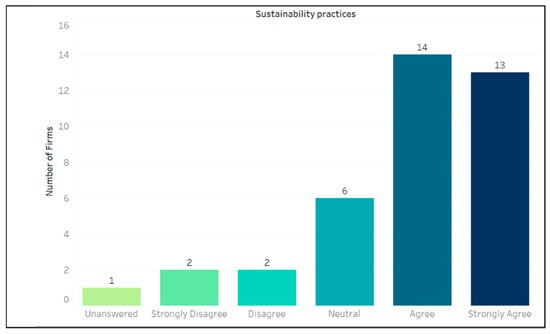
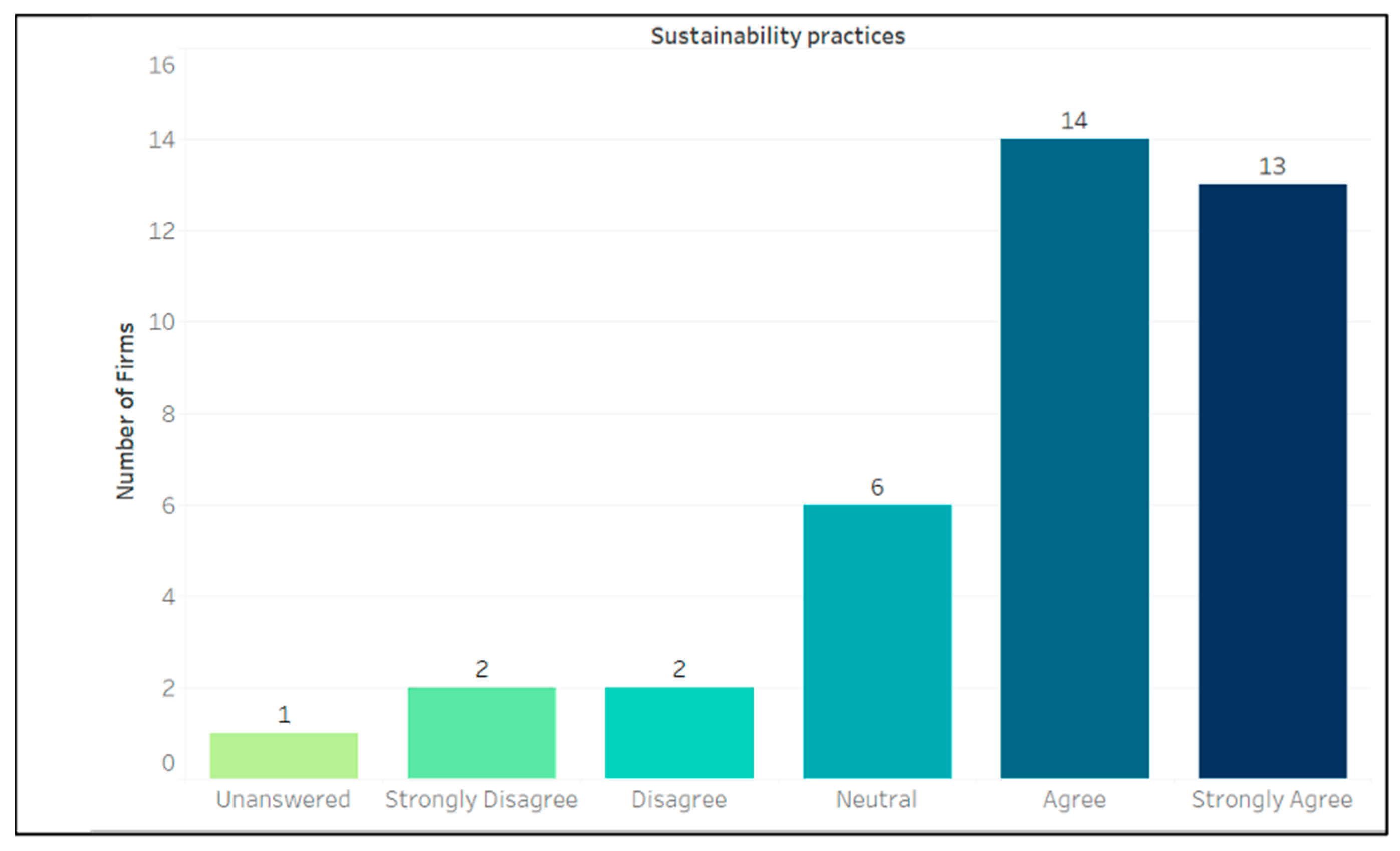
The frequency distribution in Figure 2 highlights the engagement of participating firms with sustainability practices. A single firm remains unanswered, possibly representing non-disclosure or non-response. Six firms fall into the neutral category, suggesting perhaps indecision on the matter. On a positive note, 27 firms Agree or Strongly Agree with sustainability practices, indicating a significant commitment to and endorsement of sustainable initiatives.
Figure 2.
Frequency of firms that follow sustainability practices.
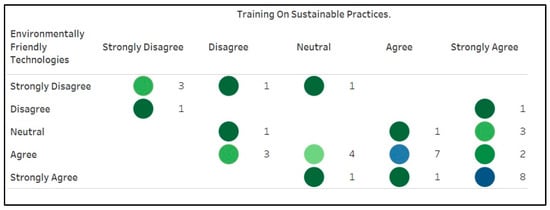
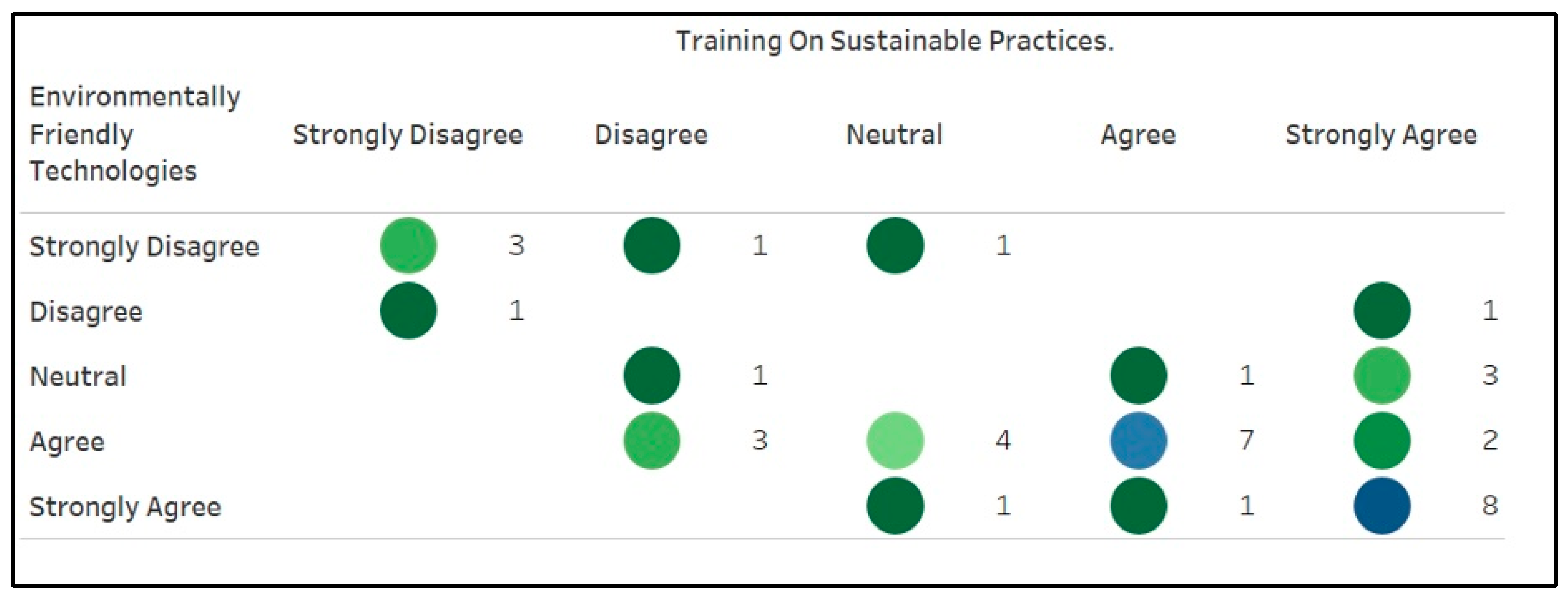
5.2. Training on Sustainable Practices and Using Environmentally Friendly Technologies (H1 and H2)
The frequency distribution presented in Figure 3 illustrates the responses of participating firms regarding their position on training in sustainable practices and the adoption of environmentally friendly technologies. When examining “Environmentally Friendly Technologies” and “Training on Sustainable Practices” combined, the distribution reveals a diverse set of opinions but most firms fall into the “Agree and Strongly Agree” categories. There is also a presence of five firms in the “Disagree/Strongly Disagree” category, suggesting a divergence in views.
Figure 3.
Frequency of firms with environmentally friendly technologies and training on sustainable practices.
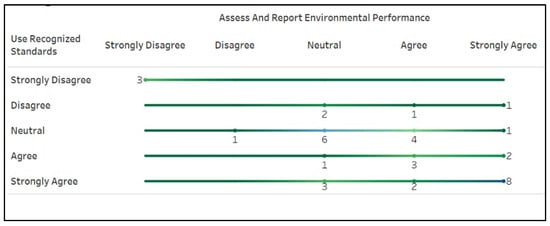
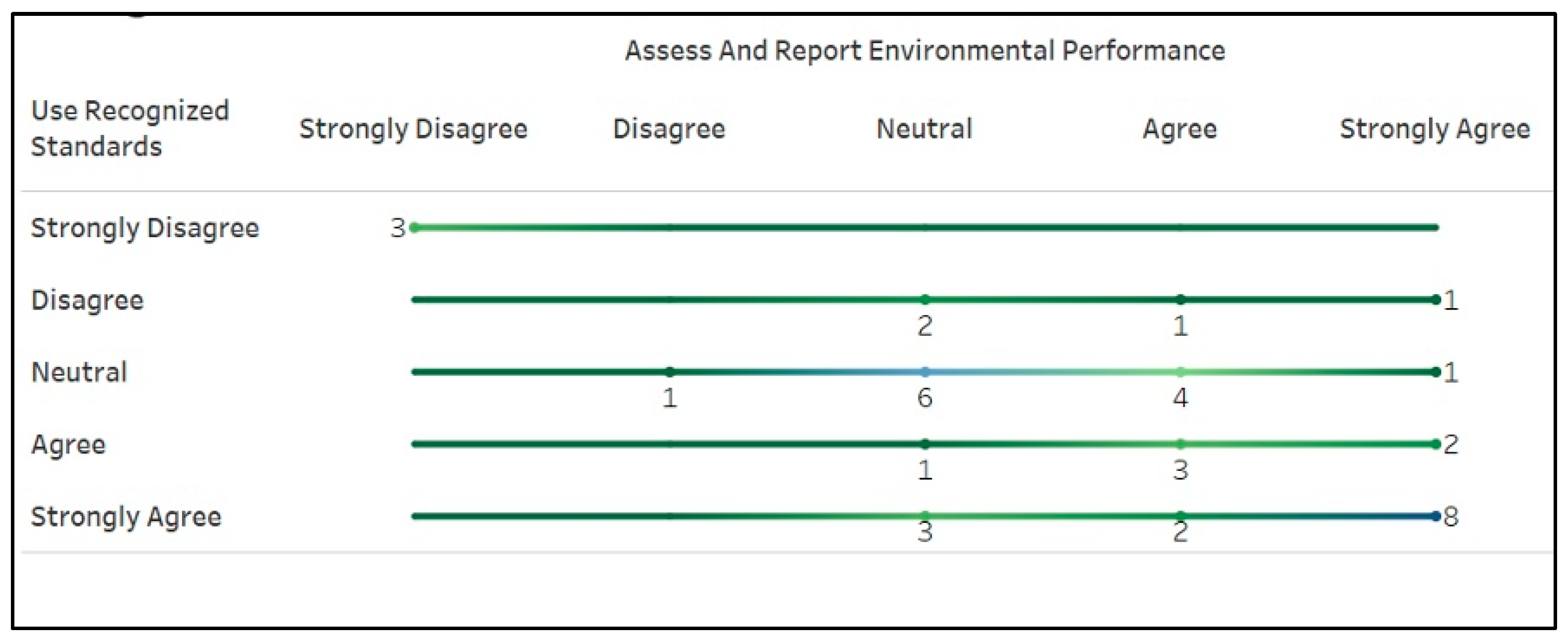
5.3. Assessing and Reporting Environmental Performance (H3)
The frequency distribution presented in Figure 4 outlines the responses of participating firms regarding their engagement in assessing and reporting environmental performance, coupled with their use of recognized standards. In the context of “Assess and Report Environmental Performance,” the distribution reflects a spectrum of opinions. The majority of firms fall into the positive categories of “Agree” and “Strongly Agree.” On the other hand, there is a collective count of three firms in the “Disagree” and “Strongly Disagree” categories, indicating a few firms with reservations or opposing views.
Figure 4.
Frequency of firms that assess and report environmental practices and use recognized standards.
5.4. Using Recognized Standards (H4)
Moving to the dimension of “Use Recognized Standards” in Figure 4, the distribution reveals a positive inclination. Nineteen firms collectively fall into the “Agree” and “Strongly Agree” categories, signifying a consensus on the importance of using recognized standards. Conversely, the “Disagree” and “Strongly Disagree” categories represent a few firms, suggesting a minority viewpoint that questions the use of recognized standards.
5.5. Transparency in Reports (H5)
The majority of firms, with a cumulative count of 20, fall into the positive categories of “Agree” and “Strongly Agree,” indicating a prevalent sentiment that their sustainability reports are transparent. Conversely, the “Disagree” and “Strongly Disagree” categories represent a smaller count of 12 firms, suggesting a subset of organisations with reservations or opposing views about the transparency of their sustainability reports. Additionally, there are six firms in the “Neutral” category, signifying a moderate position on the transparency of sustainability reporting. This distribution provides insights into the diversity of perspectives among firms regarding the transparency of their sustainability practices.
6. Model Analysis and Results
This section presents the analysis results of the conceptual model using SPSS, starting with descriptive statistics and correlation analysis, followed by t-tests and ANOVA, and concluding with a regression analysis to further examine the relationship between sustainability reporting and sustainability practices.
6.1. Descriptive Statistics
Table 4 reveals valuable insights into the perceptions of sustainability-related practices within the surveyed companies. On average, participants reported a moderately positive evaluation of their company’s sustainability practices, with a mean score of 3.82 and a standard deviation of 1.270. This suggests a degree of variability in participants’ opinions. Similarly, environmentally friendly technologies and training on sustainable practices received comparable mean scores of 3.63, indicating a generally positive sentiment, although with slightly higher variability, as reflected in their standard deviations of 1.303 and 1.384, respectively. Assessing and reporting environmental performance earned a mean score of 3.71, reflecting a positive perception with a relatively lower standard deviation of 1.183. The use of recognized standards for sustainability reporting received a mean score of 3.58, suggesting a positive sentiment with moderate variability (standard deviation: 1.287). However, transparency in sustainability reports scored a mean of 3.18, indicating a positive but somewhat less favourable evaluation, with a standard deviation of 1.373. These statistics lay the foundation for a nuanced understanding of the company’s sustainability landscape, setting the stage for further in-depth analyses and strategic considerations.
Table 4.
Descriptive statistics of the research model.
6.2. Correlations
The results of the correlation analysis presented in Table 5 suggest a positive association between the examined variables and the implementation of sustainability practices. Sustainability practices are positively associated with the use of environmentally friendly technologies (r = 0.807, p < 0.01), which means that the companies that report the higher rate of using the green technologies also report the higher rates of sustainability practice implementation. Sustainability practices are also positively correlated with employee training on sustainable practices (r = 0.637, p < 0.01), and it can be assumed that training-focused firms tend to be more engaged in implementing sustainability into the operating process. On the same note, the sustainability practices are positively related to evaluation and reporting of environmental performance (r = 0.665, p < 0.01) and adoption of recognized standards (r = 0.728, p < 0.01), meaning that companies with better measurement frameworks are likely to report better sustainability implementation. Lastly, the correlation between sustainability practices and report transparency is positive but weaker (r = 0.361, p < 0.05), which can possibly be explained by the fact that, whereas the quality of disclosure correlates with the implementation, transparency can also be influenced by other factors that are not necessarily related to the activity of the operations (e.g., reporting capacity, reporting policy, or governance structure).
Table 5.
Correlation results.
Notably, such outcomes are to be understood as bivariate associations and, hence, as co-movement and not causality. The correlations do not prove that the identified factors are the cause of the implementation of sustainability; instead, these factors indicate that they are likely to co-exist among the firms surveyed. However, these associations are consistent with previous empirical studies on sustainability and green operations. The link with green technologies shows that resource efficiency investments are related to the environmental performance and sustainability practices [10,32]. Furthermore, the favourable correlation to training reflects the fact that capability-building and staff competences facilitate the implementation of environmental management practices especially when sustainability involves change of behaviour in a routine level [4,5]. In addition, the strong relationship with assessment/reporting and recognized standards is also in line with the results of the studies that indicate stronger systematic implementation through formal environmental management systems and governance mechanisms that entail monitoring, accountability, as well as continuous improvement [37].
Interestingly, the relatively minor yet significant transparency association reflects the arguments that disclosure quality is not only an operation problem but also a governance and credibility problem; transparency can be affected by governance framework and verbal tactics that can either maintain credible sustainability enforcement or raise greenwashing issues [36,38]. Combined, the results, in general, support available evidence by adding that the application of sustainability among Saudi companies is more pronounced when both operational (technology and training) and governance/measurement (standards and performance monitoring) structures are more advanced.
6.3. T-Test
The one-sample t-test presented in Table 6 was conducted to assess whether the mean scores for each sustainability-related variable significantly differ from the neutral midpoint of 3. The results revealed highly significant differences for all variables (p < 0.001), indicating that participants’ perceptions of sustainability practices, environmentally friendly technologies, training, assessing and reporting, using recognized standards, and transparency were consistently higher than the neutral value. The mean differences were substantial, ranging from 3.184 to 3.816, reinforcing the notion that sustainability practices are present among the surveyed firms. The 95% confidence intervals for the mean differences were relatively narrow, indicating a high level of precision in estimating the true population mean differences.
Table 6.
One-sample 2-tailed t-test results.
These findings suggest a strong consensus among participants regarding the company’s commitment and performance in sustainability-related areas in Saudi Arabia. The consistently positive perceptions across diverse facets of sustainability practices underscore the overall positive sentiment within the Saudi organisations.
6.4. One-Way ANOVA Tests
A one-way analysis of variance (ANOVA) was conducted to examine whether different levels of the explanatory variables are associated with differences in sustainability practices. Table 7 summarizes the results of these tests. The p-values from the first four tests are all below the conventional significance threshold of 0.05, suggesting rejection of the null hypotheses. This indicates that the four independent variables in the research model (use of environmentally friendly technologies, training, reporting environmental performance, and use of recognized standards) are significantly associated with sustainability practices. Moreover, these factors play critical roles in shaping sustainability practices within the company. Specifically as follows:
Table 7.
Results of the ANOVA tests.
The results of the first ANOVA test indicate a significant difference between the groups (F(4,33) = 19.522, p < 0.001), suggesting that the mean scores for sustainability practices vary significantly across different levels of environmentally friendly technologies. The between-groups sum of squares (SS = 41.973) was substantially larger than the within-groups sum of squares (SS = 17.738), further reinforcing the robustness of the observed differences.
Second, results reveal a significant influence of training on sustainable practices on perceptions of sustainability practices (F(4,33) = 8.122, p < 0.001). The between-groups sum of squares (SS = 29.622) exceeds the within-groups sum of squares (SS = 30.089), reinforcing the significance of the observed differences.
Similarly, the results indicate a significant difference between the groups (F(4,33) = 10.351, p < 0.001), suggesting that mean scores for sustainability practices vary significantly across different levels of assessing and reporting environmental performance. The between-groups sum of squares (SS = 33.227) exceeds the within-groups sum of squares (SS = 26.483), emphasizing the substantial impact of assessing and reporting environmental performance on employees’ perceptions of sustainability practices.
In addition, the results reveal a significant effect of the use of recognized standards on sustainability practices (F(4,33) = 13.896, p < 0.001). The between-groups sum of squares (SS = 37.467) is greater than the within-groups sum of squares (SS = 22.244), underscoring the strong contribution of using recognized standards to the observed differences.
Finally, the ANOVA test testing the transparency of reports revealed interesting insights. The results indicate a marginally significant difference between the groups (F(4,33) = 2.217, p = 0.089). Although the overall p-value is slightly above the conventional threshold of 0.05, the findings suggest a potential influence of transparency in reports on employees’ perceptions of sustainability practices. The between-groups sum of squares (SS = 12.649) and the within-groups sum of squares (SS = 47.062) contribute to the understanding of the observed variance. While the p-value is close to the significance threshold, further exploration through post hoc analyses or considering additional contextual factors may provide clarity on the specific conditions under which transparency in reports influences sustainability practice perceptions.
Among the organisational enablers examined, assessing and reporting environmental performance showed a significant association with sustainability practices in the previous analyses (F(4,33) = 10.351, p < 0.001). Given the close operational link between performance reporting and the implementation of sustainability practices, a simple linear regression model was estimated to further examine this relationship. The test uses 246 survey observations derived from responses to the questionnaire items across the 38 participating firms. The results presented in Table 8 shows a positive association between regular assessment and reporting of environmental sustainability performance (independent variable) and the active implementation of sustainability practices (dependent variable), R2 = 0.416, F(1,244) = 173.534, p < 0.001. The regression coefficient was significant (β = 0.645, p < 0.001), indicating that companies that consistently report on sustainability performance are more likely to actively implement green operational practices. The model explains approximately 42% of the variance, suggesting a meaningful statistical association between these two variables.
Table 8.
Linear regression results.
7. Challenges and Prospects
Identifying the main challenges faced by Saudi companies in implementing sustainability measures is essential. Additionally, the study seeks to propose effective strategies to overcome these challenges. The qualitative data collected from the interviews show that challenges range from limited awareness to human resource constraints and budget limitation. Based on the literature review and the findings discussed, several key recommendations emerge for enhancing sustainability practices. First, it is imperative for companies to foster a culture of transparency and disclosure regarding their sustainability efforts. This can be achieved through clear and comprehensive reporting mechanisms [39], following the example set by organisations like SABIC in transparently reporting their sustainability initiatives [12].
Second, organisations should prioritize the integration of innovation and technology into their sustainability strategies. The study by [17] highlights the positive impact of innovation and technology on corporate sustainability in Saudi Arabia. As demonstrated in [40], investing in sustainable technologies and fostering an environment and a green organisational culture that encourages innovation can lead to more efficient and environmentally friendly business practices.
Furthermore, there is a need for the Saudi construction industry to address barriers and leverage drivers for sustainability. Ref. [21] emphasize the importance of identifying and overcoming obstacles to sustainability in construction projects. This involves collaboration among stakeholders, adherence to sustainable practices, and the adoption of green building technologies. Moreover, organisations should align their practices with the Sustainable Development Goals (SDGs) outlined by the United Nations. This alignment can serve as a guiding framework for organisations to contribute positively to economic, social, and environmental aspects of sustainability.
In summary, Saudi Arabian organisations can enhance their sustainability practices and contribute to a more sustainable and resilient future by embracing a culture of transparency, leveraging innovation and technology, addressing industry-specific challenges, and aligning with global sustainability goals.
Regarding the implications, the study has important theoretical, methodological, and managerial implications. Its transfer to Saudi Arabia, in a theoretical manner, widens the interpretation of sustainability and green innovation models advanced by [41,42] to include new perspectives on the usage of the models in industries other than SMEs.
Methodologically, it is a reproducible, statistically-based method to investigate sustainability by applying a correlation analysis which fills a gap in the existing number of empirical studies in the region. In managerial terms, the study gives us insights into the impacts of investments in pro-environmental technologies, training of employees, and following the recognized standards of sustainability as the major steps towards better performance. The results contribute to previous studies not only by increasing their credibility but also by offering recommendations that can be applied to the real work of the firms that work in the framework of Vision 2030. This paper provides insights for research and practice by examining sustainability across different sectors in a relatively understudied context.
8. Conclusions
This paper investigated sustainability and green operations within Saudi companies in terms of Vision 2030 through testing the hypothesis that the five organisational enablers (green technologies, employee training, assessment/reporting routines, adoption of recognized standards, and reporting transparency) are related with enhanced implementation of sustainability practices. Overall, the findings support the proposed relations. The implementation of sustainability is positively correlated with the following: (i) environmental friendly technologies (H1); (ii) training of employees (H2); (iii) frequent evaluation and reporting on the environmental performance (H3); (iv) use of recognized standards (H4); (v) transparency in sustainability reporting (H5). The transparency relationship is positive but relatively lower indicating that the quality of disclosure is related to practice but can also be based on the maturity of governance and the ability to report.
The results can be used to expand the scope of Stakeholder Theory and RBV within the Saudi Vision 2030 context by demonstrating that sustainability implementation is connected to both internal capacity (technology and training: RBV) and governance (assessment/reporting, standards, and transparency: Stakeholder Theory). This helps to give a consistent explanation of why firms transition to green operations (stakeholder pressure) and operationalize them (capabilities and routines).
The management needs to focus on the institutionalization of the implementation by focusing on the capability-building, which is facilitated by the green technologies and training supported by the measurement routines and standard-based systems. To expedite the adoption process, policymakers can reinforce instruction and incentives to adopt standards, to measure performance, and to disclose credibly, in line with the priorities of Vision 2030.
The study has some limitations. These include the relatively small sample size, the cross-sectional design, the use of self-administered questionnaires (which may involve respondent bias), the Saudi-specific context, which may limit generalization, and the use of correlation analysis, which does not allow causal conclusions. Future research could use larger samples in specific sectors (such as manufacturing, construction, or energy), adopt longitudinal designs, and compare Saudi Arabia with other GCC countries to examine whether these relationships hold in similar institutional settings.
Funding
This study was partially funded by Alfaisal University under internal grant 24127. The author gratefully acknowledges this support.
Institutional Review Board Statement
According to Alfaisal University Research Policies and Procedures (approved September 2024 and revised January 2025), only “research involving the use of biohazardous materials or human and/or animal subjects must be submitted to the Institutional Review Board for review and approval (Section 3.9.1).” This study is limited to the collection and analysis of organizational-level information related to sustainability practices and does not include personal, sensitive, or identifiable human data.
Informed Consent Statement
Informed consent for participation is not required as per Alfaisal University Research Policies and Procedures (approved September 2024 and revised January 2025).
Data Availability Statement
All the data collected from surveys was coded and anonymized, without company names, as this information is confidential. However, all remaining information (company size, company revenue, survey answers, open remarks, and suggestions, etc.) is fully available to interested researchers upon request.
Conflicts of Interest
The author declares no conflicts of interest.
Appendix A
Survey
Green Operations and Environmental Responsibility Revolution in Saudi Arabia: Progress and Prospects
Dear [Company Name],
We are conducting a survey to gather insights on the implementation of sustainability and green operations practices in Saudi Arabian companies. Your valuable input will help us analyze the progress and prospects of environmental responsibility in the country. Please take a few moments to complete this survey.
Section 1: Company Information
- Company Name:……………………………….
- Industry: …………………………………………..
- Number of Employees: …………………….
- Annual Revenue: ……………………………..
- Years in Operation: ………………………….
Section 2: Current Implementation of Sustainability and Green Operations
(Please rate the following statements on a Likert scale from Strongly Disagree to Strongly Agree)
| Strongly Agree | Agree | Neutral | Disagree | Strongly Disagree | |
| 1. Our company actively implements sustainability practices in its operations. | |||||
| 2. We have designated environmental responsibility departments or individuals. | |||||
| 3. We use environmentally friendly technologies and practices. | |||||
| 4. We consider environmental factors in our supply chain decisions. | |||||
| 5. Our employees receive training on sustainable practices. | |||||
| 6. Our company actively implements sustainability practices in its operations. | |||||
| 7. Please describe the specific sustainability tools or frameworks your company uses in its operations | |||||
| 8. Are there any best practices or techniques your company has adopted to reduce its environmental impact? Please provide details. | |||||
| 9. Are there specific methodologies or criteria your company follow to consider environmental factors in supply chain decisions? |
Section 3: Assessment and Reporting of Environmental and Sustainability Performance
(Please rate the following statements on a Likert scale from Strongly Disagree to Strongly Agree)
| Strongly Agree | Agree | Neutral | Disagree | Strongly Disagree | |
| 1. We regularly assess and report our environmental and sustainability performance. | |||||
| 2. We track key performance indicators related to sustainability. | |||||
| 3. We use recognized standards for sustainability reporting. | |||||
| 4. Our sustainability reports are transparent and accessible to stakeholders. | |||||
| 5. We engage in sustainability reporting voluntarily, not just for regulatory compliance. | |||||
| 6. Please specify the type of sustainability and environmental responsibility reports that your company uses for performance assessment along with the KPIs? If applicable, provide details about any recognized standards or frameworks employed |
Section 4: Challenges and Strategies
- What are the primary challenges your company faces in implementing green operations and sustainability?
- Lack of budget/resources
- Lack of skilled employees
- Difficulty integrating sustainability practices with existing systems
- Other (Please specify)
- What strategies do you employ or plan to employ to overcome these challenges?
Section 5: Envisioned Trajectory for Sustainability and Green Operations
- How do you foresee the future of sustainability and green operations in Saudi Arabia for your company or industry?
- Do you foresee an increasing commitment to environmental responsibility in the coming years?
- Are there specific sustainability goals your company aims to achieve in the future?
Conclusion
Thank you for your participation in this survey! We greatly appreciate your time and insights.
References
- Saudi General Authority for Statistics. Environmental Statistics Reports. 2024. Available online: https://www.stats.gov.sa (accessed on 12 March 2026).
- Donaldson, T.; Preston, L.E. The stakeholder theory of the corporation: Concepts, evidence, and implications. Acad. Manag. Rev. 1995, 20, 65–91. [Google Scholar] [CrossRef] [Scilit]
- Freeman, R.E. Strategic Management: A Stakeholder Approach; Pitman: Boston, MA, USA, 1984. [Google Scholar]
- Barney, J.B. Firm resources and sustained competitive advantage. J. Manag. 1991, 17, 99–120. [Google Scholar] [CrossRef] [Scilit]
- Hart, S.L. A natural-resource-based view of the firm. Acad. Manag. Rev. 1995, 20, 986–1014. [Google Scholar] [CrossRef] [Scilit]
- Wong, C.W.Y. Leveraging environmental information integration to enable environmental management capability and enhance firm performance. Inf. Manag. 2013, 50, 143–152. [Google Scholar]
- Aragón-Correa, J.A.; Sharma, S. A contingent resource-based view of proactive corporate environmental strategy. Acad. Manag. Rev. 2003, 28, 71–88. [Google Scholar] [CrossRef] [Scilit]
- World Bank. CO2 Emissions (Metric Tons per Capita). 2023. Available online: https://data.worldbank.org/indicator (accessed on 12 March 2026).
- International Energy Agency (IEA). CO2 Emissions by Country. 2025. Available online: https://www.iea.org/reports/global-energy-review-2025/co2-emissions (accessed on 12 March 2026).
- de Andrade, R.D.; Benfica, V.C.; de Oliveira, H.V.E.; Suchek, N. Investigating green jobs and sustainability in SMEs: Beyond business operations. J. Clean. Prod. 2025, 486, 144477. [Google Scholar] [CrossRef] [Scilit]
- Abd-ur-Rehman, H.M.; Al-Sulaiman, F.A.; Mehmood, A.; Shakir, S.; Umer, M. The potential of energy savings and the pro-spects of cleaner energy production by solar energy integration in the residential buildings of Saudi Arabia. J. Clean. Prod. 2018, 183, 1122–1130. [Google Scholar] [CrossRef] [Scilit]
- Amran, Y.A.; Amran, Y.M.; Alyousef, R.; Alabduljabbar, H. Renewable and sustainable energy production in Saudi Arabia according to Saudi Vision 2030; Current status and future prospects. J. Clean. Prod. 2020, 247, 119602. [Google Scholar] [CrossRef] [Scilit]
- Assoratgoon, W.; Kantabutra, S. Toward a sustainability organizational culture model. J. Clean. Prod. 2023, 400, 136666. [Google Scholar] [CrossRef] [Scilit]
- Appiah-Kubi, E. Management knowledge and sustainability reporting in SMEs: The role of perceived benefit and stakeholder pressure. J. Clean. Prod. 2024, 434, 140067. [Google Scholar] [CrossRef] [Scilit]
- Feyisetan, O.O.; Alkaraan, F.; Le, C. The influence of ESG on mergers and acquisitions decisions and organisational performance in UK firms: Comparison between financial and non-financial sectors. J. Appl. Account. Res. 2025, 26, 679–707. [Google Scholar] [CrossRef] [Scilit]
- Al-Adeem, K.R. The demand for reporting environmental sustainability and social responsibility: Insight from Saudi Arabia corporate reports. J. Ethics Entrep. Technol. 2024, 4, 73–99. [Google Scholar] [CrossRef] [Scilit]
- Hanaysha, J.R.; Al-Shaikh, M.E.; Joghee, S.; Alzoubi, H.M. Impact of innovation capabilities on business sustainability in small and medium enterprises. FIIB Bus. Rev. 2022, 11, 67–78. [Google Scholar] [CrossRef] [Scilit]
- Alajmi, A.; Adlan, N.; Lahyani, R. Assessment of supply chain management resilience within Saudi medical laboratories dur-ing COVID-19 pandemic. Procedia CIRP 2021, 103, 32–36. [Google Scholar] [CrossRef] [Scilit] [PubMed]
- Lahyani, R.; AlSaad, F.; Merdad, L.; Alzamel, M. Supply chain resilience vs. COVID-19 disruptions during the second wave. Procedia CIRP 2021, 103, 42–48. [Google Scholar] [CrossRef] [Scilit] [PubMed]
- Asad, M. Impact of environmental management on sustainable performance of Pakistani entrepreneurial firms: The mediating role of green product innovation and the moderating effect of transformational leadership. Sustainability 2024, 16, 10935. [Google Scholar] [CrossRef] [Scilit]
- Hazaea, B.Y.; Alamri, A.M.; Fnais, M.S.; Abdelrahman, K. Engineering Site Characterization of Al-Madinah Al-Munawarah, Saudi Arabia, for Sustainable Urban Development. Sustainability 2024, 17, 9. [Google Scholar] [CrossRef] [Scilit]
- Louati, A.; Lahyani, R.; Aldaej, A.; Aldumaykhi, A.; Otai, S. Price forecasting for real estate using machine learning: A case study on Riyadh city. Concurr. Comput. Pract. Exp. 2022, 34, e6748. [Google Scholar] [CrossRef] [Scilit]
- Louati, H.; Louati, A.; Lahyani, R.; Kariri, E.; Albanyan, A. Advancing Sustainable COVID-19 Diagnosis: Integrating Artificial Intelligence with Bioinformatics in Chest X-ray Analysis. Information 2024, 15, 189. [Google Scholar] [CrossRef] [Scilit]
- Elrayah, M.; Tufail, B. Corporate social responsibility and environmental sustainability: Integrating green practices into operations. Int. J. Oper. Quant. Manag. 2024, 30, 40–62. [Google Scholar]
- DeVellis, R.F. Scale Development: Theory and Applications, 4th ed.; Sage: Thousand Oaks, CA, USA, 2017. [Google Scholar]
- Dillman, D.A.; Smyth, J.D.; Christian, L.M. Internet, Phone, Mail, and Mixed-Mode Surveys: The Tailored Design Method, 4th ed.; Wiley: Hoboken, NJ, USA, 2014. [Google Scholar]
- Hair, J.F.; Black, W.C.; Babin, B.J.; Anderson, R.E. Multivariate Data Analysis, 8th ed.; Cengage: Boston, MA, USA, 2019. [Google Scholar]
- Tafese, M.B. Embedding social sustainability in education: A thematic review and analysis of sustainability research. Sustainability 2025, 17, 4342. [Google Scholar]
- Saunders, M.N.K.; Lewis, P.; Thornhill, A. Research Methods for Business Students, 8th ed.; Pearson: London, UK, 2019. [Google Scholar]
- Nowell, L.S.; Norris, J.M.; White, D.E.; Moules, N.J. Thematic analysis: Striving to meet the trustworthiness criteria. Int. J. Qual. Methods 2017, 16, 1609406917733847. [Google Scholar] [CrossRef] [Scilit]
- Palinkas, L.A.; Horwitz, S.M.; Green, C.A.; Wisdom, J.P.; Duan, N.; Hoagwood, K. Purposeful sampling for qualitative data collection and analysis in mixed-method implementation research. Adm. Policy Ment. Health Ment. Health Serv. Res. 2015, 42, 533–544. [Google Scholar]
- Creswell, J.W.; Plano Clark, V.L. Designing and Conducting Mixed Methods Research, 3rd ed.; Sage Publications: Thousand Oaks, CA, USA, 2018. [Google Scholar]
- Melnyk, S.A.; Sroufe, R.P.; Calantone, R. Assessing the impact of environmental management systems on corporate and environmental performance. J. Oper. Manag. 2003, 21, 329–351. [Google Scholar] [CrossRef] [Scilit]
- Suchman, M.C. Managing legitimacy: Strategic and institutional approaches. Acad. Manag. Rev. 1995, 20, 571–610. [Google Scholar] [CrossRef] [Scilit]
- Alkaraan, F.; Hussainey, K. Editorial: Current issues in governance, economics & finance: Towards ecosystems. Int. J. Financ. Econ. 2025. [Google Scholar] [CrossRef] [Scilit]
- Alkaraan, F.; Elmarzouky, M.; Jabbour, A.B.L.D.S.; Jabbour, C.J.C.; Gulko, N. Maximising sustainable performance: Integrating servitisation innovation into green sustainable supply chain management under the influence of governance and Industry 4.0. J. Bus. Res. 2025, 186, 115029. [Google Scholar] [CrossRef] [Scilit]
- Fan, Y.; Wang, R.; Alkaraan, F.; Wu, W. Decoding greenwashing practices toward sustainability: The synergistic influence of governance structure and policy-derive rhetorical strategies. Energy Econ. 2025, 148, 108632. [Google Scholar] [CrossRef] [Scilit]
- Yan, M.; Jia, F.; Chen, L.; Yan, F. Assurance process for sustainability reporting: Towards a conceptual framework. J. Clean. Prod. 2022, 377, 134156. [Google Scholar] [CrossRef] [Scilit]
- Kharb, R.; Shri, C.; Saini, N.; Kumar, D. Strategies for environmental sustainability: Analyzing the green and digital transitions. Sustain. Account. Manag. Policy J. 2024, 17, 117–150. [Google Scholar] [CrossRef] [Scilit]
- Sulaiman, M.A. Green product innovation as a mediator between green market orientation and sustainable performance of SMEs. Sustainability 2025, 17, 1628. [Google Scholar] [CrossRef] [Scilit]
- Asad, M.; Aledeinat, M.; Majali, T.; Almajali, D.A.; Shrafat, F.D. Mediating role of green innovation and moderating role of resource acquisition with firm age between green entrepreneurial orientation and performance of entrepreneurial firms. Co-gent Bus. Manag. 2024, 11, 2291850. [Google Scholar] [CrossRef] [Scilit]
- Delmas, M.A.; Toffel, M.W. Organizational responses to environmental demands: Opening the black box. Strateg. Manag. J. 2008, 29, 1027–1055. [Google Scholar] [CrossRef] [Scilit]

Disclaimer/Publisher’s Note: The statements, opinions and data contained in all publications are solely those of the individual author(s) and contributor(s) and not of MDPI and/or the editor(s). MDPI and/or the editor(s) disclaim responsibility for any injury to people or property resulting from any ideas, methods, instructions or products referred to in the content. |
© 2026 by the author. Licensee MDPI, Basel, Switzerland. This article is an open access article distributed under the terms and conditions of the Creative Commons Attribution (CC BY) license.