


Abstract
This study introduces and investigates a novel phase-specific waste utilization strategy for cement-based materials, aiming to concurrently enhance engineering performance and environmental efficiency. Marble dust (MD) was strategically employed as a partial cement replacement in paste systems, while waste glass (WG) served as a natural sand replacement in mortar. Initial findings indicated a reduction in workability for both MD- and WG-incorporated mixtures, with respective declines reaching up to 48.6% and 44.4%. Early-age compressive strength in MD-added mixtures decreased by up to 9.2%, primarily attributed to dilution effects, while WG-containing mixtures exhibited only minor reductions in early strength. Crucially, significant strength recovery was observed at later ages (>28 days). Compressive strengths ultimately increased by up to 3.8% with MD and 5.1% with WG compared to control mixtures, while flexural strengths saw improvements of 6.8% for MD and a notable 13.8% for WG mixtures. Further analysis revealed improved pore refinement at later ages (>28 days). Porosity decreased substantially, by up to 30.1% for MD-containing mixtures and 22.4% for WG-containing mixtures. Similarly, water absorption was reduced by up to 29.5% for MD and 21.8% for WG, attributing these enhancements to MD’s filler and nucleation effects and WG’s pozzolanic reactivity. From an environmental perspective, MD incorporation led to a significant reduction in CO2 emissions, up to 10.87%. Conversely, WG generally caused minor increases (up to 0.59%), though a 10% replacement level achieved a 1.43% reduction. These results underscore that cement replacement with MD offers superior environmental benefits compared to aggregate replacement. The study highlights the successful balancing of mechanical properties with environmental sustainability through this phase-specific approach, emphasizing the critical influence of transportation distance on the overall carbon footprint.
1. Introduction
The high energy consumption of Portland cement (PC) production and the depletion of natural resources represent challenges to the environmental sustainability of cement composite production. It is assumed that approximately 8% of global CO2 emissions are generated due to the production of PC, with 1.5 tonnes of limestone employed as the main natural resource [1]. According to the International Energy Agency, universal cement production is expected to increase by 12%, with a further 4% increase in its contribution to global CO2 emissions [2]. Considering the increasing demand for newly built infrastructure, the limited availability of natural raw materials—especially limestone—puts pressure on the sector. Promoting the use of supplementary cementitious materials (SCMs) as a partial replacement for PC could encourage the production of environmentally friendly concrete composites [3]. The United Nations Sustainable Development Goals promote sustainable consumption and production, and actions addressing climate change challenges, such as greener approaches, are being taken. The use of local waste materials is prioritized, as their contributions to environmental emissions are minor and they potentially require either no or very little processing to be used as cement or aggregate replacement materials [4]. Marble dust is one of the alternative waste materials that could be supplied locally in Cyprus. The existing literature shows that MD use could be an environmentally friendly approach to cement-based material (CBM) production, as it would reduce both the demand for PC use and waste disposal [5,6]. However, the influence of MD use on CBM performance varies. An earlier study suggested that MD use in mortar increased workability by 22.22% without compromising compressive strength [7]. A study by Bostanci [4] indicated improved slump with 5% MD use, while similar slump values were obtained when using 10% MD in concrete production. Ashteyat [8] reported an increasing trend (54.6%) in concrete slump as MD content increased up to 15%, and stated that MD did not react with water and increased the workability of the mixtures. A similar finding with an MD content of up to 15% has also been noted [9]. Vardhan [10] observed that 10% MD replacement increased slump but did not have adverse effects on mortar production. Çınar [11] reported higher mini-slump values as the MD content in mortar production increased (for 15% MD content, there was a 4.37% improvement in slump). Slump reductions have been associated with an increase in specific surface area, which leads to an increase in water demand [3,11]. Another study suggested that MD use improved workability (by 74.86%) without compromising the compressive strength of mortar [7]. However, in another study, increasing the replacement ratio in mortar production often resulted in a loss in compressive strength, with reductions of 2.19% when using 10% replacement content and 19.08% with 30% replacement content [12]. A slight increment (3.85%) was reported when using 5% MD replacement, and similar results were observed with 10% MD (a 10.71% increment) [13]. Earlier studies [14,15] reported 17% higher concrete compressive strength with the use of up to 10% MD as sand replacement. Bheel [16] reported increased compressive strength (by 17.03%) in concrete replaced with up to 9% MD and suggested that strength reduction could be linked with the dilution effect of MD. In addition, an earlier study stated that the incorporation of 15% MD led to a reduction of 5% in concrete compressive strength at 56 d [14], while another study found the optimum MD replacement content to be 5%, which led to a 9.6% increment in mortar compressive strength [13]. However, another study found the optimum MD content to be 10%, resulting in a concrete flexural strength increase of 10.73% [17]. Bheel [9] claimed that insufficient calcium hydroxide available from cement hydration in mixtures containing higher MD replacement levels could reduce flexural strength and prevent the use of higher replacement levels, since Ca(OH)2 is primarily produced during the hydration of cement clinker phases [18]. An earlier research study considering the influence of MD on the permeation property reported an increase in porosity of 37.2% at 90 d when using 15% MD content; the increase was attributed to the inert characteristics of MD, which provides negligible contribution to hydration and leads to a porous matrix [19]. A similar finding was also reported by another scholar, who observed increased porosity as the MD content increased. In contrast, Bheel et al. [16] reported lower concrete porosity as the MD content increased from 3% to 15%. Another study showed decreased porosity values (5%) with 15% MD content compared with the control mixture at 90 d of the curing period (>28 d) due to formation of extra C-S-H gel, which led to a reduction in pore volume [19]. MD has been reported to enhance cement hydration mainly through filler and nucleation effects, improving particle packing and providing additional sites for hydration products. Some studies have also suggested limited chemical interactions with aluminate phases that may contribute to the formation of additional hydration products [20]. Researchers have also reported that MD use decreased porosity by 5% and that 15% MD replacement, while optimal, led to increased porosity (20.6%) [13,21].
MD has been reported as a sustainable binder material in existing studies [2,4,22]. PC use could be minimized with the use of MD, which could lower the carbon footprint and preserve natural resources [5]. An MD-based approach reflecting these principles was reported by Li et al. [13], and other researchers suggested that the use of a 20% content of MD with higher volumes could be the most effective way to comply with sustainable development principles in building construction [23]. It has also been reported that the use of MD could lower environmental emissions dramatically and prevent the use of natural resources [24], as well as contributing to environmental sustainability (up to 20%) [22]. Sanchez stated that marble waste-integrated binder had 34% lower environmental emissions than PC [2]. Ahmadi [22] showed that use of MD contents of 5% and 20% reduced eCO2 emissions by 5% and 20%, respectively, while Bostanci [4] found lower concrete eCO2 emissions, 0.4% and 4.7%, with the use of 5% and 10% MD contents, respectively. Bheel [25] reported consistent reductions in cement-related embodied carbon as the MD content in concrete increased from 5% to 20%. In contrast with these findings, another scholar reported a 1.80% increment in emissions as the MD content increased [26].
Replacing Portland cement with waste materials has been observed to be an effective approach; however, infrastructure development in the construction sector requires vast amounts of sand. The use of waste materials as sand replacement is a challenging approach to sustainable production due to the low carbon footprint of sand [4]. Even though natural aggregates are low-carbon inert materials, they represent approximately three-quarters of the materials required for concrete production by volume, which also jeopardizes sustainable development, as this translates into 40 billion tonnes of materials on the global scale [27]. According to Ashteyat et al. [8], sand is the third most consumed resource, and actions should be taken to minimize its use. Bendixen et al. [28] stated that the demand for sand will lead to a sand crisis in the future. Reducing the use of natural sand by using local waste materials could contribute to sustainable production. Waste glass (WG) is an alternative material for potentially environmentally feasible production due to its local availability. WG use prevents disposal-related problems, including landfilling, and reduces environmental pressures [29]. Its influence on the engineering properties of the final product varies. An earlier study reported a reduction in concrete slump of 4% associated with the irregular grain size of WG [30], while another scholar found increments between 15 and 25% due to smooth surface characteristics and spherical shape, which resulted in a ball-bearing effect [31]. Gu et al. [32] pointed out a negative effect of WG on paste flowability due to its irregular shape. An earlier study reported lower concrete density of WG-containing mixtures due to the lower specific gravity of WG. Ahıskalı [33] also reported lower concrete density values due to the lower specific gravity of WG, even though spherical particles reduced internal friction. In addition, reduced reactivity may lead to reduced hydration rate and increased porosity, which in turn prevent the formation of a dense matrix. A research study found no adverse effect when WG was utilized due to its non-porous characteristics [34]. In contrast, a significant reduction, up to 15%, was reported with WG use (for 25% glass content, there was a 3.03% reduction, and for 50% glass content, there was a 9.09% reduction) [35]. It was reported that increased internal friction due to irregularly grained WG particles could be compensated, if necessary, by using lubricant [4], with similar findings also noted in [36,37]. An earlier study reported that replacing WG with natural sand resulted in similar slump due to the non-absorptive nature and angular particle size of WG. Another study found that 20% WG content was the optimum level for satisfactory mechanical properties [38]. Researchers reported a reduction (7.79%) in mortar compressive strength when WG was incorporated at a 50% content level [37]; similar findings have been reported in several other studies [4,39], with this result being explained by the weaker bonding between WG and cement paste. Idir et al. observed increments in mortar compressive strength when using WG in mixtures [40]. Another study found that WG could potentially increase compressive strength by 1% over longer aging periods (>28 d) [41]. Ahıskalı [33] also reported lower early strength and stated that, at early ages, WG does not contribute to strength development and acts as an inert material. A previous study revealed that the use of WG as cement replacement resulted in 40.35% lower compressive strength and 22.3% lower flexural strength at 90 d due to the dilution effect and hydrophobic nature of WG, which led to a reduction in hydration products [42]. Another study found a reduction in flexural strength (up to 11.74%) as the WG content increased from 10% to 50% [43]. A decline in flexural strength was also observed when the WG content was greater than 25% [44]. Regarding permeation, WG use at a 20% content level as cement replacement resulted in lower porosity [4]. Another study [42] reported increased porosity (18.18%) at early ages, but porosity values decreased (5.56%) with the increase in the curing age due to pozzolanic reactions. Concerning environmental footprint, WG is considered to be an effective, environmentally friendly, and inert material that can be used in composite production as a replacement for both PC and fine aggregate [45]. An earlier study reported that WG use could be a sustainable approach when locally supplied (within a 20 km range) [4]. The use of WG with subsequent grinding was shown to have a lower environmental impact (by 50%) than concrete produced without waste materials [46]. It was found that the use of 20% WG as a replacement for sand could lower environmental emissions by 8% [47]. WG use has been reported to be an environmentally friendly approach [48], with researchers claiming that using waste glass in the construction industry provides an environmentally friendly solution for managing glass waste and also helps to reduce challenges faced by both the glass and cement industries [49]. Another study was conducted to evaluate the feasibility of utilizing waste glass (WG) as a substitute for natural fine aggregates in composite production, which demonstrated that this recycling strategy is beneficial for construction applications [50].
Overall, the practical applicability of waste-containing composites depends on the concurrent combination of the engineering properties and environmental efficiency of mixtures and the most appropriate balance between these parameters to meet the principles of sustainable production. Novel carbon-efficient strategies should be initially applicable at the smallest scale possible, e.g., at the regional level [51]. Despite extensive research on the integration of MD and WG in cement-based materials, existing studies have predominantly focused on engineering performance, while environmental performance is often treated as a secondary outcome or limited to cement reduction alone. Moreover, phase-specific utilization strategies distinguishing cement paste and mortar systems remain largely unexplored. Consequently, the literature lacks a phase-specific framework that considers both the engineering performance and environmental efficiency of cement paste and mortar with two different, content-varying waste materials. Even though the utilization of MD and WG has been comprehensively investigated in CBM production, existing studies have mainly focused on single-phase replacement approaches or evaluated engineering performance without clearly distinguishing the functional aspect of each waste material. To address this gap, the present study proposes a phase-specific waste utilization strategy in which MD is employed as a partial cement replacement in cement paste, while WG is utilized as a natural sand replacement in mortar. The phase-specific waste utilization strategy is based on aligning the intrinsic physical characteristics of each waste material with the most appropriate structural phase of cementitious composites. MD, due to its very fine particle size and high calcium carbonate content, primarily acts as a filler and nucleation agent influencing hydration and microstructural development in cement paste systems [14]. In contrast, WG particles exhibit a granular morphology and particle size distribution comparable to fine aggregates, making them suitable for use as partial replacements for natural sand in mortar mixtures [52]. MD, with its fine particle size and calcium carbonate-rich composition, primarily functions as a supplementary cementitious material (SCM) or an inert filler. Its impact is predominantly on the hydration kinetics, microstructure, and packing density of the binder phase. By incorporating MD directly into cement paste, we aimed to directly assess its influence as a partial cement replacement. This approach allows us to observe its effects on cement hydration, pore structure refinement, and early/later-age strength development without the confounding variables introduced by the aggregate phase. This direct evaluation in the binder phase provides a clearer understanding of its potential to reduce clinker content and its contribution to the intrinsic properties of the cement matrix. WG, when processed to appropriate particle sizes, exhibits a granular morphology, hardness, and non-absorbent nature that closely mimics natural fine aggregates. Its primary functional role is as a partial replacement for sand in the aggregate phase. WG can exhibit pozzolanic reactivity (especially finely ground), and its primary contribution in the context of our phase-specific strategy is as an aggregate. This distinction helps us to isolate its contribution to aggregate replacement, minimize the consumption of natural resources, and understand its effect on the aggregate–paste interface and bulk properties of the mortar. Rather than maximizing replacement levels, this study aimed to determine the level of each waste material with the most effective engineering and environmental contributions. For this purpose, the engineering properties, including fresh and hardened properties, and environmental sustainability performance of cement paste and mortar mixtures produced with varying contents of MD and WG were studied. In particular, this study investigates the use of MD as a binder with replacement ratios of 0%, 5%, 10%, and 15% in cement paste production and WG as fine aggregate with replacement ratios of 0%, 10%, 20%, and 30% in mortar production. Engineering characteristics were investigated (mini-slump, flow table, fresh and hardened density, porosity, water absorption, flexural strength, and compressive strength), and a sustainability analysis was performed (environmental impact) for the developed mixtures.
2. Materials and Methods
2.1. Materials
2.1.1. Binders
In this study, we used ordinary Portland cement (PC) (CEM I 42.5) with a specific surface area of 305 m2/kg and a specific gravity of 3.15, according to ASTM C150 [53] and ASTM C204 [54]. In addition, MD was obtained from a local company in close proximity to comply with the sustainability principles. The collected MD was a waste material of the marble cutting process; it was air-dried for 72 h and then sieved through a 75 µm sieve before being used in this study. It had a surface area of 335 m2/kg and a specific gravity of 2.49. PC was replaced with waste MD contents of 5%, 10%, and 15%. The physical characteristics and chemical compositions of the binders used are given in Table 1 and Table 2.
Table 1.
Chemical compositions of PC, MD, NS and WG.
Table 2.
Mechanical and physical properties of binders and aggregates used.
2.1.2. Water
The water used was potable and free from deleterious substances, in conformity with ASTM C1602/C1602M-22 [55]. The water contents in the cement paste and mortar mixtures were established based on trial and error.
2.1.3. Aggregates
Aggregate quantities were determined based on the ratio of cement to sand in order to perform better comparisons amongst mixtures and provide an economically effective mixture design with lower unit cost, achieved by lowering the binder content. For mortar production, we used natural fine aggregate with particle sizes ranging between 0.15 mm and 4.75 mm, in conformity with ASTM C136-14 [56], as shown in Figure 1. WG with the same particle size range as the natural fine aggregate was used for better consistency. WG was collected from recycling facilities and subjected to further processing, including crushing and sieving, to achieve the desired particle size (Figure 1); it was then washed to eliminate any impurities and dust-like particles. The sieve analysis procedure was performed to determine particle size distribution of used materials (PC, MD, WG and NS) in the mixtures produced, and the results are presented in Figure 1.
Figure 1.
Particle size distribution of NS, WG, PC and MD graph.
Crushed bottles typically take on flat, elongated shapes that can lower compressive strength and have a detrimental impact on workability [57]. Studies show that workability can decrease by 28.57% when mortar is replaced with 15% elongated fine glass aggregate [58]. In addition, mortar mixtures with 25% and 100% replacement contents of fine glass aggregate presented decreases in compressive strength of 8.8% and 11.5%, respectively [59]. The chemical composition of NS and WG is detailed in Table 1, and their physical and mechanical properties are provided in Table 2.
2.2. Determination of Mixture Design
In this study, the w/b ratios for both the cement paste and mortar mixtures were primarily defined to achieve consistent workability across the control and experimental groups, while also ensuring that the resultant hardened properties (particularly compressive strength) remained within acceptable and comparable ranges for the intended applications. Subsequently, strength targets were considered to ensure the developed composites were functionally viable. Density was monitored as an outcome, rather than a primary design criterion for the w/b ratio itself. The w/b ratios were initially optimized to achieve comparable workability (as measured by mini-slump for paste and flow table for mortar) across all mixtures, serving as the primary design driver. This ensures a fair comparison of the impact of MD and WG on both fresh and hardened properties. Fine aggregates, natural sand, and WG were sieved through 1.18 mm, 0.6 mm, 0.3 mm, and 0.15 mm sieves, and their passing percentages were kept at 40%, 30%, 20%, and 10%, respectively. Mixture notations and mixture numbers are given in Table 3. The sample types were named based on their recycled material content: P denotes cement paste mixtures, while M stands for mortar mixtures. P1 represents the control mixture with 100% PC content, while P2, P3, and P4 represent MD-containing mixtures with replacement levels of 5%, 10%, and 15%, respectively, with the aim to lower the clinker content. The range of substitution rates for MD was chosen based on previous research studies and experiments; these rates improve workability and filling effect without significantly reducing compressive strength. In addition, M2, M3, and M4 represent WG-containing mixtures with contents of 10%, 20%, and 30%, respectively, with the aim of lowering the use of natural aggregates. The literature indicates that the partial substitution of fine aggregate with waste glass keeps mechanical and performance losses to a minimum, and most studies suggest that a range of approximately 10–30% is suitable for maintaining overall performance; therefore, a substitution range of 10–30% was chosen in this study. The mixtures were water-cured until the test ages of 7, 14, 28, 56, and 90 days.
Table 3.
Denotations and numbers of cement paste and mortar mixtures.
2.3. Test Methods
Cement paste and mortar mixtures were produced in accordance with ASTM C305-20 [60]. The produced samples were then put into the water curing tank in a private curing room at 20 ± 2 °C in compliance with ASTM C109/C109M-24 [61] until test ages were reached. The fresh properties of the samples were determined by performing mini-slump, flow-table, and fresh density tests, while their hardened properties were assessed with dry density, porosity, and flexural and compressive strength tests. The test equipment are obtained by Fore A.Ş., Ankara, Turkey. Table 4 gives further information regarding the test ages and conditions for each test conducted on the laboratory mixtures.
Table 4.
Age at test for the range of properties considered.
2.3.1. Fresh Properties
Mini-slump and flow-table tests were conducted according to ASTM WK27311 [62] and ASTM C230M-14 [63] to determine the fresh properties of both cement paste and mortar mixtures. The mini-slump test is a highly sensitive and widely accepted method for assessing the flowability and consistency of cementitious pastes and mortars, particularly when evaluating the impact of fine additions or aggregate replacements on fresh properties. Marble Dust (MD) was used as a partial cement replacement in cement paste, the mini-slump test was crucial for understanding how the fine MD particles influenced the paste’s water demand, particle packing, and overall rheological behavior. Changes in mini-slump directly reflect alterations in the paste’s workability, which is fundamental for ensuring proper mixing, consolidation, and ultimately, the hardened properties of the binder phase. Waste glass (WG) was utilized as a natural sand replacement in mortar; the mini-slump test allowed us to quantify the impact of WG’s distinct particle shape, surface texture, and non-absorbent nature on the mortar’s flow characteristics. Unlike standard slump tests, which might be less sensitive for such fine systems, the mini-slump provided precise measurements of how WG affected the overall workability, which is critical for the practical application and pumpability of the mortar. A quick, affordable, and popular technique for assessing the workability of new cement pastes is the mini-slump test [66], according to ASTM WK27311 [62]. The flow-table test determines the consistency and workability of freshly mixed concrete or mortar, ensuring that the material is sufficiently workable for finishing and installation without being too fluid. The fresh density of the tested samples was obtained according to ASTM C230M-14 [63].
2.3.2. Hardened Properties
The hardened properties of both cement pastes and mortar mixtures were determined via hardened density, compressive and flexural strength porosity and water absorption tests. Three samples were tested and averaged for each test to obtain final values.
Hardened Density
The hardened density of the cement pastes and mortar samples was measured according to ASTM C642-21 [64]. The samples were weighed following their removal from the mold, and the obtained mass was divided by the sample volume to obtain the hardened density.
Compressive Strength
To obtain the compressive strength of cement paste and mortar, tests were conducted on 50 mm cubic specimens in accordance with ASTM C109/C109M-24 [61]. The samples were water-cured until the test ages of 7, 14, 28, 56, and 90 d.
Flexural Strength
Prismatic samples with dimensions of 40 mm × 40 mm × 160 mm were produced to determine their flexural strength according to ASTM C348-21 [65]. The samples were water-cured until the test ages of 7, 14, 28, 56, and 90 d.
Porosity
The permeability properties of a material are a powerful predictor of its endurance against any type of exposure. The fragments obtained from the strength measurements were used in the porosity tests based on ASTM C642-21 [64]. To make sure that they were fully saturated, the test samples were first submerged in water for a whole day, then taken out of the water, surface-dried, and weighed (Wssd). Afterwards, the samples were weighed again: once after being put in a wire basket (Ww) and once after being oven-dried for 24 h at 105 °C (Wd). The following equation was used to determine the porosity values of the tested samples:
where
P = [(Wssd − Wd)/(Wssd − Ww)] × 100%
P is the porosity (100%);
Wssd is the specimen’s weight in the saturated surface-dry (SSD) condition (g);
Wd is the specimen’s dry weight after 24 h in the oven (g);
Ww is the weight of the saturated specimen (g).
The porosity of cement-based materials was effectively measured using this technique.
Water Absorption
The impact of replacing PC with MD in cement paste and NS with WG in mortar on water absorption was assessed by submerging the specimens in water. A ventilated oven that can maintain a temperature of 105 °C ± 5 °C is required prior to testing based on ASTM C642-21 [64]. Afterwards, during the drying process, two successive weightings were conducted at 24 h intervals, and constant mass was attained. For the duration of the test, we submerged the specimens in water to a depth of 5 to 10 mm, with the fractured prism faces facing downwards, held off the tray’s base by the four support pads. We ensured that the specimens with rough surfaces were fully submerged by angling them so as not to trap air bubbles underneath them. The timing apparatus was turned on, and the water level was kept steady during the test. To prevent the water in contact with the wet test specimens from evaporating, we covered the tray. This test measured the rate at which water absorbed, and three specimens were tested to determine the average water absorption. Within 24 h, the mass of every specimen was noted, which was determined utilizing the equation below.
where
WA = [(M2 − M1)/M1] × 100
WA is the total amount of water that the cement paste and mortar sample absorbed;
M2 is the weight of the specimen measured again after full saturation;
M1 is the dry weight.
The specimens were kept at 20 ± 2°C during the absorption test.
2.4. Sustainability Assessment
Environmental Sustainability
The environmental sustainability assessment takes into account the total eCO2 emissions associated with the production of composite cement paste. It is well established that cement production is a major contributor to global eCO2 emissions. The methodology used to calculate these emissions involves multiple factors, with emission values derived from supplier surveys and the existing literature. Figure 2 gives the limitation and boundaries used to calculate the eCO2 emissions of the cement paste and mortar mixtures. Cement was obtained from Turkey; thus, its production process, delivery to port, sea transportation to Cyprus, delivery to the silo, storage in the silo, and delivery to the mixing site were considered in the calculations. For the natural aggregate, its extraction, processing, and delivery to the mixing site were also taken into account in the mortar calculations. For WG and MD, the emissions were calculated based on transportation to the mixing site and the crushing and sieving processes performed to achieve the desired particle size. The transportation distances are given in Table 5, and the corresponding energy consumption and eCO2 emissions (established based on the quantities of materials) are provided in Table 6. In addition, ECO2 (Wat + Cem) represents the equivalent CO2 uptake (ECO2) calculated based on the combined mass of water (Wat) and cement (Cem) present in the mixture. This calculation method allows for a standardized comparison of carbonation efficiency across different mixes, considering the varying water-to-cement ratios and overall binder content that contribute to the carbonation process. It essentially normalizes the CO2 uptake to the reactive components responsible for this phenomenon.
Figure 2.
System boundaries for the concrete production.
Table 5.
Materials and associated transportation distances.
Table 6.
Energy consumption and emissions associated with composite production.
3. Results and Discussion
3.1. Fresh Properties
Mini-Slump and Flow Table Tests
The fresh properties of cement paste and mortar were determined through mini-slump, flow-table, and fresh density tests. The test results are shown in Figure 3.
Figure 3.
Mini-slump and flow by table test results of cement paste and mortar mixtures.
P1 and M1, the control mixtures, exhibited slump values of 35 mm and 18 mm, respectively. The cement paste mixtures showed higher workability than the mortar mixtures, which is attributed to the additional water absorption by fine aggregates in the latter. Both the cement paste and mortar mixtures utilizing MD and WG, respectively, had poorer fresh properties than their corresponding controls, with this effect becoming more pronounced with the increase in MD content. Mini-slump reductions of 25.7%, 34.3%, and 48.6% were observed in the P2, P3, and P4 mixtures, respectively, while the corresponding reductions in flowability were 3.8%, 6.4%, and 11.4%. A consistent worsening trend was observed in both properties as the MD content increased. These findings are in contrast with earlier studies reporting improved or similar workability for MD-containing concrete mixtures [4]; other authors have also suggested that the increased water availability due to the non-reactive nature of MD [8] does not contribute to hydration. This discrepancy highlights the strong dependency of fresh properties on the physical characteristics of MD. Although MD particles are generally characterized by a relatively smooth surface due to their calcitic nature, MD exhibited a finer particle size distribution (Figure 1) and higher specific surface area (Table 2) [68]. This led to increased water demand and reduced workability, which is consistent with previous findings [16,69]. In addition, the porous internal structure and agglomeration tendency of MD particles may contribute to increased water absorption, further worsening the fresh properties of the mixtures.
The greater reduction observed in the mini-slump values compared with the flowability results suggests that MD incorporation primarily increased mixture cohesion and viscosity rather than inhibiting flow. The difference in reduction could also be linked with the nature of slump and flowability testing. Slump testing measures slump under the material’s own weight, while flowability testing provides insights into the flow characteristics of a mixture. The results indicate that, due to their porous nature, MD-containing mixtures could increase the energy demand for their compaction and vibration and could require the addition of superplasticizer to achieve similar fresh properties. This may slightly increase the environmental footprint and the production cost of the material.
A similar trend was observed in the slump values of the WG-containing mixtures. However, a distinct relationship was noted between the mini-slump and flowability results. In the M2, M3, and M4 mixtures, the slump values decreased by 33.3%, 33.3%, and 44.4%, respectively, whereas flowability showed relatively lower reductions of 7.1%, 4.3%, and 10.9%, respectively. A similar worsening of the fresh properties of WG-containing mixtures has also been reported in previous studies [36]. WG exhibited lower water absorption (0.12%) than NS (0.84%). Gu et al. [32] reported that fluidity is strongly influenced by particle shape and surface characteristics. In addition, Na et al. [70] stated that glass-containing mixtures exhibit improved fresh properties when particles display smooth surfaces and low water absorption. In general, the WG crushing process produces sharp-edged, irregular, fine particles. Since both aggregates had similar particle grading, the observed worsening of fresh properties can be attributed primarily to the sharp-edged, irregular, and elongated particle shape of WG, which increased internal friction within the matrix. The influence of irregularly shaped particles on internal friction has also been previously reported [33], and similar findings were obtained in earlier studies [71]. From the sustainability perspective, WG-containing mixtures could also increase the energy and workmanship demand for placing and compaction. Adverse effects on both cement paste and mortar mixtures could be eliminated with the use of a sufficient amount of superplasticizer, which could prevent the slump reduction due to internal friction but also provide better flowability. Therefore, cement paste mixtures may be used for self-compacting applications with slightly increased eCO2 emissions and cost.
3.2. Hardened Properties
3.2.1. Fresh and Hardened Density
The fresh and hardened density of cement paste and mortar were calculated in kg per m3. The results are shown in Table 7.
Table 7.
Fresh and hardened density results compared with control mixtures and the standard deviations of the results.
It can be seen from the results that the developed mixtures had lower fresh and hardened density than the control mixtures P1 and M1, and that the hardened density values were lower than the fresh density ones. An earlier study [72] also reported lower hardened density values compared with fresh density values due to free-water evaporation from the available pores. Compared with P1, the test mixtures (i.e., P2, P3, and P4) showed reductions in fresh density values of 2.79%, 4.67%, and 6.28%, respectively, and reductions in hardened density values of 1.97%, 2.88%, and 3.55%, respectively. In addition, it can be seen from Table 8 that when fresh density is compared with hardened density, there are reductions of 4.49%, 3.68%, 2.69%, and 1.71% for P1, P2, P3, and P4, respectively. This is in agreement with earlier studies [19] reporting lower density in MD-containing mixtures. The density reductions increased with the increase in the MD replacement level, which can be attributed to the lower specific gravity of MD (2.86) compared with PC (3.15), as well as to the dilution effect caused by the partial replacement of clinker. In addition, differences between fresh and hardened properties of 98 kg/m3, 78 kg/m3, 56 kg/m3, and 35 kg/m3 for the P1, P2, P3, and P4 mixtures, respectively, were observed. The incorporation of MD reduces the effective cement content, limiting the formation of hydration products and resulting in less pronounced densification of the hardened matrix. While lower hydration-related density reductions were observed in the MD-containing mixtures, the control mixture showed higher reductions due to more extensive hydration.
Table 8.
Fresh and hardened density results.
In the mortar mixtures, the fresh and hardened density values were comparable to or slightly lower than those of the control mixture. Similarly to the cement paste mixtures, the lower values of the mortar mixtures were due to the lower specific gravity of WG compared with NS, except for the fresh density of the M3 mixture. Even though fluctuations were observed, there was no consistent increasing or decreasing trend with the WG replacement level. As WG had lower water absorption than NS, the variations in fresh density might be associated with the variations in entrapped air, which is believed to be influenced by the sharp-edged irregular and elongated WG particle shape, as suggested by the mini-slump and flowability test results. In the WG-containing mixtures, increased air entrapment may have offset the effect of low water absorption, resulting in fresh density values similar to those of the control mixture. The difference between the fresh and hardened density showed 91 kg/m3, 117 kg/m3, 104 kg/m3, and 63 kg/m3 reductions in the M1, M2, M3, and M4 mixtures, respectively. The relatively greater fresh-to-hardened density differences observed in the WG-containing M2 and M3 mixtures may reflect a more pronounced densification of the hardened matrix, whereas it is generally associated with the progressive formation of particularly C-S-H gel and the accompanying refinement of the pore structure in cementitious systems [18,73,74].
3.2.2. Flexural Strength
Flexural strength test results are presented in Figure 4. In general, flexural strength values decreased with increasing MD content at 7 and 14 days. However, strength values gradually increased from 7 days to 90 days as the curing age progressed. A similar trend between 7 and 90 days was also reported by Yamanel et al. [19]. At early ages, the control mixture exhibited the highest flexural strength among cement paste mixtures. Strength losses at 7 days were 3%, 6.7%, and 15.3% for P2, P3, and P4, respectively. Comparable reductions at early ages were also reported by Bostancı [75], who observed significant strength losses for mixtures incorporating more than 10% MD. At 14 days, the reductions became less pronounced, noted as 3.9%, 4.9%, and 6.4% for P2, P3, and P4, respectively, indicating a gradual recovery with curing age. The early-age strength reduction can primarily be attributed to the dilution effect associated with partial replacement of cement by MD, which contains a lower CaO content compared to Portland cement (Table 1). In addition, reduced workability and fresh density may have increased entrapped air and porosity, leading to the formation of a weaker matrix at early ages. From 28 days onwards, similar or slightly higher flexural strength values were obtained for MD-containing mixtures. The improvement became more pronounced at 56 and 90 days. Since MD does not exhibit pozzolanic reactivity according to ASTM C618 [76] requirements, the later-age strength enhancement is attributed to physical and microstructural mechanisms rather than chemical pozzolanic reactions. The fine particle size of MD contributed to a filler (packing) effect, while continued hydration led to pore refinement, mitigating the adverse effects observed at early ages. Furthermore, MD particles may have acted as nucleation sites for hydration products, promoting a more homogeneous distribution of hydration phases and progressive densification of the cementitious matrix. This is consistent with previous findings [77]. Considering target strength (28 d), a 5% replacement level was observed to be optimal. However, higher replacement levels (>5%) could be applicable for precast applications if cured for longer ages (>56 d). This could support production of more environmentally friendly approaches by adopting lower-impact waste materials in cement-based composites.
Figure 4.
The results of flexural strength test for hardened cement paste mixtures at different test ages (7, 14, 28, 56 and 90 days).
Figure 5 shows the flexural strength results for the mortar samples. There is a decreasing trend as the WG content increases in NS up to 28 days. Similar results between 7 d and 28 d were previously observed by [34]. The strength values for WG-containing mixtures increased beyond 28 d. It is considered to be a result of hydration, the process by which cement and water combine chemically to produce calcium silicate hydrate (C-S-H) gel, one of the primary hydration products of PC that plays a critical role in determining the mechanical properties and durability of cementitious materials [78]. The results of flexural strength development at early ages demonstrate that M1 exhibited the greatest value among the other mortar samples. There were flexural strength losses of 0.6%, 1.9%, and 3.0% for M2, M3, and M4, respectively, at 7 d. Even though the WG-containing mixtures showed less slump, it is believed that the WG–cement matrix had a homogenous distribution and mitigated the potential adverse effect of entrapped air. In addition, poor bonding between the WG and the cement matrix due to smooth edges of WG might have weakened the bond between them and resulted in negligible strength losses. This was also previously reported [71]. Flexural strength losses were compensated for as the curing age increased. There were no distinguishable effects according to the WG content level. Strength losses were recorded as 0.1%, 1.2%, and 3.6% at 14 days and 1.4%, 1.2%, and 0.8% at 28 days for the M2, M3, and M4 mixtures, respectively. A similar finding between 7 d and 28 d was also previously reported in a study, where flexural strength decreased by 2.6% and 4% when 10% and 15% WG contents were used for sand replacement, respectively [79]. The WG-containing mixtures had better strength values than the control mixture at 56 and 90 days. This late-age strength development may be partially attributed to the potential pozzolanic reactivity of the amorphous silica present in WG, which can contribute to the formation of additional C-S-H phases over time [79]. Improvements of 3.1%, 4.7%, and 6.8% at 56 days and 4.4%, 5.6%, and 6.7% at 90 days were observed in the M2, M3, and M4 mixtures, respectively. Strength improvements can be associated with the higher SiO2 content present in WG (71.10%) compared with NS (65.73%), as seen in Table 1. Thus, the presence of silica (SiO2), which is the main reactive component in the pozzolanic process [80], in WG prolongs the pozzolanic reactions, which contributes to strength development and results in increased strength. According to ASTM C618 [76], the chemical composition of WG is also indicative of its pozzolanic nature. Concerning the relationship between the results obtained at 28 days and at later ages, the control mixture exhibited strength improvements of 3.9% and 6.6% at 56 and 90 days. For the WG mixtures, values of 8.8% and 13% for M2, 10.1% and 13.9% for M3, and 11.8% and 14.6% for the M3 mixture, respectively, were recorded. There is a clear indication regarding the contribution of pozzolanic reactions as the WG content increased. A previous study [79] also stated that the microstructure of the transition zone can be improved by pozzolanic reactions triggered when cement adhesive and WG are combined.
Figure 5.
The results of flexural strength test for hardened cement mortar mixtures at different test ages (7, 14, 28, 56 and 90 days).
When the flexural strength parameter was taken into account, the ideal replacement level was found to be 30%. Moreover, P4 reached the maximum flexural strength value among all tested samples at 90 d. This might support sustainable development as a more ecologically friendly approach using less impactful waste materials in cement-based composites.
3.2.3. Compressive Strength
Figure 6 presents the compressive strength results of the cement paste mixtures. A decreasing trend in compressive strength was observed at ages earlier than 28 days with the increase in MD content. For the P2, P3, and P4 mixtures, strength losses were recorded as 3%, 3.8%, and 9.2%, respectively, at 7 days; and 3.9%, 5.9%, and 7.9%, respectively, at 14 days. The early-age strength reductions can be primarily attributed to physical and chemical compositional factors associated with MD incorporation. MD contains lower CaO content (44.3%) than PC (64.7%), which reduces the amount of clinker available for hydration and consequently limits the early formation of hydration products, as also reported by Hanafi et al. [81]. In addition, the fresh test results indicated reduced workability, suggesting increased entrapped air and porosity. Together with the dilution effect caused by partial replacement with MD, these factors contributed to the formation of a weaker matrix at early ages, consistent with earlier findings reported in the literature [14]. For the control mixture (P1), the strength values at 7 and 14 days corresponded to 78.3% and 89.5% of the 28-day strength, respectively. Although strength reductions persisted between 7 and 14 days for MD-containing mixtures, the strength development ratios relative to the values at 28 days were 78.4%, 74.0%, and 67.3% at 7 days and 88.7%, 82.6%, and 78.0% at 14 days for the P2, P3, and P4 mixtures, respectively. These results indicate that the dilution effect associated with MD incorporation was greater than any potential chemical contribution at early ages. Gradual strength recovery was observed after 28 days. At 28 days, the MD-containing mixtures generally exhibited comparable or slightly higher compressive strength than the control mixture, except for P2, which showed a marginal reduction of 3.1%. In contrast, the P3 and P4 mixtures exhibited strength improvements of 1.8% and 5.6%, respectively. At later ages, all MD-containing mixtures achieved higher compressive strength than the control mixture, with strength increments of 2.2%, 3.0%, and 3.8% at 56 days and 1.9%, 2.8%, and 3.8% at 90 days for P2, P3, and P4, respectively. The observed strength recovery at later ages should not be interpreted as evidence of pozzolanic reactivity as MD does not contain sufficient reactive silica to exhibit true pozzolanic activity. Instead, the later age (>28 d) performance enhancement can be attributed to physical and microstructural mechanisms commonly reported for carbonate-based fillers [71]. Fine particles such as MD may provide additional nucleation sites for hydration products, which can facilitate the precipitation of C-S-H during hydration. In addition, the presence of finer particles can improve particle packing within the cementitious matrix, contributing to a reduction in internal void spaces. This is consistent with the porosity results obtained in this study, which indicate a decrease in porosity with MD incorporation, further suggesting a denser hardened structure. Furthermore, given the carbonate-rich nature of MD, interactions between calcium carbonate and aluminate phases of PC may lead to the formation of carbo-aluminate phases, and this can further stabilize hydration products and contribute to matrix densification [18,82,83].
Figure 6.
The results of compressive strength test for hardened cement paste mixtures at different test ages (7, 14, 28, 56 and 90 days).
Based on the compressive strength parameters, the ideal replacement level was found to be 15% if an appropriate curing period is observed (>56 d). Moreover, P4 reached the maximum compressive strength value among all tested samples at 90 d, i.e., 47.16 MPa. These results suggest that the use of waste materials in cement-based composites may promote the development of more environmentally friendly techniques.
The mortar compressive strength test results are shown in Figure 7. In general, the strength values showed a slight reduction as the WG content increased up to 28 days. Strength losses were recorded as 0.6%, 1.4%, and 1.9% for M2, M3, and M4, respectively, at 7 d. These were compensated for at 14 d, with losses recorded as 0.1%, 1.1%, and 4.6% for M2, M3, and M4, respectively. The strength values of the WG-containing mixtures were found to be either similar to or slightly better than that of the control mixture at 28 d. Even though WG particles are believed to be sharp-edged compared with NS, the similar strength values are believed to be due to the low water absorption of WG, which resulted in the presence of more free-water content and thus enabled the formation of hydration products. The strength values at 7 days were 73.2%, 73.8%, 72.6%, and 70.9% compared to those at 28 days, while at 14 days they were 86.5%, 87.7%, 86%, and 81.5% compared to those at 28 days. This delayed strength development may be attributed to the smooth surface texture and low water absorption capacity of WG, which could limit early-age mechanical interlocking and reduce bonding at the paste–aggregate interface. A rise in the strength values was clearly observed from 7 to 90 days of curing. Consequently, continued hydration and improved pore refinement are believed to have contributed to hydration and compensated strength loss at later ages (>28 days). A similar finding between 7 and 90 days was also previously noted [84]. The strength values showed negligible losses—1.4% and 0.6% for the M2 and M3 mixtures, respectively—while M4 outperformed the control mixture by 1.2%. Higher strength values were observed in the WG-containing mixtures at 56 and 90 days: at 56 days, they were higher by 3.1%, 4%, and 4.7%, while at 90 days, they were higher by 3.2%, 4.2%, and 5.1% in the M2, M3, and M4 mixtures, respectively. Regarding strength development, improvements were reported as 10.7%, 15.7%, 15.7%, and 14.5% at 56 days and 15.5%, 20.9%, 21%, and 20% at 90 days for the M1, M2, M3, and M4 mixtures, respectively. This improvement in strength values is believed to be due to two factors. First, potential pozzolanic reactions associated with the amorphous silica structure of waste glass may contribute to secondary hydration by reacting with calcium hydroxide produced during cement hydration, thereby increasing the amount of hydration products over time [72]. This is more noticeable after 28 d. Similar findings were noted in earlier studies [85,86]. Second, NS had a smoother surface than WG, which could be an indication that non-WG mixtures could provide better bonding amongst constituents. However, negligible strength losses may be linked with the synergistic effect of WG, which might have reacted with CH, generated hydration products (C-S-H gel), and minimized the negative effect of weaker bonding. The contribution of this synergistic effect to strength development was more prominent as the curing age increased. In addition, the silica in a small number of fine WG particles reacted with the C-H produced by the hydration of cement, which resulted in the production of more C-S-H gel, which increased the impermeable pore density inside the specimen and increased the compressive strength of mortar [87]. This behavior may be associated with the presence of amorphous silica in WG, which can potentially participate in pozzolanic reactions, whereas the silica present in natural sand is mainly crystalline quartz and therefore largely inert under normal hydration conditions [66] despite the similar overall SiO2 content shown in Table 1. The pozzolanic activity between cement and WG particles, which results in more C-S-H gel, is explained by this phenomenon. The ideal replacement amount was found to be 30% WG when considering the target strength (28 d). However, if cured for longer ages (>56 d), larger replacement levels (>30%) might be appropriate for structural applications due to a gradual increment in the increasing rate. Using less impactful waste materials in cement-based composites could help produce more environmentally friendly final materials.
Figure 7.
The results of compressive strength test for hardened cement mortar mixtures at different test ages (7, 14, 28, 56 and 90 days).
Figure 8 shows the relationship between the compressive strength and flexural strength of the cement paste samples. It can be seen that there is a strong correlation (R2 = 0.95, R = 0.975 as correlation coefficient) between flexural and compressive strength in general. The linear regression model was highly significant (F (1, 18) ≈ 342, p < 0.001), with a confidence level of 99.9%. This indicates that consistent values were obtained throughout testing. Each individual data point (dot) within these figures represents a specific experimental measurement, meticulously obtained for a unique combination of material composition and curing age. A single dot on these figures unequivocally represents the measured value of a specific property (e.g., compressive strength, flexural strength) for a particular blend of MD, at a defined curing age, and always under a consistent, standard curing regime.
Figure 8.
Comparison of flexural strength vs. compressive strength values test for cement paste mixtures at different test ages (7, 14, 28, 56 and 90 days).
Similarly to the cement paste mixtures, the mortar mixtures also show a strong correlation (R2 = 0.99, R = 0.995), as can be seen in Figure 9. The linear regression model was highly significant (F (1, 18) ≈ 342, p < 0.001), with a confidence level of 99.9%. These results suggest that the mortar mixtures showed uniform structure at all test ages. Each individual data point (dot) within these figures represents a specific experimental measurement, meticulously obtained for a unique combination of material composition and curing age. A single dot on these figures unequivocally represents the measured value of a specific property (e.g., compressive strength, flexural strength) for a particular blend of WG, at a defined curing age, and always under a consistent, standard curing regime.
Figure 9.
Comparison of flexural strength vs. compressive strength values test for cement mortar mixtures at different test ages (7, 14, 28, 56 and 90 days).
3.2.4. Porosity
The porosity results for cement paste and mortar samples are shown in Figure 10 and Figure 11. The values decreased noticeably as the curing age increased. The control mixture, P1, achieved the lowest value compared with the MD-containing mixtures at 7 and 14 days. A similar finding was previously obtained [19]. The porosity values increased by 2.1%, 4%, and 6.4% at 7 days and by 1.5%, 5.5%, and 9.2% at 14 days for the P2, P3, and P4 mixtures, respectively. These results are consistent with the fresh test and strength values, with both tests suggesting that reduced workability may have led to the formation of a porous matrix. The dilution effect associated with the partial replacement of PC with MD is believed to have resulted in an increase in capillary porosity due to the reduced amount of hydration products; this is also consistent with the flexural and compressive strength values. Among the MD mixtures, slightly improved porosity was observed in the M3 (1.1%) and M4 (2.5%) mixtures compared with the control mixture at 28 days, except for the P2 mixture, which had higher porosity (3.4%). The porosity values showed significant improvements between 7 and 56 days, i.e., 21.8%, 23.6%, and 26.1% for P2, P3, and P4, respectively, while the control mixture demonstrated a 19.5% improvement. The MD-containing mixtures had lower porosity values at 56 and 90 days compared with the control. This is in line with Aliabdo et al.’s results [14]. The porosity values decreased by 0.8%, 1.3%, and 2.3% for the P2, P3, and P4 mixtures, respectively, compared with the control mixture at 56 days, while 0.9%, 1.3%, and 2.3% reductions were reported at 90 days, respectively. When comparing the time points of 28 and 90 days, the MD mixtures saw improvements of 8%, 4.1%, and 3.7%, while the control mixture improved by 3.9%. In general, the initial increase in porosity is believed to be linked with the increased capillary porosity resulting from the dilution effect of MD. It is clearly seen from the results that the MD mixtures had better pore refinement over time compared with the control mixture. These improvements could also be linked with the filler and nucleation effects of MD specifically after 28 days. Marble dust particles, being fine, act as effective micro-fillers. They occupy interstitial spaces within the cementitious matrix, thereby reducing the overall void content. This filling action primarily targets the larger voids, which are characteristic of capillary pores, leading to a densification of the microstructure. MD particles provide numerous heterogeneous nucleation sites for the precipitation of calcium-silicate-hydrate (C-S-H) gel. This accelerates cement hydration and promotes a more uniform and refined microstructure. The increased formation of hydration products fills pores and refines the pore structure, often converting larger capillary pores into smaller gel pores, thus reducing the overall volume of capillary porosity. The measured decrease in total porosity directly supports the idea of a denser matrix. Given the aforementioned mechanisms, it is highly probable that a significant portion of this total porosity reduction is attributable to a decrease in the volume of capillary pores [18,82,88]. Figure 12 demonstrates the relationship between the compressive strength and porosity of the cement paste samples. Figure 12 demonstrates the relationship between the compressive strength and porosity of the cement paste samples. Data from different curing ages (7–90 days) were combined and added error bars following proper statistical considerations. Each individual data point (dot) within these figures represents a specific experimental measurement, meticulously obtained for a unique combination of material composition and curing age. A single dot on these figures unequivocally represents the measured value of a specific property (e.g., compressive strength, porosity) for a particular blend of MD, at a defined curing age, and always under a consistent, standard curing regime. A strong negative correlation was observed R2 = 0.92, R = 0.959 (correlation coefficient) and the linear regression model was statistically significant (F (1, 18) ≈ 207, p < 0.001). In addition, confidence level (CL) is 99.9%. Residual analyses were considered to assess linear regression assumptions, and the model was interpreted under standard statistical considerations across all ages. These results provide strong statistical support that the observed negative relationship is significant and that the linear model reliably represents the data. Based on the porosity values, a 15% MD replacement content could be feasible for application if the specimen is not exposed to a harsh environment at early ages, whereas under severe exposure conditions, a 5% MD replacement level would be the most appropriate option.
Figure 10.
The results of porosity test for hardened cement paste at different test ages (7, 14, 28, 56 and 90 days).
Figure 11.
The results of porosity test for mortar mixtures at different test ages (7, 14, 28, 56 and 90 days).
Figure 12.
Comparison of compressive strength vs. porosity values test for cement paste mixtures at different test ages (7, 14, 28, 56 and 90 days).
The porosity values of the mortar mixtures are shown in Figure 11. The WG mixtures were observed to have slightly higher porosity values than the control mixture at 7, 14, and 28 days, except for the M4 mixture at 28 days. The porosity values increased by 2.8%, 4.5%, and 9.8% at 7 days and by 1.7%, 2.4%, and 4.9% at 14 days for the M2, M3, and M4 mixtures, respectively. It is believed that increased porosity at early ages can be associated with the angular shape and texture of WG compared with NS, which led to the formation of micropores in the fresh state and consequently increased porosity. In addition, it is believed that either minor or negligible contribution was provided by the pozzolanic reactions at 7 and 14 days. The porosity values decreased over time, as expected, and were found to be either similar or slightly higher at 28 days. M1 had the lowest porosity, and MD addition increased porosity by 2.7% and 2% in the M2 and M3 mixtures, while M4 showed a reduction of 2.5%. All WG-containing mixtures had slightly lower porosity: 1.60%, 2.40%, and 3.20% lower values at 56 days and 2.39%, 3.14%, and 5.09% lower values at 90 days for the M2, M3, and M4 mixtures, respectively. As the curing age increased, WG, owing to its SiO2 content, provided secondary hydration and produced extra C-S-H gel. This led to a denser matrix due to pore refinement and reduced the number of available pores, i.e., reduced porosity. Figure 13 shows the relationship between the compressive strength and porosity of the mortar mixtures. Data from different curing ages (7–90 days) were combined and added error bars following proper statistical considerations. Each individual data point (dot) within these figures represents a specific experimental measurement, meticulously obtained for a unique combination of material composition and curing age. A single dot on these figures unequivocally represents the measured value of a specific property (e.g., compressive strength, porosity) for a particular blend of WG, at a defined curing age, and always under a consistent, standard curing regime. A strong correlation was observed between the two parameters (R = 0.975, R2 = 0.95, F (1, 18) ≈ 342, p < 0.001) (CL > 99.9%), indicating that the mortar mixtures exhibited a uniform structure across all test ages. Residual analyses were considered to assess linear regression assumptions, and the model was interpreted under standard statistical considerations. Based on the results, a 30% WG content could be considered suitable for practical application.
Figure 13.
Comparison of compressive strength vs. porosity values test for mortar mixtures at different test ages (7, 14, 28, 56 and 90 days).
3.2.5. Water Absorption
Figure 14 shows the water absorption values of the cement paste mixtures. There was a gradual decreasing trend as the curing age increased. The water absorption values increased by 4%, 7.7%, and 14.1% at 7 days and by 2.7%, 6%, and 11.7% at 14 days. These results are consistent with the other measured parameters, which suggests lower engineering performance due to increased available micropores. Due to the dilution effect of MD, sufficient hydration did not take place, which increased water absorption in the MD mixtures. Moreover, the finer particle size of MD increased the surface area to be coated, and this might have led to greater absorption of water and consequently to the formation of a porous matrix. Similar values were reported at 28 days. P2 and P3 had higher absorption values, 3% and 1.1%, respectively, while P4 had lower absorption capacity (2.4%). Lower absorption values were observed at 56 and 90 days, when values were lower by 1.6%, 2.8%, and 3.5% and by 2.7%, 4.7%, and 6.4% for the P2, P3, and P4 mixtures, respectively. These reductions can be associated with the nucleation effect and particle packing of MD, which contributed to hydration and provided extra C-S-H gel. Sufficient hydration products were formed to fill capillary holes, resulting in microstructures that were comparatively compact and homogeneous, as previously noted [89]. Material durability is closely related to moisture transport through capillary pores, which governs the ingress of water and aggressive agents into the material. According to scholars [90,91,92], the capillary water absorption coefficient plays a critical role in describing the absorption behavior of porous building materials, which reflects pore connectivity and governs moisture transport processes within the material. In parallel with other measured parameters, the results indicate that a 15% MD replacement level could be recommended for applications where durability is the major concern.
Figure 14.
The results of water absorption test for hardened cement paste mixtures at different test ages (7, 14, 28, 56 and 90 days).
The water absorption values of the mortar mixtures are shown in Figure 15. These mixtures had lower absorption values than the cement paste mixtures, as expected, due to an increased content of fines (cement + sand). Amongst the mortar mixtures, higher values were observed at 28 days, after which decreasing trends were observed. A similar finding was reported by another scholar [78]. WG addition resulted in higher water absorption values by 0.3%, 1.2%, and 2.1% at 7 days and by 4.1%, 5.4%, and 7.5% at 14 days for the M2, M3, and M4 mixtures, respectively. This reduction behavior may be attributed to the low water absorption capacity of WG, which did not immediately influence early-age capillary structure. The observed positive effects of WG on later-age hydration and microstructure, which might superficially resemble outcomes of internal curing, are attributed to distinct and well-established phenomena: pozzolanic reactivity, microstructural densification and pore refinement. The formation of these additional C-S-H phases, combined with the physical presence of WG particles acting as fine aggregate replacement, leads to a more densified and refined pore structure. This refinement inherently reduces the rate of internal moisture loss and limits the internal demand for water, thereby allowing hydration to proceed more effectively over extended periods than in a less dense, coarser pore network [18]. This improved moisture retention within the matrix helps sustain hydration The increased percentages observed at 14 days compared with 7 days may also be partially associated with drying shrinkage development. As hydration progresses, internal moisture is gradually consumed and redistributed within the matrix. This may contribute to shrinkage during this period [93]. The presence of WG particles may influence this behavior as their low water absorption capacity limits the retention of internal moisture in the mixtures. Consequently, this increases the connectivity of the capillary pores. The M2 and M3 mixtures also had higher water absorption values (2.5% and 0.7%, respectively), while the M4 mixture had a lower value (1.2%). The considerable reduction between 14 and 28 days could be explained by pore refinement due to the extra hydration products from the pozzolanic reactions, which then resulted in densified Interfacial Transition Zone (ITZ) and reduced capillary pore connectivity. Two different mechanisms explaining the water absorption values at 7–14 and 14–28 days were observed. In the early ages, at 7–14 days, moisture transport is primarily influenced by drying shrinkage and the quality of the ITZ. However, beyond 14 days, extra hydration and microstructural pore refinement are believed to become dominant, reducing capillary connectivity at 28 days. Another scholar also reported that pozzolanic reactions take place between 14 and 28 days [4]. These improvements in density and reduced porosity are direct outcomes of optimized particle packing. The angular morphology and often more consistent particle shape of crushed glass, when appropriately proportioned, contribute to a more compact aggregate framework. This improved packing, in conjunction with the potential pozzolanic activity of WG, results in a refined pore structure that impedes water penetration. These findings align with previous studies that have reported similar trends in mortars incorporating waste glass as a fine aggregate replacement. In addition to the possible contribution of these reactions, the lower water absorption values observed in the WG incorporated mixtures at later ages (>28 days) may also be associated with the development of a denser hardened mortar structure. This phenomenon is consistent with the corresponding reduction in porosity observed in the same mixtures. This is in line with previous studies reporting similar trends in mortars incorporating waste glass as a fine aggregate replacement [44,73]. As a result, a WG replacement level of 30% can be considered suitable for practical applications where durability is paramount, particularly where reduced permeability and long-term performance are of primary concern.
Figure 15.
The results of water absorption test for hardened mortar mixtures at different test ages (7, 14, 28, 56 and 90 days).
Figure 16 shows the relationship between the compressive strength and water absorption of the cement paste mixtures. Data from different curing ages (7–90 days) were combined, added error bars and the relationship was analyzed using linear regression. Each individual data point (dot) within the figure represents a specific experimental measurement, meticulously obtained for a unique combination of material composition and curing age. A single dot on the figure unequivocally represents the measured value of a specific property (e.g., compressive strength, water absorption) for a particular blend of MD, at a defined curing age, and always under a consistent, standard curing regime. A strong correlation was observed between the two parameters (R = 0.964, R2 = 0.93, F (1, 18) ≈ 239, p < 0.001) (CL > 99.9%), indicating that the mixtures exhibited a consistent trend across all test ages. While formal residual analyses and validation of linear model assumptions (normality, homoscedasticity, and independence) were not conducted, the high R2 value and observed trend suggest that the linear model reasonably represents the data.
Figure 16.
Comparison of compressive strength vs. water absorption values test for cement paste mixtures at different test ages (7, 14, 28, 56 and 90 days).
Similarly to the cement paste mixtures, Figure 17 shows the relationship between the compressive strength and water absorption of the mortar mixtures. Data from different curing ages (7–90 days) were combined and added error bars to examine the overall relationship between these parameters using linear regression. Each individual data point (dot) within the figure represents a specific experimental measurement, meticulously obtained for a unique combination of material composition and curing age. A single dot on the figure unequivocally represents the measured value of a specific property (e.g., compressive strength, water absorption) for a particular blend of WG, at a defined curing age, and always under a consistent, standard curing regime. A strong correlation was observed between compressive strength and water absorption (R = 0.985, R2 = 0.97, F (1, 18) ≈ 582, p < 0.001) (CL > 99.9%), indicating a consistent trend across all test ages. Although formal residual analysis and explicit validation of linear regression assumptions (normality, homoscedasticity, and independence) were not conducted, the high coefficient of determination and the clear linear trend across the dataset suggest that the linear model provides a reasonable representation of the experimental data. This behavior can be attributed to the filler effect of WG in the mortar matrix; by filling internal voids and reducing pore spaces, WG decreases the capacity for water absorption, which is consistent with previous findings reported in the literature [94].
Figure 17.
Comparison of compressive strength vs. water absorption values test for mortar mixtures at different test ages (7, 14, 28, 56 and 90 days).
3.3. eCO2 Emissions
The environmental assessment was based on the embodied CO2 emissions associated with water and PC (ECO2 (Wat + Cem)) of the mixtures. Figure 18 shows the ECO2 (Wat + Cem) emissions (black bars) together with the additional emissions from MD use (gray bars) for the cement paste mixtures. It can be seen from the results that the control P1 mixture had the highest emissions, as expected, owing to its higher PC content than the other mixtures. This is in line with earlier studies showing that this approach stands as an alternative method for lowering CO2 emissions in the cement industry while enabling the reuse of marble residues that might otherwise be improperly discarded [95]. The use of MD was related to a decrease in eCO2 emissions. This was expected, as the PC content decreased. The reduction values were found to be 4.18%, 7.74%, and 10.87% for the P2, P3, and P4 mixtures, respectively. It is important to note that the reduction trend was not parallel to the amount of MD used. Even though PC was replaced by 5%, 10%, and 15% MD contents, the reduction values were lower than the replacement levels. The contributions of MD to transportation were found to be 1.28%, 1.84%, and 2.39% for the cement paste mixtures. The eCO2 emissions could have been further reduced if MD waste had been obtained from a source within closer range. This result highlights the importance of the local supply of waste materials and sustainable transportation approaches to promoting sustainable production.
Figure 18.
eCO2 emissions of cement paste mixtures.
Figure 19 including the ECO2 (Wat + Cem) emissions (black bars) together with the additional emissions from WG use (gray bars) for the mortar mixtures provides the eCO2 emissions of the mortar mixtures, which showed a different trend. The M3 and M4 mixtures had slightly higher eCO2 emissions, 0.59% and 0.39%, respectively, than the control mixture, M1, while the M2 mixture had slightly lower (1.43%) emissions than the control. Even though WG is treated as waste material, its transportation and energy-demanding crushing processes may lead to an increase in the environmental footprint. The contributions of WG use to the overall eCO2 emissions were calculated as 2.09%, 2.33%, and 2.60% for M2, M3, and M4, respectively. Similarly to the cement paste mixtures, for the mortar ones, the environmental emissions could be potentially decreased by obtaining WG from a source within close range. The results highlight the compelling potential of using alternative wastes that are low-carbon, inert materials instead of natural aggregates in cement-based composite production.
Figure 19.
eCO2 emissions of mortar mixtures.
The MD and WG used were transported and then sieved prior to their use in composite production. The results clearly suggest that replacing PC is a very effective approach to sustainable production, while the replacement of natural aggregates may increase the environmental footprint if the substitute materials are not sourced locally. Previous studies have also pointed out that recycled materials should be sourced within 15 km to be accepted as sustainable. Overall, the findings show that increasing the MD content leads to a reduction in eCO2 emissions [96]. However, decision makers and construction industry stakeholders should seek sustainable transportation modes to achieve sustainable production and preserve natural raw materials. The results also show that while the substitution of PC with waste materials can effectively reduce environmental impacts, the use of waste materials as aggregate replacement may not always yield environmental benefits in terms of the carbon footprint. Nevertheless, the incorporation of alternative waste aggregates should be regarded as a compelling and conventional approach in cement-based composite production, primarily due to their inert nature and their potential to reduce the depletion of natural aggregates. In particular, the growing concerns related to the global “sand crisis” emphasize the importance of adopting the use of waste materials as a conventional practice. From this perspective, the utilization of waste materials as aggregate replacements should be promoted to minimize the consumption of natural raw materials, even if initial environmental emissions show reasonable increases. Lastly, combining aggregate replacement with the partial replacement of PC with suitable waste materials could offer a more balanced strategy, enabling further reductions in environmental impact and supporting wider environmental and social sustainability goals.
3.4. Limitations and Potential Variability
The results presented in this study should be acknowledged considering specific limitations and sources of potential variability. The physical and chemical characteristics of MD and WG, including particle size distribution, morphology, and chemical composition, may vary depending on their origin and processing methods which could influence fresh, mechanical, and durability-related properties. In addition, scalability aspects related to material availability on regional basis, processing and transportation may affect both the environmental performance and practical applicability of MD- and WG-incorporated mixtures, particularly at an industrial scale. Even though mechanical and durability-related indicators were evaluated up to 90 days, the response of MD- and WG-utilized mixtures under prolonged exposure to aggressive environments such as freeze and thaw action, chemical attack or sustained moisture variations was not examined in this study. Further investigations addressing material source variability, large-scale mass production and broad environmental exposure could support a more comprehensive assessment of long-term applicability.
4. Conclusions and Recommendations
The results from this study provide data on the performance of MD-containing cement paste mixtures and WG-containing mortar mixtures. The workflow included the evaluation of fresh and hardened properties with further assessment of the environmental emissions (eCO2) of the proposed mixtures. The obtained findings support efforts toward low-carbon and practically viable cement-based composite production. The main conclusions derived from these findings are listed below:
- The workability of the cement pastes and mortar mixtures was adversely affected by the incorporation of MD and WG. Reductions ranged between 33.3% and 44.4% for the MD mixtures and between 7.1% and 10.9% for the WG mixtures. The use of MD, owing to its finer particle size and higher specific surface area, increased water demand and mixture cohesion, which led to higher viscosity. For WG mixtures, the reduction in workability observed was mainly attributed to physical characteristics, with the angular and elongated particle shape of WG increasing internal friction within the matrix and consequently worsening the fresh properties. To achieve similar consistency, both MD and WG mixtures may require the use of superplasticizers, which could slightly increase both material cost and the associated environmental emissions.
- Fresh and hardened density values decreased in the MD and WG mixtures: from 2.8% to 6.3% and from 2% to 3.5% for the MD mixtures, respectively, and from 1.3% to 1.6% and from 0.1% to 2.8% for the WG mixtures, respectively. In the MD mixtures, the reductions were due to lower specific gravity and dilution effects while, in the WG mixtures, they were due to both lower specific gravity and air entrapment.
- Both the flexural and compressive strength values of MD-containing mixtures were adversely affected up to 28 days due to the dilution of cement content, the reduced formation of hydration products, and increased air entrapment. Strength reductions became more prominent with increasing MD content. However, after 28 days, strength losses were partially mitigated, as MD acted as a filler and provided nucleation sites for hydration products, leading to matrix refinement and improved strength development. In addition, the formation of carbo-aluminate phases is considered to have contributed to the observed long-term strength enhancement. Both the flexural and compressive strength results indicate that WG incorporation leads to minor reductions in early-age strength up to 28 days, mainly due to poor bonding and limited mechanical interlocking due to air entrapment. However, beyond 28 days, continued hydration and pozzolanic reactions due to the presence of SiO2 in WG promoted matrix densification and ITZ refinement, which led to comparable or improved long-term strength.
- Regarding the permeation properties (porosity and water absorption), the results indicate that MD incorporation initially increased capillary porosity at early ages due to the dilution of cement content and reduced hydration, leading to higher moisture transport potential. After 28 days, pronounced pore refinement driven by filler and nucleation effects resulted in lower porosity and reduced water absorption compared with the control mixture. For the WG mixtures, the porosity and water absorption results showed a time-dependent behavior, whereas the higher early-age values (7–14 days) were mainly influenced by particle morphology, drying shrinkage, and ITZ characteristics; prolonged curing provided secondary hydration, and pore refinement triggered by the silica-rich nature of WG reduced capillary connectivity. In addition, there were strong correlations between compressive strength values and porosity (0.95 and 0.93 for the MD and WG mixtures, respectively) and between compressive strength and water absorption (0.92 and 0.97 for MD and WG mixtures, respectively).
- An environmental assessment of the cement paste and mortar mixtures based on their hardened density values was also performed. The transportation and processing of the waste materials were included to provide comprehensive insights for sustainable production. The use of MD as cement replacement was found to be an effective approach in reducing eCO2 emissions (ranging between 4.2% and 10.9%), while the replacement of NS with WG slightly increased the eCO2 emissions (0.6% and 0.4% for the M3 and M4 mixtures), except for the M2 mixture (1.4%). The reduction in eCO2 emissions was not parallel with the replacement level in the MD mixtures. It was concluded that replacing high-energy-intensive PC with MD would be a more feasible approach than replacing NS with WG, due to the contribution of the transportation of waste materials to overall eCO2 emissions and because natural sand is a low-carbon material. Waste materials can only be part of environmentally sound approaches if they are sourced locally. Sustainable modes of transportation should be developed to maximize the integration of waste materials in composite production. However, using waste as aggregate replacement should be considered essential in conventional practice to avoid facing resource crises in the upcoming decades. The results suggest that PC and natural aggregate replacement should be considered for sustainable production.
- In general, a 15% MD replacement level can be considered feasible, provided that an appropriate dosage of superplasticizer is used to achieve the required workability. This adjustment may also mitigate the air-entrapment-related effects observed in the mixtures. In addition, the use of MD enables the production of slightly lighter materials for the same volume, potentially reducing dead load. When an adequate curing period (28 days) is applied, a 15% MD replacement level can deliver satisfactory mechanical performance while contributing to improved long-term durability. For WG mixtures, a 30% WG replacement level can be considered feasible, provided that adequate curing (28 days) is applied to compensate for the minor early-age reductions in fresh properties. However, sufficient levels of superplasticizer use could hinder friction-related problems. Despite the increased internal friction due to the angular particle shape of WG, satisfactory mechanical performance and improved long-term durability can be achieved through continued hydration and pore refinement, while also contributing to the reduction in natural aggregate consumption.
- Specifically, our laboratory tests demonstrate that the successful incorporation of waste glass and marble dust offers a dual practical benefit: providing a sustainable pathway for waste valorization and yielding cementitious composites with enhanced compressive strength, reduced porosity, and improved resistance to water ingress. These findings directly support the development of more durable, environmentally friendly, and resource-efficient construction materials for various applications.
- It is further recommended that future studies evaluate the developed mixtures under aggressive environmental conditions, including freeze–thaw action and chemical exposure, and additionally investigate drying shrinkage behavior to provide a more comprehensive assessment of long-term durability and dimensional stability. It is further recommended that future studies investigate WG-based mortar mixtures in which Portland cement is partially or fully replaced by alternative waste-derived binders, and evaluate their fresh, hardened, and environmental performance to further enhance the sustainability potential of these systems. Laboratory tests demonstrate promising mechanical and durability performance, practical application may be influenced by variability in material characteristics, regional availability, processing, and transportation. Therefore, field trials and large-scale testing are essential to confirm laboratory findings and ensure reliable, real-world performance of MD- and WG-based mixtures. Building upon this study’s findings on phase-specific waste utilization, a critical recommendation for future research involves advanced microstructural analysis to directly elucidate the underlying mechanisms. While our current work inferred microstructural improvements from macroscopic properties, applying techniques such as Scanning Electron Microscopy (SEM) would provide invaluable direct insights into the morphology of hydration products, the interfacial transition zone, and crucially, the formation and propagation of microcracks. Such detailed visualization would allow for a more precise correlation between material composition, the observed mechanical performance (including early-age reductions and later-age recoveries), and the internal structural alterations. This direct microstructural characterization would significantly deepen our understanding of these sustainable composites, complementing our current macroscopic evaluations and paving the way for further optimization and broader industrial adoption.
Author Contributions
The study was planned and carried out by H.D. and Ş.C.B. Conceptualization, Ş.C.B.; Methodology, H.D.; Validation, H.D. and Ş.C.B.; Investigation, H.D.; Data curation, H.D.; Writing—original draft, H.D.; Writing—review and editing, Ş.C.B.; Supervision, Ş.C.B. All authors have read and agreed to the published version of the manuscript.
Funding
This research received no external funding.
Institutional Review Board Statement
Not applicable.
Informed Consent Statement
Not applicable.
Data Availability Statement
The original contributions presented in this study are included in the article. Further inquiries can be directed to the corresponding author.
Acknowledgments
The authors would like to thank Ertuğ Aydın, Dean of the Faculty, for his support and for providing the necessary infrastructure during the development of this research.
Conflicts of Interest
The authors declare no conflicts of interest.
List of Abbreviations
The following abbreviations are used in this manuscript:
| Al2O3 | Aluminum Oxide |
| CaO | Calcium Oxide |
| CBM | Cement-Based Material |
| CEM I 42.5 | Ordinary Portland Cement with 42.5 MPa strength Class |
| C-H | Calcium Hydroxide |
| CO2 | Carbon Dioxide |
| C-S-H | Calcium Silicate Hydrate |
| d | Age day |
| eCO2 | Embodied Carbon Dioxide |
| Fe2O3 | Ferric Oxide |
| ITZ | Interfacial Transition Zone |
| K2O | Potassium Oxide |
| LOI | Loss of Ignition |
| M | Mortar |
| MD | Marble Dust |
| MgO | Magnesium Oxide |
| NS | Natural Sand |
| Na2O | Sodium Oxide |
| P | Paste |
| PC | Portland Cement |
| R2 | Coefficient of Determination |
| R | Correlation Coefficient |
| SiO2 | Silicon Dioxide |
| SCMs | Supplementary Cementitious Materials |
| SO3 | Sulphur Trioxide |
| WA | Water Absorption |
| WG | Waste Glass |
References
- Gupta, S.; Mohapatra, B.N.; Bansal, M. A review on development of Portland limestone cement: A step towards low carbon economy for Indian cement industry. Curr. Res. Green Sustain. Chem. 2020, 3, 100019. [Google Scholar] [CrossRef] [Scilit]
- Sánchez, A.R.; Ramos, V.C.; Polo, M.S.; Ramón, M.V.L.; Utrilla, J.R. Life cycle assessment of cement production with marble waste sludges. Int. J. Environ. Res. Public Health 2021, 18, 10968. [Google Scholar] [CrossRef] [Scilit]
- Aydin, E.; Arel, H.Ş. High-volume marble substitution in cement-paste: Towards a better sustainability. J. Clean. Prod. 2019, 237, 117801. [Google Scholar] [CrossRef] [Scilit]
- Bostanci, S.C. Use of waste marble dust and recycled glass for sustainable concrete production. J. Clean. Prod. 2020, 251, 119785. [Google Scholar] [CrossRef] [Scilit]
- Belouadah, M.; Rahmouni, Z.E.A.; Tebbal, N. Influence of the addition of glass powder and marble powder on the physical and mechanical behavior of composite cement. Procedia Comput. Sci. 2019, 158, 366–375. [Google Scholar] [CrossRef] [Scilit]
- Abbas, M.M.; Muntean, R. Marble Powder as a Sustainable Cement Replacement: A Review of Mechanical Properties. Sustainability 2025, 17, 736. [Google Scholar] [CrossRef] [Scilit]
- Vardhan, K.; Goyal, S.; Siddique, R.; Singh, M. Mechanical properties and microstructural analysis of cement mortar incorporating marble powder as partial replacement of cement. Constr. Build. Mater. 2015, 96, 615–621. [Google Scholar] [CrossRef] [Scilit]
- Ashteyat, A.; Al-Ani, I.; Shhabat, M.; Aljarah, A.H.; Al-Kroom, H. Development of Eco-Friendly Lightweight Foamed Concrete Using Waste Marble Powder and Waste Glass Powder. Results Mater. 2025, 29, 100873. [Google Scholar] [CrossRef] [Scilit]
- Bheel, N.; Chohan, I.M.; Alwetaishi, M.; Waheeb, S.A.; Alkhattabi, L. Sustainability assessment and mechanical characteristics of high strength concrete blended with marble dust powder and wheat straw ash as cementitious materials by using RSM modelling. Sustain. Chem. Pharm. 2024, 39, 101606. [Google Scholar] [CrossRef] [Scilit]
- Vardhan, K.; Siddique, R.; Goyal, S. Influence of marble waste as partial replacement of fine aggregates on strength and drying shrinkage of concrete. Constr. Build. Mater. 2019, 228, 116730. [Google Scholar] [CrossRef] [Scilit]
- Çınar, M.; Karpuzcu, M.; Çanakcı, H. The measurement of fresh properties of cement-based grout containing waste marble powder. Measurement 2020, 150, 106833. [Google Scholar] [CrossRef] [Scilit]
- Özkan, Ö.; Yüksel, I. Studies on mortars containing waste bottle glass and industrial by-products. Constr. Build. Mater. 2008, 22, 1288–1298. [Google Scholar] [CrossRef] [Scilit]
- Li, L.G.; Huang, Z.; Tan, Y.; Kwan, A.; Chen, H. Recycling of marble dust as paste replacement for improving strength, microstructure and eco-friendliness of mortar. J. Clean. Prod. 2019, 210, 55–65. [Google Scholar] [CrossRef] [Scilit]
- Aliabdo, A.A.; Abd Elmoaty, M.; Auda, E.M. Re-use of waste marble dust in the production of cement and concrete. Constr. Build. Mater. 2014, 50, 28–41. [Google Scholar] [CrossRef] [Scilit]
- Mishra, A.; Pandey, A.; Maheshwari, P.; Chouhan, A.; Suresh, S.; Das, S. Green cement for sustainable concrete using marble dust. Int. J. Chem. Technol. Res. 2013, 5, 616–622. [Google Scholar]
- Bheel, N.; Nadeem, G.; Almaliki, A.H.; Al-Sakkaf, Y.K.; Dodo, Y.A.; Benjeddou, O. Effect of low carbon marble dust powder, silica fume, and rice husk ash as tertiary cementitious material on the mechanical properties and embodied carbon of concrete. Sustain. Chem. Pharm. 2024, 41, 101734. [Google Scholar] [CrossRef] [Scilit]
- Ali, M.M.; Hashmi, S.M. An experimental investigation on strengths characteristics of concrete with the partial replacement of cement by marble powder dust and sand by stone dust. Int. J. Sci. Res. Dev. 2014, 2, 360–368. [Google Scholar]
- Scrivener, K.L.; De Belie, N.; Lothenbach, B. Impact of supplementary cementitious materials on the phase as-assemblages in hydrated cement systems. Cem. Concr. Res. 2020, 138, 106240. [Google Scholar]
- Yamanel, K.; Durak, U.; İlkentapar, S.; Atabey, İ.İ.; Karahan, O.; Duran, C. Influence of waste marble powder as a replacement of cement on the properties of mortar. Rev. Construcción. J. Constr. 2019, 18, 290–300. [Google Scholar] [CrossRef] [Scilit]
- Pathania, A. Partial Replacement of Cement with Alccofine And Marble Dust For The Development of Sustainable Concrete. Int. J. Appl. Math. 2025, 38, 827–843. [Google Scholar] [CrossRef] [Scilit]
- Atiyeh, M.; Aydin, E. Data for bottom ash and marble powder utilization as an alternative binder for sustainable concrete construction. Data Brief 2020, 29, 105160. [Google Scholar] [CrossRef] [Scilit]
- Ahmadi, M.; Abdollahzadeh, E.; Kashfi, M.; Khataei, B.; Razavi, M. Life Cycle Assessment and Performance Evaluation of Self-Compacting Concrete Incorporating Waste Marble Powder and Aggregates. Materials 2025, 18, 2982. [Google Scholar] [CrossRef] [Scilit] [PubMed]
- Abdullah Anwar, S.A.; Mohd, S.; Husain, A.; Ahmad, S.A. Replacement of cement by marble dust and ceramic waste in concrete for sustainable development. Int. J. Innov. Sci. Eng. Technol. (IJISET) 2015, 2, 496–503. [Google Scholar]
- Moolchandani, K. Industrial byproducts in concrete: A state-of-the-art review. Next Mater. 2025, 8, 100593. [Google Scholar] [CrossRef] [Scilit]
- Bheel, N.; Benjeddou, O.; Almujibah, H.R.; Abbasi, S.A.; Sohu, S.; Ahmad, M.; Sabri, M.M.S. Effect of calcined clay and marble dust powder as cementitious material on the mechanical properties and embodied carbon of high strength concrete by using RSM-based modelling. Heliyon 2023, 9, e15029. [Google Scholar] [CrossRef] [Scilit]
- Sertyeşilişik, P.; Uygunoğlu, T. Environmental Impact Assessment of Self-Compacting Concrete made with Marble Dust. Gazi Univ. J. Sci. 2025, 38, 1947–1966. [Google Scholar] [CrossRef] [Scilit]
- Busari, A.; Adeyanju, E.; Loto, T.; Ademola, D. Recycled aggregate in pavement construction: Review of literatures. In Journal of Physics: Conference Series; IOP Publishing: Bristol, UK, 2019; p. 022026. [Google Scholar]
- Bendixen, M.; Best, J.; Hackney, C.; Iversen, L.L. Time is running out for sand. Nature 2019, 571, 29–31. [Google Scholar] [CrossRef] [Scilit]
- Ilman, B.; Balkis, A.P. Mechanical properties of clays stabilized with glass powder and silica fume. Int. J. Geosynth. Ground Eng. 2023, 9, 50. [Google Scholar] [CrossRef] [Scilit]
- Bostanci, S.C.; Limbachiya, M.; Kew, H. Use of recycled aggregates for low carbon and cost effective concrete construction. J. Clean. Prod. 2018, 189, 176–196. [Google Scholar] [CrossRef] [Scilit]
- Ishaq, M.B.; Mohammed, A.S.; Mohammed, A.A. Mechanical Performance and Microstructural Characterization of Concrete Incorporating Waste Glass Powder. Mater. Res. Bull. 2025, 196, 113905. [Google Scholar] [CrossRef] [Scilit]
- Gu, Y.; Zhang, P.; Lv, R.; Sun, Q.; Sun, R.; Xu, S. The Effects of Two Typical Waste Glass Powders on the Hydration Properties, Kinetic Characteristics and Microstructure of Blended Cement. Ceram. Int. 2025. [Google Scholar] [CrossRef] [Scilit]
- Ahıskalı, M.; Türkel, I.; Bayrak, B.; Ibrahim, S.A.; Bayraktar, O.Y.; Özel, H.B.; Şevik, H.; Kaplan, G. Engineering properties of hybrid foam concrete based on waste glass powder and red pine cone powder. Constr. Build. Mater. 2025, 501, 144386. [Google Scholar] [CrossRef] [Scilit]
- Dilek, H.; Akpınar, P. A comparative study on the use of waste brick and glass in cement mortars and their effects on strength properties. J. Sustain. Constr. Mater. Technol. 2023, 8, 269–277. [Google Scholar] [CrossRef] [Scilit]
- Rashad, A.M. Recycled waste glass as fine aggregate replacement in cementitious materials based on Portland cement. Constr. Build. Mater. 2014, 72, 340–357. [Google Scholar] [CrossRef] [Scilit]
- Limbachiya, M.C. Bulk engineering and durability properties of washed glass sand concrete. Constr. Build. Mater. 2009, 23, 1078–1083. [Google Scholar] [CrossRef] [Scilit]
- Eren, Ö.; Marar, K.; Altay, A.; Okman, M. Properties of Mortar Containing Waste Glass as Fine Aggregate. In Proceedings of the 7th ARCHENG-2012 International Architecture and Engineering Symposium, Mersin, Turkey, 29–30 November 2012; pp. 34–40. Available online: https://www.researchgate.net/profile/Oezguer-Eren-3/publication/272675981_Compressive_strength_and_modulus_of_elasticity_of_fiber_reinforced_concrete/links/5c612e7f299bf1d14cbb68c6/Compressive-strength-and-modulus-of-elasticity-of-fiber-reinforced-concrete.pdf#page=45 (accessed on 2 December 2025).
- Amin, M.; Agwa, I.S.; Mashaan, N.; Mahmood, S.; Abd-Elrahman, M.H. Investigation of the physical mechanical properties and durability of sustainable ultra-high performance concrete with recycled waste glass. Sustainability 2023, 15, 3085. [Google Scholar] [CrossRef] [Scilit]
- Ling, T.-C.; Poon, C.-S.; Kou, S.-C. Influence of recycled glass content and curing conditions on the properties of self-compacting concrete after exposure to elevated temperatures. Cem. Concr. Compos. 2012, 34, 265–272. [Google Scholar] [CrossRef] [Scilit]
- Idir, R.; Cyr, M.; Tagnit-Hamou, A. Use of fine glass as ASR inhibitor in glass aggregate mortars. Constr. Build. Mater. 2010, 24, 1309–1312. [Google Scholar] [CrossRef] [Scilit]
- Lee, H.; Hanif, A.; Usman, M.; Sim, J.; Oh, H. Performance evaluation of concrete incorporating glass powder and glass sludge wastes as supplementary cementing material. J. Clean. Prod. 2018, 170, 683–693.40. [Google Scholar] [CrossRef] [Scilit]
- Bahar, A.; Younsi, A.; Hamami, A.E.A.; Bastidas-Arteaga, E. Effect of recycled waste glass color on the properties of high-volume glass powder cement pastes. Results Eng. 2025, 28, 107910.41. [Google Scholar] [CrossRef] [Scilit]
- Tuaum, A.; Shitote, S.; Oyawa, W. Experimental study of self-compacting mortar incorporating recycled glass aggregate. Buildings 2018, 8, 15. [Google Scholar] [CrossRef] [Scilit]
- Tan, K.H.; Du, H. Use of waste glass as sand in mortar: Part I–Fresh, mechanical and durability properties. Cem. Concr. Compos. 2013, 35, 109–117. [Google Scholar] [CrossRef] [Scilit]
- Gholampour, A.; Ozbakkaloglu, T.; Kiamahalleh, M.V.; Gencel, O. Waste glass as a substitution for binder and sand in concrete: Mechanical and physical properties. Innov. Infrastruct. Solut. 2025, 10, 179. [Google Scholar] [CrossRef] [Scilit]
- Guignone, G.; Calmon, J.L.; Vieira, G.; Zulcão, R.; Rebello, T.A. Life cycle assessment of waste glass powder incorporation on concrete: A bridge retrofit study case. Appl. Sci. 2022, 12, 3353. [Google Scholar] [CrossRef] [Scilit]
- Lopez, R.; El-Fata, C. Environmental implications of using waste glass as aggregate in concrete. J. Compos. Sci. 2024, 8, 507. [Google Scholar] [CrossRef] [Scilit]
- Jahami, A.; Khatib, J.; Raydan, R. Production of low-cost, high-strength concrete with waste glass as fine aggregates replacement. Buildings 2022, 12, 2168. [Google Scholar] [CrossRef] [Scilit]
- Jani, Y.; Hogland, W. Waste glass in the production of cement and concrete—A review. J. Environ. Chem. Eng. 2014, 2, 1767–1775. [Google Scholar] [CrossRef] [Scilit]
- Lu, J.-X.; Duan, Z.-H.; Poon, C.S. Combined use of waste glass powder and cullet in architectural mortar. Cem. Concr. Compos. 2017, 82, 34–44. [Google Scholar] [CrossRef] [Scilit]
- Zhang, S.; Cai, W.; Zheng, X.; Lv, X.; An, K.; Cao, Y.; Cheng, H.S.; Dai, J.; Dong, X.; Fan, S.; et al. Global readiness for carbon neutrality: From targets to action. Environ. Sci. Ecotechnol 2025, 25, 100546. [Google Scholar] [CrossRef] [Scilit] [PubMed]
- Harrison, E.; Berenjian, A.; Seifan, M. Recycling of waste glass as aggregate in cement-based materials. Environ. Sci. Ecotechnol 2020, 4, 100064. [Google Scholar] [CrossRef] [Scilit] [PubMed]
- ASTM C150/C150M-24; Specification for Portland Cement. ASTM International: West Conshohocken, PA, USA, 2024.
- ASTM C204-25; Standard Test Methods for Fineness of Hydraulic Cement by Air-Permeability Apparatus. ASTM International: West Conshohocken, PA, USA, 2025.
- ASTM C1602/C1602M-22; Standard Specification for Mixing Water Used in the Production of Hydraulic Cement Concrete. ASTM International: West Conshohocken, PA, USA, 2022.
- ASTM C136/C136M-14; Standard Test Method for Sieve Analysis of Fine and Coarse Aggregates. ASTM International: West Conshohocken, PA, USA, 2014.
- Aly, M.; Hashmi, M.; Olabi, A.; Messeiry, M.; Abadir, E.; Hussain, A. Effect of colloidal nano-silica on the mechanical and physical behaviour of waste-glass cement mortar. Mater. Des. 2012, 33, 127–135. [Google Scholar] [CrossRef] [Scilit]
- Malik, A.A.; Singh, E.B. Exploring Waste Glass as Fine Aggregate Replacement in Concrete Block. Int. J. Res. Appl. Sci. Eng. Technol. (IJRASET) 2025, 13, 2060–2067. [Google Scholar] [CrossRef] [Scilit]
- Lee, G.; Poon, C.S.; Wong, Y.L.; Ling, T.C. Effects of recycled fine glass aggregates on the properties of dry–mixed concrete blocks. Constr. Build. Mater. 2013, 38, 638–643. [Google Scholar] [CrossRef] [Scilit]
- ASTM C305-20; Standard Practice for Mechanical Mixing of Hydraulic Cement Pastes and Mortars of Plastic Consistency. ASTM International: West Conshohocken, PA, USA, 2020.
- ASTM C109/C109M-24; Standard Test Method for Compressive Strength of Hydraulic Cement Mortars (Using 50 mm [2 in.] Cube Specimens). ASTM International: West Conshohocken, PA, USA, 2024.
- Test Method for Measurement of Cement Paste Consistency Using a Mini-Slump Cone (work item). ASTM International: West Conshohocken, PA, USA, 2011. Available online: https://www.astm.org/news/hydraulic-cement-pastes-nd11?utm_source.com (accessed on 2 December 2025).
- ASTM C230/C230M-14; Standard Specification for Flow Table for Use in Tests of Hydraulic Cement. ASTM International: West Conshohocken, PA, USA, 2014.
- ASTM C642-21; Standard Test Method for Density, Absorption, and Voids in Hardened Concrete. ASTM International: West Conshohocken, PA, USA, 2021.
- ASTM C348-21; Standard Test Method for Flexural Strength of Hydraulic-Cement Mortars. ASTM International: West Conshohocken, PA, USA, 2021.
- Tan, Z.; Bernal, S.A.; Provis, J.L. Reproducible mini-slump test procedure for measuring the yield stress of cementitious pastes. Mater. Struct. 2017, 50, 235. [Google Scholar] [CrossRef] [Scilit]
- BOSTANCI, Sevket Can; AJOGI, Ede Isaac; KEW, Hsein. Waste coal cement concrete for sustainable production. Eur. J. Environ. Civ. Eng. 2024, 28, 197–221. [Google Scholar] [CrossRef] [Scilit]
- Kuoribo, E.; Mahmoud, H. Utilisation of waste marble dust in concrete production: A scientometric review and future research directions. J. Clean. Prod. 2022, 374, 133872. [Google Scholar] [CrossRef] [Scilit]
- Karakurt, C.; Dumangöz, M. Rheological and durability properties of self-compacting concrete produced using marble dust and blast furnace slag. Materials 2022, 15, 1795. [Google Scholar] [CrossRef] [Scilit]
- Na, Y.K.; Choi, H.-J.; You, I.; Yoo, D.-Y. Performance evaluation of ultra-high-performance fiber-reinforced concrete incorporating waste OLED glass powder as a cement replacement. Cem. Concr. Compos. 2025, 167, 106459. [Google Scholar] [CrossRef] [Scilit]
- Abdallah, S.; Fan, M. Characteristics of concrete with waste glass as fine aggregate replacement. Int. J. Eng. Tech. Res. 2014, 2, 11–17. [Google Scholar]
- Ojeda, J.P. A meta-analysis on the use of plastic waste as fibers and aggregates in concrete composites. Constr. Build. Mater. 2021, 295, 123420. [Google Scholar] [CrossRef] [Scilit]
- Qin, D.; Hu, Y.; Li, X. Waste glass utilization in cement-based materials for sustainable construction: A review. Crystals 2021, 11, 710. [Google Scholar] [CrossRef] [Scilit]
- Mejdi, M.; Wilson, W.; Saillio, M.; Chaussadent, T.; Divet, L.; Tagnit-Hamou, A. Hydration and microstructure of glass powder cement pastes—A multi-technique investigation. Cem. Concr. Res. 2022, 151, 106610. [Google Scholar] [CrossRef] [Scilit]
- Bostanci, S.C. Engineering properties and sustainability assessment of recycled glass sand concrete. Avrupa Bilim Teknol. Derg. 2019, 17, 117–130. [Google Scholar]
- ASTM C618-25a; Standard Specification for Coal Fly Ash and Raw or Calcined Natural Pozzolan for Use in Concrete. ASTM International: West Conshohocken, PA, USA, 2025.
- Garko, M.N.; Dulawat, S.; Ahmad, E.; Ubayi, S.S.; Ibrahim, I.A. Examining the use of marble waste as a substitute of conventional materials in concrete: A brief review. Environ. Res. Technol. 2025, 8, 471–486. [Google Scholar] [CrossRef] [Scilit]
- Hwang, Y.; Woo, S.; Choi, Y.-C. Effect of Synthesized CSH Nanoparticles on the Early Hydration and Microstructure of Cement. Materials 2025, 18, 3396. [Google Scholar] [CrossRef] [Scilit]
- Hassan, F.A.; Balkis, A.P. Utilization of crushed waste glass as a partial replacement for sand in cement mortar for a sustainable environment. Eurasia Proc. Sci. Technol. Eng. Math. 2024, 28, 259–276. [Google Scholar] [CrossRef] [Scilit]
- Barbhuiya, S.; Kanavaris, F.; Ashish, D.K.; Tu, W.; Das, B.B.; Adak, D. Ground waste glass as a supplementary cementitious material for concrete: Sustainable utilization, material performance and environmental considerations. J. Sustain. Cem.-Based Mater. 2025, 14, 1221–1249. [Google Scholar] [CrossRef] [Scilit]
- Hanafi, M.; Javed, I.; Ekinci, A. Evaluating the strength, durability and porosity characteristics of alluvial clay stabilized with marble dust as a sustainable binder. Results Eng. 2025, 25, 103978. [Google Scholar] [CrossRef] [Scilit]
- De Weerdt, K.; Haha, M.B.; Le Saout, G.; Kjellsen, K.O.; Justnes, H.; Lothenbach, B. Hydration mechanisms of ternary Portland cements containing limestone powder and fly ash. Cem. Concr. Res. 2011, 41, 279–291. [Google Scholar] [CrossRef] [Scilit]
- Stoyanov, V.; Kostova, B.; Petkova, V.; Pelovski, Y. Structure of white cement mortars with high content of marble powder. J. Therm. Anal. Calorim. 2012, 110, 405–412. [Google Scholar] [CrossRef] [Scilit]
- Zhao, Y.; Gao, J.; Wu, S.; Li, Q. Strength development and microcosmic mechanism of waste glass powder cement mortar. J. Exp. Nanosci. 2022, 17, 564–584. [Google Scholar] [CrossRef] [Scilit]
- Zhu, X.; Serati, M.; Asche, H.; Booy, M.; Van Wijk, I. Characteristics of shotcrete with crushed waste glass as fine aggregates. Constr. Build. Mater. 2025, 490, 142216. [Google Scholar] [CrossRef] [Scilit]
- Muhedin, D.A.; Ibrahim, R.K. Effect of waste glass powder as partial replacement of cement & sand in concrete. Case Stud. Constr. Mater. 2023, 19, e02512. [Google Scholar] [CrossRef] [Scilit]
- Igwe, I.O.; Nwapa, C.; Ekwueme, C.C.; Odoala, C.; Madumere, G.C.; Marc, D.E.; Ihejirika, A.E.; Mbanu, A.E.; Anyanwu, C.E.; Nwuba, E.O.; et al. Study of mechanical and water absorption properties of marble dust-reinforced unsaturated polyester resin concretes. Aust. J. Sci. Technol. 2023, 8, 10–14. [Google Scholar]
- De Belie, N.; Soutsos, M.; Gruyaert, E. Properties of Fresh and Hardened Concrete Containing Supple-Men-Tary Cementitious Materials; Springer: Cham, Switzerland, 2018. [Google Scholar]
- Li, D.; Tian, B.; Niu, K.; Li, L.; Quan, L.; Zhu, X. Effects of Ambient Humidity on Water Migration and Hydrate Change in Early-Age Hardened Cement Paste. Materials 2022, 15, 8803. [Google Scholar] [CrossRef] [Scilit] [PubMed]
- Lu, J.; Wang, K.; Qu, M.-L. Experimental determination on the capillary water absorption coefficient of porous building materials: A comparison between the intermittent and continuous absorption tests. J. Build. Eng. 2020, 28, 101091. [Google Scholar] [CrossRef] [Scilit]
- Yang, L.; Gao, D.; Zhang, Y.; Tang, J.; Li, Y. Relationship between sorptivity and capillary coefficient for water absorption of cement-based materials: Theory analysis and experiment. R. Soc. Open Sci. 2019, 6, 190112. [Google Scholar] [CrossRef] [Scilit] [PubMed]
- Wang, Y.; Wang, W.; Wang, D.; Liu, Y.; Liu, J. Study on the influence of sample size and test conditions on the capillary water absorption coefficient of porous building materials. J. Build. Eng. 2021, 43, 103120. [Google Scholar] [CrossRef] [Scilit]
- Neville, A.M. Properties of Concrete, 5th ed.; Pearson Education Limited: Essex, UK, 2011. [Google Scholar]
- Alaraj, M.A. Effects of Waste Glass as a Partial Replacement of Coarse Aggregate on Concrete Performance. Master’s Thesis, Eastern Mediterranean University (EMU), Famagusta, Cyprus, 2018. [Google Scholar]
- Santos, T.; Gonçalves, J.P.; Andrade, H.M.C. Partial replacement of cement with granular marble residue: Effects on the properties of cement pastes and reduction of CO2 emission. SN Appl. Sci. 2020, 2, 1605. [Google Scholar] [CrossRef] [Scilit]
- Seddik Meddah, M. Use of waste window glass as substitute of natural sand in concrete production. In IOP Conference Series: Materials Science and Engineering; IOP Publishing: Bristol, UK, 2019; p. 032011. [Google Scholar]
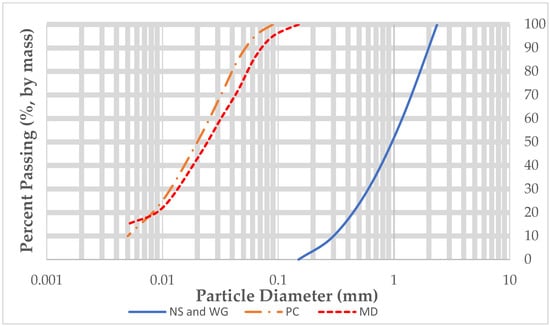
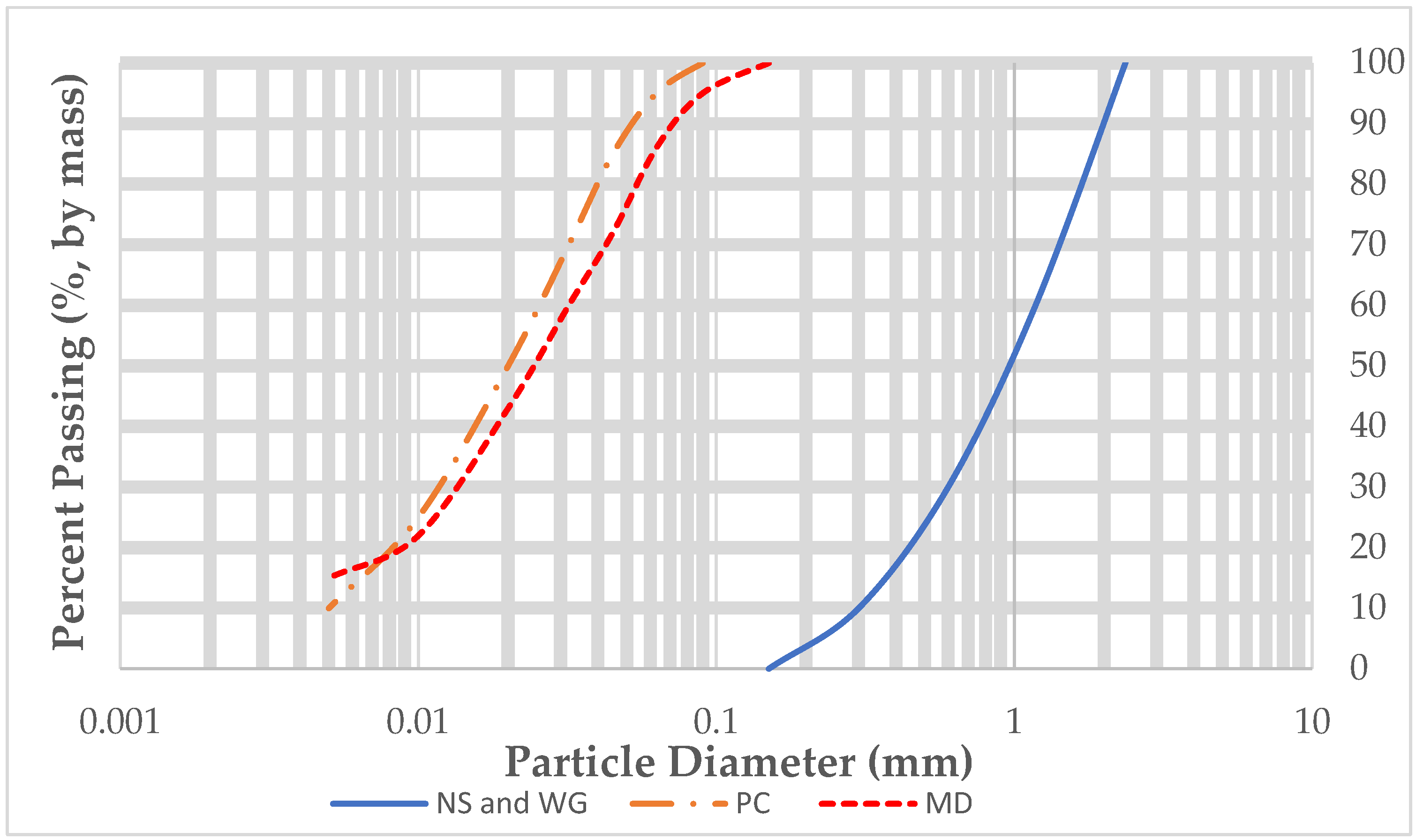
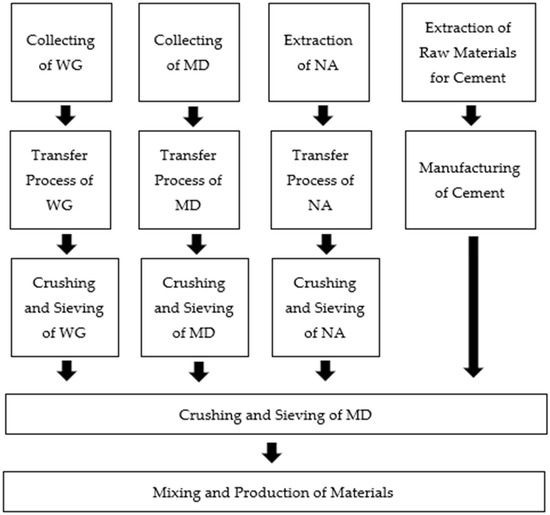
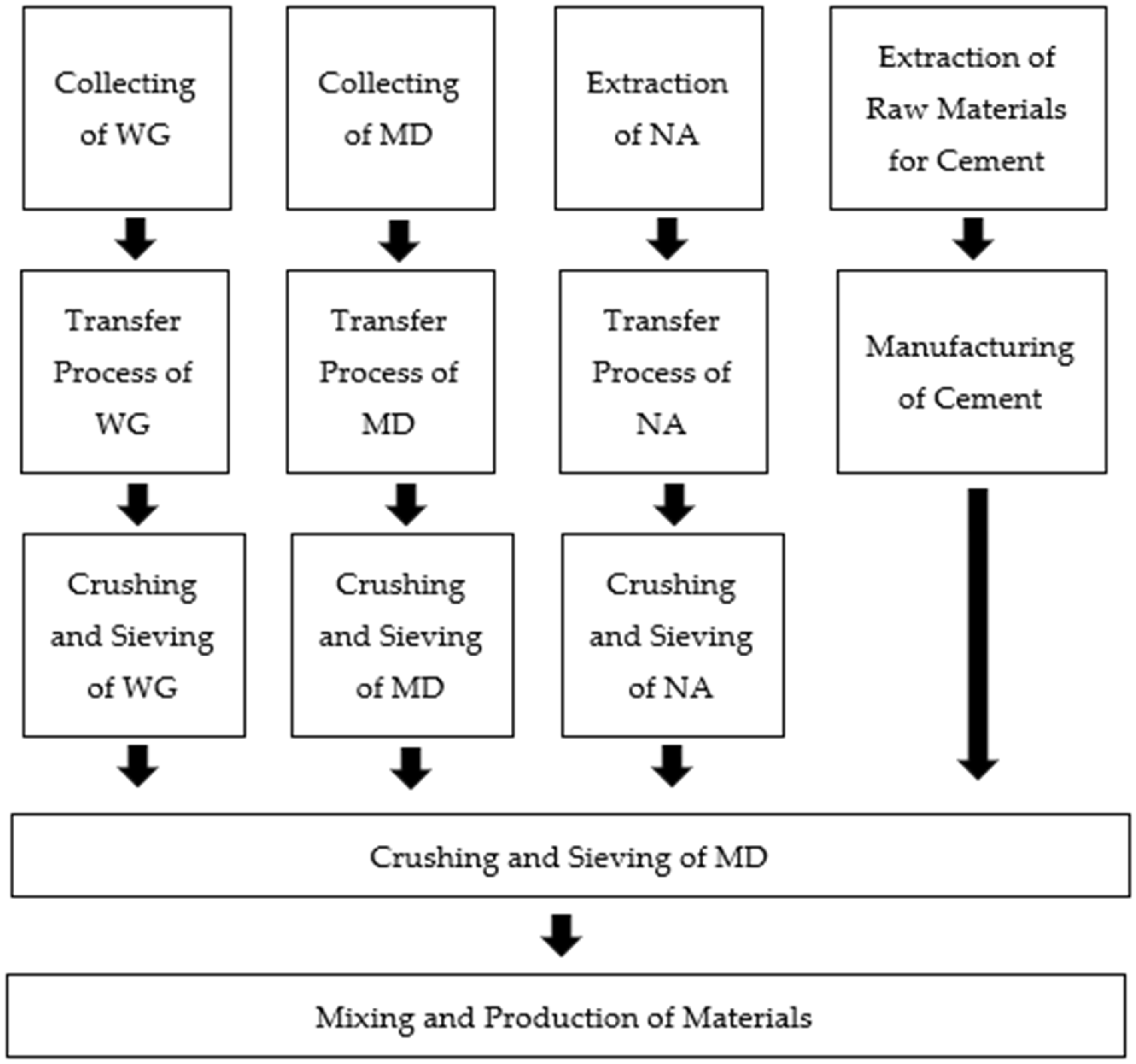
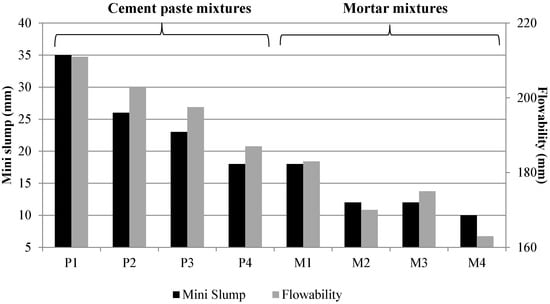
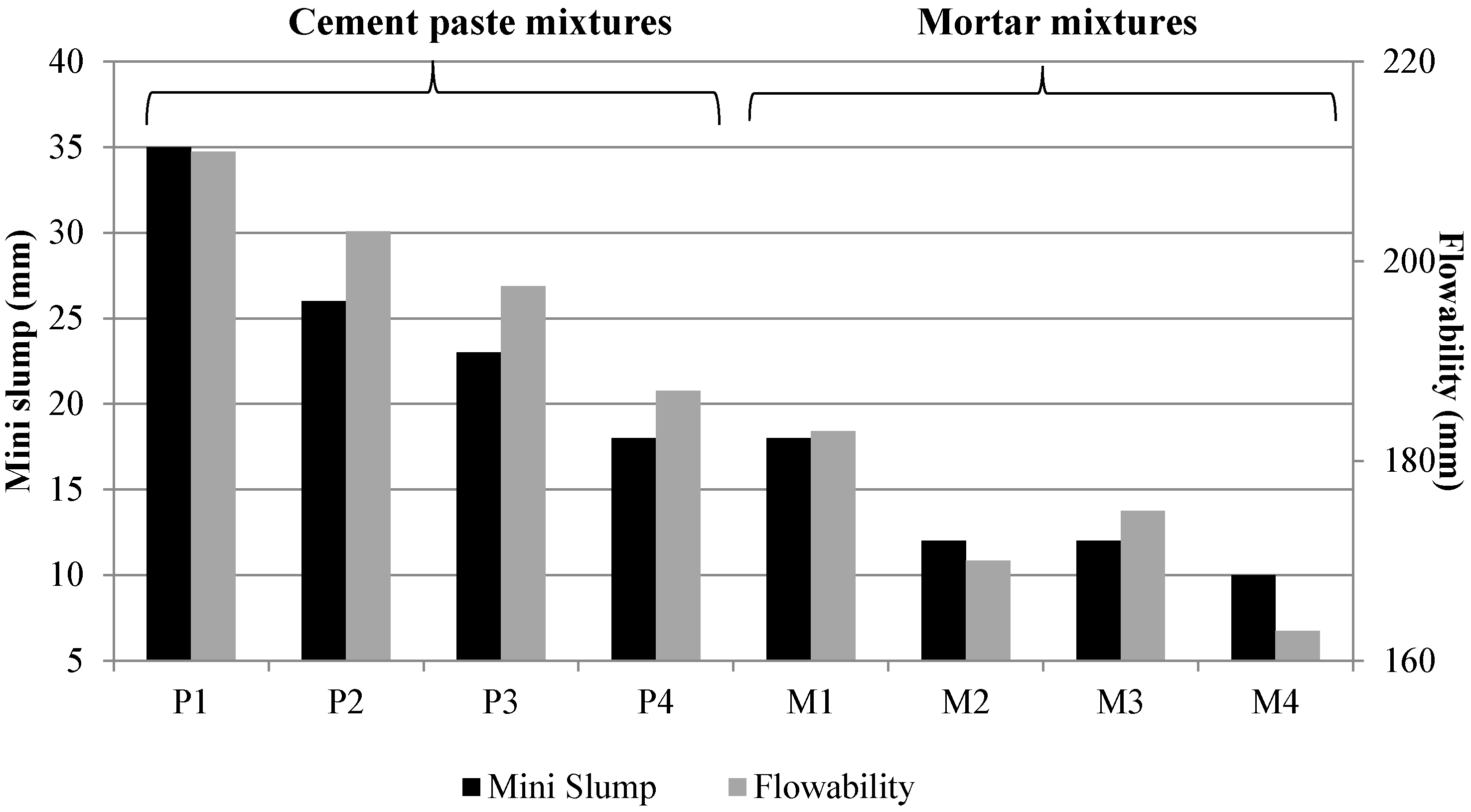
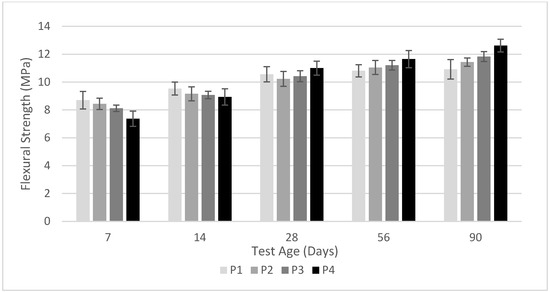
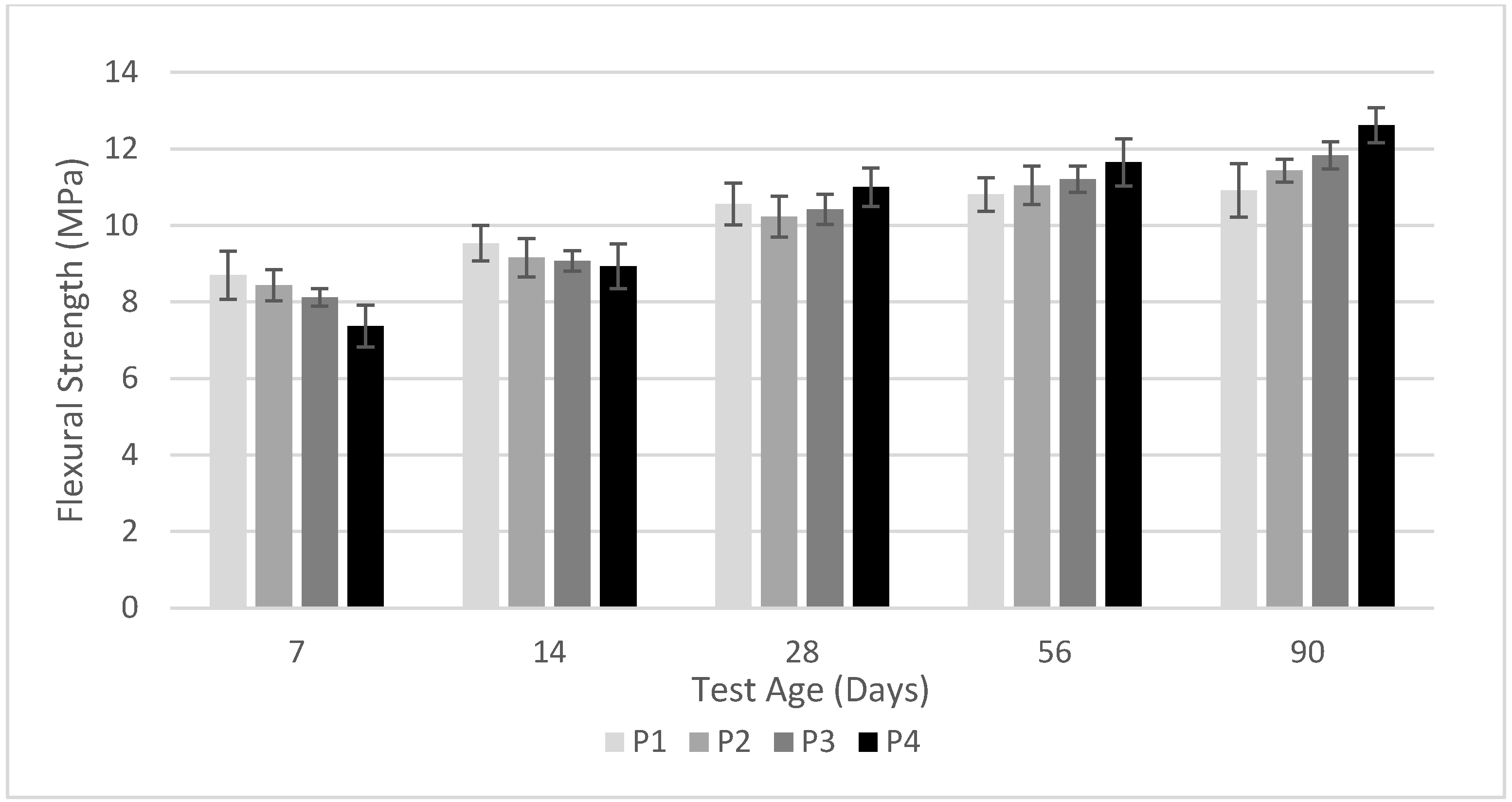
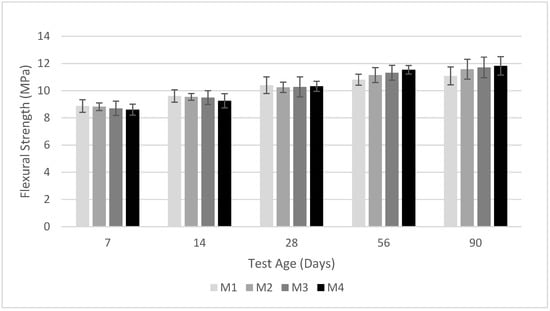
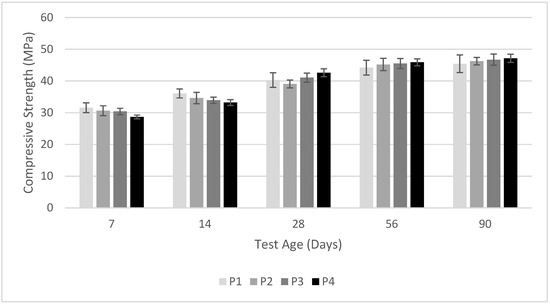
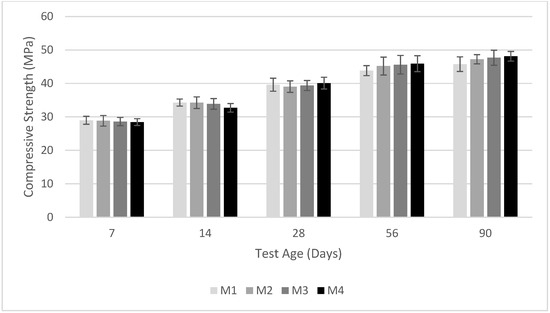
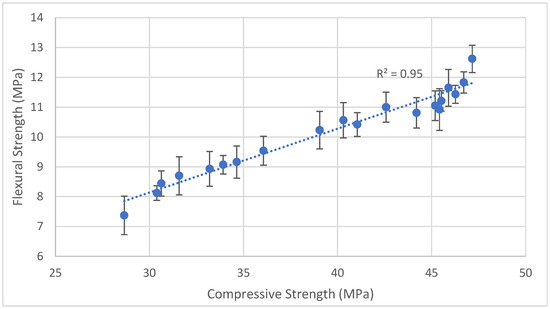
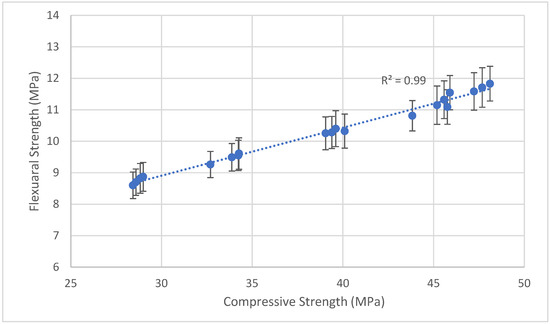
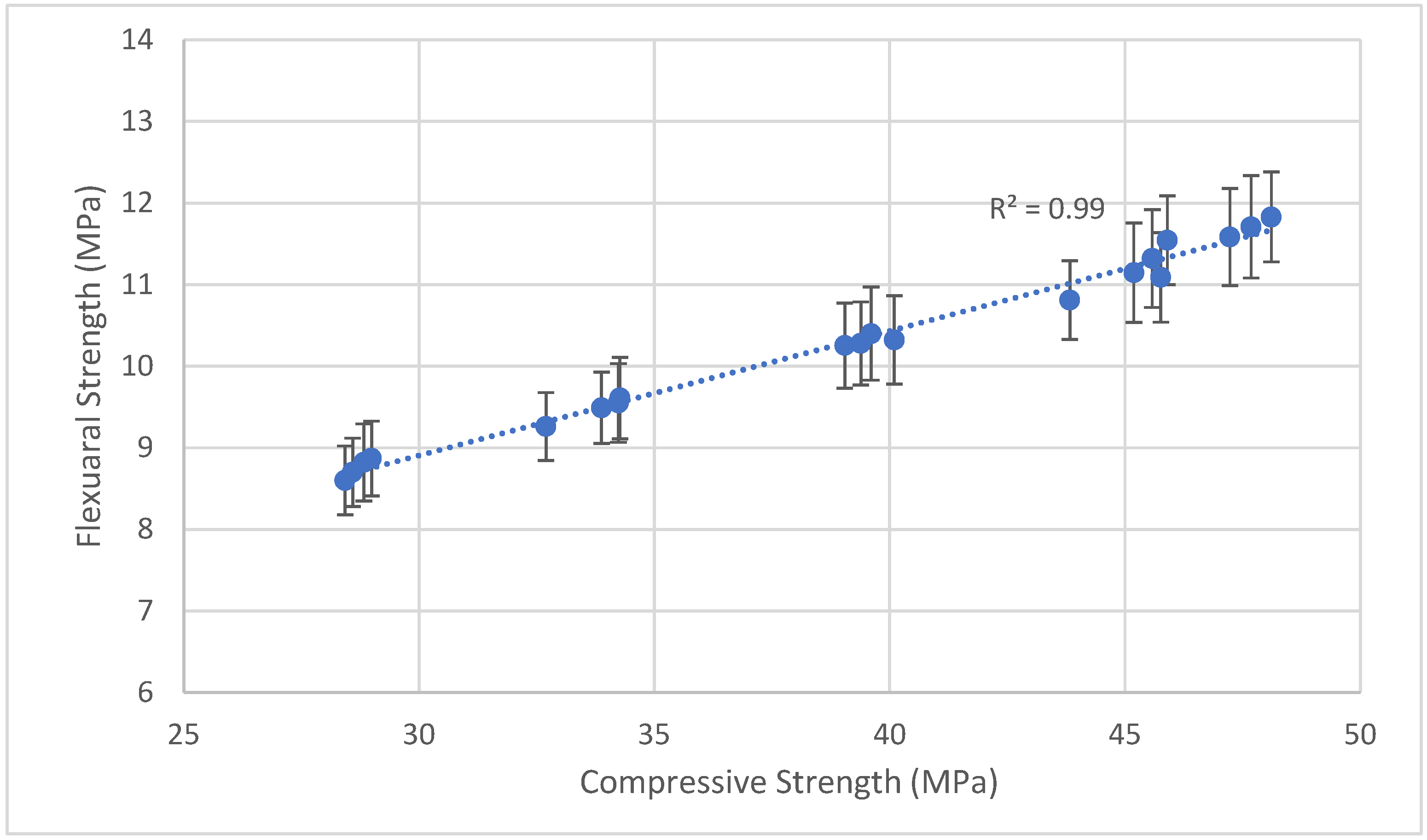
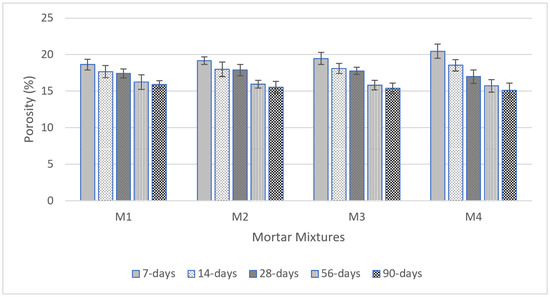
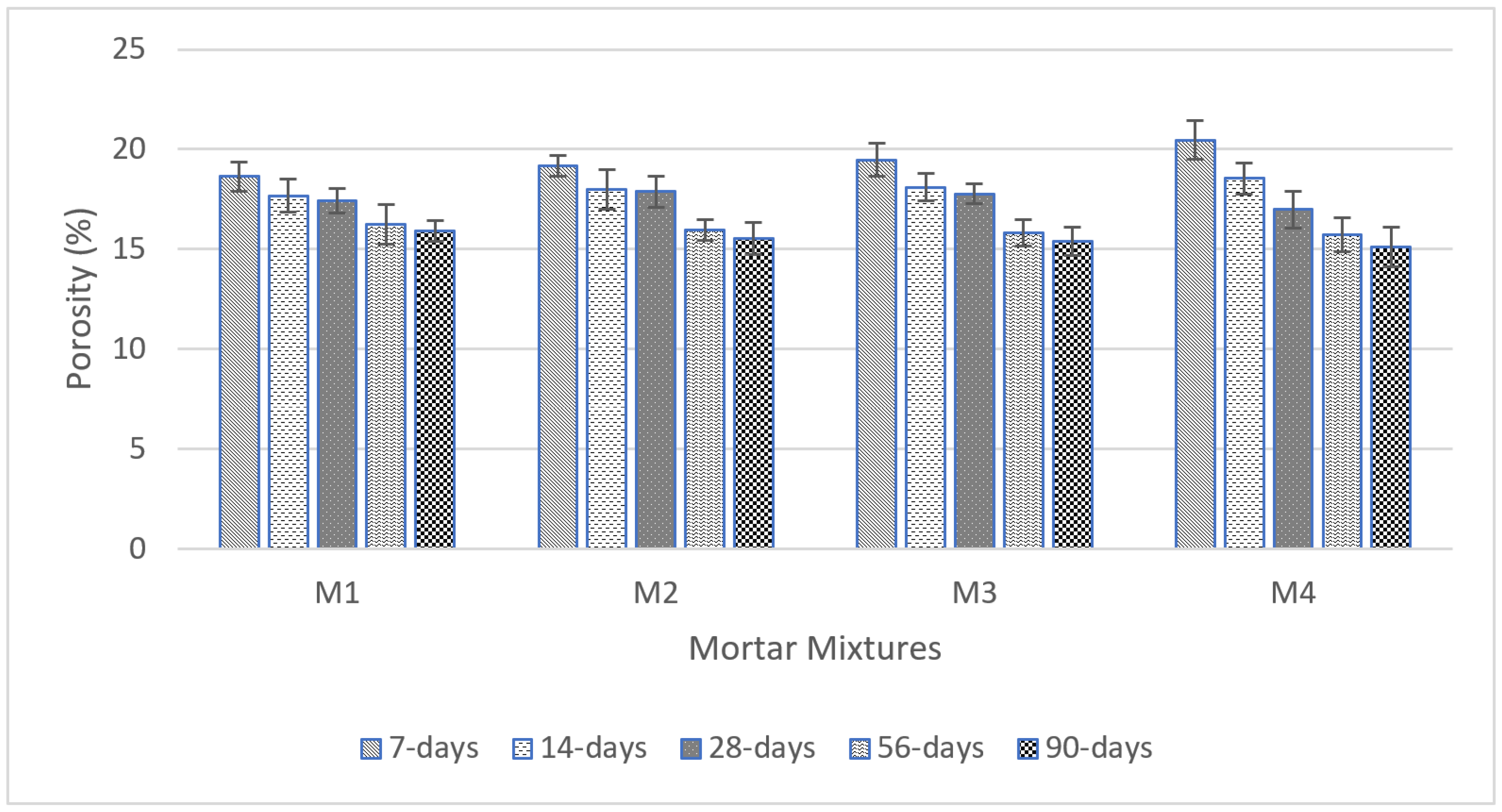
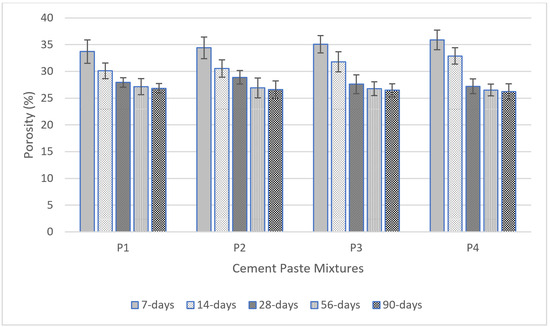
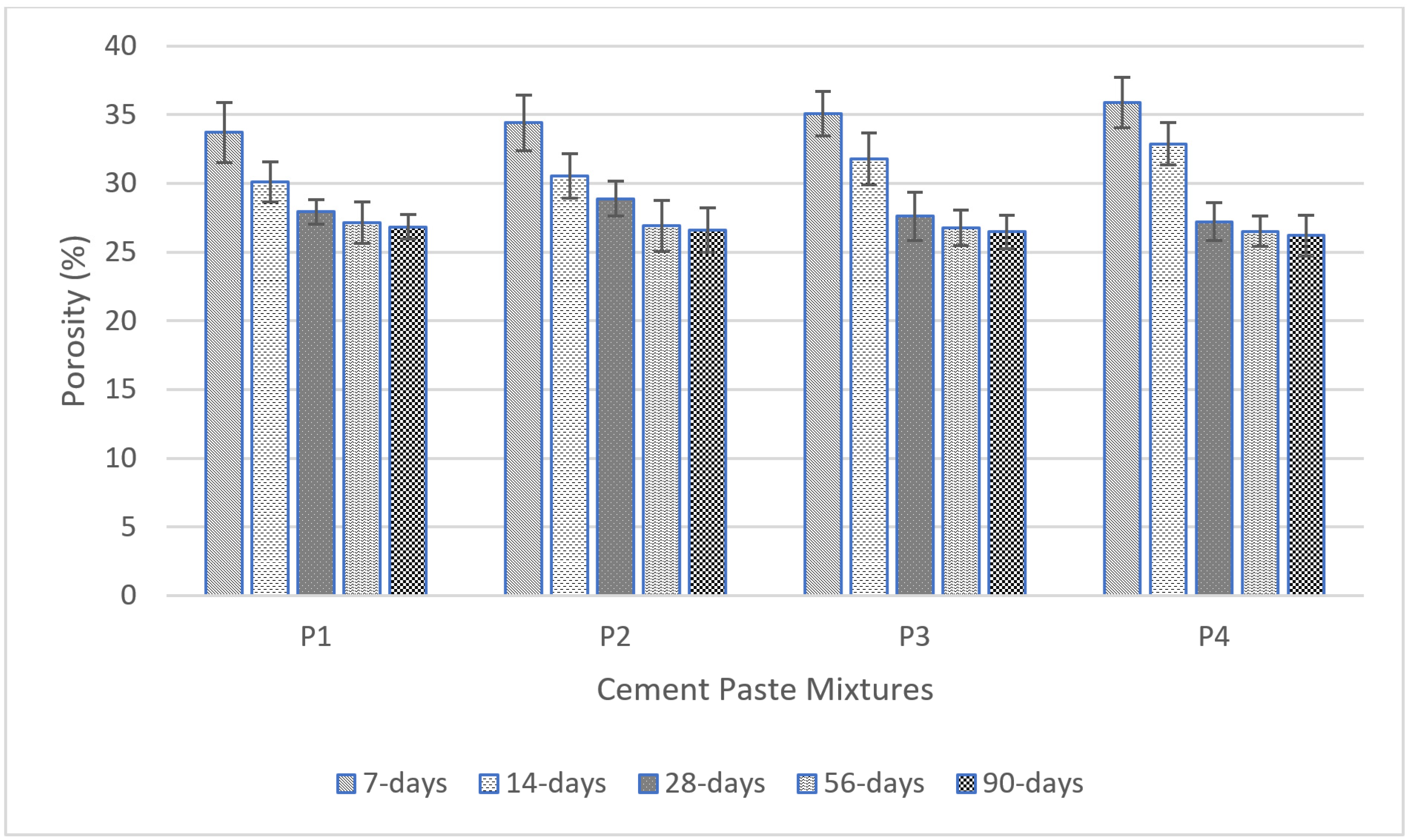
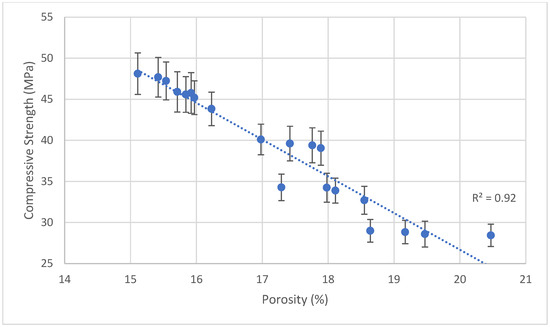
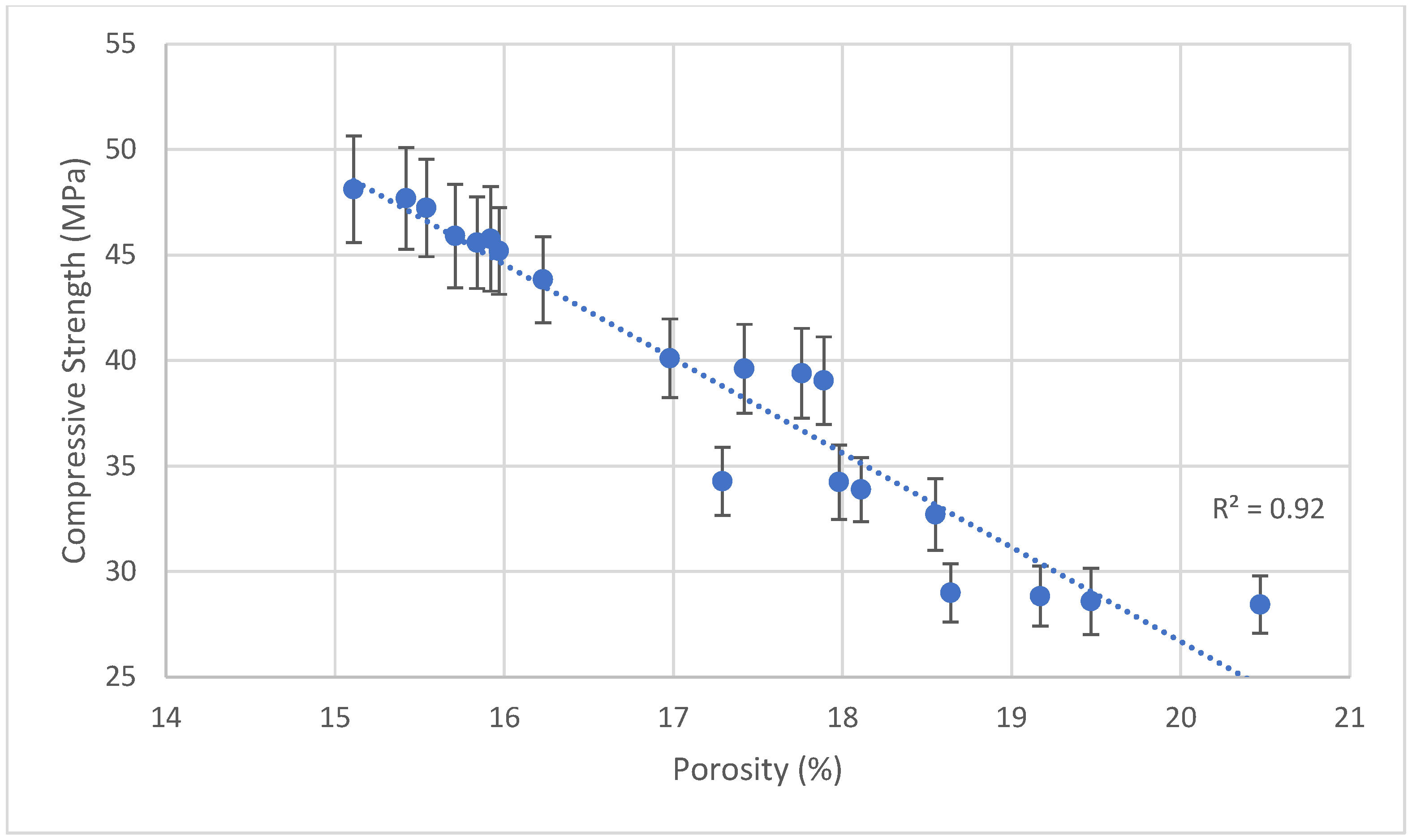
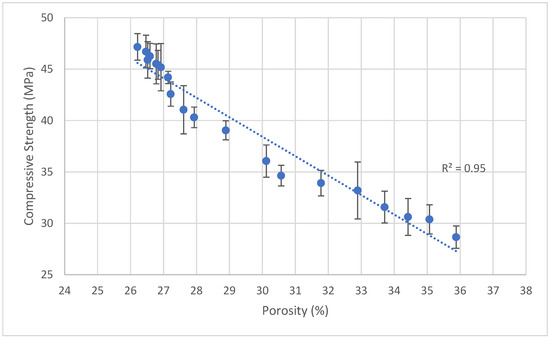
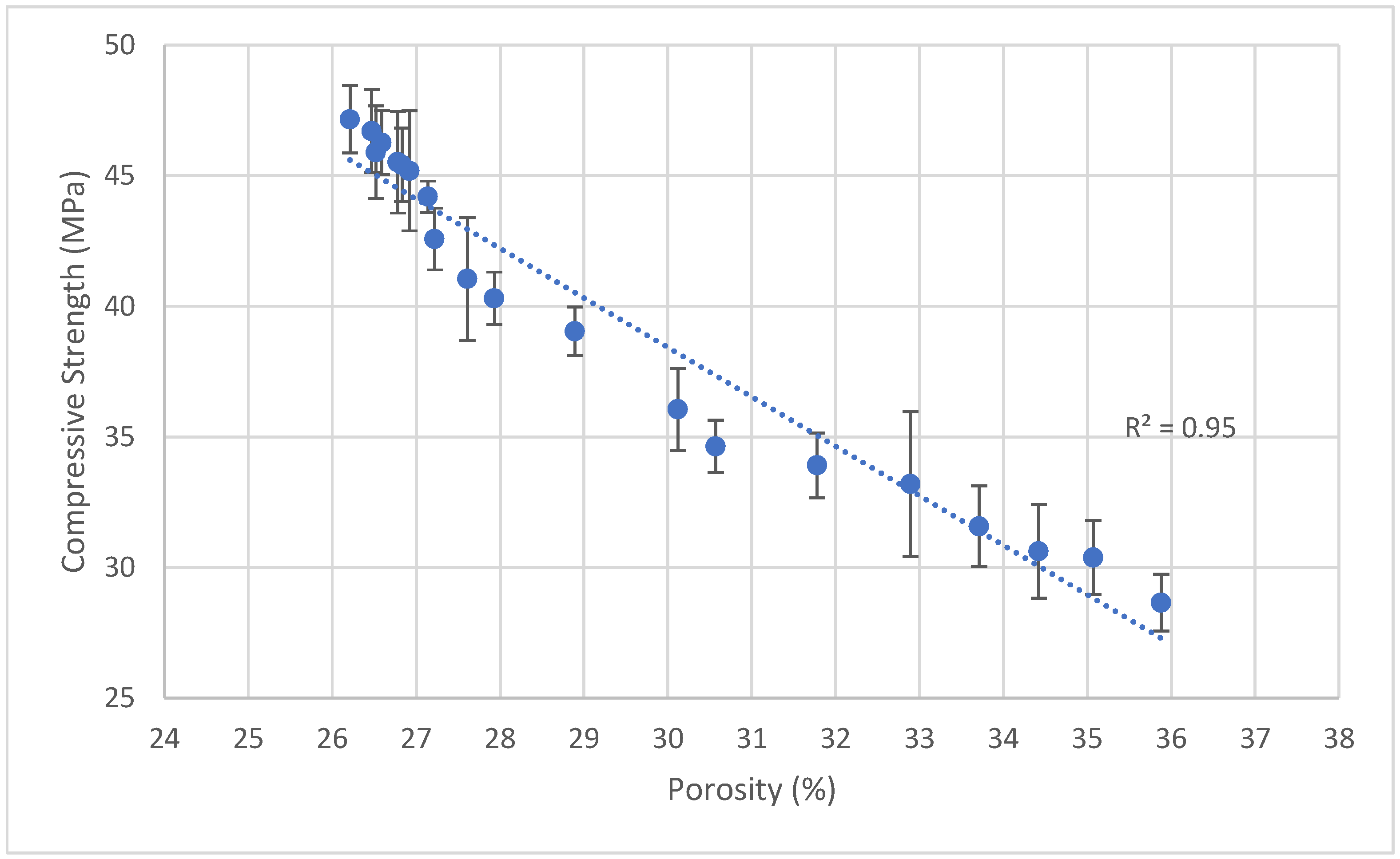
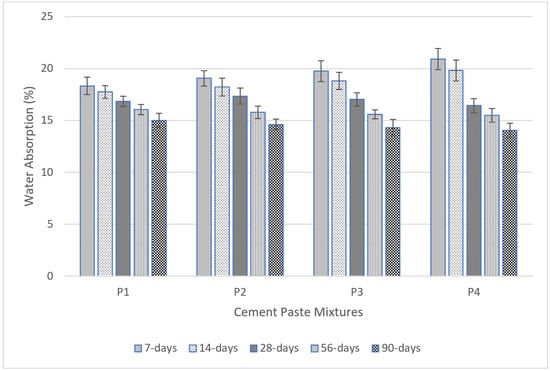
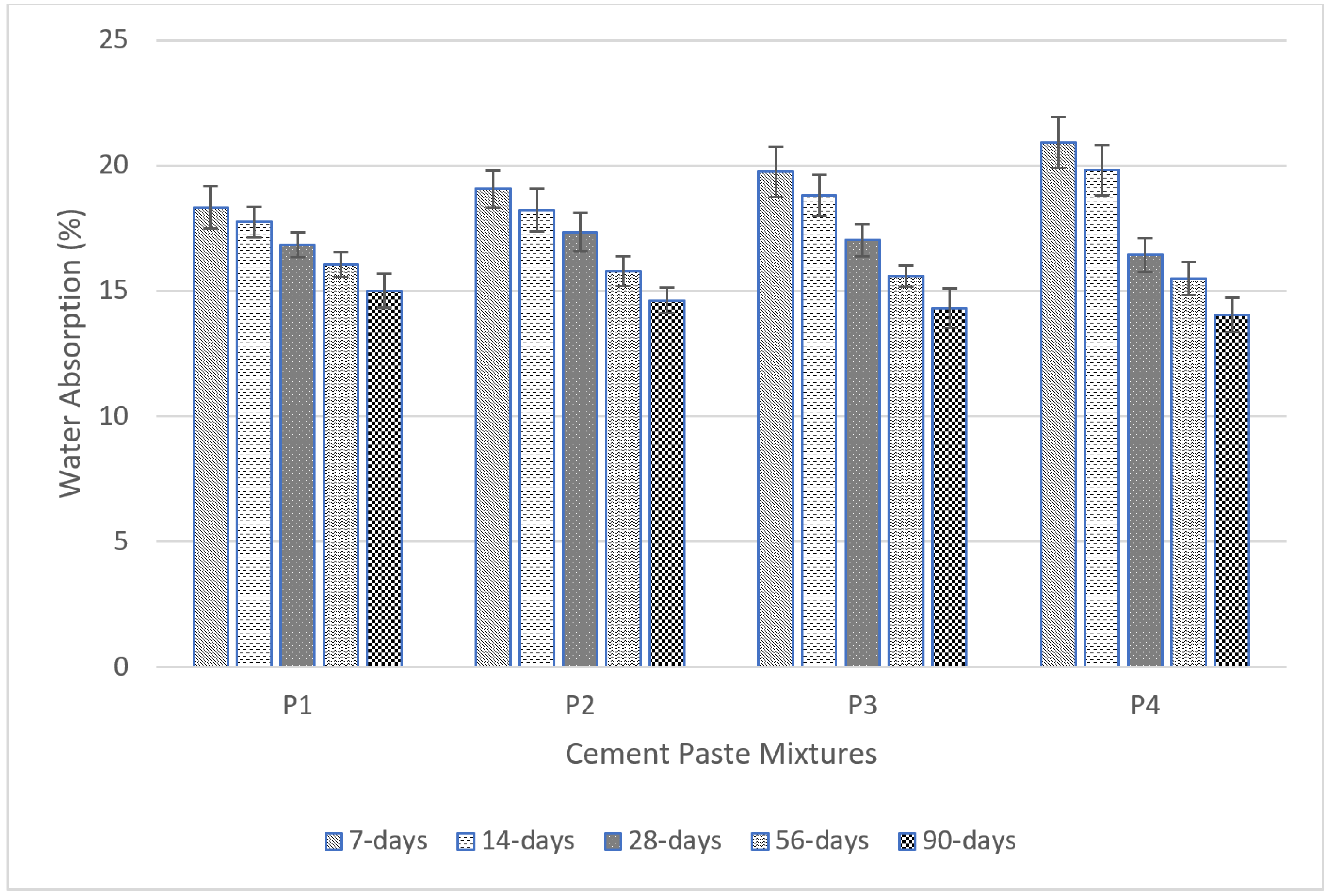
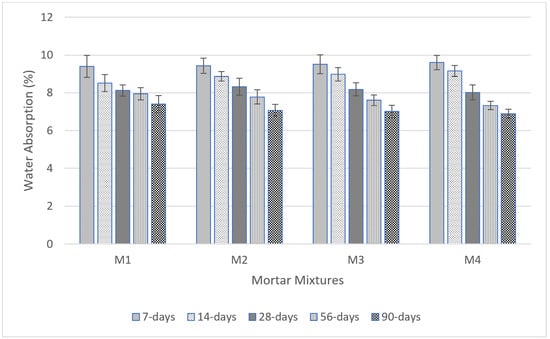
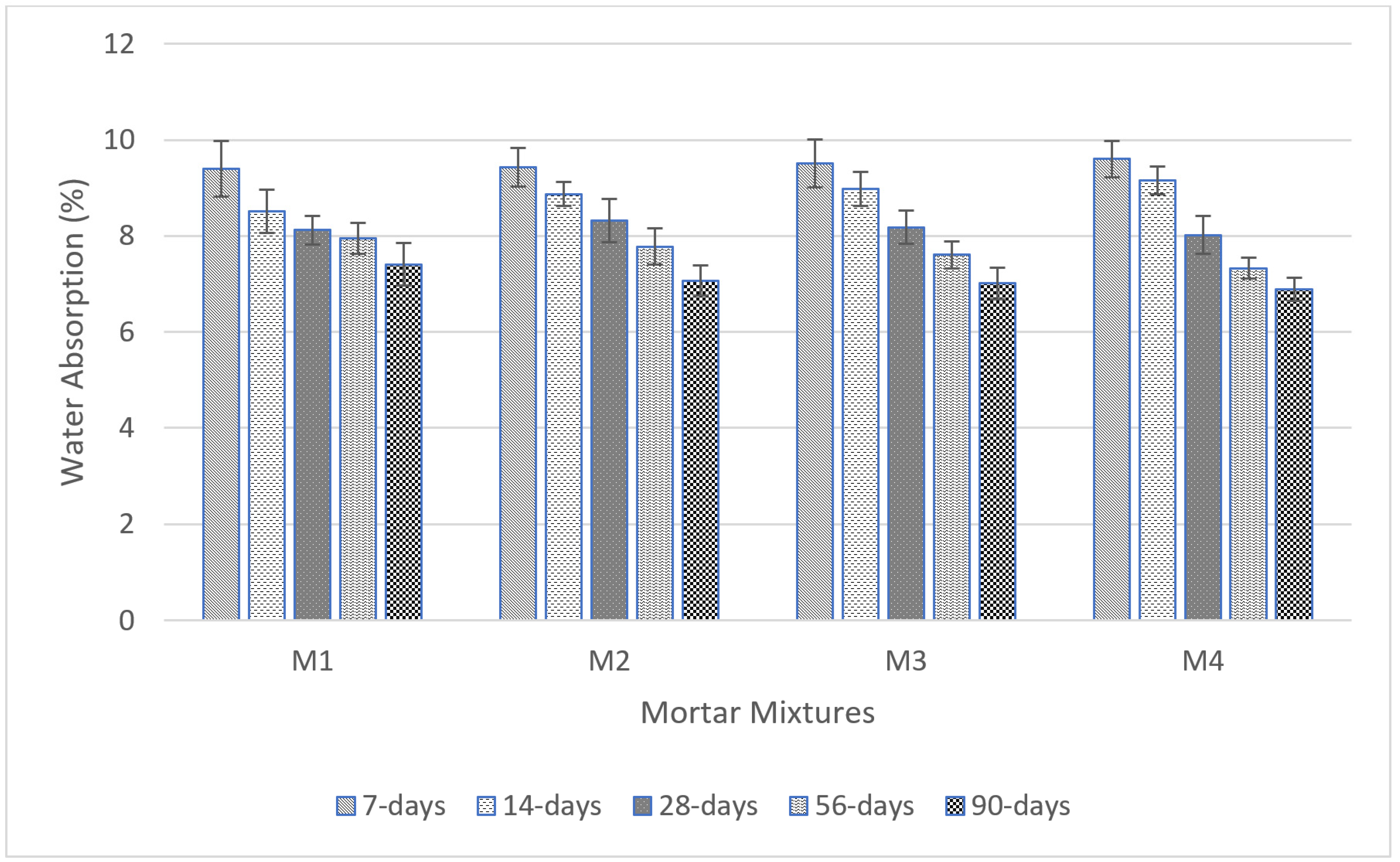
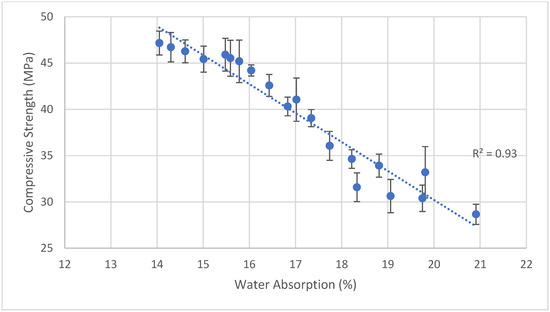
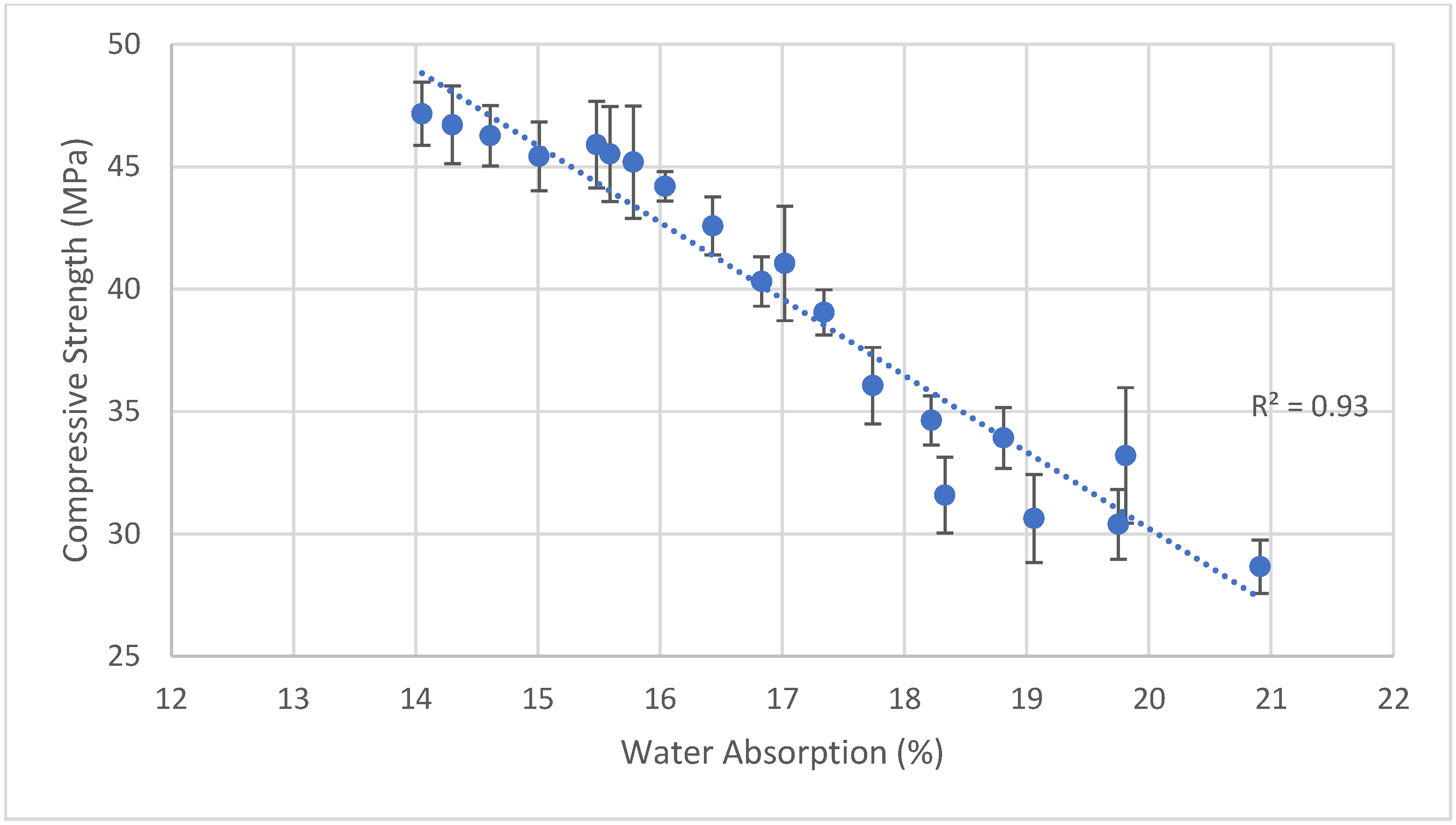
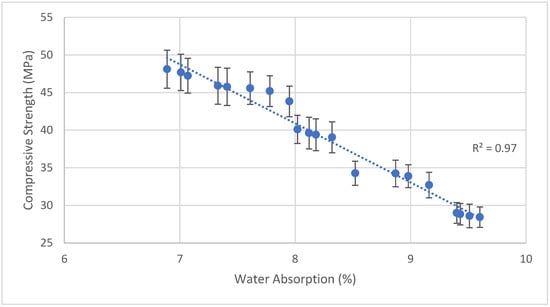
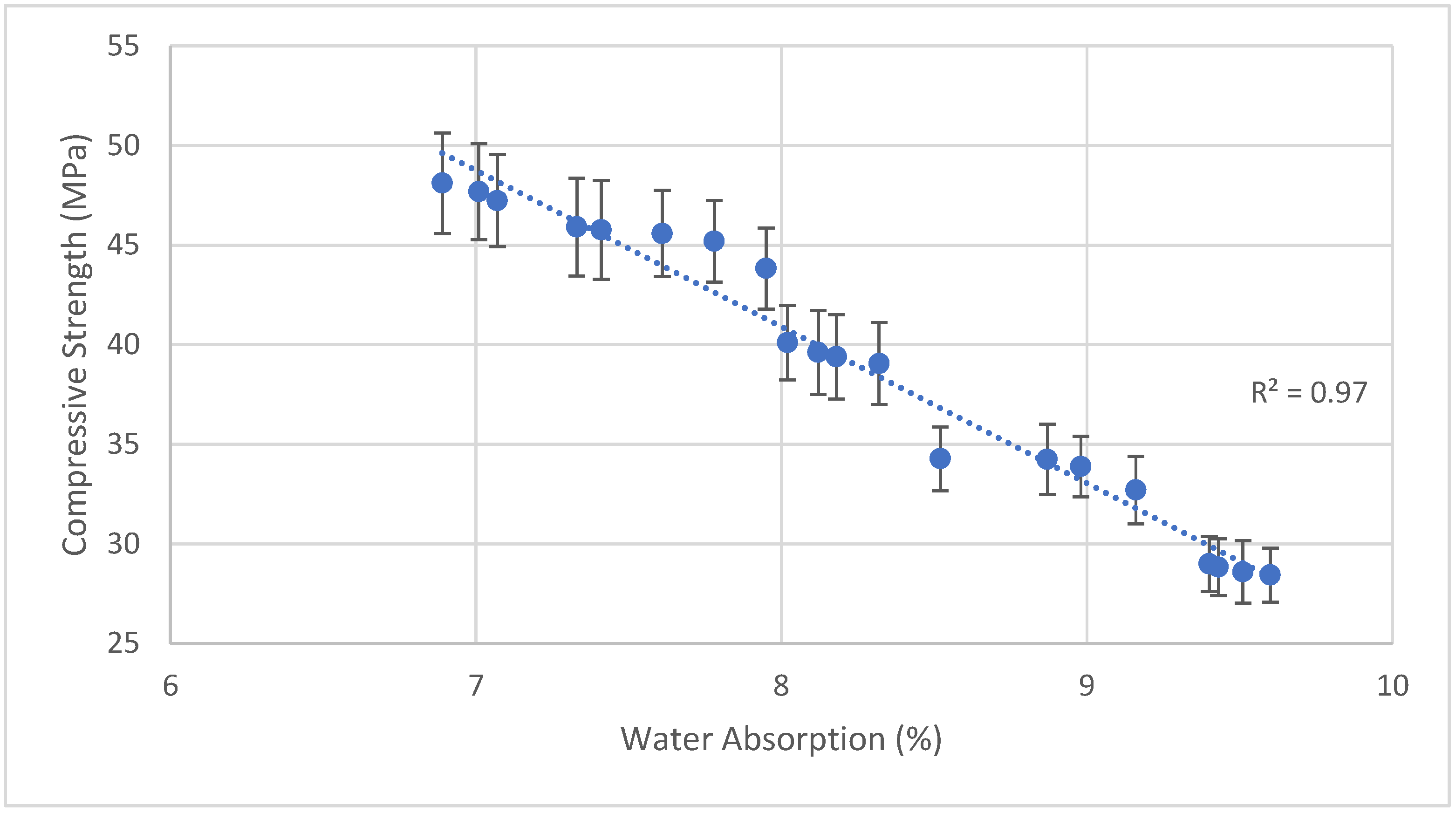
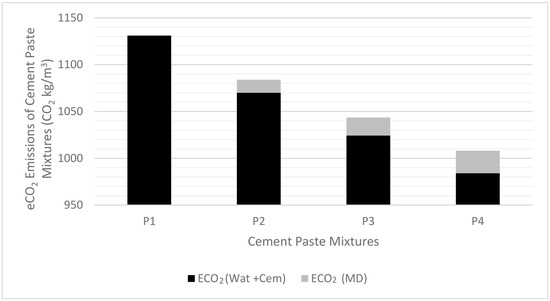
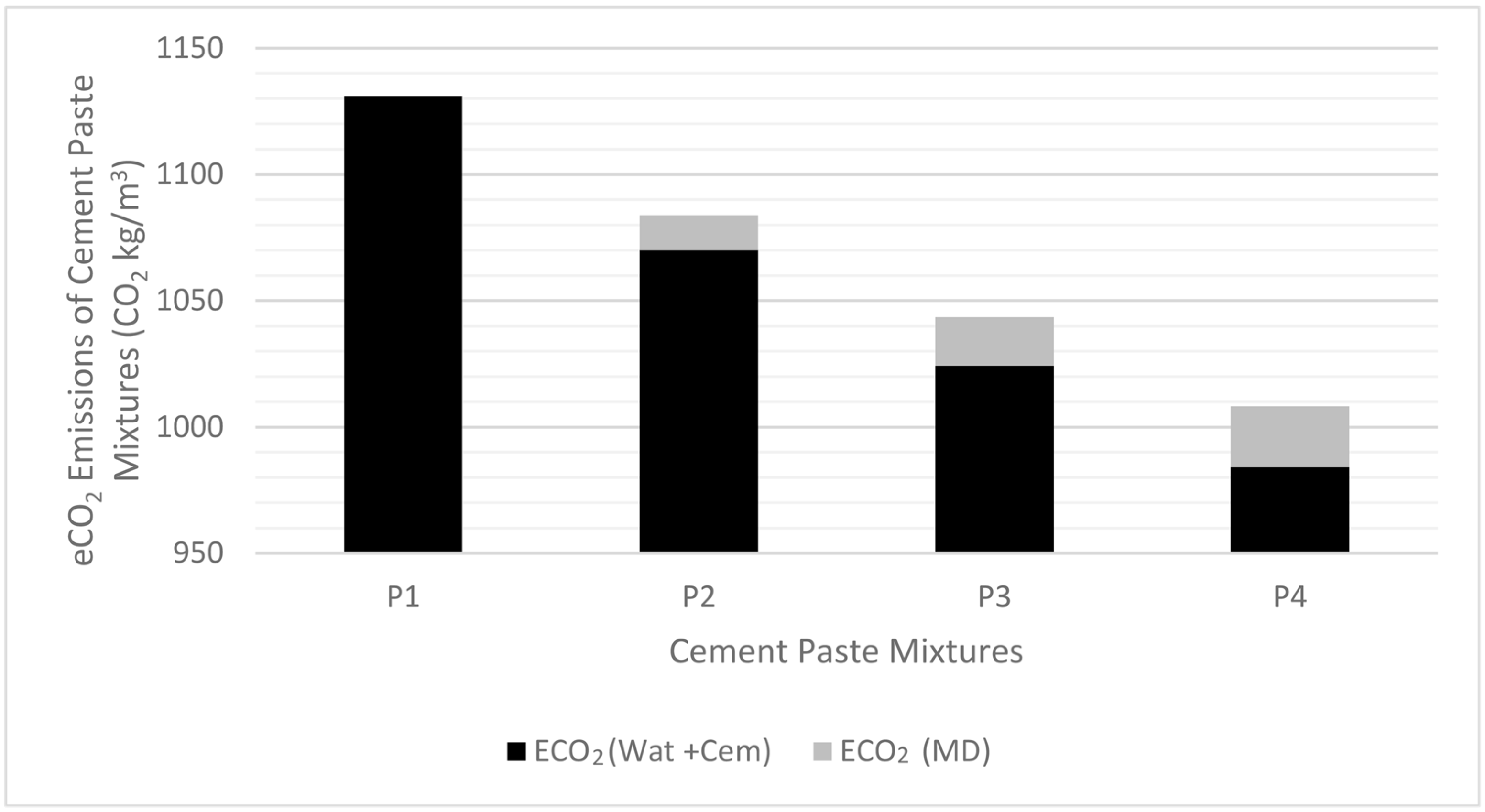
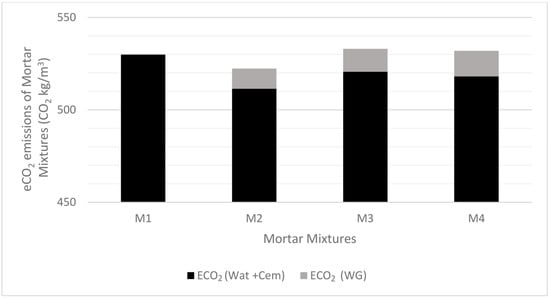

Disclaimer/Publisher’s Note: The statements, opinions and data contained in all publications are solely those of the individual author(s) and contributor(s) and not of MDPI and/or the editor(s). MDPI and/or the editor(s) disclaim responsibility for any injury to people or property resulting from any ideas, methods, instructions or products referred to in the content. |
© 2026 by the authors. Licensee MDPI, Basel, Switzerland. This article is an open access article distributed under the terms and conditions of the Creative Commons Attribution (CC BY) license.