


Abstract
The HVAC/R sector in Europe is undergoing significant transformation driven by climate policy, technological innovation, and increasing digitalization of industrial services. This study examines the sustainability and digital transformation of the Slovak business-to-business (B2B) HVAC/R market in the context of EU F-gas regulation and emerging workforce constraints. The research applies a qualitative–interpretive design supported by structured secondary-data analysis, a review of European and Slovak regulatory frameworks, comparative benchmarking against selected European markets, and exploratory semi-structured interviews with industry professionals. The analysis indicates that regulatory pressure associated with the phase-down of fluorinated greenhouse gases, rising demand for energy-efficient systems, and the growing role of digital communication channels are reshaping procurement behaviour and market competition. At the same time, the sector faces structural barriers, particularly the limited availability of certified technicians and uneven digital adoption among small and medium-sized enterprises. The findings suggest that firms integrating transparent sustainability communication, environmental performance indicators, and digital engagement strategies can strengthen their competitive positioning within the evolving European HVAC/R ecosystem.
1. Introduction
The business environment in the HVAC/R sector has changed notably in recent years. This change has been driven by technological progress, stricter environmental laws, and a stronger focus on sustainability. In the European Union, the main driver of this shift is the revision of Regulation (EU) No. 517/2014 on fluorinated greenhouse gases. The update, issued in 2024 as Regulation (EU) 2024/573, speeds up the phase-down of hydrofluorocarbons and introduces stricter limits for refrigerants with high global warming potential [1]. The regulation establishes several policy mechanisms aimed at reducing emissions of high-GWP gases and promoting the use of sustainable alternatives. The main regulatory mechanisms influencing the refrigeration and air-conditioning sector are summarized in Table 1.
Table 1.
Key regulatory mechanisms of the EU F-gas Regulation.
The revised framework expands the rules for certification, labelling, and reporting for companies that handle fluorinated gases. It also bans new refrigeration systems using refrigerants with a GWP value above 2500 after 2025 [2]. These legal changes support innovation in the design and use of alternative refrigerants such as carbon dioxide, ammonia, and hydrofluoroolefins. These substances can improve energy efficiency and reduce environmental impact [3]. At the same time, the new rules raise demand for trained and certified workers, since low-GWP systems require specific technical skills and strict safety [4]. Together, these regulatory mechanisms influence technological development, workforce requirements, and service demand in the European HVAC/R sector.
In Slovakia, this industry functions within a strict regulatory system that ensures steady demand for maintenance and service work. According to IBISWorld (2025), the national Steam and Air Conditioning Supply sector is expected to reach approximately EUR 1.4 billion by 2025, with industrial and commercial use forming the largest part of this value [5]. Regular demand for inspections and maintenance is sustained by legal duties such as leakage checks, testing, and certification renewal [6]. In 2023, Slovakia reported 1979 certified companies and 1728 certified technicians licensed to handle fluorinated gases [6]. These numbers show a solid certification network compared to market size. Still, limited capacity in vocational training may restrict adaptation to new technologies.
Across Europe, the market continues to grow. The commercial refrigeration sector was worth USD 6.86 billion in 2022 and is expected to grow at an annual rate of 7.7 percent until 2030. This growth is linked to energy-efficient and environmentally safe solutions [7]. In Slovakia, however, market development has been more moderate. IndexBox (2024) recorded a 6.7 percent decline in 2023, caused by delayed investments and the gradual replacement of old systems [8]. Even so, the use of heat pumps is rising. This growth is supported by European and national programs promoting decarbonization and energy efficiency. The Joint Research Centre (2023) reported that around 13,000 heat pumps were sold in Slovakia in 2022—over 100 percent more than in the previous year—raising the total installed base to about 44,500 units [9].
Digitalization is another key influence on market development. In Western Europe, especially in Germany, Austria, and the Netherlands, B2B procurement increasingly takes place through digital platforms. These systems combine supplier evaluation, predictive maintenance, and IoT-based monitoring [7]. Slovak companies are adopting such tools more slowly. The reasons include limited capital, fragmented market structures, and weaker customer demand for digital innovation. However, this slower pace also offers an opportunity. Firms that can combine technological readiness with sustainability-focused strategies may gain a strong competitive advantage [5].
Human capital is also central to the transformation of this industry. AREA (2024) data show that in 18 European countries, around 40 percent of technicians are trained for HFO refrigerants, 21 percent for carbon dioxide, and 12 percent for ammonia systems [6]. This shows a gradual but uneven shift toward low-GWP technologies. According to the European Commission (2023), key barriers to a full transition include weak training systems, fragmented certification, and limited coordination of national laws. Strengthening vocational education and training is therefore vital for improving the competitiveness of the Slovak B2B refrigeration and air conditioning sector [4].
The aim of this study is to analyse the structure and development trends of the Slovak B2B HVAC/R market in comparison with selected European markets. The study focuses on how regulatory change, technological innovation, digitalization, and workforce capacity jointly influence market development and competitiveness in the Slovak HVAC/R sector. By combining statistical data, legislative review, and qualitative assessment, the study identifies the main factors influencing market development. These include regulation, technological progress, and digital change. The paper’s contribution lies in connecting practical data with strategic interpretation. It offers recommendations to support Slovak companies in becoming more competitive and aligned with European sustainability goals [10]. According to Lendel et al. (2021), the ability to systematically collect and evaluate innovation-related information can significantly increase a company’s strategic adaptability within technologically dynamic markets [11].
2. Materials and Methods
The methodological framework of this study combines qualitative interpretation with structured secondary-data analysis in order to capture the complexity of the B2B market for refrigeration and air-conditioning technologies in Slovakia. The research design is primarily based on the analysis of secondary data sources, complemented by exploratory qualitative insights obtained through semi-structured interviews with industry practitioners. This approach enables the study to integrate market statistics, regulatory analysis, and practitioner perspectives when interpreting current developments in the Slovak HVAC/R sector.
Secondary data were collected from several types of sources. These included official European and national databases, institutional policy reports, sectoral market analyses, and peer-reviewed scientific publications. The main statistical and policy sources included publications of the European Commission and the Joint Research Centre (JRC), which provide data on regulatory development and heat pump market dynamics in Europe [4,9]. Market development data were obtained from sectoral reports such as IBISWorld and IndexBox [5,8], complemented by industry statistics from the European Heat Pump Association (EHPA) [3]. Data related to technician training and certification were derived from surveys conducted by the Air Conditioning and Refrigeration European Association (AREA) [6], while additional contextual information on technological developments and energy efficiency in HVAC systems was obtained from peer-reviewed scientific studies.
To reduce potential bias associated with secondary data sources, information was triangulated across multiple independent publications whenever possible. In particular, market data were compared between institutional statistics, industry reports, and academic studies in order to increase the reliability of the interpreted trends and to reduce the influence of single-source estimates. The analytical process involved the identification and comparison of key market indicators, including market growth rates, technology adoption trends, and workforce-related constraints. These indicators were subsequently interpreted within a common analytical framework to ensure consistency in the evaluation of technological, regulatory, and economic factors influencing the Slovak HVAC/R market.
Slovakia was selected as the primary research environment due to its relatively small but dynamically evolving HVAC/R market, strong regulatory exposure to European environmental policy, and the increasing relevance of sustainability-oriented technologies. To provide a broader European context, the study also includes a comparative analytical component. Germany, Austria, and the Netherlands were selected as reference countries for benchmarking purposes. The selection of these countries was based on several criteria. First, these markets demonstrate higher levels of digital maturity in B2B procurement and service processes. Second, they show earlier and more extensive implementation of the European F-gas regulatory framework and faster adoption of low-GWP refrigerants. Third, these countries have comparatively higher market penetration of energy-efficient HVAC technologies such as heat pumps and hybrid cooling systems. These characteristics make them suitable benchmarks for assessing the relative position of the Slovak HVAC/R market within the European context.
The analysed dataset covers the period from 2019 to 2025, allowing the study to observe sectoral development during a period marked by major economic and regulatory changes, including the European energy crisis and the implementation of the revised EU F-gas regulation. The analysis focuses on key market parameters representing technological, economic, regulatory, and digital determinants of market development. These parameters include energy efficiency indicators, adoption of alternative refrigerants, total cost of ownership considerations, service availability, and digital visibility of suppliers.
To complement the secondary-data analysis, three semi-structured interviews were conducted with employees of a Slovak company operating in the HVAC/R sector. All respondents work directly with HVAC/R systems and participate in procurement, technical evaluation, or customer service processes. The interviews were used as an exploratory step aimed at identifying how selected market parameters may influence purchasing decisions across different stages of the B2B customer journey. Given the limited number of interviews and the fact that all respondents came from a single company, this qualitative component was not intended for statistical evaluation or generalization. Instead, it served as an exploratory supplement used to assess the practical relevance of selected analytical parameters identified in the secondary-data analysis.
The analytical interpretation of the results is structured using the See–Think–Do–Care (STDC) framework, which represents a conceptual model of the B2B customer decision-making process. Within this model, technological and environmental attributes such as energy efficiency, refrigerant type, and environmental compliance are primarily associated with the awareness and evaluation phases (See and Think), while economic and operational parameters such as total cost of ownership, reliability, and maintenance services play a stronger role in the purchasing and post-purchase stages (Do and Care). In addition, the analysis incorporates selected environmental, social, and governance (ESG) dimensions to assess how sustainability-related indicators influence communication strategies and market positioning in the HVAC/R sector.
Several limitations of the applied methodology should be acknowledged. The study relies primarily on secondary data sources, which may differ in methodological approaches and data collection procedures. Furthermore, the qualitative component is exploratory in nature and is based on only three interviews conducted within a single company. The interview findings should therefore be interpreted as indicative and hypothesis-generating insights rather than statistically generalizable evidence. Nevertheless, the combination of secondary-data analysis, comparative benchmarking, and practitioner perspectives provides a consistent analytical framework for interpreting current developments in the Slovak HVAC/R market. In addition, the study did not include a direct content analysis of company websites, digital campaigns, or other digital trace data. For this reason, the STDC-based interpretation should be understood as an analytical application of the framework rather than as a direct validation of actual communication practices among Slovak HVAC/R firms.
3. Regulatory and Technological Context of the Slovak B2B HVAC/R Market
This section presents the main structural factors influencing the Slovak B2B HVAC/R market. It focuses on how regulatory frameworks, technological innovation, environmental objectives, and digital transformation shape the functioning of the HVAC/R market. Particular attention is given to the interaction between European environmental regulation, energy-efficiency developments, and digital business practices, which increasingly influence the strategic positioning of companies operating in this sector.
3.1. Legislative Framework and Its Impact on Demand in the B2B Sector
3.1.1. European Regulation and the Green Transition
The legislative framework of the European Union represents one of the primary drivers of structural transformation in the HVAC/R industry. The revised Regulation (EU) 2024/573 on fluorinated greenhouse gases significantly reshapes market conditions by introducing stricter quotas and restrictions on equipment with high global warming potential (GWP). From 2025, refrigeration systems using refrigerants with a GWP exceeding 2500 will no longer be permitted on the market, while from 2030 most stationary systems with a GWP above 150 will be gradually phased out [1,12].
These regulatory measures support the European Union’s decarbonization objectives while simultaneously generating stable demand for certified specialists responsible for regulatory compliance and technical maintenance of refrigeration systems. In Slovakia, the safety of technical equipment is a statutory obligation. Employers are required to perform regular preventive inspections, technical revisions, and professional equipment checks, which create a stable and relatively non-cyclical demand for service activities within the refrigeration and air-conditioning sector [13,14,15].
3.1.2. National Implementation and Institutional Oversight
European regulatory requirements are implemented in Slovakia through several national legislative instruments. The most relevant include Act No. 286/2009 Coll. on fluorinated greenhouse gases, Act No. 314/2001 Coll. on fire protection, and Decree No. 508/2009 Coll. on the safety of technical equipment [16].
Regulatory supervision is primarily carried out by the Ministry of Environment of the Slovak Republic and the Slovak Environmental Inspection Authority. Mandatory inspections, certification procedures, and safety regulations ensure compliance with European environmental policy. These regulatory obligations create a stable demand for qualified service providers capable of meeting technical and safety standards [13,14,15]. Previous research also indicates that transparent regulatory frameworks contribute to long-term market predictability and influence investment decisions in highly regulated technical sectors [17].
3.1.3. Certification and the Green Skills Gap
Because the HVAC/R sector is highly regulated, ongoing professional training and certification are essential. Under Act No. 286/2009 Coll., technicians who handle F-gases must complete accredited training and obtain a certificate of professional competence. Across the European Union, the green skills gap is increasingly widening due to an imbalance between the rising demand for specialists in sustainable technologies and the limited availability of qualified professionals. Koman et al. (2023) emphasize that adapting to modern technologies also requires systematic management of human-resource-related risks, especially in increasingly digitalized technical environments [18].
According to AREA (2024), Slovakia has enough certified technicians for conventional systems, but there is a shortage of specialists trained to work with natural refrigerants such as CO2, ammonia, or propane [6]. This lack of qualified workers slows the uptake of modern technologies and shows the importance of steady investment in education and professional development.
3.2. Statistical Overview and Market Dynamics
The Slovak B2B HVAC/R market has been relatively still in the short term, yet it shows clear potential for growth in the years ahead. IndexBox (2024) reports that the market volume dropped by 6.7% in 2023. At the same time, the overall EU market grew by roughly 7.7% [7,8]. Even with this slowdown, many Slovak companies have started to look at investments differently. Instead of focusing only on upfront costs, they increasingly consider the Total Cost of Ownership (TCO) approach, which values long-term performance and returns [19,20,21].
The heat pump segment stands out as the most active part of the market. Data from the Joint Research Centre (2023) show that heat pump sales in Slovakia more than doubled in 2022. This growth was mainly supported by the REPowerEU initiative that promotes renewable energy use [3,4].
These results show a clear shift in market priorities. Energy efficiency and sustainability are no longer optional, they have become decisive factors in how B2B companies make investment decisions [20,21].
3.3. Digitalization and Emerging Purchasing Behavior
Digitalization increasingly shapes how enterprises communicate with suppliers and procure technical services. Research suggests that higher levels of digital maturity significantly enhance organizational resilience and support more informed decision-making processes [22]. Despite progress, only 34% of Slovak SMEs currently utilize advanced digital tools such as cloud computing, big data analytics, or IoT systems [23].
Companies increasingly select suppliers online, based on publicly available data, customer reviews, and service references. According to McKinsey (2024), more than 70% of the B2B purchasing process now occurs digitally, with key decisions made before any direct interaction with sales representatives [24].
This transformation supports the emergence of servitization models, such as the concept of cooling as a service, where value is created through performance and reliability rather than equipment ownership. The integration of IoT-based monitoring and predictive maintenance enables higher operational efficiency and more precise energy management [19].
3.4. Energy Efficiency and Environmental Aspects as Strategic Market Drivers
Energy efficiency represents one of the most important technological drivers in the modernization of refrigeration and air-conditioning systems. In practical applications, system performance is evaluated using both point-based indicators (e.g., coefficient of performance—COP, energy efficiency ratio—EER) and seasonal indicators (e.g., seasonal coefficient of performance—SCOP, seasonal energy efficiency ratio—SEER), which better reflect standardized operating conditions within the European Union. Hybrid ground-source heat pump systems (GSHP) combined with thermally activated building systems (TABS) demonstrate significantly improved energy and environmental performance in non-residential buildings compared with conventional reference solutions [25]. Research on advanced building control strategies indicates that model predictive control can achieve substantial reductions in energy consumption in HVAC systems, depending on building characteristics and operational conditions [26,27]. Additional efficiency improvements have been documented in cooling systems through optimized fan-speed control in air-cooled chillers. The use of variable-speed drives can reduce electricity consumption by up to 12.1% in evaluated scenarios [28]. These findings demonstrate that environmental responsibility and economic performance increasingly converge in B2B decision-making when energy-efficient technologies and advanced control strategies are implemented.
3.5. Technological Innovations and Optimization Strategies in HVAC/R Systems
Optimizing Variable Refrigerant Flow systems using the Level of Regulated Loads methodology narrows the compressor regulation range and improves operating efficiency compared with conventional approaches, which supports reductions in electricity demand in real operating conditions [3]. Analyses of compressor ejector heat pumps report a coefficient of performance in the range of approximately 1.0 to 1.8 together with lower investment requirements compared with conventional configurations, which makes them attractive for specific applications and budget constraints [4]. Model predictive control can reduce building energy use through dynamic performance adjustment in response to changing operating conditions, while meeting comfort constraints and improving system responsiveness [26,27]. In parallel, controlling fan speeds in aircooled chillers with variable speed drives provides up to 12.1 percent electricity savings in the examined cases, which confirms the practical value of targeted optimization of auxiliary drives and control strategies [28]. These findings support the view that modernization in the HVAC and refrigeration sector should be approached as a strategic investment in innovation, energy autonomy, and long-term market resilience.
3.6. Summary and Strategic Implications for Market Development
The analysis indicates that the development of the Slovak B2B HVAC/R market is influenced by a combination of legislative, technological, and digital factors. These mechanisms interact in a mutually reinforcing manner: regulatory frameworks stimulate technological innovation, technological innovation improves energy efficiency, and digitalization accelerates market adaptation.
European environmental legislation acts as a stabilizing framework while simultaneously generating demand for qualified specialists capable of implementing new technologies [12]. Technological innovations, including hybrid HVAC systems and VRF technologies, contribute to measurable energy savings and improved operational efficiency [25,29]. At the same time, digitalization supports the emergence of service-oriented business models and new forms of value creation in the HVAC/R sector [24].
Table 2 provides a high-level conceptual overview of the main structural domains shaping the Slovak B2B HVAC/R market. It summarizes the key macro-level factors influencing market development, including legislative, technological, and digital drivers.
Table 2.
Key Determinants of the Slovak B2B Market.
4. Results
The following section presents the analytical findings derived from the analysis of the Slovak B2B HVAC/R market. The findings summarize key statistical and behavioral indicators that define market dynamics, technological advancement, and sustainability-oriented communication patterns within the sector.
4.1. Statistical Overview and Key Parameters of the Slovak B2B HVAC/R Market
The analysis of the Slovak B2B HVAC/R market for refrigeration and air-conditioning technologies indicates that the sector is characterized by stable yet innovation-driven development. Market dynamics are strongly influenced by European environmental legislation, increasing requirements for energy efficiency, and the digitalization of procurement processes [12,25]. Previous analytical observations indicate that the Slovak HVAC/R market is predominantly composed of small and medium-sized enterprises specializing in service operations, maintenance activities, and customized system installations [13,14,15]. Market activity is strongly linked to legislative requirements such as mandatory inspections, maintenance procedures, and certification obligations, while the relevance of technological and environmental parameters continues to increase [16].
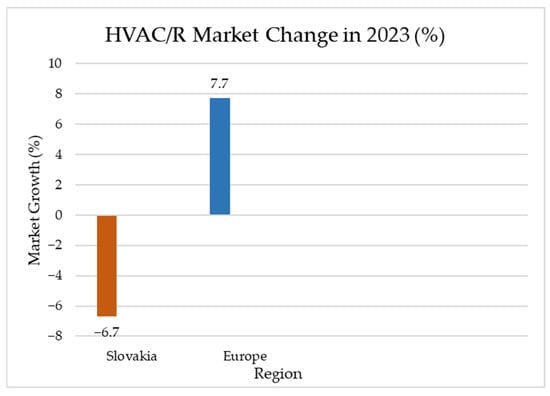
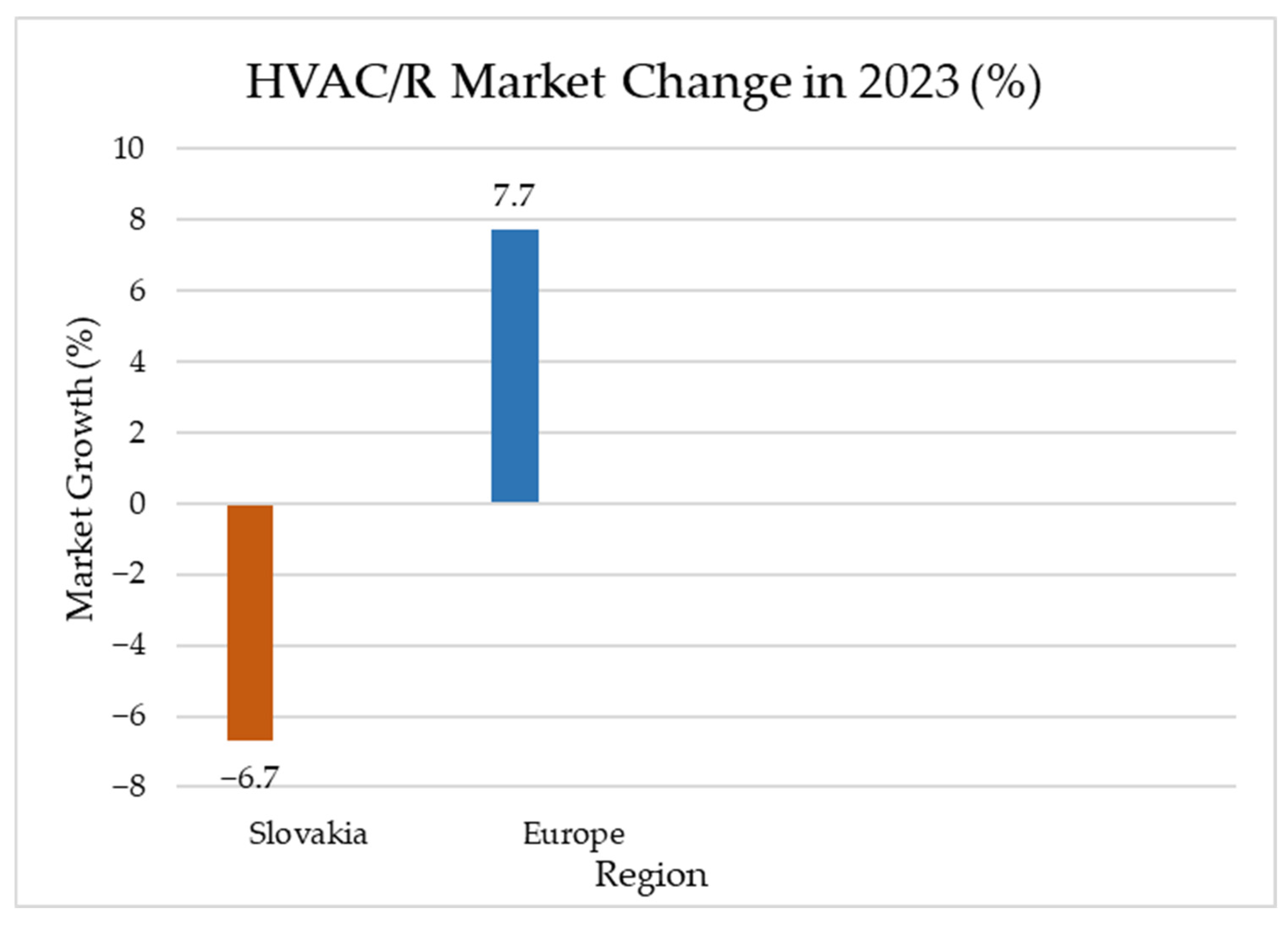
Among the most influential parameters affecting procurement decisions are energy-efficiency indicators and the total cost of ownership (TCO). These include commonly used technical performance indicators such as the coefficient of performance (COP) and the energy efficiency ratio (EER), as well as seasonal indicators such as the seasonal coefficient of performance (SCOP) and the seasonal energy efficiency ratio (SEER), which better reflect standardized operating conditions within the European Union. These indicators increasingly shape investment decisions within the Slovak B2B environment, as companies evaluate both technological performance and long-term operational costs of refrigeration systems [19,20,21]. Statistical data indicate that the Slovak HVAC/R market experienced a contraction of approximately 6.7% in 2023, while the overall European market grew by about 7.7% during the same period [7,8], as illustrated in Figure 1. This divergence suggests that Slovak enterprises have become more selective in their investment decisions and increasingly prioritize technologies offering higher energy efficiency and long-term operational benefits [7,8].
Figure 1.
Comparison of market development in Slovakia and the European Union in 2023. Source: based on [7,8].
The figure compares annual market development in Slovakia and the European Union in 2023. While the Slovak HVAC/R market declined by 6.7%, the European market grew by 7.7%, indicating a divergence in investment dynamics [7,8].
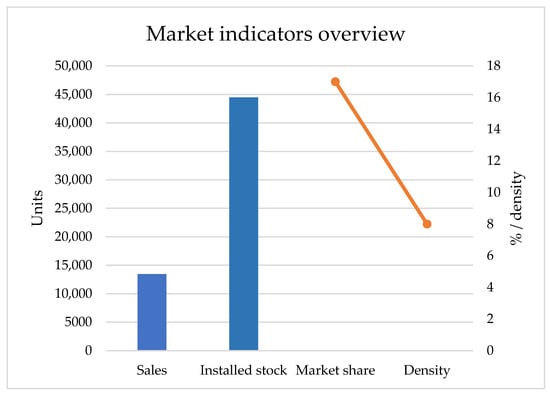
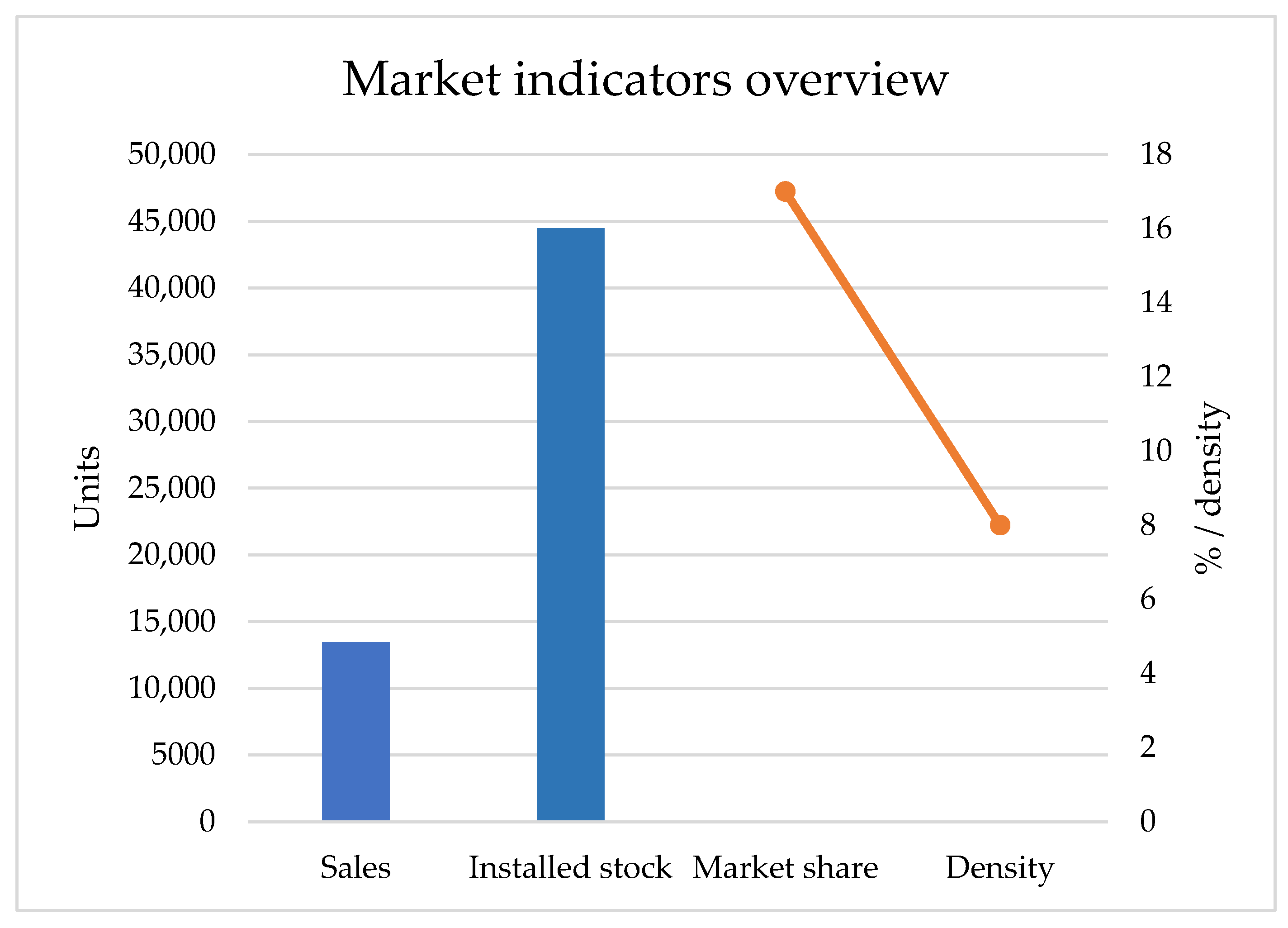
The heat pump segment represents the most dynamic component of the Slovak HVAC market. Data from the Joint Research Centre show that heat pump sales in Slovakia more than doubled in 2022, largely due to the REPowerEU initiative promoting renewable energy technologies [3]. More detailed data indicate that approximately 13,467 heat pumps were sold in Slovakia in 2022, while the total installed stock reached about 44,500 units [9]. These indicators confirm the rapid expansion of the heat pump segment and are illustrated in Figure 2.
Figure 2.
Key heat pump market indicators in Slovakia in 2022. Source: based on [9].
The figure summarizes the main heat pump market indicators in Slovakia in 2022, including annual sales (13,467 units), installed stock (44,500 units), market share (17%), and density (8 units per 1000 residents) [9].
Building on the previously identified structural domains, Table 3 specifies the key market determinants at a more detailed level by identifying measurable parameters that directly influence B2B decision-making processes.
Table 3.
Key Market Determinants of the Slovak B2B HVAC/R Sector.
While Table 2 outlines the broader structural context of the market, Table 3 operationalizes these domains by linking them to specific technical, economic, and behavioral parameters relevant for practical decision-making. These indicators represent the core parameters of market behaviour that connect technological, economic, regulatory, and communication dimensions of competitive advantage in the Slovak B2B HVAC/R market.
4.2. Integration of Market Parameters into the See–Think–Do–Care Model
Following the concept of online marketing communication previously examined by the author [19,20,24], the identified market parameters can be integrated into the See–Think–Do–Care (STDC) framework.
This model is used here as an analytical framework for interpreting how different types of information may become relevant at different stages of the B2B decision-making process.
The integration of the identified parameters within the STDC framework is presented in Table 4. The allocation of parameters to individual STDC phases is also supported by the exploratory interview findings summarized in Appendix A. The respondents consistently indicated that energy efficiency, expected operational savings, and system durability are particularly relevant in the early stages of decision-making, corresponding to the SEE and THINK phases. At later stages, procurement decisions were described as being more strongly influenced by supplier reputation, verified references, certification, maintenance availability, and long-term service reliability. The respondents also emphasized that rapid service response, the availability of trained technicians, and stable post-purchase support become decisive once the purchase decision is being finalized and during the subsequent relationship phase. These insights support the placement of technical, economic, and service-related parameters within the STDC framework.
Table 4.
Integration of Market Parameters within the See–Think–Do–Care (STDC) Framework.
The assignment of parameters to individual STDC phases is not intended as mutually exclusive. Rather, it reflects the predominant relevance of particular parameters at specific stages of the decision-making process, while acknowledging that some factors, such as certification, reputation, or environmental compliance, may influence more than one phase.
The analytical findings suggest that energy efficiency and digital reputation are among the most influential factors in the decision-making process. Companies that communicate their technical parameters transparently (for example, certifications and environmental values) and maintain an active online presence may strengthen trust and conversion potential [1,3,12]. The STDC framework thus provides a connection between product-related data and marketing communication strategies, linking analytical and practical dimensions of B2B marketing. At the same time, this allocation should be interpreted as exploratory and analytically derived rather than as a directly validated behavioral model.
From the perspective of sustainable development, the most effective B2B communication strategies emphasize energy efficiency, ecological innovation, and transparency in corporate processes. Companies that communicate eco-design principles, low GWP indexes, lifecycle energy savings, and certified service standards achieve stronger visibility in the SEE and THINK phases of the purchasing process [25,26,27,28,29,30]. Transparent communication of environmental product attributes can therefore transform regulatory obligations into a competitive advantage and support long-term market sustainability.
4.3. ESG Dimensions of Identified Parameters
The integration of ESG principles into online marketing communication allows companies to combine technological innovation, social responsibility, and brand credibility. Slovak HVAC/R firms can thus position themselves as sustainability-oriented export partners and transfer these practices to other Central European markets This can be shown in following Table 5 [6].
Table 5.
ESG Dimensions and Corresponding Communication Strategies in the B2B HVAC/R Market.
5. Discussion
The results of this study indicate that the Slovak B2B HVAC/R market for refrigeration and air-conditioning technologies is currently undergoing a phase of structural transformation. This transformation is influenced by the interaction of several key drivers, including European environmental regulation, technological innovation, and the gradual digitalization of business processes. These findings correspond with previous research documenting how environmental policy and technological improvements jointly contribute to the modernization of cooling and heating systems in non-residential buildings and industrial applications [25,28].
The analysis confirms that legislative factors play a central role in shaping market dynamics. Regulatory requirements, mandatory inspections, and certification procedures create a stable but administratively demanding environment for companies operating in the HVAC/R sector. This observation is consistent with findings reported by AREA (2024), which highlight that strict compliance requirements may increase administrative complexity while simultaneously generating continuous demand for specialized technical services and professional expertise [6]. The increasing adoption of energy-efficient technologies such as heat pumps, hybrid HVAC systems, and refrigerants with low global warming potential further indicates that sustainability considerations have become a decisive factor in investment decisions. Empirical evidence of operational savings in optimized cooling systems and hybrid configurations strengthens the economic rationale for technological modernization in commercial and industrial environments [25,28].
Another important insight emerging from this study is the interdependence between regulatory pressure, technological change, and workforce development. The shortage of qualified specialists, often described as the “green skills gap”, represents a significant challenge for the sector. The imbalance between labour market demand and the availability of technicians trained to work with modern refrigeration technologies slows the adoption of environmentally sustainable solutions [4]. In Slovakia, this challenge manifests in a relatively sufficient number of technicians qualified to maintain conventional systems but a shortage of professionals capable of working with natural refrigerants such as carbon dioxide, ammonia, or propane. Addressing this gap requires systematic investment in vocational education, modernization of training programs, and stronger collaboration between academic institutions and industry.
Digitalization represents another important factor influencing the development of the Slovak B2B HVAC/R market. The findings indicate that Slovak enterprises still lag behind Western European economies in the adoption of digital procurement systems, predictive maintenance technologies, and service-based business models such as “cooling-as-a-service” [24]. However, this relative delay may also create opportunities for accelerated modernization. At the same time, such recommendations need to be interpreted in light of the uneven digital maturity of the Slovak market, particularly among smaller installation and service-oriented firms, where limited resources and lower digital penetration may slow the adoption of advanced communication tools. Companies that successfully combine digital technologies with transparent and data-driven communication of service performance may gain a competitive advantage and strengthen long-term customer relationships.
In addition to technological and regulatory determinants, the analysis suggests that behavioral and organizational factors also influence B2B purchasing decisions in the HVAC/R sector. Practical experience from the Slovak market indicates that trust between business partners, perceptions of technological risk, and established procurement practices within firms significantly influence the willingness of companies to adopt innovative solutions. Many organizations prefer technologies that have already been proven in practice, which may slow the diffusion of low-GWP refrigerants and advanced digital service models. Procurement decisions are therefore shaped not only by objective technical parameters but also by previous experience with suppliers, perceived credibility of technical expertise, and the level of uncertainty associated with innovation.
The qualitative pilot interviews conducted with three industry professionals working directly with refrigeration systems support these observations. The respondents emphasized that service quality, the availability of trained technicians, expected energy savings, maintenance reliability, and supplier reputation significantly influence procurement decisions across the stages of the B2B customer journey. These insights correspond with the parameters identified in the analytical section and highlight the importance of combining technological performance with effective communication and service reliability.
From a strategic perspective, environmental transformation and digitalization appear to function as mutually reinforcing processes. Energy-efficient technologies reduce operational costs and environmental impacts, while digital solutions improve system performance and enable stronger connections between suppliers and customers. This synergy is supported by measured performance improvements in hybrid HVAC configurations and documented electricity savings achieved through optimized control of cooling systems and auxiliary components [25,28].
The practical contribution of this research lies in connecting theoretical concepts with empirical observations from the Slovak HVAC/R market. For policymakers, the findings highlight the importance of simplifying certification processes, supporting workforce reskilling, and strengthening cooperation between regulatory institutions and educational organizations. For businesses, the results emphasize the growing importance of digitalization and transparent communication of technological performance, which increasingly influence supplier selection and long-term market positioning.
Several limitations of this study should also be acknowledged. The analysis relies primarily on secondary data sources, which limits the possibility of examining firm-level decision-making processes and behavioral dynamics in greater detail. International comparisons are also constrained by the use of aggregated European statistics and by the limited availability of directly comparable national datasets. Furthermore, the qualitative pilot interviews included only a small number of respondents and therefore cannot be interpreted as full empirical validation of the allocation of parameters within the See–Think–Do–Care (STDC) framework.
Another limitation concerns the conceptual application of the STDC model itself. In the present study, the model was applied primarily as an analytical framework and was not supported by digital analytical evidence or detailed customer journey data. This may limit the precision of its interpretation in real online procurement environments. In addition, the analysis focused mainly on measurable technological, legislative, and economic indicators. Behavioral and organizational factors such as trust, perceived innovation risk, and cultural aspects of procurement decision-making may therefore be underrepresented. Future research should address these limitations by expanding primary data collection through larger surveys, in-depth interviews, and digital behavioral analytics. Such approaches would allow for a more detailed examination of human, organizational, and socio-psychological factors influencing sustainable procurement and digital transformation in the HVAC/R sector.
6. Conclusions
The aim of this study was to explore and analyse the main characteristics of the Slovak B2B HVAC/R market for refrigeration and air-conditioning technologies, with particular attention to legislation, technological innovation, digitalization, and the changing needs of commercial clients. The findings indicate that these factors interact closely and have a decisive influence on the development and future direction of the market. Both European and national legislation function as stabilizing mechanisms while simultaneously driving structural change. Regulatory obligations such as regular inspections, certification requirements, and restrictions on fluorinated greenhouse gases create steady demand for specialized services and encourage companies to adopt more energy-efficient and environmentally responsible technologies. In this way, regulation and innovation operate as complementary forces that together support sustainable sectoral development.
Digitalization has emerged as another important driver of transformation, reshaping how companies communicate, purchase, and manage business relationships. Tools such as online procurement platforms, transparent supplier evaluation systems, and emerging service models such as “cooling-as-a-service” allow firms to operate more flexibly and efficiently. Although Slovakia currently lags behind some Western European countries in the adoption of advanced digital solutions, this situation also creates opportunities for accelerated modernization. Companies that successfully integrate digital tools with sustainable value creation and professional communication strategies may strengthen their competitive position within the European market.
Another continuing challenge for the sector is the shortage of qualified professionals capable of working with modern refrigerants and advanced technological systems. This “green skills gap” demonstrates that the future growth of the HVAC/R sector depends not only on technological innovation but also on human capital development. Continuous education, professional certification, and lifelong learning therefore represent essential conditions for the successful adoption of environmentally sustainable technologies.
Overall, the legislative, technological, and digital dimensions of the industry operate as an interconnected system that determines the long-term sustainability of Slovakia’s B2B refrigeration and air-conditioning market. Legislation provides a framework for stability and environmental responsibility, technological innovation enhances efficiency and competitiveness, and digitalization creates new opportunities for value creation and market expansion. Together, these elements form a strategic foundation for strengthening the position of Slovak companies within the wider European HVAC/R ecosystem.
Future research should further investigate the social and psychological aspects of digital transformation in B2B markets. As business interactions increasingly shift toward digital environments characterized by data exchange, automation, and online procurement, understanding how trust is formed, how organizations evaluate technological risks, and how companies respond to cybersecurity challenges will become increasingly important. Exploring these human and organizational dimensions may provide valuable insights into the mechanisms that influence the adoption of sustainable technologies and digital business practices in the HVAC/R sector.
Author Contributions
Conceptualization, K.D. and M.H.; methodology, J.S.; software, S.K. and K.D.; validation, K.D. and M.H.; formal analysis, K.D.; investigation, J.S.; resources, S.K.; data curation, K.D.; writing—original draft preparation, K.D., M.H., J.S. and S.K.; writing—review and editing, K.D. and M.H.; visualization, K.D.; supervision, M.H. and J.S.; project administration, M.H.; funding acquisition, M.H. and S.K. All authors have read and agreed to the published version of the manuscript.
Funding
This research was funded by the Slovak republic scientific grants VEGA: 1/0764/26.
Institutional Review Board Statement
Ethical review and approval were waived for this study According to Regulation (EU) 2016/679 (General Data Protection Regulation—GDPR), ethical approval is generally required when processing personal or sensitive data. In this study, no such data were collected or processed. Therefore, formal ethical approval from an Ethics Committee or Institutional Review Board (IRB) was not required. Furthermore, under Slovak legislation, ethical approval is primarily required for biomedical, clinical, or experimental research involving human subjects. As the present study is non-clinical, observational, and based solely on anonymized professional opinions, it does not fall within the scope requiring mandatory ethical approval.
Informed Consent Statement
Informed consent was obtained from all subjects involved in the study.
Data Availability Statement
The data of this study are available from the corresponding author upon request.
Conflicts of Interest
The authors declare no conflicts of interest.
Appendix A. Summary of Pilot Interviews
This appendix provides a brief overview of the three semi-structured interviews conducted with employees of a Slovak company operating in the HVAC and refrigeration sector. The purpose of these interviews was to verify the practical relevance of the selected market parameters within the See–Think–Do–Care (STDC) model and to explore how technical, economic and behavioral factors influence purchasing decisions in real business environments. All respondents work directly with refrigeration systems and participate in procurement, technical assessment or customer service activities. The interviews were carried out in October 2025 and each lasted approximately 20 to 30 min.
Appendix A.1. Respondent 1—Senior Technician (30 Years of Experience)
The respondent emphasized that service quality and technical support are decisive throughout the purchasing process. While energy efficiency and expected operational savings are important in the early phases, the final decision often depends on whether the supplier can ensure reliable maintenance support. Certification and compliance are considered essential, but in practice the supplier’s ability to respond quickly to system failures plays a central role. The respondent also noted that the availability of trained personnel for handling natural refrigerants is becoming increasingly important.
Appendix A.2. Respondent 2—Procurement Specialist
This respondent highlighted supplier reputation as a major factor influencing the evaluation and selection of HVAC and refrigeration solutions. During the early stages of the decision-making process, attention is given to parameters such as TCO, projected energy savings and system reliability. However, when moving toward the final purchase decision, personal experience with the supplier, verified references and the perceived credibility of technical experts become crucial. According to the respondent, firms tend to prioritize suppliers who demonstrate transparent communication and consistent long-term service performance.
Appendix A.3. Respondent 3—Service Engineer
The third respondent stressed that professional training and certification are critical for ensuring safety and reliability, particularly when working with low GWP refrigerants. Clients frequently inquire about energy savings and system durability in the initial stages of purchase consideration. In contrast, the later phases of the decision process focus more strongly on maintenance availability and the ability of the supplier to guarantee regular inspections. The respondent also pointed out that companies increasingly value long-term stability in service relationships and prefer partners with a strong digital and professional reputation.
Across all three interviews, respondents consistently indicated that technical performance parameters such as energy efficiency and TCO are important in the early evaluation stages, while service quality, technician competence, supplier reliability and digital reputation become the primary determinants of actual purchasing decisions. These insights support the allocation of parameters within the STDC model and highlight the importance of behavioral and organizational factors in the Slovak B2B HVAC and refrigeration market.
References
- European Commission. Achievements—EU Action on Fluorinated Greenhouse Gases. 2024. Available online: https://climate.ec.europa.eu/eu-action/fluorinated-greenhouse-gases/achievements_en (accessed on 12 October 2025).
- FREOR. New F-Gas Regulation: What Does It Mean for the Cooling Sector? 2024. Available online: https://freor.com/new-f-gas-regulation-what-does-it-mean-for-the-cooling-sector/ (accessed on 12 October 2025).
- European Heat Pump Association (EHPA). Executive Summary: EHPA Heat Pump Market and Statistic Report 2024. 2024. Available online: https://www.ehpa.org/wp-content/uploads/2024/08/Executive-summary_EHPA-heat-pump-market-and-statistic-report-2024-2.pdf (accessed on 12 October 2025).
- European Commission; Joint Research Centre. Heat Pump Market Report: Technical and Policy Overview. 2023. Available online: https://publications.jrc.ec.europa.eu/repository/handle/JRC134991 (accessed on 12 October 2025).
- IBISWorld. Steam & Air Conditioning Supply in Slovakia. 2025. Available online: https://www.ibisworld.com/slovakia/industry/steam-air-conditioning-supply/200206/ (accessed on 12 October 2025).
- AREA (Air Conditioning and Refrigeration European Association). Results of the Last AREA Internal Survey: Training and Certification of F-Gases and Alternative Refrigerants. 2024. Available online: https://area-eur.be/news/results-last-area-internal-survey-training-certification-f-gases-and-alternative-refrigerants (accessed on 12 October 2025).
- Business Market Insights. Europe Commercial Refrigeration Market to 2030. 2023. Available online: https://www.businessmarketinsights.com/reports/europe-commercial-refrigeration-market (accessed on 12 October 2025).
- IndexBox. Slovakia Refrigerating and Freezing Equipment and Heat Pumps Market Report: Analysis and Forecast. 2024. Available online: https://www.indexbox.io/store/slovakia-refrigerating-and-freezing-equipment-and-heat-pumps-except-household-type-equipment-market-report-analysis-and-forecast-to-2020/ (accessed on 12 October 2025).
- European Commission; Joint Research Centre. Slovakia: Status of the Heat Pump Market. Country Fiche 2024. 2024. Available online: https://publications.jrc.ec.europa.eu/repository/bitstream/JRC137131/JRC137131_023.pdf (accessed on 12 October 2025).
- SZCHKT (Shenzhen Association of Refrigeration and Air-Conditioning). Front Page (English). 2025. Available online: https://w.szchkt.org/a/front_page/szchkt_en (accessed on 12 October 2025).
- Lendel, V.; Špaleková, D.; Lendelová, L.; Šotek, M. The innovative intelligence system—A tool for discovering innovative opportunities and ensuring sustainability and business prosperity. Sustainability 2021, 13, 12305. [Google Scholar] [CrossRef] [Scilit]
- EPEE; UNEP. OEWG Side Event Presentation. 2025. Available online: https://ozone.unep.org/system/files/documents/EPEE%20OEWG%20Side%20Event%20Presentation.pdf (accessed on 12 October 2025).
- Technická Inšpekcia, a. s. Posudzovanie Strojových Zariadení a Technológií. 2025. Available online: https://www.tisr.sk/sk/overovanie-bezpecnosti/strojove-zariadenia-technologie/posudzovanie-strojovych-zariadeni-technologii/ (accessed on 12 October 2025).
- SRSS. Povinnosti Prevádzkovateľa a Majiteľa Strojových Zariadení a Elektrických Strojov. 2025. Available online: https://srss.sk/povinnosti-prevadzkovatela-a-majitela-strojovych-zariadeni-a-elektrickych-strojov/ (accessed on 12 October 2025).
- HASPO. OSH and Fire Protection Services (Slovakia). 2025. Available online: https://haspo.sk/en/fire-protection-slovakia/ (accessed on 12 October 2025).
- National Council of the Slovak Republic. Act No. 286/2009 Coll. on Fluorinated Greenhouse Gases and Amendments to Certain Acts. 2016. Available online: https://www.slov-lex.sk/ezbierky/pravne-predpisy/SK/ZZ/2009/286/20160101 (accessed on 12 October 2025).
- Varmus, M.; Kubina, M.; Mičiak, M.; Šarlák, M.; Greguška, I. Sustainable management of the public financial model for sports support in Slovakia. Sustainability 2023, 15, 11310. [Google Scholar] [CrossRef] [Scilit]
- Koman, G.; Tumová, D.; Jankal, R.; Boršoš, P. Risk management in a human resources information system. Entrep. Sustain. Issues 2023, 11, 20. [Google Scholar] [CrossRef] [Scilit] [PubMed]
- European Investment Bank. EIB Investment Report 2022/2023: Resilience and Renewal in Europe. 2023. Available online: https://www.eib.org/en/publications/20220211-investment-report-2022 (accessed on 12 October 2025).
- SendWork. 2025 HVAC Trends: Industry Outlook and Growth Opportunities. 2024. Available online: https://blog.sendwork.com/2024/10/2025-hvac-trends-industry-outlook-and-growth-opportunities/ (accessed on 12 October 2025).
- Market Data Forecast. Europe HVAC Market Report. 2025. Available online: https://www.marketdataforecast.com/market-reports/europe-hvac-market (accessed on 12 October 2025).
- Štaffenová, N.; Kucharčíková, A.; Falát, L. Using human capital management in small and medium-sized enterprises in the context of Industry 4.0. PLoS ONE 2025, 20, e0320568. [Google Scholar] [CrossRef] [Scilit] [PubMed]
- Eurostat. Digitalisation in Europe—2024 Edition. 2024. Available online: https://ec.europa.eu/eurostat/web/interactive-publications/digitalisation-2024 (accessed on 12 October 2025).
- McKinsey & Company. McKinsey Technology: Overview. 2025. Available online: https://www.mckinsey.com/capabilities/mckinsey-technology/overview (accessed on 12 October 2025).
- Mahmoud, R.; Sharifi, M.; Himpe, E.; Laverge, J. Environmental and energy performance assessment of hybrid ground source heat pump coupled with TABS emission systems in EU non-residential buildings. Sci. Technol. Built Environ. 2022, 28, 1312–1328. [Google Scholar] [CrossRef] [Scilit]
- Kim, B.-J.; Jo, S.-Y.; Jeong, J.-W. Energy performance enhancement in air-source heat pumps with direct evaporative cooler-applied condensers. Case Stud. Therm. Eng. 2022, 38, 102366. [Google Scholar] [CrossRef] [Scilit]
- Kim, D.; Lee, J.; Do, S.; Mago, P.; Lee, K.H.; Cho, H. Energy modeling and model predictive control for HVAC in buildings: A review of current research trends. Energies 2022, 15, 7231. [Google Scholar] [CrossRef] [Scilit]
- Catrini, P.; La Villetta, M.; Kumar, D.M.; Morale, M.; Piacentino, A. Analysis of air-cooled chillers with variable-speed fans for energy-saving-oriented control strategies. Appl. Energy 2024, 355, 123393. [Google Scholar] [CrossRef] [Scilit]
- Radchenko, M.; Radchenko, A.; Trushliakov, E.; Pavlenko, A.; Radchenko, R. Advanced method of variable refrigerant flow system design to forecast on-site operation. Energies 2023, 16, 2417. [Google Scholar] [CrossRef] [Scilit]
- Gjerasimovski, A.; Sharevska, M.; Gjerasimovska, N.; Filkoski, R.V. Thermal characteristics of combined compressor–ejector refrigeration/heat pump systems for HVAC&R. Therm. Sci. 2024, 28, 1577–1587. [Google Scholar] [CrossRef] [Scilit]

Disclaimer/Publisher’s Note: The statements, opinions and data contained in all publications are solely those of the individual author(s) and contributor(s) and not of MDPI and/or the editor(s). MDPI and/or the editor(s) disclaim responsibility for any injury to people or property resulting from any ideas, methods, instructions or products referred to in the content. |
© 2026 by the authors. Licensee MDPI, Basel, Switzerland. This article is an open access article distributed under the terms and conditions of the Creative Commons Attribution (CC BY) license.