


Abstract
Against the backdrop of increasing global emphasis on sustainable development and ecological conservation, green seafood has emerged as a key component of sustainable marine food consumption. However, the discrepancy between consumers’ intention to consume and their consumption behavior remains a critical issue requiring in-depth investigation. Herein, based on survey data collected from 415 consumers in China in 2025, this study employs structural equation modeling (SEM) to analyze the determinants and mechanisms influencing green seafood consumption intention and behavior. The findings indicate that heightened concerns regarding dietary health, food safety, and nutrition significantly enhance consumer intention, driven primarily by ecological awareness and the pursuit of a higher quality of life. Individual and household characteristics, along with consumers’ cognitive status of green seafood, exert significant positive effects on consumption intention, with cognitive status demonstrating the strongest influence. Nevertheless, a notable gap exists between consumption intention and actual behavior. Among respondents with consumption intention, only 48.7% had ever purchased green seafood, and the consumption frequency remained generally low. SEM path coefficients further reveal that marketing factors play a dominant role in actualizing consumption behavior. Compared to marketing factors, consumption intention shows a relatively weaker effect in facilitating consumption behavior. This finding further confirms the intention–behavior gap in green seafood consumption. The intention–behavior gap in green seafood consumption is jointly driven by asymmetric information on product quality, an underdeveloped certification system, a relatively undiversified supply structure, and elevated prices. Accordingly, this study proposes an integrated strategy that includes establishing a unified certification and traceability system, optimizing supply structures and pricing mechanisms, and strengthening science communication and targeted marketing. These measures aim to bridge the intention–behavior gap and promote the transition toward sustainable consumption patterns.
1. Introduction
1.1. Background
Amidst the growing ecological awareness in China, green consumption has become a prominent societal priority. Against the backdrop of national strategies such as the development of the “blue granary” and the pursuit of “maritime power”, consumer attitudes and behaviors toward green seafood consumption have garnered growing scholarly interest [1,2,3]. In this study, green seafood is defined as marine food products that adhere to environmental and sustainability standards, comply with national food safety regulations, and hold official green food certification from authorized bodies. Characterized by low environmental impact and high quality, green seafood constitutes a key element of safe and sustainable seafood production and consumption systems. It reflects not only the natural progression of green consumption trends but also points to the future direction of modern fisheries.
1.2. Literature Review
Research on green seafood consumption has primarily centered on three interrelated dimensions: consumer cognition, consumption intention, and actual purchasing behavior. In the literature, the term “green seafood” is often used interchangeably with concepts such as organic, traceable, and eco-labeled seafood. Existing studies examine the drivers of green seafood consumption from multiple perspectives, including information attributes, environmental concern, and consumer characteristics. Specifically, researchers have typically examined factors across three key domains: product attributes (e.g., seafood labeling [4] and eco-certification [5]), socio-environmental influences (e.g., environmental awareness [6] and support for green initiatives [7]), and demographic characteristics (e.g., gender [8], education [9], income [10], and household structure [11]). These elements are often integrated with price sensitivity analyses to assess their impact on consumers’ cognitive states, consumption intentions, and behaviors [12].
From a theoretical perspective, the Theory of Reasoned Action (TRA) and the Theory of Planned Behavior (TPB) provide an important framework for analyzing how marketing activities influence consumers’ purchases of green seafood. TRA posits that consumer behavior is not determined directly by external marketing stimuli [13], while TPB further introduces perceived behavioral control and emphasizes that practical conditions such as price, information, product availability, and purchasing convenience affect the translation of behavioral intention into actual behavior [14,15]. Within this framework, marketing activities can be understood as shaping consumers’ attitudes, subjective norms, and perceived behavioral control through advertising, brand building, green labels and certification, pricing strategies, and channel arrangement [16], thereby influencing purchase intention and purchasing behavior. Therefore, TRA and TPB not only illuminate the internal mechanisms through which marketing activities affect consumer behavior, but also provide a theoretical basis for explaining the intention–behavior gap in green consumption.
In recent years, academic focus has increasingly turned toward understanding the mechanisms underlying sustainable seafood consumption. For example, Farmery et al. [17] conducted an online survey among Australian accredited practising dietitians and public health nutritionists to examine variations in seafood consumption recommendations, perceptions of sustainability, and information sources. The study found that respondents’ cognitive states of seafood sustainability and health benefits, along with their educational background, work context, and professional experience, significantly influenced their dietary recommendations and consumption intentions. Richter et al. [18] explored potential behavioral pathways for adopting sustainable seafood, highlighting the critical role of accessible and credible labeling and guidance in enhancing consumer intention. Moreover, key factors identified include consumption intention, social norms, and trust, all of which affect the use of sustainability labels and consumption behavior. Using a discrete choice experiment, Bronnmann et al. (2021) demonstrated that eco-labels increase the probability of consumers choice, though the strength of this effect depends on the availability and clarity of sustainability information [19].
In the Chinese context, research on green seafood has predominantly focused on areas such as industrial upgrading, food safety regulation, green supply chain development, and consumption transformation policies [20,21]. However, studies examining consumer-level factors remain relatively limited. Li (2017) found that consumer cognition of green aquatic products influences consumption intentions and behavioral choices through perceived outcomes and self-efficacy [22]. Zhang et al. (2021) [23], in a survey of 1201 households across six provinces, revealed that green seafood consumption is closely associated with regional economic development levels, with consumers who prioritize health and nutrition showing a stronger preference for green seafood products. This finding has been corroborated by Ding et al. (2022) [24]. Their study demonstrated that trust, face consciousness, and perceived policy support all exert significant positive effects on consumers’ intention to purchase green aquatic products. Among these factors, face consciousness emerged as the most influential. Xu et al. (2024) conducted an online survey of 3403 Chinese consumers and found that concerns about food safety motivate green seafood purchases more strongly than environmental considerations [25]. Overall, while considerable progress has been made in understanding green consumption, systematic empirical research specifically examining Chinese consumers’ cognitive patterns, intention formation mechanisms, and decision-making processes regarding green seafood remains relatively scarce.
1.3. Contribution
Although the existing literature has examined the determinants of green seafood consumption intention and behavior from the perspectives of product attributes, environmental cognition, social norms, and demographic characteristics, most studies remain confined to explaining either the intention stage or the behavior stage in isolation, with limited attention to the formation of the intention–behavior gap itself. In particular, in the Chinese context, there is still a lack of empirical research based on nationally representative data that identifies the transmission mechanism linking cognition, intention, and behavior, while the associated theoretical explanations often remain weakly supported by robust empirical evidence.
Against this background, this study draws on data from a nationwide consumer survey in China to investigate public cognition of green seafood and related behavioral patterns, thereby addressing the above research gaps. By taking the intention–behavior gap as the central object of analysis, the paper extends the analytical framework of green seafood consumption research. Employing structural equation modeling (SEM), we systematically examine the mechanisms linking consumer cognition, consumption intention, and actual behavior, with the aim of providing more solid empirical evidence for both theoretical advancement and policy practice in the field of green seafood consumption.
2. Theoretical Model and Research Hypotheses
2.1. Questionnaire Design and Sample Description
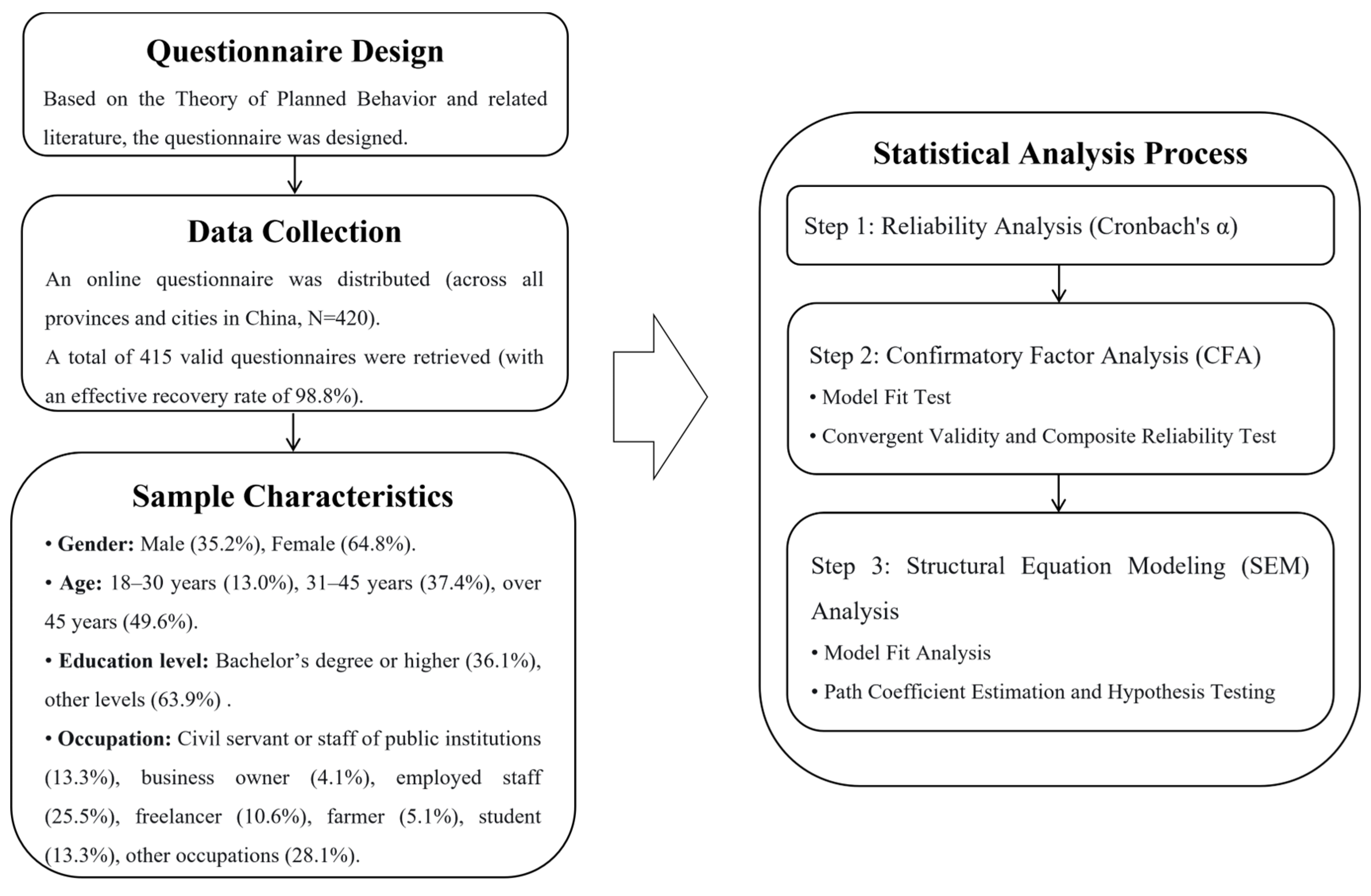
The Theory of Planned Behavior and the Theory of Reasoned Action emphasize that consumer behavior is not determined directly by external stimuli; rather, it is primarily shaped through the pathway of attitudes, subjective norms, behavioral intention, and actual behavior, with behavioral intention serving as the key mediating link between psychological cognition and realized action [26,27]. Building on this classic behavioral decision-making framework, this study develops an analytical framework to examine the observed inconsistency between intention and action in green seafood consumption. On the one hand, it explains the formation of consumers’ purchase intention from the perspectives of attitudes, subjective norms, and perceived behavioral control; on the other hand, it further tests the transmission effect of purchase intention on actual purchasing behavior and identifies the constraining and reinforcing roles of such factors as price, product availability, and information credibility in the intention–behavior conversion process. In this way, TPB and TRA provide the theoretical foundation and logical point of departure for the specification of variables, the construction of causal pathways, and the development of the research hypotheses in this paper. Based on this theoretical grounding, this study developed a structured questionnaire. The survey was administered online to respondents across various provinces and cities in China. Following data collection, a rigorous cleaning procedure was implemented: responses completed in an excessively short time (less than one-third of the estimated completion duration) were first excluded, followed by the removal of invalid questionnaires displaying obvious response patterns or excessive uniformity in answers. From the total collected responses, 420 were initially screened into the valid analysis pool. A subsequent verification for the completeness of all items yielded 415 fully valid questionnaires for final analysis, corresponding to an effective response rate of 98.8%. The sample distribution was relatively concentrated in coastal areas, particularly in the Jiangsu-Zhejiang region. These data offer valuable insights for examining green seafood consumption patterns among residents in economically developed coastal areas of China. This research obtained approval from the Ethics Committee of Ningbo University, and the survey was conducted in strict adherence to the principles of the Declaration of Helsinki.
The questionnaire comprises five sections. The first section collects respondents’ individual and household characteristics, including gender, age, education level, occupation, residential status, household size, residence location, household and individual income, proportion of food expenditure in total household spending, frequency of seafood consumption, and the primary household member responsible for purchasing fresh food. The second section assesses consumers’ current level of cognition and understanding of green seafood. The third section measures consumers’ intention to consume green seafood. The fourth section investigates consumption behaviors regarding green seafood. The fifth section examines factors contributing to the gap between consumption intention and behavior. The overall design and analytical workflow of this study is illustrated in Figure 1.
Figure 1.
The overall design and analytical workflow of this work.
2.2. Model Specification and Variable Selection
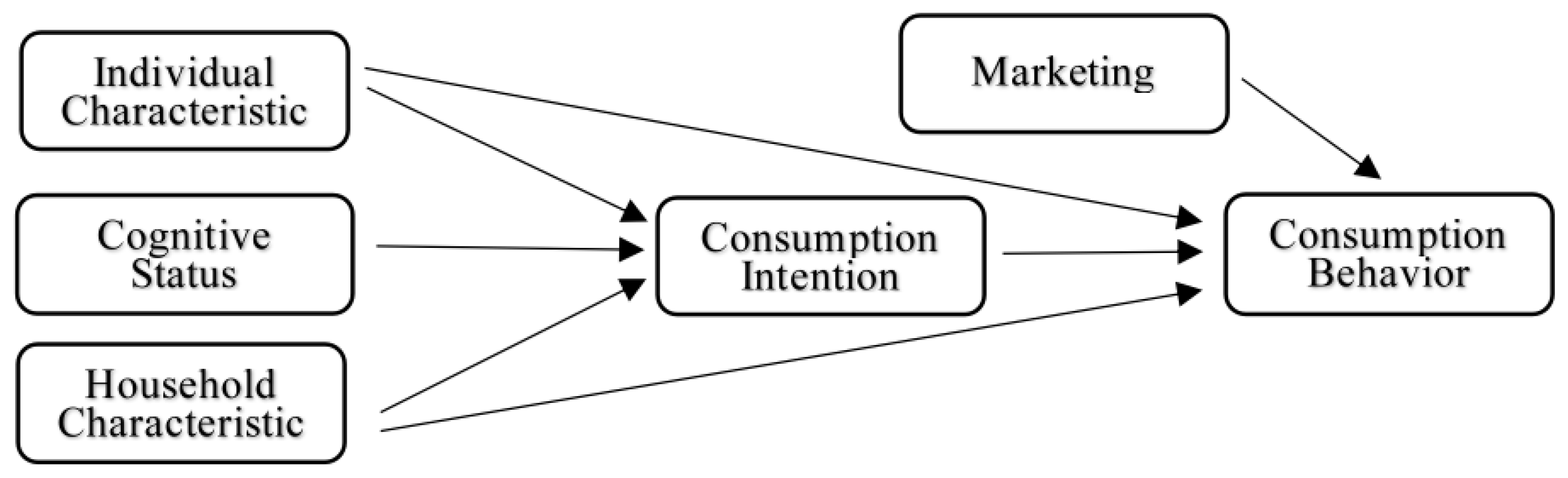
In the proposed research model, the independent (exogenous latent) variables comprise individual characteristics, household characteristics, cognitive status, and marketing-related factors. The dependent (endogenous latent) variables are consumers’ intention to consume green seafood and their actual consumption behavior. Since latent variables are not directly observable, we measure each through a set of observable indicators (manifest variables). The model includes 35 measurement items (see Table 1 for details).
Table 1.
Overview of variable dimensions and measurement indicators.
The consumption intention construct is operationalized across three dimensions: (1) the degree of concern for dietary health, (2) key factors influencing consumption decisions, and (3) conditions under which consumers would purchase green seafood. Twelve specific measurement items were used to capture this construct, drawing on prior studies [28,29,30,31]. Consumption behavior focuses on repetitive and sustained consumption patterns. Although purchase incidence was considered, the proportion of green seafood expenditure in total household food spending was selected as the primary indicator, as it more accurately reflects the intensity and continuity of consumption [28,32,33,34].
The independent variables are grouped into four dimensions: individual characteristics, household characteristics, cognitive status, and marketing factors [22,35,36,37,38]. Specifically, individual characteristics include gender, age, education level, occupation type, and income level. Household characteristics encompass place of residence, household size, per capita monthly household income, food expenditure ratio, frequency of seafood consumption, and the person responsible for food procurement. Cognitive status includes concern for food safety and quality, understanding of the concept of green seafood, ability to identify green products, familiarity with certification labels, sources of information, trust in green seafood, and motivations for purchase. Marketing factors include intention to pay, purchasing channels, and market availability. Through systematic measurement of these variables, this study comprehensively captures the key determinants influencing both consumption intention and behavior, providing a robust empirical foundation for subsequent structural equation modeling. The theoretical framework of the structural equation modeling (SEM) for green seafood consumption behavior is presented in Figure 2.
Figure 2.
Theoretical framework of the SEM for green seafood consumption behavior.
2.3. Research Hypotheses
Consumers’ individual characteristics, household characteristics, and their cognitive status regarding green seafood are expected to shape their consumption intention. On the one hand, individual characteristics influence consumption intentions. Consumer attitudes, such as a tendency toward rational versus impulsive purchasing, evolve with age and education. Younger consumers, for example, may emphasize cost-effectiveness, while middle-aged and older consumers often place greater importance on nutritional value. Income levels also affect consumption intention: higher-income consumers generally possess greater disposable income and stronger purchasing power, making them more inclined to choose premium green seafood over conventional alternatives [8,10]. By contrast, lower-income consumers may face financial constraints, leading to more cautious decision-making and a preference for standard seafood products [10,11]. On the other hand, household structure, per capita household income, and established consumption patterns can also influence intention. Households with children, for instance, may be more willing to invest in healthier food options, while young adults living with parents may enjoy greater financial flexibility, allowing them to purchase higher-quality products [11,32]. Furthermore, consumption intention is critically influenced by consumer cognition of key product attributes, such as price, nutritional benefits, and the criteria for identifying genuine green seafood [22,23,30]. Based on these considerations, the following hypotheses are proposed:
H1.
Individual and household characteristics, as well as consumers’ cognitive status of green seafood, significantly influence their intention to consume green seafood.
Beyond price, consumers also consider multiple factors in consumption decisions, including packaging, brand reputation, and official certification labels [4,5]. It is therefore expected that differences in individual characteristics, household characteristics, and the marketing environment will significantly affect consumption behavior. First, consumption behaviors vary across age and gender groups: younger consumers may prioritize taste and affordability, while older consumers tend to emphasize product quality and safety [8,39]. Second, larger households tend to purchase greater quantities and a wider variety of products. They often weigh nutritional value and cost-effectiveness more carefully [11,32]. This may result in distinct consumption behaviors with a stronger focus on quality and personalization. Third, marketing initiatives and promotional campaigns can play a key role. They enhance consumer cognition and understanding of green seafood [28,38]. Through advertising and discounts, they communicate the health and environmental benefits of such products [16,40]. This ultimately encourages purchasing. Accordingly, the following hypotheses are proposed:
H2.
Individual characteristics, household characteristics, and marketing factors significantly influence consumption behavior.
Consumption intention serves as a key predictor of purchasing decisions [14,15]. Consumers with strong consumption intentions are more likely to buy green seafood and related services, translating intention into actual behavior [27]. First, intention influences the continuity of consumption: consumers who perceive green seafood as meeting their expectations in terms of quality and value are more likely to become repeat buyers. Second, the strength of consumption intention may also affect purchasing intensity, leading some consumers to pay a premium for a preferred brand’s green products. Therefore, the following hypothesis is proposed:
H3.
Consumers’ intention to consume green seafood has a positive and significant relationship with their consumption behavior.
3. General Characteristics and Influencing Factors of Green Seafood Consumption Intention and Behavior
This study provides a descriptive analysis of the general characteristics of consumers’ intention and behavior regarding green seafood, followed by a comparative analysis across different consumer groups and their underlying determinants. Using frequency analysis, cross-tabulation, correlation analysis, factor analysis, and shared preference modeling, the following key findings are obtained (See the Supplementary Materials for the data proportion distribution table in this chapter).
3.1. Consumers’ Cognition of Green Seafood
- (1)
- Overall level of consumer cognition
Consumer comprehension of green seafood remains underdeveloped, with moderate ability to differentiate it from conventional seafood products and insufficient awareness of its certification labels. However, they demonstrate clearer conceptual recognition of green seafood and exhibit greater attention to labeling during purchasing decisions. A majority of consumers associate green seafood with safety and quality. Specifically, they perceive it as products from regulated environments, produced with controlled feed inputs, certified by accredited institutions, and labeled as healthy and pollution-free. Notably, cognition of certification labels is low: nearly half (41.2%) of respondents reported being poorly informed or entirely unaware of green seafood labels, with limited knowledge regarding label types, designs, or grading systems. This indicates a significant gap between conceptual understanding and the practical ability to use certification marks to identify green seafood. Comparative analyses further reveal notable variations in cognition across consumer segments.
- (2)
- Primary motivations for purchasing green seafood
Among consumers who have purchased green seafood, the dominant motivations are health (83.4%), nutrition (71.1%), and food safety (70.6%). A smaller but substantial proportion cited environmental protection (46.3%) and taste (36.4%) as reasons, while only a minor fraction (3.6%) was influenced by fashion trends or social pressure. Comparative analysis shows that both male and female consumers prioritize health, nutrition, and safety, with women exhibiting slightly higher levels of concern. These purchasing motivations reflect broader societal trends in China, including heightened public attention to livelihoods, nutritional well-being, and the ongoing transformation of consumption patterns amid economic development and rising health consciousness. The findings reveal a notable trend in consumer behavior. Personal health needs remain the primary driver for purchasing green seafood. However, there is a growing recognition of social and environmental responsibilities. This indicates a shift toward more socially conscious consumption. As supported by prior research, Chinese consumers’ decisions are primarily motivated by individual concerns such as health, nutrition, and food safety. Yet, broader social values are playing an increasingly important role. These include ecological cognition, sustainability, and social responsibility.
- (3)
- Reasons for non-purchase of green seafood
Despite expressed intention, many consumers do not translate intent into action. Key barriers include low trust in and limited ability to identify green seafood products (63.9%), lack of science-based guidance from industry associations (47.2%), high prices (32.5%), insufficient market supply (23.1%), limited product variety (27.0%), and the absence of a unified national standard (36.9%). This situation mirrors the prevailing challenges in the green seafood products market, where development is constrained by several factors. These include information asymmetries concerning quality, a deficit of scientific and authoritative guidance, the high costs and price premiums associated with sustainable production, and market-level issues such as supply-demand imbalances, limited variety, and poor product recognizability [41].
- (4)
- Methods of identifying green seafood
Green seafood must be certified and authorized by designated institutions before the green label can be used. The most widely used method for identification is the green certification mark, with 79.5% of consumers relying on it to recognize green seafood. Other common methods include brand name (46.5%) and personal judgment (27.5%). On one hand, eco-labels (e.g., certification marks and government endorsements) and product branding (e.g., corporate reputation and market presence) are key purchase drivers, with consumers demonstrating a notable preference for branded products. On the other hand, the significant reliance on personal intuition for product identification reveals a corresponding gap in consumers’ substantive knowledge about these goods.
- (5)
- Sources of information about green seafood
Information dissemination plays a vital role in shaping consumer cognition. Survey results show that the internet (54.9%) and dedicated green seafood counters in supermarkets or online specialty stores (51.8%) are the most frequently used sources. Additional sources include public service advertisements (38.3%), commercial advertising (35.2%), and word-of-mouth (30.6%). These findings underscore the importance of a multi-channel communication strategy to enhance both the reach and depth of green seafood information, particularly through digital platforms and retail touchpoints.
3.2. Intention to Consume Green Seafood
- (1)
- Level of concern for dietary health
Green seafood closely aligns with consumers’ expectations for healthy eating. The data show that a large majority of respondents believe diet significantly affects health (96.6%), perceive green seafood as healthier than conventional alternatives (88.4%), and prioritize the health of themselves and their families when purchasing seafood (98.6%). Furthermore, 77.1% of consumers consider green seafood to be safer in terms of food safety. These findings confirm that health consciousness is a strong driver of consumption intention.
- (2)
- Factors influencing consumption decisions
Multiple factors shape consumers’ decisions to purchase green seafood. First, a supportive social environment for green consumption has a substantial influence-78.1% of respondents indicated that the purchasing behavior of others encourages their own. Second, government policies and regulations play a significant role, with 76.6% stating that national initiatives promote green seafood consumption. Third, media promotion helps reduce information asymmetry and raises cognition, thereby encouraging consumption decisions (68.0%). Finally, recommendations from friends and family also contribute, with 51.8% of respondents reporting that personal referrals increase their likelihood of purchase.
- (3)
- Conditions for purchasing green seafood
Although a large proportion of consumers express intention to buy green seafood (81.2%) and recommend it to others (73.3%), and even indicate an intention to pay a premium (66.7%), only 46.0% report having convenient access to such products. This discrepancy highlights a notable misalignment between subjective intention and objective purchasing conditions, further clarifying the gap between intention and actual behavior.
3.3. Consumption Behavior of Green Seafood
- (1)
- Purchase history (whether green seafood has been purchased)
Among all respondents, only 51.1% reported having ever purchased green seafood products. Of those who expressed an intention to consume such products (accounting for 99.0% of the total sample), just 48.7% had actually made a purchase. Furthermore, consumption frequency was generally low, with the majority (80.72%) purchasing on average once a week or less. This indicates a low frequency of consumption and a notable failure to convert intention into sustained behavior, confirming the presence of a pronounced intention–behavior gap.
Comparative analyses reveal that household composition, geographic location, and the identity of the primary food purchaser significantly affect consumption behavior. Households living with spouses, parents, or children show significantly higher purchase rates than single-person or shared households, indicating that family-oriented health concerns strongly influence food quality decisions. Interestingly, households in coastal regions exhibit lower purchase rates than those in inland areas. This may be due to the greater availability of conventional seafood in coastal markets. As a result, the perceived necessity for certified green alternatives is reduced. This suggests that product accessibility significantly influences consumption behavior.
Regarding food procurement responsibility, individuals (38.0%) and mothers (33.5%) are the most frequent purchasers, while fathers (15.4%) and other family members (12.3%) play a smaller role. Notably, households in which the individual or the mother is the primary shopper show green seafood adoption rates more than twice as high as those where fathers or others are responsible. This indicates that greater engagement in food shopping is associated with a higher likelihood of purchasing green seafood, suggesting that consumption behavior is influenced by habitual decision-making and prior experience.
- (2)
- Most frequently purchased green seafood types
The most commonly purchased green seafood categories are fish, shrimp, algae, crab, and shellfish, in descending order. This ranking reflects both consumer preferences and the current market availability of certified green seafood products.
- (3)
- Primary purchasing channels
Consumer purchasing channels are largely shaped by established habits. Supermarkets are the dominant channel (40.2%), especially for fish, shellfish, and algae. The integration of online and offline retail formats, along with improved product variety and quality, has further strengthened the popularity and influence of supermarkets in shaping consumer behavior. Seafood markets rank second (31.8%), particularly for crab and shrimp, due to their perceived freshness, variety, and competitive pricing. This is followed by fresh food stores (22.4%) and specialty seafood shops (10.6%). Compared to smaller, independently operated stores, supermarkets and seafood markets are generally viewed as offering higher quality, better hygiene, greater product diversity, and stronger traceability [42], thereby earning greater consumer trust. Given the need for comprehensive quality control from ocean to table, supermarkets and seafood markets are likely to remain the primary sales channels for green seafood. Nevertheless, specialty stores retain considerable potential for future growth.
- (4)
- Proportion of green seafood in household food expenditure
The share of green seafood in total household food spending-that is, its substitution rate relative to conventional seafood-remains low. Over 70% of households allocate less than 40% of their seafood budget to green products, with an average substitution rate of approximately 32%. It is worth noting that this figure may be an overestimate, as some consumers mistakenly equate non-certified wild-caught seafood with certified green seafood. Therefore, the actual expenditure share is likely lower than 32%.
4. SEM Analysis of Green Seafood Consumption Behavior
This study utilized statistical analysis software (SPSS 27.0) to process the valid survey data. First, reliability analysis, model fit evaluation, and confirmatory factor analysis (CFA) were conducted to assess the reliability of the dataset and the validity of the scale dimensions. Subsequently, descriptive statistics and normality tests were performed to examine the distribution characteristics of the data. Finally, statistical analysis software (AMOS 24.0) and SEM were applied to evaluate model fit and test the proposed research hypotheses. This approach was adopted to explore the influence pathways through which individual characteristics, household characteristics, cognitive status, and marketing factors affect consumers’ intention and behavior regarding green seafood consumption.
4.1. Reliability Analysis of Survey Data
Given that the key constructs in this study are measured using multi-item scales, ensuring data quality is essential for subsequent valid analysis. Following the method proposed by Gregory, R.J., [40], Cronbach’s alpha coefficient was employed to evaluate the internal consistency of each scale dimension. Cronbach’s alpha ranges from 0 to 1, with higher values indicating stronger reliability of the measurement data. A coefficient below 0.6 is generally regarded as unacceptable, suggesting that the questionnaire may require redesign or data re-collection. As shown in Table 2, all dimensions-including the overall scale and its sub-dimensions pertaining to green seafood consumption intention and its influencing factors-have Cronbach’s alpha values exceeding 0.6. This demonstrates that the scales used in the study exhibit good internal consistency and that the survey data are reliable and suitable for further analysis.
Table 2.
Reliability analysis of the scale for green seafood consumption intention and its influencing factors.
4.2. CFA
CFA is a rigorous statistical method used to evaluate whether the hypothesized factor structure aligns with the observed data. By assessing model fit, CFA verifies whether the measured items correspond appropriately to their respective theoretical latent constructs, thereby validating the structural soundness of the proposed model. The main steps in CFA for survey-based SEM include model fit assessment, convergent validity testing, and composite reliability evaluation. Accordingly, this study conducts validity analyses of the scales measuring the determinants and components of green seafood consumption intention to ensure the robustness and appropriateness of the SEM framework.
4.2.1. Model Fit Assessment of the Consumption Intention Determinants Scale
Model fit, also referred to as model adequacy, indicates the degree of correspondence between the hypothesized theoretical model and the empirical data. This study evaluates the fit of two models: (1) the model of factors influencing green seafood consumption intention, which comprises three dimensions-individual characteristics, household characteristics, and cognitive status; and (2) the model of consumption intention components, which includes dietary health concern, consumption decision, and purchase conditions.
As shown in Table 3, the CFA results for the consumption intention determinants model indicate a chi-square to degrees of freedom ratio (CMIN/DF) of 1.646, which falls within the acceptable range of 1–3. The root means square error of approximation (RMSEA) is 0.04, well below the 0.05 threshold, indicating excellent fit. Additionally, the Incremental Fit Index (IFI), Tucker–Lewis Index (TLI), and Comparative Fit Index (CFI) indices all exceed 0.90, meeting the standard for good model fit. These results suggest that the proposed measurement model for consumption intention determinants is well-specified and represents the data appropriately.
Table 3.
Model fit assessment for the consumption intention determinants and components model.
In addition, the CFA results for the consumption intention components model yield a CMIN/DF of 2.616, within the 1–3 range, and an RMSEA of 0.062, which falls between 0.05 and 0.08, indicating acceptable model fit, though slightly less optimal. Overall, the model demonstrates satisfactory fit.
4.2.2. Convergent Validity and Composite Reliability Testing
Following the confirmation of satisfactory model fit, this study proceeds to assess the convergent validity, measured by average variance extracted (AVE), and composite reliability (CR) for each latent construct. Standardized factor loadings obtained from the CFA model are used to compute AVE and CR values, which reflect the stability and internal consistency of the measurement model. AVE quantifies the degree to which a latent variable account for the variance in its observed indicators. A value of at least 0.4 is considered the minimum threshold for acceptable convergent validity (Li, 2018) [39]. CR evaluates the internal consistency among the indicators of a given latent variable, with a threshold of 0.7 or higher indicating good reliability and convergent validity (Yu, 2023) [43]. The formulas for AVE and CR are as follows:
where λ denotes the standardized factor loading of each measurement indicator, N represents the number of indicators per construct, and ε refers to the error variance.
As illustrated in Table 4, all dimensions exhibit AVE values exceeding 0.4 and CR values above 0.7. These results confirm strong convergent validity and composite reliability for both the determinants and components of consumption intention.
Table 4.
Convergent validity and composite reliability of the consumption intention determinants and components scale.
To further ensure that the constructs are distinct from one another, we assessed discriminant validity following the approach outlined by Fornell and Larcker (1981) [44] and Purnomo (2017) [45]. Discriminant validity is considered established when the square root of the AVE for each construct exceeds its correlations with all other constructs. As presented in Table 5, the square roots of AVE for all dimensions are greater than their corresponding inter-construct correlation coefficients, confirming adequate discriminant validity.
Table 5.
Discriminant validity of the consumption intention determinants and components scale.
4.3. Descriptive Statistics and Normality Testing
This study presents the descriptive statistics and normality test results for the variables. The scale is based on a 5-point Likert format (1 = strongly disagree, 5 = strongly agree). Most variable means range between 3 and 5, indicating that respondents generally demonstrate moderate to high levels of cognition and intention regarding green seafood consumption. We assessed normality using skewness and kurtosis. Following Kline (2016) [46], data are considered approximately normally distributed if the absolute values of skewness are less than 3 and kurtosis is less than 8. All items in this study fall within these thresholds, supporting the assumption of approximate normality for the observed variables.
4.4. Hypothesis Testing Using SEM
4.4.1. Model Specification
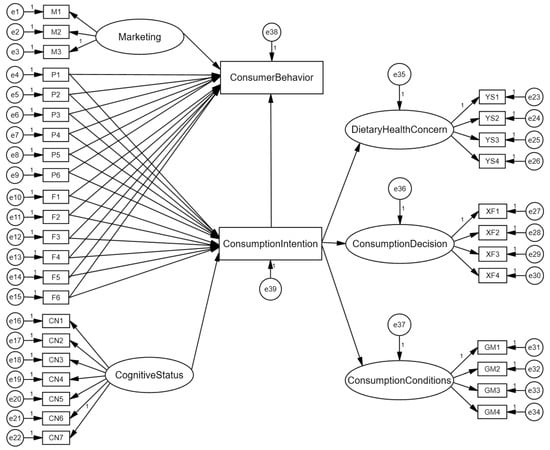
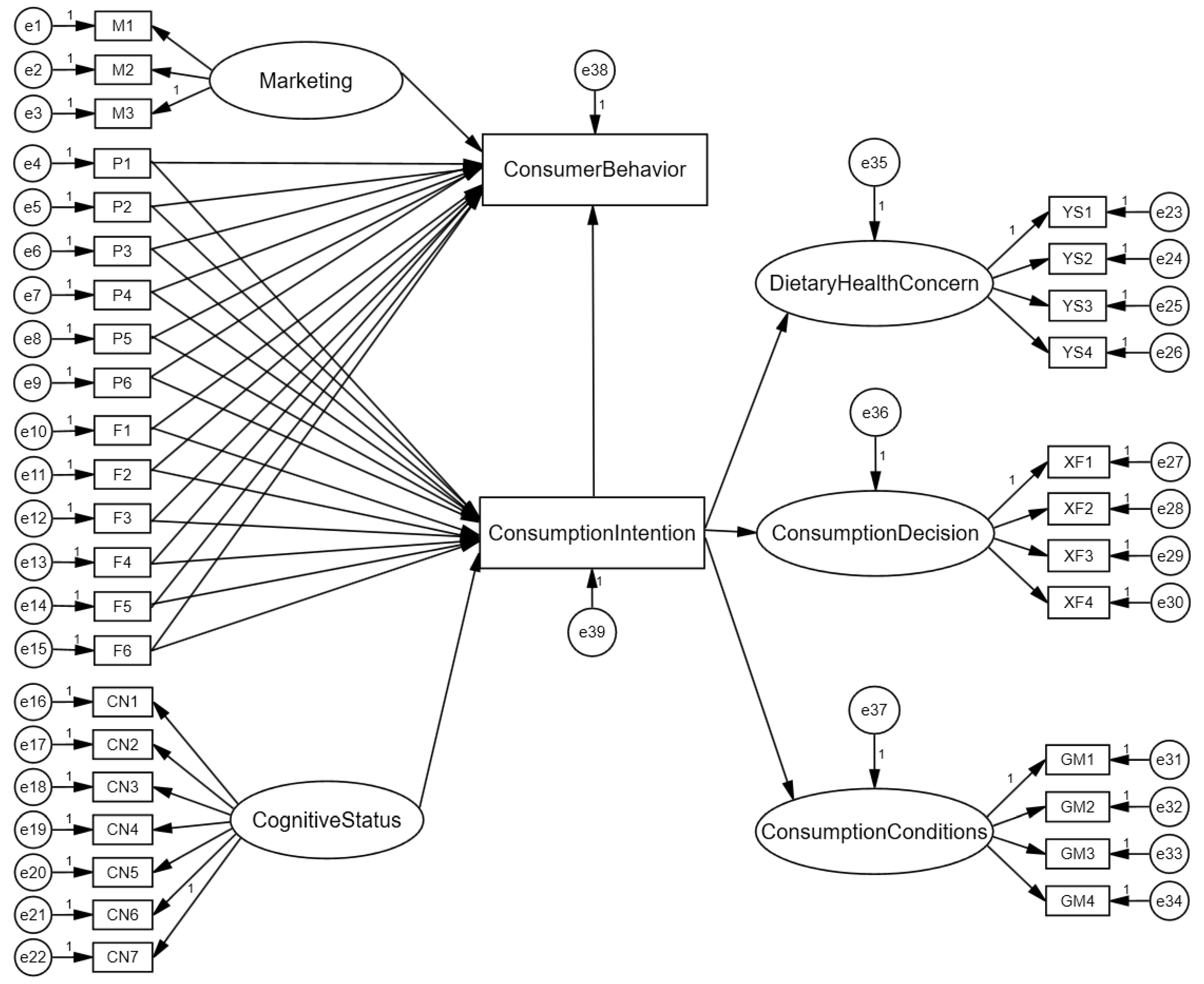
We used SEM to examine the relationships among latent variables, observed (manifest) variables, and error terms. Observed variables (directly measured from surveys) are shown as rectangles, whereas latent variables (unobserved theoretical constructs) are shown as ellipses. Building on the theoretical framework and research hypotheses formulated earlier, an SEM to analyze how the determinants of green seafood consumption intention affect actual consumption behavior was constructed. As shown in Figure 3, the final model comprises 7 latent variables and 35 observed indicators.
Figure 3.
SEM of green seafood consumption behavior. Notes: Path coefficients shown are standardized estimates. “e1” to “e39” denote error terms.
4.4.2. Model Fit Assessment
Before proceeding with hypothesis testing, the overall fit of the SEM was evaluated. As presented in Table 6, the CMIN/DF ratio is 1.869, which falls within the acceptable range of 1–3. The RMSEA value is 0.046, below the 0.05 threshold for good fit, and IFI, TLI, and CFI all exceed 0.90. These results indicate that the proposed model fits the data well and is statistically acceptable.
Table 6.
Model fit assessment of the SEM.
4.4.3. Hypothesis Testing Results
The standardized test results of SEM for factors influencing green seafood consumption behavior are presented in Table 7, with the corresponding path coefficients illustrated in Figure 3. Hypothesis H1 was supported, while Hypothesis H2 received partial support. The detailed results are as follows:
Table 7.
Hypothesis testing results for the SEM of green seafood consumption behavior.
Individual characteristics, household characteristics, and cognitive status all exhibit significant positive effects on consumption intention, supporting hypotheses H1. Among these hypotheses, cognitive status had the most significant influence on consumption intention, followed by household characteristics and individual characteristics. This indicates that in the formation of green seafood consumption intention, factors such as consumers’ age, residential status, income level, household structure, consumption habits, and level of knowledge about green seafood all play significant roles. Notably, the more accurate and comprehensive consumers’ understanding of green seafood, the stronger their intention to purchase. Additionally, larger households and those with higher income levels demonstrate greater demand for green seafood, thereby enhancing their consumption intention.
The Hypothesis H2 section passed the test. Individual characteristics and marketing factors significantly and positively affect consumption behavior, while the path coefficient for household characteristics is not statistically significant. Among the respondents, female, elderly, highly educated and high-income consumers are more likely to engage in green seafood consumption behavior. Marketing factors exert a stronger influence than individual characteristics. Specifically, price, purchase channels, and market supply conditions are more effective at promoting green seafood consumption. These factors outperform consumer individual characteristics in driving actual purchasing behavior. A plausible explanation is that promotional activities and marketing campaigns in the marketplace help mitigate information asymmetry and improve the consumption environment, thereby more effectively stimulating consumption behavior [47]. Household characteristics, however, did not exert a significant influence on green seafood consumption behavior, likely constrained by factors such as household size, structure, and income level. Survey data from this study indicate that household food expenditures accounted for only about 30% of total expenditures on average among all respondents, suggesting that such expenditures are squeezed by other rigid financial demands. For instance, households with children typically allocate substantial resources to education, while those with a higher proportion of elderly members face greater healthcare costs. Consequently, even if some households exhibit an intention to consume green seafood, such intentions may not translate into purchasing behavior due to income constraints and the prioritization of other essential expenses [48].
The hypothesis that green seafood consumption intention is positively associated with consumption behavior is supported. Consumers typically evaluate their personal income, household structure, and level of cognition regarding green seafood. When guided by marketing stimuli, they become more likely to engage in actual purchasing. However, the path coefficient between consumption intention and behavior is only 0.125, which is relatively weak compared to the influence of marketing factors. This suggests a low degree of translation from intention to action, revealing a pronounced intention–behavior gap in green seafood consumption. According to the TPB, behavior is jointly determined by ‘intention’ and ‘perceived behavioral control’. In this study, “purchase intention” reflects the behavioral motivation driven by attitude and subjective norms, essentially addressing “whether I want to buy”; whereas “marketing factors” (affordable price, convenient channels) represent the core manifestation of “perceived behavioral control” in the consumption context, addressing “whether I can buy”. The regression results from the structural equation modeling indicate that, for green seafood products, the constraining power of “whether I can” (perceived behavioral control) is significantly stronger than the psychological driving force of “whether I want to” (behavioral intention). Even when consumers hold positive environmental attitudes and purchase intentions, if faced with excessive price premiums or purchasing inconvenience, their “perceived behavioral control” diminishes, preventing intentions from translating smoothly into behavior. Unlike conventional products, green products are often accompanied by a green premium. Consequently, the higher coefficient for marketing factors fundamentally suggests that the primary bottleneck in the current development of the green seafood market may not be insufficient consumer willingness, but rather the supply side’s failure to effectively lower the barriers to action. This finding necessitates a shift in related policies and marketing strategies from advocacy focused on “enhancing willingness” to a focus on “behavioral enablement” through situational structuring, systematically reducing the economic and accessibility costs of the behavior. One important explanation lies in the pervasive information asymmetry in the market: consumers often find it difficult to accurately identify the green attributes and true quality of aquatic products, which raises both search costs and decision uncertainty and thereby weakens the conversion of pre-existing consumption intentions into actual purchasing behavior. At the same time, the relatively high price premium of green aquatic products further increases consumers’ willingness-to-pay threshold, ultimately giving rise to the observed discrepancy between high consumption intention and low realized behavior.
5. Conclusions and Suggestions
In summary, this study employs questionnaire survey data collected from Chinese consumers to empirically analyze the consumption intention and behaviors concerning green seafood products. Using an SEM approach, it systematically examines the multidimensional factors and underlying mechanisms influencing consumption decisions, thereby identifying the key determinants of the intention–behavior gap. The main findings are as follows:
First, the increasing emphasis among Chinese consumers on health, nutrition, and food safety has significantly strengthened their intention to purchase green seafood products. This intention is jointly driven by ecological cognition and the pursuit of a high-quality lifestyle. Consumer motivations exhibit a dual characteristic-extending from individual health needs to a sense of social responsibility. In addition to focusing on their own well-being and nutritional needs, consumers are also showing greater concern for environmental protection, sustainable development, and broader social welfare. Such consumption trends underscore the inherent connection between socio-economic progress, improved living standards, and the evolution of consumption patterns. They further signal the gradual embedding of green consumption into mainstream social values and cultural norms.
Second, despite the comparative advantages of green seafood products in consumer choice, a notable disparity persists between consumption intention and behavior. This intention–behavior gap is primarily attributable to information asymmetry in green seafood quality, an incomplete certification system, limited product variety, and higher price points. Together, these issues reveal systemic shortcomings in the current green seafood market concerning information transparency, supply capacity, and pricing structures. The discrepancy not only hampers market penetration but also indicates that consumers encounter multiple obstacles in their consumption decision-making process, including insufficient cognition, low trust, and constrained accessibility.
Third, consumption behaviors toward green seafood are significantly influenced by individual and household characteristics. Variations in gender, age, income level, education level, and household size lead to heterogeneous patterns in consumption intention and expenditure proportions. Households with female household heads, elderly members, higher education levels, or higher income levels, particularly those residing in densely populated areas, exhibit a greater propensity to purchase green seafood products. In the short term, market expansion is hindered by limited cognition, price sensitivity, and supply constraints. In the long run, however, rising household incomes, improved information transparency, and a more developed market infrastructure are expected to facilitate the gradual structural substitution of conventional seafood by green seafood products. This shift is likely to position green seafood as a critical component of sustainable consumption and further promote the transition toward higher-quality and environmentally conscious consumption patterns.
Based on the above research conclusions, this study proposes the following recommendations:
(1) It is essential to strengthen the institutional framework and build a consumer trust system. A unified certification standard for green seafood should be established. This can be achieved by integrating existing certification systems, clearly defining certification processes and mark usage norms, thereby reducing consumer identification costs. A product quality traceability system should also be developed, leveraging digital technology to create a full-chain information platform that provides transparent and verifiable source information. Furthermore, efforts to enhance public understanding should be intensified. Industry associations and media should be supported in conducting regular educational campaigns. These campaigns can popularize the concept and significance of green seafood.
(2) Efforts should be made to optimize the market supply structure and improve product accessibility. We should guide production enterprises to diversify product offerings, expanding from traditional fish and shrimp to include categories such as shellfish and algae, thereby developing differentiated product matrices tailored to various consumer segments. Sales channels require diversification. Traditional outlets such as supermarkets and seafood markets need to be consolidated. Emerging platforms like fresh food e-commerce and community group buying warrant active development. These measures will enhance market coverage and purchase convenience. The price formation mechanism should also be improved by reducing enterprise costs through policy tools such as tax incentives and production subsidies, and by encouraging differentiated pricing strategies to meet diverse consumption demands.
(3) It is necessary to implement precision marketing strategies and cultivate sustainable consumption habits. Precision communication should target core consumer groups. For female consumers, messaging should emphasize family health. For high-income and highly educated groups, the value proposition should focus on holistic quality of life enhancement, thereby strengthening brand recognition. Consumption experiences should be innovated through interactive methods such as tasting events and origin tracing activities to strengthen emotional connection, while membership systems can help cultivate stable consumption habits. Finally, a multi-stakeholder consumption promotion framework should be institutionalized, involving coordinated efforts from government, enterprises, and industry associations. The design and implementation of incentive mechanisms, such as green consumption reward programs, can effectively enhance public engagement and behavioral adoption.
6. Future Research Directions
Beyond the findings presented here, this study identifies several directions for future inquiry. First, future research should expand geographic coverage beyond coastal China to include inland and western regions. Such expansion would enable regional comparisons that reveal how economic development and cultural contexts moderate green seafood consumption patterns. Second, longitudinal designs would complement our cross-sectional data by tracking how cognition, intention, and behavior evolve over time, particularly around policy interventions or market changes. Third, future studies should incorporate sociocultural factors such as face consciousness, social norms, and trust, which may shape green consumption but were not included in our model. Fourth, combining survey methods with experimental designs or behavioral tracking data-such as actual purchase records-could address potential social desirability bias and provide more objective measurement. Fifth, cross-national comparative studies would further illuminate how cultural values and institutional environments influence the intention–behavior gap. Finally, intervention research evaluating the effectiveness of certification programs, price subsidies, or information campaigns would provide actionable evidence for policymakers and practitioners seeking to bridge the gap between consumer intention and action.
Supplementary Materials
The following supporting information can be downloaded at: https://www.mdpi.com/article/10.3390/su18073166/s1, Table S1: Variables, measurement indicators, and contents; Table S2: Distribution ratio of consumers’ overall awareness of green seafood products (%); Table S3: Distribution proportion of main reasons for consumers to buy green seafood (%); Table S4: Distribution proportion of the main reasons why consumers did not buy green seafood (%); Table S5: Distribution proportion of identification approaches of green seafood (%); Table S6: Distribution proportion of understanding ways of green seafood (%); Table S7: Distribution proportion of consumers’ attention to dietary health (%); Table S8: Distribution proportion of factors influencing consumers’ decision to buy green seafood (%); Table S9: Conditional distribution proportion of consumers’ purchase of green seafood (%); Table S10: Green seafood purchase status (%); Table S11: Primary channels for purchasing green seafood (%).; Table S12: Proportion of green seafood in household food expenditure (%); Table S13: Descriptive statistics and normality test results for measurement items.
Author Contributions
Conceptualization, B.C. and Q.H.; methodology, B.C.; software, Z.W.; validation, Q.H., B.C. and Y.Z.; formal analysis, Z.W.; investigation, Y.L.; resources, Q.H.; data curation, Y.L.; writing—original draft preparation, B.C.; writing—review and editing, Q.H. and Y.Z.; visualization, Z.W.; supervision, Q.H.; project administration, B.C.; funding acquisition, B.C. and Q.H. All authors have read and agreed to the published version of the manuscript.
Funding
This research was funded by the National Natural Science Foundation of China (72172069), the Philosophy and Social Science Foundation of Zhejiang Province (25ZK074Z). And The APC was funded by Chenbin.
Institutional Review Board Statement
The study was approved by the Ethics Committee of Ningbo University (protocol code NBU-2025-004 and 18 February 2025 of approval).
Informed Consent Statement
Informed consent was obtained from all subjects involved in the study.
Data Availability Statement
The dataset generated and analysed in this study is not publicly available. The dataset is available from the corresponding author on reasonable request.
Conflicts of Interest
The authors declare no conflict of interest.
References
- Yu, J.; Han, Q. Food security of mariculture in China: Evolution, future potential and policy. Mar. Policy 2020, 115, 103892. [Google Scholar] [CrossRef] [Scilit]
- Kim, B.T.; Lee, M.K. Consumer preference for eco-labeled seafood in Korea. Sustainability 2018, 10, 3276. [Google Scholar] [CrossRef] [Scilit]
- Jeong, H.K.; Park, S.H. Policy Priorities Linking Seafood Supply Chain Stability and Seafood Food Security for Sustainable Food Systems: An IPA Case Study of Busan. Sustainability 2026, 18, 1188. [Google Scholar] [CrossRef] [Scilit]
- Cundy, M.E.; Santana-Garcon, J.; McLennan, A.G.; Ayad, M.E.; Bayer, P.E.; Cooper, M.; Corrigan, S.; Harrison, E.; Wilcox, C. Seafood label quality and mislabelling rates hamper consumer choices for sustainability in Australia. Sci. Rep. 2023, 13, 10146. [Google Scholar] [CrossRef] [Scilit]
- Hammarlund, C.; Svensson, K.; Asche, F.; Bronnmann, J.; Osmundsen, T.; Nielsen, R. Eco-certification in aquaculture–economic incentives and effects. Rev. Fish. Sci. Aquac. 2025, 33, 402–415. [Google Scholar] [CrossRef] [Scilit]
- Almeida, C.; Altintzoglou, T.; Cabral, H.; Vaz, S. Does seafood knowledge relate to more sustainable consumption? Br. Food J. 2015, 117, 894–914. [Google Scholar]
- Cooke, S.J.; Murchie, K.J.; Danylchuk, A.J. Sustainable “seafood” ecolabeling and awareness initiatives in the context of inland fisheries: Increasing food security and protecting ecosystems. BioScience 2011, 61, 911–918. [Google Scholar] [CrossRef] [Scilit]
- Cardoso, C.; Lourenço, H.; Costa, S.; Gonçalves, S.; Nunes, M.L. Survey into the seafood consumption preferences and patterns in the Portuguese population. Gender and regional variability. Appetite 2013, 64, 20–31. [Google Scholar]
- Gibson, K.E.; Sanders, C.E.; Byrd, A.R.; Lamm, K.W.; Lamm, A.J. The influence of sustainability on identities and seafood consumption: Implications for food systems education for Generation Z. Foods 2023, 12, 1933. [Google Scholar] [CrossRef] [Scilit]
- Kidane, D.G.; Brækkan, E.H. Global seafood demand growth differences across regions, income levels, and time. Mar. Resour. Econ. 2021, 36, 289–305. [Google Scholar] [CrossRef] [Scilit]
- Wessells, C.R.; Johnston, R.J.; Donath, H. Assessing consumer preferences for ecolabeled seafood: The influence of species, certifier, and household attributes. Am. J. Agric. Econ. 1999, 81, 1084–1089. [Google Scholar] [CrossRef] [Scilit]
- Richter, I.G.M.; Klöckner, C.A. The psychology of sustainable seafood consumption: A comprehensive approach. Foods 2017, 6, 86. [Google Scholar] [CrossRef] [Scilit]
- Chae, M.J.; Kim, Y.; Roh, T. Consumers’ attention, experience, and action to organic consumption: The moderating role of anticipated pride and moral obligation. J. Retail. Consum. Serv. 2024, 79, 103824. [Google Scholar] [CrossRef] [Scilit]
- Rozenkowska, K. Theory of planned behavior in consumer behavior research: A systematic literature review. Int. J. Consum. Stud. 2023, 47, 2670–2700. [Google Scholar] [CrossRef] [Scilit]
- Kumar, N.; Garg, P.; Singh, S. Pro-environmental purchase intention towards eco-friendly apparel: Augmenting the theory of planned behavior with perceived consumer effectiveness and environmental concern. J. Glob. Fash. Mark. 2022, 13, 134–150. [Google Scholar] [CrossRef] [Scilit]
- Lavuri, R. Extending the theory of planned behavior: Factors fostering millennials’ intention to purchase eco-sustainable products in an emerging market. J. Environ. Plan. Manag. 2022, 65, 1507–1529. [Google Scholar] [CrossRef] [Scilit]
- Farmery, A.K.; O’Kane, G.; McManus, A.; Green, B.S. Consuming sustainable seafood: Guidelines, recommendations and realities. Public Health Nutr. 2018, 21, 1503–1514. [Google Scholar] [CrossRef] [Scilit]
- Richter, I.; Thøgersen, J.; Klöckner, C.A. Sustainable seafood consumption in action: Relevant behaviors and their predictors. Sustainability 2017, 9, 2313. [Google Scholar] [CrossRef] [Scilit]
- Bronnmann, J.; Stoeven, M.T.; Quaas, M.; Asche, F. Measuring motivations for choosing ecolabeled seafood: Environmental concerns and warm glow. Land Econ. 2021, 97, 641–654. [Google Scholar] [CrossRef] [Scilit]
- Asche, F.; Yang, B.; Gephart, J.A.; Smith, M.D.; Anderson, J.L.; Camp, E.V.; Garlock, T.M.; Love, D.C.; Oglend, A.; Straume, H.-M. China’s seafood imports—Not for domestic consumption? Science 2022, 375, 386–388. [Google Scholar] [CrossRef] [Scilit] [PubMed]
- Shen, Y.; Wang, D.; Luo, B. Research on Intelligent Control of Green Seafood Culture Box. Adv. Mar. Sci. 2020, 7, 89–96. [Google Scholar]
- Li, Y.; Zhong, C. Factors driving consumption behavior for green aquatic products. Br. Food J. 2017, 119, 1442–1458. [Google Scholar] [CrossRef] [Scilit]
- Zhang, H.; Sun, C.; Wang, Z.; Che, B. Seafood consumption patterns and affecting factors in urban China: A field survey from six cities. Aquac. Rep. 2021, 19, 100608. [Google Scholar] [CrossRef] [Scilit]
- Ding, L.; Liu, M.; Yang, Y.; Ma, W. Understanding Chinese consumers’ purchase intention towards traceable seafood using an extended Theory of Planned Behavior model. Mar. Policy 2022, 137, 104973. [Google Scholar] [CrossRef] [Scilit]
- Xu, H.; Wu, T.; Budhathoki, M.; Fang, D.S.; Zhang, W.; Wang, X. Consumption patterns and willingness to pay for sustainable aquatic food in China. Foods 2024, 13, 2435. [Google Scholar] [CrossRef] [Scilit]
- Ajzen, I. From Intentions to Actions: A Theory of Planned Behavior; Springer: Berlin/Heidelberg, Germany, 1985. [Google Scholar]
- Fishbein, M.; Ajzen, I. Belief, Attitude, Intention and Behavior: An Introduction to Theory and Research; Addision Wesley: Reading, MA, USA, 1975. [Google Scholar]
- Lucas, S.; Salladarré, F.; Brécard, D. Green consumption and peer effects: Does it work for seafood products? Food Policy 2018, 76, 44–55. [Google Scholar] [CrossRef] [Scilit]
- Peiró-Signes, A.; Miret-Pastor, L.; Segarra-Oña, M. Effects of green certification and labelling on the Spanish fisheries industry. Aquac. Rep. 2020, 17, 100396. [Google Scholar] [CrossRef] [Scilit]
- Zhang, Z.; Zheng, L. Consumer community cognition, brand loyalty, and behaviour intentions within online publishing communities: An empirical study of Epubit in China. Learn. Publ. 2021, 34, 116–127. [Google Scholar] [CrossRef] [Scilit]
- Aitken, J.A.; Bone, R.; Britt, M.; Leets, N. Sustainability is in the details: Empowering seafood consumers with informative labels. Marit. Stud. 2024, 23, 41. [Google Scholar] [CrossRef] [Scilit]
- Xia, L.; Wu, X.; Chai, L. A Review on the Influencing Factors of Residents’ Low-carbon Consumption Intention and Behavior. J. North China Electr. Power Univ. 2023, 50, 33–42. [Google Scholar]
- Sheng, G.; Yue, B.; Xie, F. The Driving Mechanism of Chinese Residents’ Green Consumption Behavior from the Perspective of Environmental Co-Governance. Stat. Inf. Forum 2019, 34, 109–116. [Google Scholar]
- Zhou, J.; Han, F.; Wei, K.; Yan, Z. A Review on Residents’ Green Consumption Research. J. Zhejiang Univ. 2022, 52, 57–68. [Google Scholar]
- Zhao, X.; Fu, J.; Pang, X. Study on Urban Residents’ Green Consumption Behaviors and Their Influencing Factors. For. Resour. Manag. 2020, 1, 191–198. [Google Scholar]
- Huang, L.; Wu, X.; Chen, S.; Li, X.; Zhong, Z. Influence Factors on Consuming Behavior of Green Agriculture Products and Investigation in Jiangxi. Grain Sci. Technol. Econ. 2021, 46, 7–14. [Google Scholar]
- Xiong, P.; Zhao, Z.; Chen, H. Research on the Influencing Factors of Public Green Consumption Behavior under the Carbon Peak Target. Bus. Econ. Res. 2022, 15, 52–56. [Google Scholar]
- Nguyen, L.; Gao, Z.; Anderson, J.L. Perception shifts in seafood consumption in the United States. Mar. Policy 2023, 148, 105438. [Google Scholar] [CrossRef] [Scilit]
- Li, Y.; Tang, D.; Tao, T.; Guo, N.; Li, S.; Zhang, Z.; Yang, X. The impact of tourism product harm crisis attribute on travel intention. In 8th International Conference on Education, Management, Information and Management Society (EMIM 2018); Atlantis Press: Paris, France, 2018; pp. 461–466. [Google Scholar]
- Gregory, R.J. Psychological Testing: History, Principles, and Applications; Pearson Education India: New Delhi, India, 2004. [Google Scholar]
- Sterling, B.; Gooch, M.; Dent, B.; Marenick, N.; Miller, A.; Sylvia, G. Assessing the value and role of seafood traceability from an entire value-chain perspective. Compr. Rev. Food Sci. Food Saf. 2015, 14, 205–268. [Google Scholar] [CrossRef] [Scilit] [PubMed]
- Hoque, M.; Akhter, N.; Chowdhury, M.S.R. Consumers’ Preferences for the Traceability Information of Seafood Safety. Foods 2022, 11, 1675. [Google Scholar] [CrossRef] [Scilit]
- Yu, G.; Liu, B.; Yin, Y. The dimensional composition and scale development of urban destination image from the perspective of inbound business tourists. Resour. Dev. Mark. 2023, 39, 1409–1417. [Google Scholar]
- Fornell, C.; Larcker, D.F. Evaluating structural equation models with unobservable variables and measurement error. J. Mark. Res. 1981, 18, 39–50. [Google Scholar] [CrossRef] [Scilit]
- Purnomo, Y. A Scale for Measuring Teachers’ Mathematics-Related Beliefs: A Validity and Reliability Study. Int. J. Instr. 2017, 10, 23–38. [Google Scholar]
- Kline, R.B. Principles and Practice of Structural Equation Modeling; The Guilford Press: New York, NY, USA; London, UK, 2016; p. 71. [Google Scholar]
- Pupavac, S.M.; Jovanović, G.K.; Linšak, Ž.; Glad, M.; Traven, L.; Žeželj, S.P. The influence on fish and seafood consumption, and the attitudes and reasons for its consumption in the Croatian population. Front. Sustain. Food Syst. 2022, 6, 945186. [Google Scholar] [CrossRef] [Scilit]
- Olsen, S.O. Understanding the relationship between age and seafood consumption: The mediating role of attitude, health involvement and convenience. Food Qual. Prefer. 2003, 14, 199–209. [Google Scholar] [CrossRef] [Scilit]

Disclaimer/Publisher’s Note: The statements, opinions and data contained in all publications are solely those of the individual author(s) and contributor(s) and not of MDPI and/or the editor(s). MDPI and/or the editor(s) disclaim responsibility for any injury to people or property resulting from any ideas, methods, instructions or products referred to in the content. |
© 2026 by the authors. Licensee MDPI, Basel, Switzerland. This article is an open access article distributed under the terms and conditions of the Creative Commons Attribution (CC BY) license.