


Abstract
Education occupies an important place among the 17 Sustainable Development Goals. It plays a role in the process of spreading awareness of the concept—its directions, meaning, and goals. According to the idea of the SDG, it is to be universally available to the world’s communities, with the aim of bridging social inequalities, as well as increasing the capacity for responsible functioning and development. The authors of this study believe that knowledge about sustainable development is crucial for shaping social attitudes that determine the uninterrupted development of the world’s economies towards sustainability. In their opinion, it is essential to pay particular attention to ensuring sustainable competences in the education process, which is aimed at preparing staff to perform professional roles in the socio-economic sphere and to be competent in the field of sustainable development. Hence, the aim of this study is to examine the level of awareness of students from selected higher education schools in Poland in this area. The study was conducted on the basis of a diagnostic survey, and the analysis of the results was carried out using qualitative methods, as well as quantitative methods in an in-depth study (logistic regression, supported by PQStat software version 1.8.4.164. The research results indicated that the surveyed students’ knowledge of sustainable development is good, as confirmed by 91% of responses. A key factor in strengthening this knowledge is the educational process implemented as part of their studies (64% of responses). Events supporting the teaching process, such as conferences or meetings with experts, are particularly important for shaping this knowledge. This indicates a high level of student motivation to explore this knowledge and apply it to a model of social behavior, which is rated as responsible by 94% of respondents. In-depth research confirms the above. The odds ratio of 12.994 with a confidence interval of −95% CI: 1.894–+95% CI: 3.238 for the factor of scientific events in the process of supporting green education demonstrates the significance of the findings. Strengthening green education with thematic scientific events is, therefore, an attractive and anticipated form of gaining knowledge on the SDGs by students, and undertaking these events is a recommendation resulting from the presented research. These results are important for modeling sustainable education in terms of the development potential of human resources.
1. Introduction
Socio-economic modernity is currently associated with sustainable development. This is because development in the socio-economic dimension needs to be realized without harming future generations. Hence, the implementation of aspirations in the sphere of improving the quality of life [1], as well as strengthening the stability of the conditions for economic activities, must take into account the aspect of caring for the environment. Simultaneous implementation of goals in the social, economic and environmental dimensions is possible and absolutely necessary to minimize the harmful impact of human activity on the planet, resulting in its degradation and progressive, destructive climate change. Therefore, the promotion of the idea of sustainable development is an essential prerequisite for the implementation of sustainable practices into socio-economic daily life, in which process education for sustainable development plays a key role. Importantly, education has been placed among the fundamental goals of sustainable development [2], mobilizing societies to promote and implement the idea of sustainable education, focused on transformation arising from the development of contemporary civilization [3]. This issue is addressed in a number of regulations articulating the need to incorporate aspects of sustainable development into various dimensions of education [3]. In this regard, the following are highlighted as crucial:
- -
- The Decade of Education for Sustainable Development (2005–2014), adopted by the UN on 20 December 2002, indicates the direction of development through the prism of improving the quality of education, which is the engine of civilizational transformation [4], overseen by the United Nations Educational, Scientific and Cultural Organization (UNESCO) [2,5];
- -
- The Global Action Programme on Education for Sustainable Development, Japan 2014—a follow-up program to the Decade of Education, focused on intensifying efforts for sustainable education, including by strengthening education policies and developing learning environments, strengthening the potential of young people to develop competencies and their motivation to learn [6];
- -
- The 2030 Agenda, UN 2015, which presented a sustainable development strategy captured in the 17 SDGs [7,8];
- -
- The Decade of Education for Sustainable Development (ESD) by 2030, or ESD 2030 (Education for Sustainable Development for 2030), established by UNESCO in 2021 in Berlin [9];
- -
- The Eurydice Report, Learning for Sustainable Development in Europe: Building Competencies and Supporting Teachers and Schools, 2024, aimed at creating a sustainable future based on ensuring appropriate education in the SDGs, through implementing sustainable learning strategies and supporting schools and teachers in this process [10].
The regulations indicated above place education among the key social aspects determining economic development [11], in light of the importance of human resources’ potential—their innovation and competitiveness, stemming from sustainable competencies. This is strongly articulated in the contemporary literature. The evolution of the educational process requires ongoing research on the achieved learning outcomes. These studies are, of course, legally conducted by educational institutions, using methods specific to specific forms of education. However, these results are insufficiently linked to the measurement of social awareness in this area, a key criterion for assessing the role of education in implementing sustainable development and analyzing the necessary directions for strengthening it, particularly in the Polish market, which indicates an existing research gap. The role of education in this regard is relatively strongly articulated in the pages of the contemporary literature, but the issue of the effects of the education in question, captured in the measurement of public awareness in this regard, has been insufficiently explored. Therefore, assuming that knowledge about sustainable development is crucial for shaping social attitudes and competent personnel, which determine the uninterrupted development of world economies towards sustainability, the aim of this paper was to examine the level of awareness of students of selected higher education schools in Poland in this area. The cognitive dimension of the paper was oriented towards establishing the general level of knowledge of the students accepted for the study, with particular emphasis on the sources of its acquisition and interest in this field.
The study was conducted on the basis of a diagnostic survey, and the analysis and evaluation of the results were carried out using qualitative methods, as well as quantitative methods in an in-depth study.
The adopted objectives of the paper determined its structure:
- -
- Part 1—Introduction;
- -
- Part 2—Literature review;
- -
- Part 3—The results of the study (in qualitative and quantitative terms);
- -
- Part 4—Discussion;
- -
- Part 5—Summary and conclusions.
The scope of the research and analysis shaped its limitations. The results of the findings and inference provided an opportunity to respond to the diagnosed information gap.
2. Literature Review
2.1. Education in Light of the Challenges of Sustainable Development in the Modern World
Sustainable development of the world is progressing. The current of the changes taking place depends on many factors considered from a socio-economic perspective. Among the key ones are economic determinants, related to the financing side of sustainable activities, as well as those related to knowledge in the field of sustainable development, with particular attention to aspects of public awareness in the sphere of the changes taking place, significantly affecting the scale and pace of expected development [12]. Hence, education for sustainable development is considered a key determinant of strengthening sustainable actions, resulting in the continuous integration of sustainability into teaching practice [13]. What is important in this area is cooperation between educational units, scientific research institutions and business, aimed at learning from good practices in the process of modeling educational programs in this area [14].
In light of the needs diagnosed and highlighted in the literature for strengthening knowledge of the idea of sustainable development, the promotion of education in this area should be considered crucial in modeling sustainable functioning, which is increasingly part of the mission of education [15,16]. This is because the educational process is a period of forming a system of values [17], preparing people to live according to the applicable principles and laws, which include the guidelines for sustainable development [18]. The above solidifies the legitimacy of a multifaceted exploration of the thread of education in sustainable development, emphasizing the timeliness and importance of this issue on a global scale. Monitoring the effects of education on the SDGs is particularly important in this regard, in the context of analyzing the effectiveness of educational practices in this area at the level of individual countries. Researching this topic in Poland is particularly important to assess the degree to which sustainable development issues are incorporated into educational programs, as emphasized in the cited literature [10] and included in reports, and to improve the sustainable competencies of future staff. With the above in mind, the importance of education in the promotion of sustainable development in Poland was considered an important research thread, capturing it in Hypothesis 1:
Hypothesis 1.
Education assumes an important role in the promotion of the idea of sustainable development in Poland.
2.2. The Role of Education for Sustainable Development
The role of education for sustainable development is explored in the literature in many ways. E. Yli-Panula et al. and Z. Veinovic point to its fundamental importance and emphasize that education for sustainable development should be implemented at every level of development of a social unit, at every age, as articulated in the Sustainable Development Strategy [19,20]. Not least, the issue of education for sustainable development concerns the institutional dimension, as pointed out by W. Leal Filho et al. [21]. This is because it is important to clarify and understand contemporary values [17], as well as to acquire the ability to think systemically [22]—from the perspective of the goal, which is currently considered to be responsibility in socio-economic life, determining responsibility in the environmental sphere and motivating the search for sustainable solutions for functioning in accordance with sustainable requirements. The above contributes to the awareness of the expectations of modern development and the acceptance of the promoted mechanisms for responsible action, ultimately contributing to the realization of development in a sustainable direction [23,24]. A fundamental role in the process of bringing issues from the sphere of theory and practice of sustainable development is carried out by education, as pointed out by S. Stein and by X. Du et al. [25,26], with a special role for higher education in this regard [27,28,29,30]. Education oriented towards the promotion of sustainable ideas and practices creates a paradigm of the expected contemporary safe functioning in the socio-economic dimension, identified with the new model of development of modern civilization [31,32]. According to the above, preparation for responsible functioning in the community and economy, with reference to the need to balance the system of aspirations in the social, economic and environmental perspectives, ought to be formed successively, over the course of the process of youth education. T. Waas et al., as well as W. L. Filho, emphasize that graduates of the various methodological centers will perform roles in the economy and society in the future [33,34], and the degree of their preparation for these tasks will influence practical activities in this regard in the future.
Responsibility for social welfare and environmental security [35] in the future period is shaped today, and its source is the quality of knowledge acquired by current students of various education modules globally [36]. A sensible approach to education in the field of sustainable development will ensure access to appropriately educated staff who, in the long run, will be able to influence the formation of appropriate social attitudes in their environment, as indicated by T. S. Wright et al. and R. Lozano et al. [37,38], and which has been referenced over the years in national environmental education strategies in the context of the tasks assigned to this process [39,40,41,42]. Importantly, the process of education taking into account the issues of sustainable development contributes to the formation of principles and values [32] in a society where responsibility—for actions, for the planet, for future generations—assumes key importance [8], and which can be considered in the formation of a specific sustainable morality [33]. Thus, the capacity of the education system in the area explored in real terms shapes the arrangement of future activities, which strengthens the legitimacy of undertaking research challenges oriented towards the search for answers to the question of whether education in the sphere of sustainable development is effective. In this regard, it is essential to supplement current knowledge regarding the importance of sustainable practices in sustainable education from the perspective of their impact on sustainable community development. The importance of sustainable development in education should be recognized as a key determinant of national sustainable development, which the authors intend to verify at the Polish level, capturing the above in Hypothesis 2:
Hypothesis 2.
Education is a determinant of Poland’s sustainable development—now and in the future.
2.3. Mission of Higher Education in the Formation of Sustainable Social Attitudes and Sustainable Economic Development
Knowledge of the concept of sustainable development is key to its successful implementation. A. Plonka et al. point out that understanding the idea of sustainable development can be a challenge for the average citizen, resulting in a poor level of public understanding of it, such as the case in Poland [32]. The limited level of knowledge in Poland, but also in other countries, has been pointed out for years in a number of publications [32,43,44], emphasizing the importance of education in this area and the need to continuously strengthen it. The importance of this social mission is confirmed by the fact that the implementation of principles regarding sustainable development in socio-economic everyday life (at the post-educational stage) involves a great deal of effort, due to social resistance to sustainable change, as indicated, among others, by M. Dacko et al. [45]. Therefore, the promotion of certain behavioral models requires early action for the development of a sustainable mentality in the socio-economic dimension.
Implementing the goal of strengthening public awareness in the sphere of sustainable development is the subject of a number of studies. The basic dimension of assessing the effectiveness of this process is carried out on behalf of government institutions at the national level. In Poland, the above lies within the competence of the Ministry of Climate and Environment, with efforts aimed at probing social competence—knowledge of sustainable development and the ability to translate it into ecological thinking and behavior, in order to diagnose current educational needs for responsible functioning in accordance with the idea in question [14,39,40].
The goal defined as “Education for Sustainable Development” is included among Poland’s national sustainable development priorities, subject to monitoring. For the purposes of monitoring the effects of SDG education, nationwide indicators are used [46], the resources of which can be analyzed in studies by the Central Statistical Office [47]. The Sustainable Development Goals are also analyzed at the level of educational institutions, where the effectiveness of the educational process is analyzed from the perspective of mechanisms for developing skills and competencies important from the perspective of individual social groups and the country, by offering high-quality education aimed at raising awareness and developing the need to implement positive changes in everyday socio-economic life [48]. The concept of sustainable development should be viewed as a philosophical and social trend oriented towards redefining the system of human values in a responsible direction [49].
Available data indicate that Poland is achieving good results in implementing the SDGs, with particular emphasis on improving the quality of education (a moderately good result [50]), as emphasized in the report of the Ministry of Development and Technology [51]. However, it is important to establish research findings related to the effects of equipping society with knowledge, skills, and competencies, as well as the willingness to act towards increasing commitment to sustainable functioning and development, which is consistent with the concept of Education for Sustainable Development [52]. In this context, an interesting and important dimension of this research is probing students’ sustainable awareness, in order to analyze educational needs, considered through the prism of the intended and achieved educational outcomes in the scope explored. In light of the presented considerations, the issue of examining student awareness of sustainable development was deemed important, as captured in Hypothesis 3:
Hypothesis 3.
Raising students’ awareness assumes crucial importance in building a responsible model of social behavior in Poland.
3. Materials and Methods
The structure of the paper was determined by the adopted goal, and its findings are both analytical and empirical in nature. The introduction to the research adopts a conceptual dimension. The next part of the paper presents the background of the research based on a review of the literature and research results relating to the research thread undertaken. The above was done to identify the research gap and justify the adopted research hypotheses. The literature review was conducted using databases of indexed journals, which were searched using keywords adopted for the paper.
The economic dimension of exploring the concept of sustainable development involves assessing the balance between economic, social, and environmental aspects. An important aspect of this measurement is considering the social dimension of ongoing changes [53], particularly in relation to knowledge about sustainable development and sustainable awareness, which education is responsible for shaping. The study of issues in the area of sustainable education is closely related to the activities of higher education schools in this field. The above provides the rationale for conducting the study on a population of students representing selected majors at selected higher education schools in Poland.
The study, which focused on students’ knowledge of sustainable development, was conducted using a voluntary, anonymous diagnostic survey (conducted with informed consent). Students were recruited using the snowball sampling technique. The study was conducted in May 2025 among undergraduate students in the fields of Administration and Security and Economics and Management at three higher education schools located in three Polish voivodeships: Pomeranian, West Pomeranian, and Lubusz. The survey included 282 students, with 278 correctly filled out questionnaires qualifying for the research sample, including 155 completed by students majoring in administration and security, and 123 completed by students majoring in economics and management. All respondents had a uniform education (secondary education), which excluded the need to examine the potential for population differences across groups, both in terms of field of study and location, e.g., using the χ2 test. The research population was composed of students aged 23–34, with the 23–25 age group comprising 127 students, the 26–30 age group comprising 92 students, and the 31–34 age group comprising the remaining population, i.e., 59 students. Respondent characteristics were not included in the study as differentiating variables. The reference subjects of this study are part of the broader research conducted by the authors of this paper. Given the narrow research sample, it should be noted that the results presented here are representative of the population studied and should not be generalized to the entire population.
The study was carried out in the form of a traditional questionnaire. The content of the questionnaire was oriented to diagnose the level of students’ knowledge of sustainable development, as well as to identify the sources of formation of this knowledge.
The survey on this topic included four complex questions, including two closed-ended and two semi-open-ended:
- Are you familiar with the concept of sustainable development? If so, do you believe it is important for the further development of our country?—single choice; select an answer from a list;
- Please indicate the sources from which you obtain knowledge about sustainable development—multiple choice; select an answer from a list with the option to indicate another source (semi-open question);
- Do you believe the concept of sustainable development is important for a better, safer future, and if so, do you strive to live responsibly?—single choice; select an answer from a list;
- Is education in the area of sustainable development important and necessary for you? If not, why?—single choice; select an answer from a list with the option to complete the answer.
The research questions adopted were considered key to assessing the general knowledge and attitudes of the study population regarding sustainable development and the educational process in this area. The short, five-minute survey was designed to engage and encourage students to participate. The obtained results can be used to support the development or improvement of study programs in the fields covered by the study.
For research purposes, the general level of student awareness of sustainable development was assessed based on survey results. The survey was developed using a Likert scale to assess the level of agreement. Economic analysis techniques (causal analysis) were used to analyze the qualitative research results (survey results).
In the area of in-depth research, the results were analyzed based on statistical tests, including, among other things, measuring the correlation of the studied factors, and the concept of the logit function with the measurement of the odds ratio was used to estimate the factors. The in-depth study required the determination of the dependent variable and the independent variables. The explained (dependent) variable relates to the aspect of increasing sustainable awareness of students in Poland, according to the adopted sample and survey results. It was established that education in the course of studies is an important source of information about the idea of sustainable development, shaping the sustainable awareness of the surveyed population; hence, it was adopted as the variable Y1 (dichotomous nature: 0,1; 0—not recorded, 1—recorded). In addition, three actual sources of knowledge were determined, taking them as explanatory (independent) variables, i.e., X1—participation in thematic teaching activities, X2—participation in scientific events, X3—exploration of thematic literature (numerical nature:1–3; 1—low influence on the explanatory variable, 2—significant influence on the explanatory variable, 3 high influence on the explanatory variable).
For the purposes of the study, a test was used to check the significance of the parameters assumed in the model (Wald statistics). Furthermore, confidence thresholds (CIs) were established for the logistic regression model, which are crucial for assessing the significance of the findings. These determinations were made using the statistical tool PQStat version 1.8.4.164. For clarity, the results are presented in tabular format, and the results are visualized.
The methodological concept used was effectively applicable to the evaluation of phenomena of a similar nature [54]. The study in the in-depth part was supported by PQstat software version 1.8.4.164.
The established research design and adopted methodology made it possible to achieve the study’s objective. The scope of the study and the inference fill the diagnosed information gap in the literature. The area established for the study and its scope determine its limitations.
4. Results
Learning about the impact of education in the sphere of sustainable development on the level of students’ sustainable competencies provides knowledge important for assessing the implementation of this concept on socio-economic grounds—now and in the future. Hence, the research, the results of which are discussed in this article, was directed at investigating the level of awareness of students of selected majors at selected higher education schools in Poland in the field of sustainable development. The findings were based on the results of our own research (diagnostic survey), conducted in May 2025 among 278 students of three higher education schools in Poland, in the fields of administration and security, and economics and management.
The results of the findings indicated that the idea of sustainable development is generally familiar to the students surveyed. The findings indicate that a substantial portion of the surveyed population identifies the idea of sustainable development (91%), while determining that it assumes significant importance for national development. The above is a good result overall, however, indicating the potential in the sphere of promoting basic knowledge of the concept of sustainable development at 6.5%. The findings in this regard further indicate the need to strengthen public awareness of the impact of the idea of sustainable development on the economic dimension, suggesting 2.5% of negative responses in this regard. Detailed results of the findings in this regard are presented in Table 1.
Table 1.
Identification of knowledge of the existence of the idea of sustainable development and its importance for the development of the country (single choice).
The survey results also revealed that students identified sustainable education as a fundamental mechanism for shaping their knowledge, skills, and social competencies within their curriculum (the second survey topic). In this area, they identified the contribution of sustainable development education to shaping their knowledge in this area at 64%, compared to self-learning (exploring topics on one’s own initiative) at 13%, and unconscious learning (contact with information from the environment) at 23%. This is a very important finding, taking into account the fact that education in the area of sustainability in the surveyed majors at the surveyed higher education schools is implemented as part of the content of a complementary nature (program element, subject element, and class topic element). The sources of knowledge about sustainable development (third survey issue) included in the surveyed student population include:
- (a)
- Issues discussed as part of didactic classes in various forms (case study, scope of exercises or projects performed, discussion topic)—27% of indications;
- (b)
- Scientific events (scientific conferences, meetings with experts, workshops and other events held at higher education schools where issues related to the subject matter are explored)—62% of indications;
- (c)
- Exploration of thematic literature that explores sustainable development themes—11% of indications.
An important finding of the study is also the fact that 93% of the surveyed student population declare that they try to live responsibly; for 4%, the aspect of the sustainable idea is not important for the adopted mode of functioning, and 3% of the surveyed population claim that they do not make fully sustainable choices in the examined scope and plan to revise their habits (fourth survey question).
Taking as a key finding of the presented scope of the study the fact that students point to education in the course of their studies as an important source of information about the concept of sustainability (64% of indications), the factor in question was considered crucial in the process of strengthening the sustainable consciousness of the surveyed population. With this in mind, the indicated determinant was adopted as the dependent variable for the in-depth study (Y). The results of the other findings in terms of indications of actual sources of knowledge in the analyzed area in the form of participation in thematic teaching activities (27% of indications), participation in scientific events (62% of indications) and exploration of literature (11% of indications), were considered as independent variables (X1–X3). In the course of the in-depth study, the variables were juxtaposed with the influence factor of education (variable Y) on the formation of students’ sustainable awareness in the area of sustainability. The findings of descriptive statistics for the adopted categories of factors are included in Table 2.
Table 2.
Findings from descriptive statistics.
The correlation system of the variable Y and the variables X1–X3 is shown in Table 3.
Table 3.
Correlation findings of influencing factors.
The studied variables are characterized by homogeneous interdependence. The result of the correlation test indicated positive values. The strongest interdependence is determined by a score of 0.503 for the Y-X2 relationship, showing a medium correlation strength (collinearity > 0.5).
The findings of the logistic regression test for the Y variable are included in Table 4. The results are related to vector β, error scale: b, confidence interval: CI, the results of the Wald tests, and findings in the odds ratio: OR.
Table 4.
Findings of logistic regression for factor Y.
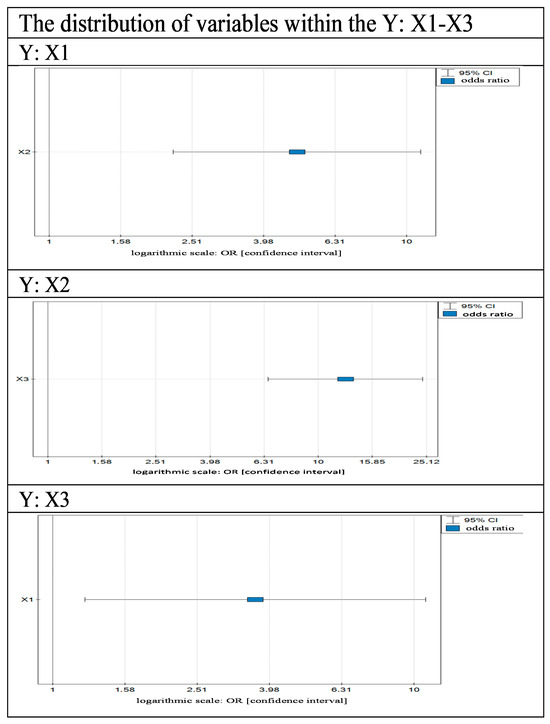
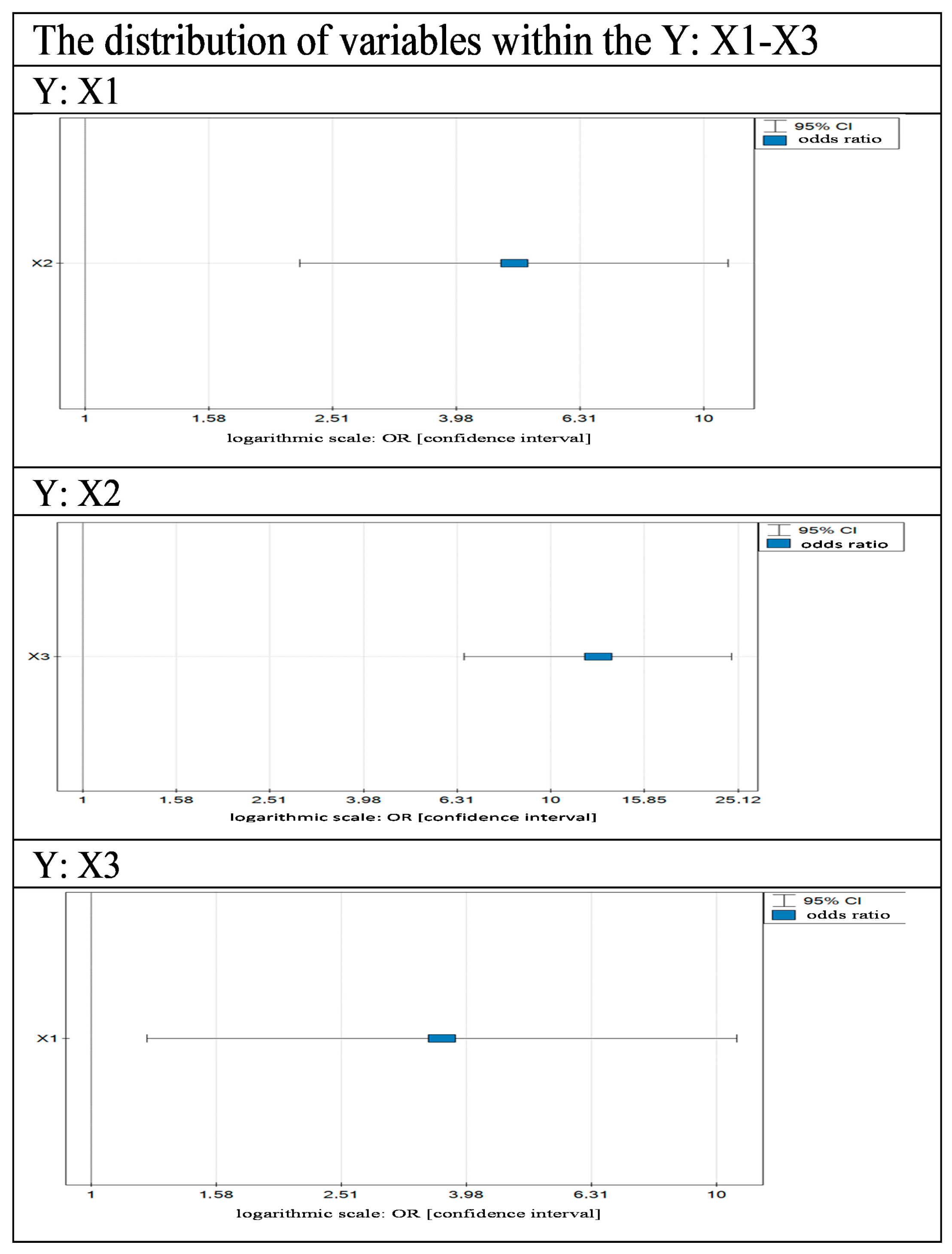
The distribution of the odds ratio for the study variables is presented in Figure 1.
Figure 1.
Unit distribution of change in odds ratio.
Students’ competencies in the field of sustainable development, created in the educational process in the course of their studies, are most strongly shaped by events, organized for students in the form of conferences, expert visits, or workshops. This regularity is expressed in the system of relations of the studied variables Y-X2, which is characterized by the highest level of correlation and probability of functioning in comparison with the other variables (OR with a score of 12.994 chances). Other sources of knowledge in the form of thematic teaching classes and thematic literature shape the competencies of the studied population to a somewhat more limited extent.
Strengthening sustainable competencies model responsible social attitudes that are critical to responsible socioeconomic development, especially when considered through the prism of responsible performance of roles in the socio-economic space. An important finding of the research is that students exert a high degree of effort to function in a responsible manner, which should translate into sustainable responsibility in their future professional life. Given the importance of the idea of sustainable development in everyday socio-economic life, the results of the presented findings should be considered important.
5. Discussion and Summary
The issue of sustainable development is the subject of reference of a number of studies. The main part of the research projects concerns the pace of implementation of the concept and the parameters obtained in the area of improvement of the three dimensions that are the pillars of the concept—the social, economic and environmental aspects [55]. In this regard, the formal-legal framework of sustainable development at the level of economies is explored, or the issue of ESG reporting, according to regulations in this area [56,57].
Education for sustainable development, which is part of the goal of the concept in question, is also the reference of numerous studies. In this regard, a strong emphasis is placed on evaluating the effectiveness of public education, captured in surveys of public awareness and general orientation toward sustainable action. The challenges in question are carried out mainly on behalf of the Ministry of Climate and Environment, with the aim of identifying further educational needs in this area, although, as K. Zwolińska et al. note, activities in this area are essentially focused on the creation and implementation of ESD programs, bringing the issue of diagnosing educational needs into the background [14].
A significant body of research on sustainable education focuses efforts on analyzing educational strategies, as articulated by M. A. Budihardjo et al. [58], or evaluating the scope of courses in the SDGs area, as evidenced by research by Y. C. Chang et al. [59]. In addition, to an important extent, research is concerned with the quality of education, which is addressed in, among other studies, N. Stukalo et al. [60]. Furthermore, research is focused on the area of analysis and evaluation of competencies in the sphere of education, with a particular focus on teaching approaches and techniques that determine the effectiveness of knowledge transfer in this area, which is explored in research by R. Lozano et al. [38]. The research threads outlined are most strongly related to higher education and are being implemented internationally [59,61,62], including, of course, in Poland [14]. Among the wide spectrum of research on education for sustainable development, studies conducted on student populations constitute a relatively low percentage of the total research. Hence, the study of students’ awareness of sustainability, undertaken in this paper, finds its justification. Research in a similar area was conducted by, among others, C. Smaniotto et al. [62], orienting attention to the diagnosis of sustainable competencies, while M. Brzezicki et al. studied, among other things, the potential for practical implementation of acquired competencies, creating a system of values, and determining a model of current and future conduct [63].
Alm et al. analyzed the course of teaching in sustainability knowledge [64], and K. Zwolińska et al. controlled for the limitations of the education program in SDGs on strict principles in relation to the assumptions of education in this area, diagnosing the principles of teaching in this area [14]. The overall conclusion of the research is to emphasize the importance of education for development with training [65,66]. The need for statutory reviews of student acquisition, diagnosis of awareness, as well as the study of educational needs, through the effect of education in this area, also emerges. It should be at the level of individual economies, and narrowed down to educational units, and be equipped with education. Research needs in this area are extremely broad, as access to up-to-date knowledge entails the need for multifaceted findings, including the updating of previous research results. Hence, this study was oriented towards diagnosing the sustainable awareness of students of selected faculties at selected higher education schools in Poland, in order to assess the level of knowledge about sustainable development of this social group and the impact of the above on shaping sustainable attitudes, determining the direction of development taking place in the socio-economic dimension (the perspective of sustainable human resources competences). The findings were made with reference to a sample of respondents representing two fields of study at selected higher education schools in Poland. The above justifies the adopted purpose of the study, and the arrangement of the studied higher education schools and faculties, as well as the scope of the study, determines the uniqueness of this study.
This study leads to the confirmation of the hypotheses adopted. It confirms that education assumes an important role in promoting the idea of sustainable development and is a determinant of Poland’s sustainable development—now and in the future, by shaping a sustainable model of social behavior in the country. A key determinant of this development is raising students’ awareness, in which education assumes fundamental importance (64% of indications). The results of the questionnaire, as well as the results of the in-depth study, revealed that the greatest influence on the process of shaping sustainable knowledge is exerted by events that support the didactic process, such as conferences or meetings with experts providing access to the most up-to-date knowledge in the field being explored (62% of indications). The above is also confirmed by the in-depth study, revealing in this area the highest degree of correlation obtained between the surveyed variables (average level), as well as the highest level of probability, measured by the odds ratio. The other identified factors influence the level of knowledge to a more limited degree, creating potential for improvement.
According to the above, it is reasonable to strengthen educational programs in the field of sustainable development, including, in particular, the strengthening of the teaching program in the studied faculties of the studied higher education schools in the direction of sustainable development. Furthermore, the research indicates the impact of access to thematic literature on strengthening students’ knowledge in the area studied. These are important observations, pointing to the fact that the modern student is oriented towards the search for knowledge that interests him/her, which they try to translate into responsible everyday functioning, which a very significant majority of students confirm. Hence, the above general findings may prove helpful for the teams responsible for designing educational programs for the studied faculties at Polish higher education schools. Improving the educational effect on sustainable development will make it possible to strengthen the sustainable competencies of students, which is in the interest of society and the economy, since it is the graduates of higher education institutions who will be responsible for creating the future, mainly by fulfilling a social role. In this regard, S. Syahmani et al. [67] point to the measurable effects of sustainable actions generated by an educated society, while also indicating the key role of responsible social attitudes in this regard, which is further highlighted in the research by A. M. Ríos et al. [68]. The source of the above is sustainable awareness, shaped through a process of directional education. A workforce that is competent in the field of sustainable development can guarantee responsible future development, which is in the interests of society, the economy and the environment.
The main recommendation stemming from the research is the need to strengthen educational programs in the area of sustainable development, as, according to the findings, knowledge in this area is both needed and appreciated by students. Interesting ways for students to improve their knowledge in this area are any initiatives that enrich the content of regular classes, which means that the efforts of academic staff to organize such events are well-received and welcomed by students. On the other hand, it is worthwhile to involve young people more strongly in the organization and active participation in scientific events on the issues being explored. Individual work on issues will strengthen the aspect of drawing on the latest knowledge, providing a bridge between studying thematic literature and preparing for regular classes in the area of sustainable development. This direction seems to be the optimal solution for integrating scientific engagement with shaping the sustainable awareness of the younger generation.
5.1. Limitations/Implications of the Study
The study of student knowledge about sustainable development was conducted among students of Administration and Security, and Economics and Management, at three higher education schools located in three Polish voivodeships: Pomerania, West Pomerania, and Lubusz. Due to the narrow sample size, it should be noted that the results of the presented study provide an indicative picture, specific to the population included in the study, and should not be generalized to the entire population. Nevertheless, the general conclusions regarding the development of the potential of responsible staff provide a basis for taking actions to increase the effectiveness of this process.
Research limitations also represent the potential for further research challenges for the authors.
5.2. Practical Implications
This study indicates the need to review students’ acquired competencies and to examine training needs in order to systematically strengthen the impact of education in this area.
The study confirms that education plays a significant role in promoting sustainable development and is a factor determining sustainable development, currently and in the future, thus shaping a sustainable model of social behavior. This is particularly important in the context of shaping a sustainable awareness of the potential of staff, responsible for future socio-economic development. A key factor determining this development is raising student awareness, in which education holds a central place.
In this context, the study identified a form of acquiring knowledge in the area of sustainable development that students value, which is an important finding. The form that was identified is through scientific events that enrich the regular curriculum.
5.3. Social Implications
Research observations indicate that contemporary students are focused on seeking knowledge that interests them, which they strive to translate into responsible functioning in their daily lives. This highlights a key direction in curriculum design in the process of developing the potential of human resources in Poland.
Author Contributions
All authors have made significant contributions to this paper from the conception of the study through to the identification and selection of the research methodology and its conduct, the writing of the paper, and its editorial side. Conceptualization, E.C.-P., M.K., M.Ś. and S.D.; methodology, E.C.-P., M.K. and S.D.; validation, M.K. and S.D.; formal analysis, E.C.-P. and M.Ś.; resources, E.C.-P., M.K., M.Ś. and S.D.; writing—original draft preparation, E.C.-P. and M.K.; writing—review and editing, E.C.-P. and M.K.; visualization, E.C.-P. and M.Ś.; supervision, M.K., M.Ś. and S.D. All authors have read and agreed to the published version of the manuscript.
Funding
This research received no external funding.
Institutional Review Board Statement
This study is waived for ethical review as it used the survey technique by Institution Committee. This is a fully anonymous survey and the data obtained are not of a sensitive nature.
Informed Consent Statement
Informed consent for participation was obtained from all subjects involved in the study.
Data Availability Statement
The original contributions presented in this study are included in the article.
Conflicts of Interest
The author declares no conflicts of interest.
References
- Chomać-Pierzecka, E.; Kowalska, M.; Czyrka, K. The Problem of Transforming the Energy System Towards Renewable Energy Sources as Perceived by Inhabitants of Rural Areas in South-Eastern Poland. Energies 2025, 18, 5548. [Google Scholar] [CrossRef] [Scilit]
- Kampania 17 Celów, Agenda 2030. Available online: https://kampania17celow.pl/agenda-2030/ (accessed on 13 March 2026).
- Bartoszczak, A. Edukacja na rzecz zrównoważonego rozwoju do 2030 roku. Zap. Kuj.-Dobrzyńskie 2023, 36, 229–240. [Google Scholar]
- Dekada Edukacji na Temat Zrównoważonego Rozwoju (2005–2014), UNIC Warszaw, Ośrodek Informacji ONZ w Warszawie. Available online: https://www.unic.un.org.pl/edukacja_rozwoj/ (accessed on 13 March 2026).
- United Nations Educational, Scientific and Cultural Organization. Available online: https://stat.gov.pl/en/international-statistics/international-institutions-organisations/un-united-nations/unesco-united-nations-educational-scientific-and-cultural-organization/ (accessed on 13 March 2026).
- Education for Sustainable Development, UNESCO. Available online: https://www.unesco.org/en/sustainable-development/education?_klpuid=GwKq2LGpnkQhX6L36mXkc/wwf/kumagai/business/kumagai/fujita/tdlc/business/kanie/data/dir/data/furuichi/kanie (accessed on 13 March 2026).
- Agenda 2030, Ministerstwo Rozwoju I Technologii. Available online: https://www.gov.pl/web/rozwoj-technologia/agenda-2030 (accessed on 13 March 2026).
- Cele Zrównoważonego Rozwoju. Available online: https://www.un.org.pl/ (accessed on 13 March 2026).
- Dekada Edukacji na Rzecz Zrównoważonego Rozwoju do 2030 r. Available online: https://czrug.ug.edu.pl/en/programs/program-education/ (accessed on 13 March 2026).
- Raport Eurydice, Uczenie Się na Rzecz Zrównoważonego Rozwoju w Europie. Budowanie kompetencji Oraz Wspieranie Nauczycieli i Szkół, 2024. Available online: https://eurydice.org.pl/brepo/panel_repo_files/2025/12/04/cryp6u/zrownowazonyrozwoj.pdf (accessed on 13 March 2026).
- Raczkowska, M.; Mikuła, A.; Utzig, M. Zrównoważony Rozwój w Obszarze Społecznym; Unii Europejskiej: Brussels, Belgium; Wydawnictwo SGGW: Warszawa, Poland, 2021; pp. 25–50. [Google Scholar]
- Chomać-Pierzecka, E.; Rogozińska-Mitrut, J.; Różycka, M.; Soboń, D.; Stasiak, J. Energy Innovation for Individual Consumers in Poland—Analysis of Potential and Evaluation of Practical Applications in Selected Areas. Energies 2023, 16, 5766. [Google Scholar] [CrossRef] [Scilit]
- Park, H.Y.; Licon, C.V.; Sleipness, O.R. Teaching Sustainability in Planning and Design Education: A Systematic Review of Pedagogical Approaches. Sustainability 2022, 14, 9485. [Google Scholar] [CrossRef] [Scilit]
- Zwolińska, K.; Lorenc, S.; Pomykała, R. Sustainable Development in Education from Students’ Perspective—Implementation of Sustainable Development in Curricula. Sustainability 2022, 14, 3398. [Google Scholar] [CrossRef] [Scilit]
- Barlett, P.F.; Chase, G.W. Sustainability on Campus: Stories and Strategies for Change; Peggy, F.B., Geoffrey, W.C., Eds.; MIT Press: Cambridge, MA, USA, 2004. [Google Scholar]
- Kishita, Y.; Uwasu, M.; Hara, K.; Kuroda, M.; Takeda, H.; Umeda, Y.; Shimoda, Y. Toward designing sustainability education programs: A survey of master’s programs through semi-structured interviews. Sustain. Sci. 2018, 13, 953–972. [Google Scholar] [CrossRef] [Scilit]
- Chomać-Pierzecka, E. Value as an economic category in the light of the multidimensionality of the concept ‘value’. Lang. Relig. Identity 2021, 2, 155–166. [Google Scholar] [CrossRef] [Scilit]
- Education for Sustainable Development Toolkit Unesco. Available online: https://hrea.org/wp-content/uploads/2021/04/Education-for-Sustainable-Development-Toolkit_English.pdf (accessed on 4 February 2026).
- Yli-Panula, E.; Jeronen, E.; Lemmetty, P. Teaching and Learning Methods in Geography Promoting Sustainability. Educ. Sci. 2020, 10, 5. [Google Scholar]
- Veinovic, Z. The curricula revision in the context of education for sustainable development: From the perspective of two primary school subjects’ curricula. Zb. Instituta Za Pedagos. Istraz. 2017, 49, 191–212. [Google Scholar] [CrossRef] [Scilit]
- Leal Filho, W.; Manolas, E.; Pace, P. The future we want: Key issues on sustainable development in higher education after Rio and the UN decade of education for sustainable development. Int. J. Sustain. High. Educ. 2015, 16, 112–129. [Google Scholar] [CrossRef] [Scilit]
- Tilbury, D. Education for Sustainable Development: An Expert Review of Processes and Learning; UNESCO: Paris, France, 2011; p. 132. [Google Scholar]
- Komiyama, H.; Takeuchi, K. Sustainability science: Building a new discipline. Sustain. Sci. 2006, 1, 1–6. [Google Scholar] [CrossRef] [Scilit]
- Kates, R.W. What kind of a science is sustainability science? Proc. Natl. Acad. Sci. USA 2011, 108, 19449–19450. [Google Scholar] [CrossRef] [Scilit] [PubMed]
- Stein, S. The Ethical and Ecological Limits of Sustainability: A Decolonial Approach to Climate Change in Higher Education. Aust. J. Environ. Educ. 2019, 35, 198–212. [Google Scholar] [CrossRef] [Scilit]
- Du, X.; Su, L.; Liu, J. Developing sustainability curricula using the PBL method in a Chinese context. J. Clean. Prod. 2013, 61, 80–88. [Google Scholar] [CrossRef] [Scilit]
- Zamora-Polo, F.; Sánchez-Martín, J.; Corrales-Serrano, M.; Espejo-Antúnez, L. What Do University Students Know about Sustainable Development Goals? A Realistic Approach to the Reception of this UN Program Amongst the Youth Population. Sustainability 2019, 11, 3533. [Google Scholar] [CrossRef] [Scilit]
- Von Hauff, M.; Nguyen, T. Universities as Potential Actors for Sustainable Development. Sustainability 2014, 6, 3043–3063. [Google Scholar] [CrossRef] [Scilit]
- Owens, T.L. Higher education in the sustainable development goals framework. Eur. J. Educ. 2017, 52, 414–420. [Google Scholar] [CrossRef] [Scilit]
- Ortega-Sánchez, D.; Gómez-Trigueros, I.M. Massive Open Online Courses in the Initial Training of Social Science Teachers: Experiences, Methodological Conceptions, and Technological Use for Sustainable Development. Sustainability 2019, 11, 578. [Google Scholar] [CrossRef] [Scilit]
- Zadroga, A. Sustainable development as a paradigm of socio-economic development. In Research Spaces of Young Scientists. Inspiration-Innovation-Implementation, 1st ed.; Wyd. Katolickiego Uniwersytetu Lubelskiego: Lublin, Poland, 2016; pp. 11–24. [Google Scholar]
- Płonka, A.; Dacko, M.; Satoła, Ł.; Dacko, A. The Idea of Sustainable Development and the Possibilities of Its Interpretation and Implementation. Energies 2022, 15, 5394. [Google Scholar] [CrossRef] [Scilit]
- Waas, T.; Verbruggen, A.; Wright, T. University research for sustainable development: Definition and characteristics explored. J. Clean. Prod. 2010, 18, 629–636. [Google Scholar] [CrossRef] [Scilit]
- Filho, W.L. About the role of universities and their contribution to sustainable development. High. Educ. Policy 2011, 24, 427–438. [Google Scholar] [CrossRef] [Scilit]
- Chomać-Pierzecka, E. Economic, Environmental and Social Security in accordance with the Concept of Sustainable Development. Stud. Adm. I Bezpieczeństwa 2025, 18, 257–272. [Google Scholar] [CrossRef] [Scilit]
- Holsman, R. The politics of Environmental Education. J. Environ. Educ. 2001, 32, 4–7. [Google Scholar] [CrossRef] [Scilit]
- Wright, T.S.; Wilton, H. Facilities management directors’ conceptualizations of sustainability in higher education. J. Clean. Prod. 2012, 31, 118–125. [Google Scholar] [CrossRef] [Scilit]
- Lozano, R.; Merrill, M.Y.; Sammalisto, K.; Ceulemans, K.; Lozano, F.J. Connecting Competences and Pedagogical Approaches for Sustainable Development in Higher Education: A Literature Review and Framework Proposal. Sustainability 2017, 9, 1889. [Google Scholar] [CrossRef] [Scilit]
- Narodowa Strategia Edukacji Ekologicznej “Przez Edukację do Zrównoważonego Rozwoju. Ministerstwo Środowiska”, Warszawa. Available online: http://cee.elk.pl/dokumenty/narodowa-strategia-edukacji-ekologicznej (accessed on 4 January 2025).
- Strategia Edukacji Ekologicznej, Narodowego Funduszu Ochrony Środowiska i Gospodarki Wodnej na Lata 2013–2016 z perspektywą do 2020 Roku. Available online: https://www.gov.pl/attachment/ccc59ff3-2d9a-49e8-8735-11349ea2b829 (accessed on 4 January 2025).
- Narodowy Program Edukacji Ekologicznej. Program Wykonawczy Narodowej Strategii Edukacji Ekologicznej Oraz Warunki Jego Wdrożenia, Narodowy Fundusz Ochrony Środowiska i Gospodarki Wodnej 2013. Available online: https://environet.eu/pub/prawo/nsee.pdf (accessed on 4 January 2025).
- Strategiczny Plan Działań w Zakresie Edukacji Ekologicznej. Available online: https://www.gov.pl/web/edukacja-ekologiczna/strategiczny-plan-dzialan-w-zakresie-edukacji-ekologicznej (accessed on 4 January 2025).
- Żeber-Dzikowska, I. Wiedza dotycząca zrównoważonego rozwoju wśród młodzieży licealnej na podstawie badań pilotażowych. Studia Ecol. Bioethicae 2008, 6, 59–75. [Google Scholar] [CrossRef] [Scilit]
- Opalinska, P.; Krokowska-Paluszak, M.; Lukowski, A.; Blasiak, A.; Wierzbicka, A.; Skorupski, M. Stan wiedzy o zrównoważonym rozwoju w Wielkopolsce–czy edukacja jest potrzebna? Studia I Mater. Cent. Edukac. Przyr.-Leśnej 2018, 1, 79–85. [Google Scholar]
- Dacko, M.; Mickiewicz, P.; Płonka, A. The role of education in shaping attitudes of academic youth towards sustainable development. Eur. Res. Stud. J. 2021, XXIV, 187–197. [Google Scholar] [CrossRef] [Scilit]
- Monitorowanie Realizacji Celów Zrównoważonego Rozwoju w Polsce, Ministerstwo Rozwoju, Pracy i Technologii, Warszawa, Czerwiec 2021. Available online: https://profibaza.pzh.gov.pl/sites/default/files/pliki/Archiwum/1_8/Monitorowanie_CZR_w_PL.pdf (accessed on 13 March 2026).
- Raport SDG 2025. Available online: https://sdg.gov.pl/priorytet/ (accessed on 13 March 2026).
- Realizacja Celów Zrównoważonego Rozwoju, Raport za rok 2022 Uniwersytet Ekonomiczny we Wrocławiu. Available online: https://uew.pl/wp-content/uploads/2023/12/Raport-realizacji-SDG-UEW-2022.pdf (accessed on 13 March 2026).
- Trzepacz, P. (Ed.) Zrównoważony Rozwój—Wyzwania Globalne; Wydawnictwo Uniwersytetu Jagiellońskiego: Kraków, Poland, 2012; p. 18. [Google Scholar]
- 10 lat Agendy 2030, Unep/Grid-Warszawa 2025. Available online: https://sdg.gridw.pl/raport/4 (accessed on 13 March 2026).
- Polska Wśród Liderów Realizacji Celów Zrównoważonego Rozwoju, Ministerstwo Rozwoju i Technologii. 22 September 2025. Available online: https://www.gov.pl/web/rozwoj-technologia/polska-wsrod-liderow-realizacji-celow-zrownowazonego-rozwoju (accessed on 13 March 2026).
- Edukacja na Rzecz Zrównoważonego Rozwoju (EZR), Szerpa—Eksperyment, Wymiana, Polsko-Niemiecka Współpraca Młodzieży. Available online: https://szerpa-ezr.org/wiedza/edukacja-na-rzecz-zrownowazonego-rozwoju/ (accessed on 13 March 2026).
- Adamczyk, J. Dyfuzja koncepcji zrównoważonego rozwoju i społecznej odpowiedzialności przedsiębiorstw. Mark. I Rynek 2017, 11, 5–15. [Google Scholar]
- Chomać-Pierzecka, E.; Sobczak, A. Sustainability in the Minds of Polish Tourism Students. In Strategic Innovative Marketing and Tourism; Kavoura, A., Gretzel, U., Vrana, V., Eds.; ICSIMAT 2025; Springer Proceedings in Business and Economics; Springer: Cham, Switzerland, 2026. [Google Scholar] [CrossRef] [Scilit]
- Zupok, S.; Chomać-Pierzecka, E.; Dmowski, A.; Dyrka, S.; Hordyj, A. A Review of Key Factors Shaping the Development of the U.S. Wind Energy Market in the Context of Contemporary Challenges. Energies 2025, 18, 4224. [Google Scholar] [CrossRef] [Scilit]
- Dyrektywa Parlamentu Europejskiego i Rady, Dyrektywa Parlamentu Europejskiego i Rady (UE) 2022/2464 z Dnia 14 Grudnia 2022 r. w Sprawie Zmiany Rozporządzenia (UE) nr 537/2014, Dyrektywy 2004/109/WE, Dyrektywy 2006/43/WE Oraz Dyrektywy 2013/34/UE w Odniesieniu do Sprawozdawczości Przedsiębiorstw w Zakresie Zrównoważonego Rozwoju. Available online: https://eur-lex.europa.eu/eli/dir/2022/2464/oj?locale=pl (accessed on 4 February 2026).
- Borys, K.; Krawczyńska-Kaczmarek, M. Standardy Raportowania Zrównoważonego Rozwoju—Wymogi i Przykłady Zastosowania; Polska Izba Biegłych Rewidentów: Warszawa, Poland, 2024; p. 35. [Google Scholar]
- Budihardjo, M.A.; Ramadan, B.S.; Putri, S.A.; Wahyuningrum, I.F.S.; Muhammad, F.I. Towards Sustainability in Higher-Education Institutions: Analysis of Contributing Factors and Appropriate Strategies. Sustainability 2021, 13, 6562. [Google Scholar] [CrossRef] [Scilit]
- Chang, Y.-C.; Lien, H.-L. Mapping Course Sustainability by Embedding the SDGs Inventory into the University Curriculum: A Case Study from National University of Kaohsiung in Taiwan. Sustainability 2020, 12, 4274. [Google Scholar] [CrossRef] [Scilit]
- Stukalo, N.; Lytvyn, M. Towards Sustainable Development through Higher Education Quality Assurance. Educ. Sci 2021, 11, 664. [Google Scholar] [CrossRef] [Scilit]
- Ärlemalm-Hagsér, E. Student teachers’ workplace-based learning in Sweden on early childhood education for sustainability: Experiences in practice settings. Int. J. Early Child 2017, 49, 411–427. [Google Scholar] [CrossRef] [Scilit]
- Smaniotto, C.; Battistella, C.; Brunelli, L.; Ruscio, E.; Agodi, A.; Auxilia, F.; Baccolini, V.; Gelatti, U.; Odone, A.; Prato, R.; et al. Sustainable Development Goals and 2030 Agenda: Awareness, Knowledge and Attitudes in Nine Italian Universities. Int. J. Environ. Res. Public Health 2020, 17, 8968. [Google Scholar] [CrossRef] [Scilit] [PubMed]
- Brzezicki, M.; Jasiolek, A. A Survey-Based Study of Students’ Expectations vs. Experience of Sustainability Issues in Architectural Education at Wroclaw University of Science and Technology, Poland. Sustainability 2021, 13, 10960. [Google Scholar] [CrossRef] [Scilit]
- Alm, K.; Berry, T.H.; Eiblmeier, D.; Fahmy, T. Students’ learning sustainability—Implicit, explicit or non-existent: A case study approach on students’ key competencies addressing the SDGs in HEI program. Int. J. Sustain. High. Educ. 2022, 23, 60–84. [Google Scholar] [CrossRef] [Scilit]
- Uggla, Y.; Soneryd, L. Possibilities and Challenges in Education for Sustainable Development: The Case of Higher Education. J. Educ. Sustain. Dev. 2023, 17, 63–77. [Google Scholar] [CrossRef] [Scilit]
- Adenike, A.A.; Onyeaka, H. The role of green education in achieving the sustainable development goals: A review. Renew. Sustain. Energy Rev. 2025, 210, 115239. [Google Scholar] [CrossRef] [Scilit]
- Syahmani, S.; Hafizah, E.; Sauqina, S.; Adnan, M.B.; Ibrahim, M.H. STEAM approach to improve environmental education innovation and literacy in waste management: Bibliometric research. Indones. J. Learn. Adv. Educ. 2021, 3, 130–141. [Google Scholar] [CrossRef] [Scilit]
- Ríos, A.M.; Picazo-Tadeo, A.J. Measuring environmental performance in the treatment of municipal solid waste: The case of the European Union. Ecol. Indic 2021, 123, 107328. [Google Scholar] [CrossRef] [Scilit]

Disclaimer/Publisher’s Note: The statements, opinions and data contained in all publications are solely those of the individual author(s) and contributor(s) and not of MDPI and/or the editor(s). MDPI and/or the editor(s) disclaim responsibility for any injury to people or property resulting from any ideas, methods, instructions or products referred to in the content. |
© 2026 by the authors. Licensee MDPI, Basel, Switzerland. This article is an open access article distributed under the terms and conditions of the Creative Commons Attribution (CC BY) license.