


Abstract
This study examines the long-run relationship between the external terms of trade (TOTs) and real GDP of the services sector in a small open economy, focusing on the Peruvian economy. Although the services sector concentrates the largest share of employment and urban income, its exposure to persistent external price cycles remains relatively understudied in sector-specific empirical research. Building on the notion that TOTs operate as an external anchor shaping macroeconomic conditions beyond export activities, this paper evaluates whether sustained external shocks are structurally linked to services-sector performance. The analysis employs a Johansen cointegration framework and a bivariate Vector Error Correction Model (VECM) using quarterly data for the period 1996–2024. This approach allows for distinguishing long-run equilibrium relationships from short-run adjustments without imposing strong causal assumptions. The results indicate the presence of a stable long-run relationship between the TOTs and services-sector GDP, with adjustment dynamics consistent with a gradual absorption of external shocks. From a sustainability perspective, the findings suggest that the expansion of the services sector is not independent from external trade conditions, highlighting the relevance of structural resilience under recurrent international price volatility. This study contributes to the literature by providing sector-level empirical evidence for a resource-dependent economy and offers a replicable analytical framework for examining structural sustainability in other small open economies with similar productive characteristics.
1. Introduction
Over recent decades, the Peruvian economy has undergone a process of productive reorganisation, of which the most visible expression has been not the expansion of primary sectors but rather the growing centrality of the services sector in urban economic life, both in terms of output generation and employment. Official statistics indicate that services currently account for just over 50.23% of the gross domestic product (GDP) and absorb close to 42% of the total employment [1,2], thereby constituting the main locus of income generation and job absorption in urban labour markets. In real terms (2007 = 100), the services GDP increased from 93.52 billion soles in the mid-1990s to more than 294.15 billion soles by 2024 [1], reflecting sustained expansion associated with urbanisation, productive tertiarisation and gradual shifts in consumption patterns.
This predominance does not stem from a single source of growth but rather from the simultaneous consolidation of activities related to trade, transport, financial services, inbound tourism, business services, telecommunications and, still incipiently, modern knowledge-intensive services [3,4,5]. Far from forming a homogeneous block, these segments articulate a heterogeneous productive network that links domestic demand with external flows and sustains—directly or indirectly—the incomes of millions of households, particularly in urban areas.
Precisely because of this transversal position, the quantitative and social weight of the services sector does not automatically translate into macroeconomic stability or insulation from external disturbances. The sector operates within an environment shaped by factors that exceed its internal dynamics [6], and its performance depends to a large extent on the general conditions faced by the economy as a whole. In small open economies such as Peru, the external terms of trade (hereafter, TOTs) constitute a central determinant of the business cycle [7]. Given that the country’s export structure is highly concentrated in primary commodities—particularly metallic minerals—fluctuations in international prices generate persistent external shocks that affect foreign exchange availability, the real exchange rate, fiscal revenues and overall demand conditions [8].
Although these shocks do not originate within the services sector, their effects shape the macroeconomic environment in which the sector expands, slows or adjusts, thereby influencing its medium- and long-term trajectories. Recent studies suggest that if TOTs exert a systematic influence on aggregate GDP, it is reasonable to expect their effects to be transmitted—albeit through different channels—across economic sectors [9]. In the case of services, such transmission is neither direct nor homogeneous, as the sector combines tradable and non-tradable activities; domestic consumption and external demand; formal and informal employment; and marked heterogeneity in productivity [10,11]. This configuration adds an additional layer of complexity, insofar as TOT-related external shocks may affect the sector through multiple channels: household income and domestic demand, private investment and business expectations, public spending financed by external fiscal revenues, and, in specific segments, the competitiveness of services exports in response to real exchange rate movements [8,12,13].
In Peru, this configuration acquires particular relevance. Although services exports account for around 14% of total exports, their internal structure has displayed growing dynamism, driven mainly by inbound tourism, international transport and business services, with an increase of nearly 33% between 2023 and 2024 [14]. This performance, however, should not be interpreted as an autonomous process, as it unfolds in close interaction with the overall macroeconomic cycle and with the evolution of the primary sectors that dominate the export basket.
Indeed, a significant share of services GDP depends indirectly on the external cycle, insofar as income generated by primary sectors is channelled into consumption and investment in tertiary activities. This transmission mechanism—less visible but economically meaningful—helps explain why the sector not only receives the effects of the external cycle but also fulfils a role in partially absorbing macroeconomic volatility, particularly in urban contexts where employment and income are concentrated. This dual function raises central questions regarding the sector’s structural sustainability in the long run. In this study, structural sustainability is understood as the capacity of sectoral growth dynamics to remain coherently aligned with persistent external economic conditions. In small open economies, external TOTs constitute a key structural driver shaping the macroeconomic environment in which domestic sectors evolve. From this perspective, assessing the sustainability of sectoral expansion requires examining whether the trajectory of services-sector activity remains consistent with the evolution of the external conditions that frame the macroeconomic cycle [15,16,17].
Despite its economic and social importance, the empirical literature has addressed the relationship between TOTs and services-sector performance unevenly. At the international level, several studies document links between sectoral growth and variables associated with external trade, particularly in emerging economies such as India, Indonesia, Malaysia, Thailand and Saudi Arabia [18,19]. These contributions, however, tend to focus on contemporaneous or comparative relationships, while dynamic long-run analysis remains relatively underexplored.
This gap is particularly evident in the Peruvian case. Available evidence has focused almost exclusively on examining the effects of TOTs on aggregate variables—such as total GDP, the trade balance, the exchange rate or fiscal revenues [9,20,21]—implicitly assuming that sectoral effects are embedded within aggregate dynamics. Such an assumption is restrictive for the services sector, whose response to external shocks is neither immediate nor uniform and depends on indirect transmission mechanisms that may operate with prolonged lags.
To the best of our knowledge of the literature reviewed, no studies have been identified that directly examine the long-run relationship between TOTs and the real services-sector GDP in Peru, nor that empirically assess whether the sector effectively adjusts its trajectory in response to persistent external disturbances. This empirical gap is particularly relevant given that the services sector concentrates the largest share of urban employment and plays a central role in household economic stability, acting as a space where external shocks translate into changes in income, employment and welfare [22].
From an open-economy perspective, TOTs may influence the services sector through several interrelated channels. A favourable external cycle tends to raise fiscal revenues and public spending, stimulating public and private services; it improves expectations and investment, boosting business services, and increases household disposable income, strengthening domestic demand for trade, transport and personal services. Conversely, a prolonged deterioration in TOTs constrains these mechanisms, reduces investment and weakens demand, indirectly affecting sectoral activity [8,23]. This study does not seek to empirically isolate each of these channels; rather, it assumes that if a long-run equilibrium relationship exists, transmission effects are embedded in the joint dynamics of the variables analysed.
Against this backdrop, the objective of this research is to empirically examine whether external TOTs maintain a long-run equilibrium relationship with the real services-sector GDP in Peru, and to determine whether the sector adjusts its trajectory in response to persistent deviations induced by external shocks. The existence of such a long-run relationship is interpreted as empirical evidence consistent with structural sustainability, understood as the coherent alignment of sectoral growth dynamics with persistent external economic conditions. To this end, this study adopts a time-series approach based on Johansen cointegration and a bivariate Vector Error Correction Model (VECM), using quarterly data for the period 1996–2024. This methodological choice reflects the indirect and gradual nature of sectoral adjustment and is consistent with the logic of a small open economy, in which external shocks operate as long-run anchors rather than as transitory impulses.
The value of this research lies in its capacity to provide empirically grounded evidence that is useful both for economic policy design and for private-sector strategic planning, in a context where services concentrate employment, income and welfare in urban spaces. By analysing the relationship between TOTs and services-sector performance from a long-run perspective, this study allows for an assessment of whether the observed expansion of the sector rests on consistent structural foundations or whether it remains exposed to persistent external vulnerabilities.
1.1. Literature Review
The economic literature has examined the role of the services sector in growth and structural transformation from multiple angles, albeit with considerable heterogeneity in approaches, units of analysis and explanatory variables. Within this broad body of work, a substantial strand recognises that sectoral dynamics are not independent of the external macroeconomic environment, particularly in small open economies. Some studies have focused on documenting the growth of the services sector and its relationship with aggregate macroeconomic performance, especially in emerging economies—such as Brazil, Indonesia, Mexico and Peru—and in less developed countries—such as Bangladesh, Ethiopia and Nepal. Within this group, empirical evidence shows that the expansion of the services sector is typically associated with sustained increases in GDP, both in the short and long run, suggesting a bidirectional relationship between sectoral dynamics and overall economic growth [15,19,24,25]. These studies identify stable links between services-sector GDP and total GDP, highlighting the former’s role as an engine of growth and, in some cases, as a stabilising factor in the face of external disturbances [16,26,27]. While this strand of the literature provides important evidence on the macroeconomic relevance of services, its primary focus remains on aggregate growth outcomes, leaving less explored the mechanisms through which external shocks may influence the sector’s long-run structural trajectory.
A second block of the literature extends this analysis to the relationship between the services sector and variables associated with external trade, such as trade openness, services trade and international integration. From this perspective, sectoral performance appears to be shaped by developments in the external environment, even when the underlying transmission mechanisms are not modelled explicitly. Comparative studies and multinational panel analyses find that the expansion of the services sector is positively related to indicators of trade integration, particularly in OECD economies [28,29,30]. However, in these contributions the emphasis is typically placed on trade flows—exports and imports of services—or on broad measures of openness, rather than on the international relative prices that underpin the evolution of TOTs. Consequently, although this literature recognises the relevance of the external environment, it rarely identifies international price shocks as structural drivers of sectoral adjustment. As a result, while this literature provides relevant evidence on the sensitivity of the services sector to external conditions, it does not explicitly model price shocks as structural determinants of sectoral performance.
A complementary line of research—covering many of the countries mentioned above—examines the role of the services sector in macroeconomic resilience and business-cycle stability. From this standpoint, several authors argue that services tend to dampen output volatility during crisis episodes, contributing to the smoothing of aggregate GDP fluctuations [31,32,33]. Empirical studies for China, India, Pakistan, Hong Kong and Singapore report that this stabilising function is linked to the less cyclical nature of certain tertiary activities, the weight of domestic consumption, and their lower direct exposure to international commodity markets. Nevertheless, this buffering capacity is not autonomous. The literature recognises that it depends on broader macroeconomic conditions, including the behaviour of income, investment and public expenditure, all of which are influenced by the external cycle [34,35,36,37,38]. This insight suggests that the apparent stability of services may ultimately reflect adjustment processes driven by macroeconomic shocks originating outside the sector itself.
Another relevant group of studies is situated within the framework of natural resource economics and Dutch disease, analysing how external shocks and rents derived from primary sectors affect productive structures. In resource-rich countries, persistent increases in international prices have been shown to generate real exchange rate appreciation and wage pressures that alter the competitiveness of non-tradable sectors, including services [8,39,40]. From this perspective, external shocks associated with TOTs may influence the evolution of services not only through direct price channels but also through broader macroeconomic adjustments affecting demand, costs and the sectoral allocation of resources. This approach is particularly useful for interpreting the indirect transmission of external shocks associated with TOTs to the services sector, although in some cases these analyses are not explicitly centred on services-sector GDP.
From a more aggregate perspective, the literature has analysed the effects of TOTs on economic growth using time-series data and international panels. These studies converge on the view that TOTs constitute a relevant determinant of aggregate GDP, especially in open economies with highly concentrated export structures. Empirical evidence from India, China and Croatia shows that sustained improvements in TOTs tend to stimulate growth, whereas prolonged deteriorations generate persistent contractionary effects [41,42,43]. Yet most of this evidence remains focused on aggregate outcomes, leaving unresolved how such external shocks propagate across individual sectors and how they shape the long-run adjustment dynamics of services activities.
In addition, a number of theoretical and empirical contributions have highlighted the internal heterogeneity of the services sector, distinguishing between traditional, modern and knowledge-based services. This distinction is crucial for economies undergoing tertiarisation, where labour-intensive, low-skilled activities coexist with higher-productivity segments linked to telecommunications, business services and information technologies. Even within this more disaggregated literature, however, TOTs are rarely incorporated as a central explanatory variable, with most approaches focusing instead on productivity, human capital, regulation and openness [44,45,46,47]. As a result, the interaction between external price cycles and the structural evolution of services remains only partially addressed in the existing literature.
In sum, the evidence provided by these studies points to three stylised facts. First, there is extensive evidence on the importance of the services sector for economic growth and macroeconomic stability, particularly in emerging economies. Second, TOTs have been widely studied as determinants of aggregate growth, yet their sectoral implications remain largely unexplored. Third, studies that explicitly connect persistent external shocks—measured through TOTs—with the long-run dynamics of the services sector are virtually absent. This gap is particularly relevant from the perspective of structural sustainability, as the capacity of a sector to maintain a stable growth trajectory ultimately depends on how it adjusts to persistent external shocks. This limitation is especially significant in contexts such as Peru, where TOTs operate as exogenous and persistent external shocks, and where the services sector accounts for an increasing share of output and employment [1,2]. The present study is positioned within this gap, providing direct empirical evidence on the long-run relationship between external TOTs and real services-sector GDP, an understanding of which is essential for assessing the conditions under which the sector can sustain a stable performance in the presence of recurrent external shocks and, consequently, for informing economic decisions consistent with its structural sustainability.
1.2. Theoretical Framework
External terms of trade (TOTs), defined as the ratio between export and import prices, have been widely recognised in the literature as a condensed external signal that captures variations in international relative prices and, by extension, in the macroeconomic constraints shaping the performance of economies integrated into global trade [41,48,49]. Beyond their conventional use as an indicator of external competitiveness, TOTs have been shown to exert a structural influence on disposable income, foreign exchange availability and the economy’s capacity to absorb persistent external shocks [50,51]. As a result, their analytical relevance extends beyond directly exporting sectors and permeates the economy as a whole through multiple transmission channels.
From an aggregate perspective, macroeconomic theory establishes that sustained improvements or deteriorations in TOTs have significant effects on the levels and volatility of output, investment and public finances, particularly in economies whose export structures are concentrated in primary commodities [7,52]. These external cycles not only affect short-term growth outcomes but also define constraints and margins of adjustment that condition sectoral trajectories over the medium and long run. This is especially relevant for non-primary sectors whose dynamics depend indirectly on the external environment [53,54].
In this vein, the structuralist tradition has emphasised that external shocks associated with international price movements may reinforce poorly diversified specialisation patterns and limit the scope for productive transformation [55,56]. Although these arguments were originally formulated with reference to manufacturing, their underlying logic—centred on dependence on external income and on resource reallocation driven by changes in relative prices—is conceptually applicable to the services sector. In economies integrated into international markets, expansions or contractions in external income are reflected in domestic demand, private investment and public expenditure, all of which are key determinants of the performance of tertiary activities [23,57].
From a theoretical standpoint, the services sector exhibits characteristics that distinguish it from primary and manufacturing sectors yet do not insulate it from external shocks. Services combine tradable and non-tradable activities, display a high degree of productive heterogeneity, and rely heavily on domestic demand, both private and public [10,11,58,59]. This configuration implies that the effects of TOTs are transmitted indirectly, through macroeconomic channels that influence disposable income, business expectations, financial conditions and the real exchange rate, giving rise to gradual and cumulative responses to external disturbances [60,61,62].
From a theoretical standpoint, in emerging economies, the performance of the services sector is closely tied to the macroeconomic cycle and the external environment, even when the bulk of its output is not directly oriented towards exports [63]. Within this framework, periods of improving TOTs are typically associated with expansions in urban consumption, stronger momentum in business and financial services, and an enlargement of public spending on social services and infrastructure. By contrast, prolonged deteriorations in TOTs tend to constrain these drivers, bringing to the surface structural vulnerabilities that often remain latent during expansionary phases [64,65,66,67,68].
Within the open-economy framework, these mechanisms can be analytically organised into several interrelated channels: the income and public finance channel, the investment and expectations channel, the real exchange rate and sectoral reallocation channel, and a financial channel associated with changes in risk premia and access to credit [8,13,69,70]. Taken together, these channels suggest that the impact of external shocks on the services sector materialises through adjustment processes that unfold progressively over time, rather than through immediate responses. The present study does not attempt to identify these transmission channels individually. Instead, it adopts a reduced-form approach in which the combined influence of these mechanisms is assumed to be embedded in the joint dynamics between external TOTs and services-sector GDP.
From a methodological perspective, although a substantial share of empirical evidence based on cointegration and error correction models has been developed in goods markets—often with an emphasis on agricultural prices and quantities or bilateral trade relationships—their contribution is of a general nature. These approaches are particularly well suited to contexts in which a long-run equilibrium coexists with short-run adjustment dynamics, as demonstrated by applications across a wide range of economic settings [71,72,73,74,75].
Against this background, the use of a cointegration framework and bivariate VECM is conceptually appropriate for analysing the services sector, whose response to external disturbances is typically gradual and mediated by the broader macroeconomic environment. If cointegration between TOTs and services-sector GDP is present, this would constitute evidence of long-run external anchoring, while the error correction term would capture the sector’s capacity to absorb persistent shocks [76,77,78]. This approach does not seek to isolate each transmission channel individually but rather assumes that these mechanisms are implicitly embedded in the joint dynamics of the variables under analysis [79,80].
Conceptually, this framework is linked to an operational notion of structural sustainability, understood as a property of the dynamic behaviour of economic sectors. In this study, structural sustainability is understood as the capacity of sectoral growth dynamics to remain coherently aligned with persistent external economic conditions. In small open economies, external terms of trade constitute a key structural driver shaping the macroeconomic environment in which domestic sectors evolve. When sectoral output evolves in a manner that maintains a stable long-run relationship with these external conditions, this relationship can be interpreted as empirical evidence consistent with structural sustainability, reflecting a form of structural coherence between domestic sectoral dynamics and the external environment [16,17].
From this perspective, cointegration does not represent structural sustainability itself but rather provides a statistical representation of such long-run structural alignment. The error correction mechanism, in turn, captures the gradual process through which the sector adjusts its trajectory following temporary deviations from that externally conditioned path. Applied to the services sector, this framework allows for assessing whether its expansion remains compatible with a volatile external environment or whether persistent difficulties in absorbing external shocks emerge, thereby compromising its structural sustainability.
2. Materials and Methods
2.1. Research Design and Data Sources
This study adopts a quantitative, applied and ex post facto research design, consistent with empirical analyses that rely exclusively on observed macroeconomic data without experimental manipulation. The objective is to examine whether external terms of trade (TOTs) maintain a stable long-run relationship with the real GDP of Peru’s services sector and to assess the sector’s adjustment dynamics in response to persistent external shocks. Within this framework, structural sustainability is approached from an operational perspective, understood as the sector’s ability to sustain a coherent growth trajectory under changing external conditions.
The empirical analysis was conducted using quarterly data for the period 1996–2024, yielding a total of 116 observations per variable. All series were obtained from the Central Reserve Bank of Peru (BCRP) and are expressed as indices with base year 2007 = 100, ensuring consistency and comparability across time. The dependent variable corresponds to the real GDP of the services sector, while the explanatory variable is the external TOTs, defined as the ratio between the export price index and the import price index of the Peruvian economy. Both variables are transformed into natural logarithms. This transformation facilitates economic interpretation in terms of elasticities, mitigates potential heteroskedasticity, and aligns the empirical specification with standard practices in time-series econometrics applied to macroeconomic relationships.
2.2. Preliminary Time-Series Properties
Prior to estimating the long-run relationship, the stochastic properties of the series were examined to determine their order of integration. To ensure robustness, two complementary unit-root tests were employed: the augmented Dickey–Fuller (ADF) test and the Kwiatkowski–Phillips–Schmidt–Shin (KPSS) test. This combination allows for a balanced assessment of non-stationarity by contrasting null hypotheses of unit roots and stationarity. The joint use of these tests is particularly relevant in macroeconomic contexts characterised by structural change and persistent external shocks, where relying on a single testing procedure may lead to misleading inferences. Only after establishing that both variables are integrated of order one, I(1), does the analysis proceed to the estimation of long-run relationships.
2.3. Lag Selection and Cointegration Framework
Given the quarterly frequency of the data, the optimal lag length of the underlying VAR in levels is selected using the Akaike Information Criterion (AIC), the Bayesian Information Criterion (BIC) and the Hannan–Quinn Criterion (HQC). The joint consideration of these criteria allows for balancing goodness of fit and parsimony, reducing the risk of overparameterisation while preserving the dynamic structure of the system.
Once the lag order is determined, the existence of a long-run equilibrium relationship between the services-sector GDP and the external TOTs is tested using Johansen’s cointegration methodology. The specification includes a restricted constant in the cointegrating vector, reflecting the assumption that the long-run relationship may exhibit a non-zero mean without imposing deterministic trends that could distort inference.
Johansen’s approach is particularly suitable for this analysis, as it allows for the joint estimation of the long-run relationships and short-run dynamics within a unified system while avoiding the pre-test biases associated with single-equation methods [79].
2.4. Vector Error Correction Model Specification
Conditional on the presence of cointegration, the dynamic adjustment process is modelled through a bivariate Vector Error Correction Model (VECM). This framework explicitly combines short-run fluctuations with deviations from the long-run equilibrium, capturing the gradual nature through which the services sector responds to external shocks [80]. The baseline specification of the model is given by:
where
- ∆ denotes the first-difference operator;
- α0 denotes the intercept term;
- is the natural logarithm of the real services-sector GDP;
- denotes the natural logarithm of the external TOTs;
- p is the optimal lag length selected by the information criteria;
- βi and γj capture the short-run dynamics;
- measures the season-specific short-run effect associated with each quarterly dummy;
- Sk,t are quarterly seasonal dummy variables (S1, S2 and S3), included to capture deterministic seasonal patterns in the short-run dynamics of the services sector;
- is the error correction term derived from the estimated cointegrating relationship;
- measures the speed of adjustment towards the long-run equilibrium;
- εt is the stochastic disturbance term.
The error correction term is derived from the normalised cointegrating vector and represents the long-run equilibrium relationship linking the real services-sector GDP and external TOTs. A statistically significant adjustment coefficient indicates that deviations from this equilibrium are gradually corrected over time, reflecting the sector’s capacity to realign its trajectory following persistent external disturbances:
Under this normalisation, a negative and statistically significant adjustment coefficient implies convergence toward the long-run equilibrium. The empirical specification adopts a deliberately parsimonious bivariate framework aimed at identifying the long-run relationship between external terms of trade and services-sector output. While several macroeconomic channels—such as exchange rate movements, investment, public expenditure or domestic demand—may mediate the transmission of external shocks, the present model captures their combined influence within the reduced-form dynamics linking the two variables rather than identifies each channel separately. This parsimonious specification is consistent with the objective of this study—namely, to examine the existence and stability of the long-run relationship between the two variables—while avoiding overparameterisation and the loss of degrees of freedom that could arise from incorporating multiple additional variables within the available sample size.
2.5. Seasonal Dummies and Econometric Rationale
Three seasonal dummy variables (S1, S2, S3) are included in the model to capture the deterministic quarterly seasonality in the short-run dynamics of the services sector. Importantly, the series are not seasonally adjusted prior to estimation. Instead, seasonality is modelled explicitly within the VECM framework. This choice is motivated by several considerations. First, the inclusion of seasonal dummies allows for improving the specification of the short-run dynamics by reducing residual autocorrelation and mitigating conditional heteroskedasticity, thereby strengthening the statistical reliability of the model. Second, these dummies enter only the equations in first differences and therefore do not affect the cointegrating vector, preserving the integrity of the long-run relationship [81,82,83]. From an economic standpoint, the services sector exhibits recurrent seasonal patterns associated with consumption cycles, tourism flows and calendar-related activities. These patterns are deterministic rather than structural, and their explicit modelling avoids conflating short-run regularities with long-run adjustment mechanisms [84,85]. The inclusion of seasonal dummies thus responds to an econometric criterion grounded in diagnostics and parsimony rather than to mechanical data smoothing.
2.6. Exogeneity Assumption and Robustness Considerations
Consistent with the small open-economy framework, the external TOTs are treated as economically exogenous, reflecting conditions determined in international markets rather than by domestic sectoral dynamics. While the VECM does not impose statistical exogeneity a priori, the interpretation of the adjustment process is anchored in this economic assumption [86,87]. Empirically, this interpretation is supported by the VECM results, in which the error correction term is statistically significant in the services-sector GDP equation but not in the TOT equation, suggesting that deviations from the long-run equilibrium are primarily corrected through sectoral output rather than through adjustments in the terms of trade. In this context, the empirical specification should be interpreted as a reduced-form representation of the long-run relationship between the external environment and sectoral performance rather than as a structural model identifying the individual macroeconomic channels through which these effects operate.
Finally, although extraordinary shocks such as the COVID-19 pandemic are not incorporated into the baseline specification, their potential influence is explicitly examined through additional robustness checks that include a pandemic dummy. The purpose of this exercise is to verify whether the estimated long-run relationship remains stable when this exceptional disturbance is taken into account. Given the abrupt and temporary nature of the pandemic shock—associated with mobility restrictions and an abrupt contraction in contact-intensive services—the dummy is treated as a transitory disturbance rather than as part of the structural dynamics captured by the baseline VECM. This strategy preserves the parsimonious structure of the main specification while allowing for verification that the long-run relationship between the external conditions and services-sector GDP is not driven by this singular and non-recurrent episode.
2.7. Research Hypotheses
Consistent with the empirical approach adopted, the analysis is structured around three working hypotheses:
H1.
External terms of trade (TOTs) and the real GDP of Peru’s services sector maintain a long-run equilibrium relationship, reflected in the existence of at least one cointegrating vector linking the two series.
H2.
The real GDP of the services sector adjusts its trajectory in response to persistent deviations from the long-run equilibrium, such that a statistically significant error correction term (ECT) indicates a gradual adjustment process in the face of external shocks.
H3.
Within the framework of a small open economy, external TOTs do not respond endogenously to developments in the services-sector GDP, instead operating as an exogenous external anchor determined by conditions in international markets.
3. Results
3.1. Stylised Facts on External Conditions and Services-Sector Dynamics
Before turning to the formal econometric analysis, it is useful to describe a set of stylised facts that characterise the joint evolution of the external terms of trade (TOTs) and services-sector GDP in Peru over the period 1996–2024. These regularities, observed directly in quarterly data, provide an intuitive economic background for the subsequent analysis and help to clarify the nature of the relationship under investigation. Figure 1 presents the evolutions of both series, expressed as indices with base year 2007 = 100, using data from the Central Reserve Bank of Peru (BCRP).
Figure 1.
External TOTs and services-sector GDP, 1996–2024.
A first salient feature is the clear contrast in the long-run trajectories of the two variables. The external TOTs display a pronounced cyclical pattern, shaped by successive phases of improvement and deterioration associated with global commodity cycles and international price conditions. Periods of sustained expansion alternate with correction episodes of varying magnitude, reflecting the inherently volatile nature of relative prices in international markets. This behaviour is consistent with the largely exogenous character of TOTs in a small open economy, where their evolution is driven primarily by external demand, global supply conditions and international price formation beyond domestic control.
By contrast, the real services-sector GDP follows a smoother and more persistent upward trajectory throughout most of the sample period. Although short-run fluctuations are observable, the services output exhibits a gradual and broadly uninterrupted expansion, with no episodes of abrupt collapse or prolonged stagnation, except for the transitory shock associated with the COVID-19 pandemic. Even during periods of heightened external volatility, activity in the services sector appears to adjust slowly rather than react sharply. This asymmetry highlights a key difference in the dynamic behaviour: while external conditions fluctuate markedly, services output evolves along a more stable and cumulative path.
A second stylised fact concerns the nature of the co-movement between the two series. At low frequencies, external TOTs and services-sector GDP share a broadly common upward trend, suggesting that favourable external conditions may, over time, be associated with higher levels of economic activity. However, this relationship is neither immediate nor symmetric. Short-run variations in TOTs do not translate one-for-one into contemporaneous movements in services GDP. Instead, adjustment appears to occur gradually and with delays, consistent with indirect transmission mechanisms operating through income, demand and investment conditions rather than through instantaneous price or quantity responses within the sector.
A further distinguishing feature is the marked difference in the relative volatilities. The external TOTs display sharp fluctuations and relatively rapid reversals, whereas the services-sector GDP exhibits substantially lower volatility and greater persistence. This divergence suggests that the services sector may play an absorptive role within the economy, smoothing the impact of external shocks over time. Rather than amplifying disturbances originating in international markets, the sector appears to internalise them progressively through macroeconomic channels whose effects unfold over several quarters.
Finally, the data reveal the presence of recurrent seasonal patterns in the services-sector activity. Quarterly observations show systematic intra-annual fluctuations consistent with the nature of many service activities—particularly those linked to consumption, tourism and other urban services influenced by the calendar. These seasonal movements appear regular and predictable, resembling deterministic patterns rather than structural shifts in long-run behaviour. By contrast, seasonality is far less evident in the TOT series, reinforcing the view that such fluctuations are an intrinsic characteristic of services-sector dynamics rather than a feature of external price behaviour.
Taken together, these stylised facts depict a configuration in which the services sector evolves under a volatile external environment while maintaining a more stable and persistent trajectory of its own. External terms of trade act as a fluctuating background condition, whereas services-sector output adjusts more gradually, reflecting indirect and delayed transmission mechanisms. This descriptive evidence motivates the use of an econometric framework capable of distinguishing between persistent co-movements and transitory adjustments.
3.2. The Integration Properties of the Series
Turning to the time-series properties of the data, the augmented Dickey–Fuller tests applied to the lnGDPserv in levels, under a specification including both a constant and a trend and with four lags selected according to the BIC, fail to reject the null hypothesis of a unit root. The ADF statistic reaches −2.5661, with a p-value of 0.2961, indicating non-stationary behaviour in levels. This outcome is consistent with a long-run trajectory characterised by persistent changes in the level of services-sector activity. The KPSS test reinforces this conclusion: a test statistic of 0.3125, exceeding the 1% critical values, leads to rejection of the null hypothesis of stationarity in levels (p < 0.01). The convergence of both tests, despite their opposite null hypotheses, confirms the presence of a persistent stochastic component in the services-sector GDP.
When the series is expressed in first differences, the pattern reverses clearly. The ADF test yields a statistic of −5.5909, with a p-value of 0.00001, allowing for a decisive rejection of the unit-root null. The KPSS test in first differences reports a statistic of 0.0510 (p-value > 0.10), confirming stationarity. Taken together, these results indicate that the lnGDPserv is non-stationary in levels but stationary in first differences, and it can therefore be characterised as an integrated process of order one (I(1)).
A similar behaviour is observed for the external TOTs (lnTOTs). In levels, the ADF test produces a statistic of −3.1207 with a p-value of 0.1014, which does not allow for rejection of the unit-root hypothesis at the 5% level. The KPSS test yields a statistic of 0.1521 with a p-value of 0.048, implying rejection of the null of stationarity. Both results point to non-stationarity in levels, consistent with the persistent nature of international relative-price shocks. In first differences, the lnTOTs display clear stationarity. The ADF statistic reaches −4.3280 (p-value = 0.0028), while the KPSS test fails to reject stationarity, with a statistic of 0.0534 and a p-value above 10%. Combined with the rejection of stationarity in levels, these findings confirm that the lnTOTs follow an I(1) process.
In sum, the empirical evidence shows consistently that both the real services-sector GDP and external TOTs are non-stationary in levels and stationary in first differences. The coincidence in their order of integration satisfies the necessary condition for exploring the existence of a long-run equilibrium relationship, thereby justifying the use of cointegration techniques and a vector error correction framework to analyse the dynamic adjustment mechanisms linking external shocks and sectoral performance.
3.3. Lag Structure and Dynamic Specification
The lag order of the VAR system in levels is selected by evaluating quarterly specifications with up to seven lags, using the AIC, BIC and HQC information criteria. The results reveal a moderate divergence across criteria. The AIC reaches its minimum at five lags (AIC = −7.1276), as does the HQC (HQC = −6.9274), whereas the Bayesian criterion BIC identifies four lags as optimal, with a value of −6.6623. In light of this divergence, the analysis adopts p = 4 as the baseline specification, following a principle of econometric parsimony. The BIC imposes a stronger penalty on additional parameters and is particularly suitable for quarterly macroeconomic samples, where overparameterisation may distort the identification of short-run adjustment mechanisms.
In this case, moving from four to five lags does not generate a substantive improvement in the system likelihood, but it does increase the model complexity. Moreover, a four-lag structure captures a full annual cycle, which is especially relevant for the services sector, given its recurrent quarterly patterns associated with urban consumption, seasonality in certain activities and the economic calendar. Specifications with five lags, although favoured by the AIC and HQC, tend to introduce additional dynamics that neither improve the stability of the cointegrating vector nor enhance the economic interpretation of the error correction mechanism. For these reasons, the empirical analysis adopts a VAR(4) as the baseline for cointegration testing and VECM estimation, achieving an appropriate balance between statistical fit, dynamic stability and economic interpretability.
3.4. Johansen Cointegration Evidence for Long-Run External Anchoring
The Johansen cointegration test is implemented under a restricted-constant specification, which allows for a non-zero long-run mean in the equilibrium relationship while avoiding the inclusion of deterministic trends in the system. This choice is appropriate for macroeconomic series expressed as indices that exhibit persistent growth without clear linear trending behaviour, and it preserves a stable long-run relationship consistent with an open-economy setting. Table 1 summarises the cointegration evidence in a compact manner, directly addressing the question of long-run external anchoring. Both the trace and maximum-eigenvalue statistics strongly reject the null hypothesis of no cointegration (r = 0) while failing to reject the hypothesis of, at most, one cointegrating relationship (r ≤ 1). This configuration provides clear evidence of a unique long-run equilibrium linking services-sector GDP and external TOTs.
Table 1.
Long-run equilibrium assessment between services GDP and external TOTs.
3.5. Adjustment Dynamics and Error Correction Mechanism
Once the existence of a long-run equilibrium relationship between the services-sector GDP and external TOTs has been established, the next step is to examine how both variables adjust in response to temporary deviations from that equilibrium (see Table 2). To this end, a VECM with four lags and a restricted constant is estimated, consistent with the specification adopted at the cointegration stage. The analysis places primary emphasis on the services-sector output equation, which represents the variable of central economic interest, while the TOT equation is interpreted in a complementary manner, in line with the predominantly exogenous role of external TOTs in a small open economy.
Table 2.
VECM results: ΔlnGDPserv equation.
The short-run dynamics of the services-sector GDP are dominated by strong own inertia. The first three lags of the ΔlnGDPserv display negative and statistically significant coefficients, reflecting an internal correction pattern consistent with gradual adjustment processes in a sector intensive in urban employment and non-tradable activities. This behaviour aligns with the predominantly domestic nature of the services sector, in which adjustments are driven more by internal demand conditions, cost structures and employment dynamics than by immediate changes in external relative prices. By contrast, the lagged TOT terms are not statistically significant in the differenced equation, indicating that external relative-price shocks do not transmit contemporaneously to services-sector growth.
The error correction term is negative, statistically significant at the 1% level (EC1 = −0.0720; p < 0.001), and economically meaningful. This result confirms that the services sector actively corrects deviations from the long-run equilibrium, absorbing approximately 7% of the accumulated disequilibrium per quarter.
Although this adjustment speed implies a gradual return to equilibrium, it should not be interpreted as evidence of instability. On the contrary, the statistical significance and negative sign of the coefficient indicate a stable correction mechanism in which deviations are systematically reduced over time. The magnitude of the coefficient points to a protracted convergence process, which is economically consistent with the structural characteristics of the services sector, dominated by urban services and characterised by limited capacity for rapid adjustment in response to external shocks. Adjustment is therefore slow but systematic, reinforcing the interpretation of external TOTs as a long-run anchor rather than a short-run driver. In the TOT equation, short-run dynamics are explained primarily by own inertia, as evidenced by the positive and highly significant coefficient on the ΔlnTOT (−1). The influence of the services-sector output is limited and appears only marginally at the first lag (see Table 3).
Table 3.
VECM results: Equation ΔlnTOT.
Crucially, the error correction term does not reach statistical significance at the 5% level (p = 0.0938) and therefore cannot be interpreted as an economically meaningful adjustment mechanism. Rather, this outcome lends support to the hypothesis of the weak exogeneity of external TOTs, consistent with the small open-economy condition: international relative prices do not respond systematically to internal imbalances in the services sector.
Taken together, the VECM reveals a clearly asymmetric adjustment pattern. The services sector bears the primary responsibility for correcting deviations from the long-run equilibrium, while external TOTs remain largely exogenous. This evidence strengthens the interpretation of the model as capturing a long-run external anchoring mechanism, characterised by limited contemporaneous effects and a slow yet persistent process of sectoral adjustment.
3.6. Robustness and Interpretative Limits
This section clarifies the scope of the empirical findings and the conditions under which they should be interpreted. The analysis relies on a deliberately parsimonious VECM specification aimed at capturing the long-run external anchoring and sectoral adjustment dynamics in the services sector. The robustness discussion therefore focuses on verifying that the core results—specifically, the existence of a stable long-run relationship and an asymmetric adjustment mechanism driven by the services-sector GDP—are not sensitive to lag selection, seasonal treatment or exceptional disturbances. At the same time, the section delineates the interpretative limits of the model, stressing that the estimated relationships reflect reduced-form dynamic consistency rather than a fully specified structural transmission mechanism.
3.6.1. Model Diagnostics
Post-estimation diagnostics indicate that the VECM exhibits residual behaviour that is broadly consistent with the assumptions required for long-run analysis. To begin with, the contemporaneous residual correlation matrix reveals a low cross-equation correlation (0.070), suggesting that neither equation dominates the system nor poses issues of contemporaneous dependence that could compromise joint interpretation. In line with this result, the eigenvalues of the residual covariance matrix (0.93 and 1.07) are well balanced, pointing to stability in the joint variance structure of the model (see Appendix A, Table A1 and Table A2).
With respect to temporal dependence, autocorrelation tests up to the fourth lag do not reject the null hypothesis of no serial correlation at any of the evaluated orders. The Rao–F statistics yield p-values above conventional significance thresholds, confirming that the dynamic specification of the VECM adequately captures short-run intertemporal dependence (see Appendix A, Table A3). ARCH tests likewise provide no robust evidence of persistent conditional heteroskedasticity. Although the LM statistic at the first lag lies close to the 5% threshold (p = 0.0567), this outcome does not persist at higher orders, where p-values increase markedly. Taken together, these results point to the absence of systematic variance instability rather than to structurally driven volatility episodes (see Appendix A, Table A4).
Finally, the Doornik–Hansen test rejects the multivariate normality of the residuals (see Appendix A, Table A5). While this result may appear restrictive, departures from normality are frequently observed in long macroeconomic time series that encompass major external shocks and structural fluctuations. In the present case, the sample period (1996–2024) includes episodes such as global commodity cycles, the international financial crisis and the COVID-19 pandemic, all of which may generate non-Gaussian residual behaviour without implying model misspecification. Importantly, strict residual normality is not a necessary condition for valid inference in a VECM estimated by maximum likelihood. Under standard regularity conditions, maximum-likelihood estimators retain their asymptotic properties—consistency and asymptotic normality—even when residual distributions deviate from Gaussianity, provided that the dynamic specification is correctly identified and the system remains stable. For this reason, in cointegration-based systems, the reliability of inference depends primarily on the absence of serial correlation, variance instability and dynamic misspecification rather than on strict adherence to normality.
Overall, the diagnostic evidence supports the econometric adequacy of the VECM as a framework for analysing the long-run relationship and adjustment dynamics of the services sector, indicating that the observed deviation from normality reflects the macroeconomic nature of the data rather than the presence of anomalies in the estimated system and therefore does not alter the economic interpretation of the main results.
3.6.2. Specification Sensitivity
To assess the stability of the core findings under reasonable modifications of the dynamic specification, four complementary sensitivity exercises are conducted. The first increases the lag length of the underlying VAR from four to five lags, maintaining the restricted constant and excluding additional variables. The second evaluates the inclusion of a dummy variable capturing the pandemic episode while preserving the originally selected lag structure. The third introduces a dummy variable associated with the global financial crisis of 2008 (SUBPRIME), allowing the analysis to verify whether the baseline dynamics remain stable in the presence of a major international financial disturbance. Finally, a fourth complementary robustness exercise estimates an extended trivariate VECM specification including private consumption as a proxy for domestic demand conditions. This variable is selected given its role as a primary transmission channel through which external shocks associated with terms of trade affect non-tradable sectors such as services. The results of this extended specification confirm that the core findings remain qualitatively unchanged.
Under the five-lag VECM specification, the results confirm the robustness of the long-run relationship between services-sector GDP and external TOTs. The cointegration rank remains equal to one, and the cointegrating vector retains a magnitude and sign comparable to those obtained under the baseline specification. Moreover, the error correction coefficient in the services-sector output equation remains negative and statistically significant (EC = −0.071; p < 0.01), indicating that the sector continues to absorb deviations from the long-run equilibrium. However, the increase in the lag length does not improve the overall model performance: the information criteria (AIC, BIC and HQC) deteriorate, and the additional lag does not prove statistically relevant in the short-run dynamics. From an economic perspective, this suggests that the added dynamic complexity does not yield substantive explanatory gains and reinforces the preference for the more parsimonious specification (see Appendix B, Table A6).
The second exercise introduces a COVID-19 dummy into the four-lag VECM. As expected, given the magnitude of the shock, the dummy is highly significant in the services-sector GDP equation and improves the in-sample fit, as reflected in the lower AIC/BIC/HQC values and higher adjusted R2 (see Appendix B, Table A7). However, this apparent improvement is largely driven by the capture of an exceptional and non-recurring episode and is accompanied by a less favourable signal in the residual dynamics: the Durbin–Watson statistic falls to 1.35, suggesting relevant positive autocorrelation in the services-sector growth equation.
In practical terms, the dummy primarily captures the abrupt contraction associated with mobility restrictions and the temporary collapse of contact-intensive services during the pandemic, rather than a persistent modification of the structural relationship between external conditions and sectoral dynamics. From an interpretative standpoint, the inclusion of the COVID-19 dummy does not alter the economic core of the model: the cointegration rank remains unchanged, the cointegrating vector preserves its sign and economic magnitude, the error correction term remains significant in the services-sector equation, and in the TOT equation, the EC term does not reach significance at the 5% level, preserving the interpretation of the weak exogeneity of external TOTs (see Appendix B, Table A6). For this reason, the pandemic dummy is retained as a sensitivity exercise designed to verify the stability of the long-run relationship, while the baseline specification focuses on the underlying adjustment mechanism linking external conditions and services-sector GDP.
The third exercise incorporates a dummy variable associated with the 2008 global financial crisis (SUBPRIME) into the four-lag VECM while preserving the original deterministic structure. The results confirm that the long-run relationship between the services-sector GDP and external TOTs remains fully stable. The cointegration rank continues to be equal to one and the cointegrating vector retains virtually the same magnitude (−1.491) as in the baseline specification. More importantly, the error correction coefficient in the services-sector equation remains negative and highly significant (EC = −0.0736; p < 0.01), indicating that the sector continues to absorb deviations from the long-run equilibrium in a gradual and systematic manner. In contrast, the SUBPRIME dummy itself does not reach statistical significance in the services-sector growth equation (p = 0.968), suggesting that the crisis episode did not generate a discrete structural shift in the short-run dynamics of the sector once the broader adjustment mechanism was taken into account. Consistent with the baseline interpretation, the EC term in the TOT equation remains statistically insignificant (p = 0.149), preserving the view of external TOTs as weakly exogenous to the domestic adjustment process (see Appendix B, Table A8 and Table A9).
The fourth exercise considers an extended trivariate VECM including private consumption. All variables are found to be integrated of order one, I(1), and Johansen tests indicate the presence of a single cointegrating relationship, consistent with the baseline specification. The estimated long-run coefficients retain their expected signs, with external TOTs and private consumption entering the cointegrating vector with negative coefficients, while the error correction term in the services-sector GDP equation remains negative and statistically significant (EC = −0.114; p < 0.01), indicating a stable adjustment process. Importantly, the error correction term in the TOT equation remains statistically insignificant, preserving the interpretation of external conditions as weakly exogenous. In the short run, services-sector dynamics continue to be dominated by own inertia, while private consumption exerts a statistically significant effect, consistent with its role as a transmission channel of external shocks through domestic demand. These results suggest that the inclusion of private consumption does not alter the core long-run relationship but rather reinforces the interpretation that external TOTs affect the services sector indirectly through domestic demand mechanisms. While the extended specification introduces additional complexity into the residual structure, the baseline parsimonious model is retained as the preferred specification due to its clearer identification of the long-run relationship and its overall diagnostic stability (see Appendix B, Table A10, Table A11 and Table A12).
Taken together, these exercises confirm that the central results of this study—the existence of a long-run equilibrium relationship and an asymmetric adjustment pattern led by the services sector—do not depend on a specific lag choice or on the inclusion of extraordinary shocks. The baseline specification with four lags and a restricted constant therefore emerges as an appropriate compromise between econometric stability, economic coherence and parsimony.
3.6.3. Interpretative Limits
The results of this study should be interpreted within the scope of a reduced-form dynamic model aimed at identifying long-run regularities and sectoral adjustment patterns rather than at exhaustively decomposing intermediate transmission channels. The estimated VECM captures the dynamic coherence between external TOTs and real services-sector GDP, providing evidence of long-run external anchoring and an asymmetric adjustment mechanism led by the sector itself. Accordingly, the model does not seek to identify separately the macroeconomic channels through which external shocks are transmitted—such as movements in the real exchange rate, investment, public expenditure or domestic demand—but rather captures their combined influence as reflected in the long-run relationship between the variables analysed. It does not, however, seek to offer a fully specified structural representation of the microeconomic or institutional mechanisms underlying this relationship.
Within this framework, cointegration should be understood as evidence of dynamic consistency over time rather than as proof of full structural causality or as an exercise in establishing short-run predictive directionality between variables. The fact that the services sector corrects deviations from equilibrium while external TOTs remain essentially exogenous is consistent with the logic of a small open economy, in which relative price shocks originate outside the domestic system. This economic reading guides the interpretation of the error correction term and delineates the causal scope of the results, avoiding inferences that exceed the reduced-form nature of the model.
Similarly, the sensitivity extensions—a longer lag length and inclusion of the COVID-19 dummy—do not redefine the central economic narrative. Although they capture exceptional episodes or refine in-sample fit, they do not alter the long-run linkage or the identified adjustment pattern. Consequently, the conclusions should be read as robust evidence of a persistent sectoral absorption mechanism in response to external shocks rather than as an exhaustive account of the determinants of services-sector growth. In sum, this study establishes a clear interpretative framework: it identifies a stable relationship and an economically coherent adjustment process that inform the structural sustainability of the services sector under recurrent external shocks while acknowledging that a detailed exploration of specific transmission channels lies beyond its analytical scope.
3.6.4. Summary Assessment of Research Hypotheses
Taken together, the empirical evidence allows for a direct evaluation of the hypotheses formulated in the Section 2. First, the results confirm the existence of a long-run equilibrium relationship between external TOTs and real services-sector GDP, validating the hypothesis of persistent external anchoring linking sectoral dynamics to the international macroeconomic environment. Second, the sign and statistical significance of the error correction term in the services-sector GDP equation support the hypothesis of active sectoral adjustment to transitory deviations from the long-run equilibrium, indicating that the sector corrects gradually in response to externally induced shocks. Complementarily, the absence of an economically meaningful correction mechanism in the TOT equation is consistent with the treatment of TOTs as a weakly exogenous variable in the context of a small open economy. Overall, the empirical findings provide coherent and robust support for the stated research hypotheses, laying the groundwork for their economic interpretation in the Section 4.
4. Discussion
4.1. Economic Interpretation of Results
The results allow the relationship between external TOTs and the performance of the Peruvian services sector to be interpreted from a long-run perspective, consistent with the theoretical and empirical literature reviewed. The existence of a single cointegrating vector indicates that both variables share a common trajectory over time, suggesting that the expansion of the services sector cannot be analysed in isolation from the external macroeconomic environment. In economic terms, the estimated cointegrating relation indicates that the long-run trajectory of the services sector evolves in a manner that remains systematically aligned with the external conditions reflected in external TOTs. This evidence is in line with studies that document the role of TOTs as structural conditioning factors for aggregate growth in small open economies, particularly when the export basket is highly concentrated in primary commodities [7,41,42,43,52]. It is also consistent with findings reported for other resource-dependent economies, such as Chile, South Africa and Indonesia, where external price shocks shape the macroeconomic context within which non-primary sectors evolve [88,89,90].
From this perspective, TOTs should not be interpreted as an immediate driver of services-sector growth but rather as a persistent macroeconomic condition that frames the environment in which the sector expands. The literature has emphasised that sustained improvements or deteriorations in international relative prices affect disposable income, investment and public finances, generating indirect effects on non-primary sectors whose dynamics depend largely on domestic demand [23,53,54]. These mechanisms are discussed here as economically plausible transmission channels documented in the literature rather than as effects individually identified by the empirical model. In this sense, the identified cointegration reflects the long-run dynamic consistency between the external cycle and the trajectory of the services sector rather than a contemporaneous or mechanical relationship between external prices and sectoral output. Similar patterns have been documented for emerging economies in Asia and Latin America, where services respond primarily through indirect macroeconomic channels and with extended lags [91].
The adjustment pattern estimated through the VECM reinforces this interpretation. The negative and statistically significant error correction term in the services-sector GDP equation indicates that the sector actively corrects deviations from the long-run equilibrium, gradually absorbing imbalances induced by persistent external shocks. The magnitude of the adjustment coefficient—approximately 7% per quarter—points to a slow but systematic convergence process, consistent with the literature describing the services sector as urban-employment-intensive, largely reliant on domestic consumption, and characterised by rigidities that limit rapid adjustment to external disturbances [10,11,31,32]. Importantly, this gradual pace of adjustment should not be interpreted as evidence of instability. On the contrary, the statistical significance and correct sign of the error correction mechanism indicate that deviations from equilibrium are consistently reduced over time, reflecting a stable dynamic relationship between external conditions and sectoral activity. This is in line with empirical evidence from economies such as Brazil, China, Ghana, Mexico and Malaysia, where tertiary sectors display comparable adjustment speeds in response to persistent external shocks [92,93].
From a dynamic standpoint, the size of the error correction coefficient allows for a more precise characterisation of the pace of sectoral adjustment. A quarterly adjustment of roughly 7% implies that half of the accumulated disequilibrium following an external shock is corrected over a horizon of several years. This process can be summarised using the half-life of the disequilibrium, calculated as HL = ln(0.5)/ln(1 − λ), where λ denotes the error correction coefficient [17]. With an estimated value of λ ≈ 0.072, the half-life lies around 9–10 quarters, that is, approximately 2 to 2.5 years, confirming the presence of slow yet persistent adjustment. Such a horizon is economically plausible in a sector where adjustment operates mainly through changes in domestic demand, employment and investment decisions, all of which typically respond with delays to external shocks. This convergence speed does not signal immediate fragility, but it does reveal latent structural vulnerability, insofar as deep or prolonged external shocks may generate cumulative macroeconomic and social costs. In the absence of compensating mechanisms, sustained external downturns may translate into gradual pressures on urban employment, income and service provision, thereby affecting the stability of sectoral growth [94,95].
Against this background, the structural sustainability of the services sector depends not on the absence of external shocks but on the capacity of the economic system to absorb them at a pace compatible with preserving its long-run trajectory. In this sense, structural sustainability should not be interpreted merely as the statistical stability of the estimated relationship but as the capacity of sectoral growth dynamics to remain economically viable under persistent external constraints, a condition that is particularly relevant for small open economies exposed to recurrent terms-of-trade shocks.
This behaviour is consistent with studies highlighting the role of the services sector as a partial buffer over the business cycle, particularly in emerging economies, where its expansion often contributes to smoothing aggregate output volatility without being fully insulated from broader macroeconomic conditions [33,34,35]. The empirical evidence presented here suggests that, in the Peruvian case, this buffering role operates through gradual and cumulative adjustment rather than through immediate responses to external fluctuations. Institutional analyses further caution that the stabilising role of the services sector is not automatic but depends on the macroeconomic policy framework accompanying its expansion. In particular, the OECD notes that this buffering capacity can be strengthened when economic policies promote stable and inclusive growth in contexts of high exposure to external shocks [96].
Short-run dynamics provide additional support for this interpretation. Estimated results show that services-sector growth is dominated by strong own inertia, while lagged TOT terms are not statistically significant. This finding reinforces earlier evidence indicating that the effects of external shocks on services are transmitted mainly through indirect macroeconomic channels—such as income, expectations, public spending and investment—rather than through contemporaneous adjustments in sectoral prices or quantities [60,61,62,63].
From a methodological standpoint, it is important to note that the cointegration framework and the VECM are consistent with a notion of Granger-type causality. The presence of cointegration, together with a statistically significant error correction term in the services-sector GDP equation, suggests the existence of long-run causality running from TOTs to sectoral dynamics, even when short-run TOT lags are not significant. In this context, conducting additional Granger causality tests would be largely redundant, as the VECM itself provides information on the direction of adjustment and the relevant channel of dynamic transmission, as widely documented in the econometric literature [76,77,78].
By contrast, the absence of a statistically significant error correction term in the external TOT equation supports the hypothesis of weak exogeneity. This result is consistent with the logic of a small open economy, in which international relative prices are determined in global markets and do not systematically respond to internal disequilibria in non-tradable sectors such as services [8,40]. In empirical terms, the VECM estimates indicate that the adjustment mechanism operates primarily through the services-sector GDP equation, where the error correction term is statistically significant, while the corresponding parameter in the TOT equation remains statistically insignificant. This asymmetric adjustment pattern provides additional support for interpreting external TOTs as a long-run external anchor for sectoral dynamics. The asymmetry in the adjustment mechanism—where the services sector corrects deviations while TOTs remain essentially exogenous—constitutes one of the central findings of this study and aligns with the literature on the indirect transmission of external shocks and long-run external anchoring [55,56].
Taken together, the empirical results describe a coherent economic mechanism: TOTs act as a persistent external anchor, while the services sector adjusts its trajectory slowly but systematically in response to deviations induced by recurrent external shocks. Within this reduced-form framework, the model captures the aggregate effect of these macroeconomic interactions rather than identifies each transmission channel individually. In this sense, the presence of a stable cointegrating relationship should not be interpreted as sustainability per se but rather as empirical evidence consistent with structural sustainability, understood as the capacity of sectoral growth dynamics to remain coherently aligned with persistent external economic conditions [16]. This combination of external anchoring and sectoral adjustment speed forms the analytical core for assessing the structural sustainability of the services sector, understood as its capacity to maintain a stable growth path under volatile external conditions.
This interpretation of the cointegrating relationship—where external TOTs operate as a long-run macroeconomic anchor while the services sector undertakes the adjustment—also provides the empirical basis for the policy considerations discussed below, ensuring that the policy implications remain closely connected to the dynamics identified by the econometric model.
4.2. Policy Implications
The empirical results carry relevant implications for the design of economic policies aimed at strengthening the structural sustainability of the services sector in a context of high exposure to external shocks. These implications derive directly from the adjustment dynamics identified by the VECM, particularly the gradual error correction process through which the services sector absorbs deviations from the long-run equilibrium. In the Peruvian case, these considerations must be interpreted in light of several structural characteristics of the services sector, including high labour informality, the predominance of micro- and small enterprises, and a strong dependence on domestic demand. These features tend to amplify the indirect transmission of external shocks, as fluctuations in income and consumption are rapidly reflected in service activities linked to urban employment and small-scale entrepreneurship.
Some of these implications follow directly from the empirical findings, particularly those related to the gradual adjustment of the services sector to external shocks, while others represent broader policy considerations consistent with the economic mechanisms discussed in the literature. First, given that the services sector absorbs deviations from the long-run equilibrium gradually and that its sustainability depends on the ability to adjust in an orderly and continuous manner to persistent changes in international conditions, diversification plays a complementary role [97]. A services sector characterised by greater heterogeneity across subsectors, markets and demand sources is better positioned to buffer the effects of persistent external shocks, reducing its reliance on concentrated impulses and strengthening its intertemporal adjustment capacity.
In this context, the role of economic policy is not to counteract TOT movements directly but to moderate their macroeconomic transmission and facilitate internal adjustment within the services sector. Since the propagation of external shocks operates mainly through indirect channels—income, investment, public spending and expectations—fiscal and financial policies assume a central role as buffers against the external cycle [98]. In particular, the empirical evidence regarding the gradual adjustment of services-sector output to external disturbances is consistent with the importance of macroeconomic frameworks capable of smoothing the domestic effects of international price fluctuations, including credible countercyclical fiscal frameworks capable of dampening the procyclicality of public expenditure during external booms and of avoiding abrupt adjustments during phases of TOT deterioration, thereby reducing the adjustment burden placed on the private services sector. In the Peruvian context, where external price cycles often translate into fluctuations in domestic income, maintaining stable fiscal rules, predictable public investment and credible macroeconomic management becomes especially important, as fluctuations in export prices tend to translate into changes in domestic income and consumption that quickly affect service activities. In economies dependent on primary exports, this approach can be reinforced through fiscal rules and external saving mechanisms that help stabilise domestic demand and the investment environment over the external cycle [98].
Moreover, the observed slowness of adjustment is consistent with the nature of a sector intensive in urban employment, marked by high productive heterogeneity and limited flexibility in the face of external shocks. While these policy considerations extend beyond the variables explicitly included in the empirical specification, they remain grounded in the adjustment mechanism identified by the model, which indicates that the services sector gradually realigns its trajectory following persistent external disturbances. In this regard, policies aimed at raising productivity and reducing structural frictions—such as informality, restricted access to finance and barriers to investment—can contribute to shortening adjustment horizons and lowering the sector’s vulnerability to persistent shocks [8]. In practical terms, strengthening the sector’s capacity to adjust requires simplifying formalisation procedures for small service firms, expanding access to digital payments and microfinance, strengthening vocational and technical training linked to service activities, and improving urban and digital infrastructure that supports commerce, tourism and logistics. These measures can enhance the capacity of service enterprises to adapt to fluctuations in domestic demand associated with external shocks. Investment promotion, including foreign direct investment in knowledge-intensive segments and modern services, may play a relevant role in strengthening productive capacities without altering the identified long-run external anchoring [23].
Overall, the policy implications derived from this study point towards a preventive and structurally oriented approach. The structural sustainability of the services sector depends less on eliminating external exposure—an unfeasible objective in practice—and more on the existence of stable macroeconomic frameworks, countercyclical fiscal policies and financial environments that facilitate sectoral adjustment, allowing temporary costs to be absorbed and domestic demand to be sustained in the face of recurrent external shocks [97,98]. For Peru, this implies combining macroeconomic stability with gradual improvements in the institutional and productive environment of the services sector so that external shocks are absorbed not only through contraction of activity but also through more resilient and diversified patterns of service-sector growth.
4.3. Future Research
A natural next step would be to extend the bivariate framework towards multivariate specifications that explicitly incorporate some of the macroeconomic transmission channels discussed in the literature—such as the real exchange rate, private investment, public expenditure or financial conditions—provided that sufficiently homogeneous and consistent time series are available. This would allow for a more detailed decomposition of the mechanisms through which external shocks associated with TOTs are transmitted to the services sector. Further research could also explore the internal heterogeneity of the services sector, distinguishing between subsectors with different degrees of external exposure, productivity and adjustment capacity. A disaggregated analysis would make it possible to assess whether the pattern of external anchoring and gradual adjustment identified in this study is uniform, or whether differentiated dynamics coexist within the sector itself. In addition, extending the analysis to a comparative setting—either across economic sectors within the same country or across small open economies with similar productive structures—would help evaluate the generality of the results and place the Peruvian case in a broader context. Finally, future research could extend the analysis by formally testing for structural breaks in the cointegrating relationship, particularly in relation to major global shocks, as well as by exploring non-linear or regime-switching frameworks that may capture different adjustment dynamics under external disturbances of varying magnitude or persistence.
5. Conclusions
The aims of this study were to examine whether external terms of trade (TOTs) maintain a long-run equilibrium relationship with the real GDP of Peru’s services sector and to assess whether the sector adjusts its trajectory in response to persistent external shocks within the context of a small open economy. The econometric evidence confirms that both variables share a stable long-run relationship, indicating that the expansion of the services sector—although predominantly grounded in domestic demand and urban employment—is not independent of the external conditions that shape the macroeconomic environment. The dynamic results reinforce this interpretation. The error correction mechanism shows that the services sector gradually absorbs deviations from the long-run equilibrium, adjusting its trajectory when external conditions depart from the path consistent with that equilibrium. Although the estimated adjustment speed is gradual, the negative and statistically significant error correction coefficient confirms the presence of a convergence mechanism, through which deviations from equilibrium are systematically reduced over time. This pattern is consistent with the view that external shocks are not transmitted to the sector through immediate responses but rather through cumulative processes mediated by income, investment and expenditure, in line with a progressive absorption of international disturbances.
By contrast, the absence of an economically meaningful adjustment in the TOT equation supports their role as an external anchor, determined in international markets and not influenced by domestic sectoral dynamics. Taken together, the evidence describes an asymmetric adjustment scheme: TOTs operate as a persistent external condition, while the services sector undertakes the long-run adjustment. This configuration does not point to immediate fragility, but it does reveal that sectoral stability depends on the capacity to absorb recurrent shocks without permanently diverting the growth trajectory. These findings provide sector-level evidence for resource-dependent economies, showing that even non-tradable sectors remain structurally linked to the external cycle. From a broader perspective, the results contribute to clarifying the meaning of structural sustainability in small open economies. Rather than implying insulation from external shocks, structural sustainability emerges as the capacity of sectoral growth dynamics to remain coherently aligned with persistent external conditions while preserving a stable adjustment path. Within this framework, the structural sustainability of the services sector should not be understood as an automatic outcome of its size or economic weight but rather as a dynamic capacity that depends on the coherence between the external environment, internal adjustment mechanisms and the macroeconomic frameworks that articulate them. For the Peruvian economy, this implies that the long-run stability of the services sector is closely tied to its ability to adapt gradually to external price cycles without disrupting the underlying trajectory of domestic demand. More generally, the empirical framework adopted in this study provides a replicable approach for analysing how non-tradable sectors in small open economies adjust to persistent external shocks, offering an analytical basis for future research on the structural sustainability of sectoral growth under volatile international conditions.
Author Contributions
Conceptualisation, A.R.R.A.; methodology, A.R.R.A.; software, C.E.M.O. and I.E.S.G.; validation, H.D.G.J.; formal analysis, A.R.R.A.; investigation, A.R.R.A.; resources, G.P.A.P.; data curation, G.P.A.P.; writing—original draft preparation, A.R.R.A.; writing—review and editing, I.E.S.G.; visualisation, H.D.G.J.; supervision, C.E.M.O.; project administration, G.P.A.P.; funding acquisition, A.R.R.A. All authors have read and agreed to the published version of the manuscript.
Funding
The APC was funded by Universidad César Vallejo (Peru) through grant P-2025-019.
Institutional Review Board Statement
Not applicable.
Informed Consent Statement
Not applicable.
Data Availability Statement
The statistical data for the study variables were obtained from the database of the Central Reserve Bank of Peru (BCRP), accessible at the following link: https://estadisticas.bcrp.gob.pe/estadisticas/series/ (accessed on 21 December 2025).
Acknowledgments
AI tools (Chat GPT 5.2) were utilized for the verification of technical terminology in English and the organisation of references, in the absence of bibliographic management software such as Zotero or Mendeley. All analyses, arguments and results are the authors’ own and remain under their full responsibility.
Conflicts of Interest
The authors declare no conflicts of interest.
Abbreviations
The following abbreviations are used in this manuscript:
| TOTs | Terms of trade |
| GDP | Gross domestic product |
| VECM | Vector error correction model |
| OECD | Organisation for Economic Co-operation and Development |
| BCRP | Central Reserve Bank of Peru |
Appendix A. Post-Estimation Diagnostic Tests
Table A1.
Residual correlation matrix (VECM).
Table A2.
Eigenvalues of residual covariance matrix.
Table A3.
Residual autocorrelation tests (up to Lag 4).
Table A4.
ARCH tests for conditional heteroskedasticity (up to Lag 4).
Table A5.
Doornik–Hansen multivariate normality test.
Appendix B. Specification Sensitivity of VECM
Table A6.
Comparison of cointegration and adjustment parameters across VECM specifications.
Table A7.
Comparison of short-run dynamics and model diagnostics across VECM specifications.
Table A8.
Cointegration and adjustment parameters with SUBPRIME dummy.
Table A9.
Short-run dynamics and model diagnostics with SUBPRIME dummy.
Table A10.
Services GDP adjustment equation (trivariate VECM).
Table A11.
TOT adjustment equation (trivariate VECM).
Table A12.
Consumption adjustment equation (trivariate VECM).
References
- Banco Central de Reserva del Perú. PBI por Sectores. 2025. Available online: https://estadisticas.bcrp.gob.pe/estadisticas/series/anuales/pbi-por-sectores (accessed on 17 December 2025).
- Instituto Nacional de Estadística e Informática. Perú: Comportamiento de Los Indicadores del Mercado Laboral a Nivel Nacional y en 27 Ciudades. 2025. Available online: https://www.inei.gob.pe/media/MenuRecursivo/boletines/informe-tecnico_empleonacional_1.pdf (accessed on 21 December 2025).
- Calderón-Vargas, F.; Asmat-Campos, D.; Chávez-Arroyo, P. Sustainable tourism policies in Peru and their link with renewable energy: Analysis in the main museums of the Moche route. Heliyon 2021, 7, e08188. [Google Scholar] [CrossRef] [Scilit]
- Rutti, R.M.; Garcia, F.; Helms, M.M. Entrepreneurship in Peru: A SWOT analysis. Int. J. Entrep. Small Bus. 2021, 42, 369–396. [Google Scholar] [CrossRef] [Scilit]
- Regalado-Pezúa, O.; Toro, L.; Sosa Varela, J.C. Identification of digital skills. In Tourism Agility in Times of Crisis and Uncertainty 1: Between Technology and Society; Christofle, S., Ed.; Wiley: Hoboken, NJ, USA, 2025; pp. 69–85. [Google Scholar] [CrossRef] [Scilit]
- Huang, Y.T.; Wang, S.H. Choice of international entry mode in the service industry: A multiple-theoretical perspective. J. Knowl. Econ. 2024, 15, 17140–17168. [Google Scholar] [CrossRef] [Scilit]
- Oviedo Gómez, A.F.; Sierra Suárez, L.P. Importancia de los términos de intercambio en la economía colombiana. Rev. CEPAL 2019, 128, 125–154. [Google Scholar] [CrossRef] [Scilit]
- Schuldt, J. La Enfermedad Holandesa y Otros Virus de la Economía Peruana; Working Paper; Research Center, Universidad del Pacífico: Lima, Peru, 1994; Available online: http://hdl.handle.net/11354/1179 (accessed on 14 January 2026).
- Rodríguez Abraham, A.R.; García Juárez, H.D.; Sánchez García, I.E.; Arias Pereyra, G.P. Dutch Disease and the Structural Sustainability of the Manufacturing Sector: Empirical Evidence from Peru. Sustainability 2026, 18, 32. [Google Scholar] [CrossRef] [Scilit]
- Eliasson, K.; Hansson, P. Are workers more vulnerable in tradable industries? Rev. World Econ. 2016, 152, 283–320. [Google Scholar] [CrossRef] [Scilit]
- Jensen, J. Trade in High-Tech Services. J. Ind. Compet. Trade 2008, 8, 181–197. [Google Scholar] [CrossRef] [Scilit]
- Elbadawi, I.; Selim, H. Understanding and Avoiding the Oil Curse in Resource-Rich Arab Economies; Cambridge University Press: Cambridge, UK, 2016. [Google Scholar] [CrossRef] [Scilit]
- Oulton, N. The effect of changes in the terms of trade on GDP and welfare: A Divisia approach to the System of National Accounts. Manch. Sch. 2023, 91, 261–282. [Google Scholar] [CrossRef] [Scilit]
- Ministerio de Comercio Exterior y Turismo. Reporte de Comercio Exterior de Servicios. 2025. Available online: https://www.gob.pe/institucion/mincetur/colecciones/18744-reporte-de-comercio-de-servicios (accessed on 14 February 2026).
- Singh, T. Services sector and economic growth in India. Appl. Econ. 2010, 42, 3925–3941. [Google Scholar] [CrossRef] [Scilit]
- Istudor, N.; Constantin, M.; Ignat, R.; Privitera, D.; Deaconu, E.-M. Sustainability as Structural Coherence Under Complex Market Dynamics: Evidence from the EU Sunflower Oilseed Value Chain. Sustainability 2026, 18, 1735. [Google Scholar] [CrossRef] [Scilit]
- Rodríguez Abraham, A.R. Terms of Trade and Structural Sustainability of the Agricultural Sector in Peru: A Cointegration Approach. Agriculture 2026, 16, 6. [Google Scholar] [CrossRef] [Scilit]
- Karam, F.; Zaki, C. Trade volume and economic growth in the MENA region: Goods or services? Econ. Model. 2015, 45, 22–37. [Google Scholar] [CrossRef] [Scilit]
- Salam, M.; Iqbal, J.; Hussain, A.; Iqbal, H. The Determinants of Services Sector Growth: A Comparative Analysis of Selected Developed and Developing Economies. Pak. Dev. Rev. 2018, 57, 27–44. [Google Scholar] [CrossRef] [Scilit]
- Sánchez-Dávila, E.; Riquelme, A. Choques de precios de minerales sobre los agregados macroeconómicos en una economía pequeña y abierta altamente dependiente: Evidencia del Perú, 2003–2024. Resour. Policy 2025, 108, 105677. [Google Scholar] [CrossRef] [Scilit]
- Ramírez Cava, J.; Sotomayor Kamiyama, P.E. Balanza Comercial, Inflación y Términos de Intercambio en el Perú 1999–2018: Un Modelo VAR y VEC; Universidad de Lima: Lima, Peru, 2021. [Google Scholar]
- Paul, A.; Nayak, S.K. Dynamic panel data analysis of intra-industry trade in services in South Asia. Glob. J. Emerg. Mark. Econ. 2025, 18, 88–104. [Google Scholar] [CrossRef] [Scilit]
- Krugman, P.; Obstfeld, M.; Melitz, M. Economía Internacional: Teoría y Política; Pearson Global Editions: London, UK, 2018; Available online: https://scholar.google.com/scholar_lookup?title=International+Economics:+Theory+and+Policy&author=Krugman,+P.&author=Obstfeld,+M.&author=Melitz,+M.&publication_year=2018 (accessed on 7 December 2025).
- Amado, G. A Thirlwall’s Law Application to International Trade in Services. Investig. Econ. 2023, 82, 212–239. [Google Scholar] [CrossRef] [Scilit]
- Clemes, M.D.; Hu, B.; Li, X. Services and economic growth in China: An empirical analysis. J. Asia Pac. Econ. 2016, 21, 612–627. [Google Scholar] [CrossRef] [Scilit]
- Maqnas, F.; Shaheen, R. Services Sector Led Growth Hypothesis: A Fractionally Integrated Heterogeneous Panel Data Analysis for G20 Countries. SAGE Open 2025, 15, 1–16. [Google Scholar] [CrossRef] [Scilit]
- Banga, R.; Kumar, D. India’s Exports of Software Services: Role of External Demand and Productivity. Sci. Technol. Soc. 2011, 16, 285–307. [Google Scholar] [CrossRef] [Scilit]
- Muñoz Navia, F.; López Giral, D. Liberalización de servicios y su incorporación en la industria manufacturera. Rev. Econ. Mund. 2021, 57, 67–86. [Google Scholar] [CrossRef] [Scilit]
- Huang, R. The climate impacts and potential benefits of services export growth in developing countries. Sci. Total Environ. 2024, 913, 169775. [Google Scholar] [CrossRef] [Scilit]
- Goswami, A.G.; Sáez, S. Trade in services competitiveness: An assessment methodology. J. Int. Commer. Econ. Policy 2014, 5, 1440001. [Google Scholar] [CrossRef] [Scilit]
- Wölfl, A. The Service Economy in OECD Countries. In Enhancing the Performance of the Services Sector; OECD Publishing: Paris, France, 2005; pp. 27–61. [Google Scholar] [CrossRef]
- Ahmadani, F.; Amedeo, A.D.; Sutisna, M.; Nugrahani, H.S.D.; Masfufah, Y.A. Community initiatives, digitalization of services and restoration of services sector in the COVID-19 pandemic. IOP Conf. Ser. Earth Environ. Sci. 2021, 716, 012078. [Google Scholar] [CrossRef] [Scilit]
- Ortino, F. Services. In Bilateral and Regional Trade Agreements: Commentary and Analysis; Cambridge University Press: Cambridge, UK, 2009; pp. 184–214. [Google Scholar] [CrossRef] [Scilit]
- Cheng, D.; Tang, Y.; Shao, X. Growth of the service sector and economic fluctuations: A production network perspective. China Financ. Econ. Rev. 2025, 14, 23–49. [Google Scholar] [CrossRef] [Scilit]
- Ortino, F. Regional trade agreements and trade in services. In Bilateral and Regional Trade Agreements: Commentary and Analysis; Cambridge University Press: Cambridge, UK, 2016; pp. 213–244. [Google Scholar] [CrossRef] [Scilit]
- Pozo, J. The effects of countercyclical leverage buffers on macroeconomic and financial stability. Q. Rev. Econ. Financ. 2023, 89, 194–217. [Google Scholar] [CrossRef] [Scilit]
- Ahmad, I.; Qayyum, A. Effect of government spending and macro-economic uncertainty on private investment in services sector: Evidence from Pakistan. Eur. J. Econ. Financ. Adm. Sci. 2008, 11, 84–96. [Google Scholar]
- Chang, J.-J.; Guo, J.-T.; Shieh, J.-Y.; Wang, W.-N. Sectoral composition of government spending and macroeconomic (in)stability. Econ. Inq. 2015, 53, 23–33. [Google Scholar] [CrossRef] [Scilit]
- Rodríguez Abraham, A.R.; García Juárez, H.D.; Arias Pereyra, G.P.; Sánchez García, I.E. Relación de intercambio y actividad industrial en Perú: Contraste de la enfermedad holandesa. Rev. Cienc. Soc. 2025, 31, 47–66. [Google Scholar] [CrossRef] [Scilit]
- Diop, N.; de Melo, J. Dutch disease and policy responses. In Understanding and Avoiding the Oil Curse in Resource-Rich Arab Economies; Cambridge University Press: Cambridge, UK, 2016; pp. 82–102. [Google Scholar] [CrossRef] [Scilit]
- Jawaid, S.T.; Raza, S.A. Effects of terms of trade on growth performance of India. Econ. Model. 2013, 33, 940–946. [Google Scholar] [CrossRef] [Scilit]
- Shahzad, U.; Miao, C. Analysis of Chinese economic growth under technology and consumer components of terms of trade: A time series study (1980–2021). Discov. Sustain. 2025, 6, 1294. [Google Scholar] [CrossRef] [Scilit]
- Tomic, D. Croatian terms of trade: Historical perspective, movements and welfare effect. Econ. Res.-Ekon. Istraž. 2012, 25, 117–139. [Google Scholar] [CrossRef] [Scilit]
- Duarte, M.; Restuccia, D. Relative prices and sectoral productivity. J. Eur. Econ. Assoc. 2020, 18, 1400–1443. [Google Scholar] [CrossRef] [Scilit]
- Glückler, J.; Hammer, I. A pragmatic service typology: Capturing the distinctive dynamics of services in time and space. Serv. Ind. J. 2011, 31, 941–957. [Google Scholar] [CrossRef] [Scilit]
- Jorgenson, D.W.; Timmer, M.P. Structural change in advanced nations: A new set of stylised facts. Scand. J. Econ. 2011, 113, 1–29. [Google Scholar] [CrossRef] [Scilit]
- Zulkhibri, M.; Naiya, I.; Ghazal, R. Structural change and economic growth in selected emerging economies. Int. J. Dev. Issues 2015, 14, 98–116. [Google Scholar] [CrossRef] [Scilit]
- Elder, J. Oil Price Volatility and Real Options: 35 Years of Evidence. J. Futures Mark. 2019, 39, 1549–1564. [Google Scholar] [CrossRef] [Scilit]
- Considine, J.; Galkin, P.; Hatipoglu, E.; Aldayel, A. The effects of a shock to critical minerals prices on the world oil price and inflation. Energy Econ. 2023, 127, 106934. [Google Scholar] [CrossRef] [Scilit]
- Basnet, H.C.; Devkota, S.C.; Upadhyay, M.P. Terms of Trade and Real Domestic Income: New Evidence from South and Southeast Asia. Int. J. Financ. Econ. 2021, 26, 4315–4331. [Google Scholar] [CrossRef] [Scilit]
- Singh, T. Do Terms of Trade Affect Economic Growth? Robust Evidence from India. Econ. Transit. Inst. Change 2023, 31, 491–521. [Google Scholar] [CrossRef] [Scilit]
- Leshoro, T.L.A. An Analysis of the Importance of Terms of Trade in South Africa Using Impulse Response Function. Glob. Bus. Rev. 2020, 24, 243–257. [Google Scholar] [CrossRef] [Scilit]
- Aneja, R.; Arjun. Impact of Terms of Trade on GDP in the Context of Prebisch–Singer Theorem: Evidence from Egypt and Guinea. Eur. J. Dev. Res. 2022, 34, 2561–2575. [Google Scholar] [CrossRef] [Scilit]
- Enilov, M. The Predictive Power of Commodity Prices for Future Economic Growth: Evaluating the Role of Economic Development. Int. J. Financ. Econ. 2024, 29, 3040–3062. [Google Scholar] [CrossRef] [Scilit]
- Prebisch, R. The Economic Development of Latin America and Its Principal Problems; United Nations Department of Economic Affairs: New York, NY, USA, 1950; Available online: https://peurpchile.rrojasdatabank.info/prebisch_theec-development.pdf (accessed on 17 July 2025).
- Singer, H.W. The distribution of gains between investing and borrowing countries. Am. Econ. Rev. 1950, 40, 473–485. Available online: https://www.jstor.org/stable/1818065 (accessed on 17 July 2025).
- Jebran, K.; Iqbal, A.; Bhat, K.; Ali, A. Effect of terms of trade on economic growth of China. Emerg. Econ. Stud. 2018, 4, 157–168. [Google Scholar] [CrossRef] [Scilit]
- Sakovska, O.; Reznik, N.; Shpykuliak, O.; Maslovata, S.; Revutska, A.; Bondarenko, N. Formulation of Modern Anti-Crisis Strategies in Business Planning for Service Sector Enterprises. In Digital Transformation and Structural Shifts in Service-Oriented Economies; Lecture Notes in Networks and Systems; Springer: Berlin/Heidelberg, Germany, 2025; Volume 1573, pp. 215–228. [Google Scholar] [CrossRef] [Scilit]
- Zhang, Y.; Fu, M.; Xu, T. Service sector development and economic growth: Evidence from emerging economies. Asian Econ. Financ. Rev. 2018, 8, 733–744. [Google Scholar] [CrossRef] [Scilit]
- Velasquez, C. Terms of Trade and Small Open Economies Business Cycles: The Role of Global Shocks; Working Paper No. 2024-024; Banco Central de Reserva del Perú: Lima, Peru, 2024; Available online: https://www.bcrp.gob.pe/docs/Publicaciones/Documentos-de-Trabajo/2024/documento-de-trabajo-024-2024.pdf (accessed on 7 February 2026).
- Doojav, G.-O.; Purevdorj, M.; Batjargal, A. The macroeconomic effects of exchange rate movements in a commodity-exporting developing economy. Int. Econ. 2024, 177, 100475. [Google Scholar] [CrossRef] [Scilit]
- Kanval, N.; Ihsan, H. Terms of trade volatility, financial integration and macroeconomic fluctuations: A global panel analysis. J. Manag. Pract. Humanit. Soc. Sci. 2025, 9, 218–231. [Google Scholar] [CrossRef] [Scilit]
- Behera, D.K. Determinants of employment potential in India’s service sector: The post-reform experience. Indian J. Labour Econ. 2018, 61, 639–657. [Google Scholar] [CrossRef] [Scilit]
- Carreño Campo, C.; Alfonso Piña, W.H. Relación entre los procesos de urbanización, el comercio internacional y su incidencia en la sostenibilidad urbana. Cuad. Viv. Urban. 2018, 11, 1–10. [Google Scholar] [CrossRef] [Scilit]
- Hoekman, B. Services trade and trade agreements. In Opening Markets for Trade in Services: Countries and Sectors in Bilateral and WTO Negotiations; Cambridge University Press: Cambridge, UK, 2009; pp. 21–58. [Google Scholar] [CrossRef] [Scilit]
- Ibrahim, K.H.; Handoyo, R.D.; Wasiaturrahma, W.; Sarmidi, T. Services trade and infrastructure development: Evidence from African countries. Cogent Econ. Financ. 2022, 10, 2143147. [Google Scholar] [CrossRef] [Scilit]
- Feler, L.; Senses, M.Z. Trade shocks and the provision of local public goods. Am. Econ. J. Econ. Policy 2017, 9, 101–143. [Google Scholar] [CrossRef] [Scilit]
- Fatima, N. Trade liberalization and economic growth: Evidence from Pakistan. PIDE Work. Pap. 2010, 59, 1–23. [Google Scholar]
- Shirobokov, A. Sanctions induced terms of trade shocks and the role of lean against the wind policy. Ann. Financ. 2025, 21, 211–242. [Google Scholar] [CrossRef] [Scilit]
- Uy, T.; Yi, K.-M.; Zhang, J. Structural change in an open economy. J. Monet. Econ. 2013, 60, 667–682. [Google Scholar] [CrossRef] [Scilit]
- Tandogan Aktepe, N.S.; Kayral, İ.E. Unraveling the Major Determinants behind Price Changes in Four Selected Representative Agricultural Products. Agriculture 2024, 14, 782. [Google Scholar] [CrossRef] [Scilit]
- Chitete, M.; Mgomezulu, W.; Bwanaisa, M.; Dzanja, J. Analysis of Intra-Region Market Integration and Spatial Price Transmission in Groundnut Markets in Malawi. Agrekon 2021, 60, 280–296. [Google Scholar] [CrossRef] [Scilit]
- Caraballo, L.J.; Eslava Zapata, R.; Sánchez Castillo, V. Agrifood Trade between Colombia and Venezuela: A Study Based on the Error Correction Model. Agroalimentaria 2025, 31, 35–64. Available online: https://www.scopus.com/pages/publications/105001528957?origin=document-preview-flyout (accessed on 14 January 2026). [CrossRef] [Scilit]
- Bakucs, L.Z.; Bojnec, S.; Ferto, I. Monetary Impacts and Overshooting of Agricultural Prices: Evidence from Slovenia. Transform. Bus. Econ. 2012, 11, 72–83. Available online: http://www.scopus.com/inward/record.url?eid=2-s2.0-84860250133&partnerID=MN8TOARS (accessed on 21 January 2026).
- Gurbuz, I.B.; Kadioglu, I. Grain Production in Turkey and Its Environmental Drivers Using ARDL in the Age of Climate Change. Sustainability 2024, 16, 264. [Google Scholar] [CrossRef] [Scilit]
- Wahl, B.; Feudel, U.; Hlinka, J.; Wachter, M.; Peinke, J.; Freund, J.A. Conditional Granger Causality of Diffusion Processes. Eur. Phys. J. B 2017, 90, 197. [Google Scholar] [CrossRef] [Scilit]
- Ji, H.; Chen, B.; Yuan, Z.; Zheng, N.; Keil, A.; Príncipe, J.C. Online Nonlinear Granger Causality Detection by Quantized Kernel Least Mean Square. In Neural Information Processing. ICONIP 2014; Loo, C.K., Yap, K.S., Wong, K.W., Teoh, A., Huang, K., Eds.; Lecture Notes in Computer Science; Springer: Cham, Switzerland, 2014; Volume 8835. [Google Scholar] [CrossRef] [Scilit]
- Alogoskoufis, G.; Smith, R. On Error Correction Models: Specification, Interpretation, Estimation. J. Econ. Surv. 1991, 5, 97–128. [Google Scholar] [CrossRef] [Scilit]
- Johansen, S. A Statistical Analysis of Cointegration for I(2) Variables. Econom. Theory 1995, 11, 25–59. [Google Scholar] [CrossRef] [Scilit]
- Engle, R.F.; Granger, C.W.J. Cointegration and Error Correction: Representation, Estimation and Testing. Econometrica 1987, 55, 251–276. [Google Scholar] [CrossRef] [Scilit]
- Lütkepohl, H. New Introduction to Multiple Time Series Analysis; Springer: Berlin/Heidelberg, Germany, 2005. [Google Scholar] [CrossRef]
- Hamilton, J.D. Time Series Analysis; Princeton University Press: Princeton, NJ, USA, 1994. [Google Scholar]
- Juselius, K. The Cointegrated VAR Model: Methodology and Applications; Oxford University Press: Oxford, UK, 2006. [Google Scholar] [CrossRef] [Scilit]
- Guzman-Parra, V.F.; Quintana-García, C.; Benavides-Velasco, C.A.; Vila-Oblitas, J.R. Trends and seasonal variation of tourist demand in Spain: The role of rural tourism. Tourism Manag. Perspect. 2015, 16, 123–128. [Google Scholar] [CrossRef] [Scilit]
- Vatsa, P. Seasonality and cycles in tourism demand—Redux. Ann. Tour. Res. 2021, 90, 103105. [Google Scholar] [CrossRef] [Scilit]
- Carrière-Swallow, Y.; Magud, N.E.; Yépez, J.F. Terms of trade shocks and external adjustment in emerging market economies. Rev. Int. Econ. 2021, 29, 439–483. [Google Scholar] [CrossRef] [Scilit]
- Chaudhuri, S.; Biswas, A. Trade openness, structural change and economic growth in India. Indian Growth Dev. Rev. 2018, 11, 22–33. [Google Scholar] [CrossRef] [Scilit]
- Barrales-Ruiz, J.; Flores, Y.; Manríquez-Méndez, L.; Ulloa Oliva, A. Terms of trade shocks and macroeconomic dynamics in mineral-dependent economies. Miner. Econ. 2025, 1–11. [Google Scholar] [CrossRef] [Scilit]
- Hailu, D.; Kipgen, C. Diversification as a panacea for commodity price volatility in sub-Saharan Africa. In Handbook of BRICS and Emerging Economies; Oxford University Press: Oxford, UK, 2020. [Google Scholar] [CrossRef] [Scilit]
- Ekananda, M. Role of macroeconomic determinants on the natural resource commodity prices: Indonesia futures volatility. Resour. Policy 2022, 78, 102815. [Google Scholar] [CrossRef] [Scilit]
- Sierra, L.P.; Vidal Alejandro, P. The impact of emerging Asia’s demand on the Pacific Alliance countries. Emerg. Mark. Financ. Trade 2021, 57, 2023–2041. [Google Scholar] [CrossRef] [Scilit]
- Andrews, D.; Rees, D. Macroeconomic Volatility and Terms of Trade Shocks; Research Discussion Paper No. 2009-05; Reserve Bank of Australia: Sydney, Australia, 2009. Available online: https://www.rba.gov.au/publications/rdp/2009/pdf/rdp2009-05.pdf (accessed on 14 February 2026).
- Siow, X.Y.; Tsen, W.H. The interplay between economic policy, oil price and economic growth in Malaysia. Ekonomika 2025, 104, 59–77. [Google Scholar] [CrossRef] [Scilit]
- Lau Cho-Yam, J. Public transport and job-seeking range of the poor in older urban districts in Hong Kong. Habitat Int. 2010, 34, 406–413. [Google Scholar] [CrossRef] [Scilit]
- Hastings, A. Neighbourhood environmental services and neighbourhood ‘effects’: Exploring the role of urban services in intensifying neighbourhood problems. Hous. Stud. 2009, 24, 503–524. [Google Scholar] [CrossRef] [Scilit]
- OECD. Services Trade Policies and the Global Economy; OECD Publishing: Paris, France, 2017. [Google Scholar] [CrossRef] [Scilit]
- García Juárez, H.D.; Montes Ninaquispe, J.C.; León Luyo, S.L.; Marquez Yauri, H.Y.; Mendoza Ocaña, C.E.; De La Cruz Ruiz, N.V.; Apaza Miranda, S.J.; Corrales Otazú, C.D.; Rodríguez Abraham, A.R.; Villanueva Butrón, G.V. Competitiveness and Diversification in Grape Exports: Keys to Their Sustainability in Global Markets. Agriculture 2025, 15, 1894. [Google Scholar] [CrossRef] [Scilit]
- Escalante, L.; Mamboundou, P. Adapting Fiscal Strategies to Energy and Food Price Shocks in Portugal. Econ. Anal. Policy 2024, 82, 651–665. [Google Scholar] [CrossRef] [Scilit]
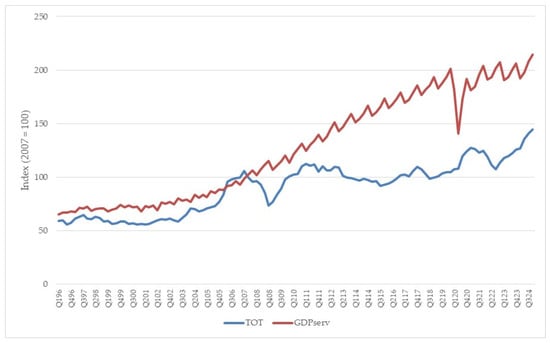
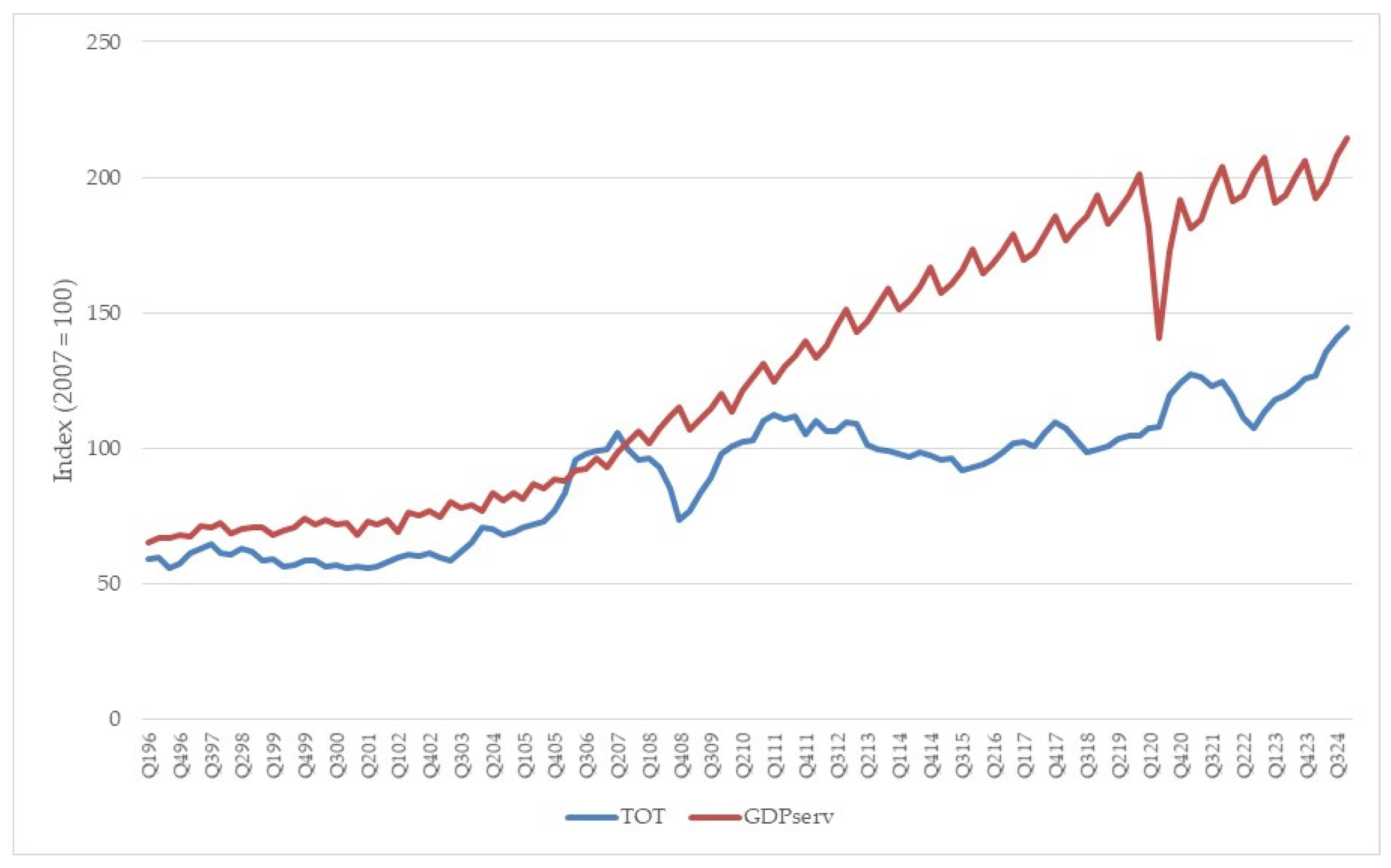

Disclaimer/Publisher’s Note: The statements, opinions and data contained in all publications are solely those of the individual author(s) and contributor(s) and not of MDPI and/or the editor(s). MDPI and/or the editor(s) disclaim responsibility for any injury to people or property resulting from any ideas, methods, instructions or products referred to in the content. |
© 2026 by the authors. Licensee MDPI, Basel, Switzerland. This article is an open access article distributed under the terms and conditions of the Creative Commons Attribution (CC BY) license.