


Abstract
Visual arts education (VAE) offers a promising pedagogical space for addressing sustainability challenges by engaging the cognitive, emotional, and ethical dimensions of learning. This study examines how engagement with contemporary visual arts and art-based pedagogical practices can foster ecological thinking, ecological literacy, and sustainability awareness among pre-service teachers. The research was conducted over one academic year (2022/2023) within two visual arts courses attended by a total of 69 second- and third-year students enrolled in a teacher education programme. Using a qualitative, interpretative research design, the study investigated how selected contemporary artworks addressing ecological themes were pedagogically contextualised and discussed, and how students engaged with these artworks through dialogue, reflection, and their own art-making processes. Data were collected from students’ written reflections, group discussions, and visual works, and analysed using an interpretative framework informed by visual hermeneutics and sustainability education discourse. The findings indicate that engagement with contemporary visual art can foster the development of ecological literacy by enabling students to integrate experiential, affective, reflective, and relational dimensions of sustainability into their understanding of environmental issues. In line with the objectives of SDG 4 (Quality Education), SDG 12 (Responsible Consumption and Production), and SDG 13 (Climate Action), the study contributes to existing literature by demonstrating the pedagogical potential of visual arts education within teacher education and Education for Sustainable Development.
1. Introduction
Contemporary society is increasingly characterised by uncertainty, instability and the rapid circulation of events, values and truths, making it difficult to cultivate stable values and long-term perspectives, including those related to environmental responsibility. Sociologist Zygmunt Bauman [1] conceptualised this condition as liquid modernity, describing a social context in which economic systems, political structures and cultural norms change more quickly than individuals can meaningfully adapt. In such conditions, dominant global paradigms continue to prioritise growth and consumption, often conflicting with principles of sustainable development and reinforcing short-term decision-making that marginalises environmental concerns.
Alongside these structural conditions, psychological and emotional responses to environmental crises have become increasingly visible. Eco-anxiety, commonly described as a chronic fear of environmental catastrophe accompanied by feelings of helplessness, has been identified as particularly prevalent among younger generations [2,3,4]. These developments position education as a key site for supporting ecological understanding that integrates cognitive, emotional and ethical dimensions. In this context, the development of ecological literacy and sustainability-oriented awareness emerges as a pressing educational priority. Education for Sustainable Development (ESD), as articulated by UNESCO, emphasises the integration of knowledge, values and competencies necessary for sustainable living and responsible citizenship [5,6]. Within this framework, ecological literacy extends beyond environmental knowledge to include ethical reflection, emotional engagement, and awareness of human–environment interdependence, positioning teacher education as a critical context for developing sustainability-oriented pedagogical capacities. Research increasingly highlights that sustainability competencies require integrative, reflective, and practice-oriented learning environments [7,8,9,10]. Preparing future teachers to engage with sustainability therefore requires approaches that move beyond informational models towards interpretative, reflective and experiential learning. From this perspective, visual arts education (VAE) offers a pedagogical space through which sustainability-related meanings can be explored through perception, dialogue, and material practice. Contemporary art’s engagement with ecological uncertainty and material interdependence further positions interpretative, arts-based pedagogy as a relevant pathway for exploring how sustainability is experienced rather than merely communicated [11,12,13]. As sustainability challenges are increasingly lived as affective and existential concerns, understanding how future teachers develop interpretative capacities to mediate such experiences becomes pedagogically urgent, making initial teacher education a particularly timely setting for examining reflective, emotional and relational ecological learning.
Existing studies have demonstrated the potential of arts-based approaches to support environmental awareness, emotional engagement and alternative forms of climate communication [14,15,16]. However, most focus on school pupils, community settings or interdisciplinary higher education initiatives, leaving comparatively less understanding of how such approaches operate within initial teacher education as a formative professional phase. This phase is particularly significant because pedagogical beliefs, professional identities and orientations toward sustainability are actively negotiated [17,18], shaping future teachers’ relational ecological understanding and pedagogical confidence. Without pedagogical approaches that engage interpretative and experiential dimensions of learning, sustainability risks being framed primarily as curricular content rather than as a pedagogical orientation grounded in reflective facilitation, value negotiation, and experiential engagement. Consequently, efforts to advance sustainability in education may remain largely informational, potentially constraining progress toward SDG 4 (Quality Education), which emphasises transformative teacher competencies; SDG 12 (Responsible Consumption and Production), which foregrounds material awareness and everyday practices; and SDG 13 (Climate Action), which calls for educational approaches capable of addressing the affective and ethical dimensions of ecological change.
Despite the growing emphasis on sustainability within educational policy and discourse, empirical research examining how VAE contributes to ecological thinking in teacher education remains limited. We still know comparatively little about how dialogue with contemporary artworks operates as a pedagogical process within initial teacher education, how art-making mediates the development of ecological literacy among pre-service teachers, and how such experiences shape future teachers’ capacity to facilitate sustainability-oriented learning. When interpretative dimensions are acknowledged, they are often addressed implicitly rather than examined as a central pedagogical process. Responding to this gap, the present study positions interpretative engagement with contemporary art as a pedagogical strategy capable of informing both pre-service teachers’ ecological literacy and their emerging teaching orientations. In this perspective, art is approached not only as a medium of sustainability communication but as an interpretative resource through which ecological meanings are constructed and translated into pedagogical practice, addressing not only a thematic gap but also a pedagogical and methodological one concerning how sustainability learning is mediated within teacher education practice.
Accordingly, the study is guided by the following research questions:
- How can contemporary visual art practices contribute to the development of ecological literacy and sustainability awareness among pre-service teachers?
- How can contemporary visual arts practices be pedagogically contextualised within visual arts education to inspire sustainability-oriented reflection?
- How do pre-service teachers experience and interpret ecological concepts through dialogue with contemporary artworks and through their own art-making processes within art-based pedagogical activities?
To address these questions, the study adopts a qualitative, interpretative approach aligned with arts-informed pedagogical perspectives that conceptualise sustainability learning as a process of meaning-making rather than outcome measurement. The following theoretical framework integrates scholarship on ecological literacy, holistic learning, meaning-making, and contemporary art in order to articulate the interpretative foundations of sustainability-oriented visual arts education.
2. Theoretical Framework
2.1. Sustainability Education, Ecological Literacy and Holistic Learning
Contemporary sustainability education increasingly recognises that environmental challenges cannot be addressed solely through technical solutions or the transmission of factual knowledge. Instead, sustainability is understood as a complex, value-laden and relational field that requires systemic thinking, ethical reflection and an awareness of human–environment interdependence [19,20,21].
Ecological literacy goes beyond environmental knowledge to include an understanding of ecological systems, recognition of interconnectedness, and the capacity to reflect on values, responsibilities and the consequences of human actions [20,22,23]. From this perspective, ecological thinking involves a shift in perception and identity, fostering sensitivity to the relational dynamics between humans and the environment. Education for Sustainable Development (ESD) aligns with this approach by emphasising integrative learning processes that connect cognitive, affective and ethical dimensions of sustainability [24,25], as reflected in the aims of SDG 4.7 and related sustainability targets. This emphasis aligns with broader trends in sustainability education research, which increasingly prioritise integrative, learner-centred and reflective approaches over transmissive models of learning [26,27]. Recent research further highlights the role of arts-based and creative pedagogies in supporting ecological literacy by enabling learners to engage with sustainability through experiential, interpretative and affective processes [11,12,16].
A holistic approach to education reinforces this perspective by highlighting the interconnectedness of cognitive, emotional and psychomotor domains and advocating learning experiences that integrate knowledge, feeling and action [28,29,30]. This approach shifts the focus from what is taught to how sustainability is experienced, interpreted and embodied within educational contexts. Through interdisciplinary integration—linking visual arts, environmental science, ethics and social studies—students can engage with ecological themes in rich, multimodal ways. Within such a framework, artistic practice emerges not only as a means of addressing sustainability-related issues, but also as a tool for reflective learning that supports the development of creativity, empathy and ethical reasoning as core professional competencies for future educators.
2.2. Meaning-Making in Sustainability Education
Learning for sustainability is increasingly understood as a process of meaning-making rather than the acquisition of predefined knowledge. Meaning-making involves learners actively constructing understanding by interpreting experiences, emotions, and information within specific social and cultural contexts [31,32]. This perspective is particularly relevant in sustainability education, where ecological issues are marked by uncertainty, ethical tension, and contested meanings.
Research consistently shows that sustainability-related learning encompasses intertwined cognitive, affective, and ethical dimensions, which require integrated pedagogical approaches. Educational practices that emphasise emotional engagement and reflective interpretation are therefore better able to support learners in negotiating complexity, reflecting on values, and imagining alternative futures—processes central to sustainability-oriented learning and especially important in arts-based and interpretative educational contexts.
2.3. Visual Arts Education as a Pedagogical Space for Sustainability
Within sustainability education research, teacher education is increasingly understood as a strategic site for pedagogical transformation, as teachers mediate how sustainability is interpreted and enacted in classroom practice. Initial teacher preparation therefore represents a formative space in which pedagogical identities, values and interpretative frameworks are shaped. Arts-based pedagogies introduced at this stage may contribute to the development of sustainability literacy as a professional competence, influencing how future educators approach complexity, uncertainty and the ethical dimensions of ecological issues.
Visual arts education (VAE) offers a pedagogical space particularly suited to such processes because it foregrounds experiential, reflective and relational modes of learning. Unlike instructional approaches that prioritise fixed outcomes, arts-based learning emphasises open-ended inquiry, sensory perception, personal interpretation, and imagination as legitimate forms of knowledge construction [33]. Artistic images, materials, and spatial interventions do not convey singular or closed meanings; instead, they invite learners to actively construct understanding through perception, emotion, and reflection.
This open-ended quality makes VAE particularly suited to addressing complex sustainability issues such as ecological responsibility, human–nature relationships, and material awareness [34,35]. Through artistic engagement, learners are encouraged to question dominant narratives, explore ambiguity, and connect personal experience with broader socio-ecological concerns. In this sense, visual arts function not merely as illustrative content but as a medium for critical reflection and meaning-making within sustainability education.
For pre-service teachers, engagement with visual arts may support the development of pedagogical sensitivity towards sustainability by highlighting how learning processes are shaped by values, emotions, and relational understanding [36,37]. Such engagement is particularly relevant in teacher education, where future educators are expected to navigate complexity and facilitate sustainability-oriented learning in diverse and unpredictable classroom contexts.
Research on arts-based sustainability education provides an important foundation for this perspective. Studies have demonstrated that artistic engagement can support environmental awareness, emotional involvement, and alternative forms of climate communication [7,9,26]. These contributions highlight how creative practices enable learners to explore complex ecological issues through experiential and affective pathways. However, less attention has been paid to the interpretative processes through which ecological meanings are pedagogically mediated, particularly within initial teacher education. While previous work establishes the value of artistic engagement, it often leaves open questions about how dialogue with artworks, reflective interpretation, and art-making interact to support the development of ecological literacy among future educators.
Building on this literature, the present study shifts the analytical focus from artistic engagement as an outcome to interpretative meaning-making as a pedagogical process. By examining how pre-service teachers construct ecological understanding through dialogic engagement with contemporary artworks and reflective art-based practice, the study extends existing research and addresses a gap concerning the pedagogical mediation of sustainability within teacher education.
2.4. Contemporary Art as Pedagogical Case Examples in Sustainability Education
Within an interpretative perspective on sustainability learning, contemporary art practices provide a relevant context for examining how ecological meanings are negotiated through perception, material engagement and dialogic reflection. Contemporary artists increasingly address ecological themes by exploring environmental degradation, material consumption, human–environment relations and experiences of uncertainty associated with the Anthropocene. Rather than conveying didactic messages or proposing solutions, contemporary artworks often operate through ambiguity, disruption, and critical inquiry, inviting viewers to reflect on their own positions within complex ecological systems.
Artworks that foreground materiality, perception, fragility, and interdependence serve as pedagogical case examples capable of mediating sustainability-related meanings. Through their open-ended structures, such works enable interpretative engagement with ecological issues that resists simplification and acknowledges uncertainty, ethical tension, and relational complexity. This quality aligns with sustainability education approaches that emphasise systems thinking and relational understanding over linear or solution-oriented frameworks.
From an educational perspective, contemporary artworks can be used as interpretative resources that support dialogic inquiry and reflective learning. Their resistance to fixed interpretation encourages learners to negotiate multiple perspectives, attend to affective and sensory responses, and explore ecological issues as situated and value-laden rather than abstract or purely informational. Research on place-based and context-sensitive arts practices similarly highlights the capacity of contemporary art to mediate sustainability discourse through experiential and relational engagement [38,39].
In this study, contemporary artworks are used as pedagogical case examples that illustrate diverse aesthetic and conceptual strategies for addressing ecological concerns. Although the selected artists are situated within a specific cultural context, the analysis focuses on thematic and conceptual dimensions that resonate with broader sustainability discourses and are pedagogically transferable across educational settings. To situate this approach within existing scholarship, Table 1 conceptually positions the present study in relation to dominant research strands in visual arts education and sustainability [12,13,40], foregrounding interpretative and pedagogical dimensions that remain comparatively underexplored in teacher education rather than providing a systematic review.
Table 1.
Conceptual positioning of the present study within research on visual arts education and sustainability.
Taken together, these theoretical perspectives position sustainability education as a meaning-oriented, experiential, and relational process, and VAE as a pedagogical space capable of supporting such learning (Figure 1). Within this framework, engagement with contemporary art is understood both as a pedagogical strategy and as a mode of inquiry that enables the exploration of ecological concepts beyond purely cognitive forms of learning. These considerations inform the adoption of a qualitative, interpretative research design focused on pre-service teachers’ engagement with ecological themes through dialogue with artworks and art-based pedagogical activities. Within this design, contemporary artworks function not merely as illustrative materials but as analytical entry points through which sustainability learning can be examined as an interpretative pedagogical process.
Figure 1.
Conceptual framework linking visual arts education, pedagogy and sustainability in teacher education.
3. Materials and Methods
3.1. Research Design
Guided by the theoretical framework outlined above, this study adopts a qualitative, interpretative research design grounded in arts-based educational research and visual hermeneutics. The research is exploratory and conceptual, aiming to examine how visual arts education can contribute to the development of ecological thinking and sustainability awareness in teacher education. Rather than measuring learning outcomes or establishing causal relationships, the study focuses on processes of meaning-making, interpretative engagement, and pedagogical mediation of sustainability.
The choice of an interpretative design addresses methodological challenges within sustainability education research, which has often prioritised measurable competencies, behavioural outcomes, and evaluative indicators, while affective, symbolic, and relational dimensions of learning remain less accessible through standardised approaches. This reflects broader epistemological tensions between outcome-oriented educational research and perspectives that conceptualise learning as situated, emergent, and context-dependent. Visual hermeneutics and arts-based inquiry were therefore adopted to examine how sustainability is experienced, negotiated, and articulated through engagement with artworks and art-making processes. The interpretative design is positioned not as an alternative to outcome-based research but as a complementary approach capable of accessing dimensions of sustainability learning that remain methodologically underexplored.
The methodological framework integrates three complementary components: interpretative visual analysis of selected artworks, a pedagogical case study approach embedded in higher education teaching practice, and reflective analysis of students’ art-making and written processes. These components are supported by a conceptual synthesis of literature from sustainability education and visual arts education, enabling theoretical insights to be articulated through documented pedagogical practice. Within this framework, visual arts function both as an object of interpretation and as a pedagogical medium through which ecological concepts can be explored and articulated. This orientation aligns with arts-based research perspectives that position pedagogical practice as a site of inquiry and view teaching contexts as spaces for situated knowledge generation [15,41].
The study involved a total of 69 second- and third-year undergraduate pre-service teachers (typically aged 20–23 years) enrolled in a teacher education programme and participating in two consecutive Visual Arts courses during the 2022/2023 academic year. Additional demographic variables were not collected, as they were not relevant to the interpretative aims of the study and participant anonymity was prioritised. The research was conducted at a public university faculty of teacher education in Croatia, where visual arts courses form part of the regular undergraduate curriculum for future primary school teachers and the institutional context emphasises interdisciplinary approaches to teaching and learning. The courses aimed to develop students’ visual literacy, artistic expression, and pedagogical competencies in visual arts education, providing a structured context for interdisciplinary connections across areas of learning and teaching, including interpretative engagement with artworks and art-based reflective practice. All research activities were embedded within regular course teaching and organised around the thematic framework Understanding the Anthropocene through Dialogue with Visual Art, which guided the selection of artworks, pedagogical activities, and students’ creative and reflective tasks. The author served as both course instructor and researcher. To minimise potential power-relation bias, procedures ensuring voluntary participation, anonymisation of materials, and separation of course assessment from research participation were implemented. Participants were informed that selected reflections and artworks produced as part of coursework might be used for research purposes in anonymised form, and only materials from students who agreed were included in the analysis.
3.2. Selection of Artistic Case Examples
Rather than seeking representativeness or generalisation, the study used selected contemporary artists as artistic case examples. The artists—Sebastijan Dračić, Kristian Kožul, Bojan Šumonja and Ivana Franke—were chosen for their conceptual engagement with themes relevant to the Anthropocene, including human–environment relations, materiality, perception, responsibility and systemic interdependence, as well as their capacity to provoke interpretative dialogue within an educational context. Their practices encompass diverse artistic strategies, conceptual approaches and media, including painting, sculpture, installation and spatial intervention. Although the artworks originate from Croatian contemporary art practice, their inclusion is based on thematic and conceptual relevance to broader ecological and sustainability-related discourses, rather than national or cultural specificity. Accordingly, the pedagogical approach developed in this study is transferable and may be applied using artworks from other cultural contexts, provided they engage with comparable environmental concerns and relational understandings of human–environment interactions.
The artworks were selected for their capacity to evoke ecological reflection without relying on explicit environmental messaging. The selection reflects diversity in media, material strategies and ecological themes relevant to interpretative sustainability learning. Within this study, the artworks are approached as pedagogical case examples that mediate ecological meanings and support interpretative, affective and ethical engagement rather than as objects of formal aesthetic analysis.
3.3. Interpretative Visual Analysis (Visual Hermeneutics)
The primary visual hermeneutic analysis of the selected artworks was conducted by the author–researcher and informed the pedagogical design of the course activities. This preparatory analysis provided conceptual grounding for the pedagogical framework, supported the formulation of open-ended interpretative questions, and ensured coherence with key constructs of the study, including ecological literacy and relational thinking. Rather than establishing fixed meanings, it identified thematic and conceptual entry points that structured subsequent dialogic engagement, within which interpretations were co-constructed with students through affective responses, associations and reflective discussion.
The analysis followed an interpretative visual hermeneutic approach [42,43], which conceptualises images as culturally and contextually situated forms of meaning-making. Interpretation is understood as a dialogic process emerging through the interaction between the artwork, the viewer, and broader socio-ecological discourses [44]. The interpretative process followed a hermeneutic cycle, moving iteratively between close observation and description of visual, material, and spatial elements; contextualisation; and reflective interpretation within ecological, philosophical, and educational frameworks. Analytical attention focused on symbolism, material choices, compositional strategies, modes of representation, and the affective responses elicited by the artworks, allowing meanings to emerge progressively through engagement rather than predefined analytical categories.
In addition to the preparatory artwork analysis, the empirical material examined in this study included students’ written reflections, documented verbal contributions during dialogic discussions (recorded in researcher field notes), and students’ visual artworks produced during course activities. These sources were examined through iterative thematic reading and cross-comparison to identify recurring interpretative patterns, affective responses and sustainability-related meanings. The triangulation of visual, written and dialogic materials supported interpretative consistency while preserving the co-constructed and situated character of classroom meaning-making.
3.4. Pedagogical Engagement with Artworks
The selected artworks were incorporated into VAE courses for pre-service teachers using a range of art-based pedagogical methods, including guided dialogic discussion, reflective note-taking, associative drawing, role-play, and project-based learning. These approaches were designed to support experiential, reflective, and relational engagement with sustainability-related themes.
Pedagogical activities typically began with collective viewing of artworks and open-ended discussion, encouraging students to express personal interpretations and negotiate shared meanings. Reflective notes and short written responses captured individual impressions, emotional reactions, critical reviews and emerging ecological reflections. Visual and performative activities enabled students to translate abstract ecological ideas into material and symbolic forms, while role-play supported perspective-taking and ethical reflection. Small-scale artistic projects fostered sustained engagement with ecological themes over time.
Students’ reflections and artworks were treated as illustrative pedagogical materials rather than as data subjected to formal coding. They were examined through iterative thematic reading and cross-comparison of written reflections, researcher field notes, and visual outputs, with analytical attention given to recurring concepts, emotional expressions, and sustainability-related meanings. Consistent with the interpretative qualitative design, student statements presented primarily in the Section 5 are analytically synthesised formulations representing shared interpretative patterns rather than verbatim quotations attributed to individual participants. This approach aligns with contemporary qualitative reporting principles that emphasise analytic representation of patterns rather than reliance on verbatim transcription [45]. All statements were anonymised to protect individual voices while preserving the integrity of collective meaning-making processes.
Classroom discussions were not audio recorded. Instead, dialogic engagement was documented through researcher field notes taken during and immediately after sessions. Emerging ideas were summarised collaboratively on the board and revisited through short written reflections, enabling clarification and consolidation of shared interpretations. Consequently, student statements derive from iterative analysis across these sources rather than transcription. This approach supported the identification of recurrent interpretative patterns affective responses, and sustainability-related meanings while preserving the collective and situated character of classroom dialogue. The decision not to audio record discussions was intentional and aligned with the pedagogical aim of maintaining a low-pressure dialogic environment that supports open reflection and exploratory meaning-making.
3.5. Conceptual and Pedagogical Synthesis
Complementing the interpretative and pedagogical components, the study employed a conceptual–pedagogical synthesis integrating insights from visual arts education, ecological literacy, holistic education and sustainability studies. Rather than constituting a separate analytical stage, this synthesis functioned as an ongoing interpretative process through which theoretical perspectives were articulated in relation to documented pedagogical practice and used to inform the study’s analytical framing and educational implications.
The synthesis followed an iterative analytical procedure in which three sources were systematically brought into dialogue: theoretical perspectives on ecological literacy and sustainability education, interpretative insights generated through visual hermeneutic analysis of the selected artworks, and pedagogical observations derived from students’ reflective and art-based responses. Analytical comparison across these sources involved identifying recurring concepts, mapping conceptual relationships, and examining how interpretative insights were re-signified through classroom engagement. This process enabled the identification of convergent themes, including relational understandings of sustainability, affective engagement, and material awareness.
Interpretative credibility was supported through iterative comparison across theoretical, visual, and pedagogical materials, allowing triangulation of meaning-making processes rather than verification of predefined analytical categories. In line with the qualitative and interpretative research design, the synthesis prioritised the generation of contextually grounded pedagogical insights over generalisable outcomes. Methodological credibility derives from the coherence between theoretical framing, pedagogical design and analytical approach, enabling the study to trace how ecological meanings emerge through interpretative engagement with artworks and art-making processes.
The synthesis does not aim to generate new theory but to integrate conceptual and empirical insights into a transferable pedagogical framework. In doing so, the study prioritises analytical depth over procedural standardisation to access dimensions of sustainability learning that remain methodologically underexplored.
3.6. Trustworthiness
Trustworthiness was addressed using strategies that supported credibility, dependability, and confirmability. Credibility was enhanced through prolonged engagement in an authentic educational setting and an iterative interpretative process conducted throughout the study. Interpretative consistency was strengthened through triangulation of data sources, including students’ written reflections, dialogic discussions, and visual artworks. Confirmability was supported through ongoing reflective consideration with participants of emerging interpretations in relation to pedagogical interactions, helping to mitigate potential researcher bias, while dependability was ensured through a transparent research design with clearly articulated pedagogical and analytical procedures.
4. Results
4.1. Interpretative Insights from Contemporary Artworks
The interpretative analysis of selected works by contemporary artists revealed a range of aesthetic and conceptual strategies through which ecological concerns and human–environment relations are foregrounded. Despite differences in medium and artistic language, the artworks consistently drew attention to issues of environmental degradation, material consumption, interconnectedness, and responsibility.
Dračić’s landscapes highlight ecological uncertainty through subtle symbolic and atmospheric disruptions, presenting nature as a space shaped by human intervention and temporal instability. Kožul’s sculptural works emphasise material excess and hybridity, drawing attention to consumer culture, overproduction, and disposability embedded in contemporary material practices. Šumonja’s figurative imagery situates human presence within natural environments marked by tension and dissonance, using recurring landscape motifs to signal social conformity, environmental neglect, and ethical erosion. Franke’s installations foreground perceptual instability and embodied spatial experience, directing attention to relational positioning and the limits of control in human–environment interactions.
Across these artistic approaches, the artworks served as pedagogical case examples that mediated complex ecological meanings and provided interpretative entry points for classroom dialogue.
4.2. Pedagogical Engagement and Student Interpretations
Engagement with the artworks typically began with collective viewing and guided dialogic discussion informed by interpretative analysis, enabling students to explore visual, material, and symbolic elements through open-ended questions. Students were encouraged to attend to the perceptual, material, and affective dimensions of the artworks, as well as to the broader socio-ecological questions they raised. Individual reflection was supported through short written responses and reflective notes documenting impressions, emotional reactions, and emerging ecological interpretations. Illustrative student statements derived from written reflections, classroom dialogue, and art-based responses are presented in the Section 5, where their interpretative significance is examined in detail. Rather than verbatim quotations, these statements represent analytically synthesised patterns across participants. Recurring themes emerging from these pedagogical encounters are synthesised in Table 2, which maps relationships between artistic case examples, student responses and sustainability-related meanings. Students frequently described ecological issues as situations in which they were already involved, while the uncertainty experienced in interpreting artworks was often linked to the ambiguity of sustainability challenges. This interpretative shift was also evident in students’ written reflections, where several participants noted that the artworks prompted them to reconsider their own position within environmental processes.
Table 2.
Interpretative contextualisation of contemporary artworks based on student responses and sustainability-related interpretations.
Art-making activities, including associative drawing and material-based responses, supported embodied engagement with sustainability-related concepts. Role-play and perspective-taking activities encouraged students to consider non-human or alternative viewpoints, fostering ethical reflection and relational thinking. Elements of a project-based approach enabled sustained engagement with ecological themes through small-scale artistic projects integrating interpretation, reflection, and creative production. Across these pedagogical encounters, students’ interpretations consistently extended beyond factual knowledge of environmental issues, approaching sustainability as an experiential and value-oriented process shaped through dialogue, affective response, and material exploration. The relational pedagogical process linking interpretative dialogue, affective engagement, and art-making is schematically represented in Figure 2, which illustrates the art-based learning pathways that supported ecological literacy.
Figure 2.
Schematic representation of the art-based pedagogical pathways supporting ecological literacy in teacher education.
4.3. Interpretative Contextualisation of Contemporary Artworks
Building on the pedagogical process outlined above, students’ interpretative engagement with contemporary artworks demonstrates how the pedagogical pathways were re-signified through perceptual, material, and symbolic registers.
Rather than seeking explicit environmental messages, students constructed meaning through experiential interpretation, connecting the visual and material qualities of the artworks with broader socio-ecological conditions.
In dialogue with Dračić’s painterly landscapes, students interpreted atmospheric density and temporal duration as indicators of unsustainable accumulation and long-term environmental change, with visual ambiguity often associated with uncertainty surrounding ecological futures. Kožul’s hybrid assemblages were re-signified through affective responses such as discomfort and irony, which students associated with consumer excess and the instability of nature–culture boundaries. Interpretations of Šumonja’s landscapes often shifted towards themes of loss, alienation, and ecological injustice, situating environmental degradation within wider socio-political and ethical frameworks. Engagement with Franke’s installations prompted reflections on vulnerability, attentiveness, and embodied presence, as students interpreted perceptual disorientation as a metaphor for ecological interdependence and uncertainty.
Through these interpretative processes, students translated artistic affordances into situated ecological meanings, demonstrating how contemporary art can function as a pedagogical medium that supports reflective, affective, and relational engagement with sustainability.
4.4. Student Artistic Responses and Reflective Engagement
Following interpretative engagement with the artworks, students produced visual responses that translated individual impressions, emotions and ecological concerns into material form. As summarised in Table 1, recurring visual strategies included fragmentation, repetition, altered landscapes, relational arrangements and symbolic emptiness, illustrating how ecological meanings were negotiated through visual practice. To make the empirical basis of these interpretative patterns more explicit, the following section presents selected illustrative excerpts from student reflections, along with representative examples of student artworks (Figure 3). These materials illustrate how the ecological meanings identified in the analysis were expressed through students’ symbolic forms, material choices, and visual responses.
Figure 3.
Examples of student artworks produced during art-based sustainability learning activities. (a) Ink drawing combining botanical and anthropomorphic elements suggesting vulnerability, ecological interdependence, and the entanglement of human and natural systems. (b) Collage composition constructed from fragmented visual material and dark organic silhouettes, interpreted as reflecting environmental disruption and the tension between natural and constructed environments. (c) Ink drawing combining patterned organic forms with dispersed atmospheric textures resembling pollution, associated by the student with ecological instability and environmental uncertainty, and implying a mutation of natural forms into something unpleasant and unnatural. (d) Collage juxtaposing industrial structures with organic elements, visually articulating tensions between technological development and ecological fragility.
Artistic production enabled students to explore tensions between agency and helplessness, as well as between hope and anxiety, without seeking immediate resolution. In this sense, art-making functioned as a mediating pedagogical space in which ecological thinking emerged as an open and relational process shaped through material engagement. Table 1 therefore operates not only as a summary of artistic outputs but as an analytical bridge linking artistic case examples, student responses, and sustainability-related interpretations.
Specific visual strategies reflected recurring interpretative patterns. Fragmented landscape compositions were frequently associated with ecological instability and environmental loss, while repetitive layering and accumulation were interpreted as visual analogues of consumption and irreversibility. Several reflections described the interpretative experience as unsettling, with one student noting that the artworks revealed “how easily we ignore the materials we throw away.” Another student explained that the layered materials symbolised “how environmental damage builds up gradually until it becomes irreversible.” Some students also described feelings of absurdity, discomfort and ambivalence when engaging with the artworks. As one reflection stated, the scenes appeared “strangely absurd, because they felt familiar and unsettling at the same time.” Similarly, fragmented visual structures were interpreted as representing “a landscape slowly breaking apart under the pressure of human activity,” highlighting the gradual and often unnoticed nature of environmental degradation. Several reflections further indicated heightened empathy towards the natural environment, which students increasingly perceived as a living system rather than an inert resource. As one student wrote, the artwork evoked the feeling that “nature is not silent but silently enduring the consequences of what we do.” Collages incorporating discarded materials—including paper packaging, plastics, and found objects—highlighted material cycles, waste, and interdependence. One reflection noted that working with discarded materials “made visible how easily everyday waste becomes part of the landscape.” Relational spatial arrangements emphasising proximity, imbalance, or tension were interpreted as visualisations of human–environment entanglement. One student described the impression after viewing the artworks as “conveying a sense of fragility, as if the environment could easily be damaged,” while another noted that “the experience revealed how vulnerable natural systems actually are.” Engagement with the artworks also encouraged attentiveness, with one reflection describing the process as “learning to notice details that usually remain invisible.” At the same time, the interpretative ambiguity of the artworks was associated with “the uncertainty of environmental futures.”
Students’ written reflections and classroom dialogue provided complementary insight into these visual strategies. Synthesised reflections indicated that art-making supported the articulation of ambivalent sustainability-related emotions, including concern, uncertainty, responsibility and empathy. Ecological issues were often described as conditions in which students felt implicated even when attempting to maintain distance, while material experimentation was frequently experienced as making environmental processes tangible and difficult to ignore. Visual decisions such as leaving empty areas, interrupting composition or juxtaposing organic and artificial elements were interpreted as attempts to express vulnerability, disruption and unresolved tension.
Across these responses, artworks functioned less as representations of predefined sustainability messages and more as exploratory visual inquiries through which ecological meanings were embodied and reinterpreted. The patterns synthesised in Table 1 demonstrate how perceptual, affective and material dimensions intersected in the development of ecological literacy, showing how art-making enabled students to transform interpretative insights into situated ecological understandings.
Taken together, these findings provide an empirical foundation for the subsequent discussion of visual arts education as a pedagogical space supporting sustainability-oriented meaning-making.
5. Discussion
Classroom dialogue and artistic practice served as complementary spaces for exploring sustainability as a complex, relational, and value-laden field of inquiry. Teaching interventions were organised around open-ended reflective prompts that situated ecological issues within broader ethical, social, and existential frameworks. Guiding questions addressed human–environment relationships, perceptual and ethical dimensions revealed through artworks, and the ways artistic encounters challenge assumptions of responsibility, distance, and control. Further discussion focused on the boundaries of individual agency, the role of social, political, and economic structures, and the influence of emotions such as guilt or helplessness on willingness to act. Together, these prompts encouraged students to approach sustainability not as an external or abstract issue, but as a relational condition in which they are personally involved. To avoid unnecessary repetition, the Discussion synthesises patterns across the findings rather than reiterating descriptive details presented in the Section 4.
Throughout classroom discussions, a recurring tension emerged between students’ awareness of global environmental problems and their uncertainty about meaningful personal action. Responsibility was initially expressed in abstract terms and often attributed to governments, industries, or “society in general.” Through guided reflection, students increasingly adopted more situated and reflexive positions, articulated through analytically synthesised reflections such as recognising themselves as part of broader socio-ecological systems, even when attempting to distance themselves, or understanding responsibility not only as large-scale change but also as everyday choices and forms of participation. Several reflections further suggested that responsibility begins not at the level of solutions, but at the level of awareness and everyday decision-making. These shifts indicate an emerging understanding of sustainability as an ethical and relational field grounded in participation and attentiveness, rather than as a purely technical or policy-driven issue, aligning with perspectives that emphasise relational agency and moral imagination [46,47].
Engagement with contemporary artworks addressing accumulation, loss, and environmental degradation often elicited discomfort, anxiety, and uncertainty. Students expressed affective responses associated with eco-anxiety, including unease when confronting overlooked environmental consequences and feelings of being overwhelmed by the scale of ecological problems relative to individual capacity. At the same time, artworks that allowed space for ambiguity and contemplation generated positive affective responses such as attentiveness, curiosity, empathy, and cautious hope. These patterns align with research showing that sustainability learning often evokes strong and ambivalent emotions, including concern, responsibility, and eco-anxiety [48]. While such emotions may motivate engagement, they can also lead to withdrawal if educational contexts do not support reflection and sense-making. Interpretative patterns from students’ reflections suggest that the absence of prescriptive messages enabled deeper engagement, and that experiencing discomfort was productive in revealing personal implication rather than externalising responsibility. Students frequently noted that not being told what to think or do allows them to remain with uncertainty and to recognise their own implication in ecological issues. Several reflections further indicated that emotional tension played a productive role in reflection, as discomfort disrupted habitual distancing from environmental problems and prompted reconsideration of everyday choices and values. In this sense, discomfort was experienced not as an obstacle to learning, but as a productive condition for ethical reflection. This highlights the limitations of approaches that frame sustainability primarily as a technical or informational issue while marginalising its emotional and experiential dimensions. Consistent with research on climate change communication, emotions emerged as central to shaping understanding, motivation, and agency [49,50,51].
Material-based activities, including the use of recycled and found materials, enabled the translation of reflective discussion into embodied understanding, reinforcing arguments that learning through making can deepen ecological awareness [52]. Students frequently noted that working with materials highlighted ecological processes such as accumulation, fragility, interdependence, and imbalance. Synthesised reflections indicated heightened awareness of how material repetition and layering mirrored processes of environmental degradation and irreversibility. The deliberate choice to work with discarded materials was often described as both practical and symbolic, with students emphasising that using waste materials made sustainability visible within the artistic process itself. Students consistently highlighted that artistic practice enabled forms of insight not accessible through discussion alone. Reflections emphasised the value of non-verbal and embodied modes of thinking, with synthesised statements indicating that shaping ideas visually allowed tensions to be sensed rather than merely articulated, and that artistic work made it possible to explore contradictions without resolving them prematurely. Such responses underline the role of artistic activity in fostering tolerance for ambiguity and complexity—capacities essential for engaging with sustainability challenges characterised by uncertainty and ethical tension [40,53].
Reflective notes and discussions further revealed recurring feelings of responsibility, concern, and connectedness, while visual and performative tasks supported the articulation of abstract ecological concepts through symbolic and personal expression. The benefits of artistic engagement extended beyond the immediate learning context, as students reported increased confidence in using visual arts as a pedagogical tool for addressing ecological topics with future pupils. This finding aligns with research on sustainability competencies in teacher education, which emphasises pedagogical sensitivity, reflective capacity, critical distancing, and affective engagement alongside subject knowledge [7,8,54]. Rather than offering solutions to environmental problems, such practices encouraged students to reconsider their own positionality within ecological systems and to reflect on the role of perception, values, and everyday choices in sustainability-oriented action. In line with interpretative approaches in education for sustainable development, the study foregrounds analytical depth and pedagogical insight by prioritising reflective meaning-making within situated educational contexts.
Within teacher education, sustainability literacy is increasingly understood as a relational and practice-oriented competence that requires interpretative and experiential learning opportunities [55,56]. From this perspective, the findings demonstrate that VAE—particularly through the use of contemporary artworks as pedagogical case examples—can support engagement with sustainability as an open-ended, meaning-oriented process responsive to ecological complexity and ambiguity. By resisting didactic messages and embracing uncertainty and multiplicity of meaning, artworks aligned with sustainability discourses that emphasise systems thinking and relational ontology. Approached as open-ended sites of interpretation, contemporary artworks enabled ecological thinking to emerge through dialogue, affective engagement, and reflective meaning-making, consistent with previous research on the role of the arts in sustainability education [11,39].
Students’ interpretations shifted from descriptive or aesthetic responses to more relational and systemic understandings of ecological issues. Ecological problems were increasingly articulated not as external phenomena but as questions of responsibility, interdependence, and human positioning within ecological systems. This supports arguments that ecological literacy involves the integration of knowledge, values, emotions, and reflective awareness [26,57], and confirms the relevance of art-based approaches for addressing such complexity [14,40,58].
The study does not depend on the cultural specificity of particular artists but rather on the pedagogical function of contemporary art as an interpretative medium. Thus, the framework can be applied using artworks from various artistic traditions while preserving the underlying learning mechanisms. Meanwhile, variability in how sustainability is embedded within teacher education suggests that the absence of structured interpretative pedagogies may be especially apparent in contexts where interdisciplinary and arts-based approaches remain unevenly integrated. In this respect, the study provides context-sensitive insights that contribute to international discussions on sustainability-oriented teacher education. Rather than asserting universal applicability, the findings support theoretical transferability by articulating pedagogical mechanisms—dialogic interpretation, affective engagement, and art-based reflection—that can be adapted across diverse educational setting.
In response to RQ1, the study shows that art-based educational projects contribute to ecological thinking by enabling pre-service teachers to approach sustainability as a relational, affective, and ethical field of inquiry. Through interpretative engagement with artworks and reflective art-making, students developed forms of ecological literacy that integrate emotional awareness, critical questioning, and recognition of human–environment interdependence. Addressing RQ2, the findings demonstrate that contemporary art practices can be pedagogically contextualised as interpretative case examples that stimulate sustainability-oriented reflection. When approached through guided visual interpretation rather than art-historical explanation, artworks served as catalysts for dialogue connecting personal experience with broader ecological challenges. In relation to RQ3, students experienced ecological concepts as emotionally charged and personally implicating rather than abstract or distant. Through art-making, these reflections were translated into material choices and visual strategies, indicating a shift towards viewing themselves as active participants within ecological systems rather than detached observers. Taken together, the findings suggest that VAE contributes to sustainability education not by transmitting solutions, but by cultivating reflective, affective, and relational capacities foundational to responsible ecological engagement.
The study contributes to current debates by demonstrating how interpretative dialogue, affective engagement, and art-making operate as interconnected pathways through which ecological meanings are pedagogically mediated. This perspective extends arts-based sustainability research by foregrounding pedagogical process rather than educational outcome and highlights the need for teacher education designs that support sustainability as an ongoing practice of meaning-making rather than solely as curricular content.
5.1. Implications for Teacher Education
The findings highlight several implications for teacher education. Visual arts education can support the development of pedagogical sensitivity towards sustainability as a value-laden and relational field, while art-based pedagogical strategies enable forms of sustainability learning that integrate cognitive, emotional and ethical dimensions. Experiential and material engagement positions art-making as a space for reflecting on responsibility, consumption and care. By clarifying how interpretative and art-based pedagogical processes support ecological literacy in teacher education, the study contributes to educational approaches aligned with SDG 4 and offers pedagogical pathways relevant to SDGs 12 and 13.
Integrating contemporary art and art-based pedagogical practices into teacher education supports sustainability learning that engages interpretative, affective and relational dimensions often underrepresented in curriculum-driven approaches. Rather than positioning sustainability as a discrete content area, such approaches enable future teachers to experience sustainability as a pedagogical orientation grounded in reflection, dialogue and material engagement. Within this framework, ecological literacy emerges not only as knowledge but as a situated professional competence developed through interpretative practice.
Students reported increased confidence in using visual arts pedagogically to address ecological topics with future pupils, suggesting that art-based approaches may strengthen teachers’ capacity to facilitate sustainability-oriented learning across diverse classroom contexts. Although situated within a specific institutional setting, the pedagogical structure documented in this study—combining interpretative visual analysis, dialogic reflection, and art-based practice—represents a transferable pedagogical process rather than a context-dependent intervention. Consistent with interpretative approaches in education for sustainable development, these findings emphasise reflective meaning-making within situated pedagogical practice as a key dimension of sustainability learning.
Taken together, the results indicate that art-based pedagogical approaches offer a pathway through which sustainability competencies associated with educational quality, responsible material practices, and climate awareness can be meaningfully cultivated in teacher education.
5.2. Recommendations for Future Research
Future research could extend these findings through longitudinal and comparative studies examining how similar interpretative and arts-based pedagogical designs influence sustainability-oriented teaching practices over time and across diverse institutional contexts. Comparative investigations would help clarify the transferability of dialogic interpretation, affective engagement and art-making as pedagogical mechanisms supporting ecological literacy, while mixed-method approaches could explore relationships between artistic production, emotional engagement and sustainability competencies.
Further research into dialogic co-interpretation processes may contribute to methodological development within arts-based sustainability research, particularly regarding how visual hermeneutics can be operationalised in educational settings and integrated with other qualitative or practice-based approaches. Such work would support a deeper understanding of sustainability learning as an interpretative, relational and materially grounded pedagogical process rather than solely an educational outcome.
6. Limitations
The study has several limitations that should be considered when interpreting the findings. First, the research employs a qualitative, interpretative design within a single institutional context and involves a relatively small group of pre-service teachers. While this approach allowed for an in-depth exploration of students’ experiences, interpretations, and meaning-making processes, the findings are context-specific and are not intended to be generalised beyond the studied setting.
Second, the study uses a purposive selection of contemporary artworks chosen for their conceptual engagement with ecological and sustainability-related themes. Although these artistic case examples provided meaningful pedagogical entry points, they do not represent exhaustive or definitive artistic approaches to sustainability-oriented engagement.
Third, the dual role of the author as course instructor and researcher may have influenced students’ participation and self-expression. To mitigate this risk, procedures for voluntary participation, anonymisation, and the separation of course assessment from research participation were implemented. Analytical emphasis was placed on recurring interpretative patterns across multiple data sources rather than on individual responses, supporting a focus on collective meaning-making processes.
Finally, the study focuses on interpretative, affective and experiential dimensions of sustainability learning and does not include systematically collected empirical measures of learning outcomes. Its purpose is to illuminate pedagogical processes and potentials rather than to evaluate effectiveness. While not aiming at generalisation, the study offers context-sensitive insights that may inform similar pedagogical approaches in teacher education. Future research could extend these findings through longitudinal or mixed-method studies across multiple educational contexts.
7. Conclusions
Visual arts education offers a pedagogical space for experiential, reflective and relational engagement with sustainability in teacher education. Building on this premise, the study demonstrates how interpretative engagement with contemporary art and art-based pedagogical practices enables ecological literacy to emerge as relational, affective and materially grounded within initial teacher education.
By positioning contemporary artworks as pedagogical case examples and examining students’ dialogic and artistic responses, the study shows how sustainability learning can be mediated through meaning-making processes rather than instructional transmission. In this way, visual arts education supports the development of pedagogical sensitivity, relational ecological understanding and sustainability-oriented teaching orientations among pre-service teachers.
The study contributes to sustainability education research by empirically demonstrating how visual arts education can support ecological literacy through interpretative, affective and material engagement embedded within teacher education practice. Rather than proposing a prescriptive model, it articulates transferable pedagogical mechanisms through which contemporary art functions as a site of meaning-making, enabling pre-service teachers to negotiate ecological complexity, responsibility and relational awareness. This shifts the analytical focus from what sustainability is taught to how it is experienced, interpreted and pedagogically enacted, foregrounding interpretative co-construction as a central dimension of sustainability learning.
Through dialogic interpretation and art-making, students developed more situated understandings of responsibility, agency and material awareness, illustrating how sustainability concepts become personally and professionally meaningful. Aligned with SDG 4, SDG 12 and SDG 13, the findings highlight the pedagogical relevance of visual arts education for sustainability-oriented learning in teacher education. Although situated within a specific institutional context, the study offers transferable insights into pedagogical processes that integrate interpretative, affective and material dimensions of sustainability learning across teacher education settings.
Consistent with interpretative research traditions in education for sustainable development, the study prioritises analytical depth and pedagogical insight over generalisation, contributing contextually grounded knowledge about how sustainability can be mediated through artistic and dialogic practice. These findings respond to ongoing calls for pedagogical approaches capable of integrating ethical, emotional and experiential dimensions of sustainability learning within teacher education.
Future research may extend this work through longitudinal, comparative and mixed-method studies examining how art-based pedagogical processes influence the development of sustainability-related teaching practices over time and across diverse institutional contexts.
Funding
This research received no external funding.
Institutional Review Board Statement
The study was conducted in accordance with the ethical principles of the Declaration of Helsinki. The research consisted of non-interventional, course-based educational activities using anonymized student reflections and artworks produced within regular teaching practice, as part of course assignments. As the study did not involve intervention, sensitive personal data, or identifiable participant information, formal ethical approval was not sought. It was conducted following national regulations on anonymous, non-interventional research. Ethics approval was deemed unnecessary because no personal or sensitive data were collected, and participation was voluntary (GDPR EU 2016/679; available from: https://eur-lex.europa.eu/eli/reg/2016/679/oj/eng, accessed on 15 February 2026; Croatian Act on the Implementation of the General Data Protection Regulation (Official Gazette 42/2018), available from: https://narodne-novine.nn.hr/clanci/sluzbeni/2018_05_42_805.html, accessed on 15 February 2026).
Informed Consent Statement
Verbal informed consent was obtained from all participants involved in the study. Participants were informed that participation in the research component of the course was voluntary, that their reflections and artworks would be analysed in anonymised form for research purposes, and that they could decline participation without any academic consequences.
Data Availability Statement
Data are not publicly available due to privacy and consent restrictions related to student reflections and artworks.
Acknowledgments
During the preparation of this manuscript, the author used ChatGPT 5.2 to generate figures. The author has reviewed and edited the output and takes full responsibility for the content of this publication.
Conflicts of Interest
The author declares no conflicts of interest.
Abbreviations
The following abbreviations are used in this manuscript:
| VAE | Visual Arts Education |
| SDG | Sustainable Development Goals |
| ESD | Education for Sustainable Development |
References
- Bauman, Z. Liquid Modernity; Polity Press: Cambridge, UK, 2000. [Google Scholar]
- Ojala, M. Eco-anxiety. RSA J. 2018, 164, 10–15. [Google Scholar]
- Pihkala, P. Eco-anxiety and environmental education. Sustainability 2020, 12, 10149. [Google Scholar] [CrossRef] [Scilit]
- Hickman, C.; Marks, E.; Pihkala, P.; Clayton, S.; Lewandowski, R.E.; Mayall, E.E.; Wray, B.; Mellor, C.; van Susteren, L. Climate anxiety in children and young people and their beliefs about government responses to climate change: A global survey. Lancet Planet. Health 2021, 5, E863–E873. [Google Scholar] [CrossRef] [Scilit]
- UNESCO. Education for Sustainable Development Goals: Learning Objectives; UNESCO: Paris, France, 2017. [Google Scholar]
- UNESCO. Education for Sustainable Development: A Roadmap; UNESCO: Paris, France, 2020. [Google Scholar]
- Albareda-Tiana, S.; Vidal-Raméntol, S.; Pujol-Valls, M.; Fernández-Morilla, M. Holistic approaches to develop sustainability and research competencies in pre-service teacher training. Sustainability 2018, 10, 3698. [Google Scholar] [CrossRef] [Scilit]
- Bürgener, L.; Barth, M. Sustainability competencies in teacher education: Making teacher education count in everyday school practice. J. Clean. Prod. 2018, 174, 821–826. [Google Scholar] [CrossRef] [Scilit]
- Nousheen, A.; Zia, M.A.; Waseem, M. Exploring pre-service teachers’ self-efficacy, content knowledge, and pedagogical knowledge concerning education for sustainable development. Environ. Educ. Res. 2024, 30, 321–333. [Google Scholar] [CrossRef] [Scilit]
- Vidal, S.; Kuckuck, M. Pre-service teacher action competence in education for sustainable development: A scoping review. Sustainability 2025, 17, 3856. [Google Scholar] [CrossRef] [Scilit]
- Graham, M.A. Art, ecology and art education: Locating art education in a critical place-based pedagogy. Stud. Art Educ. 2007, 48, 375–391. [Google Scholar] [CrossRef] [Scilit]
- Heras, M.; Galafassi, D.; Oteros-Rozas, E.; Ravera, F.; Berraquero-Díaz, L.; Ruiz-Mallén, I. Realising potentials for arts-based sustainability science. Sustain. Sci. 2021, 16, 1875–1889. [Google Scholar] [CrossRef] [Scilit]
- Roosen, L.J.; Klöckner, C.A.; Swim, J.K. Visual art as a way to communicate climate change: A psychological perspective on climate change–related art. World Art 2018, 8, 85–110. [Google Scholar] [CrossRef] [Scilit]
- de Carvalho, T. Beyond theory: Arts-based practices and cultural ethos for transformative eco-social learning. Int. J. Soc. Pedagog. 2025, 14, 7. [Google Scholar] [CrossRef] [Scilit]
- Schröder, A. Arts-based approaches for environmental awareness in university campuses. In Towards Green Campus Operations; Leal Filho, W., Frankenberger, F., Iglecias, P., Mülfarth, R., Eds.; Springer: Cham, Switzerland, 2018. [Google Scholar] [CrossRef] [Scilit]
- Hannigan, S.; Hradsky, D.; Bellingham, R.; Raphael, J.; White, P.J. Reimagining climate change futures: A review of arts-based education programs. Futures 2025, 153, 103667. [Google Scholar] [CrossRef] [Scilit]
- Rushton, E.A. Building teacher identity in environmental and sustainability education: The perspectives of preservice secondary school geography teachers. Sustainability 2021, 13, 5321. [Google Scholar] [CrossRef] [Scilit]
- Tomas, L.; Girgenti, S.; Jackson, C. Pre-service teachers’ attitudes toward education for sustainability and its relevance to their learning: Implications for pedagogical practice. Environ. Educ. Res. 2017, 23, 324–347. [Google Scholar] [CrossRef] [Scilit]
- Bonnett, M. Education for sustainability as a frame of mind. In Researching Education and the Environment; Reid, A., Scott, W., Eds.; Routledge: London, UK, 2007; pp. 37–48. [Google Scholar] [CrossRef] [Scilit]
- Capra, F.; Luisi, P.L. The Systems View of Life: A Unifying Vision; Cambridge University Press: Cambridge, UK, 2014. [Google Scholar]
- Meinherz, F.; Fritz, L.; Schneider, F. How values play into sustainability assessments: Challenges and a possible way forward. In Sustainability Assessments of Urban Systems; Binder, C.R., Wyss, R., Massaro, E., Eds.; Cambridge University Press: Cambridge, UK, 2020; pp. 65–86. [Google Scholar] [CrossRef] [Scilit]
- Orr, D.W. Earth in Mind: On Education, Environment, and the Human Prospect; Island Press: Washington, DC, USA, 1994. [Google Scholar]
- Jordan, R.; Singer, F.; Vaughan, J.; Berkowitz, A. What should every citizen know about ecology? Front. Ecol. Environ. 2009, 7, 495–500. [Google Scholar] [CrossRef] [Scilit]
- Fia, M.; Ghasemzadeh, K.; Paletta, A. How higher education institutions walk their talk on the 2030 agenda: A systematic literature review. High. Educ. Policy 2022, 36, 599–632. [Google Scholar] [CrossRef] [Scilit] [PubMed]
- Leicht, A.; Heiss, J. Issues and Trends in Education for Sustainable Development; UNESCO Publishing: Paris, France, 2018. [Google Scholar] [CrossRef] [Scilit]
- Sterling, S. Transformative learning and sustainability: Sketching the conceptual ground. Learn. Teach. High. Educ. 2011, 5, 17–33. [Google Scholar]
- Toh, Y. Leading sustainable pedagogical reform with technology for student-centred learning: A complexity perspective. J. Educ. Change 2016, 17, 145–169. [Google Scholar] [CrossRef] [Scilit]
- Illeris, K. A comprehensive understanding of human learning. In Contemporary Theories of Learning; Illeris, K., Ed.; Routledge: London, UK, 2018; pp. 1–14. [Google Scholar]
- Mahmoudi, S.; Jafari, E.; Nasrabadi, H.A.; Liaghatdar, M.J. Holistic education: An approach for 21 century. Int. Educ. Stud. 2012, 5, 178–186. [Google Scholar] [CrossRef] [Scilit]
- Wals, A.E.J. Beyond Unreasonable Doubt: Education and Learning for Socio-Ecological Sustainability in the Anthropocene; Wageningen University: Wageningen, The Netherlands, 2015. [Google Scholar]
- Ignelzi, M. Meaning-making in the learning and teaching process. New Dir. Teach. Learn. 2000, 82, 5–14. [Google Scholar] [CrossRef] [Scilit]
- Kress, G. Multimodality: A Social Semiotic Approach to Contemporary Communication; Routledge: London, UK, 2010. [Google Scholar]
- Eisner, E.W. The Arts and the Creation of Mind; Yale University Press: New Haven, CT, USA, 2002. [Google Scholar]
- Ammentorp, L. Imagining social change: Developing social consciousness in an arts-based pedagogy. Outlines Crit. Pract. Stud. 2007, 9, 38–52. [Google Scholar] [CrossRef] [Scilit]
- Wagner, E.; Nielsen, C.S.; Veloso, L.; Suominen, A.; Pachova, N. Arts, Sustainability and Education; Springer: Singapore, 2021. [Google Scholar] [CrossRef] [Scilit]
- Jones, J.K. Re-discovering the arts: The impact of engagement in a natural environment upon pre-service teacher perceptions of creativity. Think. Skills Creat. 2013, 8, 102–108. [Google Scholar] [CrossRef] [Scilit]
- O’Gorman, L. The arts and education for sustainability: Shaping student teachers’ identities towards sustainability. In Research in Early Childhood Education for Sustainability; Davis, J., Elliott, S., Eds.; Routledge: London, UK, 2014; pp. 266–279. [Google Scholar] [CrossRef] [Scilit]
- Demos, T.J. Contemporary art and the politics of ecology: An introduction. Third Text 2013, 27, 1–9. [Google Scholar] [CrossRef] [Scilit]
- Foster, R.; Martusewicz, R.A. Introduction: Contemporary art as critical, revitalizing, and imaginative practice toward sustainable communities. In Art, EcoJustice, and Education; Foster, R., Mäkelä, J., Martusewicz, R., Eds.; Routledge: London, UK, 2018; pp. 1–9. [Google Scholar]
- Jónsdóttir, Á.B. Artistic Actions for Sustainability: Potential of Art in Education for Sustainability; Lapland University Press: Rovaniemi, Finland, 2017. [Google Scholar]
- Barone, T.; Eisner, E. Arts-based educational research. In Handbook of Complementary Methods in Education Research; Routledge: New York, NY, USA, 2012; pp. 95–109. [Google Scholar]
- Leavy, P. Method Meets Art: Arts-Based Research Practice; Guilford Press: New York, NY, USA, 2020. [Google Scholar]
- Boden, Z.; Eatough, V. Understanding more fully: A multimodal hermeneutic–phenomenological approach. Qual. Res. Psychol. 2014, 11, 160–177. [Google Scholar] [CrossRef] [Scilit]
- O’Toole, M. The Hermeneutic Spiral and Interpretation in Literature and the Visual Arts; Routledge: London, UK, 2018. [Google Scholar] [CrossRef] [Scilit]
- Braun, V. Collecting Qualitative Data: A Practical Guide to Textual, Media and Virtual Techniques; Cambridge University Press: Cambridge, UK, 2016. [Google Scholar]
- Horcea-Milcu, A.I.; Abson, D.J.; Apetrei, C.I.; Duse, I.A.; Freeth, R.; Riechers, M.; Lang, D.J. Values in transformational sustainability science: Four perspectives for change. Sustain. Sci. 2019, 14, 1425–1437. [Google Scholar] [CrossRef] [Scilit]
- Sunassee, A.; Bokhoree, C.; Patrizio, A. Students’ empathy for the environment through eco-art place-based education: A review. Ecologies 2021, 2, 214–247. [Google Scholar] [CrossRef] [Scilit]
- Clayton, S. Climate anxiety: Psychological responses to climate change. J. Anxiety Disord. 2020, 74, 102263. [Google Scholar] [CrossRef] [Scilit] [PubMed]
- Bloodhart, B.; Swim, J.K.; Dicicco, E. “Be worried, be VERY worried”: Preferences for and impacts of negative emotional climate change communication. Front. Commun. 2019, 3, 63. [Google Scholar] [CrossRef] [Scilit]
- Nabi, R.L.; Gustafson, A.; Jensen, R. Framing climate change: Exploring the role of emotion in generating advocacy behavior. Sci. Commun. 2018, 40, 442–468. [Google Scholar] [CrossRef] [Scilit]
- Dunlop, L.; Rushton, E.A. Education for environmental sustainability and the emotions: Implications for educational practice. Sustainability 2022, 14, 4441. [Google Scholar] [CrossRef] [Scilit]
- Inwood, H. Cultivating artistic approaches to environmental learning: Exploring eco-art education in elementary classrooms. Int. Electron. J. Environ. Educ. 2013, 3, 129–145. [Google Scholar]
- Clarke, A.; Hulbert, S. Envisioning the future: Working toward sustainability in fine art education. Int. J. Art Des. Educ. 2016, 35, 36–50. [Google Scholar] [CrossRef] [Scilit]
- Fan, H. Integrating ecological consciousness into environmental art design education: Impacts on student engagement, sustainability practices, and critical thinking. Sustain. Dev. 2025, 33, 6549–6572. [Google Scholar] [CrossRef] [Scilit]
- Wang, Y.; Zhu, Y. Unlocking futures literacy: Essential skills for students for an evolving world. Cogent Educ. 2025, 12, 2588021. [Google Scholar] [CrossRef] [Scilit]
- O’Toole, J.; Benati, K.; Beamish, A.; Guy, M.; Interrigi, F. Enhancing critical and creative thinking in sustainability education through reflective practice and project-based learning. Int. J. Manag. Educ. 2026, 24, 101364. [Google Scholar] [CrossRef] [Scilit]
- Shutaleva, A. Ecological culture and critical thinking: Building of a sustainable future. Sustainability 2023, 15, 13492. [Google Scholar] [CrossRef] [Scilit]
- Horvath, S.M.; Payerhofer, U.; Wals, A.; Gratzer, G. The art of arts-based interventions in transdisciplinary sustainability research. Sustain. Sci. 2025, 20, 547–563. [Google Scholar] [CrossRef] [Scilit]
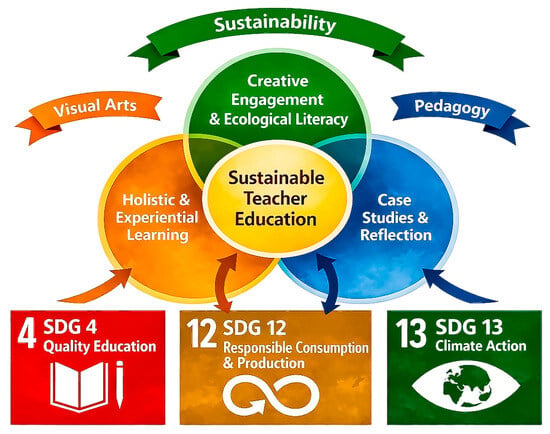
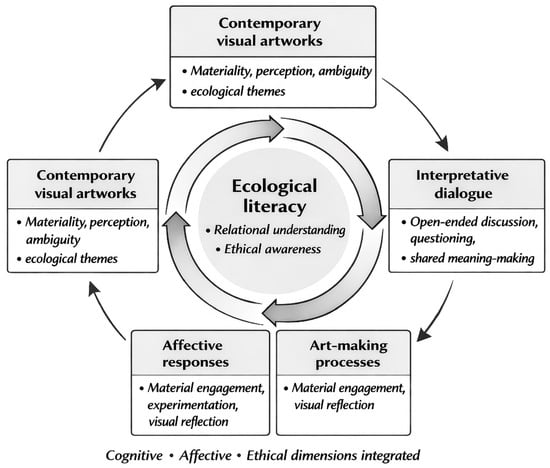
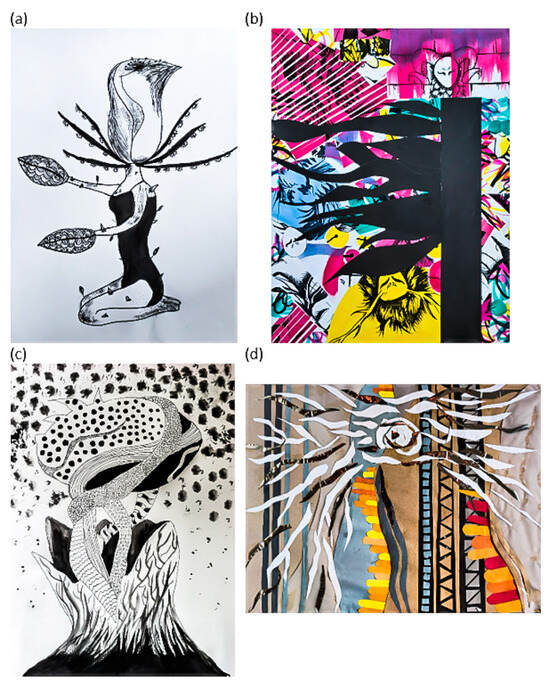
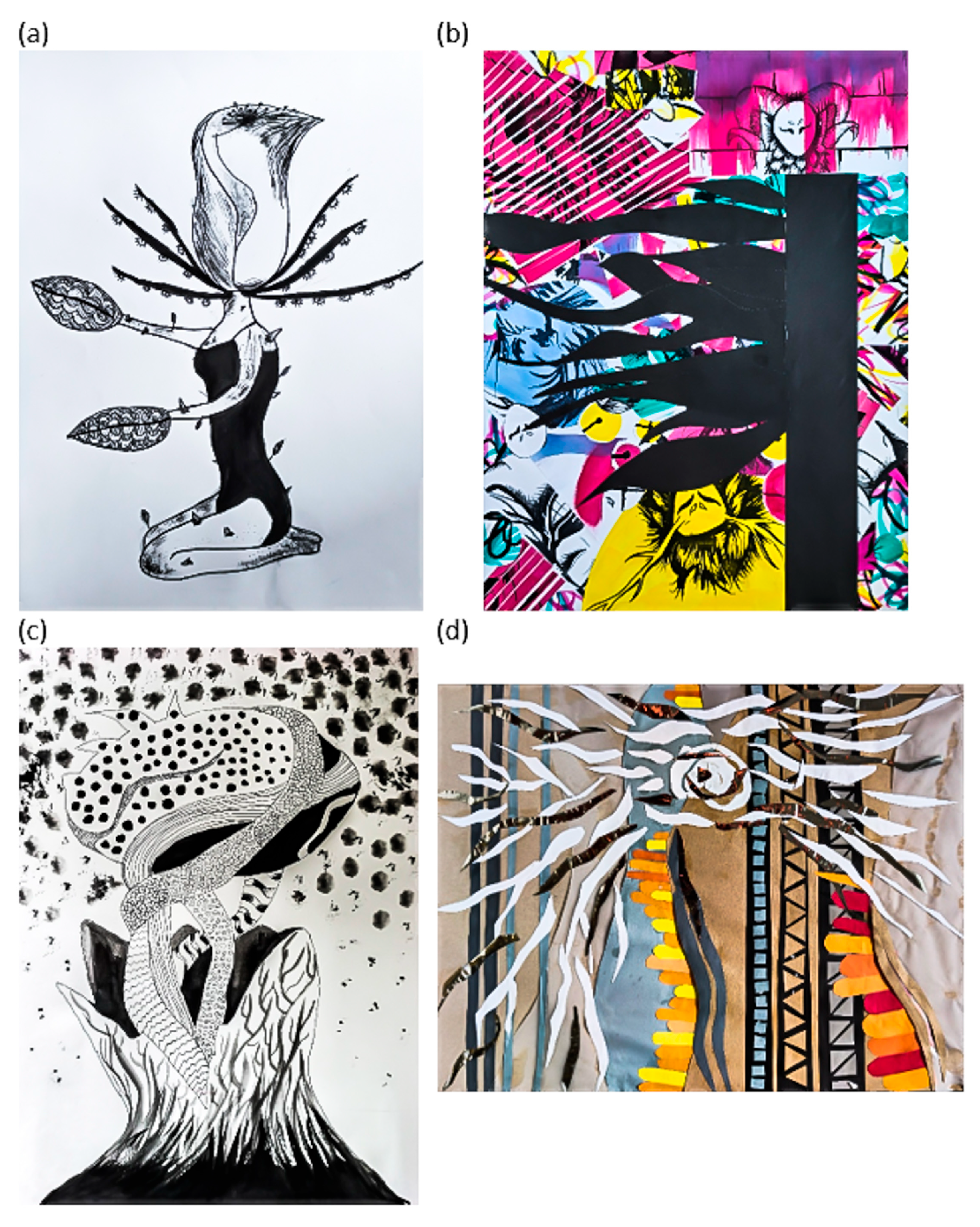

Disclaimer/Publisher’s Note: The statements, opinions and data contained in all publications are solely those of the individual author(s) and contributor(s) and not of MDPI and/or the editor(s). MDPI and/or the editor(s) disclaim responsibility for any injury to people or property resulting from any ideas, methods, instructions or products referred to in the content. |
© 2026 by the author. Licensee MDPI, Basel, Switzerland. This article is an open access article distributed under the terms and conditions of the Creative Commons Attribution (CC BY) license.