1. Introduction
Sun and beach tourism is considered one of the most emblematic forms of tourism worldwide. This type of tourism is directly related to the natural environments typical of coastal areas, such as marine fauna, beaches, and coastal landscapes. Coastal tourism can include all recreational, cultural, and sporting activities that take place in areas near bodies of water such as rivers, lakes, and seas, according to the World Tourism Organization [
1]. Some authors emphasize that coastal tourism is shaped by the interplay between natural landscapes and built environments, as well as by the cultural and social exchanges that occur between visitors and host communities [
2,
3,
4]. A feature of this tourism segment is the “3S” model (Sea, Sun, and Sand), which highlights the importance of seasonality and mass visitation patterns that pose both economic opportunities, threats, and sustainability challenges for coastal destinations [
5,
6].
Closely related is marine tourism, defined by the UNWTO as tourism activities that specifically take place in aquatic environments, including diving, sailing, surfing, cruising, and wildlife observation. Ref. [
7] expands on this point of view by describing marine tourism as a form of nature tourism that encourages direct interaction with the marine ecosystem for recreational, educational, or adventurous purposes. Maritime and coastal tourism are significant contributors to what is known as the “blue economy” and are key components of sustainable development strategies, especially in areas where tourism plays a major role in local economies [
8,
9,
10]. In such places, tourism generates jobs and small businesses; however, it is essential to protect the natural areas and cultural assets through tourism revenues [
11,
12,
13].
In Ecuador, coastal tourism is of great importance because the local and national economy largely depends on it. Montañita, a small but internationally recognized coastal town on the Pacific coast of Ecuador, has become a center of surf tourism, with natural beauty and a good social and nightlife scene. The World Cities Surf Network (WCSN) declared Montañita the “City of Surf” in 2016, and since then, it has attracted a large number of tourists, including both adventure seekers and those looking for entertainment. Its picturesque beaches, ideal surfing conditions, and vibrant social atmosphere have positioned it as a major coastal destination. This rapid tourism growth has also raised concerns about sustainability, environmental conservation, cultural integrity, and the long-term management of destinations.
Therefore, understanding tourist behavior in such destinations is essential, and this involves examining the motivations that drive their travel decisions. Tourist motivations are psychological factors, both intrinsic and extrinsic, that influence an individual’s desire to travel, the selection of a destination, and the types of experiences sought [
14]. These motivations in coastal tourism may include relaxation, escape, social interaction, nature appreciation, novelty seeking, and adventure. Motivation, in addition to influencing the initial decision to visit, significantly shapes satisfaction and behavior after the visit [
15,
16,
17,
18,
19,
20].
Satisfaction in the tourism sector refers to the extent to which travelers feel that their expectations and needs are met throughout their travel experience [
21,
22]. Satisfaction is a key indicator for identifying success in tourism and has recently been examined as a significant predictor of future behavioral intentions. In turn, loyalty, manifested through intentions to revisit, willingness to recommend the destination to others, and willingness to speak positively about it, is crucial for the long-term sustainability and competitiveness of a tourism destination [
23,
24,
25]. Destinations that foster high levels of satisfaction and loyalty among visitors are more likely to enjoy return visits and positive word of mouth.
Despite the increasing interest in understanding tourist motivations, satisfaction, and loyalty, the academic literature on these topics in the context of coastal tourism remains fragmented. Findings to date are varied, and the relationships among these variables are not yet well established. In particular, there is limited empirical evidence showing which specific motivations in coastal tourism most strongly predict satisfaction and loyalty. The lack of consensus among existing studies highlights a limitation in the academic field, as it is difficult for those responsible for the tourism sector to design specific tactics to improve tourist experiences and promote sustainable tourism. This study is based on the need to contribute to academic knowledge regarding tourist behavior in coastal areas, especially with regard to how motivations predict satisfaction and loyalty. Despite numerous studies focusing on tourist profiles and visitor categories, the relationship between motivation, satisfaction, and loyalty in coastal destinations such as Montañita has been examined only sparingly.
The objectives of this study are threefold: (1) we aim to identify the motivations that drive tourist demand in sustainable coastal destinations; (2) to establish which motivations predict tourist satisfaction in the sustainable coastal destinations; and (3) to determine which motivations predict tourist loyalty in sustainable coastal destinations, considering behavioral variables such as the intention to return, willingness to recommend the destination, and propensity to speak positively about it. Consequently, the purpose of this research is to gather important information that can contribute to the design of strategies for managing destinations in Montañita and other similar coastal locations, thereby contributing to both theory and practice in the field of sustainable tourism development.
2. Literature Review
Understanding the psychological and behavioral factors that drive tourism demand is essential for developing competitive and sustainable coastal destinations. Among these factors, tourist motivation plays a central role, influencing destination choice, satisfaction with travel experience, and long-term loyalty, encompassing return visits and recommendations. In the context of coastal tourism, where natural attractions and recreational opportunities intersect with cultural and social experiences, motivations are complex and multidimensional. This literature review examines the theoretical foundations and empirical evidence on tourist motivations and their relationship with satisfaction and loyalty, with a particular focus on coastal tourism settings.
2.1. Motivations of Demand in Sustainable Coastal Destinations
Understanding tourist motivations is essential to analyzing behavior in coastal tourism. Motivations are the underlying psychological and sociological forces that lead individuals to engage in travel-related activities. In the context of tourism, motivation is defined as the set of needs and desires that drive people to seek experiences away from their usual environment [
23,
26]. Ref. [
14] introduced the foundational concept of push and pull motivations, which has become one of the most widely used frameworks in tourism studies. Push factors are internal, intangible drivers, such as the desire for escape, relaxation, social interaction, or novelty. Pull factors, on the other hand, are external, tangible attributes of the destination that attract tourists, such as natural landscapes, cultural attractions, and recreational activities [
27].
Coastal tourism development has traditionally been examined through well-established theoretical frameworks such as Butler’s Tourism Area Life Cycle model, which conceptualizes destination evolution from exploration to potential stagnation or decline if carrying capacity limits are exceeded [
28]. Within this framework, understanding tourist motivations becomes essential for managing growth and mitigating the negative environmental and social impacts associated with mass coastal tourism. International organizations have consistently emphasized that unmanaged tourism pressure in coastal areas leads to ecosystem degradation, social conflicts, and declining destination competitiveness [
1,
29]. More recently, the concept of regenerative tourism has emerged as an extension of sustainable tourism, advocating tourism models that actively restore ecological systems and strengthen host communities [
30,
31].
Several researchers used those theories to understand motivations in tourism, with Maslow’s hierarchy of needs being particularly influential. Maslow’s model suggests that tourists are motivated by a hierarchy of needs, ranging from basic physiological needs to higher-order goals, such as self-actualization [
32]. These theoretical perspectives provide the foundation for examining the motivational dimensions of demand, particularly in coastal settings [
33,
34,
35,
36].
From a psychological perspective, tourist motivations in coastal destinations can be more deeply understood through the lens of Self-Determination Theory [
37,
38], which posits that intrinsically motivated behaviors arise from the satisfaction of three basic psychological needs: autonomy, competence, and relatedness. Intrinsically motivated tourists seek experiences that provide personal meaning, emotional fulfillment, and opportunities for social connection, rather than purely instrumental or externally regulated benefits [
39,
40].
Push and pull motivational factors are more complex in coastal tourism due to the recreational and natural characteristics of these locations. Some of the most prominent push motivations include the need to leave one’s comfort zone, reduce stress, discover new environments, and engage in social interactions. Pull motivations in coastal areas typically involve physical attributes such as beaches, climate, and sea-based activities; entertainment availability; and cultural experiences. For instance, ref. [
5] analyzed coastal tourism in Cyprus, revealing that its predominant “sun and sea” image limited the development of year-round tourism. Their findings emphasized the need to expand coastal tourism offerings through special interest tourism (SIT), such as cultural tourism, ecotourism, or adventure tourism, to address seasonality and diversify tourist motivations. In a study conducted by [
24,
41] in Lima, Peru, six dimensions were identified as fundamental to explaining tourism: culture and nature, learning, novelty and social interaction, authentic coastal experience, sun and beach, and nightlife. It is important to note that social interaction and novelty seeking were found to be the strongest predictors of return intentions, while authentic experiences were decisive in generating favorable recommendations and opinions in word of mouth marketing. Ref. [
42], studying The Gambia, and Ref. [
43] studying Mauritius, found motivations centered around heritage, education, relaxation, and social interaction, reinforcing the importance of both cognitive and emotional appeals. Similarly, research conducted in France’s marine and coastal protected areas by [
44] verified four primary motivational dimensions: contact with nature, the desire to achieve goals or sensations, the pursuit of physical fitness, and the need to escape social and personal pressures. Similarly, ref. [
24] established six motivational dimensions for visiting the coastal destination of Acapulco (Mexico), namely, heritage and nature, learning, sun and beach, physical activities, authentic coastal experience, social interaction, and novelty. These results show that the motivations in coastal tourism extend beyond relaxation and sun and beach, encompassing deeper emotional and experiential dimensions.
Some specialized forms of coastal tourism reveal further variations in motivation. For example, in scuba diving tourism, push motivations include exploration, personal development, and challenge, while pull motivations include site quality, marine biodiversity, and accessibility [
45]. Likewise, studies on recreational fishers identify motivations like connection to nature, socialization, and destination culture [
35]. These motivations align with the broader push–pull model but also emphasize activity-specific preferences and values, which are crucial for targeted tourism marketing. A study of yachting tourism in China offers another segmentation of motivational patterns. Tourists were categorized based on motivations such as novelty, leisure and sport, self-realization, and multi-experience travel, showing how affluent or lifestyle-driven segments engage differently with coastal destinations [
46].
Recent transnational and systematic reviews have emphasized the need for broader theoretical integration in coastal tourism motivation research. Comparative analyses highlight that novelty seeking, social interaction, and experiential engagement consistently emerge across diverse geographic contexts, suggesting that these motivational dimensions possess cross-cultural stability [
47,
48,
49]. These global syntheses reinforce the importance of situating empirical case studies within a wider international framework and support the generalizability of motivation–satisfaction–loyalty relationships observed in coastal environments.
These findings indicate that while sun and beach remain central to coastal tourism, tourists increasingly seek layered and meaningful experiences. Exploring local culture and traditions, engaging in adventurous experiences, savoring local gastronomy, practicing wellness, and fostering social engagement appear to be more significant factors. The importance of these factors varies by visitor demographics, destination type, and even time of year, suggesting that motivations are dynamic rather than static. Despite these insights, the academic literature reveals some inconsistencies and gaps. This inconsistency may be attributed to differences in research contexts, tourist profiles, or methodological approaches. As such, standardization in motivational studies across coastal tourism destinations remains lacking, making comparative analysis and destination benchmarking challenging. Similar findings have been observed in sustainable adventure tourism contexts, where novelty, experiential engagement, and perceived quality significantly predict loyalty outcomes [
50].
Analyzing the existing literature, particular motivations appear to be most recurrent across coastal tourism studies: sun and beach, relaxation and escape, social interaction and novelty, cultural and natural exploration, and adventure and sports. These motivations not only influence destination demand but are also closely linked to satisfaction and loyalty, including repeat visitation and destination advocacy. Their predictive power can vary, depending on local specificities and tourist segments, which underlines the importance of localized empirical studies, such as the present study, to further refine and validate these motivational dimensions. This literature review brings to mind the following research question:
RQ1: What are the motivational dimensions of demand in sustainable coastal destinations?
2.2. Relationship Between Motivations and Satisfaction in Sustainable Coastal Destinations
Tourist satisfaction has become a fundamental concept in tourism research and destination management, commonly understood as the emotional response that results from comparing expectations with actual travel experiences [
51,
52,
53]. In the coastal tourism sector, tourist satisfaction depends largely on the destination’s ability to satisfy users’ psychological and experiential motivations. These factors constitute prior motivations that determine the quality of the tourist experience and the overall degree of satisfaction with the trip [
21,
54,
55].
Understanding tourist motivations is essential for strengthening destination resilience, managing carrying capacity, and supporting the objectives of the blue economy, particularly in destinations facing rapid tourism growth and environmental vulnerability [
8,
48,
49]. In this sense, tourist motivations should be understood not only as indicators of demand but also as strategic instruments for sustainable destination planning.
Several studies have emphasized that understanding these motivations is key to enhancing satisfaction in competitive coastal environments. Research by [
41] in Acapulco identified significant motivational dimensions, such as “experiential reflection,” “experiential learning,” and “ecological observation”, that positively correlated with tourist satisfaction. This study showed that visitors with motivations related to learning and immersion tended to report higher satisfaction levels than those merely seeking leisure or passive experiences. Similarly, Ref. [
56], a study of island destinations, found that experiences with local people and beach-related attractions influenced both satisfaction and loyalty, indicating that social and natural interaction motives are crucial components of satisfaction.
Research by [
55] in Red Sea dive resorts highlighted that marine-related motivations, such as diving and interacting with marine life, were strong predictors of satisfaction, reinforcing the importance of unique, high-engagement activities in coastal tourism. Ref. [
22], studying Aqaba, Jordan, emphasized the role of “reason for visiting” as a statistically significant predictor of satisfaction, with motivations like activity participation and cultural interest scoring higher in terms of their impact on visitor happiness. Additionally, Ref. [
41] showed that satisfaction was higher when motivations aligned with authentic and educational experiences, compared to nightlife or purely hedonistic motives. This finding is consistent with [
57], who argued that the intensity of previous visits and emotional connection to motivational factors significantly influenced satisfaction and subsequent loyalty behaviors. Experience co-creation also emerges as a critical concept connecting motivation and satisfaction. According to [
52], tourists participate in designing their own travel experience, particularly through activities that align with personal motivations, enhancing satisfaction and overall life well-being. This is similar to findings from dive resorts in Egypt, where satisfaction was highest when experiences closely matched tourists’ motivations, particularly those related to adventure, discovery, and marine biodiversity. Likewise, the scholars behind [
24] established that the motivational dimension that most predicts satisfaction is novelty, followed by social interaction.
Motivations related to the traditional “3Ss model” (sun, sea, and sand), while still relevant, tend to show weaker correlations with satisfaction when not accompanied by deeper engagement elements. Ref. [
56] found that while beach attractions attract tourists, long-term satisfaction depends more on service quality, cultural interaction, and emotional resonance with the place. Likewise, in Mauritius, Ref. [
43] showed that motivations related to escape, novelty, and nostalgia were more strongly associated with satisfaction than only beach recreation.
Across diverse coastal contexts, a clear consensus emerges: motivations that stimulate active engagement, learning, and emotional fulfillment consistently yield higher levels of tourist satisfaction. Among the most influential motivational dimensions are novelty, social interaction, cultural and natural exploration, and authentic coastal experiences. These elements appear repeatedly as satisfaction predictors in coastal tourism literature. In contrast, more traditional hedonistic motives, such as sunbathing or nightlife, often correlate with moderate satisfaction or show context-dependent relevance. Therefore, understanding and catering to complex motivational profiles is crucial for coastal destinations seeking to enhance visitor satisfaction and maintain a competitive advantage. This literature review brings to mind the following research question:
RQ2: What are the motivational dimensions that most predict satisfaction in sustainable coastal destinations?
2.3. Relationship Between Motivations and Loyalty in Sustainable Coastal Destinations
Loyalty is considered a fundamental construct for research and destination management within the tourism sector. This term emphasizes the tendency of visitors to return to a place, recommend it to others, and share positive opinions about their stay [
23]. Loyalty in tourism encompasses emotional attachment and behavioral consistency. In coastal destinations that operate in highly competitive environments, ensuring tourist loyalty is essential to maintaining long-term sustainability and economic resilience. A key factor in strengthening this loyalty is understanding the motivational dimensions that influence not only the first visit, but also decisions to return and positive behaviors after the tourist experience [
21,
25,
57,
58,
59].
The relationship between tourist motivations and loyalty has been extensively studied in recent years. Ref. [
14], adopting the push–pull motivation framework, which categorizes motivations as internal (push) or external (pull), has been foundational in examining how specific motivations shape post-travel behavior. Several empirical studies confirm that specific motivations, particularly those tied to novelty, culture, nature, and social engagement, are stronger predictors of loyalty than others. In the aforementioned study of Acapulco, Ref. [
41], it was demonstrated that tourists driven by motivations such as experiential learning, cultural interaction, and authenticity had a greater tendency to revisit and recommend the destination. The link between motivations and loyalty was also examined in a study by [
60] on Mauritius, where three visitor segments were formed based on perceived destination image. This study showed that motivations linked to nature, cleanliness, and friendliness have a remarkable ability to predict not only the desire to return to the destination, but also the propensity to make positive comments. This was also demonstrated in the study conducted by [
57], as they found that emotional drivers of motivation, such as attachment to the environment and positive social experiences, moderated the relationship between satisfaction and loyalty behaviors, including recommending the destination and returning to it.
In marine and diving tourism, loyalty is influenced by motivations aligned with marine biodiversity, personal challenge, and unique underwater experiences. Ref. [
55] found that divers with strong push motivations (exploration, relaxation) and pull motivations (quality dive sites, marine life) showed high loyalty levels, particularly in their likelihood to return and advocate for the site. The importance of tailored motivations is also evident in beach tourism, where general “sun and sea” motives are often not enough to ensure loyalty. In a study of local beach tourists in Malaysia, Ref. [
61] noted that while most visitors came for Sun and relaxation, only those who engaged with nature or had social bonding motivations expressed loyalty in terms of revisit intention and positive reviews. A study conducted in Spanish coastal cities by [
62] observed that although satisfaction influenced tourism expenditure, loyalty was more strongly tied to motivations than to satisfaction alone, indicating that initial motivation is a more stable predictor of long-term behavior than the satisfaction level of a single trip. Therefore, understanding what drives a tourist to choose a destination in the first place may be more important than how they rate their experience afterwards.
With regard to the constituent elements of loyalty, such as return visits, recommendations, and positive reviews, the reasons that have the greatest impact are linked to exploring new things and social interaction, as well as authentic experiences in coastal areas and cultural and natural aspects of the place. These motivational drivers fulfill deeper psychological and emotional needs, thus creating stronger bonds with the destination. Motivations such as sun and beach or nightlife often result in lower loyalty scores, likely due to their generic nature and widespread availability in many destinations. In the field of coastal tourism, the relationship between complex motivations directed toward the experience and tourist loyalty is solid and continuous, as evidenced by a review of the empirical data. These motivations drive not only visitation but also a lasting emotional attachment. More traditional or hedonic motivations, such as “sun and sea” or “entertainment,” tend to be less predictive of repeat visitation or positive word of mouth, as they often lack the uniqueness or depth that fosters long-term connections. Therefore, understanding and targeting the right motivational factors is essential for coastal destinations that prefer loyal visitors. This literature review brings to mind the following research question:
RQ3: What are the motivational dimensions that most predict loyalty in sustainable coastal destinations in relation to variables such as intention to return, willingness to recommend, and saying positive things?
3. Study Area
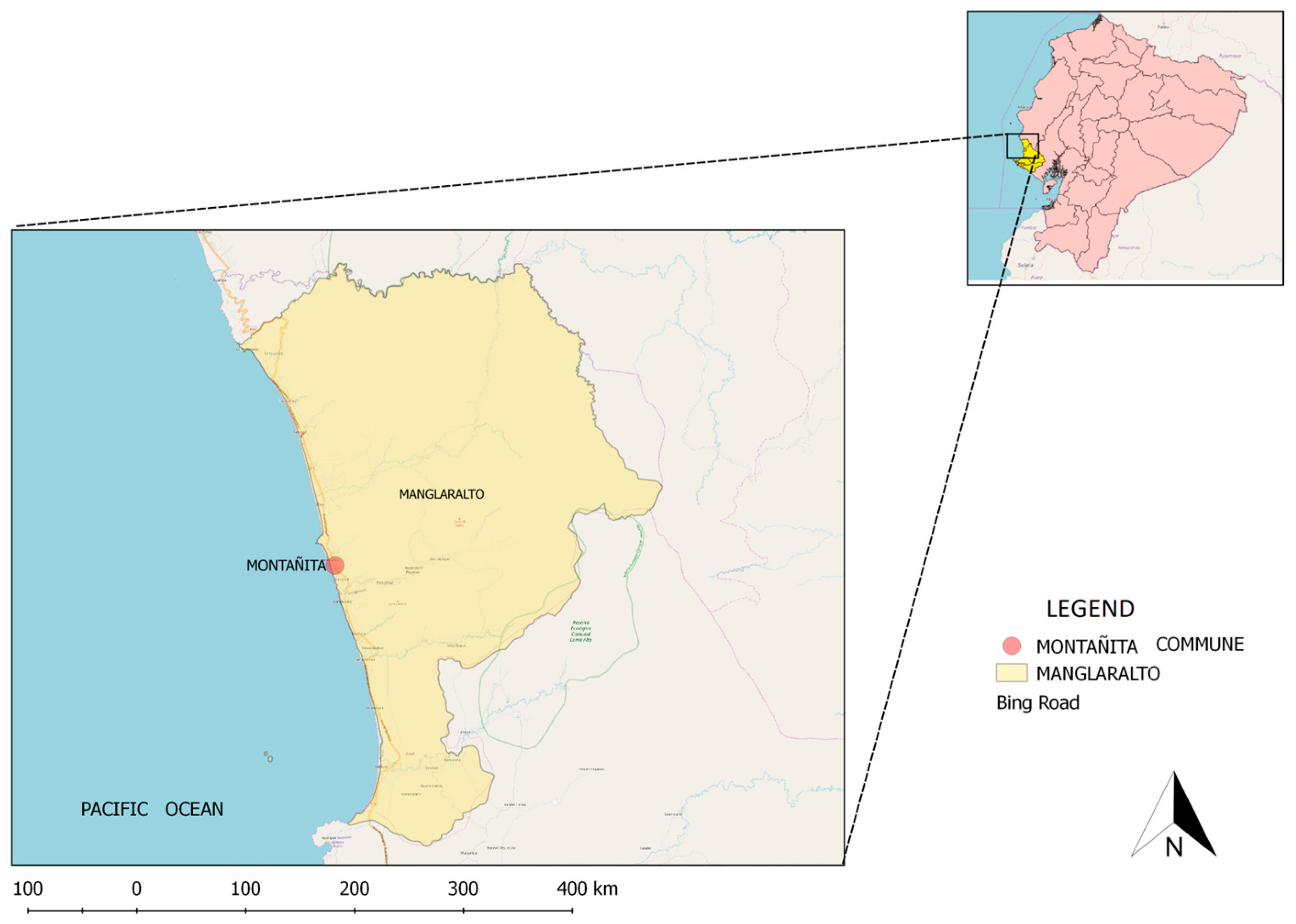
Montañita city, located in the province of Santa Elena on Ecuador’s coast, stands out for its lively atmosphere, marine biodiversity, and surfing culture. Positioned between hills and with abundant vegetation near the sea, the city’s location and features are why it was given this name. The study area has a dry tropical climate, with temperatures ranging between 25 °C and 31 °C. In addition, it has a wide range of tourist options that include glamping sites and hostels as accommodation alternatives. It features numerous restaurants serving local and international cuisine, and its dining scene is complemented by bars selling tropical cocktails. Other community activities include language tutoring, sand volleyball, snorkeling, parasailing, and street shows featuring music and costumes, typical of its vibrant nightlife, which includes clubs and bars. In 2016, the World Surfing Cities Network awarded Montañita the title of “Surf City,” placing it eleventh in the global ranking and third in South America. This recognition was thanks to its surfing activity, complemented by waves of up to three meters, representing a natural attraction that influences both local and foreign visitors to go to the destination [
63].
Montañita is located 200 km from the city of Guayaquil and is part of the Spondylus Route on Highway E15. The Spondylus Route is a designated tourist, historical, and cultural route along the entire Ecuadorian coast. The peak season runs from December to March, generating intense commercial activity at its various recreational sites.
The beginnings of tourism in Montañita date back to the 1960s, when this small fishing village in the Santa Elena canton began attracting foreign travelers, mainly surfers drawn in by the consistency and quality of the waves on the Ecuadorian Pacific coast. During these years, Montañita was a modest settlement with basic infrastructure and an economy centered on artisanal fishing. However, the arrival of adventurous young people—influenced by the counterculture and the international rise of surfing—gradually transformed the local dynamics. The recognition of its beaches as an ideal spot for surfing positioned the destination as an emerging enclave along the country’s coastal route, laying the groundwork for its later consolidation as a benchmark for youth and alternative tourism in Ecuador. At a competitive level, the city of Montañita in Ecuador does not have a direct competitor for the title of best surfing city in the country. However, it does have competitors such as the cities of Salinas, Olón, and General Villamil Playas, also in Ecuador.
Montañita began its tourist activity with the arrival of the first surfers from the city of Guayaquil in the 1960s. Currently, it has a predominantly singular tourist profile, with common motivations being relaxation and enjoying the sun and beach. The primary source of income for this community is tourism, as locals, part of the host community, and tourists can a range of services and facilities, including restaurants, tattoo shops, jewelry stores, clothing stores, hotels, and surf schools, thereby expanding the local economy. Furthermore, Montañita’s geographical location and proximity to other tourist destinations make it ideal for activities such as whale watching and diving.
The current dynamics are characterized by seasonal flows, with peaks between December and May, and a mixed composition of domestic tourists (mainly from cities like Guayaquil and Quito) and international tourists, attracted by surfing, as well as the climate, nightlife, and a desire for social interaction. Although continuous statistical series for the last 50 years are unavailable, academic evidence points to sustained growth in demand and increasing motivational diversification (sports, entertainment, nature, and culture).
In socioeconomic terms, tourism has become the central axis of the local economy, fostering the emergence of micro-enterprises in lodging, gastronomy, and surf schools. However, this growth has also generated transformations in land use, increased housing costs, changes in the social structure, and tensions between local and external stakeholders. Consequently, Montañita represents a paradigmatic case of accelerated coastal tourism development, with significant economic benefits but also challenges in terms of sustainability and territorial governance.
Tourism in Montañita is projected to consolidate its position as a diversified coastal destination, transcending its traditional image associated solely with surfing and nightlife. In recent years, the trend has been to strengthen its position as a space for comprehensive experiences that combine sports, nature, local culture, and entertainment. This evolution implies a broadening of the visitor profile, incorporating not only young people and international surfers, but also tourists interested in ecotourism, gastronomy, and community experiences. However, this projected growth demands more sustainable planning focused on improving infrastructure, managing carrying capacity, and protecting the environmental and social resources that form the basis of its tourist appeal.
Regarding environmental aspects, in recent years, Montañita has faced growing environmental pressures associated with tourism expansion, particularly related to overcrowding and pollution. No formal long-term carry capacity monitoring system has been publicly reported, and prior academic work has highlighted excessive visitor density as an emerging concern, suggesting that the beach environment approaches or exceeds sustainable thresholds during peak seasons, contributing to habitat degradation, increased waste, and deterioration of natural settings as perceived by residents and stakeholders.
From an environmental risk perspective, issues such as untreated wastewater discharges have periodically drawn official attention. In late 2023, the Ministerio del Ambiente, Agua y Transición Ecológica activated control and follow-up protocols after a malfunction at the local sewage treatment plant led to the release of untreated effluent into coastal waters, prompting water and sediment sampling and coordinated mitigation efforts on behalf of authorities. Although the beach remained open for tourism, this event highlighted the vulnerability of coastal water quality to infrastructure failures and underscored the need for stronger environmental monitoring and response systems.
Despite these challenges, formal early warning systems or clearly defined environmental threshold indicators specifically for overtourism or ecological degradation in Montañita are not yet institutionalized in publicly available frameworks. The absence of standardized indicators (e.g., visitor density limits, water quality benchmarks, or real-time alert thresholds) means that responses often occur reactively—following contamination events—rather than as a result of anticipatory risk management. This gap underscores the importance of advancing systematic environmental monitoring and potentially integrating carrying capacity assessments and threshold indicators into local planning to support sustainable coastal tourism governance (
Figure 1).
4. Methodology
This study was approved by the Ethics Committee of the Escuela Superior Politécnica del Litoral (ESPOL) of Ecuador with the approval code CERT-PI-CEIE-003-2023 and with Resolution C-13 (date: 11 September 2023). As part of the ethical procedures, the questionnaire we used included an informed consent statement that participants signed before answering the questions.
To achieve the established goals, a data collection tool was created and administered in person. This tool was organized into three parts. The first part of the instrument consisted of closed-ended questions designed to obtain information about sociodemographic characteristics, such as age, marital status, occupation, gender, educational level, type of travel companion, and average daily expenses. Ref. [
17] was the source for this section.
The second section of the instrument incorporated a motivation scale based on the five-point Likert model, with values ranging from 1 (not important) to 5 (very important). A Cronbach’s alpha value of 0.906 was obtained through a comprehensive analysis process, demonstrating high internal consistency among the components of the questionnaire. The methodological proposal by [
42] formed the basis for the scale, which consists of 17 items.
Items used to measure visitor loyalty and satisfaction were added to the final section of the instrument. These questions were taken from the study by [
64] and were designed using a 5-point Likert scale, with responses ranging from 1 (unlikely) to 5 (very likely). The question related to satisfaction encompassed an overall analysis of the tourist experience, while the elements related to loyalty comprised three components: the desire to return, willingness to recommend the destination, and expressing favorable opinions. The questionnaire was conducted in English and Spanish. In addition, a pilot test was conducted with 30 participants to check their level of understanding. The results of this test enabled changes to be made that improved the wording and made the items easier to interpret.
In the coastal town of Montañita, known for its surfing, the sample was collected in situ. Convenience sampling was used due to the associated ease of access to respondents. The users of the analysis were tourists, both domestic and foreign, over the age of 18. Data collection took place from 1 to 30 May 2024, on Montañita beach, while tourists were participating in recreational activities. The questionnaires were self-administered by tourists, accompanied by interviewers responsible for providing clarification when necessary. Results were obtained from a total of 380 valid surveys. This information was used for statistical analysis, applying a margin of error of 5% and a confidence level of 95%, determined by the equation used for calculation in infinite populations. IBM SPSS software version 26 was used to process the information.
Analyses were carried out using different statistical methods to process the information, including a factor analysis, which proved to be one of the most essential analytical tools because it allowed the items to be grouped into representative factors, helping us to interpret and evaluate the results more accurately. The Varimax rotation technique was used to distinguish factors based on the dimensions of their factor loadings. In addition, Kaiser’s criterion was used to determine the ideal number of factors, retaining only those whose eigenvalue was greater than 1. This shows that these factors explain a higher variance than that of an independent variable. The Kaiser–Meyer–Olkin (KMO) coefficient was used to verify that the correlations between the variables had the necessary consistency to support the application of factor analysis. Bartlett’s test of sphericity was applied to verify the homogeneity of variances across different data groups and ensure the suitability of factor analysis. Additionally, multiple regression analysis was used to identify the significant motivational predictors of satisfaction and loyalty variables (return intention, recommendation, and saying positive things about coastal tourism). Multiple linear regression was chosen because the dependent variables (satisfaction, intention to return, recommendation, and saying positive things) were measured using five-point Likert scales. Therefore, these are not binary variables, but rather attitudinal constructs treated as latent continuous variables, a widely accepted practice in tourism behavior studies when Likert scales have approximate interval properties. This study’s objective was not to estimate a dichotomous probability, but to analyze the magnitude and direction of the relationship between motivational dimensions and attitudinal outcomes. Under such an approach, multiple linear regression is methodologically appropriate.
In this study, the dependent variable was measured using a five-point Likert scale. We considered linear regression (OLS) more appropriate than Logit or Probit models, since treating Likert scales with five or more categories as continuous variables is a widely accepted practice in the social sciences. This choice allowed us to calculate standardized β coefficients, which facilitated a comparison of the relative influence of the predictors and allowed us to identify which have the greatest effect on the dependent variable. Furthermore, it preserves all the information of the original scale, avoiding the loss of variability that would occur when transforming the variable into binary categories or using ordinal models. In contrast, Logit or Probit models have limitations. Binary models would require converting the scale into a dichotomous variable, resulting in the loss of relevant information, while ordinal models express the coefficients as log-odds or cumulative probabilities, which hinders interpretation and direct comparison between predictors. For these reasons, linear regression is considered a clearer and more interpretable methodological option for analyzing the relative influence of predictors on a dependent variable, measured with a five-level Likert scale.
In addition, this study focused on analyzing how motivational dimensions influence visitor satisfaction, return intention, and recommendation intention. Since these dimensions are statistically validated constructs that already significantly explain the variance in the dependent variables, including sociodemographic control variables would not have provided substantial improvements and could have complicated the interpretation of the results. This approach maintains interpretive clarity, theoretical coherence, and practical relevance, ensuring that the findings reflect the truly determining motivational factors in tourist behavior.
On the other hand, the use of factor modeling or latent variable models is not incorrect. However, in the case of authors opting to run a multiple linear regression using OLS, it does not capture any of the conclusions they draw from the empirical analysis that comes after that. Putting it simply, the beta coefficients are biased, and therefore, such an approach does not measure the relationship that the authors posit. If the authors still deem their empirical model to be fit, they need to explain, first, what is their specification (which is missing), how they identify the effects in the model, what exactly the beta coefficients signify and, most importantly, why they are unbiased.
5. Results
5.1. Sample Profile
According to the data collected, there was a similar percentage of men and women (55%), primarily aged between 18 and 35 years. Most respondents had completed university studies (54.3%). Several participants were students (21.1%) or employees in the private sector (23.7%). The majority traveled with their families (44.7%), while others traveled with friends (36.5%). More than half (51.2%) reported a monthly income between USD 500 and USD 1000. A significant proportion of tourists (38.9%) spent between USD 30 and USD 60 during their visit.
5.2. Motivation in Sustainable Coastal Tourism
Factor analysis was used as an appropriate statistical method to group the items into a limited number of factors, with the aim of making the results easier to interpret. Kaiser’s criterion was used to establish the appropriate number of factors, and five were obtained with eigenvalues exceeding 1. All factors showed loadings greater than 0.5, demonstrating that the factor analysis was relevant. Cronbach’s alpha coefficient values ranged from 0.559 to 0.824, indicating adequate internal consistency among the elements of each factor. Bartlett’s sphericity test proved to be significant (
p < 0.05), confirming the suitability of the factor analysis performed. In addition, the KMO index reached a value of 0.833, close to one. See
Table 1.
The results presented in
Table 1 can determine the first component, called “Culture and nature,” because it was associated with cultural activities and direct contact with the natural environment. On the other hand, the second component, called novelty and social interaction, reflects experiences associated with interaction with new elements, as well as sharing with friends and travel companions.
The third factor was named sun and beach, because it is related to the importance of natural elements and activities that take place in that environment, such as tasting typical regional food, contact with native culture, and purchasing handicrafts. The fourth dimension was named sports because it is related to water sports and maritime activities. Finally, the fifth factor was called entertainment because of its connection to nightlife and social interactions between individuals who share interests.
These results answer our first research question: RQ1: What are the motivational dimensions of demand in sustainable coastal destinations?
5.3. Motivation and Satisfaction in Sustainable Coastal Destinations
In order to determine which predictors had an impact on visitor satisfaction with the destination, the multiple linear regression method was selected as an analysis technique because it allows for an examination of the individual influence of each explanatory variable on the dependent variable, while simultaneously considering the effect of the rest of the predictors incorporated in the model. The independent variables were formed by the motivational factors, while the dependent variable was formed by the satisfaction variable. The dimensions included in the regression are not individual observed variables, but rather latent factors derived from an exploratory factor analysis. This analysis confirmed the existence of five dimensions with adequate indicators of internal consistency (Cronbach’s alpha), sampling adequacy (KMO), and Bartlett’s significance. Therefore, the predictors incorporated into the model represent statistically validated constructs and not simply ad hoc groupings. See
Table 2.
According to the data presented in
Table 2, it can be seen that the dimensions of social interaction, novelty and culture, and nature, as well as sun and beach, reached levels of statistical significance (
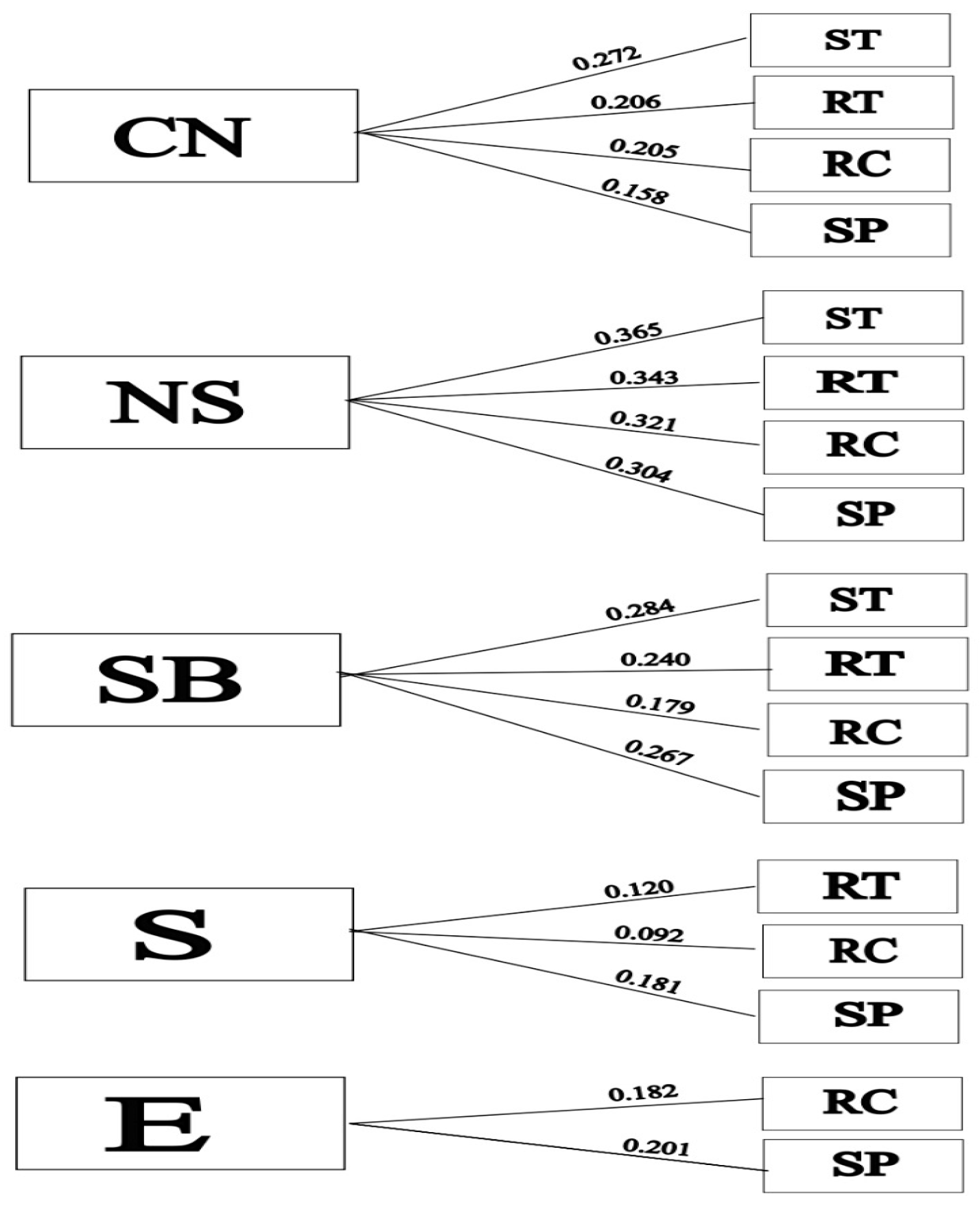
p < 0.05). Therefore, they can be considered essential and decisive elements in visitor satisfaction. The variable with the greatest predictive weight was novelty and social interaction (B = 0.365); in second place was sun and beach (B = 0.284), indicating that adding more novel services could increase tourist satisfaction with the destination. The significant result of the F test indicates that, considered together, the independent variables contribute substantially to the explanation of the dependent variable, which confirms the overall fit of the regression model and supports the relevance of the predictors included in the analysis. In addition, the Durbin–Watson test was between 1.5 and 2.5, which indicates the absence of significant autocorrelation in the residuals, so autocorrelation does not represent a problem for the validity of the model.
These results answer our second research question: RQ2: What are the motivational dimensions that most predict satisfaction in sustainable coastal destinations?
5.4. Motivations and Returns in Sustainable Coastal Destinations
The multiple regression method was used to identify the predictors that influenced tourists’ return intentions to the destination. The independent variables were formed by the motivational factors, while the dependent variable was formed by the return variable. See
Table 3.
The results presented in
Table 3 show that all dimensions, except entertainment, had a significant influence on tourists’ return intentions. The intention to return was mainly determined by novelty and social interaction, followed by the sun and the beach. Therefore, offering more innovative services could increase the likelihood of tourists returning to the destination.
5.5. Motivation and Recommendations in Sustainable Coastal Destinations
To determine the factors that influenced tourists’ intentions to recommend the destination, multiple regression analysis was used. The independent variables were formed by the motivational factors, while the dependent variable was formed by the recommendation variable. See
Table 4.
According to the results presented in
Table 4, it was found that all dimensions had a significant impact on tourists’ recommendation intentions. The most significant predictors were social interaction and novelty, followed by culture and nature. Therefore, offering more novel services would increase tourists’ recommendations of the destination.
5.6. Motivations and Speaking Positively About Sustainable Coastal Destinations
The purpose of using the multiple regression method was to discover which elements influenced tourists to make positive comments about the destination. The independent variables were formed by the motivational factors, while the dependent variable was formed by the variable saying positive things about the destination. See
Table 5.
Based on the results in
Table 5, it is shown that each of the dimensions had a significant impact on the production of positive comments about the destination. The social interaction and novelty dimension was determined to be the most relevant predictor, after sun and beach. Therefore, in this regard, the implementation of innovative services could lead to an increase in positive opinions about the destination among visitors.
The results show that the novelty and social interaction dimension consistently presents the highest β coefficients in the satisfaction and loyalty models, indicating that an increase of one standard deviation in this dimension generates the greatest expected increase (in standardized terms) in satisfaction, return intention, willingness to recommend, and saying positive things. This confirms that it is not only statistically significant but also the most substantively relevant dimension.
The significant relationships between motivational dimensions and the variables of satisfaction and loyalty are presented in a graph below, which differentiates the intensity (Beta) of each significant relationship. See
Figure 2.
These results address our third research question: RQ3: What are the motivational dimensions that most predict loyalty in sustainable coastal destinations in variables such as intention to return, willingness to recommend, and saying positive things?
6. Discussion
The main objective of this study was to examine the motivations behind tourist behavior in sustainable coastal destinations. Interpreted through sustainability frameworks such as the Butler’s Tourism Area Life Cycle model and regenerative tourism theory, the prominence of novelty and social interaction motivations suggests that coastal destinations can shift away from extractive mass tourism models toward participatory, experience-based offerings that support carrying capacity management, destination resilience, and long-term regeneration. In this regard, with respect to RQ1, the results made it possible to distinguish five motivational dimensions within sustainable coastal tourism: sun and sea, sports and entertainment, nature and culture, novelty, and social interaction. If we analyze the findings of previous studies, we can see that the culture and nature dimension of our study was similar to that of [
41,
42] as culture and nature. The novelty and social interaction motivation was also found by [
41], as well by [
44], who also observed motivations such as escaping personal and social pressures. Regarding the sun and beach motivational dimension of our study, it was also found by [
41,
42]. It was similarly identified by [
44] as a component of physical fitness related to the sports motivation found in our study. It should be noted that the entertainment dimension has not been recorded in the results of research on coastal destinations. A study by [
41] found the nightlife dimension. Still, the entertainment dimension found by us in the present study covers many more recreational activities on the beach and its different tourist attractions. The theoretical contribution of this manuscript is that it has discovered the motivational dimension of entertainment in coastal destinations and ratifies the other dimensions found by different authors to establish a set of five motivational dimensions that are part of tourist behavior when visiting a coastal destination. By aligning intrinsically driven motivations with locally embedded, environmentally responsible experiences, coastal destinations can enhance visitor satisfaction and loyalty while contributing to long-term sustainability and social well-being.
As a secondary objective, we sought to establish which motivational factors influence visitor satisfaction when tourists visit sustainable coastal destinations. In this context, and in response to RQ2, the results show that the main predictor of satisfaction in coastal locations is the dimension of novelty and interaction, followed by the dimension of beach and sun. When comparing these findings with previous studies, Ref. [
24] determined that novelty is the most important predictor of satisfaction, followed by the dimension of social interaction. Other authors, such as [
55,
56], have determined that the beach and natural attractions have the most significant influence. In this way, this research adds to existing knowledge by highlighting that social interaction and novelty are the most notable components that can influence satisfaction with coastal destinations.
As a third objective, the objective of this research was to determine the motivations that influence visitor loyalty in sustainable coastal tourism, taking into account behavioral factors such as the intention to return, the willingness to recommend the destination, and the inclination to express positive opinions about it. In this context, and in response to RQ3, the findings show that the motivational factor that best predicts loyalty in coastal locations is novelty. This is followed by social interaction and favorable recommendations or communication about the location. Secondly, it was found that the sun and beach dimension is also an essential element for visitor loyalty.
While the dimensions of novelty and interaction exhibited the strongest predictive power, the effects of sports and entertainment were relatively weaker. In the specific context of Montañita, sports-related motivations are probably not the primary drivers of overall satisfaction and loyalty among young visitors who perceive surfing and water sports as expected features. Similarly, entertainment-oriented motivations may be short-term hedonic drivers, but do not necessarily imply loyalty. Given the predominantly young and socially oriented profile of visitors in the sample, demographic characteristics may moderate the influence of motivational dimensions, reinforcing the central role of novelty and social interaction on loyalty.
In previous studies, academics [
24] identified novelty motivation as the primary predictor of loyalty. In [
57], it was found that social experiences influence loyalty to coastal destinations. The findings demonstrate that the discovery of the influence of novelty and social interaction dimensions on coastal tourist loyalty contributes to academic literature.
In this study, it is important to recognize the potential heterogeneity in tourist satisfaction across sociodemographic groups. The sample indicates a predominantly young visitor segment (18–35 years), with a high proportion of students and private sector employees, which may explain the strong influence of novelty and social interaction motivations on satisfaction and loyalty outcomes. Gender and professional status can also influence motivation because orientation towards sports activities can differ among demographic categories. Novelty-oriented tourists are driven by curiosity, exploration, and the desire to encounter new environments, while socially motivated tourists seek meaningful interactions with local communities and other visitors [
17]. These motivations foster deeper experiential involvement and emotional engagement with the destination, which helps explain their consistently strong predictive power for satisfaction and loyalty reported in both classical and recent coastal tourism studies [
21,
24,
56]. Recent empirical evidence further supports this interpretation. Ref. [
47] demonstrates that satisfaction of psychological needs significantly enhances tourist well-being and post-visit behavioral intentions, reinforcing the role of intrinsically driven motivations in shaping loyalty. This supports the growing need to move away from the mass tourism paradigm towards models of coastal tourism development based on sustainability and engagement.
Understanding which motivations dominate demand structures enables destination managers to anticipate pressures related to carrying capacity and seasonality. Motivations linked to entertainment and social interaction may intensify peak-season clustering if not strategically managed, whereas novelty-oriented experiences can be designed to diversify tourist flows across space and time. In this sense, motivational analysis contributes to social sustainability by supporting more balanced visitor distribution and reducing resident and visitor tensions. Intrinsically motivated and experience-based tourism aligns closely with low-impact, high-participation models of tourism development [
12]. Motivations related to novelty, social interaction, and entertainment can be strategically leveraged to promote community-based tourism, cultural events, and participatory experiences that generate economic value while minimizing environmental pressure and reinforcing social cohesion [
1,
30]. Digital platforms can leverage novelty and social interaction to strengthen loyalty. Storytelling, user-generated content, and experiential branding can reinforce intrinsically driven motivations and extend emotional engagement. By promoting authentic, participatory, and socially connected experiences, destinations can reinforce satisfaction memories and encourage revisit intentions and positive word of mouth, particularly among younger and digitally active visitor segments.
6.1. Theoretical Implications
While this study is grounded in empirical analysis, its theoretical contribution lies in clarifying the structural differentiation of motivational dimensions in coastal tourism contexts. Study findings support a conceptual distinction between intrinsically oriented motivations and activity-based or hedonic motivations, demonstrating that these dimensions do not exert equivalent influence on satisfaction and loyalty outcomes. It was demonstrated that motivation in tourism demand can be explained by five dimensions: novelty and social interaction, sports and leisure, sea and sun, nature, and culture. These aspects show elements linked to the natural environment, cultural components, and visitor social interaction. These dimensions emerge underlying a scale of items that encompass the motivations for visiting a coastal destination. Several authors have found similar dimensions, but they have not seen all five dimensions together in a coastal destination. Thus, our study found a new dimension called entertainment, which encompasses recreational activities on the beach, its cultural events, and its restaurants and bars.
Entertainment-oriented motivations reflect experiential consumption patterns in which tourists seek enjoyment, symbolic meaning, and social interaction through nightlife, events, and recreational activities [
65,
66]. Recent research on memorable tourism experiences confirms that such experiential elements play a critical role in shaping emotional attachment and destination memorability, which in turn influence loyalty behaviors [
67,
68]. Although the entertainment dimension may exhibit weaker direct effects on certain behavioral intentions, its theoretical relevance lies in its role as an experiential catalyst that indirectly reinforces satisfaction and long-term loyalty.
The motivational dimensions contribute to the academic literature related to coastal tourism by creating standardized factors for tourist behavior in destinations with beach- and ocean-related attractions. This study, conducted in “Surf City”—named as such for its waves, which favor the practice of this water sport—also yields unprecedented results for scientific theory.
Furthermore, this study reveals that the sports-related dimension can emerge in these destinations, which possess ideal characteristics for water sports. Coastal destinations are characterized by their potential for water sports, unlike sun and beach destinations, where relaxation and sunbathing are more critical motivations. Therefore, the results of this study contribute to the academic literature
6.2. Practical Implications
Sustainability studies in coastal destinations are essential because of the high environmental and social fragility of these areas under tourism pressure. Such research helps assess tourism impacts and guides management strategies that balance resource conservation, community well-being, and the economic viability of destinations, thereby supporting their long-term competitiveness and sustainability. Sustainable management strategies not only protect ecological assets but also reinforce long-term economic performance in developing coastal regions [
69].
These destinations offer a variety of beach, recreational, nature, and cultural activities. For these coastal destinations to develop sustainably, it is essential to understand tourist behavior to establish practical management guides tailored to the identified demand. In this regard, to improve tourist stays, based on the motivational dimension of Culture and Nature, it is recommended to develop tourist packages that include activities such as marine flora and fauna viewing, hiking trails, environmental sustainability workshops, gastronomic events, theaters, cultural and music festivals, folklore events, and typical local dances. To improve the novelty and social interaction dimension, it is recommended to organize activities to encourage people to meet each other during trips, celebrate birthdays and family events, and hold beach events and festivals that enhance the novelty of the destinations. To increase motivation for sunbathing and the beach, sunbathing services such as seating and parasols could be improved, the beach could be kept cleaner, adequate food facilities could be provided, the beach could be made more accessible for people with disabilities, and land use and building regulations could be established in beach areas. In other words, improvements to both physical aspects and services for tourists could be made. To enhance the sports dimension, it is recommended to implement and improve the provision of surf schools, implement the rental and sale of sports equipment, improve the number of clothing stores for water sports, improve lifeguard equipment, hold water sports championships, and improve the promotion of the destination for water sports activities. To increase motivation for entertainment, recreational areas and games could be incorporated into the beach, cultural and sporting events could be organized, and themed restaurants could be created. Additionally, events in restaurants and bars could be planned, and museums could be established. Furthermore, tourist packages could be designed with entertainment as the primary focus.
Since the primary motivations influencing satisfaction and loyalty are novelty and social interaction, sporting and cultural events must be created to attract tourists. Restaurants and tourism service providers could organize social activities in their establishments to increase friendships and the opportunity to meet new people during their visit to the destination. Surfing, beach volleyball, and other water sports competitions could also increase tourist novelty. Tourism operators could create novel and socially responsible activities based on the demand for sustainable destination management.
7. Conclusions
Destinations located in coastal areas usually offer a wide range of activities that combine natural and cultural experiences. These commonly include nature walks; wildlife watching; water and beach sports, such as surfing, parasailing, or swimming; and visits to cultural sites and tastings of traditional local cuisine. In other words, coastal tourism encompasses a set of activities that are crucial to study when establishing marketing and sustainability plans. In this sense, the present study was conducted in Montañita (Ecuador), a city where the main attraction is surfing and activities related to the surfing industry.
The analysis of tourist motivations and their relationship with satisfaction and loyalty is essential for the management of sustainable coastal destinations, as motivations shape visitors’ expectations and influence how their experiences are evaluated. When tourists’ motivations are well aligned with a destination’s sustainable offerings, higher levels of satisfaction are achieved, in turn fostering loyalty, expressed through revisit intentions and positive word of mouth. The identification of the entertainment dimension in this study can be theoretically framed within the Experience Economy paradigm [
70]. According to this framework, contemporary tourists increasingly value memorable, immersive, and emotionally engaging experiences rather than standardized tourism services. In coastal contexts, where environmental and social sustainability are particularly critical, understanding these relationships supports the design of strategies that enhance destination competitiveness while promoting long-term sustainable development.
The objective of this empirical study was to determine the reasons that drive demand for coastal tourism and identify which reasons are predictive of the satisfaction and loyalty of tourists who visit Montañita. For this reason, factors related to return visits, willingness to recommend the destination, and favorable comments about it were considered. The findings made it possible to identify five motivational dimensions: novelty and social interaction, sports and leisure, sea and sun, nature, and culture. Among these, the dimensions of social interaction and novelty stand out as the most relevant elements that explain visitor loyalty and satisfaction, followed by the dimension of sun and beach. As a theoretical consequence, five dimensions related to culture, nature, and social elements that influence coastal destinations are obtained. This study contributes a new dimension, called entertainment, to the academic literature on coastal destinations. We also determined which motivational dimensions influence tourists, specifically novelty and social interaction. Therefore, these results also contribute to practical implications, for which coastal destination managers are recommended to create management guides based on the results found, and tourism service providers are advised to develop products in line with the demand found to improve the satisfaction and loyalty of coastal tourists.
This study has several limitations, including its temporal nature, as demand cannot vary due to its cross-sectional design. The sample was also collected using convenience sampling, not probability sampling. Therefore, these contributions to the literature have limitations in their standardization. As a future line of research, a study could be conducted to analyze the relationship between the motivational dimensions found and sociodemographic aspects of demand, aiming to establish characteristics related to variables such as age, gender, education, employment activity, and income. The results of this study contribute to the academic literature and provide vital information for coastal destination managers to, over time, develop sustainable coastal destinations that tourists feel satisfied with and loyal to.




 ,
,