


Abstract
While the digital transformation is predominantly framed as a catalyst for efficiency, the structural shifts induced by digitalization seem to generate a hidden erosion of working conditions that challenges the broader vision of sustainable work. Focusing on four Central European countries, this research explores how contemporary labor environments conceal declines in job quality. Drawing on original survey data, the study identifies several critical sources of this deterioration, including uncompensated workload expansion, the erosion of the right to disconnect, and the increasing pressure of digital presenteeism. The analysis reveals that these hidden shifts are most prevalent among workers in remote or hybrid models, as well as those in the first decade of their professional careers. Younger workers appear especially vulnerable to the blurring of work–life boundaries and the compulsion to maintain availability during illness. The research questions were addressed using appropriate statistical tests and by constructing working conditions due to digitalization index (WCDI). These findings point toward a need for a broader understanding of how digital transformation impacts the sustainability of work in practice.
1. Introduction
Digitalization in the workplace, understood as the increasing use of digital technologies resulting from breakthrough technological discoveries known as Industry 4.0, is currently not confined to specific sectors but has a broad impact on various industries [1,2,3,4] in European Union countries and beyond [5,6,7]. This process is not only technological but also leads to the transformation of economic processes, affecting working conditions [8,9,10,11,12,13]. While the literature highlights many benefits such as increased efficiency and flexibility of labor demand, including the option for remote work [14,15,16], there are growing concerns about potential declines in working conditions—not necessarily through legislative changes but, for example, through perceived increases in work intensity [17,18] or the erosion of boundaries between work and nonwork life [14,19,20]. Digitalization makes it easier to implement such changes in workplaces.
The goal of the article is to assess workers’ perceptions of changes in working conditions that may have resulted from digitalization, particularly focusing on their hidden deterioration. It also aims to explain the nature and sources of these changes, considering the common patterns in their expression, using selected Central European countries (Czechia, Poland, Slovakia, and Slovenia) as examples.
The authors of this article assumed that digitalization in the workplace is widespread and creates opportunities for a covert lowering of specific work standards through a real deterioration of working conditions while maintaining formal agreements. They also believed that these changes are experienced unequally across the working population. The article addressed a general research question (GRQ): Have workers experienced phenomena that could be considered hidden deterioration in working conditions over the past two years? If so, what characteristics (such as gender, age, education, etc.) differentiate this phenomenon? Given the exploratory nature of the study and the novelty of the research area, an extensive literature review was required alongside the empirical analysis.
The proposed approach allows for understanding of workers’ experiences and perceptions regarding changes in working conditions in the face of technological advancements, while the legal regulatory state remains unaltered. This study presents an opportunity to gain new insights into workers’ perceptions of changes in areas that are hard to observe, where working conditions might have deteriorated. This contrasts with many previous studies, e.g., [16,21,22,23,24], which primarily emphasize the positive effects of digitalization. The research problem is situated within the various dimensions of sustainable development, as one of its goals (Goal 8 of the UN 2030 Agenda) is decent work [25], a category directly related to working conditions. Furthermore, working conditions are treated in the literature as a mechanism that affects health in its various dimensions and well-being [26,27]. Therefore, their connection to other sustainable development goals, e.g., SDG 3 (Good Health and Well-Being), is evident, and worsening working conditions can hinder our ability to achieve these goals. The digitalization process itself also demonstrates links to sustainable development [28].
The article is structured as follows. A literature review (Section 2) explains the nature of the problem of hidden deterioration in working conditions and the primary potential forms it may take. The research method (Section 3), results (Section 4), discussion (Section 5), and conclusions (Section 6) are presented in the remainder of the article. The study uses empirical data from an original diagnostic survey conducted in four Central European countries. An aggregated index (WCDI) was created to provide an overall assessment of changes in working conditions, and partial conclusions were drawn using Kruskal–Wallis tests, post hoc analyses, and the Mann–Whitney test. The results confirmed the hypothesis of perceived deterioration in working conditions in hidden forms. Our contribution to science lies in identifying and analyzing the phenomenon of hidden deterioration in working conditions amid digitalization.
2. Literature Review
2.1. Digitalization and Its Impact on Working Conditions
Digitalization in the workplace involves transforming organizational structures, production processes, and management models through the implementation and integration of digital technologies [2,4,9,29]. New solutions include the Internet of Things, cloud computing, robotics, big data analytics, augmented reality, cybersecurity, and artificial intelligence (AI) [3,30,31,32]. AI is increasingly used for algorithmic management, such as assigning tasks, monitoring their execution, assessing effects, and automated human resources decision-making [7,12,33]. In this article, digitalization is understood broadly, and its various forms in the workplace are taken into account. The process alters competency requirements, changes work organization, leads to automation, and transforms communication both within the workplace and with external entities, such as clients or public agencies [29,31,34,35]. Although the level of digitalization varies across the countries studied [36,37,38,39], its widespread influence extends to even low-tech sectors [5,6,40]. Because its impact is multidimensional, it is essential to analyze how digitalization influences working conditions, which are also evolving alongside changing realities [10,11,12,13].
Working conditions refer to the physical, organizational, and social aspects of the work environment where duties are performed. These include employment characteristics observable at the job level, which are crucial for meeting work-related needs and are linked to employee well-being. Modern understandings of the concept, especially in developed countries, encompass not only the “obvious” elements of the work environment (such as exposure to harmful factors and physical exertion) but also economic factors, including employment stability and fair pay. They also consider how work impacts a person’s private life and other factors that influence health and well-being, including subjective perceptions such as satisfaction and a sense of growth. Conditions can be seen as “input data” for assessing job quality, a key factor in overall well-being in developed societies. Job quality is typically evaluated using a framework of principles [41] or various dimensions of working conditions [42,43,44]. For instance, Eurofound, through the European Working Conditions Survey (EWCS), identified factors such as physical environment, work intensity, quality of working hours, development opportunities, socioeconomic security, social relations at work, and work–life balance [43]. Working conditions are influenced by laws, collective agreements, regulations, contracts, and organizational practices, which may lead to improvements beyond the legal minimum or, conversely, hidden declines. The minimum acceptable level of working conditions in countries that have ratified the ILO Convention is defined by the organization’s labor standards [45,46,47]. Adherence to these standards forms the basis of decent work [25,48], which integrates productivity with ethics and social justice, according to the 2030 Agenda for Sustainable Development [25]. Decent work should not be confused with the idea of good jobs, which means high-quality employment providing secure, fulfilling economic and non-financial conditions and a sense of dignity, unlike bad jobs, characterized by low wages, instability, and poor working conditions [49,50,51]. Today, the concept of sustainable work is gaining increasing attention. It refers to creating conditions that allow individuals to stay healthy, motivated, and prepared for extended professional activity [52].
Although the terms discussed above are related, the most accurate perspective is captured by “working conditions,” as they are direct features of the work environment, work organization, and circumstances that workers directly experience [43], which affect their perception. These elements can also be modified at different levels. Therefore, analyzing their dynamics focuses on factors beyond labor standards.
In EU member states, these standards are considered the minimum institutional requirements resulting from ratified ILO conventions; however, they are not sufficient for work to be regarded as of good quality. The good jobs vs. bad jobs dichotomy, in turn, requires setting thresholds for specific indicators (e.g., wage levels) that classify work into one of these categories [49]. Although these concepts align with the European social model, their broad scope makes it challenging to study decent or sustainable work empirically. In contrast, working conditions and their changes can be directly assessed by the worker. Crucially, improving these conditions fosters progress towards sustainable work, while their deterioration represents a regression from the principles of sustainability.
The nature of working conditions is being fundamentally reshaped by digital transformation. While it is bringing many positive changes, potential threats also arise, some of which may be hidden and often unintended, as a natural consequence of implementing digital innovations. These include phenomena such as an increase in duties within projected working hours, leading to higher work intensity and forced greater work engagement, the need to perform duties outside of projected hours, disregard for the right to disconnect, threats to maintaining work–life balance, performing professional duties despite illness, and the limited ability to report concerns about working conditions to organizations representing employee interests [12,53,54]. We especially want to highlight these, which we identify as potential sources of hidden deterioration in working conditions. The need for their comprehensive integration is treated as a research gap, encompassing both descriptive analysis and the development of a suitable measure, which is particularly useful when undesirable phenomena accumulate.
2.2. Signs of Deterioration in Working Conditions
2.2.1. Increase in Duties During Projected Working Hours
Higher work intensity involves completing more tasks within a set period, reducing idle time, and engaging in multitasking [18,55]. Digitalization permanently transforms work organization in ways that often lead to its intensification [17,56]. Zacher and Rudolph [57] identified a mutually reinforcing mechanism between digitalization and the number of tasks, in which higher levels of digitalization were linked to an increase in the task volume, but only in following periods. Subsequently, an above-average workload drove digitalization, as individuals tried to meet new demands by using technology more intensively. This confirms that although digital solutions speed up the completion of some tasks, the total number of tasks to be completed within the projected working hours increases, even if this pattern is observed with unavoidable delays. According to Ragu-Nathan et al. [58], the growing number of tasks and the pace at which they are executed may lead to technological overload, a form of technostress. The persistence of increased work intensity may also stem from algorithmic management. Algorithms that organize work are updated and, with AI assistance, adapted to changing organizational conditions [59], which means that a temporary rise in work intensity can, over time, become a standard, faster-paced work model. Additionally, such management fosters feelings of loss of control and frustration, especially when performing highly complex tasks, which can affect perceptions of working conditions in such an organized environment.
The level of work intensity is also influenced by digital monitoring, which changes the traditional understanding of “productivity” in the eyes of superiors [12]. Employees are expected not only to fulfill their contractual duties but also—often informally—to meet specific “digital metrics.” Surveillance systems can gather data on work hours and efficiency, location, email or phone communication, frequency of office equipment use, system activity, and even health status [12,60,61,62,63]. Although the official goal of surveillance is “optimization,” it often leads to actions aimed at improving metrics that are not always justified, such as frequent login or report generation [64,65]. “Productivity paranoia” is more common in remote or hybrid work setups [66,67]. This can create a perception of deteriorating working conditions, as pressure is applied to unjustifiably increase work intensity beyond what is agreed upon in the contract. This occurs when routine tasks decrease, while the number of cognitively demanding activities requiring quick responses, irregular problem-solving, or analytical work—such as troubleshooting system errors—increases [54,56,60], thereby naturally raising work intensity. It is essential to note that remote and hybrid workers frequently need to resolve more problems independently, including technical issues [68]. The group engaged in such work mainly consists of individuals with higher education and males [69,70].
A significant factor boosting work intensity is the wide range of communication channels, which forces employees to multitask almost nonstop. Digital messages and video conferences become increasingly unseen parts of the workload, raising the speed and complexity of daily tasks [71,72], especially in remote or hybrid work model [73]. Conversely, trying to disconnect from these channels to concentrate on other work can cause FOMO—fear of missing out [66]. The perception of deteriorating working conditions ultimately depends on the relationship between the demands placed on employees and their capabilities. This phenomenon is explained, among others, by the Job Demands-Resources Model [74,75,76], which lays particular emphasis on developing job resources in the context of ICT, such as technical support, appropriate training, and innovation support.
2.2.2. Increase in Responsibilities Outside the Agreed Working Hours and Contract Terms
The increase in the number of tasks, as described above, might even prevent them from being completed within the designated timeframe, forcing individuals to work “after hours.” It could also be a natural result of digitalization, driven by the need to constantly adapt to rapidly changing conditions [8,29,30]. This leads to a genuine increase in responsibilities, including non-standard tasks [29,60], and the inability to complete them during regular working hours. The amount of hidden workload and time spent learning how to use new tools or applications, configuring them, diagnosing and fixing errors independently, and adjusting to updates is growing. This affects both individuals working in the digital environment and production workers [29,54,60]. New, often unpaid, responsibilities appear, frequently unrelated to formal contractual provisions. A side effect of these shifts is longer working hours [77] and a weakening of the psychological contract, which underpins informal expectations and obligations shaping employment relationships [78]. When employees see new responsibilities as “system tasks” rather than “contractual tasks,” their motivation and loyalty decline, as does their regard for the company [79]. At the same time, they are more likely to take on tasks not formally included in their scope of duties, but stemming from the logic of digital solutions.
Furthermore, partial or complete algorithmic management shifts responsibility for planning and executing activities to the employee [33,80]. In such situations, not only do “hard” technical skills and self-discipline become important, but also aspects related to critical thinking, responsibility, and personal growth, as demands for new knowledge, skills, and career-related planning and decision-making abilities increase [29,81]. The development of these skills extends beyond the established boundaries of working time. Growing learning requirements can be viewed as constructive challenges for individual development; however, increased work intensity can reduce work engagement and increase stress levels [82,83], which may also impact perceptions of working conditions. Flexible work arrangements and constant access to mobile devices also facilitate the performance of duties outside scheduled working hours [20].
2.2.3. Failure to Respect the Right to Disconnect from Work
Digitalization allows work anytime, anywhere. On the one hand, this increases flexibility in work hours. On the other hand, it can lead to longer actual working hours. It raises the likelihood of working outside standard hours and violating the right to disconnect, as ICT raises expectations from bosses, coworkers, and clients about employees’ availability beyond the intended schedule [54,84] and the need for flexibility [53]. In these situations, workers feel pressure to respond immediately to work-related electronic messages (workplace telepressure; [85]), contributing to the phenomenon of digital overconnectivity [86]. Individuals then experience difficulty in stepping away from digital communication channels, leading to longer working hours [77] and blurring the boundaries between work and nonwork time [87]. The emerging phenomenon of techno-invasion may be the cause of technostress [58,88,89]. Being “always on” may cause discomfort for workers [20,86] and negatively affect their mental well-being and job satisfaction [54,90]. Many EU countries lack enforcement of legal regulations (such as those in the European Parliament’s 2021 resolution and ongoing efforts on a directive), which may lead to a disregard for the right to disconnect. Among the four countries analysed, Slovakia [91] and Slovenia [92] adopted regulations guaranteeing the right to disconnect in 2021 and 2023, respectively. The expectation of nearly constant availability, which reduces time for rest and recovery, can be seen as a deterioration in working conditions.
2.2.4. Erosion of Work–Life Balance
The traditional view that workplace and private space are treated as physically separate [93] has shifted following the COVID-19 pandemic. At the same time, ongoing digitalization has increased the flexibility of work schedules and organization, reinforcing these changes [94]. In an environment saturated with digital technologies, work rhythms are becoming increasingly unpredictable, and the boundaries between work tasks and workers’ private time are becoming more blurred [53]. This situation is linked to rising time pressure and the erosion of boundaries between professional and non-professional spheres, resulting in a growing work–life imbalance and an increased risk of overload [10,54], which may induce technostress [88,89,95]. Consequently, such dynamics may significantly contribute to a perceived deterioration of working conditions. The overlap of time and space boundaries between work and personal life is widespread among remote or hybrid workers, causing difficulties in family functioning and making it harder to distinguish between work and home environments [14,19,77,96]. Working remotely from home further increases the risk of overwork and disruption to family roles. Additionally, research by Scheibe et al. [97] among older workers found that they tend to have better self-regulation and boundary-setting abilities between work and nonwork, which positively affects their work performance.
De Laat’s [98] research demonstrated the presence of so-called dual devotion, or the integration of work and nonwork engagement. Remote work and flexible working hours facilitate this integration, and gender differences play a significant role: males perceive remote work as an opportunity to be more involved in childcare, while females perceive it as an opportunity to intensify their professional activities. Similar relationships were observed by Alfano et al. [99], who indicated that married individuals, women, parents, and those with higher education face particular difficulties in maintaining work–life balance, which may be due to the nature of their responsibilities, which are intellectually demanding and extend beyond the work environment. Due to the identified threats, the literature [87,100] emphasizes the need to monitor implemented flexible working time models and ensure they prioritize long-term improvements in person well-being.
2.2.5. Work and Availability Despite Illness
Digitalization has a significant impact on the scale and nature of presenteeism—a phenomenon in which individuals are physically present at work despite being ill, in poor health, or with a reduced ability to perform their duties effectively [101,102]. By increasing connectivity pressure, digitalization fosters conditions conducive to concealing presenteeism, defined as working online from home despite health issues. It shortens recovery and convalescence periods. Research indicates that, in hybrid or remote work environments, working while ill is becoming nearly standard, reinforcing presenteeism as an accepted practice [103,104]. Nowrouzi-Kia et al. [77] observed that women and younger employees in remote work environments are more likely to report availability despite illness, confirming demographic-based structural differences.
For individuals, presenteeism poses a threat, leading to a deterioration in their physical and mental health [102,105,106,107]. This can directly translate into perceived deterioration in working conditions. For organizations, the phenomenon can have negative consequences, including decreased work productivity and an increased risk of errors when employees perform their duties during periods of incapacity for work [102].
2.2.6. Limiting the Ability of Employees to Report Objections to Working Conditions to Their Employer
Under labor law, every employee has the right to express opinions and submit comments about their employment conditions [47]. With digitalization, exercising this right—whether through trade unions or other employee organizations—becomes more difficult [108]. Conducting collective bargaining on behalf of employees is also challenging [12,109]. The leading cause of this issue is the reduced direct contact between workers and between employees and employers, driven by the rise of algorithmic management, work in distributed teams, and the increasing popularity of on-demand labor models, as well as information asymmetry—employees often lack access to digitized data that influences their work and evaluations. This situation weakens their ability to organize and defend their interests [110], even in cases of job loss [63,109]. The risk of unfair assessments grows with algorithmic bias, which employees are frequently unaware of [12,109]. This contributes to a deterioration of working conditions that may remain unperceived, yet some aspects of algorithmic management render such changes perceptible. For instance, Jago et al. [79] argued that such management is viewed as less relational and more impersonal than the traditional approach. Therefore, it can be assumed that reporting concerns informally can also be complex. Limiting direct contact and dialogue makes it less accessible to communicate concerns and receive feedback than in traditional management. Although formally employed individuals have the right to raise concerns about working conditions, including negative changes caused by digitalization and the violations discussed above, paradoxically, the development of digital tools and automation of decision-making processes may, in practice, hinder effective communication with the employer or, less frequently, the customer.
2.2.7. Research Questions
The literature review supports the research question introduced earlier (GRQ), offering a detailed analysis of the extent and phenomena associated with the possible hidden deterioration of working conditions as digitalization progresses. This is further clarified in the following questions, each of which is examined within the context of the digitalization process and its perceived effects over the two years preceding the survey date.
- RQ1:
- Have workers encountered phenomena that might suggest a hidden deterioration in working conditions?
- RQ1a:
- How do respondents generally assess changes in working conditions?
- RQ1b:
- What respondent characteristics influence the overall assessment of changes in working conditions?
- RQ2:
- Which variables indicating the hidden deterioration of working conditions are most important for assessing the phenomenon?
- RQ3:
- Which worker groups most frequently experienced a hidden deterioration in working conditions?
For the sake of clarity, the identification by respondents of phenomena indicative of potential deterioration is hereinafter equated with a confirmed deterioration of working conditions.
3. Materials and Methods
3.1. Data Collection
Data addressing the research questions were gathered through an original online survey designed by the authors. The tool is entirely original, though inspired by the literature review (including Eurofound and EAPN approaches), as described in the relevant section and further elaborated as appropriate. The questionnaire also included a question about the consistency of employment income. However, because only a small percentage of respondents in individual countries reported this issue, it was ultimately excluded from the current work. The study covered the working population aged 18–69 in four Central European countries, Czechia, Poland, Slovakia, and Slovenia, using representative samples based on gender and age (a total of 2052 respondents). This strengthened the conclusions and allowed for identifying patterns by comparing results across countries with similar histories of economic transformation and EU integration, yet differing levels of digitalization. The study was commissioned by an international research firm with access to relevant research panels in each country, ensuring high-quality data were collected. Respondents completed the survey in the official language of their respective countries. The data collection took place between 29 November and 10 December 2024. The response rate of completed questionnaires ranged from 8.1% to 11.9% across the different countries. Table 1 presents the structure of respondents.
Table 1.
Distribution of respondents with respect to demographic and job-related factors.
The sample was representative of the working population in each country regarding gender and age, while other characteristics reflect the structure of the panel responses.
3.2. Data Analysis and WCDI Construction
To provide a comprehensive assessment of the extent of phenomena describing undesirable changes in working conditions (RQ1a), an aggregated variable was created. Based on respondents’ answers, each expressed on a 5-point Likert scale (ranging from 1—“I strongly disagree” to 5—“I strongly agree”), an index measuring attitudes toward changes in working conditions due to digitalization (WCDI) was developed. WCDI values were calculated by averaging respondents’ answers to questions about working conditions over the past two years (for wording of the questions, see Table A1). Thus, this index reflects each respondent’s average opinion on this topic (RQ1a). This variable functions as a destimulant, as higher WCDI scores indicate that respondents agree with statements describing a relative deterioration in working conditions. Conversely, lower scores suggest disagreement with these statements. The creation of this variable was supported by the reliability analysis, which showed that respondents perceived all eight statements (Table A1) as addressing the same aspect of the study (Cronbach’s alpha = 0.883).
Further analysis aimed at addressing the research questions proceeded in the following steps:
- The deterioration of working conditions, expressed by the WCDI, was assessed.
- The distributions of responses and WCDI values were compared to determine how respondents perceived the impact of digitalization on working conditions (RQ1a).
- The Kruskal–Wallis test [111,112] was used to examine whether significant differences in the evaluation of working conditions existed between respondents from different countries. When significant differences were found (p < 0.05), a supplementary post hoc analysis, using the Bonferroni test [113,114,115], was conducted to identify pairs of countries that differed in their assessment of the deterioration of working conditions.
- The Kruskal–Wallis test and the Mann–Whitney test [116] (for variables with two categories) were also applied to verify whether the assessment of working conditions measured by the WCDI depended on respondents’ demographic and work-related characteristics. The following variables were included: gender, age, education, job tenure, ownership structure, type of work, increase in total work hours, increase in work engagement, and remote and hybrid work experience. As previously, in the case of significant results, a post hoc analysis using the Bonferroni test was performed (RQ1b).
- Factor analysis was applied to identify, based on the obtained factor loadings, most critical factors affecting the perceived deterioration of working conditions (RQ2).
- Additional variables, reflecting the deterioration of working conditions, were analyzed. These included the presence of changes in work intensity, the ability to perform duties within projected working hours, the actual respect for the right to disconnect from work, and the real availability to supervisors, colleagues, or clients despite being ill.
- The Kruskal–Wallis test was used to examine which demographic and work-related characteristics of respondents significantly affected these variables. Furthermore, the results were supplemented with a post hoc analysis using the Bonferroni test. This made it possible to identify groups particularly vulnerable to the deterioration of working conditions (RQ3).
The Kruskal–Wallis test is the nonparametric equivalent of analysis of variance. Although this test compares differences in means (or ranks) across groups, its null hypothesis can be reformulated to interpret the results as the influence (or lack of influence) of qualitative variables on the dependent variable. Nonparametric tests were necessary because the assumptions for a parametric ANOVA were not met. Specifically, the WCDI was not normally distributed across groups defined by the categories of the studied factors, and the variables included in the WCDI were measured on ordinal scales. The design of the test and the applicability of this nonparametric method across various cases enabled us to draw logical, consistent conclusions for different types of variables, thereby ensuring methodological consistency throughout the article.
All calculations and statistical analyses were conducted using IBM SPSS Statistics version 29 (IBM Corp., Armonk, NY, USA).
4. Results
4.1. Overall Assessment of the Change in Working Conditions
To assess changes in perceived working conditions among workers, survey questions were used to capture respondents’ opinions on this topic (Table A1). The data confirmed the existence of phenomena indicating a deterioration in working conditions (Table A1) over the past two years across all surveyed countries (RQ1). The response percentages varied by issue and country. In most cases, at least one-third of respondents were affected, except for anxiety related to the introduction of digital innovations at work, which was lower at 22–25%.
The basic WCDI statistics are similar across three of the four surveyed countries. Poland, however, stands out with clearly lower mean and median values (Table 2, Figure 1). In Czechia, Slovakia, and Slovenia, at least half of the respondents rated the change in working standards as neutral or higher (scoring at least three on a 1 to 5 scale). In Poland, the median is slightly lower at 2.75, indicating that at least half of the respondents did not confirm a deterioration in working conditions over the past two years (RQ1a). It is also notable that the skewness coefficient points to a slight negative (left) skew in the distribution of Slovenian responses, whereas responses from Czechs and Slovaks are nearly symmetrical. In Poland, this asymmetry is weak but positive (right-skewed), suggesting a tendency not to report deterioration in working conditions (since the WCDI is a destimulant) (Table 2). Additionally, similar variability in WCDI values was observed across all countries, with the coefficient of variation ranging from 32.4% (in Slovakia) to 35.5% (in Poland).
Table 2.
Basic statistics for the WCDI in each surveyed country.
Figure 1.
Distribution of WCDI values in the four countries studied.
The observed differences in Polish respondents’ assessment of working conditions were confirmed using the Kruskal–Wallis test. The result
indicates that the null hypothesis, which states that the WCDI distribution is the same across all studied countries, should be rejected. Furthermore, post hoc analysis shows significant differences between Poland and Slovakia, as well as between Poland and Slovenia. The p-value for the comparison between Poland and Czechia is also borderline statistically significant (Table 3).
KW(3) = 23.4; p < 0.001,
Table 3.
Post hoc analysis results—comparison among respondent groups from surveyed countries.
The results show that, among respondents from the surveyed countries, Poles were notably less likely to confirm a deterioration in working conditions due to digitalization over the past two years (for an explanation of the term used here, see Section 2.2.7). Additionally, analysis of the WCDI components reveals that in Poland, respondents were significantly less likely to report being expected to be available despite illness and outside projected working hours. A minor concern was the disproportionate increase in responsibilities compared to pay.
The next step was to determine which respondent characteristics—demographic or work-related—significantly influenced the WCDI, reflecting opinions on changes in working conditions (RQ1b). The Kruskal–Wallis test showed that gender and education did not significantly affect the assessment of working conditions in any of the analyzed countries (p > 0.05; Table 4). In contrast, age was statistically significant in Czechia, Poland, and Slovakia (p < 0.05; Table 4). However, the specific age groups varied across countries: in Czechia, differences were observed between 18–24 and 35–44, as well as 18–24 and 55–69; in Poland, between 25–34 and 55–69; and in Slovakia, between 18–24 and 45–69. In Slovenia, no such relationship was evident. Therefore, the influence of age on the assessment of changes in working conditions does not show a consistent pattern and appears to be driven by country-specific factors, rendering this relationship unclear and challenging to interpret.
Table 4.
Kruskal–Wallis test results—examining the influence of selected factors on WCDI.
Further analyses examined whether the WCDI value depended on work type and ownership sector. Ownership structure had no significant impact in any country (Table 4). Type of work (white-collar, manual, difficult to classify) was generally insignificant. The only exception was Czechia, where manual workers differed significantly from other groups. These respondents more frequently agreed with statements indicating deterioration in working conditions due to digitalization.
The study found that seniority has the strongest and most significant impact on the WCDI value in all four countries. Post hoc analysis revealed the following:
- In Czechia, Slovakia, and Slovenia, respondents with more than 10 years of experience were significantly less likely to report deterioration than those with less than 5 years of experience.
- In Poland, respondents with more than 10 years of experience differed significantly from both shorter-tenure groups, with the latter more frequently confirming a deterioration in working conditions (Table 5).
Table 5.
Post hoc analysis results–comparing groups of respondents with different job tenure.
This pattern suggests a possible link between seniority and age (or generational cohort: Baby Boomers, Generation X, Generation Y, Generation Z). To examine this relationship, the Spearman’s rank correlation coefficient [117] was calculated, yielding values between 0.48 and 0.67 across countries. Although statistically significant, these values indicate only a moderate association. Overall, the findings suggest that job tenure significantly influences the assessment of changes in working conditions, and this effect cannot be explained solely by respondents’ age or generational affiliation.
We also examined whether changes in total work hours and work engagement affected the WCDI score. The results indicate that these factors are were statistically significant (Table 6). In all countries, respondents who reported working longer hours or being more engaged were more likely to agree with statements indicating a deterioration in working conditions due to digitalization, which is consistent with expectations.
Table 6.
Kruskal–Wallis test results 1—analysis of how selected changes affect WCDI.
We further analyzed whether changes in employment type or work organization influenced the WCDI. Individuals who experienced remote or hybrid work were significantly more likely to report a deterioration in working conditions (Table 6). This suggests that a shift toward more flexible work arrangements is associated with a decline in perceived working conditions.
It is also important to note that respondents who did not change their work organization were predominantly employees with more than 10 years of tenure (as confirmed by the distribution of responses and the Mann–Whitney test). As shown earlier, this group was less likely to report a deterioration in working conditions.
It is worth noting that the level of remote or hybrid work across individual countries was significant and similar, with percentages ranging from 41% in Slovenia to 46% in Czechia, and hybrid work ranging from 39% in Slovenia to 43% in Slovakia.
4.2. Key Findings—RQ2
The next stage of the analysis focused on identifying partial conclusions resulting from the examined relationships, as manifested in individual countries. Based on the results of exploratory factor analysis, statements that contributed to the hidden deterioration of working conditions (previously included in the WCDI) were identified. These were the statements most frequently mentioned by respondents, including work–life imbalance, interpenetration of work and non-work life, expected availability despite illness and outside scheduled working hours, and performing duties beyond the terms of the contract (Table A2). The current findings are synthetically illustrated in Figure 2.
Figure 2.
The main factors loading on the WCDI.
Additionally, Kruskal–Wallis tests and post hoc analyses were performed for these individual statements (Table A3). Significant differences were observed between groups in terms of socio-demographic characteristics and total job tenure. Attention was directed toward those findings that occurred in at least three countries:
- The expectation of being available for work despite illness was significantly more common among individuals with up to 5 years of service in Poland, Slovakia, and Slovenia, compared to those with longer tenure. In contrast, in Czechia, Poland, and Slovenia, it was significantly more frequently reported by younger respondents (Czechia, Poland: aged 18–24; Slovakia: aged 25–34) compared to the oldest age group, 55–69 years.
- The expectation of availability outside scheduled working hours was reported more frequently by males in Poland and Slovenia than by females.
- The feeling of imbalance between work and nonwork life was reported more frequently by younger age groups in Poland, Slovakia, and Slovenia compared to the oldest group (55–69). In Poland, this concerned the 25–34 age group; in Slovakia, the 18–24 group; and in Slovenia, both the 18–24 and 25–34 groups. Additionally, in Poland and Slovakia, the same groups reported the interpenetration of work and nonwork life. At the same time, this issue was reported significantly more often by those with up to 5 years of employment compared to those with over 10 years (in Czechia and Slovakia) and the entire remaining population in Slovenia. In Poland, this problem was more frequently reported by the group with up to 10 years of service compared to other groups.
- Perceived limitations in expressing concerns about working conditions were reported more frequently by younger age groups than by the oldest groups in Poland and Slovakia, as well as the entire population aged 35 and older in Czechia.
- Fear related to the introduction of digital innovations was reported significantly more often by workers with shorter work tenure (up to 5 years in Czechia, Poland, and Slovenia; from 5 to 10 years in Slovakia), although it is worth noting that the overall scale of this problem was not substantial.
The above partial conclusions present a specific version of the earlier general conclusion about the crucial role of cumulative tenure in recognizing deterioration in working conditions during digitalization. However, they also more precisely identify the groups reporting worsening conditions. This prompts the question of what causes this situation.
4.3. Key Findings—RQ3
Because of the deteriorating working conditions diagnosed over the past two years, an effort was made to identify the causes of this phenomenon by analyzing responses to additional questions that verified: the presence of changes in work intensity (measured by the change in the number of responsibilities per unit of time), the ability to perform duties within projected working hours (i.e., during the workday), the actual respect for the right to disconnect from work, and the real availability to supervisors, colleagues, or clients despite being ill (Table 7). An effort was also made to identify groups that were relatively more vulnerable to these negative phenomena. For this purpose, the Kruskal–Wallis test and post hoc analysis were used again (Table A4, Appendix A). Patterns that appeared in at least three countries, and sometimes in two, were considered noteworthy (last column of Table 7).
Table 7.
Responses confirming the deterioration of working conditions over the past two years (%) and the main patterns.
The data in Table 7 depict a picture of the working population where a substantial percentage, ranging from 43% in Czechia to 50% in Slovenia, experienced at least a moderate increase in work intensity. Additionally, the percentage of workers required to perform duties outside their projected work hours ranged from 44% in Slovenia to 56% in Czechia. Approximately 10% of respondents were expected to be constantly available to perform their duties, and around 40% (with the highest rate being 47% in Slovakia) occasionally experienced violations of their right to disconnect from work. Some respondents also reported an obligation to be available despite illness—this applied to 9% of workers in Poland and 16% in Slovenia. In contrast, approximately one-third of respondents (the highest being 37% in Slovakia) sometimes faced this obligation. This highlights the deterioration of working conditions over the past two years, underscoring the seriousness of the issue. The identified patterns help focus attention on specific worker groups.
5. Discussion
5.1. Interpretation of Research Questions
Our research revealed the presence of a hidden deterioration in working conditions (RQ1) across the surveyed countries, with workers in Poland significantly less likely to report it (RQ1a). One likely factor explaining why the perception of deterioration in working conditions, as expressed by the WCDI, is weaker in Poland than in other countries is Poland’s lower level of digitalization. Various data sources on this issue indicate that Poland ranks below Czechia, Slovakia, and Slovenia [38,39]. The Digital Economy and Society Index (DESI) was 53.4 in Slovenia, 49.1 in Czechia, 43.4 in Slovakia, and 40.5 in Poland. These countries ranked 11th, 19th, 23rd, and 24th in the EU-27, respectively [38]. The lower level of digitalization in Poland may have acted as a buffer. Olschewski et al. [118] demonstrated that as the complexity of a phenomenon increases, the accuracy of perception and situational assessment decreases. Therefore, it can be assumed that greater digitalization advancement may contribute to a more negative assessment of the phenomenon, including a sense of deteriorating working conditions when the complexity of the processes involved exceeds the optimal cognitive capacity of workers. This is also confirmed by research findings reporting overload and decreased job satisfaction resulting from digitalization (e.g., [20,54,86,90,102,107]). Furthermore, psychological adaptation is even more difficult if the digital transformation was rapid. Research findings indicate that resistance to digital change is more pronounced in environments characterized by rapid transformation [28]. Regarding the economic, legal, and cultural conditions of the results, it is worth noting that during the study period (2024), the unemployment rate was low in all countries: Czechia 2.6%, Poland 2.9%, Slovakia 5.3%, and Slovenia 3.7% [119], which similarly affected employees’ bargaining position and their likelihood of changing jobs if conditions became unsatisfactory. Since these countries joined the EU at the same time, they were also obliged to implement similar changes to labour law. However, Poland was the only country among the surveyed to retain the 1974 amended Labour Code, which addressed modern needs; the remaining countries adopted new equivalents (Slovakia in 2001, Czechia in 2006, Slovenia in 2013), which may be a premise for the stronger protective function of labour law in Poland. National cultural values, as defined by Hofstede [120], may have influenced respondents, particularly regarding masculinity vs. uncertainty avoidance. For example, Poland is characterized by the highest uncertainty avoidance index among the studied countries and a parallel high masculinity index, indicating a strong desire to satisfy the need for security and recognition [120]. For this reason, the perception of hidden deterioration of working conditions may be weaker, as employees strive for stable employment and fulfilling work outcomes.
In our study, employees with longer tenure were significantly less likely to report deterioration in working conditions (RQ1b). The literature suggests several factors that help explain this relationship. Research conducted in Italy revealed, among other things, that greater seniority is associated with relatively lower professional commitment and greater perseverance in coping with workplace difficulties and problems resulting from experience [121]. This suggests that employees with longer tenure may be more likely to limit their availability to employers and maintain a better work–life balance [97], while also adapting more easily to technological changes. Other studies [122] have shown that job seniority is positively correlated with perceived job satisfaction, which may also influence employees’ assessments of changes in working conditions. Filipkowski and Derbis [122] further suggested that employees with less experience typically feel more pressured by a new work environment. They also need to acquire new skills and competencies and learn from mistakes, which more experienced employees do not have to do. Longer-tenured employees, confident in their competencies, may also feel more secure when searching for a new job. Therefore, they experience less workplace pressure, leading to higher expectations regarding respect for established working conditions, such as the right to disconnect from work during sick leave. Raab [123] explained that older employees (usually with longer tenure) have a greater ability to moderate demands, meaning they can balance their growth with skill development, recognition, and support during difficult times. They also typically have greater autonomy at work, better access to feedback, and their job content allows them to utilize their existing human capital. As a result, they may be more resilient to stressors, such as time pressure and organizational changes related to digitalization. Research on the influence of occupational stress on the intention to leave work has shown that this factor exerts a stronger influence among employees with greater seniority [124], indicating that this group may react more strongly to negative stimuli. Consequently, supervisors may avoid such situations and be more willing to make concessions.
The literature also indicates that remote and hybrid work can exacerbate working conditions (RQ1b, RQ3). The perceived decline in working conditions among remote workers may be attributed to the expectation of always being available [84], which they perceive as a form of pressure [85]. This can lead to overwork [96] and greater dissatisfaction and discomfort [86]. While remote and hybrid work often provides employees with flexibility in organizing their work time, it can also lead to irregular and unpredictable work hours. Autonomy over choosing and scheduling work hours may be used differently by individuals based on their gender. Studies by Hofäcker and König [125] and Steidelmüller et al. [107] suggested that women tend to use control over their work hours to balance work and life, whereas men tend to use it to boost work engagement. These differing preferences, linked to deeply rooted social roles [99,126], may explain why men and those with higher education are more likely to take on responsibilities outside of their regular work hours.
Working remotely from home contributes to the growing phenomenon of working despite illness [104]. Staying and working from home involves less physical effort (no need to commute to work) for employees and reduces the risk of spreading the virus to others. Therefore, even when feeling unwell or ill, they are willing to fulfill their professional duties. This behavior may be caused by difficulty in disconnecting from work [77,104], the expectation of always being on [84], or perceived telepressure [85]. According to Steidelmüller et al. [106], some employees prefer working from home despite illness because they can adjust their work to their health condition rather than taking sick leave. This behavior is more common among men than women. However, in the long term, working despite illness can have a negative impact on an employee’s health and contribute to a sense of deterioration in working conditions. As Güler [127] pointed out, the process of digitalization fosters the further development of flexible work arrangements, and their use leads to a weakening of traditional norms, thereby promoting the spread of precarious working conditions.
5.2. Limitations and Directions for Future Research
As with any empirical research, this study is not without its limitations. The data were obtained from an online panel study; therefore, computer and internet users were overrepresented.
While this potential bias seems less significant in the age of widespread digitalization, it can be assumed that the respondents might have been more exposed to the negative effects of digitalization—such as the violation of the right to disconnect—than the general working population. Additionally, the sample may exhibit an underrepresentation of individuals with lower educational attainment due to their less frequent computer usage.
Due to the nature of the study, the data largely reflect respondents’ self-reported and subjective assessments. Therefore, the findings should be treated with caution, as emotions or temporary circumstances—including incidents or impulses affecting perceptions at a given moment—may have influenced the responses, even though the questions concerned changes in working conditions over the past two years. Replicating this study across the same countries in the future could help mitigate this limitation.
Since the study’s goal was to target the working population at the national level, it was not possible to obtain representative samples at the industry, company type, or position level. In the future, similar studies could also be conducted at the microeconomic level and within multinational companies to capture potential variations across diverse business environments. However, each would be fundamentally different in nature and not comparable to the one described in this article. To better verify the research conclusions, it would be beneficial to conduct the study in other countries and across a broader range of manifestations of deteriorating working conditions. Given the low trade union density in all the studied countries, a clear deterioration in the area of raising objections may have remained undetected. Nevertheless, one might expect that in countries with a higher union membership, such infringements would be more acutely felt by the workforce.
Due to the unreliability of some data, we were unable to fully confirm the impact of non-standard employment arrangements (such as part-time work, civil law contracts, or self-employment) on worsening working conditions. In our view, this type of research is worth pursuing in the future, especially given the growing prevalence of non-standard employment arrangements and their perceived attractiveness.
6. Conclusions
In line with the purpose of our article, we aimed to assess the perceived deterioration of working conditions and their sources over the past two years preceding the survey date, which we attribute to ongoing digitalization. We found that respondents from four countries reported incidents perceived as a hidden deterioration of working conditions. A significant and diverse portion of the surveyed population reported this, though it did not exceed half. We observed a relatively slight decline in working conditions, as measured by the WCDI, in Poland, which we attribute, among other factors, to lower levels of digital advancement and a slower pace of technological change, and institutional factors, including cultural determinants.
Crucial conclusions emerge from the detailed analysis, in which we found that the average deterioration in working conditions, as measured by the WCDI, in the countries studied had the following characteristics:
- It significantly less often involved individuals with relatively longer work tenure, especially over 10 years. This is linked to their stronger position in the workplace and greater resilience to stressful situations; furthermore, long tenure may serve as a confirmation of job satisfaction and favorable working conditions.
- It significantly more often involved individuals working remotely or in a hybrid model. This may be due to expectations of increased availability, the extension of working hours, and the tendency to presenteeism; furthermore, these work models facilitate the blurring of boundaries between professional and personal life.
An in-depth study of the sources of hidden deterioration of working conditions revealed that it most often manifested itself (conclusions confirmed in at least three countries) through
- The expectation of availability, despite illness, mainly applied to young workers (up to 35 years of age) and/or those working remotely or in a hybrid model;
- Work–life imbalance, which was also reported mainly by young workers;
- An increase in work intensity and working outside the agreed-upon hours, which individuals with higher education more often reported.
Thus, a cumulative effect of latent deterioration in working conditions can be observed within specific groups of workers. Digitalization may generate new forms of inequality, based not on a lack of digital skills, but on excessive engagement with the digital work environment. Conversely, work tenure may serve as a protective factor against the negative impacts of digital transformation. The above conclusions highlight the need to focus attention, both within various organizations and in public policy, on previously overlooked threats facing young workers with short tenure, those working remotely or in hybrid setups, often those with higher education, and likely also men—groups that typically adopt new technologies more readily and hold a strong bargaining position in the labor market. These groups are potentially most vulnerable to the hidden deterioration of working conditions, which challenges the traditional view of vulnerability in the labor market.
The formulated conclusions also signal the need for further research into the manifestations of latent deterioration in working conditions, the groups vulnerable to these changes, and the possibilities for intervention in the face of new dimensions of digitalization, such as the advancement of artificial intelligence.
Author Contributions
Conceptualization, M.T. and I.O.; methodology, J.T. and I.O.; formal analysis, J.T. and I.O.; investigation, M.T., I.O., J.T., M.B.K. and M.K.; resources, M.T., I.O., J.T., M.B.K. and M.K.; data curation, J.T.; writing—original draft preparation, M.T., I.O., J.T., M.B.K. and M.K.; writing—review and editing, M.T., I.O., J.T., M.B.K. and M.K.; visualization, J.T. and I.O.; supervision, I.O.; project administration, I.O.; funding acquisition, I.O. All authors have read and agreed to the published version of the manuscript.
Funding
This research was co-financed by the Minister of Science under the “Regional Initiative of Excellence” programme.
Institutional Review Board Statement
Ethical review and approval were waived for this study by the Human Subject Research Ethics Committee of the University of Economics in Katowice due to internal legal regulations (the Rector’s Orders No. 40/22 and No. 41/22) https://www.ue.katowice.pl/jednostki/biuro-doskonalosci-naukowej/komisja-ds-etyki-badan-naukowych-z-udzialem-czlowieka/pliki-do-pobrania.html, accessed 10 November 2025.
Informed Consent Statement
Informed consent was obtained from all subjects involved in the study.
Data Availability Statement
The data will be made available upon request.
Conflicts of Interest
The authors declare no conflicts of interest.
Abbreviations
The following abbreviations are used in this manuscript:
| AI | Artificial intelligence |
| ICT | Information and Communication Technology |
| ILO | International Labour Organization |
| EU | European Union |
| CZ | Czechia |
| PL | Poland |
| SK | Slovakia |
| SI | Slovenia |
| WCDI | Working conditions due to digitalization index |
| RQ | research question |
Appendix A
Table A1.
Respondents who agreed with statements describing the deterioration of working conditions over the past two years (total responses: I strongly agree and I rather agree; %).
Table A2.
Factor loading matrix from the factor analysis conducted for each country studied; the results show the rankings of variables, ordered by their strength of impact on the factor representing the hidden deterioration of working conditions amid digitalization.
Table A3.
Kruskal–Wallis test results—identification of demographic and work-related factors that significantly influence WCDI components.
Table A4.
Kruskal–Wallis test results—identifying demographic and work-related factors that significantly influence the detailed assessment of changes in working conditions.
References
- Bajgar, M.; Calligaris, S.; Calvino, F.; Criscuolo, C.; Timmis, J. The digital transformation and manufacturing. In OECD Science, Technology and Industry Working Papers; OECD Publishing: Paris, France, 2019. [Google Scholar] [CrossRef]
- Schwab, K. The Fourth Industrial Revolution; Crown Business: New York, NY, USA, 2016; pp. 7–65. Available online: https://law.unimelb.edu.au/__data/assets/pdf_file/0005/3385454/Schwab-The_Fourth_Industrial_Revolution_Klaus_S.pdf (accessed on 20 October 2025).
- Yavuz, M.S.; Tatlı, H.S.; Bozkurt, G. Exploring the financial impact of digital transformation: A comprehensive analysis on firms. J. Innov. Knowl. 2025, 10, 100795. [Google Scholar] [CrossRef] [Scilit]
- Ortiz, J.H.; Marroquin, W.G.; Cifuentes, L.Z. Industry 4.0: Current Status and Future Trends; IntechOpen: London, UK, 2020. [Google Scholar] [CrossRef] [Scilit]
- World Economic Forum. The Future of Jobs Report 2025. Available online: https://reports.weforum.org/docs/WEF_Future_of_Jobs_Report_2025.pdf (accessed on 29 October 2025).
- Sergei, T.; Arkady, T.; Natalya, L.; Pathak, R.; Samson, D.; Husain, Z.; Sushil, S. Digital transformation enablers in high-tech and low-tech companies: A comparative analysis. Aust. J. Manag. 2023, 48, 801–843. [Google Scholar] [CrossRef] [Scilit]
- Milanez, A.; Lemmens, A.; Ruggiu, C. Algorithmic management in the workplace: New evidence from an OECD employer survey. In OECD Artificial Intelligence Papers; OECD Publishing: Paris, France, 2025; No. 31. [Google Scholar] [CrossRef] [Scilit]
- Abhari, K. Employee participation in digital transformation: From digitalization sentiment to transformation predisposition. Inf. Manag. 2025, 62, 104212. [Google Scholar] [CrossRef] [Scilit]
- Gradillas, M.; Thomas, L.D.W. Distinguishing digitization and digitalization: A systematic review and conceptual framework. J. Prod. Innov. Manag. 2025, 42, 112–143. [Google Scholar] [CrossRef] [Scilit]
- Piasna, A. Job Quality and Digitalisation; ETUI: Brussels, Belgium, 2024; Available online: https://www.etui.org/sites/default/files/2024-01/Job%20quality%20and%20digitalisation_2024.pdf (accessed on 29 December 2025).
- Berg, J.; Green, F.; Nurski, L.; Spencer, D.A. Risks to job quality from digital technologies: Are industrial relations in Europe ready for the challenge? Eur. J. Ind. Relat. 2023, 29, 347–365. [Google Scholar] [CrossRef] [Scilit]
- de Stefano, V. “Negotiating the Algorithm”: Automation, Artificial Intelligence and Labour Protection; Employment Working Paper No. 246; International Labour Office: Geneva, Switzerland, 2018; Available online: https://www.ilo.org/sites/default/files/wcmsp5/groups/public/%40ed_emp/%40emp_policy/documents/publication/wcms_634157.pdf (accessed on 28 October 2025).
- International Labour Organization. Challenges and Opportunities of Digitalization; Meeting Document No. WCMS_911953. 2024. Available online: https://www.ilo.org/sites/default/files/wcmsp5/groups/public/%40ed_norm/%40relconf/documents/meetingdocument/wcms_911953.pdf (accessed on 22 October 2025).
- Cijan, A.; Jenič, L.; Lamovšek, A.; Stemberger, J. How digitalisation changes the workplace. Dyn. Relatsh. Manag. J. 2019, 8, 3–12. [Google Scholar] [CrossRef] [Scilit]
- Kam, A. Remote work in public institutions: Theoretical considerations and exploration of its potential benefits. Polityka Społeczna 2023, 19, 13–19. [Google Scholar] [CrossRef] [Scilit]
- Chatterjee, S.; Chaudhuri, R.; Vrontis, D.; Giovando, G. Digital workplace and organization performance: Moderating role of digital leadership capability. J. Innov. Knowl. 2023, 8, 100334. [Google Scholar] [CrossRef] [Scilit]
- Soucek, R.; Voss, A.S. Rethinking the assessment of work intensity: Development and validation of a verbal questionnaire and pictorial scales. Z. Für Arb.-Und Organ. A&O 2024, 68, 188–199. [Google Scholar] [CrossRef] [Scilit]
- Paškvan, M.; Kubicek, B. The intensification of work. In Flexible Working Practices and Work Intensification; Korunka, C., Ed.; Springer: Berlin/Heidelberg, Germany, 2017; pp. 25–43. Available online: https://link.springer.com/book/10.1007/978-3-319-54678-0 (accessed on 20 November 2025).
- Chen, N. The impact of workplace ostracism on employee well-being during the COVID-19 pandemic: A study of mediation effects of remote work challenges. Transp. Res. Interdiscip. Perspect. 2024, 26, 101174. [Google Scholar] [CrossRef] [Scilit]
- Meyer, S.-C.; Hünefeld, L. Work related ICT use and work intensity: The role of mobile devices. SozW Soziale Welt 2021, 72, 453–482. [Google Scholar] [CrossRef] [Scilit]
- Martin, L.; Omrani, N. An assessment of trends in technology use, innovative work practices and employees’ attitudes in Europe. Appl. Econ. 2014, 47, 623–638. [Google Scholar] [CrossRef] [Scilit]
- Bolli, T.; Pusterla, F. Decomposing the effects of digitalization on workers’ job satisfaction. Int. Rev. Econ. 2022, 69, 263–300. [Google Scholar] [CrossRef] [Scilit]
- Sansovini, E.; Magida, A. Effect of digital technologies on employee wellbeing and mental health. Behav. Inf. Technol. 2025, 44, 4538–4550. [Google Scholar] [CrossRef] [Scilit]
- Valtonen, A.; Saunila, M.; Ukko, J.; Treves, L.; Ritala, P. AI and employee wellbeing in the workplace: An empirical study. J. Bus. Res. 2025, 199, 115584. [Google Scholar] [CrossRef] [Scilit]
- International Labour Organization. Decent Work and the 2030 Agenda for Sustainable Development. Available online: https://www.ilo.org/topics-and-sectors/decent-work-and-2030-agenda-sustainable-development (accessed on 22 October 2025).
- Belloni, M.; Carrino, L.; Meschi, E. The impact of working conditions on mental health: Novel evidence from the UK. Labour Econ. 2022, 76, 102176. [Google Scholar] [CrossRef] [Scilit]
- Adams, J.M. The value of worker well-being. Public Health Rep. 2019, 134, 583–586. [Google Scholar] [CrossRef] [Scilit]
- Chopra, R.; Agrawal, A.; Sharma, G.D.; Kallmuenzer, A.; Vasa, L. Uncovering the organizational, environmental, and socio-economic sustainability of digitization: Evidence from existing research. Rev. Manag. Sci. 2024, 18, 685–709. [Google Scholar] [CrossRef] [Scilit]
- Audrin, B.; Audrin, C.; Salamin, X. Digital skills at work–Conceptual development and empirical validation of a measurement scale. Technol. Forecast. Soc. Change 2024, 202, 123279. [Google Scholar] [CrossRef] [Scilit]
- Liu, T.; Wu, C.; Zhang, K.; Ge, M. Impact of technological turbulence and competitive intensity on employee job performance: The role of workplace digitalization and job crafting. PLoS ONE 2025, 20, e0330710. [Google Scholar] [CrossRef] [Scilit]
- European Parliament. Shaping the Digital Transformation: EU Strategy Explained. Available online: www.europarl.europa.eu/topics/en/article/20210414STO02010/shaping-the-digital-transformation-eu-strategy-explained (accessed on 29 October 2025).
- Interreg Central Europe; CEUP 2030 Project Consortium. Analysis Report of Digitalisation Needs and Challenges in Central Europe and Current State of Digitalisation (Deliverable D1.1.1). Interreg Central Europe Programme. Available online: https://www.interreg-central.eu/wp-content/uploads/2024/11/D1.1.1-Analysis-report-of-digitalisation-needs-and-challenges-in-Central-Europe-and-current-state-of-digitalisation.pdf (accessed on 29 October 2025).
- Baiocco, S.; Fernández-Macías, E.; Rani, U.; Pesole, A. The Algorithmic Management of Work and Its Implications in Different Contexts; JRC Working Papers Series on Labour, Education and Technology, 2022/02; European Commission: Brussels, Belgium, 2022; Available online: https://www.econstor.eu/bitstream/10419/262292/1/1807924874.pdf (accessed on 15 November 2025).
- Gorenšek, T.; Kohont, A. Conceptualization of digitalization: Opportunities and challenges for organizations in the Euro-Mediterranean area. Int. J. Euro-Mediterr. Stud. 2019, 12, 93–115. Available online: https://emuni.si/wp-content/uploads/2020/01/IJEMS-2-2019_93%E2%80%93115.pdf (accessed on 15 November 2025).
- Cirillo, V.; Fanti, L.; Mina, A.; Ricci, A. Digitalizing Firms: Skills, Work Organization and the Adoption of New Enabling Technologies. LEM Working Paper Series, No. 2021/04. 2021. Available online: https://www.econstor.eu/bitstream/10419/243500/1/2021-04.pdf (accessed on 20 December 2025).
- Statista. Digital Intensity of Enterprises with Ten or More Employees in the European Union (EU). Available online: https://www.statista.com/statistics/1370056/eu-digitalization-digital-intensity-enterprise-ten-employees/ (accessed on 22 October 2025).
- Eurostat. Digital Economy and Society Statistics—Enterprises. Statistics Explained. Available online: https://ec.europa.eu/eurostat/statistics-explained/index.php?title=Digital_economy_and_society_statistics_-_enterprises (accessed on 22 October 2025).
- European Commission. Available online: https://digital-strategy.ec.europa.eu/en/library/digital-economy-and-society-index-desi-2022 (accessed on 22 October 2025).
- Tutak, M.; Brodny, J. Technological progress in Central and Eastern Europe: Digitalization and business innovation leaders and outsiders. J. Open Innov. Technol. Mark. Complex. 2024, 10, 100404. [Google Scholar] [CrossRef] [Scilit]
- Plekhanov, D.; Franke, H.; Netland, T.H. Digital transformation: A review and research agenda. Eur. Manag. J. 2023, 41, 821–844. [Google Scholar] [CrossRef] [Scilit]
- The European Anti-Poverty Network (EAPN). Principles on Quality Work. 2012. Available online: https://www.eapn.eu/wp-content/uploads/2016/01/2012-10-principles-on-quality-work.pdf (accessed on 15 October 2025).
- Piasna, A. Job Quality in Turbulent Times: An Update of the European Job Quality Index; ETUI: Brussels, Belgium, 2023; Available online: https://www.econstor.eu/bitstream/10419/299863/1/1870044088.pdf (accessed on 17 November 2025).
- Eurofound. Job Quality. Available online: https://www.eurofound.europa.eu/en/topic/job-quality (accessed on 22 October 2025).
- Cazes, S.; Hijzen, A.; Saint-Martin, A. Measuring and assessing job quality: The OECD Job Quality Framework. In OECD Social, Employment and Migration Working Papers; OECD Publishing: Paris, France, 2015; No. 174. [Google Scholar] [CrossRef]
- Normlex. Available online: https://normlex.ilo.org/dyn/nrmlx_en/f?p=NORMLEXPUB:12000:0::NO (accessed on 29 October 2025).
- Eur-Lex. Employment and Social Policy. Available online: https://eur-lex.europa.eu/summary/chapter/17.html (accessed on 29 October 2025).
- International Labour Office. The Labour Principles of the United Nations Global Compact: A Guide for Business. Available online: https://biblioteca.cejamericas.org/bitstream/handle/2015/3572/The_Labour_Principles.pdf?sequence=1&isAllowed=y (accessed on 29 October 2025).
- International Labour Organization. Decent Work. Available online: https://www.ilo.org/topics-and-sectors/decent-work (accessed on 29 October 2025).
- Kalleberg, A.L. Good Jobs, Bad Jobs: The Rise of Polarized and Precarious Employment Systems in the United States, 1970s–2000s; Russell Sage Foundation: New York, NY, USA, 2011; pp. 1–18. Available online: http://www.jstor.org/stable/10.7758/9781610447478 (accessed on 29 November 2025).
- OECD. Good Jobs for All in a Changing World of Work. Available online: https://www.oecd.org/en/publications/good-jobs-for-all-in-a-changing-world-of-work_9789264308817-en/full-report.html (accessed on 22 October 2025).
- Eurofound. Where Are All the Good Jobs? Available online: https://www.eurofound.europa.eu/en/blog/2019/where-are-all-good-jobs (accessed on 29 October 2025).
- Eurofound. Sustainable Work. Available online: https://www.eurofound.europa.eu/en/topic/sustainable-work (accessed on 29 October 2025).
- Hartner-Tiefenthaler, M.; Mostafa, A.M.S.; Koeszegi, S.T. The double-edged sword of online access to work tools outside work: The relationship with flexible working, work interrupting nonwork behaviors and job satisfaction. Front. Public Health 2023, 10, 1035989. [Google Scholar] [CrossRef] [Scilit] [PubMed]
- Scheepers, L.; Angerer, P.; Dragano, N. Digitalisation in Craft Enterprises: Perceived Technostress, Readiness for Prevention and Countermeasures—A Qualitative Study. Int. J. Environ. Res. Public Health 2022, 19, 11349. [Google Scholar] [CrossRef] [Scilit] [PubMed]
- Piasna, A. Scheduled to work hard: The relationship between non-standard working hours and work intensity among European workers (2005–2015). Hum. Resour. Manag. J. 2018, 28, 167–181. [Google Scholar] [CrossRef] [Scilit]
- Grande, R.; Vallejo-Peña, A.; Urzi Brancati, M.C. The Impact of IoT and 3D Printing on Job Quality and Work Organisation: A Snapshot from Spain; JRC125612; European Commission: Brussels, Belgium, 2021; Available online: https://publications.jrc.ec.europa.eu/repository/handle/JRC125612 (accessed on 15 November 2025).
- Zacher, H.; Rudolph, C.W. Workplace digitalization and workload: Changes and reciprocal relations across 3 years. Sci. Rep. 2024, 14, 5924. [Google Scholar] [CrossRef] [Scilit]
- Ragu-Nathan, T.S.; Tarafdar, M.; Ragu-Nathan, B.S.; Tu, Q. The consequences of technostress for end users in organizations: Conceptual development and empirical validation. Inf. Syst. Res. 2008, 19, 417–433. [Google Scholar] [CrossRef] [Scilit]
- Meijerink, J.; Bondarouk, T. The duality of algorithmic management: Toward a research agenda on HRM algorithms, autonomy and value creation. Hum. Resour. Manag. Rev. 2023, 33, 100876. [Google Scholar] [CrossRef] [Scilit]
- Szalavetz, A. Digital Technologies and the Nature and Routine Intensity of Work: Evidence from Hungarian Manufacturing Subsidiaries; European Trade Union Institute: Brussels, Belgium, 2021; pp. 16–30. Available online: https://www.etui.org/sites/default/files/2021-02/Digital%20technologies%20and%20the%20nature%20and%20routine%20intensity%20of%20work_2021_web.pdf (accessed on 20 November 2025).
- Heemsbergen, L.; Gorur, R.; Krebs, S.; Maddox, A. Algorithmic performance management in higher education: Viva! 365 ways of surveillance. Surveill. Soc. 2024, 22, 73–87. Available online: https://ojs.library.queensu.ca/index.php/surveillance-and-society/index (accessed on 15 November 2025). [CrossRef] [Scilit]
- Abraham, M.; Niessen, C.; Schnabel, C.; Lorek, K.; Grimm, V.; Wrede, M. Electronic monitoring at work: The role of attitudes, functions, and perceived control for the acceptance of tracking technologies. Hum. Resour. Manag. J. 2019, 29, 657–675. [Google Scholar] [CrossRef] [Scilit]
- Center for Labor and a Just Economy. Available online: https://clje.law.harvard.edu/app/uploads/2024/01/Worker-Power-and-the-Voice-in-the-AI-Response-Report.pdf (accessed on 29 October 2025).
- Breskienė, I. Employee surveillance using algorithmic management based on artificial intelligence systems. Teisė 2024, 133, 103–117. [Google Scholar] [CrossRef] [Scilit]
- Coultrup, S.; Patrick, D. Effects of electronic monitoring and surveillance on the psychological contract of ecmployees: An explanatory study. ASBBS Proc. 2012, 19, 219. Available online: https://asbbs.org/files/ASBBS2012V1/PDF/C/CoultrupS.pdf (accessed on 15 October 2025).
- Marsh, E.; Perez Vallejos, E.; Spence, A. Digital workplace technology intensity: Qualitative insights on employee wellbeing impacts of digital workplace job demands. Front. Organ. Psychol. 2024, 2, 1392997. [Google Scholar] [CrossRef] [Scilit]
- Microsoft. Hybrid Work Is Just Work. Are We Doing It Wrong? Available online: https://www.microsoft.com/en-us/worklab/work-trend-index/hybrid-work-is-just-work (accessed on 29 October 2025).
- Deloitte. Hybrid Workers Seek the Best of In-Office and Remote Work. Available online: https://www.deloitte.com/us/en/insights/industry/telecommunications/connectivity-mobile-trends-survey/2023/hybrid-work-challenges-statistics.htm (accessed on 22 October 2025).
- Bonacini, L.; Gallo, G.; Scicchitano, S. Working from home and income inequality: Risks of a ‘new normal’ with COVID-19. J. Popul. Econ. 2021, 34, 303–360. [Google Scholar] [CrossRef] [Scilit]
- Maity, R.; Lee, K. The impact of remote and hybrid work models on small and Medium-sized enterprises productivity: A systematic literature review. SN Bus. Econ. 2025, 5, 158. [Google Scholar] [CrossRef] [Scilit]
- Kern, M.; Ohly, S.; Ďuranová, L.; Friedrichs, J. Drowning in emails: Investigating email classes and work stressors as antecedents of high email load and implications for well-being. Front. Psychol. 2024, 15, 1439070. [Google Scholar] [CrossRef] [Scilit]
- Li, B.J.; Zhang, H.; Montag, C. Too much to process? Exploring the relationships between communication and information overload and videoconference fatigue. PLoS ONE 2024, 19, e0312376. [Google Scholar] [CrossRef] [Scilit]
- Choudhury, P.; Khanna, T.; Makridis, C.A.; Schirmann, K. Is Hybrid Work the Best of Both Worlds? Evidence from a Field Experiment. Harvard Business School Working Paper 22-063. 2022. Available online: https://www.hbs.edu/ris/Publication%2520Files/22-063_639195cc-e7b5-47d3-9281-62d192c5b916.pdf (accessed on 20 November 2025).
- Bakker, A.B.; Demerouti, E. The job demands-resources model: State of the art. J. Manag. Psychol. 2007, 22, 309–328. [Google Scholar] [CrossRef] [Scilit]
- Hang, Y.; Hussain, G.; Amin, A.; Abdullah, M.I. The moderating effects of technostress inhibitors on techno-stressors and employee’s well-being. Front. Psychol. 2022, 12, 821446. [Google Scholar] [CrossRef] [Scilit]
- Pansini, M.; Buonomo, I.; De Vincenzi, C.; Ferrara, B.; Benevene, P. Positioning Technostress in the JDR Model Perspective: A Systematic Literature Review. Healthcare 2023, 11, 446. [Google Scholar] [CrossRef] [Scilit]
- Nowrouzi-Kia, B.; Haritos, A.M.; Long, B.-Z.S.; Atikian, C.; Fiorini, L.A.; Gohar, B.; Howe, A.; Li, N.; Bani-Fatemi, A. Remote work transition amidst COVID-19: Impacts on presenteeism, absenteeism, and worker well-being—A scoping review. PLoS ONE 2024, 19, e0307087. [Google Scholar] [CrossRef] [Scilit] [PubMed]
- Tomprou, M.; Lee, M.K. Employment relationships in algorithmic management: A psychological contract perspective. Comput. Hum. Behav. 2022, 126, 106997. [Google Scholar] [CrossRef] [Scilit]
- Jago, A.S.; Raveendhran, R.; Fast, N.; Gratch, J. Algorithmic management diminishes status: An unintended consequence of using machines to perform social roles. J. Exp. Soc. Psychol. 2024, 110, 104553. [Google Scholar] [CrossRef] [Scilit]
- Ulfert, A.-S.; Antoni, C.H.; Ellwart, T. The role of agent autonomy in using decision support systems at work. Comput. Hum. Behav. 2022, 126, 106987. [Google Scholar] [CrossRef] [Scilit]
- Kubicek, B.; Paskvan, M.; Korunka, C. Development and validation of an instrument for assessing job demands arising from accelerated change: The Intensification of Job Demands Scale (IDS). Eur. J. Work. Organ. Psychol. 2015, 24, 898–913. [Google Scholar] [CrossRef] [Scilit]
- Mauno, S.; Feldt, T.; Herttalampi, M.; Minkkinen, J. Are intensified job demands positive challenges for employees? Associations with work engagement in different occupational samples. Int. J. Manpow. 2024, 45, 42–58. [Google Scholar] [CrossRef] [Scilit]
- Rantanen, J.; Lyyra, P.; Feldt, T.; Villi, M.; Parviainen, T. Intensified job demands and cognitive stress symptoms: The moderator role of individual characteristics. Front. Psychol. 2021, 12, 607172. [Google Scholar] [CrossRef] [Scilit]
- Øvretveit, J. Impact of digitalization on employment and working conditions. In Digital Transformation of Labor. Automation, the Gig Economy and Welfare; Larsson, A., Teigland, R., Eds.; Taylor and Francis: London, UK; New York, NY, USA, 2019; pp. 334–336. [Google Scholar] [CrossRef] [Scilit]
- Barber, L.K.; Conlin, A.L.; Santuzzi, A.M. Workplace telepressure and work-life balance outcomes: The role of work recovery experiences. Stress Health 2019, 35, 350–362. [Google Scholar] [CrossRef] [Scilit] [PubMed]
- Morand, O.; Cahour, B.; Grosjean, V.; Bobillier-Chaumon, M.-É. Digital overconnectivity at work: A qualitative and quantitative study. La Trav. Hum. 2023, 86, 93–128. [Google Scholar] [CrossRef] [Scilit]
- Schmälter, J.; Winter, S.; Di Luizio, G.; Engel, C. Shaping the Future of Work. Towards a Strategic Research & Innovation Agenda for the New European Partnership on Social Transformations and Resilience; DLR-PT: Bonn, Germany, 2025. [Google Scholar]
- Tarafdar, M.; Tu, Q.; Ragu-Nathan, B.S.; Ragu-Nathan, T.S. The Impact of Technostress on Role Stress and Productivity. J. Manag. Inf. Syst. 2007, 24, 301–328. [Google Scholar] [CrossRef] [Scilit]
- Tarafdar, M.; Bolman Pullins, E.; Ragu-Nathan, T.S. Examining impacts of technostress on the professional salesperson’s behavioural performance. J. Pers. Sell. Sales Manag. 2014, 34, 51–69. [Google Scholar] [CrossRef] [Scilit]
- Verlinden, A.; Baillien, E.; Notelaers, G.; Verbruggen, M. Always on? Development and validation of the Employee Digital Disconnection Scale (EDDS). Work Stress 2024, 39, 83–109. [Google Scholar] [CrossRef] [Scilit]
- Ropponen, A. Remote work—The new normal needs more research. Scand. J. Work. Environ. Health 2025, 51, 53–57. [Google Scholar] [CrossRef] [Scilit]
- Pravno-Informacijski Sistem Republike Slovenije (PISRS). Available online: https://pisrs.si/pregledPredpisa?id=ZAKO5944 (accessed on 30 November 2025).
- Mellner, C.; Aronsson, G.; Kecklund, G. Boundary Management Preferences, Boundary Control, and Work-Life Balance among Full-Time Employed Professionals in Knowledge-Intensive, Flexible Work. Nord. J. Work. Life Stud. 2014, 4, 7–23. [Google Scholar] [CrossRef] [Scilit]
- Eurofound. Regulations to Address Work–Life Balance in Digital Flexible Working Arrangements, New Forms of Employment Series. Available online: https://www.eurofound.europa.eu/en/publications/all/regulations-address-work-life-balance-digital-flexible-working-arrangements (accessed on 22 October 2025).
- Mullins, A.; Thompson, N. Technostress and information security—A review and research agenda of security-related stress. Comput. Secur. 2026, 161, 104776. [Google Scholar] [CrossRef] [Scilit]
- Eddleston, K.A.; Mulki, J. Toward Understanding Remote Workers’ Management of Work–Family Boundaries: The Complexity of Workplace Embeddedness. Group Organ. Manag. 2015, 42, 346–387. [Google Scholar] [CrossRef] [Scilit]
- Scheibe, S.; Retzlaff, L.; Hommelhoff, S.; Schmitt, A. Age-related differences in the use of boundary management tactics when teleworking: Implications for productivity and work-life balance. J. Occup. Organ. Psychol. 2024, 97, 1330–1352. [Google Scholar] [CrossRef] [Scilit]
- de Laat, K. Living to Work (from Home): Overwork, Remote Work, and Gendered Dual Devotion to Work and Family. Work Occup. 2023, 52, 130–165. [Google Scholar] [CrossRef] [Scilit]
- Alfano, V.; Mariotti, I.; Nappo, N.; Vecchione, G. Work-life balance during the COVID-19 pandemic. A European perspective. J. Ind. Bus. Econ. 2024, 51, 1041–1065. [Google Scholar] [CrossRef] [Scilit]
- Monks, K.; Freeney, Y.; Conway, E. Assessing the Impact of New Ways of Working On Individual and Organizational Well-being. In The Future of Work, Challenges and Prospects for Organisations, Jobs and Workers; Lynn, T., Rosati, P., Conway, E., van der Werff, L., Eds.; Palgrave Studies in Digital Business and Enabling Technologies; Springer: Berlin/Heidelberg, Germany, 2023; pp. 21–34. Available online: https://link.springer.com/book/10.1007/978-3-031-31494-0 (accessed on 17 November 2025).
- Johns, G. Presenteeism in the workplace: A review and research agenda. J. Organ. Behav. 2010, 31, 519–542. [Google Scholar] [CrossRef] [Scilit]
- Divyakala, C.; Vasumathi, A.; Asokan, V. Exploring presenteeism trends: A comprehensive bibliometric and content analysis. Front. Psychol. 2024, 15, 1352602. [Google Scholar] [CrossRef] [Scilit] [PubMed]
- Lohaus, D.; Habermann, W. Presenteeism: A review and research directions. Hum. Resour. Manag. Rev. 2019, 29, 43–58. [Google Scholar] [CrossRef] [Scilit]
- Schmitz, H.; Bauer, J.F.; Niehaus, M. Working Anytime and Anywhere -Even When Feeling Ill? A Cross-sectional Study on Presenteeism in Remote Work. Saf. Health Work 2023, 14, 375–383. [Google Scholar] [CrossRef] [Scilit] [PubMed]
- Aronsson, G.; Gustafsson, K.; Dallner, M. Sick but yet at work: An empirical study of sickness presenteeism. J. Epidemiol. Community Health 2000, 54, 502–509. [Google Scholar] [CrossRef] [Scilit]
- Steidelmüller, C.; Meyer, S.-C.; Müller, G. Home-Based Telework and Presenteeism Across Europe. J. Occup. Environ. Med. 2020, 62, 998–1005. [Google Scholar] [CrossRef] [Scilit]
- Gerich, J. Home-Based Telework and Presenteeism: New Lessons Learned from the COVID-19 Pandemic. J. Occup. Environ. Med. 2022, 64, 243–249. [Google Scholar] [CrossRef] [Scilit] [PubMed]
- Collins, P.; Atkinson, J. Worker Voice and Algorithmic Management in post-Brexit Britain. Transf. Eur. Rev. Labour Res. 2023, 29, 37–52. [Google Scholar] [CrossRef] [Scilit]
- Collins, P.M.; Atkinson, J. Algorithmic Management and a New Generation of Rights at Work; Institute of Employment Rights: London, UK, 2024; pp. 1–27. Available online: https://research-information.bris.ac.uk/ws/portalfiles/portal/388087723/CollinsAtkinson_Algorithmic_Management.pdf (accessed on 30 November 2025).
- Calacci, D. Organizing in the end of employment: Information sharing, data stewardship, and digital workerism. In Proceedings of the 1st Annual Meeting of the Symposium on Human-Computer Interaction for Work; ACM: New York, NY, USA, 2022; Volume 14, pp. 1–9. [Google Scholar] [CrossRef] [Scilit]
- Kruskal, W.H. A Nonparametric test for the Several Sample Problem. Ann. Math. Stat. 1952, 23, 525–540. [Google Scholar] [CrossRef] [Scilit]
- Kruskal, W.H.; Wallis, W.A. Use of Ranks in One-Criterion Variance Analysis. J. Am. Stat. Assoc. 1952, 47, 583–621. [Google Scholar] [CrossRef]
- Dunn, O.J. Multiple comparisons among means. J. Am. Stat. Assoc. 1961, 56, 52–64. [Google Scholar] [CrossRef]
- Kanojia, S.; Kapoor, N.; Chhabra, M.; Sethi, P. Regional disparities and international spillover in achieving the sustainable development goals (SDGs) across the globe. Discov. Sustain. 2025, 6, 993. [Google Scholar] [CrossRef] [Scilit]
- Gavrilă-Paven, I.; Lazea, R.; Nichita, A.; Giurea, R.; Rada, E.C. Entrepreneurial Profiles, Sustainability, and Key Determinants of Business Trajectories in a Regional Context: Evidence from a NUTS 2 Region in an EU Country. Sustainability 2025, 17, 7033. [Google Scholar] [CrossRef] [Scilit]
- Mann, H.B.; Whitney, D.R. On a test of whether one of two random variables is stochastically larger than the other. Ann. Math. Stat. 1947, 18, 50–60. [Google Scholar] [CrossRef] [Scilit]
- Spearman, C. The Proof and Measurement of Association between Two Things. Am. J. Psychol. 1904, 15, 72–101. [Google Scholar] [CrossRef] [Scilit]
- Olschewski, S.; Luckman, A.; Mason, A.; Ludvig, E.A.; Konstantinidis, E. The Future of Decisions From Experience: Connecting Real-World Decision Problems to Cognitive Processes. Perspect. Psychol. Sci. 2024, 19, 82–102. [Google Scholar] [CrossRef] [Scilit] [PubMed]
- Eurostat 2025. Available online: https://ec.europa.eu/eurostat/databrowser/view/tps00203/default/table?lang=en&category=t_labour.t_employ.t_lfsi.t_une (accessed on 13 December 2025).
- Hofstede, G.; Hofstede, G.J.; Minkov, M. Cultures and Organizations: Software of the Mind: Intercultural Cooperation and Its Importance for Survival; McGraw-Hill: Columbus, OH, USA, 2010. [Google Scholar]
- Di Giampaolo, L.; Galanti, T.; Cortini, M.; De Sio, S.; Giurgola, C.; Marino, F.; Astolfi, P.; Martelli, R.; Ziccardi, D.; Borrelli, P.; et al. Exploring work engagement and cynicism in industry: A preliminary investigation in a central Italian engineering company. Adm. Sci. 2025, 15, 166. [Google Scholar] [CrossRef] [Scilit]
- Filipkowski, J.; Derbis, R. Are we happy with our work in globalization? Globalization experience, achievement motivation, and job seniority as predictors of work satisfaction. Glob. Health 2023, 19, 43. [Google Scholar] [CrossRef] [Scilit] [PubMed]
- Raab, R. Workplace perception and job satisfaction of older workers. J. Happiness Stud. 2020, 21, 943–963. [Google Scholar] [CrossRef] [Scilit]
- Jasiński, A.M.; Derbis, R.; Filipkowski, J. Person-environment fit, turnover intention and satisfaction with life. The role of seniority. Health Psychol. Rep. 2025, 13, 67–83. [Google Scholar] [CrossRef] [Scilit]
- Hofäcker, D.; König, S. Flexibility and work-life conflict in times of crisis: A gender perspective. Int. J. Sociol. Soc. Policy 2013, 33, 613–635. [Google Scholar] [CrossRef] [Scilit]
- Carlson, D.L.; Petts, R.J.; Pepin, J.R. Changes in US parents’ domestic labor during the early days of the COVID-19 pandemic. Sociol. Inq. 2022, 92, 1217–1244. [Google Scholar] [CrossRef] [Scilit] [PubMed]
- Güler, M.A. The Transformation of the Flexible Employment in the Context of Digitalization. In Informal Work and the Protection of Social Rights: The Gray Areas of Employment; Öçal, M., Kutlu, Ö., Eds.; IGI Global Scientific Publishing: Hershey, PA, USA, 2025; pp. 411–432. [Google Scholar] [CrossRef] [Scilit]
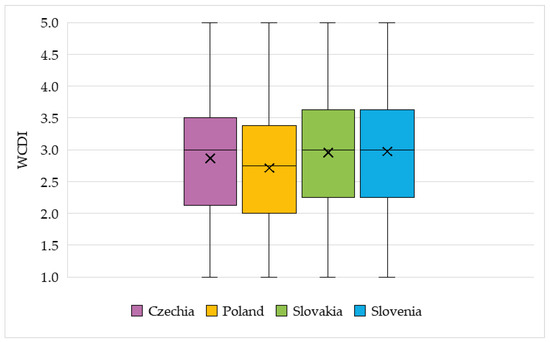
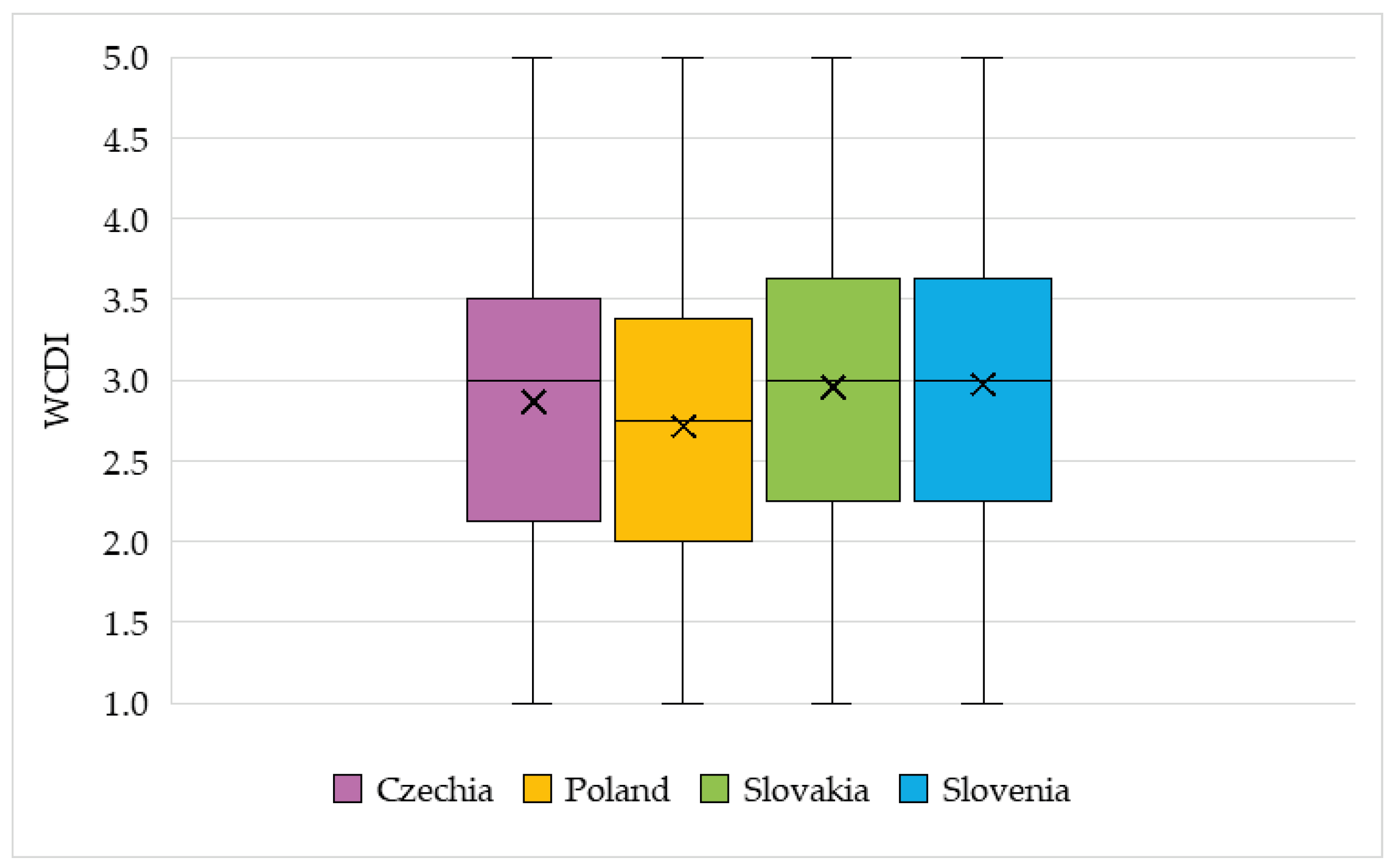
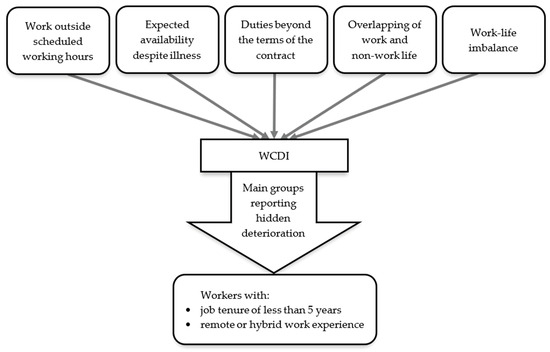
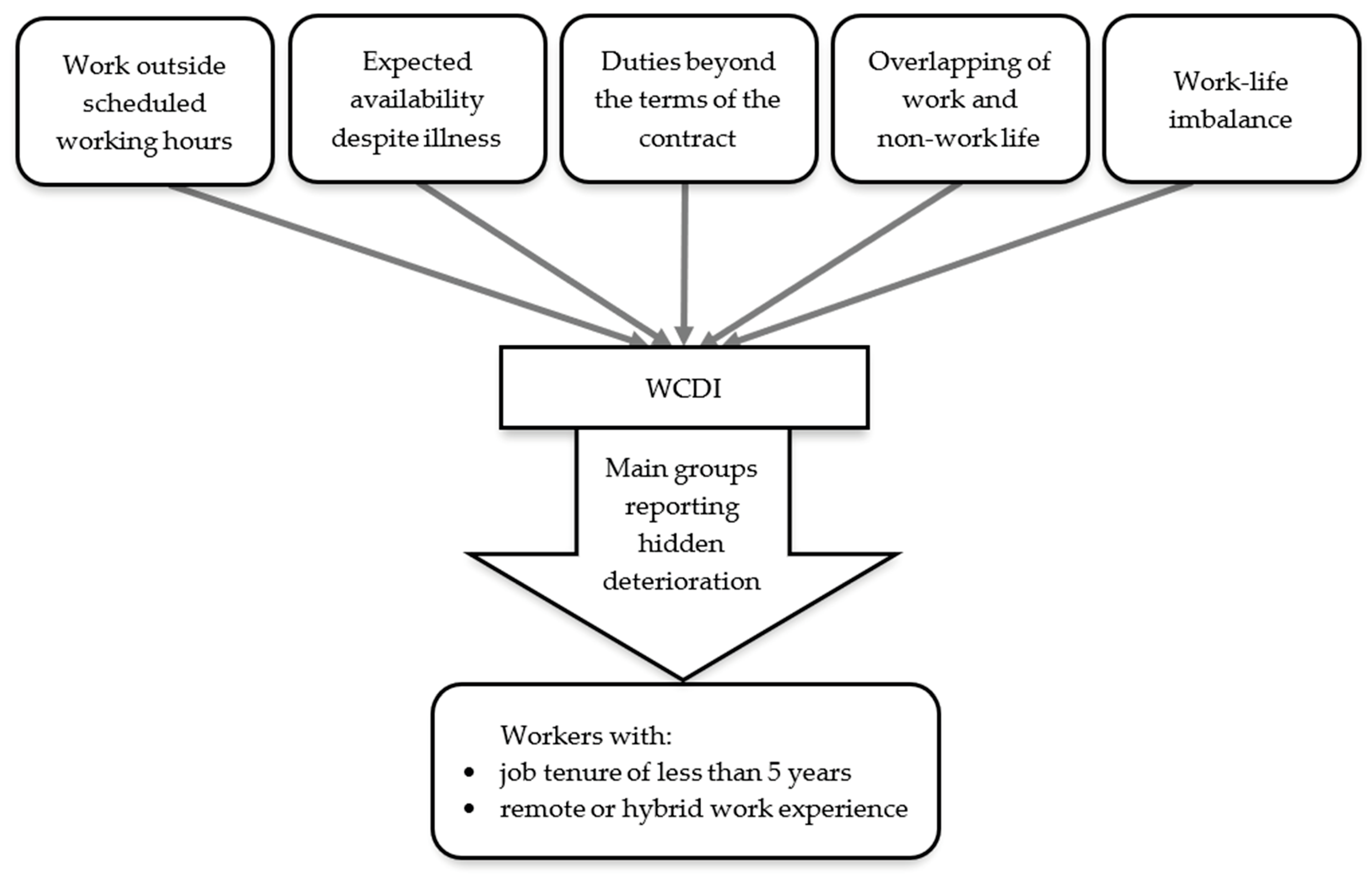

Disclaimer/Publisher’s Note: The statements, opinions and data contained in all publications are solely those of the individual author(s) and contributor(s) and not of MDPI and/or the editor(s). MDPI and/or the editor(s) disclaim responsibility for any injury to people or property resulting from any ideas, methods, instructions or products referred to in the content. |
© 2026 by the authors. Licensee MDPI, Basel, Switzerland. This article is an open access article distributed under the terms and conditions of the Creative Commons Attribution (CC BY) license.