A Comparative Study on the Sustainable Remediation of Arsenic Pollution in Water and Soil Using Iron-Modified and Cerium-Modified Biochar


Abstract
1. Introduction
2. Materials and Methods
2.1. Test Reagents and Instruments
2.2. Test Material
2.2.1. Preparation of Biocarbon Materials
2.2.2. Test Soil
2.3. Test Design
2.3.1. Adsorption Test
2.3.2. Influencing Factor Test
2.3.3. Phytotoxicity Assay with Ryegrass
2.4. Analysis Method
2.4.1. Material Performance Testing and Characterization
2.4.2. Soil Determination Methods
2.5. Data Processing and Analysis
2.5.1. Adsorption Capacity Analysis
2.5.2. Adsorption Isotherm
2.5.3. Adsorption Kinetics
3. Results
3.1. Materials Characterization
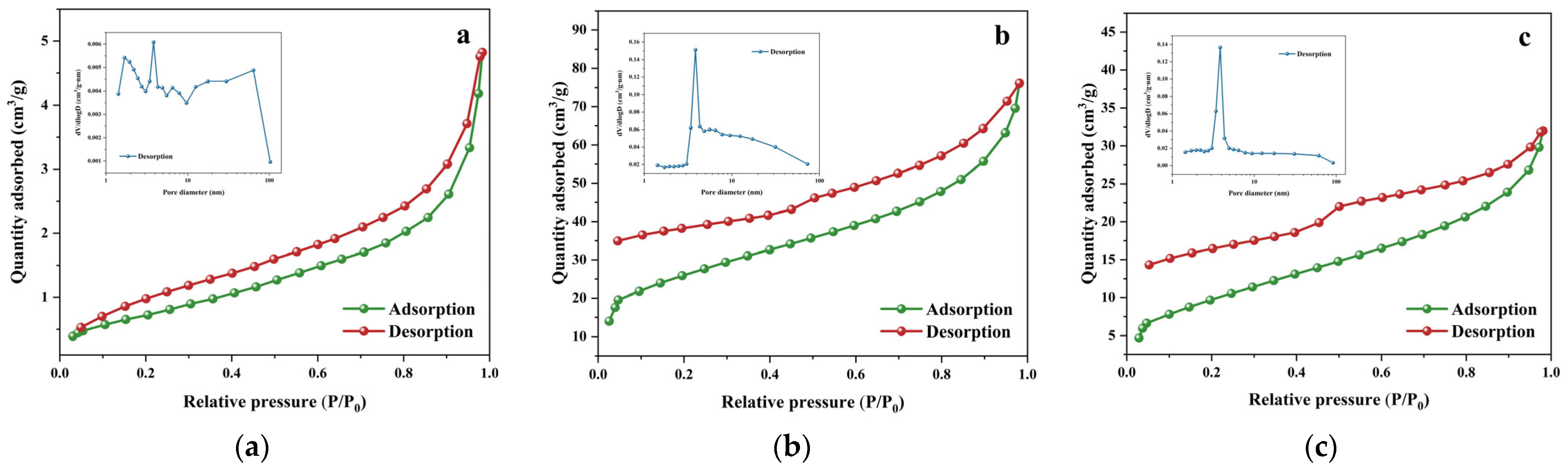
3.1.1. Analysis of Physical and Chemical Properties of Biochar
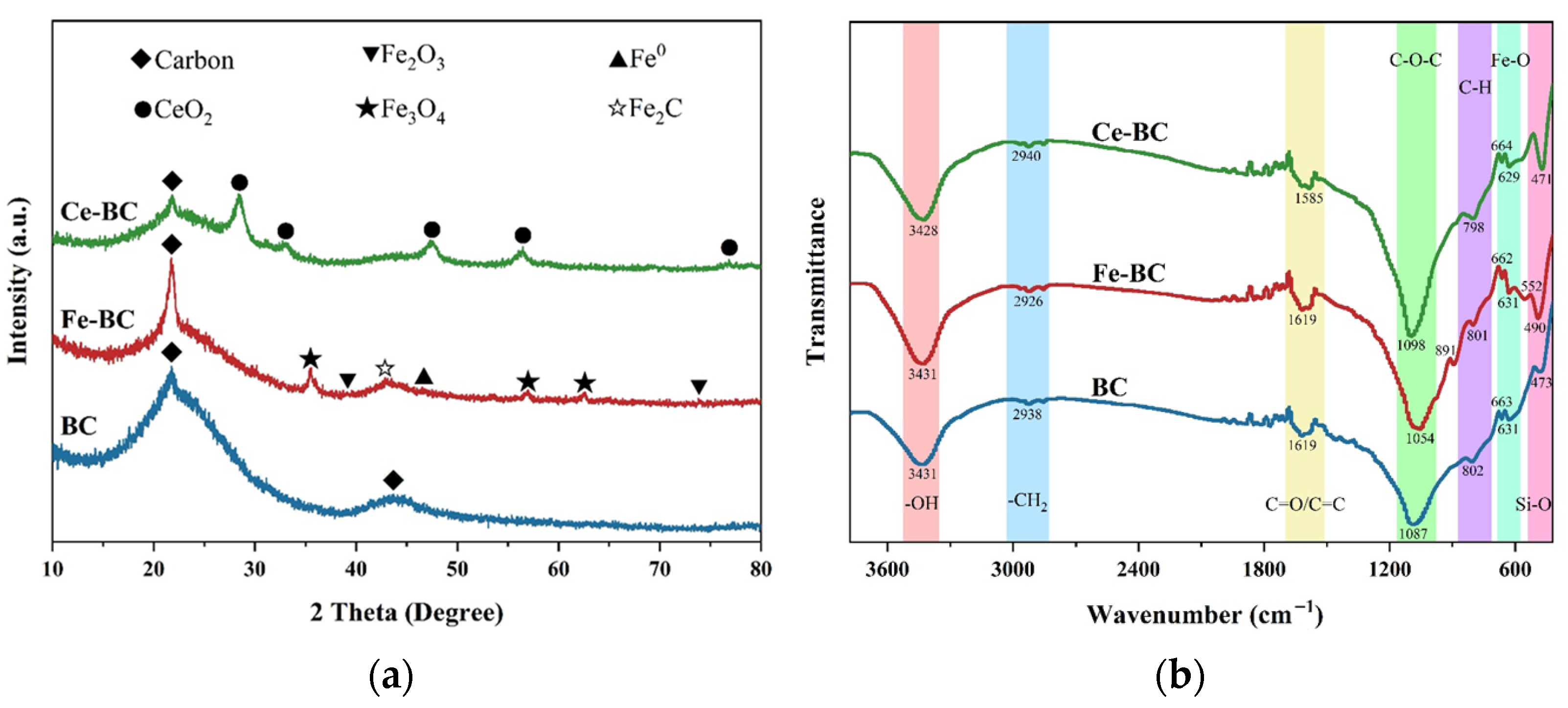
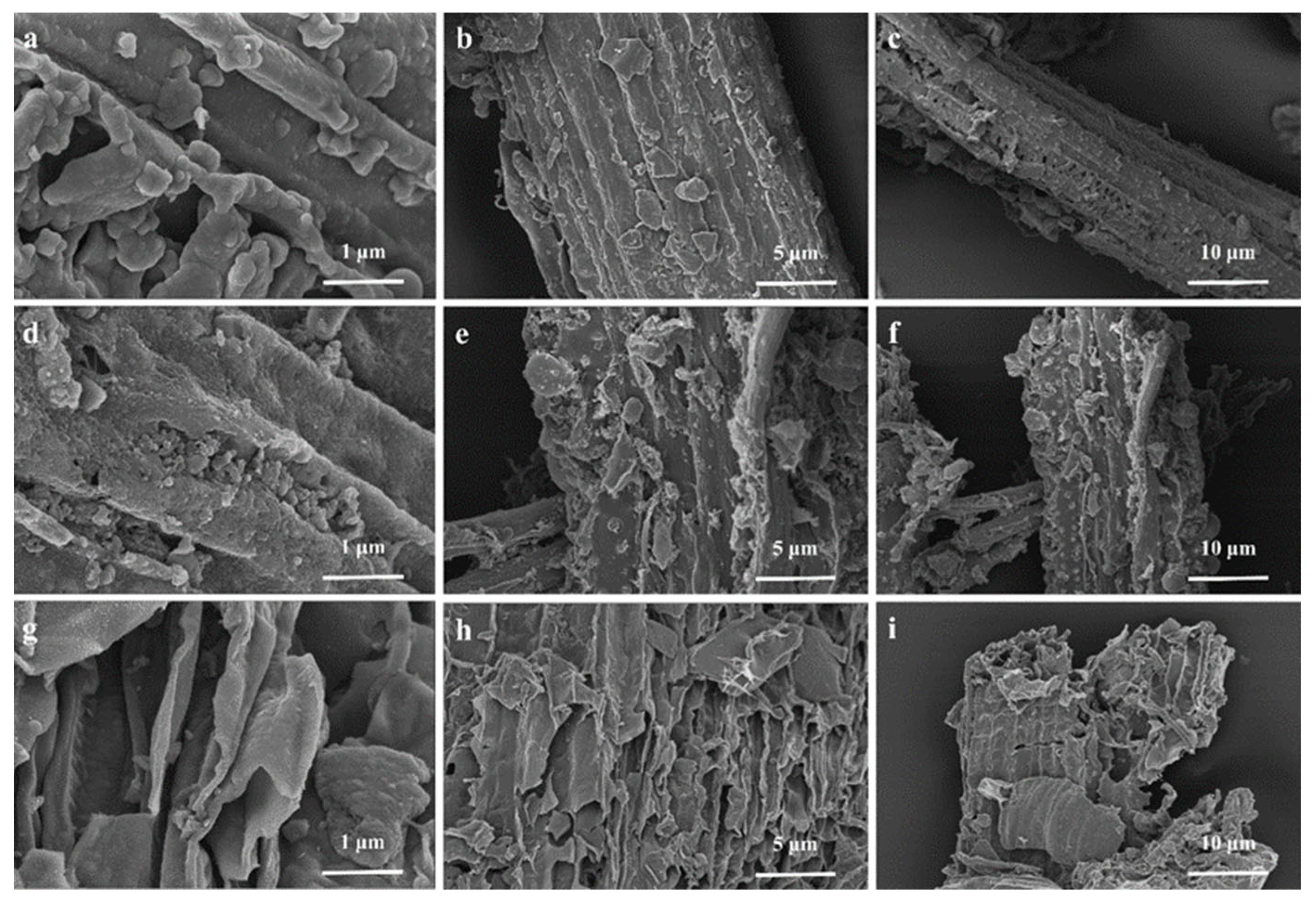
3.1.2. Characterization and Analysis of Biochar
3.2. The Adsorption Characteristics of Biochar on As in Water
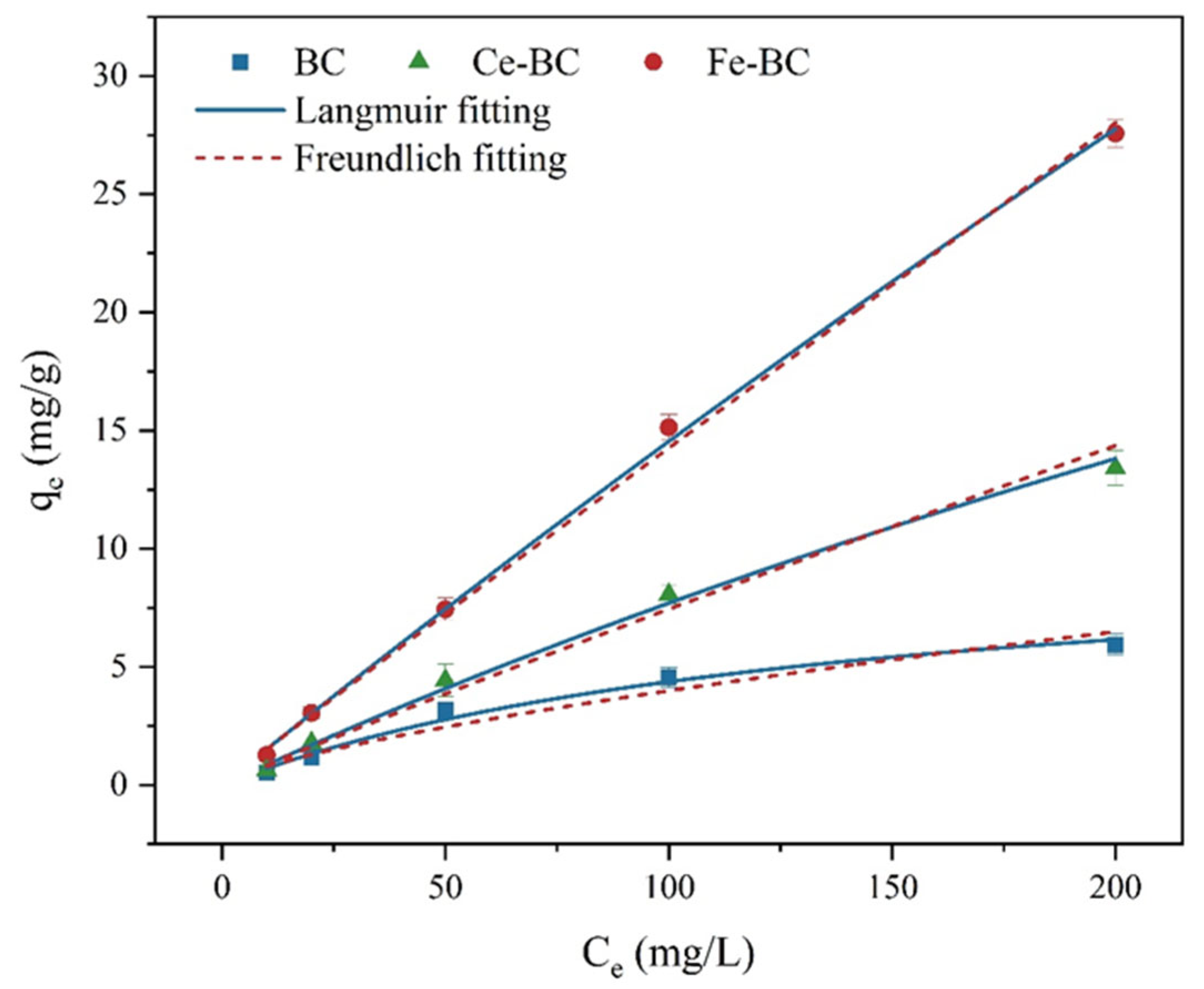
3.2.1. Adsorption Isotherm Characteristics
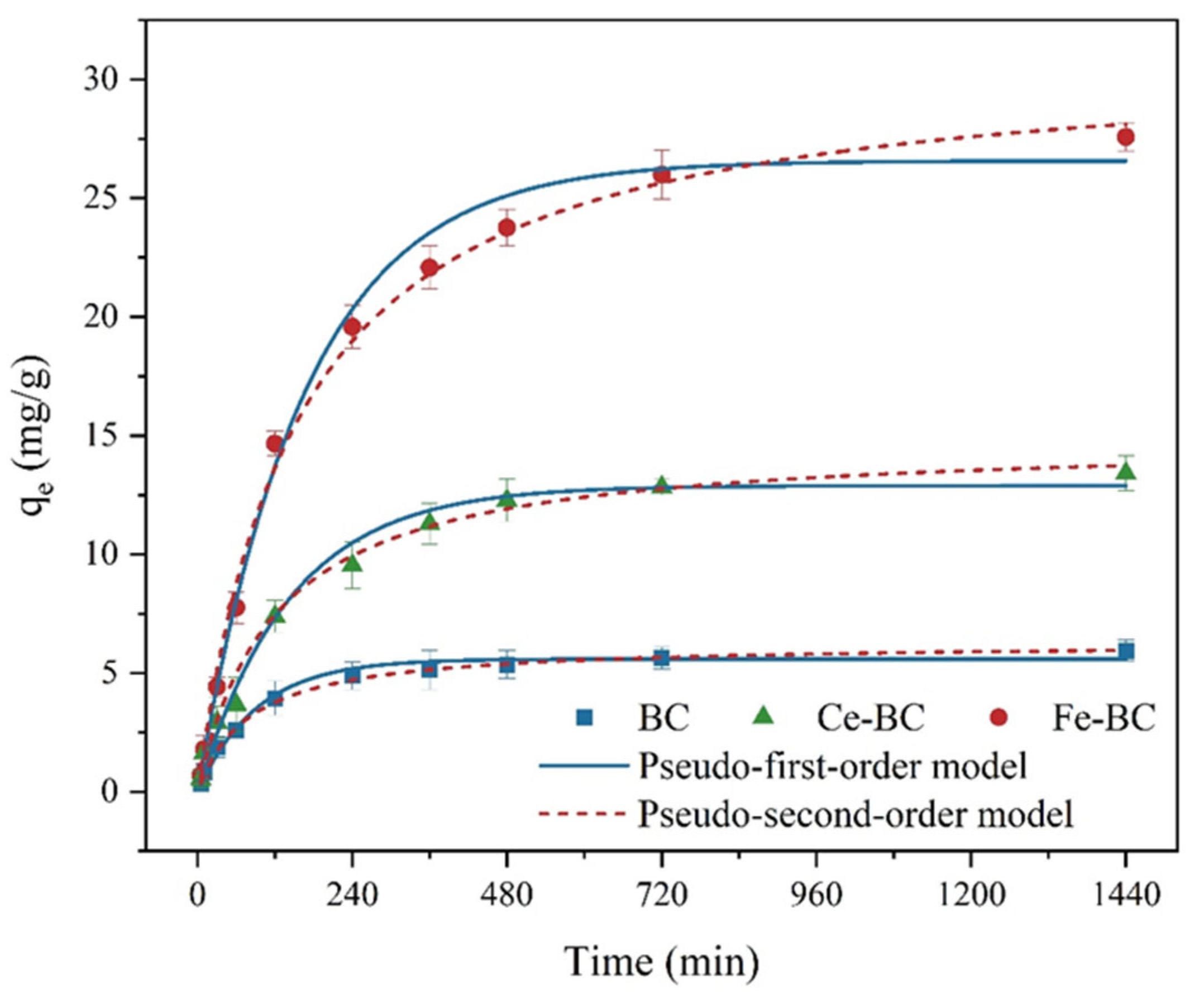
3.2.2. Adsorption Kinetics Law
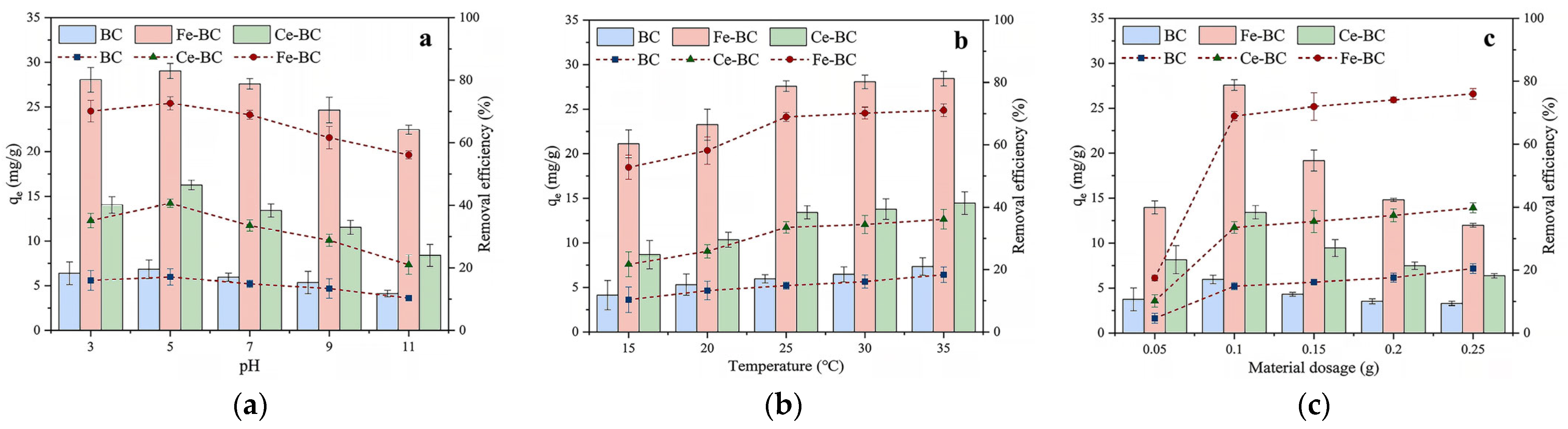
3.2.3. Analysis of Other Factors
3.3. The Passivation Effect of Biochar on As in Soil
3.3.1. The Effect of Biochar on Ryegrass Yield and Soil Physicochemical Properties
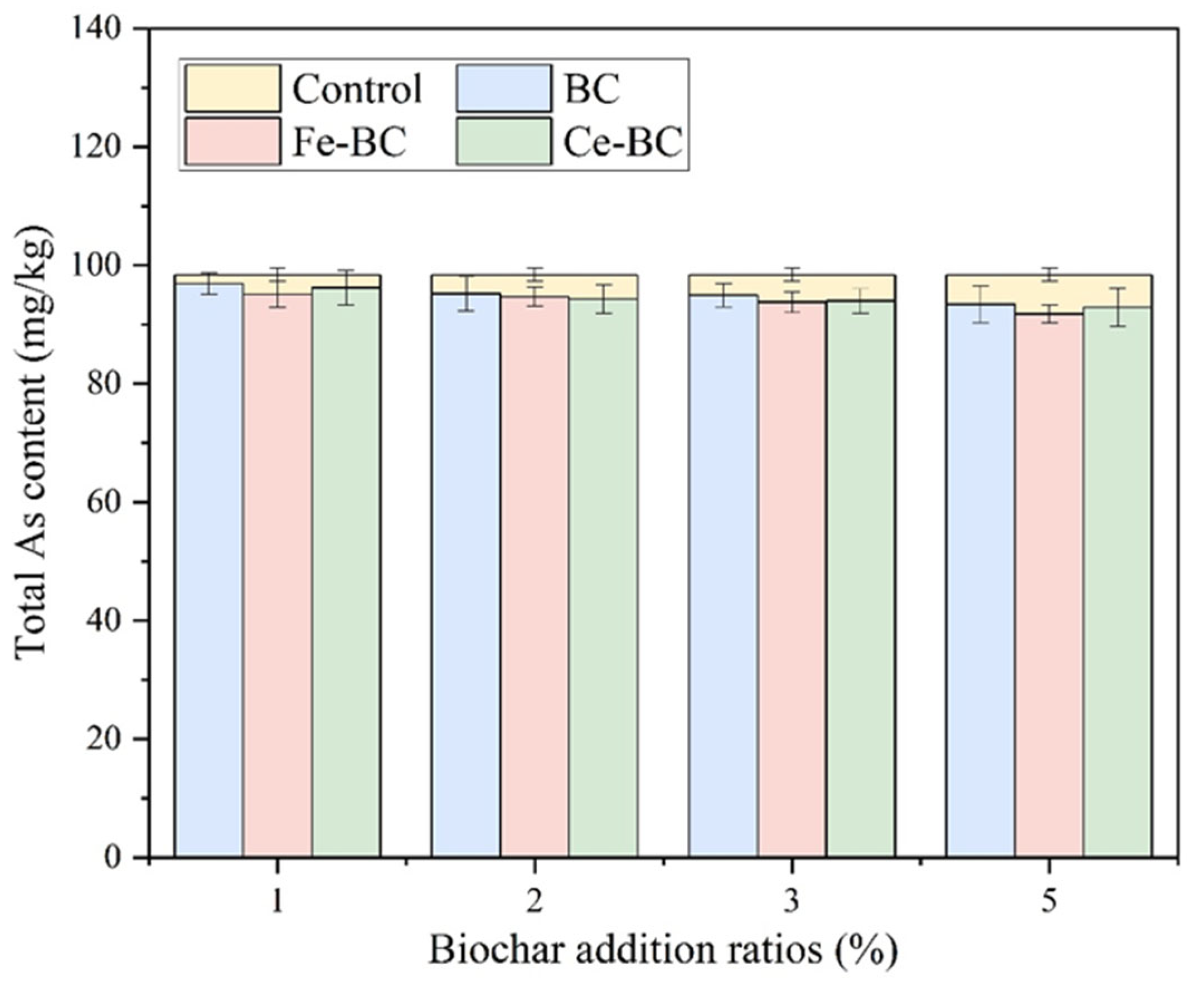
3.3.2. The Effect of Biochar on Total As in Soil
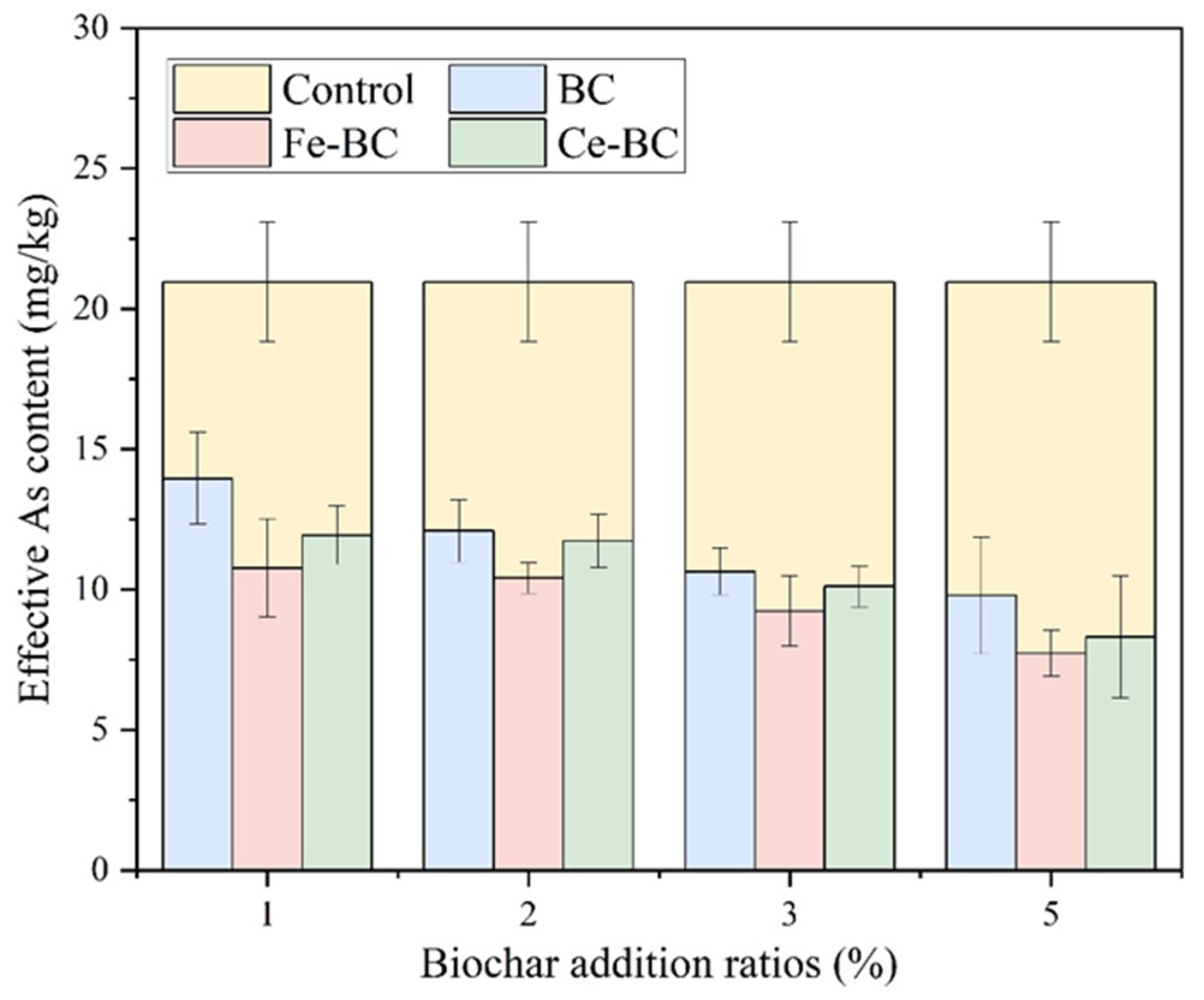
3.3.3. The Effect of Biochar on Available As in Soil
3.3.4. The Effect of Biochar on As Uptake by Ryegrass
4. Discussion
4.1. Physicochemical Characterization of Metal-Modified Biochars
4.2. Comparative As Immobilization Mechanisms
4.2.1. Distinct Chemical Pathways of Fe and Ce Modifiers
4.2.2. Divergent Fixation Pathways in Individually Metal-Modified Biochars
4.3. Adsorption Dynamics and Thermodynamic Insights
4.4. Soil Remediation Efficacy and Environmental Implications
4.5. Limitations and Future Perspectives
5. Conclusions
Author Contributions
Funding
Institutional Review Board Statement
Informed Consent Statement
Data Availability Statement
Conflicts of Interest
Abbreviations
| As | Arsenic |
| SEM | scanning electron microscopy |
| XRD | X-ray diffraction |
| FT-IR | Fourier transform infrared spectroscopy |
| BET | Brunauer–Emmett–Teller surface area analysis |
References
- Jiang, X.Y.; Zhang, S.X.; Yin, X.X.; Tian, Y.; Liu, Y.Y.; Deng, Z.W.; Wang, L.H. Contrasting effects of a novel biochar-microalgae complex on arsenic and mercury removal. Ecotoxicol. Environ. Saf. 2023, 262, 115144. [Google Scholar] [CrossRef] [Scilit] [PubMed]
- Amen, R.; Bashir, H.; Bibi, I.; Shaheen, S.M.; Niazi, N.K.; Shahid, M.; Hussain, M.M.; Antoniadis, V.; Shakoor, M.B.; Al-Solaimani, S.G.; et al. A critical review on arsenic removal from water using biochar-based sorbents: The significance of modification and redox reactions. Chem. Eng. J. 2020, 396, 125195. [Google Scholar] [CrossRef] [Scilit]
- Kumarathilaka, P.; Bundschuh, J.; Seneweera, S.; Marchuk, A.; Ok, Y.S. Iron modification to silicon-rich biochar and alternative water management to decrease arsenic accumulation in rice (Oryza sativa L.). Environ. Pollut. 2021, 286, 117661. [Google Scholar] [CrossRef] [Scilit]
- Yadav, M.K.; Saidulu, D.; Gupta, A.K.; Ghosal, P.S.; Mukherjee, A. Status and management of arsenic pollution in groundwater: A comprehensive appraisal of recent global scenario, human health impacts, sustainable field-scale treatment technologies. J. Environ. Chem. Eng. 2021, 9, 105203. [Google Scholar] [CrossRef] [Scilit]
- Weerasundara, L.; Ok, Y.-S.; Bundschuh, J. Selective removal of arsenic in water: A critical review. Environ. Pollut. 2021, 268, 115668. [Google Scholar] [CrossRef] [Scilit]
- Chen, W.Z.; Li, M.; Huang, P.Y.; Meng, D.L.; Ying, J.D.; Yang, Y.A.; Qiu, R.L.; Li, H.S. The application of mixed stabilizing materials promotes the feasibility of the intercropping system of Gynostemma pentaphyllum/Helianthus annuus L. on arsenic contaminated soil. J. Environ. Manag. 2023, 348, 119284. [Google Scholar] [CrossRef] [Scilit]
- Ahmed, N.; Tu, P.; Deng, L.; Chachar, S.; Chachar, Z.; Deng, L. Optimizing the dual role of biochar for phosphorus availability and arsenic immobilization in soils. Sci. Total Environ. 2024, 957, 177810. [Google Scholar] [CrossRef] [Scilit]
- Kochar, A.; Al-Juboori, R.A.; Hilal, N. Estrone removal from water through adsorption: A critical review of a decade of research. J. Water Process Eng. 2025, 71, 107147. [Google Scholar] [CrossRef] [Scilit]
- Zhang, D.; Lin, J.; Luo, J.; Sun, S.; Zhang, X.; Ma, R.; Peng, J.; Ji, F.; Zheng, S.; Tian, Z.; et al. Rapid immobilization of arsenic in contaminated soils by microwave irradiation combined with magnetic biochar: Microwave-induced electron transfer for oxidation and immobilization of arsenic (III). Sci. Total Environ. 2024, 919, 170916. [Google Scholar] [CrossRef] [Scilit]
- Jiang, F.; Zhang, C.; Zhang, K.; Luo, H.; Luo, J.; Liu, F. Effect of ascorbic acid and combination with fulvic acid on the electrokinetic remediation of paddy soil contaminated by arsenic-containing acid mine drainage. Appl. Geochem. 2023, 152, 105632. [Google Scholar] [CrossRef] [Scilit]
- Sahu, N.; Singh, J.; Koduru, J.R. Removal of arsenic from aqueous solution by novel iron and iron–zirconium modified activated carbon derived from chemical carbonization of Tectona grandis sawdust: Isotherm, kinetic, thermodynamic and breakthrough curve modelling. Environ. Res. 2021, 200, 111431. [Google Scholar] [CrossRef] [Scilit]
- Bi, X.; Zeng, C.; Westerhoff, P. Adsorption of Arsenic Ions Transforms Surface Reactivity of Engineered Cerium Oxide Nanoparticles. Environ. Sci. Technol. 2020, 54, 9437–9444. [Google Scholar] [CrossRef] [Scilit]
- Wang, Y.; Chen, X.L.; Yan, J.F.; Wang, T.Y.; Xie, X.M.; Yang, S. Efficient removal arsenate from water by biochar-loaded Ce3+-enriched ultra-fine ceria nanoparticles through adsorption-precipitation. Sci. Total Environ. 2021, 794, 148691. [Google Scholar] [CrossRef] [Scilit]
- Yu, Y.; Zhang, C.Y.; Yang, L.M.; Chen, J.P. Cerium oxide modified activated carbon as an efficient and effective adsorbent for rapid uptake of arsenate and arsenite: Material development and study of performance and mechanisms. Chem. Eng. J. 2017, 315, 630–638. [Google Scholar] [CrossRef] [Scilit]
- Feng, Y.; Lu, H.; Liu, Y.; Xue, L.; Dionysiou, D.D.; Yang, L.; Xing, B. Nano-cerium oxide functionalized biochar for phosphate retention: Preparation, optimization and rice paddy application. Chemosphere 2017, 185, 816–825. [Google Scholar] [CrossRef] [Scilit] [PubMed]
- Mon, P.P.; Cho, P.P.; Vidyasagar, D.; Ghosal, P.; Madras, G.; Challapalli, S. Synergistic sorption: Enhancing arsenic (V) removal using biochar decorated with cerium oxide composite. Mater. Today Sustain. 2024, 25, 100675. [Google Scholar] [CrossRef] [Scilit]
- Wu, C.; Cui, M.; Xue, S.; Li, W.; Huang, L.; Jiang, X.; Qian, Z. Remediation of arsenic-contaminated paddy soil by iron-modified biochar. Environ. Sci. Pollut. Res. 2018, 25, 20792–20801. [Google Scholar] [CrossRef] [Scilit]
- Liang, M.N.; Lu, L.; Zhang, Q.; Li, J.W.; Qiao, M.S.; Wu, Z.M. Time scale effect of magnetic ferric oxide modified biochar in-situ remediation of arsenic-contaminated paddy soil. Environ. Technol. Innov. 2024, 35, 103727. [Google Scholar] [CrossRef] [Scilit]
- Li, X.N.; Li, R.P.; Zhan, M.Q.; Hou, Q.; Zhang, H.Y.; Wu, G.Q.; Ding, L.Q.; Lv, X.F.; Xu, Y. Combined magnetic biochar and ryegrass enhanced the remediation effect of soils contaminated with multiple heavy metals. Environ. Int. 2024, 185, 108498. [Google Scholar] [CrossRef] [Scilit]
- Tang, L.; Xiong, L.; Zhang, H.; Joseph, A.; Wang, Y.; Li, J.; Yuan, X.; Rene, E.R.; Zhu, N. Reduced arsenic availability in paddy soil through Fe-organic ligand complexation mediated by bamboo biochar. Chemosphere 2024, 349, 140790. [Google Scholar] [CrossRef] [Scilit]
- Azar, M.S.; Raygan, S.; Sheibani, S. Effect of chemical activation process on adsorption of As(V) ion from aqueous solution by mechano-thermally synthesized zinc ferrite nanopowder. Int. J. Miner. Metall. Mater. 2020, 27, 526–537. [Google Scholar] [CrossRef] [Scilit]
- Ottani, F.; Morselli, N.; De Luca, A.; Puglia, M.; Pedrazzi, S.; Allesina, G. The conductivity dilemma: How biochar grain’s chemical composition and morphology hinder the direct measurement of its electrical conductivity. Measurement 2023, 222, 113662. [Google Scholar] [CrossRef] [Scilit]
- Rodriguez-Narvaez, O.M.; Peralta-Hernandez, J.M.; Goonetilleke, A.; Bandala, E.R. Biochar-supported nanomaterials for environmental applications. J. Ind. Eng. Chem. 2019, 78, 21–33. [Google Scholar] [CrossRef] [Scilit]
- Wang, G. Simultaneous Immobilization and Mechanisms of Arsenic and Lead in Soil by Sulfur/Iron Modified Biochar. Ph.D. Thesis, East China University of Science and Technology, Shanghai, China, 2022. Available online: https://link.cnki.net/doi/10.27148/d.cnki.ghagu.2022.000002 (accessed on 9 March 2026). (In Chinese)
- Tan, X. Preparation of Manganese Modified Biochar and Its Remediation Effect on Cadmium and Arsenic Contaminated Soil. Master’s Thesis, Beijing University of Chemical Technology, Beijing, China, 2020. Available online: https://link.cnki.net/doi/10.26939/d.cnki.gbhgu.2020.001352 (accessed on 9 March 2026). (In Chinese)
- Dong, S. Biological Effect and Inactivation of Biochar to Arsenic in Soil. Master’s Thesis, Xinjiang Agricultural University, Urumqi, China, 2016. Available online: https://kns.cnki.net/kcms2/article/abstract?v=o8vMLOX1CKs0F-rswWMFZkBt3_k76WO6y1U1c2xzRoU8QrMo1vQAGe-R61JvvHUDzmA7s2CV1y5afumvAwp1a2KlezukIfzbIAFnRHQebslN8tPMqonLjqqpIjl3Qf_5b90uZtAN0bVfx0OLsSd5iuIwEx_ZGjxxRPa9jowqTFQug91demV5mk9h48-UWQ7m&uniplatform=NZKPT&language=CHS (accessed on 9 March 2026). (In Chinese)
- Yin, X. Effects of Modified Biochar Application on Speciation of Arsenic and Soil Enzyme Activity in Arsenic Contaminated Soil. Master’s Thesis, Shandong Agricultural University, Tai’an, China, 2018. Available online: https://kns.cnki.net/kcms2/article/abstract?v=o8vMLOX1CKskxMG8e2aJlJrEPNGryOQ6H4Dfxdq2PTSnK363mbHhRCNVUevNZdWELRMHhUCNCefbVXUGVe7gfgZdSucQlN_nMaSRxJ6Vyk06XXhF7xFgqCdLSsNlUf1QvNw4IC4d7EaTC40dUFop8HBW14mzbi3hKg4B1Vir3cxuHVg-BPV-y7wNnaZCJ7F0&uniplatform=NZKPT&language=CHS (accessed on 9 March 2026). (In Chinese)
- Xu, M. Effect of Biochar on the Characteristics and Mechanisms of Phosphorus, Arsenic and Chromium Distribution in Soil-Rice System. Ph.D. Thesis, Sichuan Agricultural University, Ya’an, China, 2020. Available online: https://link.cnki.net/doi/10.27345/d.cnki.gsnyu.2020.000047 (accessed on 9 March 2026). (In Chinese)
- Li, Y. Removal of Cadmium and Arsenic from Water and Soil by Bio-Based Carbon Materials. Master’s Thesis, Shandong Agricultural University, Tai’an, China, 2020. Available online: https://link.cnki.net/doi/10.27277/d.cnki.gsdnu.2020.000337 (accessed on 9 March 2026). (In Chinese)
- Zhu, H.X.; Liu, X.Y.; Jiang, Y.; Zhang, M.; Lin, D.H.; Yang, K. Time-dependent desorption of anilines, phenols, and nitrobenzenes from biochar produced at 700 °C: Insight into desorption hysteresis. Chem. Eng. J. 2021, 422, 130584. [Google Scholar] [CrossRef] [Scilit]
- Maziarka, P.; Wurzer, C.; Arauzo, P.J.; Dieguez-Alonso, A.; Maek, O.; Ronsse, F. Do you BET on routine? The reliability of N2 physisorption for the quantitative assessment of biochar’s surface area. Chem. Eng. J. 2021, 418, 129234. [Google Scholar] [CrossRef] [Scilit]
- Lin, L. Effect of Biochar-Ferro Manganese Oxide Composite Material on Bio-Availability of Arsenic. Master’s Thesis, Shenyang Agricultural University, Shenyang, China, 2017. Available online: https://kns.cnki.net/kcms2/article/abstract?v=o8vMLOX1CKvt7zz4EAhpNy1VVbbLzcs_pjVk9OtTXppGPgu4o9JiuiJuj_ecRnyIj_yl_JN7mYt-Fh5PvzkfKcbz5J0mNMCWgDrfT7bbT6NczFk_Q-dVitgnWw_7ZF4ToOg-WxVL-EFlbCRY6fH_vsk55Z5HGXhoYIPuyUQAg8Ml7LoCZJrx5VJjpG5Zbmhh&uniplatform=NZKPT&language=CHS (accessed on 9 March 2026). (In Chinese)
- Li, M. Passivation Effect of Modified Biochar on Cadmium and Arsenic in Polluted Soil. Master’s Thesis, Beijing University of Chemical Technology, Beijing, China, 2019. Available online: https://link.cnki.net/doi/10.26939/d.cnki.gbhgu.2019.000376 (accessed on 9 March 2026). (In Chinese)
- Liang, T. Stabilization Effect and Mechanism Discussion of Cerium-Manganese Modified Wheat Straw Biochar on Arsenic in Soil. Master’s Thesis, Chinese Academy of Agricultural Sciences, Beijing, China, 2020. Available online: https://link.cnki.net/doi/10.27630/d.cnki.gznky.2020.000190 (accessed on 9 March 2026). (In Chinese)
- Din, S.U.; Khaqan, U.; Imran, M.; Al-Ahmary, K.M.; Alshdoukhi, I.F.; Carabineiro, S.A.C.; Al-Sehemi, A.G.; Kavil, Y.N.; Alshehri, R.F.; Bakheet, A.M. Enhancing arsenic removal using Cu-infused biochar: Unravelling the influence of pH, temperature and kinetics. Chem. Eng. Res. Des. 2024, 203, 368–377. [Google Scholar] [CrossRef] [Scilit]
- Lin, L. Effect of Biochar-Metal Oxides Composite Material on Bio-Availability of Arsenic. Ph.D. Thesis, Chinese Academy of Agricultural Sciences, Beijing, China, 2020. Available online: https://link.cnki.net/doi/10.27630/d.cnki.gznky.2020.000039 (accessed on 9 March 2026). (In Chinese)
- Choudhury, T.R.; Sajib, M.S.H.; Sowrav, S.F.F.; Khan, S.R.; Alam, M.N.E.; Amin, M.N. Nanostructured bi-metallic biochar: An innovative approach for arsenic (III) removal from contaminated water. Environ. Chem. Ecotoxicol. 2025, 7, 10–18. [Google Scholar] [CrossRef] [Scilit]
- Qiu, J.; De Souza, M.F.; Wang, X.L.; Ok, Y.S.; Meers, E. Influence of biochar addition and plant management (cutting and time) on ryegrass growth and migration of As and Pb during phytostabilization. Sci. Total Environ. 2024, 913, 169771. [Google Scholar] [CrossRef] [Scilit]
- Bai, S. Passivation Effect of Hydroxy Sulfate Ironsludge-Based Biochar on Arseniccontaminated Soil. Master’s Thesis, Tianjin University of Technology, Tianjin, China, 2019. Available online: https://kns.cnki.net/kcms2/article/abstract?v=o8vMLOX1CKskxMG8e2aJlJrEPNGryOQ6H4Dfxdq2PTSnK363mbHhRKYV54DR80dkz11_uchGVjw9oX31CpGd5Afa7lhB3dAdzbVHBtyg1iqT8TJnl6iCTP72Afe-aRhXM5D2098zxT3LIfsB_nLzNrFeGvap3AIabuHjhKJ8JqQ-CYufmYEJHfKN2Z3IrqlT&uniplatform=NZKPT&language=CHS (accessed on 9 March 2026). (In Chinese)
- Sun, Y.; Yu, F.; Han, C.; Houda, C.; Hao, M.; Wang, Q. Research Progress on Adsorption of Arsenic from Water by Modified Biochar and Its Mechanism: A Review. Water 2022, 14, 1691. [Google Scholar] [CrossRef] [Scilit]
- Song, B.; Zhi, Z.; Zhou, Q.; Wu, D.; Yu, L.; Gong, F.; Yin, Y.; Meng, F.; Li, C.; Chen, Z.; et al. Enhanced arsenic removal by reusable hexagonal CeO2/Fe2O3 nanosheets with exposed (0001) facet. Sci. Total Environ. 2022, 847, 157490. [Google Scholar] [CrossRef] [Scilit]
- Hu, L.; Zhang, P.; Xu, X.; Ren, J.; Zhao, L.; Qiu, H.; Cao, X. Immobilization of arsenic in different contaminated soils by zero-valent iron-embedded biochar: Effect of soil characteristics and treatment conditions. Sci. Total Environ. 2023, 868, 161597. [Google Scholar] [CrossRef] [Scilit]
- Pan, H.; Yang, X.; Chen, H.B.; Sarkar, B.; Bolan, N.; Shaheen, S.M.; Wu, F.C.; Che, L.; Ma, Y.B.; Rinklebe, J.; et al. Pristine and iron-engineered animal- and plant-derived biochars enhanced bacterial abundance and immobilized arsenic and lead in a contaminated soil. Sci. Total Environ. 2021, 763, 144218. [Google Scholar] [CrossRef] [Scilit] [PubMed]
- Cao, R.; Kang, G.D.; Zhang, W.W.; Zhou, J.H.; Xie, W.L.; Liu, Z.Z.; Xu, L.; Hu, F.; Li, Z.; Li, H.X. Biochar loaded with ferrihydrite and Bacillus pseudomycoides enhances remediation of co-existed Cd(II) and As(III) in solution. Bioresour. Technol. 2024, 395, 130323. [Google Scholar] [CrossRef] [Scilit] [PubMed]
- Li, J.; Zu, Y.; Li, G.; Sun, G. Mechanism of As(V) removal from water by lanthanum and cerium Modified Biochars. Environ. Sci. 2018, 39, 2211–2218. (In Chinese) [Google Scholar] [CrossRef]
- Liang, T.; Li, L.F.; Hu, Y.A.; Xu, W.M. Arsenic Immobilization for Paddy Field and Improvement of Rice (Oryza sativa L.) Growth through Cerium-Manganese Modified Wheat Straw Biochar Application. Sustainability 2023, 15, 16161. [Google Scholar] [CrossRef] [Scilit]
- Kim, J.; Song, J.; Lee, S.M.; Jung, J. Application of iron-modified biochar for arsenite removal and toxicity reduction. J. Ind. Eng. Chem. 2019, 80, 17–22. [Google Scholar] [CrossRef] [Scilit]
- Lou, L.; Li, W.K.; Yao, H.; Luo, H.Y.; Liu, G.; Fang, J. Corn stover waste preparation cerium-modified biochar for phosphate removal from pig farm wastewater: Adsorption performance and mechanism. Biochem. Eng. J. 2024, 212, 109530. [Google Scholar] [CrossRef] [Scilit]
- Verma, V.; Kumar, N.; Sharma, Y.C. Application of a stabilized bioproduct, ceria-biochar (CeO2/BC), for economic nitrate removal from drinking water. Biofuels Bioprod. Biorefining 2026. Early Access. [Google Scholar] [CrossRef] [Scilit]
- Lian, B.; Wu, J.Z.; Bolan, N.; Jeyakumar, P.; Wang, H.L.; Yuan, J.; Wu, Q.C.; Chen, Y.; Wang, J.H.; Yuan, F.; et al. Fe-Mn oxide, microbe and biochar composite for remediation of Cd and As co-contaminated water and soil. Soil Use Manag. 2024, 40, e13162. [Google Scholar] [CrossRef] [Scilit]
- Lu, L.; Yan, L.; Liang, M.; Cheng, G.; Zhu, Z.; Zhu, Y.; Wang, D. Preparation of magnetic iron oxide/mulberry stem biochar and its effects on dissolved organic carbon and arsenic speciation in arsenic-contaminated soils. Environ. Sci. 2022, 43, 5214–5223. (In Chinese) [Google Scholar] [CrossRef] [Scilit]
- Karczewska, A.; Galka, B.; Dradrach, A.; Lewinska, K.; Molczan, M.; Cuske, M.; Gersztyn, L.; Litak, K. Solubility of arsenic and its uptake by ryegrass from polluted soils amended with organic matter. J. Geochem. Explor. 2017, 182, 193–200. [Google Scholar] [CrossRef] [Scilit]
- Gliniak, M.; Sikora, J.; Sadowska, U.; Klimek-Kopyra, A.; Latawiec, A.; Kubo, M. Impact of biochar on soil electrical conductivity during 2 year field experiment. In Proceedings of the 6th World Multidisciplinary Earth Sciences Symposium, WMESS 2020, Prague, Czech Republic, 7 September 2020–11 September 2020; IOP Publishing Ltd.: Bristol, UK; Volume 609. p. LAMA Energy Group; Prague City Tourism; LAMA Gas and Oil. s(V) removal from water. [Google Scholar] [CrossRef] [Scilit]
- Cui, Z.W.; Wang, Y.; Wang, N.; Ma, F.F.; Yuan, Y.Y. Effects of Ageing on Surface Properties of Biochar and Bioavailability of Heavy Metals in Soil. Agriculture 2024, 14, 1631. [Google Scholar] [CrossRef] [Scilit]
- Wang, Z.; Geng, C.X.; Bian, Y.; Zhang, G.Y.; Zheng, C.L.; An, C.J. Effect of oxidative aging of biochar on relative distribution of competitive adsorption mechanism of Cd2+ and Pb2+. Sci. Rep. 2022, 12, 11308. [Google Scholar] [CrossRef] [Scilit]
- Wu, Y.; Wang, Z.W.; Xue, Z.Y.; Yan, Y.H.; Huma, B.; Zhou, Y.Q.; Tan, Z.X. Fertilization of potentially toxic element-contaminated soils remediated with reusable biochar pellets using rice straw, pig manure and their derived biochar. Environ. Pollut. 2025, 366, 125551. [Google Scholar] [CrossRef] [Scilit] [PubMed]
- Liu, H.X.; Xie, X.J.; Wang, Y.X. Selective arsenic removal in complex aquatic environments: Mechanistic insights, sorbent design, and environmental regulation. J. Hazard. Mater. 2026, 501, 140761. [Google Scholar] [CrossRef] [Scilit] [PubMed]
- Li, C.P.; Liu, Y.; Xu, S.T.; Wang, J.S.; Bao, C.J.; Liu, Y.; Zhang, Z.F.; Bin, Y.J.; Liu, D.W. Study on the remediation of arsenic pollution in tin tailings by Geopolymer-cementitious hybrids. Miner. Eng. 2025, 232, 109546. [Google Scholar] [CrossRef] [Scilit]




| Heating Time | Digestion Temperature | Hold Time |
|---|---|---|
| 7 min | room temperature–120 °C | 3 min |
| 10 min | 120–180 °C | 15 min |
| Sample Name | BET Surface Area (m2·g−1) | Total Pore Volume (cm3·g−1) | Average Pore Size (nm) |
|---|---|---|---|
| BC | 2.760 | 0.98310 | 1.08129 |
| Fe-BC | 94.380 | 0.98105 | 4.98911 |
| Ce-BC | 36.388 | 0.98079 | 5.43993 |
| Adsorbent Material | Langmuir Model | Freundlich Model | ||||
|---|---|---|---|---|---|---|
| Qm (mg·g−1) | kL (L·mg−1) | RL2 | kF (L·g−1) | n | RF2 | |
| BC | 5.95 | 0.0073 | 0.9855 | 0.1582 | 0.7009 | 0.9515 |
| Fe-BC | 27.58 | 4.9982 | 0.9984 | 0.1604 | 0.9744 | 0.9976 |
| Ce-BC | 13.41 | 0.0013 | 0.9926 | 0.0946 | 0.9480 | 0.9875 |
| Adsorbent Material | Pseudo-First-Order Model | Pseudo-Second-Order Model | ||||
|---|---|---|---|---|---|---|
| qe (mg·g−1) | k1 (min−1) | R2 | qe (mg·g−1) | k2 (g·mg−1·min−1) | R2 | |
| BC | 5.72 | 0.0085 | 0.99238 | 5.98 | 0.0028 | 0.99802 |
| Fe-BC | 26.85 | 0.0123 | 0.99549 | 28.12 | 0.0015 | 0.99602 |
| Ce-BC | 12.96 | 0.0098 | 0.99213 | 13.68 | 0.0022 | 0.99614 |
| Addition Ratio | Material | pH | EC |
|---|---|---|---|
| 0% | / | 8.1 | 2152 |
| 1% | BC | 8.7 | 1573 |
| Fe-BC | 8.1 | 1543 | |
| Ce-BC | 8.2 | 1485 | |
| 2% | BC | 8.7 | 1413 |
| Fe-BC | 8.1 | 1318 | |
| Ce-BC | 8.2 | 1390 | |
| 3% | BC | 8.8 | 1383 |
| Fe-BC | 8.2 | 1364 | |
| Ce-BC | 8.2 | 1117 | |
| 5% | BC | 8.9 | 1264 |
| Fe-BC | 8.2 | 1198 | |
| Ce-BC | 8.3 | 1023 |
| Material | Total As Content in Ryegrass Under Different Treatment Conditions (mg·kg−1) | ||||
|---|---|---|---|---|---|
| 0% | 1% | 2% | 3% | 5% | |
| BC | 0.0407 ± 0.001 | 0.0377 ± 0.0018 | 0.0338 ± 0.0034 | 0.0306 ± 0.0034 | 0.0140 ± 0.0016 |
| Fe-BC | 0.0407 ± 0.001 | 0.0312 ± 0.0055 | 0.0258 ± 0.0032 | 0.0184 ± 0.0029 | 0.0088 ± 0.0013 |
| Ce-BC | 0.0407 ± 0.001 | 0.0348 ± 0.0026 | 0.0273 ± 0.0047 | 0.0224 ± 0.0042 | 0.0093 ± 0.002 |
Disclaimer/Publisher’s Note: The statements, opinions and data contained in all publications are solely those of the individual author(s) and contributor(s) and not of MDPI and/or the editor(s). MDPI and/or the editor(s) disclaim responsibility for any injury to people or property resulting from any ideas, methods, instructions or products referred to in the content. |
© 2026 by the authors. Licensee MDPI, Basel, Switzerland. This article is an open access article distributed under the terms and conditions of the Creative Commons Attribution (CC BY) license.
Share and Cite
Wang, S.; Yuan, X.; Li, S.; Bie, S.; Zhou, Y.; Guo, S.; Wang, Z. A Comparative Study on the Sustainable Remediation of Arsenic Pollution in Water and Soil Using Iron-Modified and Cerium-Modified Biochar. Sustainability 2026, 18, 2873. https://doi.org/10.3390/su18062873
Wang S, Yuan X, Li S, Bie S, Zhou Y, Guo S, Wang Z. A Comparative Study on the Sustainable Remediation of Arsenic Pollution in Water and Soil Using Iron-Modified and Cerium-Modified Biochar. Sustainability. 2026; 18(6):2873. https://doi.org/10.3390/su18062873
Chicago/Turabian StyleWang, Siyuan, Xiaoxian Yuan, Shifeng Li, Shiji Bie, Yang Zhou, Shuzheng Guo, and Zhipu Wang. 2026. "A Comparative Study on the Sustainable Remediation of Arsenic Pollution in Water and Soil Using Iron-Modified and Cerium-Modified Biochar" Sustainability 18, no. 6: 2873. https://doi.org/10.3390/su18062873
APA StyleWang, S., Yuan, X., Li, S., Bie, S., Zhou, Y., Guo, S., & Wang, Z. (2026). A Comparative Study on the Sustainable Remediation of Arsenic Pollution in Water and Soil Using Iron-Modified and Cerium-Modified Biochar. Sustainability, 18(6), 2873. https://doi.org/10.3390/su18062873