


Abstract
To address high uncertainty, dynamic evolution, and limited information in emergency decision-making for major sudden disasters, this paper proposes a sliding-window game-theoretic method with four reference points for emergency response selection. Firstly, interval-valued T-spherical fuzzy sets are adopted to capture decision-makers’ uncertain and hesitant evaluations in interval form. Subsequently, a four-reference-point framework, including the external, internal, average development speed, and ideal proximity reference points, is established to reflect stage-dependent psychological baselines. Furthermore, criterion weights are updated by a sliding-window game-theoretic combination weighting scheme that integrates entropy, anti-entropy, criteria importance through intercriteria correlation, and the coefficient of variation, and performs rolling updates across stages. Prospect values are then computed relative to the four reference points and aggregated to rank alternatives at each stage. Finally, a case study of the 2024 Huludao extreme rainfall event applies the proposed method to evaluate four candidate schemes across six criteria over three decision stages. Results show that rescue cost has the highest weight in all stages, while the importance of rescue speed decreases and social impact increases as the response progresses. The proposed method identifies a comprehensive flood relief scheme led by the People’s Liberation Army and the People’s Armed Police Force as the best option in all stages, because it achieves the highest comprehensive prospect values among all alternatives. Comparative analyses indicate more consistent identification of the optimal scheme than existing approaches, supporting sustainable and resource-efficient disaster management.
1. Introduction
In recent years, climate change and the growing influence of human activities have increased the frequency of major sudden disasters worldwide, with casualties and economic losses rising steadily [1,2]. The 2025 Global Assessment Report on Disaster Risk Reduction states that from 2015 to 2023, over 124 million people were affected by disasters annually. Economic losses have also surged: between 2001 and 2020, annual direct costs ranged from 180 to 200 billion US dollars [3]. In the wake of such events, minimizing economic loss, reducing casualties, and mitigating environmental degradation have become urgent priorities for sustainable development [4]. Emergency decision-making, utilizing limited time and resources, must swiftly identify and optimize response plans using scientific theories and methods, factoring in both subjective and objective conditions [5]. Given the increasing complexity and uncertainty, traditional decision-making methods in emergency management have proven inadequate. They are often overly idealized, fail to capture dynamic multi-stage evolution, struggle with fuzzy uncertainties, and are poorly suited to real-time responses and resource constraints. Therefore, there is an urgent need for methodical innovations and optimization to improve the scientific rigor and effectiveness of responses to major disasters.
After a major sudden disaster occurs, national and local governments typically convene a decision task force composed of experts from multiple domains to develop emergency response schemes as quickly as possible. However, the post-disaster decision environment is often time-critical, shows clear stage-wise evolution, and remains difficult to predict [6]. Meanwhile, available information is usually incomplete and cannot be updated in real time. As a result, experts inevitably exhibit hesitation and uncertainty during evaluation, making it difficult to provide precise numerical judgments [7]. For this reason, fuzzy linguistic has become a common way to represent uncertain information and support the selection of emergency response schemes. Recent uncertainty-aware multi-criteria decision-making (MCDM) studies often combine advanced fuzzy languages with objective weighting and ranking procedures to support complex evaluations. For example, spherical fuzzy sets (SFS) have been integrated with entropy-based weighting and the combinative distance-based assessment (CODAS) method for supply chain sustainability risk assessment and supplier selection [8], and with the criteria importance through intercriteria correlation (CRITIC) method and the double normalization-based multi-aggregation (DNMA) approach for evaluating irrigation systems under uncertain information [9]. Fuzzy sets were first introduced by Zadeh [10]. This framework uses only the membership degree to express support, and it offers limited capability for representing hesitation. Atanassov [11] then proposed intuitionistic fuzzy sets (IFS) by adding the non-membership degree, yet IFS is still constrained by strict admissible conditions. To better express high hesitation and extreme assessments, Yager developed Pythagorean fuzzy sets (PyFS) [12] and q-rung orthopair fuzzy sets (q-ROFS) [13]. These models increase flexibility by relaxing constraints or introducing parameters. Probabilistic hesitant fuzzy sets (PHFS) further attach probabilities to hesitant assessments, and they have been combined with the complex proportional assessment (COPRAS) method to select treatment policies under uncertainty [14]. Further extensions move from two-dimensional to three-dimensional representations. Cuong [15] proposed picture fuzzy sets, where hesitancy is treated as an independent dimension. This structure allows attitudes such as “support,” “neutral,” and “oppose” to be expressed more directly. Mahmood [16] introduced spherical fuzzy sets (SFS) and further generalized them to T-spherical fuzzy sets (TSFS). These models accommodate richer combinations of evaluations within a three-dimensional space. SFS-based frameworks have also been extended by integrating the root assessment method (RAM) into spherical fuzzy environments, forming a spherical fuzzy RAM (SF-RAM) for sustainability-oriented selection problems [17]. Since real-world assessments are often difficult to express with a single precise value, Ullah et al. [18] extended the membership, non-membership, and hesitancy degrees to interval forms and proposed interval-valued T-spherical fuzzy sets (IVTSFS). IVTSFS reduces information loss while satisfying the required constraints. Beyond fuzzy sets, neutrosophic models explicitly represent indeterminacy, and recent studies have combined them with methods such as evaluation based on distance from average solution (EDAS) and the decision-making trial and evaluation laboratory (DEMATEL) for decision evaluation under uncertainty [19,20]. Neutrosophic type-2 numbers have also been incorporated into the neutrosophic type-2 additive ratio assessment (N-type-2 ARAS) method to enhance flexibility when information is inaccurate or ambiguous [21]. Many related emergency decision-making studies still rely on crisp values or single-point fuzzy numbers, which can compress expert hesitation into a fixed estimate and narrow the feasible evaluation range. Given the complex and rapidly changing nature of major sudden disasters, expert judgments require a multi-dimensional and non-precise representation. Therefore, interval-valued T-spherical fuzzy numbers are adopted as the evaluation language to support emergency decision-making. Table 1 compares the differences among various fuzzy sets.
Table 1.
Comparison of partial fuzzy sets.
Traditional emergency decision-making research often adopts fully rational frameworks, such as expected utility theory, which assume that decision-makers evaluate outcomes by absolute utility [22]. In practice, empirical evidence suggests otherwise. Decision-makers tend to be reference-dependent and boundedly rational [23]. They judge outcomes against psychologically salient reference points and often show loss aversion and context dependence [24,25]. Reference point theory, introduced by Kahneman and Tversky in prospect theory, suggests that decisions are shaped by gains and losses relative to a reference point, with losses weighted more heavily [26]. In emergency decision-making, omitting reference points can downplay safety thresholds and target values, and may produce recommendations that conflict with actual preferences. Early models used a single reference point, often the decision-maker’s status quo or expectation, to define gains and losses via positive and negative deviations [27]. This design is intuitive, but it is too coarse for emergency settings where multiple thresholds often coexist. Dual-reference-point models were then proposed to evaluate outcomes against both a bottom-line reference point and an ideal target, offering a richer representation of loss aversion [28]. They have been combined with cumulative prospect theory and applied to scenarios such as forest fires [29]. Yet many dual-reference-point models treat the status quo as fixed. This is a weakness in evolving disasters, where the current situation may improve or deteriorate and the psychological baseline shifts accordingly [30]. Tri-reference-point theory addresses this by considering the bottom line, the status quo, and the target simultaneously under risk [31]. It has shown strong predictive ability in areas such as financial investment and aviation scheduling [32,33], and has been extended to dynamic settings with time-dependent reference points [34]. However, existing dynamic models still describe stage-wise changes in reference points only in a limited way. In particular, many models provide limited mechanisms to link benchmark shifts to fast-changing rescue conditions and time-sensitive targets, which reduces interpretability in major sudden disasters. This makes them hard to apply to rapidly evolving major sudden disaster scenarios. To better match this need, an ideal proximity reference point is added to form a four-reference-point evaluation system. It quantifies the gap and closeness between the current state and the ideal state at each stage, and tracks how this relationship changes over time.
In emergency plan selection, assigning appropriate weights to evaluation criteria is essential [35]. Subjective weighting can reflect expert experience, but it depends heavily on personal judgment and is therefore prone to bias [36]. It also often requires repeated scoring or deliberation, which is inefficient when rapid decisions are needed. For these reasons, objective weighting methods are widely used in emergency decision-making. Yet a single objective method may still produce unstable weights, because different methods focus on different aspects of the data. To integrate their strengths, composite weighting approaches have been developed [37,38], including simple averaging, weighted averaging, and product-based methods [39]. Among them, game theory combination weighting is increasingly adopted because it can coordinate conflicting results [40,41]. It treats the weights produced by different methods as “players” in a game and seeks a compromise solution. This reduces the bias of any single method and improves stability [40,41,42]. Following this idea, four objective weighting methods are used—entropy weight, anti-entropy weight, CRITIC, and the coefficient of variation—and their results are coordinated via game theory combination weighting [43]. However, game theory combination weighting is still a static model. This static setting is still common in emergency evaluation studies, yet it can miss stage-dependent priority shifts during post-disaster response. Once determined, criterion weights remain fixed. This does not match emergency contexts, where the importance of criteria can shift across stages as the rescue environment changes. Static weights may lag behind real needs. To address this gap, a sliding-window mechanism is introduced to enable dynamic weighting. Sliding window techniques divide a time series into overlapping windows and process information locally within each window. They can capture both stage-specific features and overall evolution trends [44,45,46]. By combining sliding windows with game theory combination weighting, criterion weights can be updated across stages, improving temporal relevance and responsiveness in emergency evaluation. Compared with static weights, the rolling update reduces the influence of early information that may no longer represent current conditions. Compared with a stage by stage reweighting scheme without overlap, overlapping windows obtained by adjusting the sliding step size provide continuity across stages and help avoid abrupt changes in weights and rankings when the data fluctuate. This continuity is important in disaster response, where information is often noisy and decisions must be updated.
Building on the above and focusing on the selection of emergency response schemes for major sudden disasters, this study is motivated by the following:
- Existing fuzzy evaluation languages still struggle to represent post-disaster judgments precisely. Many methods rely on precise values or restricted scales, which cannot fully reflect high hesitation, strong opposition, or insufficient information. Therefore, this study adopts IVTSFS to express evaluations in interval form. This design reduces information loss and allows a wider and more flexible description of membership, non-membership, hesitancy, and rejection under uncertain post-disaster conditions.
- Existing reference-point frameworks do not capture dynamic evaluation benchmarks well enough. Single or fixed dual reference points are often too rigid for staged emergency decisions, and tri-reference-point models remain limited in evolving contexts. Therefore, this study introduces the ideal proximity reference point and constructs a four-reference-point evaluation framework to reflect changing psychological baselines across stages.
- As the scenario evolves, criterion weights need to be updated dynamically. Subjective weights can be time-consuming and preference-driven, while single objective methods may be partial and unstable. Therefore, this study employs game theory combination weighting and embeds a sliding window mechanism to update weights across stages and support stage-adaptive resource allocation.
In summary, this study combines the advantages of interval-valued T-spherical fuzzy sets, extends the four-reference-point evaluation mechanism, and optimizes the game theory combination weighting method using the sliding window concept. It proposes a new emergency evaluation method that can select more reasonable and effective plans at different stages of emergency response after major sudden disasters, providing more scientific and feasible decision support for emergency rescue departments. This decision support is also relevant to sustainability. Emergency operations consume substantial resources, and poor allocation can lead to redundant mobilization and avoidable waste. By combining four reference points with sliding-window dynamic weighting, the proposed method supports feasible, stage-adaptive allocation and reduces unnecessary consumption as conditions change. This focus aligns with UN Sustainable Development goals, particularly Goal 11, which highlights risk-informed planning and resilient recovery for sustainable cities and communities.
The contributions of this paper can be summarized as follows:
- This paper adopts IVTSFS as the evaluation language. IVTSFS allows the membership degree, non-membership degree, hesitancy degree, and rejection degree to be expressed in interval form. It provides finer representation and greater flexibility. It helps capture uncertainty and hesitation in post-disaster decision contexts more fully.
- Building on existing multi-reference-point research, this paper considers the dynamic changes in decision environments across post-disaster stages. It introduces the ideal proximity reference point as the fourth reference point. The resulting four-reference-point evaluation mechanism better reflects the gap between the current state and the target, as well as its time-varying trend. This makes it easier to assess the strengths and weaknesses of each scheme in a dynamic decision environment.
- This study employs the game theory combination weighting method to determine criterion weights, so that the advantages of multiple weighting methods are balanced. On this basis, a sliding window mechanism is introduced. The post-disaster rescue time is divided into windows, and the weights are adjusted dynamically across stages. This makes the weight configuration more consistent with the current evaluation environment and better reflects the timeliness and urgency of decision-making for major sudden disasters.
To clarify the methodological positioning of this study and highlight its practical advantages, Table 2 provides a concise comparison between the proposed framework and commonly used traditional approaches for emergency plan selection.
Table 2.
Comparison of the proposed method and traditional approaches.
The structure of the rest of the paper is as follows: Section 2 introduces the basic concepts of interval-valued T-spherical fuzzy sets and the comparison rules for their sizes. Section 3 constructs a four-reference-point emergency evaluation model based on the sliding window game theory. Section 4 demonstrates and analyzes the practical applicability and effectiveness of the proposed method through examples. Finally, Section 5 summarizes the research and looks forward to future research directions.
2. Preliminaries
2.1. Interval-Valued T-Spherical Fuzzy Set
Definition 1
([18]). Let be a finite universe of discourse. A set is called an interval-valued T-spherical fuzzy set (IVTSFS) on , defined as:
The set represents the membership degree interval of , represents the hesitancy degree interval of , represents the non-membership degree interval of , and these satisfy the condition: , where .
Additionally, represents the rejection degree interval of , where
Let denote the collection of all interval-valued T-spherical fuzzy sets defined on . Define as an interval-valued T-spherical fuzzy number (IVTSFN) on . For convenience, it can be written as:
where , and .
Definition 2
([18]). For any , the following operational rule is defined:
- ;
- ;
- ;
- .
Definition 3
([47]). Let and be two interval-valued T-spherical fuzzy numbers (IVTSFNS). Then the distance between and is defined as:
Definition 4
([48]). For any interval-valued T-spherical fuzzy number , the score interval of is defined as:
the exact interval of is defined as:
the missing interval of is defined as:
where , , .
Definition 5
([49]). Let and be two interval numbers. The lengths of the intervals are given by and . The formula for the possibility degree that is expressed as:
Definition 6
([48]). Let and be two interval-valued T-spherical fuzzy numbers. The comparison rules are as follows:
- If , then ;
- When ,if , then ;when ,if , then ;if , then .
Definition 7
([18]). Let be a collection of IVTSFSs, and let be the corresponding weight vector, where , . Then, the interval-valued T-spherical fuzzy weighted average (IVTSFWA) operator is defined as:
2.2. Sliding Window Theory
A sliding window is an online updating mechanism for dynamic environments. At each decision time, it retains only the most recent segment of information. This segment is used to compute statistics or update decision variables. In this way, the method reduces the lag caused by long-term accumulation of historical information and improves responsiveness to contextual changes [50]. In data stream learning and concept drift studies, sliding windows are often used as a basic structure for statistical updating and change detection. For example, the adaptive window method adjusts the window length through statistical tests. This helps refresh the statistics inside the window when the data distribution changes. Sliding windows are also widely used in time-series analysis and forecasting, especially when model parameters or the environment vary over time. The goal is consistent: down-weight old information and emphasize recent information. The window size controls a trade-off between stability and sensitivity.
The key idea is to partition sequential data into a series of connected time windows. Information within each window is processed locally to extract stage-specific features. As the window moves forward, the trajectory of indicators or states can be tracked over time. This helps capture the overall evolution trend of the system.
Definition 8
([46]). Let the discrete time index be . The observation at time is denoted as . Given the window length and the sliding step size , the sliding window at time is defined as:
When , can be set to . The window moves forward by step , that is, from to . This rolling update introduces the newest information and removes the earliest information.
Here, the window length reflects how much recent information the model focuses on. A smaller increases sensitivity to abrupt changes and rapid evolution, but it may also lead to higher fluctuations. A larger improves stability, but it can cause delayed responses. The rolling-window idea is often used to improve prediction and decision responsiveness when structural changes or parameter instability exist. The choice of window size can strongly affect performance and should be tuned to the specific case.
2.3. Game Theory Combination Weighting
In multi-attribute decision-making, different weighting methods often rely on different information. As a result, the obtained weight vectors may vary. Conventional combination schemes, such as simple averaging or weighted averaging, are easy to implement, but they do not necessarily reconcile these differences effectively. The game theory combination weighting method [51] has therefore attracted increasing attention because of its strong ability to coordinate inconsistent weighting results. It introduces a game-theoretic view by treating different objective weight vectors as players. By solving for a compromise equilibrium, it minimizes the overall deviation between the combined weights and the individual weights, leading to more balanced and stable results. The procedure is as follows.
- Step 1: Construct the set of basic weight vectors.
Definition 9
([43]). Assume that weighting methods are used, producing weight vectors for criteria:
where and .
- Step 2: Build the linear combination form.
Definition 10
([43]). Let the combined weight vector be a linear combination of the weight vectors from different methods:
where .
- Step 3: Solve for the optimal combination coefficients.
Definition 11
([43]). The common objective is to minimize the deviation between the combined weights and each individual weight vector:
By applying the first-order optimality condition with respect to , the problem can be converted into a system of linear equations, and the optimal coefficients can be obtained.
- Step 4: Normalize the coefficients and compute the final combined weights.
Normalize the obtained :
The final game theory combination weights are then given by:
3. A Four-Reference-Point Emergency Decision-Making Method Based on Sliding Window Game Theory
3.1. Problem Description
In the context of emergency decision-making during major sudden disasters: Let be a set of emergency response schemes, be a set of decision-makers, be a set of decision stages, be a set of criteria, and be the weights of criteria, satisfies , and . The evaluation result of with respect to in decision stage using IVTSFS should be given by each DM, represented as , where . The problem considered in this study is to determine the optimal emergency response scheme for major sudden disasters. To this end, the weights of evaluation criteria are dynamically adjusted through a game theory combination weighting method incorporating the sliding window theory. Furthermore, based on reference point theory, the comprehensive prospect values of each emergency response scheme are calculated under four different reference points, which serve as the basis for the final decision. Then, the process of the proposed four-reference-point emergency decision-making method based on sliding window game theory is shown in Figure 1.
Figure 1.
The basic conceptual diagram of the proposed approach.
In Table 3, a nomenclature list is presented to summarize the meanings of main symbols used in the proposed methodology.
Table 3.
Nomenclature list.
3.2. Establish a Four-Reference-Point Emergency Decision-Making Model Based on Sliding-Window Game Theory
- Stage 1: Express and obtain the comprehensive evaluation matrix using interval-valued T-spherical fuzzy sets.
In the highly uncertain post-disaster evaluation context, expert assessments are often highly fuzzy and cannot be expressed with precise values. Interval-based expressions are therefore more appropriate. Therefore, to better capture the evaluation information of decision-makers in high-dynamic and high-complexity emergency decision-making environments, this paper adopts IVTSFS as the evaluation language. Interval forms are used to express the assessment information. This also allows a broader range of admissible values. Based on this, a comprehensive evaluation matrix is constructed with corresponding aggregation operators, aligning more closely with the practical needs of emergency decision-making for major sudden disasters.
- Step 1.1: Obtain the evaluation information of each decision-maker based on IVTSFS.
Let denote the IVTSFS decision matrix provided by decision-maker , each element represents the IVTSFS evaluation of emergency response scheme with respect to criterion at decision stage , where .
- Step 1.2: Obtain the comprehensive evaluation matrix by using aggregation operators.
Let the interval-valued T-spherical fuzzy comprehensive evaluation matrix be denoted by . It is obtained by aggregating the fuzzy evaluation information from all experts using the interval-valued T-spherical fuzzy weighted average (IVTSFWA) operator. The corresponding computation is given as follows:
where denotes the weight of experts, satisfying , and . The expanded form of the IVTSFWA operator is given as follows:
- Stage 2: Construct four-dimensional reference points.
To more accurately capture the dynamic evolution characteristics of the emergency decision-making environment in the context of major sudden disasters, this paper constructs a comprehensive evaluation system with four types of reference points. In addition to the external reference point, internal reference point, and average development speed reference point, an ideal proximity reference point is introduced as a supplement. It considers how close the current state of each alternative is to its target. This better aligns with the decision-makers’ psychological expectation of making the chosen plan as close as possible to the ideal result after a disaster, enhancing the model’s explanatory power and practical applicability in complex emergencies.
- Step 2.1: Set external reference point.
The external reference point is used to represent external competitive pressure and benchmark constraints in emergency decision-making. Its core idea is to compare the performance of each alternative under the same evaluation stage and the same criterion state with the best-achieved level on that criterion, thereby forming an external benchmark. This benchmark can be viewed as the positive ideal target at the criterion level, reflecting the objectively best performance that can be expected under a given disaster scenario. By introducing the external reference point, the model links the relative advantages and disadvantages of alternatives to their deviations from the optimal benchmark. This makes the identification of gains and losses more consistent with real decision settings such as competition for emergency resources.
Accordingly, the positive ideal point is taken as the external reference point. Let denote the evaluation value of emergency response scheme with respect to criterion at decision stage . The external reference point is derived as follows:
- Step 2.2: Set internal reference point.
The internal reference point reflects the decision-maker’s subjective expectations formed from internal capabilities, resource endowments, and governance objectives. In essence, it is an expectation-setting mechanism that specifies the improvement level expected for a given criterion at a given stage. Unlike the external benchmark, this expectation is not directly determined by outside standards. Instead, it is shaped by a combination of factors, such as the relative importance of criteria, past response experience, judgments about the evolving disaster situation, and stage-specific requirements. This allows differentiated effort directions to be set across criteria and stages. To ensure operational feasibility and interpretability, the expected level should balance attainability and measurability, and remain consistent with decision objectives. In this way, the internal reference point provides motivational guidance without departing from practical constraints.
represents the decision-maker’s expectation for emergency response scheme under criterion at decision stage . The corresponding internal reference point for is .
- Step 2.3: Set average development speed reference point.
The average development speed reference point is introduced to characterize the dynamic evolution of post-disaster emergency response from a temporal perspective. It emphasizes that scheme performance should not be treated as a static outcome, but should be updated as rescue stages progress [34]. If the mean of stage-wise evaluation values is used as the time benchmark, the construction is simple and can be representative to some extent. However, it cannot fully reflect how much a scheme changes across stages or how fast it improves, which weakens the ability to identify evolution trends.
In fact, evaluation should not remain purely static. A dynamic perspective better reflects how things develop over time. As society advances, decision processes continue to evolve, and time is a key measure for describing such change. Therefore, time is used as the reference dimension, and the time reference point is constructed based on the average development speed of evaluation values.
Let denote the mean evaluation value across all emergency response schemes for criterion at decision stage . It is computed as follows:
Denote as the average evaluation value at the first stage. The average development speed is defined as the positive root of the following equation:
The average development speed reference point for criterion at decision stage , denoted , is defined by the following equation:
- Step 2.4: Set ideal proximity reference point.
The ideal value represents the target state for evaluation. Comparing an alternative against this predetermined target establishes a clear benchmark that reflects the decision-maker’s preference for outcomes close to the ideal. The notion of proximity enables a dynamic depiction of how alternatives converge toward the ideal, quantitatively capturing each option’s relative position. This aligns well with the decision-maker’s pursuit of an improved state. Accordingly, this study introduces the ideal-proximity reference point, which measures the deviation between each emergency response scheme and the ideal state for each criterion, thereby ensuring that evaluation results remain closely aligned with the decision-making objectives.
Let denote the distance between the comprehensive evaluation matrix and the ideal-value matrix . The formula is given as follows:
represents the ideal proximity reference point of emergency response scheme under criterion at decision stage , which can be derived as follows:
The closer is to 1, the nearer the alternative is to its ideal state, indicating better performance.
- Stage 3: Establish a four-reference-point prospect theory evaluation model based on sliding window game theory.
To better integrate the strengths of multiple objective weighting techniques, this paper adopts a game theory combination weighting method [43] to consolidate the weights produced by the entropy weight method [52], the anti-entropy weight method [53], the CRITIC method [54], and the coefficient of variation method [55]. In practical decision-making, information evolves over time, and criterion importance may shift across stages. Therefore, a sliding window mechanism with rolling updates is embedded into the weighting process [50]. Within each window, the weights produced by each individual method are updated dynamically according to temporal evolution, and the locally optimal combination coefficients at the current time point are re-estimated. This approach preserves the global-optimization benefits of game-theoretic weighting while allowing adaptive responses to time-varying conditions, thereby markedly improving the weighting system’s flexibility, timeliness, and predictive accuracy.
- Step 3.1: Determine the comprehensive prospect value under four reference points.
First, the external reference point is taken as the baseline to derive the comprehensive prospect value of alternative at decision stage under criterion , denoted by , is computed as follows:
Second, relative to the internal reference point, the comprehensive prospect value of alternative at decision stage under criterion , denoted by , is computed as follows:
Next, based on the average development speed reference point, the comprehensive prospect value of alternative at decision stage under criterion , denoted by , is computed as follows:
Finally, using the ideal proximity reference point as the benchmark, the comprehensive prospect value of alternative at decision stage under criterion , denoted by , is computed as follows:
The parameters , , and are set following the values suggested by Kahneman and Tversky, and .
As discussed above, when the ideal proximity reference point is closer to 1, the corresponding scheme is closer to the ideal state. In prospect theory, however, the separation of gains and losses should be defined by a psychological benchmark rather than by the absolute ideal point. If 1 is directly used as the threshold, then because , all outcomes fall on the loss side. In that case, the model degenerates into a pure penalty on the distance to the ideal, and it can no longer reflect the asymmetric sensitivity to gains and losses. To better reflect emergency decision behavior, a sufficiently ideal level is treated as a gain, while falling short is treated as a loss and perceived more strongly. Therefore, the boundary threshold in Equation (28) is set to 0.88, the sensitivity coefficient for the gain–loss domains in prospect theory. The loss amount is defined as . In this way, the ideal-oriented property is preserved, and a psychological threshold is introduced to represent loss aversion.
In summary, the prospect value matrices based on the four reference points, namely , , , and , can be constructed. These four prospect value matrices assess the alternatives from four complementary perspectives. The external and internal reference points capture benchmark performance and feasible expectations, while the average development speed and ideal proximity reference points capture stage progress and closeness to the target. Together, they provide a comprehensive basis for prioritizing alternatives and provide the inputs for the subsequent weighting and aggregation steps to obtain the final ranking.
- Step 3.2: Derive game-theoretic weighting results based on sliding window theory.
Post-disaster emergency response evolves over time. Disaster conditions, resource constraints, and response priorities change across stages, so criterion importance also shifts and cannot be well represented by fixed weights. Moreover, emergency response inherently involves short-term and long-term trade-offs. In the early stage, decision-makers emphasize time-critical life-saving outcomes and rapid execution, whereas in later stages greater attention is required for resilience, recovery efficiency, and societal stabilization. Therefore, criterion importance should be allowed to vary across stages rather than being fixed throughout the entire response process. A sliding window mechanism updates decisions using only the most recent information, which fits the need for timely adjustment in post-disaster settings.
Therefore, a sliding window mechanism is embedded into the game theory combination weighting process. Window partitioning and rolling updates keep weight estimation focused on the current stage, reducing lag from early-stage information while preserving the coordination advantage of combination weighting. The main idea is shown in Figure 2.
Figure 2.
Schematic diagram of sliding-window weighting with a window length of 2 and a step size of 2.
- Step 3.2.1: Sliding window partition.
Let be the time-series evaluation data, where is the comprehensive evaluation matrix at decision stage , is the total number of observations. Select a window length (the number of consecutive decision stages per window, with ), and a sliding step size [50].
Define the window as:
where is the window index and contains consecutive decision stages from to .
- Step 3.2.2: Compute single-method weights.
Apply the following four objective weighting methods independently to obtain a weight vector for each criterion.
Let be the weight vector obtained by the entropy weight method, where is the weight of criterion at decision stage . Similarly, , and are obtained by the anti-entropy weight method, the CRITIC method, and the coefficient of variation method, respectively.
- Step 3.2.3. Compute the combined criterion weights under each sliding window.
For each sliding window , let denote the weights from the entropy weight method in window , where is the weight of criterion . Analogously, denotes the weights from the anti-entropy weight method, those from the CRITIC method, and those from the coefficient of variation method.
First, the four weight vectors obtained by the above methods are assembled within each window to form the weight matrix for window :
where each column corresponds to method .
Second, optimize the combination coefficients using the game theory combination weighting method [56], and introduce the combination coefficient vector :
where is the coefficient for method in window . Impose and .
Next, solve for the combination coefficients. The formula is given as follows:
where denotes the Euclidean norm.
Then, normalize the combination coefficients to obtain so that the constraint is satisfied. The normalization is given as follows:
Finally, using the following formula, the combined criterion weights under each sliding window can be obtained:
where denotes the weight vector corresponding to the sliding window, and denotes the weight assigned to each sliding window when combining the results across windows.
- Step 3.3: Determine the four-reference-point comprehensive prospect value using sliding window game theory weighting.
Assuming that the four reference points have no priority and thus share equal weights, the four-reference-point comprehensive prospect value can be expressed as:
Let denote the prospect values of each emergency response scheme at each decision stage:
Finally, is the final value of each emergency response scheme:
where denotes the weight of decision stages, satisfying and .
To facilitate practical adoption, an operational workflow is provided to illustrate how decision-makers can apply the proposed method in real emergency settings, as shown in Figure 3.
Figure 3.
Operational workflow for decision-makers to apply the proposed method.
4. Illustrative Example
4.1. Case Background
From 18–20 August 2024, Huludao City in Liaoning Province experienced extreme rainfall driven by a Northeast Cold Vortex, subtropical high-pressure, and moisture transported by Typhoon “Yunke”. The maximum rainfall during this event reached 540 mm, with the maximum daily rainfall at 527.7 mm, both of which broke local meteorological records. The maximum process rainfall, maximum daily rainfall, and maximum hourly rainfall all set new records for Huludao. In some severely affected towns, the 12-h rainfall exceeded the normal annual rainfall total for the area, and the comprehensive intensity was rated as “extremely strong”, marking the most intense rainfall event since meteorological records began in the region in 1951.
This heavy rainfall caused severe damage to Huludao City, especially in Jianchang County and Suizhong County. A total of 188,757 people were affected and direct economic losses reached RMB 10.3 billion. The specific damages include: transportation paralysis, with 8 national and provincial highways and 210 rural roads damaged and interrupted to varying degrees, and 187 bridges affected; power outages, with 40 power lines suspended and 3560 transformer stations cut off, affecting 29 towns and 128,580 households; communication disruptions, with 6 municipal communication trunk lines damaged and 1301 fiber optic connections in county, township, and village areas interrupted. After the disaster, the central government attached great importance to the situation and swiftly dispatched fire rescue teams and specialized rescue task forces to the scene, fully engaging in rescue operations and efficiently completing the relocation and resettlement of affected residents.
For this major sudden disaster, a five-expert assessment group was specially invited from different fields to comprehensively evaluate the various emergency response schemes. The five experts include:
: An emergency rescue expert from the municipal government, responsible for emergency command and resource deployment under government coordination.
: A senior rescuer from a social volunteer rescue organization in Shanghai, focusing on volunteer mobilization and community support.
: A firefighter from a fire station in Shanghai, focusing on frontline rescue operations and on-site response.
: A member of a Shanghai professional rapid response rescue team, focusing on rapid deployment and intensive rescue execution.
: A professor from a university in Shanghai, specializing in decision analysis for emergency response scheme selection in major sudden disasters.
The emergency decision-making group, consisting of these five experts, conducted a systematic evaluation and analysis of the following four emergency response schemes . A brief introduction to the main features of each scheme is provided below:
: Deploy fire-and-flood teams into affected areas to rescue trapped and missing persons; evacuate by rescue boats; dispatch medical teams for critical care; launch UAVs to restore aerial communications; reinforce rivers and reservoirs and pump out water and silt; strengthen epidemic prevention and monitor secondary biological hazards.
: Mobilize volunteer organizations for search-and-rescue and to locate missing persons; airlift evacuees in small, repeated helicopter sorties; guide victims in self-rescue; dispatch teams to repair communications and power infrastructure; have firefighters dig emergency drainage channels, dewater and clear silt, inspect hazards, and manage chemical-spill risks.
: Deploy PLA and Armed Police units for full-scale flood relief and rescue of missing and trapped persons; airlift evacuees in small, repeated helicopter sorties; instruct residents in self-evacuation; field emergency communications vehicles to rebuild networks; send rescue teams to expand drainage channels, repair and clear roads; rapidly reopen transport routes to secure logistics.
: Send professional rapid-response teams to rescue trapped and missing persons; evacuate by rescue vehicles; dispatch medical teams for on-site triage; deploy emergency communications vehicles to reestablish contact; have firefighters reinforce riverbanks and reservoirs, excavate diversion channels to relieve flooding; repair and clear roads; bolster sanitation and epidemic-prevention measures.
These four schemes were finalized through discussion with the five experts. They reflect the main operational challenges reported during the event, including damaged roads and bridges, temporary isolation of some townships, and disruptions to power supply and telecommunications. The schemes are differentiated along practical dimensions that emergency managers typically consider: the leading rescue force and coordination mode, evacuation and transport options under limited access, medical support arrangement, communication restoration measures, and measures to reduce secondary risks through drainage, road clearance, sanitation, and hazard control. These dimensions match the local access constraints and response needs.
After deliberation, the expert panel partitioned the 72-h post-disaster evaluation into three decision stages (, , ) and resolved to assess the four candidate schemes across six criteria (: Rescue effectiveness, : Operational convenience, : Rescue speed, : Rescue cost, : Disaster resilience, : Social impact) for each decision stage. They then constructed the corresponding interval-valued T-spherical fuzzy matrix with .
4.2. Case Implementation
- Stage 1: Express and obtain the comprehensive evaluation matrix using interval-valued T-spherical fuzzy sets.
- Step 1.1: Obtain the evaluation information of each decision-maker based on IVTSFS.
Five experts are invited to describe the evaluations of each alternative under different stages and criteria within the IVTSFS framework. Based on these assessments, the expert evaluation matrix is constructed. The evaluation results of are shown in Table A1.
- Step 1.2: Obtain the comprehensive evaluation matrix by using aggregation operators.
Assuming all experts are equally important, i.e., .
Compute the aggregated IVTSFS decision matrix using Equations (17) and (18), where and . The aggregated results are reported in Table A2.
- Stage 2: Construct four-dimensional reference points.
The external reference point , the average development speed reference point , and the ideal proximity reference point are constructed in accordance with Equations (19)–(24), respectively. The internal reference points, which serve as incentive benchmarks to improve each scheme’s overall performance, are determined by combining each alternative’s characteristics with the decision makers’ expert judgments. These internal reference points are listed in Table A3.
- Stage 3: Establish a four-reference-point prospect theory evaluation model based on sliding window game theory.
- Step 3.1: Determine the comprehensive prospect value under four reference points.
Using prospect theory, compute the prospect value of each criterion for every emergency response schemes in each decision stage under all four reference points, according to Equations (25)–(28). As there is no preference or priority among the reference points, they are assigned equal weights. Among them, the prospect value matrix under the external reference point, , is shown in Table 4.
Table 4.
Prospect Values under the External Reference Point.
- Step 3.2: Derive game-theoretic weighting results based on sliding window theory.
- Step 3.2.1: Sliding window partition.
To describe the continuous evolution of post-disaster emergency response, a sliding window mechanism is introduced in the case analysis. According to Equation (29), the 72-h response period is partitioned in a rolling manner. The window length is set to , and the step size is set to . Each window covers two adjacent evaluation stages and then moves forward by one stage.
With three consecutive stages , , and , two overlapping windows are obtained: and . In this design, is included in both windows as the linking stage. This preserves stage continuity and enables rolling updates of evaluation information. It also helps subsequent calculations respond more sensitively to disaster evolution and shifting decision priorities.
- Step 3.2.2: Compute single-method weights.
The criterion weights are computed using the entropy weight method, the anti-entropy weight method, the CRITIC method, and the coefficient of variation method. The results are shown in Table 5.
Table 5.
Weights of Criteria obtained by various methods.
- Step 3.2.3. Compute the combined criterion weights under each sliding window.
Based on the criterion weights obtained from the entropy weight method, the anti-entropy weight method, the CRITIC method, and the coefficient of variation method, sliding-window game theory combination weighting is performed according to Equations (30)–(34). This yields the weight vectors and for windows and , respectively. The overlapping part is then handled separately. Specifically, the two weight results for evaluation stage from and are combined to obtain the final stage–criterion weight matrix .
According to the Golden 72-h Principle, the earlier window is given greater importance than . Here we assume weights 0.6 for and 0.4 for . This setting operationalizes the short-term and long-term trade-off by prioritizing the time-critical life-saving window. The final criterion weight vector is then computed by aggregating the window-level combined weights using these stage weights. The resulting weights are reported in Table 6.
Table 6.
Weights of Criteria.
The stage-dependent weights show a clear shift in priorities. Rescue Speed becomes less important as the response moves from to , dropping from 0.1644 to 0.1279. In contrast, Social Impact gains importance over the same period, rising from 0.1436 to 0.1955. This pattern matches the transition from time-critical rescue to later-stage stabilization and recovery needs.
- Step 3.3: Determine the four-reference-point comprehensive prospect value using sliding window game theory weighting.
First, the four reference points are assumed to have equal weights. The prospect value matrices , , and are then combined using Equation (35). This yields the four-reference-point comprehensive prospect value. The results are shown in Table 7.
Table 7.
Aggregated Prospect Values.
Next, Equation (36) is applied together with the obtained criterion weights to compute the prospect values of each alternative at each evaluation stage. The results are shown in Table 8.
Table 8.
Prospect Values of each Alternative at each Decision Stage.
Finally, the overall prospect values for each of the four schemes are computed according to Equation (37). , , and . The results indicate that . Therefore, based on the comprehensive prospect values of each scheme, is the optimal choice.
4.3. Sensitivity Analysis
To ensure the stability of the approach, sensitivity tests were conducted separately on the boundary threshold used in Equation (28) for the ideal proximity reference point. The baseline setting is , and was varied over a wider range to reflect different boundary thresholds, specifically {0.10, 0.20, 0.30, 0.40, 0.50, 0.60, 0.70, 0.80, 0.90 and 1.00}. For each , all other model settings were kept unchanged, and the prospect values and the resulting rankings were recomputed. The corresponding ranking outcomes are illustrated in Figure 4.
Figure 4.
Ranking of alternative schemes under different boundary threshold values.
Figure 4 summarizes the ranking results under different settings of the boundary threshold . The results are highly consistent in terms of the best decision. In every tested case, scheme remains the top-ranked option, indicating that the proposed method is robust to the choice of the gain–loss boundary in the ideal proximity evaluation. Changes in mainly affect the ordering of the lower-ranked alternatives. When is in the range from 1.0 down to 0.7, the ranking is . When , the ranking becomes . This shift suggests that the boundary threshold influences the relative positions of and , while it does not alter the best scheme.
Overall, the sensitivity analysis confirms the stability of the proposed framework under different threshold settings. This robustness is important in major sudden disasters, where evaluation information is often uncertain and subject to small fluctuations. A stable best scheme helps avoid unnecessary plan switching and supports steady implementation under time pressure. It also reduces the need for repeated parameter tuning, lowering decision-makers’ workload and allowing rescue teams to focus on execution rather than adjusting model settings.
4.4. Comparative Analysis
4.4.1. Comparison Across Methods Differing in the Number of Reference Points
From the perspective of reference-point selection and quantity, this study compares the rankings of four emergency response plans for sudden flood events produced by: the dual-reference-point method, the tri-reference-point method, a four-reference-point method based on learning-based average growth capability, and the four-reference-point sliding-window game-theoretic method proposed here, which adopts “ideal proximity” as the fourth reference point. Table 9 summarizes the ranking results obtained from these four approaches.
Table 9.
Reference Point Selection and Rankings.
The results show substantial differences in ranking outcomes and plan superiority identification across these methods. In selecting the optimal alternative, both the proposed method and the dual-reference-point method identified alternative as optimal. In contrast, the tri-reference-point method and the four-reference-point method based on learning-based average growth capability determined alternative to be optimal. Additionally, a divergence exists between the proposed method and the dual-reference-point method regarding the second-best alternative: the proposed method selects , whereas the dual-reference-point method selects . Analysis based on the practical case reveals the following primary reasons for these differences:
- Both the tri-reference-point method and the four-reference-point method based on learning-based average growth capability produce the ranking , whereas our method yields . All three methods consistently position ahead on “rescue effectiveness”, “convenience level”, and “rescue speed”, indicating that plan —led by the People’s Liberation Army and Armed Police—exhibits clear advantages in rapid mobilization, small-batch helicopter evacuation, temporary communication-platform construction, road clearance, and logistics restoration, thereby forming an integrated “emergency response–sustained support–logistical assurance” system. Compared to the other methods, our approach not only accurately captures ’s leading performance on these indicators but also reflects its overall superiority in “disaster-resilience level” and “social impact.” Consequently, is ranked highest, demonstrating our method’s precise ability to recognize the systemic advantages inherent in a state-led response mechanism.
- A direct comparison of final prospect values shows that, according to our method, outperforms on “rescue effectiveness”, “rescue speed”, and “disaster-resilience level”. Specifically, centers on firefighting and flood-control personnel, employs rescue boats for unified evacuation of trapped individuals, and integrates UAV-based aerial communication recovery, biological-hazard monitoring, epidemic prevention measures, and pumping/sediment removal. This yields a clear, tightly coordinated rescue model especially suited for areas where roads are impassable and waterways are severely obstructed. In contrast, relies on a professional rapid-response team for swift search and rescue but depends heavily on road access and heavy equipment, which may prove limiting under extreme conditions. Thus, should be prioritized over as the more appropriate suboptimal option. Our method’s comprehensive judgment of resource alignment and operational feasibility demonstrates greater advantage in distinguishing between these plans.
4.4.2. Comparison with Different Evaluation Methods
From the standpoint of evaluation-method selection, this study compares the ranking of four emergency response schemes produced by the Entropy-weighted TOPSIS method, the improved VIKOR method, and the four-reference-point emergency decision-making method based on sliding window game theory. Table 10 summarizes the ranking results obtained from these evaluation methods.
Table 10.
Evaluation Method Selection and Rankings.
The Entropy-weighted TOPSIS and improved VIKOR methods both produced the ordering , which differs from the conclusion obtained using the method proposed herein. The nature of this difference—specifically concerning the relative priorities of and as well as the top ranking of —has already been explained in the previous comparative analysis, thereby validating the reasonableness of our method’s conclusions. A further divergence is that the Entropy-weighted TOPSIS and improved VIKOR approaches both regard as the lowest-priority option, whereas our method identifies as the second-highest priority. The reasons derived from a combination of case studies are as follows:
- With respect to weight allocation, both the Entropy-weighted TOPSIS and improved VIKOR methods treat “convenience level” and “rescue cost” as the most important criteria; by contrast, our method places “rescue effectiveness” as the primary consideration (weight = 0.456), followed sequentially by “disaster-resilience level” and “social impact.” This ordering more closely aligns with the fundamental “life-first” principle in emergency management and the practical priorities of field rescue. Rescue effectiveness directly affects the life safety of disaster-affected populations and is a core indicator for distinguishing between plans; rapid, efficient search-and-rescue and medical treatment within the Golden 72-h window are critical to minimizing casualties. Although disaster-resilience level does not directly reflect instantaneous rescue success, it contributes to risk reduction and overall response efficiency; social impact influences public trust, information dissemination, and societal stability, and strong performance in this dimension enhances cooperation and reduces panic, thereby creating a favorable environment for subsequent relief and recovery.
- Regarding the priority of plan , our method asserts that significantly outperforms in both “rescue effectiveness” and “post-disaster resilience.” Plan is centered on professional firefighting and flood-control personnel, who use rescue vessels for unified evacuation, coordinated with medical teams for timely treatment and unmanned aerial vehicles (UAVs) to establish communication platforms, thereby forming a closed loop from search-and-rescue through information support. Simultaneously, river-dike reinforcement and pumping/sediment removal proceed in parallel, with enhanced epidemic-prevention monitoring to rapidly restore drainage capacity and suppress secondary hazards. Consequently, demonstrates stronger overall performance than . Moreover, by employing boats for batch transport and UAVs for real-time communication, greatly improves rescue convenience and speed, whereas must first mobilize volunteers and then rely on multiple helicopter sorties, resulting in looser organization and greater time consumption. From a cost perspective, most of ’s required vessels, UAVs, and medical teams are government-held resources with manageable marginal investment, whereas ’s volunteer equipment must be procured or rented ad hoc, and helicopter flight costs are high; additionally, lacking hydraulic reinforcement, incurs greater subsequent rescue risks and expenditures. In terms of social impact, the professional, transparent government-led rescue under is more effective at stabilizing public sentiment, whereas any coordination failure or casualty incident under could engender negative public opinion—critiques of “insufficient volunteer capability, low efficiency, and high cost.” In summary, our method’s approach to weight allocation, plan identification, and ranking justification is more practicable and reasonable, better matching the demands of real-world application.
5. Conclusions
5.1. Research Summary
This study presents a sustainability-oriented, dynamic evaluation framework that integrates interval-valued T-spherical fuzzy sets, a four-reference-point mechanism, and sliding-window game-theoretic combination weighting to support selection of emergency response schemes for major sudden disasters.
First, interval-valued T-spherical fuzzy numbers are adopted as the linguistic terms for expert evaluation, allowing experts to express judgments as intervals and thereby better capture the inherent fuzziness of decision data.
Second, to address the highly dynamic nature of post-disaster decision making, the framework introduces an ideal proximity reference point as the fourth benchmark, forming a four-reference-point system that more comprehensively and dynamically evaluates alternatives.
Third, a sliding-window mechanism is embedded into the game-theoretic combination weighting process. Respecting the urgency of emergency response, the critical 72-h post-disaster period is partitioned into three time windows, and criterion weights are adapted within each stage. This design reflects the staged, time-sensitive character of emergency decisions and yields more accurate, stage-specific importance measures. Using the established four-reference-point framework and the stage-specific dynamic weights, prospect theory is then applied to perform a comprehensive evaluation of the alternatives, ultimately identifying the optimal decision.
Finally, the method is validated through a case study of the “8.20 Huludao extreme rainfall event.” Five experts from different fields were invited to apply the proposed method in evaluating the emergency response schemes. The results closely aligned with real-world conditions, strongly demonstrating the method’s feasibility and practical applicability. Comparative analyses with existing methods—both those involving other numbers of reference points and alternative emergency decision-making approaches—further show that the proposed method better accommodates the complex and dynamic evaluation environment of post-disaster decision-making, thereby confirming its superiority.
From a sustainability perspective, the framework supports better use of scarce resources across stages and helps avoid both under-response and over-response. The four-reference-point evaluation grounds plan assessment in four benchmarks: the best achieved performance under the scenario, internally feasible expectations, the stage-wise development speed, and proximity to the ideal target. Together, these benchmarks encourage actions that are realistic for the current stage and oriented toward resilient recovery rather than short-term fixes. In addition, sliding-window dynamic weighting updates criterion importance as conditions change. This supports allocating scarce resources in a way that can change across stages, instead of keeping one fixed set of priorities throughout the response. In the case study, rescue cost stays the most important criterion, while the weight of rescue speed decreases and social impact increases as the response progresses. This matches the shift from urgent rescue to stabilization and recovery, and it helps limit redundant mobilization and avoidable waste. The reference points and prospect values make the basis for each ranking explicit. The sensitivity analysis on the gain loss threshold also shows that the best scheme does not change across the tested settings, which reduces unnecessary plan switching. Overall, these implications align with UN Sustainable Development goals, particularly Goal 11 by supporting disaster-risk-informed planning and resilient recovery for sustainable cities and communities.
5.2. Future Research Directions
Before presenting future research directions, several limitations of the current study should be acknowledged. First, the proposed framework is validated through a single case study, and additional cases are needed to further examine its generalizability. Second, the method relies on expert inputs to construct stage-wise evaluations and reference points, whereas qualified experts may not always be available in real emergencies. Third, the computation involves multiple steps, which may be difficult to conduct in real time without dedicated decision-support tools. Finally, cultural and institutional contexts may affect the interpretation of criteria and the applicability of response modes, which should be considered when transferring the method to other settings.
In future research, this study intends to further deepen and expand along the following four directions:
- Optimization of fuzzy linguistic terms: Further exploration and refinement of fuzzy linguistic descriptors that are better suited to the context of major sudden disaster emergency decision-making will be conducted. The aim is to enhance their expressive power and computational efficiency, thereby enabling a more accurate and efficient representation of the pervasive uncertainty in emergency decision-making environments.
- Refined design of reference points: Building upon the dynamically evolving characteristics of post-disaster environments, future work will explore the construction of multidimensional reference points. The goal is to identify novel forms of reference point representation that can more effectively assess the actual performance of alternative emergency plans in complex, rapidly changing disaster scenarios.
- Extension and enhancement of the game theory combination weighting method: Further research will focus on advancing the current game theory combination weighting approach. Particular attention will be given to incorporating new ideas for dynamic weighting, improving the sliding-window-based mechanism, and developing more effective window segmentation strategies and dynamic weight updating rules to better adapt to the real-time nature of decision-making environments.
- Multi-hazard scenario validation and application: While this study uses urban rainstorm response as the primary application scenario, future research will extend the proposed methodology to other types of major sudden disasters, such as earthquakes, wildfires, and floods. Through comparative experiments across multiple scenarios and real-world case analyses, the generalizability and practical utility of the model will be tested. Additionally, integration with post-disaster empirical data will help continuously refine and calibrate the evaluation process, thereby promoting the efficient transformation of theoretical research into practical decision-making tools.
Author Contributions
Conceptualization, J.W.; data curation, J.W. and X.D.; formal analysis, X.D. and J.W.; funding acquisition, X.D.; investigation, J.W.; methodology, X.D. and J.W.; project administration, X.D. and J.W.; resources, X.D.; supervision, X.D.; validation, J.W.; writing—original draft preparation, J.W.; writing—review and editing, X.D. All authors have read and agreed to the published version of the manuscript.
Funding
This work was funded by the National Natural Science Foundation of China [grant number 71502098].
Institutional Review Board Statement
Not applicable.
Informed Consent Statement
Not applicable.
Data Availability Statement
The datasets generated during and/or analyzed during the current study are available from the corresponding author on reasonable request.
Conflicts of Interest
The authors declare no conflicts of interest.
Abbreviations
| IVTSFS | Interval-valued T-spherical fuzzy set |
| CRITIC | Criteria importance through intercriteria correlation |
| FS | Fuzzy set |
| IFS | Intuitionistic fuzzy set |
| PyFS | Pythagorean fuzzy set |
| q-ROFS | Q-rung orthopair fuzzy set |
| PHFS | Probabilistic hesitant fuzzy sets |
| SFS | Spherical fuzzy set |
| TSFS | T-spherical fuzzy set |
| PLA | People’s Liberation Army of China |
| TOPSIS | Technique for Order Preference by Similarity to an Ideal Solution |
| VIKOR | VlseKriterijumska Optimizacija I Kompromisno Resenje |
| UAVs | Unmanned aerial vehicles |
Appendix A
Table A1.
Expert IVTSFS Evaluation Information Matrix.
Table A2.
IVTSFS Comprehensive Evaluation Matrix.
Table A3.
The internal reference point matrix.
References
- Abbass, K.; Qasim, M.Z.; Song, H.; Murshed, M.; Mahmood, H.; Younis, I. A review of the global climate change impacts, adaptation, and sustainable mitigation measures. Environ. Sci. Pollut. Res. 2022, 29, 42539–42559. [Google Scholar] [CrossRef] [Scilit]
- Fang, J.; Tao, K.; Mu, S.; Du, Q. Progress of research on compound extreme event and hazard assessment. Prog. Geogr. 2023, 42, 587–601. [Google Scholar] [CrossRef] [Scilit]
- United Nations Office for Disaster Risk Reduction. Global Assessment Report on Disaster Risk Reduction 2025, 2025th ed.; United Nations: New York, NY, USA, 2025. [Google Scholar]
- Zhou, L.; Wu, X.; Xu, Z.; Fujita, H. Emergency decision making for natural disasters: An overview. Int. J. Disaster Risk Reduct. 2017, 27, 567–576. [Google Scholar] [CrossRef] [Scilit]
- Zhu, Y.; Xu, X.; Pan, B. A method for the dynamic collaboration of the public and experts in large-scale group emergency decision-making: Using social media data to evaluate the decision-making quality. Comput. Ind. Eng. 2022, 176, 108943. [Google Scholar] [CrossRef] [Scilit]
- Fei, L.; Ma, Y. A Hybrid Decision-Making Framework for Selecting the Emergency Alternatives. Int. J. Fuzzy Syst. 2023, 25, 2123–2137. [Google Scholar] [CrossRef] [Scilit]
- Zhou, Q.; Ye, C.; Geng, X. A hybrid probabilistic linguistic term set decision-making evaluation method and its application in the site selection of offshore wind power station. Ocean Eng. 2022, 266, 112959. [Google Scholar] [CrossRef] [Scilit]
- Hezam, I.M.; Ali, A.M.; Sallam, K.; Hameed, I.A.; Abdel-Basset, M. Digital twin and fuzzy framework for supply chain sustainability risk assessment and management in supplier selection. Sci. Rep. 2024, 14, 17718. [Google Scholar] [CrossRef] [Scilit] [PubMed]
- Hezam, I.M.; Ali, A.M.; Sallam, K.; Hameed, I.A.; Abdel-Basset, M. An efficient decision-making model for evaluating irrigation systems under uncertainty: Toward integrated approaches to sustainability. Agric. Water Manag. 2024, 303, 109034. [Google Scholar] [CrossRef] [Scilit]
- Zadeh, L.A. Fuzzy sets. Inf. Control 1965, 8, 338–353. [Google Scholar] [CrossRef] [Scilit]
- Atanassov, K.T. Intuitionistic fuzzy sets. Fuzzy Sets Syst. 1986, 20, 87–96. [Google Scholar] [CrossRef] [Scilit]
- Yager, R.R. Pythagorean Membership Grades in Multicriteria Decision Making. IEEE Trans. Fuzzy Syst. 2014, 22, 958–965. [Google Scholar] [CrossRef] [Scilit]
- Yager, R.R.; Alajlan, N. Approximate reasoning with generalized orthopair fuzzy sets. Inf. Fusion 2017, 38, 65–73. [Google Scholar] [CrossRef] [Scilit]
- Ali, A.M.; Abdelhafeez, A.; Soliman, T.H.M.; ELMenshawy, K. A Probabilistic Hesitant Fuzzy MCDM Approach to Selecting Treatment Policy for COVID-19. Decis. Mak. Appl. Manag. Eng. 2024, 7, 131–144. [Google Scholar] [CrossRef] [Scilit]
- Cường, B.C. Picture fuzzy sets. J. Comput. Sci. Cybern. 2015, 30, 409. [Google Scholar] [CrossRef] [Scilit]
- Mahmood, T.; Ullah, K.; Khan, Q.; Jan, N. An approach toward decision-making and medical diagnosis problems using the concept of spherical fuzzy sets. Neural Comput. Appl. 2018, 31, 7041–7053. [Google Scholar] [CrossRef] [Scilit]
- Hezam, I.M.; Ali, A.M.; Sallam, K.; Hameed, I.A.; Foul, A.; Abdel-Basset, M. An Extension of Root Assessment Method (RAM) Under Spherical Fuzzy Framework for Optimal Selection of Electricity Production Technologies Toward Sustainability: A Case Study. Int. J. Energy Res. 2024, 2024, 7985867. [Google Scholar] [CrossRef] [Scilit]
- Ullah, K.; Hassan, N.; Mahmood, T.; Jan, N.; Hassan, M. Evaluation of Investment Policy Based on Multi-Attribute Decision-Making Using Interval Valued T-Spherical Fuzzy Aggregation Operators. Symmetry 2019, 11, 357. [Google Scholar] [CrossRef] [Scilit]
- Nabeeh, N.A.; Tantawy, A.A. A Neutrosophic Proposed Model for Evaluation Blockchain Technology in Secure Enterprise Distributed Applications. J. Cybersecur. Inf. Manag. 2023, 11, 8–21. [Google Scholar] [CrossRef] [Scilit]
- Gharib, M.; Fakhry, A.E.; Ali, A.M.; Abdelhafeez, A.; Elbehiery, H. Single Valued Neutrosophic Sets for Analysis Opinions of Customer in Waste Management. Int. J. Neutrosophic Sci. 2024, 23, 184–194. [Google Scholar] [CrossRef] [Scilit]
- Ali, A.M.; Abdel-Basset, M.; Abouhawwash, M.; Gharib, M.; Mohamed, M. N-type-2-ARAS: An efficient hybrid multi-criteria optimization approach for end-of-life vehicle’s recycling facility location: A sustainable approach. Expert Syst. Appl. 2024, 250, 123873. [Google Scholar] [CrossRef] [Scilit]
- Chen, C.; Li, Y. Risk-based decision-making for infrastructure systems under extreme events. Innov. Infrastruct. Solut. 2024, 9, 389. [Google Scholar] [CrossRef] [Scilit]
- Jordão, A.R.; Costa, R.; Dias, Á.L.; Pereira, L.; Santos, J.P. Bounded rationality in decision making: An analysis of the decision-making biases. Bus. Theory Pract. 2020, 21, 654–665. [Google Scholar] [CrossRef] [Scilit]
- Bao, H.X.H.; Meng, C.C.; Wu, J. Reference dependence, loss aversion and residential property development decisions. J. Hous. Built Environ. 2021, 36, 1535–1562. [Google Scholar] [CrossRef] [Scilit]
- Walasek, L.; Mullett, T.L.; Stewart, N. A meta-analysis of loss aversion in risky contexts. J. Econ. Psychol. 2024, 103, 102740. [Google Scholar] [CrossRef] [Scilit]
- Kahneman, D.; Tversky, A. Prospect Theory: An Analysis of Decision Under Risk. In Handbook of the Fundamentals of Financial Decision Making; World Scientific: Hackensack, NJ, USA, 2024; Volume 4, pp. 99–127. [Google Scholar] [CrossRef] [Scilit]
- Chadee, A.A.; Chadee, X.T.; Chadee, C.; Otuloge, F. Violations at the Reference Point of Discontinuity: Limitations of Prospect Theory and an Alternative Model of Risk Choices. Emerg. Sci. J. 2022, 6, 37–52. [Google Scholar] [CrossRef] [Scilit]
- Gong, Y.; Yu, H. Probability-based adaptive capacity rental strategy on shared platform with unknown demand distribution. PLoS ONE 2025, 20, e0322837. [Google Scholar] [CrossRef] [Scilit]
- Wang, Z.; Pu, Y. An Emergency Decision-Making Method Based on Multi-Granularity Probabilistic Linguistic Terms and Double Reference Points. Chin. J. Manag. Sci. 2024, 34, 195–206. [Google Scholar] [CrossRef]
- Xie, X.; Tian, Y.; Wei, G. Deduction of sudden rainstorm scenarios: Integrating decision makers’ emotions, dynamic Bayesian network and DS evidence theory. Nat. Hazards 2023, 116, 2935–2955. [Google Scholar] [CrossRef] [Scilit]
- Wang, X.T.; Johnson, J.G. A tri-reference point theory of decision making under risk. J. Exp. Psychol. Gen. 2012, 141, 743–756. [Google Scholar] [CrossRef] [Scilit]
- Wang, Z.; He, T. Purchase Behavior of Structured Products Based on Tri-Reference Point Theory. Control Decis. 2020, 35, 677–685. [Google Scholar] [CrossRef]
- Chung, Y.-S.; Tu, S.-Y. Tri-reference-point hypothesis development for airport ground access behaviors. Transportation 2021, 48, 2159–2185. [Google Scholar] [CrossRef] [Scilit]
- Li, H.; Zhu, J.; Zhang, S.; Liu, X. Dynamic Risk Decision-Making Method Considering Three Reference Point in Cumulative Prospect Theory. Chin. J. Manag. Sci. 2014, 22, 42–50. [Google Scholar] [CrossRef]
- Nyimbili, P.H.; Erden, T. Comparative evaluation of GIS-based best–worst method (BWM) for emergency facility planning: Perspectives from two decision-maker groups. Nat. Hazards 2021, 105, 1031–1067. [Google Scholar] [CrossRef] [Scilit]
- Marozzi, M.; Bolzan, M.; Di Zio, S. Robust weighted aggregation of expert opinions in futures studies. Ann. Oper. Res. 2024, 342, 1471–1493. [Google Scholar] [CrossRef] [Scilit]
- Şahin, M. A comprehensive analysis of weighting and multicriteria methods in the context of sustainable energy. Int. J. Environ. Sci. Technol. 2021, 18, 1591–1616. [Google Scholar] [CrossRef] [Scilit] [PubMed]
- Ayan, B.; Abacıoğlu, S.; Basilio, M.P. A Comprehensive Review of the Novel Weighting Methods for Multi-Criteria Decision-Making. Information 2023, 14, 285. [Google Scholar] [CrossRef] [Scilit]
- Luo, J.; Chen, G.; Cheng, S. Research on Sustainable Evaluation of Shaanxi Section of the Weihe River Basin Based on Game Theory Combination Weighted Fuzzy Matter Element Model. J. Hydroecol. 2025, 47, 47–57. [Google Scholar] [CrossRef]
- Sohrabi, M.K.; Azgomi, H. A Survey on the Combined Use of Optimization Methods and Game Theory. Arch. Comput. Methods Eng. 2020, 27, 59–80. [Google Scholar] [CrossRef] [Scilit]
- Zhao, B.; Shao, Y.-B.; Yang, C.; Zhao, C. The application of the game theory combination weighting-normal cloud model to the quality evaluation of surrounding rocks. Front. Earth Sci. 2024, 12, 1346536. [Google Scholar] [CrossRef] [Scilit]
- Huang, Y.; Xu, S.; Jiang, M.; LI, W. Evaluation for the channel waters navigation safety based on the synthetic weighing of the game theory. J. Saf. Environ. 2021, 21, 2430–2437. [Google Scholar] [CrossRef]
- Shan, X.; Liu, Z.; Xin, N.; Hou, J.; Yao, L.; Wang, Y. Research on traffic accident combination prediction model based on game theory comprehensive empowerment improvement. Mod. Electron. Tech. 2025, 48, 120–126. [Google Scholar] [CrossRef]
- Hou, C.; Liu, G.; Tian, Q.; Zhou, Z.; Hua, L.; Lin, Y. Multisignal Modulation Classification Using Sliding Window Detection and Complex Convolutional Network in Frequency Domain. IEEE Internet Things J. 2022, 9, 19438–19449. [Google Scholar] [CrossRef] [Scilit]
- Gou, X.; He, L.; Zhang, Y.; Wang, K.; Liu, X.; Yang, T.; Wang, Y.; Cui, B. Sliding Sketches: A Framework using Time Zones for Data Stream Processing in Sliding Windows. In Proceedings of the 26th ACM SIGKDD International Conference on Knowledge Discovery & Data Mining, Virtual Event, CA, USA, 23–27 August 2020; pp. 1015–1025. [Google Scholar] [CrossRef] [Scilit]
- Tao, Z.; Ge, L.; Chen, H. Non-negative variable weight combination forecasting method based on sliding window. Control Decis. 2020, 35, 1446–1452. [Google Scholar] [CrossRef]
- Li, Q.; Zheng, T.; Sun, X.; Wang, Z. Distance Measures of Interval-valued T-spherical Fuzzy Sets and Their Applications. J. Wuhan Univ. Technol. (Inf. Manag. Eng.) 2022, 44, 62–68. [Google Scholar] [CrossRef]
- Liu, J.; Zheng, T.; Meng, W.; Wu, X. TODIM-VIKOR Multi-attribute Decision-making Approach Based on Interval-valued T-spherical Fuzzy Entropy. J. Nanchang Univ. (Nat. Sci.) 2023, 47, 519–529. [Google Scholar] [CrossRef]
- Xu, Z.S.; Da, Q.L. The uncertain OWA operator. Int. J. Intell. Syst. 2002, 17, 569–575. [Google Scholar] [CrossRef] [Scilit]
- Fang, J.; Hou, H.; Pan, L.; Deng, Q.; Pang, H.; Ye, Y. Dynamic Planning Method for Drug Distribution in Earthquake Response Based on Sliding Time Window Series. IEEE Access 2020, 8, 160697–160710. [Google Scholar] [CrossRef] [Scilit]
- Liao, Y.; Gu, M.; Cui, Z.; Liang, H.; Li, Z. Research on the evaluation for the ecological revetment impact on river ecosystem based on game theory combination weighting method. J. Hohai Univ. (Nat. Sci.) 2025, 53, 65–71. [Google Scholar]
- Wang, J.; Niu, X. Road Traffic Safety Evaluation of Shandong Province Based on Entropy-CRITIC Combined Empowerment TOPSIS Evaluation Model. J. Transp. Eng. 2025, 25, 85–90. [Google Scholar] [CrossRef]
- Wu, J.; Guo, P.; Huang, Z. Research on multi-stage warning method for overcharging thermal runaway of sodium-ion batteries based on anti-entropy weight method. Energy Storage Sci. Technol. 2025, 14, 4360–4369. [Google Scholar] [CrossRef]
- Diakoulaki, D.; Mavrotas, G.; Papayannakis, L. Determining objective weights in multiple criteria problems: The critic method. Comput. Oper. Res. 1995, 22, 763–770. [Google Scholar] [CrossRef] [Scilit]
- Wang, S. Application of Extension Theory Based on the G1 Variation Coefficient Method in Surrounding Rock Grade Analysis. Low Temp. Archit. Technol. 2021, 43, 111–114. [Google Scholar] [CrossRef]
- Liu, Y.; Hu, Y.; Hu, Y.; Gao, Y.; Liu, Z. Water quality characteristics and assessment of Yongding New River by improved comprehensive water quality identification index based on game theory. J. Environ. Sci. 2021, 104, 40–52. [Google Scholar] [CrossRef] [Scilit] [PubMed]
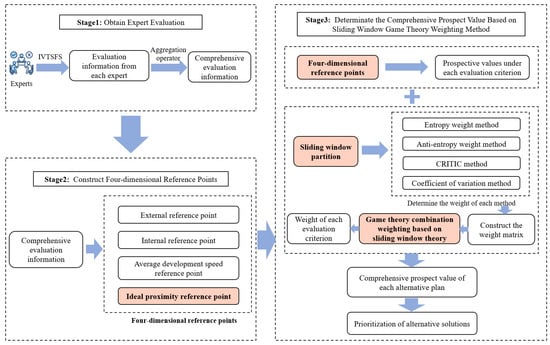
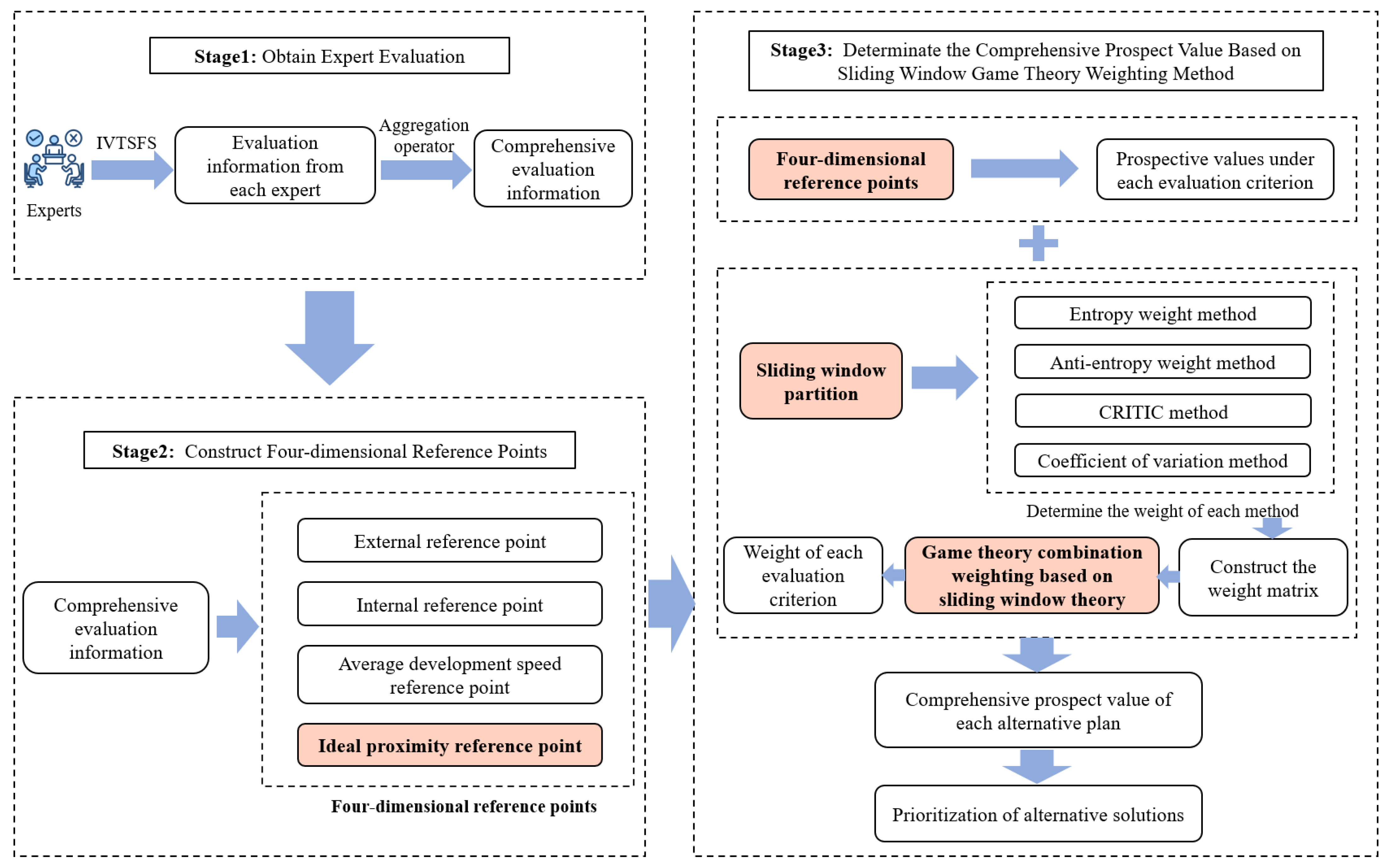
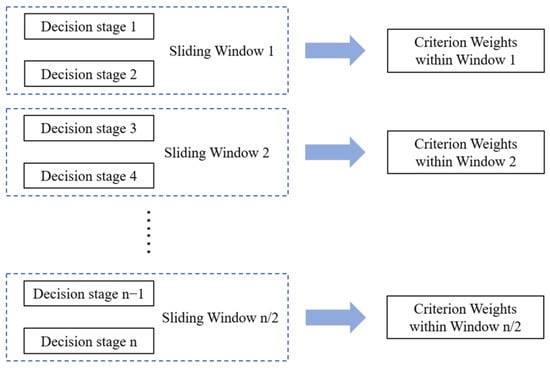
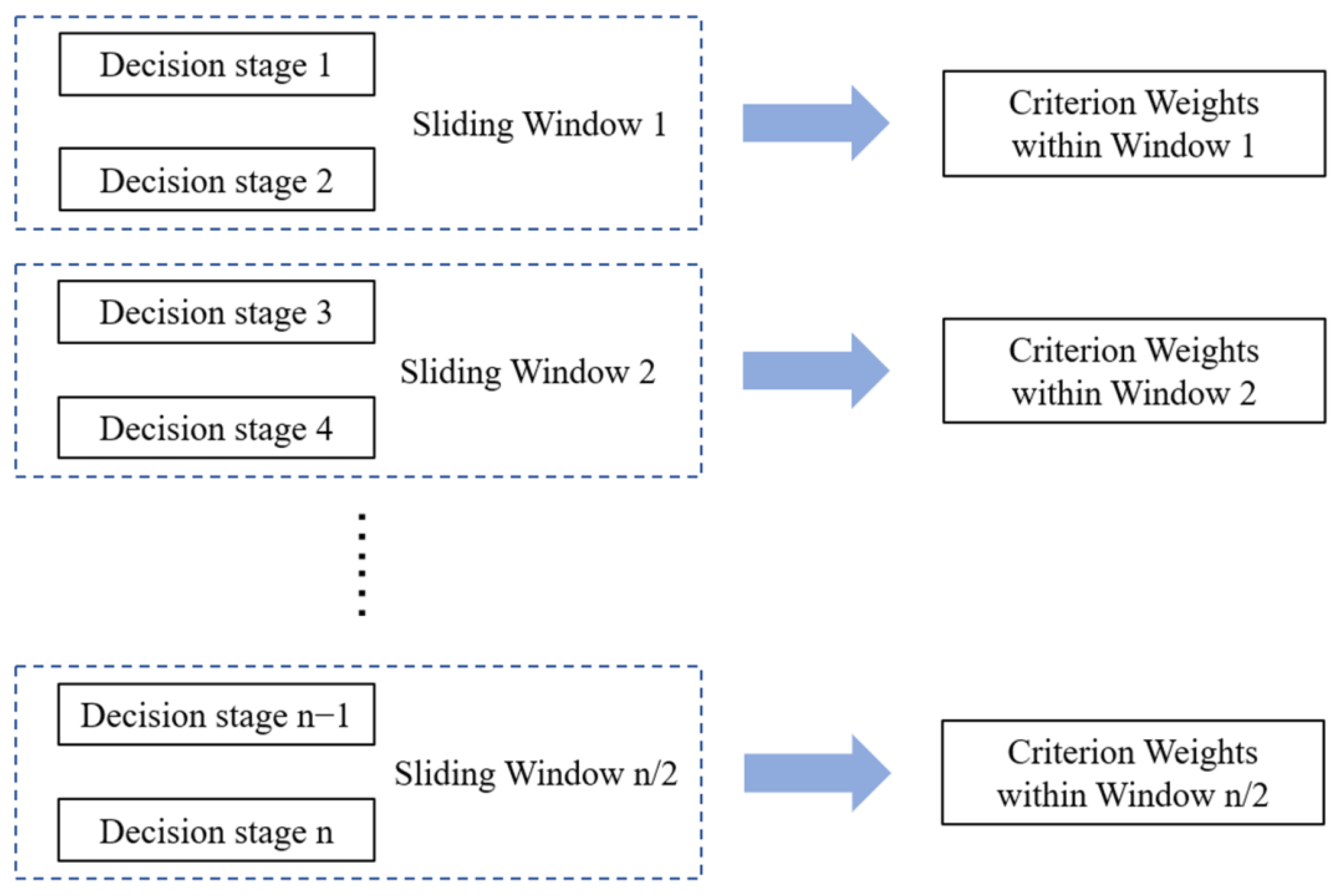
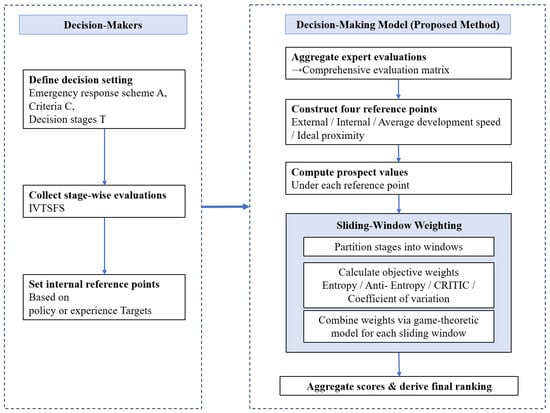
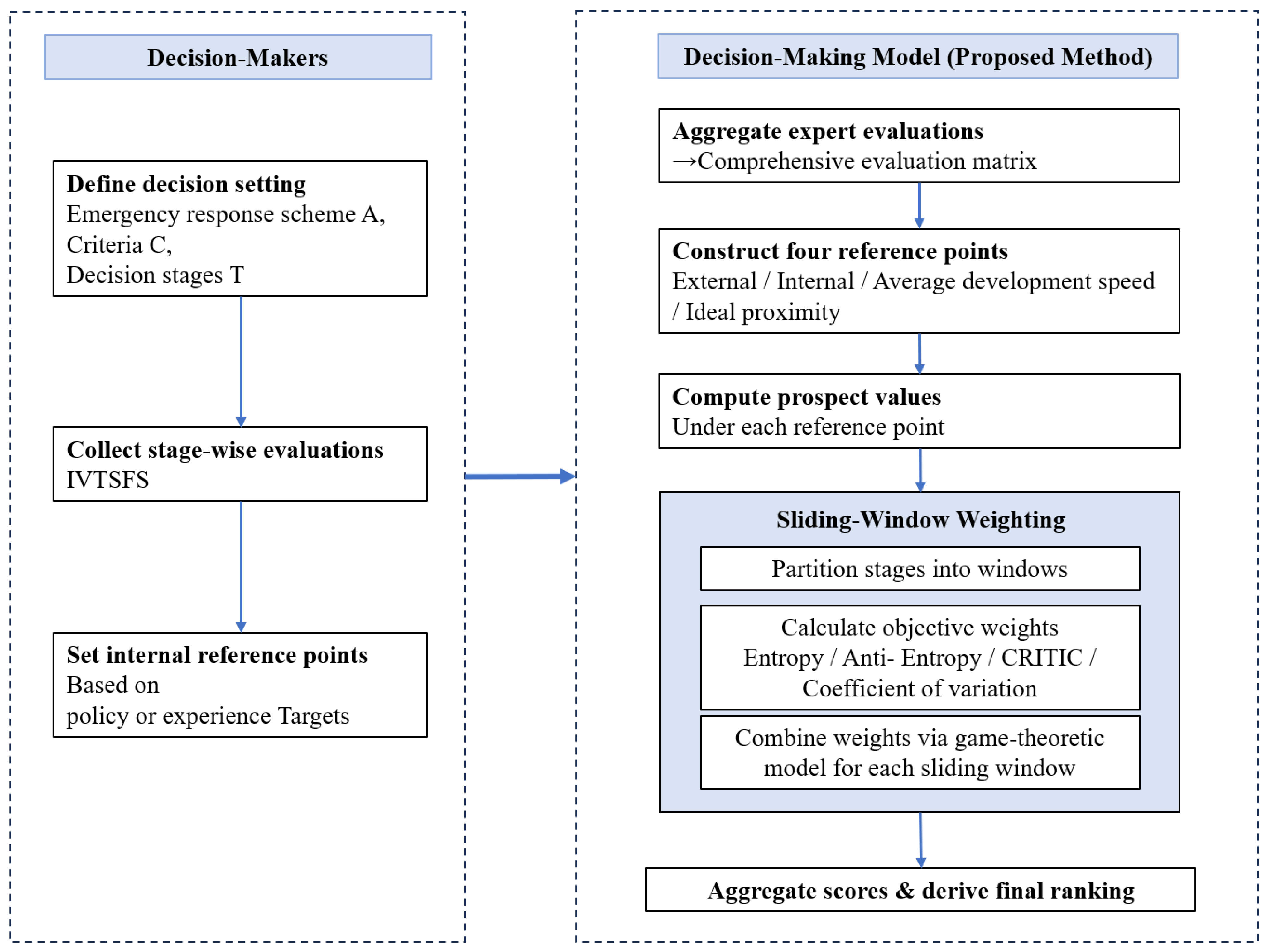

Disclaimer/Publisher’s Note: The statements, opinions and data contained in all publications are solely those of the individual author(s) and contributor(s) and not of MDPI and/or the editor(s). MDPI and/or the editor(s) disclaim responsibility for any injury to people or property resulting from any ideas, methods, instructions or products referred to in the content. |
© 2026 by the authors. Licensee MDPI, Basel, Switzerland. This article is an open access article distributed under the terms and conditions of the Creative Commons Attribution (CC BY) license.