


Abstract
Citrulline (CIT), a natural non-protein amino acid and nitric oxide (NO) precursor, plays a vital role in plant physiological regulation. Its use as an eco-friendly biostimulant aligns with global efforts to reduce dependence on synthetic agrochemicals and strengthen sustainable crop production systems. This study represents the first report investigating the effects of exogenous citrulline (0, 0.5, and 1 mM) as a biostimulant/eustressor in two faba bean (Vicia faba) cultivars (Giza 843 and Sakha 1) and the first report to evaluate the variety and dose-dependent responses to foliar CIT application. The morphological, biochemical, and antioxidant responses were assessed. CIT significantly improved several growth and yield attributes in a cultivar-dependent manner, with Giza 843 performing best at 1 mM and Sakha 1 showing optimal shoot performance at 0.5 mM. CIT increased H2O2 levels, flavonoids, and catalase activity, which modulate the response mechanisms of treated plants of two varieties of faba bean. In contrast to Giza 843, Sakha 1 increased proline and the activities of peroxidase and ascorbate peroxidase, which is parallel with decreasing soluble sugars and proteins in response to CIT application. These results showed that Sakha 1 had more effective defense mechanisms than Giza 843. These findings demonstrate that CIT at an optimal dose is a promising, eco-friendly biostimulant. It may be suitable to integrate into sustainable crop management programs to enhance crop resilience and productivity.
1. Introduction
Faba bean (Vicia faba L.) is a winter legume crop that belongs to the Fabaceae family. Its cultivars exhibit distinct morphological and physiological traits that influence their growth performance and yield potential [1]. In the Middle East and North Africa, increasing faba bean production is considered a strategic agricultural priority in agricultural sectors due to its capability to fix nitrogen, increase soil fertility, improve the cropping system, and help combat climate change [1]. Moreover, the high protein and antioxidant value of faba bean seeds help to meet growing global nutritional demands. Enhancing productivity, therefore, requires selecting cultivars and genotypes with strong agronomic traits and high responsiveness to irrigation and fertilization practices [2,3]. Among the commonly cultivated cultivars in Egypt, Sakha 1 is recognized for its superior stress tolerance and yield stability, while Giza 843 demonstrates moderate resistance to foliar diseases [1,4,5].
Although the application of chemical fertilizers remains the most widely used method for improving plant productivity, it presents significant drawbacks. Overuse of synthetic fertilizers contributes to environmental contamination, poses health risks to humans and animals, and may cause phytotoxic effects in crops. Therefore, developing safer, environmentally friendly, and sustainable alternatives for managing plant productivity is a critical objective in modern agriculture [6]. In terms of sustainable agricultural strategies, increasing attention has been directed toward the use of natural signaling molecules and biostimulants to enhance plant physiological performance, reinforce defense mechanisms, and improve plant tolerance under unfavorable conditions [3]. Exogenous amino acids, such as arginine at 0.25, 0.5, and 1.0 mM [7] and ornithine at 0.3 and 0.6 mM [8], significantly mitigate abiotic stress in crops like wheat and sugar beet by promoting protein synthesis and reinforcing antioxidant defense systems. Amino acids are potentially the next green revolution in agricultural systems. This emphasizes their role as signaling molecules and sustainable inputs [6]. Recently, a few studies focused on the application of citrulline as a biostimulant. However, no studies have compared its effect on the response of different varieties.
Citrulline (CIT) is a non-protein amino acid produced endogenously from the catabolism of arginine or ornithine and plays a crucial role in nitrogen metabolism. CIT is a natural precursor of nitric oxide (NO), a well-established signaling molecule involved in plant growth, NO-stress responses, and redox regulation [9]. Endogenous citrulline plays an important role in stabilizing cellular structures, removing reactive oxygen species (ROS) [10,11,12], maintaining osmotic balance and protecting enzymes and nucleic acids [13,14]. Notably, cucurbit species such as watermelon accumulate high levels of citrulline under stress [15]. This highlights its dual role as both a protective metabolite and a regulatory and eustress molecule in plant defense and resilience.
In this context, non-protein amino acids act as eustressors (positive stressors) that regulate oxidative signaling, such as H2O2/NO, without causing damage [16,17]. This often modulates antioxidant and metabolic processes, thereby enhancing defense mechanisms, growth performance, and stress memory in treated plants. In eustressor applications, optimal dosage is crucial. For example, seed priming with hydrogen peroxide as an eustressor improves pigment, solutes, and ionic balance while minimizing peroxidation effects, leading to metabolic activation and improved growth performance [18]. Additionally, recent studies have shown the effectiveness of external citrulline use under stress conditions in sunflowers (Helianthus annuus). Citrulline at (1, 2, and 3 mM) is a promising metabolic priming agent that boosts plant resilience under salinity stress. CIT application promotes a more balanced hormonal profile, stimulates polyamine accumulation, and helps maintain photosynthetic efficiency. It also enhances osmotic adjustment by increasing key osmolytes such as proline, glycine betaine, and total soluble sugars. Moreover, citrulline improves nutrient uptake while restricting excessive Na+ accumulation, thereby reducing ion toxicity and alleviating osmotic stress [19]. Similarly, another study found that citrulline seed priming at 3 mM effectively mitigated copper toxicity in sunflower plants by increasing enzyme and antioxidant activity, lowering lipid peroxidation, and improving membrane elasticity, thus reducing oxidative damage under abiotic stress [20]. The foliar application of citrulline at 2 mM improves antioxidant activity in hyssop plants exposed to prolonged water stress by increasing antioxidant enzyme activity, enhancing the plant’s ability to scavenge free radicals, and supporting polyphenol accumulation [21].
Despite its potential, the use of exogenous citrulline as a sustainable biostimulant remains largely unexplored. The current study is the first investigation of the foliar application of citrulline on two varieties of faba bean, comparing cultivar-dependent physiological responses and determining the optimal dose for growth performance. Given the economic and ecological importance of faba bean, understanding how CIT application affects its growth, physiological responses, and antioxidant mechanisms could provide new strategies to increase crop productivity in sustainable agricultural systems.
The present study aims to (i) determine whether citrulline improves growth and productivity, (ii) assess whether cultivar-dependent differences influence responsiveness to citrulline, and (iii) elucidate the key physiological responses (photosynthetic pigments, oxidant and antioxidant status, and osmolites) contributing to improved performance. We hypothesize that citrulline modulates antioxidant mechanisms and activates cultivar-specific defense responses, which enhance faba bean performance.
2. Materials and Methods
2.1. Plant Material
Seeds were obtained from the Agricultural Research Center (ARC). Giza 843 cv., developed by ARC, Egypt, originated from individual selection within the cultivar Rebaya 40, bred by the Field Crops Research Institute (FCRI), Faculty of Agriculture, Cairo University. This cultivar is known for its moderate resistance to foliar diseases. In contrast, Sakha 1 cv. was developed from the pedigree Giza 716 × 620/283/85 and is characterized by high resistance to foliar diseases, making it a superior and stable cultivar under Egyptian environmental conditions [1,22]. Giza 843 and Sakha 1 differ in their inherent stress tolerance, making them suitable models for evaluating varietal responses to citrulline.
2.2. Growth Conditions
Seeds were sown into clay pots (40 cm height × 40 cm diameter) filled with 20 kg of homogenized clay soil. Soil physicochemical properties were texture (clay), field capacity 38.0%, EC 0.96 dS m−1, pH 7.95, total N 155.0 ppm, available P 5.50 ppm, available K 265 ppm, CaCO3 0.72%, and organic matter 2.9% (characterized following standard procedures akin to Jackson, 1969 [23]). After emergence, seedlings were thinned to three plants per pot. Plants were irrigated as needed (approximately once weekly) to maintain soil moisture and avoid water limitation. Basal fertilization followed local recommendations: calcium superphosphate (15.5% P2O5) at 6.0 g pot−1 pre-planting; ammonium nitrate (33.5% N) supplying 600 mg N pot−1 at 30 and 60 days after sowing; and potassium sulfate (48–52% K2O) at 2 g pot−1 at 45 days after sowing.
2.3. Experimental Design
The pot experiment was set up in a factorial design (2 × 3), including two faba bean varieties (Giza 843 and Sakha 1) and three citrulline levels (0, 0.5, and 1 mM). For each treatment, six pots were used, with each pot holding three plants. Each pot was considered an individual experimental unit. The six pots for each treatment were divided into two equal groups: three pots for vegetative growth measurements and chemical analyses, and three for yield and related traits. All pots were arranged in a completely randomized design (CRD) to minimize positional bias and reduce systematic spatial errors.
2.4. Treatments and Sampling
Citrulline (CIT) was applied as a foliar spray at 0 (water control), 0.5, and 1 mM to examine its role in enhancing the growth of faba plants. These concentrations were selected based on preliminary tests conducted over 10 days on young seedlings to determine the optimal physiological levels, with different concentrations tested ranging from 0.125, 0.25, 0.5, 1, 2, to 4 mM. Treatments started 40 days after sowing; each cultivar received two foliar applications. The sprays were applied evenly to ensure complete leaf coverage while preventing runoff. Vegetative growth samples were collected 60 days after sowing for growth measurements and biochemical analyses. Yield components were recorded at harvest.
2.5. Biochemical Analyses
All spectrophotometric readings and optical measurements were performed using a VEB spectrophotometer (Carl-Zeiss-Promenade, Jena, Germany). All chemical reagents and analytical-grade materials used in the biochemical assays were obtained from Sigma-Aldrich (Sigma, St. Louis, MO, 63178, USA). All solvents used for extraction, washing, and quantitative determinations were purchased from Aldrich (Munich, Germany) and met standard analytical purity requirements for plant biochemical analyses.
2.5.1. Photosynthetic Pigments
Chlorophyll a, chlorophyll b, and carotenoids were extracted from fresh faba bean leaves with 85% acetone and quantified spectrophotometrically using absorbance at 663, 644, and 452 nm, respectively, following the approach of [24]. Pigment concentrations were calculated using standard equations and expressed as mg g−1 FW.
2.5.2. Total Soluble Sugars
Total soluble sugars were determined in ethanolic extracts (from dried leaf tissue) using the anthrone colorimetric method [25]. After reacting with the anthrone reagent in concentrated sulfuric acid and heating in a water bath, the absorbance was measured at 625 nm. Results were expressed as mg g−1 DW (glucose equivalents).
2.5.3. Free Proline
Free proline was measured following the method in [26]. Fresh leaf tissue was extracted with 3% sulfosalicylic acid; the extract was reacted with acid ninhydrin and glacial acetic acid (2 mL for each), incubated at 100 °C for 1 h, and proline was extracted into toluene (4 mL). Absorbance was measured at 520 nm, along with proline content (µmol g−1 FW) (proline equivalents).
2.5.4. Total Phenolics and Flavonoids
Total phenolics were estimated by the Folin–Ciocalteu assay, following the outline described by [27]. After reaction with Folin–Ciocalteu reagent and Na2CO3, absorbance was recorded at 650 nm. Data was expressed as (mg g−1 FW) based on the extraction used. The NaNO2–AlCl3 colorimetric method, Adom and Liu (2002) [28], was used for estimating total flavonoids. Following sequential addition of NaNO2 and AlCl3, absorbance was recorded at 510 nm. Values were expressed as catechin equivalents per gram.
2.5.5. Total Soluble Protein
TSP was determined using the Lowry method [29] with bovine serum albumin (BSA) as the standard. Absorbance was read at 650 nm, and results were expressed as mg g−1 FW.
2.5.6. Hydrogen Peroxide (H2O2)
Leaf H2O2 content was determined spectrophotometrically using the method described [30]. After extraction and reaction, absorbance was measured at 390 nm, and H2O2 was expressed as nmol g−1 FW.
2.5.7. Antioxidant Enzyme Activities
Enzymes were extracted from fresh faba bean leaves in a cold phosphate buffer (pH ~7.0) following the method in [31], with all steps performed at 4 °C to preserve activity. Enzyme activities were assayed immediately.
Catalase activity was measured by monitoring the decline in H2O2 absorbance at ~250 nm (phosphate buffer and defined H2O2 substrate, as described by [32]. Results were expressed as U g−1 FW, where one unit corresponds to the activity specified by the assay definition used in our lab (decomposition of H2O2 under the stated conditions).
Ascorbate peroxidase was determined by following the decline in ascorbate at 290 nm in a reaction mixture containing ascorbate (0.5 mM) and H2O2 (1.0 mM) in 50 mM potassium phosphate buffer (pH 7.0) [33]. Activity was expressed as U g−1 FW.
Peroxidase activity was assayed using pyrogallol as the donor substrate in the presence of H2O2, recording the increase in absorbance at 470 nm over 60 s, following the method in [34]. Activity was expressed as U g−1 FW.
2.6. Statistical Analysis
The experiment followed a completely randomized design with a factorial arrangement (2 cultivars × 3 CIT levels). Data were checked for normality and homogeneity of variances using Shapiro–Wilk’s and Levene’s Median tests before analysis. A two-way ANOVA was performed to test the effects of cultivar (V), citrulline level (T), and their interaction (V × T). DMRT at p < 0.05 was done for multiple comparisons in agricultural experiments. Statistical analyses were conducted using CoStat version 6.4 (CoHort Software, Monterey, CA, USA). Results are presented as mean ± SE. Principal component analysis (PCA) and Pearson correlation analysis were created using the online platform SRplot (Bioinformatics.com.cn, Shanghai, China)
3. Results
3.1. Growth Criteria
Plant growth is affected by external and endogenous agents. All are essential indicators for measuring crop productivity. The results in Table 1 reveal the physiological responses of the tested faba bean (Vicia faba) varieties to foliar application of CIT. The application of CIT resulted in significant variations (p < 0.05) in the majority of morphological traits of faba bean (Giza 843 and Sakha 1) varieties in comparison to the control plants (Table 1). Interestingly, the results for CIT-sprayed plants vary with the applied concentration. In Giza 843, a high concentration proved more effective than a low concentration in terms of boosting plant development (Table 1). Exogenous 1 mM CIT increased plant height, shoot fresh weight, shoot dry weight, root length, root fresh weight, and root dry weight compared to the controls.
Table 1.
Response of growth parameters of faba bean varieties (Giza 843 and Sakha 1) to foliar application of citrulline. Mean values followed by different letters in the column are significantly different (p < 0.05).
On the other hand, Sakha 1 faba beans respond differently at different concentrations. A low level (0.5 mM CIT) was more effective than a high level for enhancing shoot growth. Exogenous 0.5 mM CIT increased shoot growth parameters (shoot length, number of leaves, shoot fresh weight, and shoot dry weight) compared to the controls. However, the exogenous level (1 mM CIT) was more efficient for boosting root system and root length (RL), root fresh weight, and root dry weight. These results highlight that Giza 843 benefits most from a higher CIT concentration, while Sakha 1 responds better at moderate levels for shoot growth but requires a higher concentration for root development.
3.2. Yield Attributes
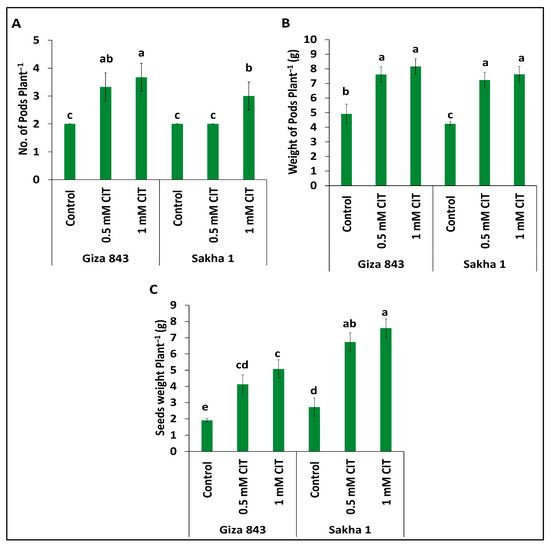
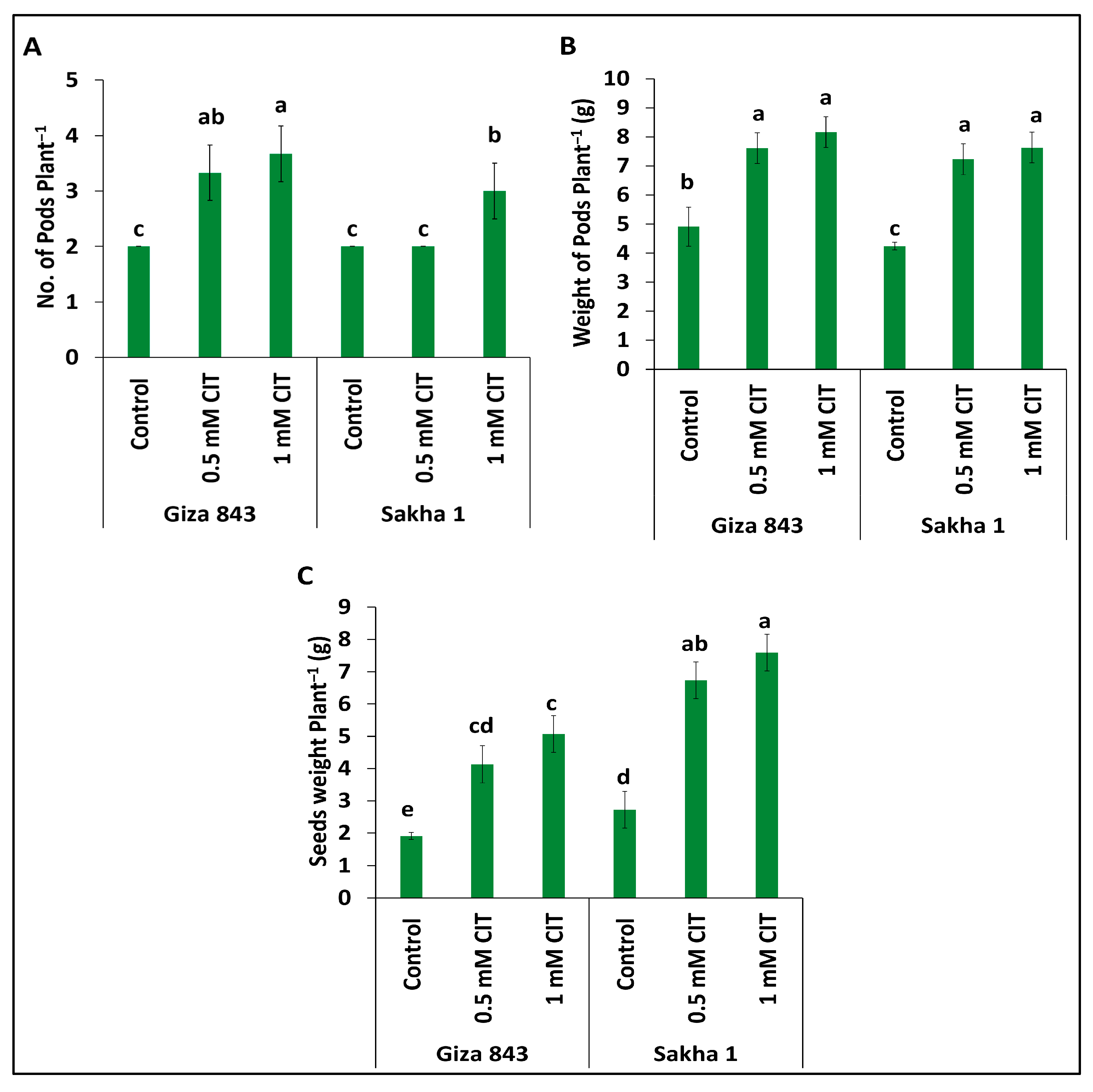
The results revealed no significant difference among the tested varieties, but there was a difference in the number of pods per plant. The exogenous CIT affects the harvest traits of faba bean plants, which is due to morphological and metabolic characteristics during the vegetative period. Figure 1A–C indicates that CIT had significant and positive impacts (p < 0.05) on yield traits, including the number of pods per plant, the weight of pods per plant, and the seed weight per plant in Giza 843 and Sakha 1 varieties in comparison with the control plants. The responses of faba bean varieties depended on the CIT level used. In Giza 843 and Sakha 1, the higher CIT level is superior to the lower one. These results showed that at the harvest stage, the response of Sakha 1 is similar to that of the Giza 843 variety after the applied CIT treatment.
Figure 1.
Changes in yield attributes: number of pods plant−1 (A), weight of pods plant−1 (B), and seed weight plant−1 (C) of faba bean varieties (Giza 843 and Sakha 1) in response to foliar application of citrulline. Bars represent the mean ± standard error. Different letters indicate significant differences according to DMRT, and p < 0.05.
In Giza 843, 1 mM CIT resulted in the highest increases when compared to the other treatments (Figure 1). The highest values were 83.5, 66.2, and 165.4%, respectively, for the number of pods plant−1, the weight of pods plant−1, and the weight of seeds plant−1, compared to the control values.
Interestingly, faba bean plants of the Sakha 1 variety showed an unexpected yield. Meanwhile, the higher CIT level had a lower effect on shoot growth during the vegetative stage. The highest pod weight per plant and seed weight per plant were obtained at 1 mM (high concentration), reaching 50, 80, and 179%, respectively, compared to the corresponding controls. This was followed by the results obtained at the 0.5 mM CIT level, which showed no change in the number of pods plant−1, but increased the pods weight plant−1, and the seeds’ weight plant−1, which reached 70.5 and 147.4%, respectively, over the controls.
3.3. Photosynthetic Pigments
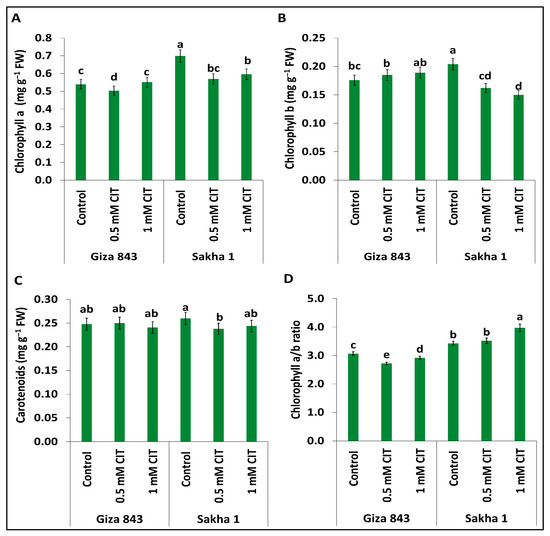
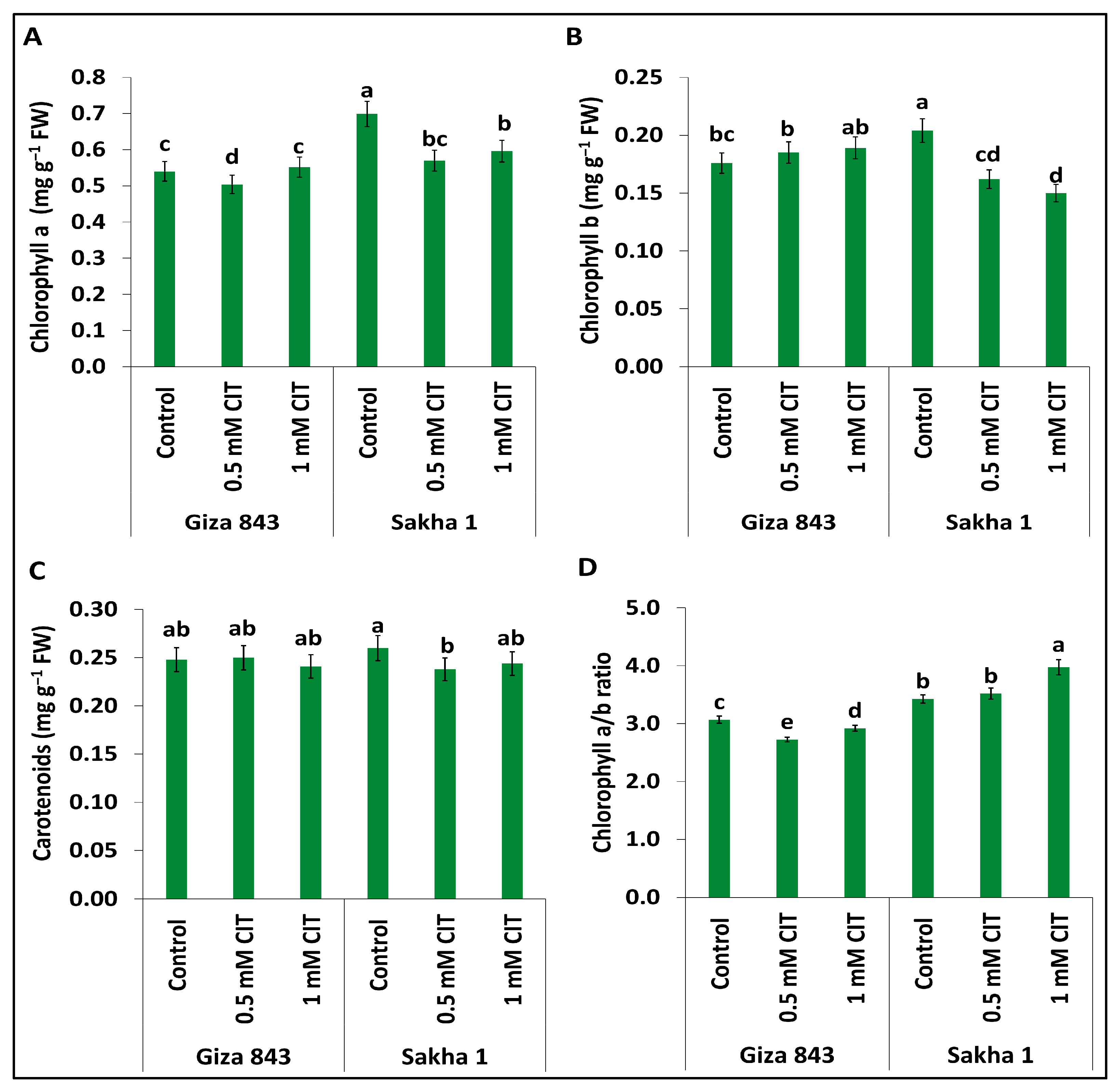
Plants require photosynthetic pigments to absorb energy and produce sugars. The data in Figure 2A–D reveal that control plants of the Sakha 1 var. contain higher chlorophyll “a” and “b” levels than those of Giza 843, and this is associated with no significant variation in carotenoids. Furthermore, the effects of CIT treatment on photosynthetic pigments were assessed in the evaluated faba bean cultivars.
Figure 2.
Changes in photosynthetic pigments: chlorophyll a (A), chlorophyll b (B), and carotenoids (C), as well as the chlorophyll a/b ratio (D) in faba bean varieties (Giza 843 and Sakha 1) in response to foliar application of citrulline. Bars represent the mean ± standard error. Different letters indicate significant differences, according to DMRT, and p < 0.05.
Chlorophyll a, chlorophyll b, and carotenoids remain largely unchanged in the Giza 843 variety, especially after treatment with 1 mM CIT. Meanwhile, the 0.5 mM and 1 mM CIT levels reduced chlorophyll a (Figure 2A) and chlorophyll b (Figure 2B) in Sakha 1. CIT at 1 mM significantly decreased carotenoids in both cultivars (Figure 2C). This indicates that Giza 843 maintains pigment stability under 1 mM CIT, whereas Sakha 1 shows decreased chlorophylls in response to CIT at both concentrations but preserves carotenoids at 0.5 mM.
Regarding the chl a/chl b ratio, Giza 843 responds negatively to both CIT concentrations. Sakha 1 shows a positive, cultivar-dependent response, with the chl a/chl b ratio being stable at 1 mM. This indicates differences between varieties: Giza 843 may be more sensitive to CIT, while Sakha 1 benefits from it.
3.4. Total Soluble Sugars (TSS)
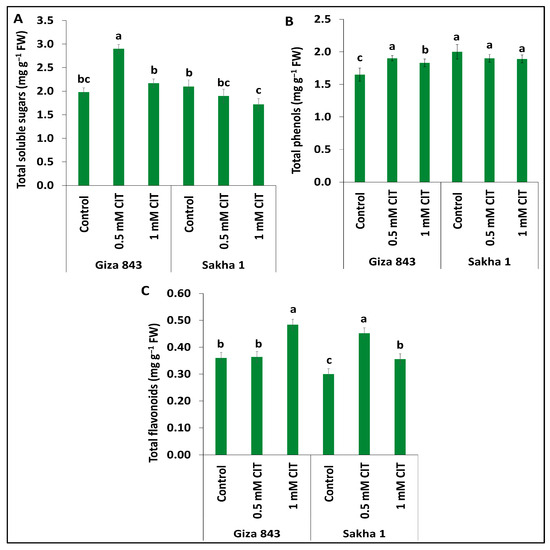
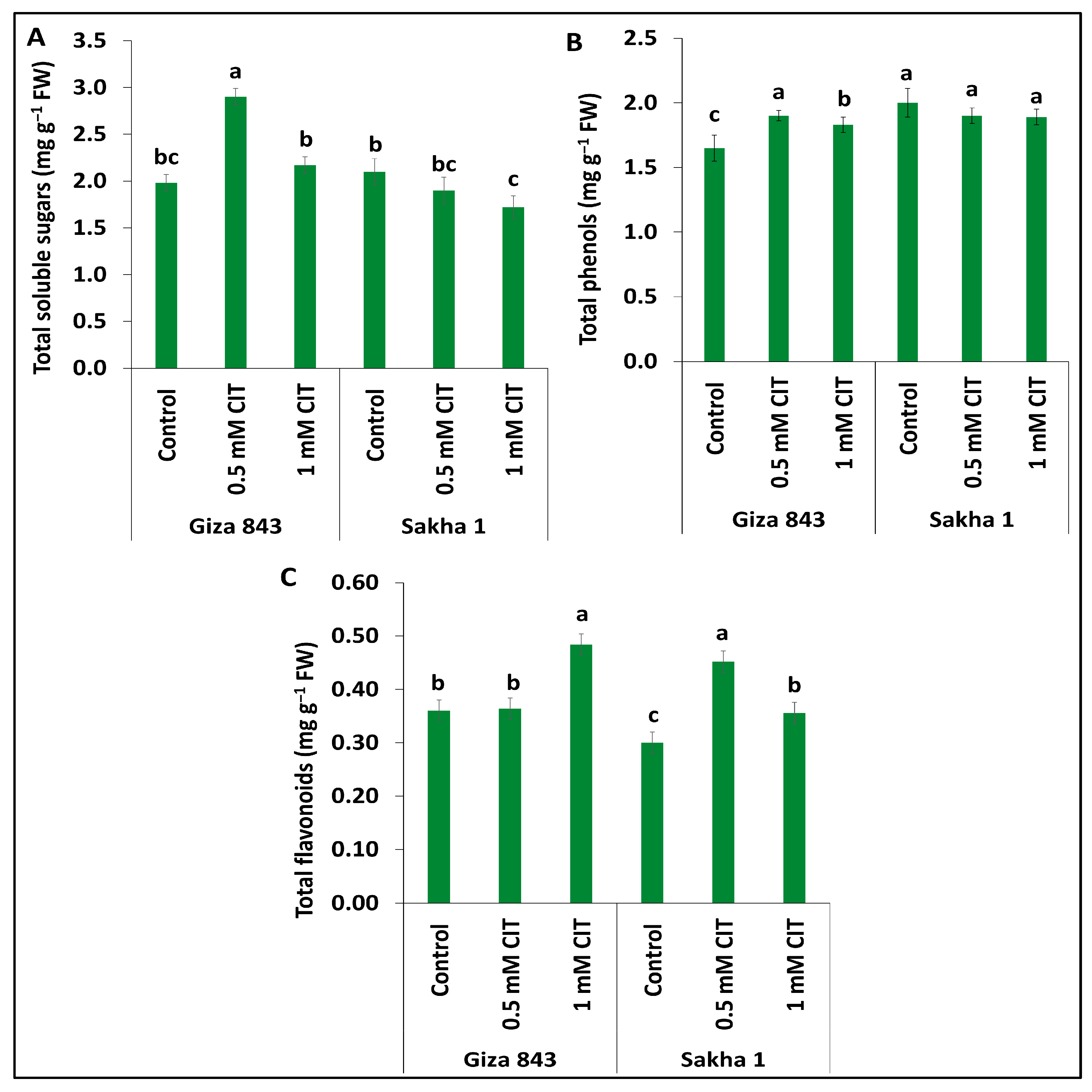
Sugars regulate osmotic pressure and act as protoplasmic defense mechanisms. TSS levels varied significantly between the control plants of the two varieties (Giza 843 and Sakha 1). Surprisingly, the faba bean varieties showed different responses to CIT concentration. The results (Figure 3A) indicated that applying exogenous 0.5 mM CIT to faba beans (Giza 843) had no significant effect. Meanwhile, a higher concentration (1 mM CIT) increased TSS content by 46.6% compared to the control. In contrast, for Sakha 1, CIT at both levels decreased the TSS content compared to the controls.
Figure 3.
Changes in total sugars (A), total phenols (B), and total flavonoids (C) in faba bean varieties (Giza 843 and Sakha 1) in response to foliar application of citrulline. Bars represent the mean ± standard error. Different letters indicate significant differences according to DMRT, and p < 0.05.
3.5. Total Soluble Phenols
Plants’ defense responses to oxidative stress rely on phenolic acids, which absorb and neutralize reactive oxygen species. In untreated plants, total phenols significantly differ between the varieties. The results demonstrated that Sakha 1 has higher phenol content than Giza843. Faba bean varieties respond differently to foliar application of CIT. The data in Figure 3B showed that 0.5 mM CIT caused a significant increase in phenols in Giza 843. On the other hand, CIT showed no significant differences in terms of the total soluble phenols content in Sakha 1 compared to the control plants.
3.6. Total Flavonoids
Flavonoids possess antioxidant properties in the metabolic processes. The total flavonoids in control cultivars varied significantly. Interestingly, the faba bean types (Giza 843 and Sakha 1) largely responded to the CIT concentration used. Data (Figure 3C) indicated that CIT caused a significant increase (p < 0.05) in the total flavonoids only at 1 mM, up to 34.4% in Giza 843, while Sakha 1 treated with 0.5 mM and 1.0 mM CIT significantly accumulated total flavonoids. The highest increment reached 50.7% in 0.5 mM CIT-treated plants compared to the corresponding control.
3.7. Proline (Pro)
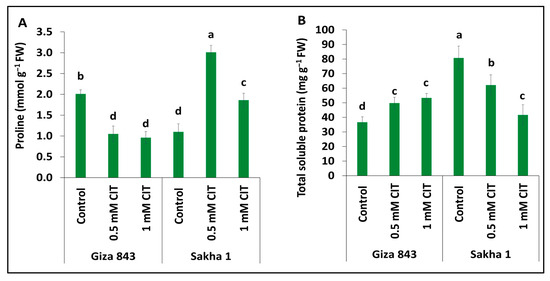
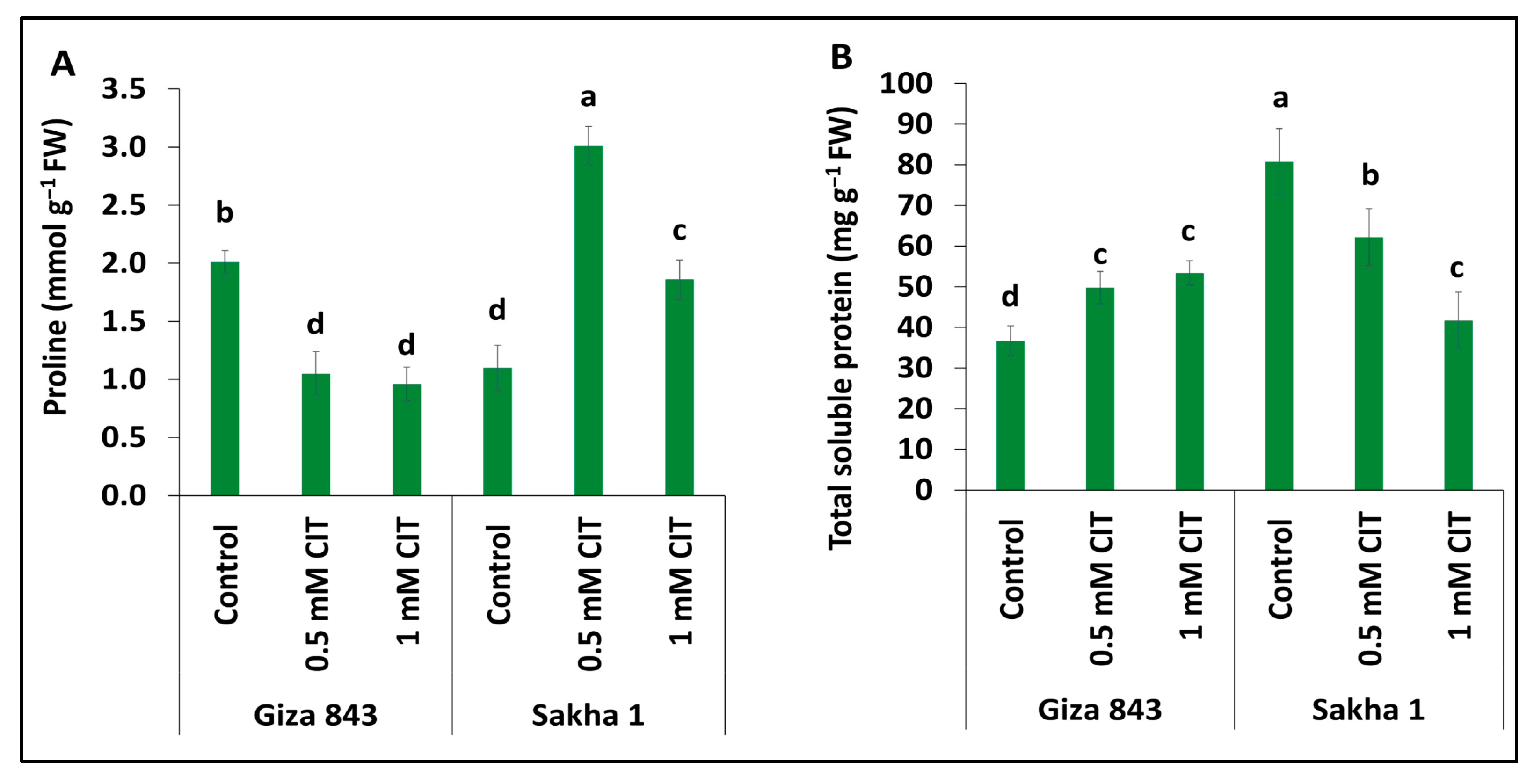
The results reveal significant variations in proline between the control plants of two varieties. Moreover, faba bean varieties responded differently to CIT. It is worth noting that proline levels gradually decreased in CIT-treated Giza 843 plants (Figure 4A), reaching 52.2%. Moreover, proline accumulated by 137.6% in CIT-treated Sakha 1 plants compared to the corresponding controls. The proline accumulation in CIT-treated faba bean plants is variety-dependent; in contrast to Giza 843, Sakha 1 enhances proline synthesis as its primary defense.
Figure 4.
Changes in proline (A) and soluble protein (B) levels in faba bean varieties (Giza 843 and Sakha 1) in response to foliar application of citrulline. Bars represent the mean ± standard error. Different letters indicate significant differences according to DMRT, and p < 0.05.
3.8. Total Soluble Protein (TSP)
Data in Figure 4B exhibited the fact that the control Sakha 1 plants have higher soluble protein content than that of Giza 843. The applied CIT concentrations cause different responses in two faba bean varieties. Both CIT levels equally increased TSP in Giza 843 plants compared to the control value. Foliar application of 1 mM CIT achieved a higher increase in TSP, represented by 45.5%. In contrast, CIT treatments caused a gradual reduction in TSP concentration in Sakha 1 faba bean plants. The decrease reached 48.4% compared to the corresponding controls.
Interestingly, while Sakha 1 accumulates proline (↑), Giza 843 enhances total soluble proteins (↑), reflecting divergent physiological strategies between the two varieties.
3.9. Antioxidant Enzymes
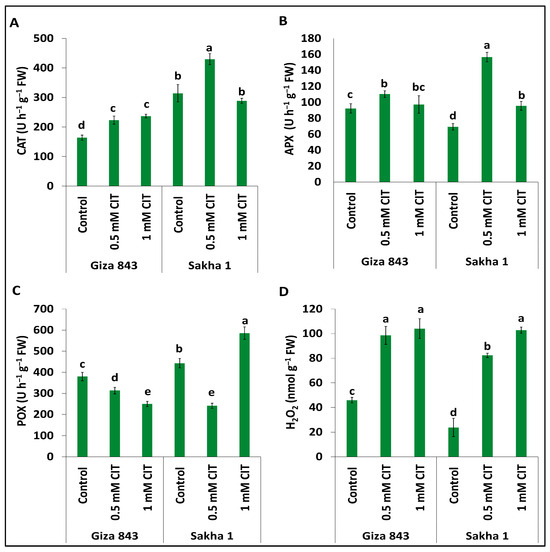
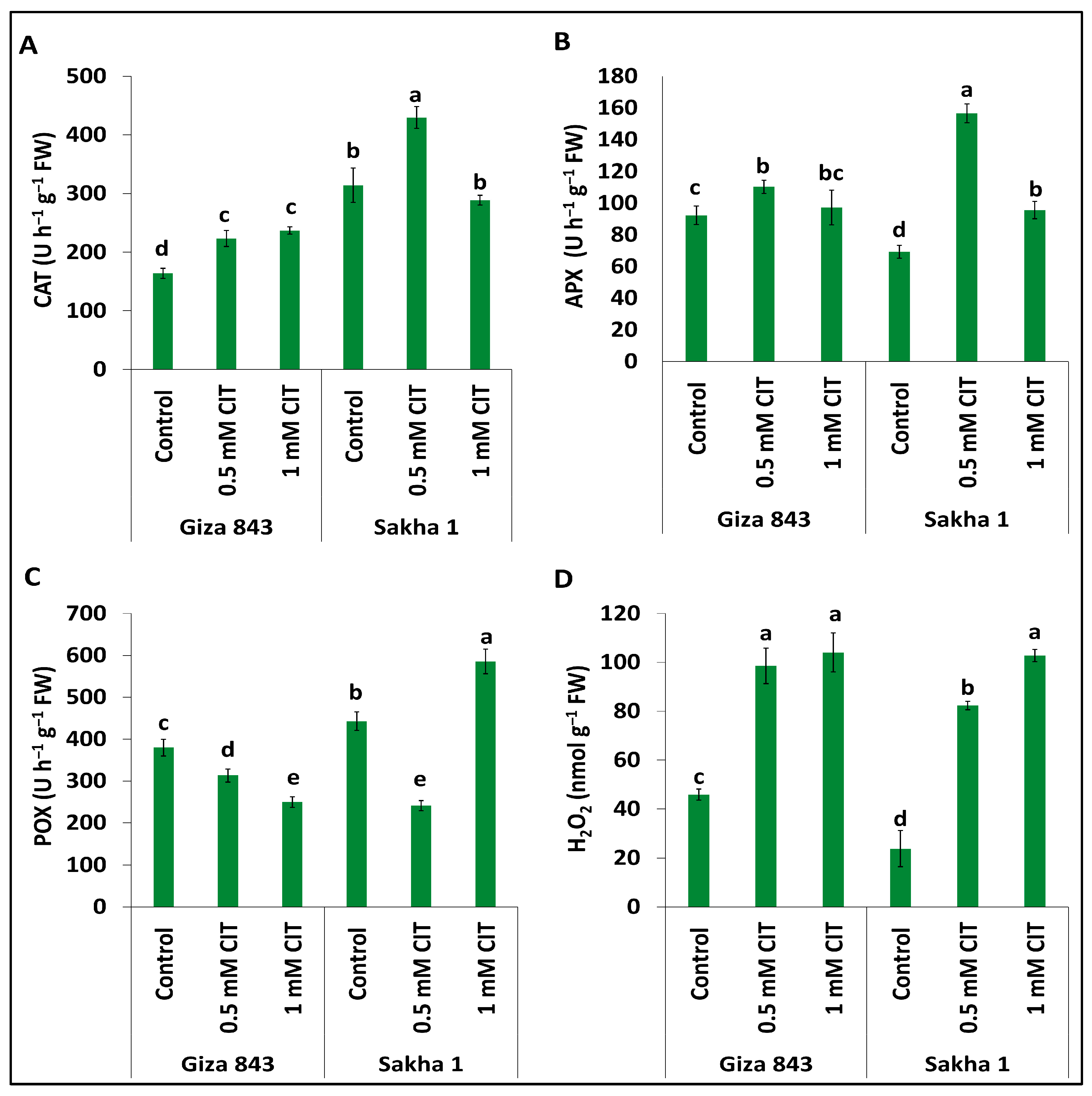
Under normal conditions, faba bean “Giza 843” has lower peroxidase and catalase activity than that of “Sakha 1”. On the other hand, the “Sakha 1” variety shows less activity in terms of the ascorbate peroxidase enzyme than “Giza 843”. Moreover, CIT application markedly changed the antioxidant enzyme activities (Figure 5A–C) in two faba bean varieties.
Figure 5.
Changes in the activities of catalase (A), ascorbate peroxidase (B), peroxidase (C), and hydrogen peroxide (D) in faba bean varieties (Giza 843 and Sakha 1) in response to foliar application of citrulline. Bars represent the mean ± standard error. Different letters indicate significant differences according to DMRT, and p < 0.05.
In Giza 843, CIT at both levels markedly catalyzed catalase enzyme by 44.6% compared to the control (Figure 5A). Meanwhile, in Sakha 1, the application of 1 mM CIT resulted in no change. CIT at 0.5 mM increased catalase activity, reaching 36.8% compared to controls.
At the same time, in Giza 843, 0.5 mM CIT significantly enhanced the activity of ascorbate peroxidase (APX) by 19.5% (Figure 5B). Concerning Sakha 1, 0.5 mM CIT significantly increased the activity of (APX), the increments being up to 126% in comparison to those for the control (Figure 5B).
Regarding peroxidase, CIT at two levels markedly decreases the peroxidase activity in “Giza 843” plants, by 17.5% and 34.3%, compared to the control (Figure 5C). Interestingly, Sakha 1 showed different responses; 0.5 mM CIT significantly decreased POX activity by 45.6%. However, 1 mM CIT increased POX enzyme activity by 32.2% compared to the corresponding control. These findings suggest Giza 843 strengthened catalase-driven ROS detoxification, while Sakha 1 relies on flexible peroxidase.
3.10. Hydrogen Peroxide
The obtained results (Figure 5D) revealed significant differences in hydrogen peroxide levels between the varieties in untreated plants. Giza 843 had higher H2O2 content than Sakha 1. The faba bean varieties mainly displayed a similar pattern in response to CIT. Accumulation of H2O2 causes oxidative stress and subsequently damages cellular membranes through lipid peroxidation. The results showed that faba bean plants (Giza 843 and Sakha 1) sprayed with CIT (0.5 and 1 mM) had significantly increased H2O2 levels compared to control values. The excess H2O2 became more evident with increasing CIT concentrations. Additionally, exogenous CIT increased H2O2 levels by up to 126.5% in Giza 843 and accelerated H2O2 overproduction up to 332% in Sakha 1.
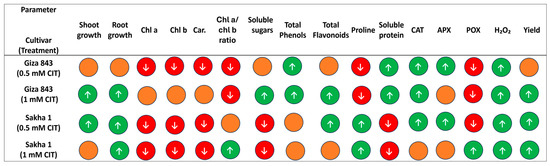
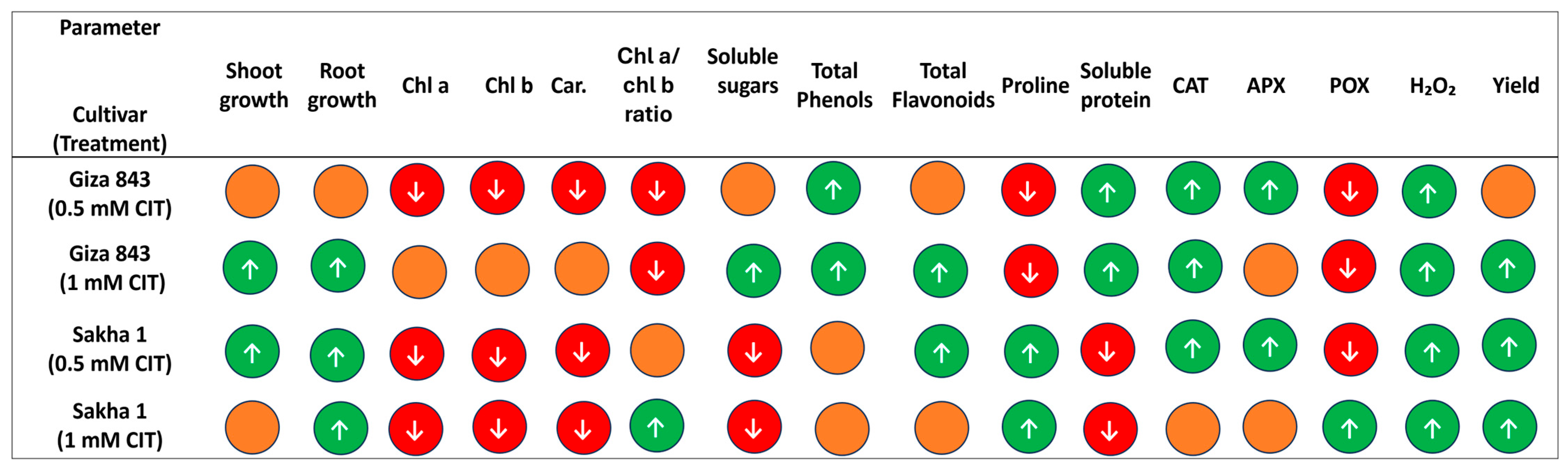
Overall, Figure 6 summarizes the trends of physiological parameters across both cultivars and CIT treatments. This visual scoring approach showed that Giza 843 responds most strongly to CIT at 1 mM, increasing sugars, proteins, catalase, and yield attributes. On the other hand, Sakha 1 showed different cultivar responses depending on proline accumulation, APX and POX activation, and changes in root parameters at 0.5 mM and 1 mM CIT concentrations. These results confirmed the cultivar-dependent effects of citrulline.
Figure 6.
Summary of cultivar-dependent responses of Giza 843 and Sakha 1 to foliar application of CIT. Note: green circle contains ↑ = significant increase; empty orange circle = no significant change; and red circle contains ↓ = significant decrease.
3.11. Integrated Multivariate Analysis of Variety-Specific Responses to Citrulline in Faba Beans
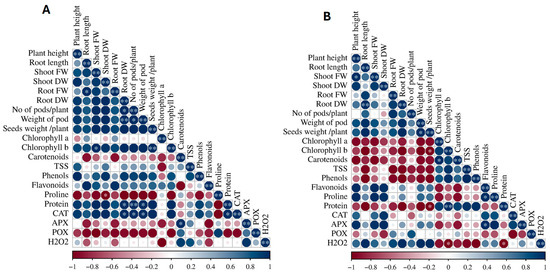
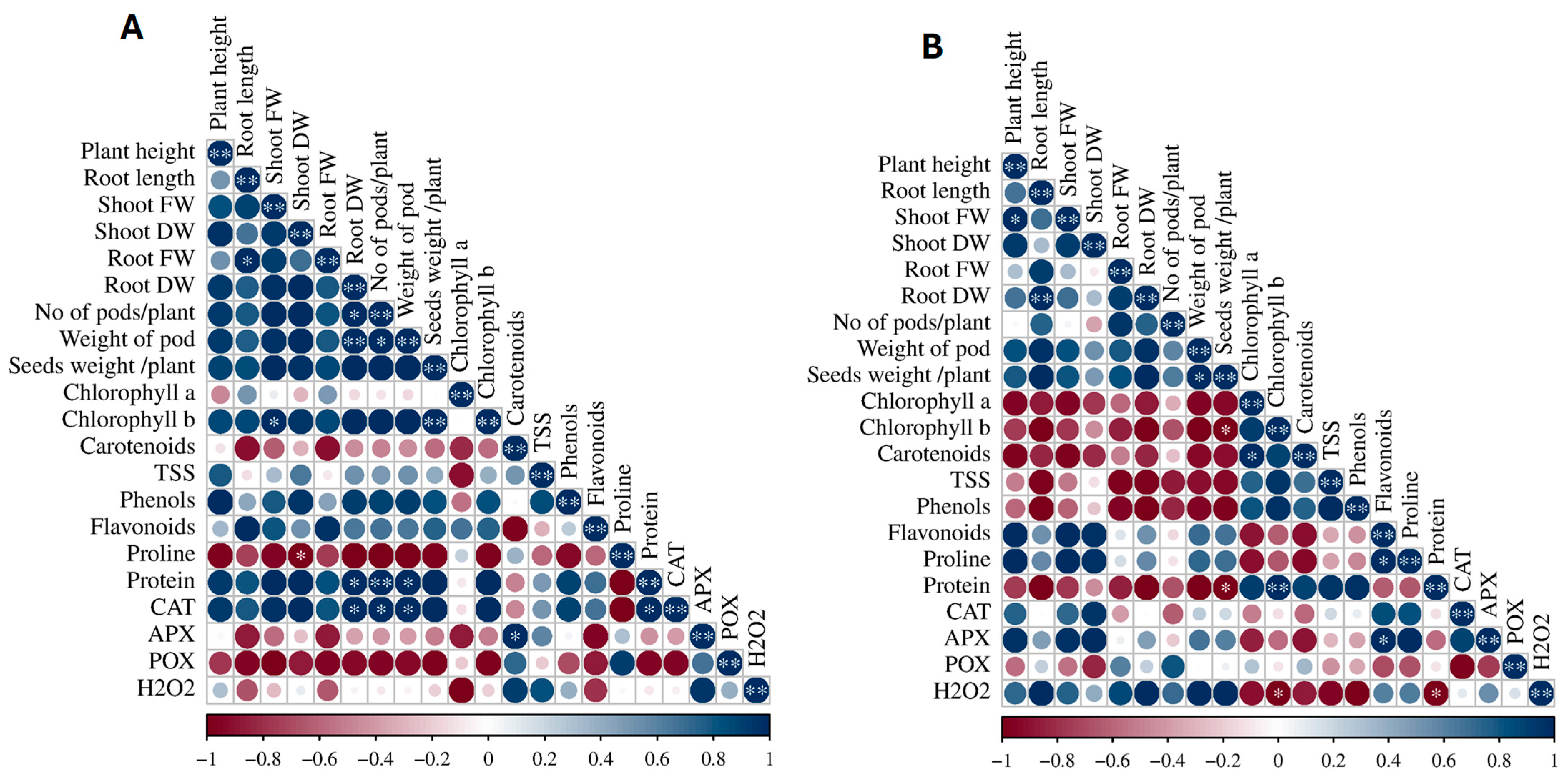
Pearson correlation analysis for the faba bean varieties (Figure 7) revealed complex interrelationships among the evaluated growth, yield, and biochemical parameters of faba beans in response to citrulline application. The analysis showed positive correlations among biomass-related parameters; for instance, shoot F.W was positively correlated with shoot D.W, root F.W, and root D.W in both varieties Giza 843 (Figure 7A) and Sakha 1 (Figure 7B). Yield components, including the number of pods per plant, pod weight, and seed weight per plant, also exhibited positive correlations with key vegetative growth parameters.
Figure 7.
Pearson correlation analysis of different parameters of faba bean varieties [Giza 843 (A) and Sakha 1 (B)] in response to foliar application of citrulline. Significant correlation displayed by (* at p < 0.05 and ** at p < 0.01).
Regarding the biochemical profile, photosynthetic pigments (chlorophyll a, chlorophyll b, and carotenoids) displayed different correlations. For Giza 843, chlorophyll a showed no statistically significant correlation with growth and yield parameters, whereas chlorophyll b showed significant results. On the contrary, chlorophyll a showed a negative correlation with growth and yield parameters in the Sakha 1 variety. Carotenoids were negatively correlated with most parameters except for APX, POX, and H2O2 in Giza 843 and chlorophylls in Sakha 1. Furthermore, chlorophyll b was positively correlated with non-enzymatic antioxidants, including total phenolics (in both varieties) and flavonoids (in Giza 843). The enzymatic antioxidants (CAT, APX, and POX) showed negative correlations among themselves in Giza 843. However, in Sakha 1, CAT correlated positively with APX, proline, and flavonoid content. Oxidative stress markers, particularly H2O2, showed negative correlations with flavonoid levels in Giza 843 and with phenolic compounds in Sakha 1, indicating that higher oxidative stress was associated with lower antioxidant metabolite accumulation in each genotype. The data also indicated that higher antioxidant enzyme activities (CAT) and protein content were associated with improved yield parameters, including the number of pods and the weight of a pod in the Giza 843 variety.
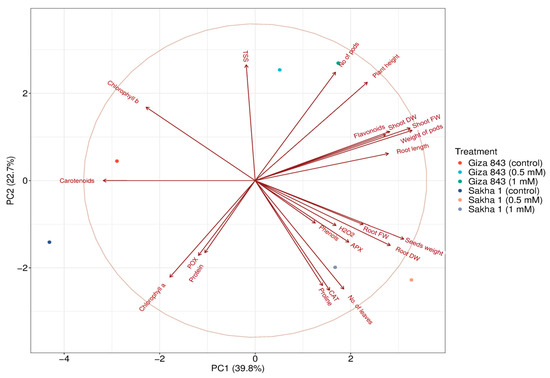
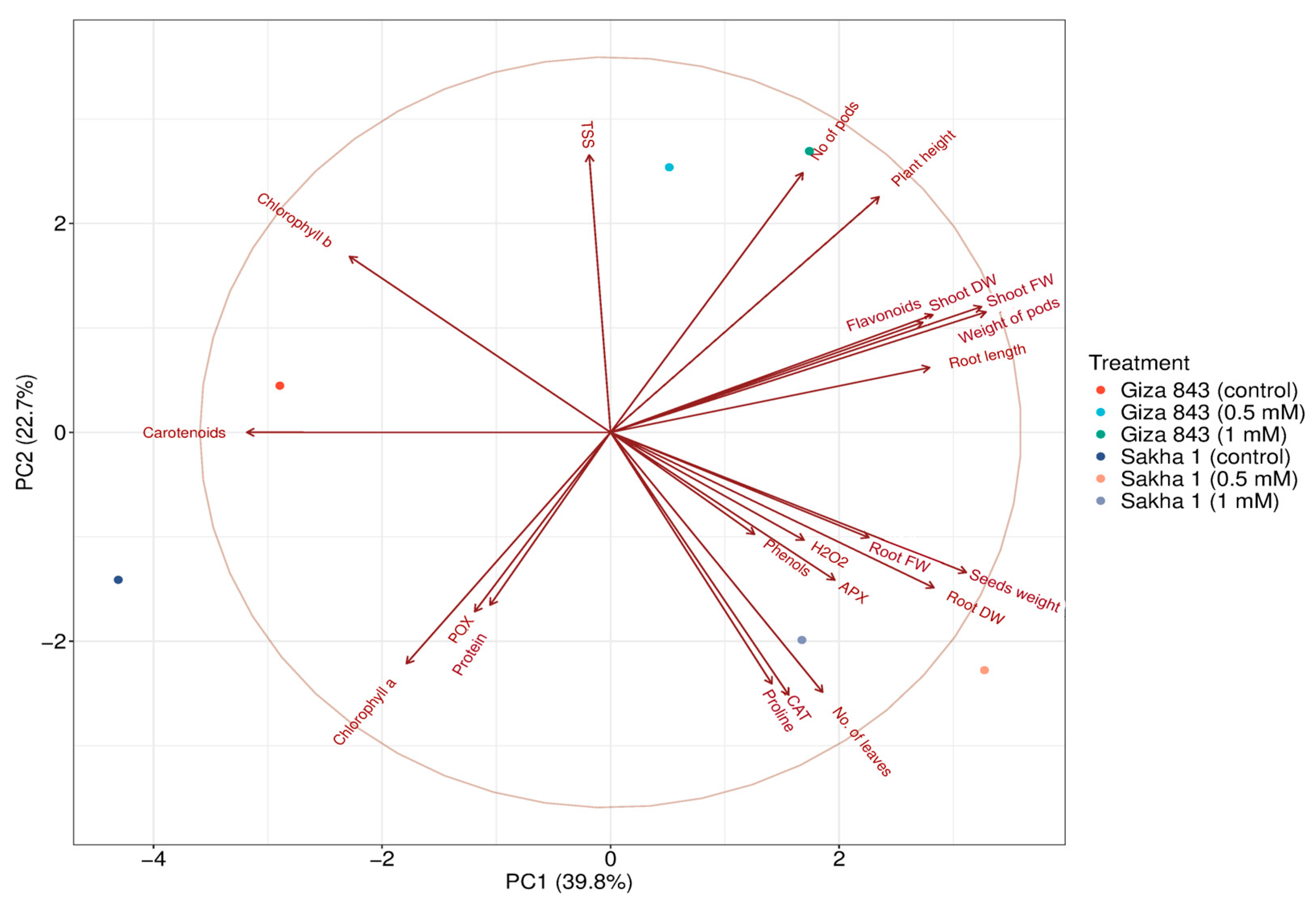
Principal component analysis (PCA) was performed to visualize the overall response patterns of the two faba bean varieties to different concentrations of citrulline (Figure 8). The first two principal components (PC1 and PC2) accounted for a cumulative 62.5% of the total variance, with PC1 contributing 39.8% and PC2 contributing 22.7%. The biplot revealed distinct clustering patterns based on both variety and treatment concentration. The Giza 843 samples across all treatments (control, 0.5, and 1 mM citrulline) formed a separate cluster, distinctly positioned from the Sakha 1 samples, indicating inherent metabolic and physiological differences between the two varieties. Regarding treatment efficacy, the 1 mM citrulline concentration appeared to be the most effective treatment for both varieties as it was associated with enhanced biochemical and yield-related parameters. For Giza 843, the 1 mM treatment showed stronger associations with the number of pods per plant and growth parameters. For Sakha 1, the 1 mM citrulline treatment was closely linked to improved enzymatic antioxidant activities (CAT, APX, and POX), higher protein content, and enhanced yield parameters and root biomass. The clustering of some traits in the same direction on the PCA biplot indicates a very strong positive correlation among them, suggesting that they respond similarly to citrulline foliar application and collectively contribute to the separation of the two faba bean varieties along the principal components.
Figure 8.
Principal component analysis (PCA) of different parameters of faba bean varieties (Giza 843 and Sakha 1) in response to foliar application of citrulline at 0 (control), 0.5, and 1 mM.
4. Discussion
Physicochemical and morphological criteria can be used to determine stress tolerance and sensitivity in the Vicia fabe crop [4]. The performance of different plants becomes the main objective as an efficient solution to overcome the challenge of food security. Plant growth regulators and biostimulants have become alternative sources for improving plant growth and crop productivity.
Citrulline (CIT) is a signal non-protein amino acid and a precursor of nitric oxide (NO). It is a gaseous signaling molecule that plays a significant role in enhancing plant growth and productivity. The role of CIT depends on the application strategy, the concentrations, and the plant responses [14,19,20]. The current research provides the first comparative responses between tolerant and moderately sensitive faba bean cultivars to foliar application of citrulline. Moreover, the study highlights distinct responses and determines the optimal dose for plants.
The cultivars showed growth responses that were dependent on CIT application. CIT at 1 mM significantly increased growth metrics in faba bean (Giza 843). However, the plants of the Sakha 1 variety showed better performance at 0.5 mM. These results agreed with previous studies on sunflowers [19,20]. Moreover, applied CIT protects and stabilizes the membranes of cellular organelles and scavenges oxidants and free radicals better than glycine betaine or proline [10,15]. They stated that CIT enhances photosystem II, photosynthetic pigments, and nutrient uptake, ultimately improving the growth and productivity.
The results for the Giza 843 faba bean plants showed no significant changes in photosynthetic pigments, especially at 1 mM. Unexpectedly, CIT-treated Sakha 1 showed reduced photosynthetic pigments, certainly at the higher level. These results indicate that CIT acts as an eustressor. In this context, CIT may reflect adaptive remodeling of photosystems rather than photodamage. Thus, CIT may trigger feedback signals that reduce pigment synthesis and/or promote chlorophyll catabolism into phyllobilins. In addition, the product of chlorophyll degradation serves as a nitrogen source, which is reused for other biosynthetic purposes, mainly the production of phytol, which is converted into tocopherol [35] and, in turn, improves plant performance. This explanation is supported by the overproduction of H2O2, which, in turn, impacts the antioxidant status and thylakoid membranes. These findings are consistent with those of [36] on chickpeas and faba beans [3]. Interestingly, Giza 843 appears more stressor-sensitive, decreasing chlorophyll a/b ratios with CIT treatments, while Sakha 1 benefits from CIT exposure by enhancing its chlorophyll a/b ratios. Such differences are consistent with findings in rice, where the chlorophyll a/b ratio serves as a reliable marker of resilience [37,38], indicating photosynthetic pigments showed cultivar-dependent responses.
TSS content showed a significant increase at a low level in faba beans (Giza 843), while in Sakha 1, a significant decrease was observed at a high level. These findings indicate cultivar-concentration-dependent responses in osmolytes. The increased soluble sugar in Giza 843 aligns with the findings of the study by [39] on sunflowers. High soluble sugar levels stabilize cellular membranes, osmotic adjustment, and activate the protective pathways. Moreover, the current results support the role of CIT in enhancing the synthesis of the soluble sugars to activate osmolyte mechanisms. On the other hand, the deceased TSS at high CIT levels in Sakha 1 may be due to high intercellular NO, which enhances ROS and raises the abscisic acid as a signal hormone [40], closing stomata and reducing photosynthesis.
Plants have varied ways that considerably boost their efficiency by raising the concentrations of many antioxidant molecules (phenols, flavonoids, and proline) and reducing the harmful impacts of free radicals. Total phenols in the two studied varieties showed different responses to foliar application of CIT. However, CIT application at both concentrations gradually increased the levels of flavonoids in both varieties, indicating activation of antioxidant mechanisms. In this regard, CIT priming manages to explain the heavy metal tolerance of sunflowers via increasing the synthesis of phenolics and flavonoids [39]. The high content of flavonoids and phenols could neutralize reactive species and maintain membrane stabilization.
Exogenous application of CIT only significantly induced proline synthesis in Sakha 1, which may be attributed to the overproduction of hydrogen peroxide. The enhanced proline in Sakha 1 (a tolerant variety) is the primary defense and reflects its high readiness to stabilize membranes, adjust osmotic potential, and remove free reactive oxygen species. This result agrees with the findings of [39], who proved that citrulline priming significantly enhanced proline accumulation in Cr-stressed sunflower plants. The elevated proline levels under CIT treatment suggest its role in mitigating Cr-induced oxidative stress by acting as a compatible solute and antioxidant molecule.
Furthermore, CIT increased soluble protein in the faba bean variety Giza 843. Similarly, soluble protein levels were reported to increase in CIT-pretreated sunflower plants [39]. The accumulation of total soluble protein contributed to the impact of citrulline on the synthesis of antioxidant enzymes. Regarding Sakha 1 plants, soluble protein decreased with foliar application of CIT, especially at high concentrations. Interestingly, this result is parallel to the decrease in soluble sugars, evidencing the varied responses between the two tested varieties and revealing the efficient role of CIT in photosynthesis, defense mechanisms, and protein synthesis for increasing plant resilience.
CIT could modulate the antioxidant mechanisms in plants, especially under stress conditions. Exogenous CIT may also induce the production of endogenous NO, which increases the activity of cellular enzymes. Superoxide dismutases are regarded as the initial antioxidant mechanism that scavenge ROS (superoxide radicals), converting O2 to H2O2 and O2. Antioxidant enzymes (CAT, APX, and POX) transform H2O2 into water and oxygen.
In the present study, CIT markedly increased the activities of these enzymes. The response is dependent on the cultivar. In Giza 843, CIT enhanced CAT activities, indicating the conversion of superoxide radicals into H2O2, which was subsequently converted into H2O and O2. The enzymatic cascade is critical for overcoming oxidative stress and maintaining membrane stability. The increment activity of APX or POX highlights the potential of CIT in enhancing the antioxidant status, in line with the results for sunflower plants under salinity, copper, and chromium stress [19,20,39]. Sakha 1 (tolerant variety) showed high responses at the 0.5 mM CIT level, which activates CAT and APX enzymes, while 1 mM CIT reduced their activities. This result may be due to the overproduction of H2O2 in the tolerant variety and is aligned with a previous study on faba beans [3]. The balance of ROS and the antioxidative enzymes confirms plant tolerance. In faba beans, CIT application could function as a signal molecule to stabilize and/or catalyze the antioxidant enzymes (POX, APX, and CAT).
H2O2 accumulation showed cultivar-dependent differences. Both cultivars exhibited increased H2O2 under CIT, but Sakha 1 accumulated more compared to Giza 843. This sharp rise in Sakha 1 likely triggered its enhanced proline and peroxidase responses, whereas Giza 843 maintained balance through catalase activity. Thus, Sakha 1 tolerates higher oxidative stress by activating defense pathways, while Giza 843 moderates ROS via catalase stabilization. According to our findings, CIT acts as a precursor of NO, which increases H2O2, as a signal molecule to activate antioxidant enzymes. The interaction of H2O2 and NO acts synergistically to regulate osmotic adjustment and redox balance under stress [41]. Together, the findings indicate that the CIT-H2O2-NO interaction improves the growth and yield performance. Therefore, the responses resulting from citrulline application may be due to signal-driven stimulation. This interpretation aligns with the concept of eustress, defined as the formation of oxidative signals that create stress memory without oxidative damage [16,18].
Recent research clearly demonstrates that plants respond differently to individual amino acids, depending on transporter availability, redox behavior, molecular charge, and cultivar type. It was concluded that plants can take up certain amino acids (e.g., lysine and histidine) but not others (e.g., alanine and arginine), despite structural similarity [6]. This aligns directly with our finding that Giza 843 and Sakha 1 exhibit distinct, cultivar-dependent metabolic responses to citrulline (CIT), reinforcing the fact that responses are amino acid-specific and cultivar-specific.
The contrasting responses between Giza 843 (higher CAT and TSP with mild POX) and Sakha 1 (higher H2O2, POX at 1 mM, and proline accumulation) are consistent with special redox responses. These findings suggested that cross-talk between CIT and H2O2 can be cascading coordinates and cultivar-dependent. In a tolerant cultivar, proline has a redox potential that removes ROS signaling. This explains why Sakha 1 showed higher H2O2 with higher proline and POX/APX activation. Meanwhile, the responses of Giza 843 plants depended on catalase detoxification and protein stabilization as another strategy to maintain redox balance.
The varietal differences observed here highlight two complementary tolerance strategies. Giza 843 relies on catalase-driven ROS detoxification and protein stabilization, while Sakha 1 enhances osmotic regulation through proline accumulation and flexible peroxidase activity. The cultivar-dependent responses of Sakha 1 align with common tolerance mechanisms in legumes [4], where proline synthesis and dynamic antioxidant enzyme regulation underpin resilience to oxidative stress [4,42].
Our data support the mode of action of exogenous CIT, which regulates H2O2, proline, flavonoids, soluble sugars, total soluble proteins, and antioxidant enzymes. Future studies should incorporate related indicators of cellular damage to validate and further explain redox-balance interpretations.
The physiological benefits of low citrulline doses (0.5–1.0 mM) make it an economically viable amino acid. This range is consistent with the application of arginine and proline at 100–1000 μM, which significantly enhanced antioxidant activities and nutrient profiles in African marigolds [43]. Moreover, recent comparative data show that fertilizing corn with lysine (as a nitrogen source) resulted in a similar performance to fertilizing it with ammonium nitrate-urea in the field. However, the initial cost was approximately eight times higher than that of urea. The potential environmental benefits of amino acid fertilizers are substantial [6]. This highlights that economic viability depends on environmental and agricultural benefits, as well as on the dose level used, and not only on the compound’s market price.
Despite the valuable insights gained from this study, it is an exploratory experiment to establish dosage thresholds, variety-dependent physiological responses, and optimal timing of the application of signaling molecules, such as citrulline. These parameters should be determined under controlled conditions to avoid inconsistent environmental responses. However, it is also important to recognize the limitations of relying on pot experiments. These controlled conditions do not perfectly replicate natural field environments. Therefore, future research should include field trials to assess their applicability in agricultural systems.
5. Conclusions
Foliar application of citrulline (CIT) positively influenced the growth, physiological performance, and yield components of faba bean plants, demonstrating its potential as an eco-friendly, sustainable biostimulant. Significant differences were observed between the two cultivars (Giza 843 and Sakha 1) across morphological, biochemical, and antioxidant traits. Giza 843 benefited most from 1 mM CIT, while 0.5 mM was more effective for Sakha 1. The effective role of CIT in regulating antioxidant mechanisms and improving stress tolerance suggests its suitability for integration into sustainable crop management systems. Overall, the study enhances the mechanistic understanding of citrulline in faba bean plants, establishes cultivar-specific regulatory responses, defines optimal application thresholds, and provides the physiological foundation required for responsible translation to field-scale agronomic trials. These contributions demonstrate that citrulline is not simply a new biostimulant applied to a new crop, but rather a molecule with distinct, cultivar-dependent modes of action, offering a new way for sustainable crop improvement. Future research should explore CIT seed priming and field-scale applications to validate its potential as a practical, lower-cost, and nature-based solution for enhancing crop resilience under normal and stress conditions.
Funding
The Deputyship for Research & Innovation, Ministry of Education in Saudi Arabia, is funding this research work through the project number 0028-1446-S.
Institutional Review Board Statement
Not applicable.
Informed Consent Statement
Not applicable.
Data Availability Statement
All data analyzed during this study are included in this article.
Acknowledgments
The author extends her appreciation to the Deputyship for Research & Innovation, Ministry of Education in Saudi Arabia, for funding this research work through project number 0028-1446-S.
Conflicts of Interest
The author declares no conflicts of interest.
References
- Abd EL-Mageed, A.M.; Mahmoud, S.A.; Emam, M.A.; AbuElsaoud, A.M.; Sabry, S.A. Assessing Drought Tolerance of Some Faba Bean (Vicia faba L.) Cultivars Using Genetic Variability, Tolerance Indices, and ISSR Markers. J. Plant Prod. Sci. 2022, 11, 111–121. [Google Scholar] [CrossRef] [Scilit]
- Torabian, S.; Zakeri, H.; Farhangi-Abriz, S. Optimizing Faba Bean Cultivation: Assessing Varietal Performance in Spring and Fall. Front. Agron. 2024, 6, 1474528. [Google Scholar] [CrossRef] [Scilit]
- Hussein, H.A.A. Response Mechanisms of Tolerant and Sensitive Faba Bean (Vicia faba) Cultivars to Nitric Oxide. J. Soil Sci. Plant Nutr. 2024, 24, 749–760. [Google Scholar] [CrossRef] [Scilit]
- Essa, S.M.; Wafa, H.A.; Mahgoub, E.S.I.; Hassanin, A.A.; Al-Khayri, J.M.; Jalal, A.S.; El-Moneim, D.A.; Alshamrani, S.M.; Safhi, F.A.; Eldomiaty, A.S. Assessment of Eight Faba Bean (Vicia faba L.) Cultivars for Drought Stress Tolerance through Molecular, Morphological, and Physiochemical Parameters. Sustainability 2023, 15, 3291. [Google Scholar] [CrossRef] [Scilit]
- Ghannam, H.A.; Soliman, A.A.; Mousa, M.I.; Ibrahim, R.A.; El-Marsafawy, T.S. Performance of Some Faba Bean Genotypes (Vicia faba L.) and Its Stability Using GGE-Biplot Analysis. Sci. J. Agric. Sci. 2024, 6, 109–120. [Google Scholar] [CrossRef] [Scilit]
- Bryant, R.B. Amino Acids as Fertilizer for Agronomic Crops: The next Green Revolution? Agron. J. 2025, 117, e70145. [Google Scholar] [CrossRef] [Scilit]
- Hussein, H.-A.A.; Alshammari, S.O.; Kenawy, S.K.M.; Elkady, F.M.; Badawy, A.A. Grain-Priming with L-Arginine Improves the Growth Performance of Wheat (Triticum aestivum L.) Plants under Drought Stress. Plants 2022, 11, 1219. [Google Scholar] [CrossRef] [Scilit]
- Hussein, H.A.A.; Mekki, B.B.; El-Sadek, M.E.A.; El Lateef, E.E. Effect of L-Ornithine Application on Improving Drought Tolerance in Sugar Beet Plants. Heliyon 2019, 5, e02631. [Google Scholar] [CrossRef] [Scilit]
- Hartman, J.L.; Wehner, T.C.; Ma, G.; Perkins-Veazie, P. Citrulline and Arginine Content of Taxa of Cucurbitaceae. Horticulturae 2019, 5, 22. [Google Scholar] [CrossRef] [Scilit]
- Akashi, K.; Miyake, C.; Yokota, A. Citrulline, a Novel Compatible Solute in Drought-Tolerant Wild Watermelon Leaves, Is an Efficient Hydroxyl Radical Scavenger. FEBS Lett. 2001, 508, 438–442. [Google Scholar] [CrossRef] [Scilit]
- Yokota, A.; Kawasaki, S.; Iwano, M.; Nakamura, C.; Miyake, C.; Akashi, K. Citrulline and DRIP-1 Protein (ArgE Homologue) in Drought Tolerance of Wild Watermelon. Ann. Bot. 2002, 89, 825. [Google Scholar] [CrossRef] [Scilit]
- Marondedze, C.; Elia, G.; Thomas, L.; Wong, A.; Gehring, C. Citrullination of Proteins as a Specific Response Mechanism in Plants. Front. Plant Sci. 2021, 12, 638392. [Google Scholar] [CrossRef] [Scilit]
- Song, Q.; Joshi, M.; DiPiazza, J.; Joshi, V. Functional Relevance of Citrulline in the Vegetative Tissues of Watermelon During Abiotic Stresses. Front. Plant Sci. 2020, 11, 512. [Google Scholar] [CrossRef] [Scilit]
- Kusvuran, S.; Dasgan, H.Y.; Abak, K. Citrulline Is an Important Biochemical Indicator in Tolerance to Saline and Drought Stresses in Melon. Sci. World J. 2013, 253414. [Google Scholar] [CrossRef] [Scilit]
- Kawasaki, S.; Miyake, C.; Kohchi, T.; Fujii, S.; Uchida, M.; Yokota, A. Responses of Wild Watermelon to Drought Stress: Accumulation of an ArgE Homologue and Citrulline in Leaves during Water Deficits. Plant Cell Physiol. 2000, 41, 864–873. [Google Scholar] [CrossRef] [Scilit]
- Villagómez-Aranda, A.L.; Feregrino-Pérez, A.A.; García-Ortega, L.F.; González-Chavira, M.M.; Torres-Pacheco, I.; Guevara-González, R.G. Activating Stress Memory: Eustressors as Potential Tools for Plant Breeding. Plant Cell Rep. 2022, 41, 1481. [Google Scholar] [CrossRef] [Scilit]
- Vázquez-Hernández, M.C.; Parola-Contreras, I.; Montoya-Gómez, L.M.; Torres-Pacheco, I.; Schwarz, D.; Guevara-González, R.G. Eustressors: Chemical and Physical Stress Factors Used to Enhance Vegetables Production. Sci. Hortic. 2019, 250, 223–229. [Google Scholar] [CrossRef] [Scilit]
- Latef, A.A.H.A.; Kordrostami, M.; Zakir, A.; Zaki, H.; Saleh, O.M. Eustress with H2O2 Facilitates Plant Growth by Improving Tolerance to Salt Stress in Two Wheat Cultivars. Plants 2019, 8, 303. [Google Scholar] [CrossRef] [Scilit]
- Farooq, U.; Ashraf, M.A.; Rasheed, R. Citrulline Enhances Salinity Tolerance via Photosynthesis, Redox Balance, Osmotic and Hormonal Regulation, and Nutrient Assimilation in Sunflower (Helianthus annuus L.). Physiol. Mol. Biol. Plants 2025, 31, 1027–1052. [Google Scholar] [CrossRef] [Scilit]
- Hafeez, A.; Rasheed, R.; Ashraf, M.A.; Hussain, I. Citrulline Reduces Copper Toxicity in Sunflower (Helianthus annuus L.) by Modulating Photosynthesis, Osmoregulation, Redox Homeostasis, and Nutrient Relations. J. Soil Sci. Plant Nutr. 2025, 25, 7565–7587. [Google Scholar] [CrossRef] [Scilit]
- Ahmadi, H.; Babalar, M.; Sarcheshmeh, M.A.A.; Morshedloo, M.R.; Shokrpour, M. Effects of Exogenous Application of Citrulline on Prolonged Water Stress Damages in Hyssop (Hyssopus officinalis L.): Antioxidant Activity, Biochemical Indices, and Essential Oils Profile. Food Chem. 2020, 333, 127433. [Google Scholar] [CrossRef] [Scilit]
- Mohamed, M.K.A.; Abdel-Wahab, E.I.; Ghazy, N.A.; Elbatrawy, W.S.; Mohamed, M.K.A.; Abdel-Wahab, E.I.; Ghazy, N.A.; Elbatrawy, W.S. Evaluation of Some Faba Bean Genotypes to Foliar Diseases under Biological, Organic and Mineral Nitrogen Fertilization. Agric. Sci. 2025, 16, 520–549. [Google Scholar] [CrossRef]
- Jackson, M.L. Soil Chemical Analysis–Advanced Course, 2nd ed.; M.L. Jackson: Madison, WI, USA, 1969; 895p. [Google Scholar]
- Metzner, H.; Rau, H.; Senger, H. Untersuchungen Zur Synchronisierbarkeit Einzelner Pigmentmangel-Mutanten von Chlorella. Planta 1965, 65, 186–194. [Google Scholar] [CrossRef] [Scilit]
- Cerning, B.J. A Note on Sugar Determination by the Anthrone Method. Cereal Chem. 1975, 52, 857–860. [Google Scholar]
- Bates, L.S.; Waldren, R.P.; Teare, I.D. Rapid Determination of Free Proline for Water-Stress Studies. Plant Soil 1973, 39, 205–207. [Google Scholar] [CrossRef] [Scilit]
- Pourmorad, F.; Hosseinimehr, S.J.; Shahabimajd, N. Antioxidant Activity, Phenol and Flavonoid Contents of Some Selected Iranian Medicinal Plants. Afr. J. Biotechnol. 2006, 5, 1142–1145. Available online: https://academicjournals.org/article/article1379770522_Pourmorad%20et%20al.pdf (accessed on 1 March 2026).
- Adom, K.K.; Liu, R.H. Antioxidant Activity of Grains. J. Agric. Food Chem. 2002, 50, 6182–6187. [Google Scholar] [CrossRef] [Scilit]
- Lowry, O.H.; Rosebrough, N.J.; Farr, A.L.; Randall, R.J. Protein Measurement with the Folin Phenol Reagent. J. Biol. Chem. 1951, 193, 265–275. [Google Scholar] [CrossRef] [Scilit]
- Velikova, V.; Yordanov, I.; Edreva, A. Oxidative Stress and Some Antioxidant Systems in Acid Rain-Treated Bean Plants Protective Role of Exogenous Polyamines. Plant Sci. 2000, 151, 59–66. [Google Scholar] [CrossRef] [Scilit]
- Mukherjee, S.P.; Choudhuri, M.A. Implications of Water Stress-induced Changes in the Levels of Endogenous Ascorbic Acid and Hydrogen Peroxide in Vigna Seedlings. Physiol. Plant. 1983, 58, 166–170. [Google Scholar] [CrossRef] [Scilit]
- Chen, C.; Yu, R.; Owuor, E.D.; Tony Kong, A.N. Activation of Antioxidant-Response Element (ARE), Mitogen-Activated Protein Kinases (MAPKs) and Caspases by Major Green Tea Polyphenol Components during Cell Survival and Death. Arch. Pharmacal Res. 2000, 23, 605–612. [Google Scholar] [CrossRef] [Scilit]
- Asada, K. Ascorbate Peroxidase—A Hydrogen Peroxide-scavenging Enzyme in Plants. Physiol. Plant. 1992, 85, 235–241. [Google Scholar] [CrossRef] [Scilit]
- Kong, F.X.; Hu, W.; Chao, S.Y.; Sang, W.L.; Wang, L.S. Physiological Responses of the Lichen Xanthoparmelia mexicana to Oxidative Stress of SO2. Environ. Exp. Bot. 1999, 42, 201–209. [Google Scholar] [CrossRef] [Scilit]
- Kuai, B.; Chen, J.; Hörtensteiner, S. The Biochemistry and Molecular Biology of Chlorophyll Breakdown. J. Exp. Bot. 2018, 69, 751–767. [Google Scholar] [CrossRef] [Scilit]
- Ahmad, P.; Latef, A.A.A.; Hashem, A.; Abd Allah, E.F.; Gucel, S.; Tran, L.S.P. Nitric Oxide Mitigates Salt Stress by Regulating Levels of Osmolytes and Antioxidant Enzymes in Chickpea. Front. Plant Sci. 2016, 7, 347. [Google Scholar] [CrossRef] [Scilit] [PubMed]
- Dash, D.; Pattnaik, D.; Panda, D.; Dey, P.; Baig, M.J.; Rout, G.R.; Paikray, R.K.; Samal, K.C.; Panda, R.K.; Gupta, A.K. Effect of Low Light Stress on Leaf Chlorophyll a, b, A+b, a/b, Catalse, Peroxidase, SOD and Yield of Long Duration Rice Varieties (Oryza sativa L.). Int. J. Plant Soil Sci. 2022, 184–193. [Google Scholar] [CrossRef] [Scilit]
- Tanaka, A.; Ito, H. Chlorophyll Degradation and Its Physiological Function. Plant Cell Physiol. 2025, 66, 139–152. [Google Scholar] [CrossRef] [Scilit]
- Farooq, U.; Ashraf, M.A.; Iqbal, M.; Rasheed, R. Effect of Citrulline Seed Priming on Growth, Photosynthesis, Redox Equilibrium, Secondary Metabolic Enzymes, Metal Sequestration and Nutrient Acquisition in Sunflower (Helianthus annuus L.) under Chromium Toxicity. Biometals 2025, 38, 1991–2018. [Google Scholar] [CrossRef] [Scilit]
- Sánchez-Vicente, I.; Fernández-Espinosa, M.G.; Lorenzo, O. Nitric Oxide Molecular Targets: Reprogramming Plant Development upon Stress. J. Exp. Bot. 2019, 70, 4441–4460. [Google Scholar] [CrossRef] [Scilit]
- Corpas, F.J.; Rivero, R.M.; Freschi, L.; Palma, J.M. Functional Interactions among H2O2, NO, H2S, and Melatonin in the Physiology, Metabolism, and Quality of Horticultural Solanaceae. J. Exp. Bot. 2024, 76, 3634. [Google Scholar] [CrossRef] [Scilit]
- Renzetti, M.; Funck, D.; Trovato, M. Proline and ROS: A Unified Mechanism in Plant Development and Stress Response? Plants 2024, 14, 2. [Google Scholar] [CrossRef] [Scilit] [PubMed]
- Haghparvar, F.R.; Hashemabadi, D.; Kaviani, B. The Effect of Foliar Application of Amino Acids on Some Nutritional Properties, Antioxidant Capacity and Some Other Physiologic Parameters of African Marigold (Tagetes erecta L.), Taishan ‘Yellow’ and ‘Orange’. Acta Sci. Pol. Hortorum Cultus 2023, 22, 107–124. [Google Scholar] [CrossRef] [Scilit]

Disclaimer/Publisher’s Note: The statements, opinions and data contained in all publications are solely those of the individual author(s) and contributor(s) and not of MDPI and/or the editor(s). MDPI and/or the editor(s) disclaim responsibility for any injury to people or property resulting from any ideas, methods, instructions or products referred to in the content. |
© 2026 by the author. Licensee MDPI, Basel, Switzerland. This article is an open access article distributed under the terms and conditions of the Creative Commons Attribution (CC BY) license.