


Abstract
This study examines the tourism value chain of the Cartagena de Indias–Santa Cruz de Mompox river corridor in Colombia. The objective is to analyze how the corridor’s territorial configuration, prioritized nodes, and inventory of attractions contribute to strengthening the sustainable integration of destinations. The research is based on three questions: (RQ1) How is the corridor’s territorial configuration structured and refined? (RQ2) Which locations should be prioritized according to the multi-criteria evaluation? (RQ3) How do the attractions and industry trends influence opportunities for strengthening the sustainable value chain? A case study design combined document review, mapping, field validation, expert consultation, multi-criteria scoring, and stakeholder surveys. The findings reveal a spatially continuous but functionally uneven system. Central nodes, such as Cartagena and Mompox, show greater integration of attractions and services, while intermediate municipalities show untapped potential, limited by insufficient promotion and training. While infrastructure and basic services are positively assessed, governance coordination and marketing remain critically deficient. Trend analysis indicates high viability for heritage and nature tourism, while eco-innovation and well-being require gradual institutional and capacity development. This study provides a replicable framework that integrates territorial mapping, prioritization matrices, and attraction-based value chain analysis for sustainable tourism in corridors.
1. Introduction
The tourism sector comprises a wide range of economic, cultural, and recreational activities that complement other productive sectors, exerting a significant influence on both the local and global economy [1]. Tourism encourages interaction among multiple industries, creating a diverse economic ecosystem in which tourists and service providers both compete and collaborate. This dynamic strengthens the market for tourist experiences, where goods and services such as accommodation, food, and entertainment converge. Therefore, this sector is not only a driver of job creation but also promotes the integration of various value chains, thereby contributing to income redistribution and improved quality of life in local communities [2].
Tourist destinations face increasingly complex challenges stemming from accelerating innovation cycles, digital transformation, and evolving tourist expectations, which directly impact their competitiveness and sustainability as integrated territorial systems [3,4]. Unlike dynamics at the firm level, destination performance depends on the coordination of multiple actors, including tourism businesses, public authorities, local communities, and support institutions, the interactions of which shape the overall tourist experience. Destinations are not merely geographical spaces, but complex systems where value is co-created through the integration of services, infrastructure, governance mechanisms, and experiential attributes.
Tourism research has emphasized that tourists perceive destinations as unified entities rather than collections of isolated service providers, making destination-level analysis essential for understanding satisfaction, competitiveness, and development dynamics. According to [5], tourist satisfaction and performance must be conceptualized at the destination level, as it is at this scale that the cumulative experience is formed and evaluated. Therefore, the competitiveness of destinations depends not only on individual organizational capacities but also on the effective articulation of the destination’s value chain and the networks of key stakeholders.
Consequently, the value chain constitutes a strategic analytical framework for examining how value is generated, coordinated, and distributed in tourist destinations. Applied at the destination level, value chain analysis allows for the identification of key activities, stakeholders, and linkages that shape the tourist experience and influence sustainable territorial development [6,7].
Despite the growing body of research on tourism value chains and destination competitiveness, important gaps remain. From a theoretical perspective, limited attention has been given to integrating territorial-system approaches, destination-level value chain analysis, and attraction network dynamics within a unified framework. Much of the literature examines value chains at the firm level or focuses on isolated components of destinations without fully addressing how attractions function as structural nodes within multi-locality tourism corridors.
From a practical standpoint, many destinations with high cultural and natural potential face persistent challenges related to weak coordination among actors, insufficient promotion, limited local capacity building, and difficulties in aligning tourism development with sustainability objectives. In the Colombian context, and particularly along river-based tourism corridors, these challenges hinder the effective articulation of the tourism value chain and restrict equitable benefit distribution among local communities.
In response to these gaps, this study seeks to determine a tourist route of high cultural and natural value and to create an inventory of the tourist attractions located along it. To define these attractions, the components of tourism value are analyzed, allowing for the identification of the main available tourism resources and services. Therefore, this study is based on the following research questions: (RQ1) How can the territorial configuration of the Cartagena de Indias–Santa Cruz de Mompox river corridor be mapped and refined to structure a coherent tourist route at the destination level? (RQ2) Which municipalities function as strategic nodes within the corridor according to multi-criteria prioritization? (RQ3) How do the inventory of tourist attractions and current industry trends influence opportunities to strengthen the sustainability and integration of the destination system?
To address these questions, the research pursues three specific objectives: (1) map and refine the territorial configuration of the river corridor; (2) construct and apply a prioritization matrix based on weighted value chain criteria; (3) analyze the inventory of tourist attractions and industry trends to identify opportunities for the sustainable strengthening of the destination system. This approach is particularly relevant within the Colombian context, where tourism has experienced sustained growth in recent decades, driven by a diverse offering that includes beaches, colonial cities, mountains, and a rich cultural heritage. Cities such as Cartagena, Bogotá, and Medellín are major urban tourist centers. Natural destinations such as Tayrona National Natural Park position ecotourism as an attractive option [8,9]. Although tourism has gained relevance in Colombia, it faces challenges such as infrastructure improvement, sustainability of resources, and equitable income distribution. Balancing growth with heritage protection remains central. Therefore, this study provides a systematic assessment of the Cartagena de Indias–Santa Cruz de Mompox route, offering a replicable methodological approach for similar territorial contexts.
This study contributes to the tourism literature by (i) conceptualizing the tourism value chain from a territorial and network perspective, (ii) identifying and prioritizing key localities within a multi-destination river corridor through a multicriteria decision-making approach, and (iii) analyzing tourist attractions as value nodes that structure the destination system. In doing so, it highlights how attractions, services, and governance mechanisms interact dynamically to generate destination-level value within territorially embedded networks.
This article is structured as follows: Section 2 presents the theoretical framework; Section 3 explains the methodology used; Section 4 presents the results, including the mapping, prioritization matrix, attraction inventory, and trends; Section 5 analyzes the findings; and Section 6 presents conclusions and recommendations for future development.
2. Theoretical Framework
2.1. Destination as a Territorial System
Tourist destinations should be conceptualized as territorial systems composed of interdependent actors, infrastructure, institutions, and resources operating within a defined spatial context. More than mere aggregations of businesses or attractions, destinations function as complex socioeconomic ecosystems structured by governance mechanisms, service exchange processes, and spatial interactions. From the perspective of service ecosystems, value is co-created through interactions among actors involving tourists, residents, public authorities, and private companies [10]. Institutional arrangements, such as planning frameworks, digital infrastructure, and regulatory structures, shape these interactions at multiple levels, reinforcing the systemic nature of destinations.
The territorial character of destinations is further emphasized in sustainable destination systems models, which identify interconnected environmental, institutional, economic, social, and infrastructural components as fundamental structural elements [11]. Within this framework, tourism infrastructure, attractions, employment potential, and communication resources collectively influence tourism flows and territorial competitiveness. It is important to emphasize that governance plays a central role in aligning these components; without coordination mechanisms, tourism development can become fragmented and unsustainable [11]. This systemic perspective underscores that destination performance arises from territorial integration, rather than isolated initiatives.
The evolution of destinations over time further supports their interpretation as dynamic territorial systems. The Tourism Area Life Cycle model proposes that destinations go through stages of exploration, development, consolidation, stagnation, and potential rejuvenation or decline [12]. These stages reflect changing patterns of demand, resource use, and governance capacity. The evolutionary dimension implies that territorial coordination and adaptive management are necessary to maintain competitiveness and avoid structural decline. Therefore, this study adopts a territorial-systemic perspective in which destinations are understood as integrated and evolving ecosystems, shaped by governance, spatial structure, and interaction with stakeholders.
2.2. Tourism Value Chain at the Destination Level
The value chain can be described as a set of activities necessary to produce a good or service, from conception to delivery to the final customer. These activities involve production processes that involve the transformation of inputs up to their delivery to the consumer [13]. The integration of various agents in the chain allows these processes to be carried out in a coordinated manner [14]. In tourism, this logic extends beyond firms and into the territory.
The tourism value chain transcends sequences of business activities and becomes a territorially integrated network of interrelated components. Value is not generated solely by individual businesses, but rather through coordinated interactions among attractions, infrastructure, service providers, governance structures, and tourist flows. From the perspective of a smart tourism destination, destinations operate as digitally mediated ecosystems in which technological infrastructure (ICT, big data, IoT) interacts with human and social capital to improve competitiveness and the visitor experience [10]. Therefore, the tourism value chain at the destination level should be understood as a collaborative and networked configuration, rather than a linear production model.
The evolutionary logic of the TALC model also influences value creation at the destination level. As destinations move through the different stages of their life cycle, the structure of their value chain transforms in response to growth pressures, carrying capacity limitations, and market changes [12]. An excessive emphasis on growth without sustainable management can lead to stagnation, while strategic coordination among stakeholders can drive rejuvenation. This suggests that the tourism value chain is adaptive and integrated into broader socioeconomic and environmental systems.
Performance at the destination level also depends on how tourists perceive and evaluate the cumulative experience generated by this value chain. Previous research [5] argues that tourist satisfaction should be conceptualized at the destination level, as tourists perceive destinations as unified experiential entities rather than isolated sets of services. Satisfaction outcomes, including loyalty and complaint behavior, are influenced by overall quality, perceived value, and destination image. Therefore, the tourism value chain at the destination level must integrate experiential consistency, governance coordination, and sustainability considerations to generate competitiveness.
2.3. Attractions as Value Nodes
Within the territorial tourism system, attractions function as value-generating nodes that structure tourist flows and shape spatial cooperation networks [15]. Attractions represent the basic units of regional tourism cooperation networks and act as focal points of multi-destination travel behavior [16]. When tourists select and combine attractions within a region, their movements create co-occurrence patterns that reveal the underlying relational structures among attractions.
Tourist flows generate networks among attractions based on free-choice behavior, linking spatial and behavioral dynamics [17]. These networks reflect both competition and cooperation, as attractions can simultaneously compete for visitors and collaborate to enhance collective competitiveness. Spatial proximity, accessibility, and complementary experiences influence the formation of these networks. It is important to note that demand behavior plays a decisive role in shaping cooperation patterns among attractions.
Network-based analyses reveal differentiated structural roles among attractions. As shown in [18], core, intermediary, and peripheral communities exist within attraction networks, where certain attractions act as catalysts for demand while others function as connectors or nodes of latent growth. Similarly, measures of centrality such as degree, closeness, and intermediation highlight the variable influence and control capacity of attractions within cooperative networks [16]. Consequently, attractions can be conceptualized as value nodes whose structural position determines their capacity to generate demand, redistribute tourist flows, and strengthen destination-level competitiveness.
2.4. Structure and Actors of the Tourism Value Chain
The tourism value chain operates through a multi-layered structure composed of interdependent goods, services, and social actors who, collectively, generate and transmit value to tourists. Unlike traditional industrial chains, tourism involves a combination of complementary services that must function in a coordinated manner to generate a coherent experience. As described in [19] the tourism value chain is conceptualized as a process that transfers tourism products and services from suppliers to consumers, involving both electronic and traditional intermediaries. Similarly, [20] describes the tourism value chain as a network of interactions and services consumed during the trip, emphasizing its systemic and relational complexity. This reinforces the interpretation of tourism value creation as an interconnected process, rather than a linear production sequence.
The tourism value chain includes primary and support activities that operate in the contexts of origin, transit, and destination. Primary activities encompass destination services, transportation, marketing, and sales, while support activities include infrastructure, quality management, business administration, and financial systems [21]. Functionally, the value chain extends from destination planning and product design to post-trip evaluation and return travel [15,22]. Furthermore, the chain incorporates governance dimensions and institutional coordination mechanisms that facilitate interaction among stakeholders [23]. According to [24], the tourism value chain includes direct activities at the origin, such as digital booking platforms and call centers, transit functions, such as travel agencies and tour operators, and indirect promotional activities involving media and communication systems. These levels illustrate that value transfer occurs across multiple geographical and organizational scales.
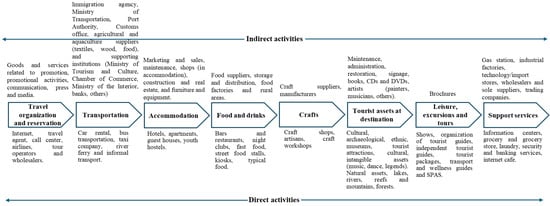
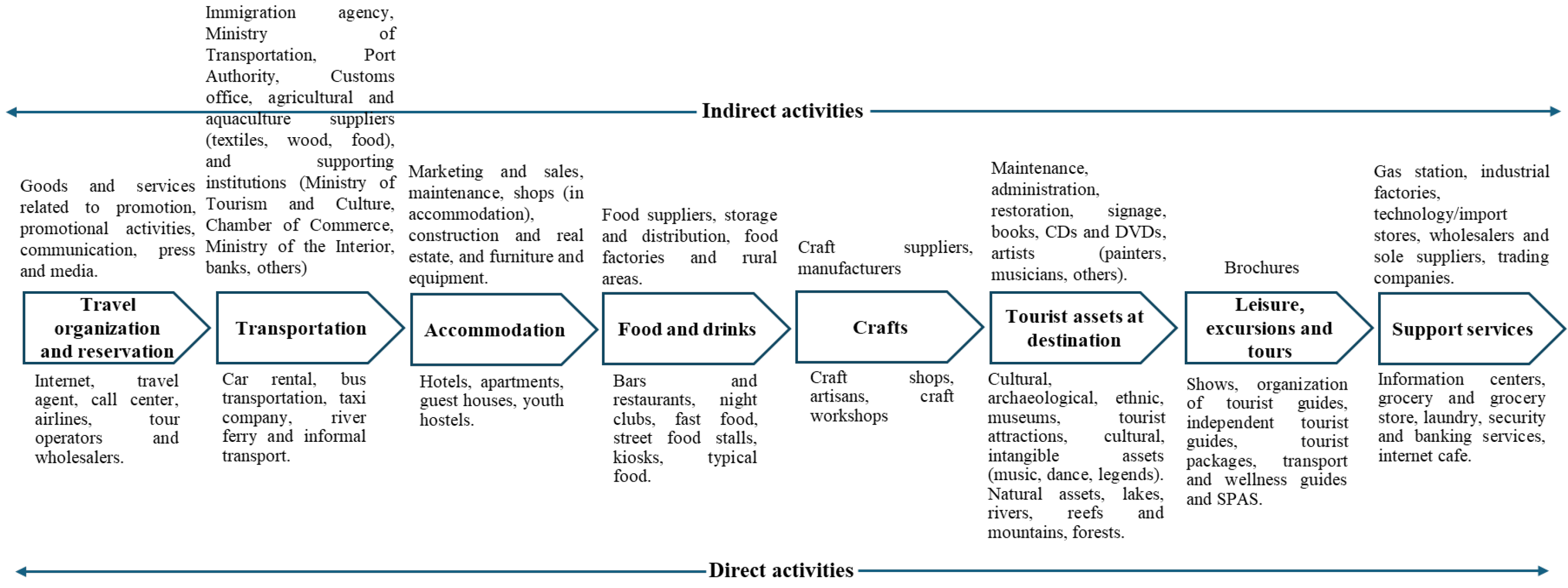
At the heart of the tourism value chain lie the experiential needs and expectations of tourists. Study [25] argues that tourism value creation should be understood from a demand-oriented perspective, distinguishing between specific tourism activities (accommodation, transport, food services, information, and entertainment), tourism support activities (public and private services needed during temporary stays), and tourism application activities related to travel motivations (e.g., recreation, adventure, family interaction). This demand-centric approach aligns with the systemic and nodal perspective developed in the preceding sections. Attractions function as value nodes within a broader territorial value chain, structured by interconnected actors and services. Figure 1 illustrates the global tourism value chain, adapted from [24], highlighting the integration of origin services, transit actors, destination services, and indirect support mechanisms within a unified value creation system.
Figure 1.
Global tourism value chain and actor structure. Source: Adapted from [24].
3. Methodology
This study adopts a combined case study design with a sequential approach to analyzing tourism value at the destination level within a multi-local river corridor. The research process was structured in progressive stages that correspond directly to the analytical sequence presented in Section 4. The methodological framework integrates territorial mapping, stakeholder consultation, multi-criteria evaluation, analysis of the inventory of attractions, and assessment of industry trends.
The Cartagena de Indias–Santa Cruz de Mompox corridor was selected as the study area due to its theoretical and practical relevance. Colombia offers numerous tourist destinations; however, this corridor represents a multi-local territorial system organized along the Magdalena River, where internationally recognized heritage destinations coexist with intermediate municipalities that remain weakly integrated into the tourism value chain. This structural asymmetry makes the corridor theoretically appropriate for analyzing value chain articulation, the nodal structuring of attractions, and the challenges of inter-municipal coordination. From a practical perspective, the corridor has strategic development potential, but it lacks a consolidated tourist route that integrates its municipalities. This combination of high-value nodes and underdeveloped links provides a suitable context for evaluating strategies for prioritizing and strengthening the value chain.
The methodological process began with a preliminary territorial mapping phase. Secondary data were collected from official tourism records, municipal development plans, and geographic databases to identify municipalities, attractions, accessibility conditions, and existing tourism infrastructure. Geographic Information System (GIS) tools were used to visualize the spatial distribution of attractions and identify initial nodal concentrations along the corridor. This phase established the territorial baseline for subsequent refinement.
The second phase consisted of refining the locations along the route. Field visits and structured consultations with stakeholders were conducted to validate the initial mapping results and adjust the selection of municipalities and attractions based on accessibility, service availability, and territorial continuity. This stage ensured that the route delineation reflected both spatial logic and operational feasibility.
To construct the prioritization matrix, a multi-criteria scoring decision-making method was applied. The evaluation criteria were derived from the literature and contextual analysis, including the diversity of attractions, infrastructure and accessibility, service provision, promotional capacity, and institutional support. The weights of the criteria were determined through a structured consultation with experts. Tourism leaders and experts were defined as professionals with at least five years of experience in tourism planning, management, or research and active participation in decision-making processes. Initially, a purposive sampling strategy was used to ensure representation from the public, private, and academic sectors, followed by snowball sampling to identify additional qualified participants. Twelve experts were contacted, and seven participated in the weighting process. Participants assessed the importance of the criteria using a structured Likert-scale instrument, and normalized averages were calculated to derive the final weights. The scores were then calculated as weighted sums of the performance indicators.
The fourth stage consisted of examining how attractions, services, infrastructure, and structures interact in the prioritized municipalities. Information was gathered through a survey of twenty stakeholders. A collaborative workshop was also held to validate the findings, ensuring participatory verification of the value chain’s integration.
Next, the analysis of tourist attractions continued, which was complemented by the development of a structured inventory of attractions. The attractions were classified according to their type, accessibility, and integration. Primary data were collected between March and June 2025 through field observation and secondary research.
Finally, trends in the sector were explored, based on a documentary analysis of national reports, the recent literature, and an analysis of previous steps. This stage contextualized the local findings within the overall dynamics of tourism development, allowing for the interpretation of the results at the corridor level within national and regional trends.
It is important to note that the entire research process adhered to the principles of voluntary participation, anonymity, and confidentiality. Participation was entirely voluntary, and informed consent was obtained from all participants. They were assured that their responses would be anonymous and confidential, and that no personally identifiable information would be collected. The data were used exclusively for academic research purposes. Participants were informed that they could withdraw from the study at any time without consequence.
4. Analysis of Results
4.1. Preliminary Mapping
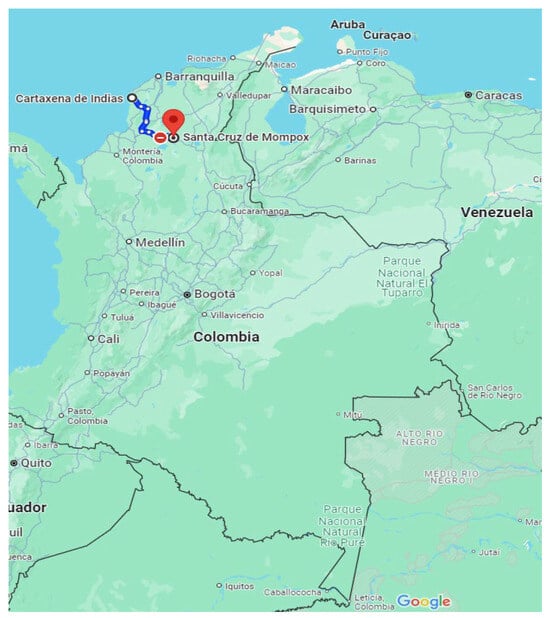
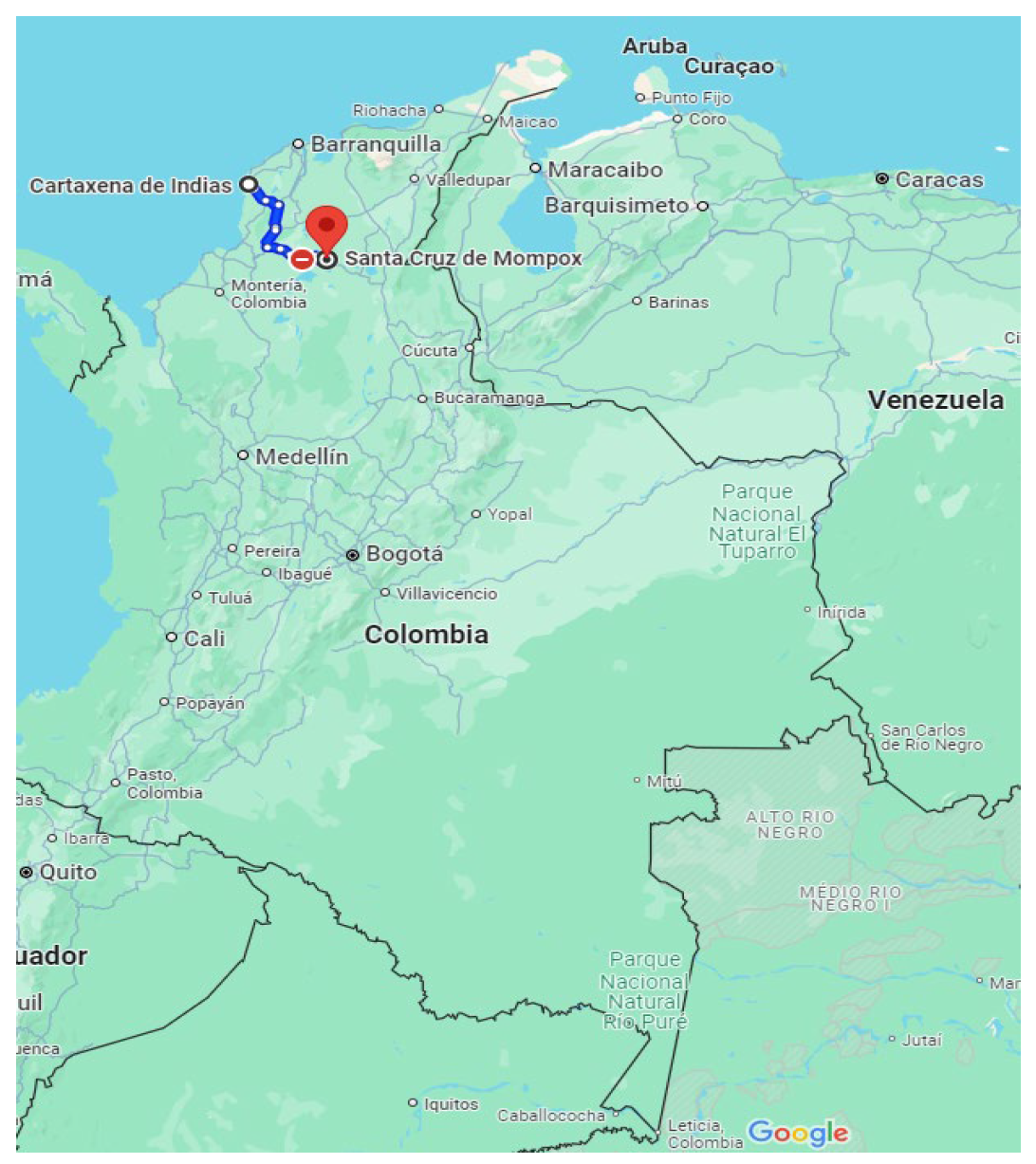
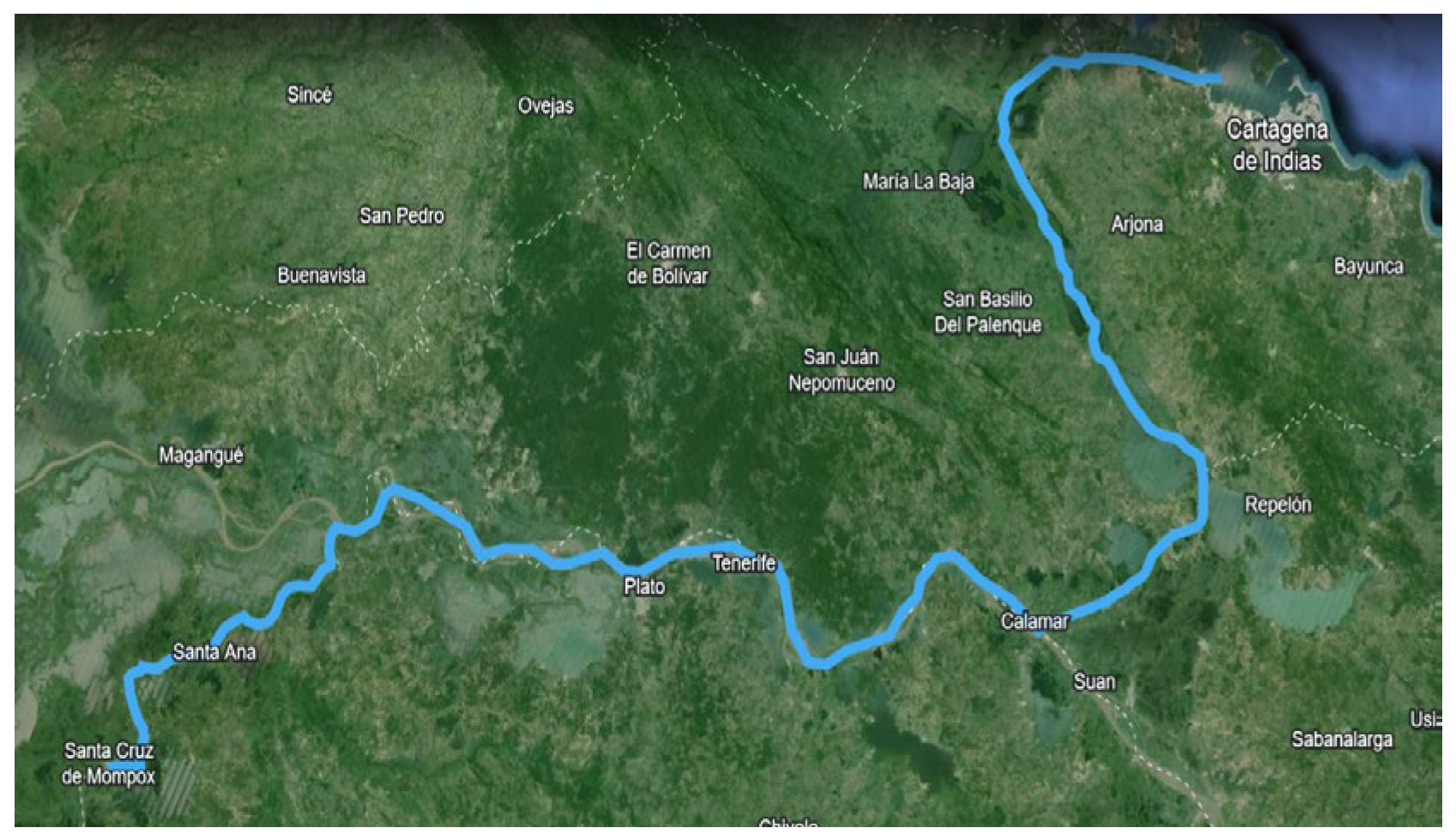
In order to identify and map the river route of the Cartagena de Indias to Santa Cruz de Mompox circuit, the Google Earth application was used. The route starts at the port of Cartagena, one of the main embarkation points on the Caribbean coast. It sails south along the coast until it reaches the mouth of the Magdalena River. From there, the route continues upstream along Magdalena, which crosses the country from north to south. Continue navigating through different municipalities, such as Tenerife, Santa Barbara, and San Senón, until you reach Santa Cruz de Mompox, where the tourist pier is located. The duration of the trip is variable as it depends on river conditions and the availability of transport connections. Figure 2 and Figure 3 illustrate the map of Colombia and the Cartagena de Indias–Mompox route.
Figure 2.
Map of Colombia. Source: Google Earth.
Figure 3.
Route of the Cartagena de indias–Santa Cruz de Mompox. Source: Google Earth.
4.2. Refinement of Locations on the Route
First, a virtual visual exploration was made using Google Earth as a map to identify the municipalities, districts, towns, and other relevant places on the Cartagena de Indias–Santa Cruz de Mompox route. This initial analysis allowed us to obtain an overview of the territory and its characteristics. The initial list of locations on the route included: Cartagena de Indias, Puerto badel, Paricuica, El recreo, Piedrecita, Leticia, El cobado, Conejo, Gambote, Puerto Mahates, Los cañaguates, Soplaviento, El porvenir las compuertas, San Cristobal, Gladys, Rabón, La reserva, Santa lucia, La compuerta, Calamar, Isla becerra, Barranca nueva, Ciénaga de Ortiz, Barranca vieja, El yucal, Bodega de Buenavista, Guaquiri, La maría, La sonrisa, Heredia, Robles, Las trojas, Tasajera, Santa martica, Nerviti, Bolívar, San Agustín, Región las violetas, La plaza, Tenerife, san Luis, Zambrano, San José del purgatorio, Cuatro vientos, Bijagual, San roque, Córdoba, El paraíso, San pedro, El Carmen de magdalena, Pensilvania, Región de diego nuñez, Tocamocho, Vda tierra grata, Vda pinto viejo, Isla Suarez, El porvenir, Barro blanco, Isla patico, Penón de duran, Santa Ana, Talaiga nuevo, Santa Ana, El Vesubio, Las Mendozas, La Isabel, San Zenón, La virgen, Peñoncito, Isla el horno, Santa Cruz de Mompox.
Subsequently, collaborative sessions were conducted with tourism leaders and experts, where the initial list of identified places was discussed and refined, considering their degree of tourist attractiveness and territorial area. This collaboration was crucial to ensure the approach aligned with local needs and knowledge. The resulting refined list of locations on the route is as follows: Cartagena de Indias, Leticia, Puerto Badel, Gambote, Soplaviento, San Estanislao, El porvenir las compuertas, San Cristóbal, Santa lucia, Calamar, Barranca nueva, Barranca vieja, El yucal, Heredia, Robles, Nerviti, San Agustín, Tenerife, San Luis, Plato, Zambrano, San Antonio de Padua, Tocamocho, Santa bárbara de pinto, El porvenir, Barro blanco, Santa Ana, Talaiga nuevo, San Zenón, Peñoncito, Santa Cruz de Mompox.
4.3. Prioritization Matrix
After defining the locations along the Cartagena de Indias–Santa Cruz de Mompox route, it was necessary to prioritize them to determine the most significant tourist attractions along the corridor. To this end, a prioritization matrix was developed as a multi-criteria decision-making tool to evaluate and rank the municipalities according to predefined criteria. These criteria included area, population density, current population, main sectors, dock/port, accessibility, number of monthly tourists, SWOT analysis, and tourist attractions.
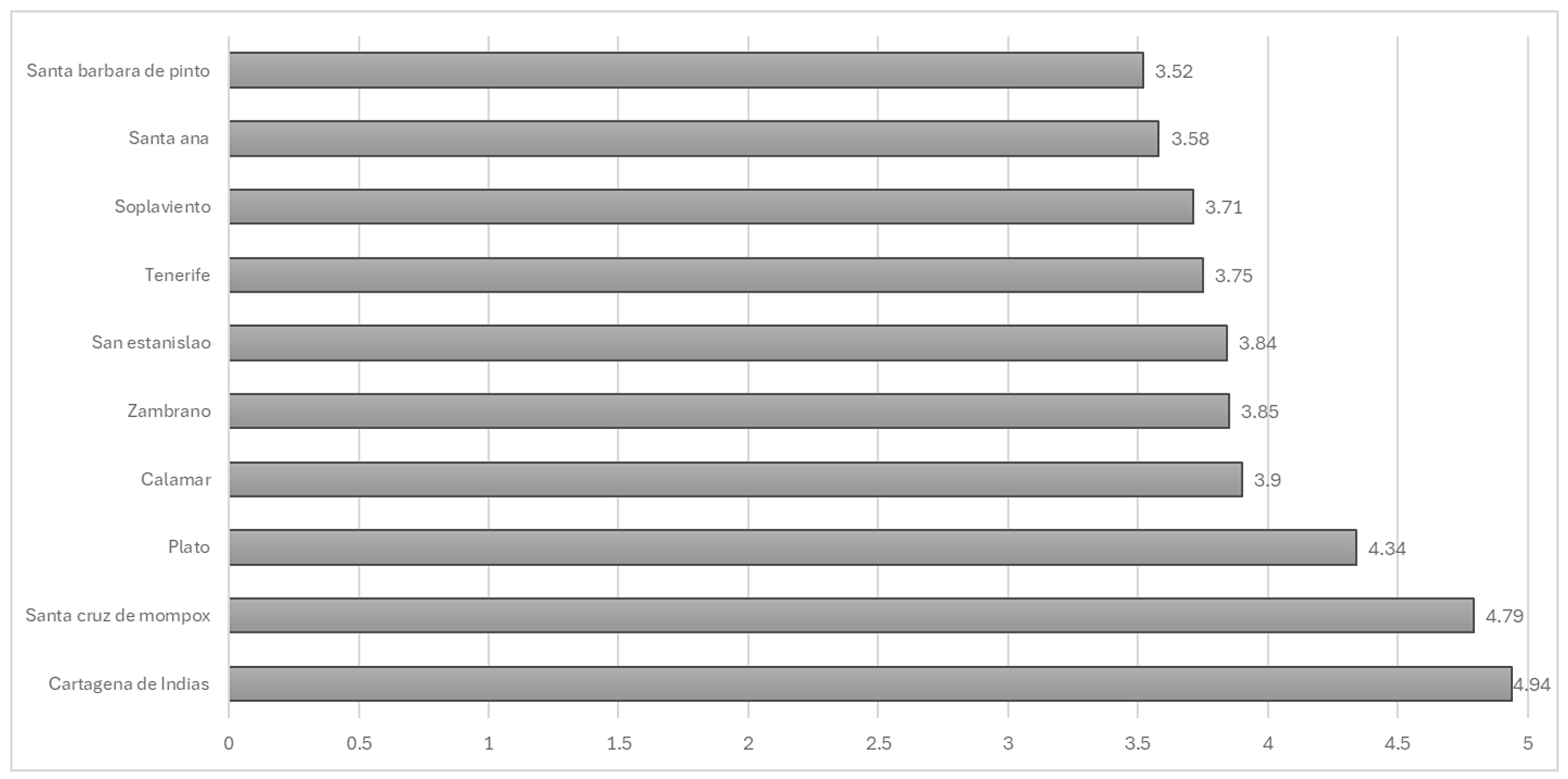
A weighting factor was assigned to each criterion according to its relative importance. These weights were defined through the structured consultation with experts described in Section 3 (n = 7), and normalized averages were used to obtain the final weighting scheme. Subsequently, each municipality was scored for each criterion. The final score was calculated as the weighted sum of the scores for all criteria, and the municipalities were ranked according to the total score obtained (see Appendix A.1).
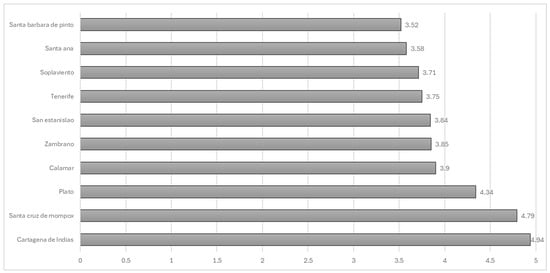
Once the prioritization matrix was completed, the preliminary ranking was reviewed in a validation stage by three subject matter experts. This process aimed to confirm the coherence of the scoring assumptions and the consistency of the ranking with the territorial context. Minor adjustments were made to correct inconsistencies in secondary data and clarify ambiguous data. Figure 4 presents the ten prioritized municipalities and their relative weightings: Cartagena de Indias, Santa Cruz de Mompox, Plato, Calamar, Zambrano, San Estanislao, Tenerife, Soplaviento, Santa Ana, and Santa Bárbara de Pinto.
Figure 4.
Results of Prioritization Matrix. Source: Own elaboration.
Beyond the overall ranking, the prioritization matrix reveals significant variations among the criteria, reflecting distinct regional characteristics. Municipalities like Cartagena de Indias and Santa Cruz de Mompox scored highly in infrastructure, tourism services, and visitor volume, which can be attributed to their established heritage status and consolidated tourism ecosystems. In contrast, intermediate municipalities like Tenerife and San Estanislao showed moderate performance in attraction diversity but lower scores in promotion and institutional support, indicating underdeveloped governance and marketing capacity.
In particular, riverside municipalities like Plato and Zambrano demonstrated relatively strong accessibility and territorial continuity due to their strategic location along the Magdalena River but showed lower scores in organized tourism services and promotional visibility. This suggests that spatial positioning alone does not guarantee value chain integration without coordinated collaboration among stakeholders.
The dimensional analysis highlights a structural pattern. Established heritage cities function as central nodes within the corridor, while intermediate municipalities exhibit latent tourism potential limited by insufficient promotion, poor institutional coordination, and inadequate service diversification. These findings reveal that the main disparities in the corridor are not primarily infrastructural in nature, but rather organizational and strategic, reinforcing the need for coordinated destination-level planning.
4.4. Route Value Chain
To analyze tourism activities in the prioritized locations, a brief survey was conducted to identify the main tourism-related activities and better understand the links that make up the tourism value chain along the route.
The sample included a mix of stakeholders, allowing for a triangulation of perspectives. Among the respondents, 25% were tourists, 30% were restaurant owners, 20% represented accommodation providers, and 25% were local tour operators and churches. The majority of tourists surveyed were domestic visitors. Service providers reported operating in the corridor for an average of 6.4 years, indicating moderate maturity in the sector.
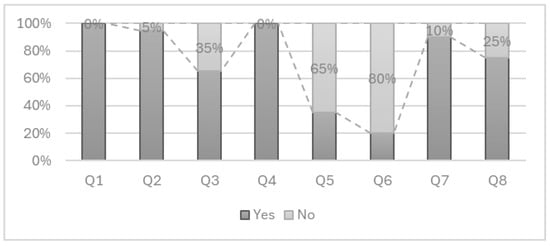
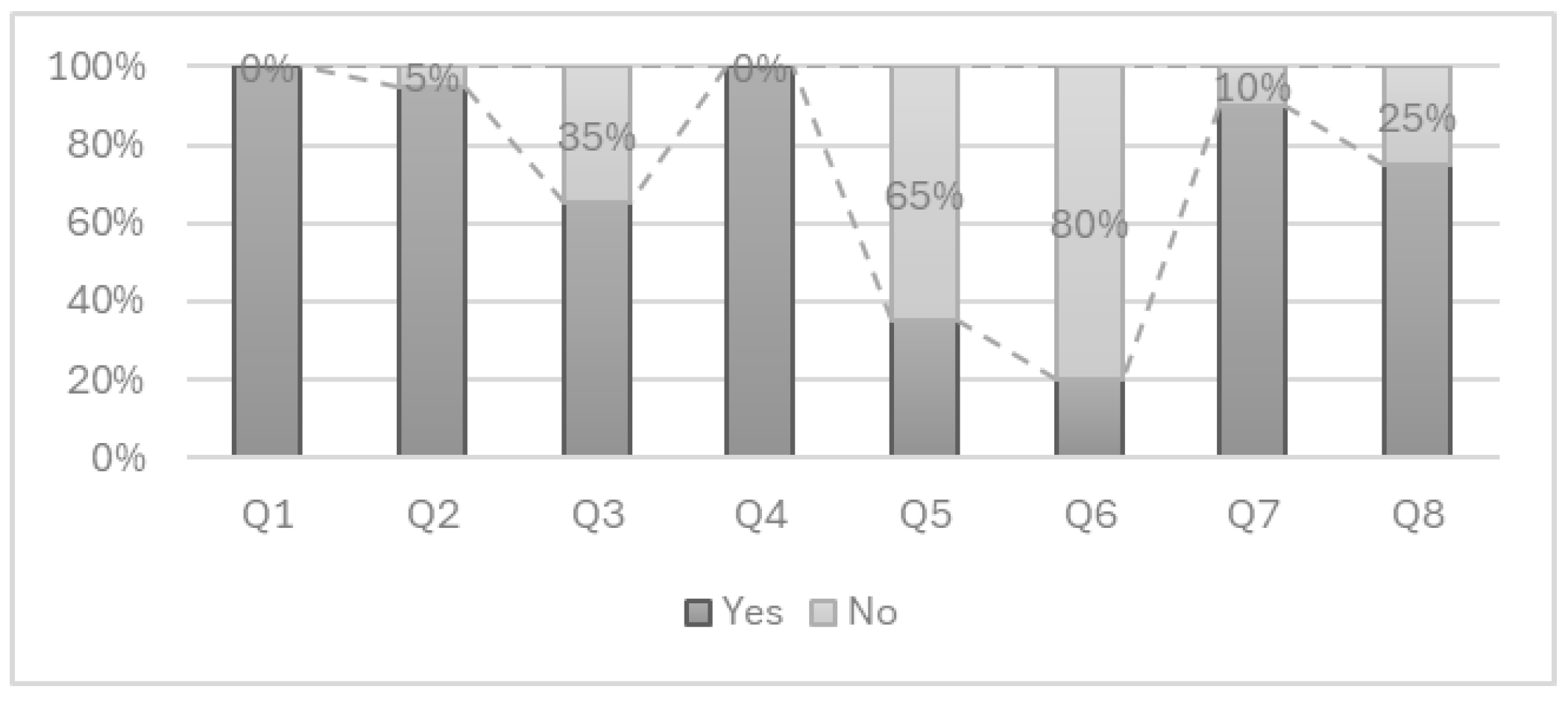
Cross-analysis of the responses revealed that tourists tended to express greater satisfaction with infrastructure and accessibility, while service providers more frequently identified weaknesses in local promotion and training. This divergence suggests that while visitors perceive the basic conditions positively, structural gaps in marketing and human capital development are more evident from the supply side. Figure 5 shows the survey of tourist attractions.
Figure 5.
Survey on tourist attractions. Source: Own elaboration. Note: Q1. Does the location have adequate tourist infrastructure (hotels, restaurants, tourist information centers)? Q2. Are there access roads in good condition to the tourist destination? Q3. Are there organized tourist activities (tours, guides, events) available for visitors? Q4. Does the destination offer reliable basic services (electricity, drinking water, sanitation)? Q5. Has the destination been promoted regionally or nationally as a tourist attraction? Q6. Are local residents trained in tourist services and tourism management? Q7. Does the location have natural attractions (parks, rivers, mountains) that are accessible to tourists? Q8. Is the destination perceived as safe for tourists in terms of personal safety and health?
Based on the answers provided in the survey, all respondents (100%) consider the localities to have an adequate tourist infrastructure. This indicates that there are enough hotels, restaurants, and tourist information centers available for visitors. Most respondents (95%) agree that the access routes to the destination are in good condition, while 5% indicate otherwise. This is crucial for the accessibility and comfort of tourists. Most respondents (65%) indicate that there are organized tourist activities, although 35% mention that there are not. This suggests that although there is an offer of activities, expanding or improving their availability may be necessary. All respondents (100%) affirm that basic services are reliable, which is essential for the comfort and safety of tourists. Only 35% of respondents consider the destination adequately promoted, while 65% think the opposite. This indicates a need to improve tourism marketing and promotion strategies. Only 20% of respondents consider that residents are trained in tourist services and service management, while 80% believe they are not. This highlights an important area for improvement to ensure a better experience for visitors. The vast majority (90%) say that the place has accessible natural attractions, which is a strong point for nature tourism. 75% of respondents perceive the destination as safe, while 25% do not. Although most have a positive perception, tourists’ safety concerns need to be addressed.
The preliminary results show that respondents consider the locations to have adequate infrastructure, good access, reliable essential services, and accessible natural attractions. However, tourism promotion is lacking, residents need more training, and there are some safety concerns.
To deepen our understanding of the tourism offered along the route and complement the value chain analysis, it was necessary to identify and classify the main tourist attractions present in the prioritized locations. This step is essential, as attractions are the core elements that give meaning to the tourist experience and activate the rest of the value chain components. The following section presents the inventory of attractions, derived from a combination of planning documents, expert consultations, and field assessments.
4.5. Tourist Attractions
Tourist attractions are the elements in a place that draw travelers away from their homes. They include scenery, activities to participate in, and experiences to remember. It is often difficult to tell whether something is an attraction or not. Cruise ships, resorts, and other services may have attributes of an attraction. Tourist attractions must have at least three components: visiting tourists, a place to be seen, and an image that makes the place meaningful [26,27]. Therefore, attractions include not only historical sites, amusement parks, and scenery but also the services and facilities that meet the needs of tourists.
Considering the Tourism Development Plans, the Land Development Plans, a review of press articles, a map survey, and consultation with experts, Table 1, Table 2, Table 3, Table 4, Table 5, Table 6, Table 7, Table 8, Table 9 and Table 10 show a list of tourist attractions for each location prioritized for establishing the tourist route.
Table 1.
Tourist attractions of Cartagena de Indias.
Table 2.
Tourist attractions of Santa Cruz de Mompox.
Table 3.
Tourist attractions of Plato.
Table 4.
Tourist attractions of Calamar.
Table 5.
Tourist attractions of Zambrano.
Table 6.
Tourist attractions of San Estanislao.
Table 7.
Tourist attractions of Tenerife.
Table 8.
Tourist attractions of Soplaviento.
Table 9.
Tourist attractions of Santa Ana.
Table 10.
Tourist attractions of Santa Barbara de Pinto.
Although Table 1, Table 2, Table 3, Table 4, Table 5, Table 6, Table 7, Table 8, Table 9 and Table 10 present the inventory of attractions by municipality, a more detailed analysis reveals distinct patterns of value chain integration. Cartagena and Mompox exhibit vertically integrated tourism ecosystems, where cultural heritage attractions are closely linked to hospitality services, guided tours, gastronomy, and organized events. These municipalities function as central nodes with a dense interconnection of services.
The intermediate municipalities present fragmented portfolios of attractions. While they possess natural landscapes, riverside assets, and cultural heritage elements, these attractions often lack complementary services such as certified guides, structured tour packages, or coordinated marketing initiatives. This limited integration restricts their capacity to generate extended tourist stays and reduces their contribution to the overall value chain of the corridor.
Furthermore, the inventory of attractions suggests potential horizontal complementarities along the river corridor. Natural attractions in municipalities such as Tenerife and Santa Ana could be integrated with cultural experiences in Mompox and Cartagena to form thematic clusters. However, these complementarities remain untapped due to weak inter-municipal coordination and limited strategic integration.
The corridor currently operates as a partially articulated network, rather than a fully integrated value chain system, reinforcing the need for coordinated governance and cluster-based development strategies.
Identifying tourist attractions along the route not only provides a detailed inventory of cultural and natural resources but also lays the foundation for strategic planning in line with current tourism dynamics. Furthermore, to ensure the route’s long-term relevance and competitiveness, it is essential to understand these attractions in line with the global trends that are transforming the sector.
4.6. Sector Trends
The collaborative economy model continues to rise within tourism, driving the creation of platforms for accommodation in community eco-lodges, electric vehicle rentals, and personalized experiences with local guides. This trend reduces costs and strengthens the local social fabric by involving communities in tourism development, aligning with sustainability and environmental conservation [28,29]. According to [30], sustainable tourism will grow at an annual rate of 15%, driven by consumers seeking experiences that respect local ecosystems.
Likewise, eco-innovation, understood as the development of products and services that minimize environmental impact, will be crucial to the success of bio-tourism. Practices such as Agriculture 4.0 —which integrates technologies such as the Internet of Things (IoT) and artificial intelligence in agricultural production—will allow the creation of educational tourist routes focused on sustainability and innovation. Agroecological farms that use drones to monitor crops or sensors to optimize resources will attract consumers interested in sustainability [31].
The growing interest in healthy and sustainable food will influence tourists’ decisions, as they will seek out gastronomic experiences based on organic and local products. The offer of zero-kilometer food and urban agriculture practices will enrich the tourist experience, allowing visitors to interact with local communities by harvesting and preparing food [32]. Previous research [33] points out that this trend reflects a greater awareness of the origin of food and sustainability in tourist destinations.
For its part, wellness tourism continues to boom, with a growing demand for experiences that promote physical and mental health, such as yoga, meditation, and spa treatments based on local ingredients [34]. According to [35], the global wellness tourism market is expected to reach US$1.2 trillion by 2025, offering an opportunity to diversify the tourism offer in Colombia.
Likewise, digitalization in tourism has brought a more significant concern for cybersecurity. Tourists demand guarantees of personal data protection when making electronic reservations and payments. Implementing secure platforms will be essential to generate trust. Investment in cybersecurity will grow significantly due to the increase in digital services that facilitate the traveler’s experience, such as mobile applications and augmented reality to enrich the tour of ecological destinations [36].
Finally, regenerative tourism emerges as a trend beyond sustainability. It seeks to reduce environmental impact and restore and improve local ecosystems. Initiatives such as participatory reforestation or scientific tourism will contribute to environmental conservation and attract a segment of travelers committed to sustainability [37].
While global tourism trends provide a general strategic direction, their relevance to the Cartagena–Mompox corridor depends on the characteristics of local resources and the configuration of the value chain.
Sustainable tourism presents the greatest viability within the corridor due to the strong presence of natural river landscapes, cultural heritage, and small local businesses. Places like Tenerife possess ecological and cultural resources that could support low-impact tourism models. Within the value chain framework, implementation would require strengthening governance coordination, promoting environmentally responsible accommodation practices, and integrating community-based tourism initiatives into the services segment.
Eco-innovation is partially viable but requires institutional strengthening. Digital promotion platforms, smart signage, and route-level branding could be incorporated into the marketing and promotion segment of the value chain. However, the intermediate municipalities currently lack sufficient technological infrastructure and trained human capital, indicating that capacity-building programs and inter-municipal digital coordination will be necessary before full implementation.
Health and wellness tourism shows moderate viability, especially in riverside municipalities with tranquil natural environments, suitable for experiential and wellness offerings. However, the corridor currently lacks specialized services, such as certified wellness facilities or medical tourism infrastructure. Therefore, adaptation strategies should initially focus on sustainable wellness products integrated into existing accommodation and food services.
The feasibility assessment indicates that sustainability-oriented and heritage-based tourism represent immediate strategic pathways, while eco-innovation and health tourism require gradual development, aligned with institutional strengthening and service diversification. This differentiated approach allows for optimizing the tourism value chain according to trends, aligning global dynamics with local capacities.
5. Discussions
5.1. Main Findings
This study examined the territorial configuration of the corridor, the identification of strategic nodes, and the role of attractions and industry trends in strengthening the destination’s sustainability.
First, the territorial mapping and refinement process revealed that the Cartagena–Santa Cruz de Mompox corridor operates as a spatially continuous but functionally fragmented system. While geographical continuity along the Magdalena River is evident, the refinement stage demonstrated that not all municipalities possess sufficient tourism integration to form a coherent route. These results confirm that territorial continuity alone does not guarantee destination integration; coordinated governance and service capacity are required to transform spatial proximity into functional connectivity.
Second, the prioritization matrix identified Cartagena de Indias and Santa Cruz de Mompox as central nodes, while municipalities such as Plato, Calamar, and Zambrano emerged as intermediate nodes with latent potential. The dimensional analysis showed that disparities within the corridor are less related to infrastructure, which respondents generally rated positively, and more associated with promotion, institutional coordination, and human capital development. This finding suggests that the corridor’s main structural obstacle lies in governance and marketing coordination, rather than in the provision of basic services.
Finally, the inventory of tourist attractions and the analysis of sector trends indicate that the corridor possesses significant natural and cultural assets capable of driving sustainable tourism development. However, the inventory of attractions reveals uneven integration along the value chain. The central municipalities exhibit more vertically integrated ecosystems that link heritage, gastronomy, accommodation, and guided services, while the intermediate municipalities present fragmented portfolios of attractions lacking complementary services. The feasibility assessment of sector trends further shows that sustainability-oriented and heritage-based tourism can be implemented immediately, while eco-innovation and wellness tourism require gradual institutional strengthening. These findings show that the corridor functions as a partially articulated value network, rather than a fully integrated destination system.
5.2. Theoretical Contributions
The findings of this study contribute to the literature in several ways. First, this research expands the analysis of value chains at the destination level by integrating a territorial systems perspective [10,11] with nodal attraction theory [16,17,18]. While previous research has examined value chains primarily at the firm level [6,38], this study demonstrates that value creation in multi-local corridors depends on the spatial articulation and interconnection of attractions within a territorial system.
Second, the prioritization matrix refines understanding of the dynamics within tourism value chains. In line with [22,23], the results highlight that institutional coordination and promotional capacity are crucial determinants of value chain performance. However, the findings challenge purely infrastructure-focused approaches by demonstrating that adequate physical conditions do not automatically translate into integrated value chains.
Third, the analysis of attractions as structural nodes empirically supports network-based interpretations of destinations [16,17]. The identification of core and intermediate municipalities confirms that destination competitiveness arises from differentiated nodal roles, rather than from uniform territorial development. This reinforces the conceptualization of destinations as adaptive and evolving territorial ecosystems [12], where structural imbalances can limit long-term sustainability.
5.3. Practical Implications
The findings of this study also contribute to practice in several ways. Given its applied nature, recommendations are offered for policymakers, managers, and tourism professionals.
First, governance coordination at the corridor level could be strengthened. The prioritization results indicate that intermediate municipalities require institutional support to improve promotion, brand development, and service integration. Establishing an inter-municipal tourism coordination body or a destination management organization at the corridor level could improve strategic alignment.
Second, capacity-building programs targeting local residents and service providers are essential. Survey results show that 80% of respondents perceive there to be insufficient training in tourism services. Structured training initiatives in hotel management, digital marketing, and sustainability practices would improve service quality and value chain integration.
Third, marketing strategies should shift from isolated municipal promotion to developing a thematic brand based on the corridor. The inventory of attractions reveals potential for ecocultural clusters that combine natural landscapes and heritage experiences. Integrating these assets into integrated, route-based products would increase the average length of stay and strengthen horizontal complementarities.
Fourth, trend-based adaptation should be implemented gradually. Sustainability-oriented tourism and heritage experiences represent immediate strategic pathways aligned with the corridor’s resource base. Eco-innovation and wellness tourism should be developed gradually, prioritizing flexible integration before making large-scale infrastructure investments. Finally, the security concerns reported by 25% of respondents should be addressed through visible security measures, communication strategies, and collaboration with local authorities to strengthen visitor confidence.
6. Conclusions
This study examined the Cartagena de Indias–Santa Cruz de Mompox corridor from a destination-level tourism value chain perspective, integrating territorial mapping, multi-criteria prioritization, analysis of the inventory of attractions, and an assessment of sector trends. Instead of addressing the corridor as a set of isolated municipalities, the research conceptualized it as a territorially integrated system, structured by differentiated nodal roles and uneven governance.
The findings demonstrate that spatial continuity along the Magdalena River does not automatically translate into functional integration within the tourism value chain. While central municipalities such as Cartagena and Mompox operate as consolidated nodes with vertically integrated service ecosystems, intermediate municipalities exhibit latent potential limited by insufficient promotion, institutional coordination, and service diversification. The prioritization matrix revealed that structural bottlenecks are more organizational than infrastructural, indicating that factors such as strategic coordination are crucial for strengthening the corridor’s competitiveness.
By linking territorial configuration, nodal differentiation, and the viability of trends within a unified analytical framework, this study provides an applied model for evaluating multi-local tourism corridors. The integration of multi-criteria prioritization with attraction-based analysis offers a replicable methodological approach for other regions seeking to optimize value chains at the destination level. The results suggest that sustainability-oriented and heritage-based development pathways represent the most immediately viable trajectory for the corridor, while eco-innovation and wellness tourism require gradual institutional strengthening.
Limitations and Future Research
Despite its contributions, this study has several limitations. First, the research is based on a single case study within a specific river corridor in Colombia. While the methodological framework is transferable, contextual factors such as governance structures and levels of tourism maturity may differ in other regions. Comparative studies of multiple corridors would strengthen external validity. Second, while the expert consultation and survey samples are sufficient for exploratory analysis, they remain limited. Future research could incorporate larger samples, including the collection of longitudinal data to assess changes in value chain integration over time.
Third, the analysis of attraction networks was primarily descriptive. Future research could employ advanced social network analysis metrics to quantify centrality, clustering, and flow intensity among attractions.
Finally, the feasibility assessment of trends was qualitative. Future research could incorporate modeling or scenario simulation techniques to evaluate the economic and environmental impacts of implementing specific tourism trends within the corridor.
Author Contributions
Conceptualization, O.C.-A., E.P.-S. and J.P.E.-C.; methodology, O.C.-A., E.P.-S. and J.P.E.-C.; validation, O.C.-A., E.P.-S. and J.P.E.-C.; formal analysis, O.C.-A., E.P.-S. and J.P.E.-C.; investigation, O.C.-A., E.P.-S. and J.P.E.-C.; data curation, O.C.-A., E.P.-S. and J.P.E.-C.; writing—original draft preparation, O.C.-A., E.P.-S. and J.P.E.-C.; writing—review and editing, O.C.-A., E.P.-S. and J.P.E.-C.; funding acquisition, O.C.-A. All authors have read and agreed to the published version of the manuscript.
Funding
This research was funded by the Ministerio de Ciencia, Tecnología e Innovación (MINCIENCIAS) Of Colombia under CONV-934-2023-CC1140825876. The APC was funded by the same Source.
Institutional Review Board Statement
Ethical review and approval were waived for this study due to Article 11 of Resolution 8430 of 1993 from the Colombian Ministry of Health. This study is classified as low-risk research, as it involved the anonymous collection of data through surveys and did not involve any intervention or risk to the participants.
Informed Consent Statement
Verbal informed consent was obtained from the participants. The rationale for utilizing verbal consent is that the study involved minimal risk, did not involve the collection of sensitive personal data, and aimed to avoid discouragement or discomfort among participants.
Data Availability Statement
The original contributions presented in this study are included in the article. Further inquiries can be directed to the corresponding author.
Acknowledgments
The work performed was supported by MINCIENCIAS. Gratitude is extended to the Corporación de Ciencia y Tecnología para el Desarrollo de la Industria Naval, Marítima y Fluvial (COTECMAR) for their supervision and support.
Conflicts of Interest
Edwin Paipa-Sanabria was employed by Cotecmar. The remaining authors declare that the research was conducted in the absence of any commercial or financial relationships that could be construed as potential conflicts of interest.
Appendix A
Appendix A.1. Multi-Criteria Prioritization Matrix for Assessing the Relative Importance of Municipalities Within the Tourism Corridor
The prioritization matrix is structured into two complementary sections designed to evaluate the strategic relevance of municipalities within the Cartagena de Indias–Santa Cruz de Mompox tourism corridor.
Appendix A.1.1. Socio-territorial characteristics: This section presents the descriptive variables used to contextualize each municipality within the corridor.
Appendix A.1.2. Structural evaluation criteria: This section presents the multi-criteria evaluation used to calculate the Priority Score for each municipality. Each criterion was assigned a relative weight according to its strategic relevance for destination consolidation within the corridor. The weighted sum of these criteria produces the priority index, which determines the municipality’s relative position within the corridor hierarchy.
Appendix A.1.1. Socio-Territorial Characteristics
Table A1.
Socio-Territorial Characteristics of Municipalities within the Tourism Corridor.
Appendix A.1.2. Structural Evaluation Criteria
Table A2.
Structural Evaluation Criteria and Weights Used to Calculate the Priority Score.
References
- Mira, M.D.R.; Moura, A.A.; Costa, V.; Pereira, R. Tourism, economic development, and regional inequality in portugal: A data-driven approach from 2012 to 2022. Tour. Hosp. 2025, 6, 110. [Google Scholar] [CrossRef] [Scilit]
- Rodríguez Moreno, D.; Cruz Vásquez, J. La Cadena de Valor de Destinos Turísticos; Editorial UPTC: Tunja, Colombia, 2021; p. 103. [Google Scholar]
- Moliner-Tena, M.A.; Monteserín-Abella, O.; Callarisa-Fiol, L.J.; Ferreres Bonfill, J.B. Smart tourist destination: A literature review and future agenda. J. Hosp. Tour. Insights 2025, 1–21. [Google Scholar] [CrossRef] [Scilit]
- Manjarrés-Henríquez, L.; Chams-Anturi, O.; Hervas-Oliver, J.L.; Vega-Jurado, J. Conceptual bases of innovation studies: An analysis from the micro-and meso-perspectives. Int. J. Innov. Technol. Manag. 2021, 18, 2130005. [Google Scholar] [CrossRef] [Scilit]
- Dmitrović, T.; Knežević Cvelbar, L.; Kolar, T.; Makovec Brenčič, M.; Ograjenšek, I.; Žabkar, V. Conceptualizing tourist satisfaction at the destination level. Int. J. Cult. Tour. Hosp. Res. 2009, 3, 116–126. [Google Scholar] [CrossRef] [Scilit]
- Song, H.; Liu, J.; Chen, G. Tourism value chain governance: Review and prospects. J. Travel Res. 2013, 52, 15–28. [Google Scholar] [CrossRef] [Scilit]
- Tejada, P.; Liñán, F. The impact of global value chains on Andalusian tourism SMEs. In The Dynamics Between Entrepreneurship, Environment and Education; Edward Elgar Publishing: Cheltenham, UK, 2008; pp. 245–267. [Google Scholar] [CrossRef] [Scilit]
- ProColombia. Colombia Muestra Su Potencial en la Feria de Turismo Más Importante de la Región. Available online: https://procolombia.co/sala-de-prensa/noticias/colombia-muestra-su-potencial-en-la-feria-de-turismo-mas-importante-de-la-region.
- Ministerio de Comercio Industria y Turismo. Plan Sectorial de Turismo 2022–2026. Available online: https://www.mincit.gov.co/participa/consulta-ciudadana/20-12-2022-plan-sectorial-de-turismo-vfpp.aspx (accessed on 23 November 2025).
- Boes, K.; Buhalis, D.; Inversini, A. Smart tourism destinations: Ecosystems for tourism destination competitiveness. Int. J. Tour. Cities 2016, 2, 108–124. [Google Scholar] [CrossRef] [Scilit]
- Levitskaia, A. Sustainable destination system as the basis of tourist territorial competitiveness. Conferința Int. știintifico-Pract. în Onoarea A 34-A Aniversării A Univ. De Stat Comrat 2025, 1, 101–104. [Google Scholar]
- Butler, R. Tourism destination development: The tourism area life cycle model. Tour. Geogr. 2025, 27, 599–607. [Google Scholar] [CrossRef] [Scilit]
- Chams-Anturi, O.; Soto-Ferrari, M.; Gomez, A.; Escorcia-Caballero, J.P.; Romero-Rodriguez, D.; Casile, M. A comprehensive business process management application to evaluate and improve the importations practices on big-box stores. Oper. Supply Chain. Manag. 2022, 15, 164–173. [Google Scholar] [CrossRef] [Scilit]
- Escorcia-Caballero, J.; Moreno-Luzon, M.; Chams-Anturi, O. Supply chain integration capability: An organizational routine perspective. Int. J. Supply Chain. Manag. 2019, 8, 39. [Google Scholar]
- Chams-Anturi, O.; Paipa-Sanabria, E.; Escorcia-Caballero, J. Methodology for the identification and evaluation of the tourism potential of the natural and cultural heritage inventory. Sustainability 2025, 11311, 17–24. [Google Scholar] [CrossRef] [Scilit]
- Wang, Y.; Chen, H.; Wu, X. Spatial structure characteristics of tourist attraction cooperation networks in the yangtze river delta based on tourism flow. Sustainability 2021, 13, 12036. [Google Scholar] [CrossRef] [Scilit]
- Liu, B.; Huang, S.S.; Fu, H. An application of network analysis on tourist attractions: The case of Xinjiang, China. Tour Manag. 2017, 58, 132–141. [Google Scholar] [CrossRef] [Scilit]
- Ma, X.; Han, F.; Wang, T.; Fan, S.; Ma, L. Detecting potential cooperative network for tourist attractions in a destination using search data. PLoS ONE 2024, 19, e0298035. [Google Scholar] [CrossRef] [Scilit]
- Zhao, L.; Cao, G.; Liu, M. The reconfiguration of tourism value chain based on e-commerce. In Proceedings of the 2009 International Conference on Management of e-Commerce and e-Government, Nanchang, China, 16–19 September 2009; IEEE Computer Society: Los Alamitos, CA, USA, 2009; pp. 522–525. [Google Scholar]
- Rudan, E.; Stipanović, C. Tourism product club in generating the value chain. Pol. J. Manag. Stud. 2016, 14, 214–224. [Google Scholar] [CrossRef] [Scilit]
- Setthachotsombut, N.; Sua-iam, G. Tourism value chain management and tourism logistics in Ubon Ratchathani Province, northeast Thailand. Afr. J. Hosp. Tour. Leis. 2020, 91, 1–12. [Google Scholar]
- Ndivo, R.M.; Cantoni, L. Economic empowerment of communities through tourism: A pro-poor tourism value chain approach. Adv. Hosp. Tour. Res. 2015, 3, 116–134. [Google Scholar]
- Ashley, C.; Mitchell, J. Tourism and Poverty Reduction: Pathways to Prosperity; Routledge: London, UK; New York, NY, USA, 2009. [Google Scholar]
- UNWTO/WTO/OECD. Aid for Trade and Value Chains in Tourism. Available online: https://www.wto.org/english/tratop_e/devel_e/a4t_e/global_review13prog_e/tourism_28june.pdf (accessed on 13 September 2025).
- Pulido, J.; López, Y. Propuesta de contenidos para una política turística sostenible en España. Pasos Rev. Tur. Patrim. Cult. 2013, 11, 525–546. [Google Scholar]
- Lew, A.A. A framework of tourist attraction research. Ann. Tour. Res. 1987, 14, 553–575. [Google Scholar] [CrossRef] [Scilit]
- MacCannell, D. The Tourist: A New Theory of the Leisure Class; University of California Press: London, UK, 2013. [Google Scholar]
- Perkumienė, D.; Vienažindienė, M.; Švagždienė, B. The sharing economy towards sustainable tourism: An example of an online transport-sharing platform. Sustainability 2021, 13, 10955. [Google Scholar] [CrossRef] [Scilit]
- Dredge, D.; Gyimóthy, S. New frontiers in collaborative economy research in tourism. In Collaborative Economy and Tourism: Perspectives, Politics, Policies and Prospects; Springer: Cham, Switzerland, 2017; pp. 307–323. [Google Scholar]
- Euromonitor. Top Trends for Travel in 2024. Available online: https://www.euromonitor.com/article/top-trends-for-travel-in-2024 (accessed on 16 October 2025).
- Majumdar, P.; Bhattacharya, D.; Mitra, S.; Bhushan, B. Application of green IoT in agriculture 4.0 and beyond: Requirements, challenges and research trends in the era of 5G, LPWANs and Internet of UAV Things. Wirel. Pers. Commun. 2023, 131, 1767–1816. [Google Scholar] [CrossRef] [Scilit]
- Zhang, T.; Chen, J.; Hu, B. Authenticity, quality, and loyalty: Local food and sustainable tourism experience. Sustainability 2019, 11, 3437. [Google Scholar] [CrossRef] [Scilit]
- Gössling, S.; Hall, C.M. The Sustainable Chef: The Environment in Culinary Arts, Restaurants, and Hospitality; Routledge: London, UK; New York, NY, USA, 2021. [Google Scholar]
- Global Wellness Institute. Wellness Tourism. Available online: https://globalwellnessinstitute.org/what-is-wellness/what-is-wellness-tourism/ (accessed on 15 December 2025).
- Global Wellness Institute. Wellness Tourism Will Cross the $1 Trillion Mark in 2024. Available online: https://globalwellnessinstitute.org/global-wellness-institute-blog/2023/11/28/wellness-tourism-will-cross-the-1-trillion-mark-in-2024/ (accessed on 15 December 2025).
- Travel Daily News. Augmented Reality and Cybersecurity: Frontiers of Technology in Travel. Available online: https://www.traveldailynews.com/regional-news/europe/augmented-reality-and-cybersecurity-frontiers-of-technology-in-travel/ (accessed on 20 January 2026).
- Day, J. Regenerative tourism. In Encyclopedia of Tourism; Jafari, J., Xiao, H., Eds.; Springer: Cham, Switzerland, 2024. [Google Scholar]
- Porter, M. Competitive Advantage—Creating and Sustaining Superior Performance; FreePress: New York, NY, USA, 1985. [Google Scholar]

Disclaimer/Publisher’s Note: The statements, opinions and data contained in all publications are solely those of the individual author(s) and contributor(s) and not of MDPI and/or the editor(s). MDPI and/or the editor(s) disclaim responsibility for any injury to people or property resulting from any ideas, methods, instructions or products referred to in the content. |
© 2026 by the authors. Licensee MDPI, Basel, Switzerland. This article is an open access article distributed under the terms and conditions of the Creative Commons Attribution (CC BY) license.