


Abstract
As a sustainable biological approach for polluted water management, algal-bacterial systems are increasingly being explored because of their synergistic physiological and metabolic interactions. This study established an algal-bacterial consortium composed of Escherichia coli and Chlorella vulgaris to evaluate treatment performance of simulated livestock wastewater and elucidate the associated synergistic mechanisms. Compared with the pure algal system, the algal-bacterial consortium significantly enhanced algal growth, increasing chlorophyll concentration by 52.8% and achieving a maximum algal density of 16.46 × 10⁶ cells mL−1. The biochemical composition of the biomass was improved, with total lipids, neutral lipids, and proteins increasing by 18.9%, 26.8%, and 16.4%, respectively. Pollutant removal efficiencies were markedly enhanced, as total nitrogen (TN), total phosphorus (TP), chemical oxygen demand (COD), ammonia nitrogen (NH4+-N), nitrate nitrogen (NO3−-N), and nitrite nitrogen (NO2−-N) increased by 19.1%, 9.5%, 26.0%, 13.5%, 17.2%, and 13.8%, respectively, compared with the monoculture. Mechanistic analysis was supported by monitoring chlorophyll content, algal density, dissolved oxygen, bacterial density, total inorganic carbon, and pH, which collectively suggested the involvement of a synergistic carbon–oxygen exchange process: oxygen produced by microalgae supported bacterial respiration, while carbon dioxide generated by bacteria enhanced algal photosynthesis and growth. Furthermore, the presence of E. coli markedly stimulated nitrogen metabolism-associated enzymatic functions in C. vulgaris, which may have facilitated their mutual growth. Overall, this study provides a conceptual and experimental basis for algal-bacterial consortium design for treating livestock wastewater, thereby enhancing pollutant removal efficiency and algal biomass accumulation, highlighting its potential as a sustainable and resource-efficient wastewater treatment strategy.
1. Introduction
Rapid industrialization and agricultural intensification have led to a substantial increase in the generation of ammonium-rich wastewater from petrochemical processing, fertilizer manufacturing, landfill, and livestock production [1]. According to the 2024 national environmental statistics released by the Ministry of Ecology and Environment of China, agricultural wastewater was reported to contain approximately 1.80 million tons of total nitrogen, 288,000 tons of total phosphorus, 293,000 tons of ammonia nitrogen, and 18.896 million tons of chemical oxygen demand [2]. Livestock wastewater typically contains elevated levels of organic compounds, nitrogenous substances, and phosphorus, contributing significantly to nutrient enrichment, eutrophication, atmospheric contamination from hydrogen sulfide and ammonia emissions, as well as soil and water deterioration [3,4]. Direct discharge of livestock wastewater accelerates surface water contamination and poses serious risks to ecosystem stability and human health [5].
Livestock wastewater treatment predominantly relies on integrated physical, chemical, and biological processes. However, physicochemical techniques such as coagulation–sedimentation and advanced oxidation, while characterized by rapid reaction kinetics, generally require high energy input and may generate secondary pollutants [6]. Biological treatment processes, such as nitrification and denitrification, offer efficient pollutant removal with relatively low operational costs and energy requirements, while remaining easy to manage [7]. Compared with conventional methods, microalgae-based wastewater treatment offers distinct advantages, including efficient nutrient uptake, degradation of toxic pollutants, heavy metal removal, enhancement of dissolved oxygen levels, and recovery of high-value microalgal biomass [8].
The coupling of microalgal cultivation with effluent treatment enhances inorganic nutrient assimilation, thereby sustaining autotrophic metabolism and facilitating biomass accumulation and improving nutrient removal efficiency [9,10,11]. To further improve pollutant removal efficiency, algal-bacterial symbiotic systems have been developed, in which bacteria provide carbon dioxide and inorganic nutrients to promote microalgal growth, while microalgae release organic matter and oxygen through photosynthesis to support bacterial metabolism [12]. Zhu et al. [13] applied a C. vulgaris–activated sludge consortium to treat wastewater with a low C/N ratio in a photobioreactor, leading to improved contaminant elimination and increased biomass accumulation. Mohan et al. [14] demonstrated that a hybrid system of cyanobacteria S. elongatus and L. angustata achieved an ammoniacal nitrogen removal efficiency of 99.34%. Given the complex composition of wastewater, mixed cultures of bacteria and microalgae generally exhibit higher removal efficiency than single-species systems.
Although algal-bacterial systems have been extensively studied for wastewater treatment, most existing research relies on complex mixed microbial communities, which limit precise evaluation of individual microbial roles and obscure interspecies interaction mechanisms. Furthermore, pollutant removal efficiency is often used as the primary evaluation criterion, while physiological and metabolic processes remain relatively underexplored. To overcome these limitations, this study established a defined algal-bacterial co-culture system composed of Escherichia coli and Chlorella vulgaris. By systematically integrating pollutant removal performance with microalgal growth characteristics, dissolved oxygen dynamics, inorganic carbon variation, and key nitrogen metabolism-related enzyme activities, algal-bacterial interactions were comprehensively investigated. This study moves beyond traditional efficiency-oriented assessment, thereby advancing the understanding of algal-bacterial synergy. The established system provides a simplified platform for elucidating microbial interspecies cooperation and strengthens the conceptual basis for sustainable wastewater treatment.
2. Materials and Methods
2.1. Materials
The microalga C. vulgaris FACHB-8 was supplied by the Algal Culture Collection Laboratory, Institute of Hydrobiology, Chinese Academy of Sciences (Wuhan, China). C. vulgaris was pre-cultured in BG11 medium. Cultivation was conducted in a temperature-controlled shaking incubator at 25 ± 2 °C with agitation at 150 rpm, under an illumination intensity of 2000 lx and a 12 h light/12 h dark photoperiod [15].
The strain E. coli B81855, a non-pathogenic laboratory strain, was obtained from the Ningbo Mingzhou Biotechnology Corporation (Ningbo, China). The strain was inoculated into LB medium, followed by incubation at 37 °C with shaking at 150 rpm for 6 h [16]. As a biosafety level 1 strain, it poses no pathogenic risk under laboratory conditions. The co-culture system was established for controlled experimental investigation and was not intended for direct industrial application. In practical use, appropriate biosafety evaluation would be required to ensure safe biomass utilization.
Synthetic livestock wastewater was prepared with deionized water to simulate typical high-strength effluent. The wastewater was sterilized at 121 °C for 20 min prior to use to avoid microbial contamination. The wastewater quality parameters were as follows: chemical oxygen demand (COD) 3500 mg L−1, total nitrogen (TN) 1000 mg L−1, total phosphorus (TP) 80 mg L−1, ammonia nitrogen (NH4+-N) 300 mg L−1, nitrate nitrogen (NO3−-N) 150 mg L−1, nitrite nitrogen (NO2−-N) 60 mg L−1, and pH 7.2–7.4.
2.2. Experimental Design
To clarify the experimental design, this study aimed to determine whether bacterial addition could enhance an algal-based wastewater treatment system. The objective was not to compare the independent treatment capacities of algae and bacteria, but to evaluate the enhancement effect of incorporating bacteria into an algae-centered system. Therefore, a monoculture of C. vulgaris was used as the control, representing the baseline algal treatment configuration, while the algal-bacterial consortium served as the modified system. Although a pure bacterial system could provide additional comparison, the monoculture of E. coli would represent a different treatment pathway rather than a modification of the algal system, as it is a heterotrophic bacterium lacking photosynthetic capability. E. coli was selected as a model strain because its physiology is well characterized, allowing controlled investigation of algal-bacterial interactions under laboratory conditions. It was used as a simplified experimental model and does not reflect the complex microbial consortia present in practical livestock wastewater treatment processes.
Based on this design, two experimental systems were established: a pure algal system and an algal-bacterial system. The pure algal system was inoculated with C. vulgaris at an initial density of 2 × 10⁵ cells mL−1. The algal-bacterial system was co-inoculated with C. vulgaris (2 × 10⁵ cells mL−1) and E. coli (2 × 10⁵ CFU mL−1), resulting in an initial algal-to-bacterial ratio of 1:1 based on cell and CFU counts. Both systems were grown in 250 mL conical flasks filled with 200 mL of synthetic livestock wastewater. All experiments were conducted in triplicate. Before the experiment began, initial mixed liquor samples were collected for analysis. Subsequently, key parameters were monitored every two days, including microalgal growth and biomass accumulation, wastewater physicochemical characteristics, indicators of carbon–oxygen exchange, and nitrogen metabolism-related enzyme activities.
2.3. Measurement Methods
Microalgal cell density was assessed by direct counting using a hemocytometer, whereas bacterial abundance was evaluated through the serial dilution plating technique on TAP agar medium. Photosynthetic pigments were extracted from microalgal cells using 90% methanol and quantified spectrophotometrically. Chlorophyll fluorescence parameters were measured using a portable pulse-amplitude modulated fluorometer. Microalgal protein content was determined using the Lowry method [17]. The pH and dissolved oxygen (DO) were measured with calibrated electrodes. Total lipid content was quantified according to the method described by Bigogno et al. [18]. The concentrations of CO32− and HCO3− were determined by neutralization titration, and the total inorganic carbon (TIC) was calculated as the sum of CO32− and HCO3−. Neutral lipid content was assessed by measuring fluorescence intensity after staining with the lipid-soluble fluorescent dye Nile Red [19]. The activities of urease (UE), glutamine synthase (GS), glutamate synthase (GOGAT), glutamate dehydrogenase (GDH), nitrate reductase (NR), and nitrite reductase (NiR) in C. vulgaris and E. coli were determined using commercial micro-assay kits (Beijing Solarbio Science & Technology Co., Ltd., Beijing, China) according to the manufacturer’s instructions. Filtrate samples were analyzed in accordance with the Chinese National Standard Methods for the Examination of Water and Wastewater. Specifically, COD, TN, TP, NH4+-N, NO3−-N, and NO2−-N were measured following HJ 828-2017, HJ 636-2012, GB/T 11893-1989, HJ 535-2009, GB/T 7480-1987, and GB/T 7493-1987 [20,21,22,23,24,25], respectively.
2.4. Statistical Analyses
All experiments were performed in three independent replicates, and the results are expressed as mean values ± standard deviation (SD). Statistical comparisons among groups were conducted using one-way analysis of variance (ANOVA), followed by Bonferroni’s multiple comparison test. Differences were considered statistically significant at a threshold of p < 0.05.
3. Results and Discussion
3.1. Microalgal Growth Performance
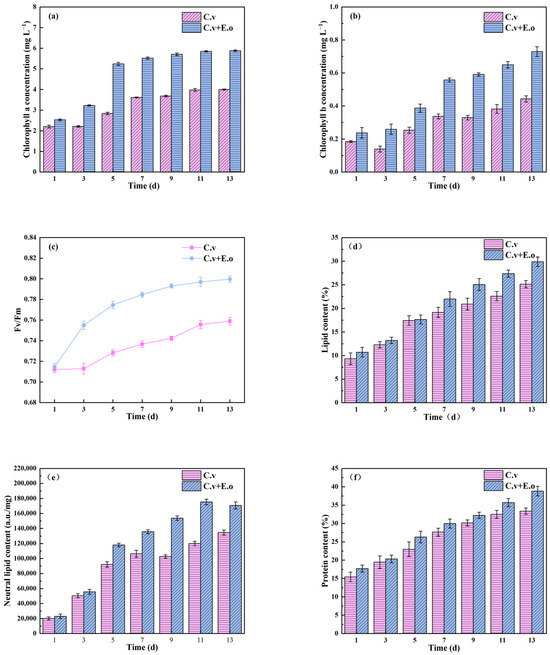
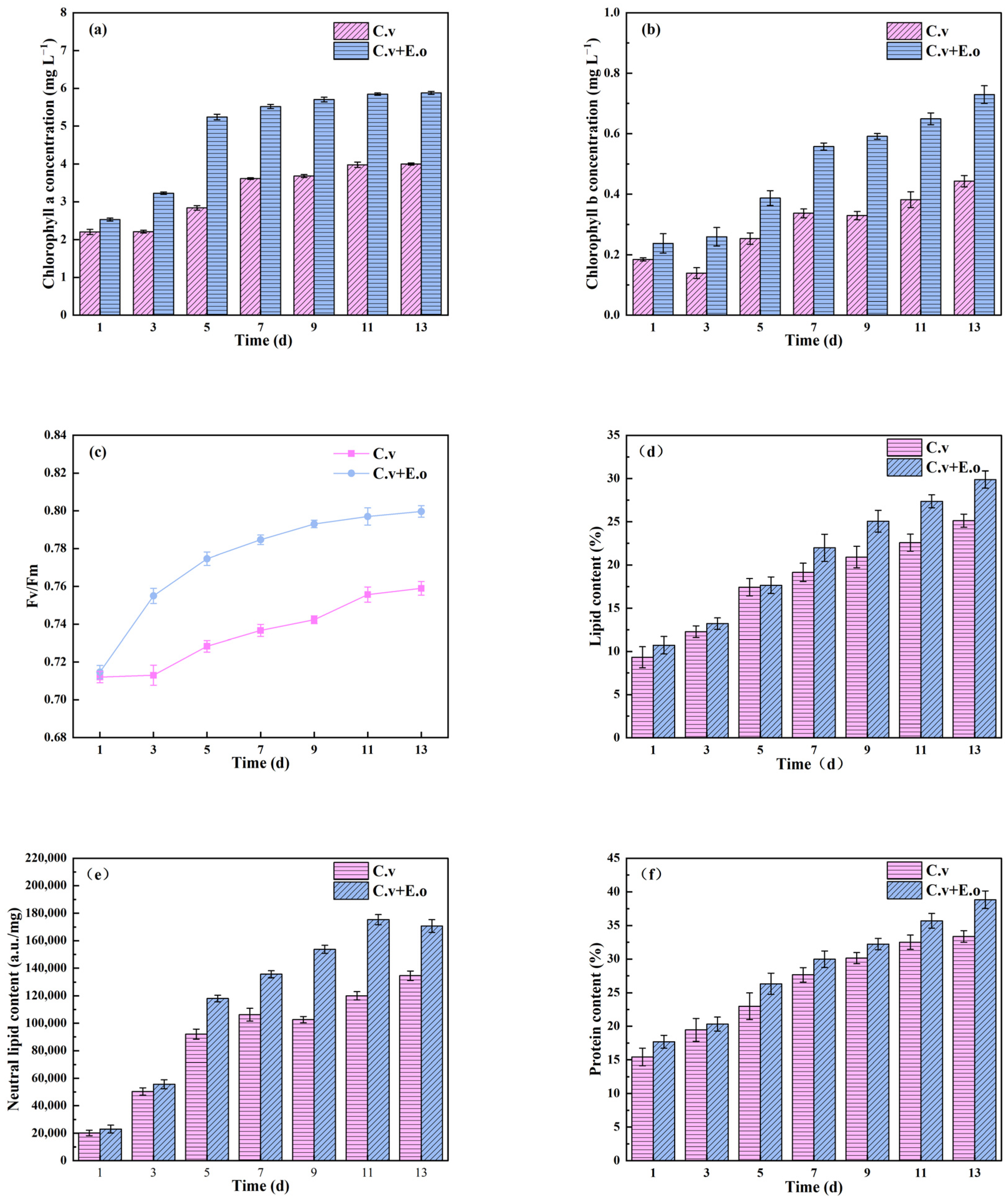
Microalgal growth performance was evaluated based on chlorophyll a (Chl-a), chlorophyll b (Chl-b), maximum quantum yield of photosystem II (Fv/Fm), lipid content, neutral lipid content, and protein content. As shown in Figure 1a–c, the algal-bacterial system consistently exhibited higher Chl-a, Chl-b, and Fv/Fm values than the pure algal system after the introduction of E. coli. The interaction between algae and bacteria promoted sustained increases in chlorophyll content and significantly enhanced the photosynthetic performance of C. vulgaris. The Chl-a concentration in the algal-bacterial system reached a peak of 5.88 mg L−1 on day 13, which was 1.47 times higher than that of the pure algal system (Figure 1a). In the pure algal system, Chl-b slightly decreased during the first three days, possibly due to inhibition of chlorophyll synthesis caused by high initial pollutant concentrations. In contrast, Chl-b in the algal-bacterial system remained relatively stable in the early stage and increased rapidly after day 3 (Figure 1b). Fv/Fm values in the algal-bacterial system increased during the early cultivation and stabilized at 0.78–0.80, indicating sustained photosystem II (PSII) efficiency. In the pure algal system, high initial concentrations of ammonia nitrogen (NH4+-N) and COD impaired PSII activity, resulting in reduced Fv/Fm values. As pollutants were gradually removed, Fv/Fm recovered and stabilized at 0.74–0.76 in the later stage (Figure 1c). Compared with the pure algal system, lipid and neutral lipid accumulation was consistently higher in the algal-bacterial system throughout cultivation. On day 13, lipid content in the algal-bacterial system reached 29.88%, representing an 18.9% increase compared with the pure algal system (Figure 1d). Neutral lipid accumulation showed a similar trend (Figure 1e), reaching a level 1.27 times higher than that of the pure algal system. Protein content also increased steadily in both systems (Figure 1f), with the algal-bacterial system reaching 38.83% on day 13, which was 5.46% higher than that of the pure algal system.
Figure 1.
Changes in microalgal growth performance index in different culture systems. (a) Change in chlorophyll a concentration; (b) change in chlorophyll b concentration; (c) change in Fv/Fm; (d) change in lipid content; (e) change in neutral lipid content; (f) change in protein content. The pure algal system (C.v); the algal-bacterial system (C.v + E.o). (Data are shown with mean +/− SD).
These results indicate that the algal-bacterial system alleviated photoinhibition in C. vulgaris, enhanced PSII efficiency, promoted chlorophyll accumulation, and facilitated lipid biosynthesis. This enhancement may be attributed to improved nutrient transformation and reduced environmental stress through algal-bacterial interactions. Similar findings have been reported in previous studies. Dong et al. [26] also demonstrated that algal-bacterial co-culture not only increased biomass yield but also significantly improved lipid productivity, with total lipid yield substantially exceeding that of a mono-algal system. Similarly, Takagi et al. [27] suggested that soluble factors released in co-culture could act as biomass-promoting agents, enhancing the accumulation of Chl-a, extracellular polysaccharides, lipids, carbohydrates, and proteins while stabilizing Fv/Fm values. Naseema Rasheed et al. [28] also reported that algal-bacterial co-culture led to higher biomass and Chl-a content compared to pure algal cultivation. Furthermore, Matthews et al. [29] found that symbiotic bacteria elevated Fv/Fm in associated algae, enhanced PSII activity and stress tolerance, and improved photosynthetic efficiency through enhanced chlorophyll synthesis. In summary, the introduction of E. coli improved photosynthetic performance and supported enhanced lipid accumulation in C. vulgaris.
3.2. Nutrient Removal Performance
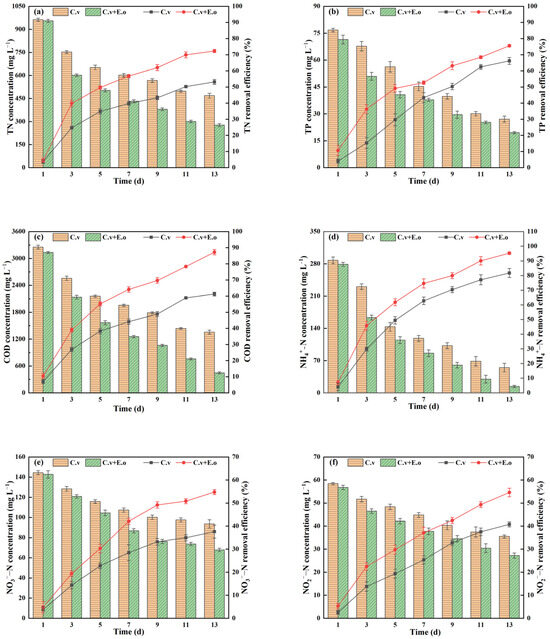
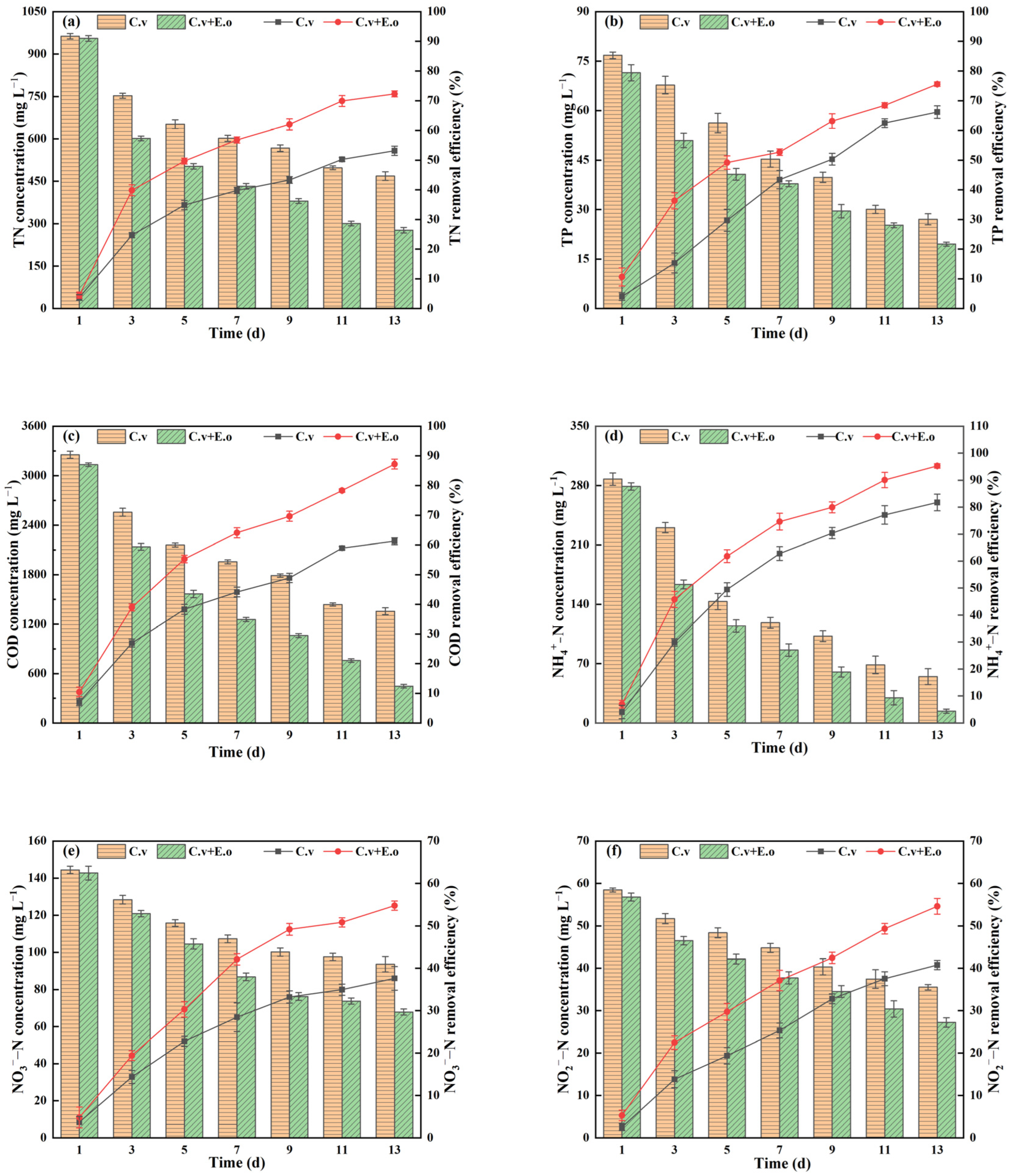
The removal efficiencies of pollutants in the algal-bacterial and pure algal systems are shown in Figure 2 and Table 1. Throughout the cultivation period, the algal-bacterial system consistently exhibited superior pollutant removal performance compared with the monoculture system. After 13 days, the concentrations of TN, TP, COD, NH4+-N, NO3−-N, and NO2−-N in the pure algal system were 468, 27.1, 1360, 54.7, 93.6, and 35.5 mg L−1, corresponding to removal efficiencies of 53.2%, 66.1%, 61.3%, 81.8%, 37.6%, and 40.8%, respectively. Compared with the pure algal system, the algal-bacterial system achieved significantly higher removal efficiencies for all measured parameters (Table 1, p < 0.05). Specifically, additional removal amounts of 191 mg L−1 TN, 7.6 mg L−1 TP, 910 mg L−1 COD, 41 mg L−1 NH4+-N, 25.8 mg L−1 NO3−-N, and 8.3 mg L−1 NO2−-N were observed, corresponding to efficiency increases of 19.1%, 9.5%, 26.0%, 13.5%, 17.2%, and 13.8%, respectively. These results indicate that bacterial addition markedly enhanced nutrient transformation and organic matter degradation within the algal-based treatment system.
Figure 2.
Variations in the concentrations and removal rates of wastewater in different culture systems. (a) The concentrations and removal efficiency of TN; (b) the concentrations and removal efficiency of TP; (c) the concentrations and removal efficiency of COD; (d) the concentrations and removal efficiency of NH4+-N; (e) the concentrations and removal efficiency of NO3−-N; (f) the concentrations and removal efficiency of NO2−-N. The pure algal system (C.v); the algal-bacterial system (C.v + E.o). (Data are shown with mean +/− SD).
Table 1.
Removal performance of nutrients under different treatment systems on day 13 of cultivation. (Data are presented as mean ± standard deviation (n = 3). Different lowercase letters within the same row indicate significant differences between treatments at p < 0.05).
Previous studies have reported similar improvements in pollutant removal efficiency in algal-bacterial systems [30]. Ferro et al. [31] employed a system of C. vulgaris and Rhizobium sp. and demonstrated that the co-culture not only substantially increased microalgal biomass yield and growth rate but also achieved excellent removal of nitrogen and phosphorus. The combined system of C. vulgaris and activated sludge used by Dong et al. [32] achieved high removal rates for TN (87.68%) and the C. vulgaris–E. coli system showed economic advantages and greater application potential. Zhang et al. [33] demonstrated that a bacterial-algal symbiotic bioremediation system exhibited high removal efficiencies of ammonium nitrogen and phosphorus, in which microalgae provided photosynthetic oxygen to support bacterial heterotrophic nitrification–aerobic denitrification while phosphorus was removed through algal assimilation and microbially mediated precipitation pathways. The results of this study further support that algal-bacterial interactions enhance pollutant removal through synergistic metabolic processes.
3.3. Oxygen and Carbon Dioxide Exchange
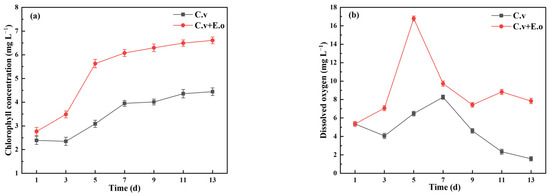
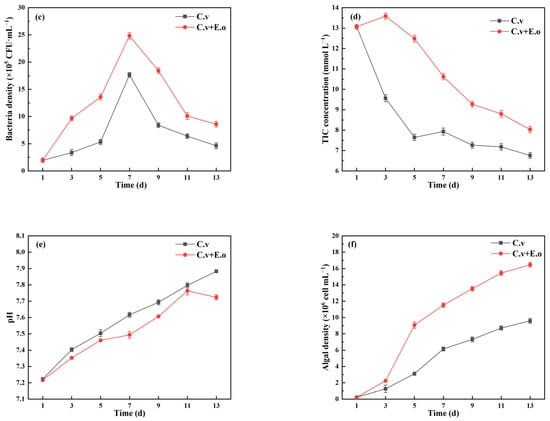
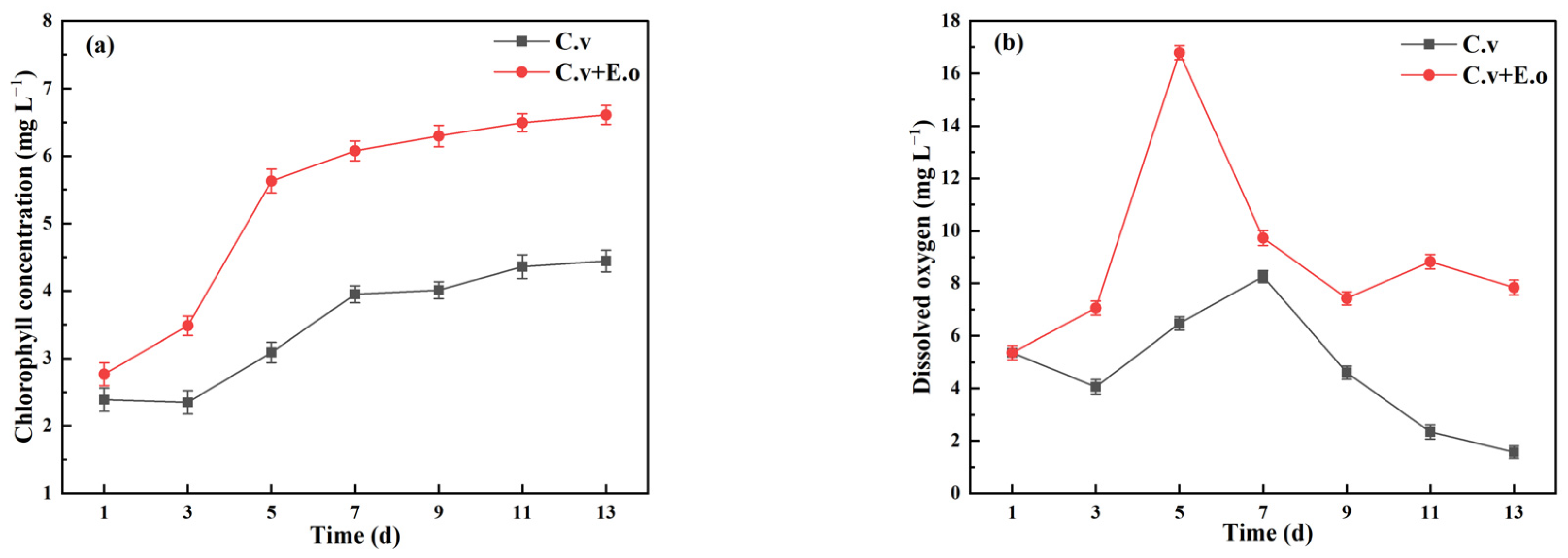
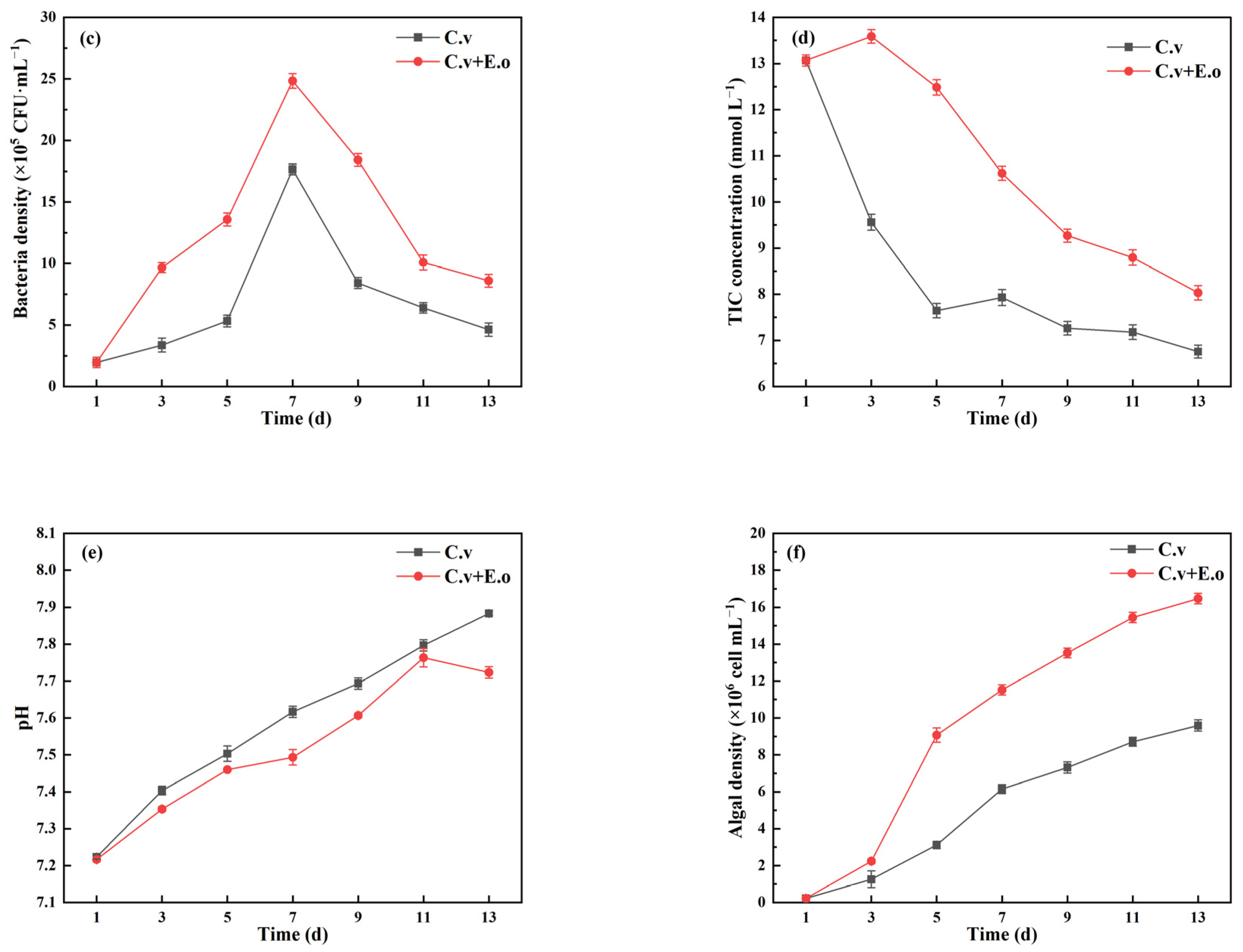
In this study, dissolved oxygen (DO), chlorophyll concentration, bacterial density, total inorganic carbon (TIC), algal density, and pH were monitored to explore the possible involvement of carbon–oxygen interactions (Figure 3). The maximum chlorophyll concentration in the algal-bacterial system reached 6.61 mg L−1, representing a 52.8% increase compared with the pure algal system (Figure 3a). The DO concentration in the algal-bacterial system gradually increased from 5.36 mg L−1 to a peak of 16.79 mg L−1 on day 5, before declining and stabilizing at 7.84 mg L−1. Throughout cultivation, DO levels in the algal-bacterial system remained higher than those in the pure microalgal system (Figure 3b). This pattern suggests enhanced photosynthetic oxygen production coupled with active bacterial respiration. Bacterial density in the co-culture reached 24.84 × 10⁵ CFU·mL−1, which was 40.8% higher than in the control (Figure 3c), indicating that the microalgal system provided favorable aerobic conditions for bacterial proliferation. Meanwhile, aerobic bacterial respiration could generate CO2, which serves as an inorganic carbon source for microalgal photosynthesis [34]. CO2 dynamics were presented by TIC and pH measurements in Figure 3d–f. In the algal-bacterial system, TIC peaked at 13.59 mmol L−1 on day 3, then gradually decreased to 8.03 mmol L−1. However, TIC in the pure algal system fluctuated between 7.0 and 8.0 mmol L−1 before declining to 6.75 mmol L−1 (Figure 3d). Consistent with TIC variation, the pH in the algal-bacterial system slowly increased and remained continuously lower than that in the pure microalgal system (Figure 3e). These results indicate that the addition of E. coli helps maintain higher TIC and lower pH, which enhances both the bacterial heterotrophic metabolism and algal growth. As shown in Figure 3f, C. vulgaris grew the fastest in the co-culture, reaching a maximum biomass of 16.46 × 10⁶ cell·mL−1. The coordinated trends of DO, chlorophyll concentration, bacterial density, TIC, algal density, and pH suggest the possible occurrence of reciprocal O2 and CO2 exchange within the co-culture system. Although a complete O2/CO2 mass balance analysis was not conducted, the integrated variations provide indirect but consistent evidence supporting the involvement of carbon–oxygen exchange in the algal-bacterial interaction.
Figure 3.
Changes in the C–O exchange index in different culture systems. (a) Change in chlorophyll concentration; (b) change in DO concentration; (c) change in bacterial density; (d) change in TIC concentration; (e) change in pH; (f) change in algal density. The pure algal system (C.v); the algal-bacterial system (C.v + E.o). (Data are shown with mean +/− SD).
Gas exchange between CO2 and O2 has long been recognized as a fundamental interaction mechanism in algal-bacterial symbiosis. Oswald et al. [35] examined variations in dissolved oxygen and carbon dioxide dynamics in high-rate algal pond systems and were among the first to suggest that nutrient transfer between algae and bacteria is largely driven by O2/CO2 coupling. The co-culture system demonstrated enhanced oxygen utilization along with increased CO2 fixation efficiency [36]. Lei et al. [37] further investigated algal-bacterial interactions during the treatment of ozonated sludge supernatant by evaluating soluble microbial products and extracellular polymeric substances (EPS). Their findings indicated that microalgae promoted bacterial proliferation through the release of oxygen and organic substrates, whereas bacteria contributed CO2 and secreted extracellular metabolites, including EPS, thereby facilitating algal metabolic activity. Similarly, Zhang et al. [38] reported that oxygen generated through photosynthesis by Chlorella sp. and Fusarium sp. stimulated bacterial degradation of PAM, while bacterially produced CO2 supported algal carbon assimilation.
3.4. Nitrogen Metabolism-Related Enzyme Activity
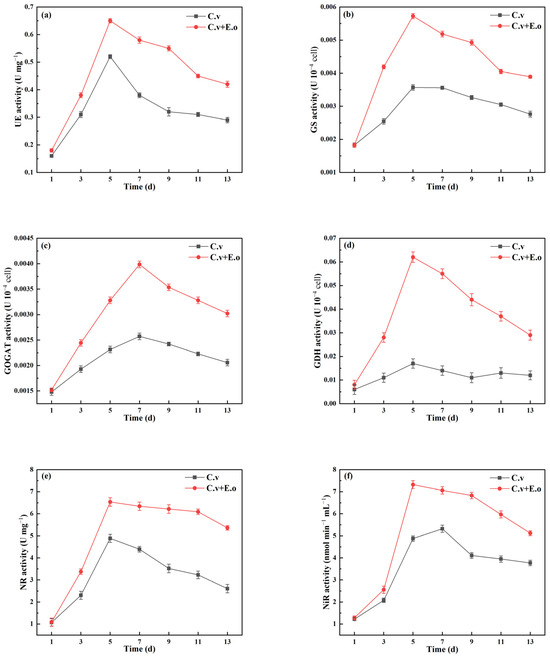
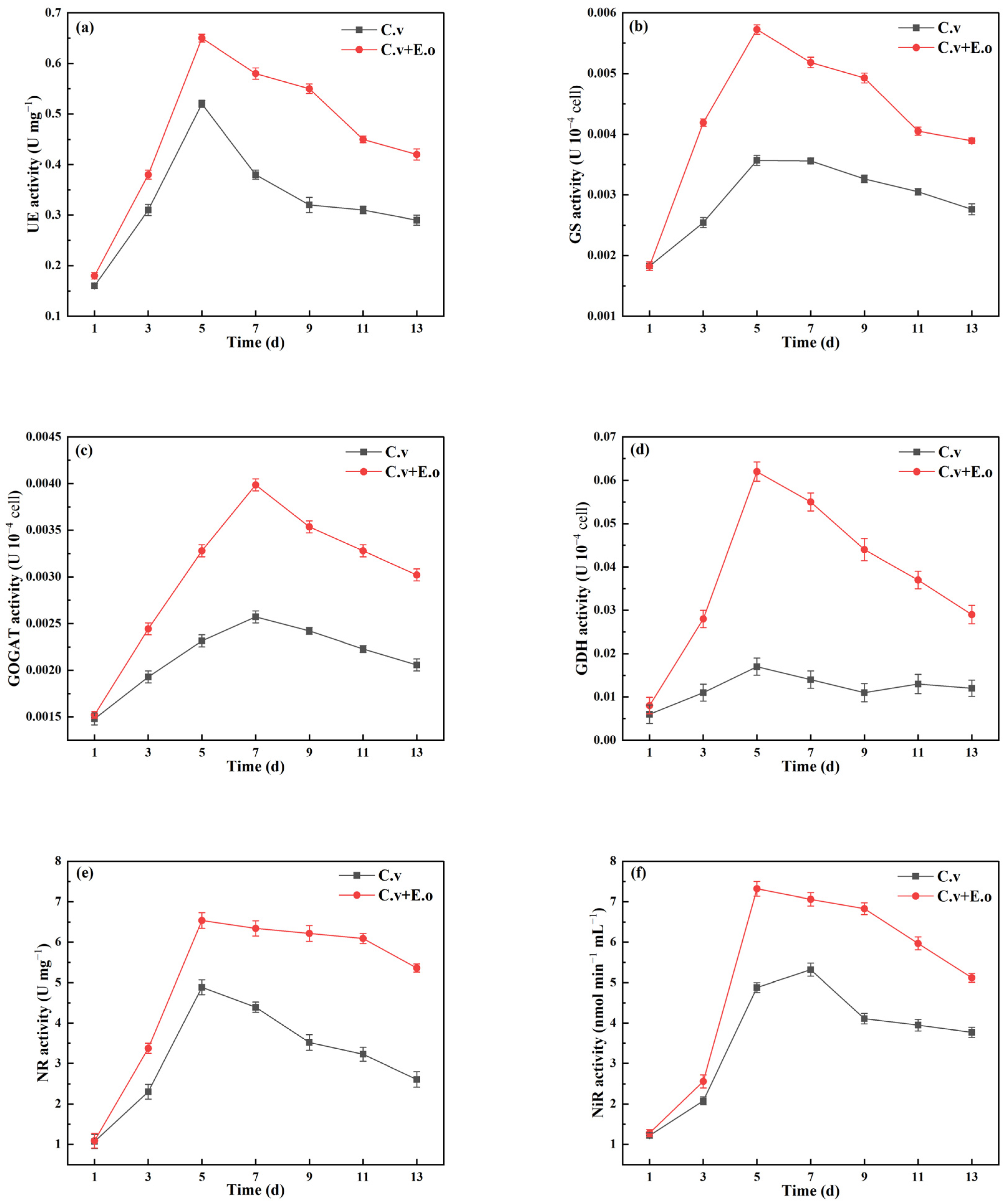
Nitrogen elimination in wastewater by microalgae is mediated by enzymes involved in nutrient uptake and metabolic conversion. As shown in Figure 4, activities of UE, GS, GOGAT, GDH, NR, and NiR were detected in both the algal-bacterial system and the pure algal system. All enzymes exhibited higher activities in the algal-bacterial system. The peak UE activity reached 0.65 U mg−1 on day 5, representing a 1.25-fold increase compared with the pure algal system, indicating enhanced hydrolysis of organic nitrogen to ammonium. The maximum activities of GS, GOGAT, and GDH were 1.60, 1.42, and 3.64 times higher, respectively, suggesting improved ammonia assimilation via the GS-GOGAT cycle and GDH pathway. Similarly, NR and NiR peak activities were 1.34 and 1.50 times higher, supporting more efficient nitrate and nitrite conversion. The activities of different enzymes reached their peaks at different times. UE, GS and GDH reached their maxima between days 1–5, while NR, NiR, and GOGAT peaked during days 5–7. Then, all enzyme activities gradually declined from day 7 to day 13. The increased activities of enzymes involved in nitrogen metabolism in the co-culture system indicate that the presence of E. coli enhanced nitrogen assimilation and conversion in C. vulgaris. Rather than implying direct molecular regulation, this enhancement may result from indirect microenvironmental modulation, including improved inorganic carbon availability, altered nitrogen species distribution, and changes in physicochemical conditions. These factors could collectively facilitate nitrogen assimilation pathways in microalgae. Therefore, the elevated enzymatic activities provide physiological evidence supporting potential synergistic interactions within the algal-bacterial system.
Figure 4.
Changes in enzyme activities in different culture systems. (a) Enzyme activities of UE; (b) enzyme activities of GS; (c) enzyme activities of GOGAT; (d) enzyme activities of GDH; (e) enzyme activities of NR; (f) enzyme activities of NiR. The pure algal system (C.v); the algal-bacterial system (C.v + E.o). (Data are shown with mean +/− SD).
Chu et al. [39] obtained similar results when treating marine aquaculture wastewater using an algal-bacterial system, in which the activities of nitrogen-metabolizing enzymes (GS, GOGAT, NR, NiR), the photosynthetic enzyme Rubisco, and the energy-metabolizing enzyme ATP synthase reached peak levels that were 1.3–2.1 times higher than those in the controls. Similarly, Arcila et al. [40] also observed increased activities of nitrogen anabolic enzymes (GS and GDH) in an algal-bacterial treatment system, a change attributed to synergistic interactions, resulting in significantly enhanced NH4+-N assimilation. Geng et al. [41] reported that in an algal-bacterial system treating low C/N wastewater, the gene abundances of GS and GOGAT in microalgae increased by 2.5–15.8 times in co-culture compared with the pure algal culture, resulting in 1.2–2.3 times higher enzyme activities enhanced by metabolic synergy. Wang et al. [42] observed significantly higher abundances of denitrifying enzyme genes (NR and NiR) in the algal-bacterial system than in the bacterial-only system, which suggested that organic matter derived from the algal-bacterial system promoted the denitrification process in low C/N wastewater through the symbiotic interactions.
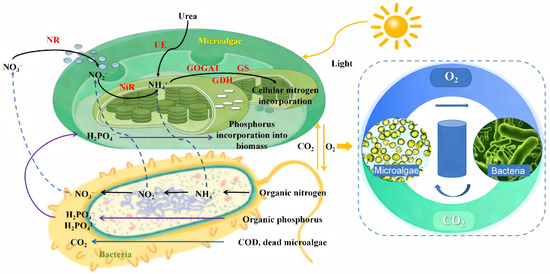
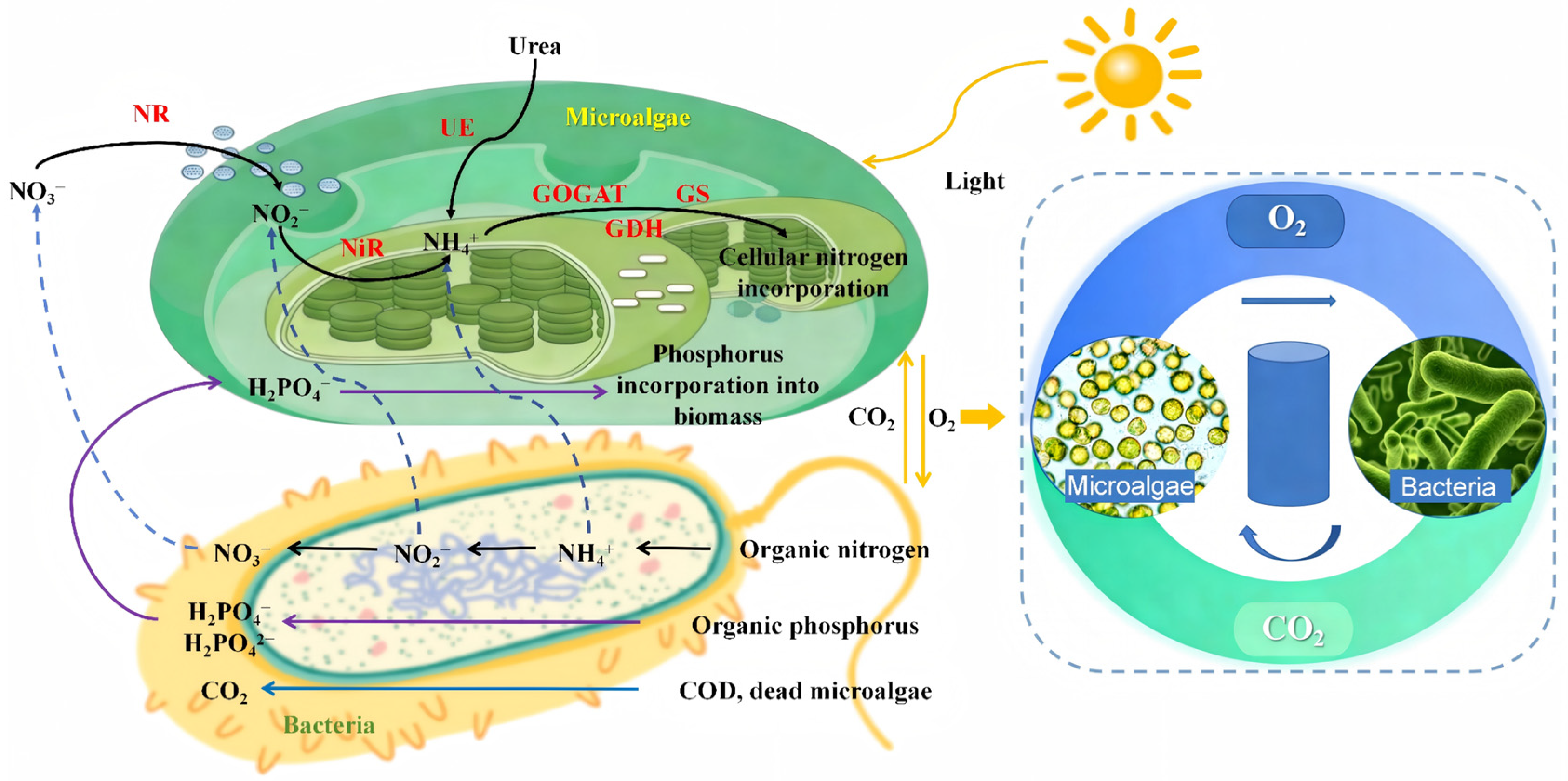
The conceptual schematic of potential interactions in the algal-bacterial system for wastewater treatment is illustrated in Figure 5. Microalgae and bacteria may develop mutualistic interactions through reciprocal carbon–oxygen exchange, whereby oxygen released during photosynthesis supports bacterial aerobic metabolism, while carbon dioxide generated by bacterial respiration enhances inorganic carbon availability for microalgal growth [43]. Regarding nitrogen removal, bacteria may contribute to the mineralization of organic nitrogen in wastewater, increasing ammonium availability. Changes in nitrogen species distribution in the co-culture system suggest that nitrification and related nitrogen transformation processes may occur under aerobic conditions. Meanwhile, microalgae assimilate nitrogenous compounds and convert them into biomass through nitrogen metabolism-related enzymes [44]. The increased activities of UE, NR, NiR, GS, GOGAT, and GDH observed in this study indicate enhanced nitrogen metabolic capacity in the algal-bacterial system compared with the monoculture system. These findings are consistent with known nitrogen assimilation pathways in microalgae, although intracellular metabolites and metabolic fluxes were not directly quantified. Phosphorus removal in the hybrid system may involve biological uptake by microalgae and bacterial transformation of organic phosphorus into bioavailable inorganic forms. Additionally, physicochemical processes, such as pH-induced precipitation and adsorption by biomass, may also contribute to phosphorus reduction [45].
Figure 5.
Conceptual schematic of potential interactions in the algal-bacterial system for wastewater treatment (note: Figure 5 presents a conceptual schematic diagram summarizing the potential interaction pathways inferred from physiological and enzymatic analyses). Arrows indicate the direction of nutrient transformation, gas exchange, and metabolic interactions between microalgae and bacteria.
Although this research was performed in a controlled laboratory setting, the improved nutrient removal efficiency and increased enzymatic activities observed in the algal-bacterial system highlight its potential for practical wastewater treatment applications. The mutualistic carbon–oxygen exchange and synergistic nutrient transformation between microalgae and bacteria may contribute to greater system stability than monoculture systems, thereby enhancing resilience under variable influent conditions. Nevertheless, several challenges remain before practical implementation. Long-term operational stability, tolerance to fluctuating nutrient loading, and efficient biomass harvesting require further systematic evaluation. In addition, although enhanced enzymatic activities were observed, the intracellular regulatory mechanisms underlying algal-bacterial interactions were not directly elucidated in this study. Further investigations using transcriptomic or other omics-based approaches are therefore required to clarify the molecular regulatory pathways governing these interactions. Techniques such as bioflocculation, gravity sedimentation, or membrane-assisted separation may facilitate biomass recovery and improve process feasibility. Therefore, pilot-scale studies under dynamic operating conditions are necessary to comprehensively evaluate the technical and economic sustainability of the proposed system.
4. Conclusions
This study demonstrates that E. coli significantly promoted the growth and biomass accumulation of C. vulgaris and enhanced pollutant removal in synthetic livestock wastewater. After 13 days, removal efficiencies of TN, TP, COD, NH4+-N, NO3−-N, and NO2−-N reached 72.3%, 75.6%, 87.3%, 95.3%, 54.8%, and 54.6%, respectively. The co-culture system maintained higher levels of chlorophyll, TIC, DO, algal density, and bacterial density than the pure algal system. Enzyme activities related to nitrogen metabolism (UE, GS, GOGAT, GDH, NR, NiR) were 1.25, 1.60, 1.42, 3.64, 1.34, and 1.50 times higher, respectively, than in the monoculture, suggesting synergistic nitrogen assimilation and transformation partly mediated by reciprocal O2 and CO2 exchange. Overall, these findings provide mechanistic insights into algal-bacterial synergy and a conceptual basis for enhancing livestock wastewater treatment.
Although E. coli was used as a model heterotrophic bacterium under controlled laboratory conditions, its use in open or semi-open wastewater systems may raise biosafety concerns. This study represents a laboratory-scale mechanistic investigation rather than a direct engineering application. In practice, non-pathogenic environmental bacteria or indigenous microbial communities would be more suitable partners. Full-scale facilities generally incorporate management, containment, and downstream processing to mitigate microbial risks. Future work should evaluate the feasibility and safety of alternative bacterial partners under realistic operating conditions.
Author Contributions
Conceptualization, L.J., F.X., Y.G., and Y.L.; methodology, L.J., and Y.L.; software, Y.L.; validation, Y.L., L.J., F.X., and Y.G.; formal analysis, L.J., F.X., and Y.G.; investigation, Y.L.; resources, Y.L.; data curation, Y.L.; writing—original draft preparation, Y.L.; writing—review and editing, L.J., and F.X.; visualization, Y.L., L.J., F.X., and Y.G.; supervision, L.J., and F.X.; project administration, L.J., and F.X.; funding acquisition, L.J., and F.X. All authors have read and agreed to the published version of the manuscript.
Funding
This research was supported by: 1. The National Natural Science Foundation of China, grant number 42177057 (by Li Ji); 2. Shanxi Provincial Key Research and Development Project, grant number 202502090301010 (by Fei Xie); 3. Shanxi Provincial Key Research and Development Project, grant number 202202140601019 (by Li Ji); 4. Shanxi Key Laboratory of Water Pollution Prevention and Utilization Open Topic Project, grant number SWRFZYLY202514 (by Fei Xie); 5. Shanxi Key Laboratory of Water Pollution Prevention and Utilization Special Project for the Construction of Innovation Platform Base, grant number 202502ZZ0910007 (by Fei Xie).
Institutional Review Board Statement
Not applicable.
Informed Consent Statement
Not applicable.
Data Availability Statement
The original contributions presented in this study are included in the article. Further inquiries can be directed to the corresponding author.
Acknowledgments
The authors thank other laboratory members for algal culture and technical assistance.
Conflicts of Interest
The authors declare no conflicts of interest.
References
- Song, H.; Li, J.; Su, Q.; Li, H.; Guo, X.; Shao, S.; Qian, J. Insight into the mechanism of nitrogen sufficiency conversion strategy for microalgae-based ammonium-rich wastewater treatment. Chemosphere 2024, 349, 140904. [Google Scholar] [CrossRef] [Scilit]
- Ministry of Ecology and Environment of the People’s Republic of China. China Environmental Statistics Annual Report 2024. 2025. Available online: https://www.mee.gov.cn/hjzl/sthjzk/sthjtjnb/202511/W020251128751529122742.pdf (accessed on 27 January 2026).
- Mousavi, S.A.; Ghahfarokhi, M.S.; Koupaei, S.S. Negative impacts of nomadic livestock grazing on common rangelands’ function in soil and water conservation. Ecol. Indic. 2020, 110, 105946. [Google Scholar] [CrossRef] [Scilit]
- Li, Y.; Fang, L.; Cao, G.; Mi, W.; Lei, C.; Zhu, K.; Bi, Y. Reservoir regulation-induced variations in water level impacts cyanobacterial bloom by the changing physiochemical conditions. Water Res. 2024, 259, 121836. [Google Scholar] [CrossRef] [Scilit]
- Li, Y.; Mi, W.; Ji, L.; He, Q.; Yang, P.; Xie, S.; Bi, Y. Urbanization and agriculture intensification jointly enlarge the spatial inequality of river water quality. Sci. Total Environ. 2023, 878, 162559. [Google Scholar] [CrossRef] [Scilit]
- Li, L.; Chai, W.; Sun, C.; Huang, L.; Sheng, T.; Song, Z.; Ma, F. Role of microalgae-bacterial consortium in wastewater treatment: A review. J. Environ. Manag. 2024, 360, 121226. [Google Scholar] [CrossRef] [Scilit]
- Saravanan, A.; Deivayanai, V.C.; Kumar, P.S.; Rangasamy, G.; Hemavathy, R.V.; Harshana, T.; Alagumalai, K. A detailed review on advanced oxidation process in treatment of wastewater: Mechanism, challenges and future outlook. Chemosphere 2022, 308, 136524. [Google Scholar] [CrossRef] [Scilit] [PubMed]
- Nishat, A.; Yusuf, M.; Qadir, A.; Ezaier, Y.; Vambol, V.; Khan, M.I.; Eldin, S.M. Wastewater treatment: A short assessment on available techniques. Alex. Eng. J. 2023, 76, 505–516. [Google Scholar] [CrossRef] [Scilit]
- Kong, T.; Li, A.; Zhang, L. Microalgae-based wastewater treatment: Mechanisms, strategies, and the role of biochemical composition. J. Environ. Chem. Eng. 2025, 13, 118131. [Google Scholar] [CrossRef] [Scilit]
- Huo, S.; Chen, J.; Zhu, F.; Zou, B.; Chen, X.; Basheer, S.; Qian, J. Filamentous microalgae Tribonema sp. cultivation in the anaerobic/oxic effluents of petrochemical wastewater for evaluating the efficiency of recycling and treatment. Biochem. Eng. J. 2019, 145, 27–32. [Google Scholar] [CrossRef] [Scilit]
- Qian, J.; Zhang, X.; Cheng, J.; Jin, Z.; Zhu, H. Enhancing algal growth and nutrient removal from nitrified anaerobic digestion piggery effluent through process optimization. Algal Res. 2022, 65, 102746. [Google Scholar] [CrossRef] [Scilit]
- Wang, Y.; Wang, S.; Sun, L.; Sun, Z.; Li, D. Screening of a Chlorella-bacteria consortium and research on piggery wastewater purification. Algal Res. 2020, 47, 101840. [Google Scholar] [CrossRef] [Scilit]
- Zhu, S.; Qin, L.; Feng, P.; Shang, C.; Wang, Z.; Yuan, Z. Treatment of low C/N ratio wastewater and biomass production using co-culture of Chlorella vulgaris and activated sludge in a batch photobioreactor. Bioresour. Technol. 2019, 274, 313–320. [Google Scholar] [CrossRef] [Scilit]
- Mohan, A.A.; Ramanan, R. Polyhydroxybutyrate and extracellular polymeric substances production from dairy wastewater grown cyanobacterial strains Leptolyngbya angustata and Synechococcus elongatus. Bioresour. Technol. Rep. 2025, 33, 102469. [Google Scholar] [CrossRef] [Scilit]
- Ji, L.; Ge, Q.; Li, Y.; Gao, Y.; Xie, S. A comparative study of the growth and nutrient removal effects of five green microalgae in simulated domestic sewage. Water 2021, 13, 3613. [Google Scholar] [CrossRef] [Scilit]
- Sváb, D.; Falgenhauer, L.; Kotogán, E.; Chakraborty, T.; Tóth, I. Comparative genomic analysis of cyclomodulin-producing Escherichia coli strains of animal origin. Int. J. Med. Microbiol. 2026, 322, 151690. [Google Scholar] [CrossRef] [Scilit]
- Lowry, O.H.; Rosebrough, N.J.; Farr, A.L.; Randall, R.J. Protein measurement with the Folin phenol reagent. J. Biol. Chem. 1951, 193, 265–275. [Google Scholar] [CrossRef] [Scilit]
- Bigogno, C.; Khozin-Goldberg, I.; Boussiba, S.; Vonshak, A.; Cohen, Z. Lipid and fatty acid composition of the green oleaginous alga Parietochloris incisa, the richest plant source of arachidonic acid. Phytochemistry 2002, 60, 497–503. [Google Scholar] [CrossRef] [Scilit]
- Gao, Y.; Ji, L.; Feng, J.; Lv, J.; Xie, S. Effects of combined nitrogen deficient and mixotrophic (+Glucose) culture on the lipid accumulation of Parachlorella kessleri TY. Water 2021, 13, 3066. [Google Scholar] [CrossRef] [Scilit]
- HJ 828-2017; Water Quality—Determination of the Chemical Oxygen Demand—Dichromate Method. China Environmental Science Press: Beijing, China, 2017.
- HJ 636-2012; Water Quality—Determination of Total Nitrogen—Alkaline Potassium Persulfate Digestion UV Spectrophotometric Method. China Environmental Science Press: Beijing, China, 2012.
- GB/T 11893-1989; Water Quality—Determination of Total Phosphorus—Ammonium Molybdate Spectrophotometric Method. China Standards Press: Beijing, China, 1989.
- HJ 535-2009; Water Quality—Determination of Ammonia Nitrogen—Nessler’s Reagent Spectrophotometry. China Environmental Science Press: Beijing, China, 2009.
- GB/T 7480-1987; Water Quality—Determination of Nitrate—Spectrophotometric Method with Phenol Disulfonic Acid. China Standards Press: Beijing, China, 1987.
- GB/T 7493-1987; Water Quality—Determination of Nitrogen (Nitrite)—Spectrophotometric Method. China Standards Press: Beijing, China, 1987.
- Dong, H.; Liu, W.; Zhang, H.; Wang, Z.; Feng, F.; Zhou, L.; Ma, J. Enhanced biomass production and wastewater treatment in attached co-culture of Chlorella pyrenoidosa with nitrogen-fixing bacteria Azotobacter beijerinckii. Bioprocess Biosyst. Eng. 2023, 46, 707–716. [Google Scholar] [CrossRef] [Scilit] [PubMed]
- Takagi, A.; Machida, N.; Nagao, M.; Kanesaki, Y.; Asayama, M. Co-Culture of cyanobacteria and rhizobia, increasing biomass under nitrogen-starvation conditions. Appl. Biochem. Biotechnol. 2025, 197, 6932–6947. [Google Scholar] [CrossRef] [Scilit]
- Naseema Rasheed, R.; Pourbakhtiar, A.; Mehdizadeh Allaf, M.; Baharlooeian, M.; Rafiei, N.; Alishah Aratboni, H.; Winck, F.V. Microalgal co-cultivation-recent methods, trends in omic-studies, applications, and future challenges. Front. Bioeng. Biotechnol. 2023, 11, 1193424. [Google Scholar] [CrossRef] [Scilit] [PubMed]
- Matthews, J.L.; Hoch, L.; Raina, J.B.; Pablo, M.; Hughes, D.J.; Camp, E.F.; Herdean, A. Symbiodiniaceae photophysiology and stress resilience is enhanced by microbial associations. Sci. Rep. 2023, 13, 20724. [Google Scholar] [CrossRef] [Scilit]
- Choix, F.J.; López-Cisneros, C.G.; Méndez-Acosta, H.O. Azospirillum brasilense increases CO2 fixation on microalgae Scenedesmus obliquus, Chlorella vulgaris, and Chlamydomonas reinhardtii cultured on high CO2 concentrations. Microb. Ecol. 2018, 76, 430–442. [Google Scholar] [CrossRef] [Scilit]
- Ferro, L.; Gojkovic, Z.; Muñoz, R.; Funk, C. Growth performance and nutrient removal of a Chlorella vulgaris-Rhizobium sp. co-culture during mixotrophic feed-batch cultivation in synthetic wastewater. Algal Res. 2019, 44, 101690. [Google Scholar] [CrossRef] [Scilit]
- Dong, J.; Peng, S.; Zhang, X.; Xie, Z.; Meng, R.; Xi, Y.; Kong, W. Construction of a co-culture system of Bacillus aryabhattai and Desmodesmus sp. and its performance in treating simulated wastewater with high nitrogen and phosphorus. Algal Res. 2025, 89, 104070. [Google Scholar] [CrossRef] [Scilit]
- Zhang, L.; Ali, A.; Su, J.; Huang, T.; Wang, Z. Ammonium nitrogen and phosphorus removal by bacterial-algal symbiotic dynamic sponge bioremediation system in micropolluted water: Operational mechanism and transformation pathways. Sci. Total Environ. 2024, 947, 174636. [Google Scholar] [CrossRef] [Scilit] [PubMed]
- Saravanan, A.; Kumar, P.S.; Varjani, S.; Jeevanantham, S.; Yaashikaa, P.R.; Thamarai, P.; George, C.S. A review on algal-bacterial symbiotic system for effective treatment of wastewater. Chemosphere 2021, 271, 129540. [Google Scholar] [CrossRef] [Scilit] [PubMed]
- Oswald, W.J.; Gotaas, H.B.; Golueke, C.G.; Kellen, W.R.; Gloyna, E.F.; Hermann, E.R. Algae in waste treatment [with discussion]. Sew. Ind. Wastes 1957, 29, 437–457. [Google Scholar]
- Qi, W.; Mei, S.; Yuan, Y.; Li, X.; Tang, T.; Zhao, Q.; Sun, Y. Enhancing fermentation wastewater treatment by co-culture of microalgae with volatile fatty acid-and alcohol-degrading bacteria. Algal Res. 2018, 31, 31–39. [Google Scholar] [CrossRef] [Scilit]
- Lei, Y.J.; Tian, Y.; Zhang, J.; Sun, L.; Kong, X.W.; Zuo, W.; Kong, L.C. Microalgae cultivation and nutrients removal from sewage sludge after ozonizing in algal-bacteria system. Ecotoxicol. Environ. Saf. 2018, 165, 107–114. [Google Scholar] [CrossRef] [Scilit] [PubMed]
- Zhang, H.; Shangguan, M.; Zhou, C.; Peng, Z.; An, Z. Construction of a mycelium sphere using a Fusarium strain isolate and Chlorella sp. for polyacrylamide biodegradation and inorganic carbon fixation. Front. Microbiol. 2023, 14, 1270658. [Google Scholar] [CrossRef] [Scilit]
- Chu, G.; Gao, C.; Wang, Q.; Zhang, W.; Tian, T.; Chen, W.; Gao, M. Effect of light intensity on nitrogen removal, enzymatic activity and metabolic pathway of algal-bacterial symbiosis in rotating biological contactor treating mariculture wastewater. Bioresour. Technol. 2025, 417, 131872. [Google Scholar] [CrossRef] [Scilit]
- Arcila, J.S.; Céspedes, D.; Buitrón, G. Influence of wavelength photoperiods and N/P ratio on wastewater treatment with microalgae-bacteria. Water Sci. Technol. 2021, 84, 712–724. [Google Scholar] [CrossRef] [Scilit] [PubMed]
- Geng, Y.; Xiong, Z.; Yang, L.; Lian, C.A.; Pavlostathis, S.G.; Qiu, Z.; Luo, X. Bidirectional enhancement of nitrogen removal by indigenous synergetic microalgal-bacterial consortia in harsh low-C/N wastewater. Environ. Sci. Technol. 2024, 58, 5394–5404. [Google Scholar] [CrossRef] [Scilit]
- Wang, K.; Xu, J.; Luo, X.; Yu, Z.; Tang, A.; Peng, K.; Ren, M. Insights into microalgal-bacterial consortia in sustaining denitrification via algal-derived organic matter in harsh low-C/N wastewater. J. Environ. Manag. 2025, 393, 127108. [Google Scholar] [CrossRef] [Scilit] [PubMed]
- Zhang, B.; Wu, L.; Shi, W.; Zhang, Z.; Lens, P.N. A novel strategy for rapid development of a self-sustaining symbiotic algal-bacterial granular sludge: Applying algal-mycelial pellets as nuclei. Water Res. 2022, 214, 118210. [Google Scholar] [CrossRef] [Scilit]
- Cai, T.; Park, S.Y.; Li, Y. Nutrient recovery from wastewater streams by microalgae: Status and prospects. Renew. Sustain. Energy Rev. 2013, 19, 360–369. [Google Scholar] [CrossRef] [Scilit]
- Chai, W.S.; Cheun, J.Y.; Kumar, P.S.; Mubashir, M.; Majeed, Z.; Banat, F.; Show, P.L. A review on conventional and novel materials towards heavy metal adsorption in wastewater treatment application. J. Clean. Prod. 2021, 296, 126589. [Google Scholar] [CrossRef] [Scilit]

Disclaimer/Publisher’s Note: The statements, opinions and data contained in all publications are solely those of the individual author(s) and contributor(s) and not of MDPI and/or the editor(s). MDPI and/or the editor(s) disclaim responsibility for any injury to people or property resulting from any ideas, methods, instructions or products referred to in the content. |
© 2026 by the authors. Licensee MDPI, Basel, Switzerland. This article is an open access article distributed under the terms and conditions of the Creative Commons Attribution (CC BY) license.