


Abstract
To effectively leverage the role of green shipping corridors (GSCs) in promoting greenhouse gas emissions reduction in international shipping, this paper firstly examined the current status and challenges faced by GSCs with the aim of providing valuable solutions for future development. Then, a conceptual framework of multi-stakeholder partnerships (MSPs) for the international maritime industry that enables the construction and implementation of GSCs was proposed. Additionally, the inherent correlation mechanism between the “feasibility wall” of GSCs and the core elements as well as key principles in the MSP framework was also explored. The findings indicate that the GSC initiatives at the global, regional and local levels are advancing rapidly, yet very few have been truly implemented and effectively operationalized, with the fundamental cause lying in the lack of effective theoretical guidance and research support; based on the theory, mechanism and framework of MSPs, the existing GSCs are found to still have considerable deficiencies in partnership building, roles and responsibilities, governance structure, funding and resource support, as well as monitoring and accountability. Concept validation through case studies demonstrates that the conceptual framework proposed in this paper can serve as a practical diagnostic tool for GSC initiatives, which can help to identify the specific stage they are failing at and apply targeted principles to fix it. This paper is expected to contribute to a more effective advancement of the development of GSCs, thereby actively facilitating the achievement of net-zero emission targets for international shipping.
1. Introduction
Maritime transportation plays a pivotal role in promoting international trade prosperity, global economic growth, and the development of human civilization [1]. However, shipping also contributes nearly 3% of global annual anthropogenic carbon dioxide (CO2) emissions, despite being the most economical and energy-efficient mode of transport for bulk goods [2]. To align with global efforts to address climate change by reducing greenhouse gas (GHG) emissions, the International Maritime Organization (IMO) has also recognized this harsh reality and actively taken improvements to support global decarbonization efforts [3]. Consequently, enhanced regulatory frameworks are adopted—such as introducing Chapter 4 in Annex VI of the International Convention for the Prevention of Pollution from Ships (MARPOL) [4,5], developing IMO strategies on reduction in GHG emissions from ships [6,7], and drafting Regulations on the IMO Net-Zero Framework [8], as well as the inclusion of innovative technological and operational energy efficiency measures [9,10], zero or near-zero GHG emission technologies, fuels and/or energy sources (ZNZs) [11,12] and GHG emissions pricing mechanisms [13,14]—which aim to achieve net-zero GHG emissions for the shipping industry.
The shipping decarbonization process, especially the scaling up of ZNZs, faces a series of challenges, such as technological maturity, investment and operating costs, secure availability of alternative fuels, and public acceptability. Therefore, the diverse stakeholders adopt various measures, such as incentive mechanisms for the application of ZNZs [15,16], differentiated port dues [17,18], and industrial chain collaboration [19,20], to address the existing obstacles and problems. Among them, establishing green shipping corridors (GSCs) is considered to be one of the most promising comprehensive solutions for achieving shipping decarbonization.
GSCs represent a strategic approach to decarbonize international shipping by establishing specific maritime routes where zero-emission shipping solutions can be implemented and scaled up. These corridors are defined as maritime routes that demonstrate low-emission and zero-emission lifecycle fuels and technologies, with the ultimate ambition to achieve net-zero GHG emissions across all aspects of the corridor, in support of sector-wide decarbonization by 2050. In 2021, a total of 22 countries signed the Clydebank Declaration at COP26 (and 5 more signatory countries after that), which is a key impetus for the transition to zero-emission shipping, and committed to supporting the establishment of at least six GSCs by the middle of this decade and continuously expand their number by 2030 [21]. The Clydebank Declaration marked a significant milestone in global maritime decarbonization efforts, providing a clear roadmap for specific actions to reduce shipping GHG emissions. As of 2025, 84 GSC initiatives, covering different development phases, regions, shipping segments, and fuel pathways, have emerged, and 305 stakeholders from maritime industrial chains have been involved [22]. Given the industry’s substantial environmental impact, GSCs have emerged as a critical component of international climate action, offering a practical pathway to achieve the net-zero emission targets proposed by the IMO.
The number of GSC initiatives has increased significantly in the last four years, while no zero-emission maritime route has been put into operation so far. In this regard, can the vision and goals set forth in the Clydebank Declaration be realized? Is the GSC a realistic path to achieving zero-emission shipping? If building a demonstrative GSC faces many challenges, is it feasible for international shipping to achieve net zero emissions by 2050? How can we build GSCs faster and maximize their effectiveness? Urged on by these questions, this paper aims to explore the potential value of GSCs from the perspective of MSPs and strives to explore the theoretical basis and action recommendations for high-quality construction of GSCs, so as to accelerate the transition to zero-emission shipping as soon as possible. Above all, the main work and contributions of this paper are as follows: (1) The current status and obstacles faced by the development of GSCs are critically analyzed to explore valuable solutions for future development. (2) A novel conceptual framework of MSPs for the international maritime industry is constructed that enables the construction and implementation of GSCs. (3) Implementation pathways for GSC development are proposed which can better leverage the role of GSCs and actively promote the achievement of net zero emissions targets for the international shipping industry.
After the Introduction, Section 2 examines the existing literature and practice on GSCs. Section 3 elaborates on the research design and methodology. A conceptual framework of MSPs for GSC development is presented in Section 4. In Section 5, some comments and implications in terms of the construction and implementation of GSCs based on the conceptual framework of MSPs are analyzed and discussed. Finally, the conclusions are presented in Section 6.
2. Literature Review on GSCs
2.1. Introduction and Definition of GSCs
The term “green corridor” has been widely used in various fields since this century, such as urban planning [23], wildlife zones [24], ecological landscape [25], clean energy infrastructure, etc. Subsequently, the concept of green corridors was introduced into intermodal freight transportation by the European Union (EU) in 2007 [26], which includes short-sea shipping, railway, inland waterway, air and road transport [27], with the purposes of facilitating the functioning of efficient and sustainable transport or green logistics systems [28], application of innovative technologies [29], and promoting the development of sustainable logistics networks within the EU [26]. Meanwhile, the SuperGreen project, i.e., Supporting EU’s Freight Transport Logistics Action Plan on Green Corridors Issues, was initiated under the European Commission’s 7th Framework Programme, with the objectives of defining and developing the green corridor concept [27] and providing methodology and policy recommendations to support the development of the EU’s green transport corridors [28].
To align the shipping sector with the Paris Agreement and pursue efforts to limit the temperature increase to 1.5 °C above pre-industrial levels, the Clydebank Declaration was launched at COP26 in Glasgow in November 2021, which is preemptively designed to support the establishment of GSCs and enable zero-emission shipping [21]. Thereafter, a large amount of theoretical research has begun to focus on the concept, establishment, evaluation, and implementation of GSCs.
GSCs were initially interpreted in the Clydebank Declaration as zero-emission maritime routes between two (or more) ports [21], while the United States Department of State envisions GSCs as “maritime routes that showcase low- and zero-emission lifecycle fuels and technologies with the ambition to achieve zero greenhouse gas emissions across all aspects of the corridor in support of sector-wide decarbonization no later than 2050” [30]. The Global Maritime Forum (GMF) defined a GSC as “a shipping route between two major port hubs (including intermediary stopovers) on which the technological, economic, and regulatory feasibility of the operation of zero-emissions ships is catalyzed through public and private actions” [31], or “specific shipping routes where the technological, economic and regulatory feasibility of the operation of zero-emission ships is catalyzed by a combination of public and private actions” [32].
However, due to different interpretations of “green” and “corridor”, several definitions of GSC have emerged [33]. Regarding the definition of “green”, an emissions-centric approach and a technology-centric approach have been summarized [32]. The former focuses on reducing GHG emissions per se, while the technology-centric approach emphasizes the demonstration and deployment of ZNZs. In addition, the technology-centric approach makes it easier to quantify the deployment of ZNZs, as well as set indicators, milestones and roadmaps. In the context of maritime logistics, a “corridor” literally refers to a specific maritime route connecting two port hubs, but it could also be a network connecting multiple ports regionally or globally. In this context, the corridors were categorized as three types: single point corridor, maritime route around a port hub allowing round-trip bunkering; point-to-point corridor, single maritime route between two ports; network, maritime routes between three or more ports [34]. Moreover, apart from being the geographical connection between two or more locations, a “corridor” more importantly means an enabling environment that helps to reduce GHG emissions, as well as promote the demonstration and deployment of ZNZs [35]. Therefore, a more open and inclusive concept of GSCs is favored, while it makes little sense to be entangled with a prescriptive definition or a descriptive scenario. Any framework and mechanism that aims to reduce emissions and facilitates an enabling environment is worth encouraging. Ultimately, the definition of GSCs will be clarified and solidified by successful and scalable cases.
2.2. Establishment and Implementation of GSCs
Regarding initiating and governing GSCs, a project-centric approach and a program-centric approach have been proposed [32]. The former emphasizes direct investment in pilot/demonstration projects, while the latter focuses on creating and maintaining enabling environments/ecosystems, rather than on any given demonstration. However, these two approaches are not opposed and often should be adopted jointly. To establish a GSC or ensure the success of a GSC, the GMF identified fostering cross-value-chain collaboration, determining the fuel pathway, mobilizing customer demand, and developing policy and regulation, as the four critical building blocks [31]. Similarly, the American Bureau of Shipping (ABS) identified the four foundational elements as collaboration across the value chain, development of alternative fuel pathways and port infrastructure, shipping impact/logistical case, as well as policy and regulatory support [35]. However, Bengue et al. [36] thought alternative fuels, bunkering infrastructure, vessel decarbonization pathways, and cargo demand dynamics were the four priority areas. Furthermore, several industrial bodies, such as the Energy Transitions Commission [37], the Mærsk Mc-Kinney Møller Center for Zero Carbon Shipping (MMMCZCS) [34,38], the Lloyd’s Register Maritime Decarbonization Hub (LR MDH) [39], the Getting to Zero Coalition [40], etc., have proposed guidelines or frameworks to build on lessons and experience, catalyze stakeholders’ actions and scale up GSC initiatives. Regarding the development phases of GSC projects, six phases were defined, including pre-feasibility, feasibility, select, define, execute, and operate [34]. In the meantime, the MMMCZCS developed a feasibility phase blueprint to provide an approach to access the feasibility of a GSC. The existing representative frameworks for the development of GSCs are sorted in Figure 1. Viable alternative fuel pathways and collaboration across the value chain are identified as the common key elements. Nevertheless, the research gaps, e.g., insufficient adaptation to GSC operational characteristics, lack of effective collaboration mechanisms, and lack of linkages to funding allocation, remain to be addressed.
Figure 1.
The existing representative frameworks for building GSCs. Source: GMF [31]; MMMCZCS [34]; ABS [35]; LR MDH [39].
The GSC concept and practice first originated in the maritime industry, and subsequently a large amount of academic research also entered the public eye. To examine key trends, collaborative patterns, and influential contributions on the concept of GSCs, a bibliometric analysis based on a five-step approach was conducted [41]. Some insightful recommendations in terms of policy, technology adaptation, and stakeholder collaboration were provided to better understand and effectively implement GSCs. To establish a GSC between the Ports of Sines and Luanda, a fuzzy analytic hierarchy process (AHP) was employed to explore the prioritization of the criteria in terms of environmental, economic, infrastructure, regulatory, operational, technological, and social aspects [36]. Environmental compatibility was given the highest priority, followed by economic viability, whilst social acceptance ranked the lowest. To identify and rank the factors influencing value creation in GSCs, a fuzzy stepwise weight assessment ratio method within the framework of multi-criteria decision-making was employed [42]. Three critical factors, i.e., energy efficiency, harvesting and conservation, attracting green investments, and air quality improvement, stand out among the 19 sub-categories across environmental, economic, and social dimensions. In the context of GSCs, a tripartite evolutionary game model involving government, shipping company, and cargo owners was established [43]. The role of government was highlighted, and the driving force from the demand side cannot be ignored. However, a GSC is a complex system involving multiple parties, which means more convincing conclusions may come from a multi-party game model.
An optimization model integrating network design with policy-driven economic considerations was developed for GSC shipping network design and strategic deployment of alternative fuel bunkering infrastructure, whilst the scalability and robustness of the cost-minimization optimization model was tested and confirmed by the case studies of the Baltic, Mediterranean, and Pacific shipping routes [44]. Furthermore, a comprehensive decision-support framework based on a novel multi-level optimization model for GSCs was developed to simultaneously address shipping route planning, bunkering infrastructure investment, and alternative-fuel vessel deployment [45]. The findings highlight the critical role of sustainable investment, the effectiveness of carbon pricing policies and government intervention measures, and the decisive impact of route-specific characteristics on alternative fuel selection.
An impact assessment framework for GSCs in RoPax shipping was developed, and 17 impacts were identified, falling into four categories, i.e., impacts on negative externalities, socio-economic impacts, impacts on transportation, and impacts on green transition of other industries [46]. Furthermore, through a comprehensive review of relevant regulations, economic incentives, and voluntary policy instruments at the international, EU, and national levels, various policy and regulatory tools affecting the development of GSCs for RoPax in Europe have been thoroughly analyzed [47]. The results show that the impact of the existing policy framework on GSC initiatives is not limited to the maritime sector alone, but also extends to multiple related industries such as land logistics, freight transportation, shipbuilding, and energy production, indicating that the decarbonization of the maritime industry will involve a broader range of stakeholders.
2.3. Uptakes of Alternative Fuels for GSCs
Transition to zero-emission shipping is slow-moving due to lack of consensus on alternative marine fuels; thus, an economic analysis framework for GSCs was proposed for stakeholders to choose the most promising low/zero-carbon fuels [48]. Furthermore, a case study was conducted to validate the effectiveness of the framework, and some insights for cost-effective transition from fossil fuels towards alternative fuels were provided.
Regarding the selection of alternative fuels, lifecycle assessment is a fundamental method and different GSCs need to be discussed specifically. Based on datasets on fuels and vessels, as well as a data-driven approach, a comprehensive lifecycle assessment framework of renewable fuels for GSCs was established. Lifecycle cost for fuel producers, total cost of ownership for shipowners, and marginal abatement cost for policy-makers were quantified, and a case study of the Rotterdam–Singapore Green and Digital Shipping Corridor (GDSC) indicated that renewable methanol is the most viable option for long-distance ocean-going voyages [49]. Furthermore, based on data on renewable fuels and vessel activities, as well as the Monte Carlo simulation method, the Rotterdam–Singapore GDSC was studied as a case to quantify the key uncertainties in the lifecycle assessment of renewable fuels, and several evidence-based insights were provided for the fuel pathway of GSCs [50]. Similarly, techno-economic analysis and lifecycle assessment were employed to identify the most promising technical pathways to reduce the lifecycle GHG emissions of the Australia–East Asia iron ore GSC. The results showed that renewable ammonia offered the lowest green premium under the representative scenario, and carbon taxes were proposed to address the economic gap [51].
2.4. Practice and Challenges Regarding GSCs
With the introduction of the green transport corridors concept by the EU, some projects or initiatives for the efficient integrated logistics were launched in Sweden [52], Spain [26], Lithuania [53], Denmark [54], and Brazil [55,56], etc., such as SuperGreen, TransBaltic, Scandria, GreCOR, and the East West Green Transport Corridor. However, the practice of green corridors in the single maritime sector began after the GSC concept was proposed at COP26. In January 2022, the initiative for creating the world’s first transpacific GSC between Shanghai and Los Angeles was announced [57]. Subsequently, initiatives to build GSCs are flourishing.
As of 1 October 2025, 84 initiatives worldwide in various stages of development have been tracked by the GMF and the Getting to Zero Coalition [22]. Furthermore, the profiles of ongoing GSC initiatives in terms of trading scope, geographical distribution, shipping segment, fuel pathway, leadership type, stakeholders, and progress stage were outlined, which demonstrate the extensiveness, diversity, and inclusiveness of GSCs. A four-stage approach, i.e., initiation, exploration, preparation, and realization, was employed to access the progress of GSCs. As of October 2024, no initiative has entered the realization stage. Nevertheless, six initiatives, which are The Silk Alliance, Australia–East Asia iron ore GSC, Rotterdam–Singapore GDSC, Sweden–Belgium Ro-Ro, Pacific Northwest–South Korea Car Carrier, and Chile–Japan/South Korea Copper Concentrate, have been identified as progressing to the preparation stage. However, 12 initiatives have progressed to the preparation stage and 4 corridors have reached the realization stage in 2025. Although GSCs have achieved many practical results, there is still a long way to go before reaching the goals pledged in the Clydebank Declaration. Notably, if the economic challenges cannot be effectively addressed, the GSC initiatives will face the risk of hitting the “feasibility wall” [22].
To identify the challenges faced by ports in joining and implementing GSCs, a methodology integrating a literature review, semi-structured interviews, and thematic analysis was adopted [58]. Limited stakeholder engagement, availability of alternative fuels, high investment costs, lack of regulations and incentives, limitations in technology maturity and infrastructure deployment, operational network complexity, and lack of public awareness were clarified as key barriers. Furthermore, a comprehensive framework comprising eight sequential stages was developed to address port challenges, providing a roadmap for ports to participate in GSCs.
The development of GSCs is accompanied by the adoption of digital technologies and the uptake of alternative fuels, which increases the vulnerability of port operations and brings new complex security challenges to ports. The institutional deficiencies in addressing emerging port security risks related to the development of GSCs were critically examined by using a combination of legal and policy analysis, and the necessity of strengthening port security cooperative governance was emphasized [59]. To evaluate the implementation in the Pacific Northwest to Alaska GSC, an integrated qualitative and quantitative analysis approach was adopted [60]. Key challenges, barriers, and recommendations to the implementation of GSC were identified, enhanced cross-border coordination, financial incentives, and infrastructure expansion were emphasized to achieve a viable GSC, and a multi-stakeholder approach was highlighted to achieve net-zero emissions from shipping. To stimulate research and discussion on the practical value of GSCs, key challenges in the implementation process were identified from the perspective of stakeholders, and a research agenda and future directions were proposed to maximize the effectiveness of the GSC mechanism [61].
Based on the in-depth analysis of the aforementioned relevant literature, the main challenge to the implementation of GSC initiatives lies in the need for external funding to bridge the price gap between alternative fuels and traditional fuels, after comprehensively considering all other factors, such as technology maturity, demand consolidation, supply chain optimization, and willingness-to-pay of end consumer, etc. This fact was described in Reference [22] as the risk of hitting the “feasibility wall”. However, the IMO Net-Zero Framework that incorporates GHG emissions pricing mechanisms, approved by the 83rd Session of Marine Environment Protection Committee (MEPC 83) in April 2025 and originally scheduled for formal adoption at the second Extraordinary Session of MARPOL in October 2025, has been shelved for one year and has not advanced in the right direction to address this issue. Whether for the GSC initiatives or the IMO Net-Zero Framework, it is widely recognized that collaborative actions among stakeholders are central to bridging the funding gap and finally addressing the issue of shipping decarbonization.
3. Research Design and Methodology
This study adopts a mixed research design with a qualitative focus, integrating systematic literature review, theoretical deduction, framework construction, and case study validation to achieve the research objectives. A flowchart of the research design and methodology is presented in Figure 2.
Figure 2.
Research design and methodology flowchart.
Firstly, a systematic review of the existing literature and practices related to GSCs and MSPs was conducted to identify research gaps and establish the theoretical foundation. The Web of Science was selected as the primary search database. Search keywords were determined based on the research theme, including “green shipping corridors”, “green corridors”, “shipping corridor”, “maritime corridor”, “maritime decarbonization”, “shipping decarbonization”, “multi-stakeholder partnerships”, “stakeholder collaboration”, “shipping corridor governance”, “partnership mechanism”, etc. In addition, supplementary searches were conducted for relevant policy documents, industry reports, and case studies published by international and industrial organizations, e.g., the IMO, major classification societies, and maritime decarbonization research institutions. This enriched the literature scope and broke the limitations of relying solely on academic papers. Given the limited volume of literature themed on GSCs and MSPs, documents irrelevant to the research theme were initially excluded based on titles and abstracts, followed by in-depth full-text reading to screen highly theme-relevant literature for subsequent analysis. In the literature synthesis phase, key viewpoints, research methods, and core conclusions of the literature were first extracted and organized thematically; the similarities and differences of existing research findings were comparatively analyzed, with a focus on identifying research gaps; and the synthesized literature findings were integrated into the theoretical foundation of this study.
Secondly, an integrated development approach of theoretical deduction and framework construction was adopted to develop a conceptual framework of MSPs for the construction and implementation of GSCs. Both a solid theoretical foundation and strong practical applicability enable it to effectively address the practical needs of GSC development. In the theoretical deduction phase, combined with the cross-domain, multi-stakeholder, and systematic characteristics of GSCs, as well as the core connotations of MSPs—collaboration, mutual benefit, and co-governance—the rationale for selecting MSPs as the analytical framework for GSCs was demonstrated. Consequently, the theoretical foundation, core elements, and key features of MSPs were elaborated. Based on the results of theoretical deduction and literature synthesis, a conceptual framework of MSPs was developed, which includes four lifecycle stages and an overview of the key elements for each stage. In the framework construction phase, building on the analysis of the maritime decarbonization industrial chain and the GSC ecosystem constructed from the dual dimensions of vessels and fuels, the construction and implementation of GSCs based on the MSP concept are analyzed and discussed.
Finally, the case studies were employed to verify the applicability and effectiveness of the developed conceptual framework of MSPs. Two typical GSC cases, i.e., Australia–East Asia iron ore GSC and Rotterdam–Singapore GDSC, were selected for a comparative case study, aiming to comprehensively verify the adaptability of the framework in different regional contexts and development stages. The selection of the two cases strictly followed core criteria including relevance to the research theme, diversity of regional contexts, availability of research data, and representativeness of development stages. This ensures the representativeness, typicality, and data availability of the cases, laying a solid foundation for the effective validation of the framework. In the case study process, data collection primarily adopted the multi-source data triangulation method, covering secondary data such as policy documents, annual reports, and academic literature to ensure the authenticity and reliability of the data.
4. Conceptual Framework of MSPs for Constructing GSCs
4.1. Rationale for Selecting MSPs as the Analytical Framework of GSCs
The development of GSCs faces a multifaceted set of interrelated challenges, encompassing funding gaps, technological constraints, the transition towards alternative marine fuels, the dynamics of consumer demand, and policy and regulatory support. Given the interconnected nature of these barriers, no single shipping stakeholder is capable of addressing such issues independently, but rather their resolution necessitates cohesive and collaborative actions from relevant stakeholders across the entire value chain. In response to this practical predicament and existing research gap, this paper thus attempts to construct a tailored conceptual framework adapted to the development of GSCs on the basis of the governance paradigm of MSPs.
MSPs are widely adopted to address complex cross-regional and cross-sector issues [62,63,64], including clean energy [65], climate action [66,67], public health [68,69], community development [70,71], and resources and environmental protection [72,73,74], etc. The role of MSPs in addressing the “wicked problems” of sustainable development has been clearly identified and emphasized in the 17th United Nations Sustainable Development Goal (UN SDG) of the 2030 Agenda for Sustainable Development [75]. The United Nations Department of Economic and Social Affairs (UN DESA) and the Partnering Initiative (TPI) define MSP for the SDGs as “an ongoing collaborative relationship between or among organizations from different stakeholder types aligning their interests around a common vision, combining their complementary resources and competencies and sharing risk, to maximize value creation towards the SDGs and deliver benefit to each of the partners” [76]. Therefore, in a broad sense, MSPs are voluntary and collaborative relationships between the public sector, private sector and civil society, aiming to mobilize knowledge, expertise, technology, and resources, as well as to share risk, responsibilities, and benefits, to support the achievement of a common goal.
4.2. Theoretical Foundation of MSPs
Why could MSPs become a key measure and vehicle for achieving SDGs? There is a set of theories and logic behind this as support [77], including the resource-based view (RBV), resource-dependence theory (RDT), leadership theory, and stakeholder theory, etc.
RBV, proposed by Wernerfelt in 1984, attempts to find successful strategies of the firm from the perspective of assets or resources [78], such as knowledge, technology, finance, workforce, and production and distribution capability, etc., especially with a focus on the relationship between resources and corporate profits. In terms of resources, RBV initially focused on the internal resources of the firm, but its applicable scope gradually expanded to include external resources [79]. RBV believes that any organization has shortcomings and deficiencies in its own resources, and needs to access to complementary resources from partners. Another theory which is similar, with overlapping meaning but not equivalent to RBV, is RDT. RDT is based on interorganizational relationships and mainly focuses on the dependence on external resources [80]. RDT believes that organizations need to seek external resources to address risks and uncertainties and bring about changes in the market and industry. The leadership theory holds that a partnership is a cross-sectoral, cross-organizational group which works together under some form of governance to achieve common goals [81]. It is extremely difficult, if not impossible, for any organization to achieve these goals on its own. The stakeholder theory states that partnerships are seen as a collection of different types of organizations that come together to tackle “wicked problems” which typically cannot be solved by any organization alone. The focus is mainly on the whole, not on each individual organization [82]. From the perspective of institutional theory [83], the legitimacy of an organization in the value chain and even throughout society is the foundation for its risk avoidance, reduced uncertainty, and survival. Partnerships have important legitimating functions that help an organization to gain reputation and social recognition, thereby affecting organizational performance.
Various theories from different fields all believe that acquiring and managing various resources and capabilities are an important guarantee for achieving goals, and partnerships are significant for expanding resources and capabilities. In this context, identification and management of stakeholders were also highlighted in shipping decarbonization and maritime energy transition governance. For example, a stakeholder management tool based on a lifecycle approach was proposed to identify key stakeholders, strengthen collaboration, build robust relationships, and facilitate resource allocation and decision-making in port energy transition [84,85]. Therefore, based on the above theory and logic, MSPs could also be regarded as an important methodology for jointly building high-quality GSCs, whilst the participation of all stakeholders and building up partnership capabilities are inevitable paths for achieving decarbonization goals in shipping.
4.3. Key Features of MSPs
To address the existing challenges, an MSP framework for GSCs is proposed to better support their implementation. Traditional partnerships have mainly been seen as business communities for common economic interests, while social and environmental issues mostly belong to government-led or government-controlled governance structure [86]. This indicates that the boundaries of responsibility between the public and private sectors are clear. With globalization, emerging technologies, and the emergence of sustainable development issues, traditional partnerships are gradually undergoing a paradigm transformation towards MSPs [86], which enable partners who do not have the necessary resources and capabilities to solve complex problems or win market competitive advantages to creatively combine resources [87] and thereby not only gain economic benefits but also further achieve environmental, social and governance (ESG) value [77].
The key features of MSPs can be inferred from the literature reviews mentioned above and are manifested in multiple aspects: diversity of stakeholders, including international agencies, national government, business, civil society, and academia, etc.; shared vision and goals, involving economic, environmental, social, and governance; blurry but effectively shared boundary of responsibilities, both across sectors and whole value chains; resource sharing, diverse resources and capabilities; collaborative governance, which means inclusive participation, balanced power, transparent communication, adaptive self-control and shared accountability; long-term orientation, aiming to create an enabling environment, generating sustained impact, requiring ongoing engagement beyond short-term projects. Furthermore, the key elements for successful MSPs include: clear vision and goals; inclusive participation; balanced leadership; transparent communication; trust and commitment; roles and responsibilities; complementary resources; governance structure; monitoring and accountability. Based on the guide for building high-quality MSPs developed by the UN DESA and TPI [76], the mapping of stakeholders, roles, and resources is summarized and presented in Table 1.
Table 1.
Stakeholder, role, and resource mapping.
4.4. MSP-Based GSC Framework
In the context of constructing or reviewing GSCs, an MSP-based GSC framework is presented in Figure 3. The lifecycle process of an MSP could be divided into four stages, namely scoping and building, managing and maintaining, reviewing and revising, and moving on. The key principles or elements of each stage are presented synchronously in the analytical framework.
Figure 3.
MSP-based GSC framework.
Scoping and building usually involve mapping relevant stakeholders, enabling key stakeholders to collectively develop a comprehensive understanding of the initiatives, identifying stakeholders who could be potential partners, and then conducting engagement and negotiation processes to jointly develop value-creating partnerships. The key principles or elements of this stage include inclusive participation, alignment of interests, complementary resources, roles and responsibilities, as well as trust and commitment. Managing and maintaining means initiating the implementation of the partnership, requiring partners to establish governance, operational, and management structures and allocate human and financial resources. The key principles or elements of this stage include clear vision and goals, balanced leadership, transparent communication, mutual benefit, governance structure, funding and resourcing, monitoring and accountability, relationship management, and partnership documentation. Reviewing and revising aim to foster a culture of continuous improvement and iteration and serve as an effective means to ensure the healthy implementation and sustainable development of a sound partnership, which includes monitoring progress toward goals, reviewing the health of the partnership, and making necessary adjustments to keep the partnership on track. The monitoring and review of partnerships should be structured around four core dimensions—inclusiveness, efficiency, effectiveness, and added value—each deeply tailored to the collaborative characteristics of GSCs. Moving on means the partnership may decide to terminate—either because it has completed its mission or failed to deliver sufficient value; continue its course; institutionalize its activities into a new partnership; scale up its activities; re-orient its efforts; or restructure itself by replacing its partners, depending on the partnership’s experience. Moving on signifies that there may be three possible courses of action ahead: experience enhancement, institutionalizing its activities into partners; action improvement, redirecting its efforts or reimagine itself with a change of partners; and knowledge sharing, scaling up its activities into a new partnership.
Compared to the existing GSC frameworks as shown in Figure 1, the MSP-based GSC framework proposed in this paper introduces three unique contributions, which directly addresses the core research gaps in the existing frameworks and resolves the unique challenges encountered in the practical implementation of GSCs.
Firstly, most existing frameworks focus on enumerating static core elements, such as alternative fuel pathways, port infrastructure, and policy support [31,35,36]. In contrast, this framework pioneeringly adopts a stakeholder-centric and lifecycle-oriented research perspective. It transforms multi-stakeholder collaboration from a generalized cross-domain requirement into a phased, actionable and continuous advancement process and converts fragmented checklist-style guidance into a dynamic, implementable governance tool—an innovative design approach absent in the existing frameworks.
Secondly, while the existing frameworks identify “value chain collaboration” as a cornerstone of GSC development [31,35], they fail to specify how to foster, manage and sustain such collaborative relationships throughout the entire development lifecycle of GSCs. This MSP-based framework decomposes collaborative efforts into four interrelated lifecycle stages, and it formulates exclusive implementation principles for each stage, such as inclusive participation for the scoping and building stage and balanced leadership for the managing and maintaining stage. This framework is proposed as a practical diagnostic tool for GSC initiatives. Specifically, the framework can assist GSC projects in identifying bottlenecks in specific stages. This design effectively addresses the long-standing “collaboration ambiguity” in GSC development—namely, the stagnation of project progress caused by misaligned stakeholder demands, unclear role definition, lack of trust and other issues—and provides refined implementation guidance for collaborative work at each stage.
Thirdly, the framework integrates a four-dimensional monitoring and reviewing mechanism encompassing inclusiveness, efficiency, effectiveness and added value, which directly tackles the research gap of existing frameworks being unable to deeply adapt to the operational characteristics of GSCs. Most existing frameworks focus on performance assessment in single dimensions such as technology implementation or policy execution [34,37], yet lack systematic tools to evaluate the health of collaboration and guide practical iteration. The four-dimensional monitoring system of this framework is highly tailored to the cross-regional and cross-industrial attributes of GSCs: For example, the inclusiveness dimension addresses the risk of incomplete stakeholder identification in the scoping and building stage, while the added-value dimension verifies whether collaboration creates synergistic benefits unattainable by individual stakeholders—such as joint procurement of green fuels and co-construction of cross-border infrastructure networks. This effectively resolves the disconnection between the existing frameworks and the practical demands of collaborative value creation in GSC development.
In summary, this MSP framework breaks through the inherent limitations of static, element-focused existing GSC frameworks. Centered on dynamic stakeholder collaboration, it integrates implementable monitoring tools and ensures long-term adaptability. The framework responds to the core practical demand in the field of GSC development: there is a pressing need not only to identify the key elements of GSC construction, but also to develop a practical diagnostic tool that can guide the effective implementation and continuous iteration of these elements to achieve long-term sustainable development. Ultimately, it bridges the gap between theoretical guidance and practical collaborative implementation in the development of GSCs.
5. Analysis and Discussion
5.1. Understanding the Shipping Decarbonization Industrial Chain
Traditionally, the decarbonization of shipping and establishment of GSCs have mainly focused on ship operations. However, recent years’ practice has fully demonstrated that the application of alternative marine fuels is the main path for the decarbonization of ships. Therefore, the industrial chain for shipping decarbonization and the ecosystems of GSCs actually involve two main routes or two value chains, i.e., vessels and fuels. To form effective solutions, it is not enough to solve problems in the end uses of vessels and fuels; it is necessary to involve the entire value chain and lifecycle of vessels and fuels. Therefore, based on the core elements of MSPs, such as complementary resources and competencies, the main resource providers of the ship decarbonization industrial chain are first mapped here, as shown in Figure 4.
Figure 4.
Mapping of key players in the industrial chain for shipping decarbonization.
The ship decarbonization industrial chain plays a pivotal role in driving the green development of the shipping sector. One value chain spans the entire lifecycle of vessels, encompassing research and development (R&D), design, construction, and operation; and involves multiple stakeholders, including but not limited to shipowners, ship operators, ship designers, shipbuilders, engine and equipment manufacturers, classification societies, etc. Another value chain spans the entire lifecycle of fuels, encompassing feedstock, fuel production, transport and storage, fuel bunkering, and end uses, and involves multiple stakeholders, including but not limited to utility providers, feedstock suppliers, technology providers, fuel producers, fuel suppliers and distributors, bunker suppliers, regulatory authorities, etc. Furthermore, in the value chain upstream of vessels and fuels, stakeholders involved in both value chains include policy-makers (including international organizations and governments), knowledge providers, funding providers, verification and certification bodies, and NGOs; then in the value-chain downstream, i.e., the end use stage, the two value chains of vessels and fuels intersect and merge together, and their common stakeholders include ship operators, port operators, ship charterers, cargo owners, and regulatory authorities. It is worth mentioning that, although not highlighted separately, human resources, along with infrastructures, raw materials, equipment, funds, technologies, etc., are important components of complementary resources and competencies.
5.2. MSP-Based GSC Ecosystems
A GSC ecosystem refers to a dynamic network of interdependent stakeholders, technologies, policies, and resources that collectively enable zero-emission shipping on specific maritime routes. Based on the analysis of key elements of MSPs and the ship decarbonization industrial chain mentioned above, a GSC ecosystem is shown in Figure 5. Generally, it integrates four core subsystems: fuel-energy subsystem, encompassing green fuel production, storage, and bunkering infrastructure; maritime operation subsystem, covering zero-emission vessels, port facilities, and energy-efficient marine operations; governance-coordination subsystem, including external regulatory frameworks, internal management and governance, and cross-entity collaboration mechanisms; financial–technical subsystem, comprising investment channels, innovative technology development and applications. Key elements including policy and regulations, funding, technologies, monitoring and evaluation, human resources, and teaching and training, etc., are likely to be involved in each individual subsystem.
Figure 5.
Key actors and elements in GSC ecosystems.
Through the collaborative efforts of these stakeholders and subsystems, the shipping industry is steadily transitioning towards a low-carbon and environmentally friendly future. Technological innovation serves as the primary catalyst, spurring the development and deployment of alternative fuels and novel technologies. Additionally, policy support and market demand have provided robust momentum for ship decarbonization. Nevertheless, as the industry pursues decarbonization goals, economic considerations warrant equal attention. Striking a balance between the costs of alternative fuels, technological retrofitting, and long-term gains is crucial for the widespread adoption of decarbonization technologies in the shipping sector.
5.3. Construction and Implementation of GSCs Based on MSP Concept
5.3.1. Scoping and Building
Although reviews and adjustments can also be made during the implementation process, it is particularly important to ensure the participation of appropriate stakeholders in the partnership during the initial design stage of GSCs. Usually, stakeholders can be defined as different categories: those whose interests are affected; those whose activities have a strong impact; those who possess various resources; and those who control the relevant implementation processes [76]. Therefore, during the scoping and building stage, stakeholder mapping of the GSC ecosystems should be carried out. Stakeholder mapping provides a systematic approach to identify all interested parties and initially helps to distinguish the roles these parties may play in the new partnership. There are several mature tools and methods available, e.g., influence–interest matrix (as shown in Figure 6), responsible–accountable–consulted–informed (RACI) matrix, power mapping, or system mapping, to assist in stakeholder analysis, with the core being precise identification, evaluation of priorities, and clarification of interaction strategies. Initially, the information available for the GSC stakeholder mapping may be limited, but as the issues progress, more information will emerge and the mapping can be further adjusted.
Figure 6.
Influence–interest matrix for stakeholder mapping.
Stakeholders are mapped in Figure 6 to capture each stakeholder’s level of resources or influence on GSC ecosystems, as well as their interests or participation motivations. Usually, regulatory authorities, ship owners, ship operators, port operators, fuel producers, bunker suppliers, and cargo owners possess resources, influence, and/or have strong interest in the construction of GSC ecosystems and will be located in the upper right quadrant. However, significant efforts, i.e., awareness-raising for a stakeholder with high influence/resources but low interest and capacity-building for a stakeholder with high interest but low influence/resources, maybe be required to convert them into core partners or key stakeholders. Multiple different stakeholders might play roles as shown in Table 1 in a GSC ecosystem, but not necessarily as partners. Stakeholder mapping begins to outline the potential roles and degree of engagement by classifying each stakeholder. As the GSC ecosystem is developed, stakeholders might well change their roles.
5.3.2. Managing and Maintaining
The key principles or elements of the managing and maintaining stage are shown in Figure 3. Here, only three of them will be taken for further discussion.
Firstly, for the vision of achieving net-zero emissions in a GSC, the shared goals can be defined through the specific, measurable, attainable, relevant, time-based (SMART) criteria. For instance, the 2030 fuel demand targets in the Rotterdam–Singapore GDSC reduce GHG emissions from this corridor by 20%, striving for 30%, by 2030, compared to 2022 [88].
Secondly, a major obstacle to the implementation of the MSP framework is the issue of power imbalances, which is particularly prominent among the various participants in GSC initiatives, arising from the unequal distribution of resources, decision-making authority and information. Dominant stakeholders such as large shipping companies or port authorities often hold disproportionate influence, enabling them to prioritize their own interests in the formulation of strategies and allocation of resources. This not only undermines the enthusiasm of small and medium-sized participants, such as local logistics enterprises and fuel suppliers, but also leads to biased decision-making that neglects the holistic development of the collaboration system, ultimately hindering the effective implementation of initiatives and the achievement of collective decarbonization goals. Therefore, balanced leadership among stakeholders is critical for effective partnerships; unaddressed power imbalances undermine the scientificity of decision-making, reduce the level of collaborative commitment from all parties and expose partnerships to the risk of unsustainability. Decision quality suffers when less empowered stakeholders with key knowledge are overlooked, while disempowered partners often withdraw engagement if their resources are controlled by others. Over time, unequal value distribution drives exits or resentment, endangering the partnership. True balance starts with recognizing diverse power sources beyond critical resources and structural power.
To mitigate such imbalances, the establishment of a neutral convener, e.g., an independent maritime governance organization or academic institution, is critical—an independent third party can coordinate communication, mediate conflicts and ensure fair participation of all stakeholders in decision-making processes. In addition, formulating structured side agreements can clarify the rights, obligations and benefit-sharing mechanisms of each party, standardize power exercise, and create a more equitable and stable collaborative environment for the sustainable development of GSCs. In this process, the core principle is to pursue equity rather than absolute equality. Absolute equality in decision-making power is not practical, yet all stakeholders should participate in the formulation of decisions related to their own resources, and decision-making in relevant fields should be guided by professional expertise. The coordinating role of a neutral third party can prevent the arbitrary dominance of powerful actors and facilitate the formation of a healthy power dynamic where the contributions of all participants are valued. Developing a stakeholder power balance assessment form, which includes a list of power sources, risk scoring items for imbalance and intervention measures, may serve as an effective management tool to address this issue.
Finally, governance and management structures for MSPs in GSCs aim to ensure compliance, accountability and high-quality decision-making amid complexity and competing interests. Unlike compliance-focused corporate boards, MSPs in GSCs, typically voluntary, prioritize “stewardship” (caring for the partnership and all stakeholders) over traditional “governance” (judgment and oversight). The governance and management structures of MSPs for GSCs are supposed to be differentiated to align with the core attributes of project-oriented and program-oriented initiatives, the former defined by short-term timelines, fixed deliverables and task-specific objectives, and the latter characterized by long-term systemic goals, multi-subproject synergy and cross-regional/cross-sector complexity. For project-oriented GSC initiatives, the MSP governance and management structure must prioritize agility and a centralized, rapid decision-making mechanism. The structure is designed for streamlining: A single cross-stakeholder coordination committee is established to oversee all core activities, with a well-defined and targeted accountability mechanism strictly aligned with project milestones, the quality of deliverables, and the adherence to timelines. Daily management is entirely delivered by ad hoc task forces formed to address specific project challenges; such task forces are disbanded immediately upon the completion of their assigned tasks, thereby eliminating bureaucratic redundancy and safeguarding the structural flexibility. For program-oriented larger GSC partnerships, the multi-tiered governance structure is indispensable: a strategic board, made up of the heads of the main partners and meeting annually; an operational management board, made up of the representatives of core partners and meeting regularly; and an expert advisory board, made up of experts or stakeholders that can contribute towards decision-making. Key design principles of governance structure for GSC partnerships include simple structures with clear accountability, decentralized decision-making, weighted input for knowledge holders, and reinforced power balance. A permanent core operational structure provides ongoing coordination across all subprojects. Temporary task forces are retained for targeted challenges, but stewardship is centered on long-term systemic alignment and cross-initiative synergy. Accountability is dual-layered: it covers both individual subproject deliverables and the overarching program’s strategic, long-term sustainability goals, ensuring consistent progress toward holistic GSC program outcomes.
GSCs are maturing steadily, yet the “feasibility wall” [22] driven by economic challenges stems essentially from the inadequate adaptive synergy of core elements in the MSP framework. Resolving these barriers—with fund allocation and stage transition as the most prominent issues—hinges on the coordinated performance of all key components within the MSP framework. A unified decarbonization vision, clear goals and balanced leadership lay the foundation for avoiding the “feasibility wall”. Without a shared vision, dominant stakeholders tend to dominate decision-making in the scoping and building stage, resulting in biased and ambiguous funding arrangements that disrupt transition to the operation and management phase. Balanced leadership and a sound governance structure address this by enabling neutral coordination, clarifying rights and responsibilities, and guaranteeing small and medium-sized participants a voice in funding allocation, thus warding off barriers caused by power imbalances. Secure funding, transparent communication and the principle of mutual benefit are the core to breaking through the “feasibility wall”. Ambiguous funding arrangements are the direct trigger for the “feasibility wall”, so the MSP framework must formalize fund raising, allocation and supervision in partnership documentation. Transparent communication dispels doubts over investment returns, while mutual benefit motivates collective risk-sharing, preventing withdrawal due to sole cost burdens and consolidating financial support for stage transitions. Monitoring and accountability and relationship management provide long-term safeguards. Monitoring and accountability track fund utilization efficiency, accountability curbs misappropriation and inefficient investment, and effective relationship management mitigates funding-related conflicts and sustains partnership resilience. In essence, the synergistic alignment of all MSP framework elements is the key to overcoming funding-induced feasibility barriers and boosting the sustainable development of GSCs.
5.3.3. Reviewing and Revising
Establishing a scientific and systematic monitoring, review, and iteration mechanism has emerged as a core underpinning to ensure the sustainable operation of MSPs in a GSC and the effective realization of decarbonization goals. The primary objective of this mechanism is to provide precise decision-making support for all participants, promptly identify collaboration barriers, optimize resource allocation, and align partnerships with the emission reduction targets, industrial demands, and technological advancements of GSCs.
- (1)
- Inclusiveness. The development of GSCs is inherently a cross-regional, cross-industry, multi-actor collaborative endeavor, encompassing diverse stakeholders such as government authorities, port operators, shipping companies, fuel suppliers, shipper alliances, research institutions, and international organizations. It involves complex interrelated processes including policy coordination, technological R&D, infrastructure construction, and market operation. Therefore, to address the omissions or deficiencies in identifying key stakeholders during the scoping and building stages, an inclusiveness review constitutes a key element of the review and revision stages.
- (2)
- Efficiency. In terms of efficiency, the focus lies on assessing the solidity of the partnership’s operational foundation and the smoothness and health of cross-actor collaboration. Given that GSC partnerships span multiple countries/regions and industries, communication barriers and process bottlenecks are prevalent challenges. Consequently, efficiency monitoring should prioritize tracking the performance of multi-party communication mechanisms, such as the operation of regular cross-border coordination meetings, the efficiency of information-sharing platforms between ports and shipping companies, and the timeliness of supply–demand alignment between fuel suppliers and vessel operators.
- (3)
- Effectiveness. The monitoring and review of effectiveness aim to verify whether the partnership is steadily progressing toward the established goals of GSCs, reconciling the differentiated needs of multiple actors with the unified decarbonization vision. While all partners in GSCs share common emission reduction objectives, their specific success metrics vary: government authorities focus on the policy implementation effectiveness and regional emission reduction contributions; port operators prioritize the coverage and operational efficiency of green infrastructure; shipping companies emphasize the operational costs and compliance of alternative fuel vessels; and shipper alliances concentrate on reducing the carbon footprint of supply chains. Therefore, effectiveness monitoring should be based on the partnership’s “theory of change” to construct an indicator system that balances commonalities and individual differences.
- (4)
- Added value. The review of added value seeks to validate whether the partnership has created synergistic value that cannot be independently achieved by individual stakeholders, which is the core significance of MSPs in GSCs. The decarbonization challenges of GSCs—such as high-cost fuel supply systems, cross-regional infrastructure networks, and unified technical standards—cannot be addressed by single actors alone: individual port operators cannot bear the construction costs of diversified refueling facilities, single shipping companies struggle to promote the unification of cross-border fuel standards, and isolated fuel suppliers lack stable market demand support. Therefore, the review of added value should focus on the incremental benefits brought by collaboration: whether joint procurement has reduced the purchase cost of green fuels, whether cross-border collaboration has enabled the construction of route-wide refueling networks, whether multi-party negotiations have formulated widely recognized technical standards or carbon accounting norms, and whether risk-sharing mechanisms (e.g., joint investment, carbon credit sharing) have reduced the investment risks for individual stakeholders.
In the implementation of monitoring and review, key principles must be adhered to in line with the collaborative characteristics of GSCs. Firstly, to adopt a participatory design approach, inviting all stakeholders to jointly develop monitoring indicators and processes to ensure that indicators align with the actual needs of each actor while forming unified measurement standards, thereby enhancing the recognition and implementation of results. Secondly, to focus on key indicators, avoiding redundant and complex data collection, and prioritize core metrics such as green fuel refueling volume, vessel emission reduction rates, policy implementation progress, and collaboration cost control to ensure the efficiency and practicality of monitoring work. Thirdly, to emphasize the integration of qualitative and quantitative methods. In addition to quantitative data such as fuel consumption and carbon emissions, qualitative information such as meeting minutes, collaboration cases, and dispute resolution records should be incorporated into the review to comprehensively capture subtle changes in collaboration. Fourthly, to maintain dynamic flexibility. As the technological, policy, and market environments of GSCs evolve rapidly, the monitoring system should avoid rigidity and reserve room for adjustments—for example, promptly adding relevant monitoring indicators as new fuels such as hydrogen mature.
The ultimate goal of monitoring and review is to promote the continuous iteration and optimization of partnerships, forming a closed-loop mechanism of “monitoring–review–adjustment–optimization”. Additionally, transparency of review results should be maintained. Through regular reports and multi-stakeholder briefings, all participants can stay informed of collaboration progress and build consensus. Through this dynamic iteration mechanism, MSPs in GSCs can continuously optimize, maintain collaborative vitality, and provide solid support for the achievement of shipping decarbonization goals.
5.4. Validation of Concept by Case Studies
According to the latest annual progress report on GSCs released by GMF [22], four corridors have reached the realization stage, three of which are short-sea routes in Europe, i.e., Stockholm–Turku ferry, Vaasa–Umeå ferry, and Oslo–Rotterdam container, and one of which is deep-sea route, i.e., Australia–East Asia iron ore GSC; twelve initiatives are in the preparation stage, one of which is Rotterdam–Singapore GDSC. To validate the conceptual framework constructed in this paper, two relatively mature GSC initiatives are adopted for case studies. As one of the largest global shipping routes, the ammonia-powered Australia–East Asia iron ore GSC brings shippers, fuel suppliers, shipping companies, ports and governments to share their perspectives and knowledge [89]. The Rotterdam–Singapore GDSC, the world’s longest green and digital corridor, aims to unite all partners across the supply chain to advance the achievement of zero and near-zero emission shipping operations on the Rotterdam–Singapore route, with the ultimate goal of reaching net-zero emissions by 2050. The GDSC has garnered strong support from global value chain partners, including shipping companies, port authorities and operators, fuel suppliers, fuel coalitions and industry associations, banking institutions, leading institutions of higher education, and knowledge partners [88]. Owing to the limited availability of publicly accessible data and information, the core actors and only partial key elements of these two GSC initiatives under the conceptual framework of MSPs are presented in Table 2, yet a preliminary analysis of the construction dilemmas and deficiencies of the two GSCs can still be conducted.
Table 2.
Typical GSC initiatives for validation of conceptual framework of MSPs.
After nearly four years of exploration and preparation, these two corridors were designated as having entered the realization and preparation stages, respectively, yet there remains a long way to go before their operation. In addition to being attributable to the slow progress of regulatory development at the global and regional levels and the insurmountable external funding gap for the transition to low- and zero-carbon fuels, this is also due to the fact that the currently focused elements and implemented activities are not fully aligned with the requirements of the conceptual framework constructed in this paper. Through comparison with the three stages and the key principles or elements of each stage of the proposed conceptual framework as shown in Figure 3, many deficiencies in the current construction and implementation of GSCs can be revealed to a certain extent.
Taking the Australia–East Asia iron ore GSC as an example, it exhibits obvious weaknesses across the three stages, which have directly led to slow construction progress and a widening funding gap. In the scoping and building stage, the most prominent deficiency of the corridor is the lack of inclusive participation and interest coordination among stakeholders. The initial work was dominated by a small number of large shipping enterprises and iron ore exporters, which neglected the demands of small and medium-sized shipping companies, fuel suppliers and port operators in the region. For instance, small and medium-sized shipping companies are concerned about the excessively high transformation costs of alternative fuel vessels, while fuel suppliers lack clear policy support and market demand expectations, resulting in their low willingness to participate in corridor construction. Meanwhile, no adequate trust mechanism has been established, planting hidden risks for subsequent cooperation. In the managing and maintaining stage, the most acute deficiencies lie in the governance structure, transparent communication, and funding and resource support. The corridor has not set up a unified cross-regional governance body, leaving various countries and stakeholders to act on their own. Inconsistent standards for port construction, divergent demands among enterprises and inadequate government coordination have led to fragmented construction. The absence of a unified information-sharing platform has caused information asymmetry, resulting in delayed feedback on issues such as fuel supply shortages. Over-reliance on government subsidies and insufficient participation of social capital have led to a growing funding gap in the construction of green infrastructure and fuel research and development, making it difficult to sustain the construction progress. In the reviewing and revising stage, the corridor lacks the four-dimensional monitoring and revision mechanism required by the MSP framework. It has not conducted regular evaluations of stakeholder participation and collaborative operation efficiency, focusing merely on single technical indicators while ignoring the overall emission reduction effects and collaborative value. Furthermore, the absence of a dynamic adjustment mechanism has made it unable to adapt in a timely manner to changes in policies, technologies and the market. This has led to the continuous accumulation of problems, further hindering the construction progress.
It is evident that the conceptual framework of MSPs for GSCs and the diagnostic tool constructed in this paper can provide an effective analytical perspective and solutions for addressing these dilemmas. Only by adhering to the core principles of the framework, improving the key elements of each stage, establishing inclusive, efficient and sustainable MSPs, and strengthening systematic monitoring and iterative revision, could the two corridors break through the “feasibility wall”, achieve effective implementation and operation, and play a greater role in advancing the decarbonization of international shipping. Meanwhile, the deficiencies exposed by the two corridors also offer important insights for the development of other GSCs worldwide—the construction of GSCs cannot focus merely on investment in technology and infrastructure; equal emphasis must be placed on the development of MSPs to drive the healthy and sustainable development of GSCs.
Notably, regulatory and funding gaps are also strongly believed to be highly correlated with the implementation performance of MSPs for GSCs. Particularly, when external funding sources such as carbon taxes and zero-carbon fuel subsidies fail to function due to the sluggish formulation and implementation of global regulatory policies, a multi-party shared financing model incorporating shipping companies, ports, local governments, energy enterprises and financial institutions, and their specific operational pathways under the MSP framework should serve as a viable solution. It is therefore recommended that the reviewing and revising stage be initiated as soon as possible, and gaps identified and addressed through the implementation of the MSP cycle, so as to accelerate the practical rollout of GSCs.
6. Conclusions
This study aims to enhance the role of GSCs in mitigating GHG emissions from international shipping. Firstly, a systematic and critical examination was conducted on the current development status of GSCs globally and the obstacles encountered in their advancement. Specifically, the research focused on evaluating the implementation effectiveness of existing GSCs at the global, regional, and local levels and deeply analyzed the deficiencies in key aspects such as partnership construction, stakeholder role definition, responsibility sharing, and progress evaluation. Moreover, this study proposes a conceptual framework of MSPs tailored for the international maritime industry, which is expected to provide effective support for the construction and implementation of GSCs, thereby enhancing their emission reduction role and facilitating the achievement of the international shipping net-zero emission target. Some conclusions have been identified to respond to the research objectives of this paper.
Although the number of GSCs at various levels is expanding rapidly, most of them remain in the conceptual or initial planning stage, with few being effectively implemented and fully utilized to exert their emission reduction potential. In addition, the underdevelopment of GSCs is closely linked to the imperfect partnership ecosystem, which is reflected in multiple bottlenecks including inadequate collaborative mechanisms, unclear role division, ambiguous responsibility sharing, and lack of scientific progress evaluation systems. In the context of establishing or reviewing GSCs, after conducting an in-depth analysis of the ship decarbonization industrial chain, we identified core participants, e.g., governments, shipping companies, port operators, energy suppliers, and key elements, e.g., collaborative governance, green technology, and policy incentives, then an MSP-based GSC framework was presented. Based on the four stages of developing an MSP, scoping and building, managing and maintaining, reviewing and revising, and moving on, the construction of GSC ecosystems based on the MSP concept was conducted.
However, the research is mainly based on a critical review and theoretical deduction of the existing literature and publicly available data, lacking empirical research on specific GSC cases, which may limit the depth and practicality of the conclusion. Additionally, while the Australia–East Asia iron ore GSC and the Rotterdam–Singapore GDSC have been piloted for proof of concept, the lack of relevant data and information has hindered their further advancement. Thus, the proposed conceptual framework has not completely undergone practical verification, and its applicability and effectiveness in different regional and institutional contexts need further testing. More importantly, the conceptual framework proposed in this paper is expected to be further applied and validated in practice, for the diagnosis and improvement of existing GSCs, and particularly for the initiation and preparation stages of new GSC initiatives. Future research can focus on the following aspects: (1) conducting in-depth case studies on typical GSCs, exploring the practical experience and existing problems in MSP operation, and refining feasible optimization strategies; (2) verifying and improving the proposed conceptual framework through empirical research, and adjusting it according to the characteristics of different regions and segments to enhance its practicality; (3) exploring the impact of policy, market, and technological factors on the construction of MSPs for GSCs, and building a more comprehensive and systematic GSC development support system; (4) strengthening international comparative research to provide reference for global GSC collaborative development and net-zero emission goal achievement in the international shipping industry.
Author Contributions
Conceptualization, H.X. and K.W.; methodology, H.X.; software, H.X.; validation, H.X. and K.W.; formal analysis, H.X.; investigation, H.X.; resources, H.X.; data curation, H.X.; writing—original draft preparation, H.X.; writing—review and editing, K.W.; visualization, H.X.; supervision, H.X.; project administration, H.X.; funding acquisition, H.X. All authors have read and agreed to the published version of the manuscript.
Funding
This research was funded by the High-Tech Ship Research Project of the Ministry of Industry and Information Technology, grant number CBZ03N23-01, and the Fundamental Research Funds for the Central Universities, grant number 3132023525.
Data Availability Statement
The original contributions presented in this study are included in the article. Further inquiries can be directed to the corresponding author.
Acknowledgments
The authors would like to express appreciation to the anonymous reviewers for their supportive and constructive comments.
Conflicts of Interest
The authors declare no conflicts of interest.
Abbreviations
The following abbreviations are used in this manuscript:
| ABS | American Bureau of Shipping |
| COP | Conference of the Parties |
| ESG | Environmental, Social and Governance |
| EU | European Union |
| GDSC | Green and Digital Shipping Corridor |
| GHG | Greenhouse Gas |
| GMF | Global Maritime Forum |
| GSC | Green Shipping Corridor |
| IMO | International Maritime Organization |
| LR MDH | Lloyd’s Register Maritime Decarbonization Hub |
| MARPOL | International Convention for the Prevention of Pollution from Ships |
| MEPC | Marine Environment Protection Committee |
| MMMCZCS | Mærsk Mc-Kinney Møller Center for Zero Carbon Shipping |
| MSP | Multi-Stakeholder Partnership |
| NGOs | Non-Governmental Organizations |
| RACI | Responsible, Accountable, Consulted, Informed |
| RBV | Resource-Based View |
| RDT | Resource-Dependence Theory |
| SDG | Sustainable Development Goal |
| SMART | Specific, Measurable, Attainable, Relevant, Time-based |
| TPI | The Partnering Initiative |
| UN | United Nations |
| UN DESA | United Nations Department of Economic and Social Affairs |
| ZNZs | Zero or Near-Zero GHG Emission Technologies, Fuels and/or Energy Sources |
References
- United Nations Conference on Trade and Development (UNCTAD). Review of Maritime Transport 2024; United Nations: New York, NY, USA, 2024; Available online: https://unctad.org/system/files/official-document/rmt2024_en.pdf (accessed on 28 July 2025).
- IMO. Fourth IMO GHG Study 2020. Available online: https://www.imo.org/en/ourwork/Environment/Pages/Fourth-IMO-Greenhouse-Gas-Study-2020.aspx (accessed on 28 July 2025).
- Xing, H.; Spence, S.; Chen, H. A comprehensive review on countermeasures for CO2 emissions from ships. Renew. Sustain. Energy Rev. 2020, 134, 110222. [Google Scholar] [CrossRef] [Scilit]
- IMO. Inclusion of Regulations on Energy Efficiency for Ships in MARPOL Annex VI. Resolution MEPC.203(62), Adopted on 15 July 2011; IMO: London, UK, 2011; Available online: https://wwwcdn.imo.org/localresources/en/KnowledgeCentre/IndexofIMOResolutions/MEPCDocuments/MEPC.203(62).pdf (accessed on 28 July 2025).
- IMO. 2021 Revised MARPOL Annex VI. Resolution MEPC.328(76), Adopted on 17 June 2021; IMO: London, UK, 2021; Available online: https://wwwcdn.imo.org/localresources/en/KnowledgeCentre/IndexofIMOResolutions/MEPCDocuments/MEPC.328(76).pdf (accessed on 28 July 2025).
- IMO. Initial IMO Strategy on Reduction of GHG Emissions from Ships. Resolution MEPC.304(72), Adopted on 13 April 2018. Available online: https://www.imo.org/en/ourwork/environment/pages/vision-and-level-of-ambition-of-the-initial-imo-strategy.aspx (accessed on 28 July 2025).
- IMO. 2023 IMO Strategy on Reduction of GHG Emissions from Ships. Resolution MEPC.377(80), Adopted on 7 July 2023. Available online: https://www.imo.org/en/OurWork/Environment/Pages/2023-IMO-Strategy-on-Reduction-of-GHG-Emissions-from-Ships.aspx (accessed on 28 July 2025).
- IMO. IMO Approves Net-Zero Regulations for Global Shipping. Available online: https://www.imo.org/en/MediaCentre/PressBriefings/pages/IMO-approves-netzero-regulations.aspx (accessed on 28 July 2025).
- Ma, R.; Zhao, Q.; Wang, K.; Cao, J.; Yang, C.; Hu, Z.; Huang, L. Energy efficiency improvement technologies for ship in operation: A comprehensive review. Ocean Eng. 2025, 331, 121258. [Google Scholar] [CrossRef] [Scilit]
- Wang, K.; Wang, Y.; Liang, H.; Jing, Z.; Cong, L.; Ma, R.; Huang, L. Ship energy efficiency optimization considering the influences of multiple complex navigational environments: A review. Mar. Pollut. Bull. 2025, 216, 117976. [Google Scholar] [CrossRef] [Scilit]
- Xing, H.; Stuart, C.; Spence, S.; Chen, H. Alternative fuel options for low carbon maritime transportation: Pathways to 2050. J. Clean. Prod. 2021, 297, 126651. [Google Scholar] [CrossRef] [Scilit]
- Anantharaman, M.; Sardar, A.; Islam, R. Decarbonization of shipping and progressing towards reducing greenhouse gas emissions to net zero: A bibliometric analysis. Sustainability 2025, 17, 2936. [Google Scholar] [CrossRef] [Scilit]
- Xing, H.; Chang, S.; Ma, R.; Wang, K. EU MRV Data-Based Review of the Ship Energy Efficiency Framework. J. Mar. Sci. Eng. 2025, 13, 1437. [Google Scholar] [CrossRef] [Scilit]
- Lehmann, N.; Panagakos, G.; Barfod, M.B. Impact assessment of regulations on container shipping decarbonization: An evidence-based case study. Transp. Res. Part D Transp. Environ. 2025, 146, 104902. [Google Scholar] [CrossRef] [Scilit]
- Gong, Y.; Zhou, Y.; Liu, X.; Huang, Y.; Lu, Q. Identifying effective incentive policies for promoting widespread adoption of shore power technology. Transp. Res. Part D Transp. Environ. 2024, 126, 103998. [Google Scholar] [CrossRef] [Scilit]
- Cai, W.; Xie, C.; Gu, Y. Enhancing inland river shore power utilization: A game theory and prospect theory approach to optimizing incentive mechanisms. Sustainability 2025, 17, 1964. [Google Scholar] [CrossRef] [Scilit]
- Sèbe, M.; Recuero-Virto, L.; Yao, A.F.; Dumez, H. Environmentally differentiated port dues: A case study for a transparent scheme. Environ. Resour. Econ. 2024, 87, 2993–3009. [Google Scholar] [CrossRef] [Scilit]
- Mjelde, A.; Endresen, Ø.; Bjørshol, E.; Gierløff, C.W.; Husby, E.; Solheim, J.; Mjøs, N.; Eide, M.S. Differentiating on port fees to accelerate the green maritime transition. Mar. Pollut. Bull. 2019, 149, 110561. [Google Scholar] [CrossRef] [Scilit]
- Chen, Y.-S. In response to global climate change goals, exploring the development strategy for decarbonizing the shipping industry in Taiwan. Ocean Coast. Manag. 2024, 252, 107108. [Google Scholar] [CrossRef] [Scilit]
- Xu, J.; Chen, J.; Li, J.; Shi, J.; Jiang, H.; Mei, Q.; Liu, Y.; Liu, J. Transitioning to clean energy in global shipping: Country-based differences and industrial chain collaboration. Ocean Coast. Manag. 2025, 269, 107752. [Google Scholar] [CrossRef] [Scilit]
- United Kingdom Government. COP26: Clydebank Declaration for Green Shipping Corridors. Available online: https://www.gov.uk/government/publications/cop-26-clydebank-declaration-for-green-shipping-corridors (accessed on 28 July 2025).
- Global Maritime Forum. Annual Progress Report on Green Shipping Corridors 2025. Available online: https://globalmaritimeforum.org/green-corridors/ (accessed on 8 December 2025).
- Mörtberg, U.; Wallentinus, H.-G. Red-listed forest bird species in an urban environment—Assessment of green space corridors. Landsc. Urban Plan. 2000, 50, 215–226. [Google Scholar] [CrossRef] [Scilit]
- Woess, M.; Grillmayer, R.; Voelk, F.H. Green bridges and wildlife corridors in Austria. Z. Jagdwiss 2002, 48, 25–32. [Google Scholar] [CrossRef] [Scilit]
- Vergnes, A.; Le Viol, I.; Clergeau, P. Green corridors in urban landscapes affect the arthropod communities of domestic gardens. Biol. Conserv. 2012, 145, 171–178. [Google Scholar] [CrossRef] [Scilit]
- Carballo-Penela, A.; Mateo-Mantecón, I.; Doménech, J.L.; Coto-Millán, P. From the motorways of the sea to the green corridors’ carbon footprint: The case of a port in Spain. J. Environ. Plan. Manag. 2012, 55, 765–782. [Google Scholar] [CrossRef] [Scilit]
- Psaraftis, H.N.; Panagakos, G. Green Corridors in European Surface Freight Logistics and the SuperGreen Project. Procedia-Soc. Behav. Sci. 2012, 48, 1723–1732. [Google Scholar] [CrossRef] [Scilit]
- Fozza, S.; Recagno, V. Sustainable Technologies and Innovation for Green Corridors: Survey and Application. Procedia-Soc. Behav. Sci. 2012, 48, 1753–1763. [Google Scholar] [CrossRef] [Scilit]
- Batarlienė, N.; Jarašūnienė, A. Development of Advanced Technologies (AT) in Green Transport Corridors. Procedia Eng. 2016, 134, 481–489. [Google Scholar] [CrossRef] [Scilit]
- United States Department of State. Green Shipping Corridors Framework. April 2022. Available online: https://mission-innovation.net/wp-content/uploads/2022/09/Green-Shipping-Corridors-Framework-United-States-Department-of-State.pdf (accessed on 8 December 2025).
- Global Maritime Forum. The Next Wave: Green Corridors. Available online: https://globalmaritimeforum.org/report/the-next-wave-green-corridors/ (accessed on 8 December 2025).
- Global Maritime Forum. Green Corridors: Definitions and Approaches. Available online: https://globalmaritimeforum.org/insight/green-corridors-definitions-and-approaches/ (accessed on 8 December 2025).
- Ocean Conservancy. Green Shipping Corridors: A Pathway to Zero-Emission Shipping. Available online: https://oceanconservancy.org/climate/shipping/shipping-publications/green-shipping-corridors/ (accessed on 8 December 2025).
- Mærsk Mc-Kinney Møller Center for Zero Carbon Shipping; McKinsey & Company. Green Corridors: Feasibility Phase Blueprint; Mærsk Mc-Kinney Møller Center for Zero Carbon Shipping: Copenhagen, Denmark, 2022; Available online: http://mission-innovation.net/wp-content/uploads/2022/09/220915_Green-Corridors_Feasibility-Blueprint1.pdf (accessed on 8 December 2025).
- American Bureau of Shipping. Green Shipping Corridors: Leveraging Synergies; ABS: Spring, TX, USA, 2022; Available online: https://mission-innovation.net/wp-content/uploads/2022/10/ABS_Sustainability_Green-Shipping-Corridors_Leveraging-Synergies.pdf (accessed on 8 December 2025).
- Bengue, A.A.; Alavi-Borazjani, S.A.; Chkoniya, V.; Cacho, J.L.; Fiore, M. Prioritizing criteria for establishing a green shipping corridor between the Ports of Sines and Luanda using Fuzzy AHP. Sustainability 2024, 16, 9563. [Google Scholar] [CrossRef] [Scilit]
- Energy Transitions Commission. The First Wave: A Blueprint for Commercial-Scale Zero-Emission Shipping Pilots. A special Report by the Energy Transitions Commission for the Getting to Zero Coalition, November 2020; Energy Transitions Commission: London, UK, 2020; Available online: https://mission-innovation.net/wp-content/uploads/2022/09/The-First-Wave-%E2%80%93-A-blueprint-for-commercial-scale-zero-emission-shipping-pilots-1.pdf (accessed on 8 December 2025).
- Mærsk Mc-Kinney Møller Center for Zero Carbon Shipping. Tides of Change: A Framework for Developing Just and Inclusive Green Shipping Corridors—December 2023. Available online: https://www.zerocarbonshipping.com/publications/tides-of-change-a-framework-for-developing-just-and-inclusive-green-shipping-corridors (accessed on 8 December 2025).
- Lloyd’s Register Maritime Decarbonization Hub. First Movers in Shipping’s Decarbonization—A Framework for Getting Started; Lloyd’s Register Maritime Decarbonization Hub: London, UK, 2021; Available online: https://www.thesilkalliance.com/wp-content/uploads/LR_First_movers_in_shipping_s_decarbonisation_A_framework_for_getting_-1.pdf (accessed on 8 December 2025).
- Global Maritime Forum. Getting to Zero Coalition Action Framework: Documenting Actions Towards Decarbonizing Shipping (2025 edition). Report Produced by the Global Maritime Forum for the Getting to Zero Coalition. Available online: https://globalmaritimeforum.org/report/getting-to-zero-coalition-action-framework-documenting-actions-towards/ (accessed on 8 December 2025).
- Jugović, A.; Sirotić, M.; Jugović, T.P.; Žgaljić, D. Green Shipping Corridors: A Bibliometric Analysis of Policy, Technology, and Stakeholder Collaboration. Appl. Sci. 2025, 15, 3304. [Google Scholar] [CrossRef] [Scilit]
- Garg, C.P.; Kashav, V.; Lam, J.S.L. Evaluation of value creating factors in green shipping corridors. Transp. Res. Part D 2025, 145, 104790. [Google Scholar] [CrossRef] [Scilit]
- Zhang, S.; Feng, C. Evolutionary game model for decarbonization of shipping under green shipping corridor. Int. J. Low-Carbon Technol. 2024, 19, 2502–2511. [Google Scholar] [CrossRef] [Scilit]
- Lyu, X.; Li, M. Cost-effective and carbon policy-driven network design optimization for Green Maritime Corridors: Case studies in the Baltic, Mediterranean, and Pacific regions. Energy 2025, 341, 139509. [Google Scholar] [CrossRef] [Scilit]
- Lyu, X.; Jin, J.G.; Wang, Z. Towards net-zero shipping: A multi-level optimization model for green maritime corridors integrating bunker network, ship routes, and fleet deployment. Transp. Res. Part E Logist. Transp. Rev. 2026, 206, 104595. [Google Scholar] [CrossRef] [Scilit]
- Schwartz, H.; Tsvetkova, A.; Hellström, M.; Gustafsson, M. Decarbonizing Maritime Corridors: How Carbon-Neutral Shipping Creates Environmental, Economic, and Social Impacts. In Transport Transitions: Advancing Sustainable and Inclusive Mobility: Proceedings of the 10th Transport Research Arena (TRA) Conference, Dublin, Ireland, 15–18 April 2024; Springer: Cham, Switzerland, 2024; Volume 3, pp. 10–15. [Google Scholar] [CrossRef] [Scilit]
- Tsvetkova, A.; Hellström, M.; Schwartz, H.; Gustafsson, M. Unlocking Green Maritime Corridors: Lock-Ins, Barriers, and Enablers for Decarbonizing RoPax Maritime Transport in Europe. In Transport Transitions: Advancing Sustainable and Inclusive Mobility: Proceedings of the 10th Transport Research Arena (TRA) Conference, Dublin, Ireland, 15–18 April 2024; Springer: Cham, Switzerland, 2024; Volume 4, pp. 480–486. [Google Scholar] [CrossRef] [Scilit]
- Jesus, B.; Ferreira, I.A.; Carreira, A.; Erikstad, S.O.; Godina, R. Economic framework for green shipping corridors: Evaluating cost-effective transition from fossil fuels towards hydrogen. Int. J. Hydrogen Energy 2024, 83, 1429–1447. [Google Scholar] [CrossRef] [Scilit]
- Ismail, A.M.; Ballini, F.; Ölçer, A.I.; Alamoush, A.S. Integrating ports into green shipping corridors: Drivers, challenges, and pathways to implementation. Mar. Pollut. Bull. 2024, 209, 117201. [Google Scholar] [CrossRef] [Scilit]
- Wang, Q. Managing emerging port security challenges in developing green and digital shipping corridors: A port governance cooperation perspective under the Belt and Road Initiative. Ocean Coast. Manag. 2025, 270, 107924. [Google Scholar] [CrossRef] [Scilit]
- Dolatabadi, S.H.; Masodzadeh, P.G.; Ishaq, H.; Crawford, C. Green shipping corridors: An overview of Pacific Northwest region and key ports. Ocean Coast. Manag. 2025, 269, 107745. [Google Scholar] [CrossRef] [Scilit]
- Song, Z.-Y.; Chhetri, P.; Ye, G.; Lee, P.T.-W. Green maritime logistics coalition by green shipping corridors: A new paradigm for the decarbonization of the maritime industry. Int. J. Logist. Res. Appl. 2025, 28, 363–379. [Google Scholar] [CrossRef] [Scilit]
- Wang, J.; Yang, D.; Jia, S. Unlocking renewable fuels for green shipping corridors: A comprehensive analysis framework. Transp. Res. Part E Logist. Transp. Rev. 2025, 202, 104280. [Google Scholar] [CrossRef] [Scilit]
- Wang, J.; Li, X.; Yan, D. Uncertainties in life cycle assessment of renewable fuels for green shipping corridors. Transp. Res. Part D Transp. Environ. 2025, 147, 104916. [Google Scholar] [CrossRef] [Scilit]
- Douglas, C.M.; Shanbhogue, S.; Ghoniem, A.; Zang, G. Well-to-wake cost and emissions assessments for the Western Australia–East Asia green shipping corridor. Appl. Energy 2025, 384, 125465. [Google Scholar] [CrossRef] [Scilit]
- Trafikverket (The Swedish Transport Administration). Green Corridors—An Initiative from the European Commission. 2014. Available online: https://bransch.trafikverket.se/en/startpage/operations/Operations-railway/Green-Corridors--an-initiative-from-the-European-Commission/ (accessed on 8 December 2025).
- Miliauskaite, L.; Jarasuniene, A. Concept of Railway in East West Green Transport Corridor. In Proceedings of the 15th International Conference on Transport Means, Kaunas, Lithuania, 20–21 October 2011; KTU: Kaunas, Lithuania, 2011; pp. 135–138. [Google Scholar]
- Panagakos, G.; Psaraftis, H.N. Model-based corridor performance analysis—An application to a European case. Eur. J. Transp. Infrastruct. Res. 2017, 17, 225–247. [Google Scholar] [CrossRef] [Scilit]
- Moura, D.A.; Botter, R.C. Short Sea Shipping in Brazil on a national project of green corridor. In Towards Green Marine Technology and Transport: Proceedings of the 16th International Congress of the International-Maritime-Association-of-the-Mediterranean (IMAM), Pula, Croatia, 21–24 September 2015; CRC Press: London, UK, 2015; pp. 675–682. [Google Scholar]
- Moura, D.A.; Botter, R.C. Green corridor to Brazil: Integrated logistics in maritime transportation. In Proceedings of the 3rd International Conference of Maritime Technology and Engineering (MARTECH), Lisbon, Portugal, 4–6 July 2016; CRC Press: London, UK, 2016; Volume 1–2, pp. 91–97. [Google Scholar]
- C40 Cities. Port of Los Angeles, Port of Shanghai, and C40 Cities Announce Partnership to Create World’s First Transpacific Green Shipping Corridor Between Ports in the United States and China. 2022. Available online: https://www.c40.org/news/la-shanghai-green-shipping-corridor/ (accessed on 8 December 2025).
- Dentoni, D.; Bitzer, V.; Schouten, G. Harnessing Wicked Problems in Multi-stakeholder Partnerships. J. Bus. Ethics 2018, 150, 333–356. [Google Scholar] [CrossRef] [Scilit]
- Mariani, L.; Trivellato, B.; Martini, M.; Marafioti, E. Achieving Sustainable Development Goals Through Collaborative Innovation: Evidence from Four European Initiatives. J. Bus. Ethics 2022, 180, 1075–1095. [Google Scholar] [CrossRef] [Scilit]
- Wanner, M.S.T.; Miljand, M. Unlocking the transformative potential of multi-stakeholder partnerships for sustainable development: Assessing perceived effectiveness and contributions to systemic change. World Dev. 2025, 191, 107007. [Google Scholar] [CrossRef] [Scilit]
- Sanderink, L.; Nasiritousi, N. How institutional interactions can strengthen effectiveness: The case of multi-stakeholder partnerships for renewable energy. Energy Policy 2020, 141, 111447. [Google Scholar] [CrossRef] [Scilit]
- Bulmer, E.; Yáñez-Araque, B. Tackling Climate Change through Multi-Stakeholder Partnerships: Promoting SDG 17 to Combat Climate Change. Energies 2023, 16, 3777. [Google Scholar] [CrossRef] [Scilit]
- Gannon, K.E.; Crick, F.; Atela, J.; Conway, D. What role for multi-stakeholder partnerships in adaptation to climate change? Experiences from private sector adaptation in Kenya. Clim. Risk Manag. 2021, 32, 100319. [Google Scholar] [CrossRef] [Scilit]
- Moreno-Serna, J.; Purcell, W.M.; Sánchez-Chaparro, T.; Soberón, M.; Lumbreras, J.; Mataix, C. Catalyzing Transformational Partnerships for the SDGs: Effectiveness and Impact of the Multi-Stakeholder Initiative El día después. Sustainability 2020, 12, 7189. [Google Scholar] [CrossRef] [Scilit]
- Karakulak, Ö.; Stadtler, L. Working with Complexity in the Context of the United Nations Sustainable Development Goals: A Case Study of Global Health Partnerships. J. Bus. Ethics 2022, 180, 997–1018. [Google Scholar] [CrossRef] [Scilit]
- Xue, Y.; Temeljotov-Salaj, A.; Engebø, A.; Lohne, J. Multi-sector partnerships in the urban development context: A scoping review. J. Clean. Prod. 2020, 268, 122291. [Google Scholar] [CrossRef] [Scilit]
- Pathak, S.R.; Pradhan, N.S.; Guragai, S.; Baksi, B.; Azizi, F.; Shrestha, A.B. Complexities and Opportunities of Multi-Stakeholder Partnerships: A Case Study of Water Resource Management in Afghanistan. Sustainability 2022, 14, 15496. [Google Scholar] [CrossRef] [Scilit]
- Zhuo, Q.; Liu, C.; Wang, B.; Yan, W. Bridging Local Governments and Residents for Household Waste Source Separation Using a Business-Driven, Multi-Stakeholder Cooperative Partnership Model—A Case Study of HUGE Recycling in Yuhang, Hangzhou, China. Sustainability 2023, 15, 11727. [Google Scholar] [CrossRef] [Scilit]
- Cao, D.; Puntaier, E.; Gillani, F.; Chapman, D.; Dewitt, S. Towards integrative multi-stakeholder responsibility for net zero in e-waste: A systematic literature review. Bus. Strategy Environ. 2024, 33, 8994–9014. [Google Scholar] [CrossRef] [Scilit]
- Boothroyd, A.; Adams, V.; Alexander, K.; Hill, N. Stakeholder perceptions of the Commission for the Conservation of Antarctic Marine Living Resources Marine Protected Area planning process. Mar. Policy 2024, 170, 106381. [Google Scholar] [CrossRef] [Scilit]
- United Nations. The Sustainable Development Goals. Available online: https://www.un.org/sustainabledevelopment/development-goals/ (accessed on 8 December 2025).
- United Nations Department of Economic and Social Affairs (UN DESA); The Partnering Initiative (TPI). The SDG Partnership Guidebook: A Practical Guide to Building High Impact Multi-Stakeholder Partnerships for the Sustainable Development Goals; United Nations: New York, NY, USA, 2022; Available online: https://sdgs.un.org/publications/sdg-partnership-guidebook-24566 (accessed on 8 December 2025).
- Galan, J.I.; Zuñiga-Vicente, J.A. Discovering the key factors behind multi-stakeholder partnerships for contributing to the achievement of sustainable development goals: Insights around the electric vehicle in Spain. Corp. Soc. Responsib. Environ. Manag. 2023, 30, 829–845. [Google Scholar] [CrossRef] [Scilit]
- Lockett, A.; Thompson, S.; Morgenstern, U. The development of the resource-based view of the firm: A critical appraisal. Int. J. Manag. Rev. 2009, 11, 9–28. [Google Scholar] [CrossRef] [Scilit]
- Hart, S.L.; Dowell, G. A Natural-Resource-Based View of the Firm: Fifteen Years After. J. Manag. 2011, 37, 1464–1479. [Google Scholar] [CrossRef] [Scilit]
- Hillman, A.J.; Withers, M.C.; Collins, B.J. Resource dependence theory: A review. J. Manag. 2009, 35, 1404–1427. [Google Scholar] [CrossRef] [Scilit]
- Armistead, C.; Pettigrew, P.; Aves, S. Exploring leadership in multi-sectoral partnerships. Leadership 2007, 3, 211–230. [Google Scholar] [CrossRef] [Scilit]
- Parmar, B.L.; Freeman, R.E.; Harrison, J.S.; Wicks, A.C.; Purnell, L.; de Colle, S. Stakeholder theory: The state of the art. Acad. Manag. Ann. 2010, 4, 403–445. [Google Scholar] [CrossRef]
- Dacin, M.T.; Oliver, C.; Roy, J.-P. The legitimacy of strategic alliances: An institutional perspective. Strateg. Manag. J. 2007, 28, 169–187. [Google Scholar] [CrossRef] [Scilit]
- Alamoush, A.S.; Ballini, F.; Ölçer, A.I. Management of stakeholders engaged in port energy transition. Energy Policy 2024, 188, 114074. [Google Scholar] [CrossRef] [Scilit]
- Alamoush, A.S.; Ölçer, A.I.; Ballini, F. Ports’ role in shipping decarbonisation: A common port incentive scheme for shipping greenhouse gas emissions reduction. Clean. Logist. Supply Chain 2022, 3, 100021. [Google Scholar] [CrossRef] [Scilit]
- Eweje, G.; Sajjad, A.; Nath, S.D.; Kobayashi, K. Multi-stakeholder partnerships: A catalyst to achieve sustainable development goals. Mark. Intell. Plan. 2021, 39, 186–212. [Google Scholar] [CrossRef] [Scilit]
- Teng, B.-S.; Das, T.K. Governance structure choice in strategic alliances: The roles of alliance objectives, alliance management experience, and international partners. Manag. Decis. 2008, 46, 725–742. [Google Scholar] [CrossRef] [Scilit]
- Maritime and Port Authority of Singapore (MPA); Port of Rotterdam. Partners Support Emission Reductions on Rotterdam-Singapore Green & Digital Shipping Corridor. 2023. Available online: https://www.mpa.gov.sg/media-centre/details/partners-support-emission-reductions-on-rotterdam-singapore-green-digital-shipping-corridor (accessed on 28 July 2025).
- Global Maritime Forum. Supporting the Establishment of the Australia-East Asia Iron Ore Green Corridor. 2024. Available online: https://globalmaritimeforum.org/insight/supporting-the-establishment-of-the-australia-east-asia-iron-ore-green/ (accessed on 18 January 2026).
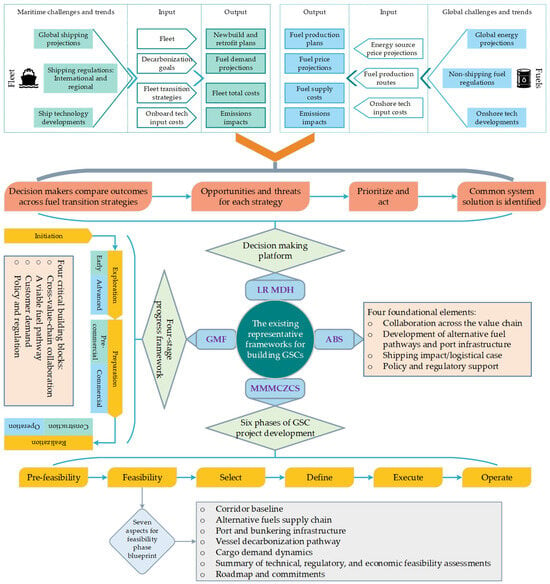
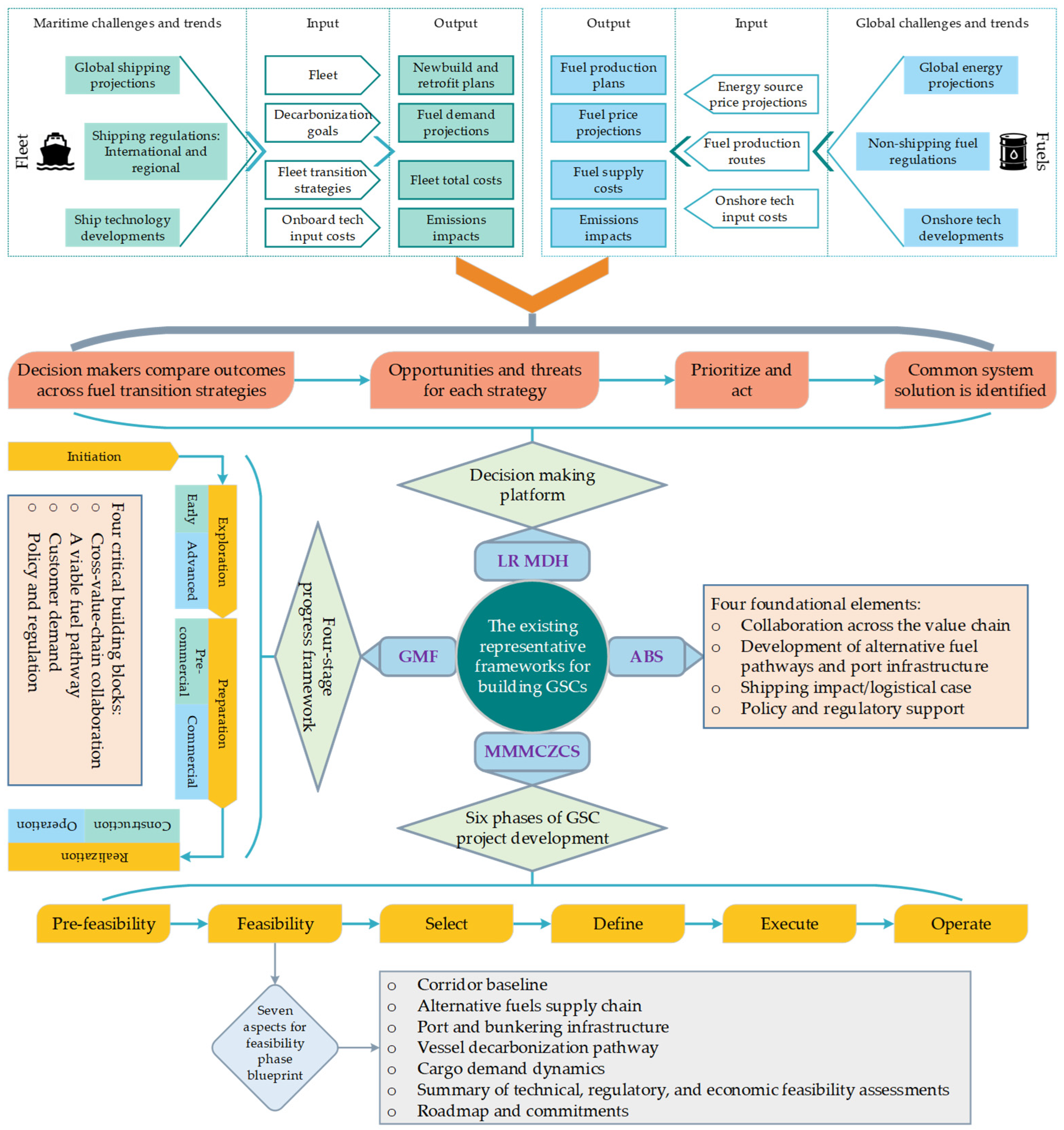
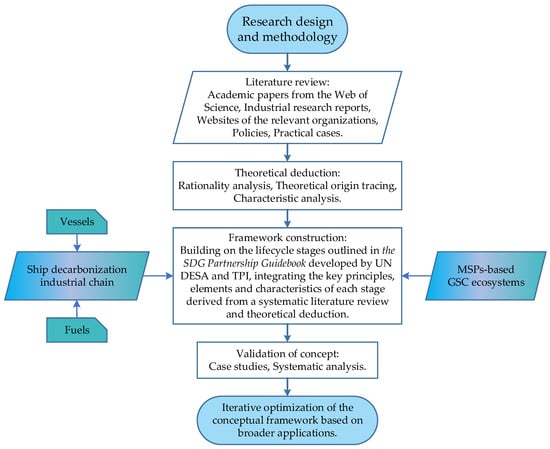
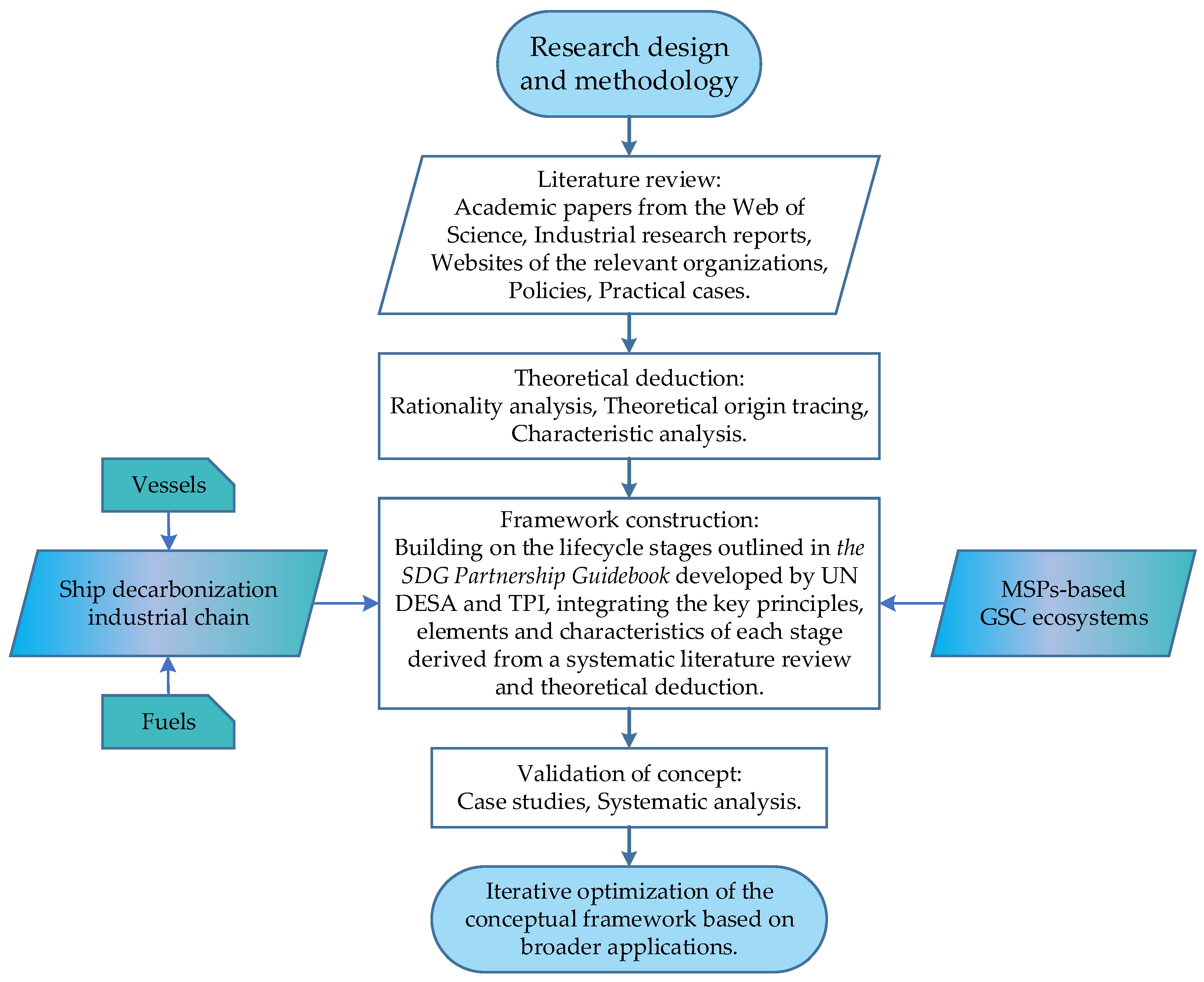
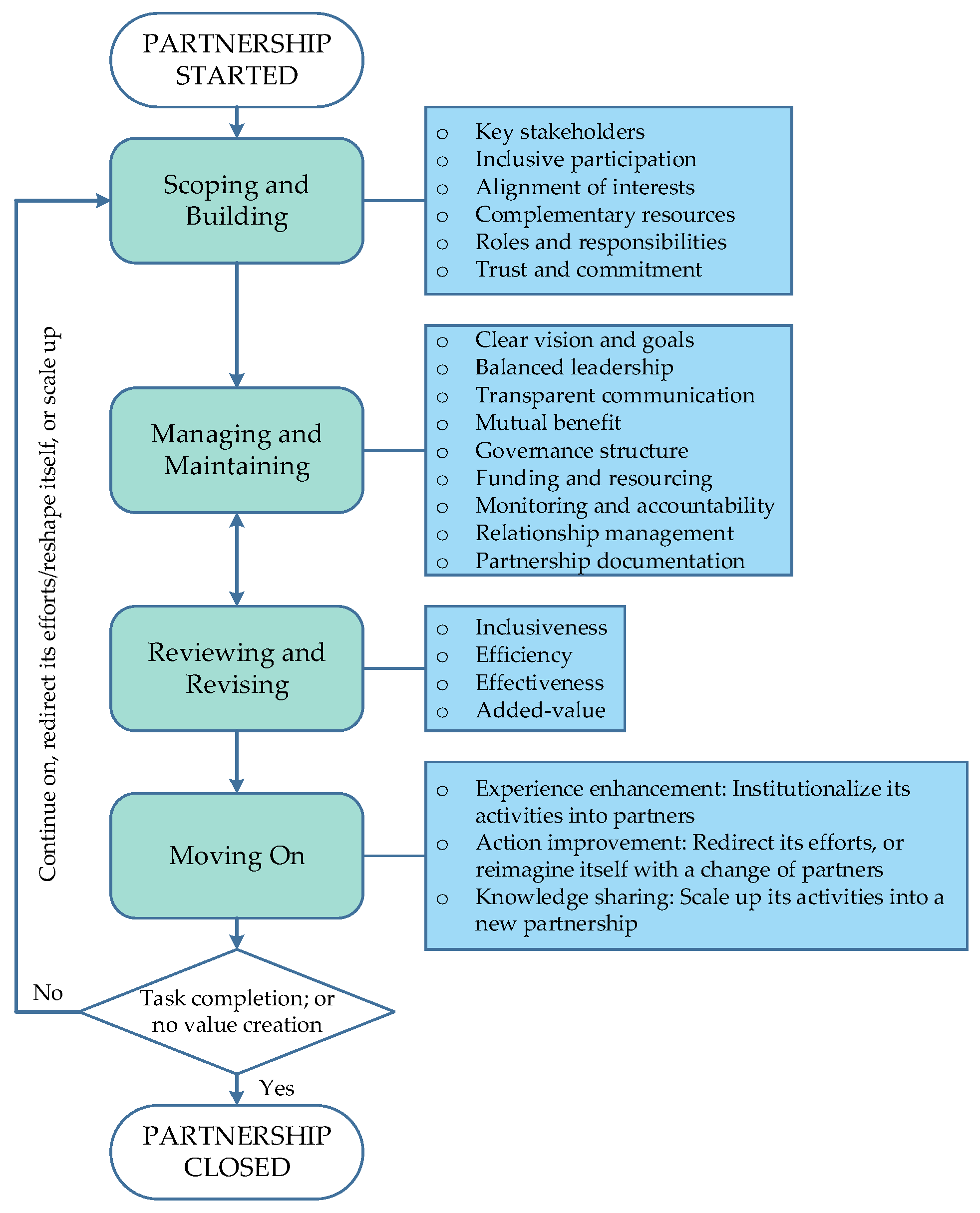
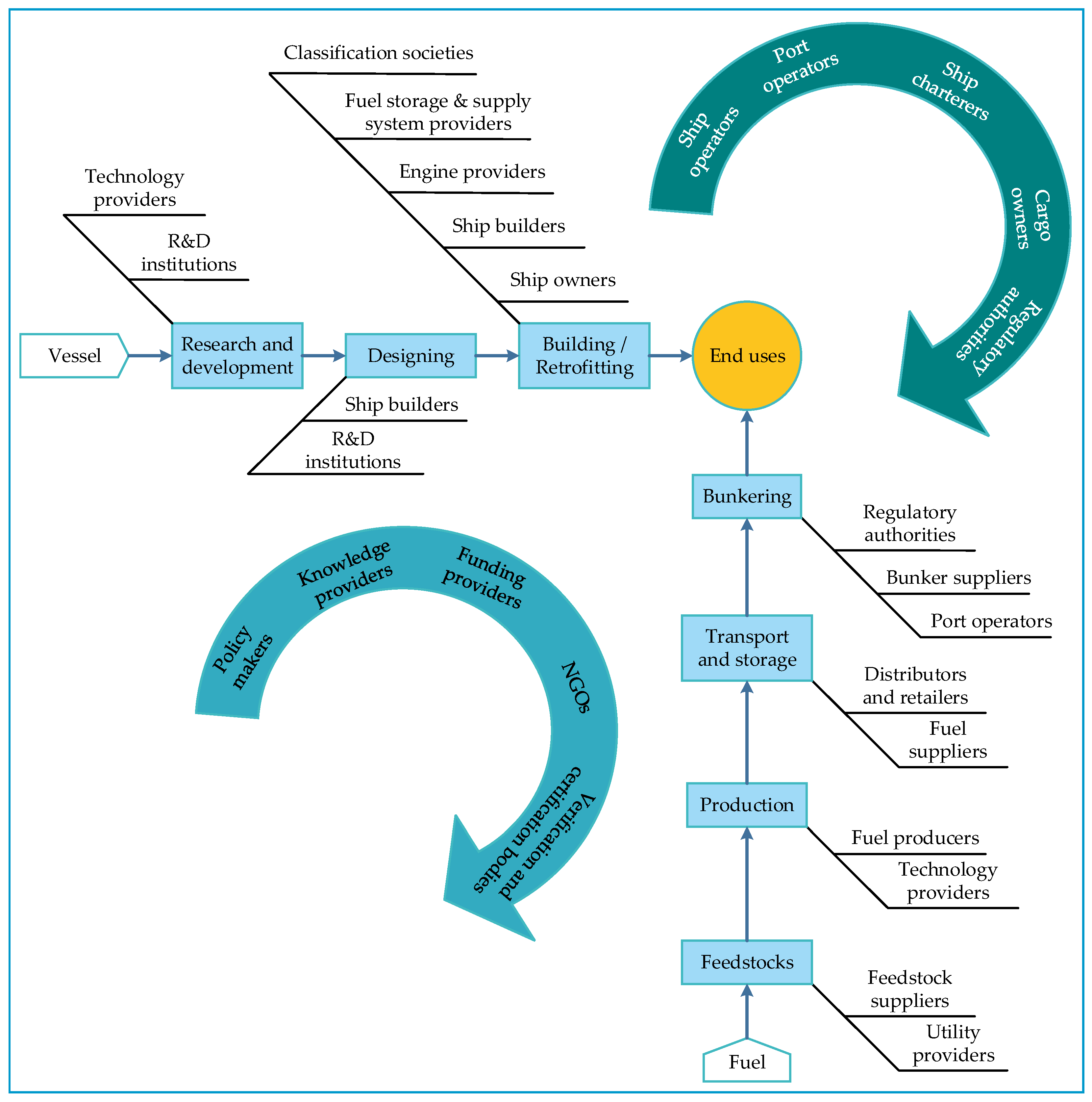
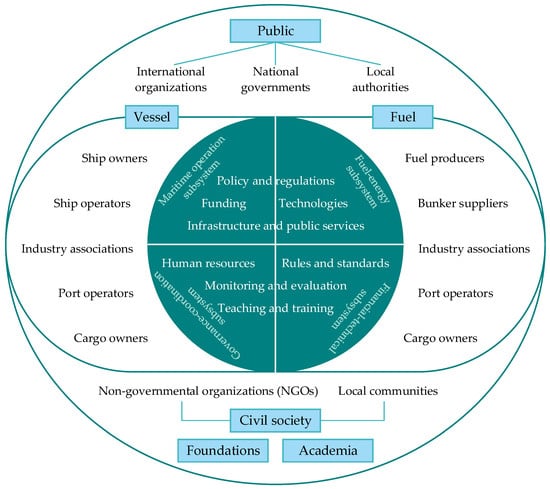
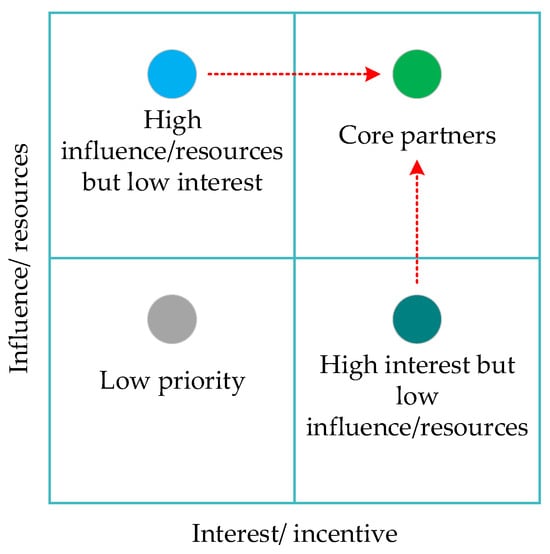

Disclaimer/Publisher’s Note: The statements, opinions and data contained in all publications are solely those of the individual author(s) and contributor(s) and not of MDPI and/or the editor(s). MDPI and/or the editor(s) disclaim responsibility for any injury to people or property resulting from any ideas, methods, instructions or products referred to in the content. |
© 2026 by the authors. Licensee MDPI, Basel, Switzerland. This article is an open access article distributed under the terms and conditions of the Creative Commons Attribution (CC BY) license.