


Abstract
Transitioning toward a circular economy requires not only solutions involving technical component reuse but also mechanisms that reduce risk and increase confidence among market stakeholders. Steel-faced sandwich panels, widely used in façades and roofs, constitute a significant urban material stock, yet their reuse is constrained by information asymmetry, liability concerns, and the absence of verifiable condition data. In this study, we develop an integrated end-to-end workflow—combining controlled panel recovery, Unmanned Aerial Vehicle (UAV) inspection, deep learning-driven damage detection, and Building Information Modeling (BIM)-linked material passports—to enable traceable, evidence-based reuse decisions. Validated through a pilot façade assembly and disassembly process, the methodology successfully quantified 4845.90 cm2 of mechanical damage across 10 panels, with all orthomosaic and detection outputs fully integrated into the digital passport environment. By standardizing component-level condition records, this approach reduces perceived risk and provides the technical assurance necessary to unlock a trusted second-hand marketplace for sandwich panels. Framed within an urban metabolism perspective, the findings demonstrate how digital transparency can bridge the gap between material recovery and market valuation.
1. Introduction
As one of the largest global material consumers, the construction sector faces in-creasing pressure to reduce resource use, waste, and lifecycle GHG emissions; the built environment accounts for up to 50% of raw material extraction and over 35% of the EU’s waste stream [1]. While operational energy performance improves through decarbonized grids, the focus is shifting toward mitigating embodied impacts—estimated at up to 15% of global GHG emissions—through verifiable product-level data and circular economy strategies [2]. Prioritizing life extension and component reuse over recycling is essential to retain functional value [3].
Circular economy strategies provide a practical pathway toward addressing embodied impacts by keeping products and materials in service for longer while retaining functional value through durability and adaptability [4,5]. In construction, this translates into prioritizing life extension, reuse, and refurbishment over recycling, and recycling over disposal [6]. Despite the conceptual maturity of these principles, high-value reuse remains limited in practice due to persistent structural barriers [7,8,9]: deconstruction is frequently planned late, products are removed destructively, reliable information on composition and performance is missing, responsibilities and liabilities are fragmented across value chains, and reverse logistics are rarely designed as part of project delivery. As a result, components with remaining technical service life are commonly downgraded to scrap or waste streams, even when reuse would be technically feasible [10,11].
Steel-faced insulated sandwich panels are a product class within this challenged space, as they are abundant in industrial, commercial and logistics buildings due to their high strength-to-weight ratio, predictable performance and quick installation [12]. A typical panel combines thin steel facings with an insulation core (commonly polyisocyanurate (PIR), polyurethane (PUR), or mineral wool (MW) [13], forming a composite that is efficient in use but difficult to manage at end of life [14]. Under business-as-usual demolition, panels are frequently damaged during removal, preventing direct reuse, while the composite nature complicates separation and drives low-value recovery, often leading to the disposal of the core material and loss of functional value [15,16]. This combination of widespread use and poor end-of-life performance makes sandwich panels a high-leverage target for circular intervention, particularly if reuse pathways can be operationalized without imposing unrealistic constraints on safety, compliance, or project delivery.
In Europe, policy and market signals are increasingly aligned with circular construction and the digitalization of product information. Recent and forthcoming policy instruments connect material efficiency goals with requirements for product data, traceability and digital governance, including the broader direction of travel towards Digital Product Passports (DPPs) for new products and tighter expectations on construction product data management [17]. This trajectory is reinforced through interlinked initiatives such as the revision of the Construction Products Regulation (CPR) [18], which is linked to the Ecodesign for Sustainable Products Regulation (ESPR) [19] and its wider approach to product information and sustainability requirements. In parallel, clients, insurers and investors are progressively asking for transparent evidence that reused components meet performance, safety, and compliance requirements [20]. Consequently, the emergence of a second-hand market for sandwich panels is not only a sustainability ambition but also a response to evolving regulatory, procurement, and risk management realities, where traceable and verifiable data increasingly determine what can be specified, insured, and delivered [21].
Market readiness is also evolving from within industry. Manufacturers are acknowledging that disassembly and direct reuse can be preferable to recycling for insulated panel systems, and early take-back or recovery schemes are appearing even in legislation with the integration of compulsory pre-demolition audits [11]. In addition, best-practice guidance and engineering recommendations for the reuse of steel products provide structured criteria for the inspection, testing, documentation and, where relevant, re-certification of reclaimed components [12,22]. Together, these developments indicate a gradual shift toward treating reuse as an engineering-controlled process rather than informal salvage, although reuse at scale remains constrained by the lack of systematic identification, verification, and transaction mechanisms for sandwich panels.
Technologically, three enabling domains are converging in a way that makes sandwich panel reuse feasible at scale in the next few years. First, digital inspection methods—including drone surveys, photogrammetry, thermography and non-destructive evaluation—can assess envelope condition and document as-found geometry before dismantling or deconstruction, supporting evidence-based decisions on what to recover and how [2]. The quick maturation of computer vision and machine learning further enables scalable defect detection and condition classification from images, allowing effort to be focused where reuse success is most likely. Second, robotic and semi-automated deconstruction can reduce dependence on manual work at height (increasing safety and addressing labor constraints) while improving the probability of intact removal by controlling handling, sequencing, and tool engagement [17,23]. Third, Building Information Modeling (BIM)-based inventories and digital twin approaches provide a data backbone for organizing component-level information and linking physical elements to digital records across the asset lifecycle, enabling pre-planned recovery workflows [24].
Although the sector is moving towards DPP-type requirements, existing buildings contain massive quantities of products without consistent digital records, which makes circular recovery the exception rather than the default. Material passports (MPs) address this information deficit by providing a structured, persistent dataset describing a product’s identity, composition, technical performance, compliance-relevant attributes and lifecycle history, explicitly designed to support decisions on reuse, refurbishment and recycling [3]. When implemented at the component level and subjected to Building Information Modeling (BIM), a passport identifies anonymous materials such that they can be verified, compared, and traded, with lower uncertainty. This requires a minimum, machine-readable and interoperable dataset aligned with Product Data Templates (PDTs), open BIM principles, and established information management practices, allowing for data continuity across design, asset management, deconstruction, and secondary markets [25]. This is essential for sandwich panels, where confidence in fire performance, structural capacity, durability, thermal performance, and dimensional compatibility strongly influences whether reuse is considered acceptable by designers, building control bodies, insurers, and clients.
However, passports alone do not enable reuse; the recovery process remains the main bottleneck since panels must be identified, accessed, dismantled, removed, handled, and stored in a way that preserves usability within the cost and time constraints of real projects. Digital inspection and robotics act as positive leverage in this context. Digital inspection reduces uncertainty and focuses recovery effort where the probability of success is higher, robot-assisted dismantling reduces damage and improves productivity, and an MP provides the evidence and traceability needed to support transactions [2,26]. Together, these elements increase availability, reduce perceived risk, and support consistent grading and lot formation, which are decisive for market formation in a sector characterized by fragmented responsibility and liability [12,22].
In parallel with the technical and systemic challenges associated with sandwich panel reuse, market acceptance and decision-making behavior remain decisive factors for the viability of second-hand construction products. Previous research has consistently shown that uncertainty related to residual performance, liability allocation, and long-term risk often outweighs potential cost or environmental benefits in reuse decisions, even where technical feasibility exists [27,28]. Adoption is further shaped by the heterogeneity of stakeholder roles across the construction value chain, where asset owners, designers, contractors and demolition actors operate under different risk tolerances and decision incentives [29]. To address this dimension, the present research is complemented by a structured stakeholder survey capturing professional roles, decision authority, risk perception, and acceptance criteria for reused sandwich panels, providing empirical grounding for the market assumptions discussed.
Therefore, in this study, we develop and operationalize a material passport approach for steel-faced sandwich panels, integrated with digital inspection and robotic recovery workflows, with the explicit aim of enabling reuse and supporting a viable second-hand market. The approach is validated through a pilot façade combining drone-based inspection, machine learning-assisted damage detection, robotic deconstruction, and a BIM-linked material passport, acknowledging that successful reuse depends on technical, operational, data governance, and market adoption conditions.
In summary, this work contributes the following: (i) a repeatable, inspection-driven workflow for building sandwich panel material passports that can be updated after assembly/disassembly cycles; (ii) a UAV-based damage detection workflow combining photogrammetric reality capture with instance segmentation to localize and quantify defects; (iii) a BIM-linked passport representation that ties panel IDs to geometry, condition indicators, and reuse-relevant metadata; and (iv) a comparative validation across two façade handling strategies, reporting both technical performance (segmentation accuracy, localization fidelity) and decision-making evidence (survey-based acceptance and economic considerations).
2. Urban Metabolism (Motivation)
Urban metabolism is applied in this study as a quantitative lens to estimate the accumulation of steel-faced sandwich panels in the existing building stock and to anticipate future end-of-life flows. Cities and regions are understood as systems that consume resources, store materials in long-lived assets, and release them during renovation, adaptation or demolition [30]. From a circular economy perspective, these outputs represent potential secondary resources rather than waste, provided suitable recovery and market mechanisms exist. The late-20th and early-21st-century building stock therefore constitutes a growing anthropogenic reservoir of steel and insulation materials that is progressively approaching the end of its first service cycle [1].
This framing is particularly relevant for industrial and logistics buildings, where steel-faced insulated sandwich panels have been adopted rapidly and at scale, often within typologies characterized by frequent functional adaptation [6]. Panels are therefore commonly removed before technical failure, with end-of-life decisions driven by asset transformation rather than material degradation [11]. Urban metabolism quantifies both the magnitude of this embedded stock and the timing of forthcoming flows, defining whether reuse can become scalable or remain marginal under business-as-usual demolition practices.
To operationalize this analysis, a national-scale material-stock assessment was carried out for steel-faced sandwich panels in Portugal, Spain, and France using Eurostat production and trade statistics and construction data [31]. The analysis focuses on the 2005–2015 period, which corresponds to rapid growth in non-residential building typologies such as warehouses, factories, and logistics facilities. Across the three countries, approximately 240 million m2 were estimated to have been installed during this decade, with Spain accounting for the largest share (~146 million m2), followed by France (~63 million m2) and Portugal (~32 million m2). These surface areas correspond to substantial quantities of material currently embedded in buildings, typically without persistent digital records to support recovery planning or market exchange at end of life, as illustrated in Figure 1.
Figure 1.
Estimated area of sandwich panels (installed between 2005 and 2015) in Portugal, France, and Spain, based on Eurostat data [31].
From a material composition perspective, steel constitutes the dominant mass fraction of sandwich panels [12,22]. Based on manufacturer specifications, panels typically contain 9–12 kg·m−2, with steel facings representing 60–80% of total mass and insulation cores comprising the remainder [32]. Applying conservative averages, panels installed between 2005 and 2015 across the three countries are estimated to contain approximately 1769 thousand tonnes of steel and 758 thousand tonnes of insulation material.
Installed panel areas were derived by converting reported economic fluxes—production, import, and export—into physical quantities using industry-provided proxies for typical sandwich panel prices, dimensions, and mass. Manufacturers active in the studied markets indicated unit weights between 9 and 12 kg·m−2; a midpoint value of 10.5 kg·m−2 was therefore adopted. Unitary prices were reported to range from approximately 29.5 €/m2 in 2005 to 25.5 €/m2 in 2015, and linear regression was used to interpolate annual values over the study period. Estimated panel areas were subsequently converted into total embedded mass using the adopted unit-weight proxy.
Direct use of the Eurostat PRODCOM physical quantity field was not adopted for panel weight estimation because Eurostat metadata indicate that reported volumes originate from enterprise surveys and may involve imputation or heterogeneous reporting conventions, which can introduce uncertainty in product-specific quantity estimates [33]. In addition, consultations with manufacturers active in the studied markets indicated that reported PRODCOM weights for sandwich panel categories may include ancillary façade components, raw material inputs, or manufacturing scrap, further motivating the use of panel-specific price- and mass-based proxies in this study.
Although insulation represents a smaller mass share, it plays a disproportionate role at end of life due to limited recyclability and frequent disposal [27]. Most panels from the period use PUR/PIR foam cores, with around 20–25% incorporating mineral wool [34]. While PUR/PIR and mineral wool differ in composition, both typically yield low-value end-of-life outcomes under current practices; PUR/PIR is often limited to incineration [35], while mineral wool is frequently landfilled if not recovered intact [34]. Consequently, direct panel reuse represents the highest-value circular pathway. This aligns with the principle that reuse preserves significantly more functional value than recycling, providing greater leverage in avoiding the emissions and resource depletion associated with virgin material production.
Urban metabolism also addresses the timing of future flows [36]. Panels installed between 2005 and 2015 are approaching typical refurbishment and replacement cycles, often being removed after 20–40 years despite remaining serviceable [37]. Under a conservative 20-year assumption, large volumes are expected to reach their end of life between 2025 and 2030, including an estimated 70–75 million m2 in Spain, 25–30 million m2 in France, and 10–15 million m2 in Portugal [1]. This defines a critical intervention window for reuse.
This wave of removals represents both a threat and an opportunity. Under business-as-usual practices, panels are likely to be damaged, with the steel downgraded to scrap and insulation discarded [12,27,38]. Conversely, treating this flow as an urban mining opportunity could enable substantial resource recovery. For Spain alone, panels reaching end-of-life between 2025 and 2030 contain roughly 553 thousand tonnes of steel and 237 thousand tonnes of insulation that could be returned to productive use, as depicted in Figure 2. Capturing even a fraction of this flow for reuse would significantly reduce demand for virgin materials and associated emissions [12].
Figure 2.
Estimated material stock in sandwich panels (installed between 2005 and 2015) in Portugal, France, and Spain [31].
The urban mining potential identified in this study focuses on non-residential building typologies where sandwich panels are predominantly applied. The spatial scope relies on construction statistics and typology-based proxies rather than detailed cadastral datasets, prioritizing methodological consistency and cross-country comparability while acknowledging local spatial variation [39,40].
Translating this potential into effective reuse depends on three interdependent challenges: information and traceability, recovery quality and logistics, and market coordination and regulatory acceptance [12,22,26,41]. Installed panels typically lack accessible records of performance and compliance, recovery practices often damage reusable components, and uncertainty regarding liability and certification discourages market uptake [42].
The combined approach proposed in this research addresses these barriers as a coherent system. Component-level material passports provide standardized and verifiable information [3], digital inspection supports pre-deconstruction decision-making [2], and robot-assisted dismantling increases recovery quality and safety [17]. Together, these elements reduce uncertainty and transaction costs, enabling the consistent grading and lot formation necessary for a viable second-hand market.
3. Methodology
The proposed methodology aims to address the critical issues identified for the replication of a material passport for sandwich panels. As shown in Figure 3, the methodology comprises four main stages: assembly and disassembly of sandwich panel façades, automatic damage identification using UAVs and deep learning, material passport development using BIM, and economic value reassessment in the scrap market. The subsequent subsections will offer a more detailed explanation of each stage.
Figure 3.
Flowchart with the main phases of the methodology for obtaining a material passport for sandwich panels.
3.1. Pilot Façade
To validate the methodology, a pilot façade was constructed using commercially available sandwich panels that reflect typical façade design and installation configurations. The experimental campaigns were conducted in Alfena, Porto, Portugal, under the FORTIS project. The FORTIS tower, as seen in Figure 4, is a purpose-built steel test structure designed to replicate envelope systems commonly used in light industrial and warehouse buildings, including a full-height opening to simulate a service door and associated façade detailing.
Figure 4.
FORTIS tower: (a) steel test frame with primary columns, roof-level bracing, and cold-formed secondary members; (b) façade assembled with full-length sandwich panels for reuse trials.
The foundation consists of a 200 mm thick continuous reinforced-concrete slab incorporating four pedestals with embedded threaded anchor rods for the primary columns. Each steel column is fixed to the slab by a bolted base plate secured with six anchor bolts, following portal-frame construction practice. The primary load-bearing system comprises four steel columns arranged on a 2.5 × 3.5 m footprint and extending to a height of 6.0 m, laterally stabilized at roof level by a transverse steel beam acting as a bracing element [43]. Secondary framing consists of cold-formed steel Omega-section purlins bolted to the columns, providing support for the façade panels and contributing to the in-plane stiffness of the envelope. At the door opening, additional vertical cold-formed steel profiles frame the aperture and replicate typical industrial detailing around large service openings.
Panels were initially installed in full-length units exceeding the frame height to preserve factory-produced interlocking edges and fastening systems. Subsequent resizing for alternative reuse configurations is therefore envisaged after recovery, which will involve trimming and re-orienting panels and creating new screw connections in unused edge zones.
3.2. Assembling and Disassembling Sandwich Panel Façades
The sandwich panel used in this assembly is a Huurre HI-PIR core sandwich panel, 35 mm wide [32], with an exterior steel plate wave and interior trapezoidal steel plate. The connection type is a male–female dry joint with hidden fixing screws and vertical installation. The steel plates are protected from corrosion, with a 100 µm hot-dip galvanization coating and a 10 µm interior and 25 µm exterior polyester paint finish. Given these requirements, it is critical to correctly identify the interior and exterior sides during assembly to ensure the long-time durability of the sandwich panels.
The objective of this stage is to investigate the practical constraints, technical challenges, and performance implications associated with the disassembly and subsequent reassembly of sandwich panels used in façade systems. The assembly process follows standard industry installation procedures to replicate realistic construction conditions and boundary constraints. A telehandler is used to lift and position the sandwich panel onto the façade, while ground workers assist in securing it with self-drilling screws, connecting the panel to the secondary structure of cold-formed metal purlins. After the installation, the façade was subjected to a controlled disassembly sequence designed to mirror practical on-site removal activities.
Two distinct strategies for the assembly and disassembly of sandwich panels were evaluated to determine their impact on construction efficiency and operational complexity (Figure 5). These methodologies are differentiated by their equipment configurations and the distribution of control between ground and elevated operators:
Figure 5.
The two different strategies for assembling and disassembling sandwich panels: (a) decoupled system featuring a telescopic handler with winch (driver-controlled) and a separate scissor lift (worker-controlled); (b) integrated system featuring a telescopic handler with an aerial platform and winch under the sole control of the elevated worker.
- Strategy (a): Decoupled Multi-Equipment System. In this setup, a telescopic handler with a winch (4 DOF) (Manitou Group, Ancenis, France) is used to transport the panel. This is coordinated with a separate scissor lift (3 DOF) (Haulotte Group, L’Horme, France) used specifically to position the worker at the façade, providing the necessary reach to install self-drilling screws.
- Strategy (b): Integrated Single-Platform System. In this configuration, a telescopic handler is fitted with an integrated aerial platform and winch (5 DOF) (Manitou Group, Ancenis, France). In this setup, the worker controls both the machine’s movement and the panel approach from the platform. This proved more challenging because the worker must manage more degrees of freedom while navigating a more voluminous platform near the façade’s fixing points.
The experimental results indicate a significant increase in assembly duration when transitioning from Strategy (a) to Strategy (b), with the steady-state time per panel increasing from 6 to 9 min. This performance delta is attributed to several technical factors, such as kinematic complexity, volumetric restrictions, and control centralization.
The entire process was recorded through written notes, photographs, and technical observations, with special attention to connections, fasteners, tolerances, and handling requirements, as these aspects significantly influence the system’s reversibility. This documentation allows for a comparison between the panels’ original installation state and their condition after disassembly.
Structural design and detailing are key to enhancing building circularity (Figure 6). Secondary façade steel cladding elements—such as bottom and top drip flashings, façade corners, door frames, and rooftop gutters—must be installed to ensure water and air tightness. These elements require additional self-drilling screws on both façade and roof sandwich panels. Like the structural screw connections in the façade clipping system, the drilled steel plates are prone to corrosion and need appropriate care upon reuse.
Figure 6.
Additional secondary façade steel cladding systems: (a) bottom drip flashings; (b) self-drilling screws; (c) distribution washer.
The use of direct self-drilling screws with Ethylene Propylene Diene Monomer (EPDM)-protected washers is crucial to prevent water ingress and accelerated corrosion of the steel plates and metallic purlins. For future reuse, distribution washers should be employed to protect the panel’s web. This approach extends the panel’s service life by minimizing mechanical damage and fatigue degradation, which could otherwise compromise airtightness in subsequent assemblies.
Preparing a building for assembly and disassembly requires minor adjustments to conventional design. For example, increasing the web thickness allows for additional screw positions in future assemblies. Additionally, if the structural resistance of the web decreases after repeated assemblies, an extra purlin can be added in areas with ovalized holes to restore the original load-bearing capacity of the existing purlins.
Under real conditions, reusing existing holes from self-drilling screws in steel plates that require adjustment can compromise stability. Among temporary solutions, providing an overlapping connection to ensure shear resistance must be carefully validated. Similarly, reusing the same hole with a larger screw can maintain load transfer, but this approach is limited by the male–female gap in hidden connections and the presence of distribution washers, which reduce the space available for the screw head. Therefore, the reuse of structural steel elements introduces additional complexities and should only be carried out by trained professionals under proper supervision.
3.3. Automatic Façade Damage Identification
A sophisticated damage identification methodology was developed to detect both mechanical and corrosion-related damage. Mechanical damage can arise from various factors, including improper handling during transport and installation, where sudden movements may cause panel impacts; incorrect use of assembly equipment that applies excessive pressure or causes impacts; and human error such as careless handling. Corrosion, a particularly common form of damage in these panels, results from exposure to environmental degradation agents. Furthermore, this methodology is employed to rigorously assess which of the two strategies, previously described in Section 3.2, results in less damage during the assembly and disassembly of sandwich panels.
The automatic detection methodology proposed in this study is built upon a set of advanced techniques and consists of five main steps, which are summarized in the flowchart shown in Figure 7 [44].
Figure 7.
Strategy adopted for automatic damage detection in sandwich panels.
The data acquisition phase begins after the panels are disassembled and stacked in a designated area, where a high-resolution UAV is used to capture images. The DJI Mavic 2 Enterprise Advanced (M2EA) (SZ DJI Technology Co., Ltd., Shenzhen, China) (Figure 8) was used in this study, equipped with a dual-gimbal camera capable of capturing both visible and infrared images—though only the visible spectrum was used—featuring a ½″ CMOS sensor with 48 MP resolution. The UAV is also equipped with an RTK module that provides centimeter-level positioning accuracy (±10 cm vertically and horizontally) using NTRIP. To automate the process, the UAV was programmed to fly automatically using pre-defined waypoints.
Figure 8.
DJI Mavic 2 Enterprise Advanced in operation and equipment specifications.
In the second step, the panels were reconstructed in 3D using Structure from Motion and Multi-View Stereo (SfM-MVS) algorithms [45], implemented via Bentley’s iTwin® 2023 software [46]. QR codes placed alongside the panels accelerated image recognition and orientation, while an image overlap of around 80% was maintained to produce high-quality, consistent reconstructions, surpassing the 60% overlap commonly suggested for SfM-MVS algorithms. These QR codes are used exclusively for internal software-based identification and spatial referencing and are not linked to external URLs. For this case study, 16 QR codes (eight along the top and right along the bottom) were arranged around each panel based on its nominal dimensions (7 m × 1.20 m), where the width includes the male–female interlocking edges. Panels were successively placed on the same reference sheet as a stacked lot, with an approximate 50 mm lateral clearance on each side to accommodate manual handling. With the top-left corner aligned and set as the 3D origin, the centroid coordinates of any damage on the panel can be accurately determined. The layout and numbering of the panels and their QR codes are illustrated in Figure 9.
Figure 9.
QR code layout on the fixed PVC reference sheet used for photogrammetric reconstruction, showing marker spacing along the panel length (1.0 m) and across the width (1.598 m), and the nominal panel footprint (7 m × 1.20 m).
The third step, deep learning, involves creating a labeled dataset and training Convolutional Neural Networks (CNNs) to detect and classify panel damage. Manual labeling ensures the dataset reflects diverse real-world scenarios, which is critical for model accuracy, as poor labeling can degrade performance. In this study, the VIA® 3.0.12 software from Oxford Visual Geometry Group [47] was chosen to perform this process to create a dataset of 1689 images featuring 56,086 annotated instances of corrosion, mechanical damage, and ponding water. Then, the labeled dataset was used to train a dedicated segmentation CNN, Mask R-CNN [48,49], implemented via Detectron2 [50], a Python library (version 3.11.6) developed by Facebook AI Research. Although Mask R-CNN was adopted in this study, other state-of-the-art computer vision architectures could also be leveraged, such as DeepLab-based [51], EfficientNet models [52], and others. To optimize small object detection and computational costs, the high-resolution images were cropped into 2000 × 2000 px sections, resulting in 20,274 images. Images were divided into training 70% training, 15% validation, and 15% test sets. Training involved hyperparameter tuning, data augmentation (including brightness, contrast, rotation, and saturation adjustments), and transfer learning to improve model performance and robustness, while validation ensured correct generalization and minimized overfitting [53].
In the fourth step, detection and segmentation, test images were used to evaluate the algorithm’s performance. This allows us to visually assess whether the network correctly identified damage. While multiple metrics are available, Average Precision (AP), calculated from the Intersection over Union (IoU), was the primary measure in this study. IoU quantifies the overlap between predicted and true regions [54]. Detection models are often assessed using AP50, where a prediction is considered correct if it overlaps the ground truth by 50% or more. Following sensitivity analysis and hyperparameter optimization, the model achieved a mAP50 of 68.4% for detection and 65.0% for segmentation [53].
Finally, once damage is inferred from 2D images using a 90% confidence threshold, the Raycasting algorithm [55] projects rays from the camera to image points, identifying intersections with 3D objects and accurately localizing the damage in three-dimensional space. This facilitates realistic visualization and analysis, and the damage type, size, and area can be quantified using Detectron2 bounding boxes and pixel data. The accuracy of this spatial mapping was validated on a corrosion instance, yielding metric measurements with errors as low as 0.32% for length and 0.74% for width [53]. At the end of the Raycasting process, a detailed report in “xls” format is generated, compiling key information for each detected damage. Each entry contains a unique Label ID, image paths from three perspectives, the 3D centroid, detection confidence, damage type, X and Y dimensions, and total area affected. This structured information supports thorough analysis and BIM interoperability, as detailed below.
3.4. Material Passport Development Using BIM
The objective of this stage is to compile all relevant information associated with the sandwich panels into a Building Information Modeling (BIM) environment to generate a simplified material passport. The passport is developed from reuse guidelines, product standards, and facility management needs, organized into Product Data Template (PDT) categories, including identification, geometry, materials, performance, and environmental data [6,12,22,56]. Its novelty lies in modeling in-use performance and reuse potential, with inspection results—including mechanical and corrosion damage—recorded consistently from human or automated image-based assessments. In BIM, each panel or batch is represented as a uniquely identified object containing core attributes, making condition, performance and reuse information readily accessible. As a structured digital repository, the passport supports panel condition assessment, service-life estimation, and reuse evaluation within a circular economy framework (Supplementary Material S1).
The material passport is developed using Autodesk Revit and its native Dynamo tool, which is used to create scripts to automate the anomaly modeling process. Each physical panel (or batch of identical panels) is represented by a BIM object with a unique identifier. Core PDT attributes (e.g., identification, geometry, materials, and declared performance) are stored directly as properties of that object to establish a complete digital representation of the physical components.
Inspection data are then integrated into the BIM environment to enrich the material passport with condition-related information. This process begins with the integration of orthomosaic images and the outputs of the damage detection stage. This integration enables direct access to visual inspection evidence and analytical outputs within the model, ensuring traceability between observed damage and the digital representation of each panel. In a simplified way, the excel file containing essential damage data (ID, type, coordinates, damage area) serves as input for the Dynamo scripts (Supplementary Material S2). Each anomaly is represented by a three-dimensional geometric element placed at its centroid, without precise size, shape, or orientation. Furthermore, a color-coding scheme is defined according to the anomaly type: green for mechanical and red for corrosion. A dedicated Revit file is created for the anomaly model and linked to the main building model, ensuring that the anomaly information can be continuously updated throughout the building’s lifecycle.
Based on the mapped damages and their characteristics, the remaining service life of each sandwich panel is estimated using a simplified degradation model, assuming a total service life of 20 years with 2 years already elapsed since manufacturing. The resulting lifetime estimates are stored as BIM parameters, enabling aggregation and analysis at both panel and lot levels. This information is essential for prioritizing panels for reuse or further inspection.
The environmental implications of panel reuse are assessed by calculating the environmental footprint offset associated with avoiding the production of new materials. Material quantities are extracted directly from the BIM model and combined with reference lifecycle assessment data to estimate indicators such as avoided embodied carbon. These environmental metrics are linked to individual panels and aggregated to provide an overview of potential environmental benefits at the lot level.
Prior to IFC export, Revit schedules containing the key attribute data are created and mapped to IFC-compliant property sets to ensure semantic consistency and interoperability. These schedules can also be exported as a report. Consequently, the final outputs of the workflow consist of an IFC-based material passport containing all relevant panel-level information and a complementary report summarizing the characteristics, condition, environmental performance, and economic value of sandwich panel lots.
3.5. Economic Value Reassessment
To assess market acceptance and decision-making criteria related to the reuse of steel-faced sandwich panels, this study adopts an exploratory mixed-methods approach combining a structured quantitative survey with complementary qualitative inputs. The objective is to understand how different stakeholders perceive reused panels, which factors dominate material selection decisions, and whether a data-driven system integrating digital inspection, lifetime estimation, and material passports can reduce uncertainty and increase acceptance. Attention is paid to the role of perceived risk, cost, liability and sustainability considerations.
The target population comprised key actors across the sandwich panel value chain, including building owners and asset managers; demolition and deconstruction subcontractors; contractors and builders; and architects, engineers, and designers. Respondents were classified according to their role in decision-making (final decision-maker, advisor/influencer, or executor), allowing for differentiation between strategic and operational perspectives. The geographical focus was on Portugal and Spain, reflecting comparable construction practices and regulatory contexts. Given the exploratory nature of the study and the limited sample size, the results are interpreted as indicative rather than statistically representative.
Data were collected via an online questionnaire (depicted in Supplementary Material S3) that captured respondents’ experience with sandwich panels, decision authority, project context, risk attitudes, and sustainability considerations using Likert scales [57]. A standardized description of the proposed digital assessment and material passport system was then introduced to provide a common reference for the scenario-based questions. Two decision scenarios were presented: material selection for a new warehouse (comparing new, repaired–used, and reused panels) and intervention strategies for existing panels (replacement, repair, or continued use). Additional questions explored trust in sourcing channels, the perceived impact of material passports, decision horizons, and barriers to reuse.
Semi-structured interviews with building owners, demolition subcontractors, and designers complemented the survey to explore latent decision drivers such as liability, insurance, contractual responsibility, and organizational risk culture. Quantitative responses were analyzed descriptively and comparatively across stakeholder groups and scenarios, while qualitative data were analyzed thematically and integrated to contextualize the findings.
Limitations include the sample size and composition, as well as the use of hypothetical scenarios that may not fully reflect real procurement behavior. Nevertheless, the mixed-methods design provides relevant insights into decision logics and trust mechanisms shaping reuse pathways for sandwich panels in circular construction context.
4. Results
4.1. Damage Detection
4.1.1. Overall Damage Detection
The following section presents the results of the study, including UAV-based data acquisition, image processing, and deep learning analyses, as well as the evaluation of the panel installation and damage detection. All processes were performed using a desktop computer running a Windows 11 operating system, equipped with an NVIDIA GeForce RTX 3090 graphics card (NVIDIA Corporation, Santa Clara, CA, USA; 24 GB VRAM), Intel i7-11700 CPU (Intel Corporation, Santa Clara, CA, USA), and 32 GB of RAM.
Data were collected under favorable weather with high sunlight exposure, ensuring consistent conditions for panel comparison. The panels were assigned unique markers, as noted in Section 3. Out of 15 marked panels, 10 were installed (panels 1–8, 10, and 15), and the remaining roof panels will be addressed in future work. Using the M2EA UAV, around 780 images were captured at 8000 × 6000 pixels. To manage processing limitations, images were cropped to 2000 × 2000 pixels, which also improved inference without loss of resolution [58].
For SfM-MVS data processing, reconstruction times were generally consistent across panels, with up to 1 h for point cloud generation and 20 min for mesh creation, given a similar number of photos. Processing times can vary slightly depending on the number of QR codes recognized by the software. Since not all QR codes are always detected automatically, proper photo overlaps are crucial, and variations in lighting or perspective may require additional attention during image capture.
To evaluate panel damage, a dataset comprising images of sandwich panel roofs and façades was used during experimental work on other buildings. The dataset comprised approximately 1570 images, resulting in 18,840 cropped images, and included various anomalies such as corrosion and mechanical damage under diverse shapes, sizes, lighting conditions, and perspectives. Detectron2 training employed hyperparameters enabling automatic data augmentation, including adjustments to brightness, contrast, saturation, and rotation, allowing the network to learn from these variations. This approach enhances the robustness and generalizability of the methodology. The network’s hyperparameters were configured to achieve optimal results, based on guidance from existing studies. The definition of each hyperparameter can be consulted in references [58,59].
Prior to network processing, all images were carefully labeled using the VIA tool and exported in JSON format, which is compatible with Detectron2 and enables the algorithm to distinguish between damaged and undamaged areas, as well as classify the type of damage. The images were divided as follows: 70% for training, 15% for validation, and 15% for testing. They were then processed using the Mask-R-CNN algorithm. Following training and validation, the model was tested on panel images, demonstrating satisfactory damage detection performance, as illustrated in Figure 10.
Figure 10.
Comparison between (a) the original image, (b) the ground truth annotation, and (c) the prediction for panel 10 using the optimized Mask-R-CNN model. Mechanical damage is indicated by green contours and filled regions.
Beyond visual inspection, the model’s performance was quantified using AP50segm (Section 3). The optimized Mask R-CNN achieved 78.45%, indicating reliable alignment with ground-truth damage in most cases. This underscores its effectiveness for detecting and segmenting anomalies in sandwich panels.
After damage detection, the results are represented in a georeferenced 3D model with detected anomalies accurately mapped onto the panels, enabling clear visualization of panel degradation, precise defect localization, and panel condition evaluation. The completed 3D model of panel 10 is presented in Figure 11, where mechanical damage is highlighted in green and corrosion (not present) would appear in red. This color differentiation facilitates immediate recognition of the damage type.
Figure 11.
Three-dimensional model of panel 10 with detected anomalies. Mechanical damage is highlighted in green (corrosion, if present, would appear in red).
Regarding the processing time, it depends on the amount of damage: more damage produced more clusters, increasing computation time. For example, panel 10 required approximately 13 min using images from the telescopic handler with a winch (strategy A), compared to 18 min using images from the telescopic handler with an aerial platform (strategy B). While processing time does not increase linearly with damaged area, it generally increases as the number of damages grows.
4.1.2. Comparison Between Assembly and Disassembly Methods
The damage detection methodology was applied to all panels in both approaches, producing two “xls” files for each analyzed panel. To ensure consistency when comparing the approaches, identical analysis conditions were used, including a minimum model confidence of 90% and the same DBSCAN clustering parameters (epsilon = 0.05, min_samples = 15). At this stage, the clustering step remains partially manual and visually guided, with parameters selected through visual sensitivity assessment to ensure consistent separation of damage instances. The results for both approaches are summarized in Table 1.
Table 1.
Type of anomaly and respective area for each panel considering the two approaches.
The experimental results indicate a substantial increase in both operational duration and mechanical degradation when transitioning to the Integrated Single-Platform System (Strategy B). Excluding panel 15 (due to a shadow artifact), the damaged area increased markedly from 782.92 cm2 to 4062.98 cm2. This trend correlates with the observed time cycles for both methodologies:
- Strategy A (Decoupled System): High efficiency was demonstrated with an assembly time of 6 min and a disassembly time of 9 min.
- Strategy B (Integrated System): Time requirements expanded to 21 min for assembly and 12 min for disassembly.
The tripling of assembly time in Strategy B is likely due to the operator’s limited familiarity with the integrated controls, leading to handling incidents during the approach phase. Overall, panel 10—the final unit assembled and located adjacent to the door opening—exhibited the most significant mechanical damage, while panel 4 showed the least. As all specimens were new at the time of testing, no corrosion was detected; the diagnostic methodology identified purely mechanical damage resulting from the handling and fixing processes.
4.2. BIM Integration
This section focuses on how damage-related information is integrated, structured, and visualized within the BIM-based framework developed in this study. The outputs generated during the damage detection stage—including anomaly type, centroid coordinates, affected area, and detection confidence—are exported in tabular format and imported into Autodesk Revit through dedicated Dynamo scripts. Once imported, each detected anomaly is represented as an individual three-dimensional geometric object positioned at the centroid coordinates calculated during the Ray casting process. Although the anomalous geometry is simplified and does not reproduce the exact shape of the defect, its spatial placement enables unambiguous identification of the affected region on the panel surface. To enhance interpretability, a color-coding scheme is applied according to anomaly type (e.g., mechanical damage or corrosion), allowing rapid visual distinction of different degradation phenomena directly within the 3D model.
Figure 12 presents the results for all evaluated panels, shown in 3D and individually for each façade. The results highlight how damage information derived from the inspection and damage identification is systematically incorporated into the BIM model, where it is structured as panel-level attributes and visualized through dedicated anomaly elements.
Figure 12.
BIM model of the FORTIS tower with anomalies. Mechanical damage is shown in green (corrosion, if present, would appear in red).
In addition to geometric visualization, the BIM environment serves as a structured repository for damage metadata. Each anomaly element is enriched with parameters describing the defect, such as its label identifier, damage class, estimated dimensions, affected area, and inference confidence. These attributes can be queried individually at the panel level or aggregated at the lot scale, supporting analysis tasks, such as the identification of recurring defect patterns, comparison across installation strategies, or prioritization of panels for reuse. This structured representation enhances traceability between observed defects and digital panel models, supporting subsequent steps of the circular reuse assessment, including remaining service-life estimation and environmental impact evaluation.
4.3. Survey Results on Decision-Making Criteria
Based on the data from the exploratory survey (11 respondents depicted on Supplementary Material S4) and qualitative interviews, user preferences for sandwich panels were assessed, with a new panel priced at 40 €/m2 serving as a benchmark. Our findings reveal a tension between potential cost savings and perceived technical risks: while the new panel market is stable, the secondary market is fragmented and lacks transparency, and sustainability, though valued, is secondary to liability and regulatory compliance.
For new buildings, respondents categorized their preferences across several price-performance tiers: option A—new panel (40 €/m2); option B—repaired used panel that includes damage detection and life-expectancy estimates (30 €/m2); and option C: reused panel without certification (20 €/m2). The benchmark panel (40 €/m2) was the preferred choice (70%), reflecting high risk aversion and reliance on manufacturer warranties. Repaired used panels (30 €/m2) received limited support, suggesting that moderate discounts are insufficient to overcome risk concerns. Uncertified reused panels (20 €/m2) were largely rejected (70%), indicating that cost savings alone cannot overcome the absence of technical documentation [60].
For existing buildings, respondents ranked their preferences across four options: option A—full replacement (40 €/m2); option B—repair used panel and postpone new sandwich panel replacement (26 €/m2); option C—replace with certified reused panels (33 €/m2); and option D—ad hoc repair (15 €/m2). Full replacement remained the baseline for risk-averse stakeholders, while the repair of used panels (26 €/m2) or replacement with certified reused panels (33 €/m2) attracted interest among cost- or sustainability-driven profiles. Ad hoc repairs (15 €/m2) were largely discarded due to perceived long-term risk. Overall, respondents demonstrated a strong risk-averse mindset, with price and sustainability influencing choices only when sufficient technical assurance was provided.
Stakeholders emphasized that a material passport substantially increases trust, with new construction favoring supervised marketplaces or manufacturer-led catalogs over informal secondary trading. For existing buildings, high risk aversion strongly correlated with rejection of ad hoc repairs, highlighting the need for verified condition data to consider alternatives to new panels. While sustainability is valued, regulatory compliance and service life were the dominant drivers, suggesting that a viable secondary market must be framed as a technically verified, compliance-ready solution rather than solely a “green” option.
Industry interviews reveal a fragmented secondary market where used sandwich panels are frequently perceived as a financial burden rather than a recoverable asset. To avoid the significant capital expenditure of full replacement, building owners often opt for onsite esthetic maintenance, such as painting schemes (5–10 €/m2), to extend building lifespans beyond the panels’ initial technical peak.
The economic viability of recovery is hindered by narrow margins. Discarding panels incurs landfill fees of approximately 2.50 €/m2, while standard deconstruction costs (3–6 €/m2) yield a resale value of only 4–6 €/m2. Transitioning to higher-quality recovery requires a “delicate” deconstruction approach (6–9 €/m2) to reach resale prices of 7–9 €/m2. Consequently, reuse remains largely confined to low-requirement applications, such as agricultural sheds or canopies, while a performance validation gap persists for industrial-grade applications.
Large-scale actors remain hesitant to specify reused components without technical assurance regarding fire safety and thermal efficiency. Bridging the divide between these scrap-level margins and the 30–40 €/m2 cost of new industrial panels requires data-driven transparency. The findings suggest that implementing material passports and certified refurbishment protocols is essential to verify residual performance, transform used panels into trusted high-value assets, and enable broader market adoption.
Figure 13 and Figure 14 illustrate the trade-offs between economic investment and environmental impact across the evaluated scenarios. These assessments weigh the immediate and long-term implications of choosing new components versus various recovery strategies. Environmental performance is quantified using Global Warming Potential (GWP), expressed in kg CO2-eq, which is used here as the indicator of carbon footprint.
Figure 13.
Scenario 1 options for new warehouse: (a) life cycle cost assessment and (b) elemental lifecycle assessment. Option A—new panel (40 €/m2); option B—repaired used panel that includes damage detection and life-expectancy estimates (30 €/m2); and option C—reused panel without certification (20 €/m2).
Figure 14.
Scenario 2 options for existing warehouse: (a) life cycle cost assessment and (b) elemental lifecycle assessment. Option A—full replacement (40 €/m2); option B—repair used panel and postpone new sandwich panel replacement (26 €/m2); option C—replace with certified reused panels (33 €/m2); and option D—ad hoc repair (15 €/m2).
Scenario 1: New Warehouse Construction. For new constructions (Figure 13), the traditional use of new sandwich panels (option A) results in the highest costs and the most significant carbon footprint. In contrast, the strategy of option B—utilizing certified reused panels with lifetime extension through repair—yields the lowest environmental impact while maintaining a competitive cost profile; while option C (ad hoc reuse) presents the lowest initial expenditure, it carries a higher GWP than the certified route and fails to meet technical compliance and safety standards.
Scenario 2: Existing Warehouse Intervention. In the context of existing assets (Figure 14), full replacement with new panels (option A) again represents the most resource-intensive and costly pathway. Option B (repair and postponed replacement) balances cost but results in a higher GWP than the specific timeframe considered. Option C, which combines certified reused panels with professional repair, provides the second-lowest GWP, albeit at a higher cost than informal alternatives. Finally, while option D (ad hoc repair) appears most favorable in both cost and carbon metrics, it is practically unfeasible for industrial applications due to the lack of technical certification and associated safety risks.
Overall, the data suggest that certification and professional repair are the primary levers for decoupling cost from carbon intensity, provided that the performance validation gap is bridged. Detailed breakdowns of cost benchmarks and GWP (carbon footprint) calculation parameters are provided in Supplementary Material S6.
4.4. Market Adoption
The introduction of a BIM-integrated material passport for sandwich panels has direct consequences for facility management practice, lifecycle costs, and the emergence of secondary markets. Traditionally, repainting, repair, and replacement decisions are driven by visual appearance, ad hoc assessments of corrosion risk, and budget constraints, with panels treated as a largely homogeneous element [6,11]. Differences in age, exposure or residual performance between façades or roof zones are rarely made explicit, and the relationship between these decisions, whole-life costs and embodied carbon is often unclear [61].
Panel-level passports enable a more granular, evidence-based approach by integrating inspection data, environmental exposure, original declared product properties, and reuse assessments [25,59]. This allows facility managers to classify panels by condition and target interventions selectively—for example, by addressing only panels with critical coating deterioration or minor defects—rather than replacing entire façades [62]. Such a strategy reduces unnecessary capital expenditure (CAPEX) and prevents the discard of panels that remain functional.
Financially, panel passports enable optimized capital expenditure (CAPEX) and operational expenditure (OPEX) by allowing targeted refurbishment instead of full replacements, while justifying maintenance spending through extended service life [41]. As internal carbon prices, green-financing conditions, and regulatory limits on embodied carbon become more common, the value of extending the life of existing panels increases [11]. A passport that quantifies the residual embodied carbon “stored” in a panel, as well as the emissions avoided by reuse versus replacement, provides the basis for explicit trade-offs between cost and carbon at the project and portfolio level. Automation through robotic disassembly, UAV inspection, and automated damage detection further lowers data collection effort and enables reuse at scale [63]. These technologies feed the passport with reliable, repeatable information at scale, making the secondary market more transparent and reducing perceived risk.
The economic benefits remain context-dependent, but tightening waste and carbon regulations are likely to strengthen the business case. Overall, passport-enabled workflows shift practice from reactive replacement toward proactive, data-driven lifecycle management, while the accompanying stakeholder survey evaluates how verified condition data and documentation influence confidence, risk perception, and the uptake of reuse strategies in practice.
5. Discussion
5.1. From End-of-Service Life Problem to Urban Resource Opportunity
Widely used in industrial and logistics sectors, steel-faced insulated sandwich panels represent a significant circularity opportunity; their removal is often driven by building adaptation rather than technical failure. By framing buildings in the context of “urban metabolism,” we shift the focus from “Can panels be reused?” to “How do we harvest outflows without destroying value?” Currently, value collapses during demolition; a reuse paradigm requires selective harvesting—extracting panels intact and using digital workflows (inspection and BIM-linked passports) to reduce market and transaction frictions and make second-hand markets plausible.
5.2. Controlled Handling: The Primary Lever for Viability
A central finding is that handling strategy determines reuse viability. Comparative testing showed the Decoupled System (Strategy A) far outperformed the Integrated System (Strategy B) in damage mitigation. In Strategy B, the detected damaged area increased fivefold (from 782.92 cm2 to 4062.98 cm2). Efficiency also suffered: assembly time tripled from 6 to 21 min under Strategy B.
While Strategy B currently faces performance penalties due to human cognitive limits in managing 5-DOF kinematics, it remains the ideal architecture for future robotization. Automation can resolve the “performance–complexity trade-off” using sensory feedback to navigate facades with precision, stabilizing quality and transforming a high-risk manual task into a high-fidelity recovery process.
5.3. Scalable Condition Mapping: Robustness and Verification
The UAV-based inspection workflow successfully quantified mechanical damage at the panel level, shifting assessment from ad hoc judgment to verifiable data. However, three hurdles remain for market-grade deployment:
- Defect Taxonomy: While the workflow detects mechanical damage, corrosion, and water accumulation, future iterations must capture UV-induced coating loss and thermal degradation.
- Environmental Noise: Misclassifications from shadows confirm that image-based detection requires higher robustness against variable lighting and dirt patterns.
- Scalability: Processing times (up to 18 min for high-defect panels) suggest that large-scale portfolios will require parallel inference and tiling strategies.
5.4. BIM-Linked Passports and Market Adoption
Material passports reduce information asymmetry. By linking inspection data to BIM objects, we create a machine-readable record of identity, condition, and performance. Survey results confirm that technical assurance, rather than cost, is the primary driver for adoption; 70% of stakeholders rejected uncertified reused panels even at a discount.
The transition to a second-hand market faces four friction points:
- Liability: Lack of clear conformity assessment for fire and structural safety.
- Standardization: Need for consistent condition grades.
- Logistics: Managing the bulky nature of panels and the timing mismatch between supply and demand.
- Matching: The need for digital marketplaces to filter for specific joint profiles and core types.
The workflow culminates in an IFC-based material passport and a summary PDF report (Figure 15; Supplementary Material S5). These outputs aggregate panel-level characteristics, condition data, and economic value, transforming complex digital records into a standardized format accessible for procurement and compliance.
Figure 15.
Example of the layout of a PDF report generated from an IFC material passport. The colored circles indicate the damage-type legend corresponding to the contour colors used on the sandwich panel, facilitating end-user interpretation of damage location. The A–G colored scale on the right represents the qualitative condition grade of the panel (green = higher condition, red = lower condition), with the current panel classified as grade B.
5.5. Limitations of the Study
Several limitations bound the interpretation of these results and define the necessary next steps for research:
Representativeness of condition: The experiment used new sandwich panels, which restricted observed degradation primarily to mechanically induced damage during handling. Consequently, the full spectrum of end-of-life deterioration found in practice were not fully captured, including advanced corrosion, UV-related coating degradation, joint aging and hygrothermal effects. Scaling the proposed workflow therefore requires field validation on panels recovered from real buildings under diverse climatic exposures, service histories and construction contexts.
Scale and diversity: The pilot setting and sample size do not fully represent the heterogeneity of end-of-life envelopes. Real-world recovery must contend with non-standard cuts, previous repairs, mixed panel generations, fastener seizure, and severe site access constraints.
AI and ML generalization: Although the damage detection pipeline demonstrated promising performance, misclassifications under challenging lighting conditions (e.g., shadows) highlight the need for broader training datasets and systematic validation across sites, exposure regimes, and material aging states. Future work will also investigate multimodal sensing and RGB–thermal data fusion to enhance robustness.
Survey scope: The stakeholder survey involved a limited number of respondents and was intended as an exploratory assessment rather than a statistically representative market study. Larger-scale surveys (n > 50), spanning a broader range of actor types and geographic contexts, will be required to robustly validate adoption patterns, risk perceptions, and pricing thresholds for reused sandwich panels.
Urban stock estimation uncertainty: National-scale stock assessment relies on monetary production and trade statistics converted to physical quantities using industry-validated proxies for panel price and mass. Direct use of PRODCOM physical quantity data was avoided because Eurostat metadata indicate that reported volumes originate from enterprise surveys and may involve imputation or heterogeneous reporting conventions, which can introduce noise in product-specific weight estimates—particularly for composite façade systems with ancillary components. While these proxies were validated with industry specialists, the resulting figures should be interpreted as order-of-magnitude estimates rather than precise inventories.
BIM/market validation maturity: While the integrated workflow demonstrated technical feasibility, it has not yet been validated in full production environments. Real-world deployment will require addressing procurement integration, reverse-logistics coordination, data governance and cybersecurity, and formal legal frameworks for liability and conformity assessment.
These limitations do not undermine the core contributions of the study; rather, they indicate that the results constitute an operational proof-of-concept with quantified constraints, providing a foundation for future industrial-scale validation.
6. Conclusions
This study advances the feasibility of a second-hand market for steel-faced sandwich panels by operationalizing reuse as an end-to-end workflow rather than an abstract circularity ambition. The approach integrates three pillars essential for market formation: intact recovery to preserve functional value, verifiable condition evidence to reduce transaction risk, and interoperable digital records to enable scalable matching between supply and demand.
The motivation for this “urban mining” approach is rooted in the significant embodied value of sandwich panels. As modular products consisting of steel facings and energy-intensive insulation, they represent a predictable anthropogenic stock within the non-residential building sector. Moving beyond “business-as-usual” scrap-and-dispose pathways is essential, particularly for insulation cores where conventional recycling routes remain limited. By treating these outflows as a structured secondary resource stream, the industry can mitigate a persistent waste burden while capturing high-value material loops.
A primary technical contribution of this research is the empirical evidence that handling strategy is the decisive factor for reuse viability. The comparison between recovery systems revealed that the Integrated Single-Platform System (Strategy B) resulted in a fivefold increase in mechanical damage compared to the Decoupled System (Strategy A). Furthermore, the significant shifts in assembly and disassembly times highlight that recovery quality and operational efficiency are deeply intertwined. These findings suggest that stable handling and controlled positioning are not merely operational details but first-order enablers of circularity. The higher complexity associated with integrated platforms directly influences rejection risk and downstream market entry and transaction frictions, reinforcing the need for robotic interventions to stabilize quality in unpredictable environments.
Looking ahead, the transition from proof of concept to industrial reality requires several future developments. Research must now move into end-of-life field pilots involving heterogeneous panel conditions and real-world site variability. Expanding the inspection methodology to include broader defect taxonomies—such as coating degradation and joint integrity—is essential, as is the development of verification strategies that connect image-derived indicators to structural and thermal performance thresholds. Thus, future work will evaluate the fusion of RGB–thermal data, combining information from visible and thermal cameras, in order to further improve the robustness of anomaly identification and decision-making processes. Finally, the design of market protocols, including grading standards and liability-sharing mechanisms, will be necessary to reduce the institutional friction that technology alone cannot resolve.
Ultimately, this paper validates a coherent workflow that reduces technical uncertainty for sandwich panel reuse. By engineering recovery and verification infrastructure with the same discipline applied to primary production, the building envelope industry can deliver rapid material and carbon benefits, turning deconstruction into a high-fidelity resource harvesting process.
Supplementary Materials
The following supporting information can be downloaded at https://www.mdpi.com/article/10.3390/su18052454/s1, Supplementary S1. IFC property schema defining identification, geometry, technical specifications, and lifecycle attributes for sandwich panels within the material passport framework. Supplementary S2. Dynamo workflow for automated transfer of inspection data into Revit, including panel matching, coordinate transformation, and anomaly visualization for IFC export. Supplementary S3. Structure of the stakeholder survey used to assess market acceptance of reused sandwich panels, including decision criteria, confidence factors, and scenario-based questions. Supplementary S4. Summary of survey results from 11 construction stakeholders, highlighting strong risk aversion and the importance of verified technical data for enabling panel reuse. Supplementary S5. Example material passport generated for the pilot panels, including orthomosaic damage mapping, key IFC attributes, lifecycle indicators, and market-related information. Supplementary S6. Assumptions and benchmarks used in the 20-year LCC and LCA analysis, including discount rate, cost scenarios, and carbon impacts expressed as GWP (kg CO2-eq/m2) [64,65,66].
Author Contributions
Conceptualization, R.B.G., J.S., R.P.S. and D.R.; methodology, R.B.G., R.P.S., T.S.J., P.O. and L.A.; software, R.B.G., J.S., T.S.J. and L.A.; validation, R.P.S., M.S.C., R.S. and D.R.; writing—original draft preparation, R.B.G., R.P.S. and T.S.J.; writing—review and editing, R.B.G., R.P.S., R.S. and D.R.; supervision, R.B.G., M.S.C. and D.R. All authors have read and agreed to the published version of the manuscript.
Funding
This work has been partly funded by the FORTIS EU project (https://cordis.europa.eu/project/id/101135707 accessed on 10 February 2026), which received funding from the European Union’s Horizon Europe Framework Programme under Grant Agreement No. 101135707. This work was supported by the NORTE 2030 Programme through the European Regional Development Fund (ERDF) under project DIGIMATRIA, reference NORTE2030-FEDER-00587800. Views and opinions expressed are, however, those of the authors only and the European Commission is not responsible for any use that may be made of the information contained in this paper. This work was partly financially supported through national funds: UID/04708/2025 and https://doi.org/10.54499/UID/04708/2025 of the CONSTRUCT-Instituto de I&D em Estruturas e Construções-funded by Fundação para a Ciência e a Tecnologia, I.P./MECI.
Institutional Review Board Statement
In accordance with Regulation (EU) 2016/679 (General Data Protection Regulation, GDPR) and applicable Portuguese legislation, formal ethical review and approval were not required for this study. The research consisted of a voluntary and fully anonymous online market survey targeting construction-sector professionals. No personal or identifiable data were collected, no special categories of personal data under Article 9 GDPR were processed, and no vulnerable populations were involved. The author is not affiliated with an institution requiring formal ethics committee review for minimal-risk anonymous survey research.
Informed Consent Statement
Informed consent was obtained from all subjects involved in the study. Before accessing the questionnaire, participants were informed about the purpose of the research, the anonymous nature of the data collection, and the potential sharing of aggregated results with the DIGIMATRIA Project and relevant Portuguese circular economy stakeholders. Participation was voluntary, and completion and submission of the questionnaire were considered as provision of informed consent.
Data Availability Statement
The original contributions presented in this study are included in the article and Supplementary Materials. The datasets consist exclusively of imagery of sandwich panels captured during façade assembly and disassembly activities, and no personal or worker-related data were collected or processed. Further inquiries can be directed to the corresponding author.
Acknowledgments
The authors thank José Sousa (Kingspan Group) for providing technical and market insights on sandwich panel installations across Portugal, Spain, and France; Luísa Magalhães (Smart Waste Portugal) for her support in survey dissemination and stakeholder networking; and Marco Pedroso (AECycle) for his valuable insights as a circular economy, particularly regarding urban metabolism and material passport frameworks. We also acknowledge the workers from Garsteel for their essential labor during the two FORTIS tower experiments, as well as the survey participants and interviewed stakeholders for their time and professional insights.
Conflicts of Interest
Rui Barros Garcia, Ruben Pereira Silva, José Santos, and Luiza Assunção are employees of Garcia, Garcia S.A. (Santo Tirso, Portugal). Micael S. Couceiro is an employee of Ingeniarius, Lda. (Alfena, Portugal). The remaining authors (Tomás Simões Jorge, Pedro Oliveira, Ricardo Santos, and Diogo Ribeiro) declare no conflicts of interest. The funders (FORTIS—Horizon Europe Grant No. 101135707; DIGIMATRIA—NORTE2030-FEDER-00587800; and CONSTRUCT UID/04708/2025) had no role in the design of the study; in the collection, analysis, or interpretation of data; in the writing of the manuscript; or in the decision to publish the results. The views expressed are solely those of the authors and do not necessarily reflect those of the European Commission or the funding bodies.
References
- Lotz, M.T.; Herbst, A.; Müller, A.; Kranzl, L.; Rosales Carreon, J.; Worrell, E. A Material Flow Model of Steel and Concrete in EU Buildings: National Differences of the Service-Stock-Flow Nexus. Clean. Waste Syst. 2024, 8, 100153. [Google Scholar] [CrossRef] [Scilit]
- Cabral, S.; Klimenka, M.; Bademosi, F.; Lau, D.; Pender, S.; Villaggi, L.; Stoddart, J.; Donnelly, J.; Storey, P.; Benjamin, D. A Contactless Multi-Modal Sensing Approach for Material Assessment and Recovery in Building Deconstruction. Sustainability 2025, 17, 585. [Google Scholar] [CrossRef] [Scilit]
- Senarathne, H.N.Y.; Weerasinghe, N.P.; Zhang, G. Developing a Standardized Materials Passport Framework to Unlock the Full Circular Potential in the Construction Industry. Sustainability 2025, 17, 6337. [Google Scholar] [CrossRef] [Scilit]
- She, Y.; Udawatta, N.; Liu, C.; Tokede, O. Circular Economy-Related Strategies to Minimise Construction and Demolition Waste Generation in Australian Construction Projects. Buildings 2024, 14, 2487. [Google Scholar] [CrossRef] [Scilit]
- Timm, J.F.G.; Maciel, V.G.; Passuello, A. Towards Sustainable Construction: A Systematic Review of Circular Economy Strategies and Ecodesign in the Built Environment. Buildings 2023, 13, 2059. [Google Scholar] [CrossRef] [Scilit]
- ECESP. Circularity in the Built Environment—A Reading Guide; ECESP: Brussels, Belgium, 2025. [Google Scholar]
- Rakhshan, K.; Morel, J.C.; Alaka, H.; Charef, R. Components Reuse in the Building Sector—A Systematic Review. Waste Manag. Res. 2020, 38, 347–370. [Google Scholar] [CrossRef] [Scilit]
- Ranasinghe, N.; Domingo, N.; Kahandawa, R. Enhancing Building Material Circularity: A Systematic Review on Prerequisites, Obstacles and the Critical Role of Data Traceability. J. Build. Eng. 2024, 98, 111136. [Google Scholar] [CrossRef] [Scilit]
- Tavares, V.; Pedroso, M.F. Barriers and Opportunities in the Transition to a Circular Construction Sector in Portugal. In Creating a Roadmap Towards Circularity in the Built Environment; Springer Tracts in Civil Engineering; Springer Science and Business Media Deutschland GmbH: Berlin/Heidelberg, Germany, 2024; Volme Part F1844, pp. 199–210. [Google Scholar]
- Torabi, J.; Ansari, R. Crack Propagation in Functionally Graded 2D Structures: A Finite Element Phase-Field Study. Thin-Walled Struct. 2020, 151, 106734. [Google Scholar] [CrossRef] [Scilit]
- Jenet, A.; Lamperti Tornaghi, M.; Tsionis, G.; Sejersen, A.; Moseley, P.; De La Fuente Nuno, A.; Wrobel, M.; Hobbs, G.; Guldager Jensen, K.; Chevauche, C.; et al. Circular Technologies in Construction—Putting Science into Standards; Publications Office of the European Union: Luxembourg, 2024. [Google Scholar]
- Hradil, P.; Dehan, V.; Fülöp, L.; Grogna, F.; Vares, S.; del Castillo, C.; Wahlström, M.; Gervasio, H.; Vainio-Kaila, T.; da Silva, L.; et al. Recomendações Para a Reutilização de Produtos em Aço—Volume 1: Reutilização de Produtos Edifícios Existentes em Aço, 2nd ed.; ECCS: Brussels, Belgium, 2025. [Google Scholar]
- de Paula, D.J.; Rodrigues, J.P.C.; Camargo, A.L.; Lopes, R.F.R. Performance Fire Tests on Building External Walls Made of Sandwich Panels. Fire Saf. J. 2024, 150, 104273. [Google Scholar] [CrossRef] [Scilit]
- Kuzminykh, A.; Granja, J.; Parente, M.; Azenha, M. Promoting Circularity of Construction Materials through Demolition Digitalisation at the Preparation Stage: Information Requirements and OpenBIM-Based Technological Implementation. Adv. Eng. Inform. 2024, 62, 1002755. [Google Scholar] [CrossRef] [Scilit]
- Ghisellini, P.; Ripa, M.; Ulgiati, S. Exploring Environmental and Economic Costs and Benefits of a Circular Economy Approach to the Construction and Demolition Sector. A Literature Review. J. Clean. Prod. 2018, 178, 618–643. [Google Scholar] [CrossRef] [Scilit]
- Ginga, C.P.; Ongpeng, J.M.C.; Daly, M.K.M. Circular Economy on Construction and Demolition Waste: A Literature Review on Material Recovery and Production. Materials 2020, 13, 2970. [Google Scholar] [CrossRef] [Scilit]
- ECSO. Digitalisation in the Construction Sector—Analytical Report; ECSO: Brussels, Belgium, 2021. [Google Scholar]
- Office of the European Union. REGULATION (EU) 2024/3110; Office of the European Union: Luxembourg, 2024. [Google Scholar]
- Office of the European Union. REGULATION (EU) 2024/1781; Office of the European Union: Luxembourg, 2024. [Google Scholar]
- Bragança, L.; Cvetkovska, M.; Askar, R.; Ungureanu, V. Creating a Roadmap Towards Circularity in the Built Environment; Bragança, L., Cvetkovska, M., Askar, R., Ungureanu, V., Eds.; Springer Tracts in Civil Engineering; Springer: Cham, Switzerland, 2024. [Google Scholar]
- Pedroso, M.F.; Tavares, V. Circular Economy Supporting Policies and Regulations: The Portuguese Case. In Creating a Roadmap Towards Circularity in the Built Environment; Springer Tracts in Civil Engineering; Springer Science and Business Media Deutschland GmbH: Berlin/Heidelberg, Germany, 2024; Volume Part F1844, pp. 277–290. [Google Scholar]
- Hradil, P.; Dehan, V.; Fülöp, L.; Grogna, F.; Vares, S.; del Castillo, C.; Wahlström, M.; Gervasio, H.; Vainio-Kaila, T.; da Silva, L.; et al. Recomendações Para a Reutilização de Produtos em Aço—Volume 2: Recomendações Para Projetos de Edifícios de Forma a Facilitar a Desconstrução e Reutilização Futuras, 2nd ed.; ECCS: Brussels, Belgium, 2025; Volume 2. [Google Scholar]
- Vasey, L.; Aejmelaeus-Lindström, P.; Jenny, D.; Johns, R.L.; Hurkxkens, I.; Ming, C.; Hutter, M.; Gramazio, F.; Kohler, M. Circular Robotic Construction. In A Circular Built Environment in the Digital Age; De Wolf, C., Çetin, S., Bocken, N., Eds.; Springer: Cham, Switzerland, 2024; pp. 151–170. [Google Scholar]
- Koutamanis, A. From Building Information Modelling to Digital Twins: Digital Representation for a Circular Economy. In A Circular Built Environment in the Digital Age; Springer: Berlin/Heidelberg, Germany, 2024; pp. 3–20. [Google Scholar]
- Honic, M.; Magalhães, P.M.; Van den Bosch, P. From Data Templates to Material Passports and Digital Product Passports. In A Circular Built Environment in the Digital Age; Springer: Berlin/Heidelberg, Germany, 2024; pp. 79–94. [Google Scholar]
- Byers, B.S.; Raghu, D.; Olumo, A.; De Wolf, C.; Haas, C. From Research to Practice: A Review on Technologies for Addressing the Information Gap for Building Material Reuse in Circular Construction. Sustain. Prod. Consum. 2024, 45, 177–191. [Google Scholar] [CrossRef] [Scilit]
- Gálvez-Martos, J.L.; Styles, D.; Schoenberger, H.; Zeschmar-Lahl, B. Construction and Demolition Waste Best Management Practice in Europe. Resour. Conserv. Recycl. 2018, 136, 166–178. [Google Scholar] [CrossRef] [Scilit]
- Knoth, K.; Fufa, S.M.; Seilskjær, E. Barriers, Success Factors, and Perspectives for the Reuse of Construction Products in Norway. J. Clean. Prod. 2022, 337, 130494. [Google Scholar] [CrossRef] [Scilit]
- Pomponi, F.; Moncaster, A. Circular Economy for the Built Environment: A Research Framework. J. Clean. Prod. 2017, 143, 710–718. [Google Scholar] [CrossRef] [Scilit]
- Haberl, H.; Schmid, M.; Haas, W.; Wiedenhofer, D.; Rau, H.; Winiwarter, V. Stocks, Flows, Services and Practices: Nexus Approaches to Sustainable Social Metabolism. Ecol. Econ. 2021, 182, 106949. [Google Scholar] [CrossRef] [Scilit]
- Eurostat PRODCOM Database. Sold Production, Exports and Imports—Legacy Prodcom Code [24.33.30.00]; Eurostat: Luxembourg, 2026. [Google Scholar]
- Huurre Sandwich Panel Huurre HI-ST Datasheet. Available online: https://www.huurreiberica.com/wp-content/uploads/2025/03/Huurre-hi-st-data-sheet-pt.pdf (accessed on 15 January 2026).
- Eurostat Statistics on the Production of Manufactured Goods (Prom). Available online: https://ec.europa.eu/eurostat/cache/metadata/en/prom_esms.htm (accessed on 5 February 2026).
- Lukak, R.; Hudak, J. Sandwich Panels in Europe 2023: IC Market Tracking; Interconnection Consulting: Vienna, Austria, 2023. [Google Scholar]
- Liu, J.; He, J.; Xue, R.; Xu, B.; Qian, X.; Xin, F.; Blank, L.M.; Zhou, J.; Wei, R.; Dong, W.; et al. Biodegradation and Up-Cycling of Polyurethanes: Progress, Challenges, and Prospects. Biotechnol. Adv. 2021, 48, 107730. [Google Scholar] [CrossRef] [Scilit] [PubMed]
- Lotz, M.T.; Rosales Carreón, J.; Worrell, E.; Herbst, A.; Kochański, M.; Korczak, K. Estimating the Impact Range of Circular Economy Actions for Buildings on Basic Material Demand in the European Union: A Combination of Qualitative and Quantitative Approaches. Sustain. Prod. Consum. 2024, 51, 532–544. [Google Scholar] [CrossRef] [Scilit]
- Harvey, M. Life Expectancy of Building Components: Surveyors’ Experiences of Buildings in Use; a Practical Guide; Building Cost Information Service Ltd.: North Yorkshire, UK, 2001. [Google Scholar]
- Wieczorek, K.; Bukowski, P.; Stawiński, K.; Ryłko, I. Recycling of Polyurethane Foams via Glycolysis: A Review. Materials 2024, 17, 4617. [Google Scholar] [CrossRef] [Scilit]
- Zhu, X.X.; Chen, S.; Zhang, F.; Shi, Y.; Wang, Y. GlobalBuildingAtlas: An Open Global and Complete Dataset of Building Polygons, Heights and LoD1 3D Models. Earth Syst. Sci. Data 2025, 17, 6647–6668. [Google Scholar] [CrossRef] [Scilit]
- Nicolau, R.; Condessa, B. Monitoring Net Land Take: Is Mainland Portugal on Track to Meet the 2050 Target? Land 2022, 11, 1005. [Google Scholar] [CrossRef] [Scilit]
- Tallat-Kelpšaitė, J.; Pej, Z.; Valentina Vîscan, D. Green Public Procurement Guidelines for Buildings; Deutsche Umwelthilfe e.V.: Köln, Germany, 2024; Available online: https://www.duh.de/fileadmin/user_upload/download/Projektinformation/Energieeffizienz/EUKI/Factsheets/SURF_Green_PublicProcurement_Guidelines_for_Buildings_EN.pdf (accessed on 9 February 2026).
- Ungureanu, V.; Georgescu, M.; Grecea, D.; Sansom, M. Deconstruction Protocol for Single-Storey Steel Framed Buildings; ECCS: Brussels, Belgium, 2020; Available online: https://www.steelconstruct.com/wp-content/uploads/PROGRESS-D2.1b-Deconstruction-protocol.pdf (accessed on 10 February 2026).
- Couceiro, M.S.; Yalcinkaya, B.; Pizzino, C.; Garcia, R.B. Establishing an On-Site Construction Pilot for Collaboration Between Humans and Heavy-Duty Robots. In Proceedings of the 3rd Future of Construction Workshop, IEEE International Conference on Robotics and Automation (ICRA 2024), Yokohama, Japan, 13–17 May 2024; pp. 1–4. [Google Scholar]
- Jorge, T.; Oliveira, P.; Cabral, R.; Magalhães, J.; Ventura, J.; Santos, R.; Oliveira, R.; Garcia, R.; Bastos, J.; Ribeiro, D. Remote Inspection of Industrial Assets with Automated Multi-Damage Detection and 3D Mapping. In Proceedings of the 27th ACM International Conference on Multimedia (MM ’19), Nice, France, 21–25 October 2019. [Google Scholar]
- Wang, F.; Zou, Y.; Del Rey Castillo, E.; Lim, J.B.P. Optimal UAV Image Overlap for Photogrammetric 3D Reconstruction of Bridges. In Proceedings of the IOP Conference Series: Earth and Environmental Science, Tokyo, Japan, 8–10 April 2022; Volume 1101, p. 022052. [Google Scholar]
- Bentley ITwin ® Capture Modeler; Add Real-World Insights to Your Digital Twins with Reality Modeling; Bentley Systems, Inc.: Exton, PA, USA, 2023.
- Dutta, A.; Zisserman, A. The VIA Annotation Software for Images, Audio and Video. In Proceedings of the 27th ACM International Conference on Multimedia (MM ’19), Nice, France, 21–25 October 2019; pp. 2276–2279. [Google Scholar]
- He, H.; Xu, H.; Zhang, Y.; Gao, K.; Li, H.; Ma, L.; Li, J. Mask R-CNN Based Automated Identification and Extraction of Oil Well Sites. Int. J. Appl. Earth Obs. Geoinf. 2022, 112, 102875. [Google Scholar] [CrossRef] [Scilit]
- He, K.; Gkioxari, G.; Dollar, P.; Girshick, R. Mask R-CNN. In Proceedings of the IEEE International Conference on Computer Vision, Venice, Italy, 22–29 October 2017; Institute of Electrical and Electronics Engineers Inc.: Venice, Italy, 2017; Volume 2017-October, pp. 2980–2988. [Google Scholar]
- Rani, A.; Ortiz-Arroyo, D.; Durdevic, P. Defect Detection in Synthetic Fibre Ropes Using Detectron2 Framework. Appl. Ocean Res. 2024, 150, 104109. [Google Scholar] [CrossRef] [Scilit]
- Song, Z.; Zou, S.; Zhou, W.; Huang, Y.; Shao, L.; Yuan, J.; Gou, X.; Jin, W.; Wang, Z.; Chen, X.; et al. Clinically Applicable Histopathological Diagnosis System for Gastric Cancer Detection Using Deep Learning. Nat. Commun. 2020, 11, 4294. [Google Scholar] [CrossRef] [Scilit]
- Kabir, H.; Wu, J.; Dahal, S.; Joo, T.; Garg, N. Automated Estimation of Cementitious Sorptivity via Computer Vision. Nat. Commun. 2024, 15, 9935. [Google Scholar] [CrossRef] [Scilit]
- Oliveira, P.; Jorge, T.; Magalhães, J.; Ventura, J.; Ribeiro, D.; Santos, R.; Cabral, R. Multi Damage Identification in Large-Scale Industrial Buildings Based on Deep Learning and Unmanned Aerial Vehicles. In Life-Cycle Performance of Structures and Infrastructure Systems in Diverse Environments; CRC Press: Boca Raton, FL, USA, 2025; pp. 1310–1317. [Google Scholar]
- Fu, H.; Song, Q.; Gong, J.; Jiang, L.; Liu, Z.; Luan, Q.; Wang, H. Automatic Detection and Pixel-Level Quantification of Surface Microcracks in Ceramics Grinding: An Exploration with Mask R-CNN and TransUNet. Measurement 2024, 224, 113895. [Google Scholar] [CrossRef] [Scilit]
- van Ruitenbeek, R.E.; Bhulai, S. Multi-View Damage Inspection Using Single-View Damage Projection. Mach. Vis. Appl. 2022, 33, 46. [Google Scholar] [CrossRef] [Scilit]
- Çetin, S.; Raghu, D.; Honic, M.; Straub, A.; Gruis, V. Data Requirements and Availabilities for Material Passports: A Digitally Enabled Framework for Improving the Circularity of Existing Buildings. Sustain. Prod. Consum. 2023, 40, 422–437. [Google Scholar] [CrossRef] [Scilit]
- Likert, R. A Technique for the Measurement of Attitudes. Arch. Psychol. 1932, 22, 55. [Google Scholar]
- Lemos, R.; Cabral, R.; Ribeiro, D.; Santos, R.; Alves, V.; Dias, A. Automatic Detection of Corrosion in Large-Scale Industrial Buildings Based on Artificial Intelligence and Unmanned Aerial Vehicles. Appl. Sci. 2023, 13, 1386. [Google Scholar] [CrossRef] [Scilit]
- Sibirtsev, S.; Zhai, S.; Neufang, M.; Seiler, J.; Jupke, A. Mask R-CNN Based Droplet Detection in Liquid–Liquid Systems, Part 2: Methodology for Determining Training and Image Processing Parameter Values Improving Droplet Detection Accuracy. Chem. Eng. J. 2023, 473, 144826. [Google Scholar] [CrossRef] [Scilit]
- Mahpour, A. Prioritizing Barriers to Adopt Circular Economy in Construction and Demolition Waste Management. Resour. Conserv. Recycl. 2018, 134, 216–227. [Google Scholar] [CrossRef] [Scilit]
- Gordon, M.; von Zimmerman, L.; Haradhun, O.; Campanella, D.; Bräutigam, M.; De Wolf, C. Digitising Building Materials for Reuse with Reality Capture and Scan-to-BIM Technologies. In A Circular Built Environment in the Digital Age; Spring: Berlin/Heidelberg, Germany, 2024; pp. 41–55. [Google Scholar]
- Naujoks, B. Project Final Report—Ensuring Advancement of Sandwich Construction Through Innovation and Exploitation; European Commission: Brussels, Belgium, 2011. [Google Scholar]
- Lyu, C.; Lin, S.; Lynch, A.; Zou, Y.; Liarokapis, M. UAV-Based Deep Learning Applications for Automated Inspection of Civil Infrastructure. Autom. Constr. 2025, 177, 106285. [Google Scholar] [CrossRef] [Scilit]
- Huurre Iberica, S.S. Environmental Product Declaration (EPD): HI-PIR ST Self-Supporting Double Skin Metal Faced PIR Insulating Panel for Façades. Available online: https://www.huurreiberica.com/wp-content/uploads/2024/11/Huurre-hi-pir-st-epd-en-2.pdf (accessed on 10 February 2026).
- AkzoNobel. Environmental Product Declaration (EPD) for International Intershield 300 (Part A & Part B). Available online: https://international.brand.akzonobel.com/m/1b3c313b9fac5ca6/original/1-1-00178-2020-MRPI-EPD-International-Intershield-300-Part-A-Part-B.pdf (accessed on 10 February 2026).
- GODILAC II, S.A. Declaração Ambiental de Produto (DAP): Termolacagem de Perfis de Alumínio e de Aço. Available online: https://daphabitat.pt/assets/Uploads/dap/pdfs/7c5ed33683/DAP_PT_Lacagem_Godilac_Novembro21_final-004.pdf (accessed on 10 February 2026).
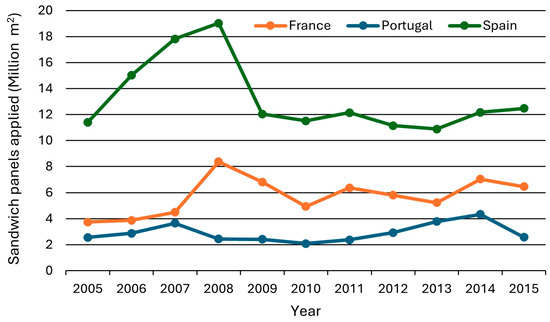
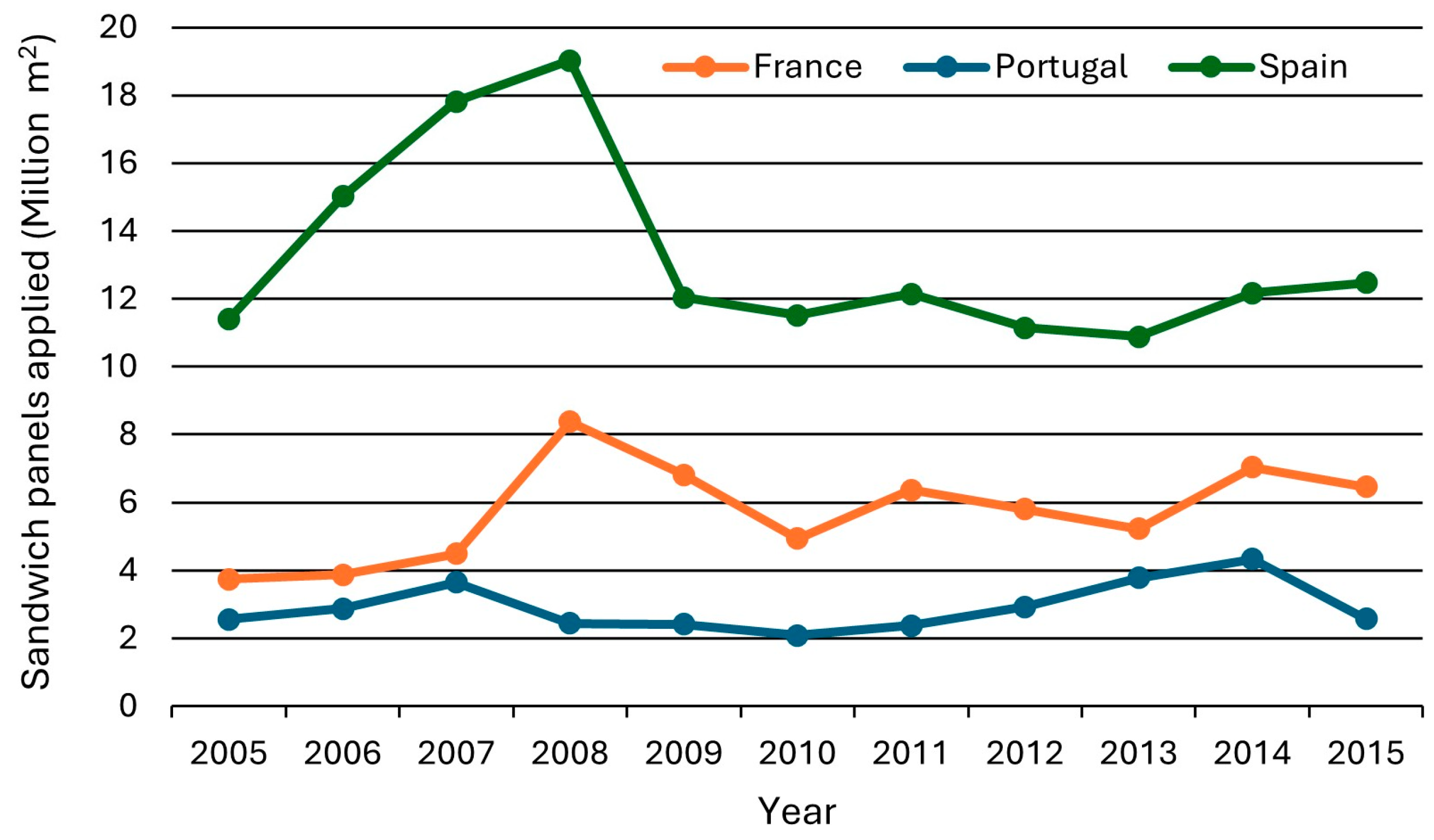
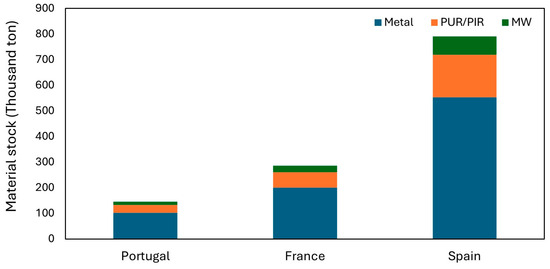
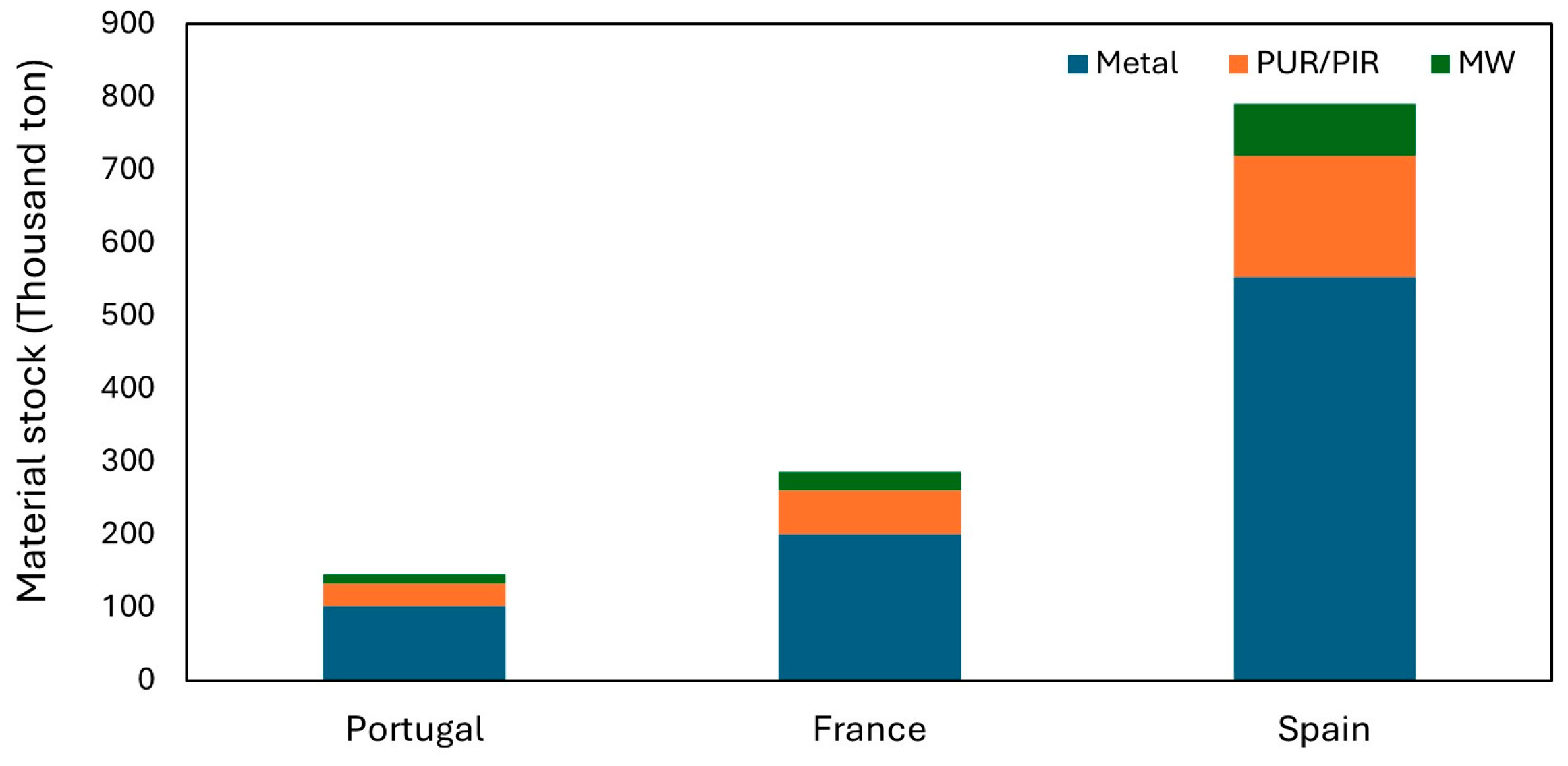
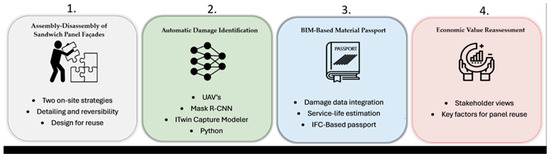
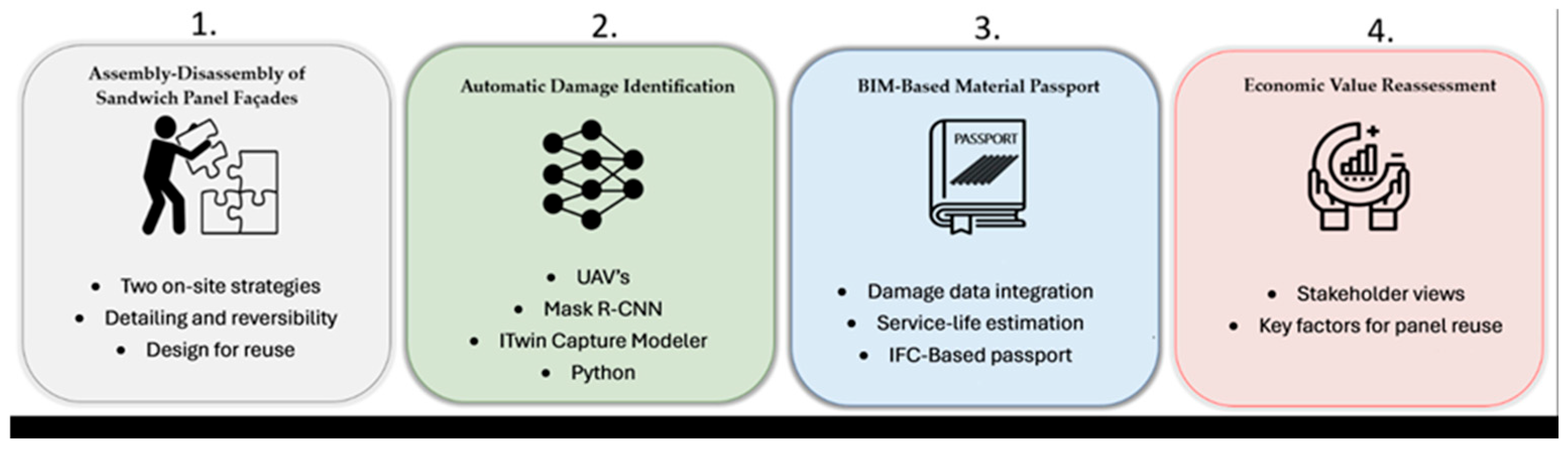
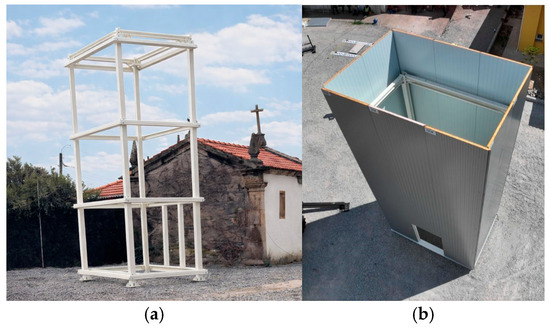
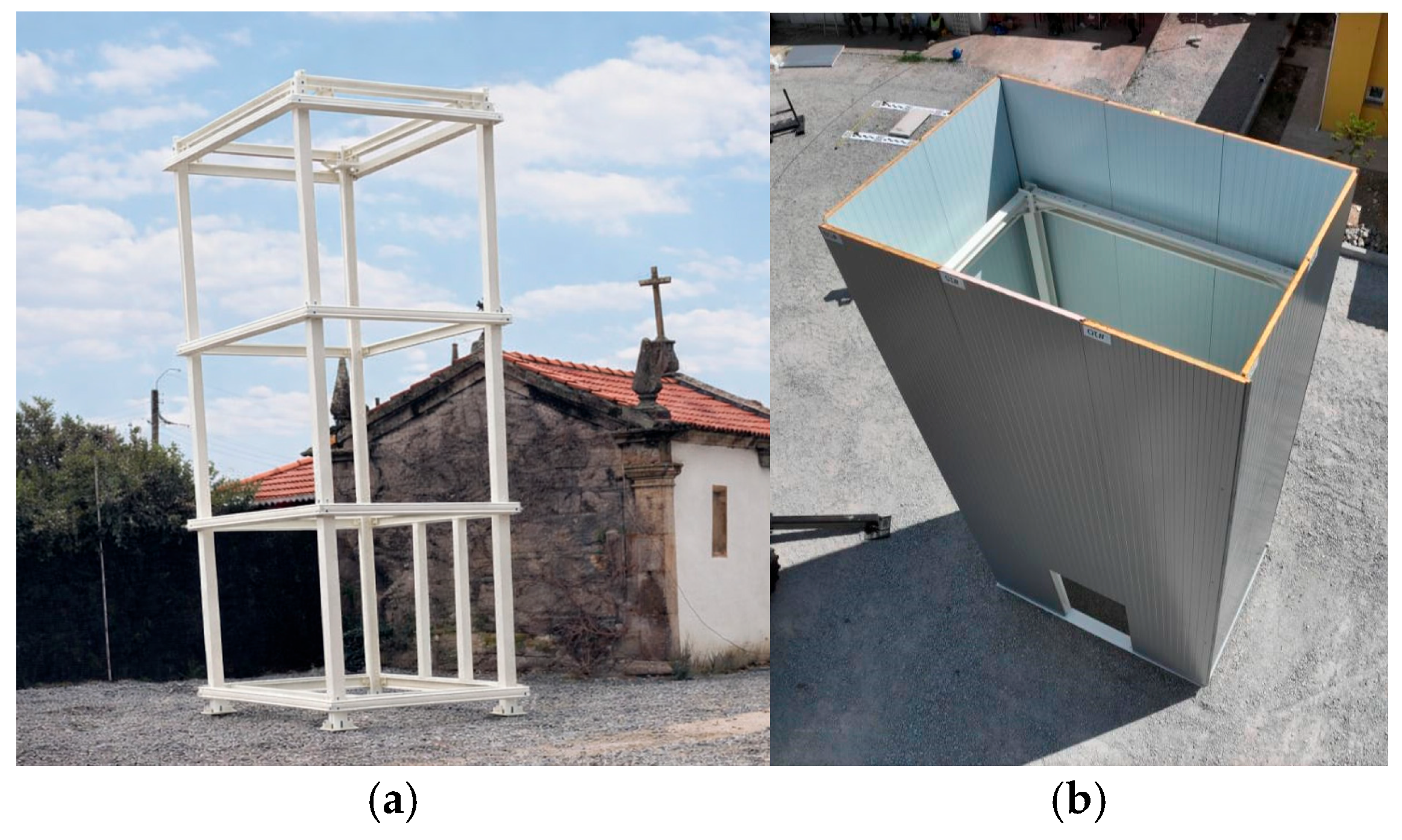
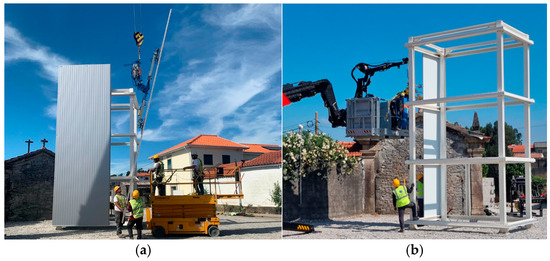
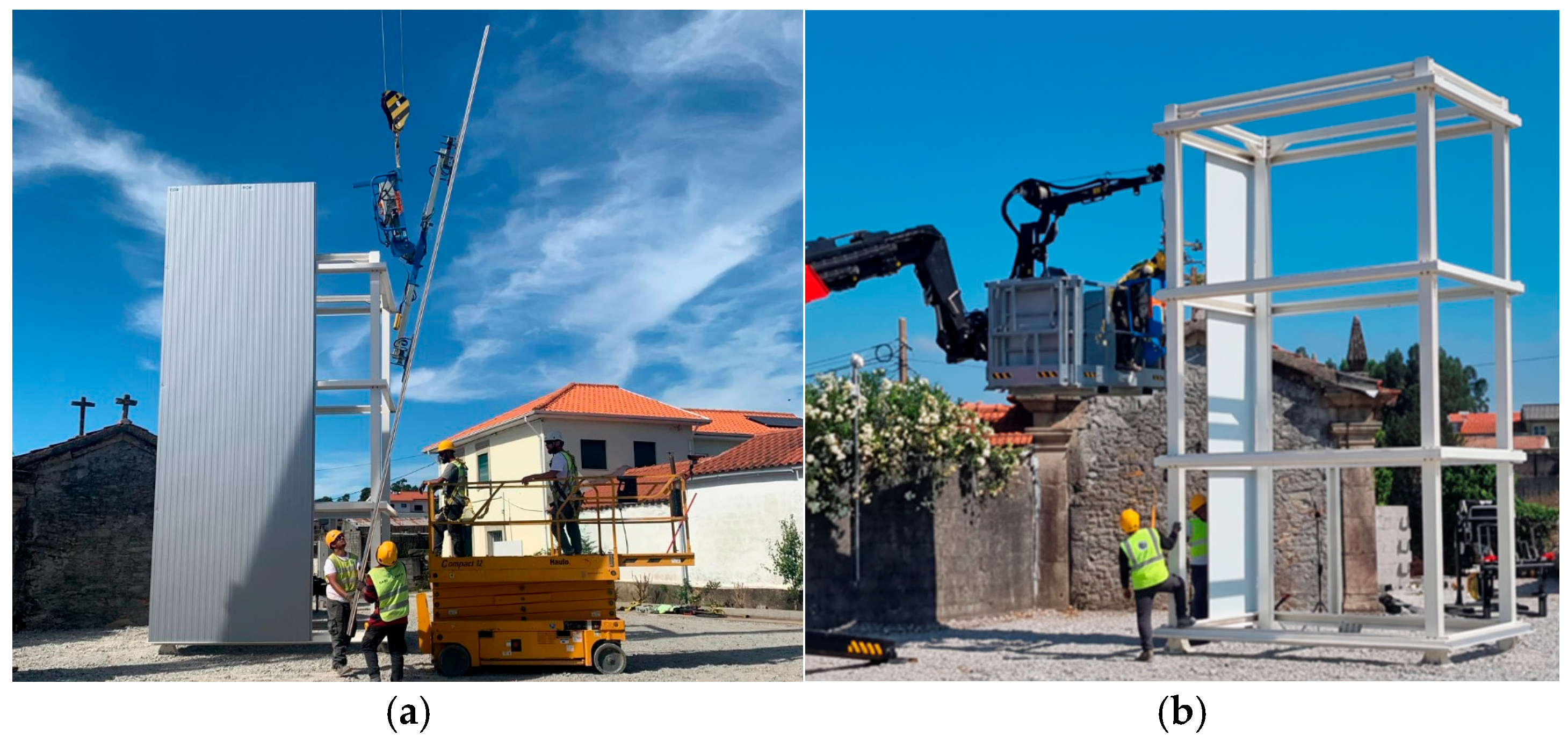
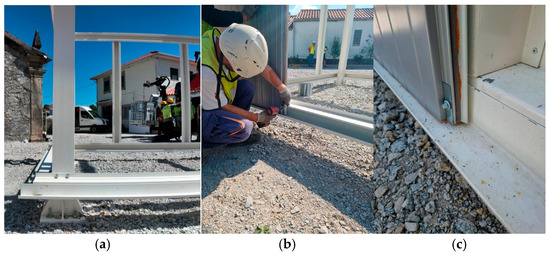
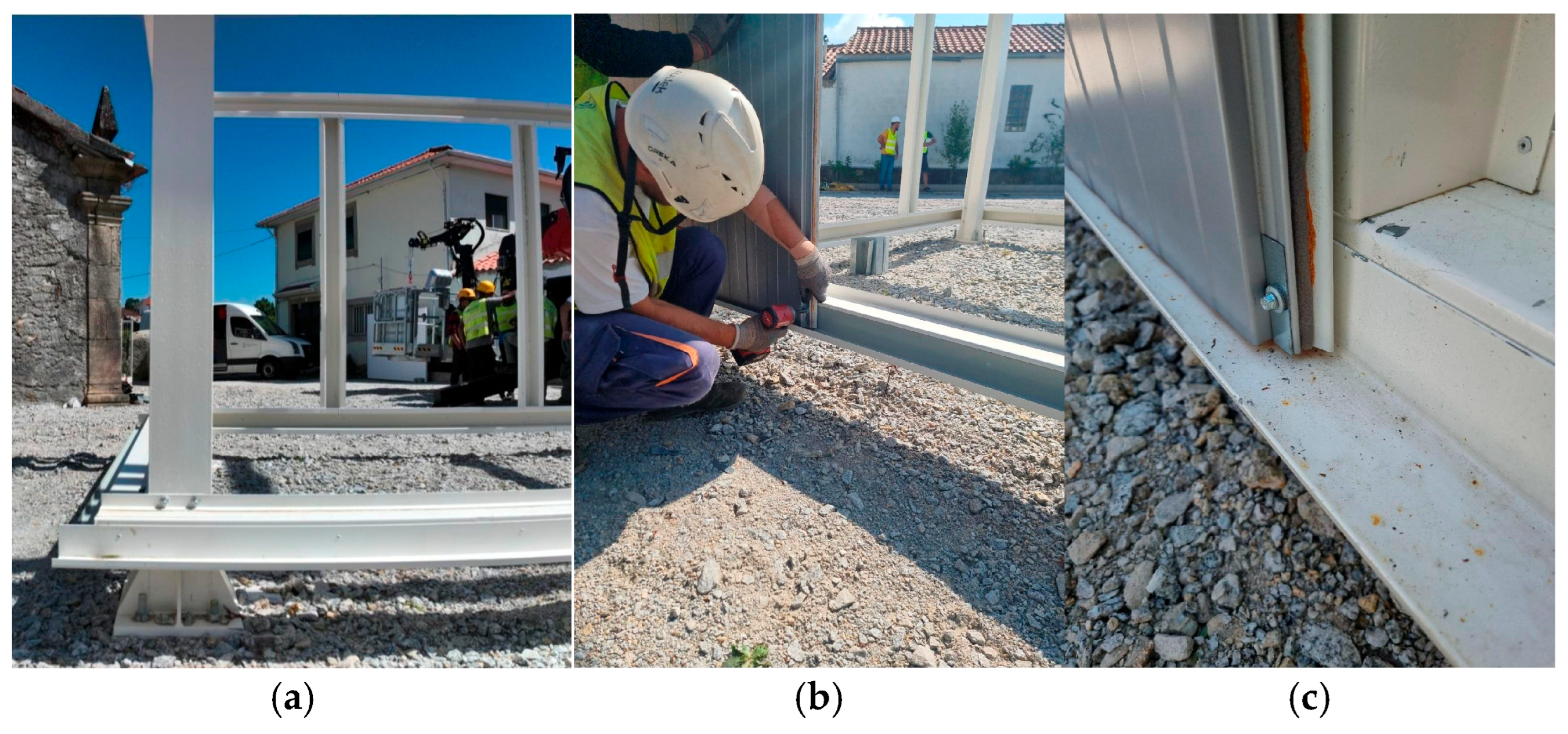
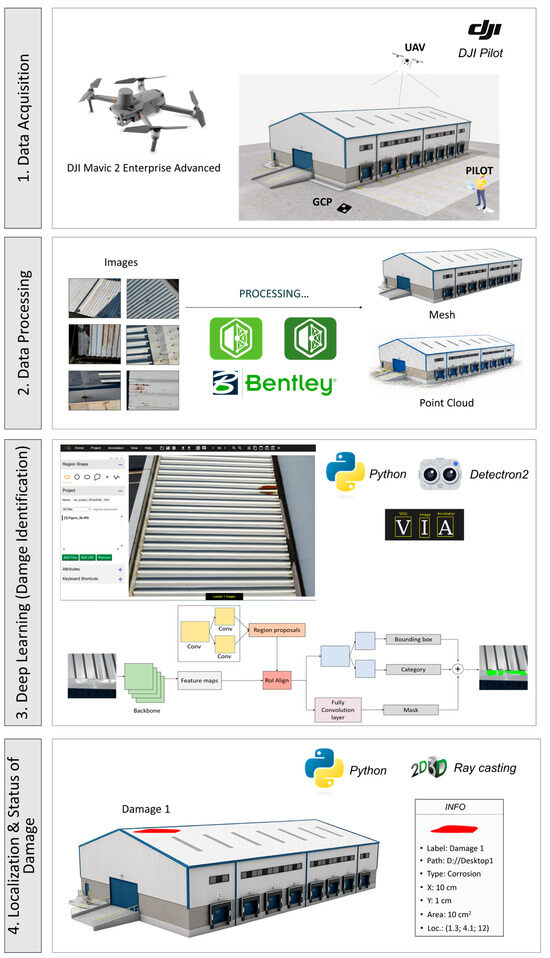
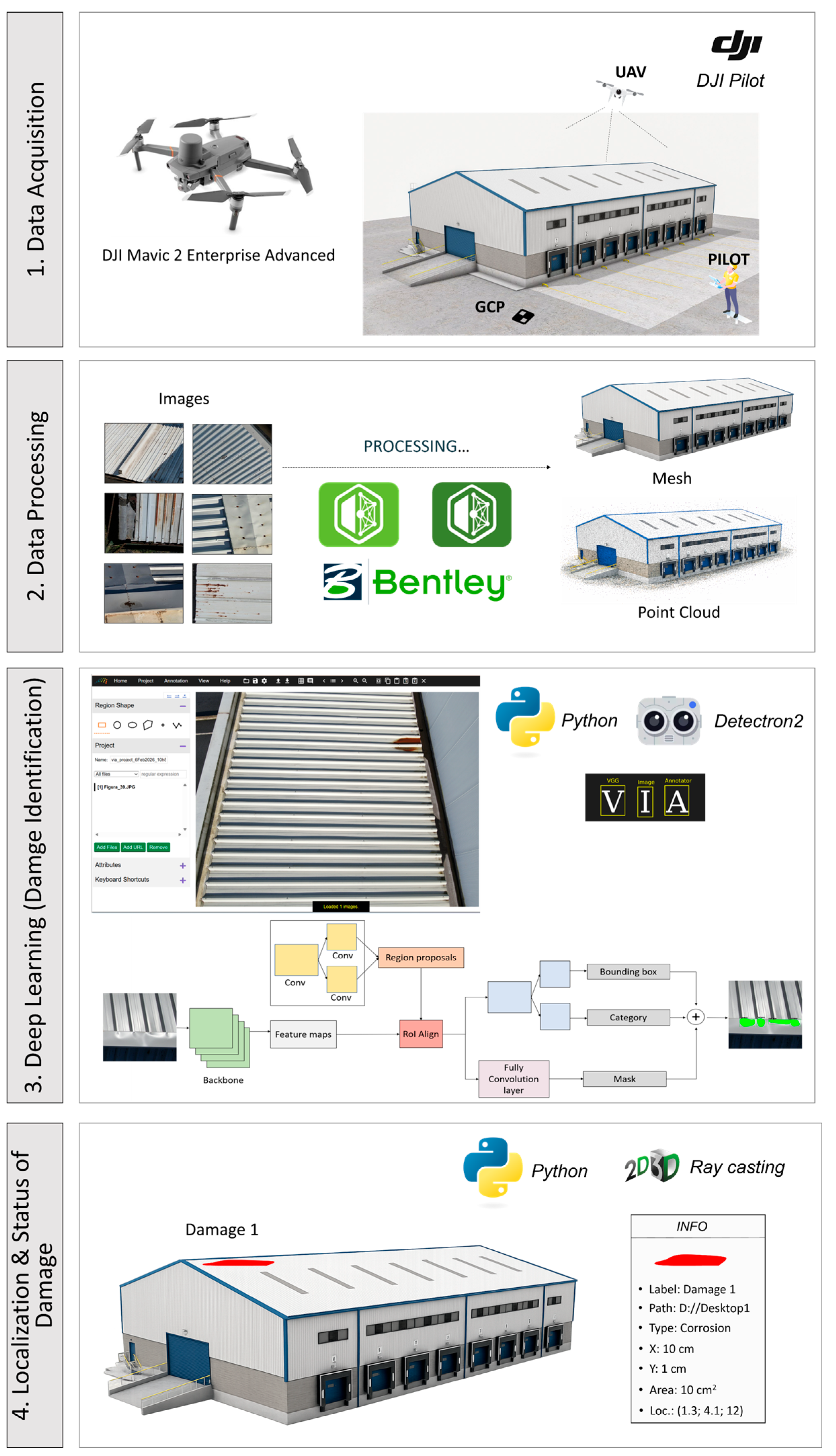
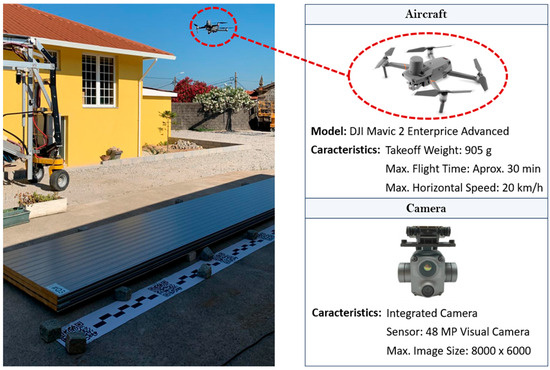
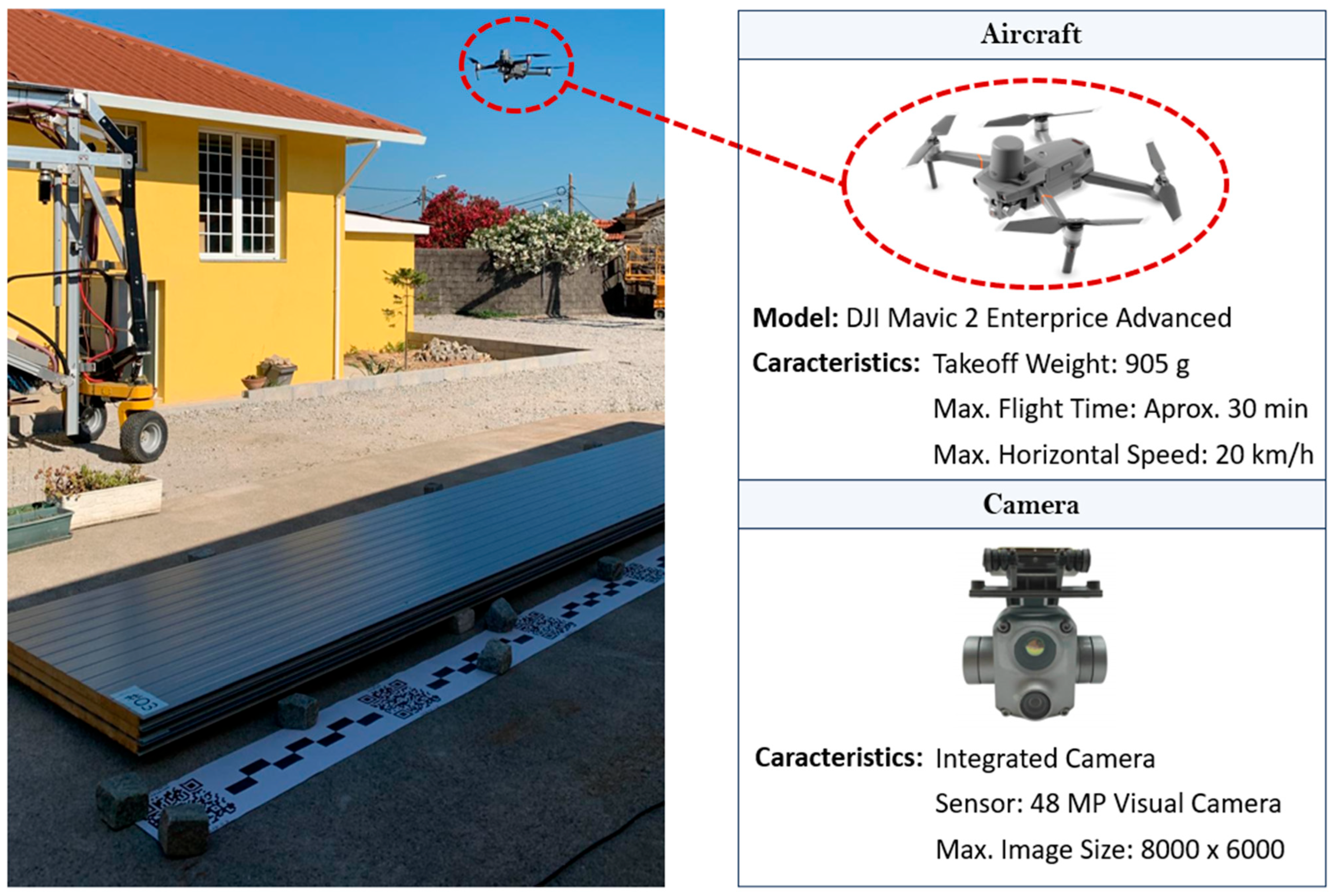
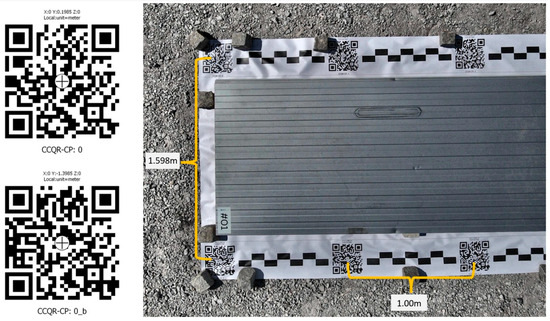
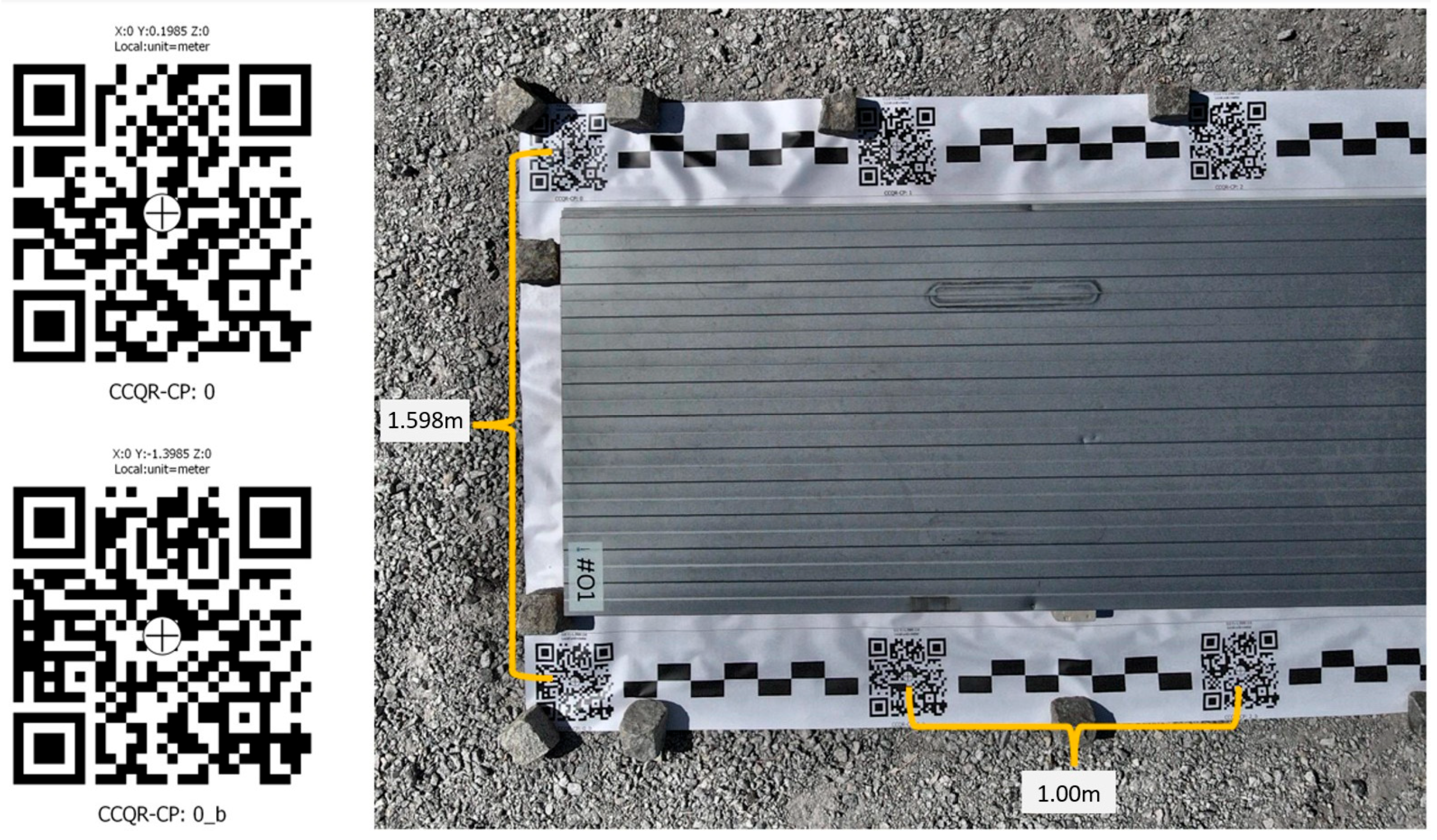
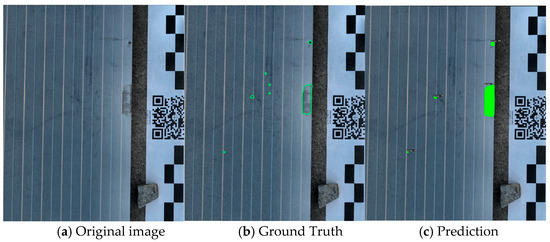
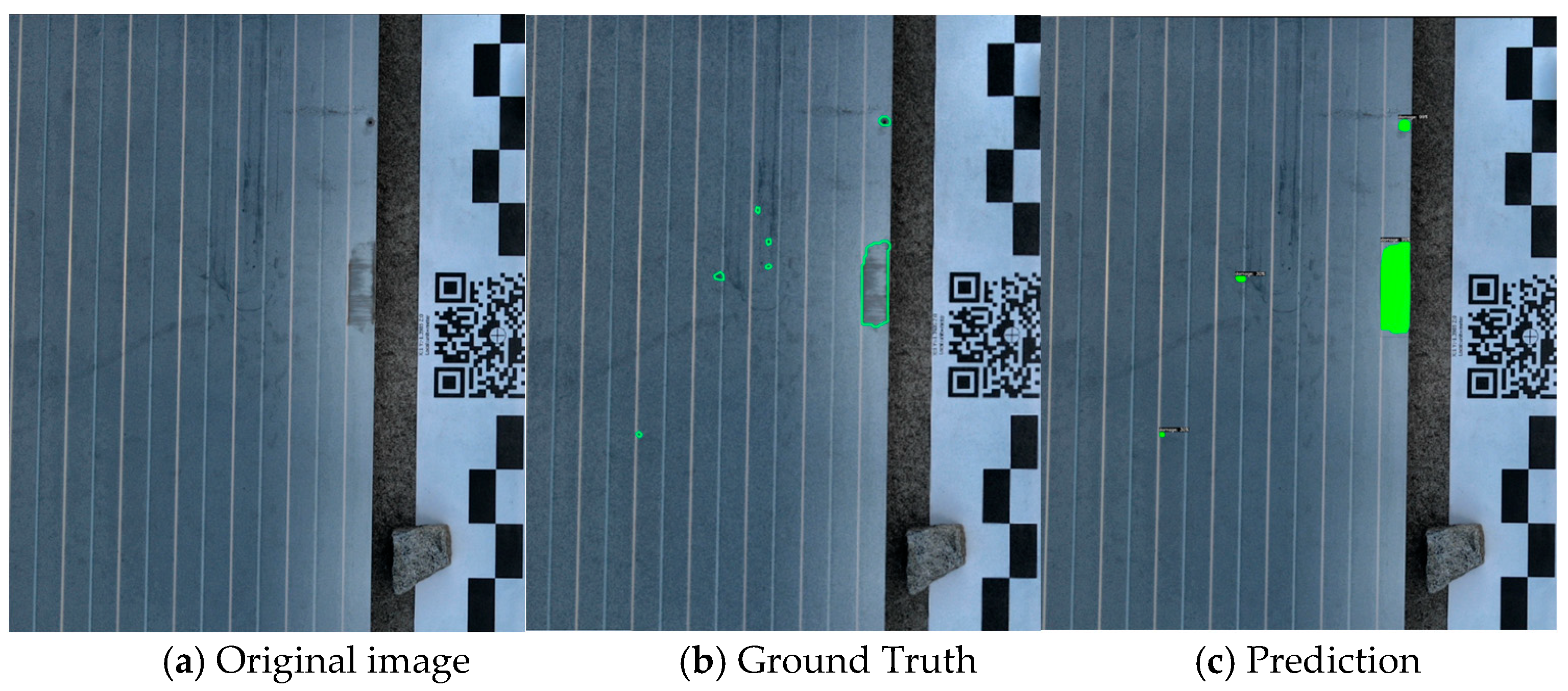
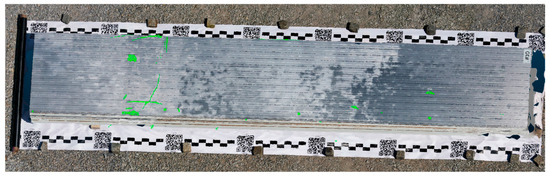
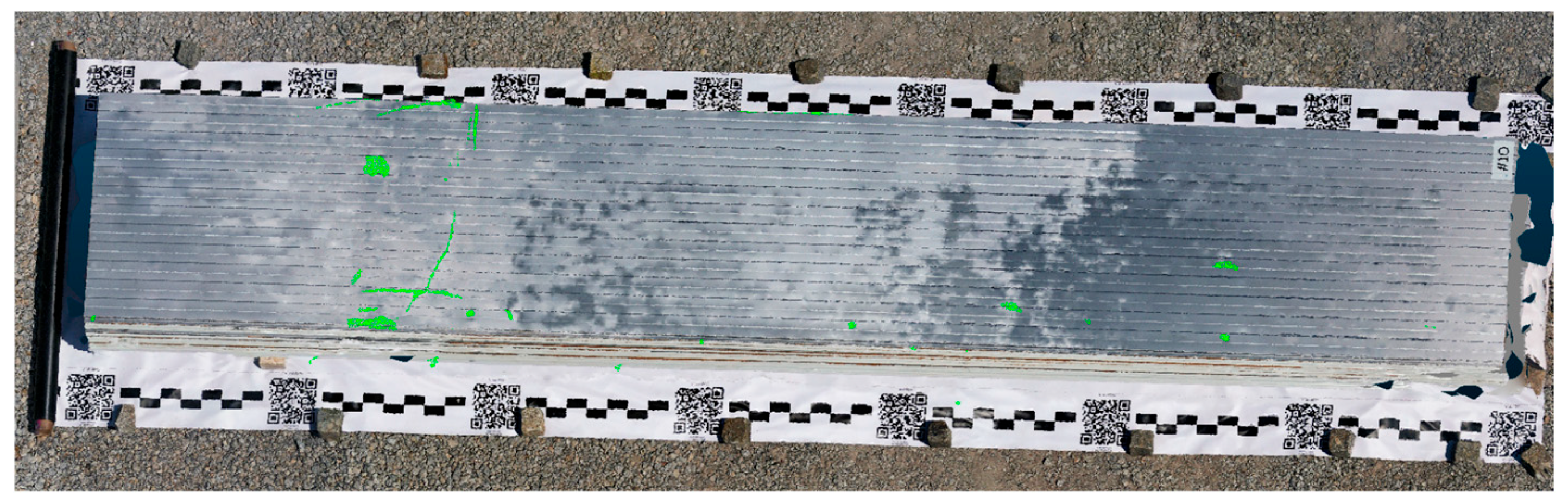
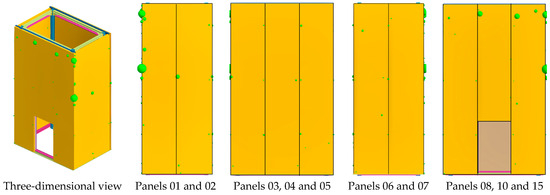
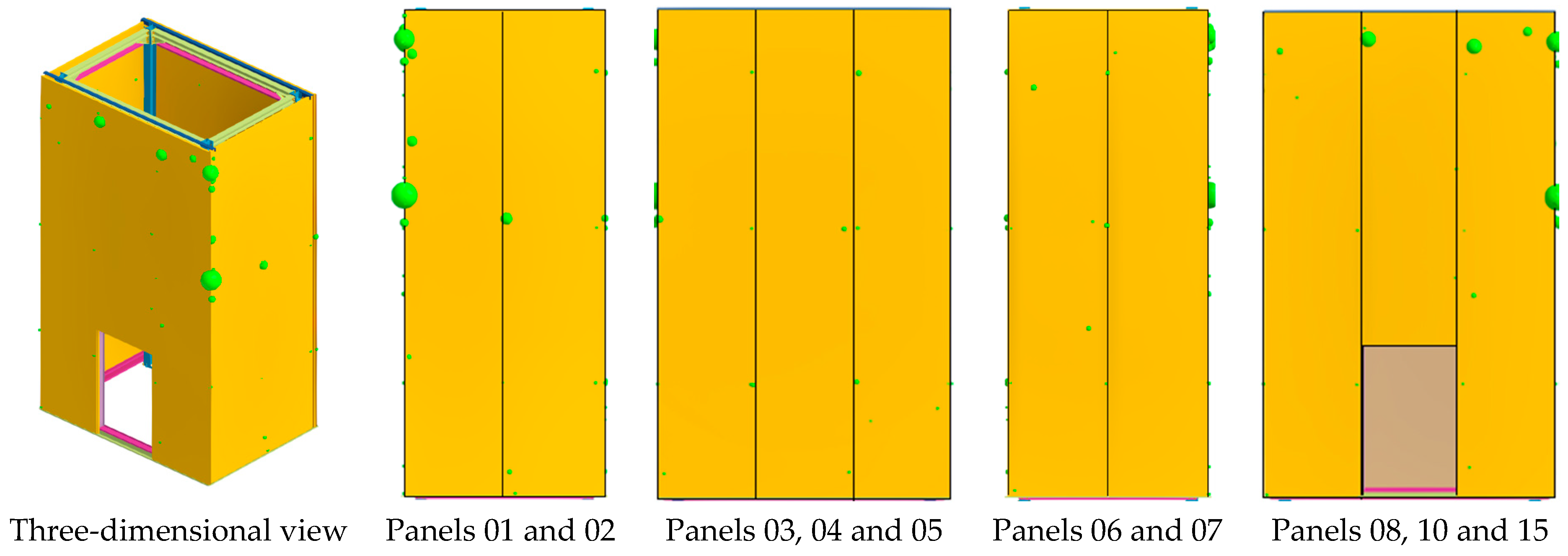
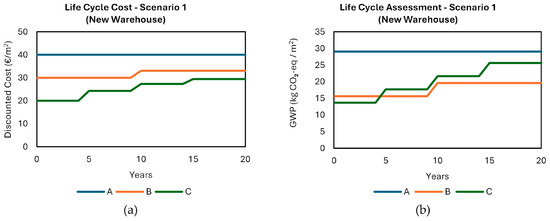
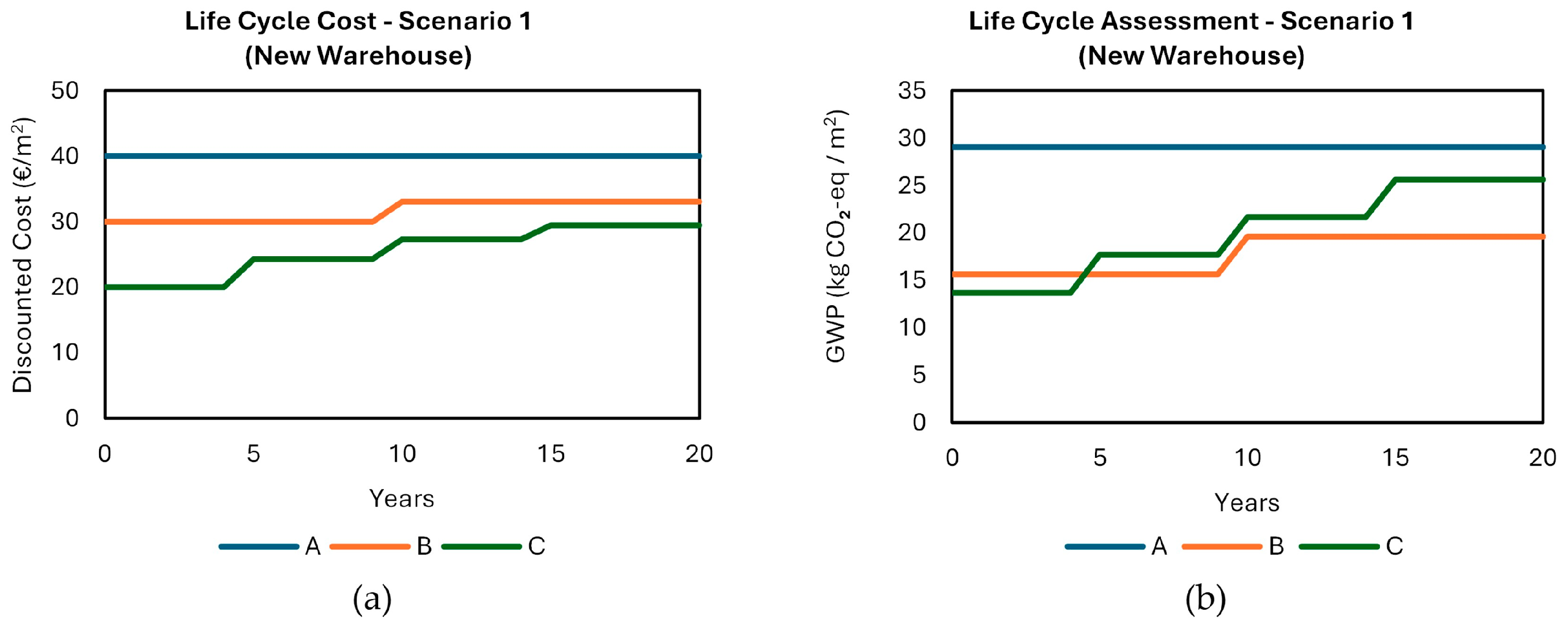
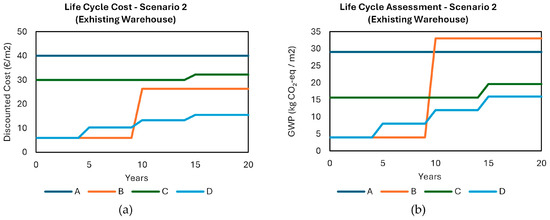
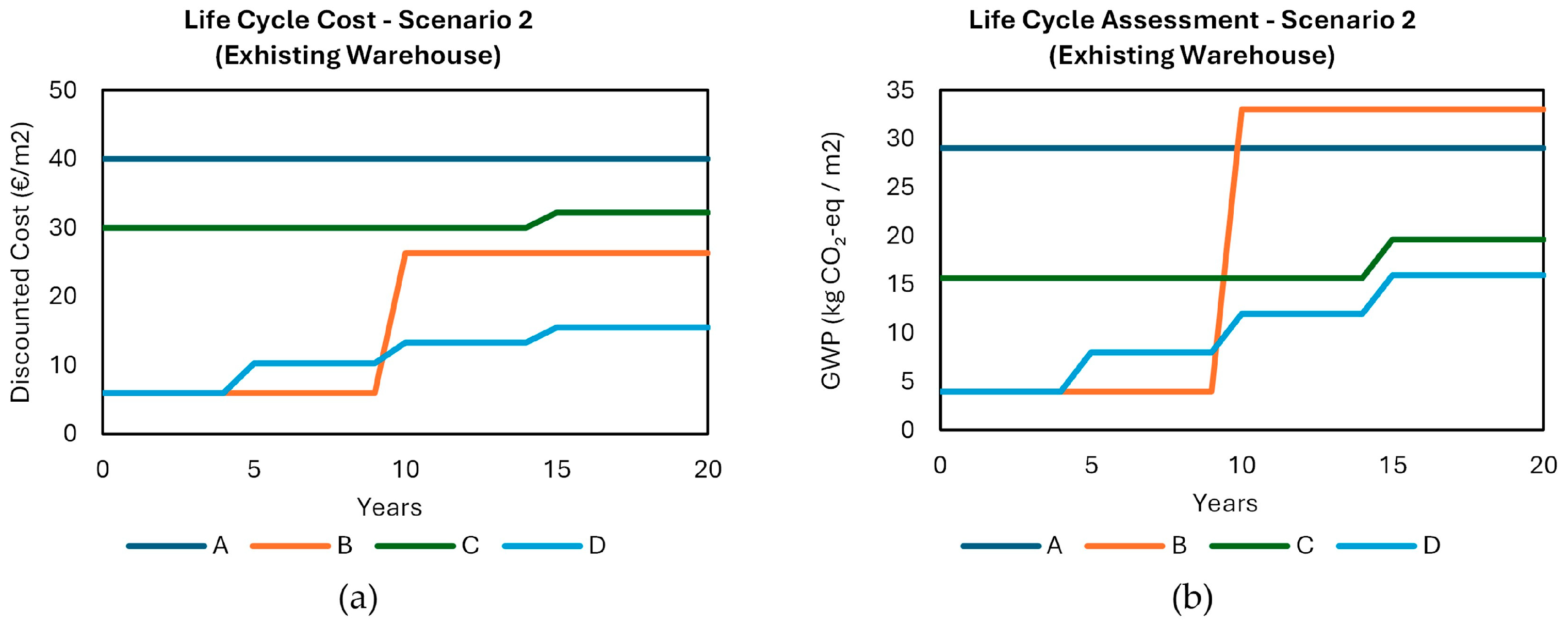
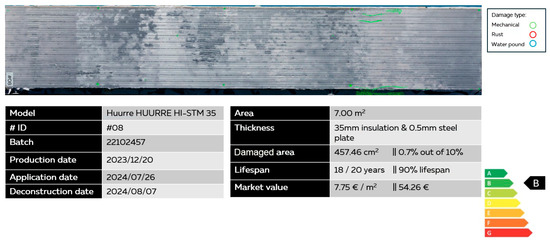
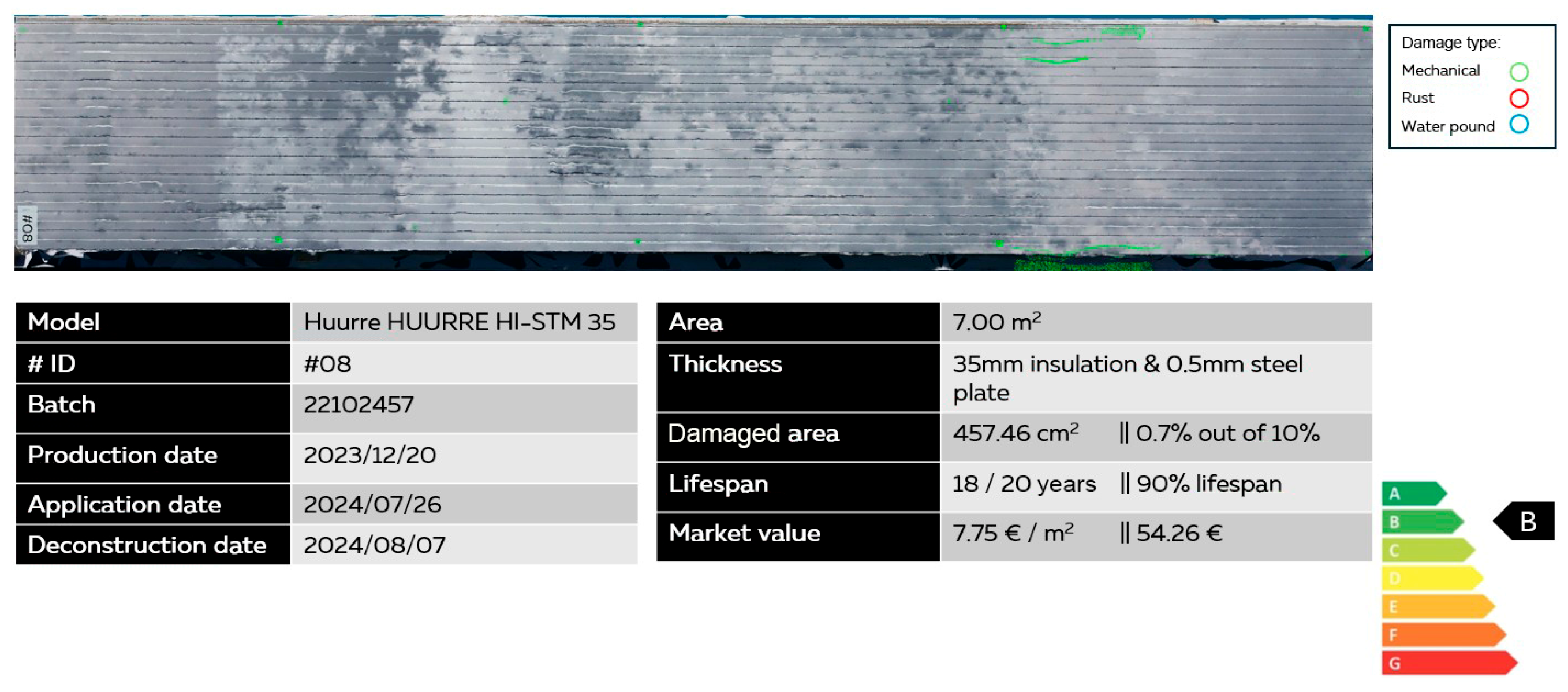

Disclaimer/Publisher’s Note: The statements, opinions and data contained in all publications are solely those of the individual author(s) and contributor(s) and not of MDPI and/or the editor(s). MDPI and/or the editor(s) disclaim responsibility for any injury to people or property resulting from any ideas, methods, instructions or products referred to in the content. |
© 2026 by the authors. Licensee MDPI, Basel, Switzerland. This article is an open access article distributed under the terms and conditions of the Creative Commons Attribution (CC BY) license.