


Abstract
The red sandstone rock mass and sculptures within the Xumishan Grottoes exhibit multiple forms of weathering damage, including flaking, hollows, efflorescence, and salt efflorescence. Among these, flaking and salt efflorescence are the most pronounced, posing a severe threat to the long-term preservation of the cave’s cultural relics. This study employs SEM-EDS, XRD, XRF and IC techniques to conduct scientific analysis and characterization of the weathering products on the surface of red sandstone. By integrating the lithology of the red sandstone itself with its depositional environment, the study investigates the causes of surface weathering in red sandstone. Research findings indicate that the lithology of the cave site consists primarily of muddy siltstone, with gypsum and mirabilite present within the weathered red sandstone, alongside minor quantities of Epsom salt and chloride salts. The migration and enrichment of these soluble salts within the rock mass constitute the key chemical factors triggering efflorescence and spalling in sandstone. Concurrently, influenced by the grottoes’ environmental conditions, periodic temperature fluctuations and moisture migration further promote freeze–thaw cycles and the crystallization–dissolution cycle of salts, accelerating the weathering process of the red sandstone within the Xumishan Grottoes.
1. Introduction
The Xumishan Grottoes lie 55 km northwest of Yuanzhou District, Guyuan City, Ningxia, forming a key stop along the northern route of the eastern Silk Road. Originally constructed during the late Northern Wei dynasty, they underwent successive expansions throughout subsequent eras, boasting a history spanning over 1500 years [1]. The grotto complex currently comprises 162 caves, housing over 500 statues that are relatively well-preserved. These are distributed across eight mountain peaks stretching for two kilometers, forming eight distinct areas from south to north: the Great Buddha Hall, the Palace of Descendants, the Temple of the Circular Light, and the Temple of the Chancellor. Among these, the most spectacular is the 20.6 m-tall seated Maitreya Buddha, carved during the Tang Dynasty, which stands as the largest stone-carved Buddhist statue within Ningxia.
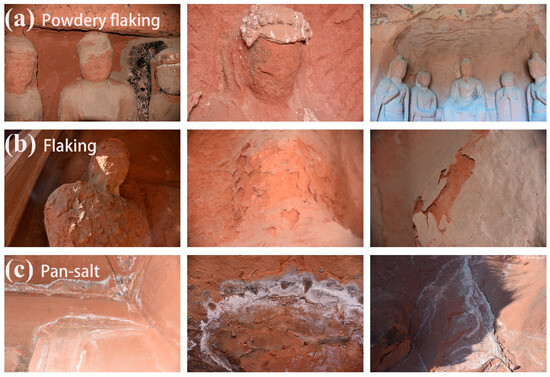
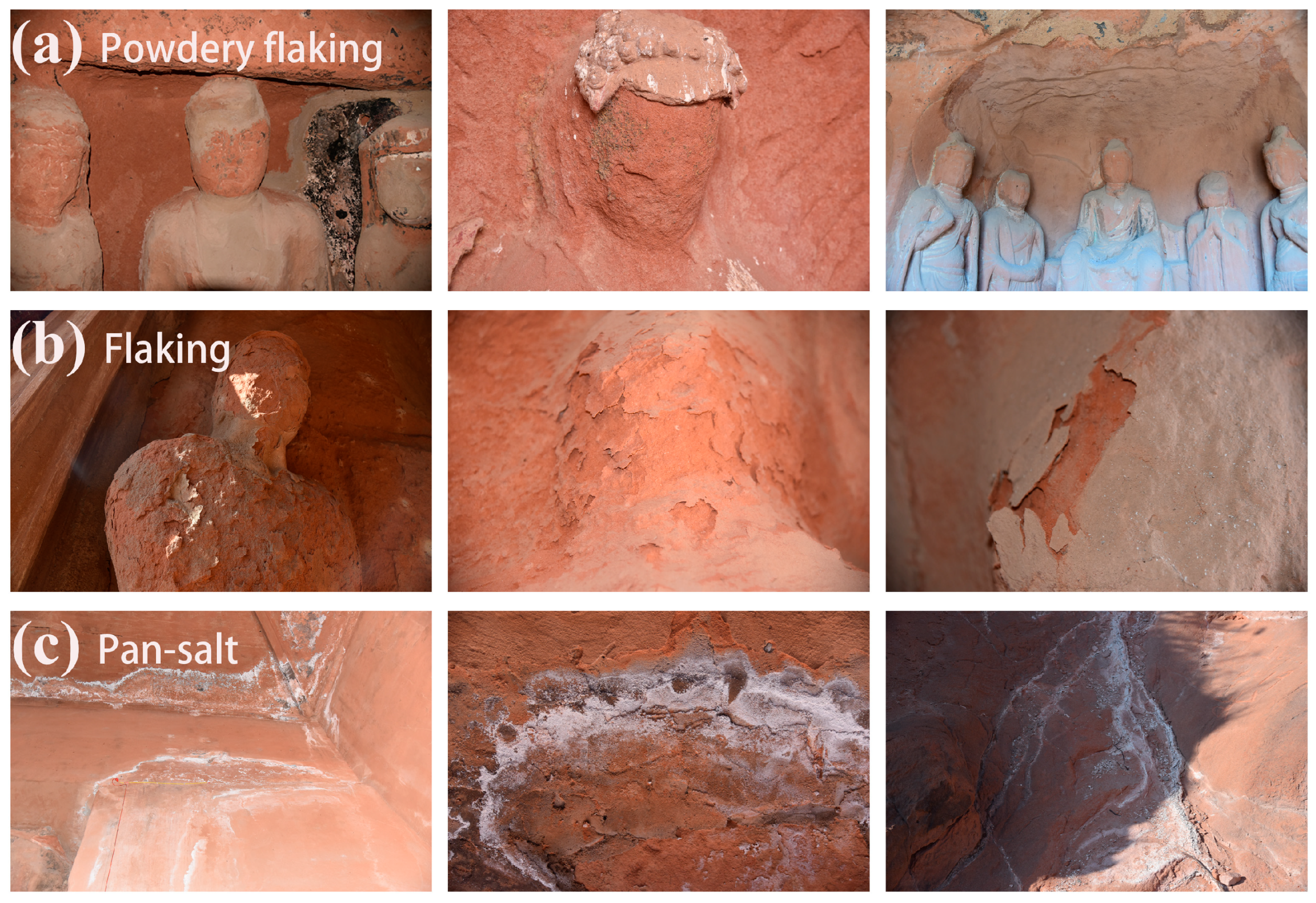
Natural weathering alters rock color, mineralogy, and strength. These changes manifest as visible damage, including powdering, discoloration, efflorescence, and cracking (Figure 1) [2]. Weathering damage generally occurs within the top few millimeters to twenty centimeters of the rock mass [3,4]. Even 1–2 cm of weathering on the stone surface constitutes significant damage to stone artefacts [5]. At present, the Xumishan Grottoes have suffered severe weathering and deterioration due to prolonged natural forces. Through on-site investigation, it was discovered that the rock mass and sculptures of the Xumishan Grottoes exhibit extensive powdery and flaky spalling. The sculptures appear blurred or retain only their outlines, with the overlying polychrome paint flaking off. Furthermore, the legs of the sculptures have suffered red sandstone spalling, resulting in accumulations of fallen sand. The inscriptions on the cave walls have become illegible through fading or have been entirely eroded. Extensive salt efflorescence has appeared on the interior walls of some caves and in the summit areas, while the cliff faces have darkened due to the growth and attachment of microorganisms. Among these, powdery flaking, flaking, and efflorescence are the most pronounced. The development of weathering damage significantly diminishes the intrinsic value of stone artefacts [6] and severely compromises the long-term preservation of grottoes and stone cultural relics.
Figure 1.
Current status of weathering damage on the surface of Xumishan Grottoes.
Relevant research indicates that water plays a dominant role in the causes of weathering damage [7]. The stone artefacts within the Xumishan Grottoes are predominantly composed of red sandstone, which undergoes complex chemical reactions and stress corrosion when exposed to water [8]. This leads to flaking and disintegration, resulting in the loss of their structural integrity. The grotto is situated in a region characterized by a warm-temperate semiarid continental climate typical of high plateaus. It experiences significant diurnal temperature variations and high evaporation rates, with rainfall predominantly concentrated during the summer and autumn seasons. Combining the current state of the grottoes with investigations into their depositional environment, this paper employs scientific analysis and characterization techniques including X-ray fluorescence spectroscopy (XRF), scanning electron microscopy with energy-dispersive spectroscopy (SEM-EDS), X-ray diffraction spectroscopy (XRD), and ion chromatography (IC) to examine the weathering products on the surface of red sandstone, research into the causes of red sandstone weathering provides a foundation for addressing weathering issues at the Xumishan Grottoes, while also furnishing crucial reference data for subsequent reinforcement and conservation efforts.
2. Samples and Methods
2.1. Sample Information
We collected weathering samples from several statues in the Xumishan Grottoes (Table 1). These samples were taken from severely damaged areas, such as peeling from the statues’ faces, powdery peeling from the cave walls, and water seepage areas with salt crystals. All samples are highly representative. Meanwhile, we used a drilling rig to collect core samples from the bottom of Cave 5 in the Xumishan Grottoes at depths of 0.5 to 0.65 m and 4.7 to 4.75 m. These samples were used to compare and analyze the differences between the core samples and weathered samples to determine the degree of weathering. The sample identification numbers and locations are detailed in Table 1.
Table 1.
Sample Information Sheet.
2.2. Analytical Instruments and Conditions
- (1)
- Polarizing microscope: German ZEISS Axio imager.M2m transmitted and reflected light digital polarizing microscope. Based on petrological characteristics, specific fine morphological features are observed under a polarizing microscope on thin sections.
- (2)
- Mercury Intrusion Porosimetry (MIP) Instrument: American AUTOPORE 9500 Fully Automated Mercury Intrusion Porosimeter.
- (3)
- X-ray Fluorescence Spectrometer (XRF): German BRUKER S2 RANGER Spectrographic Dispersive X-ray Fluorescence Spectrometer. Experimental conditions: EQUA Oxides mode. Samples were dried, pulverized, and sieved through an 80-mesh screen, with spectral-grade boric acid used for pressing tablets.
- (4)
- Scanning Electron Microscope with Energy Dispersive Spectrometer (SEM-EDS): Japanese HITACHI SU8010 Cold Field Emission Scanning Electron Microscope; Japanese HORIBA EMAX Energy X-ray Spectrometer. Experimental conditions: Samples were dried, gold-sputtered, and adhered to conductive adhesive. The spectrometer operated in both point-scanning and area-scanning modes.
- (5)
- X-ray Diffractometer (XRD): German BRUKER D8 ADVANCE model X-ray diffractometer, employing a Cu/Kα radiation source with a wavelength of 15.4 nm, operating at 40 kV tube voltage and 40 mA tube current. Scanning speed: 5°/min; scanning range: 5–80°.
- (6)
- Ion Chromatograph (IC): Thermo Fisher Dionex ICS-1100 model ion chromatograph; Red sandstone and deionized water in a mass ratio of 1:100. First, weigh 0.500 g (accurate to 0.001 g) of the dried sandstone sample to be tested, which has been sieved through a 0.2 mm (80 mesh) sieve. Place this in a 250 mL beaker, add 50 mL of deionized water, and subject to ultrasonic extraction for 15 min. Subsequently, place the solution in a 50 mL centrifuge tube and centrifuge at 4000 rpm for 10 min. Remove the supernatant, filter it through a 0.45 μm microporous membrane, then filter again using a C18 solid-phase extraction column before proceeding with ion chromatography analysis.
3. Discussion
3.1. Petrographic Analysis
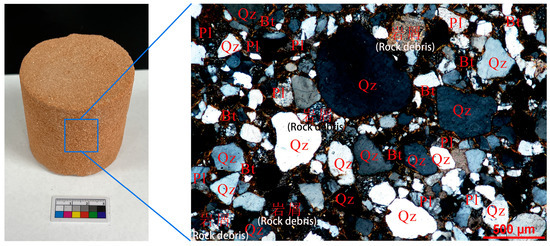
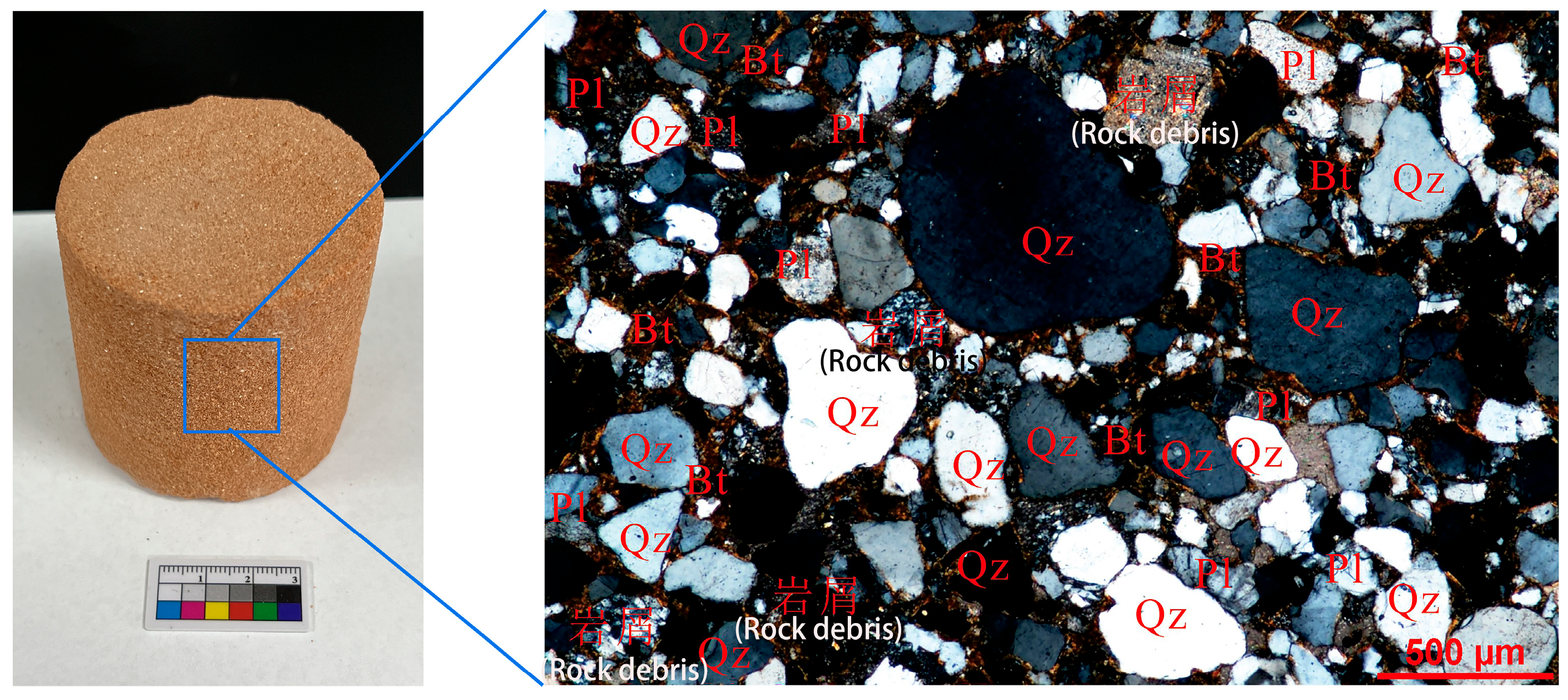
Red sandstone is mainly distributed in Sichuan, Ganzhou in Jiangxi, and other southern provinces in China, and is also found in the northwest region. Unlike siltstone, which is relatively hard, has strong resistance to spalling, and has relatively low permeability and porosity, red sandstone’s strength is significantly affected by the cementing material and the degree of weathering, and it is prone to disintegration and mud formation after being soaked in water. The red sandstone of the Xumishan Grottoes is chiefly composed of quartz, rock fragments and feldspar, sericite should be a product of feldspar alteration (Table 2) (Figure 2). The cementing material consists of clayey particles and trace amounts of fine silt, locally containing minor iron-rich cementation. The red sandstone exhibits granular bedding with a contact-type cementation. The nature of intergrain contact comprises both line contact and point contact. Quartz exhibits a subangular to subrounded shape, with grain sizes ranging from 0.24 mm to 0.62 mm; feldspar consists primarily of plagioclase and striated feldspar, appearing subangular, with grain sizes from 0.26 mm to 0.56 mm, a few crystals exhibit faintly discernible striated structures and fine polycrystalline twins, while most surfaces are impure and show varying degrees of clay alteration. The rock fragments consist primarily of flint, with minor quantities of quartzite and trace amounts of mudstone. They exhibit a subangular to subrounded shape, with grain sizes ranging from approximately 0.25 mm to 0.57 mm. The flint is predominantly cryptocrystalline, while the mudstone essentially transitions towards sericite. The fine silt particles in the impurities consist primarily of quartz, all with grain sizes < 0.03 mm. The matrix clay minerals are predominantly sericite.
Table 2.
Red sandstone mineral composition.
Figure 2.
Polarized picture of red sandstone slice.
3.2. Pore Volume Analysis
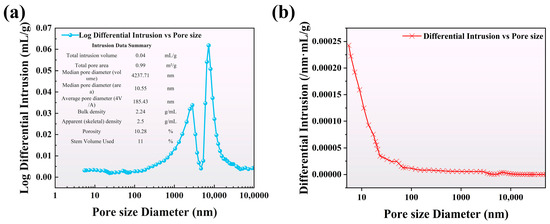
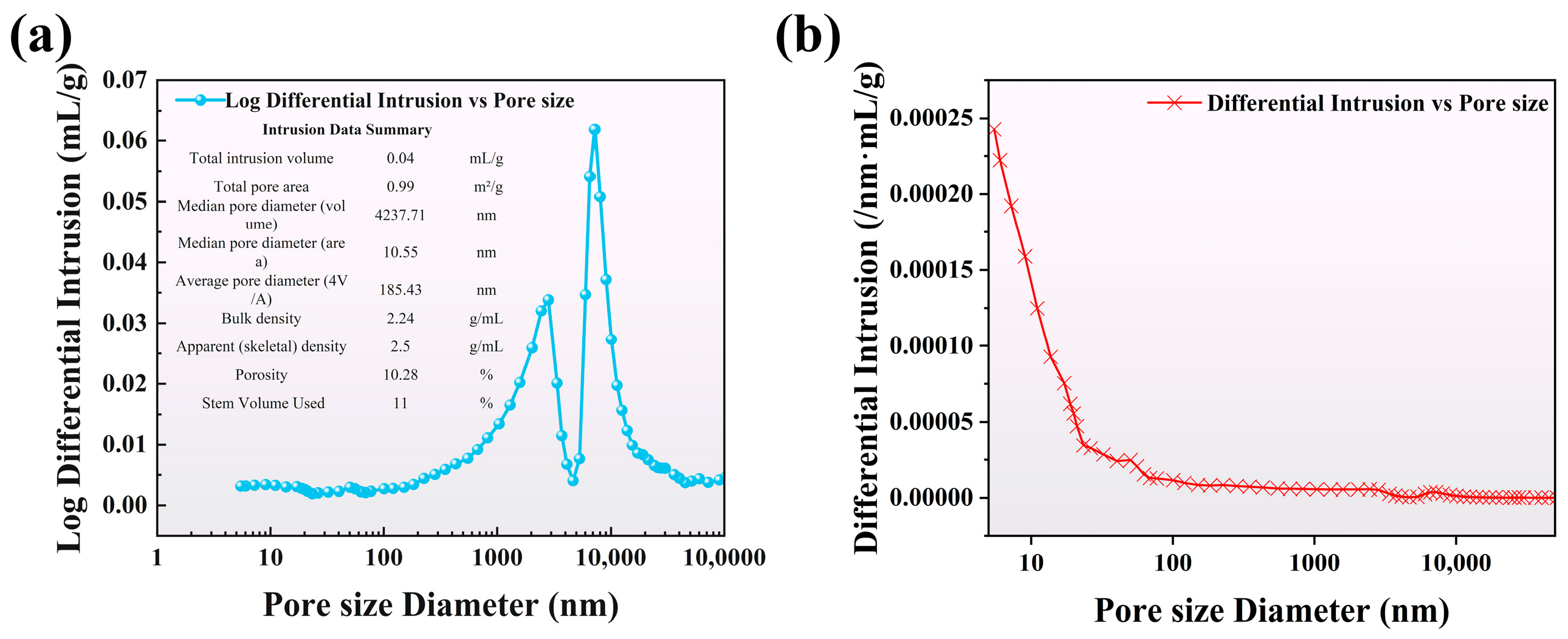
The average pore diameter of the weathered red sandstone sample measured by the mercury porosimetry method was 185.43 nm (Figure 3), with an average median pore diameter (area) of 10.55 nm, an average median pore diameter (volume) of 4237.71 nm, and a porosity of 10.2837%, indicates that weathered red sandstone possesses a relatively high porosity.
Figure 3.
Red sandstone pore size distribution picture. (a) Log differential intrusion vs. pore size; (b) Differential intrusion vs. pore size.
3.3. Softening Analysis
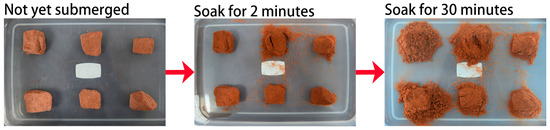
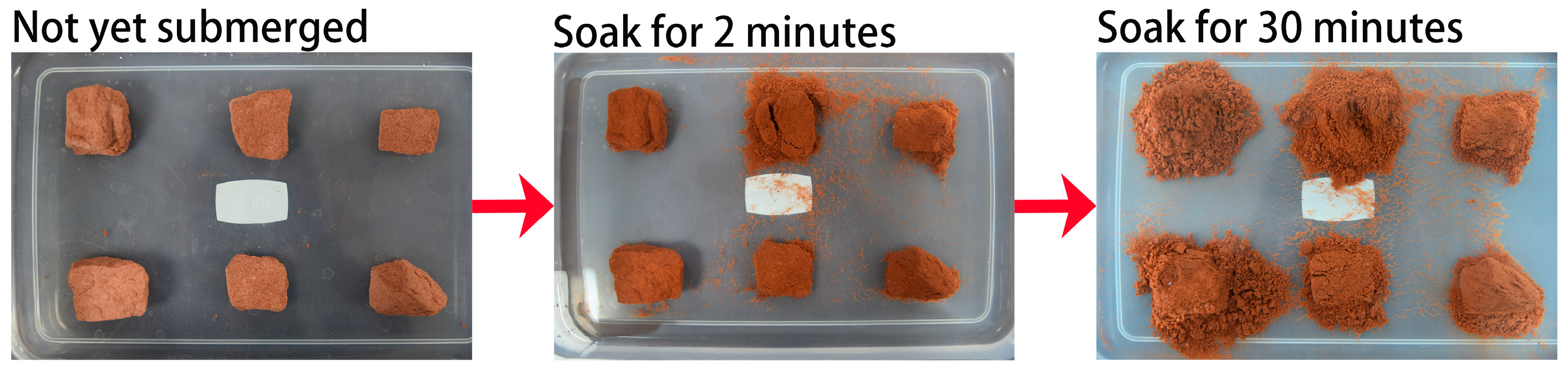
Observe the disintegration of blocky weathered red sandstone after immersion in water (Figure 4). Upon immersion, the sample rapidly exhibited granular and blocky spalling within an extremely short timeframe, with pronounced macroscopic fissures appearing on the surface. After 30 min of immersion, the sample lost its integrity, disintegrating into irregularly sized fragments and granules. Water erosion causes it to soften, significantly reducing its mechanical strength. Prolonged exposure ultimately leads to the flaking and disintegration of the red sandstone.
Figure 4.
Weathered red sandstone collapses when exposed to water.
3.4. XRF Analysis
X-ray fluorescence spectroscopy was employed to analyze the elemental composition of selected weathered samples and core samples (Table 3). The results indicate that weathered samples and core samples exhibit marked differences in their chemical element composition. The concentrations of SO3, Cl, and CaO in the weathered samples were significantly higher than those in the core samples, with neither SO3 nor Cl detected in the latter. Under weathering conditions, sulfur and chlorine elements commonly appear in the form of CaSO4, Na2SO4, NaCl, and similar compounds. The presence of SO3 and Cl in weathered samples indicates that the weathering of red sandstone is closely associated with sulphate and chloride salts. The CaO content in FH-13 and FH-16 samples showed a significant increase. White crystalline deposits, identified elsewhere in the study as CaCO3 (secondary calcite), were visually associated with these samples.
Table 3.
Red sandstone XRF data (%).
3.5. SEM-EDS Analysis
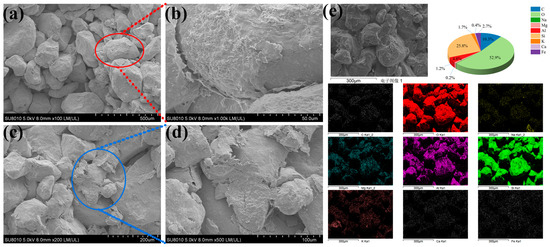
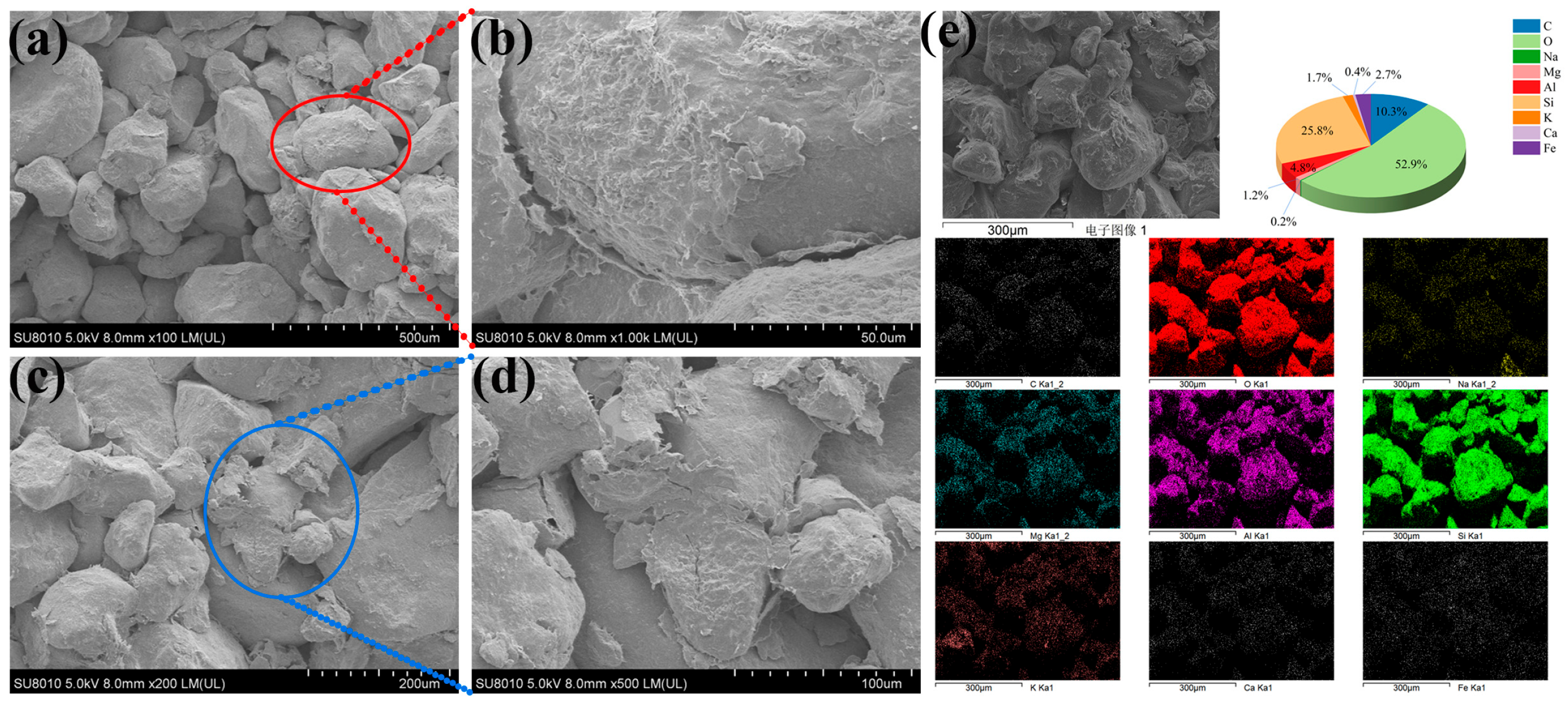
Observation of weathered red sandstone samples using a scanning electron microscope revealed numerous internal pores within the rock, with particles of varying sizes exhibiting distinct edges and sharp, angular features (Figure 5). The surface of quartz particles is loose and uneven, flaking off in a scaly manner under the influence of weathering. Using an energy dispersive spectrometer to analyze the elemental content and distribution on the surface of weathered red sandstone, the results indicate that the primary elements in the red sandstone are C, O, Al, and Si, with Ca present in extremely low quantities. This also demonstrates that the red sandstone contains relatively little calcareous cementation, with clayey cementation predominating instead.
Figure 5.
SEM images of red sandstone surface and surface element content and distribution. (a–d) Micromorphology of weathered red sandstone surface; (e) Elemental composition and distribution of red sandstone under surface scanning conditions.
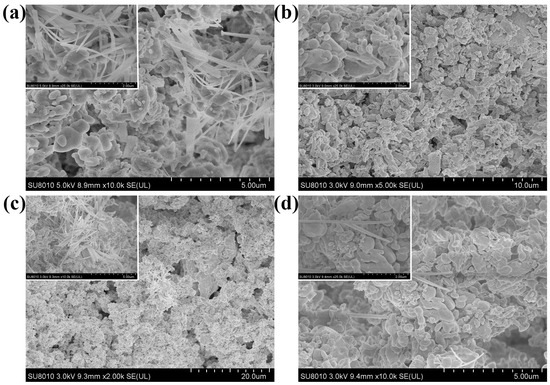
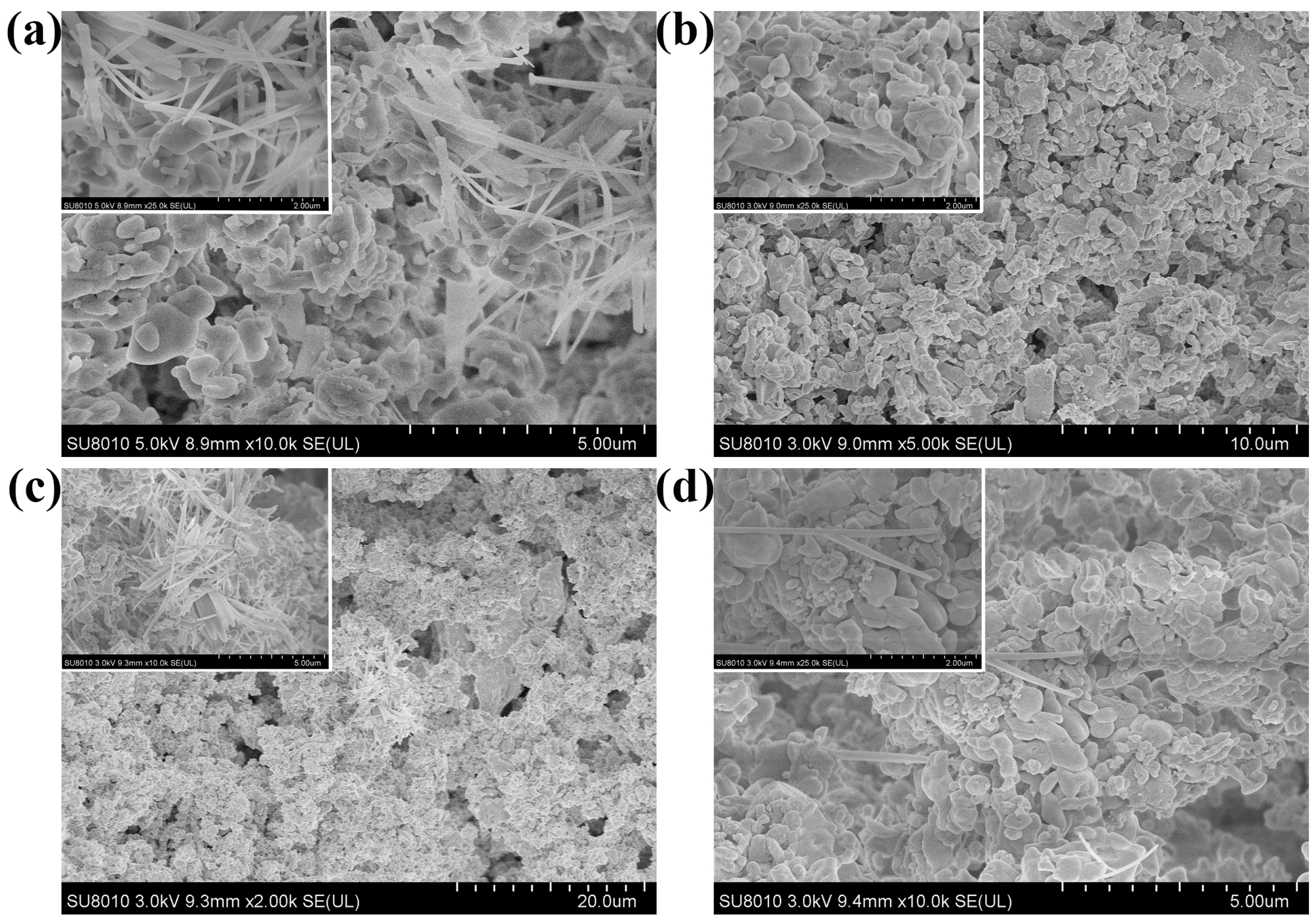
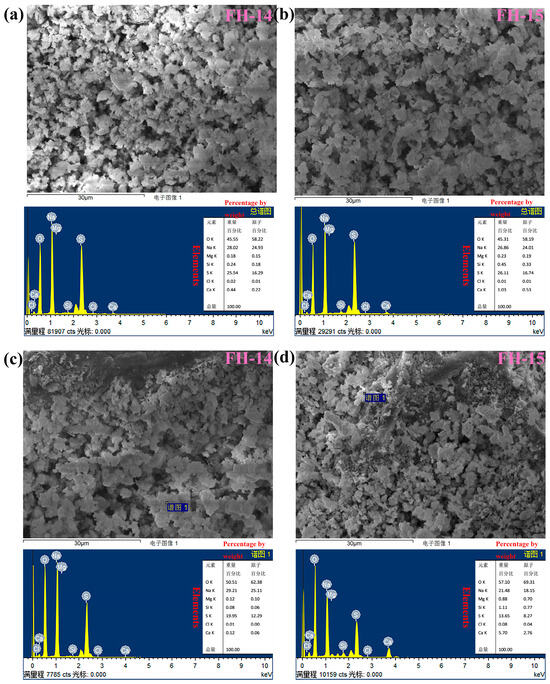
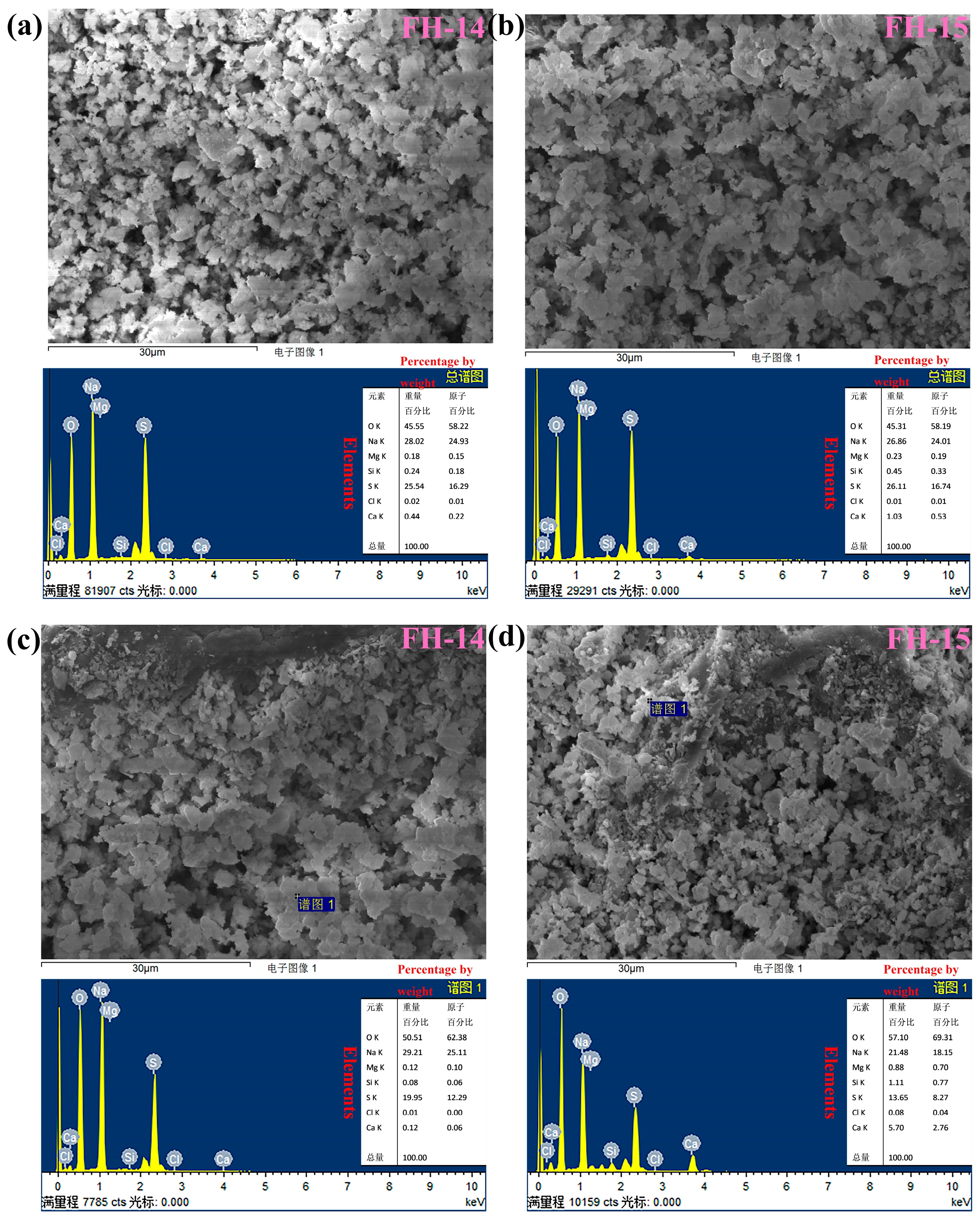
Using a scanning electron microscope to observe the microstructure of salt crystal samples revealed that the white salt deposits primarily consist of short prismatic crystals (Figure 6), lamellar crystals, and fine particles. Using an energy dispersive spectrometer to perform point and area scans on salt crystallization samples revealed that the samples primarily contained O, Na, and S elements, along with minor amounts of Mg and Ca (Figure 7). This indicates that the soluble salts in red sandstone are predominantly sulphates. Combined energy spectrum data indicate substantial sodium sulphate (Na2SO4) deposits on the surfaces of both sample groups, potentially accompanied by minor quantities of calcium sulphate (CaSO4) and magnesium sulphate (MgSO4).
Figure 6.
Pictures of red sandstone salt weathering. (a) Short columnar salt crystal morphology; (b) Flaky salt crystal morphology; (c,d) Needle-shaped salt crystal morphology.
Figure 7.
EDS analysis results of salt crystal samples (%). (a) and (c) Salt crystallization location and elemental content percentage in weathered sample No. 14; (b) and (d) Salt crystallization location and elemental content percentage in weathered sample No. 15.
3.6. XRD Analysis
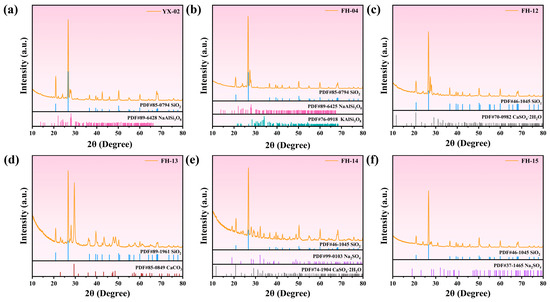
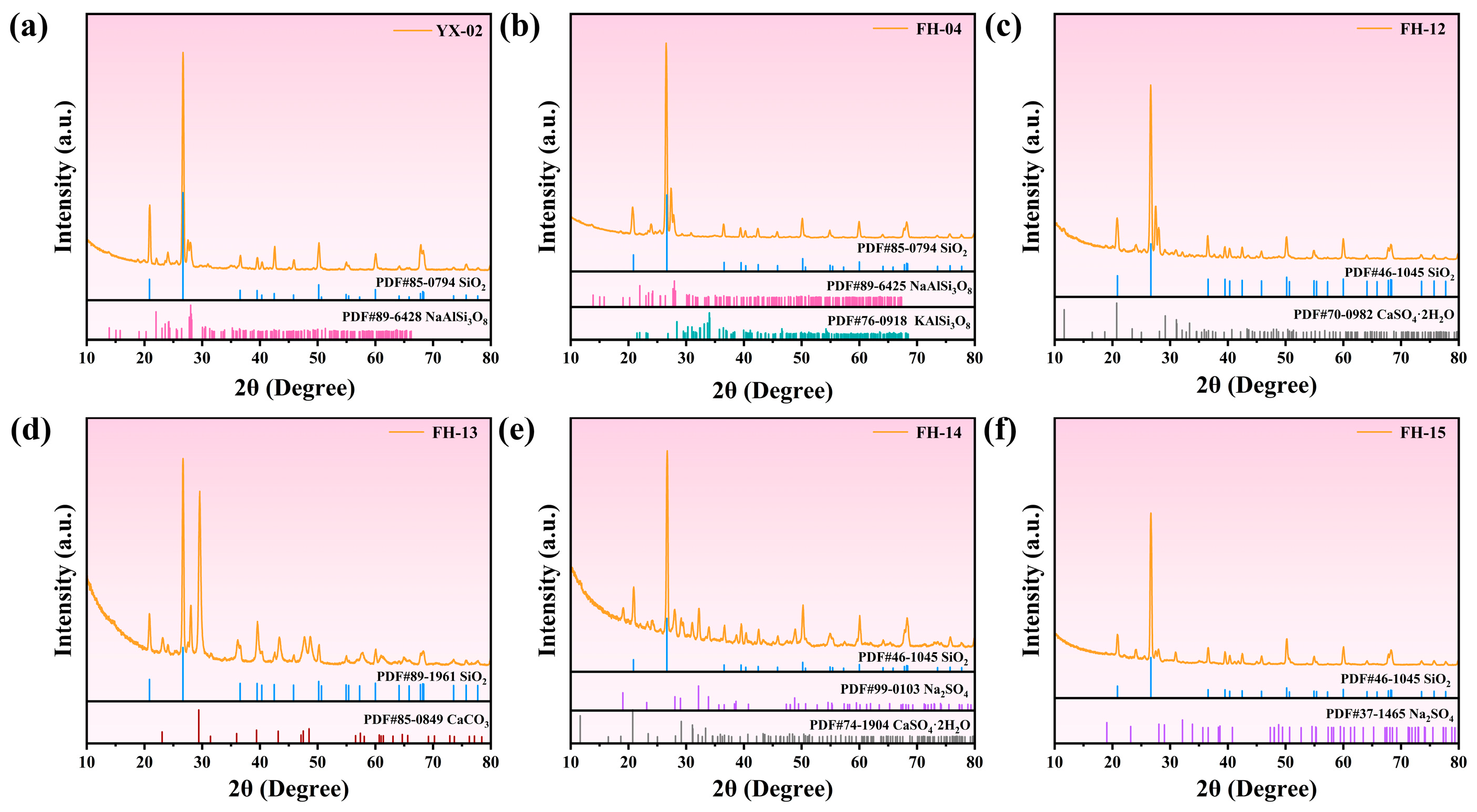
Using X-ray diffraction to examine the mineral composition of partially weathered samples and core samples, the results indicate that the weathered red sandstone and rock core consist primarily of quartz, feldspar, and calcite (Figure 8). Weathered red sandstone contains soluble salts such as gypsum (CaSO4·2H2O), anhydrous mirabilite (Na2SO4), and insoluble salts like secondary calcite (CaCO3). Sample FH-04 yielded only quartz and feldspar in its analysis, suggesting a low content of calcareous cement or its possible complete reaction, with the reaction product CaSO4·2H2O dissolving and being washed away by rainwater [9].
Figure 8.
X-ray diffraction spectrum of red sandstone. (a) XRD results of core samples; (b–f) XRD results of weathered samples.
Subsequently, we used XRD semi-quantitative analysis to examine the differences in mineral composition between the core samples and the weathered samples (Table 4). The results are shown in the table below. The results show that the red sandstone core mainly contains quartz and feldspar, while the primary mineral content of the weathered samples is reduced. Among them, the quartz content in samples FH-13 and FH-16 is about 60%, which is significantly lower than that in the core samples. The content of secondary calcite, gypsum and anhydrous sodium sulfate is increased, and the proportion of secondary calcite reaches more than 40%, indicating that the weathering is very severe.
Table 4.
Semi-quantitative XRD analysis results of red sandstone core samples and weathered samples.
3.7. Ion Chromatography Analysis
Further quantitative analysis of anions and cations in soluble salts from selected samples was conducted via ion chromatography (Table 5). The results are shown in the table below, revealing that the anions in the red sandstone are primarily Cl− and SO42−, while the cations are mainly Na+, Ca2+, and Mg2+. Combining the results from EDS, XRF, and XRD reveals that the soluble salts in the weathering products are primarily composed.
Table 5.
Ion Chromatography (IC) data for soluble salts (%).
4. Results and Discussion
4.1. Depositional Environment
4.1.1. Geological Environment
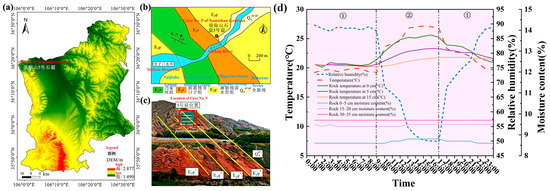
The Xumishan Grottoes were carved into the third-stage Oligocene sedimentary rocks [10], forming part of the Danxia landform. The principal strata comprise purplish-red muddy siltstone, purplish-red gravelly sandstone, reddish-brown clastic sandstone, purplish-red muddy siltstone, alluvial soil, and fluvial soil. Although such rock formations possess a certain degree of hardness and integrity, over extended geological periods and under the influence of external environmental factors, internal joints and fissures of varying scales and orientations have developed. These not only provide pathways for weathering agents to penetrate but also undermine the stability of the rock mass. Additionally, the cave rock mass contains minor clay-rich bands. These clay-rich bands introduce variations in the rock’s resistance to weathering, making it prone to forming grooves or flaking, thereby accelerating rock fracturing. In parallel, the topography and landforms of this region have also exerted a significant influence on the preservation of the caves. The Sizikou River traverses the grottoes, its currents having eroded the terrain into a landscape of dissolute hills. The significant elevation differences within the mountainous terrain facilitate the convergence of surface runoff, thereby intensifying the erosion of the rock surfaces. Moreover, the caves are situated near the riverbed cliff face, making them susceptible to fluctuations in river water levels and humidity. The surface moisture of the rock mass undergoes frequent changes, thereby accelerating the physical weathering of the rock.
4.1.2. Climate
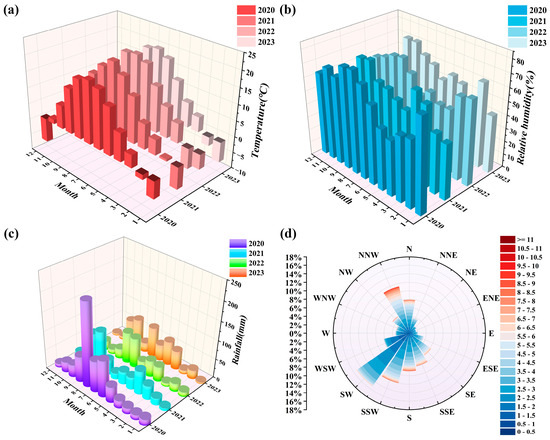
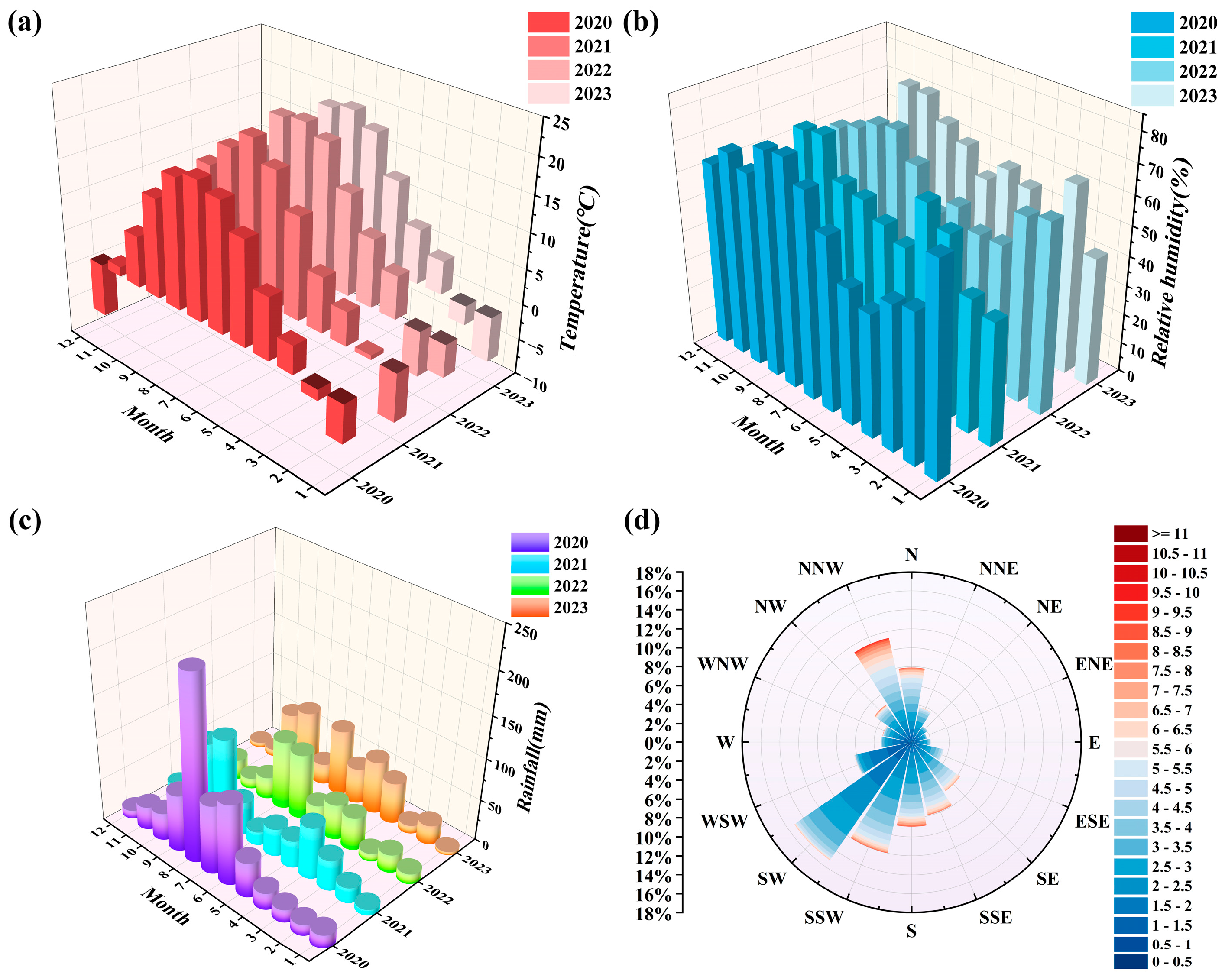
The Xumishan Grottoes are situated on the Loess Plateau in northwestern China, experiencing a warm-temperate semi-arid continental climate typical of the plateau. Summers are hot and rainy, with frequent rainfall in autumn. Winters are cold and dry, while spring brings a rapid warming trend. From 2020 to 2023, the average temperatures in the grotto were 7.3 °C, 8.0 °C, 8.2 °C, and 8.0 °C, respectively, exhibiting an overall upward trend. Highest temperature: 32.3 °C (July 2021), lowest temperature: −22.8 °C (February 2022). Over the past four years, the relative humidity in the cave area has mostly exceeded 50%, with higher levels during summer and autumn, averaging approximately 65%. The grottoes area experiences significant annual rainfall variation, characterized by frequent short-duration heavy downpours or showers [11], annual average precipitation: 482.45 mm, annual average sunshine duration: 2588.7 h, annual average evaporation: 1533.8 mm [12], and evaporation exceeds precipitation by more than threefold. Prevailing southwesterly winds, predominantly light winds of force 2, with maximum wind speeds reaching 10.54 m per second. Wind speeds are slightly higher during spring and summer.
These unique climatic conditions have a significant impact on the weathering and deterioration of the Xumishan Grottoes. Currently, global warming is intensifying [13], during the summer months, when temperatures are high and rainfall frequent, heavy downpours or showers cause rainwater to seep into the rock mass through fissures and cavities within the caves, on the one hand, it directly erodes the rock mass, carrying away loose material; on the other hand, it dissolves soluble mineral components, which recrystallize upon water evaporation, thereby accelerating the destruction of the rock structure. Winter brings cold and dry conditions, with extreme temperatures plunging to −22.8 °C. Water seeping into rock fissures freezes, causing volumetric expansion that generates frost heave pressure. This pressure compresses and disrupts the internal structure of the rock mass, a phenomenon known as the freeze–thaw cycle. This effect is particularly pronounced during repeated temperature fluctuations. The rapid warming of spring causes swift temperature fluctuations, inducing differential thermal expansion and contraction stresses within rock masses. Over time, this leads to surface spalling and cracking of the rock. Annual evaporation exceeds precipitation by more than three-fold. Water infiltrating the rock mass evaporates rapidly, promoting salt crystallization and precipitation. This causes the rock mass to deteriorate in its physical and mechanical properties through alternating cycles of wetting and drying.
Rainfall, seepage, rising capillary water, and elevated relative humidity may all contribute to the dissolution of rock minerals. The formation and distribution of salt crystals are also closely associated with water activity [14]. Rainfall in the Xumishan Grottoes area is predominantly concentrated between June and September each year. Water erodes the rock surface through mechanical abrasion and dissolves carbonate cement, causing powdery flaking of the rock’s surface layer. Simultaneously, rainwater runoff causes the soluble salts concentrated on the surface of the red sandstone to be washed away, while the newly exposed red sandstone is then corroded by sulfuric acid [15], causing the rock to exhibit layered flaking.
Interestingly, our moisture content data reveal that, during rainfall, the humidity in the air increases, and the moisture content rises. The cave area has recorded an average annual relative humidity of 58.8% over the past four years. Relative humidity remains elevated during the summer and autumn seasons, generally exceeding 60%, with particularly high night-time readings. During certain periods, relative humidity may reach 100%. When the surface temperature of the rock equals the dew point of the air, condensation may form [16].
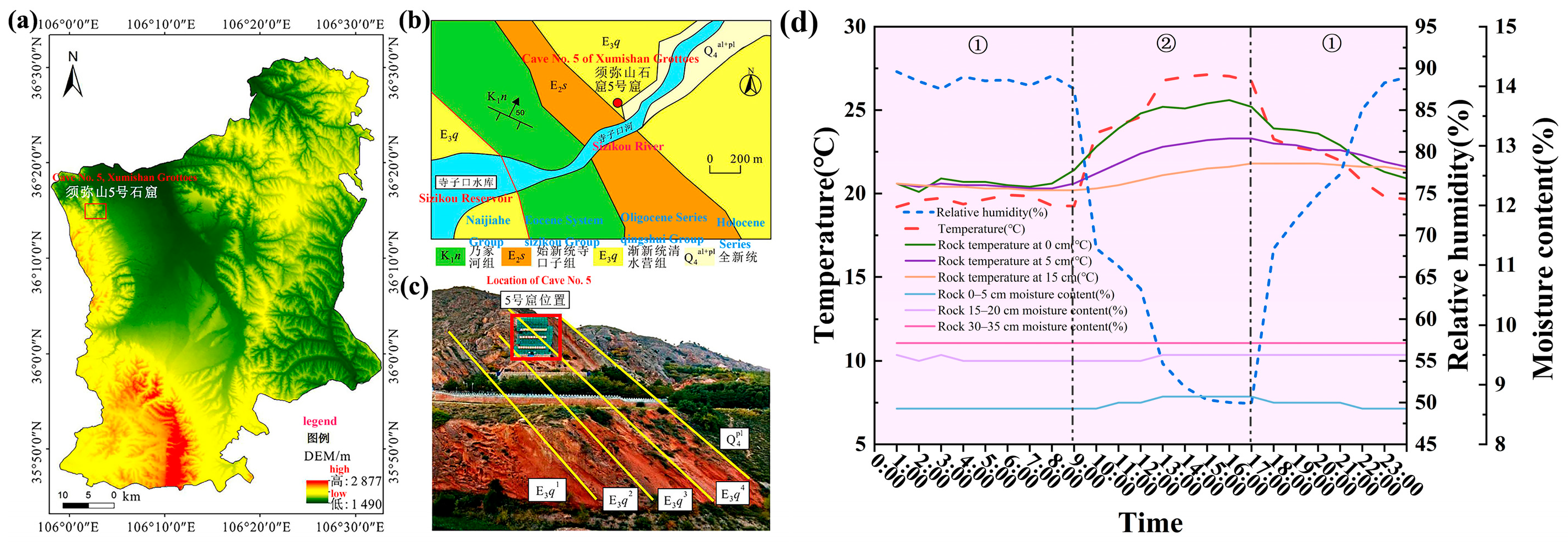
As shown in Figure 9, the surface temperature of the red sandstone varies with external temperature changes. A temperature gradient is observed from shallow to deep layers, with temperatures decreasing progressively. The temperature variation in the deeper rock layers is less pronounced than in the outer layers. The moisture content within the rock’s various strata exhibits minimal variation with changes in temperature and humidity, remaining largely stable throughout. It increases progressively from the shallower to the deeper layers. Relevant research indicates that, owing to the lower temperature within the rock compared to its surface, condensation water first forms within the rock’s interior [17]. As temperatures rise, moisture evaporates from the red sandstone, causing the clay to contract and widen interlayer fractures, leading to the rock flaking off in sheets.
Figure 9.
(a–c) The geological environment of the Xumishan Grottoes area, (d) Changes in temperature and humidity, rock surface temperature, and moisture content of Xumishan Grottoes on 1 August 2023 (data on rock surface temperature and moisture content are from the monitoring platform of Xumishan Grottoes cultural relics management office).
Polarized light microscopic analysis of the aforementioned thin sections confirms the presence of feldspar within the red sandstone clasts, which, upon weathering, forms clay minerals such as kaolinite and illite [18]. These clay minerals, concentrated within the rock’s textural areas, swell and disintegrate upon contact with water, forming zones of reduced strength characterized by muddy, friable material. As water permeates the rock’s surface and infiltrates its interior, it carries along muddy cementing material during this migration process. Carbonate cement can react chemically with water, causing its own dissolution. This process creates new pores both between and within clastic grains, whilst simultaneously generating secondary calcite deposits that repeatedly erode the rock. The cementing material progressively erodes under the combined effects of water-rock chemical reactions and external forces, causing the particles or intergranular cement to fracture and form microcracks. This subsequently manifests macroscopically as fractures exhibiting distinct discontinuities [19]. Moreover, the clay minerals within the cementing material, due to their uneven expansion upon water absorption, induce non-uniform stresses within the rock. This leads to the formation of numerous micro-pores, thereby giving rise to an “adsorption effect”. The more developed the microporosity, the greater the phase interface exposed to water, the higher the surface free energy, and the stronger the physical adsorption effect on moisture. Water envelops the surfaces of micro-pores and generates wedging forces [20], causing the pores to extend deeper into the matrix. This increases the total surface area of the pores and further enhances the hydrolysis of the cementitious material [21], causing the red sandstone mineral grains to dislodge due to a lack of cohesion and support. This results in a reduction in mechanical strength, manifesting macroscopically as softening and granular flaking in the weathered form.
Overall, the climatic characteristics of the Xumishan Grottoes Cave Area—marked by significant temperature fluctuations, concentrated precipitation, intense evaporation, and pronounced dry-wet cycles (Figure 10)—constitute a major external driver for the occurrence and progression of rock deterioration, spalling, and fissure expansion within the cave formations.
Figure 10.
Climatic datafor the Xumishan Grottoes area from 2020–2023, (a) temperature, (b) relative humidity, (c) precipitation, (d) wind speed and wind direction.
4.2. Rock Mass Constituents
4.2.1. Mineral Composition
The red sandstone of the Xumishan Grottoes consists primarily of quartz, rock fragments, and feldspar. The cementing material comprises silty and minute silt-grade components, locally containing trace amounts of ferruginous cement; the properties and content of the cementing material directly influence its resistance to weathering. Quartz, as the primary mineral constituent, possesses considerable hardness and chemical stability, thereby providing a degree of skeletal support to the rock mass. Rock debris exhibits complex composition, predominantly comprising sedimentary rock fragments. Its resistance to weathering is generally inferior to that of quartz, rendering it susceptible to physical disintegration and chemical decomposition under environmental influences, thereby further exacerbating the degradation of rock mass structure. Feldspar minerals readily undergo hydrolysis reactions, forming clay minerals such as kaolinite under prolonged exposure to water. These clay minerals swell upon hydration and contract upon desiccation, inducing recurrent volumetric changes within the rock mass and diminishing the cementation strength between particles. As an impurity component, sericite mica can fill pores to a certain extent. However, owing to its inherent lamellar structure and weak interlayer cohesion, it is prone to exfoliation under the influence of water and salts, thereby compromising the integrity of the rock mass. The mudstone cement is highly hydrophilic; upon contact with water, it readily softens and swells, causing a sharp decline in the cement’s inherent strength. When the cement content is low, it becomes difficult to effectively bind mineral grains together, making the rock mass more susceptible to particle detachment during weathering processes. Whilst trace iron-rich cementation may enhance the local rock mass’s resistance to weathering, its uneven distribution fails to fundamentally improve the overall loose structural characteristics. This loose structure, composed of multiple mineral constituents, impurities, and cementing agents, provides favorable pathways for the ingress of external erosive agents such as moisture and salts. It constitutes a significant intrinsic factor rendering the red sandstone of Xumishan Grottoes highly susceptible to weathering processes. Although the combined petrological and geochemical evidence strongly suggests that the clay-rich matrix and alteration products played a dominant role, the lack of specific clay mineral analysis prevents us from pinpointing the exact clay mineral assemblage.
Moreover, there are marked differences in chemical element composition between surface samples and core samples of red sandstone. The surface weathered samples exhibited markedly higher concentrations of SO3, Cl, and CaO compared to the core samples. This disparity primarily stems from the prolonged exposure of surface rock masses to external environmental conditions, rendering them more susceptible to chemical weathering and the leaching, migration, and enrichment of saline compounds due to atmospheric precipitation, airborne SO2, and salt spray. The increase in SO3 content may be related to the conversion of SO2 gas to SO3 under certain conditions, as previously described, and its subsequent reaction with minerals within the rock mass. An increase in Cl content may indicate the accumulation of external salts (such as NaCl) on the rock surface through processes like the wet-dry cycle. Differences in CaO content may stem from the dissolution and subsequent re-deposition of calcium-bearing minerals (such as calcite, where present) within the rock during weathering processes, or from the input of external calcium salts. In contrast, core samples, being protected by the overlying rock mass, are less directly affected by external environmental factors, and their chemical element composition more closely approximates the original state of the rock mass. Consequently, the relatively low concentrations of these mobile and easily enriched chemical elements more accurately reflect the chemical composition characteristics of the red sandstone in its unweathered or weakly weathered state. This variation in chemical composition further corroborates that the surface rock mass has undergone more intense chemical weathering, which is also one of the key factors contributing to the deterioration of its physical and mechanical properties and the reduction in its resistance to weathering.
4.2.2. Soluble Salts
Soluble salts constitute the key intrinsic factor driving the weathering of the rock mass at the Xumishan Grottoes, with their presence, migration and crystallization forming the core processes of salt weathering. X-ray fluorescence (XRF) analysis and ion chromatography (IC) detection revealed that the primary soluble salts within the rock mass are sulphates and chlorides, with some samples containing nitrates. Soluble salts originate from diverse sources: firstly, the decomposition of primary mineral constituents within rock formations; secondly, atmospheric deposition.
The deterioration of cave rock masses caused by soluble salts primarily manifests through the physical expansion pressure and chemical corrosion resulting from the dissolution-crystallization cycle. Salt crystallization not only acts upon rock surfaces [22] but also causes surface powdering, flaking, and crusting, accelerating weathering and inflicting greater damage than freeze–thaw action [23]. Water within the caves primarily originates from precipitation and capillary action. Salt crystallization is concentrated at the summit, along seepage points on rock faces, and at the base of the caverns. This is thought to be related to rainfall infiltration, evaporation, and groundwater capillary action. As temperature and humidity fluctuate, soluble salts crystallize, expand, and migrate towards the rock surface [24]. Factors influencing salt crystallization include the cohesive force of rock particles, the concentration of the salt solution, the rate of water evaporation, and temperature and humidity. The lower the particle cohesion [25], the lower the relative humidity of the air, and the higher the concentration of the salt solution [26], the more severe the damage becomes [27]. The evaporation [28] and permeation rates on the rock surface also influence the distribution of salts and the weathering patterns, which are further related to the inherent properties of the rock itself [29].
Analytical testing indicates that the salt deposits in the Sumeru Mountain Caves are predominantly composed of carbonates and sulphates, with CaCO3 precipitation forming first [30]. Red sandstone has been eroded by carbonation [31], along with minor amounts of gypsum, mirabilite, and other minerals. Sulphates may originate from environmental pollutant deposition [32], with lowered pH in seepage water facilitating the formation of secondary minerals from calcium and magnesium cementation. When rocks contain abundant calcium ions and scarce sulphate ions, sulphate ions first react with calcium ions to form gypsum. The hydration of anhydrite causes volumetric expansion [33], accelerating the weathering of red sandstone. Anhydrous mirabilite crystallizes in the orthorhombic system at low temperatures and readily absorbs moisture to form hydrated salts [34]. Crystals in different phases exhibit varying degrees of rock-damaging capacity; anhydrous mirabilite formed during dry seasons causes significantly greater damage than mirabilite formed during wet seasons [35]. The caves at Xumishan Grottoes form anhydrous mirabilite during spring and winter, and mirabilite during summer and autumn. Anhydrous mirabilite exhibits a high volume expansion rate upon conversion to mirabilite [36], generating significant expansive forces [37] that exert a greater impact on rock weathering. Research indicates that at 5 °C, mirabilite requires a relative humidity of 98% for deliquescence, which decreases to 90% at 30 °C [38]. Sodium sulphate absorbs moisture and crystallizes into mirabilite, causing volumetric expansion. As water evaporates, crystallization pressure increases with rising salt solution concentration [39], leading to rock pulverization and spalling. However, the critical temperature for the interconversion between sodium sulfate decahydrate and anhydrous sodium sulfate is 32.384 °C. Below 32.384 °C, sodium sulfate decahydrate remains stable; above 32.384 °C, it loses water and transforms back into anhydrous sodium sulfate, repeatedly undergoing a crystallization–dissolution–recrystallisation process. Based on climate data from the Xumishan Grottoes area, taking 2023 as an example, the highest temperature that year was 31.667 °C. However, the surface temperature of the red sandstone likely exceeded this critical temperature, suggesting the possibility of mirabilite transforming into anhydrous mirabilite, primarily occurring around midday in summer. When sodium sulfate decahydrate transforms into anhydrous sodium sulfate, its volume expansion rate is higher, resulting in greater weathering damage to the red sandstone. Epsom salt (MgSO4) is colorless and belongs to the orthorhombic crystal system, being soluble in water. Magnesium sulfate in different phases can dissolve and recrystallize under different temperature and humidity conditions, generating crystallization pressure and hydration pressure [40]. The weathering effects of Na2SO4 and MgSO4 differ in form, with Na2SO4 causing more pronounced and rapid destruction of rock porosity. Sodium sulphate crystals accumulate within the pores of rock surfaces, expanding and causing surface powdering and flaking; magnesium sulphate crystals primarily form within the rock itself. Due to their differing crystallization rates under identical conditions and distinct crystallization enrichment locations, the extent of damage varies [41]. Sodium chloride (NaCl) is a white crystalline substance, readily soluble in water. Above 0 °C, saturated crystallization exhibits no volumetric expansion; below 0 °C, it forms the hydrated salt NaCl·2H2O. The average winter temperature in the Mount Sumeru grotto remains below 0 °C, thus reducing the destructive effect of sodium chloride on the rock. Damage from expansion crystallization is consequently concentrated during the winter months. However, within the sodium sulphate-sodium chloride-water mixture system, an increase in sodium chloride content lowers the dehydration phase transition temperature of sodium sulphate, affecting its solubility [42] and making both salts more prone to crystallization [43]. This compounding salt-swelling effect intensifies the erosion of rock formations.
In summary, the cave area experiences low temperatures and high humidity from sunset to just before sunrise, conditions conducive to the hydration and crystallization of soluble salts, leading to rock expansion and fragmentation. As temperatures rise, under conditions of intense evaporation, cations and anions in saline solutions crystallize within the rock or migrate to the surface where they precipitate. During winter, salt erosion combines with freeze–thaw action to accelerate rock weathering.
4.2.3. Microorganism
Microorganisms exert a continuous degradative effect on stone structures and their environment [44]. Cyanobacteria, green algae, bacteria, archaea, actinomycetes, fungi, lichens, protozoa, and even some small animals, lower and higher plants can colonize, grow, metabolize, and function on stone materials [45]. Algae possess a variety of cellular adaptation mechanisms that enable them to survive in harsh conditions. They can form biofilms inside and on the surface of rocks, produce various protective biomolecules and extracellular matrix, and change their cell volume to adapt to specific environments. Bacteria exhibit high diversity and can influence stone in various ways, such as participating in nitrogen and sulfur cycles, thereby altering rock properties and causing discoloration, corrosion, and degradation. Fungi are heterotrophic eukaryotes [46] which can survive in a variety of extreme environments [47]. Related studies have shown that the hyphae of some fungi exhibit the ability to penetrate silicate and carbonate rocks, exerting powerful mechanical pressures of up to 12.39 bar at depths ranging from hundreds of micrometers to several millimeters [48]. Due to their strong enzyme activity and ability to grow and reproduce under various extreme conditions such as high salt (5 M NaCl), extremely acidic (pH 0.6), extremely cold (−8 °C), high radiation (117 kGy), extremely dry and low water activity (aw, 0.582) and oligotrophic conditions, they have a significant impact on the preservation status of cultural relics [49]. Fungi in caves can also spread through the air and from tourists, especially in grotto temples with high artistic and cultural value, causing irreversible deterioration of exquisite statues and rock formations [50]. Lichens are commonly found on the surface of stone artefacts, and they can produce biogenic organic acids [51] (such as oxalic acid and citric acid) that can dissolve minerals and cause corrosion [52] and degradation of red sandstone. In addition, organic acids can also complex or adsorb metal cations, disrupting the stability of mineral lattices [53]. Rainfall, carbon dioxide concentration, light intensity, and salinity are the main environmental factors influencing biological colonization and development [54]. Investigations revealed that many stone artefacts in the Xumishan Grottoes are covered with a biofilm. This biofilm possesses water-holding and heat-buffering properties, maintaining the stability of the microenvironment on the red sandstone surface and promoting further microbial development. The anions in the bioacids secreted by microorganisms react with the metal cations leached from artefacts, forming weathering products such as gypsum, calcite, and mirabilite. These products undergo continuous dry-wet cycles, capillary action, evaporation, and hydration, causing significant damage to the appearance and overall stability of the stone artefacts [55], especially during the humid summer and autumn seasons. In addition, some microorganisms involved in the biodegradation of stone artefacts, such as halophilic bacteria, can form or consume salts, causing surface pulverization and accelerating the weathering process.
Specifically regarding the Xumishan Grottoes, our existing research shows that the surface of the red sandstone contains a rich and diverse microbial community, primarily lichens. These lichens can colonize the stone surface, producing characteristic discoloration and affecting the structure and esthetics of the grottoes and statues. Lichens are symbiotic organisms consisting of algal cells and fungal mycelia. The symbiotic fungi usually belong to the Ascomycota phylum, and in rare cases, the Basidiomycota phylum, while the algae are usually single-celled or filamentous, belonging to the Chlorophyta or Cyanobacteria phylum [56]. Lichens can grow and develop using the organic and inorganic substances contained in the rock. Rocks covered by lichens become porous and easily damaged. Lichens can also disrupt the matrix through acidic substances such as carbon dioxide, lichen acids, and oxalic acid [57]. The specific climatic conditions of the Xumishan area, such as the hot and humid summer and autumn seasons (June to September each year), with an average seasonal humidity exceeding 65% and an average seasonal temperature of around 20 °C, provide a suitable environment for the colonization and development of lichens. Ascomycota within lichens produce ascospores within their cystic cells (asci) and can colonize various environments. They contribute to the disintegration of red sandstone by producing organic acids, allowing hyphae to penetrate cracks and pores in the matrix [58], and by the expansion and contraction of lichens in response to humidity changes [59]. Meanwhile, green algae provide carbohydrates produced through photosynthesis, sustaining fungal growth and maintaining the symbiotic relationship between the fungi and lichens. Furthermore, the high porosity of red sandstone allows water and nutrients to penetrate deeper into the rock layers, further promoting lichen growth within the sandstone and causing deeper damage to stone artefacts [60].
4.2.4. Microstructure
The red sandstone of Xumishan Grottoes exhibits a loose structure with weak intergranular bonding, featuring well-developed yet unevenly distributed pores. Microanalysis reveals that it is primarily composed of mineral grains such as quartz and feldspar. The quartz exhibits a sub-angular to subrounded shape, with grain sizes ranging from 0.24 mm to 0.62 mm. Feldspar consists primarily of plagioclase and striated feldspar, appearing subangular in shape with grain sizes ranging from 0.26 mm to 0.56 mm. The particles primarily exhibit point and line contacts, with a low cement content predominantly of a pore-filling type, resulting in a relatively low overall cement strength within the rock. The average pore diameter of the weathered red sandstone sample was 185.43 nm, with a mean median pore diameter (area) of 10.55 nm and a mean median pore diameter (volume) of 4237.71 nm. The porosity was 10.2837%. Pore types primarily include intergranular pores, intragranular pores, and microcracks, with intergranular pores being the most widely distributed. Intragranular pores primarily develop within the grains of soluble minerals such as feldspar, exhibiting relatively small pore diameters. Microfractures tend to occur along the edges of mineral grains or at points of weak cementation, with some fractures interconnected to form a complex network of pores and fissures. This porous micro-structure provides favorable pathways and spaces for the permeation, migration, and crystallization of soluble salt solutions. When soluble salts crystallize and expand within pores and fractures, they exert compressive forces upon surrounding mineral grains and cementing materials. Sodium sulfate, in particular, can promote the transformation of micropores into micropores. Studies have shown that micropores are more significantly affected by sodium sulfate concentration than small and large pores, and their expansion and development are more rapid [61]. Furthermore, with the continuous increase in the number of dry-wet cycles, peeling and flaking begin to appear on the rock surface, surface salinity increases, and pulverization gradually intensifies. This process further exacerbates the enlargement of pores and fractures, thereby leading to the disruption of the rock’s microstructure and the deterioration of its macroscopic mechanical properties.
5. Conclusions
The stratigraphic lithology of the Xumishan Grottoes consists primarily of muddy siltstone, exhibiting strong water absorption properties. Under hydrogeological processes, it is highly susceptible to softening and deformation. The combined effects of temperature and humidity fluctuations, salt crystallization expansion, and water erosion have significantly accelerated the weathering rate of the red sandstone at the Xumishan Grottoes.
Red sandstone exhibits characteristics such as a loose structure, a broad distribution of pore sizes, and a relatively low content of cementing material, rendering it highly susceptible to weathering. Notably, owing to its inherent hydrophilic properties, the hydrophilic minerals within the rock undergo uneven expansion upon contact with water and are subsequently dissolved. This process increases the porosity within the red sandstone, leading to a reduction in the supporting and cohesive forces between mineral grains. Consequently, the grains detach, causing the red sandstone to rapidly disintegrate into granular particles and lose its structural integrity.
The grotto is situated within China’s seasonal permafrost zone, where significant diurnal temperature variations occur during winter. As temperatures decrease, pore water within the red sandstone freezes into ice, causing volumetric expansion. As temperatures rise, the ice crystals melt into water, dissolving the cementing material within the red sandstone and causing the pores to expand further. Water, ice and mineral particles cause uneven contraction and expansion in red sandstone under thermal stress, accelerating its weathering process.
The soluble salts in red sandstone consist primarily of calcite, gypsum, and mirabilite, with minor quantities of laxative salts and chloride salts. The presence of secondary calcite significantly compromises the overall strength and appearance of the caves and stone artefacts. The immense crystallization pressure generated during the formation of gypsum, mirabilite, and similar compounds exacerbates the progression of red sandstone weathering diseases. Anhydrous mirabilite exhibits strong hygroscopic properties and readily undergoes hydration to form mirabilite under humid conditions. When temperatures in the grotto exceed 25 °C, the relatively low humidity maintains a strongly evaporative environment. This prevents the humidity conditions necessary for the deliquescence of sodium sulphate from being achieved, thereby hindering the dissolution–recrystallization process. Implications for Sustainable Conservation. Implications for Sustainable Conservation. To ensure the sustainable protection of the Xumishan Grottoes, based on the above research results, the following protection measures are recommended for the next stage: 1. Strengthen the construction of ventilation facilities; specifically, this can be promoted from three levels: First, optimize the existing ventilation paths, and in combination with the spatial layout of the grottoes and microclimate monitoring data, add hidden air guide channels to the top and side walls of the core caves, and achieve the coordination of natural wind and mechanical exhaust through intelligent sensor linkage control. Secondly, low-energy ventilation equipment is introduced. In areas where the humidity is consistently above 65%, small dehumidification and ventilation units are installed. The filter material is modified activated carbon that has an adsorption effect on sulfate crystals, which can reduce air humidity and capture corrosive ions in the air. Finally, a dynamic evaluation mechanism for the ventilation effect was established. Temperature, humidity and airflow velocity monitoring points were set up in the grottoes in real time. A ventilation efficiency report was generated every quarter. The ventilation strategy was adjusted based on the data feedback to ensure that the ventilation system could effectively reduce the risk of condensation and avoid sandstone pulverization due to excessive ventilation. 2. Effective reinforcement treatment for surface weathering: For grotto surfaces with different degrees of weathering, based on previous research on microclimate humidity change patterns and the analysis results of specific sulfates and chlorides, a controllable ventilation strategy is adopted to regulate the internal environment of the grottoes in order to reduce the damage of salt crystallization to the rock mass. Meanwhile, for the pulverized and peeling areas, reinforcement materials directly related to the analysis results (such as inorganic nanomaterials, silicon-based reinforcement materials, etc.) are selected, and reinforcement and protection experiments are conducted under laboratory conditions to screen out suitable materials that meet the principles of cultural relic protection, and then on-site protection tests are carried out. By strengthening materials and the environment in synergy, the structural stability of the grotto surface can be improved, and the weathering process can be slowed down. 3. For the problem of local water leakage in grottoes, a three-level treatment system of “source control—path interruption—surface drainage” can be constructed. In terms of source control, based on the hydrogeological survey data of the mountain at the top of the grout, high-pressure grouting technology is used in the fissure development area. Low-viscosity and high-permeability grouting materials are selected and precisely injected into the deep fissures of the rock mass to form a seepage prevention curtain. In the path closure stage, a water guide channel with a depth of 5–8 cm is excavated on the surface of the rock wall where the seepage channel is exposed, and the seepage water is diverted to the pre-designed water collection ditch. Surface drainage targets existing point-like leaks, using hydraulic inorganic gel for surface sealing to ensure that the appearance after repair is consistent with the original rock. Meanwhile, multi-parameter sensors are deployed in the seepage control area to monitor changes in seepage volume, water ion concentration, and rock mass water content in real time, and a seepage risk early warning model is established to provide data support for sustainable maintenance.
Author Contributions
Validation, R.M.; investigation, Y.M., R.M., D.C. and L.Z.; data curation, Y.M.; writing—original draft preparation, Y.M. and R.M.; supervision, J.C.; funding acquisition, J.C. All authors have read and agreed to the published version of the manuscript.
Funding
This research was supported by the Major Specialized Research and Development Program in Henan Province (funded by the Henan Provincial Department of Science and Technology, No. 231111321100) and the National Social Science Fund of China Special Programme for the Protection and Transmission of Cultural Heritage (funded by the Office of Philosophy and Social Sciences of China, No. 24VWB019).
Institutional Review Board Statement
Not applicable.
Informed Consent Statement
Not applicable.
Data Availability Statement
All data generated or analyzed during this study are included in this article.
Acknowledgments
Thanks to the China Academy of Cultural Heritage, the Henan Provincial Institute of Cultural Relics and Archaeology, and the Henan Provincial Centre for Scientific Conservation of Cultural Relics for their substantial support of this research.
Conflicts of Interest
The authors declare no conflicts of interest.
Abbreviations
The following abbreviations are used in this manuscript:
| XRD | X-ray diffraction. |
| SEM | Scanning electron micro-scope. |
| EDS | Energy dispersive spectroscopy. |
| XRF | X-ray fluorescence. |
| MIP | Mercury intrusion porosimetry. |
| IC | Ion chromatography. |
References
- An, Y.C. A Preliminary discussion on the protection of Xumi mountain grottoes. J. Guyuan Teach. Coll. 1999, 1, 65–67. [Google Scholar]
- Wang, C.X.; Yin, H.D. Cultural Relics Protection Technology; Anhui University Press: Hefei, China, 2005; Volume 178. [Google Scholar]
- Zhang, J.F. Decay mechanism of stone monuments. Sci. Conserv. Archaeol. 2008, 2, 60–67. [Google Scholar] [CrossRef]
- Wang, J.H.; Huo, X.T. A discussion on the key scientific and technological issues in cave temples protection. Southeast Cult. 2021, 1, 6–13. [Google Scholar]
- Mou, H.C.; Yang, Z.F.; Wu, F.Q. Research on Engineering Geomechanics for the Protection of Stone Cultural Relics; Earthquake Press: Beijing, China, 2000; Volume 35. [Google Scholar]
- Zhang, J.K.; Zhang, L.X.; Guo, Q.L.; Li, W.H.; Wen, X.; Liu, D. The relationship between weathering characteristics of the sandstone surface and lithology of the North Grottoes at Qingyang. J. Northwest Univ. (Nat. Sci. Ed.) 2021, 3, 344–352. [Google Scholar] [CrossRef]
- Wang, C.C.; Cai, Y.Z.; Wang, X.N.; Cha, J.R.; Li, Z.M. Study on the weathering mechanism of limestone cultural relics in Lingyan Temple, Changqing, Shandong, China. Shanghai Vis. 2021, 2, 91–99. [Google Scholar]
- Chen, W.L.; Xu, G.P.; Song, S.Y.; Fu, B.Y.; Yu, J.G.; Sun, M.M.; Ding, Z. Strength test and mechanical characteristics of weathered rock softened by water. Rock Soil Mech. 2022, 43, 67–76. [Google Scholar] [CrossRef]
- Zhang, L.S.; Wang, R.; Jia, Y.M.; Chen, J.; Cui, X.; Ye, L.; Liu, Y.; Yang, Y.; Niu, Y. Mechanism of deterioration in open-air stone cultural relics due to salt erosion in humid environments. J. Chongqing Univ. 2024, 10, 86–98. [Google Scholar]
- Ayyad, H.M.; Hewaidy, A.G.A.; Farouk, S.; Samir, A.; Bazeen, Y.S. Sequence stratigraphy of the upper oligocene–middle miocene succession in west–central sinai. Egypt Geol. J. 2023, 1, 264–282. [Google Scholar] [CrossRef] [Scilit]
- Cai, Y.Q. Study on the Development Characteristics and Hazards of Geological Hazards in Yuanzhou District, Guyuan City, Ningxia; China University of Geosciences (Beijing): Beijing, China, 2020. [Google Scholar]
- Lai, R.S. Analysis on the Trend of Crop Production Potential and Planting Structure Changes in Ningxia Under the Background of Climate Change; Ningxia University: Yinchuan, China, 2016. [Google Scholar]
- Ayyad, H.M.; Bazeen, Y.S.; Samir, A.; Ghanem, S.G.; Ali, A.H.; Gaafar, A.T.; Abdel-Gawad, A. Foraminiferal proxies reveal miocene climatic shifts in the gulf of suez: Insights from the rudeis and kareem formations on lithostratigraphic ambiguities and central paratethys climatic linkages during burdigalian-langhian intervals. Geol. J. 2025, 0130. [Google Scholar] [CrossRef] [Scilit]
- Zhang, H.M.; Ma, G.D.; Su, B.Y. A discussion of the treatment of water-seepage disease of the stone carvings in the Yungang Grotto near Datong. Hydrogeol. Eng. Geol. 2004, 5, 64–67. [Google Scholar] [CrossRef]
- Cheng, Q.; Zhang, H.; Mo, P. Discussion on the weathering causes of cliff carvings in Yingde, Guangdong (China cultural relics protection technology association). In Proceedings of the Fourth Annual Academic Conference of (China Cultural Relics Protection Technology Association); Guangdong Provincial Museum: Guangzhou, China, 2005; Volume 6. [Google Scholar]
- Lin, B.; Wang, X.D.; Guo, Q.L.; Yang, S.L.; Chen, Y. A study on the variation laws of temperature and relative humidity in the rock of the west wall in Mogao cave 108, Dunhuang. Dunhuang Res. 2013, 1, 86–91. [Google Scholar] [CrossRef]
- Huang, J.; Zheng, Y.; Li, H. Study of internal moisture condensation for the conservation of stone cultural heritage. J. Cult. Herit. 2022, 56, 1–9. [Google Scholar] [CrossRef] [Scilit]
- Huang, J.Z.; Yuan, D.X.; Wan, L.; Yan, H.B. A study on chemical effect on the water-rock interaction on the weathering of stone sculpture Yungang Grottoes. Dunhuang Res. 2010, 6, 59–63. [Google Scholar] [CrossRef]
- Huang, X.J.; Li, Z.P.; Zhou, G.L.; Liu, Q.; Li, H.; Wang, H.K. Fracture porosity modeling of fractured tight sandstone reservoir:a case study of the reservoir in Member 2 of Xujiahe Formation, Pingluoba structure, Sichuan Basin. Acta Pet. Sin. 2017, 5, 570–577. [Google Scholar]
- Fan, Y.L.; Li, Q.Y.; Chen, Z.Y. Microscope study on softening characteristics of shale in shuibuya project. J. Chang. River Sci. Res. Inst. 1998, 3, 47. [Google Scholar]
- Huang, H.W.; Che, P. Research on Micro-mechanism of softening and argillitization of mudstone. J. Tongji Univ. (Nat. Sci.) 2007, 6, 733. [Google Scholar]
- Wellman, H.W.; Wilson, A.T. Salt weathering, a neglected geological erosive agent in coastal and arid environments. Nature 1965, 4976, 1097–1098. [Google Scholar] [CrossRef] [Scilit]
- Heidari, M.; Torabi-Kaveh, M.; Mohseni, H. Assessment of the effects of freeze–thaw and salt crystallization ageing tests on Anahita Temple Stone, Kangavar, West of Iran. Geotech. Geol. Eng. 2017, 3, 121–136. [Google Scholar] [CrossRef] [Scilit]
- Li, L.; Wang, S.J.; Tanimoto, C. Study on weathering characteristics of sandstone in Longyou Grottoes. Chin. J. Rock Mech. Eng. 2008, 6, 1217–1222. [Google Scholar]
- Çelik, M.Y.; İbrahimoglu, A. Characterization of travertine stones from Turkey and assessment of their durability to salt crystallization. J. Build. Eng. 2021, 43, 102592. [Google Scholar] [CrossRef] [Scilit]
- Alyami, M.H.; Alrashidi, R.S.; Mosavi, H.; Almarshoud, M.A.; Riding, K.A. Potential accelerated test methods for physical sulfate attack on concrete. Constr. Build. Mater. 2019, 229, 116920. [Google Scholar] [CrossRef] [Scilit]
- Rodriguez-Navarro, C.; Doehne, E.; Sebastian, E. How does sodium sulfate crystallize? Implications for the decay and testing of building materials. Cem. Concr. Res. 2000, 10, 1527–1534. [Google Scholar] [CrossRef] [Scilit]
- Sun, M.L.; Liang, C.X.; Shen, Y.X.; Shang, X.J.; Cao, Z.Z. Characteristics of salt damage to sandstone grottoes in Northwest China and contributing factors. J. Earth Environ. 2022, 5, 543–556. [Google Scholar]
- Goudie, A.S. Experimental salt weathering of limestones in relation to rock properties. Earth Surf. Process. Landf. J. Br. Geomorphol. Res. Group 1999, 8, 715–724. [Google Scholar] [CrossRef]
- Guo, F.; Jiang, H. Distribution of soluble salts and sulfur isotope in the Yungang Grottoes, Datong. Hydrogeol. Eng. Geol. 2013, 3, 126–130. [Google Scholar] [CrossRef]
- Nong, M.Y.; Yan, S.J.; Chen, J.P.; Ma, C.L.; Fan, Z.L. Study on the mechanism of weathering diseases based on rock microfacies in Longmen Grottoes. Geotech. Investig. Surv. 2022, 2, 30–37. [Google Scholar]
- Wang, G.F.; He, Y.; Ma, Q.; Liang, J.Z.; Chang, Y.J. Acid rain change characteristics and influencing factors in Guyuan. Desert Oasis Meteorol. 2018, 2, 31–36. [Google Scholar]
- Weng, L.Q.; Yang, H.F.; Wang, F.R.; Song, S.H. Research on characterization of sandstone weathering of Yungang Grottoes. Mater. Rep. 2011, 25, 425–428. [Google Scholar]
- Zhou, Q.Y.; Sun, W.J.; Sun, D.A.; Huang, J.Z. Effect of humidity cycle on sulfate crystallization process in grotto sandstone pores. J. Donghua Univ. (Nat. Sci.) 2023, 2, 128–135. [Google Scholar] [CrossRef]
- Yan, S.J.; Fang, Y.; Liu, J.H.; Tan, S.E. Experimental study on the degradation of Yungang Grottoes sandstone by soluble salt and establishment of model. Rock Soil Mech. 2013, 12, 3410–3416. [Google Scholar] [CrossRef]
- Ren, K.F.; Xie, Z.B.; Wang, L.; Jiang, P.D.; Zhao, P.F.; Chen, S.; Sun, F.Y. Salt weathering mechanism and climate response in Niujiaozhai Grottoes, Renshou, Sichuan. Geol. Rev. 2023, 4, 1368–1386. [Google Scholar] [CrossRef]
- Zhang, Z.X.; Fu, L.S.; Jiang, D.Y.; Yao, J.S. Formation and Destruction Mechanism of Soluble Salts in Weathered Materials of Dazu Rock Carvings (Collection of the Fifth National Engineering Geology Conference); Earthquake Press: Beijing, China, 1996; pp. 9–16. [Google Scholar]
- Luigi, G.; Ct, O. Underground salt weathering of heritage stone: Lithological and environmental constraints on the formation of sulfate efflorescences and crusts. J. Cult. Herit. 2021, 49, 85–93. [Google Scholar] [CrossRef] [Scilit]
- Wang, F.R.; Jiao, D.D.; Liu, P.; Sun, B.; Wang, J.J.; Yang, H.R. Experimental study on the effect of sulfate on weathering of Maijishan conglomerate. Rock Soil Mech. 2020, 7, 2199–2206. [Google Scholar] [CrossRef]
- Yang, X.; Jiang, X.W.; Ouyang, K.G.; Ji, T.T.; Gao, Y.F.; Geng, X.H.; Niu, R.; Huang, J.Z.; Yan, H.B.; Wan, L. The mechanisms of salt weathering responsible for sandstone deterioration in the Yungang Grottoes, China. Eng. Geol. 2025, 350, 107989. [Google Scholar] [CrossRef] [Scilit]
- Sheng, Y.; Liu, P.; Shi, W.; Sun, B.; Peng, N.; Jiao, D. Experimental study of sulfate crystallization damage to glutenite rock in the Maijishan Grottoes. Herit. Sci. 2024, 1, 98. [Google Scholar] [CrossRef] [Scilit]
- Bharmoria, P.; Gehlot, P.S.; Gupta, H.; Kumar, A. Temperature-dependent solubility transition of Na2SO4 in water and the effect of NaCl therein: Solution structures and salt water dynamics. J. Phys. Chem. B 2014, 44, 12734–12742. [Google Scholar] [CrossRef] [Scilit] [PubMed]
- Shen, Y.X. Study on the Weathering Mechanism of Soil Salt in the Ruins of Arid Areas in Northwest China; Lanzhou University: Lanzhou, China, 2017. [Google Scholar]
- Li, X.; Yang, H.; Chen, C.; Zhao, G. Dependence of weathering degree on bacterial community structure and metabolic pathways of stone heritage in humid areas. Int. Biodeterior. Biodegrad. 2025, 205, 106187. [Google Scholar] [CrossRef] [Scilit]
- Wu, F.S. Study on Microbiome and Bioweathering Mechanism of Sandstone Cultural Relics from Beishikusi Temple; Lanzhou University: Lanzhou, China, 2022. [Google Scholar] [CrossRef]
- Thangavelu, V.; Tang, J.; Ryan, D.; Valix, M. Effect of saline stress on fungi metabolism and biological leaching of weathered saprolite ores. Miner. Eng. 2006, 19, 1266–1273. [Google Scholar] [CrossRef] [Scilit]
- Gałązka, A.; Marzec-Grządziel, A.; Grządziel, J.; Varsadiya, M.; Pawlik, Ł. Fungal genetic biodiversity and metabolic activity as an indicator of potential biological weathering and soil formation–case study of towards a better understanding of earth system dynamics. Ecol. Indic. 2022, 141, 109136. [Google Scholar] [CrossRef] [Scilit]
- Caneva, G.; Isola, D.; Lee, H.J.; Chung, Y.J. Biological risk for hypogea: Shared data from Etruscan tombs in Italy and ancient tombs of the Baekje dynasty in Republic of Korea. Appl. Sci. 2020, 10, 6104. [Google Scholar] [CrossRef] [Scilit]
- Coleine, C.; Stajich, J.E.; Selbmann, L. Fungi are key players in extreme ecosystems. Trends Ecol. Evol. 2022, 6, 517–528. [Google Scholar] [CrossRef] [Scilit]
- Grbić, M.L.; Dimkić, I.; Savković, Ž.; Stupar, M.; Knežević, A.; Jelikić, A.; Unković, N. Mycobiome diversity of the cave church of sts. Peter and Paul in Serbia—Risk assessment implication for the conservation of rare cavern habitat housing a peculiar fresco painting. J. Fungi 2022, 8, 1263. [Google Scholar] [CrossRef] [Scilit]
- Sverdrup, H. Chemical weathering of soil minerals and the role of biological processes. Fungal Biol. Rev. 2009, 23, 94–100. [Google Scholar] [CrossRef] [Scilit]
- Silva, I.; Salvador, C.; Arantes, S.; Miller, A.Z.; Candeias, A.; Caldeira, A.T. The decorated garden grotto of condes de basto palace in évora, portugal: Microbial community characterization and biocide tests for conservation. Micro 2024, 1, 117–131. [Google Scholar] [CrossRef] [Scilit]
- Turkington, A.V.; Paradise, T.R. Sandstone weathering: A century of research and innovation. Geomorphology 2005, 67, 229–253. [Google Scholar] [CrossRef] [Scilit]
- Bracci, S.; Cuzman, O.A.; Ignesti, A.; Fà, M.D.; Olmi, R.; Pallecchi, P.; Tiano, P. Multidisciplinary approach for the conservation of an Etruscan hypogean monument. Eur. J. Sci. Theol. 2013, 9, 91–106. [Google Scholar]
- Liu, X.; Koestler, R.J.; Warscheid, T.; Katayama, Y.; Gu, J.-D. Microbial deterioration and sustainable conservation of stone monuments and buildings. Nat. Sustain. 2020, 12, 991–1004. [Google Scholar] [CrossRef] [Scilit]
- Riyanto; Mulwandari, M.; Asysyafiiyah, L.; Sirajuddin, M.I.; Cahyandaru, N. Direct Synthesis of Lemongrass (Cymbopogon citratus L.) Essential Oil-Silver Nanoparticles (EO-AgNPs) as Biopesticides and Application for Lichen Inhibition on Stones. Heliyon 2022, 8, e09701. [Google Scholar] [CrossRef] [Scilit] [PubMed]
- Lisci, M.; Monte, M.; Pacini, E. Lichens and Higher Plants on Stone: A Review. Int. Biodeterior. Biodegrad. 2003, 51, 1–17. [Google Scholar] [CrossRef] [Scilit]
- Silva, I.; Salvador, C.; Miller, A.Z.; Candeias, A.; Caldeira, A.T. Addressing Biodeterioration at UNESCO Stone Monuments: Tomar Convent and Batalha Monastery. Int. Biodeterior. Biodegrad. 2025, 205, 106188. [Google Scholar] [CrossRef] [Scilit]
- Ascasoa, C.; Wierzchosb, J.; Castelloa, R. Study of the Biogenic Weathering of Calcareous Litharenite Stones Caused by Lichen and Endolithic Microorganisms. Int. Biodeterior. Biodegrad. 1998, 42, 29–38. [Google Scholar] [CrossRef] [Scilit]
- Wang, Y.; Kong, L.; Cui, D.; Kong, J.; Wang, X.; Che, H.; Peng, Y.; Cao, J. Weathering-driven fungal adaptations in boreal forest biomass degradation and biomineralization. Curr. Biol. 2025, 35, 2720–2731.e3. [Google Scholar] [CrossRef] [Scilit]
- Fan, H.J.; Xu, W.; Shen, L.; Wang, X.; Hu, X.Y.; Gao, C.; Zhang, H.W. Pore characteristics and simulation of mechanical behavior of concrete under uniaxial compression with sulfate attack. Bull. Chin. Ceram. Soc. 2022, 3, 818–824. [Google Scholar] [CrossRef]

Disclaimer/Publisher’s Note: The statements, opinions and data contained in all publications are solely those of the individual author(s) and contributor(s) and not of MDPI and/or the editor(s). MDPI and/or the editor(s) disclaim responsibility for any injury to people or property resulting from any ideas, methods, instructions or products referred to in the content. |
© 2026 by the authors. Licensee MDPI, Basel, Switzerland. This article is an open access article distributed under the terms and conditions of the Creative Commons Attribution (CC BY) license.