


Abstract
The objective of this study was to identify, describe, and synthesize how inclusive pedagogies are conceptualized and implemented in HE and to summarize the main results reported regarding teaching practices that address classroom diversity. Following the PRISMA 2020 guidelines, empirical studies published between 2015 and 2025 in WoS, Scopus, ERIC, SciELO, and DOAJ were retrieved. Methodological quality and risk of bias were appraised using JBI tools. Given the heterogeneity of designs and outcomes, findings were synthesized through narrative and thematic analysis. Nineteen studies met the inclusion criteria. Four thematic domains emerged: inclusive teaching strategies in HE classrooms, students’ perceptions and experiences, institutional policies and practices aimed at inclusion, and resources and support for inclusive teaching. The evidence displays the predominance of classroom-level approaches (active learning, UDL, and DI), while institution-wide, systemic inclusion remains less consistently developed. Faculty beliefs and access to sustained professional development are central enablers, or barriers, to implementation. Despite growing references to inclusive frameworks, a persistent gap exists between institutional discourse and everyday teaching practice. Advanced inclusive pedagogies in HE require a multilevel approach that aligns classroom practices, faculty development, curricular coherence, and institutional policies. Future research should employ more robust and comparative designs to strengthen the evidence base across diverse HE contexts.
1. Introduction
The concept of inclusion has been integrated into the educational policies of countries around the world, as Ainscow [1] notes, following guidelines, agreements, or declarations made at the level of international organizations, such as the Salamanca Declaration [2]. This concept, in its origins, related to a conception restricted to special education, viewed and based on a medical condition of difference [3]. However, today it refers to an institutional framework that considers the individual needs of all students to achieve quality learning [4], where the Regional Office for Education in Latin America and the Caribbean and the United Nations Educational, Scientific and Cultural Organization (OREALC/UNESCO) consider inclusion to be the process of constantly seeking better ways to respond to student diversity. According to Crisol [5] and Moriña [6], inclusive education involves delivering appropriate educational responses for all learners, ensuring opportunities that support their academic development through methodological strategies designed to promote meaningful and lifelong learning.
Concerning inclusive teaching methods, it is also established that these should consider not only people with special educational needs (SEN), but also all types of causes of exclusion, discrimination, or marginalization from education: ethnic or linguistic minority status, migration, abuse, rurality, indigenous population membership, and poverty, among others [4,7,8,9]. Although some researchers continue to associate inclusion exclusively with disability, the recent literature highlights the need to adopt a broader conceptualization to support all students across diverse educational contexts [10,11]. Research on inclusive education remains incipient and has largely been framed by paradigms associated with special educational needs [12,13,14]. Moreover, the bulk of these studies has focused on non-university educational levels [15], particularly primary and secondary education [16]. Despite the sustained increase in interest in inclusive education within higher education, the available empirical evidence remains fragmented, characterized by isolated studies, heterogeneous conceptual approaches, and a lack of up-to-date systematic syntheses that would enable an integrated understanding of how these practices are conceptualized, implemented, and evaluated at this level.
The educational approach of pedagogies for inclusion is grounded in paradigms of social justice and the pursuit of equity in an educational domain that, particularly in HE, tends to be hierarchical, homogenizing, and elitist [10]. This shift toward pedagogies for inclusion is based on social constructivism, which emphasizes the collaborative nature of learning, and a critical and emancipatory conception of education [10]. A study by the United Nations Children’s Fund stablished in Sharma [17] indicates that teacher educators’ limited experience with inclusive education hinders the translation of theoretical frameworks into practical guidance for pre-service teachers. In the United Kingdom, for example, Atanasova and Papen [14] highlight that research on inclusive education at the university level remains scarce—particularly work focused on university teaching staff—even though instructors are pivotal to advancing the inclusion of all students in higher education [18,19]. In Australia, it has been noted that the implementation of inclusive practices in university teaching requires changes that extend beyond classroom pedagogy and are shaped by institutional discourse and directives at leadership levels [20]. Taken together, these theoretical foundations, empirical gaps, and institutional conditions converge on a practical imperative: enabling instructors to enact inclusive pedagogies in the classroom. Addressing student diversity in the classroom entails mastery of a repertoire of varied teaching strategies constitutive of a pedagogy for inclusion, which instructors must develop to ensure the attainment of competencies mandated by the university curriculum.
Accordingly, this study arises from the challenges faced by university instructors from HE institutions who are confronted with the task of teaching in increasingly diverse classrooms while training professionals in a wide range of disciplinary fields. When considering different disciplines, it is possible to note that, for example, faculty in science, technology, engineering, and mathematics (STEM) fields have made efforts to render their teaching practices more inclusive and responsive to the diverse student populations entering universities [21]. However, these instructors have been trained in traditional environments that prioritize research over teaching, which creates a weakness in the development of inclusive pedagogical practices and their underlying principles [22,23]. In contrast, in non-STEM programs (such as education, the humanities, and the social sciences), inclusive strategies are implemented in the classroom more frequently and with greater ease than in STEM programs [21]. Moreover, Carrillo-Sierra et al. [23] report that teacher education programs exhibit stronger attitudes toward and more consistent implementation of inclusive pedagogical practices. In summary, and as highlighted by Schmelkes and Ballesteros [24] and Slot et al. [25], teachers, in general, often lack the knowledge required to work in inclusive teaching contexts, a lack of preparation reported by teachers from 48 countries [26] and by both in-service and pre-service teachers [27,28], even though the concept of diversity is closely associated with terms such as inequality and marginalization [29]. Although teacher education institutions have made progress in incorporating teaching competencies to address this diversity, such competencies remain largely at the discourse level; they have not yet been translated into concrete pedagogical implementation [4,24]. Therefore, this systematic review aimed to identify, describe, and synthesize how inclusive pedagogies are conceptualized and implemented in HE and to summarize the main results reported regarding teaching practices that address classroom diversity.
2. Materials and Methods
This systematic review, conducted in accordance with the methodological procedures outlined in the Preferred Reporting Items for Systematic Reviews and Meta-Analyses (PRISMA) statement [30], which can be revised at the Supplementary Materials, maps how inclusive pedagogies in HE are conceptualized and implemented across the published literature. This approach ensures transparency, duplicability, and validity throughout all stages of the review process.
2.1. Search Strategy
The search strategy was developed following the guidelines of the Peer Review of Electronic Search Strategies (PRESS) model, which provides methodological standards for designing and validating systematic search strategies in electronic databases. A comprehensive search was carried out on the Web of Science (WOS), Scopus, ERIC, SciELO, and DOAJ databases, selected for their relevance to the fields of education and the social sciences. These databases were chosen to ensure broad coverage of the peer-reviewed literature in both international and regional contexts. The overarching Boolean search equation applied was (“inclusion” OR “inclusive pedagogy” OR “inclusive pedagogies” OR “inclusive teaching” OR “inclusive education” OR “inclusive strategies” OR “inclusive classroom” OR “inclusive pedagogy practice” OR “inclusive practice” OR “inclusive teaching practice” OR “inclusive classes” OR “inclusion teaching” OR “inclusion pedagogy”) AND (“pedagogy” OR “teacher training” OR “teacher practice” OR “teacher education” OR “training practices” OR “teaching methodologies” OR “teaching strategies” OR “instructional strategy” OR “methodological strategies” OR “teaching techniques”) AND (“higher education” OR “university classroom” OR “university” OR “university instruction” OR “postsecondary setting”).
The search was restricted to the fields of title, abstract, and keywords and to articles published between January 2015 and October 2025 written in English, Spanish, or Portuguese and available in full text. Additionally, a manual search of references from the selected studies was conducted to identify relevant works that might not have been captured through the automated search.
2.2. Selection and Eligibility Criteria
The studies were selected based on predefined inclusion and exclusion criteria, as detailed in Table 1. Articles were considered eligible if they addressed inclusive pedagogical practices that were developed or examined within higher education contexts, regardless of whether they employed quantitative, qualitative, or mixed-methods approaches.
Table 1.
Inclusion and exclusion criteria for studies.
The predefined inclusion and exclusion criteria were applied sequentially during the screening process. In the first stage, titles and abstracts were reviewed to exclude studies that did not clearly address inclusive pedagogical practices in higher education or did not meet the population/context criteria. In the second stage, the full texts of potentially eligible studies were assessed to confirm their compliance with the study design, empirical nature, and relevance to inclusive pedagogies in HE. Each criterion was operationalized through a screening guide previously agreed upon by the review team. Reasons for exclusion at the full-text stage were documented and reported in the PRISMA flow diagram to enhance the transparency and reproducibility of the review process.
2.3. Study Selection Process
The study selection process followed the stages established by the PRISMA 2020 statement: identification, selection, eligibility, and inclusion [30]. In the first stage, potentially relevant records were identified through database searches. Duplicates were removed using the Rayyan web platform (Rayyan Systems Inc., Cambridge, MA, USA: web-based version available at https://new.rayyan.ai). Titles and abstracts were screened to exclude studies that did not meet the predefined inclusion criteria.
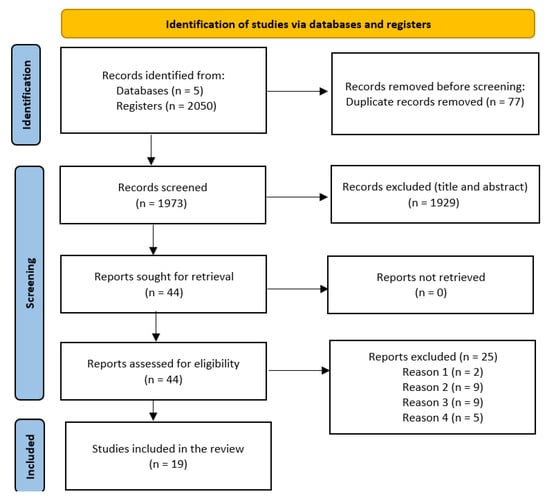
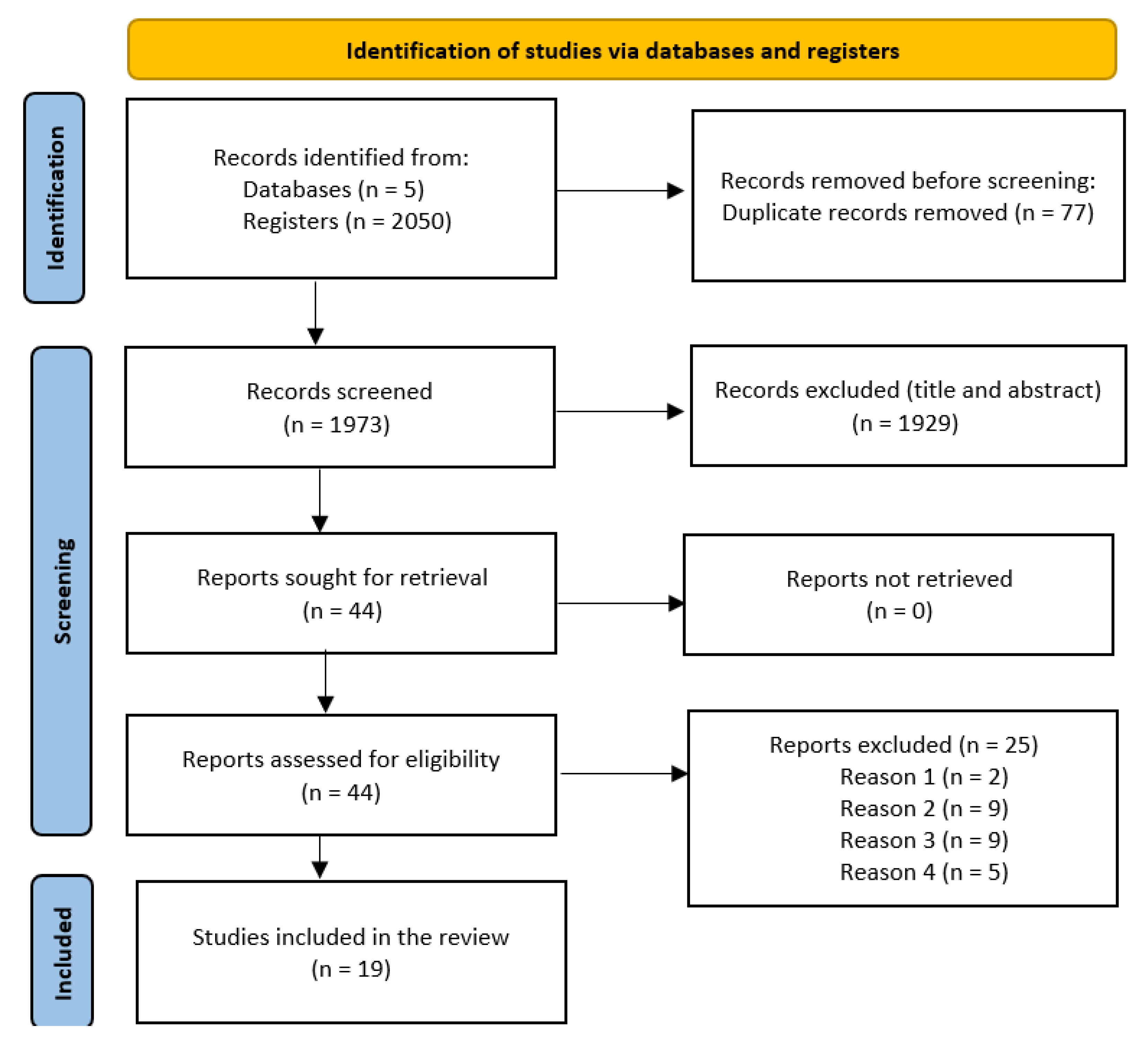
The selection of studies was carried out independently by two reviewers, who assessed the relevance of each record based on the study population, the phenomenon of interest, the reported results, and the higher education context. Empirical studies addressing inclusive pedagogical practices implemented or examined in university settings were considered eligible. In the third stage, full-text articles were reviewed to confirm eligibility. Discrepancies between reviewers were resolved through consensus and, when necessary, by consulting a third reviewer. The complete process is summarized in the PRISMA 2020 flow diagram (Figure 1). Prior to the formal screening process, the two mentioned reviewers conducted a pilot screening of a random subset of records to calibrate the application of the inclusion and exclusion criteria to ensure consistency in decision-making. The screening protocol and eligibility criteria were refined based on this calibration exercise. Regular consensus meetings were held throughout the screening process to minimize selection bias and enhance the reliability of study inclusion decisions.
Figure 1.
PRISMA flowchart.
2.4. Data Extraction
Data extraction was performed independently by two reviewers using a pre-designed extraction matrix to ensure consistency and reproducibility in the process [31]. Discrepancies in the extracted information were resolved by consensus and, when necessary, with the participation of a third reviewer [32]. For each included study, the following variables were extracted: (a) bibliographic data and country of origin; (b) methodological characteristics (study design, participants, educational context, and data collection instruments); (c) description of the intervention or phenomenon of interest (type of inclusive pedagogical practice and duration, when reported); and (d) main results and conclusions related to inclusive pedagogical practices in HE.
Before full data extraction, the reviewers piloted the extraction matrix on a subset of included studies to ensure the clarity, completeness, and consistency of the categories. The extraction template was iteratively refined to capture methodological, contextual, and substantive dimensions of inclusive pedagogies in higher education. All extracted data were cross-checked, and discrepancies were resolved through discussion and consensus, thereby strengthening the credibility and auditability of the synthesized findings.
2.5. Assessment of Methodological Quality and Risk of Bias
Given that the included studies were mainly qualitative, mixed-methods, or quasi-experimental designs, the Joanna Briggs Institute (JBI) critical appraisal tool, adapted to the educational research context [33], was applied to assess methodological quality and risk of bias. The assessment was organized into four domains: selection, information, confounding, and methodology, covering eight criteria (D1–D8), as presented in Table 2.
Table 2.
Risk of bias assessment of included studies.
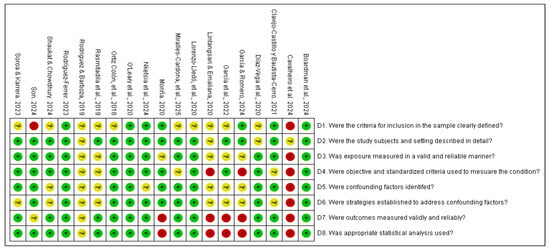
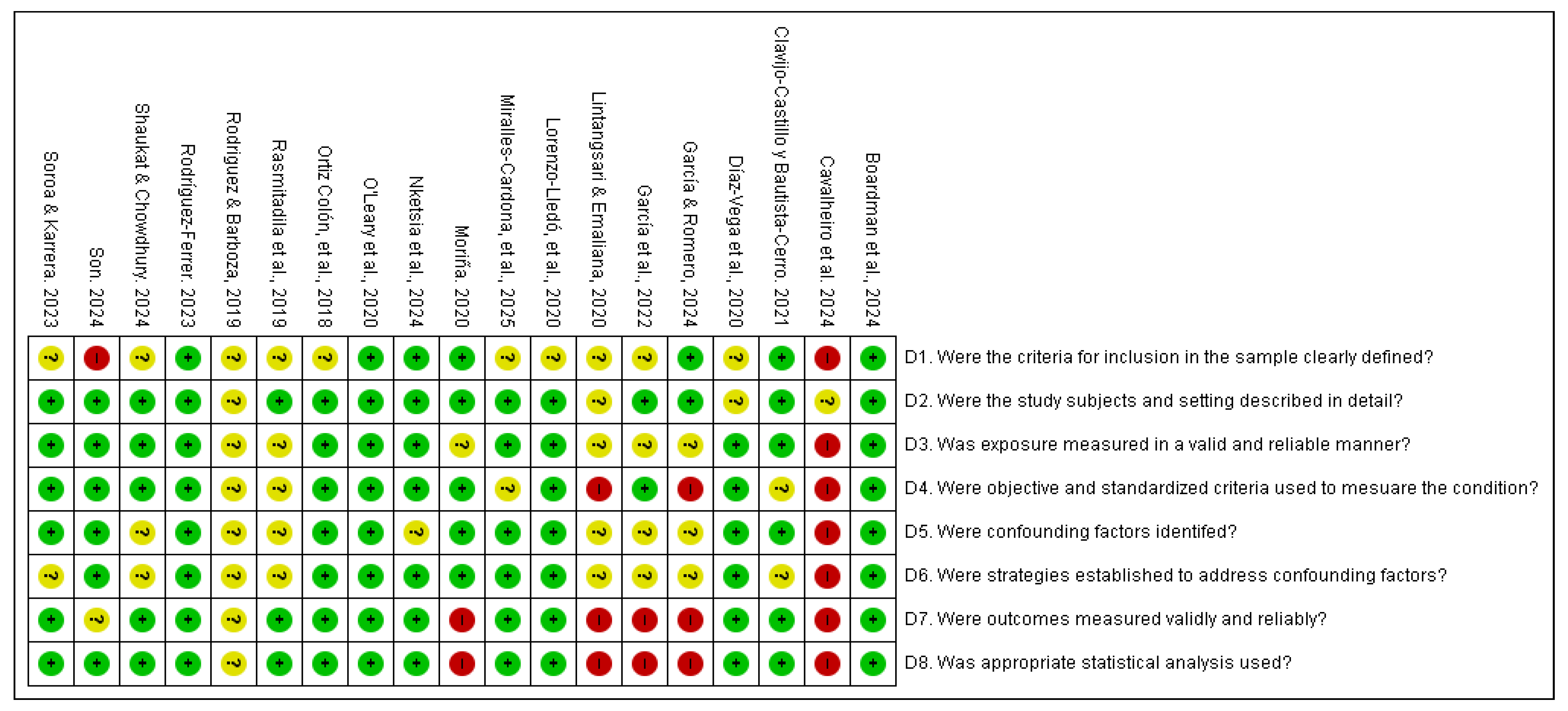
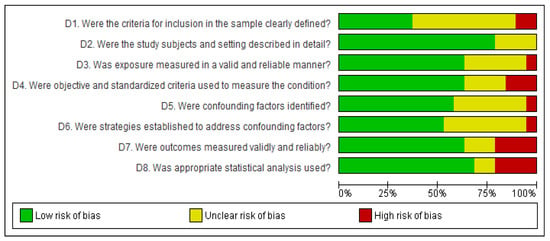
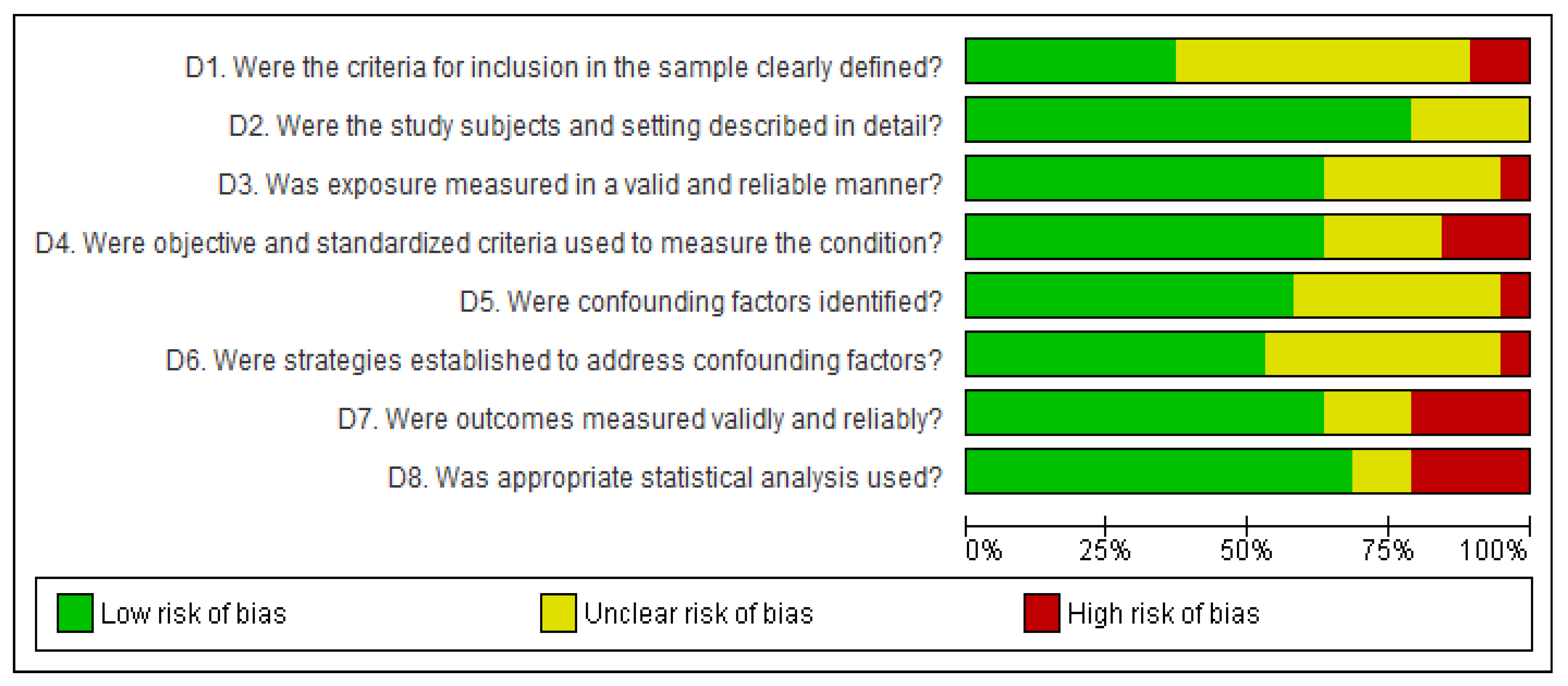
Each item was independently assessed by two reviewers and classified as having a low risk, moderate risk, or high risk of bias. Discrepancies were resolved by consensus or, when necessary, with the mediation of a third reviewer. The results of the appraisal are presented graphically, using a “traffic-light” diagram, which provides a concise visual summary of the distribution of the risk of bias across the evaluated domains (see Figure 2 and Figure 3). In this visualization, green represents low risk, yellow represents moderate risk, and red represents high risk of bias. This analysis allowed for a weighted interpretation of the overall methodological quality of the included studies, assigning greater interpretive value to those with lower risk in the final synthesis of findings.
Figure 2.
Traffic-light chart showing the risk of bias in the selected studies.
Figure 3.
Summary plot of risk of bias.
2.6. Data Synthesis Strategy
Due to the methodological, conceptual, and result heterogeneity of the included studies, a meta-analysis was not feasible. Consequently, a narrative and thematic synthesis of the findings was carried out, following the PRISMA 2020 recommendations for systematic reviews without statistical synthesis [31]. In the first stage, the studies were organized according to their methodological and contextual characteristics, considering the study design (quantitative, qualitative, or mixed method), the educational context, and the participants’ profiles. This information is presented descriptively in Table 3, which provides an overview of the characteristics of the included studies.
Subsequently, an inductive thematic analysis process was conducted through a systematic comparison of the study objectives, the inclusive teaching practices described, and the main results reported in each article. Based on this analysis, the studies were grouped according to the predominant theme of inclusive pedagogy addressed (inclusive pedagogical strategies in the classroom, students’ perceptions and experiences, institutional policies and practices for inclusion, and resources and supports for inclusive teaching), as well as according to the results reported in relation to educational inclusion, learning, equity, and teacher development. The thematic synthesis of these findings is presented in Table 4.
The assessment of methodological quality and risk of bias of the included studies is summarized in Figure 2. This appraisal was considered interpretatively during the analysis, with greater weight assigned to studies presenting a lower risk of bias in the discussion of the findings. The presentation of the results combines descriptive tables and a narrative synthesis to provide an integrated and contextually grounded understanding of the evidence. The complete process of identification, screening, exclusion, and inclusion of studies is shown in Figure 1, corresponding to the PRISMA 2020 flow diagram.
2.7. Thematic Analysis and Synthesis of Data
The thematic analysis [34] was conducted following an inductive and interpretive approach appropriate for synthesizing heterogeneous qualitative and mixed-methods evidence in higher education research. Thematic analysis is widely recognized as a flexible and rigorous method for identifying, analyzing, and reporting patterns across qualitative data, particularly in systematic reviews aimed at integrating findings from diverse contexts and study designs.
In this review, thematic synthesis was used as an analytical strategy to move beyond descriptive aggregation of findings toward the identification of recurrent conceptual patterns in the conceptualization and implementation of inclusive pedagogies in HE. This approach is consistent with narrative synthesis frameworks for reviews without meta-analysis, which emphasize the development of higher-order interpretive themes to generate integrated understandings of complex educational phenomena.
The analytical process involved three iterative stages: (i) line-by-line coding of the findings reported in the results and discussion sections of each included study; (ii) organization of codes into preliminary descriptive categories through constant comparison across studies; and (iii) abstraction of analytical themes that captured broader dimensions of inclusive pedagogical practices in HE. Throughout this process, analytical decisions were discussed among the reviewers to enhance the reflexivity, coherence, and credibility of the final thematic structure.
3. Results
3.1. Selection of Studies
The process of identifying, selecting, and determining the eligibility of studies is presented in Figure 1, corresponding to the PRISMA 2020 flow diagram. The search conducted in the Web of Science, Scopus, ERIC, SciELO, and DOAJ databases identified a total of 2050 records. In addition, a manual screening of the reference lists of the included studies did not yield any additional eligible records beyond those identified through database searches. After removing 77 duplicates, 1973 records were screened by title and abstract, of which 1929 were excluded for not meeting the inclusion criteria. Subsequently, 44 full-text articles were assessed for eligibility, of which 25 were excluded for reasons such as not addressing inclusive teaching practices in HE, not presenting empirical results, or not aligning with the defined phenomenon of interest. Ultimately, a total of 19 studies met all the eligibility criteria and were included in the final synthesis.
3.2. General Characteristics of the Included Studies
The general characteristics of the 19 studies included are summarized in Table 3. In terms of geographical distribution, the studies were mainly conducted in Europe, with a higher concentration in Spain, followed by the United States, Brazil, and Indonesia. This geographical diversity reflects the growing international interest in inclusive pedagogies in HE.
Regarding methodological design, qualitative and mixed-methods studies predominate, while a smaller number correspond to non-experimental or quasi-experimental quantitative designs. Participants mainly included university instructors, HE students, and, in some cases, teacher educators. The studies were carried out in both public and private universities.
Table 3.
Descriptive characteristics of the included studies.
With respect to the educational context, most of the research was conducted in initial teacher education subjects or in programs related to the social sciences, education, and health; that is, in university contexts. The inclusive pedagogical practices addressed were diverse, including active teaching strategies, project-based learning, Universal Design for Learning (UDL), collaborative work, use of technologies, gamification, and curricular adaptations, among others.
3.3. Methodological Quality and Risk of Bias of the Studies
The assessment of the methodological quality and risk of bias of the included studies is presented in Figure 2 and Figure 3. Overall, the studies showed a low to moderate risk of bias in the domains related to the description of the context and participants, as well as in the clarity of the objectives and the phenomenon of interest. However, some recurring methodological limitations were identified, particularly concerning the control of confounding factors, the use of standardized instruments for outcome measurement, and the absence of robust longitudinal or comparative designs. These limitations were considered in the interpretation of the results, giving greater analytical weight to studies that presented a lower risk of bias and stronger methodological consistency.
3.4. Thematic Synthesis of Inclusive Pedagogical Practices
Based on the narrative and thematic analysis [34] of the included studies, whose general characteristics are presented in Table 3, four main thematic domains were identified, encompassing the inclusive pedagogical practices developed in HE. These domains emerged from the systematic comparison of pedagogical approaches, implementation contexts, and results reported in the studies analyzed. They are synthesized in Table 4, along with the main subcategories, forms of implementation, and associated overall results.
Table 4.
Thematical synthesis of inclusive pedagogical practices and their findings.
In line with the scope and methodological design of this systematic review, the results are presented as a higher-order thematic synthesis aimed at integrating patterns and trends across heterogeneous studies, rather than as a primary qualitative analysis of raw textual data. Accordingly, the emphasis is placed on recurrent conceptual dimensions, forms of implementation, and reported outcomes of inclusive pedagogical practices in HE, instead of extensive verbatim quotations from individual studies. This approach allows for analytical abstraction while preserving the diversity of contexts and methodological designs represented in the evidence base.
3.4.1. Inclusive Teaching Strategies in HE Classrooms
The first group of studies focused on the implementation of inclusive instructional strategies aimed at fostering active participation and learning among all students. Among the most frequently reported strategies are project-based learning, cooperative learning, the use of active methodologies, gamification, and the application of UDL principles. These studies highlight lesson planning, methodological flexibility, and continuous feedback as key elements in promoting inclusive learning environments. Likewise, they disclose that teachers’ beliefs and teaching dispositions, such as holding high expectations of students’ abilities and adopting learning-centered approaches, directly influence the selection and implementation of these inclusive strategies.
3.4.2. Students’ Perceptions and Experiences
A second set of studies addressed students’ perceptions and experiences regarding inclusive teaching practices. As summarized in Table 4, the findings generally indicate positive evaluations related to classroom climate, participation, motivation, and sense of belonging. However, some studies reveal tensions associated with the lack of institutional support, limited resources, or communication barriers, especially in contexts involving students with disabilities or linguistic diversity. These findings reflect the coexistence of pedagogical advancements alongside persistent structural challenges in HE.
3.4.3. Institutional Policies and Practices Aimed at Inclusion
Another group of studies analyzed the role of institutional policies and practices in the development of inclusive pedagogies in HE. The body of work emphasizes the im-portance of clear regulatory frameworks, inclusive institutional cultures, and continuous faculty professional development. In this regard, the studies highlight both the professional development of teaching staff and the existence of curricula programs with an inclusive orientation as fundamental elements for ensuring the coherence and sustainability of inclusive pedagogical practices within universities.
3.4.4. Resources and Support for Inclusive Teaching
Finally, several studies emphasized the availability and use of resources and support for inclusive teaching, such as adapted instructional materials, technological resources, specialized support services, and collaborative work faculty and other professionals involved in the education system. While progress has been made in the incorporation of these resources, the evidence indicates that the lack of specific training, scarcity of resources, and insufficient institutional support continue to be some of the main barriers to the effective implementation of inclusive pedagogies in HE.
3.5. Overall Synthesis of Findings
The empirical literature reviewed provides an overview of how inclusive pedagogies are currently being conceptualized and implemented in HE, as well as the existing gaps that should be addressed to meet the academic needs of future professionals. The thematic categories that emerged in this review directly respond to the research question and the proposed objective, namely, the identification, description, and synthesis of how inclusive pedagogies are conceptualized in HE. The analysis reveals that HE institutions adopt various approaches to incorporating diversity and inclusion processes in the classroom, with teacher education programs showing a particular emphasis on selecting and applying methodologies and strategies needed to respond to student diversity. The findings also indicate that the academic community more broadly acknowledges the need to address the educational demands of the twenty-first century.
4. Discussion
The aim of this systematic review was to identify, describe, and synthesize how inclusive pedagogies are conceptualized and implemented in HE and to summarize the main results reported regarding teaching practices that address classroom diversity. In this context, four thematic categories emerged, providing a coherent framework through which the review objective can be addressed.
The first thematic category involves inclusive planning and methodologies, as well as teachers’ beliefs and attitudes regarding students’ abilities that guide inclusive practice [35,38,43,44,46,48,51,53]. The first category pertains to the implementation, by university instructors, of strategies consistent with active learning to promote higher-order skill development; nevertheless, the synthesis reveals persistent teaching insecurity concerning the effectiveness of such implementation for student learning and motivation [43,46]. In this sense, teachers’ convictions concerning students’ abilities and skills are directly linked to the choice or selection of the praxis developed in the classroom [35,44,48], with a positive educational environment being another factor to consider in strengthening meaningful education consistent with contemporary educational requirements. Therefore, the need to reinforce inclusive pedagogical training within academia so as to implement strategies grounded in theoretical and empirical knowledge of inclusive pedagogy [51,52], thereby supporting the current academic endeavor, becomes evident.
The second thematic category pertains to students’ perceptions and experiences of inclusive teaching and learning [36,42,47]. Students’ teaching beliefs and experiences are consistent with those stated by university instructors, as noted in the previous paragraph, although there is an emphasis on accompaniment, willingness, and recognition of diversity within a flexible classroom organization. At the same time, there is also evidence of training gaps and persistent barriers to inclusive teaching strategies that facilitate learning. The literature converges on the application of strategies such as classroom organization according to students’ needs, the use of active methodologies, and the emotional connection or awareness of academics in the implementation of their teaching [36,42,44].
The third category pertains to institutional policies and practices that foster inclusion through curriculum programs and teacher professional development [42,47,49,52]. Prescribed curriculum implementation appears to have less relevance than the praxis enacted by teachers, as the included studies generally report effective instructional strategies and research-based approaches to appropriate teaching for promoting learning. In this sense, although the integration of frameworks such as UDL and DI [41,46,47,53] is recognized in some educational programs, gaps in theoretical and practical knowledge remain, often linked to professional trajectories and the academic degrees of those delivering instruction. Among the challenges of addressing diverse societies within HE, it is crucial to incorporate changes not only of a pedagogical nature but also along ethical, cultural, and practical dimensions, integrating locally relevant elements into the learning process [38,44,47]. The above is particularly relevant since Sustainable Development Goal 4 of the United Nations 2030 Agenda, highlighted in Sharma [17], specifies the need to ensure inclusive, equitable, and quality education to promote learning opportunities for all.
The fourth thematic category represents one of the fundamental pillars recurrently highlighted in the analyzed scientific studies. Resources and supports, approached from different perspectives, enable the creation of divergent learning environments tailored to students’ needs [46]. The use of materials that stimulate multiple sensory channels to promote learning [47,48] emerges as a challenging skill for academia to develop, as it involves not only the implementation of teaching resources but also their design and the inherent purpose of their use [36,52,53]. In this regard, technology must be considered as a device of the globalized world that serves as a pedagogical scaffold that offers unrestricted and permanent access to knowledge and information for educational communities. From this perspective, a paradigm shift in university instruction is envisioned; that is, it becomes necessary to construct and deconstruct beliefs regarding what is appropriate for developing learning processes for all students.
A relevant limitation of this systematic review concerns the geographical distribution of the included studies and the screening process. Although the search strategy was designed to be comprehensive and yielded a large initial number of records, most exclusions at the title/abstract and full-text stages were due to studies not being conducted in higher education contexts, not reporting empirical data, or addressing inclusion not related to pedagogical practices. In addition, empirical evidence from several world regions, particularly pan-Asian higher education contexts, remains underrepresented in the final sample. This underrepresentation was not intentional but reflects both the application of the predefined inclusion criteria and the uneven visibility of research on inclusive pedagogies in HE within the selected databases and languages. Consequently, the findings should be interpreted with caution when extrapolating to Asian higher education systems, which are characterized by diverse cultural, institutional, and policy contexts. Future reviews could expand database coverage by including additional regional sources and languages to capture a more globally representative evidence base.
The evidence analyzed indicates that inclusive pedagogical approaches are primarily implemented or guided through classroom teaching strategies, students’ perceptions and experiences, institutional policies and practices, and resources and supports for teaching. While the reviewed articles point to favorable outcomes associated with educational inclusion reflected in student participation, improved classroom climate, and positive perceptions of inclusive teaching, it is important to note that the conceptual and methodological heterogeneity of the literature, together with the limited systematic evaluation of effects, constrains cross-study comparisons and the identification of consistent results.
The implementation of inclusive practices or strategies based on theoretical and practical knowledge is a pressing demand within HE, as universities serve communities that are culturally and structurally diverse. As previously noted, exposure to homogeneous teaching practices places students from marginalized groups at a disadvantage, reducing their opportunities for learning and academic success. As Hockings [54] points out, inclusion is not merely an ethical or moral imperative, but a pedagogical necessity, as it has been empirically demonstrated that inclusive instructional design improves engagement, persistence, and achievement among all students, not only those labeled as at risk. Therefore, this systematic review contributes to practical knowledge of what is currently being done in this field, with the aim of continuing to build an area that remains necessary yet underexplored in HE.
5. Conclusions
This systematic review identifies several convergent trends and key insights regarding the current state of inclusive pedagogies in higher education. First, the evidence shows a predominance of classroom-level inclusive strategies, such as active learning methodologies, UDL, and DI, while institution-wide, systemic approaches to inclusion remain less developed and evaluated. This trend suggests that inclusive pedagogy in HE is still largely driven by individual instructors’ initiatives rather than being embedded as a coherent institutional framework.
Second, the findings highlight the central role of faculty beliefs, dispositions, and professional development in shaping inclusive teaching practices. Instructors’ expectations regarding students’ capabilities and their access to ongoing pedagogical training emerge as critical enablers, or barriers, to the effective implementation of inclusive approaches. This underscores the need for HE institutions to move beyond isolated training activities toward sustained, contextually responsive faculty development models that explicitly address inclusive pedagogy as a core dimension of teaching quality.
Third, integrative pedagogical frameworks such as UDL and DI are increasingly referenced as guiding approaches for addressing classroom diversity in HE. However, their application is often partial and uneven, reflecting gaps in conceptual understanding and practical translation into everyday teaching practices. These data suggest the importance of strengthening theoretical grounding and practical operationalization of inclusive frameworks in curriculum design and teaching evaluation processes.
Finally, a persistent gap is observed between institutional discourses on inclusion and the systematic implementation of inclusive practices in HE classrooms. While policy documents and strategic plans increasingly emphasize diversity and equity, the translation of these commitments into concrete pedagogical, curricular, and support mechanisms remains fragmented. Taken together, these insights suggest that advancing inclusive pedagogies in HE requires a multilevel approach that aligns classroom practices, faculty development, curricular coherence, and institutional policies. Future research should prioritize more robust, longitudinal, and comparative designs to assess the impact of inclusive pedagogical approaches on student learning, participation, and equity outcomes across diverse higher education contexts.
Supplementary Materials
The following supporting information can be downloaded at https://www.mdpi.com/article/10.3390/su18052294/s1: PRISMA 2020 for abstract checklist.
Author Contributions
Conceptualization, V.S.-R. and G.T.V.; methodology, V.S.-R., C.F.-C. and L.A.F.; software, V.S.-R., L.A.F. and C.F.-C.; formal analysis, V.S.-R. and L.A.F.; investigation, V.S.-R., L.A.F. and G.T.V.; resources, V.S.-R., L.A.F. and C.F.-C.; data curation, V.S.-R., L.A.F. and C.F.-C.; writing original draft preparation, V.S.-R.; writing review and editing, L.A.F. and C.F.-C.; visualization, L.A.F. and V.S.-R.; supervision, C.F.-C. All authors have read and agreed to the published version of the manuscript.
Funding
This research was funded by Fondecyt Regular, grant number 1250784, from the Agencia Nacional de Investigación y Desarrollo-ANID, Chile, and the APC was funded by “Fondecyt Regular 1250784”.
Institutional Review Board Statement
Not applicable.
Informed Consent Statement
Not applicable.
Data Availability Statement
No new data were created or analyzed in this study.
Conflicts of Interest
The authors declare no conflicts of interest.
References
- Ainscow, M. Promoting inclusion and equity in education: Lessons from international experiences. Nord. J. Stud. Educ. Policy 2020, 6, 7–16. [Google Scholar] [CrossRef] [Scilit]
- UNESCO. Declaración de Salamanca y Marco de Acción sobre Necesidades Educativas Especiales. In Proceedings of the Conferencia Mundial Sobre Necesidades Educativas Especiales: Acceso y Calidad, Salamanca, Spain, 7–10 June 1994; Ministerio de Educación y Ciencia: Madrid, Spain, 1994; Available online: https://unesdoc.unesco.org/ark:/48223/pf0000098427_spa (accessed on 8 October 2025).
- Castillo, P.; Miranda, C.M. Actitud hacia la inclusión de los estudiantes de pedagogía de una universidad estatal Chilena. Rev. Latinoam. Educ. Inclusiva 2018, 12, 133–148. [Google Scholar] [CrossRef] [Scilit]
- OREALC/UNESCO. Formación Inicial Docente en Competencias para el Siglo XXI y Pedagogías para la Inclusión en América Latina. Análisis Comparado de Siete Casos Nacionales. 2018. Available online: https://bibliotecadigital.mineduc.cl/bitstream/handle/20.500.12365/17604/Formacion%20Inicial%20Docente%20en%20competencias.pdf?sequence=1&isAllowed=y (accessed on 8 October 2025).
- Crisol, E. Towards inclusive education for all. New contributions. Rev. Currículum Y Form. Del Profr. 2019, 23, 1–9. Available online: https://revistaseug.ugr.es/index.php/profesorado/article/viewFile/9141/7652 (accessed on 21 August 2025).
- Moriña, A. Inclusive education in higher education: Challenge and opportunities. Eur. J. Spec. Needs Educ. 2017, 32, 3–17. [Google Scholar] [CrossRef] [Scilit]
- UNESCO. Directrices Sobre Políticas de Inclusión en la Educación. 2009. Available online: https://unesdoc.unesco.org/ark:/48223/pf0000177849_spa (accessed on 21 August 2025).
- Cornejo, J. Nuevos excluidos en el sistema educacional chileno: Problemas y desafíos. Páginas Educ. 2019, 12, 28–48. [Google Scholar] [CrossRef] [Scilit]
- Frederickson, N.; Cline, T. Special Educational Needs, Inclusion and Diversity, 3rd ed.; Open University Press: Maidenhead, UK, 2015. [Google Scholar]
- Stentiford, L.; Koutsouris, G. What are inclusive pedagogies in higher Education? A systematic scoping review. Stud. High. Educ. 2020, 46, 2245–2261. [Google Scholar] [CrossRef] [Scilit]
- DeLuca, C. Toward an interdisciplinary framework for educational inclusivity. Can. J. Educ. 2013, 36, 305–348. Available online: https://journals.sfu.ca/cje/index.php/cje-rce/article/view/1157 (accessed on 27 January 2026).
- López, V.; Julio, C.; Morales, M.; Rojas, C.; Pérez, M.V. Barreras culturales para la inclusión: Políticas y prácticas de integración en Chile. Rev. Educ. 2014, 363, 256–281. [Google Scholar] [CrossRef] [Scilit]
- Manghi, D.; Conejeros, M.L.; Bustos, A.; Aranda, I.; Vega, V.; Diaz, K. Comprender la educación inclusiva chilena: Panorama de políticas e investigación educativa. Cad. Pesqui. 2020, 50, 114–135. [Google Scholar] [CrossRef] [Scilit]
- Atanasova, D.; Papen, U. UK University teachers on inclusive education: Conceptualizations, practices, opportunities and challenges. Stud. High. Educ. 2026, 51, 54–65. [Google Scholar] [CrossRef] [Scilit]
- González-Castellano, N.; Colmenero-Ruiz, M.J.; Cordón-Pozo, E. Factors that influence the university’s inclusive educational processes: Perceptions of university professors. Heliyon 2021, 7, e06853. [Google Scholar] [CrossRef] [Scilit] [PubMed]
- De Haro Rodríguez, R.; Arnaíz-Sanchez, P.; Núñez de Perdomo, C.R. Teacher competences in early childhood education and inclusive education: Design and validation of a questionnaire. Rev. Electron. Interuniv. Form. Profr. 2020, 23, 407111. [Google Scholar] [CrossRef] [Scilit]
- Sharma, U. Preparing to Teach in Inclusive Classrooms. Oxford Research Encyclopedia of Education. 2018. Available online: https://oxfordre.com/education/display/10.1093/acrefore/9780190264093.001.0001/acrefore-9780190264093-e-113 (accessed on 19 September 2025).
- Llorent, V.J.; Zych, I.; Varo-Millan, J.C. University academic personnel’s vision of inclusive education in Spanish universities. Cult. Educ. 2020, 32, 147–181. [Google Scholar] [CrossRef] [Scilit]
- Altes, T.; Willemse, M.; Goei, S.; Ehren, M. Higher education teachers’ understandings of and challenges for inclusion and inclusive learning environments: A systematic literature review. Educ. Res. Rev. 2024, 43, 100605. [Google Scholar] [CrossRef] [Scilit]
- Hemmings, B.; Kemmis, S.; Reupert, A. Practice architectures of university inclusive education teaching in Australia. Prof. Dev. Educ. 2013, 39, 470–487. [Google Scholar] [CrossRef] [Scilit]
- Jackson-Summers, A.G.; Mrakovcich, K.L.; Gray, J.P.; Fleischmann, C.M.; Emami, T.; Page, E.J. A systematic review of inclusive pedagogical research using the CIRTL inclusive pedagogy framework: Multi-disciplinary and STEM perspectives, current trends and a research agenda. Discov. Educ. 2024, 3, 30. [Google Scholar] [CrossRef] [Scilit]
- Dewsbury, B.; Brame, C.J. Inclusive teaching. CBE Life Sci. Educ. 2019, 18, 2. [Google Scholar] [CrossRef] [Scilit]
- Carrillo-Sierra, S.M.; Manrique-Julio, J.E.; Cerón-Bedoya, J.D.; Vásquez-Henao, L.C.; Fornaris-Parejo, Z.E.; Gómez-Charris, Y.; Rivera-Porras, D. Inclusive Education in Higher Education: A Comparative Analysis of Faculty Attitudes, Knowledge, and Practices in Colombian Universities. Societies 2025, 15, 299. [Google Scholar] [CrossRef] [Scilit]
- Schmelkes, S.; Ballesteros, A.D. Intercultural education: The training of teachers for inclusion. In The Palgrave Handbook of Teacher Education Research; Menter, I., Ed.; Palgrave Macmillan: Cham, Vietnam, 2023; pp. 1313–1336. [Google Scholar]
- Slot, P.L.; Romijn, B.R.; Nata, G. A Virtual Environment Model of Professional Development Aimed at Enhancing Diversity and Inclusiveness; EU ISOTIS Project: Utrecht, The Netherlands, 2019. [Google Scholar]
- Steele, A.R.; Leming, T. Exploring student teachers’ development of intercultural understanding in teacher education practice. J. Peace Educ. 2022, 19, 47–66. [Google Scholar] [CrossRef] [Scilit]
- Sánchez Sánchez, G.; Castillo-Retamal, M.; Sumonte Rojas, V. Desafíos de la interculturalidad en la formación de profesores de Educación Física. Retos 2023, 50, 1214–1223. [Google Scholar] [CrossRef] [Scilit]
- Cornejo, J. Inclusión educativa desde la óptica de los académicos responsables de la formación de profesores de la Universidad Católica del Maule—Chile. Rev. Educ. 2019, 28, 27–58. [Google Scholar] [CrossRef] [Scilit]
- Aguado, T. Pedagogía Intercultural; Mcgraw Hill: Madrid, Spain, 2003; ISBN -13 8448139755, 9788448139759. [Google Scholar]
- Page, M.J.; McKenzie, J.E.; Bossuyt, P.M.; Boutron, I.; Hoffmann, T.C.; Mulrow, C.D.; Shamseer, L.; Tetzlaff, J.M.; Akl, E.A.; Brennan, S.E.; et al. Declaración PRISMA 2020: Una guía actualizada para la publicación de revisiones sistemáticas. Rev. Española Cardiol. 2021, 74, 790–799. [Google Scholar] [CrossRef]
- Hurtado, G.O.; Blake, M.G. Reconocimiento de la palabra bajo umbral óptimo simplificado: Revisión de alcance de listas de palabras orales vs. digitales. Int. J. Med. Surg. Sci. IJMSS 2025, 12, 1–12. [Google Scholar]
- Sguanci, M.; Mancin, S.; Piredda, M.; De Marinis, M.G. Protocol for conducting a systematic review on diagnostic accuracy in clinical research. MethodsX 2024, 12, 102569. [Google Scholar] [CrossRef] [Scilit] [PubMed]
- Santos, W.M.D.; Secoli, S.R.; Püschel, V.A.D.A. The Joanna Briggs Institute approach for systematic reviews. Rev. Lat.-Am. Enferm. 2018, 26, e3074. [Google Scholar] [CrossRef] [Scilit]
- Braun, V.; Clarke, V. Thematic Analysis: A Practical Guide; SAGE: London, UK, 2022. [Google Scholar]
- Moriña, A. Faculty members who engage in inclusive pedagogy: Methodological and affective strategies for teaching. Teach. High. Educ. 2020, 27, 371–386. [Google Scholar] [CrossRef] [Scilit]
- García Cedillo, I.; Coronado Osuna, G.; Rodríguez Quiñones, B.G.; Romero Contreras, S. Prácticas inclusivas de formadores de docentes de una escuela normal del noroeste de México. Rev. Investig. Educ. 2022, 34, 256–283. [Google Scholar] [CrossRef] [Scilit]
- Cavalheiro Crittelli, B.; Guridi, V.M.; Rodrigues, C.; Dominguez, C.; Pires de Camargo, E. Saberes docentes y educación inclusiva en la confección de recursos didácticos de ciencias. Enseñanza Las Cienc. 2024, 42, 85–103. [Google Scholar] [CrossRef] [Scilit]
- Son, M. Content and languages integration: Pre-Service teachers’ culturally sustaining social studies units for emergent bilinguals. Educ. Sci. 2024, 14, 915. [Google Scholar] [CrossRef] [Scilit]
- García, S.; Romero, M.A. Competencias para la promoción de una educación inclusiva en el aula universitaria: Un análisis de las habilidades y conocimientos docentes. Eur. Public Soc. Innov. Rev. 2024, 9, 1–19. [Google Scholar] [CrossRef] [Scilit]
- Nketsia, W.; Opoku, M.P.; Amponteng, M.; Mprah, W.K. Exploring the perceived knowledge of teacher educators and pre-service teachers on the differentiated instruction practices of teacher educators. Front. Educ. 2024, 9, 1356675. [Google Scholar] [CrossRef] [Scilit]
- Boardman, A.G.; Schwarz, V.S.; Sollenberger, L. Integrating disability into equity-focused general education teacher preparation. Front. Educ. 2004, 9, 1372380. [Google Scholar] [CrossRef] [Scilit]
- Soroa, M.; Karrera, I. Acercando la diversidad social al alumnado de educación primaria: Estudio sobre una experiencia de formación inclusiva. Rev. Interuniv. Form. Profr. 2023, 98, 217–234. [Google Scholar] [CrossRef] [Scilit]
- Rodríguez-Ferrer, J.M.; Manzano-León, A.; Aguilar-Parra, J.M. Game-Based learning and service-learning to teach inclusive education in higher education. Int. J. Environ. Res. Public Health 2023, 20, 3285. [Google Scholar] [CrossRef] [Scilit] [PubMed]
- Clavijo-Castillo, R.; Bautista-Cerro, M.-J. Percepción de los docentes sobre las culturas institucionales, políticas y prácticas inclusivas. Estudio de caso de la Universidad de Cuenca-Ecuador. Maskana 2021, 12, 34–46. [Google Scholar] [CrossRef] [Scilit]
- O’Leary, E.S.; Shapiro, C.; Toma, S.; Sayson, H.W.; Levis-Fitzgerald, M.; Johnson, T.; Sork, V.L. Creating inclusive classrooms by engaging STEM faculty in culturally responsive teaching workshops. Int. J. STEM Educ. 2020, 7, 32. [Google Scholar] [CrossRef] [Scilit]
- Diaz-Vega, M.; Moreno-Rodriguez, R.; Lopez-Bastias, J. Educational Inclusion through the Universal Design for Learning: Alternatives to Teacher Training. Educ. Sci. 2020, 10, 303. [Google Scholar] [CrossRef] [Scilit]
- Lintangsari, A.; Emaliana, I. Inclusive education services for the blind: Values, roles, and challenges of university EFL teachers. Int. J. Eval. Res. Educ. IJERE 2020, 9, 439–447. [Google Scholar] [CrossRef] [Scilit]
- Lorenzo-Lledó, A.; Lorenzo, G.; Lledó, A.; Pérez-Vázquez, E. Inclusive methodologies from the teaching perspective for improving performance in university students with disabilities. J. Technol. Sci. Educ. 2020, 10, 127–141. [Google Scholar] [CrossRef] [Scilit]
- Rasmitadila, R.; Widyasari, W.; Prasetyo, T.; Rachmadtullah, R.; Samsudin, A.; Tambunan, A.R. Design of instructional strategy model based on the brain’s natural learning system (MS-SiPAO) in inclusive classrooms in higher education. Univers. J. Educ. Res. 2019, 7, 2352–2360. [Google Scholar] [CrossRef] [Scilit]
- Rodrigues, I.; Barboza, P. A inclusão de estudantes surdos no ensino superior brasileiro: O caso de um curso de Pedagogia. Rev. Port. Educ. 2019, 32, 155–172. [Google Scholar] [CrossRef] [Scilit]
- Ortiz Colón, A.M.; Agreda Montoro, M.; Colmenero Ruiz, M.J. Toward Inclusive Higher Education in a Global Context. Sustainability 2018, 10, 2670. [Google Scholar] [CrossRef] [Scilit]
- Miralles-Cardona, C.; Cardona-Moltó, M.-C.; Tichá, R.; Abery, B.H. Prepared to ensure quality education for all? A comparative study of pre-service teachers’ self-efficacy for inclusion in Spain and the United States. Educ. Sci. 2025, 15, 535. [Google Scholar] [CrossRef] [Scilit]
- Shaukat, S.; Chowdhury, R. Bridging gaps between theory and practice in inclusive education: Pakistani PSTs’ insights into the HHH apprenticeship framework. Cogent Educ. 2025, 12, 2507544. [Google Scholar] [CrossRef] [Scilit]
- Hockings, C. Inclusive Learning and Teaching in Higher Education. A Synthesis Research; Higher Education Academy: York, UK, 2020. [Google Scholar]

Disclaimer/Publisher’s Note: The statements, opinions and data contained in all publications are solely those of the individual author(s) and contributor(s) and not of MDPI and/or the editor(s). MDPI and/or the editor(s) disclaim responsibility for any injury to people or property resulting from any ideas, methods, instructions or products referred to in the content. |
© 2026 by the authors. Licensee MDPI, Basel, Switzerland. This article is an open access article distributed under the terms and conditions of the Creative Commons Attribution (CC BY) license.