


Abstract
This study aimed to identify changes in beef trade between the European Union and South American countries and to assess the potential economic impact of implementing the EU–Mercosur agreement on the beef market. The research problem asked: How might trade liberalisation under the EU–Mercosur agreement affect the volume, structure, and competitiveness of the beef market between the EU and Mercosur countries? The research used data on beef production, import, export, and consumption in the European Union and South America. The detailed analysis covered the years 2010–2024. In addition, based on USDA data, a forecast of beef production in the EU and Mercosur countries up to 2030 was prepared. The analyses employed descriptive and indicator methods, Spearman’s rank correlation analysis, and the ARDL (Autoregressive Distributed Lags) model. The results indicate that beef production is increasing in the Mercosur countries and declining in the European Union. The ARDL models showed that beef trade depends on previous production and demand, and imports to the EU respond to changes in these areas with a delay. Increasing the tariff quota for beef imports from the Mercosur countries to the EU at a reduced customs rate may increase the share of this meat in the EU market. Preferential trade conditions raise concerns among EU producers, who must comply with stricter environmental standards and higher production costs, while less restrictive practices are applied in Mercosur countries. As a result, European agriculture, especially in Poland, may become less competitive, which calls for support mechanisms and further negotiations on sustainable production.
1. Introduction
The origins of the talks between the European Union and the international economic organisation and customs union of South American states—Mercosur—date back to the Spanish Presidency of the EU in 1995, culminating four years later in the signing of the Interregional Framework Cooperation Agreement between the European Community and the Common Market of the South. The first unsuccessful attempt to conclude a final agreement took place in 2004. In 2007, the EU proposed a strategic partnership with Brazil, which was poorly received by other Mercosur members, namely Argentina, Uruguay, and Paraguay. The Spanish Presidency in 2010 again undertook efforts to conclude the treaty. The next resumption of negotiations took place in 2016 [1].
In seeking to sign the agreement, the European Commission primarily aimed to increase bilateral trade and investment, reduce tariff and non-tariff barriers to trade, and create more predictable and stable rules for trade and investment by regulating issues relating to intellectual property, food safety, competition, and fair business practices. This was justified by the need to reduce customs duties in the industrial sector (e.g., the automotive industry is subject to tariffs of 14–35%) and in agriculture (dairy products are subject to tariffs of 28%, alcoholic beverages—35%). The estimated benefits were about EUR 4 billion per year. In addition, the agreement was intended to enable mutual public contracts and create opportunities for service providers in the technology, telecommunications, and transport sectors. Another key premise for the agreement was the promotion of sustainable development principles, environmental protection, and compliance with the requirements of the Paris Climate Agreement [2].
According to the European Commission, in 2022, EU exports to Brazil, Argentina, Paraguay, and Uruguay amounted to EUR 55.8 billion (compared with EUR 35.5 billion and EUR 44.5 billion in 2020 and 2021, respectively), mainly consisting of machinery and equipment, chemical and pharmaceutical products, and transport equipment. During this period, the European Union imported goods worth around EUR 63.1 billion, mainly mineral and plant products, as well as foodstuffs, beverages, and tobacco. The value of EU investments in Mercosur countries in 2021 amounted to EUR 344 billion [3]. Despite the relatively high level of cooperation, many goods remain subject to high tariffs. According to the architects of the agreement, the multitude of barriers hindering trade and investment exchange would be eliminated through the creation of a free trade area.
After more than two decades of negotiations, on 28 June 2019, a preliminary agreement between the EU and the Mercosur countries was announced. The process of finalisation was, however, halted mainly due to growing criticism related to fires and deforestation in the Amazon. A final political agreement was reached only on 6 December 2024, when the provisions of the negotiated trade agreement between the South American countries, i.e., Argentina, Brazil, Paraguay, and Uruguay, and the European Union were presented. Subsequently, on 3 September 2025, the European Commission officially submitted to the Council of the EU a proposal to sign the agreement [2]. One of its key areas is agriculture, which has raised the greatest concern among citizens of several EU countries, including Poland, France, and Italy. According to the opponents of the agreement, it poses a threat to agricultural producers in the EU-27, mainly from Brazil and Argentina, in the beef market. The beef market is classified as a so-called sensitive market. Regarding beef imports to the EU from Mercosur countries, a quota was established with a preferential customs rate of 7.5% in relation to the volume of imported beef in recent years [4]. Additional concerns have been raised regarding production standards for beef, animal welfare, the use of meat-and-bone meals, and growth hormones in cattle feed.
On 17 January 2026, officials of the European Commission (EC), led by President Ursula van der Leyen, signed a free trade agreement between the European Union and Mercosur countries in Paraguay. This does not mean the agreement has entered into force, as on 26 January this year, the European Parliament (EP) asked the European Court of Justice (CJEU) to examine the signed agreement with the EU treaties. Within a few months, we will know the CJEU’s decision, and it will probably be positive for the signed agreement.
Even before the agreement was signed, Polish MEPs proposed additional safeguards, the so-called safety brakes, which are to be applied in the event of a deterioration in the market situation—mainly in terms of prices (a drop of more than 5%, mainly of beef) as a result of imports from the Mercosur countries. The problem is that these restrictions are not part of the agreement but are only declaratory provisions of the EU. The agreement’s entry into force will undoubtedly be subject to the exceptional control of agricultural communities. In addition, a certain pool of funds is also provided for the stabilisation of agricultural markets. This will be a test of the effectiveness of the EU institutions and of the operation of appropriate mechanisms and tools for the control of food imports from Mercosur countries.
The EU–Mercosur partnership agreement, despite its controversy, could also benefit beef consumers in the European Union. Trade liberalisation, including tariff reductions and the expansion of tariff-rate quotas (TRQs), increases import opportunities and could lead to greater availability of various types of beef in the European market. Furthermore, increased competition from Mercosur importers could put pressure on market prices, potentially helping to stabilise beef prices and limit their growth in the long term [3]. In light of these opportunities and risks, the purpose of this research was to identify the impact of the trade agreement between the European Union and the Mercosur countries on the EU beef market.
The most significant voices of dissatisfaction and opposition to the EU–Mercosur trade agreement came from Poland, France, Ireland, and Italy. Farmers are particularly vocal in their opposition, fearing that less expensive beef will enter the EU market from Brazil, Argentina, Uruguay, and Paraguay. Poland led the initiative to build a minority able to block the ratification of this agreement in its current form. Opponents of the agreement argue that countries with fragmented agriculture do not primarily use it. The implementation of this agreement will also affect sustainable development. The EU–Mercosur trade agreement has a multifaceted impact on the European Union’s beef market, directly linked to the pillars of sustainable development: environmental, economic, and social. From an ecological perspective, it is crucial to note that increasing preferential beef imports from Mercosur countries could indirectly stimulate the extensification of production in South America, where cattle farming is a significant cause of deforestation and ecosystem degradation, particularly in the Amazon and Gran Chaco regions [5,6]. At the same time, the effects of the EU–Mercosur agreement also extend to the economic and social dimensions of sustainable development within the EU itself. The European beef sector operates under high standards of animal welfare, environmental protection, and food safety, which result in higher production costs but promote the long-term sustainability of agricultural systems [7]. The influx of cheaper beef from Mercosur may weaken the competitiveness of small- and medium-sized farms in the EU, increasing the risk of their marginalisation and the concentration of production, which is contrary to the goals of sustainable development of rural areas [8].
The academic literature is dominated by analyses of the impact of the EU–Mercosur agreement on the agricultural sector or international trade in general, while a limited number of studies focus on detailed statistical analysis of beef trade between the EU and South American countries and on the quantitative assessment of potential structural changes resulting from trade liberalisation. Therefore, this study attempts to fill this research gap.
The study aims to identify changes in beef trade between the European Union and South American countries and to assess the potential economic impact of implementing the EU–Mercosur agreement on the beef market. The research problem asks: How might trade liberalisation under the EU–Mercosur agreement affect the volume, structure, and competitiveness of the beef market between the EU and Mercosur countries? The study also addresses four questions related to this research problem:
- What is the production and consumption level of beef in the EU and Mercosur countries?
- How has foreign trade in beef changed between these regional economic blocs?
- What factors influence beef trade between the analysed regions?
- What changes in the beef trade might result from trade liberalisation under the EU–Mercosur agreement?
The study reviews the literature on the effects of the free trade agreement between the EU and the Mercosur countries. It then presents the research methodology and describes the data sources used for the analysis. The research covers the regionalisation of beef and veal production worldwide. A detailed analysis of beef production, consumption, and trade between the European Union and South American countries was conducted. Based on available data, four models were developed, considering the influence of various variables on beef imports and exports in the EU and South America. Based on the available information, a SWOT analysis was also prepared regarding the implementation of the EU–Mercosur agreement in the European beef market. The paper concludes with findings, considering the study’s limitations and suggesting further research.
2. Literature Review
2.1. Beef Production in the Context of Sustainable Development
Every human economic activity should be conducted in accordance with the principles of sustainable development. Such action is especially true of animal production, which, due to its biological nature, has a substantial impact on the natural environment. Animal husbandry poses numerous threats, including excessive emissions of ammonia and methane into the atmosphere, depletion of ecosystem biodiversity, eutrophication of water bodies, and challenges in the rational management of animal manure. Therefore, there is a constant need to find a way to manage animal husbandry that ensures environmental sustainability, i.e., one that aligns with the concept of sustainable development [9].
The essence of sustainable development is to improve the quality of human life by fostering the right relationships between natural, social, and economic capital. In practice, this concept boils down to introducing economic development that considers not only financial criteria but also social and environmental factors [10].
The implementation of sustainable development is based on adherence to three fundamental laws: purpose, scale, and region. The law of purpose states that every human activity should be adapted to natural conditions. The law of scale states that human economic activities, although typically aimed at generating economic profit, must not harm the natural environment. The most crucial factor for the development of rural areas is the local law. According to it, regions should develop in harmony with natural conditions and the will of local communities [11].
Agricultural models, including live beef production, differ significantly between Mercosur and the European Union. In recent years, the activities of EU institutions and legal regulations have aimed to introduce the principles of sustainable production in EU agriculture. This concept was reflected in the development of the European Green Deal strategy, which aims to achieve climate neutrality for the EU by 2050. Its goal is to create a modern economy that, through innovative, contemporary solutions, is friendly to the natural environment and ensures dignified living conditions for its inhabitants. However, this concept introduces radical changes, including reducing the use of artificial fertilizers on agricultural land, reducing the use of plant protection products, improving animal welfare, and mitigating the adverse environmental impact of animal production. They increase the cost of food production [12].
The justification for such an action is the belief that preemptive measures are necessary to prevent further environmental degradation and to mitigate the decline in the quality of human life. Many scientific studies and experiences from the 1970s and 1980s demonstrate that this approach, despite its high implementation costs, is significantly more cost-effective than mitigating the effects of environmental degradation [13].
In Mercosur countries, which are major global food exporters (mainly Brazil and Argentina), the issue of sustainable agriculture production is not as pressing as in the countries of the European Union. An example of this is the use of a significantly larger amount of pesticides, including those banned in the EU. Between 2010 and 2023, the consumption of the active substance in plant protection products in EU countries decreased by 7.3% (from 315 to 293 thousand tons), while in the Mercosur countries it increased by more than 60% (from 656 to 1053 thousand tons), including in Brazil, almost 2 times (from 384 to 755 thousand tons). In 2023, the average consumption of plant protection products in Mercosur countries was 9.4 kg/ha, which was 3.5 times higher than the EU average, and in Brazil, it was 4.5 times higher [14].
The main limitations of implementing the concept of sustainable development are the level of socio-economic development that many countries have not yet achieved, due to limited financial resources and technology, as well as the diversity of political and economic goals on a global scale [15].
2.2. Impact of the Mercosur Agreement on the EU Beef Market
The impact of the free trade agreement between the European Union and the Mercosur countries (Brazil, Argentina, Paraguay, Uruguay) on the beef sector has been the subject of scientific, expert, and institutional analyses. The literature in this field indicates the complex and multidimensional effects of trade liberalisation, particularly for sensitive agricultural sectors such as beef production in the EU, including Poland. Of particular importance in this context is the report by the Joint Research Centre (JRC-IPTS) commissioned by the European Commission [2], which estimated the potential effects of trade liberalisation under a complete market-opening scenario. According to the authors, liberalisation would lead to a decline in beef production in the EU of around 2.8%, a 5% reduction in retail prices, and a total loss of producer income of up to EUR 4.6 billion. In that report, the beef sector was assessed as one of the most exposed to the agreement’s effects among all the agricultural segments analysed [16]. In the Polish context, the Polish Institute of International Affairs (PISM) analysed the significance of the Mercosur agreement for the Polish economy. PISM experts indicated that the beef sector, along with poultry, is among the most at-risk areas. They also pointed to the asymmetry in competition conditions between producers from the EU and Mercosur, arising from differences in environmental, sanitary, and animal welfare standards [17].
The literature emphasizes that EU sanitary and phytosanitary regulations, also regulated by the WTO SPS Agreement, require the use of quality control systems such as HACCP and detailed supervisory procedures, which increase the administrative and financial burden on producers [18,19]. At the same time, the EU has introduced detailed animal welfare regulations, covering breeding, transport, and slaughter conditions, which are more restrictive than in many Mercosur countries [20,21]. Differences in regulatory levels often mean that non-EU producers face lower production costs, which can lead to a price advantage on the international market [22]. Consequently, regulatory differences constitute a significant source of asymmetry in competition and are particularly substantial in sensitive sectors such as beef and wine production. Santeramo and Lamonaca [23] analysed how sanitary, environmental, and animal welfare standards affect trade in agricultural products. In their view, non-tariff instruments may act either as barriers to exports or as drivers of their growth, depending on the region and the measures applied. Arima et al. [24], based on simulations, demonstrated that the EU–Mercosur agreement would bring the EU economic benefits of around USD 1.6 billion. At the same time, they found a marginal increase in beef imports (0.3%) alongside a significant rise in cattle production in the Amazon regions, which would lead to deforestation and environmental degradation in the Mercosur countries. Rudloff and Stoll [24,25] noted the lack of binding mechanisms to enforce environmental commitments, which weakens the agreement’s political resilience and hampers its integration with EU environmental policy (e.g., due diligence).
The Polish Beef Sector Board and farmers’ associations have repeatedly criticised the draft agreement, arguing that opening the market to cheaper beef from South America could threaten the competitiveness of Polish producers, whose exports—over 90%—are directed to the EU’s internal markets [26]. In addition, the structure of the Polish cattle sector is based mainly on family farms, which makes them particularly vulnerable to price pressure [27]. According to analyses by Kraciuk [28], in trade in agri-food products between the EU and Mercosur, the European integration grouping is primarily an importer of products from South American countries. This imbalance in mutual exchange creates a large deficit for the EU and indicates that such trade is primarily intersectoral. Furthermore, EU agri-food exports are characterised by higher quality than identical products imported into the EU market from South America. Ambec [29] drew similar conclusions, identifying a ‘regulatory asymmetry’ and noting that European farmers must meet high environmental and climate standards. At the same time, the agreement allows the import of products produced in ways that are inconsistent with these requirements, creating unfair competition conditions.
The literature review reveals that the analyses undertaken have been partial in nature, focusing on selected aspects of trade liberalisation between the EU and South American countries. This study aims to fill a research gap by identifying the opportunities and threats associated with the implementation of the Mercosur agreement in the European Union beef market.
3. Research Methodology
This study used data from the United States Department of Agriculture (USDA) and trade data from the Eurostat Comext database. It focused on beef production, consumption, imports, and exports in the European Union and Mercosur countries, and it was secondary in nature. The detailed analysis covered the years 2010–2024. The production self-sufficiency index was also included, expressed as the ratio of production volume to its consumption (1):
where
consumption = production + import − export
In addition, based on USDA data [30], a forecast of beef production in the EU and Mercosur countries up to 2030 was prepared. It was determined based on the medium-term pace of change observed between 1995 and 2025, encompassing both growth trends and periods of production decline. Covering such a long period allowed us to determine the direction and dynamics of change and then extrapolate them to subsequent years, creating a realistic scenario for the development of the beef sector in both regions by the end of the decade.
The analyses employed descriptive and indicator methods, Spearman’s rank correlation analysis, and the ARDL (Autoregressive Distributed Lags) model [31,32,33,34,35,36]. This autoregressive distributed-lag model allows for the current value of the dependent variable to be influenced by lagged values of both the dependent and independent variables. The equation describes the general form of the ARDL model (2):
In this model, it is assumed that the random component is homoscedastic and there is no autocorrelation. A model of this form is denoted ARDL(p, r), where p and r are the orders of the polynomial operators used to express the model. In the case of p = r = 0, we are dealing with a special case of the ARDL model, namely the classical linear regression model. A major advantage of ARDL models is that the variables do not have to be stationary [37], and the lag order is selected based on one of the information criteria (Akaike Information Criterion (AIC), Schwarz Bayesian Criterion (SBC/BIC), Hannan–Quinn Criterion (HQC) [38].
An advantage of the ARDL model is that it allows for the study of short-term and long-term relationships in the exact specification; its applicability, even with different integration of variables (I(0) and I(1)), makes it a flexible tool in economic and agricultural analyses [37].
To determine which factors affect foreign trade between the EU and South America, a statistical analysis was conducted on basic variables such as production, imports, exports, and consumption volumes. For these variables, basic statistical measures were calculated, including the mean, median, minimum and maximum, standard deviation, coefficient of variation, skewness, and kurtosis.
Based on these variables, four models were developed to account for the effects of different variables on beef imports and exports in the EU and South America (SA). The selection of variables for the models was based on substantive justification and data availability. The set of variables for each model is presented in Table 1.
Table 1.
Proposed models.
A SWOT analysis has been prepared to identify the strengths, weaknesses, opportunities, and risks associated with the implementation of the EU–Mercosur agreement. It is a comprehensive method used to study an organization’s environment and analyse its internal operations. It includes the registration and classification of factors determining the strategy of an economic entity [39]. The basis for preparing the SWOT analysis was a literature review and expert statements during conferences, workshops, and symposia.
4. Research Results
4.1. Regionalisation of Beef and Veal Production Worldwide
The largest share of the world’s beef and veal production comes from South America. In 2024, the region’s share in total beef production rose to 27.9%, i.e., 17.2 million tonnes (carcase weight), which was 3.4 percentage points higher than in 2010. Large volumes of beef are also produced in North America with a 25.8% share, in Asia with 22.2%, and in Europe with 12.3% (Table 2).
Table 2.
Regional differentiation of beef and veal production (in carcase weight equivalent) worldwide.
South America, besides being the largest beef producer in the world as a region, also has large surpluses. In 2024, the self-sufficiency index, representing the ratio of production to consumption, for this region amounted to 140.5%, which means an oversupply of production relative to consumption of around 41%, i.e., approx. 5.0 million tonnes. This means that South America, primarily Brazil and Argentina, is a major global exporter of beef (Figure 1).
Figure 1.
Self-sufficiency index for beef and veal production in the European Union and South America in 1995–2025. Source: own elaboration based on USDA data [30].
The European Union is self-sufficient in beef production, though not to the same extent as South America, as its self-sufficiency index in 2024 stood at 104.5%. The dynamics of changes in beef production in EU countries differ from those in the Mercosur group. A comparison of USDA data shows a downward trend in beef production in the EU and an upward trend in South American countries (Figure 2). In 1995–2025, beef production in the European Union fell by 27% (from 9.0 to 6.6 million tonnes), while consumption fell by 25% (from 8.4 to 6.3 million tonnes). By contrast, in the Mercosur countries over the same period, beef production increased by 70% (from 10.1 to 17.2 million tonnes), with beef consumption up by 31% (from 9.3 to 12.2 million tonnes), which reflects South America’s high self-sufficiency index in beef production (Figure 2); the resulting surpluses are exported, inter alia, to the European market. Forecasts calculated based on USDA data, albeit burdened with an error below 5%, suggest that EU beef production in 2030 will amount to 6213 thousand tonnes, while in South America it will reach 18,771 thousand tonnes, i.e., three times more, which will strengthen South America (including the Mercosur countries) even further as a key global player in beef production and trade.
Figure 2.
Beef production in the EU and South America in 1995–2025 and forecast for 2026–2030 (in thousand tonnes). Source: own elaboration based on USDA data [30].
South America has better conditions for beef cattle production than the countries of the European Union, inter alia, due to the large area of pastureland and a milder climate. In contrast, in the EU, the higher production standards introduced in recent years, related to environmental requirements and animal welfare, have increased production costs, causing the region to lose competitiveness in world markets. In addition, many farmers, mainly in the so-called old Member States, i.e., the EU-15, engaged in livestock production, are considering giving it up due to the lack of successors.
In 2010–2024, over 90% (in 2024—94.4%) of beef and veal produced in South America came from the Mercosur countries. The undisputed leader in this production was and is Brazil, with a share of 69.0%. Argentina is placed second with 18.5%, and Uruguay (3.5%) and Paraguay (3.4%), respectively, are placed third and fourth (Table 3).
Table 3.
Beef and veal production in South America.
Among the EU-27 countries, the largest producer of beef is France, with production of approx. 1.3 million tonnes carcase weight, followed by Germany with a volume of approx. 1.0 million tonnes. Importantly, in both countries, beef production has declined in recent years. Poland ranks sixth in the production of this type of meat, behind Spain, Italy, and Ireland (Table 4).
Table 4.
The largest beef producers in the European Union.
4.2. Production, Consumption, and Foreign Trade in Beef in South America and the European Union
Rising beef production in the Mercosur countries was accompanied by relatively stable consumption, which, over three-year intervals, averaged from 11.6 million tonnes in 2019–2021 to 12.3 million tonnes in 2013–2015. Beef imports increased 2.5-fold from 229 to 502 thousand tonnes, and exports rose more than 2-fold from 2.2 to 4.9 million tonnes. A much higher export volume than import (ten-fold) led to an increase in the self-sufficiency index for beef production in the Mercosur countries (from 116.5% on average in 2010–2012 to an average of 137.2% in 2022–2024) and to the growing export of beef surpluses (Table 5).
Table 5.
Production, import, export, and consumption of beef in South America.
Falling beef production in the European Union was not offset by imports, which ranged from 340 to 428 thousand tonnes, although their share of EU beef production volume increased slightly by 0.7 percentage points to 5.9% in 2024. During this period, beef consumption in the EU fell by 21% from approx. 8.0 million tonnes on average in 2010–2012 to approximately 6.3 million tonnes on average in 2022–2024. At the same time, after 2015, EU beef exports increased threefold from approximately 260 thousand tonnes to over 700 thousand tonnes, before declining somewhat in 2021–2024 (Figure 3).
Figure 3.
Beef production, import, export, and consumption in the European Union. Source: own elaboration based on USDA data [30].
Several factors contributed to lower beef consumption in EU countries:
- −
- changes in consumers’ dietary preferences (trends, various campaigns encouraging a move away from meat consumption);
- −
- an economic downturn;
- −
- a decline in household affluence (beef is more expensive than pork and poultry), as a result of the COVID-19 pandemic and the outbreak of the war in Ukraine.
The European Union primarily imports chilled and fresh beef, which accounts for more than half of total beef imports. In 2010–2024, imports ranged from 183.6 to 270.1 thousand tonnes. Frozen beef (used in processing) and processed products were purchased in smaller quantities.
A more detailed analysis of beef imports by place of origin, i.e., where they enter the European Union from, indicates that in 2010–2024, just over half of the volume originated in the Mercosur countries. However, considering individual countries, the largest exporter of beef to the EU was the United Kingdom, supplying 99.1–170.9 thousand tonnes of this type of meat annually, accounting for a 30% share of EU beef imports. In addition, 81.7–104.0 thousand tonnes came from Brazil, 41.9–77.0 thousand tonnes from Argentina, 34.6–59.7 thousand tonnes from Uruguay, and 0.1–5.4 thousand tonnes from Paraguay (Table 6). The Mercosur countries thus accounted for between 45.2% and 61.0% of the beef imported by EU countries.
Table 6.
Beef imports into the European Union from third countries by place of origin (in thousands of tonnes in carcass weight equivalent).
Individual EU countries import beef from third countries in varying quantities. During the period under review, EU countries imported from 175.9 thousand to 227.2 thousand tonnes of beef (fresh, chilled, and frozen) and processed products from the Mercosur countries. The largest importers were Italy, the Netherlands, Germany, and Spain, which together, in the years analysed, imported from 87.3% to 92.5% of the beef originating in South American countries (Table 7). Importantly, the largest EU importers of beef from the Mercosur countries are at the same time the largest producers in the EU. Imports of South American beef to Poland are very small.
Table 7.
Main importers of beef a from Mercosur countries to the European Union (in thousands of tonnes in carcass weight equivalent).
What impact, then, might the provisions of the trade agreement between the Mercosur countries and the European Union, directly concerning this market, have on the EU beef market? The agreement provides for quotas at a preferential customs rate for fresh or chilled beef (code BF1) ranging from 9075 tonnes in the first year to 54,450 tonnes in the sixth and subsequent years, with a customs rate of 7.5%. A similar mechanism applies to the quota for frozen beef and processed products (code BF2), from 7425 tonnes in the first year of the agreement to 44,550 tonnes in the sixth and subsequent years (Table 8).
Table 8.
Tariff quotas for beef imports into the EU provided for in the EU–Mercosur trade agreement.
Relating these quantities—from both of the above-mentioned quotas—to the volume of beef imported from the Mercosur countries to the EU in recent years, at around 200 thousand tonnes, they would amount to approx. 10% of that volume in the first year of the agreement and approx. 50% in the sixth and subsequent years (if the allocated quota is fully used) (Table 9).
Table 9.
Tariff quotas for beef imports into the EU provided for in the EU–Mercosur trade agreement and their changes over the years.
4.3. Factors Affecting Foreign Trade in Beef Between the EU and South America—Statistical Analysis
To determine which factors affect foreign trade between the EU and South America, a statistical analysis was conducted on the basic variables, including production, imports, exports, and consumption volumes. The selected variables analysed in the study did not exhibit a normal distribution (skewness and kurtosis outside the range) (Table 10); therefore, a more universal measure resistant to outliers—the Spearman rank correlation coefficient, which operates on data ranks rather than their actual values—was used to measure dependence. The results obtained indicate that EU exports are not dependent on production and consumption volumes in either the EU or in South America, as the correlation coefficients were low and statistically insignificant.
Table 10.
Spearman’s correlation coefficients for the variables.
By contrast, there is a strong negative, statistically significant relationship between beef production in South America and production in the EU (−0.916) and between beef production and consumption in the EU (−0.841). Based on the Spearman rank correlation coefficient, no relationship was observed between EU imports and South American exports (−0.06). Also noteworthy is the strong negative correlation between consumption in the EU and imports in South America (−0.830) (Table 11).
Table 11.
Basic statistical parameters for the variables analysed.
The above data formed the basis for constructing autoregressive distributed lag (ARDL) models [32,34,35]. To determine the existence of relationships between variables, the parameters of four models were estimated. The first ARDL model was estimated to examine the factors affecting beef imports to the EU (EU_Imports), depending on both current and lagged variables (Table 12).
Table 12.
Dependent variable: EU_Imports.
The model shows that EU imports exhibit a strong dependence on their value in the previous period. A positive and highly significant coefficient (0.807; p < 0.001) for the lagged variable indicates a high inertia of the import process, meaning that the current level of imports largely reflects earlier trade trends. The high value of this parameter suggests that foreign trade relations in the EU remain stable and that adjustments to changes in economic factors are slow.
Consumption has a significant positive impact on EU imports (0.112; p = 0.016), which means that an increase in domestic consumption in the Member States leads to greater demand for imported goods. This result points to a strong link between domestic consumer demand and the scale of imports in the short term. Current beef production in South America also has a positive, statistically significant impact (0.053; p = 0.039), suggesting that increased production in the Mercosur countries supports higher exports from the region to the EU market. By contrast, the lagged value of this variable (−0.075; p = 0.002) has a negative effect, which may indicate a short-term correction effect, i.e., earlier growth in supply from South America leads to a reduction in current imports due to logistical shifts or temporary market saturation. EU beef production, in turn, has a negative effect on imports (−0.141; p = 0.045), meaning that its increase leads to a reduction in external imports. This result points to a substitution relationship between domestic production and imports, meaning that growth in domestic supply reduces the need to import goods from other markets.
Model 1 is characterised by a high goodness-of-fit (R2 = 0.860), which means that the explanatory variables account for 86% of the variability in EU imports. The results indicate that the dynamics of imports are largely determined by demand-side factors (domestic consumption) and supply-side factors (production in the EU and South America), while strong autoregressive effects persist. This model aptly describes short-term relationships in the EU’s foreign trade, highlighting the importance of interactions between domestic demand, local production, and external imports.
Short-term effects in this model express the direct impact of changes in variables in the current or previous period on beef imports to the EU in 1995–2025. Based on the results obtained, it can be stated that current beef production in South America increases imports to the EU by 0.054 units per unit increase (p = 0.007).
The next ARDL model was estimated to analyse the determinants of EU beef exports (EU_Exports), considering the impact of imports, production, domestic consumption, and lagged values of exports and other economic variables. The model includes lags of up to two periods (Table 13).
Table 13.
Model 2: Dependent variable: EU_Exports.
The model indicates that beef imports to the EU have a significant positive impact on its exports from this region. The high coefficient in the model shows that an increase in imports in the short term translates into higher exports, which may reflect links in foreign trade and interdependence between the import of raw materials and export production. Current beef production in the EU significantly increases exports. Similarly, the high production coefficient suggests that its growth is the main factor stimulating exports in the short term. However, beef production in the EU from two periods earlier also has a positive impact on exports, although to a lesser extent. Higher domestic consumption of beef in the EU reduces exports, which may be interpreted as a substitution effect, indicating that beef resources directed towards meeting domestic demand limit the possibilities of its export. Beef consumption lagged by two periods and also has a negative effect on exports, indicating a sustained effect of domestic consumption in the short and medium term. Beef exports from the EU from two periods earlier have a negative impact on current exports, which may indicate an adjustment mechanism, meaning that high beef exports in the past cause a decrease in its exports in subsequent periods (a correction effect). The second ARDL model fits the data well, as the explanatory variables account for approximately 94.4% of the variability in EU beef exports, which demonstrates the high adequacy of the model in analysing export dynamics. The lagged effects of production, consumption, and exports themselves indicate time-distributed adjustment processes in EU trade.
The third ARDL model was estimated to analyse the determinants of beef imports to South America (SA_Imports), depending on exports and imports lagged by one period (Table 14).
Table 14.
Model 3: Dependent variable (Y): SA_Imports.
In the presented model, beef exports from South America from the previous period show a positive but weakly statistically significant impact on its current imports in this region. The coefficient for the export variable indicates that a unit increase in exports in the previous period increases beef imports in the current period by approximately 0.013 units. This effect is on the border of significance (p ≈ 0.066), which suggests a moderate trade link between beef exports and imports in South America in the short term. In contrast, beef imports from the previous period have a very strong positive impact on their current level. The high coefficient (0.937) indicates strong short-term autocorrelation, meaning that current beef imports to South America are largely determined by values from the previous period. Summarising this model, it can be concluded that current beef imports to South America are strongly dependent on the values from the previous period, which indicates high short-term stability and slow adjustment in foreign trade. Beef exports from South America, with a time lag, have a positive impact on imports to the countries of this region, which may reflect a trade balance mechanism—an increase in exports in one period generates higher imports in the following period, e.g., to supplement raw materials or production components. The high value of the coefficient of determination R2 and the significance of the lagged import variable confirm the validity of the model and its ability to explain the dynamics of beef imports to South America.
The fourth ARDL model was estimated to analyse the determinants of beef exports to Mercosur countries (SA_Exports), depending on domestic production and lagged exports (Table 15).
Table 15.
Model 4: Dependent variable: EU_Exports.
The model shows that beef production in South America from the previous period has a positive impact on current exports. A unit increase in beef production in the previous period increases its exports by approximately 0.679 units, which suggests that short-term production is a key factor stimulating the export of this type of meat. Exports from the previous period have a positive impact on current exports, indicating short-term auto-correlation and a tendency to maintain the level of exports. However, beef exports from two periods earlier have the opposite effect—a unit increase in exports in that period reduces current exports by 0.668 units. This effect may indicate an adjustment or short-term correction mechanism that stabilises the level of exports over time. The constructed ARDL model explains approximately 73.1% of the variability of beef exports to South America. This is a moderate fit, suggesting that part of the variability in exports may be determined by factors not included in the model, e.g., external conditions, raw material prices or exchange rates.
However, the results obtained should be approached with some caution due to dynamically changing macroeconomic and geopolitical conditions, as well as in the context of the conclusion of the partnership agreement between the Mercosur countries and the EU, where, in the case of beef trade, a preferential customs rate is foreseen for designated quotas of its deliveries by Mercosur countries to the EU market. Furthermore, negotiations are also ongoing between the EU and such countries as the USA, Australia, India and Ukraine, concerning, inter alia, beef trade.
4.4. SWOT Analysis of the Implementation of the EU–Mercosur Agreement on the European Beef Market
The trade agreement between the European Union and the Mercosur countries (Brazil, Argentina, Paraguay, Uruguay) will have a significant impact on the European beef market. This is a sector that is socially, economically and environmentally sensitive—both in the EU and in South America. The strengths and weaknesses, as well as opportunities and threats arising from the implementation of this agreement, are presented in Table 16.
Table 16.
SWOT analysis of the impact of the EU–Mercosur agreement on the European beef market.
For beef consumers, the liberalisation of imports of this type of meat to the EU from Mercosur countries may lead to lower retail beef prices, increasing its availability to wider social groups. In the Mercosur countries, especially in Brazil and Argentina, there are favourable natural conditions for beef cattle breeding. Moreover, production is characterised by lower costs, which translates into price competitiveness on the international market [2]. Economic studies show that reducing tariffs and expanding tariff-rate quotas (TRQs) increase imports and can enhance consumer benefits through lower prices and improved product availability. However, the small share of the preferential quota for beef from Mercosur countries may limit the impact on prices. Furthermore, price differences may be absorbed by intermediaries in supply chains, including large retail chains. Moreover, research by Ramos, Bureau, and Salvatici [44] shows that trade liberalization favours the import of specific categories of beef (e.g., higher quality or specific cuts) that were previously less accessible due to high tariff barriers. As a result, consumers have a wider choice of products, including both locally produced and imported beef, differing in quality and price. In turn, for selected EU producers specialising in premium beef (e.g., with protected geographical indication), the agreement creates opportunities for the export of such products to South America [45].
For the EU beef sector, however, a major threat is the competitive pressure resulting from lower production costs in Mercosur countries. Lower labour costs, fewer environmental burdens and the absence of strict animal welfare standards make meat production in South America much cheaper than in the EU [46].
There are also concerns about the sanitary safety of beef. The European Union imposes strict standards on its producers regarding food quality and safety, environmental protection, and animal welfare. Meanwhile, in Mercosur countries, these standards are less restrictive; for example, in Brazil, the use of pesticides banned in the EU is permitted.
Meat produced with the use of growth hormones or from non-transparent supply chains may also appear on the European Union market [47].
Meat produced using growth hormones or originating from non-transparent supply chains may also appear on the EU market. In 2017, cases of exporting meat products that did not comply with quality standards were revealed [48]. In 2022, the European Food Safety Authority (EFSA) found that 10% of non-EU products contained pesticide residues exceeding EU standards. Imports of such products can lead to lower food safety standards in the EU, which raises concerns among consumers and health organisations [47].
The threat to the EU sector may also serve as an impetus for its transformation [49]. In the face of growing competition, emphasis may shift towards quality, animal welfare and local production, using quality labels such as Protected Geographical Indication (PGI) or Protected Designation of Origin (PDO) [50]. Moreover, European consumers are increasingly interested in the origin of food, its environmental impact, and the conditions of animal husbandry. This may foster the development of the organic and sustainable beef market in the EU [51]. The analysed trade agreement contains provisions on sustainable development, giving the European Union the possibility to influence production standards in Mercosur countries, particularly in the areas of environment and labour rights [52].
The most serious threat remains socio-economic destabilisation in rural areas of the EU. Beef production is an important source of income for thousands of family farms, especially in Ireland, France, Spain, and Poland. Massive imports of meat from Mercosur countries may lead to the collapse of many of them, exacerbating rural depopulation and the structural problems of European agriculture [45]. Environmental risks are also significant. Beef production in South America is associated with deforestation of the Amazon, which raises serious concerns in the context of EU climate goals and the European Green Deal [53]. According to FAO data [54], the beef sector is one of the largest sources of greenhouse gas emissions in agriculture. In this situation, social and political tensions around the agreement may result in its rejection in some EU Member States. Strong opposition occurs, among others, in France, Austria, Ireland, and Belgium, where the agricultural sector has significant political influence [55].
5. Discussion
The trade agreement between the European Union and Mercosur countries (Brazil, Argentina, Uruguay, and Paraguay), negotiated for many years, is increasingly controversial, particularly in trade in agricultural products, including beef. Proponents of the agreement emphasise that trade liberalisation may bring economic benefits to both parties, increasing competitiveness and opening new markets. Opponents, on the other hand, warn that increased imports of cheap beef from South America may harm European farmers and worsen environmental problems.
Regarding sustainability, the EU–Mercosur beef trade agreement could have both positive and negative impacts on sustainability. On the one hand, increasing beef imports could improve food availability and strengthen market supply. On the other hand, there is a risk of environmental pressure in exporting countries due to the intensification of livestock production [56,57].
Tariffs on beef imports into the European Union from third countries (including Mercosur countries), according to the tariff of 28 February 2019, amount to 12.8% + 141.4–303.4 EUR/100 kg/net for BF1 (fresh, chilled beef) and 12.8% + 141.4–265.3 EUR/100 kg/net for BF2 (frozen beef, including for processing). Such high tariffs are justified, as cattle purchase prices in Brazil are more than twice as low as the average in the EU. In October 2025, beef cattle producers in Brazil [58] received approximately 310 EUR/100 kg carcass, in Argentina approximately 399 EUR/100 kg carcass, in Uruguay approximately 457 EUR/100 kg carcass, while in the EU an average of approximately 670 EUR/100 kg carcass [55].
In the currently processed trade agreement between the Mercosur countries and the EU, according to its provisions, the preferential tariff rate of 7.5% would apply—in the first year of its validity—to 16.5 thousand tonnes of meat, according to the quotas set for BF1 and BF2, which, in relation to 2024, would represent, respectively, 8% of the total volume of imported beef to the EU and approximately 0.25% of EU beef production. This is therefore a significantly lower tariff rate (7.5%) than the current ones, and if these quotas were dominated by ‘higher-value’ beef cuts, exporters from Mercosur countries would benefit at the expense of EU breeders, who would become even less competitive. As Wierzbicki points out, the growing volume of imports of such cuts would increase their share in the production of high-quality beef in the EU, estimated at around 700 thousand tonnes, meaning that in the year the agreement entered into force, imports of such cuts would account for around 2.5%, increasing to 13% after six years [59].
A lower tariff rate than the current one will certainly facilitate the sale of beef from Mercosur countries on the EU market, as it will be more price-competitive and therefore more attractive to consumers. Trade liberalization can also foster greater diversification of market offerings and improved supply stability. According to analyses and economic studies by the European Commission, increasing beef imports from Mercosur countries may benefit consumers by lowering prices and broadening product selection [57,60]. Matthews [43] draws attention to this fact, noting that tariff quotas play an important role in facilitating imports—in this case, of beef. EU cattle breeders may be most concerned about the tariff quota for fresh and chilled beef from Mercosur countries (BF1), since it covers the import of high-quality beef cuts referred to as ‘premium cuts’. According to estimates (Institut pour l’Élevage), these account for almost one third of the value of beef carcasses, although they make up only 18% of the meat. They are most likely to compete in supermarkets and restaurants with high-quality EU beef production. In addition, EU countries will still be able to import beef from Mercosur and other third countries with higher tariffs, as specified by relevant regulations and tariffs.
In his analyses, Matthews [43] states that the likely impact of the Mercosur partnership agreement on the EU beef market is exaggerated. Based on his calculations, he concludes that preferential tariff quotas may at most reduce EU beef producer prices by around 0.5%. Reality, however, may prove more complex, since the situation on this market will largely depend on beef prices.
The duty rates for preferential beef quotas, i.e., fresh or chilled beef (BF1) and frozen beef, including for processing (BF2), will be significantly lower than the current ones after the conclusion of the agreement between the EU and Mercosur countries. However, non-tariff barriers (NTBs) such as sanitary and phytosanitary measures (SPS), geographical indications, and environmental standards can play an essential role in shaping real trade flows, providing a particular obstacle and thus an additional safeguard for EU beef producers [61].
If the EU were to require this rigorously, then Mercosur producers and processors would have to comply with these requirements by implementing appropriate procedures, submitting the necessary certificates, or being audited by EU importers. It is essential to note that when purchasing beef in a store or dining at a restaurant, consumers have access to information about its origin.
The EU–Mercosur agreement is important from the perspective of the global economy, as it will cover economies producing over 20% of global GDP and comprising nearly 750 million inhabitants. As emphasised by Ambroziak [62], trade in agri-food products between EU countries and Mercosur countries is characterised by a large asymmetry of turnover—marginal exports and relatively large imports. In 2023, the value of EU food exports to Mercosur amounted to EUR 3.3 billion, while imports reached EUR 24.3 billion, resulting in a deficit of EUR 21 billion. Thus, 1.4% of EU food exports went to Mercosur countries, while as much as 12.7% of food supplies to the EU market originated from those countries.
Asymmetry also characterises the agri-food trade between Poland and Mercosur countries. In 2023, the value of exports of agri-food products to these countries amounted to EUR 72 million (only 0.14% of Poland’s agri-food exports), while imports of such products reached EUR 1739 million (5.2% of Poland’s agri-food imports). Consequently, the negative balance amounted to EUR 1668 million. Importantly, imports to Poland from Mercosur countries are much less diversified than EU imports and are based on several main product groups that do not pose a direct threat to domestic agriculture. These are mainly high-protein semi-products used in the feed industry, tobacco for processing, and products from other climate zones intended for direct consumption (peanuts, citrus fruit, rice) [62].
The inhabitants of Western European countries pay more attention to how food is produced, including food of animal origin, not only in relation to domestic food producers, but also to how beef is produced, for example, in third countries that enter the EU market. This concerns, m.in., animal welfare, environmental impact (the process of clearing forests for new pastures), or animal nutrition [63,64].
It is difficult to determine unequivocally whether the preferential beef quotas established for Mercosur countries will increase the current beef export to the EU, or whether they will only reduce the volume of such exports by the size of the quota applicable each year. It is certain, however, that changes in the volume of beef exports to the EU market will be shaped by many external environmental factors, which may act in both directions.
Statistical analyses show that beef imports from Mercosur to the EU in 2015–2024 remained relatively stable and showed no tendency for dynamic growth before the implementation of the agreement. Imports of fresh and chilled beef from Mercosur countries fluctuated between 100–110 thousand tonnes annually, suggesting that the actual impact on the market may be smaller than initially forecast [2,62].
Analyses confirm that the implementation of the EU–Mercosur agreement has its strengths and weaknesses. It presents both opportunities and threats to the development of the beef market in the European Union. Beef consumers will benefit from broader access to high-quality beef, perhaps at lower prices. Meanwhile, for EU cattle farmers, the influx of cheaper beef from Mercosur countries could threaten the development of beef production and trade.
6. Conclusions
Based on the conducted analyses and developed models, several conclusions can be formulated that may be useful for economic policy. In the years 2010–2024, beef production in Mercosur countries showed an upward trend, and according to the linear function, this production increased by approximately 174 thousand tonnes (carcass weight) per year, whereas in the European Union, the situation was different, as beef production decreased by about 107 thousand tonnes annually. The decline in beef production in the EU was not offset by imports, since during the period analysed imports remained relatively stable at around 400 thousand tonnes, half of which consisted of imports from Mercosur countries.
The quotas foreseen for fresh and chilled beef (code BF1) and frozen beef (code BF2) with a preferential tariff rate of 7.5%, the volume of which is to gradually increase and in the sixth year and subsequent years reach approximately 100 thousand tonnes, will account for about 50% of the volume of beef imported from these countries to the EU in the analyzed years. The preferential tariff rate, especially for ‘premium cuts’ of beef quarters, will increase their price competitiveness compared to high-quality beef produced in EU countries (estimated at around 700 thousand tonnes), and their share may rise from 2.5% to 13%.
The presented ARDL models effectively captured short-term and lagged relationships in imports and exports of the EU and Mercosur countries. The coefficients of lagged variables show mechanisms of autocorrelation, short-term correction and temporal adjustments. They indicate that beef imports to the EU are strongly dependent on the supply levels of previous periods, domestic production, foreign and domestic demand, while exports are sensitive to production and trade balance mechanisms.
Concerns and emotions regarding the beef market (considered a sensitive sector), particularly among its producers in the EU, stem from preferential quotas and potentially unequal competition with beef producers from Brazil, Argentina, Uruguay and Paraguay, in relation to, inter alia, beef production standards—including the use of feedstuffs in cattle feeding (meat and bone meal prohibited in the EU), administration of growth hormones, use of artificial fertilisers and plant protection products, which are banned in the EU, as well as burning and clearing of forests to obtain additional pastures for cattle grazing.
Higher agricultural production costs in EU countries result, among other things, from farmers’ compliance with various higher requirements and production standards related to environmental protection and animal welfare, as well as from high electricity prices and other production inputs, making EU agriculture less competitive, especially compared to countries where such production requirements do not exist. In Poland, the beef sector is dominated by small farms and strongly oriented towards the EU market, making it particularly vulnerable to threats associated with the signing of this agreement. It therefore seems justified to introduce support mechanisms for producers and to continue negotiations concerning production standards and sustainable development, as well as to strictly enforce quality standards for imported beef from Mercosur countries by EU Member States.
The EU–Mercosur trade agreement may serve as a good test for EU agriculture on how to cope with competition and the inflow of sensitive agricultural products from Mercosur countries within the granted quotas and preferential tariff rates, in view of the expected accession of Ukraine to the EU—whose agricultural potential, particularly in livestock production, is not yet fully utilised—and other economic and trade agreements, e.g., with the USA, Australia or India.
The EU–Mercosur trade agreement can have both positive and negative consequences for sustainable development. On the one hand, it creates an opportunity to promote more responsible production practices in Mercosur countries by introducing requirements for environmental protection, supply chain control, or compliance with sanitary standards. On the other hand, concerns exist that increasing exports of agricultural products, particularly beef and soybeans, may exacerbate pressure on natural resources, including contributing to further deforestation in the Amazon and ecosystem degradation. Its final impact will depend on the effectiveness of monitoring, enforcement, and implementation of environmental clauses.
The main limitation of the study is the unpredictability of the behaviour of participants in the beef market in the European Union and South America. The study presents opportunities and threats associated with the signing of the EU–Mercosur agreement, but its final effects are difficult to determine. The primary problem is the limited availability of comparable, up-to-date statistical data on production, costs, animal welfare standards, and environmental impacts across individual Mercosur countries, which hinders accurate assessment of trade competitiveness and forecasting the effects of trade liberalization. Another limitation is the high uncertainty surrounding future regulations and the pace of implementation of the agreement, which may change under political, social, or environmental pressure. Furthermore, it is difficult to account for qualitative factors, such as differences in production standards, consumer preferences, and food safety control mechanisms, which significantly impact trade but are challenging to quantify. The dynamic nature of global agricultural markets, which are susceptible to price fluctuations, climate change, and crises, also poses a limitation, as analytical results may have limited durability and predictive value.
In the future, it seems justified to conduct research that compares production costs and regulatory standards in more detail between the EU and Mercosur countries, while accounting for environmental and social factors. Another important research direction is analyzing the agreement’s impact on individual segments of the beef supply chain, including producers, processors, and consumers. It is also worthwhile to further research the effectiveness of the EU’s safeguard and stabilization mechanisms, as well as the role of so-called mirror clauses in leveling the playing field. Another important area is assessing the long-term impact of trade liberalization on sustainable agricultural development, greenhouse gas emissions, and land use changes.
Author Contributions
Conceptualization, R.M. and E.J.S.; methodology, E.J.S., R.M., and A.T.; software, E.J.S., R.M., J.D. and A.T.; validation, E.J.S. and R.M.; formal analysis, A.T., E.J.S. and R.M.; investigation, A.T., E.J.S. and R.M.; resources, R.M. and J.D.; data curation, E.J.S., R.M. and J.D.; writing—original draft preparation, R.M., E.J.S., A.T. and J.D.; writing—review and editing, E.J.S. and R.M.; visualization, R.M., E.J.S. and A.T.; supervision, E.J.S.; project administration, R.M. and E.J.S.; funding acquisition, R.M., J.D., E.J.S. and A.T. All authors have read and agreed to the published version of the manuscript.
Funding
The article processing charge (APC) was funded by the National Support Centre for Agriculture (KOWR) under contract No. CEN.BDG.WP.6515.2.2025.EJ.57. (R. Mroczek i J. Drożdż).
Institutional Review Board Statement
Not applicable.
Informed Consent Statement
Not applicable.
Data Availability Statement
The original contributions presented in this study are included in the article. Further inquiries can be directed to the corresponding author.
Conflicts of Interest
The authors declare no conflicts of interest.
References
- Sanahuja, J.A.; Rodríguez, J. The European Union and Mercosur: A strategic partnership or a risky agreement? J. Eur. Integr. 2019, 41, 745–762. [Google Scholar]
- European Commission. EU-Mercosur Agreement. Available online: https://policy.trade.ec.europa.eu/eu-trade-relationships-country-and-region/countries-and-regions/mercosur/eu-mercosur-agreement_en (accessed on 29 January 2026).
- European Interest. The EU-Mercosur Trade Agreement Will Benefit Farmers and Consumers, Says Polish Trade Union Leader. Available online: https://www.europeaninterest.eu/the-eu-mercosur-trade-agreement-will-benefit-farmers-and-consumers-says-polish-trade-union-leader/ (accessed on 10 December 2024).
- European Parliament. Answer Given by Mr Hansen on Behalf of the European Commission (P-000060/2025). Available online: https://www.europarl.europa.eu/.../P-10-2025-000060-ASW_EN.pdf (accessed on 5 February 2026).
- Heinrich Böll Stiftung. Mercosur: Trading Away the Environment; Heinrich Böll Foundation: Berlin, Germany, 2021. [Google Scholar]
- FAO. Tackling Deforestation Through Sustainable Livestock Supply Chains; Food and Agriculture Organization of the United Nations: Rome, Italy, 2023.
- Matthews, A. The environmental and economic sustainability of EU beef production. EuroChoices 2021, 20, 16–21. [Google Scholar]
- Kowalski, T. Trade liberalisation and resilience of EU agricultural systems. Sustainability 2024, 16, 250. [Google Scholar]
- Mroczek, K.; Rudy, M.; Stanisławczyk, R.; Mroczek, J.R. Produkcja i Konsumpcja Mięsa w Aspekcie Zrównoważonego Rozwoju. Pol. J. Sustain. Dev. 2018, 22, 101–108. [Google Scholar] [CrossRef] [Scilit]
- Rogall, H. Ekonomia Zrównoważonego Rozwoju. Teoria i Praktyka; Zysk i S-ka: Poznań, Poland, 2014. [Google Scholar]
- Kozłowski, S. Przyszłość Ekorozwoju; KUL: Lublin, Poland, 2006; pp. 65–68. [Google Scholar]
- European Commission. Farm to Fork Strategy: For a Fair, Healthy and Environmentally-Friendly Food System. Available online: https://eur-lex.europa.eu/legal-content/EN/TXT/?uri=CELEX%3A52020DC0381 (accessed on 11 November 2020).
- Jackson, T. Material Concerns: Pollution, Profit and Quality of Life; Routledge: New York, NY, USA, 1996. [Google Scholar]
- Zalewski, A. Zużycie nawozów i środków ochrony roślin w krajach Mercosur i w Unii Europejskiej. In Proceedings of the Ocena Potencjalnych Skutków Utworzenia Strefy Wolnego Handlu UE-MERCOSUR dla Sektora Rolno-Żywnościowego Unii Europejskiej, Warsaw, Poland, 21 November 2025. [Google Scholar]
- Klarin, T. The Concept of Sustainable Development: From its Beginning to the Contemporary Issues. Zagreb Int. Rev. Econ. Bus. 2018, 21, 67–94. [Google Scholar] [CrossRef] [Scilit]
- JRC-IPTS. An Analysis of the Potential Impacts of an EU–Mercosur Free Trade Agreement; European Commission: Sevilla, Spain, 2011.
- PISM. The EU–Mercosur Trade Agreement. Available online: https://www.pism.pl/publications/The_EU-Mercosur_Trade_Agreement (accessed on 30 August 2025).
- Downes, C. The Impact of WTO SPS Law on EU Food Regulations; Springer: Berlin/Heidelberg, Germany, 2014. [Google Scholar] [CrossRef] [Scilit]
- Iliyasu, A.; Zainalabidin, M. Meeting European Union’s food and agricultural products import standards: Challenges and opportunities for developing countries. Alanya Akad. Bakış Derg. 2018, 2, 225–234. [Google Scholar] [CrossRef] [Scilit]
- Fraser, D. Understanding Animal Welfare: The Science in its Cultural Context; Wiley-Blackwell: Hoboken, NJ, USA, 2008. [Google Scholar]
- Grethe, H. High animal welfare standards in the EU and international trade—How to prevent potential “race to the bottom”? Food Policy 2017, 32, 315–333. [Google Scholar] [CrossRef] [Scilit]
- Bureau, J.C.; Swinnen, J. EU policies and global food security. Glob. Food Secur. 2018, 16, 106–115. [Google Scholar] [CrossRef] [Scilit]
- Santeramo, F.G.; Lamonaca, E. The Effects of Non-tariff Measures on Agri-food Trade: A Review and Meta-analysis of Empirical Evidence. J. Agric. Econ. 2019, 70, 595–617. [Google Scholar] [CrossRef] [Scilit]
- Arima, E.; Barreto, P.; Taheripour, F.; Aguiar, A. Dynamic Amazonia: The EU–Mercosur Trade Agreement and Deforestation. Land 2021, 10, 1243. [Google Scholar] [CrossRef] [Scilit]
- Rudloff, B.; Stoll, P.T. EU–Mercosur Agreement: Partnership for Sustainability Instead of Unilateralism. SWP Berlin. 2023. Available online: https://www.swp-berlin.org/en/publication/eu-mercosur-agreement-partnership-for-sustainability-instead-of-unilateralism (accessed on 3 July 2025).
- Ministry of Agriculture, Fisheries, Food Security and Nature. Beef Farmers in Poland Unhappy with EU–Mercosur Agreement. 2019. Available online: https://www.agroberichtenbuitenland.nl/actueel/nieuws/2019/07/05/first-reactions-of-poles-on-eu-mercosur-agreement (accessed on 10 August 2025).
- GUS. Powszechny Spis Rolny 2020. Charakterystyka Gospodarstw Rolnych w 2020 r; GUS: Warsaw, Poland, 2022. [Google Scholar]
- Kraciuk, J. Handel wewnątrzgałęziowy produktami rolno-spożywczymi między UE a krajami Mercosur (Intra-Industry Trade in Agri-Food Products between the EU and Mercosur Countries). Pr. Nauk. Uniw. Ekon. We Wrocławiu 2024, 68, 41–49. [Google Scholar] [CrossRef] [Scilit]
- Ambec, S. Une Concurrence Injuste Imposée aux Agriculteurs Européens. Available online: https://www.lemonde.fr/idees/article/2024/11/18/stefan-ambec-alors-que-l-union-europeenne-impose-des-normes-contraignantes-aux-agriculteurs-l-ouverture-au-commerce-avec-le-mercosur-parait-injuste_6399687_3232.html (accessed on 18 November 2024).
- USDA. Production, Supply and Distribution. Available online: https://apps.fas.usda.gov/psdonline/app/index.html#/app/advQuery (accessed on 10 June 2025).
- Busu, M. Analyzing the Impact of the Renewable Energy Sources on Economic Growth at the EU Level Using an ARDL Model. Mathematics 2020, 8, 1367. [Google Scholar] [CrossRef] [Scilit]
- Carvelli, G. The long-run effects of government expenditure on private investments: A panel CS-ARDL approach. J. Econ. Financ. 2023, 47, 620–645. [Google Scholar] [CrossRef] [Scilit]
- Dell’Anno, R.; Halicioglu, F. An ARDL model of unrecorded and recorded economies in Turkey. J. Econ. Stud. 2010, 37, 627–646. [Google Scholar] [CrossRef] [Scilit]
- Pesaran, M.H.; Pesaran, B. Working with Microfit 4.0: Interactive Econometric Analysis; Oxford University Press: Oxford, UK, 1997. [Google Scholar]
- Ramos-Herrera, M.D.C. Economic growth and deviations from the equilibrium exchange rate: A panel ARDL and panel NARDL approach. Appl. Econ. Anal. 2025, 33, 118–139. [Google Scholar] [CrossRef] [Scilit]
- Sadik-Zada, E.R.; Niklas, B. Business Cycles and Alcohol Consumption: Evidence from a Nonlinear Panel ARDL Approach. J. Wine Econ. 2021, 16, 429–438. [Google Scholar] [CrossRef] [Scilit]
- Pesaran, M.H.; Shin, Y.; Smith, R.J. Bounds testing approaches to the analysis of level relationships. J. Appl. Econom. 2001, 16, 289–326. [Google Scholar] [CrossRef] [Scilit]
- Nkoro, E.; Uko, A.K. Autoregressive Distributed Lag (ARDL) cointegration technique: Application and interpretation. J. Stat. Econom. Methods 2016, 5, 63–91. Available online: https://ideas.repec.org/a/spt/stecon/v5y2016i4f5_4_3.html (accessed on 20 November 2025).
- Szmitka, S. Analiza SWOT jako narzędzie oceny innowacyjności przedsięwzięcia biznesowego. Warm. Mazur. Kwart. Nauk. Nauk. Społeczne 2015, 4, 79–98. [Google Scholar]
- Eurostat. Production of Bovine Meat in Slaughterhouses. Available online: https://ec.europa.eu/eurostat/databrowser/view/tag00044/default/table?lang=en&category=t_agr.t_apro.t_apro_mt (accessed on 10 June 2025).
- Eurostat-Comext Database. Beef Trade. Available online: https://agridata.ec.europa.eu/extensions/DashboardBeef/BeefTrade.html (accessed on 3 September 2025).
- European Commission. Proposal for a Council Decision on the Conclusion, on Behalf of the European Union, of the Interim Agreement on Trade Between the European Union, of the One Part, and the Common Market of the South, the Argentine Republic, the Federative Republic of Brazil, the Republic of Paraguay and the Oriental Republic of Uruguay, of the Other Part. COM/2025/339 Final. 03.09.2025. Available online: https://eur-lex.europa.eu/legal-content/EN/TXT/?uri=celex:52025PC0339 (accessed on 9 September 2025).
- Matthews, A. Limited Impact of Mercosur Partnership Agreement on the EU Beef Market, 06.01.2025. Available online: http://capreform.eu/very-limited-impact-of-mercosur-partnership-agreement-on-the-eu-beef-market/ (accessed on 10 April 2025).
- Ramos, M.P.; Bureau, J.-C.; Salvatici, L. Trade composition effects of the EU tariff structure: Beef imports from Mercosur. Eur. Rev. Agric. Econ. 2010, 37, 1–26. [Google Scholar] [CrossRef] [Scilit]
- European Parliamentary Research Service (EPRS). The European Union Beef Sector. Briefing. 2022. Available online: https://www.europarl.europa.eu/RegData/etudes/BRIE/2022/733676/EPRS_BRI(2022)733676_EN.pdf (accessed on 19 October 2025).
- European Parliamentary Research Service (EPRS). EU-Mercosur Partnership Agreement: Trade Pillar. Briefing. 2025. Available online: https://www.europarl.europa.eu/RegData/etudes/BRIE/2025/769537/EPRS_BRI(2025)769537_EN.pdf (accessed on 15 September 2025).
- MRiT. Polska Apeluje o Zmiany w Umowie UE-Mercosur. 2024. Available online: https://www.trade.gov.pl/wiedza/polska-apeluje-o-zmiany-w-umowie-ue-mercosur/ (accessed on 19 March 2025).
- Galus, A. Skandal? Jaki Skandal, Brazylia Zwiększa Eksport Wołowiny. Top Agrar Polska. Available online: https://www.topagrar.pl/articles/aktualnosci-branzowe-bydlo/skandal-jaki-skandal-brazylia-zwieksza-eksport-wolowiny-2476397 (accessed on 20 September 2025).
- Leśkiewicz, K. Safety of animal food imported into the European Union in light of the European Union–Mercosur Partnership Agreement. Przegląd Prawa Rolnego 2025, 36, 173–187. [Google Scholar] [CrossRef] [Scilit]
- Raulet, M.; Clinquart, A.; Prache, S. Construction of beef quality through official quality signs: Label mechanisms and market effects. Animal 2022, 16, 100357. [Google Scholar] [CrossRef] [Scilit]
- Eldesouky, A.; Mesias, F.J.; Escribano, M. Consumer assessment of sustainability traits in meat production. A choice experiment study in Spain. Sustainability 2020, 12, 4093. [Google Scholar] [CrossRef] [Scilit]
- Del Pupo, E. Politicisation and agricultural (post-)exceptionalism in EU–Mercosur Association Agreement negotiations. J. Common Mark. Stud. 2025, 64, 1–21. [Google Scholar] [CrossRef] [Scilit]
- Bethmann, B.; Gracia, C. The Impact of EU-Mercosur Agreement on Member States’ Agriculture. US International Trade Commission Working Pape. 2022. Available online: https://www.usitc.gov/publications/332/working_papers/2022-07-b_bethmann_gracia_ec_eu-mercosur_fta.pdf (accessed on 24 September 2025).
- Food and Agriculture Organization of the United Nations (FAO). World Food and Agriculture—Statistical Yearbook. Rome. 2023. Available online: https://openknowledge.fao.org/items/5c272dc7-e1b8-486a-b323-6babb174eee0 (accessed on 25 October 2025).
- Kolasińska, D. Ceny Bydła: Ubojnie Ponownie Obniżają Stawki. Ile Płacą od 14.10.2025? (Cattle Prices: Slaughterhouses Are Lowering Their Rates. How Much Will You Pay from October 14, 2025?). Available online: http://www.topagrar.pl/articles/bydlo-miesne-ceny-bydlo-ubojnie-ponownie-obnizaja-stawki-ile-placa-od-14-10-2025-2539669 (accessed on 17 October 2025).
- Bureau, J.C.; Jean, S.; Matthews, A. The EU-Mercosur free trade agreement: Impact assessment. Intereconomics 2019, 54, 227–235. [Google Scholar]
- European Commission. EU-Mercosur Trade Agreement: The Agreement in Principle and Its Benefits. 2019. Available online: https://www.urjc.es/images/ceib/revista_electronica/vol_13_2019_2/3.-New%20agreemente%20EU-MERCOSUR.pdf (accessed on 20 July 2022).
- Daily, Detailed Cattle Purchase Price Quotations in Brazil are Mainly Published by Specialised Agricultural Market Advisory and Information Agencies, Such as Scot Consultoria. Available online: https://www.scotconsultoria.com.br/cotacoes/boi-gordo/ (accessed on 2 December 2025).
- Piotrowski, T. Mercosur, Ukraina i Nowa WPR. Wierzbicki: Na Ten „Trójkąt Bermudzki” Musimy Patrzeć jak na Całokształt (Mercosur, Ukraine, and the New CAP. Wierzbicki: We Must Look at this “Bermuda Triangle” as a Whole). Farmer.pl, 19 September 2025. Available online: https://www.farmer.pl/produkcja-zwierzeca/bydlo-i-mleko/mercosur-ukraina-i-nowa-wpr-wierzbicki-na-ten-trojkat-bermudzki-musimy-patrzec-jak-na-caloksztalt,166401.html (accessed on 19 September 2025).
- Bureau, J.-C.; Ramos, M.P.; Salvatici, L. Tariffs, TRQs and Import Composition: The Case of Beef Trade between The EU And Mercosur; Institut National de la Recherche Agronomique: Paris, France, 2005.
- Disdier, A.-C.; van Tongeren, F. Non-Tariff Measures in Agri-Food Trade: What Do the Data Tell Us? Evidence from a Cluster Analysis on OECD Imports. Appl. Econ. Perspect. Policy 2010, 32, 436–455. [Google Scholar] [CrossRef] [Scilit]
- Ambroziak, Ł. Produkty Rolno-Spożywcze w Umowie UE–Mercosur (Agri-Food Products in the EU–Mercosur Agreement). Obserwator finansowy.pl, 21 November 2024. Available online: https://www.obserwatorfinansowy.pl/tematyka/makroekonomia/trendy-gospodarcze/produkty-rolno-spozywcze-w-umowie-ue-mercosur/ (accessed on 17 January 2025).
- European Commission. Attitudes of Europeans Towards Animal Welfare (Special Eurobarometer 533). Publications Office of the European Union. 2023. Available online: https://europa.eu/eurobarometer/surveys/detail/2974 (accessed on 17 January 2025).
- Godfray, H.C.J.; Aveyard, P.; Garnett, T.; Hall, J.W.; Key, T.J.; Lorimer, J.; Pierrehumbert, R.T.; Scarborough, P.; Springmann, M.; Jebb, S.A. Meat consumption, health, and the environment. Science 2018, 361, eaam5324. [Google Scholar] [CrossRef] [Scilit]
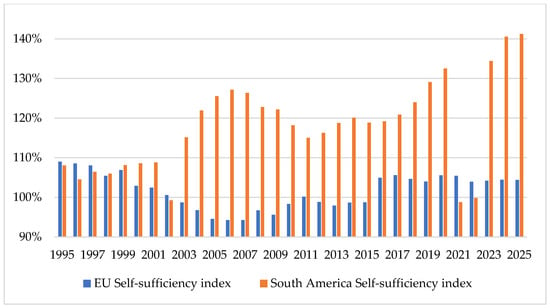
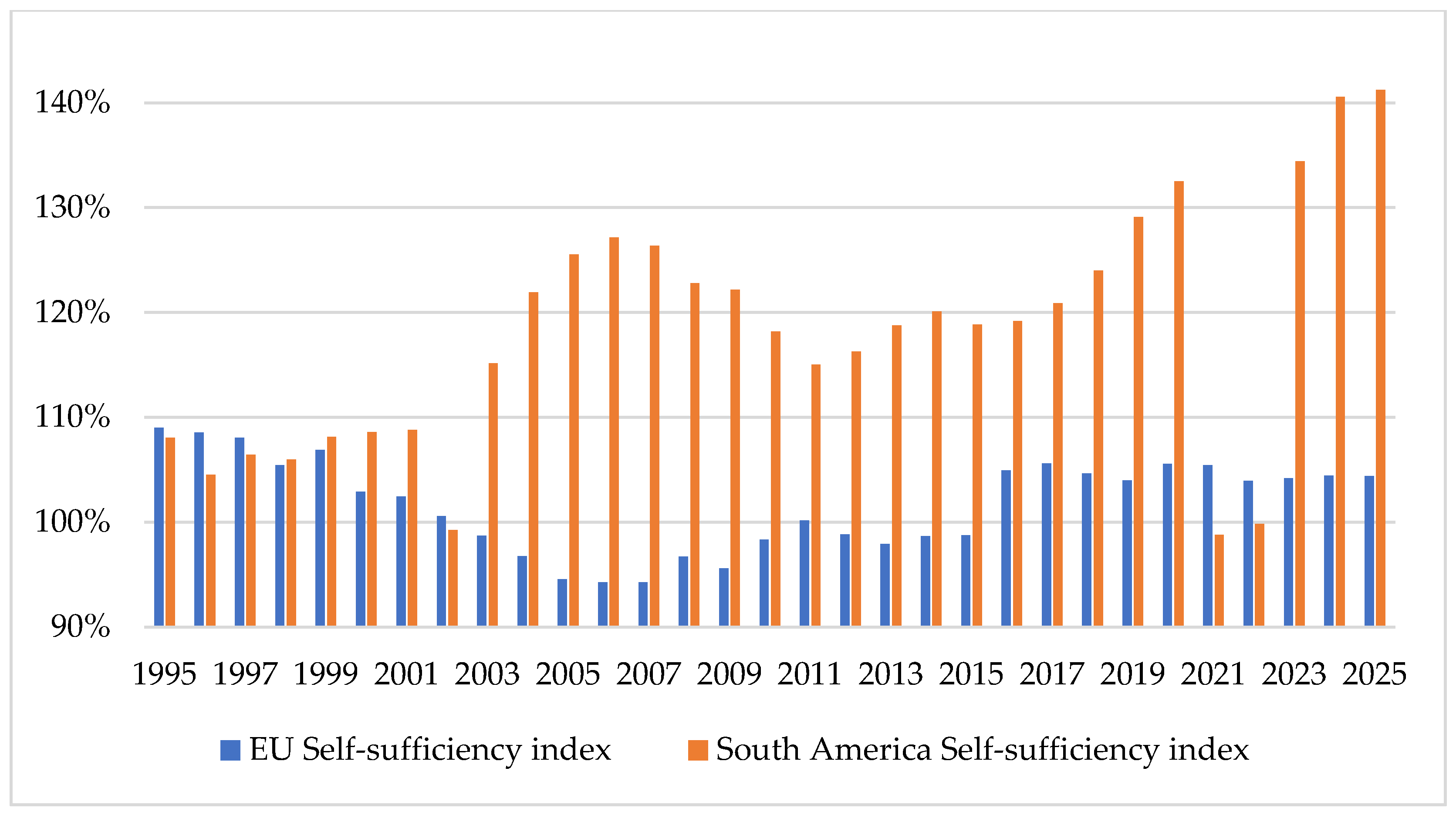
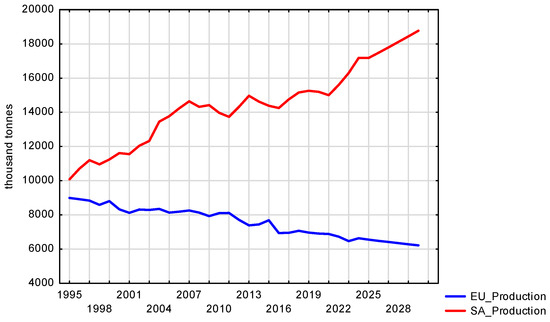
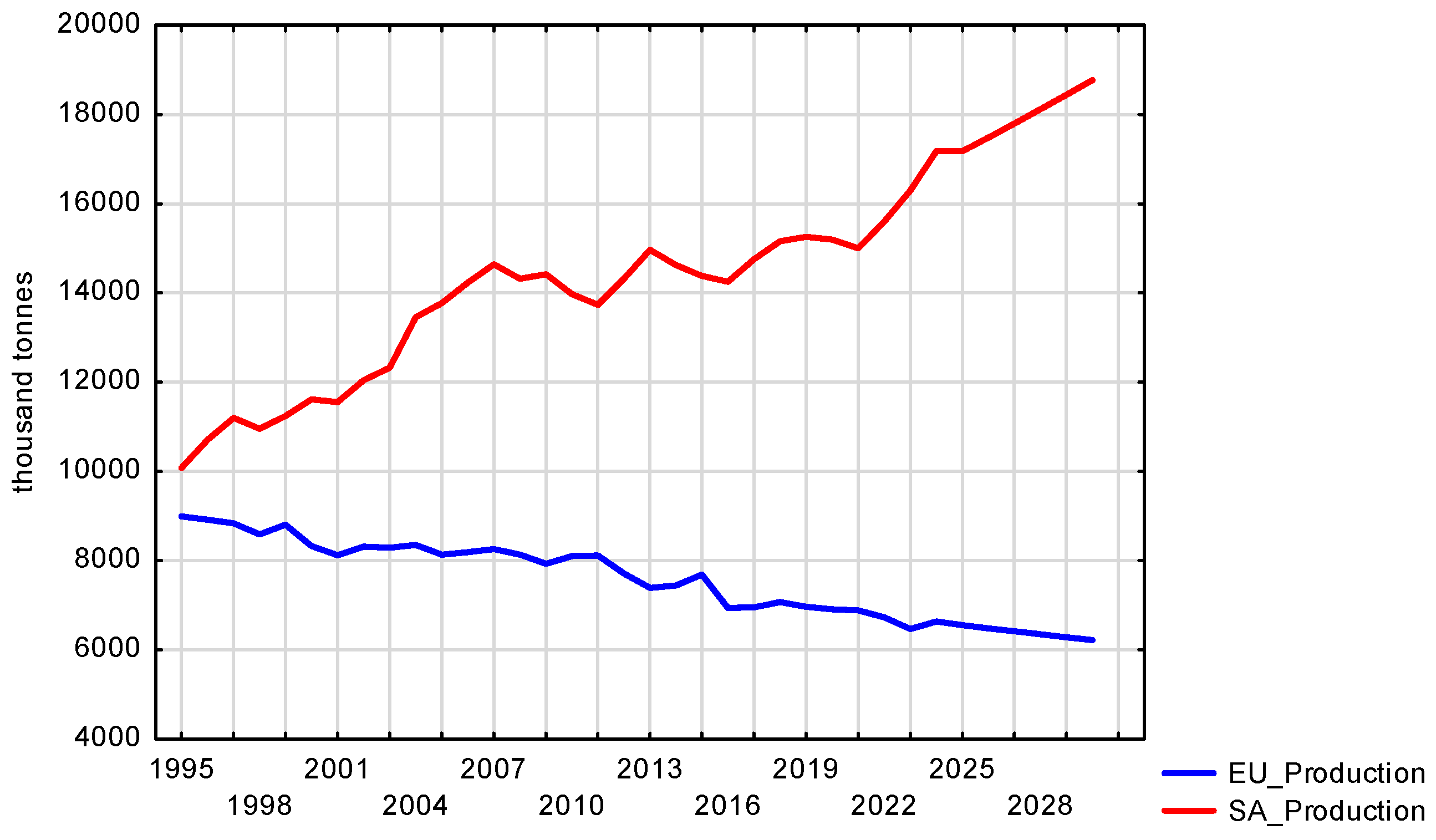
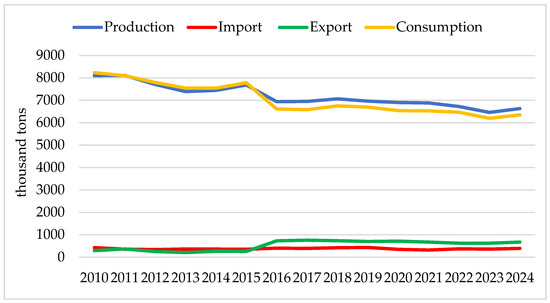

Disclaimer/Publisher’s Note: The statements, opinions and data contained in all publications are solely those of the individual author(s) and contributor(s) and not of MDPI and/or the editor(s). MDPI and/or the editor(s) disclaim responsibility for any injury to people or property resulting from any ideas, methods, instructions or products referred to in the content. |
© 2026 by the authors. Licensee MDPI, Basel, Switzerland. This article is an open access article distributed under the terms and conditions of the Creative Commons Attribution (CC BY) license.