3.1. Chemical Safety Total Score (CSTS) of the Crude Palm Oil (CPO) Production Process
First, NuDIST parameters were calculated for the chemical safety assessment of each of the substances involved. For simplicity, twelve (12) chemical substances are considered in this process: water, calcium oxide and silica, which represent the ash content of the biomass; cellulose, hemicellulose and lignin, which represent the cellulosic material of the palm bunch; palmitic acid, oleic acid and linoleic acid, which represent the fatty acids present in palm oil; and 1,3-dipalmitoyl-2-oleoylglycerol, tripalmitin and triolein, which represent the triglycerides present in palm oil (see
Table 1).
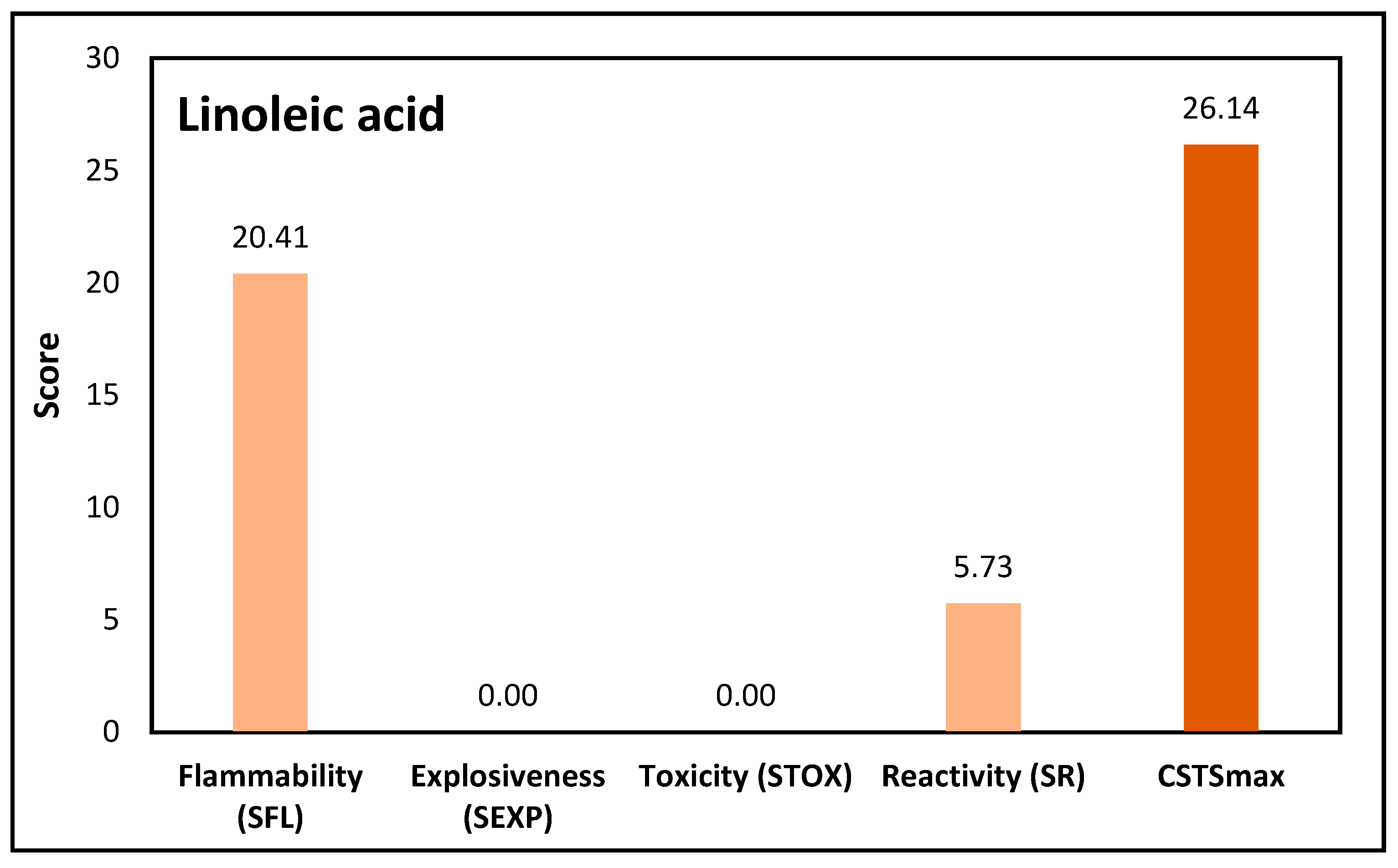
In this regard, to calculate the flammability parameter, the flash point of the chemical substances involved was first determined. In this case, only palmitic acid (113 °C), oleic acid (189 °C), linoleic acid (112 °C), and triolein (330 °C) have a recorded flash point, while the other substances do not. Because linoleic acid has the lowest flash point, it contributed the most to the flammability parameter, with a score of 20.41 after performing the calculation with Equation (3). On the other hand, to calculate the explosivity parameter, the UEL, LEL, and their difference were determined for the chemical substances involved; however, none of them have this information recorded, so no score is generated for the explosivity parameter after performing the calculation with Equation (4). Similarly, to calculate the toxicity parameter, the TLV-STEL of the chemical substances involved must first be determined; however, no substance presents the recorded indicator; therefore, there is no score in the toxicity parameter after performing the calculation with Equation (5).
Finally, to calculate the reactivity parameter, the NFPA reactivity rating of the chemicals involved was first determined. In this case, water, silica, cellulose, hemicellulose, lignin, palmitic acid, oleic acid, 1,3-dipalmitoyl-2-oleoylglycerol, tripalmitin, and triolein have an NFPA reactivity rating of zero (0), while calcium oxide and linoleic acid have an NFPA reactivity rating of one (1). After performing the calculation with Equation (6), it was discovered that water, silica, cellulose, hemicellulose, lignin, palmitic acid, oleic acid, 1,3-dipalmitoyl-2-oleoylglycerol, tripalmitin and triolein contribute a score of 0.37 to the reactivity parameter, while calcium oxide and linoleic acid contribute 5.73 to this parameter.
Information on the indicators for the chemicals involved in the crude palm oil (CPO) extraction process can be obtained from the CAMEO Chemicals website or the Material Safety Data Sheets (MSDS).
Table 4,
Table 5,
Table 6 and
Table 7 summarize the NuDIST parameters for chemical safety along with the base indicators used to calculate these parameters. Next, using Equation (2), the Chemical Safety Total Score (CSTS) was calculated for the chemical substances involved in the process, as shown in
Table 4,
Table 5,
Table 6 and
Table 7, where water, silica, cellulose, hemicellulose, lignin, 1,3-dipalmitoyl-2-oleoylglycerol and tripalmitin reached the same value (0.37) for the CSTS, surpassed by triolein (0.51), oleic acid (4.25), calcium oxide (5.73), palmitic acid (20.39) and linoleic acid (26.14).
Once the CSTS for each chemical was calculated, the highest result was selected; this value represents the CSTS of the crude palm oil (CPO) extraction process, which is 26.14. Subsequently, the chemical associated with the highest CSTS value was selected; this substance represents the chemical safety of the crude palm oil (CPO) extraction process, and it is linoleic acid. Additionally, the chemical safety parameters associated with the highest CSTS value were selected. This information is summarized in
Table 8 and outlined in
Figure 3. From
Figure 3, it can be deduced that the only parameters contributing to the highest CSTS are flammability and reactivity, with a Chemical Safety Total Score (CSTS) of 26.14 for linoleic acid.
3.2. Process Safety Total Score (PSTS) of the Crude Palm Oil (CPO) Production Process
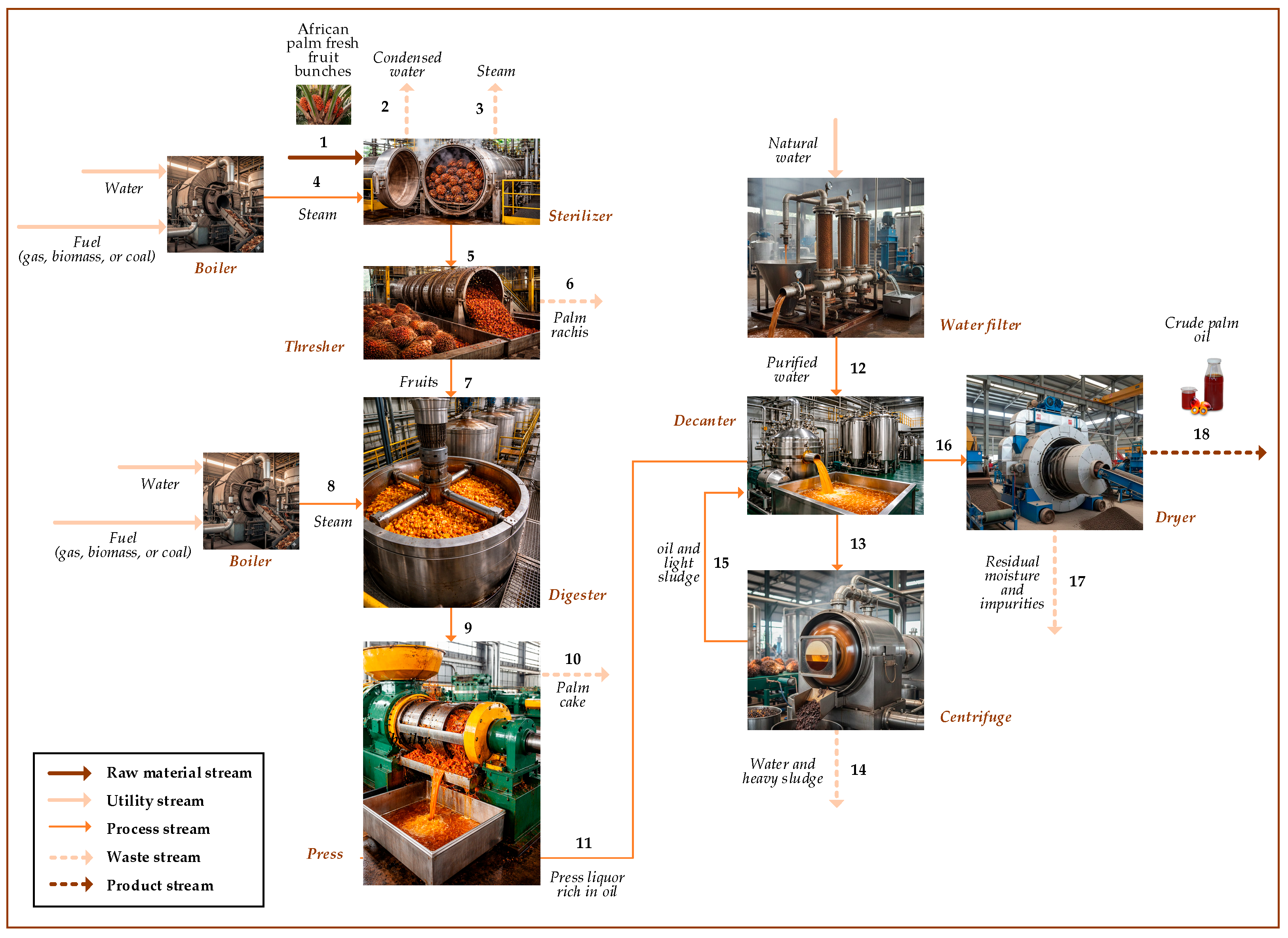
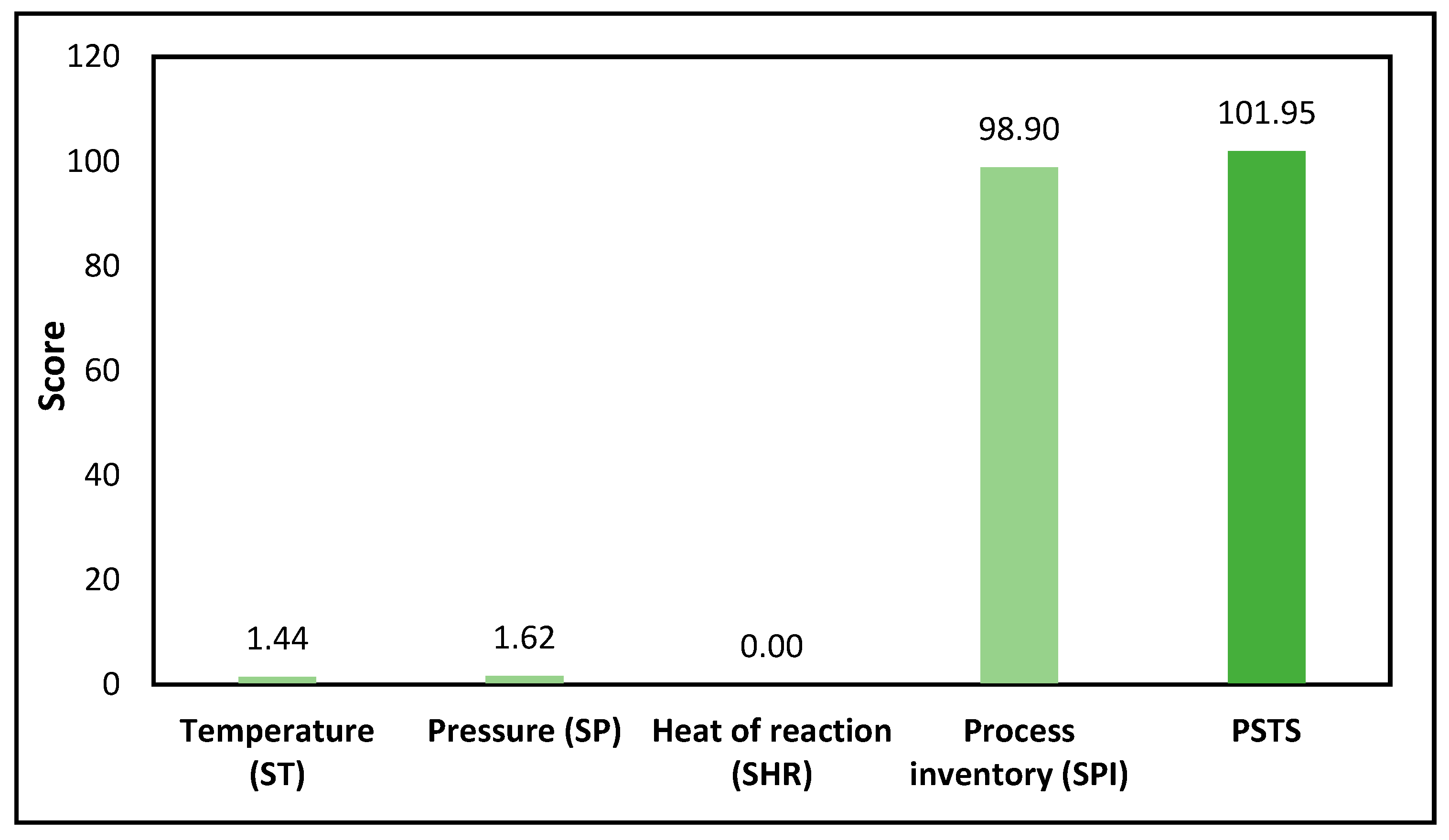
Secondly, the NuDIST parameters for the process safety assessment were calculated. To calculate the temperature parameter, the maximum process temperature was first determined to be 420.85 K (147.70 °C) according to
Table 2. Equation (8) was then used, since the process temperature is greater than 25 °C, and the calculation was performed, yielding a score of 1.44 for the temperature parameter. Similarly, to calculate the pressure parameter, the maximum process pressure was first determined to be 4.40 atm (4.46 bar) according to
Table 2. Equation (10) was then used, and the calculation was performed, yielding a score of 1.62 for the pressure parameter.
Now, to calculate the heat of reaction parameter, the process heat of reaction was first determined. According to the description of the crude palm oil (CPO) extraction process, this is a single-product physical process, meaning no significant chemical reactions occur. Therefore, a score of zero (0) was obtained for the heat of reaction parameter due to the lack of chemical reactions, eliminating this parameter’s contribution to the Process Safety Total Score (PSTS). Finally, to calculate the process inventory parameter, the production yield was first determined, which is 22.52% according to the description of the crude palm oil (CPO) extraction process. Subsequently, Equation (13) was used to perform the calculation, yielding a score of 98.90 for the process inventory parameter.
Table 9 summarizes the NuDIST parameters for process safety along with the base indicators used to calculate these parameters.
The next step is the calculation of the Total Chemical Safety Score (TSSS). For this, Equation (7) was used, and the calculation was performed, obtaining a value of 101.95. The results are summarized in
Table 10 and outlined in
Figure 4. From
Figure 4, it can be concluded that the parameter that contributed most to the TSSS is the process inventory, with a score of 98.90.
3.3. NuDIST Total Score of the Crude Palm Oil (CPO) Production Process
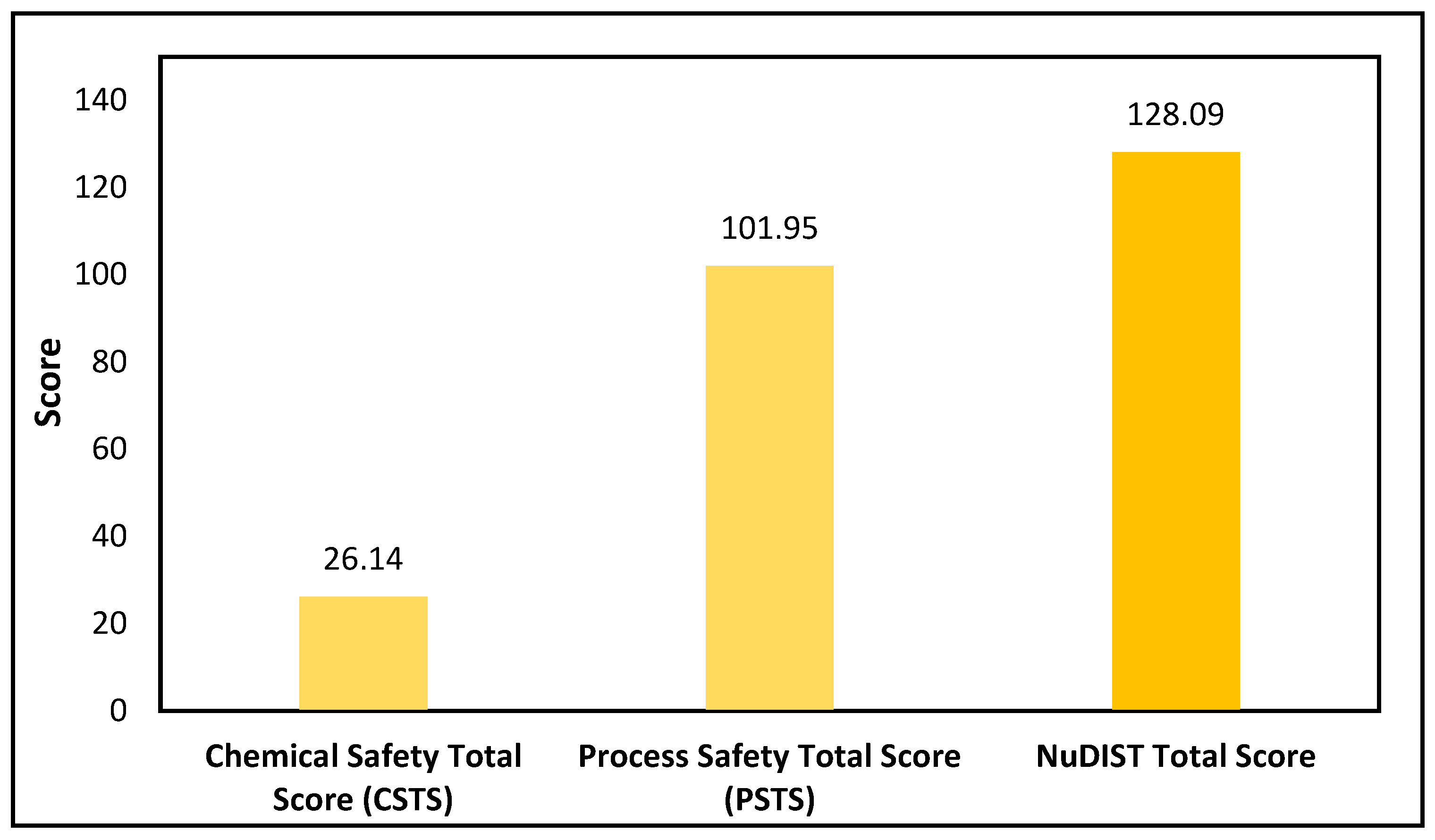
Once both parameters were obtained, for both the chemical and process parts, the NuDIST Total Score was calculated using Equation (1), obtaining a value of 128.09.
Table 11 summarizes the results obtained for the CSTS, PSTS, and the NuDIST Total Score, which are outlined in
Figure 5, and shows that the PSTS (101.95) contributes more to the total NuDIST score (128.09) than the CSTS (26.14), representing over 70% of the total. This implies that crude palm oil extraction is less safe due to the process’s operating conditions, compared to the chemical substances involved.
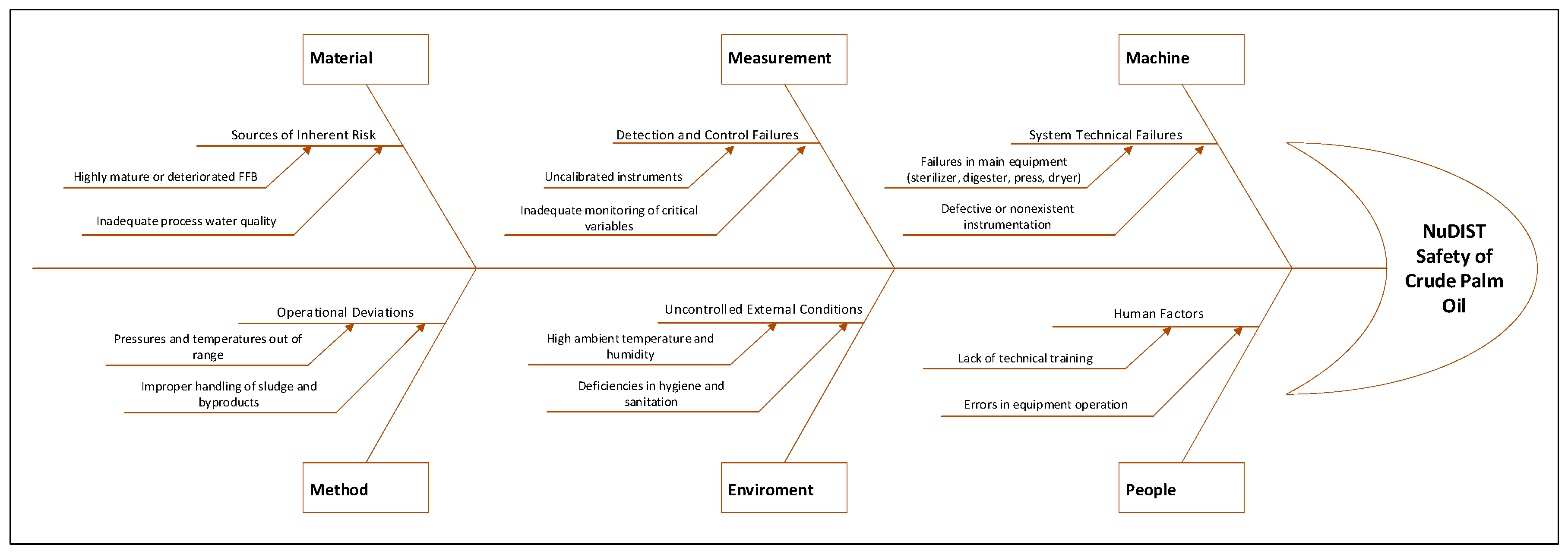
This study explicitly analyzed potential threats to process safety, addressing both chemical and process safety. Regarding chemical safety, intrinsic parameters of representative process substances (flammability, reactivity, toxicity, and explosiveness) were evaluated, with linoleic acid identified as the primary contributor to chemical risk due to its flash point and NFPA classification. Process safety, on the other hand, was examined based on extrinsic process parameters, including temperature, pressure, inventory, and the presence of chemical reactions. The results show that the greatest threats are associated with operating conditions and the high process inventory level, rather than the intrinsic hazards of the compounds. This comprehensive approach clearly defines the dominant sources of risk and reinforces the suitability of the NuDIST methodology for assessing the inherent safety of the system.
Now, this methodology, by assigning specific numerical values, is a relative, not an absolute, indicator and does not define universal limits to determine whether a chemical process is inherently safe, unlike the ISI methodology, which has been implemented for crude palm oil extraction processes [
17]. Therefore, to generate an appropriate diagnosis, the value obtained for the evaluated process must be compared with the value obtained for other processes calculated using the same methodology.
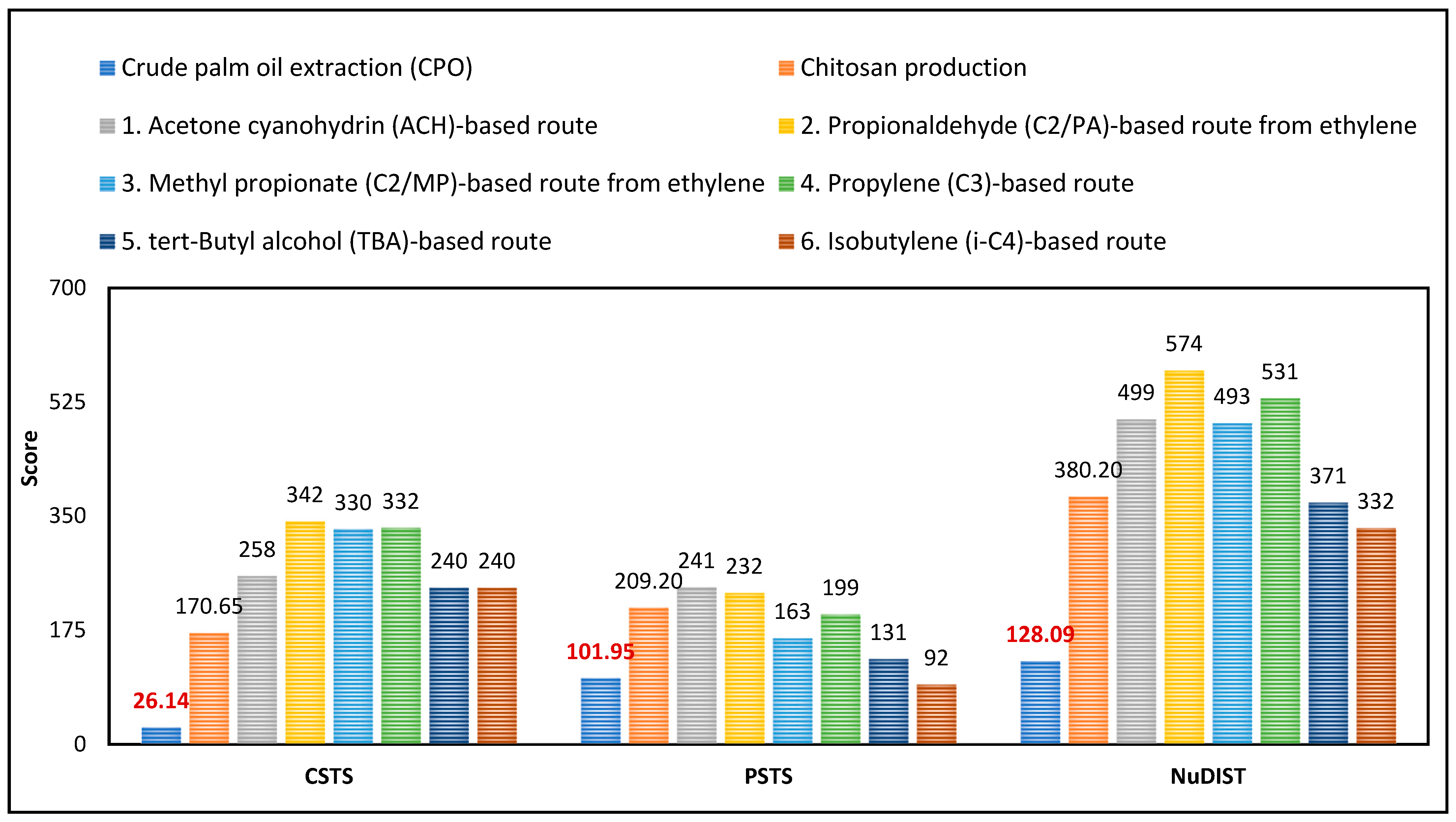
Table 12 presents a comparison of the results obtained in several studies, including the CSTS, PSTS, and NuDIST Total Score for the crude palm oil (CPO) extraction process, chitosan production, and six (6) methyl methacrylate (MMA) production routes.
According to the results obtained for the crude palm oil (CPO) extraction process, this process is inherently safer than other processes evaluated using the NuDIST technique, such as the chitosan production process from shrimp exoskeletons proposed by Zuorro et al. [
16], where a NuDIST Total Score of 380.20 was obtained, almost three times higher than the score obtained for CPO extraction (128.09). This is mainly due to the presence of inherently more unsafe chemicals in chitosan production from shrimp exoskeletons, such as ethanol, which yielded a CSTS of 170.65 [
16], more than six times higher than that obtained for CPO extraction (26.14). Furthermore, the PSTS in chitosan production from shrimp exoskeletons is 209.20 [
16], more than double that for CPO extraction (101.95), as shown in
Table 12.
In comparison with other processes, such as the methyl methacrylate (MMA) production proposed by Ahmad et al. [
15], CPO extraction is also considered an intrinsically safer process, as the lowest score obtained in this process was 332. In fact, MMA production, among the three processes compared, is the most unsafe because four (4) of the six (6) possible extraction routes exceed a NuDIST Total Score of 390 [
15], as shown in
Table 12. From
Table 12, it can also be concluded that the PSTS for route 6 (92) is lower than that obtained for CPO extraction (101.95), making the latter less safe in terms of process safety. However, the chemical safety (CSTS) for route 6 (240) is more than 9 times higher than that for CPO extraction (26.14), demonstrating that MMA production, in each of its routes, is inherently less safe than CPO production [
15].
Figure 6 presents a bar chart comparing the three processes previously discussed: CPO, chitosan, and MMA production. This chart reaffirms that the crude palm oil extraction process is the most intrinsically safe of the three systems. It is worth noting that the crude palm oil extraction process is identified in
Figure 6 by the blue bar with the red label.
Based on the comparison of the three processes, chitosan and methyl methacrylate (MMA) production serves as a relevant benchmark because it represents industrially established systems that combine harsh operating conditions with the handling of inherently hazardous chemicals. In the case of chitosan, the comparison is pertinent due to the use of reagents such as ethanol, which exhibit high levels of flammability, toxicity, and reactivity, reflected in high CSTS values. Meanwhile, MMA production routes involve highly volatile and combustible compounds, broad explosive ranges, and, in some cases, high-heat chemical reactions, significantly increasing the inherent risk of the process in terms of CSTS and PSTS. These characteristics result in both processes exhibiting considerably higher NuDIST scores than crude palm oil extraction. Therefore, its inclusion as a reference allows for contextualizing the comparative results and highlighting that the observed differences are not accidental, but rather a direct consequence of the nature of the substances handled and the severity of the operating conditions. In this sense, the comparison strengthens the interpretation of the results by demonstrating that the greater inherent safety of the CPO extraction process is primarily due to its physical nature and the use of less hazardous compounds.
Finally, based on the results obtained using NuDIST, the generated information can directly support various design and operational decisions at the crude palm oil production plant. In particular, the high values associated with the process inventory parameter help guide decisions related to optimizing material balances. Likewise, the scores related to temperature, pressure, toxicity, flammability, explosiveness, and reactivity can serve as criteria for selecting appropriate equipment capacities, construction materials, and safer operating margins. At the operational level, the results facilitate the prioritization of adjustments to critical operating conditions that influence the overall process risk. Similarly, the results allow for the evaluation of process redesign alternatives focused on improving production performance.