


Abstract
This study presents the design and experimental evaluation of a low-cost parabolic solar concentrator fabricated primarily from recyclable materials. Three reflector configurations—aluminum foil, Plexiglass mirror tiles, and a hybrid design with a peripheral aluminum foil strip—were experimentally assessed to examine their effects on solar concentration performance. A novel foldable and adjustable tripod-mounted receiver was introduced to improve focal alignment, portability, and mechanical stability by isolating the receiver load from the dish structure. Results indicate that Plexiglass mirror tiles significantly enhance thermal performance compared to aluminum foil, while the hybrid configuration achieved the highest receiver temperature of 53 °C under controlled radiation conditions. The findings demonstrate that efficient and portable parabolic solar concentrators can be developed using inexpensive and recyclable materials for small-scale solar thermal applications.
1. Introduction
The increasing global energy demand, combined with the environmental consequences of fossil fuel use, has accelerated research into renewable energy technologies. Among these, solar energy stands out as an abundant, clean, and sustainable source that can be harnessed for both electricity and heat applications. Concentrated solar thermal systems, particularly parabolic dish systems, have attracted significant attention due to their ability to achieve high temperatures, high energy density, and versatility for diverse thermal applications, including cooking, water heating, and small-scale power generation [1,2]. Parabolic dish concentrators are geometrically designed to focus incident solar radiation onto a small receiver, resulting in elevated thermal performance. The literature has reported multiple innovations in the design, materials, and efficiency optimization of these systems.
For instance, Kumar and Yadav [3] developed a parabolic dish based on fiber-reinforced plastic, achieving lightweight and durable structures, while Basem et al. [4] performed energy and exergy analyses of a parabolic dish coupled with a steam power plant, highlighting its potential for integrated thermal and electricity generation. Additionally, Al-Amayreh et al. [5] demonstrated hybrid applications, where parabolic dishes can simultaneously provide thermal energy and daylighting for indoor spaces, showcasing their multifunctional potential. The applications of parabolic dish systems extend beyond energy generation. One of the most widely researched areas is solar cooking, which offers sustainable, low-cost alternatives to conventional fuel-based cooking. Parabolic dish cookers can deliver high temperatures in shorter durations, making them suitable for both household and community-level applications. Mawire et al. [6] compared DC photovoltaic cookers and parabolic dish solar cookers under variable solar radiation, demonstrating the superior heating rates and efficiency of dish systems. Automated tracking systems further enhance performance by maintaining optimal alignment with the sun, as shown by Abu-Malouh et al. [7]. Moreover, high-concentration ratio designs, such as multi-reflector solar box cookers [8] or funnel-type cookers with optimized aperture areas [9], indicate that dish-based and concentrator technologies can significantly improve cooking efficiency across diverse sun elevations. Parabolic dish systems are also explored for solar water heating and desalination applications.
A study experimentally investigated a hybrid solar still system designed to enhance daily freshwater production by increasing basin water temperature during sunrise. The system integrated parabolic solar dishes with conical receivers and a 1 kW photovoltaic array, and was tested under the climatic conditions. Results demonstrate that early-morning thermal enhancement using concentrated solar energy effectively improves solar still performance and freshwater yield [10].
Design optimization remains critical for the success of parabolic dish technologies. Key parameters include reflective surface quality, receiver geometry, structural materials, and tracking mechanisms. Hijazi et al. [1] emphasized low-cost mechanical designs, while Kumar et al. [2] provided recommendations for thermal efficiency improvements in concentrated solar thermal systems. From an application perspective, solar dishes offer significant environmental and socio-economic advantages. Solar cookers reduce reliance on firewood or fossil fuels, mitigating deforestation and indoor air pollution. In developing regions, they provide safe and cost-effective cooking solutions [11,12]. Similarly, concentrated solar heat can be applied to water purification, food drying, and small-scale industrial heating, enhancing energy access and resource efficiency. The incorporation of thermal energy storage further expands operational windows, allowing energy use beyond daylight hours [13,14]. Table 1 summarizes the various applications of solar dish systems.
Table 1.
Applications of Solar Dish Systems.
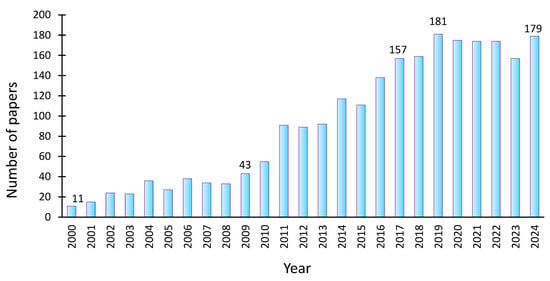
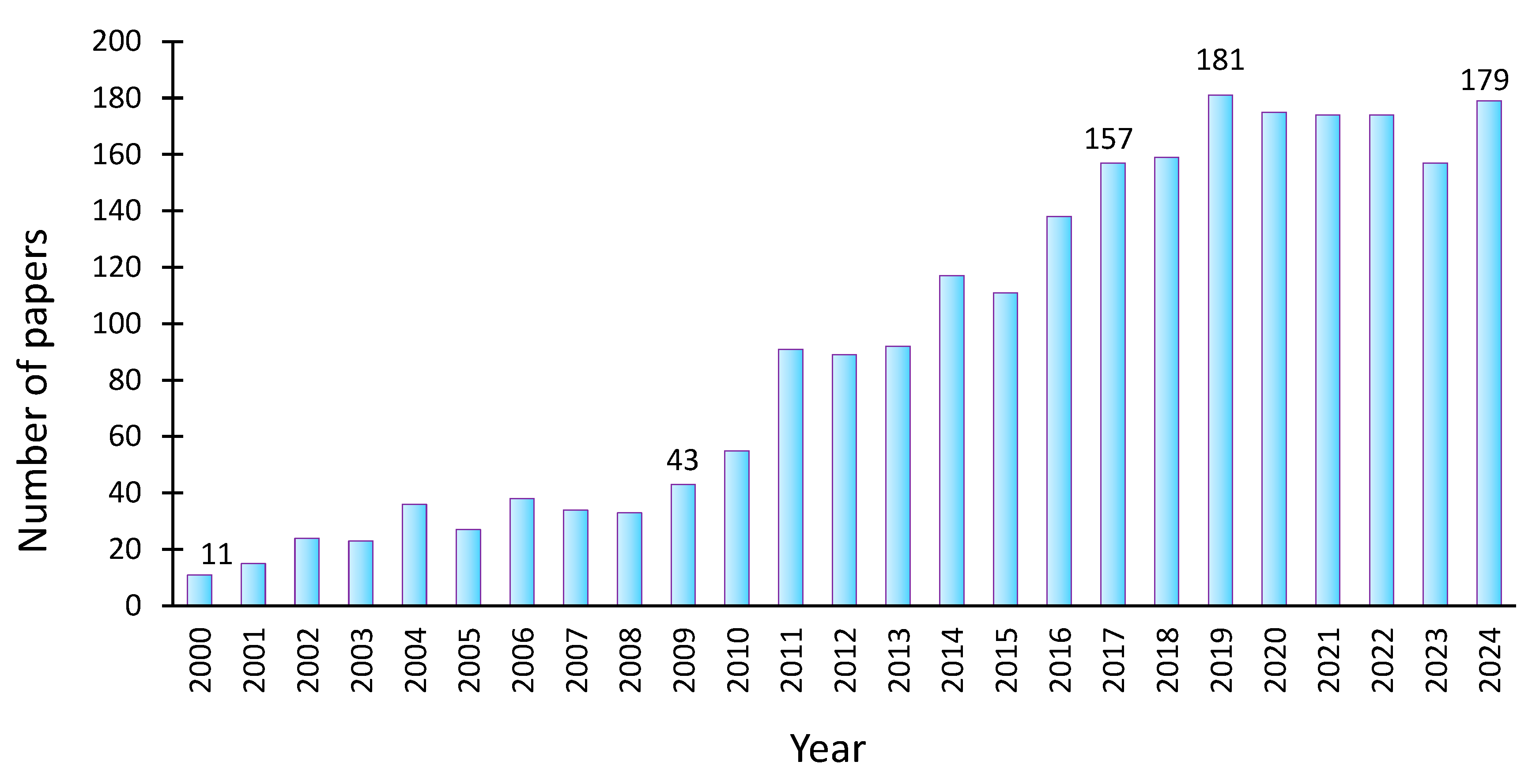
In this context, the publication trend indicates a gradual increase in research on ‘solar dish’ systems from 2000 to 2010, followed by a pronounced growth phase after 2011 (Figure 1). A notable peak occurred in 2019 with 181 publications, reflecting heightened research interest. This pattern highlights the growing significance of solar dish technology in renewable energy research over the past two decades.
Figure 1.
Number of papers per year with the title ‘Solar Dish’ according to Scopus data.
Solar energy has attracted extensive research, with studies exploring its applications across diverse fields [21,22,23,24,25,26]. A study investigated a compact ring-array concentrator solar furnace designed to achieve ultra-high temperatures with enhanced efficiency. Using analytical modeling and numerical optimization, the proposed three-dimensional ring-array configuration attains very high solar concentration ratios, enabling significantly higher and more uniform receiver temperatures than conventional medium-size solar furnaces [27]. Hybrid photovoltaic-thermal (PVT) solar dryers, which combine thermal collection and electricity generation, have been studied extensively [28,29] demonstrating enhanced drying rates and extended operational hours through integrated thermal storage. Heat pipe evacuated collectors and nano-enhanced absorber coatings have further improved thermal performance in solar water and air heaters [30,31,32], showcasing the complementary role of nanofluids and material innovations in augmenting solar system efficiency.
Although previous studies have demonstrated the feasibility of parabolic solar dish systems for thermal applications, many existing designs rely on rigid receiver–dish integration, which can introduce structural loading, deformation, and focal misalignment, particularly in low-cost or lightweight constructions. In addition, most low-cost or DIY-oriented studies focus primarily on fabrication feasibility, with limited experimental comparison of reflector surface materials or quantitative assessment of edge-loss mitigation strategies. As a result, portability, mechanical stability, and optical performance optimization are often treated independently rather than within a unified system design. The present study addresses these limitations by introducing a load-decoupled, foldable receiver configuration and by experimentally evaluating multiple reflector surface treatments and peripheral optical enhancements within a single portable parabolic dish platform.
In contrast to existing low-cost or adjustable parabolic dish designs, the novelty of this study lies in the introduction of a fully detachable, foldable, and tripod-supported receiver system that is mechanically independent of the dish structure. Unlike conventional receivers that are rigidly mounted to the reflector and impose structural loads on the dish, the proposed configuration decouples the receiver weight from the concentrator, reducing deformation risk and improving focal alignment flexibility. In addition, this work goes beyond prior DIY or recyclable-material approaches by experimentally integrating and comparing reflector surface configurations and edge-loss mitigation within a single portable system, thereby providing quantitative performance validation rather than a purely conceptual design.
2. Experimental Setup and Procedure Details
In this section, the testing procedure adopted in the study has been thoroughly described and discussed, including the experimental setup, operating conditions, measurement methods, and the sequence of steps followed during the testing process.
The parabolic framework was constructed from Styrofoam sheets, which were accurately cut into radial templates according to the parabolic equation. These templates were shaped with a fine saw to maintain precise geometry. The Styrofoam ribs were then symmetrically arranged around a temporary central axis and attached to a cardboard base plate. Paper plates were subsequently placed on the ribs, followed by layers of wood and cardboard, which were glued together to form the main structure of the solar dish by using Epoxy adhesive resin and silicone liquid adhesive. After assembly, the solar dish was removed from the Styrofoam ribs to proceed with the next steps, including the application of mirror tiles and aluminum foil on its surface. It should be noted that, in addition to shaping the Styrofoam templates using a fine saw to achieve the desired parabolic geometry, additional surface finishing steps were applied during fabrication. After cutting, the templates were lightly smoothed using fine-grit sandpaper to reduce surface irregularities and improve geometric continuity. Moreover, a liquid adhesive layer was applied over the surface to fill minor gaps and imperfections, providing a smoother and more uniform base.
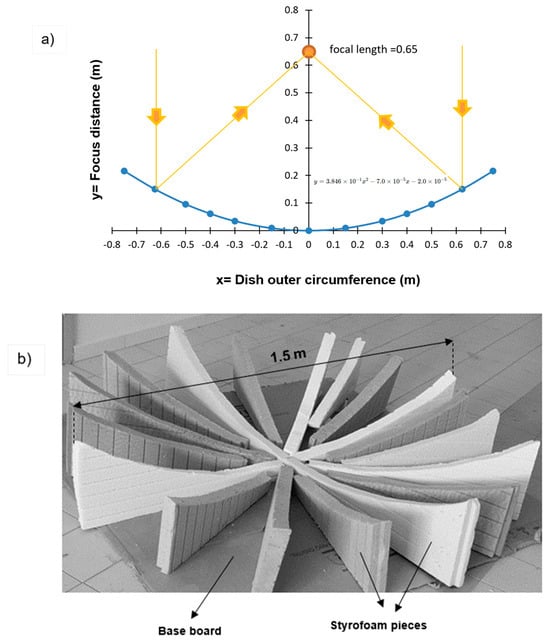
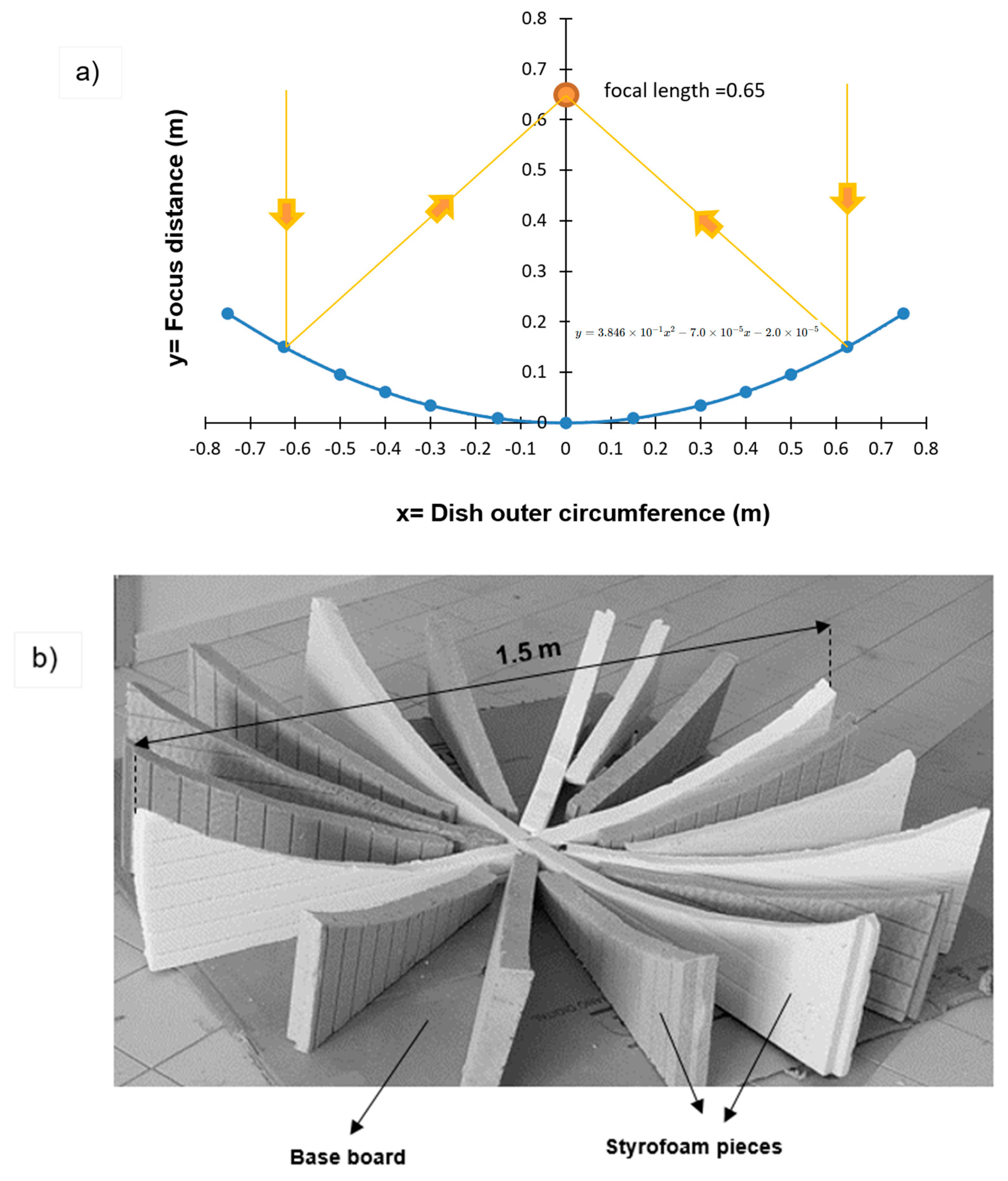
Figure 2a illustrates the parabolic solar dish profile, with the focal length represented along the x- and y-axes. The corresponding parabolic profile is expressed by the equation y = 0.3846x2 − 7 × 10⁻⁵x − 2 × 10⁻⁵, as indicated in the figure. Figure 2b, captured during the fabrication process, shows the arrangement of the radial Styrofoam molds serving as the base for the solar plate. Wooden and cardboard components were assembled onto these molds using strong adhesive, with a paper release layer applied to allow later separation of the solar dish structure from the Styrofoam molds.
Figure 2.
Parabolic solar dish profile with focal length represented along the x- and y-axes (a) and Styrofoam radial templates used as a base for fabricating the solar dish (b).
The geometric characteristics of the parabolic solar dish are defined in Figure 2a. In addition, the concentrator has a diameter of 1.5 m, a focal length of 0.65 m, and a dish depth of 0.21 m, which together fully describe the parabolic profile and its optical focusing behavior. These geometric parameters are consistently presented, enabling a clear and unambiguous understanding of the system configuration.
The dominant quadratic term defines the curvature and focal length of the dish, while the linear and constant terms are extremely small because the coordinate system was defined with the vertex of the parabola positioned very close to the origin. As a result, the parabola is nearly symmetric about the vertical axis, and any slight deviations from the ideal parabolic shape, arising from fabrication tolerances, material layering, and measurement uncertainty, are captured in these small coefficients. These terms do not significantly influence the focal behavior or concentration performance of the dish and can be considered negligible from a physical and optical standpoint.
In this study, three different experimental configurations were examined for the solar dish system. In Experiment 1, the surface of the dish was completely covered with aluminum foil. This configuration aimed to evaluate the basic reflection and solar concentration capability of aluminum foil, which is a low-cost material with moderate reflectivity.
In Experiment 2, the aluminum foil was replaced with Plexiglass mirror tiles. These tiles were carefully aligned to form a reflective parabolic surface. The purpose of this modification was to enhance the solar concentration efficiency by achieving higher optical reflectivity and improved focusing performance.
In Experiment 3, the same configuration as in Experiment 2 was used, with an additional aluminum foil strip attached around the outer circumference of the dish. This modification was intended to reduce edge losses and redirect stray solar rays toward the receiver, thereby further improving solar concentration.
The selection of rectangular Plexiglass mirror tiles in the present study was primarily motivated by practical fabrication considerations, including material availability, cost-effectiveness, and ease of cutting and installation using simple tools. Although hexagonal tiles may provide a more uniform tessellation and reduce inter-tile gaps when applied to a circular geometry, their use would increase fabrication complexity and cost, which is contrary to the low-cost and accessible design philosophy of this work.
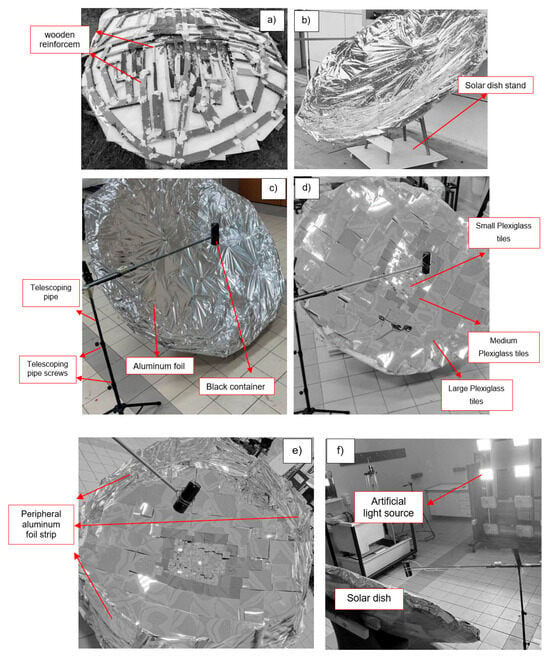
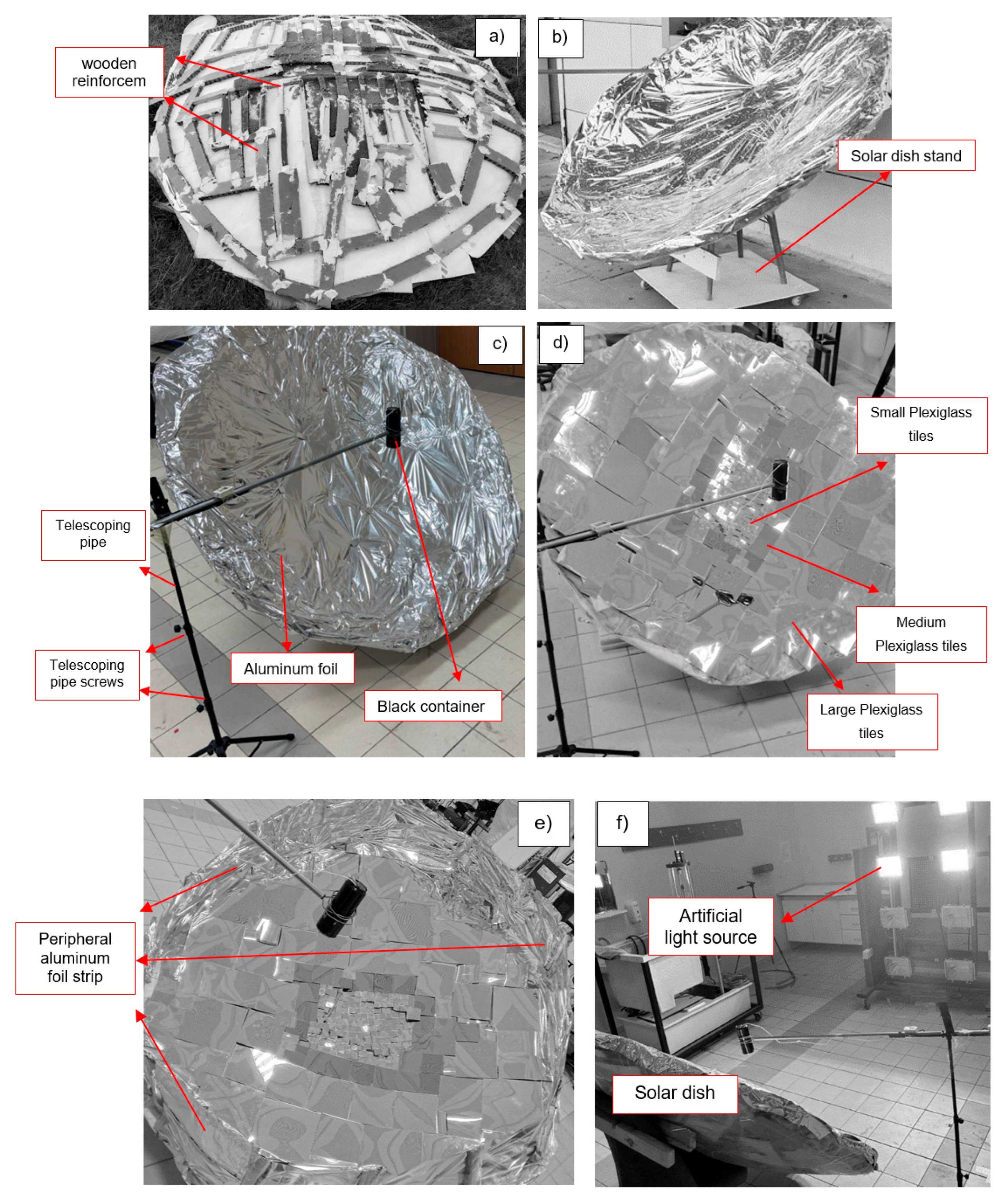
Figure 3 presents different stages of the fabrication process and the experimental configurations of the parabolic solar dish system. As shown in Figure 3a, the rear side of the parabolic reflector was reinforced with recycled wooden strips and strong adhesive to maintain structural rigidity. The recycled wooden strips applied to the rear side of the solar dish were placed in an arrangement to achieve nearly full surface coverage, thereby increasing overall structural stiffness and minimizing the risk of deformation. This reinforcement approach helped distribute mechanical loads more evenly across the dish, and is consistent with the low-cost, manually fabricated nature of the system.
Figure 3.
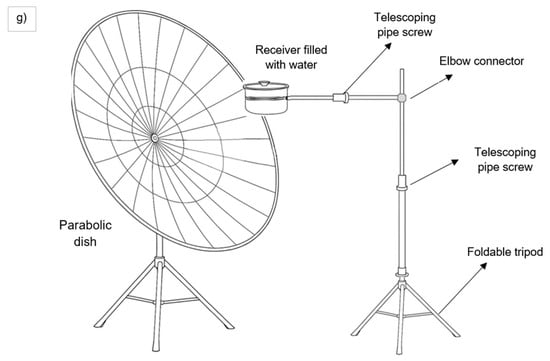
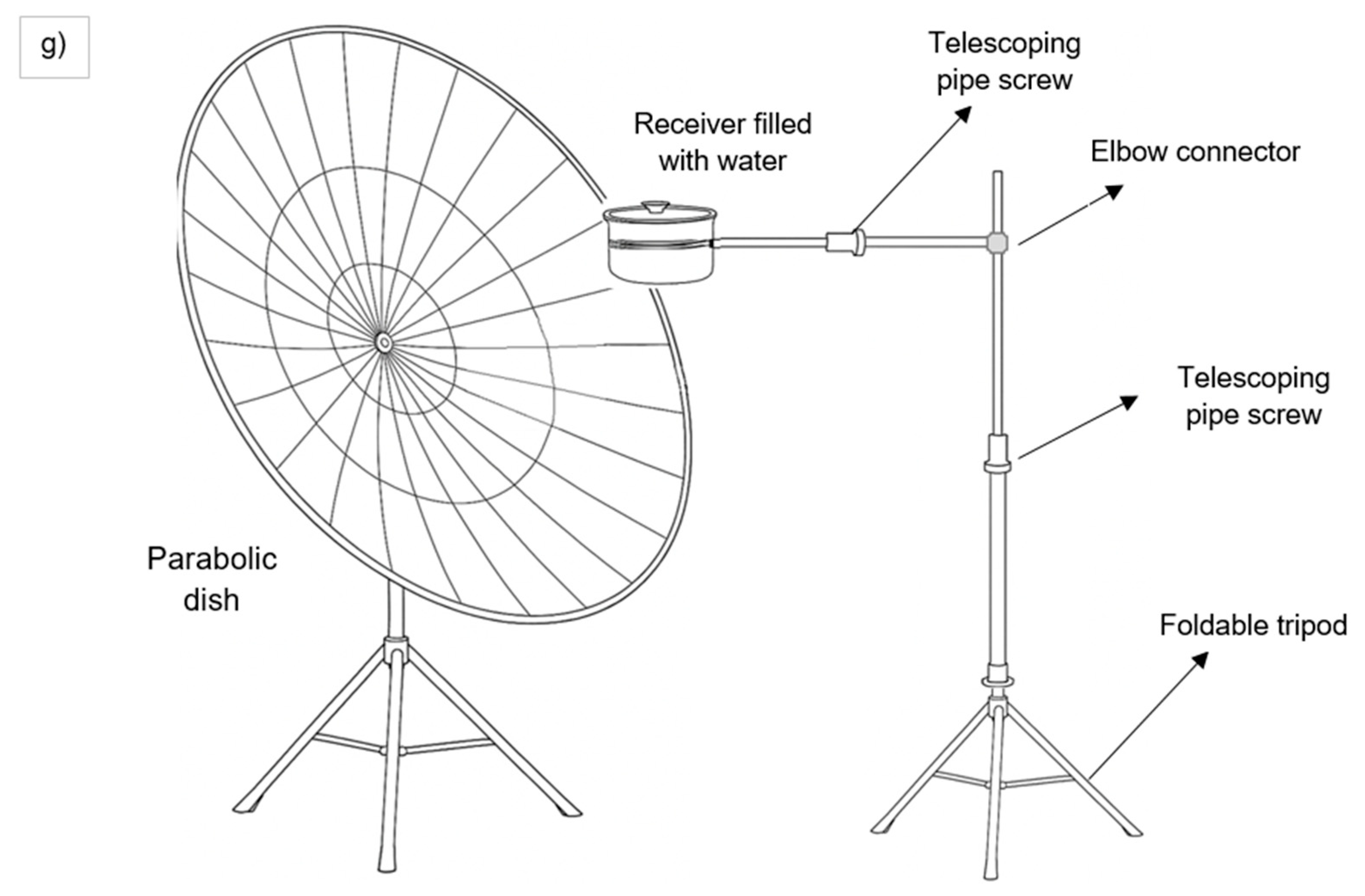
(a) Back view of the solar dish with wooden reinforcement and adhesive bonding. (b) Fabricated solar dish on stand. (c) Aluminum foil-coated solar dish tested in Exp. 1. (d) Plexiglass-coated solar dish tested in Exp. 2. (e) Peripheral aluminum foil strip used in Exp. 3. (f) Configuration and position of artificial light source in laboratory environment (g) Schematic design of the used solar dish system with adjustable tripod-supported receiver.
Figure 3b illustrates the completed solar dish mounted on its supporting stand. In Figure 3c, the dish surface is covered with aluminum foil (Experiment 1), serving as the reflective layer. Figure 3d shows the configuration tested in Experiment 2, where the reflective surface consists of precisely aligned Plexiglass mirror tiles to enhance solar concentration performance. In the fabrication of the solar dish, smaller Plexiglass pieces were used at the center, medium-sized ones in the middle, and larger pieces at the outermost part. This arrangement provided several advantages, including improved curvature accuracy in the highly curved central region, and reduced optical distortion. It also simplified fabrication by allowing easier fitting of smaller pieces where the curvature is steep, while using larger panels in the flatter outer zones reduced material costs and assembly time. Figure 3e corresponds to Experiment 3, which includes an additional peripheral aluminum foil strip installed around the dish circumference to redirect stray rays and reduce edge losses. Finally, Figure 3f depicts the laboratory setup used for testing under artificial radiation, including the position and orientation of the projector light source.
Figure 3g illustrates the schematic configuration of the proposed parabolic solar dish system equipped with an adjustable tripod-supported receiver. In this design, concentrated solar radiation from the parabolic dish is directed toward a black receiver container positioned at the focal point. The receiver is mounted on a foldable and height-adjustable tripod structure, allowing precise alignment with the focal region. The telescopic pipe and locking screws enable fine-tuning of both height and angular orientation, ensuring accurate optical focusing during experiments. This detachable tripod system effectively separates the receiver’s mechanical load from the dish body, minimizing structural deformation and enhancing overall stability. Additionally, the foldable configuration provides superior portability and ease of assembly, making the setup suitable for both indoor laboratory testing and outdoor field applications. To support uncertainty considerations, in this study the main measured quantities were associated with conservative instrument-based uncertainties. Water/ambient temperatures were recorded with an estimated uncertainty of ±0.5 °C, irradiance at the dish aperture plane measured by the solar meter was taken with an uncertainty of ±5 W/m2, and the receiver water mass was measured with an uncertainty of ±0.01 kg. These ranges are intended as conservative estimates based on typical instrument accuracy and were considered sufficient for the primary goal of this work, namely the relative comparison of configurations tested under identical controlled conditions.
Although recyclable wood- and cardboard-based materials offer significant cost and sustainability advantages, they are inherently sensitive to moisture and prolonged exposure to humid environments. Such exposure may lead to swelling, warping, or gradual loss of parabolic geometry, potentially affecting focal alignment and optical performance. To minimize these effects, all experiments in the present study were conducted under controlled indoor laboratory conditions with stable temperature and humidity. While no visible deformation was observed during the test period, this limitation is acknowledged as an important consideration for long-term outdoor operation, indicating that moisture-resistant coatings or alternative lightweight materials would be required for extended field applications.
The artificial radiation source used in the experiments was GUNT-HL 313.01 (Barsbüttel, Germany), an artificial solar simulator consisting of eight halogen lamps (in this study, 4 lights were on and 4 were off as seen in Figure 3f), which is commonly employed in laboratory-based solar energy studies. This system was used to provide a stable and controllable irradiation environment for indoor experiments. The irradiance at the parabolic dish aperture plane was measured using a solar power meter and maintained at a constant level of 150 W/m2 throughout all tests. Table 2 presents geometric and optical parameters of the parabolic solar dish concentrator, including rim angle, aperture angle, projected aperture area, and total reflective surface area, calculated based on the measured dish geometry.
Table 2.
Geometric parameters of the parabolic solar dish.
In conventional solar dish systems, the receiver mounted on three welded shafts attached to the dish. In this configuration, the dish and receiver operate as a single integrated unit, thereby eliminating the requirement for an external support structure. The receiver is permanently fixed at the focal point of the dish, ensuring consistent optical alignment once the dish is oriented. However, a major drawback is that the weight of the receiver and its contents is directly borne by the dish. Over time, this can induce mechanical stresses, leading to deformation, bending, or focal misalignment, particularly in large-scale systems or under heavy thermal loads. Furthermore, transportability is limited since the system is less foldable and cumbersome to relocate.
However, in proposed design, receiver is supported on a separate foldable/adjustable tripod. The proposed configuration introduces structural load separation by supporting the receiver on an independent foldable tripod rather than directly on the dish. This approach minimizes mechanical stress on the dish, thereby reducing the risk of structural deformation and enhancing system durability. The tripod design provides significant portability advantages, as foldable and antenna-like adjustable features facilitate convenient transport, storage, and reassembly in multiple locations. In addition, the receiver’s height and position can be fine-tuned independently of the dish, enabling precise focal alignment and improved optical efficiency. Since the dish is relieved of additional loading, it can be constructed with lighter materials, thereby improving portability without compromising optical performance.
It should be stated that, although the detachable, tripod-supported receiver offers clear advantages in terms of load decoupling, portability, and alignment flexibility, its thermal losses, wind-induced stability, and alignment repeatability were not quantitatively evaluated in the present study. All experiments were conducted under controlled indoor conditions, which minimized wind effects and enabled manual optimization of receiver positioning prior to each test. Future work will therefore focus on outdoor validation under natural wind conditions, quantitative assessment of convective and radiative heat losses from the receiver, and repeatability tests to evaluate focal alignment accuracy.
3. Comprehensive Analysis
3.1. Optical and Geometrical Equations
The shape and focusing characteristics of the parabolic dish can be expressed by a parabolic equation described as:
where f is focal length (m) and x, y are coordinates defining the parabola profile. A specific parabolic fit equation in this study is: .
Concentration ratio or optical concentration of solar dishes are presented as:
where Ad is aperture area of the dish (m2) and Ar is receiver area (m2). This equation quantifies how effectively solar radiation is concentrated on the receiver.
3.2. Thermal Performance Equations
The following equations establish the relationship between the incident solar energy and the useful thermal energy absorbed by the receiver.
The useful heat gain by receiver ca be obtained using following equation:
where m is mass of water in receiver (kg), cp is specific heat capacity of water (J/kg·K) and dT/dt is the rate of temperature rise. The thermal efficiency of the solar dish is given by the following relation:
where is solar irradiance (W/m2) but artificial radiation in our study, Tf is final water temperature (°C), Ti is initial water temperature (°C) and t is the total heating duration (s). Economic evaluation can be expressed in terms of the cost efficiency index (1/$) as follows:
where ηmax is maximum measured thermal efficiency and Ctotal is total fabrication cost, which gives a direct cost-to-performance ratio that can be compared among configurations.
4. Results
4.1. Experimental Results
In this study, a fixed solar radiation condition was precisely maintained by employing an artificial light source that provided a constant radiation flux. The use of an artificial light source under controlled laboratory conditions enabled consistent and comparable measurements, which are often difficult to achieve under natural atmospheric conditions due to unpredictable weather fluctuations throughout the day. In other words, the experiments were conducted using an artificial light source to ensure stable and repeatable radiation conditions, enabling a reliable comparative assessment of different reflector configurations and receiver designs. While this approach minimizes uncertainties associated with fluctuating solar irradiance, wind, and ambient temperature, it does not fully replicate the spectral distribution, angular divergence, and dynamic nature of natural sunlight. Consequently, the reported thermal performance values should be interpreted primarily in a relative sense rather than as absolute outdoor performance indicators. Under real solar conditions, additional factors such as sun-tracking accuracy, atmospheric attenuation, and enhanced convective heat losses may influence system behavior. The obtained results are presented and discussed in detail in this section.
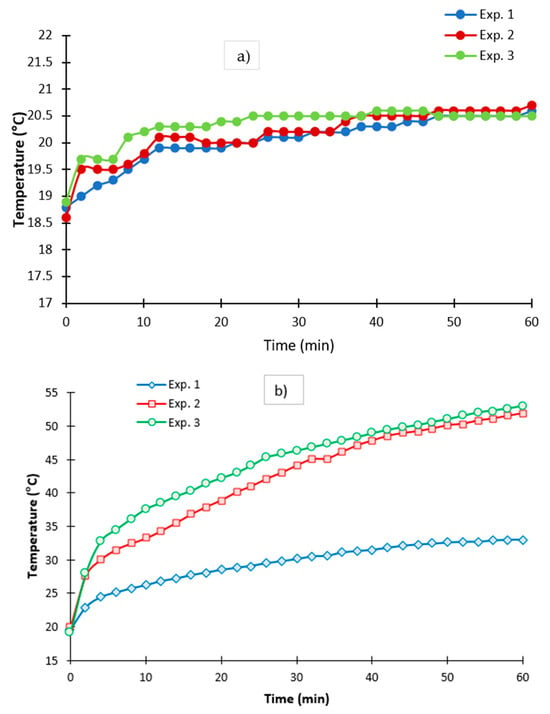
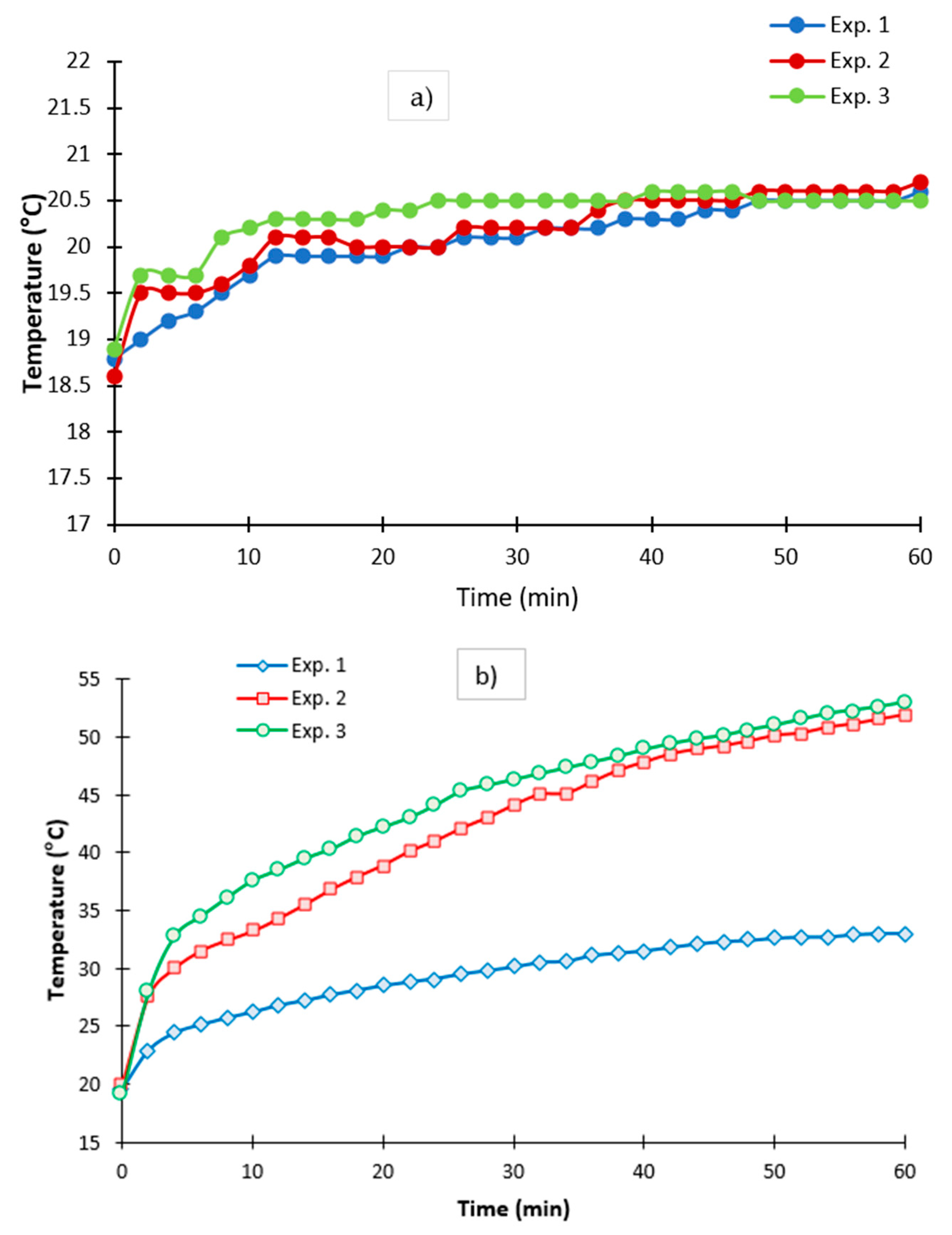
Figure 4a illustrates the variation in ambient temperature over a 60 min period during three laboratory experiments in which artificial light from a projector was used as the radiation source. In all cases, the temperature exhibits a rapid initial increase, followed by a gradual stabilization phase. Throughout the experiments, the laboratory ambient temperature increased by approximately 1–2 °C. These results indicate that, under comparable radiation conditions, the thermal response of the system shows minor variability among the experiments; however, all cases consistently demonstrate a clear heating effect and a tendency toward thermal stabilization with prolonged exposure.
Figure 4.
(a) Ambient air temperature variation during 60 min laboratory experiments conducted under a constant artificial irradiation of 150 W/m2. (b) Water temperature rise inside the black receiver container as a function of time for the three parabolic dish configurations (aluminum foil, Plexiglass mirror tiles, and hybrid mirror + peripheral foil).
Figure 4b illustrates the temperature variations of water inside the receiver over a 60 min test period for three different solar dish configurations. In all experiments, the water temperature increased progressively with time due to the continuous absorption of concentrated solar radiation. However, distinct differences were observed in the rate and magnitude of temperature rise among the configurations.
In Experiment 1, where the dish surface was covered with aluminum foil, the water temperature reached approximately 33 °C at the end of the test, indicating limited reflectivity and weak concentration capability of the foil surface.
In Experiment 2, the use of Plexiglass mirrors significantly enhanced the system performance, resulting in a final water temperature of around 51 °C. This improvement is attributed to the higher optical efficiency and better focusing accuracy of mirror surfaces compared to aluminum foil. Experiment 3, in which an aluminum foil strip was attached around the periphery of the mirror-covered dish, exhibited the highest temperature rise, reaching 53 °C after 60 min. The peripheral reflective strip likely reduced edge losses and redirected incident radiation toward the receiver, further improving solar energy concentration.
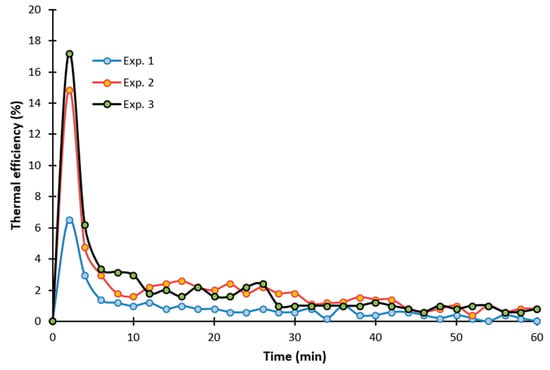
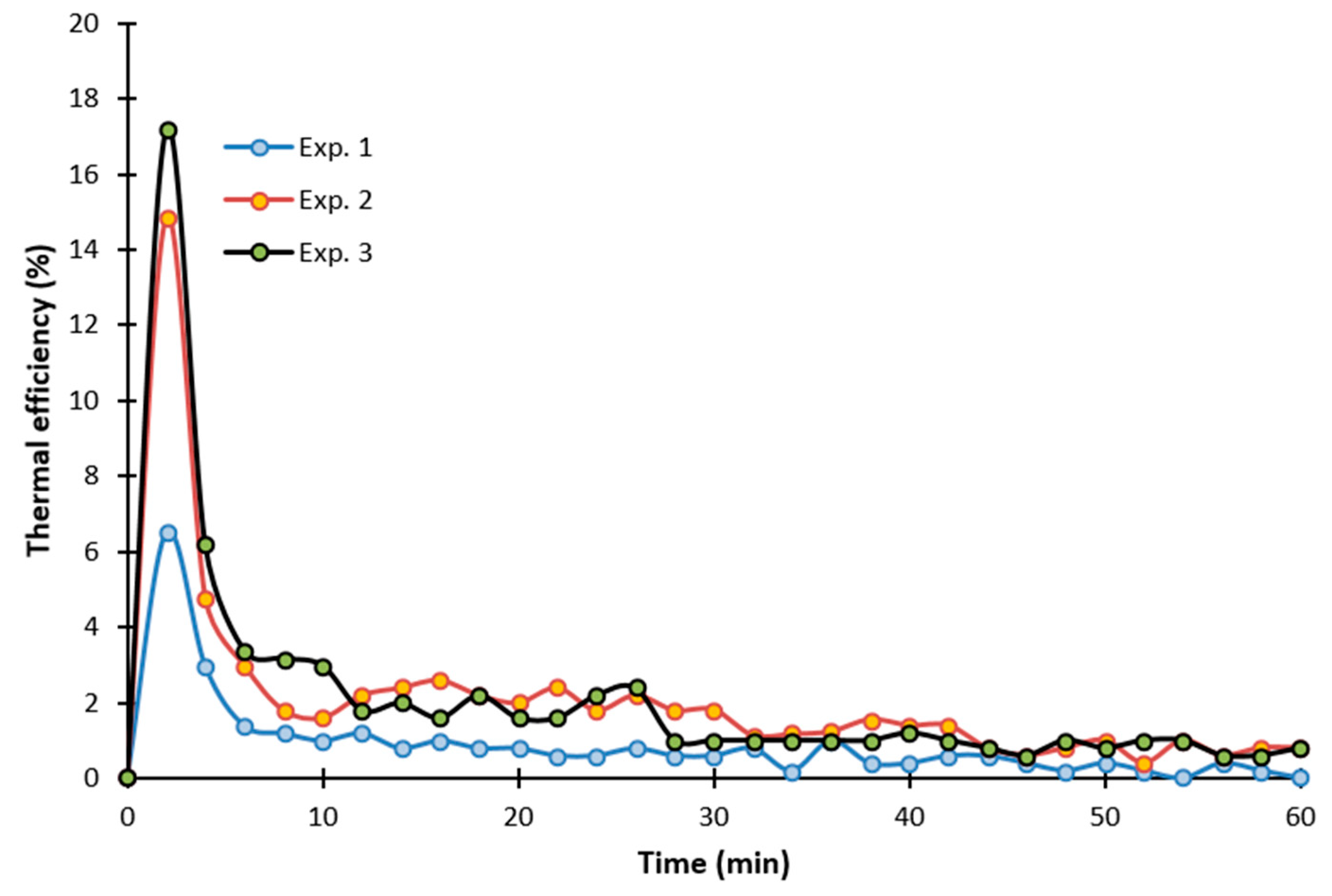
Figure 5 illustrates the variation in thermal efficiency with time for the three experimental configurations of the solar dish system. The efficiency of each configuration was calculated based on the ratio of useful heat gain by the water to the total incident solar radiation on the dish surface. As shown, the aluminum foil-coated dish (Experiment 1) exhibited the lowest efficiency due to its relatively low reflectivity and higher surface irregularities. In contrast, the dish covered with Plexiglass mirror tiles (Experiment 2) achieved a significant improvement in optical and thermal performance, demonstrating a higher and more stable efficiency profile over time. The best performance was recorded in Experiment 3, where the addition of a peripheral aluminum foil strip further enhanced the effective concentration ratio by reflecting edge radiation toward the receiver. Consequently, the maximum thermal efficiency and temperature rise were obtained in this configuration, confirming the beneficial impact of structural optimization and material selection on solar concentration effectiveness.
Figure 5.
Thermal efficiency variation with time for the three parabolic solar dish configurations tested under controlled indoor conditions with a constant artificial irradiation of 150 W/m2. (Thermal efficiency was calculated based on the measured water temperature rise in the receiver, the dish aperture area, and the test duration, enabling a comparative assessment of reflector surface materials and peripheral optical enhancement).
The performance enhancement observed with the addition of the peripheral aluminum foil strip can be attributed to its role in reducing optical edge losses. In conventional parabolic dishes, a portion of the incident radiation striking the outer rim is either reflected away from the focal region or lost due to geometric truncation and surface imperfections. The peripheral foil strip acts as a secondary reflector that intercepts these off-axis rays and redirects them toward the receiver, thereby increasing the effective intercept factor. This mechanism leads to improved solar concentration at the focal region and contributes to the higher receiver temperatures and thermal efficiency observed in Experiment 3. In addition, the foil strip forms a partial boundary around the dish, which can act as a shielding wall that reduces convective heat losses induced by ambient air movement near the focal region, further contributing to the observed improvement in thermal performance.
4.2. Cost Evaluation
Table 3 presents the market-based price list of the equipment utilized in the fabrication of the solar dish setup. The equipment costs are expressed in U.S. dollars, calculated according to the prevailing exchange rate. The total estimated cost was determined to be 161.8 $. It should be noted that certain components were employed in Experiment 1, while others were used in Experiments 2 and 3, as indicated in the table. The base components used in all experiments namely the XPS mold, silicone adhesive, epoxy resin, black paint, and miscellaneous fittings amount to 75.0 $. The remaining costs vary depending on the reflector configuration. Accordingly, the fabrication costs for each experiment are calculated as follows:
Table 3.
Cost breakdown of equipment used for the fabrication of the solar dish setup.
Experiment 1 (Aluminum foil dish): Total cost = 75.0 + 11.2 = 86.2 $
Experiment 2 (Plexiglass mirror dish): Total cost = 75.0 + 70.0 = 145.0 $
Experiment 3 (Mirror + peripheral foil strip): Total cost = 75.0 + 70.0 + 5.6 = 150.6 $
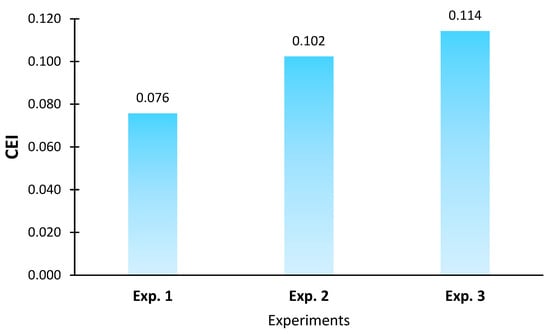
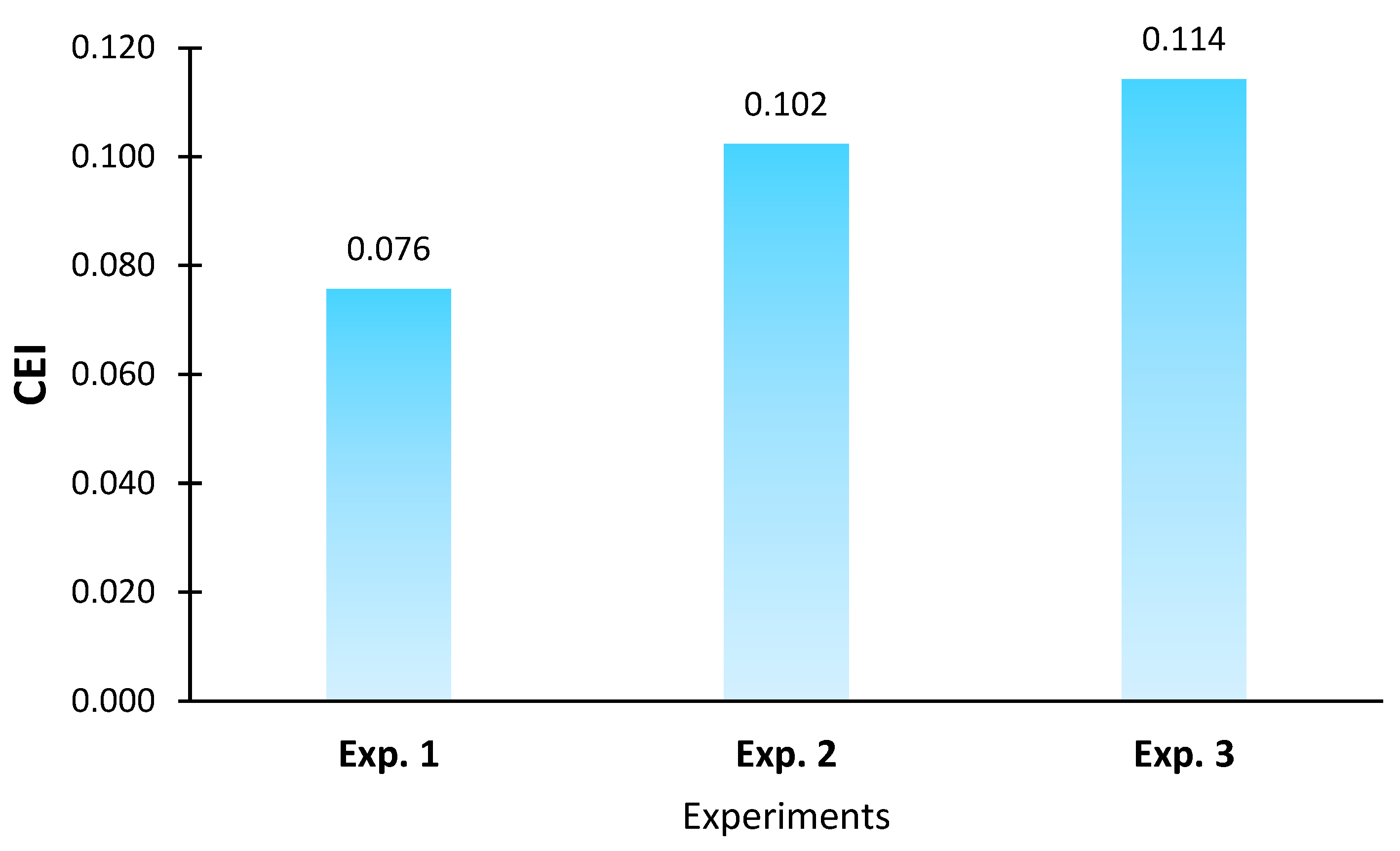
Economic evaluation has been performed in terms of the cost efficiency index (1/$) as presented in Figure 6.
Figure 6.
Cost efficiency index comparison for the three experimental configurations of the parabolic solar dish system, evaluated under a constant artificial irradiation.
In this study, optical performance was assessed indirectly through the thermal response of the receiver, using water temperature rise and thermal efficiency as indicators of effective solar concentration. Although direct optical measurements such as reflectivity or flux distribution were not conducted, the observed performance differences among configurations reflect variations in optical quality and edge losses.
5. Conclusions
Key Findings: This study presented the design, fabrication, and experimental evaluation of a parabolic solar dish concentrator primarily constructed from recyclable and low-cost materials. Three reflector surface configurations were experimentally compared under controlled radiation conditions. The results demonstrated that reflector material selection has a pronounced influence on thermal performance, with Plexiglass mirror tiles significantly outperforming aluminum foil. The hybrid configuration combining Plexiglass mirrors with a peripheral aluminum foil strip achieved the highest performance, reaching a receiver water temperature of 53 °C by effectively reducing edge losses. In addition, the proposed foldable and height-adjustable tripod-supported receiver successfully improved focal alignment, portability, and mechanical stability by decoupling the receiver load from the dish structure.
Limitations: Despite the promising results, several limitations should be acknowledged. The experiments were conducted using an artificial light source, which enables controlled and repeatable conditions but does not fully replicate the spectral characteristics and variability of natural solar radiation. Optical performance was evaluated indirectly through thermal response, as direct measurements such as reflectivity, intercept factor, and flux distribution were not performed. Furthermore, although no deformation was observed during laboratory testing, the use of wood- and cardboard-based materials may pose durability concerns under long-term outdoor exposure, particularly in humid environments, potentially affecting geometric stability and optical accuracy.
Future Work: Future studies will focus on validating the proposed system under real outdoor solar conditions, including the effects of solar tracking, wind, and ambient variability. Direct optical characterization methods, such as reflectivity measurements and focal flux mapping, will be incorporated to strengthen the optical analysis. In addition, alternative lightweight and moisture-resistant recyclable materials, such as metal-based recycled components, will be investigated to enhance long-term durability. These improvements will further support the development of efficient, portable, and sustainable parabolic solar concentrators for practical thermal energy applications.
Author Contributions
Conceptualization, F.A.; Methodology, F.A.; Investigation, F.Ş.K.; Data curation, F.A. and F.Ş.K.; Writing—original draft, F.A.; Writing—review and editing, F.Ş.K.; Supervision, F.A.; Project administration, F.A. and F.Ş.K. All authors have read and agreed to the published version of the manuscript.
Funding
This research received no external funding.
Institutional Review Board Statement
Not applicable.
Informed Consent Statement
Not applicable.
Data Availability Statement
The raw data supporting the conclusions of this article will be made available by the authors on request.
Conflicts of Interest
Author Fikret Şinasi Kazancıoğlu was employed by the company TCDD Taşımacılık AŞ. The remaining authors declare that the research was conducted in the absence of any commercial or financial relationships that could be construed as a potential conflict of interest.
References
- Hijazi, H.; Mokhiamar, O.; Elsamni, O. Mechanical design of a low cost parabolic solar dish concentrator. Alex. Eng. J. 2016, 55, 1–11. [Google Scholar] [CrossRef] [Scilit]
- Kumar, K.H.; Daabo, A.M.; Karmakar, M.K.; Hirani, H. Solar parabolic dish collector for concentrated solar thermal systems: A review and recommendations. Environ. Sci. Pollut. Res. 2022, 29, 32335–32367. [Google Scholar] [CrossRef] [Scilit]
- Kumar, V.; Yadav, A. Development and thermal performance evaluation of solar parabolic dish based on fiber-reinforced plastic. Heat Transf. 2022, 51, 6222–6248. [Google Scholar] [CrossRef] [Scilit]
- Basem, A.; Moawed, M.; Abbood, M.H.; El-Maghlany, W.M. The energy and exergy analysis of a combined parabolic solar dish–steam power plant. Renew. Energy Focus 2022, 41, 55–68. [Google Scholar] [CrossRef] [Scilit]
- Al-Amayreh, M.I.; Alahmer, A.; Manasrah, A. A novel parabolic solar dish design for a hybrid solar lighting-thermal applications. Energy Rep. 2020, 6, 1136–1143. [Google Scholar] [CrossRef] [Scilit]
- Mawire, A.; Abedigamba, O.P.; Worall, M. Experimental comparison of a DC PV cooker and a parabolic dish solar cooker under variable solar radiation conditions. Case Stud. Therm. Eng. 2024, 54, 103976. [Google Scholar] [CrossRef] [Scilit]
- Abu-Malouh, R.; Abdallah, I.; Abdallah, S. Food preparation using solar oven with automated two axes sun following. Mater. Today Proc. 2023; in press.
- Coccia, G.; Di Nicola, G.; Pierantozzi, M.; Tomassetti, S.; Aquilanti, A. Design, manufacturing, and test of a high concentration ratio solar box cooker with multiple reflectors. Sol. Energy 2017, 155, 781–792. [Google Scholar] [CrossRef] [Scilit]
- Ruivo, C.R.; Apaolaza-Pagoaga, X.; Carrillo-Andrés, A.; Coccia, G. Influence of the aperture area on the performance of a solar funnel cooker operating at high sun elevations using glycerine as load. Sustain. Energy Technol. Assess. 2022, 53, 102600. [Google Scholar] [CrossRef] [Scilit]
- Kabeel, A.E.; Dawood, M.M.K.; Ramzy, K.; Nabil, T.; Elnaghi, B. Enhancement of single solar still integrated with solar dishes: An experimental approach. Energy Convers. Manag. 2019, 196, 165–174. [Google Scholar] [CrossRef] [Scilit]
- Riva, F.; Rocco, M.V.; Gardumi, F.; Bonamini, G.; Colombo, E. Design and performance evaluation of solar cookers for developing countries: The case of Mutoyi, Burundi. Int. J. Energy Res. 2017, 41, 2206–2220. [Google Scholar] [CrossRef] [Scilit]
- Battocchio, C.; Bruni, F.; Di Nicola, G.; Gasperi, T.; Iucci, G.; Tofani, D.; Venditti, I. Solar cookers and dryers: Environmental sustainability and nutraceutical content in food processing. Foods 2021, 10, 2326. [Google Scholar] [CrossRef] [Scilit]
- Coccia, G.; Di Nicola, G.; Tomassetti, S.; Gabrielli, G.; Chieruzzi, M.; Pierantozzi, M. Experimental characterization of a solar cooker with thermal energy storage based on solar salt. J. Phys. Conf. Ser. 2017, 923, 012048. [Google Scholar] [CrossRef] [Scilit]
- Aquilanti, A.; Tomassetti, S.; Coccia, G.; Muccioli, M.; Di Nicola, G. Experimental characterization and performance comparison of four prototypes of panel solar cooker for low to high sun elevations. J. Clean. Prod. 2023, 390, 136158. [Google Scholar] [CrossRef] [Scilit]
- Hafez, A.Z.; Soliman, A.; El-Metwally, K.A.; Ismail, I.M. Solar parabolic dish Stirling engine system design, simulation, and thermal analysis. Energy Convers. Manag. 2016, 126, 60–75. [Google Scholar] [CrossRef] [Scilit]
- Maurya, A.; Kumar, A.; Sharma, D. A comprehensive review on performance assessment of solar cavity receiver with parabolic dish collector. Energy Sources Part A Recover. Util. Environ. Eff. 2022, 44, 4808–4845. [Google Scholar]
- Kanyowa, T.; Nyakujara, G.V.; Ndala, E.; Das, S. Performance analysis of Scheffler dish type solar thermal cooking system cooking 6000 meals per day. Sol. Energy 2021, 218, 563–570. [Google Scholar] [CrossRef] [Scilit]
- Omara, Z.M.; Eltawil, M.A. Hybrid of solar dish concentrator, new boiler and simple solar collector for brackish water desalination. Desalination 2013, 326, 62–68. [Google Scholar] [CrossRef] [Scilit]
- Tursunović, I.; Papurello, D. Design of a Solar Dish Receiver and Life Cycle Assessment of a Hot Water System. Clean Technol. 2024, 6, 379–396. [Google Scholar] [CrossRef] [Scilit]
- Figaj, R.; Szubel, M.; Przenzak, E.; Filipowicz, M. Feasibility of a small-scale hybrid dish/flat-plate solar collector system as a heat source for an absorption cooling unit. Appl. Therm. Eng. 2019, 163, 114399. [Google Scholar] [CrossRef] [Scilit]
- Sürücü, B.; Öztürk, M.; Çiftçi, E.; Tuncer, A.D. Software-based solar energy potential assessment for an industrial facility: A case study from Aegean Region of Turkey. Int. J. Energy Stud. 2022, 7, 99–111. [Google Scholar] [CrossRef] [Scilit]
- Afshari, F.; Mandev, E.; Ceviz, M.A.; Muratçobanoğlu, B.; Şahin, B.; Çelik, A.; Dehghanpour, H. Exploring solar modified glazed balconies as energy sources for mini-split heat pumps to enhance thermal performance. Renew. Energy 2025, 247, 122992. [Google Scholar] [CrossRef] [Scilit]
- Sarangi, A.; Sarangi, A.; Sahoo, S.S.; Nayak, J.; Mallik, R.K. Advancements and global perspectives in solar cooking technology: A comprehensive review. Energy Nexus 2024, 13, 100266. [Google Scholar] [CrossRef] [Scilit]
- Ceviz, M.A.; Muratçobanoğlu, B.; Mandev, E.; Afshari, F. A comprehensive review of solar cooking systems. Wiley Interdiscip. Rev. Energy Environ. 2024, 13, e516. [Google Scholar] [CrossRef] [Scilit]
- Gürel, A.E.; Ağbulut, Ü.; Ergün, A.; Ceylan, İ.; Sözen, A.; Tuncer, A.D.; Khanlari, A. A detailed investigation of the temperature-controlled fluidized bed solar dryer: A numerical, experimental, and modeling study. Sustain. Energy Technol. Assess. 2022, 49, 101703. [Google Scholar] [CrossRef] [Scilit]
- Khanlari, A.; Badali, Y.; Tuncer, A.D. Analysis of a spiral-formed solar air heating system with ceria nanoparticles-enhanced absorber coating. J. Build. Eng. 2023, 71, 106534. [Google Scholar] [CrossRef] [Scilit]
- Garcia, D.; Liang, D.; Tibúrcio, B.D.; Almeida, J.; Vistas, C.R. A three-dimensional ring-array concentrator solar furnace. Sol. Energy 2019, 193, 915–928. [Google Scholar] [CrossRef] [Scilit]
- Tuncer, A.D.; Khanlari, A.; Afshari, F.; Sözen, A.; Ciftci, E.; Kusun, B.; Şahinkesen, İ. Experimental and numerical analysis of a grooved hybrid photovoltaic-thermal solar drying system. Appl. Therm. Eng. 2023, 218, 119288. [Google Scholar] [CrossRef] [Scilit]
- Yüksel, C.; Öztürk, M.; Çiftçi, E. Analysis of a novel V-grooved double pass photovoltaic thermal solar dryer including thermal energy storage. Appl. Therm. Eng. 2024, 236, 121697. [Google Scholar] [CrossRef] [Scilit]
- Aytaç, İ.; Khanlari, A.; Tuncer, A.D.; Variyenli, H.İ.; Ünvar, S. Performance improvement of a heat pipe evacuated solar water collector using quartz/water nanofluid: A numerical and experimental study. Renew. Energy 2024, 236, 121423. [Google Scholar] [CrossRef] [Scilit]
- Khanlari, A.; Sözen, A.; Afshari, F.; Tuncer, A.D.; Ağbulut, Ü.; Aytaç Yılmaz, Z. Numerical and experimental analysis of parallel-pass forced convection solar air heating wall with different plenum and absorber configurations. Int. J. Numer. Methods Heat Fluid Flow 2022, 32, 978–1001. [Google Scholar] [CrossRef] [Scilit]
- Khanlari, A.; Tuncer, A.D.; Sözen, A.; Aytaç, İ.; Çiftçi, E.; Variyenli, H.İ. Energy and exergy analysis of a vertical solar air heater with nano-enhanced absorber coating and perforated baffles. Renew. Energy 2022, 187, 586–602. [Google Scholar] [CrossRef] [Scilit]

Disclaimer/Publisher’s Note: The statements, opinions and data contained in all publications are solely those of the individual author(s) and contributor(s) and not of MDPI and/or the editor(s). MDPI and/or the editor(s) disclaim responsibility for any injury to people or property resulting from any ideas, methods, instructions or products referred to in the content. |
© 2026 by the authors. Licensee MDPI, Basel, Switzerland. This article is an open access article distributed under the terms and conditions of the Creative Commons Attribution (CC BY) license.