


Abstract
This study identifies the key antecedents of digital human resource practices and examines their implications for employee well-being and logistics firms’ performance. The proposed integrated research framework considers employee self-efficacy, interpersonal influence, digital resilience, hedonic benefits, compatibility, competitive pressure, and innovativeness as the key antecedents of employees’ intentions to adopt digital human resource practices. A quantitative research design and deductive approach were employed, and the proposed hypotheses were tested using empirical data collected from employees working in human resource departments. A total of 373 questionnaires were returned, of which 357 valid responses were included in the structural equation modeling analysis. The findings revealed that employee self-efficacy, interpersonal influence, digital resilience, hedonic benefits, compatibility, and innovativeness were positively associated with employees’ intention to adopt digital human resource practices, collectively explaining 79.7% of the variance. Employee intention to adopt digital HR practices further explains 19% of the variance in employee well-being and 16.8% of the variance in logistics firm performance. These findings provide practical implications for human resource managers seeking to facilitate digital HR adoption while supporting employee well-being and organizational performance. From a sustainability perspective, this study highlights the potential role of digital human resource practices in supporting sustainable workforce development by integrating employee-centered and technological factors within human resource management. By combining human and technological antecedents with employee well-being and firm-level outcomes, this study contributes to the literature on digital transformation and sustainable human resource management in the logistics sector.
1. Introduction
Advancements in digital technologies and the growing concept of digital human resource practices have transformed organizations’ human resource functions such as recruitment, training, performance management, and employee engagement [1]. Digital human resource practices denote processes that integrate technology with human resource functions such as e-recruitment, e-learning, human resource analytics, and digital performance appraisal [2]. Digital human resource practices are vital, especially in logistics firms, where efficiency, accuracy, and workforce agility are considered critical. Previous studies have revealed that digital HR not only streamlines operations but also enhances employee well-being by promoting flexibility, engagement, and work–life balance [1,2,3]. Accordingly, employees’ intention to adopt digital human resource practices may be associated with employee well-being and perceived logistics firm performance. Although digital technologies are being deployed rapidly in logistics operations, the human side of digital transformation, such as digital human resource practices, has remained underexplored. Prior studies have emphasized the operational efficiency of logistics firms and overlooked digital HR practices that positively influence employee well-being and boost logistics firm performance [4,5]. Therefore, it is crucial to understand the factors associated with employees’ intention to adopt digital human resource practices and how this intention relates to employee well-being and perceived logistics firm performance. From a sustainability perspective, digital human resource practices can support sustainable workforce management by enhancing employee well-being, workforce adaptability, and organizational performance. This perspective is particularly relevant for logistics firms, where continuous digital transformation requires organizations to balance technological advancement with employee-centered and long-term organizational outcomes. In this context, this study conducted a detailed literature review and schematized core antecedents that influence employees’ intentions to adopt digital human resource practices. These antecedents include employee self-efficacy, interpersonal influence, digital resilience, competitive pressure, hedonic benefits, compatibility, and innovation. Self-efficacy refers to employees’ beliefs in their ability to successfully perform tasks, whereas interpersonal influence refers to individual behaviors and decisions that are affected by the opinions, expectations, and actions of others [1,6,7]. Similarly, the literature has shown that factors such as digital resilience, competitive pressure, and hedonic benefits positively shape employee behavior towards the adoption of digital HR practices [8,9,10]. Compatibility has been studied in the context that digital HR-driven technology aligns with existing user values, current work needs, and enriching experiences [11]. Innovativeness is the extent to which employees are open to bringing new ideas and willing to adopt novel technologies earlier than others [12]. Therefore, this study examines employee well-being and logistics firm performance with four objectives: First, this study examines the relationship between employee self-efficacy, interpersonal influence, and employees’ intention to adopt digital HR practices. Second, this study investigates how digital resilience, competitive pressure, and hedonic benefits impact employees’ intention to adopt digital HR practices. Third, this study examines how compatibility and innovativeness are associated with employees’ intentions to adopt digital HR practices. Fourth, this study examines the association between intention to adopt digital HR practices, employee well-being, and logistics firm performance. The scope of this study is broad, as the data were collected from logistics firms across the country. Moreover, this study is significant because it combines human and technological factors to understand employee well-being and logistics firm performance. In this context, integrating human and technological factors provides a sustainability-oriented perspective by considering how digital HR transformation can simultaneously support employee well-being and organizational performance. Accordingly, this study contributes to the emerging discussion on sustainable human resource management by examining how the adoption of digital HR practices can support employee well-being and sustainable organizational outcomes in the logistics sector.
2. Literature Review
2.1. Employee Self-Efficacy and Interpersonal Influence
The proliferation of information technology has led employers to adopt digital technologies, which, in turn, improve organizational performance [6]. More recently, studies have revealed that digital human resource practices foster employee performance [1,7]. Nevertheless, the adoption of digital human resource practices is still limited and in its initial stages. The literature has revealed that factors such as employee self-efficacy and interpersonal influence affect employee behavior toward digital technology [1,13,14]. Self-efficacy is defined as an employee’s belief in their ability to successfully perform tasks or use new systems. Interpersonal influence is defined as the extent to which individuals’ behaviors and decisions are affected by the opinions, expectations, and actions of others in their social environments. Earlier studies have revealed that employees with higher self-efficacy feel confident in navigating digital tools, such as e-learning systems, HR analytics, and self-service platforms, which reduces anxiety and resistance, thereby increasing their intention to adopt digital human resource practices [1,6,7]. According to [15], self-efficacy not only strengthens adoption intentions, but also strengthens continuous engagement with digital human resource management systems. Similarly, interpersonal influence is considered a key social factor shaping employee behavior when adopting new technology [16]. Therefore, one can assume that when peers, supervisors, or colleagues endorse and actively use digital human resource tools, employees are more likely to perceive them as useful and trustworthy [1,6,17]. Thus, the following hypotheses are proposed:
Hypothesis H1.
Employee self-efficacy influences employee intention to adopt digital HR practices.
Hypothesis H2.
Interpersonal influence affects employee intention to adopt digital HR practices.
2.2. Digital Resilience, Competitive Pressure and Hedonic Benefits
The adoption of information technology is a complex phenomenon; therefore, an extensive literature review is required to unveil the factors that impact employees’ intentions to adopt human resource practices. The literature has shown that factors such as digital resilience, competitive pressure, and hedonic benefits positively shape employee behavior towards the adoption of digital HR practices [8,9,10]. Digital resilience is conceptualized as employees’ capacity to adapt to technological disruptions and maintain work-related functioning during digital change [10]. The measurement items also captured operational recovery and team coordination, reflecting a broader operational dimension of digital resilience that should be considered when interpreting the findings. Competitive pressure is the extent to which external market competition compels firms to adopt innovation to remain competitive [9,18]. Similarly, hedonic benefits are defined as the enjoyment, pleasure, and intrinsic satisfaction that individuals gain from using technology [19]. Prior studies have suggested that digitally resilient employees manage stress more effectively and remain confident in handling digital systems, which, in turn, reduces resistance, enhances perceived ease of use, and increases trust in the relevance of digital tools [10,20]. Similarly, the literature indicates that when competition intensifies, organizations prioritize digital HR to improve efficiency, employee productivity, and responsiveness [9,18]. The literature has also demonstrated that interactive performance systems and user-friendly self-service portals provide engaging experiences that make digital human resource systems enjoyable and foster employee attitudes toward adopting digital human resource practices [19,21]. Thus, the following hypotheses are proposed:
Hypothesis H3.
Digital resilience influences employee intention to adopt digital HR practices.
Hypothesis H4.
Competitive pressure influences employee intention to adopt digital HR practices.
Hypothesis H5.
Hedonic benefits influence employee intention to adopt digital HR practices.
2.3. Compatibility and Innovativeness
The human resource management literature has also revealed the positive impact of compatibility and innovativeness in measuring employee behavior towards the adoption of digital technology [12,22]. Compatibility is defined as the degree to which an innovation or technology aligns with users’ existing values, current work needs, and prior experience [11]. Therefore, innovativeness is defined as the degree to which an individual is open to new ideas and willing to adopt novel technologies earlier than other individuals [12]. In digital human resource practices, compatibility is considered a critical factor influencing employees’ intention to adopt digital HR practices [11]. For instance, Ref. [12] asserted that HR tools that are compatible with employees’ daily routines are perceived as more useful and less complex. Moreover, prior studies have confirmed that higher compatibility fosters positive attitudes, perceived ease of use, and trust, thereby strengthening employees’ willingness to adopt digital HR practices [11,23]. Similarly, innovative employees are more likely to view digital HR tools, including e-recruitment, performance management systems, and HR analytics, as opportunities to improve efficiency, learning, and collaboration [23]. Therefore, higher innovativeness enhances employees’ perceptions of ease of use and usefulness, resulting in stronger intentions to adopt digital HR practices among employees [11,12,24]. Following the above arguments, compatibility and innovativeness lead to the following hypotheses.
Hypothesis H6.
Compatibility influences employee intention to adopt digital HR practices.
Hypothesis H7.
Innovativeness influences employee intention to adopt digital HR practices.
2.4. Digital HR Practices, Well-Being and Firm Performance
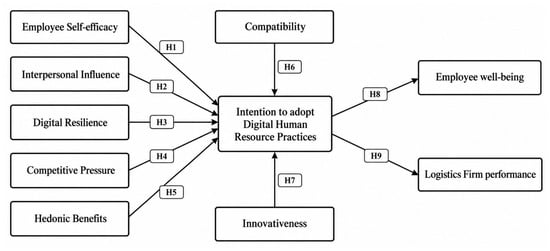
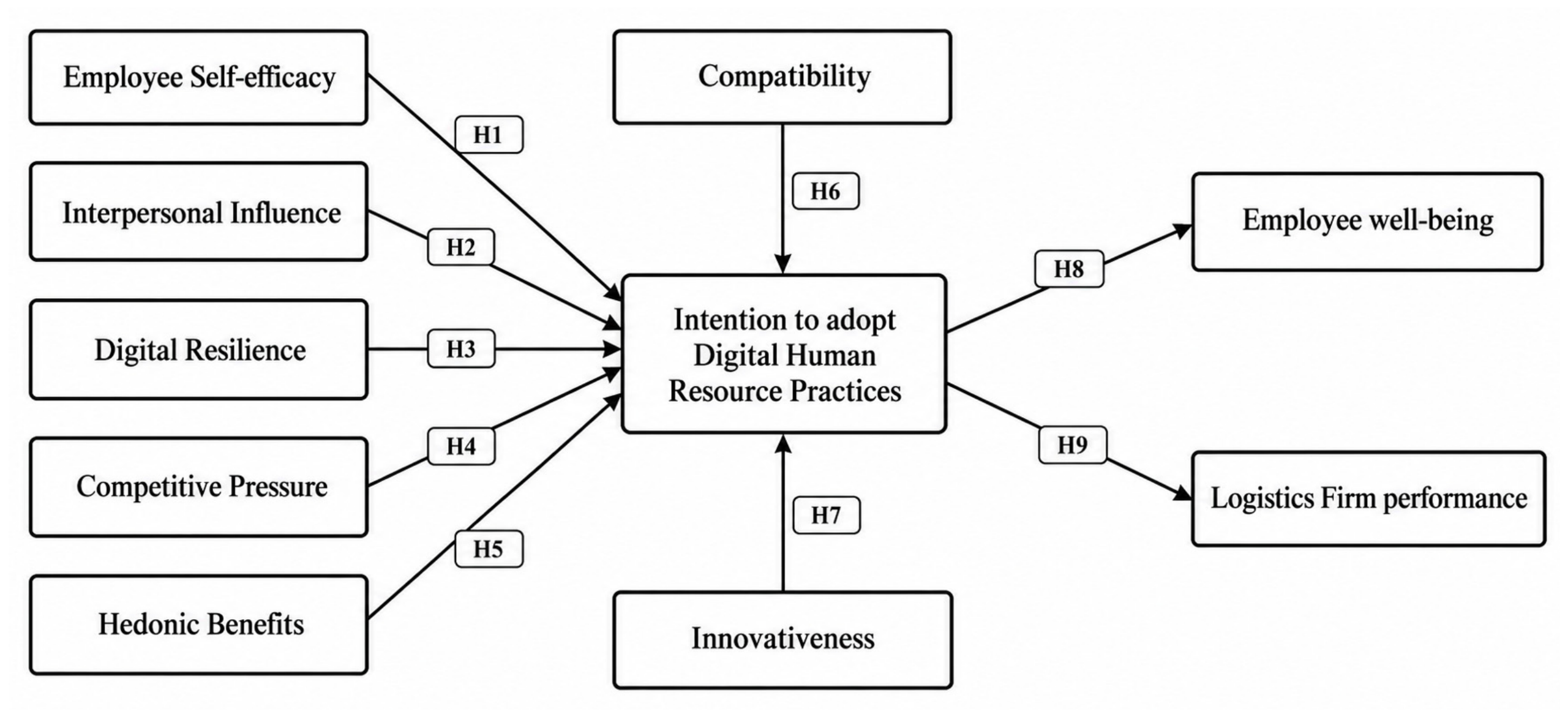
Digital human resource practices not only streamline operations but also enhance employee well-being by promoting flexibility, engagement, and work–life balance [1,2,3]. These employee-centered outcomes are also relevant to sustainable human resource management, which emphasizes maintaining employee well-being and developing a resilient workforce, while supporting long-term organizational outcomes. Therefore, this study focuses on two dimensions: employee well-being and logistics firm performance, as supported by previous studies [1,2,3,25]. According to [25], employee well-being refers to a positive state of physical, psychological, and social health at work, reflected in satisfaction, reduced stress, and balance between professional and personal life. Studies have revealed that employee well-being directly contributes to employee motivation, engagement, and organizational performance [26,27,28]. Similarly, the literature has demonstrated that digital human resource practices enhance employee well-being by reducing workload through automation, providing continuous feedback, and offering opportunities for growth through online learning [29,30,31]. Digital HR practices are also considered essential for logistics firms’ performance. The use of digital HR practices leads to improved efficiency, adaptability, and productivity. Additionally, the literature provides substantial evidence that digital human resource practices foster employee engagement and motivation, resulting in better firm performance [29,32,33]. Accordingly, digital HR practices can be viewed not only as tools for digital transformation but also as mechanisms that may support organizational sustainability by combining employee well-being with improved workforce efficiency, adaptability, and firm performance. Accordingly, the proposed research model is illustrated in Figure 1, and the following hypotheses are formulated:
Figure 1.
Research model source: developed by authors.
Hypothesis H8.
Employee intention to adopt digital HR practices is positively associated with employee well-being.
Hypothesis H9.
Employees’ intention to adopt digital HR practices is positively associated with perceived logistics firm performance.
3. Research Methods
3.1. Scale and Survey Questionnaire
The questionnaire used in this study was based on demographic and scale items. The demographic questions included the respondents’ age, gender, employment status, level of education, and marital status. The digital resilience scale was adapted from previous studies conducted in this context. For instance, the employee self-efficacy scale was adapted from [23]. The Interpersonal Influence Scale was adapted from [34,35]. The digital resilience scale was adapted from previous studies [36,37]. Similarly, the competitive pressure items were adapted from [18,38]. The hedonic benefit items were adapted from [19,39]. The compatibility scale items were adapted from [23,40]. The innovativeness scale items were adapted from previous studies [18,24]. Further, items measuring the intention to adopt digital human resource practices were adapted from [37,41,42,43]. Employee well-being scale items were adapted from [25,43]. The logistics firm performance items were adapted from [44]. The measurement items were adapted from previous studies and assessed for reliability and validity in the current study. These items were measured using a seven-point Likert scale ranging from 1 (strongly disagree) to 7 (strongly agree), consistent with [37,45,46]. Appendix A lists the scale items.
3.2. Research Methods, Sampling and Data Collection
This study used a quantitative research method to assess the statistical relationships among the underlying factors. Consistent with the research objectives, the antecedents of digital human resource practices were estimated using numerical data. Therefore, the quantitative research method was found to be adequate for establishing the research framework. Nevertheless, for numerical data, it is important to identify the research population first. This study examined the role of digital human resource practices and their impact on employee well-being and performance. Accordingly, HR employees working in logistics firms in Saudi Arabia were considered the target population for this study. The sample size was initially determined according to the methodological guidelines provided in [47,48]. The ten-times rule was used as a preliminary reference for sample size planning, rather than as a definitive assessment of statistical power. The final analytical sample of 357 respondents exceeded the initial reference set of 310 observations. Nevertheless, the absence of formal statistical power analysis is acknowledged as a methodological limitation. This study followed a purposive sampling approach, that is, a nonprobability sampling approach. Participants were recruited through email invitations distributed to individuals working in the Saudi logistics sector, without maintaining a firm-level or geographical sampling register. This sampling approach is suitable because it allows researchers to approach respondents who are relevant to the research objectives. Additionally, this approach ensures the inclusion of only employees who are deeply familiar with digital human resource practices and the impact of these practices on improving employee well-being and firm performance.
Data were collected using structured, paper-based questionnaires. In total, 495 respondents met the sample size requirements. Before the questionnaire distribution, all potential participants were informed of the purpose of the study, the voluntary nature of participation, and the confidentiality and anonymity of their responses. All participants were adults (aged 18 years or older) and informed consent was obtained prior to participation. Only the participants who provided informed consent completed the questionnaire. No personally identifiable or sensitive information was collected and no financial incentives were provided for participation. The data collection process began in the second week of October 2025 and ended in the first week of December 2025. A total of 373 questionnaires were returned from 495 approached respondents. Following data screening, 16 incomplete or invalid responses were excluded, resulting in a final analytical sample of 357 valid responses (effective response rate: 72.1%). The following descriptive characteristics refer to the 373 returned questionnaires. Of these, 209 were male and 164 were female. Respondents were asked about their age, and 118 respondents were aged between 20 and 25 years. In addition, 135 respondents were aged between 25 and 30 years. Similarly, 89 respondents were aged between 31 and 40 years old. However, only 31 respondents were aged 41–50 years old. A total of 301 respondents were married and 27 were not married. However, 45 respondents were unwilling to disclose their marital statuses. The educational levels of the respondents were also assessed. The results indicated that 68 respondents held a bachelor’s degree. Therefore, 198 respondents held a Master’s degree. However, 107 respondents held qualifications higher than their master’s degree. Descriptive analysis revealed that 116 respondents had less than 5 years of experience. Thus, 43 respondents had six to ten years of experience. Similarly, 214 respondents had 11–15 years of work experience. Employee job status was assessed in the workplace. Among the 373 employees, only 23 worked on contracts, and the remaining 350 were permanent full-time employees.
4. Data Analysis
4.1. Common Method Bias and Missing Values
Data were collected using a structured survey questionnaire. Therefore, addressing the common method variance bias is mandatory. Two types of remedies were used in this study to address the common method variance bias. First, the questionnaires were jumbled before data collection. Therefore, Harman’s single-factor analysis was used to test the data validity. The threshold value for Harman’s single-factor analysis was 40%. The data were computed, and the findings revealed that the maximum variance explained by the first unrotated factor was 17%, which was substantially less than the threshold value. Therefore, common method variance bias was not a significant concern in the dataset. Common method bias was assessed using the marker-variable technique [49]. The correlation with the marker variable was below the recommended threshold value of 0.10, indicating that common method variance was not substantial. Therefore, CMB was not considered a significant concern in this study. Data screening was completed using a missing value analysis. Following the guidelines provided by [47], Little’s MCAR test was conducted to determine whether the missing values in the dataset were missing completely at random. The test yielded a statistically insignificant p-value (p > 0.05), indicating insufficient evidence to reject the null hypothesis that the data were missing completely at random (MCAR). Thus, the pattern of missing data was not statistically associated with the observed data, supporting the assumption that the missing values were randomly distributed. Accordingly, missing data were considered MCAR and unlikely to introduce systematic bias into the subsequent analysis. Thus, the data were analyzed using a structural equation modeling approach. Following data screening, 16 incomplete or invalid questionnaires were excluded, leaving a final analytical sample of 357 respondents with complete data for all measurement indicators included in the PLS-SEM analysis.
4.2. Multicollinearity Issue
Multicollinearity was assessed using a variance inflation factor analysis. This issue arises when the two factors measure the same concept within an integrated model. Therefore, prior to using the SEM approach, multicollinearity issues must be assessed. This study used variance inflation factor analysis to address the multicollinearity issue. The variance inflation factor analysis suggests that variance inflation factor statistics must be lower than 3.3 to confirm data validity [50]. The results showed that none of the variance inflation factor values was higher than the threshold value. The maximum variance inflation factor is 1.934, which is substantially less than the threshold value. These findings confirm that the data do not exhibit multicollinearity and are valid for the SEM approach, as shown in Table 1.
Table 1.
Variance inflation factor analysis.
The model fit was also examined using the standardized root mean square residual (SRMR) and normed fit index (NFI). The estimated model yielded an SRMR of 0.076 and an NFI of 0.676, suggesting an acceptable SRMR value and indicating that the overall model fit should be interpreted cautiously.
4.3. Structural Equation Modeling
Structural equation modeling was incorporated, followed by two stages: the measurement model and the structural model. Factor reliability was assessed using a measurement model; therefore, the hypotheses were tested using structural model assessment. Data were analyzed with the measurement model, and the results revealed satisfactory loading values, wherein all loadings were found to be greater than the threshold value of 0.60. The reliability of the factors was also achieved, as all factors showed composite reliability, and Cronbach’s alpha values were greater than 0.70. The convergent validity of the factors was also established following the criterion that the average variance values should be greater than 0.50 [51]. Statistical analysis revealed satisfactory convergent validity of the factors, as all values were higher than the threshold value. Table 2 shows the results of the measurement model.
Table 2.
Measurement model.
Discriminant validity was assessed to determine whether the constructs measured the distinct concepts. Following established methodological guidelines [47,51], discriminant validity was evaluated using cross-loadings, the Fornell–Larcker criterion, and the heterotrait-monotrait ratio (HTMT). The cross-loading analysis indicated that most indicators loaded more strongly on their intended constructs than on other constructs. However, IHR1 exhibited a higher cross-loading on digital resilience (0.913) than on its intended construct, the intention to adopt digital HR practices (0.849), indicating a potential indicator-level overlap. Nevertheless, the Fornell–Larcker criterion was satisfied, and the HTMT value between digital resilience and intention to adopt digital HR practices was 0.840, which is below the conservative threshold of 0.85. These findings provide support for discriminant validity at the construct level, although the cross-loading of IHR1 warrants cautious interpretation. Table 3 lists the cross-loading results.
Table 3.
Cross-loadings.
Fornell–Larcker analysis was employed to establish the discriminant validity of the factors. Discriminant validity was measured using the guidelines provided in [47,52]. According to [47], for adequate discriminant validity, the square root of the average variance extracted for each construct must exceed its correlations with other constructs. The data were computed using a measurement model. The results indicate satisfactory values of average variance extracted and hence establish the discriminant validity of the factors. Table 4 shows the satisfactory values of the average variance extracted from the Fornell–Larcker analysis.
Table 4.
Fornell and Larcker analysis.
Heterotrait-monotrait ratio analysis was incorporated in this study to measure the discriminant validity of the factors. The statistical literature has revealed that the Fornell–Larcker analysis and cross-loading methods have limitations and deficiencies. Alternatively, Ref. [53] introduced HTMT analysis to estimate the discriminant validity of the factors. This method suggests that the heterotrait-monotrait ratio must be less than either 0.85 or 0.90 [47]. Data were analyzed using heterotrait-monotrait ratio analysis. Results of the heterotrait-monotrait ratio analysis revealed that none of the heterotrait-monotrait ratios were higher than the threshold value. Table 5 depicts the results of the heterotrait-monotrait ratios with satisfactory statistics.
Table 5.
Heterotrait-monotrait ratio.
To further assess discriminant validity, an additional nonparametric HTMT bootstrap analysis was conducted using 357 valid observations and 5000 bootstrap resamples. The 95% percentile confidence intervals for intention to adopt digital HR practices and digital resilience (HTMT = 0.840, 95% CI [0.781, 0.888]), as well as employee self-efficacy (HTMT = 0.829, 95% CI [0.719, 0.940]), excluded unity. The same criterion was satisfied for all remaining construct pairs, providing additional support for discriminant validity at the construct level. An exploratory sensitivity analysis was also performed by removing IHR1 and re-estimating the measurement and structural models. The results showed improved discriminant validity and no remaining cross-loading violations, while the nine hypothesized relationships remained positive and statistically supported in the exploratory analysis. However, the removal of IHR1 substantially altered the estimated relationship between digital resilience and adoption intention (β = 0.458 versus 0.213) and reduced the explained variance in adoption intention (R2 = 0.797 versus 0.691). Considering these findings, IHR1 was retained in the original model, while its higher cross-loading on digital resilience was acknowledged as an indicator-level measurement concern.
4.4. Structural Model Assessment
Structural model assessment includes hypothesis testing using path values, sample mean, standard error, t-statistics, and p-values [47]. However, these values were computed using the bootstrapping method [47]. Bootstrapping is highly recommended for variance-based estimation and does not require normally distributed data. Therefore, the data were bootstrapped with 5000 resamples, as recommended by prior researchers [47,54]. The results of the hypothesis analysis, including the path value and significance of the path using t-statistics, are shown in Table 6.
Table 6.
Hypotheses analysis.
Statistical analysis was conducted using SmartPLS 4. Bootstrapping was performed using 5000 resamples, and 90% percentile confidence intervals (5th–95th percentiles) were obtained for the structural path coefficients. All nine confidence intervals excluded zero, thus providing additional support for the statistical significance of the hypothesized relationships.
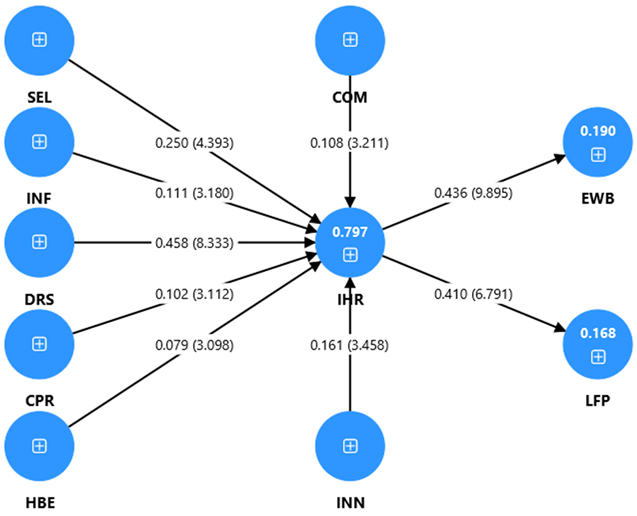
The structural model estimation revealed the results of the hypotheses. The results in Table 6 show that all exogenous factors were positively associated with endogenous factors. Employee self-efficacy is positively associated with the adoption of digital human resource practices and is supported by β = 0.250, mean = 0.254, standard error = 0.057, t-statistics = 4.393, and p < 0.001; hence, H1 is accepted. Interpersonal influence has shown a positive association with employees’ intention to adopt digital human resource practices and is supported by β = 0.111, mean = 0.112, standard error = 0.035, t-statistics = 3.180, and p-value = 0.001, confirming H2. The role of digital resilience is significant in measuring the adoption of digital human resource practices, as confirmed by β = 0.458, mean = 0.451, standard error = 0.055, t-statistics = 8.333, and p < 0.001; therefore, H3 is accepted. Competitive pressure has been positively associated with the adoption of digital human resource practices and is supported by β = 0.102, mean = 0.103, standard error = 0.033, t-statistics = 3.112, and p = 0.001, confirming H4. Factors such as hedonic benefits are positively associated with the adoption of digital human resource practices and are supported by β = 0.079, mean = 0.079, standard error = 0.025, t-statistics = 3.098, and p = 0.001, confirming H5. The factors outlined in the diffusion of innovation have a positive impact on the adoption of digital human resource practices.
For instance, both the diffusion of innovation factors’ compatibility and innovativeness are positively related to the adoption of digital human resource practices and are supported by β = 0.108, mean = 0.107, standard error = 0.033, t-statistic = 3.211, p = 0.001; β = 0.161, mean = 0.161, standard error = 0.047, t-statistic = 3.458, p < 0.001, confirming H6 and H7, respectively. The impact of digital human resource practices on employee well-being was tested, and the results confirmed a significant relationship, supported by β = 0.436, mean = 0.438, standard error = 0.044, t-statistics = 9.895, p < 0.001, confirming H8. Similarly, digital human resource practices have shown a positive impact on measuring logistics firm performance and are supported by β = 0.410, mean = 0.412, standard error = 0.060, t-statistics = 6.791, and p < 0.001; therefore, H9 is established. Statistical analysis revealed the positive impact of the outlined factors in measuring the outcome factors. Appendix B provides the hypothesis results. The results revealed that employee self-efficacy, interpersonal influence, digital resilience, hedonic benefits, compatibility, and innovativeness explained 79.7% of the variance (R2 = 0.797) in the intention to adopt digital human resource practices. Additionally, employees’ intention to adopt digital human resource practices explained 19% of the variance (R2 = 0.19) in employee well-being. Similarly, employees’ intention to adopt digital human resource practices explained 16.8% of the variance (R2 = 0.168) in perceived logistics firm performance. The reported Q2 values were 0.780 for the intention to adopt digital HR practices, 0.152 for employee well-being, and 0.171 for logistics firm performance. Although these values provide information on predictive relevance, they should not be interpreted as evidence of strong out-of-sample predictive performance without appropriate benchmark comparison.
4.5. Effect Size f2 Analysis
Effect sizes were evaluated using the following thresholds: 0.02 for small effects, 0.15 for medium effects, and 0.35 for large effects [50]. The f2 effect size analysis assessed the magnitude of each predictor’s contribution to the endogenous constructs. The results indicated that digital resilience had a large effect size in explaining employees’ intention to adopt digital human resource practices. However, employee self-efficacy has a medium effect size. Factors such as compatibility, competitive pressure, hedonic benefits, interpersonal influence, and innovativeness showed small effect sizes when measuring digital human resource practices. Employees’ intention to adopt digital human resource practices showed a medium effect size on employee well-being. Similarly, employees’ intention to adopt digital human resource practices showed a medium effect size in relation to perceived logistics firm performance. Table 7 presents the results of the effect size analysis.
Table 7.
Effect size analysis f2.
4.6. Importance–Performance Matrix
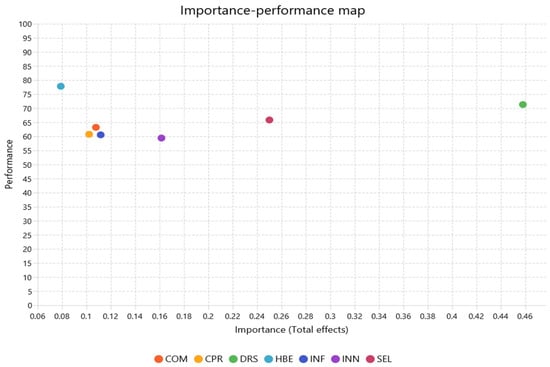
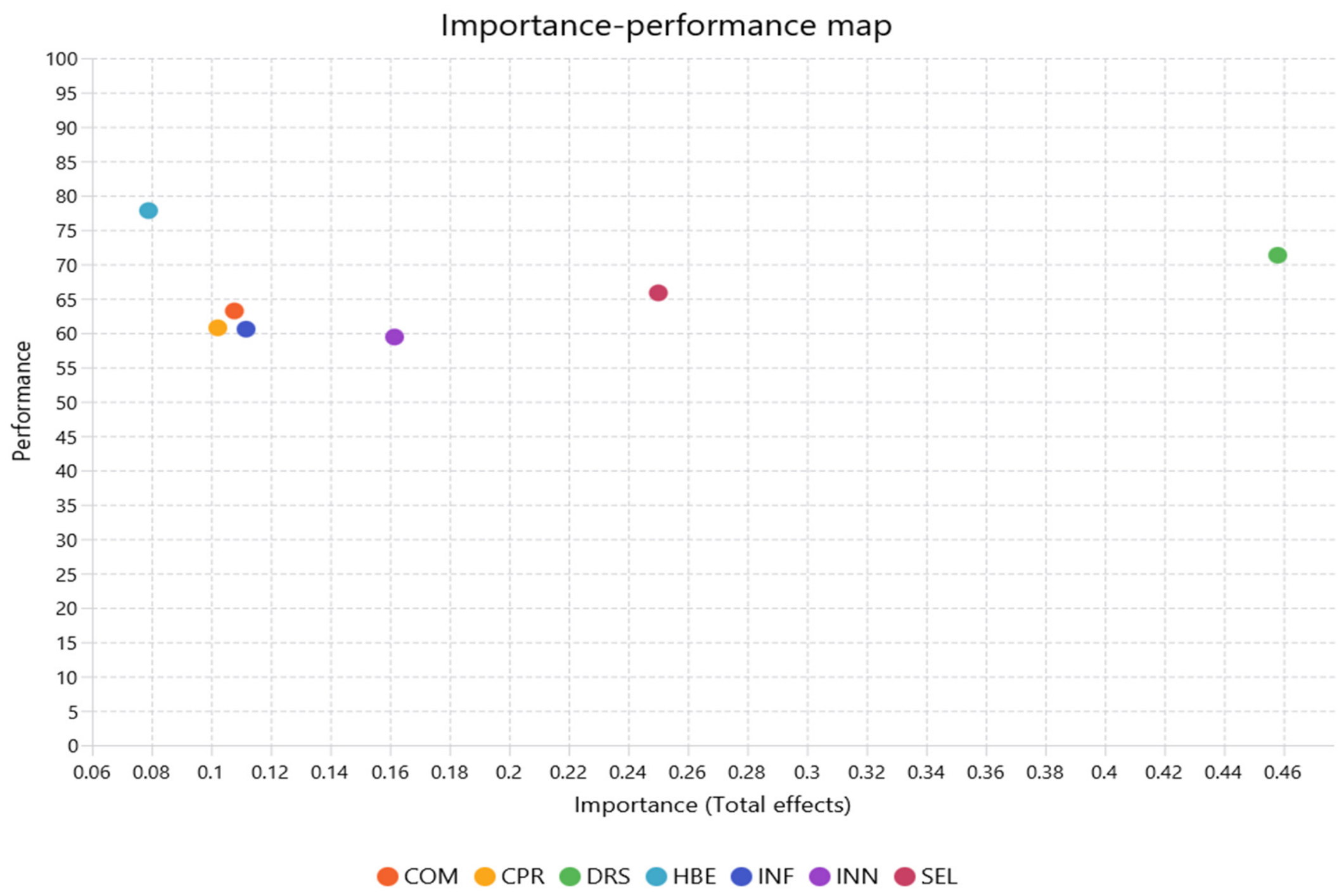
The data analysis included an importance–performance matrix analysis to evaluate the importance of the factors. The IPMA analysis evaluates complex models and reveals important factors within an amalgamated research framework. Moreover, the IPMA algorithm estimates data by rescaling from 1 to 10, and hence, produces more robust results. Digital human resource practices were used as outcome factors in this study. The data were estimated using an importance–performance matrix analysis. The results indicated that digital resilience is the most essential factor for measuring digital human resource practices, followed by employee self-efficacy. Innovativeness has a medium level of importance in measuring employees’ intention to adopt digital human resource practices. The importance of compatibility, competitive pressure, and interpersonal influence is notable. However, within the integrated model, hedonic benefits are the least important measure of digital human resource practices. The results of the importance–performance matrix are shown in Table 8, with the respective importance and performance of the factors.
Table 8.
Importance–performance analysis.
The importance–performance map also revealed that digital resilience was the most influential factor, whereas hedonic benefit was the least important factor. To establish a new strategy, policymakers should consider digital resilience, employee self-efficacy, and innovativeness as the core antecedents of digital human resource practices. However, interpersonal influence, compatibility, and competitive pressure are also important in fostering employees’ intentions to adopt digital human resource practices in the workplace. Therefore, managers can boost the digital human resource practice adoption rate among employees by improving compatibility, digital resilience, competitive pressure, interpersonal influence, innovativeness, and employee self-efficacy. Figure 2 shows the importance and performance levels of the outlined factors.
Figure 2.
Importance–performance map. Source: Developed by Authors.
5. Discussion
This study identified the core determinants of digital human resource practices and empirically linked them with employee well-being and logistics firm performance. The integrated research model outlined employee self-efficacy, interpersonal influence, digital resilience, hedonic benefits, compatibility, and innovativeness and revealed that the adoption of digital human resource practices is not shaped by a single dimension but rather by a constellation of psychological capabilities, peer influences, and competitive pressures. The research model was empirically tested and revealed that employee self-efficacy, interpersonal influence, digital resilience, hedonic benefits, compatibility, and innovativeness explain substantial variance in employees’ intention to adopt digital human resource practices. These results are further compared with the literature to identify similarities and differences between the current study’s findings and those of previous studies. These findings indicate that employee self-efficacy is positively related to the adoption of digital human resource practices, which is in line with previous studies [1,13,14]. Interpersonal influence has shown a positive impact on measuring employees’ intention to adopt digital human resource practices, which is consistent with prior studies [1,6,17]. Additionally, digital resilience was found to be significant in measuring the adoption of digital human resource practices, which is consistent with previous studies [8,9,10].
The results also reveal a positive relationship between competitive pressure and the adoption of digital human resource practices, in line with prior studies [9,18]. Factors, such as hedonic benefits, have been shown to be positively associated with the adoption of digital human resource practices, which is consistent with previous studies [19,21]. Additionally, factors such as compatibility and innovativeness were positively associated with the adoption of digital human resource practices, which is in line with previous studies [12,22]. The extended model results revealed a positive association between employees’ intention to adopt digital human resource practices and employee well-being, consistent with arguments established by previous researchers [1,2,3]. Similarly, employees’ intention to adopt digital human resource practices is positively associated with perceived logistics firm performance. These findings have sustainability-related implications. The positive association of digital HR practices with employee well-being and logistics firm performance suggests that digital HR transformation can support sustainable workforce development by improving employee-centered outcomes, while simultaneously contributing to organizational performance. This finding extends the relevance of digital HR practices beyond technological adoption and operational efficiency toward sustainable human resource management in the logistics sector. In addition to the positive associations between exogenous and endogenous factors, employee intention to adopt digital human resource practices explains the variance in employee well-being. Similarly, employees’ intention to adopt digital human resource practices also explains the variance in logistics firm performance. The effect size f2 analysis revealed that digital resilience has a large effect size in measuring the intention to adopt digital human resource practices, followed by employee self-efficacy. Nevertheless, IPMA analysis has suggested that digital resilience, employee self-efficacy, and innovativeness are core antecedents of digital human resource practices.
6. Research Contributions
6.1. Contributions to Theory
This study established an integrative research framework to examine employees’ intention to adopt digital human resource practices and contributes to theory and the literature. Drawing on social cognitive theory, this study confirms that employee self-efficacy is a key cognitive factor that builds confidence and improves employees’ ability to use digital human resource systems. Factors such as interpersonal influence are extracted from social influence theory and the theory of planned behavior and confirm the positive role of supervisors and colleagues in shaping employees’ intention to use digital human resource systems. The results confirm that digital resilience enables employees to adapt to digital changes and, hence, contributes to dynamic capability theory and conservation of resources theory. Building on the technology–organization–environment framework, this study explains that competitive pressure is another determinant of digital human resource adoption. Similarly, the findings on hedonic benefits confirm that motivation and enjoyment are key characteristics driving employees’ willingness to engage in digital HR practices and, hence, contribute to self-determination theory.
Diffusion of innovation is another underlying theory comprising factors such as compatibility and innovativeness. Compatibility has established that digital human resource practices meet employees’ existing work values and routines, and hence, motivate employees to adopt digital human resource practices. Similarly, innovativeness has revealed that employees who are inclined towards new technologies are more enthusiastic about using digital human resource practices. This model is further extended to employee well-being and firm performance. Grounded in the self-determination theory and job demands–resources theory, this study established that digital human resource practices act as job resources and enhance autonomy and competence, thereby improving employee well-being in the workplace. In addition, digital human resource practices strengthen human capital capabilities, operational efficiency, and organizational agility, leading to improved logistics firm performance. By integrating these theoretical lenses and linking them to employees’ intention to adopt digital practices, employee well-being, and firm performance, this study advances the digital human resource management literature. In addition, this study offers a comprehensive employee-centric explanation of digital human resource adoption that goes beyond single-theory approaches. Furthermore, by linking digital HR practices with employee well-being and logistics firm performance, this study extends the digital HRM literature toward sustainable human resource management, highlighting how employee-centered digital transformation can support both workforce well-being and organizational performance.
6.2. Contributions to Practice
The current study makes numerous practical contributions for human resource managers, policymakers, and digital transformation teams aiming to foster employees’ willingness to adopt digital human resource practices in organizations. For instance, the positive impact of employee self-efficacy suggests that employee participation in training programs may enhance employees’ digital capability, which in turn assists employees in gaining confidence in using digital human resource systems. Therefore, interpersonal influence demonstrates that supervisors, early technology adopters, and digital ambassadors can shape employees’ positive attitudes toward adopting digital human resource practices by actively using digital systems, sharing success stories, and providing informal guidance to their peers. Hence, policymakers should also consider this factor. Similarly, digital resilience highlights that psychological support, resilience-building workshops, and structured change management are key measures that help employees manage the stress and uncertainty associated with digital change, resulting in a higher acceptance of digital human resource practices. Policymakers may reduce competitive pressure by highlighting the strategic value of digital human resource practices. For instance, by implementing digital HR practices, policymakers can improve HR analytics and e-recruitment, which, in turn, enhances organizational agility and competitiveness relative to industry peers. In terms of hedonic benefits, this study revealed that a strong focus on user experience, including intuitive interfaces, personalization options, system accessibility, and engaging features such as progress tracking modules, can make digital human resource systems enjoyable and boost employees’ intention to adopt digital human resource practices.
Similar to hedonic benefits, system compatibility is another important concern that requires the attention of policymakers. The findings suggest that the compatibility of digital HR practices with HR managers’ tasks and their integration with existing payroll, attendance, and ERP systems may support HR management performance and encourage employees’ intention to adopt digital HR practices. Policymakers may foster innovativeness among employees through pilot projects, innovation labs, and recognition programs that foster a culture that supports continuous digital adoption in an organization. The findings also indicate that employees’ intention to adopt digital HR practices is positively associated with employee well-being and perceived logistics firm performance. From a practical perspective, digital HR systems may offer opportunities to reduce administrative workload, facilitate workforce planning, and support data-driven decision-making. However, these potential benefits should not be interpreted as causal effects established by the present cross-sectional study. Collectively, these practical insights enable organizations to design employee-centric, resilient, and strategically aligned digital human resource management systems that not only improve adoption intentions, but also support employee well-being and logistics firm performance.
6.3. Conclusions
This study established an integrative model and investigated employees’ intentions to adopt digital HR practices. The research framework indicates that factors such as employee self-efficacy, interpersonal influence, digital resilience, hedonic benefits, compatibility, and innovativeness are core antecedents of employees’ intentions to adopt digital human resource practices. Statistical findings revealed the substantial impact of employee self-efficacy, interpersonal influence, digital resilience, hedonic benefits, compatibility, and innovativeness on digital human resource practices. Similarly, employees’ intention to adopt digital human resource practices explains the variance in employee well-being. In addition, employees’ intention to adopt digital human resource practices also explains the variance in logistics firm performance. The data were also assessed using effect size f2 analysis. The results indicate that digital resilience is the most influential factor in measuring digital human resource practices. The importance–performance matrix analysis demonstrated that digital resilience is the most essential factor in measuring digital human resource practices, followed by employee self-efficacy. Innovativeness has a medium level of importance in measuring employees’ intention to adopt digital human resource practices. The importance of compatibility, competitive pressure, and interpersonal influence is notable. However, within the integrated model, hedonic benefits are the least important measure of digital human resource practices. In terms of contribution, this study establishes an integrative research framework to examine employee intention to adopt digital human resource practices and contributes to theory and the literature. This study provides comprehensive practical contributions for HR managers, organizational leaders, and digital transformation teams, aiming to enhance employees’ intention to adopt digital human resource practices. For instance, this study revealed that managers can boost employees’ intention to adopt digital human resource practices by improving compatibility, digital resilience, competitive pressure, interpersonal influence, innovativeness, and employee self-efficacy. Overall, this study offers an integrative research model for the logistics sector that enables organizations to design employee-centric, resilient, and strategically aligned digital human initiatives that not only improve adoption intentions, but also support the sustainable and effective use of digital human resource practices in dynamic and competitive environments.
6.4. Research Limitations and Future Directions
Despite several theoretical and practical contributions, this study had some limitations that should be acknowledged. First, the current research has unveiled the core antecedents of digital human resource practices; however, it does not claim to include all the factors that impact employees’ intention to adopt digital human resource practices. Therefore, future researchers should extend the current research model to other technological, organizational, and environmental factors. Second, the current research relies on cross-sectional data that may restrict the ability to draw strong causal inferences between the antecedents of digital HR adoption, intention to adopt, and subsequent outcomes such as employee well-being and logistics firm performance. Therefore, future researchers could employ longitudinal or experimental designs to capture changes over time. Another limitation of this study was related to the research sample. The findings are based on data taken only from the logistics sector, which may limit the generalizability of the study. Future research should include data from other industries with different technological intensities or HR practices. Replication across sectors and cultural contexts can strengthen the validity of the research model. In addition, the purposive sampling approach may limit the generalizability of the findings to the wider Saudi logistics sector, particularly across firms of different sizes, subsectors, and levels of digital HR maturity. Future studies should use larger probability-based samples to enhance representativeness and external validity. As firm identifiers and respondents’ geographical locations were not recorded, the number and geographical distribution of participating organizations could not be established, and potential within-firm dependencies among responses could not be assessed.
Funding
This work was funded by the University of Jeddah, Jeddah, Saudi Arabia, under grant No. (UJ-25-DR-20360).
Institutional Review Board Statement
This study involved an anonymous, non-interventional questionnaire administered to adult participants and did not collect any identifiable or sensitive personal information. Ethical approval was not required for this study in accordance with the applicable provisions for survey-based research under Article 10.33 of the Implementing Regulations of the Law of Ethics of Research on Living Creatures issued by the National Committee of Bioethics (NCBE), Kingdom of Saudi Arabia (available online: https://ncbe.kacst.gov.sa/, accessed on 1 October 2025). Anonymity and confidentiality were maintained throughout the study.
Informed Consent Statement
Informed consent was obtained from all the participants prior to their participation. All participants were adults (aged 18 years or older) and were informed of the purpose of the study, the voluntary nature of their participation, and the confidentiality and anonymity of their responses. The completion and return of the questionnaire provided informed consent for participation.
Data Availability Statement
The original contributions presented in this study are included in the article. Further inquiries can be directed to the corresponding author.
Conflicts of Interest
The author declares no conflicts of interest.
Appendix A. Survey Questionnaire
| Compatibility |
| COM1: Use of digital system is compatible with existing infrastructure. |
| COM2: Use of digital system is compatible with my job tasks. |
| COM3: The use of the digital system fits well with the way I work. |
| Competitive pressure |
| CPR1: Digital HR practices are necessary to compete in market. |
| CPR2: Without digital HR practices organization will lose its reputation. |
| CPR3: The advantages of digital HR practices will establish pressure. |
| Digital Resilience |
| DRS1: Digital system has ability to restore breakdowns. |
| DRS2: Employees effectively coordinate with team to restore operations. |
| DRS3: Digital failure allows employees to learn and improve performance. |
| Employee well-being |
| EWB1: Use of digital HR practices brings balance in my life. |
| EWB2: My job positively contributes to my personal life. |
| EWB3: My job gives me sense of purpose at my workplace. |
| EWB4: My job positively contributes to mental health. |
| Hedonic benefits |
| HBE1: The use of digital HR system is like fun. |
| HBE2: Digital HR system has aesthetic design. |
| HBE3: Digital HR system has user friendly interface. |
| Intention to adopt Digital Human Resource Practices |
| IHR1: Employees intend to adopt digital human resource system. |
| IHR2: I would recommend adoption of digital human resource system. |
| IHR3: Employees have favorable attitude to adopt digital system. |
| Interpersonal influence |
| INF1: Before taking decision I consider my colleague’s opinion. |
| INF2: My peers’ opinions influence my work-related decisions. |
| INF3: I feel that supervisor opinion affects work performance. |
| Innovativeness |
| INN1: Employees like to do experiments with new technology. |
| INN2: If employee heard about new technology they will use it. |
| INN3: I am always first to do experiment with new technology. |
| Logistics Firm performance |
| LFP1: When comparing this firm has satisfactory profitability. |
| LFP2: This firm has satisfactory return on investment. |
| LFP3: This firm has shown satisfactory sales growth in last few months. |
| Employee Self-efficacy |
| SEL1: Employees are confident to solve problem using digital system. |
| SEL2: Employees are confident in using digital HR system. |
| SEL3: Employees have shown trust in the digital HR system. |
Appendix B. Path Coefficient and t-Statistics
References
- Pea-Assounga, J.B.B.; Sibassaha, J.L.B. Impact of technological change, employee competency, and law compliance on digital human resource practices: Evidence from congo telecom. Sustain. Futur. 2024, 7, 100195. [Google Scholar] [CrossRef] [Scilit]
- Shiferaw, R.M.; Birbirsa, Z.A. Digital technology and human resource practices: A systematic literature review. Heliyon 2025, 11, e41946. [Google Scholar] [CrossRef] [Scilit] [PubMed]
- Rurkkhum, S. A bundle of human resource practices and employee resilience: The role of employee well-being. Asia-Pac. J. Bus. Adm. 2024, 16, 716–731. [Google Scholar] [CrossRef] [Scilit]
- Roy, S.; Mohanty, R. Green logistics operations and its impact on supply chain sustainability: An empirical study. Bus. Strategy Environ. 2024, 33, 1447–1476. [Google Scholar] [CrossRef] [Scilit]
- Saqib, Z.A.; Qin, L. Investigating effects of digital innovations on sustainable operations of logistics: An empirical study. Sustainability 2024, 16, 5518. [Google Scholar] [CrossRef] [Scilit]
- Poulose, S.; Bhattacharjee, B.; Chakravorty, A. Determinants and drivers of change for digital transformation and digitalization in human resource management: A systematic literature review and conceptual framework building. Manag. Rev. Q. 2024, 75, 1911–1936. [Google Scholar] [CrossRef] [Scilit]
- Jiang, F.; Wang, L.; Li, J.-X.; Liu, J. How smart technology affects the well-being and supportive learning performance of logistics employees? Front. Psychol. 2022, 12, 768440. [Google Scholar] [CrossRef] [Scilit] [PubMed]
- Ahmić, A.; Ćosić, M. Digital human resource management influence on the organizational resilience. Organ. Manag. J. 2025, 22, 111–125. [Google Scholar] [CrossRef] [Scilit]
- Chapano, M.; Mey, M.R.; Werner, A. Perceived challenges: Unfounded reasons for not forging ahead with digital human resource management practices. SA J. Hum. Resour. Manag. 2023, 21, 2085. [Google Scholar] [CrossRef] [Scilit]
- Liang, M.; Zhihao, Q.; Ge, Z.; Xin, Z.; Hao, F. How employee resilience contributes to digital performance: Moderating role of enterprise social media usage. Behav. Inf. Technol. 2025, 44, 713–730. [Google Scholar] [CrossRef] [Scilit]
- Trivedi, K.; Srivastava, K.B. Impact of strategic HR practices on innovation performance: Examining the mediation of differentiation and cost-effectiveness. J. Organ. Eff. People Perform. 2024, 11, 680–698. [Google Scholar] [CrossRef] [Scilit]
- Sweiss, M.I.K. The influence of HR practices and diffusion of innovation theory towards adoption of internet of things in SMEs. Int. J. Bus. Inf. Syst. 2025, 49, 390–411. [Google Scholar] [CrossRef] [Scilit]
- Al-Hattami, H.M. Understanding how digital accounting education fosters innovation: The moderating roles of technological self-efficacy and digital literacy. Int. J. Manag. Educ. 2025, 23, 101131. [Google Scholar] [CrossRef] [Scilit]
- Shahzad, M.F.; Xu, S.; Zahid, H. Exploring the impact of generative AI-based technologies on learning performance through self-efficacy, fairness & ethics, creativity, and trust in higher education. Educ. Inf. Technol. 2025, 30, 3691–3716. [Google Scholar] [CrossRef] [Scilit]
- Setyaningrum, R.P.; Ratnasari, S.L.; Soelistya, D.; Purwati, T.; Desembrianita, E.; Fahlevi, M. Green human resource management and millennial retention in Indonesian tech startups: Mediating roles of job expectations and self-efficacy. Cogent Bus. Manag. 2024, 11, 2348718. [Google Scholar] [CrossRef] [Scilit]
- Madanchian, M.; Taherdoost, H. Barriers and Enablers of AI adoption in human resource management: A critical analysis of organizational and technological factors. Information 2025, 16, 51. [Google Scholar] [CrossRef] [Scilit]
- Stef, A.; Crișan, E.L. Analysis of the impact of human resources employees’ perceptions on the process of digital transformation. IIMT J. Manag. 2025, 2, 84–99. [Google Scholar] [CrossRef] [Scilit]
- Hmoud, H.; Al-Adwan, A.S.; Horani, O.; Yaseen, H.; Al Zoubi, J.Z. Factors influencing business intelligence adoption by higher education institutions. J. Open Innov. Technol. Mark. Complex. 2023, 9, 100111. [Google Scholar] [CrossRef] [Scilit]
- Akel, G.; Armağan, E. Hedonic and utilitarian benefits as determinants of the application continuance intention in location-based applications: The mediating role of satisfaction. Multimed. Tools Appl. 2021, 80, 7103–7124. [Google Scholar] [CrossRef] [Scilit]
- Liu, Y.; Xu, X.; Jin, Y.; Deng, H. Understanding the digital resilience of physicians during the COVID-19 pandemic: An empirical study. MIS Q. 2023, 47, 391–422. [Google Scholar] [CrossRef] [Scilit]
- Noerman, T.; Yuliaji, E.S.; Natasha, C.A.M. The impacts of social influence and hedonic motivation on experience and continuance intention of using AI in SMEs’ HRM. Cogent Bus. Manag. 2025, 12, 2542422. [Google Scholar] [CrossRef] [Scilit]
- Long, N.T.; Luu, D.X.; Trung, N.Q.; Hien, N.N. Barriers to the Adoption of Sharing-Based Accommodations: The Role of Personal Innovativeness and Compatibility. SAGE Open 2024, 14, 21582440241289840. [Google Scholar] [CrossRef] [Scilit]
- Alyoubi, B.A.; Yamin, M.A. Extending the role of diffusion of innovation theory (DOI) in achieving the strategic goal of the firm with the moderating effect of cost leadership. Int. J. Syst. Dyn. Appl. 2021, 10, 1–22. [Google Scholar] [CrossRef] [Scilit]
- Alyoubi, B.A.; Yamin, M.A.Y. Investigating the role of diffusion of innovation theory, environmental pressure, and organisational capabilities towards adoption of digital technologies. Int. J. Bus. Inf. Syst. 2024, 46, 32–55. [Google Scholar] [CrossRef] [Scilit]
- Rahi, S. Investigating the role of employee psychological well-being and psychological empowerment with relation to work engagement and sustainable employability. Int. J. Ethics Syst. 2022, 38, 266–285. [Google Scholar] [CrossRef] [Scilit]
- Fleming, W.J. Employee well–being outcomes from individual–level mental health interventions: Cross–sectional evidence from the United Kingdom. Ind. Relat. J. 2024, 55, 162–182. [Google Scholar] [CrossRef] [Scilit]
- Hill, N.S.; Axtell, C.; Raghuram, S.; Nurmi, N. Unpacking virtual work’s dual effects on employee well-being: An integrative review and future research agenda. J. Manag. 2024, 50, 752–792. [Google Scholar] [CrossRef] [Scilit]
- Kim, M.; Kim, J. Corporate social responsibility, employee engagement, well-being and the task performance of frontline employees. Manag. Decis. 2021, 59, 2040–2056. [Google Scholar] [CrossRef] [Scilit]
- Budhwar, P.; Chowdhury, S.; Wood, G.; Aguinis, H.; Bamber, G.J.; Beltran, J.R.; DeNisi, A. Human resource management in the age of generative artificial intelligence: Perspectives and research directions on ChatGPT. Hum. Resour. Manag. J. 2023, 33, 606–659. [Google Scholar] [CrossRef] [Scilit]
- Ho, B.Q.; Otsuki, M.; Kishita, Y.; Kobayakawa, M.; Watanabe, K. Human augmentation technologies for employee well-being: A research and development agenda. Int. J. Environ. Res. Public Health 2022, 19, 1195. [Google Scholar] [CrossRef] [Scilit] [PubMed]
- Zhang, J.; Chen, Z. Exploring human resource management digital transformation in the digital age. J. Knowl. Econ. 2024, 15, 1482–1498. [Google Scholar] [CrossRef] [Scilit] [PubMed]
- Alraja, M.N.; Imran, R.; Khashab, B.M.; Shah, M. Technological innovation, sustainable green practices and SMEs sustainable performance in times of crisis (COVID-19 pandemic). Inf. Syst. Front. 2022, 24, 1081–1105. [Google Scholar] [CrossRef] [Scilit] [PubMed]
- Kutieshat, R.; Farmanesh, P. The impact of new human resource management practices on innovation performance during the COVID 19 crisis: A new perception on enhancing the educational sector. Sustainability 2022, 14, 2872. [Google Scholar] [CrossRef] [Scilit]
- Ferris, G.R.; Treadway, D.C.; Kolodinsky, R.W.; Hochwarter, W.A.; Kacmar, C.J.; Douglas, C.; Frink, D.D. Development and validation of the political skill inventory. J. Manag. 2005, 31, 126–152. [Google Scholar] [CrossRef] [Scilit]
- Yukl, G.; Seifert, C.F.; Chavez, C. Validation of the extended Influence Behavior Questionnaire. Leadersh. Q. 2008, 19, 609–621. [Google Scholar] [CrossRef] [Scilit]
- He, Z.; Huang, H.; Choi, H.; Bilgihan, A. Building organizational resilience with digital transformation. J. Serv. Manag. 2023, 34, 147–171. [Google Scholar] [CrossRef] [Scilit]
- Yamin, M.A.Y. The role of HR practices, big data analytics capabilities and supply chain resilience in achieving firm disaster immunity: The moderating effect of data-driven culture. Benchmarking Int. J. 2024, 32, 3309–3323. [Google Scholar] [CrossRef] [Scilit]
- Baig, M.I.; Shuib, L.; Yadegaridehkordi, E. A model for decision-makers’ adoption of big data in the education sector. Sustainability 2021, 13, 13995. [Google Scholar] [CrossRef] [Scilit]
- Li, F.; Li, X.; Yuen, K.F. Exploring key drivers for consumers’ willingness to adopt underground logistics systems: Uses and gratification theoretical perspective. Int. J. Logist. Manag. 2025, 36, 1172–1194. [Google Scholar] [CrossRef] [Scilit]
- Rahi, S.; Ghani, M.A. The role of UTAUT, DOI, perceived technology security and game elements in internet banking adoption. World J. Sci. Technol. Sustain. Dev. 2018, 15, 338–356. [Google Scholar] [CrossRef] [Scilit]
- Rahi, S.; Ghani, M.A.; Hafaz Ngah, A. Integration of unified theory of acceptance and use of technology in internet banking adoption setting: Evidence from Pakistan. Technol. Soc. 2019, 58, 101120. [Google Scholar] [CrossRef] [Scilit]
- Sweiss, M.I.K.; Yamin, M.A.Y. The Role of AI-Enabled Human Resource Practices Towards Task Satisfaction and Employee Creative Willingness. SAGE Open 2024, 14, 21582440241281618. [Google Scholar] [CrossRef] [Scilit]
- Rahi, S. Fostering employee work engagement and sustainable employment during COVID-19 crisis through HR practices, employee psychological well-being and psychological empowerment. Ind. Commer. Train. 2023, 55, 324–345. [Google Scholar] [CrossRef] [Scilit]
- Tippins, M.J.; Sohi, R.S. IT competency and firm performance: Is organizational learning a missing link? Strateg. Manag. J. 2003, 24, 745–761. [Google Scholar] [CrossRef] [Scilit]
- Rahi, S. Research design and methods: A systematic review of research paradigms, sampling issues and instruments development. Int. J. Econ. Manag. Sci. 2017, 6, 1–5. [Google Scholar] [CrossRef]
- Rahi, S.; Alnaser, F.M.; Ghani, M.A. Designing Survey Research: Recommendation for Questionnaire Development, Calculating Sample Size and Selecting Research Paradigms. In Economic and Social Development: Book of Proceedings; Varazdin Development and Entrepreneurship Agency: Varazdin, Croatia, 2019; pp. 1157–1169. [Google Scholar]
- Rahi, S. Structural Equation Modeling Using SmartPLS; CreateSpace Independent Publishing Platform: North Charleston, SC, USA, 2017. [Google Scholar]
- Hair, J.F., Jr.; Hult, G.T.M.; Ringle, C.; Sarstedt, M. A Primer on Partial Least Squares Structural Equation Modeling (PLS-SEM); SAGE Publications: Thousand Oaks, CA, USA, 2016. [Google Scholar]
- Lindell, M.K.; Whitney, D.J. Accounting for common method variance in cross-sectional research designs. J. Appl. Psychol. 2001, 86, 114. [Google Scholar] [CrossRef] [Scilit] [PubMed]
- Rahi, S. Research Design and Methods; CreateSpace Independent Publishing Platform: North Charleston, SC, USA, 2018. [Google Scholar]
- Yamin, M.A.; Almuteri, S.D.; Bogari, K.J.; Ashi, A.K. The Influence of Strategic Human Resource Management and Artificial Intelligence in Determining Supply Chain Agility and Supply Chain Resilience. Sustainability 2024, 16, 2688. [Google Scholar] [CrossRef] [Scilit]
- Fornell, C. A national customer satisfaction barometer: The Swedish experience. J. Mark. 1992, 56, 6–21. [Google Scholar] [CrossRef] [Scilit]
- Henseler, J.; Ringle, C.M.; Sarstedt, M. A new criterion for assessing discriminant validity in variance-based structural equation modeling. J. Acad. Mark. Sci. 2015, 43, 115–135. [Google Scholar] [CrossRef] [Scilit]
- Yamin, M.A.Y.; Abdalatif, O.A.A. Examining consumer behavior towards adoption of quick response code mobile payment systems: Transforming mobile payment in the fintech industry. Humanit. Soc. Sci. Commun. 2024, 11, 675. [Google Scholar] [CrossRef] [Scilit]

Disclaimer/Publisher’s Note: The statements, opinions and data contained in all publications are solely those of the individual author(s) and contributor(s) and not of MDPI and/or the editor(s). MDPI and/or the editor(s) disclaim responsibility for any injury to people or property resulting from any ideas, methods, instructions or products referred to in the content. |
© 2026 by the author. Licensee MDPI, Basel, Switzerland. This article is an open access article distributed under the terms and conditions of the Creative Commons Attribution (CC BY) license.