


Abstract
Rapid urbanisation and growing environmental, economic, and social pressures are increasing the need for intelligent and sustainable urban management. Artificial intelligence (AI), the Internet of Things (IoT), and digital twins support real-time monitoring, prediction, simulation, and decision-making, but increasingly complex urban systems can exceed the capabilities of conventional computing. Quantum computing offers new possibilities for complex optimisation and simulation, yet its integration with smart sustainable city technologies remains underexplored. This paper develops a theoretically grounded conceptual framework for Hybrid Quantum Computing-Enabled Smart Sustainable Cities through an integrative review of research on AI, IoT, digital twins, hybrid quantum computing, and urban sustainability. The framework positions IoT as the data-acquisition layer, AI as the analytical and predictive engine, digital twins as the representation and simulation layer, and hybrid quantum–classical computing as an advanced capability for optimisation, simulation, and quantum machine learning. It also identifies enabling conditions, including data governance, interoperability, cybersecurity, digital infrastructure, regulation, workforce readiness, ethics, and citizen trust. The framework highlights applications across transport, energy, water, waste, healthcare, and public safety, providing a foundation for empirical validation and policy development towards more intelligent, resilient, resource-efficient, and sustainable cities.
1. Introduction
The twenty-first century has witnessed the convergence of rapid urbanisation, technological advancement, and growing sustainability imperatives, fundamentally reshaping how cities are planned, managed, and governed. Although cities remain central to economic growth, innovation, and social development, they face interconnected challenges involving environmental degradation, infrastructure pressures, climate change, resource depletion, and governance. These challenges, together with rising expectations regarding service delivery and quality of life, have exposed the limitations of conventional urban management approaches. Consequently, smart sustainable cities have attracted increasing attention as an approach that combines digital innovation with sustainable urban development, resilience, efficiency, and improved quality of life [1,2,3,4].
Existing research examines different dimensions of this relationship. Bibri et al. [1] investigated the convergence of artificial intelligence (AI), the Internet of Things (IoT), and big data technologies in environmentally sustainable smart cities. Bibri et al. [2] examined the synergies among AI, AIoT, and urban digital twins for environmental planning and sustainable urban development. Complementing these technology-oriented perspectives, Das [3] explored the interrelationships among digital transformation, infrastructure, service delivery, and governance, while Kaiser and Deb [4] examined the relationship between sustainable smart cities and Sustainable Development Goals (SDGs). Collectively, these studies highlight the importance of integrating digital technologies with urban infrastructure, institutional arrangements, and environmental and broader sustainability objectives.
Smart sustainable cities, therefore, involve more than the deployment of digital technologies. They require the coordinated use of data, intelligent processes, infrastructure, and governance mechanisms to address the environmental, economic, and social dimensions of urban sustainability [1,2,3,4]. Emerging technologies, including AI, IoT, digital twins, and hybrid quantum computing (HQC), offer opportunities to transform urban data into predictive insights, simulated scenarios, and informed decisions. However, although existing research has examined digital technology integration and the potential relevance of quantum technologies to smart-city applications, further conceptual development is needed to explain how HQC might complement AI, IoT, and digital twins within an integrated urban architecture. In particular, the relationships among these technologies, their feedback mechanisms, their contributions to sustainability outcomes, and the institutional conditions influencing their implementation require further clarification. This study addresses these gaps by developing an eight-layer conceptual framework connecting urban data acquisition and management, AI-enabled analysis, digital-twin simulation, selective HQC-enabled optimisation, decision support, and urban sustainability outcomes.
1.1. Urbanisation and Sustainability Challenges
Urbanisation has positioned cities as centres of economic activity, innovation, and development, but it has also created complex environmental, infrastructural, and social challenges. Projections indicate that approximately 70% of the world’s population will live in urban areas by 2050, increasing pressure on housing, transportation, energy, water, healthcare, and waste-management systems [5]. Although urbanisation contributes to economic development and urban growth, cities also experience high greenhouse gas emissions, environmental degradation, resource depletion, and socioeconomic inequality, making sustainable urban development increasingly important [1,6].
The scale and interconnectedness of urban systems also create significant governance challenges. Cities can be understood as socio-technical systems in which physical infrastructure, digital technologies, natural systems, institutions, and people interact. Decisions in one sector can affect several others. For example, transportation decisions influence land use, energy consumption, air quality, productivity, and public health. Such interdependencies highlight the limitations of fragmented, sector-based planning and decision-making [7].
Climate change further intensifies these challenges through the increasing frequency and severity of hazards such as floods, heatwaves, and droughts, which threaten infrastructure and the continuity of essential services [6]. At the same time, high levels of urban energy consumption and associated carbon dioxide emissions contribute to environmental pressures and resource depletion. Addressing these challenges requires the integration of technological solutions with ecological, economic, and social considerations [2].
The increasing volume, velocity, and diversity of urban data also expose the limitations of conventional approaches to computation and decision-making. Urban managers require intelligent systems capable of processing large datasets, modelling complex interactions, and supporting timely optimisation. Consequently, technologies such as AI, IoT, and digital twins have become important components of smart urban development. However, the growing computational demands of interconnected urban systems have also stimulated interest in the potential contribution of HQC to selected computationally demanding urban applications.
1.2. Digital Transformation of Smart Sustainable Cities
In response to the challenges associated with urbanisation, digital transformation is shifting urban management away from fragmented and reactive approaches towards more integrated, data-driven, and intelligent systems. This transformation supports the development of smart sustainable cities by combining digital innovation with economic, ecological, and socio-demographic considerations rather than focusing solely on technological progress [1].
Among the technologies driving this transformation, IoT enables the collection of real-time data through sensors installed across urban transport networks, energy and water infrastructure, buildings, and other components of the urban environment. These data can be processed by AI systems to support prediction, optimisation, and decision-making. Digital twins complement these capabilities through the dynamic modelling and simulation of urban systems, allowing planners and decision-makers to assess infrastructure performance, test alternative scenarios, and estimate the potential effects of policy interventions before implementation [2,8]. Together, these technologies support urban planning, infrastructure management, monitoring, and service delivery.
Nevertheless, the scale and complexity of urban systems continue to pose challenges for classical computing. AI systems, IoT platforms, and digital twins must process heterogeneous data and address complex optimisation and simulation problems involving, for example, transportation networks, smart-grid management, and urban systems modelling. These demands have stimulated interest in hybrid quantum–classical computing as a potential complementary approach to enhancing the analytical and optimisation capabilities of existing smart-city technologies. Its prospective contribution lies in addressing selected computational subproblems within established urban digital systems rather than replacing conventional computing.
1.3. Why Quantum Computing?
Even though significant progress in the digitalisation of urban settings has been made, integrating sophisticated technologies, such as AI, IoT, and digital twins, into urban planning and service provision faces challenges due to the complexity and dynamics of urban systems. A large volume of data generated from different streams related to transport, energy, water supply, etc., is essential to be processed and analysed to support optimisation, simulation, and forecasting. Classical computing offers adequate tools for this; however, there are certain large-scale combinatorial and multi-objective problems for which it does not provide efficient solutions. As a result, quantum computing could serve as a tool for certain computational tasks. At the same time, the advantages of quantum computing over classical computing in terms of efficiency have not yet been demonstrated [9,10].
Contemporary scientific literature has started to explore potential synergy between quantum technologies and smart cities. Bonab et al. [9] investigated the interaction between quantum technologies and traditional smart city applications. In their subsequent review, Bonab et al. [10] considered the relationship between quantum technologies and urban complexity. Algorithmically, the role of quantum technologies is examined in the survey of variational quantum algorithms by Cerezo et al. [11], which discusses the domains of application of these algorithms and the limitations of current quantum computers. Therefore, the groundwork for further exploration of quantum computing’s role in urban systems is laid.
HQC refers to the simultaneous use of quantum and classical computing resources rather than the replacement of classical computing with quantum technologies. In this hybrid approach, classical computers are responsible for data preparation, constraint handling, orchestration, and post-processing, while quantum computers solve certain sub-problems of the problem at hand. Variational quantum algorithms represent a hybrid approach and are run on noisy intermediate-scale quantum (NISQ) devices that suffer from hardware noise and limited computational capability [11]. HQC’s applicability depends on the problem formulation, hardware capabilities, solution quality, computational overheads, and performance compared to the competitive classical approach. The HQC should be seen as a complementary technology rather than an alternative to classical optimisation and simulation in urban systems.
Possible applications may include transportation network development, traffic control, energy scheduling, water resources allocation, and infrastructure planning, among others. These areas need further research. To implement the mentioned applications in the integrated urban system, the integration of quantum and classical computing with digital technologies in the urban environment needs to be considered. This study addresses this prospective role and develops an eight-layer framework comprising the urban environment, IoT data acquisition, data management, artificial intelligence, digital twins, HQC, decision support, and urban sustainability outcomes.
1.4. Research Gap
Research in smart and sustainable cities has increasingly focused on the interplay among AI, IoT, and big data to promote environmental sustainability [1]. Further research has examined the integration of AI and digital twins to foster data-driven environmental planning [2]. Other research has examined AI- and AIoT-enabled solutions to improve the environmental performance of smart cities [8]. All these contributions highlight the significance of interconnected digital technologies in urban planning and management. At the same time, interest has emerged in the potential relevance of quantum technologies to smart-city applications. As mentioned in Section 1.3, Bonab et al. [9,10] examined the relationships between quantum technologies and urban systems, highlighting their potential relevance to urban complexity and computationally challenging problems. However, a theoretical elaboration on integrating HQC approaches into the architecture of interconnected AI, IoT, digital twins, and smart sustainable cities remains underdeveloped.
Current literature mostly discusses separate technological domains or applications thereof. There has been research in quantum technologies regarding urban systems [9,10], and in AI, IoT, and digital twins regarding urban analytics, environmental planning, and infrastructure management [1,2,8]. Therefore, additional conceptual synthesis is required to consider potential interactions among the technologies within an integrated urban intelligence architecture. In particular, the relationships among urban data collection, data management, AI analysis, digital twin simulation, and HQC optimisation have to be considered. The prospective contribution of HQC to the architecture has to be estimated carefully, taking into account the nature of the computational task, hardware capability, quality of the solution, and its performance relative to traditional classical methods.
At the same time, beyond technological considerations, there are institutional and governance challenges associated with deploying such a system. Current literature has looked into barriers to implementing AI in smart cities [12], data governance [13], semantic and technical interoperability [14,15], and cybersecurity and privacy [16,17,18]. There is also research on smart city implementation in developing countries that highlights the importance of contextual and institutional constraints [19]. These findings indicate the relevance of governance, interoperability, security, and implementation capacity for smart cities. However, further conceptual examination is necessary to understand how these aspects can influence the implementation of HQC technology alongside existing urban digital technologies. In particular, the implications of digital infrastructure, workforce skills, regulation, and institutional readiness for implementing urban intelligence systems should be considered more closely.
Therefore, to address these gaps, this study proposes an eight-layer conceptual framework that interconnects the urban environment, IoT data collection, data management, AI, digital twins, HQC, decision support, and urban sustainability outcomes. The novelty of this conceptual framework lies in integrating the research streams discussed above and presenting them as an interconnected system, in which feedback loops represent the interactions among urban monitoring, computation, simulation, decision-making, and the evaluation of sustainability outcomes. This framework recognises relevant technological, institutional and governance factors that facilitate or inhibit implementation and establishes a basis for future empirical validation and application-specific assessment.
1.5. Research Objectives, Research Questions, and Contributions
To address the identified research gaps, this study aims to develop a theoretically justified conceptual framework explaining how AI, IoT, digital twins, and HQC may be integrated to enhance urban intelligence, computationally demanding tasks, optimisation, simulation, and sustainability-oriented decision-making. It also examines the technological, organisational, and governance conditions that may influence the adoption of HQC within smart sustainable cities.
The study addresses the following research questions:
- RQ1: How might HQC complement AI, IoT, and digital twins in supporting urban intelligence, computationally demanding tasks, and sustainability-oriented decision-making?
- RQ2: What technological, organisational, and governance factors may enable or constrain the adoption of hybrid quantum computing within smart sustainable city ecosystems?
- RQ3: How can the relationships among AI, IoT, digital twins, HQC, and enabling institutional conditions be synthesised into an integrated conceptual framework for smart sustainable cities?
Alignment of Research Questions with the Literature
The three research questions are informed by the intersection of two complementary strands of literature that underpin the proposed conceptual framework. RQ1 draws on the body of literature on the complementarity between AI, IoT, big data, and digital twins in relation to smart, sustainable cities [1,2,8], as well as quantum technologies in urban environments [9,10] and quantum algorithms [11]. While the latter contributes to understanding the significance of individual technologies, further conceptual synthesis is needed to clarify how HQC could complement existing urban digital ecosystems in performing computationally intensive tasks.
RQ2 is based on research on implementation conditions for smart-city technologies. Specifically, it draws on the literature on AI implementation barriers [12], data governance [13], interoperability [14,15], cybersecurity and privacy concerns [16,17,18], and institutional challenges in developing countries [19]. Such a body of literature paves the way for exploring the effects of technological readiness, organisational competencies, governance mechanisms, and institutional capacity on the feasibility and responsible implementation of HQC in smart sustainable city ecosystems.
The third research question (RQ3) merges these two strands by connecting the literature on technological integration with the implementation and governance literature. It addresses the need for a theoretically grounded framework that explains how HQC could fit within the urban environment alongside IoT, data management, AI, digital twins, decision support, and sustainability. The framework incorporates feedback and enablers and specifies the role of HQC as prospective and contingent upon evidence on specific applications.
Collectively, these three research questions represent a logical sequence for understanding technological complementarities, identifying implementation conditions, and developing an integrated conceptual framework. This study makes three major contributions. First, it provides an integrated perspective on the fragmented research on AI, IoT, digital twins, HQC, and smart sustainable cities to advance the understanding of next-generation urban intelligence. Second, it proposes a conceptual framework in which HQC represents a potentially complementary technology for selected optimisation, simulation, and decision-making tasks. Third, it identifies the critical conditions of implementation, including data governance, interoperability, cybersecurity, digital infrastructure, regulation, and workforce.
2. Methodology
2.1. Research Approach
This study adopted an integrative literature review to develop a conceptual framework for hybrid quantum computing-enabled smart sustainable cities. This approach was appropriate because the study brings together several related but differently developed research areas, including smart sustainable cities, the IoT, AI, digital twins, quantum computing, and hybrid quantum–classical computing. Rather than treating these areas as independent streams, the review examined their relationships and potential integration to support urban decision-making and sustainability outcomes. The review, therefore, focused on established knowledge, emerging technological developments, cross-domain relationships, and areas that remain insufficiently integrated [20,21]. Table 1 presents the research protocol summary for the review.
Table 1.
Research protocol for the integrative literature review.
2.2. Literature Search Strategy and Source Selection
The literature search involved Scopus and Web of Science (WoS) databases, with Google Scholar used as a supplementary source. Google Scholar helped identify potentially relevant papers missed during the database search and was used to perform backwards and forward citation searches. This source was used to increase literature coverage, as database retrieval can vary depending on terminology, metadata, indexing practice, and search-string construction.
The period covered by the review ran from 2000 to 2026 and was selected with both the emergence of the concept of smart cities and sustainable urbanity studies and the development of AI, IoT, digital twins, quantum computing, and hybrid quantum–classical computing technologies in mind. Publications released after the final search date in 2026 were not included in the review.
A multi-stream search strategy was employed in the Scopus database to identify literature across scientific fields relevant to the proposed conceptual framework. Instead of performing one highly selective Boolean search query, six complementary search streams were constructed:
- -
- S1: Smart sustainable cities and urban systems.
- -
- S2: AI, IoT, and digital twins in smart cities.
- -
- S3: Quantum computing and urban applications.
- -
- S4: Quantum computing and AI or machine learning.
- -
- S5: Quantum computing, IoT, and digital twins.
- -
- S6: AI, IoT, digital twins, and smart cities.
It was done in light of the interdisciplinary nature of the research and the fact that some of the technologies under discussion are still at different stages of development. Restricting the retrieval to publications in which all technologies under discussion must have been mentioned simultaneously would considerably limit the search, especially since quantum computing, AI, IoT, and digital twins have rarely been considered in the context of smart sustainable cities. The individual search streams made it possible to identify papers discussing a single technological domain, their combination, or the contribution of these technologies to urban systems.
Within the WoS database, a single consolidated Topic (TS) search covering the same conceptual fields (smart cities, urban systems, AI, IoT, digital twins, quantum computing, hybrid quantum–classical computing) was conducted. Although the search strings within the databases differed, the conceptual scope was the same. The complete list of search strings and screenshots of the database search results are presented in Supplementary File S1.
The journals’ quartile rankings were used as one of the indicators reflecting the standing of the paper in peer-reviewed journals. The Q1 and Q2 journal classifications were based on the SCImago Journal Rank (SJR) system and subject categories. If a journal had different quartile rankings across categories, the category most relevant to the research subject was chosen. The latest SJR classification available at the time of assessment was used. However, the quartile ranking was not the criterion for inclusion in the review. In addition to relevance to the research questions, the study’s methodological or theoretical contribution and the paper’s credibility were taken into account.
The review mostly included peer-reviewed journal articles. The books, book chapters and papers published in conference proceedings were used when they made theoretical, methodological, or technological contributions to the research questions and conceptual framework. One relevant preprint was included in the review because of its contribution to the field of quantum computing, and its non-peer-reviewed status was noted. The credibility of the publication was estimated based on its peer-review status, the standing of the journal, conference, or publisher, and the transparency and relevance of the reported methods and results. Bibliographical information about the publications and their publication status was checked against publisher websites and, if needed, against available indexing information.
The Google Scholar search results were assessed using the same criteria for relevance and credibility as those for papers found in Scopus and WoS. Indexing in Google Scholar and citation counts were not considered separate indicators of the publication’s quality. The selection criteria for the sources included the contribution of each paper to the theoretical, methodological, empirical, or technological aspects pertinent to the research questions and the development of the conceptual framework.
The chosen search and source selection strategy was deemed suitable for the interdisciplinary conceptual review, when the knowledge base was scattered among different research communities. The strategy provided the basis for examining smart-city technologies and governance frameworks, as well as emerging quantum computing technologies and their potential applications in urban systems.
2.3. Inclusion and Exclusion Criteria
Publications were included in the review if they contributed substantially to one or more relevant domains in terms of theory, technology, practice, method, or concept development. Specific emphasis was placed on research into technology integration, optimisation, quantum computing, simulation, urban intelligence, sustainability, digital infrastructure, governance, interoperability, cybersecurity, and implementation readiness.
The inclusion criteria included the following three categories:
- i.
- Technological integration: Studies focused on the integration or complementarity of AI, IoT, digital twins, and quantum computing within smart, sustainable cities and urban systems.
- ii.
- Computational capabilities: Studies dealing with quantum computing and hybrid quantum–classical computing in the context of their use for optimisation, simulation, machine learning, and other computational tasks.
- iii.
- Implementation and governance: Studies devoted to the technological, organisational, and institutional aspects of smart city development and implementation, with particular focus on infrastructure readiness, interoperability, cybersecurity, and sustainability.
As mentioned above (see Section 2.2), the bulk of the evidence base was composed of peer-reviewed journal articles. Conference proceedings, scholarly books, book chapters, and preprints were also considered if they made a distinct contribution to answering the research questions. Foundational research was especially relevant in light of the development of the conceptual framework.
Therefore, publication type alone did not constitute the criteria for inclusion in the review; each publication had to show relevance to the research questions and contribute substantially to answering them. The selected publications were also required to provide identifiable findings or a substantive scholarly contribution relevant to the research questions. Depending on the type and purpose of publication, this evidence/contribution may include empirical/computational evidence, synthesised evidence, methodological insights, theoretical propositions, or conceptual developments. It should be emphasised that empirical evidence was not required if the publication made a distinct theoretical, conceptual, or methodological contribution to the research objectives.
The exclusion criteria included: (a) irrelevance to urban/sustainability applications, (b) low scholarly evidence, (c) predominant presence of opinion and promotion, (d) research on quantum technologies that was irrelevant to urban applications or to the technological domain of the framework, and (e) insufficient methodological transparency or weak theoretical, empirical, or technological contribution.
Therefore, the selection criteria prioritised relevance to the research questions, scholarly credibility, evidence/conceptual contribution, and relevance to the framework over the mere number or type of papers. Such an approach helped preserve the focus of the review while excluding papers related to the topic but making little contribution to the conceptual synthesis [20].
2.4. Study Selection and Screening Progression
The selection process included four steps: identification, screening, eligibility assessment, and inclusion. Although an integrative conceptual review was used rather than a systematic review design, these steps provided a structured and transparent way to assemble the literature corpus.
2.4.1. Identification
Bibliometric data were collected and analysed using Biblioshiny—the web-based interface for the R package bibliometrix—in RStudio Desktop (version 2026.10.1). These bibliometric data allowed for analysis of the intellectual structure, thematic evolution, and international collaboration in the field. Multiple sources were searched for records, and duplicates were detected and removed before screening. Six Scopus search streams generated 2198 records, and one Web of Science search produced 664 records. Another Google Scholar search returned 220 records, mostly from citation searches. In total, 3082 records were identified from three sources. Duplicates were detected in two rounds: the first round identified 78 duplicates, and a further 384 were found in cross-database searches. A total of 462 duplicates were removed, leaving 2620 records to screen.
2.4.2. Screening
Screening and eligibility assessment were performed independently by two reviewers—the author and a research assistant. Both reviewers assessed records according to predetermined inclusion and exclusion criteria. In the event of a disagreement, an arbitrator was consulted to make a decision. The screening covered 2620 records and involved assessing titles, abstracts, and keywords. The study put a specific emphasis on the relevance to core research domains: smart sustainable cities, urban systems, Internet of Things and sensing technologies, artificial intelligence and machine learning, digital twins, quantum computing, hybrid quantum–classical computing, optimisation, urban decision support, governance, and sustainability.
Irrelevant records (with no connection to the study scope or to the proposed urban and technological context) were excluded. Only records contributing directly to the conceptual framework or providing theoretical or technological background necessary for understanding the relationships between the elements of the framework were retained.
As a result, 179 records proceeded to the next step of eligibility assessment, while 2435 records were excluded in screening (Table 2).
Table 2.
Literature search and screening progression.
2.4.3. Eligibility Assessment
The 179 records that passed the initial screening were subject to a more rigorous assessment of their relevance, scholarly credibility, methodological transparency, and contribution to the proposed conceptual framework. This assessment determined whether a publication provided sufficient theoretical, methodological, empirical, or technological evidence to address at least one research question or to inform the conceptual framework. Particular attention was paid to the clarity of the research objective, the appropriateness of the methodological approach, the adequacy of the evidence base, and the significance of the findings for understanding the integration of advanced digital technologies in smart and sustainable cities.
Peer-reviewed journal articles were preferred. Along with relevance and methodological/theoretical contributions, the journal’s standing was also taken into account (as described in Section 2.2). Rankings in quartiles Q1 and Q2 were considered additional indicators but not criteria. Therefore, other scholarly sources that make substantial contributions to the conceptual synthesis could also be considered.
Conference proceedings, scholarly books, and book chapters were also assessed based on relevance and contribution. Special consideration was given to foundational publications and research that provide distinct insights into emerging quantum computing technologies and their potential applications. One preprint was included in the review for its substantial contribution to the emerging field of quantum computing; its non-reviewed status was taken into account.
Backwards and forward citation searches and reference lists were used to find influential/relevant publications not captured in the initial database searches. The additional publications were assessed using the same criteria for relevance and credibility as those used for the database records. Citation counts were not used as an independent quality measure or a criterion for inclusion.
As a result of the eligibility assessment, 48 publications were excluded. Among them, 22 were excluded for insufficient relevance to the research scope, 19 for insufficient contribution to the research questions/conceptual framework, and 7 for insufficient methodological rigour in the conceptual synthesis. As a result, 131 publications were included in the review.
2.4.4. Inclusion
The final corpus comprised 131 publications, which served as the foundation for the detailed thematic analysis and the development of the conceptual framework. These works were included in the review for their relevance to the research questions, scholarly credibility, and contribution to the technological, theoretical, and institutional aspects of the research. The selection criteria included more than journal quartile rankings, database coverage, and citation counts.
The entire search and screening process is summarised in Table 2. A PRISMA-informed flow diagram reflecting the stages of identification, screening, eligibility assessment, and inclusion is presented in the Supplementary File S2.
Further, to facilitate systematic extraction and comparison of evidence between studies, a supplementary evidence matrix was developed (Supplementary File S3). This matrix records bibliographic information, research focus, study type, methodological approach, major findings/scholarly contribution, and the relevance of each publication to the proposed conceptual framework. Distinguishing empirical/computational results from review-based/theoretical/conceptual/methodological contributions allows for a transparent, publication-level view of the evidence underlying the thematic synthesis.
2.5. Quality Appraisal and Bias Mitigation
The quality of the selected sources was assessed in terms of the credibility of the publication, methodology, conceptual clarity, relevance to the research questions, and contribution to the development of the proposed framework. In the case of peer-reviewed journal articles, the journal’s standing in relation to the quality and relevance of the research was considered, rather than serving as a proxy for the assessment of scholarly contribution. This consideration is highly relevant to the field of quantum computing, an emerging area of science in which relevant works might be published in specialised journals or conference proceedings.
For assessing the quality of publications in conference proceedings, scholarly books, and book chapters, the focus was on the credibility of the publication source, the clarity and relevance of the contribution, and its contribution to the development of the conceptual synthesis. Additionally, the non-peer-reviewed nature of the preprint included in the literature corpus was taken into account in the process of assessing its contribution.
Selection bias was minimised through the systematic search in Scopus and WoS, use of complementary search streams, pre-defined inclusion and exclusion criteria, citation searching and reference list checking. The involvement of two reviewers with arbitration in case of any disagreements helped to maintain consistency in applying the selection criteria. Publications offering alternative perspectives were included where necessary and analysed to avoid privileging the particular interpretation of technological opportunities and limitations discussed in the literature. Also, Google Scholar was used as an additional means of finding relevant publications, with all relevance and credibility criteria applied irrespective of the source used to identify the publication.
As noted in Section 2.4.2, all disagreements regarding the screening and assessment of eligibility were sent to the arbitrator. After discussion with the reviewers and the arbitrator, the decision was finally made. However, no inter-rater agreement measures (e.g., percentage agreement or Cohen’s kappa) were calculated since the literature review adopted a structured rather than statistical method of determining inter-rater agreement. The lack of a statistical test for inter-rater agreement is considered a limitation of the methodology. Nevertheless, the established criteria and the arbitration process provided a systematic way to assess the literature.
2.6. Overview of the Final Literature Corpus
The final corpus consisted of 131 sources, including peer-reviewed journal articles, scholarly books, monographs, book chapters, conference papers and a preprint. Initially, the corpus consisted of 129 sources. However, the review of the reviewer’s comments necessitated the incorporation of 2 additional studies, resulting in a final analytical corpus of 131 sources. The predominant share of the selected literature sources consisted of peer-reviewed journal articles. Overall, the literature sources covered both traditional and emerging research on smart sustainable cities and digital technologies, as well as emerging directions in quantum computing and hybrid quantum–classical computing.
Classification of the publications was determined by the main research objective or the problem addressed, the main technology/analysis method/concept studied, the application context and the contribution to the field. If a publication covered several topics, it was assigned to the category that best reflected its main objective and contribution. Such an exclusive classification scheme was used to ensure that each source is included in a single category when calculating the primary distribution, even though the research topics are not mutually exclusive. However, concurrently, a multi-label analysis of the articles was conducted.
The primary thematic distribution was computed as the percentage of publications included in each category relative to the total number of publications in the corpus (N = 131). The publication years were taken from bibliographic data and organised into periods as presented in Table 3. The period-specific distribution is computed using the same denominator. Thematic distributions offer a general view of the research areas covered by the literature corpus and the temporal scope of the research. The number of publications, however, does not establish either technological maturity or practical effectiveness of the particular technology. Therefore, the subsequent synthesis distinguishes between the capabilities described in the literature and prospective applications of hybrid quantum computing (HQC).
Table 3.
Composition of the literature corpus by publication-year band.
Figure 1 presents the thematic structure of the final literature corpus (N = 131). Quantum computing and quantum technologies form the largest category (27 publications, 20.61%), followed by governance, ethics, equity, and citizen engagement (26 publications, 19.85%). The next largest categories include digital twins and cyber-physical systems (18 publications, 13.74%) and smart sustainable cities and urban systems (15 publications, 11.45%). Hybrid quantum–AI and quantum–classical computing categories make up 10 publications (7.63%) each, while the categories of AI and machine learning make up 9 publications (6.87%). The remaining categories include IoT, sensing, edge computing and connectivity (8 publications, 6.11%), data platforms, interoperability and cybersecurity (6 publications, 4.58%), urban and environmental applications (6 publications, 4.58%) and urban decision support, optimisation and analytics (6 publications, 4.58%).
Figure 1.
Thematic composition (Primary and Multi-label) of the final literature corpus. Note: Primary classification is mutually exclusive, whereas multi-label assignments allow a publication to contribute to more than one thematic category. Multi-label percentages are calculated against the total corpus (N = 131) and therefore do not sum to 100%. The multi-label frequencies represent an exploratory abstract-informed coding exercise and should be interpreted as indicative rather than exhaustive.
Despite the consistent account of the main research focus of each publication provided by the primary classification, it may not fully capture the interrelations among the research themes. To identify these interrelations, a supplemental multi-label thematic examination was conducted, allowing a publication to be affiliated with multiple categories when the stated research area indicates significant contributions to several research areas. The multi-label analysis identified 326 thematic affiliations among the 131 publications. Contrary to the primary classification, these overlapping categories are not mutually exclusive; therefore, their percentages do not add up to 100%.
The comparison shows that allowing multiple thematic classifications of a publication broadens the interpretation of the research landscape. The smart sustainable cities and urban systems category demonstrates the largest increase, going from 15 publications (11.45%) in the primary classification to 75 thematic assignments (57.25%) in the multi-label examination. This increase reflects the role of smart sustainable cities as the overarching application context that links several technological and socio-institutional themes. Quantum computing and quantum technologies also show a notable increase, rising from 27 publications (20.61%) to 40 assignments (30.53%). This reflects the expansion of the field of quantum technologies beyond publications primarily devoted to quantum computing, with substantive contributions in transportation optimisation, energy systems, built-environment research, infrastructure engineering and other urban applications. The category of governance, ethics, equity, and citizen engagement increases from 26 publications (19.85%) to 47 assignments (35.88%), while urban and environmental applications increase from 6 (4.58%) to 42 assignments (32.06%). Similarly, urban decision support, optimisation, and analytics increase from 6 publications (4.58%) to 32 assignments (24.43%). Thus, several publications contribute to interconnected technological, analytical, urban, and socio-institutional research areas rather than addressing them separately.
The multi-label examination confirms the interdisciplinary nature of the literature. In particular, smart sustainable cities emerge as an overarching application context that links AI, IoT, digital twins, quantum technologies, governance, and urban optimisation. The increased representation of urban decision support and optimisation indicates that these contributions are embedded into publications primarily classified under other technological or application-oriented themes. However, the multi-label is considered supplemental. Consequently, the mutually exclusive primary classification is kept as the basis for reporting the principal thematic distribution, while the multi-label examination is used to delineate the degree of thematic convergence.
As found in the primary distribution, the literature corpus combines research on smart cities, artificial intelligence, the Internet of Things and digital twins with the emerging directions in quantum computing and hybrid quantum–classical computing. The significant representation of quantum computing and related technologies serves as the starting point for analysing the possible relationship between these technologies and existing digital technologies. Similarly, the significant representation of governance, ethics, equity and citizen engagement reflects the importance of institutional capacity, social inclusion and accountability in the development and implementation of smart sustainable cities.
The relatively low representation of publications on urban decision support, optimisation, and analytics is another characteristic feature of the literature. Although these research areas offer potential applications for HQC, the relatively small number of publications devoted exclusively to them suggests that the connection between quantum approaches and urban decision-making remains underexplored in the literature. The increased frequency of multi-label examinations (32 assignments vs. 6 primary classifications) indicates that optimisation and decision-support contributions are embedded in publications primarily classified under other technological or application-oriented themes. Therefore, the integration of quantum technologies into smart sustainable cities needed to be evaluated by considering not only the conceptual rationale but also the capabilities described in individual publications.
Thus, the literature corpus combines research on smart cities, AI, IoT, and digital twins to explore emerging directions in quantum computing and hybrid quantum–classical computing. It also highlights the need to combine the technological innovations with governance, ethics, equity, cybersecurity, interoperability, institutional capacity and citizen participation. These aspects are interconnected, as socio-institutional factors shape the opportunities and responsibilities for deploying technological systems, while technological advances expand the options for urban analysis and decision-making.
The categories defined above constitute the thematic structure of the literature corpus but do not presuppose any sequence or hierarchy for further analysis. Accordingly, Section 3 examines the literature through the lens of the relationships among smart sustainable cities, intelligent computing, digital infrastructure, and emerging quantum capabilities. Special attention is paid to the distinction between the applications of quantum technologies described in the literature and the prospective applications of HQC, particularly in optimisation and urban decision support.
As shown in Table 3, the temporal distribution of the 131 articles is as follows: 106 articles (82.44%) were published in 2021–2026, 20 articles (15.27%) in 2016–2020, and 3 articles (2.29%) in 2011–2015. There were no contributions by any of the final papers written in the period 2000–2010.
It is evident that there is a significant concentration of recent publications due to the growing academic interest in smart sustainable cities and the intersection of artificial intelligence, IoT, digital twins, and quantum computing. The earlier literature offers a relatively small foundation, while the latter discusses progress in quantum technology, resource efficiency, and more inclusive approaches to smart city development. However, the preponderance of recent publications should not be confused with the maturity and widespread use of hybrid quantum computing. Therefore, the conceptual framework distinguishes between application and potential and takes into account the necessary conditions for implementing the technology.
2.7. Synthesis and Conceptual Framework Development
The final literature corpus was analysed thematically to identify the principal technological, conceptual, and contextual relationships relevant to the proposed framework. The synthesis considered both individual technological domains and their intersections, with particular attention to how IoT, data management, AI, digital twins, quantum computing, decision support, and sustainability can be connected within an urban systems context.
The thematic analysis identified four broad functional relationships: data acquisition and connectivity; intelligence, prediction, and learning; simulation, representation, and scenario testing; and advanced optimisation and computation. These relationships informed the integration of the proposed framework layers, progressing from the urban environment and IoT-based data acquisition through data management, AI, digital twins, hybrid quantum computing, and decision support to urban sustainability outcomes.
The synthesis also identified several cross-cutting conditions that influence the feasibility and sustainability of technological integration, including interoperability, cybersecurity, governance, institutional capacity, regulatory conditions, workforce readiness, ethics, equity, and citizen engagement. These dimensions were therefore treated as enabling and contextual conditions rather than as sequential technological layers.
Quantum computing was positioned as an emerging and potentially augmentative computational capability that may support complex optimisation, simulation, and decision-support tasks. It was not treated as a replacement for classical computing or human judgement. The resulting conceptual framework, therefore, reflects a hybrid architecture in which emerging quantum capabilities complement established digital technologies and remain embedded within institutional, ethical, and human decision-making contexts.
2.8. Bibliometric Analysis
The bibliometric study was conducted using Biblioshiny, the web interface of the R bibliometrix package. The important aspects considered were keyword co-occurrence networks, trend topic analysis, thematic map, and three-field plots. Altogether, these methods provided a structured view of the literature under study and its development. The results were interpreted through the lens of the proposed conceptual framework rather than used as evidence of causal relationships or the technological maturity of the studied technologies.
The keyword co-occurrence analysis demonstrates relationships between socio-technical concerns related to urban areas, such as sustainable development, smart cities, urban growth, decision-making, and energy efficiency, and computational concepts such as AI, quantum computing, machine learning, and learning systems (see Figure 2). These relationships emphasise the interdisciplinary nature of the literature and the relevance of the research to the application of computational technologies to achieve urban sustainability objectives.
Figure 2.
Keyword co-occurrence network.
A thematic map offers another perspective on the research themes, revealing their centrality and development as they are located according to their centrality and density. Motor themes are well-developed and interconnected with other concepts in the research field, while basic themes link the larger areas of research. Niche themes are specialised, while the emerging or declining themes require careful interpretation. For the selected corpus of publications, quantum computing, machine learning, and AI fall within the motor theme area, indicating that these themes are relatively well-developed and interconnected. Smart city and sustainable development themes are closer to the central/basic theme area, which means that they are widely represented within the research field (see Figure 3). However, these classification criteria only reflect the structural aspects of the selected corpus and cannot be taken as evidence of the technological maturity or large-scale use of these technologies in urban systems.
Figure 3.
Thematic map.
The temporal analyses show changes in research emphasis across the selected publication periods (see Figure 4). Earlier papers discuss urban infrastructure, spatial planning, public spaces, and smart economy ideas. More recent publications show the increasing interest in research on digital control systems, intelligent transportation systems, resilience, and quantum computing. Recent papers also show the increasing interest in hybrid quantum–classical computing, edge computing, federated learning, and AI applications in smart city systems. This suggests an increasing intersection between urban applications and advanced computational approaches. The emergence or increase in the frequency of these topics shows scholarly interest but not the actual demonstration of operational applications, scalability, and quantum advantage.
Figure 4.
Trend analysis of research topics.
The three-field plot enables identification of relationships among countries, authors, and author keywords, thereby illustrating the geographic and thematic characteristics of the selected research field (see Figure 5). The mapped contributions include research by researchers in the USA, Italy, China, Germany, Japan, and the United Kingdom, as well as contributions from South Africa, Canada, France, and Australia. The plot also includes relationships among authors such as Liu Y, Li H, Zhang Y, Wang S, Sharma A, and Singh S, as well as the themes of their research. Author–keyword relationships include themes such as computational intelligence and smart urban systems (machine learning, sustainable development, decision-making, quantum optics, IoT, qubits, deep learning, learning algorithms). It shows that the selected literature demonstrates the coexistence of computational and urban sustainability research. However, the three-field plot shows associations among the selected metadata fields and does not establish the direction and intensity of international collaboration or the successful application of quantum algorithms to solve urban sustainability and decision-making problems.
Figure 5.
Three-field plots and collaboration networks.
Overall, the bibliometric analysis demonstrates the interdisciplinary nature of the research field and shifting research priorities, highlighting the relationship among urban sustainability goals, computational technologies, and hybrid quantum–classical technologies. It provides an evidence-based foundation for integrating AI, the IoTs, digital twins, and hybrid quantum computing within the proposed conceptual framework. However, the identified thematic relationships and trends in publications only indicate research directions and do not prove technological capabilities. Therefore, the conceptual framework relies on the discovered relationships while also recognising the need for empirical validation, stable implementation of HQC, and an assessment of its practical contribution to smart sustainable cities.
3. Smart Sustainable Cities in the Era of Intelligent Computing
3.1. Evolution of Smart Sustainable Cities
The evolution of smart sustainable cities involves a gradual transition from technocentric urbanism to a comprehensive vision of technology, sustainability and urban well-being (Figure 6). The early digital city paradigm was focused on employing information and communication technologies (ICT) to improve urban connectivity, information provision, e-government and communication. At this stage, the main focus was on the transformation of urban information and services rather than on interdependencies of urban systems [22].
Figure 6.
Evolution of urban digital transformation and smart sustainable cities.
Subsequently, the concept of the smart city emerged through the integration of ICT, sensor networks, analytics, and intelligent infrastructure. Technologies such as IoT, cloud computing, big data, and AI were employed to monitor urban systems and address problems in transportation, energy, water management, healthcare, and governance. However, advances in technology do not automatically guarantee better sustainability, social inclusion, and urban development. The outcomes of smart city programs depend on how technologies are integrated into urban planning, institutions, and service delivery [23].
At the same time, the sustainable city paradigm highlighted the importance of resource efficiency, environmental protection, social inclusion, climate resilience and urban well-being. The convergence of these paradigms led to the development of the smart sustainable city paradigm, which expands the use of technology from operational efficiency to environmental, social, and institutional sustainability goals [1].
Therefore, this evolution is not only about advancements in technologies, but about a paradigm shift in their application in urban areas. Recent research demonstrates increasing convergence among AI, IoT, big data, and digital twins in urban monitoring, analysis, and decision-making [1,2]. However, the extent to which these technologies improve sustainability depends on implementation capacity, data integration, governance, and urban context. This evolution is important for the subsequent discussion of AI, IoT, and digital twins in the following sections. Moreover, this evolution justifies investigating HQC as a supplementary technology to address the increasing computational demands of urban systems.
3.2. Artificial Intelligence for Urban Intelligence
One of the main advantages of AI in the development of urban intelligence is that it enables cities to move from collecting raw data to analysing it and making decisions based on the analysis [1,24,25]. Machine learning algorithms and deep learning models enable the processing of heterogeneous urban data from sensors, communication systems, and administrative sources, enabling advanced analytics and the recognition of patterns in urban processes [2].
AI technologies are increasingly used in multiple sectors of urban life. For example, AI is utilised in transportation to predict the state of the road network, forecast demand, and optimise routes; in the field of health care to predict diseases, plan services, and analyse population data; and in infrastructure management and waste management for the assessment of the condition of urban structures and systems, predictive maintenance, and resource optimisation [2,26]. Additionally, in urban governance, analytical AI capabilities may help authorities understand and interpret complex connections within urban information to make evidence-informed decisions.
However, implementation of AI technologies in urban environments is constrained by issues of data quality, availability, interoperability, and governance. Technological, organisational, and environmental factors are also significant in shaping the adoption of AI; these include a lack of necessary infrastructure, competencies, and institutional readiness, and concerns about personal data protection [12]. Such constraints imply that AI should not be considered an independent technology but rather an analytical component of the larger urban intelligence system. Integration of AI with IoT-based data acquisition and digital twin technologies may improve urban monitoring, simulation, and evidence-based decision-making processes. The growing complexity of such analytical and optimisation procedures implies the necessity to pay attention to the computational scalability of solutions. Therefore, there is a need to examine hybrid quantum computing as a potential complementary approach.
Urban analytics driven by AI is also evolving from the mere prediction of urban conditions to the assessment, analysis, interpretation, and optimisation of the performance of infrastructure and services. Sustainable urban transportation may benefit from applying AI-based, data-driven methods to evaluate the efficiency, accessibility, connectivity, and service quality of public transport, using analytical techniques and decision support methods. Thus, Lee (2024) [27] developed an XDEA methodology for such evaluation, which integrates data envelopment analysis (DEA) technique with explainable AI methods (XGBoost and SHAP). Applying the XDEA approach to the analysis of 33,313 OD pairs in Seoul, the researcher obtained an average efficiency score of 0.69 and found that bus travel time is the most influential factor among transport modes. This application shows that combining efficiency measurement with explainable analytics may help identify areas for improvement in public transport performance. Nevertheless, efficiency scores alone do not establish the overall sustainability of transport services. Their interpretation should therefore be complemented by broader considerations, including accessibility, affordability, service reliability, social equity, energy consumption and emissions.
3.3. Internet of Things as Urban Data Infrastructure
IoTs offers the sensing and connectivity infrastructure required to observe urban systems in real time. The interconnection of sensors and devices across road networks, vehicles, buildings, utilities, and environmental systems enables the collection of real-time data on traffic conditions, energy and water consumption, air pollution, temperature, and other urban processes [1,28]. Edge computing complements IoT technology by enabling data processing close to the point of data collection, thereby avoiding data transmission to centralised cloud servers. A reduction in data transmission is expected to be beneficial for time-sensitive urban applications [29,30,31,32]. Therefore, IoT contributes to the observation of changing urban conditions and timely operational response. Specific examples include interconnected traffic sensors for congestion detection and mitigation; smart meters for monitoring energy and water consumption and detecting anomalies; and environmental sensors for measuring air pollution, noise levels, temperature, and other environmental parameters [1,33].
Despite the listed benefits, the deployment of an ever-increasing number of IoT devices results in larger amounts of heterogeneous data, creating issues related to interoperability, cybersecurity, data governance, and storage and processing capabilities. The reliability and usefulness of IoT-based monitoring depend not only on device connectivity but also on data quality, network reliability, standardisation, and secure data management. Therefore, IoT technology should be seen as an important component of urban data infrastructure rather than simply a connected network of devices. It provides real-time, contextual data required for AI-based analytics and digital twins, enabling better monitoring, simulation, and decision-making. As the volume and heterogeneity of urban data increase, the requirements for analytical processing and optimisation rise, making scalable computing even more important in smart sustainable cities.
3.4. Digital Twins for Urban Simulation
Digital twins are increasingly seen as a tool for improving the understanding, monitoring, and management of urban systems. Digital twins are virtual models of physical assets, infrastructure, or connected urban systems that are updated with sensor data and other relevant information, thereby facilitating monitoring and analysis of the changing conditions of infrastructure and services [1,34]. The key benefit of digital twins is their ability to represent and analyse interactions among multiple urban systems, including transportation, infrastructure, energy, and water management. Scenario modelling is particularly an important capability of urban digital twins. By combining real-time and historical data with simulation models, analytical tools, and digital twins, one can model various interventions on infrastructure before implementing them physically. For example, it is possible to evaluate transport interventions, infrastructure development, energy-use strategies, or climate-event response scenarios [1,34]. This allows for comparing alternative intervention scenarios and evaluating the possible effects of each before actual implementation.
Digital twins are also useful for infrastructure monitoring and preventive maintenance. With sensor data combined with virtual models of roads, bridges, buildings, utility networks, and other urban assets, the condition of infrastructure can be evaluated and the risk of future deterioration predicted. This may serve as the basis for condition-based maintenance planning, allowing prioritisation of interventions and preventing infrastructure failures [1,35].
However, the creation and operation of city-scale digital twins remain problematic due to data format issues, interoperability issues, model complexity, computation cost, and data reliability [1,34]. The effectiveness of digital twins depends on the availability of appropriate data and on the capability to represent complex interactions between urban systems. Therefore, digital twins are seen as a dynamic representation and simulation layer in the proposed framework, combining the IoT-derived data and AI-based analytics to enable monitoring, prediction, and scenario evaluation. However, as the complexity of such models increases, simulation and optimisation tasks may require increased computational capacity, highlighting the potential of hybrid quantum computing as a complementary technology for selected computationally demanding urban problems.
3.5. Synthesis of Intelligent Technologies for Smart Sustainable Cities
The foregoing discussion illustrates the complementary roles of intelligent technologies in the development of smart sustainable cities. The evolution of the smart sustainable city paradigm provides the context for this development, while IoT provides the sensing and connectivity infrastructure for real-time data collection. AI converts these data into analytical and predictive insights, while digital twins enable virtual representation, simulation, and evaluation of the interconnected urban systems. The combination of these technologies creates opportunities for better urban planning, infrastructure management, and evidence-based decision-making.
However, these technologies are not independent components. Their effectiveness depends on data quality, availability, and interoperability, as well as on the ability to integrate analytical models with the dynamic models of physical systems. In addition, the increased amount of data and the increased complexity of urban simulations and optimisations create additional computation requirements. Table 4 summarises the main contributions, available evidence, and implementation issues related to these technological aspects.
Table 4.
Synthesis of intelligent technologies and their contributions to smart sustainable cities.
Overall, the synthesis highlights the interdependent roles of the technologies discussed. IoT provides the data collection infrastructure; AI turns urban data into analytical and predictive insights; and digital twins provide the capability to create virtual representations, simulate, and evaluate interconnected urban systems. Overall, these technologies form the integrated technological base for smart, sustainable cities. However, the combination of these capabilities raises issues with data interoperability, analytical reliability, model complexity, and computational scalability. The following section discusses these issues further.
3.6. Current Limitations
While the convergence of AI, IoT, and digital twins has improved urban intelligence, this combination does not solve all computational and organisational issues in urban systems. First, the computational bottleneck is a major problem. Continuous streams of IoT data, advanced AI models, and the increasing complexity of digital twins require considerable computational, storage, and communication resources for real-time simulation and analysis of the entire city [1,34]. This problem is even more complicated in multisystem analysis.
The second limitation is the platform and data fragmentation. Urban technologies are developed independently, resulting in diversity of formats, architectures, standards, and data governance [34,36]. Therefore, AI systems, IoT platforms, and digital twins have to face interoperability issues. Therefore, interoperability is the key issue to be addressed in the development of integrated urban decision-support systems.
Also, the third limitation is scalability. Solutions that work well at the asset or application level may fail at the city level. For example, urban digital twins have to work with large amounts of heterogeneous data, maintaining model accuracy and the timeliness of model updates throughout the city [34]. In addition, most of the urban decisions involve multi-objective optimisation with competing constraints (e.g., travel time, energy consumption, cost, emissions, service quality). While computing and AI technologies provide solutions to many of these problems, the complexity of some problems imposes computational limitations, slowing the evaluation of alternatives.
In this context, it is necessary to consider the possibility of applying hybrid quantum computing as a computational layer alongside AI, IoT, and digital twin technologies for the next generation of smart, sustainable cities.
4. Hybrid Quantum Computing for Smart Sustainable Cities
4.1. Basics of Quantum Computing
Quantum computing is an alternative paradigm of computation. While classical computation uses bits that represent either 0 or 1, quantum computation uses qubits that can represent both 0 and 1 in superposition before measurement. The ability of qubits to represent superposition states allows information to be manipulated in ways that are impossible for classical systems. Superposition is an important characteristic of a qubit since a qubit can be in a superposition of 0 and 1 states, with their probabilities described by the quantum state of the qubit. The more qubits the quantum system comprises, the greater the number of possible states becomes. The increase in the number of possible states does not mean that all computations take place simultaneously; however, algorithms use properties of such states to make computations favourable and minimise undesirable ones [11].
Another important characteristic of a quantum algorithm is quantum entanglement. Using quantum entanglement, two qubits can share a quantum correlation when the state of one qubit depends on the state of another one. In this way, it is possible to model the correlations that cannot be modelled classically. Therefore, both superposition and entanglement form the basis of quantum algorithms [37,38].
Information processing in quantum computing occurs via quantum gates. Quantum gates allow controlling single or multiple qubits, changing their states. For instance, the Hadamard gate creates a superposition state, while the CNOT gate creates entanglement between two qubits. Thus, performing the sequence of operations forms quantum circuits implementing algorithms [11].
The importance of quantum computing lies not in substituting classical computation but in showing the potential computational advantages for particular types of problems. This is especially true regarding the hardware limitations of quantum computers, including noise, limited qubit counts, circuit depth, and computational errors [11]. That is why the development of hybrid computing, which includes artificial intelligence, seems to be a rational solution. The possibility to integrate quantum computing with AI and other urban analytical tools provides a basis to examine computationally hard optimisation and decision support problems in smart sustainable cities.
4.2. Why Hybrid Quantum Computing?
Current quantum devices operate in the Noisy Intermediate-Scale Quantum (NISQ) era, characterised by limited qubit availability, hardware noise, and computational errors. These factors limit the scalability of algorithms, the circuit depth, and computational reliability. Thus, the applicability of algorithms is limited by the complexity and scale of the problems [11,39].
However, hybrid quantum–classical computing is an approach to overcome such hardware limitations of quantum computers through distributing computational tasks between classical and quantum processors. Classical processors usually perform tasks such as parameter optimisation and data processing, while quantum processors perform specific quantum operations or subroutines. Variational quantum algorithms are an example of such an approach, as they use classical optimisers to adjust the parameters of quantum circuits that are executed on near-term quantum devices [11,36]. The above approach allows the use of quantum processing for specific tasks without transferring the entire computational workflow to quantum hardware.
It is especially relevant to smart sustainable cities, where urban applications rely on classical computation, artificial intelligence, cloud computing, and IoT networks. Replacing the above technologies with purely quantum solutions is neither possible nor reasonable at this stage. On the contrary, hybrid architecture can extend the current computational infrastructure by performing particular optimisation and analytical tasks through quantum processors. NISQ-era algorithms provide a basis for such experiments, but the performance and scalability of quantum–classical approaches depend on the specific problem and hardware [40].
However, hybrid quantum–classical computing has some drawbacks: classical optimisation bottlenecks, quantum noise, circuit depth limitation, parameter training difficulties, and communication overhead between classical and quantum processors. Furthermore, usage of quantum processors does not guarantee any computational advantages over classical approaches. Consequently, hybrid quantum–classical approaches need to be systematically benchmarked against classical approaches in terms of solution quality, computational time, hardware requirements, and overhead. Nevertheless, hybrid quantum–classical computing offers a near-term avenue for researching quantum applications while maintaining the reliability and flexibility of classical computational systems. For smart sustainable cities, hybrid quantum–classical computing has the potential to selectively complement the current urban computing infrastructure rather than replacing it.
4.3. Quantum Optimisation
Urban planning and management involve multi-objective optimisation, traffic management, logistics, public transport scheduling, emergency routing, and energy management. To solve such problems, decision-makers must balance multiple objectives and constraints within the combinatorial space. There are efforts to employ quantum optimisation for certain optimisation problems [9,10,11,41]. In addition to optimisation, quantum algorithms have been proposed for financial applications in simulation and machine learning [42]. However, the applicability of such algorithms to urban problems needs to be validated using application-specific evaluation.
Transportation is another field for evaluating such opportunities. The application area covers traffic signal control, traffic flow optimisation, vehicle routing, and transport network design. As networks grow, the number of variables and constraints arising from network structure, capacity, and demand can increase the difficulty of the problem [41,43]. Some research examines quantum annealing for vehicle routing, fleet allocation, and public transport scheduling in cases with multiple vehicles, destinations, routes, and time windows [44,45,46]. Mohammed et al. [47] conducted a systematic review of applications of quantum annealing to traffic signal control, traffic flow optimisation, and routing. According to them, promising application areas and current challenges concerning scalability, problem formulation, benchmarking, and implementation were highlighted. It was noted that evaluations of quantum annealing approaches should include comparisons with hybrid quantum–classical and classical approaches, rather than defaulting to claims of quantum approaches’ superiority [47].
Besides that, quantum computing is researched as a tool for complex transportation network optimisation. Niu et al. (2025) [48] investigate quantum annealing for the multicommodity network flow problem, represented by a mixed-integer programming model for vehicle routing and cost minimisation. Thus, quantum optimisation is extended to the network-level transportation problem with multiple flows and constraints. However, such applications need further benchmarking against classical optimisation methods in order to establish the scalability, solution quality, computational efficiency, and practical applicability.
Dixit and Niu [41] formulate the transport network design problem (TNDP) as a bilevel optimisation problem, with the upper level being represented as a quadratic unconstrained binary optimisation (QUBO) problem. Direct quantum annealing and a hybrid quantum–classical solver using the D-Wave Advantage quantum computer (5436 qubits, Pegasus topology) were compared with multistart Tabu Search (MST2). The ten benchmarks, from the smallest (Sioux Falls, with 24 nodes and 76 links) to the largest (Hessen-Asym, with 4660 nodes and 6674 links), were used.
In the case of Sioux Falls, direct quantum annealing provided runtimes of 0.20–0.22 s that were similar to 0.30–0.40 s for Tabu Search, with comparable solution quality. However, hardware and embedding limitations prevented direct quantum annealing from being applied to larger networks. For larger benchmarks, the authors used a hybrid solver. While Tabu Search performed faster on smaller networks, the hybrid solver was up to 11 times faster on the largest network (6674 links), providing generally comparable solution quality and improvements of up to 2% in some cases [41].
The above results must be interpreted with respect to the problem formulation and experimental conditions. The study used a default annealing schedule, and the QPU access time reported by the authors does not reflect the full end-to-end computational cost, including all preprocessing, embedding, cloud access, and postprocessing overheads. Thus, the above results demonstrate the potential of hybrid quantum–classical approaches for particular transportation optimisation problems but not the quantum advantage. Further benchmarking is needed to evaluate scalability, computational overhead, solution quality, and practical applicability to urban transport systems.
In addition to the optimisation of transport networks, another promising application of hybrid quantum computing is emergency routing. Emergencies such as flooding, road accidents, fires, and other events can affect network accessibility and require recalculation of routes and resource allocation in response to the changes. In the hybrid approach, quantum optimisation can be applied to specific subtasks of routing and resource allocation, while classical systems process real-time data and constraints and coordinate the processes [45,46,47,48,49,50]. Another promising field is smart energy systems, where generation, distribution, and demand must be balanced under various constraints. Quantum optimisation can be investigated for particular energy scheduling and resource allocation problems in smart grids [51]. While the broader literature on quantum computing provides the background for optimisation and simulation studies [42], it does not prove the effectiveness of these methods in urban energy systems. Therefore, the applicability of these methods should be demonstrated under realistic operating conditions, where decisions must be adjusted based on new information.
Several indicators are required to measure the technological maturity of the hybrid quantum computing approach, rather than relying solely on the number of qubits and runtime. These indicators include the number of decision variables and constraints, the number of physical qubits after embedding of the problem, solution quality, constraint feasibility, end-to-end runtime, computational overhead, and reproducibility against robust classical benchmarks. The relevant empirical evidence is summarised in Table 5. Challenges for variational quantum algorithms related to noise, circuit depth, trainability, and computational efficiency are discussed by Cerezo et al. [11]. Comparative benchmarking can also be studied using the analysis by Leib et al. [52], who evaluated the quantum–classical hybrid framework, quantum-inspired digital annealer, and the classical Gurobi solver for the problem of transport robot scheduling [53]. In their study, the solution quality and end-to-end runtime were considered. The comparative assessment of hybrid approaches must include a comparison with competitive classical and quantum-inspired approaches. Such evaluations must involve classical pre- and post-processing, hardware access, and other computational overheads, in addition to the quality and feasibility of the resulting solutions.
Table 5.
Computational and review-based evidence of technological maturity.
Thus, the present evidence allows for a cautiously optimistic assessment of quantum optimisation in smart, sustainable cities. Even though some studies report positive results, hardware limitations, scalability challenges, benchmarking difficulties, and insufficient validation under realistic operating conditions pose substantial barriers. Thus, hybrid quantum computing should be regarded as a promising complementary technology for solving specific optimisation tasks, rather than as a replacement for classical computing, artificial intelligence, or digital twins. Practical architectures can combine quantum or quantum-inspired optimisation with classical data processing, AI prediction, and digital twin simulation. The value of this approach needs to be demonstrated through comparison with existing methods, considering not only solution quality and runtime but also resource demands, environmental costs, and feasibility.
4.4. Quantum Machine Learning
Quantum machine learning (QML) is an intersection of machine learning and quantum computing. In the context of smart and sustainable cities, QML is being studied as a possible technique for specific learning tasks involving complex, high-dimensional datasets. Still, there is no clear evidence that QML outperforms classical machine learning, especially within urban applications [11,53]. Therefore, any alleged advantages of QML must be demonstrated by benchmarking it against a competing classical method.
The method to overcome the problem mentioned above is hybrid learning, in which classical machine learning techniques and quantum circuits are combined. Classical systems process urban data, while quantum components perform learning and feature extraction. The strategy works better for contemporary quantum hardware because it relies less on quantum processors, which are currently not very reliable or accurate [54].
Moreover, QML can be used to discover patterns in urban datasets, such as traffic flows, energy usage, environmental variables, or infrastructure performance. It is possible to find complex patterns using QML; therefore, it is a promising technique for urban analytics, though results must be compared with classical algorithms [11]. Another application of QML is anomaly detection, as urban systems generate new datasets constantly, and any abnormal patterns can indicate infrastructure malfunctions, unusual energy consumption, cyberattacks, or breakdowns in the transport system. Current research shows rising interest in using QML techniques for both supervised and unsupervised anomaly detection; however, hardware limitations remain [55].
Within the proposed hybrid framework, QML is considered a supplemental tool in analytics, not a replacement for classical AI. Its possible applications include prediction, classification, pattern recognition, and anomaly detection of selected urban systems. However, the practical value of QML depends on improvements in quantum hardware, increased algorithmic reliability, and better performance relative to established classical machine learning techniques.
4.5. Quantum Simulation
There is ongoing research into the applicability of quantum simulation and other quantum algorithms to computationally difficult problems in modelling physical systems and their interactions. There have been attempts to identify potential applications in energy systems, fluid dynamics, materials science, and carbon management [56]. The extent to which such developments can be applied to urban problems under current conditions is unclear, especially given hardware and computational limitations.
Quantum computing may offer a solution for future computations related to climate resilience, including modelling physical and environmental processes. Examples include applications in modelling climate scenarios and analysing systems affected by extreme weather and environmental changes. Despite this, the use of quantum methodologies for urban climate modelling and built-environment research is currently in its preliminary stages and requires validation against classical models [57].
As regards energy systems, research possibilities include energy materials, energy storage, carbon capture, and complex energy flows, as well as the modelling and operation of renewable energy systems and smart grids [56,58].
In infrastructure simulation, there are studies on applying quantum algorithms to solve the Navier–Stokes equations and other partial differential equations relevant to fluid dynamics and structural mechanics [59,60,61]. These developments may show some possible directions for solving computationally difficult engineering problems. However, current implementations are limited by hardware, algorithmic, and scalability problems. Recent reviews mention quantum and quantum-inspired computing as emerging fields of research for simulations, optimisations, and resilience in civil engineering and infrastructure systems [62,63]. Possible applications in disaster simulation, such as flood modelling, effects of extreme weather, and infrastructure disruptions, are currently prospective and require systematic validation against classical simulations.
Therefore, quantum simulation and other quantum algorithms are emerging computational techniques that may be relevant to urban and infrastructure problems. In the near future, hybrid architectures seem to be a more viable research strategy when quantum processors are used for specific computations, with the rest of the work handled by classical systems. However, it is necessary to evaluate this approach from the perspective of specific applications.
4.6. Remaining Challenges
Despite its advantages, hybrid quantum computing is not yet ready for large-scale deployment in urban environments. One of the main barriers is the hardware maturity. The currently available quantum processors are noisy, have imperfect qubits, make mistakes and do not scale [64,65]. In addition, the cost and complexity of quantum computing infrastructure are obstacles to urban implementation. Quantum computers need special hardware, a controlled environment, cooling, software and highly specialised personnel. Considering the current state of technology and infrastructure requirements, it is unrealistic for cities to invest directly in their own quantum hardware. Therefore, the only practical solutions in the near future are cloud-based quantum computing and hybrid quantum–classical architectures, which allow cities to use quantum capabilities without investing in hardware [56,62].
The shortage of skilled personnel is also an obstacle. Quantum computing is a multidisciplinary area involving quantum physics, computer science, mathematics, data science, and application domains. The lack of such people may obstruct the adoption and implementation [66]. Governance and ethics should also be analysed. Urban quantum systems, designed to keep confidential data and make important decisions, must consider responsibility, transparency, privacy, security, and accessibility in their development. There is extensive literature on the ethical aspects of quantum technologies, while governance frameworks are still in their infancy [67].
These facts show that quantum computing cannot be seen as an alternative to current urban technology and infrastructure. Given the current technological maturity, a staged hybrid approach is more appropriate. Cities and technology providers should identify potential application areas, develop skills, conduct controlled pilot projects, and implement governance for integrating quantum capabilities with artificial intelligence, IoT, and digital twins. The path to practical adoption must be pursued step by step, based on evidence of performance, interoperability, readiness, and advantages relative to classical computing.
Overall, the review of the technology demonstrates that there is a disparity in the maturity of the technologies comprising the framework. AI, IoT, and digital twins have been utilised in urban monitoring, analysis, simulation, and management, but the combination and adoption of such technologies in urban settings is hindered by concerns such as interoperability, data quality, governance, and computation. On the other hand, hybrid quantum computing is still under experimentation, demonstrating computational success in solving some optimisation challenges but lacking significant evidence of implementation in the urban context. Such disparity between the two groups of technologies justifies the adoption of a complementary approach instead of substituting quantum technologies for classical computing and other technologies.
5. Towards a Conceptual Framework for Hybrid Quantum Computing-Enabled Smart Sustainable Cities
5.1. Conceptual Foundations
Smart sustainable cities are complex systems in which the transport, energy, water, infrastructure, health, governance and environmental spheres constantly interact. Hence, the introduction of technology in one sphere can influence the outcome in another one. Such interconnectivity is the basis for systems thinking about how various digital and computational technologies can operate together rather than being separate solutions. Consistent with previous studies, smart sustainable cities are understood from an interdisciplinary perspective that examines how technology, urban systems, sustainability, and institutional factors interact [68].
The proposed framework elaborates on the concept by incorporating IoT, AI, digital twins, and hybrid quantum computing within a sustainability framework. IoT is the link between the physical urban environment and the digital space, enabling data collection from sensors and connected infrastructure. AI processes this data to detect patterns, predict future trends, and support decision-making. Digital twins create dynamic virtual representations of urban systems, enabling the investigation of various conditions and scenarios. Recent studies point to the value of combining AI, IoT, and urban digital twins rather than developing them independently [2,8].
In this combination, hybrid quantum computing serves as an additional computational tool rather than a replacement for existing technology. It can be applied selectively to computationally complex tasks in optimisation, simulation, and machine learning. Such an approach aligns with modern research, indicating that quantum computing can support existing smart city technologies, especially in transportation, AI, big data analysis, and other urban contexts [10]. Similarly, recent research on quantum-enabled smart grids emphasises that the immediate prospect of application lies in hybrid quantum–classical processes rather than in the replacement of the classical computing system [56,58].
Hence, the framework considers the technologies as interrelated layers in urban systems. Table 6 presents the description of technological layers and their conceptual logic within the urban environment.
Table 6.
Technologies, systems and their conceptual logic.
Moreover, Table 7 shows a comparative evaluation of classical and hybrid quantum computing. The comparison demonstrates that hybrid quantum computing should supplement rather than replace classical computing. Classical computing should be considered the basic technology due to its maturity, scalability, and ability to support most existing urban data processing, AI, and simulations. The additional computational power of hybrid quantum computing can be used for the selected optimisation, simulation and machine learning tasks that may become computationally difficult as the complexity of urban systems grows. However, any expected quantum advantage should be considered with caution due to current hardware limitations, noise, scalability, costs and lack of evidence of quantum advantage in real urban applications.
Table 7.
Comparative strengths and limitations of classical and hybrid quantum computing for urban applications.
Therefore, the framework considers hybrid quantum computing as the additional computational capability within a predominantly classical urban digital ecosystem.
It should be noted that technology is not an end in itself. The goal is to support urban decision-making and contribute to the economic, environmental, social and governance outcomes. This differentiation is important because the smartness of a city does not equal sustainability; the connection between digital technology and sustainability is contingent on how these technologies are integrated into urban, institutional, and social systems [2,66].
Therefore, the proposed framework applies the systems-oriented, technology-integrative and sustainability-driven perspective. This perspective lays the conceptual basis for the architecture described in Section 5.2.
5.2. Architecture of the Framework
The proposed framework incorporates all aspects of a smart and sustainable city, including physicality, digitisation, analysis, computation and decision-making. The architecture includes eight interrelated layers which extend from the urban environment to sustainability outcomes (Figure 7). Layers should not be considered as a sequence, but a system in which information can flow in both directions due to the dynamic nature of urban systems and the need for the integration of sensing, analysis, simulation, optimisation and decision-making [2,8,68].
Figure 7.
Technology stack and adaptive feedback mechanism for hybrid quantum-enabled smart sustainable cities.
Layer 1: Urban Environment.
This basic layer consists of the physical urban environment, including transport networks, buildings, energy systems, water infrastructure, waste systems, healthcare facilities, and public spaces. These systems create conditions and problems that need constant monitoring and management.
Layer 2: IoT Data Acquisition.
IoT devices, sensors, connected cars, smart meters, cameras, and other connected infrastructure collect information about urban conditions. Real-time data support monitoring and further analysis. The use of edge computing allows for processing some data close to its source, reducing the latency and volume of communications [31].
Layer 3: Data Management Platform.
Acquired data are integrated, stored, processed and managed using cloud and edge infrastructures. This layer addresses issues of data quality, interoperability, security, and access. Good data management is crucial because urban data are collected across various systems and use different standards [1].
Layer 4: AI.
AI converts urban data into information and predictions. Machine learning, deep learning, and predictive analytics enable the detection of patterns, forecasting demand, detecting anomalies, and supporting decision-making. Therefore, AI is central to the model’s predictive layer [2].
Layer 5: Digital Twin.
The digital twin creates a dynamic virtual representation of urban systems. Data, modelling, and simulation enable the assessment of current conditions and the exploration of various scenarios, thereby facilitating the investigation of urban interventions before implementation [34].
Layer 6: Hybrid Quantum Computing.
Hybrid quantum computing provides additional computational capabilities for selected problems that are particularly complex and computationally intensive. Quantum and classical processors cooperate in a hybrid quantum–classical workflow, with quantum resources supporting optimisation, simulation, and quantum machine learning, while classical systems continue to process data and perform other computations [10,11].
Layer 7: Decision Support.
Results of AI, digital twins and hybrid quantum computing are used for urban decision support. It allows exploring scenarios, evaluating trade-offs, and making appropriate decisions [9,45,78,79]. Human judgement remains crucial in decision-making because urban decisions take into account sociopolitical, ethical and institutional factors in addition to optimisation [80,81,82].
Layer 8: Urban Sustainability Outcomes.
The final layer focuses on the outcomes of urban interventions, including reductions in emissions and resource consumption, enhanced infrastructure resilience, improved service provision, economic benefits, citizen well-being, and effective governance [6,83,84]. Digital twins and sustainability metrics can support the monitoring and evaluation of these outcomes through system-level indicators and scenario-based assessment [78,85]. The outcomes of urban interventions also feed back into the wider system, providing evidence of whether interventions have achieved their intended sustainability goals and informing subsequent planning, adaptation, and policy decisions [85,86].
5.2.1. Integrated Architecture and Feedback Mechanism
Figure 8 depicts the architecture and feedback mechanisms of the proposed framework, in addition to the eight-layer functional architecture shown in Figure 7. The arrangement of eight layers vertically represents their functionality but not the order in which they operate. Layers of the architecture are interconnected through information exchange, cross-layer dependencies, and feedback processes, reflecting the dynamics and interdependencies of urban environments.
Figure 8.
Conceptual framework for hybrid quantum computing smart sustainable cities.
In this architecture, IoT devices continuously monitor urban conditions while the data management layer aggregates and structures the collected information. Artificial intelligence helps with recognising patterns, predicting, and identifying the emergence of new conditions. Digital twins help simulate and assess various scenarios of urban conditions, and hybrid quantum–classical computing is used to solve difficult optimisation problems, contingent on the problem formulation and the availability of quantum hardware. The result of this is planning and operational decisions influencing urban infrastructure and service provision.
Feedback mechanisms help to evaluate whether the decisions made lead to sustainable urban development goals. If, during monitoring, it appears that the achieved results do not meet the set targets, the system can update its information, reassess conditions, and simulate alternative scenarios to address identified issues. This process of sensing, analysis, simulation, optimisation, decision-making, and learning helps the system to continuously adapt to changes in urban conditions [1,68].
HQC plays a selective role in this process rather than being an obligatory element in all decision-making processes. Classical computing and artificial intelligence remain crucial for data processing and prediction, while quantum computing is used only for specific optimisation tasks. This selective approach is driven by the current state of development in quantum computing technologies and seems more realistic for the development of a hybrid urban computing architecture [10,11].
5.2.2. Illustrative Walkthrough: Flood Evacuation Routing
The integrated architecture and feedback mechanisms discussed above can be illustrated by the routing of evacuees during floods. In such cases, there is a need to integrate information about the environment, traffic, prediction, network simulation, and route optimisation in a timely manner. This example will help you understand how the eight layers of the framework operate to support decision-making, including the use of hybrid quantum computing for particular optimisation tasks. Furthermore, feedback from changing urban conditions and their assessment will be considered. This scenario is conceptual and serves only to illustrate the framework’s operation.
An evacuation scenario caused by flooding demonstrates how the framework’s eight layers support decision-making. Layer 1—Urban Environment—defines the problem based on the situation, including flooding, disruptions, population distribution, and evacuation priorities. Layer 2—IOT Data Acquisition—provides the necessary information on flooding, road disruptions, and traffic information collected from sensors and other available sources. Layer 3—Data Management Platform—integrates, validates, and structures the collected information. Layer 4—AI Analysis—evaluates the information to estimate the current situation, predict future traffic, and possible network disruptions. Layer 5—Digital Twin—maps the affected transport network and simulates different evacuation scenarios that account for road disruptions, traffic conditions, and constraints.
In cases where routing evacuees becomes a combinatorial optimisation problem, Layer 6—Hybrid Quantum Computing—is used to solve it within a hybrid quantum–classical computing architecture. This happens if it is a proper optimisation problem considering the formulation, computational power, solution quality, and demonstrated performance compared to known classical approaches. Layer 7—Decision Support—proposes solutions to emergency managers depending on criteria such as travel time, route capacities, safety, and accessibility. Finally, Layer 8—Urban Sustainability Outcomes—assesses the implications of the chosen intervention for evacuation efficiency, destination safety, resource use, and the protection of vulnerable populations.
The feedback mechanism links the layers together via continuous monitoring and reassessment. With evolving conditions of flooding and road accessibility, the updated information from Layer 2 is provided to Layer 3 and analysed in Layer 4. The digital twin in Layer 5 simulates alternative scenarios, and, if needed, the routing problem is solved in Layer 6. The proposed alternatives are used for decision-making via Layer 7, and their implications are evaluated with respect to the desired outcomes in Layer 8. If the outcomes are unsatisfactory or conditions have changed, the process is repeated. This example demonstrates the conceptual framework’s operation rather than a concrete, empirically tested system.
5.3. Enabling Conditions
The proposed framework cannot operate effectively with technology alone. Its effectiveness is contingent on technical, organisational, and institutional factors that would enable the smooth functioning of data and computation in the system. Given the integrative nature of the framework that involves multiple urban systems and organisational types, these factors become especially important. Table 8 presents the enabling conditions and their roles in the framework.
Data governance is crucial. The city should have proper data ownership, access, quality, sharing, privacy and accountability. Otherwise, problems with the quality of AI models and digital twins, as well as risks for citizens, can arise. Data governance should be integrated throughout the entire framework rather than considered separately [87,88].
The importance of interoperability and standards should also be stressed. IoT devices, AI applications, digital twins, and quantum platforms may use various data structures and standards. Without common protocols and semantic standards, these systems will remain isolated from each other. Recent research identifies interoperability and standardisation as persistent obstacles to the integration of AI, IoT and digital twins in smart sustainable cities [2].
Reliable digital infrastructure is required, including cloud computing, high-speed connectivity, a data platform and edge computing. The former enables scalability of computing resources, while the latter allows for fast response times and on-site data processing.
Cybersecurity is needed from the very beginning. The interconnected nature of the technologies increases the risk of cyberattacks and calls for security measures during data collection, transfer, storage, processing, and decision-making.
The technologies require people and organisations capable of utilising them. Necessary capabilities include knowledge of data science, AI, IoT, digital twins, cybersecurity, and quantum computing to use and maintain the proposed architecture. Necessary organisational capabilities include coordination, procurement, governance and implementation of the solution. Recent research stresses that digital transformation is contingent not only on infrastructure but also on digital skills, organisational capability, governance capability and coordination [89].
These factors form the basis of the framework and ensure the reliability of interactions between layers and the applicability of the results to the urban environment.
Table 8.
Enabling conditions for the framework.
5.4. Moderating Factors
The performance of the framework is not determined solely by the technology; its implementation depends on policy and other factors, such as institutional, socioeconomic, financial, and ethical considerations. All these factors serve as moderating factors in the framework (Table 9).
The policy provides strategic guidance for technology deployment. Smart-city technologies have to align with broader urban development, sustainability, data, and digital transformation policies. Policy coordination becomes especially important for AI, IoT, digital twins, and quantum computing technologies, which involve multiple government departments and levels of administration. Adaptive policy-making can help to address uncertainties associated with new technologies [19,96].
Regulation and ethics become especially important as well. The use of AI, continuous sensing, digital twins, and quantum-enabled analytics raises questions about aspects of these technologies, such as surveillance, bias, accountability, data ownership, and automated decision-making. Regulation is needed in order to protect public interests while promoting responsible innovation. The literature on smart cities identifies ethical questions such as privacy, surveillance, social inclusion, and the power balance between the public and private sectors [97].
Citizens’ trust in government institutions can directly affect the acceptance of smart-city technologies. Citizen trust, understanding of the purpose of data collection, and the benefits for citizens themselves are important for adoption. Research on Singapore shows that citizens’ trust in government, information security, and opportunities for participation are positively correlated with acceptance of government technology [98].
The digital divide can become a barrier to an inclusive framework. Lack of digital access, unaffordability, and limited skills and literacy can limit equal use of smart services, especially in developing and rapidly urbanising regions. Studies indicate that information-disadvantaged citizens face difficulties participating in smart-city initiatives due to financial and accessibility barriers [99].
Privacy is closely related to trust. Since the proposed framework entails continuous data collection through sensors, devices, platforms, and applications, security, access control, data minimisation, and data use are crucial. Recent studies have indicated that privacy-related issues may negatively affect the acceptance of smart technologies in cities and that trust in government can mitigate this effect [100,101].
Funding is another important moderator, since the implementation of IoT technologies, cloud and edge platforms, digital twins, cybersecurity infrastructure, and quantum capabilities will require considerable investments. Funding of pilots is likely to facilitate experimentation but will hardly cover full implementation and maintenance. Evidence from Amsterdam has shown that funding and pilots are likely to affect the continuity and inclusiveness of smart-city development [102].
Political commitment is another moderator, since sustained political leadership is required to maintain investments, coordinate institutions, regulate activities and engage citizens during implementation of the technological infrastructure. Shifts in political priorities can disrupt ongoing projects and reduce realised benefits. Recent studies have shown that political and institutional factors have a profound impact on the development trajectory and inclusiveness of smart cities [102].
These moderating factors define the conditions under which the proposed technological architecture can deliver sustainable urban outcomes. These factors need to be integrated as moderating conditions alongside the eight technological layers, rather than as another layer of the framework.
Table 9.
Moderating factors and their influence on the framework.
5.5. Urban Application Domains
The proposed framework is intended to facilitate urban operations rather than serve any particular purpose. The objective of the framework is to enable the integration of IoT data, AI, digital twins, and hybrid quantum computing to address continuous monitoring, prediction, simulation, and optimisation problems. The literature has shown that AI, IoT and digital twins have been implemented in the transportation, energy, water, waste, healthcare and public safety spheres, with quantum computing being able to handle selected complex computations in the aforementioned domains (Table 10) [8,9].
Table 10.
Technology–urban function–potential sustainability benefit and evidence maturity.
5.5.1. Transportation
The transportation sector appears to be the most promising area. IoT devices, vehicles, cameras, and traffic sensors enable real-time data collection on traffic flows and network conditions. AI analyses this data to perform traffic prediction, congestion detection and demand forecasting. Digital twins allow the modelling of alternative traffic management strategies before implementation. Hybrid quantum computing algorithms can help solve complex computational problems in traffic optimisation, routing, network design, and public transport scheduling. The design of transportation networks becomes NP-hard as the network size increases. Thus, quantum computing appears to be the complement to smart transport and AI [9,41,43,44,45,46].
5.5.2. Energy
The energy production sector offers abundant opportunities. Smart meters, sensors, and energy infrastructure enable continuous data collection on generation and consumption. AI enables demand forecasting, renewable energy prediction, and anomaly detection. Digital twins allow for the modelling of energy flows and operating strategies. Hybrid quantum optimisation can be helpful for selected optimisation tasks, such as energy scheduling, storage allocation and grid management. Optimisation, simulation, machine learning and control spheres of future smart grids will potentially benefit from quantum computing due to increasing renewable energy generation and grid decentralisation [56,58].
5.5.3. Water
Continuous monitoring and prediction can be applied to urban water systems. IoT-enabled sensors collect variables such as pressure, flow, water quality, and consumption, while AI and machine learning methods support anomaly detection, leakage identification, and demand prediction [110,111,112]. Digital twins integrate real-time sensor data with hydraulic and process models to enable simulation, prediction, scenario testing, optimisation, and operational control in water and wastewater systems [113,114,115]. Emerging research indicates that hybrid quantum–classical approaches may also contribute to water-network optimisation, including sensor placement and network design; however, these applications remain experimental and require validation at larger urban scales [116,117].
5.5.4. Waste
Waste management involves multiple optimisation tasks. IoT sensors can monitor waste levels and collection points, while AI supports waste-generation forecasting, pattern detection, and collection planning [26,118]. Digital twins can model collection systems and material flows, enabling simulation and scenario testing [119]. Emerging hybrid quantum–classical approaches could further support complex routing, vehicle allocation, and scheduling problems, although applications remain at an early stage. Together, these technologies can improve operational efficiency, resource recovery, and material tracking, thereby supporting circular-economy objectives [2,119].
5.5.5. Healthcare
Urban healthcare systems generate large and heterogeneous datasets. AI supports disease prediction, medical image analysis, patient monitoring, and clinical decision-making [120,121]. Digital twins can support healthcare simulation, personalised assessment, and resource optimisation [112,124]. Quantum machine learning (QML) has potential for high-dimensional prediction and classification; however, current evidence does not demonstrate consistent superiority over classical machine learning under realistic healthcare conditions [125]. Therefore, this framework treats quantum computing as an emerging technology rather than an established alternative to classical healthcare analytics.
5.5.6. Public Safety and Emergency Management
In public safety, real-time access to accurate information is essential. IoT sensors and connected infrastructure can provide data on accidents, fires, floods, and other emergencies, while AI supports anomaly detection, risk assessment, and prediction. Digital twins can integrate real-time data with modelling and simulation to support disaster assessment, scenario testing, and emergency decision-making [123]. Emerging hybrid quantum optimisation could potentially support routing, resource allocation, evacuation planning, and response scheduling under complex network and resource constraints. Research on quantum cities identifies transportation, AI, big-data processing, and urban management as promising areas for quantum computing [9,10].
Thus, the discussed six application domains indicate that the framework is application-neutral but problem-oriented. The idea of hybrid quantum computing implies that the relevance of this technology varies across urban applications, depending on whether a problem is well-suited to quantum computation. Thus, in alignment with the latest findings on the potential of quantum technologies [9], the suggested framework places quantum computing alongside concepts such as AI, IoT, and digital twins to analyse and model complex problems of the cities.
6. Theoretical, Practical, and Policy Implications
This proposed framework is relevant to smart-city theory, technology integration and the policy tools necessary to facilitate sustainable urban development. The following subsections will address the theoretical implications of this framework, its potential applications within urban environments, and the conditions necessary for its responsible implementation.
6.1. Theoretical Implications
The proposed framework expands smart-city theory beyond the technocentric emphasis on connectivity, data, and efficiency, and links cities’ technological capabilities to environmental, economic, social, and governance factors [126,127]. Its theoretical contribution derives from the combination of six theories: smart-city theory, digital ecosystem theory, systems theory, socio-technical systems theory, complex adaptive systems theory, and computational urbanism [68,128]. Each theory plays different but interconnected roles in explaining aspects of the proposed framework.
According to smart-city theory, the objectives of urban development and sustainability are described, while digital ecosystem theory explains how connectivity, interoperability, information exchange, and coordination occur among technological elements and actors within urban ecosystems. Thus, the city is viewed as a digital ecosystem in which IoT, AI, digital twins, quantum computing capabilities, institutions, firms and citizens interact [22,127].
The theory of systems provides the primary analytical perspective for examining relations and dependencies among various components of the framework. Urban conditions produce data that are analysed, simulated, and optimised to guide decisions and sustainability outcomes. Relations between the components of the framework are non-linear and involve cross-layer interactions and feedback. Such feedback informs subsequent analyses and decisions in response to urban changes. Complex adaptive systems theory sheds light on how feedback mechanisms enable learning and adaptation in urban ecosystems as they respond to demographic, economic, environmental, technological, and political changes.
Socio-technical systems theory supplements the above theories by noting that technological capabilities alone are not enough for the successful or equitable transformation of urban environments. The implementation of technological architecture requires appropriate institutional and social conditions, including governance, institutional capacity, organisational processes, human capacities, accountability, and citizen participation [73].
Also, from the perspective of computational urbanism, the framework expands data-driven urban analysis and decision-making to the selective use of hybrid classical-quantum computation for certain optimisation and other computationally demanding urban tasks [129]. The purpose of computation in the proposed framework is to help address urban and sustainability issues rather than to serve an end in itself. Nevertheless, the role of hybrid quantum computation is contingent upon problem characteristics, available hardware and the performance of quantum approaches compared to classical alternatives.
Table 11 summarises the explanatory roles of theoretical perspectives and their connection to the proposed framework.
Table 11.
Theoretical perspectives and their contributions to the proposed framework.
Collectively, these theoretical perspectives situate the proposed framework within the socio-technical and computational dimensions of smart sustainable urban development. The joint contribution of theoretical perspectives encompasses technological integration and interdependencies, feedback and adaptation mechanisms, institutional conditions and sustainability goals, thereby providing a conceptual framework for future empirical verification and comparative assessment of hybrid quantum computing applications in urban systems.
6.2. Practical Implications
This proposed framework provides municipalities, urban planners, technology suppliers, and policymakers with an avenue to pursue HQC without replacing existing digital infrastructure. HQC should be used to address clearly defined urban issues rather than novel technologies, and possible applications range from transportation management and optimisation to simulation and other computationally demanding tasks in urban environments [9]. The initial implementation should focus on use cases that enable evaluation of hybrid quantum–classical approaches against established classical techniques. A staged implementation approach is recommended. The existing IoT, cloud and edge computing, AI, and digital twin systems would provide a good starting point for cities to define their requirements, try out quantum or hybrid approaches, and compare their performance with established classical methods.
The environmental impact of quantum hardware is another aspect to consider during practical implementation. Quantum systems might require special control electronics and, in particular, for superconducting processors, cryogenic cooling. Such additional infrastructure might increase energy consumption and related expenses beyond the computations themselves. The study by Fellous-Asiani et al. [130] demonstrates the importance of a comprehensive evaluation of resource consumption across the entire quantum computing stack, while Chen [131] discusses the challenges of developing consistent metrics for the energy efficiency of quantum computing. Hence, the cities should evaluate HQC based on application-specific metrics, including electricity consumption, cooling, solution quality, end-to-end computation time, and carbon emissions, relative to competitive classical alternatives. Whenever possible, environmental impact assessment should also cover life cycle assessment of quantum hardware, including manufacturing, infrastructure, maintenance, and replacement of hardware, rather than limiting itself to operational energy consumption of computations. Computational performance alone is not enough to prove an environmental benefit.
Relevant consideration should be paid to the applicability of the framework in the Global South in regard to infrastructure constraints and social justice. Many cities face a range of priorities, including the delivery of basic services, backlogged infrastructure, unreliable electricity supply, lack of digital connectivity, budgetary constraints, and a lack of specialised technological expertise. The direct implementation of advanced computing infrastructure could be impractical or detract from immediate development goals. Thus, the implementation strategy might focus on reinforcing current digital infrastructure, university–municipality collaboration, sharing and cloud-based computational resources and interdisciplinary technical capacity building. The work by Alizadeh and Prasad [132] and Haque et al. [133] highlights the relevance of a context-specific, justice-oriented approach to smart cities in the Global South. At the same time, the literature on just, equitable, responsible and inclusive smart cities stresses the role of participation and accountability in urban development.
The framework should not assume that a higher level of technological complexity implies a more inclusive outcome. The practical implementation should check whether the data represent underserved populations, whether the digital services are accessible to populations with varying economic and physical abilities, and whether technological solutions distribute benefits and risks equitably. Thus, the proposed framework is flexible enough to allow the municipality to prioritise certain local needs and to deploy only technologically feasible, financially viable, and beneficial-to-local-communities technological components. Data governance, interoperability, cybersecurity, privacy protection, transparency and workforce development are key aspects of responsible implementation.
6.3. Policy Implications
This proposed framework has a number of implications for urban technology policy, infrastructure planning and sustainable digital transformation. First, municipalities and national governments should develop problem-driven criteria for evaluation of emerging computing technologies. HQC pilot projects should specify the urban issue to be addressed, performance targets, operational limitations, and baseline classical methods prior to implementation. Evaluation should report solution quality, feasibility, end-to-end runtime, hardware requirements, energy consumption, cooling if applicable, and the computational cost of pre- and post-processing. These criteria would allow for transparent comparison of different approaches and reduce the risk of promoting quantum technologies on the basis of theoretical potential alone.
Second, sustainability policies should consider the environmental costs of advanced computing infrastructure across technology procurement, project appraisal, and monitoring. This means that the amount of electricity needed, cooling requirements, hardware usage, the hardware life cycle, and the carbon intensity of the energy supply should be evaluated. The comprehensive resource assessment suggested by Fellous-Asiani et al. [130] would be helpful for evaluating resource efficiency, while the measurement issues raised by Chen [131] underscore the importance of developing consistent metrics and ensuring transparency in reporting. Public procurement and funding policies should distinguish demonstrated environmental benefits from hypothetical ones and require comparative evidence proving that HQC reduces energy use or carbon emissions. Wherever feasible, pilot projects should report on environmental performance throughout the entire life cycle of the project and re-evaluate it as hardware and energy systems evolve.
Third, the policy should promote equitable, context-specific implementation, with particular emphasis on the Global South. Priority should be given to aligning investment needs with local development needs and to preventing the displacement of investments in basic services such as reliable electricity supply, water, transportation, housing, digital connectivity, and others. Sharing research infrastructure, developing open standards, capacity-building initiatives, and partnerships among municipalities, universities, technology suppliers, and communities could increase access to technical expertise and computational resources. The literature by Alizadeh and Prasad [132] and Haque et al. [133] calls for the acknowledgement of justice and participation in urban development. At the same time, research on just, equitable, responsible and inclusive smart cities warrants addressing digital exclusion and embedding justice and participation into smart city governance.
Furthermore, governance structure should delineate responsibilities for data management, cybersecurity, privacy, algorithmic accountability, public participation and evaluation of urban outcomes. The policy framework should require that technology-based decisions be transparent and subject to human oversight, regardless of whether they are supported by classical computing, AI, digital twins, or HQC. Additionally, policymakers should give communities the opportunity to review the decisions, raise objections, and participate in assessing the intervention’s adequacy to local needs.
Overall, the framework suggests that the transition to smart sustainable cities involves coordinated investment in digital infrastructure, environmental accountability, institutional capacity and inclusive governance. The HQC could contribute to certain urban optimisation tasks, but its implementation should be contingent on demonstrated practical value, environmental performance, institutional feasibility, and equitable public benefits.
7. Conclusion, Contributions, Limitations and Future Research Agenda
7.1. Reimagining Smart Sustainable Cities Through Hybrid Quantum Intelligence
The interplay among IoT, AI, digital twins, and hybrid quantum computing offers a fresh perspective on urban intelligence. In particular, IoT delivers continuous data streams across the entire city; AI enables prediction and pattern identification; digital twins allow simulation of various scenarios; and hybrid quantum computing provides additional computational power for certain types of optimisations, simulations, and machine learning. Accordingly, the suggested theoretical framework goes beyond the traditional concept of smart cities as digitally connected urban environments. Instead, the framework redefines the smart sustainable city as an adaptive urban system extended with computational technologies that facilitate the achievement of sustainability, efficiency, welfare, resilience, and good governance.
7.2. Contributions to Theory and Practice
The study contributes to theory by combining smart cities theory, digital ecosystems theory, systems theory, socio-technical systems theory, complex adaptive systems theory, and computational urbanism into a coherent framework. The main theoretical contribution is to show that different capabilities can work together to achieve sustainability.
In terms of practical application, the framework provides guidelines for policymakers, city managers, urban planners, and technology providers. Interoperability, data governance, cybersecurity, infrastructure, skills, institutional capacity, ethics, citizens’ trust, finance, and political will all matter in the implementation of this framework. Moreover, the framework calls for a staged, problem-oriented approach, suggesting that quantum computing capabilities should complement existing urban technologies rather than replace them.
Further, the framework has the potential to promote interdisciplinary collaboration among urban planners, engineers, computer scientists, data scientists, sustainability researchers, policymakers, and technology providers—a characteristic indispensable given the very nature of quantum-enhanced urban systems and the necessity of such interdisciplinary knowledge.
7.3. Towards the Next Generation of Intelligent and Sustainable Urban Systems
Hybrid quantum computing is not an alternative to AI, IoT, digital twins, and classical computing. Instead, it is an extra computational capability that can be selectively applied to problems where optimisation, simulation, and data complexity pose challenges to the computational process. Thus, the most likely path is a hybrid one implying the cooperation of classical and quantum resources.
The proposed framework serves as the basis for that transition. As was already mentioned above, further research will have to empirically validate the framework, create computational models, compare classical and hybrid quantum approaches, and analyse the economic, environmental, social, and governance implications of both. Such research will help clarify the areas of value creation enabled by quantum technologies and the cases where conventional approaches are better.
Accordingly, the framework situates hybrid quantum intelligence within the broader transition towards resilient, resource-efficient, carbon-neutral, and human-centred smart sustainable cities. Its value lies not only in integrating quantum computing into urban systems but also in defining a pathway for integrating emerging technologies into responsible governance and sustainability.
7.4. Limitations
As a conceptual framework, this study has certain limitations. It is based on the integrative synthesis of interdisciplinary literature and has not yet been empirically validated in a specific urban environment. With the rapid development of quantum computing, some proposed applications remain hypothetical rather than confirmed at the city scale. Additionally, differences in technological maturity of AI, IoT, digital twins, and quantum computing prevent direct comparisons. While the framework has identified the conditions of enabling and moderation, it did not quantify their influence.
Methodologically, there are no formal quantitative measures of inter-reviewer agreement. While the author and a research assistant participated in screening and eligibility assessment, with disagreements reconciled through arbitration, the percentage agreement and Cohen’s kappa coefficient have not been calculated. As a result, the degree of inter-reviewer consistency cannot be quantified statistically.
Despite these limitations, the study provides a foundation for exploring the application of urban intelligence powered by quantum technologies and its integration into urban systems. The central proposition of the framework is that hybrid quantum computing should supplement rather than replace AI, IoT, and digital twin capabilities.
7.5. Future Research Agenda
The suggested framework can serve as a basis for future research on integrating hybrid quantum computing into smart sustainable cities. Given the current stage of development of quantum technologies, a number of gaps remain.
First, validation of the framework is needed. It is important to investigate the interactions among AI, IoT, digital twins, and hybrid quantum computing, and their contributions to sustainable urban outcomes in practice.
Furthermore, future research should focus on developing computational models and conducting simulation studies. It is necessary to estimate the potential benefits of hybrid quantum solutions to urban problems via optimisation and simulation [9]. Special attention should be paid to transportation, energy systems, water supply and management, and disaster response.
Comparative analysis of the performance of classical, hybrid quantum–classical, and potential quantum solutions for urban problems is needed. It will make it possible to identify the urban problems which can be addressed by quantum technologies.
Future research should also address the governance, ethical, and regulatory issues related to quantum-enhanced urban systems. The aspects of privacy, cybersecurity, accountability, transparency, and digital inclusiveness require thorough investigation.
The role of quantum machine learning and quantum simulation in urban analytics, infrastructure management, climate resilience, and sustainability planning should be investigated. With the maturation of the hardware, these areas might become increasingly relevant for urban decision-making.
The interdisciplinary collaboration of urban planners, engineers, computer scientists, sustainability researchers, and policymakers is essential for this area. Moreover, future research in this area should move beyond theory and debates and include empirical analysis, computational experiments, and policy evaluation.
Supplementary Materials
The following supporting information can be downloaded at: https://www.mdpi.com/article/10.3390/su182312031/s1. Supplementary File S1: (Tables S1 and S2): Search strings and snapshots; Supplementary File S2: Figure S1. PRISMA flow chart for literature search; Supplementary File S3: Study characteristics including key findings and contributions; Environmentally sustainable smart cities and their converging AI, IoT, and big data technologies and solutions: An integrated approach to an extensive literature review.
Funding
This research received no external funding.
Institutional Review Board Statement
Not applicable.
Informed Consent Statement
Not applicable.
Data Availability Statement
The original contributions presented in this study are included in the article/supplementary material.
Acknowledgments
The author acknowledges the assistance of research assistants and colleagues who assisted in the study. During the preparation of this manuscript/study, the author used AI-assisted writing tools, specifically ChatGPT version 4 and Gemini AI version 2.5 flash, to refine the language and enhance readability. Also, SciSpace was used to access literature. Gemini AI was used to develop Figure 4. All substantive content, including data interpretation, conclusions, and manuscript structure, was generated and validated by the author. Figure 4 was initially drawn by the author, and then Gemini AI was utilised to develop and enhance it. The authors have reviewed and edited the output and take full responsibility for the content of this publication.
Conflicts of Interest
The authors declare no conflicts of interest.
References
- Bibri, S.E.; Alexandre, A.; Sharifi, A. Environmentally sustainable smart cities and their converging AI, IoT, and big data technologies and solutions: An integrated approach to an extensive literature review. Energy Inform. 2023, 6, 9. [Google Scholar] [CrossRef] [Scilit] [PubMed]
- Bibri, S.E.; Huang, J.; Jagatheesaperumal, S.K.; Krogstie, J. The synergistic interplay of artificial intelligence and digital twin in environmentally planning sustainable smart cities: A comprehensive systematic review. Environ. Sci. Ecotechnol. 2024, 20, 100433. [Google Scholar] [CrossRef] [Scilit] [PubMed]
- Das, D.K. Exploring the Symbiotic Relationship between Digital Transformation, Infrastructure, Service Delivery, and Governance for Smart Sustainable Cities. Smart Cities 2024, 7, 806–835. [Google Scholar] [CrossRef] [Scilit]
- Kaiser, Z.R.M.A.; Deb, A. Sustainable smart city and Sustainable Development Goals (SDGs): A review. Reg. Sustain. 2025, 6, 100193. [Google Scholar] [CrossRef] [Scilit]
- Yigitcanlar, T.; Kamruzzaman, M.; Foth, M.; Sabatini-Marques, J.; Da Costa, E.; Ioppolo, G. Can cities become smart without being sustainable? A systematic review of the literature. Sustain. Cities Soc. 2019, 45, 348–365. [Google Scholar] [CrossRef] [Scilit]
- Sharifi, A. Urban Sustainability Assessment: An Overview and Bibliometric Analysis. Ecol. Indic. 2021, 121, 107102. [Google Scholar] [CrossRef] [Scilit]
- Kandt, J.; Batty, M. Smart cities, big data and urban policy: Towards urban analytics for the long run. Cities 2021, 109, 102992. [Google Scholar] [CrossRef] [Scilit]
- Bibri, S.E.; Krogstie, J.; Kaboli, A.; Alahi, A. Smarter eco-cities and their leading-edge artificial intelligence of things solutions for environmental sustainability: A comprehensive systematic review. Environ. Sci. Ecotechnol. 2024, 19, 100330. [Google Scholar] [CrossRef] [Scilit] [PubMed]
- Bonab, B.A.; Fedele, M.; Formisano, V.; Rudko, I. Urban quantum leap: A comprehensive review and analysis of quantum technologies for smart cities. Cities 2023, 140, 104459. [Google Scholar] [CrossRef] [Scilit]
- Bonab, B.A.; Fedele, M.; Formisano, V.; Rudko, I. In complexity we trust: A systematic literature review of urban quantum technologies. Technol. Forecast. Soc. Change 2023, 194, 122642. [Google Scholar] [CrossRef] [Scilit]
- Cerezo, M.; Arrasmith, A.; Babbush, R.; Benjamin, S.C.; Endo, S.; Fujii, K.; McClean, J.R.; Mitarai, K.; Yuan, X.; Cincio, L.; et al. Variational quantum algorithms. Nat. Rev. Phys. 2021, 3, 625–644. [Google Scholar] [CrossRef] [Scilit]
- Rjab, A.B.; Mellouli, S.; Corbett, J. Barriers to artificial intelligence adoption in smart cities: A systematic literature review and research agenda. Gov. Inf. Q. 2023, 40, 101814. [Google Scholar] [CrossRef] [Scilit]
- Choenni, S.; Bargh, M.S.; Busker, T.; Netten, N. Data governance in smart cities: Challenges and solution directions. J. Smart Cities Soc. 2022, 1, 31–51. [Google Scholar] [CrossRef] [Scilit]
- Pliatsios, A.; Kotis, K.; Goumopoulos, C. A systematic review on semantic interoperability in the IoE-enabled smart cities. Internet Things 2023, 22, 100754. [Google Scholar] [CrossRef] [Scilit]
- Anthony, B., Jr. Enabling seamless interoperability of digital systems in smart cities using API: A systematic literature review. J. Urban Technol. 2024, 31, 123–156. [Google Scholar] [CrossRef] [Scilit]
- Braun, T.; Fung, B.C.M.; Iqbal, F.; Shah, B. Security and privacy challenges in smart cities. Sustain. Cities Soc. 2018, 39, 499–507. [Google Scholar] [CrossRef] [Scilit]
- Joshi, S.; Baviskar, A.; Rajmane, S. A review of cybersecurity in smart cities and intelligent transport systems. Discov. Internet Things 2026, 6, 41. [Google Scholar] [CrossRef] [Scilit]
- Panahi Rizi, M.H.; Hosseini Seno, S.A. A systematic review of technologies and solutions to improve security and privacy protection of citizens in the smart city. Internet Things 2022, 20, 100584. [Google Scholar] [CrossRef] [Scilit]
- Faisal, S.M.; Khan, W.; Ishrat, M. Challenges and opportunities in implementing smart city technologies in developing countries. In Revolutionising Urban Development and Governance with Emerging Technologies; Al Maqousi, A., Almomani, A., Aldweesh, A., Alauthman, M., Eds.; IGI Global Scientific Publishing: Hershey, PA, USA, 2025; pp. 517–548. [Google Scholar] [CrossRef] [Scilit]
- Snyder, H. Literature Review as a Research Methodology: An Overview and Guidelines. J. Bus. Res. 2019, 104, 333–339. [Google Scholar] [CrossRef] [Scilit]
- Torraco, R.J. Writing Integrative Literature Reviews. Hum. Resour. Dev. Rev. 2016, 15, 404–428. [Google Scholar] [CrossRef] [Scilit]
- Albino, V.; Berardi, U.; Dangelico, R.M. Smart cities: Definitions, dimensions, performance, and initiatives. J. Urban Technol. 2015, 22, 3–21. [Google Scholar] [CrossRef] [Scilit]
- Kummitha, R.K.R.; Crutzen, N. How do we understand smart cities? An evolutionary perspective. Cities 2017, 67, 43–52. [Google Scholar] [CrossRef] [Scilit]
- Elinjulliparambil, S.H.; Rathod, M.V. The Role of Artificial Intelligence in Intelligent Urban Planning: From Data-Driven Insights to Sustainable City Systems. Int. J. AI Big Data Comput. Manag. Stud. 2026, 7, 91–102. [Google Scholar] [CrossRef] [Scilit]
- Szpilko, D.; Naharro, F.J.; Lăzăroiu, G.; Nica, E.; de la Torre Gallegos, A. Artificial intelligence in the smart city—A literature review. Eng. Manag. Prod. Serv. 2023, 15, 53–75. [Google Scholar] [CrossRef] [Scilit]
- Fang, B.; Yu, J.; Chen, Z.; Osman, A.I.; Farghali, M.; Ihara, I.; Hamza, E.H.; Rooney, D.W.; Yap, P.S. Artificial intelligence for waste management in smart cities: A review. Environ. Chem. Lett. 2023, 21, 1959–1989. [Google Scholar] [CrossRef] [Scilit] [PubMed]
- Lee, E.H. EXplainable DEA approach for evaluating performance of public transport origin-destination pairs. Res. Transp. Econ. 2024, 108, 101491. [Google Scholar] [CrossRef] [Scilit]
- Bellini, P.; Nesi, P.; Pantaleo, G. IoT-enabled smart cities: A review of concepts, frameworks and key technologies. Appl. Sci. 2022, 12, 1607. [Google Scholar] [CrossRef] [Scilit]
- AlQaryouti, J.; Alhamdi, M.J.M.; Rahebi, J.; Ramos-Hernanz, J.A.; Lopez-Guede, J.M. A systematic review of IoT and edge computing applications for the monitoring and control of renewable energy systems in smart grid and smart city environments. Smart Cities 2026, 9, 92. [Google Scholar] [CrossRef] [Scilit]
- Baliyar Singh, R.K.; Dash, J.K.; Reddy, K.H.K. The role of Edge-AI in edge-enabled IoT systems: A comprehensive performance analysis. Peer Peer Netw. Appl. 2026, 19, 35. [Google Scholar] [CrossRef] [Scilit]
- Shi, W.; Cao, J.; Zhang, Q.; Li, Y.; Xu, L. Edge computing: Vision and challenges. IEEE Internet Things J. 2016, 3, 637–646. [Google Scholar] [CrossRef] [Scilit]
- Trigka, M.; Dritsas, E. Edge and cloud computing in smart cities. Future Internet 2025, 17, 118. [Google Scholar] [CrossRef] [Scilit]
- Zanella, A.; Bui, N.; Castellani, A.; Vangelista, L.; Zorzi, M. Internet of Things for smart cities. IEEE Internet Things J. 2014, 1, 22–32. [Google Scholar] [CrossRef] [Scilit]
- Wang, H.; Chen, X.; Jia, F.; Cheng, X. Digital twin-supported smart city: Status, challenges and future research directions. Expert Syst. Appl. 2023, 217, 119531. [Google Scholar] [CrossRef] [Scilit]
- Van Dinter, R.; Tekinerdogan, B.; Catal, C. Predictive maintenance using digital twins: A systematic literature review. Inf. Softw. Technol. 2022, 151, 107008. [Google Scholar] [CrossRef] [Scilit]
- Khan, D.; Khan, N.; Ullah, S. Harnessing Hybrid Intelligence and Explainable AI for Urban Growth Prediction: A Data-Driven Framework for Sustainable Cities. Environ. Dev. Sustain. 2025. [Google Scholar] [CrossRef] [Scilit]
- Chatterjee, A.; Stevenson, P.; De Franceschi, S.; Morello, A.; de Leon, N.P.; Kuemmeth, F. Semiconductor qubits in practice. Nat. Rev. Phys. 2021, 3, 157–177. [Google Scholar] [CrossRef] [Scilit]
- Gill, S.S.; Kumar, A.; Singh, H.; Singh, M.; Kaur, K.; Usman, M.; Buyya, R. Quantum computing: A taxonomy, systematic review and future directions. Softw. Pract. Exp. 2022, 52, 66–114. [Google Scholar] [CrossRef] [Scilit]
- Wang, S.; Fontana, E.; Cerezo, M.; Sharma, K.; Sone, A.; Cincio, L.; Coles, P.J. Noise-induced barren plateaus in variational quantum algorithms. Nat. Commun. 2021, 12, 6961. [Google Scholar] [CrossRef] [Scilit] [PubMed]
- Endo, S.; Cai, Z.; Benjamin, S.C.; Yuan, X. Hybrid quantum-classical algorithms and quantum error mitigation. J. Phys. Soc. Jpn. 2021, 90, 032001. [Google Scholar] [CrossRef] [Scilit]
- Dixit, V.V.; Niu, C. Quantum computing for transport network design problems. Sci. Rep. 2023, 13, 12267. [Google Scholar] [CrossRef] [Scilit] [PubMed]
- Egger, D.J.; Gambella, C.; Marecek, J.; McFaddin, S.; Mevissen, M.; Raymond, R.; Simonetto, A.; Woerner, S.; Yndurain, E. Quantum computing for finance: State-of-the-art and future prospects. IEEE Trans. Quantum Eng. 2020, 1, 3101724. [Google Scholar] [CrossRef] [Scilit]
- Inoue, D.; Okada, A.; Matsumori, T.; Aihara, K.; Yoshida, H. Traffic signal optimisation on a square lattice with quantum annealing. Sci. Rep. 2021, 11, 3303. [Google Scholar] [CrossRef] [Scilit] [PubMed]
- Fitzek, D.; Ghandriz, T.; Laine, L.; Granath, M.; Kockum, A.F. Applying quantum approximate optimisation to the heterogeneous vehicle routing problem. Sci. Rep. 2024, 14, 25415. [Google Scholar] [CrossRef] [Scilit] [PubMed]
- Gabbassov, E. Transit facility allocation: Hybrid quantum-classical optimisation. PLoS ONE 2022, 17, e0274632. [Google Scholar] [CrossRef] [Scilit] [PubMed]
- Mohanty, N.; Behera, B.K.; Ferrie, C. Solving the vehicle routing problem via quantum support vector machines. Quantum Mach. Intell. 2024, 6, 34. [Google Scholar] [CrossRef] [Scilit]
- Mohammed, M.Q.; Meeß, H.; Otte, M. Review of the Application of Quantum Annealing-Related Technologies in Transportation Optimisation. Quantum Inf. Process. 2025, 24, 296. [Google Scholar] [CrossRef] [Scilit]
- Niu, C.; Rastogi, P.; Soman, J.; Tamuli, K.; Dixit, V.V. Applying quantum computing to solve multicommodity network flow problem. IEEE Trans. Int. Trans. Sys. 2025, 26, 5094–5101. [Google Scholar] [CrossRef] [Scilit]
- Shikanai, R.; Haba, R.; Okazaki, Y.; Matsumoto, K.; Ohzeki, M. Large-scale evacuation route optimisation leveraging sampling diversity in quantum annealing. Sci. Rep. 2026, 16, 22108. [Google Scholar] [CrossRef] [Scilit] [PubMed]
- Koniorczyk, M.; Krawiec, K.; Botelho, L.; Bešinović, N.; Domino, K. Solving rescheduling problems in heterogeneous urban railway networks using hybrid quantum–classical approach. J. Rail Transp. Plan. Manag. 2025, 34, 100521. [Google Scholar] [CrossRef] [Scilit]
- Ricciardi Celsi, M.; Ricciardi Celsi, L. Quantum computing as a game changer on the path towards a net-zero economy: A review of the main challenges in the energy domain. Energies 2024, 17, 1039. [Google Scholar] [CrossRef] [Scilit]
- Leib, D.; Seidel, T.; Jäger, S.; Heese, R.; Jones, C.; Awasthi, A.; Niederle, A.; Bortz, M. An optimisation case study for solving a transport robot scheduling problem on quantum-hybrid and quantum-inspired hardware. Sci. Rep. 2023, 13, 18743. [Google Scholar] [CrossRef] [Scilit] [PubMed]
- Wang, Y.; Liu, J. A comprehensive review of quantum machine learning: From NISQ to fault tolerance. Rep. Prog. Phys. 2024, 87, 116001. [Google Scholar] [CrossRef] [Scilit] [PubMed]
- Gokhale, S.S.; Dhote, R.R.; Delhibabu, R. A review of quantum machine learning algorithms, applications, and emerging advantages. Discov. Comput. 2026, 29, 226. [Google Scholar] [CrossRef] [Scilit]
- Corli, S.; Moro, L.; Dragoni, D.; Dispenza, M.; Prati, E. Quantum machine learning algorithms for anomaly detection: A review. Future Gener. Comput. Syst. 2025, 166, 107632. [Google Scholar] [CrossRef] [Scilit]
- Paudel, H.P.; Syamlal, M.; Crawford, S.E.; Lee, Y.L.; Shugayev, R.A.; Lu, P.; Ohodnicki, P.R.; Mollot, D.; Duan, Y. Quantum computing and simulations for energy applications: Review and perspective. ACS Eng. Au 2022, 2, 151–196. [Google Scholar] [CrossRef] [Scilit]
- Wang, L.L.; Liu, H.; Fu, H.; Deng, Z.; Dong, B.; Gao, N. The rise of quantum computing—Take a BITE for built environment and urban microclimate research. Build. Simul. 2026, 19, 287–298. [Google Scholar] [CrossRef] [Scilit]
- Lin, F.; Wang, Z.; Ren, C.; Li, X.; Rodríguez-Andina, J.J.; Vázquez, S.; Mantooth, H.A.; Skoglund, M.; van der Laan, T.; Usman, M. Quantum computing for smart grid. Nat. Rev. Electr. Eng. 2026, 3, 406–420. [Google Scholar] [CrossRef] [Scilit]
- Gaitan, F. Finding Flows of a Navier–Stokes Fluid through Quantum Computing. Npj Quantum Inf. 2020, 6, 61. [Google Scholar] [CrossRef] [Scilit]
- Balducci, G.T.; Chen, B.; Möller, M.; Gerritsma, M.; De Breuker, R. Review and Perspectives in Quantum Computing for Partial Differential Equations in Structural Mechanics. Front. Mech. Eng. 2022, 8, 914241. [Google Scholar] [CrossRef] [Scilit]
- Liu, Y.; Liu, J.; Raney, J.R.; Wang, P. Quantum Computing for Solid Mechanics and Structural Engineering—A Demonstration with Variational Quantum Eigensolver. Extrem. Mech. Lett. 2024, 67, 102117. [Google Scholar] [CrossRef] [Scilit]
- Ploennigs, J.; Smarsly, K.; Berger, M.; Dragos, K.; Kliesch, M. Quantum and Quantum-Inspired Computing in Civil Engineering. Adv. Eng. Inform. 2026, 69, 103960. [Google Scholar] [CrossRef] [Scilit]
- Rezaei, T.; Ghaffarian, S. Quantum Machine Learning for Infrastructure Risk, Resilience, and Disruption Management: A Review and Research Outlook. Reliab. Eng. Syst. Saf. 2026, 277, 113237. [Google Scholar] [CrossRef] [Scilit]
- Awschalom, D.D.; Bernien, H.; Hanson, R.; Oliver, W.D.; Vučković, J. Challenges and opportunities for quantum information hardware. Science 2025, 390, 1004–1010. [Google Scholar] [CrossRef] [Scilit] [PubMed]
- de Leon, N.P.; Itoh, K.M.; Kim, D.; Mehta, K.K.; Northup, T.E.; Paik, H.; Palmer, B.S.; Samarth, N.; Sangtawesin, S.; Steuerman, D.W. Materials challenges and opportunities for quantum computing hardware. Science 2021, 372, eabb2823. [Google Scholar] [CrossRef] [Scilit] [PubMed]
- Salam, M.; Ilyas, M. Quantum Computing Challenges and Solutions in Software Industry—A Multivocal Literature Review. IET Quantum Commun. 2024, 5, 462–485. [Google Scholar] [CrossRef] [Scilit]
- Barea, M.A. Quantum for whom? Situating ethical risks in quantum technologies’ innovation context. Nanoethics 2026, 20, 7. [Google Scholar] [CrossRef] [Scilit]
- Bibri, S.E. A foundational framework for smart sustainable city development: Theoretical, disciplinary, and discursive dimensions and their synergies. Sustain. Cities Soc. 2018, 38, 758–794. [Google Scholar] [CrossRef] [Scilit]
- Alavi, A.H.; Jiao, P.; Buttlar, W.G.; Lajnef, N. Internet of Things-enabled smart cities: State-of-the-art and future trends. Measurement 2018, 129, 589–606. [Google Scholar] [CrossRef] [Scilit]
- Herath, H.; Mittal, M. Adoption of artificial intelligence in smart cities: A comprehensive review. Int. J. Inf. Manag. Data Insights 2022, 2, 100076. [Google Scholar] [CrossRef] [Scilit]
- Nguyen, H.; Nawara, D.; Kashef, R. Connecting the indispensable roles of IoT and artificial intelligence in smart cities: A survey. J. Inf. Intell. 2024, 2, 261–285. [Google Scholar] [CrossRef] [Scilit]
- Batty, M. Digital twins. Environ. Plan. B Urban Anal. City Sci. 2018, 45, 817–820. [Google Scholar] [CrossRef] [Scilit]
- Nochta, T.; Wan, L.; Schooling, J.M.; Parlikad, A.K. A socio-technical perspective on urban analytics: The case of city-scale digital twins. J. Urban Technol. 2021, 28, 263–287. [Google Scholar] [CrossRef] [Scilit]
- Weil, C.; Bibri, S.E.; Longchamp, R.; Golay, F.; Alahi, A. Urban digital twin challenges: A systematic review and perspectives for sustainable smart cities. Sustain. Cities Soc. 2023, 99, 104862. [Google Scholar] [CrossRef] [Scilit]
- Abbas, A.; Ambainis, A.; Augustino, B.; Bärtschi, A.; Buhrman, H.; Coffrin, C.; Cortiana, G.; Dunjko, V.; Egger, D.J.; Elmegreen, B.E.; et al. Challenges and opportunities in quantum optimisation. Nat. Rev. Phys. 2024, 6, 718–735. [Google Scholar] [CrossRef] [Scilit]
- Melkonyan, A.; Gruchmann, T.; Lohmar, F.; Bleischwitz, R. Decision support for sustainable urban mobility: A case study of the Rhine-Ruhr area. Sustain. Cities Soc. 2022, 80, 103806. [Google Scholar] [CrossRef] [Scilit]
- Hwang, M.; Verhulsdonck, G. Quantifying the sustainability impacts of smart cities and AI: A meta-analysis. Sustain. Cities Soc. Adv. 2026, 2, 100027. [Google Scholar] [CrossRef] [Scilit]
- Lehtola, V.V.; Koeva, M.; Oude Elberink, S.; Raposo, P.; Virtanen, J.-P.; Vahdatikhaki, F.; Borsci, S. Digital Twin of a City: Review of Technology Serving City Needs. Int. J. Appl. Earth Obs. Geoinf. 2022, 114, 102915. [Google Scholar] [CrossRef] [Scilit]
- Lei, B.; Janssen, P.; Stoter, J.; Biljecki, F. Challenges of Urban Digital Twins: A Systematic Review and a Delphi Expert Survey. Autom. Constr. 2023, 147, 104716. [Google Scholar] [CrossRef] [Scilit]
- Azadi, S.; Kasraian, D.; Nourian, P.; van Wesemael, P.J.V. What Have Urban Digital Twins Contributed to Urban Planning and Decision Making? From a Systematic Literature Review toward a Socio-Technical Research and Development Agenda. Smart Cities 2025, 8, 32. [Google Scholar] [CrossRef] [Scilit]
- Lartey, D.; Law, K.M.Y. Artificial Intelligence Adoption in Urban Planning Governance: A Systematic Review of Advancements in Decision-Making and Policy Making. Landsc. Urban Plan. 2025, 258, 105337. [Google Scholar] [CrossRef] [Scilit]
- Chen, F.; Alhamadani, A.; Sarkar, S.; AlKulaib, L.; Khatri, A.; Lu, C.T. Unveiling the Ethical Dimension of Urban Digital Twins: A Framework for Responsible and Sustainable Urban Planning. J. Am. Plan. Assoc. 2025, 45, 4. [Google Scholar] [CrossRef] [Scilit]
- Nghiem, H.D.; Sharifi, A.; Aghaloo, K.; Haque, M.N. Indicators for Assessing Urban Resilience to Climate Change. Annu. Rev. Environ. Resour. 2026, 51, 943–969. [Google Scholar] [CrossRef] [Scilit]
- De Genaro Chiroli, D.M.D.G.; Menezes, M.G.; Zola, F.C.; Aragão, F.V.; de Almeida, R.D.; Tebcherani, S.M. Integrating Resilience and Sustainability: A Systematic Analysis of Resilient Cities Using ISO 37123. Int. J. Disaster Risk Reduct. 2023, 96, 103960. [Google Scholar] [CrossRef] [Scilit]
- Corrado, C.R.; DeLong, S.M.; Holt, E.G.; Hua, E.Y.; Tolk, A. Combining Green Metrics and Digital Twins for Sustainability Planning and Governance of Smart Buildings and Cities. Sustainability 2022, 14, 12988. [Google Scholar] [CrossRef] [Scilit]
- Pham, T.A. From data to decisions: A digital twin–driven framework for intelligent and sustainable infrastructure systems. Sustain. Cities Soc. Adv. 2026, 2, 100061. [Google Scholar] [CrossRef] [Scilit]
- Meijer, A.; Wessels, M. Predictive policing: Review of benefits and drawbacks. Int. J. Public Adm. 2019, 42, 1031–1039. [Google Scholar] [CrossRef] [Scilit]
- Pereira, G.V.; Parycek, P.; Falco, E.; Kleinhans, R. Smart governance in the context of smart cities: A literature review. Inf. Polity 2018, 23, 143–162. [Google Scholar] [CrossRef] [Scilit]
- Ghazal Masri, S.; El-Fadel, M. Governance of Digital Transformation for Sustainable Development: Aligning Digital Innovation with the Sustainable Development Goals. Front. Sustain. Cities 2026, 8, 1743552. [Google Scholar] [CrossRef] [Scilit]
- Zuiderwijk, A.; Chen, Y.; Salem, F. Implications of the use of artificial intelligence in public governance: A systematic literature review and a research agenda. Gov. Inf. Q. 2021, 38, 101577. [Google Scholar] [CrossRef] [Scilit]
- Liu, Y.; Peng, M.; Shou, G.; Chen, Y.; Chen, S. Toward edge intelligence: Multiaccess edge computing for 5G and Internet of Things. IEEE Internet Things J. 2020, 7, 6722–6747. [Google Scholar] [CrossRef] [Scilit]
- Barns, S. Smart cities and urban data platforms: Designing interfaces for smart governance. City Cult. Soc. 2018, 12, 5–12. [Google Scholar] [CrossRef] [Scilit]
- Allam, Z.; Dhunny, Z.A. On big data, artificial intelligence and smart cities. Cities 2019, 89, 80–91. [Google Scholar] [CrossRef] [Scilit]
- Siokas, G.; Kelaidi, V.; Tsakanikas, A. The smart city as a hub for nourishing public-private partnerships. Sustain. Cities Soc. 2021, 76, 103466. [Google Scholar] [CrossRef] [Scilit]
- Quan, X.; Solheim, M.C. Public-private partnerships in smart cities: A critical survey and research agenda. City Cult. Soc. 2023, 32, 100491. [Google Scholar] [CrossRef] [Scilit]
- Sha, K.; Taeihagh, A. Designing adaptive policy packages for inclusive smart cities: Lessons from Singapore’s smart nation program. Sustain. Cities Soc. 2024, 115, 105868. [Google Scholar] [CrossRef] [Scilit]
- Ziosi, M.; Hewitt, B.; Juneja, P.; Taddeo, M.; Floridi, L. Smart cities: Reviewing the debate about their ethical implications. AI Soc. 2024, 39, 1185–1200. [Google Scholar] [CrossRef] [Scilit] [PubMed]
- Hartley, K.; Aldag, A. Public trust and support for government technology: Survey insights about Singapore’s smart city policies. Cities 2024, 154, 105368. [Google Scholar] [CrossRef] [Scilit]
- Jang, S.; Gim, T.T. Considerations for encouraging citizen participation by information-disadvantaged groups in smart cities. Sustain. Cities Soc. 2021, 76, 103437. [Google Scholar] [CrossRef] [Scilit]
- Guazzo, G.M.; Rosati, P.; Troisi, O.; Lynn, T. Balancing privacy and trust: Social acceptance of video-based traffic sensors in smart city initiatives. Gov. Inf. Q. 2026, 43, 102099. [Google Scholar] [CrossRef] [Scilit]
- Blasi, S.; Mohaghegh, M.; D’Acunto, D.; Confente, I. Smart cities in turbulent times: Trust, privacy concerns, and citizens’ data sharing. Cities 2026, 175, 107116. [Google Scholar] [CrossRef] [Scilit]
- Ebe-Güzgü, P.; Cammers-Goodwin, S. What roadblocks prevent realising the smart city for all? An Amsterdam case study. Cities 2026, 173, 107003. [Google Scholar] [CrossRef] [Scilit]
- Angelidou, M. Smart city policies: A spatial approach. Cities 2014, 41, S3–S11. [Google Scholar] [CrossRef] [Scilit]
- Meijer, A.; Rodríguez Bolívar, M.P. Governing the smart city: A review of the literature on smart urban governance. Int. Rev. Adm. Sci. 2016, 82, 392–408. [Google Scholar] [CrossRef] [Scilit]
- Ruhlandt, R.W.S. The governance of smart cities: A systematic literature review. Cities 2018, 81, 1–23. [Google Scholar] [CrossRef] [Scilit]
- Kitchin, R. The ethics of smart cities and urban science. Philos. Trans. R. Soc. A 2016, 374, 20160115. [Google Scholar] [CrossRef] [Scilit] [PubMed]
- Van Twist, A.; Ruijer, E.; Meijer, A. Smart cities & citizen discontent: A systematic review of the literature. Gov. Inf. Q. 2023, 40, 101799. [Google Scholar] [CrossRef] [Scilit]
- Duca, F.; Mutua, A.; Tetley-Brown, L.; Karuri-Sebina, G.; Backhouse, J. A systematic review of smart city governance in the Southern African Development Community. Nat. Cities 2025, 2, 149–156. [Google Scholar] [CrossRef] [Scilit]
- Mu, R.; Haershan, M.; Wu, P. What organisational conditions, in combination, drive technology enactment in government-led smart city projects? Technol. Forecast. Soc. Change 2021, 174, 121220. [Google Scholar] [CrossRef] [Scilit]
- Wan, X.; Kuhanestani, P.K.; Farmani, R.; Keedwell, E. Literature Review of Data Analytics for Leak Detection in Water Distribution Networks: A Focus on Pressure and Flow Smart Sensors. J. Water Resour. Plan. Manag. 2022, 148, 03122002. [Google Scholar] [CrossRef] [Scilit]
- Wu, Y.; Liu, S.; Kapelan, Z. Addressing Data Limitations in Leakage Detection of Water Distribution Systems: Data Creation, Data Requirement Reduction, and Knowledge Transfer. Water Res. 2024, 267, 122471. [Google Scholar] [CrossRef] [Scilit] [PubMed]
- Wang, K.; Meng, J.; Wang, Z.; Zhao, K.; Liu, B. Robust Adaptive Optimisation for Sustainable Water Demand Prediction in Water Distribution Systems. Sci. Rep. 2025, 15, 4039. [Google Scholar] [CrossRef] [Scilit] [PubMed]
- Ghorbani Bam, P.; Rezaei, N.; Roubanis, A.; Austin, D.; Austin, E.; Tarroja, B.; Takacs, I.; Villez, K.; Rosso, D. Digital Twin Applications in the Water Sector: A Review. Water 2025, 17, 2957. [Google Scholar] [CrossRef] [Scilit]
- Locatelli, P.; Cattai, T.; Spadaccino, P.; Casalbore, M.; Cuomo, F. TwinAI: A Digital Twin and Graph Reinforcement Learning Framework for Real-Time Management of Water Distribution Networks. Internet Things 2026, 37, 101911. [Google Scholar] [CrossRef] [Scilit]
- Wang, A.; Li, H.; He, Z.; Tao, Y.; Wang, H.; Yang, M.; Savic, D.; Daigger, G.T.; Ren, N. Digital twins for wastewater treatment: A technical review. Engineering 2024, 36, 21–35. [Google Scholar] [CrossRef] [Scilit]
- Speziali, S.; Bianchi, F.; Marini, A.; Menculini, L.; Proietti, M.; Termite, L.F.; Garinei, A.; Marconi, M.; Delogu, A. Solving Sensor Placement Problems in Real Water Distribution Networks Using Adiabatic Quantum Computation. In Proceedings of the 2021 IEEE International Conference on Quantum Computing and Engineering (QCE), Broomfield, CO, USA, 17–22 October 2021; pp. 463–464. [Google Scholar] [CrossRef] [Scilit]
- Leijnse, K.; Renaud, N.; Rocha, C.R.; van Beek, S.; Castro-Gama, M. Quantum Simulation and Optimisation of Water Distribution Networks. In Proceedings of the 41st IAHR World Congress, Singapore, 22–27 June 2025; IAHR: Singapore, 2025. [Google Scholar] [CrossRef] [Scilit]
- Sosunova, I.; Porras, J. IoT-Enabled Smart Waste Management Systems for Smart Cities: A Systematic Review. IEEE Access 2022, 10, 73304–73327. [Google Scholar] [CrossRef] [Scilit]
- Campana, P.; Censi, R.; Tarola, A.M.; Ruggieri, R. Artificial Intelligence and Digital Twins for Sustainable Waste Management: A Bibliometric and Thematic Review. Appl. Sci. 2025, 15, 6337. [Google Scholar] [CrossRef] [Scilit]
- McGenity, C.; Clarke, E.L.; Jennings, C.; Matthews, G.; Cartlidge, C.; Freduah-Agyemang, H.; Stocken, D.D.; Treanor, D. Artificial Intelligence in Digital Pathology: A Systematic Review and Meta-Analysis of Diagnostic Test Accuracy. Npj Digit. Med. 2024, 7, 114. [Google Scholar] [CrossRef] [Scilit] [PubMed]
- Wenderott, K.; Krups, J.; Zaruchas, F.; Weigl, M. Effects of Artificial Intelligence Implementation on Efficiency in Medical Imaging—A Systematic Literature Review and Meta-Analysis. Npj Digit. Med. 2024, 7, 265. [Google Scholar] [CrossRef] [Scilit] [PubMed]
- Katsoulakis, E.; Wang, Q.; Wu, H.; Shahriyari, L.; Fletcher, R.; Liu, J.; Achenie, L.; Liu, H.; Jackson, P.; Xiao, Y.; et al. Digital Twins for Health: A Scoping Review. Npj Digit. Med. 2024, 7, 77. [Google Scholar] [CrossRef] [Scilit] [PubMed]
- Zio, E.; Miqueles, L. Digital Twins in Safety Analysis, Risk Assessment and Emergency Management. Reliab. Eng. Syst. Saf. 2024, 246, 110040. [Google Scholar] [CrossRef] [Scilit]
- Shen, M.-d.; Chen, S.-b.; Ding, X.-d. The Effectiveness of Digital Twins in Promoting Precision Health across the Entire Population: A Systematic Review. Npj Digit. Med. 2024, 7, 145. [Google Scholar] [CrossRef] [Scilit] [PubMed]
- Gupta, R.S.; Wood, C.E.; Engstrom, T.; Pole, J.D.; Shrapnel, S. A systematic review of quantum machine learning for digital health. Npj Digit. Med. 2025, 8, 237. [Google Scholar] [CrossRef] [Scilit] [PubMed]
- Branny, A.; Møller, M.S.; Korpilo, S.; McPhearson, T.; Gulsrud, N.; Olafsson, A.S.; Raymond, C.M.; Andersson, E. Smarter greener cities through a social-ecological-technological systems approach. Curr. Opin. Environ. Sustain. 2022, 55, 101168. [Google Scholar] [CrossRef] [Scilit]
- Trindade, E.P.; Hinnig, M.P.F.; Da Costa, E.M.; Marques, J.S.; Bastos, R.C.; Yigitcanlar, T. Sustainable development of smart cities: A systematic review of the literature. J. Open Innov. Technol. Mark. Complex. 2017, 3, 1–14. [Google Scholar] [CrossRef] [Scilit]
- Wolfram, M.; Frantzeskaki, N.; Maschmeyer, S. Cities, systems and sustainability: Status and perspectives of research on urban transformations. Curr. Opin. Environ. Sustain. 2016, 22, 18–25. [Google Scholar] [CrossRef] [Scilit]
- Marvin, S.; Luque-Ayala, A.; McFarlane, C. Smart Urbanism: Utopian Vision or False Dawn? Routledge: London, UK, 2017. [Google Scholar]
- Fellous-Asiani, M.; Chai, J.H.; Thonnart, Y.; Ng, H.K.; Whitney, R.S.; Auffèves, A. Optimising Resource Efficiencies for Scalable Full-Stack Quantum Computers. PRX Quantum 2023, 4, 040319. [Google Scholar] [CrossRef] [Scilit]
- Chen, S. Are Quantum Computers Really Energy Efficient? Nat. Comp. Sci. 2023, 3, 457–460. [Google Scholar] [CrossRef] [Scilit] [PubMed]
- Alizadeh, T.; Prasad, D. The Right to the Smart City in the Global South: A Research Agenda. Urb. Stud. 2024, 61, 426–444. [Google Scholar] [CrossRef] [Scilit]
- Haque, M.N.; Beckers, D.; Costales, E.; Aad, S.; Sharifi, A.; Mora, L. A Systematic Review of Research on Just, Equitable, Responsible, and Inclusive Smart Cities. Technol. Soc. 2025, 83, 103050. [Google Scholar] [CrossRef] [Scilit]
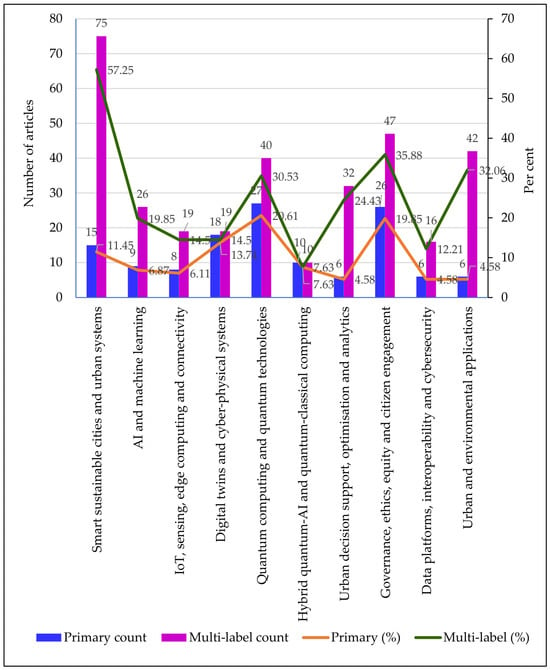
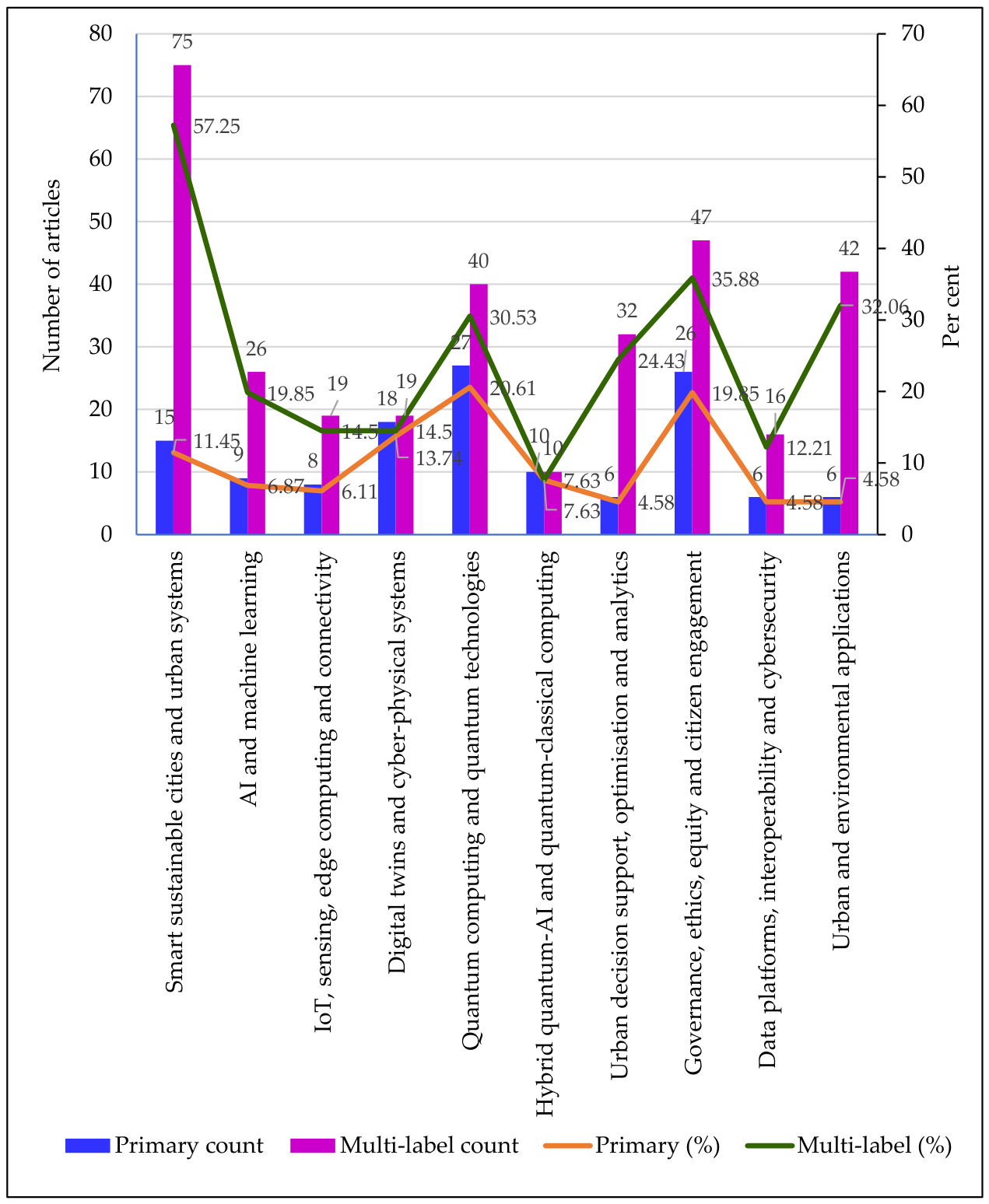
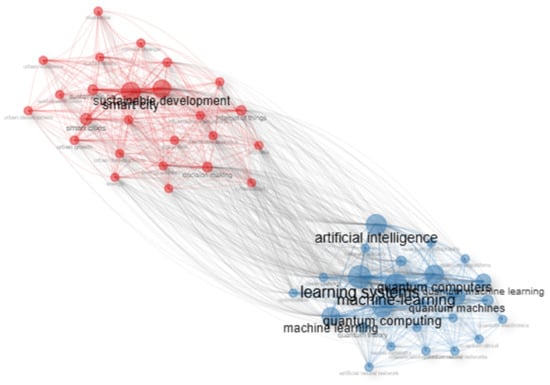
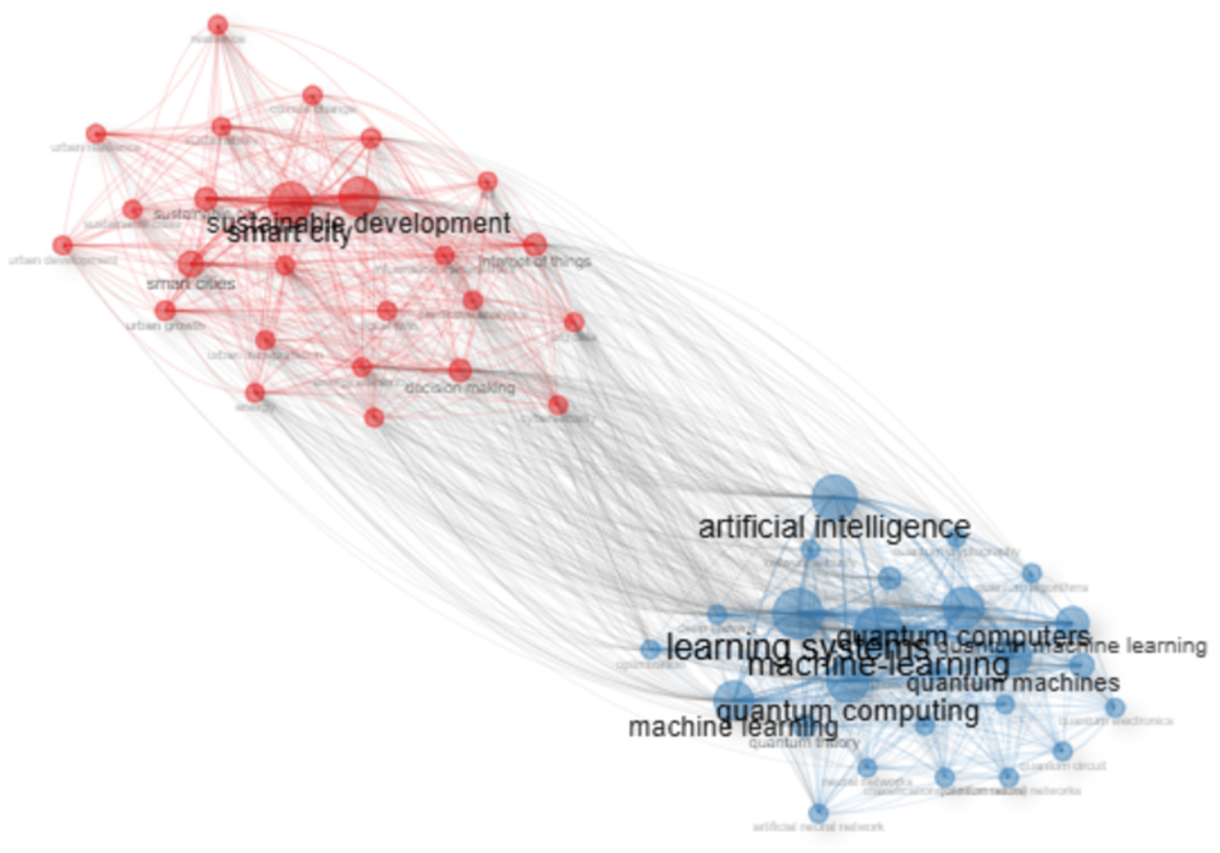
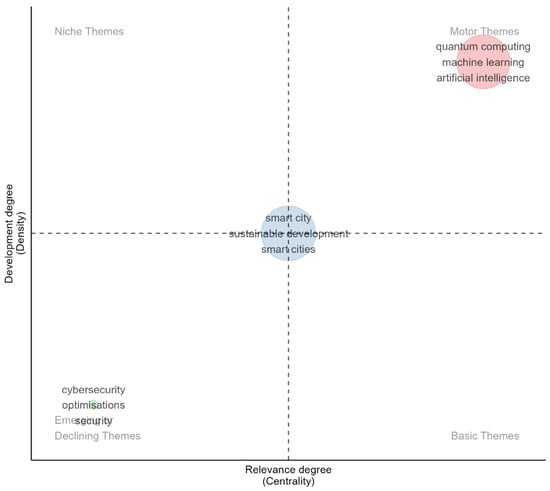
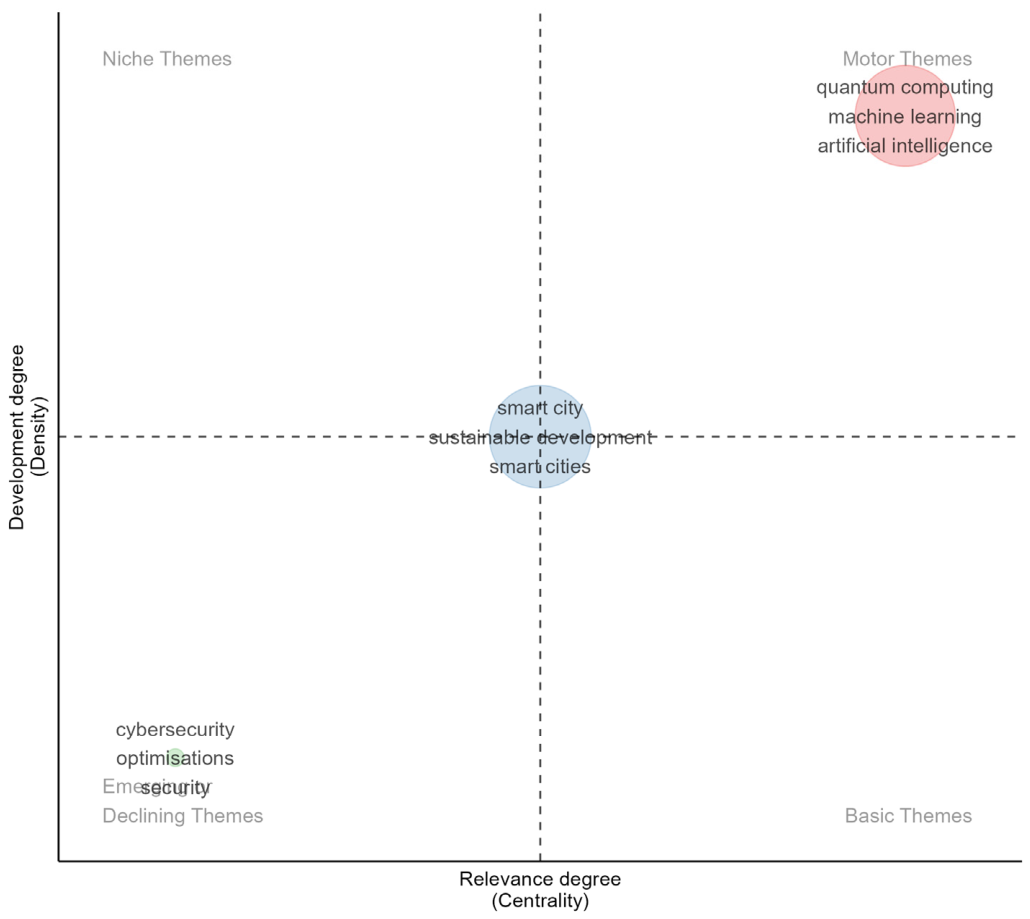
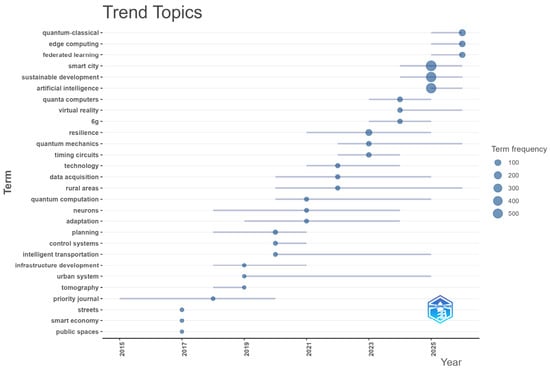
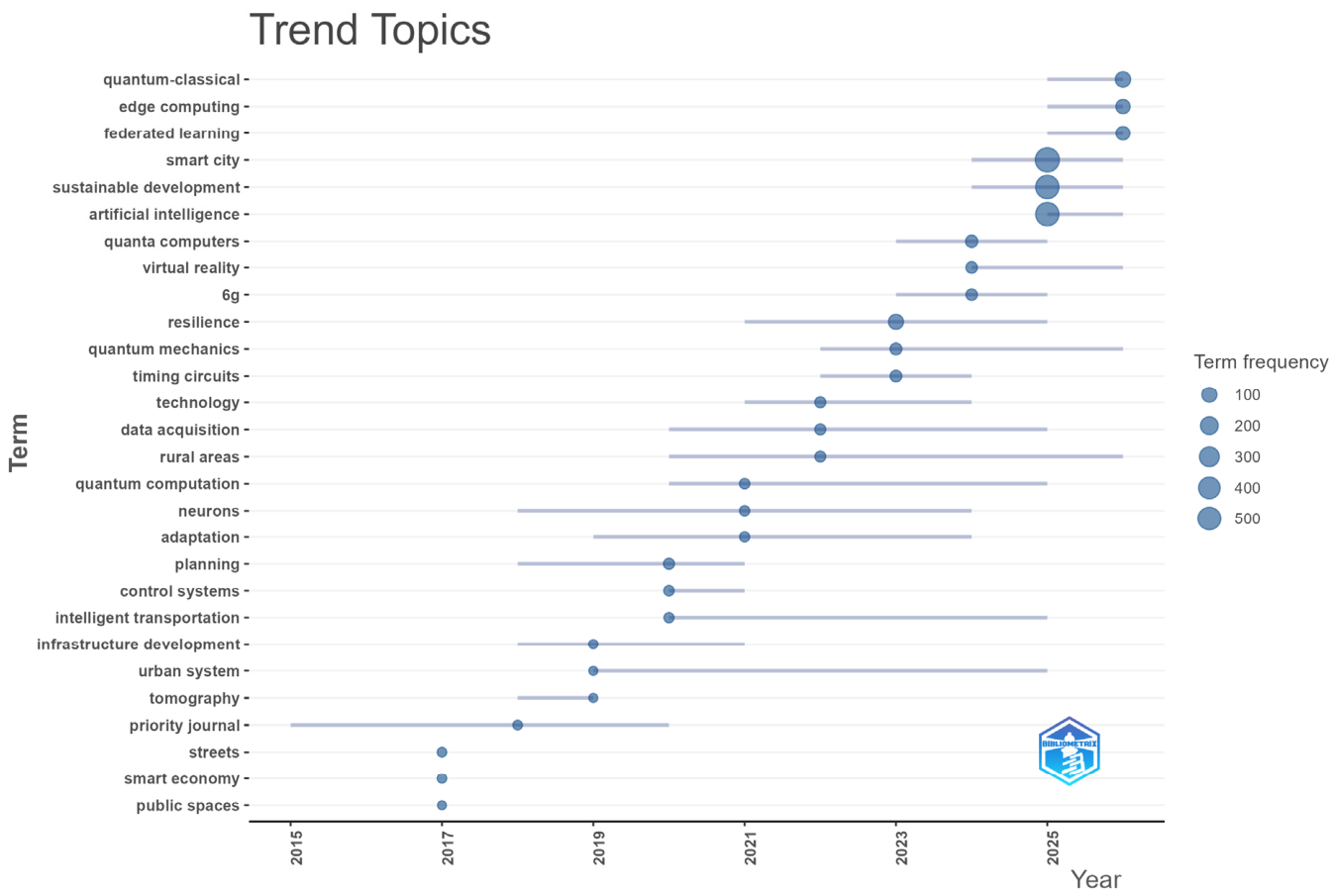
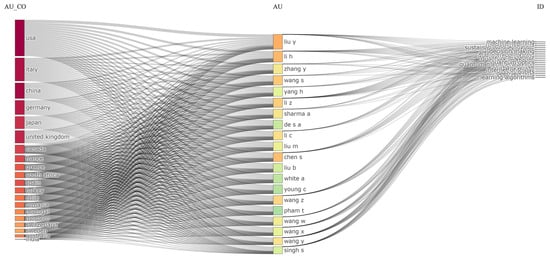
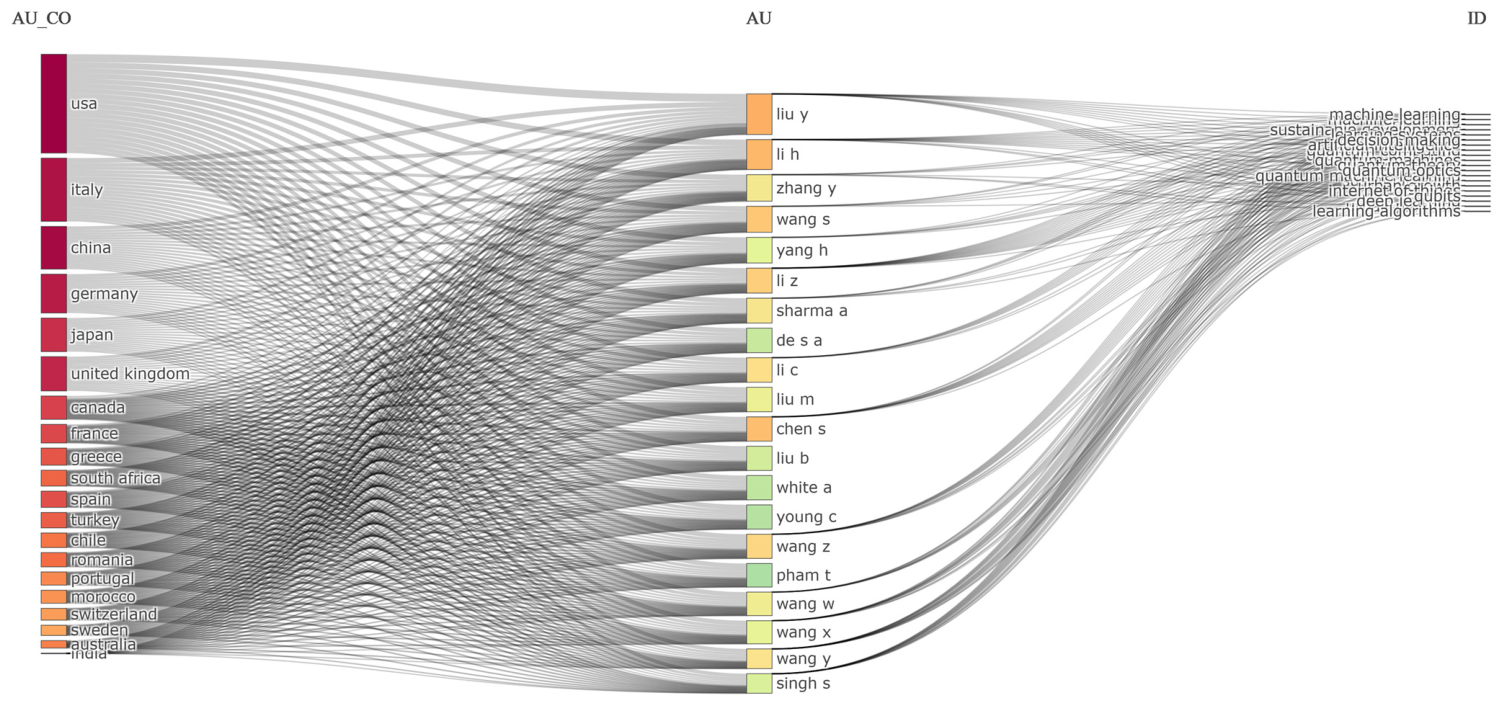
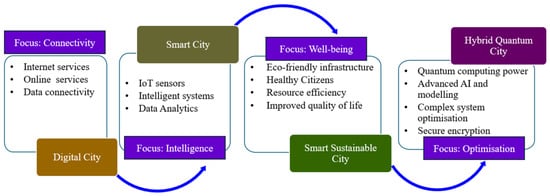
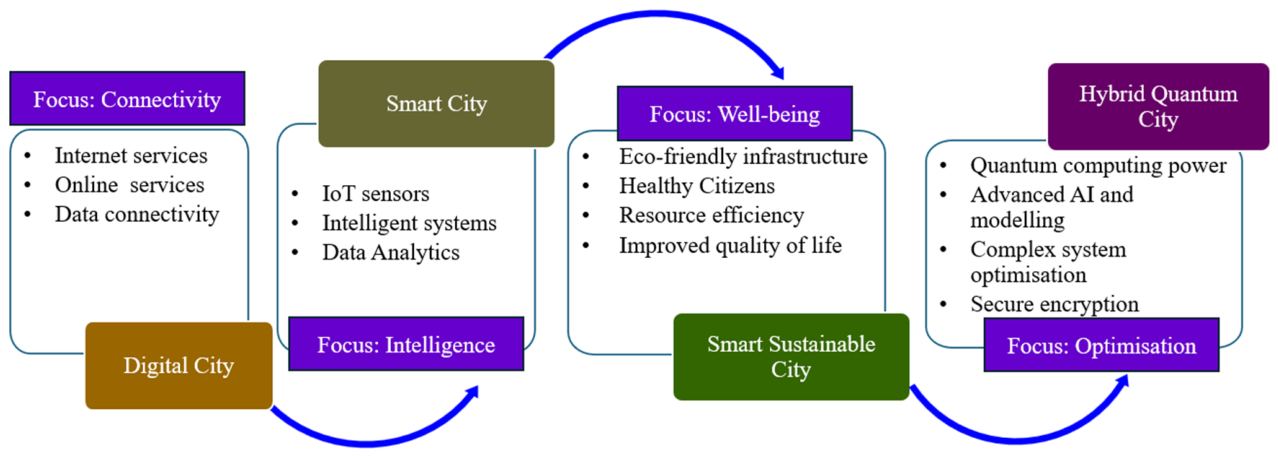
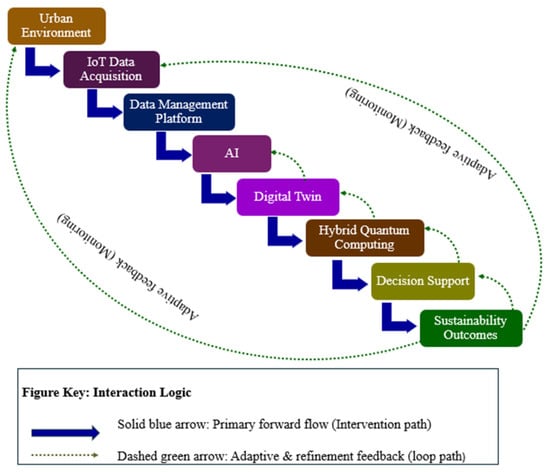
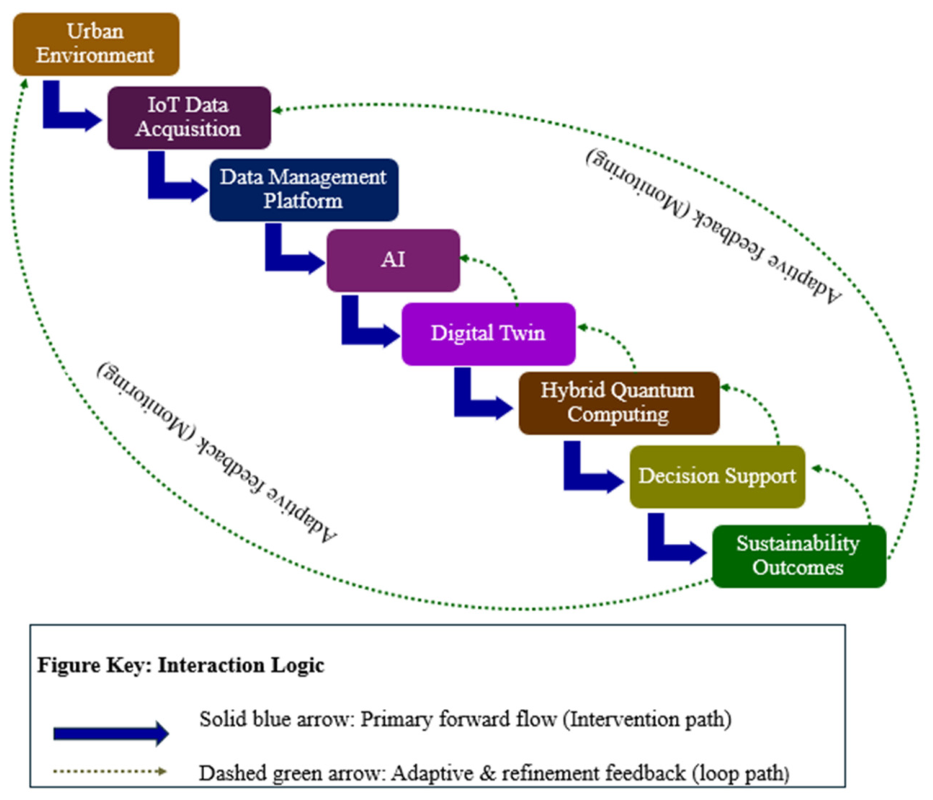
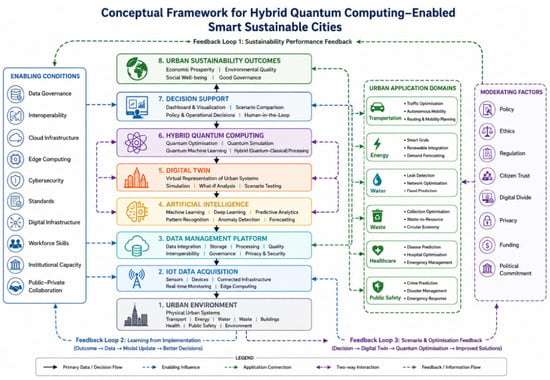
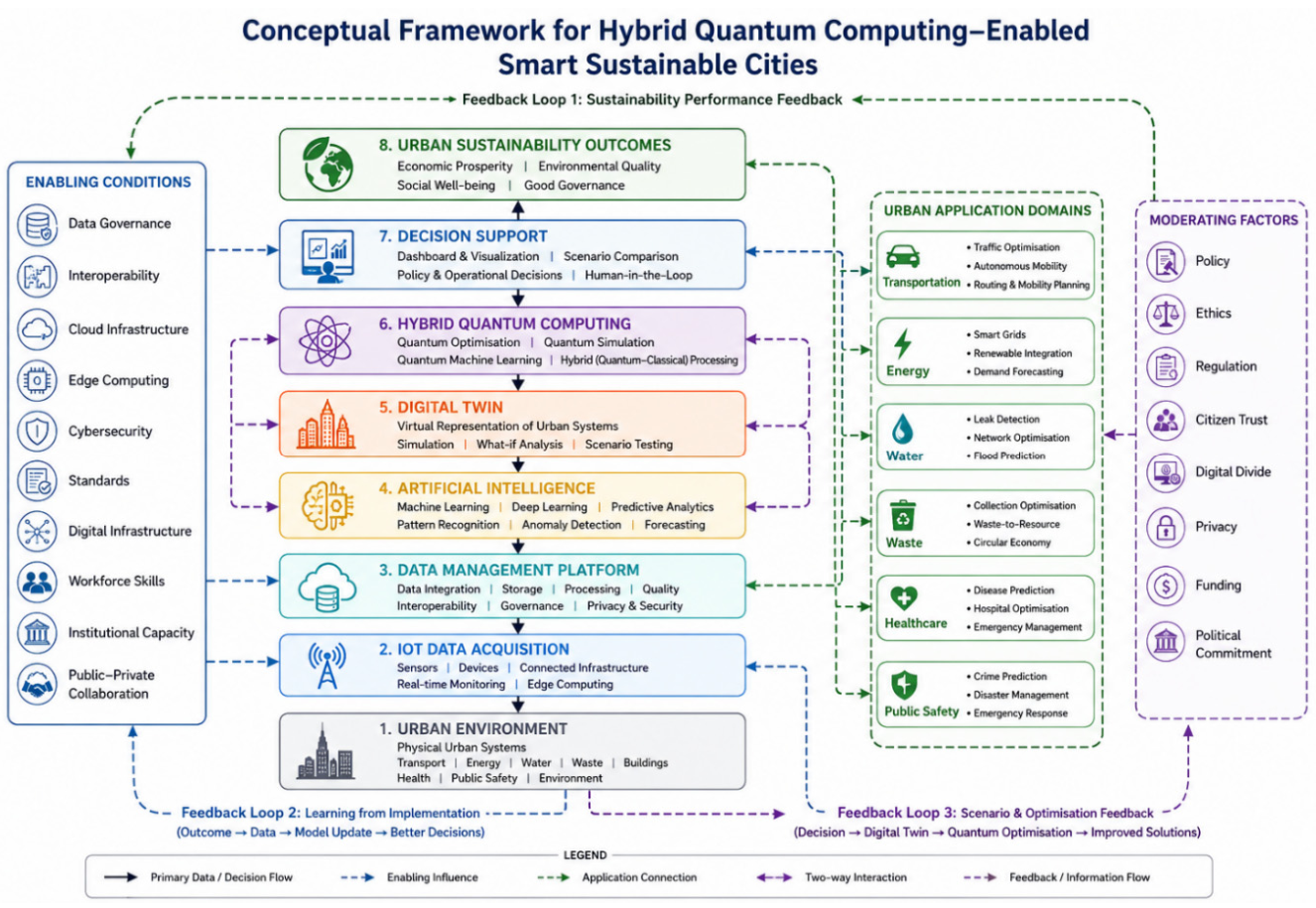

Disclaimer/Publisher’s Note: The statements, opinions and data contained in all publications are solely those of the individual author(s) and contributor(s) and not of MDPI and/or the editor(s). MDPI and/or the editor(s) disclaim responsibility for any injury to people or property resulting from any ideas, methods, instructions or products referred to in the content. |
© 2026 by the author. Licensee MDPI, Basel, Switzerland. This article is an open access article distributed under the terms and conditions of the Creative Commons Attribution (CC BY) license.