


Abstract
More than 60 years after the start of the commercial nuclear power industry in the U.S.‚ no permanent disposal facility for spent nuclear fuel and other high-level radioactive waste operates․ This narrative review of U․S․ nuclear waste policy covers key events and issues since 1982. Selected publications from the early 1980s offer a baseline against which to compare later developments‚ including the report of the Interagency Review Group on Nuclear Waste Management‚ the report of the State Planning Council on Radioactive Waste Management‚ and The Politics of Nuclear Waste‚ edited by E․ William Colglazier‚ Jr․ Twelve topics covered in or related to pre-1982 publications were traced through 2026 legislative‚ judicial‚ and other technical and site-selection activities. Each issue was coded by technical readiness, regulatory status, and implementation, and classed as substantially resolved, partially addressed, unresolved, or emerging. Of the issues studied‚ one‚ dry storage at reactor sites‚ was substantially resolved; four were partially addressed; four were unresolved‚ including permanent disposal and long-term funding issues; and three were emerging issues‚ including waste from next-generation reactors. Technical resolutions for nuclear waste issues generally are more advanced than related legal and institutional resolutions. Findings are drawn from document analysis and do not test for causation but indicate that further resolutions of nuclear waste issues likely will require new laws and regulations and public support at sites where waste is stored․
1. Introduction
What to do with radioactive waste has been one of the hardest questions in the long-term use of nuclear power. Wastes differ in physical form, amount, and hazard, and high-level radioactive waste (HLW) and used nuclear fuel (UNF), also called spent nuclear fuel (SNF), are the most difficult to manage. The engineering problem of isolating them for thousands of years has been studied for decades. Less settled are the questions of transport, interim storage, regulation, and public consent, and of who will look after the waste once the people who made the decisions are gone [1].
In the United States, many parties share this work. Federal and state governments, regulators, utilities, researchers, and nearby communities all have a role. Regulators set safety and environmental limits. Most of the technical work has been on materials, geology, waste forms, and monitoring, along with storage, transport, and disposal. Public opinion has shaped policy too, and in the case of Yucca Mountain, state opposition played a large part. Long-term management therefore depends on how responsibility is divided among these groups as much as on technology.
The review rests on three documents. The Interagency Review Group on Nuclear Waste Management (IRG) reported to President Carter on the state of radioactive waste management, looking at institutions, regulation, technology, and public involvement [2]. The State Planning Council on Radioactive Waste Management (SPC) took up the same subject from the point of view of the states. Its report asked for a coherent national policy and for federal and state governments to work together [3]. The third source, The Politics of Nuclear Waste, edited by E. William Colglazier, Jr., is a collection of essays by policymakers, lawyers, scientists, and agency staff on the technical and political sides of the problem [4].
These documents are used here as a baseline rather than as a guide to present-day rules. Between them, they named most of the issues that have run through U.S. waste policy for forty years: the division of roles between agencies, federal and state authority, technical uncertainty, repository siting, public participation, and long-term stewardship. Checking each one against the current situation shows what has moved and what has not. The question of federal and state roles came up again in July 2026, when the U.S. Department of Energy (DOE) named Utah, Tennessee, Oklahoma, Louisiana, and Idaho as possible hosts for Nuclear Lifecycle Innovation Campuses. These campuses could combine fuel fabrication, enrichment, reprocessing of used fuel, and final disposition [5]. Whether any of them is built will depend on the kind of federal–state cooperation the SPC called for in 1981. We aim to draw lessons from this history for the safe and publicly accepted management of radioactive waste and spent fuel in the United States. The review addresses two questions: Which of the problems identified before 1982 have since been resolved, and why have the others persisted?
Review Methodology and Analytical Framework
This article was prepared as a traditional narrative review within a policy-analysis framework built upon history. It is not a systematic review or a meta-analysis. The three documents were selected a priori for their complementary federal, state, technical, legal, and stakeholder perspectives, from the period just before the Nuclear Waste Policy Act of 1982 (NWPA) was enacted. To update these sources, the review was expanded to include searching for the peer-reviewed literature and official documents by DOE, the U.S. Nuclear Regulatory Commission (NRC), the U.S. Government Accountability Office (GAO), the U.S. Nuclear Waste Technical Review Board (NWTRB), the National Academies, the International Atomic Energy Agency, the OECD Nuclear Energy Agency, and the waste management agencies of other countries, where appropriate. The review focuses on commercial UNF and HLW; defense wastes managed by DOE are discussed only where they share the same policy history. The literature from 2021 to 2026 was emphasized, while the older literature was kept to provide statutory, historical, or conceptual context. Developments from 2025 and 2026, such as the May 2025 executive orders, the DOE Reactor Pilot Program, and the Nuclear Lifecycle Innovation Campuses, are taken from official DOE and White House sources. They are discussed as current and still-changing initiatives, not as settled policy.
The following search terms were used to prepare this review: “spent nuclear fuel”, “used nuclear fuel”, “high-level waste”, “geologic disposal”, “consolidated storage”, “consent-based siting”, “federal-state nuclear waste issues”, “environmental justice”, “public trust doctrine and nuclear waste”, “reprocessing”, “partitioning and transmutation”, “waste forms”, “engineered barriers”, “monitoring”, “performance assessment”, and “sustainable nuclear waste management”. Searches were carried out in Google Scholar and Web of Science and on the websites of DOE, NRC, EPA, GAO, NWTRB, the Congressional Research Service, the National Academies, the International Atomic Energy Agency, and the OECD Nuclear Energy Agency, and were last updated in November 2026. Titles and abstracts were screened first, followed by full texts. The 49 sources cited comprise 21 reports and other documents of U.S. government agencies and advisory bodies, 9 peer-reviewed journal articles, 8 statutes, regulations, and court decisions, 5 publications of international organizations and foreign waste management agencies, 3 books, 2 reports of the National Academies, and 1 publication of a professional society; their publication dates range from 1946 to 2026. Cited sources relate to U.S. policies and practices on nuclear waste disposal and management, fuel-cycle technologies and options, and other institutional issues; international practices are also cited. Sources excluded from this review include those that deal only with nuclear reactor technology and have no nuclear waste focus, and those that are duplicative or lack relevant technical and policy information. Thematic synthesis was used to bring together information about the historical, technical, regulatory, and social issues associated with nuclear waste management.
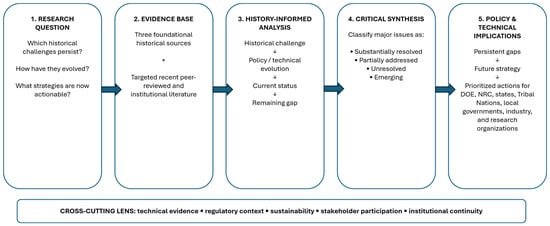
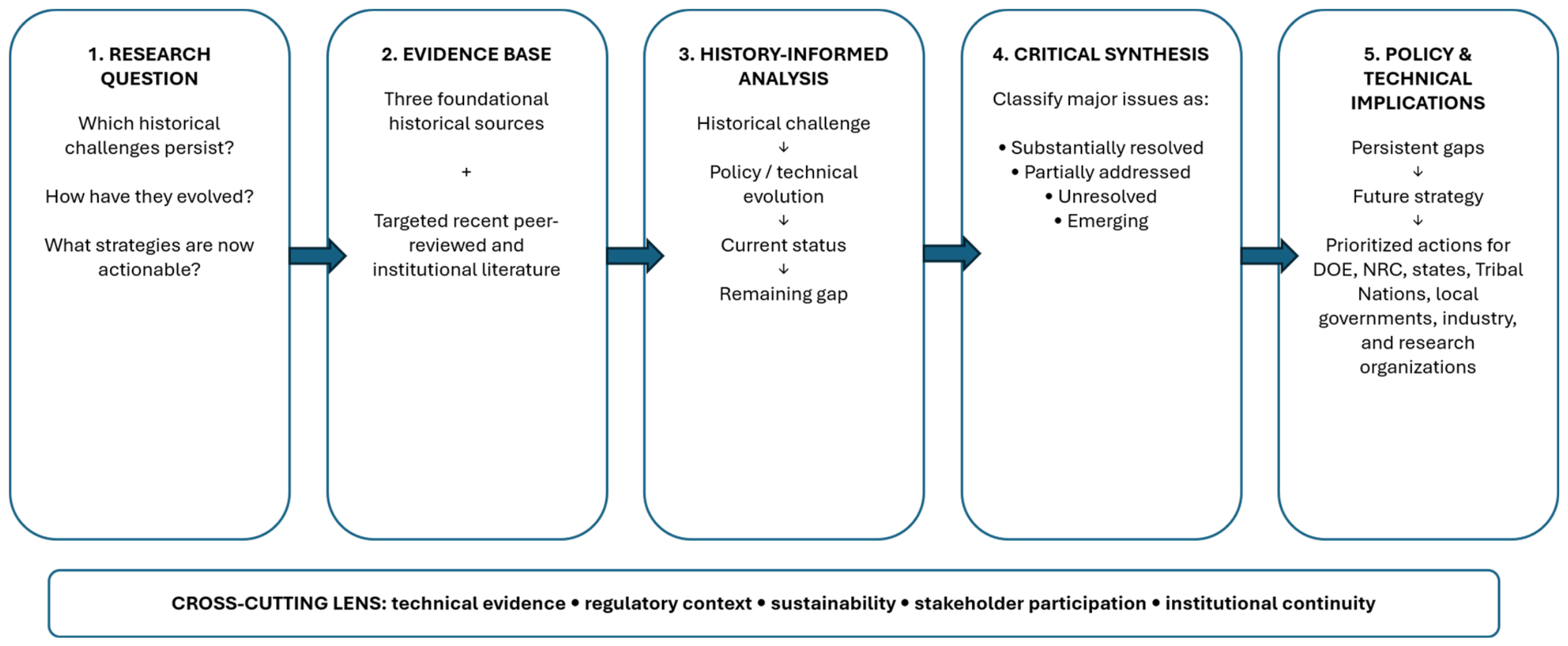
The review follows the sequence: historical challenge and response → current conditions → remaining gap → implications. Each issue was coded into three separate dimensions. Technical readiness records whether a demonstrated technical solution exists. Regulatory status records whether the legal authority and the applicable rules are in place. Implementation records whether the solution is in operation in the United States. An issue was classed as substantially resolved when all three conditions are met; partially addressed when a technical solution exists and at least one of the other two conditions is met in part; unresolved when the legal or institutional basis for implementation is absent, whatever the technical readiness; and emerging when the issue arose or grew markedly in importance after about 2020, so that its status cannot yet be judged. The coding was carried out by the author from the evidence cited in Section 6, where a table lists each issue, its status on each dimension, the resulting class, and the supporting sources. This framework tests whether concerns identified in the formative U.S. literature remain active under current storage, disposal, fuel-cycle, siting, and nuclear-expansion conditions [6,7,8,9]. Figure 1 summarizes the history-informed analytical framework used in this review, linking the historical evidence base with contemporary developments to identify persistent gaps and derive corresponding policy and technical implications.
Figure 1.
Review methodology and history-informed analytical framework. The framework links the historical baseline to contemporary evidence, classifies the status of major challenges, and derives gap-linked policy and technical implications. Arrows indicate the sequence of steps in the review; the cross-cutting lens applies to all steps.
2. Historical Context and Key Themes in Nuclear Waste Management
The development of nuclear waste management in the U.S. has tracked that of the civilian and military nuclear programs in the United States. As nuclear technology was developed and expanded through the twentieth century, so too was the concern for handling, storing, transporting, and disposing of the waste products. Federal regulation of nuclear activity was introduced with the passage of the Atomic Energy Act of 1946 and the creation of the U.S. Atomic Energy Commission (AEC), which directed its activities towards both the promotion and control of nuclear power development, and the regulation of nuclear materials for domestic and defense applications [10]. For much of its history, waste management in the early nuclear program was largely focused on operational wastes, and long-term disposal received comparatively little attention.
Early radioactive waste management programs for low-level radioactive waste (LLW) disposal, including the shallow-land disposal facilities that were used in accordance with the standards of the time, received less public attention. Later, with the advent of more common commercial nuclear power programs and larger inventories of UNF and HLW, technical issues concerning long-term waste disposal (e.g., radionuclide containment, groundwater protection, long-term environmental performance and institutional responsibilities) prompted greater levels of interest and involvement by the federal government [11]. The AEC was dissolved as a part of the Energy Reorganization Act of 1974. The NRC assumed the AEC’s regulatory functions and the Energy Research and Development Administration (ERDA) assumed its remaining functions. Many of the AEC’s nonregulatory functions, including its major responsibilities in radioactive-waste and nuclear-material management, were transferred to the newly formed DOE in 1977 [12].
In 1982, Congress enacted the NWPA, which provided for a federal program to build repositories for permanent disposal of commercial UNF and HLW [13]. In furtherance of this program, it specified the DOE as the lead agency for repository development and assigned responsibilities to other federal and state agencies with respect to the program. The NWPA Amendments of 1987 directed the DOE to characterize Yucca Mountain, Nevada, as the candidate repository site. The Yucca Mountain program has since included large technical evaluations, regulatory reviews, litigation, federal–state relations, and stakeholder engagement, all of which illustrate the difficulties of developing a long-term geological repository in the United States [14,15]. Nevada objected to the selection, and Congress overrode the state’s notice of disapproval in 2002 [16]. DOE submitted a license application in 2008, but in 2010 it sought to withdraw the application, and the NRC suspended its review; in 2013 the U.S. Court of Appeals for the District of Columbia Circuit ordered the NRC to continue the licensing process with the funds already appropriated [17]. In 2021, GAO reported that about 86,000 metric tons of commercial UNF were stored at 75 sites, and it asked Congress to consider a new consent-based siting process, changes to the Nuclear Waste Fund, and an integrated waste management strategy [15]. Collection of the fee that supports the Nuclear Waste Fund ended in 2014, after the same court ordered DOE to propose reducing it to zero [18].
The Interagency Review Group on Nuclear Waste Management (IRG) report provides a historical view of the issue and the policy context within which it was examined by a multidisciplinary, interagency federal advisory committee that examined technical, institutional, regulatory, and social aspects of radioactive-waste management [2]. The main recommendations of the review group were that there was a need for better coordination between federal and state agencies, clearer roles and responsibilities, continuing research and development, and greater transparency of decision-making. The report concluded that technical solutions could only be sustained in the long term if there was an institutional framework that could support their implementation over long time-scales.
U.S. nuclear fuel-cycle policy in the late 1970s and early 1980s provides an example of technical, economic, security, and policy considerations influencing the resulting outcome. For example, nonproliferation goals under President Carter led to U.S. policies geared toward discouraging commercial used nuclear fuel reprocessing. In contrast, the Reagan administration opted to allow commercial reprocessing under existing regulations [6,19]. Even so, no commercial reprocessing is carried out in the United States today [19]. As The Politics of Nuclear Waste notes, the policy of the Reagan administration ultimately came as part of a larger discussion about the fuel cycle, proliferation, economics, waste, and geologic disposal [4]. In retrospect, the evolution of nuclear waste policy shows the importance of technical know-how, national priorities and institutional culture, and risk analysis.
Public and stakeholder opinions have also been considered in nuclear-waste management schemes. Over the years, public opinion on nuclear waste repositories has centered on several themes, including safety, environmental protection, transport and economics, the siting of the waste repository, and, in the longer term, institutional control [20]. The siting experience of the Yucca Mountain program illustrates the complexity of siting a permanent repository when technical, regulatory, state–federal, and stakeholder issues are interrelated and occur over a long time scale. The IRG [2] and SPC [3] reports point to the need for institutional arrangements that are coherent and the involvement of affected governmental and public stakeholders.
The SPC report called for federal and state authorities to be closely coordinated in the implementation of radioactive-waste policy [3]. The report noted that rather than assigning responsibility in the same way at all levels of government, different roles based on statutory authority, waste type, facility class, and regulatory responsibility across various federal agencies (DOE, NRC, and the U.S. Environmental Protection Agency (EPA)) and their state, Tribal, and local counterparts, when relevant, would balance the overall structure of radioactive-waste management. The coordination of these organizations can lead to consistent implementation of safety, environmental, transportation, emergency preparedness, and long-term stewardship requirements.
At the same time, scientific and technological progress has resulted in the availability of wide-ranging knowledge relevant to the technical aspects of radioactive waste management: geological characterization, materials science, waste form development, structural and thermal analysis, radiation monitoring, containers and barriers, and evaluation of long-term performance [21]. Disposition concepts for disposal in deep geological formations have been developed that are based on engineered and natural barriers to retard radionuclide release over long time frames. Similarly, improved monitoring and characterization technologies can be used to allow for better assessment of the performance of storage systems, degradation of materials, environmental conditions, and engineered barriers.
With the development of these technologies, the DOE, NRC, EPA, state agencies, and other organizations have developed a regulatory framework including criteria and guidance documents for radioactive waste storage, radioactive waste transportation, radioactive waste disposal, environmental regulations, and radiological safety at radiological facilities [22,23]. Safety evaluations, environmental assessments, assessments of performance, and research form the basis for these regulations. The interaction between the development of scientific knowledge and the development of relevant regulation is a common theme in nuclear-waste management.
From the point of view of this history of policy development, the whole of nuclear waste management in the United States reflects a continuing negotiation between the science and engineering of nuclear waste management and the interfacing domains of legislation, regulation, responsibility, and public participation. The IRG report, the SPC report, and The Politics of Nuclear Waste are important historical sources for the early development of nuclear waste policy in the United States. Although the technical and legal environments have changed considerably since these reports were published, the issues they raised, including institutional coherence and coordination, technology development, regulatory stability, stakeholder engagement, and the need for long-term thinking, remain important factors in nuclear-waste management today.
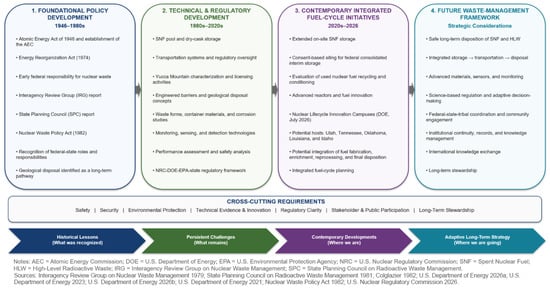
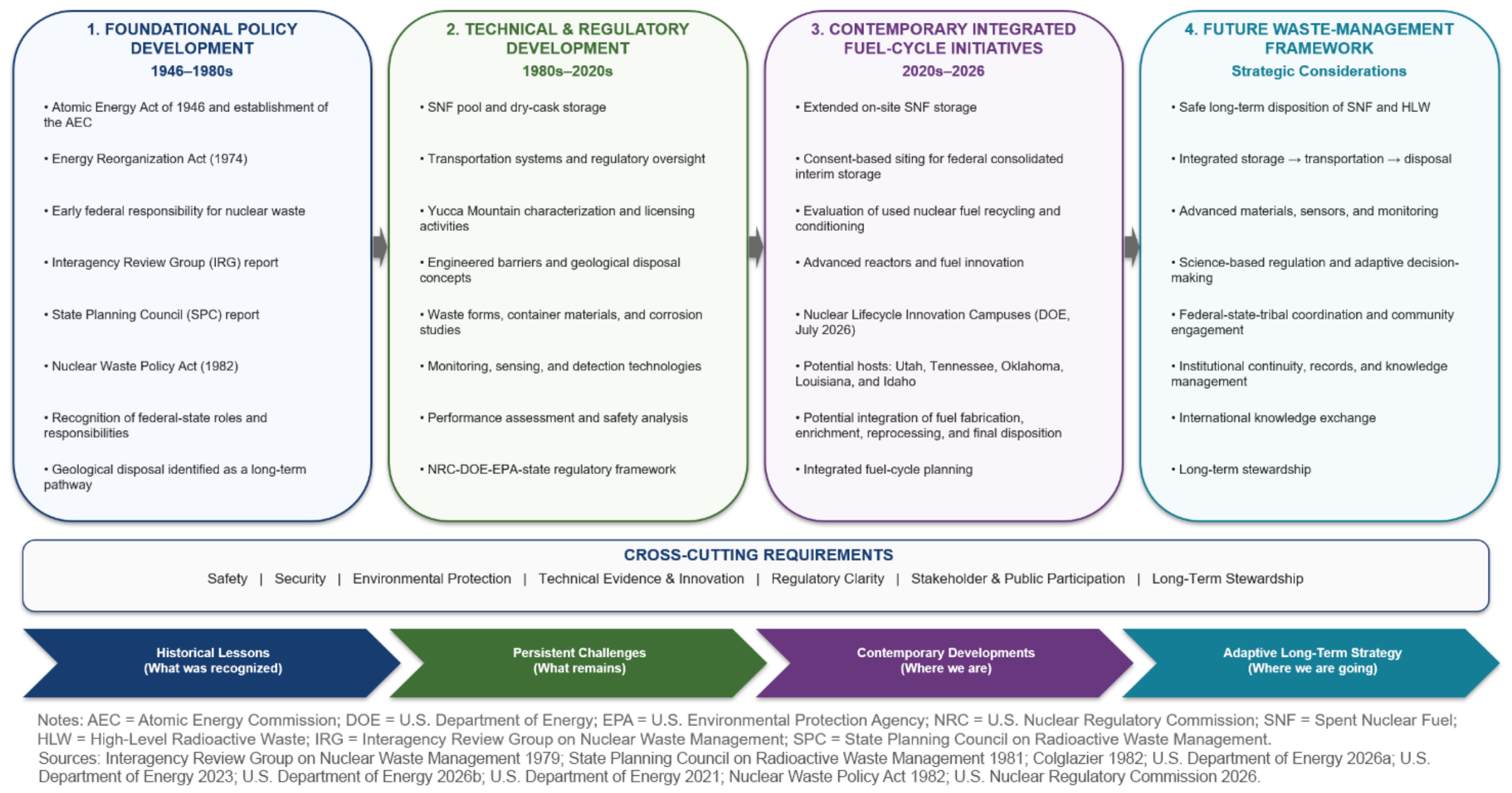
Figure 2 summarizes the evolution of U.S. nuclear waste management from its foundational policy framework through subsequent technical and regulatory developments to contemporary fuel-cycle initiatives and future strategic considerations. The framework also illustrates that several challenges identified in the early policy literature, including intergovernmental coordination, regulatory clarity, technological development, stakeholder participation, and long-term stewardship, continue to influence nuclear waste management.
Figure 2.
Evolution and continuing challenges of nuclear waste management in the United States. The framework illustrates the progression from foundational policy development through technical and regulatory advancement to contemporary integrated fuel-cycle initiatives and future strategic considerations. Cross-cutting requirements include safety, security, environmental protection, technical evidence and innovation, regulatory clarity, stakeholder participation, and long-term stewardship. Sources: [2,3,4,5,8,10,12,13,14]. Arrows between the panels indicate chronological progression, and the arrows at the bottom summarize what each stage contributes to long-term strategy.
3. Federal vs. State Authority in Nuclear Waste Management
Issues of delegation and the coordination of federal and state decision-making processes have continued to be a theme in the development of nuclear waste policy in the United States, and the three core sources used for this review of the history of nuclear waste management illustrate the difficulty of reconciling a national mission with state and local interests. In view of the fact that some of these responsibilities depend on the type of waste, facility, legal requirements, and regulatory regime, effective coordination requires not only the definition of institutional responsibilities but also the establishment of communication between the governmental authorities responsible for the storage, transportation, and final disposal of waste.
In the SPC’s view, states can have roles in radioactive waste management in environmental oversight, transportation and emergency preparedness, land use decision-making, and public participation, as defined by existing statutes and regulations [3]. Federal agencies would continue to carry out responsibilities outlined in federal law. States would provide information about environmental, socioeconomic, infrastructure, and community conditions within their borders where radioactive waste management facilities would be sited. Thus, in the view of the SPC report, federal–state cooperation was an essential part of any feasible national waste-management program [3].
Where national waste management objectives have major site- and region-specific components, government roles and responsibilities at federal and state levels can be interrelated. Characteristics of the geology, transportation infrastructure, and the populations, environment, economy, and society of potential host regions can vary widely. Ensuring that any relevant state and local knowledge is factored into the decision-making process therefore results in better consideration of site-specific aspects while still meeting national safety and environmental objectives [24]. That does not mean that federal and state regulators necessarily share the same responsibilities, only that their roles are clearly understood.
In The Politics of Nuclear Waste, Harold Green and Marc Zell summarized an earlier discussion of the federal–state relationship and noted that the search for the appropriate level of federal power for national uniformity is complicated by the need to provide states with an appropriate level of input when decisions are made that have a substantial local impact [4]. The discussion illustrates the dilemma between national programs that standardize safety and regulatory requirements for nuclear waste management and the need for site-specific considerations at the implementation level, including environmental, socioeconomic, and institutional ones.
Statutory authorities, institutions, regional interests, and stakeholder views can further complicate federal–state cooperation, not through incompatible interests, but through limiting the options considered and elements that are part of the decision in waste management [6]. Unambiguous assignment of responsibilities, clear channels of communication and consultation, and clearly defined national standards for safety, security, and environmental performance can help to reduce these differences.
A great deal of the historical literature on the subject has noted the importance of good nuclear waste management requiring cooperation between the federal and state governments. Federal agencies can play a key role in providing national policy, regulatory, technical, and programmatic functions; and state governments can offer regional and site-specific perspectives. Tribal and local governments also may have important roles and responsibilities in areas of decision-making that impact their communities and areas of responsibility. A governance framework that addresses clear authorities and appropriate intergovernmental collaboration may support technically defensible, transparent, and durable long-term nuclear waste management solutions. State and Tribal positions have differed widely. Nevada opposed the Yucca Mountain project for more than two decades [14,16], Texas challenged the license for a private interim storage facility in that state (Section 4.1), and Tribal governments have asked to be consulted as sovereign governments rather than as stakeholders [9,24].
4. Technological and Scientific Considerations
Scientific and technological research provides the technical basis for the safe management of radioactive waste and used nuclear fuel. Waste management systems must consider many inter-related issues, including protection from radiation, heat generation, safety against criticality, physical support structure, deterioration of materials, containment, transport, interim storage, and long-term isolation. Since the inventories and hazards associated with radioactive waste persist over many timescales, assessment of long-term disposal systems and strategies involves consideration of the performance of the waste form, the storage container, engineered barriers, and the disposal facility.
Deep geological disposal of HLW and UNF in deep formations is widely regarded as a viable and long-term option. A common principle of proposed and operational HLW/UNF repositories is to use multiple engineered and natural barriers to limit the long-term release of radionuclides. Several geological repository sites have been considered by the United States, including the extensively studied Yucca Mountain repository in Nevada [25]. Performance assessment for a geological repository involves geology, geochemistry, hydrology, materials science, heat transfer, structural engineering, and long-term performance. Because no repository can be shown to perform perfectly over such periods, the process for conducting a regulatory safety assessment involves the comparison of the performance of a geological repository with performance objectives that would protect human health and the environment. Kuhlman et al. reviewed how such safety assessments combine features, events, and processes into a reference scenario and alternative scenarios in order to deal with uncertainty [26].
Another aspect of nuclear waste management is storage and monitoring. UNF may be stored for extended periods of time before its final disposal, requiring continuing monitoring of the integrity of the fuel, the fuel cladding, the storage canisters, any concrete structure, the seals, and other aspects. Advances in sensing, nondestructive evaluation, data acquisition, and condition monitoring may provide for improved characterization of material degradation and storage-system performance, support for aging-management programs, and technical information for transportation or disposal decisions associated with the later stages of the lifecycle [27].
Advanced fuel-cycle options offer different nuclear material and nuclear waste management pathways. Nuclear fuel cycle schemes that utilize reprocessing and recycling of used nuclear fuel have the potential to retrieve selected fissile and fertile nuclides and modify waste stream qualities and quantities. The potential advantages and disadvantages of advanced fuel cycle options are influenced by the fuel cycle scheme, separation technology, reactor technology, choice of economic configuration, proliferation resistance, secondary-waste production, and ultimate disposition pathway for waste streams [28]. The National Academies also found that most advanced reactor developers plan to use a once-through fuel cycle, at least in the near term [28]. Thus, although reprocessing does not eliminate the need for long-term radioactive waste management, it changes the form and amount of material to be managed.
Partitioning and transmutation have also been studied as a means to transmute some of the long-lived radionuclides found in nuclear waste streams into nuclides with different radioactive decay pathways (and thus, different radiotoxicity profiles) than the original radionuclides [29]. These methods may also reduce some of the long-lived radiotoxicity or decay heat, depending on the fuel cycle and transmutation systems being deployed, but would have considerable technical, economic, and infrastructure implications and would not remove the need for geological disposal of all radioactive waste.
The historical literature reviewed here also supports the need for continued research, development, and demonstration (RD&D) in nuclear waste management. The Interagency Review Group (IRG) report states that nuclear waste-management strategies should be supported by continued scientific investigation and technology development and not simply by current technical capabilities [2]. This remains true, since our understanding of material corrosion, radionuclide transport, geological systems, and long-term performance of engineered barriers is continually evolving.
Materials science directly relates to the performance of engineered geological barriers for waste management. Understanding the corrosion of alloys, waste forms, coatings, ceramics, glasses, cements, and other materials under the types of thermal, mechanical, chemical, and radiological conditions over timescales of interest can provide insights. Research in computational modeling and simulation of coupled thermal, hydrological, mechanical, chemical, and radiological behavior over timescales of interest can also provide insights [30]. The safety and reliability of storage and disposal systems are assessed using experimental data, mechanistic models, uncertainty quantification, and probabilistic performance assessment methods.
It is possible for science to improve the understanding of risks and performance, for example by better understanding the mechanisms, environments, transport and behavior of radionuclides and uncertainties in long-term performance. Since geological disposal facilities need to be assessed over timescales much longer than can be directly observed, models need to be validated with lab tests, field evidence, natural analogs, etc. Thus, traceable scientific evidence and characterization of uncertainty are important components of technically defensible long-term safety assessments. These uncertainties shape regulation directly. The EPA standard for Yucca Mountain, for example, set an individual dose limit of 15 mrem per year for the first 10,000 years and 100 mrem per year from 10,000 years to one million years, so the safety case must address periods that cannot be verified by observation [23]. In practice, uncertainty is handled through scenario analysis, conservative assumptions, multiple barriers, and stepwise decisions that allow the safety case to be revised as new data become available [26]. For environmental protection, the main implication is that confidence rests on a body of evidence and on institutional arrangements for revisiting it, rather than on a single prediction.
Research and technology development support the progress of radioactive waste management. Further advancements in materials science, improved geological characterization, improved monitoring and sensing techniques, more advanced waste form and storage and transport technologies, more detailed computational models and performance assessments will progressively provide the technical basis for future decisions on radioactive waste management. Collaboration with government agencies, national laboratories, universities, industry, and foreign research institutions may also be pursued to assist in the development of safe, reliable, and technically defensible approaches to radioactive-waste management [30].
4.1. Interim Storage and the Near-Term Spent-Fuel Siting Challenge
Interim storage has effectively become a policy challenge separate from the technical task of developing a permanent repository. Commercial UNF remains at many operating and closed reactor sites, and the federal government has not developed a permanent repository. Consequently, the DOE established a consent-based siting process to identify one or more federal consolidated interim storage facilities (CISFs). It involves phased engagement and consultation with communities, states, Tribal Nations, local governments, and other stakeholders, with consent envisioned as an iterative process of engagement and consultation, not merely an initial meeting or agreement [8]. In its 2022 Request for Information (RFI), which received 225 responses, the DOE identified obstacles to constructive participation, the need to involve historically disadvantaged groups, and the role of interim storage in an integrated waste-management system [9].
Compared to that initial baseline, the IRG and SPC documents included public participation and federal–state collaboration. Contemporary consent-based siting would give equal or greater weight to procedural fairness, host community capacity, transparency, and prospective host participation, prior to site selection. More recent work on consent-based siting has also addressed the practical details of consent. These involve questions of who is authorized to consent, how to rescind or maintain consent over time, how to negotiate benefits and harms, and how to maintain institutional continuity over administrative changes [7]. This means the participation problem is only partially addressed: the policy process to consent has evolved, but a consolidated federal interim storage facility has not yet been established.
Privately owned consolidated interim storage has also been a legal and political issue. The NRC had licensed two consolidated interim storage facilities in Texas and New Mexico under 10 CFR Part 72 [31]. In Nuclear Regulatory Commission v. Texas (2025), the Supreme Court held that Texas and the other challengers could not obtain judicial review of the license under the Hobbs Act and reversed the Fifth Circuit. The Court did not decide whether the Atomic Energy Act authorizes the NRC to license private away-from-reactor storage, so that statutory question remains open [32]. The case illustrated the issues of federalism, state opposition, licensing, and long-term policy uncertainty. In practice, interim storage may reduce the number of storage sites and could form part of an integrated transport system. An interim storage plan, however, does not replace the need for disposal, and there are concerns that what is intended as interim storage may develop into permanent storage.
4.2. Comparative Assessment of Major Waste-Management Options
Table 1 compares the principal technical pathways discussed in this review. The comparison makes it explicit that no single technology resolves the complete waste-management problem; each option changes the timing, form, location, infrastructure, and uncertainty of the remaining waste burden. Recent reviews continue to emphasize uncertainty analysis in geological-disposal safety assessment, long-term engineered-barrier performance, and life-cycle environmental effects of treatment and disposal [26,33,34].
Table 1.
Comparative assessment of major nuclear-waste-management options and enabling technologies.
Some representative figures show the scale involved. About 86,000 metric tons of commercial UNF were stored at 75 sites in 2021 [15], whereas the NWPA limits the first repository to 70,000 metric tons of heavy metal until a second repository is in operation [13]. Reprocessing recovers the uranium (about 95% of UNF) and plutonium (about 1%), leaving fission products (about 4%) that still require disposal [19]. Advanced reactors may also change the amount and character of the waste: one analysis of small modular reactor designs estimated that they would increase the volume of waste requiring management and disposal by factors of 2 to 30 for the designs examined [35]. These figures are indicative, but they show that each option shifts the disposal burden rather than removing it.
5. Public Participation and Environmental Considerations
Public participation is an important component of decisions about nuclear waste. Public participation may involve people who live near a nuclear waste site, representatives of state and local governments, Tribal governments where appropriate, technical experts, environmental organizations, and others who can provide information about local circumstances, and about issues not covered by technical experts such as public concern about the waste. Transparent disclosure of risks, benefits, uncertainties, and alternatives, where possible, may ease informed involvement in the decision-making processes with greater confidence.
Historians of nuclear waste policy have stressed the role of communication. Dorothy Zinberg’s chapter in The Politics of Nuclear Waste, for example, describes effective communication between technologists and members of the public as a way of improving understanding of the technical and social aspects of nuclear-waste management, particularly since nuclear waste management decisions involve long time frames [4]. Public participation may be seen as one part of the decision-making, rather than one way to achieve public acceptance of a technical or policy solution.
Public acceptance of nuclear energy, and of radioactive waste management, varies from person to person and location to location, and also over time. Elements affecting this acceptance include safety and environmental concerns, trust, accidents, and risk communication [20,36,37,38]. Nuclear energy and radioactive waste management discussions should at least address: public participation opportunities; risks and opportunities; uncertainties; alternatives; decision-making criteria; implementing and regulatory organizations and their roles and responsibilities.
Environmental and socioeconomic factors are other issues for nuclear waste-management facilities. The environmental impact of a waste-management facility varies from one community to another, depending on the location of the facility, transportation routes, infrastructure, environment, and socioeconomic conditions where these facilities are situated [24,33]. The notion of environmental justice brought attention to the distribution of the potential risks, benefits, and institutional burdens imposed by waste-management activities on the host communities. Environmental and socioeconomic studies, along with public engagement opportunities, can give decision makers a more thorough view of local conditions and community concerns when evaluating alternatives.
Support for public participation in radioactive waste management decision-making has been expressed by the State Planning Council on Radioactive Waste Management (SPC) [3]. In the area of radioactive waste management decision-making, support for public participation in siting decisions might be followed by public participation in planning, licensing, operations, monitoring, and long-term stewardship decision-making. These processes can ease exchanges with interested parties regarding new information, issues, and changes in the environment or socioeconomic context of the waste-management program.
Public participation and environmental review activities must be conducted to complement the technical reviews and the regulatory review. Licensing decisions on the long-term management of nuclear waste must be based on appropriate scientific and engineering principles, regulatory safety bases, applicable safety and environmental regulations, and in accordance with affected communities and jurisdictions. They can aid in technically sound, clear, contextual decisions that balance and improve both the environment and the community at a site.
Table 2 synthesizes the principal themes identified in the three historical sources and relates them to contemporary developments in U.S. nuclear waste management. The comparison demonstrates that several issues identified during the formative period of U.S. nuclear waste policy, including intergovernmental coordination, regulatory responsibilities, long-term disposal, technological development, and stakeholder participation, remain relevant. However, their technical and institutional contexts have evolved considerably [15,28].
Table 2.
Historical perspectives, contemporary developments, and continuing challenges in U.S. nuclear waste management.
5.1. Sustainability, Environmental Justice, and Intergenerational Governance
An assessment of the sustainability of radioactive waste management additionally considers the land footprint, water footprint, material and energy use, transport, generation of secondary waste, and long-term integrity of barriers. Assessment of economics includes the lifecycle costs, the way the costs are recovered, liabilities of delayed disposal, and the technical skills and capabilities needed. Relevant sociopolitical factors include equity, environmental justice, institutions, public acceptance, memory and knowledge, inter- and intragenerational allocation of risks and benefits between host and non-host communities [7,33].
These dimensions are linked: a technically sound facility may be undesirable if the decision is seen as forced or corrupt, whereas a facility with attitudinal support from nearby residents may not be appropriate from a radiological or environmental perspective. Environmental justice therefore requires consideration not only of the facility but of transport corridors, cumulative regional impacts, Tribal sovereignty, communities’ capabilities to assess experts, and durability of the benefits and protections. Intergenerational equity requires that present-day decisions avoid imposing avoidable financial, institutional, and technical burdens on future generations and avoid foreclosing future generations’ ability to monitor, retrieve where applicable, and pursue corrective actions.
Long-term funding and institutional knowledge are preconditions for technical performance. Nuclear waste management, for example, requires funding for long-lived monitoring, licensing, transportation, repository construction, archival record keeping, knowledge management and stewardship. The historical record shows that, without continuity in policy and institutions, funding of this kind is at risk. Hence, such issues as sustainable finance, institutional arrangements, scientific knowledge, and community engagement must be adapted to the long timescales associated with radioactive-waste management.
These dimensions can be applied directly to the options in Table 1. Extended on-site storage has a low near-term cost but spreads the burden across many reactor communities and passes the decision, and much of its cost, to future generations. Consolidated interim storage reduces the number of sites but concentrates risk in one host region and requires long transport campaigns through other communities. Geological disposal has the highest up-front cost and the most demanding siting process, yet it places the smallest burden on future generations once a repository is closed. Reprocessing reduces the volume of HLW but adds secondary waste streams, safeguards requirements, and cost [19,28]. No option performs best on every dimension, and the choice between them is as much a question of who carries the burden, and when, as one of technical performance [7,33].
5.2. International Experience: Lessons for the United States
Due to differences in legal systems, geology, institutional systems, and political culture, international repository programs do not provide a template for the United States, but might nevertheless provide ideas transferable to the U.S. Finland’s ONKALO program has included full-scale trial runs of the encapsulation and disposal process without radioactive waste, while the construction of the Forsmark spent-fuel repository in Sweden started in 2025 after wide-ranging licensing and municipal approval [39,40]. Table 3 describes the international geological-disposal experience and transferable lessons.
Table 3.
International geological-disposal experience and transferable lessons for the United States.
5.3. Nuclear Expansion and Implications for States and Local Governments
The United States’ nuclear policy could increase the amount of spent fuel and radioactive waste, as executive orders issued in May 2025 set policy targets of 5 GW of power uprates and 10 new large reactors under construction by 2030, and of 400 GW of nuclear capacity by 2050, compared with about 100 GW today [41,42]. These are executive targets rather than enacted law, and whether they will be met is uncertain. The DOE also established its advanced-reactor pilot pathway, and four DOE-authorized test reactors reached criticality by early July 2026 [43,44]. To the extent waste policy is material to deployment, it needs to be anticipated on pace with reactor and fuel-cycle scale-up, and not left to later phases, to avoid the risk of delays and misalignment.
New nuclear power could create important economic and infrastructure benefits for states and localities. States and localities could be expected to invest in workforce training and development, emergency preparedness, roads and heavy-haul transportation access, water supply, grid capacity, housing, public services, land use, environmental review, tax/community benefit tracking and planning to support new nuclear deployment. DOE has also recognized that a large nuclear buildout would require a large scale-up of construction, manufacturing, operations, engineering, and skilled-trades workers [45]. Hence, local and state institutions would play a role in the deployment system and would not simply be passive recipients of federal licensing decisions.
The waste characteristics differ across reactor and fuel types, as some advanced reactors use high-assay low-enriched uranium (HALEU), different fuel fabrication methods, reactor geometries, coolants and moderators, and different operating conditions than the current fleet of light water reactors, which leads to differences in spent fuel and activation products [28]. The implications differ by technology. HALEU fuels may be discharged at higher burnup and with different decay-heat and criticality characteristics; reactors using tristructural isotropic (TRISO) particle fuel would discharge large volumes of graphite-bearing fuel; and molten salt and sodium-cooled designs would produce salt or sodium-bonded wastes that may need treatment before disposal [28,35]. Existing transport packages, storage systems, and repository concepts were designed for light water reactor fuel, so their compatibility with these wastes has yet to be demonstrated [28]. Early assessment of storage, transport, safeguards, criticality, decay heat, package, and repository performance is needed to avoid another round of stranded waste-management interfaces. This illustrates the much broader lesson that expansion of nuclear generating capacity should be accompanied by commissioning of related waste management capabilities: fuel supply, spent-fuel storage, spent-fuel transport, spent-fuel characterization, and final disposition.
6. Critical Assessment of Current Policy Approaches
The three historical sources identified a set of institutional and technical problems that later legislation and programs were expected to solve. This section assesses how the main approaches adopted since 1982 have dealt with those problems. For each approach, it considers what has worked, where the approach has fallen short, and what the record implies for future policy. The assessment draws on the evidence presented in Section 2, Section 3, Section 4 and Section 5 and is intended to allow readers to judge the strength of each approach on that evidence. Table 4 summarizes the classification of each issue on which this assessment is based.
Table 4.
Classification of the issues identified in this review by technical readiness, regulatory status, and implementation.
6.1. Intergovernmental Coordination and Consent-Based Siting
The NWPA gave DOE the lead role in repository development and gave states a formal means of objecting to a selected site [13]. The 1987 decision to characterize only Yucca Mountain, however, placed the program on a single state that had not agreed to host it, and the resulting conflict continued for more than two decades [14,15]. DOE’s consent-based siting process is the principal response to this experience. Its main merit is that consent is treated as a phased and continuing relationship with states, Tribal Nations, and local governments rather than as a single approval [8,24]. Its main limitation is that the process has not been authorized by Congress, since the NWPA still identifies Yucca Mountain as the only site that may be considered for a repository, and it has not yet produced a willing host for interim storage or disposal [15]. The Nuclear Lifecycle Innovation Campuses were announced in 2026 to test a different model, in which states volunteer for a group of fuel-cycle activities that includes final disposition [5]. Voluntary participation may improve local acceptance, but the memoranda of understanding with the five states are still under negotiation, and it is not yet clear how disposal obligations would be shared or enforced. On this evidence, federal-state coordination has improved in procedure more than in outcome.
6.2. Regulatory Structure
Authority over nuclear waste is divided among DOE, NRC, EPA, and the states according to the type of waste, the owner and purpose of a facility, and the stage of the fuel cycle. This arrangement has a clear merit: the agency that develops a repository does not license it, and the public health standard is set by a separate agency [22,23]. The same division also creates interfaces at which gaps and delays can arise. The current disposal standards in 10 CFR Part 63 and 40 CFR Part 197 were written for Yucca Mountain, so their direct applicability to other sites is limited [22,23]. The status of privately owned consolidated interim storage was contested until the Supreme Court’s 2025 decision in Nuclear Regulatory Commission v. Texas, which settled who could challenge the licenses but left open whether the Atomic Energy Act authorizes them [31,32]. GAO and the NWTRB have both called for changes to the legal and organizational basis of the national program [15,46]. The regulatory system is technically mature, but its site-specific rules and unsettled legal questions limit its readiness for a new disposal program.
6.3. Stakeholder Engagement and Transparency
Public participation has moved from the margins of the program toward its center. The IRG and SPC both called for it, but the repository siting decisions of the 1980s were made without the consent of the affected state [2,3,14]. DOE’s 2022 Request for Information, which drew 225 responses, and its subsequent consent-based siting process mark a clear change in approach [8,9]. The literature identifies several remaining limitations. Engagement can be used to build support for a decision already taken rather than to inform an open choice, and the questions of who may give consent and whether it may later be withdrawn have not been settled [7,24]. Trust in information about interim storage also varies with proximity to a facility and with prior acceptance of it, so the same information can be received very differently by different communities [38]. Current practice is more transparent than in earlier decades, but its effect on actual siting outcomes has yet to be demonstrated. Maintaining consent over the decades needed to site, build, operate, and close a facility is a different problem from obtaining it. Proposals for doing so include legally binding agreements with host governments, defined stages at which a host may withdraw, independent oversight, and benefit arrangements that remain in force across changes in administration [7,24]. None of these has yet been tested in a U.S. siting process, so institutional accountability over the full life of a facility remains an open question.
6.4. Research and Technology Programs
Research and development is the area in which U.S. policy has been most successful. Programs on waste forms, aging of dry storage systems, engineered barriers, and performance assessment have produced a technical basis that the IRG could only anticipate [21,27,30]. The main limitation lies in how unevenly this knowledge has been connected to decisions. Research on extended storage, for example, has advanced largely because spent fuel is remaining at reactor sites much longer than planned, rather than as part of a deliberate storage strategy [27]. Advanced fuel cycles show a similar pattern. Recycling and partitioning and transmutation could change the volume and radiotoxicity of the waste, but they would not remove the need for a repository, and most advanced reactor developers plan to use a once-through fuel cycle in the near term [28,29]. Further research can reduce uncertainty, yet the record of the past four decades indicates that technical progress alone has not been sufficient to resolve the disposal question [27,46].
6.5. Long-Term Stewardship and Institutional Continuity
Both historical reports emphasized that technical solutions depend on institutions able to sustain them over long periods [2,3]. This remains one of the weakest parts of the U.S. system. Waste must be monitored and its records maintained for periods far longer than the life of any agency, yet U.S. policy has changed direction several times, as the reversals on reprocessing and on Yucca Mountain show [6,14]. Funding is a related concern. Utilities paid fees into the Nuclear Waste Fund for decades, but the use of the Fund depends on annual appropriations, and GAO has recommended restructuring it so that money is available over the full life of the program [15]. Because the fee has been set to zero since 2014, current users of nuclear electricity no longer contribute to disposal costs, shifting part of that cost to later generations [15,18]. International work on reversibility and retrievability shows how stepwise decisions and preserved records can keep options open for later generations [47]. The U.S. program has not adopted a comparable framework, and its long-term stewardship arrangements therefore remain largely untested.
6.6. Transferability of International Experience
Section 5.2 and Table 3 show that geological disposal has moved from concept to construction in Finland and Sweden [39,40]. Both programs rely on a single responsible implementer owned by the waste producers, stepwise licensing, and long-standing agreements with host municipalities. Their transfer to the United States is limited in three respects. In regulatory terms, each country has a single national regulator, whereas U.S. authority is divided among DOE, NRC, EPA, and the states, and the U.S. implementer is a federal agency that depends on annual appropriations [15,22,23]. In geological terms, both Nordic repositories are in crystalline bedrock and share a common design, while candidate U.S. settings have included volcanic tuff and could include other host rocks, each of which would require its own safety case [25,26]. In societal terms, the Nordic programs are often described as operating with comparatively high public trust in national institutions and giving municipalities a clear role in approval, conditions that U.S. consent-based siting has not yet reproduced [7,8]. The United States also takes part in international research, such as the DECOVALEX project, and exchanges experience through international bodies [30,48]. The Nordic programs therefore show what sustained institutional commitment can achieve, but they offer principles rather than a model that could be adopted within the U.S. federal system.
6.7. Environmental and Socioeconomic Assessment
Environmental and socioeconomic assessment gives decision-makers a structured view of the effects of a proposed facility on land, water, transport routes, employment, and public health [24,33]. Its merit is that it places technical and social evidence in the same record. Its limitation is that impacts on host communities are usually assessed facility by facility, so cumulative regional burdens and the distribution of costs and benefits between host and non-host communities can receive too little weight [7,33]. Life-cycle studies of waste treatment and disposal also remain few in number and often lack the data needed to compare options [33]. Current assessment practice therefore supports decisions about individual sites better than it supports national choices between strategies.
6.8. Emergency Preparedness and Resilience
Emergency planning for spent fuel storage and transport is well established at the facility level, and drills and exercises are a routine part of it [24]. Its limitation is one of scale. Current plans were developed for spent fuel held at individual reactor sites. A national program of consolidated storage or disposal would require shipments across many states and Tribal lands over several decades, and the response capacity along these routes has not been assessed consistently [24]. Preparedness is adequate for the present system but is not yet matched to the system that national policy anticipates. Route selection also has an environmental-justice dimension, since communities along transport corridors would bear some of the risk without the benefits that may be offered to a host community [24,33].
Taken together, the approaches assessed in this section show a consistent pattern. Technical and procedural measures have advanced further than the institutional and legal arrangements needed to apply them. This pattern provides a basis for evaluating future options as technology, regulation, and public expectations change [46,49].
6.9. Implications for Implementation
The classification in Table 4 indicates that the remaining gaps differ in maturity, in the institutions responsible for them, and in the time needed to address them. Interim storage, transportation, and access to the Nuclear Waste Fund are the most immediate concerns, because spent fuel continues to accumulate at reactor sites and because each depends on action by Congress. A durable repository program depends on these steps and on new disposal standards and therefore has a longer timeframe. Management of waste from advanced reactors will develop over a longer period but depends on decisions made at the licensing stage. Table 5 links each action to the issues in Table 4 and gives its relative priority, indicative timeframe, main dependencies, feasibility, responsible actors, and indicators of progress. The priorities and timeframes are the author’s judgments based on the evidence reviewed; they are intended to show sequence rather than to predict outcomes.
Table 5.
Actions linked to the issues in Table 4, with relative priority, indicative timeframe, dependencies, feasibility, responsible actors, and indicators of progress.
7. Conclusions
This review compared accounts of the early U․S․ nuclear waste program in three documents (the IRG report‚ the SPC report‚ and The Politics of Nuclear Waste) with updated accounts from 2026 to assess developments over more than 40 years. Twelve elements of the early nuclear waste program were documented in earlier sources and traced through 2026, as shown in Table 4. Major findings of this review are summarized below․
First‚ most key issues before 1982 have been at least partially resolved. The sole issue related to dry storage at reactor sites has substantially resolved. Four other issues have been partially addressed, and four remain unresolved. Second‚ most unresolved and partially resolved issues are institutional. Unresolved institutional issues related to siting and regulatory roles at the federal and state levels and long-term financial and staffing resources remain. Consent-based siting and other state initiatives to address institutional issues have not led to a site for an interim or permanent repository. Third‚ three new issues have emerged since around 2020: waste from advanced reactors‚ increased inventories due to expansion goals‚ and renewed interest in reprocessing. These newer issues are still emerging and compound other problems with an unresolved system of waste management.
These findings indicate that legal, economic, and other institutional factors have played a greater role in slowing management of nuclear waste in the United States than technical factors. Readers should be cautious in drawing inferences from these findings because they rely on documents and the perspective of a single author rather than direct evidence of causation. Outstanding technical issues include concerns about the long-term performance of waste disposal facilities and new waste streams that may result from deployment of advanced reactor technologies. Advantages of this review include a comprehensive history of past issues connected to current work through coded references that may be useful to those working to resolve past issues.
Other limitations constrain the study․ The study applies specifically to commercial UNF and HLW. The study treats developments in 2025 and 2026 as initiatives with outcomes that are not yet known. The approach may also apply to defense waste, to specific site selection activities, and to other countries with similar institutional barriers.
Funding
This research received no external funding.
Institutional Review Board Statement
Not applicable.
Informed Consent Statement
Not applicable.
Data Availability Statement
No new data were created or analyzed in this study. All information discussed in this review is available from the cited literature and publicly available sources.
Acknowledgments
The author gratefully acknowledges Dr. Paul Cantonwine of Oak Ridge National Laboratory, TN, USA, for valuable technical discussions, thoughtful feedback, and constructive comments that contributed to the development and improvement of this manuscript. The views and interpretations expressed in this article are solely those of the author and do not necessarily represent the views or policies of the University of Central Florida, Oak Ridge National Laboratory, or any U.S. government agency.
Conflicts of Interest
The author declares no conflicts of interest.
Abbreviations
| Abbreviation | Definition |
| AEC | Atomic Energy Commission |
| DOE | U.S. Department of Energy |
| EPA | U.S. Environmental Protection Agency |
| HLW | High-Level Radioactive Waste |
| IRG | Interagency Review Group on Nuclear Waste Management |
| LLW | Low-Level Radioactive Waste |
| NRC | U.S. Nuclear Regulatory Commission |
| NWPA | Nuclear Waste Policy Act |
| SNF | Spent nuclear Fuel |
| SPC | State Planning Council on Radioactive Waste Management |
| CISF | Consolidated Interim Storage Facility |
| ERDA | Energy Research and Development Administration |
| GAO | U.S. Government Accountability Office |
| HALEU | High-Assay Low-Enriched Uranium |
| NWTRB | U.S. Nuclear Waste Technical Review Board |
| RD&D | Research, Development, and Demonstration |
| RFI | Request for Information |
| TRISO | Tristructural Isotropic (fuel particle) |
| UNF | Used Nuclear Fuel |
References
- U.S. Energy Information Administration. Nuclear Explained: Nuclear Power and the Environment. Available online: https://www.eia.gov/energyexplained/nuclear/nuclear-power-and-the-environment.php (accessed on 27 September 2026).
- Interagency Review Group on Nuclear Waste Management. Report to the President by the Interagency Review Group on Nuclear Waste Management; TID-29442; U.S. Department of Energy: Washington, DC, USA, 1979. Available online: https://www.osti.gov/biblio/6527802 (accessed on 27 September 2026).
- State Planning Council on Radioactive Waste Management. Managing Nuclear Waste: A State Perspective; State Planning Council on Radioactive Waste Management: Washington, DC, USA, 1981.
- Colglazier, E.W., Jr. (Ed.) The Politics of Nuclear Waste; Pergamon Press: New York, NY, USA, 1982. [Google Scholar]
- U.S. Department of Energy. Nuclear Lifecycle Innovation Campuses Contenders Announced. 28 July 2026. Available online: https://www.energy.gov/articles/nuclear-lifecycle-innovation-campuses-contenders-announced (accessed on 27 September 2026).
- Stewart, R.B.; Stewart, J.B. Fuel Cycle to Nowhere: U.S. Law and Policy on Nuclear Waste; Vanderbilt University Press: Nashville, TN, USA, 2011. [Google Scholar]
- Tuler, S.P.; Webler, T. Controversy and Consensus in the Design of a Consent-Based Siting Process for Radioactive Waste. Energy Res. Soc. Sci. 2023, 95, 102906. [Google Scholar] [CrossRef] [Scilit]
- U.S. Department of Energy. U.S. Department of Energy Consent-Based Siting Process for Federal Consolidated Interim Storage of Used Nuclear Fuel; U.S. Department of Energy, Office of Nuclear Energy: Washington, DC, USA, 2023. Available online: https://www.energy.gov/ne/us-department-energy-consent-based-siting-process-federal-consolidated-interim-storage-spent (accessed on 27 September 2026).
- U.S. Department of Energy. Responses to RFI on Using a Consent-Based Siting Process to Identify Federal Interim Storage Facilities. 15 September 2022. Available online: https://www.energy.gov/ne/articles/responses-rfi-using-consent-based-siting-process-identify-federal-interim-storage (accessed on 27 September 2026).
- U.S. Department of Energy. August 1, 1946: Atomic Energy Act. Available online: https://www.energy.gov/management/august-1-1946-atomic-energy-act (accessed on 27 September 2026).
- Murray, R.L. Understanding Radioactive Waste; Technical Report; U.S. Department of Energy: Washington, DC, USA, 1981. [Google Scholar] [CrossRef] [Scilit]
- U.S. Department of Energy, Office of Legacy Management. A Brief History of the Department of Energy. Available online: https://www.energy.gov/lm/brief-history-department-energy (accessed on 27 September 2026).
- Nuclear Waste Policy Act of 1982, Public Law 97-425, 96 Stat. 2201. Available online: https://www.govinfo.gov/content/pkg/STATUTE-96/pdf/STATUTE-96-Pg2201.pdf (accessed on 27 September 2026).
- U.S. Nuclear Regulatory Commission. Backgrounder on Licensing Yucca Mountain. Available online: https://www.nrc.gov/reading-rm/doc-collections/fact-sheets/yucca-license-review (accessed on 27 September 2026).
- U.S. Government Accountability Office. Commercial Used Nuclear Fuel: Congressional Action Needed to Break Impasse and Develop a Permanent Disposal Solution; GAO-21-603; GAO: Washington, DC, USA, 2021. Available online: https://www.gao.gov/products/gao-21-603 (accessed on 27 September 2026).
- Joint Resolution Approving the Site at Yucca Mountain, Nevada, for the Development of a Repository for the Disposal of High-Level Radioactive Waste and Spent Nuclear Fuel, Pursuant to the Nuclear Waste Policy Act of 1982. Public Law 107-200, 116 Stat. 735, 23 July 2002. Available online: https://www.congress.gov/107/plaws/publ200/PLAW-107publ200.pdf (accessed on 5 November 2026).
- In re Aiken County, 725 F.3d 255 (D.C. Cir. 2013). Available online: https://cases.justia.com/federal/appellate-courts/cadc/11-1271/11-1271-2013-08-13.pdf (accessed on 9 November 2026).
- National Association of Regulatory Utility Commissioners v. U.S. Department of Energy, 736 F.3d 517 (D.C. Cir. 2013). Available online: https://law.justia.com/cases/federal/appellate-courts/cadc/11-1066/11-1066-2013-11-19.html (accessed on 9 November 2026).
- Congressional Research Service. Considerations for Reprocessing of Spent Nuclear Fuel; CRS Report R48364; Congressional Research Service: Washington, DC, USA, 2025. Available online: https://www.congress.gov/crs-product/R48364 (accessed on 27 September 2026).
- Greenberg, M. Nuclear Waste Management, Nuclear Power, and Energy Choices: Public Preferences, Perceptions, and Trust; Lecture Notes in Energy; Springer: London, UK, 2013; Volume 2. [Google Scholar] [CrossRef] [Scilit]
- National Research Council. Waste Forms Technology and Performance: Final Report; The National Academies Press: Washington, DC, USA, 2011. [Google Scholar] [CrossRef] [Scilit] [PubMed]
- U.S. Nuclear Regulatory Commission. 10 CFR Part 63—Disposal of High-Level Radioactive Wastes in a Geologic Repository at Yucca Mountain, Nevada. Available online: https://www.nrc.gov/reading-rm/doc-collections/cfr/part063/ (accessed on 27 September 2026).
- U.S. Environmental Protection Agency. 40 CFR Part 197—Public Health and Environmental Radiation Protection Standards for Yucca Mountain, Nevada. Available online: https://www.ecfr.gov/current/title-40/chapter-I/subchapter-F/part-197 (accessed on 27 September 2026).
- Blue Ribbon Commission on America’s Nuclear Future. Report to the Secretary of Energy; U.S. Department of Energy: Washington, DC, USA, 2012. Available online: https://www.energy.gov/sites/prod/files/2013/04/f0/brc_finalreport_jan2012.pdf (accessed on 27 September 2026).
- U.S. Department of Energy. Site Characterization Plan: Yucca Mountain Site, Nevada Research and Development Area, Nevada; DOE/RW-0199; U.S. Department of Energy, Office of Civilian Radioactive Waste Management: Washington, DC, USA, 1988. Available online: https://www.nrc.gov/docs/ML0326/ML032650678.pdf (accessed on 27 September 2026).
- Kuhlman, K.L.; Bartol, J.; Carter, A.; Lommerzheim, A.; Wolf, J. Scenario Development for Safety Assessment in Deep Geologic Disposal of High-Level Radioactive Waste and Spent Nuclear Fuel: A Review. Risk Anal. 2024, 44, 1850–1864. [Google Scholar] [CrossRef] [Scilit] [PubMed]
- Saltzstein, S.J. Summary of DOE Spent Fuel Research for Storage & Transportation Aging Management; OSTI ID 1866342; Sandia National Laboratories: Albuquerque, NM, USA, 2021. Available online: https://www.osti.gov/biblio/1866342 (accessed on 27 September 2026).
- National Academies of Sciences, Engineering, and Medicine. Merits and Viability of Different Nuclear Fuel Cycles and Technology Options and the Waste Aspects of Advanced Nuclear Reactors; The National Academies Press: Washington, DC, USA, 2023. [Google Scholar] [CrossRef] [Scilit] [PubMed]
- OECD Nuclear Energy Agency. Potential Benefits and Impacts of Advanced Nuclear Fuel Cycles with Actinide Partitioning and Transmutation; OECD Publishing: Paris, France, 2011; ISBN 978-92-64-99165-1. [Google Scholar]
- Birkholzer, J.T.; Tsang, C.-F.; Bond, A.E.; Hudson, J.A.; Jing, L.; Stephansson, O. 25 Years of DECOVALEX—Scientific Advances and Lessons Learned from an International Research Collaboration in Coupled Subsurface Processes. Int. J. Rock Mech. Min. Sci. 2019, 122, 103995. [Google Scholar] [CrossRef] [Scilit]
- U.S. Nuclear Regulatory Commission. Consolidated Interim Storage Facility (CISF). Available online: https://www.nrc.gov/waste/spent-fuel-storage/cis (accessed on 27 September 2026).
- Nuclear Regulatory Commission v. Texas, 605 U.S. ___ (2025); Nos. 23-1300 and 23-1312; Decided 18 June 2025. Available online: https://supreme.justia.com/cases/federal/us/605/23-1300/ (accessed on 27 September 2026).
- Clayton, R.; Kirk, J.; Banford, A.; Stamford, L. A Review of Radioactive Waste Processing and Disposal from a Life Cycle Environmental Perspective. Clean Technol. Environ. Policy 2025, 27, 665–682. [Google Scholar] [CrossRef] [Scilit]
- Li, N.; Duan, X.; Peng, G. Engineering Barriers in Deep Geological Disposal: Implications for Radioactive Nuclide Migration and Long-Term Safety. J. Environ. Radioact. 2025, 285, 107670. [Google Scholar] [CrossRef] [Scilit] [PubMed]
- Krall, L.M.; Macfarlane, A.M.; Ewing, R.C. Nuclear Waste from Small Modular Reactors. Proc. Natl. Acad. Sci. USA 2022, 119, e2111833119. [Google Scholar] [CrossRef] [Scilit] [PubMed]
- Jenkins-Smith, H.C.; Silva, C.L.; Nowlin, M.C.; de Lozier, G. Reversing Nuclear Opposition: Evolving Public Acceptance of a Permanent Nuclear Waste Disposal Facility. Risk Anal. 2011, 31, 629–644. [Google Scholar] [CrossRef] [Scilit] [PubMed]
- Kasperson, R.E.; Renn, O.; Slovic, P.; Brown, H.S.; Emel, J.; Goble, R.; Kasperson, J.X.; Ratick, S. The Social Amplification of Risk: A Conceptual Framework. Risk Anal. 1988, 8, 177–187. [Google Scholar] [CrossRef] [Scilit]
- Zabirova, A.; Matsunaga, H.; Kashiwazaki, Y.; Xiao, X.; Schneider, T.; Takamura, N. Understanding Public Trust in Information about Interim Nuclear Waste Storage: The Roles of Acceptance, Gender, and Proximity. PLoS ONE 2025, 20, e0323896. [Google Scholar] [CrossRef] [Scilit] [PubMed]
- Posiva Oy. STUK’s Safety Assessment Takes the World’s First Final Disposal Facility Closer to an Operating Licence. Press release, 4 August 2026. Available online: https://www.posiva.fi/en/index/news/pressreleasesstockexchangereleases/2026/stuk8217ssafetyassessmenttakestheworld8217sfirstfinaldisposalfacilityclosertoanoperatinglicence.html (accessed on 27 September 2026).
- Svensk Kärnbränslehantering AB (SKB). Construction Begins on Swedish Spent Fuel Repository. 15 January 2025. Available online: https://skb.com/nyhet/construction-begins-on-swedish-spent-fuel-repository/ (accessed on 27 September 2026).
- The White House. Ordering the Reform of the Nuclear Regulatory Commission. Executive Order 14300, 23 May 2025. Available online: https://www.whitehouse.gov/presidential-actions/2025/05/ordering-the-reform-of-the-nuclear-regulatory-commission/ (accessed on 27 September 2026).
- The White House. Reinvigorating the Nuclear Industrial Base. Executive Order 14302, 23 May 2025. Available online: https://www.whitehouse.gov/presidential-actions/2025/05/reinvigorating-the-nuclear-industrial-base/ (accessed on 27 September 2026).
- U.S. Department of Energy, Office of Nuclear Energy. U.S. Department of Energy Reactor Pilot Program. Available online: https://www.energy.gov/ne/us-department-energy-reactor-pilot-program (accessed on 27 September 2026).
- U.S. Department of Energy. Department of Energy Celebrates Fourth Criticality Ahead of July 4th Goal. 6 July 2026. Available online: https://www.energy.gov/articles/department-energy-celebrates-fourth-criticality-ahead-july-4th-goal (accessed on 27 September 2026).
- U.S. Department of Energy, Office of Nuclear Energy. Nuclear Reactor Safety Training and Workforce Development Program. Available online: https://www.energy.gov/ne/nuclear-reactor-safety-training-and-workforce-development-program (accessed on 27 September 2026).
- U.S. Nuclear Waste Technical Review Board. Six Overarching Recommendations for How to Move the Nation’s Nuclear Waste Management Program Forward; NWTRB: Arlington, VA, USA, 2021. Available online: https://www.nwtrb.gov/our-work/reports/six-overarching-recommendations-for-how-to-move-the-nation-s-nuclear-waste-management-program-forward-(april-2020) (accessed on 27 September 2026).
- OECD Nuclear Energy Agency. Reversibility and Retrievability (R&R) for the Deep Disposal of High-Level Radioactive Waste and Spent Fuel: Final Report of the NEA R&R Project (2007–2011); NEA/RWM/R(2011)4; OECD Nuclear Energy Agency: Paris, France, 2011; Available online: https://www.oecd-nea.org/upload/docs/application/pdf/2020-01/rwm-r2011-4.pdf (accessed on 27 September 2026).
- European Commission. Radioactive Waste and Spent Fuel. Available online: https://energy.ec.europa.eu/topics/nuclear-energy/radioactive-waste-and-spent-fuel_en (accessed on 27 September 2026).
- American Nuclear Society. ANS Revises Position Statements #35 and #47. Nuclear Newswire, 13 April 2026. Available online: https://www.ans.org/news/article-7932/ans-revises-position-statements-35-and-47/ (accessed on 27 September 2026).

Disclaimer/Publisher’s Note: The statements, opinions and data contained in all publications are solely those of the individual author(s) and contributor(s) and not of MDPI and/or the editor(s). MDPI and/or the editor(s) disclaim responsibility for any injury to people or property resulting from any ideas, methods, instructions or products referred to in the content. |
© 2026 by the author. Licensee MDPI, Basel, Switzerland. This article is an open access article distributed under the terms and conditions of the Creative Commons Attribution (CC BY) license.