


Abstract
Using panel data on Chinese A-share listed firms from 2012 to 2024, this study examines how national urban agglomeration development policies affect labor outsourcing through a staggered difference-in-differences design. Policy implementation significantly increases labor outsourcing intensity, and the finding is robust to alternative estimators and specifications. The mechanism analysis shows that policy implementation is associated with greater firm specialization, increased labor dispute litigation, and lower regional labor market segmentation. The outsourcing response is concentrated in core cities. Further analysis finds lower internal employment and internal labor costs relative to revenue, alongside higher average employee compensation. These findings extend the evaluation of regional integration policies to firms’ organization of labor inputs and highlight the need to distinguish changes in internal employment from changes in firms’ reliance on external labor services.
1. Introduction
China’s major urban agglomerations have become central to the country’s economic development. According to the National New-Type Urbanization Plan (2014–2020), the Beijing–Tianjin–Hebei, Yangtze River Delta, and Pearl River Delta urban agglomerations together generated 36% of national GDP and accommodated 18% of the population on just 2.8% of China’s land area. Such concentration reflects the economic advantages of sharing resources, matching firms and workers, and exchanging knowledge within large urban markets [1]. Yet geographical concentration does not necessarily produce integrated regional markets. Administrative boundaries and the costs of moving goods and workers across regions continue to shape the geography of economic activity. Tombe and Zhu [2] show that domestic trade and labor migration barriers have substantial consequences for productivity in China. Indeed, the same national plan that recognized the economic importance of urban agglomerations also called for the removal of administrative barriers and stronger cooperation among cities. The challenge, therefore, is not simply to concentrate economic activity in major urban centers, but to enable firms and workers to benefit from economic connections that extend beyond individual cities.
One important consequence of regional market integration concerns how firms obtain the labor required for production. Firms can perform tasks through directly employed workers or contract with external providers to undertake particular activities. The choice between these arrangements depends partly on production demand, the costs of internal organization, and the availability of specialized services [3,4]. The development of urban agglomerations may alter these choices by changing the geographical reach of firms’ production relationships. Better connections among cities can expand the pool of workers available for direct recruitment, but they can also make it easier to obtain services from contractors located elsewhere. These two possibilities need not produce the same employment response. Consequently, the labor-market effects of urban agglomeration development may extend beyond where workers are employed to how firms contract for the work they perform.
Research on place-based policies documents their effects on employment, wages, economic growth, and the spatial distribution of economic activity [5,6,7]. Studies of China’s national urban agglomeration policies examine regional growth and disparities [8,9], enterprise specialization [10], and urban innovation efficiency [11]. This literature establishes that regional integration can affect both local economic outcomes and firms’ production organization. However, changes in employment levels or specialization do not directly establish how firms divide labor inputs between internal employees and external contractors.
A related body of literature links external labor arrangements to labor costs, demand fluctuations, and access to specialized skills [3,4], as well as employment protection [12]. Recent China-focused studies examine social security contribution collection [13], the productivity consequences of flexible employment [14], and the outsourcing response to climate policy uncertainty [15]. These studies emphasize regulatory conditions, cost pressures, and uncertainty, while providing less evidence on the role of regional market integration in outsourcing decisions. The specific question addressed here is whether policies that strengthen economic connections across cities change firms’ reliance on labor outsourcing. Answering this question connects regional policy evaluation with the literature on firms’ employment and contracting choices.
We examine this question using China’s national urban agglomeration development policy. China offers a useful setting because regional integration has been pursued through centrally approved development plans covering cities across existing administrative boundaries. Beginning with the approval of the development plan for the urban agglomeration in the middle reaches of the Yangtze River in 2015, successive plans have specified participating areas and arrangements for industrial cooperation, transport connections, and coordination among local governments. These measures seek to strengthen economic links between cities, but their implications for firms’ employment and contracting decisions are not predetermined. Importantly, the plans were introduced at different times and covered different geographical areas. This variation, combined with repeated observations of firms’ labor outsourcing expenditures, provides a basis for examining how firms adjust their use of external labor services following the implementation of urban agglomeration policies.
Our analysis combines panel data on Chinese A-share listed firms from 2012 to 2024 with city-level policy implementation information. We measure labor outsourcing intensity using annual outsourcing expenditure relative to total assets and employ a staggered difference-in-differences design. The results indicate that urban agglomeration development increases labor outsourcing intensity, with support from alternative estimators and controls for concurrent policies. The mechanism analysis considers policy-related changes in specialization, labor relations, and regional labor markets and their associations with subsequent outsourcing. We also examine accompanying changes in internal employment, employee compensation, and internal labor costs relative to revenue.
This study makes three contributions. It extends research on place-based and urban agglomeration policies by examining labor outsourcing as a distinct dimension of firms’ responses to regional integration. Building on evidence concerning regional growth, specialization, and innovation [8,9,10,11], we examine how firms obtain labor inputs through external contracts. This outcome captures an aspect of labor organization that employment headcounts and regional output do not directly measure.
The study also adds a regional market perspective to research on firm boundaries and outsourcing. Existing work emphasizes production requirements and employment-related institutional conditions [3,12,13,15]. We examine a policy intended to strengthen intercity economic connections, extending the analysis to the regional markets through which firms obtain external services. The mechanism analysis provides evidence on related changes in production organization and labor markets, while distinguishing these associations from identified mediation effects.
The study further provides evidence on the spatial variation in outsourcing responses and accompanying changes in firms’ internal labor inputs. Prior research highlights uneven regional effects of economic integration [6,16] and the wage and distributional implications of outsourcing [17,18]. Our analysis considers core and non-core cities alongside internal employment, average employee compensation, and internal labor costs. It identifies where the outsourcing response is concentrated and documents associated employment adjustments, without interpreting these firm-level outcomes as direct evidence of welfare changes for outsourced workers.
The remainder of this paper is organized as follows. Section 2 presents the institutional background and develops the research hypotheses. Section 3 describes the data and empirical strategy. Section 4 reports the empirical results, including robustness tests, potential mechanisms, and heterogeneity analyses. Section 5 presents further analyses of employment and labor costs. Section 6 concludes and presents policy implications.
2. Institutional Background and Theoretical Analysis
2.1. Institutional Background
As urbanization has progressed in China, economic connections among cities have strengthened, with industrial agglomeration and regional specialization becoming increasingly important features of economic development. Nevertheless, administrative fragmentation, local protectionism, and persistent regional disparities have continued to constrain the movement of production factors across jurisdictions and their efficient allocation. Development strategies organized primarily around individual administrative jurisdictions have also become less suited to economic activities that increasingly depend on cooperation among cities. In response, China gradually incorporated urban agglomeration development into its national urbanization strategy. The Outline of the Eleventh Five-Year Plan for National Economic and Social Development, issued in 2006, identified urban agglomerations as a principal form of urbanization and emphasized the role of major cities in promoting coordinated development. The National New-Type Urbanization Plan (2014–2020) further established urban agglomerations as the main spatial form of urbanization and proposed an urbanization framework organized along two horizontal and three vertical development axes. It also called for clearer functional specialization among cities, more integrated infrastructure networks, and stronger mechanisms for coordination across administrative boundaries to facilitate factor mobility and regional economic integration. These early policy initiatives established the strategic role of urban agglomerations and provided the institutional foundation for the subsequent preparation and implementation of national development plans.
As the national urbanization strategy evolved, policy attention shifted from broad strategic objectives to the approval and implementation of specific urban agglomeration development plans. In March 2015, the State Council approved the Development Plan for the Urban Agglomeration in the Middle Reaches of the Yangtze River, the first cross-regional urban agglomeration plan approved following the introduction of the National New-Type Urbanization Plan (2014–2020). This marked an important step toward implementing the national strategy through geographically defined development plans. In 2016, plans for the Yangtze River Delta, Chengdu–Chongqing, Harbin–Changchun, and Central Plains urban agglomerations were successively approved. During the same year, the General Office of the National Development and Reform Commission (NDRC) issued the Notice on Accelerating the Preparation of Urban Agglomeration Plans, which clarified planning and approval procedures and specified requirements concerning geographical coverage, development priorities, industrial organization, infrastructure investment, and institutional arrangements for regional cooperation. The approval process continued with the Beibu Gulf Urban Agglomeration Development Plan in 2017, followed by plans for the Guanzhong Plain, Hohhot–Baotou–Ordos–Yulin, and Lanzhou–Xining urban agglomerations in 2018. The Outline of the 14th Five-Year Plan, issued in 2021, subsequently reinforced the emphasis on integrated urban agglomeration development, intergovernmental coordination, industrial cooperation, shared public services, and joint ecological governance. As illustrated in Figure 1, China’s national urban agglomeration policy evolved from strategic recognition to successive plan approvals and continued implementation. Over this period, its policy scope extended beyond the organization of urban space to include institutional arrangements for economic cooperation and integration across cities.
Figure 1.
Policy Evolution and Implementation of China’s National Urban Agglomeration Development Plans.
National urban agglomeration development plans have served as a principal policy instrument for coordinating economic activities across administrative boundaries. Unlike development plans focused on individual cities, these plans place greater emphasis on the functional roles of participating cities, intercity industrial cooperation, and institutional mechanisms for regional coordination. They also specify geographical boundaries, development priorities, and implementation responsibilities. The arrangements differ across urban agglomerations, reflecting variations in industrial structures, spatial organization, and local development conditions. For example, the Development Plan for the Urban Agglomeration in the Middle Reaches of the Yangtze River identifies five areas of coordinated development: urban–rural development, industry, infrastructure, ecological conservation, and public services. It calls for stronger cooperation among Wuhan, Changsha, and Nanchang, coordinated transport infrastructure development, cross-regional industrial transfer and cooperation, and mechanisms for sharing resources across cities. The Yangtze River Delta Urban Agglomeration Development Plan emphasizes the functional roles of participating cities and proposes measures to integrate factor markets, coordinate basic public services, and establish mechanisms for sharing costs and benefits. Similarly, the Chengdu–Chongqing Urban Agglomeration Development Plan promotes industrial cooperation based on the comparative advantages of individual cities, together with infrastructure connectivity and regional cooperation. These examples show that national urban agglomeration development involves more than the geographical expansion of urban areas. It establishes concrete arrangements for coordinating industrial activities, infrastructure development, and economic cooperation across administrative jurisdictions. In addition to the nine urban agglomeration development plans, this study includes two major national-level regional development initiatives with comparable objectives but different policy designations. The first is the Outline of the Plan for Coordinated Development of the Beijing–Tianjin–Hebei Region, approved by the Political Bureau of the CPC Central Committee in April 2015. The plan establishes a framework for coordinating infrastructure development, industrial restructuring, and regional economic integration across Beijing, Tianjin, and Hebei Province. The second is the Outline Development Plan for the Guangdong–Hong Kong–Macao Greater Bay Area, issued by the CPC Central Committee and the State Council in February 2019. It aims to develop a world-class urban agglomeration by strengthening infrastructure connectivity, industrial cooperation, and factor mobility across participating cities. Although these two initiatives differ in their official designations from the other urban agglomeration development plans, both establish nationally endorsed frameworks for economic coordination across clearly defined geographical areas. They are therefore included in the policy sample under the same operational criteria. Appendix A Table A1 separately reports the approval, issuance, and implementation years of each policy. The baseline treatment year is determined by the year in which the relevant national planning document was formally released for implementation, rather than automatically adopting its approval year. For cities covered by multiple plans, treatment begins in the earliest applicable implementation year. In particular, the Central Plains Urban Agglomeration plan was approved and formally issued in December 2016 but publicly released in January 2017; accordingly, 2017 is used as its baseline treatment year. For the Greater Bay Area, treatment assignment is restricted to its nine mainland cities in Guangdong Province, as Hong Kong and Macao are outside the geographical coverage of the mainland A-share listed-firm sample. Appendix A Table A1 provides the complete list of policies and their corresponding treatment years.
To identify the policy intervention, we manually compile information from urban agglomeration development plans, official approvals, and related implementation documents issued by the State Council, the NDRC, and other relevant authorities. In this study, national urban agglomeration development refers to policies approved at the national level and implemented through formal development plans that specify geographical coverage, development objectives, and policy responsibilities. General policy statements concerning urban agglomerations and development plans initiated independently by local governments are not classified as treatment events. Because the approval, issuance, and implementation of a plan may occur at different times, we examine the relevant official documents to determine the implementation year of each plan and use that year as the baseline treatment date. Treated cities are identified according to the geographical boundaries specified in the corresponding plans. We separately identify prefecture-level cities in which only certain counties or districts fall within the planning area, as well as cities covered by more than one urban agglomeration plan. These observations are excluded in separate robustness checks to assess the sensitivity of the estimates to partial coverage and overlapping policy exposure. For cities successively included in multiple plans, treatment begins in the first year in which the city enters the implementation area of a national urban agglomeration plan. The differences in implementation timing and geographical coverage generate staggered policy exposure across cities. We match this information to the locations of listed firms and construct a city-level treatment indicator, allowing us to examine the effects of national urban agglomeration development on firms’ use of labor outsourcing through a staggered difference-in-differences framework. Appendix A Table A2 and Table A3 report the treatment-cohort distribution and the treated-city list, respectively.
Alongside changes in the regional economic environment, the institutional arrangements through which firms obtain labor have also evolved. In the Chinese context, flexible employment at the firm level primarily involves two organizational arrangements: labor dispatch and labor outsourcing. This concept is distinct from platform-based gig work, such as ride-hailing, food delivery, livestreaming, and other forms of online task-based work. Under labor dispatch, a staffing agency establishes an employment relationship with workers and assigns them to a user firm, where they work under the latter’s supervision and management. Labor outsourcing, in contrast, involves a firm contracting out specific business activities or tasks to an external service provider, which arranges the necessary personnel and assumes responsibility for completing the contracted work. The fundamental distinction lies in the object of the contractual arrangement: labor dispatch involves the provision of workers, whereas labor outsourcing concerns the completion of specified tasks or business activities.
The development of these two arrangements has been closely associated with changes in China’s labor regulatory framework. As labor dispatch expanded, concerns arose regarding its excessive use and the protection of dispatched workers. The amendment to the Labor Contract Law, which took effect in 2013, and the subsequent Interim Provisions on Labor Dispatch, issued in 2014, introduced stricter requirements for the use of dispatched workers. (In particular, labor dispatch was restricted to temporary, auxiliary, and substitute positions, and the proportion of dispatched workers was capped at 10% of a firm’s total workforce. Firms exceeding this threshold were required to make adjustments within a two-year transition period ending in March 2016. These regulatory constraints increased the restrictions on firms’ use of labor dispatch.) Against this background, labor outsourcing gradually became an alternative arrangement through which firms could obtain external labor services. Compared with labor dispatch, outsourcing generally involves a service contract between the client firm and an external provider, with the provider responsible for organizing personnel and delivering the contracted services.
Despite these differences, the boundary between labor dispatch and labor outsourcing is not always clear in practice. Some firms may use outsourcing arrangements that retain substantive features of labor dispatch, giving rise to concerns such as disguised labor dispatch and unequal pay for equal work. These practices have also raised broader questions about the protection of workers’ rights under labor outsourcing arrangements. Importantly, the two forms of employment may be substitutes in firms’ labor allocation decisions. Consequently, changes in labor dispatch regulations may affect firms’ reliance on labor outsourcing, even when their overall demand for external labor does not change proportionately. This institutional context is important for understanding firms’ choices between different forms of external labor arrangements and provides a basis for examining how regional economic integration may influence their outsourcing decisions.
Although labor outsourcing is one form of flexible employment, the empirical measure in this study captures labor outsourcing only. It does not directly measure labor dispatch, platform-based gig work, or other forms of flexible employment. Accordingly, our empirical findings should be interpreted as changes in firms’ use of labor outsourcing rather than as changes in the broader category of flexible employment.
2.2. Theoretical Analysis
National urban agglomeration development seeks to strengthen economic connections across cities by improving infrastructure connectivity, promoting industrial cooperation, and reducing barriers between regional markets. These policy arrangements can influence not only the geographical scope of firms’ production activities but also the conditions under which they organize work and obtain labor inputs. Understanding how urban agglomeration development affects flexible employment therefore requires considering both changes in firms’ internal organizational arrangements and adjustments in their external labor market environment. Stronger intercity economic linkages may encourage firms to deepen specialization, create new pressures to adjust existing employment relationships, and reduce labor market segmentation across regions. Each of these changes can influence firms’ choices between direct employment and outsourced labor services through distinct channels. To explore the potential channels underlying this effect, we examine firm specialization, labor relations adjustment, and labor market integration, together with supplementary evidence on the supply of labor dispatch services.
2.2.1. The Overall Effect of National Urban Agglomeration Development on Firms’ Labor Outsourcing
National urban agglomeration development is an important policy initiative aimed at promoting regional economic integration and coordination among cities. Its effects are reflected not only in changes in regional spatial structures and intercity economic ties but also in the external conditions under which firms organize production and allocate labor resources. Unlike policies that primarily focus on the expansion and concentration of economic activity within individual cities, national urban agglomeration development places greater emphasis on coordination across administrative boundaries. By improving intercity transport networks, strengthening industrial linkages, and promoting regional cooperation, it facilitates connections among economic activities in different cities. As intercity economic ties deepen, cross-regional business cooperation becomes more convenient, and firms gain access to a wider market for external production resources and specialized services. For firms, stronger connections with external markets mean that some production tasks no longer need to be performed entirely within the organization. Instead, firms can make more flexible choices between internal production and external service provision. Changes in the market environment associated with national urban agglomeration development may therefore influence firm boundaries and the organization of labor inputs.
From the perspective of transaction cost theory, whether firms organize production activities internally or obtain them through external markets depends on the relative costs of these alternative arrangements [19,20]. When interactions with external markets involve high geographical coordination costs, substantial search costs, and costly transaction coordination, firms may prefer to undertake certain activities internally through direct employment and internal management, even when external providers are capable of performing them. This preference allows firms to reduce the uncertainty associated with external transactions. National urban agglomeration development improves the conditions for external transactions by strengthening infrastructure connections and economic cooperation across cities, making cross-regional business relationships and external service provision more accessible. Under these conditions, firms can search for suitable partners across a broader market and reassess the relative advantages of internal production and external procurement according to the organizational costs of different activities. Abraham and Taylor [3] show that firms’ decisions to use external contractors involve not only comparisons of production costs but also the availability of external services and the need to respond to changes in production demand. As the organizational and transaction costs of external cooperation decline relative to those of internal production, obtaining certain production-related services through the market becomes more feasible. Activities previously undertaken within firms can increasingly be performed through external contractual arrangements, leading to adjustments in firm boundaries.
Changes in firm boundaries can, in turn, affect how labor inputs are organized. Under a traditional model of internally organized production, firms typically complete their activities by directly hiring employees, assigning them to specific positions, and managing their day-to-day work. Labor inputs are therefore largely reflected in internal staffing arrangements. As access to external services improves, production tasks with clearly defined boundaries and deliverable requirements can be transferred to external providers through labor outsourcing arrangements. Firms consequently no longer need to maintain internal employees for every stage of production. Weil [21] argues that the boundaries of modern firms’ production activities do not always coincide with the boundaries of direct employment, as firms can organize certain activities and their associated labor inputs through external contracts. At the same time, production tasks differ in duration, content, and the scale of labor required. Firms must therefore choose between internal employment and external labor services to accommodate changes in their business activities [22]. Compared with relying entirely on direct employment, labor outsourcing allows firms to adjust external labor inputs according to specific business requirements and reduces the dependence of certain tasks on fixed internal staffing arrangements. National urban agglomeration development may thus improve the conditions for transactions between firms and external markets, increase the feasibility of obtaining labor services externally, and encourage firms to adjust their labor input combinations between direct employment and labor outsourcing. Based on the preceding discussion, we propose the following hypothesis:
Hypothesis 1.
National urban agglomeration development increases firms’ use of labor outsourcing.
2.2.2. Deepening of Firm Specialization
Specialization enables different economic actors to concentrate on production activities in which they possess comparative advantages and constitutes an important source of productivity gains [23,24]. As production processes become increasingly complex, firms cannot maintain the same level of advantage across all business activities. They therefore need to determine the scope of internal production according to their resources and comparative advantages, while obtaining the resources and services required for other activities from external markets [25]. Although greater specialization generates efficiency gains, it also increases the need for information exchange and coordination across different stages of production [24]. Garicano [26] argues that the effective operation of complex production systems depends on the division of knowledge and the efficiency of information transmission. The ability of firms to obtain relevant knowledge and match it with specific tasks influences the efficiency of specialized production systems. Effective production linkages and cooperation among different economic actors are therefore important considerations when firms determine the extent of specialization.
National urban agglomeration development creates favorable conditions for deeper firm specialization by strengthening industrial cooperation and economic connections among cities. Urban agglomeration development plans emphasize the comparative advantages of individual cities and promote industrial cooperation and infrastructure connectivity. These measures allow firms to organize production across a wider geographical area rather than remaining confined to the market of a single city. As intercity transport connections and industrial linkages improve, firms can more easily cooperate with producers in other regions and select external service providers with advantages in particular stages of production. Under these conditions, firms need not concentrate all production activities internally. Instead, they can devote more resources to core activities in which they possess comparative advantages and rely on cooperation with other firms to complete the remaining stages of production. Modularity theory suggests that when production activities can be divided into relatively independent functional modules, firms can obtain specialized services through the market and reduce the burden of internal coordination [27]. By expanding the geographical scope of production cooperation and improving coordination across different production stages, national urban agglomeration development can therefore reduce firms’ reliance on vertically integrated production. Business activities that can be separated from the overall production process may increasingly be undertaken by specialized external providers, thereby deepening firm-level specialization.
Greater specialization also changes firms’ employment arrangements. When certain non-core activities are transferred to specialized external providers, the labor services associated with these activities can likewise be obtained through the market rather than relying entirely on direct employment. For tasks that are highly standardized or arise only during particular stages of production, long-term employment may increase training and personnel-idling costs while restricting firms’ ability to adjust staffing levels in response to changing demand. Tasks requiring specific skills can instead be performed by specialized service providers. Cappelli and Neumark [28] examine the relationship between internal flexibility and external labor adjustment, discussing the implications of different employment arrangements for firms’ staffing decisions. The development of temporary labor services also enables firms to obtain necessary skills without expanding long-term employment and to adjust labor use as production requirements change [29]. Firms can further combine internal employment with external specialized services according to the human capital characteristics of different positions [30]. The connection with labor outsourcing depends on whether the activities separated from the firm can be organized through outsourcing contracts. When specialized contractors can undertake these activities and organize the required labor inputs, firms can deepen specialization while obtaining the associated work externally. Regional integration may support this combination by expanding access to such contractors. This reasoning motivates the following hypothesis:
Hypothesis 2.
National urban agglomeration development is associated with greater firm specialization. Greater firm specialization is positively associated with firms’ subsequent use of labor outsourcing.
2.2.3. Labor Relations Adjustment and Responses to Employment Risks
Employment relationships between firms and workers are characterized by their long-term nature and the incompleteness of contractual arrangements. Employment contracts cannot fully specify every circumstance that may arise from future changes in business conditions, work tasks, or employment relationships [31]. Under relatively stable operating conditions, firms can maintain production through internal employment contracts and human resource management practices. However, when production tasks, job assignments, and labor requirements change, existing employment arrangements may no longer fully accommodate new operating needs. Because firms and workers may have different interests concerning employment stability, compensation, and staffing adjustments, renegotiating employment relationships often involves bargaining, administrative, and contractual compliance costs. Disagreements over job reassignment, employment contract modification, or termination may also lead to labor disputes and associated legal risks. When determining how to organize labor inputs, firms must therefore consider not only the wage and management costs of direct employment but also the adjustment costs and potential disputes associated with long-term employment relationships.
By strengthening economic connections and cooperation among cities, national urban agglomeration development changes the external environment in which firms operate and creates new demands for the coordination and adjustment of existing employment relationships. As intercity industrial linkages deepen, firms can engage in business cooperation across a broader regional market and adjust their internal labor resources in response to changes in business scope, operational requirements, and production tasks. During this process, existing job structures and staffing arrangements may not adapt immediately to changes in business activities. Firms may need to redefine job responsibilities, adjust staffing levels, and revise arrangements for fulfilling employment contracts. At the same time, changes in business operations do not always align with workers’ expectations concerning employment stability, compensation, and career development. When firms reassign positions, modify work tasks, or reallocate personnel, differences in interests within existing employment relationships may become more pronounced, complicating contract negotiations and the resolution of labor disputes. Thus, while national urban agglomeration development creates broader business opportunities for firms, it may also increase pressures to adjust employment relationships, leading to higher coordination costs and potential employment-related disputes.
Greater pressure to adjust employment relationships can further affect firms’ choices among alternative employment arrangements. Compared with external contracting, direct employment generally entails continuing responsibilities for personnel management, job assignments, and employment contract adjustments. When production tasks are temporary or labor requirements fluctuate substantially, the costs of adjusting internal staffing arrangements may increase accordingly. Autor [12] finds that changes in constraints on employment termination can influence firms’ use of external labor services, indicating that employment institutions and the costs of adjusting employment relationships are important considerations in labor organization decisions. Katz and Krueger [32] also document the use of alternative work arrangements through which firms can obtain labor services beyond conventional direct employment. Under these circumstances, firms can contract out production tasks with clearly defined activities and service delivery requirements, allowing external providers to undertake the associated work and labor inputs while reducing reliance on long-term internal staffing. External service contracts do not exempt firms from their statutory employment-related obligations, but they can change how certain production tasks are organized and managed, reducing the need to respond to every change in business demand through adjustments to internal employment relationships. Labor dispute litigation may accompany the renegotiation of existing employment relationships when firms and workers disagree over job changes or contractual obligations. Firms facing continuing adjustment needs may also obtain labor services through outsourcing contracts for separable tasks. Litigation and subsequent outsourcing may thus reflect related aspects of ongoing employment reorganization, providing a theoretical basis for expecting a positive association between them. This reasoning motivates the following hypothesis:
Hypothesis 3.
National urban agglomeration development is associated with increased labor dispute litigation. Labor dispute litigation is positively associated with firms’ subsequent use of labor outsourcing.
2.2.4. Reduction in Labor Market Segmentation
The effective functioning of labor markets depends on the matching of labor supply and firms’ demand across regions. However, administrative fragmentation, barriers to labor mobility, and weak connections among regional markets may restrict the geographical allocation of labor resources, making firms’ employment decisions more dependent on conditions in their local labor markets. Moretti [33] emphasizes the spatial nature of labor markets, noting that employment opportunities, labor supply, and wages differ across locations and that labor mobility and market adjustment play important roles in achieving spatial equilibrium. Tombe and Zhu [2] further show that labor migration costs and market barriers across Chinese regions affect labor allocation and aggregate productivity. When labor markets are segmented across regions, firms may find it difficult to access labor resources available elsewhere, leaving some positions inadequately matched with available workers. At the same time, differences in labor supply across regions cannot be effectively reconciled. Reducing regional labor market segmentation and improving the conditions for cross-regional labor allocation are therefore important for expanding the range of employment options available to firms.
National urban agglomeration development provides institutional conditions for reducing labor market segmentation by promoting coordination across administrative boundaries and greater integration of regional markets. On the one hand, urban agglomeration development plans emphasize infrastructure connectivity and stronger economic relationships among cities. These measures can reduce the spatial costs associated with commuting, labor mobility, and business cooperation, allowing previously fragmented local labor markets to become more closely connected. On the other hand, urban agglomeration development places importance on public service coordination and the integration of regional factor markets, which can improve conditions for labor mobility across cities and reduce restrictions arising from administrative boundaries. As connections among urban labor markets strengthen, firms are no longer limited to their local labor supply. Instead, they can search for suitable labor inputs across a broader regional market according to differences in labor availability and their own operational requirements. Information exchange between labor supply and demand, together with the conditions for allocating labor resources across locations, may consequently improve. Previously segmented local labor markets may become more integrated, providing firms with greater flexibility in organizing labor inputs.
A reduction in labor market segmentation can also affect firms’ choices between direct employment and external labor services. When labor resources are largely confined to local markets, firms have relatively limited channels for obtaining particular types of labor. To maintain continuity in production, they may rely more heavily on internal recruitment and long-term staffing arrangements. As regional labor markets become more closely connected, firms can access labor resources across a broader geographical area and use external service contracts to meet labor requirements for particular activities. For tasks characterized by temporary demand, short durations, or frequent changes in the number of workers required, long-term internal employment involves recruitment, training, and staffing adjustment costs. External labor services, by contrast, allow firms to allocate labor inputs according to actual business needs. Houseman [4] finds that responding to fluctuations in workload and temporary employee absences constitutes an important reason for firms to adopt flexible staffing arrangements. Abraham and Taylor [3] likewise show that outsourcing decisions are related to fluctuations in production demand and the availability of external resources. Labor market integration can benefit outsourcing firms through the labor supply available to their contractors. Access to a broader pool of workers may help service providers assemble the workforce required for particular tasks and respond to changing demand. Firms can then obtain these services through external contracts, making lower segmentation consistent with greater use of labor outsourcing. This reasoning motivates the following hypothesis:
Hypothesis 4.
National urban agglomeration development is associated with lower regional labor market segmentation. Regional labor market segmentation is negatively associated with firms’ subsequent use of labor outsourcing.
Figure 2 summarizes the theoretical framework developed in this section. National urban agglomeration development may influence firms’ use of labor outsourcing through deeper firm specialization, adjustments in labor relations, and reduced labor market segmentation. The entry of labor dispatch-related service providers is presented separately as supplementary evidence on changes in the external labor service market.
Figure 2.
Theoretical Framework and Potential Channels.
3. Data and Research Design
3.1. Data
This study uses panel data on Chinese A-share listed firms from 2012 to 2024. Information on national urban agglomeration development is compiled from development plans and related policy documents issued by the State Council, the National Development and Reform Commission (NDRC), and other relevant authorities. We identify whether a firm’s host city is covered by the policy based on the geographical scope and implementation year of each urban agglomeration development plan. Firm-level financial, corporate governance, and other basic characteristics are obtained primarily from the Wind and China Stock Market & Accounting Research (CSMAR) databases.
After merging these data sources, we apply the following sample selection procedures. First, we exclude financial-sector firms and companies designated as ST, *ST, or PT. Second, we remove observations with substantial missingness in key variables. Third, to mitigate the influence of extreme values, we winsorize all continuous variables at the 1st and 99th percentiles. These procedures yield a final sample of 40,641 firm-year observations. The descriptive statistics report the number of non-missing observations separately for each variable rather than a common complete-case sample. In the baseline specifications with controls, 26 observations with missing values for Growth are excluded, reducing the sample to 40,615 observations before estimation. In addition, the reghdfe procedure automatically removes singleton observations associated with the absorbed firm fixed effects. This results in the exclusion of 40 singleton observations in Column (1) of the baseline regressions, which does not include control variables, and 42 singleton observations in Columns (2) and (3), which include the full set of controls. Consequently, the estimation samples are 40,601 and 40,573 observations, respectively. Sample sizes in other specifications may also differ because of missing values in additional variables or sample restrictions specific to each analysis.
3.2. Variables
We use labor outsourcing intensity (Flexem) to capture one observable dimension of firm-level flexible employment. Data on labor outsourcing are manually collected from the section entitled “Directors, Supervisors, Senior Management, and Employees” in listed firms’ annual reports. Following Tang and Jia [13], we construct Flexem as a firm’s annual expenditure on labor outsourcing remuneration divided by its total assets, multiplied by 100. At the firm level, flexible employment can be organized through arrangements such as labor dispatch and labor outsourcing. These arrangements enable firms to obtain labor inputs through external organizational arrangements rather than relying exclusively on direct employment. In particular, labor outsourcing allows firms to delegate specific business activities or tasks to external service providers, with the associated remuneration expenditure reflecting the scale of labor inputs obtained through this arrangement. Accordingly, labor outsourcing expenditure provides a direct monetary measure of the labor inputs obtained through external service providers. Scaling this expenditure by total assets captures the relative scale of externally sourced labor inputs in firms’ operations and reflects the extent to which firms rely on external organizational arrangements to obtain labor services. Importantly, the operational measure of Flexem captures firms’ use of labor outsourcing specifically. It does not encompass other forms of flexible employment, such as labor dispatch or platform-based gig work. Accordingly, the empirical results should be interpreted as changes in firms’ labor outsourcing rather than changes in the broader category of flexible employment.
The key explanatory variable is national urban agglomeration development (did). For firms located in cities covered by a national urban agglomeration development plan, did takes the value of 1 in the year of policy implementation and in all subsequent years, and 0 otherwise.
To mitigate concerns about omitted variable bias, the baseline regressions include a set of firm-level financial and corporate governance controls. These variables comprise firm size (Size), firm age (FirmAge), leverage (Lev), return on assets (ROA), cash flow ratio (Cashflow), operating revenue growth rate (Growth), chairman–general manager duality (Dual), and the ownership share of the largest shareholder (Top1). Detailed definitions and measurement procedures for these variables are provided in Table 1.
Table 1.
Variable Definitions and Measurement.
3.3. Research Design
This study exploits the staggered implementation of national urban agglomeration development plans across Chinese cities and employs a difference-in-differences (DID) approach to examine their effects on firms’ use of labor outsourcing. The empirical specification compares changes in labor outsourcing among firms located in cities covered by national urban agglomeration development plans with those in cities not yet covered or never covered by the policy, while accounting for time-invariant firm characteristics and shocks common to all firms in a given year. Specifically, we estimate the following two-way fixed effects model:
In Equation (1), i, c, and t denote firms, cities, and years, respectively. The dependent variable, Flexem, measures firms’ annual labor outsourcing expenditures relative to total assets. The core explanatory variable, did, indicates whether firm i in city c is exposed to the national urban agglomeration development policy in year t. Specifically, did equals 1 in the year when the firm’s host city first becomes covered by an implemented national urban agglomeration development plan and in all subsequent years, and 0 otherwise. The coefficient captures the estimated effect of national urban agglomeration development on firms’ use of labor outsourcing. According to Hypothesis 1, is expected to be positive.
The control variables include the eight firm-level characteristics defined in Section 3.2, with their coefficients denoted by . Firm fixed effects, μi, absorb time-invariant unobserved firm characteristics, while year fixed effects, λt, account for shocks common to all firms in a given year. The error term, εict, captures other unobserved factors affecting labor outsourcing. Standard errors are clustered at the city level to account for potential correlations in outcomes among firms located in the same city.
4. Empirical Results
4.1. Descriptive Statistics
Table 2 presents the descriptive statistics for the main variables. The mean value of labor outsourcing (Flexem) is 0.1235, ranging from 0 to 2.6702, indicating a relatively low average level of labor outsourcing and considerable variation across firms. Regarding the control variables, the mean values of firm size (Size), firm age (FirmAge), leverage (Lev), return on assets (ROA), cash flow ratio (Cashflow), and revenue growth (Growth) are 22.2572, 2.9758, 0.4112, 0.0391, 0.0486, and 0.1341, respectively. The mean values of chairman–general manager duality (Dual) and largest shareholder ownership (Top1) are 0.3073 and 0.3369, respectively. Overall, these descriptive characteristics are broadly consistent with those reported in previous firm-level studies.
Table 2.
Summary Statistics.
4.2. Baseline Results
Table 3 reports the baseline regression results from Equation (1). Column (1) includes only firm and year fixed effects to account for time-invariant firm heterogeneity and common macroeconomic shocks. Column (2) further incorporates firm-level control variables to account for differences in observable firm characteristics. The estimated coefficient on national urban agglomeration development remains positive and statistically significant after these controls are introduced, with a magnitude similar to that in Column (1). This suggests that the baseline finding is not materially affected by controlling for observable firm characteristics. Since firms located in the same city may be exposed to similar institutional environments, labor market conditions, and regional economic shocks, Column (3) clusters standard errors at the city level to allow for within-city correlation in the error terms. The estimated coefficient on the policy variable is 0.0342 and is statistically significant at the 1% level. This result indicates that national urban agglomeration development significantly increases firms’ use of labor outsourcing after accounting for firm and year fixed effects and a range of firm-level characteristics. In economic terms, the estimate in Column (3) implies that, relative to firms not exposed to the policy, firms affected by national urban agglomeration development experience an average increase of 0.0342 percentage points in labor outsourcing expenditures relative to total assets, equivalent to approximately 27.7% of the sample mean. Overall, the estimated policy coefficients remain positive and statistically significant across specifications, with relatively stable magnitudes, providing support for the robustness of the baseline findings. These results are consistent with Hypothesis 1, which predicts that national urban agglomeration development increases firms’ use of labor outsourcing.
Table 3.
Baseline Results.
4.3. Robustness Checks
4.3.1. Parallel Trends and Dynamic Treatment Effects
This study employs a staggered difference-in-differences (DID) approach to identify the effect of national urban agglomeration development on firms’ use of labor outsourcing. A key assumption underlying this approach is the parallel trends assumption, which requires that, in the absence of the policy, the treatment and control groups would have followed similar trends in labor outsourcing. To assess the plausibility of this assumption, we conduct an event-study analysis using the following specification:
In Equation (2), denotes the labor outsourcing level of firm i in year t. is an event-time indicator that equals 1 for firms in treated cities observed k years before or after policy implementation, and 0 otherwise. We use the year immediately preceding policy implementation k = −1 as the reference period and therefore omit its indicator from the regression. The estimated coefficients capture the dynamic effects of the policy in different periods before and after implementation, relative to the reference year.
Figure 3 presents the event-study estimates. The coefficients for the pre-treatment periods (k = −4, −3, and −2) are individually statistically insignificant. The joint test also fails to reject the null hypothesis that these coefficients are jointly zero (F(3, 280) = 1.0859, p = 0.3554; see Appendix A Table A4). These results are consistent with the parallel-trends assumption.
Figure 3.
Parallel Trends and Dynamic Treatment Effects.
Turning to the post-treatment dynamics, the estimated coefficients are positive in the year of policy implementation and throughout the subsequent periods, with their confidence intervals lying entirely above zero. This indicates that national urban agglomeration development significantly increases firms’ use of labor outsourcing. The positive effect is already evident in the implementation year and remains positive over the following years, suggesting that the policy’s influence on firms’ employment arrangements is not confined to a short-term response but exhibits some persistence. Overall, the event-study findings support the credibility of the DID identification strategy and provide further evidence that national urban agglomeration development promotes firms’ use of labor outsourcing.
4.3.2. Accounting for Heterogeneous Treatment Effects
In staggered difference-in-differences (DID) settings, conventional two-way fixed effects estimators may produce biased estimates when treatment effects are heterogeneous, particularly because already-treated units can serve as controls for units treated at later dates. To address this concern, we employ three alternative estimators that accommodate heterogeneous treatment effects. First, following Sun and Abraham [34], we use the interaction-weighted estimator, which allows treatment effects to vary across treatment cohorts and mitigates the problems arising from inappropriate comparisons in conventional two-way fixed effects models. Second, we apply the imputation estimator proposed by Borusyak et al. [35], which uses untreated observations to estimate counterfactual outcomes and subsequently identifies dynamic treatment effects. Finally, following Cengiz et al. [36], we implement a stacked DID approach by constructing cohort-specific datasets and using eligible comparison units within each cohort. This approach avoids direct comparisons between treatment cohorts with different implementation dates. Nevertheless, as discussed by Wing et al. [37], conventional stacked DID estimators may remain sensitive to implicit weighting differences across cohorts.
Figure 4 presents the dynamic estimates obtained from these three methods. The pre-treatment coefficients are individually statistically insignificant across all three estimators. The joint tests also fail to reject the null hypothesis that the pre-treatment coefficients are jointly zero (Sun–Abraham: F(3, 279) = 0.7023, p = 0.5514; Borusyak et al.: Wald χ2(4) = 0.2938, p = 0.9902; stacked DID: F(3, 792) = 0.4786, p = 0.6973; see Appendix A Table A4). These results are consistent with the parallel-trends assumption. In the implementation year and throughout the subsequent periods, all three estimators yield positive coefficients, with 95% confidence intervals excluding zero, indicating that national urban agglomeration development has a persistent positive effect on firms’ use of labor outsourcing. The dynamic estimates suggest that the policy effect emerges in the initial implementation period and generally strengthens over time. Although the estimated magnitudes differ somewhat across methods in particular years, the overall patterns remain consistent. Taken together, these alternative estimators yield findings consistent with the baseline regression results. The positive effect of national urban agglomeration development on firms’ use of labor outsourcing therefore remains evident after accounting for treatment effect heterogeneity and potential biases arising from comparisons across treatment cohorts.
Figure 4.
Dynamic treatment effects. Estimators: Borusyak et al. [35], Sun and Abraham [34], and Cengiz et al. [36].
Appendix A Table A4 reports the numerical event-study estimates, 95% confidence intervals, and joint tests of pre-treatment coefficients for Figure 3 and Figure 4. The pre-treatment coefficients are individually insignificant, and the joint tests fail to reject the null that they are jointly equal to zero, providing evidence consistent with the parallel-trends assumption.
To further assess the robustness of the baseline findings to heterogeneous treatment effects under staggered policy adoption, Table 4 reports estimates from alternative DID estimators. These estimators differ in their comparison groups, weighting schemes, and sample construction, as summarized in Panel B. Column (1) of Panel A reports the conventional TWFE estimate using all available post-treatment periods, which relies on regression-implied comparisons and weights across treatment cohorts. Column (2) of Panel A restricts the post-treatment window to periods 0–4 while retaining all pre-treatment and never-treated observations. Columns (3)–(5) of Panel A report estimates using the Sun–Abraham interaction-weighted estimator, the imputation estimator of Borusyak et al., and the stacked DID approach, respectively. These methods use never-treated or untreated observations as controls and apply estimator-specific procedures to aggregate treatment effects across cohorts and event periods.
Table 4.
Robustness Tests Using Alternative Staggered DID Estimators.
For comparability, Columns (2)–(5) of Panel A report estimates over the common post-treatment window of 0–4. The estimated coefficients are 0.0291, 0.0280, 0.0260, and 0.0233, respectively, all positive and statistically significant at the 1% level. The common-window TWFE estimate is slightly smaller than the baseline estimate of 0.0342, but remains statistically significant. Importantly, the alternative estimators yield similar results, consistently indicating a positive effect of urban agglomeration policy on firms’ labor outsourcing. This consistency reinforces the robustness of our main finding. The Borusyak et al. specification uses the autosample option in did_imputation to apply the estimator-specific restrictions required for imputation. Its effective estimation sample therefore contains 25,210 observations, compared with 40,573 in the baseline TWFE regression.
4.3.3. Controlling for Concurrent Policy Effects
Although the preceding parallel trend tests provide support for our identification strategy, other institutional reforms and city-level policies implemented during the sample period may also have affected firms’ employment decisions. If these policies overlap with national urban agglomeration development in their timing or geographical coverage, the baseline estimates may partly reflect the effects of concurrent policy interventions. To address this concern, we conduct additional tests that account for both nationwide institutional reforms and related city-level policies. The results are reported in Table 5.
Table 5.
Controlling for Concurrent Policy Effects.
Nationwide Institutional Reforms. First, we consider the potential effects of labor dispatch regulations. Following the 2012 amendment to China’s Labor Contract Law, which took effect in 2013, restrictions on labor dispatch arrangements were strengthened. The 2014 Interim Provisions further capped the share of dispatched workers at 10% of a firm’s workforce, with a transitional period ending in March 2016. Firms with greater reliance on labor inputs may have faced stronger adjustment pressures under these regulations. We therefore use historical labor input intensity as an indirect proxy for differential regulatory exposure, rather than as a direct measure of firms’ actual labor dispatch shares. For the original LaborReg measure, labor input intensity is calculated as the ratio of the natural logarithm of cash payments to employees to the natural logarithm of operating revenue. Firms are classified using the respective annual sample medians in 2012 and 2013. LaborReg equals zero through 2012, takes the 2012 high-intensity indicator in 2013, and equals one from 2014 onward if the firm is classified as high-intensity in either year, subject to the availability of the required historical data. As shown in Column (1) of Panel A in Table 5, the coefficient on urban agglomeration development remains positive and significant at the 1% level. We further examine differential exposure to the March 2016 regulatory adjustment deadline using an alternative measure, LaborCont. For this specification, we calculate each firm’s average natural logarithm of the ratio of cash payments to employees to operating revenue over the available years in 2012–2013. Firms whose averages exceed the firm-level median are classified as having high pre-policy labor input intensity. This fixed indicator is interacted with a dummy equal to one in 2016 and subsequent years. As reported in Column (2) of Panel A in Table 5, the interaction coefficient is positive but statistically insignificant, while the urban agglomeration policy coefficient remains positive and significant at the 1% level. Columns (1) and (2) use the same estimation sample of 25,633 observations, reflecting the historical data requirements of the two regulatory measures and the restriction to their common sample. These results indicate that the policy estimate is robust to the two proxies for differential regulatory exposure, although neither proxy directly identifies firms’ substitution between labor dispatch and labor outsourcing.
Second, we consider the social insurance contribution collection reform. Changes in the administration and enforcement of social insurance contributions may increase firms’ compliance obligations and affect their employment arrangements. We therefore account for this institutional change in the regression specification. As reported in Column (3) of Panel A in Table 5, the estimated coefficient on national urban agglomeration development remains positive and statistically significant at the 1% level, indicating that the baseline finding is robust to accounting for the social insurance contribution collection reform.
Finally, we consider the potential influence of supply-side structural reform. As China began implementing supply-side structural reforms in 2015, measures aimed at reducing excess production capacity and restructuring industries may have affected firms’ labor demand and employment arrangements. Following Tang and Jia [13], we exclude observations from 2015 and re-estimate the baseline model to assess whether the results are sensitive to this concurrent institutional change. As reported in Column (4) of Panel A in Table 5, the estimated coefficient remains positive and statistically significant at the 1% level. The estimate is close to the baseline coefficient, indicating that the positive effect of urban agglomeration development on firms’ use of labor outsourcing does not depend on observations from 2015. Excluding 2015 alone does not fully account for the potentially persistent effects of supply-side structural reform. To further address this concern, we examine firms’ differential exposure to the reform based on pre-reform industry characteristics. Specifically, we use the average industry leverage ratio during 2012–2014 to capture differences in industries’ pre-existing debt burdens and interact this measure with a post-2015 indicator. As reported in Column (5) of Panel A in Table 5, the interaction term is negative but statistically insignificant, while the estimated coefficient on urban agglomeration policy remains positive and significant at the 1% level. This result suggests that the main finding is robust to accounting for differential industry exposure to supply-side structural reform.
Concurrent City-Level Policies. The implementation of national urban agglomeration development plans overlaps to some extent with other policies aimed at promoting coordinated regional development, urban innovation, and improvements in urban governance. During the sample period, several related city-level policies may have influenced firms’ employment structures by encouraging industrial agglomeration, improving infrastructure, promoting technological innovation, or facilitating factor allocation. These effects could potentially be confounded with those of national urban agglomeration development. To address this concern, we collect information on five concurrent policies: national innovative city pilots, the Broadband China demonstration city program, national smart city pilots, national e-commerce demonstration city development, and county-to-district administrative conversions. We incorporate the corresponding policy indicators into the baseline model to assess the robustness of our estimates.
Specifically, national innovative city initiatives may affect firms’ labor demand by promoting technological innovation and industrial upgrading. The Broadband China demonstration city program and national smart city pilots may improve digital infrastructure and access to information, thereby reducing the costs of cross-regional cooperation and labor allocation. National e-commerce demonstration city development may influence firms’ production activities and employment arrangements by facilitating online transactions and industrial specialization. County-to-district administrative conversions may also affect firms’ labor input decisions by changing local administrative structures, promoting urban spatial integration, and facilitating factor mobility. We therefore introduce these five policy indicators separately into the baseline regression to account for their potentially confounding effects.
Panel B of Table 5 presents the corresponding estimates. After controlling separately for each of the five policies, the estimated coefficients on national urban agglomeration development in Columns (1)–(5) are 0.0346, 0.0354, 0.0346, 0.0343, and 0.0341, respectively, all statistically significant at the 1% level. Column (6) further includes all five policy indicators simultaneously. The estimated coefficient remains positive at 0.0351 and is significant at the 1% level. Overall, the estimated effect of national urban agglomeration development on firms’ use of labor outsourcing remains stable whether the concurrent city-level policies are controlled for individually or jointly. These findings suggest that the baseline result is unlikely to be primarily driven by the concurrent policies examined here and provide further support for its robustness.
4.3.4. Additional Robustness Checks
To further assess the reliability of the baseline findings, we conduct a series of robustness checks involving alternative fixed effects specifications, standard error clustering, variable measurement, policy timing, and sample restrictions. The results are reported in Table 6.
Table 6.
Additional Robustness Checks.
More Stringent Fixed Effects. National urban agglomeration development plans were not implemented randomly across cities. Regions covered by these plans may also be affected by provincial development strategies, regional industrial policies, and changes in the broader economic environment. If these time-varying shocks influence firms’ employment decisions, they may confound the estimated policy effects. We therefore introduce province-by-year fixed effects to absorb shocks common to cities within the same province in a given year. Since the policy is implemented at the city level and its adoption varies across cities and over time, identification comes from differences in policy exposure between cities within the same province and year, conditional on firm fixed effects and other covariates. As reported in Column (1) of Panel A in Table 6, the estimated coefficient is 0.0498, compared with 0.0342 in the baseline specification, and remains statistically significant at the 1% level. The larger estimate may reflect both the removal of province-level time-varying shocks and changes in the identifying comparisons and their implicit weights. The coefficient increase alone therefore does not establish whether the baseline estimate was biased downward. Nevertheless, the positive and statistically significant estimate indicates that the main finding remains robust after accounting for shocks common to cities within the same province and year.
Firms’ employment arrangements may also be influenced by industry-specific changes in demand, technological progress, and labor organization. To account for these factors, we further introduce industry-by-year fixed effects. As reported in Column (2) of Panel A in Table 6, the estimated coefficient on the policy variable is 0.0286 and remains significant at the 1% level. These findings indicate that the baseline result is robust to more stringent controls for time-varying shocks at the provincial and industry levels.
Entropy Balancing. The adoption of national urban agglomeration development plans may be associated with differences in observable characteristics between treated and control cities. To improve their comparability, we employ entropy balancing to construct city-level weights based on the pre-policy averages of the eight firm-level covariates included in the baseline specification. The resulting weights adjust the distribution of these observable characteristics between the two groups. The pre-treatment covariate balance before and after entropy balancing is reported in Appendix A Table A5. The results show that entropy balancing substantially reduces the standardized mean differences across all eight covariates, with the absolute values of the post-balancing differences all below 0.002.
Using the resulting weights, we re-estimate the baseline DID model. Column (3) of Panel A in Table 6 reports a positive and statistically significant coefficient of 0.0365. We further examine whether the results are sensitive to how city-level weights are distributed across firm-year observations. Specifically, we normalize each city’s original entropy-balancing weight by the number of firm-year observations from that city in the estimation sample, so that the aggregate weight assigned to each city remains equal to its original city-level weight. As shown in Column (4), the estimated coefficient is 0.0422 and remains statistically significant at the 1% level. Both specifications use the same estimation sample of 40,254 firm-year observations. The consistency of these estimates indicates that the positive effect of urban agglomeration development is robust to alternative implementations of entropy-balancing weights.
Alternative Policy Timing. The approval dates of national urban agglomeration development plans may differ from their implementation dates, and the choice of policy timing may affect the DID estimates. To address this concern, we reconstruct the treatment indicator using the year in which each urban agglomeration development plan was approved, rather than the implementation year used in the baseline specification. Column (1) of Panel B in Table 6 reports an estimated coefficient of 0.0345, which remains significant at the 1% level. This finding indicates that the baseline result is robust to an alternative definition of the policy treatment date.
Alternative Sample Restrictions. First, the COVID-19 pandemic may have substantially affected firms’ operations, labor mobility, and employment arrangements. To reduce the potential influence of the exceptional economic conditions during this period, we exclude observations from 2020 to 2022 and re-estimate the baseline model. As shown in Column (2) of Panel B in Table 6, the estimated coefficient on national urban agglomeration development is 0.0257 and remains statistically significant at the 1% level. The positive effect therefore persists after excluding the pandemic years.
Second, some national urban agglomeration development plans cover only selected counties or districts within a prefecture-level city rather than its entire administrative area. In such cases, a treatment indicator constructed at the prefecture-level city may not fully reflect the actual geographical coverage of the policy. To reduce potential measurement error arising from partial geographical coverage, we exclude prefecture-level cities in which only some subordinate counties or districts are included in an urban agglomeration development plan. Column (3) of Panel B in Table 6 shows that the estimated coefficient is 0.0347 and remains significant at the 1% level, indicating that the baseline finding persists after excluding partially covered cities.
Third, certain cities fall within the planning areas of more than one national urban agglomeration. Such geographical overlap may complicate the identification of policy assignment and treatment timing. To address this issue, we exclude cities covered by multiple national urban agglomeration development plans and re-estimate the model. Column (4) of Panel B in Table 6 reports an estimated coefficient of 0.0344, which remains statistically significant at the 1% level. This result suggests that overlapping urban agglomeration boundaries do not materially affect the baseline finding.
Finally, to assess whether the baseline findings are driven by the two major regional development initiatives with broader policy mandates, we exclude all cities covered by the Beijing–Tianjin–Hebei Coordinated Development Plan and the Guangdong–Hong Kong–Macao Greater Bay Area Development Plan. The estimated coefficient remains positive and statistically significant at the 1% level, as reported in Column (5) of Panel B. This result suggests that the positive effect of national urban agglomeration development on firms’ labor outsourcing is not primarily driven by these two distinctive regional initiatives.
Alternative Measures of Labor Outsourcing. To examine whether the findings are sensitive to the measurement of firms’ labor outsourcing, we construct several alternative measures and distinguish between the extensive and intensive margins of outsourcing. The results are presented in Panel C of Table 6.
First, given that total assets may themselves respond to the policy, we replace total assets with operating revenue as the scaling variable for labor outsourcing expenditure. Column (1) of Panel C reports a positive coefficient of 0.0555, significant at the 1% level. We also transform labor outsourcing expenditure using the natural logarithm of one plus expenditure. The estimated coefficient in Column (2) of Panel C is 0.4230 and remains significant at the 1% level. These results suggest that the baseline finding is not driven by the choice of the scaling denominator or the functional form of the expenditure measure.
Second, we examine the extensive and intensive margins separately. The extensive margin is measured by an indicator equal to one when a firm reports positive labor outsourcing expenditure and zero otherwise. The estimated coefficient in Column (3) of Panel C is 0.0245 and is statistically significant at the 5% level, indicating that the policy increases the probability of firms engaging in labor outsourcing by approximately 2.45 percentage points. The intensive margin is estimated among firm-year observations with positive labor outsourcing expenditure. As shown in Column (4) of Panel C, the estimated coefficient is 0.1980 and remains significant at the 5% level. This result indicates that the policy is also associated with higher labor outsourcing expenditure among firms that already engage in outsourcing.
Finally, we use labor outsourcing hours as an alternative measure of labor inputs obtained through outsourcing. Specifically, Flexem_hours is measured as the natural logarithm of one plus total labor outsourcing hours. For observations with zero recorded labor outsourcing expenditure but unavailable hours, the underlying hours value is coded as zero, whereas observations with positive recorded expenditure but unavailable hours are treated as missing. Column (5) of Panel C reports a positive coefficient of 0.3399, significant at the 1% level. This finding further supports the baseline result using a measure based on labor inputs rather than expenditure.
Balanced-Panel Specification. We restrict the sample to a balanced panel of firms observed in every year from 2012 to 2024. As reported in Column (1) of Panel D in Table 6, the estimated coefficient remains positive and statistically significant at the 1% level, further supporting the robustness of our baseline findings.
Alternative Clustering Specification. To account for common shocks across cities covered by the same urban agglomeration plan, we apply an alternative clustering structure to the baseline regression. Cities covered by the same plan are assigned to a common cluster based on their first recorded policy plan, while never-treated cities form separate city-level clusters. This yields 139 clusters: 11 policy-plan clusters and 128 individual city clusters. As reported in Column (2) of Panel D in Table 6, the coefficient remains 0.0342, with a standard error of 0.0045, and is statistically significant at the 1% level. Given the limited number of policy plans, we interpret this specification as a supplementary inference sensitivity check alongside the baseline city-clustered results.
Never-treated Comparison Group. We further address the concern that the not-yet-treated comparison group provides a relatively short observation window, as most cities had adopted national urban agglomeration development plans by 2016. To assess whether our findings depend on using not-yet-treated cities as controls, we re-estimate the treatment effects using the Callaway and Sant’Anna [38] difference-in-differences estimator, restricting the comparison group exclusively to cities that remain untreated throughout the sample period. Cities that are not yet treated but will receive the policy in subsequent years are not used as controls. Column (3) of Panel D in Table 6 reports the results. The estimated average treatment effect on the treated (ATT) is 0.0272 and remains statistically significant at the 1% level. This finding indicates that the positive effect of national urban agglomeration development plans on firms’ labor outsourcing is not driven by the use of not-yet-treated cities as comparison units.
Anticipation Effects. National urban agglomeration development plans may influence firms’ decisions before their formal approval, as planning and preparation often precede official implementation. To account for potential anticipatory responses, we advance the treatment year by one year for all treated cities and re-estimate the baseline DID model. As reported in Column (4) of Panel D in Table 6, the estimated coefficient remains positive and statistically significant at the 1% level, with a magnitude of 0.0290. Although somewhat smaller than the baseline estimate of 0.0342, the result remains qualitatively unchanged. This finding indicates that the positive relationship between urban agglomeration development and firms’ use of labor outsourcing is robust to advancing the assumed policy timing by one year.
Fixed Pre-treatment City Assignment. To address the concern that firms may change their registered locations during the sample period, we assign each firm to the city where it was first observed during the pre-treatment period of 2012–2014. The corresponding policy adoption year is determined by the policy status of that city, and this initial city assignment is held fixed throughout the sample period. The analysis is restricted to firms with an observed city during 2012–2014, yielding 272,55 firm-year observations. We then re-estimate the baseline DID model using this fixed pre-treatment location. As reported in Column (5) of Panel D in Table 6, the estimated coefficient remains positive and statistically significant at the 1% level, with a magnitude of 0.0309. This result confirms that our findings are robust to fixing firms’ treatment status according to their pre-treatment locations.
Overall, the estimated effects of national urban agglomeration development on firms’ labor outsourcing remain positive and statistically significant across more stringent fixed effects specifications, alternative clustering procedures, different policy timing definitions, sample restrictions, and alternative measurements of the dependent variable. These results provide further support for the robustness of the baseline findings.
4.3.5. Spatial Spillover Exclusion
Urban agglomeration policies may generate effects beyond the boundaries of officially covered cities through intercity economic linkages. Consequently, cities that have not yet implemented the policy but are geographically close to treated cities may also be indirectly exposed to policy-related changes, potentially affecting the composition of the comparison group. To examine whether such spatial spillovers influence our estimates, we conduct a series of spatial exclusion tests using alternative distance thresholds. Specifically, for each year, we calculate the great-circle distance between each not-yet-treated or never-treated city and the nearest city in which the urban agglomeration policy has already taken effect. We then sequentially exclude city-year observations within 50 km, 100 km, and 150 km of an already-treated city, while retaining observations from treated cities and allowing not-yet-treated cities to remain in the comparison group until their own treatment takes effect. The baseline specification is re-estimated under each distance threshold.
As reported in Table 7, the estimated coefficients on the policy variable remain positive and statistically significant at the 1% level across all three specifications. The coefficients are 0.0340, 0.0336, and 0.0331, respectively, remaining close to the baseline estimate of 0.0342. The estimated effect therefore exhibits little sensitivity to increasingly restrictive spatial exclusion criteria. These results suggest that potential spillover exposure among geographically proximate comparison cities does not drive the positive effect of national urban agglomeration development on firms’ use of labor outsourcing.
Table 7.
Spatial Spillover Exclusion Tests.
4.3.6. Placebo Tests
Although the preceding robustness checks provide support for the identification strategy, the estimated policy effect may still reflect unobserved city characteristics or other confounding factors. To further assess whether the baseline result could arise from random policy assignment, we conduct a randomization-based placebo test.
Specifically, we randomly reassign policy treatment years across cities while preserving the actual distribution of treatment timing, including the number of treated and never-treated cities. For each of the 500 random assignments, we reconstruct the placebo treatment indicator and re-estimate the baseline model, recording the estimated coefficient and its p-value. Figure 5 presents the results. The solid curve shows the kernel density of placebo coefficients, while the scatter points indicate their corresponding p-values. The vertical gray dashed line on the right marks the actual DID coefficient of 0.0342. The placebo estimates are concentrated around zero, with most being statistically insignificant, whereas the actual coefficient lies well outside their main distribution. These findings suggest that random reassignment of policy exposure rarely reproduces the positive effect observed in the baseline regression, lending further support to the robustness of the main result.
Figure 5.
Randomization-Based Placebo Test.
4.4. Mechanism Analysis
The baseline results establish a positive effect of national urban agglomeration development on firms’ use of labor outsourcing. We now examine the potential mechanisms associated with this effect. Specifically, we examine the associations of policy implementation with firm specialization, labor dispute litigation, and regional labor market segmentation. We further examine the entry of labor dispatch-related business entities as supplementary evidence on changes in the external labor service market. Definitions and measurements of the corresponding variables are provided in Appendix A Table A6. SEG, Dispatch1, and Dispatch2 are measured at the city-year level. The regressions using these variables as outcomes are estimated at the city-year level with city and year fixed effects, as reported in Panel B of Table 8. When used as lagged explanatory variables in the firm-level regressions in Table 9, these measures are matched to firms by city and year.
Table 8.
Mechanism Test Results.
Table 9.
Lagged Mechanism Variables and Subsequent Labor Outsourcing.
4.4.1. Deepening Firm Specialization
We examine the association between national urban agglomeration development and firm specialization. Following Buzzell [39] and Fan and Peng [40], we measure specialization using a modified value-added approach. This method captures the extent of specialization and division of labor within firms through the value-added structure of their business activities. Given that different value-added tax (VAT) rates may affect the measurement, we construct two specialization indicators, VSI1 and VSI2, based on VAT rates of 17% and 13%, respectively, and use them as dependent variables in the mechanism regressions.
Columns (1) and (2) of Panel A in Table 8 report the results for firm specialization, using VSI1 and VSI2 as the dependent variables, respectively. The estimated coefficients on national urban agglomeration development are 0.0101 and 0.0108, both statistically significant at the 1% level. These results indicate that urban agglomeration development significantly increases firm specialization. The consistent findings across the two measures suggest that the result is not driven by a particular measure of specialization. These estimates are consistent with the theoretical expectation that urban agglomeration development promotes greater specialization and support the policy–specialization association proposed in Hypothesis 2.
4.4.2. Labor Relations Adjustment and Labor Market Integration
We next examine the associations of national urban agglomeration development with firm-level labor dispute litigation and regional labor market segmentation. First, we examine labor dispute litigation as an indicator of adjustments in firms’ labor relations. We construct a labor dispute measure (Labor Disputes) as the natural logarithm of one plus the annual number of labor dispute lawsuits involving each firm. To distinguish labor dispute litigation from general civil litigation, we also construct a measure of other litigation (Other Litigation), defined as the natural logarithm of one plus the annual number of non-labor-related civil lawsuits involving each firm, and use it as an additional test.
Columns (3) and (4) of Panel A in Table 8 report the corresponding estimates. The estimated coefficient on national urban agglomeration development is 0.0036 for labor dispute litigation and is statistically significant at the 1% level. By contrast, the estimated coefficient for other litigation is 0.0047 and is not statistically significant at conventional levels. These findings indicate a significant positive relationship between urban agglomeration development and labor dispute litigation, while no statistically significant effect is detected for other types of civil litigation. This pattern is consistent with the theoretical argument that urban agglomeration development is accompanied by adjustments in firms’ labor relations.
Given the substantial proportion of zero observations in labor dispute litigation, we further examine its extensive margin. Specifically, we construct a binary indicator (Any Dispute) that equals one if a firm experiences at least one labor dispute lawsuit during a given year and zero otherwise. As reported in Column (5) of Panel A in Table 8, the estimated coefficient on national urban agglomeration development is 0.0040 and is statistically significant at the 1% level, based on 40,523 firm-year observations. This result indicates that urban agglomeration development increases the probability of firms experiencing labor dispute litigation by approximately 0.40 percentage points, providing complementary evidence on the extensive margin of labor relations adjustment.
The positive association between urban agglomeration development and labor dispute litigation is consistent with changes in firms’ labor relations and employment arrangements during policy implementation. One possible explanation is that firms adjust their employment structures as regional integration proceeds. Meanwhile, the number of observed lawsuits may also be influenced by workers’ awareness of legal rights and access to judicial remedies, as well as changes in case registration and reporting practices. The insignificant estimate for other civil litigation provides a useful comparison, although labor-related litigation may also be affected by factors specific to this area. Overall, these results suggest that urban agglomeration development is accompanied by changes in labor-related disputes, potentially reflecting adjustments in firms’ employment arrangements.
Second, we examine whether urban agglomeration development promotes regional labor market integration by reducing labor market segmentation. We construct a labor market segmentation index (SEG) based on the variance of deviations in changes in the relative prices of the marginal product of labor across cities. The index is weighted by geographical distance and then transformed using the natural logarithm. Higher values indicate greater labor market segmentation.
Column (1) of Panel B in Table 8 reports the city-year regression results for labor market segmentation, controlling for city and year fixed effects. The estimated policy coefficient is −0.1703 and is statistically significant at the 1% level. This finding is consistent with reduced regional labor market segmentation following urban agglomeration policy implementation, suggesting improved conditions for cross-regional labor allocation.
4.4.3. Labor Dispatch Service Supply
We examine policy-related changes in the external labor-service market through the association between national urban agglomeration development and the entry of labor dispatch-related business entities. Labor dispatch and labor outsourcing represent distinct employment arrangements. Under labor dispatch, workers establish employment relationships with dispatch agencies but perform work under the direction of user enterprises. In contrast, under labor outsourcing, contractors undertake specific business activities and organize the workers involved in completing the contracted tasks [41]. Despite these institutional differences, the two arrangements are closely connected within firms’ broader choices of external labor arrangements.
Both labor dispatch and human resource outsourcing are recognized as distinct business forms within China’s human resource services industry [42]. Existing studies further document the substitution and adjustment relationships between these arrangements. Ma and Kong [43] argue that labor outsourcing can partially substitute for labor dispatch under certain circumstances, while enterprises involved in outsourcing arrangements may also adopt labor dispatch. Similarly, Feng [44] finds that tighter regulation of labor dispatch in China reduced the use of agency workers while being accompanied by increased use of outsourced workers. These findings suggest that the development of labor dispatch services is related to firms’ broader demand for and access to external labor arrangements.
More broadly, international research highlights the role of specialized contractors and employment intermediaries in facilitating firms’ access to external labor. Firms use outside contractors to obtain specialized skills and adjust labor costs in response to fluctuations in production demand [3]. Employment intermediaries, including temporary-help agencies and contract companies, also enable firms to externalize selected organizational activities [45]. The growth of temporary-help services has further been linked to broader changes in employment outsourcing [12]. Together, this literature suggests that the development of specialized labor-service providers forms part of the market environment supporting firms’ use of external labor arrangements.
Against this background, we measure labor dispatch service supply using the number of newly registered labor dispatch-related business entities in each city and year. Following Yan [46], who examines the evolution of China’s labor dispatch industry using comprehensive enterprise registration data, we construct two indicators: Dispatch1, based on registrations during the full calendar year, and Dispatch2, based on registrations from January to November to ensure consistent coverage of reporting months. Both indicators are divided by 100 to adjust their numerical scale.
Columns (2) and (3) of Panel B in Table 8 report the city-year regression results using Dispatch1 and Dispatch2 as the dependent variables, respectively. Both specifications include city and year fixed effects. The estimated policy coefficients are positive and statistically significant at the 1% level, indicating that urban agglomeration policy is associated with an increase in newly registered labor dispatch-related business entities. Although labor dispatch and labor outsourcing are distinct contractual arrangements, the entry of labor dispatch-related service providers may reflect the broader development of the external labor-service market and its supporting service capacity, rather than directly measure the supply of labor outsourcing services. These findings are therefore consistent with the possibility that urban agglomeration development improves firms’ access to external labor arrangements.
4.4.4. Lagged Mechanism Variable Tests
To further examine whether the proposed mechanisms are associated with subsequent changes in firms’ labor outsourcing, we conduct additional tests using one-year-lagged mechanism variables. Specifically, we regress current labor outsourcing on the lagged values of each mechanism variable while controlling for the current policy indicator, firm characteristics, firm fixed effects, and year fixed effects. By relating mechanism variables in the previous year to labor outsourcing in the current year, these specifications provide additional evidence on the temporal relationship between the proposed mechanisms and firms’ outsourcing decisions.
Columns (1) and (2) of Table 9 report the results for firm specialization. The coefficients on the lagged VSI1 and VSI2 measures are both positive and statistically significant at the 5% level. Since these indicators capture the inverse of vertical integration, higher values indicate a lower degree of vertical integration and greater specialization. The results therefore suggest that firms with greater specialization in the previous year tend to exhibit higher levels of labor outsourcing in the current year, consistent with the proposed specialization channel.
Column (3) examines the lagged labor dispute measure. Its coefficient is positive and statistically significant at the 1% level, indicating that greater labor dispute litigation in the previous year is associated with higher subsequent labor outsourcing. In contrast, the coefficient on other civil litigation in Column (4) is statistically insignificant.
Column (5) examines regional labor market segmentation. The coefficient on lagged SEG is negative and statistically significant at the 5% level, suggesting that lower labor market segmentation in the previous year is associated with greater labor outsourcing in the current year. This finding is consistent with the argument that improved labor market integration expands firms’ access to external labor resources and facilitates the use of outsourced labor.
Finally, Columns (6) and (7) examine the lagged measures of labor dispatch-related business entry. Both coefficients are positive and statistically significant, indicating that greater entry of labor dispatch-related businesses in the previous year is associated with higher current labor outsourcing. This finding further supports the proposed labor-service market development channel, suggesting that the expansion of related service providers is associated with firms’ subsequent use of labor outsourcing.
Taken together, these results link prior-period firm specialization, labor relations, and regional labor market conditions to subsequent labor outsourcing, providing supplementary evidence consistent with the proposed channels. The positive associations for lagged labor dispatch-related business entry further suggest that the development of related service markets may support firms’ use of external labor arrangements.
4.5. Heterogeneity Analysis
To examine whether the effects of national urban agglomeration development differ across firms and regions, we conduct heterogeneity analyses along five dimensions: labor intensity, environmental uncertainty, ownership, core-city status, and initial labor market segmentation. Figure 6 presents the subgroup estimates and their 95% confidence intervals, with the vertical dashed line indicating zero. Detailed regression results and Wald tests of between-group coefficient differences are reported in Appendix A Table A7. These comparisons provide evidence of heterogeneous associations across the observed groups. They do not establish that the grouping characteristics themselves causally determine the differences in estimated responses.
Figure 6.
Heterogeneity in the Effects of Urban Agglomeration Development.
4.5.1. Labor Intensity
We first examine whether the effects of national urban agglomeration development vary with firms’ labor intensity. In theory, labor-intensive firms rely more heavily on labor inputs, and changes in production scale and business demand often require substantial adjustments in employment. By expanding regional markets and improving access to specialized labor services, national urban agglomeration development may provide these firms with more options for obtaining and allocating external labor resources. In contrast, firms with lower labor intensity depend less on direct labor inputs and may have less need to adjust their employment arrangements. Following Dewenter and Malatesta [47], we measure labor intensity as the ratio of the number of employees to total assets. To ensure that group assignment is not affected by policy implementation, we calculate each firm’s labor intensity using its average values over 2012–2013 and classify firms into high- and low-labor-intensity groups based on the median of this pre-policy measure. The resulting classification remains fixed throughout the sample period.
Panel A of Figure 6 reports the heterogeneity results. For firms with low labor intensity, the estimated coefficient on national urban agglomeration development is 0.0024 and is not statistically significant at conventional levels. For firms with high labor intensity, the coefficient is 0.0368 and is statistically significant at the 1% level. The p-value from the test of between-group coefficient differences is 0.0090, indicating a statistically significant difference in policy effects between the two groups. The positive association is more pronounced among labor-intensive firms. Their greater reliance on labor inputs may make access to external services more relevant when production needs change, offering one possible interpretation of the observed difference.
4.5.2. Environmental Uncertainty
We next examine whether the effects of national urban agglomeration development differ according to the uncertainty of firms’ operating environments. Firms facing greater environmental uncertainty experience more frequent demand fluctuations and adjustments in production plans, increasing their need for flexibility in labor inputs. Bloom [48] shows that uncertainty affects firms’ investment and hiring decisions, while Houseman [4] identifies fluctuations in workload as an important reason for firms to adopt flexible staffing arrangements. By expanding regional labor service markets and improving cross-regional resource matching, national urban agglomeration development may help firms adjust their employment arrangements in response to business fluctuations. In contrast, firms operating in relatively stable environments can often meet their labor requirements through conventional employment arrangements and may respond less strongly to improvements in external labor markets. We measure environmental uncertainty using fluctuations in firms’ abnormal sales revenue over 2010–2014 and divide the sample into high- and low-uncertainty groups accordingly. Since the measurement window ends in 2014, before the earliest policy implementation in our sample (2015), the classification is based entirely on pre-treatment information and remains unchanged throughout the estimation period. This analysis is restricted to firms with an available pre-policy uncertainty measure, resulting in smaller estimation samples because of the additional historical data requirements.
Panel B of Figure 6 presents the results. The estimated coefficient on national urban agglomeration development is −0.0006 for firms with low environmental uncertainty and is not statistically significant at conventional levels. For firms with high environmental uncertainty, the coefficient is 0.0540 and is statistically significant at the 1% level. The p-value for the between-group difference is 0.0313, indicating a statistically significant difference in policy effects. The estimates indicate a stronger positive association among firms facing greater environmental uncertainty. Access to external labor services may be particularly relevant when demand fluctuates, which could help explain the observed subgroup pattern.
4.5.3. Ownership
We further investigate whether the effects of national urban agglomeration development differ between state-owned enterprises (SOEs) and non-state-owned enterprises (non-SOEs). These firms differ systematically in their operating objectives, governance structures, and constraints on employment adjustments. Dewenter and Malatesta [47] document differences in operating performance and labor input characteristics across firms with different ownership structures. SOEs generally bear certain responsibilities for employment stability and broader social objectives, and their labor relations management and employment adjustments are subject to greater institutional constraints. Non-SOEs, by contrast, face stronger market competition and pressure to improve operating performance, giving them greater flexibility in reorganizing production and allocating external labor resources. They may therefore be better positioned to translate the benefits of market integration associated with national urban agglomeration development into changes in employment arrangements. We divide the sample into SOEs and non-SOEs based on firms’ pre-policy ownership status.
Panel C of Figure 6 reports the ownership heterogeneity results. For non-SOEs, the estimated coefficient on national urban agglomeration development is 0.0347 and is statistically significant at the 1% level. For SOEs, the coefficient is 0.0023 and is not statistically significant at conventional levels. The p-value for the between-group difference is 0.0025, indicating a statistically significant difference in the policy effects across ownership types. A stronger positive association is observed among non-SOEs. Differences in operating incentives and employment adjustment constraints may help interpret this pattern, although other correlated firm characteristics may also contribute.
4.5.4. Core and Non-Core Cities
Beyond firm-level characteristics, we examine whether the effects of national urban agglomeration development differ between core and non-core cities. According to the core–periphery framework of new economic geography, economies of scale, transportation costs, and market demand can encourage economic activity to concentrate in relatively advantaged locations [49]. Core cities typically have higher levels of industrial agglomeration, more developed infrastructure, and stronger producer service sectors, providing firms with better access to specialized labor services. By strengthening economic connections and industrial cooperation across cities, national urban agglomeration development may further reinforce the market-size advantages of core cities and improve firms’ access to external labor resources. In contrast, non-core cities generally have less developed industrial support systems and more limited supplies of specialized services, potentially constraining the effects of the policy. Based on the functional positioning of cities specified in national urban agglomeration development plans, we construct a core-city indicator and divide the sample into core and non-core cities. This within-agglomeration comparison is restricted to firms in cities covered by the policies with an available core/non-core classification. Never-treated cities are excluded rather than assigned to the non-core group, removing 9306 firm-year observations from the baseline sample of 40,573 observations. A further 18 observations are dropped during subgroup estimation, leaving 31,249 observations: 14,990 in the core-city group and 16,259 in the non-core-city group, as reported in Appendix A Table A7.
Panel D of Figure 6 presents the results. For firms located in core cities, the estimated coefficient on national urban agglomeration development is 0.0494 and is statistically significant at the 1% level. For firms in non-core cities, the coefficient is −0.0061 and is not statistically significant at conventional levels. The p-value for the between-group difference is 0.0301, indicating a statistically significant difference in policy effects. The estimates suggest a stronger positive association in core cities. Differences in producer-service availability and cross-city resource coordination may offer one explanation, although the subgroup estimates do not establish that these conditions causally account for the difference.
4.5.5. Initial Labor Market Segmentation
Finally, we examine whether the effects of national urban agglomeration development depend on initial levels of regional labor market segmentation. In theory, labor market segmentation restricts labor mobility across regions and raises the costs of obtaining external labor resources. In cities with greater initial segmentation, firms face stronger regional market barriers and constraints on efficient labor allocation, leaving more room for improvement through market integration. By strengthening economic connections across cities and promoting labor market integration, national urban agglomeration development may help reduce these barriers and improve firms’ access to external labor resources. In contrast, cities with lower levels of segmentation already have relatively well-integrated labor markets, leaving less scope for additional improvements. We measure initial labor market segmentation using each city’s average segmentation index over 2012–2014. Cities are then divided into high- and low-segmentation groups according to the median calculated with equal weight assigned to each city, avoiding differences in the number of listed firms across cities from influencing the classification.
Panel E of Figure 6 reports the results. In cities with low initial labor market segmentation, the estimated coefficient on national urban agglomeration development is 0.0034 and is not statistically significant at conventional levels. In cities with high initial segmentation, the coefficient is 0.0441 and is statistically significant at the 1% level. The p-value for the between-group difference is below 0.0001, indicating a statistically significant difference in policy effects. The positive association is stronger in cities with higher initial labor market segmentation. Greater scope for market integration in these cities may help interpret this pattern, while the subgroup comparison does not directly identify changes in institutional barriers or matching costs.
5. Further Discussion
The preceding analysis shows that national urban agglomeration development significantly increases firms’ labor outsourcing expenditures, suggesting greater reliance on external labor services. Yet an important question remains: does this shift toward external labor also coincide with changes in firms’ internal employment arrangements? As regional specialization develops and external labor services become more accessible, firms may adjust not only the scale of their internal workforce but also their employee compensation and labor cost structure. To explore these possibilities, we examine the effects of national urban agglomeration development on internal employment, average employee pay, and the ratio of internal labor costs to operating revenue. The results are presented in Table 10. Regarding variable measurement, Employment is measured as the natural logarithm of the firm’s year-end employee count. Employee Pay is measured as the natural logarithm of annual cash payments to and for employees divided by the average number of employees, where average employment is calculated as the mean of beginning- and end-of-year employee counts. The underlying monetary measure is expressed in RMB per employee per year. Labor Cost Ratio is calculated as cash payments to and for employees, excluding executive compensation, divided by operating revenue. Unlike the first two outcomes, it is measured as a decimal ratio rather than in logarithmic form.
Table 10.
Further Discussion.
Table 10 reveals an interesting pattern. Column (1) shows a negative coefficient of −0.0288 for internal employment, significant at the 1% level, corresponding to an approximately 2.84% decline in firms’ employee numbers. In contrast, Column (2) reports a positive coefficient of 0.0246 for average employee pay, also significant at the 1% level, equivalent to an approximately 2.49% increase in average employee-related cash payments per worker. Column (3) further indicates that the ratio of internal labor costs to operating revenue declines by 0.40 percentage points, with an estimated coefficient of −0.0040 significant at the 5% level. Taken together, these findings suggest that the increased use of external labor services following urban agglomeration development is accompanied by a smaller internal workforce, higher average employee pay, and a lower internal labor cost ratio. Although these outcomes move in different directions, they point to potential changes in how firms organize and allocate their internal labor resources.
The combination of declining employment and rising average pay is particularly noteworthy. One possible explanation is that, as regional specialization deepens and external labor services become more readily available, firms can increasingly rely on specialized service providers for certain production and business activities, reducing their dependence on internally employed workers. This adjustment may also change the composition of internal employment, with firms retaining a greater share of positions requiring specialized skills, management, or coordination. Such a shift could help explain why average employee pay rises even as the number of employees falls. This interpretation is consistent with the earlier evidence on firm specialization. Nevertheless, higher average pay may partly reflect changes in workforce composition rather than wage increases for existing employees. The estimates therefore should not be interpreted as evidence that all employees benefit from higher compensation.
The decline in the internal labor cost ratio offers another perspective on these adjustments. Greater use of external labor services may allow firms to reduce expenditures associated with certain internal positions, lowering internal labor costs relative to operating revenue. Changes in operating revenue, however, may also contribute to this result. Moreover, the internal labor cost measure does not include labor outsourcing expenditures. A lower internal labor cost ratio therefore does not necessarily imply a reduction in firms’ overall labor-related costs, nor does it establish the extent to which external labor substitutes for internal employment.
Overall, these findings suggest that the implications of national urban agglomeration development for firms’ labor allocation extend beyond increased labor outsourcing expenditures. The policy is also associated with changes in internal employment, average employee pay, and labor cost structure. This broader pattern is consistent with the theoretical arguments concerning greater specialization and improved access to external labor services, providing additional evidence on how firms may adjust the allocation of labor resources between internal employment and external service arrangements. The annual-report-based outsourcing indicator may be affected by differences in disclosure completeness and reporting scope across firms and years. This expenditure-based measure captures the monetary intensity of outsourcing but does not directly measure outsourced worker headcounts or working conditions.
6. Conclusions and Policy Implications
National urban agglomeration development is an important policy initiative in China aimed at promoting coordinated regional development, facilitating the cross-regional movement of production factors, and strengthening economic connections among cities. Its implications extend beyond changes in urban spatial structures and regional economic activity to the ways firms organize production and allocate labor resources. Using a sample of Chinese A-share listed firms from 2012 to 2024, this study treats national urban agglomeration development as a quasi-natural experiment and employs a staggered difference-in-differences approach to examine its effects on firms’ use of labor outsourcing. We also examine associations relevant to the proposed channels and explore how the estimated policy effects vary across firms and regions.
The results show that national urban agglomeration development significantly increases firms’ use of labor outsourcing. This finding remains robust across parallel trend tests, alternative estimators accounting for heterogeneous treatment effects, controls for concurrent policies, placebo tests, and additional robustness checks. The mechanism analysis shows that urban agglomeration development is associated with greater firm specialization, increased labor dispute litigation, lower regional labor market segmentation, and greater entry of labor dispatch-related business entities. In the lagged-variable tests, specialization and labor dispute litigation are positively associated with subsequent labor outsourcing, while regional labor market segmentation is negatively associated with it. These results are consistent with the associations proposed in Hypotheses 2–4 but do not identify causal mediation. The entry of labor dispatch-related businesses provides supplementary evidence on the development of the related external labor-service market. Together, they help explain how regional economic integration may influence firms’ employment arrangements.
The heterogeneity analysis reveals that the positive effect on labor outsourcing is more pronounced among firms with higher labor intensity, greater environmental uncertainty, and non-state ownership. At the regional level, the effect is concentrated in core cities and areas with higher initial levels of labor market segmentation. These differences suggest that the firm-level consequences of regional integration policies depend on labor input requirements, firms’ capacity to adjust their organizational arrangements, and prevailing regional market conditions. Further analysis shows that increased reliance on external labor services is accompanied by a decline in internal employment and the internal labor cost ratio, alongside an increase in average employee pay. This pattern is consistent with adjustments in firms’ labor input structures rather than a simple expansion of overall labor use.
Taken together, this study extends our understanding of the economic consequences of national urban agglomeration development by examining its implications for firm-level labor organization. Regional integration not only affects industrial location and the spatial movement of production factors but is also closely associated with how firms allocate labor between internal employment and external service arrangements. These labor-market findings should also be distinguished from broader sustainability outcomes. Guo et al. [50] examine how external energy-service providers are incorporated into sustainable supply-chain optimization under energy performance contracting, illustrating that the sustainability implications of external cooperation need to be assessed against explicit operational and environmental performance measures. Similarly, Qin and Sha [51] evaluate the ecological implications of anthropogenic management practices using vegetation productivity and carbon-sequestration outcomes. These studies provide useful context for outcome-based sustainability assessment; they do not imply that greater reliance on external labor services itself improves environmental performance. Because the present study does not directly measure energy use, emissions, or ecological outcomes, no environmental benefit can be inferred from the estimated increase in labor outsourcing. Several policy implications follow.
First, deeper market integration within urban agglomerations may benefit from stronger systems for cross-regional specialization and labor resource allocation. Our findings indicate that national urban agglomeration development promotes firm specialization and reduces regional labor market segmentation. These results suggest that closer economic connections among cities can facilitate firms’ access to external labor services and specialized production inputs. Urban agglomeration policies could therefore give greater attention to institutional barriers that restrict factor mobility and transactions in specialized services, in addition to physical connectivity. Potential measures include strengthening industrial cooperation and the division of labor in producer services across cities, improving labor market information sharing, promoting the mutual recognition of occupational qualifications, and coordinating public employment services. Such initiatives may help reduce search and matching costs in cross-regional labor markets and facilitate the development of more integrated regional labor markets.
Second, the governance of external labor service markets deserves greater attention as firms adjust their labor arrangements. Our mechanism analysis identifies an increase in labor dispute litigation and greater entry of labor dispatch-related business entities, while the further analysis reveals a decline in internal employment and an increase in average employee pay. These findings highlight the importance of improving the institutional environment for external labor arrangements while ensuring that greater labor market flexibility is accompanied by adequate worker protection. In particular, policymakers could strengthen the regulation of external labor service providers, clarify the respective responsibilities of firms and service providers, and improve the coordination of labor administration across regions. Greater attention should also be paid to workers’ remuneration, employment stability, social insurance coverage, and occupational safety. Higher average employee pay may reflect changes in workforce composition, while a lower internal labor cost ratio does not establish lower overall labor-related costs because outsourcing expenditure is excluded. These firm-level outcomes do not directly measure the welfare or working conditions of outsourced workers. The relevance to SDG 8 therefore lies in the need to safeguard decent work during employment restructuring; the results do not establish that increased outsourcing improves employment quality. Cross-regional coordination in labor inspections, dispute mediation, and enforcement may further contribute to more consistent labor protection as economic integration deepens.
Third, the heterogeneous effects across core and non-core cities suggest that firms’ responses to urban agglomeration development vary with regional market conditions. The estimated increase in labor outsourcing is concentrated in core cities, whereas no statistically significant effect is detected in non-core cities. This pattern highlights the differentiated responses of firms across different parts of an urban agglomeration and suggests the importance of tailoring regional development policies to local conditions. In particular, policy attention could extend to strengthening industrial linkages and cooperation in specialized services between core and non-core cities. In non-core cities, developing supporting producer services and cross-city employment service networks may help broaden firms’ access to external labor services. In regions with higher initial labor market segmentation, institutional coordination and the removal of barriers to cross-regional labor mobility may be particularly relevant. These measures could help promote more balanced regional integration and improve the conditions for firms to participate in cross-regional specialization.
Author Contributions
Conceptualization, B.Z.; methodology, Y.L.; software, Y.L.; formal analysis, Y.L.; data curation, Y.L.; writing—original draft preparation, Y.L.; writing—review and editing, B.Z.; supervision, B.Z. All authors have read and agreed to the published version of the manuscript.
Funding
This research received no external funding.
Institutional Review Board Statement
Not applicable.
Informed Consent Statement
Not applicable.
Data Availability Statement
The data used in this study are subject to availability restrictions. Firm-level data were obtained from the Wind and CSMAR databases and are subject to the licensing terms of the respective data providers. Policy-related information was compiled from publicly available official documents. The licensed firm-level data are not publicly available from the authors and must be accessed through the respective data providers.
Conflicts of Interest
The authors declare no conflicts of interest.
Appendix A
Table A1.
National Urban Agglomeration Development Plans and Policy Timing.
Table A2.
Distribution of Treatment Cohorts and Sample Firms.
Table A3.
Treated Cities by Urban Agglomeration and Treatment Year.
Table A4.
Event-study Estimates and Joint Tests of Pre-treatment Coefficients.
Table A5.
Pre-treatment Covariate Balance Before and After Entropy Balancing.
Table A6.
Definitions and Measurement of Mechanism Variables.
Table A7.
Heterogeneity Analysis: Subgroup Regression Results.
References
- Duranton, G.; Puga, D. Micro-foundations of urban agglomeration economies. In Handbook of Regional and Urban Economics; Henderson, J.V., Thisse, J.-F., Eds.; Elsevier: Amsterdam, The Netherlands, 2004; Volume 4, pp. 2063–2117. [Google Scholar] [CrossRef] [Scilit]
- Tombe, T.; Zhu, X. Trade, migration, and productivity: A quantitative analysis of China. Am. Econ. Rev. 2019, 109, 1843–1872. [Google Scholar] [CrossRef] [Scilit]
- Abraham, K.G.; Taylor, S.K. Firms’ use of outside contractors: Theory and evidence. J. Labor Econ. 1996, 14, 394–424. [Google Scholar] [CrossRef] [Scilit]
- Houseman, S.N. Why employers use flexible staffing arrangements: Evidence from an establishment survey. Ind. Labor Relat. Rev. 2001, 55, 149–170. [Google Scholar] [CrossRef] [Scilit]
- Busso, M.; Gregory, J.; Kline, P. Assessing the incidence and efficiency of a prominent place based policy. Am. Econ. Rev. 2013, 103, 897–947. [Google Scholar] [CrossRef] [Scilit]
- Kline, P.; Moretti, E. People, places, and public policy: Some simple welfare economics of local economic development programs. Annu. Rev. Econ. 2014, 6, 629–662. [Google Scholar] [CrossRef] [Scilit]
- Neumark, D.; Simpson, H. Place-based policies. In Handbook of Regional and Urban Economics; Duranton, G., Henderson, J.V., Strange, W.C., Eds.; Elsevier: Amsterdam, The Netherlands, 2015; Volume 5B, pp. 1197–1287. [Google Scholar] [CrossRef] [Scilit]
- Guo, L.; Tang, M.; Wu, Y.; Bao, S.; Wu, Q. Government-led regional integration and economic growth: Evidence from a quasi-natural experiment of urban agglomeration development planning policies in China. Cities 2025, 156, 105482. [Google Scholar] [CrossRef] [Scilit]
- Yuan, C.; Ren, S.; Han, Z.; Shang, M.; Hu, Z. Do national urban agglomeration policies reduce regional disparity? Evidence from nineteen urban agglomerations in China. Int. J. Urban Sci. 2026, 30, 509–543. [Google Scholar] [CrossRef] [Scilit]
- Wang, Y.; Zhang, H.; He, X.; Li, R. Can urban agglomeration policy promote enterprise specialization? Evidence from Chinese listed companies. J. Financ. Econ. 2023, 49, 19–33. (In Chinese) [Google Scholar] [CrossRef]
- Wang, S.; Hou, D.; Liu, Y.; Wang, X.; Dai, L. Can urban agglomeration policy improve the innovation efficiency of cities in China? Reg. Stud. 2024, 58, 2449–2467. [Google Scholar] [CrossRef] [Scilit]
- Autor, D.H. Outsourcing at will: The contribution of unjust dismissal doctrine to the growth of employment outsourcing. J. Labor Econ. 2003, 21, 1–42. [Google Scholar] [CrossRef] [Scilit]
- Tang, X.; Jia, Y. Social security contributions and corporate flexible employment: A quasi-natural experiment from the new social security regulations. J. World Econ. 2024, 47, 228–256. (In Chinese) [Google Scholar] [CrossRef]
- Chen, J.; Li, Z. Flexible employment and enterprises’ total factor productivity. Foreign Econ. Manag. 2025, 47, 35–49. (In Chinese) [Google Scholar] [CrossRef]
- Li, W.; Huang, Z.; Huang, R.; Ning, Z. Climate policy uncertainty and enterprise labor outsourcing. Econ. Lett. 2025, 246, 112066. [Google Scholar] [CrossRef] [Scilit]
- Faber, B. Trade integration, market size, and industrialization: Evidence from China’s National Trunk Highway System. Rev. Econ. Stud. 2014, 81, 1046–1070. [Google Scholar] [CrossRef] [Scilit]
- Dube, A.; Kaplan, E. Does outsourcing reduce wages in the low-wage service occupations? Evidence from janitors and guards. Ind. Labor Relat. Rev. 2010, 63, 287–306. [Google Scholar] [CrossRef] [Scilit]
- Goldschmidt, D.; Schmieder, J.F. The rise of domestic outsourcing and the evolution of the German wage structure. Q. J. Econ. 2017, 132, 1165–1217. [Google Scholar] [CrossRef] [Scilit]
- Coase, R.H. The nature of the firm. Economica 1937, 4, 386–405. [Google Scholar] [CrossRef]
- Williamson, O.E. Markets and Hierarchies: Analysis and Antitrust Implications: A Study in the Economics of Internal Organization; Free Press: New York, NY, USA, 1975. [Google Scholar]
- Weil, D. The Fissured Workplace: Why Work Became So Bad for So Many and What Can Be Done to Improve It; Harvard University Press: Cambridge, MA, USA, 2014. [Google Scholar] [CrossRef] [Scilit]
- Kalleberg, A.L. Organizing flexibility: The flexible firm in a new century. Br. J. Ind. Relat. 2001, 39, 479–504. [Google Scholar] [CrossRef] [Scilit]
- Smith, A. An Inquiry into the Nature and Causes of the Wealth of Nations; W. Strahan and T. Cadell: London, UK, 1776. [Google Scholar]
- Becker, G.S.; Murphy, K.M. The division of labor, coordination costs, and knowledge. Q. J. Econ. 1992, 107, 1137–1160. [Google Scholar] [CrossRef] [Scilit]
- Langlois, R.N.; Robertson, P.L. Firms, Markets and Economic Change: A Dynamic Theory of Business Institutions; Routledge: London, UK, 1995. [Google Scholar] [CrossRef] [Scilit]
- Garicano, L. Hierarchies and the organization of knowledge in production. J. Polit. Econ. 2000, 108, 874–904. [Google Scholar] [CrossRef] [Scilit]
- Baldwin, C.Y.; Clark, K.B. Design Rules, Volume 1: The Power of Modularity; MIT Press: Cambridge, MA, USA, 2000. [Google Scholar] [CrossRef] [Scilit]
- Cappelli, P.; Neumark, D. External churning and internal flexibility: Evidence on the functional flexibility and core-periphery hypotheses. Ind. Relat. 2004, 43, 148–182. [Google Scholar] [CrossRef] [Scilit]
- Autor, D.H. Why do temporary help firms provide free general skills training? Q. J. Econ. 2001, 116, 1409–1448. [Google Scholar] [CrossRef] [Scilit]
- Lepak, D.P.; Snell, S.A. The human resource architecture: Toward a theory of human capital allocation and development. Acad. Manag. Rev. 1999, 24, 31–48. [Google Scholar] [CrossRef] [Scilit]
- Hart, O.; Moore, J. Property rights and the nature of the firm. J. Polit. Econ. 1990, 98, 1119–1158. [Google Scholar] [CrossRef] [Scilit]
- Katz, L.F.; Krueger, A.B. The rise and nature of alternative work arrangements in the United States, 1995–2015. ILR Rev. 2019, 72, 382–416. [Google Scholar] [CrossRef] [Scilit]
- Moretti, E. Local labor markets. In Handbook of Labor Economics; Ashenfelter, O., Card, D., Eds.; Elsevier: Amsterdam, The Netherlands, 2011; Volume 4B, pp. 1237–1313. [Google Scholar] [CrossRef] [Scilit]
- Sun, L.; Abraham, S. Estimating dynamic treatment effects in event studies with heterogeneous treatment effects. J. Econom. 2021, 225, 175–199. [Google Scholar] [CrossRef] [Scilit]
- Borusyak, K.; Jaravel, X.; Spiess, J. Revisiting event-study designs: Robust and efficient estimation. Rev. Econ. Stud. 2024, 91, 3253–3285. [Google Scholar] [CrossRef] [Scilit]
- Cengiz, D.; Dube, A.; Lindner, A.; Zipperer, B. The effect of minimum wages on low-wage jobs. Q. J. Econ. 2019, 134, 1405–1454. [Google Scholar] [CrossRef] [Scilit]
- Wing, C.; Freedman, S.M.; Hollingsworth, A. Stacked Difference-in-Differences; NBER Working Paper No. 32054; National Bureau of Economic Research: Cambridge, MA, USA, 2024. [Google Scholar] [CrossRef] [Scilit]
- Callaway, B.; Sant’Anna, P.H.C. Difference-in-differences with multiple time periods. J. Econom. 2021, 225, 200–230. [Google Scholar] [CrossRef] [Scilit]
- Buzzell, R.D. Is vertical integration profitable? Harv. Bus. Rev. 1983, 61, 92–102. [Google Scholar]
- Fan, Z.; Peng, F. The effects of “Business Tax Replaced with VAT Reform” on firms’ tax cuts and industrial division based on the perspective of industrial interconnection. Econ. Res. J. 2017, 52, 82–95. (In Chinese) [Google Scholar]
- Lo, V.I. Labour dispatch in China: Flexibility and security in employment. Peking Univ. Law J. 2023, 11, 161–183. [Google Scholar] [CrossRef] [Scilit]
- Ministry of Human Resources and Social Security; National Development and Reform Commission; Ministry of Finance. Opinions on Accelerating the Development of the Human Resources Service Industry; Ren She Bu Fa [2014] No. 104. 2014. Available online: https://www.mohrss.gov.cn/xxgk2020/fdzdgknr/zcfg/gfxwj/jy/202403/t20240327_515763.html (accessed on 12 November 2026). (In Chinese)
- Ma, D.; Kong, F. On the substitutability between labor dispatch and labor outsourcing in labor relations. J. Xinjiang Univ. Philos. Soc. Sci. 2013, 41, 20–24. (In Chinese) [Google Scholar] [CrossRef]
- Feng, X. Regulating labour dispatch in China: A cat-and-mouse game. China Inf. 2019, 33, 88–109. [Google Scholar] [CrossRef] [Scilit]
- Kalleberg, A.L.; Marsden, P.V. Externalizing organizational activities: Where and how US establishments use employment intermediaries. Socio-Econ. Rev. 2005, 3, 389–416. [Google Scholar] [CrossRef] [Scilit]
- Yan, W. Evolution and the impetus mechanisms of the labour dispatch in China. J. World Econ. 2023, 46, 128–154. (In Chinese) [Google Scholar]
- DeWenter, K.L.; Malatesta, P.H. State-owned and privately owned firms: An empirical analysis of profitability, leverage, and labor intensity. Am. Econ. Rev. 2001, 91, 320–334. [Google Scholar] [CrossRef] [Scilit]
- Bloom, N. The impact of uncertainty shocks. Econometrica 2009, 77, 623–685. [Google Scholar] [CrossRef] [Scilit]
- Krugman, P. Increasing returns and economic geography. J. Polit. Econ. 1991, 99, 483–499. [Google Scholar] [CrossRef] [Scilit]
- Guo, Y.; Chen, R.; Allaoui, H.; Choudhary, A.; Li, W. A dual attention graph neural network framework for sustainable supply chain optimization under energy performance contracting. Transp. Res. Part E Logist. Transp. Rev. 2026, 208, 104702. [Google Scholar] [CrossRef] [Scilit]
- Qin, Z.; Sha, Z. Optimizing anthropogenic management practices can effectively enhance the vegetation carbon sequestration in China. J. Environ. Manag. 2026, 411, 130196. [Google Scholar] [CrossRef] [Scilit] [PubMed]
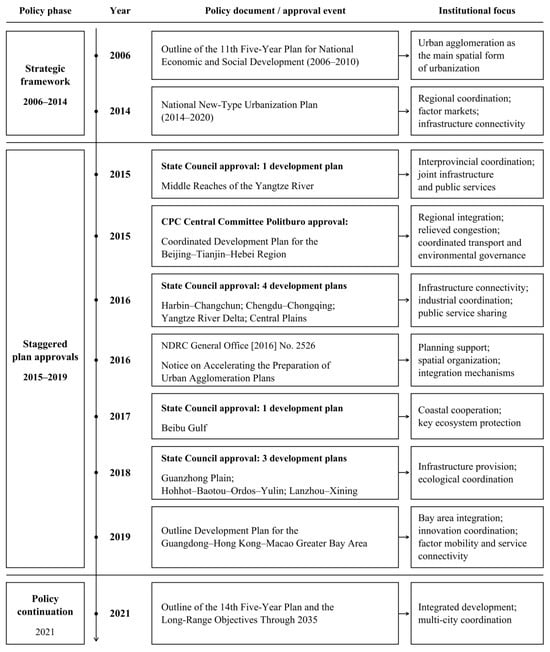
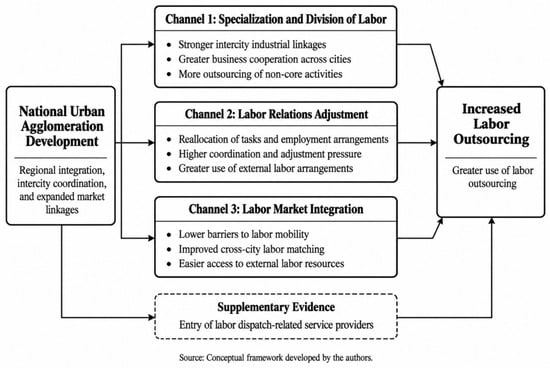
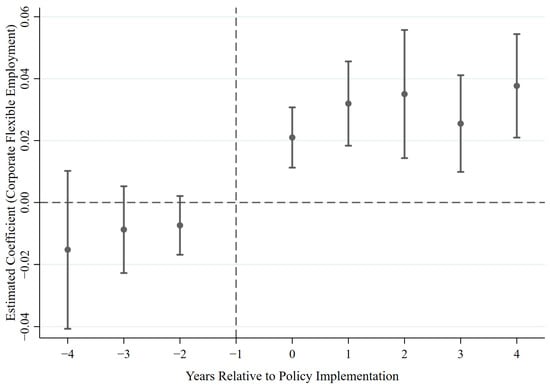
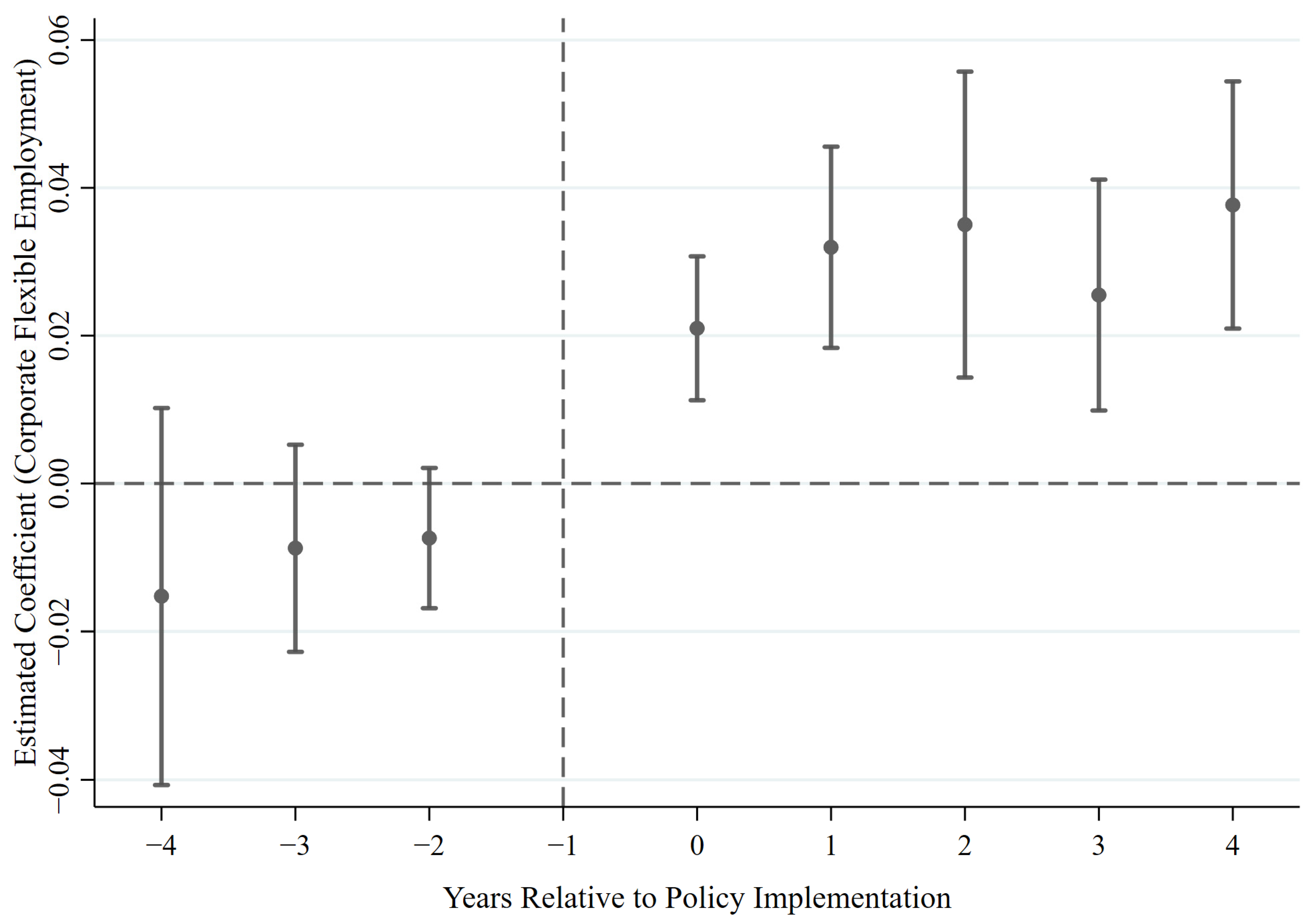
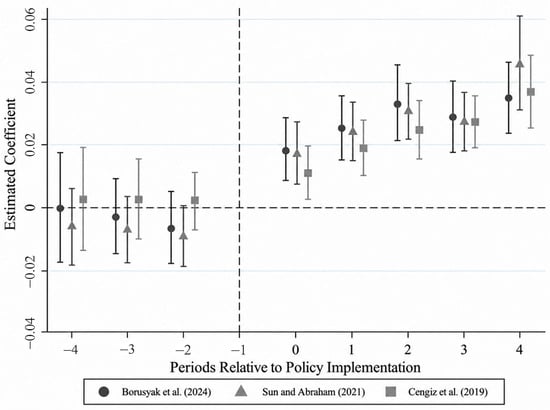
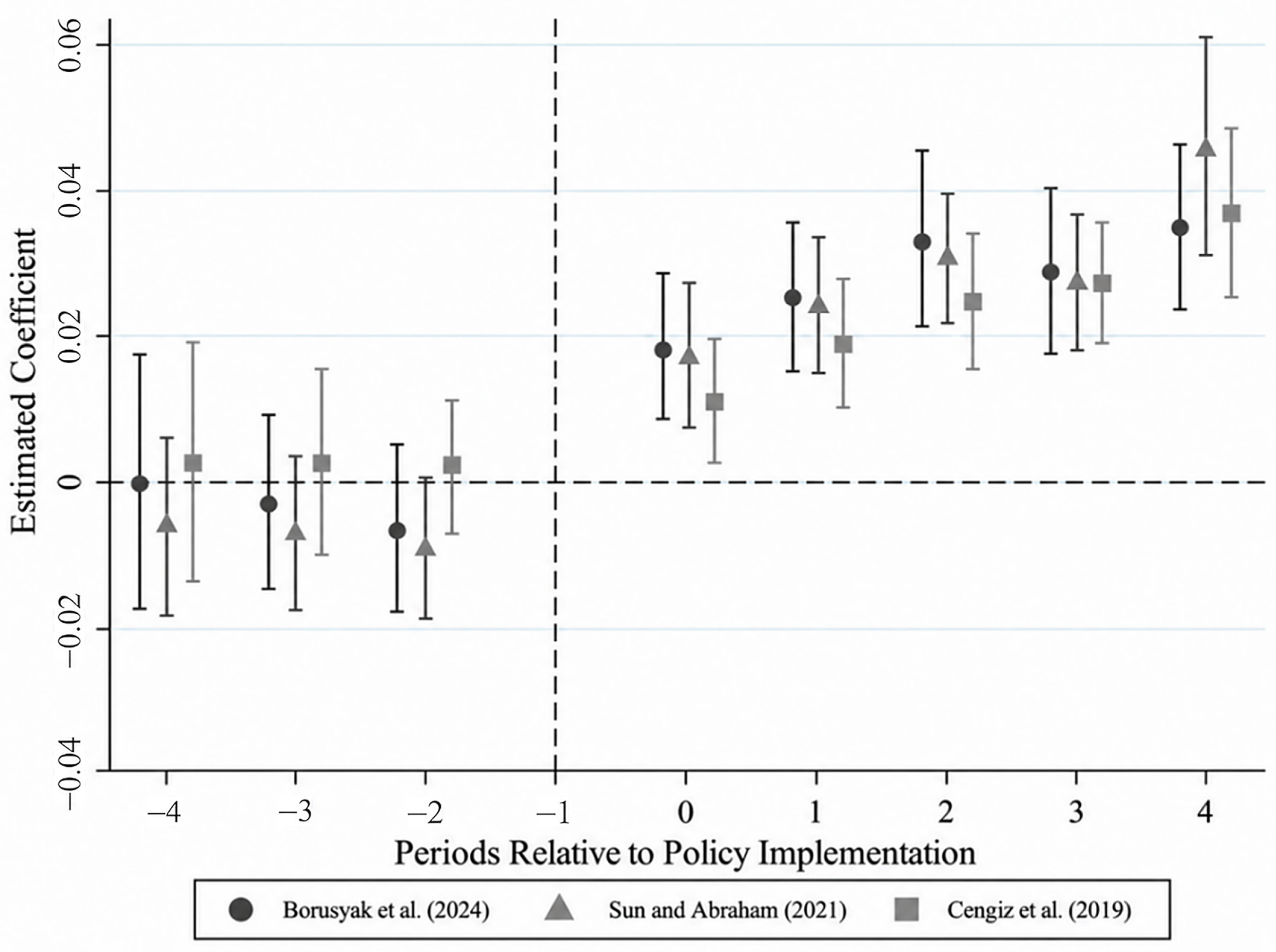
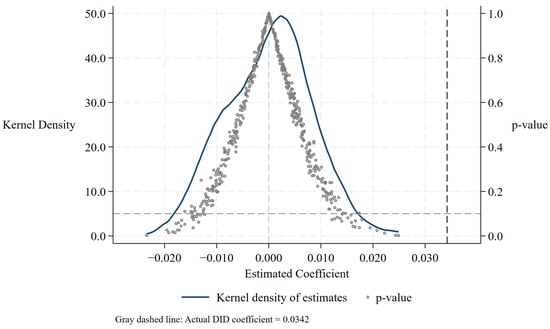
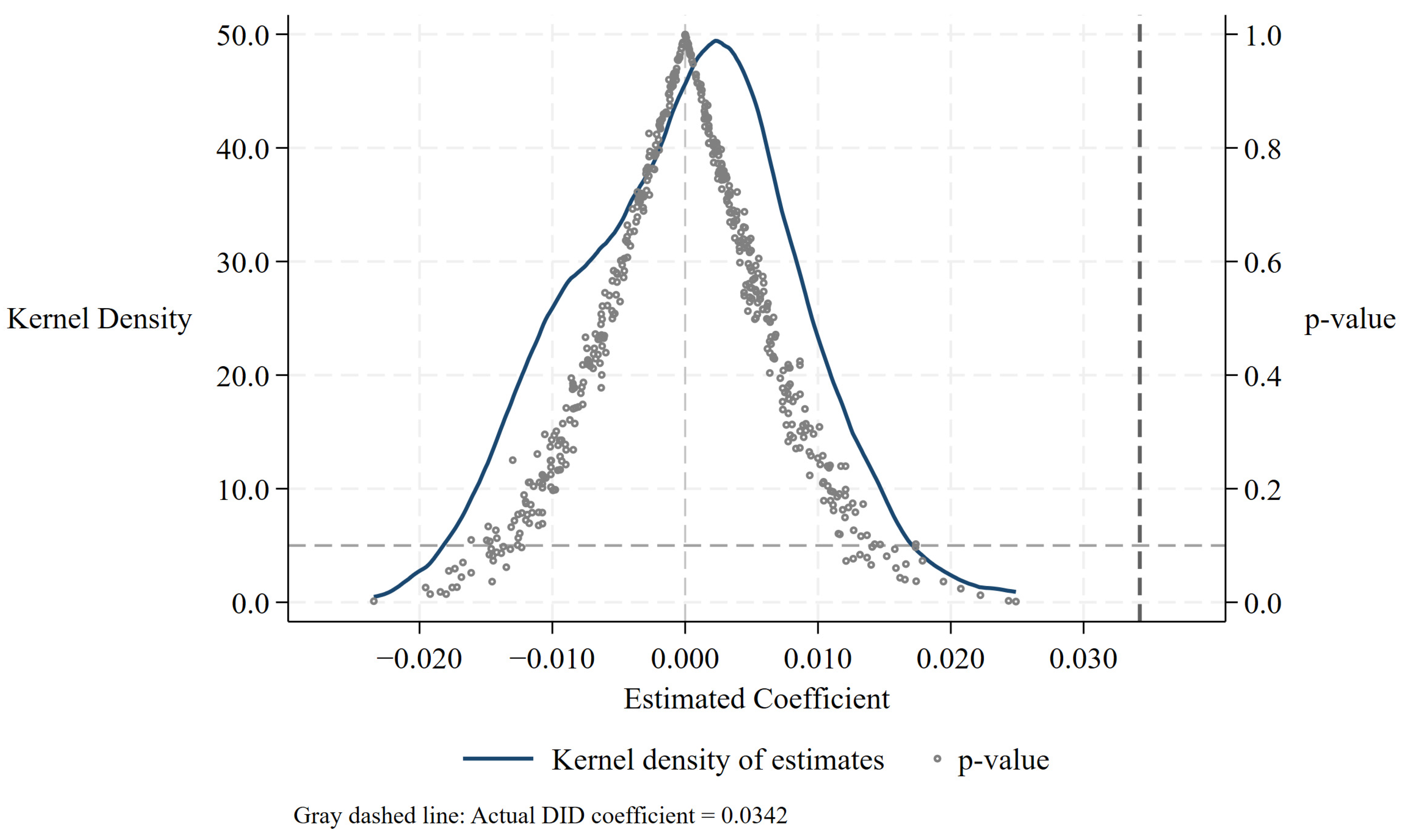
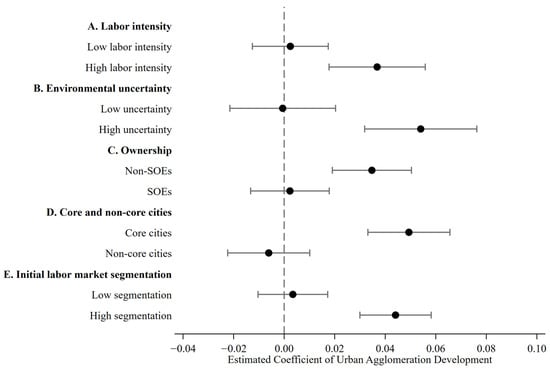
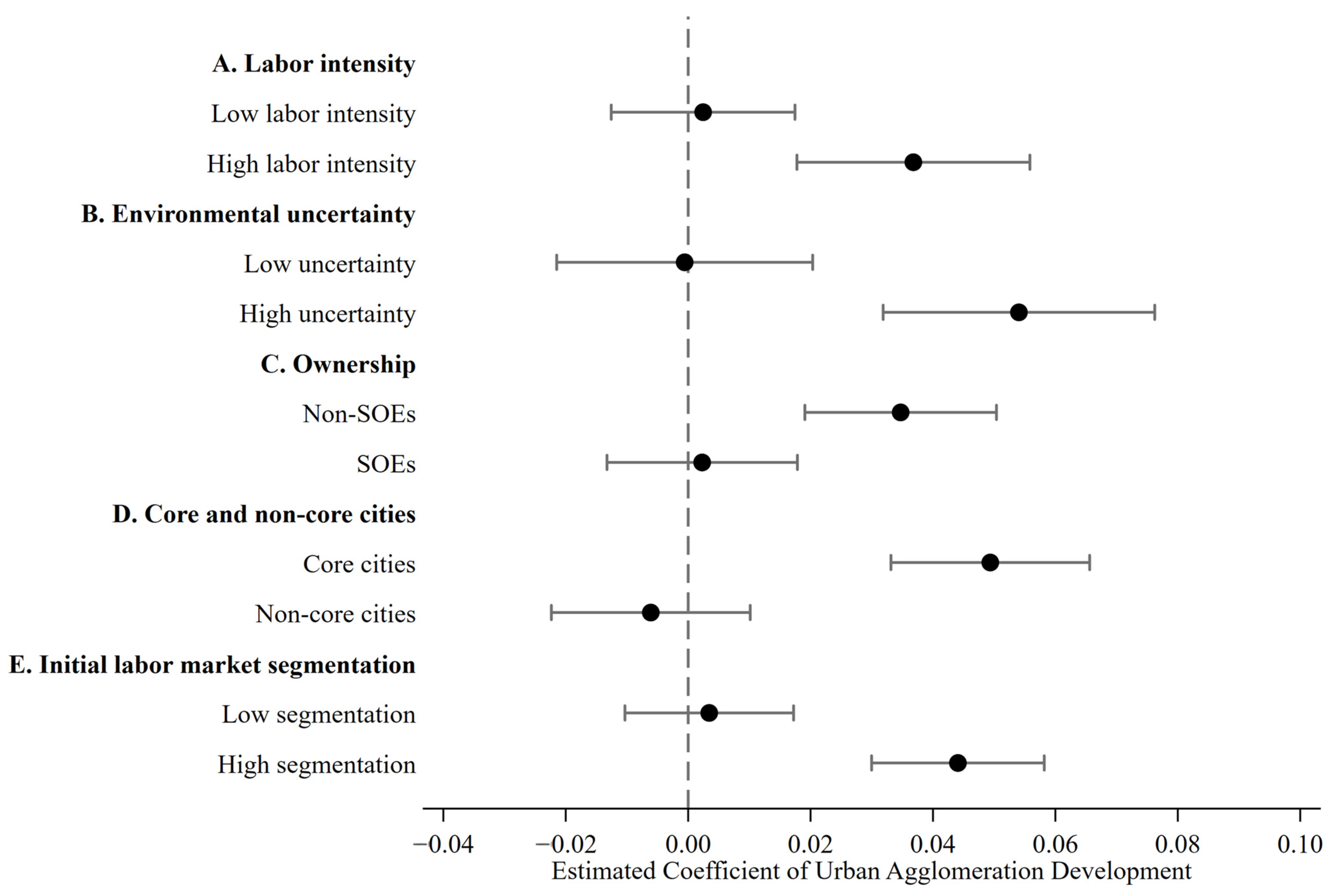

Disclaimer/Publisher’s Note: The statements, opinions and data contained in all publications are solely those of the individual author(s) and contributor(s) and not of MDPI and/or the editor(s). MDPI and/or the editor(s) disclaim responsibility for any injury to people or property resulting from any ideas, methods, instructions or products referred to in the content. |
© 2026 by the authors. Licensee MDPI, Basel, Switzerland. This article is an open access article distributed under the terms and conditions of the Creative Commons Attribution (CC BY) license.