


Abstract
Conventional foundry moulding systems rely on silica sand combined with organic binders or ordinary Portland cement (OPC), generating environmental burdens associated with raw material consumption, hazardous casting emissions and carbon-intensive binder production. This study assesses the environmental potential of black steelmaking slag (BS) as a secondary resource for geopolymer-based foundry moulds, through its use as an alkali-activated binder precursor and an alternative moulding aggregate. The assessment combines controlled casting emission measurements, leaching tests and a comparative cradle-to-gate life cycle assessment (LCA). Casting trials using silica sand as the common aggregate showed substantially lower measured BTEX concentrations for the geopolymer binder than for the furan resin reference, together with lower CO and NOx concentrations than both conventional binder systems. Cr concentrations in the geopolymer leachate were below the analytical reporting limit of 0.5 ppm, compared with 3.66 ppm for raw BS, consistent with restricted Cr release under the investigated conditions. Expressed per 1 m3 of moulding material, LCA indicated GWP reductions of 33.49% and 35.27% for geopolymer Scenarios S and E, respectively, relative to the OPC baseline. These climate benefits were accompanied by higher impacts in the other 10 assessed categories. Contribution analysis identified sodium silicate production and slag processing electricity as priorities for environmental improvement. The findings highlight BS-based geopolymer moulds as promising alternatives for reducing production-stage carbon impacts and selected casting emissions while valorising an industrial by-product. Optimising activator supply and processing requirements offers a targeted pathway to improve their broader environmental performance while addressing the trade-offs identified by the LCA.
1. Introduction
Sand moulding is widely used in metal casting because of its versatility, relatively low cost and suitability for manufacturing components with complex geometries. Conventional mould and core production commonly relies on silica sand combined with organic resins, including furan, phenolic urethane and alkaline phenolic binders. Although these systems provide well-established processing and mechanical performance, their use entails environmental and occupational challenges associated with gaseous emissions, airborne dust and the management of spent moulding materials [1,2,3].
During pouring and subsequent cooling, contact with molten metal causes the thermal decomposition of organic binders, releasing a complex mixture of gaseous and condensable compounds. Depending on the binder chemistry, additives and casting conditions, these emissions may include benzene, toluene, ethylbenzene and xylene (BTEX), polycyclic aromatic hydrocarbons (PAHs), phenol, formaldehyde and carbon monoxide [3,4]. Industrial casting investigations have demonstrated substantially higher BTEX and PAH emissions from organic-bonded moulding sands [4], while pilot-scale comparisons have demonstrated lower emissions from the inorganic systems examined [3]. These findings highlight binder selection as a relevant strategy for preventing pollutant formation at source and addressing environmental and occupational concerns [2,3].
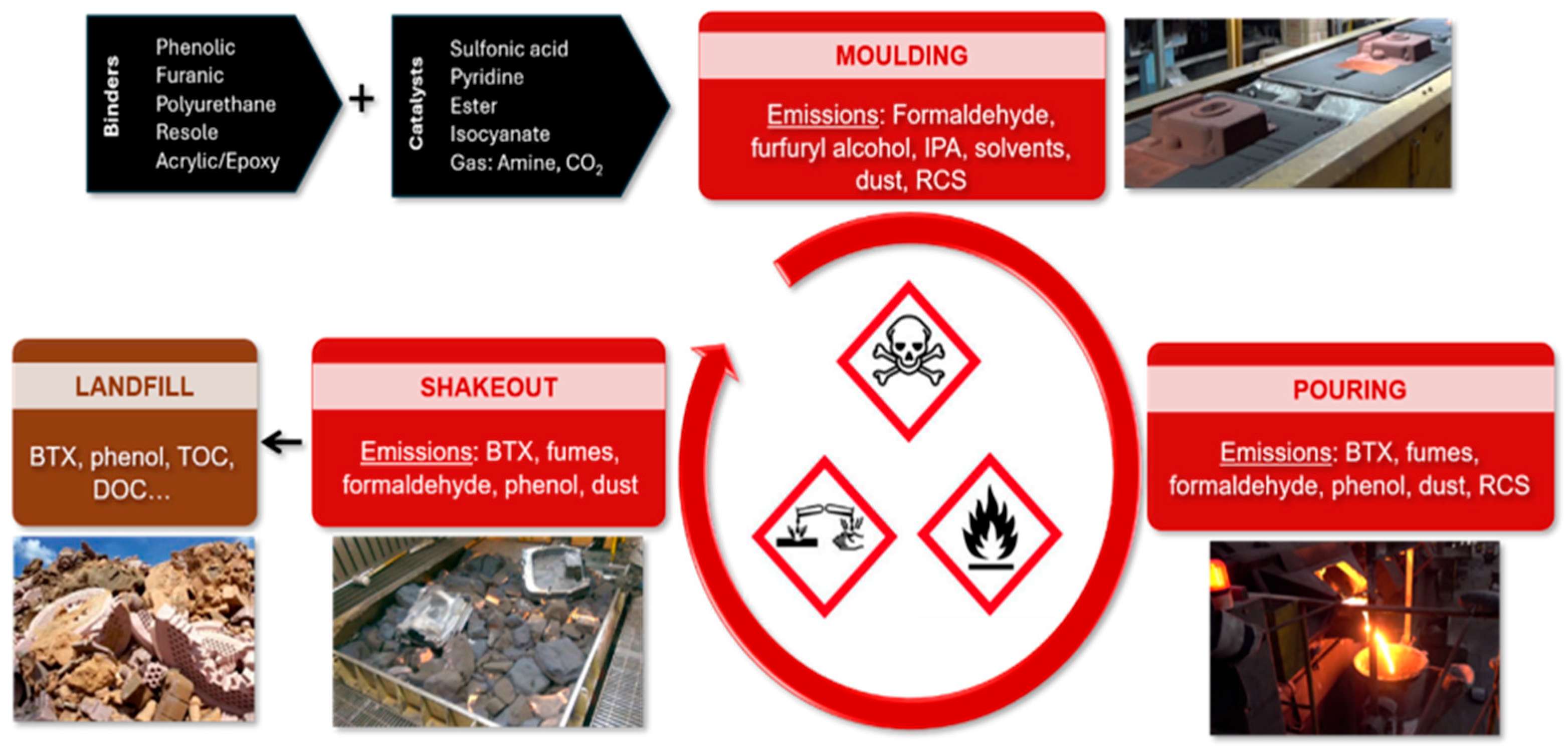
A further concern arises from the use and handling of silica-containing moulding sands. Mechanical operations, including shakeout, sand reclamation and casting cleaning, can release airborne dust containing respirable crystalline silica [2,5]. Inhalation of this fraction is associated with silicosis, lung cancer and other chronic diseases [6]. Consequently, the environmental improvement of moulding systems requires consideration of both the decomposition products generated by the binder and the particulate hazards associated with the aggregate. The main sources and types of airborne pollutants associated with conventional organic-bonded silica sand moulding systems are summarised in Figure 1.
Figure 1.
Main sources and types of airborne pollutants associated with conventional silica sand moulding systems using organic binders. Graphic elements were created by the authors; no third-party material was used.
Recent experimental evidence supports the potential of inorganic binders to reduce casting-related emissions. A pilot-scale comparison of organic, green sand, and inorganic mould/core systems reported reductions exceeding 90% in BTEX and 94% in PAH emissions for the inorganic systems relative to the organic systems tested [3]. This direction is also reflected in the European Commission’s 2024 Best Available Techniques (BAT) conclusions for the smitheries and foundries industry, which identify inorganic geopolymer binders among the options for low-emission chemically bonded sand systems, subject to product specifications [7]. These developments provide a rationale for investigating moulding systems that combine inorganic binders with alternatives to conventional silica sand.
In parallel, the steel industry generates substantial quantities of steelmaking slag. EUROSLAG statistics and institutional reporting document its established utilisation in construction and other applications, while also identifying material that remains outside existing recovery routes [8,9]. This context highlights opportunities to develop additional applications that increase the value recovered from steelmaking residues.
In this context, black steelmaking slag (BS) represents a potentially valuable secondary resource for alternative foundry moulding systems. Steelmaking slags contain Ca-, Fe-, Si- and Al-bearing phases, although their composition and environmental behaviour depend on their production history and mineralogical characteristics [10,11]. Previous studies have investigated EAF slags as precursors for alkali-activated materials, highlighting the importance of assessing their reactivity and contaminant release before and after activation [11].
From an environmental perspective, the presence of potentially leachable elements also requires consideration. Cr is particularly relevant to the assessment of stainless steel slags, and its release depends on its mineralogical association and the exposure conditions rather than on total chromium content alone [12]. These characteristics support the investigation of BS as both a binder constituent and a processed aggregate, while highlighting the importance of assessing contaminant release alongside technical performance and production-stage environmental impacts.
The present work investigates this approach through two complementary strategies: (i) replacing conventional organic binders with an inorganic geopolymer binder produced through the alkali activation of BS; and (ii) substituting conventional silica sand with slag-derived aggregates. Building on the pollution prevention rationale outlined above, the study evaluates the technical suitability of these systems, with particular emphasis on their environmental performance. This combined approach explores the potential of BS to fulfil both functions within a circular moulding system.
The valorisation of BS in this application could extend the useful life of an industrial by-product, reduce demand for virgin moulding materials, and divert slag from disposal. Replacing organic binders may also reduce the formation of hazardous thermal decomposition products during casting. However, these potential advantages require quantitative assessment, since slag processing, alkaline activator production and material transport can introduce additional environmental burdens. A combined evaluation of production-stage impacts, casting emissions and contaminant release is therefore necessary to establish the benefits and limitations of this valorisation route.
Life cycle assessment (LCA) provides a systematic framework for comparing the potential environmental impacts of the proposed moulding systems with those of conventional silica sand and cement-based alternatives. In this study, a cradle-to-gate assessment considers raw material supply, transportation, energy use and mould manufacturing. This perspective is particularly relevant for alkali-activated materials, whose environmental performance depends on precursor sourcing and processing, the type and dosage of alkaline activators, transport distances, and manufacturing requirements. LCA therefore enables the identification of environmental hotspots and the assessment of whether the use of secondary resources translates into lower production-stage impacts.
Previous LCA studies have shown that the environmental performance of geopolymer production depends strongly on precursor selection, processing requirements and alkaline activator production [13,14]. Habert et al. identified the importance of sodium silicate consumption in the environmental assessment of geopolymer-based concrete [13]. Passuello et al. further demonstrated that silicate activators can contribute substantially to impacts across several categories and investigated waste-derived activators as a means of reducing these burdens [14]. Although these studies concern different materials and applications, they establish a relevant methodological basis: replacing Portland cement with an alkali-activated binder does not automatically improve performance across all environmental categories. Application-specific inventories and multicategory assessment are therefore needed to identify both benefits and trade-offs.
Complementing this assessment, direct monitoring of emissions during casting provides experimental evidence of pollutant release under the tested operating conditions, while leaching characterisation addresses the potential mobilisation of elements from the slag-derived material. These methods examine distinct but complementary aspects of environmental performance: LCA quantifies potential impacts within the defined production boundary, emission measurements characterise releases during casting, and leaching tests assess contaminant release under specified exposure conditions. Together, they provide a broader basis for evaluating BS-based moulding systems and guiding their further development towards lower-impact, resource-efficient foundry applications.
2. Materials and Methods
2.1. Black Steel Slag Processing and Characterisation
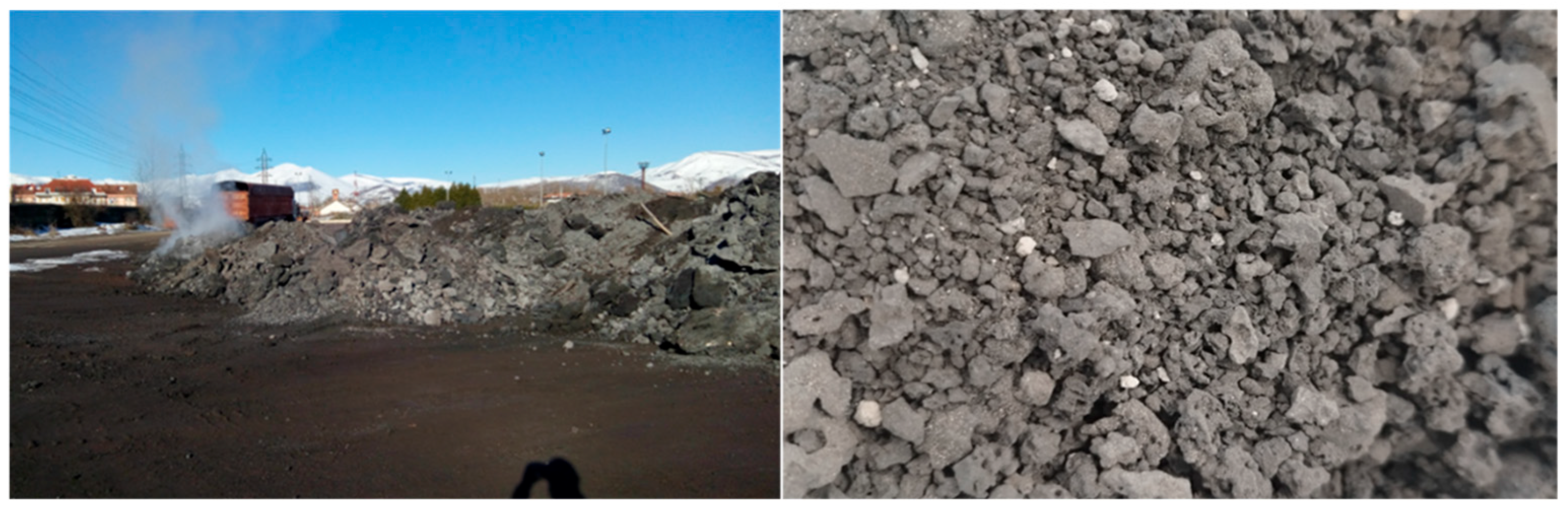
BS used in this study was supplied by Reinosa Forgings & Castings (RF & C), Reinosa, Spain, which generates approximately 12,000–16,000 t annually as a by-product of steelmaking operations (Figure 2). All slag generated is currently reused. Nevertheless, the handling, processing and management operations required before subsequent valorisation entail annual costs exceeding €150,000; this expenditure does not represent landfill disposal costs.
Figure 2.
BS stockpile at the RF & C facilities.
BS is a dense, dark-coloured by-product generated during steelmaking in an electric arc furnace. During melting and refining, fluxing agents such as limestone or dolomite react with oxidised constituents and non-metallic impurities in the furnace charge to form a molten slag phase. This phase consists primarily of calcium- and magnesium-bearing compounds, silicates, aluminium-bearing compounds and metal oxides.
Owing to its lower density, the slag separates naturally from the molten steel and forms a layer above the metal bath. It contributes to steel refining by incorporating undesirable elements, such as phosphorus, and acts as a protective barrier that limits oxidation of the molten steel. At the end of the melting stage, the two phases are discharged separately: the molten steel is tapped into a ladle, while the slag is discharged into a slag pit by tilting the furnace in the opposite direction. The slag then solidifies through relatively slow cooling in the pit, followed by further cooling under ambient conditions with light water spraying.
The mineralogical characteristics of EAF slag are governed by both its chemical composition and cooling history. Relatively slow cooling generally favours the formation and growth of crystalline phases such as brownmillerite, larnite, and magnesioferrite, whereas sufficiently rapid cooling may increase the proportion of amorphous material [15]. The cooling procedure described above is therefore expected to favour crystallisation. However, the phases present and the relative proportions of crystalline and amorphous material in the BS investigated here cannot be established from cooling conditions alone and require direct mineralogical characterisation. For alkali-activated binder production, suitability depends on the availability of reactive constituents rather than solely on the total Si, Al and Ca contents expressed as oxides. Experimental studies on EAF slag have shown that the release of Si and Al under alkaline conditions depends on the activation conditions, highlighting the importance of assessing the behaviour of each slag source individually [10]. Consequently, BS is investigated here as a potential precursor whose processing and activation requirements must be established experimentally. For use as a moulding aggregate, particle size distribution and dimensional stability are also relevant. Free CaO and MgO, when present in susceptible forms, may undergo hydration reactions associated with expansion [15]. Their occurrence must therefore be distinguished from the total CaO and MgO contents determined by bulk chemical analysis. These considerations support the assessment of the processed slag as a source-specific material rather than assuming that the behaviour reported for other EAF slags is directly transferable.
From a thermal perspective, the slag exhibits high thermal conductivity (1.3–1.7 W/mK) and a specific heat capacity (713–1000 J/kgK), depending on slag composition, comparable to that of silica sand. Its melting point is also high (approximately 1590 °C), although slightly lower than that of silica (1710 °C) [16]. These thermal and chemical properties make this material a strong candidate for foundry moulding applications, not only as a sand substitute but also for the development of a binder system based on alkali activation technology.
For the two applications investigated, BS was processed to obtain distinct particle size fractions. Particles between 125 and 500 µm were prepared for use as moulding aggregate, while a finer fraction below 125 µm was prepared for alkali-activated binder development. This approach enables the same secondary resource to be evaluated in complementary roles within the moulding system, while accounting for the different particle size, reactivity and performance requirements of each application. The bulk chemical composition of the processed BS was determined by X-ray fluorescence (XRF), with results expressed as oxide-equivalent mass fractions. Crystalline phases were identified by powder X-ray diffraction (XRD) using a Bruker D8 Advance diffractometer with Cu Kα radiation (λ = 1.5406 Å). Diffraction patterns were collected over a 2θ range of 5–80°, with a step size of 0.02° and a counting time of 1 s per step. The amorphous fraction was quantified by Rietveld refinement using ZnO as an internal standard, added at 10 wt.% of the total BS-ZnO mixture (BS-to-ZnO mass ratio of 90:10). These analyses characterised the unreacted slag and were not used as direct evidence of binding phase formation after activation.
2.2. Sand–Binder System Formulation and Characterisation
A series of formulations were developed by systematically varying the nature and composition of the alkaline activator, the precursor-to-activator ratio, and the overall binder content, with the aim of optimising the performance of the resulting moulding systems. The different sand–binder mixtures were evaluated against the technical requirements established by RF & C for resin-free moulding materials intended to replace conventional organic binders while maintaining comparable processing behaviour and casting performance.
An RF & C compressive strength target of approximately 1.18–1.77 MPa after 24–48 h guided formulation selection. The target reflects the need for sufficient handling and assembly strength together with the intended ease of mould removal after casting. It is an application-specific selection criterion, not a standardised acceptance limit or direct measure of high-temperature resistance. Sand–binder mixtures were prepared by premixing the solid constituents for 1 min, adding the activator and mixing for a further 10 min. Cylindrical specimens, nominally 50 mm in diameter and 50 mm in height, were compacted using a GF press at loads of 1 or 2 t. Compressive strength was evaluated after 48 h, with the compaction conditions distinguished in the results. These tests were performed in duplicate for each formulation and experimental condition, and the results reported correspond to the arithmetic mean of the two measurements obtained for each condition. For benchmarking purposes, conventional OPC-based and furanic binder systems currently employed by RF & C were also included in the evaluation.
2.3. Emissions Assessment
Environmental performance at process level was evaluated by measuring gaseous emissions generated during steel pouring into silica sand moulds bonded with geopolymer, cement, and furanic systems. A single pouring trial was conducted for each binder system (geopolymer, cement, and furanic), and all emission measurements were performed under controlled and comparable operating conditions.
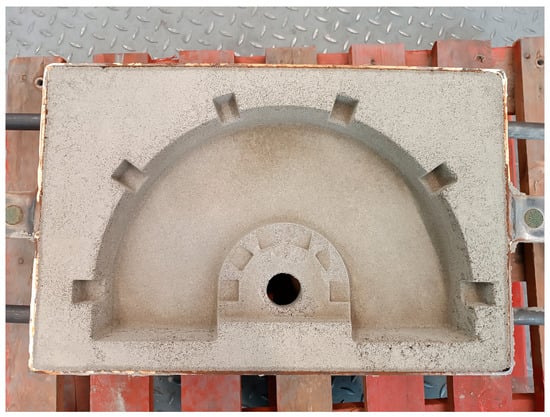
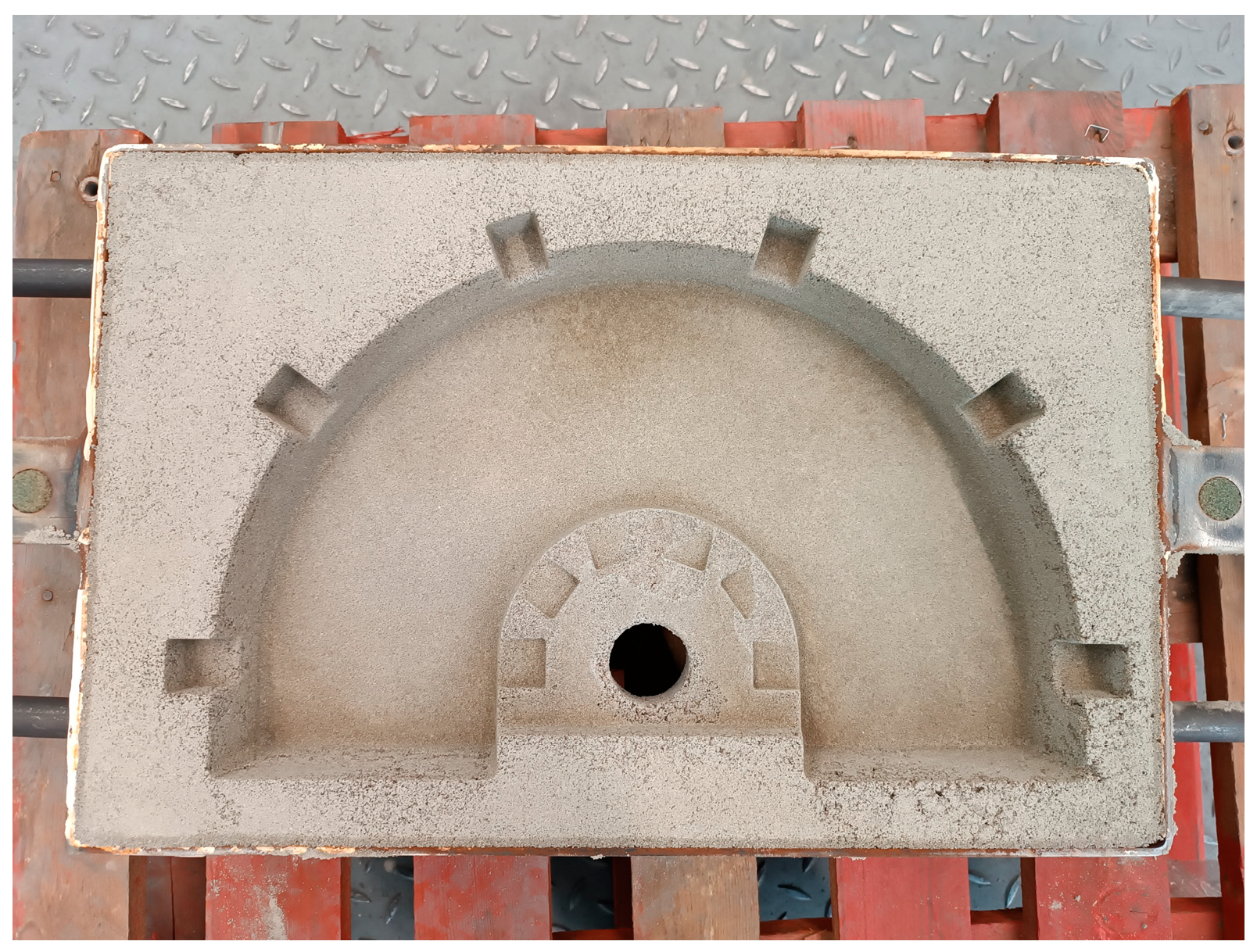
Moulds were prepared by manual moulding using a MALKA mixer (A mixer MALKA, Zaragoza, Spain) with a 10 kg capacity, to ensure the homogenisation of the sand and binder components. A pattern and two moulding boxes were used to produce the moulds. Each semi-mould (Figure 3) contained approximately 22 and 25 kg of the sand mixture. No cores were used, and no coatings were applied, in order to isolate the effect of the binder system on casting emissions.
Figure 3.
The semi-mould with the pattern impression, employed for the emissions experiments.
Steel was melted in a 100 kg-capacity medium-frequency induction furnace (INDUCTOTHERM). Approximately 25 kg of molten steel was poured into each mould. The pouring temperature was approximately 1650° C in all three experiments.
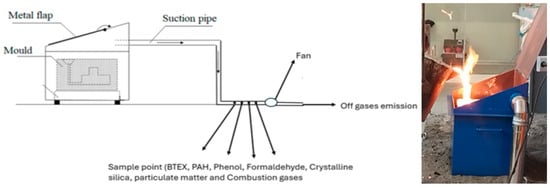
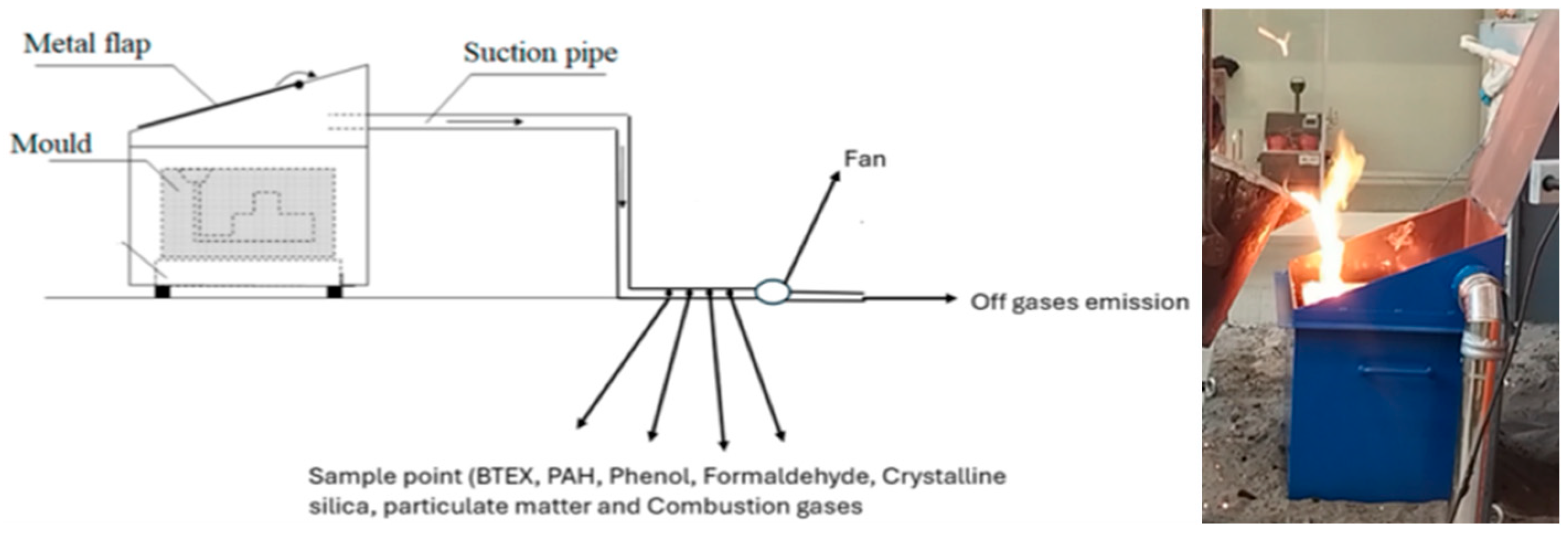
The study employed a controlled pouring methodology, in which molten steel was cast into moulds within a sealed metallic testing chamber designed to ensure efficient capture and monitoring of exhaust gases (Figure 4). The emitted gases were directed through a pipeline equipped with sampling and analytical devices for pollutant sampling and quantification. This experimental design systematically reduces environmental interference while enabling direct performance comparisons between moulding systems.
Figure 4.
Scheme of the stand for measuring gas flow, temperature and BTEX, PAHs and other harmful compound emissions.
To assess and quantify the reduction in environmental impact associated with the proposed geopolymer binder, dedicated emission measurements were conducted to characterise and compare the emission profiles of the geopolymer system with those of two conventional binders routinely used at RF & C, namely cement and a furan-based resin.
The analysed contaminants included VOCs, PAHs, phenol, formaldehyde, and combustion gases such as CO and NOx. Emission profiles were compared across binder systems to assess the potential environmental advantages of the alkali-activated geopolymer binder.
Real-time measurements of exhaust gases (CO, NOx) were performed during the pouring and cooling stages using a TESTO 350 flue gas analyser (Testo SE & Co. KGaA, Lenzkirch, Germany). The analyser uses electrochemical sensors to measure gas concentrations, enabling continuous monitoring of CO and NOx emissions and the assessment of their temporal variations over the course of the experiments. The detection limits were 3 ppm for CO and 6 ppm for NOx.
Different organic compounds were sampled using SKC Inc. (Eighty-Four, PA, USA) pumps. For BTEX, phenol and formaldehyde, two Pocket Pump TOUCH units were used, operating at flow rates ranging from 20–500 mL/min, in combination with sorbent tubes. Sampling flow rates were 0.2 L·min−1 for BTEX and formaldehyde, and 0.1 L·min−1 for phenol. Sampling durations were 1 h for BTEX and formaldehyde and 2 h for phenol, resulting in a sampling volume of 12 L for each compound. The detection limits were 15 µg for phenol, 0.3 µg for formaldehyde, 3 µg for benzene and 5 µg for ethylbenzene, toluene, and xylene.
PAHs were sampled using a Universal PCXR8 Sample Pump, with a flow rate of 50–5000 mL/min, in combination with filters and sorbent tubes. The sampling flow rate was 2.2 L:min−1 and the sampling duration was 1 h. The corresponding sampled volume was 132 L. The detection limits were 1 µg for acenaphthylene, 0.05 µg for anthracene, chrysene, dibenzo[a,h]anthracene, phenanthrene, fluoranthene and pyrene, 0.02 µg for indenol [1,2,3-cd]pyrene, and 0.4 µg for naphthalene.
BTEX compounds were analysed by gas chromatography with flame ionisation detection, following procedure PLE-16, based on UNE 81586:2020. PAHs were determined by high-performance liquid chromatography with fluorescence detection (HPLC-FLD), according to method ITA-CL-061, based on the NIOSH 5506 standard [17].
2.4. Life Cycle Assessment (LCA)
The environmental assessment of the developed foundry moulds was carried out using a LCA methodology in accordance with ISO 14040 and ISO 14044, and following the framework established by UNE-EN 15804.
The study was designed as an attributional and comparative LCA with a “cradle-to-gate” system boundary, including raw material extraction, processing, transport, and mould manufacturing stages, while excluding use and end-of-life phases. Detailed life cycle inventory (LCI) data, including raw material quantities, transportation distances, electricity consumption, process residues and background datasets, are provided in the Supplementary Materials (Tables S1–S4).
The functional unit was defined as 1 m3 of foundry mould. It was assumed that all mould systems evaluated provided equivalent technical performance and were suitable for producing the same casting. Inventory data were obtained from laboratory-scale production, pilot casting trials, and industrial reference data provided by RF & C (Table S1).
Environmental modelling was performed using SimaPro v10.1 software and the Ecoinvent v3.11 database, applying the cut-off system model. The Life Cycle Impact Assessment (LCIA) was conducted using the CML-IA baseline v3.10 methodology, considering 11 environmental impact categories to evaluate and compare the environmental performance of conventional and alternative foundry mould formulations, including Global Warming Potential (GWP), Acidification Potential (AP), Eutrophication Potential (EP), Abiotic Depletion Potential (ADP), and toxicity- and ecotoxicity-related indicators.
No formal uncertainty analysis was performed. However, a sensitivity analysis was conducted to assess the influence of silica sand transportation distance on the environmental results.
Modelling Assumptions
To ensure consistency across the scenarios, common modelling assumptions were established regarding the treatment of secondary raw materials, electricity supply, and transportation.
Steel slag sand was considered a waste material and entered the system without upstream environmental burdens, in accordance with the cut-off system model adopted in the study. Nevertheless, the environmental impacts associated with its preparation for use in foundry mould production were included in the assessment. These processes comprised screening and grinding operations, including their associated electricity consumption (Tables S2 and S3).
The commercial sodium silicate activator (Geosil® 34417) was modelled using an Ecoinvent sodium silicate production dataset as a proxy, due to the absence of product-specific inventory data. The quantities were adjusted according to the solids content of the commercial product, with the corresponding water content considered separately.
The inert residues generated during the screening and grinding of steel slag sand were modelled using an Ecoinvent v3.11 proxy dataset representing mineral waste recycling. No coproducts were generated during the mould manufacturing processes; therefore, no additional allocation procedures were required.
Electricity consumption was modelled using the Ecoinvent v3.11 dataset representing the Spanish market for medium-voltage electricity. The same electricity dataset was applied across all scenarios, while differences in electricity requirements were accounted for in their respective inventories.
Raw material transportation was modelled using an Ecoinvent dataset for freight transport by EURO 6 lorries (16–32 t). Transport distances were defined according to the origin of each material, with steel slag sand processed on site and therefore assigned no external transport. The corresponding transport requirements were calculated based on the quantities and distances considered for each scenario.
No additional cut-off criteria were applied to exclude material or energy flows from the LCI.
Detailed LCI data, including material inputs, electricity consumption, transportation requirements, and process outputs, are provided in the Supplementary Materials.
2.5. Leaching Assessment
Leaching tests were performed on representative samples of raw BS and the slag-based geopolymer (E1) according to EN 12457. The materials were tested in granular form, with size reduction where necessary to meet the particle size requirements of the applied procedure. The resulting leachates were analysed by inductively coupled plasma optical emission spectrometry (ICP-OES). Elemental concentrations were reported in ppm. Results below the respective analytical reporting thresholds were expressed as <0.05 ppm for BS and <0.5 ppm for E1, rather than treated as zero.
3. Results
3.1. Raw Materials Characterisation
The BS sample was collected from the base of three stockpiles at RF & C, each corresponding approximately to one production day. The collected portions were combined and thoroughly homogenised, and the composite sample was reduced by quartering to obtain the laboratory sample used for characterisation and formulation studies. Assuming approximately five melts per production day, the sampled stockpiles were associated with around 15 melts. The results characterise this homogenised composite sample and do not quantify variability between individual melts or across longer production periods.
Regarding its formation process, the BS underwent slow cooling, which influenced its mineralogical development and phase distribution compared to rapidly cooled slags. Prior to analysis, the material was pre-processed and reduced to a particle size below 160 µm, as shown in Table 1.
Table 1.
BS particle size after processing.
The XRF analysis of the BS, shown in Table 2, reveals a composition dominated by Fe2O3 (38.3%) and CaO (29.6%), which together account for more than two-thirds of the total mass. These oxides are typical of steelmaking slags, reflecting the strong presence of both Fe-rich crystalline phases and Ca silicates. The slag also contains SiO2 (11.5%), MgO (5.6%), MnO (4.68%), and Al2O3 (4.16%), which contribute to the formation of complex mineral assemblages such as spinels and ferrites. Minor constituents include TiO2 (0.25%), P2O5 (0.23%), BaO (0.06%), and V2O5 (0.25%), while trace levels of alkali oxides (Na2O, K2O < 0.05%) and ZrO2 (<0.10%) were detected.
Table 2.
XRF analysis of the BS provided by RF & C.
The relatively high Fe and Ca contents highlight the partially crystalline nature of the slag and suggest limited reactivity compared to blast furnace slags, which are typically more amorphous and silica-rich. The significant presence of Cr2O3 (5.01%) is noteworthy, as it derives from stainless steel scrap processing and may influence both the chemical stability and potential reuse pathways of the slag. Leaching tests were therefore performed to assess the release of Cr and other potentially harmful elements from the raw slag and the resulting geopolymer, providing insight into their mobility and retention within the alkali-activated matrix. Overall, the complex chemistry of this material reinforces the opportunities associated with its valorisation through alkali activation and its use as an alternative binder and/or aggregate in foundry applications.
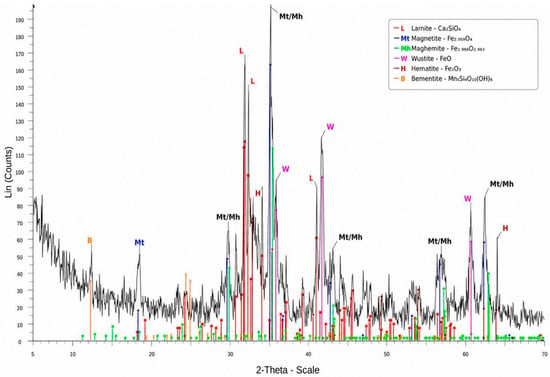
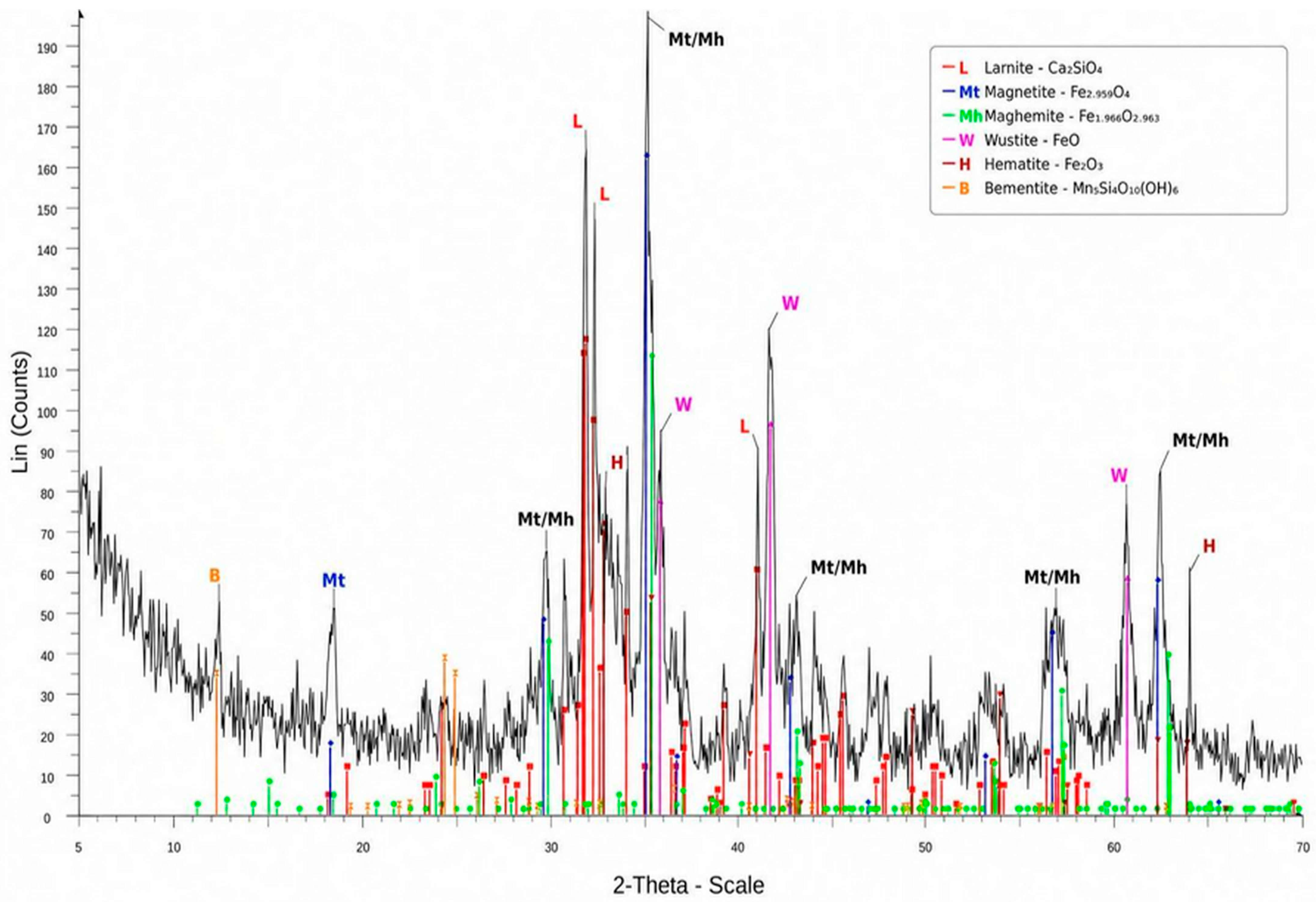
However, a major challenge in this work is the potentially low reactivity of RF & C-derived BS, which can be attributed to their limited amorphous content resulting from slow cooling. This poses a significant risk to the successful development of binders. To address this uncertainty and achieve a more precise characterisation, XRD analysis was performed with a specific focus on quantifying the vitreous phase in the slags. Figure 5 shows the XRD pattern of the received BS.
Figure 5.
XRD pattern obtained from the BS provided by RF & C.
XRD analysis indicates that the slag is predominantly crystalline, as demonstrated by the presence of sharp and well-defined diffraction peaks throughout the scanned 2θ range. A slight increase in the background intensity at low diffraction angles (approximately 5–20° 2θ) suggests the presence of a limited amorphous fraction, although its composition cannot be determined solely from XRD data.
The main crystalline phases identified are calcium silicates, iron oxides and minor Mn-containing silicates. Larnite (Ca2SiO4) is the dominant crystalline phase, as evidenced by the intensity and abundance of its diffraction reflections. This finding is consistent with the high CaO and SiO2 contents determined by XRF analysis (Table 2) and indicates that a significant portion of the slag is present as crystalline calcium silicate. The predominance of larnite is characteristic of basic steelmaking slags and may influence both the hydraulic and alkaline activation behaviour of the material.
Iron-bearing phases are also detected, including magnetite (Fe3O4), maghemite (Fe2.96O2.93), wüstite (FeO) and hematite (Fe2O3). Although these phases are clearly identified in the diffractogram, they constitute secondary components relative to larnite. Their presence is in agreement with the elevated Fe content obtained from chemical analysis and reflects the typical mineralogical assemblage of iron-rich metallurgical slags.
Minor amounts of bementite (Mn5Si4O10(OH)6) are also identified, indicating the incorporation of manganese into the slag, likely originating from Mn-containing alloys or raw materials used during steel production.
To quantify the amorphous content, Rietveld refinement was performed using ZnO as an internal standard. The results, summarised in Table 3, confirm that the slag is largely crystalline but contains a measurable amorphous fraction (24.5 wt.%). This amorphous phase is expected to contribute significantly to the reactivity of the slag under alkaline activation conditions, as amorphous materials generally dissolve more readily than their crystalline counterparts, enhancing the availability of reactive species for binder formation.
Table 3.
Quantification of the amorphous phase in BS material.
According to the analysis, BS contains a 24.5% amorphous fraction, confirming its predominantly crystalline nature. This behaviour is especially pronounced when compared to slags produced using alternative cooling methods [18].
Despite its relatively low amorphous content, BS may still exhibit significant reactivity under alkaline activation conditions [19]. Such reactivity is expected to arise from the dissolution of the amorphous fraction together with the contribution of reactive calcium silicate phases, particularly larnite, which can partially dissolve in highly alkaline environments and provide a source of Ca and Si species for the precipitation of binding gels [15].
In contrast, iron oxides are generally considered less reactive under alkaline activation conditions and are not expected to contribute directly to gel formation [20]. Nevertheless, phases such as wüstite may undergo limited dissolution, potentially influencing the chemistry of the activating solution and the evolution of the reaction products.
Therefore, although the amorphous fraction is moderate, the combined presence of reactive amorphous material and the high content of larnite suggests that BS possesses favourable characteristics for alkaline activation. The extent of this reactivity will also depend on additional factors, including particle size distribution, specific surface area, and curing conditions, which control dissolution kinetics and the development of the final binder microstructure.
3.2. Geopolymer Binder Formulation
The inorganic binder was developed through the alkali activation of finely milled steel slag using a commercial sodium silicate-based activator. Since the primary objective of this study is to assess the environmental benefits associated with the replacement of conventional organic binders in foundry moulding systems, the development and optimisation of the geopolymer formulation are not discussed in detail. Nevertheless, a brief overview is provided to facilitate understanding of the selected material.
An initial screening campaign was carried out using the processed slag (particle size < 125 µm), several commercial alkaline activators supplied by Wöellner, and different solid-to-liquid (S/L) ratios. The experimental programme followed a Design of Experiments (DoE) approach, considering activator type and S/L ratio as the main variables. The formulations were evaluated in terms of precursor reactivity, workability, pot life, and early compressive strength. Paste preparation was performed using a Matest Automatic Mortar Mixer (model E093N, Matest S.p.A., Treviolo, Italy), applying 15 min of mixing at moderate speed to ensure complete homogenisation. Fresh mixtures were cast into 4 × 4 × 16 cm3 silicone moulds, compacted on a vibrating table, and cured at 25 °C and 99% relative humidity in an ACS COMPACT DY110 (Angelantoni Test Technologies S.r.l., Massa Martana, Italy) climatic chamber.
The preliminary screening indicated that the commercial sodium silicate GeoSil® 34417 provided the most suitable balance between fresh-state processability and hardened-state performance, achieving a workable pot life of approximately 2 h while maintaining adequate mechanical integrity. This activator was therefore selected for further studies focused on compressive strength development and performance in sand-bonded foundry moulding systems. As a result of the optimisation process, the final formulation consisted of a steel slag-based geopolymer activated with GeoSil® 34417 at an S/L ratio of 2, reaching compressive strengths of 5.4 MPa after 48 h and 12.4 MPa after 28 days of curing. Additional information regarding formulation design, reaction mechanisms, processing parameters, and detailed material characterisation is beyond the scope of the present work and will be reported in a dedicated publication.
3.3. Design of Sand–Binder Mixtures and Characterisation
Two types of mortar systems were prepared using the geopolymer binder optimised in the previous section. The first formulation was based on conventional silica sand (S) from Sibelco, while the second employed steel slag-derived aggregate (E) as an alternative granular material. Table 4 presents the particle size distribution of both sands. The slag sand was selectively sieved to match the particle size distribution of the commercial silica sand as closely as possible.
Table 4.
Particle size distribution of the sands used for the mixtures.
For the preparation of the sand–binder mixtures, the solid constituents (sand and slag precursor < 160 µm) were first premixed for 1 min to ensure homogeneity. The alkaline activator was then added, and mixing was continued for 10 min until a homogeneous mixture was obtained.
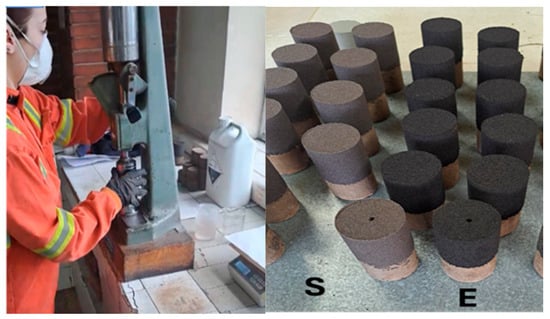
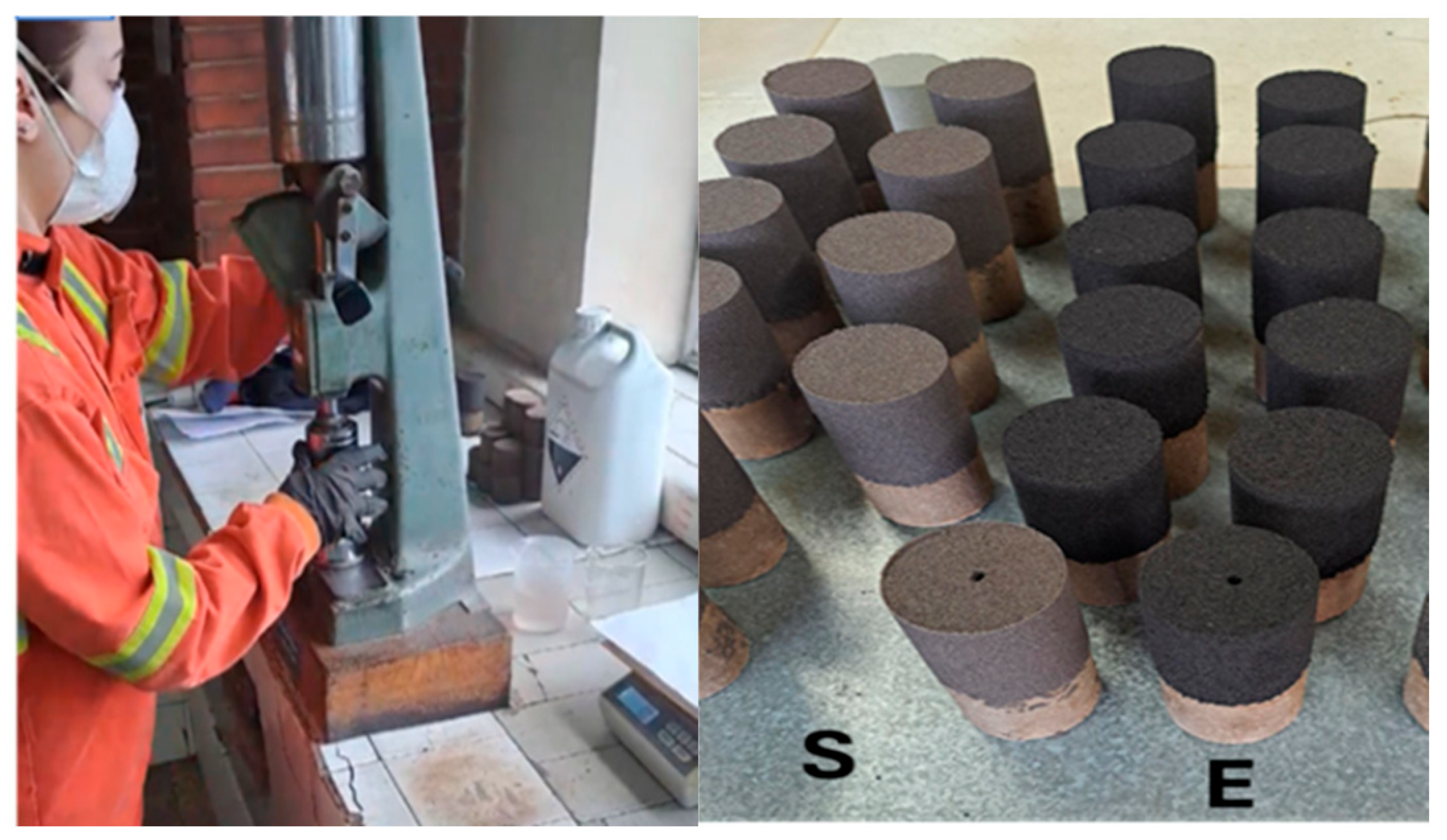
A distinctive feature of this study is the use of a manufacturing route based on the mechanical compaction of the binder–aggregate mixture inside a rigid mould, which reproduces the industrial process employed for the production of moulds in RF & C. To simulate these conditions on a laboratory scale, the mixtures were consolidated using a GF press operated at a constant compaction load of either 1 or 2 t, depending on the experimental settings (Figure 6). The applied pressure ensured adequate densification and promoted intimate contact between aggregates and the binder, resulting in mechanically stable bodies. Moreover, the use of controlled uniaxial pressing allowed for a reproducible evaluation of the influence of aggregate type and compaction force on the final performance of the geopolymer mortar systems.
Figure 6.
GF Press and cylindrical samples produced with geopolymer binder in RF & C. Note: The person depicted has provided informed consent for the publication of her image in this article.
The compacted specimens, depicted in Figure 6, were produced with a cylindrical geometry, with nominal dimensions of 50 mm in diameter and 50 mm in height. This specimen configuration was selected to facilitate subsequent characterisation of mechanical, physical, and environmental properties while maintaining representative processing conditions.
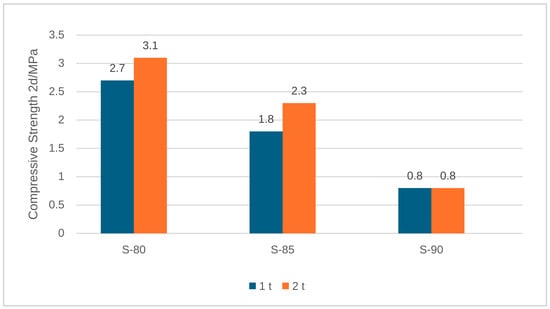
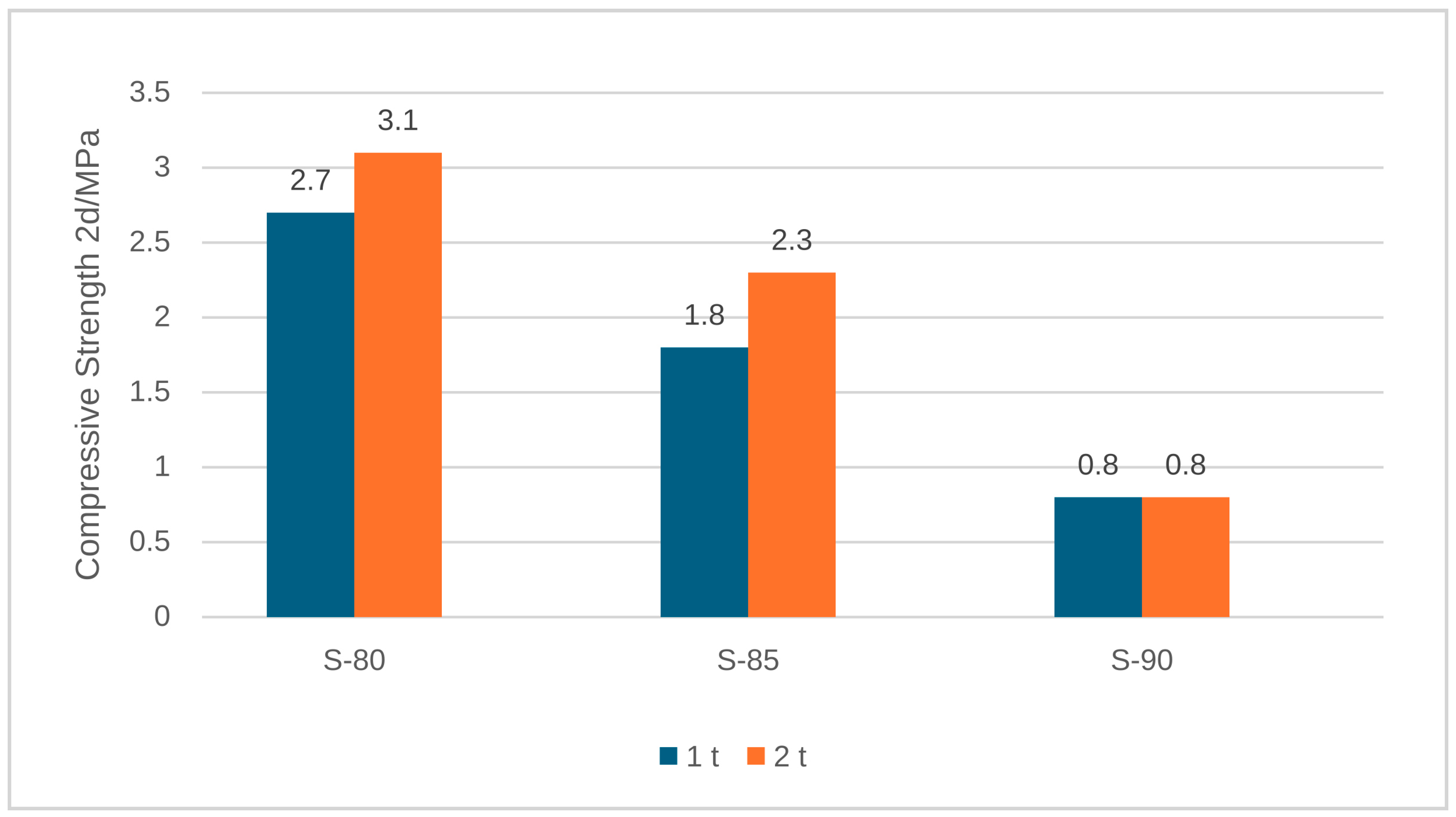
For the silica sand system (S), mixtures were formulated using the previously optimised geopolymer binder (GeoSil® 34417 and S/L = 2) with 80 to 90 wt.% silica sand. Mechanical performance, evaluated via 48 h compressive strength, exhibited an inverse correlation with the increase in sand content, consistent with dilution of the reactive binder phase. Likewise, when a higher pressing force was applied (1 → 2 t), a slight increase in strength was recorded. The optimal silica sand content was found to be 85 wt.%, as the corresponding strength values approach the target range established by RF & C (S-85). Table 5 summarises the mix designs employed, and Figure 7 presents the compressive strength values obtained after 48 h of curing.
Table 5.
Dosages for the silica sand + geopolymer binder system (S).
Figure 7.
Mechanical performance after 48 h for different silica sand wt.%. and pressure applied.
Type 2: Slag sand + geopolymer binder system (E).
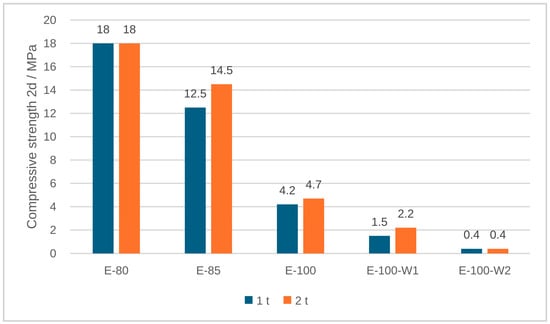
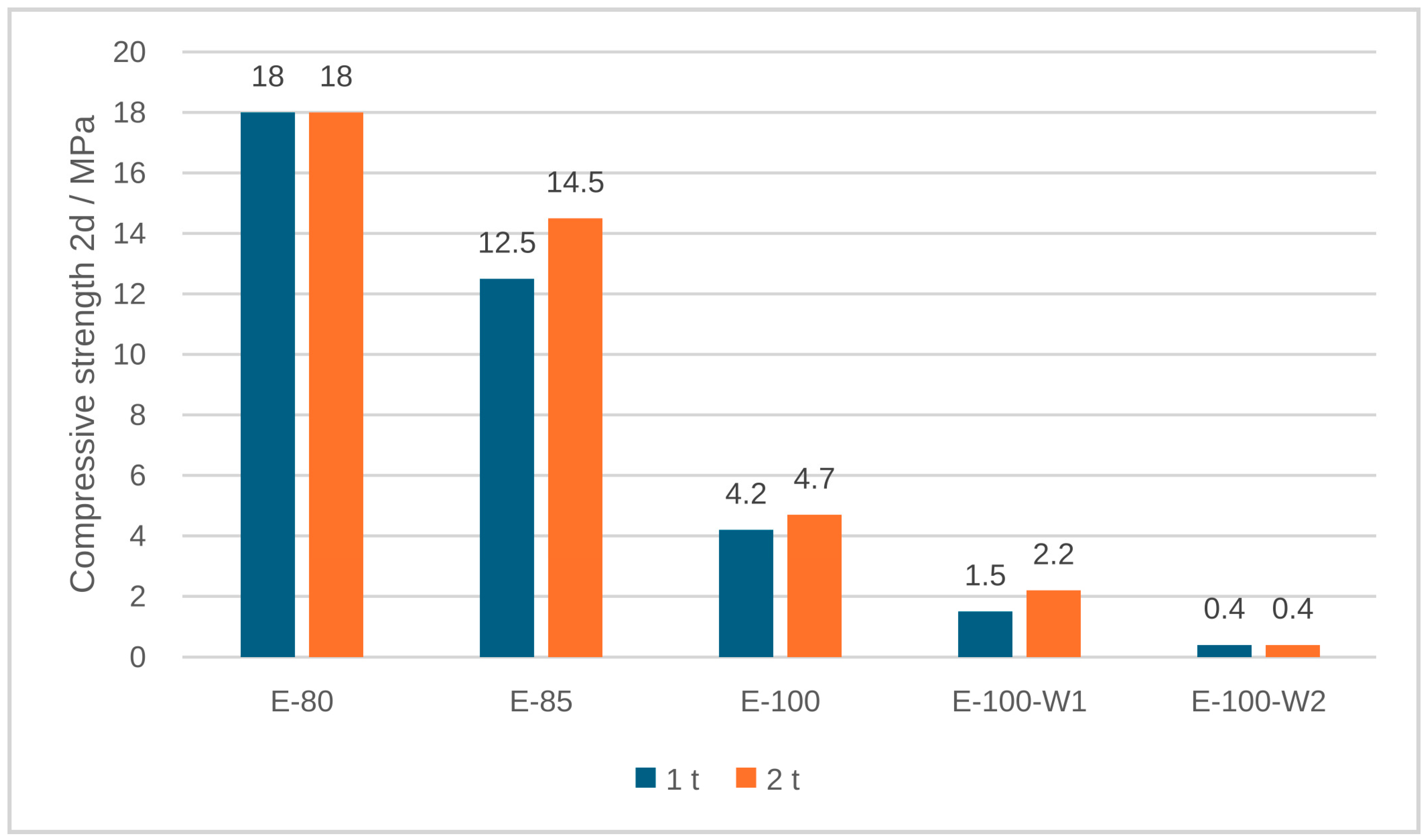
For the steel slag system (E), an analogous compositional approach was initially followed (Table 6). Higher compressive strengths after 48 h were obtained than for the silica sand formulations at equivalent aggregate contents, reaching approximately 18 MPa at 80 wt.% and 13.5 MPa at 85 wt.% BS. (Figure 8). These differences may reflect interactions between the BS aggregate and the alkaline activator, potentially involving partial dissolution of reactive constituents and subsequent precipitation of binding phases. Physical factors, including particle packing and aggregate characteristics, may also contribute to the observed strength differences.
Table 6.
Dosages for the slag sand + geopolymer binder system.
Figure 8.
Mechanical performance after 2 days for different slag sand wt. %and pressures applied.
A fully slag-based system (E-100) was subsequently developed by omitting the separately added fine slag precursor (<160 µm) and combining BS aggregate in the 125–500 µm size range with the commercial activator at an aggregate-to-activator mass ratio of 12. After 48 h, E-100 achieved compressive strengths of approximately 4.2 and 4.7 MPa at compaction loads of 1 and 2 t, respectively, exceeding the RF & C target range of 1.18–1.77 MPa. Replacing 50% of the activator with water by mass (E-100-W1) reduced the corresponding strengths to approximately 1.5 and 2.2 MPa. The value obtained at 1 tonne falls within the target range, whereas that obtained at 2 t remains above its upper bound. Increasing the replacement to 75% (E-100-W2) reduced strength to approximately 0.4 MPa under both compaction conditions. E-100-W1 was therefore selected for further assessment, with compaction at 1 tonne meeting the specified early-age strength target.
With these selected mixtures (Table 7), the environmental assessments and further pre-industrial validation trials were carried out in comparison with commercial reference materials for foundry moulds.
Table 7.
Dosages for the selected slag sand + geopolymer binder systems.
3.4. Emission Behaviour of Binders
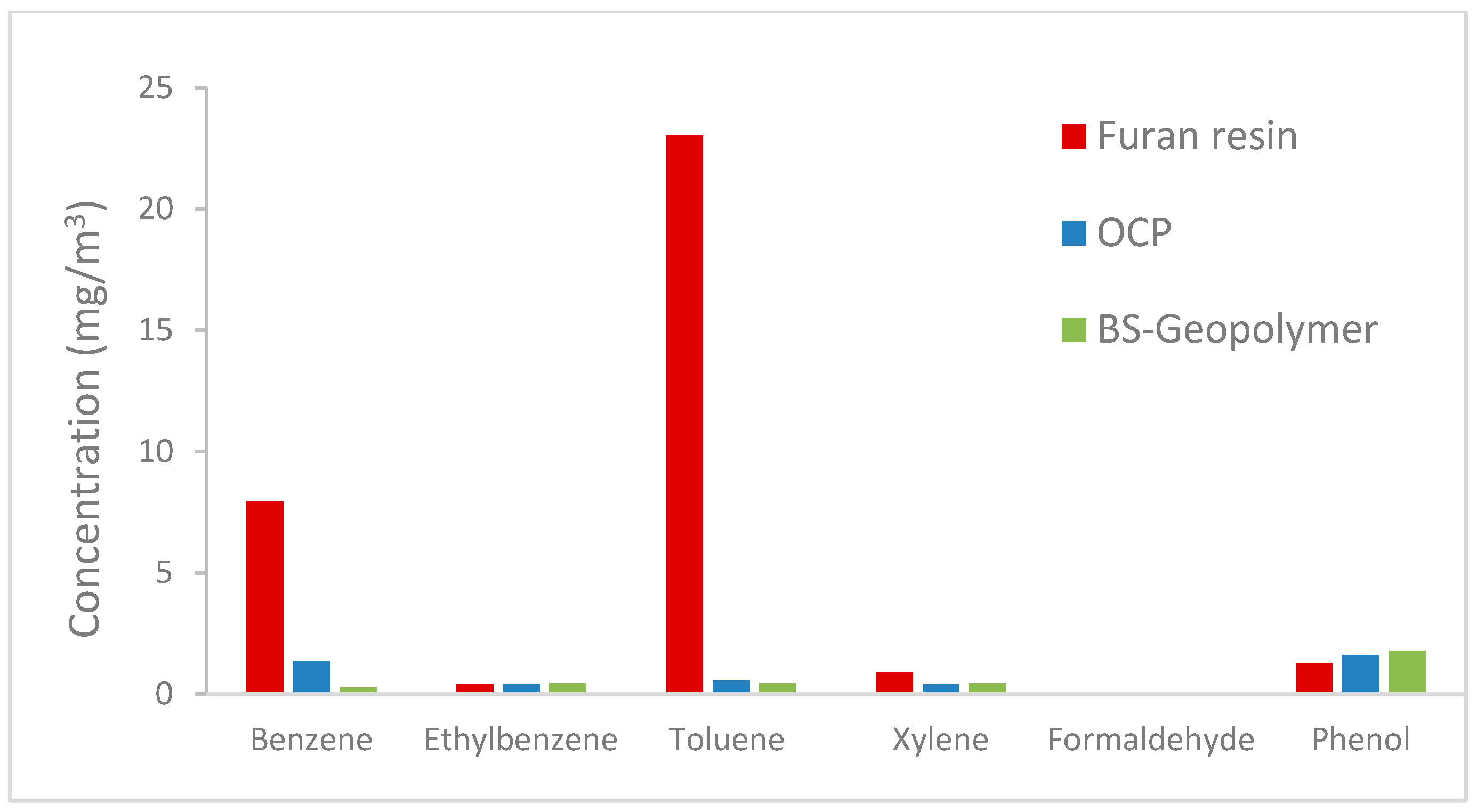
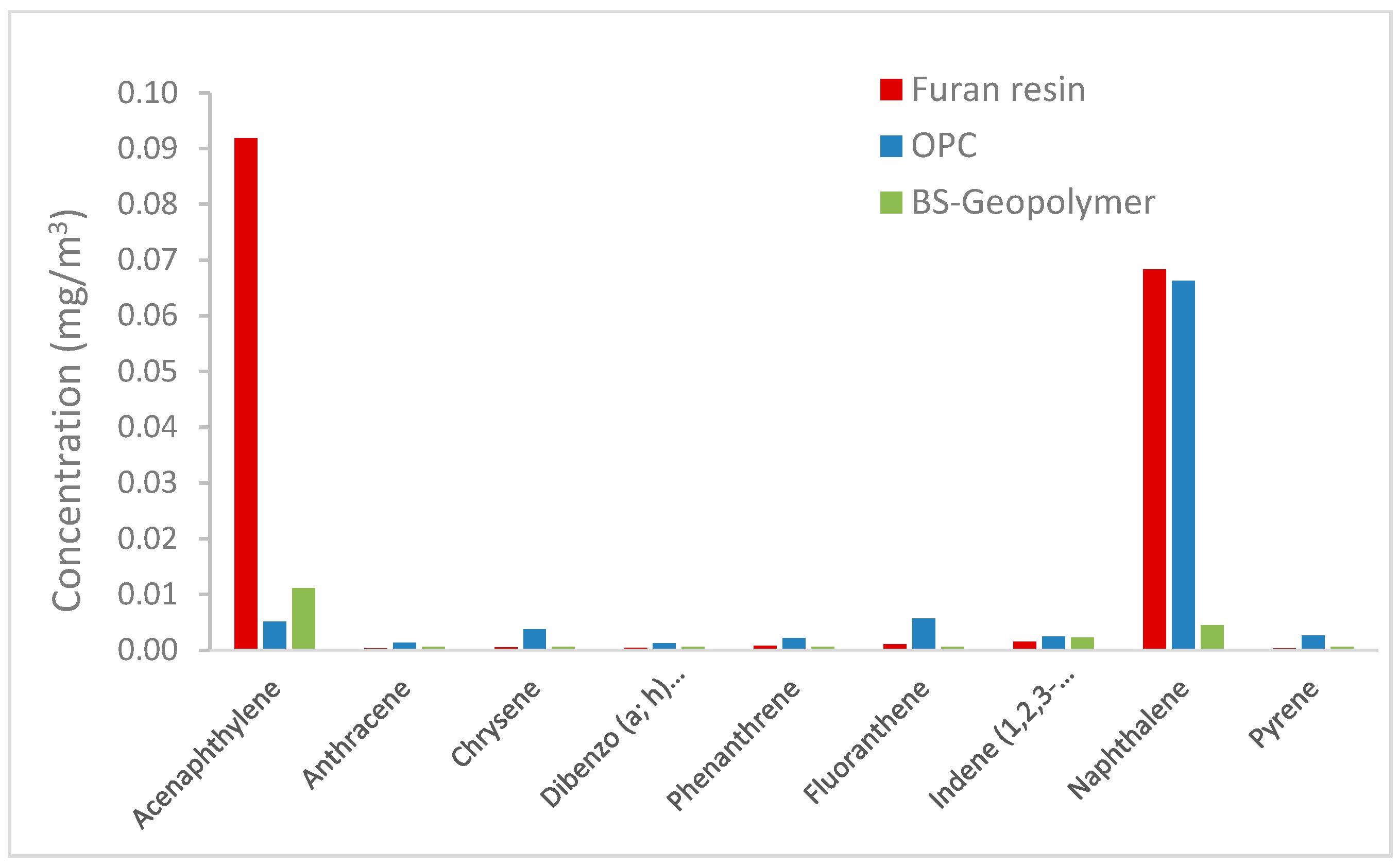
Target pollutants included volatile organic compounds (VOCs), such as benzene, toluene, and xylene (BTEX), polycyclic aromatic hydrocarbons (PAHs), phenol, formaldehyde, and combustion gases, which are among the most common emissions generated during the casting process. To assess the environmental performance of the developed material, the BS-based geopolymer (BS-geopolymer) was compared with two conventional binder systems widely used in foundry mould production: OPC and furan resin [21]. For this comparison, the three moulds were manufactured using silica sand, with only the binder system being varied.
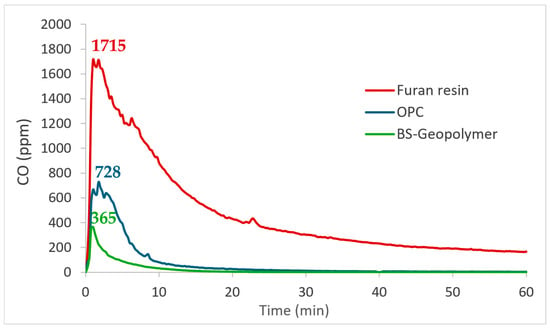
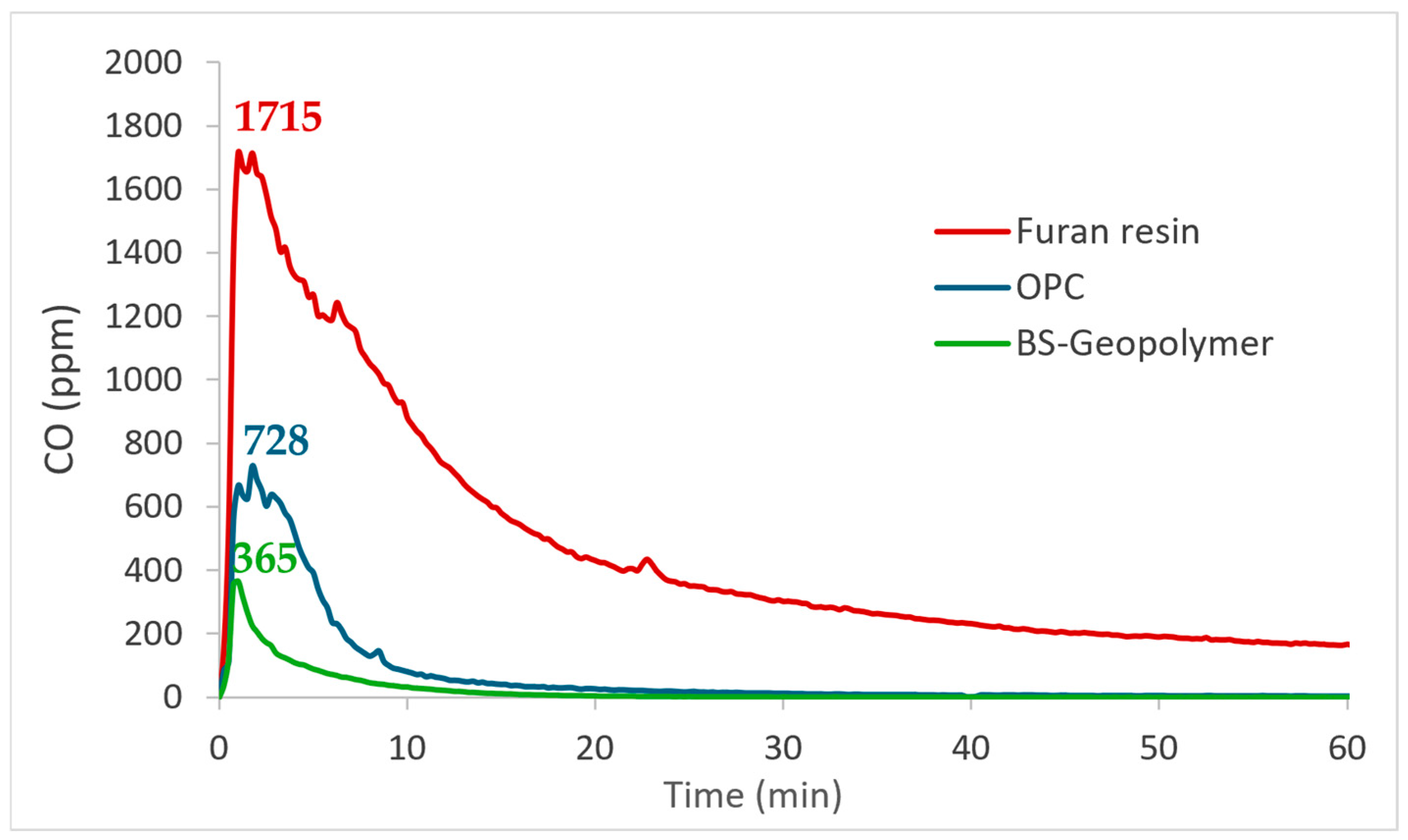
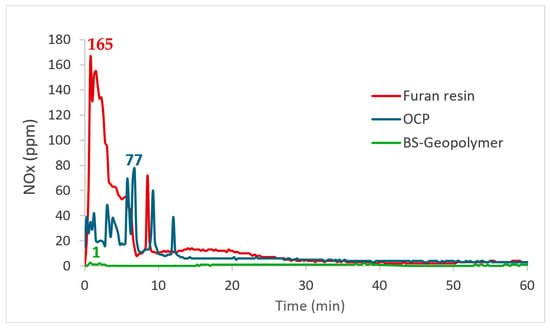
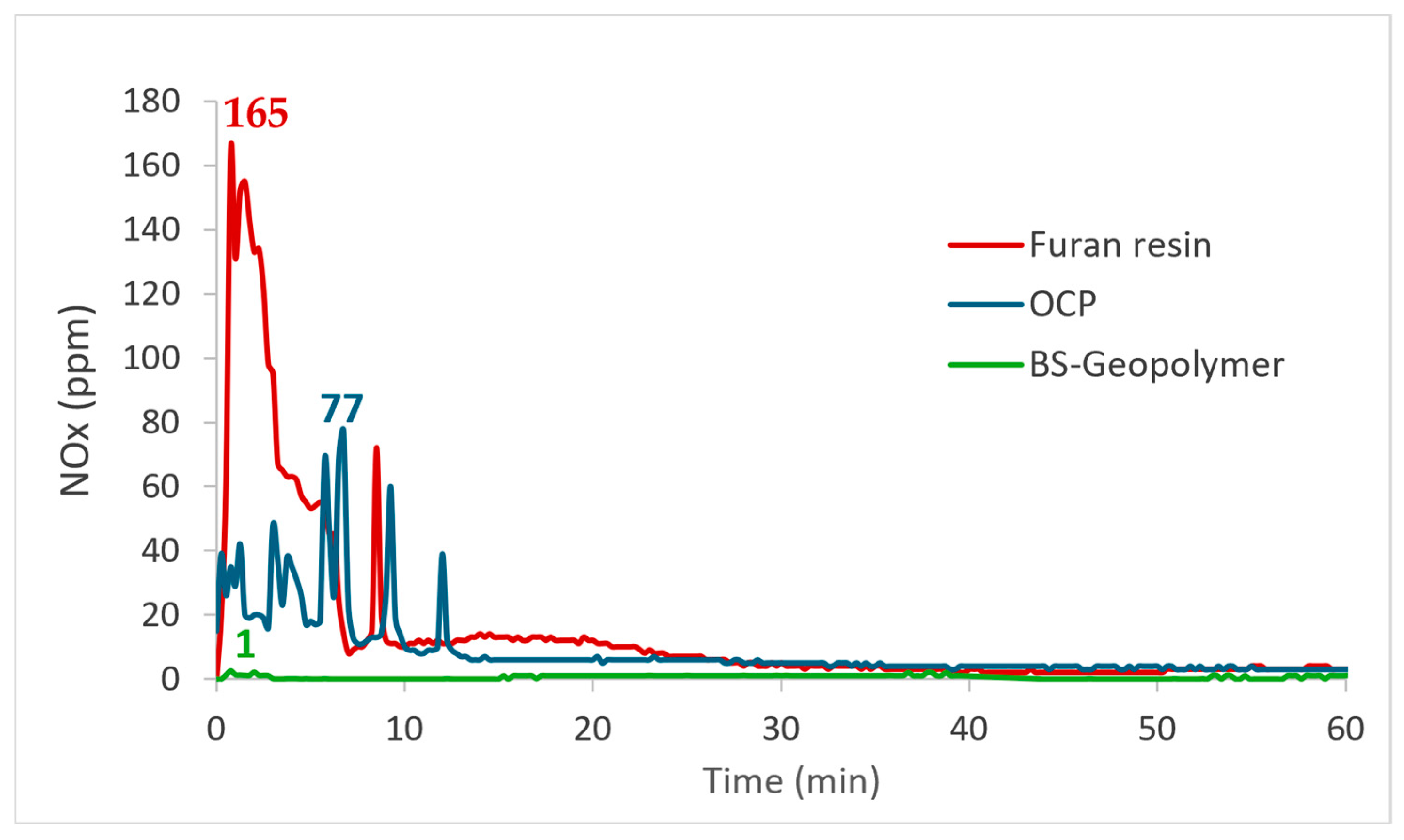
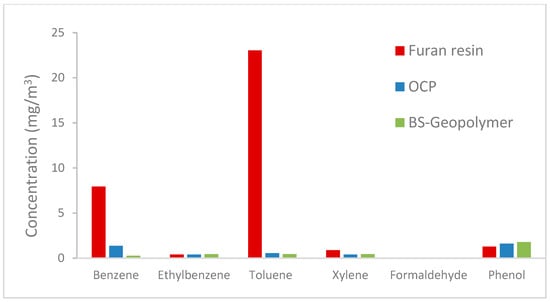
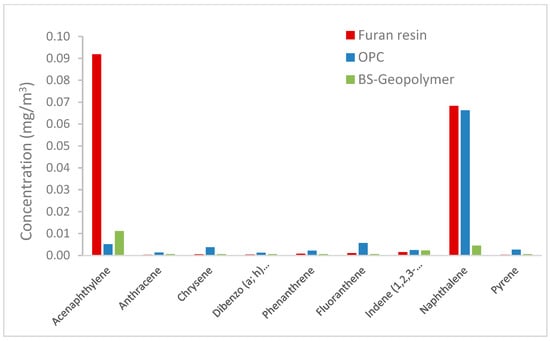
Figure 9, Figure 10, Figure 11 and Figure 12 summarise the gaseous emissions generated during casting for the three different binder systems. The results clearly demonstrate the environmental benefits associated with the use of inorganic binders and particularly highlight the excellent performance of the geopolymer formulation.
Figure 9.
CO emissions (ppm) registered for the three selected binder systems.
Figure 10.
NOx emissions (ppm) registered for the three selected binder systems.
Figure 11.
BTEX, formaldehyde and phenol emissions (mg/m3) registered for the three selected binder systems.
Figure 12.
PAH emissions (mg/m3) registered for the three selected binder systems.
The furan resin system exhibited the highest emissions for all the pollutants analysed. In terms of VOCs, it generated high concentrations of BTEX species, especially toluene and benzene, reaching approximately 23 and 8 mg/m3, respectively (Figure 11). Detectable amounts of xylene and ethylbenzene were also observed. These emissions are directly related to the thermal decomposition of the organic resin matrix, which releases hazardous aromatic compounds when exposed to molten metal. In addition, the furan-based mould produced the highest carbon monoxide (CO) and nitrogen oxides (NOx) emissions, with peak concentrations of around 1700 ppm (Figure 9) and 170 ppm (Figure 10), respectively, during the first minutes of the casting process. Although the emission intensity gradually decreased with time, substantial concentrations persisted for several tens of minutes, confirming the higher measured emissions under the investigated conditions.
By contrast, both inorganic systems, OPC and the BS-based geopolymer, showed lower measured emissions. BTEX concentrations were generally below 1 mg/m3 for both binders, representing a reduction of more than one order of magnitude compared with the furan resin system. Formaldehyde was not detected in any of the tested moulds, while phenol concentrations remained below 2 mg/m3 in all cases, indicating negligible emissions from an industrial standpoint (Figure 11).
Regarding combustion gases, the OPC mould exhibited intermediate behaviour, with maximum CO concentrations of approximately 700 ppm (Figure 9) and NOx peaks in the range of 70–80 ppm (Figure 10). Although these values were significantly lower than those recorded for the furan resin, measurable emissions were still observed during the first minutes of the test.
The BS-based geopolymer consistently displayed the lowest emissions among all the evaluated systems. CO concentrations remained below 400 ppm (Figure 9) and returned to near-background levels within the first 10 min after pouring. Even more remarkably, NOx emissions were virtually negligible throughout the entire experiment, with concentrations remaining close to zero (Figure 9). Similarly, BTEX emissions were almost completely suppressed (Figure 11), confirming that the geopolymeric matrix does not undergo the thermal degradation processes characteristic of organic binders.
These results demonstrate that under the investigated casting conditions, the BS-geopolymer binder showed lower measured CO and NOx concentrations than OPC and substantially lower BTEX concentrations than the furan resin system. These findings support its potential to reduce selected gaseous emissions during casting, without implying zero emissions, overall environmental superiority, or demonstrated improvements in worker safety. Particulate composition and exposure usually require consideration in health-risk assessment, as illustrated by Hua et al. [22]. However, particulate-bound trace elements and personal exposure were not characterised in the present study and remain subjects for further investigation.
3.5. Life Cycle Analysis (LCA)
The LCA was conducted in two successive stages. First, the influence of replacing natural silica sand with BS was evaluated in a conventional OPC-based mould formulation, in order to isolate and quantify the environmental effect associated with the aggregate substitution. In this stage, two scenarios were considered: (i) a reference mould produced with OPC and silica sand (OPC baseline scenario), and (ii) an alternative formulation in which silica sand was completely replaced by BS sand (OPC alternative scenario). Subsequently, a second assessment compared a conventional OPC-based mould with silica sand against a mould manufactured entirely from BS-derived materials (Scenario E), allowing the environmental benefits of a fully slag-based system to be evaluated.
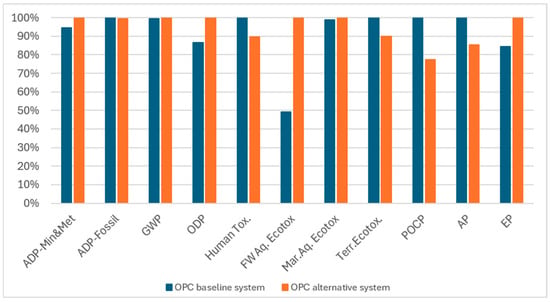
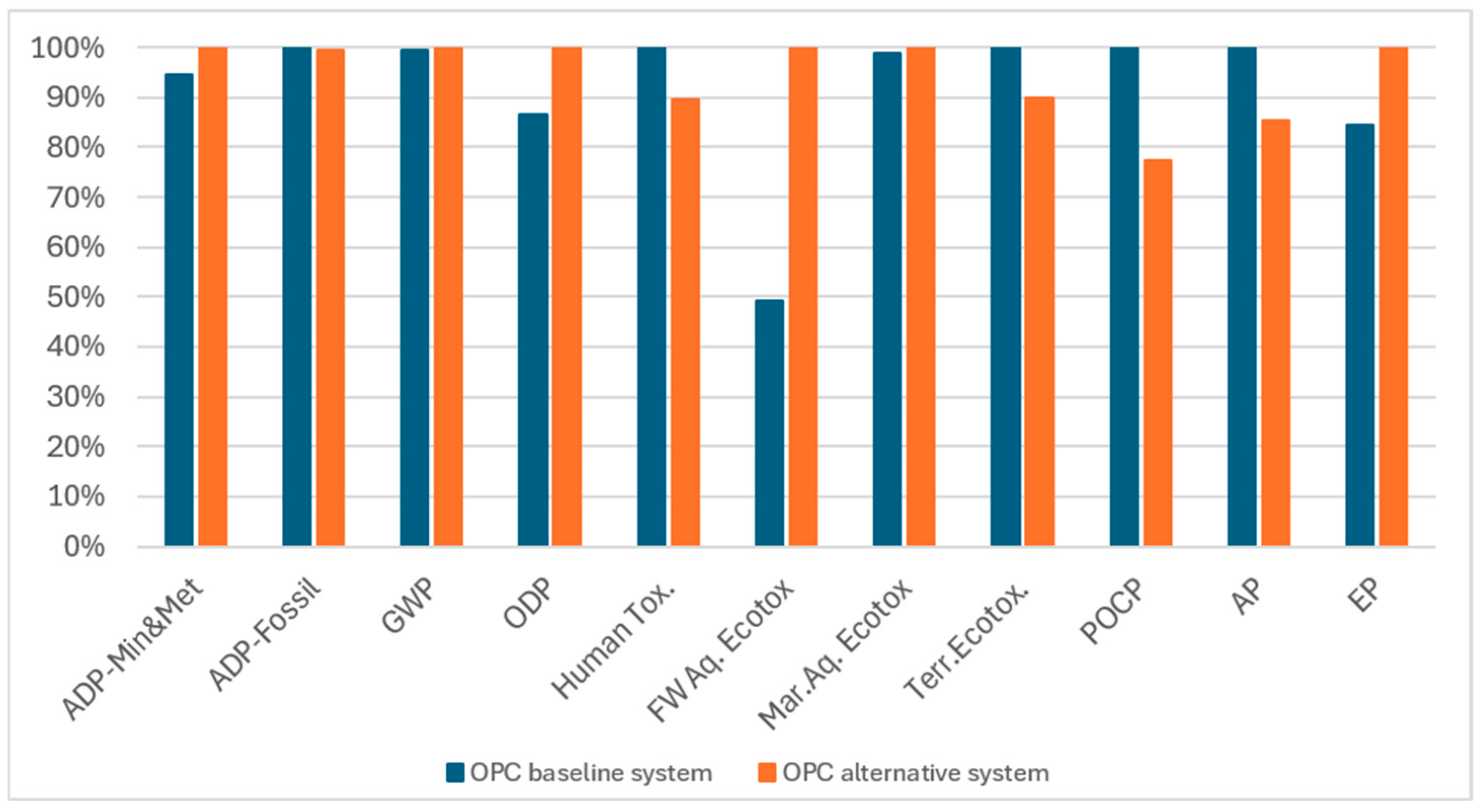
For the first stage, the comparison between the environmental profiles of the OPC-based scenarios is presented in Figure 13, while the impact indicator values for the production of 1 m3 of foundry mould are reported in Table 8.
Figure 13.
Comparison of the environmental profiles of the OPC baseline scenario and the OPC alternative scenarios.
Table 8.
Environmental impact indicators for the OPC baseline and the OPC alternative scenarios for the production of 1 m3 of foundry mould.
According to the results presented in Figure 13 and Table 8, the substitution of silica sand with BS sand reduced impacts in five of the 11 impact categories assessed. The most significant reductions were observed for POCP (−22.7%) and AP (−14.7%), followed by Human Tox. (−10.4%) and Terr. Ecotox. (−10.0%). GWP remained practically unchanged, exhibiting only a marginal increase of 0.4%. Conversely, higher impacts were obtained in the remaining six categories. The largest increase was observed for FW Aq. Ecotox., which increased by 103% relative to the baseline scenario. ODP and EP also showed notable increases, exceeding 15%.
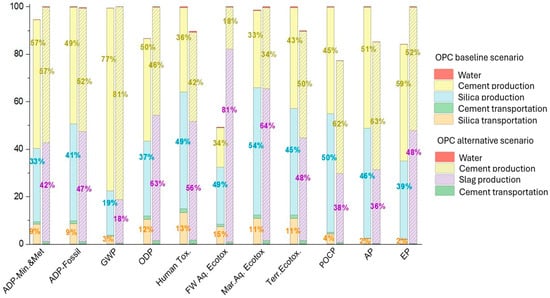
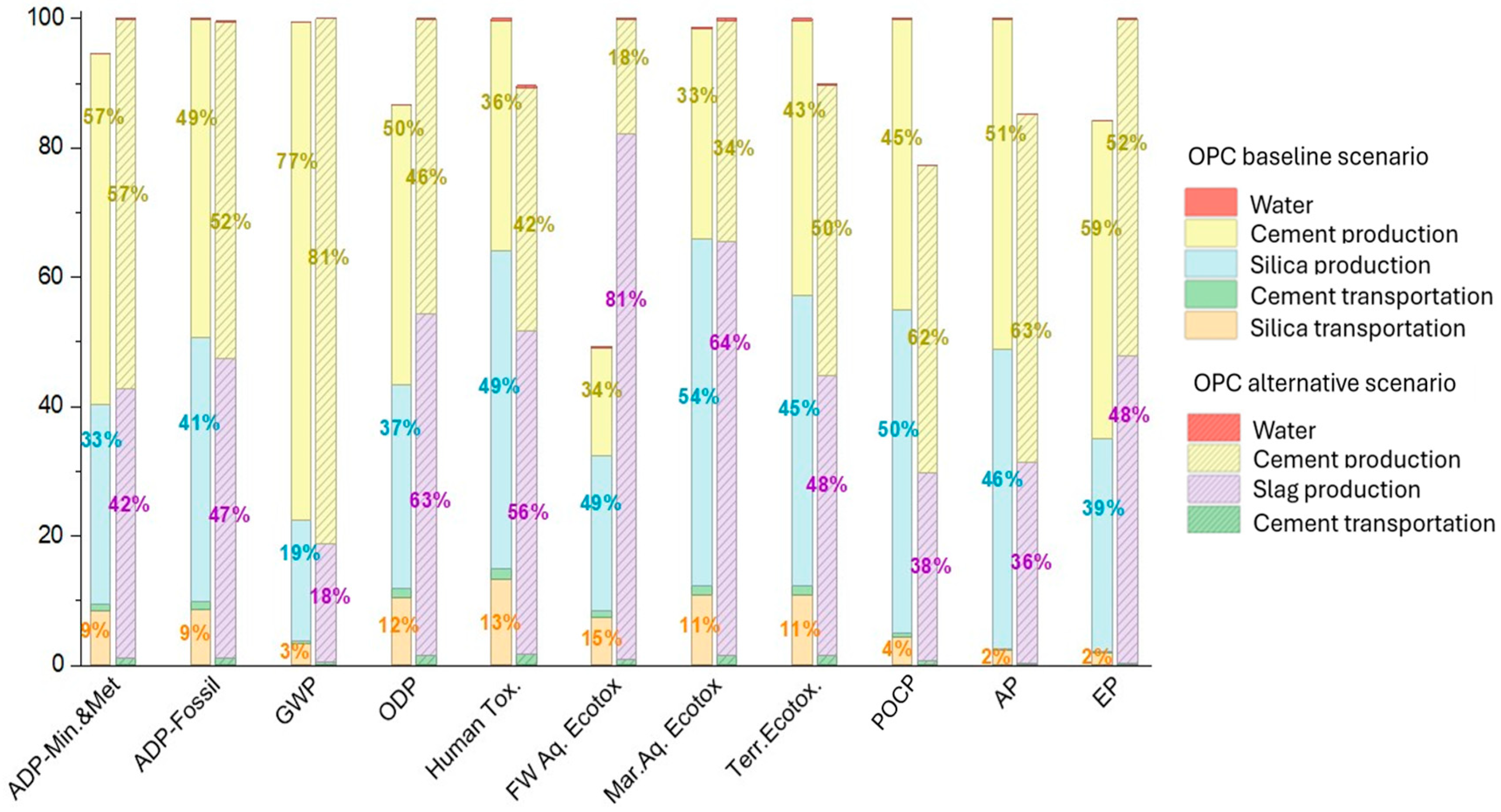
The contribution analysis (Figure 14) revealed that OPC production remained the main environmental hotspot in both scenarios, contributing more than 75% of the total GWP and over 50% of the impacts associated with ADP Fossil, AP, and EP. Conversely, steel slag sand production emerged as the dominant contributor to FW Aq. Ecotox, accounting for approximately 81% of the total impact in the OPC alternative scenario. This contribution was primarily associated with the electricity consumption required during the crushing and sieving stages of slag processing.
Figure 14.
Relative contribution of the inventory flows to the environmental impact categories for the OPC baseline and OPC alternative scenarios.
A sensitivity analysis was performed to assess the influence of silica sand transport distance on the environmental performance of both alternatives. The results indicated that when the transport distance exceeds approximately 196 km, the OPC scenario becomes environmentally preferable. This finding highlights the strong influence of transport logistics on the overall environmental performance of foundry moulds.
Overall, the replacement of silica sand (OPC baseline scenario) with steel slag sand (OPC alternative scenario) did not provide a clear environmental advantage under the conditions assessed in this study. Although improvements were achieved in five impact categories, six categories exhibited higher impacts than the baseline scenario. However, the sensitivity analysis demonstrated that the environmental performance of the BS-based alternative can improve significantly under favourable transport conditions.
In the second stage, the environmental performance of geopolymer-based foundry moulds was assessed considering two different formulations that differed in the amount of BS sand incorporated into the mixture: (i) Scenario E corresponds to the geopolymer formulation in which silica sand was completely replaced by steel slag sand, whereas (ii) Scenario S represents a geopolymer formulation with partial substitution, retaining a significant proportion of silica sand. Both formulations were compared with the OPC baseline scenario, consisting of a conventional OPC-bonded silica sand mould.
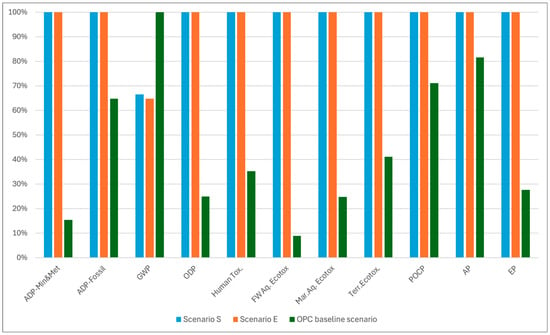
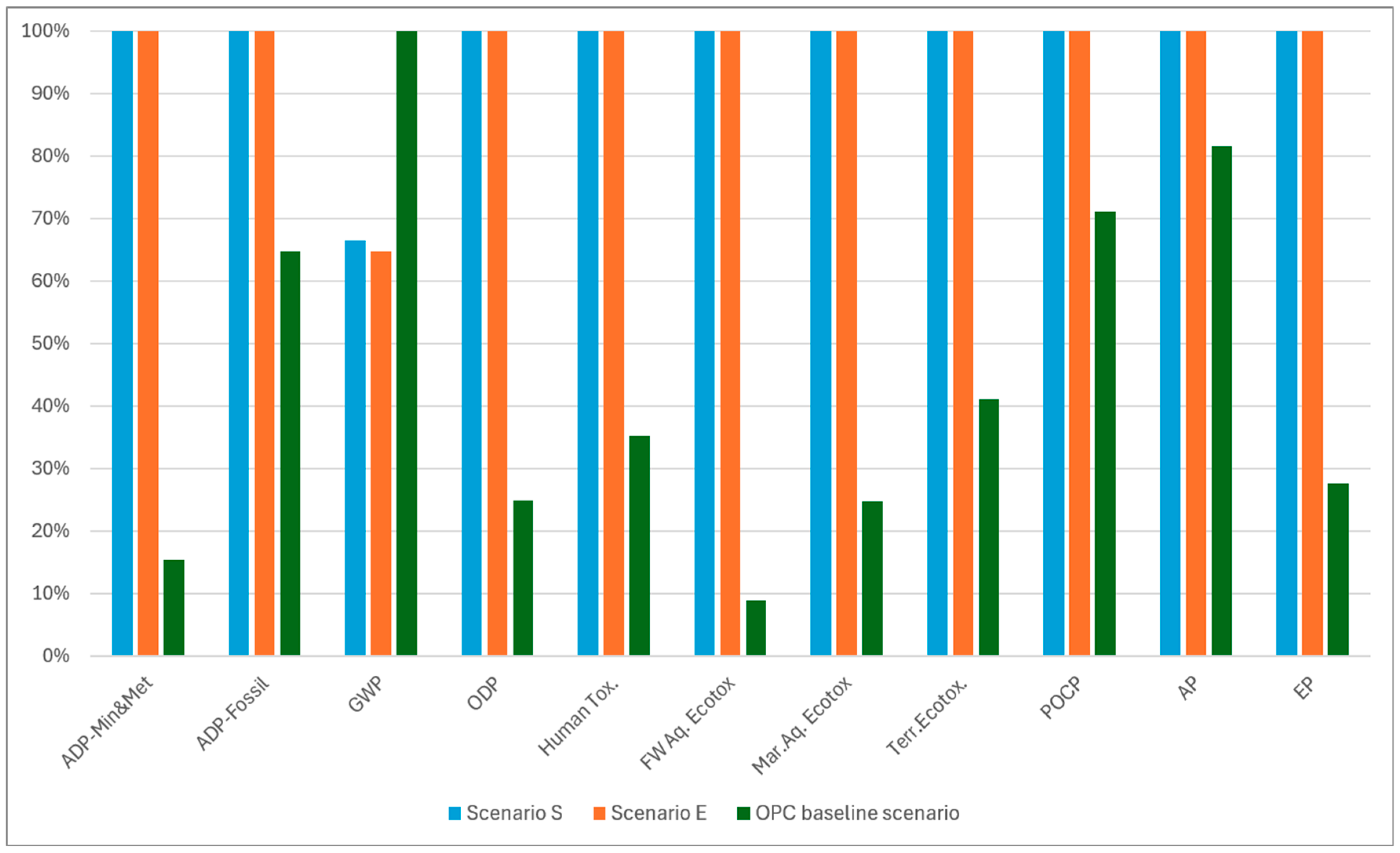
Figure 15 presents the environmental impact profiles of the OPC baseline, E and S scenarios across the 11 impact categories considered in the study. The corresponding impact values for the production of 1 m3 of foundry mould are reported in Table 9.
Figure 15.
Comparison of the environmental profiles of CML-IA impact categories of the OPC baseline scenario and the geopolymer formulations (Scenarios S and E).
Table 9.
Environmental impact results for the OPC baseline scenario and the geopolymer formulations scenarios E & S for the production of 1 m3 of foundry mould.
As shown in Figure 15 and Table 9, both geopolymer formulations achieved a substantial reduction in GWP compared with the OPC baseline scenario. CO2 equivalent emissions decreased by 35.3% and 33.5% for Scenarios E and S, respectively, primarily associated with the elimination of Portland cement clinker, whose manufacture is highly carbon-intensive due to limestone calcination and fuel consumption. However, despite this significant reduction in carbon footprint, higher impacts were observed in the remaining impact categories. The largest relative increases were observed in FW Aq. Ecotox., ADP Min & Met, ODP, Mar. Aq. Ecotox., and EP. Increases were also observed in Human Tox., Terr. Ecotox., ADP fossil, POCP, and AP, although their magnitude varied between the two geopolymer formulations.
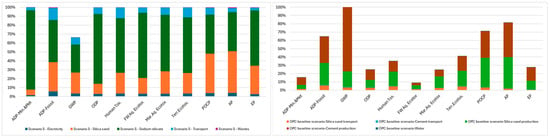
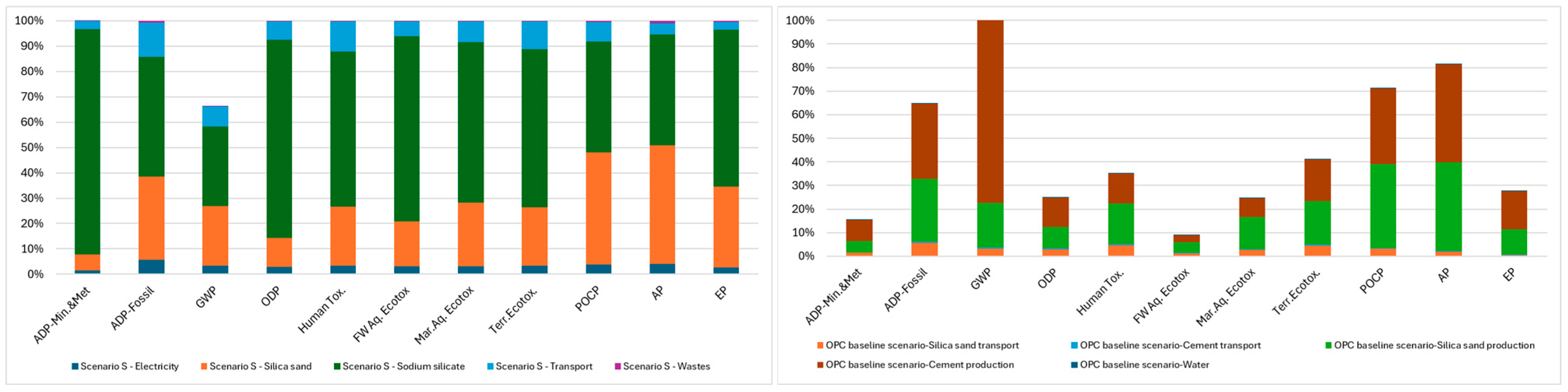
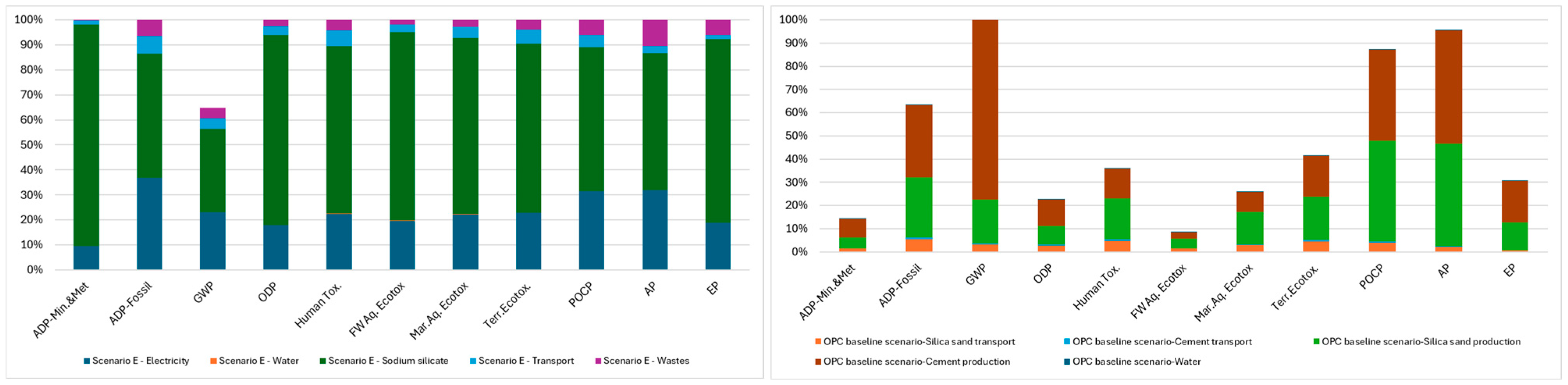
To identify the processes responsible for the observed impacts, a contribution analysis was performed. The relative contribution of each inventory flow to the environmental impact categories for the OPC baseline, E, and S scenarios is presented in Figure 16.
Figure 16.
Relative contribution of the inventory flows to the environmental impact categories for the OPC baseline scenario and the geopolymer formulations. (Top): Geopolymer mould containing BS sand and silica sand (Scenario S). (Bottom): Geopolymer mould with complete replacement of silica sand by BS sand (Scenario E).
The contribution analysis revealed that sodium silicate production, used as the alkaline activator in geopolymer formulations, was the main environmental hotspot. Sodium silicate manufacture requires high-temperature processing of silica and sodium carbonate, which is associated with significant energy demand, abiotic resource consumption, and emissions contributing to toxicity- and ecotoxicity-related categories. In contrast, the reduction in GWP was mainly associated with the replacement of cement by geopolymeric binders, which substantially decreased greenhouse gas emissions during mould production.
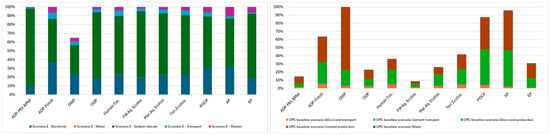
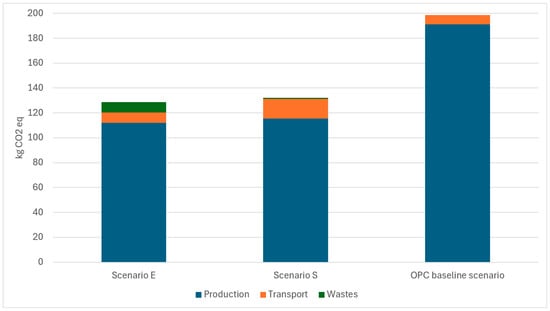
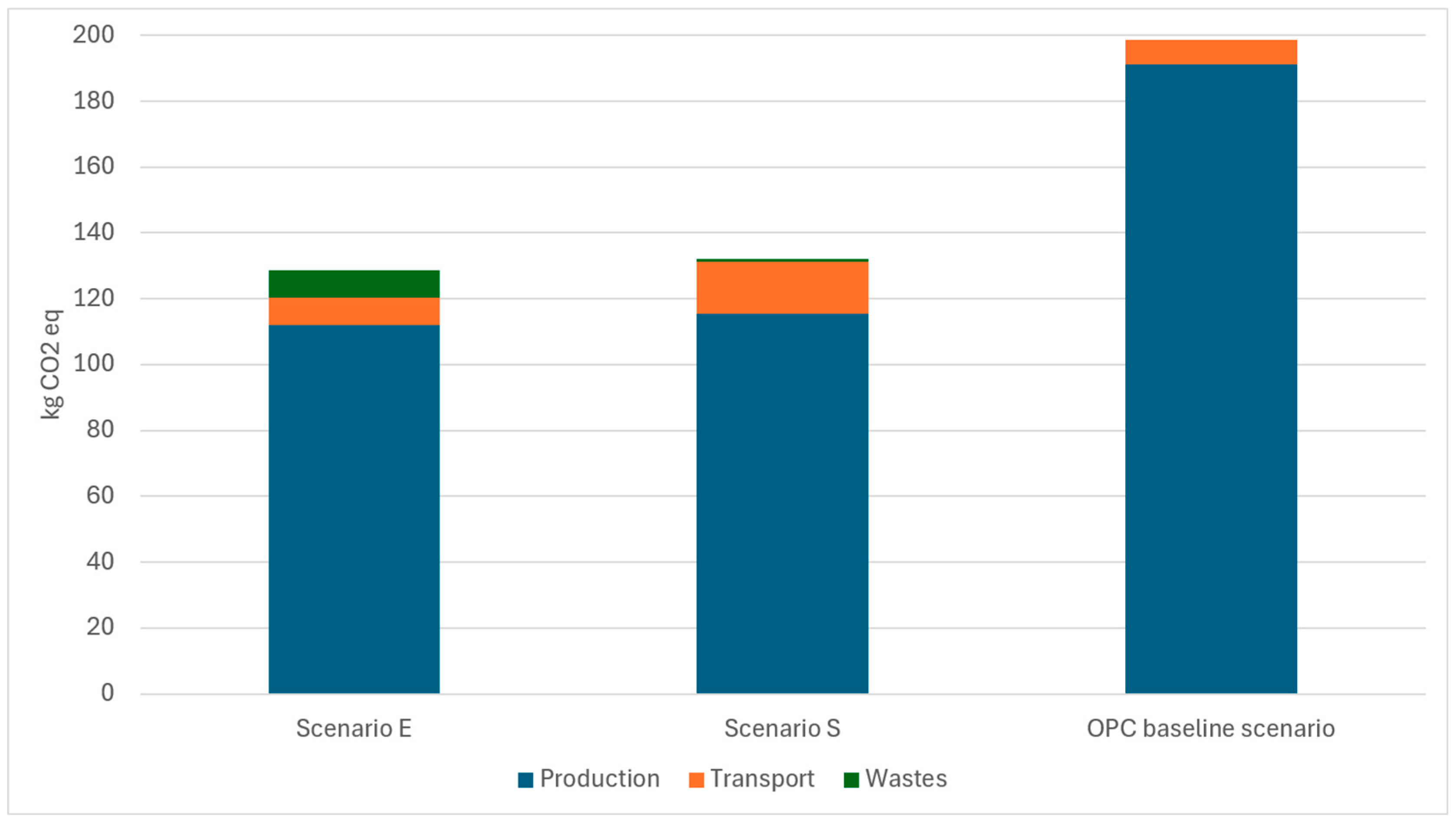
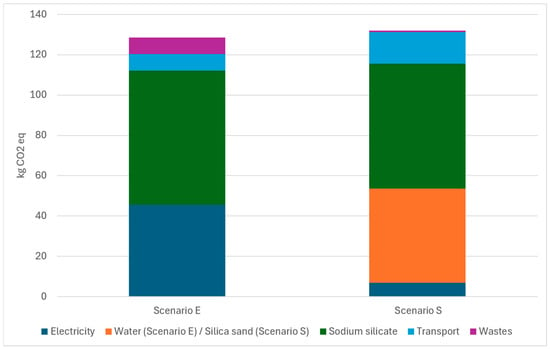
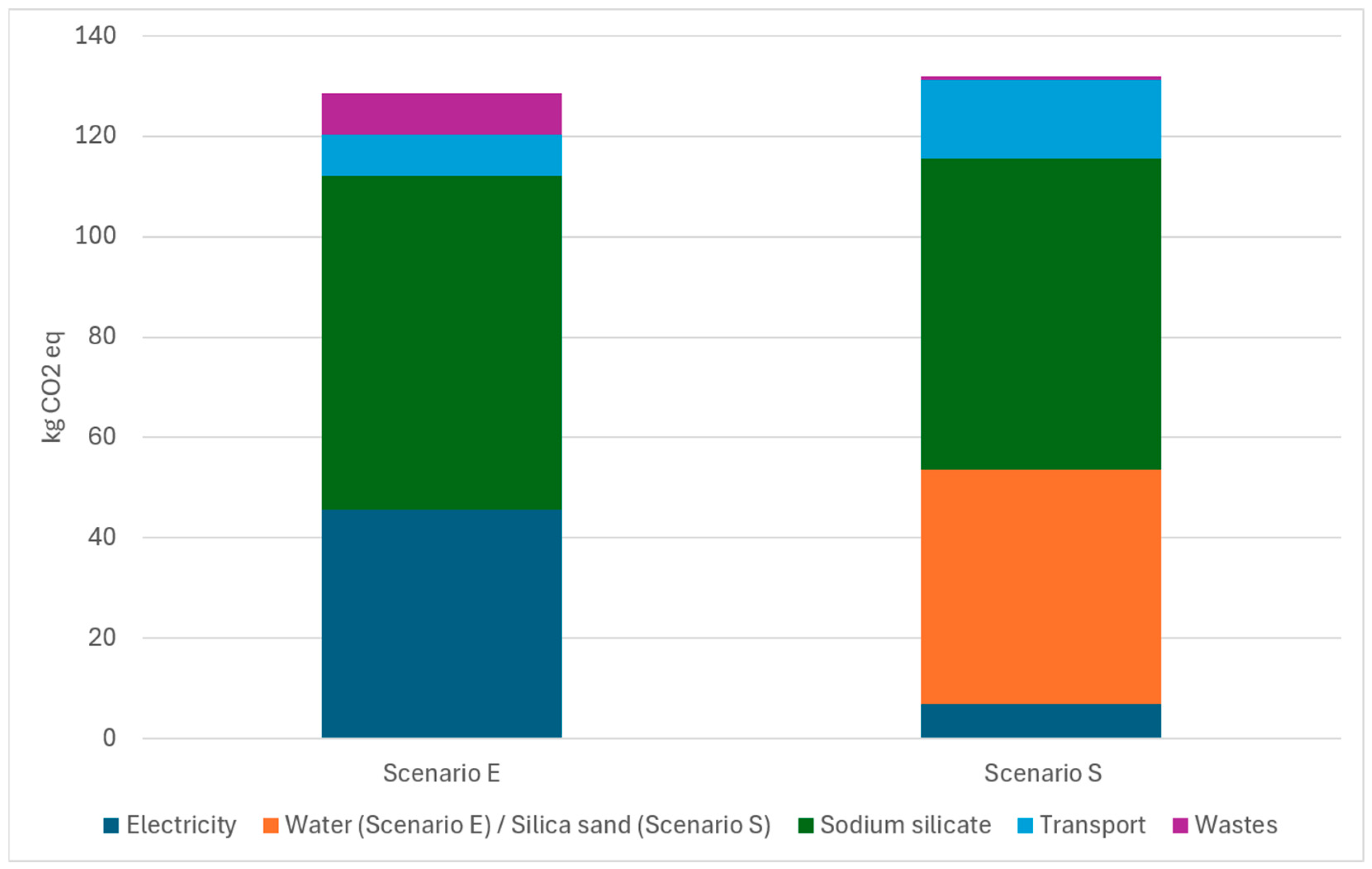
As previously discussed, GWP was the only impact category in which the geopolymer formulations outperformed the OPC baseline scenario. Figure 17 presents the contribution of the main life cycle stages to the carbon footprint of the OPC baseline, E and S moulds. The results show that both geopolymer formulations achieved a substantial reduction in carbon footprint compared with the conventional cement-based mould. Total GWP decreased from approximately 199 kg CO2 eq. for the OPC baseline scenario to 129 and 132 kg CO2 eq. for the E and S scenarios, respectively, corresponding to reductions of about 35.3% and 33.5%.
Figure 17.
Carbon footprint contribution of the different inventory flows for the OPC baseline scenario and the geopolymer formulations.
For all scenarios, the production stage was the dominant contributor to the overall carbon footprint. Despite increases in several impact categories, climate change mitigation remains one of the main environmental priorities for the construction and manufacturing sectors. In this context, achieving a 33–35% reduction in GWP while also substantially reducing hazardous casting emissions represents a highly significant environmental benefit. Transport and waste management represented only a minor share of the total carbon footprint in comparison with the production stage.
Overall, the comparison revealed that the geopolymer formulations offer a clear advantage in terms of GWP reduction, but this benefit is accompanied by higher impacts in the other 10 environmental categories assessed. These trade-offs highlight that the replacement of conventional cement-based binders with slag-based geopolymer formulations does not necessarily lead to an overall improvement in environmental performance. As shown in Figure 18, the contribution analysis identified sodium silicate as the key environmental hotspot, accounting for approximately 51.7% and 46.9% of the total GWP in Scenarios E and S, respectively, indicating that the development of lower-impact alkaline activators could be an important strategy for reducing the associated environmental burdens. Furthermore, improvements in the energy efficiency of slag processing could contribute to reducing impacts associated with electricity consumption, which accounted for approximately 35.4% of total GWP in Scenario E, compared with 5.2% in Scenario S, mainly due to the larger amount of steel slag requiring processing in Scenario E. Therefore, although both geopolymer formulations show potential for reducing the carbon footprint of foundry mould production, their overall environmental performance depends on the relative importance assigned to the different impact categories.
Figure 18.
Contribution of individual inventory flows to the carbon footprint of the geopolymer formulations (Scenario E and S).
3.6. Trace-Element Release
Table 10 compares the reported leachate concentrations for raw BS and the slag-based geopolymer (E1). Cr was quantified at 3.66 ppm in the BS leachate, whereas its concentration in the E1 leachate was below the reporting threshold of 0.5 ppm. Cr is a key element of environmental and safety concern in Cr-bearing slags because its mobility and toxicity depend strongly on its oxidation state, with Cr(VI) generally being more mobile and toxic than Cr(III). The leaching assessment therefore focused primarily on Cr release as an indicator of potential environmental exposure. The lower concentration measured for E1 indicates reduced Cr release following alkali activation under the tested conditions, although total Cr analysis does not distinguish between oxidation states. All 23 elements analysed in the E1 leachate were below their respective reporting thresholds.
Table 10.
Elemental concentrations (ppm) in leachates from raw BS (S1) and the slag-based geopolymer (E1), determined by ICP-OES following extraction according to EN 12457.
Cr content of the raw BS is consistent with its origin in stainless steel scrap processing, during which Cr-bearing alloy constituents can be transferred to the slag. The XRF value of 5.01 wt.% Cr2O3 is an oxide-equivalent expression of total Cr, not proof that all Cr occurs as a discrete Cr2O3 phase or as Cr(III). Cr release depends on its host phases, accessibility and extraction chemistry, rather than total concentration alone. The 3.66 ppm measured in S1 confirms a measurable releasable fraction under that sample’s extraction conditions, without establishing Cr speciation.
E1 result is consistent with restricted Cr release after incorporation into the alkali-activated material. The Cr concentration in the E1 leachate was below the analytical reporting limit of 0.5 ppm, compared with 3.66 ppm for raw BS. This finding indicates that incorporation of the slag into the alkali-activated material resulted in a leachate with substantially lower measurable Cr concentrations under the investigated conditions. The result is consistent with a stabilising effect of the hardened matrix, potentially involving physical encapsulation of slag particles, reduced accessibility of Cr-bearing surfaces and chemical retention through sorption onto, or incorporation into, reaction products [23].
E1 result should therefore be interpreted as Cr release below the reporting limit, not as complete absence of release or removal of chromium from the material.
4. Conclusions
This study assessed the environmental implications of valorising BS in foundry moulding systems through controlled casting-emission measurements and comparative cradle-to-gate life cycle assessment (LCA). Its objective was to identify environmental benefits, burdens and improvement priorities associated with replacing conventional binders and silica sand with BS-based alternatives. Detailed formulation development and mechanical and physical characterisation are outside the principal scope of this article and will be addressed in a separate publication. The main environmental findings are as follows:
- Under the investigated casting conditions, the BS-geopolymer binder showed substantially lower measured BTEX concentrations than the furan resin reference and lower CO and NOx concentrations than both conventional binder systems. These observations support its potential to reduce selected gaseous emissions during casting.
- Leaching tests according to EN 12457 yielded a Cr concentration below the analytical reporting limit of 0.5 ppm for geopolymer E1, compared with 3.66 ppm for raw BS. This result is consistent with restricted Cr release following incorporation into the alkali-activated material under the investigated conditions.
- Replacing silica sand with BS sand in the OPC-based system produced mixed environmental outcomes: five impact categories decreased, while six increased. GWP remained nearly unchanged, increasing by approximately 0.4%, whereas freshwater aquatic ecotoxicity increased by approximately 103%. Aggregate substitution alone therefore did not provide an overall environmental advantage under the modelled conditions.
- For the geopolymer formulations, cradle-to-gate GWP decreased by 33.49% for Scenario S and 35.27% for Scenario E relative to the OPC baseline, expressed per 1 m3 of moulding material. Both formulations nevertheless increased impacts in the other 10 assessed categories. The climate benefit must therefore be considered alongside trade-offs in toxicity, ecotoxicity, resource depletion, ozone depletion, photochemical oxidation, acidification and eutrophication.
- Sodium silicate production was the principal environmental hotspot of the geopolymer formulations, while electricity demand for slag processing was particularly relevant to Scenario E. Improvement priorities include reducing activator requirements, evaluating lower-impact activator production routes and improving processing efficiency. These measures should be assessed across all impact categories to avoid shifting burdens between environmental dimensions.
Overall, BS-based moulding systems offer benefits in specific environmental dimensions, particularly lower production-stage GWP, lower measured concentrations of selected pollutants during casting, and restricted Cr release from the tested geopolymer under the investigated conditions.
This preliminary environmental assessment represents an important step towards improving the environmental performance of foundry processes while recovering steelmaking slag as a secondary raw material and reducing dependence on virgin resources. The findings provide a foundation for further optimisation of this valorisation route and workplace exposure assessment, supporting progress towards more circular, resource-efficient production and safer working conditions in the metallurgical sector.
Supplementary Materials
The following supporting information can be downloaded at: https://www.mdpi.com/article/10.3390/su182211759/s1, Table S1: Raw material inputs and transportation distances for the 4 formulations considered in the study, for the production of 1 m3 of foundry mould; Table S2: Electricity consumption and waste generation for the production of 1 kg of processed steel slag sand, used in the OPC alternative system; Table S3: Electricity consumption and waste generation per 1 m3 of foundry mould, for Scenarios S and E; Table S4: Ecoinvent v3.11 datasets used for modelling the 4 formulation systems.
Author Contributions
Methodology, L.F., I.C., M.O., C.R. and C.P.; investigation, L.F.; validation, L.U., R.P. and I.Z.; data curation, I.C., M.O., C.R. and C.P.; writing—original draft preparation, L.F., I.C., M.O., C.R. and C.P.; writing—review and editing, L.F., L.U., R.P. and I.Z.; supervision, L.F., L.U., R.P. and I.Z.; project administration, L.F. All authors have read and agreed to the published version of the manuscript.
Funding
This work is part of the CIRCOM project (CPP2021-008798), funded by MCIN/AEI/10.13039/501100011033 and the European Union—NextGenerationEU/PRTR.
Institutional Review Board Statement
Not applicable.
Informed Consent Statement
Not applicable.
Data Availability Statement
The raw data supporting the conclusions of this article will be made available by the authors on request.
Acknowledgments
ChatGPT Plus was used exclusively to improve the English language, grammar, readability, and clarity of the manuscript. The authors have reviewed and edited the output and take full responsibility for the content of this publication.
Conflicts of Interest
The authors declare no conflicts of interest.
Abbreviations
The following abbreviations are used in this manuscript:
| ADP | Abiotic Depletion Potential |
| AP | Acidification Potential |
| BS | Black Steelmaking Slag |
| BTEX | Benzene, Toluene, Ethylbenzene, Xylene |
| EP | Eutrophication Potential |
| ICP-OES | Inductively Coupled Plasma Optical Emission Spectrometry |
| EAF | Electric Arc Furnace |
| GWP | Global Warming Potential |
| LCA | Life Cycle Assessment |
| LCI | Life Cycle Inventory |
| LCIA | Life Cycle Impact Assessment |
| OPC | Ordinary Portland Cement |
| PAHs | Polycyclic Aromatic Hydrocarbons |
| VOCs | Volatile Organic Compounds |
| XRF | X-Ray Fluorescence |
| XRD | X-Ray Diffraction |
References
- Meyer, M. Staying Safe from Dangerous Dust. Foundry Management & Technology. 2023. Available online: https://www.foundrymag.com/issues-and-ideas/article/21258595/staying-safe-from-dangerous-dust-robovent (accessed on 11 September 2026).
- Aries, E.; Chronopoulos, G.; Schorcht, F.; Roudier, S. Best Available Techniques (BAT) Reference Document for the Smitheries and Foundries Industry; European Commission, JRC: Brussels, Belgium, 2024. [Google Scholar] [CrossRef]
- Garitaonandia, E.; Ibarra, A.; Kmita, A.; Dańko, R.; Holtzer, M. Assessment of Harmful Emissions from Multiple Binder Systems in Pilot-Scale Sand Casting. Molecules 2025, 30, 2765. [Google Scholar] [CrossRef] [Scilit] [PubMed]
- Holtzer, M.; Dańko, R.; Piasny, S.; Kubecki, M.; Drożyński, D.; Roczniak, A.; Skrzyński, M.; Kmita, A. Research on the Release of Dangerous Compounds from the BTEX and PAHs Groups in Industrial Casting Conditions. Materials 2021, 14, 2581. [Google Scholar] [CrossRef] [Scilit] [PubMed]
- National Institute for Occupational Safety and Health. Controlling Silica Dust from Foundry Casting-Cleaning Operations; DHHS (NIOSH) Publication No. 98–106; DHHS (NIOSH) Publication: Cincinnati, OH, USA, 1997. [Google Scholar] [CrossRef] [Scilit]
- National Institute for Occupational Safety and Health. Silica and Worker Health. Available online: https://www.cdc.gov/niosh/silica/about/ (accessed on 31 October 2026).
- European Commission. Commission Implementing Decision (EU) 2024/2974 of 29 November 2024 establishing the best available techniques (BAT) conclusions, under Directive 2010/75/EU, for the smitheries and foundries industry. 2024. Available online: https://eur-lex.europa.eu/eli/dec_impl/2024/2974/oj (accessed on 11 September 2026).
- EUROSLAG. Statistics. Available online: https://www.euroslag.com/products/statistics/ (accessed on 11 September 2026).
- FEhS—Institut für Baustoff-Forschung e.V. FEhS Institute Report 2024. Available online: https://fehs.de/wp-content/uploads/2025/07/FEhS-Institute-Report-2024.pdf (accessed on 11 September 2026).
- Lancellotti, I.; Piccolo, F.; Traven, K.; Češnovar, M.; Ducman, V.; Leonelli, C. Alkali Activation of Metallurgical Slags: Reactivity, Chemical Behavior, and Environmental Assessment. Materials 2021, 14, 639. [Google Scholar] [CrossRef] [Scilit] [PubMed]
- Neuhold, S.; van Zomeren, A.; Dijkstra, J.J.; van der Sloot, H.A.; Drissen, P.; Algermissen, D.; Mudersbach, D.; Schüler, S.; Griessacher, T.; Raith, J.G.; et al. Investigation of Possible Leaching Control Mechanisms for Chromium and Vanadium in Electric Arc Furnace (EAF) Slags Using Combined Experimental and Modeling Approaches. Minerals 2019, 9, 525. [Google Scholar] [CrossRef] [Scilit]
- Manchisi, J.; Matinde, E.; Rowson, N.A.; Simmons, M.J.H.; Simate, G.S.; Ndlovu, S.; Mwewa, B. Ironmaking and Steelmaking Slags as Sustainable Adsorbents for Industrial Effluents and Wastewater Treatment: A Critical Review of Properties, Performance, Challenges and Opportunities. Sustainability 2020, 12, 2118. [Google Scholar] [CrossRef] [Scilit]
- Habert, G.; d’Espinose de Lacaillerie, J.B.; Roussel, N. An environmental evaluation of geopolymer based concrete production: Reviewing current research trends. J. Clean. Prod. 2011, 19, 1229–1238. [Google Scholar] [CrossRef] [Scilit]
- Passuello, A.; Rodríguez, E.D.; Hirt, E.; Longhi, M.; Bernal, S.A.; Provis, J.L.; Kirchheim, A.P. Evaluation of the potential improvement in the environmental footprint of geopolymers using waste-derived activators. J. Clean. Prod. 2017, 166, 680–689. [Google Scholar] [CrossRef] [Scilit]
- Shi, C. Steel Slag—Its Production, Processing, Characteristics, and Cementitious Properties. J. Mater. Civ. Eng. 2004, 16, 230–236. [Google Scholar] [CrossRef] [Scilit]
- Wang, Y.; Wang, Y.; Li, H.; Zhou, J.; Cen, K. Thermal properties and friction behaviors of slag as energy storage material in concentrate solar power plants. Sol. Energy Mater. Sol. Cells 2018, 182, 21–29. [Google Scholar] [CrossRef] [Scilit]
- NIOSH Method 5506 (Issue 3); Polynuclear aromatic hydrocarbons by HPLC. National Institute for Occupational Safety and Health (NIOSH): Cincinnati, OH, USA, 1998.
- Tripathy, S.K.; Dasu, J.; Murthy, Y.R.; Kapure, G.; Pal, A.R.; Filippov, L.O. Utilisation perspective on water quenched and air-cooled blast furnace slags. J. Clean. Prod. 2020, 262, 121354. [Google Scholar] [CrossRef] [Scilit]
- Nunes, V.A.; Suraneni, P.; Bezerra, A.C.S.; Thomas, C.; Borges, P.H.R. Influence of Activation Parameters on the Mechanical and Microstructure Properties of an Alkali-Activated BOF Steel Slag. Appl. Sci. 2022, 12, 12437. [Google Scholar] [CrossRef] [Scilit]
- Provis, J.L.; van Deventer, J.S.J. (Eds.) Alkali Activated Materials: State-of-the-Art Report, RILEM TC 224-AAM; Springer: Dordrecht, The Netherlands, 2014; Volume 13. [Google Scholar] [CrossRef] [Scilit]
- Holtzer, M.; Dańko, R. Moulds and Cores Systems in Foundry. In Microstructure and Properties of Ductile Iron and Compacted Graphite Iron Castings: The Effects of Mould Sand/Metal Interface Phenomena; Holtzer, M., Górny, M., Dańko, R., Eds.; Springer: Cham, Switzerland, 2015; pp. 27–42. [Google Scholar] [CrossRef] [Scilit]
- Hua, C.; Ma, W.; Zheng, F.; Zhang, Y.; Xie, J.; Ma, L.; Song, B.; Yan, C.; Li, H.; Liu, Z.; et al. Health risks and sources of trace elements and black carbon in PM2.5 from 2019 to 2021 in Beijing. J. Environ. Sci. 2024, 142, 69–82. [Google Scholar] [CrossRef] [Scilit] [PubMed]
- Peng, G.; Zhang, P.; Zeng, L.; Yu, L.; Li, D. Immobilization of chromium ore processing residue by alkali-activated composite binders and leaching characteristics. Environ. Sci. Pollut. Res. 2023, 30, 71154–71170. [Google Scholar] [CrossRef] [Scilit] [PubMed]

Disclaimer/Publisher’s Note: The statements, opinions and data contained in all publications are solely those of the individual author(s) and contributor(s) and not of MDPI and/or the editor(s). MDPI and/or the editor(s) disclaim responsibility for any injury to people or property resulting from any ideas, methods, instructions or products referred to in the content. |
© 2026 by the authors. Licensee MDPI, Basel, Switzerland. This article is an open access article distributed under the terms and conditions of the Creative Commons Attribution (CC BY) license.