


Abstract
Artificial intelligence (AI) adoption is increasingly viewed as a driver of business competitiveness, yet firms in emerging economies face structural barriers that adoption models built for advanced economies rarely capture. This study aims to examine how organizational context (OC) and environmental context (EC) mediate the relationship between technological context (TC) and firms’ intention to adopt AI. Grounded in the Technology–Organization–Environment (TOE) framework and Diffusion of Innovation (DOI) theory, the study surveyed 302 Colombian companies across multiple economic sectors and analyzed the data using partial least squares structural equation modeling (PLS-SEM) with a higher-order, sequential double-mediation specification. The results show that, in the main specification, technological context has no significant direct effect on AI adoption intention; instead, its influence is channeled through environmental and organizational context in a sequential mediation pathway. This finding indicates that technological readiness alone is insufficient to drive adoption in the study’s context, and that environmental pressures must first be internalized through organizational capabilities before firms translate technological potential into adoption intention. The study contributes to TOE theory by reframing technology-adoption relationships as context-dependent rather than direct, and offers evidence-based implications for managers and policymakers seeking to promote AI adoption in resource-constrained, emerging-economy settings.
1. Introduction
The integration of artificial intelligence (AI) into business operations is increasingly seen as essential to innovation, agility, and data-driven decision-making [1,2]. In accounting, for example, generative AI is seen as offering significant opportunities alongside key challenges [3]. Despite this growing interest, AI adoption in emerging economies presents unique challenges due to socioeconomic inequality, weak digital infrastructure, and limited policy coherence [4,5]. These structural barriers deepen the digital divide and constrain firms’ ability to participate in data-driven economic transformation [6]. While some barriers such as technological constraints, lack of leadership support, competitive intensity, and employee resistance persist [7,8], many studies continue to model adoption as a direct outcome of these factors. This approach may be insufficient to capture the interdependent and often mediated pathways through which adoption occurs in constrained environments [6].
The Technology–Organization–Environment (TOE) framework [9] and the Diffusion of Innovations (DOI) theory [10] offer robust theoretical foundations for understanding the drivers of AI adoption, including technological characteristics (e.g., compatibility, relative advantage), organizational readiness (e.g., management support, employee capability), and environmental pressures (e.g., competition, regulation, ecosystem maturity). However, the complexity of AI adoption in emerging economies means that one should not oversimplify direct relationships between TOE factors and AI Adoption Intention risks. For example, recent findings suggest that technological readiness alone does not lead to adoption unless activated by enabling organizational and environmental conditions—such as internal capabilities, strategic leadership, and supportive regulatory ecosystems [11,12]. Yet empirical studies that model these mediation effects remain scarce, particularly in under-researched regions such as Latin America. In response, this study addresses two research questions: Critically, where mediation has been examined, prior work has generally tested parallel or single-stage mediating effects, leaving unexamined whether organizational and environmental context operate as sequential, cumulative conditions rather than independent moderators of the technology-adoption link. This distinction matters theoretically: a sequential mediation pathway implies that environmental legitimacy must first be internalized organizationally before technological potential translates into adoption intent—a boundary condition that single-stage or parallel-mediation models cannot detect. Recent evidence from outside the private sector reinforces the plausibility of this boundary condition: a mixed-methods configurational study of AI adoption within environmental governance bureaucracies similarly finds that institutional antecedents, cognitive shifts, and technological enablers interact rather than act independently, explicitly challenging linear models of technology adoption [13]. Our sequential double-mediation design responds to this same challenge with a mediation-based, rather than configurational, empirical strategy.
RQ1: How do technological, organizational, and environmental contexts influence the AI Adoption Intention in emerging economy firms?
RQ2: To what extent do organizational and environmental contexts mediate the relationship between technological context and AI adoption intention?
Accordingly, this study uses the TOE framework to investigate AI adoption in an emerging economy. Drawing on responses from 302 Colombian firms, we model technological context as an independent variable, organizational context and environmental context as mediators, and AI Adoption Intention as a dependent variable. Moreover, organizational and environmental conditions are specified as second-order reflective constructs to account for internal complexity and external heterogeneity. This approach enables the examination of both direct and indirect pathways linking technological readiness to adoption intent.
This study expands upon the Technology–Organization–Environment (TOE) framework by shifting the focus from a linear adoption logic to a contingency-based mediation model, tailored to emerging economies. First, we challenge the traditional assumption that technology readiness (TD) is a key driver of adoption. In the Colombian context—an emerging Latin American economy characterized by institutional gaps, regulatory uncertainty, and fragmented digital infrastructure—technological attributes appear to remain latent within our sample. We theorize that, in these environments, technology lacks inherent agency; instead, its observability and probability are socially and organizationally constructed. This means that the technological context only triggers adoption intent when activated through the dual filter of organizational capabilities and environmental pressures. Second, by demonstrating a mediation-dependency logic, this research provides a nuanced understanding of multilevel adoption dynamics in constrained environments. While in developed economies the decision to adopt AI may be driven by technical superiority, our findings suggest that in emerging economies, the Organizational Context (OC) acts as a meaning-making mechanism that translates technical potential into strategic intent, while the Environmental Context (EC) provides the external legitimacy and competitive pressure necessary to overcome local market inefficiencies. Finally, this study offers a theoretically informed boundary condition for the Technology–Organization–Environment (TOE) framework, suggesting that, within our sample of Colombian firms, the direct technology-to-adoption pathway was not statistically significant, while several indirect pathways were; whether this pattern generalizes to other resource-constrained, high-volatility contexts is an empirical question that requires replication across countries rather than a general claim established by a single cross-sectional sample. The remainder of this paper is organized as follows: Section 2 reviews the theoretical background and develops the study’s hypotheses; Section 3 describes the methodology and presents the empirical results; Section 4 discusses the findings; and Section 5 concludes with theoretical and practical implications, limitations, and directions for future research.
2. Theoretical Background
The Technology–Organization–Environment (TOE) model [9], postulates that an effective organization must have a structure that is consistent with its needs and those of its context. The Diffusion of Innovations (DOI) theory [10] proposes that innovation entails certain technological characteristics, such as relative advantage, compatibility, complexity, testability, and observability. These frameworks are widely used to understand technology adoption [14,15], although their application in developing countries remains limited [16]. This difficulty arises from factors such as economic restrictions, low investment in digital infrastructure, and unstable regulatory frameworks. This creates scenarios in which the factors that favor technological adoption in developed contexts do not manifest themselves with the same intensity or effectiveness as in emerging economies.
This study conceptualizes it as a multidimensional construct where the interaction between perceived attributes determines organizational readiness [17,18]. In this sense, relative advantage and compatibility are not merely static characteristics; they function as critical precursors to efficiency and cost reduction, provided they align with the company’s existing strategic values and prior technological experiences [14,19,20,21].
By integrating these dimensions into a higher-order framework, we argue that the adoption of complex technologies such as AI requires more than a simple perception of superiority. It demands a high degree of systemic compatibility to mitigate internal resistance and ensure that the technological leap is consistent with the company’s operational needs [22]. Therefore, the technological context is analyzed here as a latent factor that requires organizational and environmental synergy to translate its potential into a concrete AI Adoption Intention.
Beyond technical attributes, the organizational context acts as the internal engine of adoption, where senior management support, financial backing, and employee capabilities combine to form what we call “organizational readiness” [20,23,24]. In this framework, leadership is not merely a facilitator but a strategic catalyst that synchronizes human talent and financial resources to manage the disruptive nature of AI [18,25]. This internal alignment is particularly critical in emerging business ecosystems, where the demand for multimodal digital technologies requires organizations to transcend traditional management silos and foster continuous innovation through a robust set of digital skills [15,24].
At the same time, the environmental context exerts external pressures that redefine organizational positioning. Rather than viewing competitive intensity and regulatory frameworks as mere constraints, this study conceptualizes them as sources of institutional legitimacy [26,27,28,29]. For companies in emerging markets, strategic alliances and regulatory support are essential to mitigate the ethical and security risks inherent in AI, thereby establishing the trust necessary for responsible innovation [20,30,31,32,33].
Consequently, the AI Adoption Intention is not simply an adaptive response, but a structural commitment to sustainability and competitive advantage in the face of the unique challenges of emerging economies [24]. In these contexts, characterized by gaps in digital infrastructure and institutional fragility, the intention to adopt is often hampered by cultural and operational barriers that can dilute the impact of technological potential [18,21,22,29]. Therefore, contextualized empirical analysis is required to understand how these multidimensional factors converge to overcome resistance and drive systemic organizational transformation [27,34,35].
2.1. Model and Hypothesis Formation
2.1.1. Environmental Context and Organizational Context EC
The environmental context (EC) includes factors such as competitive pressure, pressure from business partners, and government regulations, which are associated with the organizational context (OC) [36]. Competitive pressure drives organizations to adopt technologies when their competitors do so [20,22]. Likewise, pressure from business partners influences OC, encouraging adoption when suppliers and allies show high competence and strengthen trust [1,21]. Government policies also influence technological adoption, highlighting the role of public support in the diffusion of AI [37]. In summary, EC affects elements of OB such as culture, readiness, and resource availability, balancing external pressures and internal capabilities to integrate AI. Consequently, the following hypothesis is proposed:
H1.
EC has a direct and positive influence on OC.
2.1.2. Technological Context and Organizational Context TC → OC
The technological context (TC) encompasses internal and external factors that can facilitate or hinder technological advancement within the organizational context (OC) [38,39]. Competition for resources and market conditions, shaped by the OC, influence the adoption of new technologies through interdependencies along the value chain [40]. OC, which encompasses leadership, employee skills, and financial support, acts as a critical channel for technology adoption by managing threats and vulnerabilities according to resource availability [40]. Top management plays a vital role in decision-making, communicating technological benefits, and allocating sufficient resources to improve absorptive capacity and organizational maturity [38,39]. Financial support, improved infrastructure, and organizational capacity are equally key for technological innovation [24,41]. Therefore, the interaction between CT and OC is crucial in AI adoption. Based on this, the following hypothesis is proposed:
H2.
TC has a direct and positive influence on OC.
Technological context (TC) includes elements such as technological compatibility and relative advantage, which are closely linked to key aspects of the environmental context (EC) [41]. Technological compatibility refers to the degree of integration between a new technology and existing practices, needs, and values [37], which directly influences its use [18,42]. When perceived as compatible, it increases the likelihood of adoption. Meanwhile, relative advantage, defined as the benefit of implementing a new technology over previous methods [20], is a critical predictor of innovation and adoption readiness [10,21]. In Central America, competitive pressure accelerates technology adoption, while competent suppliers and partners enhance innovation and adaptability [27]. Finally, the regulatory environment, together with top management support, plays a decisive role in technology adoption in emerging economies, although studies on this subject remain scarce [18,22]. We specify this relationship as TC → EC, rather than the reverse ordering or a parallel, non-causal association, because the TC dimensions measured here—perceived technological compatibility and relative advantage—are firm-level cognitive appraisals of available technology that logically precede, and give rise to, the firm’s reading of external conditions such as competitive pressure, partner pressure, and regulatory salience: a firm that perceives AI as compatible and advantageous is thereby positioned to perceive rivals’ adoption, partners’ expectations, and regulatory signals as more pressing, whereas the reverse ordering (EC → TC) would imply that external pressure itself alters firms’ appraisal of the technology’s compatibility and advantage independently of firm-level cognition, a mechanism not supported by the DOI literature underlying our TC measures [10,20]. We acknowledge, however, that our cross-sectional design cannot fully rule out this alternative ordering or a reciprocal relationship between TC and EC, and we return to this limitation in the Discussion. Accordingly, the following hypothesis is proposed:
H3.
TC has a direct and positive influence on EC.
2.1.3. Technological Context and the Intention to Adopt Artificial Intelligence TC → AI
Technological context (TC) encompasses factors that affect the functionality of technological innovation, focusing on the technological attributes that influence AI adoption [10]. TC shapes adoption intentions by influencing perceptions, expectations, and practical feasibility [20], with perceived compatibility and relative advantage being key variables [24,42]. There is a strong association between these variables and innovative behavior toward AI adoption [20]. Furthermore, organizational cultures that promote innovation and leadership that actively support such initiatives facilitate resource allocation and foster positive employee attitudes. While TC is crucial, organizational and environmental factors that interact with technological aspects also need to be considered [40]. Likewise, the human element, including user attitudes and trust, plays a significant role in AI adoption [24]. Consequently, the following hypothesis is proposed:
H4.
TC has a direct and positive influence on AI.
2.1.4. Environment Context and the AI Adoption Intention EC → AI
EC encompasses external factors such as competitive pressure, partner pressure, and regulatory frameworks that influence AI, determining the external pressures and opportunities faced by organizations [35]. In the case of corporate technology network operations, EC factors were found to have the greatest influence on productivity and service stability, underscoring the impact of external conditions on AI adoption [41]. Regulatory considerations also play an essential role in shaping the environment for AI adoption by affecting how organizations perceive and manage AI-related risks [18,22]. While EC influences AI, it is important to recognize that in emerging countries, EC influences organizational behavior, as regulatory changes, market dynamics, and technological advances can lead organizations to adapt their internal processes and strategies through the use of AI. Consequently, the following hypotheses are proposed: In the Colombian context specifically, CONPES 3975 establishes a national digital transformation and artificial intelligence policy that incorporates ethical, data-governance, and security considerations for AI adoption [43], while the Inter-American Development Bank’s regional strategic framework highlights governance, data-infrastructure, and human-capital barriers that Latin American organizations must overcome to adopt AI effectively [29]. These concrete regulatory and institutional conditions illustrate the kind of environmental pressures conceptualized in EC and motivate the hypotheses developed below.
H5.
EC has a direct and positive influence on AI.
2.1.5. Organizational Context and the AI Adoption Intention (OC → AI)
Organizational context (OC) factors influence an organization’s ability to adopt and implement AI [35]. This scenario, determined by variables such as resource availability, market conditions, and policy support, impacts innovation development [40,44]. OC specifically shapes how firms interact with their environment, mediated by factors such as top management support, organizational size, and available resources, significantly affecting innovation adoption and organizational performance [34]. Top management involvement in AI projects, along with employees’ cognitive and affective attitudes and financial support, are critical in organizational readiness by increasing absorptive capacity and maturity [22,24]. Therefore, the following hypothesis is proposed:
H6.
OC has a direct and positive influence on AI.
2.1.6. Mediate the Organizational Context with the AI Adoption Intention: EC → OC → AI and TC → OC → AI
OC elements serve as mediators between AI adoption and sustainability performance, determining that firms with high digital capabilities and innovative cultures are more effective in leveraging AI to improve sustainability performance [34]. Research by [28] empirically supports the impact of EC on machine learning adoption, both as a predictor and by suggesting that external pressures can lead to hasty adoption of ML when the firm is not yet ready to adapt to it. Consequently, the presence of OC enhances the elements of TC, EC, and AI, making it essential in the AI adoption process. However, OC as a mediating variable between EC and AI has not been fully explored [34]. Consequently, the following hypotheses are proposed:
H7a.
OC is a mediating variable in the positive relationship between EC and AI adoption intention.
H7b.
OC is a mediating variable in the positive relationship between TC and AI adoption intention.
2.1.7. Mediation of the Environmental and Organizational Context with the AI Adoption Intention: TC → EC → OC → AI
AI adoption in organizations cannot be understood solely as a process driven by technological advancement but is mediated by a complex set of environmental and organizational factors that act as facilitators or barriers in this process [11]. Environmental factors such as competitive, commercial, and political pressures, and government regulations influence how organizations perceive and adopt AI technologies [12,41]. Simultaneously, the organizational context, which includes factors such as top management support, employee capabilities, or financial availability, determines an organization’s ability to effectively integrate and leverage new AI solutions. The proposed model is shown in Figure 1, and the hypotheses are summarized in Table 1.
Figure 1.
Second-order trajectory model B—Adop_AI.
Table 1.
Hypotheses raised.
H8.
EC and OC are mediating variables in the positive relationship between TC and AI adoption intention.
3. Methods and Results
The study initially drew on the “Super Databases” platform due to its extensive coverage of firm-level information in the country. After refining the dataset, 1080 firms were identified as eligible for the study. A simple random sampling technique was employed, ensuring equal selection probability for all units in the target population [45,46]. From this population, a sampling frame of 511 firms across the analyzed sectors was established, and a structured questionnaire was distributed via email using Google Forms, with follow-up contact conducted through phone calls and messaging platforms such as WhatsApp or LinkedIn. We acknowledge that the detailed records of the random-selection procedure used to draw the 511-firm sampling frame from the 1080 eligible firms (e.g., the randomization seed and firm-by-firm selection log) are no longer available, so this step cannot be documented beyond confirming that simple random sampling was applied; this limitation is also noted in Section 5.
Firms were not stratified by legal structure, revenue level, or number of employees, and all identified sectors were included. Respondents comprised a mix of managerial or decision-influencing roles (owners, shareholders, managers, administrators, directors, heads of department, and coordinators; 49.7%) and employee and/or administrative staff (50.3%); the implications of this composition are examined in Section 3.6. After data cleaning, unreliable or inconsistent responses were removed, resulting in a final sample of 302 firms. This represents a response rate of 59.1% relative to the sampling frame. To ensure representativeness and rule out non-response bias, a t-test was conducted comparing early and late respondents; no significant differences were found (p > 0.05), suggesting that the sample shows no evidence of significant non-response bias across subsectors such as IT, construction, healthcare, and education, among others. Stratified sampling by legal structure, revenue, or firm size was not employed because the study’s exploratory objective was to capture AI adoption intention across the broadest possible cross-section of the target population rather than to produce sector-specific estimates; simple random sampling was therefore considered appropriate at this stage. We acknowledge, however, that this choice has consequences for sectoral representativeness, which we address explicitly in the Limitations section.
Regarding statistical power, recommended sample sizes for Structural Equation Modeling (SEM) typically range between 200 and 400 observations [47]. The required minimum sample size was assessed using the inverse square root method [48], expressed as: nmin > (2.486/|pmin|)2; assuming a 5% significance level and a minimum path coefficient of 0.2, the estimated minimum sample size was 155. Therefore, the final sample of 302 observations is sufficient to test the proposed structural relationships with 80% statistical power [48].
To address potential common method bias (CMB) inherent in cross-sectional self-reported data, two approaches were used. Procedurally, the questionnaire guaranteed respondent anonymity and emphasized that there were no right or wrong answers to reduce social desirability bias. Statistically, a full collinearity assessment approach was employed. The variance inflation factors (VIF) for all constructs in the inner model were below the 3.3 threshold, indicating that the study is free from common method bias [48]. The analytical phase was carried out using the partial least squares structural equation modeling (PLS-SEM) method with higher-order double mediation. This approach allows for verification of the reliability and validity of the results using consistent and composite reliability indicators (α > 0.7; ρa,ρc > 0.7), discriminant and convergent validity (AVE > 0.5; HTMT < 0.85) [47]. The target audience as Colombian companies in the manufacturing, services, and commercial sectors. Data were collected through instruments validated in previous technology adoption studies, using 5-point Likert scales.
The methodology includes a higher-order double mediation analysis to identify indirect effects [49]. Double mediation in PLS-SEM integrates two mediating constructs that intervene in the relationship between an exogenous construct and an endogenous one. In this type of analysis, the effect of the independent variable is transmitted through multiple mediators, allowing the impact to be broken down into different indirect pathways [50]. Incorporating double mediation into the model provides a deeper understanding of the mechanisms of influence, allowing us to examine how different interrelated factors act simultaneously to explain a given outcome [51,52].
Studies confirm that the organizational and environmental context acts as a mediator in the adoption of AI and that this mediating effect is moderated by internal and external environmental factors [28,34,53]. Regarding employee skills, they are a mediating element in the adoption of new technologies, even influencing employee retention [54]. Finally, the study by [24] found a partial mediation of financial aspects between technology and innovation. To build predictive models, pilot tests (20 surveys) and validations by AI experts were conducted, along with a Kolmogorov–Smirnov test for data normality. Table 2 presents demographic results of the sample.
Table 2.
Characteristics of companies and participants by sector.
3.1. Validation of the Measurement Model
The measurement instruments were developed based on scales previously validated in the literature and widely used in studies on technology adoption and organizational behavior. All items were originally formulated in English and subsequently translated into Spanish through a back-translation process to ensure semantic equivalence and content validity within the study context. The translated version was reviewed by a panel of three subject matter experts to assess clarity, relevance, and contextual appropriateness for the target population. Before full data collection, a pilot test was conducted with 20 participants to evaluate the comprehensibility and reliability of the items, resulting in minor wording adjustments. Cronbach’s alpha values in the pilot study exceeded 0.70, confirming the initial reliability of the Spanish scales before their full distribution. These procedures ensured that the measurement instruments were both linguistically and conceptually appropriate for the study’s empirical context. The complete questionnaire is presented in Appendix A (Table A1).
Initially, the research dimensions were treated as independent (first order) constructs, then for each hypothesized relationship of the construct, they were related to the higher order for each dimension, arriving at the 3 s-order constructs, where the two-stage method was used. In the second stage, the scores of the latent variables were determined using them as indicators of the second-order constructs, thus eliminating the need for the first order of measurement for modeling purposes. The exploratory nature of the study and the consideration of OC as a mediating variable require a PLS-SEM analysis. The technological, organizational, and environmental contexts are independent variables or predictors that influence AI Adoption Intention. This is a consistent approach under the TOE framework, where these contexts explain adoption behavior by being determinants (associated factors) of the AI Adoption Intention. All three second-order constructs (TC, OC, EC) were specified as reflective-reflective higher-order constructs, consistent with the reflective nature of their underlying first-order dimensions, and were estimated using the repeated-indicators approach in Stage I, whereby each first-order indicator loads simultaneously on its own first-order dimension and, for diagnostic purposes, on the corresponding second-order construct. Stage I loadings and cross-loadings were computed to verify that each indicator’s primary loading on its own dimension exceeded its cross-loading on the higher-order construct, prior to extracting latent variable scores for the Stage II structural model. All analyses were conducted in SmartPLS 4.1. The supplementary sensitivity analysis reported in Section 3.6 was conducted outside SmartPLS, using Python (NumPy/SciPy). The tested model is shown in Figure 2.
Figure 2.
Tested model.
3.2. Reliability and Validity of the Measurement Model
Table 2 shows the reliability of the scales measuring the adoption of emerging AI technologies in relation to technological, organizational, and external environments. Cronbach’s alpha, the composite reliability index (CI), and the average variance extracted (AVE) are determined.
In the Stage I repeated-indicators analysis reported in Table 3, each indicator’s loading on its own first-order dimension exceeded 0.70 in nearly all cases, while cross-loadings on the corresponding second-order construct—computed only for diagnostic purposes at this stage—ranged lower, from 0.625 to 0.699 in a small number of items; this pattern is expected under the repeated-indicators method and does not indicate a reliability problem, since the second-order structural model is estimated from Stage II latent variable scores rather than from these first-stage cross-loadings. In the Stage II higher-order measurement model reported in Table 3b, all factor loadings exceeded the threshold of 0.70 (0.716–0.928) [55], and the Fornell and Larcker test confirmed the composite reliability (CR > 0.70) and AVE values between 0.704 and 0.843, exceeding the threshold of 0.50 [50]. These results confirm convergent validity and high internal consistency between the constructs at the level relevant to the structural model. Note that AI, also reported in Table 3b for reference, is not modeled as a higher-order construct like TC, EC, and OC; it is the first-order reflective outcome construct (AI adoption intention).
Table 3.
(a) Results, reliability and validity of the measurement model—Stage I. (b) Results, reliability and validity of the measurement model—Stage II (higher-order constructs).
3.3. Convergent and Discriminant Validity
Discriminant validity was assessed using the HTMT (heterotrait–monotrait) matrix, whose values must be less than 0.85 (strict criterion) or 0.9 (more flexible criterion) [47]. As Table 4 shows, all HTMT values are below the threshold of 0.85, confirming that the constructs are conceptually distinct from each other.
Table 4.
Heterotrait-monotrait (HTMT) ratio criterion.
The criterion establishes that a construct must share more variance with its indicators than with other constructs, the diagonal values (square roots of the AVE) are greater than the correlations between constructs, which confirms the discriminant validity according to this criterion, as shown in Table 5 [56].
Table 5.
Fornell–Larcker discriminant validity.
In Table 5 it is determined that the values of the diagonal in comparison with its rows and columns are greater, then it is validated that the constructs differ from each other being independent of each other [56].
3.4. Endogeneity Analysis
Endogeneity in PLS-SEM occurs when an explanatory variable is correlated with the error term, which can lead to biased parameter estimates and compromised causal inferences [57,58]. In this study, addressing endogeneity was essential because factors influencing AI adoption, such as technological readiness and environmental pressure, are often intertwined with unobserved organizational characteristics that are not captured in the model (omitted variable bias). Furthermore, since the data are based on respondents’ perceptions (a mix of managerial and non-managerial staff; see Section 3.6), there is a risk that their overall attitude toward innovation could simultaneously influence both perceived benefits (CT) and AI Adoption Intention creating a correlation that could inflate the path coefficients.
To mitigate these risks and ensure the robustness of the findings, a Gaussian copula approach was employed. This method was specifically chosen because, unlike traditional instrumental variable (IV) techniques, it does not require searching for external instruments, which are often difficult to identify in management research. Furthermore, Gaussian copulas are ideal for PLS-SEM, as they relax the normality assumptions, adapting to the typical non-normal distribution of latent variable scores [57,59]. The results of the endogeneity test are reported in Table 6.
Table 6.
Endogeneity test with Gaussian copulas for AI.
By applying this correction, potential distortions in the estimated path coefficients caused by omitted variables or endogenous measurement error are mitigated, allowing the resulting structural relationships to be interpreted with greater confidence as estimated effects within the specified model, net of the specific form of endogeneity addressed by the Gaussian copula procedure. We note that this procedure does not establish temporal ordering or convert our cross-sectional observational design into a causal one; it addresses a specific statistical threat to inference (endogeneity bias from omitted variables) rather than causal identification more broadly. The fact that the structural relationships remained stable and significant after the Gaussian copula transformation provides empirical evidence of the model’s robustness to this specific threat, and indicates that the observed mediating associations of organizational and environmental contexts are unlikely to be artifacts of this form of endogeneity bias. This reinforces the credibility of our conclusions regarding the role of these contexts in the AI adoption process [60].
Accordingly, the test results indicate that the target variable AI (intention to use AI) is not significant; therefore, there is no evidence of endogeneity. The Variance Inflation Factor (VIF) values in Table 7 complement the data, which express the absence of collinearity in the research results.
Table 7.
Multicollinearity assessment using VIF.
3.5. Evaluation of the Structural Model and Mediating Variables
In the analysis of the structural model, we determine the linearity between the structural variables present in the model [61]. With this, we proceed to evaluate the structural model, once the assumptions of the measurement model have been confirmed by analyzing 4 aspects: evaluation of collinearity, evaluation of the algebraic sign, magnitude and statistical significance of the Path coefficients, evaluation of R2 and the predictive power Q2. The VIF is used, applying the more conservative threshold of 3.3 recommended for full collinearity testing that also addresses common method bias [50], rather than the more permissive threshold of 5 sometimes used for structural-model collinearity alone. Subsequently, the Bootstrap process is run with 10,000 subsamples to determine the significance of the standardized regression weights [62,63]. Table 7 shows that all VIF values range from 1.000 to 2.284, well below both thresholds; therefore, there is no multicollinearity present in the structural model.
To determine the magnitude of each latent variable’s contribution to the variance of the endogenous latent variables, the path coefficient or standardized regression coefficient is used. The proposed hypotheses are evaluated using the coefficient, sign, and statistical significance obtained.
A significant relationship is present since the p-values are less than 0.05, indicating that the relationships are statistically significant. In this case, all relationships are, except TC → AI. Higher coefficients indicate a stronger relationship, such as TC → EC, which has the highest coefficient (0.557), suggesting a very strong relationship. In terms of model accuracy, high t-values (greater than 1.96) indicate precise relationships. Table 8 shows that all significant relationships have high t-values, except TC → AI, which indicates that the hypothesis is not supported by the research.
Table 8.
Relationship of variables and validation of the hypotheses.
Likewise, the study of structural relationships is determined by indices such as the explained variance R2 and the Stone—Geisser Text Q2, which measures the predictive capacity of the model and is obtained through the blindfolding procedure. (cross-validation with data omission) [64]. The explained variance of the endogenous variables R2 must be equal to or greater than 0.1, and the interpretation of Q2 indicates that if Q2 > 0 → The model has predictive relevance for the endogenous variable and if Q2 ≤ 0 → The model lacks predictive relevance, suggesting that the explanatory variables do not predict the dependent variable well [65]. The Q2 results are reported in Table 9.
Table 9.
Geisser test.
The coefficient of determination (R2) for EC indicates that the model explains 31% of the variance in this construct. The AI construct presents a high explanatory power (R2 = 0.60) and the OC construct an R2 of 0.562, indicating that the model explains more than half of the variance in both dependent constructs. In addition, the Q2 values obtained through the blindfolding procedure are greater than zero for all endogenous constructs (Q2 = 0.463 for OC), which, following standard PLS-SEM practice, indicates that the model has predictive relevance for these constructs. We note that Q2 is a measure of in-sample predictive relevance rather than a percentage of variance explained, and that a Q2 value closer to its corresponding R2 should not, by itself, be interpreted as evidence of superior out-of-sample predictive performance; establishing such performance would require a dedicated out-of-sample procedure such as PLSpredict, which we identify as a direction for future validation of this model.
The results shown in Table 8 reveal that EC (Competitive pressure; Partner pressure; Government regulatory issues) (β = 0.370; p < 0.001) has an influence on the AI Adoption Intention, just as CE has an influence on OC (Top Management support, Employee capability, Perceived availability of financial support) (β = 0.370; p < 0.001), in turn OC has a direct influence on AI) (β = 0.433; p < 0.001). Therefore, it was shown that hypotheses H1, H5 and H6 are statistically acceptable. TC (perceived compatibility, relative advantage) has a direct influence on OC (β = 0.478; p < 0.001 and EC (β = 0.557; p < 0.001). However, TC in relation to AI adoption was insignificant (β = 0.073; p = 0.226), therefore Hypothesis H4 is rejected. This conclusion depends on how broadly the dependent construct is specified (see Section 3.7).
Regarding the mediating variables, the mediating effect of OC between EC & AI (β = 0.160; p < 0.001) and of OC between TC & AI (β = 0.207; p < 0.001) are identified. In turn, the double higher-order mediation of EC and OC between TC & AI is identified (β = 0.089; p < 0.001), confirming hypotheses H7a, H7b, and H8.
3.6. Sensitivity Analysis: Robustness to Respondent Role (Key-Informant Check)
Because a substantial share of respondents (152 of 302, 50.3%) occupied a non-managerial, administrative role rather than an explicit managerial or decision-influencing position, we conducted a post hoc sensitivity analysis to assess whether this heterogeneity in respondent seniority affects the substantive conclusions of the study. Respondents were split into a managerial/decision-influencing group (partner/shareholder/owner, manager/administrator, director, head of department, or coordinator; n = 150) and a non-managerial group (employee and/or administrative staff; n = 152). The two groups differed significantly in industry-sector composition (χ2(2) = 10.67, p = 0.005) and firm-size composition (χ2(3) = 15.76, p = 0.001), which is expected given that seniority correlates with firm structure, and is reported here for transparency.
We first compared construct-level means between groups using Welch’s t-test and the Mann–Whitney U test (Table 10). Managerial respondents reported significantly higher AI Adoption Intention (M = 3.62 vs. 3.37; t(293.5) = 2.49, p = 0.013; Mann–Whitney p = 0.028; Cohen’s d = 0.29) and higher perceived top-management support (M = 3.58 vs. 3.33; t(295.0) = 2.43, p = 0.016; d = 0.28) than non-managerial respondents, whereas non-managerial respondents perceived significantly stronger government regulatory pressure (M = 3.11 vs. 3.44; t(297.9) = −3.52, p < 0.001; d = −0.40). No other construct (TC, EC, OC, Employee Capability, Financial Availability, Technological Compatibility, Relative Advantage, Competitive Pressure, Partner Pressure) differed significantly between groups (all p > 0.14).
Table 10.
Construct-level group comparison (managerial vs. non-managerial respondents).
We then re-estimated the structural model’s three endogenous equations (EC on TC; OC on TC and EC; AI on TC, EC, and OC) separately within each group, using standardized composite scores as proxies for the second-order constructs, and tested path invariance through a moderated-regression specification with group × predictor interaction terms (Table 11). All hypothesized paths kept the same sign and remained significant (p < 0.001) in both groups, except TC → AI. That path was already the weakest in the full sample (β = 0.073, p = 0.226; Table 8): it stayed non-significant among non-managerial respondents (β = 0.019, p = 0.790) and was only marginally significant among managerial ones (β = 0.150, p = 0.032). None of the group × predictor interaction terms reached conventional significance (all p ≥ 0.085), including for TC → AI.
Table 11.
Path coefficients by respondent group and moderated-regression test of invariance.
Taken together, managerial and non-managerial respondents differ somewhat in the reported level of AI adoption intention and top-management support, a pattern consistent with managerial respondents’ closer proximity to strategic decision-making. The pattern and strength of the hypothesized relationships among TC, EC, OC, and AI are not statistically distinguishable between the two groups. This provides empirical reassurance against the key-informant concern raised by the sample’s 50.3% non-managerial share. We note that this is a composite-score, regression-based robustness check rather than a formal PLS-SEM multigroup analysis (MGA) with prior measurement-invariance (MICOM) testing.
3.7. Sensitivity Analysis: Narrower Specification of AI Adoption Intention
Items AI3 (recommending AI to other companies), AI4 (developing internal skills) and AI5 (collaborating with external partners) arguably capture constructs adjacent to the focal firm’s own intention to adopt AI (see Section 5), and statistical loadings alone do not establish content validity. We therefore re-estimated the structural model with three alternative composites of the dependent construct: a narrow specification restricted to the two items that refer directly to the organization’s intention to adopt and regularly use AI (AI1–AI2; inter-item r = 0.78), a specification excluding only AI3 (AI1, AI2, AI4, AI5), and a specification retaining AI1–AI3. As in Section 3.6, the estimates are OLS-based path coefficients on standardized composite scores rather than SmartPLS estimates, with 5000-sample percentile bootstrap intervals for the indirect effects (Table 12 and Table 13).
Table 12.
Direct effects on AI Adoption Intention under alternative specifications of the dependent construct (standardized coefficients and p-values).
Table 13.
Indirect effects on AI Adoption Intention under alternative specifications of the dependent construct (estimate and 95% bootstrap interval).
EC → AI and OC → AI remained positive and significant (p < 0.001) under every specification, and the indirect effects H7a, H7b and H8 kept 95% bootstrap intervals that exclude zero. The only conclusion sensitive to the specification is the direct effect TC → AI (H4). It was positive throughout but not significant under the full construct (β = 0.098, p = 0.057) or the AI3-excluded composite (β = 0.089, p = 0.084), and became significant under the narrow (β = 0.145, p = 0.011) and AI1–AI3 (β = 0.141, p = 0.010) composites. The rejection of H4 reported in Table 8 should therefore be read as dependent on the breadth of the dependent construct rather than as evidence of a robustly null direct technological effect. Two cautions apply: the OLS proxy for the full construct yields p = 0.057 for TC → AI, against p = 0.226 in the SmartPLS estimation of Table 8, so the proxy is more liberal than the PLS estimates, and re-estimating these specifications in SmartPLS is recommended for future work.
4. Discussion
The empirical evidence indicates that, within emerging economies, artificial intelligence (AI) adoption does not constitute a linear decision driven exclusively by technological attributes. Instead, it reflects a multilevel process of institutional legitimization and organizational capability alignment. Although environmental pressures such as increasing customer sophistication, competitive dynamics, and evolving regulatory frameworks function as catalysts within the Environmental Context (EC), their influence does not translate directly into AI adoption intention. Rather, these pressures generate competitive urgency that must be internalized and operationalized through the Organizational Context (OC) to become strategically actionable. In practice, this internalization is not automatic; it depends on specific organizational mechanisms rather than the mere presence of environmental pressure. Three such mechanisms appear particularly relevant in our findings. First, top-management support functions as a decision-making routine that translates external signals (e.g., competitive or regulatory pressure) into resource allocation for AI initiatives; without an explicit sponsorship process, environmental urgency dissipates before it reaches technology decisions. Second, employee capability-building routines—training programs, cross-functional AI task forces, or formal knowledge-sharing practices—convert perceived external pressure into feasible internal action, effectively operationalizing organizational readiness. Third, a cultural shift toward treating AI adoption as a strategic rather than purely technical initiative appears necessary for firms to reinterpret environmental signals as opportunities rather than threats. This reading is consistent with broader sociotechnical accounts of AI-driven organizational change, which similarly emphasize that AI’s impact on organizations is mediated by shifts in decision-making authority, labor structures, and institutional accountability rather than by technological capability alone [66]. This pattern of configurational, non-linear joint effects—rather than single-factor linear determinism—is consistent with recent evidence from other technology-related organizational outcomes: in a fuzzy-set qualitative comparative analysis of Chinese textile firms, no single organizational, technological, or environmental factor was individually necessary for sustained green innovation outcomes, which instead emerged from synergistic combinations of conditions [67]. Although that study addresses green patenting rather than AI adoption and relies on a configurational rather than a mediation-based method, its central conclusion—that technological, organizational, and environmental factors operate jointly rather than in isolation—corroborates our own finding that TC alone is insufficient to explain adoption-related outcomes.
A central and theoretically significant finding of this study is the absence of a direct relationship between Technological Context (TC) and AI adoption intention. This outcome diverges from evidence reported in developed economies [21,42,68], where technological readiness, perceived relative advantage, and compatibility typically exert direct and significant effects on adoption behavior. The present findings suggest that, in the Colombian emerging-market setting, technological attributes alone lack sufficient explanatory power to trigger adoption intention.
This phenomenon may be conceptualized as technological latency. In environments characterized by institutional voids, infrastructural asymmetries, regulatory ambiguity, and constrained access to specialized digital capabilities, technological characteristics do not automatically reduce uncertainty. Even when AI solutions are perceived as advantageous or compatible, high perceived risk and structural uncertainty inhibit their direct translation into strategic commitment. Under such conditions, technological potential remains dormant unless supported by complementary contextual mechanisms.
Two interrelated mechanisms help explain this absence of direct effect. First, institutional gaps attenuate the signaling value of technological advantages. The absence of clear AI governance standards, data protection enforcement clarity, and stable digital infrastructure increases perceived implementation risk. Consequently, technological attributes fail to function as decisive signals capable of independently shaping adoption intention. Second, capability constraints within firms limit the internalization of technological opportunities. Insufficient absorptive capacity limited digital leadership, and scarcity of specialized human capital restrict the organization’s ability to convert technological potential into structured adoption strategies.
Within this framework, the influence of Technological Context becomes contingent upon sequential mediation processes. The empirical results indicate that TC exerts influence on AI adoption intention indirectly by first shaping Environmental Context perceptions and subsequently reconfiguring Organizational Context conditions. Technology thus operates as a catalytic resource that stimulates environmental alignment and organizational preparedness rather than as a direct behavioral driver. The mediating role of OC underscores the importance of managerial commitment, resource allocation, structural readiness, and cultural orientation toward innovation as conditions that facilitate the translation of technological awareness into strategic intent. For completeness, we report all pathways through which TC relates to AI adoption intention. In addition to the two previously discussed indirect pathways (TC → OC → AI, β = 0.207; and the full sequential path TC → EC → OC → AI, β = 0.089), the specific indirect pathway TC → EC → AI is also statistically significant (β = 0.206, t = 4.818, p < 0.001, 95% CI [0.124, 0.293]). Summing these three specific indirect effects yields a total indirect effect of TC on AI adoption intention of 0.502; combined with the non-significant direct effect (β = 0.073), this produces a total effect of 0.575. Because the direct effect TC → AI is not statistically significant while the total indirect effect is, the pattern is consistent with full (indirect-only) mediation rather than partial mediation.
The positive association between Technological Context and Organizational Context further suggests that, in emerging markets, technological exposure contributes to capability formation. Rather than functioning solely as an efficiency-enhancing tool, technology operates as a developmental mechanism that fosters learning dynamics, enhances digital competencies, and strengthens organizational commitment to innovation. In this sense, technological investment precedes adoption intention by building the organizational foundations required for strategic implementation.
The observed pattern of total and sequential mediation indicates that, in institutionally constrained environments, environmental legitimacy and organizational readiness are not merely auxiliary facilitators but important contextual conditions associated with technological adoption. Technological attributes require external validation and internal alignment before influencing strategic intent. These findings challenge prior research [20] that reports direct technological effects and extends the TOE framework by introducing a contextual activation logic. Specifically, the explanatory power of technological factors appears contingent upon institutional stability and organizational capability maturity.
Overall, the findings suggest that AI adoption in emerging economies should not be conceptualized as a technology-push phenomenon. Instead, it represents an ecosystem-mediated and organization-enabled transformation process, in which technological potential becomes effective only when supported by environmental legitimacy signals and internal capability development. This perspective highlights the importance of boundary conditions within the TOE framework and underscores the context-sensitive nature of technological adoption dynamics in Latin American business environments.
5. Conclusions
This study set out to answer two research questions. RQ1 asked how technological, organizational, and environmental contexts influence AI Adoption Intention in emerging-economy firms; RQ2 asked to what extent organizational and environmental contexts mediate the relationship between technological context and AI adoption intention. In response to RQ1, the results show that the hypothesized direct relationships among the technological, organizational and environmental contexts were largely supported, whereas the hypothesized direct relationship between technological context and AI adoption intention was not statistically significant. In response to RQ2, the analysis confirms that organizational and environmental contexts jointly and sequentially mediate the relationship between technological context and AI adoption intention, with the indirect pathway from technological to environmental to organizational context to AI adoption intention emerging as statistically significant. Taken together, these findings indicate that technological readiness is insufficient on its own as a condition for AI adoption intention among the firms studied, and that its translation into adoption intention depends on the sequential activation of environmental and organizational context.
Within the framework of digital technology adoption, understanding how technological, organizational, and environmental contexts influence the AI Adoption Intention is even more necessary in emerging markets, given that these elements shape internal capabilities and external conditions that facilitate or restrict the incorporation of technologies, reducing the digital divide in developing economies. The main conclusion shows that, while the technological context provides the infrastructure and knowledge necessary for adoption, organizational factors such as top management support, employee capabilities, and financial availability, along with environmental factors such as competitive pressure, partner pressure, and policy and regulatory frameworks, can mediate the relationship between technological adoption, facilitating or blocking the conversion of technological capabilities into actual AI Adoption Intention. Therefore, identifying and analyzing these mediating effects is key to designing comprehensive strategies that promote the effective and sustainable adoption of AI in companies in developing countries. This study advances the literature on digital transformation and the adoption of artificial intelligence in emerging economies through three interrelated theoretical contributions. We use the term “sustainable adoption” throughout this study to refer to adoption processes that are enduring, contextually appropriate, and responsibly managed—not to an empirically measured sustainability performance outcome, which this study does not assess. Establishing whether AI adoption intention, as modeled here, translates into measured environmental, social, or economic sustainability performance is an important direction for future research rather than a claim advanced by the present findings.
First, it reconceptualizes the Technology–Organization–Environment (TOE) framework by introducing a logic of contextual activation that challenges the traditional assumption of linear and direct technological effects. Rather than considering technological attributes as the primary determinants of adoption intention, the findings demonstrate that their influence depends on sequential mediation through environmental legitimacy and the development of organizational capabilities. The higher-order PLS-SEM approach reveals that the Technological Context functions as a catalytic, but not autonomous, resource in institutionally constrained environments. This expands the TOE framework by specifying the boundary conditions under which technological readiness does not directly translate into strategic intention, thereby refining the framework’s explanatory scope in environments characterized by uncertainty and capability asymmetries.
Second, the study addresses a significant geographical and institutional gap in the AI adoption literature by providing empirical evidence from an emerging Latin American economy. Most existing AI adoption models have been validated in advanced economies with stable regulatory systems, mature digital infrastructure, and abundant technology intermediaries. In contrast, the Colombian context illustrates how institutional gaps, regulatory ambiguity, and infrastructure fragmentation shape the structural relationships among adoption mechanisms. The findings demonstrate that, under such conditions, organizations rely more heavily on managerial leadership, cultural readiness, and competitive signaling to mitigate perceived risks. This contributes to contextualizing digital transformation theory and highlights the importance of institutional environments in shaping adoption dynamics.
Third, the study reframes the intention to adopt AI as a structurally mediated organizational commitment, rather than a purely technology-driven decision or a pursuit of efficiency. The evidence suggests that, in emerging markets, access to technological infrastructure is insufficient to guarantee adoption. In contrast, adoption depends on ecosystem alignment, including partner expectations, competitive intensity, and regulatory clarity. By empirically demonstrating total and sequential mediating effects, the study positions AI adoption as an interorganizational and systemic process in which environmental validation and internal readiness operate as important facilitating conditions. This reconceptualization offers a diagnostic perspective for policymakers and managers by identifying the specific contextual levers that must be strengthened to achieve effective digital transformation.
Taken together, these contributions promote an understanding of how technological potential becomes strategically viable in institutionally constrained environments and provide a more contextualized explanation of AI adoption in developing economies.
This finding is consistent with Colombia’s institutional context: as noted in the theoretical background, CONPES 3975 [43] and the Inter-American Development Bank’s regional AI governance framework [29] together indicate that regulatory clarity and public-sector data infrastructure are still maturing in Colombia, which may explain why environmental legitimacy—rather than technological readiness alone—emerges as the pathway through which AI adoption intention is shaped. This underscores that public policies and government regulation do not act in isolation from organizational capabilities: their influence on AI diffusion is conditional on how firms internalize external pressures and balance them with internal capacity.
Despite the robustness of the mediation model, this study presents limitations that offer fertile ground for future research. First, while the sample of 302 Colombian companies provides a significant picture of an emerging economy, the cross-sectional nature of the data prevents establishing long-term causal evolution. Future studies could employ longitudinal designs to observe how the activation of the technological context changes as the AI market matures and institutional gaps are filled. This limitation also bears directly on our causal ordering of TC and EC (H3): although we provide a theoretical rationale for specifying TC → EC, our cross-sectional design cannot definitively rule out a reverse or reciprocal relationship between these constructs, and longitudinal or experimental designs would be needed to establish temporal precedence conclusively. Second, the final sample is heavily concentrated in the services sector (199 of 302 firms, 65.9%), relative to trade, manufacturing, and other sectors; because firms were not stratified by sector, this composition reflects the structure of the sampling frame rather than a deliberate design choice, and it may bias the estimated mediation effects toward service-industry dynamics. We cannot rule out that the strength or significance of the sequential mediation pathway would differ in samples dominated by manufacturing or trade firms, where technology compatibility and organizational readiness may be shaped by different operational constraints. Future research should test whether the sequential mediation pattern reported here holds across sectors using stratified sampling designs.
Third, while the TOE framework enabled a systemic organizational analysis, the AI decision-making process often involves individual cognitive biases. We recommend that future research integrate theories at the individual level, such as the Unified Theory of Technology Acceptance and Use (UTAUT) or the Theory of Planned Behavior (TPB), to explore how the personality traits of CEOs or employees’ AI readiness interact with the organizational factors identified here.
Fourth, our model focused on AI Adoption Intention as the primary outcome. However, in emerging markets, a gap often exists between intention and actual implementation due to sudden macroeconomic or regulatory changes. Future research should investigate the moderating role of institutional agility and financial volatility in ensuring that the AI Adoption Intention successfully translates into effective operational use. Finally, expanding this study to other emerging markets in Latin America or Africa would allow for comparative analysis to validate whether the overall mediating effect observed in Colombia is a universal characteristic of constrained innovation ecosystems.
Fifth, a substantial share of respondents (50.3%, 152/302) were classified as “Employee and/or administrative” rather than occupying an explicit managerial or decision-influencing role, which raises a key-informant concern: constructs such as top management support, organizational financial availability, and organization-level adoption intention presume a vantage point that non-managerial respondents may not reliably have. In response, we conducted a post hoc sensitivity analysis (Section 3.6) comparing managerial/decision-influencing respondents (n = 150) against the remaining non-managerial respondents (n = 152). Managerial respondents reported modestly higher AI Adoption Intention and top-management support, and lower perceived regulatory pressure; however, a moderated-regression test of the structural paths found no statistically significant group differences in any of the six hypothesized relationships, including the already-weak TC → AI path. We therefore find no statistical evidence that the key-informant composition of the sample drives the study’s substantive conclusions, although this check relies on composite-score regression proxies rather than a formal PLS multigroup analysis (MGA) with prior measurement-invariance (MICOM) testing. We recommend that future replications of this model, informed by integrated informant-validity approaches such as [69] and by firm-level evidence on AI diffusion in Colombia such as [70], apply a formal PLS-MGA with MICOM to this managerial-versus-non-managerial comparison. Sixth, a closer examination of the measurement items indicates that a small number of indicators may not map perfectly onto their assigned first-order dimension. Specifically, TCT3 (staff support and training) arguably reflects organizational readiness as much as technological compatibility; TVR6 (compatibility with organizational culture and values) is conceptually closer to a compatibility item than to relative advantage; AI3 measures willingness to recommend AI adoption to other firms rather than the focal firm’s own adoption intention; and AI4 and AI5 (development of internal skills; willingness to collaborate with external partners) overlap conceptually with organizational and environmental readiness, respectively. We retained these items because they loaded above conventional thresholds in the estimated model and are consistent with prior TOE-based instruments, but we acknowledge this as a content-validity limitation and recommend that future studies revisit the conceptual boundaries of these items, potentially through respecification and re-estimation. We also confirm that EPS4, the only negatively worded item in the environmental context battery (“business partners are against AI adoption”), was reverse-coded prior to analysis; its positive loading on the same construct as the remaining, positively worded partner-pressure items (0.636, comparable in direction to loadings of 0.870–0.908 for the other items) is consistent with this reverse-coding having been applied correctly. Because AI3, AI4 and AI5 may capture constructs adjacent to the organization’s own adoption intention, AI Adoption Intention should be interpreted as a broad construct covering adoption intention and adoption-related preparedness; the sensitivity analysis in Section 3.7 shows that the findings for EC → AI, OC → AI and the indirect effects are unchanged under narrower specifications, whereas the direct TC → AI path (H4) is sensitive to the specification.
Author Contributions
Conceptualization, E.F.R., J.P.D.O., D.I.C.M., J.S.-T. and J.F.R.O.; methodology, E.F.R., J.P.D.O., D.I.C.M., J.S.-T. and J.F.R.O.; software, E.F.R., J.P.D.O., D.I.C.M., J.S.-T. and J.F.R.O.; validation, E.F.R., J.P.D.O., D.I.C.M., J.S.-T. and J.F.R.O.; formal analysis, E.F.R., J.P.D.O., D.I.C.M., J.S.-T. and J.F.R.O.; investigation, E.F.R., J.P.D.O., D.I.C.M., J.S.-T. and J.F.R.O.; writing—original draft preparation, E.F.R.; supervision, E.F.R. All authors have read and agreed to the published version of the manuscript.
Funding
This research was funded by Universidad Nacional Abierta y a Distancia and Universidad del Cauca, project number 5833. The article processing charge (APC) was funded by Universidad Nacional Abierta y a Distancia.
Institutional Review Board Statement
Regulation Waiver case: When this project was launched in 2024, Universidad de San Buenaventura—Cali had not yet established a formally established ethics committee for research in management sciences, and local laws and regulations did not require such research to be approved by a formal ethics review board (IRB). Nevertheless, the Doctorate in Managerial Administration, Universidad de San Buenaventura—Cali, oversaw the ethical work of the research project to ensure that the research complied with national and international ethical standards for scientific research involving human participants and communities, including the principles of the Declaration of Helsinki and the APA guidelines for research involving human subjects, and warranted the confidentiality, anonymity, and informed consent of all participants. This is certified in a letter from José Fabián Ríos Obando, former Director of the Doctorate in Managerial Administration, Universidad de San Buenaventura—Cali.
Informed Consent Statement
Informed consent was obtained from all subjects involved in the study.
Data Availability Statement
The data presented in this study are openly available in Mendeley Data at https://doi.org/10.17632/j557nhrv9h.1 (DOI: 10.17632/j557nhrv9h.1).
Conflicts of Interest
The authors declare no conflicts of interest.
Appendix A. Measurement Instrument
Table A1 presents the structured questionnaire items used to measure each latent construct, together with the supporting literature.
Table A1.
Structured questionnaire.
References
- Dwivedi, Y.K.; Hughes, L.; Ismagilova, E.; Aarts, G.; Coombs, C.; Crick, T.; Duan, Y.; Dwivedi, R.; Edwards, J.; Eirug, A.; et al. Artificial Intelligence (AI): Multidisciplinary perspectives on emerging challenges, opportunities, and agenda for research, practice and policy. Int. J. Inf. Manag. 2021, 57, 101994. [Google Scholar] [CrossRef] [Scilit]
- Haenlein, M.; Kaplan, A. A Brief History of Artificial Intelligence: On the Past, Present, and Future of Artificial Intelligence. Calif. Manag. Rev. 2019, 61, 5–14. [Google Scholar] [CrossRef] [Scilit]
- Liu, Y. Transforming Accounting with Generative AI Potential Opportunities and Key Challenges. Asia Pac. Econ. Manag. Rev. 2024, 1, 1–9. [Google Scholar] [CrossRef] [Scilit]
- Gil Sanchez, D.F.; Velásquez Álzate, J.F. Innovación Responsable: Una Solución a la Brecha Digital en Colombia. Available online: http://repository.unilibre.edu.co/handle/10901/28928 (accessed on 18 September 2025).
- Sharmila, V. A study on digital literacy of rural women based on their educational qualification. GRT J. Educ. Sci. Technol. 2024, 2, 52–56. [Google Scholar] [CrossRef] [Scilit]
- Mannuru, N.R.; Shahriar, S.; Teel, Z.A.; Wang, T.; Lund, B.D.; Tijani, S.; Pohboon, C.O.; Agbaji, D.; Alhassan, J.; Galley, J.L.; et al. Artificial intelligence in developing countries: The impact of generative artificial intelligence (AI) technologies for development. Inf. Dev. 2023, 41, 1036–1054. [Google Scholar] [CrossRef] [Scilit]
- Oliveira, T.; Thomas, M.; Espadanal, M. Assessing the determinants of cloud computing adoption: An analysis of the manufacturing and services sectors. Inf. Manag. 2014, 51, 497–510. [Google Scholar] [CrossRef] [Scilit]
- Shahid, M.K.; Zia, T.; Bangfan, L.; Iqbal, Z.; Ahmad, F. Exploring the relationship of psychological factors and adoption readiness in determining university teachers’ attitude on AI-based assessment systems. Int. J. Manag. Educ. 2024, 22, 100967. [Google Scholar] [CrossRef] [Scilit]
- Tornatzky, L.; Fleischer, M. The Process of Technology Innovation; Lexington Books: Lexington, MA, USA, 1990. [Google Scholar]
- Rogers, E. Diffusion of Innovations, 4th ed.; The Free Press, Simon & Schuster: New York, NY, USA, 1995. [Google Scholar]
- Khanfar, A.A.; Mavi, R.K.; Iranmanesh, M.; Gengatharen, D. Factors influencing the adoption of artificial intelligence systems: A systematic literature review. Manag. Decis. 2025, 63, 3727–3755. [Google Scholar] [CrossRef] [Scilit]
- van Klyton, A.; Tavera-Mesias, J.; Duque, K.; Agyapong, A. Trust Dynamics for AI Implementation in High-Barrier Environments: The Moderating Effect of Government Involvement. Available online: https://www.emerald.com/insight/content/doi/10.1108/ITP-08-2024-1004/full/html (accessed on 18 September 2025).
- Zhou, C. Toward Human–AI Collaboration for Sustainable Development: Unveiling the Drives of Artificial Intelligence Adoption in Environmental Governance. Sustain. Dev. 2026. [Google Scholar] [CrossRef] [Scilit]
- Alam, S.S.; Ali, M.Y.; Jani, M.F.M. An empirical study of factors affecting electronic commerce adoption among SMEs in Malaysia/VEIKSNIŲ, TURINČIŲ ĮTAKOS ELEKTORINEI PREKYBAI, STUDIJA: MALAIZIJOS PAVYZDYS. J. Bus. Econ. Manag. 2011, 12, 375–399. [Google Scholar] [CrossRef] [Scilit]
- Hossain, F.; Ahmed, G.M.S.; Shuvo, S.P.P.; Kona, A.N.; Raina, M.U.H.; Shikder, F. Unlocking artificial intelligence for strategic market development and business growth: Innovations, opportunities, and future directions. Edelweiss Appl. Sci. Technol. 2024, 8, 5825–5846. [Google Scholar] [CrossRef] [Scilit]
- Khwaldeh, S.; Alkhawaldeh, R.S.; Masa’deh, R.; AlHadid, I.; Alrowwad, A. The impact of mobile hotel reservation system on continuous intention to use in Jordan. Tour. Hosp. Res. 2020, 20, 358–371. [Google Scholar] [CrossRef] [Scilit]
- Abdullah, A.A.H.; Almaqtari, F.A. The impact of artificial intelligence and Industry 4.0 on transforming accounting and auditing practices. J. Open Innov. Technol. Mark. Complex. 2024, 10, 100218. [Google Scholar] [CrossRef] [Scilit]
- Legesse, A.; Beshah, B.; Berhan, E.; Tesfaye, E. Exploring the influencing factors of blockchain technology adoption in national quality infrastructure: A Dual-Stage structural equation model and artificial neural network approach using TAM-TOE framework. Cogent Eng. 2024, 11, 2369220. [Google Scholar] [CrossRef] [Scilit]
- Hamadneh, S. Factors affecting e-supply chain management systems adoption in Jordan: An empirical study. Uncertain Supply Chain Manag. 2023, 11, 411–422. [Google Scholar] [CrossRef] [Scilit]
- Horani, O.M.; Al-Adwan, A.S.; Yaseen, H.; Hmoud, H.; Al-Rahmi, W.M.; Alkhalifah, A. The critical determinants impacting artificial intelligence adoption at the organizational level. Inf. Dev. 2025, 41, 1055–1079. [Google Scholar] [CrossRef] [Scilit]
- Chittipaka, V.; Kumar, S.; Sivarajah, U.; Bowden, J.L.-H.; Baral, M.M. Blockchain Technology for Supply Chains operating in emerging markets: An empirical examination of technology-organization-environment (TOE) framework. Ann. Oper. Res. 2023, 327, 465–492. [Google Scholar] [CrossRef] [Scilit]
- Felemban, H.; Sohail, M.; Ruikar, K. Exploring the Readiness of Organisations to Adopt Artificial Intelligence. Buildings 2024, 14, 2460. [Google Scholar] [CrossRef] [Scilit]
- Alsheibani, S.A.; Cheung, Y.; Messom, C.H.; Alhosni, M. Winning AI Strategy: Six-Steps to Create Value from Artificial Intelligence. Available online: https://core.ac.uk/download/pdf/326836031.pdf (accessed on 15 January 2025).
- Sharma, S.; Singh, G.; Islam, N.; Dhir, A. Why Do SMEs Adopt Artificial Intelligence-Based Chatbots? IEEE Trans. Eng. Manag. 2024, 71, 1773–1786. [Google Scholar] [CrossRef] [Scilit]
- Siradhana, N.K.; Arora, R.G. Examining the Influence of Artificial Intelligence Implementation in HRM Practices Using T-O-E Model. Vis. J. Bus. Perspect. 2024. [Google Scholar] [CrossRef] [Scilit]
- Chen, J.; Frankwick, G.L.; Zhang, Z. Adopting Artificial Intelligence to Manage a Turbulent Environment: An Abstract. In From Micro to Macro: Dealing with Uncertainties in the Global Marketplace; Pantoja, F., Wu, S., Eds.; Springer International Publishing: Cham, Switzerland, 2022; pp. 223–224. [Google Scholar] [CrossRef] [Scilit]
- Dakduk, S.; Van Der Woude, D.; Alarcon Nieto, C. Technological Adoption in Emerging Economies: Insights from Latin America and the Caribbean with a Focus on Low-Income Consumers. In New Topics in Emerging Markets; IntechOpen: London, UK, 2024. [Google Scholar] [CrossRef] [Scilit]
- Filipe, P.; Ruivo, P.; Oliveira, T. Assessing machine learning adoption at the firm level: The moderating effect of the environmental context. Procedia Comput. Sci. 2023, 219, 1034–1042. [Google Scholar] [CrossRef] [Scilit]
- Vargas, F.; Muente, A. Artificial Intelligence Framework for the Inter-American Development Bank Group; Inter-American Development Bank: Washington, DC, USA, 2025. [Google Scholar] [CrossRef] [Scilit]
- Ruehle, C.R. Understanding the Complex Ethical Landscape of Artificial Intelligence Adoptions. Available online: https://search.proquest.com/openview/c3c856a2c1c819ce8cfe0583c2751224/1?pq-origsite=gscholar&cbl=18750&diss=y (accessed on 5 February 2025).
- Yang, J.; Chu, S.-C.; Cao, Y. Adopting AI Advertising Creative Technology in China: A Mixed Method Study Through the Technology-Organization-Environment (TOE) Framework, Perceived Value and Ethical Concerns. J. Curr. Issues Res. Advert. 2024, 46, 429–452. [Google Scholar] [CrossRef] [Scilit]
- Hanna, M.G.; Pantanowitz, L.; Jackson, B.; Palmer, O.; Visweswaran, S.; Pantanowitz, J.; Deebajah, M.; Rashidi, H.H. Ethical and Bias Considerations in Artificial Intelligence (AI)/Machine Learning. Mod. Pathol. 2025, 38, 100686. [Google Scholar] [CrossRef] [Scilit] [PubMed]
- Smuha, N.A. The EU Approach to Ethics Guidelines for Trustworthy Artificial Intelligence. Comput. Law Rev. Int. 2019, 20, 97–106. [Google Scholar] [CrossRef] [Scilit]
- Al-Shanti, A.; Jebreel, M.; Qabajeh, M.; Nassoura, A.; Airout, R. The role of organizational antecedents in fostering accounting intelligence adoption: The mediating influence of organizational culture. Hum. Syst. Manag. 2024, 43, 495–511. [Google Scholar] [CrossRef] [Scilit]
- Chatterjee, S.; Rana, N.P.; Dwivedi, Y.K.; Baabdullah, A.M. Understanding AI adoption in manufacturing and production firms using an integrated TAM-TOE model. Technol. Forecast. Soc. Change 2021, 170, 120880. [Google Scholar] [CrossRef] [Scilit]
- Banwo, A.O.; Onokala, U.; Momoh, B. Organizational climate–institutional environment nexus: Why context matters. J. Glob. Entrep. Res. 2022, 12, 357–369. [Google Scholar] [CrossRef] [Scilit]
- Bahari, M.; Arpaci, I.; Der, O.; Akkoyun, F.; Ercetin, A. Driving Agricultural Transformation: Unraveling Key Factors Shaping IoT Adoption in Smart Farming with Empirical Insights. Sustainability 2024, 16, 2129. [Google Scholar] [CrossRef] [Scilit]
- Quispe, R.; Moreno, Z.; Julca, G. Technological innovation: Key factors for business success. SCIÉNDO 2024, 27, 343–351. [Google Scholar] [CrossRef] [Scilit]
- Yunita, T.; Sasmoko; Bandur, A.; Alamsjah, F. Technological Capacity and Organizational Culture: The Importance of Organizational Ambidexterity in the Banking Sector. Int. J. Prof. Bus. Rev. 2023, 8, e01479. [Google Scholar] [CrossRef] [Scilit]
- Ulmanen, J.; Bergek, A. Influences of technological and sectoral contexts on technological innovation systems. Environ. Innov. Soc. Transit. 2021, 40, 20–39. [Google Scholar] [CrossRef] [Scilit]
- Min, S.; Kim, B. AI Technology Adoption in Corporate IT Network Operations Based on the TOE Model. Digital 2024, 4, 947–970. [Google Scholar] [CrossRef] [Scilit]
- Alam, S.S.; Masukujjaman, M.; Susmit, S.; Susmit, S.; Aziz, H.A. Augmented reality adoption intention among travel and tour operators in Malaysia: Mediation effect of value alignment. J. Tour. Futur. 2024, 10, 185–204. [Google Scholar] [CrossRef] [Scilit]
- Consejo Nacional de Política Económica y Social (CONPES); Departamento Nacional de Planeación. Documento CONPES 3975: Política Nacional para la Transformación Digital e Inteligencia Artificial; DNP: Bogotá, Colombia, 2019. Available online: https://normograma.mintic.gov.co/mintic/compilacion/docs/CONPES_DNP_3975_2019.htm (accessed on 11 October 2026).
- Awa, H.O.; Ukoha, O.; Igwe, S.R. Revisiting technology-organization-environment (T-O-E) theory for enriched applicability. Bottom Line 2017, 30, 2–22. [Google Scholar] [CrossRef] [Scilit]
- Arnab, R. Chapter 3—Simple Random Sampling. In Survey Sampling Theory and Applications; Academic Press: London, UK, 2017; pp. 51–88. [Google Scholar] [CrossRef] [Scilit]
- Latpate, R.; Kshirsagar, J.; Kumar Gupta, V.; Chandra, G. Simple Random Sampling. In Advanced Sampling Methods; Springer: Singapore, 2021; pp. 11–35. [Google Scholar] [CrossRef] [Scilit]
- Henseler, J.; Hubona, G.; Ray, P.A. Using PLS path modeling in new technology research: Updated guidelines. Ind. Manag. Data Syst. 2016, 116, 2–20. [Google Scholar] [CrossRef] [Scilit]
- Kock, N.; Hadaya, P. Minimum sample size estimation in PLS-SEM: The inverse square root and gamma-exponential methods. Inf. Syst. J. 2018, 28, 227–261. [Google Scholar] [CrossRef] [Scilit]
- Ciavolino, E.; Ingusci, E.; Angelelli, M.; Catalano, A.A.; Sternativo, G.A.; De Carlo, E. A higher-order job crafting mediation model with PLS-SEM: Relationship between organizational identification and communication satisfaction. Soft Comput. 2024, 28, 13781–13796. [Google Scholar] [CrossRef] [Scilit]
- Hair, J.F., Jr.; Hult, G.T.M.; Ringle, C.M.; Sarstedt, M.; Castillo Apraiz, J.; Cepeda Carrión, G.; Roldán, J.L. Manual de Partial Least Squares Structural Equation Modeling (PLS-SEM); OmniaScience: Barcelona, Spain, 2019; Available online: https://ekoizpen-zientifikoa.ehu.eus/documentos/642c49d1124b445f6ae6772a?lang=de (accessed on 17 January 2025).
- Nitzl, C.; Roldan, J.L.; Cepeda, G. Mediation analysis in partial least squares path modeling: Helping researchers discuss more sophisticated models. Ind. Manag. Data Syst. 2016, 116, 1849–1864. [Google Scholar]
- Sarstedt, M.; Hair, J.F., Jr.; Nitzl, C.; Ringle, C.; Howard, C.M. Beyond a tandem analysis of SEM and PROCESS: Use PLS-SEM to estimate mediation and conditional process models. Int. J. Mark. Res. 2020, 63, 288–299. [Google Scholar]
- Li, J.; Jin, X. The Impact of Artificial Intelligence Adoption Intensity on Corporate Sustainability Performance: The Moderated Mediation Effect of Organizational Change. Sustainability 2024, 16, 9350. [Google Scholar] [CrossRef] [Scilit]
- Fahim, S.M.; Bano, S.; Ahmed, S.F.; Munawar, S.; Saleem, S.M. Retaining Employees with Adoption of Industry 4.0 Technologies in the Automotive Sector-Mediation of Training 4.0 & Employee Competency. Available online: https://search.ebscohost.com/login.aspx?direct=true&profile=ehost&scope=site&authtype=crawler&jrnl=20569122&AN=174831788&h=OAoN4oV9RuD2jiKkBFWPbfEZr02Gv%2B1NoNAhJlEbPNklrM%2FdETmbIRmxsGFP1EueZ8B9lCm9saDKgXGemOmQ9Q%3D%3D&crl=c (accessed on 6 May 2025).
- Hair, J.F.; Risher, J.J.; Sarstedt, M.; Ringle, C.M. When to Use and How to Report the Results of PLS-SEM. Eur. Bus. Rev. 2019, 31, 2–24. [Google Scholar] [CrossRef] [Scilit]
- Fornell, C.; Larcker, D.F. Evaluating Structural Equation Models with Unobservable Variables and Measurement Error. J. Mark. Res. 1981, 18, 39–50. [Google Scholar] [CrossRef] [Scilit]
- Benitez, J.; Henseler, J.; Roldán Salgueiro, J.L. How to Address Endogeneity in Partial Least Squares Path Modeling. Available online: https://idus.us.es/handle/11441/76284 (accessed on 20 February 2025).
- Hult, G.T.M.; Hair, J.F.; Proksch, D.; Sarstedt, M.; Pinkwart, A.; Ringle, C.M. Addressing Endogeneity in International Marketing Applications of Partial Least Squares Structural Equation Modeling. J. Int. Mark. 2018, 26, 1–21. [Google Scholar] [CrossRef] [Scilit]
- Becker, J.-M.; Proksch, D.; Ringle, C.M. Revisiting Gaussian copulas to handle endogenous regressors. J. Acad. Mark. Sci. 2022, 50, 46–66. [Google Scholar] [CrossRef] [Scilit]
- Park, S.; Gupta, S. Handling Endogenous Regressors by Joint Estimation Using Copulas. Mark. Sci. 2012, 31, 567–586. [Google Scholar] [CrossRef] [Scilit]
- Hair, J.F., Jr.; Sarstedt, M.; Hopkins, L.; Kuppelwieser, V.G. Partial least squares structural equation modeling (PLS-SEM): An emerging tool in business research. Eur. Bus. Rev. 2014, 26, 106–121. [Google Scholar]
- Becker, J.-M.; Cheah, J.-H.; Gholamzade, R.; Ringle, C.M.; Sarstedt, M. PLS-SEM’s most wanted guidance. Int. J. Contemp. Hosp. Manag. 2023, 35, 321–346. [Google Scholar] [CrossRef] [Scilit]
- Streukens, S.; Leroi-Werelds, S. Multicollinearity: An Overview and Introduction of Ridge PLS-SEM Estimation. In Partial Least Squares Path Modeling; Latan, H., Hair, J.F., Noonan, R., Eds.; Springer International Publishing: Cham, Switzerland, 2023; pp. 183–207. [Google Scholar] [CrossRef] [Scilit]
- Johnson, M.D.; Herrmann, A.; Huber, F. The Evolution of Loyalty Intentions. J. Mark. 2006, 70, 122–132. [Google Scholar] [CrossRef] [Scilit]
- Chin, W.W. Structural equation modeling analysis with small samples using partial least squares. In Statistical Strategies for Small Sample Research; Sage Publications: Thousand Oaks, CA, USA, 1999. [Google Scholar]
- Selgas-Cors, M. Sociotechnical Transformation: A Systematic Review on the Impact of Artificial Intelligence on Society and Organizations. FinTech Sustain. Innov. 2025, 1–16. [Google Scholar] [CrossRef] [Scilit]
- Yan, H.; Li, D.; Cao, P. Beyond the Single Thread: How Organisational, Technological, and Environmental Factors Jointly Shape Green Patent Persistence in Textile Firms. Ind. Text. 2026, 77, 115–127. [Google Scholar] [CrossRef] [Scilit]
- Malik, S.; Chadhar, M.; Vatanasakdakul, S.; Chetty, M. Factors affecting the organizational adoption of blockchain technology: Extending the technology–organization–environment (TOE) framework in the Australian context. Sustainability 2021, 13, 9404. [Google Scholar] [CrossRef] [Scilit]
- Bin-Nashwan, S.A.; Li, J.Z.; Jiang, H.; Bajary, A.R.; Ma’aji, M.M. Does AI adoption redefine financial reporting accuracy, auditing efficiency, and information asymmetry? An integrated model of TOE-TAM-RDT and big data governance. Comput. Hum. Behav. Rep. 2025, 17, 100572. [Google Scholar] [CrossRef] [Scilit]
- Herrera Giraldo, M.F.; Gallego, J.M.; Gutiérrez, L.H.; Vargas, F.; Pereira, M. La Difusión de la Inteligencia Artificial en una Economía Emergente: Evidencia a Nivel de la Empresa en Colombia; IDB Technical Note IDB-TN-3067; Inter-American Development Bank: Washington, DC, USA, 2024. [Google Scholar] [CrossRef] [Scilit]
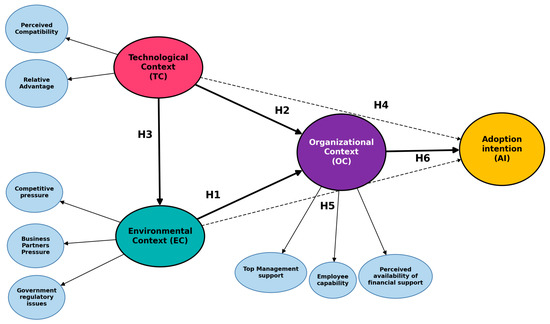
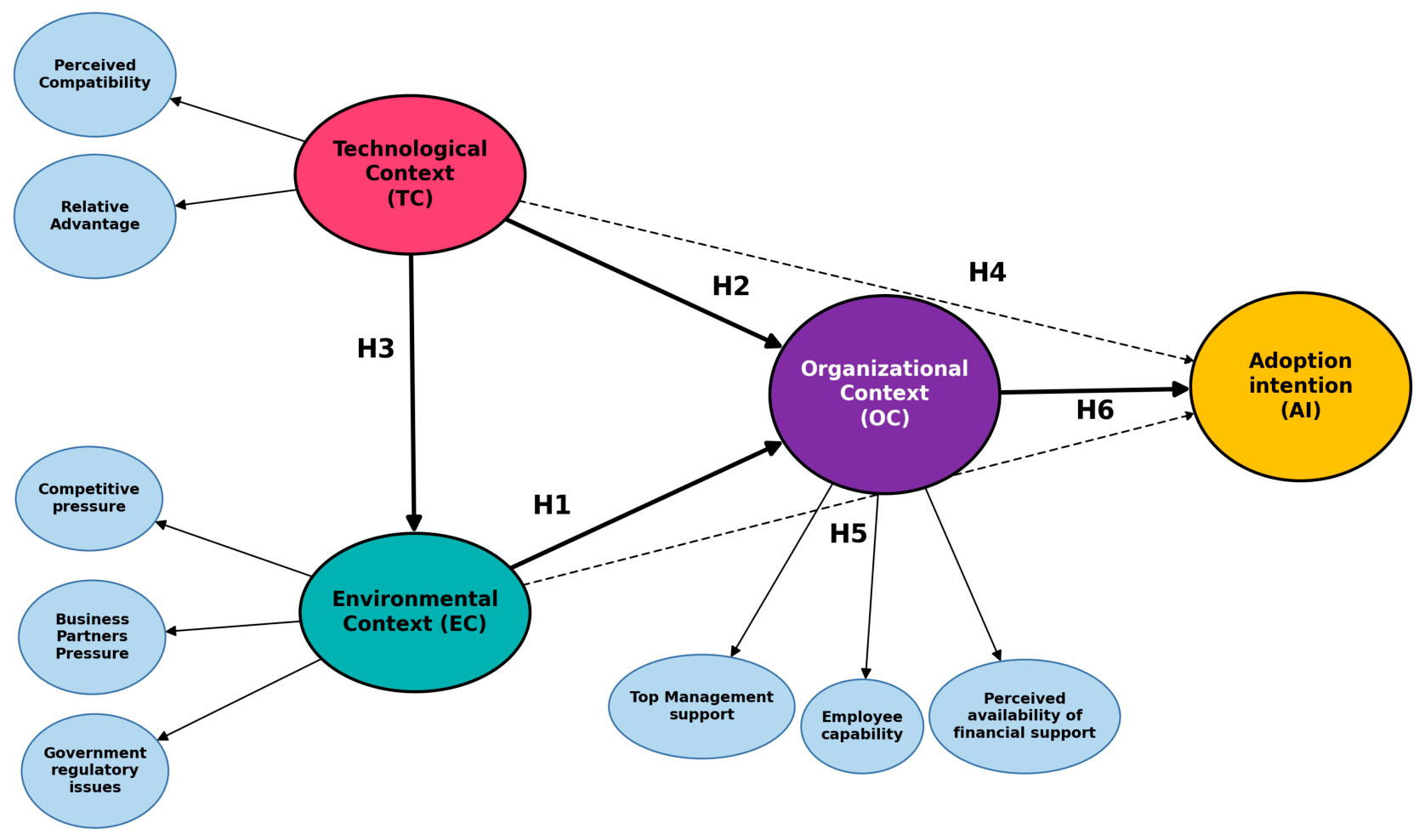
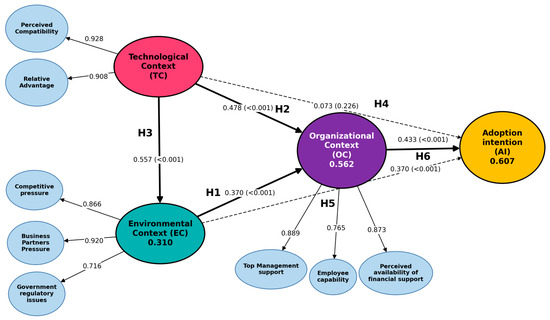
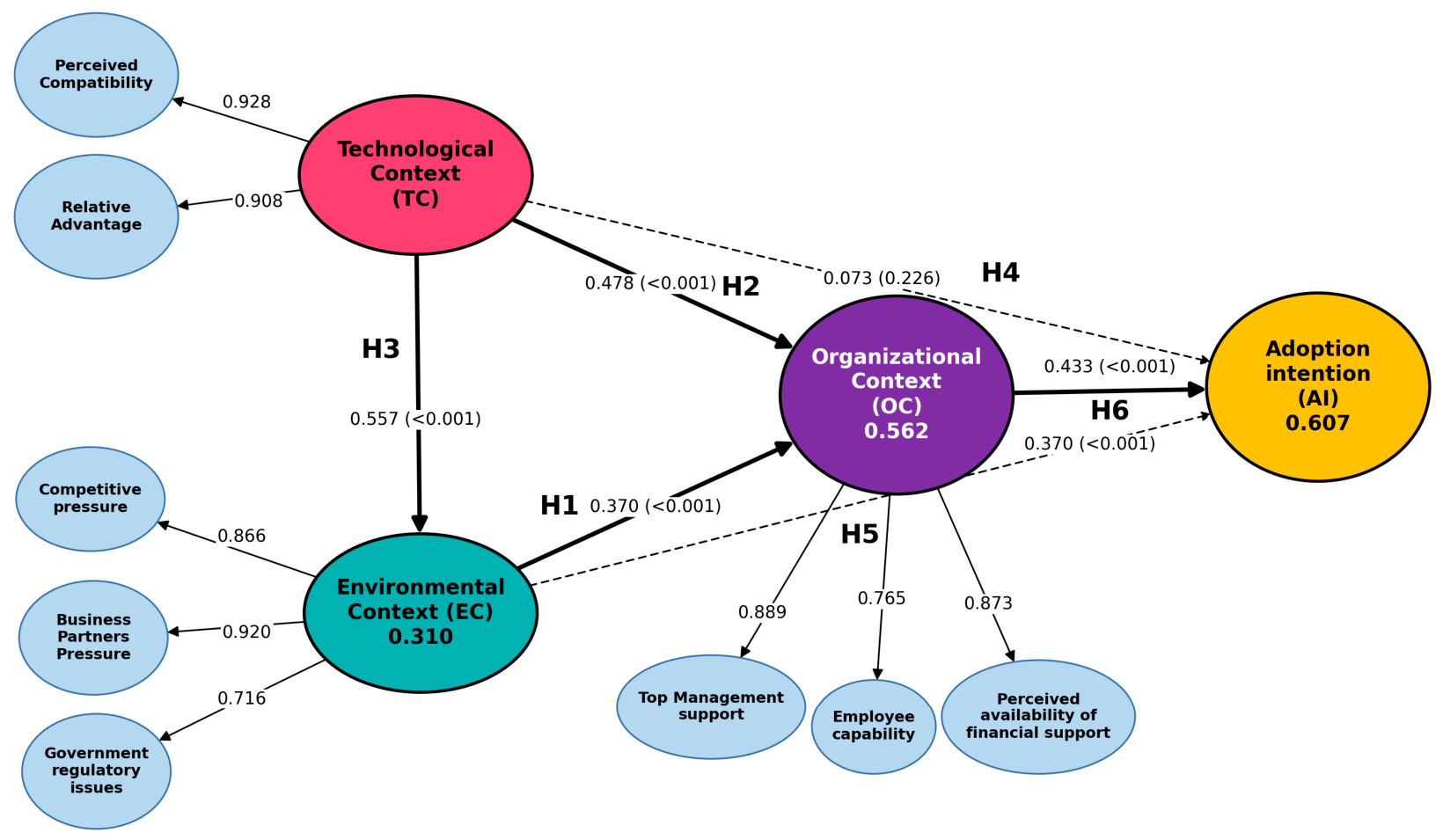

Disclaimer/Publisher’s Note: The statements, opinions and data contained in all publications are solely those of the individual author(s) and contributor(s) and not of MDPI and/or the editor(s). MDPI and/or the editor(s) disclaim responsibility for any injury to people or property resulting from any ideas, methods, instructions or products referred to in the content. |
© 2026 by the authors. Licensee MDPI, Basel, Switzerland. This article is an open access article distributed under the terms and conditions of the Creative Commons Attribution (CC BY) license.