


Abstract
This exploratory study examines documented managerial integration of sustainability information in three Romanian listed energy groups: OMV Petrom, Electrica and Romgaz. The Corporate Sustainability Reporting Directive (CSRD) provides the institutional context for tracing information-to-decision relationships across 2022–2025, including antecedents to the groups’ first European Sustainability Reporting Standards (ESRS) cycles. The purpose is to assess documentary support for these relationships and their reporting connections, without estimating an isolated causal effect of CSRD. The analysis follows 31 managerial episodes through 100 main-period observations and one separate follow-up from 2026. Each episode is assessed in terms of documentary support, action stage, and direction of change. Explicit reporting connections concern assessment, reporting arrangements, sustainability planning, and specified preparatory actions. Investment and target choices also retain strategic, financial, regulatory and commercial antecedents. Formal requirements, preparation, reported implementation and procedural omissions warrant different interpretations. Continuing reporting arrangements can coexist with less demanding targets or incentive parameters. The contribution is a source-traceable comparison of decision episodes that distinguishes documented integration from regulatory attribution. A proposed decision-record structure remains untested.
1. Introduction
The Corporate Sustainability Reporting Directive (CSRD) and European Sustainability Reporting Standards (ESRS) provide the institutional reporting context for this study [1,2]. The empirical object is documented managerial integration: the traceable relationship between sustainability information and elements of managerial practice in public records. We examine documentary support for these relationships and their connections to reporting requirements, without estimating an isolated causal effect of CSRD. A materiality assessment, a sustainability policy, and a capital project may all appear in a report without establishing the relationship between them. Examining that relationship requires evidence about the decision object, responsible authority, timing, and subsequent action.
Mandatory reporting may have economic and organizational consequences, but these depend on incentives and institutional conditions [3]. Research on the earlier European Union (EU) non-financial reporting mandates identifies changes in corporate social responsibility (CSR) activity, including anticipatory responses [4]. Sustainability-control research also examines how information, responsibilities, and control practices integrate with corporate strategy [5,6]. These perspectives justify investigating managerial connections while keeping regulatory attribution separate from observed changes.
This study focuses on three Romanian listed energy groups: OMV Petrom (Romania), Electrica (Romania), and Romgaz (Romania). We compare decision episodes over 2022–2025, covering antecedents and the groups’ first ESRS reporting cycles. We selected the sample based on public document availability and a shared energy-sector setting. It is not representative of Romanian companies. The unit of analysis is an identifiable managerial episode within a company or project perimeter, rather than the report as a whole. The groups’ first ESRS reporting cycles provide the temporal reference for the comparison. Within this setting, we assess whether the sources connect CSRD/ESRS requirements, or double-materiality assessment undertaken within that reporting process, to specific managerial developments. Pre-existing arrangements and episodes with unresolved reporting connections are retained to preserve chronology and examine competing explanations. These episodes are not treated as untreated controls, and an unresolved connection does not establish that reporting had no influence.
Research already addresses materiality and organizational arrangements. Dragomir and colleagues examine materiality disclosures in 20 Romanian listed companies, including the governance of internal assessment processes [7]. In Sustainability, Herrera-De La Barrera and colleagues develop and apply the Integrated Strategic Sustainability Model (MISE), linking materiality, programs, governed indicators, evidence, and review in one industrial organization [8]. These studies motivate a complementary question: what can public records establish about the relationship between sustainability information and particular managerial choices over time? A comparison across reporting groups can address this question by examining the same decision objects in successive documents.
Research on Romanian firms combines sustainability assessment in construction [9] with financial and sustainability-based resilience modeling in road freight transport [10] and real estate [11]. These studies develop measurement and analytical tools that can inform managerial review. The present study examines a complementary question: how companies document the use of sustainability information in managerial arrangements and decisions. Its energy-sector corpus and qualitative design are distinct, and the analysis focuses on the chronology and support for specific decision links.
The central research question is how do Romanian listed energy groups document connections between sustainability information and managerial decisions during 2022–2025? Three questions structure the analysis: (RQ1) Which relationships between sustainability information and particular managerial choices are supported by the public records? (RQ2) What do successive documents establish about the approval, implementation, and review of those choices? (RQ3) How do the direction of change and plausible alternative explanations compare across management domains and organizational perimeters? The study aims to contribute a longitudinal comparison of decision episodes and an evidence-based approach to assessing documented managerial integration. Its scope is the selected cases, rather than Romanian companies as a population.
Three operational objectives guide the study: (O1) identifying the relationships between sustainability information and specific managerial choices that public documents support; (O2) reconstructing the approval, implementation, and review of those choices while preserving their organizational and temporal boundaries; and (O3) comparing the direction of change across management domains and examine plausible explanations alongside reporting requirements. These objectives correspond to RQ1, RQ2 and RQ3, respectively.
The regulatory setting also changed after the main observation period. Directive (EU) 2026/470 amended the reporting framework [12]. We do not apply later scope changes retrospectively to decisions in 2022–2025 or treat the present corpus as a legal census. Selection relies on the groups’ publicly stated use of ESRS and availability of longitudinal records. The analysis does not determine every company’s current statutory reporting obligation.
2. Theoretical Framework
2.1. Sustainability Information in Management Control
We define documented managerial integration as the traceable relationship between sustainability information and specific elements of managerial practice in public records. It is an analytical construct for assessing supported connections. It is not a company-level maturity score, a measure of sustainability performance, or a claim about management effectiveness.
Gond and colleagues conceptualize integration through technical, organizational, and cognitive dimensions and distinguish diagnostic and interactive uses of control systems [5]. We examine shared information and procedures, and, where visible, the allocation of formal responsibilities. Managers’ interpretation of sustainability priorities and interactive discussion are less accessible through public documentation. We therefore do not assign complete control configurations or infer cognitive agreement from a materiality approval.
Adams and Frost connect sustainability indicators with managerial planning and decisions [13]. Maas and colleagues articulate relationships between assessment, accounting, control and reporting [6]. Crutzen and colleagues examine formal and informal sustainability controls [14], while Edirisinghe and colleagues investigate integration using interviews and documentary evidence [15]. These studies establish that sustainability information can be integrated in different ways across management processes. The present study asks how public records distinguish the existence of a formal arrangement, its documented application, and the direction of a subsequent decision. These have separate analytical properties: evidence of an arrangement does not establish its effective operation or the ambition of the objective it supports. Public documents allow examination of recorded relationships and chronology but provide limited access to informal negotiation.
Reward and compensation systems are among the mechanisms examined in sustainability management-control research [14]. In this study, remuneration is analyzed through the published scheme, eligible roles, metric scope, weighting, and assessment period. These features describe the formal evaluation arrangement; their effects on managerial behavior require separate evidence.
The capacity to collect, validate, and use information also has a technical and professional dimension. Grigoras-Ichim and colleagues’ legislative and bibliometric study of accounting digitalization in Romania discusses platform interoperability, data validation, and the development of reporting skills [16]. This provides context for the information infrastructure supporting reporting and its potential managerial use. In the present study, we examine the specific responsibilities and process connections documented by the selected groups.
2.2. Materiality and Decision Objects
The ESRS double-materiality assessment (DMA) identifies relevant impacts, risks and opportunities (IROs) from impact and financial perspectives [2]. That process can inform managerial priorities. However, its presence in a report does not establish that a particular investment or supplier decision resulted from its findings. We assess whether a priority is explicitly connected to a decision object, authority, or implementation requirement.
Recent studies investigated the practical implementation of double materiality in a Polish construction company [17], its interpretation in Italian family businesses [18], and internal tensions in Italian small and medium-sized enterprises (SMEs) with voluntary reporting [19]. These studies motivate a distinction between maintaining a materiality assessment, using its findings in a strategy or rule, and tracing their consequences for a specific choice or resource allocation. The present study examines what public records establish at each point, without assuming they form a necessary sequence. Disclosures of assessment or strategic alignment alone cannot establish a decision-specific consequence.
2.3. Formalization, Implementation and Results
Bromley and Powell distinguish policy–practice decoupling from means–ends decoupling [20]. We retain this distinction as a secondary lens with evidential limits. Policy approval supports a claim about formalization. A documented omission within a relevant procedure supports a narrower claim about that procedure. An unobserved application remains an evidential gap; it is not equivalent to a reported inconsistency between a policy and an applicable procedure. Establishing policy–practice decoupling requires evidence about enactment, while establishing means–ends decoupling requires evidence about implemented practices and their relationship to intended outcomes. These requirements constrain how either concept can be applied to public reporting.
Figure 1 guides the examination of how sustainability information relates to authority, a decision or rule, implementation, and a reported outcome. We ask three questions about each episode: which relationship does the source support, what stage has the action reached, and how has it changed over time? A report may explicitly link materiality to planning while leaving its use in an individual project unclear. An authorized review may revise a target in either direction. Examining these differences allows us to compare managerial choices without assigning an overall integration score to a company. Earlier priorities may shape a decision, and later feedback may alter them. The same care is needed with resources and project stages: an estimate, a commitment and expenditure describe different things, as do approval, contracting, construction and operation. Capital raised, allocated and spent is recorded separately.
Figure 1.
Analytical framework for documented managerial integration. Authors’ synthesis. Arrows organize documentary questions and do not establish causation or a mandatory sequence.
The interpretation also depends on what a measure actually represents. In their study of real-estate firms, Grigoras-Ichim et al. treat accounting-based sustainability proxies separately from externally validated environmental, social and governance (ESG) performance and interpret fixed-effects estimates as associations [11]. We follow the same principle here. Evidence that sustainability information enters a recorded management process supports a claim about that process. Assessing financial resilience, sustainability performance, or regulatory compliance requires measures and evidence suited to those questions.
2.4. Analytical Orientation
Three interpretive concerns organize the comparison: documentary visibility, variation across management domains, and competing explanations. Documentary visibility concerns whose arrangements, choices, implementation stages, and outcomes appear in the public record. Variation concerns differences in documented relationships, action stages, and change direction within and across the groups. Competing explanations concern earlier strategies and overlapping governance, regulatory, financing and commercial considerations. These concerns connect the theoretical framework with RQ1–RQ3. They were refined through engagement with pilot material and guide interpretation of the same documentary corpus. They are not formulated or evaluated as independent predictions.
3. Materials and Methods
3.1. Design, Case Selection and Temporal Boundaries
The study uses an exploratory longitudinal documentary comparison with managerial episodes embedded in three company cases. Documentary analysis examines organizational records but requires attention to their origin, purpose, and limitations [21]. The coding framework and analytical orientation in Section 2.4 were informed by theory and refined using pilot material within the same abductive process. The analytical orientation was not pre-registered, and neither selection nor the codebook was fixed before data collection. The comparison therefore does not provide independent prediction testing.
OMV Petrom, Electrica, and Romgaz were selected purposively because they publish sustainability statements describing ESRS application, have accessible antecedent reports, and disclose governance and decision information in the energy sector. These three listed reporting groups constitute the company cases. Subsidiaries and projects define the organizational perimeter of particular episodes and are not additional company cases. The design shares a broad sector context while comparing different objects and governance arrangements. It does not control for ownership, business model, or investment exposure. The study used no interviews, questionnaires, internal documents, or paid ESG scores.
The reports for financial year (FY) 2025 provide a contextual profile of the differences between the cases. OMV Petrom combines oil and gas production, refining and power activities, with OMV Aktiengesellschaft as its majority shareholder and a two-tier structure comprising an Executive Board and a Supervisory Board [22]. Electrica’s core activities concern electricity distribution and energy supply, alongside renewable-generation development; the Romanian State is its largest shareholder, with a holding below half of the share capital, and the company uses a one-tier Board of Directors structure [23]. Romgaz combines natural gas production and storage with gas and power investment projects; the Romanian State is its majority shareholder, and the company also uses a one-tier governance structure [24]. These profiles describe different ownership, organizational and investment settings rather than equivalent energy businesses.
Comparison proceeds from the chronology of each episode within its own perimeter to contrasts between specified managerial functions and action stages across cases. Ownership, governance arrangements, asset portfolios, financing conditions and project maturity inform the interpretation of those contrasts. The study does not estimate the effects of these characteristics or assume that membership of the broad energy sector equalizes commercial, environmental or financing conditions.
The main window is 2022–2025. Financial-year-2022 reports published in 2023 provide antecedents to the first financial-year-2024 ESRS statements, not an anticipation-free pre-CSRD baseline. Event dates are recorded separately from financial years and publication dates. A 2026 publication reporting financial year 2025 can support a retrospective statement about 2025; an event or status observed in July 2026 cannot be assigned to the end of 2025. Approvals for future implementation are retained as approvals.
We define each episode by the reporting group, subsidiary, or project to which the evidence refers. Gabare, for example, is a Bulgarian project within OMV Petrom’s investment portfolio. Records concerning Electrica’s distribution subsidiary, Distribuție Energie Electrică România (DEER), or Romgaz’s storage subsidiary, Depogaz, are interpreted at that subsidiary level. OMV Petrom and Romgaz, through Romgaz Black Sea, participated in the Neptun Deep project [22,24]. The retained investment-decision episode is recorded as OMV-9 and is not counted again as a separate Romgaz episode. Electrica’s FY2025 statement also reports a memorandum with Romgaz concerning potential renewable-energy and storage projects [23]. This memorandum provides coordination context and does not establish completed joint investment. These relationships prevent treating the groups as independent replications of a reporting effect. The 31 episodes provide a set of managerial developments to compare; they cannot be used to estimate the prevalence of practices across companies.
3.2. Documentary Corpus and Episode Selection
We assembled a corpus of 22 publicly available sources: 20 PDFs and two web announcements. The corpus comprises 12 principal company-year reports covering 2022–2025 and 10 supplementary sources on strategy, governance, remuneration, financing, and key decision milestones. The team selected the supplementary documents to corroborate approvals, clarify decision parameters, and establish subsequent status. They were not included in the automated search counts. The team accessed and archived the documents on 7 September 2026. The source register records each document’s identifier, URL, institutional owner, language, and reporting year, together with a SHA-256 checksum for each archived PDF. The technical searches covered 3753 physical PDF pages in the 12 main reports, of which 3735 contained extracted text. Table 1 summarizes page coverage, text extraction, and both types of search matches for each principal report.
Table 1.
Coverage of the principal report searches. Counts describe technical matches, not unique decisions.
We searched for English and Romanian action terms near environmental, social, and governance topic terms after case and diacritical normalization. Action terms covered approval, establishment, implementation, revision, contracting, postponement, and withdrawal. For each retained action match, the script extracted a context extending up to 220 characters before the match and 480 characters after its end. Further matches starting fewer than 200 characters after the previous retained match on the same page were suppressed. We retained a context only when the corresponding ESG topic expression occurred within the extracted window. A separate search covered completion, commissioning, operation, and elimination, using its own topic expression. The complete expressions and processing order are retained in the executable scripts.
The searches returned 4847 action-and-topic records and 731 completion-and-topic records. The resulting 5578 technical records include overlapping windows, repeated descriptions, and false positives. They therefore represent documentary search results rather than distinct managerial decisions. An auxiliary routing rule combined identical document/page/matched-term/context-hash records and identified 1383 locators containing both a 2022–2025 year and a listed authority or decision term. This rule supported documentary screening; these terms alone did not establish episode eligibility. The screening register accounts for all 5578 records, including those outside this routing set. The early list of 265 contexts and the initial register of 36 candidate families were working navigation aids, not successive counts of unique eligible decisions. Analytical selection is documented separately at technical-record, documentary-object and episode levels. Historical classifications are preserved separately from the documented reasons for retaining, linking, or not selecting an object for a main episode dossier.
Screening combined technical classification, source-clause assessment, complete-context reading, and selected full-page examination. Source-clause-linked assessments cover 2158 technical records. We examined a further 1489 records through their complete original search windows. Overlapping windows in this set were combined without text loss into 1103 passage groups, each with an explicit interpretive decision. This detailed review includes 33 selected full-page examinations and visual checks of four tables. The team recorded five additional page-level witnesses separately from the technical-hit total. The register identifies the evidential basis and qualifications for individual decisions. The depth of examination was not uniform across all 5578 records, and screening of the technical search records did not include independent duplicate assessment. The separate second-author review of selected episode-level coding is described in Section 3.3.
At the technical-record level, the dispositions are INCLUDE (245), MERGE (1117), CONTEXT (3443), and EXCLUDE (773). INCLUDE identifies a primary navigation anchor for a documentary object, while MERGE links supporting records to reviewed objects. These dispositions do not determine the number of analytical episodes. CONTEXT retains background, standing practices, aggregate information, intentions, and other evidence insufficient to establish a separate eligible action at that location. EXCLUDE identifies a stated failure of documentary eligibility, such as a lexical false positive, an external decision maker, or an unsupported specific ESG connection. Each record retains its source, physical PDF page, matched term, original context, context hash, disposition, and justification.
Documentary eligibility required an identifiable decision object and organizational or project perimeter; a specified actor or authority and action or choice; an event date or justified current-period attribution within 2022–2025; and a source-supported ESG relationship. An ESG term appearing near an action term was insufficient. Explicit event dates took precedence over reporting years and publication dates. A reporting-year attribution was accepted only where the source presented the action as an activity of that period. A report’s description of a standing policy did not, by itself, establish its adoption date.
We distinguished preparation, approval, contracting, implementation, and reported completion. A documented drafting or selection decision could be retained at that stage without establishing policy adoption, contract delivery, or subsequent application. We preserved statements that an activity had not occurred, a target had not been met, or a procedure lacked a provision as contrasting evidence. We treated missing public evidence as a limitation, not as proof that an action had not occurred. Developments after 2025 remained outside the main observation period, including subsequent events described in reports bearing the financial-year label 2025.
Repeated descriptions and successive stages were linked where the decision object and perimeter could be reconciled. Different assets, subsidiary decisions, policies and incentive schemes remained distinct. Program components retained their own identities without automatically counting both a program and its components as independent episodes. A thematic or site-level parent relationship alone did not establish that two entries referred to the same decision. Reporting-method changes, baseline restatements and disclosure-boundary choices were distinguished from operational changes and achieved outcomes. Links between technical records, documentary objects and analytical episodes were retained separately because these relationships can be many-to-many.
The documentary catalog contains 301 objects and comparison entries. Analytical selection was purposive and iterative, consistent with the exploratory design. It sought variation across management domains, organizational perimeters, action stages, and documented relationships between sustainability information and managerial choices. The selection included explicit reporting-related connections, developments with earlier strategic or institutional antecedents, and cases in which application or completion remained unresolved. Eligibility did not require evidence that CSRD caused the action or that the action improved sustainability performance.
The main analytical sample comprises 31 episode dossiers: 13 for OMV Petrom, 8 for Electrica, and 10 for Romgaz. The remaining 270 catalog entries have separately recorded roles: 13 provide linked evidence for main dossiers, 17 retain program components, nine identify reporting choices, seven provide preparatory comparisons, 207 retain additional comparison objects, seven have temporal or action-identification limitations, and ten do not establish a separate eligible episode in the reviewed evidence. Non-selection for a main dossier is therefore distinguished from documentary ineligibility. Additional comparison entries remain available for examining implementation, non-implementation, and competing explanations. The sample supports contextual comparison; it does not constitute a census of managerial decisions, and we make no claim of exhaustive search recall or theoretical saturation. The Selection worksheet in Supplementary Material S1 provides a candidate-to-episode crosswalk. For each of the 36 initial families, it preserves the initial classification and records the analytical disposition, episode link where applicable, and a decision-specific reason. A linked index identifies the six additional main dossiers. Family entries, supporting records, and episode dossiers are not added together when counting the analytical sample.
Supplementary Material S1 presents the 31 selected episodes, supported by 100 main-period observations and one separate 2026 follow-up. An observation is a source-linked analytical record within an episode; closely related passages may be grouped in one record. Repeated citation or reassignment of an existing record does not create another observation. The detailed screening register, object-level selection reasons, passage judgments, archived text, and executable search and replay scripts are retained in the research archive and are available for editorial assessment. Replay reproduces technical searches and recorded decisions; it does not independently validate interpretive judgments. Technical processing for the documented screening audit and replay used Python, version 3.12.14 (Python Software Foundation, Beaverton, OR, USA), with pypdfium2, version 5.14.0 (pypdfium2-team, open-source project), for PDF text extraction and page rendering. Spreadsheet reading, updating, and verification used openpyxl, version 3.1.5 (openpyxl development team). Auxiliary workbook export and image-preview preparation used XlsxWriter, version 3.2.9 (XlsxWriter project), and Pillow, version 12.3.0 (Pillow contributors), respectively. The standard-library modules re, unicodedata, hashlib, and json support regular-expression searches, normalization, checksums, and structured record handling. These operations organized and checked the documentary evidence without establishing managerial effectiveness or an isolated causal effect of CSRD.
3.3. Coding and Analysis
The evidence register lets the reader move from an analytical finding back to its source. Each record identifies the episode and document, reported year and event date, PDF and printed-page locators, a paraphrase of the finding, its analytical dimensions, a source identifier linking to the source URL, and an interpretive limit. We compare eight dimensions: materiality, authority, action, resources, chronology, monitoring, incentives, and connections. We also record the management domain, type of change, temporal role, source ownership, and the point beyond which the documents no longer support the proposed sequence. Table 2 summarizes the eight analytical dimensions, their interpretive rules and their main uses in answering RQ1–RQ3. The mapping is not exclusive: the dimensions are considered together within each episode, while the direction of change, organizational perimeter, antecedents and alternative explanations provide context for the comparative analysis.
Table 2.
Analytical coding dimensions, interpretive rules and links to the research questions.
We code a relationship when a claim connects a specified input, authority, rule, action, or outcome within an episode. A connection is explicit when the source itself links the specified elements. An explicit connection may affirm, deny, or qualify the relationship; it does not necessarily indicate implementation or a positive outcome. Mentioning them in the same passage is insufficient. Where we interpret a connection, we record the justification, drawing on the object, dates, and roles of the sources. If those records do not support the proposed link, it remains unresolved. The judgment concerns the particular relationship being examined. For instance, an explicit link between ESG and executive evaluation does not show that CSRD prompted the introduction of that evaluation rule. The same interpretive rules apply to all selected episodes.
Evidence states apply to a specified dimension and action. An assessment can receive I without implying implementation of the entire sustainability strategy. A disclosed procedural omission is a specific fact, while subsequent application may remain unresolved. The combined S/I annotation is not an additional evidence state or a numerical grade. Report length is not a measure of documented managerial integration.
The chronology distinguishes the event date, financial year, and publication date. If documents give different parameters for a target relating to the same year, we retain both definitions and their dates. A later value cannot simply replace the earlier plan. We describe a revision only where the record supports the change or its chronological basis; unexplained discrepancies remain unresolved. An announcement made at the time of approval may establish its date, while a later report describes the subsequent status. Several documents from the same issuer can corroborate that chronology, although they share corporate authorship. We also check the metric’s scope, denominator, and subsidiary perimeter before combining observations.
We assess ambiguous passages against the specified episode object, action stage, and observation period. Information about another project on the same page is not used to establish the authority, resources, or implementation of that object. A disclosed procedural omission is retained as evidence of the omission, rather than treated as missing information. Where a source contains inconsistent parameters or results, the competing statements are retained with their locators and interpretive limits. Text affected by extraction across columns or tables is checked against the original page layout before being used to support a coding judgment.
We distinguish the statement made by a source, corroboration available in another document, and the authors’ analytical interpretation. Verification against an original passage establishes whether the analytical statement accurately represents the documentary record. It does not independently establish that the underlying managerial practice operated as reported. Corroboration is therefore assessed for the particular claim and with attention to source ownership: another issuer document may confirm a disclosed date or parameter while retaining common institutional authorship.
Table A2 provides illustrative original-language excerpts linked to existing observation identifiers. Romanian excerpts are accompanied by English translations; passages from English-language sources require no translation. The table separates the quoted wording from the supported analytical reading and its limits. These excerpts complement the paraphrased records in Supplementary Material S1 and the relationship-specific classifications in Table 4.
For each episode, we set out what preceded the change, what was reported to have changed, which relationship is best supported, what remains uncertain, and which alternative explanation is plausible. Table 3 illustrates the approach with EL-2. Readers can compare all 31 episodes using the same fields in Appendix A or the Episodes and Evidence worksheets in Supplementary Material S1. Table 4 groups them by management domain to make the comparison easier to follow. The groupings do not imply that different projects are equivalent or indicate how common a practice is. Throughout the analysis, we consider reporting demands alongside earlier strategies, governance and environmental obligations, financing conditions, and commercial or technological constraints.
Table 3.
Worked example of relational analysis: Electrica materiality and strategy (EL-2).
For the comparative synthesis, we assess a specified reporting connection: whether CSRD/ESRS requirements, or double-materiality assessment explicitly undertaken within that reporting process, are linked to the main managerial development reconstructed in each episode. This assessment is separate from local LNK judgments concerning other relationships, such as the use of climate targets in investment appraisal or executive evaluation. R-E denotes an explicit reporting connection stated in the source. R-I denotes a justified interpretation supported by object-specific evidence and chronology, where the reporting connection is not explicitly stated. R-U denotes a reporting connection that the selected evidence cannot establish. An episode classified as R-U may nevertheless contain explicit relationships between sustainability objectives, managerial rules and actions.
An R-E classification identifies a source-stated connection to reporting requirements or reporting-based DMA. It does not establish that CSRD prescribes the particular organizational structure, remuneration formula, investment or target revision. Additional or competing explanations are retained for every episode in the Antecedent and Alternative explanation fields of Supplementary Material S1 and the corresponding fields of Table A1. Strategic, institutional, financing, and commercial considerations may operate alongside reporting requirements; this design cannot separate their relative causal contributions.
Each episode is assigned one reporting-connection class and one presentation domain for the descriptive counts in Table 4, Panel B. The classification concerns the specified relationship, rather than every relationship within the episode. Repeated passages and successive observations do not generate additional episode counts. The counts use the main observation period, 2022–2025; the separate 2026 follow-up does not create another episode. The classes describe documentary support and do not measure managerial effectiveness or establish a causal effect of CSRD.
A second-author review examined a simple random sample of 10 of the 31 episode dossiers (32.3%), selected without replacement. The sampling frame was ordered by company prefix and the numerical part of the episode identifier, and the draw used Python’s random.Random(20261018).sample(frame, 10). The selected dossiers were EL-3, EL-4, EL-7, OMV-3, OMV-7, OMV-9, OMV-10, SNG-4, SNG-5 and SNG-7. Together, they contained 29 main-period documentary units and one separate follow-up unit from 2026. For the main-period units, the review form included 203 dimension-specific assignments across MAT, GOV, ACT, RES, TIM, MON, and INC, plus 29 LNK judgments on predefined relationships. These judgments were nested within 10 episode dossiers and do not represent 232 independent cases. The 2026 follow-up was reviewed separately.
The second author completed a separate review form for these units. The form recorded the assigned annotation or relationship class, the claim assessed, supporting original-language quotations, source locators, and interpretive limits. She had consulted the initial codes before completing the form. We therefore describe the exercise as a non-blinded second-author coding review. It documents a further assessment of the coding and its evidential support, while acknowledging that prior exposure may have influenced the judgments.
4. Results
4.1. Reporting Responsibilities and Information Controls
The register contains 13 OMV Petrom, eight Electrica and ten Romgaz episodes, supported by 100 main-period observations and one separate 2026 follow-up. Table 4 compares the management domains, while Table A1 in Appendix A retains all objects, their antecedents, relationships, and open boundaries. Cells labeled “No retained episode” indicate that the study retained no episode in that presentation group; they do not establish the absence of a company practice. The following results distinguish reporting-related connections, action stages, and the direction of change.
Electrica’s 2024 ESG specialization had antecedents: its financial-year-2022 report already identified a Strategy and Sustainability Department [28]. Its financial-year-2024 and financial-year-2025 records describe reporting coordination and cooperation between ESG, Treasury, and risk-management structures in the materiality review [23,26]. The 2025 report also identifies an end-December update of the Group Risk Management Policy and Procedure ELSA-PS-6.1, edition 5/0, covering financial and non-financial risks, including ESG and climate risks [23]. This supports a connection between sustainability information and organizational coordination. It does not establish that the sustainability function was newly created, that all planned procedural integration steps were completed, or that the arrangements operated effectively.
EL-7 concerns the separate sustainability-reporting policy and procedure. Electrica disclosed that the specified reporting-risk process was not formalized in 2024 and that policy development had begun [26]. In 2025, it reported implementing a formalized process under policy ELSA-POL-ESG-1 and procedure ELSA-PO-ESG-1.1, connecting DMA, data collection and validation, and consolidation and reporting responsibilities [23]. The evidence supports reported process implementation. It does not independently establish operating effectiveness or demonstrate how the process changed an individual investment or supplier choice.
Romgaz reported creating an ESG office in 2024. Its disclosure for that year noted the absence of a reporting-risk methodology, while the 2025 report described assessment results presented to the board [24,29]. These records trace a change in how the company controlled reporting information. They leave open whether the assessment influenced a particular operational or strategic choice. We therefore analyze this development separately from changes in general risk management.
OMV Petrom approved its ESRS double-materiality assessment in December 2023 and reviewed it in 2024 and 2025 [22,30]. Work on the information process therefore preceded the first ESRS financial year. The records show approval and reassessment, but do not trace a particular IRO through to an investment choice. Nor can changes in the number or grouping of IROs, by themselves, be read as changes in underlying risk.
OMV Petrom reported establishing dedicated Sustainability Business Partner roles in 2025 to support its business divisions [22]. OMV-13 is distinct from the continuing sustainability sub-department and subject-matter-expert reporting lines. These roles extend the organizational evidence beyond assessment approval and reporting coordination. The source does not identify a particular divisional choice or outcome produced by those roles, and it does not establish CSRD as the cause of their creation.
Romgaz’s DMA is a separate object from its ESG office and general risk-management arrangements. The 2024 ESRS assessment used sustainability-related entries from the annual Risk Register and aligned the financial-materiality assessment with the risk-management procedure [29]. In 2025, internal workshops reviewed and revalidated the IROs, with importance and scores unchanged [24]. Unchanged scores do not mean that no review occurred. The same report explicitly states that stakeholder information produced no strategy or business-model changes during the period. SNG-9 therefore establishes an assessment-to-risk-information connection while preserving a stated limit on subsequent strategic change.
4.2. Materiality and Strategic Planning
Electrica states that double materiality informed the development of its sustainability strategy. A current report issued at the time confirms approval on 17 December 2024, and later reporting returns to the connection [23,26,27]. The company thus describes how the assessment entered planning, beyond simply listing material topics. At project level, however, the selected documents do not show which IRO changed an individual budget or approval.
This strategy also has a broader corporate antecedent published in December 2023 and a separate antecedent in committee endorsement, during 2023, of a sustainability strategy for 2024–2030 [25]. That endorsement is kept separate from Board approval of the 2025–2030 version in December 2024. In 2025, Electrica states that managing IROs forms part of major-project decision-making [23]. The statement extends the reported management relationship, but a general declaration and project list do not provide a complete decision chain for each project. The evidence therefore supports an explicit planning connection with a separate limit at project-level attribution.
Romgaz’s 2024 statement identified developing and approving an ESRS E1-aligned transition/decarbonization plan as a 2025 priority [29]. Romgaz approved its decarbonization strategy on 22 October 2025, a date also recorded in a communication issued at the time [24,31]. The EUR 2.76 billion investment estimate covers the Net Zero scenario through 2050. The issuer explicitly qualifies its implementation by technological maturity, feasibility, financing availability, and regulatory conditions, with milestones subject to reassessment [24]. Further climate analysis was planned for 2026 [24]. Strategy approval constitutes a documented managerial action, while the scenario estimate remains conditional and does not establish an authorized investment budget, committed expenditure, or achieved emissions reductions. Approval alone is also insufficient to establish full compliance with the ESRS transition-plan requirements.
In SNG-10, Romgaz evaluated consultancy offers and selected a winner in 2025 for a climate-risk and vulnerability study explicitly described in relation to CSRD/ESRS and EU Taxonomy requirements [24]. The contract was planned for execution in the first quarter of 2026. The report also states that no climate-scenario-based IRO assessment was conducted in that reporting exercise; the assessment was qualitative. The procurement milestone is therefore retained separately from strategy approval, completed consultancy delivery and the execution of scenario-based analysis.
4.3. Procurement, Risk and Procedural Requirements
OMV Petrom explicitly refers to CSRD and the Corporate Sustainability Due Diligence Directive (CSDDD) together when describing its 2024 supplier-risk revision, which continued in 2025 [22,30]. Its procurement and supplier relationships already included sustainability practices in 2023 [32]. The chronology therefore points to revising an existing process in response to several stated regulatory drivers. It supports a stated regulatory rationale for the reported process revision, while leaving the specific contribution of CSRD and any effect on an individual supplier choice unresolved. Table A2 reproduces the original wording.
Electrica’s supplier-framework development represents a different stage. In EL-8, the 2025 report describes consultations, existing-policy analysis, and drafting of a sustainable-procurement policy and supplier code in connection with CSRD and EU Taxonomy requirements [23]. This establishes the preparation of a specified framework. It does not establish final adoption, application to an individual supplier, or value-chain verification. The comparison therefore distinguishes OMV Petrom’s process revision, Electrica’s policy preparation, and Romgaz’s policy adoption and disclosed procedural omission.
Under Romgaz’s revised board regulation for 2025, relevant decision materials must include an analysis of environmental and social alignment or proposals for mitigation [24]. The rule specifies information to be brought into a decision. The selected records, however, provide no complete example of its use in an individual choice. Monitoring planned for a later date cannot establish a result achieved in 2025.
Romgaz’s 2025 statement reports adoption of a sustainable-procurement policy and explicitly states that the applicable procurement procedure lacked specific circularity provisions [24,29]. Table A2 reproduces the Romanian wording and its English translation. This is an issuer disclosure of a specific procedural omission, rather than an absence inferred from silence. The procedure and individual procurement contracts were not examined directly. The finding does not establish the absence of all sustainable-procurement practices or determine the policy’s broader effects.
Sustainability risks had already entered Romgaz’s general risk system in its November 2023 revision [33]. This earlier change helps place the later developments in context. Reporting, risk assessment, general risk management, procurement procedures, and board materials involve different management processes. Including them in the same sustainability statement does not give them a common origin or establish that they formed a single reform.
4.4. Incentives and Target Revisions
The three incentive episodes show sustainability entering management evaluation at different times. OMV Petrom reports weightings of 25% for greenhouse gases and 10% for gender representation in its long-term incentive plan; safety has a separate 15% weighting in the annual bonus [22,30]. The long-term and annual weightings refer to different schemes, so adding these percentages would misrepresent their share of total pay. Earlier policies and later revisions also differ in their governing bodies and application dates [22]. The evidence concerns the evaluation formula and its continuation. It does not establish the payment received or a change in behavior.
Electrica reports a sustainability objective for executive management in 2024, weighted at 15–25% within specific performance indicators [26]. Electrica reports at least one sustainability objective for its chief executive officer (CEO) and chief financial officer (CFO) in 2025, weighted at 10–25% within the category of specific indicators [23]. The ranges depend on eligible roles and refer to specific-indicator categories, not total remuneration; their difference does not establish a uniform weakening of incentives. The selected documents do not establish the first introduction date, the individual metric’s achievement, or attributable bonus payment. These limits prevent the disclosure from being treated as a demonstrated new incentive caused by CSRD.
Romgaz’s Iernut CO2 key performance indicator (KPI) illustrates the distinction between disclosed parameters and their interpretation. The 2024 statement presents a ceiling of 0.360 tCO2/MWh for 2025 and a weighting of 3%, whereas the 2025 statement presents a ceiling of 0.565 tCO2/MWh and a weighting of 1% [24,29]. Table A2 reproduces the original wording concerning the weighting. The comparison identifies a more permissive published ceiling for 2025 and a lower weighting within the total set of performance indicators. Both statements define the underlying physical metric as direct CO2 emissions per MWh of electricity produced at Iernut [24,29]. However, the latter schedule first assigns the 0.360 threshold to 2026, rather than 2025. This documents a change in the evaluation timetable, without establishing the abandonment of the lower threshold. The commonly stated definition does not independently verify that measurement boundaries, input data, and operating conditions remained unchanged. Moreover, the project-action table in the 2025 report still lists 0.360 tCO2/MWh for 2025 [24]. We therefore distinguish the remuneration benchmark from the project target and do not treat their numerical difference as proof of a weaker long-term environmental commitment. The remuneration report corroborates the 2025 parameters and records the contract-related approval, while the shareholder resolution provides a separate approval record [34,35]. These documents corroborate disclosed parameters and governance steps in the issuer’s documentary record; they do not independently verify managerial behavior. The remuneration report also documents application of the criterion in the executive and director assessment: the table reports an achievement factor of 0.99 and, at the 1% weighting, a contribution of 0.99 percentage points to the aggregate KPI assessment [34]. This provides evidence of reported scoring beyond disclosure of the formula alone. The factor is not an emissions-reduction percentage, and the weighted contribution is not a percentage of salary. These figures do not isolate the remuneration effect of revising the environmental criterion or establish a corresponding change in managerial behavior or physical emissions.
Target ambition and incentive design also require separate assessment within OMV Petrom. The earlier 2030 objectives, relative to 2019, specify separate 20% reductions in Scope 1–3 intensity and absolute emissions [32]. The Supervisory Board report dates approval of a strategic-target and financial-framework update to December 2025 and states that some revised targets were communicated on 4 February 2026 [22]. The same annual report specifies a 10% intensity objective and withdrawal of the absolute Scope 1–3 emissions objective. This chronology distinguishes approval from later communication; the individual approval minutes were not examined. The long-term incentive climate criterion concerns Scopes 1–2 [22]. Consequently, the strategy revision does not by itself establish a weakening of that remuneration criterion. We interpret the disclosed reduction in the required percentage and withdrawal of the absolute objective as less demanding target parameters. An absolute-emissions target specifies a reduction in total emissions, whereas an intensity target relates emissions to an activity denominator. Intensity can improve without a corresponding reduction in total emissions when activity volumes change. Withdrawal of the absolute objective therefore changes the dimension of performance covered by the quantified targets; it should be distinguished from a methodological restatement of emissions. The issuer attributes these adjustments to changing market demand and the evolving product portfolio. The Supervisory Board report also describes a concurrent reallocation of capital from less mature technologies towards traditional-business and regional-gas opportunities [22]. These statements establish the company’s disclosed rationale and strategic context; they do not independently establish the relative influence of these considerations on the revised targets. Separately, the same report states that absolute Scope 1–2 emissions in 2025 were 19% below the 2019 baseline, while the carbon intensity of energy supply covering Scopes 1–3 was 3% below that baseline [22]. The company attributes the latter reduction primarily to higher power sales volumes. These measures have different scopes and denominators and cannot be treated as interchangeable indicators of environmental performance. They describe company-reported outcomes relative to 2019, not effects attributable to the target revision approved in December 2025. The full-year figures do not establish a behavioral response to that late-year revision or a causal effect of CSRD. Table A2 reproduces the original wording concerning the target revisions.
4.5. Financing, Implementation and Reported Completion
Electrica’s green bonds illustrate why raising finance and implementing a project need separate examination. The contemporary listing announcement jointly issued by Electrica and the Bucharest Stock Exchange confirms the disclosed EUR 500 million nominal issuance [23,36]. Its joint authorship does not independently corroborate managerial outcomes. The financing framework sets responsibilities for project selection, monitoring allocations, and temporarily managing unallocated proceeds [37], while the financial-year-2025 notes report temporary treasury investments [23]. An assessment by the European Investment Bank (EIB) provides a non-issuer institutional account of the promoter’s environmental and social capacity and the conditions for financing [38]. Table A2 reproduces its conclusion. The assessment does not establish the actual allocation of all proceeds, achieved project impacts, or a causal reporting effect and must be interpreted in light of the EIB’s financing role. Together, the documents describe how the financing was organized. Establishing eligible allocations or expenditure requires further evidence beyond the amount raised. The July 2026 observation is retained as a separate follow-up; it cannot retrospectively establish an allocation at the end of 2025 [39].
Some investments followed directions established before the first ESRS financial year. OMV Petrom’s sustainable aviation fuel (SAF), hydrotreated vegetable oil (HVO) and hydrogen program progressed from earlier planning and activities to a decision in 2024 and reported construction in 2025. The EUR 750 million figure refers to the combined program, rather than demonstrated spending in a single year [22,30,32,40]. The Oltenia Energy Complex (CE Oltenia) photovoltaic partnership also had changes in capacity and timetable [22,41]. We follow it separately from OMV Petrom’s own 89 MWp Ișalnița project, since the two investments have different project boundaries [22,30,42].
Neptun Deep is a shared project. The selected records describe the investment decision and a planned net contribution by OMV Petrom; they do not establish total project spending or independently verified climate benefits [32,41]. For Gabare, the records show an interest acquired in 2025, with later milestones for decision and operation [22]. Both episodes concern portfolio and resource choices, but the available evidence does not establish that CSRD initiated them.
Electrica’s Vulturu records distinguish acquisition, connection for testing, and operation reported for 2025 [23,25]. In another episode, DEER reported completing the elimination of capacitors containing polychlorinated biphenyl (PCB), under a program with earlier environmental obligations [23,25]. These records describe stages beyond policy approval. They do not, however, provide an independent evaluation of impact or show that CSRD initiated the program.
Safety and integrity episodes retain further antecedents and bounded implementation. OMV Petrom’s safety assessments informed action plans in 2022; Romgaz approved an integrity plan in April 2022; and Depogaz reported a 2025 procedure revision and employee training [24,41,43]. Their inclusion prevents interpreting all ESG-related arrangements as new CSRD responses. Plans, training, and outcomes remain distinct objects.
OMV-12 concerns investment-appraisal criteria rather than an individual asset project. In 2022, OMV Petrom updated and pilot-tested capital-allocation scoring that included climate-target impact alongside business strategy, financial metrics, and risk profile [41]. Its 2023 report describes implementation starting in 2022 [32]. The 2024 report states that these criteria informed major-transaction review and Supervisory Board submissions, and that minimum returns for low- and zero-carbon projects were raised, with investor feedback cited [30]. This documents climate information within appraisal criteria and a revision of financial requirements. It does not trace a particular DMA finding through scoring to a named approval or establish that CSRD introduced the framework.
4.6. Cross-Case Comparison of the Retained Episodes
Regarding RQ1, Table 4, Panel B distinguishes explicit, interpreted, and unresolved reporting connections. Nine episodes contain an explicit connection between CSRD/ESRS requirements, or DMA undertaken within that reporting process, and a specified managerial development: OMV-4, OMV-5, EL-1, EL-2, EL-7, EL-8, SNG-1, SNG-9 and SNG-10. These relationships concern assessment, reporting responsibilities and processes, sustainability planning, supplier-framework development and climate-study procurement. Joint references to CSRD and other requirements in OMV-4, EL-8 and SNG-10 prevent isolation of the contribution of any single regulatory framework.
Table 4.
Comparative synthesis of the 31 retained managerial episodes. Panel A identifies the decision objects and comparative contrasts. Panel B summarizes documentary support for the specified reporting connection by company and management domain. Source-linked episode profiles are provided in Table A1 and Supplementary Material S1.
SNG-2 provides an interpreted reporting connection. The 2024 statement identifies an ESRS-aligned transition/decarbonization plan as a priority for 2025, while subsequent documents record approval of the decarbonization strategy in October 2025 [24,29,31]. This object-specific chronology supports an interpretation of reporting-related planning development. It does not establish that the approved strategy completed the initially envisaged ESRS-aligned transition plan or that reporting requirements independently caused its adoption.
The specified reporting connection remains unresolved in the other 21 episodes. Several nonetheless show explicit managerial relationships: climate-target impact enters OMV Petrom’s appraisal criteria in OMV-12; sustainability objectives enter executive evaluation in EL-4 and OMV-7; and Romgaz’s board papers require sustainability alignment or mitigation in SNG-4. These local relationships differ from evidence that CSRD/ESRS reporting prompted their introduction or subsequent revision. Similarly, the financing and capital-project episodes document choices, rules, and implementation milestones without tracing a reporting-derived input to each authorization. The comparison therefore distinguishes documented managerial integration from attribution to reporting requirements.
Regarding RQ2, successive documents distinguish assessment, preparation, approval, procedural requirements, implementation, and reported completion. EL-7 supports reported implementation of a named reporting process, while EL-8 remains at the policy-drafting stage and SNG-10 records consultancy selection with delivery still prospective. SNG-9 establishes revalidation despite unchanged scores. EL-2 combines a stated planning connection with dated approval; SNG-4 establishes a board-input rule whose application to an individual decision remains unobserved; and SNG-5 identifies a specific procedural omission. EL-5 and EL-6 provide contrasting implementation records. EL-3 further shows why funds raised, temporarily managed, allocated, and spent require separate temporal assessments.
Regarding RQ3, earlier strategic and commercial considerations remain visible across the different business models. OMV Petrom’s investment and appraisal episodes trace back to its existing strategy, partnerships, and capital-allocation framework, while Electrica’s Vulturu acquisition precedes the first ESRS financial year and Romgaz’s decarbonization planning follows earlier strategic directions. OMV-3 explicitly invokes market demand and technological readiness, and OMV-12 identifies investor feedback in revising minimum-return requirements. These records preserve additional explanations for managerial developments without establishing their relative causal importance or excluding regulatory anticipation.
Other institutional and financing contexts also differ across the cases. OMV-4 jointly invokes CSRD and CSDDD, while EL-8 and SNG-10 refer to CSRD/ESRS alongside EU Taxonomy requirements. Romgaz’s incentive revision in SNG-3 is associated with the Agency for Monitoring and Evaluation of the Performance of Public Enterprises (AMEPIP) and public-enterprise governance requirements; DEER’s capacitor-elimination episode, EL-5, retains earlier environmental obligations and reporting to the European Bank for Reconstruction and Development (EBRD). Financing arrangements introduce further distinctions: EL-3 concerns green-finance eligibility, proceeds management and project timing, whereas OMV-8 retains an earlier partnership and Modernization Fund financing. These considerations are examined alongside the reporting connections rather than treated as mutually exclusive origins.
Cross-case comparison therefore concerns defined managerial functions, stages and evidential boundaries. In procurement, OMV Petrom’s process revision, Electrica’s framework preparation and Romgaz’s policy adoption with a disclosed procedural omission represent different developments, rather than a ranking of procurement quality. Incentive arrangements retain their own roles, schemes, denominators and assessment periods, while investment progress is interpreted against each project’s earlier decisions and timetable. The less demanding parameters in OMV-3 and SNG-3 remain contrasts in the direction of change, not evidence of an ownership effect or a reporting consequence. Table 4 summarizes the selected documentary relationships; differences between its company counts cannot identify differences in managerial effectiveness or the prevalence of practices.
5. Discussion
5.1. Uneven Integration Across Management Domains
The cases show why managerial integration is difficult to capture in a single judgment. Reporting coordination and assessment are explicitly associated with ESRS, whereas investment projects also follow earlier strategic and financing decisions. Even within governance, a requirement for board materials raises a different question from a procurement procedure with an acknowledged omission. The target revisions add a further complication: an authorized review can make an objective less demanding. We therefore examine the supported relationship, the action’s stage and the direction of change separately. A sustainability statement alone cannot independently establish operating effectiveness or improved managerial outcomes.
Adams and Frost [13] examine the use of sustainability indicators in planning, decision-making and performance management. EL-2 provides a comparable connection at the planning level, OMV-12 identifies climate-target impact within appraisal criteria, and EL-4 and OMV-7 identify sustainability-related evaluation arrangements. The public records establish stated relationships and evaluation arrangements; SNG-3 additionally provides a published application of the climate criterion within the KPI assessment [34]. Authorized target revisions and recorded performance assessments are observable formal managerial actions. They do not establish how executives subsequently adapted their operational choices, investment priorities, or effort in response to the revised targets or incentives.
The potential mechanism also requires qualification. A more permissive target changes the benchmark against which performance is assessed. Under otherwise unchanged scoring conditions, a lower weighting reduces the contribution of a given achievement factor to the aggregate evaluation. Any effect on remuneration nevertheless depends on the other indicators and applicable payment rules. For an incentive revision to affect environmental performance, it would need to influence operational or investment choices whose outcomes could subsequently be observed. The selected records document revisions and reported assessment, but do not trace this complete sequence from a changed criterion through managerial response to an attributable environmental outcome.
Carbon-accounting research helps explain why matching units alone cannot establish comparability. Liu et al. [44] integrate carbon accounting into virtual-power-plant scheduling and carbon-trading decisions, illustrating how accounting choices enter operational optimization. Their model concerns a different organizational and market setting and does not validate the Iernut indicator. For this comparison, its relevance is methodological: a physical emissions-intensity measure, an incentive achievement score, and an absolute-emissions objective represent different quantities. Assessing a threshold revision requires consistent emissions boundaries, electricity-output definitions, and assessment periods, together with an account of relevant operational changes.
Scenario-based planning requires a similar distinction between a strategic pathway and an operational optimization result. Zhuang et al. [45] develop scenario reduction that accounts for the decision consequences of uncertainty in stochastic power-system operation. This provides a methodological reference for evaluating how uncertainty is represented, rather than evidence that Romgaz used that approach. Romgaz’s long-term Net Zero pathway addresses a different planning horizon, and the selected disclosures do not establish probabilistic scenario reduction or stochastic optimization. Its conditional investment estimate should therefore be interpreted alongside its assumptions, technological dependencies, and review milestones. Scenario uncertainty does not invalidate the documented strategy approval; approval alone does not establish feasibility or expenditure.
Crutzen et al. [14] identify different patterns of formal and informal sustainability controls, while Edirisinghe et al. [15] examine integration through interviews and documentary evidence in five Sri Lankan manufacturing cases. This variation is consistent with integration being uneven across management processes. However, our sources mainly reveal formal responsibilities, rules, and disclosed actions. They do not support assigning the Romanian groups to complete internal control configurations or assessing informal negotiation and cognitive integration.
The procurement comparison also distinguishes preparation from adoption and application: Electrica reports drafting a framework, whereas OMV Petrom describes revising an existing supplier-risk process [22,23,30]. Romgaz’s procurement disclosure gives a useful example. The company reports a procedure without specific circularity provisions, despite adopting a broader sustainable-procurement policy [24]. Management must decide whether and how to address that omission. Its board-input requirement presents a different problem: the rule is documented, but the selected records contain no example of its use in a particular decision. Here, further evidence of application is needed before judging practice. Keeping the two situations separate makes the policy–practice and means–ends perspectives more useful, while avoiding a diagnosis of decoupling based only on missing disclosure [20].
5.2. Contributions and Competing Explanations
The findings contribute to sustainability-management and control research by showing how the documented relationship, action stage, and direction of change can diverge within identifiable managerial episodes. OMV-3 and SNG-3 document less demanding target or incentive parameters alongside continuing reporting arrangements [22,24,29]. EL-7 reports implementing a formal reporting process [23], while OMV-12 identifies an appraisal framework with an earlier origin [30,41]. These contrasts qualify the interpretation of formal integration: within this corpus, its documentation does not establish stronger objectives, effective control operation, or improved managerial outcomes. The contribution is an episode-level account of these differences, situated within existing research on sustainability information and management control [5,6,13].
For double materiality, the comparison distinguishes assessment maintenance, stated strategic use, and a traceable consequence for a particular decision. SNG-9 records revalidation with unchanged IROs and scores [24]. EL-2 explicitly connects DMA to the sustainability strategy, while leaving project-specific choices and budget consequences unresolved [23,26,27]. OMV-12 documents climate-related appraisal criteria, but does not establish that they originated in DMA [30,41]. These findings extend understanding of the managerial implications of materiality by showing why completion or revalidation of an assessment, strategic alignment, and a specific resource consequence require separate evidence. An unchanged assessment is compatible with a completed review, while a stated strategic connection does not establish a particular allocation decision.
For organizational decoupling, the contribution concerns the evidential conditions under which the concept applies to public disclosures [20]. SNG-5 contains a company-reported omission of circularity provisions from the applicable procurement procedure alongside a broader policy commitment [24]. This supports a bounded finding about formal procedural content. SNG-4 presents a different situation: a board-input requirement is documented, but the selected records do not identify its application to a particular decision. EL-8 concerns framework preparation, which does not establish either adoption or failed implementation [23]. Distinguishing these situations prevents an acknowledged procedural inconsistency, an unobserved application, and an unfinished preparation process from receiving the same interpretation. None of these observations alone establishes means–ends decoupling or independently verified operational non-implementation.
Mandatory reporting may increase the visibility and scrutiny of climate objectives without determining the direction of their revision. Christensen et al. [3] explain that reporting effects depend partly on stakeholder responses and their consequences for managerial choices. Sustainability-control research likewise highlights how information enters planning, evaluation, and resource allocation [5,6,13]. From this perspective, OMV-3 raises a substantive question about what the review process changes: an objective can become more explicitly documented while the required improvement becomes less demanding.
Commercial and capital-allocation considerations have the most direct documentary support in this episode. The issuer connects the revision to market demand and portfolio changes and describes a concurrent capital reallocation [22]. Separately, OMV-12 records higher minimum returns for low- and zero-carbon projects and cites investor feedback [30]. These observations provide a documented context for interpreting the revision through financial prioritization. They do not establish that the appraisal changes caused the target revision or identify how individual considerations determined its magnitude.
Materiality-driven reframing offers another possible explanation. Assessing impacts alongside financial risks and opportunities may make tensions between climate objectives, commercial exposure and the business model more explicit [2]. Management might consequently reconsider priorities, target scope or time horizons. However, the selected records do not connect a specific DMA finding to OMV-3. They therefore do not establish that materiality assessment prompted the revision or that climate impacts ceased to be considered material.
Decoupling provides a further interpretive possibility. Continuing reporting arrangements alongside reduced target ambition raise the question of whether formal information and review processes remain connected to substantive environmental objectives [20]. The episode does not, by itself, establish policy–practice or means–ends decoupling: the disclosed revision could reflect reassessment of feasibility, accommodation of commercial priorities, or a weakening of environmental commitments. Distinguishing these interpretations requires evidence about implementation and subsequent outcomes. The analytical implication is that reporting may expose how management reconciles competing objectives, while the environmental consequences of that reconciliation remain a separate empirical question.
The longitudinal reconstruction extends Romanian research on materiality assessment and its governance [7] by following the same decision objects across successive documents. Appendix A preserves their antecedents, changes, and competing explanations, helping to distinguish a new managerial development from a later description of an existing arrangement. The resulting contribution is a bounded empirical refinement of how documented integration is interpreted. Research on the real effects of mandatory reporting addresses behavioral change relative to a counterfactual [4]; the present study identifies supported connections and changes without estimating an isolated reporting effect. The proposed decision record in Section 5.3 is a separate practical output whose usefulness remains to be evaluated.
The episode chronologies do not establish a uniform progression from reporting formalization to managerial use. Implementation developments coexist with less demanding target or incentive parameters, illustrating why documented integration and the direction of change require separate assessment.
5.3. Implications for Management
Table 5 separates documentary findings from proposed questions and fields for a managerial decision record. The documentary findings concern the selected episodes; the questions and fields are design proposals derived from their contrasts. The proposed record would retain the information used, decision object and perimeter, alternatives considered, responsible authority, authorized choice and date, applicable rule, resource state, implementation milestone, subsequent revisions, and basis of outcome review. This study has not implemented or empirically evaluated it. The MISE study includes a case-based application of a sustainability-management architecture [8]; the present proposal has no comparable organizational application. Its potential usefulness for managerial review therefore remains an empirical question.
Table 5.
Documentary findings and proposed questions and fields for a managerial decision record. The proposed record has not been implemented or empirically evaluated.
Board reporting can distinguish adopting a rule from an example of its application. Reporting teams can distinguish a named process and data-validation workflow from evidence that controls operated effectively. Procurement monitoring can separate general policy commitments from the criteria actually included in a procedure and a contract. Finance teams can separate mobilization, temporary treasury management, allocation, and expenditure. Remuneration reporting can specify the scheme, eligible roles, weighting denominator, effective date, and actual evaluation result. These distinctions are intended to make the basis and limits of a managerial review explicit. Whether the proposed record reduces ambiguity or improves review requires empirical evaluation; more complete disclosure alone would not demonstrate managerial effectiveness.
Target revision records should also retain which objective changed, why management states it changed, and whether the related incentive criterion uses the same scope and denominator. This is particularly relevant when strategic targets and compensation measures differ. A documented revision can support scrutiny of a decision; it does not by itself determine whether the decision was appropriate.
EL-2 provides a retrospective illustration of the proposed fields using existing public evidence. The decision object is Electrica’s sustainability strategy; the stated information input is DMA [26], and the approval date is 17 December 2024 [27]. The record would retain these supported fields while marking project-specific alternatives, resource consequences, and subsequent implementation links as not identified in the selected evidence. No managers used the proposed record; this documentary illustration does not assess its usability or effects on decisions.
5.4. Limitations and Further Research
The study relies on purposive selection and does not establish exhaustive search recall or theoretical saturation. The second-author review described in Section 3.3 covered 10 randomly selected episode dossiers, but the second author had seen the initial codes before completing her form. This prior exposure may have anchored subsequent judgments. Acceptance of the documented corrections does not establish the reproducibility of coding by a researcher unfamiliar with the initial assignments. No intercoder-agreement statistic is reported. The retained episodes are examples of managerial developments, not a census of decisions. What we can find also depends on the report’s language and format. Informal choices and discussions largely fall outside its reach. Corporate reports, issuer resolutions and remuneration documents may corroborate disclosed dates or parameters while retaining common institutional authorship. The EIB assessment provides a non-issuer account within a financing relationship, rather than independent verification of the managerial practices or outcomes examined here. Original-language quotations improve the traceability of disclosed content but do not substitute for independent evidence of implementation, effectiveness, or impacts. These constraints limit how far the analysis can explain behavior inside the organizations.
The three groups differ in their activities, ownership, governance arrangements, and investment portfolios. These characteristics provide interpretive context, but three purposively selected cases cannot capture their effects. Shared projects and coordination relationships also limit treating the cases as independent replications. Unequal episode counts and differences in documentary visibility prevent interpreting the descriptive frequencies as company-level rates of integration or managerial effectiveness. The study cannot separate the causal contribution of reporting from strategic, institutional, financing, and commercial influences, establish full ESRS compliance, or independently verify project-level environmental benefits. The separate 2026 follow-up adds information about one financing episode only. For OMV-3 and SNG-3, a targeted public-document follow-up could align effective dates, consistently defined emissions outcomes, disclosed operational or investment decisions, KPI achievement and remuneration relating to the relevant performance year, where these are publicly available. Such analysis would need to account for changes in production and sales mix, technology and other performance indicators. An emissions trend or an aggregate remuneration award alone would not identify the effect of the revised target or incentive. For OMV-3, distinguishing materiality-driven reframing from financial prioritization would require dated links between successive materiality assessments, target-review decisions and capital-allocation choices. Assessing decoupling would additionally require evidence on whether implemented actions remained connected to the stated environmental objectives, using consistent boundaries and performance measures.
A useful next step would be to replicate the documentary selection and have a researcher who has not seen the initial assignments assess the coding, retaining the separate coding files before any reconciliation. Researchers could then examine additional public records to resolve remaining links between information and decisions. Comparisons across sectors or over longer periods would test whether the same patterns recur. Interviews and internal records could add managers’ interpretations and negotiations, although they fall outside the present study’s public-data design. Future analyses should also apply changes in legal scope by effective year and national implementation, preserving the historical setting of each episode.
The proposed decision record requires separate feasibility and usability testing. An initial study could use public documentary packets for additional episodes not used to develop the structure, covering procurement, financing, and target review in energy and other sectors. Analysts unfamiliar with the original coding could use either the proposed record or a narrative extraction template on the same packets. A separately adjudicated source-based assessment could support comparison of source traceability, classification of action stages and resource states, identification of unresolved links, agreement between analysts and completion time. These outcomes would assess documentary usability and reproducibility, without treating disclosure completeness as evidence of managerial quality.
Longitudinal documentary tests could examine whether later records resolve specific outstanding links. Examples include whether the procurement framework prepared in EL-8 is subsequently adopted and applied to a supplier decision; whether the consultancy selection in SNG-10 is followed by study delivery and documented use; and whether the board-input rule in SNG-4 appears in an identifiable decision. These are candidate follow-ups conditional on public evidence becoming available. Later developments would need to be assessed on their own terms, without assuming that adoption, delivery or application necessarily occurred.
Effects on managerial deliberation, decision quality or implementation would require a separate prospective organizational study in which the record is actually used and assessed against a defined comparison. Such a study would require organizational access beyond the present public-data design. Until that evaluation is undertaken, the record remains a proposed review aid with untested managerial benefits.
6. Conclusions
This study examined how sustainability information connects to managerial decisions in OMV Petrom, Electrica and Romgaz during 2022–2025. The analysis follows 31 episodes through 100 main-period observations, with one separate follow-up from 2026. For RQ1, the records establish explicit reporting connections in materiality assessment, reporting coordination, a formal reporting process, and specified planning or preparatory activities. They also document local relationships between sustainability information and appraisal criteria, board inputs and executive evaluation. Evidence of these relationships does not, by itself, identify reporting requirements as their cause.
For RQ2, successive documents distinguish preparation, approval, reported implementation and completion, while leaving some applications unresolved. A completed materiality review can retain unchanged IROs and scores; a procedural omission differs from an application that the selected records do not show. For RQ3, continuing reporting arrangements coexist with less demanding target or incentive parameters, while earlier strategies, governance requirements, financing conditions and commercial considerations remain relevant explanations. Reported emissions outcomes and KPI scoring provide additional information about performance and assessment, but do not establish behavioral or environmental effects attributable to the revisions. The findings therefore support assessing the documented relationship, action stage, and direction of change separately.
The methodological contribution is a traceable reconstruction of decision episodes across documents and reporting periods. The analytical rules in Table 2, episode histories in Table A1, illustrative quotations in Table A2, and source-linked observations in Supplementary Material S1 allow readers to examine the basis and limits of each interpretation. Retaining the decision object, organizational perimeter, chronology, and competing explanations helps distinguish a new development from a repeated description of an existing arrangement. This approach makes interpretive boundaries explicit, including where an unanswered implementation question must remain unresolved. Documentary traceability does not independently validate the underlying managerial practice.
For managers, the findings support reviewing sustainability information through identifiable decisions and their subsequent implementation. A review should retain the information and metric used, responsible authority, authorized choice and date, resource state, implementation evidence, and later revisions. Procurement review should distinguish policy adoption from procedural and contract-level application. Financial review should distinguish funds raised, allocated, and spent. Remuneration review should retain the scheme, eligible role, metric scope, weighting denominator, assessment result, and relevant performance period. Target revisions should preserve the earlier definition and stated rationale, particularly where strategic objectives and remuneration criteria differ. Table 5 translates these recommendations into proposed questions and record fields; its usability and managerial benefits remain untested.
These conclusions are limited by the purposive selection of three heterogeneous energy groups, unequal documentary visibility, and substantial reliance on issuer-produced records. Shared projects also limit treating the cases as independent replications. The second-author review covered 10 episode dossiers after exposure to the initial codes; it does not establish coding reproducibility by an unfamiliar researcher, and it reports no intercoder-agreement statistic. The descriptive episode counts cannot support company rankings or population estimates. The study does not isolate a causal CSRD effect, establish full ESRS compliance, or independently verify managerial effectiveness and environmental impacts.
Further research should assess coding with researchers unfamiliar with the initial assignments, extend the documentary comparison to additional settings, and follow unresolved decision links over time. Testing the proposed record on additional public-document packets could assess documentary usability. Claims about its effects on managerial decisions would require a separate prospective organizational evaluation.
Supplementary Materials
The following supporting information can be downloaded at https://www.mdpi.com/article/10.3390/su182110872/s1, Supplementary Material S1: Public research database containing 31 managerial episodes, 100 main-period observations and one separate 2026 follow-up observation, source details, coding definitions, and a dataset guide. The workbook contains the Episodes, Evidence, Sources, Coding, Readme, and Selection worksheets.
Author Contributions
Conceptualization, L.M.-D. and C.-E.G.-I.; methodology, L.M.-D. and C.-E.G.-I.; software, L.M.-D.; validation, L.M.-D. and C.-E.G.-I.; formal analysis, L.M.-D. and C.-E.G.-I.; investigation, L.M.-D. and C.-E.G.-I.; resources, L.M.-D. and C.-E.G.-I.; data curation, L.M.-D.; writing—original draft preparation, L.M.-D. and C.-E.G.-I.; writing—review and editing, L.M.-D. and C.-E.G.-I.; visualization, L.M.-D. and C.-E.G.-I.; supervision, L.M.-D.; project administration, L.M.-D. All authors have read and agreed to the published version of the manuscript.
Funding
This research received no external funding.
Institutional Review Board Statement
Not applicable.
Informed Consent Statement
Not applicable.
Data Availability Statement
The derived analytical data and the compact candidate-to-episode selection crosswalk are provided in Supplementary Material S1. Original corporate reports and other documentary sources are publicly accessible through the URLs listed in the Sources worksheet. The detailed screening register, object-level selection reasons, passage judgments, and executable search and replay scripts are retained in the research archive and are available for editorial assessment.
Conflicts of Interest
The authors declare no conflicts of interest.
Abbreviations
The following abbreviations are used in this manuscript:
| ACT | Decision or Action |
| AMEPIP | Agency for Monitoring and Evaluation of the Performance of Public Enterprises (Agenția pentru Monitorizarea și Evaluarea Performanțelor Întreprinderilor Publice) |
| BVB | Bucharest Stock Exchange (Bursa de Valori București) |
| CE Oltenia | Complexul Energetic Oltenia (Oltenia Energy Complex) |
| CEO | Chief Executive Officer |
| CFO | Chief Financial Officer |
| CO2 | Carbon Dioxide |
| CSDDD | Corporate Sustainability Due Diligence Directive |
| CSR | Corporate Social Responsibility |
| CSRD | Corporate Sustainability Reporting Directive |
| DEER | Distribuție Energie Electrică România |
| DMA | Double-Materiality Assessment |
| EBRD | European Bank for Reconstruction and Development |
| EIB | European Investment Bank |
| EPCC | Engineering, Procurement, Construction and Commissioning |
| ESG | Environmental, Social and Governance |
| ESRS | European Sustainability Reporting Standards |
| EU | European Union |
| EUR | Euro |
| FY | Financial Year |
| G | General Claim Without Object-Specific Detail |
| GOV | Authority |
| HSSE | Health, Safety, Security and Environment |
| HVO | Hydrotreated Vegetable Oil |
| I | Reported Execution or Progress |
| ID | Identifier |
| INC | Incentives |
| IRO | Impact, Risk or Opportunity |
| IROs | Impacts, Risks and Opportunities |
| ISO | International Organization for Standardization |
| KPI | Key Performance Indicator |
| LNK | Connection |
| MAT | Materiality |
| MISE | Integrated Strategic Sustainability Model |
| MON | Monitoring |
| MWp | Megawatt-Peak |
| NA | Not Applicable |
| NI | Information Not Identified in the Selected Evidence |
| OCR | Optical Character Recognition |
| OECD | Organization for Economic Cooperation and Development |
| PCB | Polychlorinated Biphenyl |
| Portable Document Format | |
| R-E | Explicit Reporting Connection |
| RES | Resources |
| R-I | Interpreted Reporting Connection |
| R-U | Unresolved Reporting Connection |
| S | Specific Object, Rule or Parameter |
| S/I | Combined Specific Detail and Reported Implementation or Progress |
| SAF | Sustainable Aviation Fuel |
| SHA-256 | Secure Hash Algorithm, 256-bit |
| SME | Small and Medium-Sized Enterprise |
| tCO2/MWh | Tonnes of Carbon Dioxide per Megawatt-Hour |
| TIM | Chronology |
| UNGP | United Nations Guiding Principles on Business and Human Rights |
| URL | Uniform Resource Locator |
Appendix A
Table A1.
Longitudinal comparison of all 31 retained decision objects. Analytical statements are English paraphrases of the cited documents. Source locators cover 100 main-period observations and the separate EL-3 follow-up. Supplementary Material S1 provides the detailed records. Table A2 provides illustrative original-language excerpts, English translations, and evidential boundaries.
Supplementary Material S1 contains the detailed observations, episode comparisons, coding definitions, source URLs, and PDF checksums. It retains 100 observations from 2022 to 2025 and one separately identified 2026 follow-up. Where a record leaves a relationship or implementation unclear, the database preserves that uncertainty. The Selection worksheet provides the compact family-to-episode crosswalk and the index of additional main dossiers. The full technical screening records, documentary-object catalog, search-coverage outputs and scripts remain in the research archive available for editorial assessment.
Appendix B
Table A2.
Original-language excerpts, English translations and analytical limits for selected documentary observations.
References
- European Parliament and Council. Directive (EU) 2022/2464 of 14 December 2022 as Regards Corporate Sustainability Reporting. 2022. Available online: https://eur-lex.europa.eu/legal-content/EN/TXT/?uri=CELEX:32022L2464 (accessed on 8 September 2026).
- European Commission. Commission Delegated Regulation (EU) 2023/2772 Supplementing Directive 2013/34/EU as Regards Sustainability Reporting Standards. 2023. Available online: https://eur-lex.europa.eu/legal-content/EN/TXT/?uri=CELEX:32023R2772 (accessed on 8 September 2026).
- Christensen, H.B.; Hail, L.; Leuz, C. Mandatory CSR and sustainability reporting: Economic analysis and literature review. Rev. Account. Stud. 2021, 26, 1176–1248. [Google Scholar] [CrossRef] [Scilit]
- Fiechter, P.; Hitz, J.-M.; Lehmann, N. Real effects of a widespread CSR reporting mandate: Evidence from the European Union’s CSR Directive. J. Account. Res. 2022, 60, 1499–1549. [Google Scholar] [CrossRef] [Scilit]
- Gond, J.-P.; Grubnic, S.; Herzig, C.; Moon, J. Configuring management control systems: Theorizing the integration of strategy and sustainability. Manag. Account. Res. 2012, 23, 205–223. [Google Scholar] [CrossRef] [Scilit]
- Maas, K.; Schaltegger, S.; Crutzen, N. Integrating corporate sustainability assessment, management accounting, control, and reporting. J. Clean. Prod. 2016, 136, 237–248. [Google Scholar] [CrossRef] [Scilit]
- Dragomir, V.D.; Dumitru, M.; Chersan, I.C.; Gorgan, C.; Păunescu, M. Double materiality disclosure as an emerging practice: The assessment process, impacts, risks, and opportunities. Account. Eur. 2025, 22, 103–140. [Google Scholar] [CrossRef] [Scilit]
- Herrera-De La Barrera, J.; Puerta-Cruz, Y.; Hochstetter-Diez, J.; Lagos-Obando, J. From Sustainability Reporting to Strategic Management: Case-Based Application of the MISE Governance Architecture Using Double Materiality and a BSC–GRI Dashboard. Sustainability 2026, 18, 9593. [Google Scholar] [CrossRef] [Scilit]
- Morosan-Danila, L.; Grigoras-Ichim, C.-E.; Jeflea, F.V.; Filipeanu, D.; Tugui, A. Assessing the Sustainability of Construction Companies in the Digital Context: An Econometric Approach Based on Financial, Social, and Environmental Indicators. Sustainability 2025, 17, 4744. [Google Scholar] [CrossRef] [Scilit]
- Tugui, A.; Morosan-Danila, L.; Grigoras-Ichim, C.E.; Filipeanu, D. Financial and Sustainability Factors of Supply Chain Resilience: A Hybrid Econometric-ML Model. Amfiteatru Econ. 2026, 28, 144–163. [Google Scholar]
- Grigoras-Ichim, C.-E.; Neamtu, D.-M.; Morosan-Danila, L.; Filipeanu, D.; Tugui, A. Sustainability Proxies and PCA-Based Financial Resilience in Romanian Real Estate Firms: Fixed-Effects Evidence and Leakage-Safe ML Prediction. Cogent Bus. Manag. 2026, 13, 2705031. [Google Scholar] [CrossRef] [Scilit]
- European Parliament and Council. Directive (EU) 2026/470 Amending Certain Corporate Sustainability Reporting and Due Diligence Requirements. 2026. Available online: https://eur-lex.europa.eu/legal-content/EN/TXT/?uri=CELEX:32026L0470 (accessed on 8 September 2026).
- Adams, C.A.; Frost, G.R. Integrating sustainability reporting into management practices. Account. Forum 2008, 32, 288–302. [Google Scholar] [CrossRef] [Scilit]
- Crutzen, N.; Zvezdov, D.; Schaltegger, S. Sustainability and management control. Exploring and theorizing control patterns in large European firms. J. Clean. Prod. 2017, 143, 1291–1301. [Google Scholar] [CrossRef] [Scilit]
- Edirisinghe, U.C.; Hossain, M.M.; Alam, M. Sustainability integration in management control systems: Evidence from a developing country. J. Manag. Control 2025, 36, 163–204. [Google Scholar] [CrossRef] [Scilit]
- Grigoras-Ichim, C.-E.; Morosan-Danila, L.; Filipeanu, D. Digitalization of Accounting in Romania: Legislative Challenges and Development Perspectives. Stud. Univ. Mold. Ser. Științe Econ. Comun. 2026, 11, 42–51. [Google Scholar]
- Dyczkowska, J.; Szalacha, P. Double materiality concept in practice: Impact in a construction company. Manag. Decis. 2026, 64, 2874–2898. [Google Scholar] [CrossRef] [Scilit]
- Bartolacci, F.; Del Gobbo, R.; Soverchia, M. How are family businesses approaching the double materiality principle? A multiple case study. Manag. Decis. 2026, 64, 2899–2917. [Google Scholar] [CrossRef] [Scilit]
- Santoni, R. Framing tensions as opportunities: Internal double materiality in an SME case study. Meditari Account. Res. 2026, 34, 479–501. [Google Scholar] [CrossRef] [Scilit]
- Bromley, P.; Powell, W.W. From smoke and mirrors to walking the talk: Decoupling in the contemporary world. Acad. Manag. Ann. 2012, 6, 483–530. [Google Scholar] [CrossRef] [Scilit]
- Bowen, G.A. Document Analysis as a Qualitative Research Method. Qual. Res. J. 2009, 9, 27–40. [Google Scholar] [CrossRef] [Scilit]
- OMV Petrom. Annual Report 2025. 2025. Available online: https://www.omvpetrom.com/downloads/2026/03/bb67c931-07a4-7243-67e5-8b861da2bd08/10%20OMV%20Petrom%20Group%20Annual%20Report%202025%20en%20full.pdf (accessed on 7 September 2026).
- Electrica. Annual Report 2025. Available online: https://bvb.ro/infocont/infocont26/EL_20260327183637_ELSA-EN-2025-Raport-Anual-Art65-1-L24-2017.pdf (accessed on 7 September 2026).
- Romgaz. Raport Anual 2025. Available online: https://www.romgaz.ro/sites/default/files/2026-03/Raport%20anual%202025_2.pdf (accessed on 7 September 2026).
- Electrica. Raport Anual 2023. Available online: https://bvb.ro/infocont/infocont24/EL_20240429183852_ELSA-RO-2023-Raport-anual-single-view-cu-anexe.pdf (accessed on 7 September 2026).
- Electrica. Raportare Privind Durabilitatea 2024 și Opinia Auditorului. Available online: https://www.electricafurnizare.ro/app/uploads/2025/07/Declaratia-de-Sustenabilitate-ELSA-2024-si-opinia-auditorului.pdf (accessed on 7 September 2026).
- Electrica. Raport Curent: Strategia Corporativă și Strategia de Sustenabilitate 2025–2030. Available online: https://bvb.ro/infocont/infocont24/EL_20241218170553_ELSA-RO-Raport-curent-Strategie2030-18dec2024-BVB.pdf (accessed on 7 September 2026).
- Electrica. Raport de Sustenabilitate 2022. Available online: https://nweb.electrica.ro/wp-content/uploads/2023/06/2022_Raport-Sustenabilitate-Grup-Electrica-RO.pdf (accessed on 7 September 2026).
- Romgaz. Raport Anual 2024. Available online: https://www.romgaz.ro/sites/default/files/2025-04/Raport%20anual%202024.pdf (accessed on 7 September 2026).
- OMV Petrom. Annual Report 2024. Available online: https://www.omvpetrom.com/downloads/2025/08/23fda37c-f51a-6fdb-658e-8a2bc4a646f4/1%20OMV%20Petrom%20Group%20Annual%20Report%202024.pdf (accessed on 7 September 2026).
- Romgaz. Comunicat: Aprobarea Strategiei de Decarbonizare. Available online: https://www.romgaz.ro/sites/default/files/2025-10/COMUNICAT%20-%20Strategia%20de%20Decarbonizare.pdf (accessed on 7 September 2026).
- OMV Petrom. Sustainability Report 2023. Available online: https://www.omvpetrom.com/downloads/2025/07/ee773b33-a338-18e4-3176-9ba0e3e27a5c/Sustainability%20Report%202023.pdf (accessed on 7 September 2026).
- Romgaz. Raport de Sustenabilitate 2023. Available online: https://www.romgaz.ro/sites/default/files/2024-06/Raport%20de%20sustenabilitate%20an%202023.pdf (accessed on 7 September 2026).
- Romgaz. Raport Privind Remunerațiile, Beneficiile și Alte Avantaje Pentru Anul 2025. Available online: https://www.romgaz.ro/sites/default/files/2026-03/Raport%20privind%20remuneratiile%2C%20beneficiile%20si%20alte%20beneficii%20acordate%20administratorilor%20si%20directorilor%20in%20anul%202025.pdf (accessed on 7 September 2026).
- Romgaz. Hotărârea AGOA nr. 5 din 30 Iunie 2025 și Raportul Curent. Available online: https://ca.romgaz.ro/sites/default/files/2025-06/Raport%20Curent%20-%20Hotarare%20AGOA%2030%20iunie%202025%20%28a%20II%20a%20convocare%29.pdf (accessed on 7 September 2026).
- Electrica and Bucharest Stock Exchange. Electrica Lists Its EUR 500 Million Green Bond Issue. Available online: https://www.bvb.ro/infocont/infocont25/EL_20250730113646_ELSA-EN-Press-release-Electrica-Bonds-Listing-30Jul2025.pdf (accessed on 7 September 2026).
- Electrica. Green Finance Framework 2025. Available online: https://nweb.electrica.ro/wp-content/uploads/2025/07/Electrica-S.A.-Green-Finance-Framework-2025.pdf (accessed on 7 September 2026).
- European Investment Bank. Environmental and Social Data Sheet: Electrica Green Bond Framework. Available online: https://www.eib.org/attachments/registers/247274525.pdf (accessed on 7 September 2026).
- Electrica. Allocation and Impact Report for the July 2025 Green Bond Issuance. Available online: https://bvb.ro/infocont/infocont26/EL30E_20260714181927_20260714-ELSA-EN-Current-Report-Allocation-Report-2025GreenB.pdf (accessed on 7 September 2026).
- OMV. OMV Petrom Invests ~EUR 750 Million at Petrobrazi. Available online: https://www.omv.com/en/media/press-releases/2024/240611-omv-petrom-invests-eur-750-million-at-petrobrazi-to-become-the-first-major-producer-of-sustainable-fuels-in-southeast-europe (accessed on 7 September 2026).
- OMV Petrom. Sustainability Report 2022. Available online: https://www.omvpetrom.com/downloads/2025/07/8400132d-099e-75c8-a20c-f1d704e71b7f/Sustainability%20Report%202022.pdf (accessed on 7 September 2026).
- OMV Petrom. Execution of OMV Petrom’s First Large Photovoltaic Project Begins. Available online: https://www.omvpetrom.com/en/media/latest-news/2024/execution-of-omv-petrom-s-first-large-photovoltaic-project-begins (accessed on 7 September 2026).
- Romgaz. Raport de Sustenabilitate 2022. Available online: https://www.romgaz.ro/sites/default/files/2023-06/Raport%20de%20Sustenabilitate%202022.pdf (accessed on 7 September 2026).
- Liu, Q.; Saifutdinov, T.; Alahyari, A.; Xue, F. Carbon emissions accounting for joint optimization of virtual power plant energy and carbon trading. Sustain. Energy Grids Netw. 2026, 47, 102501. [Google Scholar] [CrossRef] [Scilit]
- Zhuang, Y.; Cheng, L.; Qi, N.; Almassalkhi, M.R.; Liu, F. Problem-Driven Scenario Reduction Framework for Power System Stochastic Operation. IEEE Trans. Power Syst. 2025, 40, 3232–3246. [Google Scholar] [CrossRef] [Scilit]
- ISO 20400:2017; Sustainable procurement—Guidance. International Organization for Standardization: Geneva, Switzerland, 2017.
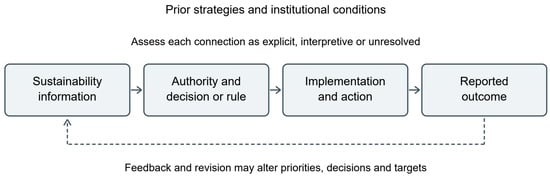
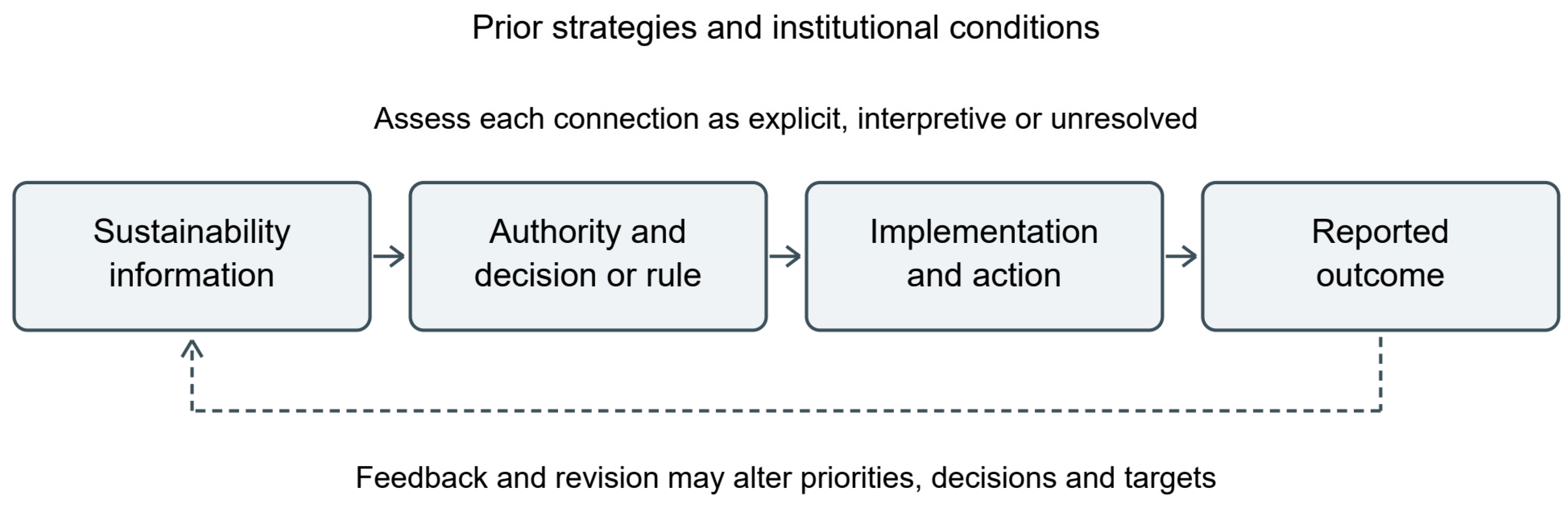

Disclaimer/Publisher’s Note: The statements, opinions and data contained in all publications are solely those of the individual author(s) and contributor(s) and not of MDPI and/or the editor(s). MDPI and/or the editor(s) disclaim responsibility for any injury to people or property resulting from any ideas, methods, instructions or products referred to in the content. |
© 2026 by the authors. Licensee MDPI, Basel, Switzerland. This article is an open access article distributed under the terms and conditions of the Creative Commons Attribution (CC BY) license.