


Abstract
Smart manufacturing increasingly combines digital technologies with operational excellence and Industry 5.0 principles, yet evidence remains fragmented across technological, organizational, human, and sustainability perspectives. This study conducts a PRISMA 2020 systematic literature review of 115 manufacturing studies published between 2020 and 2026. The synthesis identifies intelligent digital capabilities, organizational readiness, human-centered capabilities, and operational excellence practices as recurrent evidence-derived dimensions, with sustainable manufacturing performance as the principal outcome domain. Building on these findings, the authors propose user-centered operational excellence (UCOE) as a conceptual higher-order capability that integrates digital intelligence, organizational alignment, human participation, and structured continuous improvement. The proposed architecture distinguishes evidence-derived dimensions from author-synthesized role assignments and links UCOE to operational and economic, environmental, social and human, and resilience outcomes under contextual and feedback effects. The corpus contains substantial review and conceptual evidence and comparatively limited direct industrial validation; consequently, the propositions are presented as testable theoretical relationships rather than established causal effects. The study provides an evidence-traceable basis for future construct validation and industrial testing of sustainable human-centered smart manufacturing.
1. Introduction
Manufacturers face increasing pressure to improve productivity, quality, flexibility, resilience, and sustainability while responding to shorter product lifecycles and rapidly changing demand. Smart manufacturing addresses these pressures through interconnected production systems, artificial intelligence (AI), the Industrial Internet of Things (IIoT), cyber physical systems (CPSs), digital twins, analytics, and automation [1,2,3,4,5,6,7,8]. However, technology adoption alone does not ensure operational or sustainability gains—value depends on the organizational and human conditions through which digital capabilities are incorporated into work and decision processes [9,10,11,12].
Industry 5.0 broadens the Industry 4.0 perspective by emphasizing human centricity, sustainability, and resilience [9,10,13,14,15,16,17,18]. This shift makes the user perspective particularly relevant because digital transformation changes not only production technology but also who interprets information, exercises judgment, and participates in improvement. In this study, human-centered manufacturing refers broadly to the design of manufacturing systems around human well-being, capabilities, and human–technology interaction. User-centered operational excellence is narrower and operational: it concerns how the people who directly use manufacturing information and decision support systems, including operators, engineers, planners, quality personnel, supervisors, and managers, participate in and shape continuous operational improvement.
Operational excellence provides a mechanism for translating digital information into disciplined improvement. Lean Manufacturing, Six Sigma, Total Quality Management (TQM), Quality 4.0, standardization, and continuous improvement can connect real-time visibility and analytical intelligence with problem solving, process control, and organizational learning [19,20,21,22,23]. Yet the literature still tends to examine digital technologies, organizational readiness, human-centered capabilities, and operational excellence practices separately, while sustainability is often treated as a downstream aspiration rather than an explicitly linked multidimensional outcome.
To address this fragmentation, this study conducts a PRISMA 2020 systematic literature review of 115 manufacturing studies published between 2020 and 2026. The review first identifies recurrent technological, organizational, human, and operational dimensions and then uses their evidence-traceable relationships to develop a proposed user-centered operational excellence framework for smart manufacturing. The framework incorporates contextual conditions, feedback, and multidimensional sustainable performance while explicitly separating review findings from the authors’ conceptual integration.
The main scientific objective is to systematically synthesize the technological, organizational, human, and operational dimensions reported in contemporary smart manufacturing research and, through theory-informed relational integration, propose a socio-technical framework explaining how these dimensions may jointly contribute to sustainable manufacturing performance.
This main objective is operationalized through five review objectives:
RO1: systematically synthesize recent research on smart manufacturing, operational excellence, human-centered manufacturing, and sustainability. RO2: identify the recurrent technological, organizational, human-centered, and operational dimensions reported across the reviewed literature without presupposing UCOE as an established construct. RO3: examine how these dimensions are related to one another and to sustainable manufacturing performance. RO4: derive an evidence-traceable conceptual architecture that separates literature-derived dimensions from author-synthesized relationships. RO5: translate the proposed conceptual relationships into an implementation-oriented BPMN and technology integration model without implying industrial validation.
Accordingly, three research questions are addressed:
RQ1: what technological, organizational, human-centered, and operational dimensions recur across contemporary smart manufacturing and operational excellence research? RQ2: how are these dimensions related to one another and to sustainable manufacturing performance? RQ3: how can these relationships be synthesized into a proposed user-centered operational excellence framework for smart manufacturing?
The principal contribution is not the invention of the individual digital, organizational, human, or operational elements, which are established in prior research. It is the proposed relational configuration that integrates these elements around user participation: digital, organizational, and human capabilities act as enabling conditions, operational excellence practices provide the transformation mechanism, and their coordinated integration is conceptualized as UCOE, with sustainable manufacturing performance retained as a separate outcome domain. This theoretical configuration is evidence-traceable but requires empirical construct and relationship validation.
The remainder of the paper is organized as follows. Section 2 reviews the literature, establishes the theoretical foundations, and specifies the research gap. Section 3 presents the systematic review methodology. Section 4 reports descriptive and bibliometric results. Section 5 synthesizes the evidence and separates evidence-derived dimensions from the authors’ relational conceptualization. Section 6 presents the proposed conceptual and implementation-oriented framework. Section 7 discusses differentiation, implications, limitations, and future validation, and Section 8 concludes the study.
2. Literature Review and Theoretical Background
2.1. Smart Manufacturing: From Industry 4.0 to Industry 5.0
Industry 4.0 established the technological basis of smart manufacturing through connected production systems, digital twins, CPS, AI, and data-driven decision support [5,6,7,8,24]. Generic reference models further emphasize reconfigurable system design and digital integration [25]. Industry 5.0 extends this foundation toward human centricity, sustainability, and resilience [9,10,13,14,15,16,17,18]. The resulting challenge is, therefore, not technology adoption alone, but the joint design of digital, organizational, operational, and human capabilities.
2.2. Digital Technologies Enabling Smart Manufacturing
Digital technologies support smart manufacturing through complementary functions rather than as isolated tools. IIoT and CPS enable connectivity and data acquisition, AI and analytics support prediction and decision-making, while digital twins provide simulation and virtual experimentation [6,7,8,24,26].
However, their contribution to performance is conditional. Data quality, interoperability, governance, workforce competence, and organizational readiness determine whether digital capabilities can be translated into effective operational action [8,27,28,29,30].
Digital technologies should, therefore, be treated as enabling capabilities, not direct determinants of operational excellence. Their value emerges through integration with organizational structures, human expertise, and disciplined improvement practices.
2.3. Operational Excellence in Smart Manufacturing
Operational excellence provides the managerial mechanism through which digital capabilities are converted into sustained process improvement. Lean, Six Sigma, TQM, and Quality 4.0 increasingly integrate real-time data, analytics, and automation to improve quality, efficiency, and responsiveness [19,21,22,23,31].
However, digitalization does not automatically generate operational excellence. Its benefits depend on mature improvement routines, process discipline, leadership, and employee participation. Consequently, operational excellence is treated here as a transformation mechanism that links digital capabilities with coordinated operational action rather than as a direct outcome of technology adoption.
2.4. Human-Centered Manufacturing and Organizational Readiness
Human-centered manufacturing positions workers as active participants in digital transformation rather than passive users of technology. Industry 5.0 research emphasizes human–machine collaboration, trust, workforce competence, participation, and well-being as essential conditions for effective smart manufacturing [11,12,14,32,33].
These capabilities depend on organizational readiness, including leadership, governance, strategic alignment, learning, and implementation maturity [12,27,28,29,30,34,35]. Human and organizational factors should, therefore, be treated as interconnected enabling capabilities that determine whether digital technologies can be effectively adopted, trusted, and integrated into operational decision-making.
2.5. Positioning Against Enterprise Architectures
RAMI 4.0, ISA 95, CIMOSA, and PERA were selected using four comparison criteria: prominence in manufacturing systems research, relevance to enterprise or process integration, coverage of the digital to organizational interface, and usefulness as structural reference points for the identified research gap. Industry 5.0 was included as a complementary design and policy perspective because it explicitly introduces human centricity, sustainability, and resilience [9,13,17,36,37,38,39]. As shown in Table 1 and Table 2, these architectures are compared as structural reference points rather than as explanatory theories.
Table 1.
Comparison of existing frameworks: technological, operational, and human dimensions.
Table 2.
Comparison of existing frameworks: organizational, decision, and sustainability dimensions.
The comparison shows that existing approaches provide complementary but partial coverage. Technical architectures emphasize system integration and interoperability, whereas Industry 5.0 emphasizes human centricity, resilience, and sustainability. None explicitly combines these dimensions with a defined operational excellence transformation mechanism, a higher-order user-centered capability, multidimensional sustainability outcomes, and adaptive feedback. This limitation provides the architectural motivation for the framework developed in Section 5 and Section 6.
2.6. Theoretical Foundation
The framework is grounded primarily in socio-technical systems theory, which argues that organizational performance depends on the joint optimization of interacting social and technical subsystems rather than the optimization of technology in isolation [42]. In the present study, intelligent digital capabilities represent the technical subsystem, organizational readiness and human-centered capabilities represent the organizational and social conditions of use, and operational excellence practices provide the structured mechanism through which these elements are jointly optimized in operational work.
Dynamic capabilities provide a complementary explanation for adaptation over time. The ability to sense changing conditions, seize improvement opportunities, and reconfigure resources is consistent with the framework’s feedback and learning logic [43] and with recent manufacturing research linking digital transformation, quality management, and sustainability through dynamic capabilities [21]. This complementary lens explains why UCOE is treated as an adaptive higher-order capability rather than a static bundle of practices.
2.7. Research Gap and Theoretical Positioning
The literature provides substantial knowledge on digital technologies, operational excellence, organizational readiness, human-centered manufacturing, and sustainability, but these streams remain only partially integrated. Technology-oriented studies emphasize connectivity and analytics, operational excellence research emphasizes disciplined improvement, organizational studies emphasize readiness and governance, and Industry 5.0 research emphasizes human centricity, resilience, and sustainability. Few studies explain how these dimensions jointly form an organizational capability that converts digital intelligence and user participation into continuous improvement and sustainable performance.
Enterprise architectures provide important structural reference points but are not explanatory theories. RAMI 4.0 [36], ISA 95 [37], CIMOSA [38], and PERA [39] structure interoperability, enterprise integration, processes, and lifecycle relationships, while Industry 5.0 emphasizes human centricity, sustainability, and resilience. None alone specifies the capability mechanism proposed here: foundational digital, organizational, and human enablers translated through operational excellence practices into UCOE and multidimensional sustainable manufacturing performance.
This study, therefore, proposes user-centered operational excellence as a conceptual higher-order capability through which digital intelligence, organizational alignment, human participation, and structured continuous improvement are coordinated around the people who directly use manufacturing information and decision support systems. The individual elements are inherited from established streams, including human-centered manufacturing, Operator 4.0, Lean 4.0, Quality 4.0, socio-technical systems theory, and dynamic capabilities. The proposed novelty lies in their explicit relational configuration, the role of operational excellence practices as the transformation mechanism, and the separation of UCOE from multidimensional sustainable performance as the outcome domain. This interpretation is a theoretical proposition requiring construct validation and empirical testing.
3. Materials and Methods
3.1. Research Design
This systematic literature review (SLR) was conducted and reported in accordance with the PRISMA 2020 statement [44]. The review comprised five stages: search design, record identification, eligibility screening, evidence characterization and data extraction, and evidence synthesis. The completed PRISMA 2020 checklist is provided as Supplementary File, and the study selection process is summarized in Figure 1. The review was not prospectively registered. The review procedures used for searching, eligibility assessment, screening, data extraction, and synthesis are reported in Section 3.
Figure 1.
PRISMA 2020 flow diagram of the study selection process. Adapted from the PRISMA 2020 template for new systematic reviews using databases and registers.
The systematic evidence window covered peer-reviewed studies published between 2020 and 2026, reflecting recent developments in Industry 4.0, Industry 5.0, and smart manufacturing. Foundational pre-2020 literature on enterprise architectures and related theoretical concepts was incorporated separately in Section 2 and was not included in the 115-study systematic dataset.
3.2. Search Strategy
Scopus and the Web of Science Core Collection were selected because their combined coverage spans manufacturing engineering, industrial engineering, operations management, and digital transformation.
The search strategy intentionally favored broad coverage while controlling relevance through the combination of three conceptual blocks: smart manufacturing, operational excellence, and digital technologies. Synonyms within each block were connected using OR, whereas the three blocks were combined using AND. Therefore, broad terms such as lean, AI, automation, blockchain, analytics, and digital transformation were not searched independently and could not alone determine the inclusion of a publication. Relevance was subsequently refined through title, abstract, and full-text screening. This directly addresses the risk of retrieving publications only loosely related to the review scope.
The final database searches were conducted on 26 July 2026. The exact queries are reported below, as executed. Scopus and Web of Science use different indexing structures and syntax, so the term sets were not perfectly symmetric—the executed queries are retained rather than retrospectively harmonized. Human centeredness and sustainability were not mandatory search blocks in the original protocol because the search was designed around the intersection of smart manufacturing, operational excellence, and digital technologies. This choice maintained alignment with the core review scope but may have under-retrieved publications whose primary framing was human-centered manufacturing or sustainability and that did not also use the retained operational or digital terminology. A corpus coverage check shows that human-centered manufacturing is the primary theme of 19 included studies (16.5%) and sustainability and resilience of 22 studies (19.1%), confirming substantive representation within the retrieved corpus. These counts do not eliminate search term omission bias. Accordingly, the corpus should not be interpreted as an exhaustive census of the standalone human-centered manufacturing or sustainable manufacturing literatures. Records are reported according to the publication year indexed by the source database on the final search date. The archived dataset does not preserve a separate early-access flag, so early-access status could not be analyzed independently, and recent year frequencies are interpreted cautiously.
- Web of Science Core Collection:TS = ((“smart manufacturing” OR “smart factory” OR “industry 4.0” OR “industry 5.0” OR “digital manufacturing” OR “intelligent manufacturing” OR “advanced manufacturing”)AND(“operational excellence” OR “lean manufacturing” OR lean OR “lean production” OR “continuous improvement” OR “quality management” OR “quality 4.0” OR “six sigma” OR “business excellence”)AND(“digital transformation” OR digitalization OR digitization OR “digital technologies” OR “artificial intelligence” OR AI OR “machine learning” OR “deep learning” OR “internet of things” OR IoT OR “industrial internet of things” OR IIoT OR “digital twin*” OR “cyber physical system*” OR CPS OR robotics OR automation OR blockchain OR “cloud computing” OR “edge computing” OR “big data” OR analytics))AND PY = (2020–2026)AND LA = (English)AND DT = (Article OR Proceedings Paper OR Book Chapter)
- Scopus:TITLE ABS KEY((“smart manufacturing” OR “smart factory” OR “industry 4.0” OR “industry 5.0” OR “digital manufacturing”)AND(“operational excellence” OR lean OR “lean manufacturing” OR “lean production” OR “continuous improvement” OR “quality management” OR “quality 4.0” OR “six sigma”)AND(“digital transformation” OR “artificial intelligence” OR AI OR “internet of things” OR IoT OR “digital twin*” OR “cyber physical system*” OR robotics OR automation OR blockchain))AND PUBYEAR > 2019AND PUBYEAR < 2027AND (LIMIT TO(DOCTYPE, “ar”) OR LIMIT TO(DOCTYPE, “cp”) OR LIMIT TO(DOCTYPE, “ch”))AND LIMIT TO(LANGUAGE, “English”)The database searches identified 2338 records, comprising 1212 publications from Scopus and 1126 publications from Web of Science Core Collection.
3.3. Study Selection Criteria
Eligibility criteria were defined before screening to align the evidence base with the review objectives. Studies were retained when they addressed smart manufacturing together with operational excellence, digital transformation, or related enabling technologies within a manufacturing context. Human-centered and sustainability dimensions could, therefore, emerge during coding even when they were not explicit search requirements.
3.4. Study Selection Process
The study selection process followed PRISMA 2020 [44]. Screening and eligibility assessments were conducted by S.I. as the primary reviewer using the predefined criteria in Table 3. G.J. contributed to methodology development, supervision, and critical review of the review protocol and manuscript. The database searches identified 2338 records. After removal of 421 duplicate records, 1917 records entered screening. The screening process used two internal passes: title screening excluded 1250 records and abstract screening excluded a further 300 records. Therefore, 1550 records were excluded during record-level screening, and 367 reports were sought for retrieval. Because the original study selection used one primary reviewer rather than two independent screeners, an inter-reviewer agreement coefficient is not applicable to the historical screening process. This reviewer structure is stated directly and is treated as a methodological limitation in Section 7.5.
Table 3.
Inclusion and exclusion criteria.
Of the 367 reports sought for retrieval, 28 could not be retrieved in full text. The remaining 339 reports were assessed for eligibility. At this stage, 224 reports were excluded: 95 were outside the manufacturing or review scope, 52 did not provide sufficient methodological information to assess the reported evidence, 46 mentioned smart manufacturing or operational excellence only peripherally and did not contribute substantively to the review questions, and 31 were publication types outside the predefined eligibility criteria. Each excluded report was assigned one primary exclusion reason to avoid double counting. The final evidence base comprised 115 manufacturing studies. The review archive preserves the aggregate duplicate count but not a software-level duplicate matching history. It also does not retain a complete bibliographic list of the reports excluded after full-text assessment. Accordingly, the exact historical deduplication sequence and PRISMA item 16b study-by-study exclusion citations cannot be reconstructed reliably. Both limitations are reported transparently rather than replaced by retrospective information that was not documented during the original review.
3.5. Evidence Characterization and Methodological Profile
Because the included corpus comprises heterogeneous research designs, including systematic reviews, conceptual studies, modeling studies, qualitative research, quantitative research, mixed methods, and experimental studies, the revised review does not apply one numerical quality ranking across all designs. Instead, every study was characterized using design and evidence descriptors that are directly relevant to synthesis: research type, empirical basis, methodological approach, industrial context, directness of industrial validation, reported limitations, and evidence strength. This approach avoids implying that a single generic score makes heterogeneous designs methodologically equivalent.
These descriptors were used to calibrate interpretation rather than determine eligibility. Review and conceptual studies were used to establish conceptual convergence and research gaps, while direct empirical claims were anchored preferentially in empirical evidence. The methodological profile is reported in Section 4.3, and the study-level descriptors are retained in the evidence matrix. The Table 4 shows the Evidence characterization dimensions used during synthesis.
Table 4.
Evidence characterization dimensions used during synthesis.
Accordingly, the previous cross-design numerical quality bands are not used in the revised manuscript. This directly addresses the concern that one scoring procedure could imply unsupported comparability across substantially different methodologies.
The evidence characterization was conducted by S.I. as part of data extraction and formal analysis, with G.J. contributing to methodology development, supervision, and critical review. Because the review did not use independent duplicate appraisal, no inter-assessor agreement statistic is reported. This methodological choice is stated explicitly and considered when interpreting the strength of the evidence base.
3.6. Data Extraction and Evidence Synthesis
A standardized evidence matrix was developed for the 115 manufacturing studies, covering bibliographic data, methodology, industrial context, technologies, operational excellence practices, human-centered dimensions, extracted findings, limitations, evidence type, evidence strength, and framework relevance. Data extraction, primary thematic coding, and framework mapping were conducted by S.I. using a predefined codebook. G.J. contributed to methodology development, supervision, and critical review. Each study was assigned one primary research theme according to its predominant contribution so that the descriptive frequencies sum to 115, while secondary framework mappings were allowed when a study provided evidence relevant to more than one dimension. Multi-topic studies were, therefore, represented through one mutually exclusive primary theme and, where justified, multiple secondary framework links. The complete study-level mapping is provided in Supplementary Table S1. Because the historical coding used one primary coder rather than two independent coders, an inter-coder agreement coefficient is not applicable to the original coding design, and this limitation is acknowledged explicitly.
The data were analyzed using descriptive, bibliometric, and thematic techniques. Review and conceptual studies were used primarily to establish conceptual convergence and research gaps, whereas direct empirical claims were anchored preferentially in empirical evidence. The bibliometric analysis had a descriptive and contextual role: it characterized the vocabulary, thematic prominence, and co-occurrence structure of the retrieved corpus and provided contextual triangulation for the qualitative synthesis. It was not used as an independent procedure for generating the UCOE dimensions or for inferring relationships among them. Framework derivation instead followed the study-level coding and evidence to construct traceability process reported in Section 5. No effect estimate pooling, statistical meta-analysis, imputation of missing effect data, or quantitative sensitivity analysis was performed because the review synthesized heterogeneous conceptual, descriptive, and empirical evidence rather than intervention effect estimates. This distinction reduces the risk of treating overlapping secondary reviews as independent empirical replications. Keyword normalization produced 253 standardized expressions from 270 raw terms—the resulting network is interpreted as an exploratory co-occurrence map rather than as a causal or automatically clustered model.
Reference relevance was audited against the role of each citation in the manuscript. References [1,2,3,4,5,6,7,8,9,10,11,12,13,14,15,16,17,18,19,20,21,22,23,24,25,26,27,28,29,30,31,32,33,34,35,40,41,45,46,47,48,49,50,51,52,53,54,55,56,57,58,59,60,61,62,63,64,65,66,67,68,69,70,71,72,73,74,75,76,77,78,79,80,81,82,83,84,85,86,87,88,89,90,91,92,93,94,95,96,97,98,99,100,101,102,103,104,105,106,107,108,109,110,111,112,113,114,115,116,117,118,119,120,121,122] constitute the 115-study systematic evidence corpus, while references [36,37,38,39,42,43,44] provide enterprise architecture, theoretical, and PRISMA methodological foundations. No reference is retained solely for citation volume or reviewer compliance.
Framework development followed the traceability sequence:
Study → Extracted Evidence → Initial Code → Normalized Thematic Category → Framework Dimension or Outcome.
4. Descriptive and Bibliometric Analysis
This section presents the descriptive and bibliometric characteristics of the selected literature, including publication trends, outlets, methods, industrial contexts, research themes, technology categories, human-centered dimensions, and keyword relationships. The analysis is descriptive: it characterizes the orientation of the evidence base without treating publication frequency or network structure as proof of field maturity or causal relationships.
4.1. Temporal Distribution of Publications
Figure 2 presents the verified annual distribution of the 115 studies: 12 publications in 2020 (10.4%), 18 in 2021 (15.7%), 23 in 2022 (20.0%), 24 in 2023 (20.9%), 24 in 2024 (20.9%), 3 in 2025 (2.6%), and 11 in 2026 (9.6%). The recent year values were reaudited against the updated evidence matrix; however, 2025–2026 frequencies are interpreted cautiously because recent indexing and the review update process can distort year-to-year comparisons.
Figure 2.
Annual distribution of the selected studies (2020–2026).
The distribution shows sustained activity across the review period but is used only to describe the verified corpus. In particular, the low 2025 count and the 2026 value should not be interpreted as evidence of a field-wide decline or rebound. Temporal claims, therefore, remain descriptive rather than being used to infer field maturity.
Although recent studies increasingly address Industry 5.0 concepts, such as human centricity, resilience, and sustainability, they remain a relatively small proportion of the current evidence base. This indicates that the literature is still dominated by Industry 4.0-oriented research, while human-centered manufacturing represents an emerging direction requiring further empirical investigation.
4.2. Publication Sources and Document Characteristics
The 115 selected studies were distributed across a broad range of publication outlets, reflecting the multidisciplinary character of research on user-centered operational excellence in smart manufacturing. The literature spans manufacturing engineering, production systems, quality management, sustainability, industrial informatics, and digital transformation.
As shown in Table 5, Sustainability was the most represented journal with 12 studies, followed by the Journal of Manufacturing Systems with 11 and the Journal of Cleaner Production with 9. Together, these three journals account for 32 studies (27.8%) of the reviewed literature. Computers and Industrial Engineering and The TQM Journal each contributed 4 studies, while 6 additional journals contributed 3 studies each.
Table 5.
Primary publication sources represented in the review.
The dispersion of publications across different journal domains confirms the interdisciplinary nature of the field. Manufacturing and production journals primarily address digital technologies, production system integration, and operational improvement, whereas quality-oriented outlets emphasize Lean, Quality 4.0, and continuous improvement. Sustainability-oriented journals increasingly connect digital transformation with circularity, resilience, and human-centered manufacturing. This distribution indicates that the field is not dominated by a single disciplinary perspective but lies at the intersection of technological, operational, organizational, and sustainability research.
4.3. Methodological Profile of the Literature
4.3.1. Methodology
Figure 3 presents the distribution of methodological approaches adopted in the 115 studies. Systematic literature reviews constitute the largest category, accounting for 44 studies (38.3%), followed by conceptual and design science studies with 33 studies (28.7%). Together, these categories represent approximately two-thirds of the reviewed literature, indicating a strong emphasis on knowledge synthesis and conceptual model development.
Figure 3.
Methodological approaches.
Qualitative studies account for 18 publications (15.7%), while quantitative studies represent 11 (9.6%). Bibliometric reviews comprise 8 studies (7.0%), whereas only 1 mixed methods study (0.9%) was identified. Overall, the methodological profile shows that empirical validation remains comparatively limited.
4.3.2. Research Types
Figure 4 illustrates the distribution of research types. Review studies dominate the literature with 62 studies (53.9%), followed by empirical research with 30 studies (26.1%) and conceptual contributions with 22 studies (19.1%). Only one methodological study (0.9%) was identified.
Figure 4.
Research types.
This distribution confirms that the field remains strongly oriented toward knowledge synthesis and conceptual development, while direct industrial validation is less prevalent.
4.3.3. Empirical Basis
Figure 5 summarizes the empirical basis of the reviewed studies. Most publications rely primarily on literature-based evidence, accounting for 81 studies (70.4%).
Figure 5.
Empirical basis.
Among the remaining studies, surveys and single case studies each account for 10 studies (8.7%), followed by secondary datasets with 7 studies (6.1%), interviews with 4 (3.5%), simulation or modeling with 2 (1.7%), and experimental research with 1 study (0.9%).
These findings indicate that industrial evidence remains relatively limited, particularly regarding longitudinal, experimental, and large-scale manufacturing investigations.
4.3.4. Data Collection Methods
Figure 6 presents the data collection methods used across the reviewed studies. Literature sources dominate, accounting for 89 studies (77.4%).
Figure 6.
Data collection methods.
Among industrial data sources, production records were used in 14 studies (12.2%), followed by questionnaires in 4 studies (3.5%), industrial sensor/IIoT data and interviews in 3 studies each (2.6%), and ERP/MES data in 2 studies (1.7%).
The limited use of real-time operational and enterprise system data suggests that empirical research has not yet fully exploited the data-rich environments available in contemporary smart manufacturing.
4.4. Industrial Application Contexts
Figure 7 presents the distribution of industrial application contexts across the 115 reviewed studies. The literature is predominantly focused on general or cross-sector manufacturing, representing 98 studies (85.2%). This reflects the strong emphasis on generic frameworks, implementation strategies, and operational excellence approaches intended to be applicable across different manufacturing environments.
Figure 7.
Distribution of industrial application contexts across the reviewed studies.
Sector-specific research remains comparatively limited. Logistics and supply chain applications account for 6 studies (5.2%), while manufacturing SMEs and other specialized manufacturing contexts each represent 4 studies (3.5%). Food manufacturing accounts for 2 studies (1.7%), while metal and steel manufacturing is represented by 1 study (0.9%).
Overall, the distribution indicates a strong cross-sector orientation rather than demonstrated cross-sector generalizability. Sector-specific validation remains comparatively limited, which restricts conclusions about transferability across firm sizes, production environments, and industrial contexts.
4.5. Research Themes
The thematic analysis of the 115 selected studies identified 6 primary research themes, reflecting the multidisciplinary nature of user-centered operational excellence in smart manufacturing (Figure 8). Operational excellence practices represent the largest theme with 25 studies (21.7%), emphasizing Lean Manufacturing, Quality 4.0, Six Sigma, and continuous improvement.
Figure 8.
Distribution of the primary research themes across the reviewed studies (n = 115).
Sustainability and resilience account for 22 studies (19.1%), highlighting circular economy principles, resource efficiency, and resilient production systems. Digital transformation and smart manufacturing comprise 21 studies (18.3%), focusing on Industry 4.0/5.0 implementation, smart factory development, and enterprise digitalization.
The remaining studies address human-centered manufacturing with 19 studies (16.5%), digital technologies with 17 studies (14.8%), and organizational and strategic management with 11 studies (9.6%).
Overall, the thematic distribution shows that the literature extends beyond technology adoption toward a more integrated perspective combining operational excellence, digital transformation, sustainability, organizational capabilities, and human-centered manufacturing.
4.6. Technology Categories
The technology analysis identified 7 primary coding categories across the 115 reviewed studies (Figure 9). Emerging digital technologies represent the largest category with 54 studies (47.0%), reflecting the prevalence of studies that examine integrated Industry 4.0/5.0 technology ecosystems rather than a single enabling technology.
Figure 9.
Distribution of the primary technology categories across the reviewed studies (n = 115).
Data analytics and cloud computing account for 20 studies (17.4%), followed by artificial intelligence and machine learning with 14 studies (12.2%), IIoT and cyber physical systems with 10 studies (8.7%), and digital twins and simulation with 9 studies (7.8%). Robotics and automation are represented in 7 studies (6.1%). One study (0.9%) was classified as not applicable as a single technology category because its contribution integrates multiple enabling technologies within a generic smart manufacturing reference model rather than focusing on one specific technology.
Overall, the distribution indicates that smart manufacturing research increasingly emphasizes the integration of complementary digital technologies to support connected, intelligent, and adaptive manufacturing systems.
4.7. Human-Centered Dimensions
The analysis identified six primary human-centered dimensions across the reviewed literature (Figure 10). Human–machine collaboration and decision support is the most represented dimension with 33 studies (28.7%), reflecting the growing emphasis on technologies that augment human capabilities and support informed decision-making.
Figure 10.
Distribution of the primary human-centered dimensions identified across the reviewed studies (n = 115).
Ethics, trust, inclusion, and social value accounts for 28 studies (24.3%), followed by leadership, culture, and change management with 19 studies (16.5%) and skills, learning, and workforce development with 18 studies (15.7%). These findings highlight the importance of responsible technology adoption, organizational readiness, and workforce capabilities in human-centered smart manufacturing.
Less frequently represented dimensions are employee participation, empowerment, and co-design with 9 studies (7.8%) and worker well-being, ergonomics, and safety with 7 studies (6.1%). One study (0.9%) was classified as not applicable because its primary contribution did not explicitly address a human-centered dimension.
Overall, the distribution indicates that the literature gives greater attention to human–technology collaboration, responsible innovation, and organizational capabilities than to direct employee participation and worker well-being.
4.8. Keyword and Bibliometric Network Analysis
Keyword co-occurrence analysis was conducted using NetworkX. The extraction produced 270 distinct raw keyword expressions, which were normalized by harmonizing spelling, capitalization, acronyms, and synonymous terms. After cleaning, 253 standardized keywords remained. A full-coverage minimum occurrence threshold of one study was retained, producing 253 nodes, 1002 unique co-occurrence links, a total link strength of 1262, and a density of 0.0314. The average degree was 7.92, the average weighted degree 9.98, and 98.4% of keywords belonged to the largest connected component. Because the threshold retains single occurrence terms, the network is intentionally exploratory rather than a parsimonious cluster solution.
Figure 11 summarizes the leading keyword nodes and the audited global co-occurrence statistics. Industry 4.0 was the dominant keyword with 59 occurrences and a total link strength (TLS) of 244, followed by smart manufacturing (32; TLS 140), Industry 5.0 (29; TLS 116), and sustainability (21; TLS 92). Digital twin and Lean Manufacturing each occurred in 14 studies, while human centricity and resilience each occurred in 12. The 14 thematic categories used in interpretation were predefined coding categories rather than automatically detected communities. Their low modularity (0.067) is consistent with strong cross-theme connectivity and, therefore, with a field in which technological, operational, human, and sustainability topics increasingly overlap rather than forming isolated intellectual clusters. This pattern is consistent with prior reviews describing Industry 5.0 as an extension of the digital manufacturing agenda toward human centricity, sustainability, and resilience [9,10,13,14,15,16]. These bibliometric findings were used to characterize the retrieved literature and to contextualize the thematic synthesis. They were not used to generate the UCOE dimensions, assign their roles, or infer the proposed relationships. Those steps were based on the study-level thematic coding, evidence traceability, and theory-informed relational synthesis reported in Section 5.
Figure 11.
Audited author keyword co-occurrence network summary for the reviewed studies (n = 115). Bars report study frequency for the leading keywords. TLS denotes total link strength. Global network statistics are shown in the inset.
4.9. Synthesis of Descriptive Findings
The descriptive analysis identified 6 mutually exclusive primary research themes across the 115 studies. Each study was assigned to one primary theme according to its dominant research contribution; consequently, the frequencies reported in Table 6 sum to the complete review corpus of 115 studies (100%).
Table 6.
Primary research themes and their contribution to framework development.
Operational excellence practices constitute the largest theme with 25 studies (21.7%), followed by sustainability and resilience with 22 studies (19.1%). Digital transformation and smart manufacturing accounts for 21 studies (18.3%), while human-centered manufacturing represents 19 studies (16.5%). Digital technologies comprises 17 studies (14.8%), and organizational and strategic management accounts for the remaining 11 studies (9.6%).
These six themes provide the descriptive foundation for the subsequent evidence synthesis. Digital transformation and smart manufacturing together with digital technologies inform intelligent digital capabilities, organizational and strategic management informs organizational readiness, human-centered manufacturing informs human-centered capabilities, operational excellence practices informs the transformation mechanism, and sustainability and resilience informs the multidimensional performance outcome. The higher-order UCOE capability is not treated as a sixth descriptive theme but is developed through the relational synthesis in Section 5.
This consolidation provides a transparent transition from the descriptive classification of the 115 studies to the evidence synthesis developed in Section 5. The detailed relationships between individual findings, thematic codes, and framework constructs are examined in the following section rather than inferred solely from publication frequencies.
5. Evidence Synthesis and Conceptual Framework Development
Section 5.1, Section 5.2, Section 5.3 and Section 5.4 report patterns directly traceable to the reviewed literature. Section 5.5 then moves from evidence synthesis to author conceptualization by specifying the relational logic that is formalized as the proposed UCOE framework in Section 6. This boundary is explicit so that the theoretical contribution is not interpreted as an empirical result.
5.1. Critical Synthesis of the Evidence
The evidence indicates a transition from technology-centered smart manufacturing toward a broader socio-technical perspective in which digital capabilities, organizational conditions, human capabilities, operational excellence practices, and sustainability outcomes are interdependent [9,11,12,13,19,21,33,34,35]. However, the evidence remains uneven: review studies represent 53.9% of the corpus, empirical studies 26.1%, conceptual contributions 19.1%, and one study is methodological. Literature-based evidence accounts for 70.4% of the corpus. The synthesis, therefore, identifies conceptual convergence and recurring mechanisms without treating repeated review-level findings as independent causal confirmation.
Digital technologies consistently support connectivity, visibility, prediction, automation, and decision support [5,6,7,8,24,27], but their operational value depends on interoperability, data quality, organizational readiness, skills, trust, and implementation maturity [12,27,28,29,30,31,32,33,34,35]. Operational excellence practices provide structured routines through which digital information can be translated into problem solving and process improvement [19,21,22,23,31], while organizational and human-centered capabilities condition adoption and sustained use [11,12,13,14,15,16,17,28,29,30,31,32,33,34,35].
Sustainability and resilience are increasingly associated with digitally enabled operational improvement [1,2,3,9,10,21,40,44,51], yet the mechanisms linking capabilities to operational and economic, environmental, social and human, and resilience outcomes are not consistently operationalized. This fragmentation motivates an integrated capability model rather than another technology inventory. The principal areas of convergence, fragmentation, and implications for framework development are summarized in Table 7.
Table 7.
Critical synthesis of the reviewed evidence.
Overall, the principal gap is not the absence of relevant technologies or management practices, but the fragmented explanation of how technological, organizational, human, and operational capabilities interact to form an improvement capability and generate sustainable manufacturing performance.
5.2. Research Gaps Identified Through Evidence Synthesis
Four related gaps emerge from the evidence. First, a socio-technical integration gap persists because digital, organizational, human, and operational dimensions are commonly investigated separately. Second, a capability to action gap remains because real-time information and analytics do not automatically become disciplined operational improvement. Third, human-centered principles are prominent in Industry 5.0 but remain inconsistently operationalized through participation, trust, well-being, and decision roles. Fourth, sustainability pathways are frequently asserted without explicitly linking capabilities and operational mechanisms to measurable performance dimensions.
These gaps identified in Table 8 justify an integrated framework but do not themselves determine its structure. The structure is, therefore, derived from the study-level evidence to code mappings described in Section 5.3, while UCOE is introduced only after the recurrent dimensions have been relationally synthesized.
Table 8.
Evidence-supported research gaps and framework response.
5.3. Evidence to Framework Traceability
To maintain traceability, framework development used a study-level coding process across the 115 manufacturing studies. For each study, framework-relevant evidence was extracted, assigned an analytical code, normalized into a thematic category, and mapped to a framework dimension or performance outcome. A study could support more than one dimension when its findings addressed multiple socio-technical mechanisms. The traceability matrix provides overlapping support for intelligent digital capabilities (37 studies; 32.2%), operational excellence practices (32; 27.8%), organizational readiness (38; 33.0%), human-centered capabilities (39; 33.9%), and sustainable manufacturing performance (23; 20.0%). These percentages are not intended to sum to 100% because a single study may support multiple components.
The coding identified four recurrent capability and operational dimensions, intelligent digital capabilities, organizational readiness, human-centered capabilities, and operational excellence practices, together with a fifth evidence domain, sustainable manufacturing performance, representing the principal outcome. Framework derivation followed the traceability chain Study → Extracted Evidence → Initial Analytical Code → Normalized Thematic Category → Framework Dimension or Outcome. The bibliometric network did not constitute an additional construct generation step. UCOE was not treated as an additional thematic category extracted directly from the literature—it is the authors’ relational synthesis of the four recurrent dimensions. Representative mappings are shown in Table 9, and the complete 115-study traceability matrix is provided in Supplementary Table S1.
Table 9.
Representative evidence to framework traceability.
5.4. Derivation of the Framework Dimensions
The evidence synthesis identifies recurring functions but does not by itself establish a causal hierarchy. Intelligent digital capabilities, organizational readiness, and human-centered capabilities recur primarily as enabling conditions, while operational excellence practices recur as routines through which information, organizational support, and human expertise are converted into structured improvement. Socio-technical systems theory and dynamic capabilities are then used by the authors to interpret these recurring functions as foundational enablers, a transformation mechanism, a proposed conceptual higher-order UCOE capability, and a multidimensional performance outcome. As demonstrated in Table 10, the role assignments are, therefore, evidence-informed and theory-interpreted rather than empirically validated causal positions.
Table 10.
Evidence-based derivation and roles of the framework components.
This structure deliberately separates evidence-derived dimensions from the higher-order capability proposed by the study. Digital intelligence creates visibility and decision capacity, organizational and human capabilities enable adoption, interpretation, and participation, and operational excellence practices translate those capabilities into continuous improvement. Sustainable manufacturing performance is, therefore, not an additional enabling capability but the outcome domain against which the integrated capability is evaluated.
5.5. Relational Synthesis and Framework Logic
The evidence supports a relational rather than additive interpretation, but the specific architecture proposed here is an author-synthesized theoretical model. Intelligent digital capabilities enable timely information, connectivity, prediction, and decision support. Organizational readiness and human-centered capabilities condition whether these capabilities can be adopted, trusted, governed, and used effectively. Operational excellence practices provide the structured improvement mechanism connecting digital intelligence and human expertise with process action. Their coordinated integration is proposed as UCOE, which is expected to support operational and economic, environmental, social and human, and resilience performance. These relationships are conceptual propositions derived from evidence convergence and theory integration and should not be interpreted as empirically validated causal effects.
External conditions—including market dynamics, regulation, supply chain conditions, organizational size, production environment, digital maturity, and sustainability pressures—may alter the strength or configuration of these relationships. Performance results feed back into technology refinement, workforce learning, organizational reconfiguration, and continuous improvement, providing the adaptive logic formalized in Section 6.
6. Proposed User-Centered Operational Excellence Framework for Smart Manufacturing
6.1. Framework Development
Building on the evidence synthesis and traceability established in Section 5, this study proposes a user-centered operational excellence framework for smart manufacturing. The four recurrent dimensions and the sustainable performance outcome are evidence-derived through study-level coding and traceability. The bibliometric analysis provides descriptive context but does not determine the framework structure. The organization of the dimensions into foundational enablers, a transformation mechanism, and a conceptual higher-order UCOE capability is the authors’ theory-informed synthesis and principal theoretical contribution. The framework is not presented as an empirically validated causal model.
Rather than treating digital technologies, management practices, organizational conditions, and human factors independently, the framework adopts a socio-technical and adaptive capability perspective. Intelligent digital capabilities, organizational readiness, and human-centered capabilities form the enabling foundation, operational excellence practices provide the transformation mechanism, and their coordinated integration forms UCOE.
6.2. Framework Architecture
The proposed framework adopts an integrated socio-technical architecture in which technological, organizational, human, and operational capabilities interact to support user-centered operational excellence in smart manufacturing.
Three dimensions form the enabling foundation: intelligent digital capabilities, organizational readiness, and human-centered capabilities. Together, they provide the technological infrastructure, organizational conditions, workforce competencies, participation, trust, and human–technology collaboration required for effective smart manufacturing transformation.
Operational excellence practices act as the transformation mechanism through which these enabling capabilities are converted into structured process improvement using Lean, Six Sigma, TQM, Quality 4.0, and continuous improvement practices.
Their coordinated interaction is proposed to form user-centered operational excellence, conceptualized in this study as a higher-order capability integrating digital intelligence, organizational alignment, human participation, and continuous improvement around the needs of operators, engineers, planners, quality personnel, and managers involved in manufacturing decision-making. The higher-order interpretation is a testable theoretical proposition rather than an empirically established construct.
User-centered operational excellence contributes to sustainable manufacturing performance, including economic- and operational-, environmental-, social- and human-, and resilience-related outcomes.
The framework shown in Figure 12 also includes a feedback mechanism through which performance results and changing operational conditions guide capability development, workforce learning, technology refinement, and continuous improvement.
Figure 12.
Conceptual architecture of the proposed user-centered operational excellence framework for smart manufacturing. Evidence-derived dimensions and outcomes are distinguished from the authors’ conceptual higher-order integration and role assignments.
6.3. Framework Constructs
The framework comprises four evidence-derived dimensions whose coordinated integration is proposed as user-centered operational excellence. UCOE is treated as a conceptual higher-order capability for subsequent measurement and empirical testing, while sustainable manufacturing performance remains a separate multidimensional outcome.
6.3.1. Intelligent Digital Capabilities
Intelligent digital capabilities refer to the ability to integrate AI, IIoT, digital twins, CPS, robotics, cloud technologies, and data analytics to support connectivity, real-time monitoring, prediction, automation, and decision support. Their value depends on effective integration with organizational, human, and operational capabilities.
6.3.2. Organizational Readiness
Organizational readiness represents the strategic and institutional conditions required for smart manufacturing transformation, including leadership, governance, strategic alignment, organizational culture, process integration, and change management.
6.3.3. Human-Centered Capabilities
Human-centered capabilities encompass workforce competencies, participation, communication, trust, well-being, and human–technology collaboration. They ensure that employees remain active participants in decision-making, learning, and continuous improvement.
6.3.4. Operational Excellence Practices
Operational excellence practices provide the transformation mechanism through which enabling capabilities are translated into operational improvement. They include Lean Manufacturing, Six Sigma, TQM, Quality 4.0, standardization, and continuous improvement.
6.3.5. User-Centered Operational Excellence
User-centered operational excellence is proposed as the conceptual higher-order capability resulting from the coordinated integration of digital, organizational, human, and operational excellence dimensions. It emphasizes human–technology synergy, employee participation, continuous improvement, and alignment between operational decisions and organizational objectives. Whether these dimensions form a statistically valid higher-order construct remains an empirical question for future research.
6.3.6. Sustainable Manufacturing Performance
Sustainable manufacturing performance represents the principal outcome of the framework and encompasses four complementary dimensions: operational and economic performance, environmental performance, social and human performance, and resilience.
External contextual factors—including market dynamics, technological trends, regulatory requirements, supply chain conditions, and sustainability pressures—may influence these relationships. Performance information is subsequently fed back into capability development and continuous improvement through the framework’s learning and adaptation loop.
6.4. Construct Interactions and Conceptual Propositions
The framework operates as an integrated socio-technical system rather than as a set of independent variables. Intelligent digital capabilities provide information and analytical capacity, organizational readiness provides strategy, governance, and change capability, human-centered capabilities provide participation, competence, trust, and human judgment, and operational excellence practices translate these conditions into disciplined improvement. The proposition that their coordinated interaction constitutes UCOE is the authors’ conceptual integration of these evidence-derived functions, not a direct empirical finding.
The following propositions make the relational logic explicit and define relationships for subsequent empirical testing:
P1. Intelligent digital capabilities are expected to strengthen operational excellence practices by improving visibility, prediction, and decision support, but their operational value is conditioned by organizational readiness and human-centered capabilities.
P2. Organizational readiness and human-centered capabilities are expected to strengthen the translation of digital intelligence into sustained operational improvement by enabling governance, adoption, participation, learning, and contextual judgment.
P3. The coordinated integration of intelligent digital capabilities, organizational readiness, human-centered capabilities, and operational excellence practices is proposed to form user-centered operational excellence as a conceptual higher-order capability.
P4. The proposed user-centered operational excellence capability is expected to support multidimensional sustainable manufacturing performance, while contextual conditions may moderate implementation and performance feedback may enable capability reconfiguration over time.
The evidential basis of the propositions is heterogeneous. P1 is supported by empirical and review evidence on digital and operational excellence complementarity [19,21,22,23,31,92,107,112,115], and support is comparatively strong for complementarity but insufficient for a causal moderation claim. P2 draws on readiness, adoption, and human-centered studies [11,12,13,14,15,16,17,27,28,29,30,31,32,33,34,35,51,53,64,70,71,72], and support is moderate because longitudinal tests are limited. P3 is primarily a theory-informed synthesis grounded in socio-technical, capability, and integrative literature [9,11,12,13,19,21,34,42,43]. Evidence is strong for the relevance of the component dimensions but limited for UCOE as a validated higher-order construct. P4 is supported mainly by review and conceptual evidence together with some empirical associations linking digitalization and operational excellence to sustainability [1,2,3,4,9,10,21,24,30,40,44,51,57,78]. Support is moderate for the expected direction but insufficient for causal effect claims. These evidence levels justify empirical testing rather than confirmation claims.
6.5. BPMN-Based Operational Model
To illustrate an implementation pathway, the conceptual framework is translated into a Business Process Model and Notation (BPMN) workflow figuring in Figure 12. The BPMN is implementation oriented rather than empirically validated. It separates responsibility across five functional roles: strategic management, operations/operational excellence, digital/IT systems, workforce/users, and sustainability/performance monitoring. These roles clarify who assesses readiness, deploys technology, participates in improvement, monitors outcomes, and initiates corrective action.
The process begins with an assessment of organizational readiness, intelligent digital capabilities, and human-centered capabilities. Strategic and operational requirements guide technology and capability development choices. The operations/OE function then integrates these capabilities through structured improvement routines. Data objects such as readiness assessments, process performance data, improvement actions, and sustainability KPIs connect the workflow stages, while decision gateways represent readiness gaps, performance deviations, and escalation needs.
Performance is monitored against operational/economic, environmental, social/human, and resilience objectives. Deviations trigger problem solving, capability adjustment, or management escalation, and the resulting actions are fed back into subsequent capability assessment. The BPMN, therefore, operationalizes the framework’s feedback logic without claiming that the sequence has yet been validated across industrial settings as shown in Figure 13.
Figure 13.
BPMN-based implementation-oriented operationalization of the proposed user-centered operational excellence framework for smart manufacturing.
6.6. Framework Integration with Smart Manufacturing Technologies
The framework can be implemented through existing smart manufacturing technologies and enterprise systems. These technologies are not separate constructs—they are mechanisms through which the four evidence-derived dimensions can be enacted. The contributions listed in Table 11 are literature-supported expectations and should not be interpreted as effects empirically validated by the present study.
Table 11.
Integration of the proposed framework with smart manufacturing technologies.
The mapping emphasizes that technological value depends on integration with organizational, operational, and human capabilities. MES, analytics, digital twins, AI, and decision support systems can increase visibility and responsiveness, but their contribution depends on governance, workforce competence, improvement routines, data quality, and context. This distinction avoids attributing performance directly to technology adoption.
6.7. Candidate Operationalization and Sustainability Pathways
To support future empirical testing, the framework can be operationalized through observable capability indicators and outcome KPIs. Table 12 links each framework component to example measures and to the mechanism through which it is expected to influence sustainable manufacturing performance. Operational and economic pathways include productivity, quality, flexibility, and cost effects, environmental pathways include energy, material, emission, and circularity effects, social and human pathways include safety, well-being, participation, competence, and trust, and resilience pathways include adaptability, recovery, and continuity. These are literature-supported candidate pathways, not effects validated by the present review.
Table 12.
Candidate operationalization and sustainability pathways.
Context variables, such as sector, firm size, production strategy, supply chain exposure, and digital maturity, should be modeled as boundary conditions rather than additional core constructs. This preserves a parsimonious framework while making its expected limits of transferability explicit.
7. Discussion
7.1. Interpretation and Principal Contributions
The synthesis indicates that smart manufacturing performance is better explained by coordinated capability development than by technology adoption alone. Across the reviewed evidence, digital technologies create visibility and analytical capacity, but organizational readiness, human participation, and disciplined improvement determine whether that capacity becomes operational value. The proposed UCOE framework formalizes this recurring pattern while separating enabling conditions, transformation mechanism, higher-order capability, and sustainable performance outcomes.
The theoretical contribution is the conceptualization of UCOE as a testable higher-order capability rather than as a synonym for Lean, digitalization, or human-centered manufacturing. The practical contribution is more limited: the BPMN, technology mapping, and candidate indicators illustrate how the model could be operationalized, but they do not constitute industrial validation.
Table 13 summarizes the principal contributions and the boundaries of the proposed framework.
Table 13.
Principal contributions of the proposed user-centered operational excellence framework.
Overall, the framework should be interpreted as an evidence-traceable and implementation-oriented conceptual model whose relationships remain to be tested empirically.
7.2. Positioning Against Closest Prior Models
The novelty of UCOE is best assessed against selected conceptual, implementation, and theoretical streams rather than by repeating the architectural comparison already presented in Section 2. The comparison set is purposive and representative rather than exhaustive. A stream was retained when it satisfied the following selection logic: (i) it either directly addressed manufacturing or industrial transformation or provided an explanatory theory explicitly used in the UCOE conceptualization, (ii) it overlapped substantively with at least two UCOE dimensions or with the relational logic connecting those dimensions, (iii) it helped explain at least one central mechanism of UCOE, namely, human participation, operational improvement, capability integration, adaptation, or sustainable performance, and (iv) it was sufficiently established in the reviewed corpus or theoretical background to support a meaningful conceptual comparison. Applying these criteria led to the inclusion of human-centered manufacturing and Operator 4.0, Lean 4.0, Quality 4.0, and Industry 5.0 transition models, and socio-technical systems theory, dynamic capabilities, and readiness or maturity models. The first group provides direct manufacturing comparators, whereas socio-technical systems theory and dynamic capabilities are retained as explanatory theoretical foundations that inform the relational architecture of UCOE.
The comparison does not imply that other approaches are irrelevant. Enterprise architecture standards are treated separately in Section 2 because their primary purpose is system architecture and interoperability rather than explanation of an integrated capability to performance mechanism. Likewise, single technology maturity models, isolated Lean or quality deployment approaches, and sustainability assessment models without an integrated operational and human mechanism were not treated as direct closest comparators. Approaches that overlapped with only one UCOE dimension were retained as supporting literature rather than elevated to the comparison set. Table 14, therefore, provides a bounded conceptual benchmark rather than an exhaustive catalog of overlapping frameworks. Within that benchmark, UCOE adds a specific relational claim: digital, organizational, and human enabling conditions are translated through operational excellence practices and integrated around users who participate in decision-making, learning, and improvement. The resulting higher-order capability remains a conceptual proposition whose construct validity and causal implications require empirical testing.
Table 14.
Comparison of UCOE with selected representative manufacturing comparators and explanatory theoretical streams identified using the selection logic described in Section 7.2.
Accordingly, the framework complements rather than replaces existing enterprise architectures and domain-specific models. Its contribution is integrative and relational, not a claim of architectural superiority.
7.3. Theoretical Implications
The framework contributes to smart manufacturing theory by combining socio-technical joint optimization logic with an adaptive capability perspective. Intelligent digital capabilities represent the technical capacity of the system, organizational readiness and human-centered capabilities capture organizational and social conditions, operational excellence practices provide the joint improvement mechanism, and feedback explains reconfiguration over time.
Proposing UCOE as a conceptual higher-order capability clarifies the distinction between possessing digital technologies and developing a coordinated organizational capacity to use them through human participation and disciplined improvement. The higher-order interpretation is not treated as established fact—it specifies a construct validation hypothesis for future research. This formulation also separates UCOE from sustainable manufacturing performance, which is treated as the outcome rather than part of the same capability construct.
The framework further connects Industry 5.0 human centricity with operational mechanisms. Rather than treating the worker only as a beneficiary of technology, UCOE positions users as participants in decision-making, learning, problem solving, and continuous improvement. This provides a more operational interpretation of human centricity while retaining well-being, trust, safety, and competence as substantive outcomes and conditions.
The four propositions in Section 6.4 provide a direct agenda for empirical theory testing, including higher-order construct validation, moderation by context, and longitudinal testing of sustainable performance pathways.
7.4. Practical Implications
The framework provides an implementation-oriented guide for organizations seeking to align digital transformation, workforce development, operational excellence, and sustainability. It should be used as a diagnostic and design logic rather than as a validated universal roadmap. Table 15 summarizes the main stakeholder uses.
Table 15.
Practical implications of the proposed framework.
In practice, the framework encourages organizations to begin with capability and context assessment, define operational use cases and decision responsibilities, integrate digital solutions with OE routines and user participation, and monitor multidimensional outcomes. The value of this sequence must be tested in industrial settings before prescriptive claims can be made.
The synthesis also suggests implications for industrial, educational, and innovation policy. Public programs supporting manufacturing digitalization should combine technology investment with workforce development, human-centered implementation guidance, and operational excellence capability building. For SMEs, targeted support for digital skills, interoperability, cybersecurity, and improvement capability may reduce adoption barriers. Standards and policy initiatives can further encourage transparent human oversight, worker participation, and sustainability measurement so that digital transformation is evaluated through operational, environmental, social, and resilience outcomes rather than technology adoption alone. These implications are policy-oriented interpretations of the proposed framework and require sector-specific evaluation.
7.5. Limitations and Future Research
This study has several limitations that bound the interpretation of the framework. First, the framework is conceptual and has not been validated through longitudinal or multi-site industrial implementation. Second, the evidence base is limited to Scopus and Web of Science, English language publications, and the 2020–2026 window, and database coverage, language restrictions, search term asymmetry, and incomplete recent-year indexing may, therefore, affect retrieval. Human centeredness and sustainability emerged during coding rather than serving as mandatory search blocks. The review may, therefore, under-represent studies framed primarily around worker participation, well-being, social sustainability, environmental sustainability, or related outcomes when those studies did not also use the core smart manufacturing, operational excellence, or digital terminology. The relative prominence of the UCOE dimensions should consequently be interpreted as a synthesis of the retrieved corpus rather than as an estimate of their prevalence across the complete human-centered and sustainable manufacturing literatures. Third, the corpus contains a substantial proportion of review and conceptual evidence, creating a risk of secondary evidence overlap if review findings are interpreted as independent empirical replications. The synthesis mitigates this by retaining research type, empirical basis, and evidence strength and by using direct empirical evidence preferentially for empirical claims, but overlap cannot be eliminated entirely.
Fourth, study selection, extraction, and thematic coding were conducted by one primary reviewer (S.I.) within a two-author study in which G.J. contributed to methodology development, supervision, and critical review. The absence of independent duplicate screening and coding increases the possibility of selection and interpretation bias and should be considered when replicating the review. Fifth, the review archive preserves the aggregate duplicate count but not the software-level duplicate matching history, so the exact historical deduplication sequence cannot be reproduced beyond the reported PRISMA count. The archive also does not retain a complete bibliographic list of full-text reports excluded during eligibility assessment, which prevents retrospective study-by-study citation of those exclusions under PRISMA item 16b. Sixth, the keyword network uses a full-coverage threshold of one occurrence and author-defined thematic colors, so it is interpreted as exploratory rather than as a definitive community structure. Finally, the predominance of generic or cross-sector and review or conceptual studies limits sector-specific, causal, and longitudinal generalizability.
Future research should address these limitations by testing the propositions defined in Section 6.4. Priority should be given to multi-site and longitudinal designs, validated measurement scales for the four first-order dimensions and the higher-order UCOE capability, and direct operational/economic, environmental, social/human, and resilience indicators. Comparative studies should examine whether sector, firm size, production environment, and digital maturity moderate the proposed relationships.
Implementation research should also evaluate the BPMN sequence, decision rights, information flows, and technology mappings through case studies, design science projects, and action research. Such studies can determine whether the proposed feedback mechanism supports sensing, learning, and capability reconfiguration in practice.
Table 16 links the main future research priorities directly to the conceptual propositions and unresolved boundary conditions.
Table 16.
Future research priorities linked to the conceptual propositions.
Despite these limitations, the framework offers an evidence-traceable conceptual foundation for testing how user-centered capability integration may support sustainable smart manufacturing. Its contribution should, therefore, be judged by the clarity and testability of the proposed relationships rather than by claims of completed industrial validation.
8. Conclusions
This study reviewed 115 manufacturing studies published between 2020 and 2026 to explain how digitalization, organizational readiness, human-centered capabilities, and operational excellence can be integrated in smart manufacturing. The evidence supports a socio-technical interpretation in which technology creates information and decision capacity, but organizational and human conditions and structured improvement determine how that capacity is translated into value.
RQ1 is answered by four recurrent dimensions identified across the corpus: intelligent digital capabilities, organizational readiness, human-centered capabilities, and operational excellence practices. RQ2 is answered by the evidence-supported relationships among these dimensions and sustainable manufacturing performance: digital capability is repeatedly associated with visibility and decision support, organizational and human conditions shape adoption and use, and operational excellence practices provide recurring improvement routines through which information and participation can be translated into action. RQ3 is answered by the authors’ synthesis of these findings into a proposed UCOE framework that organizes recurring dimensions into enabling conditions, a transformation mechanism, a conceptual higher-order capability, and a multidimensional performance outcome under context and feedback.
The scientific contribution is, therefore, a proposed relational architecture rather than a claim that the component ideas are individually new. UCOE combines established insights from human-centered manufacturing, Operator 4.0, Lean 4.0, Quality 4.0, socio-technical systems theory, dynamic capabilities, and readiness research into one testable configuration centered on user participation in operational decision-making and continuous improvement. The BPMN, technology mapping, and candidate indicators illustrate how the proposal may be operationalized, but the higher-order construct and proposed sustainability pathways remain conceptually specified rather than empirically validated.
The principal limitations are that the proposed framework has not yet been empirically validated, the review used one primary reviewer for screening, extraction, and coding, and the search strategy did not use human centeredness or sustainability as mandatory search blocks. The latter choice may have under-retrieved studies framed primarily around those dimensions; consequently, the 115-study corpus should not be interpreted as exhaustive coverage of the standalone human-centered manufacturing or sustainable manufacturing literatures. Future research should, therefore, prioritize independent replication of the review protocol with expanded search blocks, measurement model development, multi-site and longitudinal testing of the four propositions, and direct assessment of sustainability pathways.
Supplementary Materials
The following supporting information can be downloaded at: https://www.mdpi.com/article/10.3390/su182010449/s1. Table S1: Complete study-level evidence to framework mapping (115 studies). Table S2: Study-level research design, empirical basis, and evidence strength descriptors. Table S3: Coding codebook and normalized thematic definitions. Supplementary File: PRISMA 2020 checklist.
Author Contributions
Conceptualization, I.S. and J.G.; methodology, I.S. and J.G.; software, I.S.; validation, I.S.; formal analysis, I.S.; investigation, I.S.; resources, I.S.; data curation, I.S.; writing—original draft preparation, I.S.; writing—review and editing, I.S. and J.G.; visualization, I.S.; supervision, J.G.; project administration, I.S. and J.G.; I.S. conducted the systematic review execution, including screening, data extraction, and coding; J.G. contributed to methodology development, supervision, and critical review. All authors have read and agreed to the published version of the manuscript.
Funding
This research received no external funding.
Institutional Review Board Statement
Not applicable.
Informed Consent Statement
Not applicable.
Data Availability Statement
The study-level evidence matrix, framework traceability matrix, methodological and evidence descriptors, and coding definitions underlying the review are provided as Supplementary Tables S1–S3. The completed PRISMA 2020 checklist is provided as Supplementary File. No confidential or personal participant data were generated in this literature-based study.
Conflicts of Interest
The authors declare no conflicts of interest.
References
- Dev, N.K.; Shankar, R.; Qaiser, F.H. Industry 4.0 and Circular Economy: Operational Excellence for Sustainable Reverse Supply Chain Performance. Resour. Conserv. Recycl. 2020, 153, 104583. [Google Scholar] [CrossRef] [Scilit]
- Khan, I.S.; Ahmad, M.O.; Majava, J. Industry 4.0 and Sustainable Development: A Systematic Mapping of Triple Bottom Line, Circular Economy and Sustainable Business Models Perspectives. J. Clean. Prod. 2021, 297, 126655. [Google Scholar] [CrossRef] [Scilit]
- Warke, V.; Kumar, S.; Bongale, A.; Kotecha, K. Sustainable Development of Smart Manufacturing Driven by the Digital Twin Framework: A Statistical Analysis. Sustainability 2021, 13, 10139. [Google Scholar] [CrossRef] [Scilit]
- Corallo, A.; Del Vecchio, V.; Lezzi, M.; Morciano, P. Shop Floor Digital Twin in Smart Manufacturing: A Systematic Literature Review. Sustainability 2021, 13, 12987. [Google Scholar] [CrossRef] [Scilit]
- Židek, K.; Piteľ, J.; Adámek, M.; Lazorík, P.; Hošovský, A. Digital Twin of Experimental Smart Manufacturing Assembly System for Industry 4.0 Concept. Sustainability 2020, 12, 3658. [Google Scholar] [CrossRef] [Scilit]
- Abdel Aty, T.A.; Negri, E. Conceptualizing the Digital Thread for Smart Manufacturing: A Systematic Literature Review. J. Intell. Manuf. 2024, 35, 3629–3653. [Google Scholar] [CrossRef] [Scilit]
- Lu, Y.; Liu, C.; Kevin, I.; Wang, K.; Huang, H.; Xu, X. Digital Twin Driven Smart Manufacturing: Connotation, Reference Model, Applications and Research Issues. Robot. Comput. Integr. Manuf. 2020, 61, 101837. [Google Scholar] [CrossRef] [Scilit]
- Pivoto, D.G.S.; de Almeida, L.F.F.; da Rosa Righi, R.; Rodrigues, J.J.P.C.; Lugli, A.B.; Alberti, A.M. Cyber Physical Systems Architectures for Industrial Internet of Things Applications in Industry 4.0: A Literature Review. J. Manuf. Syst. 2021, 58, 176–192. [Google Scholar] [CrossRef] [Scilit]
- Ghobakhloo, M.; Amoozad Mahdiraji, H.; Iranmanesh, M.; Jafari Sadeghi, V. From Industry 4.0 Digital Manufacturing to Industry 5.0 Digital Society: A Roadmap toward Human Centric, Sustainable, and Resilient Production. Inf. Syst. Front. 2024. [Google Scholar] [CrossRef] [Scilit]
- de Mendonça Santos, A.; Sant’Anna, Â.M.O. Industry 4.0 Technologies for Sustainability within Small and Medium Enterprises: A Systematic Literature Review and Future Directions. J. Clean. Prod. 2024, 467, 143023. [Google Scholar] [CrossRef] [Scilit]
- Wang, B.; Zheng, P.; Yin, Y.; Shih, A.; Wang, L. Toward Human Centric Smart Manufacturing: A Human Cyber Physical Systems Perspective. J. Manuf. Syst. 2022, 63, 471–490. [Google Scholar] [CrossRef] [Scilit]
- Kessler, M.; Arlinghaus, J.C. A Framework for Human Centered Production Planning and Control in Smart Manufacturing. J. Manuf. Syst. 2022, 65, 220–232. [Google Scholar] [CrossRef] [Scilit]
- Garrido, S.; Muniz, J., Jr.; Ribeiro, V.B. Operations Management, Sustainability & Industry 5.0: A Critical Analysis and Future Agenda. Clean. Logist. Supply Chain 2024, 10, 100141. [Google Scholar] [CrossRef] [Scilit]
- Zhang, C.; Wang, Z.; Zhou, G.; Chang, F.; Ma, D.; Jing, Y.; Cheng, W.; Ding, K.; Zhao, D. Towards New Generation Human Centric Smart Manufacturing in Industry 5.0: A Systematic Review. Adv. Eng. Inform. 2023, 57, 102121. [Google Scholar] [CrossRef] [Scilit]
- Alves, J.; Lima, T.M.; Gaspar, P.D. Is Industry 5.0 a Human Centred Approach? A Systematic Review. Processes 2023, 11, 193. [Google Scholar] [CrossRef] [Scilit]
- Leng, J.; Sha, W.; Wang, B.; Zheng, P.; Zhuang, C.; Liu, Q.; Wuest, T.; Mourtzis, D.; Wang, L. Industry 5.0: Prospect and Retrospect. J. Manuf. Syst. 2022, 65, 279–295. [Google Scholar] [CrossRef] [Scilit]
- Adel, A. Future of Industry 5.0 in Society: Human Centric Solutions, Challenges and Prospective Research Areas. J. Cloud Comput. 2022, 11, 40. [Google Scholar] [CrossRef] [Scilit] [PubMed]
- Ghobakhloo, M.; Iranmanesh, M.; Foroughi, B.; Tirkolaee, E.B.; Asadi, S.; Amran, A. Industry 5.0 Implications for Inclusive Sustainable Manufacturing: An Evidence Knowledge Based Strategic Roadmap. J. Clean. Prod. 2023, 417, 138023. [Google Scholar] [CrossRef] [Scilit]
- Bueno, A.; Caiado, R.G.G.; de Oliveira, T.L.G.; Scavarda, L.F.; Godinho Filho, M.; Tortorella, G.L. Lean 4.0 Implementation Framework: Proposition Using a Multi Method Research Approach. Int. J. Prod. Econ. 2023, 264, 108988. [Google Scholar] [CrossRef] [Scilit]
- Yilmaz, A.; Dora, M.; Hezarkhani, B.; Kumar, M. Lean and Industry 4.0: Mapping Determinants and Barriers from a Social, Environmental, and Operational Perspective. Technol. Forecast. Soc. Change 2022, 175, 121320. [Google Scholar] [CrossRef] [Scilit]
- Aichouni, A.B.E.; Silva, C.; Ferreira, L.M.D.F. A Systematic Literature Review of the Integration of Total Quality Management and Industry 4.0: Enhancing Sustainability Performance Through Dynamic Capabilities. Sustainability 2024, 16, 9108. [Google Scholar] [CrossRef] [Scilit]
- Komkowski, T.; Antony, J.; Garza Reyes, J.A.; Tortorella, G.L.; Pongboonchai Empl, T. A Systematic Review of the Integration of Industry 4.0 with Quality Related Operational Excellence Methodologies. Qual. Manag. J. 2023, 30, 3–15. [Google Scholar] [CrossRef] [Scilit]
- Rossini, M.; Costa, F.; Tortorella, G.L.; Valvo, A.; Portioli Staudacher, A. Lean Production and Industry 4.0 Integration: How Lean Automation Is Emerging in Manufacturing Industry. Int. J. Prod. Res. 2022, 60, 6430–6450. [Google Scholar] [CrossRef] [Scilit]
- Javaid, M.; Haleem, A.; Singh, R.P.; Suman, R. Artificial Intelligence Applications for Industry 4.0: A Literature Based Study. J. Ind. Integr. Manag. 2022, 7, 83–111. [Google Scholar] [CrossRef] [Scilit]
- Bi, Z.; Zhang, W.J.; Wu, C.; Luo, C.; Xu, L. Generic Design Methodology for Smart Manufacturing Systems from a Practical Perspective, Part I—Digital Triad Concept and Its Application as a System Reference Model. Machines 2021, 9, 207. [Google Scholar] [CrossRef] [Scilit]
- Kreuzer, T.; Papapetrou, P.; Zdravkovic, J. Artificial Intelligence in Digital Twins—A Systematic Literature Review. Data Knowl. Eng. 2024, 150, 102304. [Google Scholar] [CrossRef] [Scilit]
- Lindström, V.; Persson, F.; Chennai Viswanathan, A.P.; Rajendran, M. Data Quality Issues in Production Planning and Control—Linkages to Smart PPC. Comput. Ind. 2023, 147, 103871. [Google Scholar] [CrossRef] [Scilit]
- Dillinger, F.; Bernhard, O.; Kagerer, M.; Reinhart, G. Industry 4.0 Implementation Sequence for Manufacturing Companies. Prod. Eng. 2022, 16, 705–718. [Google Scholar] [CrossRef] [Scilit]
- Guertler, M.R.; Schneider, D.; Heitfeld, J.; Sick, N. Analysing Industry 4.0 Technology Solution Dependencies: A Support Framework for Successful Industry 4.0 Adoption in the Product Generation Process. Res. Eng. Des. 2024, 35, 115–136. [Google Scholar] [CrossRef] [Scilit]
- Çınar, Z.M.; Zeeshan, Q.; Korhan, O. A Framework for Industry 4.0 Readiness and Maturity of Smart Manufacturing Enterprises: A Case Study. Sustainability 2021, 13, 6659. [Google Scholar] [CrossRef] [Scilit]
- Antony, J.; Sony, M.; Furterer, S.; McDermott, O.; Pepper, M. Quality 4.0 and Its Impact on Organizational Performance: An Integrative Viewpoint. TQM J. 2022, 34, 2069–2084. [Google Scholar] [CrossRef] [Scilit]
- Gładysz, B.; Tran, T.A.; Romero, D.; van Erp, T.; Abonyi, J.; Ruppert, T. Current Development on the Operator 4.0 and Transition towards the Operator 5.0: A Systematic Literature Review in Light of Industry 5.0. J. Manuf. Syst. 2023, 70, 160–185. [Google Scholar] [CrossRef] [Scilit]
- Li, D.; Liu, S.; Wang, B.; Yu, C.; Zheng, P.; Li, W. Trustworthy AI for Human Centric Smart Manufacturing: A Survey. J. Manuf. Syst. 2025, 78, 308–327. [Google Scholar] [CrossRef] [Scilit]
- Eriksson, K.M.; Carlsson, L.; Olsson, A.K. To Digitalize or Not? Navigating and Merging Human and Technology Perspectives in Production Planning and Control. Int. J. Adv. Manuf. Technol. 2022, 122, 4365–4373. [Google Scholar] [CrossRef] [Scilit] [PubMed]
- Bhatia, P.; Diaz Elsayed, N. Facilitating Decision Making for the Adoption of Smart Manufacturing Technologies by SMEs via Fuzzy TOPSIS. Int. J. Prod. Econ. 2023, 257, 108762. [Google Scholar] [CrossRef] [Scilit]
- DIN SPEC 91345:2016 04; Reference Architecture Model Industrie 4.0 (RAMI4.0). Deutsches Institut für Normung: Berlin, Germany, 2016.
- ANSI/ISA 95.00.01 2010 (IEC 62264 1 Modified); Enterprise Control System Integration—Part 1: Models and Terminology. International Society of Automation (ISA): Research Triangle Park, NC, USA, 2010.
- Vernadat, F.B. Enterprise Modeling and Integration: Principles and Applications; Chapman & Hall: London, UK, 1996. [Google Scholar]
- Williams, T.J. The Purdue Enterprise Reference Architecture. Comput. Ind. 1994, 24, 141–158. [Google Scholar] [CrossRef] [Scilit]
- Felsberger, A.; Reiner, G. Sustainable Industry 4.0 in Production and Operations Management: A Systematic Literature Review. Sustainability 2020, 12, 7982. [Google Scholar] [CrossRef] [Scilit]
- Pagliosa, M.; Tortorella, G.; Ferreira, J.C.E. Industry 4.0 and Lean Manufacturing: A Systematic Literature Review and Future Research Directions. J. Manuf. Technol. Manag. 2021, 32, 543–569. [Google Scholar] [CrossRef] [Scilit]
- Trist, E.L.; Bamforth, K.W. Some Social and Psychological Consequences of the Longwall Method of Coal Getting. Hum. Relat. 1951, 4, 3–38. [Google Scholar] [CrossRef] [Scilit]
- Teece, D.J.; Pisano, G.; Shuen, A. Dynamic Capabilities and Strategic Management. Strateg. Manag. J. 1997, 18, 509–533. [Google Scholar] [CrossRef] [Scilit]
- Page, M.J.; McKenzie, J.E.; Bossuyt, P.M.; Boutron, I.; Hoffmann, T.C.; Mulrow, C.D.; Shamseer, L.; Tetzlaff, J.M.; Akl, E.A.; Brennan, S.E.; et al. The PRISMA 2020 Statement: An Updated Guideline for Reporting Systematic Reviews. BMJ 2021, 372, n71. [Google Scholar] [CrossRef] [Scilit] [PubMed]
- Lu, Y.; Zheng, H.; Chand, S.; Xia, W.; Liu, Z.; Xu, X.; Wang, L.; Qin, Z.; Bao, J. Outlook on Human Centric Manufacturing towards Industry 5.0. J. Manuf. Syst. 2022, 62, 612–627. [Google Scholar] [CrossRef] [Scilit]
- Coronado, E.; Kiyokawa, T.; Garcia Ricardez, G.A.; Ramirez Alpizar, I.G.; Venture, G.; Yamanobe, N. Evaluating Quality in Human Robot Interaction: A Systematic Search and Classification of Performance and Human Centered Factors, Measures and Metrics towards an Industry 5.0. J. Manuf. Syst. 2022, 63, 392–410. [Google Scholar] [CrossRef] [Scilit]
- Kaasinen, E.; Anttila, A.H.; Heikkilä, P.; Laarni, J.; Koskinen, H.; Väätänen, A. Smooth and Resilient Human Machine Teamwork as an Industry 5.0 Design Challenge. Sustainability 2022, 14, 2773. [Google Scholar] [CrossRef] [Scilit]
- Dixit, A.; Jakhar, S.K.; Kumar, P. Does Lean and Sustainable Manufacturing Lead to Industry 4.0 Adoption: The Mediating Role of Ambidextrous Innovation Capabilities. Technol. Forecast. Soc. Change 2022, 175, 121328. [Google Scholar] [CrossRef] [Scilit]
- Costa, F.; Alemsan, N.; Bilancia, A.; Tortorella, G.L.; Portioli Staudacher, A. Integrating Industry 4.0 and Lean Manufacturing for a Sustainable Green Transition: A Comprehensive Model. J. Clean. Prod. 2024, 465, 142728. [Google Scholar] [CrossRef] [Scilit]
- Hossain, M.M.; Purdy, G. Integration of Industry 4.0 into Lean Production Systems: A Systematic Literature Review. Manuf. Lett. 2023, 35, 1347–1357. [Google Scholar] [CrossRef] [Scilit]
- Gatell, I.S.; Avella, L. Impact of Industry 4.0 and Circular Economy on Lean Culture and Leadership: Assessing Digital Green Lean as a New Concept. Eur. Res. Manag. Bus. Econ. 2024, 30, 100232. [Google Scholar] [CrossRef] [Scilit]
- Liu, H.C.; Liu, R.; Gu, X.; Yang, M. From Total Quality Management to Quality 4.0: A Systematic Literature Review and Future Research Agenda. Front. Eng. Manag. 2023, 10, 191–205. [Google Scholar] [CrossRef] [Scilit]
- Kakouris, A.; Athanasiadis, V.; Sfakianaki, E. Industry 4.0 and Lean Thinking: The Critical Success Factors Perspective. Int. J. Qual. Reliab. Manag. 2025, 42, 1625–1671. [Google Scholar] [CrossRef] [Scilit]
- Sartal, A.; Bellas, R.; Mejías, A.M.; García Collado, A. Do Technologies Really Affect That Much? Exploring the Potential of Several Industry 4.0 Technologies in Today’s Lean Manufacturing Shop Floors. Oper. Res. 2022, 22, 6075–6106. [Google Scholar] [CrossRef] [Scilit]
- Sony, M.; Naik, S. Industry 4.0 Integration with Lean Management: A Review and Research Framework. Total Qual. Manag. Bus. Excell. 2020, 61, 101248. [Google Scholar] [CrossRef] [Scilit]
- Anosike, A.; Alafropatis, K.; Garza Reyes, J.A.; Kumar, A.; Luthra, S.; Rocha Lona, L. Lean Manufacturing and Internet of Things—A Synergetic or Antagonist Relationship? Comput. Ind. 2021, 129, 103464. [Google Scholar] [CrossRef] [Scilit]
- Moraes, A.; Carvalho, A.M.; Sampaio, P. Lean and Industry 4.0: A Review of the Relationship, Its Limitations, and the Path Ahead with Industry 5.0. Machines 2023, 11, 443. [Google Scholar] [CrossRef] [Scilit]
- Bucci, I.; Fani, V.; Rossi, M.; Bandinelli, R.; Tucci, M. Quality 5.0: A Systematic Literature Review and a Gap Driven Research Agenda. TQM J. 2026, 38, 1785–1807. [Google Scholar] [CrossRef] [Scilit]
- Baran, E.; Korkusuz Polat, T. Classification of Industry 4.0 for Total Quality Management: A Review. Sustainability 2022, 14, 3329. [Google Scholar] [CrossRef] [Scilit]
- Chiarini, A. Industry 4.0, Quality Management and TQM World: A Systematic Literature Review and a Proposed Agenda for Further Research. TQM J. 2020, 32, 603–616. [Google Scholar] [CrossRef] [Scilit]
- Nguyen, T.A.V. Indicators of Quality 5.0 Model: Findings from a Systematic Literature Review and Delphi Study. TQM J. 2026, 38, 1808–1829. [Google Scholar] [CrossRef] [Scilit]
- Osterrieder, P.; Budde, L.; Friedli, T. The Smart Factory as a Key Construct of Industry 4.0: A Systematic Literature Review. Int. J. Prod. Econ. 2020, 221, 107476. [Google Scholar] [CrossRef] [Scilit]
- Mahin, M.; Kadasah, N.; Alsabban, A.; Albliwi, S. Exploring the Landscape of Quality 4.0: A Comprehensive Review of Its Benefits, Challenges, and Critical Success Factors. Prod. Manuf. Res. 2024, 12, 2373739. [Google Scholar] [CrossRef] [Scilit]
- Antony, J.; Sony, M.; McDermott, O.; Jayaraman, R.; Flynn, D. An Exploration of Organizational Readiness Factors for Quality 4.0: An Intercontinental Study and Future Research Directions. Int. J. Qual. Reliab. Manag. 2023, 40, 582–606. [Google Scholar] [CrossRef] [Scilit]
- Ahangar, M.N.; Farhat, Z.A.; Sivanathan, A.; Ketheesram, N.; Kaur, S. Explainable AI Driven Quality and Condition Monitoring in Smart Manufacturing. Sensors 2026, 26, 911. [Google Scholar] [CrossRef] [Scilit] [PubMed]
- Yang, J.; Liu, Y.; Morgan, P.L. Human Machine Interaction towards Industry 5.0: Human Centric Smart Manufacturing. Digit. Eng. 2024, 2, 100013. [Google Scholar] [CrossRef] [Scilit]
- Richardson, C.M. Human Centric Automation to Intelligent Information Integration: A Mixed Methods Framework for Industry 5.0 Manufacturing. J. Ind. Inf. Integr. 2026, 51, 101094. [Google Scholar] [CrossRef] [Scilit]
- Bajestani, M.S.; Mun, D.; Kim, D.B. Human in the Loop and Large Language Models in Smart Manufacturing: Current Applications, Challenges, and Perspectives. J. Manuf. Syst. 2026, 86, 913–941. [Google Scholar] [CrossRef] [Scilit]
- Vyhmeister, E.; Castañé, G.G. When Industry Meets Trustworthy AI: A Systematic Review of AI for Industry 5.0. AI Ethics 2026, 6, 200. [Google Scholar] [CrossRef] [Scilit]
- Ünlü, H.; Demirörs, O.; Garousi, V. Readiness and Maturity Models for Industry 4.0: A Systematic Literature Review. J. Softw. Evol. Process 2024, 36, e2641. [Google Scholar] [CrossRef] [Scilit]
- Benslimane, T.; Benabbou, R.; Mouatassim, S.; Benhra, J. Understanding the Relationship, Trends, and Integration Challenges Between Lean Manufacturing and Industry 4.0: A Literature Review. Int. J. Prod. Manag. Eng. 2024, 12, 195–209. [Google Scholar] [CrossRef] [Scilit]
- Wan, P.K.; Leirmo, T.L. Human Centric Zero Defect Manufacturing: State of the Art Review, Perspectives, and Challenges. Comput. Ind. 2023, 144, 103792. [Google Scholar] [CrossRef] [Scilit]
- Gholami, H.; Abu, F.; Lee, J.K.Y.; Karganroudi, S.S.; Sharif, S. Sustainable Manufacturing 4.0—Pathways and Practices. Sustainability 2021, 13, 13956. [Google Scholar] [CrossRef] [Scilit]
- Ching, N.T.; Ghobakhloo, M.; Iranmanesh, M.; Maroufkhani, P.; Asadi, S. Industry 4.0 Applications for Sustainable Manufacturing: A Systematic Literature Review and a Roadmap to Sustainable Development. J. Clean. Prod. 2022, 334, 130133. [Google Scholar] [CrossRef] [Scilit]
- Dantas, T.E.T.; de Souza, E.D.; Destro, I.R.; Hammes, G.; Rodriguez, C.M.T.; Soares, S.R. How the Combination of Circular Economy and Industry 4.0 Can Contribute towards Achieving the Sustainable Development Goals. Sustain. Prod. Consum. 2021, 26, 213–227. [Google Scholar] [CrossRef] [Scilit]
- Beltrami, M.; Orzes, G.; Sarkis, J.; Sartor, M. Industry 4.0 and Sustainability: Towards Conceptualization and Theory. J. Clean. Prod. 2021, 312, 127733. [Google Scholar] [CrossRef] [Scilit]
- Khan, I.S.; Ahmad, M.O.; Majava, J. Industry 4.0 Innovations and Their Implications: An Evaluation from a Sustainable Development Perspective. J. Clean. Prod. 2023, 405, 137006. [Google Scholar] [CrossRef] [Scilit]
- Behl, A.; Singh, R.; Pereira, V.; Laker, B. Analysis of Industry 4.0 and Circular Economy Enablers: A Step towards Resilient Sustainable Operations Management. Technol. Forecast. Soc. Change 2023, 189, 122363. [Google Scholar] [CrossRef] [Scilit]
- Laskurain Iturbe, I.; Arana Landín, G.; Landeta Manzano, B.; Uriarte Gallastegi, N. Exploring the Influence of Industry 4.0 Technologies on the Circular Economy. J. Clean. Prod. 2021, 321, 128944. [Google Scholar] [CrossRef] [Scilit]
- Kristoffersen, E.; Blomsma, F.; Mikalef, P.; Li, J. The Smart Circular Economy: A Digital Enabled Circular Strategies Framework for Manufacturing Companies. J. Bus. Res. 2020, 120, 241–261. [Google Scholar] [CrossRef] [Scilit]
- Geissdoerfer, M.; Pieroni, M.P.P.; Pigosso, D.C.A.; Soufani, K. Circular Business Models: A Review. J. Clean. Prod. 2020, 277, 123741. [Google Scholar] [CrossRef] [Scilit]
- Jamwal, A.; Agrawal, R.; Sharma, M.; Giallanza, A. Industry 4.0 Technologies for Manufacturing Sustainability: A Systematic Review and Future Research Directions. Appl. Sci. 2021, 11, 5725. [Google Scholar] [CrossRef] [Scilit]
- Kannan, D.; Gholipour, P.; Bai, C. Smart Manufacturing as a Strategic Tool to Mitigate Sustainable Manufacturing Challenges: A Case Approach. Ann. Oper. Res. 2023, 331, 543–579. [Google Scholar] [CrossRef] [Scilit]
- Barcelos, L.V.; Antonino, P.O.; Nakagawa, E.Y. Requirements Engineering in Industry 4.0: State of the Art and Directions to Continuous Requirements Engineering. Syst. Eng. 2024, 27, 955–971. [Google Scholar] [CrossRef] [Scilit]
- Habiba, U.; Haug, M.; Bogner, J.; Wagner, S. How Mature Is Requirements Engineering for AI Based Systems? A Systematic Mapping Study on Practices, Challenges, and Future Research Directions. Requir. Eng. 2024, 29, 567–600. [Google Scholar] [CrossRef] [Scilit]
- Li, X.; Gu, X.; Huang, S.; Wang, B.; Leng, J.; Wang, L. Smart Reconfigurable Manufacturing towards Industry 5.0. J. Manuf. Syst. 2026, 86, 178–202. [Google Scholar] [CrossRef] [Scilit]
- Rodriguez, M.; Rodriguez, E.; Macêdo Barbalho, S.C. A Human Centered Cognitive Support Framework for Manual Industrial Assembly: Integrating Perception, Agentic Reasoning, and Augmented Reality Guidance. Int. J. Adv. Manuf. Technol. 2026, 145, 6679–6709. [Google Scholar] [CrossRef] [Scilit]
- Leng, J.; Ruan, G.; Jiang, P.; Xu, K.; Liu, Q.; Zhou, X.; Liu, C. Blockchain Empowered Sustainable Manufacturing and Product Lifecycle Management in Industry 4.0: A Survey. Renew. Sustain. Energy Rev. 2020, 132, 110112, Correction in Renew. Sustain. Energy Rev. 2022, 167, 112755. [Google Scholar] [CrossRef] [Scilit]
- Ghobakhloo, M.; Iranmanesh, M.; Mubarak, M.F.; Mubarik, M.; Rejeb, A.; Nilashi, M. Identifying Industry 5.0 Contributions to Sustainable Development: A Strategy Roadmap for Delivering Sustainability Values. Sustain. Prod. Consum. 2022, 33, 716–737. [Google Scholar] [CrossRef] [Scilit]
- Maddikunta, P.K.R.; Pham, Q.V.; Prabadevi, B.; Deepa, N.; Dev, K.; Gadekallu, T.R.; Ruby, R.; Liyanage, M. Industry 5.0: A Survey on Enabling Technologies and Potential Applications. J. Ind. Inf. Integr. 2022, 26, 100257. [Google Scholar] [CrossRef] [Scilit]
- Bueno, A.; Godinho Filho, M.; Frank, A.G. Smart Production Planning and Control in the Industry 4.0 Context: A Systematic Literature Review. Comput. Ind. Eng. 2020, 149, 106774. [Google Scholar] [CrossRef] [Scilit]
- Villalonga, A.; Negri, E.; Biscardo, G.; Castano, F.; Haber, R.E.; Fumagalli, L.; Macchi, M. A Decision Making Framework for Dynamic Scheduling of Cyber Physical Production Systems Based on Digital Twins. Annu. Rev. Control 2021, 51, 357–373. [Google Scholar] [CrossRef] [Scilit]
- Serrano Ruiz, J.C.; Mula, J.; Poler, R. Smart Manufacturing Scheduling: A Literature Review. J. Manuf. Syst. 2021, 61, 265–287. [Google Scholar] [CrossRef] [Scilit]
- Oluyisola, O.E.; Bhalla, S.; Sgarbossa, F.; Strandhagen, J.O. Designing and Developing Smart Production Planning and Control Systems in the Industry 4.0 Era: A Methodology and Case Study. J. Intell. Manuf. 2022, 33, 311–332. [Google Scholar] [CrossRef] [Scilit]
- Rahmani, M.; Romsdal, A.; Sgarbossa, F.; Strandhagen, J.O.; Holm, M. Towards Smart Production Planning and Control: A Conceptual Framework Linking Planning Environment Characteristics with the Need for Smart Production Planning and Control. Annu. Rev. Control 2022, 53, 152–167. [Google Scholar] [CrossRef] [Scilit]
- Cañas, H.; Mula, J.; Campuzano Bolarín, F.; Poler, R. A Conceptual Framework for Smart Production Planning and Control in Industry 4.0. Comput. Ind. Eng. 2022, 173, 108659. [Google Scholar] [CrossRef] [Scilit]
- Bicocchi, N.; Fogli, M.; Giannelli, C.; Picone, M.; Virdis, A. Requirements and Design Architecture for Digital Twin End to End Trustworthiness. IEEE Internet Comput. 2024, 28, 31–39. [Google Scholar] [CrossRef] [Scilit]
- Hildebrandt, G.; Dittler, D.; Habiger, P.; Drath, R.; Weyrich, M. Data Integration for Digital Twins in Industrial Automation: A Systematic Literature Review. IEEE Access 2024, 12, 139129–139153. [Google Scholar] [CrossRef] [Scilit]
- Chiang, A.H.; Trimi, S.; Kou, T.C. Critical Factors for Implementing Smart Manufacturing: A Supply Chain Perspective. Sustainability 2024, 16, 9975. [Google Scholar] [CrossRef] [Scilit]
- Hossain, M.M.; Purdy, G. Role of Industry 4.0 in Zero Defect Manufacturing: A Systematic Literature Review and a Conceptual Framework for Future Research Directions. Manuf. Lett. 2024, 41, 1696–1707. [Google Scholar] [CrossRef] [Scilit]
- Kandarkar, P.C.; V, R.; Subramoniam, S.; D, B. Integrating Industry 4.0 and Sustainability Toward Attaining Smart Manufacturing Systems. Sustainability 2025, 17, 10674. [Google Scholar] [CrossRef] [Scilit]
- Qu, Y.; Wang, Y.; Ming, X.; Chu, X. Multi Stakeholder’s Sustainable Requirement Analysis for Smart Manufacturing Systems Based on the Stakeholder Value Network Approach. Comput. Ind. Eng. 2023, 177, 109043. [Google Scholar] [CrossRef] [Scilit]
- Dupuis, A.; Dadouchi, C.; Agard, B. A Decision Support System for Sequencing Production in the Manufacturing Industry. Comput. Ind. Eng. 2023, 185, 109686. [Google Scholar] [CrossRef] [Scilit]
- Koay, F.T.; Tan, C.J.; Teh, S.Y.; Teoh, P.C.; Low, H.C. Supporting Decision Making with an ARIZ Based Model for Smart Manufacturing. Malays. J. Comput. Sci. 2023, 36, 53–78. [Google Scholar] [CrossRef] [Scilit]
- Mählkvist, S.; Ejenstam, J.; Kyprianidis, K. Cost Sensitive Decision Support for Industrial Batch Processes. Sensors 2023, 23, 9464. [Google Scholar] [CrossRef] [Scilit] [PubMed]
- Lo, H.W. A Data Driven Decision Support System for Sustainable Supplier Evaluation in the Industry 5.0 Era: A Case Study for Medical Equipment Manufacturing. Adv. Eng. Inform. 2023, 56, 101998. [Google Scholar] [CrossRef] [Scilit]
- Lagorio, A.; Cimini, C.; Piffari, C.; Galimberti, M.; Pirola, F.; Pinto, R. Operationalisation and Validation of a Human Factors Based Decision Support Framework for Technology Adoption in the Logistics Sector. Int. J. Logist. Res. Appl. 2024, 27, 2238–2260. [Google Scholar] [CrossRef] [Scilit]
- Kang, Y.; Park, D. Operational Data Foundation Framework for Smart Manufacturing in SMEs: Field Implementation and Evaluation. Systems 2026, 14, 515. [Google Scholar] [CrossRef] [Scilit]
- Jamwal, A.; Agrawal, R.; Sharma, M.; Kumar, A.; Kumar, V.; Garza Reyes, J.A. Machine Learning Applications for Sustainable Manufacturing: A Bibliometric Based Review for Future Research. J. Enterp. Inf. Manag. 2022, 35, 566–596. [Google Scholar] [CrossRef] [Scilit]
- Díaz Martínez, M.A.; Fuentes Rubio, Y.A.; Román Salinas, R.V.; Grande Ramírez, J.R.; Delgado Maciel, J. A Systematic Review of Industry 5.0 and Sustainability in Manufacturing: Clustering of Concepts, Characteristics, and Technological Enablers. Discov. Sustain. 2026, 7, 175. [Google Scholar] [CrossRef] [Scilit]
- Sharma, R.; Villányi, B. Evaluation of Corporate Requirements for Smart Manufacturing Systems Using Predictive Analytics. Internet Things 2022, 19, 100554. [Google Scholar] [CrossRef] [Scilit]
- Vance, D.; Jin, M.; Price, C.R.; Nimbalkar, S.U.; Wenning, T. Smart Manufacturing Maturity Models and Their Applicability: A Review. J. Manuf. Technol. Manag. 2023, 34, 735–770. [Google Scholar] [CrossRef] [Scilit]
- Wang, B.; Zhou, H.; Li, X.; Yang, G.; Zheng, P.; Song, C.; Yuan, Y.; Wuest, T.; Yang, H.; Wang, L. Human Digital Twin in the Context of Industry 5.0. Robot. Comput. Integr. Manuf. 2024, 85, 102626. [Google Scholar] [CrossRef] [Scilit]
- Rahman, M.S.B.A.; Mohamad, E.; Abdul Rahman, A.A.B. Development of IoT Enabled Data Analytics Enhance Decision Support System for Lean Manufacturing Process Improvement. Concurr. Eng. 2021, 29, 208–220. [Google Scholar] [CrossRef] [Scilit]
- Treviño Elizondo, B.L.; García Reyes, H.; Peimbert García, R.E. A Maturity Model to Become a Smart Organization Based on Lean and Industry 4.0 Synergy. Sustainability 2023, 15, 13151. [Google Scholar] [CrossRef] [Scilit]
- Albayrak, F.; Poyrazoğlu, O. A Systematic Literature Review on Lean, Industry 4.0, and Digital Factory. J. Knowl. Econ. 2024, 15, 13486–13508. [Google Scholar] [CrossRef] [Scilit]
- Xiang, W.; Yu, K.; Han, F.; Fang, L.; He, D.; Han, Q.L. Advanced Manufacturing in Industry 5.0: A Survey of Key Enabling Technologies and Future Trends. IEEE Trans. Ind. Inform. 2024, 20, 1055–1068. [Google Scholar] [CrossRef] [Scilit]
- Nguyen Ngoc, H.; Lasa, G.; Iriarte, I. Human Centred Design in Industry 4.0: Case Study Review and Opportunities for Future Research. J. Intell. Manuf. 2022, 33, 35–76. [Google Scholar] [CrossRef] [Scilit] [PubMed]
- Acosta Vargas, P.; Suarez, L.; Cuadrado, J.T.; Castillo Atoche, A.A.; Wong, E. Mapping the Industry 5.0 Landscape: Enabling Technologies, Human Centered Systems, Sectoral Applications, and SDG Alignment—A PRISMA ScR Review. Technologies 2026, 14, 268. [Google Scholar] [CrossRef] [Scilit]
- Wang, B.; Tao, F.; Fang, X.; Liu, C.; Liu, Y.; Freiheit, T. Smart Manufacturing and Intelligent Manufacturing: A Comparative Review. Engineering 2021, 7, 738–757. [Google Scholar] [CrossRef] [Scilit]
- Phuyal, S.; Bista, D.; Bista, R. Challenges, Opportunities and Future Directions of Smart Manufacturing: A State of the Art Review. Sustain. Futur. 2020, 2, 100023. [Google Scholar] [CrossRef] [Scilit]
- Krupáš, M.; Kajati, E.; Liu, C.; Zolotová, I. Towards a Human Centric Digital Twin for Human Machine Collaboration: A Review on Enabling Technologies and Methods. Sensors 2024, 24, 2232. [Google Scholar] [CrossRef] [Scilit] [PubMed]
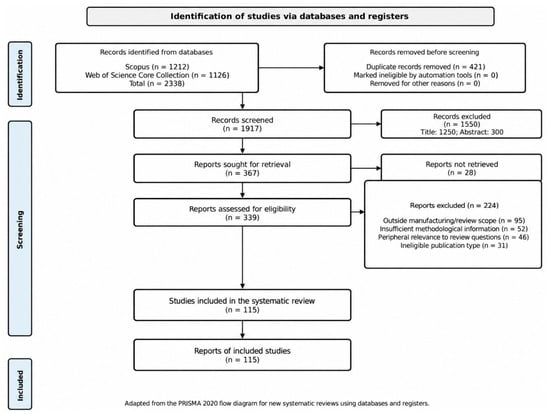
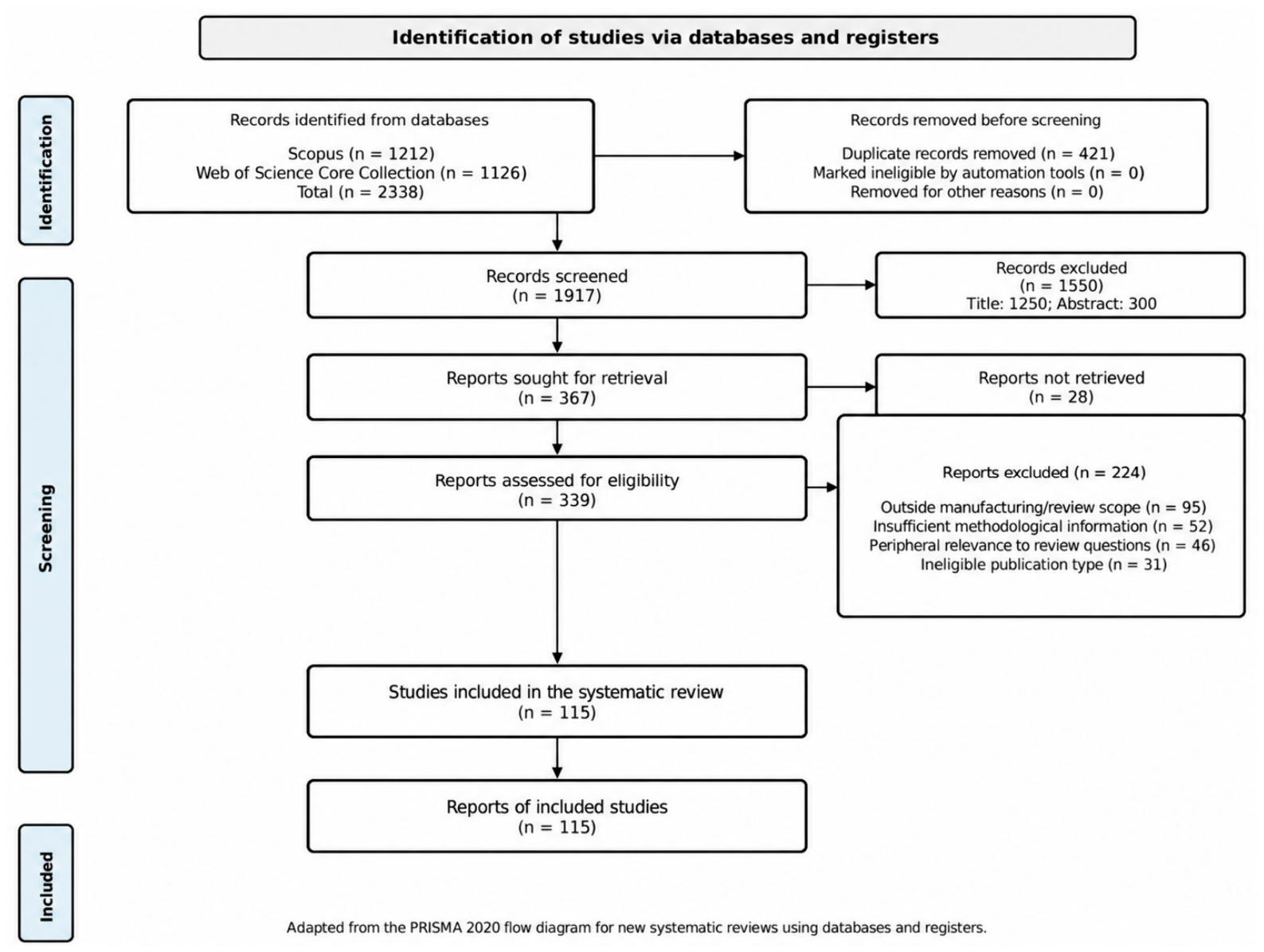
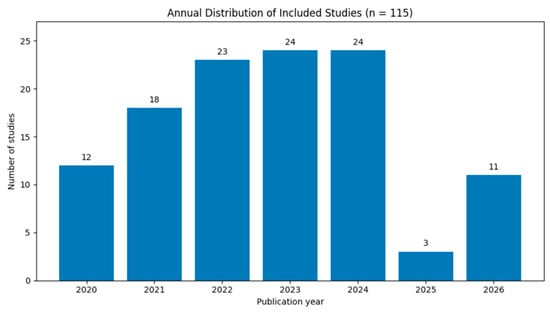
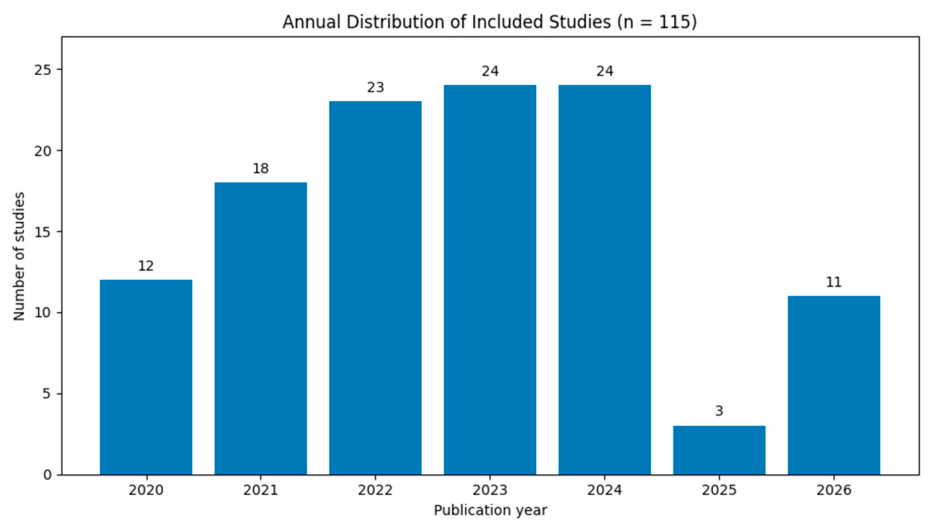
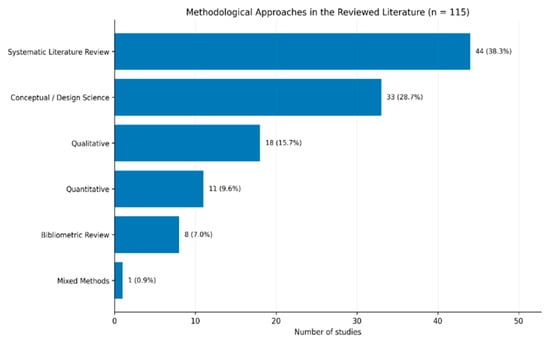
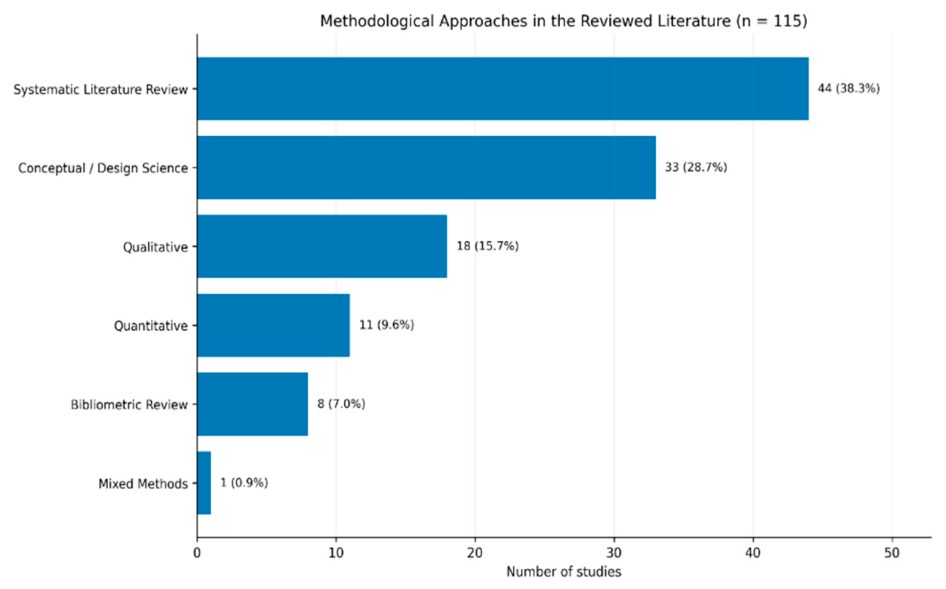
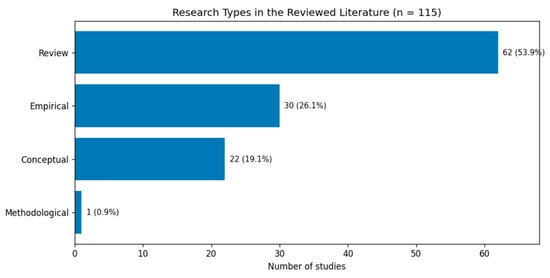
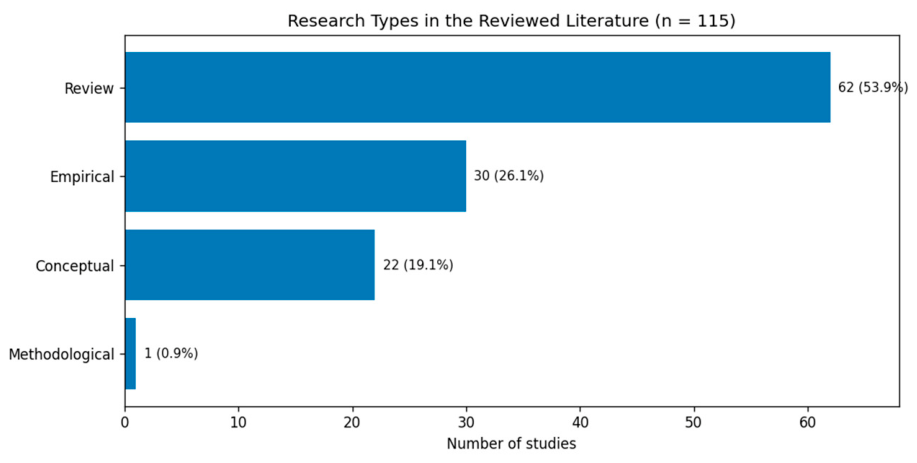
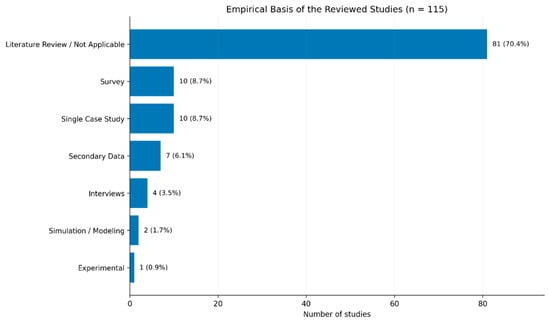
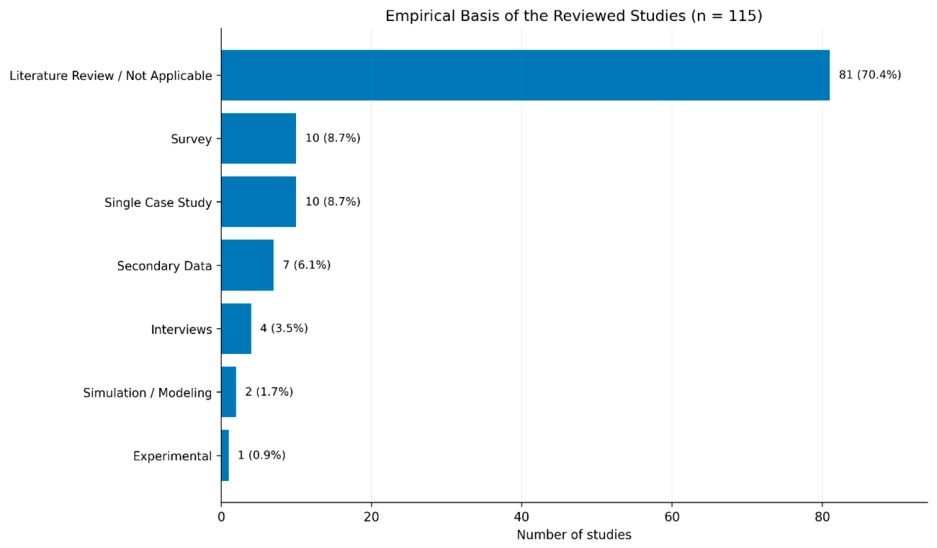
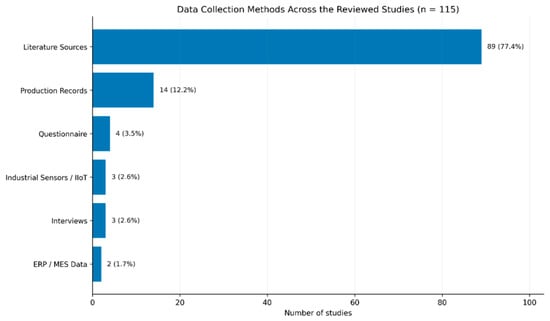
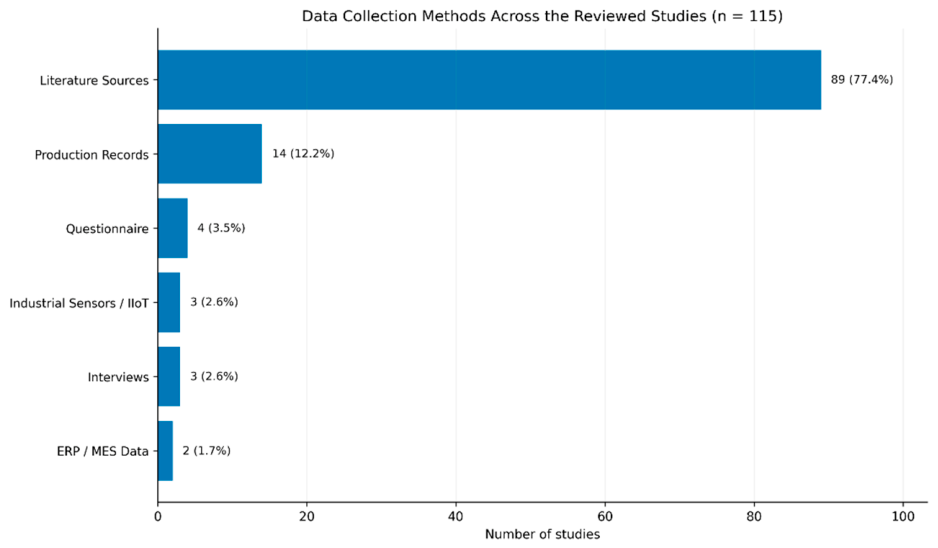
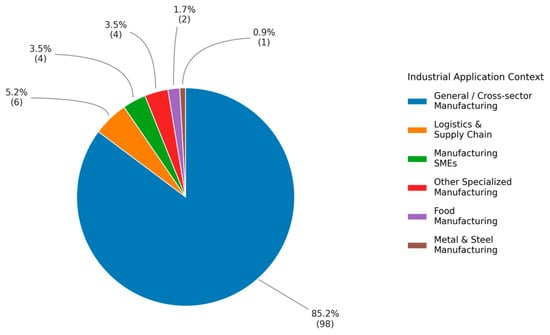
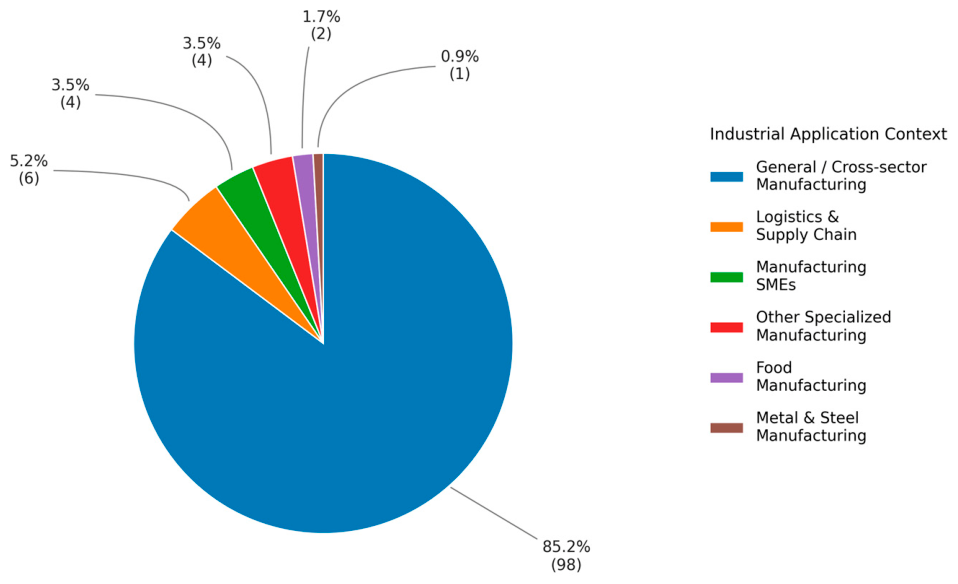
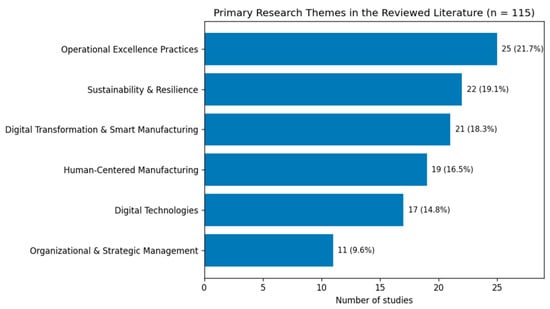
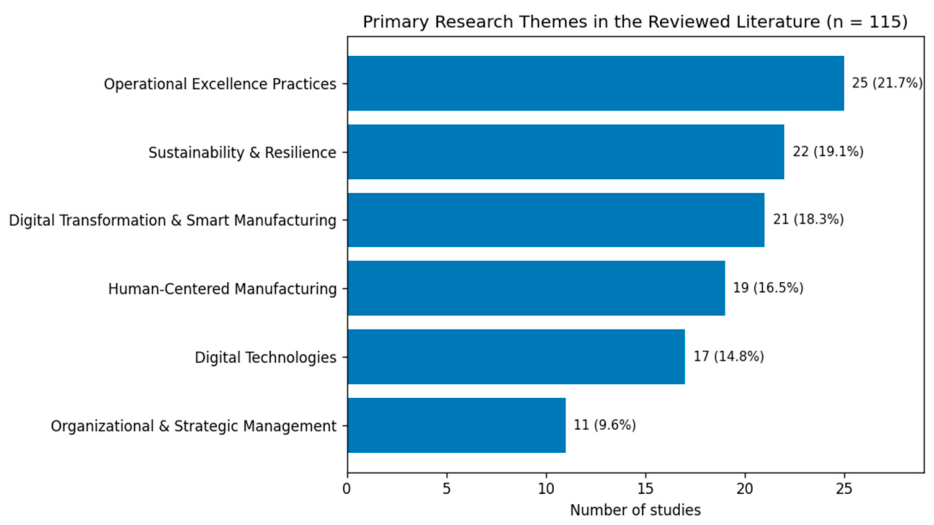
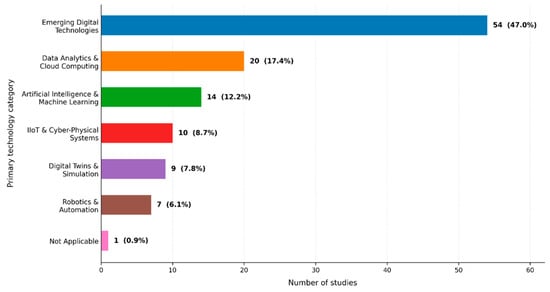
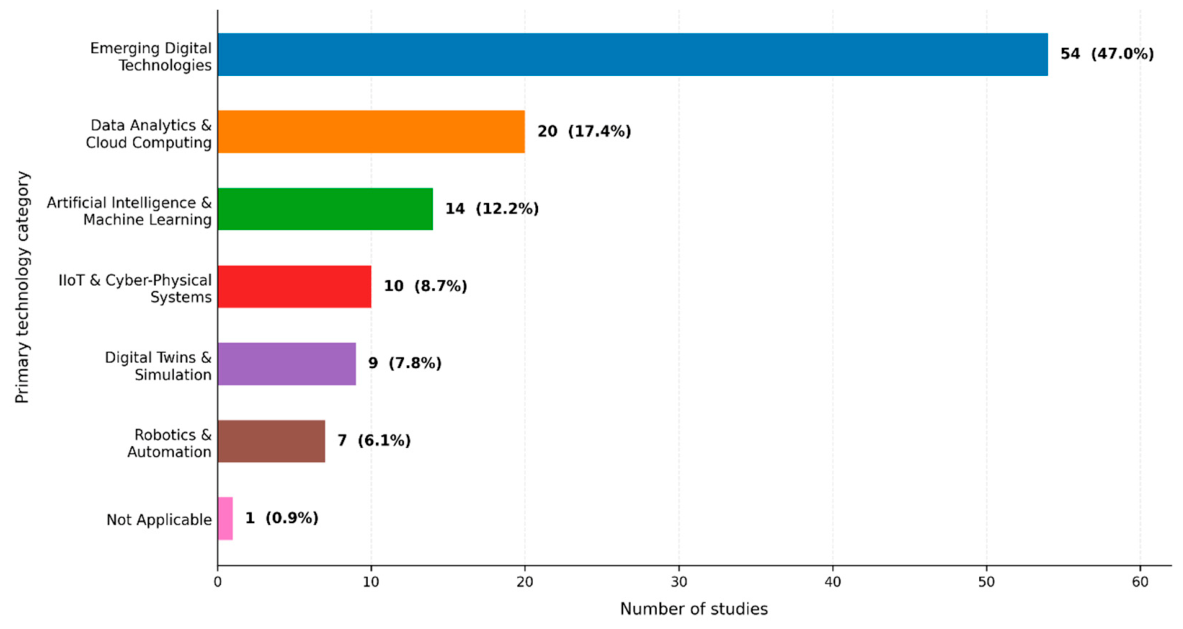
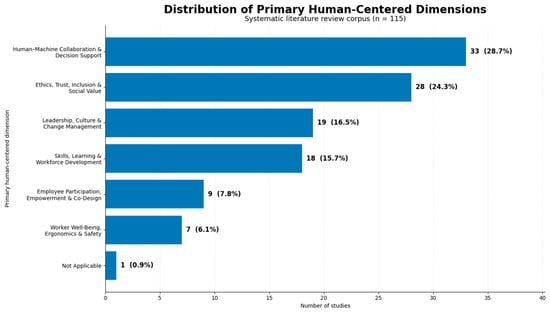
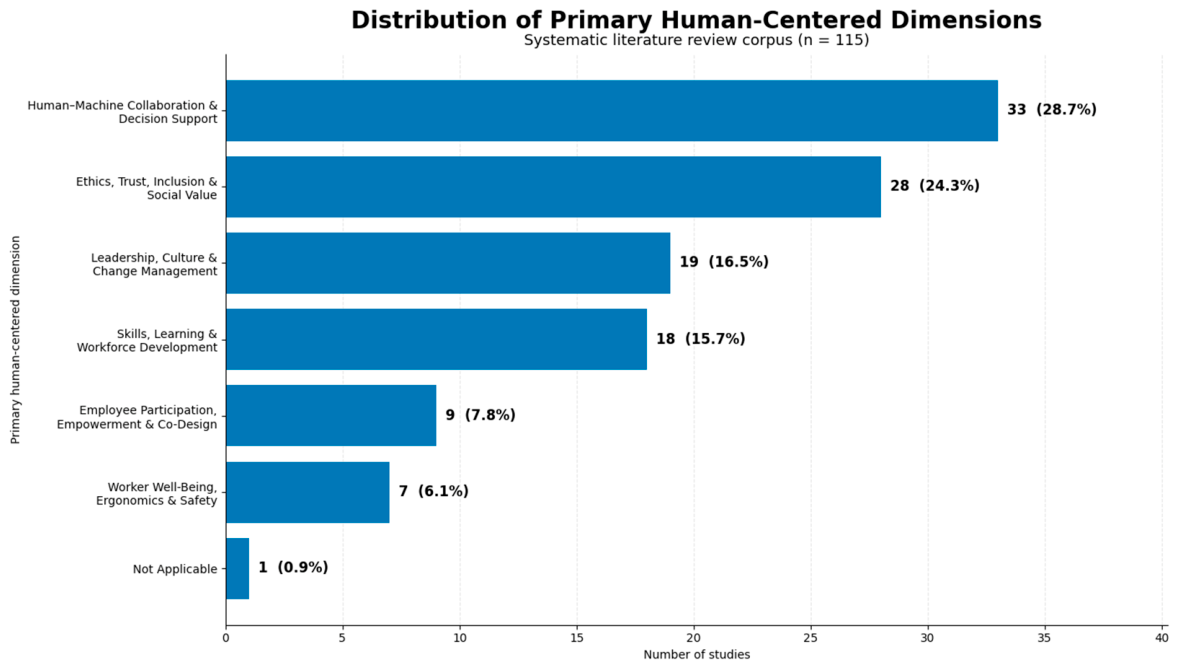
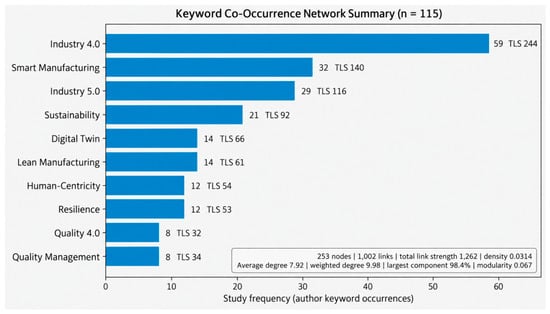
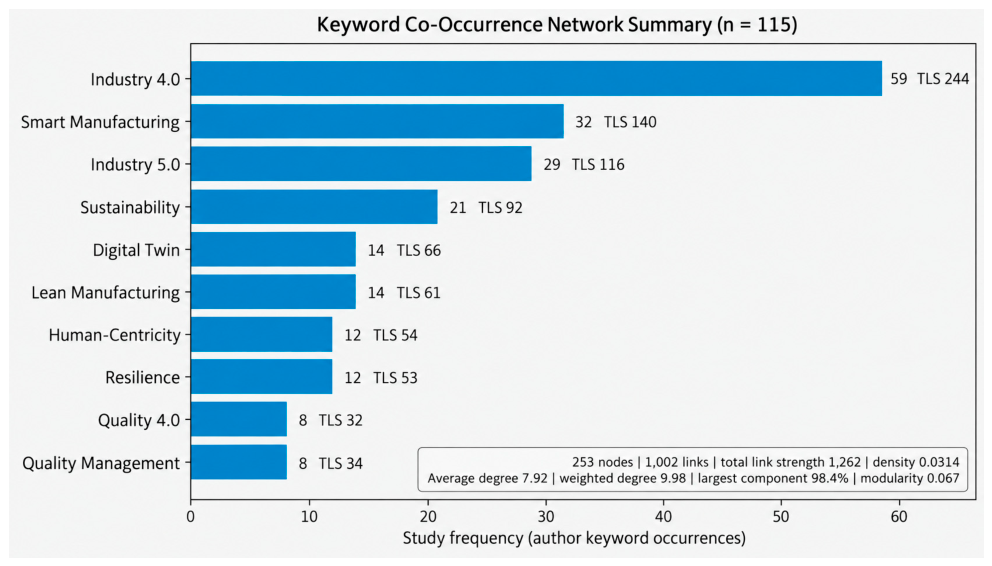
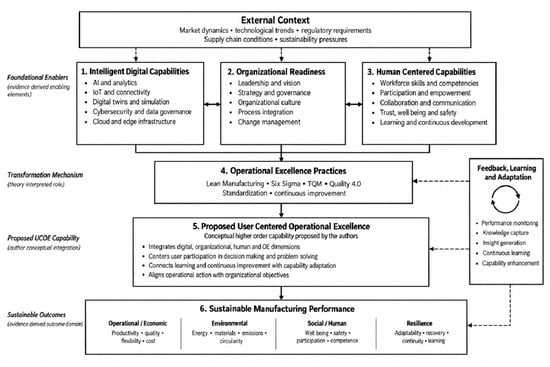
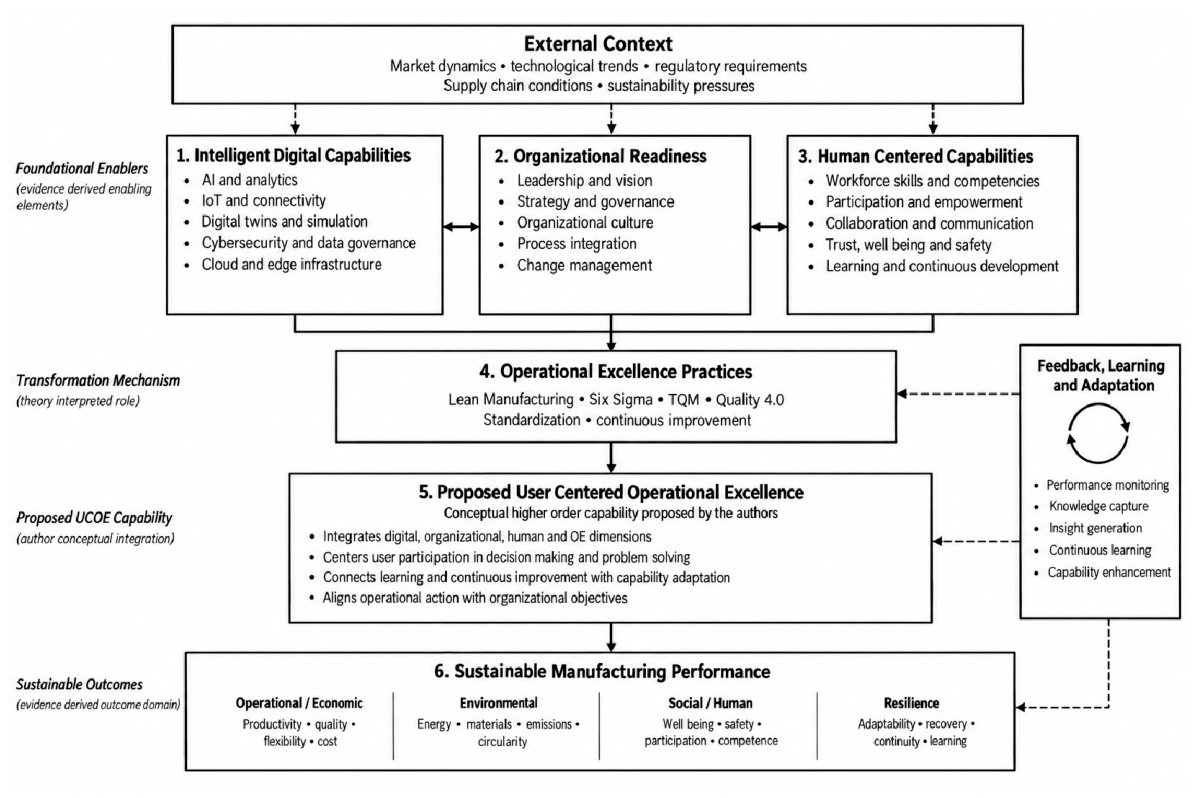
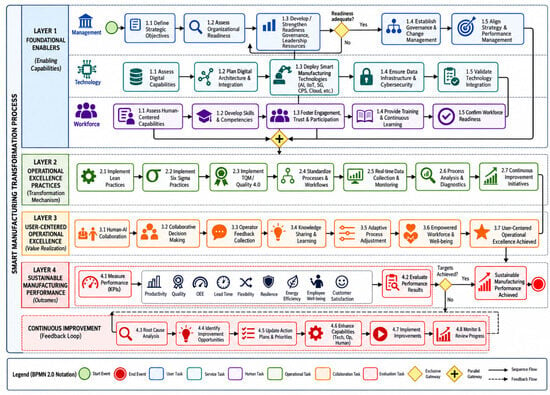
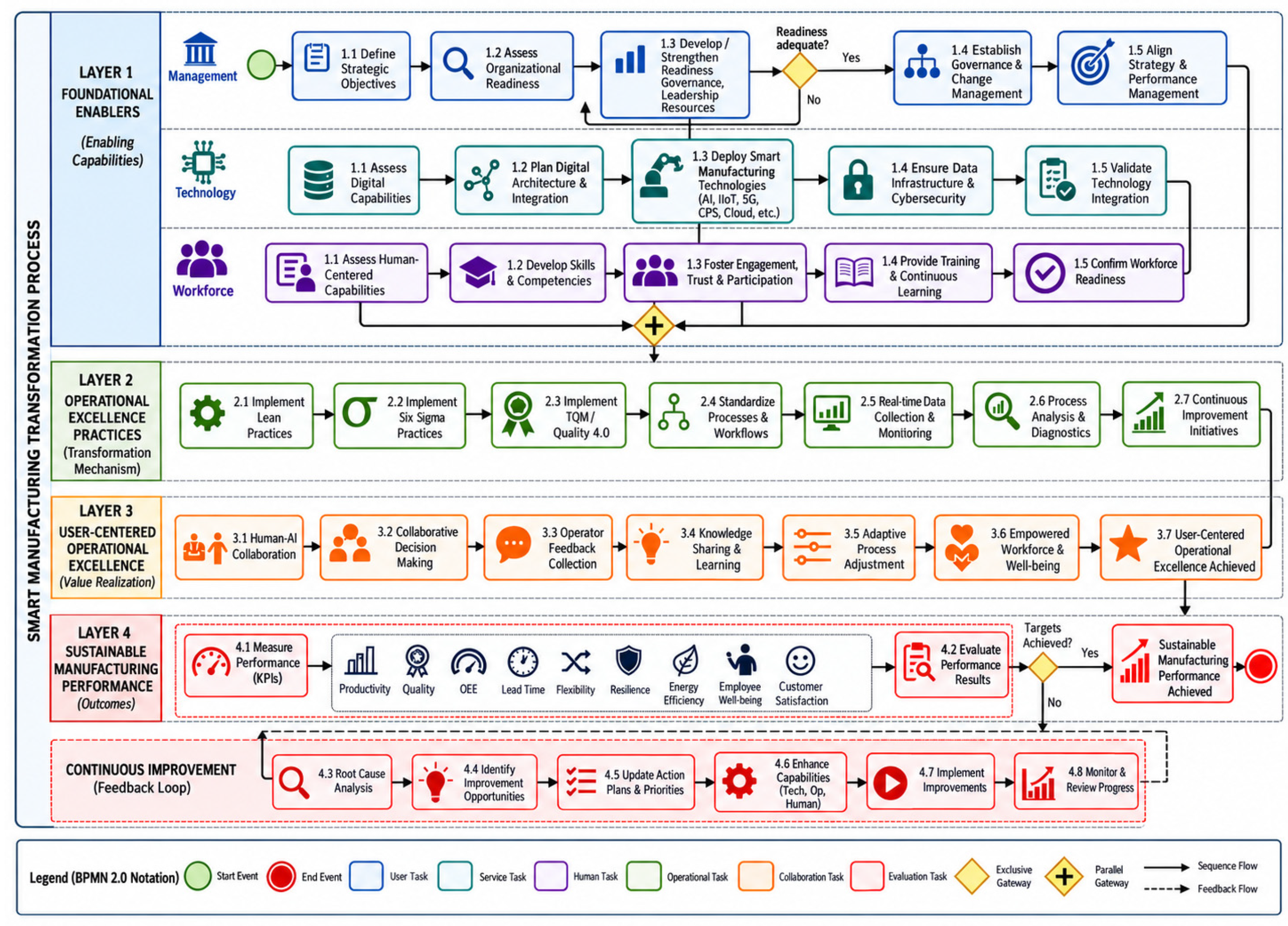

Disclaimer/Publisher’s Note: The statements, opinions and data contained in all publications are solely those of the individual author(s) and contributor(s) and not of MDPI and/or the editor(s). MDPI and/or the editor(s) disclaim responsibility for any injury to people or property resulting from any ideas, methods, instructions or products referred to in the content. |
© 2026 by the authors. Licensee MDPI, Basel, Switzerland. This article is an open access article distributed under the terms and conditions of the Creative Commons Attribution (CC BY) license.