Article

Toward High-Quality and Sustainable Employment: Spatial Evolution and Driving Factors of Precarious Labor Market in China

1
School of Geography and Planning, Sun Yat-sen University, Guangzhou 510275, China
2
Department of Geography, The University of Hong Kong, Hong Kong SAR, China
*
Author to whom correspondence should be addressed.
Sustainability 2026, 18(2), 976; https://doi.org/10.3390/su18020976
Submission received: 21 November 2025 / Revised: 13 January 2026 / Accepted: 14 January 2026 / Published: 18 January 2026

Abstract

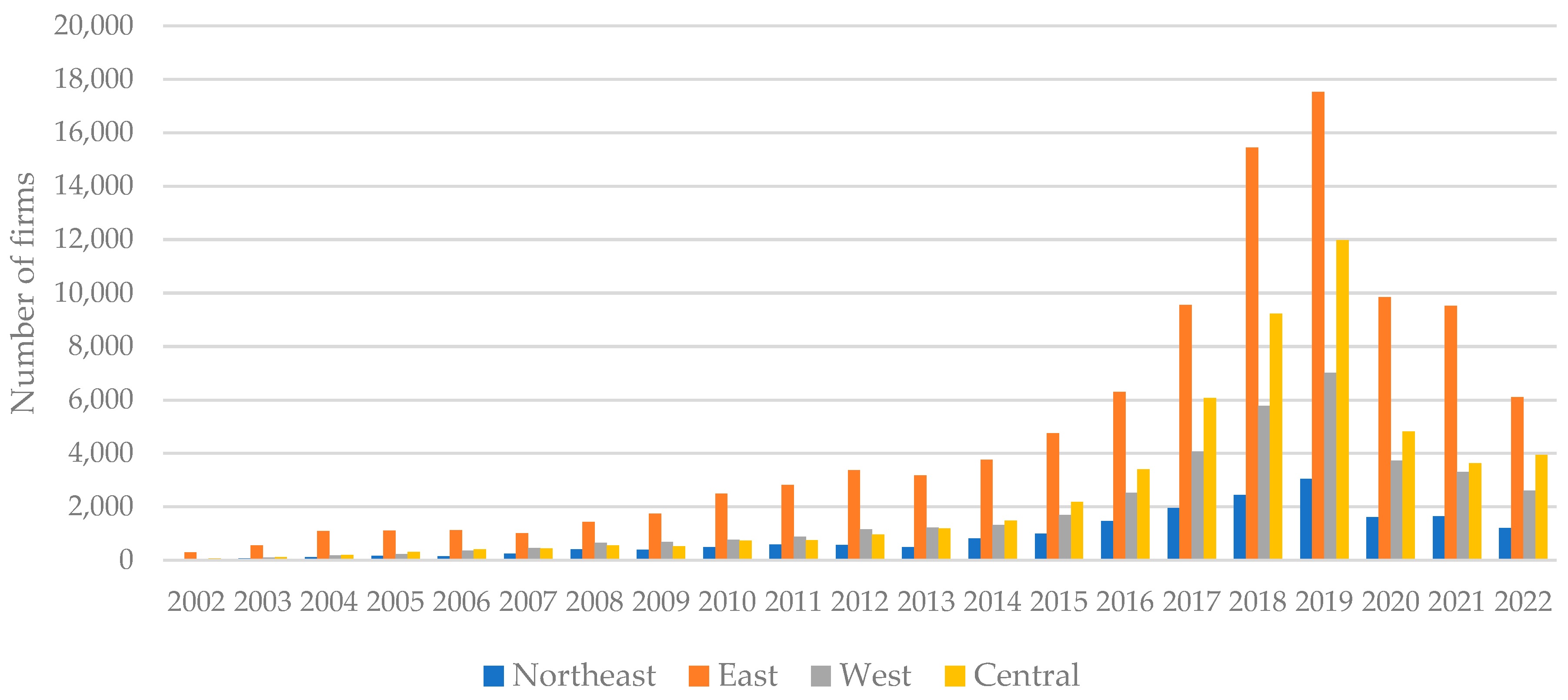
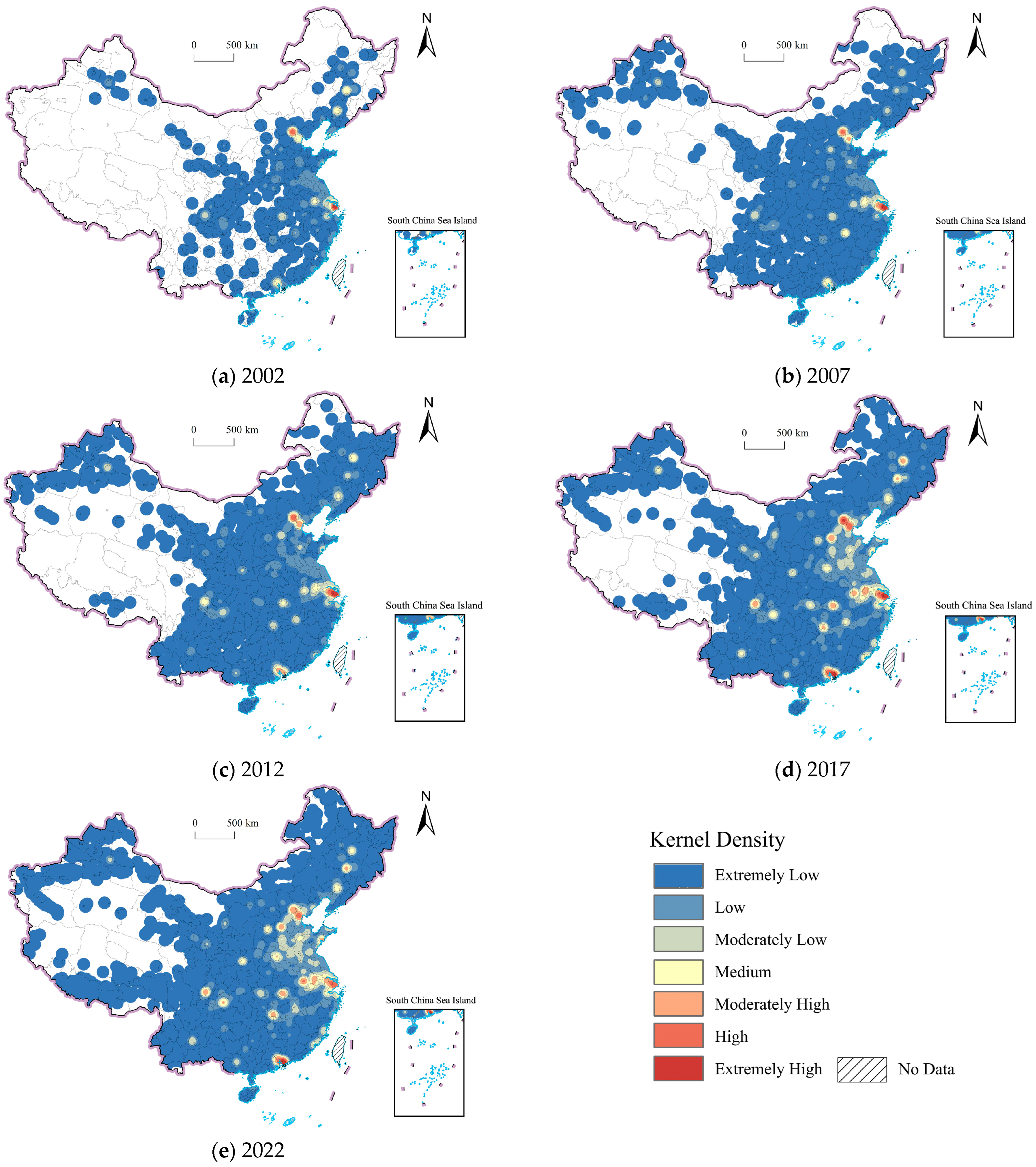
Amid the normalization of flexible employment, labor dispatch, as a form of non-standard employment, has become an important component of China’s precarious labor market (PLM). Based on registration data of labor dispatch firms from 2002 to 2022, this paper analyzes the spatial distribution and evolutionary patterns of China’s PLM, using spatial autocorrelation, kernel density estimation, and Gini coefficient methods. Furthermore, it explores its driving mechanisms through a panel negative binomial regression model. The results show that (i) over the past two decades, China’s PLM has undergone four stages: initiation, acceleration, expansion, and adjustment. (ii) Spatially, it has evolved along the trend of “reinforced clustering with concurrent diffusion,” expanding from first-tier cities in eastern China to second- and third-tier cities in central and western China. (iii) Industrial upgrading, market competition, and the overall level of urban development have significantly promoted the growth of the PLM, while improvements in accessibility, proportion of migrant population, and public service provision have somewhat restrained its expansion. Overall, China’s PLM demonstrates both growth potential and structural vulnerability under institutional constraints and external shocks, offering valuable spatial insights for forging sustainable, high-quality employment and coordinated regional development.
Keywords: labor dispatch; precarious labor market; regional development; negative binomial regression model; driving factors labor dispatch; precarious labor market; regional development; negative binomial regression model; driving factors