


Abstract
Grounded in the Theory of Planned Behavior, this study explores how sustainable marketing shapes consumer attitudes, brand image, and brand trust, and their implications for sustainable purchasing behavior among micro, small, and medium enterprises (MSMEs) in Bali. This study also examines the role of local wisdom as a moderating variable in the relationship between sustainable marketing and these three constructs. Using a quantitative approach with SEM-PLS analysis, this study involved 288 respondents who were local consumers of sustainable MSME products. Empirical data were collected through a Google Form-based questionnaire and analyzed using SmartPLS4. The results show that sustainable marketing has a significant effect on attitude, brand image, and brand trust. These three variables are proven to be strong drivers in increasing purchasing decisions for sustainable products. Furthermore, local wisdom does not moderate the relationship between sustainable marketing and attitude, but negatively moderates its relationships with brand image and brand trust, suggesting that culturally rooted consumers apply more critical evaluations to sustainable marketing efforts. These findings highlight the importance of integrating local wisdom authentically into sustainable marketing to strengthen consumer attitudes, brand image, and brand trust. The study contributes to sustainable marketing and consumer behavior theory and provides practical guidance for MSMEs in implementing sustainability strategies aligned with local wisdom.
1. Introduction
In recent years, society has become increasingly aware of the importance of sustainability in various aspects of life, significantly shaping consumption preferences, lifestyle choices, and the selection of everyday products [1,2]. At the global level, the European Green Deal policy targets net-zero emissions by 2050, requiring businesses to integrate sustainable practices throughout their value chain [3]. Similarly, McKinsey and company (2023) reported that 60% of European consumers prefer environmentally friendly products, with 80% willing to pay a premium [4]. WifiTalents (2025) found that 80% of consumers prioritized sustainability more than five years ago [5]. Gitnux (2025) and Trivium Communications (2023) adds that 70% of consumers look for brands committed to sustainability, and more than 80% are influenced by eco-friendly packaging [6,7]. These global trends create both opportunities and pressures for micro, small, and medium enterprises (MSMEs), especially in developing countries, which must balance market demands with locally grounded sustainability practices.
In response, MSMEs have increasingly adopted sustainable marketing as a strategic approach [8]. Sustainable marketing encompasses business decisions and activities grounded in social, ethical, and environmental values [9], and plays an important role in shaping consumer attitudes toward sustainable purchasing. Prior studies indicate that such strategies enhance consumer awareness, concern, and positive attitudes toward environmentally friendly products [9,10,11], and strengthen brand image [12], satisfaction, loyalty, and sustainable purchase behavior [13,14,15]. The relationship between brand trust and sustainable purchasing behavior has likewise been found to be positive and significant [15,16]. However, MSMEs face various operational challenges in implementing sustainable practices [8,17]. Key barriers include limited financial, time, and human resources, a focus on short-term business continuity, and lack of knowledge about practical sustainability strategies [18]. Limited access to technology and supporting infrastructure, along with market uncertainty and varying consumer willingness to pay, makes sustainability investments risky. These challenges highlight the critical role of sustainable marketing in shaping consumer attitudes, strengthening brand image and brand trust, and promoting sustainable purchasing behavior.
Integrating local wisdom has become an essential component of sustainability strategies, given its role in supporting environmental preservation and social well-being [19]. In Japan, for instance, the philosophy of Mottainai emphasizes respect for resources and the avoidance of waste, forming a foundational principle of circular economic policy [20]. In Sweden, the concept of Lagom, “not too much, not too little”, guides a balanced and sustainable lifestyle that encourages moderate consumption [21]. Meanwhile, in New Zealand, the Māori principle of Kaitiakitanga underscores humanity’s collective responsibility to protect the natural environment, serving as a core value in sustainability practices [22]. Bali, as a region strongly rooted in its cultural traditions, offers a clear illustration of cultural integration through the Tri Hita Karana philosophy, which underscores the balance between humans, the natural environment, and the divine (Parhyangan, Pawongan, and Palemahan) [22,23,24]. This value system serves as both an ethical and practical foundation for Balinese society and significantly shapes its cultural practices and MSME activities. Embedding local wisdom within sustainability strategies offers MSMEs the opportunity to strengthen product differentiation by highlighting local identity, ecological quality, functional attributes, and consumers’ emotional connection to brands [24].
As in many other countries, MSMEs in Indonesia play a crucial role in national economic development [25,26], contributing 61% to GDP and employing 97% of the workforce in 2023. Beyond their economic impact, they operate in culturally rich communities where local wisdom traditions emphasize harmony between humans, nature, and spirituality, guiding sustainable business practices [27,28]. In the context of MSMEs in Bali, sustainable marketing involves integrating environmentally friendly production, ethical business practices, and the local wisdom of the Tri Hita Karana philosophy into product design, communication, and value delivery. For example, Balinese craft and fashion MSMEs often use locally sourced natural materials, minimize waste, and embed stories of cultural heritage in their branding to appeal to both domestic and international consumers. These practices not only reflect a commitment to sustainability but also enhance brand image and consumer trust by signaling authenticity, ethical responsibility, and respect for local traditions. By combining sustainable marketing with local wisdom, MSMEs can influence consumer attitudes toward responsible purchasing, thereby promoting sustainable purchasing behavior while maintaining economic viability and cultural relevance. Although the MSMEs are generally small-scale and may not have widely recognized brand names, their products serve as tangible representations of their brand, allowing meaningful assessment of brand-related constructs.
Building on this context, this study is partially grounded in the Theory of Planned Behavior (TPB), which posits that attitudes play a central role in shaping individual behavior [28,29]. TPB provides a useful foundation for understanding how evaluative responses to sustainability initiatives influence purchasing behavior [30,31]. Based on this perspective, this study extends the TPB by incorporating brand image and brand trust, as additional psychological mechanisms through which sustainable marketing influences sustainable purchasing behavior. Brand image captures consumers’ perceptions of a brand’s sustainability, quality, and cultural authenticity, while brand trust reflects confidence in a brand’s credibility and commitment to its sustainability claims [15,30]. These brand-related evaluations are particularly salient in the MSME context, where differentiation, authenticity, and credibility are critical. Sustainable marketing is positioned as the primary strategic input, encompassing marketing activities that integrate environmental, social, and ethical considerations to promote responsible consumption [14,32]. Sustainable purchasing behavior represents the outcome of these efforts and includes consumers’ actual decisions to choose products that minimize environmental harm while supporting social and cultural sustainability [9,33]. Finally, local wisdom, such as the Balinese Tri Hita Karana philosophy, shapes how consumers interpret sustainability and is expected to enhance the effectiveness of sustainable marketing strategies. This theoretical extension is especially relevant in the context of sustainability, where consumer evaluations of brands often extend beyond attitudes to include perceptions of authenticity, trust, and cultural alignment.
While research on sustainable marketing has expanded significantly, most existing studies focus on large companies and global brands, leaving MSMEs relatively underexplored. In addition, research examining how local wisdom is integrated into sustainability strategies and its influence on consumer behavior remains limited, despite the fact that cultural values constitute a critical factor in shaping consumer preferences and conferring social legitimacy on sustainable business practices. The theoretical mechanisms explaining the relationships among sustainable marketing, consumer attitudes, and sustainable purchasing behavior have also not been fully explored, particularly regarding the moderating role of local wisdom. This study addresses these gaps by developing a comprehensive model grounded in MSMEs in Bali, linking global sustainability concepts with local wisdom. The incorporation of the Tri Hita Karana philosophy provides a meaningful setting for examining how sustainability-oriented marketing practices operate among MSMEs rooted in local wisdom. This study therefore examines how sustainable marketing influences consumer attitudes toward MSMEs in Bali, while also exploring the mediating roles of brand image and brand trust in shaping sustainable purchasing behavior. From a practical perspective, the findings are expected to help MSME owners design marketing strategies that are competitive while remaining aligned with local wisdom and environmental sustainability.
2. Theoretical Review and Hypotheses Development
2.1. Theory of Planned Behavior
The Theory of Planned Behavior (TPB), an extension of the Theory of Reasoned Action (TRA) popularized by Ajzen (1991), emphasizes that human behavior does not occur randomly but rather results from a rational deliberation process and the presence of behavioral intentions [31]. The TPB model consists of three primary cognitive components: subjective norms, perceived behavioral control, and attitude toward behavior, which serves as a central element of the model [34]. Subjective norms refer to an individual’s perception of social pressure to perform or refrain from a particular behavior [35]. Perceived behavioral control reflects the perceived ease or difficulty of performing the behavior, based on the individual’s beliefs about internal and external factors that may facilitate or hinder its execution. Finally, attitude toward the behavior represents an individual’s positive or negative evaluation of engaging in a specific behavior, formed through personal beliefs about the likely outcomes of that behavior. In this context, a more positive attitude is expected to strengthen an individual’s intention to engage in the behavior.
2.2. Sustainable Purchase Behavior
Hinterhuber and Khan (2025) define Sustainable Purchase Behavior (SPB) as actual purchasing behavior that reflects the frequency with which individuals or professionals make environmentally conscious purchasing decisions [36]. SPB is measured by the extent to which individuals actively engage in purchasing environmentally friendly products. Furthermore, Gallois et al. (2020) explain that SPB encompasses the use of products and services aimed at enhancing individuals’ quality of life while minimizing negative impacts on natural resources, waste generation, and environmental footprints throughout the product life cycle [37]. Therefore, SPB not only reflects purchasing behavior but also represents individuals’ social responsibility toward environmental sustainability.
2.3. Sustainable Marketing
Sustainable marketing is defined as the process of making business decisions and implementing activities by local communities and consumers that consider social, ethical, and environmentally friendly aspects of sustainability. This practice has become a growing trend among companies seeking to reduce carbon emissions and respond to consumer demands [2]. The implementation of sustainable marketing encourages environmentally conscious consumption and shapes individuals’ intrinsic motivation [38]. Companies are increasingly focusing on the preservation of natural environments to promote sustainable consumption behavior [39]. Green marketing can provide significant benefits for green businesses pursuing both sustainability and growth by directly delivering green knowledge to consumers or through corporate social responsibility (CSR) initiatives aligned with sustainable development goals [40]. Recognizing the importance and potential of these industries, along with their environmental implications, is crucial for developing effective strategies and initiatives that promote sustainable practices, minimize negative impacts, and foster a harmonious balance between economic growth and environmental conservation [41].
In the context of local MSMEs, sustainable marketing encompasses production and sales activities that consider social responsibility and the environmental ethics of the surrounding community. These initiatives aim to create a balance among economic, social, cultural, and environmental dimensions [8,9]. Furthermore, the implementation of sustainable marketing has been shown to shape consumers’ sustainable attitudes [11]. Gleim et al. (2023) emphasize that sustainability actions promoted by companies play a crucial role in fostering positive brand attitudes, particularly when such practices are carried out authentically [10]. Additionally, Sujanska and Nadanyiova (2023) highlight that sustainable marketing practices also influence corporate image and environmentally conscious consumer trust [12]. Therefore, consistently implementing sustainable marketing strategies in alignment with sustainability values is expected to strengthen consumers’ positive attitudes toward the brand. Accordingly, the following hypothesis is formulated:
H1:
Sustainable marketing has a positive and significant effect on consumer attitudes.
Scholars have also demonstrated that the implementation of sustainable marketing positively impacts brand image. White et al. (2025) reveal that a company’s reputation and image are evaluated based on the social responsibility practices it implements [42]. Consumers tend to perceive companies more positively when social responsibility initiatives are effectively integrated into sustainable marketing strategies. Furthermore, Rastogi et al. (2024) argue that sustainable marketing practices are a critical factor in shaping a positive brand image [15]. This is also consistent with Jia et al. (2023), who suggest that brand image serves as a mediator in the relationship between sustainable marketing strategies and consumers’ responsible behaviors toward sustainability [14]. Other research indicates that corporate sustainable marketing initiatives can enhance positive brand perceptions [8,9]. Sustainable marketing in MSMEs appears particularly effective in strengthening brand image. Compared to larger firms, MSMEs often have more personal engagement with their customers, allowing initiatives such as eco-labeling, green branding, or responsible production to be noticed and valued. This visibility and authenticity can amplify the psychological impact of sustainability on consumers’ perceptions of the brand. Based on this evidence, the following hypothesis is proposed:
H2:
Sustainable marketing has a positive and significant effect on brand image.
Macro trends emphasize the importance of brands effectively communicating their sustainability activities to consumers [43]. Sustainable advertising initiatives can positively impact brand profitability and ensure long-term sustainability [44]. Moreover, such activities are crucial for building brand loyalty [45]. Accordingly, consistent communication regarding sustainability practices plays a vital role in establishing brand reputation and trust. Pittman et al. (2024) have highlighted the importance of sustainable advertising activities [46]. Although there is growing emphasis on understanding customers in the context of sustainable marketing, existing literature offers limited insights into how consumers perceive, respond to, and engage with sustainability-focused advertising efforts. Many studies underscore the strategic significance of aligning marketing activities with environmental and social values [47]. Jung et al. (2020) found that sustainable marketing activities positively influence brand trust by demonstrating a company’s genuine commitment to social and environmental responsibility [9]. These findings are further supported by Shafiq et al. (2023) who indicate that environmentally friendly marketing strategies enhance brand trust and attract sustainability-conscious consumers [48]. Consistent with these results, Dinana et al. (2025) show that positive perceptions of sustainable advertising can strengthen consumer engagement, enhance brand reputation, and promote more environmentally conscious consumption behaviors [49]. In the context of MSMEs, consumers can directly link sustainability initiatives with the firm’s actions. By observing responsible practices and environmentally friendly operations firsthand, consumers perceive MSMEs as reliable and consistent in their ethical commitments. Therefore, the following hypothesis is proposed:
H3:
Sustainable marketing has a positive and significant effect on brand trust.
2.4. Attitude
A key factor influencing consumers’ intentions is their attitude, which reflects their beliefs regarding the potential consequences of a behavior [49,50]. Attitude is defined as an individual’s evaluation of an object or phenomenon based on their thoughts, emotions, and anticipated actions. It represents the extent to which an individual holds a positive or negative assessment toward a particular behavior [31]. Individuals can hold positive attitudes toward various concepts; for example, those with a strong pro-environmental attitude are considered to have a positive evaluation of environmental activities [30]. Consumers who exhibit responsible attitudes toward sustainable products are more likely to adopt a positive mindset in making environmentally conscious decisions [51,52]. Customer understanding and participation in environmentally friendly consumption behaviors often shape their perceptions and reactions to green marketing [53]. From the consumer perspective, embedded sustainability refers to the sustainability perceived by customers [54]. Consumers with knowledge and experience related to environmental issues are more likely to develop positive attitudes toward eco-friendly products and recognize their importance in mitigating ecological damage. Siraj et al. (2022) reveal that environmental concern significantly shapes positive attitudes and purchase behavior toward sustainably labeled products [55]. Consumers with high awareness of environmental impacts are more likely to select environmentally friendly products. Consistent with these findings, Chang and Watchravesringkan (2018) found that attitudes toward eco-friendly clothing influence sustainable purchasing behavior [56]. Empirical evidence from Lavuri (2022) further confirms that positive attitudes serve as a critical predictor of environmentally conscious purchasing behavior [35]. Overall, positive attitudes toward sustainable products increase the likelihood that consumers will choose more environmentally responsible alternatives. Based on these findings, the following hypothesis is proposed:
H4:
Attitude has a positive and significant effect on sustainable purchase behavior.
2.5. Brand Image
Brand image is formed from a set of mental associations developed by consumers and other stakeholders toward a brand, encompassing both positive and negative perceptions [57]. It can be defined as the perceived reliability of a brand name or the confidence that customers place in the brand [58]. According to Patoding and Muzammil (2023), brand image refers to how consumers perceive and experience a brand, including emotions, attitudes, beliefs, and various associations formed in their minds [59]. Kolbl et al. (2020) argue that brand attributes such as warmth and competence can provide added value, both functionally and emotionally, to consumers [60]. Jung et al. (2020) suggest that improvements in brand image resulting from a company’s sustainable marketing activities can influence customer satisfaction, trust, and loyalty [9]. This is consistent with Jia et al. (2023) and Rastogi et al. (2024) who emphasize that a positive brand image plays a crucial role in encouraging consumers to engage in more responsible purchasing behavior [14,15]. In MSMEs, a strong brand image motivates sustainable purchase behavior because consumers perceive alignment between their personal values and the firm’s ethical and environmental standards. When consumers perceive a brand as socially responsible, it creates meaningful associations in the form of a positive brand image. Based on these findings, this study assumes that brand image serves as a significant predictor of consumers’ decision to purchase environmentally friendly products. In the context of this research, the primary outcome influenced by sustainable marketing efforts is defined as sustainable purchase behavior. Thus, the following hypothesis is proposed:
H5:
Brand image has a positive and significant effect on sustainable purchase behavior.
2.6. Brand Trust
Brand trust plays a crucial role in establishing and maintaining long-term relationships between a brand and its consumers [61]. Kataria et al. (2021) assert that trust is developed when a company’s values align with those of its consumers [62], while Hanaysha (2022) adds that trust emerges from a company’s genuine efforts to build positive relationships with customers [63]. Conversely, when a brand fails to meet expectations, consumers may experience disappointment and engage in avoidance behaviors toward the brand [17]. In the context of sustainable marketing, Chen et al. (2021) found that brand trust contributes to environmentally friendly purchasing behavior, although their study primarily focused on product packaging aspects [64]. Similar findings were reported by Tan et al. (2021) who demonstrated that green marketing practices can enhance sustainable purchase behavior through the mediating role of brand trust [17]. Additionally, Singh and Kunja (2023) confirmed that brand trust has a positive and significant effect on sustainable purchase behavior, particularly in relation to recycled products [16]. In MSMEs, brand trust translates into sustainable purchase behavior because confidence in the firm’s reliability and ethical consistency reduces perceived risk in buying decisions. Consumers are more willing to act on their trust, making purchases that align with the firm’s sustainability claims and values. Based on these findings, the following hypothesis is proposed:
H6:
Brand trust has a positive and significant effect on sustainable purchase behavior.
2.7. Local Wisdom as Moderator
Local wisdom is defined as the “wisdom embedded in the traditional culture” of an ethnic group [65]. It encompasses knowledge, practices, and values passed down through generations, reflecting the cultural, environmental, and social characteristics of a community [66]. Integrating traditional values and practices into business models not only helps preserve cultural heritage but also serves as a strategic approach to creating sustainable products that resonate with modern consumer needs [67]. Arsawan et al. (2022) emphasize that local wisdom strengthens competitive advantage through innovative cultural practices [68], while Mahrinasari et al. (2024) demonstrate that local wisdom can act as a moderating variable in organizational relationships, particularly in the context of sustainable competitive advantage in the creative industries [27]. Similarly, Surya et al. (2024) highlight that local wisdom contributes significantly to sustainable development, including in the management of community and local business resources [69]. Aligned with the theories of Cultural Congruence and Brand Authenticity, integrating local values into sustainability strategies deepens emotional connections and enhances trust, meaning that the relationship between sustainable marketing and brand image is not only positive but also strengthened by local wisdom, which reinforces consumer acceptance and the symbolic meaning of sustainability initiatives.
In Bali, the philosophy of Tri Hita Karana, which emphasizes harmony among humans, nature, and God (Parhyangan, Pawongan, Palemahan), serves as an ethical and practical foundation for the community and underpins economic activities, including spiritually and ecologically oriented MSMEs [70]. Empirical studies show that Tri Hita Karana shapes social values and guides local business practices, thereby strengthening Bali’s role as a model of local wisdom in culturally based enterprises [22,23]. Tri Hita Karana creates a value framework highly compatible with sustainability principles. When companies communicate sustainable marketing initiatives aligned with these values, local consumers perceive corporate actions as more honest, sincere, and culturally appropriate. According to the theories of Value-Belief Congruence and Cultural Embeddedness, alignment between sustainability messaging and local cultural values enhances perceived authenticity and strengthens trust in a company’s long-term commitment. However, previous research has rarely examined the role of local wisdom in shaping local consumer behavior, particularly in the context of sustainable marketing for culturally based MSMEs. In this regard, local wisdom has the potential to moderate the influence of sustainable marketing on consumer attitudes, making sustainability practices more effective among communities with strong local wisdom values. This gap highlights the urgency of examining local wisdom as a moderating variable within the framework of the Theory of Planned Behavior. Based on the above discussion, the following hypotheses are proposed:
H7:
Local wisdom significantly moderates the relationship between sustainable marketing on attitude.
H8:
Local wisdom significantly moderates the relationship between sustainable marketing on brand image.
H9:
Local wisdom significantly moderates the relationship between sustainable marketing on brand trust.
2.8. The Mediating Roles of Attitude, Brand Image, and Brand Trust
Sustainable marketing influences sustainable purchasing behavior not only through direct effects, but also through a series of underlying psychological and perceptual mechanisms that shape consumers’ evaluations and decision-making processes. By signaling ethical responsibility, environmental commitment, and long-term orientation, companies provide sustainability cues that guide how consumers interpret and internalize brand-related information. From a behavioral perspective, attitudes, brand image, and brand trust are widely recognized as key determinants of consumer decision-making and purchasing behavior. Positive attitudes increase consumers’ openness and motivation to engage in sustainable consumption. Previous studies have shown that elements embedded in sustainable marketing strategies such as eco-labels, green branding, and environmental claims are significantly contribute to the formation of favorable consumer attitudes [70,71]. These positive attitudes, in turn, guide consumers toward specific actions, including the purchase of sustainable products [72,73]. In this regard, sustainable marketing activities serve as a powerful stimulus that primarily operates by shaping consumers’ environmental or green attitudes [74,75].
In addition to attitudinal responses, sustainable marketing strengthens brand image by providing cognitive cues that simplify product evaluation and reduce perceived uncertainty. Empirical evidence suggests that marketing strategies emphasizing sustainability attributes strengthen brand image, which subsequently increases consumers’ sustainable purchasing behavior [76]. Furthermore, sustainable marketing sends social and environmental signals that enhances sustainable brand image, thereby increasing consumers’ willingness to engage in sustainable purchasing behavior [12,31]. Brand trust also plays a crucial role in translating positive evaluations into actual purchasing behavior, as trust assures consumers that companies will act consistently with their sustainability claims. This mechanism is particularly salient in the context of sustainable consumption, where skepticism and concerns about greenwashing are prevalent. Sustainability claims and certifications act as credibility signals that strengthen brand trust and encourage consumers to choose sustainable products [76,77]. By reducing perceived risk and uncertainty, trust encourages consumers to choose sustainable products over conventional alternatives [78,79]. Overall, attitude, brand image, and brand trust represent interrelated and complementary mechanisms through which sustainable marketing influences sustainable purchasing behavior. Thus, the following hypotheses are proposed:
H10:
Attitude significantly mediates the relationship between sustainable marketingon sustainable purchase behavior.
H11:
Brand image significantly mediates the relationship between sustainable marketing on sustainable purchase behavior.
H12:
Brand trust significantly mediates the relationship between sustainable marketing on sustainable purchase behavior.
3. Method
Bali was selected as the research location because its MSMEs play a pivotal role in the local economy and the preservation of cultural identity. Consequently, this study is expected to provide both conceptual and practical contributions by highlighting how Balinese MSMEs can strengthen their brand image, achieving not only economic competitiveness but also alignment with sustainability principles rooted in local culture. This study employs a quantitative research design, chosen to test the proposed hypotheses regarding the impact of Sustainable Marketing on Attitude, with Local Wisdom as a moderating variable, and Brand Image and Brand Trust as mediating variables influencing Sustainable Purchase Behavior among local consumers of culture-based MSMEs in Bali (Figure 1).
Figure 1.
Research framework showing direct effects (solid lines), mediating effects (dotted lines), and moderating effects (dashed lines) among constructs.
The target population of this study comprises all local Indonesian consumers aged 17 years and above who have made purchases from culture-based MSMEs in Bali. To ensure conceptual validity for the Local Wisdom variable, respondents were limited to local consumers. Local wisdom comprises culturally embedded values and practices that develop and are absorbed over time within a community. These values are most meaningful when assessed by individuals who engage with and experience them in daily life. Local buyers have the capacity to critically evaluate whether MSME sustainability practices genuinely reflect local wisdom or are merely symbolic, whereas tourists or non-local consumers tend to perceive local wisdom primarily as novel or interesting, which could introduce bias. Limiting the sample to local consumers ensures that local wisdom functions as a valid evaluative framework shaping consumer attitudes and sustainable purchasing behavior.
Given that the exact population size is unknown due to its dispersion across various regions and the absence of a centralized database, this study considers the population as infinite [80]. A non-probability sampling method using purposive sampling was employed to select respondents based on specific criteria aligned with the study objectives. Following the Ten Times Formula proposed by Hair et al., (2022), a minimum sample size of 250 respondents was determined (25 indicators × 10) [81]. After distributing the questionnaire, a total of 288 respondents participated in this study. The sample consisted of 195 females (67.7%) and 93 males (32.3%), with the majority aged 17–25 years (196 respondents, 68.1%). The remaining respondents were aged 26–30 years (21.5%), 31–34 years (3.5%), and above 35 years (6.9%).
Empirical data were collected using an online questionnaire via Google Forms. The survey link was distributed through multiple channels, including social media targeting local consumer communities interested in local products, and direct distribution at research locations, where respondents could scan a QR code to access the questionnaire. This approach ensured that all participants were local consumers who had purchased from culture-based MSMEs in Bali, while also enabling efficient data collection and high-quality responses [82]. This study employed a Partial Least Squares—Structural Equation Modeling (PLS-SEM) approach, implemented using SmartPLS 4 software. The analysis followed a two-stage procedure recommended by Hair et al. (2022) consisting of the evaluation of the measurement model (outer model) and the assessment of the structural model (inner model) [83].
All constructs were measured using a seven-point Likert scale (1 = strongly disagree; 7 = strongly agree), covering the variables Sustainable Marketing, Attitude, Local Wisdom, Brand Image, Brand Trust, and Sustainable Purchase Behavior. To accurately capture respondents’ own attitudes, perceptions, and behaviors, survey items were phrased in the first person and were self-reported. The measurement indicators for each variable were adapted from validated instruments in previous studies (Table 1), with several items developed specifically to align with the empirical context and characteristics of consumers of culture-based MSMEs in Bali. Sustainable Marketing (SM) was measured using four indicators reflecting sustainability-oriented marketing practices, such as the promotion of local products and environmental responsibility. Attitude (ATT) was assessed through four indicators capturing consumers’ positive evaluations of products rooted in local wisdom. Local Wisdom (LW) comprised four indicators assessing the extent to which cultural values influence consumer perceptions of products. Brand Image (BI) was measured using four indicators reflecting consumers’ perceptions, impressions, and associations with local MSME brands. Brand Trust (BT) consisted of four indicators evaluating consumers’ trust in the credibility, honesty, and consistency of the brand. Finally, Sustainable Purchase Behavior (SPB) was measured using five indicators assessing both consumers’ intentions and actual behaviors related to purchasing sustainability-oriented products.
Table 1.
Measurement Items.
4. Results
This study aims to investigate the influence of sustainable marketing on consumer attitudes, brand image, and brand trust. Furthermore, it examines how attitude, brand image, and brand trust contribute to enhancing sustainable purchase behavior. An important contribution of this research lies in the inclusion of local wisdom as a moderating variable, assessing how cultural values strengthen or alter the relationship between sustainable marketing and the three key constructs. The study was conducted in Bali, focusing on SMEs that actively integrate local cultural values into their business practices and marketing strategies. Balinese SMEs provide a relevant and unique research context, as cultural elements function not only as a business identity but also as a source of value that differentiates their products and services from those of other regions. Accordingly, this research goes beyond the examination of sustainable marketing practices by offering a deeper understanding of how local wisdom can enhance marketing relationships, shape consumer perceptions, and encourage stronger sustainable purchasing behavior. The Outer Model analysis was conducted to evaluate the quality of the measurement model through assessments of validity, reliability, and collinearity, as presented in Table 1, Table 2 and Table 3. Convergent validity was examined using outer loadings and the Average Variance Extracted (AVE). All indicators demonstrated outer loading values ≥ 0.70 and AVE values for each construct ≥ 0.50 (Table 2), indicating that the indicators strongly represent their respective constructs.
Table 2.
Outer Loading Test Result.
Table 3.
HTMT Result.
Discriminant validity was assessed using the Fornell–Larcker Criterion and the Heterotrait–Monotrait ratio (HTMT). Based on the Fornell–Larcker Criterion, the square root of the AVE for each construct was greater than its correlations with other constructs [87] (Table 4). Additionally, the HTMT values for all construct pairs were below the threshold of 0.90 [88] (Table 3). These results provide strong evidence that each construct is empirically distinct and unique within the model. Reliability testing was conducted using Composite Reliability (CR), Cronbach’s Alpha, and rho_A. All constructs demonstrated reliability values above 0.70, confirming adequate internal consistency and the ability of all indicators to accurately measure their underlying constructs [89] (Table 2). Collinearity was assessed using the Variance Inflation Factor (VIF), and all latent constructs displayed VIF values below the critical threshold of 5, indicating the absence of multicollinearity issues within the model [90] (Table 2).
Table 4.
Fornell-Larcker Criterion Result.
The structural model (inner model) was subsequently evaluated to examine the hypothesized relationships among the constructs. The assessment began with an analysis of the coefficient of determination (R2) to determine the model’s predictive power (goodness-of-fit). As illustrated in Table 5, the R2 results indicate that the model demonstrates adequate predictive strength across all constructs. The highest R2 value was observed for Sustainable Purchase Behavior, at 0.628, suggesting that brand image, attitude, and brand trust collectively explain 62.8% of the variance in this construct. Furthermore, the analysis revealed that sustainable marketing and local wisdom explain 54.7% of the variance in brand image, 53.3% in brand trust, and 43.8% in attitude. These results indicate that the model possesses a strong and meaningful explanatory capability for the relationships under investigation.
Table 5.
Goodness of Fit Result.
Moreover, the SRMR values presented in Table 5 confirm that the model achieves an acceptable fit. The saturated model records an SRMR of 0.068, which is below the recommended threshold of 0.08, indicating a good level of fit. The estimated model yields an SRMR value of 0.098 which, although slightly higher, remains within the acceptable range for PLS-SEM, as values up to 0.10 are still considered adequate. Overall, these results indicate that the model demonstrates an acceptable degree of fit, with the estimated model showing only a marginally higher level of residuals compared to the saturated model [81].
The next stage involved assessing the significance of the structural paths using a bootstrapping procedure. Table 6 presents the results of the hypothesis testing, which include both the direct effects and the moderating effects. Overall, of the twelve hypotheses formulated in this study, eleven were found to be significant, while one exhibited a non-significant relationship. The results indicate that local wisdom failed to moderate the relationship between sustainable marketing and attitude, as demonstrated by a t-statistic of 0.720 (<1.65) and a p-value of 0.236 (>0.05). Meanwhile, the remaining eleven hypotheses were confirmed to be significant, with t-statistics greater than 1.65 and p-values below 0.05, suggesting that most of the tested relationships were empirically supported.
Table 6.
Hypotheses Test Result.
Several important findings can be drawn from the hypothesis testing results. First, sustainable marketing was found to exert a dominant influence on attitude, with a path coefficient of 0.489 (t-statistic 6.788 > 1.65; p-value 0.000 < 0.05). This finding reinforces the notion that sustainable marketing practices play a strong role in shaping consumer attitudes. Second, attitude was identified as a key predictor of sustainable purchase behavior, with a coefficient of 0.328 (t-statistic 6.352 > 1.65; p-value 0.000 < 0.05). This result indicates that positive consumer attitudes significantly encourage their behavior to engage in sustainable purchasing. Third, the analysis reveals that local wisdom weakens the relationship between sustainable marketing and the three independent constructs, as indicated by the negative interaction coefficients. However, the moderating effect of local wisdom is not entirely weak, as it significantly and negatively moderates the relationship between sustainable marketing and brand image (t-statistic 2.167 > 1.65; p-value 0.015 < 0.05) as well as between sustainable marketing and brand trust (t-statistic 3.125 > 1.65; p-value 0.001 < 0.05). Finally, the bootstrapping analysis indicates that attitude, brand image, and brand trust potentially mediate the relationships between sustainable marketing on sustainable purchase behavior (t-statistic > 1.65; p-value < 0.05), and local wisdom has a direct and significant effect on all three constructs (t-statistic > 1.65; p-value < 0.05).
5. Discussion
This study was conducted to examine the role of sustainable marketing in influencing attitude, brand image, and brand trust. Furthermore, the research explores how attitude, brand image, and brand trust contribute to enhancing sustainable purchase behavior. By understanding these relationships, the study aims to provide a more comprehensive picture of the psychological and perceptual factors that encourage consumers to engage in sustainable purchasing. In addition, the study incorporates local wisdom as a moderating variable to assess how cultural values may strengthen or shape the relationship between sustainable marketing and the three constructs. The inclusion of local wisdom is intended to determine the extent to which cultural and traditional values enrich sustainable marketing strategies, thereby enhancing brand image, building consumer trust, and fostering positive attitudes. This approach not only highlights key aspects of modern marketing but also emphasizes the importance of cultural context in influencing consumer perceptions and behavior.
The findings of this study confirm that sustainable marketing is an important predictor in shaping positive consumer attitudes toward a brand, which in turn play a significant role in enhancing sustainable purchasing behavior. Consistent with Kemper and Ballantine (2019), Lavuri (2022), and Sujanska and Nadanyiova (2023), the integration of sustainability values such as environmental stewardship, social responsibility, and ethical business conduct into marketing strategies has been shown to foster favorable perceptions and strengthen consumer appreciation of the brand [11,12,35]. Gleim et al. (2023) further highlights that consumers are more likely to exhibit positive attitudes when they perceive that a brand is not solely profit-driven but demonstrates a genuine commitment to social and environmental responsibility [10]. When sustainability practices are perceived as consistent and authentic, these positive attitudes are more likely to translate into sustainable purchasing behavior [54,55]. Moreover, the results reveal a significant indirect effect of sustainable marketing on sustainable purchasing behavior through consumer attitude, suggesting that attitude functions as a key psychological mechanism consistent with attitude–behavior frameworks. Consumers with high environmental awareness are more likely to choose eco-friendly products, highlighting the role of attitudes as a mechanism for translating sustainability initiatives into sustainable consumption [91,92]. Thus, in MSMEs, authentic sustainability initiatives are essential, as they encourage consumers to view the brand positively and engage with its sustainability commitments.
Furthermore, the implementation of sustainable marketing strategies also contributes to a more favorable brand image, reflecting consumers’ perceptions of a company’s ethical and environmental commitment [14,41]. The result also demonstrated that a strong brand image increases consumers’ tendency to engage in sustainable purchasing behavior. Gleim et al. (2023) show that company-led sustainable marketing initiatives enhance consumers’ positive perceptions of environmentally responsible brands [10]. Jung et al. (2020) and Rastogi et al. (2024) further argue that a well-established brand image shaped through sustainable strategies not only deepens the relationship between consumers and the brand but also increases their willingness to engage in responsible consumption [9,15]. Consumers who hold positive perceptions of socially and environmentally responsible brands are more likely to show a preference for sustainable products [91,92,93]. Interestingly, the results further reveal a significant indirect effect of sustainable marketing on sustainable purchasing behavior through brand image, which is consistent with Jia et al. (2023), suggesting that positive brand evaluations serve as an additional mechanism through which sustainability initiatives influence consumer behavior [14]. In conclusion, these findings reinforce the notion that sustainable marketing functions not merely as a communication strategy but also as a strategic tool in shaping a strong and positive brand image and enhancing sustainable consumer behavior [76]. In MSMEs, sustainable marketing shapes brand image because customers can directly observe and evaluate a company’s commitment to environmental and social responsibility. Practices such as eco-labeling, green branding, or sustainable production signal authenticity and ethical standards, strengthening brand identity [94]. These signals then become more prominent, allowing sustainability efforts to meaningfully shape consumer perceptions and differentiate the brand in the marketplace.
Sustainable marketing strategies were also found to have a crucial role in building and reinforcing consumer trust in brands over the long term. Moreover, strong brand trust can lead to a greater consumer tendency to purchase sustainable products that are environmentally friendly, ethical, and socially responsible. This finding has important implications for companies, as it underscores the value of integrating sustainable practices to develop more effective and credible sustainability management strategies [8,51]. Similarly, Shafiq et al. (2023) report that promoting environmentally friendly marketing strategies can enhance brand trust and attract environmentally conscious consumers [48]. Dinana et al. (2025) also show that favorable consumer perceptions of sustainable advertising enhance brand engagement, strengthen brand reputation, and encourage more environmentally conscious consumption [49]. The results also suggest a significant indirect effect of sustainable marketing on sustainable purchasing behavior via brand trust, highlighting trust as a key factor motivating consumers to actively participate in sustainable consumption [77]. In MSMEs, sustainable marketing enhances brand trust because consumers are often directly aware of the firm’s operations and practices. Observing initiatives such as eco-labeling or sustainable production allows consumers to judge the firm’s commitment, reducing doubts about greenwashing. This direct evaluation, combined with personal engagement, ensures that trust is grounded in observable behavior, increasing the likelihood that consumers will rely on the brand in their purchase decisions [95]. Overall, these findings emphasize the central role of brand trust in sustainable purchasing behavior, as consumers who trust that a brand meets high ethical and environmental standards are genuinely committed to sustainability principles [16].
This study revealed that incorporating local wisdom values into sustainable business practices can lead to more positive consumer attitudes, strengthen brand identity and authenticity, and enhance consumers’ trust. Theoretically, this aligns with Hofstede’s (1980) Cultural Value Theory, which posits that cultural values influence the way individuals think, feel, and act in both social and economic life [96]. Local wisdom influences consumer attitudes toward sustainable practices, as products or brands reflecting values such as harmony with nature, communal cooperation, and social responsibility align with consumers’ personal values. These results also support Holt’s (2004) Cultural Branding Theory, which highlights that brands serve as cultural symbols, where local wisdom into their narratives can communicate stronger cultural meaning and authenticity, enhancing distinctiveness and credibility [97]. When brand values resonate with ideals such as cooperation, environmental harmony, and spirituality, consumers perceive greater alignment with their identity, leading to stronger cognitive and affective brand evaluations. Furthermore, the findings reinforce Morgan and Hunt’s (1994) Relationship Marketing Theory and Sirgy et al.’s (1997) Cultural Congruence Theory, which identifies trust as a foundation of long-term brand–consumer relationships [98,99]. Brands that authentically incorporate local cultural elements are seen as credible and responsible, strengthening emotional bonds and loyalty [99]. In Bali, for example, local wisdom is reflected in the Tri Hita Karana philosophy, which emphasizes balance among humans, God, and nature [24]. This philosophy underpins the formation of positive attitudes toward products that respect social and environmental harmony. When brands integrate these values, consumers perceive them as socially and morally responsible rather than merely profit-oriented. Overall, local wisdom not only shapes cultural and social perceptions but also functions as a strategic asset in enhancing brand perception and consumer trust in sustainable business contexts.
Interestingly, the results reveal a more nuanced role of local wisdom in shaping consumer responses to sustainable marketing. Contrary to the hypothesized effect, local wisdom negatively moderates the relationships with brand image and brand trust, while showing no significant moderation on attitude. These findings suggest that local wisdom can act as a cultural filter, through which consumers critically evaluate sustainability messages rather than automatically amplifying them. In the Balinese context, for example, superficial use of the Tri Hita Karana philosophy without genuine integration is perceived as inauthentic, blurs the core sustainability message, creates brand dilution, and reducing brand credibility. This dynamic is particularly critical for MSMEs, where consumers maintain closer, more personal relationships with the firm and can more readily detect inconsistencies between stated sustainability efforts and actual practices. When local cultural values are seen as outdated, irrelevant, or disconnected from contemporary sustainable lifestyles, they generate cognitive dissonance and weaken brand image. Moreover, when strong local wisdom is not adequately integrated into sustainable marketing strategies, the transfer of trust from sustainability initiatives to the brand becomes less effective. Accordingly, MSMEs should not only emphasize sustainability messages but also ensure that local cultural elements are authentically and meaningfully integrated to promote favorable consumer responses toward sustainable products [100].
The result can also be explained through several theories. First, McCracken’s (1986) Brand Meaning Transfer Theory posits that when local wisdom is not clearly or authentically integrated, the intended meaning may become inconsistent, leading to perceptual dilution rather than clearer attitudes [101]. This aligns with Kemper and Ballantine (2019), who note that the effectiveness of sustainable marketing relies on authenticity and consistency [11], and Gleim et al. (2023), who argue that sustainability practices improve attitudes only when perceived as genuinely addressing environmental or social issues [10]. Congruity Theory by Osgood and Tannenbaum (1955) further suggests that consumers respond more favorably when brand messages align with their perceptions of sustainability [102]. Moreover, Cultural Branding [97] and Cultural Congruence [103] theories highlight that authenticity and alignment with local values are crucial for trust and loyalty. Trust Transfer Theory also emphasizes that misalignment diminishes the effectiveness of trust transfer from sustainability initiatives to the brand [104]. Lastly, Cognitive Dissonance Theory further explains that urban consumers, who often associate sustainability with innovation and modern lifestyles, experience value conflict and information overload when “sustainability” and “local wisdom” messages are poorly integrated [12]. Overall, these findings indicate that the negative moderation of local wisdom is not due to the value of local wisdom itself, but rather to misalignment, superficial integration, or perceived irrelevance of local cultural elements within modern sustainability messages. Companies should therefore carefully integrate cultural elements into sustainability strategies to ensure consistency, authenticity, and clarity, preserving both brand trust and positive evaluations of sustainable initiatives.
6. Conclusions
This study provides a significant contribution to deepening the understanding of the strategic role of sustainable marketing as a strong predictor capable of influencing consumer attitude, brand image, and brand trust. The findings indicate that sustainable marketing practices implemented by SMEs not only form part of modern business strategies but also play a central role in shaping positive consumer attitudes, enhancing brand image, and increasing consumer trust in the brand. Furthermore, the analysis demonstrates that these three elements, including attitude, brand image, and brand trust, significantly drive consumers’ purchase behavior toward sustainable products, underscoring the importance of a sustainability-based marketing approach in influencing purchasing behavior. The results further demonstrate that attitude, brand image, and brand trust serve as significant mediators between sustainable marketing and consumers’ sustainable purchase behavior, revealing the underlying mechanisms through which marketing initiatives translate into actual sustainable purchasing decisions.
Additionally, this study highlights the crucial role of local wisdom in shaping consumer perceptions. Local wisdom was found to foster positive attitudes while simultaneously enhancing brand image and brand trust significantly. These findings offer a new perspective, suggesting that local cultural values are not merely complementary elements but can serve as a powerful force that enriches brand identity and narrative. While the study shows that local wisdom does not moderate the relationship between sustainable marketing and attitude, it significantly moderates the relationship between sustainable marketing and both brand image and brand trust. Thus, the research confirms that integrating local cultural values into sustainable marketing strategies can have a substantial impact on consumer perception and trust. These findings make an important theoretical contribution to marketing literature, particularly in enhancing understanding of the role of local culture as a factor influencing consumer perception, attitude, and trust. The study also reinforces the relevance of the stimulus–organism–response framework and enriches the literature on the integration of cultural values into sustainable marketing practices, especially in regions with strong cultural identities.
From a practical perspective, this study provides guidance for SMEs in Bali to carefully integrate cultural elements into their marketing strategies. Emphasizing sustainability has proven effective in shaping positive consumer attitudes, but the use of local wisdom requires a deeper understanding to avoid undermining the effectiveness of the intended message. Therefore, businesses are encouraged to combine local wisdom with sustainable marketing practices more authentically and strategically, for example through consumer education, consistent cultural storytelling, and transparency in production processes. The findings also open opportunities for government agencies and MSME support organizations to provide training that helps businesses leverage local wisdom effectively, thereby enhancing consumer trust and positive perceptions in the long term. Thus, in MSMEs, authentic sustainability initiatives are essential, as they encourage consumers to view the brand positively and engage with its sustainability commitments, strengthening competitiveness while promoting environmentally responsible consumer behavior.
7. Limitations and Future Research
The limitations of this study primarily lie in its scope, which focuses on MSMEs in Bali. Although Bali possesses strong local wisdom characteristics that are highly relevant to the research context, Indonesia as a whole is a country with an economy heavily dependent on MSMEs distributed across diverse regions, each with distinct cultural values and local wisdom. Therefore, future research should expand its scope to other regions to capture a wider range of local wisdom dynamics, enabling a more comprehensive understanding of how local cultural values influence consumer purchasing decisions toward MSME products. Additionally, this study only examined one variable from the Theory of Planned Behavior (TPB), namely attitude. To enrich the analysis, future studies are encouraged to integrate the full set of TPB variables, such as subjective norms and perceived behavioral control, or to adopt alternative theoretical approaches that provide a more complete picture of the consumer decision-making process when purchasing sustainable products. Such efforts would enhance both the theoretical and practical contributions of research on sustainable marketing, making them more comprehensive and applicable.
Author Contributions
Conceptualization, N.S.S., C.A.M., K.D.A.D., K.D.S. and N.W.D.E.W.; Data curation, N.S.S. and C.A.M.; Funding acquisition, N.S.S.; Formal analysis, C.A.M., K.D.A.D., K.D.S. and N.W.D.E.W.; Investigation, N.S.S., C.A.M., K.D.A.D., K.D.S. and N.W.D.E.W.; Methodology, N.S.S., C.A.M., K.D.A.D., K.D.S. and N.W.D.E.W.; Project administration, N.S.S., K.D.A.D., K.D.S. and N.W.D.E.W.; Resources, N.S.S., C.A.M., K.D.A.D., K.D.S. and N.W.D.E.W.; Software, C.A.M.; Supervision, N.S.S.; Validation, N.S.S., C.A.M., K.D.A.D., K.D.S. and N.W.D.E.W.; Visualization, N.S.S., C.A.M., K.D.A.D., K.D.S. and N.W.D.E.W.; Writing—original draft, N.S.S., C.A.M., K.D.A.D., K.D.S. and N.W.D.E.W.; Writing—review and editing, N.S.S., C.A.M., K.D.A.D., K.D.S. and N.W.D.E.W. All authors have read and agreed to the published version of the manuscript.
Funding
This research received no external funding.
Institutional Review Board Statement
The study was conducted in accordance with the Declaration of Helsinki, and approved by the Universitas Pendidikan Nasional Ethics Committee (protocol code 038A/KO.IN.UND/VIII/2025, 11 August 2025). This study was conducted in accordance with the principles of social research ethics. Before completing the questionnaire, respondents were provided with an explanation of the research objectives and assured that their participation was entirely voluntary (informed consent). All data were collected anonymously to protect the confidentiality of respondents’ identities, and the information obtained was used solely for academic purposes.
Informed Consent Statement
Informed consent was obtained from all subjects involved in the study.
Data Availability Statement
Data supporting the findings of this study are available from the corresponding author upon reasonable request.
Conflicts of Interest
The authors declare no conflicts of interest.
References
- Subawa, N.S.; Widhiasthini, N.W. Hegemony practice of consumers in disruption era. Int. J. Innov. Creat. Change 2020, 11, 357–375. [Google Scholar]
- Sheth, J.N.; Parvatiyar, A. Sustainable Marketing: Market-Driving, Not Market-Driven. J. Macromark. 2020, 41, 150–165. [Google Scholar] [CrossRef] [Scilit]
- European Commission. The European Green Deal. 2024. Available online: https://commission.europa.eu/strategy-and-policy/priorities-2019-2024/european-green-deal_en (accessed on 24 October 2025).
- McKinsey & Company. Sustainability in Packaging 2023: Inside the Minds of Global Consumers. 2023. Available online: https://www.mckinsey.com/industries/packaging-and-paper/our-insights/sustainability-in-packaging-2023-inside-the-minds-of-global-consumers (accessed on 24 October 2025).
- WifiTalents. Sustainability in THE Business Industry Statistics. 2025. Available online: https://wifitalents.com/sustainability-in-the-business-industry-statistics/ (accessed on 24 October 2025).
- Gitnux. Sustainability in the Business Industry Statistics. Gitnux Reports. 2025. Available online: https://gitnux.org/sustainability-in-the-business-industry-statistics/ (accessed on 24 October 2025).
- Trivium Communications. 2023 Buying Green Report. Trivium Packaging. 2023. Available online: https://www.triviumpackaging.com/news-media/reports/2023-buying-green-report/ (accessed on 24 October 2025).
- Li, Y.; Kandampully, J.; Liu, S.Q.; Bujisic, M. Towards a lifestyle experience: A phenomenological conceptualization and scale development in the hotel context. Tour. Manag. 2021, 87, 104388. [Google Scholar] [CrossRef] [Scilit]
- Jung, J.; Kim, S.J.; Kim, K.H. Sustainable marketing activities of traditional fashion market and brand loyalty. J. Bus. Res. 2020, 120, 294–301. [Google Scholar] [CrossRef] [Scilit]
- Gleim, M.R.; McCullough, H.; Sreen, N.; Pant, L.G. Is doing right all that matters in sustainability marketing? The role of fit in sustainable marketing strategies. J. Retail. Consum. Serv. 2022, 70, 103124. [Google Scholar] [CrossRef] [Scilit]
- Kemper, J.A.; Ballantine, P.W. What do we mean by sustainability marketing? J. Mark. Manag. 2019, 35, 277–309. [Google Scholar] [CrossRef] [Scilit]
- Sujanska, L.; Nadanyiova, M. Sustainable Marketing and its Impact on the Image of the Company. Mark. Manag. Innov. 2023, 14, 51–57. [Google Scholar] [CrossRef] [Scilit]
- Gong, Y.; Xiao, J.; Tang, X.; Li, J. How sustainable marketing influences the customer engagement and sustainable purchase intention? The moderating role of corporate social responsibility. Front. Psychol. 2023, 14, 1128686. [Google Scholar] [CrossRef] [Scilit]
- Jia, T.; Iqbal, S.; Ayub, A.; Fatima, T.; Rasool, Z. Promoting Responsible Sustainable Consumer Behavior through Sustainability Marketing: The Boundary Effects of Corporate Social Responsibility and Brand Image. Sustainability 2023, 15, 6092. [Google Scholar] [CrossRef] [Scilit]
- Rastogi, T.; Agarwal, B.; Gopal, G. Exploring the nexus between sustainable marketing and customer loyalty with the mediating role of brand image. J. Clean. Prod. 2024, 440, 140808. [Google Scholar] [CrossRef] [Scilit]
- Singh, D.; Kunja, S.R. Examining the mediating role of brand trust and brand commitment in fostering consumer perceptions toward recycled products. Bus. Strategy Dev. 2023, 6, 420–429. [Google Scholar] [CrossRef] [Scilit]
- Tan, T.M.; Balaji, M.S.; Oikarinen, E.L.; Alatalo, S.; Salo, J. Recover from a service failure: The differential effects of brand betrayal and brand disappointment on an exclusive brand offering. J. Bus. Res. 2021, 123, 126–139. [Google Scholar] [CrossRef] [Scilit]
- Liu, H.; Kim, S.J.; Wang, H.; Kim, K.H. Corporate sustainability management under market uncertainty. Asia Pac. J. Mark. Logist. 2019, 32, 1023–1037. [Google Scholar] [CrossRef] [Scilit]
- Han, J.H.; Kim, J.S.; Lee, C.K.; Kim, N. Role of place attachment dimensions in tourists’ decision-making process in Cittáslow. J. Destin. Mark. Manag. 2019, 11, 108–119. [Google Scholar] [CrossRef] [Scilit]
- Sirola, N.; Sutinen, U.M.; Närvänen, E.; Mesiranta, N.; Mattila, M. Mottainai!-A practice theoretical analysis of Japanese consumers’ food waste reduction. Sustainability 2019, 11, 6645. [Google Scholar] [CrossRef] [Scilit]
- Saari, U.A.; Damberg, S.; Frömbling, L.; Ringle, C.M. Sustainable consumption behavior of Europeans: The influence of environmental knowledge and risk perception on environmental concern and behavioral intention. Ecol. Econ. 2021, 189, 107155. [Google Scholar] [CrossRef] [Scilit]
- Kim, M.J.; Hall, C.M. Do value-attitude-behavior and personality affect sustainability crowdfunding initiatives? J. Environ. Manag. 2020, 280, 111827. [Google Scholar] [CrossRef] [Scilit]
- Adityanandana, M.; Gerber, J.F. Post-growth in the Tropics? Contestations over Tri Hita Karana and a tourism megaproject in Bali. J. Sustain. Tour. 2019, 27, 1839–1856. [Google Scholar] [CrossRef] [Scilit]
- Liestiandre, H.K.; Morrison, A.M.; Yasa, N.N.K.; Sukawati, T.G.R.; Sukaatmadja, I.P.G. The Impact of a Local Well-Being Philosophy on Revisit Intentions to Bali Among Digital Nomads. Tour. Hosp. 2024, 5, 1099–1124. [Google Scholar] [CrossRef] [Scilit]
- Subawa, N.S.; Widhiasthini, N.W.; Mimaki, C.A. An Empirical Study of E-Marketplace Acceptance in MSMEs under the Constructs of Effort Expectancy, Social Influence and Facilitating Condition Factors; Association for Computing Machinery: New York, NY, USA, 2020; pp. 116–120. [Google Scholar] [CrossRef] [Scilit]
- Rosalina, P.D.; Dupre, K.; Wang, Y.; Putra, I.N.D.; Jin, X. Rural tourism resource management strategies: A case study of two tourism villages in Bali. Tour. Manag. Perspect. 2023, 49, 101194. [Google Scholar] [CrossRef] [Scilit]
- Mahrinasari, M.S.; Bangsawan, S.; Sabri, M.F. Local wisdom and Government’s role in strengthening the sustainable competitive advantage of creative industries. Heliyon 2024, 10, e31133. [Google Scholar] [CrossRef] [Scilit]
- Sibarani, R.; Situmorang, H.; Pawiro, M.A. Concerning Toba Batak’s Local Wisdoms and Cultural Values for Regional Character Building. Indian J. Sci. Technol. 2018, 11, 1–9. [Google Scholar] [CrossRef] [Scilit]
- Verma, V.K.; Chandra, B.; Kumar, S. Values and ascribed responsibility to predict consumers’ attitude and concern towards green hotel visit intention. J. Bus. Res. 2019, 96, 206–216. [Google Scholar] [CrossRef] [Scilit]
- Han, H. Theory of green purchase behavior (TGPB): A new theory for sustainable consumption of green hotel and green restaurant products. Bus. Strategy Environ. 2020, 29, 2815–2828. [Google Scholar] [CrossRef] [Scilit]
- Ajzen, I. The Theory of Planned Behavior. Organ. Behav. Hum. Decis. Process. 1991, 50, 179–211. [Google Scholar] [CrossRef] [Scilit]
- Hameed, I.; Hyder, Z.; Imran, M.; Shafiq, K. Greenwash and green purchase behavior: An environmentally sustainable perspective. Environ. Dev. Sustain. 2021, 23, 13113–13134. [Google Scholar] [CrossRef] [Scilit]
- Tolossa, A.T.; Singh, M.; Gautam, R.K. Linking business sustainable development with entrepreneurial marketing practices: Evidence from small and medium enterprises in Ethiopia. Bus. Strategy Dev. 2024, 7, e412. [Google Scholar] [CrossRef] [Scilit]
- Ajzen, I.; Fishbein, M. Attitudinal and Normative Variables as Predictors of Specific Behaviors. J. Pers. Soc. Psychol. 1973, 27, 41–57. [Google Scholar] [CrossRef] [Scilit]
- Lavuri, R. Extending the theory of planned behavior: Factors fostering millennials’ intention to purchase eco-sustainable products in an emerging market. J. Environ. Plan. Manag. 2021, 65, 1507–1529. [Google Scholar] [CrossRef] [Scilit]
- Hinterhuber, A.; Khan, O. What drives sustainable procurement? Insights from the theory of planned behavior. Int. J. Oper. Prod. Manag. 2025, 45, 28–52. [Google Scholar] [CrossRef] [Scilit]
- Gallois, C.; Giles, H.; Ota, H.; Pierson, H.D. Intergenerational communication across the Pacific Rim: The impact of filial piety. In Latest Contributions to Cross-Cultural Psychology; Imprint Routledge: New York, NY, USA, 2020; p. 25. [Google Scholar]
- Dodds, R.; Holmes, M.; Novotny, M. Because I believe in it: Examining intrinsic and extrinsic motivations for sustainability in festivals through self-determination theory. Tour. Recreat. Res. 2020, 47, 111–129. [Google Scholar] [CrossRef] [Scilit]
- Kumar, S.; Sharma, C.; Mishra, M.K.; Sharma, S.; Bhardwaj, V. Smart, sustainable, and green: The digital transformation of green-marketing. Discov. Sustain. 2025, 6, 388. [Google Scholar] [CrossRef] [Scilit]
- Hengboriboon, L.; Naruetharadol, P.; Ketkeaw, C.; Gebsombut, N. The impact of product image, CSR and green marketing in organic food purchase intention: Mediation roles of corporate reputation. Cogent Bus. Manag. 2022, 9, 2140744. [Google Scholar] [CrossRef] [Scilit]
- Hassanein, A.; Bani-Mustafa, A.; Nimer, K. A country’s culture and reporting of sustainability practices in energy industries: Does a corporate sustainability committee matter? Humanit. Soc. Sci. Commun. 2024, 11, 1–12. [Google Scholar] [CrossRef] [Scilit]
- White, K.; Cakanlar, A.; Sethi, S.; Trudel, R. The past, present, and future of sustainability marketing: How did we get here and where might we go? J. Bus. Res. 2024, 187, 115056. [Google Scholar] [CrossRef] [Scilit]
- Rathee, S.; Milfeld, T. Sustainability advertising: Literature review and framework for future research. Int. J. Advert. 2023, 43, 7–35. [Google Scholar] [CrossRef] [Scilit]
- Sander, F.; Föhl, U.; Walter, N.; Demmer, V. Green or social? An analysis of environmental and social sustainability advertising and its impact on brand personality, credibility and attitude. J. Brand Manag. 2021, 28, 429–445. [Google Scholar] [CrossRef] [Scilit]
- Kapoor, P.S.; Balaji, M.S.; Jiang, Y. Greenfluencers as agents of social change: The effectiveness of sponsored messages in driving sustainable consumption. Eur. J. Mark. 2022, 57, 533–561. [Google Scholar] [CrossRef] [Scilit]
- Pittman, M.; Milfeld, T.; Youn, K. Why a Single Pro-Environmental Appeal Works to Promote Behavioral Change. J. Advert. Res. 2024, 64, 213–228. [Google Scholar] [CrossRef] [Scilit]
- Plangger, K.; Montecchi, M.; de Ruyter, K.; Keeling, D.I.; Scott, M.L.; Dahl, D.W. ‘We could be heroes’: Reflections on reimagining marketing strategies for a better world. J. Acad. Mark. Sci. 2025, 53, 301–309. [Google Scholar] [CrossRef] [Scilit]
- Shafiq, M.A.; Ziaullah, M.; Ramzan, M.; Siddique, M.; Bilal, A. Unveiling the Sustainable Path: Exploring the Nexus of Green Marketing, Service Quality, Brand Reputation, and Their Impact on Brand Trust and Purchase Decisions. 2023. Available online: https://www.researchgate.net/publication/373019814 (accessed on 24 October 2025).
- Dinana, H.; Fakhreddin, F.; Marvi, R.; Massi, D. Sustainable advertising and brand engagement: The role of consumer minimalism and scepticism. Int. J. Advert. 2025, 44, 1582–1618. [Google Scholar] [CrossRef] [Scilit]
- Aminizadeh, S.; Heidari, A.; Dehghan, M.; Toumaj, S.; Rezaei, M.; Navimipour, N.J.; Stroppa, F.; Unal, M. Opportunities and challenges of artificial intelligence and distributed systems to improve the quality of healthcare service. Artif. Intell. Med. 2024, 149, 102779. [Google Scholar] [CrossRef] [Scilit] [PubMed]
- Ogiemwonyi, O.; Harun, A.B.; Alam, M.N.; Othman, B.A. Do We Care about Going Green? Measuring the Effect of Green Environmental Awareness, Green Product Value and Environmental Attitude on Green Culture. An Insight from Nigeria. Environ. Clim. Technol. 2020, 24, 254–274. [Google Scholar] [CrossRef] [Scilit]
- Török, Á.; Yeh, C.-H.; Menozzi, D.; Balogh, P.; Czine, P. Consumers’ preferences for processed meat: A best–worst scaling approach in three European countries. Agric. Food Econ. 2023, 11, 33. [Google Scholar] [CrossRef] [Scilit]
- Ezeh, P.C.; Dube, K. Trends and development in green and sustainability marketing: A bibliometrics analysis using VOSviewer. Discov. Sustain. 2025, 6, 1–16. [Google Scholar] [CrossRef] [Scilit]
- Naparin, M.; Prihatiningrum, R.Y.; Claudia, M.; Adriani, A. Transforming customer behavior into pro-environmental citizenship as a new challenge in sustainability-based marketing communication in ecotourism industry. Cogent Bus. Manag. 2025, 12, 2567628. [Google Scholar] [CrossRef] [Scilit]
- Siraj, A.; Taneja, S.; Zhu, Y.; Jiang, H.; Luthra, S.; Kumar, A. Hey, did you see that label? It’s sustainable!: Understanding the role of sustainable labelling in shaping sustainable purchase behaviour for sustainable development. Bus. Strategy Environ. 2022, 31, 2820–2838. [Google Scholar] [CrossRef] [Scilit]
- Chang, H.J.; Watchravesringkan, K. Who are sustainably minded apparel shoppers? An investigation to the influencing factors of sustainable apparel consumption. Int. J. Retail Distrib. Manag. 2018, 46, 148–162. [Google Scholar] [CrossRef] [Scilit]
- Parris, D.L.; Guzmán, F. Evolving brand boundaries and expectations: Looking back on brand equity, brand loyalty, and brand image research to move forward. J. Prod. Brand Manag. 2022, 32, 191–234. [Google Scholar] [CrossRef] [Scilit]
- Wati, N.W.; Kusuma, I.G.A.E.T.; Widnyana, I.W. Effect of Service Quality and Corporate Image On Customer delight and Loyalty Customer in BPD Bali, Gajah Mada Main Branch, Denpasar Bali. Int. J. Contemp. Res. Rev. 2020, 11, 21914–21927. [Google Scholar] [CrossRef] [Scilit]
- Patoding, A.A.; Muzammil, O.M. The Influence of Brand Awareness, Perceived Quality, Brand Association, Brand Loyalty on Purchase Intention Towards Bear Brand’s Consumers. Dinasti Int. J. Digit. Bus. Manag. 2023, 4, 2419–2715. [Google Scholar] [CrossRef]
- Kolbl, Ž.; Diamantopoulos, A.; Arslanagic-Kalajdzic, M.; Zabkar, V. Do brand warmth and brand competence add value to consumers? A stereotyping perspective. J. Bus. Res. 2020, 118, 346–362. [Google Scholar] [CrossRef] [Scilit]
- Florence, R.V.; Florence, P.V. Effects of emotions and brand personality on consumer commitment, via the mediating effects of brand trust and attachment. Rech. Appl. en Mark. 2020, 35, 84–110. [Google Scholar] [CrossRef] [Scilit]
- Kataria, S.; Saini, V.K.; Sharma, A.K.; Yadav, R.; Kohli, H. An integrative approach to the nexus of brand loyalty and corporate social responsibility. Int. Rev. Public Nonprofit Mark. 2021, 18, 361–385. [Google Scholar] [CrossRef] [Scilit]
- Hanaysha, J.R. Impact of social media marketing features on consumer’s purchase decision in the fast-food industry: Brand trust as a mediator. Int. J. Inf. Manag. Data Insights 2022, 2, 100102. [Google Scholar] [CrossRef] [Scilit]
- Chen, C.; Khan, A.; Hongsuchon, T.; Ruangkanjanases, A.; Chen, Y.; Sivarak, O.; Chen, S. The Role of Corporate Social Responsibility and Corporate Image in Times of Crisis: The Mediating Role of Customer Trust. Int. J. Environ. Res. Public Health. 2021, 18, 8275. [Google Scholar] [CrossRef] [Scilit] [PubMed]
- Jaya, P.E.J.; Utama, M.S.; Yasa, I.G.W.M.; Yuliarmi, N.N. Improving competitiveness and well-being through human resources quality, local culture, and product performance. Cogent Bus. Manag. 2020, 7, 1831247. [Google Scholar] [CrossRef] [Scilit]
- Abdel-Basst, M.; Mohamed, R.; Elhoseny, M. A novel framework to evaluate innovation value proposition for smart product–service systems. Environ. Technol. Innov. 2020, 20, 101036. [Google Scholar] [CrossRef] [Scilit]
- Wang, F.; Chen, K. Do product imitation and innovation require different patterns of organizational innovation? Evidence from Chinese firms. J. Bus. Res. 2020, 106, 60–74. [Google Scholar] [CrossRef] [Scilit]
- Arsawan, I.W.E.; Koval, V.; Rajiani, I.; Rustiarini, N.W.; Supartha, W.G.; Suryantini, N.P.S. Leveraging knowledge sharing and innovation culture into SMEs sustainable competitive advantage. Int. J. Prod. Perform. Manag. 2020, 71, 405–428. [Google Scholar] [CrossRef] [Scilit]
- Surya, E.D.; Mesra, M.; Kadir, Z.A. Tourism Village Marketing Branding Towards Sustainable Tourism Based on Local Wisdom. J. Manaj. Bisnis 2024, 15, 275–294. [Google Scholar] [CrossRef] [Scilit]
- Ariyanto, D. Influence of justice, culture and love of money towards ethical perception on tax evasion with gender as moderating variable. J. Money Laund. Control 2020, 23, 245–266. [Google Scholar] [CrossRef] [Scilit]
- Štofejová, L.; Kráľ, Š.; Fedorko, R.; Bačík, R.; Tomášová, M. Sustainability and Consumer Behavior in Electronic Commerce. Sustainability 2023, 15, 15902. [Google Scholar] [CrossRef] [Scilit]
- Raheem, R.; Dalia, A.; Hina, S.; Justas, Q. Effect of green marketing mix, green customer value, and attitude on green purchase intention: Evidence from the USA. Environ. Sci. Pollut. Res. 2022, 30, 11473–11495. [Google Scholar] [CrossRef] [Scilit]
- Kumar, B.; Manrai, A.K.; Manrai, L.A. Purchasing behaviour for environmentally sustainable products: A conceptual framework and empirical study. J. Retail. Consum. Serv. 2017, 34, 1–9. [Google Scholar] [CrossRef] [Scilit]
- Zaremohzzabieh, Z.; Ismail, N.; Ahrari, S.; Abu, A. The effects of consumer attitude on green purchase intention: A meta-analytic path analysis. J. Bus. Res. 2021, 132, 732–743. [Google Scholar] [CrossRef] [Scilit]
- Riskos, K.; Dekoulou, P.; Mylonas, N.; Tsourvakas, G. Ecolabels and the Attitude–Behavior Relationship towards Green Product Purchase: A Multiple Mediation Model. Sustainability 2021, 13, 6867. [Google Scholar] [CrossRef] [Scilit]
- Jabeen, R.; Khan, K.U.; Zain, F.; Atlas, F. Buy green only: Interplay between green marketing, corporate social responsibility and green purchase intention, the mediating role of green brand image. Bus. Strategy Dev. 2023, 6, 503–518. [Google Scholar] [CrossRef] [Scilit]
- Rahman, S.; Nguyen-Viet, B. Towards sustainable development: Coupling green marketing strategies and consumer perceptions in addressing greenwashing. Bus. Strategy Environ. 2022, 32, 2420–2433. [Google Scholar] [CrossRef] [Scilit]
- Nguyen-Viet, B.; Tran, C.T.; Ngo, H.T.K. Corporate social responsibility and behavioral intentions in an emerging market: The mediating roles of green brand image and green trust. Clean. Responsible Consum. 2024, 12, 100170. [Google Scholar] [CrossRef] [Scilit]
- Tan, Z.; Sadiq, B.; Bashir, T.; Mahmood, H.; Rasool, Y. Investigating the Impact of Green Marketing Components on Purchase Intention: The Mediating Role of Brand Image and Brand Trust. Sustainability 2022, 14, 5939. [Google Scholar] [CrossRef] [Scilit]
- Sekaran, U.; Bougie, R. Research Methods for Business: A Skill Building Approach; John Wiley & Sons, Inc.: Hoboken, NJ, USA, 2016. [Google Scholar]
- Hair, J.F.; Ringle, C.M.; Hult, G.T.M.; Sarstedt, M.; Danks, N.P.; Ray, S. Partial Least Squares Structural Equation Modeling (PLS-SEM) Using R; Spinger: Berlin/Heidelberg, Germany, 2022. [Google Scholar] [CrossRef] [Scilit]
- Creswell, J.W.; Creswell, J.D. Research Design Qualitative, Quantitative, and Mixed Methods Approaches, 5th ed.; SAGE Publications: Thousand Oaks, CA, USA, 2018. [Google Scholar]
- Hair, J.F.; Hult, G.T.M.; Ringle, C.M.; Sarstedt, M. A Primer on Partial Least Squares Structural Equation Modeling (PLS-SEM), 3rd ed.; SAGE Publications Inc.: Thousand Oaks, CA, USA, 2022. [Google Scholar]
- Hojjati, M.; Mirzaei, A.; Hemmati, N.; Shamsabadi, B.G. Predicting consumers’ intention and behavior towards industrial dairy products: A study based on an extended theory of planned behavior. Appl. Food Res. 2025, 5, 101129. [Google Scholar] [CrossRef] [Scilit]
- Coudounaris, D.N.; Sthapit, E. Antecedents of memorable tourism experience related to behavioral intentions. Psychol. Mark. 2017, 34, 1084–1093. [Google Scholar] [CrossRef] [Scilit]
- Yousaf, A.; Mishra, A.; Bashir, M. Brand trust, institutional commitment, and their impact on student loyalty: Evidence for higher education in India. Stud. High. Educ. 2018, 45, 878–891. [Google Scholar] [CrossRef] [Scilit]
- Fornell, C.; Larcker, D. Structural equation models with unobservable variables and measurement error: Algebra and statistics. J. Mark. Res. 1981, 18, 382–388. [Google Scholar] [CrossRef] [Scilit]
- Ringle, C.M.; Da Silva, D.; Bido, D.D.S. Structural Equation Modeling with the SmartPLS. Rev. Bras. Mark. 2014, 13, 56–73. [Google Scholar] [CrossRef] [Scilit]
- Dijkstra, T.K.; Henseler, J. Consistent Partial Least Squares Path Modelling. MIS Q. 2015, 39, 297–316. [Google Scholar] [CrossRef] [Scilit]
- Hair, J.F.; Risher, J.J.; Sarstedt, M.; Ringle, C.M. When to use and how to report the results of PLS-SEM. Eur. Bus. Rev. 2019, 31, 2–24. [Google Scholar] [CrossRef] [Scilit]
- Tu, J.C.; Yang, C. Key factors influencing consumers’ purchase of electric vehicles. Sustainability 2019, 11, 3863. [Google Scholar] [CrossRef] [Scilit]
- Lavuri, R.; Roubaud, D.; Grebinevych, O. Sustainable consumption behaviour: Mediating role of pro-environment self-identity, attitude, and moderation role of environmental protection emotion. J. Environ. Manag. 2023, 347, 119106. [Google Scholar] [CrossRef] [Scilit] [PubMed]
- Waris, I.; Hameed, I. An empirical study of consumers intention to purchase energy efficient appliances. Soc. Responsib. J. 2020, 17, 489–507. [Google Scholar] [CrossRef] [Scilit]
- Odoom, R.; Odoom, P.T.; Amu, P.Y.; Adams, M. Sustainable digital marketing practices and consumer brand engagement—A brand reputation mediation investigation. J. Strategy Mark. 2025, 33, 254–270. [Google Scholar] [CrossRef] [Scilit]
- Khandai, S.; Mathew, J.; Yadav, R.; Kataria, S.; Kohli, H. Ensuring brand loyalty for firms practising sustainable marketing: A roadmap. Soc. Bus. Rev. 2022, 18, 219–243. [Google Scholar] [CrossRef] [Scilit]
- Hofstede, G. Culture and Organizations. Int. Stud. Manag. Organ. 1980, 10, 15–41. [Google Scholar] [CrossRef] [Scilit]
- Holt, D.B. How Brands Become Icons: The Principles of Cultural Branding; Harvard Business Press: Brighton, MA, USA, 2004. [Google Scholar]
- Morgan, R.M.; Hunt, S.D. The commitment-trust theory of relationship marketing. J. Mark. 1994, 58, 20–38. [Google Scholar] [CrossRef] [Scilit]
- Sirgy, M.J.; Grewal, D.; Mangleburg, T.F.; Park, J.-O.; Chon, K.-S.; Claiborne, C.B.; Johar, J.S.; Berkman, H. Assessing the Predictive Validity of Two Methods of Measuring Self-Image Congruence. J. Acad. Mark. Sci. 1997, 25, 229–241. [Google Scholar] [CrossRef] [Scilit]
- Chakraborty, S.; Sadachar, A. Can a connection with the indigenous cultural values encourage sustainable apparel consumption? J. Fash. Mark. Manag. 2022, 27, 80–99. [Google Scholar] [CrossRef] [Scilit]
- Mccracken, G. Culture and Consumption: A Theoretical Account of the Structure and Movement of the Cultural Meaning of Consumer Goods. J. Consum. Res. 1986, 13, 71–84. [Google Scholar] [CrossRef] [Scilit]
- Osgood, C.E.; Tannenbaum, P.H. The principle of congruity in the prediction of attitude change. Psychol. Rev. 1955, 62, 42–55. [Google Scholar] [CrossRef] [Scilit]
- Hong, S.; Kim, J.; Lee, H.; Hong, S.; Kim, J. Antecedents of Use-Continuance in Information Systems: Toward an Inegrative View Antecedents of Use-Continuance in Information Systems: Toward an Inegrative View. J. Comput. Inf. Syst. 2008, 48, 61–73. [Google Scholar]
- Stewart, K.J.; Stewart, K.J. Trust Transfer on the World Wide Web Trust Transfer on the World Wide Web. Organ. Sci. 2003, 14, 5–17. [Google Scholar] [CrossRef] [Scilit]
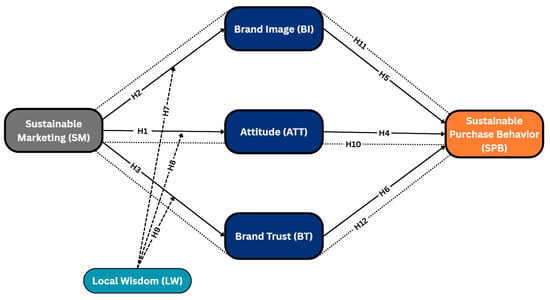
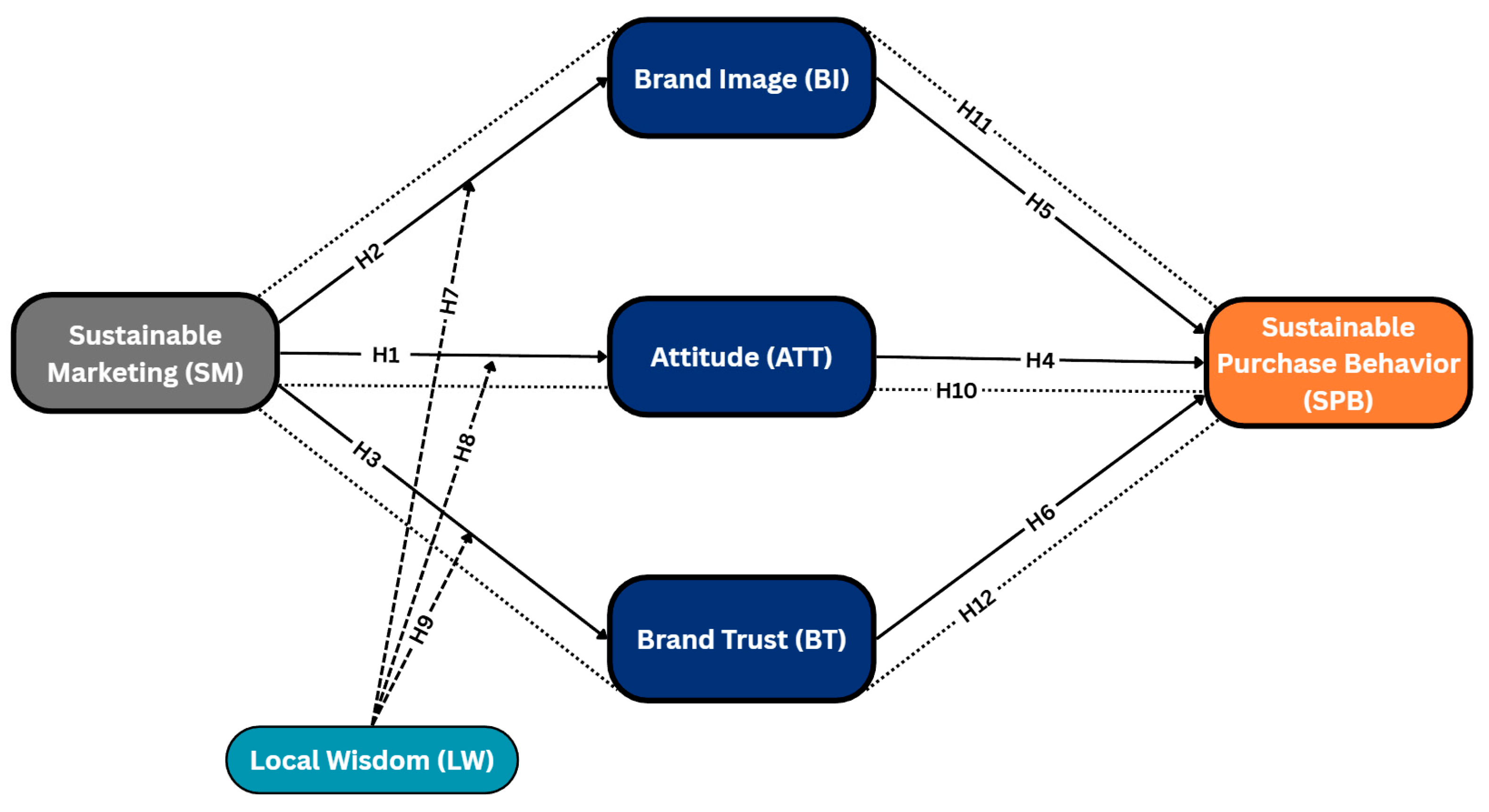

Disclaimer/Publisher’s Note: The statements, opinions and data contained in all publications are solely those of the individual author(s) and contributor(s) and not of MDPI and/or the editor(s). MDPI and/or the editor(s) disclaim responsibility for any injury to people or property resulting from any ideas, methods, instructions or products referred to in the content. |
© 2026 by the authors. Licensee MDPI, Basel, Switzerland. This article is an open access article distributed under the terms and conditions of the Creative Commons Attribution (CC BY) license.